Lighthouse Math
This book belongs to
This book belongs to
Mrs. Zehava Kraitenberg M.S.
Curriculum Advisor, Elementary School Principal
Jane Chamberlain
Master of Education, Curriculum and Instruction
Jane Chamberlain
Middle School Math Instructor
M.Ed. in Curriculum and Instruction
Kelly Christensen 6th-7th Grade Math Teacher
M. Ed in Administration and Leadership (K-12)
Esther Aboud Curriculum Consultant
M.Ed. in Special Education
Keely Franklin Curriculum Developer
Cierra Henderson Curriculum Developer
Yehudis Leitner
Curriculum Coordinator
Chaya Breindy Kenigsberg
Curriculum and School Leadership Specialist Master in Education
Esther Aboud
Curriculum Consultant
M.Ed. in Special Education
Lauren Noorparvar Middle School Math Educator
Math Curriculum Coach K - 12 Master in Education
Fraydel Sharf Content Director and Editor
Miriam Shulamis Eisemann Content Editor
Yehuda Gartenhaus M.A.
Elementary School Principal
Mechel Weizer
Curriculum Advisor
Elementary School Principal
Zehava Kraitenberg M.S. Curriculum Advisor
Elementary School Principal
Curriculum Writers Lighthouse Math Level D - Basic Edition • ISBN 978-1-955773-03-4
©Copyright 2026 Lighthouse Curriculum Inc. All rights reserved.
Contact Lighthouse Curriculum: Call 718.285.7100 or email info@lighthousecurriculum.com For more information visit www.lighthousecurriculum.com
Akiva Leitner
Project Manager
Mirko Zunic
Layout Director
Freepik Illustrations
Content developed in collaboration with The Reimagined Classroom
No part of this publication may be reproduced, stored in a retrieval system, stored in a database and/or published in any form or by any means, electronic, mechanical, photocopying, recording or otherwise, without the prior written permission of the publisher. To obtain permission to use portions of material from this publication, please contact Lighthouse Curriculum.
Here’s what you’ll find in every chapter:

Introduction and overview of skills at the beginning of each chapter
Clearly coded lessons: blue for the lesson page, red for the exercise page
Daily review at the beginning of every lesson to provide review of previous skills
Learn and Connect helps introduce the concept
Apply provides guided practice as a class
Challenge problems for enrichment and practice
Review for every chapter
7 + 6
Practice provides plenty of problems to practice the skill
Assessment provided for every chapter
Dear Educator,
Welcome to the Lighthouse Math Curriculum!
What makes our curriculum so unique? Lighthouse Math uses a scaffolded approach to learning and mastering math skills. When provided with a solid foundation, students can retain more information and prepare for the next level of skills.
Instead of separate workbooks and textbooks, students have everything they need built into one place: a softcover book containing 11 chapters, with each lesson containing review, new skills, and practice. All lessons include step-by-step instructions for clarity, giving all teachers - new as well as seasoned - the tools for success.
The books are custom illustrated, providing a vibrant learning experience. They are formatted in a way that each grade level can be completed successfully by the culmination of the school year. Lighthouse Math gives teachers the tools they need to teach and gives students everything they need to learn.
We at Lighthouse CurriculumTM are committed to providing support and guidance to our educators. We look forward to hearing from you and are available to answer any questions you may have.
Sincerely, Lighthouse Curriculum Team
Find the number that comes right after the one listed.
Addition and subtraction are opposites. When we add, we put two parts together to make a whole. When we subtract, we take one part away from from the whole to find the part that is left.
Sam has 9 marbles and Ron has 3 marbles. How many marbles do they have put together?
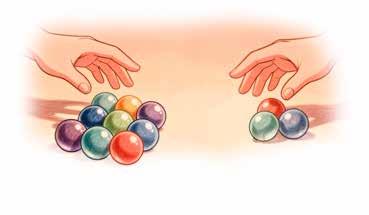
Ron takes his marbles back. How many marbles are there now?
Add or subtract.
Vocabulary
4-6
4-8
4-9
7-1 Multiplying a 2-Digit or 3-Digit Number by a Multiple of Ten
7-2 Multiplying by 2-Digit Numbers
7-3 Multiplying by 2-Digit Numbers (with regrouping)
7-4 Multiplying 3-Digit by 2-Digit Numbers (with regrouping)
7-6
7-7 Chapter
8-7
8-8
8-10
8-11
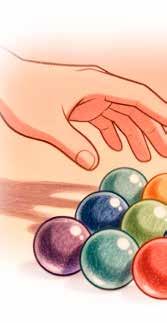
In Chapter 1 we will learn about
Ibus. Eculpar ciminve ndisquia cus millorum est, alibea dunt asinver untiatius il idunt auditia spitios autaturionet fugit lanistruptae vollabo ratectum experatur si dem net et arum iunto ero blaut aut estiorum
• Ium que conectas magnate moluptas eos sim vollore stionsenis nossi
• Ta simi, officimendae volupta temquiat es moloreprae nonsequ a
• Cea cusda aut et modicidebit licaboremos ulparchic totasperchil incid et voloreptatur accum que ad es veligni
• Hilibusam faccae dolorup tatquuntus dolorum, sequibeatem eum et volut erio beatae venimus ate ne et eat.
Find the number that comes right after the one listed.
LEARN AND CONNECT
Addition and subtraction are opposites. When we add, we put two parts together to make a whole. When we subtract, we take one part away from from the whole to find the part that is left.
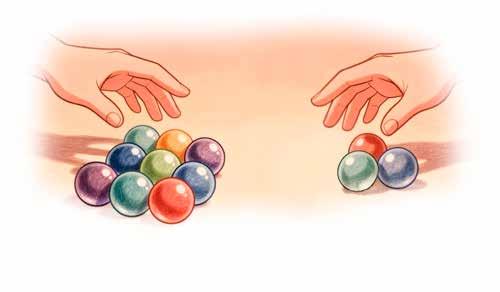
Sam has 9 marbles and Ron has 3 marbles. How many marbles do they have put together?
Add or subtract.
Vocabulary
Sum - the answer to an addition problem.
Difference - the answer to a subtraction problem.
Minuend
Subtrahend
Addend
Ron takes his marbles back. How many marbles are there now?
Add or subtract.
Read the problem. Find the answer.
Jody has 11 balloons. 3 balloons fly away. How many does she have now?
Find the missing number.
42. Gary walks 3 blocks east and 1 block south. How many blocks did he walk in all?
Complete each number sentence.
Addition and subtractions are opposites.
We can check addition with subtraction.
CONNECT APPLY
Subtract.
is the right answer
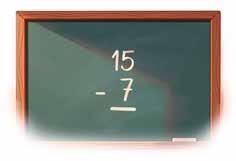
can check subtraction with addition.
is the right answer
Vocabulary
Zero
Inverse
Subtract. Check your answer.
Read the problem. FInd the answer.
34. There are eight boys in class in the morning. Three of the boys leave for a field trip. How many boys are in class now?
35. Thirteen boys are in the swimming pool. All 13 get out to dry off. How many boys are in the pool now?
A fact family is a group of 2 addition sentences and 2 subtraction sentences that all have the same 3 numbers.
36. Write fact family for the numbers 4, 5, and 9.
Addition and subtraction rules can help us find the sum or difference.
Numbers can be added in any order.
Adding or subtracting zero from a number does not change its value.
Numbers cannot be subtracted in any order.
Subtracting a number from itself leaves zero.
Add in any order.
Vocabulary
Commutative Property of Addition - states that changing the order of addition does not change the value
Associative Property of Addition - states that changing the grouping of addends does not change the sum Zero or Identity Property of Addition - states that adding zero to a number does not change its
Add in any order.
Read the problem. FInd the answer.
41. I spent $5 on the first day and $4 the next day. How much money did I spend?
42. On Monday, I walked 0 miles. On Wednesday, I walked 3 miles. How many miles did I walk altogether?
Find the missing number.
Add or subtract.
When you add 3 or more numbers you can choose which numbers to add first. You can pick the order of the numbers which makes adding easiest.
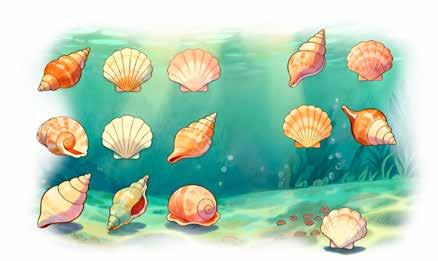
31. There are 5 books on the yellow table, 3 books on the red table, and 6 books on the blue table. How many books in all?
32. Frank has 6 toys, Eric has 9 toys, and Steven has 2 toys. How many toys do they have altogether?
33. 1 + 2 + 3 + 4 + 5 + 6 + 7 + 8 + 9 =
Complete each number sentence.
When we count by ones, we say every number. When we skip count we don’t say every number. To find the number that comes next, add the number you are skip counting by to the last number you counted.
Skip counting by twos: Skip counting by threes:
Skip count by two. Write the next numbers.
Skip count by three. Write the next numbers.
Skip count by four. Write the next numbers.
Count by one. Write the next numbers.
587, , , , ,
498, , , , ,
Skip count by two. Write the next numbers.
78, , , ,
128, 130, 132, ,
56, , , ,
526, 528, , ,
Skip count by three. Write the next numbers.
3, 6, , , ,
4, 8, , , ,
Write the missing numbers.
12, 15, , ,
Skip count by four. Write the next numbers. 23. , 8, , 16, 20, ,
16, 20, , ,
90, , , ,
840, 842, , ,
21, 24, , ,
28, 32, , ,
Count by fours. Write the next numbers.
1. 100, , , , ,
LEARN AND CONNECT DAILY REVIEW APPLY 1. 5, 10, , ,
2. 44, , , , ,
When we skip count by 5, 10, 25, or 100 we can find a pattern. Remember that you can add the number you are skip counting by to the last number you counted to find the next number.
Skip counting by 5s:
Skip counting by 10s:
Skip counting by 100s: 5, 10, 15, 20, 25, , 25, 50, 75, 10, 20, 30, 40, 50, , 100, 200, 300, , 65, 70, 75, 80, 85, , 200, 225, 250, 275, 126, 136, 146, 156, , 385, 458, 585, ,
Skip counting by 25s:
Skip count by five. Write the next numbers.
35, 40, , ,
Skip count by ten. Write the next numbers.
10, 20, , ,
120, 130, , ,
85, , ,
410, , ,
Skip count by twenty-five. Write the next numbers.
25, 50, , ,
100, 125, , ,
300, , ,
Skip count by five. Write the next numbers.
26, 36, 46, 56, ,
865, 870, , ,
Skip count by ten. Write the next numbers.
45, , , , 8. 140, , , ,
49, 59, , ,
Skip count by twenty-five. Write the next numbers.
75, 100, , ,
Skip count by one hundred. Write the next numbers. 1. 65, , , , 7. 80, , , , 13. 25, , , , 16. 325, , , , 4. 620, 625, 630, ,
156, 256, , ,
Write the missing numbers.
19. , 75, , 125, 150, ,
20, , , , 9. 360, , , ,
600, , , , 18. 499, , , , 6. 440, 445, , ,
337, 347, , ,
Count by 25. Write the next numbers.
Count by 25’s and 10’s to find how much money Harry has.

Harry has 95 cents. We can write it as 95¢ or $0.95.


Count the coins. How many cents?
Count the coins. How many cents?
Danny has 4 coins that add up to 61 cents. Which coins are missing?
LET'S REVIEW
Addition and subtraction are opposites. We can check addition with subtraction. We can check subtraction with addition
We can add in any order, but we must subtract in order.
Adding or subtracting 0 doesn’t change a number. 9 + 7 = 16 7 + 9 = 16 16 − 7 = 9 16 − 9 = 7
We can skip count by adding the same number again and again.
Count by 2s: 2, 4, 6, 8, 10,...
Count by 3s: 3, 6, 9, 12, 15,...
Count by 4s: 4, 8, 12, 16, 20,...
Count by 5s: 5, 10, 15, 20, 25,...
Count by 10s: 10, 20, 30, 40, 50,...
Count by 25s: 25, 50, 75, 100, 125,...
Count by 100s: 100, 200, 300, 400, 500,...
Add or subtract.
Write the next numbers using the count by method given.
Count by five. Write the next numbers.
Count by ten. Write the next numbers.
Count by twenty five. Write the next numbers.
Count by one hundred. Write the next numbers.
Subtract.
Count by twos. Write the next number.
34, 36, , , , ,
Count by fours. Write the next number.
4, 8, , , , ,
Count by fives. Write the next number.
In Chapter 2 we will learn about
Ibus. Eculpar ciminve ndisquia cus millorum est, alibea dunt asinver untiatius il idunt auditia spitios autaturionet fugit lanistruptae vollabo ratectum experatur si dem net et arum iunto ero blaut aut estiorum
• Ium que conectas magnate moluptas eos sim vollore stionsenis nossi
• Ta simi, officimendae volupta temquiat es moloreprae nonsequ a
• Cea cusda aut et modicidebit licaboremos ulparchic totasperchil incid et voloreptatur accum que ad es veligni
• Hilibusam faccae dolorup tatquuntus dolorum, sequibeatem eum et volut erio beatae venimus ate ne et eat.
Digits are the numbers 0 - 9. Some numbers have 1 digit, some have many digits.
425 has 3 digits. We can put each digit in a place value chart.
We say “four hundred twenty-five.”
Name the number.
Vocabulary
Digits - the numbers 0, 1, 2, 3, 4, 5, 6, 7, 8, and 9
Place value chart - a chart that shows the value of each digit
Standard form - a number written with digits
Word form - a number written in words Add or subtract.
Write each number.
1. Nine hundred thirty-one
3. Six hundred forty-two
5. Four hundred sixty
7. Two hundred seventy-six
9. Nine hundred sixty-two
11. five hundred thirty-one
13. four hundred seventy-five
15. two hundred forty
Write the missing word.
17. 308 hundred
19. 222 twenty-
21. 900 hundred
Read the problem. Then solve.
23. The state fair gave away five hundred eighteen stuffed bears. Write the number of stuffed bears given away in standard form.
2. Seven hundred fifty-nine
4. Five hundred twenty-six
6. Eight hundred seventeen
8. One hundred seventy-one
10. Three hundred fifty-four
12. six hundred ninety-three
14. eight hundred thirty-six
16. one hundred eighty-two
18. 892 eight hundred
20. 585 five eighty-
22. 239 two hundred -nine
24. Rebecca planted nine hundred eightyseven seeds in her garden. Write the number in standard form.
25. The zoo had one thousand, three hundred fifty-nine animals. Write this number in standard form.
DAILY REVIEW
Write each number in standard form..
1. Four hundred twenty-one
3. Nine hundred two 2. Seven hundred thirty-five 4. Six hundred twenty-nine
We can show bigger numbers on the place value chart. We always put a comma between the hundreds and the thousands.
The number 523,612 has 6 digits. Each digit has its own place on the chart. The place of the digit tells us its value or how much its worth. 523,612
Five hundred twenty-three thousand, six hundred twelve 767,859
Vocabulary
Digits - the numbers 0, 1, 2, 3, 4, 5, 6, 7, 8, and 9
Value - how much something is worth
Place value chart - a chart that shows the value of each digit
Find the digit.
Which digit is in the ones place?
489,635 124,342 386,199 984,312 997,343 739,217 276,120 196,354 983,491 529,334 396,256 715,032
Which digit is in the hundreds place?
Which digit is in the tens place?
Which digit is in the hundreds place?
Which digit is in the ten thousands place?
Which digit is in the ones place?
Which digit is in the ten thousands place?
Which digit is in the hundred thousands place?
Which digit is in the thousands place?
Which digit is in the ten thousands place?
Which digit is in the hundred thousands place?
Which digit is in the hundreds place?
There are 596,183 different flowers at the local market. Find the value of the digits.
13. What is the value of the digit 5?
15. What is the value of the digit 3?
17. What is the value of the digit 1?
14. What is the value of the digit 9? 16. What is the value of the digit 8? 18. What is the value of the digit 6?
19. The numbers 80 and 800 both have the digit 8 in them. How many times greater is the 8 in 800 than 80?
389,421 Which digit is in the ones place?
Which digit is in the thousands place?
Which digit is in the hundred thousands place?
In the year 2020, 331,449,281 people lived in the United States. This number has 9 digits so it is in the hundred millions. We always put a comma after the millions and the thousands places. 331,449,281
three hundred thirty-one million, four hundred forty-nine thousand, two hundred eighty-one
497,345,685
Write the number.
1. Eight hundred sixteen million, seven hundred thirty-two thousand, nine hundred seventy-five
2. One million, nine hundred seventy-three thousand, eight hundred forty-two
3. Sixteen million, eight hundred twenty-four thousand, three hundred fifty-seven
4. Two hundred forty-three million, two hundred fifty-eight thousand, six hundred seventy-nine
5. Seven hundred fifteen million, six hundred forty-three thousand, two hundred fifty-seven
What is the value of the blue digit?
6. Twenty-two million, thirty-eight thousand, five hundred twenty-one 7. 1,236,608
951,876,923
3,519,329
48,412,497
Write this number in word form.
19. 312,420,392
Write the place value of the blue digit.
In 2020, 21,538,187 people lived in Florida and 20,201,249 people lived in New York. Which state had more people?
To compare and order numbers, we compare the digits from left to right. Write > for more than. Write < for less than.
Line up the numbers by place value.
21,538,187 20,201,249
First, compare the digits in the highest place value.
21,538,187 20,201,249 2 = 2
More people lived in Florida than New York because 21,538,187 > 20,201,249.
If needed, move to the right until you find digits that are different then, compare them.
21,538,187 20,201,249 1 > 0 20,201,249; 21,538,187
We can write the numbers in order from least to greatest: 20,201,249; 21,538,187
Compare. Write > or < in the circle.
Write the numbers in order from least to greatest. 1. 549 544 4. 394 393
Compare. Write > or < in the circle.
1. 385 185
4. 200 200,000
7. 618 816 10. 726 276
Write the numbers in order from least to most.
13. 8,250; 8,249; 8,256 , ,
14. 582,374; 538,724; 583,274 , ,
15. 2,630; 2,130; 2,430 , ,
16. 241; 214; 421 , ,
17. 5,824; 6,842; 8,524; 5,648 , , ,
Read the problem. Then answer the question.
18. Amy has 3,462 beads. Jessica has 3,409 beads. Who has more beads?
19. A bakery sells 452 cookies on Monday and 398 cookies on Tuesday. On which day do they sell less cookies?
20. The Mississippi River is 2,340 miles long. The Missouri River is 2,341 miles long. The Potomac River is 405 miles long. List the rivers in order from shortest to longest.
REVIEW
Write the numbers in order from greatest to least.
Numbers that end in zero are easier to use. To round to the nearest ten, find the closest number that ends in a zero. To round to the nearest hundred, find the the closest number that ends in 2 zeros.
Underline the place you want to round to.
To the nearest ten
To the nearest hundred.
Look at the digit to the right of that place.
the nearest hundred the nearest ten
Follow the rules for rounding.
4 or lower Round down. The underlined digit stays the same
5 or higher Round up. Add 1 to the underlined digit.
Round each number to the nearest ten and hundred.
The digits to the right of the underlined digit turn to 0.
Round to the nearest ten: Round to the nearest hundred:
Round to the nearest ten: Round to the nearest hundred: 373 415
Vocabulary
The nearest ten - the closest number that ends in a zero
The nearest hundred - the closest number that ends in 2 zeros
Round each number to the nearest ten.
Round each number to the nearest hundred.
Read the problem. Then solve.
36. The Levine family is saving for their summer vacation. Each night at the rental costs $559, and they will stay for six nights. About how much should the Levine budget for the hotel for their vacation?
Round each number to the nearest ten or hundred.
We can follow rules to round numbers to any place value.
Mark the place you are rounding.
8,538,223
Use the rules for rounding.
4 or lower Marked digit stays the same 5 or higher Marked digit goes up Look to the right of that digit.
Change the rest of the digits to zero. 9,000,000
Let's see how the numbers change when we round 8,538,223 to different places.
Round each number to the highest place value.
Round each number to the nearest million.
Round each number to the nearest hundred thousand.
689,321
Round each number to the nearest thousand. 1. 1,698,308
1,348,902
Round each number to the nearest ten thousand.
962,835
6,735,893
4,592
932,674
673,922 23. 556,932 4. 8,467,920 12. 9,321,302 20. 8,927,124 28. 9,764,920 8. 7,432,333 16. 3,328,399 24. 9,294,312
3,492,850
29. The distance from Earth to the Sun is 91,843,000 miles. The teacher said the distance is about 91,800,000 miles. What place did she round it to?
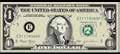


Money also has place value. Dollars and cents are separated by a decimal. We always write two digits for the cents. How much money does Steven have? Dollars Cents 2 3 8 $ decimal point
Write a dollar sign and then the number of dollars.
Write a decimal next to the dollars.
Count the money. Write each amount.

Steven has $2.38 We say, two dollars and thirty-eight cents.
Count the money. Write each amount.
$
Write each amount.
8 dollars, 5 dimes, and 2 pennies
8. 1 dollar and 6 cents
2 dollars and 4 dimes
4 dollars, 4 dimes, and 4 cents
3 dollars and 64 cents
2 dollars and 6 dimes
17. Henry is buying flowers for his mother. They cost $4.25. He didn’t have any dollar bills. What is one way that he could have paid?
DAILY REVIEW
Write each number in standard form.
1. Five hundred thirty-one
3. Eight hundred three 2. Six hundred seventy-three 4. Four hundred eighty-six
We can tell a digit’s value by where it is placed in the number.
984,312,645
To compare numbers, start comparing the highest place value and then move to the right.
3,456,329 3,739,246
3,456,329 < 3,739,246 Look to the right. 49,345
To round numbers, we: 49,345 Mark a digit. 50,000 Stay the same or round up. 3 = 3 4 < 7
Which digit is in the tens place? 923,495 21,654 512,798 154,876 45,312 593,296 LET'S REVIEW
Which digit is in the ones place?
Which digit is in the hundreds place?
Which digit is in the thousands place?
Which digit is in the ten thousands place?
Which digit is in the hundred thousands place?
Compare. Write > or < in the circle. Write each amount. Fill in the table. Fill in the table.
Round to the nearest: Millions Hundred Thousands Ten Thousands 54,329,578 8,923,456 351,294,704
In Chapter 3 we will learn about
Ibus. Eculpar ciminve ndisquia cus millorum est, alibea dunt asinver untiatius il idunt auditia spitios autaturionet fugit lanistruptae vollabo ratectum experatur si dem net et arum iunto ero blaut aut estiorum
• Ium que conectas magnate moluptas eos sim vollore stionsenis nossi
• Ta simi, officimendae volupta temquiat es moloreprae nonsequ a
• Cea cusda aut et modicidebit licaboremos ulparchic totasperchil incid et voloreptatur accum que ad es veligni
• Hilibusam faccae dolorup tatquuntus dolorum, sequibeatem eum et volut erio beatae venimus ate ne et eat.
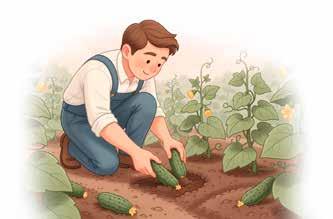
Sam planted 58 carrots and 64 cucumbers in his garden. How many vegetables did he plant in all?
To find the total, Sam must add and . Solve.
Line up the place values. Add the ones. Regroup if needed. Add the tens. Regroup if needed.
Vocabulary
Place value - how much a digit is worth based on its position in the number
Regrouping - trading place-value units without changing the number’s value
Rewrite the problem and add.
Read the problem. Then solve.
27. Ann counts 35 butterflies on her walk on Monday and 62 butterflies on her walk on Tuesday. How many butterflies does she see in all?
28. Victor reads 86 pages in the morning and 95 pages at night. How pages does he read in all?
Can you solve these problems in your head?
29. 49 + 27 =
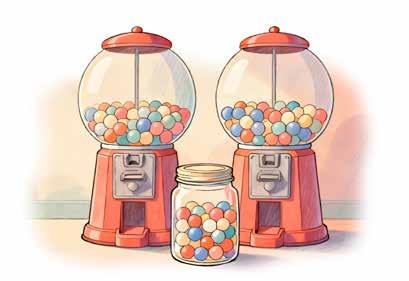
One gumball machine has 674 gumballs and the other has 579 gumballs. How many gumballs does are there altogether?
To find the total, add and .
Line up the place values.
Rewrite the problem and add.
Read the problem. Then solve.
25. Justin drove 345 miles on Monday and 134 miles on Tuesday. How many miles did he drive altogether?
26. There were 210 students who returned their permission slips for a class trip. The next day, 39 more students brought in their slips. How many brought permission slips in all? Add.


Find the missing addend.
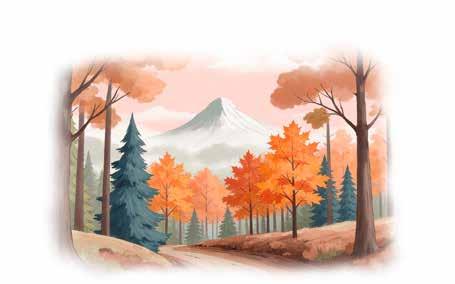
There are 1,206 maple trees and 2,085 fir trees. How many trees are there altogether?
To find the total number of trees add and . APPLY
Line up the place values. 1,206 + 2,085
Add the ones. Regroup if needed. 1,206 + 2,085 1 1 Add the tens. Regroup if needed. 1,206 + 2,085 91 1
Add the hundreds. Regroup if needed. 1,206 + 2,085 291
Add the thousands. Regroup if needed. 1,206 + 2,085 3,291
Add.
+ 4,503 5,558 + 4,123 4,588 + 6,735
Rewrite the problem and add.
16. 1,782 + 407
20.
Read the problem. Find the answer.
24. One box has 1,245 paper clips. Another box has 3,456 paper clips. How many paper clips are in both boxes?
25. A cookie factory baked 2,550 cookies on Monday and 1,345 cookies on Tuesday. How many cookies does they bake in all?
Add.
Last year, Helen traveled 13,550 miles. This year, she has traveled 16,575 miles. How many total miles has she traveled?
To find the total distance Helen traveled add and .
Add the ones. Regroup if needed.
Add the tens. Regroup if needed.
the hundreds. Regroup if
Add the thousands. Regroup if needed.
Add the ten thousands. Regroup if needed.
3,550 + 16,575 30,291
Add.
Rewrite the problem and add.
Read the problem. Then solve.
22. A factory makes 12,435 lightbulbs in one week and the same amount the next week. How many lightbulbs do they make altogether?
23. The aquarium has 10,700 fish in one large tank and 5,600 fish in a small tank. How many fish are there in all?
Find the missing digits. 24.
The 4th grade collects coins in 3 jars. The first jar has 156 coins, the second jar has 639 coins, and the last jar has 798 coins. How many coins are there altogether?
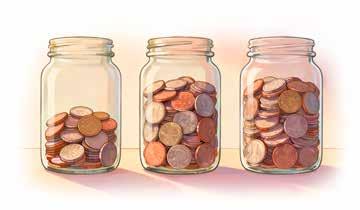
To find the total amount of coins, we add , , and .
When adding numbers in a column, add any two digits at a time and then add the sum to the next digit.
19. 43 + 89 +23
Read the problem. Then solve.
27. A factory makes 125 toys on Monday, 275 toys on Tuesday, and 130 toys on Wednesday. How many toys did they make in all?
28. A grocery store orders 50 cans of soup, 25 cans of fruit, and 55 cans of vegetables. What is the total number of cans ordered?
Add.
29. 5,692 + 658 + 8,631 + 25 + 9 + 582 =
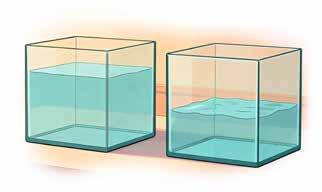
Aquarium A has 1,235 gallons of water. Aquarium B has 1,950 gallons of water. Estimate how many gallons of water are in both aquariums.
We don’t need to find the exact answer. To estimate the number of gallons of water, round and to the nearest hundred and add.
Round the 1st number.
Together, the aquariums have about 3,200 gallons of water.
Round to the nearest ten and then estimate.
Vocabulary
Estimate - to find an approximate answer
Round - changing a number to the nearest ten, hundred, or thousand so that it is easier to work with
Round to the nearest ten to estimate the answer.
Round to the nearest hundred to estimate the answer.
Round to the highest place value to estimate the answer.
Read the problem. Estimate to find the answer.
15. There are 22 girls in Mrs. Taylor’s classroom, and 19 girls in Mrs. Smith’s classroom. About how girls are there altogether?
16. There are 98 photos in one photo album and 253 photos in another. About how many photos are there altogether?
Which estimate is more accurate? Why?
Round to the highest place value and then solve.
Josh spent $5.89 on shampoo and $3.79 on soap. How much money did he spend altogether?
To find the total amount of money, add $ , and $ .
Line up the decimal points.
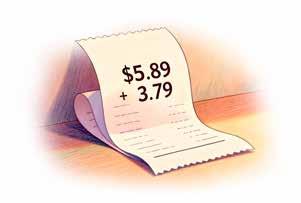
Start adding from the right. Regroup if needed. Move left to the next place value and repeat.
Bring the decimal down and write the dollar sign.
Rewrite and then add.
$4.45 + $5.55 =
$6.35 + $5.59 =
+ $1.90 =
$1.39 + $3.12 =
$3.98 + $0.84 =
Read the problem. Find the answer.
22. Jack buys a pair of socks for $2.30. He also buys a pair of gloves for $5.50. How much money does he spend?
$1.34 + $6.49 =
23. Frank buys a mug for $2.50 and a pitcher for $12.84. How much does he spend in all?
Write the money amount with the dollar and cent sign.
24. How much money is 6 quarters, 3 dimes, and 8 pennies?
On Monday, 1,256 people shopped at the market. On Tuesday, 3,545 people shopped at the market. How many people shopped altogether?
We need to find the number of people who shopped on Monday and Tuesday and add them together.
How many people shopped on Monday?
How many people shopped on Tuesday?
1,256 + 3,545 4,801
Altogether, 4,801 people shopped on Monday and Tuesday.
Read the problem. Then solve.
1. The Alpine family drove 433 miles yesterday and 389 miles today. How many total miles did they drive?
2. Moses used 650 pounds of mulch and 325 pounds of stone. What is the total weight of the material?
3. The library has 1,840 fiction books and 2,450 non-fiction books. How many books does the library have?
4. George charged $875 for engine repair and $1,100 for a set of tires. What was the total fee?
Read the problem. Then solve.
1. One section of the school library has 895 books. Another section has 756 books. How many books do the two sections have together?
2. Mickey picked 5,300 oranges on Monday, and Paul picked 2,950 oranges the same day. How many oranges were picked on Monday?
3. The school ordered 4,800 pencils in October and 2,710 in November. How many total pencils did they order?
4. A baker baked 55 cookies in the morning and 120 cookies in the afternoon. How many cookies did she bake?
5. A tulip farm had 1,400 tulips last year. This year they plant 2,500 tulips. How many tulips were planted in both years?
6. A plane flew 2,750 miles and then flew 3,200 miles. How many miles did the plane fly in all?
7. The Madison family picked 52 apples and 38 peaches. How much fruit did they pick in all?
8. A mechanic drove 1,152 miles in May and 1,825 miles in June. How many miles did he drive these two months?
9. Adam already has $1,254 in his bank account. He adds $3,105 to his account. How much money is in his account?
10. There are 1,250 seats set in the wedding hall and they add 875 more. How many people can the hall seat?
Read the problem. Then solve.
11. The grocery store stocked a total of 4,285 cans last month. They stock 5,629 this month. They plan to stock 5,206 next month. How many cans will they have stocked in all three months?
To add numbers, line up the place values and add from right to left. Regroup if needed.
To estimate, round both numbers, then add.
When adding numbers in a column, add two digits at a time and then add the sum to the next digit.
To add money, line the numbers up by the decimal points and add from right to left. Bring down the decimal and add the dollar sign.
Find the exact answer. Then, round to estimate the answer.
Read the problem. Then solve.
27. The Monroe family saved $4,000 last year and $5,000 this year. How much do they have saved altogether?
28. The school library checked out 356 books in October and 942 books in November. How many books did they check out in total?
29. A gardener planted 165 roses last year and 482 roses this year. How many roses did the gardener plant altogether?
30. The Green family traveled 3,800 miles last year and 4,550 miles this year. How many total miles did they travel?
Find the digit.
Which digit is in the ones place?
Which digit is in the hundreds place?
Which digit is in the hundred thousands place? 348,962 471,203 492,115 884,298
Which digit is in the ten thousands place?
Find the value of each digit in the number 356,789.
What is the value of the digit 7?
What is the value of the digit 6?
What is the value of the digit 3?
What is the value of the digit 8?
In
Chapter 4 we will learn about
Ibus. Eculpar ciminve ndisquia cus millorum est, alibea dunt asinver untiatius il idunt auditia spitios autaturionet fugit lanistruptae vollabo ratectum experatur si dem net et arum iunto ero blaut aut estiorum
• Ium que conectas magnate moluptas eos sim vollore stionsenis nossi
• Ta simi, officimendae volupta temquiat es moloreprae nonsequ a
• Cea cusda aut et modicidebit licaboremos ulparchic totasperchil incid et voloreptatur accum que ad es veligni
• Hilibusam faccae dolorup tatquuntus dolorum, sequibeatem eum et volut erio beatae venimus ate ne et eat.
Find the difference.
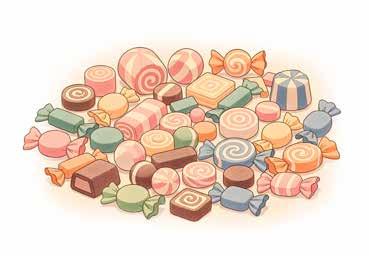
Emma has 53 pieces of candy. She shares 27 pieces with her friend. How many pieces of candy does Emma have left?
To find the number of pieces of candy that Emma has left, subtract from .
Line up the place values.
Subtract the ones. You cannot subtract 7 from 3. Regroup 1 ten for 10 ones.
Rewrite and subtract.
Read the problem. Then solve.
35. George earned $24 this week but he spent $18. How much money does he have now?
36. Ruth read 16 pages of the 45 pages that were assigned to her to read. How many more pages does she have to read?
Find the missing number.
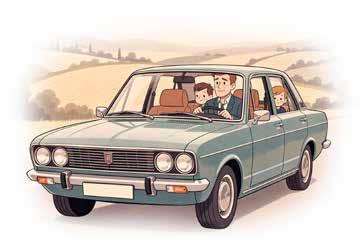
The Monroe family is driving 416 miles from Rochester to Fairfax. If they stop for lunch after 218 miles, how much further do they have to drive?
To find the number of miles they have left, we subtract from .
Subtract the tens. Regroup if
Subtract the hundreds.
Subtract.
Rewrite and subtract.
789 − 47
Read the problem. Then solve.
30. David earned $622 this week and he spent $455. How much money does he have now?
31. Judy has 794 beads and she uses 315 of them for a project. How many beads does she have left?
Find the missing number.
32. 564 − = 333
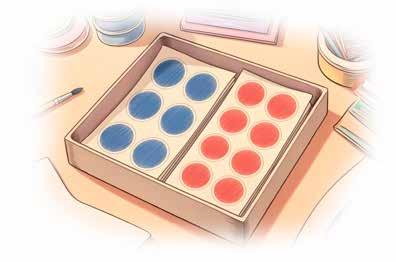
There are 503 stickers in a box. 267 of them are red, the rest are blue. How many blue stickers are there?
To find the number of blue stickers, we subtract from .
Line up the place values.
503 267
They have 236 blue stickers.
Subtract.
503 − 267
Regroup to subtract the ones. There are not enough tens to regroup. Regroup 1 hundred as 10 tens. Then, regroup 1 ten as 10 ones.
Rewrite and subtract.
25. 703 − 418
Read the problem. Then solve.
29. David earned $622 this week and he spent $455. How much money does he have now?
30. Judy has 794 beads and she uses 315 of them for a project. How many beads does she have left?
Subtract.
32. 1,008 − 649 =
Subtract.
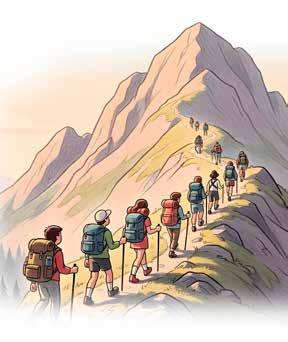
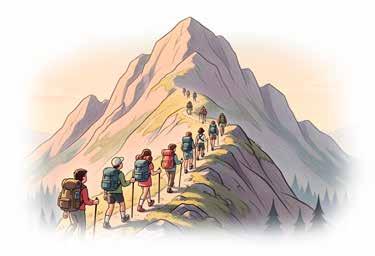
A group of hikers is climbing a mountain that is 9,245 feet tall. They have climbed 4,568 feet. How much further do they have to reach the top?
To find how much further they need to climb, we subtract from .
Line up the place values.
Regroup to subtract the ones.
Regroup to subtract the tens.
Regroup to subtract the hundreds.
They need to climb 4,677 more feet.
Subtract.
21. 7,312 − 4,586
Read the problem. Then solve.
24. A truck has driven 82,341 miles. Once he drives 91,225 miles, the owner will take the truck for an oil change. How many more miles until the truck needs an oil change?
25. There are 14,532 pine trees in the forest. A logging company cut down 9,645 trees. How many trees are now in the forest?
26. $254,312 − $164,425 = Subtract.
Subtract.
There were 4,000 balloons at a carnival. A strong wind made 634 balloons float away. How many balloons are left?
To find how many balloons are left, we subtract from .
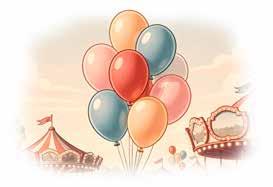
Line up the place values.
Subtract the ones. Regroup one place value
Subtract the tens.
Subtract the hundreds.
Subtract the thousands.
Subtract.
Rewrite and subtract.
21. 80,109 − 32,175
6,000 − 4,213
Read the problem. Then solve.
24. A company has $50,000 in the bank. They spend $32,416. How much do they have left?
25. A large hall has 20,105 seats. 8,132 seats are filled. How many seats are empty?
26. 100,000 − 43,275 = Subtract.
Subtract.
Ben is reading a book that is 892 pages long. He has read 317 pages so far. About how many pages does Ben have left to read?
We don’t need to find the exact answer.
To estimate the the number of pages Ben has left to read, we can round 892 and 317 to the nearest hundred and subtract.

Round the 1st number.
Round the 2nd number.
Round to the highest place value to estimate the difference.
Round to the nearest ten to estimate the answer.
When the digit to the right is… …4 or less, round down. …5 or more, round up. Tip!

Round to the nearest hundred to estimate the answer.
Round to the nearest thousand to estimate the answer.
Round to the highest place value to estimate the answer.
Read the problem. Then solve.
12. Last month, 38,245 people visited the park. This month, 21,890 people visited. About how many more people visited last month than this month?
13. David wants to run a total of 2,800 miles this year. He has ran 1,125 miles so far. About how many more miles does he need to run?
Round to the highest place value to estimate the difference.
14. Two food trucks are selling food. Truck A started with 1,200 sandwiches and has 392 left. Truck B started with 1,500 sandwiches and has 618 left.
Estimate how many sandwiches each sold.
Subtract.
Gary goes to the store with $10.25. He buys a snack for $6.75. How much does he have left?
To find the total amount of money, subtract $ from $ .
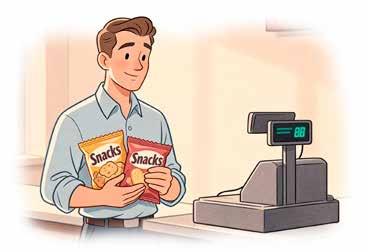
Line up the decimal points.
Start subtracting from the right. Regroup if needed. Move left to the next place value and repeat.
Bring the decimal down. Write the dollar sign.
Subtract.
Subtract.
Rewrite and subtract.
$472.19 − 285.45
Read the problem. Then solve.
24. Abe has $452.60 in his bank account. After spending $187.45 on groceries, how much money is in his bank account?
25. Howard is saving for a new bike that is $825.99. He saved $548.50. How much more money does he need to buy the bike?
Subtract.
$1,245.15 − $687.58 =
Eitan has a goal to run 1,500 miles. By end of the winter, he has run 862 miles. How many more miles does he need to reach his goal?
We need to subtract the number of miles Eitan ran from his goal.
How many miles is Eitan’s goal?
How many miles has he already ran? 1,500 862 638 Eitan has 638 miles to go until he reaches his goal.

1. The school library has 24,312 books on the shelves. 1,845 books were ruined or lost this school year. How many books does the library have left?
2. In two days, the Alpine family drove 1,420 miles. If they drove 675 miles on Day 1, how many miles did they drive on Day 2?
3. 8,045 people lived in Elmwood last year. This year only 6,158 people live there. How many people moved away?
4. 12,405 birds are flying south. 3,826 of them fly over the ocean, the rest fly over the land. How birds fly over the land?
Solve.
1. There are 45,000 parking spaces at the zoo. If 38,215 of them are taken, how many are still empty?
2. The building 1A is 828 yards tall. Building 1B is 330 yards tall. How much taller is the building 1A than building 1B?
3. A ship is carrying 12,450 containers. It unloads 3,575 containers. How many containers are still on the ship?
4. A giant oak tree is 2,200 years old. A nearby pine tree is 145 years old. What is the difference in their ages?
5. The Miller family is driving 2,880 miles from New York to Los Angeles. They have already traveled 1,929 miles. How many more miles do they need to drive?
7. A mountain climber is at a height of 6,112 feet. The top of the mountain is 14,505 feet high. How many more feet until the climber reaches the top?
6. A factory made 9,005 chocolate bars. They found 218 that could not be sold. How many are ready to be sold?
8. A bookstore has 1,342 copies of the newest book. They sell 85 copies the first week. How many copies are left?
9. The trail at the park is 15,300 feet long. A group of hikers already went 6,425 feet. How many more feet until they walk the whole trail?
10. Molly has collected 225 seashells. Sara has collected 150 seashells. How many more seashells does Molly have than Sara?
Solve.
11. A rocket weighs 1,200,000 pounds at launch. After the first stage, it separates and now it weighs only 350,000 pounds. How much weight did it lose?
To subtract numbers, line up the place values and subtract from right to left. Regroup if needed.
To estimate, round both numbers, then subtract.
To subtract money, line the numbers up by the decimal points and subtract from right to left. Bring down the decimal and add the dollar sign.
Subtract.
Round to the highest place value to estimate the answer.
Subtract.
24. The hall seats 35,000 people. If 27,345 people are seated, how many are seats are empty?
25. The bridge is 398 feet tall. The building is 492 feet tall. How much taller is the building than the bridge?
26. A truck is hauling 29,007 boxes. At the first stop, it unloads 4,933 boxes. How many boxes are still on the truck?
27. A giant tree is 1,000 years old. Another tree is 396 years old. What is the difference in ages? building 1B?

In Chapter 5 we will learn about
Ibus. Eculpar ciminve ndisquia cus millorum est, alibea dunt asinver untiatius il idunt auditia spitios autaturionet fugit lanistruptae vollabo ratectum experatur si dem net et arum iunto ero blaut aut estiorum
• Ium que conectas magnate moluptas eos sim vollore stionsenis nossi
• Ta simi, officimendae volupta temquiat es moloreprae nonsequ a
• Cea cusda aut et modicidebit licaboremos ulparchic totasperchil incid et voloreptatur accum que ad es veligni
• Hilibusam faccae dolorup tatquuntus dolorum, sequibeatem eum et volut erio beatae venimus ate ne et eat.
AND CONNECT


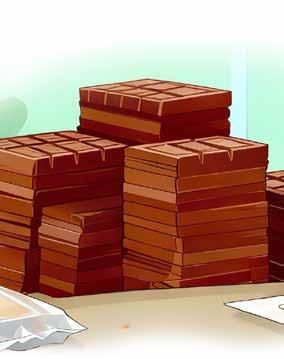
4 Rows Equal Groups


5 Columns
4 types of chocolate with 5 of each type 5 + 5 + 5 + 5
Multiplication Sentence
Four times five equals twenty. 4 × 5 = 20
We can use equal groups, arrays, and multiplication sentences to show multiplication. Fill in the correct numbers.


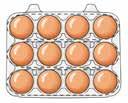
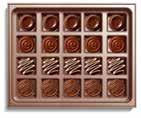
There are 20 chocolates.
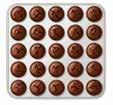
Shade in boxes to make an array. Count to find the total.
Draw an array. Solve. 1. 3 × 4
5. Jay is baking cookies. His cookie sheet has 5 rows of cookies with 4 cookies in each row. How many cookies are on the cookie sheet?
6. Tim is planting a garden. He plants 3 rows of bell peppers and puts 6 plants in each row. How many pepper plants does he plant?
7. A chocolate bar has 8 squares in each row. There are 4 rows. How many squares are there?
8. There are 24 desks in the classroom. Draw 3 different arrays to show how the desks could be arranged.
Fill in the blanks. 1. 2, , 6, 8, , , 14, , , 2. 3, 6, , 12, , , 21, , ,
LEARN AND CONNECT
If you forget one of the facts, you can try these tricks.
To multiply a number by 2, you can double it.
To multiply a number by 3, you can add it three times.

Draw a picture or an array to solve.

Multiply.
Read the problem. Then solve.
There are 9 ducks at the park. If each duck has 2 legs, how many duck legs are there in total?
Each tricycle has 3 wheels. How many wheels do 7 tricycles have?
If 3 × 7 is 21, what is 6 × 7?
LEARN AND CONNECT
If you forget one of the facts, you can try these tricks.
To multiply a number by 4, you can double it, then double it again.
To multiply a number by 5, you can skip count by fives that number of times.
Write the number of donuts. Complete the times tables.


Multiply.
Read the problem. Then solve.
37. There are 5 rows of chairs in a classroom, and each row has 8 chairs. How many chairs are there altogether?
chairs
38. There are 6 flowers. Each flower has 5 petals. How many petals are there in all? petals
LEARN AND CONNECT
If you forget one of the facts, you can try these tricks.
To multiply a number by 6, you can multiply by three and then double it.
Write the number of stars. Complete the times tables.
To multiply a number by 7, you can multiply by 6 and add one more group.
Multiply.
Read the problem. Then solve.
37. There are 6 tables, and 7 guests are seated at each table. How many guests are there?
guests
38. A florist puts 7 tulips into every vase. If she fills 4 vases, how many tulips does she use in total?
CHALLENGE
LEARN AND CONNECT
If you forget one of the facts, you can try these tricks.
To multiply a number by 8, you can multiply by four and then double it.
is 48 Draw a picture or an array to
To multiply a number by 9, you can use your hands.
Multiply.
Read the problem. Then solve.
37. A classroom has 8 rows of desks, each row has 4 desks. How many desks are in the classroom? desks
38. A pack of pens has 9 pens. If a teacher buys 8 packs for her class, how many pens does she have? pens
Multiply.
LEARN AND CONNECT
If you forget one of the facts, you can try these tricks.
A number multiplied by 0 is 0. 0 × 8 is 0 A number multiplied by 1 is that number. 8 × 1 is 8
Complete the times tables.
Draw a picture or an array to solve.
To multiply by 10, write the number and add one zero at the end. 8 × 10 is 80
Multiply.
Read the problem. Then solve.
34. Each jump rope is 10 feet long. If you lay 6 jump ropes end-to-end, what is the total length?
35. Each branch has 1 bud. There are 7 branches. How many buds are there?
CHALLENGE

36. Which would you rather have: $1,000 × 0 or $36.00 × 1? Why?
LEARN AND CONNECT
If you forget one of the facts, you can try these tricks.
Single-digit numbers multiplied by 11 is that digit repeated. 11 × 6 = 66
Double-digit numbers multiplied by 11 can be figured out this way.
× 12
• Write 1 _ 2
• Add 1 + 2 = 3
• Put 3 in the middle → 132
To multiply a number by 12, you can multiply by 10 then add double that number.
× 12
double 3 is 6
+ 6 = 36
Draw a picture or an array to solve.
Multiply.
Read the problem. Then solve.
34. A student reads 11 pages of a book every night. If she reads for 5 nights, how many pages will she read?
35. A dozen eggs is equal to 12 eggs. If a bakery buys 8 dozen eggs, how many eggs do they have?
CHALLENGE
36. Explain how you could use a tens fact to solve 4 × 11 and 5 × 12.
Complete the times tables.
Multiply.
Read the problem. Then solve.
28. A tricycle has 3 wheels. How many wheels do 4 tricycles have?
29. A ticket to the zoo costs $6. How much does it cost to buy 5 tickets?
30. Multiply to find the


Add. Subtract.
Multiply.
Write the number.
31. six million, four hundred seventy- four thousand, one hundred thirty-two 32. sixty-nine thousand, one hundred ninety-four 33. two hundred fifty-two thousand, five hundred sixty-nine
four hundred fifty thousand, six hundred three
2,469 1,823 + 5,418
In Chapter 6 we will learn about
Ibus. Eculpar ciminve ndisquia cus millorum est, alibea dunt asinver untiatius il idunt auditia spitios autaturionet fugit lanistruptae vollabo ratectum experatur si dem net et arum iunto ero blaut aut estiorum
• Ium que conectas magnate moluptas eos sim vollore stionsenis nossi
• Ta simi, officimendae volupta temquiat es moloreprae nonsequ a
• Cea cusda aut et modicidebit licaboremos ulparchic totasperchil incid et voloreptatur accum que ad es veligni
• Hilibusam faccae dolorup tatquuntus dolorum, sequibeatem eum et volut erio beatae venimus ate ne et eat.
Multiply.
LEARN AND CONNECT
When we multiply by multiples of 10, 100, and 1,000, we see a distinct pattern: 3 × 5 = 15 3 × 50 =
First multiply the numbers. Then, add in zeros. Tip!

Use patterns to multiply.
3 × 1 =
Read the problem. Then solve.
31. Each jump rope is 40 feet long. If you lay 6 jump ropes end-to-end, what is the total length?
A company makes 3,000 dollars a month. How much does it make after 7 months?
33. What is 5 × 900,000?
Multiply. 1. 2 × 100 = 2. 5 × 30 = 3. 6 × 800 = 4. 3,000 × 7 =
LEARN AND CONNECT
When we multiply by multiples of 10, 100, and 1,000, we see a distinct pattern:
50 × 7 = 350
50 × 70 = 3,500
50 × 700 = 35,000
50 × 7,000 = 350,000
First, multiply the numbers. Then, count up the zeros and add them to the answer. Tip!

Use patterns to multiply. 1. 80 × 4 =
× 40 =
× 400 =
× 4,000 =
30 × 6 =
× 60 =
70 × 7 =
× 70 =
×
=
× 6,000 =
× 7,000 = 4. 300 × 9 =
× 90 =
×
× 9,000 =
7,000 × 8 =
× 80 =
× 800 =
× 8,000 =
× 20 =
× 2,000 =
Read the problem. Then solve.
31. A train car can carry 5,000 pounds. If there are 50 train cars, what is the total weight the train can carry?
32. There are 60 minutes in an hour. How many minutes are in 30 hours?
33. What is 800,000 × 700,000?
The students in Mrs. Riser’s fourth grade class are practicing their multiplication facts. They take one-minute tests to help them practice for their three-minute test. Their goal is to reach 100 facts in 3 minutes. If Timothy is working at the same pace, how many facts can he currently do in 3 minutes?
To find the number of problems in 3 minutes, we multiply by .
Multiply.
Rewrite and multiply.
Read the problem. Then solve.
31. An art teacher has 3 boxes of paint. Each box contains 32 tubes of paint. What is the total number of paint tubes?
32. There are 24 hours in a day. How many hours are there in 2 days?
33. What is 35 � 3? Show how you found the answer.
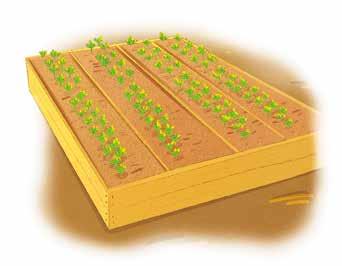
David's family decided to plant corn this year. They planted 23 corn plants in 4 rows. How can David find the total number of corn plants?
To find the number of corn plants, we multiply by . Use the pictures to help solve the multiplication problem.
Set up the problem.
Multiply the ones. Regroup. 4 × 3 ones = 12 ones 12 ones is 1 ten and 2 ones.
Multiply the tens. Regroup. 4 × 2 tens = 8 tens 8 tens + 1 ten = 9 tens
Multiply.
Rewrite and multiply.
Read the problem. Then solve.
31. A candy company packs 7 pieces of candy into each bag. If they fill 43 bags, what is the total number of candies?
32. A large garden has 55 rows of rose bushes. Each row has 9 bushes. How many rose bushes are there in the garden?
33. What is 627 � 3?
AND CONNECT
How many cups of food does a catfish eat in 4 weeks?
How many cups does a catfish eat in a week?
We want to know how many cups a catfish eats in weeks.
Multiply by to find the amount.
Multiply the ones. Regroup if needed. 4 × 5 = 20 Carry the 2.
Multiply.
Rewrite and multiply.
Read the problem. Then solve.
31. A candy bar costs 97¢. How much will Thomas spend if he buys 8 candy bars?
32. Each student in class has 8 pens in their desk. If there are 32 students in class, how many pens are in all the desks?
33. What is 865 � 7?
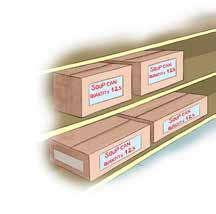
Raymond is working at the local supermarket on Sunday morning. He is unpacking 4 crates of soup cans. Each crate holds 125 cans of soup. How many soup cans is he going to unpack in total?
To find the total number of soup cans, multiply by .
Multiply the ones. Regroup.
4 × 5 ones = 20 ones 20 ones is 2 tens
Multiply the tens. Regroup.
4 × 2 tens = 8 tens 8 tens + 2 tens = 10 tens 10 tens is 1 hundred
Multiply the hundreds.
4 × 1 hundred = 4 hundreds 4 hundreds + 1 hundred = 5 hundreds
Multiply.
Rewrite and multiply.
Read the problem. Then solve.
29. David usually bikes 216 miles a week going to and from work. At this rate, how many miles will he bike after 4 weeks?
30. There are 9 students in the poetry club. Last year, each student wrote 304 poems. How many poems did the students in the club write in all?
What is 9,523 � 3?
How much time does Joseph spend on homework in a month?
How many minutes does Joseph spend on homework in a week?
There are weeks in a month.
Multiply by to find the total amount.
Joseph spends minutes a month on homework.
Minutes Spent on Homework in a Week
Fill in the missing numbers.
Multiply.
Rewrite and multiply.
Read the problem. Then solve.
29. A company ships out water in crates. Each crate contains 288 bottles of water. If a store orders 5 of these crates, how many water bottles did the store order?
30. On an average Sunday, 904 people visit the city zoo. If the attendance is the same for 4 Sundays in a row, what is the total number of visitors during those four days?
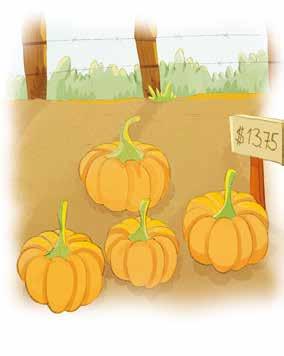
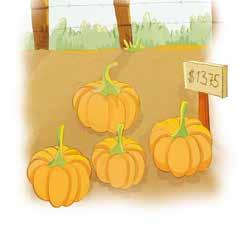
David has 4 special pumpkins he plans on selling for $13.75 each. How much money will he make if he sells all of his pumpkins?
We want to know how much money pumpkins cost. Each pumpkin cost . To find the total cost, we multiply by .
Multiply to solve. Remember to add a dollar sign and decimal for the correct solution.
× 9
× 4
Rewrite and multiply.
Read the problem. Then solve.
19. Max attends a local antique museum 3 times a week. If tickets cost $5.25 each, how much will Max spend each week?
20. Josh washes cars after school. He charges $11.50 per car. If he washed 9 cars, how much money did he make?
21. Donuts cost $7.30 per dozen. Donald buys 6 dozen for his neighbors. How much did Donald spend?
Find the missing digits.
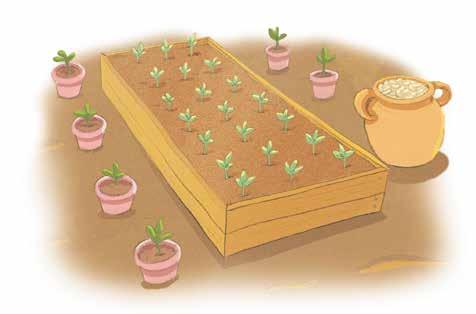
David has learned a lot about farming during this season. Next year, he hopes to plant 47 rows of bean plants, with 8 plants in each row. How many bean plants will he need?
To find the number of bean plants, we multiply by .
Multiply to solve. Remember to add a dollar sign and decimal point when necessary.
Rewrite and multiply.
68 × 7 =
Read the problem. Then solve.
19. A restaurant purchased 2 boxes of ketchup packets. Each box has 342 packets. How many ketchup packets in total did the restaurant purchase?
20. A candy factory makes 2 pieces of candy each day. How many pieces of candy will the factory make in 212 days?
Multiply.
Round each number to the highest place value.
In Chapter 7 we will learn about
Ibus. Eculpar ciminve ndisquia cus millorum est, alibea dunt asinver untiatius il idunt auditia spitios autaturionet fugit lanistruptae vollabo ratectum experatur si dem net et arum iunto ero blaut aut estiorum
• Ium que conectas magnate moluptas eos sim vollore stionsenis nossi
• Ta simi, officimendae volupta temquiat es moloreprae nonsequ a
• Cea cusda aut et modicidebit licaboremos ulparchic totasperchil incid et voloreptatur accum que ad es veligni
• Hilibusam faccae dolorup tatquuntus dolorum, sequibeatem eum et volut erio beatae venimus ate ne et eat.
Multiply.
LEARN AND CONNECT
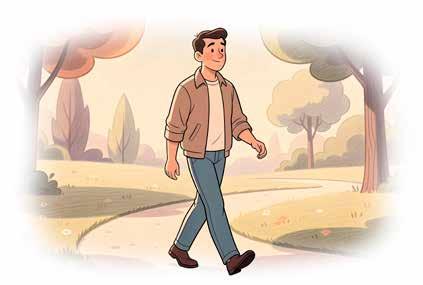
Ben is counting his steps while walking. He walks 28 steps per minute. How many steps will he walk in 60 minutes?
To find the number of steps, we multiply by .
Write a 0 as a placeholder.
Use a zero as a placeholder. Then, multiply.
Multiply.
Read the problem. Then solve.
31. A school cafeteria serves 346 meals a day. How many meals will it serve in 20 school days?
32. A farmer has 25 crates of apples. Each crate contains 30 pounds of apples. What is the total weight of the apples?
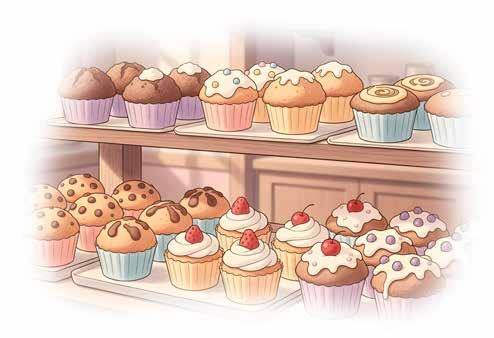
A bakery makes 23 different types of muffins. It makes 32 muffins of each type. How many muffins does the bakery make?
To find the number of muffins, we multiply by .
by the ones.
by the tens.
Read the problem. Then solve.
27. A large building has 34 floors. Each floor has 21 rooms. How many rooms are in the building?
A camp sells T-shirts for $14 each. If they sell 12 T-shirts, how much money do they make?
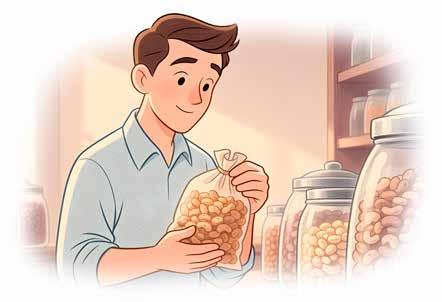
Mark buys 24 ounces of nuts. Each ounce costs $0.83. How much did Mark spend?
To find the amount Mark spent, we multiply by .
Read the problem. Then solve.
24. A bakery makes 36 loaves of bread every day. Each loaf is cut into 21 slices. How many slices of bread does the bakery make in a day?
25. A large parking lot has 41 rows. Each row can fit 12 cars. What is the total number of cars that can park in the lot?
What is 236 � 45?
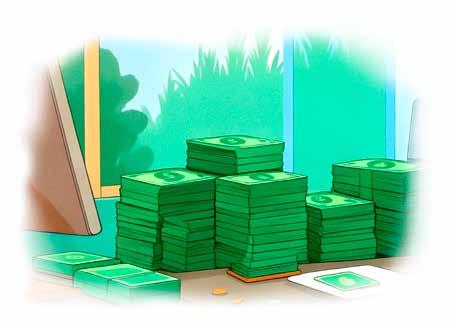
Elon puts $15 into a special savings account every day. How much money will he have put into the account, after one year?
Hint: There are 365 days in a year.
To find the amount Elon saved, multiply by .
986 × 23 =
Read the problem. Then solve.
22. There are 120 tables at the school dinner with 24 people sitting at each table. How many people are at the dinner?
23. A grocery store receives a shipment of 165 cases of cereal. Each case contains 12 boxes of cereal. How many boxes of cereal did the store receive?
CHALLENGE
What is 742 � 423?
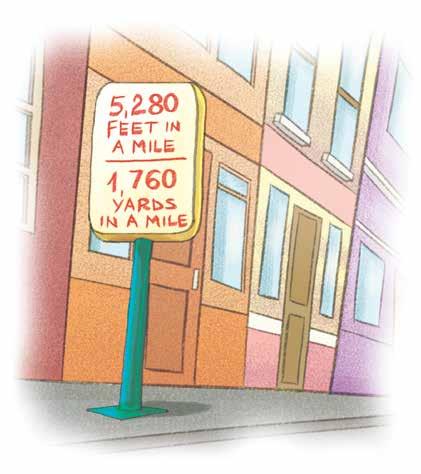
The Ridge Creek Bike Race is 24 miles along the edge of Ridge Creek that runs through the town. About how many yards is that?
To estimate the number of yards, we round and to the highest place value and multiply.
24 rounds down to 1,760 rounds down to
20 × 2,000 = 40,000 yards in the Ridge Creek Bike Race. APPLY LEARN AND CONNECT
Round to the highest place value and then solve.
Find the exact answer. Then, round to estimate the answer.
Read the problem. Then solve.
13. There are 17 crayons in each box, and there are 29 boxes. About how many crayons are there in total?
14. The mail room at school mails 48 letters a day. There are 19 days left of school. About how many more letters will get mailed before school ends?
Read the problem. First, find the exact answer. Then, estimate to check your answer.
15. There are 26 oranges on each orange tree. My farm has 51 orange trees. How many oranges does my farm have?
Exact answer: oranges
Estimate: About oranges
17. What is 742 � 423?
16. A factory makes 345 gloves per hour. If the factory workers work for 18 hours, how many gloves will they produce?
Exact answer: gloves
Estimate: About gloves
Multiply.
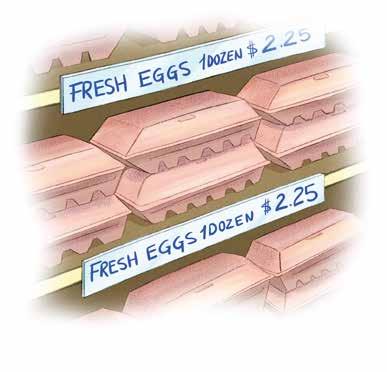
The farm stand sells each carton of one dozen eggs for $2.25. How much money did they make if they sold 42 dozen eggs?
To find the amount of money the farm made, we multiply by .
Add the dollar sign and decimal when you finish multiplying. 2.25 × 42 450 + 9000 $94.40
The farm stand made selling 42 cartons of eggs.
Read the problem. Then solve.
1. A gallon of milk costs $3.75. If a family buys 4 gallons, how much will they spend in total?
2. A bus ticket costs $2.50. If a group of 7 people each buy a ticket, what is their total cost?
3. Mr. Clark has to buy 12 textbooks for his class. Each book costs $8.50. How much money does Mr. Clark need to buy the books?
4. Larry wants to buy 20 pounds of seeds for his bakery. One pound of seeds costs $4.25. How much money will Larry have to spend?
1. Timothy studies for 60 minutes a day every day in the month of July. After 31 days, how many minutes has Timothy studied?
2. Harry picks 28 lemons off every tree on his lemon farm. There are 30 trees on the farm. How many lemons does Harry pick?
3. Frank charges $16 for a haircut. Today, Frank gave 18 haircuts. How much money did he make?
4. Mr. Bates orders 24 pencils for each classroom in the school. There are 21 classrooms. How many pencils are ordered in total?
5. Ned is making goodie bags for Martin's party. He puts 12 pieces of candy in each bag. There are 25 bags to fill. How much candy does Ned need?
6. Ken practices piano for about 80 minutes a week. After 12 weeks have passed, about how many minutes will Ken have practiced?
Read the problem. Estimate to solve each step.
7. Sal makes 67 oatmeal cookies and 54 sugar cookies a day. About how many cookies does he make in a week?
Sal makes about cookies a day.
He makes about cookies in a week.
8. Ella makes 18 necklaces that each have 42 beads. She has 283 beads left over. About how many beads did she have to begin with?
Ella used about beads to make necklaces.
Ella started with about beads.
CHALLENGE
9. Baker John needs 24 pounds of apples to bake pies. Each pound of apples costs $12.25. How much money does Baker John need to buy the apples?
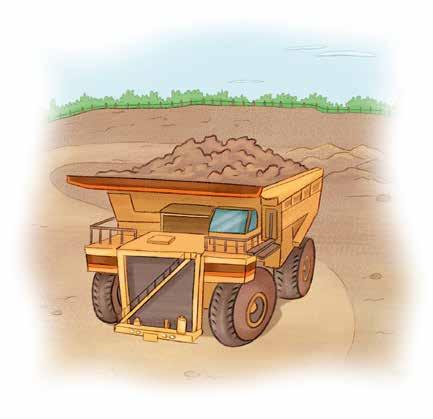
A dump truck can hold 674 pounds of dirt. If a fully-loaded truck makes 16 trips to the garden center, how many pounds of dirt can it move?
To find the number of pounds of dirt, we multiply by .
Multiply with money. Remember to add the dollar sign and decimal point.
Round to the highest place value and then solve.
853 × 44
Read the problem. Then solve.
17. It takes Robert 36 minutes to bake a tray of cookies. He needs to bake 12 trays of cookies in total. How many minutes will he spend baking cookies in total?
18. Gary needs to buy 15 books, one for each of his friends. Each book costs $11.50. How much money does Gary need to buy the books?
19. A small potted plant costs $5.25. If a landscaper buys 30 plants for a new garden, what is the total cost?
20. A bottle of fancy olive oil costs $8.99. If a restaurant buys 15 bottles, what is the total cost?
What is $45.26 � 84?
Add.
Subtract.
Multiply.
Write < or > to compare the numbers.

In Chapter 8 we will learn about
Ibus. Eculpar ciminve ndisquia cus millorum est, alibea dunt asinver untiatius il idunt auditia spitios autaturionet fugit lanistruptae vollabo ratectum experatur si dem net et arum iunto ero blaut aut estiorum
• Ium que conectas magnate moluptas eos sim vollore stionsenis nossi
• Ta simi, officimendae volupta temquiat es moloreprae nonsequ a
• Cea cusda aut et modicidebit licaboremos ulparchic totasperchil incid et voloreptatur accum que ad es veligni
• Hilibusam faccae dolorup tatquuntus dolorum, sequibeatem eum et volut erio beatae venimus ate ne et eat.
Fill in the missing numbers.
LEARN AND CONNECT
Count the number of shoes. Circle pairs of shoes. How many children can get a pair?
There are shoes.
Each child wears shoes.

There are shoes for 9 children.
APPLY
There are 2 teams. Write the number of boys on each team.
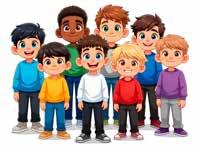
How many boys?
How many teams? How many on each team?
Draw a picture or an array to solve.
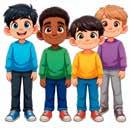
How many boys?
How many teams?
How many on each team?
Fill in the missing number.
1. × 7 = 21
5. × 8 = 16 9. × 5 = 15
Divide.
Read the problem. Then solve.
37. A teacher has 14 books. She wants to stack them in 2 piles. How many books will be in each pile?
38. Sarah has 12 flowers. She wants to arrange them in vases, with 3 flowers in each vase. How many vases will she need?
39. What is 100 ÷ 2? How do you know?
Fill in the missing numbers.
Count the cookies and boxes. How many cookies can fit into each box if they each have the same amount?
There are cookies.
There are boxes.
LEARN AND CONNECT APPLY



4 cookies can fit in each box.
Five pennies are equal to one nickel. Write the number of nickels.
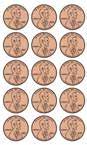
How many pennies?
How many pennies in a nickel?
How many nickels?
15 ÷ 5 =
Draw a picture or an array to solve.
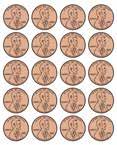
How many pennies?
How many pennies in a nickel?
How many nickels?
20 ÷ 5 =
Fill in the missing number.
1. 4 × 6 = 5. × 9 = 45
Read the problem. Then solve.
39. A baker made 25 cookies. He wants to give them to 5 friends, with each person getting an equal amount of cookies. How many cookies does each friend receive?
40. There are 36 people waiting to ride a small amusement park ride. Each car on the ride holds 4 people. How many cars will be filled? cars
41. I have 40 coins. I divide them into 4 piles. Then, I give away 5 coins from each pile. How many coins do I have left in each pile?
Fill in the missing numbers.
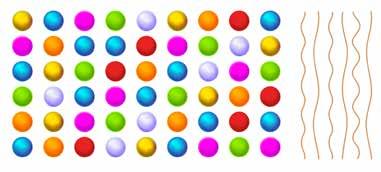
Count the beads and strings. If the same number of beads are strung on each string, how many beads will be on each bracelet?
There are 54 beads.
There are 6 strings.
LEARN AND CONNECT APPLY
Each bracelet has 9 beads.
There are 7 days in a week. If I spent all the money in one week, how many dollars did I spend each day?
How many dollars? How many days? How many per day?
Draw a picture or an array to solve.
in the missing number.
Read the problem. Then solve.
39. A class of 30 students needs to form 6 equal groups for a project. How many students will be in each group?
students
40. There are 56 people waiting to ride a small train. Each car on the train holds 7 people. How many cars will be filled? cars
41. Solve the riddle. When I am divided by 6, the result is the same as when 5 is added to the number 2. What number am I?
Fill in the missing numbers.
AND CONNECT
Count the number of pizza slices. Each pie had 8 slices. How many pies were there?
There were 24 slices.
Each pizza had 8 slices.

There were 3 pies.
9 muffins can fit in each box. Write the number of boxes needed.

How many muffins?
How many in each box?
How many boxes?
27 ÷ 9 =
Draw a picture or an array to solve.
How many muffins?
How many in each box?
How many boxes?
18 ÷ 9 =
Fill in the missing number.
× 2 = 18
× 8 = 64
Read the problem. Then solve.
39. There are 40 cookies to share equally among 8 children. How many cookies does each child get?
40. A garden has 63 roses arranged in rows and columns. If there are 9 roses in each row, how many columns are there? columns
41. If 32 divided by 8 is 4, what is 32 divided by 16?
Any number divided by itself equals 1.


There are 4 slices. There are 4 plates. Each plate has 1 slice.
0 divided by any number equals 0.

There are 0 slices. There are 4 plates. Each plate has 0 slices.


There are 4 slices. There is 1 plate. Each plate has 4 slices.
Any number divided by 1 equals itself. You cannot divide by 0.

There are 4 slices. There are 0 plates.
Write the number of roses in each vase.

How many roses?
How many vases?

How many roses in each vase?
2 ÷ 1 =
How many roses?
How many vases?
How many roses in each vase? 2 ÷ 2 =
Read the problem. Then solve.
39. There is a group of 5 friends who have a bag of 5 muffins. How many muffins does each friend get if they share them equally? muffin
40. Water bottles cost $2. How many water bottles can a person buy with $0? water bottles
41. Use a multiplication fact to explain why you cannot divide by 0.
You can use multiplication and division fact families to find missing numbers.
Fill in the missing numbers.
Hint: When a number is multiplied by itself, there are just two facts.
Hint: When a number is multiplied by itself, there are just two facts.
Fill in the missing number.
41. The division problem is ? ÷ 4 = ?. The answer is a number that is less than 5. What are the possible answers for the missing numbers?
Multiply. LEARN AND CONNECT
When we divide multiples of 10, 100, and 1,000, we see a distinct pattern. 150 ÷ 50 = 3 1,500 ÷ 50 = 30 15,000 ÷ 50 = 300
÷ 50 = 3,000
Cross out the same number of zeros from both numbers. Add the number of zeros left to your answer. Tip!

Use patterns to divide.
Read the problem. Then solve.
31. A factory produces 800 bottles of soda per hour. If they are packed into cases of 20 bottles, how many cases can they fill in an hour?
32. An airline has to transport 36,000 passengers. If each plane holds 90 passengers, how many planes are needed?
How many does each child get? How many are left over?
20 candies shared equally with 3 children.
Each child gets 6 candies.
There are 2 candies left over.
The amount left over is called the remainder. The remainder is 2.


Circle equal groups. Write how many groups or how many in each. Write how many are left over.
1. Each shirt needs 5 buttons.

How many shirts?
How many left over?
3. Taffies divided equally into 4 bags

How many in each bag?
How many left over?

2. Each letter needs 2 stamps.
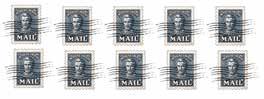
How many letters? How many left over?
4. Blocks are shared equally between 3 children.


How many does each child get?
How many left over?
Make equal groups. Write how many are left over.
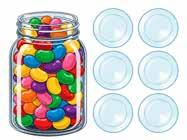
How many on each plate?
How many are left over?
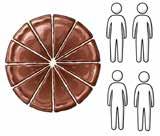
How many slices per person?
How many are left over?
Draw a picture to answer the question.
4. There are 50 paintbrushes. Each painter needs 6.

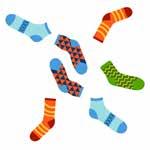
How many pairs?
How many without a pair?
5. 5 sticker sheets each have the same amount of stickers. There are 43 stickers in all.
How many painters?
How many are left over?
Draw a picture. Then solve.
6. Each beach ball costs $7. How many beach balls can you buy with $18? How much money will you have left over?
How many on each sheet?
How many are left over?
balls $ left over
Divide.
Use these rules to know if a number can be divided into equal groups without any left over.
A number is divisible by 10 9 5 3 2
If it ends with 0, 2, 4, 6, or 8
If it equals 3, 6, or 9 when you add up all its digits (if it has more than one digit, add the digits again)
If it ends with a 0 or a 5
If it equals 9 when you add up all its digits (if it has more than one digit, add the digits again)
If it ends with a 0
What numbers can 36 divide by with none left over?
Does 36 end with 0, 2, 4, 6, or 8? Is 36 divisible by 2?
Does 36 equal 3, 6, or 9 when you add up all its digits? Is 36 divisible by 3?
Does 36 end with a 0 or a 5? Is 36 divisible by 5?
Does 36 equal 9 when you add up all its digits? Is 36 divisible by 9?
Does 36 end with a 0? Is 36 divisible by 10?
Vocabulary
Divisible - can be divided without any left over
For each number, circle the number or numbers it is divisible by. Hint: There may be no correct numbers to circle.
Read the problem. Then solve.
17. There are 50 members in the marching band. Can they line up in 2, 3, 5, 6, 9, or 10 equal rows? List all the possibilities.
18. Jeff has 36 books. He wants to place them on shelves in equal numbers. Can he place them on 2, 3, 5, 6, 9, or 10 shelves? List all the possibilities.
19. Any number that is divisible by 10 is also divisible by 2 and 5. Can you explain why?
REVIEW
Division is about equal groups. It can be used to find…
… the amount of groups
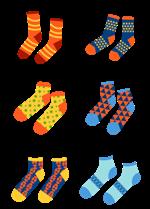
How many pairs?
… the amount in each group
How many in each sack?
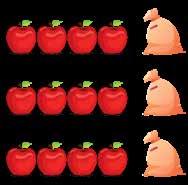
… the amount left over
How many extra?

Write how many are left over.
31. 34 stickers with 6 stickers on each page.
How many pages?
How many are left over?
Read the problem. Then solve.
33. A group of 5 friends paid $25 for a pizza. They want to split the cost evenly. How much does each person have to pay?
32. 24 children divided into teams of 5.
How many teams?
How many are left over?
34. Emily has $18. She wants to buy toy cars that cost $3 each. How many toy cars can she buy?
35. If you divide me by 7, the answer is a whole number. If you divide me by 2, you also get a whole number. My number is between 20 and 30. What number am I?
Subtract.
Multiply. Divide.
Add or subtract the money.
In Chapter 9 we will learn about
Ibus. Eculpar ciminve ndisquia cus millorum est, alibea dunt asinver untiatius il idunt auditia spitios autaturionet fugit lanistruptae vollabo ratectum experatur si dem net et arum iunto ero blaut aut estiorum
• Ium que conectas magnate moluptas eos sim vollore stionsenis nossi
• Ta simi, officimendae volupta temquiat es moloreprae nonsequ a
• Cea cusda aut et modicidebit licaboremos ulparchic totasperchil incid et voloreptatur accum que ad es veligni
• Hilibusam faccae dolorup tatquuntus dolorum, sequibeatem eum et volut erio beatae venimus ate ne et eat.
The same amount goes in each sack. Write the amount in each sack and the amount left over.


Mark has $19 to spend on potato chips. Each bag costs $3. How many bags can he buy? How much money will he have left over?
To find the number of bags, divide by .
The amount of money left over is called the remainder.

but close to,
Vocabulary
Remainder - the amount left over in a division problem
Divide.
Rewrite and divide.
Read the problem. Then solve.
24. A baker has 17 cookies to put into bags. Each bag can hold 5 cookies. How many full bags of cookies can the baker make? How many cookies will be left over?
25. A gardener has 19 flowers to plant in rows. Each row can hold 6 flowers. How many full rows can the gardener plant? How many flowers will be left over?
26. Each container holds 6 eggs. How many containers are needed for 25 eggs?
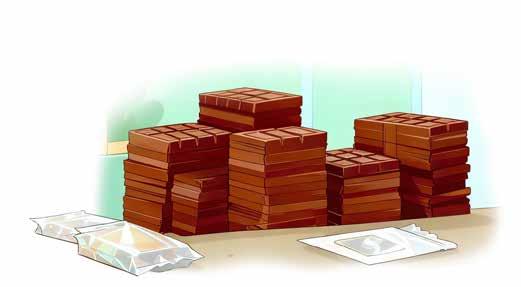
Maria has 37 small chocolate bars that she wants to put into party bags. Each bag can hold 8 chocolate bars. How many full party bags can Maria make, and how many chocolate bars will be left over?
To find the number of bags, divide by .
How can Maria check her work?
To check division, multiply the divisor by the quotient. Then, add any remainder. If the sum is the same as the dividend, the answer is correct.
Vocabulary
Dividend - the
Divisor - the number you divide by in a division problem
Divide. Check your work.
Rewrite and divide. Check your work.
Read the problem. Then solve. Check your work.
14. A teacher received 50 brand new pencils. She wants to divide them equally among 6 student groups for an art project. How many pencils will each group receive, and how many pencils will be left over?
15. A caterer has 46 mini-muffins and wants to put them onto trays that hold 7 muffins each. How many trays does he need? Explain.
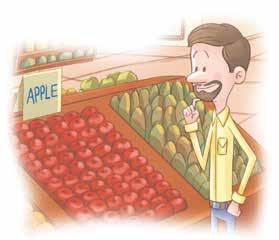
Mr. Stewart is stocking apples at the supermarket. He has 72 apples to place in 6 rows. How many apples can he put in each row?
To find how many apples will be in each row, we divide by . Divide.
1 Divide 7 ÷ 6 = 1
2 Multiply 1 × 6 = 6
3 Subtract 7 − 6 = 1 Make sure 1 < 6
1 Divide 12 ÷ 6 = 2
2 Multiply 2 × 6 = 12
4 Remainder There are 0 left over (no remainder) 1 Bring Down The ones digit (2)
3 Subtract 12 − 12 = 0 Make sure 0 < 6
Divide.
Rewrite and divide.
Read the problem. Then solve.
24. A carpenter has a piece of wood that is 72 inches long. He needs to cut it into 3-inch sections. How many 3-inch sections can he cut?
25. A farmer picks 65 apples and wants to put 5 apples into each bag. How many bags can he fill?
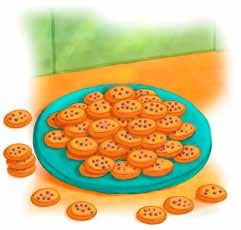
There are 59 mini cookies. 4 friends want to share them so each of them get the same amount. How many cookies can each friend get? How many will be left over?
To find out how many cookies each person can get and how many are left over, we divide by .
1 Divide 5 ÷ 4 = 1 2 Multiply 1 × 4 = 4 3 Subtract 5 − 4 = 1 Make sure 1 < 4
Divide.
Read the problem. Then solve.
24. A gardener grew 50 carrots. She wants to bundle them into groups of 8. How many full bundles can she make? How many carrots will be left over?
25. You have 35 balloons and want to give 6 balloons to each of your friends. How many friends can receive a full set of balloons? How many balloons will be left over?
26. A librarian has 45 books. Each shelf can hold a maximum of 7 books. If the librarian only wants full shelves, how many more books would she need to buy?
Fill in the missing number.
LEARN AND CONNECT
There are 75 guests. Each table seats 6 people. How many tables are needed for all the guests?
To find the number of tables, we divide by .
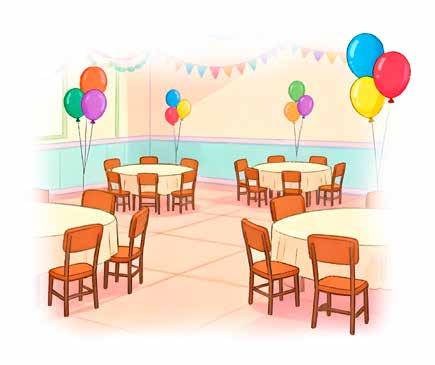
There will be 12 full tables. Since there will be another 3 guests at a table that is not full, 13 tables will be needed.
Sometimes, the remainder affects the answer, and sometimes it does not.

Solve each problem.
1. A company needs to ship 86 shirts. They can fit 7 shirts in each shipping box. How many boxes are needed to ship all of the shirts?
3. A seamstress has a roll of fabric that is 47 feet long. She needs 3 feet of fabric to make one dress. How many dresses can she make?
2. A box of markers costs $8. How many boxes can you buy with $94?
4. A chef needs to buy 99 hotdogs. The hotdogs come in packages of 8. How many packages does he need to buy?
Read the problem. Then solve.
17. Ilana makes $5 an hour babysitting. She needs $68 to buy a new art set. How many hours does she need to babysit to pay for the art set? Divide.
16. A warehouse needs to move 74 large carpets. Their forklift can only move 3 carpets at a time. How many trips does the forklift have to make to move all the carpets?
18. Sally has 47 socks in her laundry basket. How many pairs does she have?
19. A librarian has a budget of $85 to buy new books. If each book costs $6, how many books can the librarian buy?
20. Each muffin tray holds 6 muffins. A baker fills 7 full trays plus one tray with 4 muffins. How many muffins did she make?
Jack was organizing 20 jars at a supermarket. There was space for 6 jars on each shelf. How many shelves did Jack fill?
To find out how many shelves were filled, we divide by .
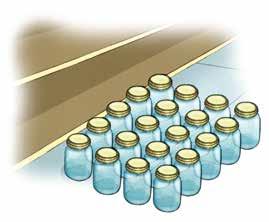
Understand the remainder
There will be full shelves and one shelf with jars.
In total, Jack used shelves.
Divide. Check your work.
Rewrite and divide. Check your work.
Read the problem. Then solve.
24. A 55-foot roll of ribbon is used to wrap presents. Each present uses 3 feet of ribbon. After wrapping as many presents as possible, how many feet of ribbon are left over?
25. A child has a box with 89 Lego bricks and wants to build towers that are 7 bricks tall. How many complete towers can they build?
26. A baker has 50 cups of flour. A large cake recipe requires 7 cups of flour, and a small cake recipe requires 4 cups. How many large and small cakes could the baker make without having leftover flour?
For each number, circle the number or numbers it is divisible by. Hint: There may be no correct numbers to circle.
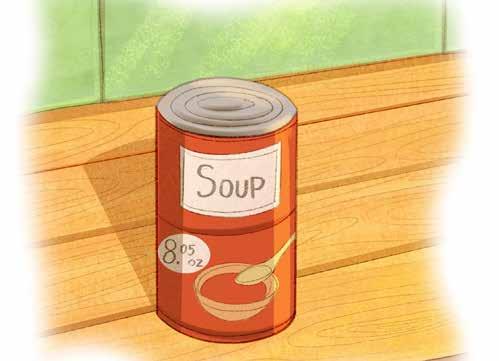
In Chapter 10 we will learn about
Ibus. Eculpar ciminve ndisquia cus millorum est, alibea dunt asinver untiatius il idunt auditia spitios autaturionet fugit lanistruptae vollabo ratectum experatur si dem net et arum iunto ero blaut aut estiorum
• Ium que conectas magnate moluptas eos sim vollore stionsenis nossi
• Ta simi, officimendae volupta temquiat es moloreprae nonsequ a
• Cea cusda aut et modicidebit licaboremos ulparchic totasperchil incid et voloreptatur accum que ad es veligni
• Hilibusam faccae dolorup tatquuntus dolorum, sequibeatem eum et volut erio beatae venimus ate ne et eat.
Dennis and his brother Arnold are going to paddle their boat 486 feet across the pond at their grandfather's farm. What is the length of the pond in yards? Hint: There are 3 feet in a yard.
To find out how many yards the pond is, we divide by .
Divide the hundreds.
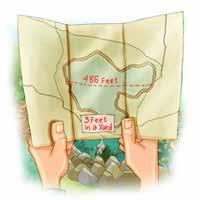
Divide. Rewrite and divide.
Read the problem. Then solve.
21. A group of 8 friends made $968 at a bake sale. If they divide the money equally, how much will each person receive?
22. An artist has 655 glass beads to decorate 5 mosaics. If they use the same number of beads for each, how many beads will be on each mosaic?
23. There are 246 cupcakes. Each box holds either 2 or 3 cupcakes. If the same size boxes are used for all the cupcakes, which size would result in an even number of boxes?
The stocker has 748 cans of soup to put on the supermarket shelves. The cans are arranged in 6 even rows. How many cans will be on each shelf? How many cans will be left over?
To find out how many cans are in each row, we divide by .
Divide.
Rewrite and divide.
Read the problem. Then solve.
21. A construction crew has 671 bricks to build a wall. If there are 5 sections of the wall, how many bricks can go in each section, and how many bricks will be left over?
22. A research team is studying a group of 675 ants. They want to divide the ants into containers, with 6 ants in each container. How many full containers can they create, and how many ants will be left over?
23. How can you check the answer of 514 ÷ 3 = 171 R1?
At the race, the cars do 4 laps around the track. At the end of the race, they have traveled 424 feet. How many feet do they travel in each lap?
To find the number of feet in each lap, we divide by .
Divide.
Rewrite and divide.
Read the problem. Then solve.
21. A factory produced 502 toy cars. The cars are to be packaged into boxes, with 5 cars per box. How many full boxes can the factory pack, and how many cars will be left over?
22. A gardener has 321 seeds to plant in pots. If each pot gets 3 seeds, how many pots can the gardener fill?
What is 300 ÷ 2?
LEARN AND CONNECT
Sarah has a book with 384 pages. She wants to read the same number of pages each day for 6 days. How many pages will she need to read per day to finish the book?
To find the number of pages a day, we divide by . Divide.
6 384 Since you cannot divide 3 by 6, you must combine it with the next digit and divide 38 by 6.
Divide.
Rewrite and divide.
Read the problem. Then solve.
21. A farmer has 294 eggs to pack into cartons. Each carton can hold 6 eggs. How many cartons will the farmer need?
22. A gym teacher has 156 tennis balls to divide equally among 9 classes. How many tennis balls can each class receive?
What is 594 ÷ 10?
Max bought 4 flowers to plant. He spent $2.08 in total. How much was each flower?
To find the amount per flower, we divide by . I want to buy 4 flowers. Divide.
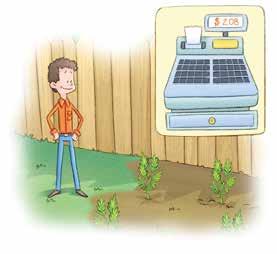
Since you cannot divide 2 by 4, write a 0. Then, divide 20 by 4. Move the dollar sign and decimal up.
Remainder There are none left over.
Divide.
Rewrite and divide.
Read the problem. Then solve.
21. A pack of 4 soda bottles costs $1.44. What is the cost of one soda bottle?
22. 3 friends want to buy a gift for their teacher that costs $7.32. If they each contribute the same amount, how much will each student pay?
23. What is $65.00 ÷ 5?
A farmer harvested 4,824 strawberries. He wants to pack them into 6 boxes, with an equal number of strawberries in each box. How many strawberries will be in each box? To find the number of strawberries in each box, we divide by .
Divide the hundreds. Since you cannot divide 4 by 6, you must combine it with the next digit and divide 48 by 6.
1
3
1
2 Multiply 8 × 6 = 48
3 Subtract 48 − 48 = 0 Make sure 0 < 6
4 Bring down The tens digit (2)
Divide.
Rewrite and divide.
Read the problem. Then solve.
12. A family is driving 2,114 miles across the country. They plan to split the drive evenly over 7 days. How many miles will they need to drive each day?
13. A factory makes 6,745 water bottles per week. If they work 5 days a week, and they make the same number of bottles each day, how many water bottles do they make per day?
14. What is $85.24 ÷ 4?
Hector was creating an art project. He had 150 inches of yarn. He needed to cut the yarn into 8 equal pieces. How long will each piece be?
To find out how long each piece will be, we divide by .
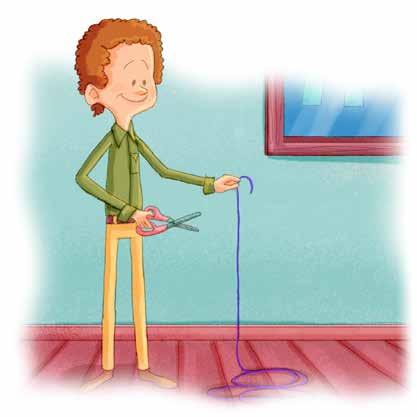
To check division, multiply the divisor by the quotient. Then, add any remainder. If the sum is the same as the dividend, the answer is correct.
Divide.
Rewrite and divide.
Read the problem. Then solve.
13. 4,560 dollars are raised in a fundraiser. If this money is to be split equally among 3 different organizations, how much money will each organization receive?
14. A school purchased 819 pencils to be divided equally among 9 third-grade classrooms. How many pencils will each classroom receive?
15. Can you tell which problem will give the bigger answer? How? 7,358 ÷ 3 7,358 ÷ 9
Subtract.
Multiply.
Divide.
Round to the highest place value. Estimate the sum or difference.
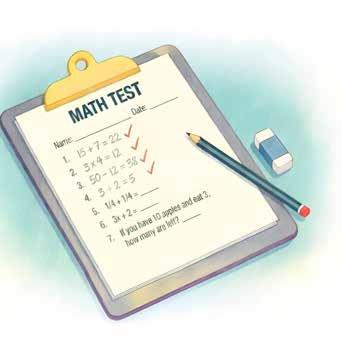
In
Chapter 11 we will learn about
Ibus. Eculpar ciminve ndisquia cus millorum est, alibea dunt asinver untiatius il idunt auditia spitios autaturionet fugit lanistruptae vollabo ratectum experatur si dem net et arum iunto ero blaut aut estiorum
• Ium que conectas magnate moluptas eos sim vollore stionsenis nossi
• Ta simi, officimendae volupta temquiat es moloreprae nonsequ a
• Cea cusda aut et modicidebit licaboremos ulparchic totasperchil incid et voloreptatur accum que ad es veligni
• Hilibusam faccae dolorup tatquuntus dolorum, sequibeatem eum et volut erio beatae venimus ate ne et eat.
DAILY REVIEW
A fraction can show parts of a whole:
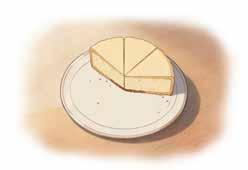
The cake was divided into 8 equal slices. There are 3 slices left.
We can write the fraction of cake left.
A fraction can show parts of a set:
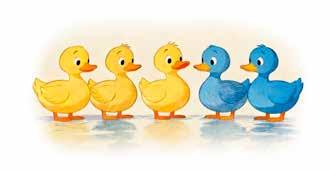
There are 5 ducks. 2 of them are blue.
We can write the fraction of ducks that are blue.
Slices left 3 Equal parts 8 = numerator denominator 2 Blue ducks All the ducks 5 = numerator denominator
There are three-eighths of the cake left. Two-fifths of the ducks are blue.
Write a fraction to show the part of chocolate bar that is left.
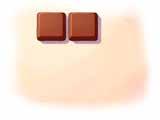
Vocabulary
Numerator - the top number in a fraction
Denominator - the bottom number in a fraction
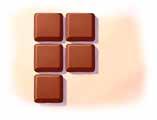
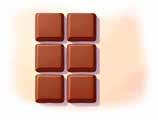
Write the fraction that shows the part that is red.
Write the fraction that shows the part that is not red.


Solve each problem.
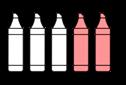

13. Jack had 10 toy cars, 8 were red. What fraction of his cars were red?

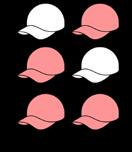
14. There are 9 pens in the drawer. 3 of them are blue. What fraction of the pens are blue?
Shade in each figure to show the fraction give.
Write the fraction to show what part of each figure is blue.
Two or more fractions can show the same amount. We call them equivalent fractions.
We can use a picture to make equivalent fractions. Color the number of pieces that show the same amount.
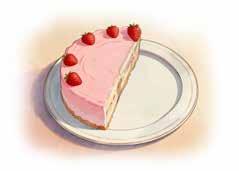
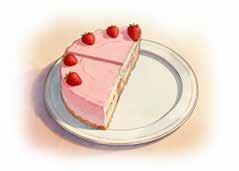
When we color 4 slices in the last cake, it shows the same amount as 1 2 and 2 4 .
Color the number of pieces that show the same amount. Write the missing numerator.
Vocabulary
Equivalent fractions - two or more fractions that show the same amount
Numerator - the top number in a fraction
Denominator - the bottom number in a fraction
Color the number of pieces that show the same amount. Write the missing numerator.
Use the pictures to solve the problem.
10. Kim is allowed to eat 1 3 of the chocolate bar. The bar is broken into 6 equal pieces. How many pieces is Kim allowed to eat?
11. The recipe needs 1 2 cup of sugar but Megan can only find the 1 4 measuring cup. How many 1 4 cups should she use?
Color the number of pieces that show the same amount. Write the missing numerator.
Whatever you do to the top, you must do to the bottom. To find an equivalent fraction, we can multiply the numerator and denominator by the same number.
Find fractions that are equivalent to 1 3 .
Choose a number to multiply by.
Multiply the top. Multiply the bottom.
Multiply the numerator and denominator by the same number to find equivalent fractions.
Vocabulary
Equivalent fractions - two or more fractions that show the same amount
Numerator - the top number in a fraction
Denominator - the bottom number in a fraction
Multiply the numerator and denominator by the same number to find equivalent fractions.
Find three equivalent fractions.
Fill in the missing numbers.
Write the missing numerators.
We can also find an equivalent fraction by dividing the numerator and denominator by the same number.
When we divide, the top and bottom numbers get smaller. This is called simplifying.
Whatever you do to the top, you must do to the bottom.
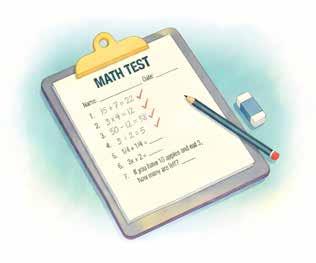
Finishing 4 out of 8 questions is the same as finishing 1 2 the test.
Find a number that the numerator and denominator can both be divided by.
4 and 8 can both can be divided by 4 or 2
Divide the top. Divide the bottom.
APPLY
Divide the numerator and denominator by the same number to simplify the fraction.
Vocabulary
Simplifying a fraction - dividing the numerator and denominator by the same number to make an equivalent fraction with smaller numbers
Equivalent fractions - two or more fractions that show the same amount
Numerator - the top number in a fraction
Denominator - the bottom number in a fraction
A fraction is in simplest form when it can’t be simplified anymore. Write each fraction in simplest form.
Divide by a fraction equal to 1 to simplify the fraction.
We can see fractions on a number line. Fractions that are closer to 1 are bigger than fractions closer to 0.
Shade the number line to show the fraction.
Draw a dot to show where the fraction is on the number line.
Vocabulary
Equivalent fractions - two or more fractions that show the same amount
Numerator - the top number in a fraction
Denominator - the bottom number in a fraction
Write < for less than or > for more than.
Read the problem. Find the answer.
11. A recipe calls for 3 4 of a cup of sugar. You only have a 2 3 of a cup. Is 2 3 of a cup more or less sugar than 3 4 of a cup?
12. Lisa practiced the piano for 5 6 of an hour. Anna practiced for 3 4 of an hour. Who practiced for longer?
Compare the fractions. Explain how you know which is bigger.
13. 158 159 157 158
When fractions have the same denominator, we can compare the numerators. A bigger numerator means a bigger fraction.
If two fractions have different denominators, we can write new equivalent fractions with the same denominator.
Vocabulary
Equivalent fractions - two or more fractions that show the same amount
Numerator - the top number in a fraction
Denominator - the bottom number in a fraction
Find equivalent fractions that have the same denominator. Then, write < for less than or > for more than.
Write > for more than. Write < for less than.
When the numerator of a fraction is bigger than the denominator, it is called an improper fraction. Improper fractions are greater than 1.
Each slice is 1 8 of the pizza.
There are 20 slices.
There are 20 8 of pizza.
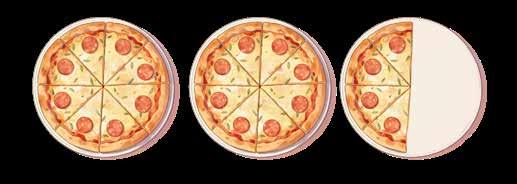
Write an improper fraction for each picture.


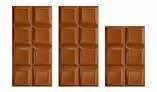
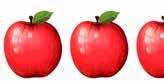
Vocabulary
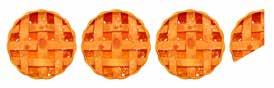
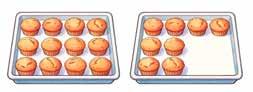
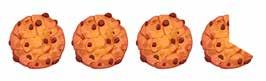
Improper fraction - a fraction where the numerator is greater than the denominator; a fraction greater than one
Numerator - the top number in a fraction
Denominator - the bottom number in a
Write an improper fraction for each picture.

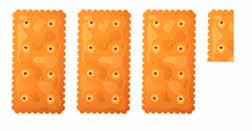
Draw a picture to show each improper fraction.
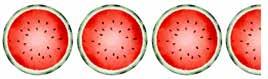
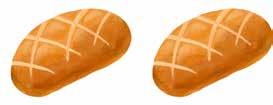
11. A bakery cuts their cakes into fourths and sells them by the slice. If you want 2 whole cakes and 1 extra slice, what fraction of cake do you need to buy?
Draw a picture to show each improper fraction.
Improper fractions can be written as mixed numbers. A mixed number tells the number of wholes and the extra is written as a fraction part.
There are 2 whole cookies.
There is an extra 2 3 of a cookie.
There are 2 2 3 cookies.
We can write the number of cookies in two ways:
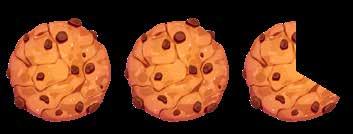
fraction: 8 3
Write a mixed number for each picture.

Vocabulary
Mixed number - a whole number with an extra fraction part
Improper fraction - a fraction where the numerator is greater than the denominator; a fraction greater than one
Numerator - the top number in a fraction
Denominator - the bottom number in a fraction
Draw a picture of the improper fraction. Write the equivalent mixed number.
Draw a picture of the mixed number. Write the equivalent improper fraction.
9. Sara is putting away blocks on the shelves. She has 20 blocks, and each shelf holds 6 blocks. How many shelves will she fill? Write the answer as a mixed number.
Draw a picture to show each mixed number.
We can see mixed numbers on a number line. A mixed number will be between two whole numbers. To see which mixed number is bigger, check which is closer to the largest whole number.
To compare fractions without a number line:

First, compare the whole numbers.
If the whole numbers are the same, compare the fractions.
Vocabulary
Equivalent
Mixed
Numerator
Denominator
Write < for less than or > for more than.
Solve the word problems.
15. The Blue Trail is 5 1 3 miles long. The Red Trail is 5 1 6 miles long. Which trail is longer?
16. During field day, Barry jumped 3 2 5 meters. Marcus jumped 3 4 5 meters. Who jumped a longer distance?
Compare the mixed numbers and improper fractions. Write < for less than or > for more than.
REVIEW LET'S REVIEW
Write < for less than or > for more than. APPLY
Writing Fractions 3 5 of the circles are red 11 4 or 2 3 4 of the circles are blue
Equivalent Fractions
Improper Fractions and Mixed Numbers
Comparing Fractions and Mixed Numbers
Compare the whole numbers. Compare the fractions.
Write the fraction, improper fraction, or mixed number that shows the part that is red.
Color the number of pieces that show the same amount. Write the missing numerator.
Write the missing numerator.
Divide by a fraction equal to 1 to simplify the fraction.
Write < for less than or > for more than.
Add. Subtract.
Multiply.
Divide.
Write the amount of money.




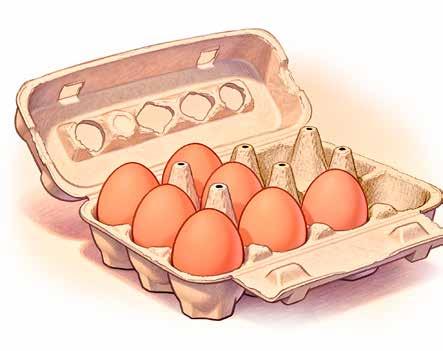
In Chapter 12 we will learn about
Ibus. Eculpar ciminve ndisquia cus millorum est, alibea dunt asinver untiatius il idunt auditia spitios autaturionet fugit lanistruptae vollabo ratectum experatur si dem net et arum iunto ero blaut aut estiorum
• Ium que conectas magnate moluptas eos sim vollore stionsenis nossi
• Ta simi, officimendae volupta temquiat es moloreprae nonsequ a
• Cea cusda aut et modicidebit licaboremos ulparchic totasperchil incid et voloreptatur accum que ad es veligni
• Hilibusam faccae dolorup tatquuntus dolorum, sequibeatem eum et volut erio beatae venimus ate ne et eat.
A unit fraction has a numerator of 1. It shows one equal part of a whole. Every fraction is made up of unit fractions.
3 pieces are shaded. 1 6 + 1 6 + 1 6 = 3 6 3 6 of the whole is shaded. Whole = 6 6
The whole is made up of 6 equal pieces. Each piece is 1 6 .
Identify each unit fraction.
Vocabulary
Unit fraction - a fraction that represents one part of a whole; it has a 1 for a numerator
Numerator - the top number in a fraction that shows the part of the whole
Denominator - the bottom number in a fraction that shows the total amount in the whole
Color in 5 pieces. What size is each piece?
Color in 6 pieces. What size is each piece?
Write a fraction to show the part that is blue.
Color in 2 pieces. What size is each piece?
How many 1 4 size pieces are there?
How many 1 3 size pieces are there?
How many 1 5 size pieces are there?
How many 1 8 size pieces are there?
How many 1 7 size pieces are there?
10. How many 1 4 size pieces are there? 1 4 + + + + + + + +
How many 1 6 size pieces are there?
Write the fraction.
We can use a picture to add fractions. 1 5 of Mr. Smith’s class handed in their homework on Monday. 3 5 of the class handed in their homework on Tuesday. What fraction of the class has handed in their homework?
To find the fraction of the class that handed in their homework add and .
4 5 of the class handed in their homework.
13. George has read 5 12 of the pages in his book. He will read 2 12 more soon. What fraction of George’s book will he have left? Shade. Then add.
Shade the fractions to add.
LEARN AND CONNECT
We can use pictures to subtract fractions.
Hannah has 7 12 of package of eggs. Her recipe uses 4 12 of a package. How much of the package will she have left?
To find the answer, subtract from .
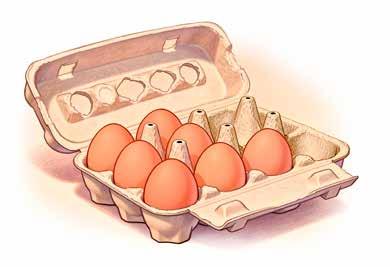
Shade. Then subtract.
Read the problem. Then solve.
13. Max has 1 5 8 chocolate bars. He eats 7 8 of a bar. How much does he have left?
Shade and cross out to subtract.
When the denominators are the same, we can add or subtract the numerators and keep the denominator. 1 6 + 4 6 = 5
Add the numerators.
Keep the denominator.
Subtract the numerators.
Keep the denominator.
Add the fractions.
Subtract the fractions.
Tell whether the number sentence is true or false. Explain. 33. 5 8 + 2 8 = 7 16
Add or subtract.
When we add or subtract mixed numbers with the same denominator, we solve one part at a time.
Add the fractions.
Subtract the fractions.
Subtract the whole numbers.
or subtract.
Subtract.
Identify the unit fraction. LET'S REVIEW
Every fraction is made up of unit fractions.
We can add or subtract fractions using a picture.
Each piece is 1 8
6 pieces are shaded. 6 × 1 8 = 6 8
We can add or subtract fractions with the same denominator by adding or subtracting the numerators and keeping the denominator the same.
Write a fraction to show the part that is blue.
When we add or subtract mixed numbers, we solve one part at a time.
Add.
Subtract.
Multiply.
Divide.
Compare. Write < or > on the line.
Compare. Write < or > on the line.
In
Chapter 13 we will learn about
Ibus. Eculpar ciminve ndisquia cus millorum est, alibea dunt asinver untiatius il idunt auditia spitios autaturionet fugit lanistruptae vollabo ratectum experatur si dem net et arum iunto ero blaut aut estiorum
• Ium que conectas magnate moluptas eos sim vollore stionsenis nossi
• Ta simi, officimendae volupta temquiat es moloreprae nonsequ a
• Cea cusda aut et modicidebit licaboremos ulparchic totasperchil incid et voloreptatur accum que ad es veligni
• Hilibusam faccae dolorup tatquuntus dolorum, sequibeatem eum et volut erio beatae venimus ate ne et eat.
Decimals are another way of writing fractions. We can put a decimal in a place value chart. When a fraction has a denominator of 10, the numerator tells us the number of tenths. The decimal point comes after the ones place. Write the numerator after the decimal.
Write each as a decimal.
Vocabulary
Decimal - A way to write a number out of 10 or 100.
Decimal point - a dot placed between the ones and the tenths places
Tenths - the place value position to the right of the decimal point, equal to that number with a denominator of 10
Write each as a decimal.
Four tenths
Read the problem. Then solve.
19. Richard got eight out of ten questions correct on his last history quiz. Write his score as a decimal.
20. Kane rode 9 out of the 10 rides at the state fair. Write this amount as a decimal. 5. Six tenths
Solve. Then write the decimal.
21. Daniel says that 3 8 is written as the decimal 0.3. Do you agree? Why or why not?
The number of wholes in a mixed number tells us the digit in the ones place. Write the decimal after the ones, then write the numerator. The decimal point says "and".
Write a decimal for each number.
5. Eight
9. four and seven tenths
Write each decimal in words.
1. six and four tenths 13. 4.3 four and 16. 3.8 three and 19. 9.2 nine and 14. 5.9 five nine tenths
9.1 one tenth
1.8 eight tenths
22. The teacher displayed a model and asked students to write the correct decimal. Kelly’s answer was 1.16 because she said there is 1 and sixteen tenths. Was Kelly correct? Why or why not? 2. three and seven tenths 6. four and one tenth 10. Three and 2 10 3. eight tenths 7. Five and 3 10 11. Twelve and 4 10
5 10 12. Two and six tenths
2.7 two and 21. 3.5 three and
Write a decimal.
1. With a 6 in the tenths place. 2. With a 2 in the tenths place. 3. With a 9 in the tenths place. 4. With a 8 in the tenths place.
A fraction with a denominator of 100 can be written as a number with two decimal places. The numerator tells us the number of hundredths.
Write the numerator after the decimal point. You may need to add a zero to make sure the number ends up in the hundredths place.
Write a decimal for each number.
decimal in words. Write the decimals as fractions.
DAILY REVIEW
Write the fractions as decimals.
Which bag weighs more?
Line up the place values.
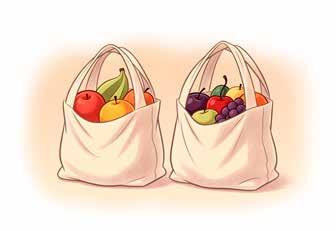
First, compare the digits in the highest place value.
If needed, move to the right until you find digits that are different then, compare them.
Bag B weighs more because 2.26 > 2.21.
We can write the weights in order from least to greatest: 2.21; 2.26
LEARN AND CONNECT APPLY
Write >, <, or = in each circle.
Write >, <, or = in each circle.
Write the numbers in order from least to most.
12.29; 11.26; 12.12
Place the runners in order from fastest to slowest.
Moses and his friends ran a race. Their times are shown below.
We can represent numbers as pictures, words, fractions, and decimals.
To compare numbers, line them up by place value. We start with the digits in the highest place value. We can compare the numbers if they are different. If they are the same, move to the right until the digits are different.
and three tenths
Write the decimal in words.
Write the decimal for each part.
12. Nine and sixty-three hundredths
Six and eight hundredths
Seventy-three hundredths
Write >, <, or = in each circle.
Write the numbers in order from least to most.
Write the missing numerator. Subtract. Multiply.
In Chapter 14 we will learn about
Ibus. Eculpar ciminve ndisquia cus millorum est, alibea dunt asinver untiatius il idunt auditia spitios autaturionet fugit lanistruptae vollabo ratectum experatur si dem net et arum iunto ero blaut aut estiorum
• Ium que conectas magnate moluptas eos sim vollore stionsenis nossi
• Ta simi, officimendae volupta temquiat es moloreprae nonsequ a
• Cea cusda aut et modicidebit licaboremos ulparchic totasperchil incid et voloreptatur accum que ad es veligni
• Hilibusam faccae dolorup tatquuntus dolorum, sequibeatem eum et volut erio beatae venimus ate ne et eat.
Compare.
LEARN AND CONNECT
Points, lines, line segments, and rays help us draw and describe shapes in geometry. Write the name of the figure.
Point An exact spot.
Line A straight path that goes in both directions.
Line Segment
Part of a line that has two endpoints.
Part of a line that has one endpoint and the other side goes on forever in one direction.
Write the name of the figure.
Draw and label the figures.
Name two rays.
Name five line segments on the line.
An angle is formed when two lines meet at a shared point called the vertex. We measure

Obtuse angle More than 90 °
To measure an angle, you can use a tool called a protractor.
One line of the angle is lined up with the bottom of the protractor. To find the measure of the angle, read the number on the scale that the other line crosses through.
APPLY
Identify the type of angle and its measurement.
Type of Angle:
Measurement:
Vocabulary
Type of Angle:
Measurement:
Degrees - the unit in which we measure an angle. There are 180 degrees possible.
Protractor - a tool used for measuring angles in degrees. It is formed in the shape of a semicircle.
Type of Angle:
Measurement:
Identify the type of angle and its measurement.
Type of Angle:
Measurement:
Type of Angle:
Measurement:
Type of Angle:
Measurement:
Type of Angle:
Measurement:
Type of Angle:
Measurement:
Type of Angle:
Measurement:
Type of Angle:
Measurement:
Type of Angle:
Measurement:
Type of Angle:
Measurement:
Read the problem. Answer the question.
10. Ann and Kayla both drew 65° angles. Kayla says that her angle is larger because her rays are longer. Is she correct?
Name the quadrilateral.
LEARN AND CONNECT
Triangles come in different shapes. You can tell the type of triangle by its angles and the length of its sides.
Equilateral triangle
3 equal angles
3 equal side lengths
A box shows a right angle.
Right triangle One angle in the triangle is 90°.
These marks show sides that are equal.
Isosceles triangle
2 equal angles
2 equal side lengths
Scalene triangle
No equal angles
No equal side lengths
APPLY
Circle the right triangles.
Vocabulary
Equilateral triangle - has all three angle measurements and all three side lengths the same
Isosceles triangle - has two angle measurements and two side lengths the same
Scalene triangle - A triangle with no angle measurements or side lengles the same
Right triangle - has one right angle
Label the triangles as scalene, isosceles, or equilateral based on their sides or angles.
Circle the isosceles triangles.
Circle the scalene triangles.
17. John says that a right triangle can also be an isosceles triangle. Is he correct or incorrect? Explain why.
Identify the type of angle and its measurement.
Measurement:
Quadrilaterals have four sides.
These lines are parallel. They will never meet. These lines are not parallel. They will meet.
Parallelogram
Has two sets of parallel sides
Type of Angle:
Measurement:
Type of Angle:
Measurement:
Rhombus A parallelogram with all sides equal
Rectangle
A parallelogram with four right angles
Square Is a rhombus and a rectangle
Trapezoid Has one set of parallel sides
Kite Has no parallel sides
APPLY
1. Which shapes have two sets of parallel sides?
2. Which shapes have four sides that are the same length?
3. Which shapes have four right angles?
4. Which shapes have one set of parallel sides? Write the shapes.
Vocabulary
Trapezoid - has one set of parallel sides
Rhombus - has 4 equal sides; opposite sides are parallel
Rectangle - has 4 right angles and opposite sides equal and parallel
Circle all the words that describe the shape.
parallelogram
rectangle square rhombus trapezoid
parallelogram
rectangle square rhombus trapezoid
parallelogram
rectangle square rhombus trapezoid
parallelogram
rectangle square rhombus trapezoid
parallelogram
rectangle square rhombus kite
7. Tell one way a parallelogram and a trapezoid are different.
parallelogram
rectangle square rhombus trapezoid
DAILY REVIEW
Write the type of triangle shown.
Perimeter is the distance around an shape.
Area is the amount of space a shape takes up.
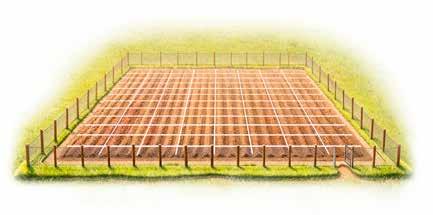
Add up all the sides to find the perimeter. Multiply the length by the width to find the area.
LEARN AND CONNECT APPLY
Find the area and perimeter of each shape.
Vocabulary
Area - the measure inside a flat shape (length × width)
Perimeter - the measure around an object (length + width + length + width)
Find the area and perimeter of this figure.
Perimeter = Area =
Perimeter = Area =
Perimeter = Area =
Perimeter = Area = Perimeter = Area =
Perimeter = Area =
Perimeter =
Perimeter = Area = Perimeter = Area =
Area =
Find the area and perimeter of this figure.
10. Area =
Perimeter =
Find the area and perimeter of the rectangles.
There are 24 hours in a day. The first 12 hours are called a.m.. The next 12 hours are called p.m.
Midnight is 12:00 a.m.. It starts the a.m. hours. Noon is 12:00 p.m.. It starts the p.m. hours.
3 hours after 11:00 p.m. is 2:00 a.m.
It makes sense to be sleeping at 2:00 a.m.
Circle the time that makes the most sense.



Circle the time that makes the most sense.



Write the time. Write a.m. or p.m..
7. An hour after 12:00 a.m.
9. 4 hours after 11 p.m.
11. An hour before 5:00 a.m.
13. 3 hours before 2:00 a.m.
2 hours after 8:00 p.m.
6 hours after 6:00 a.m.
2 hours before 11:00 p.m.
2 hours before 12:00 p.m.
15. Donald started reading at half past eleven at night. He read for ninety-five minutes. What time did Donald finish reading?
Donald finished reading at
Length tells us how long an object is. We use tools like rulers, yardsticks, or tape measures to measure inches, feet, yards, and miles. Circle the best estimate.







Convert the measurements.
Convert the measurement.
Write the equivalent units.
LEARN AND CONNECT
Liquid capacity tells us how much space a liquid takes up. We use tools like spoons, cups, bottles, and buckets to measure cups, pints, quarts, and gallons.
There are 4 gallons of floor cleaner. Each gallon is 4 quarts.
4 × 4 = 16
There are 16 quarts of floor cleaner.


Vocabulary
Convert the measurements.
1. 2 pints = cups
4. 3 gallons = quarts
7. 2 quarts = pints
10. 6 gallons = quarts
13. 7 quarts = pints
16. 10 quarts = pints
19. 3 quarts = pints
22. 2 gallons = quarts
3 pints = cups
4 cups = inches
4 pints = cups
5 pints = cups
10 cups = fl ounces 17. 6 quarts = pints
20. 4 quarts = pints 23. 9 gallons = quarts 3. 9 cups = fl ounces 6. 7 gallons = quarts 9. 4 gallons = quarts 12. 5 cups = fl ounces
Write <, >, or = to compare the measurements.
25. 10 quarts 30 pints
28. 11 gallons 36 quarts
31. 3 quarts 10 pints 26. 32 fl ounces 4 cups 29. 25 cups 10 pints 32. 2 pints 9 cups
Convert the measurements.
34. 2 gallons = cups
5 pints = fl ounce
15. 10 gallons = quarts
18. 12 pints = cups 21. 8 pints = cups 24. 12 quarts = pints
24 fl ounces 3 cups
25 fl ounces 2 cups 33. 75 fl ounces 20 cups
5 quarts = cups
Compare the measurements using <, >, or =.
Weight tells us how heavy something is. We use a scale to measure ounces, pounds, and tons.
The elephant weighs 3 tons. Each ton is 2,000 pounds.
3 × 2,000 = 6,000
The elephant weighs 6,000 pounds.




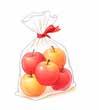
Vocabulary
Circle the best estimate for length, capacity, or weight.
1. The height of your car.
2 cm 2m 2km
2. A soda bottle. 500 mL 500 L
3. A shoe
A dot plot is a graph that shows dots above a number line.
Sara measured the flowers in her garden.
Heights of flowers in inches: 13, 13, 12, 12, 12, 12, 13, 11, 14, 12, 11, 14, 12, 13, 10, 12, 15, 11, 13, 14, 13, 13, 12, 11, 15, 12, 13, 15, 14, 10
She makes one dot for each flower. She places it over the number that shows its length.
LEARN AND CONNECT APPLY
Height of Flowers in a Garden
of Flowers in inches
Use the dot plot above to answer the following questions.
1. How many flowers measured 10 inches?
3. How many flowers measured 12 inches?
5. How many flowers measured 15 inches?
Vocabulary
2. How tall is the tallest flower?
4. What is the most common height of the flowers?
6. What is the least common height of the flowers?
Use the dot plots to answer the questions.
1. The dot plot shows the ages of students in an after school program.
A. How many students are 9 years old?
B. How many students are there in all?
C. What is the least common age?
Students in an After-School Program
2. A company asked its workers how long it takes them to get to work each day. The results are shown on the dot plot below.
A. How many workers did the company ask?
C. Which amount of time is the most common?
B. What is the difference between the longest and shortest travel times?
D. How many people said it takes them 3 4 hour or more to travel to work?
Worker Travel Times
Time Traveling (hours)
3. Mr. Smith’s class recorded how much time they spent reading each week on the dot plot below.
A. How many students are in Mr. Smith’s class?
C. How many students read for at least an hour?
B. What is the difference between the highest reading time and the lowest reading time?
D. How much total reading time did Mr. Smith’s class read?
Ages of Students Class Reading Times
Hours Spent Reading
Use Mr. Smith’s dot plot to answer the following question.
4. Two new students joined the class. One said he read for 4 1 2 hours a week and the other said he read for 3 1 2 hours per week. How many hours did the class read in total with the addition of the two new students?
DAILY REVIEW
Write the name of the figure.
LET'S REVIEW
Angles are classified by their measurement. To find the area and perimeter of a rectangle, use the formulas:
Right 90° Acute Less than 90° Obtuse Greater than 90°
Perimeter = 2l + 2w Area = l × w l l w w
To convert units of length, volume, or weight, we use conversion charts.
Length
1 foot = 12 inches
1 yard = 3 feet
1 yard = 36 inches
1 mile = 5,280 feet
1 mile = 1,760 yards
APPLY
Volume
1 gallon = 4 quarts
1 quart = 2 pints
1 pint = 2 cups
1 cup = 8 fl ounces
Identify the type of angle and its measurement.
Type of Angle:
Measurement:
Identify the type of angle and its measurement.
Weight
1 ton = 2,000 pounds
1 pound = 16 ounces
Type of Angle:
Measurement:
Circle all the words that describe the shape.
Parallelogram Rectangle Square Rhombus
Parallelogram Kite Trapezoid Rhombus
Find the area and perimeter of each shape.
Parallelogram Square Rectangle Rhombus
Convert the time.
7. 2 hours = minutes 9. 20 minutes = seconds 8. 2 hours = seconds
Convert the measurements.
10. 3 yards = inches
Circle the best estimate for length, capacity, or weight. .
Use the dot plot to answer the questions.
15. The height of your ceiling. 4 cm 4m 4km
16. How many people take 45 minutes to commute to work?
17. What is the difference between the longest commute time and the shortest commute time?
Subtract.
Multiply.
www.lighthousecurriculum.com