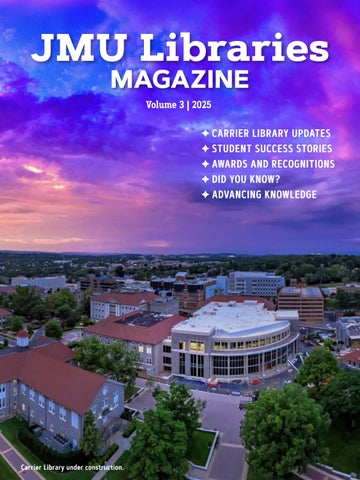
JMU Libraries MAGAZINE
Volume 3 | 2025
✦ CARRIER LIBRARY UPDATES
✦ STUDENT SUCCESS STORIES
✦ AWARDS AND RECOGNITIONS
✦ DID YOU KNOW?
✦ ADVANCING KNOWLEDGE

A Word of Welcome
Carrier Library Updates
A New Chapter Approaches: Carrier Library to Reopen in August 2026
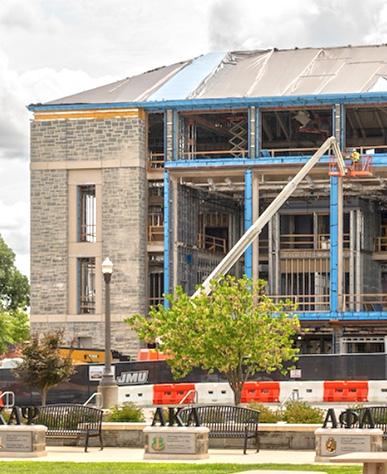
Marking the Progress: The Future Carrier Library Emerges
Preserving JMU Tradition:
The Bluestone on the Carrier Library Renovation and Expansion
Graduates of the Past Change Carrier Library’s Future
The Anatomy Room in Carrier Library: Enhancing Engaged Learning at JMU
A Unique Gem in the Carrier Library: The Grand Reading Room
The Library Futures Classroom: A Home for Experimentation in Carrier Library
Unlocking Creativity: Introducing the Media Studio in Carrier Library
Bringing Carrier Library to Life: Library Patrons Bookshelf Opportunity
JMU Libraries and University/Community Partnership Publish 1875 Novel by Harrisonburg Black Educator George A. Newman
Peer Focused: Students Helping Students with Business Research
From Classroom to Camera: Madison’s Student Success Story Awards & Recognitions
Did You Know?
Advancing Knowledge: JMU Libraries’ Research Impact

A Word of Welcome
Welcome to the third edition of the JMU Libraries Magazine!
This is a special issue—in which we’re excited to highlight progress toward the restoration, renovation, and expansion of Carrier Library.
Carrier’s storied spaces have nurtured generations of Dukes: providing opportunities for students to connect, collaborate and cement lifelong friendships; benefit from the mentorship of expert faculty and staff; study in their chosen fields; explore curated collections, archives, and other research resources; and learn to critically evaluate information and emerging technologies, to experiment and prototype, and to think, write, share, and invent new futures. Our library’s ongoing transformation—befitting a university on the rise!—is carefully designed to amplify and extend this legacy. Carrier Library is where countless future generations of Dukes will dream up what’s next: informed by the past, and with a can-do spirit that is quintessentially JMU.
Carrier will reopen in August 2026. Meanwhile, we hope you enjoy reading about just some of the spaces, services, and building features we’re looking forward to—and about the transformative impact of donor generosity on JMU’s library and educational technology system.
Of course, a great university library is more than the sum of its architecture, equipment, and collections. The wonderful people and projects of the JMU Libraries are likewise
highlighted here. We’re excited to share stories about the hands-on learning experiences of our student employees and the larger scholarships we’ve been able to offer them through philanthropic support, a newly-published nineteenth century novel from our manuscript archives, and the innovative scholarship (on topics as diverse as AI and comic books) being produced by our award-winning librarians and instructional designers. You’ll also learn about the breadth of the Libraries’ support for classroom and educational technology campuswide; our intellectual programming, events, and workshops; and the ways we expand the impact and global reach of JMU faculty and student research.
None of this happens in a vacuum—or without hard work, generosity, and care. I am deeply grateful to the JMU Libraries team for their dedicated efforts through the long renovation period this Magazine represents. And we are grateful to you— our community members, supporters, partners, and friends. Thank you for believing in us!

Dr. Bethany Nowviskie
Dean of Libraries, Professor of English, and Chief Academic Technology Officer at JMU
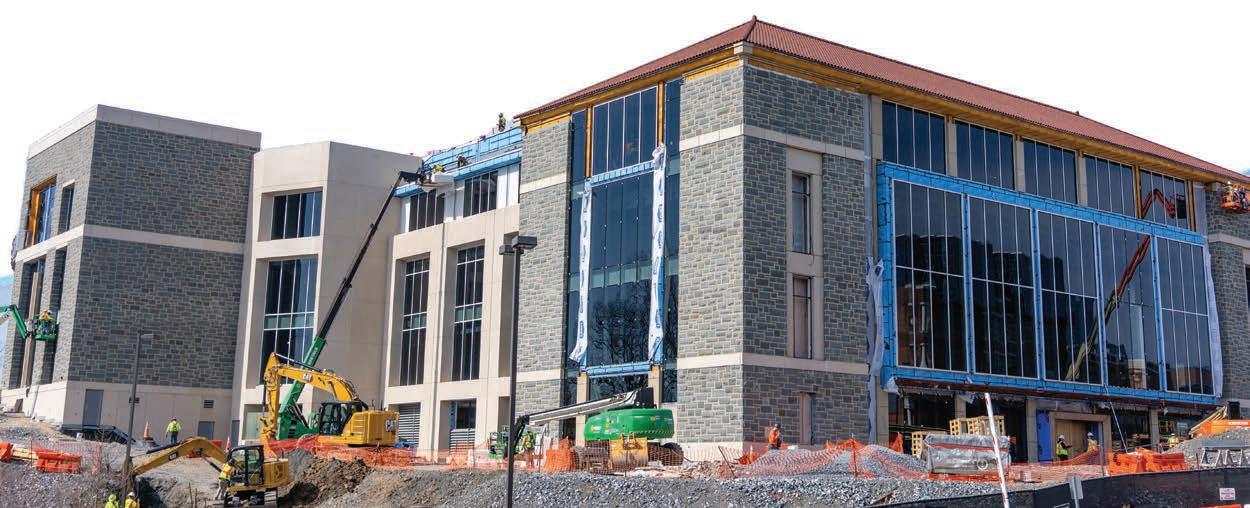

A New Chapter Approaches: Carrier Library to Reopen in August 2026
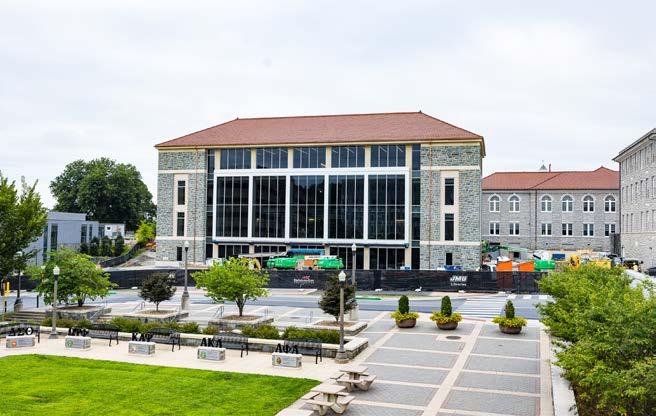
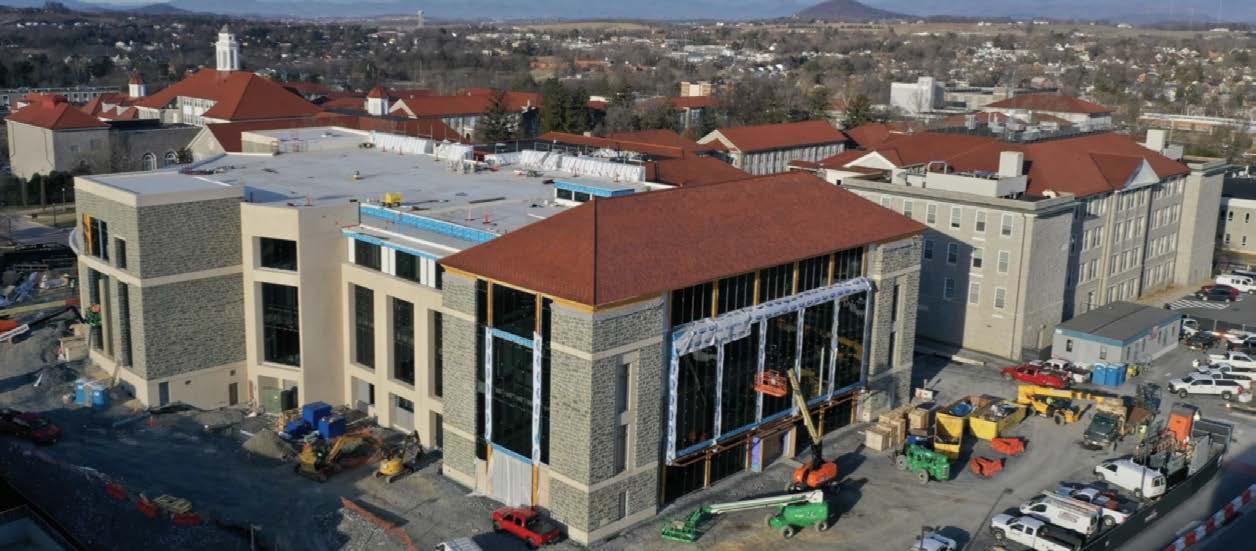
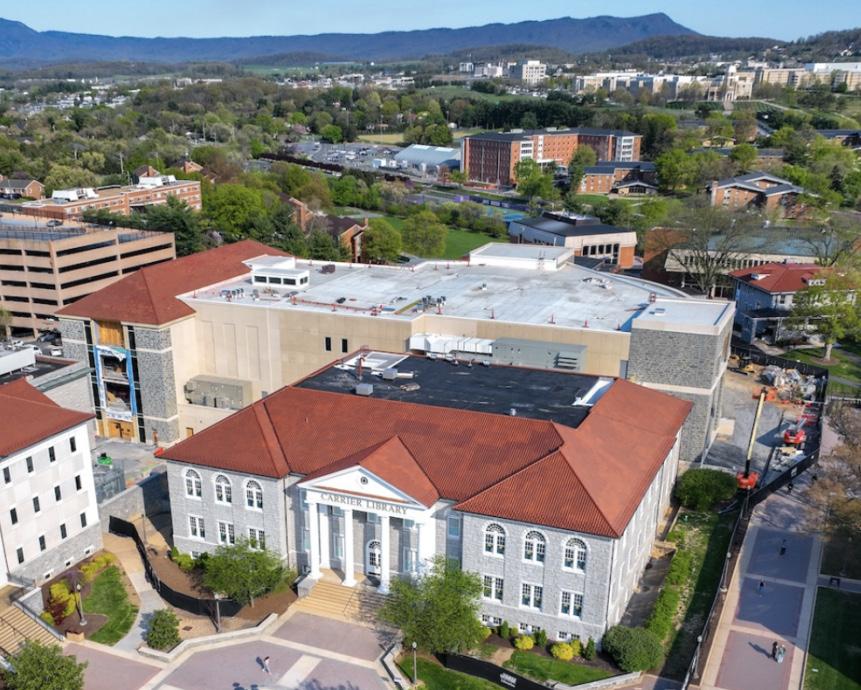
We are less than one year away from welcoming the JMU community back to a refreshed and expanded Carrier Library, with the building on track to reopen in August 2026.
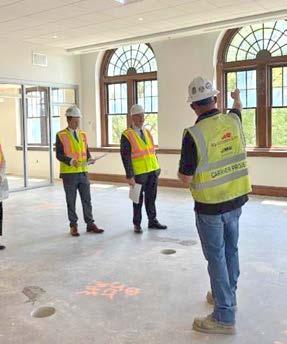
The project has been progressing as planned, with structural work nearing completion and interior spaces taking shape. While the building’s exterior may appear nearly finished, significant work remains before the library can reopen. After major construction wraps up in December 2025, it will be time to finalize interiors, install furniture and technology, move collections, and set up staff offices and service points. This is a significant, coordinated effort with many moving parts, designed to create a better library experience than ever before.
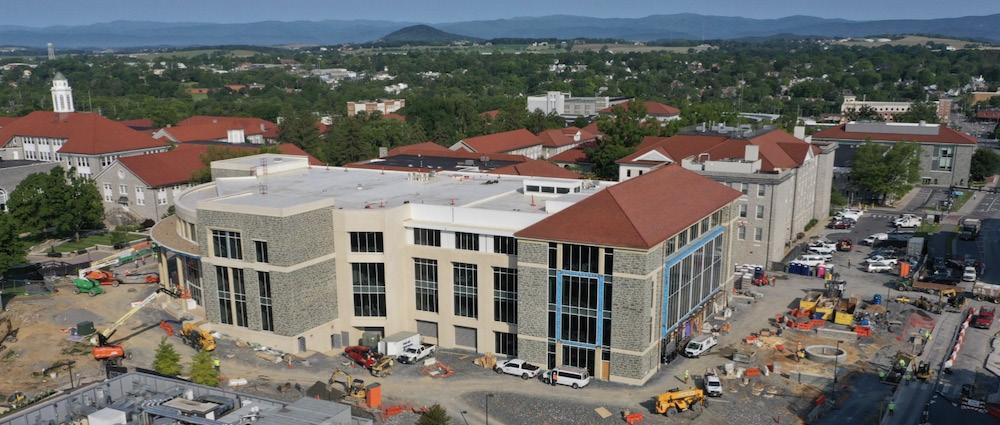
that will create a more welcoming and accessible experience. A grand reading room will offer sweeping views, and light-filled interiors will support both quiet study and group work.
The Carrier renovation and expansion timeline reflects the scale and ambition of the project. We’re not just updating Carrier—we’re reimagining it. The project blends historic preservation with modern design, creating a vibrant space that will better serve students, faculty, and researchers for decades to come. The transformation of Carrier Library represents a oncein-a-generation investment in the future of academic life at JMU.
When Carrier reopens, it will feature expanded learning spaces, a cutting-edge media studio, and two new entrances
Dean of Libraries Bethany Nowviskie notes, “We’re incredibly excited about what’s ahead for JMU and its library system, and grateful for our community’s partnership throughout the renovation process. The new Carrier Library is going to be better than ever in bringing people together and doing what libraries do best: connecting historical knowledge with creative, future-oriented research and production. It’s a place where students, faculty and community members can discover the wisdom of the past — but also access the deep staff expertise, new technologies, and collaboration spaces that can help them create better tomorrows. We can’t wait to welcome everyone into the new space next fall.”

Marking the Progress: The Future Carrier Library Emerges
There comes a time in every construction project when you can begin to see the completed building. The project usually begins with drawings, site-work, and the delivery of materials. Progress can feel slow. And sometimes progress is hidden; spaces are being cleared out, utilities are run, and existing walls are reinforced.
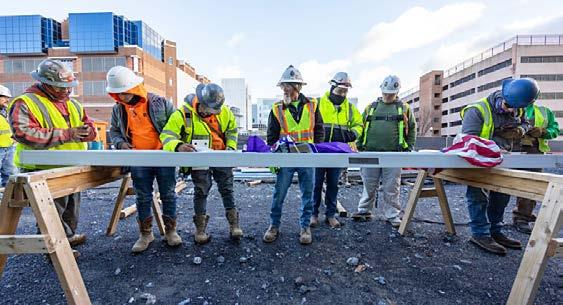
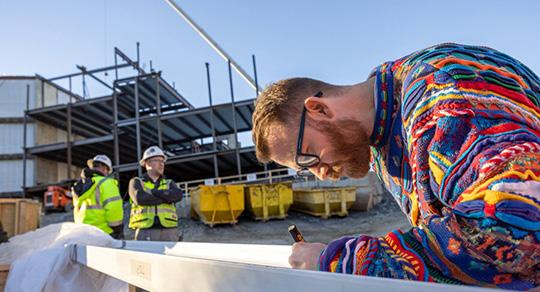
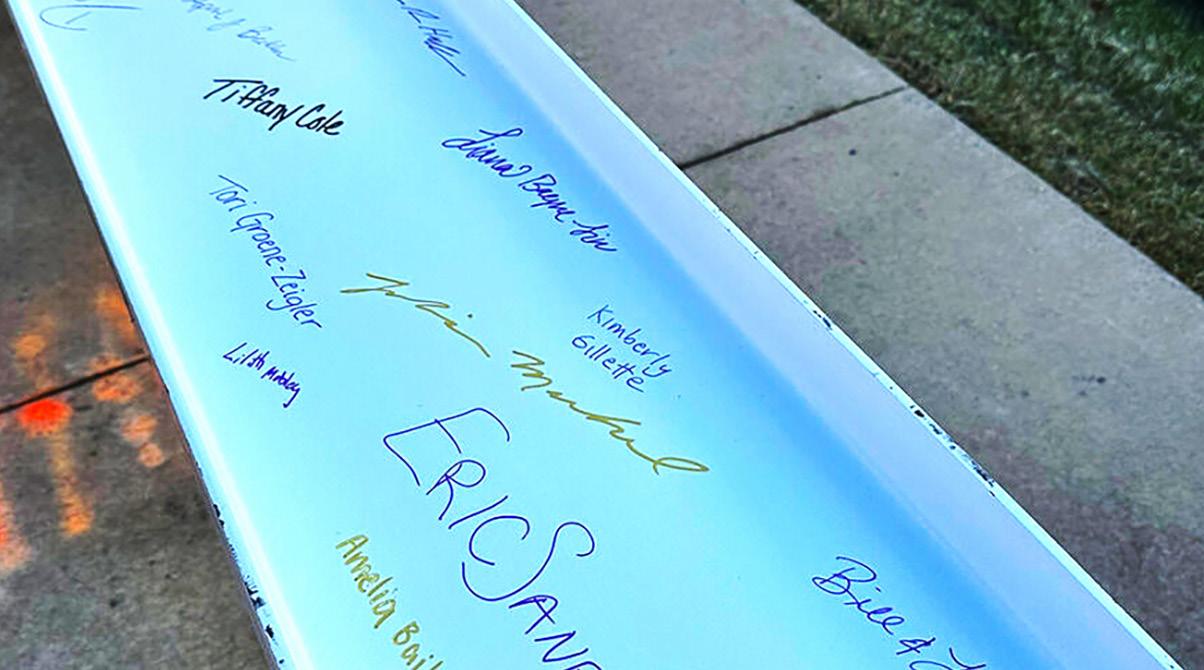
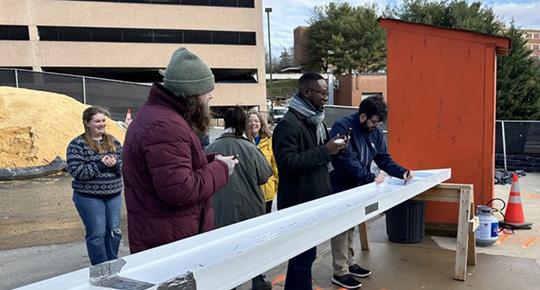
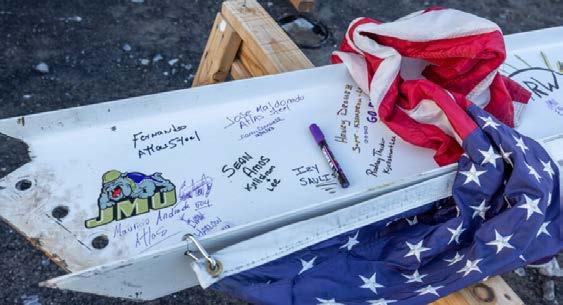
Eventually though, the future building begins to reveal itself. For Carrier Library, that emergence began in late 2023 when the structural steel that would become the skeleton of the expansion started to go up. Thanks to the thoughtful effort and careful planning of our construction partners, Libraries and Furious Flower Poetry Center employees had the opportunity to sign their names on the final beam along with the construction team. On January 10, 2024, the signed beam was lifted and placed on the north-west corner of the roof. The special beam will not be visible to the public when the building is complete, but the names of those who signed will be part of the building forever.


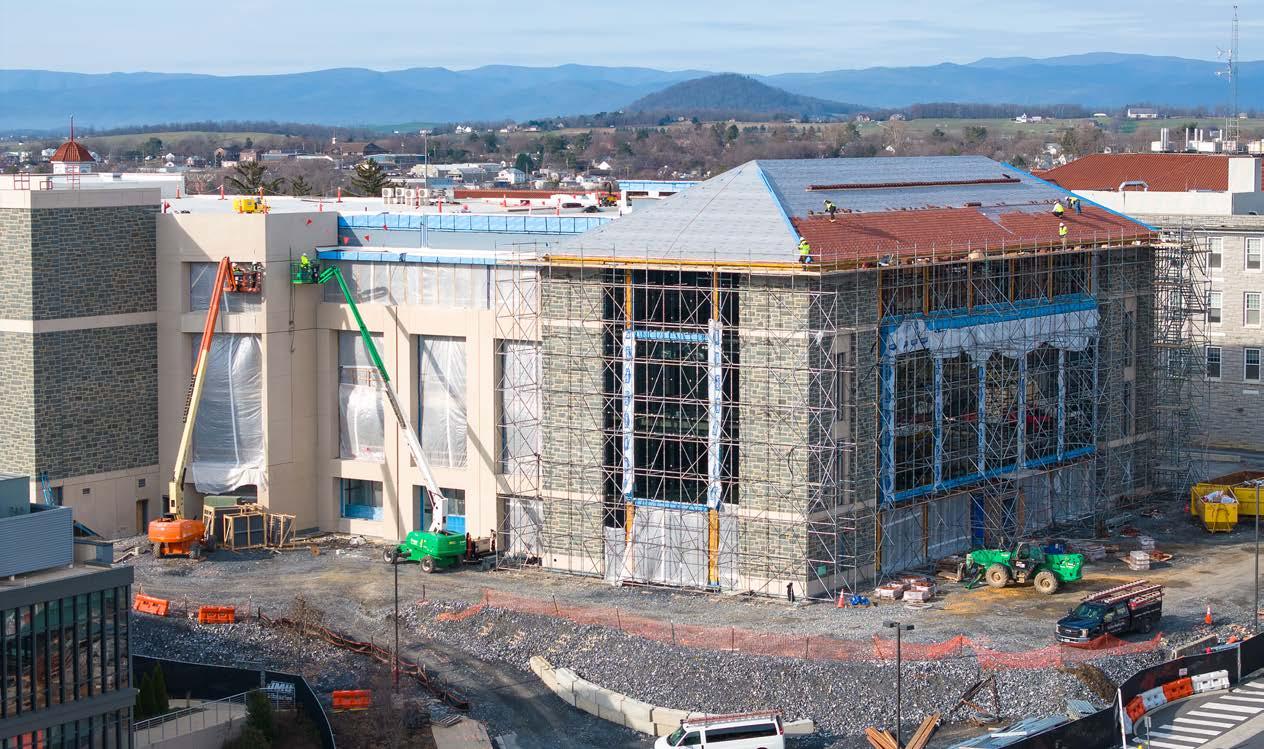
Preserving JMU Tradition: The Bluestone on the Carrier Library Renovation and Expansion
Take a moment to envision JMU’s gorgeous campus. What’s the first image that comes to mind? Is it the vibrant purple and gold flower beds, the sunsets from east campus, or the iconic bluestone that gives the Quad its unique charm?
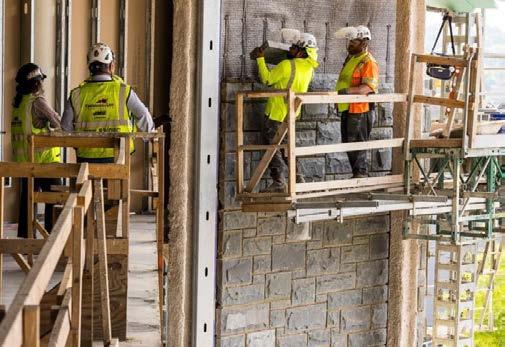
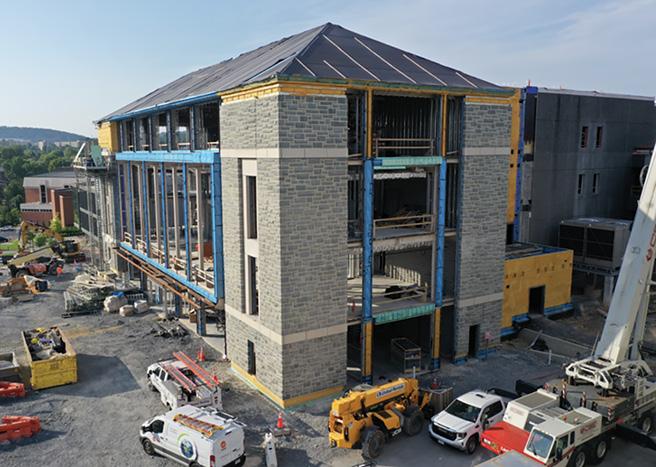
Bluestone, the material that adorns Wilson Hall, Converse, and nearly every building in between, is being added to the newest part of Carrier Library. This timeless bluestone, a symbol of our rich history, is being incorporated into the new Stan and Rosemary Jones Wing to create a visual connection with the historic 1930s portion of Carrier, the rest of the JMU campus, and the bluestone’s storied history in the Shenandoah Valley
The bluestone on Carrier symbolizes not only the library’s deep bond to JMU’s rich history, but also the many ways that library collections, technologies, and services enable all Dukes to connect to the past and create limitless futures.
The careful craftsmanship as the bluestone is incorporated into the library’s structure is a testament to our commitment to preserving tradition while embracing innovation.
Keep up with the construction progress by peeking at our construction camera or perusing our beautiful photos. And mark your calendars for August 2026, when the renovated Carrier Library, adorned with stunning bluestone, will open its doors to you again.

Graduates of the Past Change Carrier Library’s Future
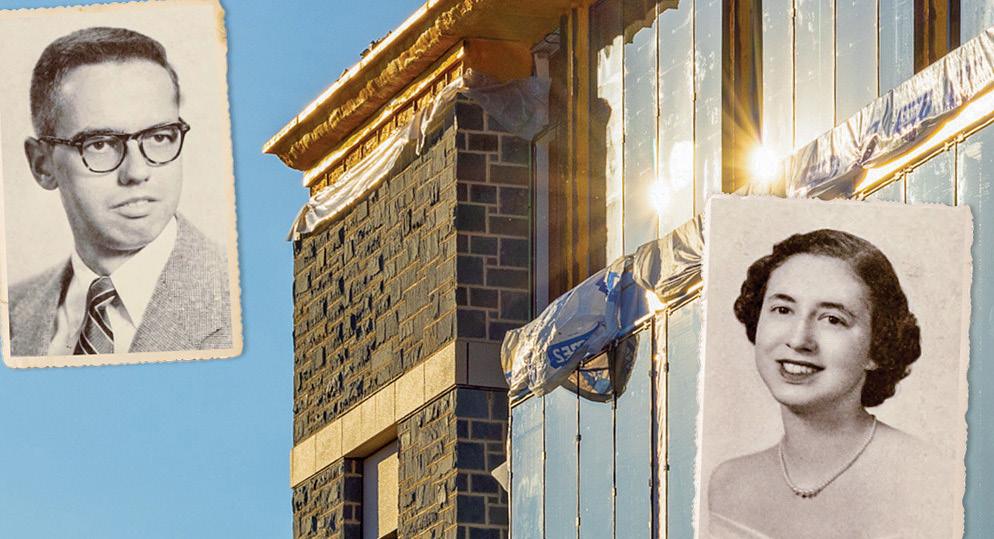
When Stan Jones (’54) enrolled at Madison College as a day student, his daily walk to work and class took him past the campus library — a place that quickly became his retreat. “I would go to the library to study and just relax,” Jones said. “I’ve always been fond of libraries.”
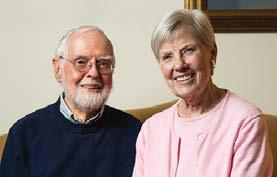
Seventy years after graduating, Stan and his wife, Rosemary Hayes Jones, made a transformative investment in the future of JMU and its libraries. With a $2.5 million gift, they named the brand-new wing of Carrier Library: the Stan and Rosemary Jones Wing.
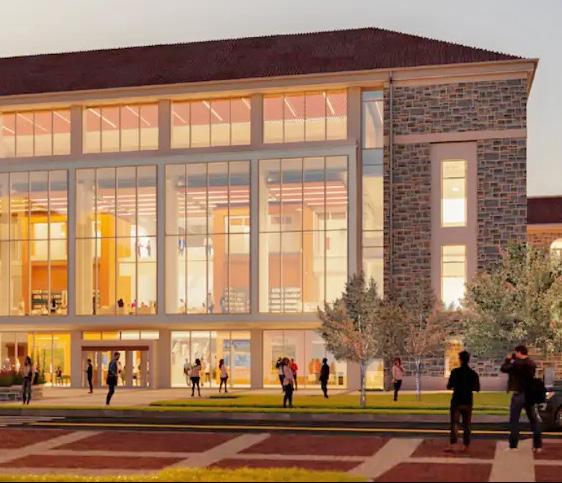
Facing Grace Street and downtown Harrisonburg, the Jones Wing will welcome generations of Dukes through wide, glass doors into what will become both the intellectual and literal crossroads of campus.
We are deeply grateful to Stan, who passed away in July, and to Rosemary for their vision and generosity. Their gift honors the past while helping to build a vibrant future for JMU students, faculty, staff, and the local community.
Mary Marshall Gilmore McCormack (’50) graduated from Madison College with a degree in Education and was a member of Alpha Sigma Tau sorority. Prior to her passing in 2023, she

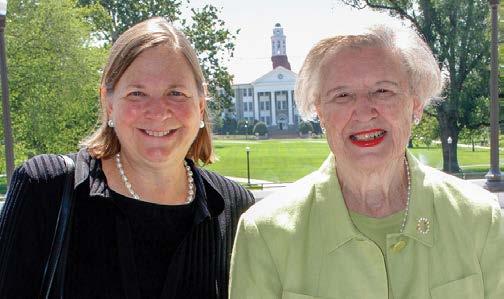
was an avid supporter of various causes at JMU, including scholarship support funds and the Class of 1950 Endowed Library Collection Fund. In 2024, McCormack’s daughter, Joan Ferrill, made a generous gift to the university to name the iconic Carrier Library west entrance as the McCormack Historic Entrance in honor of her late mother.
`“The naming of these two library spaces— historic and modern—adds another chapter to JMU’s story.”
~
Bethany Nowviskie, dean of Libraries
Donors Stan (’54) and Rosemary Hayes Jones
(L-R): Joan Ferrill and Mary Marshall Gilmore McCormack (’50)
(L-R): Stan Jones (’54) and Mary Marshall Gilmore McCormack (’50)
The Anatomy Room in Carrier Library: Enhancing Engaged Learning at JMU
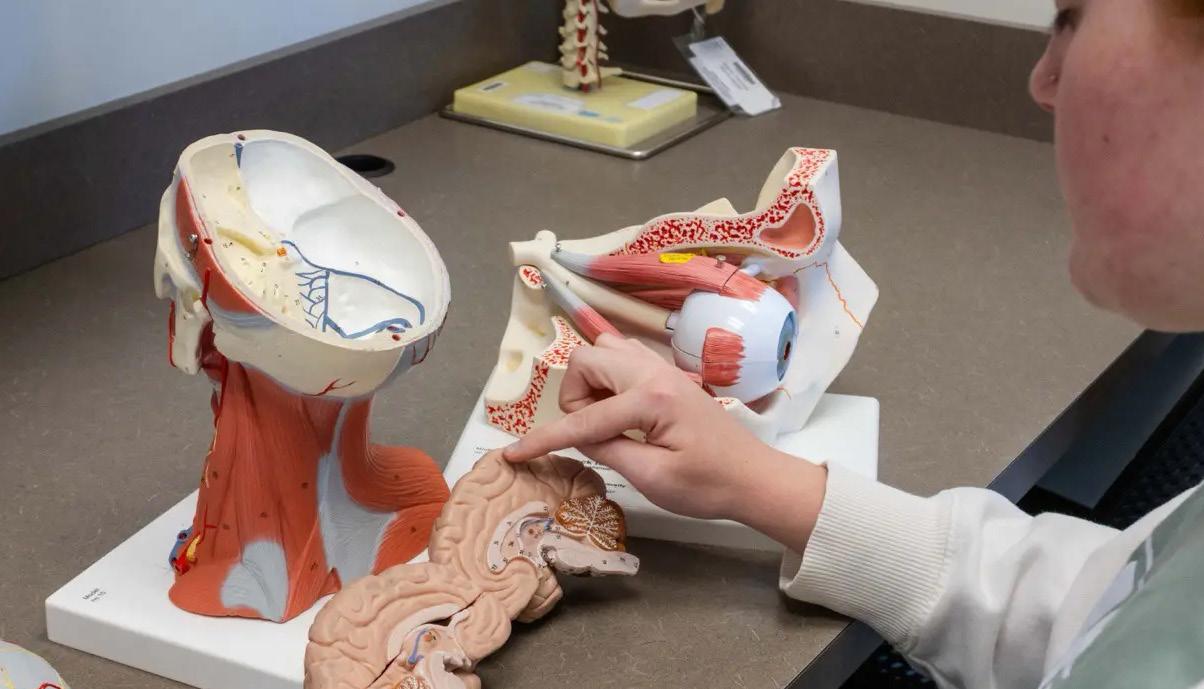
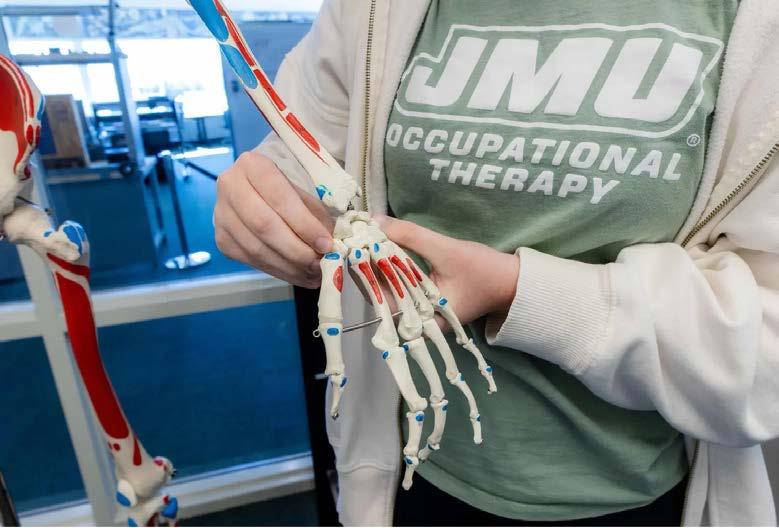
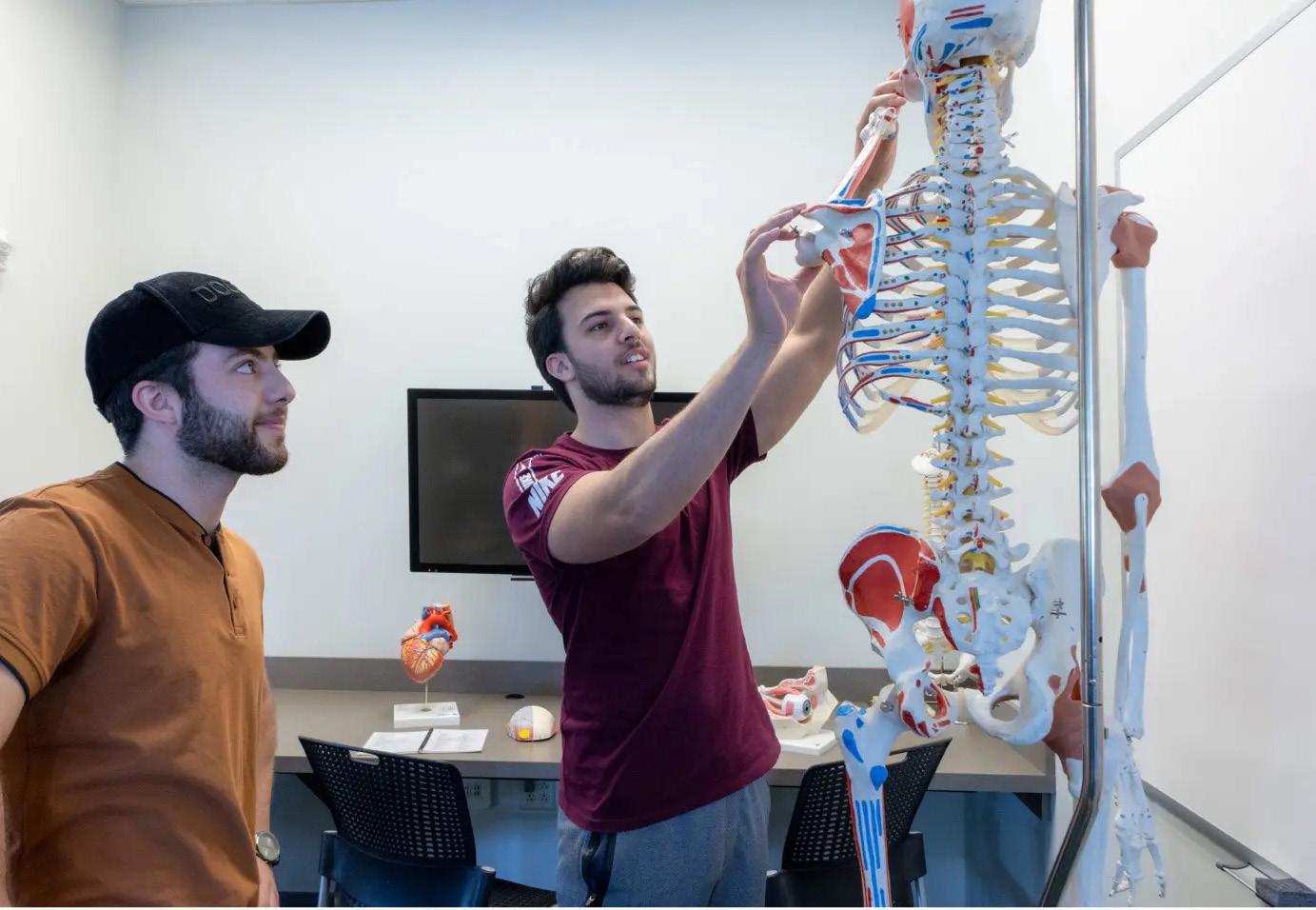
Among the many exciting features of the renovated and expanded Carrier Library will be a state-ofthe-art Anatomy Room. Here, JMU students will experience “hands-on learning” in the truest sense as they use three-dimensional anatomical models such as skeletons, hearts, skulls, ears, and eyes to learn about human anatomy. Slated to be on the first floor of the future Carrier Library just inside the new entrance facing D-Hall, the Anatomy Room will provide an engaged learning environment on the Bluestone side of campus, complementing the existing anatomy room in Rose Library on the east side of campus.
“The anatomical model collection brings textbook illustrations to life, providing students with a new way of engaging with course materials,” said Kathryn Shenk, science and math librarian in JMU Libraries. “I enjoy hearing students describe the intricacies of the skeletal system to their peers as they use the anatomical models together.”
The anatomy model program emerged from close collaboration between JMU Libraries, the Department of Biology, and the Learning Centers. Together, they researched and selected the most appropriate anatomical models and other learning tools to ensure student engagement.

Carolyn Schubert, associate dean in JMU Libraries, highlighted the accessibility benefits of locating an anatomy room in the new Carrier Library. She noted, “Offering anatomical models in libraries provides more access than offering them in anatomy labs, which may have limited availability due to academic building restrictions.” The anatomy rooms in JMU Libraries are open to all students, unlike those in academic buildings that are restricted to students in specific majors, ensuring that any Duke can benefit from these resources.
“We’ve received quite a bit of positive feedback about the anatomical models since we started offering them in Rose Library in 2015 and Carrier Library in 2017,” said Kelly Miller-Martin, JMU Libraries’ director of facilities operations. “I saw at least one student squeal with excitement when our non-skeleton anatomy models were made available for the first time.”
The popularity of the anatomy resources coupled with Carrier Library’s proximity to Burruss Hall and the College of Health and Behavioral Studies building suggests that the new lab will be a well-loved destination in the new Carrier Library. “Burruss houses all of JMU’s anatomical lab sessions,
and hundreds of anatomy students come through Burruss each semester,” according to Mark Gabriele, professor in the Department of Biology. “Having an anatomy room available in Carrier Library, right next door to Burruss, will be a great opportunity for all Dukes taking anatomy classes.”
Carrier Library’s anatomy room will be named by generous alums who chose to continue their investments in JMU’s future by supporting a learning opportunity that has personal meaning to them. The Thomas family (Becky (’93), David (’93), Madison (’18), and Dylan) are naming the anatomy room in honor of Madison (’18), who graduated with honors in Biotechnology. The Thomases wanted to make a gift that would leave a lasting impact on JMU. They reflected, “The opportunity to support the learning of the entire academic community while honoring Dr. Carrier’s legacy made the decision to support this project easy for
our family. Ensuring the accessibility of learning to all is a focus of our philanthropy at JMU, which means that this opportunity to broaden access

to physical anatomical models that are extremely valuable to kinesthetic learners fits in very well with that focus.”
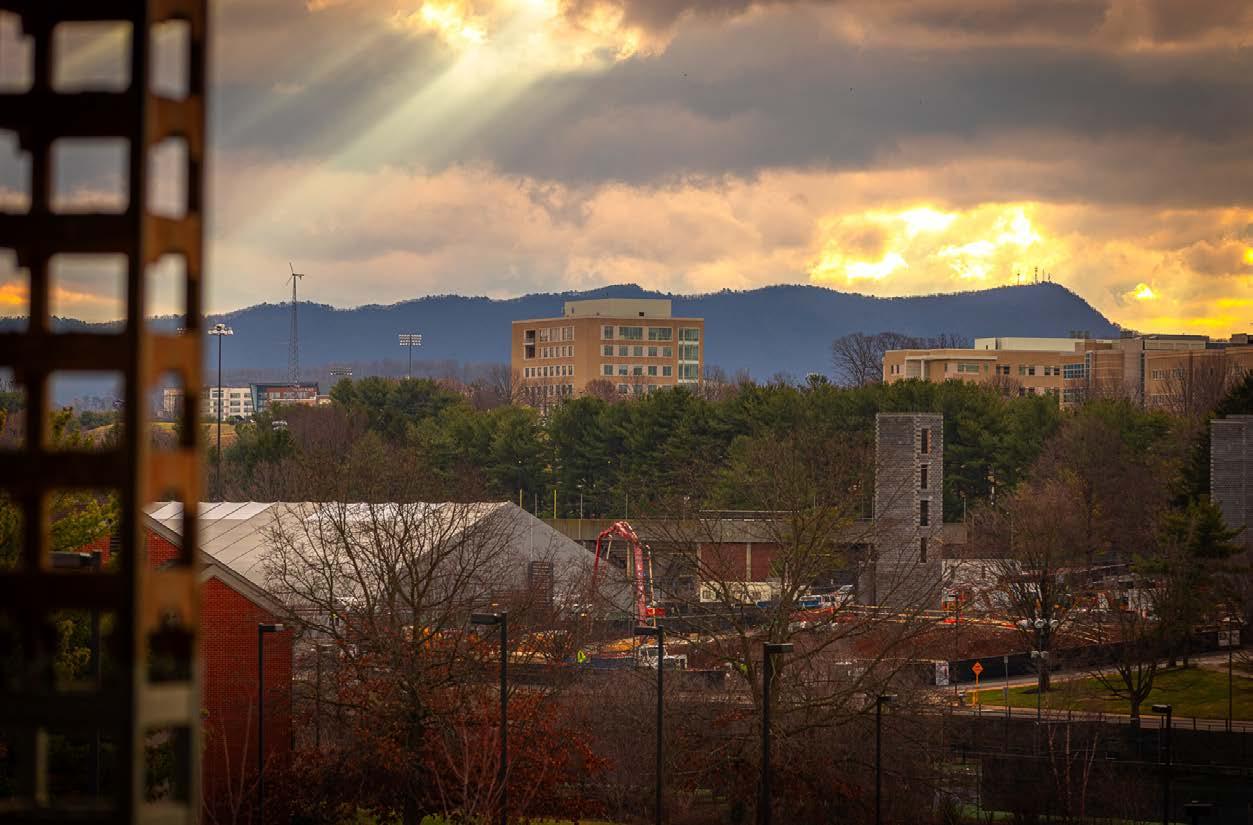
of west campus,
A Unique Gem in Carrier Library: The Grand Reading Room
Areading room can stir powerful emotions—awe, inspiration, and calm can be found in this most iconic of library spaces. In the future Carrier Library, visitors to our new Grand Reading Room will discover a gorgeous, modern, and welcoming space.
“I think folks will love the feel of the room,” said Kelly Miller-Martin, JMU Libraries’ director of facilities operations. “The space will draw visitors in. It’ll be dramatic, yet inviting and cozy, with so much natural light. And it’ll have plenty of seating without feeling too crowded.”
Perched on the third floor in the new Stan and Rosemary Jones Wing, the reading room will be a unique gem. It will offer breathtaking views, with large windows facing three

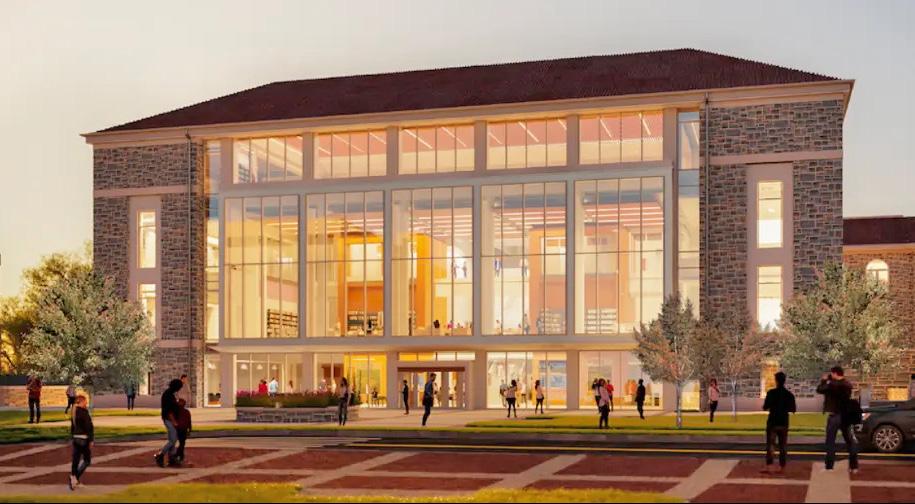
directions. “I imagine people will love the unobstructed sight lines as they take in the beautiful mountain views to the east and west. They’ll also have the ability to see campus from a different perspective,” Miller-Martin offered. When seen from the outside at night, the reading room will be a jewel-like beacon of light, highlighting the heart of the library for those passing by.
With book-filled shelves, access to power outlets, and room for dozens to work at large study tables, the grand reading room will be a haven for quiet focus. The ceiling’s warm, wooden finish will frame the space beautifully, contributing to an inspiring and calming ambiance – a perfect spot for deep concentration.
(Above) Gorgeous view
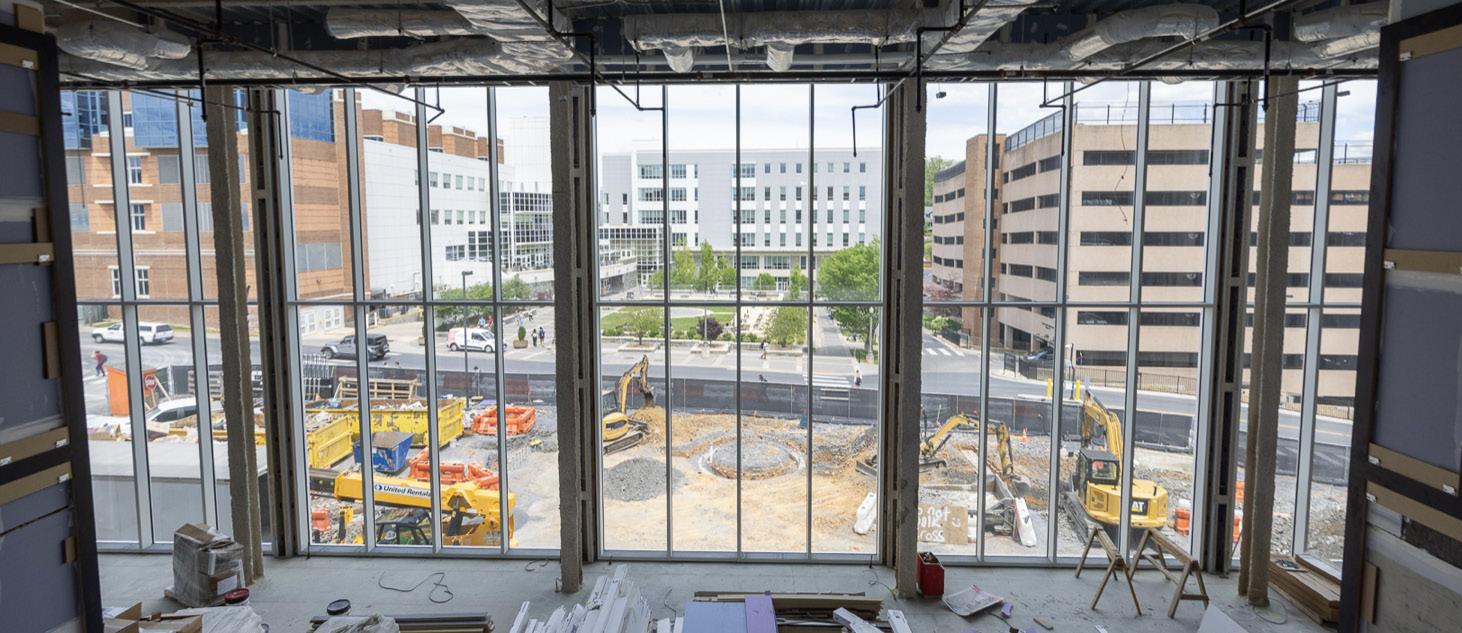
Rose Library, and Massanutten Mountain from the Grand Reading Room under construction. (Right) Artist’s rendering of the new Stan and Rosemary Jones Wing as viewed from Grace Street.
While Carrier Library will have several reading rooms and open study areas, the grand reading room is designed to be a “showpiece,” according to Miller-Martin. Her favorite aspects of the space, “its openness and expansive size,” will make it a “prime destination when the building reopens.”
Architects collaborated closely with students, staff, faculty, and library representatives to plan the reading room. They worked to design the space according to the stated desires for natural light and books in a modern yet classic setting. The result will be a reading room that connects Dukes to the stories of the past, the beauty of JMU’s campus, and the surrounding Shenandoah Valley.

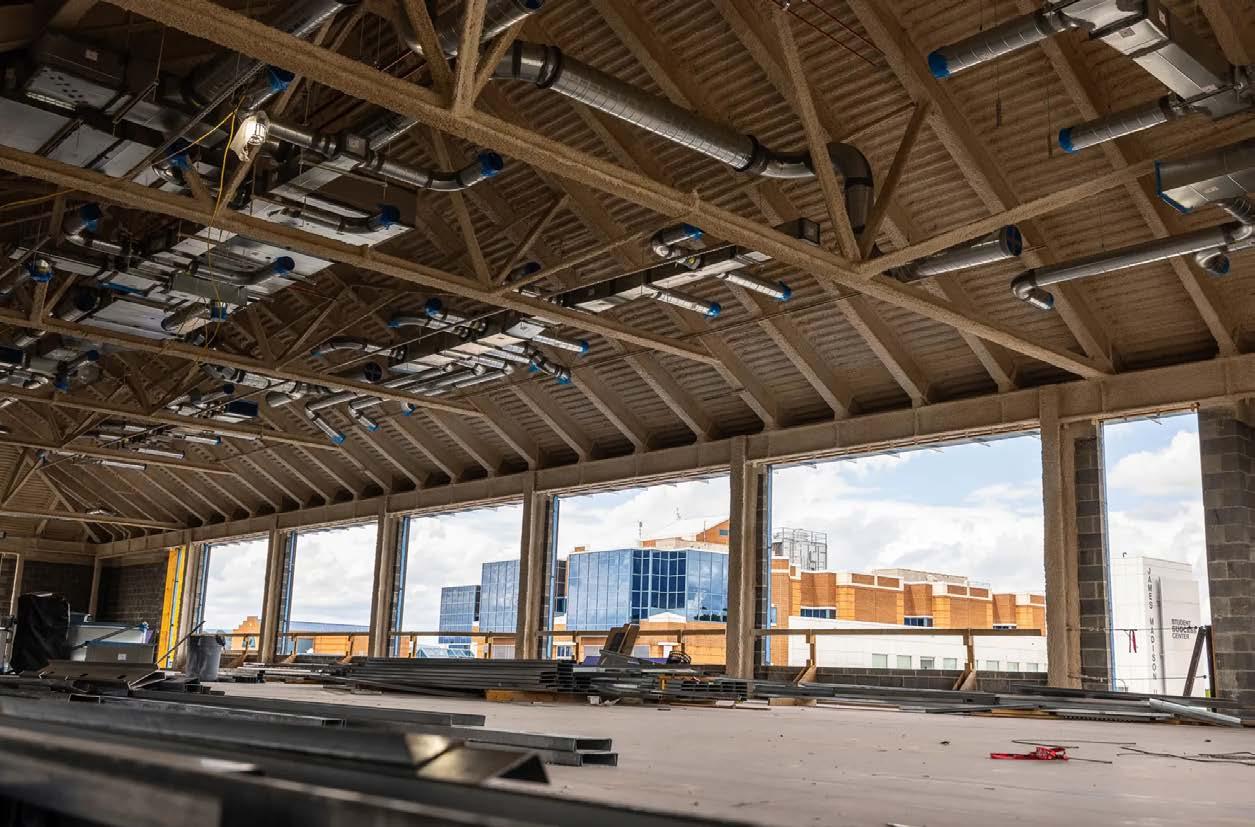

The Grand Reading Room will be on the top floor.
The Grand Reading Room under construction as of June 2024.
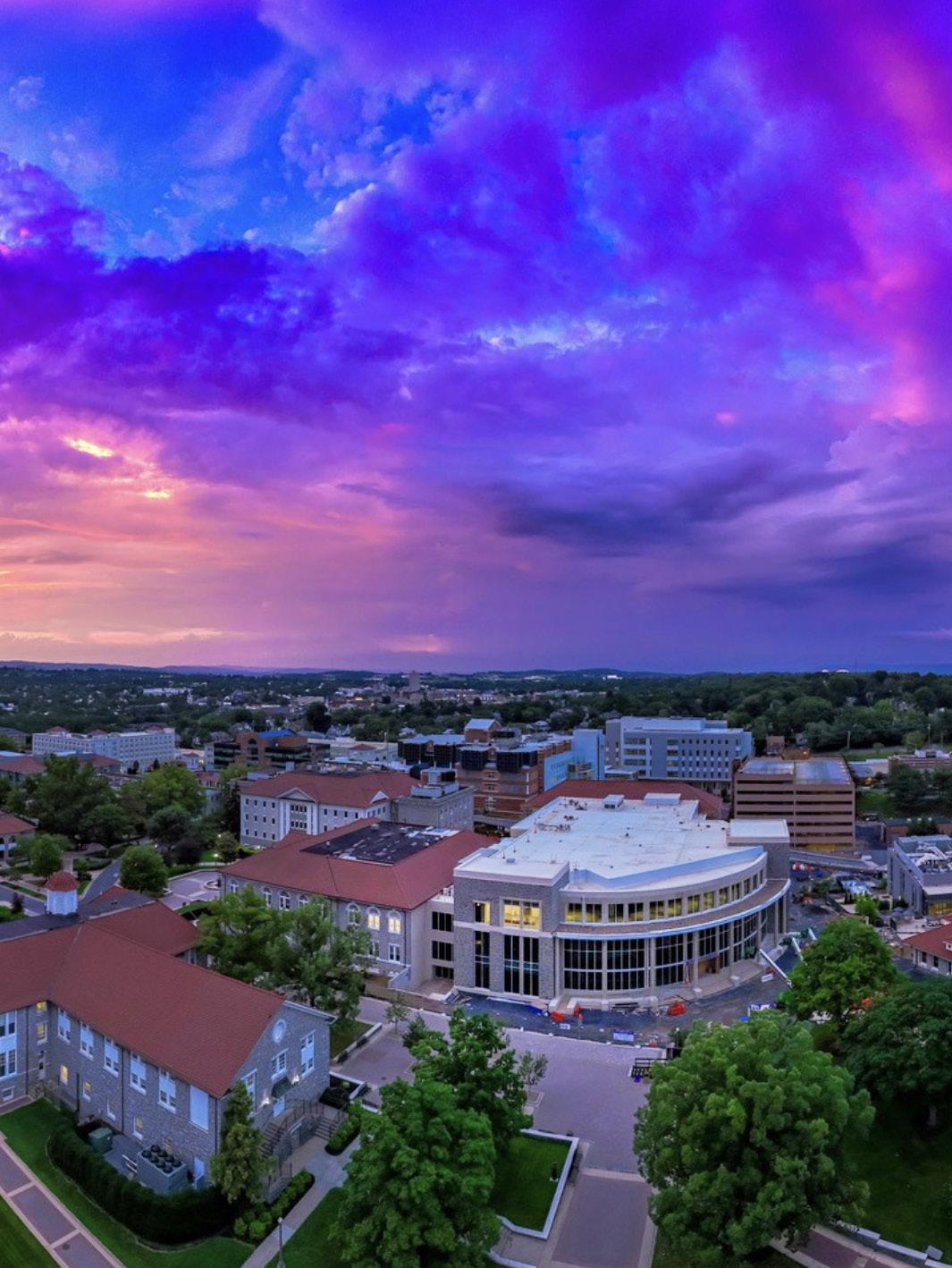
Carrier Library under construction, February 2025. The Library Futures Classroom will be on the 2nd floor of the Stan and Rosemary Jones Wing, the addition to the building visible in the foreground.
The Library Futures Classroom: A Home for Experimentation in Carrier Library
JMU is renowned for providing engaged and transformative learning experiences for students. Central to this mission are the 500+ learning spaces on campus that are supported by staff and faculty members in JMU Libraries. Unlike most university libraries, JMU Libraries holds campus-level responsibility for classroom technology, instructional design, and academic software, while also offering essential library resources such as collections and research support. With deep expertise in classroom technology and pedagogy, the Libraries’ professionals play a vital role in enhancing the university’s dynamic learning environment.
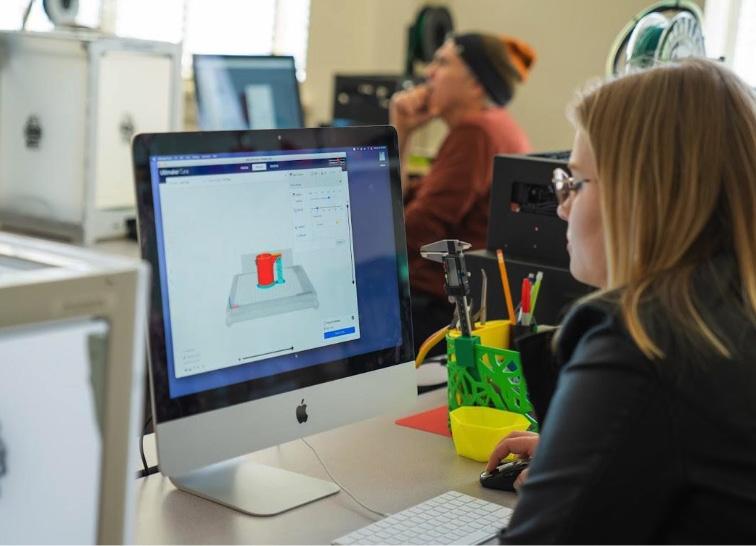
One standout example of JMU’s innovative learning environment is 3SPACE, the nation’s first 3D printing classroom designed for general education courses. Hosted in Carrier Library from 2018 to 2023, 3SPACE is where thousands of JMU students first experienced maker-centered learning in this technology-enhanced teaching environment. Currently located in Lakeview Hall, 3SPACE allows Dukes to immerse themselves in hands-on making as part of their learning journey.
Now, we are expanding this vision and preparing to transform 3SPACE into the Library Futures Classroom, set to debut in Fall 2026 as part of the renovated and expanded Carrier Library
Picture a vibrant, glass-walled classroom bathed in natural light, designed to seamlessly adapt to state-of-the-art technologies such as augmented and virtual reality systems,
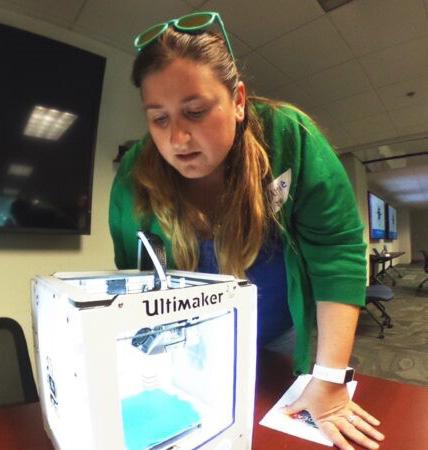

Jamie Calcagno-Roach, director of educational technology services at JMU Libraries.
holographic displays, AI-powered design tools, and other cutting-edge innovations like haptic feedback systems and spatial computing. Flexible furnishings allow for various configurations, and student creations adorn the shelves. This space is designed for adaptability in its physical layout to support a variety of pedagogical approaches. When JMU instructors apply to teach in the Library Futures Classroom, they will be able to propose specialized software and technology that align with their curricular goals. JMU Libraries’ educational technology instructors and campus technology experts will collaborate closely with them to develop innovative, evidencebased learning experiences with those tools.
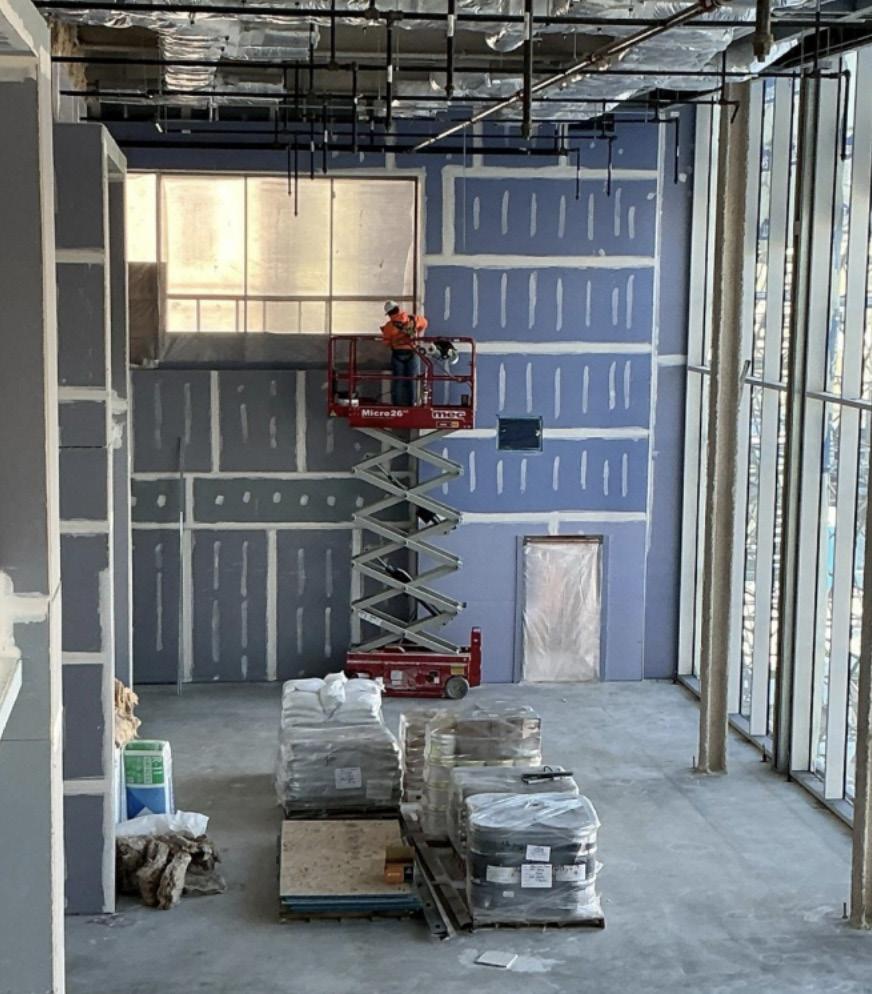
View of the Library Futures Classroom’s interior window, which will look out onto a double-height space, with floor-to-ceiling windows, in the new wing of Carrier Library.

Jamie Calcagno-Roach (pictured at left) has played a pivotal role in shaping the Library Futures Classroom. As the director of educational technology services at JMU Libraries and director of faculty development at JMU X-Labs, she brings over a decade of experience in collaborating with instructional faculty to weave technology into their courses in traditional and non-traditional classrooms across campus. Jamie drew on her extensive experience as part of the team that informed the design of this exciting new space.
“We envisioned a space where creativity and innovation fuel the learning process and students and faculty can solve problems in new and different ways,” Jamie explains. “We’ll empower faculty to identify technologies suited for their course objectives. The Library Futures Classroom will be the playground where the students can experiment with using that technology in their course, and we’ll provide expertise and support every step of the way. And some of the technologies that are successfully integrated here may potentially be installed
in more classrooms throughout campus. The ultimate goal is to inform the evolution of classroom technologies for campus as a whole.”
This Library Futures Classroom is just one of several new dynamic spaces designed to spark innovation and learning in the reimagined Carrier Library. Alongside other library classrooms, the anatomy room, the accessible technologies lab, makerspace, and media studio, the new Library Futures Classroom will offer countless opportunities for exploration and creativity, leveraging the Libraries’ technologies, collections, and expertise to support Dukes as they learn and innovate.
“Giving faculty a space to truly experiment means I get to be part of that experiment too. I can’t plan everything ahead of time—I get to grow and learn with this space and how it is used. The lifelong learner in me is so giddy about this part.”
~ Jamie Calcagno-Roach
Unlocking Creativity: Introducing the Media Studio in Carrier Library
THE NEED FOR STUDIO SPACE AT JMU
With the increasing popularity of multimedia-based assignments, the demand for media creation spaces at JMU has never been greater. As Jenna Polk, our assistant director of media production and makerspace services, notes:
“As the media and technology landscape keeps changing, especially with the rise of generative AI, we’re hearing from faculty members who want to offer innovative project types for their students. In addition to traditional written assignments, they’re providing experiential learning opportunities, like creating a podcast, video, or multimedia object. Students can produce all of these in our media production spaces, supported by experts from the
TWO NEW SPACES
When Carrier Library reopens in August 2026, the JMU community will discover a new, state-of-the-art media studio with two spaces designed just for them:
✦ An open creative space for students: For the first time ever, JMU students from any major will have access to a video and audio production space equipped with studio lighting, a green screen, virtual reality equipment, and more.
✦ A space for faculty and staff to create instructional media: In this space, JMU faculty and staff will be able to record lectures, audio, and other content to support their teaching and research, with help from knowledgeable

These two new studio spaces will complement the existing Video and Audio Production Studio on the 5th floor of Rose Library, meaning faculty will have access to instructional media spaces and services on both sides of JMU’s campus starting in
AN OPEN CREATIVE SPACE FOR STUDENTS
Students looking to create video and audio content for coursework or personal projects will be able to use a flexible and accessible space in the media studio in the

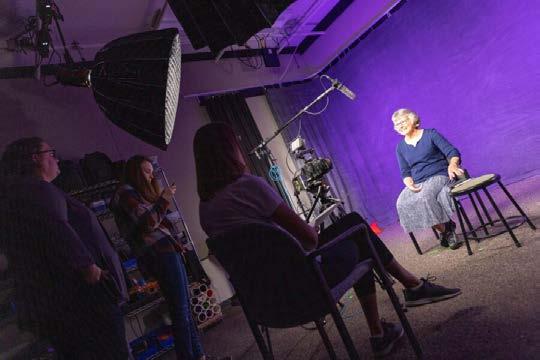
A JMU faculty member records a video in the existing Video & Audio Studio in Rose Library.
HIGHLIGHTS FOR STUDENTS:
✦ Multi-functional setup: Video, podcasting, photography, and even virtual reality (VR) title viewing.
✦ Green screen and overhead grid: Adaptable backgrounds and environments for various needs.
✦ Proximity to editing stations: Direct access to powerful computers for post-production using the Adobe Creative Suite.
✦ DIY-friendly training: Staff-led sessions ensure students can operate the equipment with confidence.
As the first media studio available to any JMU student, this space will provide all Dukes with the freedom to experiment, develop ideas, and bring projects to life.
A SPACE FOR FACULTY AND STAFF TO CREATE INSTRUCTIONAL MEDIA
In the new Carrier Library, faculty and staff will benefit from a cutting-edge, full-service media production space designed to enhance their teaching, creativity, and scholarship. Whether they’re recording tutorials, interviews with subject matter experts, lectures, or immersive narratives, those who use this studio will find it is fully equipped to turn their ideas into professional-quality media.
FEATURES FOR FACULTY AND STAFF:
In the words of Andrew J. Strack, our director of media production and makerspace services, “This studio isn’t just about the physical space or equipment, but also the staff that will bring their expertise to each project.”
THE VISION BEHIND THE STUDIO
As they planned the studio, library staff drew inspiration from extensive research into other universities’ audiovisual services as well as lessons learned in the Rose Library studio. The goal was to provide professional-grade resources to everyone in the JMU community while ensuring accessibility
Carrier Library under construction, April 2025. The Media Studio will be on the 2nd floor of the historic side of the building, shown here in the foreground.
✦ Full-body green screen: A curved wall, or “cyclorama,” green screen and a 270-degree curtain offering seamless background changes and endless possibilities.
✦ Overhead equipment grid: Lighting, microphones, and other gear can be tailored.
✦ Spacious design: Multi-person panels or solo presentations can be recorded with ease.
✦ Professional-grade recording: Equipped with Canon Cinema cameras, flexible lens options, and premium microphones.
✦ Expert support: Libraries staff will handle lighting, audio, recording, editing, and final production.
In this space, instructors can focus entirely on sharing their expertise while media professionals handle technical execution.

and flexibility for future needs. As the university evolves, JMU Libraries continues to equip students, faculty, and staff with the tools to create engaging, high-quality content.
Located near the makerspace and the Learning Innovations & Design Desk on the second floor of Carrier Library, the studio will offer students, staff, and faculty a range of resources and experts eager to support their work.
GET READY TO DREAM BIG
The possibilities within these studio spaces are limitless. Whether faculty members are redesigning coursework to include video content or students are embracing podcasting and digital storytelling, JMU Libraries’ studio spaces and services are ready to meet the challenge.
Bringing Carrier Library to Life
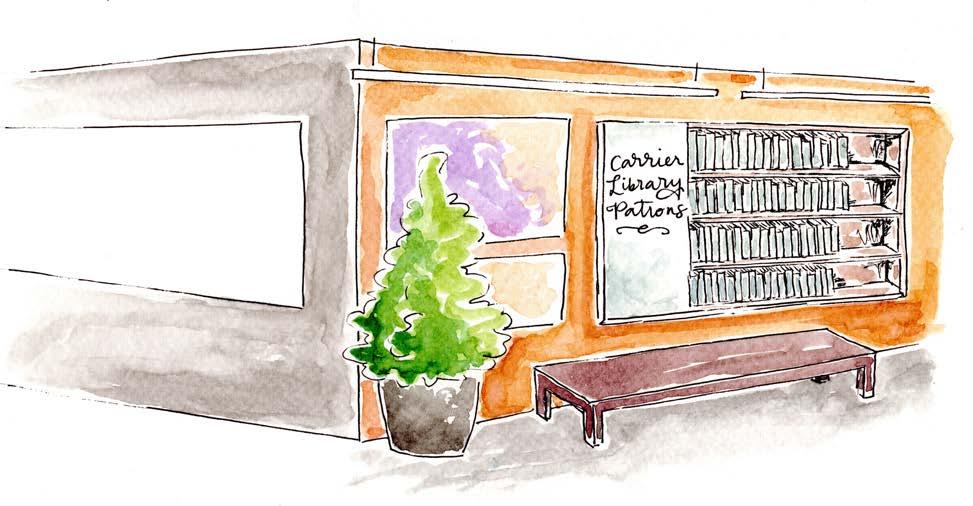
Library Patrons Bookshelf
Donate $1,939 and you’ll be featured on the Library Patrons Bookshelf in the renovated Carrier Library. Your gift reflecting the building’s first year (1939) means your name — or a loved one’s name — will be immortalized on the spine of a sculptural book as part of a one-of-a-kind display that will greet Dukes in the new 56,000-square-foot Jones Wing. We’re already crafting the donor-recognition books that will grace the Library Patrons Bookshelf when Carrier reopens in August 2026. But there’s still time to contribute—and when your book is added sometime after the reopening, it will be celebrated forever at the heart of our transformed library.
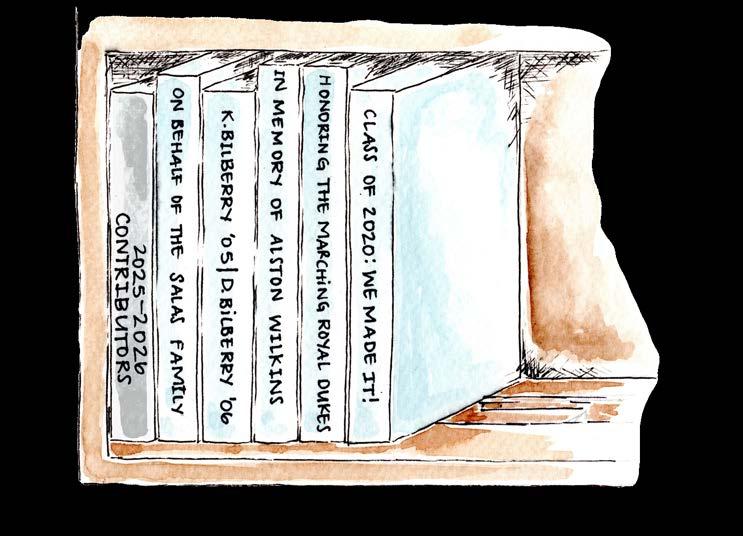
“Jill and I were delighted to contribute to JMU’s Carrier Library Campaign by inscribing two of the books to be featured on this very special shelf. Ours will honor our mothers, whose careers as librarians and love of books inspired generations of young readers to discover stories that spoke to them. We invite you to join us in the campaign for Carrier!”
~ Nick Langridge (’00, ‘07 MBA, ’14 PhD)

JMU Libraries and University/Community Partnership Publish 1875 Novel by Harrisonburg Black Educator George A. Newman
In the mid-1870s, a young African American educator named George A. Newman arrived in Harrisonburg, Virginia, where he wrote a novel about antebellum life in the Shenandoah Valley. Nearly 150 years later, Newman’s work, A Miserable Revenge: A Story of Life in Virginia, is now available in print and online thanks to a collaboration between Newman’s family, the Harrisonburg community, and James Madison University.
Newman’s handwritten manuscript, written between 1876 and 1877, is part of the Ruth and Lowell Toliver Collection of Newman Family Papers, available in JMU Libraries Special Collections. Newman’s granddaughter, Ruth Toliver, a retired educator and local historian, received the manuscript from her aunt and subsequently donated it.
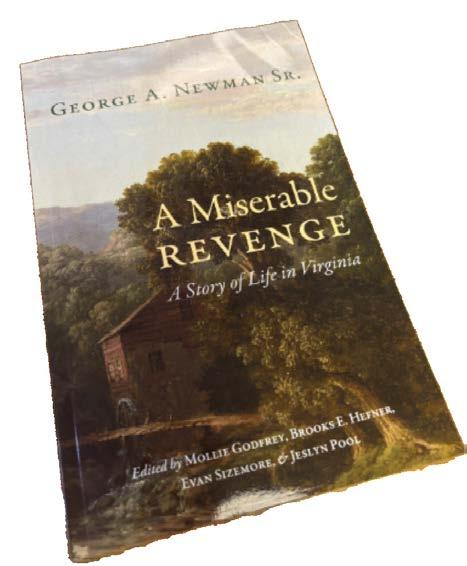
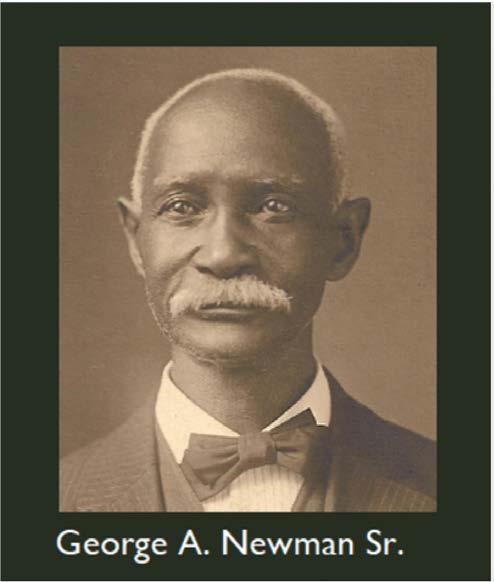
The project to publish the novel based on the manuscript was led by JMU English Professors Dr. Mollie Godfrey and Dr. Brooks Hefner, with contributions from experts in JMU Libraries, including Tiffany Cole, Kate Morris, Bodeene Amyot Cairdeas, Liz Thompson, Kirsten Mlodynia, and Kevin Hegg Other JMU contributors and collaborators included Jeslyn Pool (MA ’23) and Evan Sizemore (MA ’23), assistant professor of education Leonard Richards (’13, ’14M), art history professor Sarah Brooks, and art professor Susan Zurbrigg.
George A. Newman, his book, and his legacy were celebrated during the Newman Symposium on May 1, 2025. The symposium took place at local landmarks significant to Newman’s life and legacy: the Lucy F. Simms Continuing Education Center, the Dallard-Newman House and the Newtown Cemetery
HOW TO ACCESS A MISERABLE REVENGE: A STORY OF LIFE IN VIRGINIA
Newman’s novel is freely available as an electronic edition on the Pressbooks platform hosted by JMU Libraries.
Print copies can be ordered at cost from VIVA, Virginia’s Academic Library Consortium.
A critical digital companion for the novel was created by JMU students, with support from JMU Libraries staff and faculty members. This companion website includes interviews, lesson plans, companion resources, and digital scans of Newman’s original manuscript.
To see the manuscript in person, schedule a visit to JMU Special Collections.
Peer Focused: Students Helping Students with Business Research
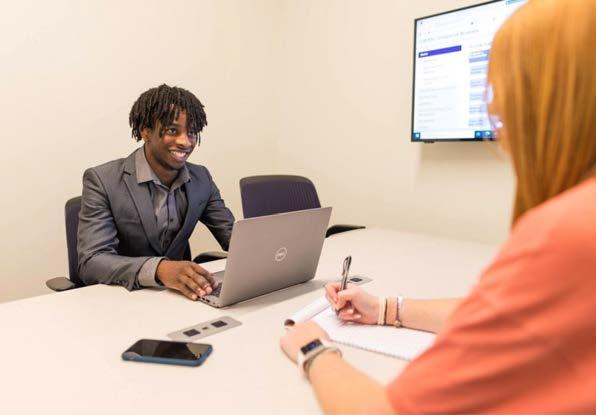
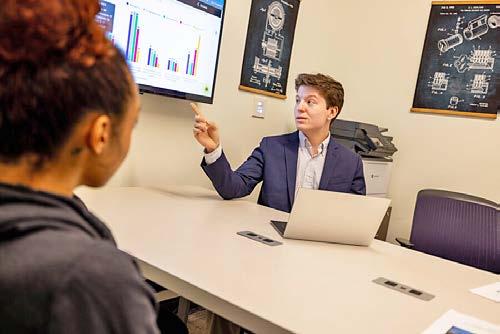
Peer Research Advisers (PRAs) are student employees in JMU Libraries trained to help their peers in the College of Business with the in-depth research required to create a business plan for COB 300. The PRA program has been assisting their peers in the College of Business with research for over 8 years. In this story, you’ll hear from one of our recently graduated PRAs—Chase Huff.
Before graduating in Spring 2025, Chase served as a PRA offering business research consultations during the 2024-25 academic year. As he embarks on his post-JMU career, we celebrate the lasting impact he’s made on the PRA program and his help in training the 2025-26 cohort of PRAs – Payton Jaciow, Umar Khan, and Claire Svihra.
LET’S GET TO KNOW CHASE!
How did your PRA position help you as a student?
The biggest way it’s helped me as a student is learning about the information we have access to as students and how to use different databases. It’s made research easier, and I’ve been able to use what I learned to bring something extra to my teams in other classes—getting good grades, too!
How will the skills you’ve gained as a PRA help you in the future?
The most valuable skill I gained was the ability to communicate professionally with pretty much anyone. I’ve had so many students come in asking for help, and I’ve learned how to figure out what they need and come up with good solutions. Being able to think creatively on the fly, having that confidence, and communicating professionally with other students are really valuable skills that I’ll carry into my career. It’s something I haven’t learned in a class, which makes it even more special.
With almost 24% of JMU undergraduates choosing a major in the College of Business, many folks in the JMU community have heard of “COB 300,” a famously rigorous course that requires teams of 8-9 students to create a business plan based on an original idea. A project like this requires plenty of research, and that’s where the PRAs come in! As student employees within the JMU Libraries, PRAs are trained to consult with business students to help them find the information they need for their business plans and other assignments.
We are so grateful for our student employees! The PRAs’ hard work makes it possible for us to provide this level of research support to more than 700 business students each year.

What was your favorite part of being a PRA?
My favorite part is just being able to help fellow students through a really challenging process. We’ve been through COB 300 ourselves, and we understand how tough it can be. Being a fellow student who has been there and can offer comfort and guidance is very rewarding.
Can you give an example of something you’ve helped a student to research for their COB 300 project?
One of the most common questions we get is where to start. We usually start with their industry code—the NAICS code. NAICS stands for “North American Industry Classification System,” and it’s used to classify industries. That code allows students to search databases and find relevant financial information about their industry, such as market segments, key competitors, financial industry averages, ratios, and other essential information to help them build their business plan.
That’s cool! Let’s say I wanted to invent some new kind of light-up shoes. Would the NAICS code be for “light-up shoes,” “footwear,” or something else?
I could definitely look it up for you. Let’s see… I’m searching on a site called NAICS.com. I found “Footwear Manufacturing,” and the NAICS code is 316210.
Was there anything surprising that you found you could learn using the databases?
I was surprised to discover how much private information is available in some databases. There’s one that allows you to search people’s names and find information about them. It was shocking to see how much information was publicly available.

Are you helping to train next year’s PRAs?
Yes! Every year we get a brand-new group. What’s great about this job is that we all get to pick a project we want to work on. My project was taking on a mentorship role for the new PRAs. It gave me formal experience as a mentor, and I was extra involved in their training process. I attended all their training meetings, checked in with them weekly, and organized team bonding events—typical elements of a mentoring relationship.
What do you want to do in the future?
I’ll be doing field sales and marketing in D.C. My main career goal is to be an entrepreneur or a manager of a company. After receiving advice from many people, they suggested that if I wasn’t sure about my exact path in entrepreneurship yet, I should gain sales experience since it’s a highly relevant skill in that world. So, I set out to apply for sales positions, and I was lucky to get one! I’m excited for my post-grad journey.
What
has it been like working with JMU’s business librarians?
Extremely positive! Elizabeth Price and Valerie Linsingbigler are very supportive of us. They’re excellent leaders and great supervisors in a professional sense, but they’ve also been incredibly kind and caring toward us. They bring us baked goods, write us sweet cards, and truly make our experience special. Whenever I’m asked about my favorite part of my job, I always say that working with the team and with them has been such a positive experience.


































EFrom Classroom to Camera: Madison’s Student Success Story








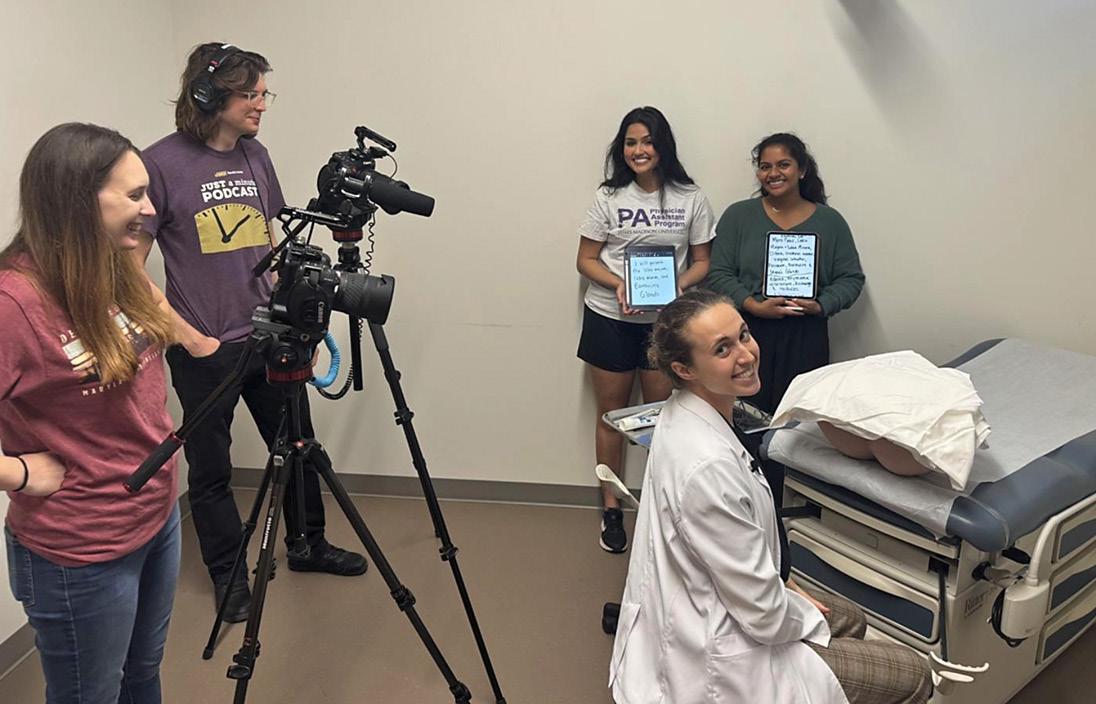
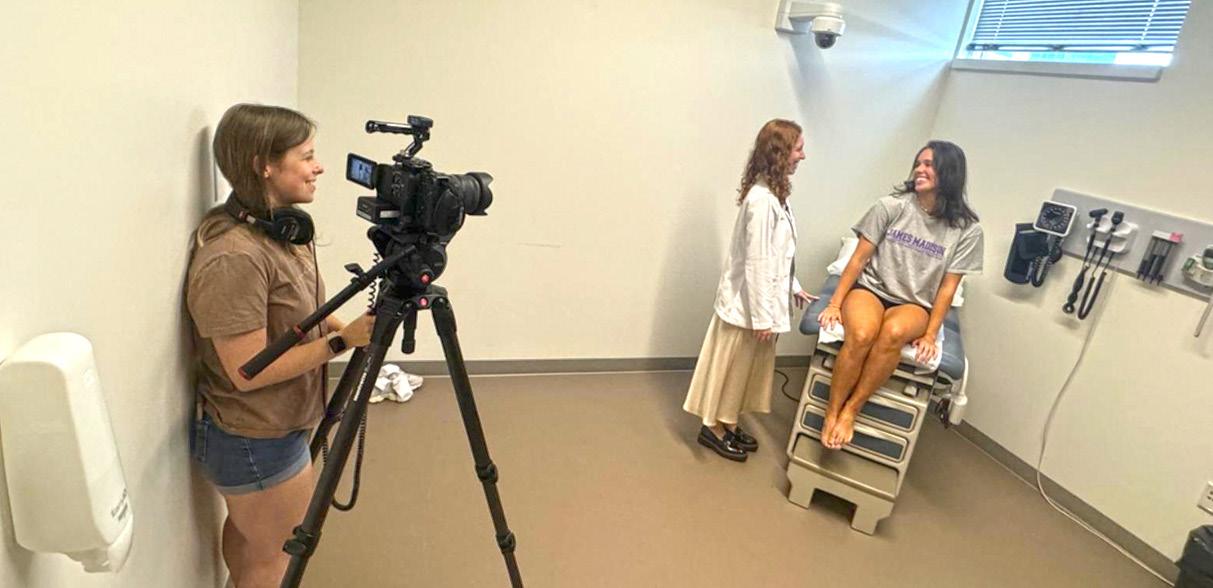
very year, students nearing the end of JMU’s Physician Assistant (PA) program are required to complete a Capstone Project. As part of the Capstone Project, students are given the opportunity to play the part of a PA in a mock physical exam that is filmed by JMU Libraries’ student employees and staff. These recordings are then used to train other Physician Assistant students in the program.



















production work. Through this experience, Madison honed her professional skills and gained invaluable hands-on experience, making a significant impact on her future and the educational experience of fellow JMU students.

























In this Q&A, you’ll have the chance to hear from Madison Denham, one of the Libraries’ student media production assistants responsible for this video work.






Gaining professional experience: Madison supported the entire video production process for three Physician Assistant capstone videos, from packing and transporting camera equipment to setting up cameras, filming, editing, and post-





























Helping fellow students: Physician Assistant students Katie Schluederberg and Carly Lucas appreciated the support they received from Madison. “The process was smooth and well-organized, and Madison was professional, respectful, and ensured we felt comfortable throughout the recording, even when we needed to do multiple takes! It was especially meaningful to have a fellow JMU student supporting us during such an important moment. She really helped ease our nerves and made the experience feel more personal and fun!”















































































































LET’S HEAR FROM MADISON!




















How long did the filming and editing process take from start to finish?











The filming process usually takes around 3 to 4 hours. Editing usually takes a couple of weeks, including time to get feedback and revisions.


















Were there any challenges or unexpected moments during the filming or editing process? If so, how did you handle them?





Sometimes due to unwanted background noise we had to replace audio from one take with better quality audio from a different take, then needed to sync the audio and video correctly.




What else do you do as part of your student job in JMU Libraries?
I also work on photography, podcast production, faculty and staff video projects, and 3D modeling projects.




























How has your role in JMU Libraries helped prepare you for your future career?































I wish to pursue educational media, so the work I do now is right up my wheelhouse so to speak. I get real educational experience and feel that I can provide resources and skills to students, faculty, and staff here at JMU.




If another JMU student was considering applying for your job when you graduate, what would you tell them about it?




If another student was considering applying for this job, I would say please do it! It is a unique opportunity, and you get to learn so many diverse hands-on skills. It applies to various media careers, not just educational media. And it’s a lot of fun, too!





It was especially meaningful to have a fellow JMU student supporting us during such an important moment. She really helped ease our nerves and made the experience feel more personal and fun!”
~Katie Schluederberg and Carly Lucas about Madison Denham







Awards & Recognitions
Since 2019, the Libraries has proudly awarded scholarships to some of our exceptional student employees. These scholarships are granted through a competitive selection process that thoughtfully considers financial need, academic achievement, and individual merit.
Thanks to the incredible generosity of our donors, we were able to double the number of scholarship awards in 2025, an inspiring milestone that reflects our shared commitment to supporting students in meaningful ways.
We invite you to read and enjoy these heartfelt notes of gratitude from our student awardees from 2024 and 2025. Their words offer a glimpse into the impact your support has made in their lives, both academically and personally.
Bahaa Hussein (2025)

“Thank you to the generous donors of this scholarship. These kind acts allow students to maintain their pursuing of higher education and achieve great things to make the world a better place. Our appreciation as students is endless.”
Jenna Armstrong (2025)

“Words to the donors: Thank you all for making this scholarship possible and choosing me to be one of the recipients! You never know someone’s financial status going into college but just know that it has made a world of a difference and I will forever be grateful for this significant help! Thank you!”
Avery Gould (2025)

“I am deeply grateful for the generosity of those who donated to JMU Libraries, making scholarships like mine possible. Your contributions have not only supported my educational journey but also inspired me to strive for excellence in my studies. As a recipient, I am reminded of the importance of giving back and investing in others’ futures. Thank you for your kindness and commitment to empowering students like me to achieve our goals. “
Annabel Thrush (2026)

“Thank you so much to the wonderful donors who have made this scholarship possible. To be awarded this is such an amazing opportunity that helps to make my education more accessible and affordable and allows me to continue working with the JMU Libraries in a job that I truly love!”
Morgan Rosenkrantz (2026)

“I want to take a moment to express my sincerest gratitude for being chosen as a recipient of the JMU Libraries student employee scholarship. This generous contribution will only strengthen my academic resolve and will help tremendously in achieving my goal of becoming a pharmacist.”
Angelica Lucio Herrera (2025)
“Thank you so much for selecting me as a recipient of the JMU Libraries Employee Scholarship. I am truly honored and grateful to be recognized among such a dedicated group of library student employees.
Working with JMU Libraries has been an incredibly rewarding part of my college experience. I’ve growth both professionally and personally thanks to the supportive environment and the amazing people I work with.
To the incredible donors who made this happen, thank you. This award means so much to me and will help support my continued education here at JMU. Thank you for your generosity and for believing in the value of student employees like me. I am so beyond grateful to be part of this amazing community.”
Amanda Xu (2026)

“Thank you for your generous scholarship and for believing in my dedication to learning! The libraries have always been my sanctuary growing up since books and librarians have been both my escape and my inspiration. To now receive this support from the very community that nurtured my love of reading means more to me than words can express and I’m deeply grateful!”
Savannah Hughes (2026)

“I would like to thank you for funding and selecting me for the JMU Libraries student employee scholarship. This is an incredible honor to me, and I am beyond grateful for the opportunity that I have been granted through this donation.
Working at the libraries has allowed me to build upon my organizational and communication skills, which will aid me throughout my career. I am truly appreciative of the job, skills, and friends this position has brought to me. As a first-generation college student and student who relies upon FAFSA and the kindness of people like yourselves to receive an education, I am very grateful.“
Dzifa Melomey (2026)
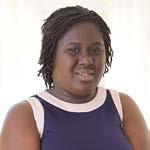
“Thank you so much for considering me for this award. I cannot express my gratitude enough and I adored spending my time working with JMU Libraries. I am honored to accept this award.”
Elyse Eyon (2026)
“I want to thank you for making it possible for me to receive the JMU Libraries Scholarship for Fall 2025 to Spring 2026. I have been working at The Makery as a desk assistant for a year now and it has been an amazing learning experience. I applied to this scholar-
JAMES MADISON UNIVERSITY AWARDS

Hermione DeWitt was named JMU’s 2023–24 Student Employee of the Year. Hermione worked in the Libraries’ Makery for three years, where she helped countless fellow students learn to express their creativity through the use of technologies ranging from 3D printers to sewing machines. Makery Services Manager Lisa Hartman praised her, saying, “Hermione shines in her leadership and initiative skills and those skills will serve her well when she begins her teaching career after graduation.”

Dr. Brian Flota was selected as the 2023 Libraries’ Madison Scholar. Dr. Flota, humanities librarian, was recognized for his excellence in scholarly achievement. This award recognizes and honors the depth and breadth of his scholarship in library science and popular culture studies through
ship to help cover the cost of paying tuition and rent as a full-time student. With my course load increasing even more next semester, I am so grateful for this scholarship allowing me to feel more confident about my expenses over the next two semesters! “
Olive Poole (2026)

“I am incredibly grateful to have received a scholarship in support of my work at the Music Library. Working in the Music Library has been an invaluable experience. It has enriched my understanding of music history, deepened my appreciation for archival work, and connected me to a passionate community of scholars and musicians. Thank you to the donors whose support makes opportunities like this possible. Your generosity is not only an investment in education but also in the future of music and the arts.”
Ilse La Fleur (2026)

“I am deeply grateful for this scholarship. I am the second oldest of four girls, born to two educators in Free Union, Virginia. Your gift allows me to continue my studies as a history major, and hopefully pursue my masters after I graduate in 2027. Working in the library has brought me so much joy, focus, and hope and I thank you again for your gift.”

his research, editing, collections-building, and writing, much of which focuses on diversity, inclusion, and mentoring of new librarians.
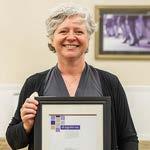
Prof. Jennifer Keach received the 2024 All Together One award. Jennifer’s award celebrates her gift for community-building, which marked the many contributions she made in her 22 years at JMU. As the coordinator for organizational learning and development in the Libraries from 2014 until her retirement in 2024, Jennifer spearheaded Libraries’ employees’ learning on topics like inclusion, mindfulness, leadership, career development, communication, and collaboration. Jennifer’s dedication to learning was not only evident within the Libraries. In 2012, she began sharing her gifts with the entire JMU community by offering workshops through JMU’s Talent Development office

Dr. Juhong Christie Liu, director of instructional design, was selected as a winner of the 2023–24 JMU Compass Award in the new category, “Projects.”
Dr. Liu is recognized for her local, national, and international collaboration and scholarship across diverse cultural settings. A notable project that Dr. Liu has led is the Learning Access through Universal Design project, which won the Commonwealth Technology award for customer experience in 2023. Dr. Liu was presented with the Compass Award by the Office of the President and the Office of the Vice President for Diversity, Equity and Inclusion, at this year’s diversity conference.

Josh Lipscomb, Peer Research Adviser, was chosen as a runner-up for JMU’s 2023–24 Student Employee of the Year.
Josh is a senior majoring in finance and is in his third semester working as a Peer Research Adviser for JMU Libraries. In that position, Josh consults with students who are enrolled in the 12-credit College of Business course experience, “Integrative Business,” and helps those students take advantage of Libraries resources to draft a business plan. Josh is recognized for his positive attitude, professionalism, and his contributions to both the Peer Research Advisor program and his fellow students’ success.
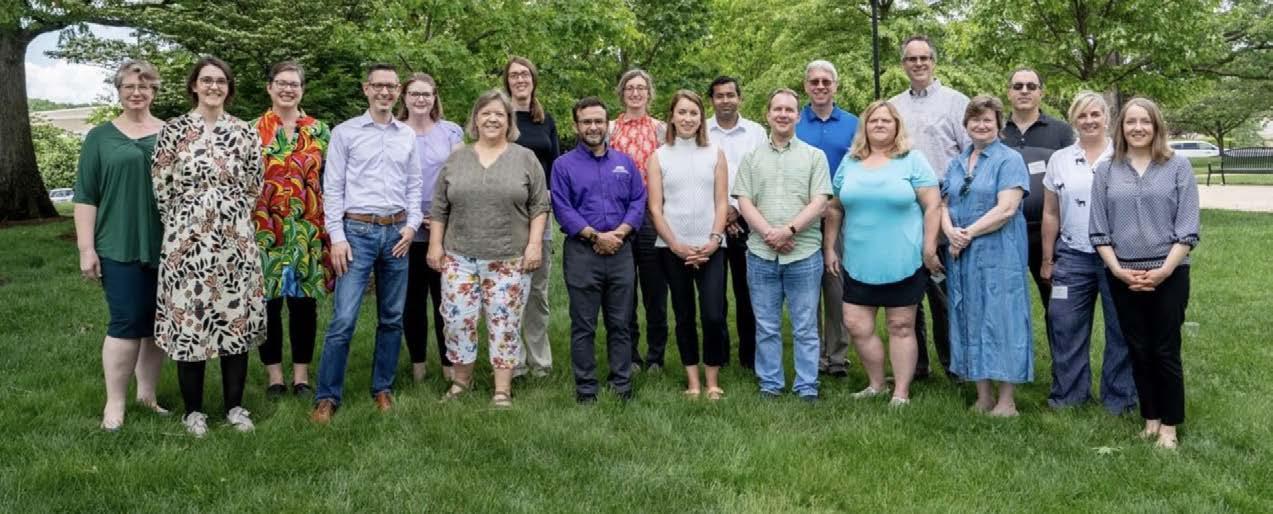
Below: The Faculty Advisory Board from left to right: Bethany Nowviskie, Chiara Elmi, Kristen Kelley, Jason Forsyth, Judith Ofcarcik, Laura Atkins, Lori Gano-Overway, Raafat Zaini, Lauren Sarringhaus, Molly Bowman, Raihan Khan, Chris Berndsen, Eric Fife, Sharon Blatz, Mark Rankin, Pamela Sullivan, Fariss Terry Mousa, Traci Wile, and Emily Blake.

Prof. Liz Thompson, open education librarian, is the 2025 Distinguished Service Award winner for the JMU Libraries. This award recognizes a faculty member who provides exceptional professional-related service at the university, local and national levels. Liz’s service contributions in the Libraries range from serving on search committees to mentoring new employees and chairing committees. At the JMU level, Liz has contributed to research identifying barriers to scholarship and has served on the Basic Needs Advisory Board, a group that researches, creates, and advocates for resources and policy changes to better support JMU students facing financial hardship. At the state level, Liz has served as JMU’s representative to SCHEV’s Open Virginia Advisory Committee, vice chair of VIVA’s Open and Affordable Course Content Committee, and chair of the 2021 VIVA Course Materials Survey Task Force. As her supervisor and nominator states, “Liz continually impresses me and pushes me to be as generous a contributor as she is. She leverages her service work to inform her job in rich and meaningful ways – giving her all even when juggling intensive projects.”
Ella Iovinelli was selected as a 2025 JMU Student Employee of the Year runner-up. Ella was recognized for her exceptional contributions to the JMU Libraries’ Collection Administration Department.
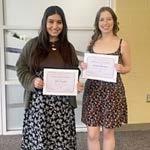
Madison Denham was selected as a 2025 JMU Student Employee of the Year runner-up. Madison was recognized for her exceptional contributions as a Media Production Assistant in the Libraries’ Media Production and Makerspace Services Department.


Did you know? Did you know? Did you know?
WE CONTRIBUTE TO JMU’S SUSTAINABILITY SUCCESS
We played a key role in JMU being noted as a Top Performer in Research in the 2025 Sustainable Campus Index, a prestigious national recognition from the Association for the Advancement of Sustainability in Higher Education. Our dedication to providing library support for sustainability research and promoting open access to published research helped propel JMU to this impressive achievement.
WE
OFFER
A VIBRANT EVENTS CALENDAR
From August 2023 to May 2025, JMU Libraries hosted 263 engaging events, including hands-on workshops in our innovative makerspace, art exhibit receptions in the Music Library, and online workshops tailored for faculty. In total, these events attracted approximately 2,730 attendees, fostering community connections, faculty success, and creative exploration.
WE EMPOWER STUDENTS THROUGH COURSE-INTEGRATED INSTRUCTION
Between January 2024 and May 2025, our librarians and technology experts led 833 instruction sessions integrated in JMU courses, reaching over 21,000 students. We teach essential topics such as effective research techniques, website development for class projects, information evaluation, and more, equipping students with vital skills for success.
WE SUPPORT THE EFFECTIVE USE OF AI AT JMU
As artificial intelligence (AI) transforms work, learning, and communication, JMU Libraries’ experts are at the forefront of navigating AI’s ethical and practical challenges. Our faculty and staff, equipped with deep expertise in technology, data, and information literacy, are emerging as campus leaders in AI. Through workshops, consultations, participation in the JMU AI Task Force, and the creation of online guides, we empower the JMU community to use generative AI effectively and ethically.
WE SUPPLY AND MANAGE JMU CLASSROOM TECHNOLOGY ALL OVER JMU
Our Libraries’ Classroom Technology team expertly installs and maintains equipment in 457 labs and classrooms across JMU, while also supporting over 20 conference rooms for faculty and staff use.
WE HAVE A NEW FACULTY ADVISORY BOARD
We launched our inaugural Faculty Advisory Board (picture to the left). The board provides valuable input and feedback on our services, resources, and programs to ensure that they remain aligned with the evolving needs of our faculty. The 18 members of our board are full-time and part-time faculty who represent all 7 of JMU’s colleges. This year, they were integral to our external review process and have helped us to keep a pulse on the needs of our campus related to research and teaching support, artificial intelligence, and more.
Did you know? Did you know? Did you know?
WE HELP LEARNING MATERIALS BE MORE DIGITALLY ACCESSIBLE
JMU Libraries staff and faculty are taking a major leadership role in preparing our campus to meet new state and federal requirements surrounding online content. Changes in Virginia law and in the Americans with Disabilities Act mean that course materials and other digital resources must be made more easily accessible to users with disabilities. We were able to procure essential new software to help meet these mandates outside of our normal budget cycle—thanks to philanthropic gifts.
WE SUPPORTED THE FURIOUS FLOWER CONFERENCE
In the Fall of 2024, JMU’s Furious Flower Poetry Center held its decennial conference, celebrating “The Worlds of Black Poetry.” This event marked a major milestone in the Libraries’ project to preserve Furious Flower’s precious digital archives. Both the conference and our ongoing collaboration have been supported by a $2 million Mellon grant (at the time, JMU’s largest-ever private foundation grant). In 2026, Furious Flower will move into the new Carrier Library — sharing space with the librarians, archivists, and technologists who are ensuring its digital future.
WE PROVIDE JMU WITH MILLIONS OF INFORMATION RESOURCES
Our collections, which propel teaching, learning, and research at JMU, are 3.2 million items strong!

3.2 MILLION ITEMS IN OUR COLLECTIONS
Alumna creates the “Karen Stultz Whetzel (’71, ‘74) Stacks and Scholars” scholarship for Libraries student employees
Former JMU Libraries student employee and proud “Double Duke” Karen Stultz Whetzel has given back to the community that helped shape her journey by establishing a meaningful scholarship for Libraries student employees. This heartfelt gift will support a full-time student who embodies a love of learning, a passion for libraries, a strong work ethic, and a clear vision for their future.
“I was inspired to create the scholarship because I worked in Carrier Library as an undergrad student. Without the work study program and scholarships, I would not have been able to get my degree from then Madison College in 1971,” recalls Karen.
Karen’s connection to Carrier Library runs deep. “I used the Carrier Library extensively when I was working on my undergrad and graduate degrees in Elementary Education and Library Science. I remember spending most of my spring break from my job as an elementary librarian doing research on papers for my classes. As a school librarian for over 25 years, I saw the impact that I could have on students to whom I was reading books, teaching library skills, and instilling a love for books and lifelong learning in them.”
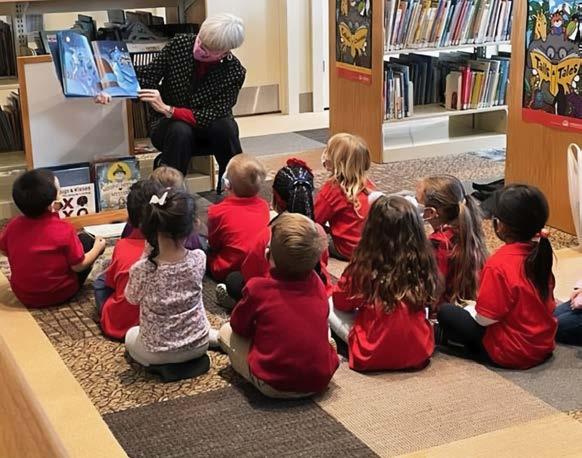
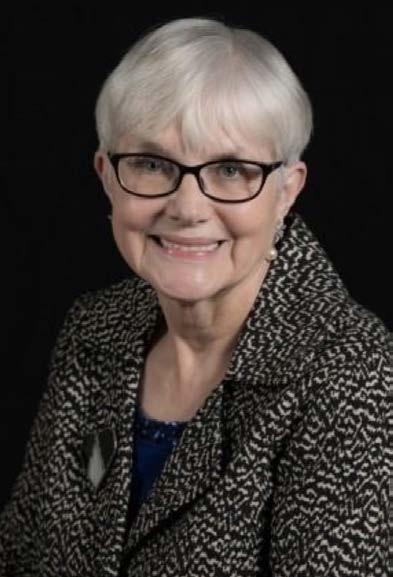

Her dedication to education didn’t stop there. After a distinguished career as a school librarian, Karen continued to serve her community as an assistant principal at Strasburg High School and principal at Stonewall Jackson High School, both in Shenandoah County, Virginia. Her leadership in education, peer coaching, and educational media has been widely recognized across Virginia.
The Stacks & Scholars scholarship is a beautiful reflection of Karen’s lifelong commitment to learning and service. Through this her generous act, she continues to uplift future generations, just as she was once uplifted herself.
Karen Whetzel reads to preschoolers.
Advancing Knowledge: JMU Libraries’ Research Impact
When you support JMU Libraries, you’re not just expanding access to information—you’re championing people who create and advance knowledge. Our faculty and staff are active scholars whose work spans the academic disciplines of librarianship, educational technology, archives, and instructional design. From advancing information literacy to shaping national conversations around artificial intelligence, our contributions shape how students learn, how faculty teach, and how libraries lead in a changing world.
Over the past two years, JMU Libraries faculty and staff have made a wide range of significant scholarly contributions— authoring six books, 24 journal articles, and 15 book chapters. They also delivered 1 08 conference presentations and produced 82 additional scholarly or creative works.

Here are just a few highlights from this growing body of work—examples that reflect the scholarly strength of our faculty and staff and underscore JMU Libraries’ leadership in information, data, and digital literacies. These areas of expertise are increasingly relevant across the university, especially as the research and learning landscape continues to evolve.
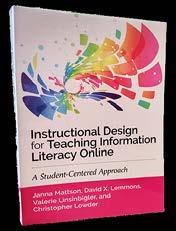
✦ Valerie Linsinbigler (Assistant Professor, Business Librarian) co-authored a book, Instructional Design for Teaching Information Literacy Online: A Student-Centered Approach, published by the Association of College & Research Libraries (ACRL). This volume offers a learner-centered framework for designing online information literacy instruction that addresses the social and emotional needs of students, reflecting the Libraries’ integrated expertise in librarianship, educational technology, and instructional design.
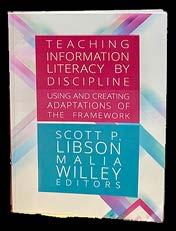
✦ Malia Willey (Professor, Collection Development Librarian) co-edited a book, Teaching Information Literacy by Discipline: Using and Creating Adaptations of the Framework, published by ACRL. This volume explores how disciplinary contexts shape the teaching of information literacy, building on a foundational tool of librarianship, the Framework for Information Literacy for Higher Education. Offering models for drafting learning outcomes, research guides, assignments, and curricula, it is a valuable resource for academic librarians across fields.
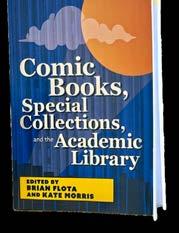
✦ Dr. Brian Flota (Professor, Humanities Librarian) and Kate Morris (Associate Professor, Head of Special Collections) co-edited Comic Books, Special Collections, and the Academic Library, a scholarly monograph published by ACRL. Receiving a prestigious “starred review” in Library Journal, this book offers best practices for acquiring, preserving, cataloging, teaching with, promoting, and researching comics within the special collections units of academic libraries.
✦ Yasmeen Shorish (Professor, Director of Data & Scholarly Communications) co-authored the final report for a Mellon-funded research project, Collections as Data: Part to Whole This project explored the question of how to advance the responsible development and computational use of memory institution collections, as data. Professor Shorish and team are actively exploring international partnerships to advance collections-as-data community development on a global level moving forward.
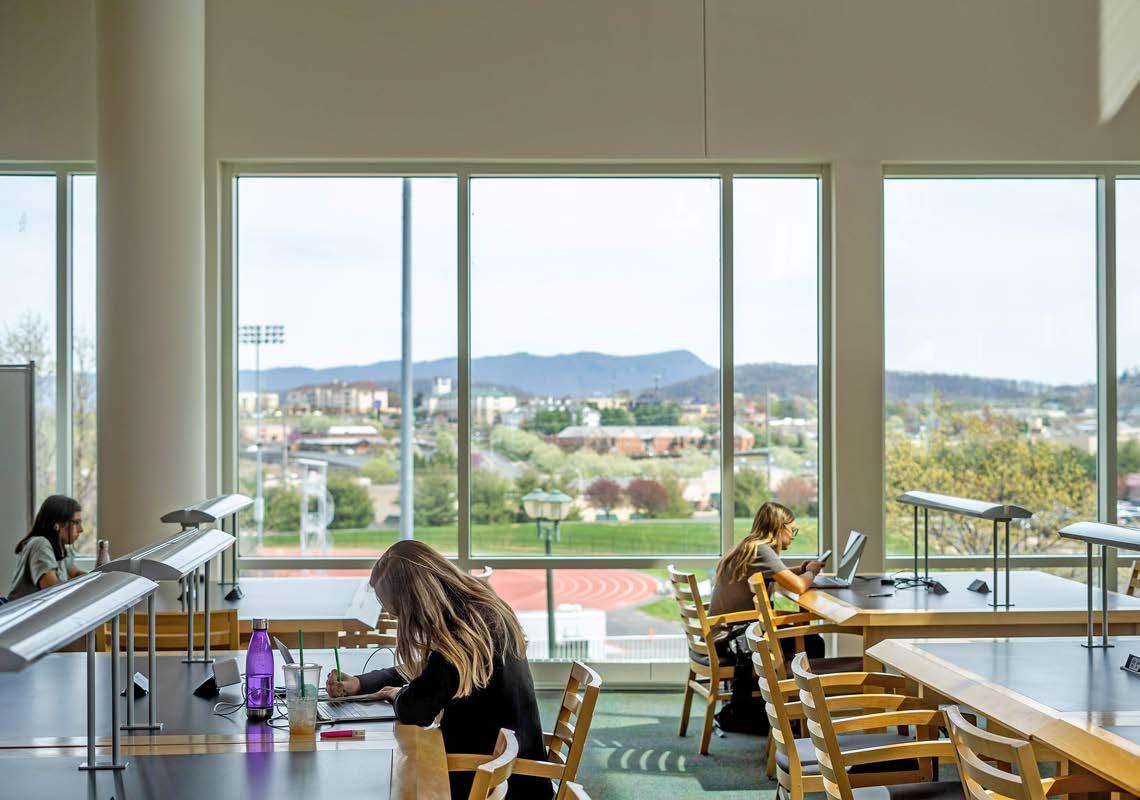
✦ JMU Libraries is also engaged in a national project exploring the integration of artificial intelligence (AI) literacy alongside established information, data, and digital literacies in higher education. A cross-disciplinary team—Liz Chenevey (Associate Professor, Health and Behavioral Studies Librarian), Samantha Harmon (Assistant Professor, Data Services Librarian), and Dr. Nathaniel Taeho Yu (Associate Professor, Instructional Designer)— will gather insights into how AI is shaping learning, teaching, and research across JMU. These findings will inform JMU’s AI resources and contribute to a national report that will guide colleges and universities in preparing students to effectively use and critically engage with AI technologies.
ADVANCING THE RESEARCH MISSION ACROSS THE UNIVERSITY
JMU Libraries also plays a key role in advancing research efforts across the university. We provide JMU faculty and researchers with publishing platforms, academic software, robust collections, and expertise in librarianship, educational technology, archives, and instructional design.
One of the publishing platforms we provide is the JMU Scholarly Commons, which is the university’s online archive for collecting, preserving, and sharing digital copies of

scholarly work created at JMU. Over the past two years, papers and other research products hosted on the JMU Scholarly Commons were downloaded 2,142,033 times across almost 12,000 institutions worldwide.
Through these resources and services, JMU Libraries empowers JMU faculty, students, and collaborators to pursue knowledge, share their discoveries, and shape the future.
THANK YOU
Thank you for supporting JMU Libraries! We’re so grateful for your generosity and excited about the future of Carrier Library. Your gifts make a real impact—funding student scholarships, preserving Shenandoah Valley history, and enriching learning and programming across campus.
If you would like to make a gift, please visit our website at https://www.lib.jmu.edu/giving/ or scan the QR code below.

You’ll have a chance to support JMU Libraries on Giving Day, March 26, 2026. Watch your mailbox for more details!
To learn more about opportunities to support the future Carrier Library, please reach out to:
✦ Dean Bethany Nowviskie (nowvisbp@jmu.edu; 540-568-5382)
✦ or Cynthia Cline, Sr. Director, Strategic Gifts (clinecd@jmu.edu; 540-568-3195)
Libraries