D2.2 STATE OF THE ART REPORT
Executive Summary
Purpose of the Report
The report will be a combination of country situation reports, analysis of the interviews, and focus group outputs. It will serve as a key resource for policymakers, NGOs, and the public, providing a thorough analysis based on an extensive literature review and data collection. This task focuses on compiling the results and findings from in-depth country analyses and qualitative interviews and focus groups into a comprehensive state-of-the-art report. This report will serve as a key deliverable of the project, aiming to provide an in-depth analysis and understanding of various aspects of LGBTQI+ phobia, particularly as it relates to trans and intersex individuals. This report will present a multidimensional understanding of the systemic barriers, social dynamics, and institutional responses that shape LGBTQI+ inclusion and exclusion. The main objectives include:
1. Integration of Findings: The report involves integrating the qualitative data obtained from interviews conducted These narratives will be combined with the analysis of existing policies and legal frameworks conducted, providing a comprehensive overview of the challenges, experiences, and policy contexts surrounding LGBTQI+ phobia.
2. Thematic Analysis: The compiled data will undergo a rigorous thematic analysis process, identifying common themes, patterns, and trends within the narratives and policy landscape. This analysis will enable a deeper understanding of the underlying causes, manifestations and impacts of LGBTQI+ phobia across different societal domains, including healthcare, employment and social interactions.
3. Evidence-Based Insights: The state-of-the-art report will present evidence-based insights into the specific challenges faced by trans and intersex individuals, the systemic barriers they encounter and the consequences of LGBTQI+ phobia on their well-being and social inclusion. It will also highlight the gaps and limitations in policy design, implementation and enforcement that perpetuate discrimination and inequality.
4. Recommendations: Drawing from the findings, the report will provide concrete recommendations aimed at addressing LGBTQI+ phobia and promoting the rights and equal opportunities of trans and intersex individuals. The report will be disseminated widely through all project channels, including the project website, social media platforms, relevant professional networks and conferences.
Key findings
The findings presented in this report highlight the multifaceted and deeply rooted nature of LGBTQI+ phobia across the five participating countries and Europe. Drawing on both qualitative and policy analysis, several cross-cutting issues and structural patterns have emerged:
Persistent Stigma and Discrimination
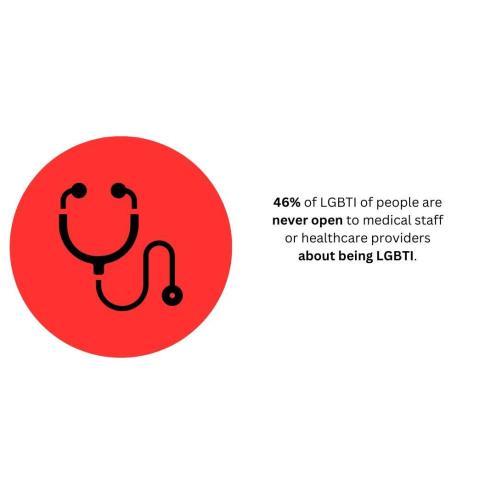
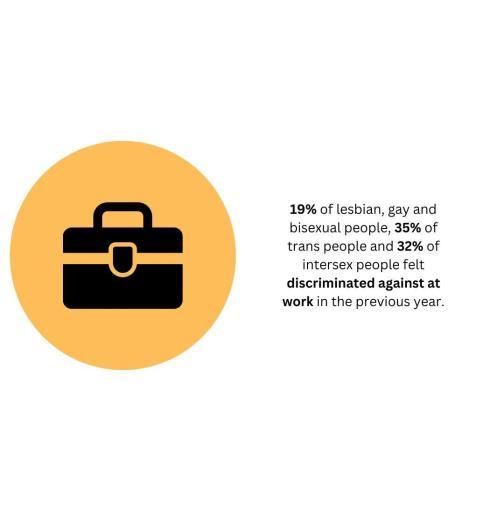
Trans and intersex individuals continue to face widespread stigma, particularly in healthcare and employment settings. Discriminatory practices—ranging from misgendering and lack of informed care to workplace exclusion and harassment—remain prevalent, often going unreported or unaddressed.
Gaps in Legal Protection and Policy Implementation
While some progress has been made in advancing legal frameworks, significant gaps persist in the recognition and protection of gender identity, gender expression and sex characteristics. In several countries, intersex individuals are not explicitly protected under national anti-discrimination laws and the implementation of inclusive policies remains inconsistent and fragmented.
Lack of Institutional Knowledge and Training
Public sector professionals, particularly in healthcare and education, frequently lack the training and institutional guidance needed to support trans and intersex individuals effectively. This contributes to inadequate service provision, retraumatization and systemic exclusion.
Intersectional Vulnerabilities
LGBTQI+ phobia is often compounded by other forms of marginalization, including racism, ableism and xenophobia. Migrants, racialized individuals and persons with disabilities who also identify as LGBTQI+ face additional layers of exclusion, yet intersectional protections remain underdeveloped in most national contexts.
Variability Across Countries
The legal and social landscapes differ significantly across the five countries examined. Spain and Greece have implemented more progressive frameworks, including self-identification laws and bans on conversion therapy, while Lithuania and Cyprus are still in earlier stages of legal reform. Ireland offers strong legal protections but requires further action in areas such as healthcare access and intersectionality.
Critical Role of Civil Society
Non-governmental organizations and grassroots initiatives play a central role in filling systemic gaps, offering essential support services, advocating for policy change and providing education and training. However, many operate under financial and institutional constraints that limit their sustainability and reach.
Need for Comprehensive, Coordinated Strategies
Across all countries, there is a lack of cohesive, long-term strategies addressing the needs of trans and intersex individuals. Existing efforts are often ad hoc, project-based or reliant on external funding, which hinders the development of systemic, sustainable change.
Significant progress has been made in the participating countries, with Spain standing out as a leader in LGBTQI+ rights. Spain's Trans Law (2023) (Sam Jones, 2023) allows self-identification for transgender individuals, while the Zerolo Law (2022) (Council of Ministers, 2022) guarantees antidiscrimination protections. Similarly, Greece has introduced groundbreaking legislation, including the
legalization of same-sex marriage (2024) (James Gregory, 2024) and bans on conversion therapy (Maltezou, 2022). Lithuania has pioneered a structured approach to transgender healthcare with its 2022 medical guidelines (Ministry of Health, 2023), though broader protections are still lacking. Cyprus has criminalized conversion therapy (Groot, 2024) and initiated awareness campaigns, while Ireland’s robust legal framework explicitly protects gender identity and expression, ensuring inclusion across employment, healthcare, and education.
Despite these advancements, challenges remain. Policy enforcement is inconsistent, particularly in rural and conservative regions. Trans and intersex individuals face systemic barriers to accessing healthcare, exacerbated by discriminatory attitudes and resource shortages. Additionally, legislative gaps persist, especially in recognizing non-binary and intersex individuals and addressing intersectional forms of discrimination.
Opportunities for Improvement
The findings highlight the importance of leveraging cross-country learning. Spain and Ireland’s progressive legal frameworks can serve as blueprints for enhancing protections, while Greece’s inclusive reforms demonstrate practical approaches to marriage equality and intersex rights. Harmonizing legal frameworks across countries could help create shared standards for selfidentification, healthcare access and anti-discrimination measures. Capacity-building efforts are crucial, including training for healthcare providers, policymakers, and law enforcement. These initiatives would ensure a greater understanding of LGBTQI+ rights and improve policy enforcement. Public awareness campaigns should also be prioritized to combat stigma and promote societal acceptance, creating an environment conducive to inclusion.
The findings of this report highlight several key areas in which progress can be made to address LGBTQI+ phobia and enhance the protection, visibility and inclusion of trans and intersex individuals across Europe. These opportunities for improvement cut across legal, institutional, social and educational domains:
Strengthen Legal Frameworks and Recognition
Governments should review and modify existing anti-discrimination laws to explicitly include protections based on gender identity, gender expression and sex characteristics. Legal recognition procedures should be accessible, self-determined and inclusive of non-binary and intersex identities.
Develop Comprehensive National Strategies
Instead of isolated or project-based interventions, states should implement cohesive national action plans that address LGBTQI+ phobia across sectors. These strategies should include clear timelines, monitoring mechanisms and adequate funding to ensure sustainable impact.
Training and Capacity Building
Mandatory, ongoing training for public sector professionals—particularly in healthcare, education and law enforcement—is essential to build cultural competence, reduce stigma and improve service provision for trans and intersex individuals.
Expand Data Collection and Monitoring
Reliable, disaggregated data is critical to understanding the scale and impact of LGBTQI+ phobia. National statistical agencies should develop mechanisms to collect data on gender identity and sex characteristics while ensuring privacy and ethical safeguards.
Address Intersectionality in Policy Design
Public policies should account for the intersecting forms of discrimination faced by LGBTQI+ individuals who are also migrants, racialized, disabled or socioeconomically marginalized. Inclusive policies must be tailored to meet the specific needs of these groups.
Support and Sustain Civil Society Organizations
Civil society plays a pivotal role in advocacy, service provision and outreach. Increased structural funding and formal partnerships with public institutions can enhance their impact and ensure continuity beyond short-term project cycles.
Promote Public Awareness and Social Acceptance
Public education campaigns, community dialogues and inclusive curricula can challenge harmful stereotypes and promote broader societal acceptance. Emphasis should be placed on normalizing diverse gender identities and intersex variations from an early age.
Introduction
Background and Context
LGBTQI+ rights have gained increasing recognition across Europe as essential to fostering inclusive societies that uphold human dignity and equality. While many European countries have made significant progress in advancing LGBTQI+ protections, challenges remain, particularly for trans and intersex individuals, who often face unique barriers to accessing rights, healthcare, and protection from discrimination. Addressing the inclusion of these groups is not only a matter of equity but also of aligning with fundamental human rights principles.
The European Union (EU) plays a pivotal role in safeguarding human rights and combating discrimination, providing a framework for member states to protect LGBTQI+ individuals. EU directives and strategies, such as the LGBTIQ+ Equality Strategy 2020–2025 (LGBTIQ Equality Strategy
2020-2025, 2024), aim to share efforts across the region, ensuring that policies address the needs of all individuals regardless of gender identity, sexual orientation or sex characteristics. Participating countries, including Spain, Greece, Lithuania, Cyprus and Ireland, contribute to this shared vision by implementing policies that protect LGBTQI+ communities while addressing persistent gaps in enforcement and societal acceptance.
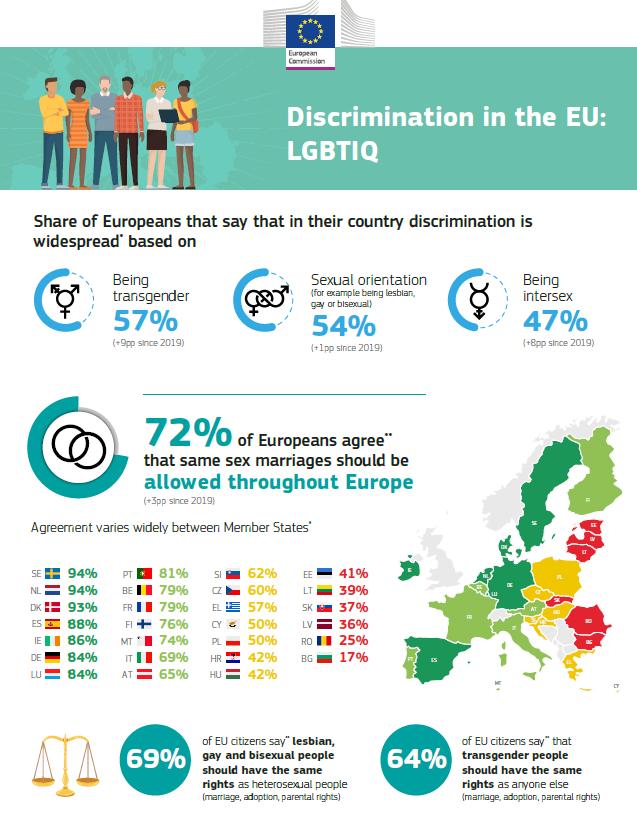
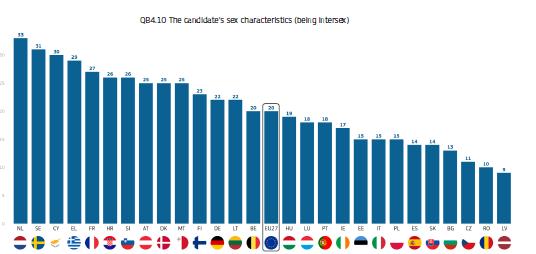
Source:SpecialEurobarometer535:DiscriminationintheEU,Infographics.https://europa.eu/eurobarometer/surveys/detail/2972 (Discrimination in the European Union, 2023)
This report is particularly timely, given the growing international recognition of LGBTQI+ issues and the pressing need for inclusive policies that reflect diverse realities. By focusing on the inclusion of trans and intersex individuals, it seeks to highlight areas where additional action is needed to close the gap between policy and practice.
The objective of the Deliverable
The objective of this deliverable is to provide a comprehensive and evidence-based overview of the current realities, challenges and systemic dynamics surrounding LGBTQI+ phobia, with a specific focus on the experiences of trans and intersex individuals in five European countries: Spain, Greece, Cyprus, Lithuania, and Ireland.
Building on the findings of qualitative data collection and policy and legal framework analysis, this deliverable aims to:
• Integrate qualitative narratives with institutional and legal analysis to offer a holistic understanding of discrimination exclusion, and inequality.
• Identify thematic patterns and structural barriers across societal domains such as healthcare, employment, education and public services.
• Highlight gaps in policy implementation, legal protections and public awareness that contribute to the perpetuation of LGBTQI+ phobia.
• Generate actionable insights and recommendations for national and EU-level stakeholders to inform future advocacy, policymaking and service provision.
• Serve as a foundational resource for dissemination, capacity-building and further research within the ACTIVEAID project and the broader LGBTQI+ rights landscape.
Through this in-depth exploration, the report contributes to the overarching goal of the ACTIVEAID project: to combat LGBTQI+ phobia by empowering institutions, amplifying community voices and promoting inclusive, rights-based approaches at both the national and European levels.
Structure of the Report
The report is organized into several key sections to guide the reader through its findings and recommendations. Following this introduction, the Methodology section outlines the research approach, including desk-based policy analysis and insights from stakeholder interviews. The CountrySpecific Analysis explore each participating country's policies and legal frameworks, examining their strengths, gaps and implementation challenges. A Comparative Analysis identifies cross-country similarities, differences and opportunities for harmonization, while the Recommendations section provides targeted proposals for improving LGBTQI+ rights and protections. The report includes key findings from the interviews with stakeholders, focus group meetings and a vision for advancing LGBTQI+ inclusion across Europe. By providing a structured and in-depth exploration of the topic, this report aims to contribute to the ongoing efforts to ensure equality and dignity for LGBTQI+ individuals in all participating countries.
This report is organized into several key sections that collectively provide a comprehensive, multilayered understanding of LGBTQI+ phobia, with a particular emphasis on the lived experiences of trans and intersex individuals across five EU Member States.
Executive Summary: Provides an overview of the report’s purpose, key findings, and opportunities for improvement, offering a concise introduction to the broader analysis that follows.
Introduction: Outlines the background and context of the ACTIVEAID project and presents the aims, rationale and scope of Deliverable D2.2.
Methodology: Details the research design, including qualitative data collection methods (interviews and focus groups), policy and legal framework analysis and the approach to thematic analysis.
Country Reports: Presents in-depth analyses for each of the five participating countries—Spain, Greece, Cyprus, Lithuania, and Ireland. Each section includes a review of relevant legal frameworks, stakeholder interviews and institutional practices.
Comparative Analysis: Synthesizes cross-country findings to identify shared challenges, recurring patterns, and divergent policy approaches, highlighting both progress and persistent gaps.
Thematic Analysis: Explores key themes emerging from the data, such as stigma in healthcare, gaps in legal recognition, barriers to employment, intersectional discrimination and the role of civil society.
Alignment with EU Frameworks: Assesses the degree to which national actions align with the objectives of the EU LGBTIQ+ Equality Strategy 2020–2025 and other relevant directives.
Key Findings and Opportunities for Improvement: Summarizes the main insights derived from the research and identifies areas where targeted interventions and reforms are needed.
Recommendations: Provides concrete, evidence-based recommendations for policymakers, practitioners and civil society actors at national and EU levels.
Interviews and Focus group meetings: Provide data, information and narratives from the interviews and focus groups implemented with the target group.
Methodology
Research Approach
The research for this report was conducted through a combination of desk-based policy analysis and stakeholder interviews. The desk-based research involved an extensive review of existing legal frameworks, policies and initiatives relevant to LGBTQI+ rights in the participating countries. This included examining anti-discrimination laws, healthcare access provisions, workplace protections and mechanisms for gender identity recognition. Additionally, country-specific reports, academic studies and governmental publications were analyzed to provide a thorough understanding of each nation’s legislative and policy landscape. A detailed data collection template was developed to systematically gather information on policies, legal frameworks and initiatives across the participating countries to support the mapping exercise. This structured tool ensured a consistent approach to data collection and analysis, enabling the identification of gaps, strengths and opportunities for harmonization. The template included eight key sections, each focusing on specific aspects of LGBTQI+ policy design and implementation. It facilitated the documentation of essential details such as policy objectives, enforcement mechanisms, stakeholder feedback and measurable outcomes. For example, Section 2 focused on summarizing policies, including their provisions, target populations, and implementation timelines. Sections 3 and 4 evaluated inclusivity, effectiveness and the scope of policies, incorporating insights into intersectional discrimination and regional disparities. Furthermore, the template emphasized stakeholder perspectives, requiring partners to document feedback from LGBTQI+ communities, advocacy groups and institutions. This qualitative input added depth to the analysis, highlighting practical challenges and successes in policy implementation. Quantitative data, such as statistics on reported discrimination and case resolutions, were also included in Section 7 to provide measurable insights into the impact of existing frameworks. Using this comprehensive template, the consortium ensured that data collection was thorough, standardized and aligned with the project's objectives. This approach allowed for a robust comparative

analysis across the participating countries, forming the foundation for the findings and recommendations presented in this report.
Stakeholder interviews (trans and intersex, employees and health professionals) complemented the desk research by offering qualitative insights into policy implementation and societal attitudes. The interviews explored topics such as policy enforcement, challenges faced by trans and intersex individuals and best practices for fostering inclusion. The format included semi-structured interviews, which allowed participants to share detailed perspectives while addressing key areas of interest. The partnership created a robust interview framework for trans and intersex individuals, health professionals and employers. The framework focused on capturing everyday narratives of intersectional discrimination and inequality to mobilize stakeholders for systemic change. Clear guidelines ensured informed consent and interviewers adopted an intersectional scope to engage participants effectively. The interviews provided first-hand insights into the challenges faced by trans and intersex individuals while fostering stakeholder engagement.
Targeted questions explored healthcare access, discrimination, employment barriers and societal attitudes. Focus groups facilitated discussions to identify strategies for inclusivity. Each partner ought to conducted three group interviews with ten stakeholders per session, including trans and intersex individuals, medical professionals and employers. Interviews lasted approximately an hour, with registration forms, consent agreements and post-meeting questionnaires completed. Sessions employed facilitated discussions, visual aids and action planning for deeper engagement. Approximately, a total of up to 225 stakeholders participated, divided among trans and intersex individuals, medical professionals and employers. 1 Each partner hosted a focus group to refine project goals and contribute to policy analysis. An intersectional approach ensured race, socioeconomic status and other identities were considered.
Interview topics varied by stakeholder group. Trans and intersex individuals discussed healthcare access, legal recognition, employment, and societal pressures. Health professionals addressed policies, barriers to care and biases, while employers examined workplace inclusivity, hiring challenges and misconceptions.
Interviewers were encouraged to adapt and expand discussions beyond the predefined questions to capture more profound insights. Flexibility allowed for organic conversations, uncovering valuable
1The participants weren’t equally distributed between countries. Different numbers of participants participated in each country.
perspectives that might have otherwise remained unexplored. Each partner organized one focus group, with 10 stakeholders participating in these meetings to discuss in more detail the project goals, interviews.
Scope and Limitations
This report provides a comprehensive, multi-country analysis of LGBTQI+ phobia, with a specific focus on the experiences of trans and intersex individuals in Spain, Greece, Cyprus, Lithuania and Ireland. The scope of the deliverable includes an examination of legal and policy frameworks, thematic analysis of qualitative data collected through interviews and focus groups and an assessment of the degree to which national policies align with the European Union’s LGBTIQ+ Equality Strategy 2020–2025. It also reflects the lived experiences of those directly impacted by systemic and social discrimination, as relayed by a diverse range of stakeholders including LGBTQI+ individuals, healthcare professionals, civil society representatives and employers. Through the integration of empirical evidence and institutional analysis, the report seeks to inform policy reforms and promote inclusive practices that center the rights, dignity and well-being of trans and intersex persons.
However, several limitations must be acknowledged in the interpretation of the findings from the desk and field research. First, the availability and depth of data varied significantly across the five countries due to differences in stakeholder engagement, institutional support and access to relevant populations. Second, certain groups remain underrepresented in the dataset, including undocumented migrants, racialized LGBTQI+ individuals, persons living in rural areas and minors without guardian consent. Their exclusion reflects both ethical considerations and practical barriers to participation, such as fear of visibility or lack of secure status.
Furthermore, the lack of standardized, disaggregated national data on gender identity, expression and sex characteristics limited the ability to support qualitative insights with quantitative comparisons. In many cases, public data systems do not capture the experiences of trans and intersex persons distinctly, hindering evidence-based policymaking. Additionally, the report represents a snapshot in time based on data gathered primarily throughout 2024. Given the evolving nature of legal and policy landscapes across Europe, particularly in relation to gender recognition, healthcare reform and anti-discrimination law, future developments may replace some of the findings and recommendations presented here.
Despite these constraints, the report offers a valuable and timely contribution to the understanding of LGBTQI+ phobia in Europe. It provides a solid foundation for ongoing dialogue, further research, and sustained action to promote equity, safety and full inclusion for trans and intersex individuals across the region.
It is important to note that the interview participants were not selected through a randomized process. Instead, they were individuals who either expressed interest in the topic or were identified through purposive sampling. As a result, the sample may not be fully representative of the wider population, and the findings should be interpreted with this context in mind, which may introduce selection bias and limit the generalizability of the results.
LGBTQI+ individuals do not experience discrimination in isolation—many face compounded barriers due to intersecting identities such as race, ethnicity, disability, socioeconomic status or migrant status. These overlapping factors can significantly shape access to rights, services, and safety.
Racial and Ethnic Minorities within LGBTQI+ communities often face double marginalization. For example, racialized trans individuals may be subject to additional stereotyping in employment or healthcare contexts, especially in countries where systemic racism remains underaddressed. In some cases, racial or ethnic background may exacerbate societal rejection or invisibility, particularly in regions with limited anti-racism frameworks.
Migrant and asylum-seeking LGBTQI+ individuals face particularly acute challenges. Legal gender recognition may not be accessible for undocumented migrants, and asylum procedures often fail to adequately assess the risks faced by LGBTQI+ claimants in their countries of origin. Language barriers, fear of deportation, and inconsistent legal protections further compound their exclusion, especially when healthcare access and legal recognition depend on residency status.
Persons with disabilities who are also LGBTQI+ may experience compounded barriers when seeking appropriate services. Discrimination in healthcare or education is often intensified by ableist assumptions, creating exclusion even within systems nominally designed to protect minorities. Inclusive training for service providers rarely addresses both disability and gender/sexual diversity, leaving significant gaps in intersectional care and recognition.
Currently, few countries systematically collect disaggregated data on these intersecting identities. This lack of visibility impairs policy development and hinders the creation of targeted, equitable interventions. To address this, national strategies must incorporate intersectional indicators, ensure accessibility in services and actively engage organizations representing multiply marginalized communities.
Key Recommendations:
● Incorporate intersectional categories in national LGBTQI+ data collection and monitoring systems.
● Include migrant, disability and racial justice organizations in LGBTQI+ policymaking and consultations.
● Fund targeted outreach and services for LGBTQI+ individuals from marginalized subgroups.
Data Gaps and Ethical Considerations
While this report strives to provide a comprehensive and accurate representation of the lived experiences of trans and intersex individuals across the five participating countries, several data and ethical limitations must be acknowledged. First, the availability of data related to intersex individuals remain notably limited. In many contexts, intersex populations are not recognized as a distinct demographic group in official statistics and their experiences are often conflated with those of other LGBTQI+ identities, obscuring specific vulnerabilities and healthcare needs. A very short percentage
participated in the interviews due to the difficulties in getting in touch or acknowledging that they are intersex people.
Moreover, the stigmatization of intersex and trans identities, combined with fears of discrimination or outing, may have led some individuals to not participate or to underreport personal experiences. This introduces the potential for response bias, particularly in regions where LGBTQI+ rights are less recognized or where institutional trust is low.
From an ethical standpoint, great care was taken to ensure voluntary participation, informed consent and confidentiality, especially in interviews involving marginalized or legally unrecognized groups. Lastly, due to disparities in the number and capacity of partner organizations across countries, data volume and depth were not equally distributed. Spain and Greece contributed more extensively due to greater institutional support and higher stakeholder engagement. These differences are reflected in the relative richness of the country-specific analyses.2
Country-Specific Analysis
SPAIN
Executive Summary
Spain has made significant strides in advancing the rights of the LGBTQI+ community over the past few decades, becoming one of the most progressive countries in Europe in terms of legal protections and societal acceptance. In 2005, Spain legalized same-sex marriage through Ley 13/2005, making it one of the first countries in the world to do so. The Gender Identity Law (Ley 3/2007) followed in 2007, allowing individuals to change their gender legally without the requirement of surgery or sterilization, a major step forward for transgender rights. The Comprehensive Law on Equal Treatment and NonDiscrimination (Ley 15/2022), also known as the Zerolo Law, enacted in 2022, is a landmark antidiscrimination law that protects LGBTQI+ individuals from discrimination in various areas, including employment, education, housing, and access to public services. It also includes provisions for addressing hate crimes against the LGBTQI+ community. Additionally, Spain has introduced important reforms aimed at protecting and supporting LGBTQI+ individuals, including the Democratic Memory Law (Ley 20/2022), which acknowledges and compensates LGBTQI+ people persecuted during the Francoist regime, and the Trans Law (Ley 4/2023), which allows transgender individuals to self-identify and access gender-affirming healthcare.
Policy Name/Legal framework: Comprehensive Law 15/2022 (Ley Integral para la Igualdad de Trato y la No Discriminación) (Parliament S. , Comprehensive Law 15/2022, 2022)
Date of Enactment: July 12th, 2022
Responsible Institution: Spanish Parliament
Target Population: LGBTQI+ individuals
2
Overview and Objectives
The Comprehensive Law 15/2022, known as the Zerolo Law, is a landmark piece of legislation aimed at ensuring equal treatment and protection against discrimination for LGBTQI+ individuals in Spain. The law prohibits discrimination in various spheres of life, including employment, education, housing, and public services, and introduces harsher penalties for hate crimes against LGBTQI+ individuals. Its objective is to foster a more inclusive and equal society, ensuring that LGBTQI+ people can live without fear of persecution, discrimination, or violence. The law also emphasizes the importance of raising public awareness to combat societal prejudice. This law prohibits discrimination based on sexual orientation and gender identity across various sectors, including employment, education, housing, and access to public services. It treats hate crimes targeting LGBTQI+ individuals as aggravated crimes with stricter penalties. It aims to provide stronger legal protection and promote equality for LGBTQI+ individuals, raising public awareness and fostering an inclusive society.
Addressing Overlapping Forms of Discrimination: The law clearly addresses various forms of discrimination, such as gender, race, ethnicity, socioeconomic status or sexual orientation. It recognizes overlapping forms of discrimination, where individuals may experience multiple forms of discrimination simultaneously. For example, a person may face discrimination due to both their gender and race, and the law ensures appropriate protection in such cases. This approach allows for a deeper understanding of how different identities and experiences intersect, helping to combat discrimination more effectively.
Provisions in Critical Areas: The Zerolo Law establishes robust protections against discrimination in critical areas such as healthcare, employment, and education. In healthcare, the law ensures equal access to medical services, prohibiting denial based on sexual orientation, gender identity, race, or socioeconomic status, thereby safeguarding the physical and mental well-being of LGBTQI+ individuals. In employment, it mandates fair recruitment practices, equitable promotion opportunities, and access to training, while strictly prohibiting discriminatory practices in hiring, salary, or workplace treatment to ensure a level playing field for all employees. Educational institutions are required to provide equal access to resources and opportunities, fostering an inclusive learning environment through anti-discrimination measures and awareness programs that benefit students of all backgrounds.
Respect
for
Diverse Gender Identities
and
Expressions:
The law acknowledges gender identity as a key area of protection, which includes non-binary identities. While non-binary identities are not explicitly mentioned, the broad understanding of gender identity ensures that individuals who do not fit into the traditional male/female categories are protected from discrimination. The law guarantees that both gender expression and gender identity are protected from unequal treatment, meaning that non-binary individuals, as well as others with diverse gender experiences, have their rights protected in different areas.
Enforcement Mechanisms: The enforcement mechanisms are established through the Autoridad Independiente para la Igualdad de Trato y la No Discriminación (Independent Authority for Equality of Treatment and Non-Discrimination). The authority has been assigned the role of monitoring compliance and producing reports. In addition, the law allows for legal action, which can be initiated by affected individuals or organizations.
Regional Adaptations and Variances: The law allows for the adaptation of the implementation of its provisions to the specifics of different regions, particularly in terms of establishing institutions focused on equality. For example, autonomous regions may create their own bodies to combat discrimination, tailoring actions to local needs. Depending on regional competences, the enforcement of the regulations may vary.
Policy Name/Legal framework: Ley 3/2007 on Gender Identity and Sexual Orientation (Ley 3/2007 sobre identidad de género y orientación sexual) (Spain, 2007)
Date of Enactment: July, 2007
Responsible Institution: Government of Spain
Target Population: Transgender individuals, intersex individuals
Overview and Objectives
Ley 3/2007, enacted on July 15, 2007, represents a transformative milestone in Spain’s commitment to advancing transgender rights. This law grants legal recognition to transgender individuals’ gender identity without requiring invasive medical procedures such as surgery or sterilization—a progressive approach unparalleled in many parts of Europe at the time. By focusing on self-determination, the law has significantly improved the social integration and quality of life for transgender individuals in Spain. Its objectives include safeguarding equality, preventing gender-based discrimination, and fostering societal acceptance of diverse gender identities. Ley 3/2007, known as the "Trans Law," marks a significant step in recognizing gender identity by allowing transgender individuals to amend their personal data on official documents without requiring gender-affirming surgery or sterilization. This groundbreaking provision upholds the principle of self-determination, ensuring that legal identity aligns with lived experience. At the constitutional level, the law enforces anti-discrimination measures, extending protections in employment, education, and public services to guarantee equal treatment and inclusion. It also addresses gender-based violence by implementing protective measures and support programs, particularly for intersex individuals who are vulnerable to discrimination. In the labor market, the law mandates equality plans in large companies to remove barriers faced by transgender and intersex individuals in recruitment and career advancement. Additionally, it promotes education and cultural awareness through programs that dismantle gender stereotypes and foster acceptance in schools and media. Healthcare accessibility is also a priority, ensuring comprehensive care, including gender-affirming treatments while combating discrimination within medical institutions. To safeguard individuals reporting unequal treatment, the law includes retaliation protections, particularly in workplaces, guaranteeing legal recourse and impartial proceedings.
Furthermore, Ley 3/2007 enhances cultural representation by encouraging gender balance in decisionmaking bodies within the arts and media, increasing the visibility and inclusion of transgender and intersex individuals in society.
Key Provisions of the Law: Ley 3/2007, known as the "Trans Law," marks a significant step in recognizing gender identity by allowing transgender individuals to amend their personal data on official documents without requiring gender-affirming surgery or sterilization. This groundbreaking provision upholds the principle of self-determination, ensuring that legal identity aligns with lived experience. At the constitutional level, the law enforces anti-discrimination measures, extending protections in employment, education, and public services to guarantee equal treatment and inclusion. It also addresses gender-based violence by implementing protective measures and support programs, particularly for intersex individuals who are vulnerable to discrimination. In the labor market, the law mandates equality plans in large companies to remove barriers faced by transgender and intersex individuals in recruitment and career advancement. Additionally, it promotes education and cultural awareness through programs that dismantle gender stereotypes and foster acceptance in schools and media. Healthcare accessibility is also a priority, ensuring comprehensive care, including genderaffirming treatments while combating discrimination within medical institutions. To safeguard individuals reporting unequal treatment, the law includes retaliation protections, particularly in workplaces, guaranteeing legal recourse and impartial proceedings. Furthermore, Ley 3/2007 enhances cultural representation by encouraging gender balance in decision-making bodies within the arts and media, increasing the visibility and inclusion of transgender and intersex individuals in society.
Role of the Civil Registry Authorities: The enforcement of Ley 3/2007 is primarily entrusted to civil registry authorities, who are responsible for managing applications for gender recognition and ensuring that changes to legal records comply with the established criteria. These authorities act as the gatekeepers of the law’s implementation.
Policy Name/Legal framework: Trans Law (Ley para la igualdad real y efectiva de las personas trans y para la garantía de los derechos de las personas LGTBI, Ley 4/2023) (Parliament S. , Trans Law, 2023)
Date of Enactment: February, 2023
Responsible Institution: Spanish Parliament
Target Population: Transgender individuals
Overview and Objectives
The Trans Law (Ley 4/2023) passed in March 2023 in Spain is a transformative piece of legislation aimed at ensuring the rights and protection of transgender individuals. It allows individuals over 16 to selfidentify their gender and change it on official documents without the need for medical approval. Minors aged 14 to 16 can also self-identify with parental consent. The law facilitates easier access to gender-affirming healthcare, such as hormone therapy, and bans harmful practices like conversion therapy. Additionally, it enhances protections against discrimination in key areas such as employment,
education, and public services, while still excluding non-binary recognition and imposing limitations on younger minors. The law ensures equal rights for transgender individuals, including the ability to self-identify their gender on official documents without medical approval (for those over 16). It provides minors aged 14 to 16 the right to self-identify with parental consent. The law also facilitates access to gender-affirming healthcare, such as hormone therapy, without the need for parental consent for individuals over 16. It bans conversion therapy and strengthens anti-discrimination protections in employment, education, and public services. While significant, it does not allow for nonbinary recognition and imposes limitations on minors under 14.
Addressing Overlapping Forms of Discrimination: The Trans Law adopts a comprehensive approach to discrimination by considering intersecting factors such as gender, sexual orientation, and race. It explicitly prohibits discrimination based on multiple characteristics, ensuring that individuals facing compounded vulnerabilities receive adequate protection. For instance, the law safeguards against bias not only related to gender identity but also encompassing broader dimensions like socioeconomic status, ethnicity, or disability, thereby fostering a more inclusive framework.
Provisions in Critical Areas: The policy includes strong anti-discrimination provisions across critical areas, ensuring protections in employment, healthcare, education, legal gender recognition, social services, and political participation. In employment, it explicitly prohibits discrimination based on gender identity or expression, requiring employers to uphold equality in hiring, promotions, and workplace treatment, with legal consequences for violations. Healthcare protections mandate nondiscriminatory access to services, including gender-affirming treatments such as hormone therapy, which individuals over 16 can access independently, while minors aged 14 to 16 require parental consent. The ban on conversion therapy further reinforces protections against harmful practices. In education, institutions must foster inclusive environments that respect gender identity, guaranteeing equal access to resources and opportunities for transgender students. The law also simplifies legal gender recognition by removing medical prerequisites for individuals over 16, aligning with the principle of self-determination. Additionally, it extends protections in social services and family rights, ensuring parental recognition and support systems for transgender individuals. To address the unique vulnerabilities of the transgender community, the law strengthens penalties for hate crimes and violence, imposing stricter repercussions for hate speech and physical attacks. Finally, it promotes political participation by encouraging the inclusion of transgender individuals in decision-making processes, ensuring their representation in public policy development.
Respect for Diverse Gender
Identities and Expressions:
While the Trans Law marks significant progress in recognizing transgender rights, it falls short of explicitly addressing non-binary identities. Despite this limitation, the broader provisions for gender identity and expression indirectly offer protections to individuals with diverse gender experiences. By safeguarding the rights of transgender individuals, the law promotes greater societal acceptance of varied gender expressions.
Regional
Implementation
and Variances:
The Trans Law acknowledges Spain’s diverse regional structure by granting autonomous communities the flexibility to tailor certain aspects of its implementation. For instance, regions are responsible for organizing healthcare services, including access to gender-affirming treatments and psychological support. While this adaptability ensures
localized relevance, it also introduces potential disparities in the quality and consistency of enforcement across regions.
Policy Name/Legal framework: Law 2/2016, of 29 March, on the protection, effective equality and nondiscrimination of transsexual and intersex people in the Community of Madrid. (Madrid, 2016)
Responsible Institution: Presidency of the Autonomous Community of Madrid
Target Population: Mainly trans and intersex individuals as well as their families and support networks.
Overview and Objectives
The Law establishes measures directed to guarantee the respect to identity and gender expression, including the gender recognition in administrative documents without medical or psychological requirements. It also fosters the implementation of specific programs in certain areas such as health, education and employment in order to ensure equal opportunities and to prevent discrimination situations. This Law also forces public institutions to develop sensibilization and training activities in order to guarantee its enforcement and to promote a coexistence based on respect. Guarantees access to health services tailored to the specific needs of trans and intersex individuals, including gender-affirming care.
Key Provisions of the Law
Recognition of Gender Identity in Administrative Procedures: The law simplifies the process of legal gender recognition by removing medical and psychological requirements. This approach supports self-determination, allowing individuals to align their legal identity with their gender expression without invasive prerequisites.
Sector-Specific Programs and Protections: The law guarantees access to health services tailored to the specific needs of transgender and intersex individuals, including gender-affirming care. Educational institutions are mandated to implement awareness and inclusivity programs to foster a supportive environment for all students. In employment, discrimination based on gender identity or intersex characteristics is explicitly prohibited, ensuring fair recruitment, promotion, and workplace practices. Additionally, protections are extended to public services, including housing, cultural activities, and equitable treatment by police, promoting a fair and inclusive environment for transgender and intersex individuals.
Support for Victims of Transphobia: Mechanisms are established to support victims of transphobia, offering both legal redress and emotional support. These measures aim to address and prevent incidents of violence or discrimination, providing a pathway for accountability.
Addressing Overlapping Forms of Discrimination: The law does not explicitly address overlapping forms of discrimination, such as those arising from intersections of gender, race, or socioeconomic status. Furthermore, the removal of articles defining infractions has weakened its ability to address
complex, multifaceted discrimination cases. This omission represents a significant gap in the law’s comprehensiveness.
Provisions for Critical Areas: The law mandates non-discrimination in healthcare, guaranteeing access to gender-affirming treatments and specialized services, though recent reforms have introduced controversial changes that may threaten the rights of transgender individuals. In education, schools are required to implement measures promoting awareness and inclusivity to reduce stigma and create a supportive environment for gender-diverse students. Employment provisions protect transgender and intersex individuals from workplace discrimination, ensuring equal opportunities in recruitment, training, and career advancement.
Respect for Diverse Gender Identities and Expressions: The law’s initial emphasis on selfdetermination has been diluted in its latest version, with the removal of key terms like “autodetermination” and “gender or sexual identity.” References to non-binary identities are notably absent, leaving gaps in protections for individuals whose gender does not conform to traditional binary categories.
Coverage of Key Areas: The law provides comprehensive protections across key areas to promote equality and inclusivity. In healthcare, it ensures access to gender-affirming treatments, while in employment, it protects against workplace discrimination. Education measures focus on fostering inclusivity and awareness in schools, and social inclusion efforts encourage equal participation in public services. Family protection provisions offer support systems for families of transgender individuals, while tailored programs address the needs of vulnerable groups such as youth and the elderly. Additionally, the law promotes cultural and sports inclusivity to ensure diverse representation and implements measures to prevent discriminatory practices within law enforcement.
Regional Implementation and Challenges: The law relies heavily on regional and local authorities for its enforcement, which introduces variability in its application. Disparities in resources and commitment among local governments could lead to inconsistent protections and support. Additionally, the absence of clear accountability mechanisms further complicates uniform implementation.
Policy Name/Legal framework: Ley 20/2022, de 19 de octubre, de Memoria Democrática (legislation), 2022)
Date of Enactment: 2022
Responsible Institution: Spanish State (state legislation)
Overview and Objectives
The Law on Democratic Memory serves as a crucial legislative framework aimed at recovering, safeguarding, and disseminating Spain's historical memory. Its primary objective is to promote knowledge and awareness of the struggles for democratic values and fundamental rights throughout Spain's contemporary history. The law fosters cohesion and solidarity among generations by
emphasizing constitutional principles, shared values, and the defence of freedoms. At its core, the law recognizes and addresses the injustices suffered by individuals and groups during the Spanish Civil War (1936–1939) and the subsequent Francoist Dictatorship (1939–1978). This period witnessed widespread persecution and repression for political, ideological, religious, or personal beliefs, including violence against those based on their orientation or sexual identity. The law officially acknowledges these wrongs, offers reparations to the victims, and preserves their legacy as part of Spain's historical conscience.
Recognizing LGBTQI+ Persecution: One of the significant milestones of this legislation is its explicit acknowledgment of the persecution faced by LGBTQI+ individuals during the Francoist regime. The law recognizes that LGBTQI+ individuals were systematically targeted, discriminated against, and repressed. By officially apologizing for these injustices, Spain takes an important step toward historical accountability. The law also provides for compensation and reparations to victims, reinforcing its commitment to addressing past wrongs and ensuring that the voices of marginalized communities are heard and validated.
Addressing Overlapping Forms of Discrimination: The law takes an intersectional approach to discrimination, explicitly acknowledging and addressing overlapping forms of marginalization. Article 4 of the legislation declares null and void all convictions and sanctions imposed during the war and the dictatorship for reasons linked to political, ideological, religious, or personal beliefs. It extends these protections to individuals targeted for their membership in trade unions, political parties, ethnic minorities, feminist movements, and other marginalized groups. Additionally, the law recognizes the persecution of individuals for their cultural, linguistic, gender, sexual orientation, or identity choices, ensuring that overlapping forms of discrimination are acknowledged and remedied. This broad scope reflects the law’s commitment to comprehensively addressing the diverse experiences of oppression during this period.
Reparations and Moral Redress: The law mandates the recognition of past wrongs through formal apologies, ensuring that the victims and their families receive moral reparation. By acknowledging the historical injustices committed against individuals and groups, including LGBTQI+ people, the legislation aims to restore their dignity and validate their experiences.
Preservation of Historical Memory: The law emphasizes preserving and promoting democratic memory to foster societal cohesion. It establishes mechanisms to document and share the stories of those who suffered under the Francoist regime, educate future generations on the significance of democratic values and human rights, and launch public awareness campaigns to ensure the lessons of the past guide present and future policies.
Executive Summary
Greece has taken significant steps toward improving the legal and social standing of LGBTQI+ individuals through a series of progressive laws addressing crucial areas such as marriage equality, adoption rights, workplace protections, and the autonomy of intersex minors, demonstrating a growing commitment to equality and human rights. The Law on Civil Marriage Equality (Law No. 5,089, 2024) legalized same-sex marriage, granting LGBTQI+ couples the same rights and recognition as heterosexual couples. This law also opened the door to joint adoption for same-sex couples, correcting a longstanding inequality and affirming the legitimacy of LGBTQI+ families. Additionally, parental benefits, such as maternity allowances, were extended to same-sex couples, providing essential support for these families. The ban on "conversion therapies" under the 2022 Health for All Law protects LGBTQI+ individuals, particularly minors and vulnerable adults, from harmful and discredited practices aimed at altering their sexual orientation or gender identity. Similarly, the Law on
Medically Assisted Reproduction Reforms (Law No. 4,958, 2022)
restricts non-essential medical interventions on intersex minors, ensuring that such decisions are deferred until the individual can provide informed consent. Workplace protections, established under Law No. 4808/2021, safeguard LGBTQI+ employees from discrimination, harassment, and unequal treatment in employment, vital for fostering inclusivity and ensuring that LGBTQI+ individuals can participate fully and equally in the workforce.
Law No. 4808/2021 and Its Relevance to LGBT People (Parliament G. , 2021)
Law No. 4808/2021 is an important step forward in protecting individuals in Greece from workplace discrimination. It explicitly includes sexual orientation, gender identity, and gender characteristics among the protected categories, ensuring equal treatment and rights for all public and private employees.
The law guarantees:
● Equal access to job opportunities, recruitment, and promotions.
● Fair treatment in salaries, dismissals, health and safety measures, and re-employment.
● Inclusion in vocational training and apprenticeships.
● The right to participate in labor unions and professional organizations.
● Individuals who experience discrimination can file complaints with the Greek Ombudsman or the Labor Inspectorate. These bodies have the authority to investigate claims and impose penalties.
● The law defines harassment as any unwanted behavior related to protected characteristics (e.g., sexual orientation, gender identity) that creates an intimidating, hostile, or humiliating work environment.
● Employers must provide reasonable accommodations for employees with specific needs, such as disabilities, unless doing so creates an excessive burden.
This law is especially significant for LGBT individuals as it ensures their right to equal treatment in the workplace. Addressing sexual orientation and gender identity directly helps combat discrimination, harassment, and unequal opportunities that LGBT employees often face. It also provides precise mechanisms for addressing violations, giving LGBT individuals a way to seek justice and hold employers accountable.
Article 62 of the "Health for All, Equal and Quality Access to the National Health System Law" (2022) (Health for All, Equal and Quality Access to the National Health System Law, 2022)
Article 62 of the 2022 law explicitly prohibits "conversion therapies," defined as any treatment aimed at changing or suppressing an individual's sexual orientation or gender identity/expression. The prohibition applies to both professionals and non-professionals performing or promoting such practices. The law was enacted in 2022, marking a critical step in protecting the rights of LGBT individuals in Greece.
The legislative framework criminalizes the provision and promotion of conversion practices for vulnerable persons, which include Minors (children under 18) and vulnerable adults, such as those under judicial guardianship.
Conversion practices, which have been widely discredited by medical and psychological organizations, are deemed harmful and unethical. The law ensures that no individual can undergo such practices without explicit consent. Even with consent, conversion therapies targeting minors or vulnerable adults remain prohibited.
Banned Practice is any practice that attempts to alter or suppress an individual’s sexual orientation, gender identity, or gender expression without explicit consent. Banned Practitioners are licensed professionals, unlicensed individuals, and those promoting or advertising conversion practices, regardless of their professional status. Penalties include imprisonment, fines, disciplinary and administrative sanctions. Repeated violations are treated as aggravating circumstances, leading to stricter penalties.
Additionally, professionals are prohibited from promoting, displaying, or advertising conversion practices for themselves or others. They are also barred from encouraging or referring individuals to conversion practices.
This law is a significant advancement for LGBT rights in Greece, as it acknowledges and addresses the harm caused by conversion practices. By banning these practices for minors and vulnerable adults, the law protects individuals from coercive, abusive, and pseudoscientific treatments that undermine their well-being. Prohibiting promotion and advertising further ensures that these harmful practices are not normalized or accessible.
Law on Civil Marriage Equality (Law No. 5,089, 2024)
As of 2024, marriage is legal for same-sex couples. Civil Unions, which offer comparable rights to marriage, have been available since earlier legislation.
The law was enacted on February 16, 2024, after passing in Parliament and being immediately signed by the President. This legislation, known as the Law on Civil Marriage Equality, grants same-sex couples the right to marry under the same terms as heterosexual couples, marking a milestone in LGBT equality in Greece.
The journey toward marriage equality began in 2008 when two same-sex couples were married by the mayor of Tilos, exploiting a legal loophole. This sparked legal and social controversy, with the marriages ultimately annulled by the Supreme Court in 2017, citing "Greek societal values" and "moral traditions." Civil unions were introduced as a compromise, offering some legal protections to samesex couples but stopping short of full equality. A draft bill for marriage equality, including adoption and co-parenting rights for same-sex couples, was proposed in 2021 but stalled. In 2023, renewed political support emerged, with the Prime Minister advocating for marriage equality after re-election. Public consultations were held in January 2024. The government introduced the marriage equality bill on February 1, 2024, which passed in Parliament by 175 votes to 77 on February 15, 2024.
The enactment of Law No. 5,089 represents a historic advancement in the rights of LGBT people in Greece. By granting same-sex couples the right to marry, the law provides:
● Full legal recognition of relationships.
● Equal rights to adoption and co-parenting.
● Protections for transgender individuals within marriage, removing previous discriminatory requirements (e.g., forced divorces).
While the law reflects significant progress, it follows decades of resistance rooted in societal conservatism and opposition from influential entities such as the Church of Greece. Its successful passage signals a shift in societal attitudes, though challenges remain in fostering full acceptance and eliminating stigma.
Law No. 5,089 (2024) and the Legalization of Joint Adoption for Same-Sex Couples
Joint Adoption was legalized for same-sex couples in 2024.
● February 16, 2024: Acting the Law on Civil Marriage Equality (Law No. 5,089) made joint adoption possible for same-sex couples.
● April 2024: Parental benefits were extended to same-sex couples who adopt children.
Article 1545 of the Civil Code previously restricted joint adoption to married couples, effectively excluding same-sex couples due to the absence of legal marriage rights. With the passage of Law No. 5,089, same-sex marriage became legal, automatically granting same-sex couples the right to adopt jointly. In 2018, the Child Adoption Law (Law No. 4538) allowed same-sex couples to foster children but not to adopt them. Fostering was positioned as an altruistic act, with the child maintaining ties to their natural parents. Adoption remained limited to married couples, excluding same-sex couples due to the lack of legal marriage recognition. In 2021 and 2022, the opposition party SYRIZA proposed bills to legalize same-sex marriage and extend adoption rights, but these efforts stalled. In 2023, the
government and Prime Minister endorsed marriage equality, leading to public consultations and the eventual passage of the Law on Civil Marriage Equality in February 2024.
Joint adoption rights were granted to same-sex couples as part of the broader marriage equality law. Parental benefits, including maternity allowances, were extended to same-sex couples in April 2024, ensuring financial and social support for adoptive families. The legalization of joint adoption is a transformative milestone for LGBT families in Greece. It recognizes the equal capacity of same-sex couples to provide loving, stable homes for children. This change:
● It affirms the dignity and legitimacy of LGBT families.
● Provides adopted children of same-sex couples with the same legal protections and parental benefits as those in heterosexual families.
● Enhances social acceptance and reduces stigma against LGBT parenting.
Despite legal advancements, societal attitudes and resistance from conservative groups, including the Church, may continue to challenge full acceptance. Continued efforts are needed to educate the public and ensure the smooth implementation of these rights.
Law No. 4,958 (2022) and Restrictions on Non-Vital Medical Interventions for Intersex Minors (Law No. 4,958, 2022)
The law prohibits medical interventions aimed at modifying the sex characteristics of intersex minors unless the following conditions are met: The minor must be at least 15 years old. The minor must provide free, prior, and fully informed consent.
For minors under 15, non-deferrable interventions require authorization from a local Magistrate Court. The court must consider the opinions of the minor and the Interdisciplinary Committee before granting permission. Immediate medical interventions are allowed without court permission if they are necessary to prevent life-threatening or severe health risks that cannot be delayed. Penalties for Violations: Doctors who perform unauthorized surgeries face criminal consequences, including fines and imprisonment. This law seeks to protect intersex minors from non-vital, irreversible medical procedures performed without their informed consent. Historically, intersex individuals have faced surgeries or treatments aimed at aligning their physical characteristics with societal expectations of male or female bodies, often resulting in long-term physical and psychological harm. The 2022 reforms prioritize the bodily autonomy and rights of intersex minors by delaying non-urgent interventions until they are old enough to make informed decisions about their bodies.
This legislation is a significant step forward in protecting the human rights of intersex individuals in Greece. Key aspects include:
● Recognizing intersex minors’ right to decide about medical procedures involving their bodies.
● Limiting unnecessary surgeries reduces the risk of psychological trauma and physical complications.
● By involving intersex minors and an Interdisciplinary Committee in decisions, the law ensures their voices are heard in medical and legal processes.
The law's success depends on its enforcement and the proper functioning of the judicial and medical systems. However, social stigma and a lack of awareness about intersex issues may hinder full implementation. This legislation shows Greece's commitment to aligning its policies with international human rights standards, particularly for vulnerable and historically marginalized groups. Let me know if this works for you or if you have the following law!
Policy Name/Legal framework: Anti-Discrimination Legislation (Law 4443/2016, 2016)
Date of Enactment: 2016
Responsible Institution: Ministry of Labour and Social Security
Target Population: Groups that may face discrimination, including trans and intersex individuals
Overview and Objectives
Law 4443/2016 represents a significant legislative step toward fostering an inclusive and equitable society in Greece. By incorporating European Directive 2000/78/EC, the law ensures equal treatment regardless of racial or ethnic origin, religion or beliefs, disability, age, sexual orientation, and gender identity. Its comprehensive scope covers various sectors, including healthcare, employment, education, and access to goods and services. The law’s objectives include protecting workers' rights, combating market abuse, and establishing mechanisms for investigating arbitrary conduct within law enforcement and detention facilities.
Addressing Overlapping Forms of Discrimination: Law 4443/2016 explicitly acknowledges intersectional discrimination, prohibiting unequal treatment based on multiple grounds such as race, national origin, religion, disability, and gender identity. This approach ensures that individuals facing compounded vulnerabilities—such as those rooted in both gender and socioeconomic status—are adequately protected. Provisions apply across public and private domains, including employment, vocational training, education, and social protection. By addressing these intersecting forms of discrimination, the law aims to create a more inclusive society for individuals with diverse identities.
Specific Provisions in Critical Areas: The law prohibits discrimination in all aspects of employment, including recruitment, training, remuneration, working conditions, dismissal, and re-employment, mandating both public and private sectors to ensure workplace equality regardless of gender identity, sexual orientation, or other characteristics. In healthcare, it guarantees equal access to medical services, with social protection measures ensuring no individual is denied care due to race, religion, disability, age, or sexual orientation. Educational institutions are required to provide inclusive environments, prohibiting discriminatory practices and ensuring equal access for students from diverse backgrounds. Social protection provisions under Law 4443/2016 extend equal treatment in accessing social security, benefits, and tax concessions, promoting economic and social equity for marginalized groups. Additionally, the law prohibits discrimination in the provision of goods and services, including housing, requiring service providers to treat all individuals equitably regardless of identity or characteristics.
Respect for Diverse Gender
Identities
and Expressions: Law 4443/2016 explicitly prohibits discrimination based on gender identity, extending protections to non-binary and gender-diverse individuals. By recognizing a spectrum of gender identities, the law ensures that individuals are treated equitably in critical areas such as employment, healthcare, and education. However, advocacy groups have noted challenges in raising awareness and achieving consistent implementation, particularly in rural and conservative areas.
Enforcement Mechanisms: The law prohibits discrimination in all aspects of employment, including recruitment, training, remuneration, working conditions, dismissal, and re-employment, mandating both public and private sectors to ensure workplace equality regardless of gender identity, sexual orientation, or other characteristics. In healthcare, it guarantees equal access to medical services, with social protection measures ensuring no individual is denied care due to race, religion, disability, age, or sexual orientation. Educational institutions are required to provide inclusive environments, prohibiting discriminatory practices and ensuring equal access for students from diverse backgrounds. Social protection provisions under Law 4443/2016 extend equal treatment in accessing social security, benefits, and tax concessions, promoting economic and social equity for marginalized groups. Additionally, the law prohibits discrimination in the provision of goods and services, including housing, requiring service providers to treat all individuals equitably regardless of identity or characteristics.
Capacity-Building Initiatives: Efforts to enhance the implementation of Law 4443/2016 include training programs by the Greek Ombudsman for public and private entities, awareness campaigns to educate citizens about their rights, and collaborations with NGOs to promote diversity and support marginalized communities. However, challenges persist, particularly in ensuring consistent application in under-resourced or rural areas.
Challenges and Barriers: Challenges to the law’s implementation include limited awareness of its provisions among employers, service providers, and the public, coupled with insufficient funding and staffing for enforcement bodies like the Ombudsman’s office. Persistent cultural prejudices against LGBTQI+ individuals and other marginalized groups, particularly in conservative regions, further hinder progress. Additionally, geographical disparities mean urban areas have better access to legal and support services than rural communities, exacerbating inequities. Law 4443/2016 is a significant step forward in combating discrimination and promoting equal treatment in Greece. By addressing intersectional discrimination and providing protections across key areas such as employment, healthcare, and education, the law aligns with European directives and advances human rights. However, challenges in implementation and awareness underscore the need for ongoing efforts to strengthen enforcement mechanisms, educate stakeholders, and ensure equitable access to justice. Despite its limitations, the law lays a strong foundation for fostering a more inclusive and equitable society.
Policy Name/Legal framework: Anti-Hate Crime Legislation (Law 4577/2018, 2018)
Date of Enactment: 2018
Responsible Institution: Ministry of Justice, Transparency, and Human Rights
Target Population: Individuals targeted based on race, ethnicity, religion, gender, sexual orientation, disability, and other personal characteristics.
Overview and Objectives
Enacted in 2018, Law 4577/2018 enhances Greece’s legal framework for addressing hate crimes and hate speech. This legislation imposes stricter penalties for crimes motivated by bias, expanding protections to include race, religion, sexual orientation, disability, and other protected categories. By criminalizing both violent acts and speech inciting hate or violence, the law seeks to provide robust protection for marginalized and vulnerable groups. It also focuses on offering victim support and creating a safer, more inclusive society.
Key Provisions of the Law
Criminalizing Hate Crimes and Hate Speech: The law defines hate crimes broadly, encompassing physical acts, threats, and speech inciting hate or violence. Aggravated penalties are applied to crimes motivated by bias against race, religion, sexual orientation, gender identity, disability, and other protected characteristics. By addressing both actions and words, the law sends a strong message against intolerance and discrimination.
Enhanced Victim Support: A key aspect of Law 4577/2018 is its focus on victim protection and support, offering improved psychological and legal assistance, programs for social reintegration, and enhanced mechanisms for reporting and addressing hate crimes. However, gaps in support services, especially in rural areas, underscore the need for further development.
Reception and Feedback from LGBTQI+ Communities: The law has been widely welcomed by LGBTQI+ communities in Greece as a crucial step toward greater protection from hate crimes and discrimination. Advocacy groups have praised its recognition of sexual orientation and gender identity as protected categories, bringing Greek legislation in line with European Union human rights standards. However, despite its broad scope, the law has faced criticism for its limited focus on gender identity, with trans and non-binary individuals highlighting the lack of specific provisions addressing their vulnerabilities. Advocacy groups have called for explicit protections for marginalized sub-groups, such as LGBTQI+ people of color, along with comprehensive education campaigns to combat prejudice and specialized training for law enforcement to ensure sensitive and effective handling of hate crimes.
Alignment with European Union Directives: Law 4577/2018 reflects Greece’s commitment to meeting EU directives on combating discrimination and hate crimes. By aligning with broader European human rights goals, the law ensures Greece’s adherence to international standards while addressing local challenges. This alignment strengthens Greece’s position as a proponent of human rights within the European community.
Challenges in Implementation: Delays in prosecuting hate crimes undermine the law’s effectiveness, with victims often frustrated by the slow pace of justice, eroding trust in the legal system. Additionally, limited victim support services, particularly in psychological and legal aid, leave many without
adequate assistance. Inconsistent law enforcement practices, including inadequate training and cultural resistance to LGBTQI+ rights among officers, further hinder the effective application of the law.
Policy Name/Legal framework: Ban on Conversion Therapies (Law of 2022)
Date of Enactment: 2022
Responsible Institution: [Government agency, ministry, or organization]
Target Population: LGBTQI+ individuals, specifically those who may be subjected to conversion therapy practices
Overview and Objectives
In 2022, Greece took a significant step toward protecting LGBTQI+ rights by enacting a law that bans conversion therapies. These harmful practices aim to change or suppress an individual’s sexual orientation or gender identity and are widely regarded as pseudoscientific and dangerous. By criminalizing conversion therapies, the law seeks to safeguard the mental and physical well-being of LGBTQI+ individuals while reinforcing their human rights. Specific provisions target healthcare professionals, psychologists, and counselors, prohibiting their involvement in these interventions and introducing prison sentences for violators.
The law explicitly bans conversion therapy practices, recognizing any treatment aimed at altering or suppressing a person’s sexual orientation or gender identity as a violation of human rights. This prohibition applies across all healthcare settings, ensuring that such harmful interventions are eradicated. To reinforce the seriousness of the offense, the law criminalizes participation in conversion therapy, subjecting health professionals, psychologists, religious counselors, and others involved to prosecution, including prison sentences and other legal consequences. Additionally, it establishes support mechanisms for victims, enabling them to report incidents and access necessary services for justice and recovery.
Key Provisions of the Law: The law explicitly bans conversion therapy practices, recognizing any treatment aimed at altering or suppressing a person’s sexual orientation or gender identity as a violation of human rights. This prohibition applies across all healthcare settings, ensuring that such harmful interventions are eradicated. To reinforce the seriousness of the offense, the law criminalizes participation in conversion therapy, subjecting health professionals, psychologists, religious counselors, and others involved to prosecution, including prison sentences and other legal consequences. Additionally, it establishes support mechanisms for victims, enabling them to report incidents and access necessary services for justice and recovery.
Alignment with International Human Rights Standards: The ban on conversion therapies aligns with key international human rights treaties and advocacy guidelines. The Universal Declaration of Human Rights (UDHR) upholds the dignity and equality of all individuals, opposing practices that infringe on personal freedoms. The International Covenant on Civil and Political Rights (ICCPR) protects against inhumane treatment and discrimination based on sexual orientation or gender identity. Additionally, United Nations Human Rights Council (UNHRC) resolutions call for the
prohibition of harmful practices like conversion therapy, deeming them unethical. This law demonstrates Greece’s commitment to aligning domestic policies with international frameworks and advancing global efforts to protect LGBTQI+ communities.
Implementation Challenges and Gaps: The effectiveness of the ban on conversion therapies is hindered by stigma surrounding LGBTQI+ identities, particularly in conservative regions, which discourages victims from reporting incidents. Regional disparities in enforcement further exacerbate the issue, as rural and conservative areas often lack the mechanisms to effectively implement the law, leaving some communities vulnerable to underground practices. Additionally, limited awareness of the ban, especially in these communities, reduces its impact and underscores the urgent need for widespread education and advocacy efforts.
Policy Name/Legal framework: Legal Gender Recognition Law (Law 4491/2017, 2017)
Date of Enactment: 2017
Responsible Institution: Ministry of Justice, Transparency and Human Rights
Target Population: Transgender individuals
Overview and Objectives
Enacted in 2017, the Legal Gender Recognition Law (Law 4491/2017) marked a significant milestone for LGBTQI+ rights in Greece. The law allows individuals to change their legal gender based on selfdetermination without requiring invasive medical procedures, such as surgeries or hormone treatments, or undergoing psychiatric evaluations. This legislative framework aligns with international human rights standards, emphasizing personal autonomy and dignity. Applicable to individuals aged 15 and older, it includes provisions for minors under specific conditions, ensuring that younger individuals also have their gender identity respected.
The law allows transgender individuals to amend their gender marker on official documents, such as ID cards and passports, through a judicial process, eliminating previous requirements for medical interventions or infertility and affirming their autonomy while reducing stigma. However, the judicial process can be costly and time-consuming, creating accessibility challenges for marginalized individuals, particularly those from low-income backgrounds. Advocacy groups have called for simplifying this process and introducing financial support mechanisms to address these barriers. Additionally, the law's binary framework, recognizing only male or female genders, excludes nonbinary and intersex identities, highlighting the need for future legislative efforts to ensure comprehensive gender identity recognition.
Key Provisions of the Law: The law allows transgender individuals to amend their gender marker on official documents, such as ID cards and passports, through a judicial process, eliminating previous requirements for medical interventions or infertility and affirming their autonomy while reducing stigma. However, the judicial process can be costly and time-consuming, creating accessibility challenges for marginalized individuals, particularly those from low-income backgrounds. Advocacy groups have called for simplifying this process and introducing financial support mechanisms to address these barriers. Additionally, the law's binary framework, recognizing only male or female
genders, excludes non-binary and intersex identities, highlighting the need for future legislative efforts to ensure comprehensive gender identity recognition.
Broader Implications and Gaps: While transgender individuals are protected under general antidiscrimination laws, Law 4491/2017 lacks specific provisions for gender-affirming care, such as hormone therapy or surgeries, underscoring the need for comprehensive healthcare policies tailored to their unique needs. Similarly, the law does not explicitly address workplace discrimination or educational inclusion for transgender individuals, relying instead on general protections. Advocacy efforts continue to push for targeted measures to ensure equal opportunities in healthcare, employment, and education.
Awareness and Publicity: The Legal Gender Recognition Law remains underpublicized, particularly in rural and conservative areas, leaving many individuals unaware of its provisions and implications. Greater efforts are needed to enhance public awareness and understanding of the law. While LGBTQI+ advocacy groups, human rights organizations, and legal professionals are well-informed and actively promote the law, awareness among local authorities, employers, and educational institutions is inconsistent, hindering its effectiveness in driving societal change.
LITHUANIA
Executive Summary
Lithuania has taken incremental but meaningful steps to address transgender healthcare and combat discrimination, primarily through institutional reforms and policy initiatives. Key actions include the establishment of a standardized diagnostic and treatment framework for transgender individuals, development of hate crime investigation protocols, and the formation of a governmental working group to improve legal status and protections for trans people. However, systemic gaps persist. Legal frameworks still fail to explicitly recognize gender identity, expression, and sex characteristics as protected grounds, leaving transgender and intersex individuals vulnerable to discrimination. The Equal Opportunities Action Plan (2024–2026) and broader equality laws fall short of creating cohesive or enforceable standards for LGBTQI+ inclusion, especially in healthcare, education, and employment. Non-binary and intersex individuals remain particularly unprotected under current policy frameworks.
Civil society plays a pivotal role in advocacy, but fragmented implementation, a lack of long-term strategies, and insufficient institutional capacity hinder progress. Lithuania must now move toward codifying gender identity protections, standardizing inclusive healthcare access, and closing the legal gaps affecting the most marginalized LGBTQI+ groups.
Initiative Name: Order on Approval of the Description of the Procedure for Diagnosis and Treatment of Gender Identity Disorder (Transsexuality) (Procedure for Diagnosis and Treatment of Gender Identity Disorder, 2022)
Lead Organization: Ministry of Health of the Republic of Lithuania
Target Population: Adult individuals with suspected or diagnosed gender identity disorder (transsexuality)
Overview and Objectives
This policy is Lithuania’s first comprehensive framework specifically addressing transgender healthcare. It establishes standardized procedures for diagnosing and treating gender identity disorder, ensuring a multi-disciplinary approach involving psychiatrists, endocrinologists, psychologists, and other healthcare specialists. The policy focuses on creating a clear pathway for accessing hormone therapy and other gender-affirming treatments while setting consistent guidelines for healthcare institutions across the country.
The policy establishes clear diagnostic and treatment procedures through a multidisciplinary approach, involving psychiatrists, endocrinologists, and psychologists in evaluating, diagnosing, and managing treatment plans. Standardized guidelines ensure consistency in initiating and monitoring hormone therapy, while healthcare facilities must maintain detailed records and conduct regular follow-ups to assess patient outcomes. To promote equitable healthcare access, the policy mandates that all institutions adhere to its provisions regardless of ownership, aiming to reduce disparities in healthcare delivery for transgender individuals. However, while it provides a structured medical framework, the policy does not explicitly address LGBTQI+ rights or broader social issues. Its focus on binary transitions leaves gaps in recognizing non-binary identities and the specific needs of intersex individuals. Advocacy groups have called for a more inclusive approach that acknowledges gender diversity beyond medical interventions.
Key Provisions of the Policy: The policy establishes clear diagnostic and treatment procedures through a multidisciplinary approach, involving psychiatrists, endocrinologists, and psychologists in evaluating, diagnosing, and managing treatment plans. Standardized guidelines ensure consistency in initiating and monitoring hormone therapy, while healthcare facilities must maintain detailed records and conduct regular follow-ups to assess patient outcomes. To promote equitable healthcare access, the policy mandates that all institutions, regardless of ownership, adhere to its provisions, aiming to reduce disparities in healthcare delivery for transgender individuals. However, while it provides a structured medical framework, the policy does not explicitly address LGBTQI+ rights or broader social issues. Its focus on binary transitions leaves gaps in recognizing non-binary identities and the specific needs of intersex individuals. Advocacy groups have called for a more inclusive approach that acknowledges gender diversity beyond medical interventions.
Feedback from Advocacy Groups and NGOs: The policy is seen as a positive step toward addressing the healthcare needs of transgender individuals in Lithuania. LGBTQI+ advocacy groups welcome its multi-disciplinary approach, requiring collaboration among specialists, as a comprehensive model for patient care. However, areas for improvement remain. Access is limited to adult unmarried individuals, a restriction criticized as discriminatory and inconsistent with international human rights standards. The policy's focus on medical aspects overlooks the need for psychological support, social integration, and broader anti-discrimination measures. Additionally, a shortage of specialists in rural areas creates significant barriers for transgender individuals outside major cities.
Implementation Challenges and Barriers: The policy faces several challenges, including a shortage of trained healthcare professionals in rural areas, which limits equitable implementation. Restricting access to unmarried adults only is viewed as discriminatory and undermines inclusivity. Additionally, the policy’s narrow medical focus overlooks important social aspects, such as support for workplace integration and education, while the lack of provisions for ongoing psychological care leaves a significant gap in holistic treatment.
Notable Successes: The policy’s emphasis on multi-disciplinary collaboration ensures coordinated care tailored to patients' specific needs, while standardized diagnostic and treatment protocols enhance consistency and quality across healthcare institutions. Regular monitoring requirements provide a robust framework for assessing treatment outcomes. However, improvements are needed to expand inclusivity by recognizing non-binary identities and removing discriminatory preconditions like the requirement to be unmarried. Efforts should focus on increasing access in rural areas by training and recruiting specialists, addressing social integration through psychological support, workplace assistance, and educational programs, and launching public awareness campaigns to inform healthcare providers and the public about the policy and its importance for transgender rights.
Initiative Name: Methodological Recommendations on Investigation of Hate Crimes and Hate Speech
Lead Organization: Office of the Prosecutor General of the Republic of Lithuania
Target Population: Law enforcement officers, prosecutors, and investigators handling hate crimes and hate speech cases
Overview and Objectives
This framework represents Lithuania's most thorough approach to addressing hate crimes and hate speech, incorporating detailed procedures for law enforcement. It aligns with European Union (EU) standards and OSCE/ODIHR guidelines, ensuring adherence to national and international best practices. The framework emphasizes victim protection, detailed protocols for online hate speech investigation, and systematic case monitoring. Its overarching goal is to enhance access to justice for marginalized groups, particularly those targeted based on sexual orientation, gender identity, or intersecting characteristics.
Recognition of Protected Characteristics: The framework explicitly mentions LGBTQI+ rights, providing definitions for gender identity, gender expression, and sexual orientation. By including these characteristics, it ensures protections for trans, non-binary, and intersex individuals alongside other marginalized groups.
Addressing Intersectional Discrimination: Recognizing the complexity of bias, the framework provides detailed guidance on addressing multiple and overlapping forms of discrimination. This includes cases involving intersecting factors such as gender, race, and socioeconomic status, ensuring comprehensive investigations that reflect the nuanced realities of hate crimes.
Victim-Centered Approach: A key aspect of the framework is its victim-centered approach, prioritizing protection and support for individuals affected by hate crimes. It includes enhanced victim
protection measures, trauma-informed guidelines for investigations, and secure, confidential reporting mechanisms. The framework also establishes comprehensive investigation procedures, detailing protocols for collecting evidence and documenting cases related to offline hate crimes. For online hate speech, it provides specific guidelines for gathering electronic evidence and collaborating with international partners on cybercrime cases. Additionally, it incorporates mechanisms for crossborder cooperation, ensuring an effective response to hate crimes and hate speech on a global scale.
Notable Successes: The framework prioritizes victim protection by implementing comprehensive measures that ensure adequate support and uphold victims' rights throughout the investigative process. It establishes detailed investigation procedures, including clear definitions, evidence collection protocols, and mechanisms for international cooperation to enhance the effectiveness of hate crime investigations. Additionally, its alignment with EU and OSCE/ODIHR guidelines ensures adherence to global best practices, reinforcing its commitment to international human rights standards.
Challenges and Barriers: The framework faces several challenges that hinder its effective implementation. Resource limitations, including a shortage of specialized hate crime units and trained personnel, weaken enforcement efforts. Regional disparities further exacerbate the issue, as the lack of specialists outside major cities results in uneven application across the country. Additionally, the complexities of online evidence collection, particularly in cyber hate speech cases, require advanced tools and international cooperation, posing significant investigative challenges. The absence of a dedicated budget for implementation further restricts the framework’s reach and effectiveness, limiting its ability to address hate crimes comprehensively.
Initiative Name: Order on the Formation of Working Group for Improving Legal Status of Transgender Persons
Lead Organization: Ministry of Justice of the Republic of Lithuania
Target Population: Transgender persons in Lithuania
Overview and Objectives
An official ministerial order in Lithuania has established a multi-stakeholder working group to develop proposals for improving the legal status of transgender individuals. This group unites representatives from key government ministries, human rights institutions, and civil society organizations. By addressing the legal and social challenges faced by transgender persons, the working group aims to align Lithuania’s policies with European standards on human rights and LGBTQI+ protections. The working group adopts a multi-stakeholder approach, bringing together representatives from government institutions, human rights bodies, and civil society organizations. Participants include the Ministry of Justice, Ministry of Health, and Ministry of Social Security and Labor, alongside the Office of the Equal Opportunities Ombudsperson and the Seimas Ombudsmen’s Office. Civil society groups such as the Lithuanian Gay League, Human Rights Monitoring Institute, and Trans Autonomy contribute valuable insights. This diverse representation ensures a well-rounded examination of transgender rights, fostering balanced and informed policy recommendations.
Key Features: The working group adopts a multi-stakeholder approach, bringing together representatives from government institutions, human rights bodies, and civil society organizations. Participants include the Ministry of Justice, Ministry of Health, and Ministry of Social Security and Labor, alongside the Office of the Equal Opportunities Ombudsperson and the Seimas Ombudsmen’s Office. Civil society groups such as the Lithuanian Gay League, Human Rights Monitoring Institute, and Trans Autonomy contribute valuable insights. This diverse representation ensures a well-rounded examination of transgender rights, fostering balanced and informed policy recommendations.
Clear Mandate and Organizational Structure: The working group, led by the Vice Minister of Justice with technical support from the Ministry of Justice’s Legislative Policy Group, is responsible for developing actionable proposals to enhance the legal framework for transgender individuals. It operates within a defined four-month timeline for submitting recommendations, with clear leadership, designated responsibilities, and established communication channels to ensure effective coordination among stakeholders.
Scope and Coverage: The working group prioritizes transgender-specific issues, focusing on legal recognition and related barriers to ensure that the unique needs of transgender individuals are addressed in policy recommendations. While centered on transgender rights, its diverse composition allows for the consideration of intersectional discrimination, exploring systemic challenges linked to gender, socioeconomic status, and other factors. By fostering collaboration between government institutions and civil society, the framework ensures that the experiences and perspectives of transgender communities directly shape policy development.
Policy Monitoring and Dissemination
Monitoring and Evaluation: The working group is responsible for submitting proposals by a specified deadline to ensure accountability. It also monitors the technical feasibility of proposed measures with support from the Ministry of Justice’s Legislative Policy Group, ensuring that recommendations are practical and implementable.
Challenges and Barriers: The working group faces several challenges, including a tight four-month deadline that may limit in-depth research and stakeholder engagement. Effective coordination is crucial, as managing diverse input requires strong communication and organization. While the Ministry of Justice provides technical support, broader resource needs for implementation remain unspecified. Additionally, the policy lacks a clear focus on regional representation, potentially overlooking challenges faced by rural communities.
Notable Successes and Best Practices: Lithuania’s working group on transgender rights represents a significant step toward improving legal and social protections for transgender individuals. Inclusive representation ensures that community perspectives directly shape policy recommendations, while cross-ministerial cooperation demonstrates strong government commitment. The policy’s official mandate establishes credibility and accountability, aligning Lithuania with European human rights standards. By leveraging a multi-stakeholder approach, the initiative has the potential to drive meaningful change. However, addressing resource allocation, regional representation, and implementation mechanisms will be crucial to maximizing its impact and ensuring long-term progress.
Initiative Name: Equal Opportunities Implementation Action Plan 2024-2026
Lead Organization: Ministry of Social Security and Labour of the Republic of Lithuania
Target Population: All residents of Lithuania, with fragmented attention to protected groups including LGBTIQ+ persons, ethnic minorities, persons with disabilities, and other vulnerable groups
Overview and Objectives
Lithuania’s current policy framework promotes equal opportunities by introducing measures addressing LGBTQI+ rights and combating intersectional discrimination. However, the initiatives remain fragmented, appearing as isolated interventions rather than components of a cohesive, sustainable strategy for systemic change. The framework focuses on healthcare access, public awareness, and institutional capacity building but lacks a strategic vision to achieve long-term impact. The policy only partially includes LGBTQI+ rights, with limited provisions under Objective 7. While basic healthcare measures, such as one-off training programs for providers, are introduced, there is no comprehensive approach to LGBTQI+ inclusion. Public awareness efforts are short-term and lack sustainable funding, reducing their long-term effectiveness. Transgender and intersex rights receive minimal attention, with limited healthcare training but no systemic reforms or legal gender recognition framework, leaving intersex protections absent. Intersectional discrimination is acknowledged but lacks concrete implementation measures and sustainable funding. Additionally, protections against discrimination in critical areas remain fragmented, with limited healthcare access, a lack of inclusive education policies, weak workplace protections, uneven public service accessibility, and inadequate mechanisms for ensuring justice access for LGBTQI+ individuals.
Key Provisions and Gaps: The policy offers only partial inclusion of LGBTQI+ rights, with limited provisions under Objective 7. While basic healthcare measures, such as one-off training programs for providers, are introduced, there is no comprehensive approach to LGBTQI+ inclusion. Public awareness efforts are short-term and lack sustainable funding, reducing their long-term effectiveness. Transgender and intersex rights receive minimal attention, with limited healthcare training but no systemic reforms or legal gender recognition framework, leaving intersex protections absent. Intersectional discrimination is acknowledged but lacks concrete implementation measures and sustainable funding. Additionally, protections against discrimination in critical areas remain fragmented, with limited healthcare access, a lack of inclusive education policies, weak workplace protections, uneven public service accessibility, and inadequate mechanisms for ensuring justice access for LGBTQI+ individuals.
Challenges and Barriers: The policy's LGBTQI+ initiatives remain fragmented, lacking integration into a comprehensive strategy. Limited budget allocations and reliance on short-term funding further restrict progress. Urban-rural disparities in accessibility and support remain unaddressed, while gaps in transgender healthcare leave systemic barriers intact. Weak inter-institutional coordination hinders implementation, and basic reporting mechanisms fail to include impact assessments or outcomebased indicators, limiting effective monitoring and long-term improvements.
Best Practices and Opportunities: The policy has introduced some positive developments, including initial stakeholder consultation with LGBTQI+ organizations, basic healthcare provider training on LGBTQI+ issues, and preliminary recognition of intersectional discrimination. Additionally, a basic monitoring framework for data collection provides an opportunity for future improvements. However, key areas for improvement remain. A comprehensive LGBTQI+ strategy is needed to address systemic
barriers across healthcare, education, and public services, along with sustainable funding mechanisms for long-term initiatives. Strengthening transgender and intersex rights through a legal gender recognition framework and specific protections is essential, as is launching sustained public awareness campaigns to reduce stigma, particularly in rural areas. Finally, enhancing stakeholder involvement by establishing structured consultation mechanisms with LGBTQI+ organizations will ensure their direct participation in decision-making processes.
Alignment with International Standards: Lithuania’s policy framework partially aligns with international treaties and guidelines but falls short of comprehensive compliance. While it acknowledges the EU LGBTIQ+ Equality Strategy 2020-2025, adherence remains limited. Basic human rights principles from Council of Europe standards are incorporated, yet significant gaps persist. Similarly, UN human rights frameworks recognize LGBTQI+ rights only minimally, missing key international best practices. Though the policy takes initial steps in addressing LGBTQI+ rights, healthcare access, and public awareness, its fragmented approach, reliance on short-term funding, and lack of systemic reform hinder its effectiveness. A comprehensive strategy, increased resource allocation, and stronger stakeholder engagement are crucial to fostering lasting change and aligning more closely with international standards.
Policy Name: Law on Equal Opportunities (consolidated version from January 1, 2024)
Lead Organization: Parliament of the Republic of Lithuania
Target Population: All residents of Lithuania, but with significant gaps in protected characteristics
Overview and Objectives
Lithuania’s primary legal framework for equality aims to address discrimination and promote equal opportunities across society. However, it significantly underrepresents LGBTIQ+ protections, recognizing only “sexual orientation” as a protected ground. The absence of explicit provisions for gender identity, gender expression, and sex characteristics leaves transgender and intersex individuals particularly vulnerable to discrimination. This limited scope undermines the law’s effectiveness in addressing systemic inequities and ensuring comprehensive protections.
Key Gaps in LGBTIQ+ Protections: The law offers partial protection against discrimination based on sexual orientation but lacks recognition for gender identity, gender expression, and sex characteristics, leaving transgender and intersex individuals without legal safeguards. Its anti-discrimination measures remain fragmented, with insufficient provisions in employment, education, healthcare, and public services, leading to inconsistent protections. Additionally, the absence of an intersectional approach fails to address multiple and compound discrimination, as the law treats vulnerability factors in isolation. While there is some acknowledgment of intersectional discrimination, the lack of targeted remedies and sustainable funding significantly limits its practical impact. Strengthening protections through comprehensive legal reforms and dedicated resources is essential for ensuring full equality and inclusion.
Enforcement and Monitoring Mechanisms: The enforcement of anti-discrimination measures is weakened by limited institutional support, as the Equal Opportunities Ombudsperson lacks the power to impose sanctions, faces complex complaint procedures that discourage reporting, and operates
with insufficient resources and expertise to address LGBTIQ+ issues effectively. Monitoring and evaluation remain inadequate, with no comprehensive system to track discrimination cases, a lack of disaggregated data on trans and intersex individuals, and weak accountability measures. Stakeholder feedback highlights critical gaps, with LGBTIQ+ organizations criticizing the absence of meaningful consultation, the trans community facing barriers due to a lack of legal recognition, and intersex individuals being completely unprotected. Institutional challenges, such as fragmented responsibilities, low public awareness, and insufficient training, further hinder the law’s effectiveness, emphasizing the need for stronger enforcement mechanisms and coordinated implementation efforts.
Regional Disparities: The implementation of protections varies significantly between urban and rural areas. Rural communities face additional barriers due to resource disparities and limited access to complaint mechanisms, making enforcement inconsistent. While urban areas offer greater awareness and support, systemic gaps still hinder the full realization of rights and protections for LGBTIQ+ individuals.
International Comparisons: Lithuania’s framework falls short of key international benchmarks, lacking full alignment with EU LGBTIQ+ Equality Strategy 2020-2025 and Council of Europe recommendations, particularly in protecting transgender individuals. It also fails to comprehensively address modern gender concepts and intersex rights as outlined in UN guidelines. Additionally, the European Court of Human Rights (ECHR) rulings on LGBTIQ+ issues have seen only limited implementation, highlighting gaps in legal protections and policy enforcement.
Recommendations for Improvement: To strengthen LGBTIQ+ protections, Lithuania must expand protected grounds by including gender identity, gender expression, and sex characteristics in antidiscrimination laws. Intersectional protections should be reinforced with mechanisms to address overlapping forms of discrimination and provide targeted support for marginalized individuals. Enforcement mechanisms need improvement, empowering the Equal Opportunities Ombudsperson with stronger sanctioning powers and simplified complaint procedures. Healthcare access must be expanded through comprehensive reforms ensuring equitable gender-affirming care for transgender and intersex individuals. Public awareness campaigns are essential to educate communities, particularly in rural areas, about LGBTIQ+ rights. Additionally, comprehensive monitoring systems should be established to track discrimination cases and measure the law’s impact. While Lithuania’s legal framework offers a foundation for equality, addressing these gaps is crucial for aligning with international standards and fostering a truly inclusive society.

CYPRUS
Executive Summary
Cyprus has begun laying a foundation for LGBTQI+ inclusion through a mix of legal reforms and community-driven initiatives. The landmark 2023 law banning conversion therapy marked a pivotal step in protecting LGBTQI+ individuals from harmful practices, aligning Cyprus more closely with
international human rights norms. Complementary efforts, such as the SAFE-R and Health4LGBTI initiatives, focus on improving inclusive healthcare access, professional training, and public awareness. Civil society organizations, particularly Accept LGBTI Cyprus, have led innovative projects like “Colorful Meetings” and “Perform to Reform,” which empower youth, build community resilience, and promote LGBTQI+ visibility through creative engagement. These projects demonstrate the transformative potential of grassroots activism in challenging stereotypes and fostering inclusion. Nonetheless, the national policy framework remains fragmented. There is a lack of comprehensive protections for trans and intersex individuals, particularly in areas such as healthcare policy, workplace inclusion, and legal gender recognition. Most reforms rely on temporary funding or isolated initiatives without systemic enforcement or continuity. To ensure lasting change, Cyprus must strengthen institutional accountability, create nationwide inclusion strategies, and integrate LGBTQI+ rights into its public policy infrastructure.
Initiative Name: Safeguarding LGBTIQ+ People’s Right to Health (SAFER, n.d.)
Overview and Objectives
The SAFE-R project is a groundbreaking initiative in Cyprus designed to prevent and address health discrimination and stigma against LGBTIQ+ individuals. By promoting equitable healthcare practices, the project aims to prioritize the rights and well-being of all individuals, regardless of sexual orientation or gender identity. SAFE-R aligns with the CERV call’s core objectives, particularly in challenging gender and sexuality stereotypes.
The project aims to improve LGBTIQ+ healthcare by assessing knowledge gaps, training professionals, raising awareness, and promoting best practices. It will evaluate existing knowledge and experiences through interviews and surveys with healthcare professionals and LGBTIQ+ individuals to identify barriers and discrimination in healthcare access. To enhance professional competence, 100 healthcare providers and 75 medical and nursing students will receive accredited training on inclusive care. The project also seeks to combat stigma by reaching 500,000 individuals through targeted social media campaigns and public events, highlighting transgender and intersex experiences in healthcare. Finally, training packages and best-practice guidelines will be developed and distributed to ensure long-term impact, fostering sustainable improvements in LGBTIQ+ healthcare services.
Key Outcomes and Impact: The project focuses on research, capacity building, public awareness, and long-term change to improve LGBTIQ+ healthcare inclusivity. Through knowledge mapping, 120 healthcare professionals and 120 LGBTIQ+ individuals will participate in surveys and interviews to produce a national report with actionable recommendations. Experience analysis will identify health equity gaps and propose solutions for fostering inclusive practices. Capacity building includes interactive, accredited training programs to equip healthcare professionals and students with the skills needed to provide affirming care and address disparities. Public awareness efforts aim to reach 500,000 people through media campaigns, challenging stereotypes and promoting acceptance. To ensure long-term change, best practices will be disseminated, and sustainable training materials will be developed to support ongoing professional development in inclusive healthcare.
Addressing Overlapping Discrimination: While the SAFE-R project specifically focuses on LGBTIQ+ individuals, it does not explicitly address overlapping forms of discrimination related to gender, race, or socioeconomic status. However, by promoting inclusive healthcare practices, the project indirectly benefits individuals who face multiple forms of discrimination, contributing to a more equitable healthcare system overall.
Provisions to Prevent Discrimination: The project prioritizes inclusivity in healthcare, aiming to reduce stigma and enhance the quality and accessibility of services for LGBTIQ+ individuals through knowledge assessments and targeted training for healthcare professionals. While it does not directly address employment or education, its emphasis on awareness and inclusivity may contribute to broader cultural shifts that help reduce discrimination in these areas. Additionally, the SAFE-R project explicitly acknowledges diverse gender identities, including non-binary and intersex individuals, by equipping healthcare providers with specialized training to foster understanding and create more inclusive environments.
Challenges and Opportunities: The project faces several challenges, including its limited scope, as it focuses solely on healthcare while leaving gaps in addressing discrimination in education and employment. Sustainability is another concern, as reliance on project-specific funding raises questions about the long-term continuation of training and awareness efforts. Additionally, the lack of explicit measures to tackle intersectional discrimination limits its overall impact. However, opportunities exist to expand the project’s focus, integrating measures to address overlapping discrimination and enhance inclusivity. The broader application of its findings and training materials could help inform policies in other sectors, while sustainable frameworks could ensure the continuity of training and awareness programs beyond the project's lifespan.
Policy Name/Legal framework: Prohibition of the conversion therapy
Date of Enactment: 2023
Responsible Institution: Cyprus Government
Target Population: LGBTQIA+ community
Overview and Objectives
The newly enacted law in Cyprus marks a significant milestone in protecting the rights and dignity of LGBTQ+ individuals by explicitly criminalizing conversion therapy practices. By amending the penal code, the legislation aims to shield vulnerable populations from harmful interventions, hold practitioners accountable through legal penalties, and enhance safeguards by banning the advertising of such practices and ensuring legal guardians cannot subject individuals to them. This progressive framework reinforces Cyprus’s commitment to LGBTQ+ rights and aligns with international human rights standards.
The new law in Cyprus takes a firm stance against conversion practices, explicitly criminalizing any techniques aimed at altering or suppressing an individual’s sexual orientation, gender identity, or gender expression to protect individuals from coercive interventions. It also prohibits the advertising
or promotion of these practices, preventing their spread and normalization. Additionally, legal guardians who refer individuals to conversion therapy can be held accountable, reinforcing protections for minors and vulnerable individuals. Strict penalties are outlined, with general violations punishable by up to two years in prison and/or a €5,000 fine, while offenses involving minors carry increased penalties of up to three years in prison and/or a €10,000 fine. This legislation marks a significant advancement in LGBTQ+ rights and protections.
Key Provisions: The new law in Cyprus takes a firm stance against conversion practices, explicitly criminalizing any techniques aimed at altering or suppressing an individual’s sexual orientation, gender identity, or gender expression to protect individuals from coercive interventions. It also prohibits the advertising or promotion of these practices, preventing their spread and normalization. Additionally, legal guardians who refer individuals to conversion therapy can be held accountable, reinforcing protections for minors and vulnerable individuals. Strict penalties are outlined, with general violations punishable by up to two years in prison and/or a €5,000 fine, while offenses involving minors carry increased penalties of up to three years in prison and/or a €10,000 fine. This legislation marks a significant advancement in LGBTQ+ rights and protections.
Addressing Overlapping Forms of Discrimination: While the legislation provides robust protection against conversion therapy, it does not explicitly address overlapping forms of discrimination, such as those related to race, socioeconomic status, or other marginalized identities. The law’s primary focus is on safeguarding LGBTQ+ individuals from targeted practices rather than addressing broader systemic inequities.
Provisions in Critical Areas: While the legislation in Cyprus marks a significant step forward by banning conversion therapy, it does not extend to broader anti-discrimination protections in healthcare, employment, or education, leaving gaps in safeguarding LGBTQ+ individuals in these critical sectors. However, the law takes an inclusive approach by explicitly protecting individuals based on gender identity and gender expression, ensuring that non-binary and gender-diverse individuals are covered. Key strengths include a comprehensive ban on both the practice and advertisement of conversion therapies, inclusivity across sexual orientations and gender identities, and accountability for legal guardians who facilitate such practices. Limitations remain, particularly its narrow scope, as it does not address systemic discrimination, and the absence of provisions for intersectional discrimination, leaving compounded vulnerabilities related to race or socioeconomic status unaddressed. Further legal reforms will be necessary to achieve full equality and protection for LGBTQ+ individuals.
Recommendations for Further Action: To build on the Prohibition of Conversion Therapy law, expanded protections are needed to address discrimination in healthcare, employment, and education for LGBTQ+ individuals. Policies should also combat overlapping discrimination, ensuring protections for those facing multiple forms of marginalization. Public awareness campaigns can help educate society about the harmful effects of conversion therapy and the legal protections now in place. Additionally, strong monitoring and enforcement mechanisms must be established to ensure compliance and accountability. While this legislation is a landmark achievement in protecting LGBTQ+
individuals, addressing its limitations through complementary measures will be essential in achieving comprehensive equality and inclusion.
Initiative Name: Health4LGBTI - Reducing Health Inequalities Experienced by LGBTI People (Health4LGBTI, n.d.)
Overview and Objectives
This initiative aims to bridge significant gaps in healthcare access and equality for LGBTQI+ individuals by equipping healthcare providers and policymakers with the knowledge and tools needed to support diverse communities. By addressing the unique health challenges faced by LGBTQI+ individuals, the initiative fosters inclusivity and improves public health strategies across participating countries, including Cyprus.
A key aspect of the initiative is the development of user-friendly training modules for healthcare providers, equipping them with practical knowledge on LGBTQI+ health concerns, strategies to combat biases, and tools to create safe and inclusive environments for patients. The initiative also works to integrate LGBTQI+ health needs into broader public health strategies by collaborating with policymakers to prioritize equality in healthcare access and address specific challenges like mental health disparities and barriers to preventive care. Additionally, collaborations with local advocacy groups, such as Accept LGBTI Cyprus, ensure that training tools are culturally relevant, refined through community feedback, and used to advocate for systemic changes in healthcare policies and practices.
Key Components: A key aspect of the initiative is the development of user-friendly training modules for healthcare providers, equipping them with practical knowledge on LGBTQI+ health concerns, strategies to combat biases, and tools to create safe and inclusive environments for patients. The initiative also works to integrate LGBTQI+ health needs into broader public health strategies by collaborating with policymakers to prioritize equality in healthcare access and address specific challenges like mental health disparities and barriers to preventive care. Additionally, collaborations with local advocacy groups, such as Accept LGBTI Cyprus, ensure that training tools are culturally relevant, refined through community feedback, and used to advocate for systemic changes in healthcare policies and practices.
Results and Outcomes: The initiative enhances training and awareness by developing educational resources for healthcare providers, equipping them to address LGBTQI+ health challenges and fostering empathetic, informed care. It strengthens public health strategies by integrating LGBTQI+ health needs into national policies, including in Cyprus, and establishing frameworks to reduce healthcare disparities. A community-centered approach ensures grassroots collaboration, allowing local advocacy groups to tailor resources to cultural contexts. Ongoing feedback mechanisms further refine strategies, ensuring long-term relevance and effectiveness in addressing LGBTQI+ healthcare needs.
Challenges and Opportunities: The initiative faces challenges such as healthcare provider bias, gaps in LGBTQI+ inclusion within public health policies, and resource limitations affecting training and
implementation. However, it presents opportunities for scalable frameworks that can serve as models for other countries, broader advocacy through strengthened partnerships, and public health innovation, positioning pilot countries like Cyprus as leaders in inclusive healthcare. By combining tailored training, policy integration, and community collaboration, this initiative lays the groundwork for more equitable healthcare systems. With sustained commitment and partnerships, it has the potential to transform public health strategies and improve LGBTQI+ health outcomes.
Initiative Name: Colorful Meetings: LGBTQ+ Self-Help Groups
Lead Organization: Accept LGBTQ+ Cyprus
Overview and Objectives
"Colorful Meetings" by Accept LGBTQ+ Cyprus is a community-driven initiative designed to empower LGBTQ+ individuals and their allies by fostering self-acceptance, resilience, and mental well-being. It provides a safe, inclusive space for open discussions on personal and community issues, ensuring confidentiality and mutual respect. The initiative focuses on empowering LGBTQ+ individuals by promoting self-acceptance and strengthening resilience in areas like coming out and mental health. It also works on strengthening family relationships through specialized sessions that help parents better understand and connect with their LGBTQ+ loved ones. Additionally, community education and social connections are enhanced through experiential exercises, expert-led discussions, and external activities, fostering visibility, awareness, and solidarity among LGBTQ+ individuals and allies.
"Colorful Meetings" provides safe and inclusive self-help groups, led by trained facilitators, where participants can openly share experiences while ensuring mutual respect and confidentiality. These sessions focus on resilience, mental health, and coming out, fostering support and understanding among attendees. To strengthen family relationships, the initiative offers specialized sessions for parents, guiding them on how to foster acceptance and communication with their LGBTQ+ loved ones. Additionally, experiential exercises and expert-led discussions enhance awareness of mental health and community issues, promoting visibility and acceptance within the LGBTQ+ community.
Key Features: "Colorful Meetings" provides safe and inclusive self-help groups, led by trained facilitators, where participants can openly share experiences while ensuring mutual respect and confidentiality. These sessions focus on resilience, mental health, and coming out, fostering support and understanding among attendees. To strengthen family relationships, the initiative offers specialized sessions for parents, guiding them on how to foster acceptance and communication with their LGBTQ+ loved ones. Additionally, experiential exercises and expert-led discussions enhance awareness of mental health and community issues, promoting visibility and acceptance within the LGBTQ+ community.
Results and Outcomes: "Colorful Meetings" has a profound impact on LGBTQ+ individuals, fostering self-acceptance, resilience, and mental well-being by creating a space for shared experiences and personal growth. The initiative also enhances community support, strengthening the sense of belonging among participants and helping families build deeper understanding and stronger relationships. By promoting awareness and education, it contributes to broader social change and
increased acceptance of LGBTQ+ identities in Cyprus. While it does not explicitly focus on intersectional discrimination, group discussions provide a platform for addressing overlapping challenges related to gender, race, and socioeconomic status. The initiative actively respects and includes diverse gender identities, ensuring that non-binary and gender-diverse individuals feel valued and supported. Through its holistic and inclusive approach, "Colorful Meetings" serves as a vital resource for LGBTQ+ individuals, families, and allies, empowering participants and fostering greater societal acceptance and visibility.
Initiative Name: “Perform to reform” ROUTES
Overview
and Objectives
This initiative merges performing arts with LGBTQI+ activism to foster inclusion, acceptance, and awareness among youth. By equipping youth workers and artists with innovative tools, it explores creative ways to address gender and sexual identity topics while promoting diversity. In collaboration with Accept LGBTI Cyprus, the project follows the “Nothing About Us Without Us” principle, ensuring that the LGBTQI+ community remains central to its design and impact. Key objectives include capacity building, helping youth workers and artists creatively engage with LGBTQI+ issues, and raising awareness by expanding outreach beyond activist circles through performances. The initiative also fosters collaboration among activists, artists, and youth organizations, develops a user-friendly toolkit for integrating diversity into performing arts, and empowers emerging activists to engage in LGBTQI+ and human rights advocacy.
The initiative successfully expanded awareness beyond traditional LGBTQI+ advocacy spaces, reaching diverse audiences and fostering greater understanding among individuals previously uninvolved in LGBTQI+ issues. A comprehensive toolkit was developed, equipping youth workers and artists with practical exercises, creative methodologies, and discussion tools to address diversity, inclusion, and intersectional discrimination. Through capacity building, participants gained new skills in performing arts techniques and soft skill methodologies, enabling them to tackle complex social issues effectively. The project also strengthened collaborations between organizations, activists, and artists, fostering a sustained network for advocacy. By integrating arts and activism, it demonstrated the power of creative expression in inspiring empathy, challenging stereotypes, and promoting social cohesion. Additionally, the initiative empowered emerging activists, equipping them with tools for effective LGBTQI+ and human rights advocacy. Its intersectional approach ensured that overlapping forms of discrimination—related to gender, race, sexual orientation, and socioeconomic status—were addressed, fostering a nuanced and inclusive understanding of marginalization.
Results and Outcomes: The initiative successfully expanded awareness beyond traditional LGBTQI+ advocacy spaces, reaching diverse audiences and fostering greater understanding among individuals previously uninvolved in LGBTQI+ issues. A comprehensive toolkit was developed, equipping youth workers and artists with practical exercises, creative methodologies, and discussion tools to address diversity, inclusion, and intersectional discrimination. Through capacity building, participants gained new skills in performing arts techniques and soft skill methodologies, enabling them to tackle complex social issues effectively. The project also strengthened collaborations between organizations, activists,
and artists, fostering a sustained network for advocacy. By integrating arts and activism, it demonstrated the power of creative expression in inspiring empathy, challenging stereotypes, and promoting social cohesion. Additionally, the initiative empowered emerging activists, equipping them with tools for effective LGBTQI+ and human rights advocacy. Its intersectional approach ensured that overlapping forms of discrimination—related to gender, race, sexual orientation, and socioeconomic status—were addressed, fostering a nuanced and inclusive understanding of marginalization.
Indirect Impact on Critical Areas: While the project does not directly address healthcare, employment, or education, it helps reduce discrimination in these areas by shifting societal attitudes through awareness campaigns. By encouraging inclusive behaviors among youth workers and artists—who influence broader cultural norms—the initiative fosters greater acceptance. Additionally, it lays the foundation for future advocacy efforts, promoting equitable access and opportunities for LGBTQI+ individuals across different sectors.
Respect for Diverse Gender Identities: The initiative actively respects and includes diverse gender identities and expressions, including non-binary identities. Through its focus on gender and sexual identity topics, it ensures representation and fosters acceptance for all individuals within the LGBTQI+ spectrum. Collaborating with Accept LGBTI Cyprus underscores its commitment to inclusivity and relevance for all gender identities.
IRELAND
Executive Summary
Ireland stands out for its strong legal protections for LGBTQI+ individuals, particularly in the areas of gender recognition and anti-discrimination. The Gender Recognition Act (2015) was among the first in Europe to permit legal gender change based on self-identification, and the Equality Acts explicitly protect against discrimination on the grounds of gender identity and expression. These frameworks contribute to Ireland’s reputation as a progressive leader in LGBTQI+ rights.
The LGBTI+ Youth Strategy has also addressed historic inequalities by expanding survivor pension rights and providing a strategic vision for supporting LGBTI+ youth. However, gaps remain in areas such as intersectional discrimination, healthcare equity, and workplace inclusion. Health legislation like the Risk Equalization Act supports general equity but does not directly address LGBTQI+ healthcare disparities.
Ireland’s existing policies do not yet fully address the compounded challenges faced by LGBTQI+ individuals who also belong to other marginalized groups. Further reforms should prioritize intersectionality, enhance inclusive healthcare strategies, and extend targeted protections beyond youth demographics to ensure that all trans and intersex individuals experience equality in both law and practice.
Initiative Name: Equality (Miscellaneous Provisions) Act 2015 (Equality Act, 2015)
Date of Enactment: December 2015
Lead Organization: Department of Justice and Equality, Ireland
Target Population: All individuals, with specific provisions affecting LGBTI+ individuals
Summary of Provisions
This Act amends existing equality legislation to prohibit discrimination on various grounds, including gender identity and expression, thereby strengthening protections for LGBTI+ individuals in employment and the provision of goods and services.
Overview and Objectives
The Gender Recognition Act 2015 enhances Ireland’s equality framework by explicitly protecting individuals against discrimination based on gender identity and expression. Its primary objective is to enable transgender individuals to self-declare their gender identity without requiring medical intervention or assessment, thereby facilitating changes to official documents such as birth certificates and passports. Individuals aged 18 and over can self-declare, while those aged 16 to 17 can apply with a court order. The Act aims to promote dignity, autonomy, and inclusivity for transgender individuals.
Legal Recognition Through Self-Declaration: The Act allows individuals to have their preferred gender legally recognized by the state through self-declaration, marking a progressive approach to gender identity recognition. For minors aged 16 to 17, the requirement to secure a court order ensures additional safeguards while maintaining access to legal recognition.
Alignment with International Standards: Ireland’s Gender Recognition Act 2015 aligns with the Yogyakarta Principles and EU directives, reflecting strong international commitment. However, gaps in healthcare access for trans individuals and regional disparities highlight areas for improvement.
Feedback and Stakeholder Perspectives: The Act has been well received by transgender individuals and LGBTQI+ organizations for its legal recognition provisions, but concerns remain over healthcare access in rural areas and the lack of explicit recognition for non-binary identities. Advocacy groups like TENI (Transgender Equality Network Ireland) highlight the need for better healthcare services, expanded legal recognition, and increased funding for underserved communities. Public awareness efforts, including campaigns in schools and workplaces, have successfully boosted visibility and acceptance, though training programs for healthcare providers and educators have seen mixed success, particularly in under-resourced rural areas.
Challenges and Barriers: Regional disparities remain a challenge, with rural areas facing limited resources and lower awareness, while urban areas benefit from better healthcare and support services. Trans-specific healthcare access is hindered by insufficient funding, a lack of trained professionals—especially in rural regions—and cultural stigma reinforcing systemic inequities. Additionally, implementation gaps, such as delayed healthcare training programs and insufficient logistical support, have slowed the Act’s full realization, leaving critical areas unaddressed.
Initiative Name: Gender Recognition Act 2015 (Gender Recognition Act, 2015)
Lead Organization: Department of Social Protection, Ireland
Target Population: Transgender individuals
Overview and Objectives
The Gender Recognition Act 2015 enables transgender individuals in Ireland to have their preferred gender legally recognized by the state. This landmark legislation facilitates changes to official documents such as birth certificates and passports, emphasizing dignity and inclusivity. Legal recognition is based on self-declaration for individuals aged 18 and over, while minors aged 16 to 17 can apply with a court order.
The Act acknowledges intersectional discrimination but does not explicitly address overlapping inequalities related to gender, race, and socioeconomic status, leaving gaps in tackling systemic marginalization. While it includes anti-discrimination measures in employment and education and promotes inclusive healthcare, it lacks specific provisions for individuals facing multiple forms of discrimination. Advocacy groups have called for a more comprehensive intersectional approach to ensure equitable policy implementation and address compounded challenges effectively.
Addressing Intersectionality and Overlapping Discrimination: The Act acknowledges intersectional discrimination but does not explicitly address overlapping inequalities related to gender, race, and socioeconomic status, leaving gaps in tackling systemic marginalization. While it includes anti-discrimination measures in employment and education and promotes inclusive healthcare, it lacks specific provisions for individuals facing multiple forms of discrimination. Advocacy groups have called for a more comprehensive intersectional approach to ensure equitable policy implementation and address compounded challenges effectively.
Provisions for Preventing Discrimination: The legislation enforces anti-discrimination protections in employment and education, promoting safer and more inclusive environments for transgender individuals. While the Act encourages inclusive healthcare, gaps remain in providing comprehensive trans-specific services, especially in rural areas. The Gender Recognition Act acknowledges diverse gender identities, including non-binary individuals, but legal recognition for non-binary identities is still under discussion, with advocacy groups pushing for expanded protections and greater inclusivity.
Stakeholder Perspectives: The LGBTQI+ community has welcomed the Act for its progressive legal recognition, but transgender individuals remain concerned about healthcare access and limited support in rural areas. Advocacy groups like TENI (Transgender Equality Network Ireland) continue to push for improved trans-specific healthcare, legal recognition of non-binary identities, and greater funding and outreach for rural and underserved communities to ensure more equitable support.
Implementation and Enforcement: The Department of Social Protection oversees the implementation of the Act. While enforcement mechanisms are in place, penalties for non-compliance are not clearly defined, limiting accountability. Documented outcomes highlight progress in legal recognition and public awareness, but gaps persist in healthcare access for transgender individuals. Comprehensive data collection and monitoring are needed to evaluate the Act’s broader impact.
Regional Disparities: Urban areas offer better access to healthcare and support services, while rural areas face limited availability of inclusive healthcare providers and community resources. Although
public awareness campaigns have helped increase visibility, their impact in rural regions remains limited, highlighting the need for expanded outreach and accessibility.
Capacity Building and Challenges: Capacity-building initiatives, including training for healthcare providers and educators, have had mixed success, with rural areas remaining under-resourced due to limited funding for trans-specific healthcare, a shortage of trained professionals, and cultural stigma in certain communities. Resource allocation remains inadequate, and additional funding is needed to improve rural outreach and enhance healthcare services for transgender individuals.
Initiative Name: Health Insurance (Amendment) Act 2013 (Health Insurance Act, 2013)
Lead Organization: Department of Health, Ireland
Target Population: All individuals accessing health insurance
Summary of Provisions
The Act primarily focuses on adjustments to risk equalization in the health insurance market contributing to a more equitable health insurance system.
Overview and Objectives
The Risk Equalization Act aims to ensure fairness in the health insurance market by implementing risk equalization measures. These measures are designed to promote equitable access to health insurance for all citizens, fostering inclusivity and reducing healthcare disparities. While the Act emphasizes fairness in healthcare access, it does not explicitly address specific groups such as LGBTQI+ individuals. The Act indirectly promotes equity by encouraging equitable healthcare access. Still, it lacks explicit measures to address systemic inequalities related to gender, race, or socioeconomic status, limiting its effectiveness in tackling compounded vulnerabilities. Additionally, while it aims for general equity, it does not explicitly address LGBTQI+ healthcare challenges, creating a gap in comprehensive inclusivity for marginalized groups.
Addressing Overlapping Forms of Discrimination: The Act indirectly promotes equity by encouraging equitable healthcare access, but it lacks explicit measures to address systemic inequalities related to gender, race, or socioeconomic status, limiting its effectiveness in tackling compounded vulnerabilities. Additionally, while it aims for general equity, it does not specifically address LGBTQI+ healthcare challenges, creating a gap in comprehensive inclusivity for marginalized groups.
Provisions in Critical Areas: The policy prioritizes equitable healthcare access through risk equalization, benefiting the general population but lacking targeted anti-discrimination measures for marginalized groups, including LGBTQI+ individuals. Additionally, it does not address employment or education, leaving potential disparities in these areas unresolved and highlighting the need for a more comprehensive inclusivity framework.
Enforcement Mechanisms: The Health Insurance Authority oversees monitoring and compliance, ensuring accountability by imposing penalties for violations within the health insurance market. However, while the Act includes enforcement measures, it does not prioritize the specific needs of LGBTQI+ individuals, limiting its effectiveness in addressing healthcare disparities for marginalized groups.
Outcomes and Regional Disparities: The Act has improved general healthcare access through risk equalization, but there is no documented evidence of its impact on LGBTQI+ individuals. Key disparities persist, with urban areas benefiting from better healthcare infrastructure, while rural regions face limited access to services, disproportionately affecting marginalized communities and highlighting the need for targeted interventions.
Capacity Building and Barriers: Capacity-building initiatives under the Act have been generalized rather than LGBTQI+-specific, and while public awareness campaigns have increased visibility, they lack a focus on marginalized groups. Implementation barriers include the absence of explicit LGBTQI+ provisions, limited outreach to underserved communities, and resource constraints in rural areas, restricting the Act’s effectiveness in addressing healthcare disparities.
Initiative Name: LGBTI+ Youth Strategy (LGBTI+ Youth Strategy , 2021)
Lead Organization: Department of Children and Youth Affairs
Overview and Objectives
This legislation addresses historical inequalities by ensuring that same-sex couples have equal access to survivor pensions. It recognizes committed relationships that predate marriage equality, providing financial security and acknowledging the legitimacy of these partnerships. The legislation aims to advance equality and inclusivity within the social welfare system by addressing these disparities. The legislation partially addresses overlapping forms of discrimination, such as those based on gender, race, and socioeconomic status. However, implementation mechanisms remain limited, leaving some individuals without adequate protection or access to resources.
Addressing Overlapping Forms of Discrimination: The legislation partially addresses overlapping forms of discrimination, such as those based on gender, race, and socioeconomic status. However, implementation mechanisms remain limited, leaving some individuals without adequate protection or access to resources.
Provisions in Critical Areas: The legislation includes anti-discrimination provisions in healthcare, though advocacy groups call for stronger protections, improved training for healthcare providers, and additional resources to ensure equitable access. Employment and education measures help foster inclusive workplaces and learning environments, supported by public awareness campaigns and policy enforcement. Additionally, the law explicitly recognizes diverse gender identities, including non-binary individuals, setting a strong precedent for inclusivity and equality.
Feedback and Advocacy Group Input: The LGBTQI+ community largely supports the legislation as a positive step forward, but concerns persist regarding rural outreach gaps and limited healthcare access, particularly for trans individuals. Advocacy groups recommend increased funding for rural initiatives, education reforms to enhance LGBTQI+ awareness, and regular policy evaluations to ensure effective and consistent implementation.
Enforcement and Monitoring: The Workplace Relations Commission and Equality Tribunal oversee compliance monitoring, with penalties such as fines and compensatory measures acting as deterrents against discrimination. While anecdotal evidence indicates progress, comprehensive data on the legislation’s impact remains limited, prompting advocacy groups to call for better data collection and evaluation. Regional disparities persist, with urban areas benefiting from better-resourced programs and greater awareness, while rural areas face limited outreach, resource constraints, and societal stigma. Targeted media campaigns and local advocacy partnerships aim to bridge this gap and promote equitable access.
Barriers to Implementation: Key challenges include insufficient funding for full implementation, resistance from conservative stakeholders, and logistical difficulties in reaching rural communities, which limit access to resources and support for marginalized groups. Addressing these barriers is essential for ensuring equitable policy enforcement and inclusivity.
Comparative Analysis
Cross-Country Similarities and Differences
The five countries studied—Spain, Greece, Lithuania, Cyprus, and Ireland—share several overarching similarities in their efforts to promote LGBTQI+ rights. All countries have adopted legislative measures to protect LGBTQI+ individuals, reflecting broader alignment with European Union directives and international human rights frameworks. These efforts include laws addressing antidiscrimination in employment, healthcare and education, as well as protections against hate crimes. Spain and Ireland, in particular, have been frontrunners in embedding LGBTQI+ protections into their legal systems, while Greece has made rapid progress in recent years by passing landmark legislation on same-sex marriage and banning conversion therapy.
Despite these shared commitments, there are notable differences in the scope, implementation and cultural reception of LGBTQI+ rights across these countries. Spain’s position as a pioneer is evident through its progressive laws, such as the Trans Law (2023), which grants transgender individuals the right to self-identify without medical approval. Ireland has taken a similarly progressive approach, with anti-discrimination protections covering a broad spectrum of gender identities and expressions. In contrast, Lithuania and Cyprus lag behind, with more limited protections for LGBTQI+ individuals, often confined to narrow policy areas like healthcare or anti-hate crime measures. Greece, while making strides, continues to face resistance in conservative regions, where societal acceptance of LGBTQI+ individuals remains inconsistent.
Source: Discrimination in the European Union, Summary Report, Special Eurobarometer 535, April-May 2023. https://europa.eu/eurobarometer/surveys/detail/2972
One critical similarity across all countries is the gap between policy and practice. Even in nations with advanced legal frameworks, such as Spain and Ireland, the implementation of policies often falls short due to resource constraints, regional disparities or insufficient public awareness. For instance, autonomous regions in Spain sometimes struggle to enforce national-level LGBTQI+ protections uniformly, reflecting broader challenges in decentralization. Similarly, Greece and Cyprus face significant barriers in enforcing anti-discrimination laws, particularly in rural or religiously conservative areas where stigma against LGBTQI+ individuals remains pervasive. Institutional capacity is another area of contrast. Countries like Ireland and Spain benefit from robust equality bodies, such as Ireland’s Equality Authority, which monitors compliance and enforces antidiscrimination laws. In contrast, Lithuania and Cyprus have fewer resources and less established institutions to oversee policy implementation, leading to inconsistent outcomes. This institutional disparity is further compounded by variations in public attitudes, with Lithuania and Cyprus reporting higher levels of societal stigma compared to Spain and Ireland. Greece occupies a middle ground, with progressive urban centers showing increased acceptance but rural areas still struggle with biases
Cultural and religious factors also play a significant role in shaping these differences. For instance, the influence of the Catholic Church in Spain has declined significantly in recent decades, allowing for the advancement of LGBTQI+ rights without substantial opposition. Conversely, the Orthodox Church in Greece and Cyprus continues to exert considerable influence over public opinion and policymaking, often blocking the implementation of progressive LGBTQI+ measures. In Lithuania, the legacy of Soviet-era conservatism and limited public discourse on LGBTQI+ issues contribute to slower progress in societal acceptance and policy development. Despite these differences, there are shared opportunities for cross-country collaboration. Countries can learn from Spain’s and Ireland’s legislative successes, such as Spain’s gender self-identification
law and Ireland’s robust anti-discrimination framework. Similarly, Greece’s reforms in intersex protections and bans on conversion therapy could serve as models for Lithuania and Cyprus, where these issues remain under-addressed. Participating countries can work together to advance LGBTQI+ rights across Europe by leveraging these similarities and addressing disparities.
While legal and policy frameworks vary between countries, a shared set of challenges and structural gaps emerged clearly across interviews with trans and intersex individuals. A repeating theme in all five countries was the emotional and psychological toll of being subjected to constant “explanation.” Many interviewees reported the need to repeatedly justify their identities in healthcare settings, administrative procedures, and even within civil society spaces. This repetitive exposure to invalidation and misunderstanding was described as “exhausting,” contributing to social withdrawal and disengagement from public services. Notably, in Cyprus and Lithuania, trans individuals expressed reluctance to seek medical care unless absolutely necessary, citing both fear of mistreatment and prior traumatic encounters with uninformed providers.
Another critical point raised in interviews was the absence of intersectionally informed services. Participants in Spain, Ireland, and Greece highlighted how LGBTQI+ initiatives often adopt a “one-sizefits-all” approach that fails to consider the compound discrimination experienced by those who are also migrants, disabled, or racialized. There is a need for a multi-layered policy responses that go beyond isolated identity categories and address the full complexity of LGBTQI+ lived experiences. The comparative analysis also highlights a tension between formal legal equality and lived inequality. Legal advances—such as self-determined gender recognition or conversion therapy bans—are important milestones. However, without sustained efforts to educate public sector professionals, enforce anti-discrimination laws and fund inclusive services, these reforms risk remaining symbolic rather than transformative. Participants across all five countries emphasized that change must extend beyond policy—into classrooms, clinics, courtrooms and everyday language
Identification of Gaps
Although significant progress has been made, several critical gaps persist across the five countries, undermining the realization of full equality for LGBTQI+ individuals. One of the most pressing gaps is the lack of comprehensive healthcare access for transgender and intersex individuals. While Lithuania has introduced structured guidelines for gender-affirming healthcare, these provisions are limited to adults and do not adequately address the needs of minors or provide psychological support. In countries like Cyprus and Greece, access to gender-affirming care remains sporadic, with few specialized providers and inconsistent funding. Even in Spain, where gender self-identification is legally recognized, practical barriers such as long waiting times and regional disparities hinder access to care.
Another significant gap lies in workplace inclusion. While anti-discrimination laws exist in all five countries, enforcement is uneven and LGBTQI+ individuals often face workplace stigma and limited opportunities for advancement. In Cyprus and Lithuania, the absence of widespread employer training and monitoring mechanisms further exacerbates these challenges. Greece has taken steps to address workplace discrimination through Law No. 4808/2021, but societal biases and insufficient reporting mechanisms continue to hinder progress. In the images below, you can see the
place of Greece, Cyprus, as well as Lithuania, when it comes to trans and intersex people in the working environment. People believe that being trans and intersex is a disadvantage for hiring someone, according to the EC report “Discrimination in the European Union”.
Source: Discrimination in the European Union, Summary Report, Special Eurobarometer 535, April-May 2023. https://europa.eu/eurobarometer/surveys/detail/2972
Protections for intersex individuals also remain inadequate across the board. Greece is one of the few countries to have legislated specific protections for intersex minors, banning non-essential medical interventions. However, other countries lack similar measures, leaving intersex individuals vulnerable to unnecessary surgeries and societal stigma. Public awareness campaigns on intersex rights are limited.
Intersectional discrimination is another area that requires urgent attention. While countries like Ireland and Spain have adopted broad anti-discrimination frameworks, few explicitly address the compounded challenges faced by LGBTQI+ individuals who belong to other marginalized groups, such as ethnic minorities, people with disabilities or low-income communities. The absence of data on intersectional experiences further limits policymakers’ ability to develop targeted interventions. Implementation gaps are a widespread issue across all five countries. Even in nations with comprehensive legal protections, such as Spain and Ireland, enforcement mechanisms are often underfunded or understaffed, leading to uneven application of the laws. Regional disparities worsen this issue, particularly in decentralized states like Spain, where autonomous regions vary in their capacity to enforce national-level protections. In Lithuania and Cyprus, limited institutional capacity and societal stigma create significant barriers to effective implementation, leaving many LGBTQI+ individuals without recourse when their rights are violated. Finally, public attitudes and societal acceptance remain significant challenges. In Lithuania and Cyprus, conservative cultural norms and religious influence contribute to widespread stigma against LGBTQI+ individuals, preventing them from accessing rights and protections. While Spain and Ireland have made considerable progress in reducing societal prejudice, pockets of resistance persist, particularly in rural areas. Greece faces a similar divide, with urban centers demonstrating greater acceptance than rural communities.
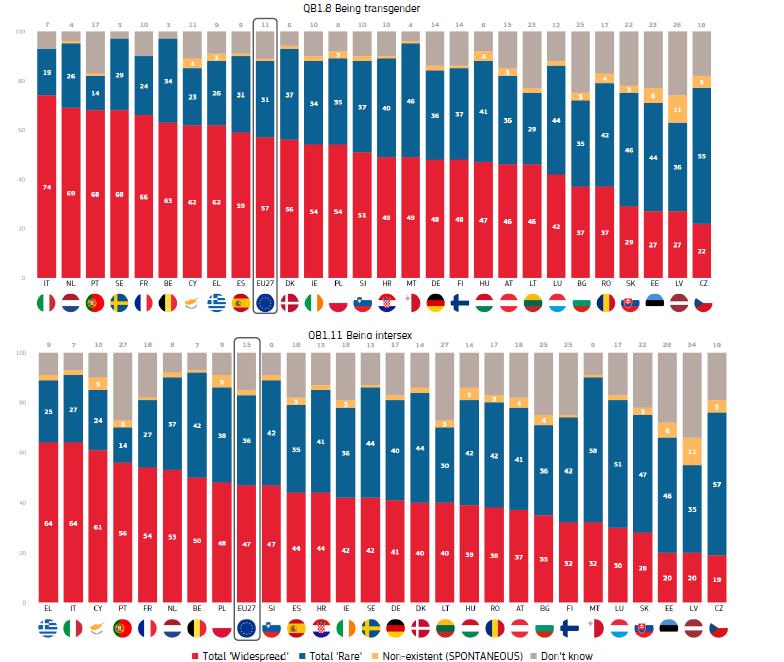
Source: Discrimination in the European Union, Summary Report, Special Eurobarometer 535, April-May 2023. https://europa.eu/eurobarometer/surveys/detail/2972
Addressing these gaps will require targeted action in several areas. Strengthening enforcement mechanisms, increasing funding for implementation and expanding public education campaigns are critical first steps. Additionally, improving data collection on intersectional discrimination and creating tailored interventions for marginalized subgroups will help ensure that no one is left behind. By tackling these gaps, participating countries can move closer to achieving full equality for LGBTQI+ individuals.
Despite notable advancements in LGBTQI+ legal frameworks and increased visibility in public discourse, persistent and systemic gaps continue to hinder the full inclusion and protection of trans and intersex individuals across the five participating countries. These gaps manifest at multiple levels—legal, institutional and cultural—and are often interconnected, creating compounding barriers to equality.
One of the most significant gaps identified relates to the lack of institutional readiness and capacity to implement inclusive policies. While gender recognition laws exist in countries like Spain and Ireland, participants reported inconsistencies in how these laws are understood and applied at the local level. Trans individuals described administrative staff who were unaware of legal name change procedures or healthcare providers who lacked even a basic understanding of gender-affirming care.
This disconnect between legal frameworks and service delivery creates confusion, distress and a reliance on non-governmental organizations to fill critical gaps in support.
Interview findings further reveal that invisibility remains a key issue, particularly for intersex individuals, whose needs are routinely overlooked in both legislation and public services. Several intersex participants across Cyprus, Greece, and Lithuania noted that policies—even when framed as LGBTQI+ inclusive—often default to binary understandings of gender, leaving intersex-specific protections absent.
Another critical gap identified through interviews is the limited accessibility of mental health services that are affirming and intersectional. Participants frequently faced barriers such as long waiting lists, culturally uninformed providers or complete unavailability of LGBTQI+-competent care in rural areas.
Finally, a significant gap lies in data collection and representation. In all five countries, national statistics rarely include disaggregated data on gender identity, gender expression or sex characteristics. This absence reinforces invisibility and limits the ability of institutions to design responsive policies or monitor the real-life outcomes of legislative reform. Participants highlighted the need for systemic changes in how public data is gathered and reported
Alignment with EU Frameworks
The European Union’s LGBTIQ+ Equality Strategy 2020–2025 outlines a comprehensive roadmap to promote equality for lesbian, gay, bisexual, trans, intersex, and queer individuals across all Member States. Its key pillars include fighting discrimination, ensuring safety, building inclusive societies, and advancing LGBTIQ+ rights globally. The strategy emphasizes the need for legal recognition, inclusive healthcare, anti-discrimination enforcement, and data collection—all benchmarks against which national progress can be evaluated.
Across the five countries in this report, alignment with EU frameworks varies significantly, particularly in the legal treatment of gender identity and intersex protections:
● Spain demonstrates strong adherence to the EU strategy’s goals, especially with its Trans Law (2023), Zerolo Law (2022), and protections for intersex individuals under various national and regional frameworks. Spain also exemplifies the EU’s emphasis on self-identification, healthcare access, and anti-discrimination.
● Greece has made notable strides through its ban on conversion therapy, legal recognition of same-sex marriage, and protections for intersex minors—aligning closely with EU standards. However, challenges persist in enforcement and rural acceptance, particularly regarding institutional sensitivity and access to services.
● Ireland largely aligns with EU standards in terms of legal gender recognition and youth protection. However, intersectionality and healthcare equity remain under-addressed, leaving gaps in comprehensive inclusion, particularly for adults, migrants, or racialized individuals.
● Lithuania demonstrates partial alignment, notably through healthcare reforms for trans individuals and legal initiatives like the working group on gender status. However, it falls short in fulfilling the EU strategy’s calls for comprehensive anti-discrimination protection,
particularly by excluding gender identity and sex characteristics from national equality laws.
● Cyprus has taken steps toward alignment, including the criminalization of conversion therapy but lacks a cohesive national LGBTQI+ strategy. It does not yet fully meet EU expectations on legal gender recognition, comprehensive healthcare provision, or institutional accountability.
Additionally, the Employment Equality Directive (2000/78/EC) and Racial Equality Directive (2000/43/EC) require member states to prohibit discrimination in employment and vocational training. While all countries have introduced some form of anti-discrimination law, implementation gaps remain substantial, especially for trans, non-binary, and intersex individuals.
Key Gaps in EU Compliance:
● Lack of legal gender recognition for non-binary persons
● Limited or absent intersex-specific protections
● Uneven enforcement of anti-discrimination laws
● Insufficient intersectional data collection and disaggregated reporting
For the EU strategy to realize its transformative potential, national governments must go beyond basic compliance and embed these principles into coordinated, well-funded, and enforceable national action plans—backed by civil society participation and independent oversight
Interviews and focus group meetings
Interview Summary
Interviews with up to 225 stakeholders were implemented by the consortium. 3 interviews meetings with 3 different target groups organised per partner. Trans and intersex, health professionals and employers were the target groups of the interviews. A variety of findings and data were collected. Personal experiences and narratives were discussed and collected to identify the difficulties and issues that exist in the health system, the workplace and society. Differences and similarities were captured during interviews. Countries with better laws and policies (Spain and Ireland) provide slightly better conditions for trans and intersex people. Society plays a crucial role in the inclusion and discrimination in each phase of trans and intersex life. The raise awareness, training and laws play an important role in creating an inclusive environment. Also, countries with not-so-big steps in law and policies (Lithuania, Cyprus) keep the society uninformed, without inclusivity, with discrimination and difficulties everywhere. It must be mentioned here that it doesn’t matter only the laws and policies, as discrimination can be found in countries with good strategies and policies, as well as good examples and practices can be found in countries without specific policies. Below data and findings from interviews analysed and presented.

Interviews
The interviews conducted in Spain by 3 different organisations (Somos, Instituto Ikigai and Solidaridad Sin Fronteras) provided insightful perspectives from 35 employers, 32 health professionals and 50 trans/intersex individuals regarding workplace inclusion, healthcare access and broader societal challenges. This report synthesizes insights from interviews and questionnaires conducted in Spain with employers, healthcare professionals and trans and intersex individuals. The findings explore the state of workplace inclusion, access to healthcare and broader structural challenges facing trans and intersex communities.
Employers generally characterized their workplaces as inclusive environments, attributing this mainly to generational values rather than formalized diversity policies. While many expressed a commitment to inclusivity, this commitment often relied on personal goodwill rather than structured, institutional support. Inclusivity was frequently assumed rather than actively cultivated, with most employers admitting they had never knowingly employed a trans or intersex person. Nevertheless, there was a clear openness and willingness to learn, with many recognizing the need for leadership, regular training and clear anti-discrimination protocols. The questionnaire responses reflected this, showing that only a minority of organizations had specific procedures addressing the needs of trans and intersex employees. Actions taken to promote inclusion were typically internal and informal, with few organizations engaging in partnerships with LGBTQI+ groups or offering targeted communication or education initiatives. Knowledge gaps also emerged, particularly around legal procedures such as updating name and gender markers in employment records, highlighting a need for better legal literacy and structured guidance.
In contrast, trans and intersex individuals painted a more difficult picture of their lived realities. Many reported significant barriers to employment, with some turning to sex work due to a lack of legal recognition or job opportunities. Submitting resumes often yielded no responses and social integration programs led by NGOs were sometimes the only pathways to employment. Respect in both healthcare and the workplace was described as inconsistent, often perceived as a matter of luck rather than a guaranteed right. In healthcare, participants described challenges such as misgendering, judgmental attitudes—particularly concerning sex work or sexuality—and limited access to genderaffirming care. Migrants faced even more significant obstacles, including the inability to obtain healthcare cards or legally update their gender markers.
A large majority of trans respondents reported having experienced discrimination during hiring or at work and many avoided disclosing their identity out of fear. Awareness of legal protections was low, with two-thirds of participants unaware of their rights or how to pursue them. Many expressed hesitation or fear about seeking legal recourse for discrimination. Those who did find work were often in informal or precarious positions and mental health support was either inadequate or inaccessible. A few individuals reported better experiences in NGO-affiliated clinics, but access to such care was inconsistent.
Interviews with healthcare professionals revealed a strong commitment to providing care for trans and intersex patients, but also exposed widespread institutional unpreparedness. Many
professionals acknowledged having received little to no training on trans-specific issues during their medical education or in their current roles. This lack of structured training and guidance often led to uncertainty and unintentional exclusion or harm. While intentions were often positive, the absence of clear protocols, inclusive tools and continuing education resulted in care that frequently failed to meet the needs of trans and intersex patients. Questionnaire data showed that only a tiny percentage of respondents felt healthcare professionals were adequately informed about the needs of trans and intersex individuals.
Transwoman: “General practitioners send you to a psychiatrist before starting hormone treatment. Endocrinologists apply treatments from 15 years ago and don’t stay informed on new developments. No one knows how to deal with even basic genital health issues after surgery, like infections. At work, they use excuses not to update my name or make a new contract.”
Despite these challenges, the overall tone of the interviews was one of resilience and cautious optimism. Trans participants emphasized that their experiences, though difficult, had fostered strength and a strong sense of identity. They called for systemic reforms, including early education about trans identities, mandatory training for healthcare and HR professionals and better coordination across public institutions to ensure that trans rights are consistently upheld. Both employer and healthcare professional interviews revealed a growing cultural openness and willingness to support trans and intersex inclusion. Still, this shift in attitude is not yet matched by policy or infrastructure. The assumption of inclusivity without concrete action may actually hinder progress, as it can create a false sense of accomplishment.
The findings from this study highlight the urgent need for structured and sustainable inclusion strategies. In both employment and healthcare, meaningful progress will require not only open attitudes but also the implementation of comprehensive policies, inclusive training and better legal and institutional support to bridge the gap between good intentions and the lived experiences of trans and intersex individuals.
�� Employers
● Inclusivity Perception: Generally perceived as inclusive due to generational values, not formal policies.
● Policy Gaps: Few organizations had specific trans/intersex inclusion policies or HR protocols.
● Knowledge Gaps: Lack of understanding about legal gender/name changes in employment records.
● Engagement: Limited collaboration with LGBTQI+ organizations or structured training.
�� Trans and Intersex Individuals
● Employment Barriers: High unemployment, experiences of discrimination; some resorted to sex work.
● Legal Awareness: 2/3 unaware of legal rights or how to exercise them.
● Healthcare Experiences:
o Misgendering and stigma prevalent.
o NGOs provided better experiences but were unevenly accessible.
● Mental Health: Inadequate, inaccessible support; strong demand for specialized care.
● Training: Very limited education on trans/intersex issues.
● Readiness: Willing to improve but need structured protocols, tools, and guidance.
�� Key Takeaways
● Inclusivity often assumed rather than institutionalized.
● Structural reforms and education needed in employment and healthcare.
Entrepreneurs and employers described their professional settings as generally inclusive, shaped largely by generational attitudes and values rather than formalized policies. While the participants shared a commitment to inclusivity, it became clear that this inclusivity was often assumed rather than actively cultivated. They highlighted the importance of leadership, consistent training and codified non-discrimination policies as key elements missing from many workplaces. Although most had not yet encountered trans or intersex individuals within their organizations, they expressed openness and a willingness to learn. Some recognized that inclusivity must go beyond goodwill and be reinforced through structured support systems, awareness initiatives and anti-bias education to overcome unconscious stereotypes and fears.
Employers reported an overall openness to inclusivity, though most acknowledged they had never worked directly with trans or intersex individuals. While this openness is encouraging, it often relies on individual goodwill rather than structured policy. According to questionnaire responses, only a minority of organizations have protocols specifically addressing trans or intersex employees. Most inclusivity actions are internal, without partnerships with LGBTQI+ organizations or targeted communication. Training on gender identity issues is rare, though several respondents expressed interest in such initiatives.
The questionnaire also revealed a need for clarity on legal procedures such as name and gender changes in employment records, as several respondents admitted lacking this knowledge. There’s a clear gap in formal mechanisms, but also a willingness to improve if given the right tools and information.
1: The healthcare staff respects my gender identity and my needs. (a scale of 1–5 (1 = Strongly Disagree, 5 = Strongly Agree)
Conversely, the interviews with trans and intersex individuals painted a more challenging picture. Most participants described significant obstacles in accessing employment, with many having
Table
resorted to sex work due to a lack of legal status or opportunities. Submitting resumes rarely resulted in interviews, and only through NGO-led social integration programs did many find any form of employment. There was a sense that respect and proper treatment—whether in healthcare or the workplace—were often seen as strokes of luck rather than guaranteed rights. In healthcare, the main difficulties included misgendering, lack of access to gender-affirming care and judgmental attitudes from professionals, especially when sexuality and sex work were involved. Migrants faced additional hurdles, such as the inability to obtain health cards or legally change their gender markers.
Table 2: Do you know the legal protection of trans and intersex people in your country? Yes-33,3% No-66,7% Maybe-0%
The lived experiences shared by trans and intersex individuals reflect ongoing structural barriers. Many described difficulties accessing employment—ranging from outright discrimination to systemic exclusion due to migration status. According to the results of the questionnaire, the vast majority have experienced discrimination in the workplace or during the hiring process. Many are unaware of their rights or feel unsafe pursuing legal action. Those who are employed often do not disclose their identity due to fear of mistreatment. A significant number of respondents had to engage in informal or precarious work, including sex work, to survive. The responses from both interviews and questionnaires point to a system lacking sensitivity and adequate training. Healthcare professionals themselves acknowledge that they received little to no training related to trans or intersex identities— either during their formal education or professional development.
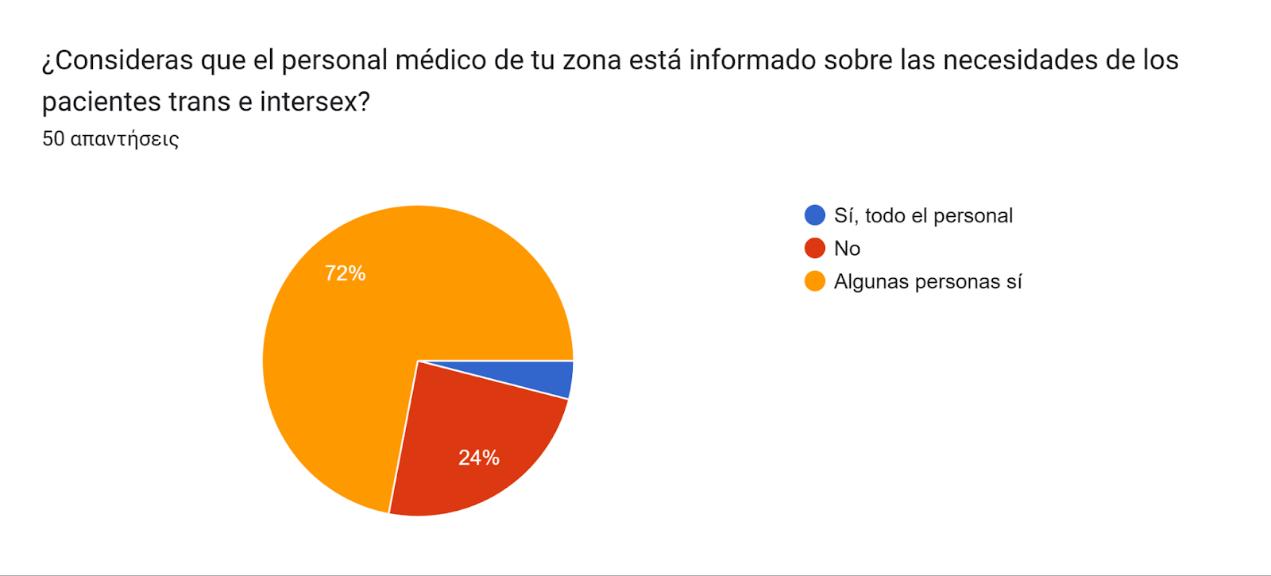
Table 3: Do you consider that medical personnel in your area are informed about the needs of trans and intersex patients? Yes-4% No24% Some people yes- 72%
Trans and intersex participants repeatedly highlighted issues like misgendering, invasive questioning, or denial of care. Migrants, in particular, faced additional administrative hurdles, such as being unable to access a health card, which further compromised their ability to receive adequate care.
Transman: “Disrespect, inappropriate language, a lot of fear when going to the gynecologist, lack of respect for identity and privacy. I live in Soria, and the endocrinologists no longer treat us here we have to go to Burgos, and I’ve been waiting a year for an appointment.”
The questionnaires support these accounts. The majority of trans respondents rated their healthcare experiences as “bad” or “very bad,” and nearly all reported facing at least one form of discrimination or misunderstanding. Mental health support is either inaccessible or not adapted to their needs. A few found better treatment in NGO-linked clinics, but access remains inconsistent.
Non-binaryperson: “A private psychiatrist cisgender, heterosexual, white man, middle-aged told me I’m “just a woman seeking attention.”
Despite these challenges, the tone of the interviews remained hopeful. Many trans participants acknowledged that their difficult experiences had strengthened their resilience. They called for systemic reforms such as early education on trans identities, mandatory training for healthcare and HR professionals, and better coordination between public services to ensure trans rights are consistently upheld.
Transman: “When I go to the gynecologist, they’ve told me several times that I must be in the wrong place. I correct them, they apologize, and then everything proceeds normally.”
Both interview sets revealed that although there is a cultural shift toward acceptance, it is not yet matched by systemic readiness or practical support. The assumption of inclusivity in some spaces can actually delay or deter meaningful policy implementation. These findings underscore the urgent need for structured inclusion efforts, especially in employment and healthcare, to bridge the gap between intention and lived experience.
Transwoman: “I constantly live in fear, anxiety, and stress when interacting with other people, not knowing what intentions they may have. I live almost in isolation and am exposed to many health risks.”
Table 4: Our workplace fosters a culture of respect and inclusion for all employees. (a scale of 1–5 (1 = Strongly Disagree, 5 = Strongly Agree)
The interviews with healthcare professionals in Spain revealed a strong sense of commitment to providing care for trans and intersex individuals, yet also exposed persistent gaps in institutional preparedness and professional training. Many professionals expressed a lack of adequate knowledge and guidance when it comes to addressing the specific needs of trans and intersex patients. The absence of structured protocols, insufficient legal literacy and limited access to inclusive educational resources were common themes. Even when good intentions are present, the lack of concrete tools and ongoing support often results in unintentional harm or exclusion. There is a clear need for systemic change, including the integration of inclusive training, clearer frameworks and improved communication practices within healthcare institutions.
Transman: “There are environments in my workplace where you can’t say you’re a trans person because there are homophobic people. In my case, I’m a trans man and have “cis passing,” so I benefit from that and go unnoticed people don’t ask questions. But when you speak to them, they are homophobic. That’s the sad reality. For trans women, the workplace is even more problematic because most don’t have the cis passing that some of us trans men have, so they face more discrimination. This is very sad and something that society really needs to work on.”
In addition, while many employers are aware of the importance of respecting diversity, few have implemented comprehensive policies that specifically address the realities of trans and intersex employees. The absence of targeted training, limited awareness of existing rights and a reliance on informal approaches contribute to uncertainty and inconsistency in managing inclusion. Some employers mentioned feeling supportive but unsure how to take action without further guidance.
The data collected through interviews and questionnaires in Spain offers a multidimensional view of the realities experienced by trans and intersex individuals, the preparedness and attitudes of healthcare professionals, and the inclusivity efforts of employers. Despite some steps forward, systemic challenges continue to impact the well-being and rights of trans and intersex people in healthcare and workplace contexts.
Transwoman: “My biggest challenge has been facing the discrimination that, as a trans person, I’ve had to endure being excluded from society.”
Table 5: Do you feel that your workplace policies are sufficient to support inclusion? Yes-60,9% No-17,4% Maybe-21,7%
Focus group meetings
Somos, Instituto Ikigai and SSF organised three focus group meetings in Spain. Approximately, 40 stakeholders participated in the online focus group meetings. During the focus group meetings, the findings of the study and interviews were presented and participants were asked to comment and discuss.
During Somos focus group, the debate was held on whether or not it was important to draft laws that, in some way, require companies and other workers to undergo diversity training to ensure good treatment of their customers or clients. It was argued that mandatory training could have a negative impact on whether this type of training is viewed as good for the company. However, it was emphasized that leaving the proper treatment of trans people solely to individual discretion unfortunately leads to many instances of discrimination. Ultimately, the laws offer guarantees of protection for vulnerable populations, such as trans people.
On the other hand, despite "goodwill" and hiring based on merit rather than identity, transgender people continue to experience extremely high unemployment rates. The importance of having diverse profiles in companies without resorting to positive discrimination was also emphasized.
During Instituto Ikigai, participants highlighted the importance of raising awareness and addressing ignorance and violence against the trans and intersex community. Inclusion was broadly defined as creating respectful, informed, and supportive environments where individuals can exist freely and feel a sense of belonging. While some participants worked in environments with existing diversity policies, most noted that the broader landscape lacks concrete protocols and comprehensive inclusion strategies.
The biggest obstacles to inclusion were cited as a lack of information, institutional apathy, and unclear legislation. Most participants were unaware of existing legal protections in Spain but cited laws such as Law 3/2023 and Law 4/2018 when prompted. In healthcare, major concerns included misinformation, lack of training among health professionals, and systemic discrimination, with calls for dedicated trans health units and better sensitivity training. Participants in full agreement agreed that non-discrimination does not equate to true inclusion and felt that making inclusion a reality is a shared responsibility, though individual initiative was seen as key.
Opinions varied on whether companies can be considered inclusive without visibly employing trans or intersex people. Current policies were largely viewed as insufficient, and recommended changes
included improved access to identity documentation, inclusive sex education, and safe healthcare access. Future topics of interest included sexual and mental health, intersex visibility, and access to gender reassignment treatments.
During SSF focus group, the majority of health professionals expressed a strong interest in training, reflecting motivation and openness in the sector. Often, harm is not caused by ill will, but by lack of knowledge. There is a clear need for specific and accessible training for both health workers and employers. Many current training programmes are not adapted to the real needs of professionals and the realities of trans and intersex people.
In addition, there is an urgent need for a realistic and inclusive job placement platform, adapted to the needs of unemployed and migrant trans people. Participants stressed the importance of directly involving trans people in the design of employment and training programmes. Lack of time and resources prevents professionals from accessing training, especially when training is provided outside working hours. In many clinical settings, the specific vulnerabilities and life experiences of trans people are not sufficiently understood.
Empathy, listening and interpersonal skills were seen as essential for inclusive recruitment processes. Recognising the diverse backgrounds of trans people is key to reducing prejudice.
The participants informed also for the next steps of the project and the activities that are going to place the upcoming months and were very interested to participate in trainings and development of any material.
GREECE
Interviews
The interviews conducted with professionals across the employment and healthcare sectors as well as trans and intersex people in Greece shed light on the challenges and opportunities surrounding the inclusion of trans and intersex individuals. Socialinnov and Prolepsis implemented interviews with No 24 employers, 24 health professionals and 13 trans/intersex individuals regarding workplace inclusion, healthcare access, and broader societal challenges.
Healthcare professionals reported a widespread lack of specialized training on trans and intersex healthcare needs. Most have never received formal instruction on gender identity issues, and many are unfamiliar with appropriate protocols or inclusive communication practices. This lack of preparation often results in misgendering, discomfort, or outright denial of appropriate care. Structural obstacles, such as the exclusion of gender-affirming procedures from public health coverage and bureaucratic mismatches after legal gender changes, further complicate access to necessary services. There is also a strong need for mental health services that are specifically tailored to the experiences of trans and intersex individuals.
Transwoman: “The route is very difficult. I found out I was intersex at 14 years old because of a test I had to have. It was very difficult to find a doctor who knew what to do. Not only does society not know what intersex is but neither does the medical profession.”
Employers, on the other hand, often operate with broad non-discrimination policies but lack targeted strategies for gender diversity and inclusion. Trans and intersex individuals remain largely invisible in
the workplace, and their absence is sometimes misunderstood as a lack of interest or qualification— rather than a result of systemic exclusion. Employers pointed to a lack of staff awareness, societal stigma, and uncertainty about how to support trans employees as key challenges. Despite this, there is increasing openness to receiving training, developing inclusive policies, and working with LGBTQI+ organizations to build more welcoming work environments.
“The community in Greece is quite small and as a result companies are not prepared. Policies come from global level to be implemented at local level. More global practices in inclusivity in general without being categorized specifically. As an expert I have not been prepared for this group nor have you received any specific training. I would find it useful but not a priority for our subjects as we don't have a person.”
Overall, the findings emphasize the need for structured, ongoing education, practical support tools, and meaningful collaboration between institutions and communities. Building inclusive systems in Greece will require coordinated efforts across healthcare, employment, and public policy sectors, grounded in empathy and expertise
Beyond institutional limitations, the personal stories collected reveal the emotional, physical, and social toll of navigating everyday life as a trans or intersex person in Greece. Several participants recounted experiences of disrespect in healthcare settings—from being misgendered to having their identities questioned or dismissed by professionals. The lack of affordable gender-affirming procedures, as well as untrained or unwilling healthcare staff, often forces individuals to seek care abroad or delay necessary treatment. Others described how deeply ingrained social stigma prevents them from using basic public facilities or compels them to conceal their identity in professional environments. Intersex voices expressed profound frustration at being misunderstood by both the public and medical professionals alike, highlighting a need for visibility, education, and acceptance. Despite these challenges, many participants also voiced a desire for change—emphasizing the importance of family support, education, and legal reforms that respect their identities and ensure access to dignified healthcare and equal employment.
�� Employers
● Policies: Broad anti-discrimination policies exist, but gender diversity strategies lacking.
● Awareness: Employers lacked understanding of specific needs of trans/intersex staff.
● Willingness: Open to training and collaboration with LGBTQI+ groups.
�� Trans and Intersex Individuals
● Healthcare Challenges:
o Misgendering and denial of services is common
o Cost barriers for procedures; travel abroad for care.
● Social Stigma: Leads to concealment of identity, especially at work.
● Mental Health: Lacks specialized services; feelings of invisibility.
�� Healthcare Professionals
● Training Deficits: Little to no formal training.
● Barriers: Bureaucratic mismatches post-transition; public coverage gaps.
● Institutions are open but underprepared.
● Need for education, visibility, and legal clarity.
The interviews conducted with professionals across the employment and healthcare sectors as well as trans and intersex people in Greece shed light on the challenges and opportunities surrounding the inclusion of trans and intersex individuals. While there is a growing awareness of the importance of equality and non-discrimination, implementation remains inconsistent, and supportive structures are often underdeveloped or absent.
In the employment sector, many organizations show a willingness to treat all employees fairly regardless of gender identity or sexual orientation. However, most workplaces do not have specific policies or practices that address the needs of trans and intersex individuals. Diversity and inclusion training is still rare, and very few employers actively engage with LGBTQI+ topics in their internal communications or hiring practices. There is often a belief that neutrality equates to fairness, which results in a lack of targeted support for marginalized groups. While some employers express a desire to do more, they also highlight a need for clearer guidance, training, and resources. The interviews with employers—ranging from small businesses to multinational corporations—reflect varying levels of preparedness and awareness when it comes to LGBTQI+ inclusion. While many companies claim to uphold general anti-discrimination policies, few have tailored strategies specifically for trans and intersex individuals. Some multinational corporations have begun implementing training programs and inclusive language policies, often driven by international headquarters. However, in practice, trans and intersex employees remain largely absent from the workforce, indicating a gap between policy and lived inclusion.
Transwoman: “The biggest problem is the fear of being outed at work. Everything’s okay now, but I doubt it would stay that way if my coworkers found out I’m trans.”
Employers identified several barriers, including social stigma, lack of visibility, customer prejudice, and internal stereotypes among staff. Many reported never receiving applications from openly trans or intersex individuals—reflecting broader exclusion from education and employment pipelines. Some businesses are concerned about how clients might react to visibly trans employees, especially in customer-facing roles. Others admitted their workplace environments may not yet be safe or welcoming.
At the same time, there is a shared interest in awareness-raising initiatives. Most participants called for webinars, workshops, and inclusion toolkits—co-created with members of the LGBTQI+ community—to educate staff on gender diversity, language use, and respectful practices. However, participants emphasized that such efforts must be embedded in broader inclusion strategies rather than one-off events. Authentic engagement and leadership buy-in are critical to ensuring impact.
Table 6: We have sufficient resources and tools to support trans and intersex employees. (a scale of 1–5 (1 = Strongly Disagree, 5 = Strongly Agree)
From the perspective of health professionals, the landscape is similarly complex. There is limited access to specialized training on trans and intersex healthcare needs, and most professionals do not feel adequately prepared to support these patients. Institutional policies rarely provide clear protocols, and healthcare providers often rely on outdated information or lack understanding of legal protections. Some health professionals expressed a willingness to learn and emphasized the importance of increasing awareness within medical institutions. Others shared that they have never knowingly treated a trans or intersex patient, reflecting broader issues of visibility and accessibility within the healthcare system.
Healthcare professionals in both public and private sectors report a severe lack of knowledge and training related to trans and intersex individuals. Many admitted having no awareness or experience in treating intersex patients, and the broader framework of care remains rooted in outdated models and binary gender norms. Structural issues in the Greek healthcare system—such as limited availability of specialized clinics, mandatory psychiatric evaluations for hormone therapy, and exclusion of gender-affirming surgeries from public coverage—create practical and financial obstacles for trans individuals seeking medical care. Moreover, bureaucratic complications after legal gender changes often prevent access to essential health services like gynecological or prostate exams, depending on the individual’s new legal gender. Placement in hospital wards is also based on legal documentation rather than gender identity, exposing trans individuals to potential mistreatment and further marginalization.
Healthcare staff themselves are often under intense work pressure, particularly in public institutions, which affects their ability to engage sensitively. Burnout, combined with limited training and persistent stereotypes, contributes to communication gaps and deters many trans individuals from seeking timely care. Encouragingly, younger professionals show more openness, and there's a growing recognition of the need for inclusive practices—such as the proper use of pronouns, respect for gender identity, and culturally competent care. Still, institutional reforms and targeted education remain essential.
“There is no training on this subject in the health areas and if there is, a very low percentage of workers will receive it. When I have been presented with a case, in all my department and center at that time, they did not know how to act and we have had to make many calls and take many steps “blindly” to try to solve it, which is not always possible.”
Table 7: My agency/institution has specific guidelines for the treatment of transgender and intersex people. No-66,7% Yes-11,1%, Maybe22,2%
Across both sectors, the common thread is a desire for progress paired with a lack of structural support. Most participants agreed that both healthcare and workplace environments need targeted interventions, including policy development, practical tools, and accessible training. A stronger connection between professional institutions and LGBTQI+ communities would also help foster more inclusive, informed, and respectful environments. Participants reported that the public health system justifies the costs of hormonal replacement at endocrinologists. However, there is only one public endocrinology clinic in Athens, which covers the needs of the trans population nationwide. Also, in order for individuals to proceed with hormonal replacement, they must have a prior diagnosis from a psychiatrist, because this is what the law in Greece requires. Similarly, with endocrinologists, only one public psychiatric clinic in Athens covers the needs of the trans population nationwide. Another obstacle related to the functioning of the health system concerns the case of a change in the identity details of trans individuals. When this happens, that is, when a trans individual changes his name on his police ID and automatically on his social security number, then the system does not justify health examinations of the original gender of the individual. Therefore, a trans man who has changed his police ID but has not undergone surgical gender transition is not entitled to a free annual gynecological examination. Correspondingly, a trans woman who has changed her police ID but has not undergone surgical gender transition is not entitled to a free prostate examination.
Transwoman: “The surgical part was the difficult part. The fact that it is not free in Greece forced her to work to get insurance abroad and have the surgery there.”
This summary underscores the importance of moving from passive tolerance to proactive inclusion—transforming good intentions into tangible actions that respect and support the rights and
well-being of trans and intersex individuals. An important finding is that trans male participants reported that the acceptance, socialization and treatment of trans men is ‘privileged’, as ‘the male gender is considered stronger in the patriarchal and sexist Greek society’.
Trans woman: “At the hospital when I went to the doctor to sign the transgender paper and I told him I was transgender. The doctor told me: I'll tell you what you are! (I swore at him and left...)”
Beyond institutional limitations, the personal stories collected reveal the emotional, physical, and social toll of navigating everyday life as a trans or intersex person in Greece. Several participants recounted experiences of disrespect in healthcare settings—from being misgendered to having their identities questioned or dismissed by professionals. The lack of affordable gender-affirming procedures, as well as untrained or unwilling healthcare staff, often forces individuals to seek care abroad or delay necessary treatment. Others described how deeply ingrained social stigma prevents them from using basic public facilities, or compels them to conceal their identity in professional environments. Intersex voices expressed profound frustration at being misunderstood by both the public and medical professionals alike, highlighting a need for visibility, education, and acceptance. the main challenge in finding employment is the most classic stereotype that prevails in Greek society that is, the term “trans” is synonymous with trans women, who have a mental disorder, are excluded from the family and the wider social environment, and work as sex-workers. As a good practice, it was also mentioned that the state, through recent legislation, subsidizes the hiring of trans people in private companies for a specific period of time, while at the same time collaborating with the trans community in order to inform members and procced with the job applications. Despite these challenges, many participants also voiced a desire for change—emphasizing the importance of family support, education, and legal reforms that respect their identities and ensure access to dignified healthcare and equal employment. ”Regarding health care, the challenge was that medical staff are unqualified and that trans people if they have not gone through a change of identity card are classified by their birth sex.”
”Regarding health care, the challenge was that medical staff are unqualified and that trans people if they have not gone through a change of identity card are classified by their birth sex.”
Participants argued that health professionals and the business world should get familiar with the image and idea of trans and intersex people in two ways: (a) by coming into contact with and listening to the life stories of people from these communities who have transitioned and are integrated into society, for example, working in jobs other than sex work, and (b) by gaining knowledge about social and biological sex, the right of each person to define their gender and sexual orientation, and the way they should communicate with trans and intersex individuals, for example concerning trans individuals, by accepting and respecting the new name/ gender by which these people are introduced to them. Therefore, the participants considered the development and implementation of webinars with relevant content to be a very good idea that will help raise awareness among health professionals and businesses while leading to the alleviation of stereotypes regarding LGBTQI+ individuals.
Focus group meetings
Sociallinov and Prolepsis organised two focus group meetings in Greece. 20 stakeholders participated in the online focus group meetings. During the focus group meetings, the findings of the study and interviews were presented and participants were asked to comment and discuss.
All participants agreed with the difficulties faced by members of the trans and intersex communities, as analyzed and described in the qualitative findings report. They also found the “listening to” and the “sharing” of personal experiences/ testimonies that were recorded in the report to be a very interesting element that seemed to “liven up” the discussion and motivate the participants.
Regarding good practices, everyone agreed that training οf professionals (both those working in the field of health and serving community members and those in other professional fields where community members could search, find and have a career) is necessary in order to address discrimination and ensure the inclusion of community members. When the findings related to this training were presented to the participants, as they had been described in the first stage of the study, a very interesting exchange of views developed. Therefore, these findings were enriched. The participants concluded that for training to be effective for both healthcare professionals and employees in companies/ organizations, the following elements should be considered:
➔ Initially, the legal framework that exists in Greece for trans and intersex individuals should be presented, in order for participants to understand the importance of the issue and the relevant provisions of the State for the elimination of discrimination and inclusion.
➔ During the training participants need to be informed about the LGBTQI+ terminology, “something like a dictionary so we can learn what the terms LGBTQI+ mean.” And specifically, what the terms mean and what the characteristics of trans and intersex people are.
➔ Emphasis should be placed on both the biological and social aspects of gender and the right of each individual to select gender and sexual orientation.
➔ Participants should be given a list of how they should use pronouns and speech when providing services to LGBTQI+ individuals, depending on (a) the gender of choice of the individuals, or/and (b) their non-binary choice.
➔ Participants should be trained on how to understand and accept personal difficulties and stereotypes and also how to manage them, when communicate with trans and intersex individuals.
➔ Also, during the training, case studies and specific incidents/ situations should be reported. Thus, experientially, participants will understand and feel the need to use practices of inclusion of trans and intersex individuals.
➔ The training should be implemented by psychologists as well as by people from the trans and intersex communities. Psychologists are deemed necessary as they can handle effectively the presentation and the flow of the conversation, particularly in the case of negative reactions of the participants. If people from the community also take part in the training, stereotypes will be removed effectively. The human element and immediacy that comes with the participation of trans and intersex people, transform information into awareness.
The focus group meetings supported the broader objective of informing the forthcoming policy analysis report and understanding the current policy landscape, including gaps and opportunities for inclusive policy design and implementation.
Key topics addressed:
➢ Awareness and understanding of current national and EU-level policies
➢ Experiences of trans and intersex individuals in the workplace and healthcare systems
➢ Perceptions of inclusivity and challenges in policy implementation
➢ Recommendations for more effective and inclusive policy design
While most professionals were aware of general anti-discrimination policies, few were familiar with specific protections for trans and intersex individuals. Trans and intersex participants emphasised the limited visibility and recognition of their rights in existing frameworks. In addition, health professionals noted a lack of formal training on gender diversity, leading to discomfort or errors in service provision. Trans and intersex participants highlighted frequent experiences of misgendering, lack of informed consent, and barriers to accessing gender-affirming care. Employers admitted there is limited structured support for gender-diverse employees. Issues of disclosure, confidentiality, and workplace bullying were raised. Trans and intersex participants reported mixed experiences ranging from supportive environments to overt discrimination. All stakeholders stressed the importance of mandatory diversity and inclusion training, improved data collection (without compromising privacy), and the co-creation of policies with trans and intersex communities. Participants also called for stronger enforcement mechanisms and clear accountability frameworks.
The participants informed also for the next steps of the project and the activities that are going to place the upcoming months and were very interested to participate in trainings and development of any material.
CYPRUS
Interviews
In Cyprus, Wisefour implemented interviews with 10 employers, 10 health professionals and 9 trans/intersex individuals regarding workplace inclusion, healthcare access, and broader societal challenges.
Cyprus report presents findings from interviews and questionnaire responses gathered in Cyprus, offering insight into the current state of workplace inclusion and healthcare access for trans and intersex individuals. It reflects the experiences of both employers and healthcare professionals, as well as the lived realities of trans and intersex people navigating these systems. In the workplace, efforts to foster inclusion remain inconsistent and often superficial. While some companies do organize diversity and inclusion workshops, participation is voluntary, which significantly limits their overall impact. Structured systems for addressing discrimination are largely absent, meaning that employees who face harassment or exclusion often have no safe or effective means of reporting these issues. This gap in accountability creates a climate of silence, where many individuals are reluctant to speak out due to fear of retaliation or being further marginalized. Psychological support services are generally available in some organizations, but they are not tailored to the specific needs of LGBTQ+ employees. As a result, trans and intersex individuals often
find it difficult to access appropriate mental health care. The situation is even more limited in small and medium-sized enterprises (SMEs), which typically lack formal inclusion policies or awarenessraising initiatives altogether. While larger companies may have some policies on paper, they frequently struggle to implement these measures in ways that truly support their trans and intersex employees.
When asked about their commitment to recruiting diverse talent, employers offered varied responses, suggesting a spectrum of engagement with LGBTQI+ inclusion. While 60% of organizations reported having conducted some form of diversity and inclusion training, 40% had not. These figures reveal a clear opportunity for more systematic and widespread implementation of such training, particularly with a focus on gender diversity.
The healthcare sector in Cyprus faces parallel challenges. Healthcare professionals report receiving little to no formal training on trans and intersex health needs. Although some may have encountered related topics during their studies, these sessions were often optional and not integrated into the core curriculum. Medical guidelines on trans and intersex care do exist, but they are frequently neglected, leaving many professionals without the knowledge or confidence to provide competent, affirming care. Beyond the clinical knowledge gap, there is also a lack of awareness regarding the legal rights of trans and intersex patients, which further compromises the quality of care.
Healthcare facilities themselves are often not designed to be inclusive or respectful of diverse gender identities. Many lack the necessary resources, infrastructure, or private spaces to ensure patients feel safe and respected. This lack of inclusivity contributes to widespread negative experiences, particularly for those seeking gender-affirming care or support in mental health settings. When asked about training on the specific health needs of trans and intersex individuals, 80% of healthcare workers reported never receiving any formal instruction. However, the vast majority expressed a strong desire for more training, recognizing the need to improve their understanding and service delivery.
Trans and intersex individuals continue to face severe limitations in employment opportunities. Many encounter discrimination during the hiring process, where stereotypes and biases often lead to immediate rejection. For those who do manage to find employment, wage disparities are a common issue, with trans and intersex employees earning noticeably less than their cisgender peers. In the absence of clear and enforceable legal protections, they remain highly vulnerable to mistreatment and inequality in the workplace. While some employers express good intentions and a willingness to foster inclusive environments, they often cite broader societal resistance as a significant barrier to enacting meaningful change.
Healthcare access is similarly fraught with obstacles. A substantial majority—77.8%—of trans and intersex respondents reported difficulties in accessing the services they need. These experiences range from denial of care to lack of understanding from medical staff. The data also suggests a widespread perception that existing mental health services are not adapted to the realities of trans and intersex people, further underlining the urgent need for specialized support structures and training.
The findings from Cyprus reveal systemic shortcomings in both employment and healthcare contexts. While there are individual examples of commitment and interest in inclusion, these are not yet supported by the institutional structures, legal frameworks, or training programs necessary to turn intent into impact. Moving forward, a stronger focus on mandatory education, the development of inclusive workplace and healthcare policies, and the establishment of clear legal protections will be essential in addressing these deep-rooted gaps.
�� Employers
● D&I Programs: Workshops exist, but mostly voluntary.
● Lack of Policies: SMEs often have no formal inclusion structures.
● Recruitment: 60% conducted some diversity training; 40% had not.
�� Trans and Intersex Individuals
Workplace Discrimination: Common in hiring and wage inequality.
Mental Health Access: Existing services poorly adapted to needs.
Healthcare Barriers: 77.8% reported difficulties; misgendering and poor understanding.
�� Healthcare Professionals
Training: 80% had no formal training on trans/intersex issues.
Legal Knowledge: Limited awareness of patient rights.
�� Key Takeaways
Good intentions not matched by policies.
Mandatory training and legal protections urgently needed.
In the workplace, inclusion efforts remain inconsistent. While some companies organise workshops on diversity and inclusion, participation is voluntary, which limits their impact. Many businesses lack structured mechanisms for reporting discrimination, leaving employees without a safe way to address issues. This creates an environment where many hesitate to report incidents for fear of retaliation. Although psychological support services exist, they are not specifically designed to address the needs of LGBTQ+ employees, making it difficult for trans and intersex individuals to access appropriate mental health care. Small and medium-sized enterprises (SMEs) are particularly uninformed, with no formal policies or initiatives to promote inclusion, whereas larger companies may have policies in place but struggle to implement them effectively
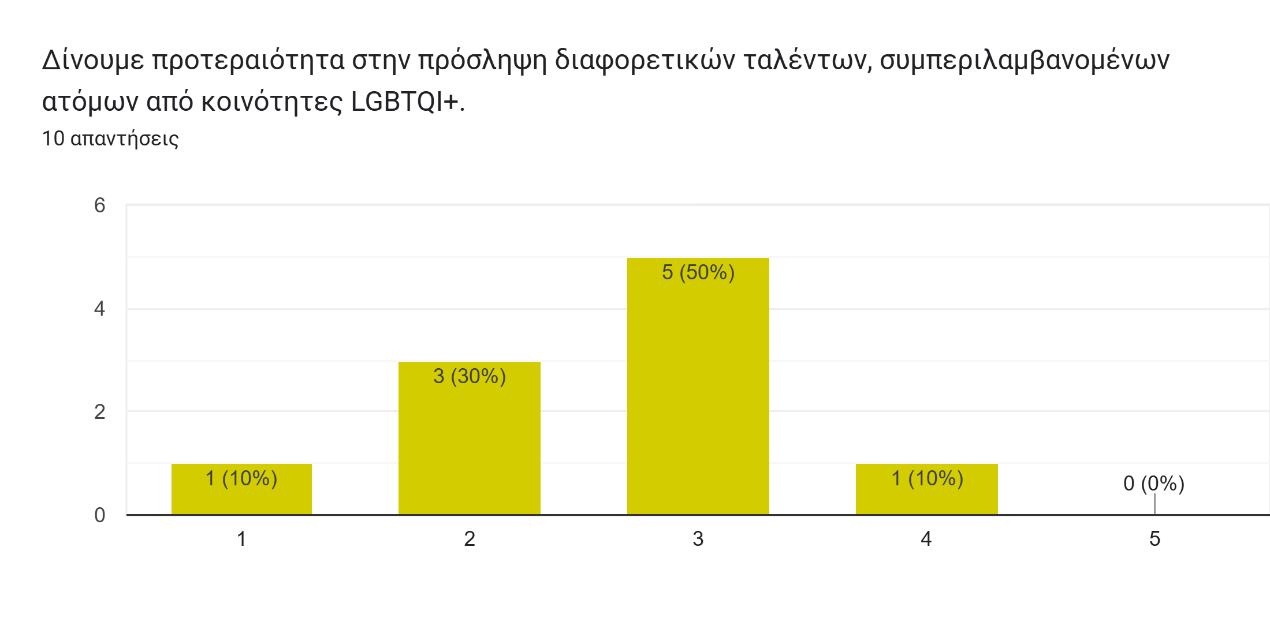
Table 8: We prioritise the recruitment of diverse talent, including people from LGBTQI+ communities. (a scale of 1–5 (1 = Strongly Disagree, 5 = Strongly Agree)
Table 9: Have you ever conducted diversity and inclusion training for your employees? Yes-60% No-40% Maybe-0%
In healthcare, professionals receive little to no training on trans and intersex health needs. Some attended seminars during their studies, but these were optional and not part of the core curriculum. Medical guidelines on trans and intersex care exist, but they are often overlooked or left unused. Many healthcare professionals lack not only medical knowledge on gender-affirming treatments but also awareness of the legal rights of their trans and intersex patients. Additionally, healthcare facilities in Cyprus are not inclusive, with inadequate resources, infrastructure, and private spaces to ensure dignity and comfort for trans and intersex individuals.
Table 11: I would benefit from additional training to better understand the needs of trans and intersex people. (a scale of 1–5 (1 = Strongly Disagree, 5 = Strongly Agree)
Employment opportunities for trans and intersex individuals remain severely limited. Many face significant barriers during the hiring process, often being rejected due to biases and stereotypes. Those who do secure jobs frequently experience wage disparities, earning considerably less than their cisgender colleagues. Without clear legal protections in place, trans and intersex employees remain vulnerable to workplace mistreatment and discrimination. While some employers express a willingness to support inclusion, they often cite societal resistance as a major obstacle, slowing meaningful progress.
“In our workspace we have policies so that there is no discrimination of any kind and we hire capable people regardless of their gender, identity or sexual inclinations. However, we do not prioritize hiring LGBTQI+ or intersex people because it would be unfair to all other people and groups. We consider it fair to hire people based on their abilities regardless of which group they belong to or identify with.”
Table 10: Have you received formal training on the health care needs of trans and intersex people? No-80% Yes-20%
Table 12: There are adequate mental health services adapted to trans and intersex people. (a scale of 1–5 (1 = Strongly Disagree, 5 = Strongly Agree)
Table 13: Have you had difficulties accessing healthcare services as a trans or intersex person? No-11,1% Yes-77,8%, Maybe-11,1%
Focus group meeting
On the 28th of April, Wisefour from Cyprus organised an online focus group meeting with 10 participants. The participants were from different stakeholder groups, the healthcare sector, trans and intersex people, as well as employers and entrepreneurs.
In the focus group were present the findings from policy analysis and interviews as well as the general situation in Europe. The project was also presented as well as the next steps. A smooth discussion was held and participants presented new prospects and issues arised. Participants broadly validated the challenges identified in the interview phase, particularly around discriminatory healthcare experiences, bureaucratic and invasive legal gender recognition procedures, and the general invisibility of intersex issues in national discourse. Lack of experience, tools and knowledge
was mentioned regarding the healthcare system. Stakeholders highlighted specific gaps in local policy, such as the lack of training for professionals, the absence of protective frameworks for intersex individuals, and the need for more inclusive legal processes, like a national strategy. They recommended the development of rights-based legal reforms and systematic training programs. Employees also mentioned the lack of knowledge, directions, and policies regarding the inclusivity of their company. The group further addressed the urgent need for inclusive, rights-based policies and the removal of pathologizing practices such as mandatory psychological evaluations. Specific attention was given to the gaps in data collection and the resulting difficulty in designing effective public policy for intersex individuals, who remain largely undocumented and underserved. Each stakeholder faces different problems and it depends mostly on the willingness of employees or health workers or colleagues to be inclusive. No specific policies exist to solve the daily and regular issues of trans and intersex individuals. Policies that support and help with some issues exist, but it is mostly the people and society that can change the situation. They are finding the training and the tools of the Activeaid very important and must be well spread around the country and learn more people's solutions, practices and policies.

LITHUANIA
Interviews
In Lithuania, LGL implemented interviews with 33 employers, health professionals and trans/intersex individuals in total regarding workplace inclusion, healthcare access, and broader societal challenges. Lithunia report presents an overview of inclusion efforts in the workplace and healthcare sectors based on responses from employers, healthcare professionals, and trans and intersex individuals. The findings indicate positive developments alongside persistent challenges that continue to affect the well-being and equitable treatment of trans and intersex people
Several employers reported active engagement in diversity and inclusion initiatives in the employment context. A significant majority—75%—confirmed that their organization had conducted diversity and inclusion training, though the remaining 25% indicated "maybe," suggesting uncertainty about how systematic or formal these trainings are. Encouragingly, 75% of employers also reported having actively hired or promoted trans and intersex individuals within their organizations. This reflects a meaningful level of commitment to inclusivity, even if it is not yet universal. Despite these efforts, other findings revealed variability in how consistently LGBTQI+ inclusion is prioritized. When asked whether their organizations prioritize the recruitment of diverse talent, responses ranged across the scale, revealing that while some companies are proactive, others lack structured policies or a clear focus on this goal. A similar pattern emerged in assessments of leadership awareness: Results varied when participants were asked whether their management teams were well-informed about the specific challenges faced by LGBTQI+ individuals. These mixed results suggest that while inclusion is valued in some spaces, leadership across sectors still requires more education and engagement to ensure a consistent and informed approach to diversity. In the healthcare sector, inclusion remains limited by a lack of formal training. Two-thirds of healthcare professionals reported that they had not received any structured education on the healthcare needs of trans and intersex individuals. Only 33.3% had received such training, underscoring a significant gap in professional development. This deficit contributes to inconsistencies
in care, with some professionals lacking essential knowledge on gender-affirming practices and the rights of trans and intersex patients. Nevertheless, most healthcare workers expressed a strong desire for further training. Ratings were consistently high when asked whether additional education would help them better understand the needs of trans and intersex individuals, signaling a willingness to grow and improve, even where training has so far been lacking.
From the perspective of trans and intersex individuals, access to healthcare continues to present serious challenges. A significant 80% of respondents reported having faced difficulties accessing medical services. These difficulties often stem from discriminatory behaviors, misgendering, or a lack of knowledge on the part of healthcare providers. In particular, mental health services were perceived as poorly adapted to the unique needs of trans and intersex people. Respondents generally rated these services unfavorably, indicating a strong need for mental health support that is both inclusive and affirming.
In terms of broader community and peer support, responses were mixed. While some individuals acknowledged having access to community networks or LGBTQI+ organizations, others indicated limited or no visibility of such resources in their area. This uneven access reflects disparities between different regions or communities and reinforces the importance of expanding and promoting community-based services.
Together, the data points to a complex picture. On one hand, there are promising signs of institutional openness, with many employers and healthcare professionals demonstrating interest and effort in supporting LGBTQI+ inclusion. On the other hand, significant gaps persist in leadership awareness, consistent training, and infrastructure—that prevent this inclusion from being fully realized. Addressing these issues will require a coordinated effort, including implementing mandatory training programs, greater leadership accountability, and investment in inclusive community support systems.
�� Employers
● Inclusion Efforts: 75% had training; 75% had hired trans/intersex individuals.
● Leadership Gaps: Varied awareness among management.
�� Trans and Intersex Individuals
Healthcare Access: 80% faced barriers; misgendering and discrimination common.
Mental Health Services: Rated poorly; lack of cultural competence.
Community Support: Inconsistent visibility of LGBTQI+ resources.
�� Healthcare Professionals
● Training: 66.7% received no structured education.
● Willingness: Strong interest in further training.
�� Key Takeaways
● Openness exists but implementation gaps remain.
● Invest in leadership training, infrastructure, and community support.
In the workplace, several employers reported active efforts toward diversity and inclusion. A significant 75% of respondents confirmed that their organization had conducted diversity and inclusion training
for their employees, while 25% stated "maybe," indicating some uncertainty about the formality or frequency of such efforts. Additionally, 75% of employers reported that they had actively hired or promoted trans and intersex individuals, reflecting a positive but not yet universal commitment to inclusivity in hiring and advancement practices. However, when asked whether they prioritize the recruitment of LGBTQI+ talent, responses varied on the scale from 1 to 5. This indicates that while some companies do prioritize such recruitment, others are less committed or structured in their approach. A similar variation was seen in the responses to whether the management team is wellinformed about the challenges faced by LGBTQI+ individuals, with mixed scores suggesting that leadership understanding and sensitivity still need improvement.
14: We prioritise the recruitment of diverse talent, including people from LGBTQI+ communities. (a scale of 1–5 (1 = Strongly Disagree, 5 = Strongly Agree)
15: The management team is well-informed about the challenges faced by LGBTQI+ individuals. (a scale of 1–5 (1 = Strongly Disagree, 5 = Strongly Agree)
Table
Table
Table 16: Have you ever conducted diversity and inclusion training for your employees? Yes-75% No-0% Maybe-25%
Table 17: Have you actively hired or promoted trans and intersex individuals in your organization? Yes-75% No-25% Maybe-0%
In the healthcare sector, training on the specific needs of trans and intersex individuals appears to be insufficient. According to the questionnaire results, 66.7% of health professionals stated that they had not received formal training on these topics, while only 33.3% had. This lack of formal education contributes to a healthcare environment where inclusivity is inconsistent and knowledge of gender-affirming care is not standardized. Encouragingly, there was broad agreement among healthcare professionals on the need for more education, with most rating positively (4 or 5) when asked if they would benefit from additional training to better understand the needs of trans and intersex people. This suggests a willingness to improve, even if current practices fall short.
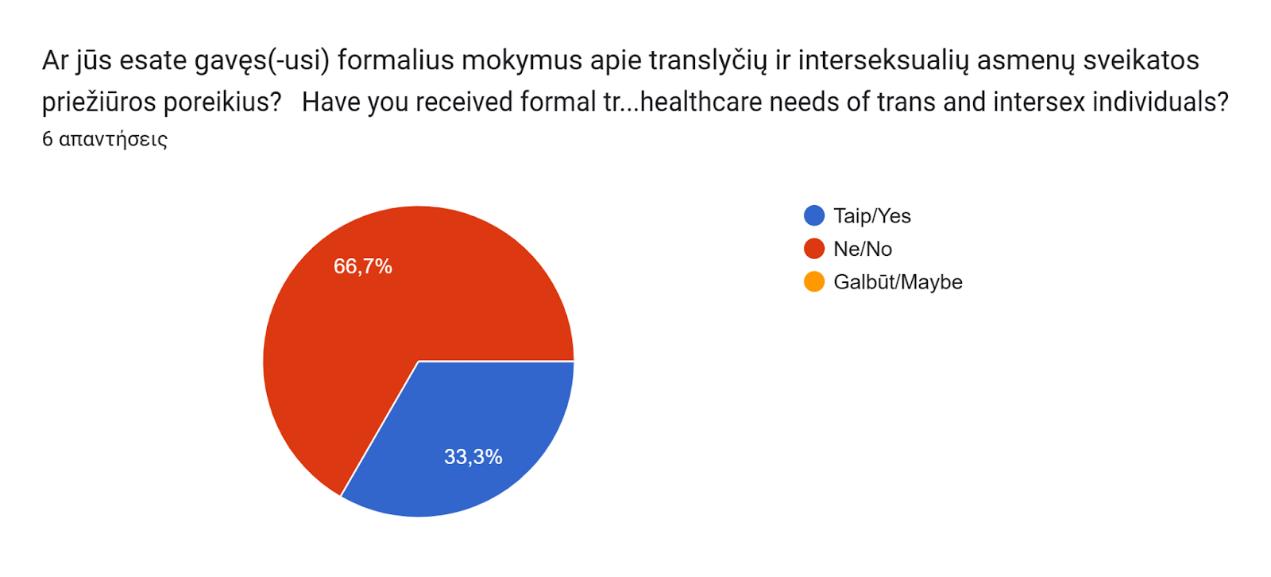
When it comes to the lived experiences of trans and intersex individuals, the findings paint a concerning picture. A substantial 80% of respondents stated they had experienced difficulties accessing healthcare services, while only 20% reported no such challenges. These difficulties range from discriminatory behavior and misgendering to a lack of knowledge on the part of medical staff. Mental health services were rated poorly in terms of adaptation to trans and intersex needs, with most participants expressing dissatisfaction. Moreover, while some respondents acknowledged access to community support networks or organizations, the scores on this item were mixed, indicating variability in the availability and visibility of such resources across regions or communities. The combined responses highlight the ongoing need for both system-level reform in healthcare delivery and expanded peer or community-based support systems for trans and intersex individuals
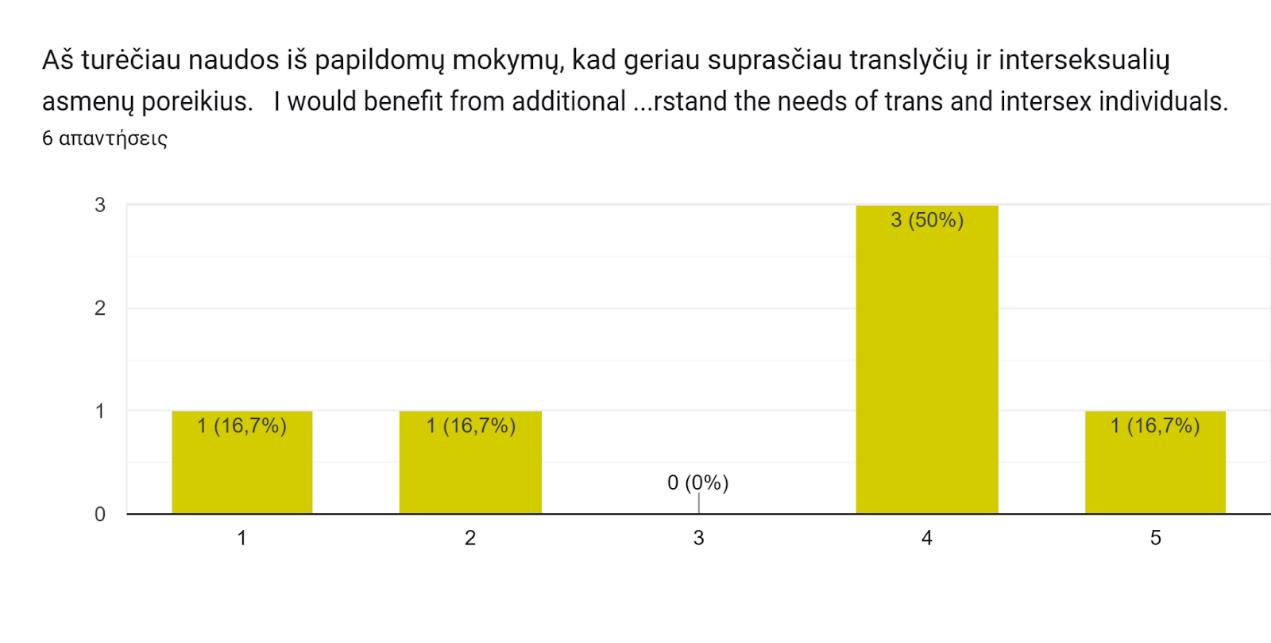
Table 18: Have you received formal training on the health care needs of trans and intersex people? No-66,7% Yes-33,3% Maybe-0%
Table 19: I would benefit from additional training to better understand the needs of trans and intersex people. (a scale of 1–5 (1 = Strongly Disagree, 5 = Strongly Agree)
Table 20: I have access to community support networks or organizations. (a scale of 1–5 (1 = Strongly Disagree, 5 = Strongly Agree)
Table 21: There are adequate mental health services adapted to trans and intersex people. (a scale of 1–5 (1 = Strongly Disagree, 5 = Strongly Agree)
Table 22: Have you had difficulties accessing healthcare services as a trans or intersex person? No-20% Yes-80%, Maybe-0%