Lexi Arnett-Sutherland Architecture Portfolio 2024
EDUCATION
Lexi Arnett-Sutherland, Architectural Designer Columbus, Ohio, 614.313.9417, arnett-sutherland.1@buckeyemail.osu.edu
Aug 2021 - April 2024
Master of Architecture, The Ohio State University
+ Cumulative GPA of 3.95
+ Knowlton Memorial Scholarship Recipient | 2021 - 2024
+ Ransom Family Scholarship Recipient | 2021 - 2023
+ Pella Design Scholarship Recipient | 2023
Aug 2014 - April 2017
PROFESSIONAL EXPERIENCE
May 2022 - July 2024
Bachelor of Science in Dental Hygiene, The Ohio State University
+ Graduated Cum Laude
+ President and Student Delegate of the Student Chapter of the ADHA
May 2022 - July 2024
May 2023 - April 2024
Architectural Designer, AN.ONYMOUS
+ Prepared final construction drawings for Northstar Dermatology Clinic
+ Developed final drawing documentation for UCLA housing insecurity project Bean
+ Contributed to the management and coordination of the Zero Gravity video shoot
Christos Yessios Graduate Research Assistant, The Ohio State University
+ Led research project design and implementation for Drift Room
+ Researched and integrated new technologies within design briefs
+ Supported the Yessios Fellow with instructional demonstrations for students
Architectural Designer, Syed Design Group
+ Participated in developing multiple complete sets of construction documentation
+ Engaged in formulating schematic designs for residential interiors and exteriors
+ Assisted in the final selection of materials, finishes, and furnishings for residential projects
May 2022 - August 2022
ACHIEVEMENTS
Fall 2021
Summer 2022
Spring 2023
Spring 2023
Summer 2023
Spring 2024
Spring 2024
Architectural Designer, Google R+D Team
+ Conducted extensive research on innovative design concepts within workplace design
+ Engineered custom CNC fabrication tools for tailored design applications
+ Designed, prototyped, and implemented final iteration of an autonomous office parition
Knowlton School of Architecture Outstanding Studio Award
Knowlton School of Architecture Research Travel Award (ARTA)
Pella Design Award for Outstanding Student of the Year
Christos Yessios Design Award
AIA Ohio Student Design Competition
Christos Yessios Design Award
William Riat ‘73 Prize for Outstanding Work in the Master Project (1st Place)
Selected Work
01. Pleat + Preserve
Spring 2024
Master Thesis Project
Software: Rhino + Adobe Illustrator/Photoshop/AfterEffects
02. Misfit Market
Spring 2023
Material Reuse Project
Software: Rhino + Adobe Illustrator + V-Ray
03. H2Office
Fall 2023
Office Concept Design
Software: Rhino + Adobe Illustrator/Photoshop + V-Ray
04. Kitaya Park House
Spring 2022
Multi-Generational Home
Software: Rhino + Adobe + TwinMotion
05. House VI
Fall 2021
Precedent Study + Manipulation
Software: Rhino + Adobe
01. Pleat + Preserve
Instructor: Ashley Schaefer + Curtis Roth
Spring 2024
William Riatt ‘73 Prize for Outstanding Work in the Master Project
Recognized as the first African American neighborhood in the United States and the heart of New Orleans culture, Treme is a place where centuries-old traditions pulse through its streets, music flows from its porches, and celebrations are woven into its daily life. However, despite its rich cultural heritage, Treme faces significant challenges, including urban renewal projects and the displacement of long-standing residents due to gentrification and rising short-term rentals. These changes threaten the neighborhood’s unique character and pose a risk to the cherished traditions passed down through generations.
In response, recent efforts have emerged to preserve Treme’s cultural legacy and protect it from further erosion. Central to these efforts is the proposal of a new type of commons—a communal space that prioritizes the safeguarding of Treme’s cultural fabric. This commons would be situated in an area that historically served as a gathering place but now lies dormant, like a pleat in the urban landscape. Rather than contributing to displacement, this space aims to reinforce community ties and celebrate Treme’s vibrant traditions. It represents not just a physical location, but a commitment to honoring, nurturing, and sharing the practices that have shaped this historic neighborhood for generations.
Planimation video link: https://vimeo.com/1002937591?share=copy
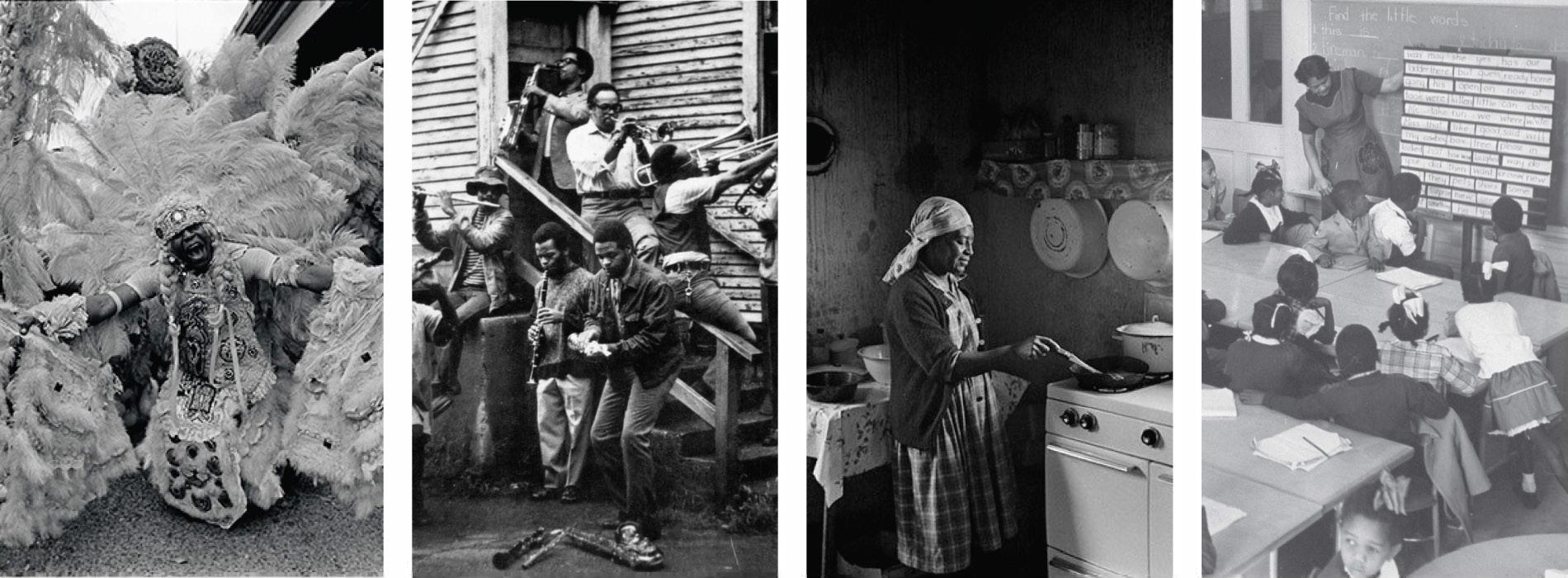
An exploration of prevalent family traditions in this neighborhood reveals four key themes: celebration, music, cooking, and storytelling. Traditionally confined to the home, these intimate traditions are now gaining attention through initiatives like community classes and workshops designed to publicize and preserve them.
CULTURAL PRACTICES WITHIN THE NEW ORLEANS HOME
SEWING THE SOUL
In the vibrant tapestry of New Orleans family life, the tradition of sewing and crafting costumes is passed down through the generations. As families gather to stitch intricate designs, these handcrafted garments become more than just attire for festive occasions like Mardi Gras or jazz festivals—they are a living testament to shared history, artistic expression, and the enduring ties that bind.
PORCH RYTHMNS
In New Orleans, music is the family's soundtrack, weaving through gatherings and celebrations. From jazz-filled moments to impromptu dance sessions, it's a shared rhythm that bonds generations and infuses familial traditions with a unique cultural melody.
In analyzing a New Orleans home, common locations for these family practices were identified. Music becomes the familial soundtrack on the porch, while the generational tradition of sewing and crafting costumes for celebrations unfolds within the living room. Bedrooms host nightly storytelling, creating a haven for deepening family bonds, and kitchens serve as spaces for cooking and passing down recipes. While these practices typically reside within private architectural spaces, they begin to spill into more public spaces. For example, the kitchen transitions outdoors into a cookout, and the porch jam session spills into the street, transforming into a block dance party.
NOLA NARRATIVES
In New Orleans family bedrooms, storytelling transforms into a nightly tradition. Illuminated by lamplight and wrapped in blankets, tales of Creole folklore and personal adventures infuse the room with a touch of magic. As bedtime stories spin dreams and traditions, the bedroom becomes a haven where familial bonds deepen, leaving an imprint of shared stories that echo through the night.
FAMILY FLAVORS
Woven into the daily rhythms of New Orleans households, cooking is a sacred art and a celebration of Creole and Cajun heritage. Passed down through generations, family recipes create shared experiences, both in the kitchen and outdoors during lively cookouts and crawfish boils. These gatherings fill the air with laughter, aromatic spices, and the sizzle of delicious ingredients, fostering traditions and lasting memories across generations.
When drawing these family practices, a correlation was observed between the intimacy of a practice and its location within the home. Practices situated in more interior areas tended to have a higher level of intimacy, while those in outer areas appeared more accessible to outsiders. To preserve these practices, public access needs to be increased. By pulling apart and separating these solid spaces, they become more accessible and open to the public, creating in-between spaces that allow these practices to blend and mesh together.
SEPARATION + ACCESSIBILITY SLIPPAGE + VOID SPACES
When revisiting the neighborhood, it’s notable that Esplanade Avenue and Bayou Road intersect at the northeastern edge of Treme. As one of the city’s oldest streets, Bayou Road played a crucial role in early New Orleans, serving as a vital transportation route. Its location within the city’s grid has resulted in the creation of triangular and irregularly shaped parcels resembling pleats within the urban fabric.
BAYOURD
BARRACKSSTREET
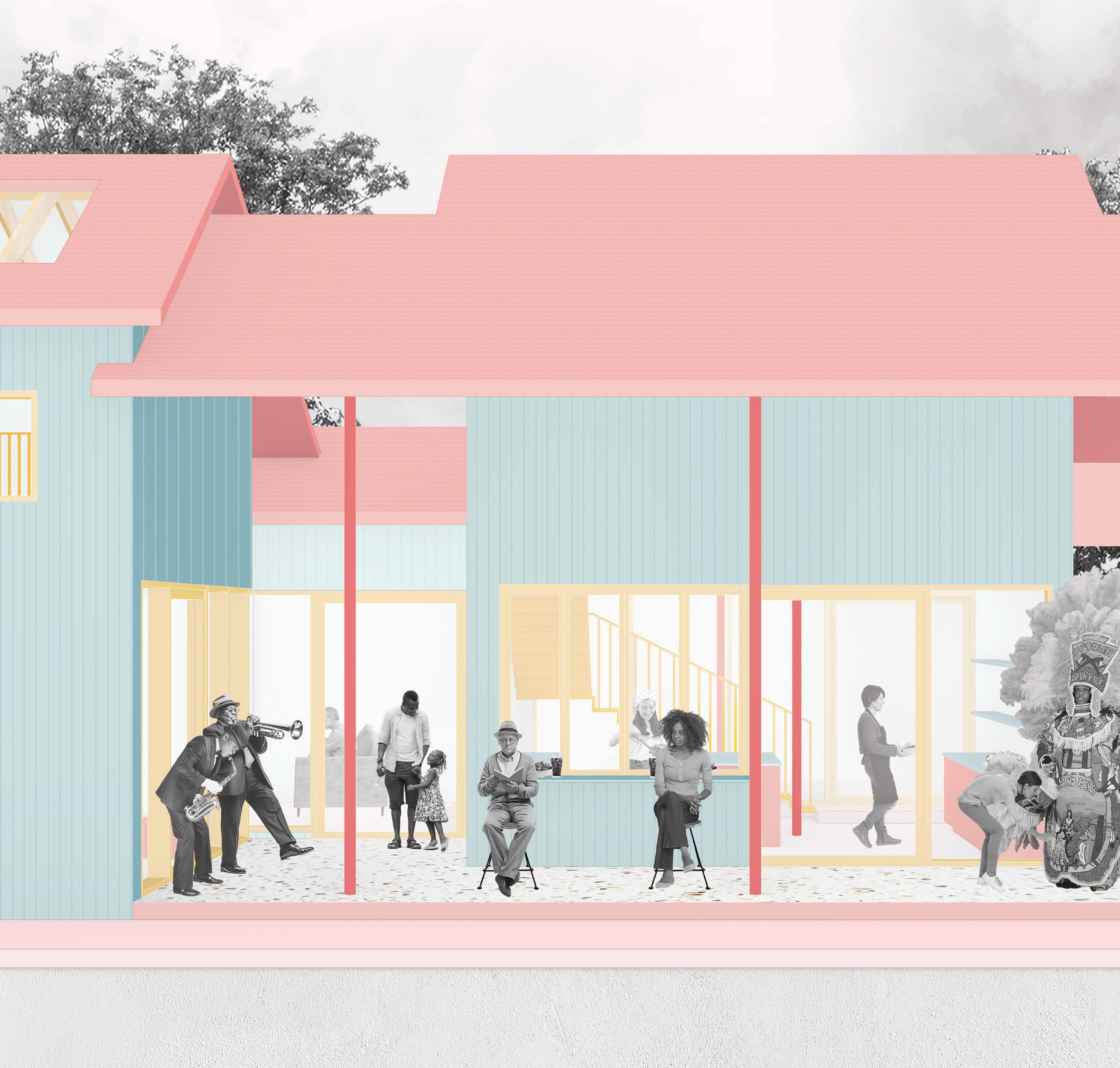
The plan reveals that each center has its own designated interior space, but the covered exterior areas connecting them are essential. These transitional spaces serve to seamlessly merge the centers, creating dynamic zones where music, cooking, storytelling, and celebration come together.
The overlap also results in multi-layered auditory tapestry: the sizzle from the kitchen intertwines with an elder passing down a cherished story, all set to the backdrop of a lively jazz tune. The art of craft also begins to blend—whether it’s crafting costumes for a parade, creating a new family recipe, or weaving words and imagination into a captivating story.
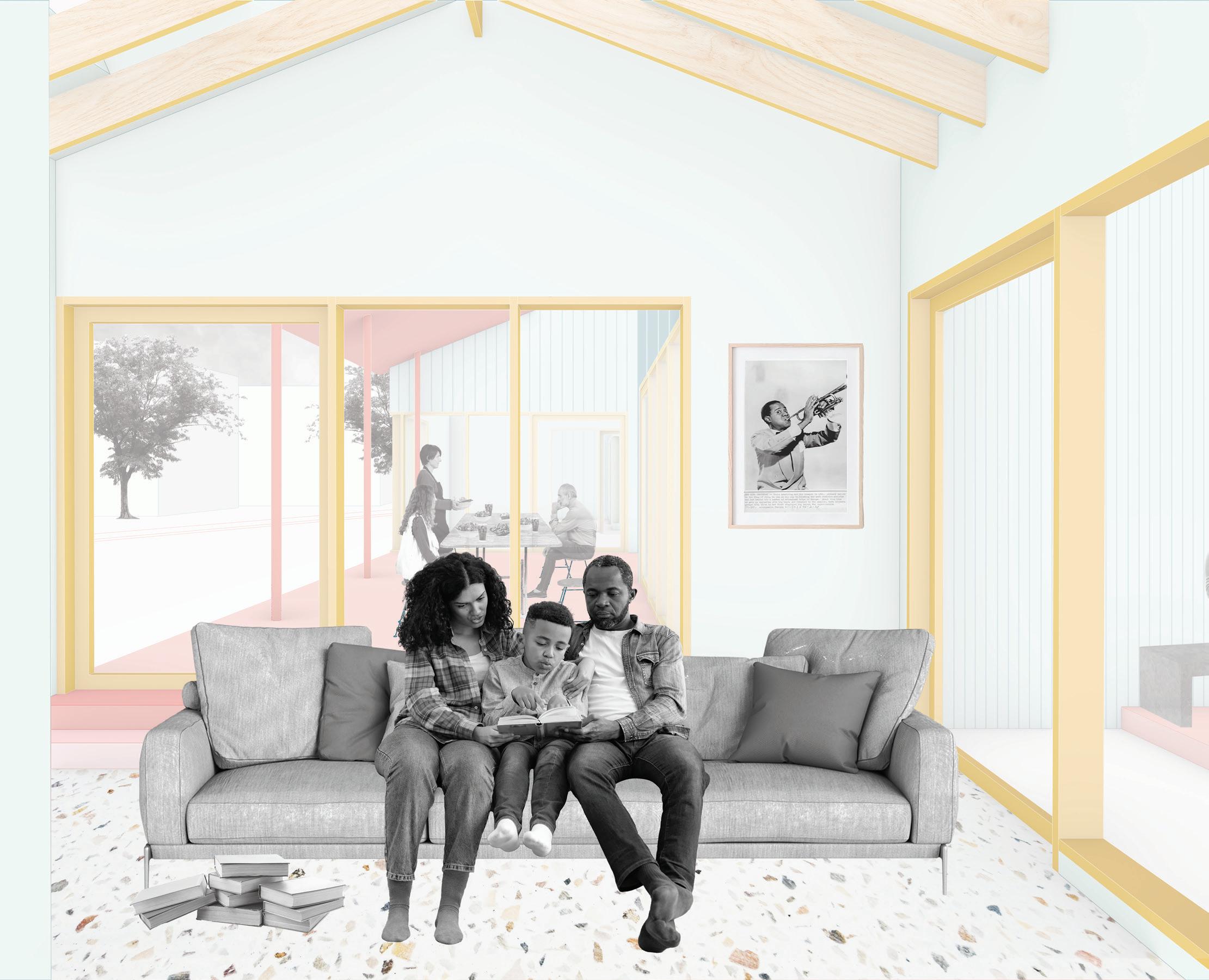
While the project aims to celebrate community and openness, it thoughtfully recognizes the importance of balancing these goals with the need for privacy. The interior spaces are carefully designed to create pockets of intimacy, providing areas where personal connections and private family traditions can continue to flourish. These more secluded areas offer moments of retreat and reflection, acknowledging the residents’ desire for solitude amidst communal life.
Bridging these interior spaces are thoughtfully crafted transitional zones that open up to the surrounding environment, encouraging opportunities for community engagement and social interaction. These spaces act as connectors, allowing for a fluid transition from private moments to public activities, fostering a dynamic environment where personal and collective experiences coexist harmoniously.
Pleat + Preserve is a celebration of Treme’s cultural heritage. By intertwining intimate family traditions with public engagement, this project breathes new life into the neighborhood. It is a vision ofcommunity, openness, and respect for the past, ensuring that Treme’s vibrant heritage thrives for generations to come.
02. Misfit Market
Team: Lexi Arnett-Sutherland + Christopher Wall
Instructor: Ashley Bigham
Spring 2023
Pella Design Award
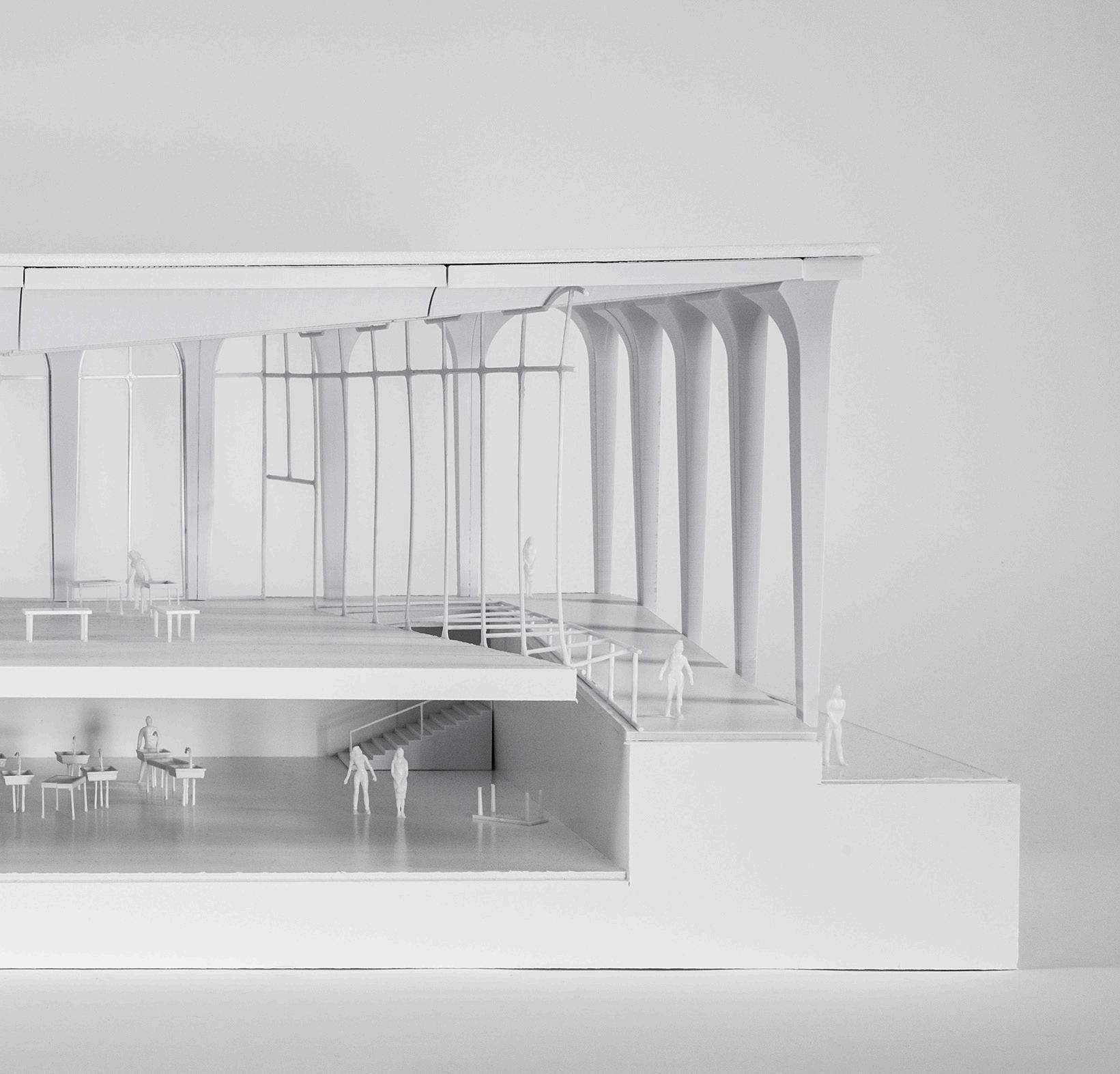
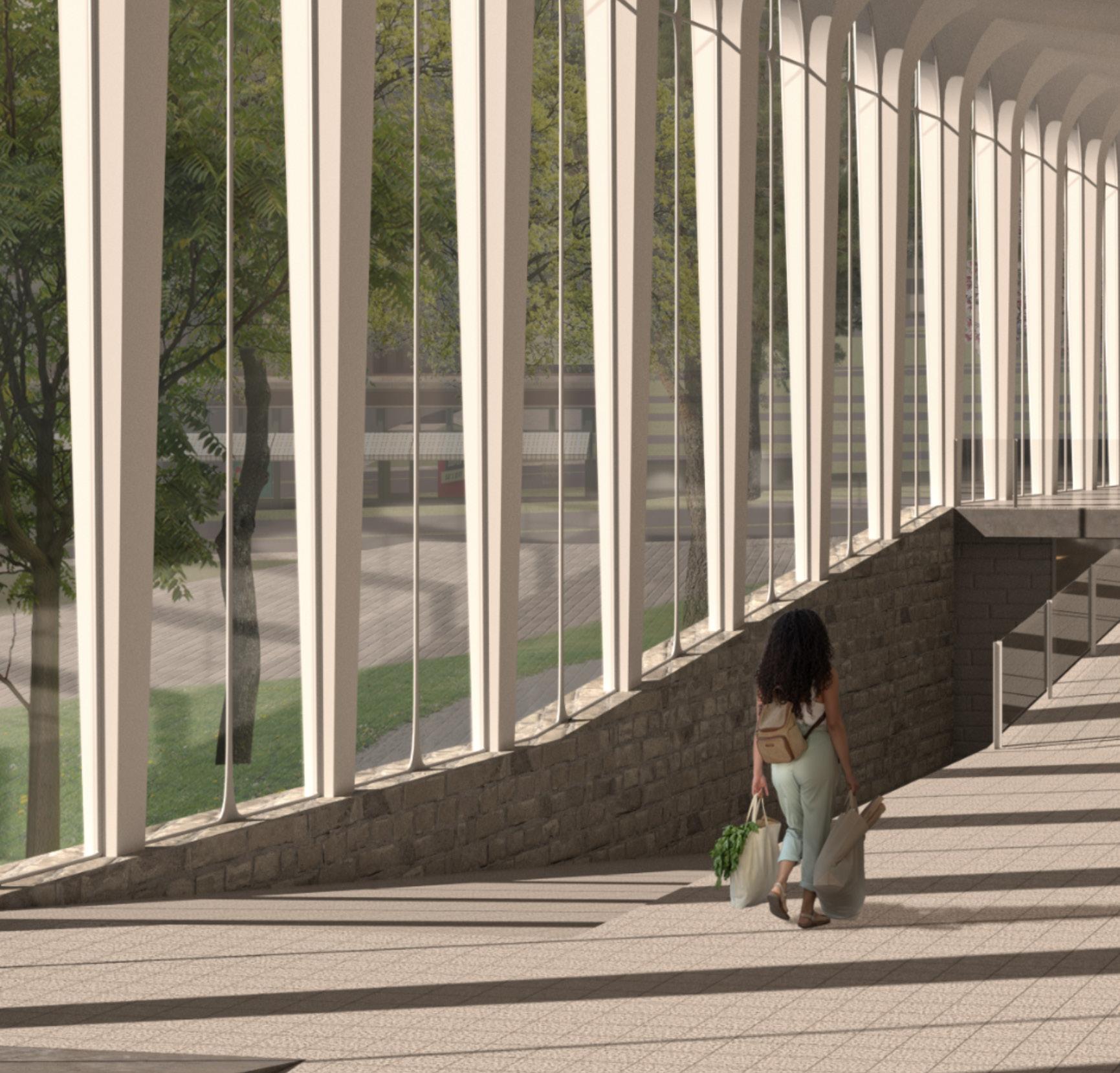
Situated in downtown Columbus, Ohio, Misfit Market serves as a distributor of misfit produce and goods—items often rejected due to their atypical size, shape, or appearance—in an effort to mitigate the substantial annual waste of produce. Local farms experiencing unexpectedly high yields and grocery stores receiving produce deemed unsuitable for retail contribute their surplus to the market. Community members are then afforded the opportunity to purchase these items at a discounted rate.
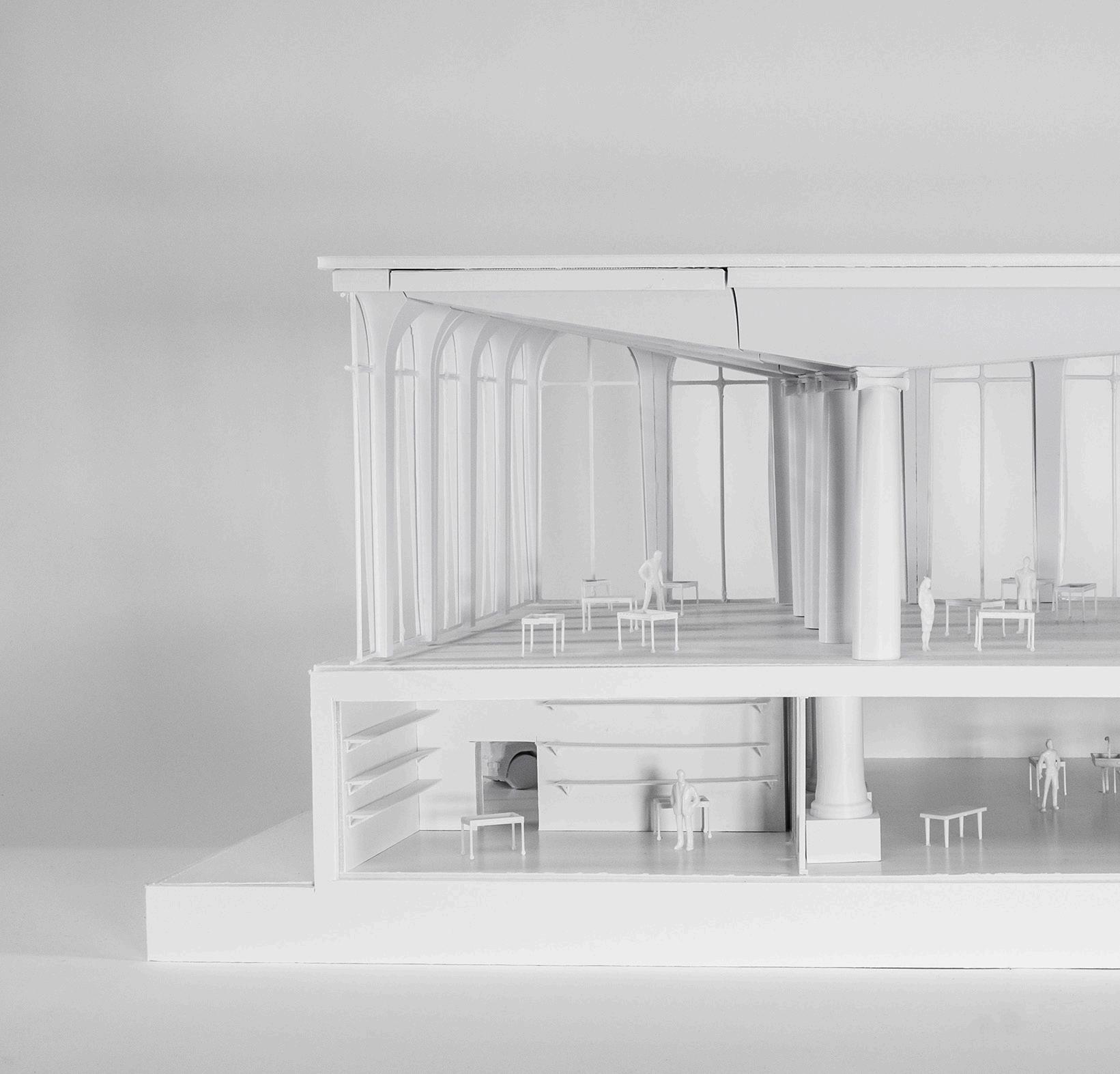
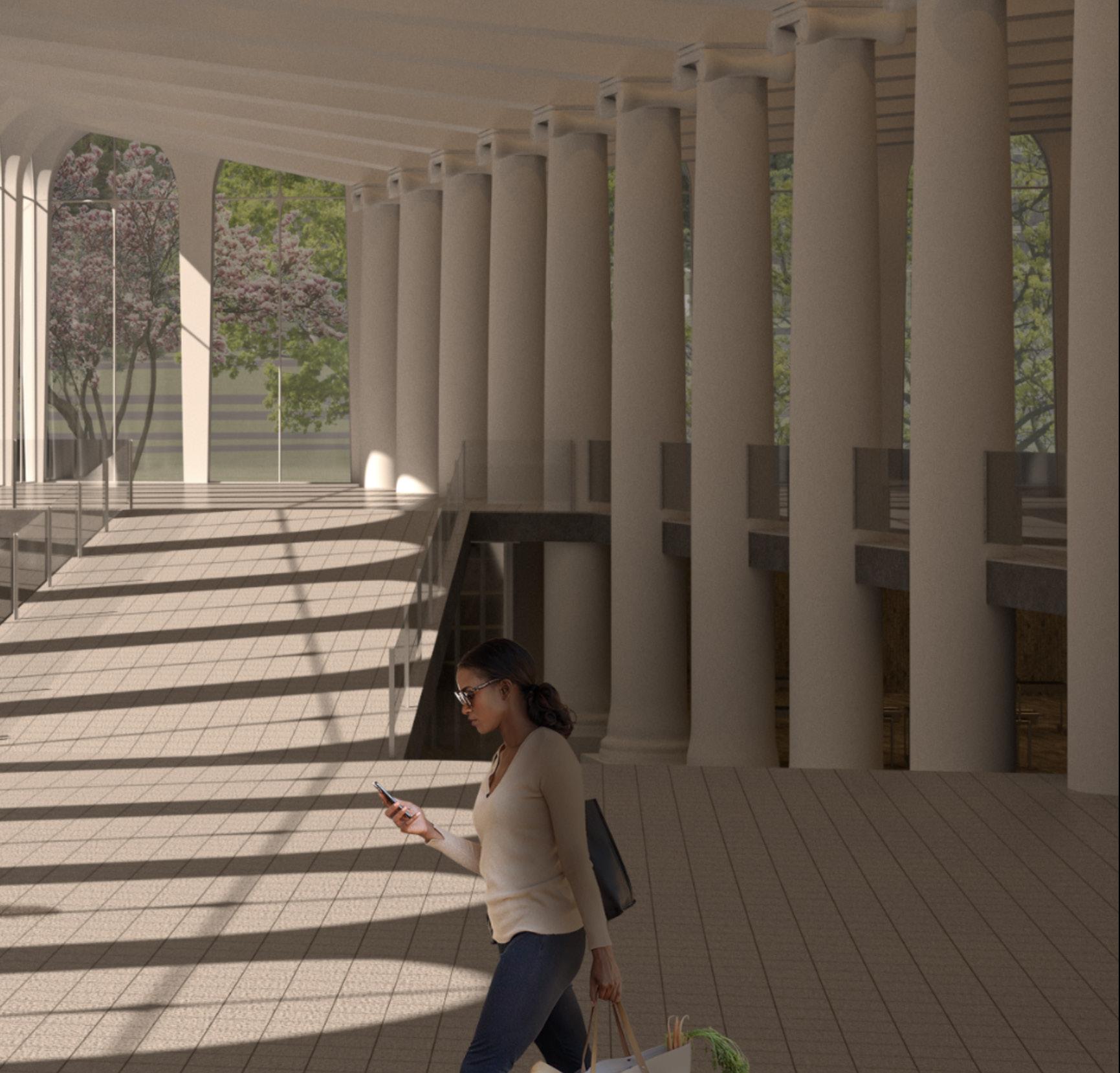
The market provides distributors with a means to monetize produce that would otherwise be discarded, simultaneously offering families facing financial constraints access to an affordable and nutritious food source. The architectural design of Misfit Market is intrinsically linked to this process of repurposing, evident both programmatically and in its formal attributes. Architectural elements salvaged from a classical building slated for demolition on The Ohio State University campus were incorporated into the market’s design.
Maintaining the integrity and order of classical architecture, Misfit Market engages in a thoughtful exploration of how these reclaimed elements can assume new formal qualities suitable for contemporary use.
Material resuse: Sullivant Hall (The Ohio State University)
Steel I-beams, CMU block, classical ionic columns
Exploded axonometric highlighting salvaged architectural elements from Sullivant Hall (Ohio State University).
The initial parti diagram displays a plan characterized by 5-degree shifts, with classical columns holding the central axis.
A column spacing study revealed that reducing the distance between each column creates the visual impression of a wall.
The ground floor addresses the logistics of receiving produce, storage and preparation for sale. Situated near the freeway, the site facilitates seamless transportation of produce to the market. The drop-off area is adjacent to the freeway’s on/off ramp. Employing a split-level design, the architecture echoes the site’s topography. Ramps allow for easy circulation of produce to the vendor stations.
The first floor is primarily open, allowing vendors to claim the required amount of space they need on a day-to-day basis. Rather than dividing the space with formal partitions, our team opted for a simple yet flexible alternative. Vendors mark off a section of space necessary for their daily activities using tape. Additionally, the open plan allows the market to aacomodate other community events during seasons when produce is in less supply.
The detailed wall section provides a meticulous exploration of the complex interactions among diverse architectural components. It delves into the nuances of the roof system, the interface between the concrete slab and walls, and the dynamic synergy between the steel trusses and classical Ionic columns.
Furthermore, the analysis illuminates the intricate relationship between the modern steel trusses and the classical Ionic columns, emphasizing the fusion of contemporary construction techniques with traditional architectural elements. This thorough examination not only serves as a technical reference for construction procedures but also presents a visual narrative that eloquently captures the seamless integration of contemporary and classical design elements within the constructed environment.
The Spring Comprehensive Studio project necessitated multiple engagements with a structural engineer throughout the semester. In these collaborative sessions, it was established that trusses with a depth of six feet, tapering toward the perimeter, were essential to uphold the substantial cantilever. After numerous iterations, this structural mandate was translated into a contemporary barrel vault system on the ceiling which seamlessly extended into the facade.
03. H2Office
Instructor: Marta Nowak
Fall 2023
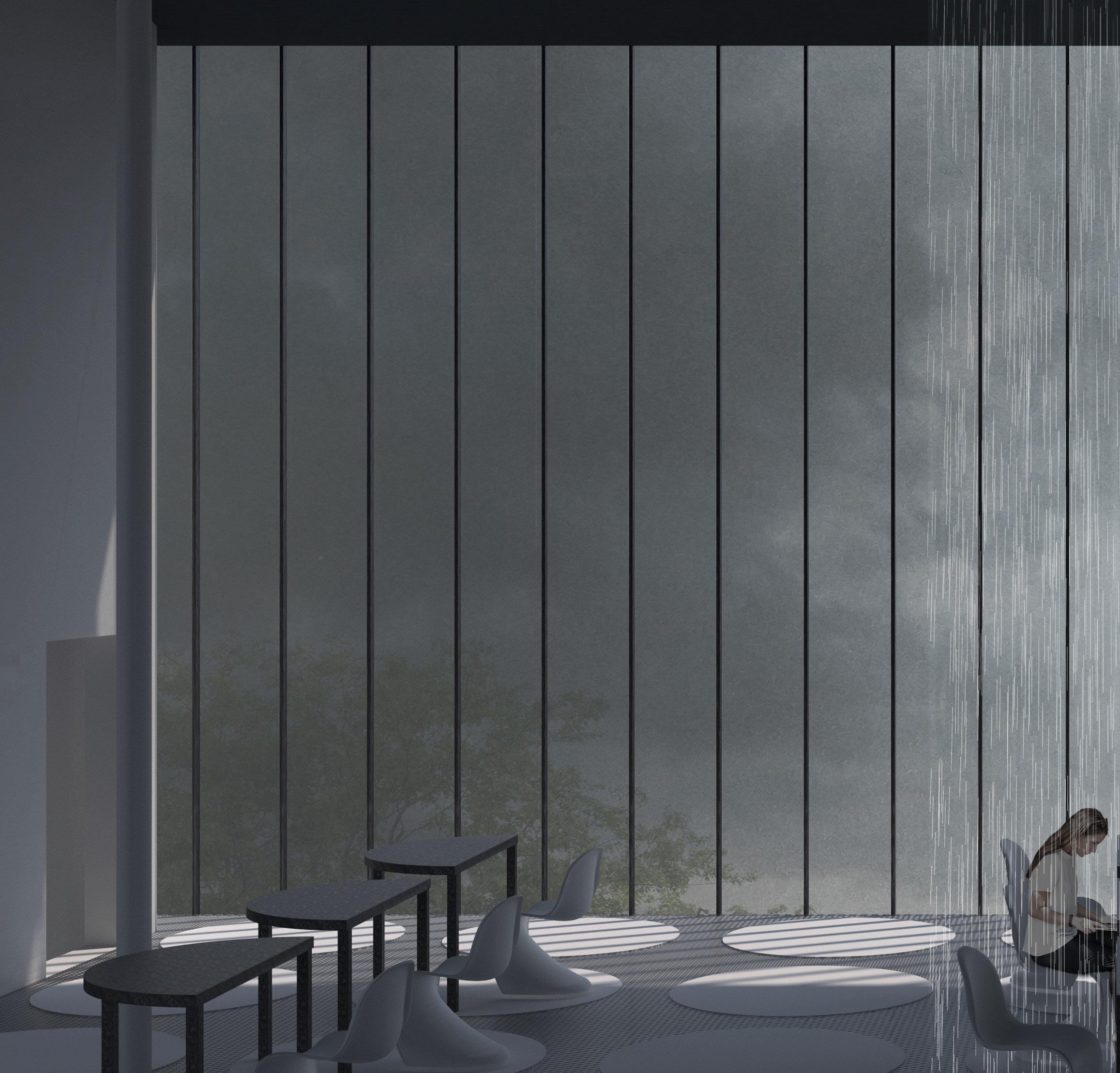
In the contemporary corporate landscape, modern offices grapple with a myriad of challenges, including inflexibility, disruptive noise, and the struggle to maintain uniform thermal conditions. Recognizing these impediments, H2Office emerges as a transformative solution, reshaping the conventional workplace paradigm through a profound emphasis on water-centric strategies. This innovative approach aims to not only enhance flexibility and reduce noise but also to establish optimal thermal comfort, ultimately fostering the well-being of the workforce.
The inception of H2Office originated as a unit concept design, evolving organically into the grand scale of an entire office headquarters. This evolution highlights the depth and scalability of the initiative, showcasing its potential to revolutionize workplaces on a comprehensive level.
At its core, H2Office envisions a workplace where water becomes a catalyst for change, facilitating adaptability, sustainability, and overall well-being. By strategically integrating water-centric elements, this visionary concept seeks to create a future where innovation seamlessly intertwines with occupant fulfillment. The emphasis on water not only addresses the immediate challenges faced by today’s offices but also lays the foundation for a more harmonious and progressive work environment, where the holistic needs of individuals are met, and the potential for creativity and productivity is maximized. In doing so, H2Office aspires to redefine the very essence of the workplace, propelling it towards a more dynamic and fulfilling future where the transformative power of water is harnessed for the betterment of both individuals and the organizations they serve.
WATER NOZZLES
CEILING RAIN WALL SYSTEM
TEMPERATURE ADJUSTED
WATER FOR PERSONAL THERMAL COMFORT
COMPLIMENTARY RAIN BOOTS
HYDRATION GLASS
COMPLIMENTARY RAIN UMBRELLA
WATER
The core of the design revolves around a dynamic ceiling water wall system, enabling versatile workspaces for various tasks and team collaborations. This departure from static layouts empowers occupants to tailor their workspace, creating a more personalized and efficient environment. The integrated drain system ensures cleanliness and sustainability by efficiently recycling water.
FLOOR DRAINAGE SYSTEM
At a larger scale, the building acts as a water filter, collecting rainwater on the roof and filtering it as it passes through each floor.
The overall system simulates atmospheric conditions, with drained water flowing into the indoor lake via waterfalls, creating a visually engaging environment.
Filtered water is stored in the ground floor lake and surrounding retention ponds located on the site, which not only support the buildings systems, but also provide a water source for
Water nozzle enables diverse environmental experiences, from thin separations to enhanced auditory ambiance to increased privacy during meetings. Individualized temperature
RETENTION PONDS
04. Kitaya Park House
Instructor: Ben Wilke
Spring 2022
Nestled in the vibrant heart of Shibuya, Tokyo, this architectural project stands as a testament to the enduring significance of multiple-generational housing in Japanese culture. Designed as a home for a family spanning multiple generations, the residence not only caters to the functional needs of its diverse occupants but also pays homage to the deep-rooted cultural values that emphasize familial bonds and shared living spaces.
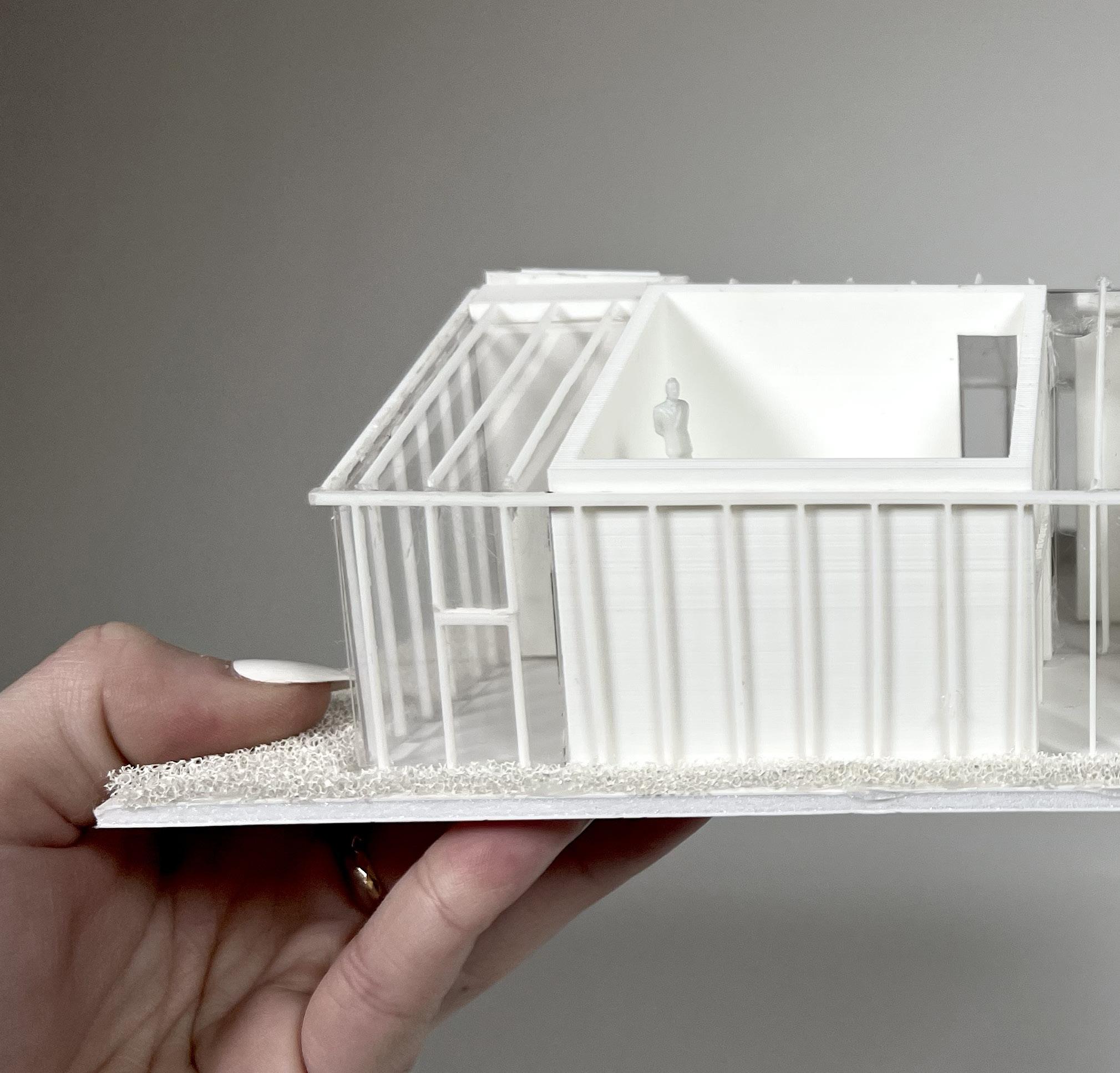
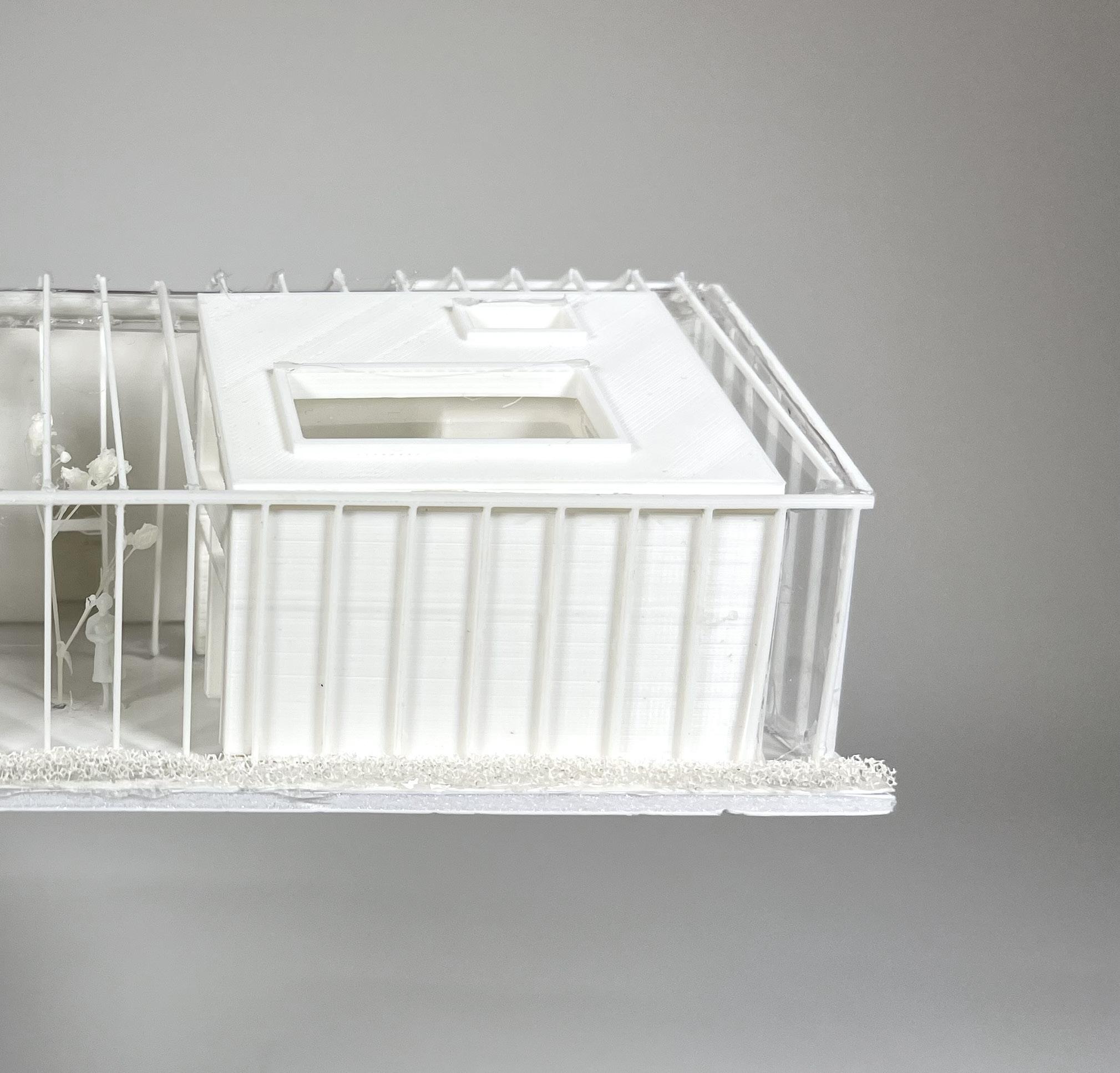
The design seamlessly connects with the adjacent green park, a rare gem in Tokyo’s urban landscape. Balancing separation and connection, the home features distinct yet interconnected living quarters for different generations. Beyond its walls, the residence boasts inviting outdoor living spaces, including a tranquil courtyard and an occupiable second-floor roof. These thoughtfully integrated areas provide opportunities for shared moments and individual retreats, amplifying the family’s connection with nature in an urban setting. The design harmonizes tradition and contemporary living, creating a dynamic and culturally rich home for generations to come.
I ntimate Spaces in the Home (Bedrooms, Bathrooms, Offices)
Public Spaces in the Home (Kitchen, Living, Dining, Courtyard)
An exploded axonometric diagram articulating the overarching design concept. The design adopts a charm bracelet format, wherein secluded, private spaces like the bedrooms are interconnected by communal, public areas like the living room within the residence.
Positioned in close proximity to a Kitaya Park in Shibuya, where green spaces are scarce, the dwelling strategically maximizes views towards the nearby verdant area. This is achieved by employing extensive glazing to fully expose the shared public spaces of the home, seamlessly integrating the interior with the natural surroundings and enhancing the overall connection with the greenery just beyond its walls.
North elevation of Kitaya Park home.
West elevation of Kitaya Park home.
05. House VI
Instructor: Marta Nowak
Fall 2021
Knowlton School of Architecture Outstanding Studio Award
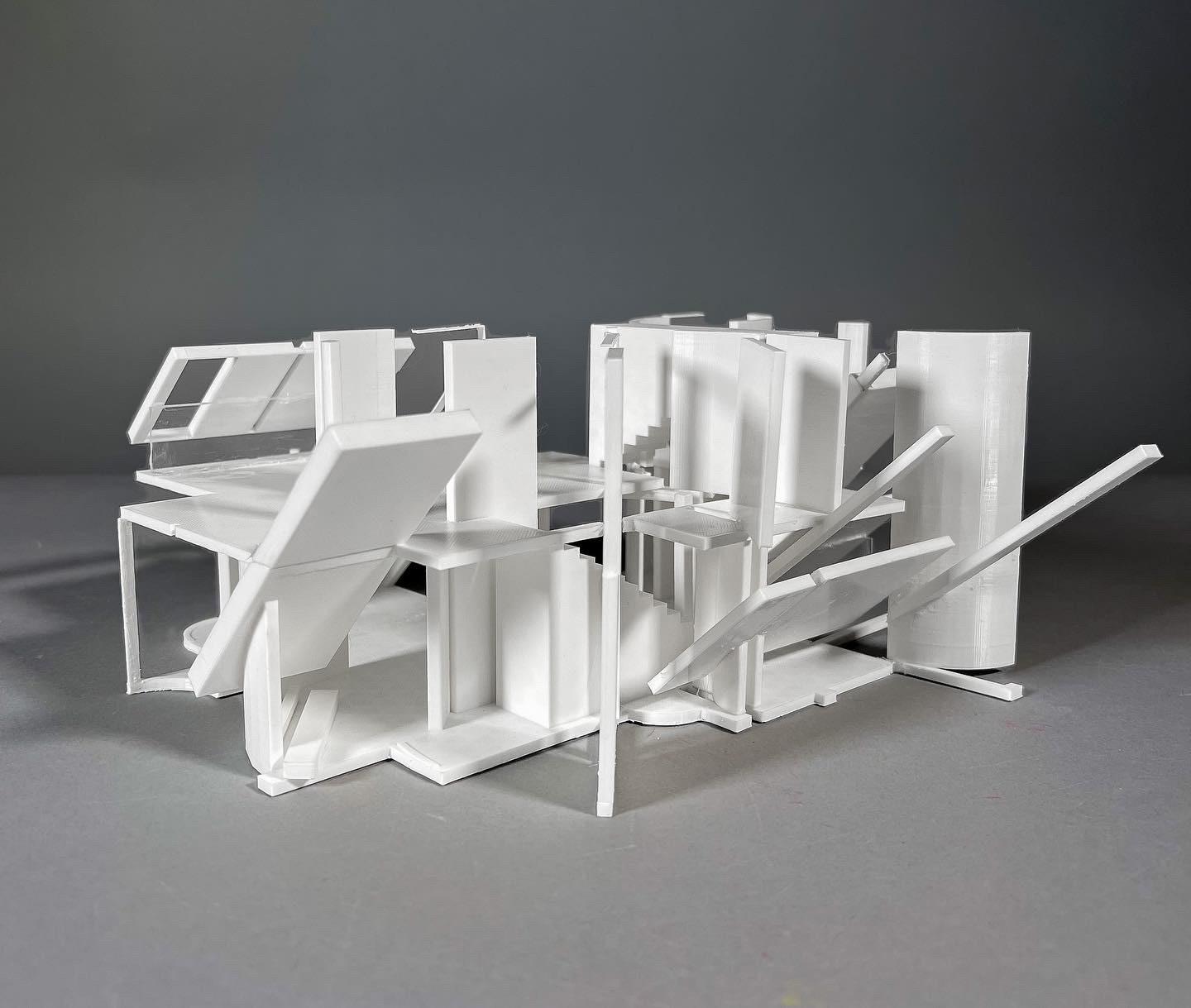
Embarking on a unique exploration of architectural innovation, this project delves into the intricate relationship between precedent studies, algorithmic manipulation, and the built environment, furthering the legacy of Peter Eisenman’s interventions and design philosophy, particularly exemplified in House VI. Eisenman, a prominent figure in contemporary architecture, is renowned for his avant-garde approach to design and theoretical contributions.
The project initiated with a meticulous analysis of Eisenman’s House VI, an iconic structure characterized by its geometric complexity and deconstructivist principles. Employing an innovative alphanumeric system, the original walls of House VI were methodically charted, setting the stage for the subsequent algorithmic manipulation.
A bespoke algorithm was then developed to manipulate the wall layout based on their equational values, introducing a transformative process that redefined the spatial dynamics of the structure. The result is a stunning metamorphosis of the original design, challenging conventional notions of form and space while simultaneously contributing to the ongoing discourse in architecture.
In aligning with Eisenman’s exploratory spirit, this project not only pays homage to House VI but also propels the conversation surrounding spatial relationships and architectural innovation. By pushing the boundaries of the original structure through algorithmic intervention, this endeavor adds a contemporary layer to Eisenman’s rich legacy, emphasizing the dynamic possibilities within modern architectural practices.
Alphabetical Values
A-1 J-10 S-19
B-2 K-11 T-20
C-3 L-12 U-21
D-4 M-13 V-22
E-5 N-14 W-23
F-6 O-15 X-24
G-7 P-16 Y-25
H-8 Q-17 Z-26
I-9 R-18
First Floor Walls
1: D:F = D-F = 11-13 = -2
3: I:K = I-K = 9-11 = -2
5: C:H = C-H = 3-8 = -5
7: B:F = B-F = 2-6 = -4
8: I:J = I-J = 9-10 = -1
9: A:H = A-H = 1-8 = -7
11: A:B = A-B = 1-2 = -1
14: B:F = B-F = 2-6 = -4
Second Floor Walls
4: E:F = E-F = 5-6 = -1
5: G:H + J:M = (G-H) + (J-M) = (7-8) + (10-13) = -4
7: A:B + O:Q = (A-B) + (O:Q) = (1-2) + (15-17) = -3
10: C:D = C-D = 3-4 = -1
11: N:Q = N-Q = 14-17 = -3
12: N:Q = N-Q = 14-17 = -3
13: O:Q = O-Q = 15-17 = -2
15: C:I = C-I = 3-9 = -6
Shared Walls
1: K:M = K-M = 11-13 = -2
2: F:H = F-H = 6-8 = -2
4: B:C + D:G = B-C + D-G = (2-3) + (4-7) = -4
7: A:B + I:N = A-B + I-N = (1-2) + (9-14) = -6
9: E:N = E-N = 5-14 = -9
Operations
Step 1: 1, 5, 9
Step 2: 2, 6, 10
Step 3: 3, 7, 11
Step 4: 4, 8, 12
1: Bend 90o - Tilt 45o - Remove - Rotate 135o
2: Tilt 45o - Remove - Rotate 135o - Bend 90o
3: Remove - Rotate 135o - Bend 90o - Tilt 45o
4: Rotate 135o - Bend 90o - Tilt 45o - Remove
A: 6:11 = 6-11 = -5
B: 13:14 = 13-14 = -1
C: 5:14 = 5-14 = -9
D: 1:2 = 1-2 = -1
E: 1:2 = 1-2 = -1
F: 12:14 = 12-14 = -2
H: 4:12 = 4-12 = -8
I: 1:4 + 6:10 = (1-4) + (6-10) = -7
J: 7:12 = 7-12 = -5
C: 7:14 = 7-14 = -7
I: 2:5 = 2-5 = -3
J: 1:8 + 13:15 = (1-8) + (13-15) = -9
K: 5:12 = 5-12 = -7
L: 3:5 = 3-5 = -2
N: 7:9 + 11:12 = (7-9) + (11-12) = -3
O: 6:7 = 6-7 = -1
P: 3:5 = 3-5 = -2
Q: 7:11 + 12:13 = (7-11) + (12-13) = -5
B: 4:7 = 4-7 = -3
E: 9:11 = 9-11 = -2
G: 11:12 = 11-12 = -1
J: 5:7 + 9:12 = (5-7) + (9-12) = -5
K: 1:2 = 1-2 = -1
Proposed relocation of House VI’s second-floor walls, guided by developed algorithm after mapping their pre-existing location in space and imposing the correlated transformation procedure.
Proposed relocation of House VI’s first-floor walls, guided by developed algorithm after mapping their pre-existing location in space and imposing the correlated transformation procedure.
Section A of transformed House VI showing metamorphosis of walls.
Section B of transformed House VI showing metamorphosis of walls.
Contact
Lexi Arnett-Sutherland 614.313.9417
arnett-sutherland.1@buckeyemail.osu.edu