Lerg Yu Yap
Architecture Portfolio
Columbia
Table of Contents
Sloping Museum Andorra Concept Plans/Elevation
Panel Pavilion Concept Plans/Elevation
CVP Pavilion Concept Renders Diet Water Concept Detail Components Axonometric
Block City Concept/Detail Elevation/Section/Perspective
Photoreal Rendering Exterior/Interior Renders
Pierre Lassonde Pavilion Sectional Axonomatric
Building Information Modelling Floor Plan/Structural model Dynamo Scripts
Apartments, Genting Sempah Concept/Render
COMPETITION WINNER
Sloping Museum Andorra
Awarded shared first place in 120Hours 2024 student competition, the world’s largest student competition hosted by the Oslo School of Architecture and Design. Participants were given only 120 hours to complete the task. The Submission was completed alongside group member Stuart Confait.
Our concept to place gallery spaces along a ramp fulfilled our intention to return the ground level to the public by locating program spaces on upper levels to minimise our proposals’ ground-level footprint. The proposal manifests as a six floor rectilinear volume punctuated by Romanesque arches and a perimetral ramp that descends from the roof to the ground level. As such, the ramp forms a central courtyard populated with native flora to create a public urban green space. This space provides shade and vegetation to passively cool the Gallery and offset its operational emissions to reduce its embodied carbon value. Courtyard glazing provides an active, sheltered background for artwork as an alternative to conventional exhibition practices. Guests travel by elevator to the roof level before descending the ramp through the Gallery before exiting to the ground-level green space. The ramp enables chronological and directional movement through the Gallery to regulate the flow of people through the space. The green space offers guests and the public space to contemplate and share their experiences of the Gallery. The proposal considered Andorra’s skislope topography and the Acropolis Museum (Bernard Tschumi, Athens 2009) as precedents to inform the Gallery as Ramp concept.
Ground Floor 1:1000
A Gallery Ramp B Vegetated Terraces
C Restrooms D Egress Stair
E1 Ticketting E2 Terrace Exhibition
E3 Terrace Studios F Back of House
Standard Gallery Floor 1:1000
A Gallery Landing (Installations)
B Gallery Ramp (Paintings)
C Restrooms
D Egress Stair
Panel Pavilion
‘A’ Design Room Pitch competition Runner Up
The Panel Pavilion is built upon the concepts of flexibility, modularity, ease of assembly, sustainability and cost effectiveness. The design prioritized adaptability catering to a range of activity in the space and in various locations. To achieve its objectives, the Pavilion utilizes a modular system that consists of timber frames housing awning panels. There are two variations of the panels, one of which being a timber frame with a fabric backing, the other being a solid timber panel. The framed panels can serve as windows or openings, the solid panels can be used as seating or shelving, etc. The Pavilion’s modularity also allows for potential expandability to suit different functions and the internal walls are movable to partition the space in multiple layouts. The modular nature simplifies assembly and disassembly making the pavilion easily transportable and reconfigurable. The assembly requires minimal expertise and tools, making it a user friendly design. Mass production of components through CNC methods can be easily incorporated from the simplicity of components. All materials are chosen to minimize environmental impact and reduce waste at the end of its life cycle. The main material is timber (plywood pine and pine beam) and recycled polyester fabric. Plywood is highly sustainable due to carbon sequestration and usable wood percentage. The chosen fabric is recycled polyester. Not only it is waterproof but is environmentally friendly by utilizing plastic waste such as PET bottles and post-industrial polyester waste, or used clothing. At the end of its life cycle, the timber can be cascaded, and the hardware can be reused. Modularity, ease of assembly, sustainability and cost effectiveness, the Pavilion synthesises the aspects and creates a space for interaction, learning, reflection, and exhibition.




CVP Pavilion
ZXC Architects
Ongoing
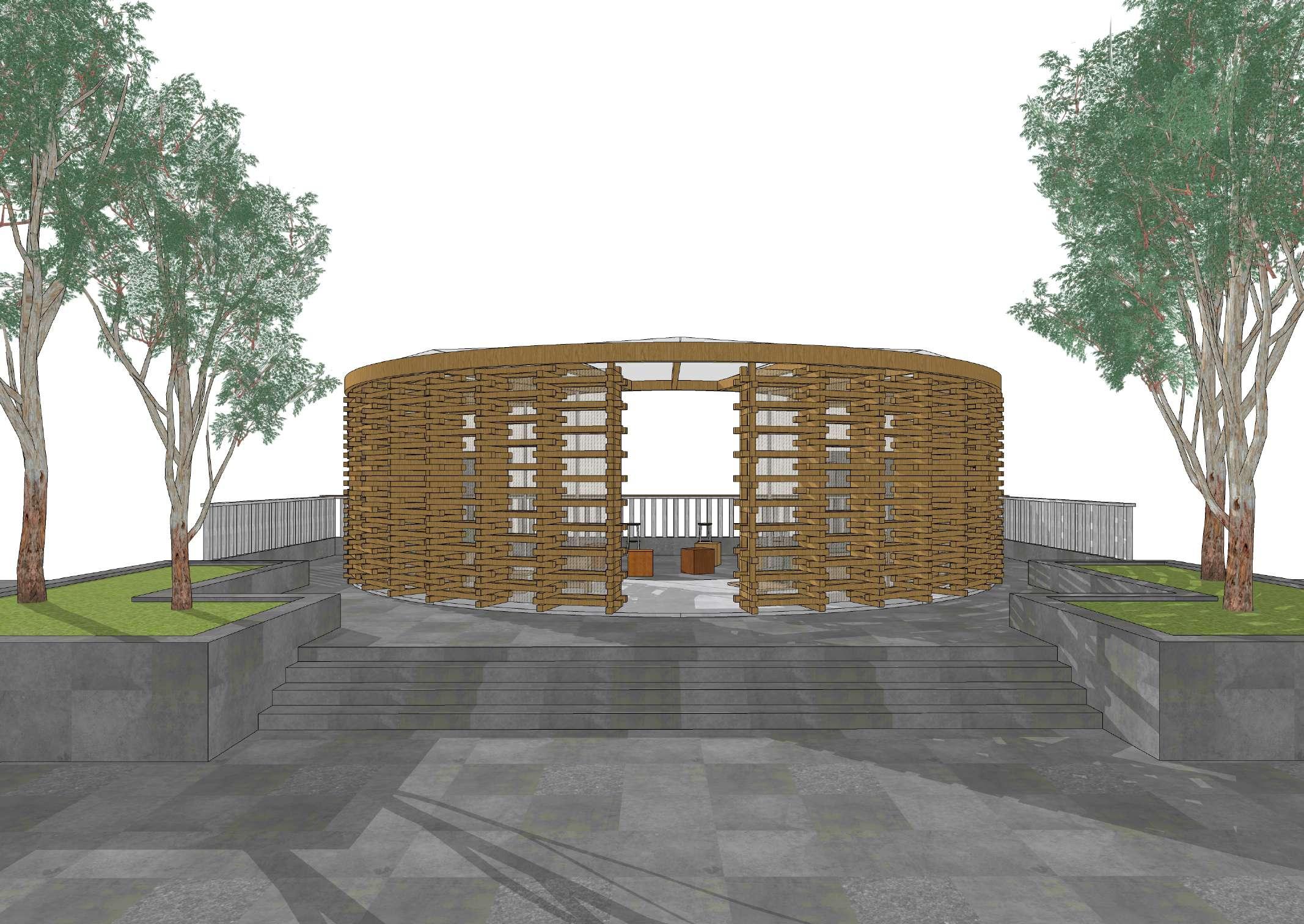
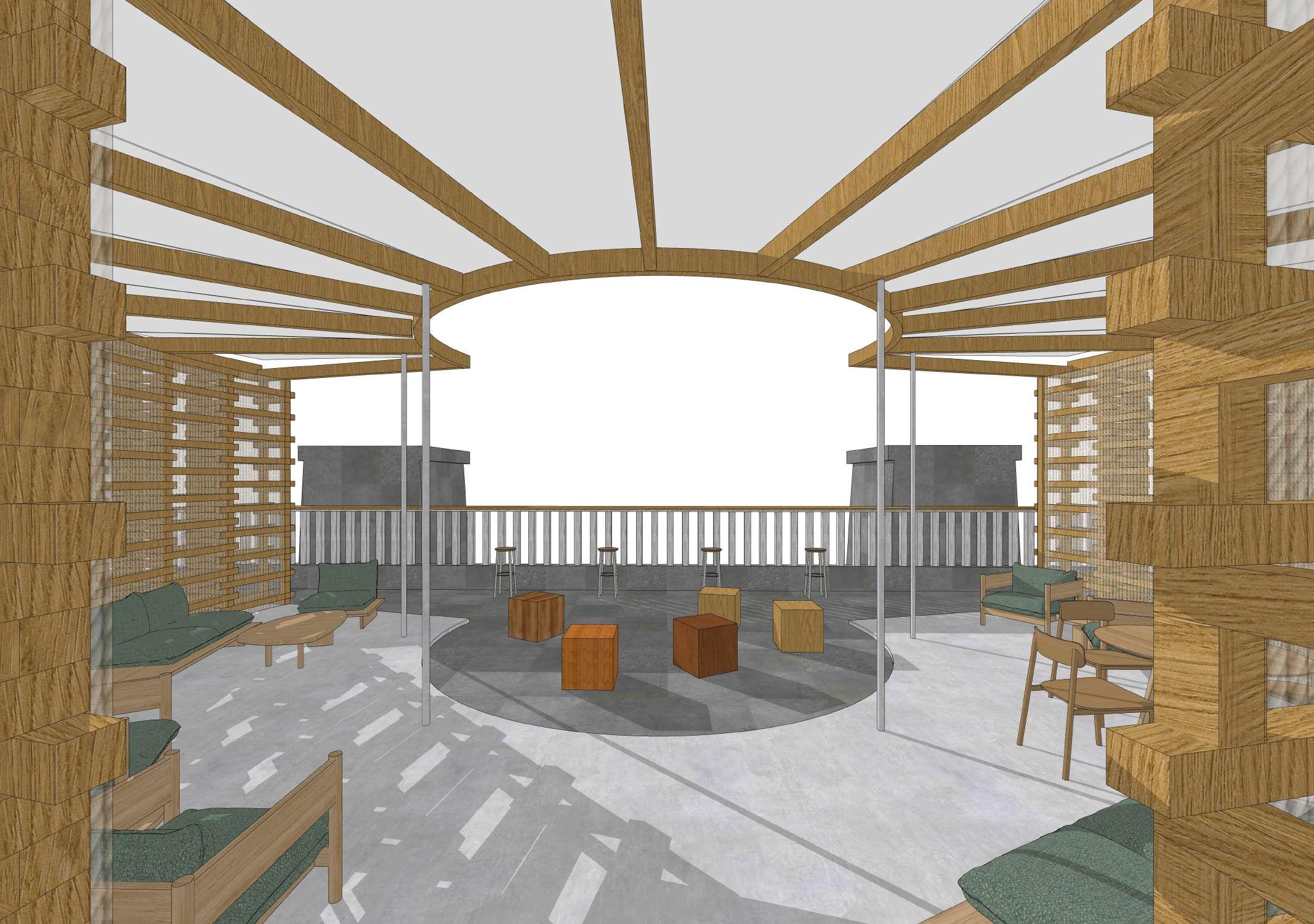
The CVP Pavilion is a collaborative project by Bali-based ZXC Architects and furniture makers CVP for the Jia Curated Exhibition.
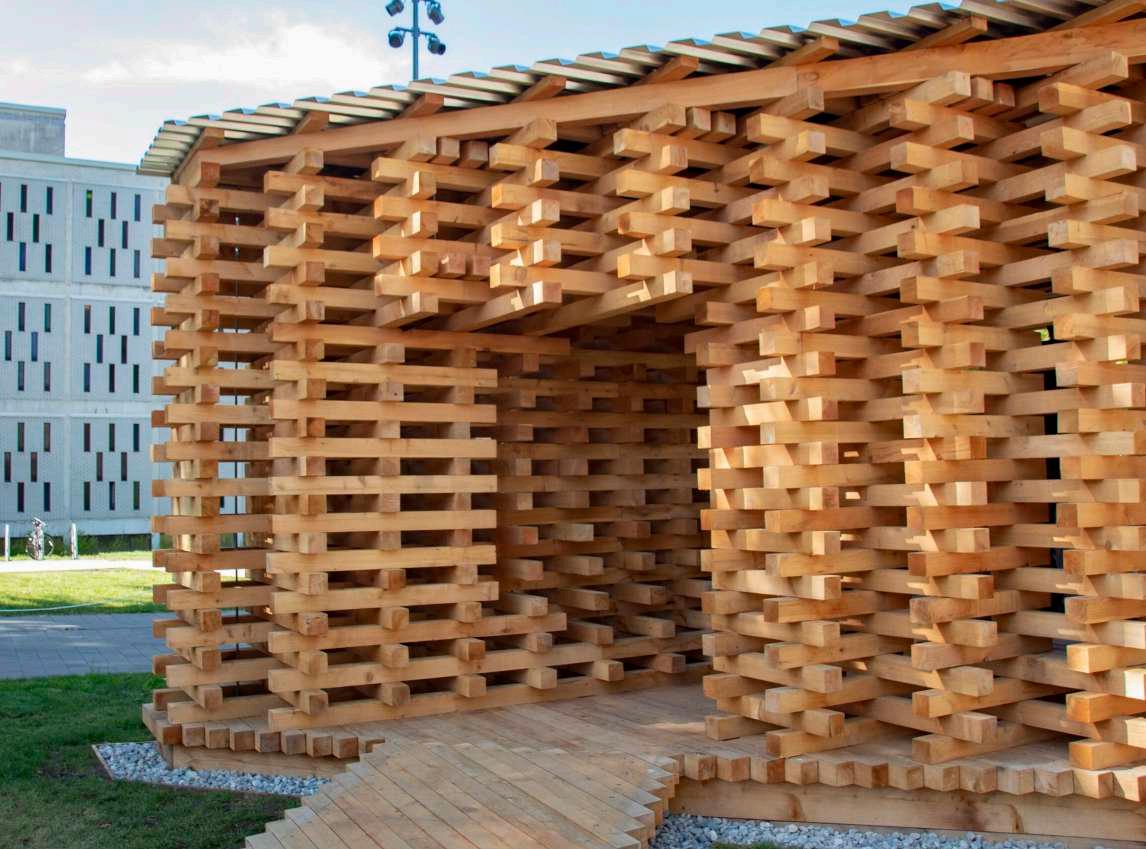
The pavilion showcases the design principles of ZXC alongside CVP’s carpentry expertise. Situated in a prime location at the exhibition, the pavilion adopts a semi-circular shape, responding to the pedestal it sits on. This shape frames the view of the performing space below, and its symmetry allows for easy fabrication in modular units.
The pavilion also displays various products from CVP, with a courtyard designed to showcase both indoor and outdoor furniture in their natural environment. The envelope of the pavilion draws inspiration from a visit to CVP’s manufacturing facilities, where stacked frames influenced the design. Further inspiration was taken from the works of Kengo Kuma, specifically in the arrangement of stacking order and module layout. The interior walls are wrapped in a woven sheet, allowing the furniture on display to stand out. The structure is designed to be lightweight, featuring a concrete base, timber framing, fabric roofing, and galvanised steel columns.
I worked closely with the project lead throughout the design and modelling process, from conceptualisation to presenting multiple design options for the client. The option shown is the one the client ultimately chose. This design was selected for its modular components, which can be detached and reused after the exhibition.
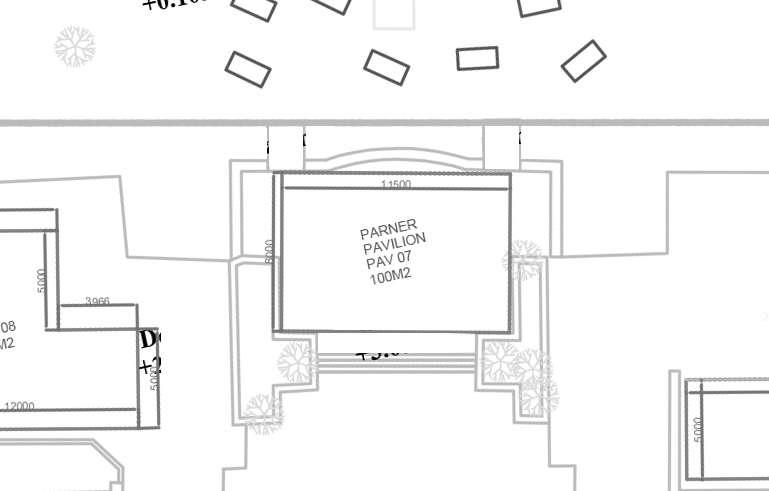
*drawing not to scale
‘U’ shaped plan gives a strong presence from the entrance area with the facade, and opens views out over the lake and performance square. The external wall is made from stacked timber furniture components, showcasing CVP’s core material. The inside wall of the covered area is lined with white synthetic weave to give a neutral backdrop to the furniture on display. The Central open-air space is used to display Outdoor Furniture but can also serve as a Gathering Space, taking advantage of the location overlooking the Lake and Performance area.
Diet Water
The river is one of the Canning River Regional Park’s most significant features as the name implies. As the urban structure of the surrounding area develops, that means an increasing amount of stormwater runoff from industrial and agricultural activities will end up in the river. This imposes an escalating nutrient load in the waters, prompting phytoplankton blooms, resulting in low oxygen levels that can make the ecosystem uninhabitable. The Heron, or Ardeidae family of birds surrounding the area have been selected for the project in mind. Being the top predator in the local wetland food chain, the presence of herons is a great indicator of river health. The project creates artificial wetlands that serve as biofilters for major stormwater drains before entering the river system. Doing so can significantly decrease the nutrient levels in water entering the river as well as providing habitat for the Heron. The Wilson Main Drain which discharges into the Wilson Wetlands are chosen for intervention. The project features multiple modules which are specific to different processes of biofiltration. Apart from biofilter modules, terrestrial modules for the creation of habitat, and human amenity will also be implemented. Mycelium will be utilised for its decomposing property to provide an adaptable module. The modular nature of this project has been devised to form a framework that can be universally applied to stormwater drains. The project purifies water from stormwater runoff entering the system, as well as provding a space in which human meets Heron habitat.
Identify edges present in immediate context
Commercial blocks added facing
Roe street and Wellington Street to activate edge with programme
Residential unit superimposed spanning across residential units and bus port. Creates a wall to reduce impact on internal environment from adjacent tall buildings.
More residential blocks are superimposed onto the structure with cores imposed throughout as circulation and structural entities. Remaining open space to be transformed into public green spaces to improve quality of living.
OMA
Pierre Lassonde Pavilion
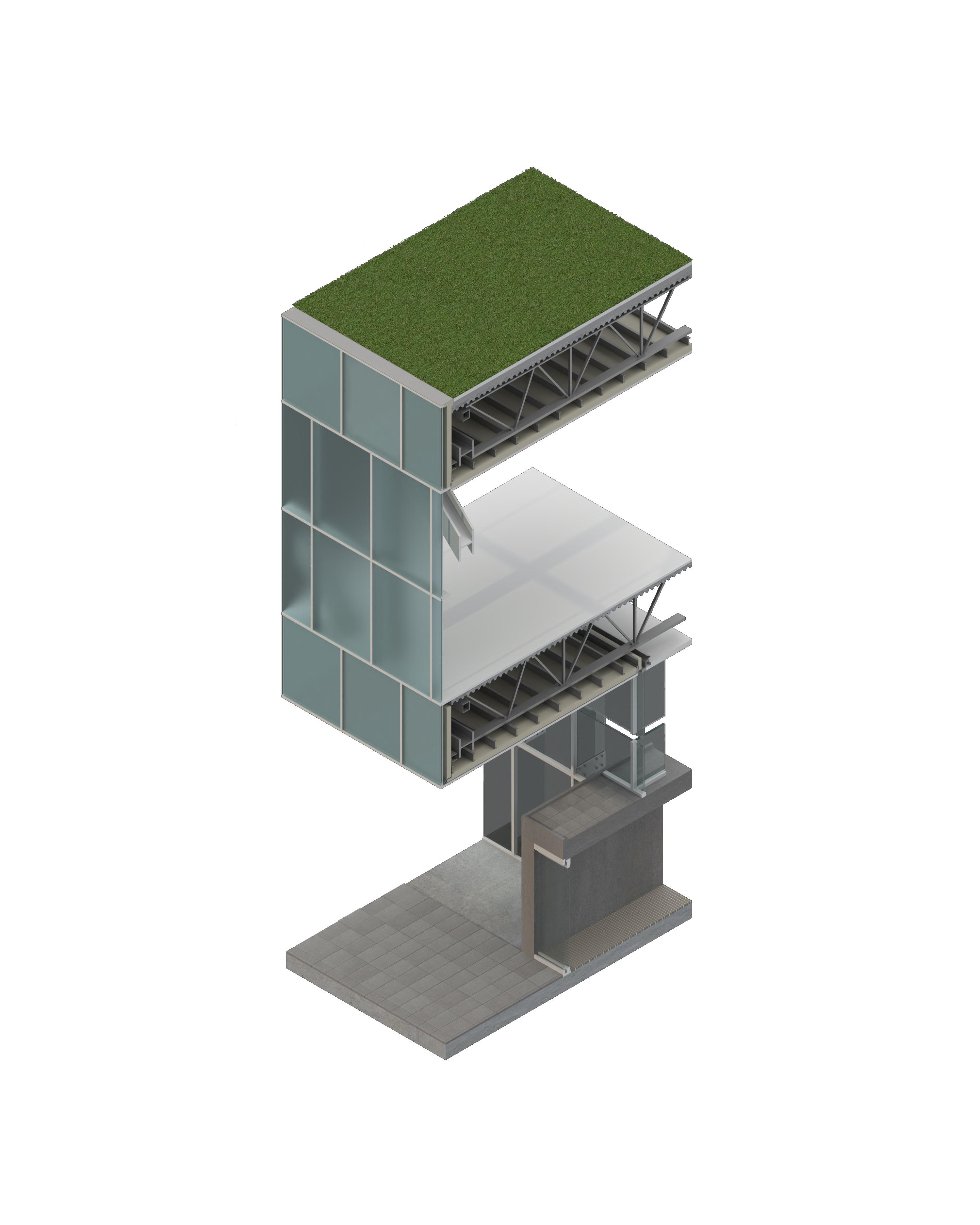
Case study of OMA’s Pierre Lassonde Pavilion located in Quebec as part of the UWA unit, Materials and Large Constructions ARCT3030. The Pierre Lassonde Pavilion serves as an extension to the Musée national des beaux-arts du Québec (MNBAQ) and was chosen for its impressive structural feats such as its large cantilever alongside extensive use of glazing to allow fluid transition between the interior and exterior spaces. The pavilion showcases innovative material usage of steel and glass, while showcasing OMA’s signature style of balancing aesthetic refinement with technical and contextual responsiveness. This project focused on the performance, behaviour, and application of primary construction materials in large-scale architecture. It provided a comprehensive understanding of structural systems, environmental considerations, and construction detailing, while reinforcing a technically informed and contextually responsive approach to architectural design.
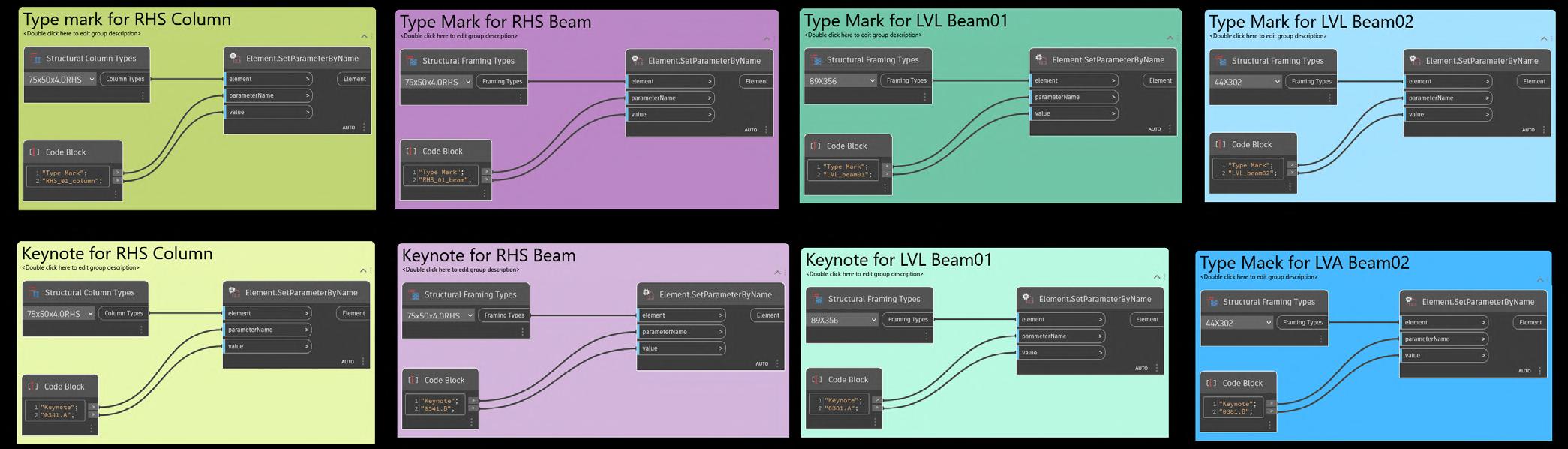
Dynamo Script 1
Changing type based parameters for individual structural elements to allow for effective tagging/modelling
Script 2
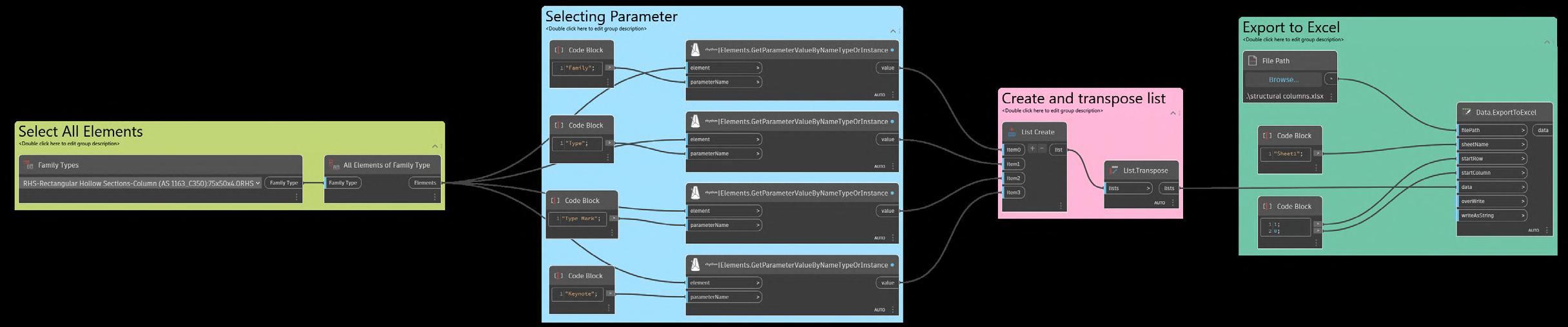
Dynamo Script 2
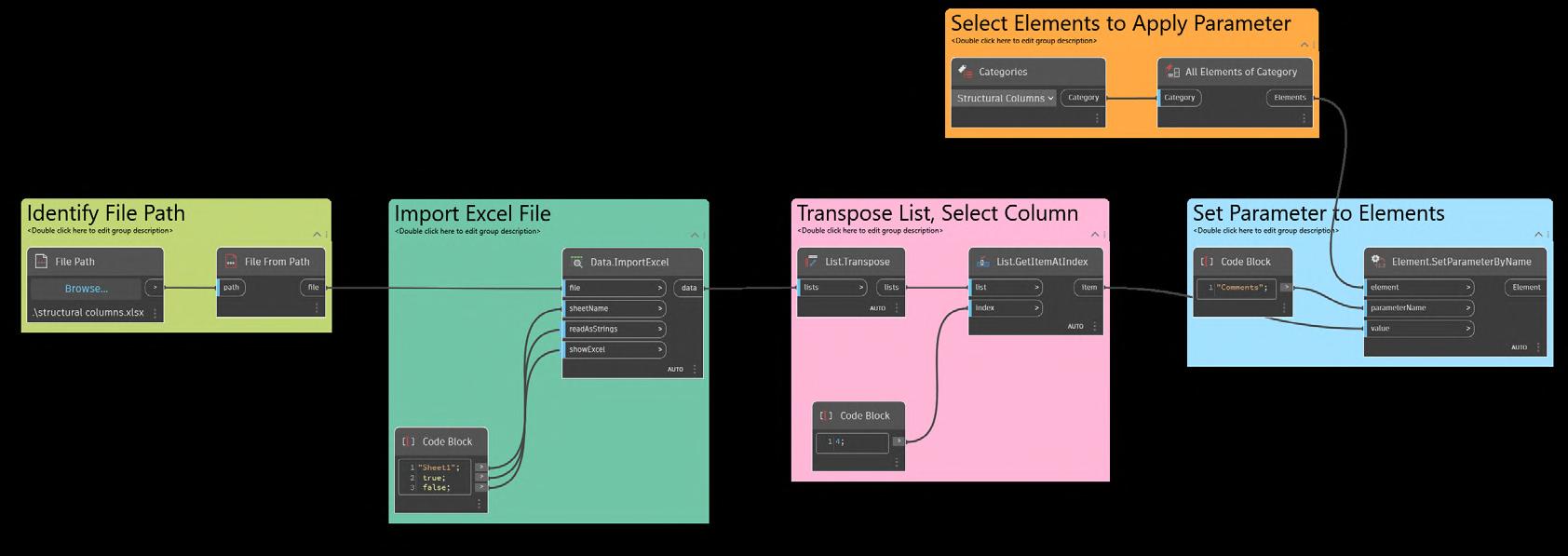
Dynamo script that pushes and pulls data from Excel Documents to a structural element Exporting into Excel
Structural Model
Dynamo Script 3
Dynamo script that pushes and pulls data from Excel Documents to a structural element Importing into Revit
Serviced Apartments
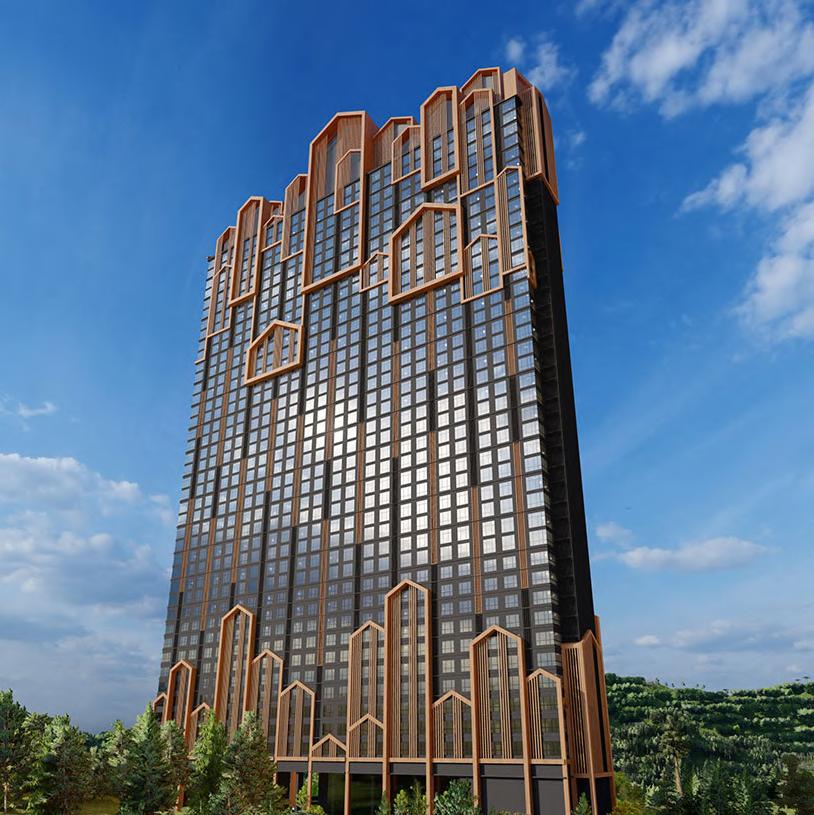
Architect: EDP Architects
Client: Serviced Apartments
Location: Genting Sempah, Malaysia
Stage: Design Development
Landsize: 2.99 Acres
Height: 30 Storeys
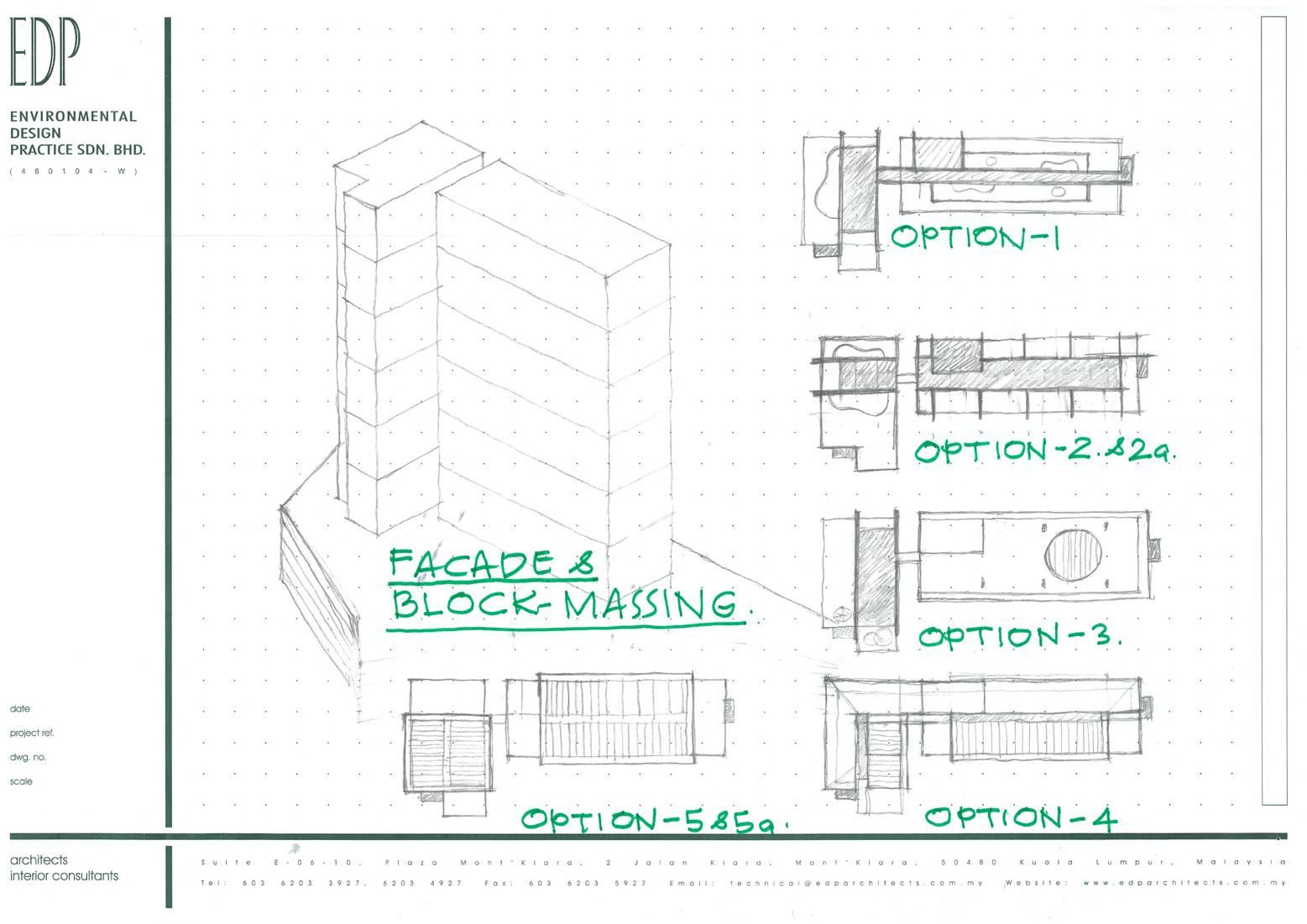
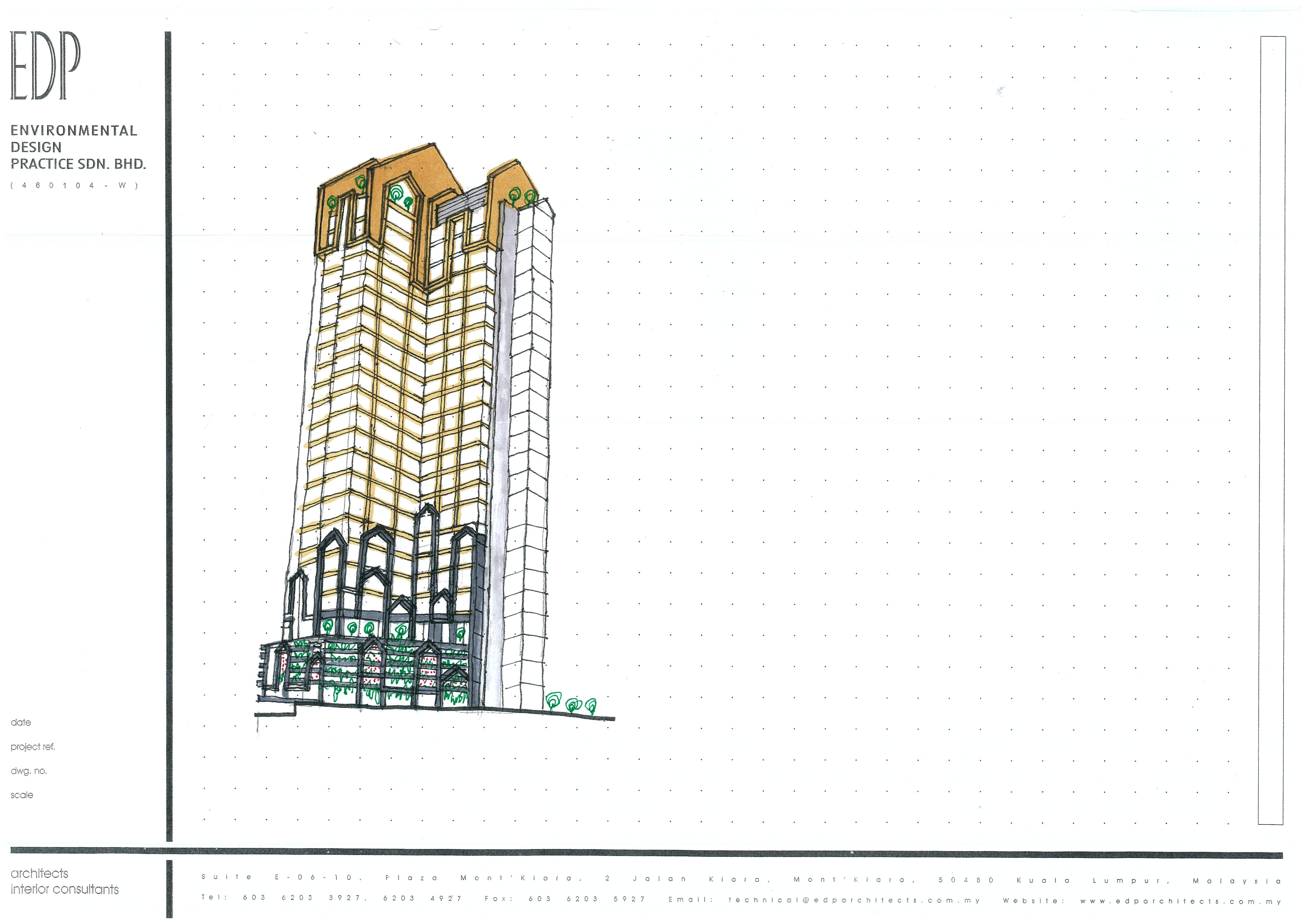
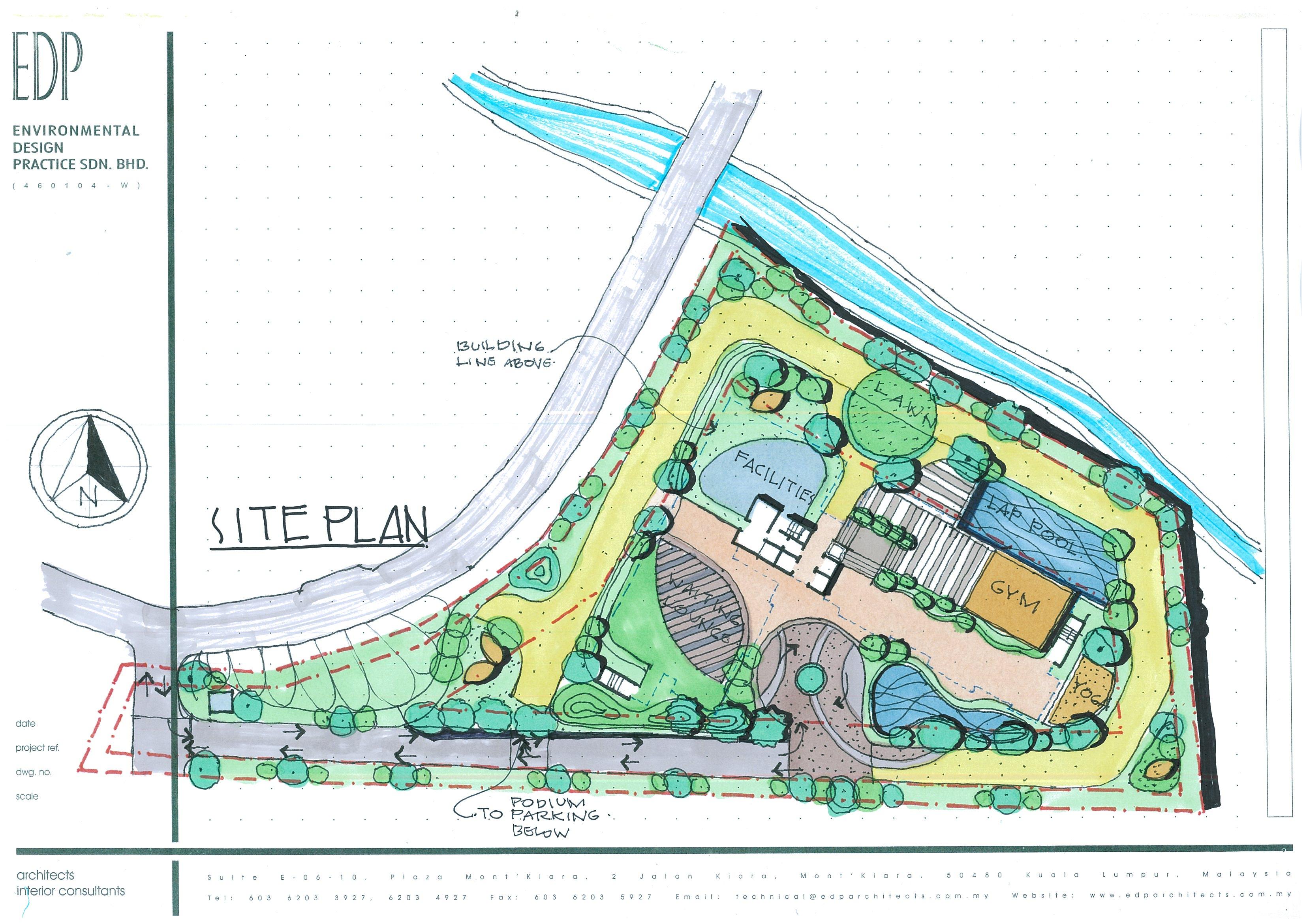
The service apartments are proposed to accommodate staff from the nearby Genting resorts, offering a variety of facilities focused on resident well-being. The building primarily features single-bed loft units to maximize space, comfort and functionality.
Personal Involvement
Involved during the design development phase, research into precedent studies as well as room layouts was conducted. Additionally, documentation and reporting of building metrics including net and gross floor area as well as parking allowance on-site in relation to the proposed design to aid in the planning of building use.