
6 Chapter 1 Content Helena 14 22 32 40 Chapter 2 National Construction Committee Chapter 3 Mrs. Dawson Chapter 4 A Promising Adolescent Chapter 5 The Ceremony
Chapter 1 Helena
The morning sun shined through the windows of Helena's home, warming the sofa fabric in the living room. Helena was preparing breakfast in the kitchen, cracking the last of the eggs into the pot. The egg whites smelled enticing in the hot sunflower oil. The radio played the program that Ian used to listen to every morning when he was alive. The crowd on the radio sang the national slogan to the lilting strains of the national anthem, “People belong to the nation, people construct the nation, people obey the nation."
In the corner of the living room, organized cardboard boxes containing Ian's belongings sat quietly behind Helena's back. Helena had not left the house for several days after Ian had taken his last breath. Today she finally got up and freshen up a bit, preparing to go to the Household Registration Bureau to handle some administrative procedures after Ian's death, and stopping by the rationing office to get Ian's death grant. She looked into the mirror to fix her hair, her face already wrinkled with age. She tied a yellowing white silk scarf around her tied-up hair. The sunlight reflected off a cardboard box in the corner of the living room, reflecting on Helena's face as if Ian was gently caressing her cheek. Before Ian left home for the hospital, the two of them had gotten used to accompanying each other on trips. Even when they couldn't, they would kiss each other on the cheek to say goodbye. But after Ian's death, Helena have to adjust again, and now she was the only one left in the house.
Helena's family lives in an old four-story nation-issued apartment, with four families on each floor. Helena's home is located at the end of the third floor, and when she leaves her home, she has to walk through a long hallway and the doors of three families, and down a staircase to reach the apartment door. Even though the Nation is often building new condos to replace old ones, such apartments are still common in the area where Helena lives. In the new modular housing scheme, all homes have direct access to the building facade. This design is in accordance with the regulations of the National Construction Committee, which allows the Nation to monitor the people and reduce the opportunities for rebels to assemble. According to the National Constitution, for the sake of national security and social stability, people are not allowed to gather or talk with anyone other than their families during curfew hours or in non-public places.
8 Helena Chapter 1

9 Helena Chapter 1
A non-public place is defined in the Constitution as "a place that includes a ceiling and is covered by more than one wall. Violation of these provisions may result in confiscation of rations or arrest and labor distribution. Even if you strictly follow the rules of the venue, you should pay attention to the curfew time when conducting any activity in the public place, and it is not wise to exceed it for any minute. In addition, even if the venue and curfew are met, prolonged conversations can easily attract the attention of the Nation.
The hallway of the apartment is always dimly lit with only an old light bulb. Helena crossed the long hallway to the stairwell and met Mrs. Murray, who had come down from the fourth floor. Mrs. Murray was dressed in a similar outfit to Helena's, with a light yellow headband tied around her head. They gently nodded to each other to greet each other symbolically. In this non-public venue, this was the maximum exchange the Nation would allow them to make. Then Helena sidled up and let Mrs. Murray walk ahead, while she followed silently down the stairs.
Mr. Murray used to work for the Nation, and as an informant of the Nation, he exposed and destroyed many rebellious attempts of the Nation. Unfortunately, Mr. Murray did not have a good sense of propriety and was arrested by the national police and sent to labor when his children were still young and died in a labor camp. After that, Mrs. Murray raised two children on her own, both of whom are now productive young men of the Nation. However, this burden made Mrs. Murray's appearance to be similar to that of Helena, who was nearing the end of her life. In fact, Mrs. Murray is more than ten years younger than Helena.
After walking out of the apartment, Mrs. Murray turned around and nodded again to Helena, this time pausing for a few extra seconds before looking up, which Helena knew was an expression of sadness for Ian's passing. Mrs. Murray then looked solemnly at Helena and said, "I'm so sorry for the loss of Ian, he was a wonderful young man. If there is anything I can do to help, please feel free to contact me." The short words made Helena feel warm and fuzzy.
10
Helena Chapter 1
The blinding sunlight made both of them adjust their hoods forward a little bit. They kept a distance and walked in silence, one behind the other. Mrs. Murray separated from Helena at the second alley, seemingly to go to the market to buy supplies. Helena also needed to buy some ingredients, but before she could do that she had to go to the dispensary to pick up her weekly ration vouchers and, of course, Ian's death grant.
After Ian's death, Helena was entitled to a total of three ration vouchers for death grant. In fact, if it weren't for Ian's strength of will, which allowed him to hold on for one more week before he passed away, Helena would have received four ration vouchers as death grant a week ago. Although the ration vouchers had been constantly decreasing, such a drastic drop had never happened before. However, for Helena, it was worth the price of one ration for an extra week with Ian. Once death is confirmed, the Nation will immediately reclaim the body of the deceased. All belongings related to the deceased, including clothing, used items, items signed by the deceased... anything that proves that the deceased was once existed, will be collected and destroyed within a week.
Soon after Ian's death, Helena began the task of sorting through his legacy. It was not because of a national requirement that she got involved so quickly, unlike Ian, Helena was not an obsessed supporter of the Nation. She was memorizing Ian, her son, a young man who had been healthy, energetic, and had a promising future, through sorting his belongings. Ian's death occurred on a weekend, when the National department did not work. So the national agency came to the house early, on Friday, to collect Ian's belongings. Before then, Helena has three days to memorize as much as she can about Ian, because after Friday, that's all she has left to remember.
11
Helena Chapter 1

12 Helena Chapter 1

13 Helena Chapter 1
Chapter 2
National Construction
Construction Committee
Because of the lengthy process, Helena spent the entire morning at the Household Registration Bureau. By the time Ian's death notification and removal of identity were completed and she finally walked out the door, it was already late afternoon. The staff gave Helena half a loaf of bread and she ate half of it at the exit of the office, leaving the other half for dinner.
On her way to the rationing office, Helena encountered several familiar faces who nodded to her from distance without leaving their established route. There were also three or two unfamiliar faces, smoking cigarettes on street corners or pacing back and forth with nothing to do. They were dressed very similarly, wearing highcollared trench coats, their eyes sharply filtering through the passers-by. When Helena accidentally met their eyes, they lowered the brim of their hats and hid their eyes under the shadows. Perhaps it was a greeting to Helena, but more likely they did not want Helena to see their eyes. Helena always looked away immediately, avoiding too much contact with them. They may have been informants of the Nation, or they may have been national police in disguise, but no one had ever tried to check them out or approach them. It's not wise to draw attention to themselves in any way, and they won't come looking for trouble if everyone follow the laws of the Nation properly.
There were many people lined up in front of the rationing office to receive their ration vouchers, and Helena silently joined the line. The sun was at its strongest and the crowd looked disinterested, keeping a distance from each other, staring silently at a point in the air. This is the safest thing to do in the Nation, not to talk, not to make any eye contact, to let your mind wander and get lost in the unfocused vision. If you are lucky enough to find a bird singing in the treetops, then you can shift your attention effortlessly. Other than that, you just have to keep being patient and find a way to persevere in the endless waiting.
It was late in the evening when Helena finally walked through the doors of the rationing office. There was a sharp contrast between the energetic dispatcher and exhausted Helena. Helena handed the dispatcher the confirmation document for the
16
National Construction Committee Chapter 2
death notification, and once it was confirmed, she could receive the three ration vouchers for the death grant.
There is only one dispatcher per shift at the rationing office, responsible for checking eligibility and quantity, so there are always long lines outside the office. The man with the Van Dyke beard and slightly bald hair squinted his eyes as he carefully examined Helena's documents. Helena wasn't worried about being returned because it was a nation-issued document, and once the man had gone through all the items, she could receive her ration vouchers.

17 National Construction Committee Chapter 2
After a long examination, the man closed the file, looked up into Helena's eyes and said, "Your son just passed away, didn't he?" The man's words startled Helena, and the entire hall and those outside the office who heard the words also became nervous. Even though no one said anything, you could almost feel the air stand still for a moment. Generally speaking, it is rare to hear people talking outside of their homes. The Nation does not prohibit people from talking in public, but anything that might be linked to treason or open to interpretation by the national police could easily get you into trouble. Therefore, people prefer to remain silent if not necessary.
The frightened eyes of the crowd were focused on the man, but he seemed unconcerned and continued in the same grand and bold volume: "I can understand your grief, I have lost a son too." the man said, self-consciously. "When the Nation was confronted with an enemy that had to be defeated, my son stood up for the Nation. He went to war for the honor of our Nation and for the sake of our peaceful days. But in the end, he did not make it back to me. The Nation told me that my son sacrificed his life bravely. His sacrifice gave the Nation the ultimate victory."
"The Nation gave me a week to sort through his belongings. Even if a single piece of paper, it must be collected and destroyed by the Nation." the man said. "Frankly, I was disappointed at the moment, to give my life for the Nation and not be able to keep any proof that I ever existed? I suppose you feel the same confusion now, don't you?" At the man's words, Helena shuddered again as she felt more eyes on the man through the door and across her back. She didn't see this coming, she just wanted to claim Ian's death grant and not get into any trouble. The man seemed well aware that he was attracting a lot of attention, but didn't mind and continued: "However, after a year had passed, I was relieved when the ceremony under the National Construction Committee was conducted. The man paused for a moment and his tone changed to one of excitement. "When I saw what the Nation had done for us, what it had done for my son, I understood." The man's right hand was clenched, his index finger in front of his nose, like an eager teacher teaching a student. "And you will understand too, ma'am."
"My son, your son, they never disappear. They were there and they will always be
18
National Construction Committee Chapter 2
there." The man's eyes glittered as he looked at Helena, expecting her to understand that from the bottom of his heart, he understood and appreciated nothing more than what the Nation had done. "You will understand." He kept repeating.
The man's words reminded Helena of what Ian had said in the hospital the week before he died. "Mother, don't be afraid, I belong to the Nation, I am the Nation. I will not leave, you will know where to find me." Ian said, holding Helena's hand. Helena knew where that was. According to the National Construction Committee, Ian would become a national building along with the others.
When people die, their bodies must be collected by the Nation, and it is a crime to hide them. The National Construction Committee uniformly makes the remains into building materials for the construction of national buildings. Funeral is an old term that no longer exists in modern times. After about a year, Helena will be told which national building Ian belongs to and will be invited to the dedication ceremony. At the ceremony, Helena will witness Ian's eternal presence with the Nation in that guise.
The Nation has built countless national buildings. These buildings often have a rigid geometry and an unidentifiable style. Like the Nation, these buildings seem to look at you, but not to look at you. No one knows who designed these buildings or what the national design standards are for architecture. New national buildings are completed every so often, at intervals of about a year. The intervals of completion were implicitly linked to fluctuations in rationing. The ration is always decreasing, and the more it decreases, the shorter the interval between building completions.
With ration vouchers and a small piece of bread in her hand, Helena ran out of the door of the rationing office as if she were escaping. Fortunately, the Nation seemed to be implicitly approving of the man's actions. Outside the door, people still lined up in silence, their sights scattered in the air. Men in high-collared trench coats hid in the shadows, continuing their day-to-day surveillance mission. Helena walked down the stairs, no one was looking at her anymore, the surroundings were as quiet as if nothing had happened.
19 National Construction Committee Chapter 2

20 National Construction Committee Chapter 2

21 National Construction Committee Chapter 2
Chapter 3 Mrs. Dawson
Helena draped the quilt in the middle of the living room and let the sun warm it up. It had been a while since the house had been properly tidied because of the long hours spent caring for Ian in the hospital. After breakfast, she wiped down the table and chairs to remove the dust that had accumulated on them. Ian's clothes had been washed, and Helena slowly put them one by one into a cardboard box. Occasionally, Helena would interrupt her work and weep quietly until her emotions subsided, and then she would continue to sort through Ian's belongings.
Neighbors came to visit Helena from times. Since it was not convenient to go up and down the stairs all the time, Helena sat on a bench at the entrance of her apartment to receive greetings from neighbors. Some brought bread and eggs to Helena, while others brought verbal condolences. No matter what they bring, Helena is grateful for the care and welcomes any form of comfort. Occasionally, among the visitors, there were one or two unfamiliar, cold faces, with sunken mouths and sharp eyes, leaning down mechanically and majestically to kiss the backs of Helena's hands and greet her and her remarkable son, Ian, in a tone that was almost devoid of emotion.
Helena noticed that Mrs. Dawson seemed to be wandering in the distance. At first she looked like she was going to the market with a short bag on her elbow, but then she turned back, stopped for a moment under a tree before leaving, and soon reappeared under it. Mrs. Dawson watched vaguely in Helena's direction, but Helena wasn't so sure, she was too busy refusing Mrs. Murray's eggs politely. "Your two children will need these more than I do." Helena said, pushing the eggs back into Mrs. Murray's arms.
In the evening, as the last visitor left, Helena got up to go upstairs, Mrs. Dawson called to her from a distance. "How are you, Mrs. Friscian?" Mrs. Dawson came up with light footsteps. "I'm so sorry to hear about Ian." Mrs. Dawson took a few ration vouchers out of her short bag and handed them to Helena. "If you don't mind, this is a gift of my condolences, and I hope it could help your life in any way.
24
Chapter 3
Mrs. Dawson
25 Mrs. Dawson Chapter 3
Mrs. Dawson was a very nice person, and Helena knew it, but she had to decline Mrs. Dawson's kind offer. She had already received too many things for the day. As Helena returned to respond to Mrs. Dawson, she saw that in addition to the ration vouchers, Mrs. Dawson was holding something surprising - a photograph with her thumb pressed against the vouchers. Even though some families are allowed to have photographs, and Mrs. Dawson's family is one of them, showing them to Helena in this form made her think that Mrs. Dawson might be putting her in danger.
"Mrs. Friscian ...... Helena, please allow me to address you as such." Mrs. Dawson lowered her voice and leaned forward. "I think I need to tell you about this, about the Nation taking away our children, our loved ones, about how the Nation has physically and mentally wiped them out!"
Helena's unsettling premonition came true when Mrs. Dawson showed her something that violated national regulations and attempted to tell her information she shouldn't have access to! But Helena was so frightened that she didn't know if she should stop the conversation and turn around and run away. She was afraid that this would bring Mrs. Dawson to the attention of the Nation, but if she didn't run away, she might even be involved in Mrs. Dawson's crimes.
Mrs. Dawson lifted her hand, and at her gesture, Helena looked at the picture stiffly. A young boy stood in front of the fireplace, smiling at Helena. It was the first time Helena had seen Mrs. Dawson's living room, and it was clean and elegant, similar to the feeling Mrs. Dawson gave. "This is my son." Mrs. Dawson said, pretending to count the ration vouchers for Helena and taking the opportunity to turn the picture over to the back. On the back of the photo was written 'Bill Dawson,' the name of Mrs. Dawson's son. "The Nation demanded that we hand over all evidence of their existence, including all photographs. No one can hide from the Nation. They always know how many pictures you took and how many diaries you wrote. Yes, the Nation always know. But I can also be counted as part of the Nation, you know. ‘People belong to the Nation', and I even work in the Nation."
26
Chapter 3
Mrs. Dawson

27 Mrs. Dawson Chapter 3
The Dawson family and Helena's family belong to different social classes. Mr. Dawson was a former employee of the Nation, so the family's rations were always adequate. Cameras were a privilege reserved for such families. Photographs are a record of the truth, and the Nation does not like people to have their own truth. It is good enough that people follow the truth as propagated by the Nation. "Any negative and the resulting photograph must be coded and reported," Mrs. Dawson said. "But I am the one who manages these numbers, and I certainly know how to create numbers that don't exist."
Mrs. Dawson, like Mr. Dawson, worked for the Nation, and because of her talent for accounting, Mrs. Dawson was assigned to the department responsible for processing reports. "You know, it is the art of the Nation to create things that do not exist. The Nation needs non-existed wars, non-existed enemies to create the demand for labor. The Nation needs non-existed production reports to show the people that the nation is being governed effectively and robustly. And what is real, like you, me, our children, the Nation erases by any means necessary. The only thing that allowed to be real is the Nation itself."
"In fact, when my husband died, I followed national regulations and returned everything," Mrs. Dawson said. "I didn't go to any dedication ceremony, I just wanted to be with my son in a place we knew and remember his father and life in general. But believe me, Mrs. Friscian, memories are not always reliable, and they never pass the test of time." She then asked, "Do you remember my husband's name?" Only then did Helena realize that she no longer remembered Mr. Dawson's name, nor his face. She also remembered that the impassioned man with the Van Dyke beard at the rationing office had never mentioned his son's name, even though he was so proud of his son and grateful for what the Nation had done for him.
Helena still remember her son's name and her husband's name. They hadn't seen each other for several years because her husband had been sent to labor. He wrote letters from time to time, always with a familiar signature at the end, but the tone of the letters was always strange to Helena.
28
Mrs. Dawson Chapter 3
"Only those who exist have names, and only those whose names are remembered exist. Before we all forget Ian's name, you must keep something , even if it's just a picture." Mrs. Dawson said. She slipped the ration vouchers into Helena's hand and tucked Bill's photo in her palm and retrieved it into the short bag. "We've been talking too long, and I'm afraid we'll attract the attention of the Nation. That's enough for today. I'll come back to you. I'll show you how to make a non-existed item and submit it to the Nation for destruction, so we can always remember our children." Mrs. Dawson said, nodded her head in greeting, and then left.
Helena was confused and frightened by what Mrs. Dawson had said. She stood at the door for a moment holding her ration vouchers and rushed back to her apartment before curfew began. Mrs. Dawson's advice lingers in Helena's mind. Would Ian end up like Mr. Dawson and cease to exist? Or, as Ian said, Helena will always be able to find him? Either way, Helena didn't have a single picture of Ian. They couldn't afford one.
29
Mrs. Dawson Chapter 3

30 Mrs. Dawson Chapter 3

31 Mrs. Dawson Chapter 3
Chapter 4 A Promising Adolescent
Adolescent
Before contracted TB, Ian was young, strong, and hardworking. As he transported goods around the port, he was a constant source of energy for everyone around him. He worked six days a week, reporting to work on time every day, calling out to shift leaders and greeting other workers with vigor. Even with the age difference, Ian is loved and trusted by everyone and people enjoys working with him. After work, Ian always joined the other workers at the national assembly hall to sing the national anthem, chant slogans and learn the will of the Nation. The people there are dedicated to being part of the country. “People belong to the Nation, people construct the Nation, people obey the Nation. Their assemblies always began and ended with the slogan. The words "belong,” "construct," and "obey" are engraved on the doors of the assembly houses and on everyone's badges.
Ian's work ethic has been recognized by the Nation, granting him vouchers in sufficient to support livings of two adults each week. With his passion for national assemblies, Ian is able to earn an additional half-an-adult's worth of vouchers each week. Even when Helena is no longer in the labor, Ian earns enough alone to support both of them.
After Ian's death, the three ration vouchers for the death grant were quickly used up. Helena tried to earn the vouchers by doing simple clerical work at national institutions such as assembly halls. Along with the supplies that neighbors sent from time to time, she was barely able to make ends meet. This life lasted for several months until winter came and Helena became ill. At first she had a cough, and then a high fever that lasted for several days. Even though all of the symptoms indicated that Helena was infected with tuberculosis, she did not have the time or resources to get medical treatment, and her meager income did not allow her to stop working. It became increasingly difficult for Helena to stay awake during her fever, and eventually she collapsed in a pool of bloodstained paperwork and was sent home by her supervisor, who cancelled her work permit and prohibited her from attending any labor work until she recovered.
34
A Promising Adolescent Chapter 4
35 A Promising Adolescent Chapter 4
Helena spent most of her time in bed each week, except for picking up her ration vouchers and buying supplies at the distribution center. Since she had no labor force, the basic ration could not afford much food. She ate only one meal a day. Sometimes it was a slice of bread, sometimes it was an egg. Some times Mrs. Murray would make broth and leave a bowl outside Helena's house.
After marrying her husband, Helena was assigned to the apartment she now lives in. Although the space is small, except for a large window in the living room, only a small window in the kitchen allows sunlight to enter the room. Even so, this space makes a small family of three live in a very intimate and cozy place. At least that's what Helena imagined when she first moved in.
Helena and her husband always took the short time they had before curfew to meet after work. From the time they met, through their relationship, until the time they got married, they would take these short walks together, with him walking her home before going back on his own. Of course, in order not to get into trouble, they kept a safe distance, even though they held hands. Their regular walk passes through a park, where he bashfully proposes to Helena, fiddling with a hand-picked yellow rose.
After they reported their marriage together at the Household Registration Bureau, Helena officially became Mrs. Friscian and moves into the apartment with the hope of a family. However, without the experience of living together, they soon realize how incompatible they are with each other. Her husband became bored with Helena's personality and body, and took out his labor fatigue and boredom on Helena, who never felt the sweetness she once felt. Not long before she found out she was pregnant with Ian, her husband beat her after an argument.
According to the law, after forming a family, Helena's only family member was her husband. The original parents became outsiders and could not interfere with Helena's household affairs. She didn't know who to turn to, and if the Nation found out about her and her husband's situation, the family might be written off and forcibly dissolved. She wanted to maintain the family's existence in anticipation of Ian's arrival more than she
36
A Promising Adolescent Chapter 4
wanted to escape from the pain. Helena's aggression was met with increasing violence, and she began to cry out when she is beaten, the only way she can vent her frustration. One afternoon, just before she was due to give birth, the national police suddenly came to her door and took her husband away. That was the last time Helena saw him.
Perhaps Helena's cries were heard by the Nation, which exposed all these atrocities. The husband was duly punished and sent to labor in a factory in a distant city. Helena eventually lost her family, but perhaps the family should never have existed in the first place. Periodically, her husband would send letters and ration vouchers. In each letter he told how sorry he was and asked for Helena's forgiveness. Helena wrote back to him, but he never responded to any of Helena's letters, nor did he ever greet his newborn son. With the ration vouchers her husband sent back and her own labor rations, Helena was able to raise Ian on her own. She was relieved that, unlike his father, Ian became the perfect fit for the Nation's model of the youth, enthusiastic, active, a dedicated
37 A Promising Adolescent Chapter 4
worker, and with an unparalleled faith and belief in his Nation. In the past, Helena was a domestically abused woman, now, she is the mother of Ian, a promising adolescent of the Nation.
Although no longer had a fever, Helena was very weak and continued to cough. Occasionally, neighbors would come to visit, concerned about Helena's health and living conditions. Some of the faces were recognizable to Helena, but there were some unfamiliar faces mixed in with them. Helena had a vague feeling that she had seen these people from times at the corner of the market, but it seemed that she had not. Those were faces that could have belonged to anyone.
On the anniversary of Ian's death, the man with the Van Dyke moustache from the rationing office arrives at the door of Helena's apartment. The man, who had only recently changed his unit, brought Helena an official letter from the National Construction Committee for the dedication of the state building. He told Helena that it was the place where Ian rest and encouraged her to make sure to attend. "My son, your son, they were there and they will always be there." he said.
Back in the living room, Helena opened the kraft paper bag and read the document carefully. Helena's name was on the list of relatives attending the ceremony, but Ian's name was not written anywhere on the entire document. Next Friday at the marketplace, a shuttle of National Construction Committee will take the spectators to the site. Helena took the document back into the kraft paper bag, and then she suddenly remembered that Mrs. Dawson, who was supposed to come back to see her, had never been seen again.
38 A Promising Adolescent Chapter 4
39 A Promising Adolescent Chapter 4
Chapter 5 The Ceremony
In the early spring drizzle, Helena stepped out of the National Construction Committee's shuttle. Following the guidance of the guards, the spectators kept a consistent distance with each other, and slowly walked towards the huge white object standing on the platform in front of them. Like Helena, there were about fifty to sixty spectators. Some of them were young, wearing badges with national slogans on it and walking with their heads held high. Some were as old and frail as Helena. The committee's commissioners supported Helena as she marched, and all kept to the rhythm of the march.
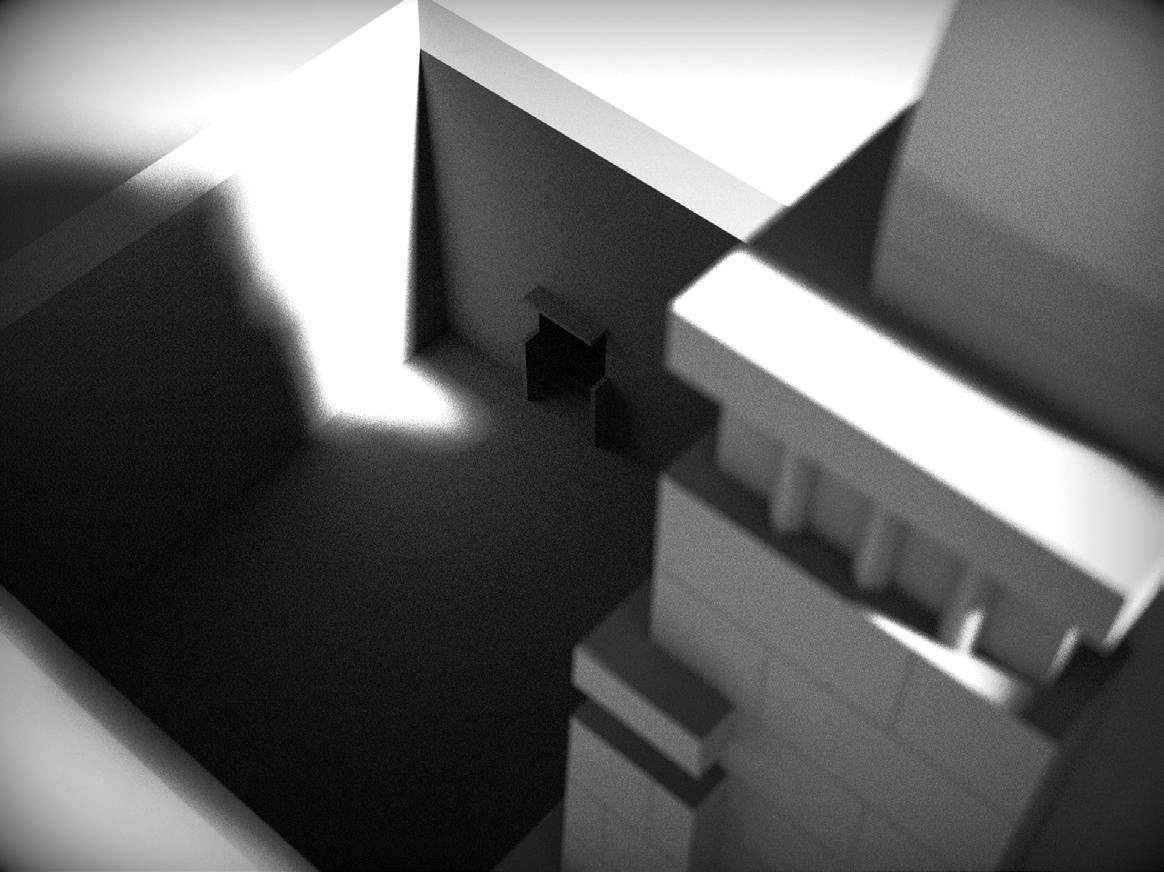
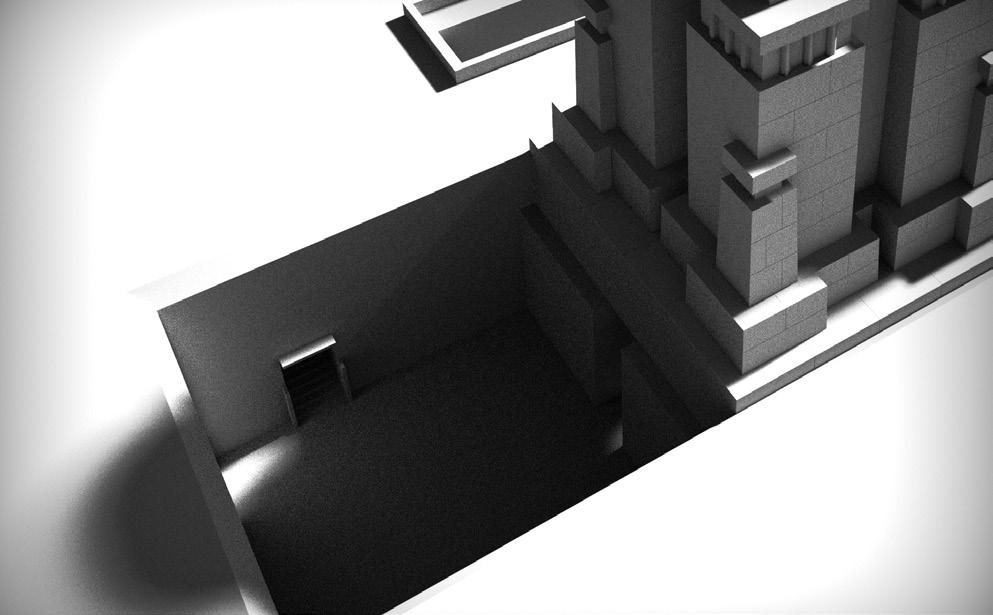
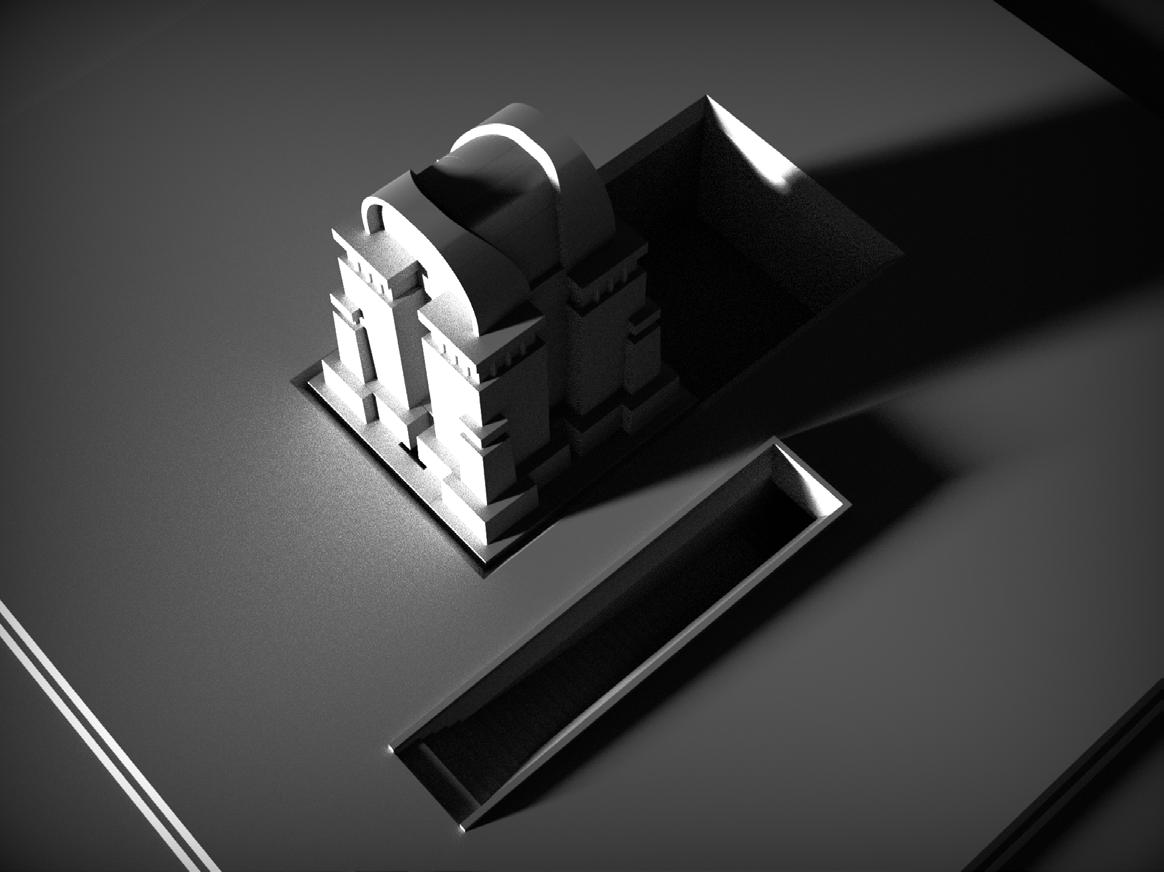
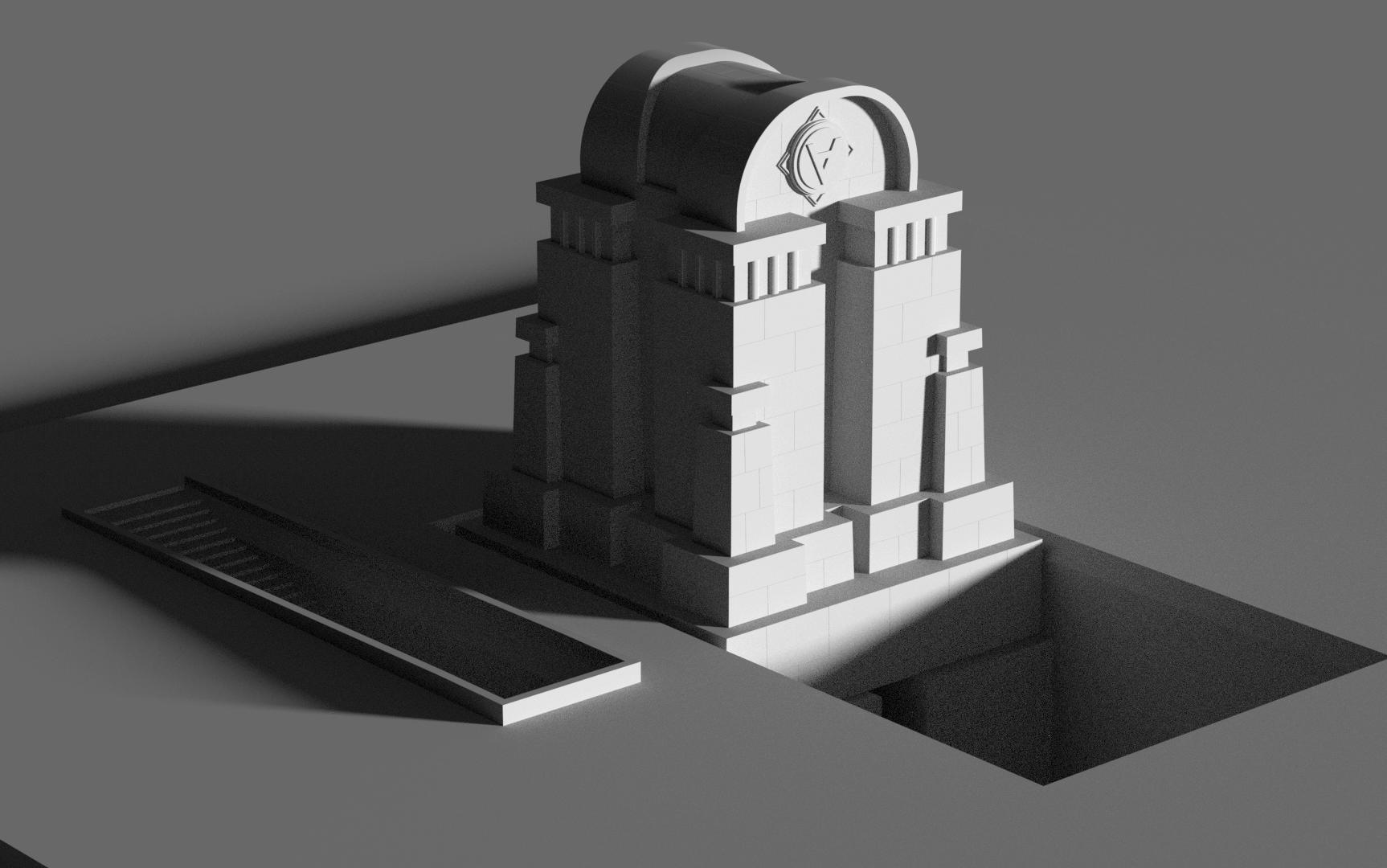
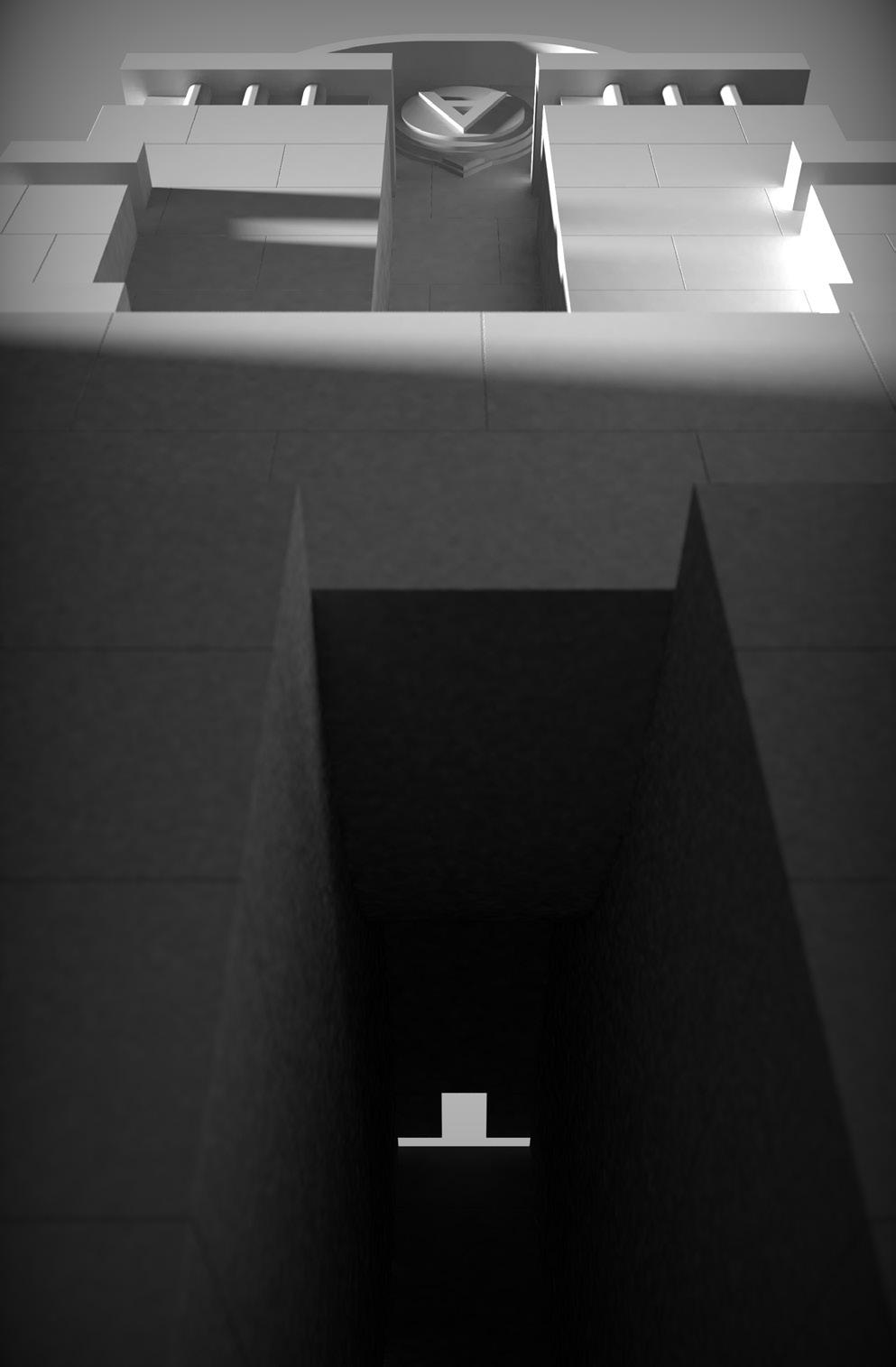
The guards led the people towards the huge white object. It was a huge building made of white stone, and the closer they got, the more they had to lift their heads to see the building clearly. When they came to a huge space in front of the building, which was as wide as it was, and dug down about several stories high, the guards led the team to change direction and walk along the edge of the huge space, parallel to the facade of the building. Then they turned a second time along the corner of the huge space and cut straight into the side of the building. Finally the team crossed the building and stopped in front of a huge stairway entrance to the underground next to the building.
Each step of the giant staircase is about two to three steps long and wide enough for at least six adults to enter side by side. The staircase slowly narrows from the entrance to the end, which is hidden in the darkness. The guards gestured for everyone to rearrange themselves into two rows and follow the head of the line down the stairs in order. After walking such a long distance, Helena could not catch her breath and kept coughing. Hearing Helena's coughing, the commissioner withdrew one hand to cover his mouth and nose, while the other hand clamped Helena's right upper arm, supporting her body and forcing her to catch up with the march.
As the stairs continued deeper into the underground, the light became dimmer and dimmer. They entered a long corridor, the sound of footsteps and breathing echoing in the vast space. The walls on either side gradually approached the group, and just as the light almost disappeared and the stairs were almost out of sight, the group seemed to hit a wall and stopped. But it lasted only a moment, and then the group started moving
42
The Ceremony Chapter 5

43 The Ceremony Chapter 5
again. Helena was pulled by the commissioner, and as the group turned left, they seemed to walk up another stairway down. The second ladder was shorter and steeper than the previous one, about a step and a half in length. The sudden change caused many to stagger, but under the control of the commissioner, the procession maintained more or less the same pace. A huge exit appeared at the end of the stairs, and the light began to increase slowly. Helena's eyes, already accustomed to darkness, could not look directly at the light source for a moment, and squinted as she followed the group into the blinding rectangle. Finally, the group returned to the sky. The rain had stopped, and the air seemed to have been cleansed, with a refreshing smell. They stood surrounded by four huge walls. They had arrived at the bottom of that huge space.
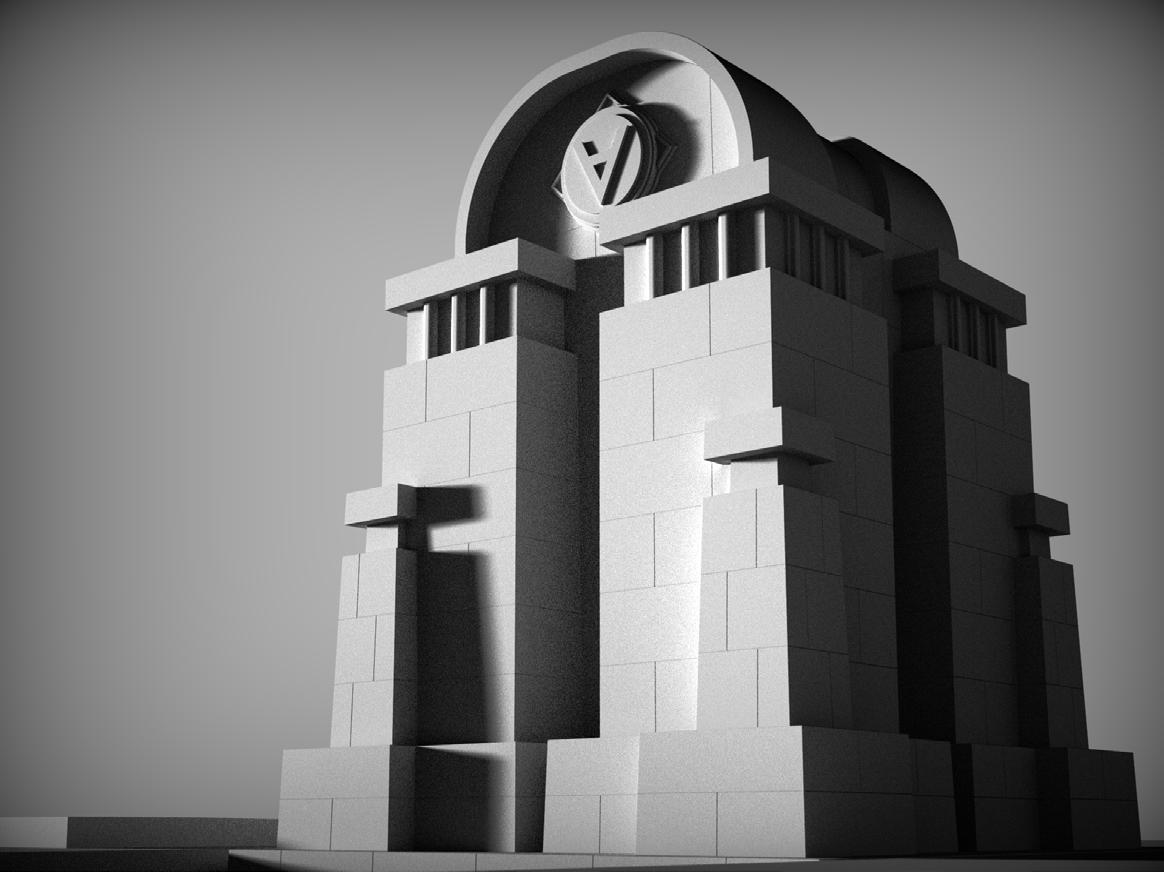
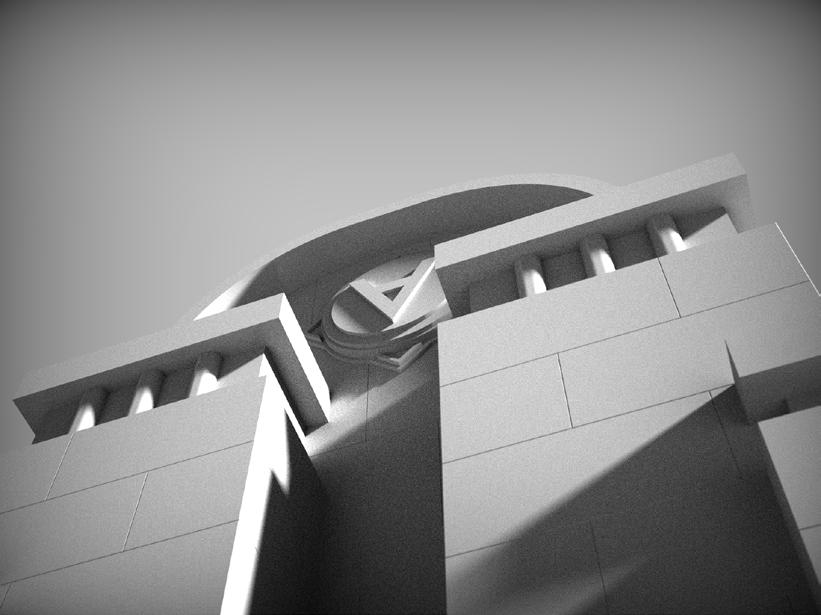
The building standing on the ground extends all the way down along the huge space. The size of the building, which was already amazing, now looks even more absurdly huge. The lower half of the building is split in two by a gap about five meters wide, in which a ramp rises gently to the deepest part of the gap until it touches the ground. At the end of the ramp, the sunlight came down through the patio and was displayed like an oracle in front of everyone's eyes. Everyone strained their heads to look up at the building, a majestic giant of a national building made of one huge stone after another. At the top of the building was the national emblem, as if the Nation was looking at everything solemnly.
After the clouds and rain receded, the rainwater left on the building shone brightly, and the sunlight fell on the faces of Helena and the people standing at the bottom of the huge space through the walls of the National building. At that moment, Helena suddenly understood everything. Standing in front of Helena was the presence of Ian, her proud and longed-for son who would stand on the earth forever in such a majestic stance. The sunlight was like Ian's palm touching Helena's face, the rain was pouring down from the wall, and tears of joy and gratitude were sliding down Helena's cheeks. It was clear to Helena that this was such a selfless, great gift from the Nation to the people. "Mother, don't be afraid, I belong to the Nation, I am the Nation. I will not leave, and you will know where to find me." Ian's last words echoed in Helena's ears. From now on, Ian is the Nation. The Nation is everywhere, the Nation is always there.
44
The Ceremony Chapter 5
45 The Ceremony Chapter 5

46 The Ceremony Chapter 5
The glorious music was played by the honor guard, which was the climax of the dedication ceremony of the national building. The crowd sang along with the melody of the national anthem, and the songs continued to collide and sublimate in the vast space. Helena stopped coughing, raised her head, held her hands in tears, and shouted and swayed with the crowd. In this baptism of grace, the Nation was deeply engraved in their hearts. They were both excited and full of grace. At the end of the anthem, in the sight of the national building, the crowd cried out to the music the sacred and inviolable slogan to which they would devote the rest of their lives:
People belong to the Nation!
People construct the Nation!
People obey the Nation! - The end

47
The Ceremony Chapter 5