This portfolio showcases a diverse range of architectural projects, from experimental explorations to rational solutions. These projects were developed both within and outside academic settings. Each project in this portfolio is accompanied by guiding questions that precede the project pages, providing insight into the underlying concepts and objectives driving the design process. The portfolio aims to demonstrate a handson and exploratory approach to architecture. A key motif running through these projects is the rethinking and questioning of traditional architectural approaches. This exploration is expressed through various means, including the creation of pavilions, publication of magazines, development of games, and construction of unconventional models that challenge conventional norms of scale, representation, and methodology.
2024 PORT FOLIO
ATHMO PROJECT PAGE 04-09
PROJECT TYPE: INDEPENDENT PAVILION
FOCUS: EXPERIMENTAL APPROACH
SMOKESTACKS PAGE 18-24
PROJECT TYPE: 3 RD SEMESTER FOCUS: MODEL BUILDING 02 04
EVERGROTH PAGE 34-39
PROJECT TYPE: COMPETITION
FOCUS: RENDERING
PARTICIPATE DON’T BUILD PAGE
PROJECT TYPE: BACHELOR THESIS
FOCUS: COMMUNICATION
REPARAPTOR PAGE 26-33
PROJECT TYPE: 4 TH SEMESTER
FOCUS: EXPERIMENTAL APPROACH
10-17
HOW LITTLE DOES IT
NEED FOR A SPACE TO BE DEFINED?
HOW LITTLE ARCHITECTURE BE?
HOW SIMPLE CAN IT BE MADE?
PROJECT TYPE: INDEPENDENT
FOCUS: EXPERIMENTAL
NAME: THE ATHMO PROJECT
LITTLE CAN ARCHITECTURE
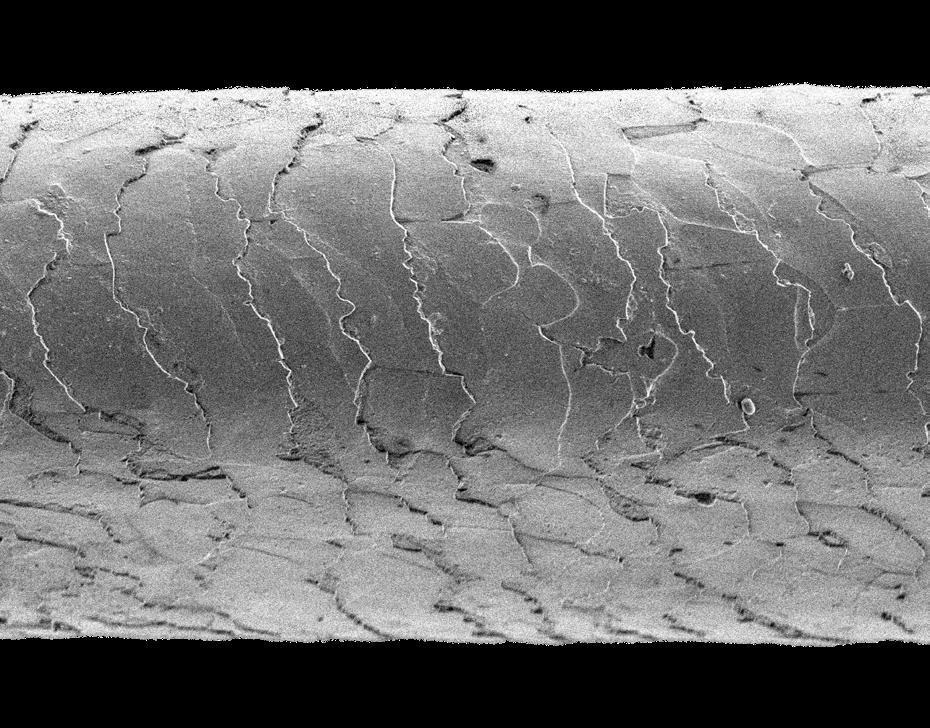
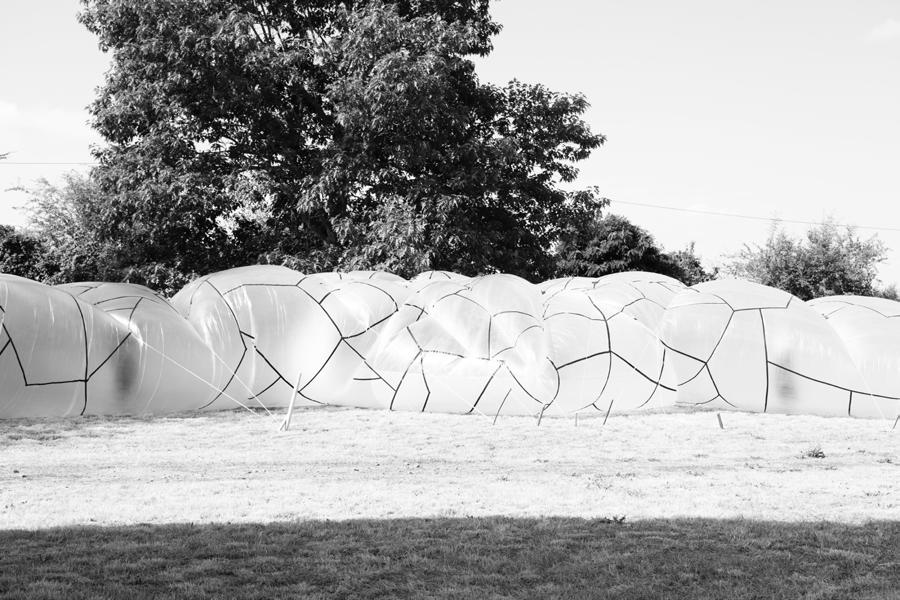
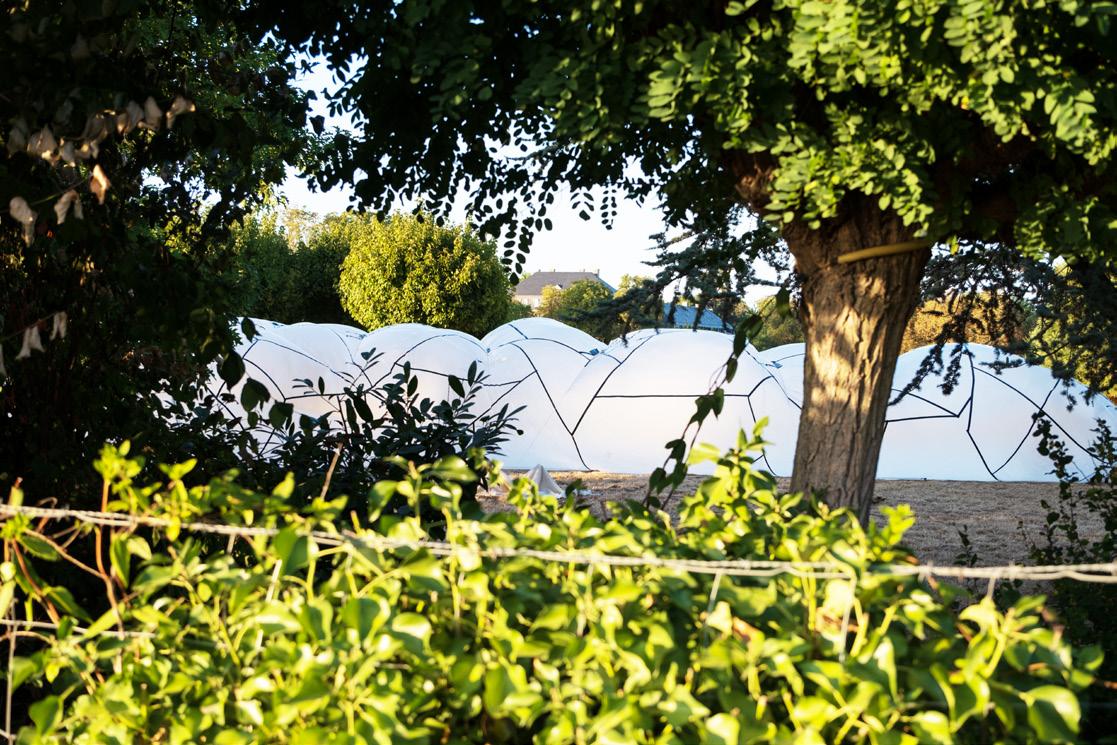
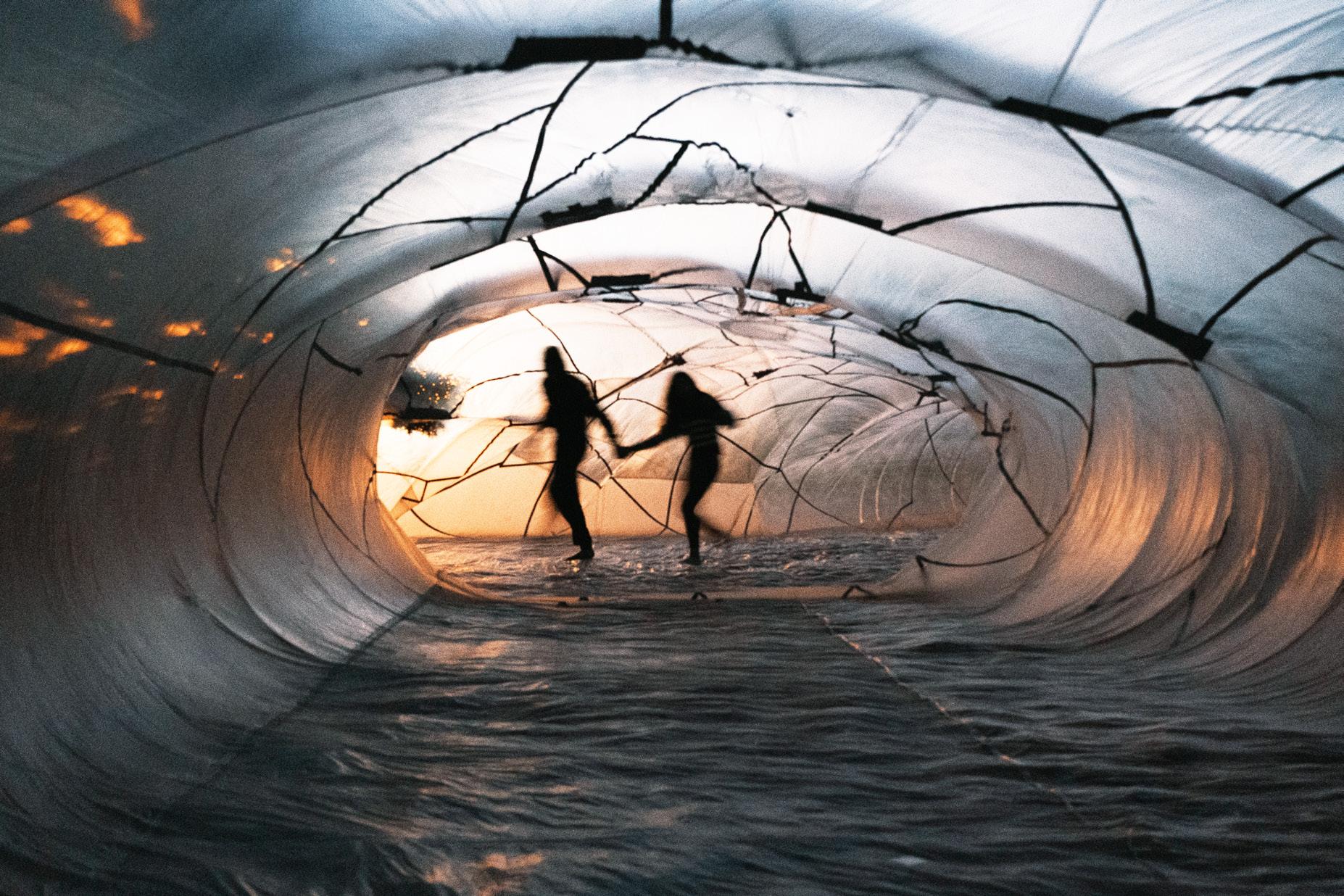
SYNOPSIS: The “Athmo” project was developed independently, outside the academic environment, drawing inspiration from Ant Farm’s “Inflatocookbook.” This research initiative aimed to explore the minimal material requirements for defining architectural space. After extensive experimentation, we identified that polyethylene (PE) foil just 7 micrometers thick (0.007mm) could effectively delineate enclosed space, being seven times thinner than a human hair. The project culminated in the construction of a substantial pavilion accompanied by a complementary soundscape, enhancing the visitor experience. This pavilion was made freely accessible to the public. The Athmo project represents an exploration of the extremes, of unconventional methods to redefine architectural space, blending research with innovative material applications.
Testing the boundaries of architecture 01
HUMAN HAIR PE FOIL vs
BEGINNING:
Inspired by Ant Farm’s “Inflatocookbook,” we embarked on a project to recreate their inflatable structures five decades after its inception. Our primary challenge was sourcing the original materials described by Ant Farm, which proved to be unavailable. After a random trip to the hardware store, we discovered a suitable alternative in painter’s film, which measured a mere 7 micrometres thick (0.007mm)— seven times thinner than a human hair. Following that, a new objetive was born, chasing the extremes in thickness.
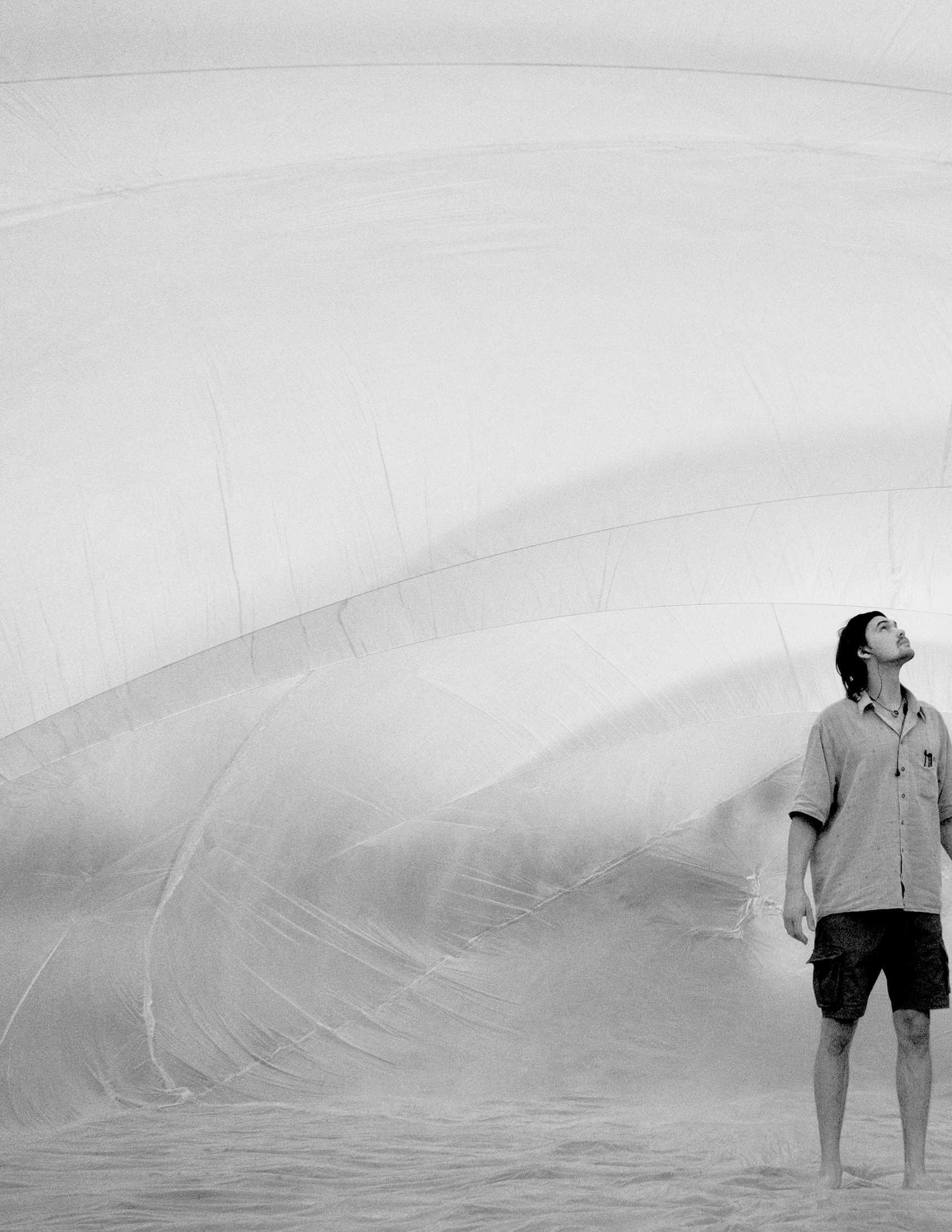
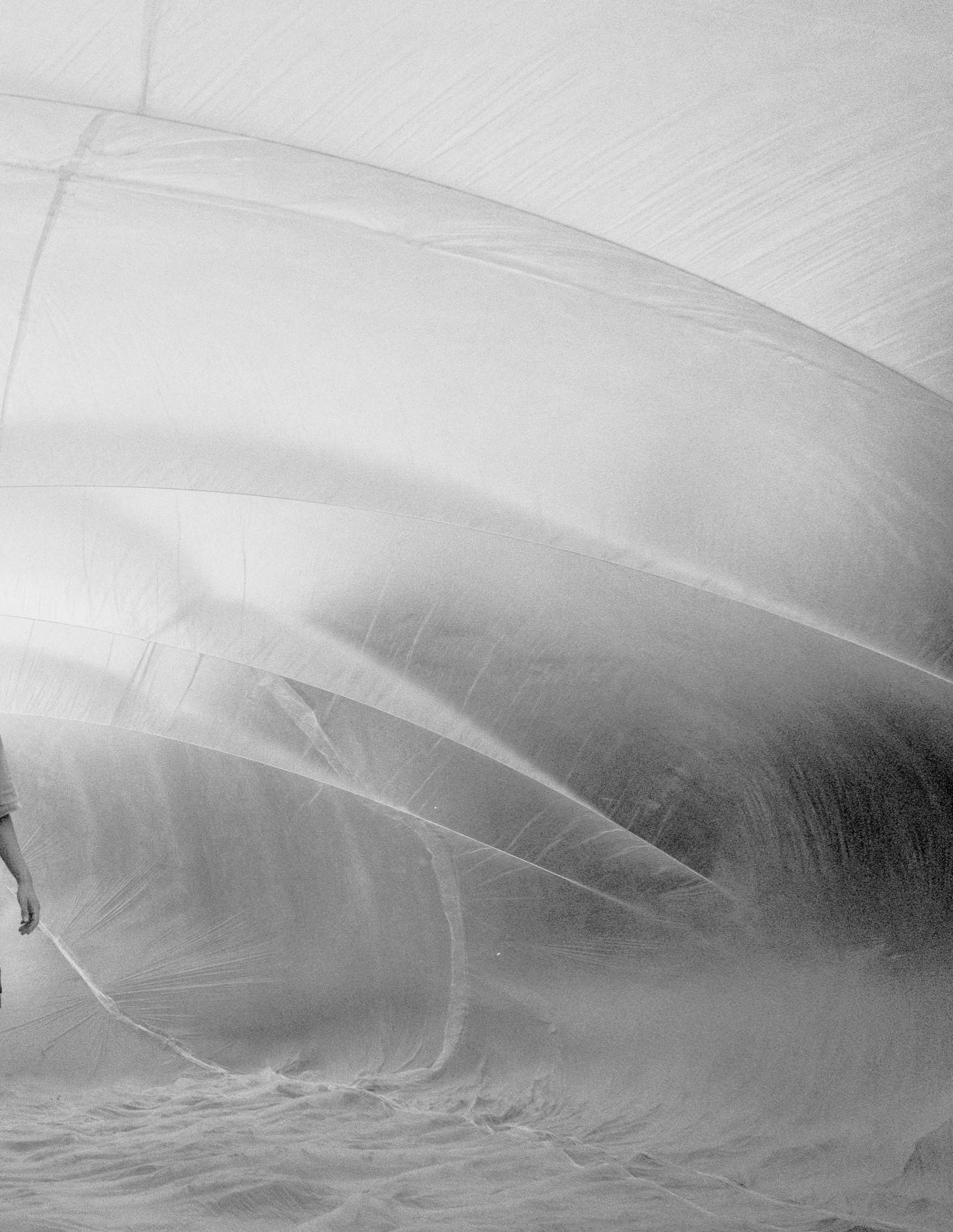
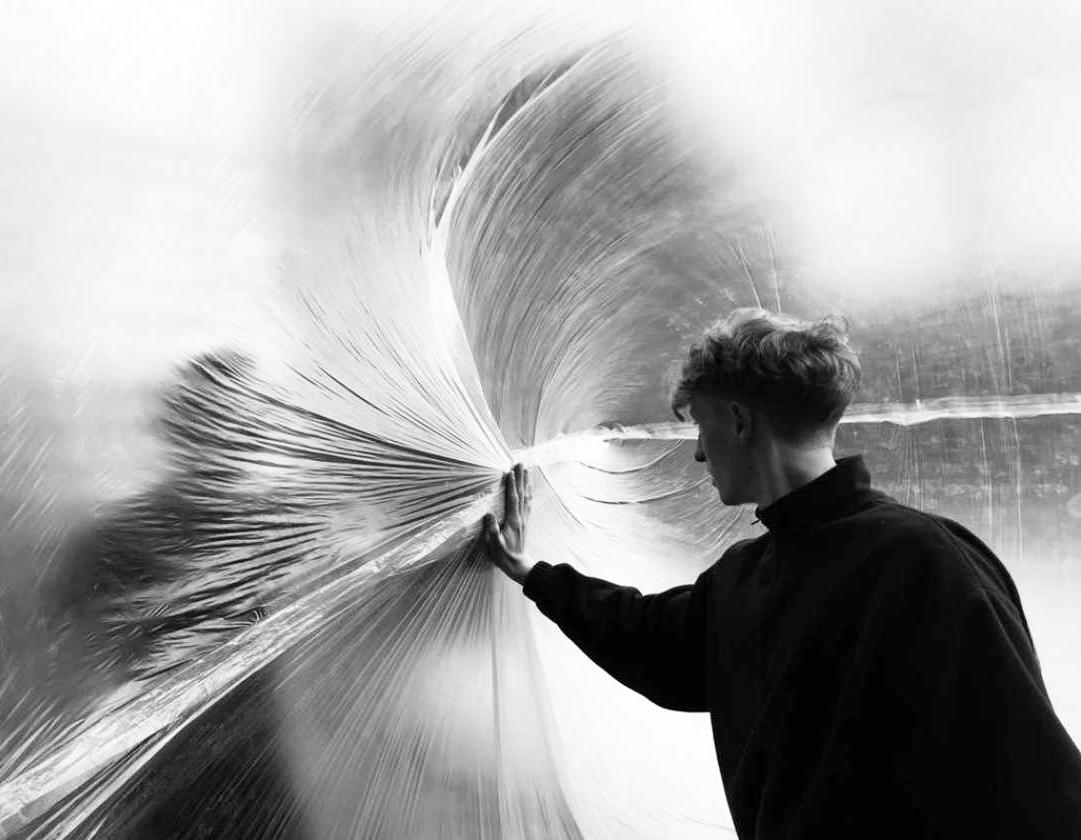
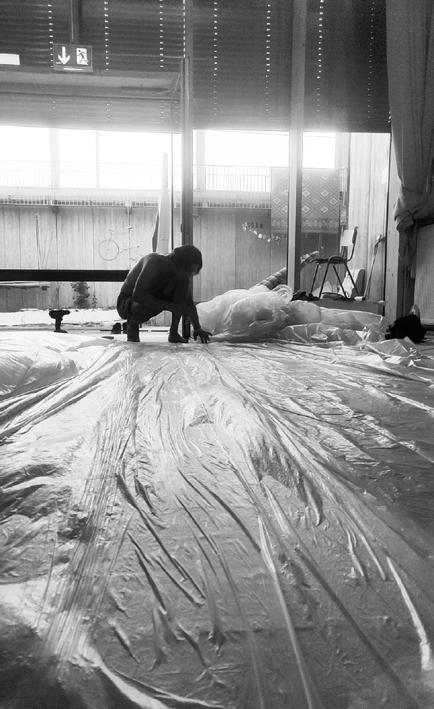
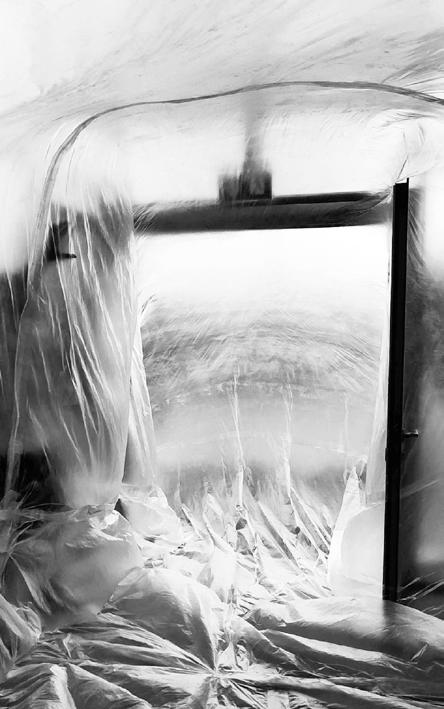
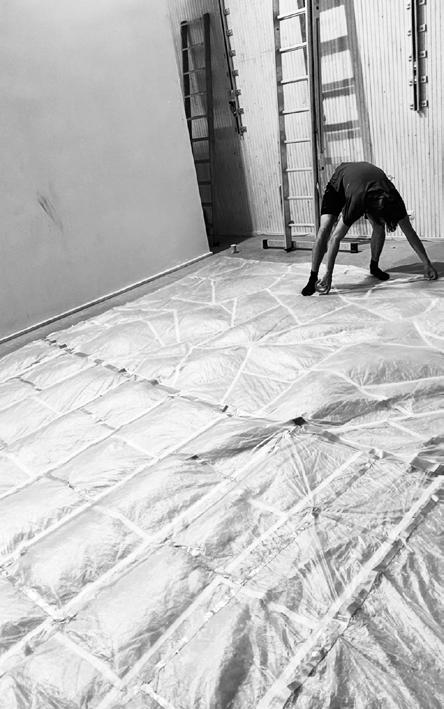
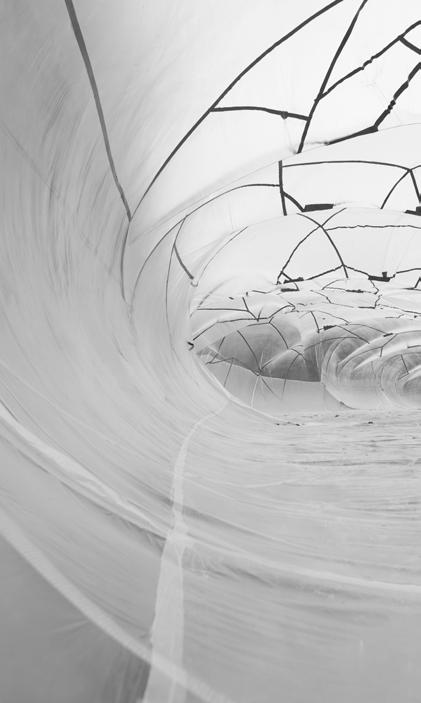
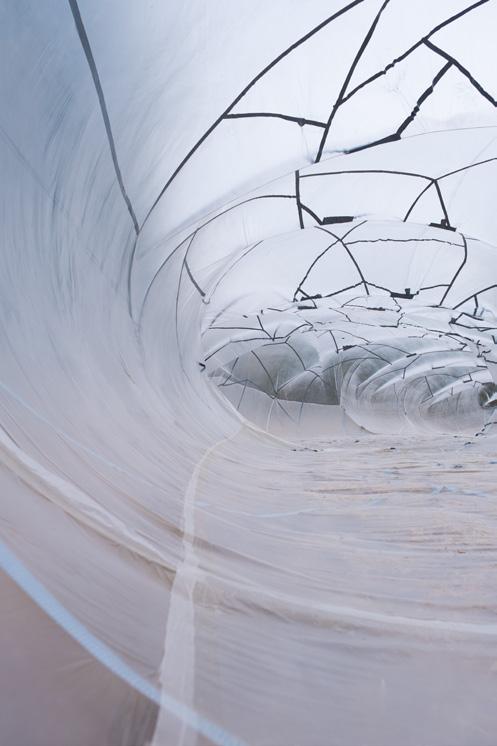
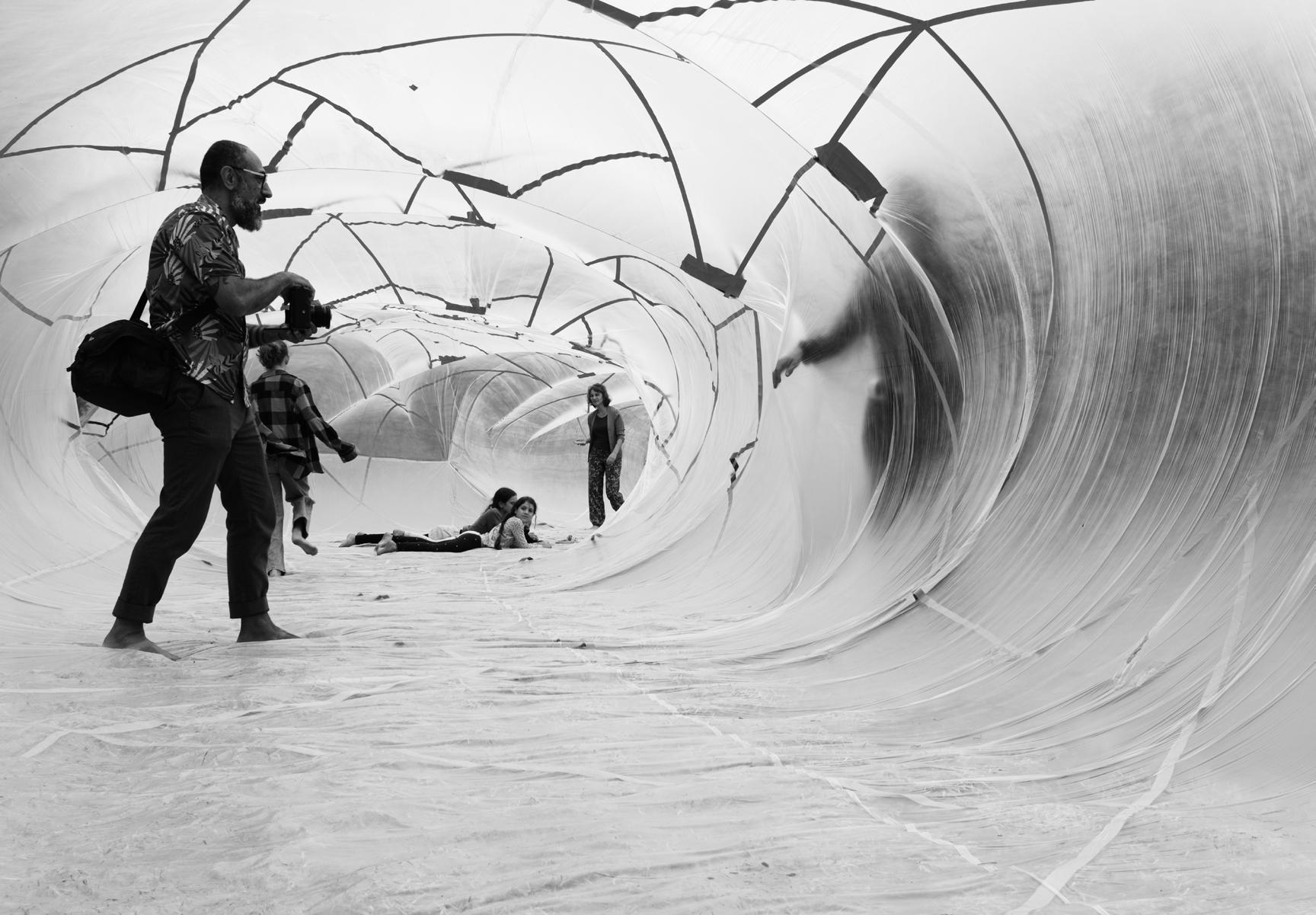
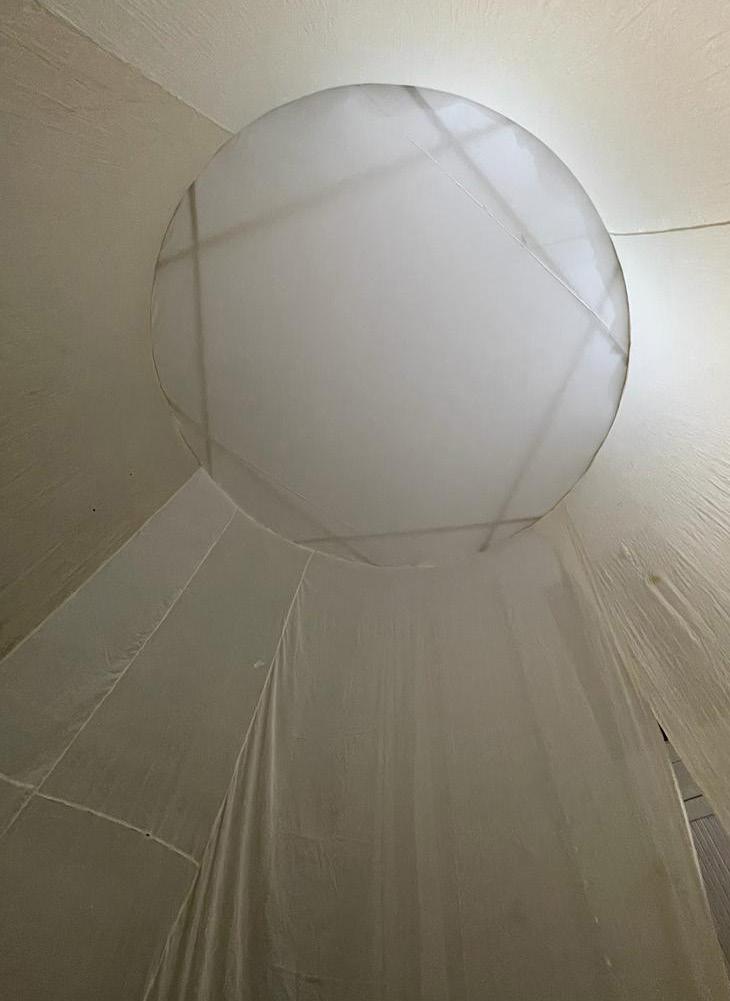
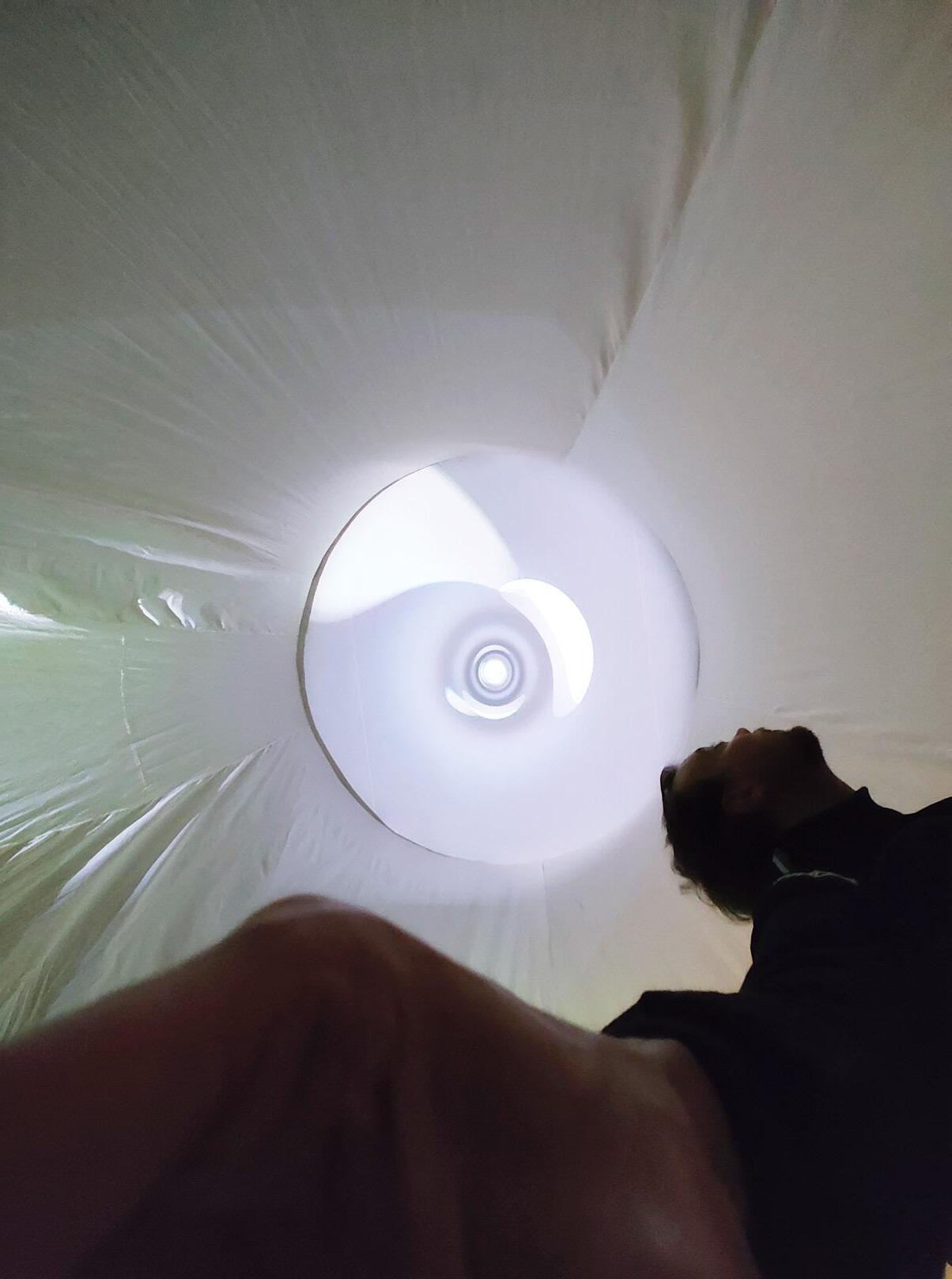
After buying 80m² of this painter’s film, we taped it together and inflated it, instantly creating a captivating and mesmerizing space within our atelier. This ultra-thin material, despite its delicate nature, defined an ethereal enclosure that responded fluidly to its environment.
However, the material’s fragility posed a significant challenge as it tore easily. To address this issue, we conducted experiments with various reinforcement grids to enhance its strength and durability, ensuring the longevity and stability of our inflatable structure.
Community engagement through architectureexperimental
THE ATHMO PROJECT
PAVILION:
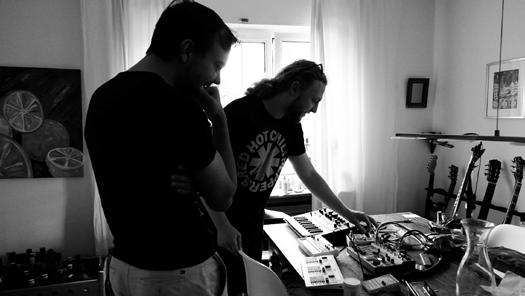
Following our experimentation, we decided to share our findings and the pavilion with the public. This led us to construct a large inflatable pavilion, approximately 35 meters long with an air volume of around 247,000 liters. Collaborating with a music producer, we developed a custom soundscape to complement the space. To anchor the pavilion, we used string, resulting in a structural arrangement resembling vaults.
The feedback from the public was incredibely positive. We welcomed visitors of all ages and backgrounds, from a three-year-old child to an 89-year-old individual. This engagement enriched our project experience, sparking meaningful interactions and discussions. The pavilion served as a communal space, facilitating conversations around innovative architectural design and spatial experiences.
HOW DO THE TOOLS FOR THIS CHALLENGE LOOK LIKE?
NAME:
WHAT TO VACANT LARGE SCALE
PROPERTIES
WHAT
PROJECT TYPE: BACHELOR THESIS
SKILLS SHOWN: COMMUNICATION
NAME: PARTICIPATE DON’T BUILD
TO DO WITH VACANT SPACES?
02 Creating tools to facilitate the reuse of vacant properties
SYNOPSIS:
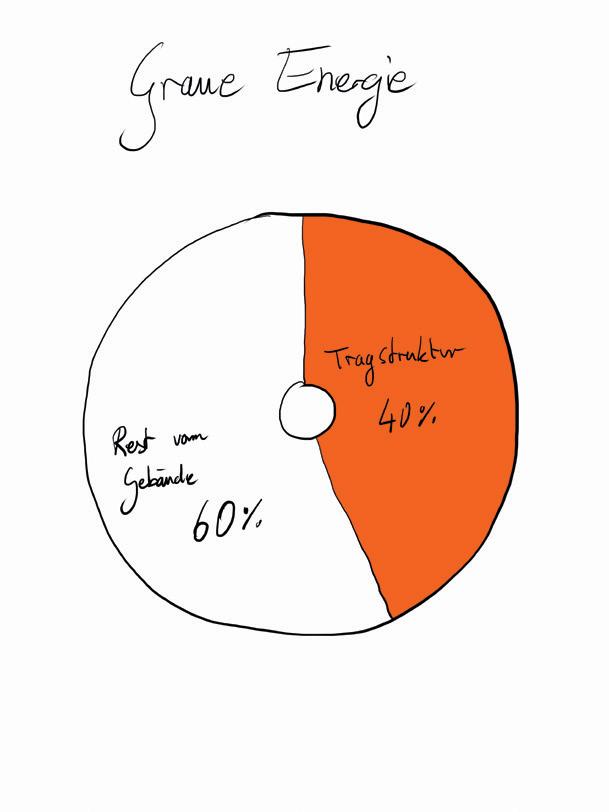
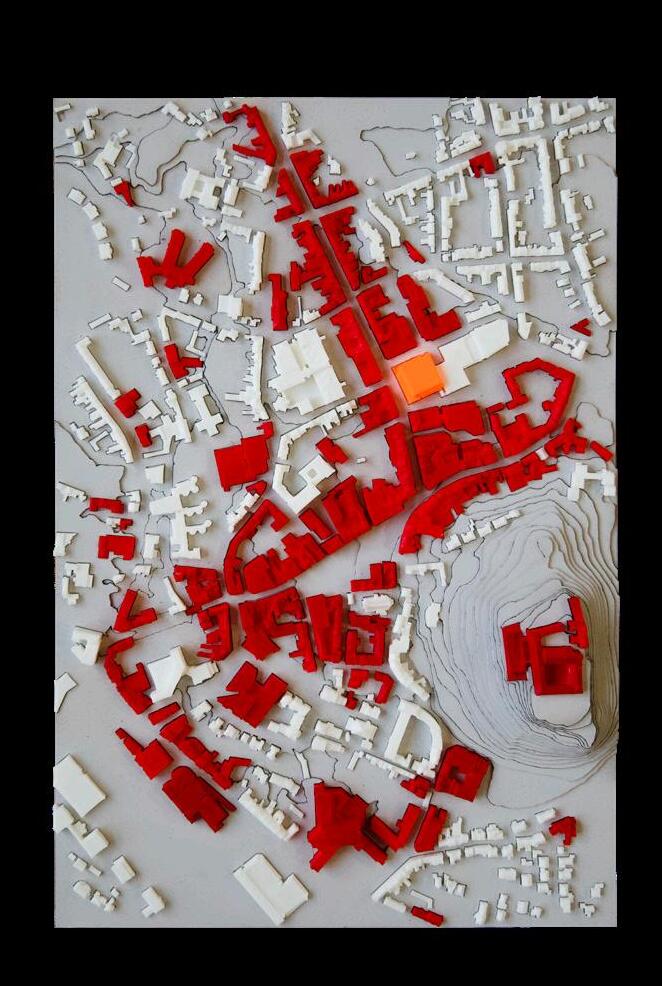
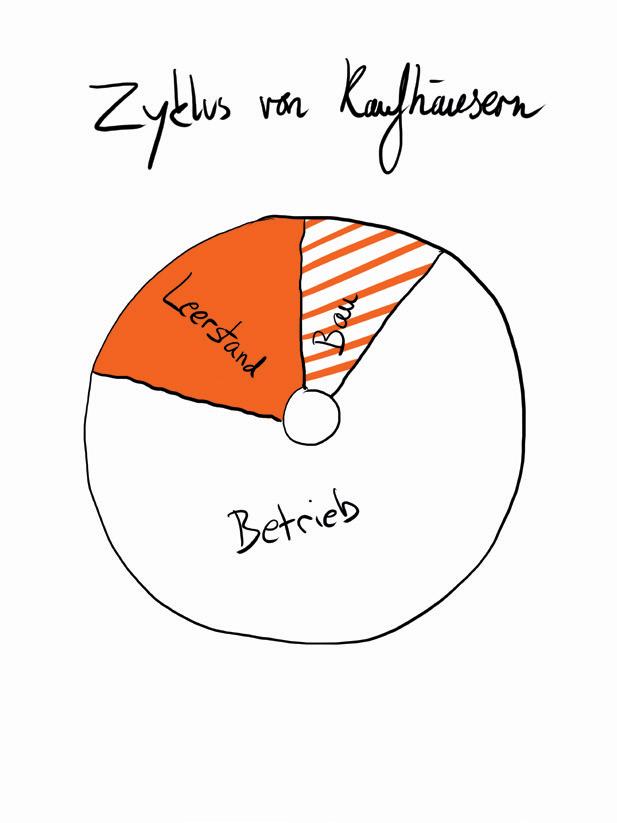
My bachelor thesis revolved around a seemingly simple question: What should we do with vacant large-scale properties? Following the bankruptcy of Germany’s largest department store chain, over 2.5 million m² of retail space — equivalent to 1.2 times the size of Monaco — were left vacant. Through a deep analysis phase that included studying literature, scientific papers, and engaging with experts, politicians, and local communities, I uncovered some striking conclusions. The embedded CO₂ in the structure of an average department store is equivalent to 900 years of non-stop driving, making demolition an unsustainable option. Meanwhile, finding new tenants for buildings of this size typically takes 8 to 10 years, which is also not a viable answer. Out of this dilemma, I developed a deceptively simple concept: just continue using the building. To enable this, I created a set of tools to facilitate new usage strategies, ensuring the building could remain in use without any structural changes.
1,2 x Monacos
Embeded CO2 equates to 900 years non-stop driving
When examining common solutions for addressing this vacancy, none provide a quick or sustainable response. One option is to demolish the building and construct a new one, but this comes with high costs, long construction times, and significant embedded CO2, making it an unsustainable choice. Another frequent approach is to find a new tenant, but given the size of the building, this typically takes 8 to 10 years. Clearly, a new approach is needed — one that can reactivate the building quickly and sustainably. 2,5 million m2 vacancy
THE CHALLENGE:
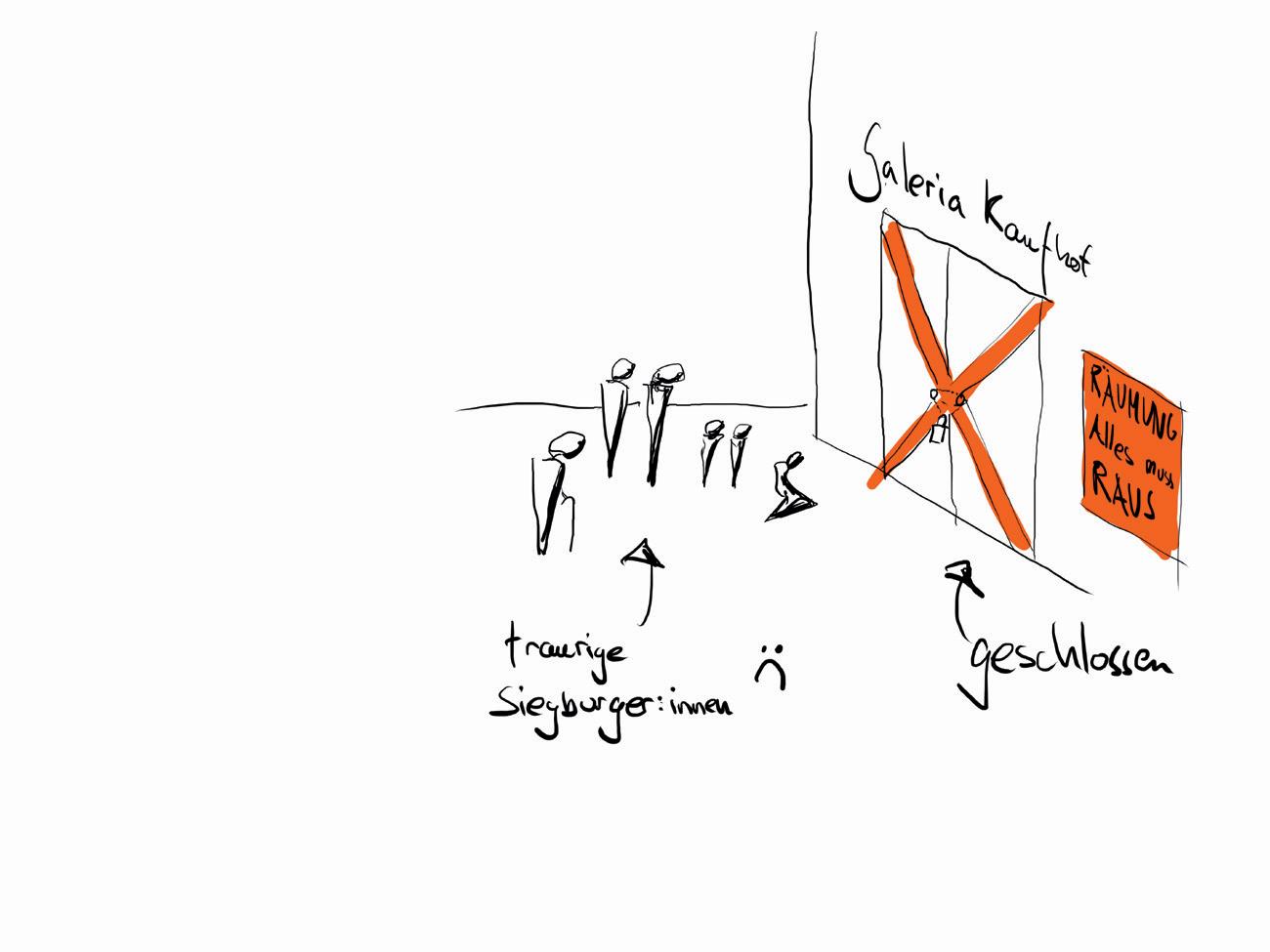
The bankruptcy of Germany’s largest department store chain has had a profound impact on cities across the country. In a short period, over 100 department stores were closed, leaving more than 2.5 million m² of retail space vacant — an area equivalent to 1.2 times the size of Monaco.
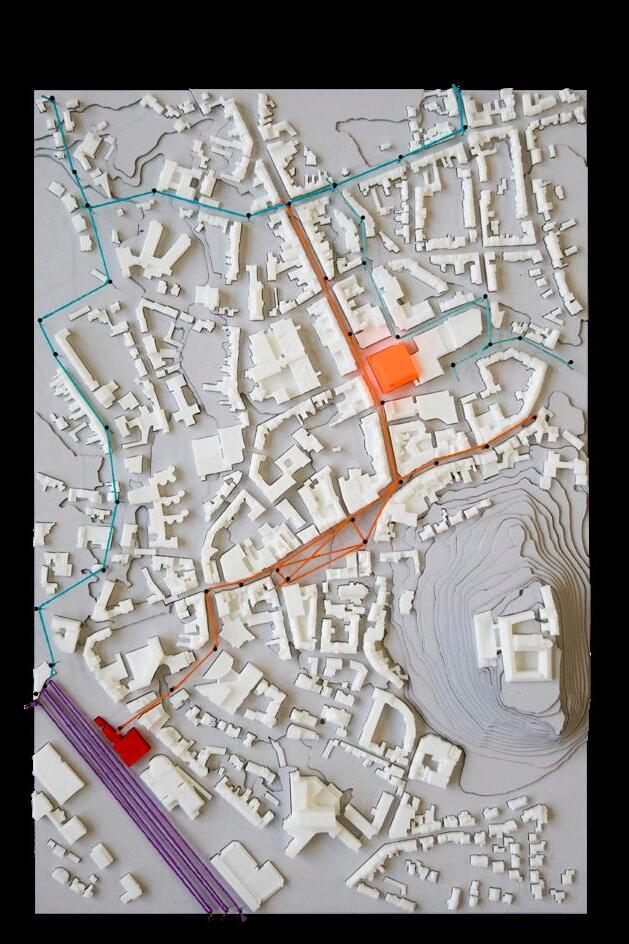
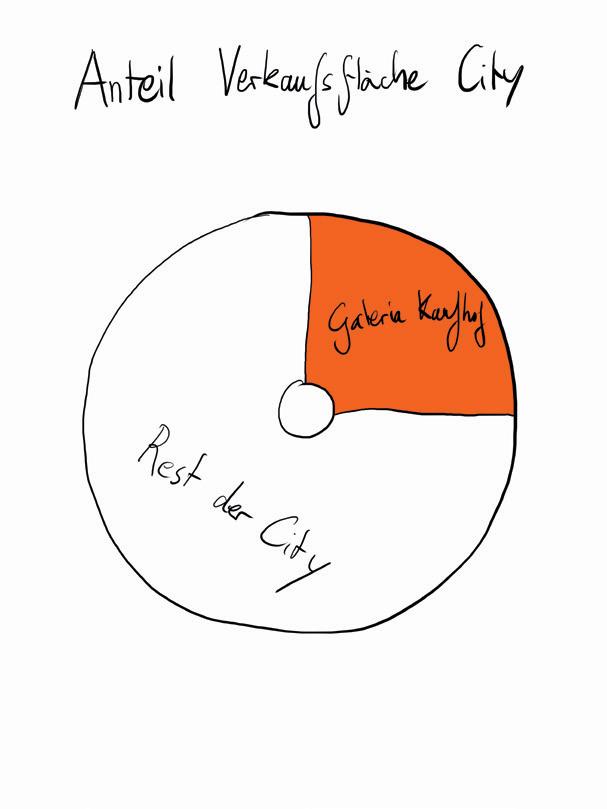
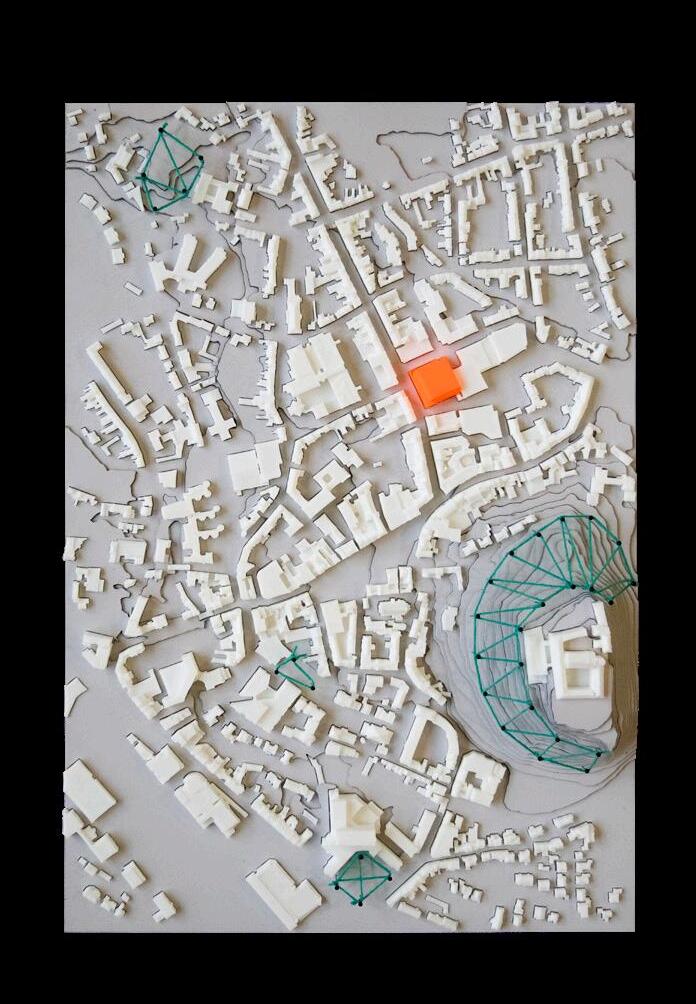
I chose to focus my work specifically on the vacant department store in Siegburg, as it is representative in both size and structure of many other department stores from that era. To understand the significance of such a building for a mid-sized city like Siegburg, it’s important to note that the department store accounted for 25% of the city’s retail space. With its closure, foot traffic and pedestrian frequency in the city are likely to
decline, which will negatively affect the surrounding businesses. As a result, finding a new purpose for the vacant building is essential to revitalize the area.
How to enable continued use
CONCEPTS:
Based on these findings, I developed a deceptively simple proposal: continue using the existing, functional building. This approach is grounded in two key concepts: dynamic usage and participatory design. To support these concepts, I created a series of tools and strategies aimed at facilitating their implementation. By integrating these elements, the building can be revitalized in a sustainable and adaptable way, ensuring it remains an active and engaged part of the community.
Finding uses that enable sustainable development
Ideas workshop
Urban planning analysis
Expert interviews
Prioritisation
Selected utilisation distillate
PARTICIPATE DON’T BUILD
DYNAMIC USAGE:
The concept of dynamic usage offers a flexible and open solution for sustainably revitalizing vacant buildings like the Siegburg Kaufhof. Unlike traditional temporary uses, which are defined by a fixed time frame, dynamic usage leaves open-ended the duration for which various projects remain in the building.
Rather than planning far in advance what the building’s permanent use will be, different users can temporarily occupy the space and experiment to see what works. This approach allows ideas
to be tested without the need for long-term commitment, keeping the building active and vibrant. Specific uses are developed through a structured “pipeline,” ensuring that the transition from one project to another remains seamless and responsive to the needs of the space. Some stable users (so-called anchor tenants) provide financial stability, creating room for other projects that can adapt or expand as needed.
Opening the discourse to everyone
PARTICIPATE DON’T BUILD
MODEL:
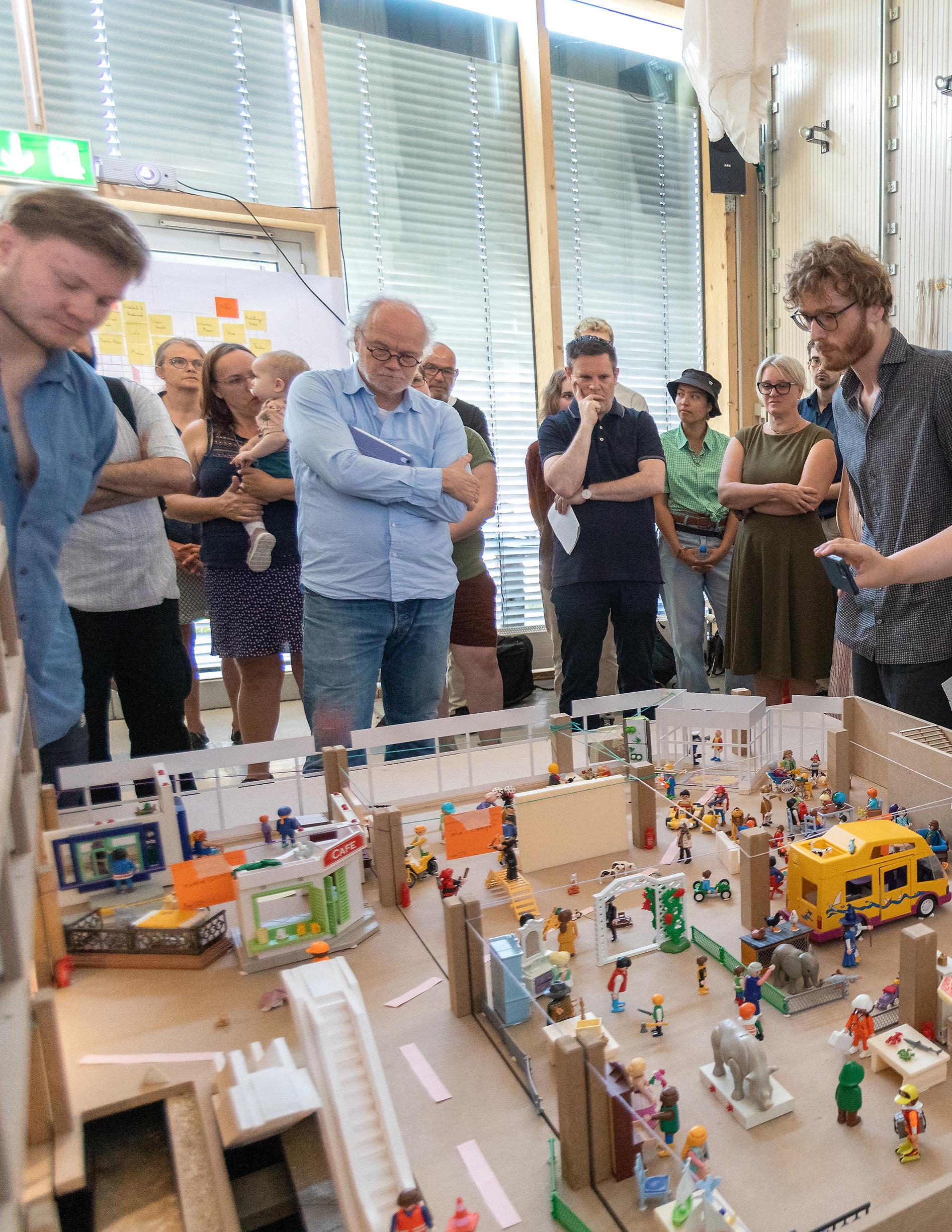
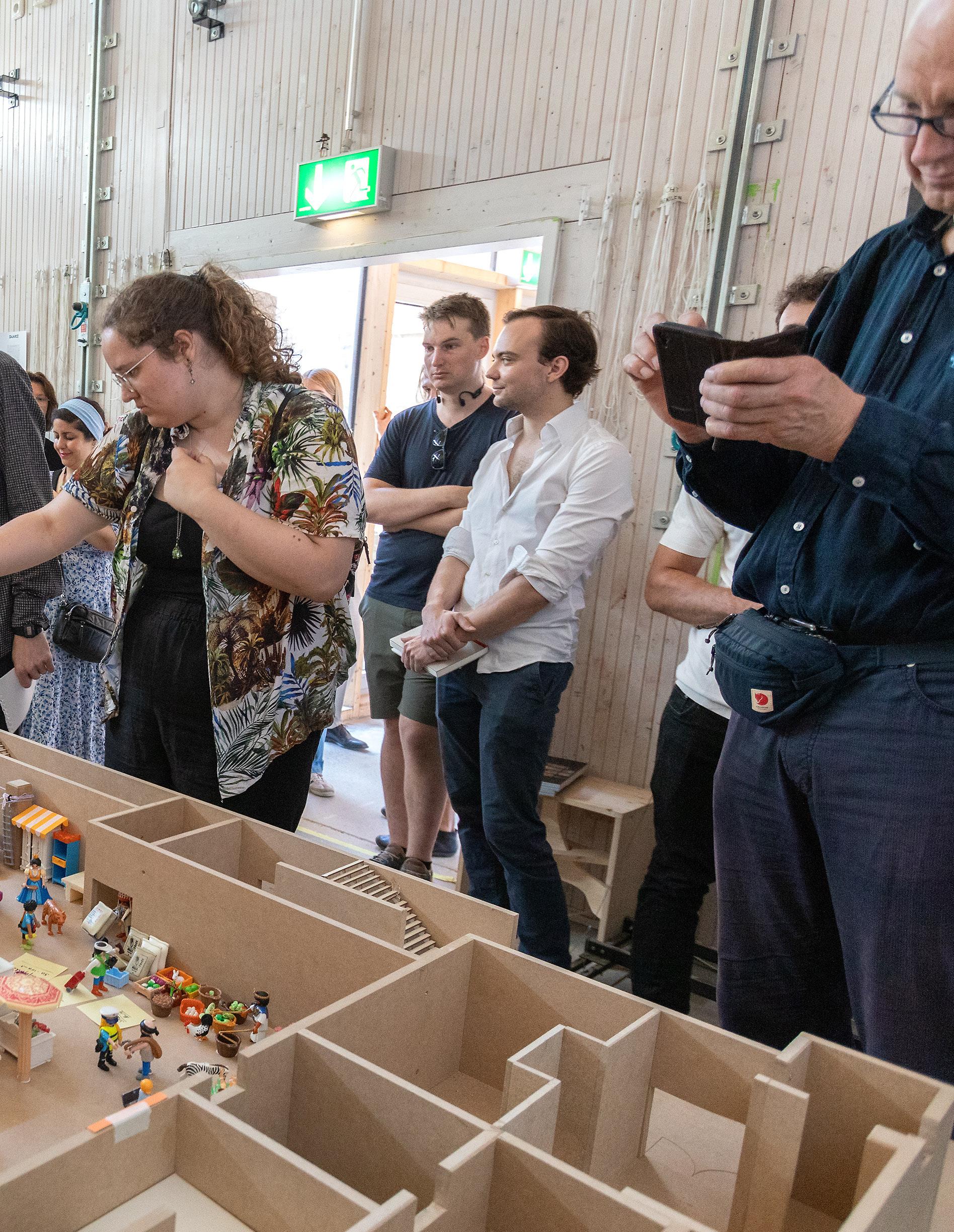
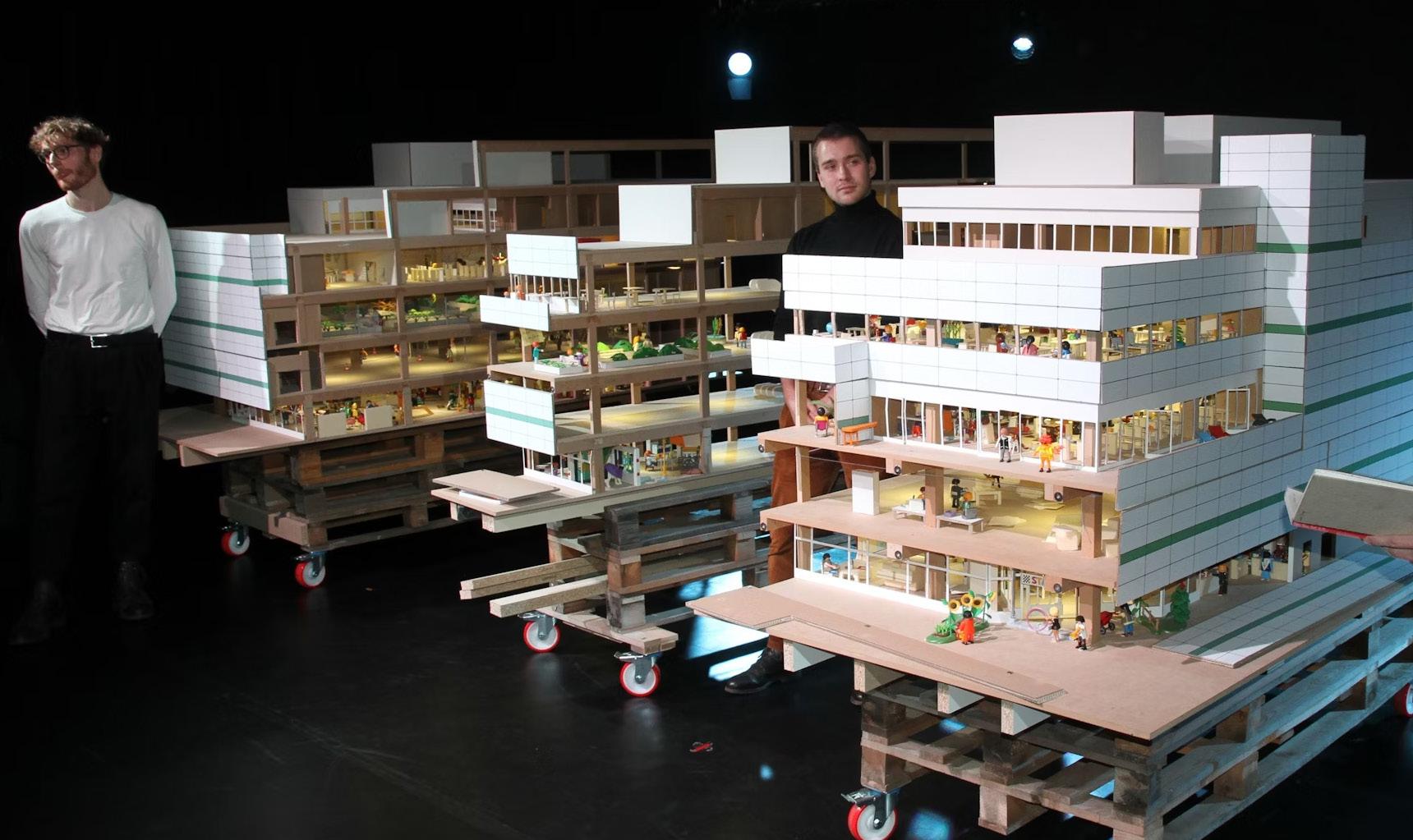
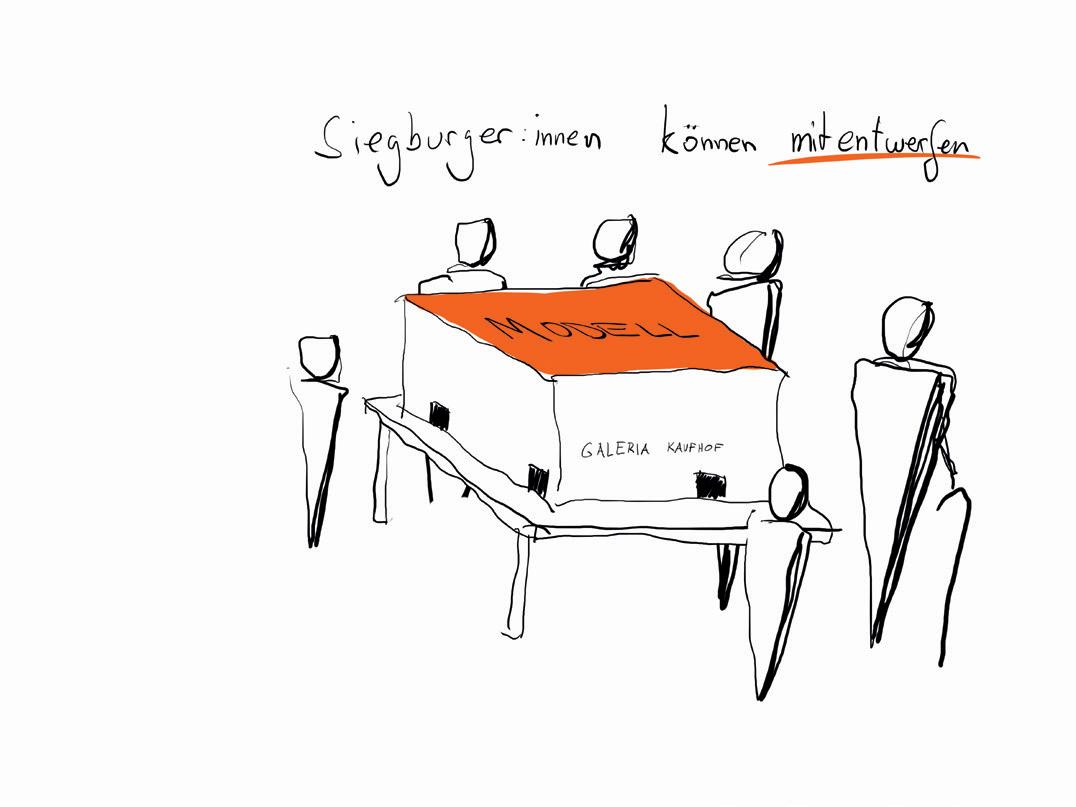
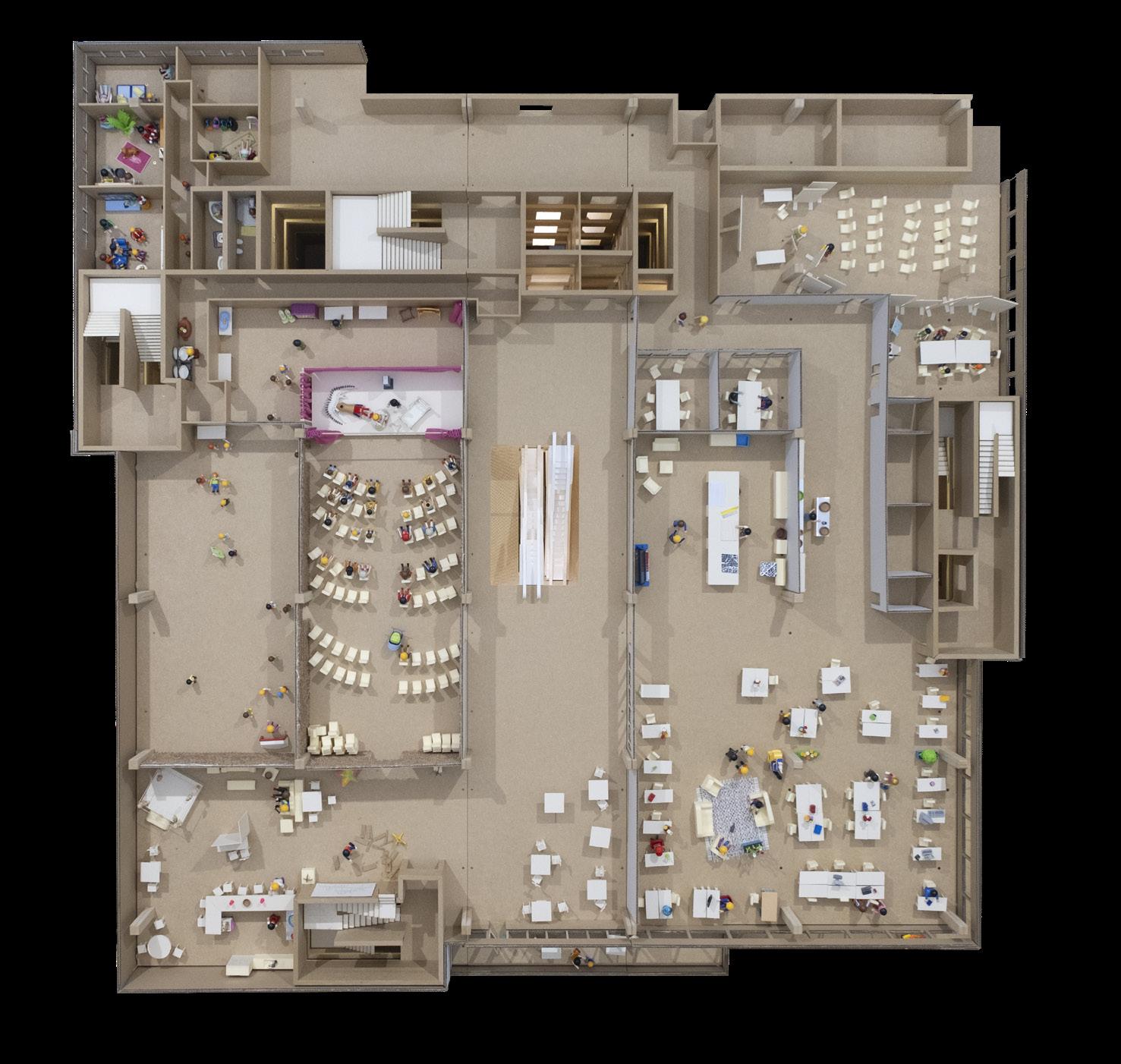
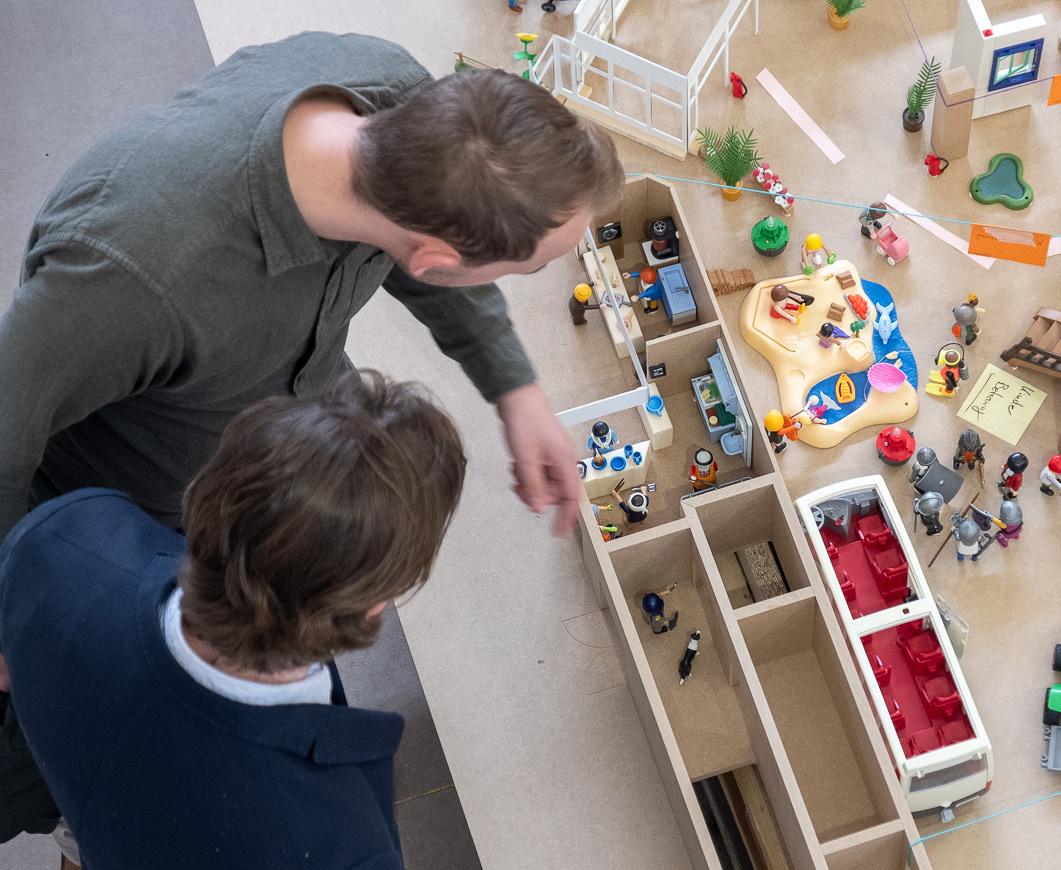
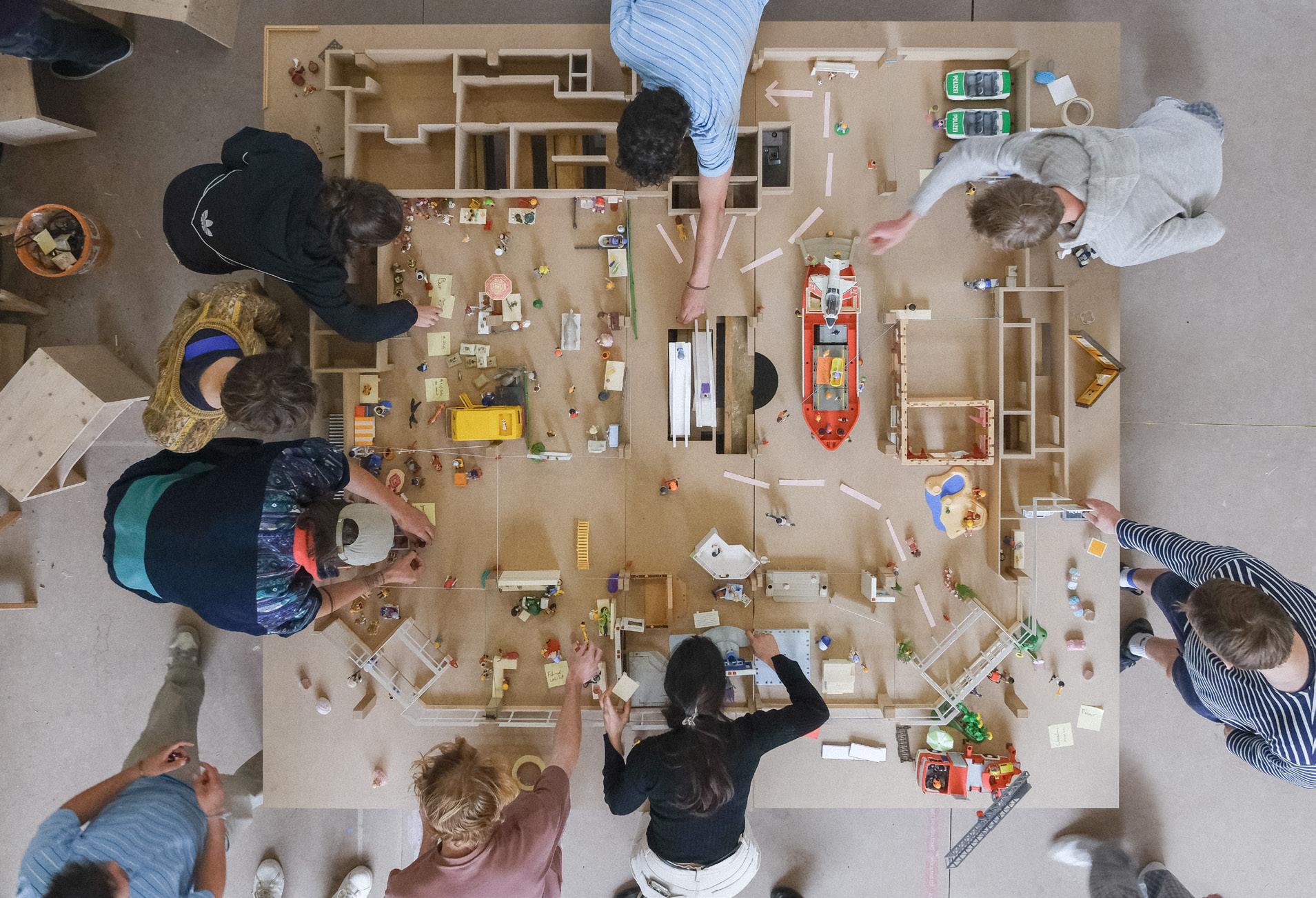
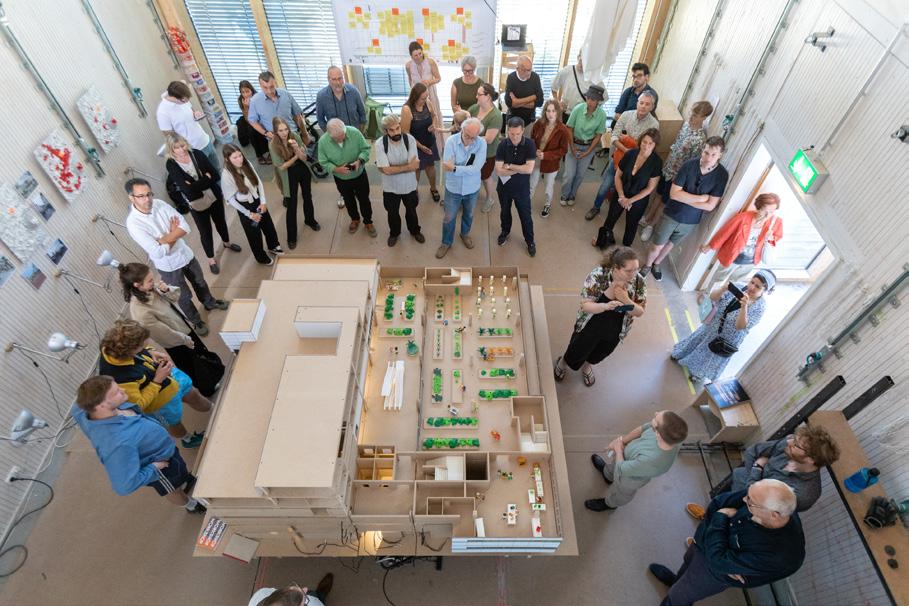
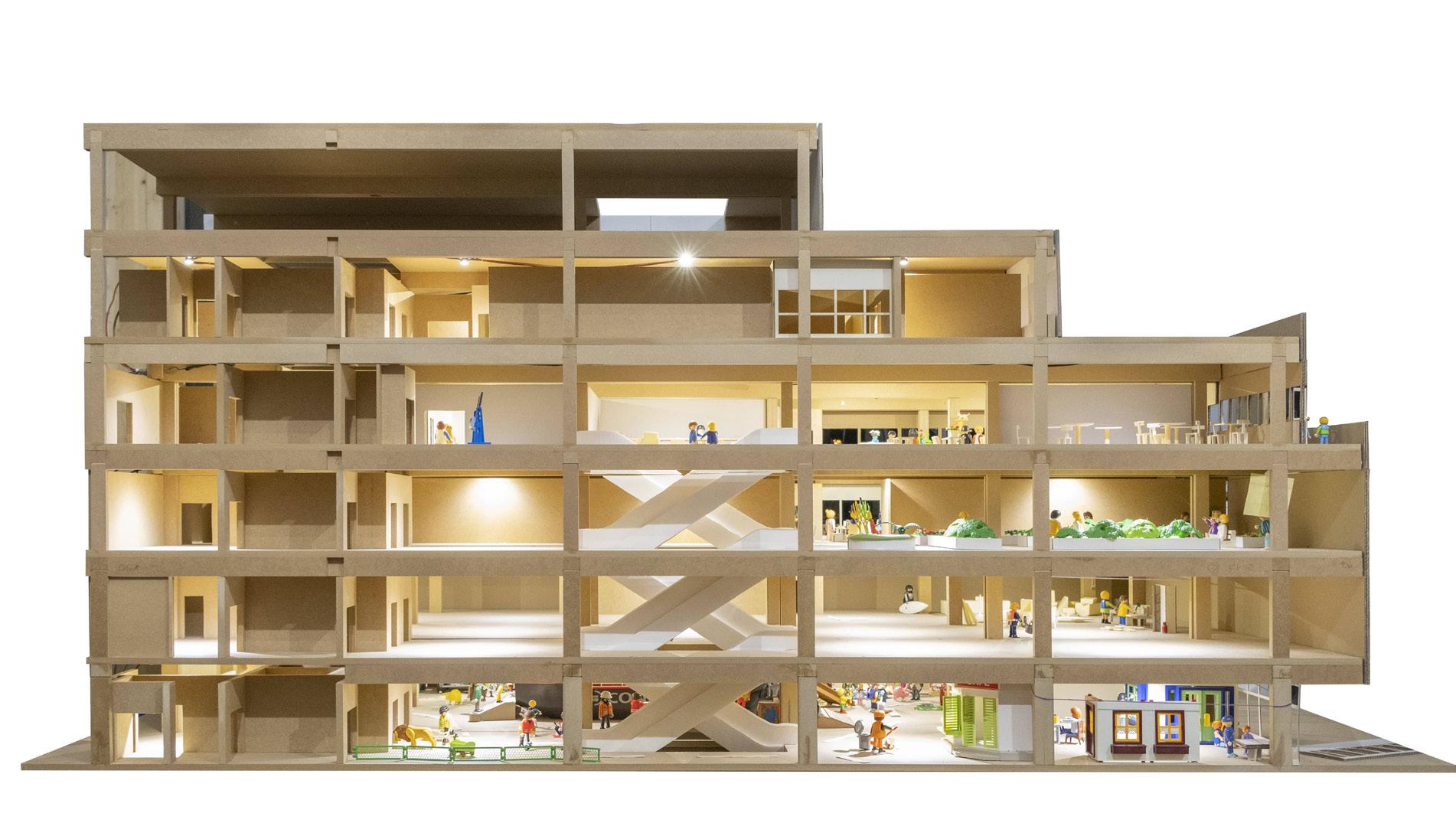
The model offers an accessible way to engage in participatory design. Through the playful use of Playmobil figures at a 1:24 scale, citizens can actively contribute to the design process regardless of their architectural expertise. This easy-to-understand and tangible model enables the development of creative ideas and the playful exploration of space. In doing so, realistic and sustainable usage concepts emerge, with direct involvement from the community.
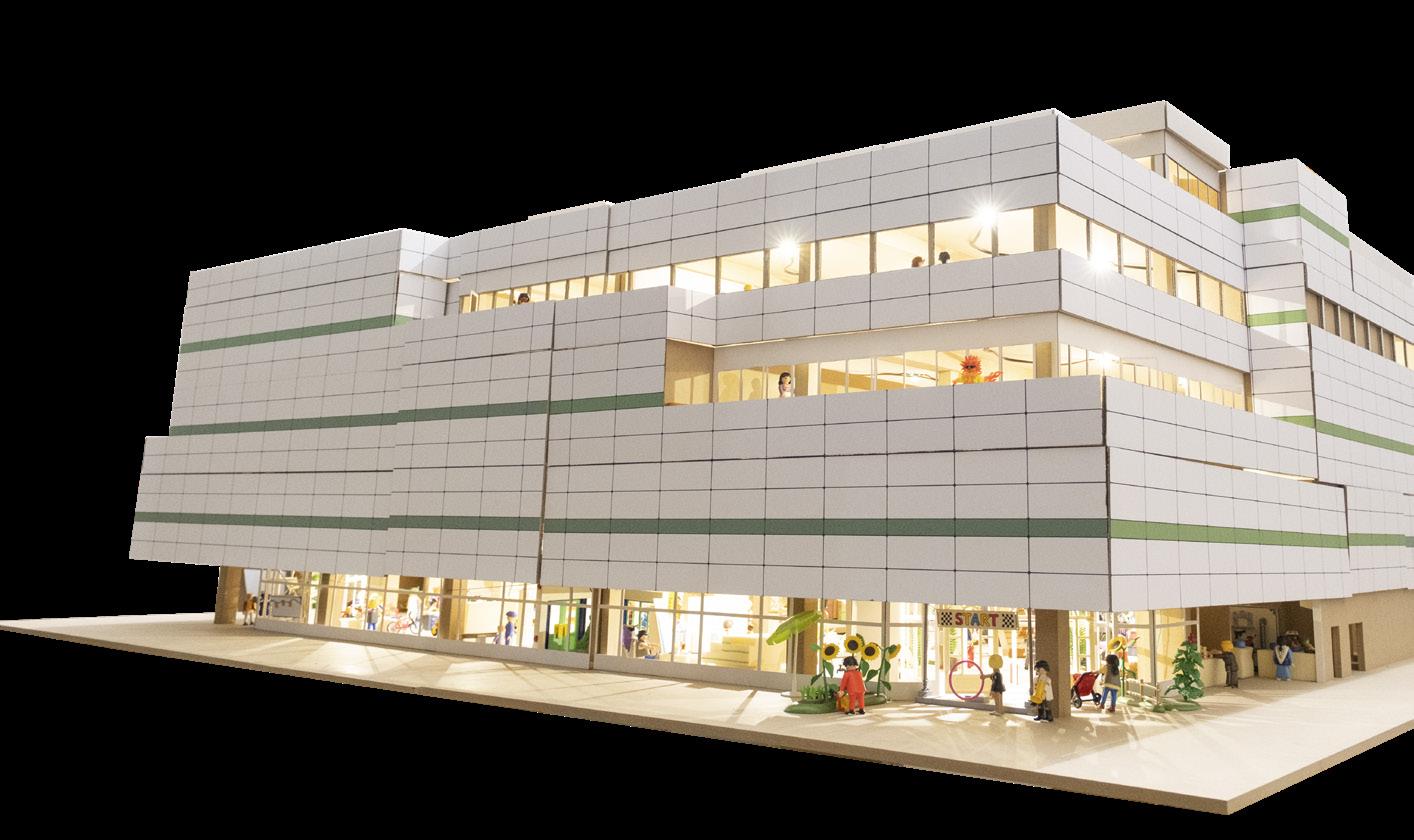
Its straightforward accessibility encourages participation and establishes a clear connection to the building’s actual spatial impact. These initial ideas are then translated into architectural solutions for the upper floors, demonstrating how participatory inputs can shape the building’s future.
REPURPOSED
HOW CAN SMOKESTACKS BE
HOW TO VISUALIZE COMPLEX STRUCTURES?
PROJECT TYPE: 3 RD SEMESTER
SKILLS SHOWN: MODEL BUILDING
SMOKESTACKS REPURPOSED
NAME: SMOKESTACKS
Repurposing industry & turning it into a landmark
SYNOPSIS:
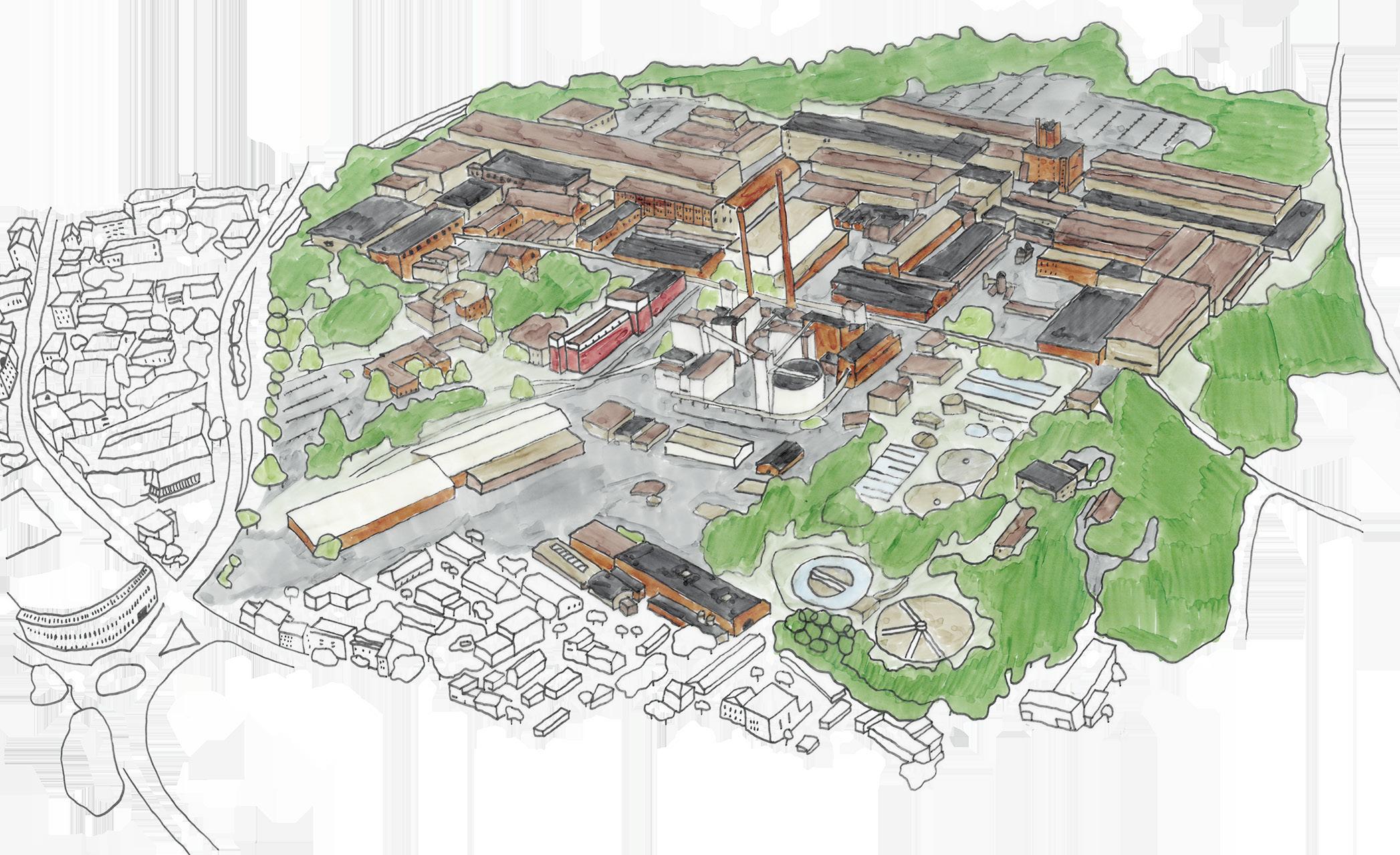
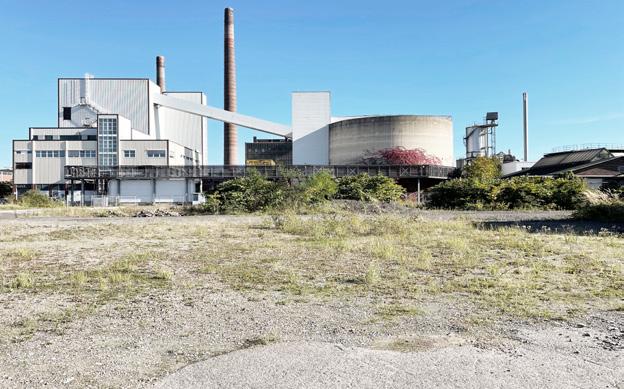
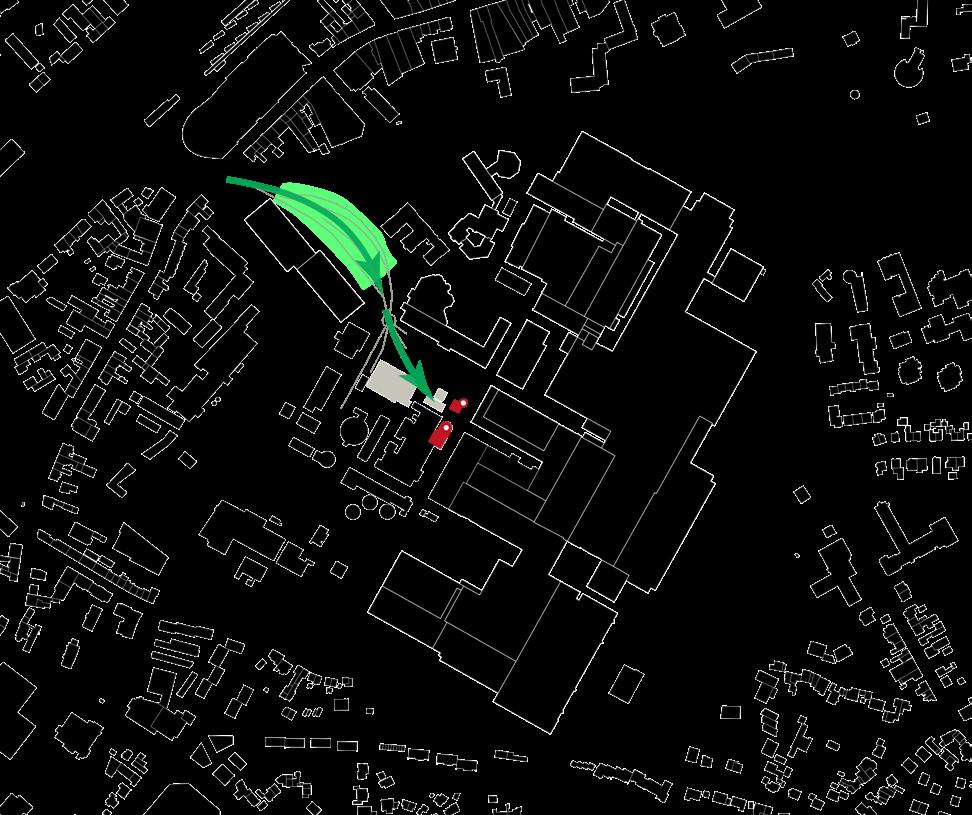
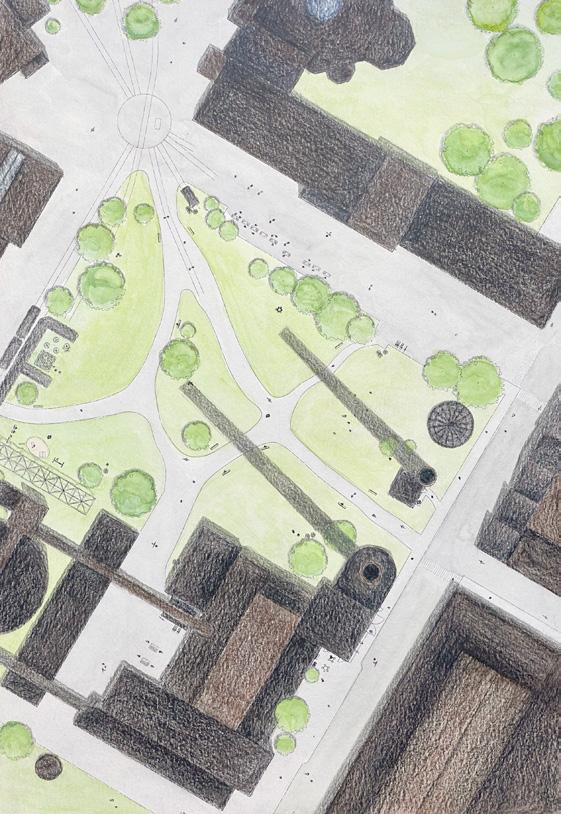
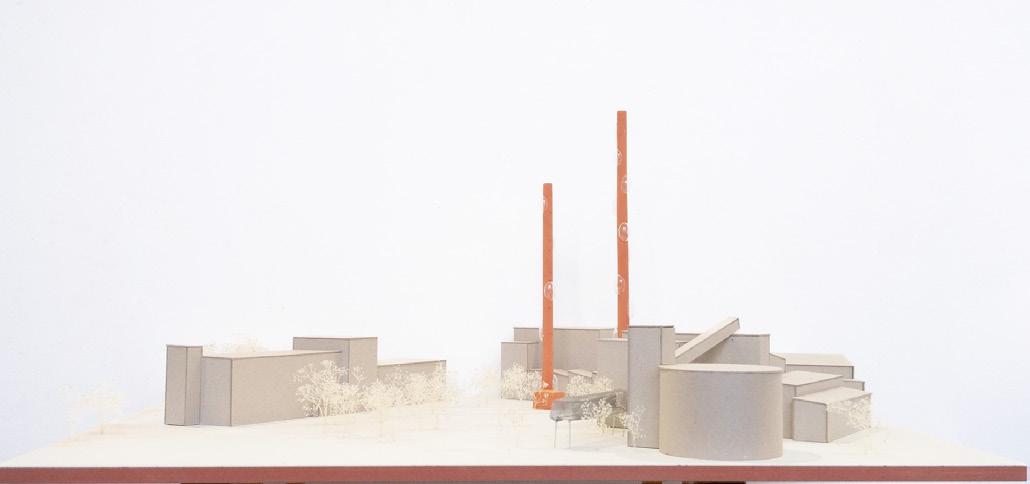
“Smokestacks” was a University Project focused on the repurposing of industrial architecture. Located in Bergisch Gladbach’s city center, we selected a recently vacated factory with historical significance for our adaptation.Captivated by the presence of the smokestacks and the diverse opinions they elicited from the community, we embarked on a mission to justify their continued existence. Our vision was to convert the smokestacks into an observation tower and art space, blending architectural creativity with the essential structural engineering requirements needed to stabilize the aging structures. A key focus of our project was model building, ranging from 1:200 scale models to 1:1 scale mockups. This approach enabled us to visualize, refine and most importantly communicate our concepts effectively. The outcome of our efforts is a repurposed landmark that adds value to the urban landscape, serving as both an observation point and cultural space.
SMOKESTACKS
BACKGROUND:
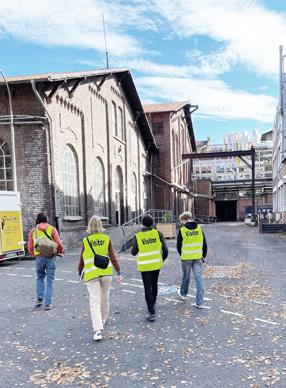
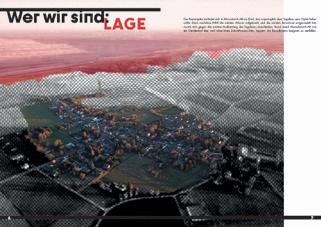
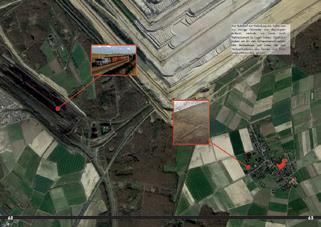
The project is located in Bergisch Gladbach, a city in North Rhine-Westphalia with a population of approximately 110,000, situated about 10 kilometers outside of Cologne. It revolves around the repurposing of the decommissioned “Zanders” factory, a historic paper mill that preceded the development of Bergisch Gladbach itself. The factory’s unique historical position has resulted in its integration into the city center, surrounded by dense housing.
Following the closure of the Zanders factory, the city acquired the site and sought proposals for repurposing its existing structures. Bergisch Gladbach, being close to Cologne and popular for residential living, lacks a distinct cultural identity and amenities for its younger population, who often
migrate to larger cities like Cologne for work and lifestyle opportunities.
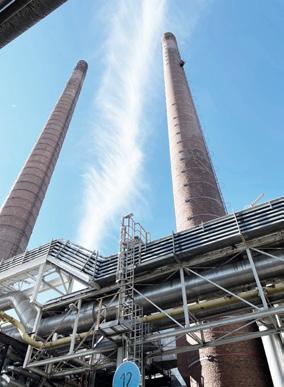
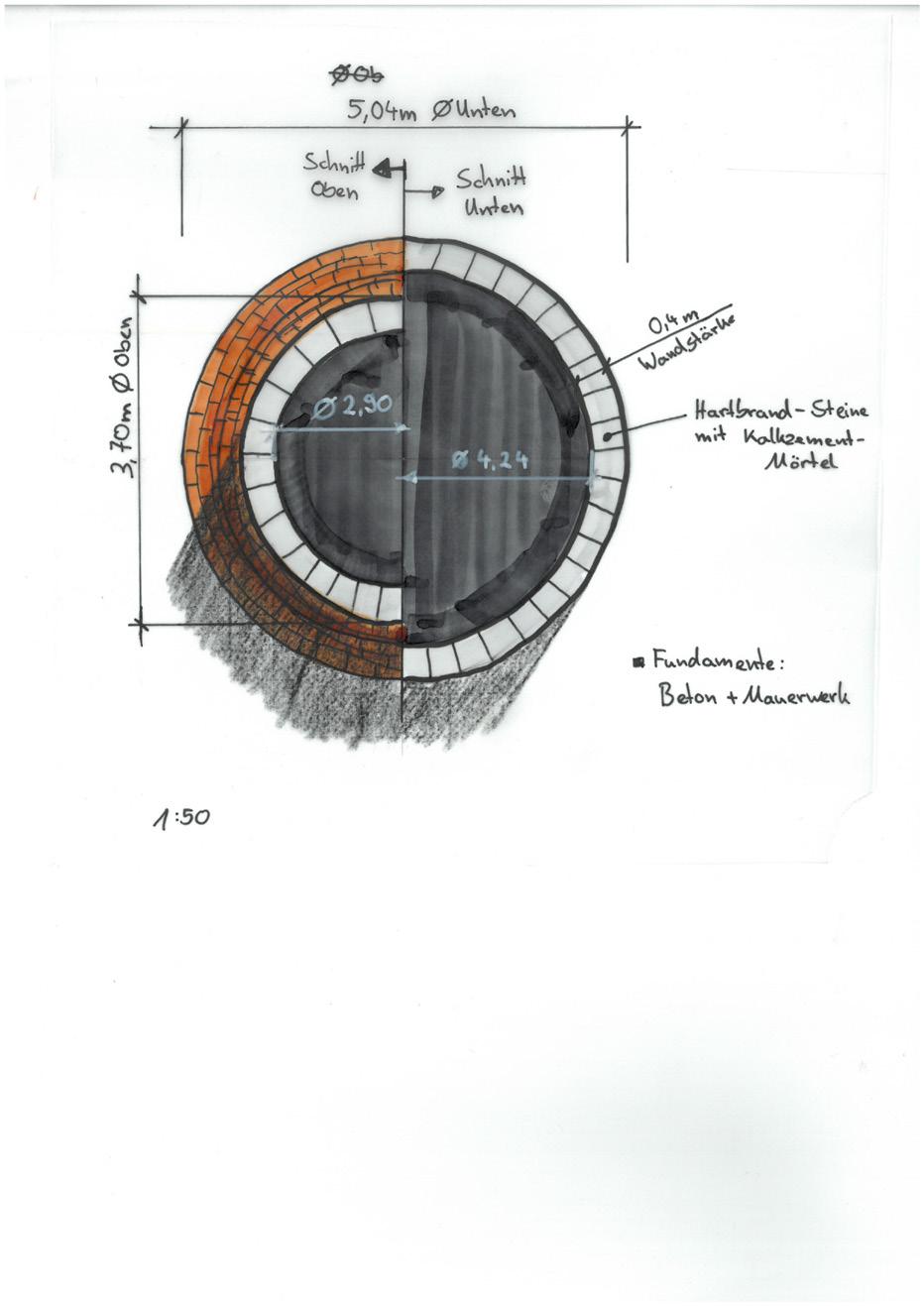
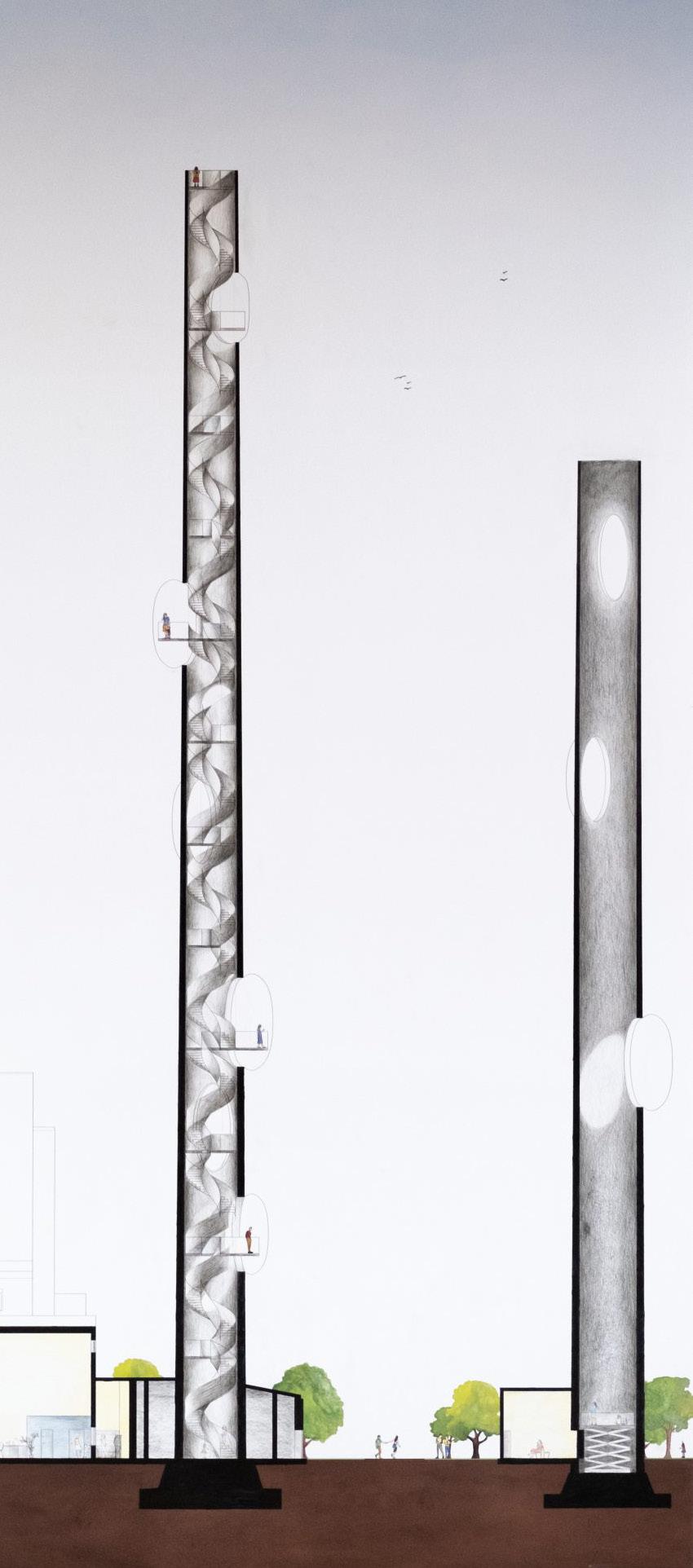
After deciding to repurpose the smokestacks, we collaborated with the engineers responsible for their maintenance to assess their condition and construction details. It was revealed that the smokestacks urgently require reinforcement; the larger one requires a pendulum system to balance wind forces, while the smaller one needs masonry refurbishment.
Additionally, we discovered that the smokestacks are constructed with a doubleshell wall design—where one layer is load-bearing and the other directs smoke. Removing the inner layer contaminated by pollutants would render the smokestacks safe and accessible for public use.
SMOKESTACKS
CONCEPT:
In our exploration of the smokestacks’ monument protection status, we encountered a citizens’ forum with mixed opinions. The protocol revealed widespread discontent among residents regarding the smokestacks’ designation as protected monuments, primarily due to perceived lack of purpose. However, a minority supported their preservation based on their historical landmark status.
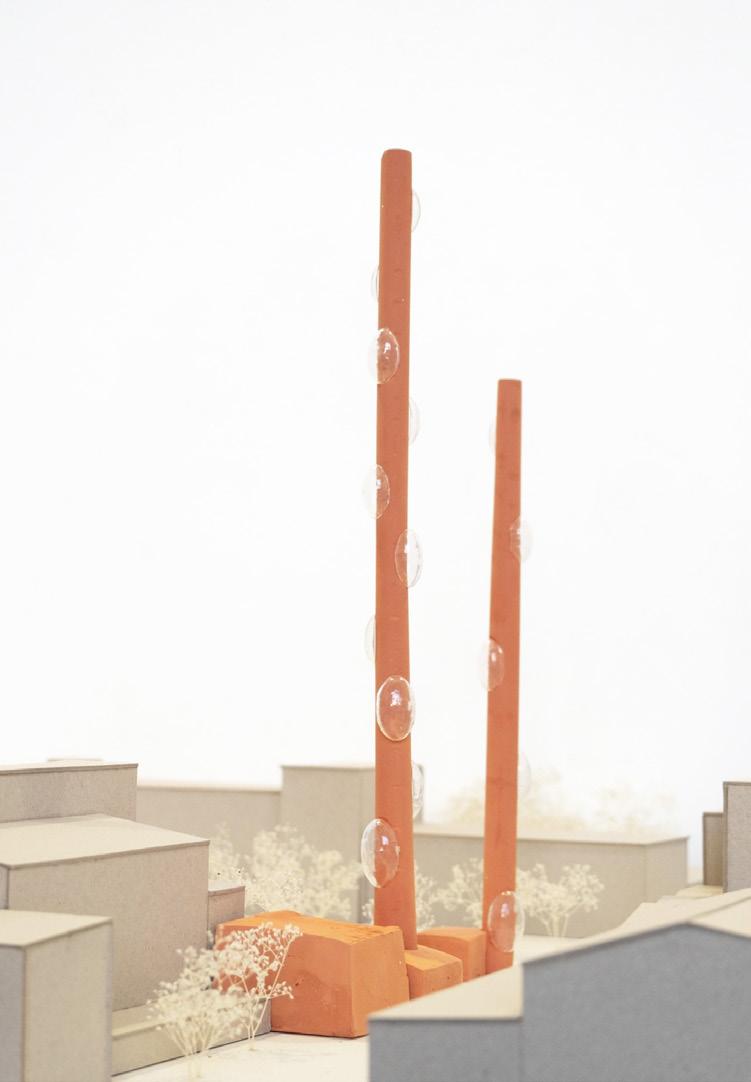
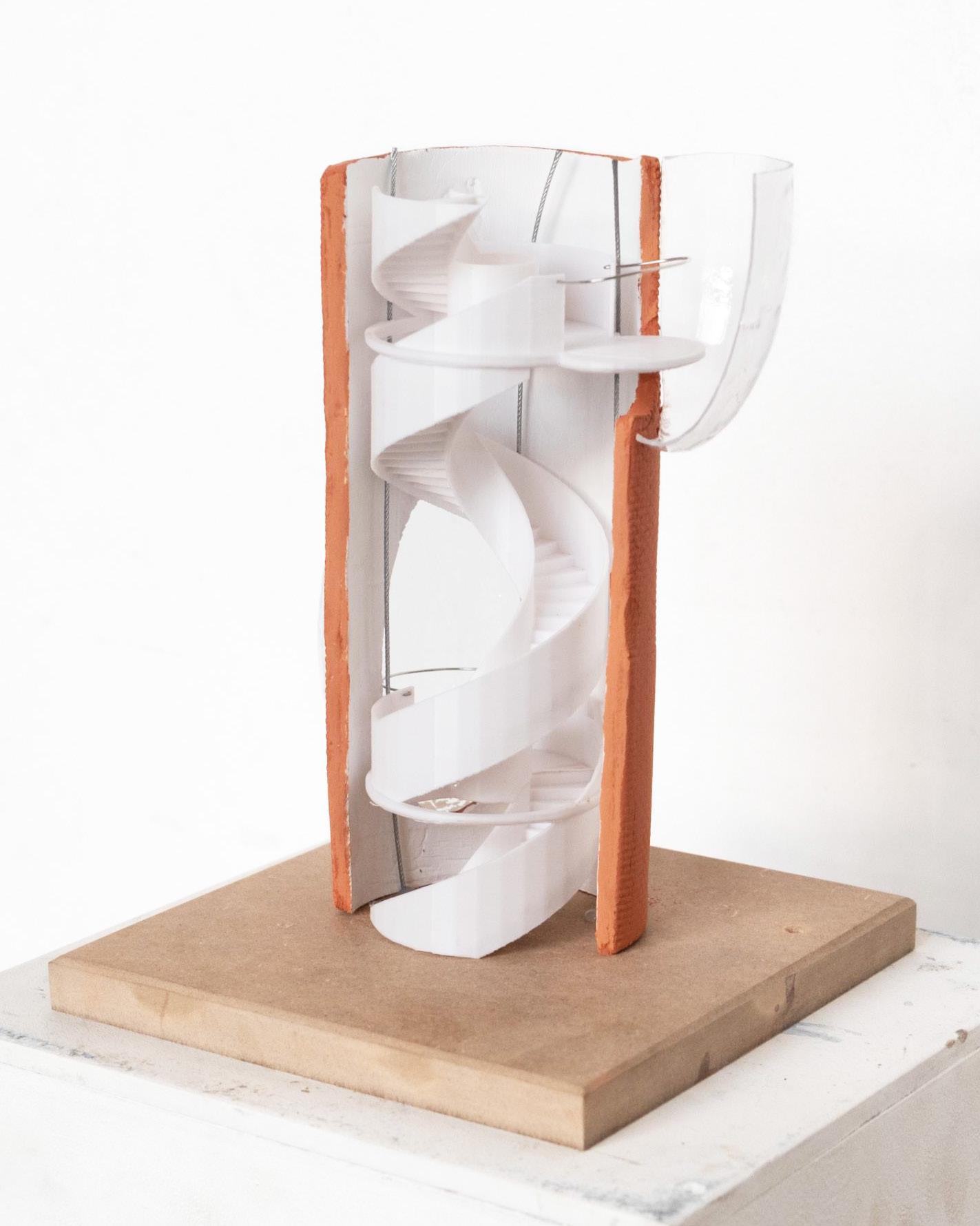
Driven by this feedback, we pursued a transformation of the smokestacks into a distinct landmark. One smokestack was repurposed into an
observation tower by integrating a large spiral staircase that serves as a stabilizing pendulum, reinforcing the aging structure for durability.
To enhance functionality and aesthetic appeal, we introduced multiple observation bubbles into the smokestack, designed to illuminate at night. In discussions with the overseeing engineering firm, they confirmed the technical feasibility of our concept
Comments from a citizens’ forum
Impressive historical monuments. Hopefully they will be preserved.
I doubt, for example, that there is an overriding public interest in preserving the two 100-year-old brick industrial chimneys, nor that a sensible use can be found for them.
In my opinion, the smokestacks are not worth the monument protection they have been granted, they should be demolished. If they were on the outskirts of the town, then fine, but not like this! Says - mind you - an „old Factory Worker“.
I would also like to draw attention to the fact that the accompanying brick chimneys, which are now also under monument protection, represent a considerable burden for the city, the maintenance or removal of which can cause enormous costs
Transforming the smokestacks into a landmark
MODEL: Experimenting & Visualizing in 1:1 scale
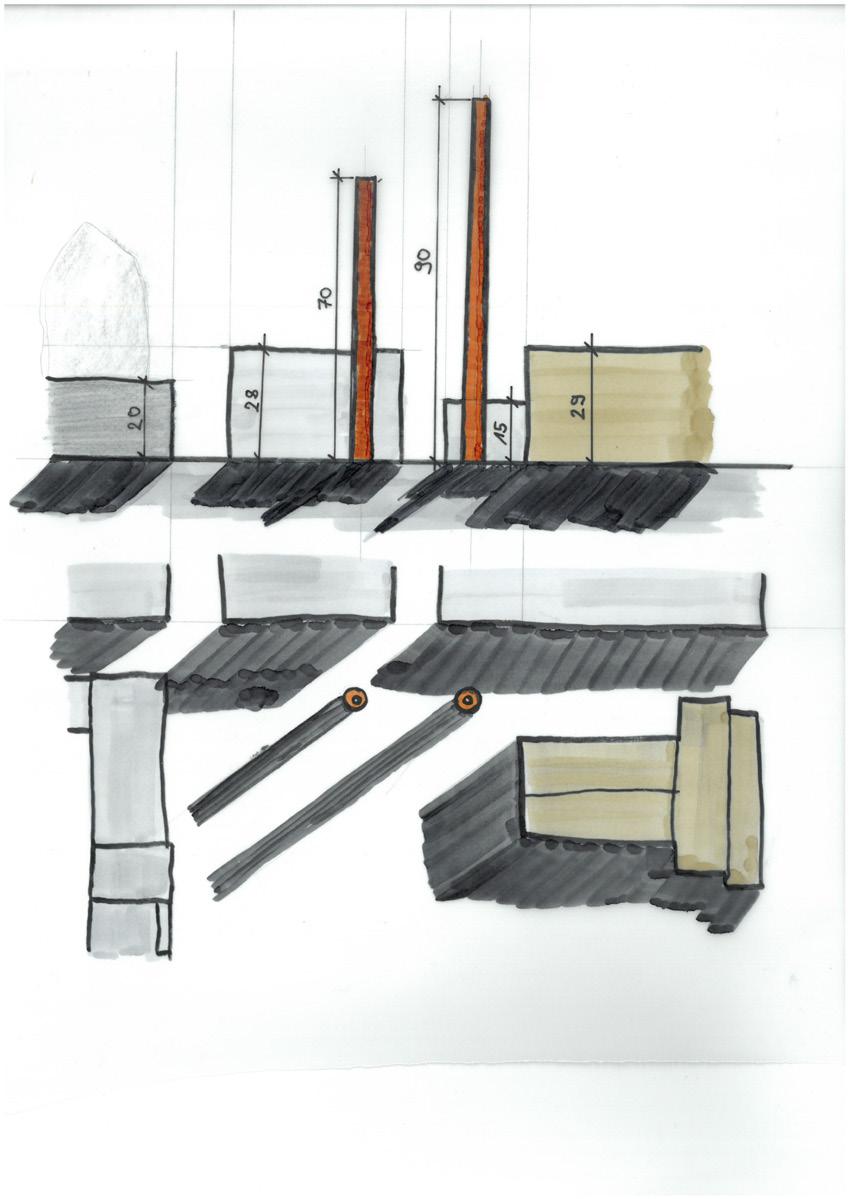
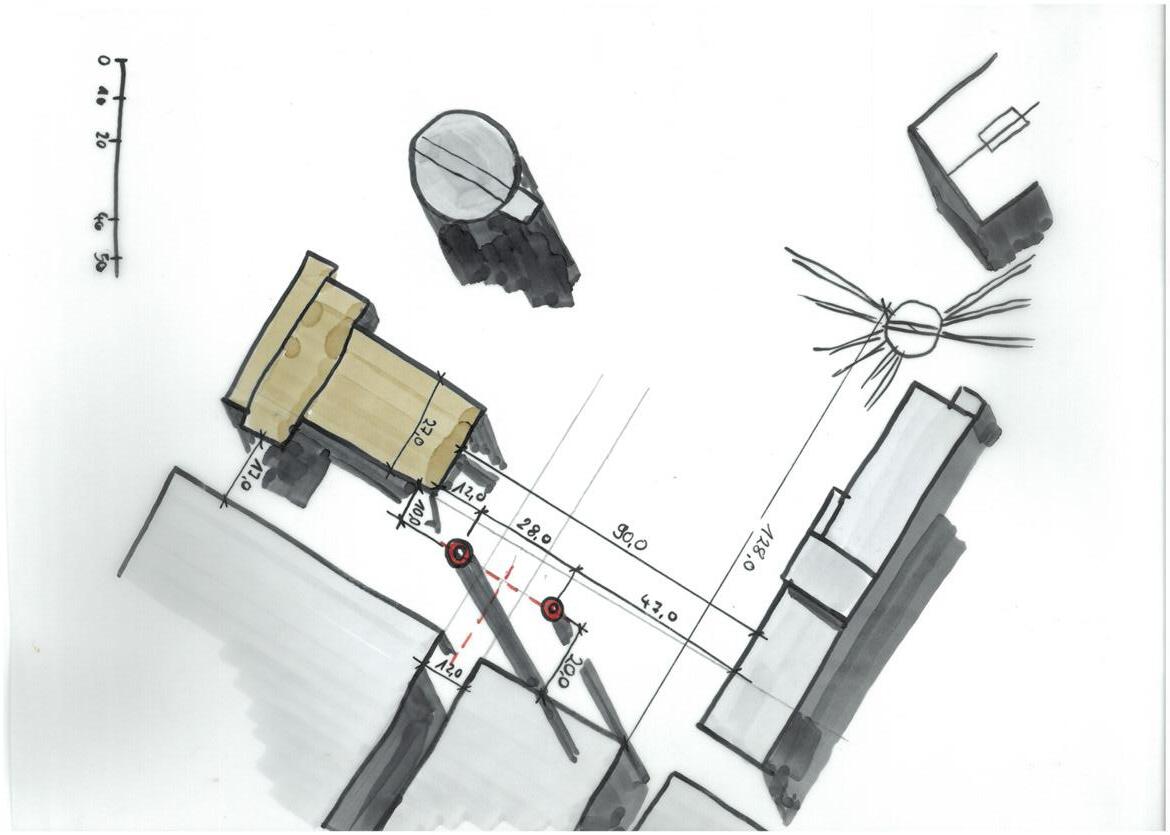
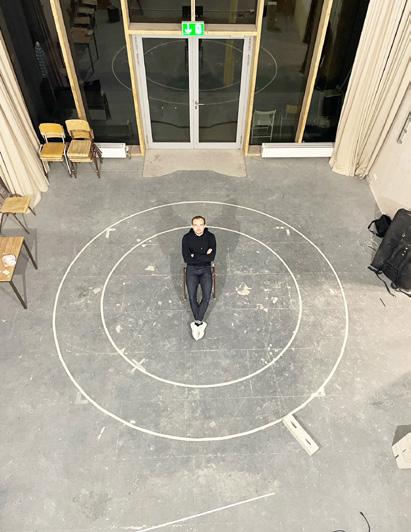
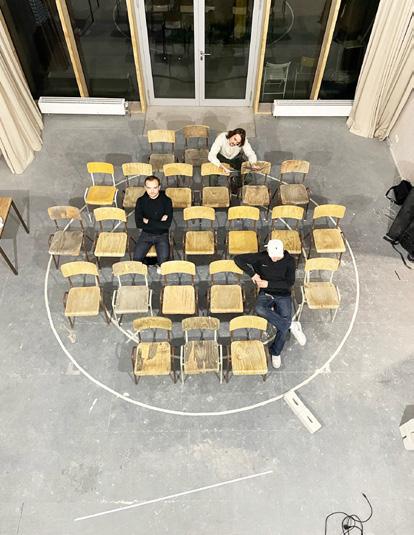
A significant part of our design process involved working extensively with models at the project’s outset. To grasp the scale of the space within the smokestack, we measured its internal circumference at both the top and bottom. Using these measurements, we filled the space with chairs to explore and assess the
SMOKESTACKS
potential functionality within this confined structure.
This exercise enabled us to experiment with the dimensions of the smokestack and evaluate its capacity for accommodating elements like seating, gaining insight into the possibilities and limitations of the footprint of the smokestacks.
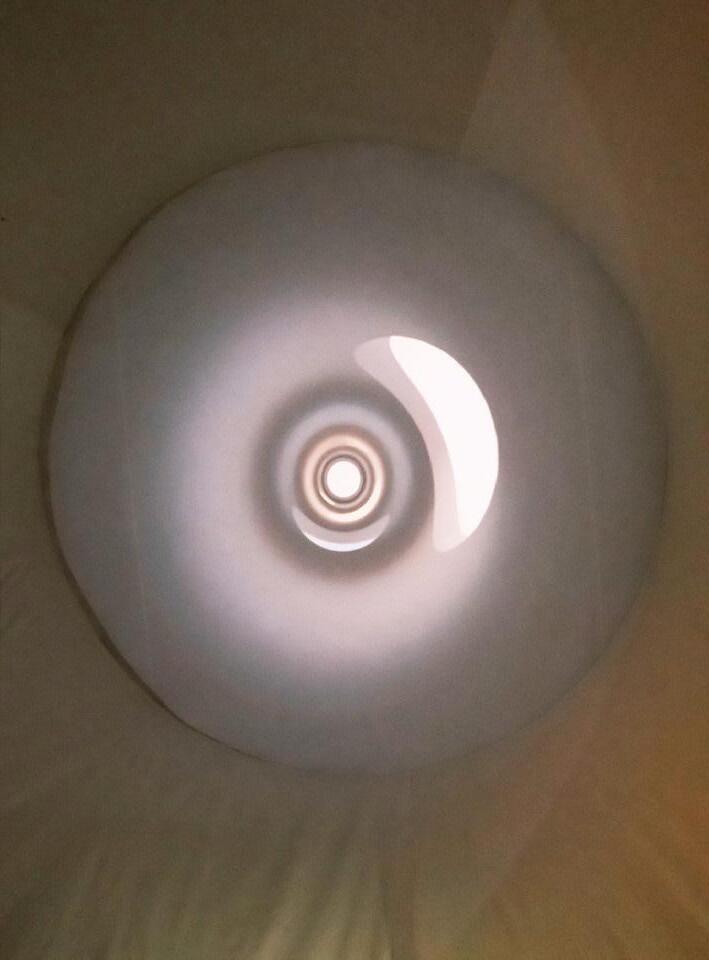
Following the creation of our 1:1 scale mockup, we proceeded to visualize the entire smokestack through rendering. Using a projector, we displayed the rendered image of the smokestack onto the ceiling of our installation space.
This method enabled us to accurately simulate the sun’s path within the space and convey the intended atmosphere and spatial qualities of our concept. By projecting the smokestack’s image, we could study its interaction with natural light and shadows, enhancing our understanding of its visual impact throughout the day.
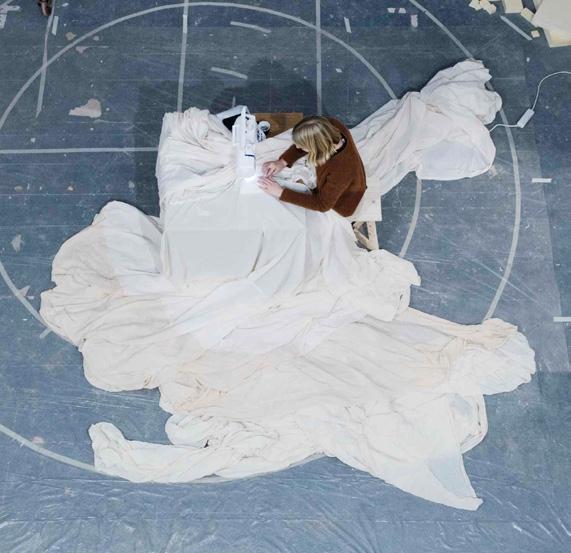
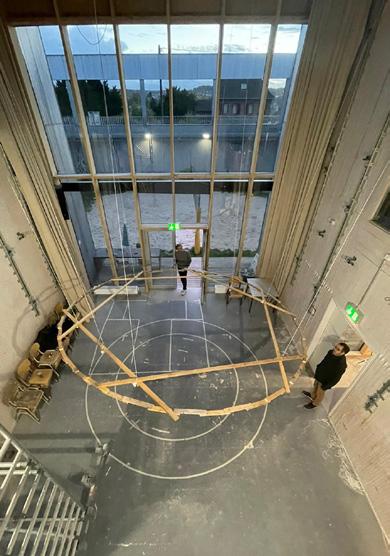
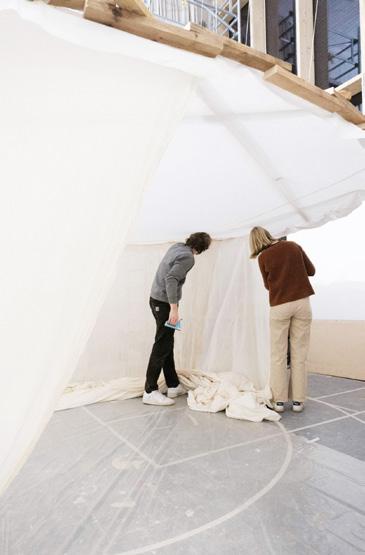
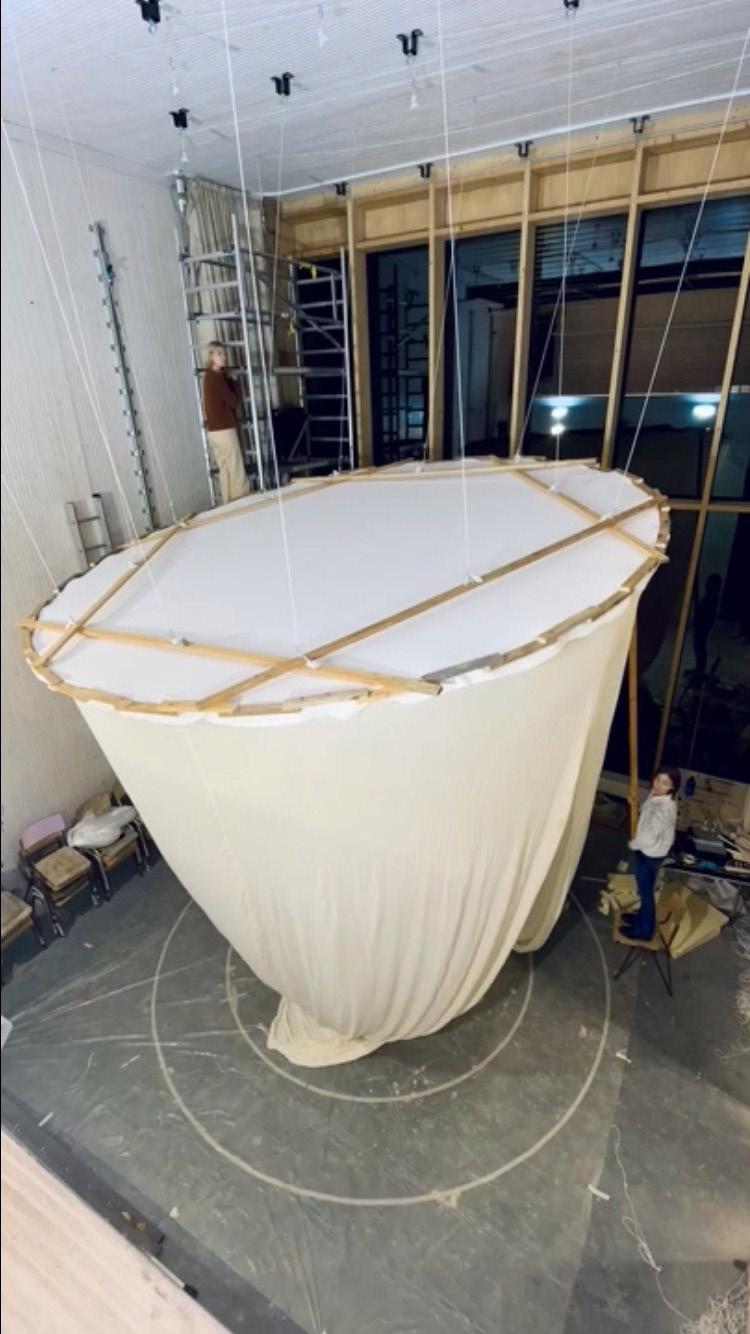
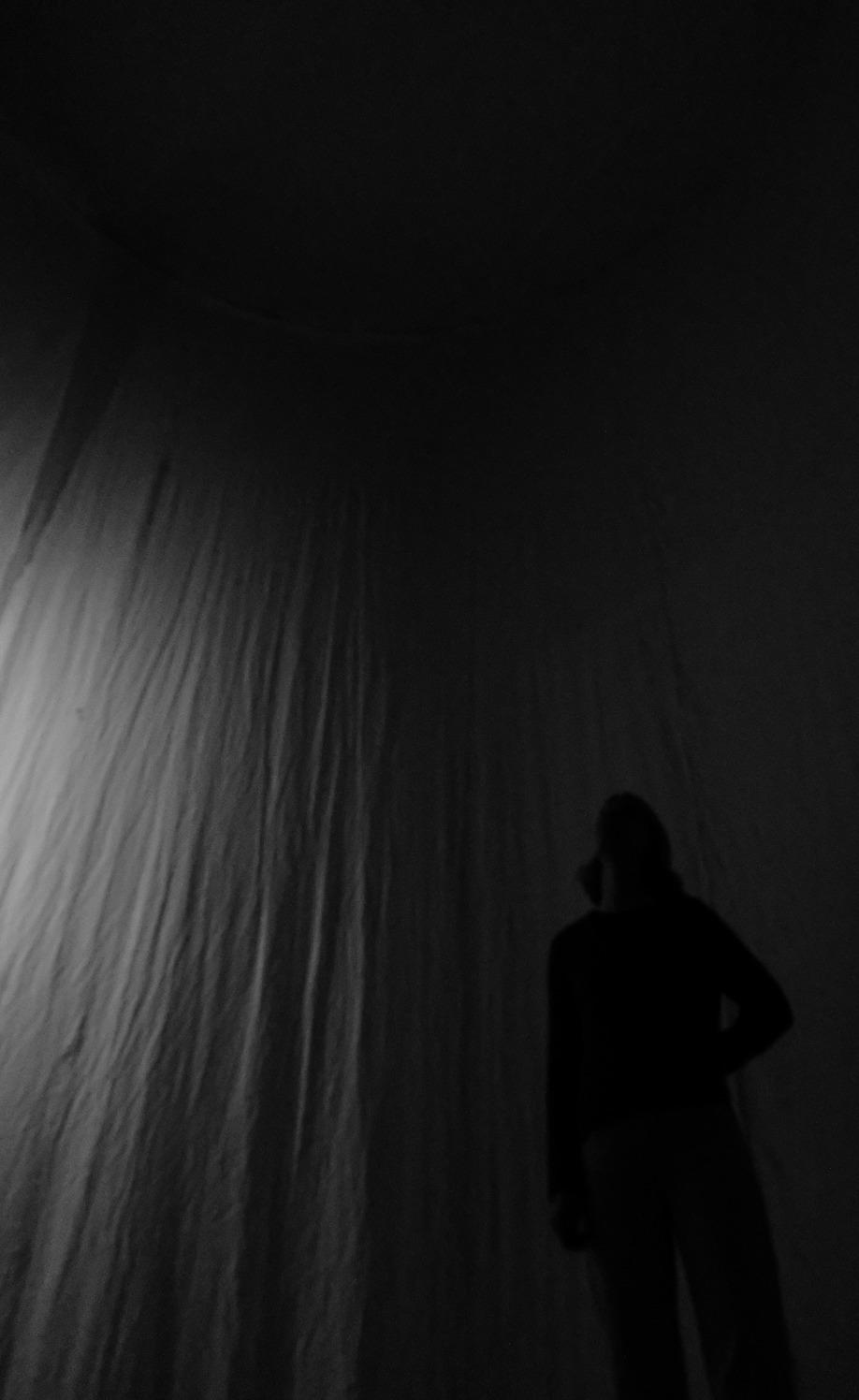
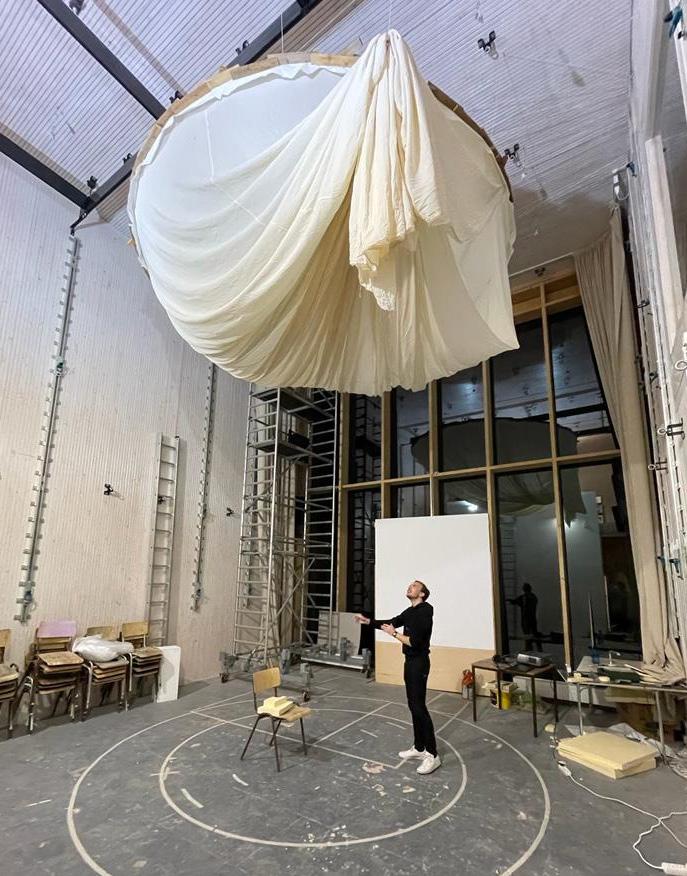
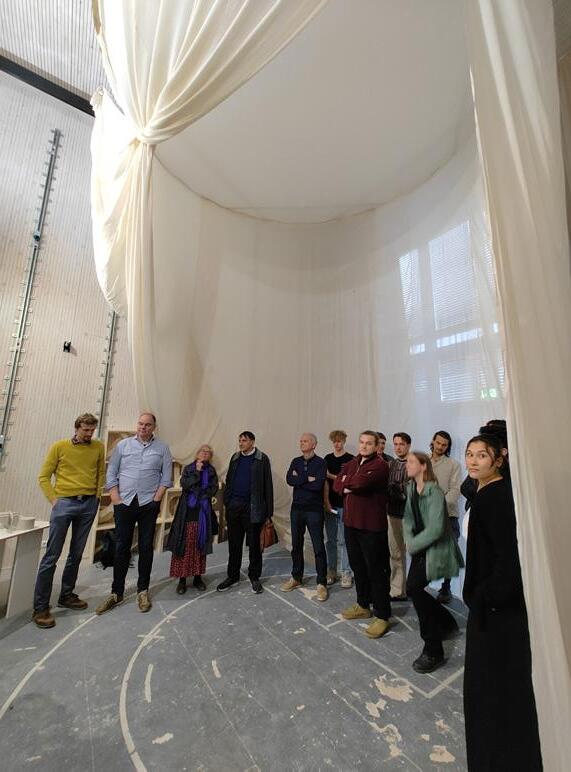
To further understand the vertical dimensions of the smokestack space, we constructed a 1:1 scale mockup of a segment. Using fabric sewn together and attached to a ring matching the smokestack’s size, we hoisted this mockup to replicate a 7-meter section of the actual structure.
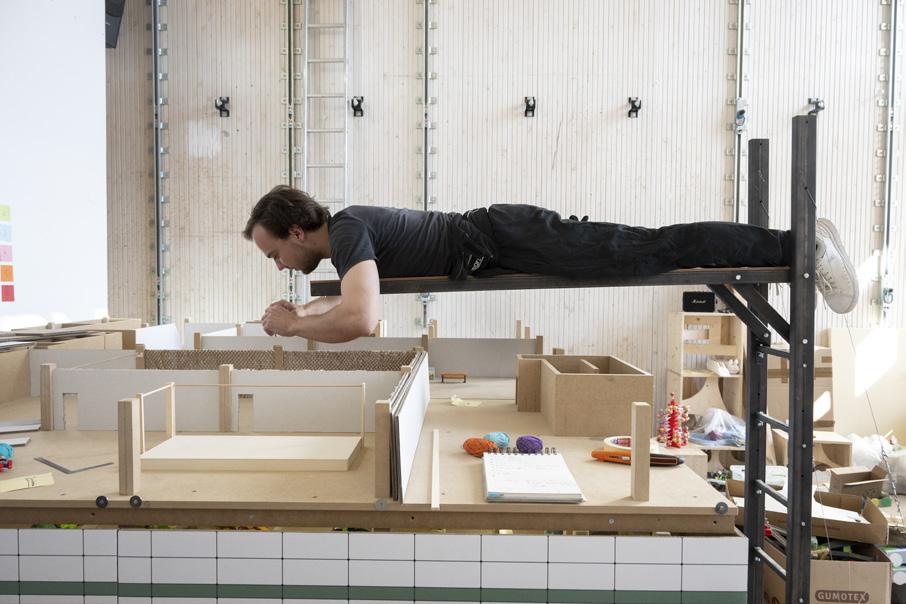
Simultaniously we also built smaller scale overview and section models that we constantly worked on during our design process.
HOW WOULD ARCHITECTURE LOOK WITHOUT ARCHITECTS
NAME: REPARAPTOR
ARCHITECTURE 04
PROJECT TYPE: 4 TH SEMESTER
SKILLS SHOWN: EXPERIMENTAL
A CORE
HOW CAN REPAIR BECOME CORE PART OF ARCHITECTURE?
HOW CAN ARCHITECTURE BE RETHOUGHT?
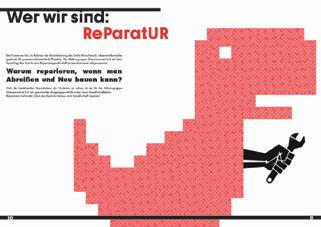
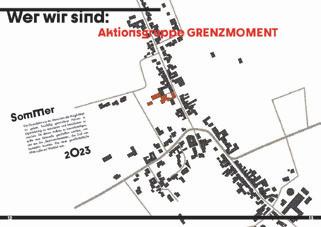
AktionsgruppeGrenzmoment
Saving a town through fostering repair culture 04
REPARAPTOR
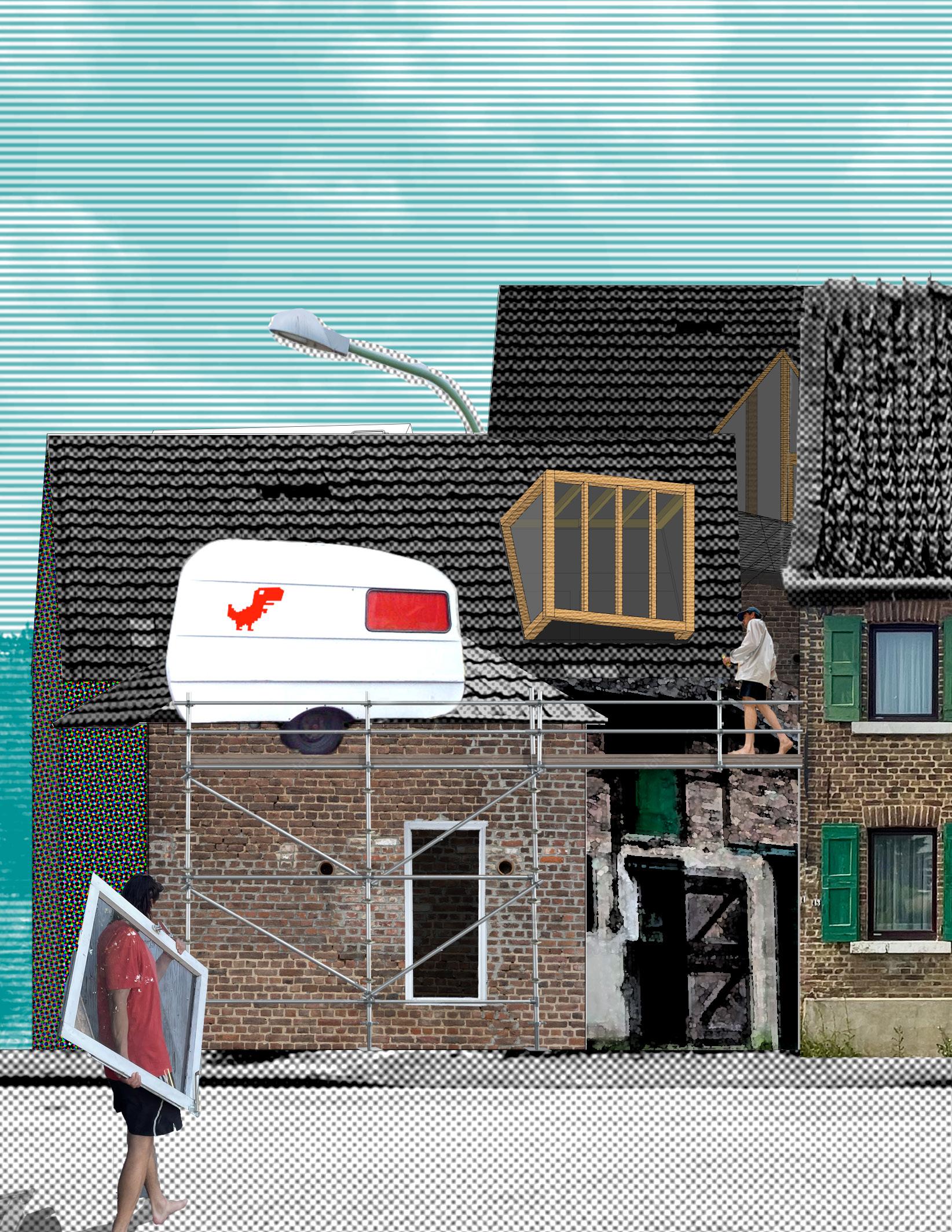
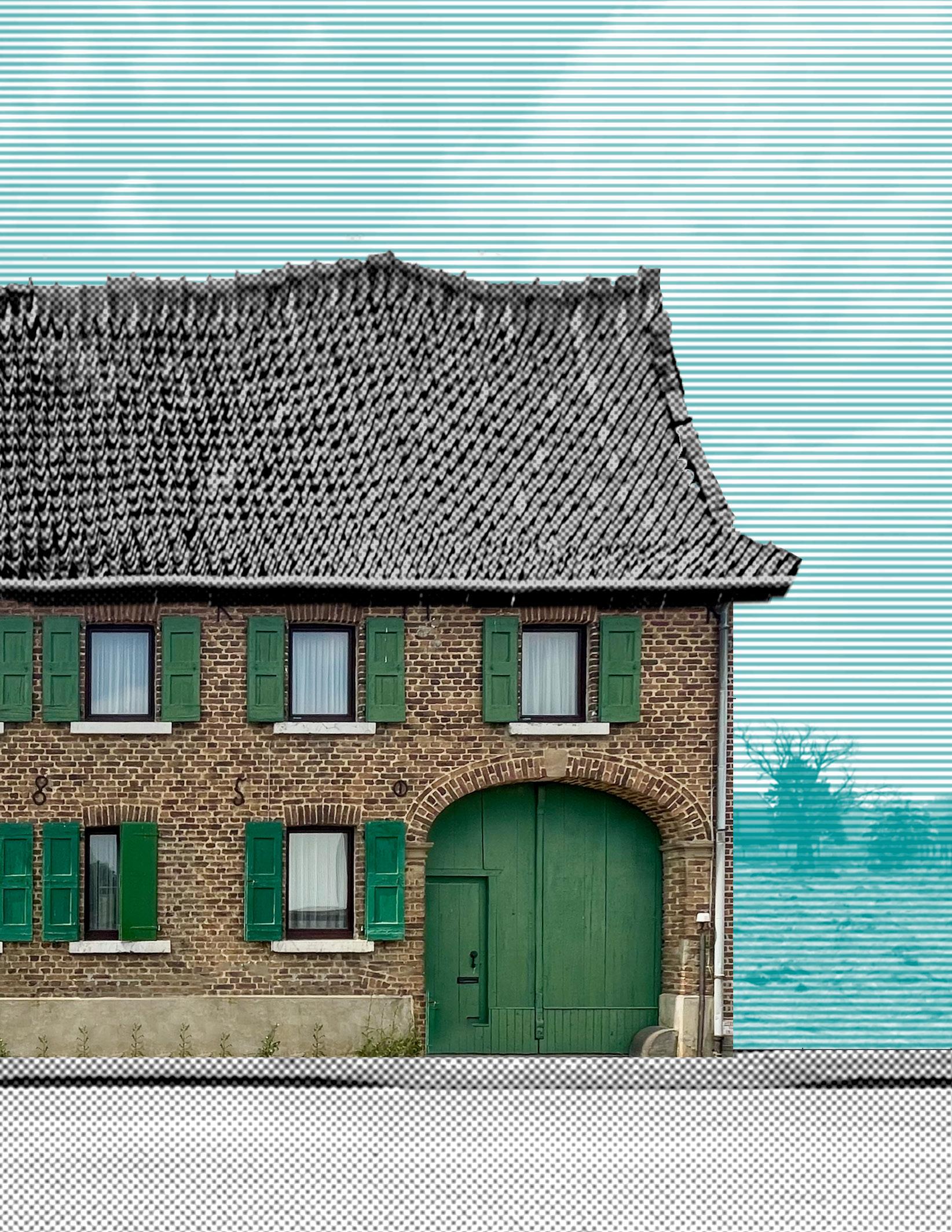
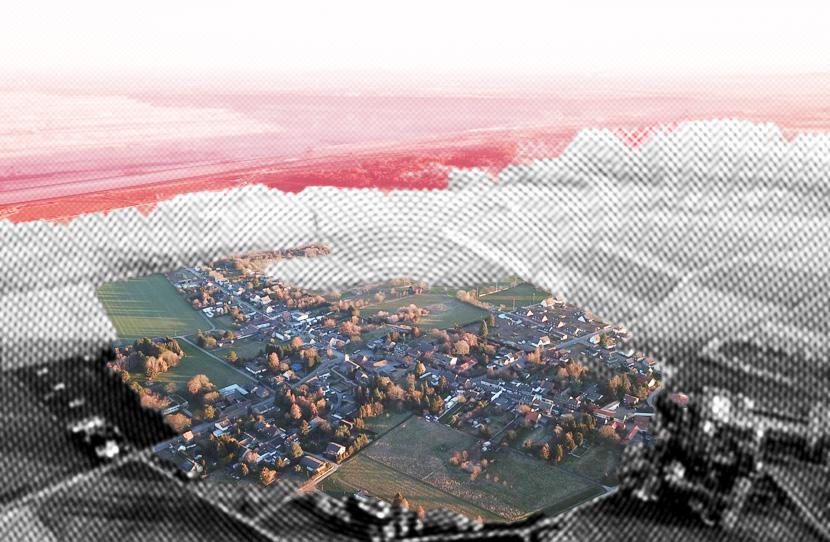
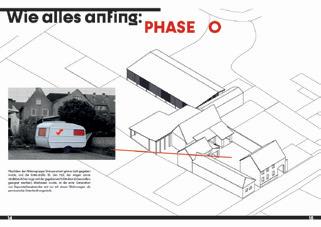
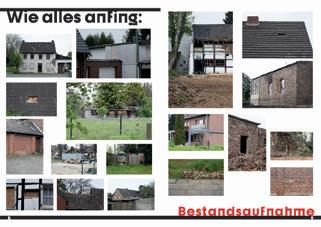
SYNOPSIS: Reparaptor was a multifaceted university project centered around revitalizing a deserted town abandoned due to now defunct plans for expanding an open-pit coal mine. Rather than focusing solely on designing a building, we approached the task as an opportunity for broader reimagining. Our vision was to transform the town into a test bed for a repair culture, where inhabitants play an active role in its reconstruction and rejuvenation. Architects served as facilitators, bridging ideas and community needs. To achieve this, we developed interactive games, a magazine, and plans for a community hub. These initiatives aimed to foster community engagement and demonstrate the potential for collective action in revitalizing neglected spaces. The project showcased strategies for cultural renewal and community-driven development.
Rethinking communicationarchitectural
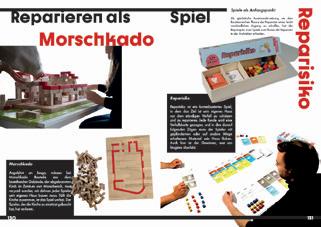
Inspired by 80s and 90s board games, we launched the Reparaptor project by developing games centered on repair and recycling. Our goal was to emphasize repair as an ongoing process and foster meaningful community engagement.
Two distinctive games were created as part of this initiative.
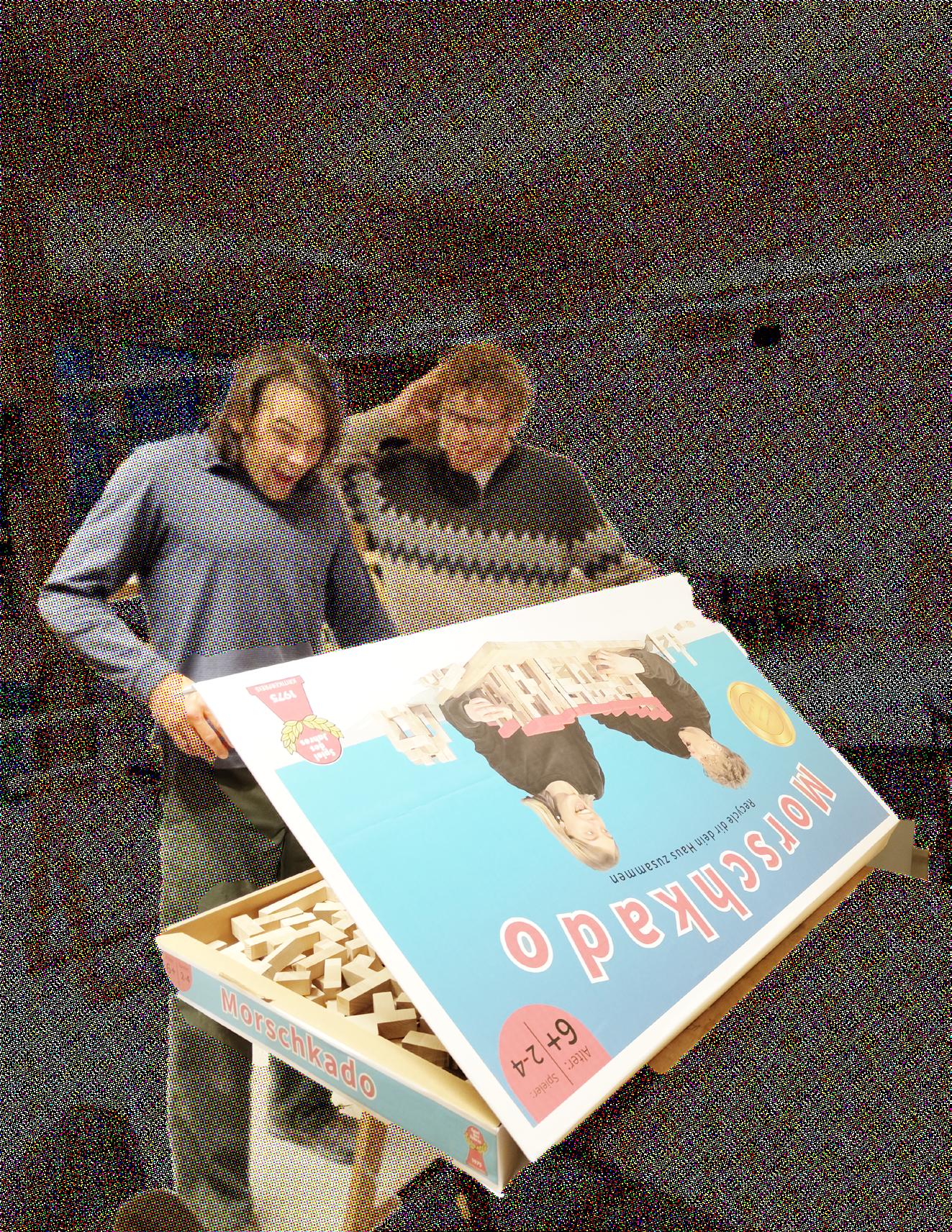
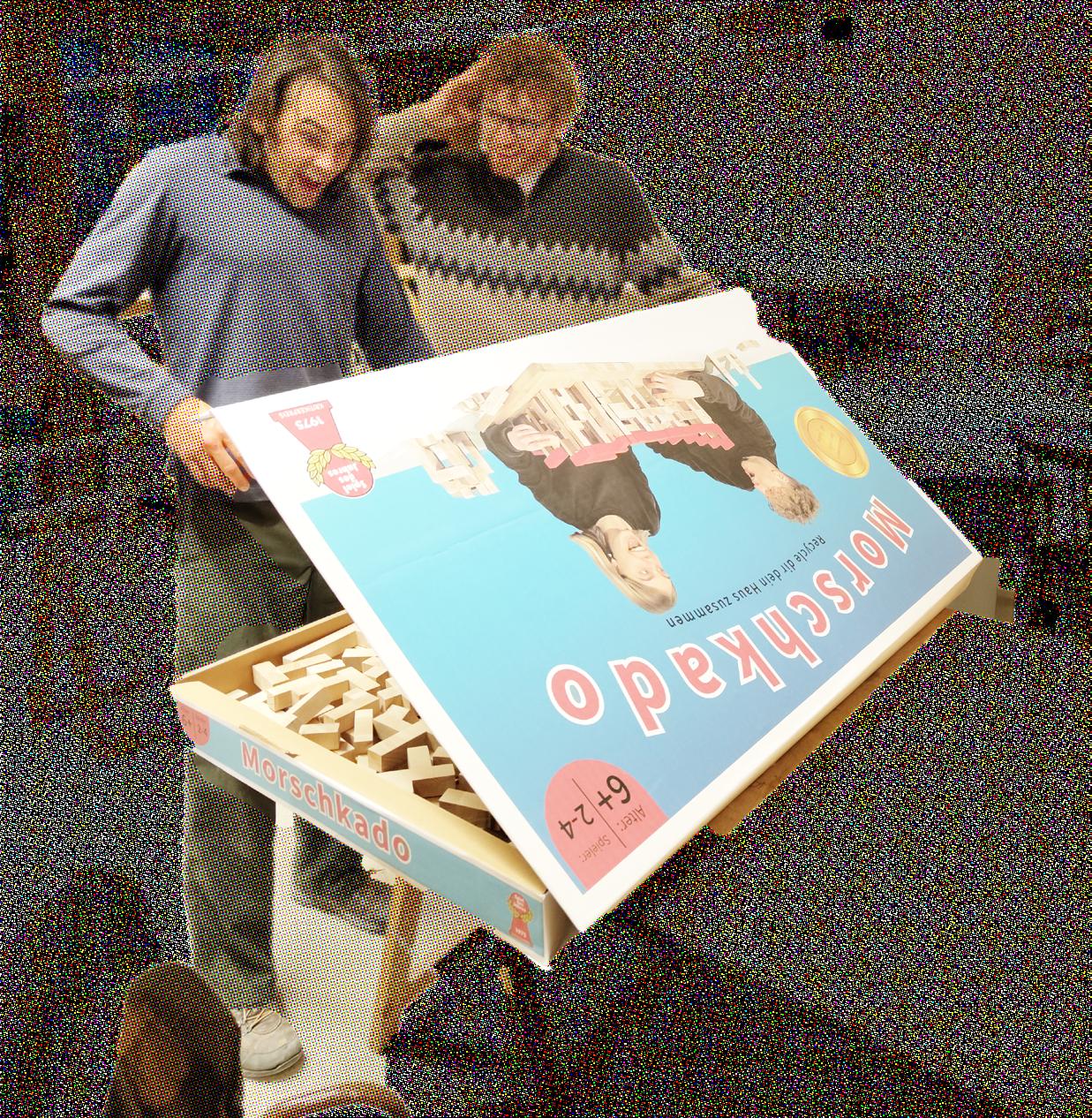
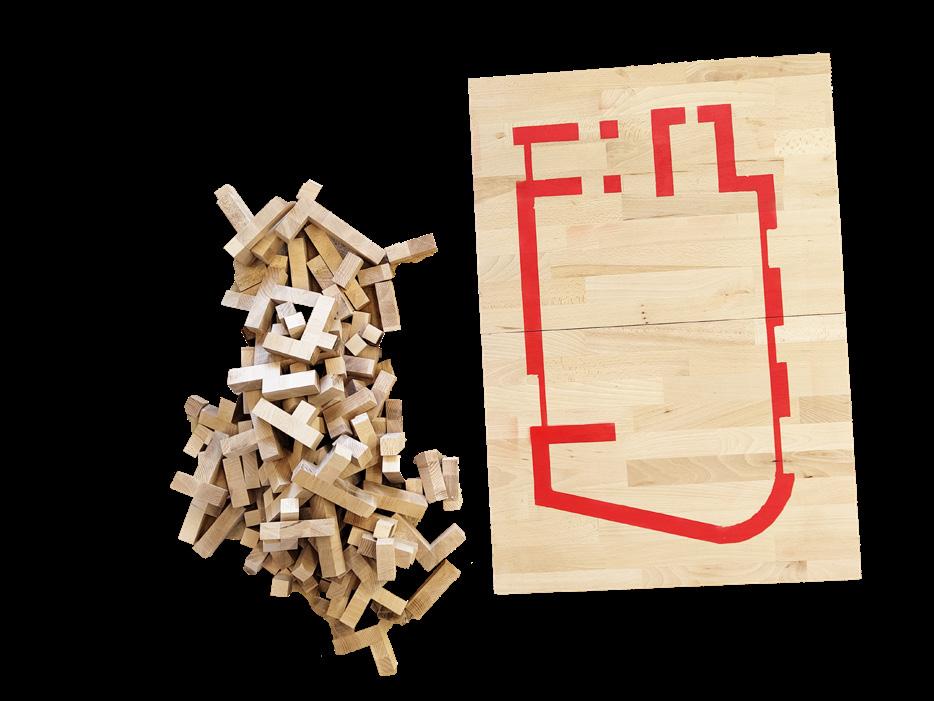
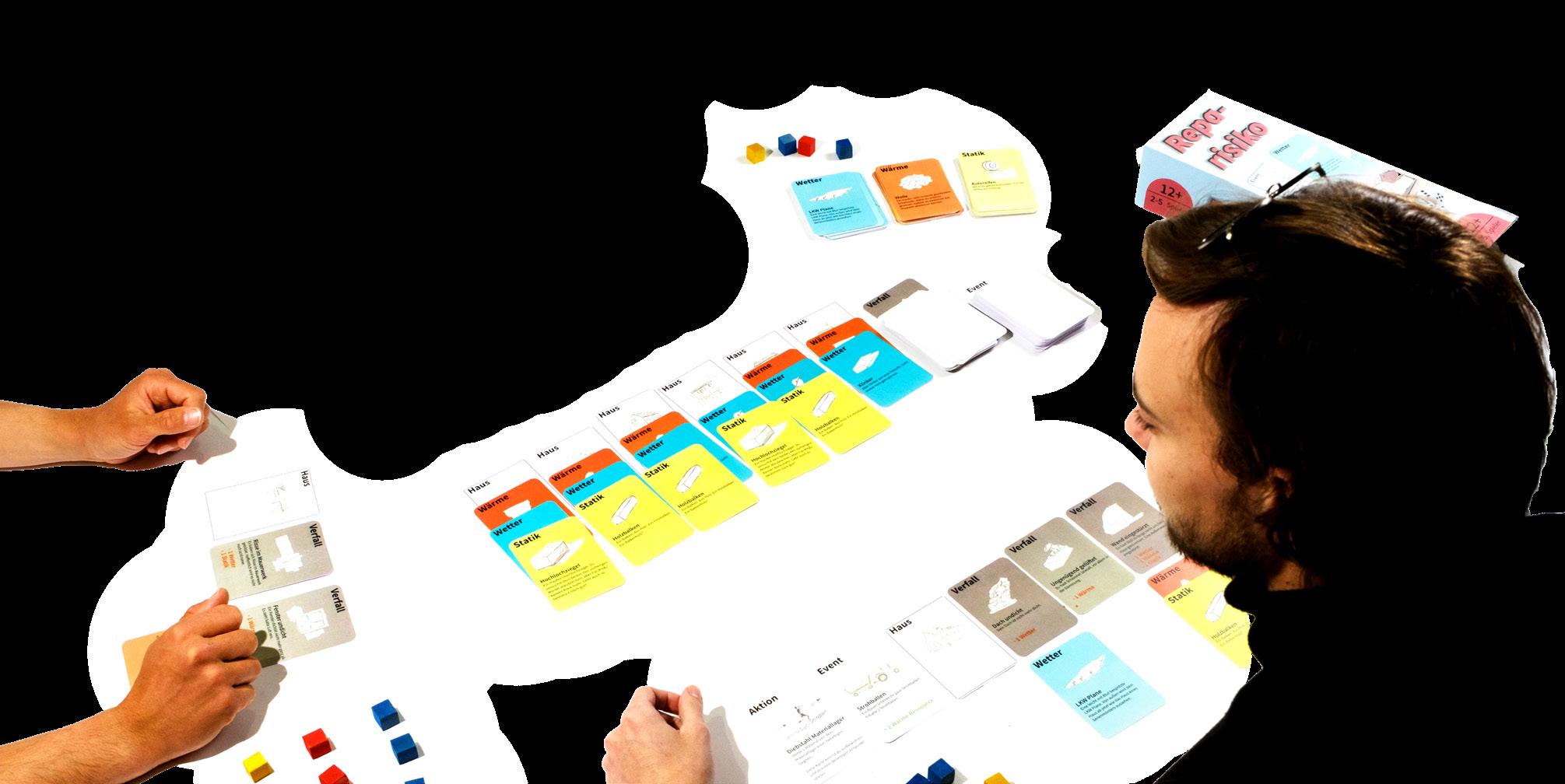
In the first game, “Morschkado,” players dismantled an existing building and used its parts to construct a new one, promoting the concept of reuse and resourcefulness in architectural design. The second game, “Reparisiko,” introduced a strategic card game format where players faced continual damage to their house and had to creatively repair it
GAMES:
using improvised methods, highlighting the challenges and improvisation involved in sustainable maintenance. These games proved to be successful tools for promoting dialogue and raising awareness about repair culture and sustainable development.
“Reparisiko” was exhibited at an exhibition about the future of this town and its suroundings, gaining attention and interest from the community, and it continues to be enjoyed within our studio to this day.
These interactive experiences not only entertained but also encouraged reflection on the principles of reuse, repair,
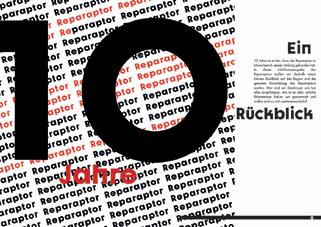
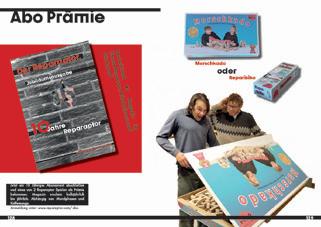
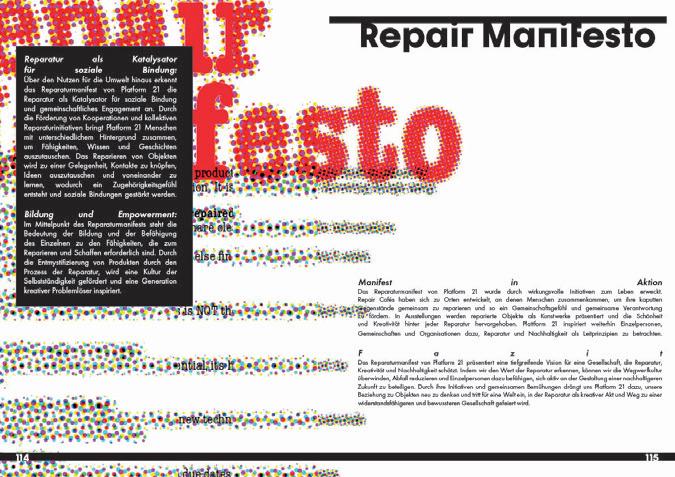
Der Reparaptor. Jubiläumsausgabe
10JahreReparaptor
AktionsgruppeGrenzmoment
REPARAPTOR
Spreading repair ideology MAGAZINE:
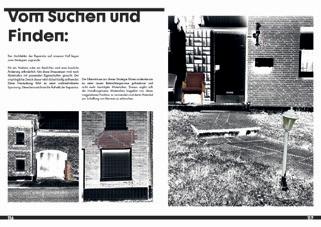
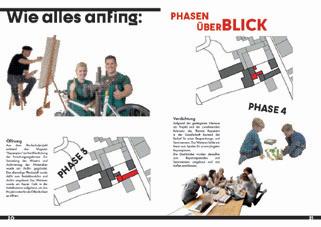
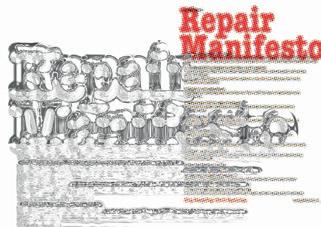
Following the engagement with our repair-themed games, the next phase of our project involved creating a magazine focused on this emerging culture of repair. The magazine was designed as a retrospective from the perspective of the town ten years into the future, reflecting on the origins of the repair movement. We envisioned the town looking back at the present
day and documenting how the repair culture took root and flourished. The publication aimed to capture the practical aspects of innovation and community engagement that drove the transformation of neglected spaces into hubs of sustainable activity. By documenting this journey in a magazine format, we aimed to inform readers about the possibilities of sustainable development and community-driven initiatives.
TIMELINE:
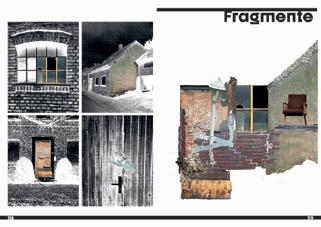
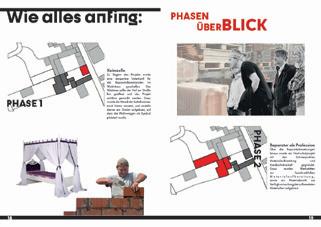
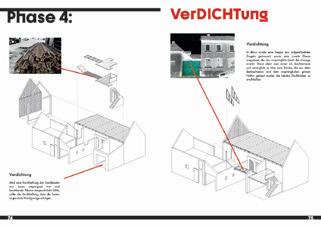
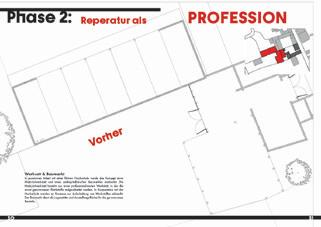
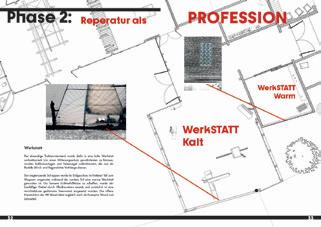
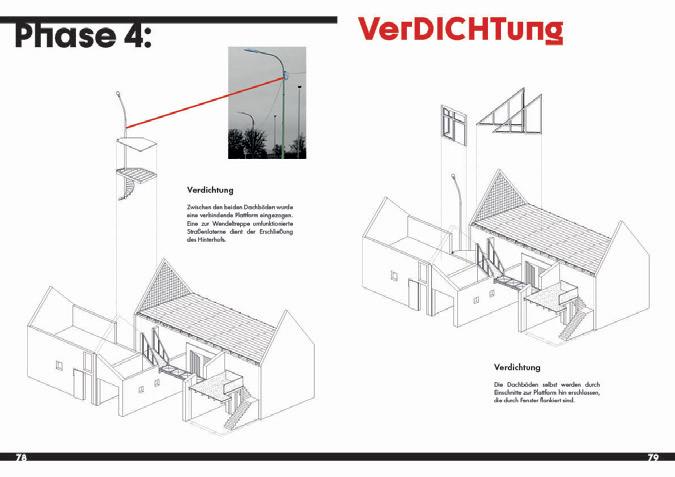
The magazine featured detailed plans illustrating the construction timeline of the repair hub, which would serve as the new town center. The design emphasized the use of foraged and recycled materials, integrating existing abandoned structures from the surrounding area into a new architectural composition. These plans demonstrated a practical approach to urban redevelopment, showcasing how neglected resources
can be repurposed and integrated into architectural solutions. The collage of elements symbolized the community’s commitment to adaptive reuse and creative regeneration, highlighting the potential for revitalizing semi-urban spaces with minimal environmental impact.
ARTICLES:
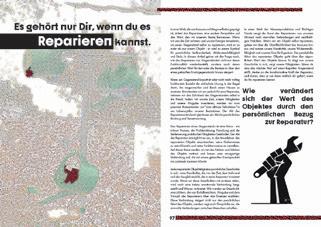
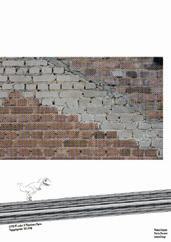
The final section of the magazine, spanning over 100 pages, featured a collection of articles exploring various aspects of repair culture. These articles ranged from practical instructions on repairing or upcycling building materials to philosophical discussions on the nature and significance of repair.
By including diverse content, the magazine aimed to provide a comprehensive exploration of repair as
both a practical skill and a conceptual framework for sustainable development. The articles offered readers insights into techniques for resourceful construction while also delving into deeper reflections on the cultural and environmental implications of repair practices.
Building upcycledwithmaterials
REPARAPTOR
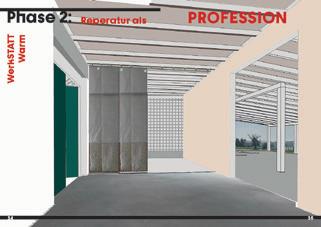
REPAIR HUB:
VECTORWORKS
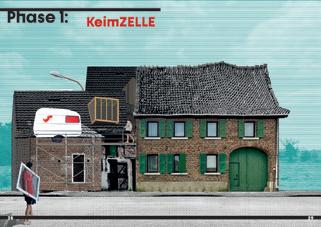
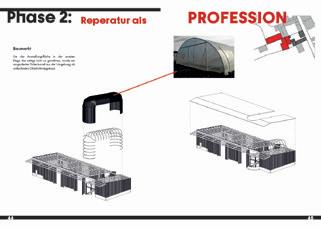
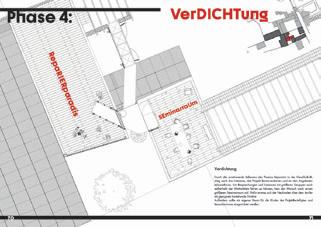
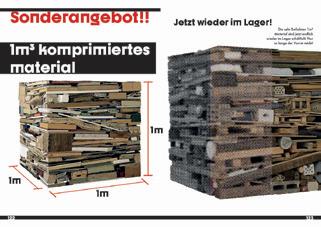
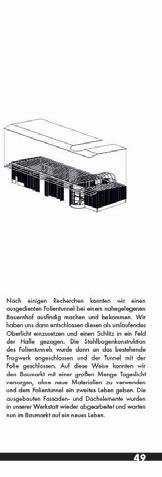
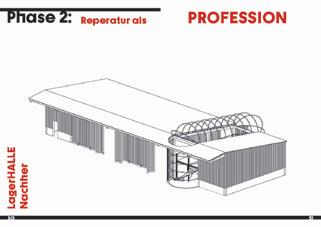
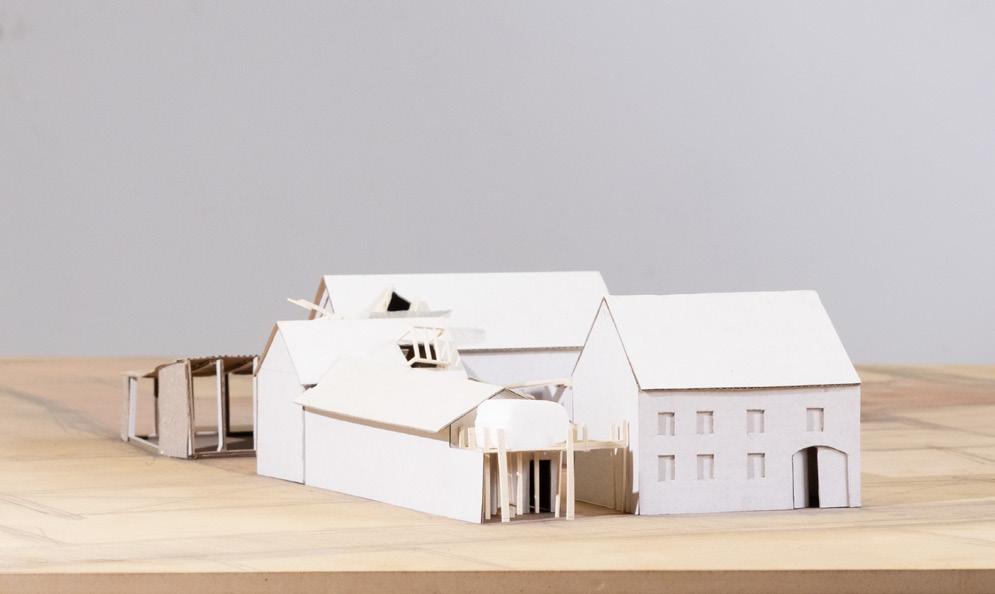
The resulting building is a distinctive blend of found elements and materials. As described in the magazine, the story illustrates how the structure evolved over time to meet changing needs. It was constructed not by architects or professional builders but by the inhabitants themselves, using found materials and basic construction techniques.
This narrative exemplifies a practical approach to construction, where buildings are transformed and adapted organically by the community. The building’s evolution reflects a resourceful and collaborative approach to design and construction, highlighting the potential for creative reuse and adaptation in architectural practice.
MODEL:
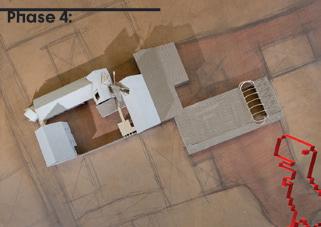
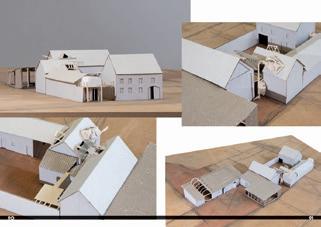
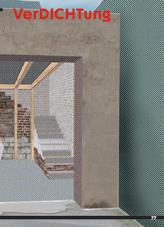
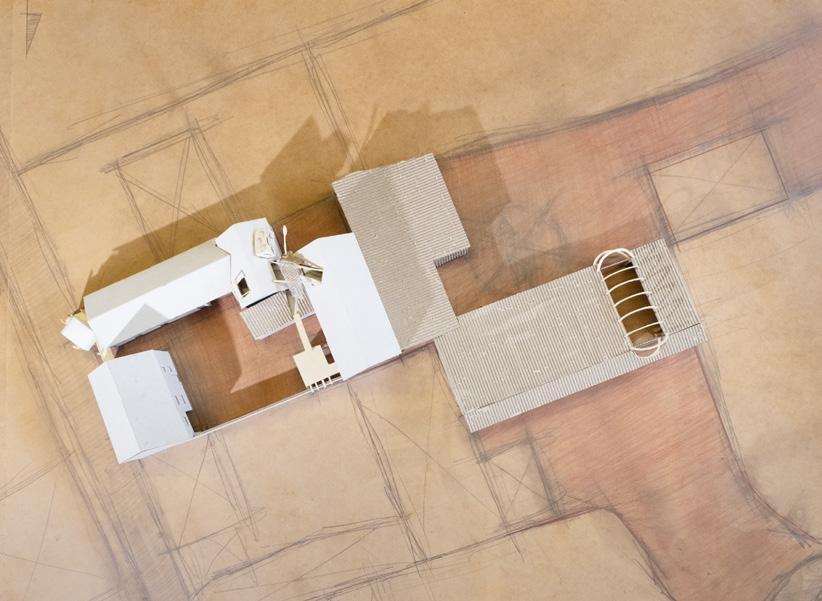
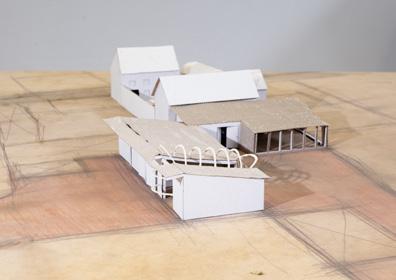
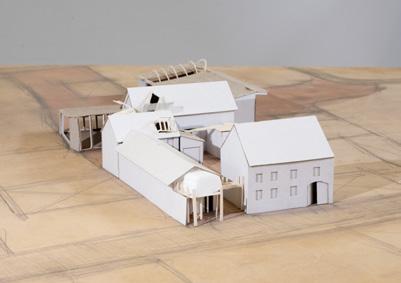
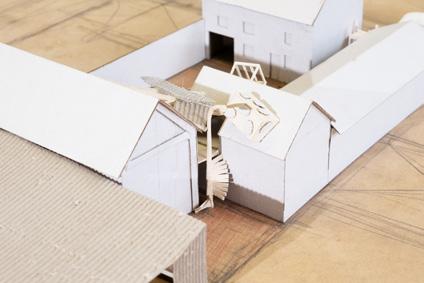
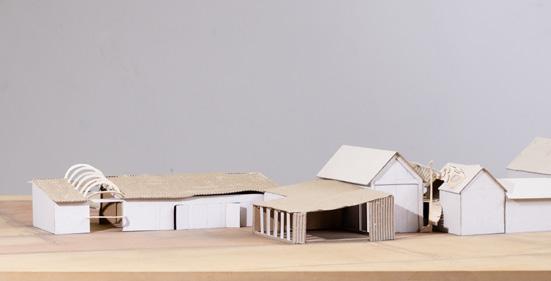
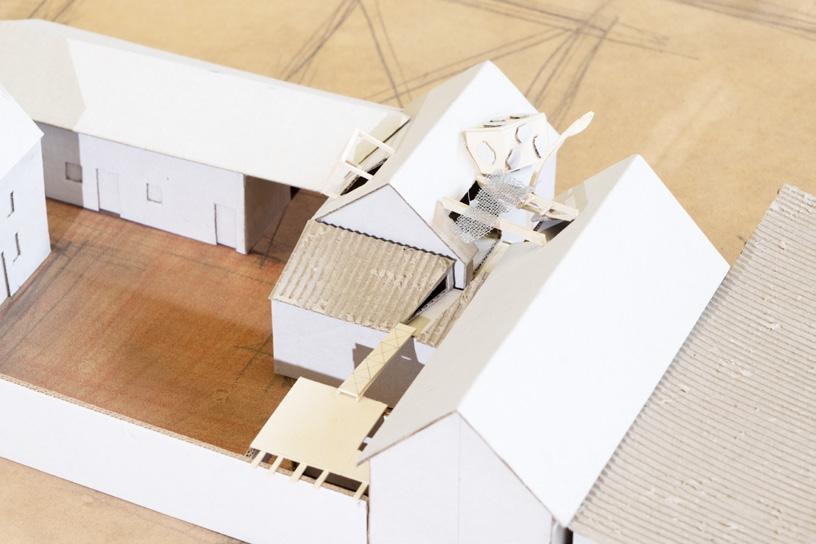
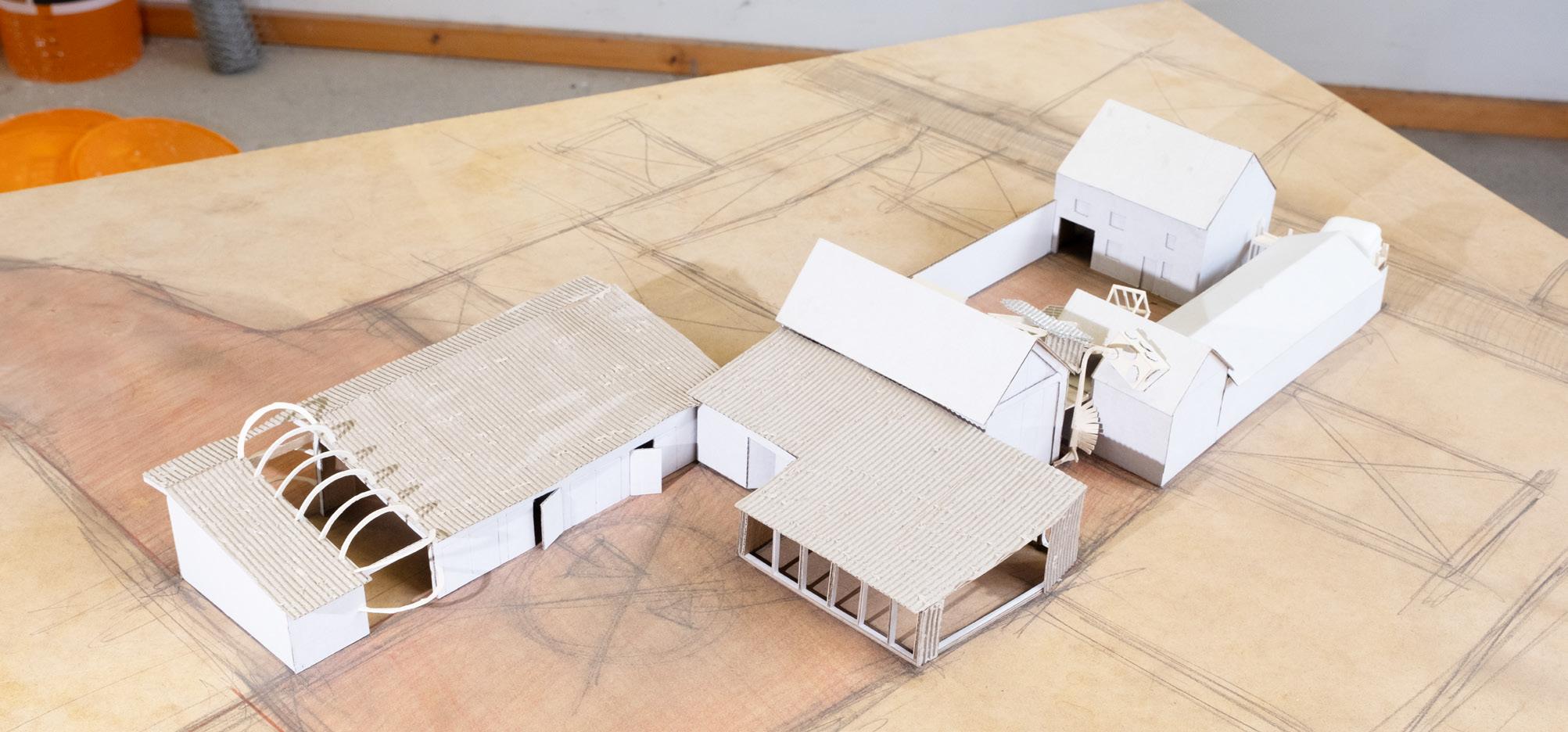
The model was crafted to embody the same action-oriented style, using cardboard with meticulous attention to detail. The base board of the model featured a plan drawn with arrows and annotations, suggesting that people had strategically mapped out each step and decision within the space.
This approach captured the practical and hands-on nature of community-driven construction processes.
The model served as a visual representation of how inhabitants actively engaged in the building’s evolution, illustrating a collaborative and responsive approach to design.
PROJECT TYPE: COMPETITION
SKILLS SHOWN: MODEL BUILDING
HOW CAN ARCHITECETURE
BE BUILT BY
ANYONE?
TO PLAN FOR INEXPERIENCED WORKERS?
05 Planning for heat and constructionsimple
EVERGROTH
SYNOPSIS:
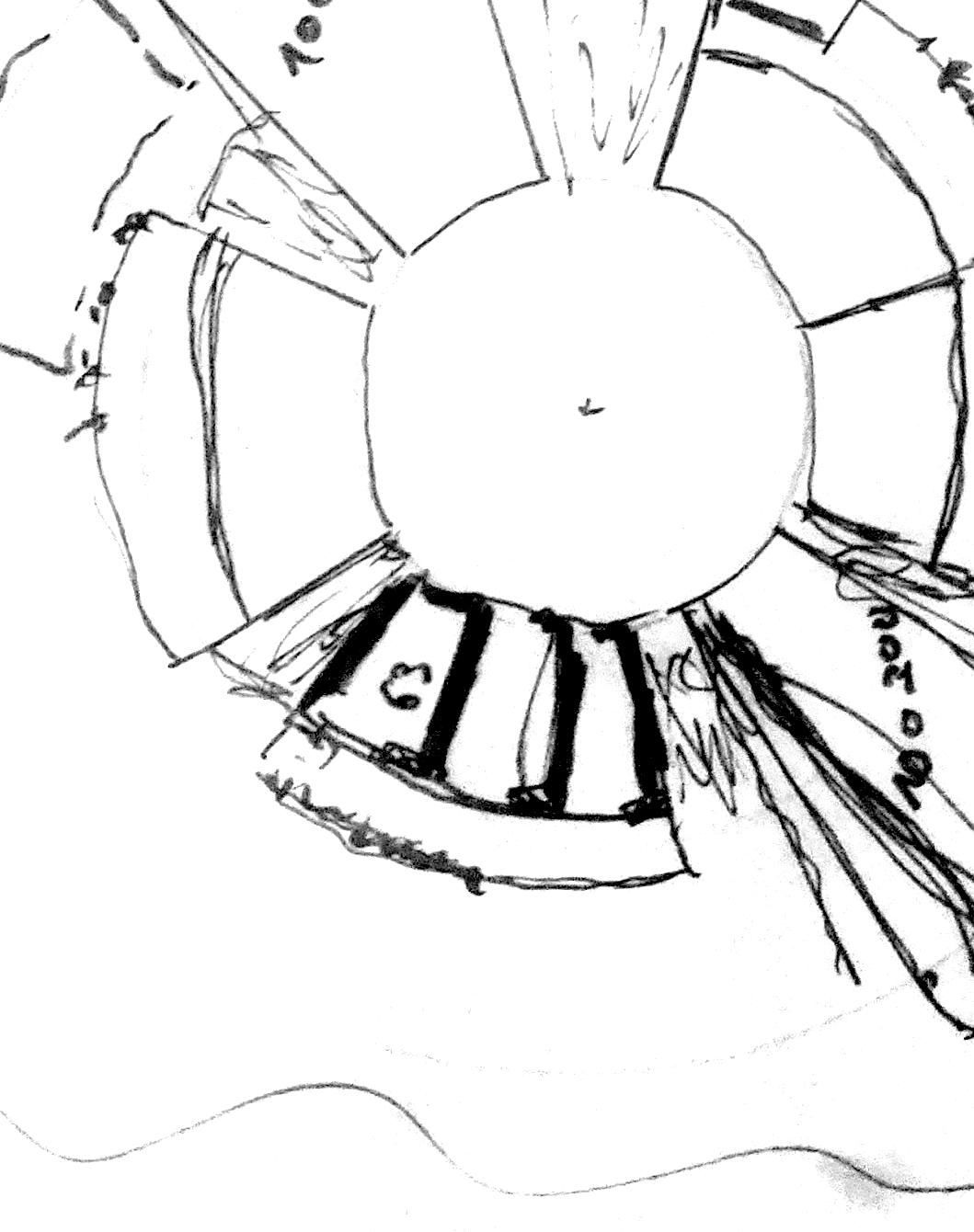
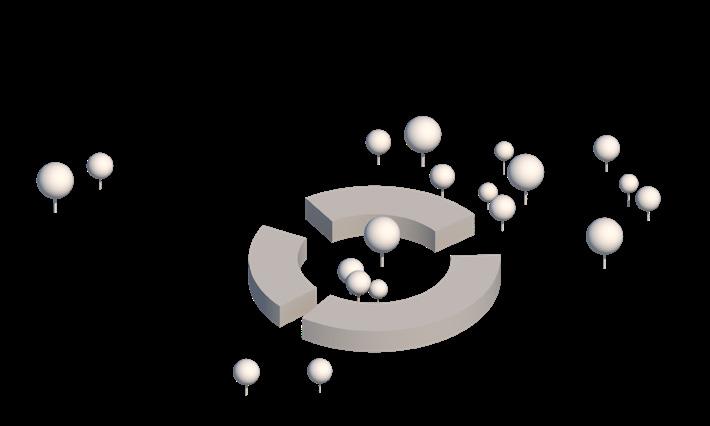
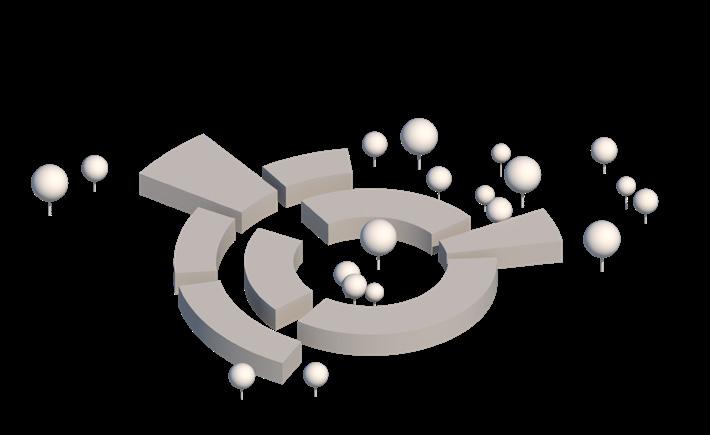
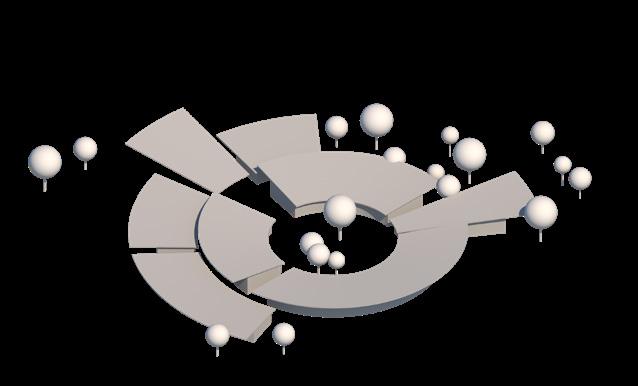
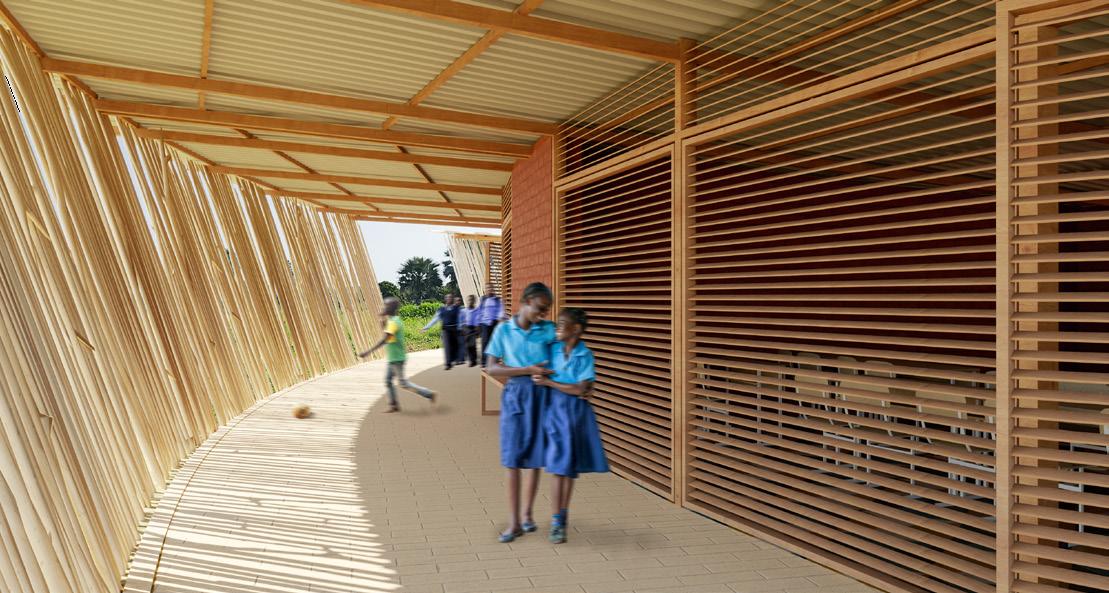
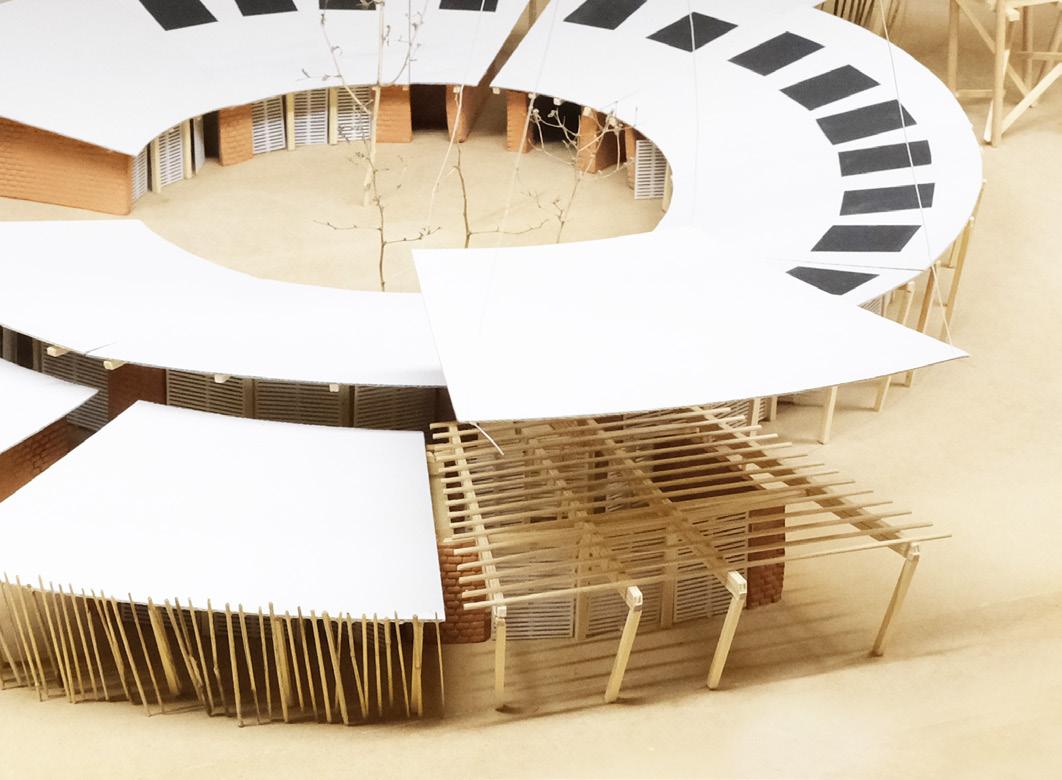
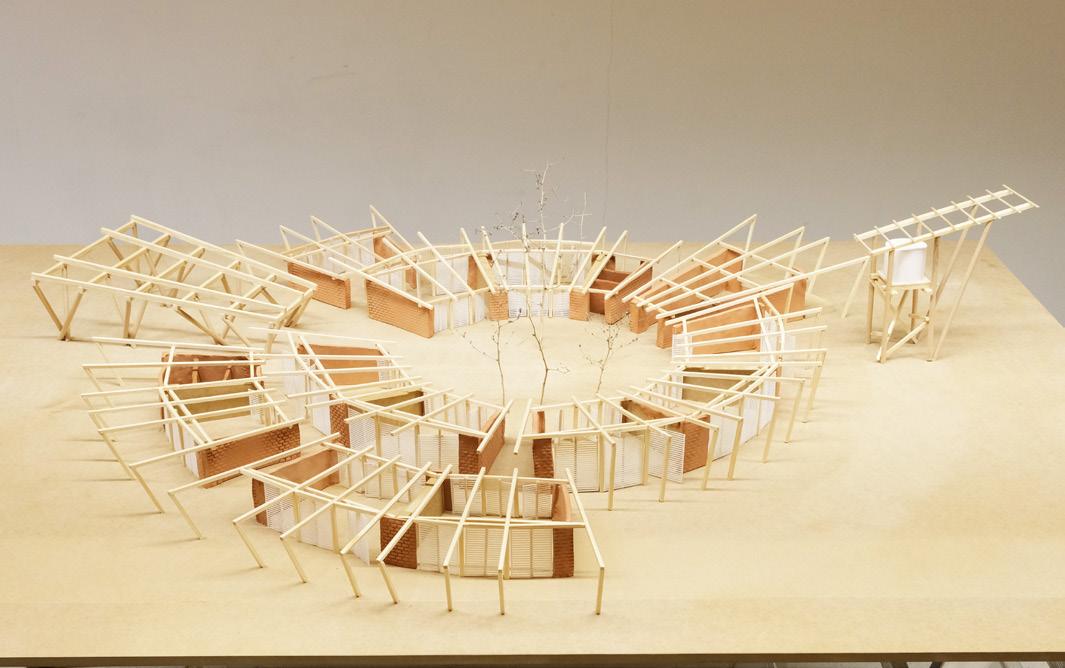
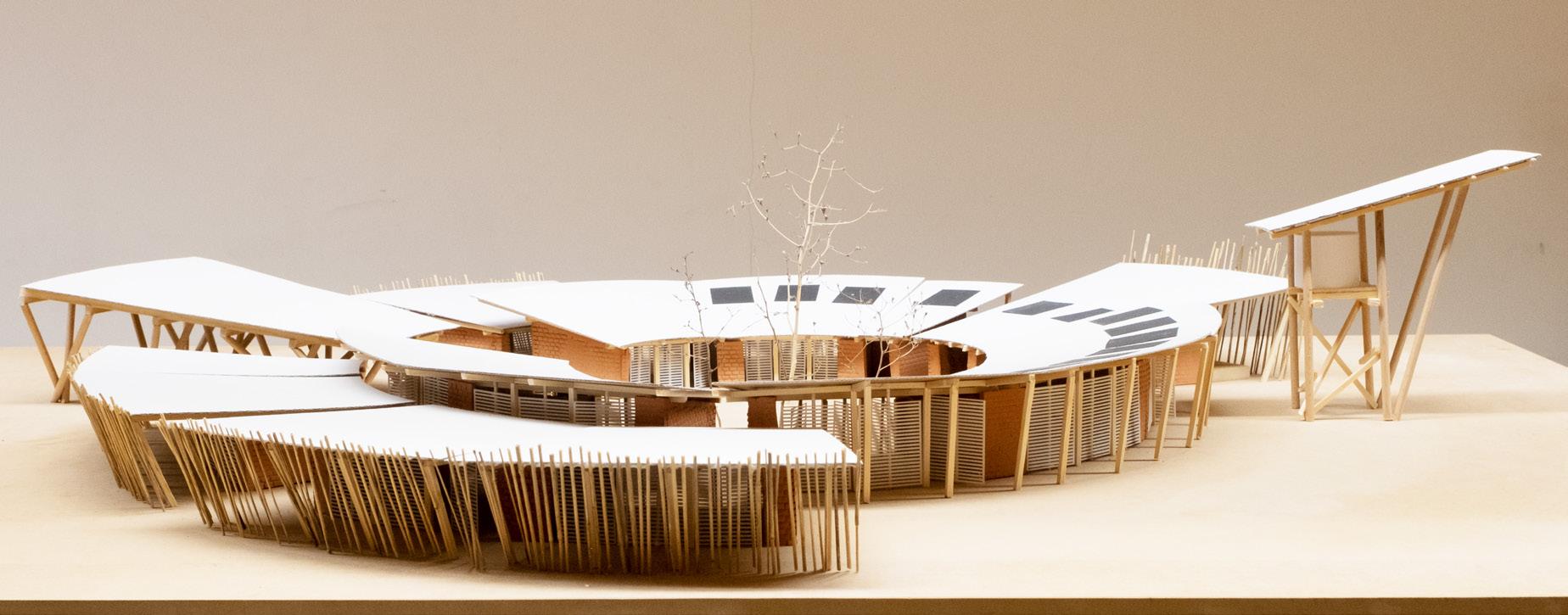
Evergroth was developed for an architecture competition focusing on designing a school in Senegal using locally made earth bricks, to be constructed by the community. Our design approach prioritized simplicity and community involvement. The school’s layout was based on a circular shape, chosen for its geometric simplicity and ease of construction with minimal tools. This shape could be accurately drawn using just two sticks and a piece of rope, making it accessible for local builders with limited resources.
1. Unity
2. Create paths
3. Multiply
4. Adjust for light and wind
CONCEPT:
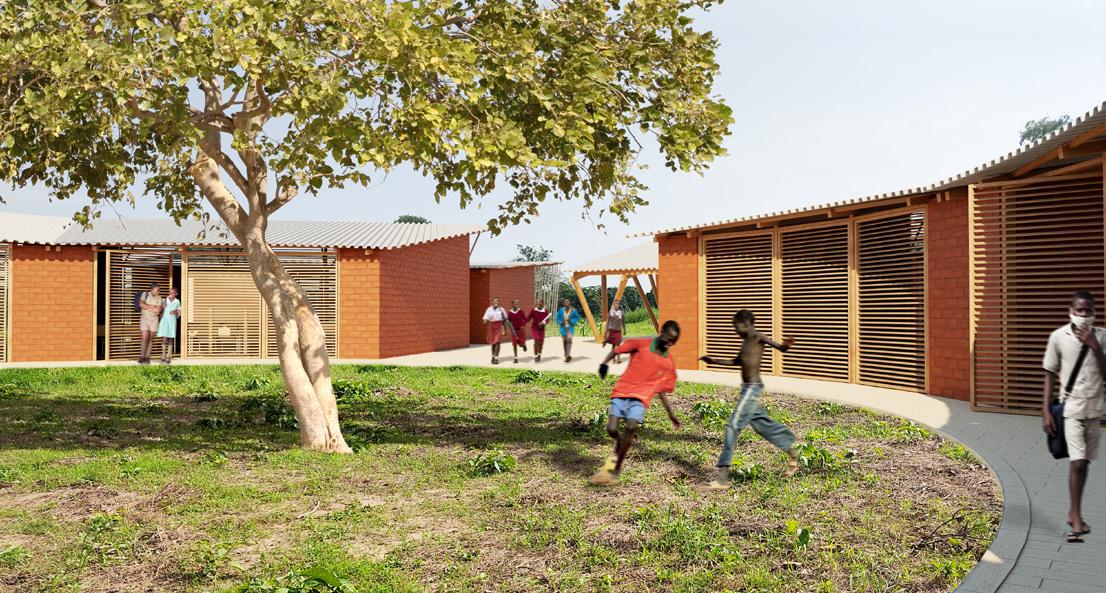
Inspired by the work of Francis Kéré, our design builds upon a circular layout, which we divided into smaller segments to create adequate pathways between the buildings. The core concept emphasizes expandability, enabling the continual addition of new structures and modules to meet changing requirements.
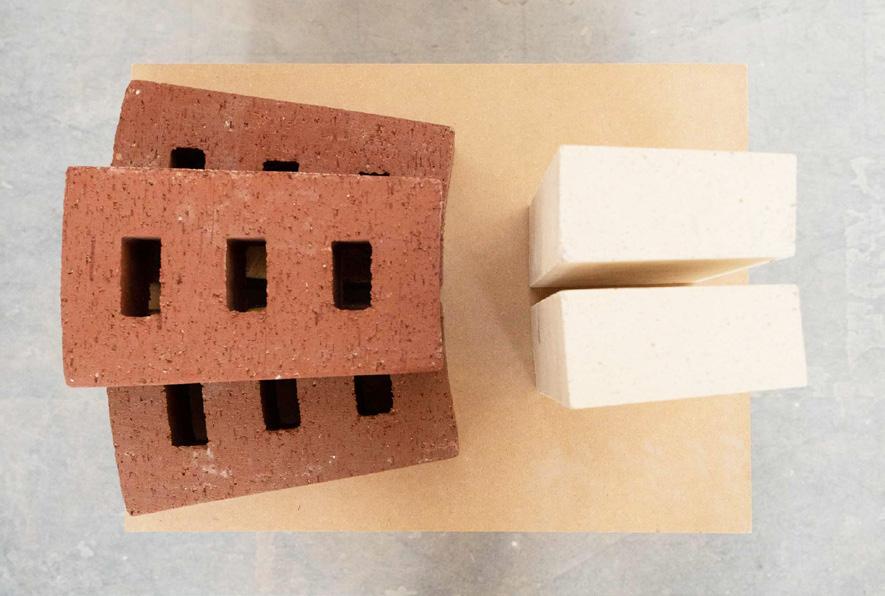
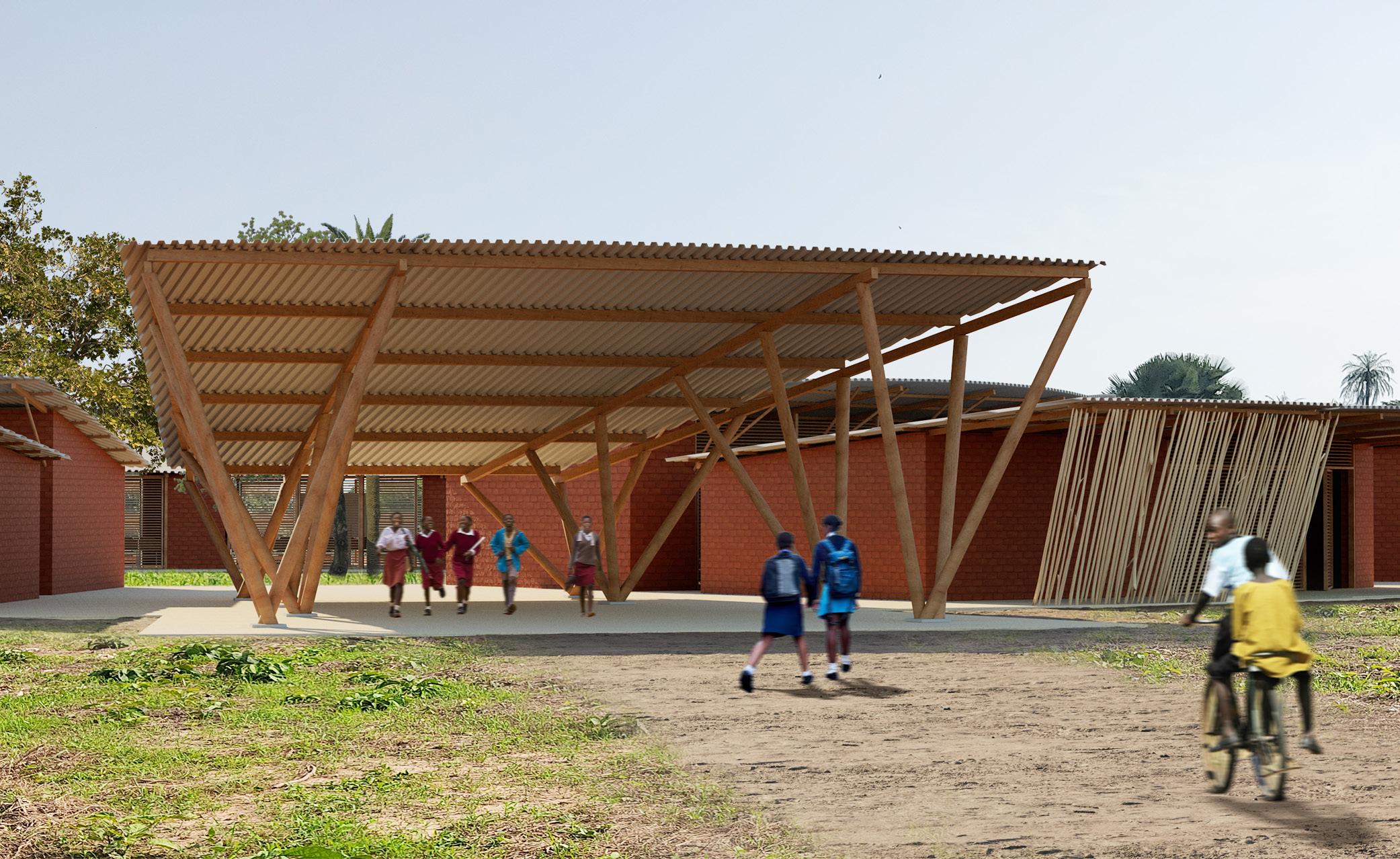
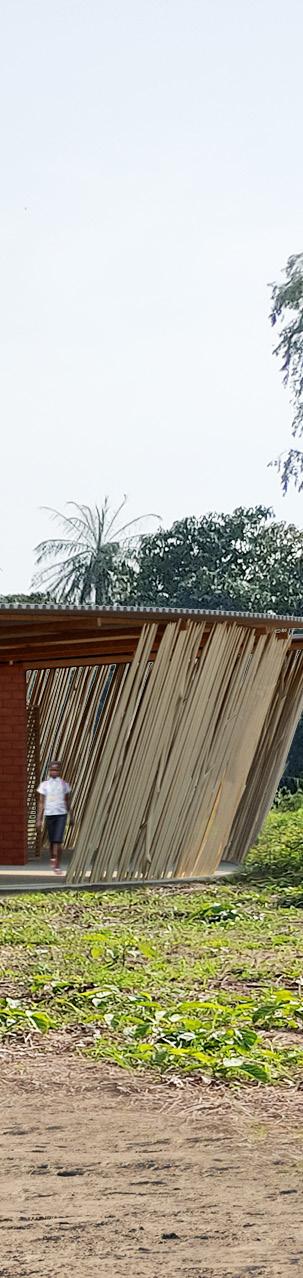
The design prioritizes practicality and sustainability by utilizing locally made rammed earth bricks for the walls and corrugated metal
for the roofs. The roof design features a tilt that channels air inward, compressing it for efficient cooling before exhausting it at the opposite end.
The modular nature of the design allows for flexible expansion, with additional classrooms, yards, bathrooms, or water towers easily integrated as needed. This approach supports a practical and responsive educational environment, tailored to the specific requirements of the school in Senegal.
Using models as a substitute inexperienced
CLIMATE:
The design was influenced by practical considerations to address local climate conditions and improve the functionality of the educational environment. The entrance features a large covered yard, providing shaded space for outdoor activities even during intense sunlight.
Additionally, the paths between classrooms are covered to offer protection from the sun, enabling comfortable movement throughout the school grounds. Wooden slats are used to further shade the paths and classrooms, allowing airflow while reducing direct exposure to sunlight.
MODEL:
The model building process for Evergroth was seen as a practical tool for guiding construction. Instead of relying solely on architectural plans, we used the physical model as a blueprint for building the school. This approach was chosen to improve accessibility, as not everyone is familiar with interpreting complex architectural drawings. By utilizing the model as a tangible reference, we aimed to simplify the construction process and empower local builders to participate more directly. This method bridged the gap between design and implementation, making the construction of Evergroth more inclusive and accessible to a wider range of individuals within the community.
models substitute for plans for inexperienced workers
U-Wert:
Bad Bodenaufbau:
- 8mm Fliesen
- Dichtkleber
EG Wandaufbau:
- Glasfasernetzt 1-2mm Maschenbreite
- 115mm KS Verblender Glatt
- 45mm Lithotherm Trockenestrich
- 30mm Hinterlüftung
- 20mm Gutex Thermofloor Trittschalldämmung
- 40mm Gutex Thermoflex Holzfaserdämmung
- 120mm Lignatur Hohlkastendecke mit Holzfaserdämmung
- 160mm Gutex Thermosafe Holzfaserdämmung
- 175mm KS Ratio Plansteine
U-Wert: 0.186
Bodenaufbau:
- 4mm Kork
- 8mm OSB
EG Bodenaufbau:
- 45mm Lithotherm Trockenestrich
- 20mm Gutex Thermofloor Trittschalldämmung
- 4mm Kork
- 8mm OSB
- 120mm Lignatur Hohlkastendecke
- 45mm Lithotherm Trockenestrich
- Trennlage (Folie)
- 250mm STEICOtherm Holzfaserdämmung
- Bitumenbahn
Bodenaufbau über Fahrradgarage:
- 200mm Stahlbeton
- 4mm Kork
- PE Folie
CONTACT:
- 8mm OSB
- Schotter
Adress: Leon Krug, 1 Rue de Tlemcen - 75020 Paris, France
- 45mm Lithotherm Trockenestrich
U-Wert: 0.148
- 20mm Gutex Thermofloor Trittschalldämmung
E-Mail: leon@j-krug.com
Phone: +49 1752578036
- 120mm Lignatur Hohlkastendecke mit Holzfaserdämmung
U-Wert: 0.36
Aussenbereich:
- 100mm Pflastersteine Basalt "SANDOKAN ELEGANCE"
EG Wandaufbau:
- 50mm Bettung verdichtet (Körnung 5mm)
- 200mm Schotter
- 115mm KS Verblender Glatt
- 30mm Hinterlüftung
- 40mm Gutex Thermoflex Holzfaserdämmung
- 160mm Gutex Thermosafe Holzfaserdämmung - 175mm KS Ratio Plansteine