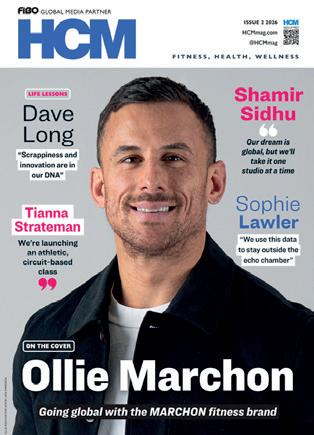
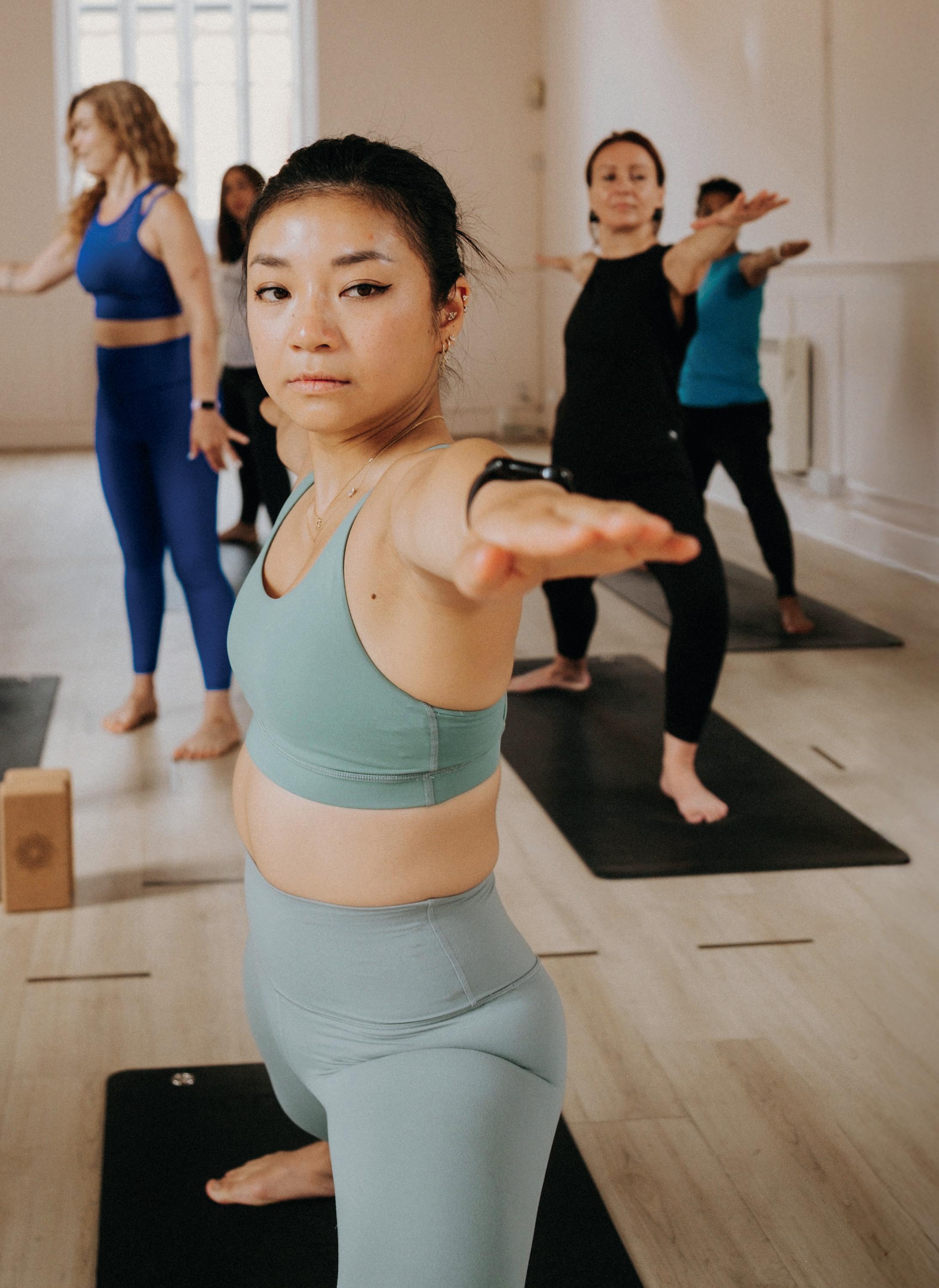
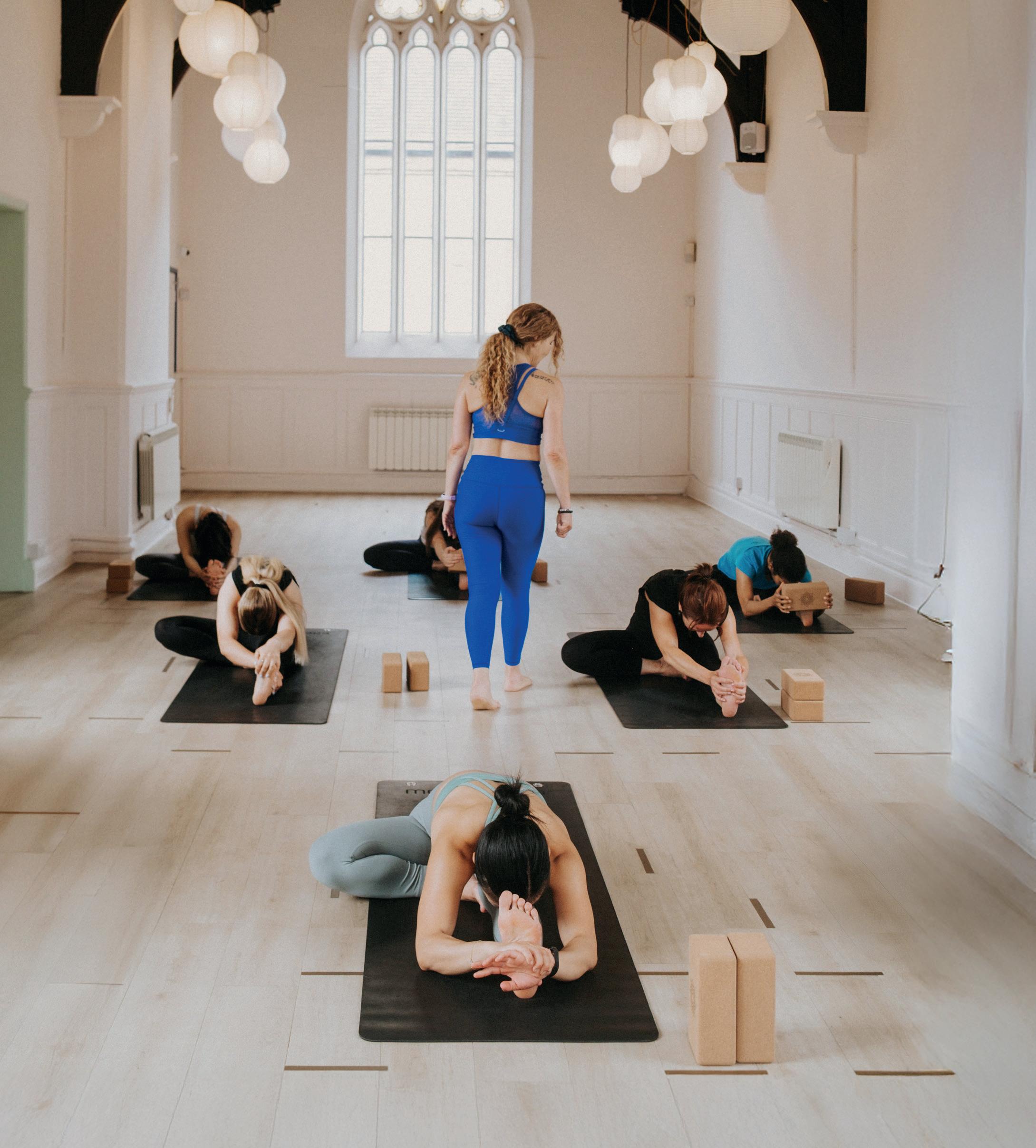
Our dream is global, but we’ll take it one studio at a time
Tianna Strateman
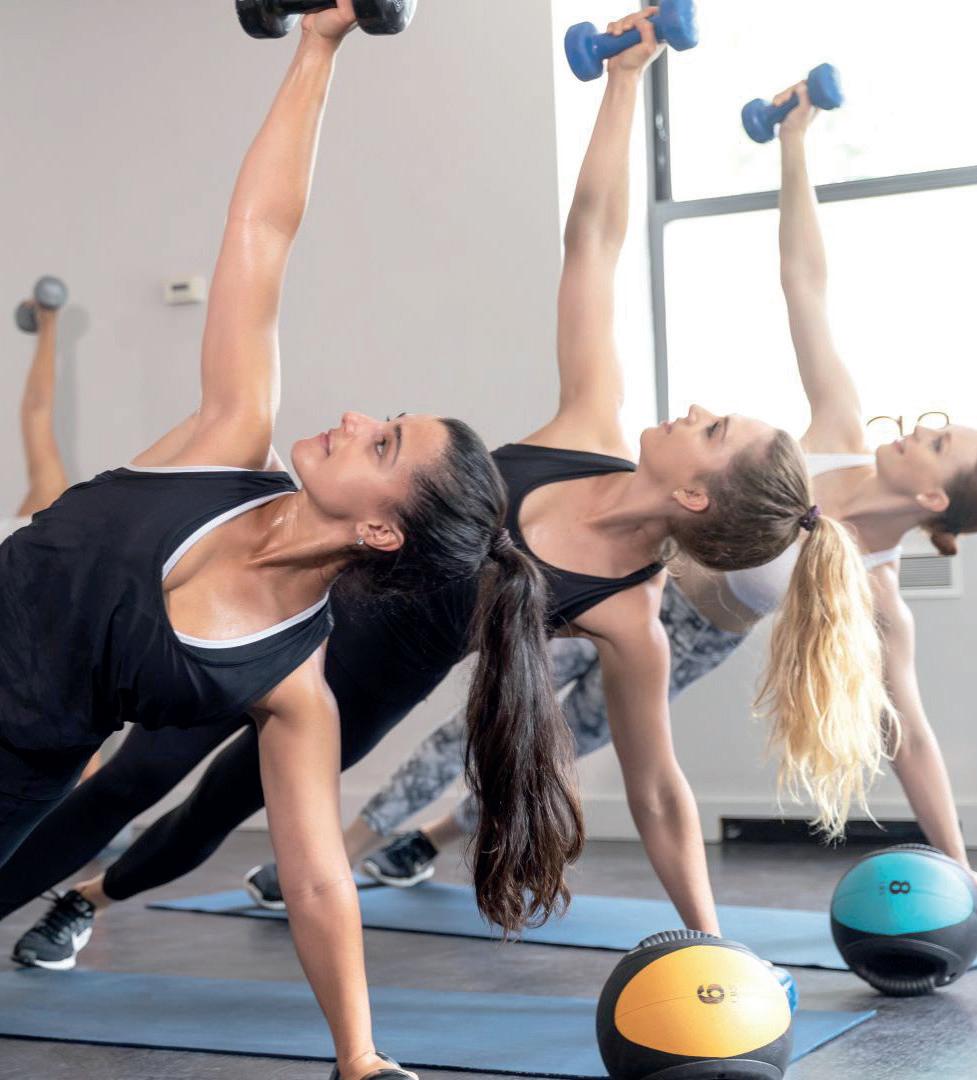
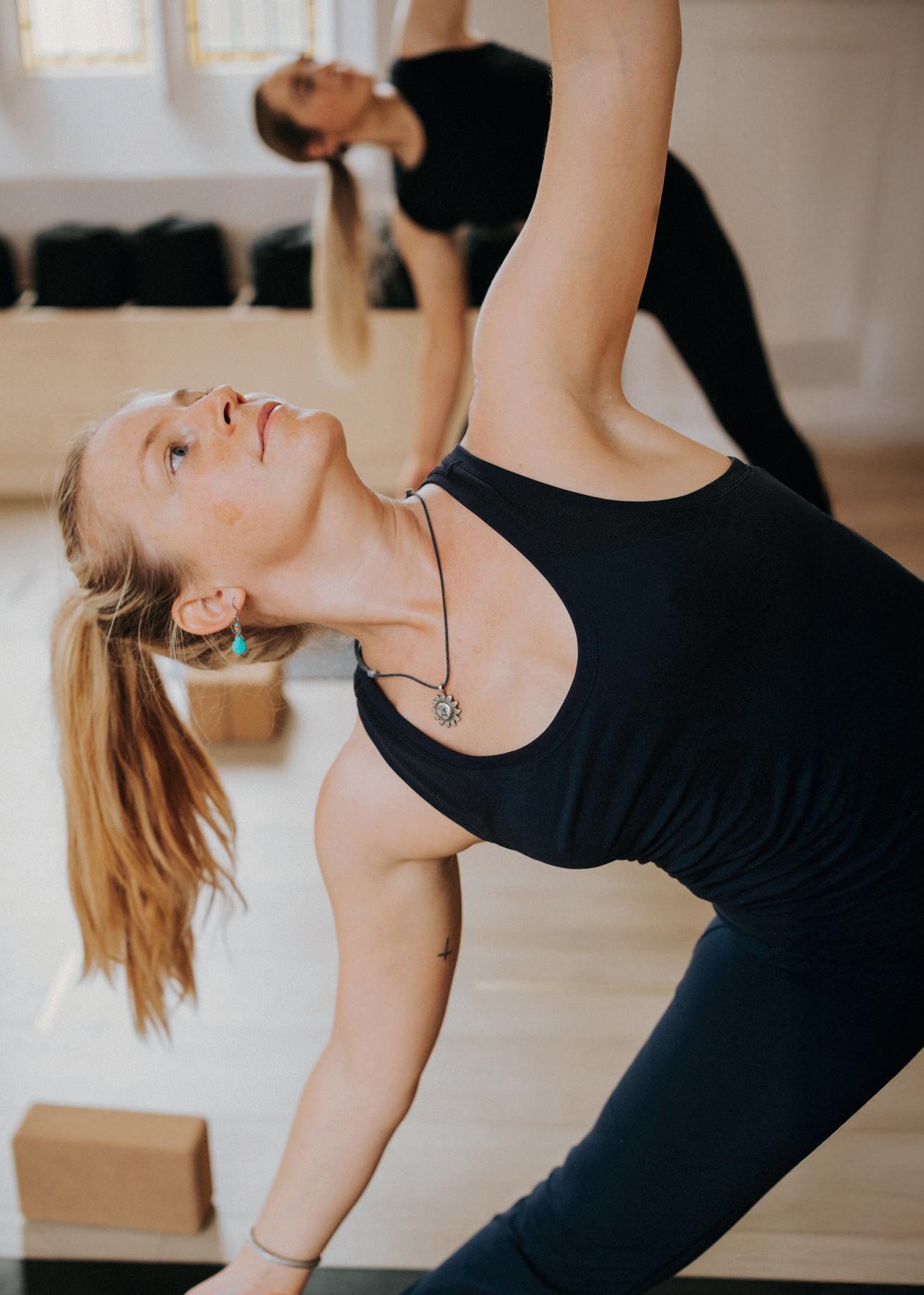
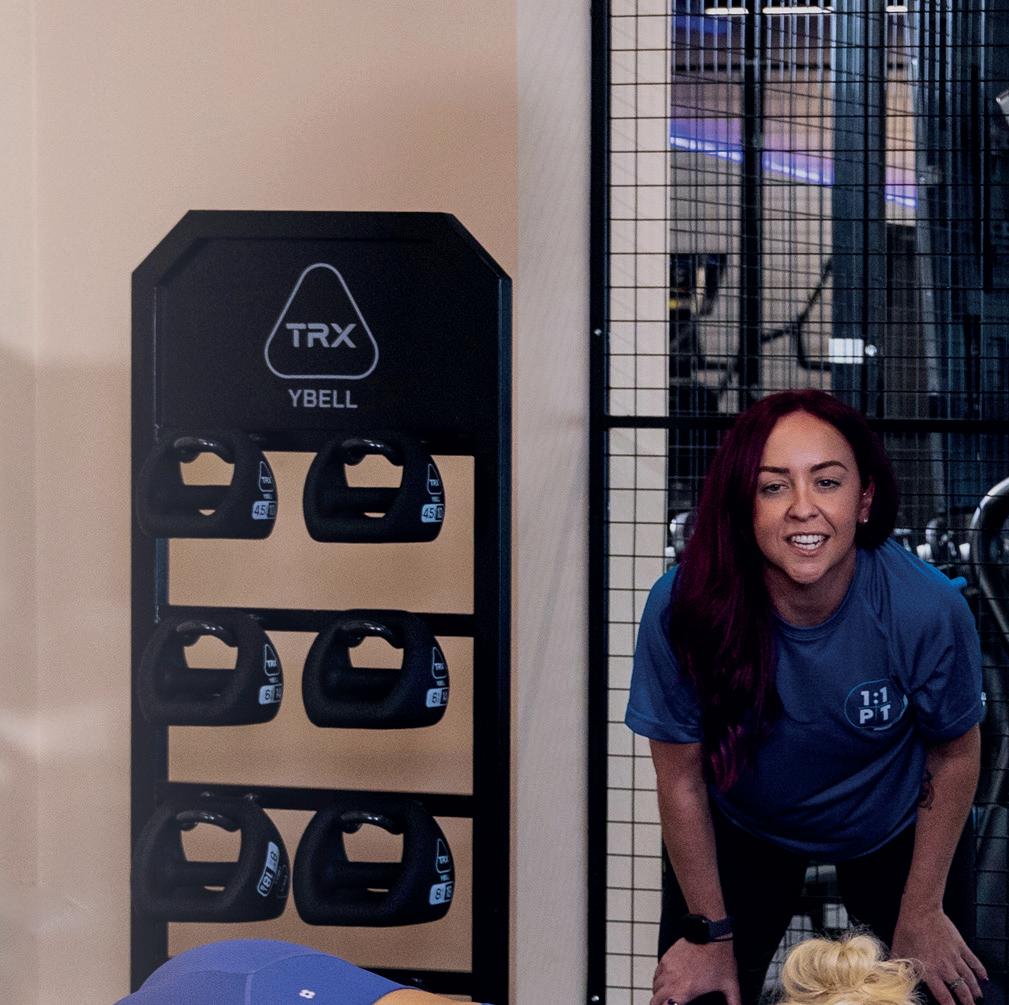
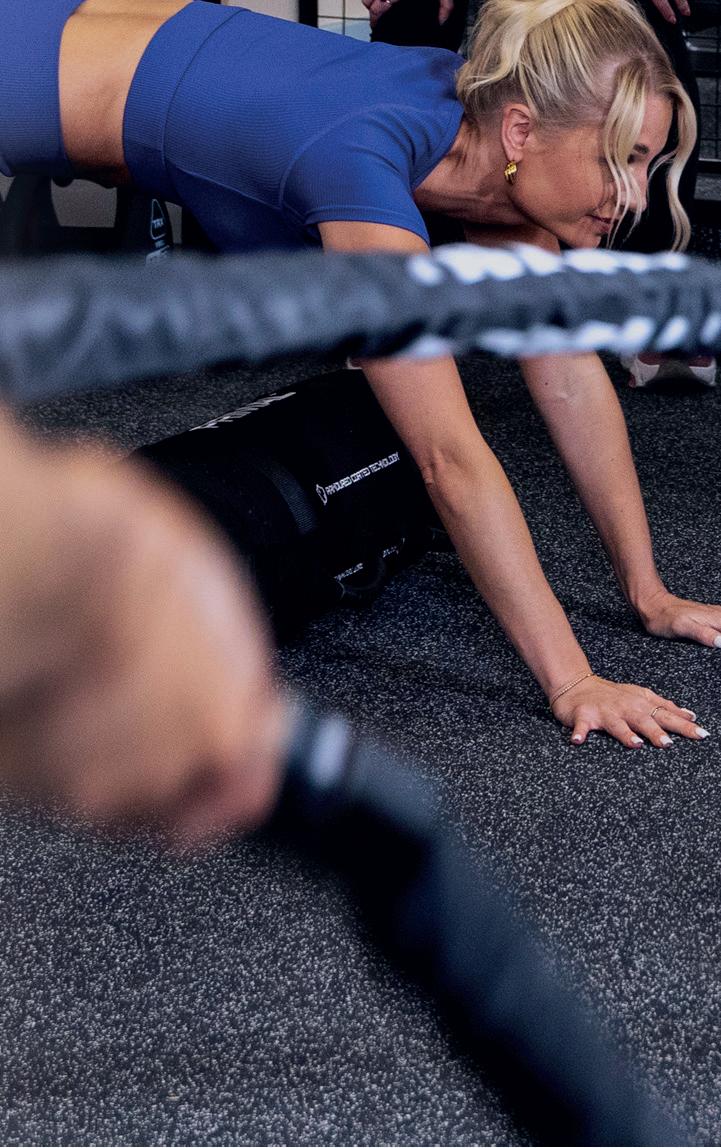
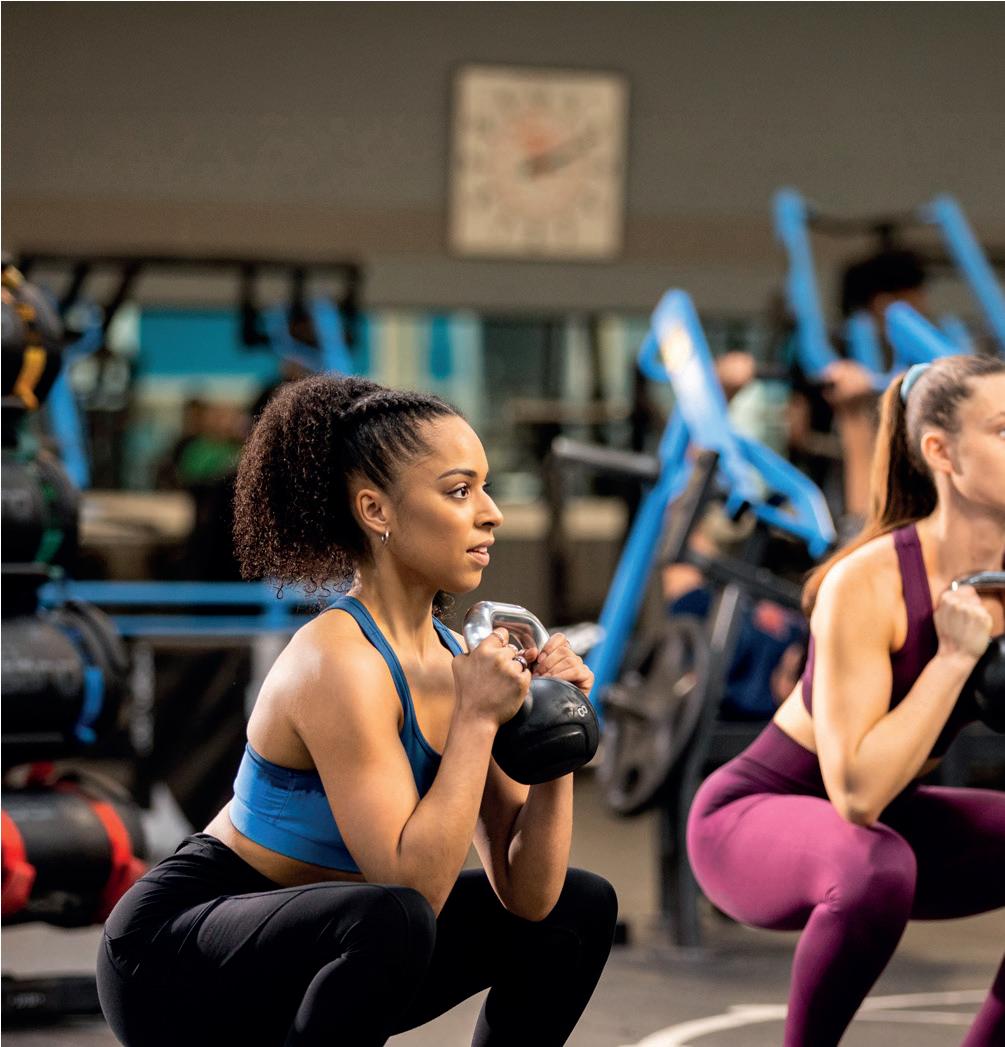
We’re launching an athletic, circuit-based class
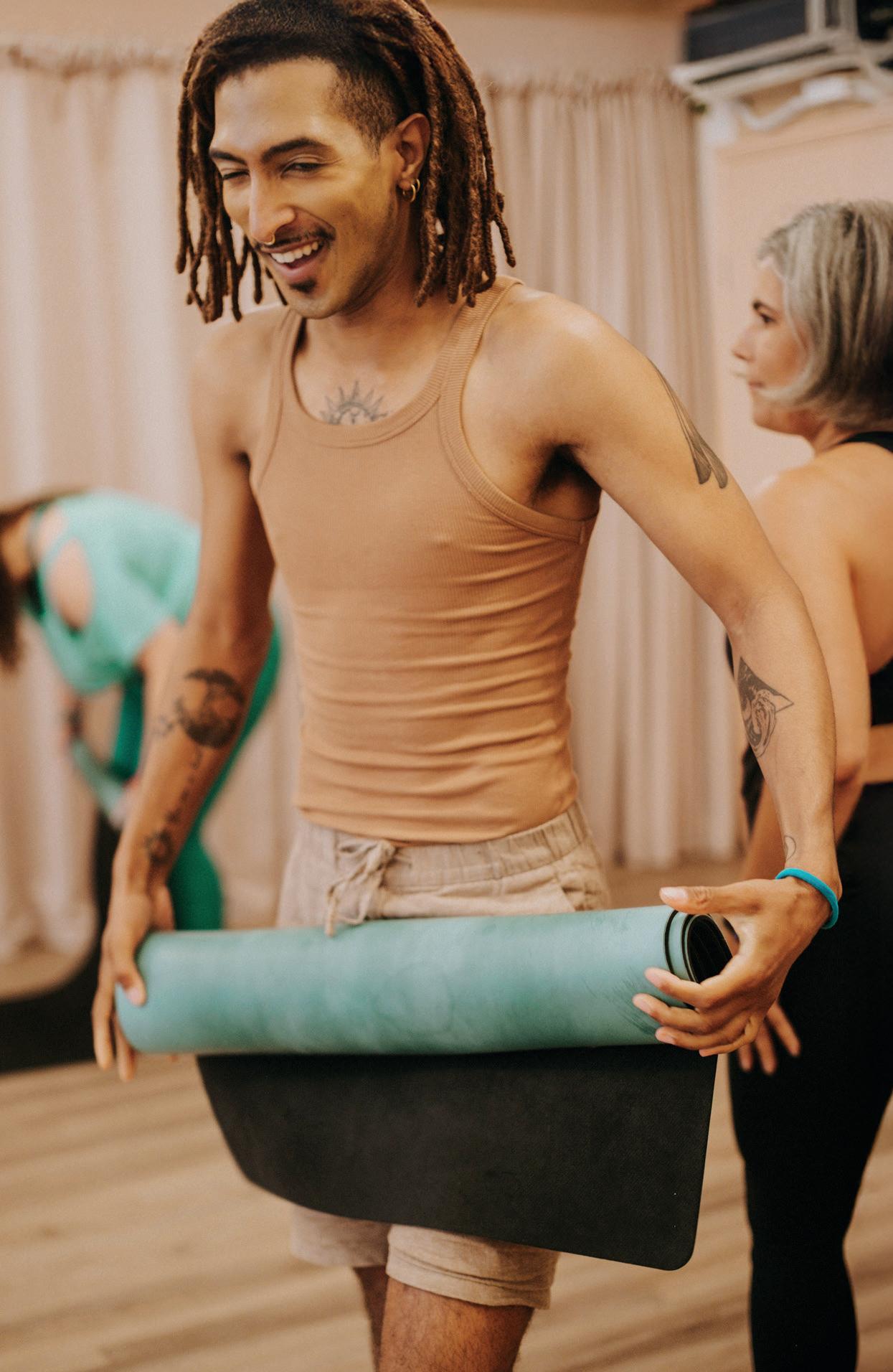
“We use insight to stay outside the echo chamber”
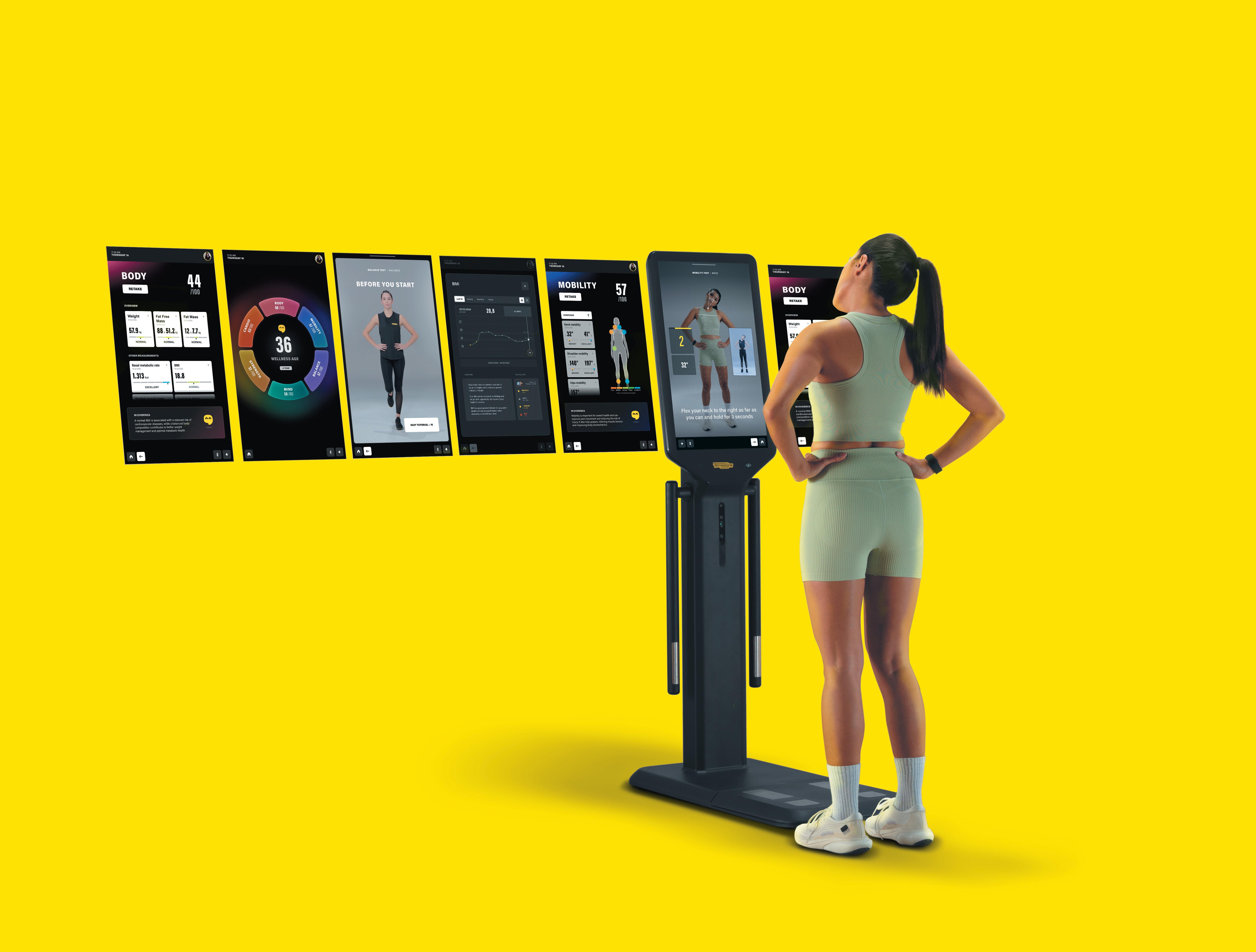
Technogym
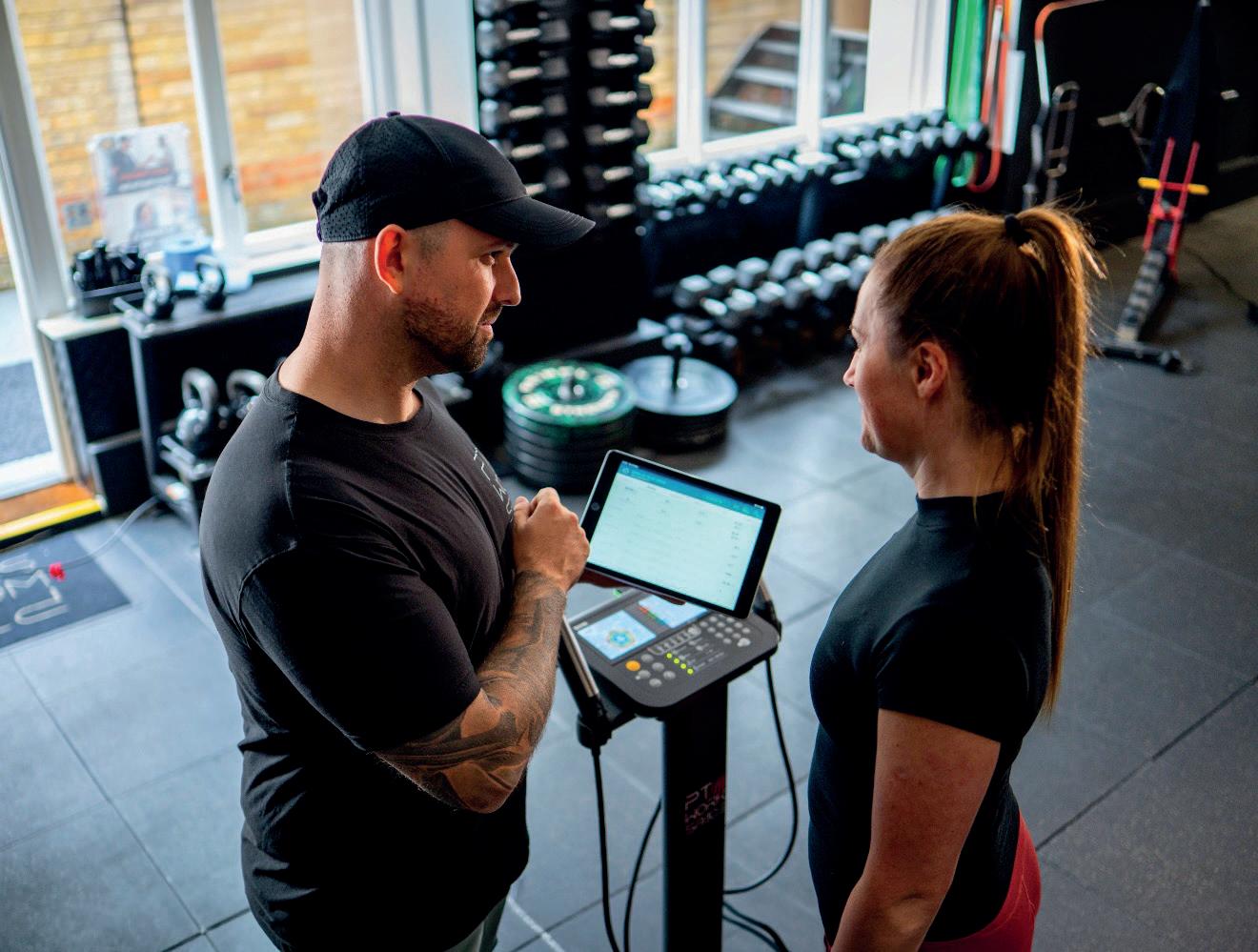
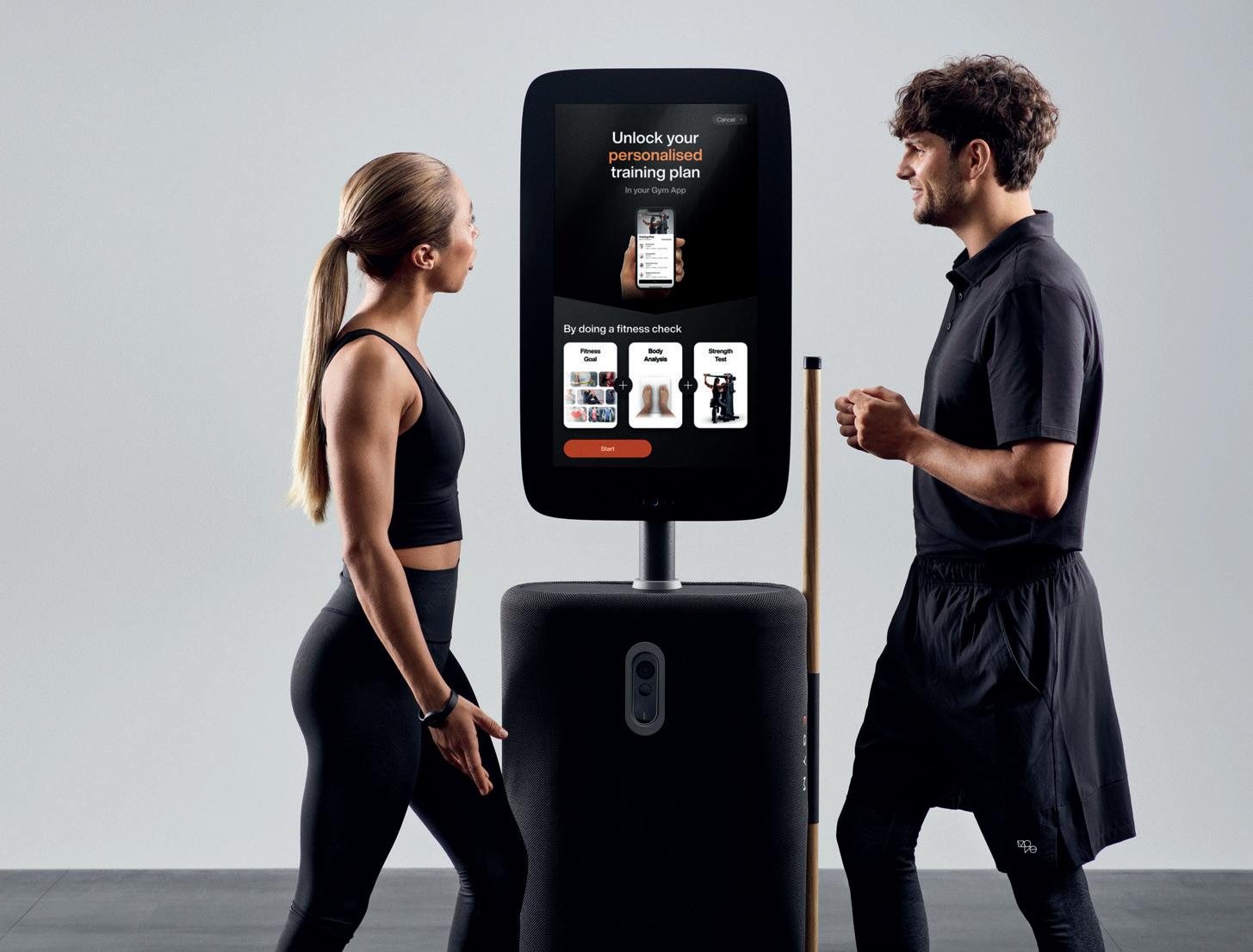
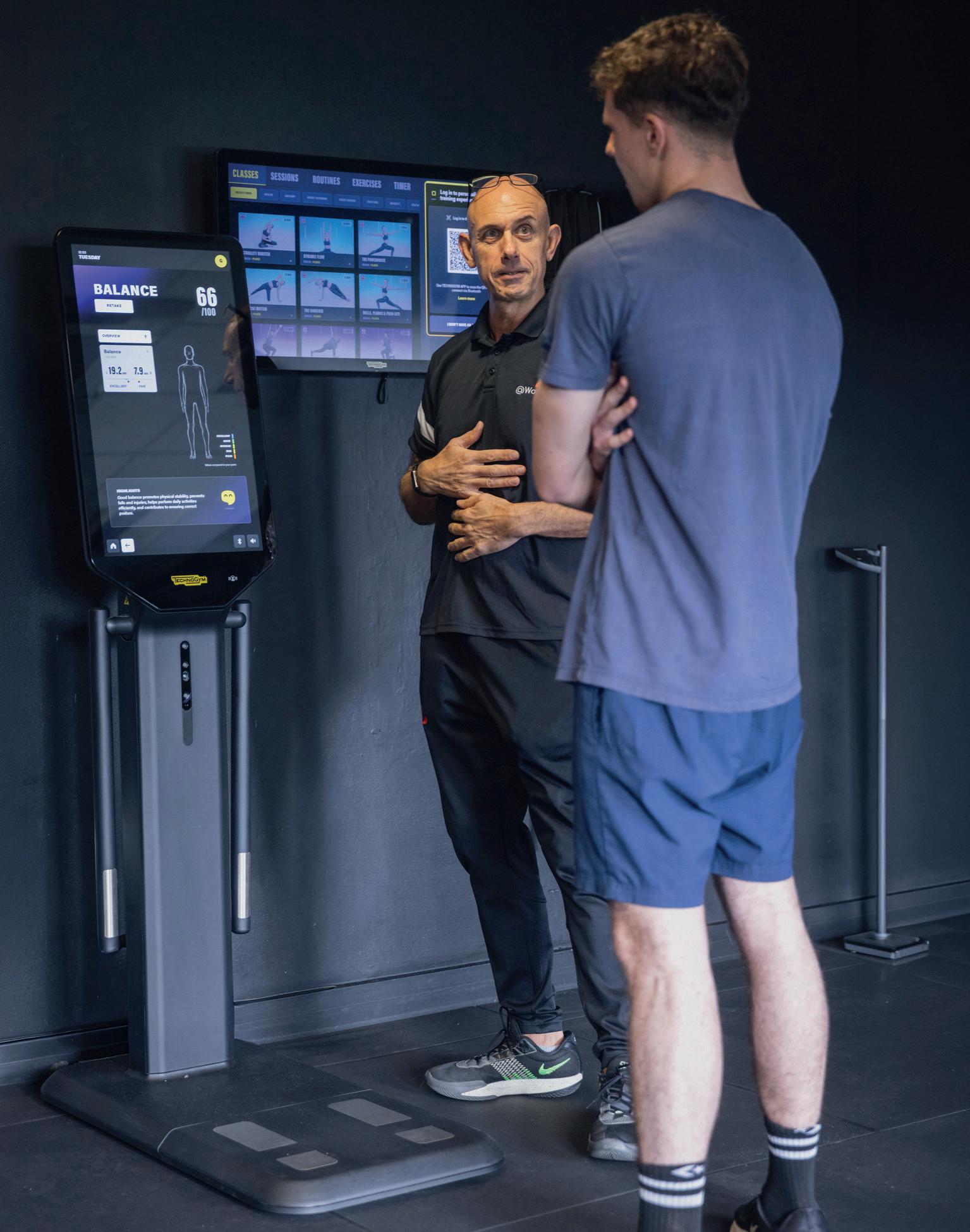
PHYSICAL AND COGNITIVE ASSESSMENT:
MIND
MOBILITY
BALANCE
STRENGTH
CARDIO
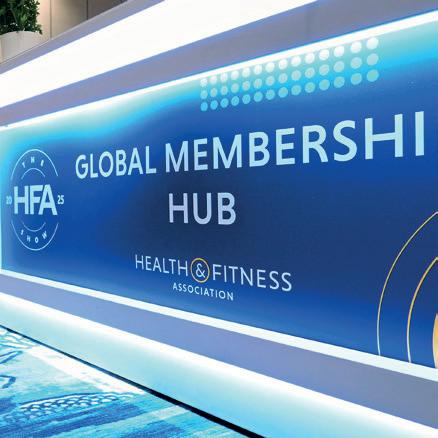
STRONGER TOGETHER
Uniting the Industry to Advance Global Health
Join the leaders in the health and fitness industry for networking, education, and product innovations!
10,000+ Attendees 150+ Speakers
400+ Exhibitors
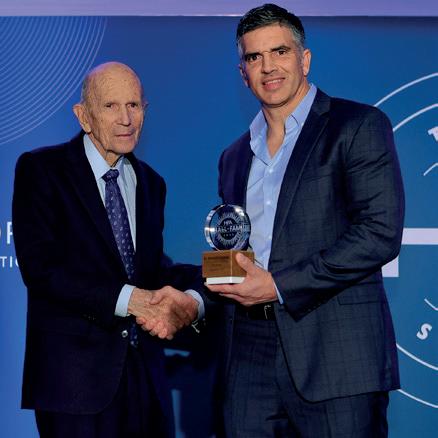
Arrive on 15 March to attend the Health & Fitness Hall of Fame Induction Ceremony!
Register Today! healthandfitness.org/show
16–18 March
San Diego, CA
IDefining value
A new report commissioned by Total Fitness has blown the lid o the way the sector segments its o ering, showing that consumers have their own views on value that often don’t align
n this edition of HCM , we’re honoured to have worked with Total Fitness to publish a report on a recent consumer insight study commissioned by the company’s CEO, Sophie Lawler.
The study – called The Voice of the UK Gym Customer – was created in partnership with CIL and is based on 75,000 primary data records. It ranges widely, examining issues and opportunities (page 66).
In a gracious move, Total Fitness has made this insight available as a ‘gift’, to enable other operators to benefit.
One of the most fascinating findings is that consumers struggle to ‘rank’ their health club or gym against the standard industry categorisations of low-cost, midmarket and premium. This shows how far adrift we may be in our thinking about what’s being offered, how it’s being charged and also how it’s valued by consumers.
Looking at members of low-cost clubs, only 33 per cent of the sample classified their club in the low-cost category. A further 29 per cent said they viewed their club as mid-market and a massive 38 per cent said they view their club as being in the premium category.
The fact that more than a third of low-cost members believe they’re getting a premium offering shows a lack of awareness among consumers of the scale and scope of the sector – perhaps not many are aware of the extent of the services offered in the premium sector, because these clubs tend to be clustered in cities or are inaccessible to the majority of the population.
The other interpretation is that low-cost health clubs and gyms are reaching such high standards, that consumers simply view them as ‘premium’ when compared with their experience of premium services in other sectors; such as retail, travel, health or hospitality.
In the mid-market, 54 per cent of members view their club as premium, 29 per cent ‘accurately’ say it’s mid-market and 17 per cent consider it to be a low-cost offering, indicating that the expectations of consumers need to be better understood when it comes to calibrating investment.
Perhaps this is a sign that premium operators have room to introduce a more expensive tier of membership?
In the premium sector, members seem clearer about what they’re getting, with 70 per cent saying their club is premium. Only 20 per cent view it as mid-market and 10 per cent as low-cost.
Assuming this 10 per cent are wealthy enough to view premium prices as being cheap, perhaps this is a sign that premium operators have room to introduce an additional and more expensive tier of membership.
I’d urge you to dig into this report, which has been so generously shared and we’d very much value your feedback by email for our letters page.
Liz Terry, editor lizterry@leisuremedia.com
Consumers are largely unaware of industry categories
ANDREI MELINTA/SHUTTERSTOCK
PHOTO: JACK EMMERSON
CONTENTS
Uniting the world of fitness
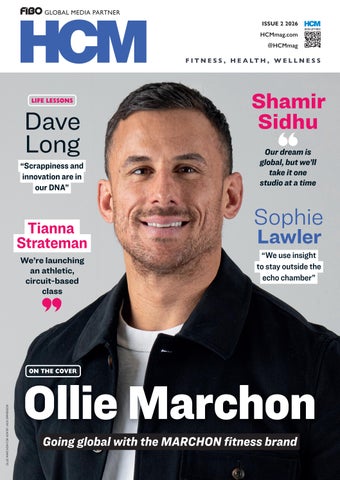
46 Ollie Marchon
05 Editor’s Letter
As insight reveals consumers struggle to classify health clubs, Liz Terry asks if we need to update our industry definitions
12 HCM Forum
UK Active’s work with Beano Brain casts light on Gen Alpha, and what the rise of GLP-1 use means for health clubs
16 HCM Zeitgeist
Psycle introduces the Lagree Megaformer and PureGym’s Clive Chesser talks to the BBC about his cancer diagnosis
20 HCM news
Everlast Gyms teams up with Nike and DLL sues the ‘real’ David Lloyd
24 Fit Tech news
Will Dean launches CoachCube AI and Nesa XSignal does a nervous system reset
26 HCM buzz
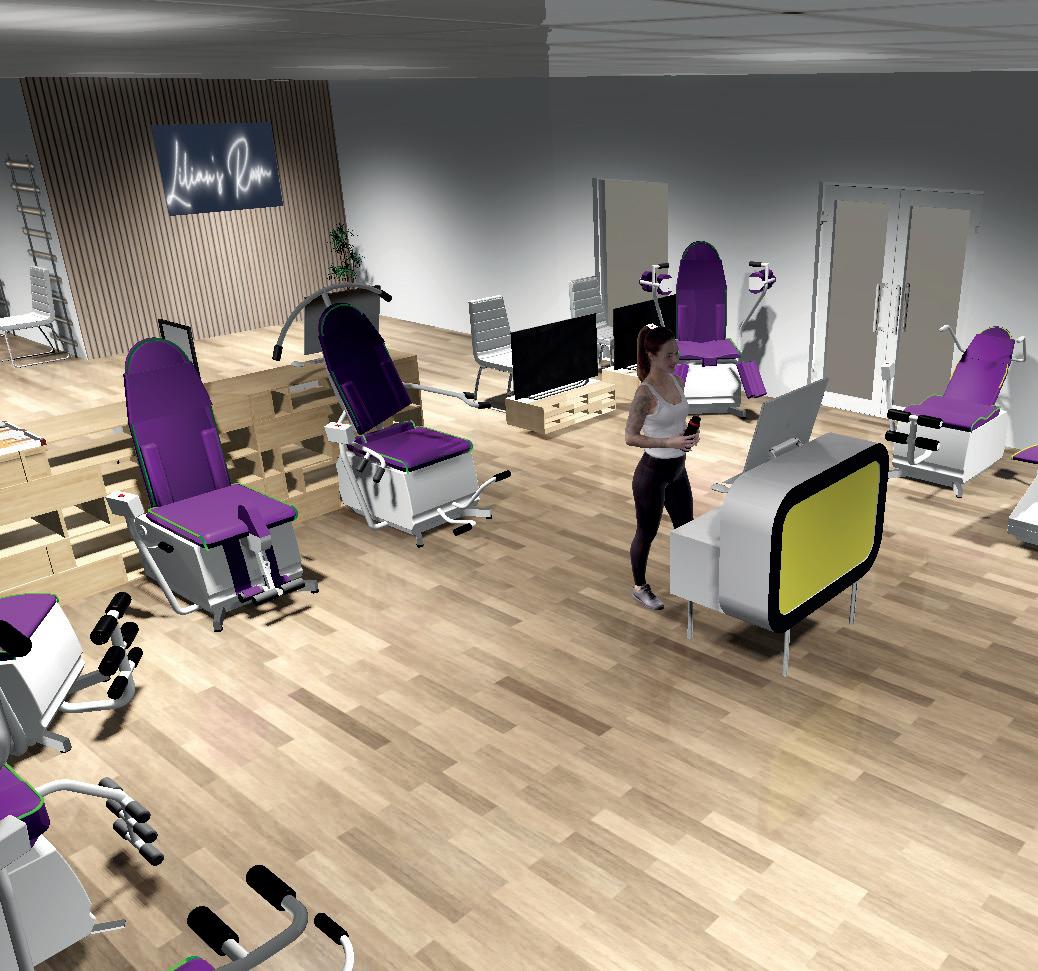
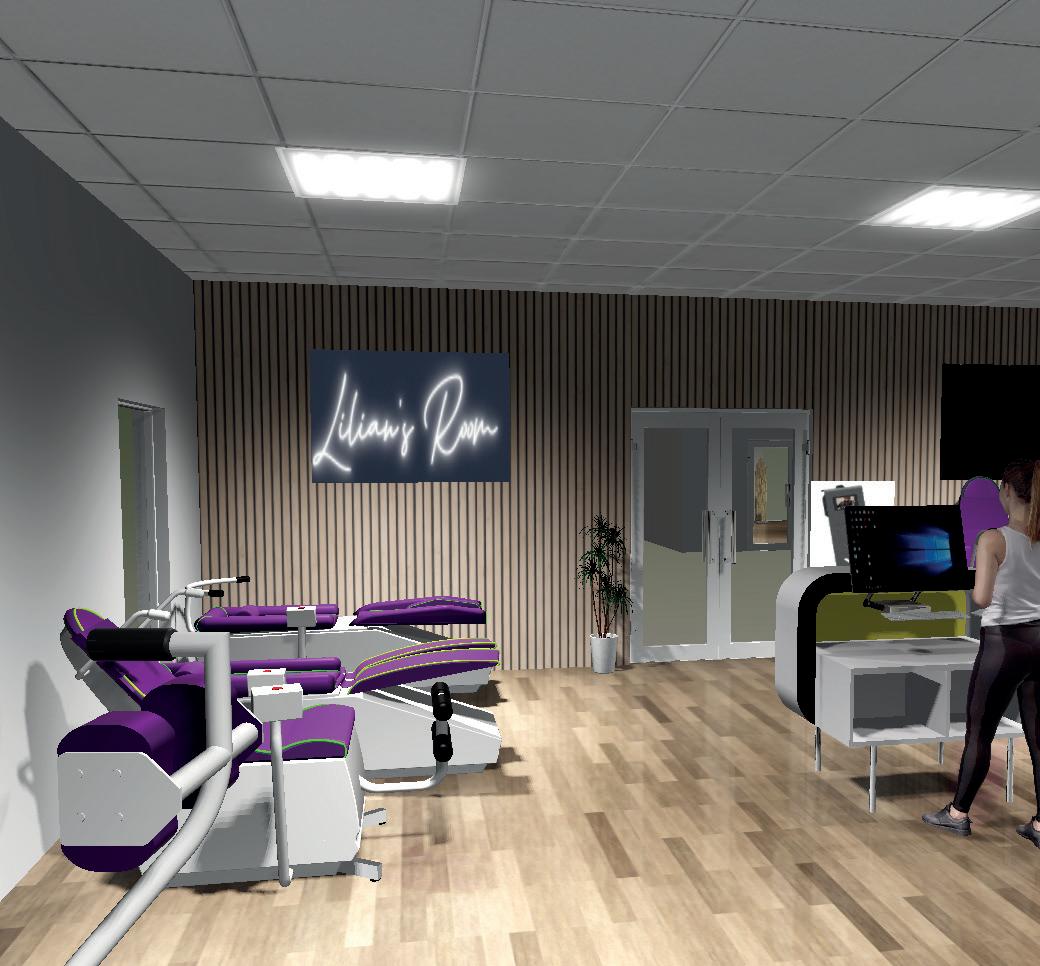
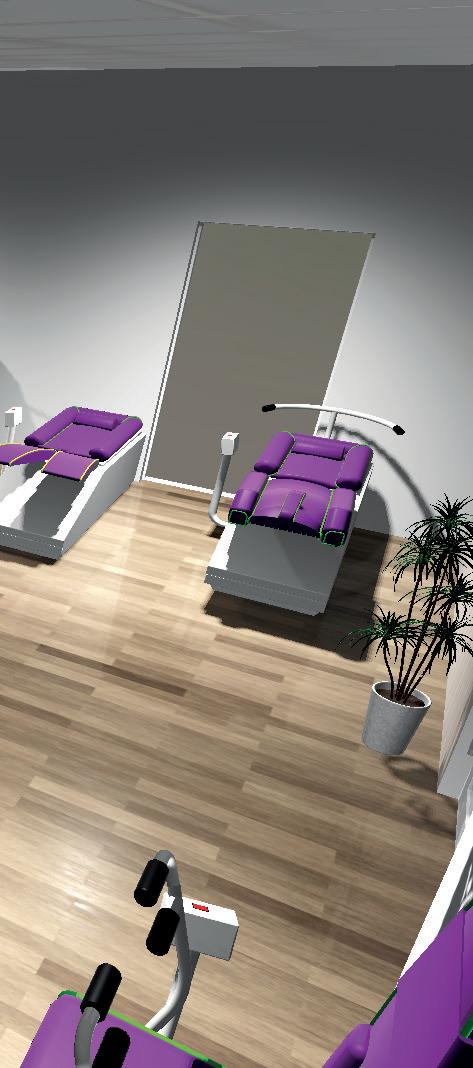
Hyrox launches Youngstars, Six Senses at The Whiteley counts down and Wave Active opens Lilian’s Room
32 HCM Collabs
Fitness First partners with Healf and The Well HQ creates pelvic health protocol
34 HCM people
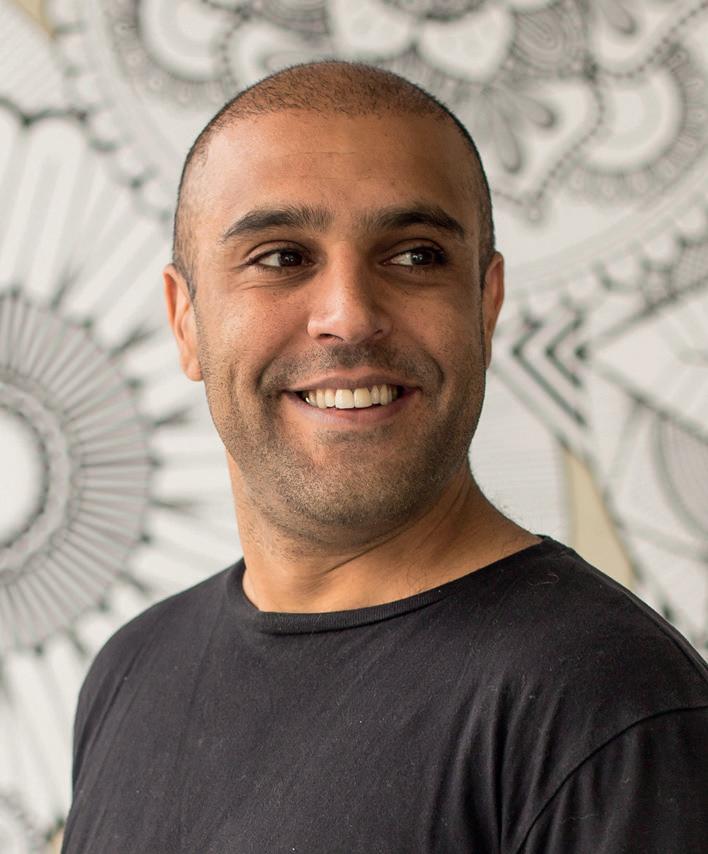
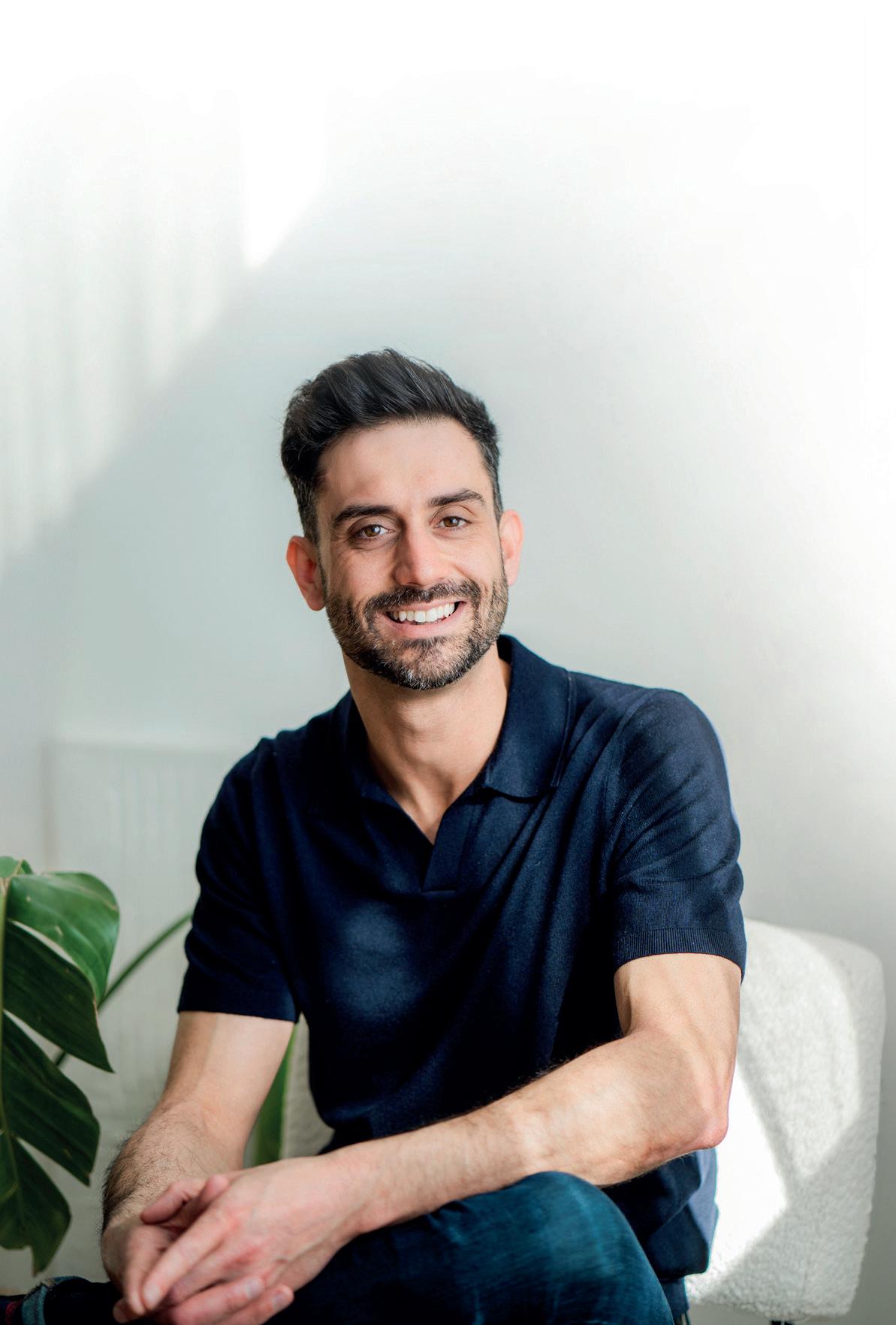
Shamir Sidhu
The founder and CEO of MoreYoga talks to HCM about making high quality yoga affordable and accessible for all
40 HCM people
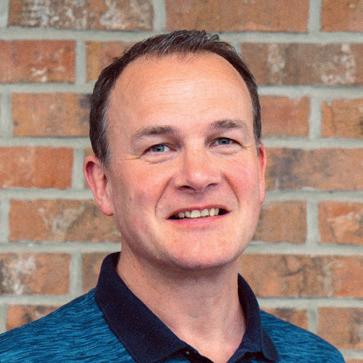
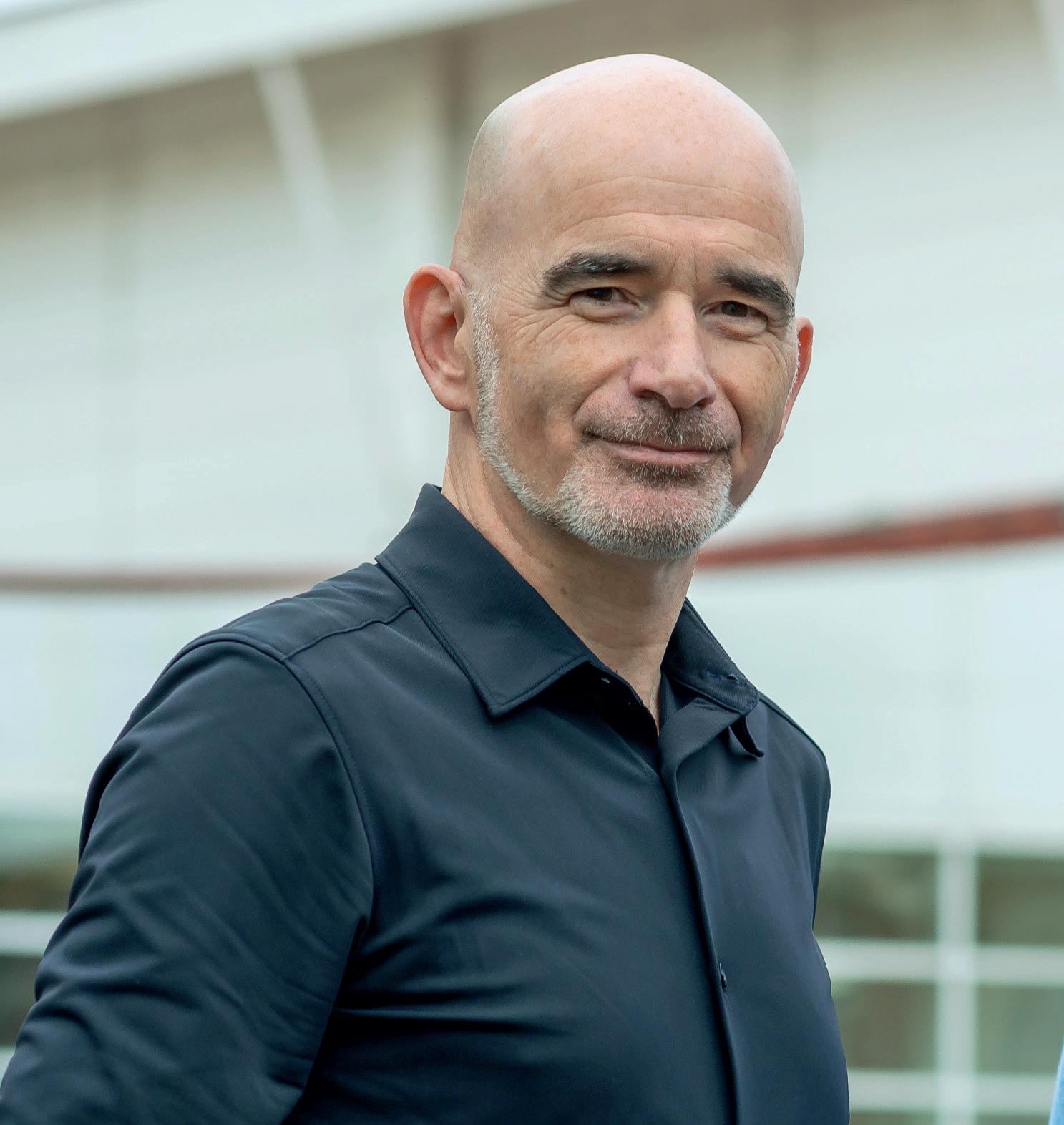
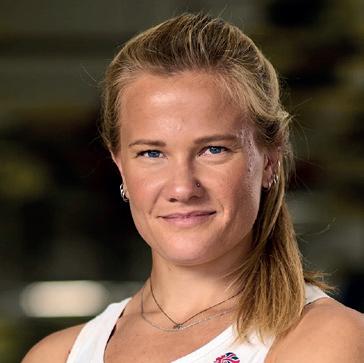
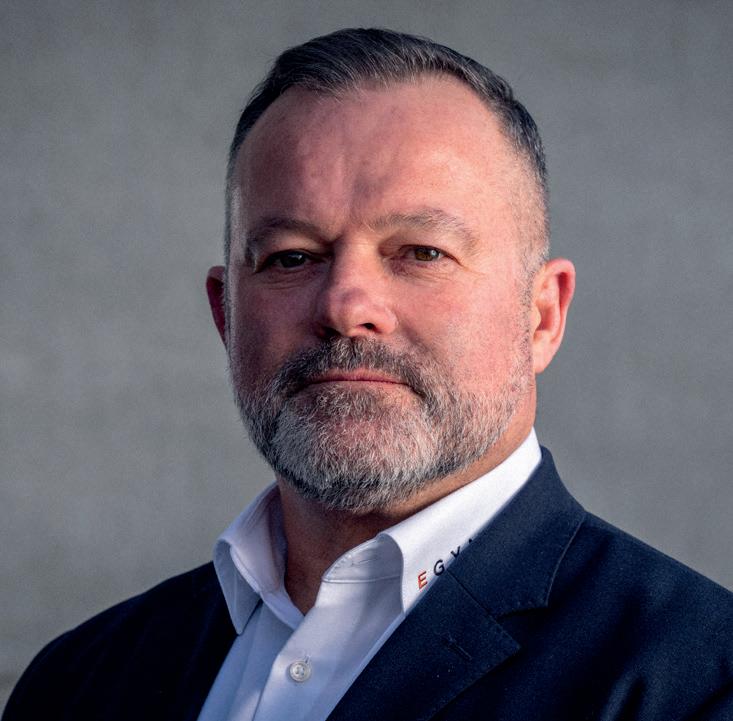
Tianna Strateman
The president of Club Pilates outlines plans for expansion and explains the launch of the athletic-based Circuit concept
46 Interview
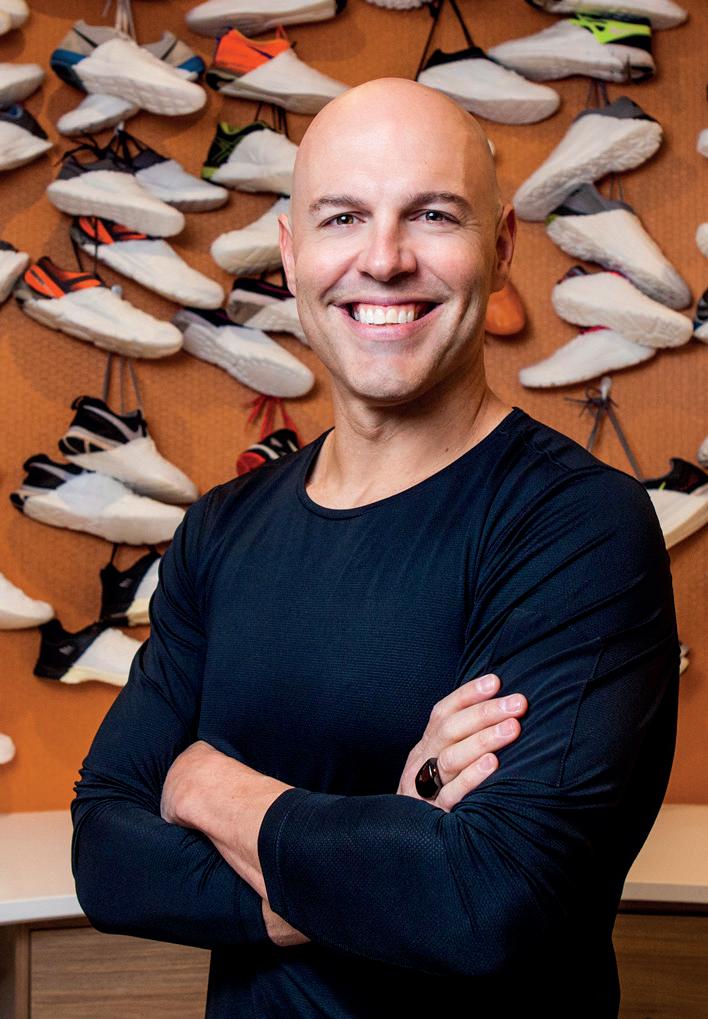
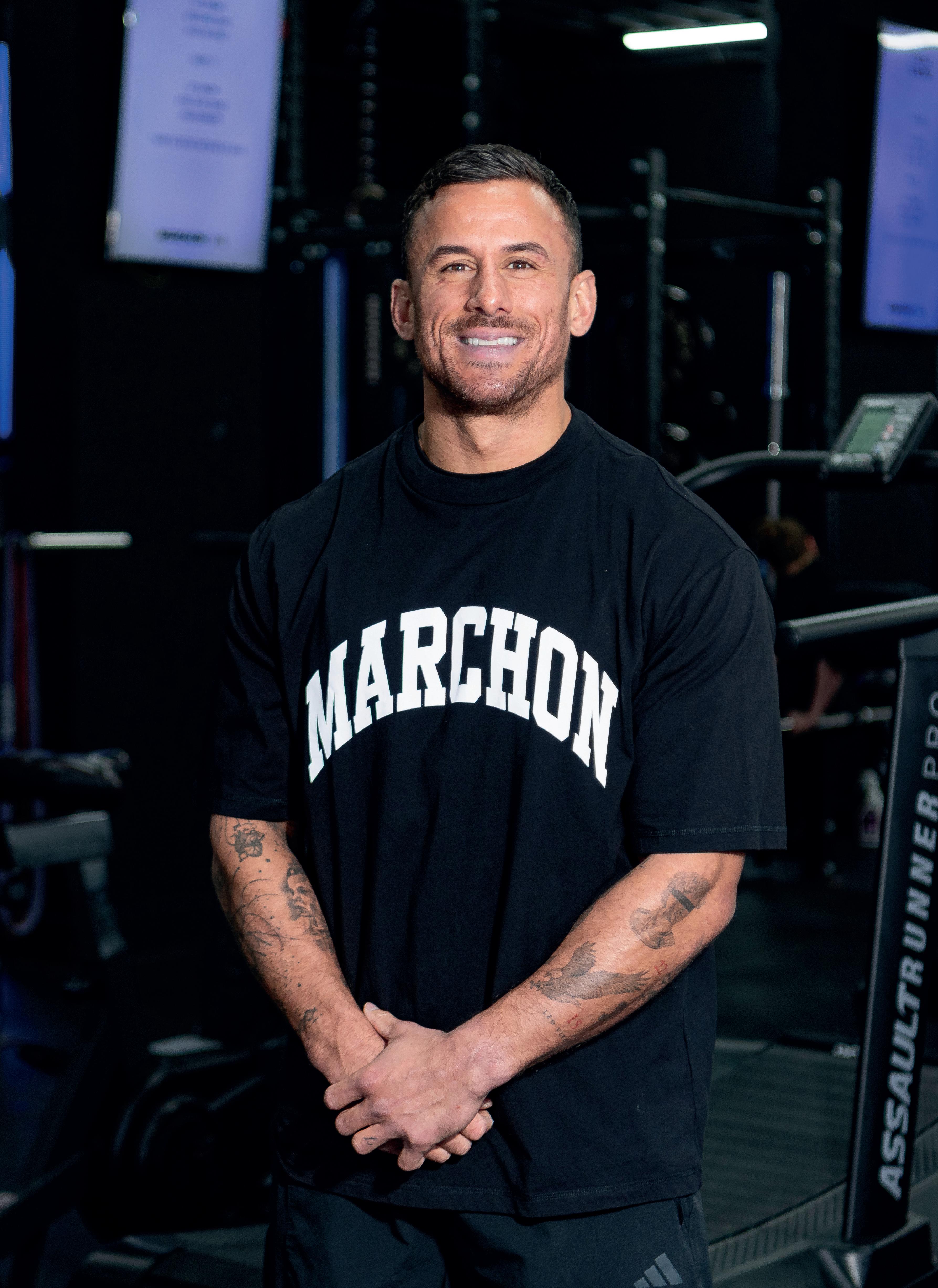
Ollie Marchon
From pro rugby to PT to building a global fitness brand, the founder of MARCHON talks to Kate Cracknell about the journey so far
60 Everyone’s talking
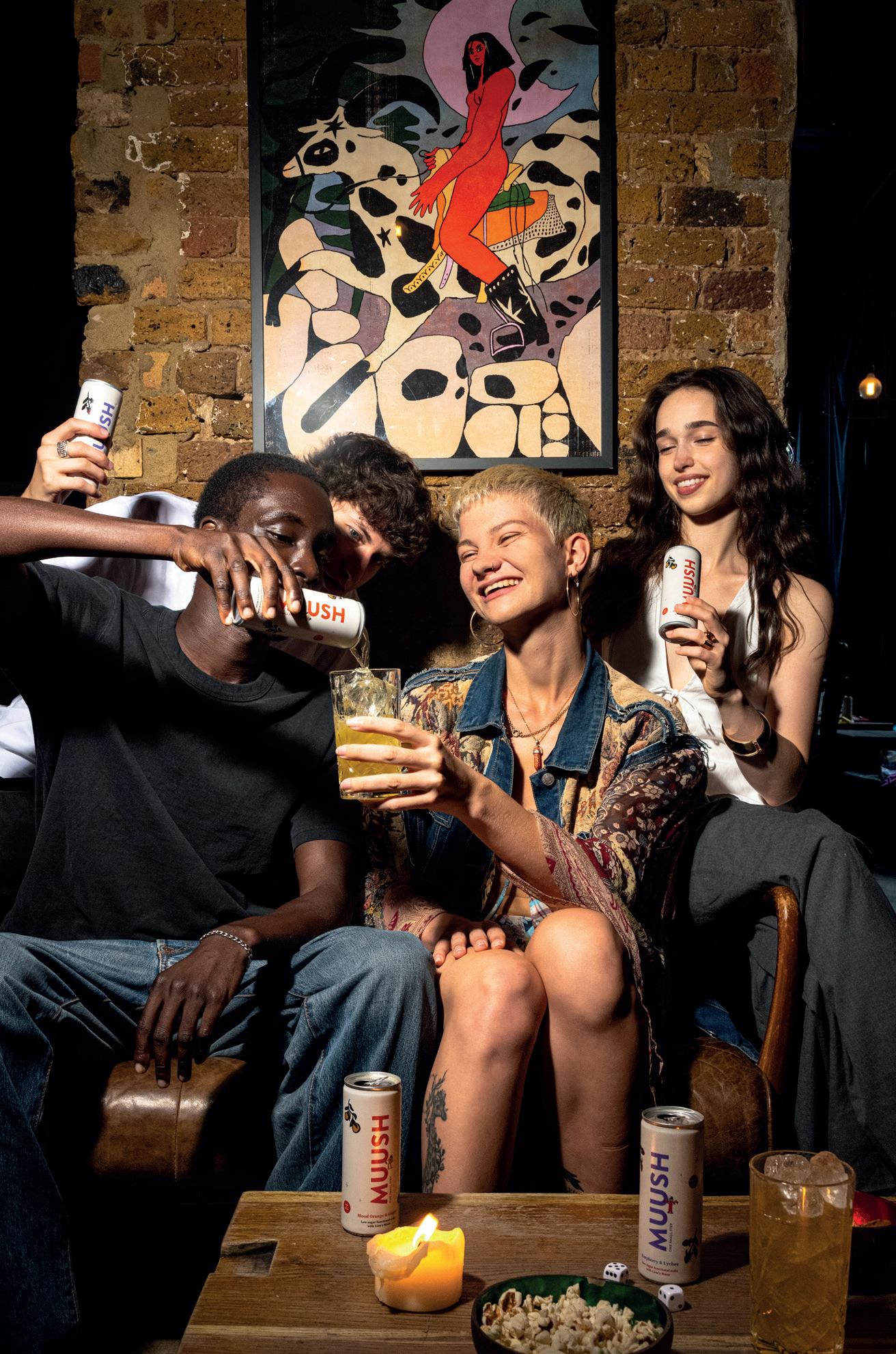
Sober curious
As the sober curious movement grows, how can health clubs best support members wanting to make this shift?
JACK EMMERSON
Health assessments
66 Critical friend
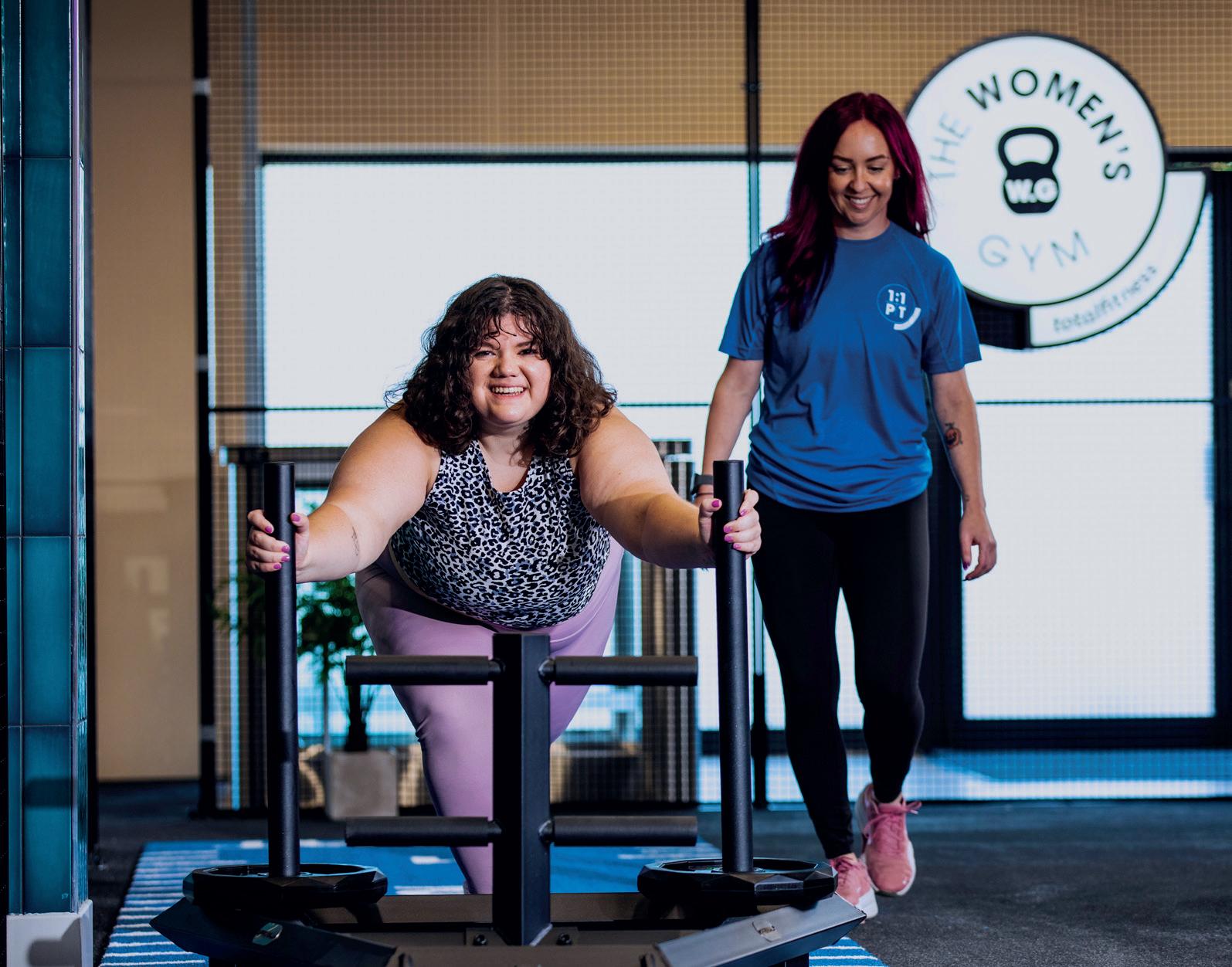
A Total Fitness report finds the UK health club sector has headroom for growth
74 Life Lessons
Dave Long
The co-founder of Orangetheory Fitness looks back on past hurdles and highlights
82 Surfacing decisions
The key to getting health club flooring right is down to blending performance, safety and branding, as Liz Terry discovers
90 Put to the test
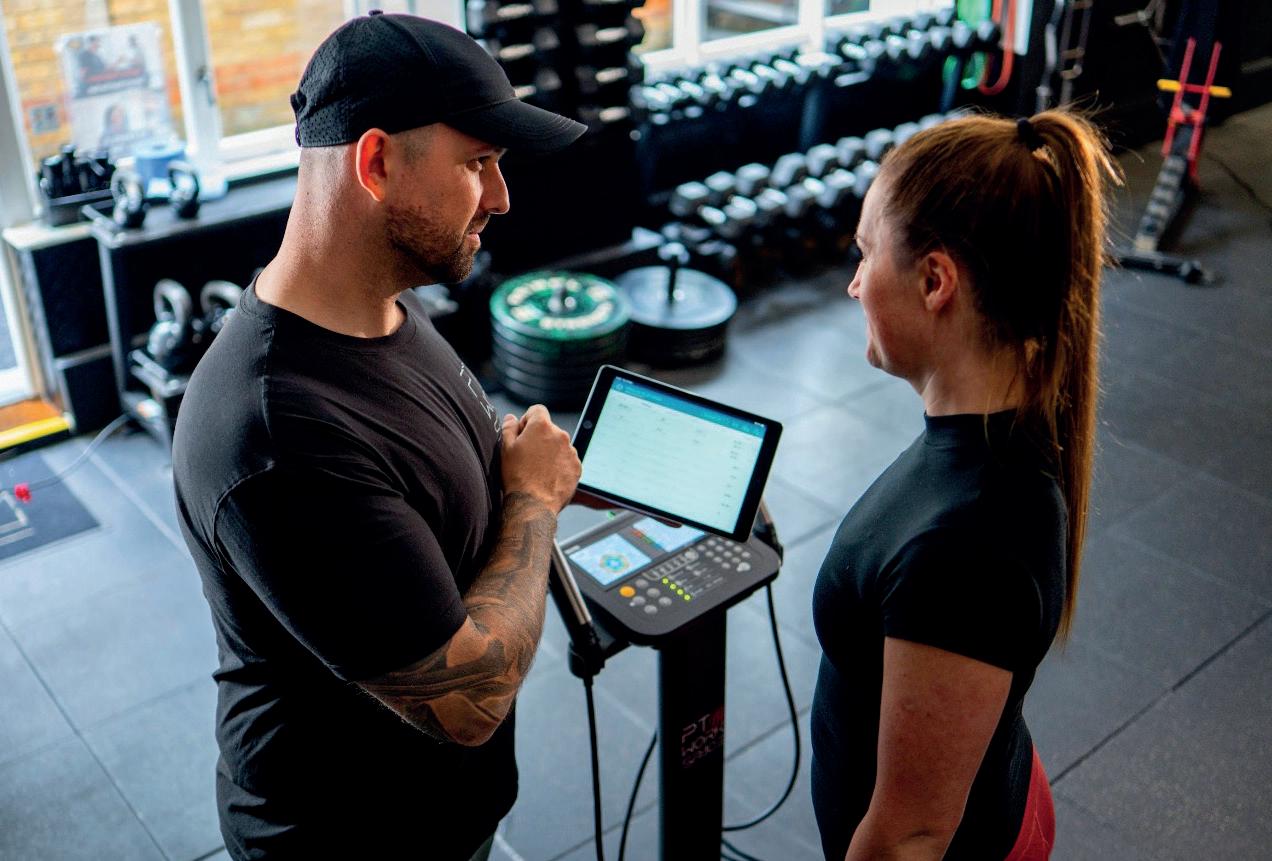
With members seeking personalised health insights, suppliers are stepping up to deliver a range of testing options
96 Seats of power
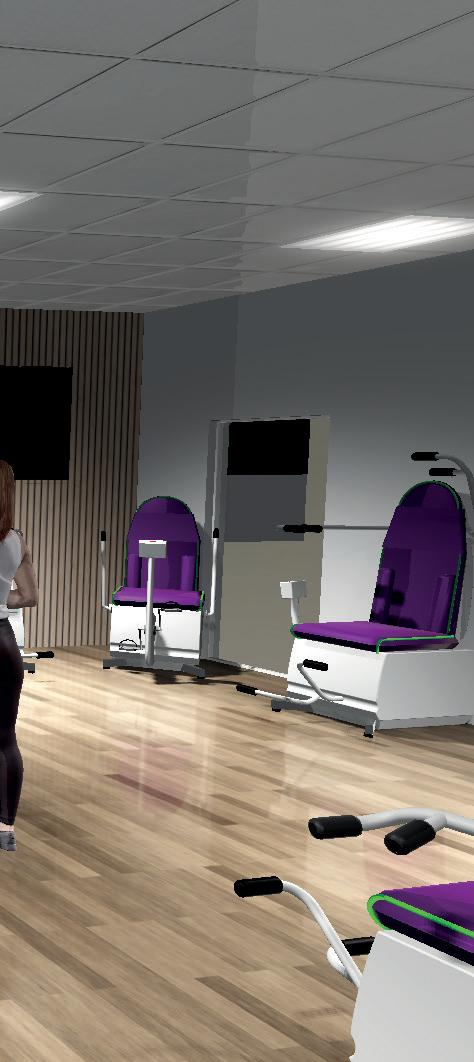
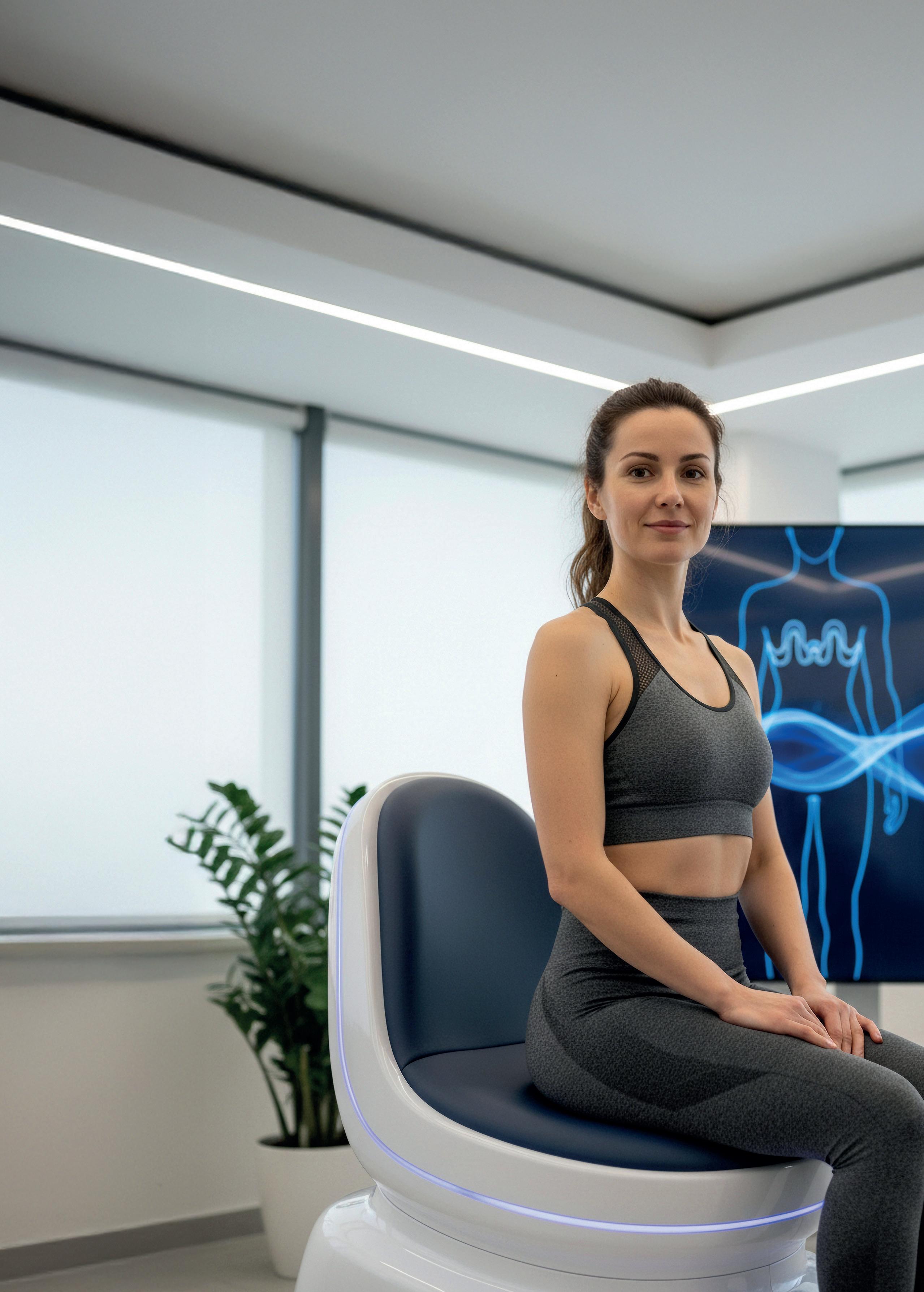
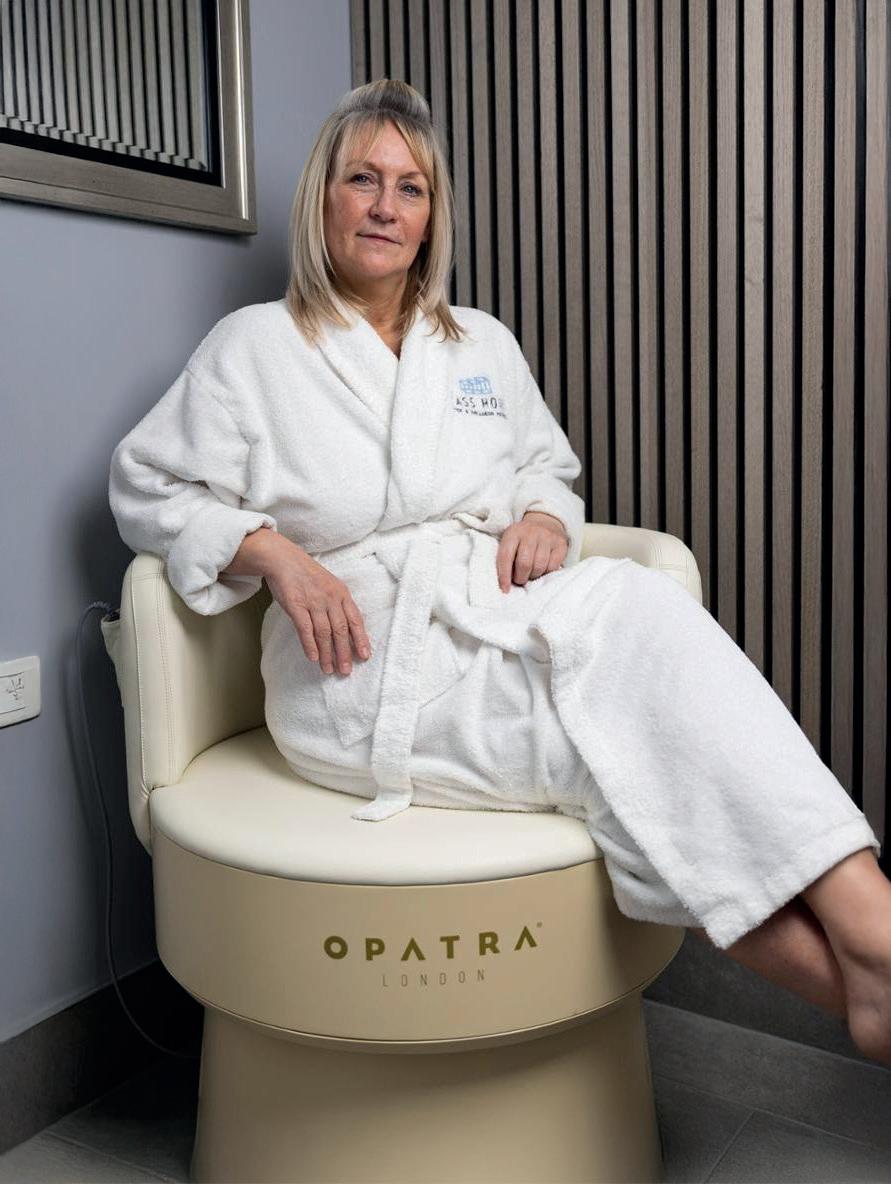
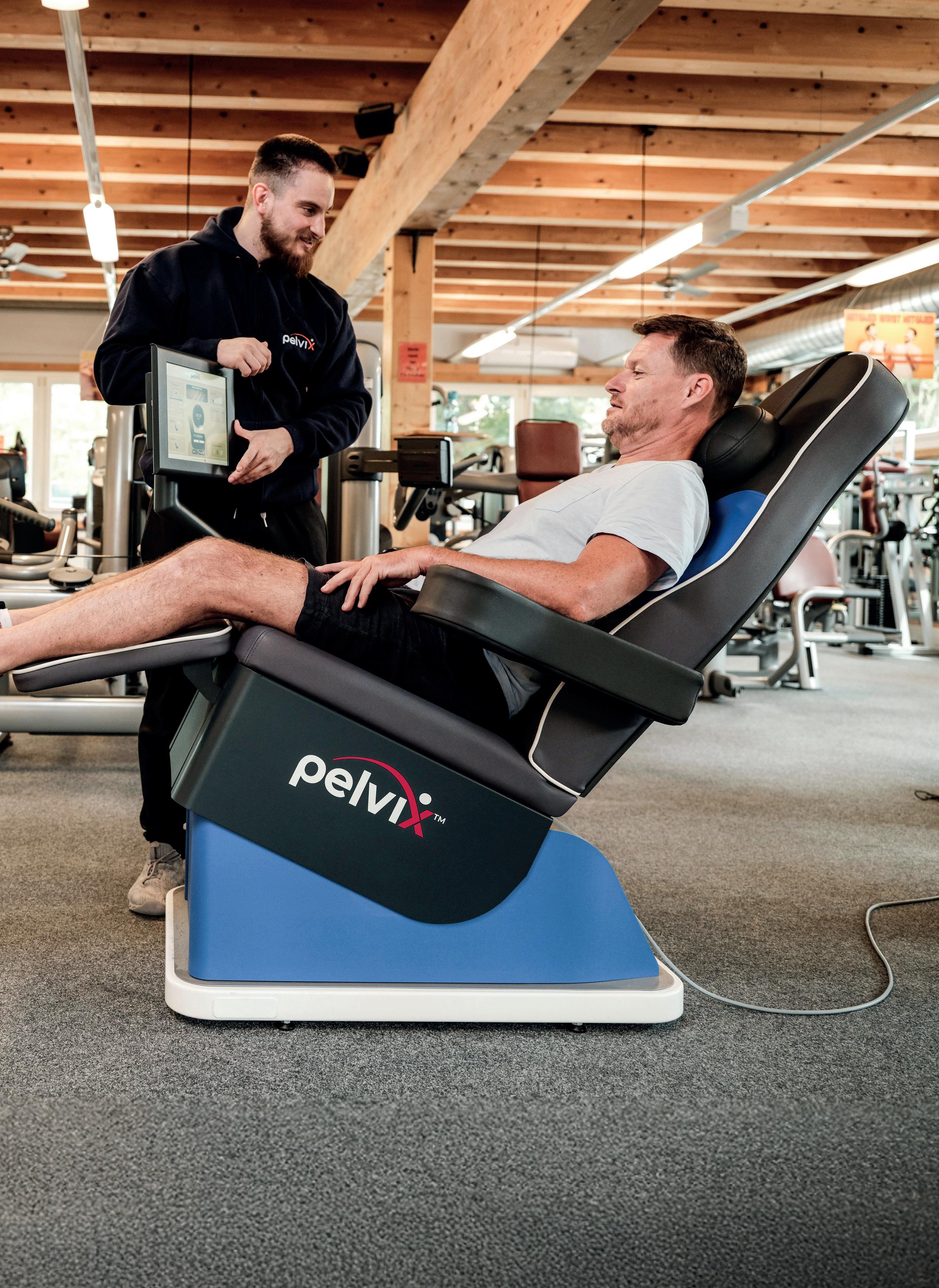
Pelvic floor training is gaining in popularity, with self-operating pelvic chairs providing an additional source of income for clubs
102 Product innovations
We take a look at the latest fitness, health and wellness equipment
104 HCM Directory
The HCM Directory is part of a network of resources that includes www.HCMmag.com/CompanyProfiles
106 Research
The right vibe
Vibrating tendons before cycling makes exercise feel easier, new study shows
40 Tianna Strateman
74 Dave Long
34 Shamir Sidhu
66 Total Fitness insight
www.HCMmag.com
MEET THE TEAM
theteam@leisuremedia.com
Editor
Liz Terry
+44 (0)1462 431385
Managing editor
Julie Cramer
+44 (0)1462 431385
Editor-at-large
Magali Robathan
+44 (0)1462 431385
Publisher Jan Williams
+44 (0)1462 471909
Head of news
Kath Hudson
+44 (0)1462 431385
Assistant editor Helen Andrews
+44 (0)1462 431385
Email us:
Customer service
+44 (0)1462 471901
Advertising
+44 (0)1462 431385
Subscriptions
+44 (0)1462 471910
Circulation
+44 (0)1462 471932
Finance
+44 (0)1462 471930
Credit control
+44 (0)1462 733477
Choose how you read
HCM digital
Read free online and enjoy extra links and searchability www.HCMmag.com/digital
Print
HCM magazine is available in print from www.leisuresubs.com
HCM PDF
A PDF edition is available to read offline at: www.HCMmag.com/pdf
Other resources from
Fit Tech magazine www.fittechglobal.com www.fittechglobal.com/archive
To subscribe to HCM in print (Health Club Management): log on to www.leisuresubs.com , email subs@leisuremedia.com or call +44 (0)1462 471930.
Annual subscriptions: UK £45, Europe £57, rest of world £80, students (UK) £22.
Style: HCM follows an editorial house style which precludes the use of marketing devices in body text and headlines when it comes to company names and registered trademarks. CamelCase and logical capitals are allowed. Contact the editor for more details – lizterry@leisuremedia.com.
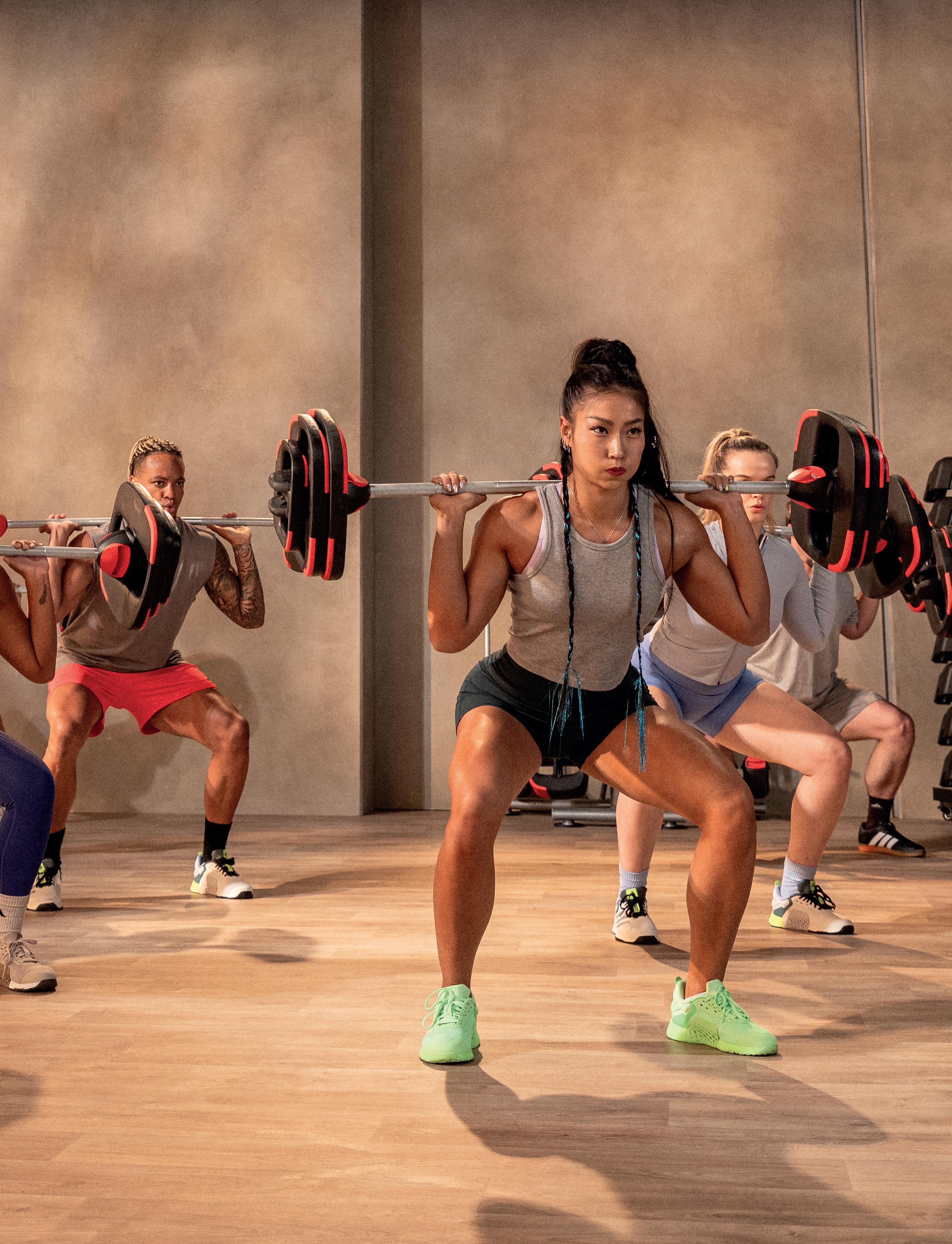
Introducing BODYPUMP HEAVY™ by Les Mills: tempo-based weightlifting with traditional lifting techniques, slow moves and long recoveries. Backed by the science of BODYPUMP™ – the world’s most loved strength class for over 30 years – BODYPUMP HEAVY makes serious lifting, seriously fun, so members keep coming back for more.
Bring it to your studio today. Scan to learn more.
HCM Forum
Fuel the debate about issues and opportunities across the industry.
We’d love to hear from you.
Write to forum@leisuremedia.com
40 per cent of children aged seven to 14 want to be more physically active
Active UK Active’s work with insight firm Beano Brain casts light on Gen Alpha
Alex
Lucas, Research manager, UK
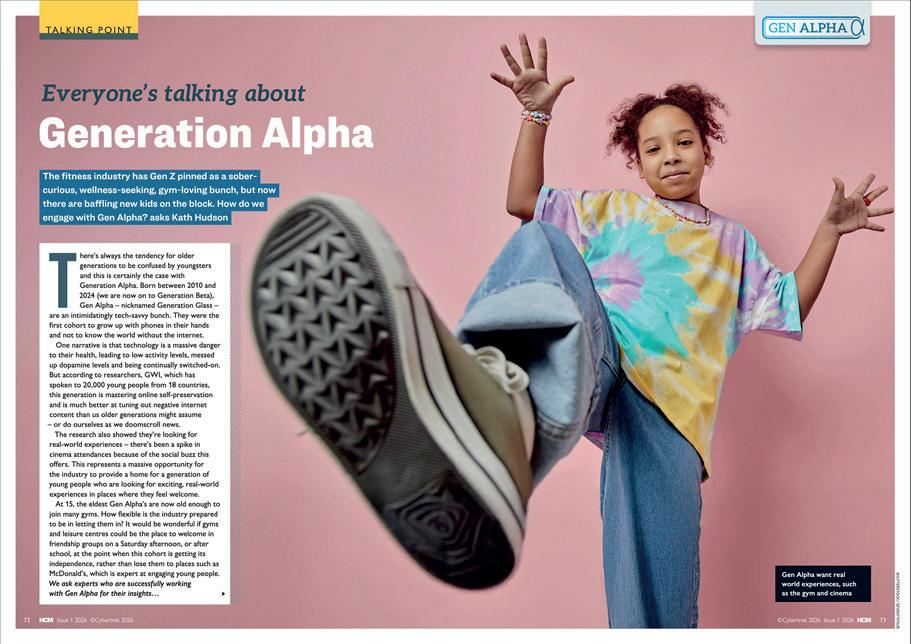
We welcome the recent feature in HCM on Gen Alpha which showed a strong focus by operators across our sector in engaging the next generation (HCM issue 1 2026, p72) www.HCMmag.com/genalpha
Gen Alpha represents about 11.75 million people or 17 per cent of the UK population, making it an important audience for our sector as current and future users of our facilities.
Over the past six years there’s been a 12 per cent rise in the number of children and young people getting active (www.hcmmag.com/ActiveLives) and understanding this generation’s motivations is vital to ensure our sector is ready to welcome them.
UK Active conducted polling with family insight agency Beano
Brain, which found 40 per cent of children aged seven to 14 want to be more physically active and almost half (49 per cent) said they’d like to be fit and healthy as adults. Our findings also revealed what helps Gen Alpha enjoy being active, with top factors being ‘taking part in activities with friends’ (63 per cent),
‘having a friendly and supportive coach’ (46 per cent) and ‘being in a familiar place’ (42 per cent). This shows the importance that a social, supportive and familiar environment plays in supporting children’s activity.
Insight from UK Active’s recent qualitative evaluation of the Opening School Facilities programme (www.hcmmag.com/openingschools) mirrors these findings. Through this programme, schools and leisure facilities built relationships to enable access to activities outside school. Through focused interviews, we found children built the confidence
Alex Lucas
Early, positive experiences with physical activity are vital to healthy development
Gen Alpha represents about 11.75 million people or 17 per cent of the UK population, making it an important audience for our sector
to use leisure facilities and gyms by being able to access them earlier in life. They were also more likely to enjoy being active in these settings if they were supported with a social community, relaxed environment and friendly, supportive coaches.
Next steps for operators
This data provides insight into how operators can improve, adapt or refine their programmes to support participation. Simple steps can be taken to welcome these age groups into our facilities and we encourage operators to use UK Active’s
new guidance, Children and young people in gym and group exercise facilities to guide decision-making (www.hcmmag.com/children)
Early, positive experiences with physical activity are vital to children’s healthy development and to building lifelong habits. The physical literacy consensus for England – a statement which provides a shared understanding of why physical activity matters and how it can be developed and supported – highlights that the way children feel when they’re active, who they’re active with and the
spaces they’re active in influence their experience and relationship with exercise (www.hcmmag.com/PL).
It’s more important than ever that the next generation builds a lasting relationship with physical activity and our sector is ready to play its part in creating lifelong exercise habits.
Gen Alpha in HCM Read here
Giving advice about GLP-1s is a clinical function
Clinical engagement is not a shortcut to growth. It’s a discipline in its own right
Venturing into the clinical: what GLP-1s mean for operators
David Joerring, founder and CEO, HealthKey
I read your editor’s letter on sector trends with interest, particularly the growing visibility of GLP-1s in the fitness environment – from PT education to operators directly offering access to medication.
It’s clear that GLP-1s can support positive outcomes when used appropriately, alongside training, nutrition and behaviour change.
Working with operators who are introducing GLP-1 programmes, I’m struck by the clear shift it represents into genuinely clinical territory. This creates opportunity, but also a level of responsibility many operators haven’t historically had to carry.
Once a health club engages with clinical interventions, such as weight-management medication and diagnostics, it’s no longer just about member engagement or growth. It’s about clinical governance, provider-vetting, safeguarding and the quality and continuity of care. Getting this wrong carries reputational and operational risk.
The challenge for operators isn’t so much whether to engage, it’s more about how to do so responsibly, while upholding trust and driving long-term results.
This is achieved by introducing the correct wraparound care and building experiences that are coherent, safe and aligned with their brand.
This is where we see a growing need for infrastructure, not just innovation. As operators move closer to healthcare, they need partners who can help them design
clinical programmes, carry out proper due diligence on providers, ensure compliance and reduce the complexity that comes with operating across fitness and healthcare simultaneously.
At HealthKey, our role is to sit in that gap, helping operators build clinically-led health programmes without having to become healthcare organisations themselves.
That includes supporting clinical governance and programme design, while enabling members to access care through experiences that feel integrated with their fitness journey, rather than bolted on.
GLP-1s – and the broader expansion into preventative and clinical services – represent a significant opportunity for the sector, but only if operators approach it with the same rigour they apply to training standards and member safety. Clinical engagement is not a shortcut to growth. It’s a discipline in its own right. l
David Joerring
Go to www.HCMmag.com/signup to
Zeitgeist
Kath Hudson distills the essence of the latest HCM news to tap the trends driving the direction of the sector
Pendle Leisure Trust invests in Lü to engage young people
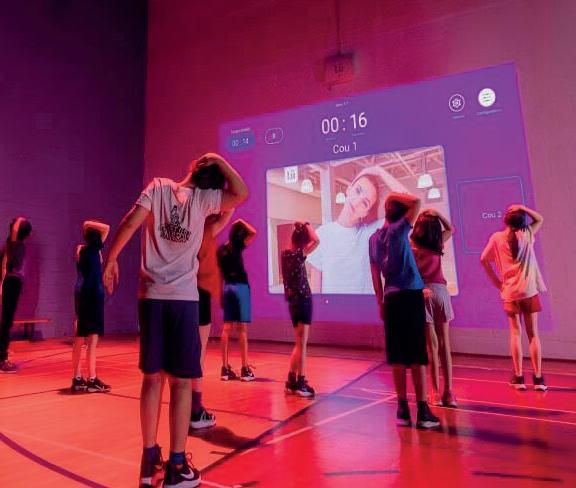
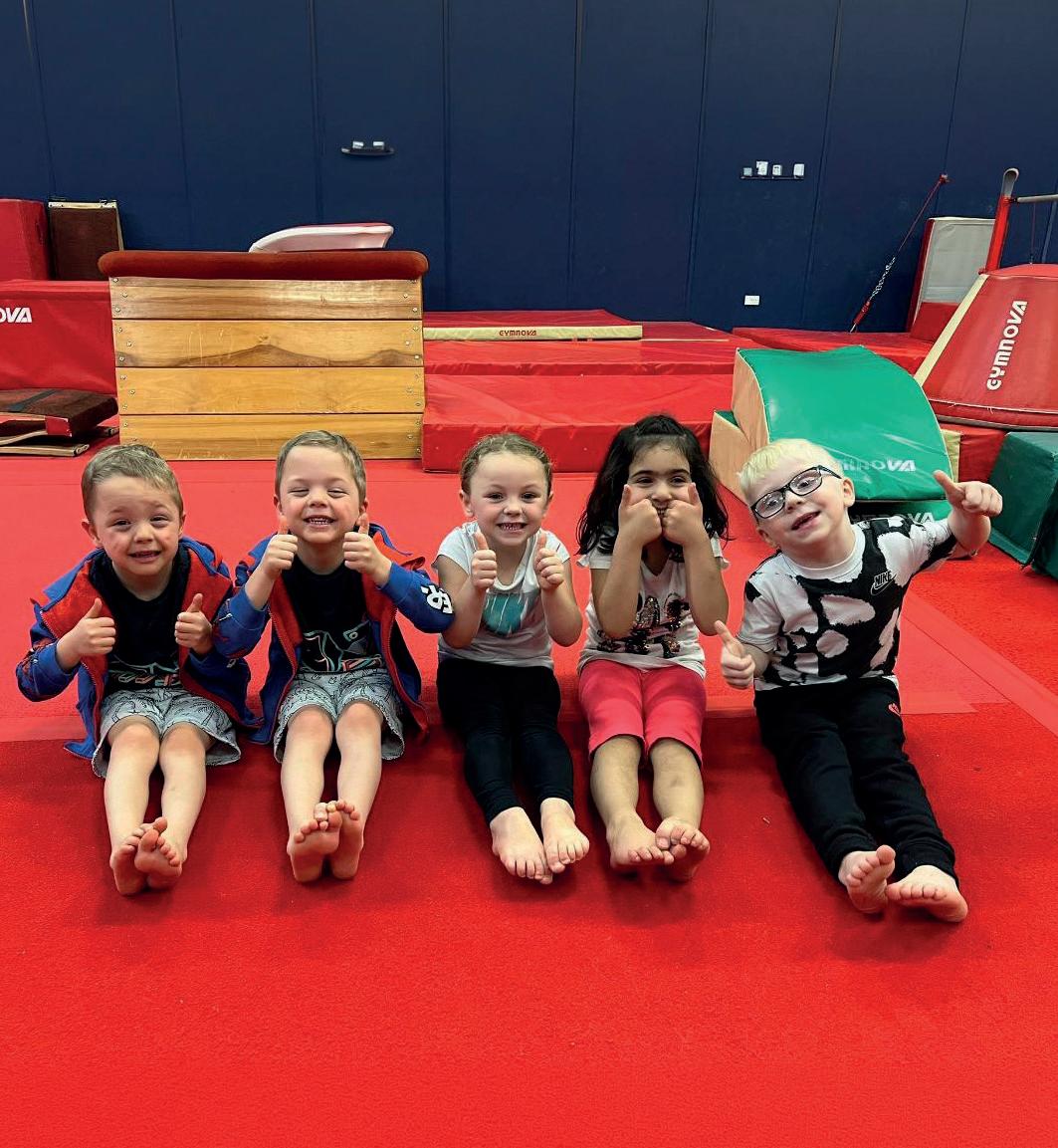
Pendle Leisure Trust, in Lancashire, is gearing up to open a landmark project at Wavelengths Studio. The £1.6 million investment includes the addition of a reformer Pilates studio, as well as a Lü installation, which uses technology to transform spaces into an interactive environment. This is aimed at developing a strong junior base, as well as attracting new audiences with birthday parties and school partnerships.
http://lei.sr/D6a2h_H
Denbighshire Leisure’s junior fitness hub
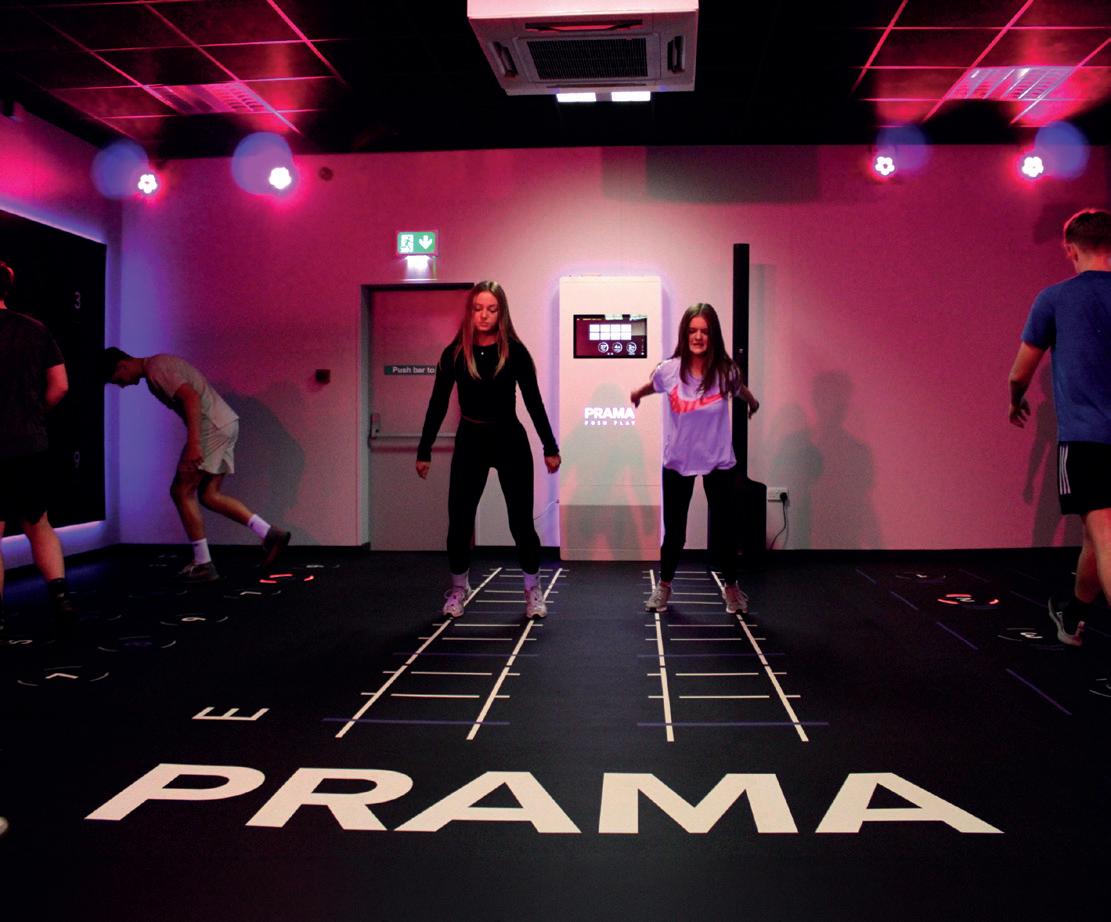
Denbighshire Leisure is looking to build the number of its junior members with free open days for 11- to 17-year-olds to introduce them to the refurbished gym at Prestatyn Leisure, as well as try out the Clip ‘n’ Climb and the Prama studio – an immersive, digital fitness experience from Pavigym. The aim of the public sector operator is to create a junior fitness hub says managing director, Jamie Groves.
http://lei.sr/8c7E4_H
Denbighshire Leisure’s Prama studio is popular with young people
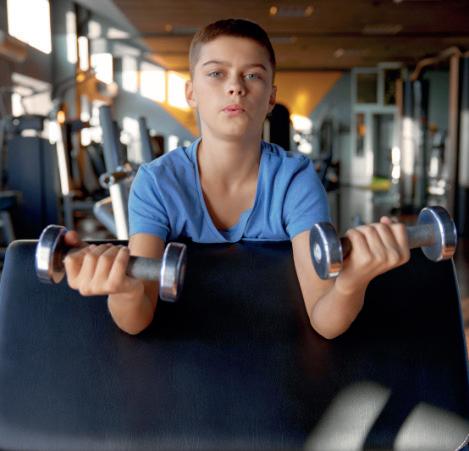
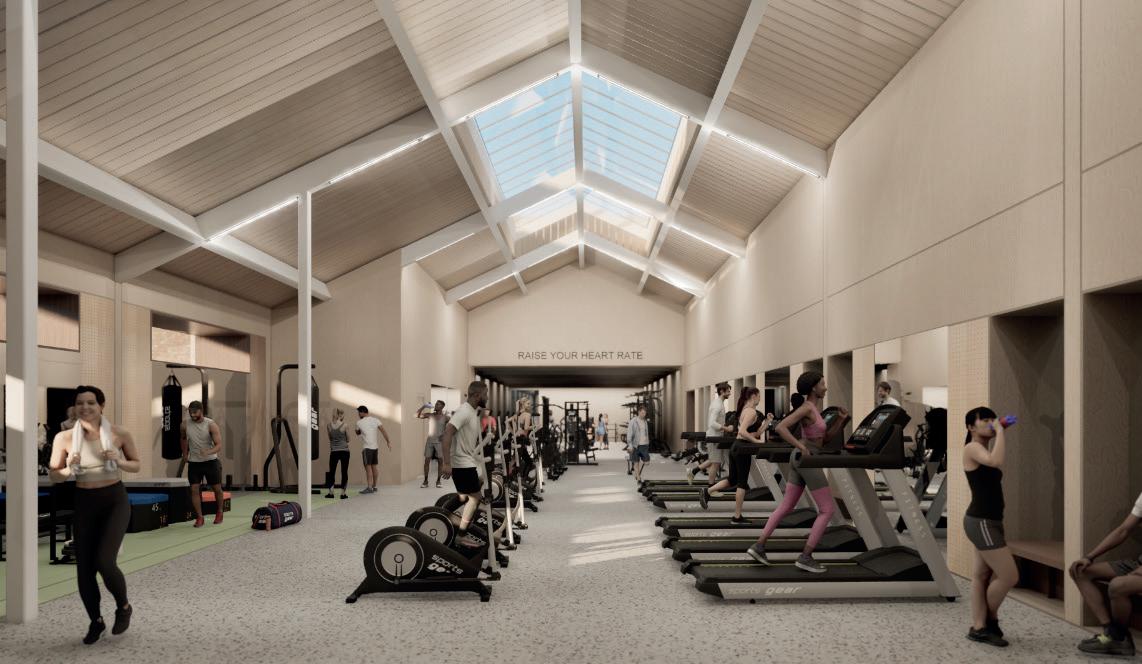
Caerphilly County Borough Council is allowing 14-year-olds to lift weights
Caerphilly lowers age for lifting
With the aim of engaging young people, Caerphilly County Borough Council in Wales has dropped the age limit for resistance training in its gyms to 14, or 11 for cardiovascular workouts and body weight exercises. The council is offering a junior membership for 11- to 16-year-olds for £12.05 a month.
http://lei.sr/2v6g2_H
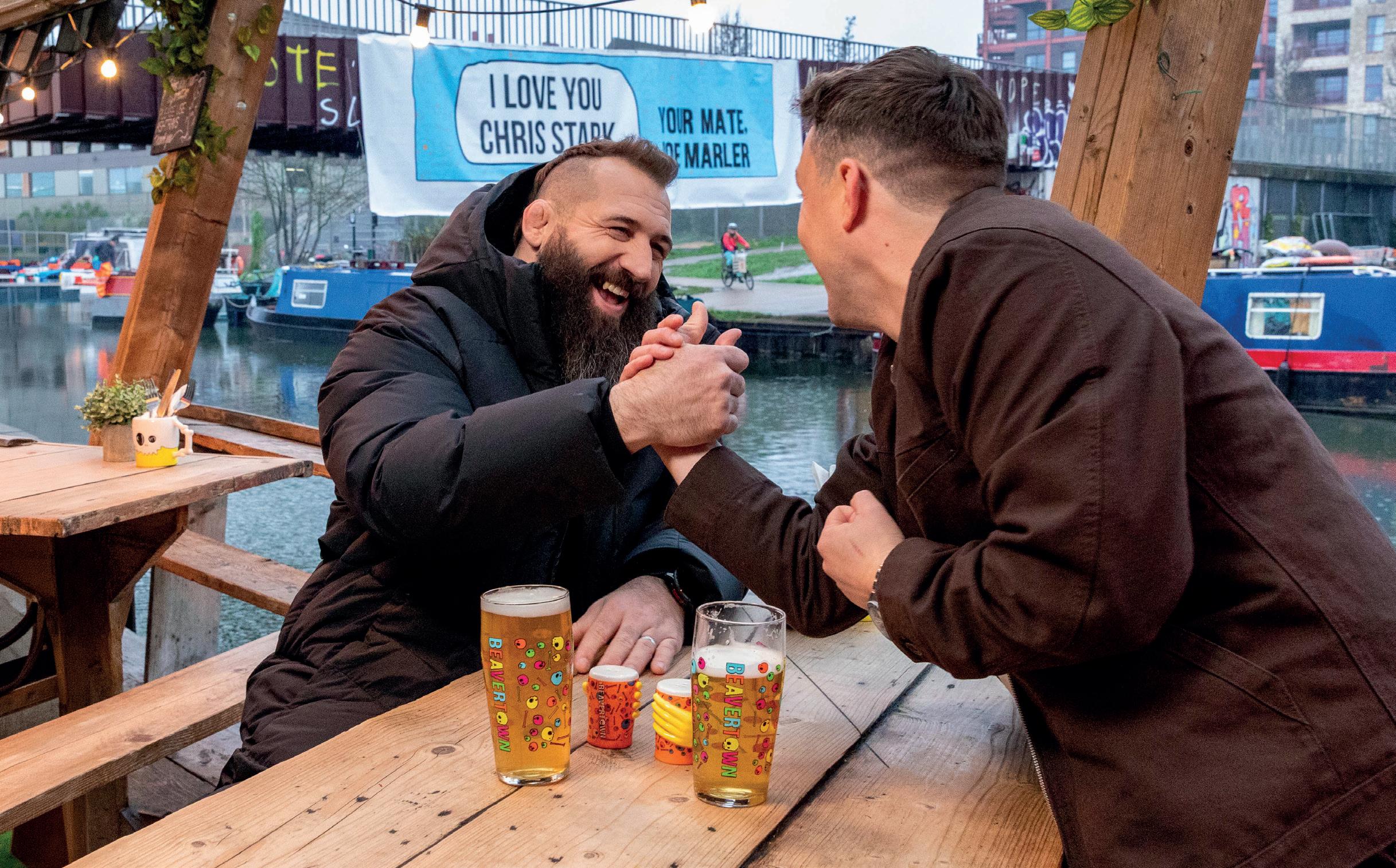
Joe Marler encourages men to open up
Former England rugby union player and BBC celebrity Traitors’ contestant, Joe Marler, has collaborated with suicide prevention charity, Campaign Against Living Miserably and craft beer company, Beaverton, to encourage men to have real conversations with their best friends. A survey of 2,000 men commissioned by Beaverton found that men rely on their mates but struggle to talk about their feelings – 90 per cent say they never talk about anything serious but 73 per cent would like deeper conversations.
Snap Fitness unveils its
first wellbeing club
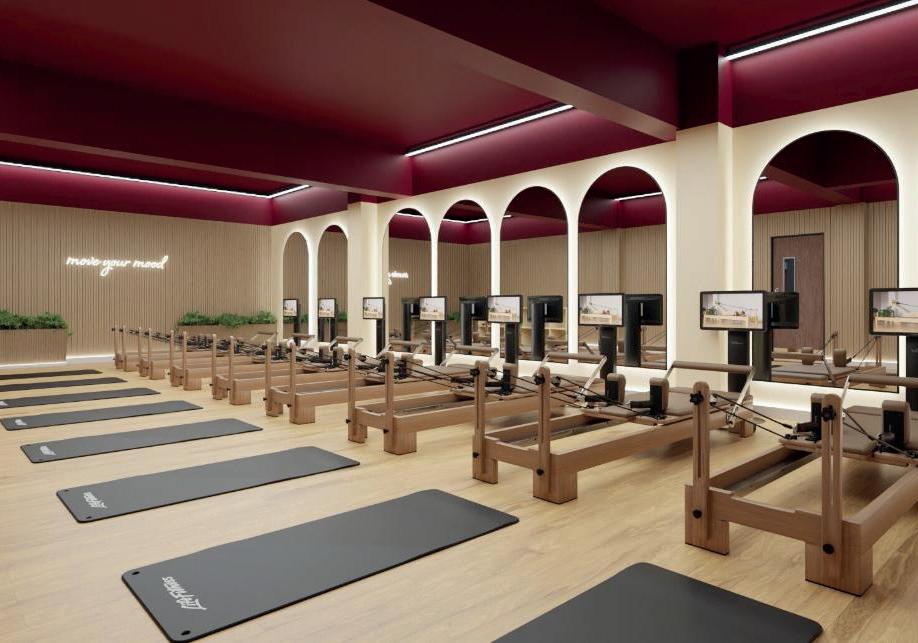
Premium training, boutique studios, instructor and digital-led programming – including reformer Pilates –and recovery are all incorporated in a flagship site for Snap Fitness in London’s financial district. “Everything has been created to support a wide range of member needs,” says franchisee, Peter Dhillon, while CEO of Snap Fitness EMEA, Kevin Yates, says this club showcases the future of the Snap brand.
Frasers Group plans to dominate UK padel
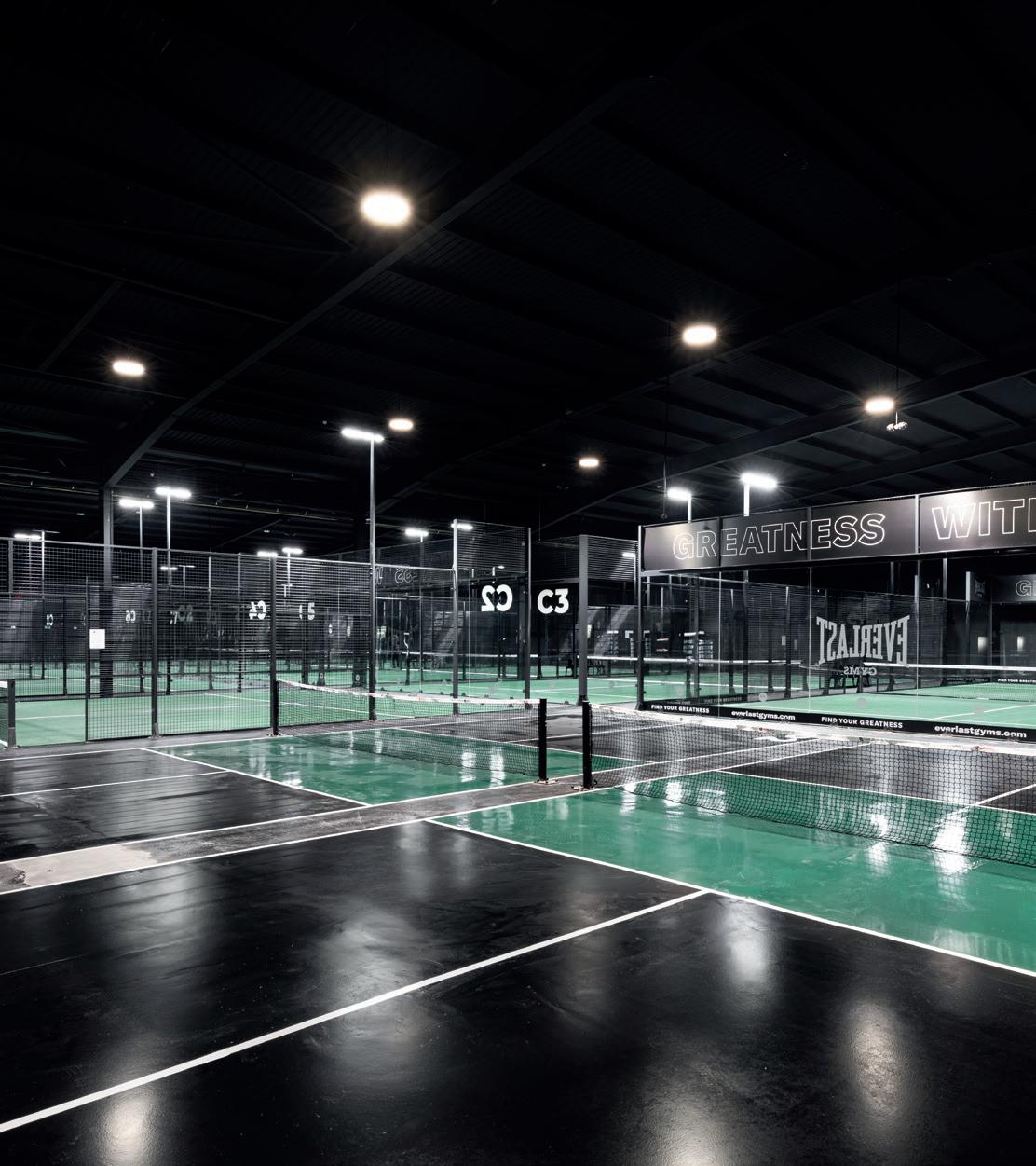
After opening its third UK Slazenger Padel club, Frasers Group – the parent company of Everlast Gyms – has said it aims to dominate the UK padel market, with plans for 10 more clubs this year. The new Blackburn site includes nine padel courts and two pickleball courts, as well as social spaces and a shop and offers coaching and equipment hire.
Snap Fitness is offering reformer Pilates at its latest club
Celebrity, Joe Marler, is encouraging men to talk more openly
Slazenger Padel’s latest site, in Blackburn
Fitness First campaign reframes the narrative around gyms
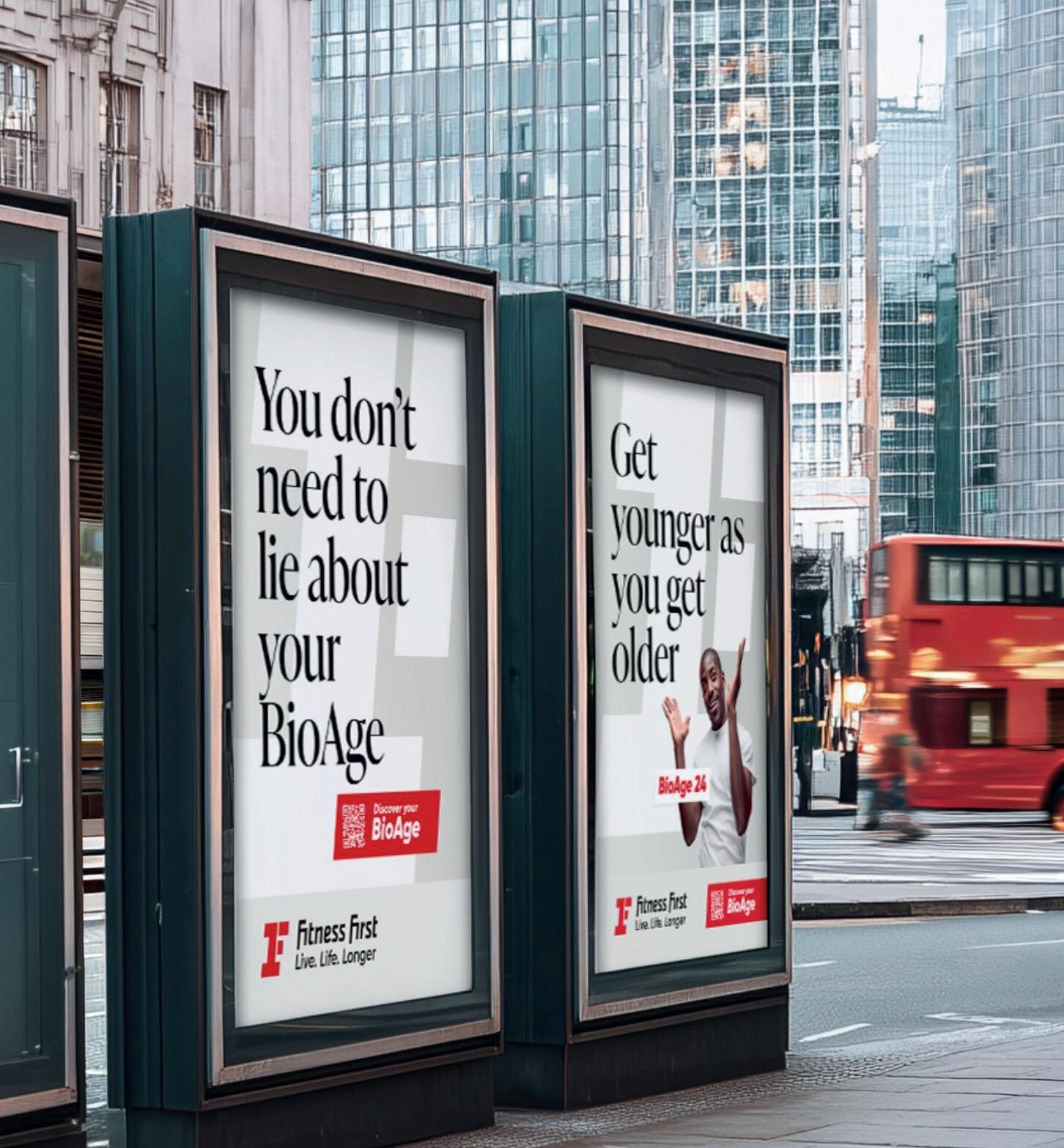
The Live.Life.Longer campaign from Fitness First champions long-term wellbeing over quick fixes and presents gyms as places to build habits, knowledge and confidence to support healthier lives. CEO, Marc Diaper, says: “People now understand that fitness isn’t just about lifting heavier or looking a certain way – it’s about building habits today that protect your health tomorrow.”
http://lei.sr/2E5p7_H
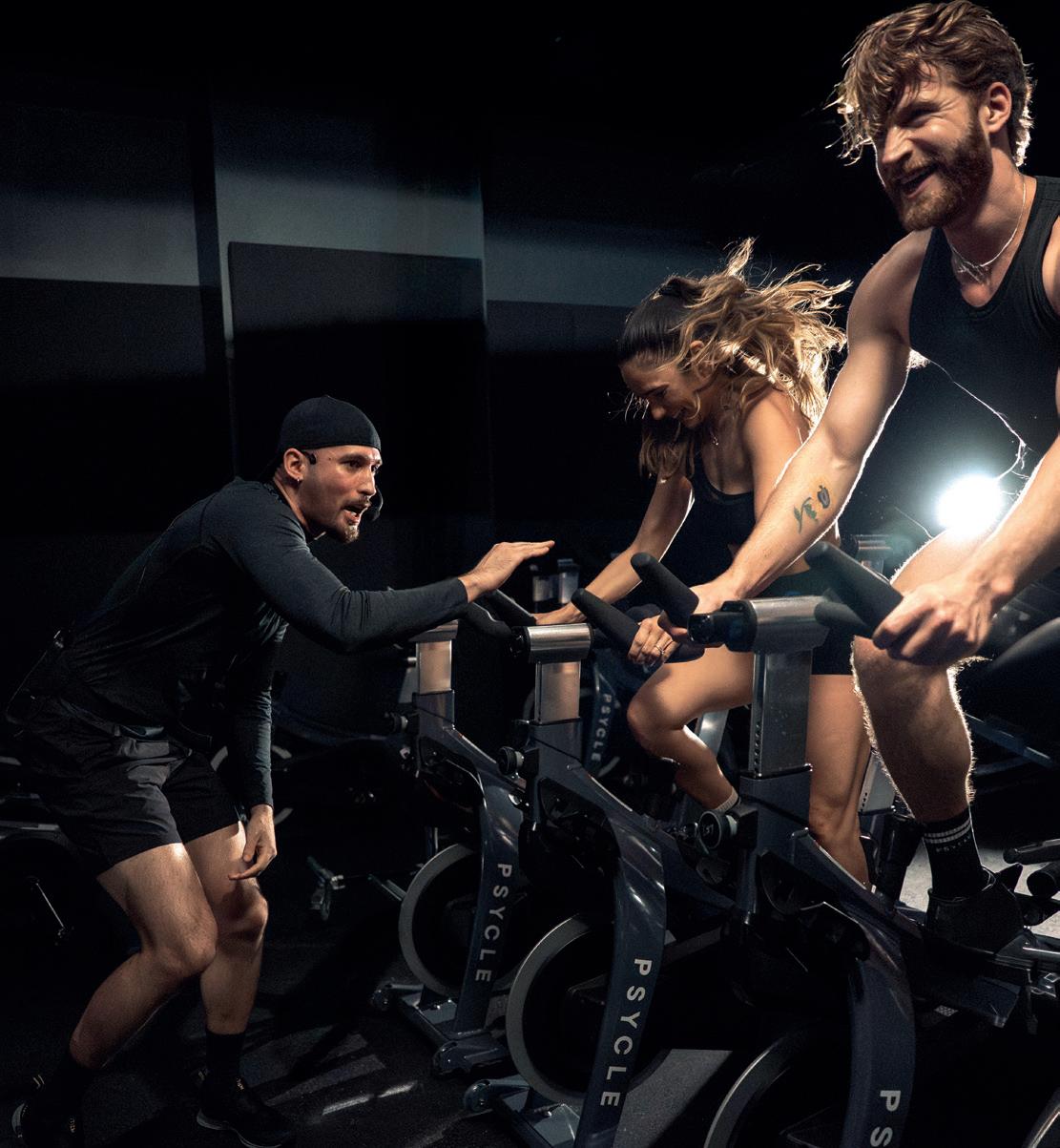
Psycle introduces Lagree Megaformer at its latest club
Boutique fitness brand, Psycle, is using Sebastian Lagree’s Megaformer for the first time at the newly opened site in London Bridge. The Megaformer offers a reformer Pilates-style workout, which works on endurance, cardiovascular fitness, body composition, flexibility and strength. A new Strength Ride workout is also being introduced which combines weights with indoor cycling. This is Psycle’s seventh London site.
http://lei.sr/9y7a4_H
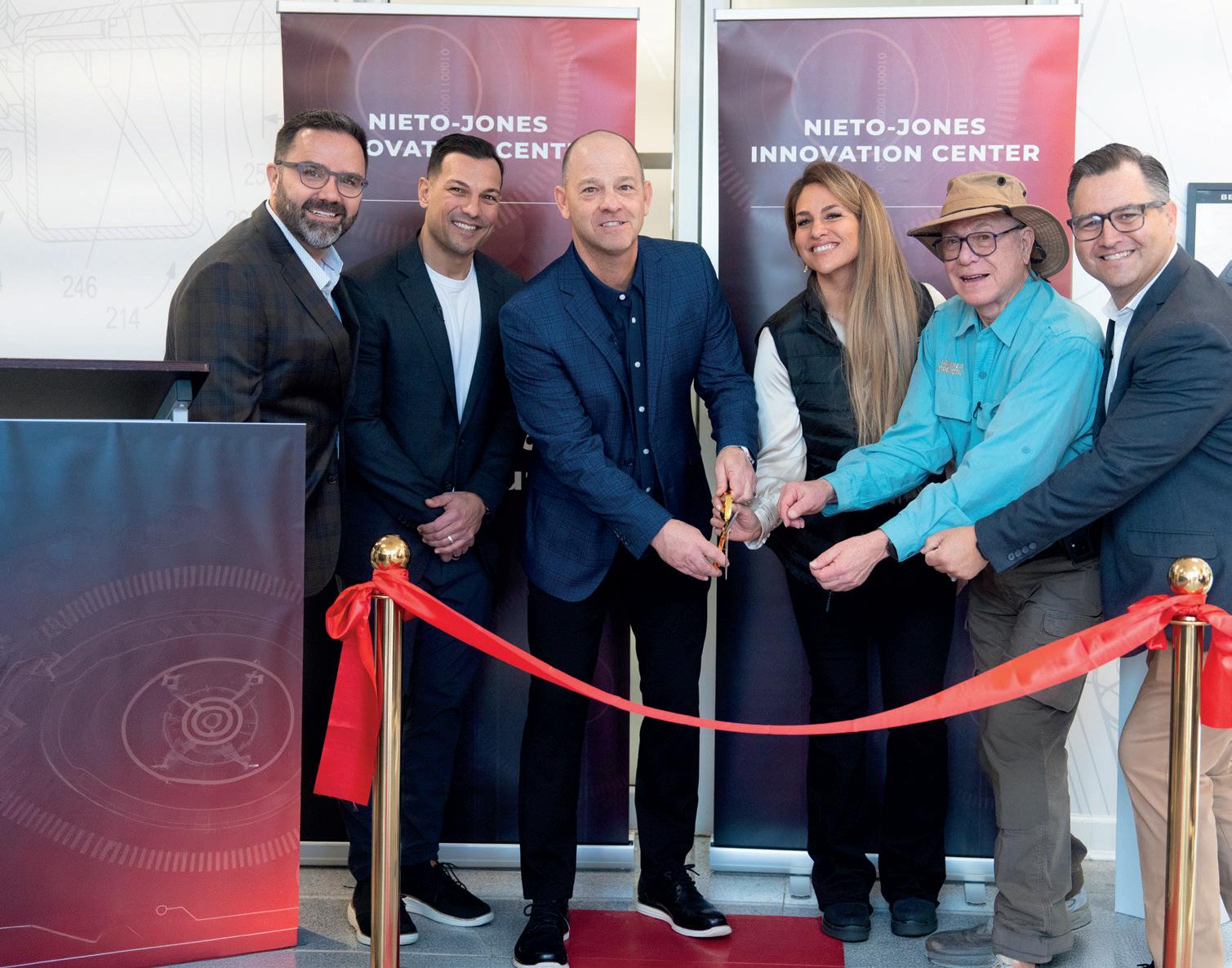
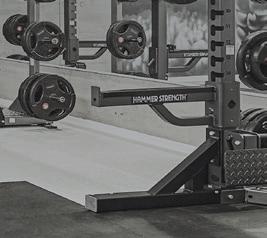
Life Fitness / Hammer Strength has launched a new innovation centre named after the two company founders, Augie Nieto and Gary Jones, which will lead on excellence and conduct hands-on research and product testing. CEO of Life Fitness / Hammer Strength, Jim Pisani, says: “This centre not only carries the names of Augie Nieto and Gary Jones, it also carries their legacy and exists because of the belief they shared – that innovation matters and we should always push the industry forward.”
http://lei.sr/q4c6Z_H
Fitness First is using outdoor advertising for its new campaign
Psycle’s latest Ride studio has 50 bikes
Hammer Strength founder, Gary Jones, (second from right) attended the ribbon cutting ceremony of the Nieto-Jones Innovation Center
TAP OR SCAN
Charlotte Church o ers an escape from modern life
Welsh music star and retreat owner, Charlotte Church, has launched an online wellness course, to help participants connect with nature. Led by Church, it is designed as an escape from “the cacophony of modern life” and teaches participants how to ground themselves and nurture a sense of belonging in nature.
Let’s Dance 2026 launch
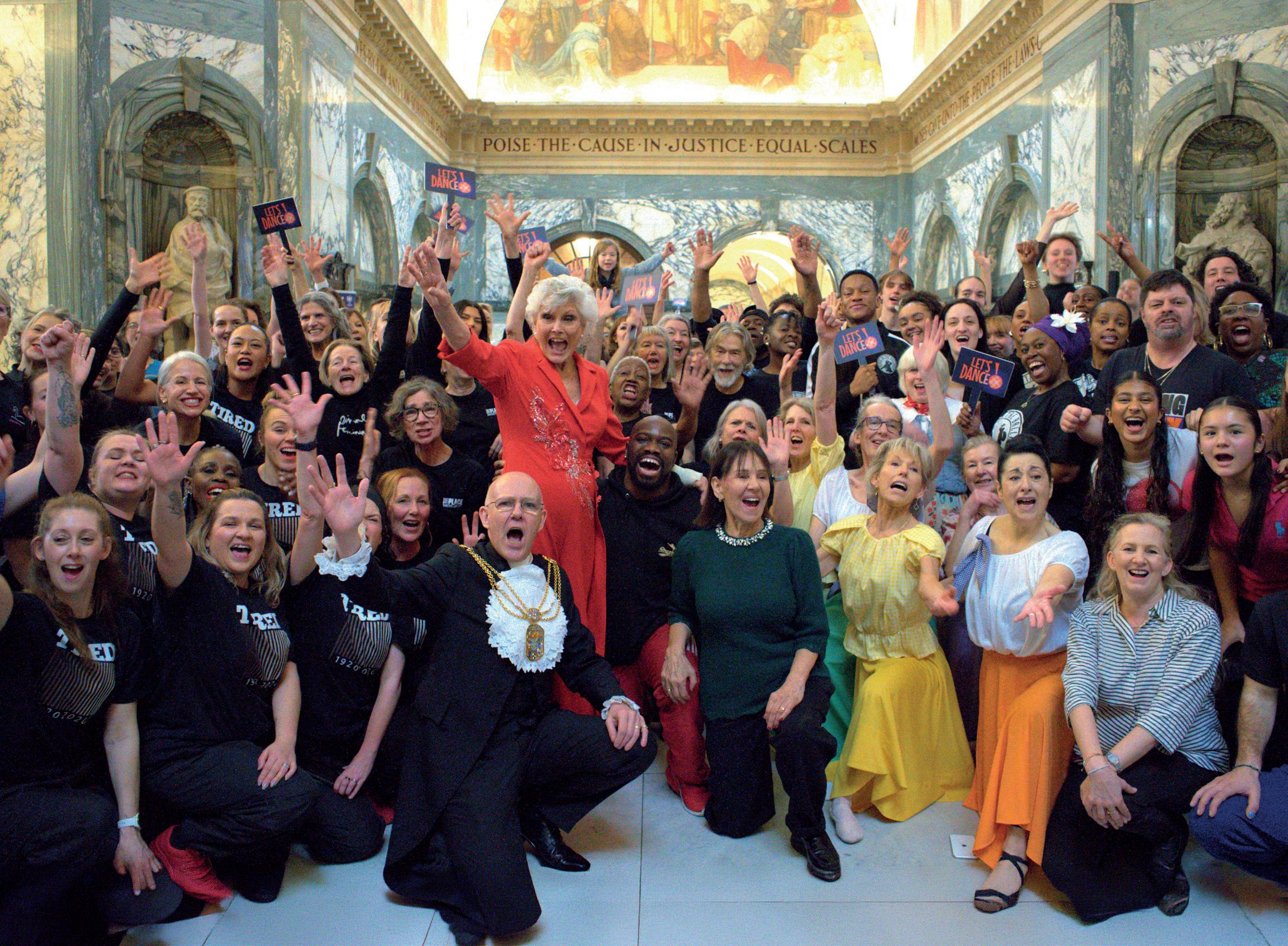
British broadcaster and Strictly Come Dancing contestant, Angela Rippon, has launched the 2026 Let’s Dance campaign on national media. Taking place on 8 March, Rippon is calling on operators to engage with her campaign to get people fit by dancing and offer free taster sessions of dance, or dance-based, classes on the day.
http://lei.sr/z7q4T_H
Clive Chesser advocates for the industry on the BBC’s Big Boss podcast
Fitness goes mainstream
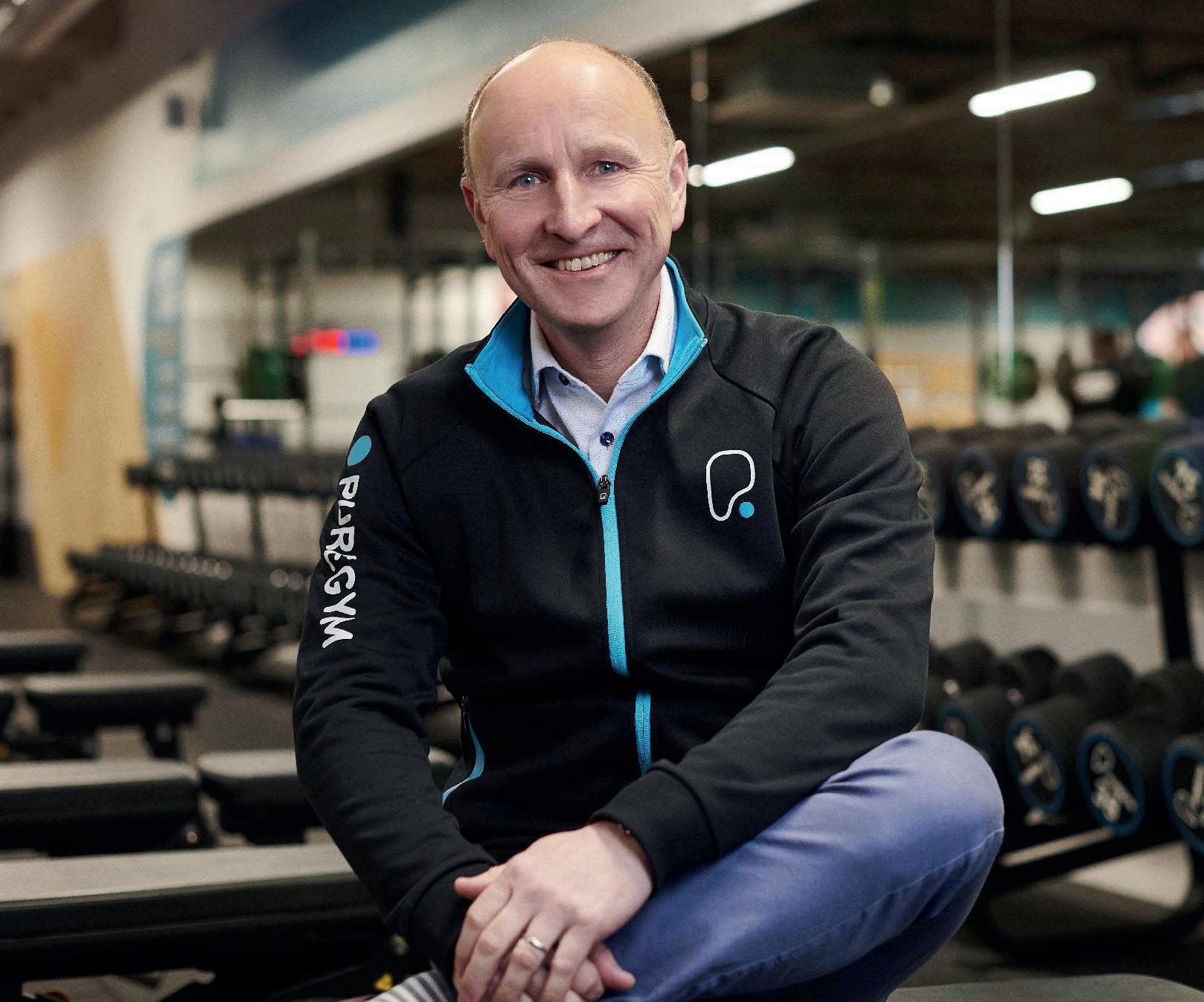
Clive Chesser advocates for the fitness industry in an interview with BBC Sounds Big Boss podcast. The CEO of PureGym talks about exercise being a wonder drug which helped him recover from cancer, as well as the potential for fitness in preventative healthcare.
Angela Rippon at the launch of Let’s Dance 2026
DLL in legal action against ‘real David Lloyd’
David Lloyd Leisure (DLL), which is owned by TDR Capital Titan, has commenced legal action against entrepreneur David Lloyd for trademark infringement and passing off.
The move comes following a month during which David Lloyd – who founded the premium health club and racquets business in 1982 –announced a return to the market with a concept called The Real David Lloyd’s Sports Gardens.
He commenced a trademark application on 13 January for the name with the UK government’s trademarks office for areas ranging from health club and leisure services to gaming and alcohol sales, although no decision on this application has been announced.
Insiders within DLL told HCM that clear confusion among its members has led to the action reluctantly being taken to defend the £2 billion DLL brand.
Lloyd sold DLL to Whitbread in 1995, for £182 million, when there were 18 sites. Whitbread grew the chain to 60 clubs in the UK and Europe and sold the business in 2007 to London and Regional Properties for £925 million.
In 2013 it was sold for £750 million to TDR Capital, which created a new fund for the company last September.
Due diligence in regards to ownership of the name was carried out during each sale and David Lloyd Leisure has owned the trademark in the UK for ‘David Lloyd’ since 1997. It also created a separate trademark for ‘David Lloyd Clubs’ in the UK in 2015. The situation in the US is less clear.
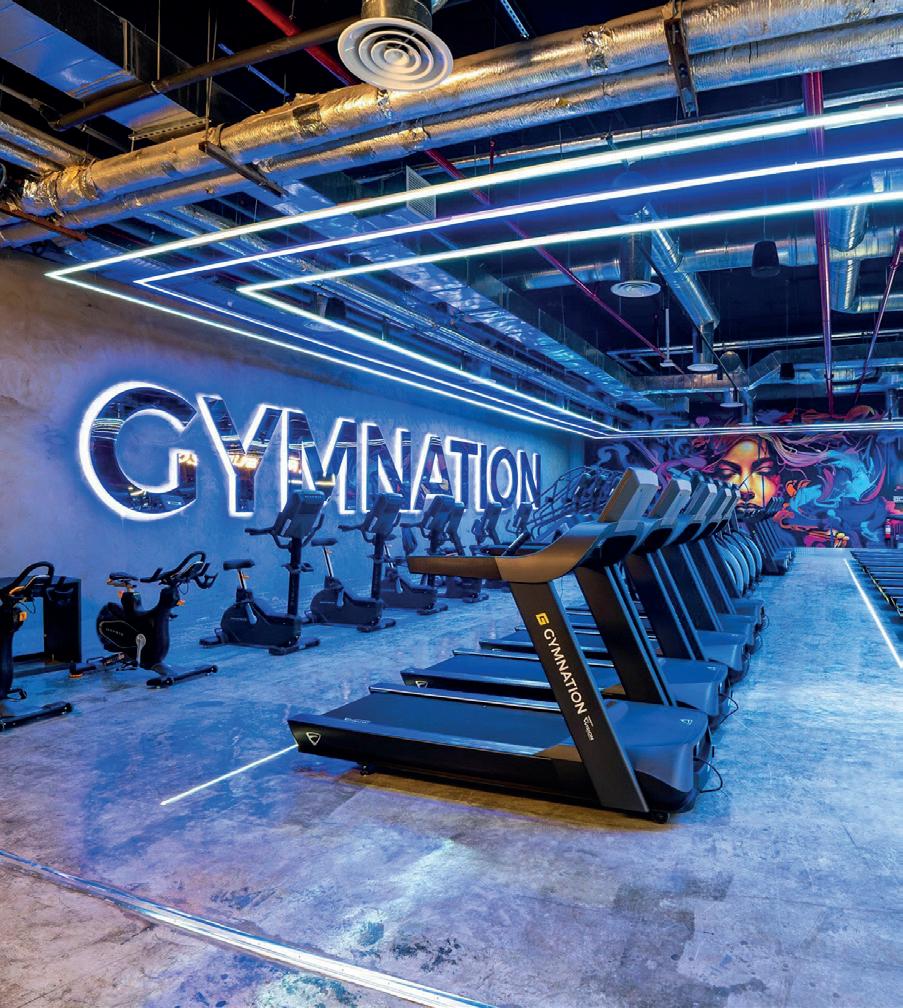
Gymnation report shows growth in the Gulf
Gymnation’s latest report into the Gulf region revealed this is a population with high health aspirations – 94 per cent of people said they want to be more healthy.
The UAE & KSA Health & Fitness Report 2026 contains 745,000 data points and captures insights from more than 15,000 respondents.
It revealed the need for beginner programmes, more offerings targeted at women and tiered pricing to improve affordability. As with elsewhere, reformer Pilates, recovery and Hyrox classes are trending.
The report says the region is experiencing a “genuine democratisation of gym culture, breaking down barriers that previously kept many away from the gym floor.”
While gymtimidation is declining among men, it is still prevalent among women. Equipment knowledge and exercising in front of others were the biggest issues, highlighting the need for equipment orientation and exercise education for first time members. The report suggests creating beginner-friendly zones as well as women-focused spaces.
Strength training is the most popular fitness trend with 46 per cent wanting to try it, followed by functional training and Hyrox workouts (29 per cent); and yoga, Pilates and mindfulness exercises (26 per cent).
Affordability was the main reason cited for people giving up on exercise (58 per cent).
David Lloyd Leisure is suing the ‘Real David Lloyd’ for trademark infringement
Active members lead to record results at SATS
Nordic operator, SATS, ended 2025 on a high with record revenues, 22,000 more members and more member activity. For the full year, membership was up 3 per cent and revenues up 9 per cent.
The focus on group training is driving the performance – 49.4 million training sessions were completed at SATS clubs in 2025. Group training
“The strong growth in group training shows the desire for community”
was up by 11 per cent in the fourth quarter compared to the previous year and in January 2026 there were 7 per cent more unique visitors than in January the previous year.
SATS has strengthened and adapted its offering based on data and insights over the past year, investing in new training concepts, such as reformer and hot studios, as well as areas for indoor running.
“We’re very pleased with the end of 2025,” said CEO, Sondre Gravir. “More members are training more, and the growth in group training shows that the desire for community in training is stronger than ever.” ● Sondre Gravir will be a keynote speaker at the 2026 HCM Summit.
Everlast Gyms teams up with Nike
Strength
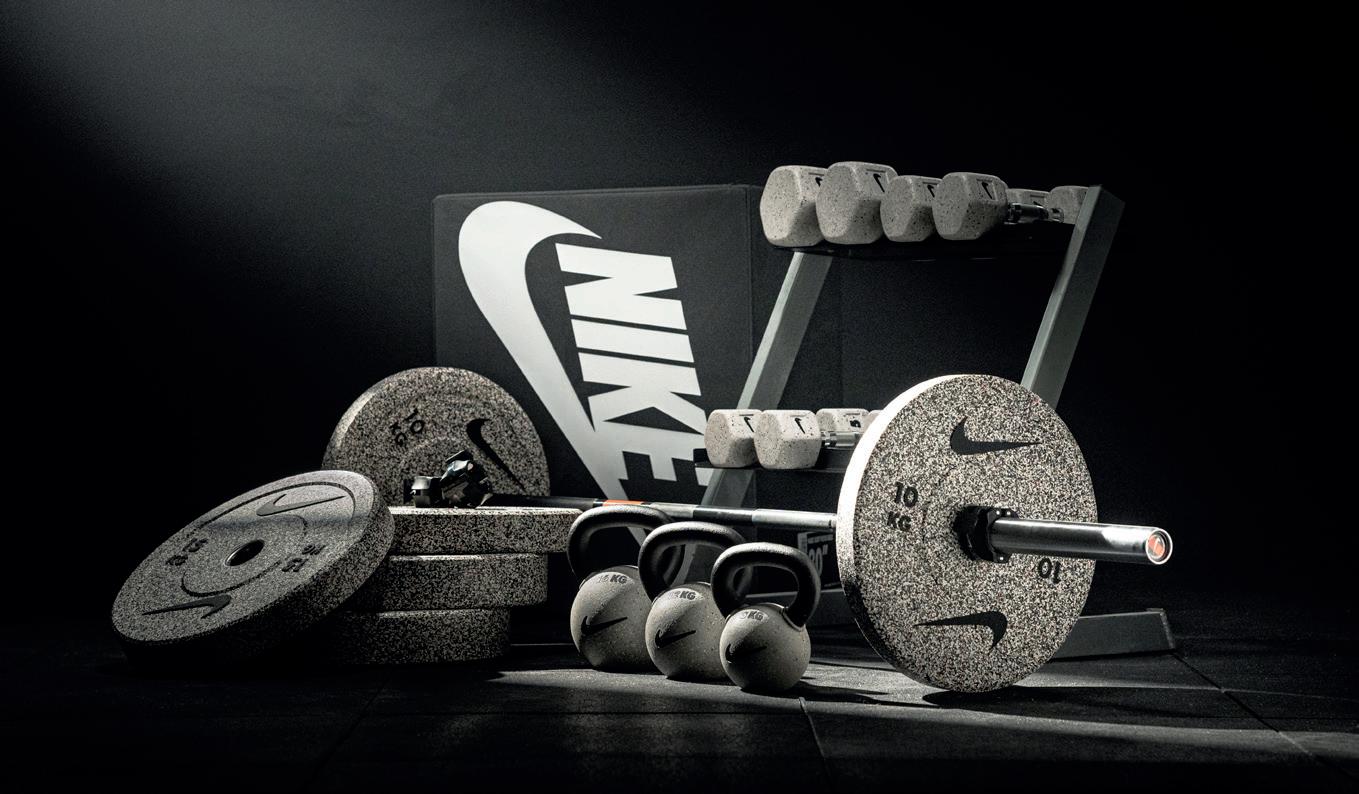
Everlast Gyms has struck up a partnership with Nike Strength which will involve creating zones with the sustainable Nike Grind range and co-producing programmes and social media content.
The gym areas with the lifting platforms are being branded as Lifting Club Zones and both those and the Hustle (HIIT) studios will be kitted out with Nike Grind equipment, which is made from recycled end of life footwear and waste materials. The two companies will work together on educational programming.
“ We wanted the partnership to feel integrated ”
“We had been in talks with Nike for a while, but we didn’t want it to be a relationship where we’re just buying equipment from them. We wanted to feel like it was more integrated,” Everlast Gyms managing director, Dan Summerson, told HCM
“It’s going to be a dual partnership, where we’ll be working together on
events, promotions and activations, the same as we’ve been doing with Myprotein and Hyrox.
“The key here is ensuring we’re leveraging both Nike and our own strengths to build a holistic fitness offering that is genuinely impactful for members.”
Sondre Gravir
KELHAM PRODUCTIONS
SATS
Personal training and group exercise are driving growth at SATS
The Nike Grind Range is made from recycled materials such as end of life trainers
TAP OR SCAN
Dan Summerson
Third Space secures historic London location
The next Third Space club in London has been announced, and is slated to open in 2028. The premium operator has secured a site in north London, at The O2 Centre on Finchley Road.
The 50,000 square foot club will include state-of-the-art gym facilities, an extensive class programme, swimming pool and dedicated areas for health, recovery and relaxation.
Being redeveloped by Landsec, The O2 Centre development is a 14-acre site which will include
“This is a fabulous opportunity to bring Third Space to an underserved part of London”
Colin
Waggett
public spaces, leisure, retail and thousands of new homes.
Third Space CEO, Colin Waggett, says: “This is a fabulous opportunity to bring Third Space to this underserved part of North London. The quality space will allow us to create something special, that matches the aspirations that Landsec has for the wider development.”
There are now 14 Third Space health clubs across London, with three more set to open this year, including Oxford Street. The O2 site was originally an Esporta and developed by Nick Leslau who was the first developer to put a health club into a retail setting in the UK.
Les Mills report dives into strength training
Areport from Les Mills and UK Active has found that 43 per cent of adults are failing to meet the Chief Medical Officer’s strength guidelines.
Shaping a New Era of Strength Training, shows that engagement with strength training varies greatly across the generations. Seventy three per cent of adults were unaware of the amount of strength exercises they should be doing each week, with females, older age groups, those from lower socio-economic groups and never-members being the cohorts with the least awareness.
Gen Z and Millennials are the most engaged – 75 and 74 per cent respectively meet the guidelines –this drops to 55 per cent of Gen X and 34 per cent of Boomers.
“A landmark public health campaign is needed to build awareness”
Martin Franklin
Martin Franklin, CEO of Les Mills UK, calls for a landmark public health campaign to build awareness and inspire action. He said unprecedented collaboration between central and local government, public health bodies and the physical activity sector is needed.
The stunning reformer Pilates studio at the newest Third Space, The Whiteley
Older people are the least aware of the benefits of strength training
Bolton Middlebrook Trust wins on wellbeing
Bolton Middlebrook Leisure Trust has scooped the contract to run five leisure sites on behalf of Bolton Council. The 15-year agreement starts on 1 April.
MD, Neil Hutchinson, told HCM the trust, which has been operating Bolton Arena since 2021, has been preparing for the bid for four years.
“To be in a position to even bid for a large tender is a huge challenge for a small independent trust, such as us,” he says. “We had to work very hard just to meet the criteria checklist to enable us to submit a competitive bid. Although price was a factor, Bolton Council had written the tender to be more about quality delivery, social value and investing in Bolton communities, this played to our strengths, because
“Our health and wellbeing angle was very highly commended”
our health and wellbeing angle was very highly commended.”
Contract goals include increasing participation in priority groups by 30 per cent. Supporting 10k people with inactivity-related health conditions and improving the mental wellbeing of target populations by 20 per cent.
Kings Hall Hackney in line for £68.7m revamp
Work has started on the £68.7 million refurbishment of the historic Kings Hall Leisure Centre in Hackney, with a planned reopening in early 2029.
FaulknerBrowns Architects have drawn up the designs, which will preserve the features of the Grade II listed building, retaining important parts of its heritage.
The swimming pool will be refurbished and a new large pool and smaller teaching pool will be added. There will also be a new cycle store, a modern gym, a double height sports hall, a sauna, and steamroom and the entrance will be made more accessible.
More solar PV panels will be installed in addition to a new M&E system which is more energy and cost efficient than the current system.
All new structures will be matched with the existing brickwork.
Without the changes, the Victorian site would likely have had to close.
Its condition has worsened in recent years, which has affected the customer experience. GLL, which operates the centre under the Better brand, is looking at how it can support members during the closure and working with the council to explore whether temporary facilities could be offered elsewhere.
Caroline Woodley, mayor of Hackney, said: “These ambitious plans for Kings Hall Leisure Centre will give residents world class leisure facilities for generations to come, including a new teaching pool and revamped and extended gym and studio facilities.”
http://lei.sr/9X2z9_H
BOLTON
The trust has been running Bolton Arena since 2021
Improvements will be made to the gym at Kings Hall Leisure Centre in Hackney
TAP OR SCAN
TAP OR SCAN
http://lei.sr/K7c3h_H
Neil Hutchinson
NEIL HUTCHINSON
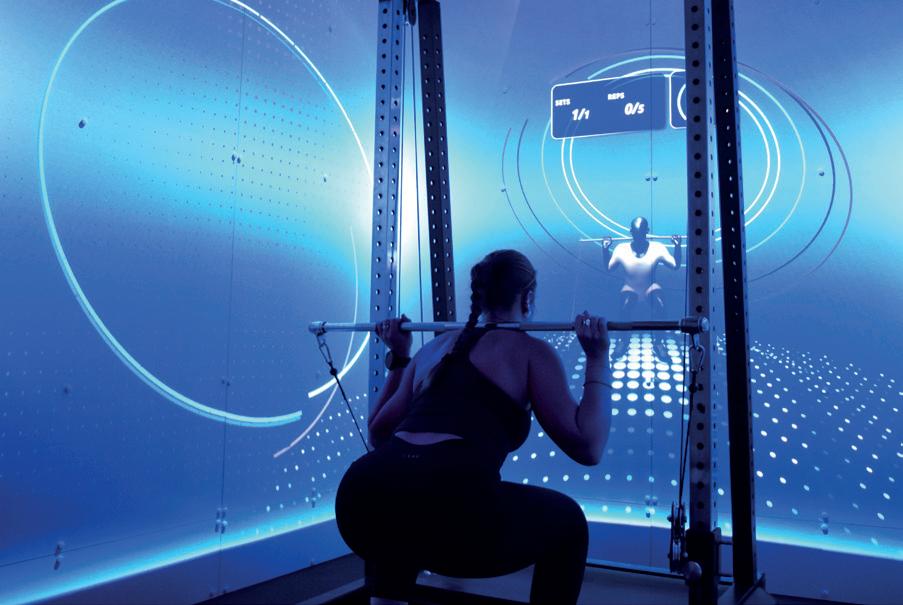
Will Dean launches CoachCube - an AI PT
Will Dean co-founder of Tough Mudder says he’s reinventing personal training with a new venture – an AI-powered fitness company called CoachCube.
CoachCube delivers a personal training experience powered by AI,
CoachCube delivers personal training using AI in a private space
with sessions taking place inside private interactive smart rooms.
Combining “real-time AI coaching, digitally controlled resistance and advanced form tracking”, Dean says CoachCube can “replicate the guidance, motivation and adaptability of a personal trainer”.
Yet he insists the goal is not to replace the human touch of in-person trainers.
“Tough Mudder showed me the power of motivation, accountability, and community,” he tells HCM. “It also exposed a ceiling – long-term progress still depended on getting access to great coaching, which is expensive, inconsistent, and hard to scale.”
After Tough Mudder, Dean says he became focused delivering elite
“CoachCube is the result of wanting to take everything that works about a great trainer and make it practical for millions of people”
Will Dean
level coaching outcomes without elite level cost. He believes AI and sensing technology are now able to automate the hardest parts of personal training – including form correction, progression, and accountability.
Nesa XSignal o ers full nervous system reset
With increasing conversation around the negative health impact of a dysregulated nervous system, the Nesa XSignal is providing a solution that is fast gaining traction.
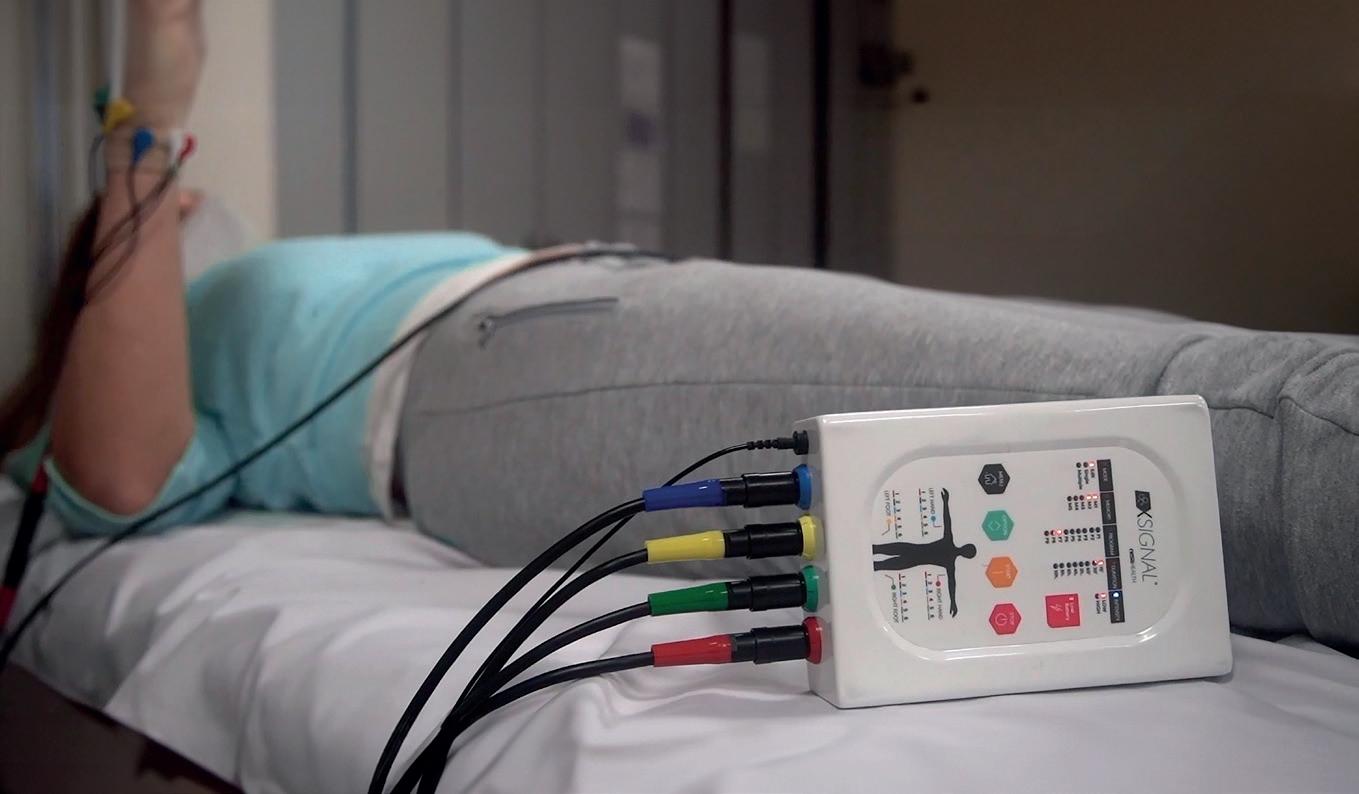
A number of consumer devices are now coming to market which work on stimulating the vagus nerve via an ear clip, however the Nesa XSignal, can deliver a full nervous system reset – balancing the parasympathetic and sympathetic systems to offer significant health benefits.
Low-frequency microcurrents stimulate the nerve pathways of the peripheral autonomic nervous system, to reboot the central nervous system. Imperceptible to the user, the treatment has no side effects and is delivered via a few electrodes which are attached to gloves and socks. A course of 10 to 12 treatments is recommended.
Trials show the treatment can improve sleep quality by 40 per
The Nesa XSignal uses mircocurrents to deliver a full nervous system reset
cent; reduce pain perception by 60 per cent; improve quality of life by 66 per cent; improve intestinal problems by 30 per cent and cognitive function by 35 per cent.
Nesa’s UK distributor is Venn Healthcare and spokesperson, Jenny Torney, says the company is receiving interest from many types of
health providers – physiotherapists, osteopaths, chiropractors, sports therapists, MSK clinicians and premiership football clubs.
Lanserhof at the Arts Club in London is using it to help high-achieving clients suffering from burnout.
Six Senses’ first urban property readies for opening in London
Six Senses has confirmed the launch date for its first urban hotel, which will open in early March at The Whiteley in Bayswater, London. The project had been delayed, due to the complexity of the build and works on the fascade.
The restored Grade II-listed landmark has been reimagined by Foster + Partners and will feature 109 guest rooms and suites, many with private terraces, and 14 branded residences designed by AvroKO in collaboration with EPR Architects. It will also include the first Six Senses
“Six Senses Place The Whiteley represents a fresh chapter for the Six Senses concept, tailored specifically for London’s dynamic energy and discerning community”
Anna Bjurstam
Place private members club in the world, which will have a focus on health and wellbeing.
Wellness pioneer at Six Senses, Anna Bjurstam, says: “Six Senses Place The Whiteley represents a fresh chapter for the Six Senses concept, tailored specifically for London’s dynamic energy and discerning community.
“It’s not just about wellness or socialising – it’s about creating a sanctuary where meaningful connections, purposeful experiences and personal growth come together. Every detail, from the design to the programming, has been crafted to reflect the city’s pace, while offering a space to pause, recharge and belong.”
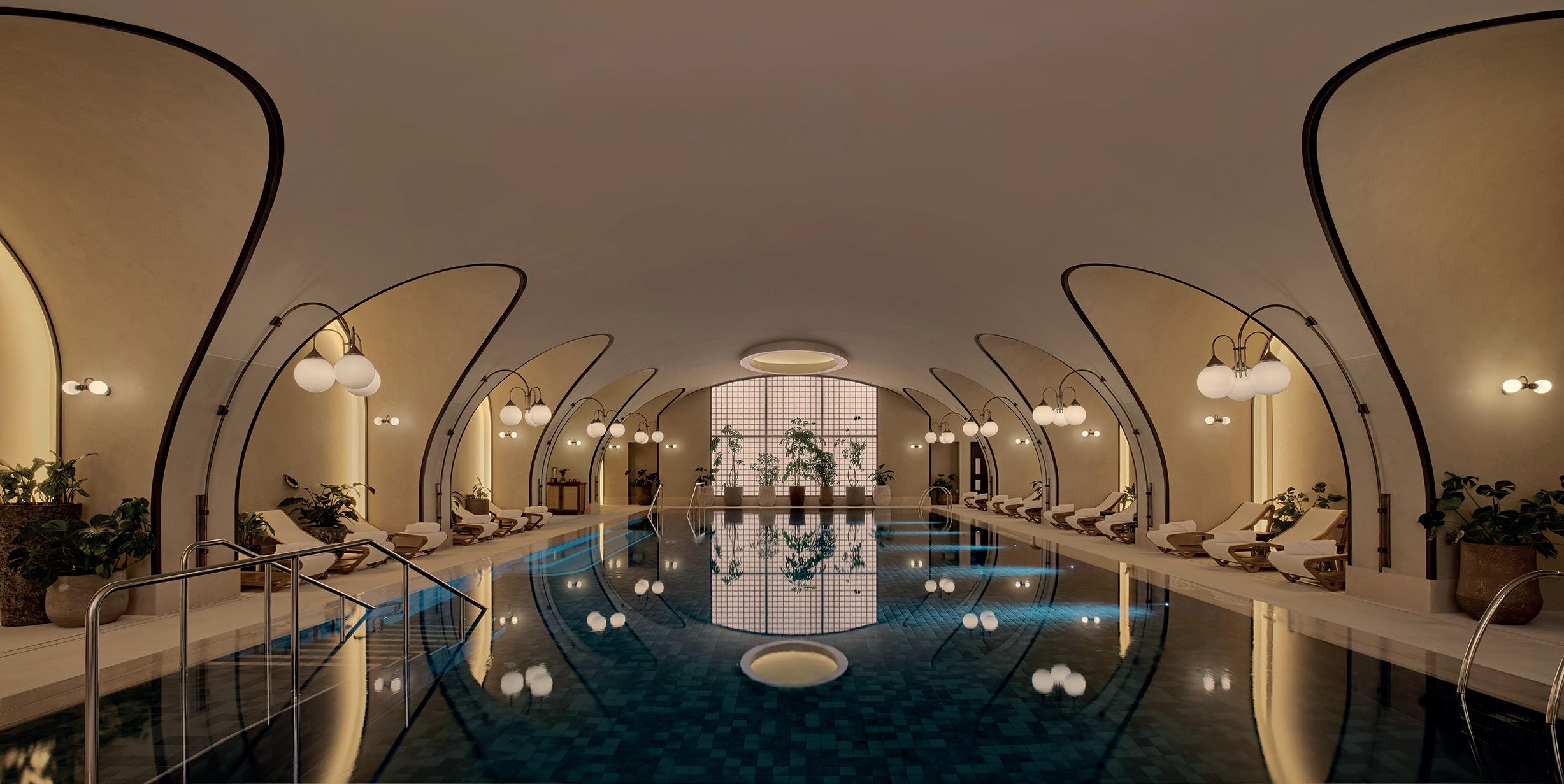
The 2,300sq m spa will feature London’s first magnesium pool within a hotel (by Barr+Wray), a flotation pod and cryotherapy chamber, along with movement studios and personalised programmes designed to restore balance and vitality.
Pioneering recovery methods will be blended with ancient healing practices at both the longevity medical clinic in partnership with Hum2n
Six Senses has the fi rst magnesium pool in a London hotel
SIX
and The Alchemy Bar, while members of Six Senses Place will enjoy a concept designed to blend wellness, culture, and community in a single space. “It’s all about creating a home-away-from-home for people who want more than just a club – a place to connect, recharge, and grow personally and socially,” says Bjurstam.
“Membership is by application only, open to individuals who align with the values and are looking for a meaningful membership experience rather than just access. There are different tiers depending on lifestyle and we’re focused on building an engaged, diverse community that reflects the city’s energy,” she said.
Nick Yannell, GM of Six Senses at The Whiteley, told HCM: The hotel will be a “place designed around human wellbeing, rather than excess.”
l Third Space The Whiteley opened last month in the same building, bringing a further wellness offering to Bayswater.
http://lei.sr/J3p2B_H
TAP OR SCAN
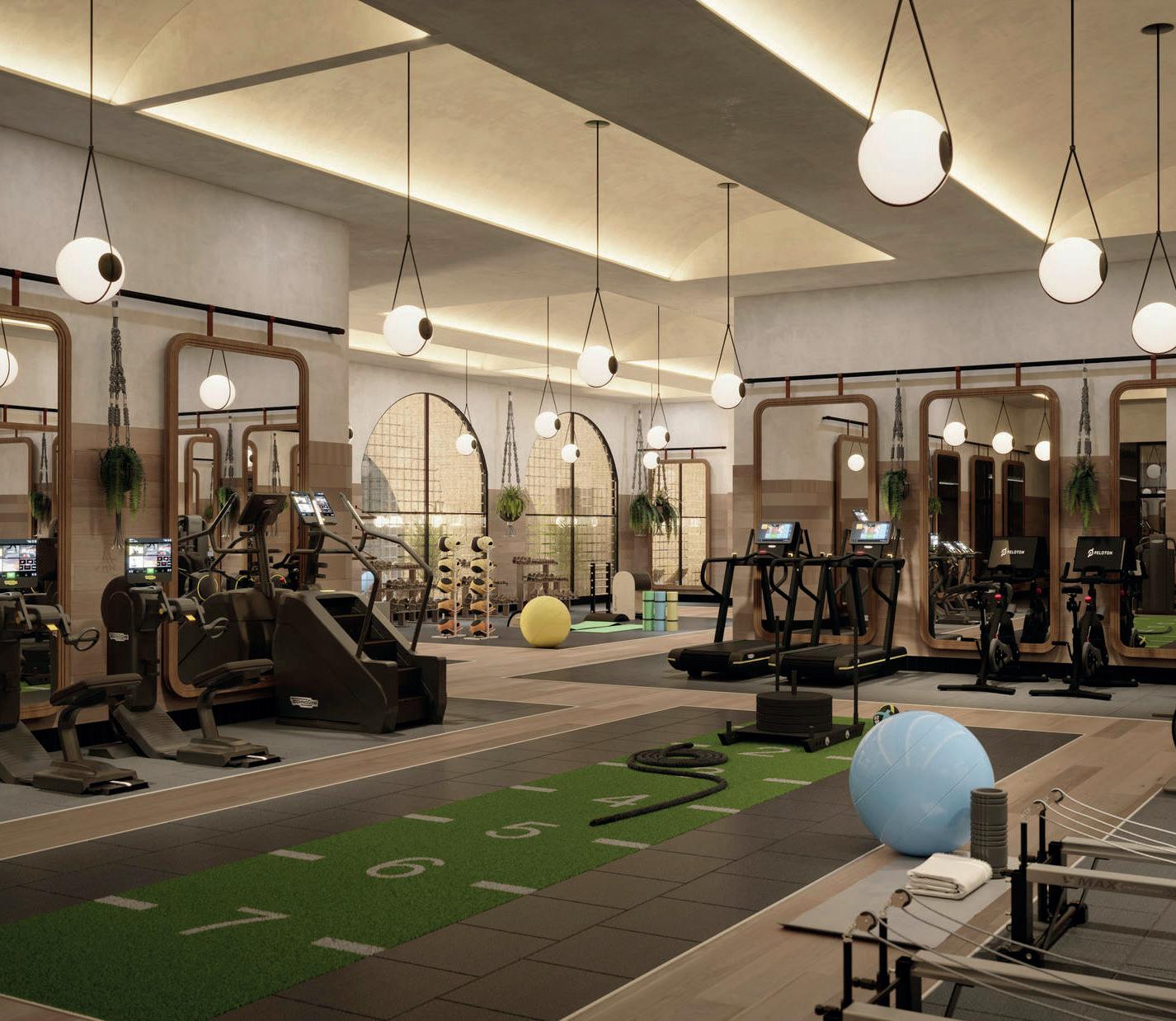
The gym at Six Senses with functional training
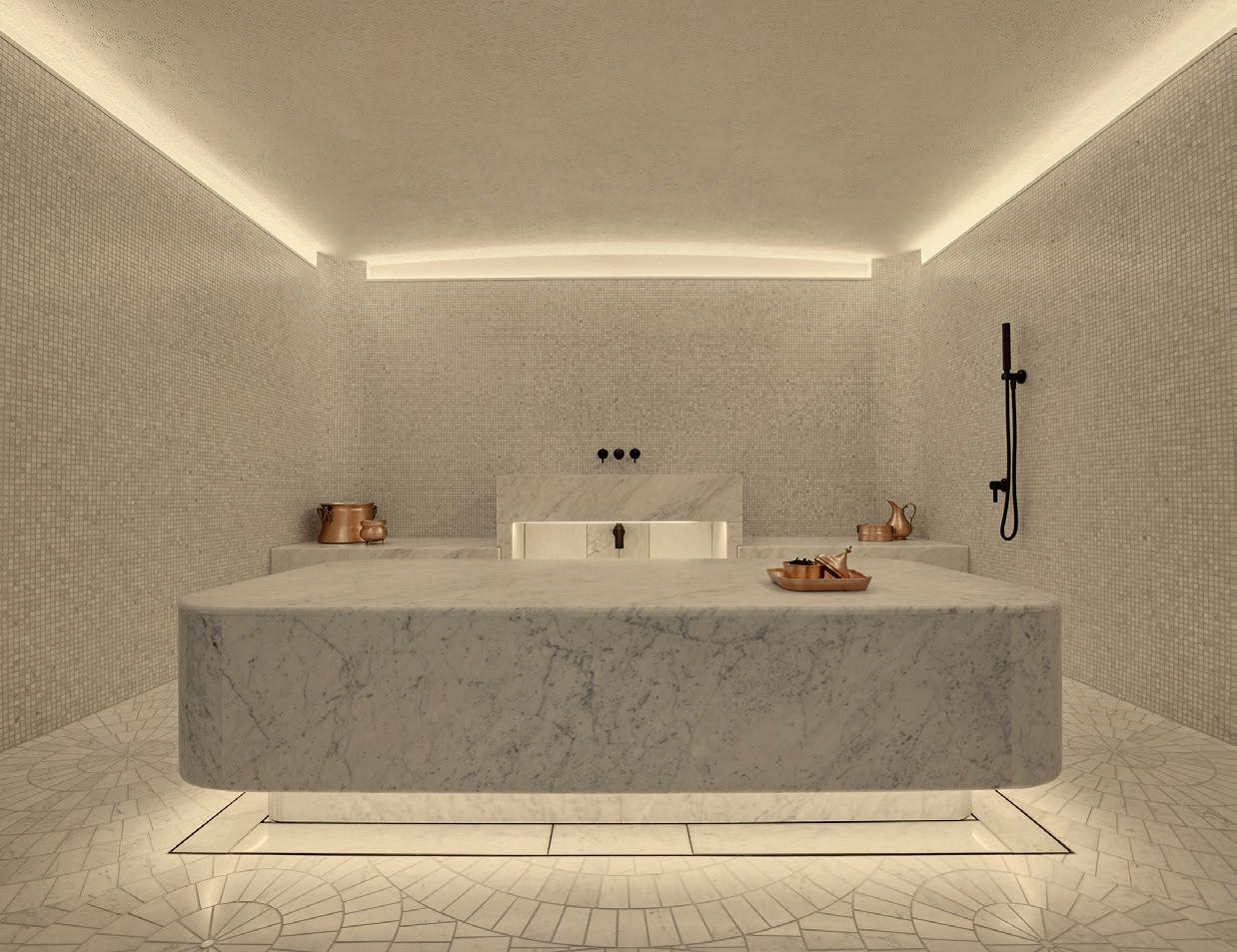
The hammam is part of the spa offering
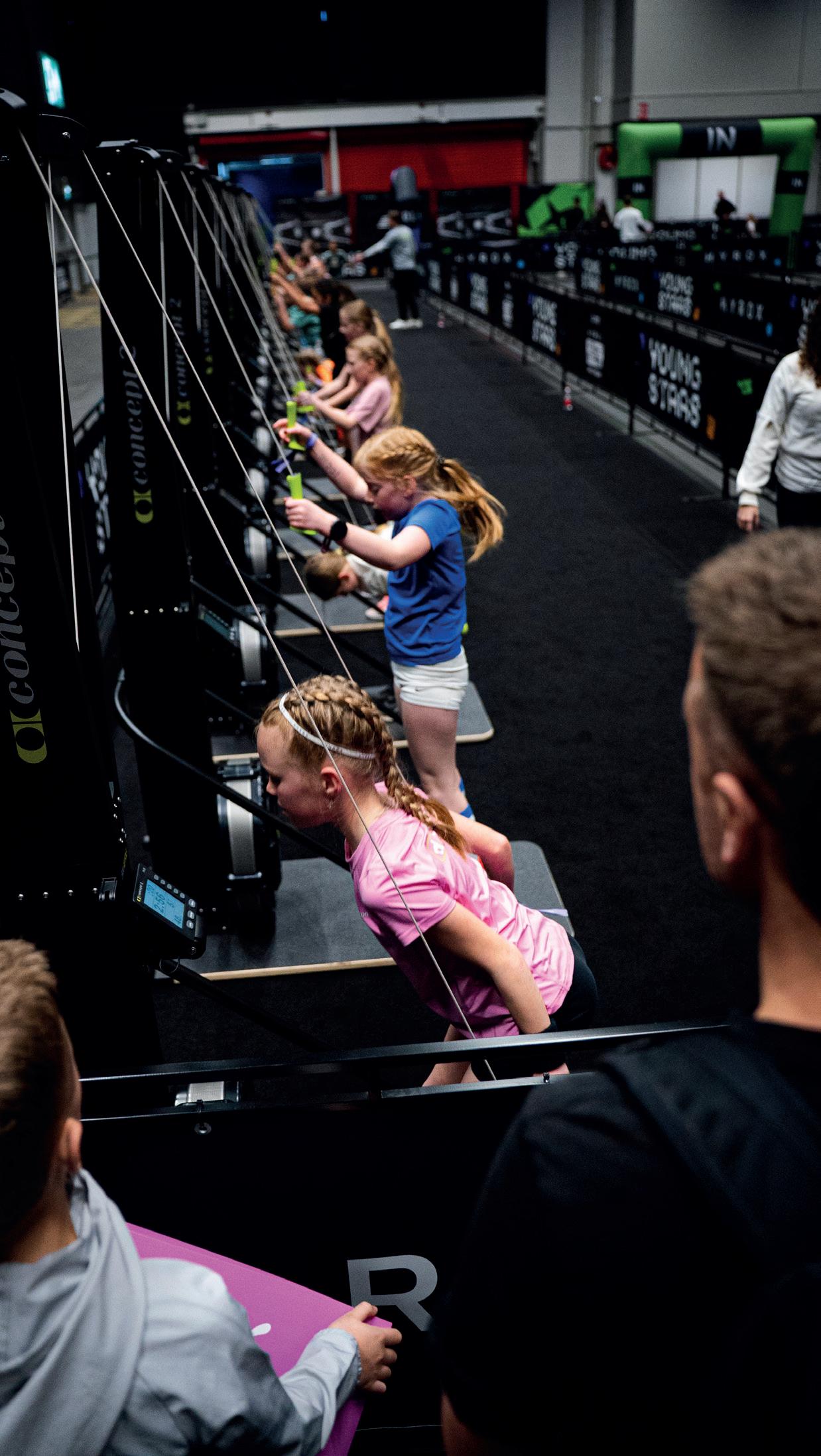
Hyrox Youngstars launches to engage the next generation
Hyrox has completed its first Youngstars event, a racing format designed for younger athletes. The next will take place at the London Hyrox on 28-29 March in conjunction with the company’s first Coaches Summit.
Following the classic Hyrox race structure, with adaptations to distance, load and movement standards, Youngstars is a safe and inclusive event that gives kids a race-day experience that reflects that of adult competitors.
Global Hyrox Youngstars manager, Jessica Petty, spent six months testing the concept with young athletes in a gym environment to refine the rulebook, branding, safeguarding framework and operational format. The competition was then designed around long-term athlete development, with every element adhering to participants’ age and maturation stage.
Petty told HCM the goal is to build a format that’s safe, inclusive and scalable: “If the experience is right, participation will grow organically as we expand across Europe and further afield, engaging thousands of young athletes over time.”
“With Hyrox Youngstars, we’ve taken everything people love about Hyrox – the atmosphere, the structure, the sense of achievement – and reimagined it for children. It’s challenging, it’s safe, and most importantly, it’s designed for every kid, not just the future sporting stars,” says Petty.
Youngstars will roll out at selected European Hyrox events this year, with US cities to follow. Focusing on celebrating participation rather than competition, Youngstars aims to build physical literacy, confidence and resilience in young people, while positioning functional fitness as a sport for the next generation.
Global head of Hyrox365 Academy, Ralf Iwan, said: “Our primary motivation was to provide a distinct competition format for young people that’s not only
“ Bringing Hyrox London, Youngstars and our first-ever Coaches Summit together creates a truly global celebration of competition, coaching and community.”
Christian Toetzke
HYROX
fun and motivational, but also genuinely challenging, both mentally and physically, while being meticulously suited to their specific age and developmental needs.
Hyrox Coaches’ Summit
The inaugural coaches summit will take place in the UK at Twickenham’s Allianz Stadium, from 27-28 March. During the summit, coaches from around the world will come together with strength and conditioning experts, sports scientists and elite practitioners.
The curriculum was designed by the Hyrox365 Academy, with the two-day event hosting 25 expert speakers, more than 50 sessions, practical workshops, research insights, an innovation hub showcasing new tech and a guaranteed Hyrox London race entry for attendees.
The summit will centre on three pillars – Inspire, Connect and Evolve, reflecting Hyrox’s mission to elevate coaching standards globally as the sport continues to grow.
Hyrox co-founder and CEO, Christian Toetzke, said: “The London Week of Fitness represents a defining moment for our sport. Bringing Hyrox London, Youngstars and our first-ever Coaches Summit together creates a truly global celebration of competition, coaching and community.
“London has always been one of our most passionate and influential markets and this programme reflects both the strength of the UK community and the accelerating global momentum behind Hyrox. As we continue to scale the sport internationally, this week sets a new benchmark for what the future of fitness racing can look like.”
Hyrox’s global footprint continues to grow, with participation, affiliate gym numbers and race locations increasing year-on-year, with a projected 1.3 million participants across 85 cities and 30 countries by the close of the 25/26 season, marking one of the fastest expansions in functional fitness since launching in 2017.
Hyrox has adapted the race for young people
Wave Active opens Lilian’s Room for stroke rehab and to support older people in getting active
Wave Active has opened a new suite designed to support older adults and people living with long-term health conditions to move more.
Lilian’s Room at Downs Leisure Centre, in Seaford, UK, was made possible thanks to a bequest from Lilian Davis, who had attended the Wave Active Health Outreach Sessions delivered in her care home.
Co-designed with the Innerva team, it features assisted, accessible exercise equipment, as well as Tiny Tablets – interactive touchscreens which use apps to support stroke rehabilitation.
For the first time outside a clinical setting, Strolll is available. This all-in-one digital, therapeutic software solution uses augmented reality glasses to help those suffering from a variety of neurological health conditions, including stroke and Parkinson’s Disease, supporting mobility, balance, cognitive engagement and functional rehabilitation.
Users will be supported by trained staff, including health practitioners, a health coach, physiotherapist and a neuro physiotherapist. A training area will host group exercise sessions, such as chair-based exercise, PSI, falls prevention and stroke rehab.
“We have a number of aims with Lilian’s room, all of which relate to diversifying the offer to enable more people to move more and to do so more often,” Wave Active CEO, Duncan Kerr, told HCM. This includes those who – for whatever reason – find that difficult.
“Our hope is that Lilian’s Room will appeal to those seeking a different kind of support, more akin to a prehab/rehab clinic than a leisure centre, hence our investment in the team to bring a wider skill set to the centre.
“We’re keen to demonstrate that our sector can be an effective partner to Primary Health Care and the NHS. I’m delighted to say we are making progress with this ambition, demonstrated by the opportunity we’re now being given to work with the Acute Stroke Team in the Eastbourne District General Hospital.
“Our physio and health practitioner will be supporting the Acute Stroke Team to reduce the level of deconditioning of stroke patients while in hospital. Lilian’s Room will play a key role once these patients return home, hopefully reducing blue light returns to hospital.”
Numerous members of the leisure centre have expressed an interest in the suite in order to get their parents active. “Many describe their parents as inactive because that’s what happens when you get older, but we know that doesn’t need to be the case,” says Kerr. “We just need to provide the space, relevant equipment and support to enable more movement, more interaction, greater support and so on.
“We had no idea how much the exercise sessions had meant to Lilian. We all wish we could thank her in person for her kindness and I only hope we do justice to her legacy with Lilian’s Room.”
“We have a number of aims with Lilian’s room, all of which relate to diversifying the offer to enable more people to move more and to do so more often”
Duncan Kerr
TAP OR SCAN
Duncan Kerr
Wave Active has opened a specialist suite,
Room, following a bequest
Lilian’s
Collabs
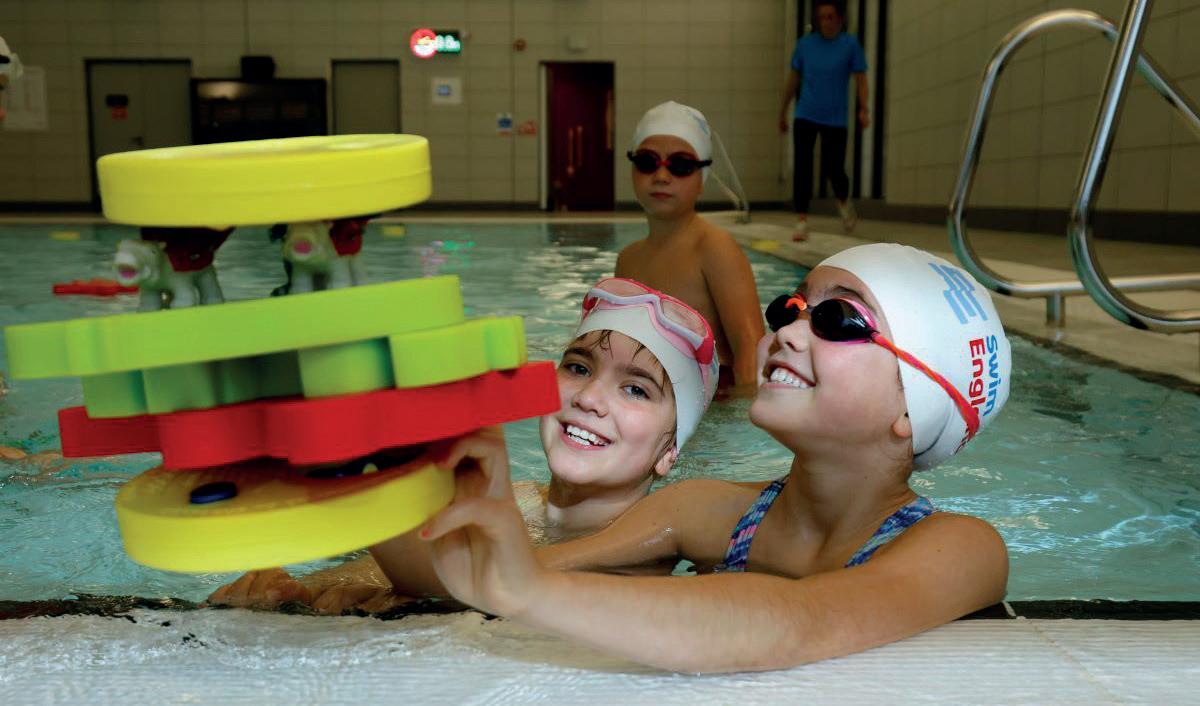
Swim England aims for neuro-inclusion
Anew strategic partnership between Swim England and Neurodiverse Sport will strengthen neuro-inclusive practice across aquatics.
The growing prevalence of neurodiversity is a challenge for swimming teachers, with Swim England research finding that up to four in ten children in a swimming lesson could be considered neurodivergent, with this information not always known in advance.
Certain forms of neurodiversity can involve sensory sensitivities
“ Neuroinclusion is never about a single solution”
Caragh McMurtry, Neurodiverse Sport
Exhale and
Swim England has formed a new partnership with Neurodiverse Sport that may be heightened in noisy, bright pool environments. Swimming teachers have highlighted a need for greater support, guidance and practical resources.
Caragh McMurtry, co-founder and CEO of Neurodiverse Sport CIC, says: “Neuroinclusion is never about a single solution – it’s about
understanding people, environments and experiences and being willing to keep listening, testing and adapting. We’re excited to take this next step together and to learn what genuinely helps neurodivergent people feel safe, supported and able to thrive in water.”
Salt Fitness team up at Loews Atlanta
Boutique wellness brand, Exhale, has partnered with performance and recovery brand Salt Fitness at the Loews Atlanta Hotel in Georgia, US.
The Exhale Atlanta location, within the 414-key hotel, is now a co-branded partnership described as a wellness club with membership options.
Salt provides a coach-led strength and conditioning programme called Train by Salt, as well as reformer-Pilates based training called, Modern Pilates by Salt.
A recovery space – Recover by Salt – features contrast therapy, red light therapy along with compression and percussive equipment.
The renovated facility also offers signature barre and yoga classes and a gym with Technogym equipment,
in addition to Exhale’s new menu of spa and wellness treatments.
There are three types of membership: Fitness, Spa and Salt.
Fitness costs US$189 (€173, £150) a month and offers members unlimited barre and yoga, as well as access to the gym.
For US$159 (€146, £126) a month, the Spa membership provides a 60-minute treatment per month and access to the spa facilities.
The top-of-the-range Salt membership costs US$294 (€269, £232) per month and provides access to unlimited fitness classes, yoga and barre classes, a monthly spa treatment, access to the spa and further discounts on other services.
http://lei.sr/5P3C4_H
Loews Atlanta wellness, in partnership with Exhale and Salt Fitness
The Well HQ creates pelvic health protocol
The Well HQ has teamed up with pelvic floor and bladder health specialist, Jude, to offer a pelvic floor strengthening programme to complement a bladder health supplement launch.
The new Pelvitone daily powder supplement has been developed to support the strength, endurance and resilience of muscles, with the formulation specifically designed for the pelvic floor.
To complement the launch, Jude has collaborated with The Well HQ to design a pelvic floor strengthening programme called The Strength Method which goes beyond Kegel exercises.
The Well HQ co-founder, Baz Moffat, has filmed a series of short educational videos on how to train
“The solution isn’t more squeezes. it’s timing, control and co-ordination”
Baz Moffat
the pelvic floor in coordination with the core, glutes and breath. Moffat, told HCM: “The solution isn’t just more squeezes. It’s learning timing, coordination and control. Squeezes are only a small part – roughly 30 per cent – of the picture.”
http://lei.sr/G4y5a_H
Fitness First launches tie up with Healf
Fitness First is partnering with Healf to introduce a new membership, 360, which offers a personalised and longevity-focused approach.
Priced at £600 per year, more than 3,000 members registered interest ahead of the launch.
As part of its premiumisation strategy, Fitness First already offers a BioAge score using EGYM Genius and tailored training plans through its Fitness First Able platform. It also offers virtual access to GPs, physiotherapists and nutritionists via HealthHero.
The new tie up with Healf will offer a diagnostics service, including at-home blood testing, 1:1 nutritionist consultations and 20 per cent off Healf’s curated product range.
CEO of Fitness First UK, Marc Diaper, says: “We’re giving our members smarter tools, deeper support, and a faster route to results. This partnership represents another
step towards the future of fitness and wellbeing and complements our vision of supporting members living better now and long into the future.”
Nico Ward, head of Healf Zone, says this is a natural fit: “Fitness First members are committed to their health and we’re here to help them.”
“ We’re giving our members smarter tools ” Marc Diaper
JUDE
CHRISTIAN BANFIELD
The Well HQ and Jude have collaborated on a pelvic floor programme
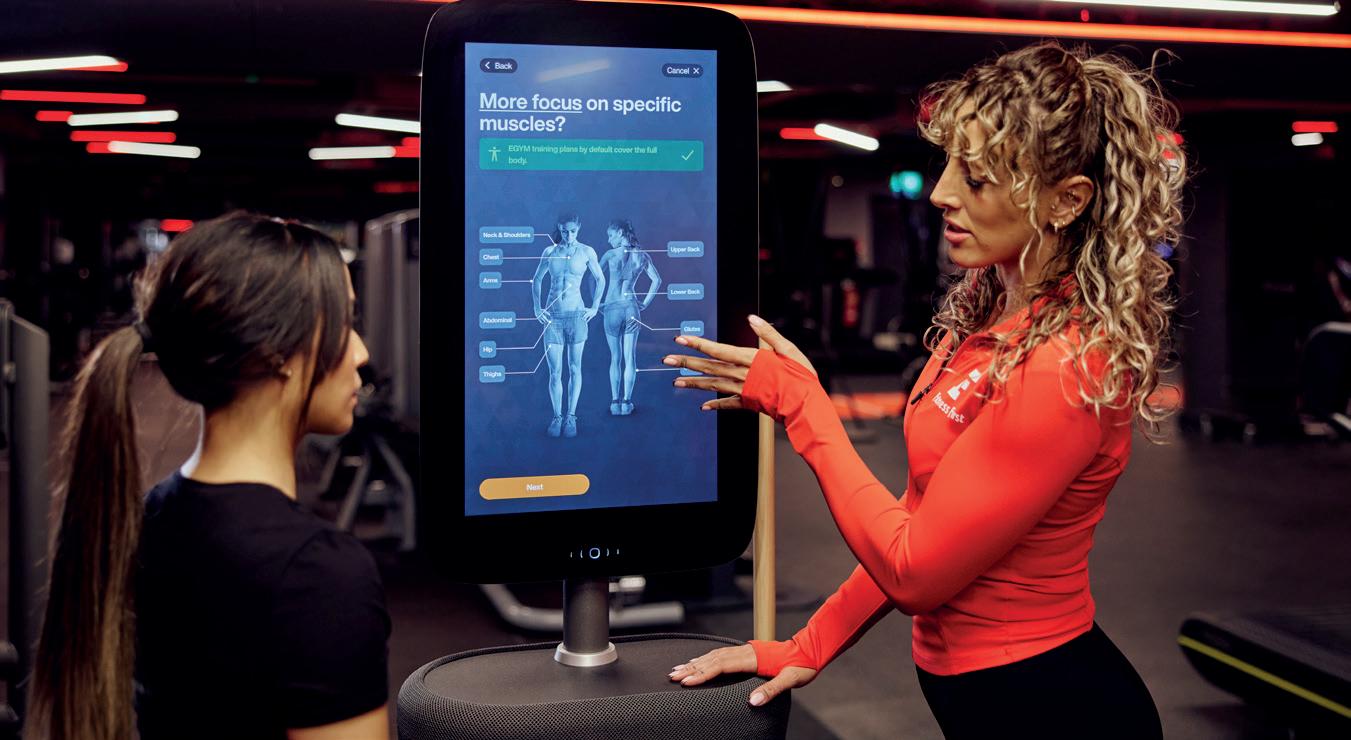
Fitness First Able offers a more personalised approach using EGYM Genius
HCM people
People are craving connection and the holistic approach that only yoga can provide
Shamir Sidhu
Founder and CEO, MoreYoga
Tell us about MoreYoga
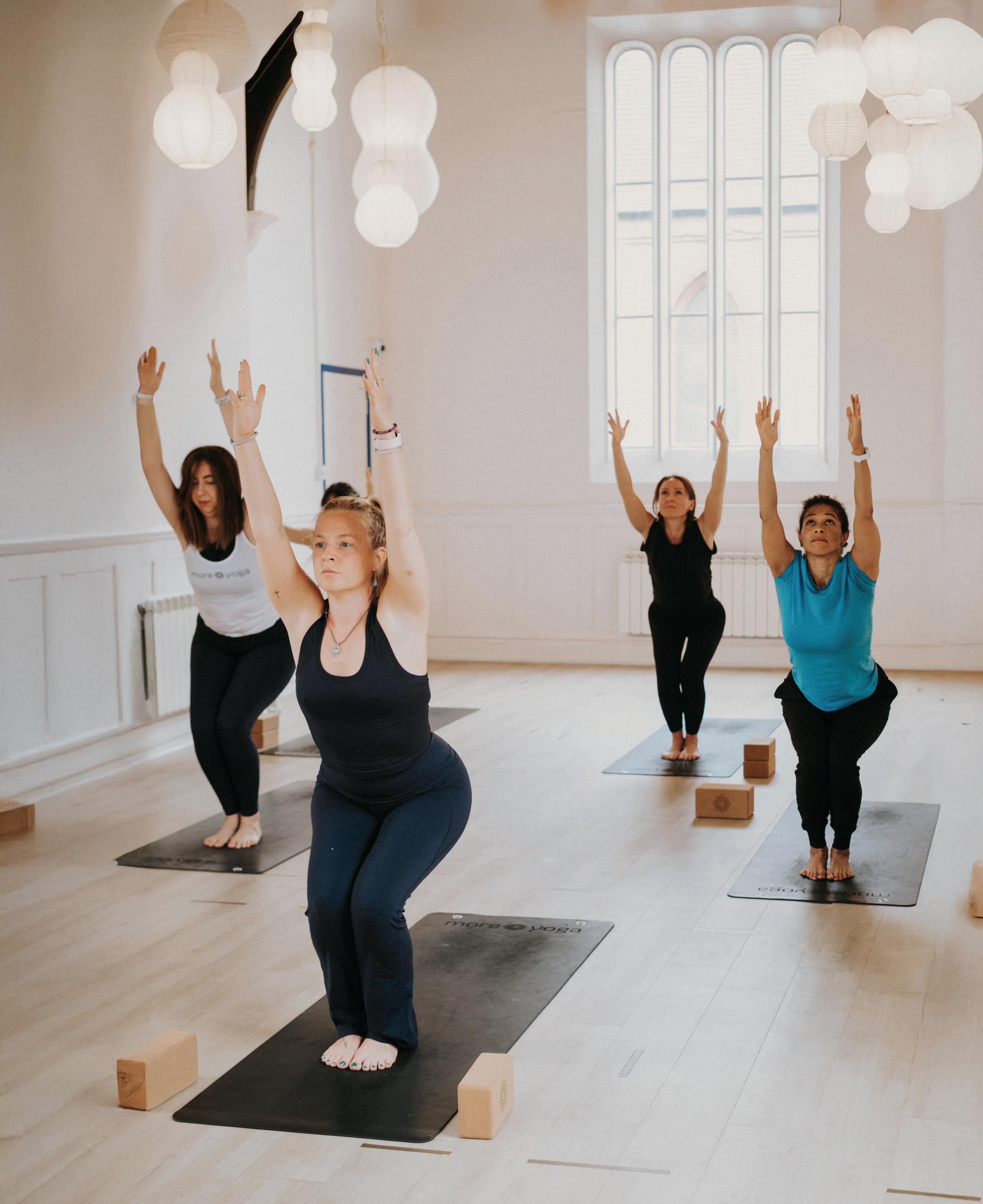
With 40 sites, MoreYoga is London’s largest yoga studio brand. We offer a gateway to personal transformation through yoga, mat Pilates, meditation and a range of wellness practices. Our mission, when we launched in 2016, was to make highquality yoga affordable and accessible to all.
We run more than 1,300 classes a week and all types of yoga styles – vinyasa, mandala, rocket, as well as the softer practices, such as yin and yoga nidra, plus our own signature Pilates classes.
Across our network, we see around 90,000 visits per month and have 20,000+ monthly customers. We encourage members to aim for two to three classes per week to truly feel the benefits and maximise the value of their membership.
How do you make yoga accessible?
Accessibility is at the core of our brand DNA, by ensuring affordability and convenient locations. We’ve prioritised removing barriers and our flagship £1 first month, then half-price for life membership (£44 per month) has always run alongside flexible pay-as-you-go packs.
While our £1 membership offer may seem as though its not sustainable long-term, by continuing to offer low-cost introductory offers, regular pay-what-youcan community sessions, and ongoing discounts for health workers, students and £1 classes for those in
Shamir Sidhu
Our £1 membership offer brings people into yoga who had been priced out of the market
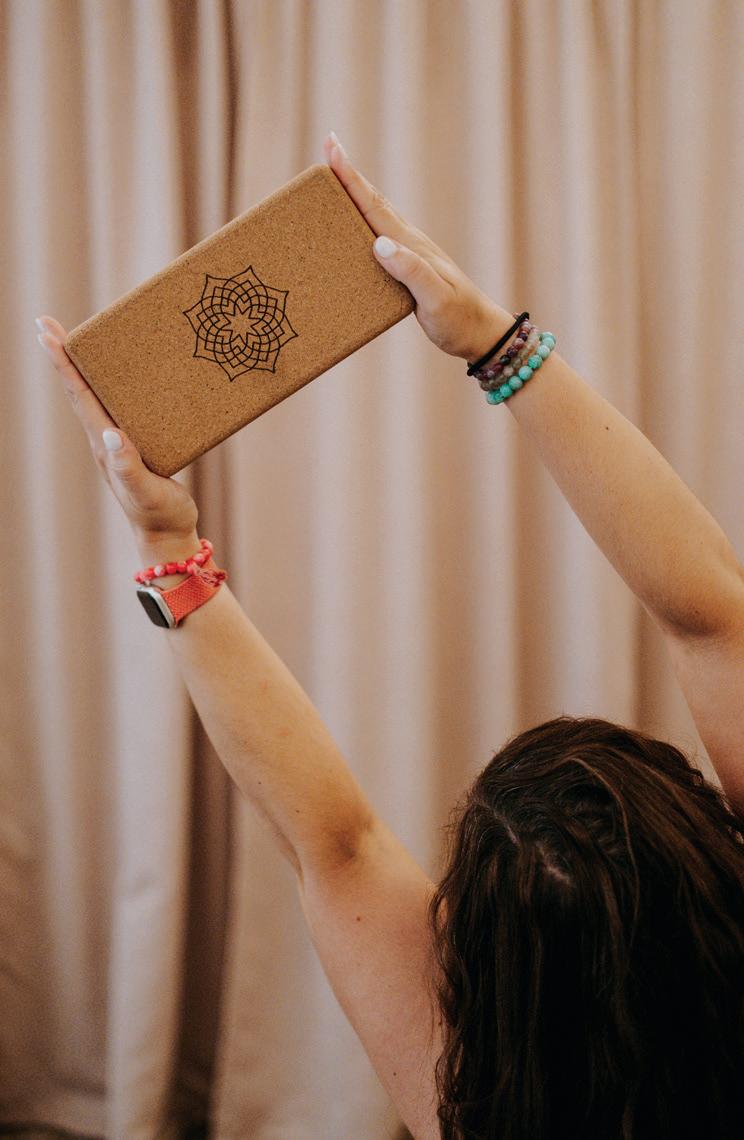
MoreYoga offers all kinds of yoga classes, from vinyasa to yoga nidra
need, we have continued to bring people into yoga who may not necessarily have had the opportunity before, as they were priced out of the market. Our app allows people to book into classes straightforwardly and discover yoga in their local area, making it easier to incorporate it as part of their daily routine.
How is the concept evolving?
We’re weaving in therapeutic modalities, such as sound healing, breathwork and community circles. We also offer our instructor network the chance to host workshops of their chosen theme and we get some really varied ideas brought to the table. Our approach is to be intentional rather than trend-driven; we want to ensure every offering serves a genuine purpose in offering true value for elevating people’s health and wellness, deepening our community, healing and selfawareness. We’re also intentional in curating offerings that honour the roots of yoga.
Ceremonial practices, trauma-informed therapy and integrative coaching are all areas we’re exploring through our positive mental health programme –MoreMind – which has been created to bridge the gap between physical practice and mental wellbeing. We have a dedicated product and innovation team who help us to stay ahead of the curve and an internal teacher development programme. Added to this, we listen carefully to what our community wants.
As MoreYoga evolves as a brand, we’re addressing many touchpoints within the health and wellness space, so members continue to feel welcome, valued and excited by our offering.
Is the Pilates boom impacting yoga?
We see reformer Pilates as complementary rather than competitive and we love that it encourages more people to explore mindful movement and body awareness. However, what MoreYoga offers – with touchpoints across the physical, mental and spiritual – is hard to replicate.
MoreYoga currently has 34 studio locations in London
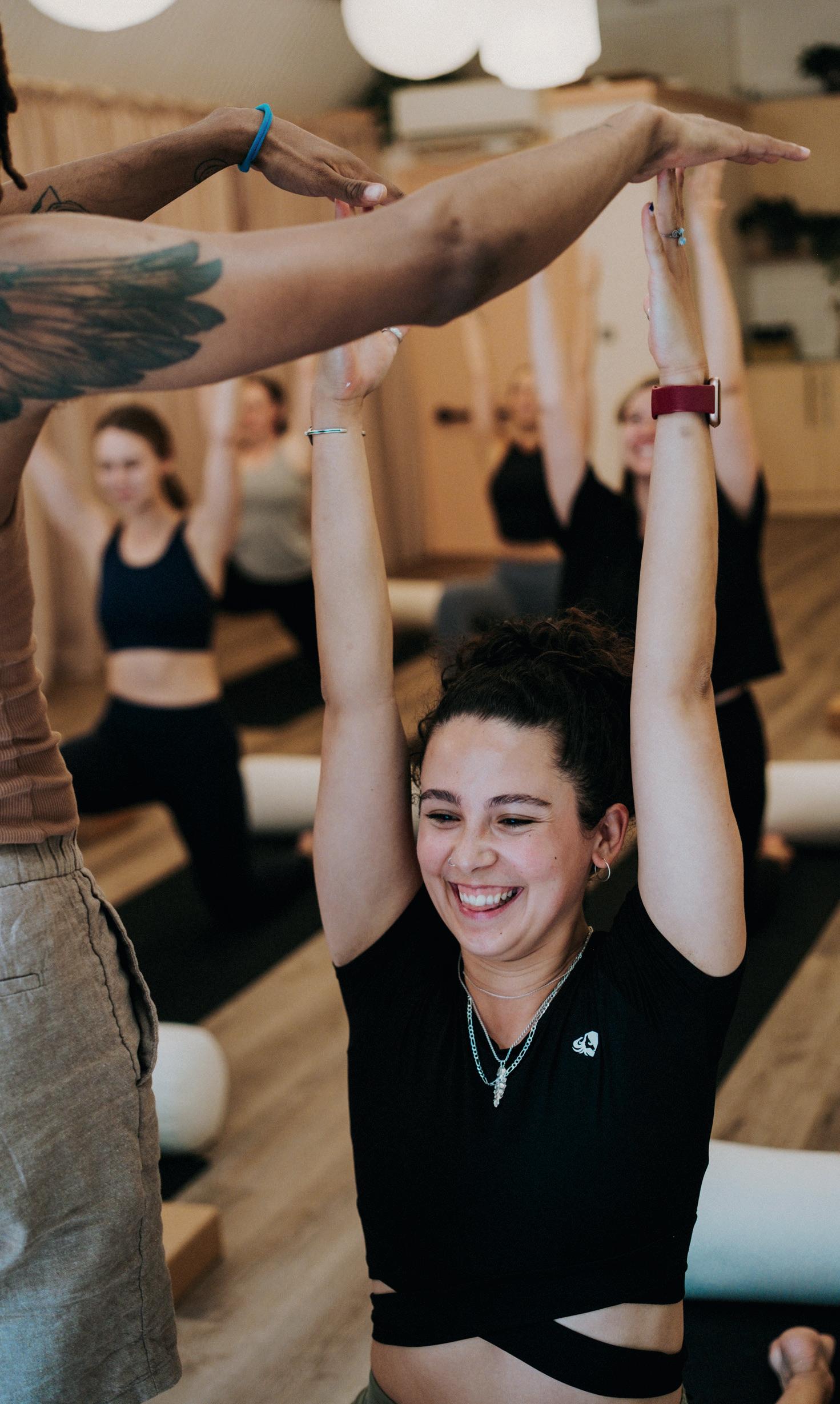
Pay-what-you-can community sessions are also offered
Yoga’s beauty lies in the fact it combines ancient wisdom and modern practice, backed by more and more emerging science. We’re finding people are craving connection – to themselves and others – and the holistic approach to their wellness that only yoga can provide.
Our customers come for a yoga way of life. What unites them is a desire for something more – more connection, strength, calm and clarity.
How are your membership levels?
We lost 80 per cent of our members over the course of the pandemic and had three months’ cashflow in the bank in October 2020, so it got very real for us.
The turning point was October 2022. Demand for affordable yoga started to surge and we began climbing steadily back. By 2023, we’d surpassed prepandemic levels, holding onto all of our studios.
By January 2024 we saw 24 per cent growth yearon-year and since then we’ve doubled our membership base and are looking forward to expansion.
Ceremonial practices, trauma-informed therapy and integrative coaching are areas we’re exploring through our positive mental health programme, MoreMind
The MoreYoga network sees around 90,000 visits per month
MOREYOGA
We survived through agility, creativity and the continued support of our loyal community. We were one of the first London yoga studio brands to pivot to online, filming round-the-clock from March 2020 so our members could keep practicing. We maintained a really beautiful dialogue and open communication with members during this time and we believe this led to the maturing of the brand. Fundamentally it’s been our commitment to purpose and clarity around our values of diversity, community, and affordability that saw us through those darker days. We supported more than 3,000 health workers with free yoga, turned studios into food banks and raised thousands for charities. These actions weren’t just survival strategies – they deepened our bond with our community and reminded us why we do this work.
Our community support also meant we were able to help some of our teachers with income during this time. That move kept our community connected and gave us the resilience to hold on.
The gap in expansion while we regrouped financially also gave us the opportunity to take a step back and look at ways we could elevate our brand and look deeply at customer experience. We’ve since worked with interior design company, Kai Interiors, to push ahead with a refresh of studio design/fit out.
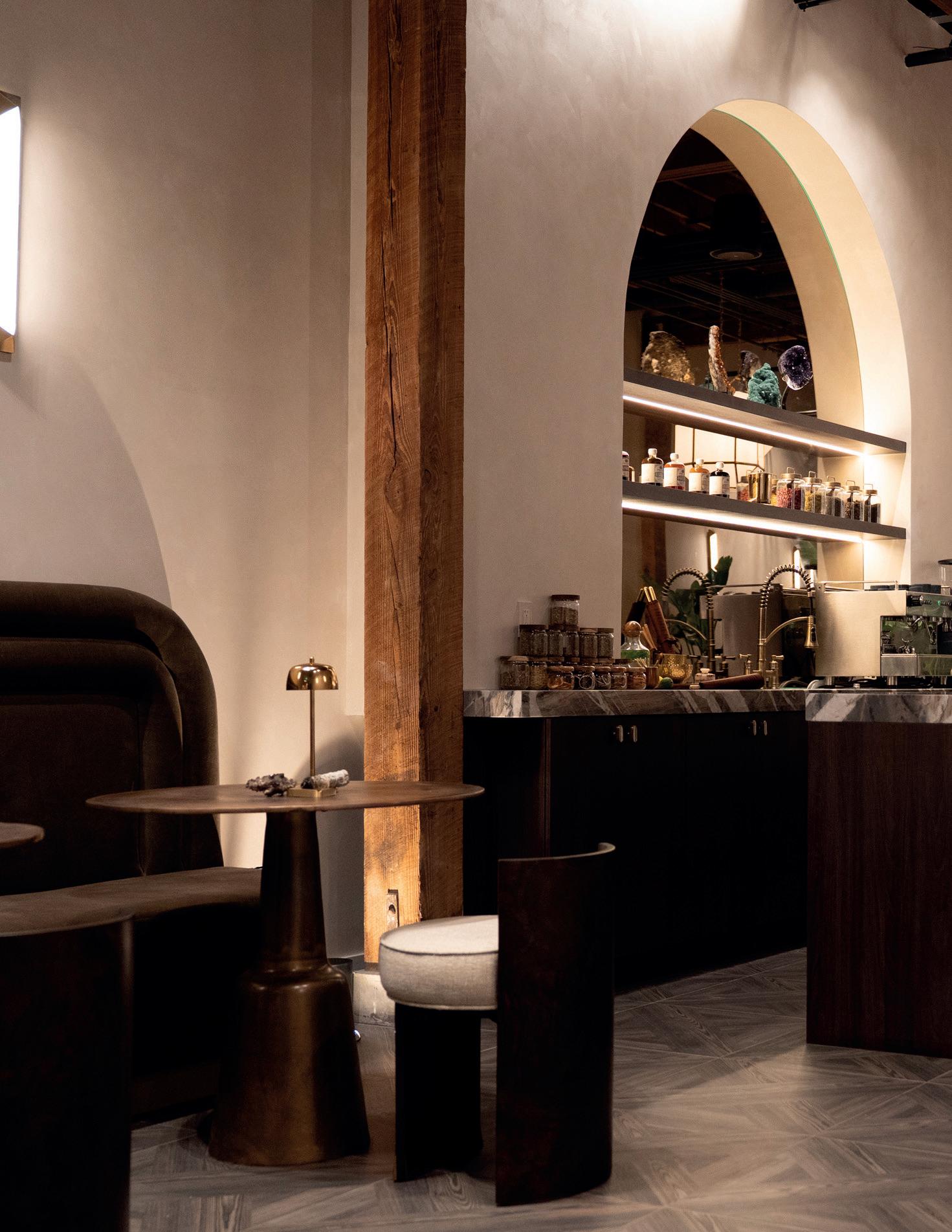
We wanted to move beyond functional space into something that felt intentionally designed: calm yet energising, minimalist yet warm. For us, design is part of wellness – the look, feel and atmosphere of a space all contribute to how someone experiences their practice and their community.
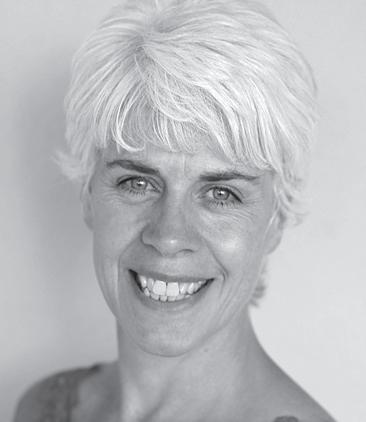
We’re looking at regional expansion and our dream is Europe and global, but we’ll take it one studio at a time
MoreYoga’s interiors are ‘calm yet energising, minimalist yet warm’
MOREYOGA
What are the current opportunities and challenges?
The opportunity lies in deepening our offering, scaling impact and continued innovation. We also have ambitions to boost our workplace wellness offering and cross-disciplinary wellbeing services.
The challenge is standing out in a saturated wellness market while staying true to our values, alongside the current challenges of today’s financial climate and the inevitable business rates that can cripple high-street businesses.
What are your expansion plans for the UK and further afield?
In the short term, our focus is on optimising our network and launching new studios in key London neighbourhoods. We’ve opened sites in Battersea, Peckham Rye, Peckham’s Queen’s Road, Manor House, and Clerkenwell, with another eight planned, including Walthamstow and Canning Town (Q1 2026).
Medium- to long-term, our vision is still 100+ studios across London, as it was when we spoke to HCM in 2018, before the pandemic intervened.
Our aim is to bring high-quality yoga and Pilates to local high streets, without the boutique price tag.
We’re still definitely looking at regional expansion and our dream is Europe and global, but we’ll take it one studio at a time and ensure we’re staying true to our vision and values. We’ll grow, but we’ll always aim to grow with depth.
We’re proud to say we’re not franchised and all our studios are managed centrally through our team. This allows us consistency of experience, as we know the business inside out and we’re incredibly proud of our staff and teacher retention.
This built-up knowledge and connection to our vision adds real value to the business. However, people often approach us assuming that we’re franchised, so watch this space for investment opportunities if you do want to be part of the MoreYoga revolution, as we’re definitely not ruling it out. l Read HCM’s profile of MoreYoga in 2018 at www.hcmmag.com/MoreYoga18
MoreYoga membership has more than doubled since January 2024
MOREYOGA
What was your route to being president?
After going to business school, this job presented the opportunity to blend my passion for entrepreneurial growth, business and operations with Pilates, which I’d fallen in love with at the age of 12.
I joined Club Pilates as VP of training and experience in 2018 – overseeing everything on the experience side, including instructors and training programmes – and became president in April 2024.
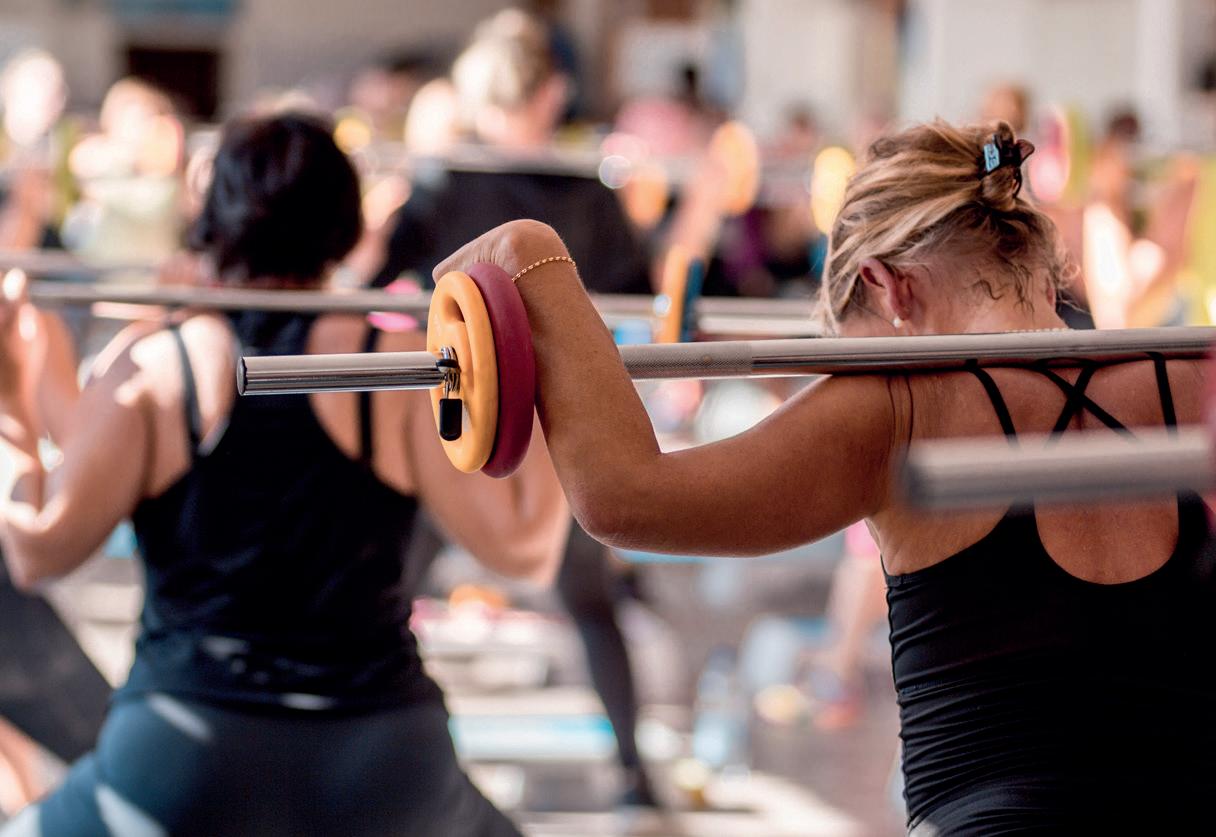
We’re launching our first new class in seven years. It’s called Circuit and is more of an athletic circuit-based class
Tianna Strateman
President, Club Pilates
What’s the model?
Club Pilates is part of the Xponential Fitness portfolio of boutique brands and our tagline is ‘Do Pilates, do life’.
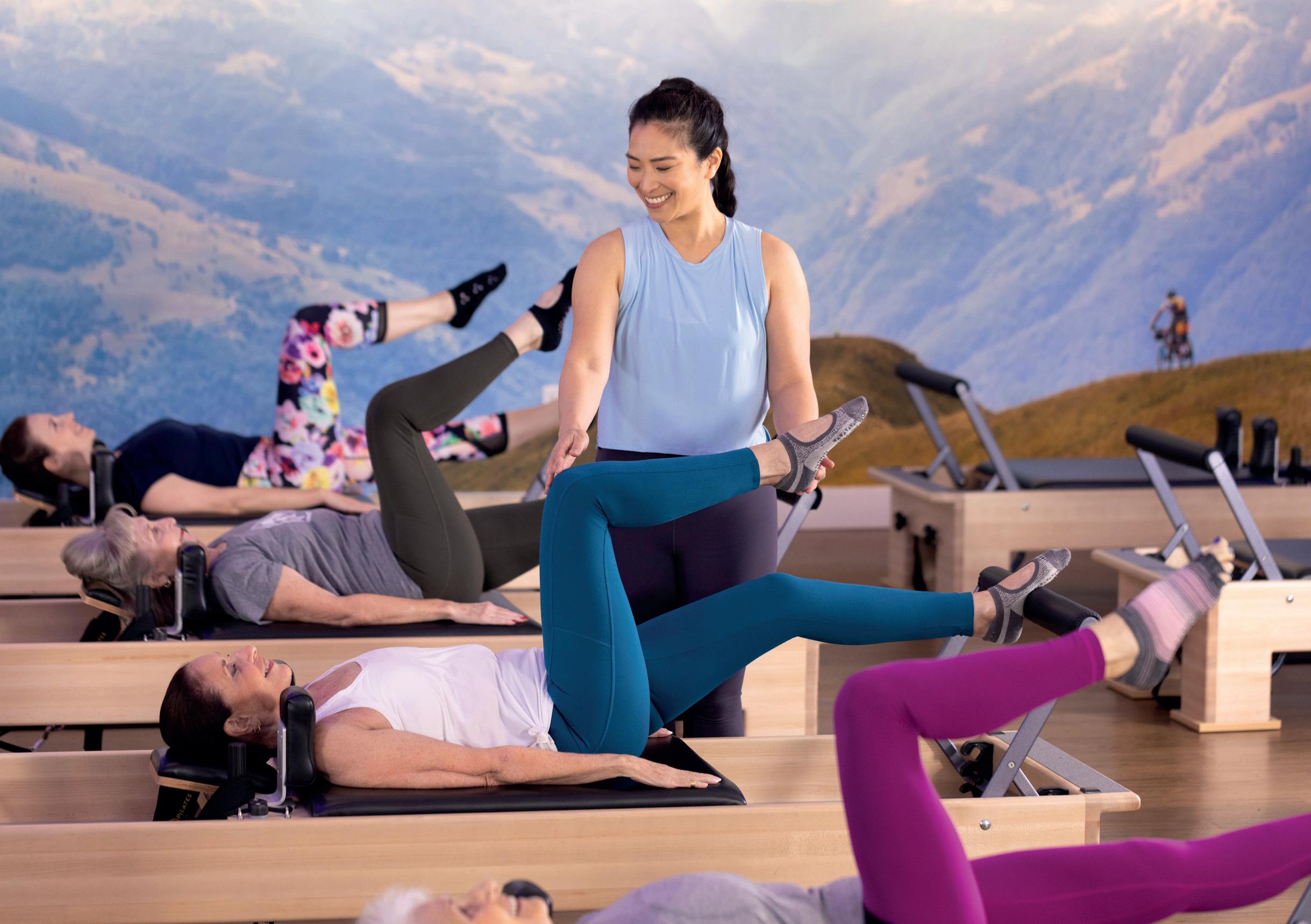
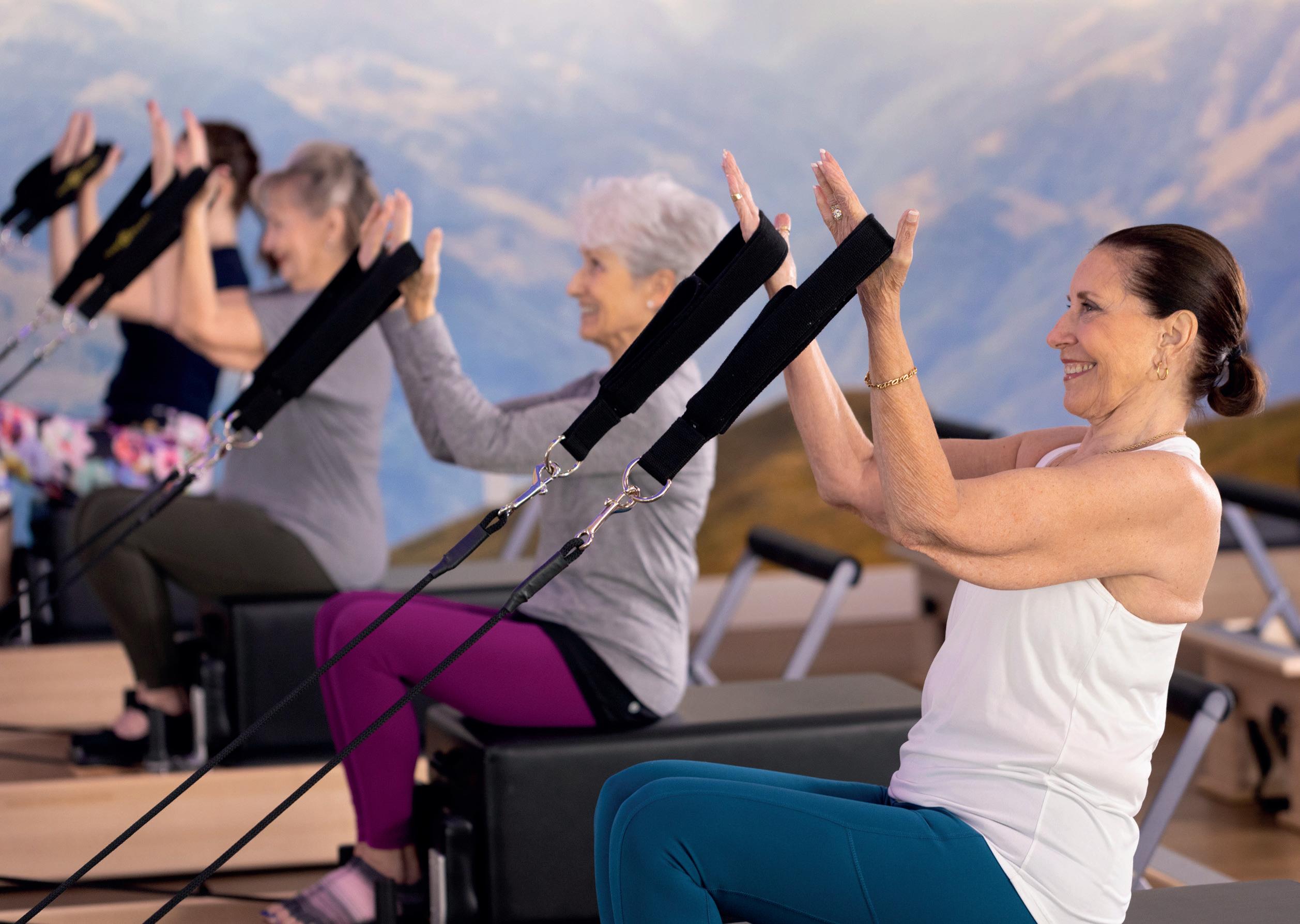
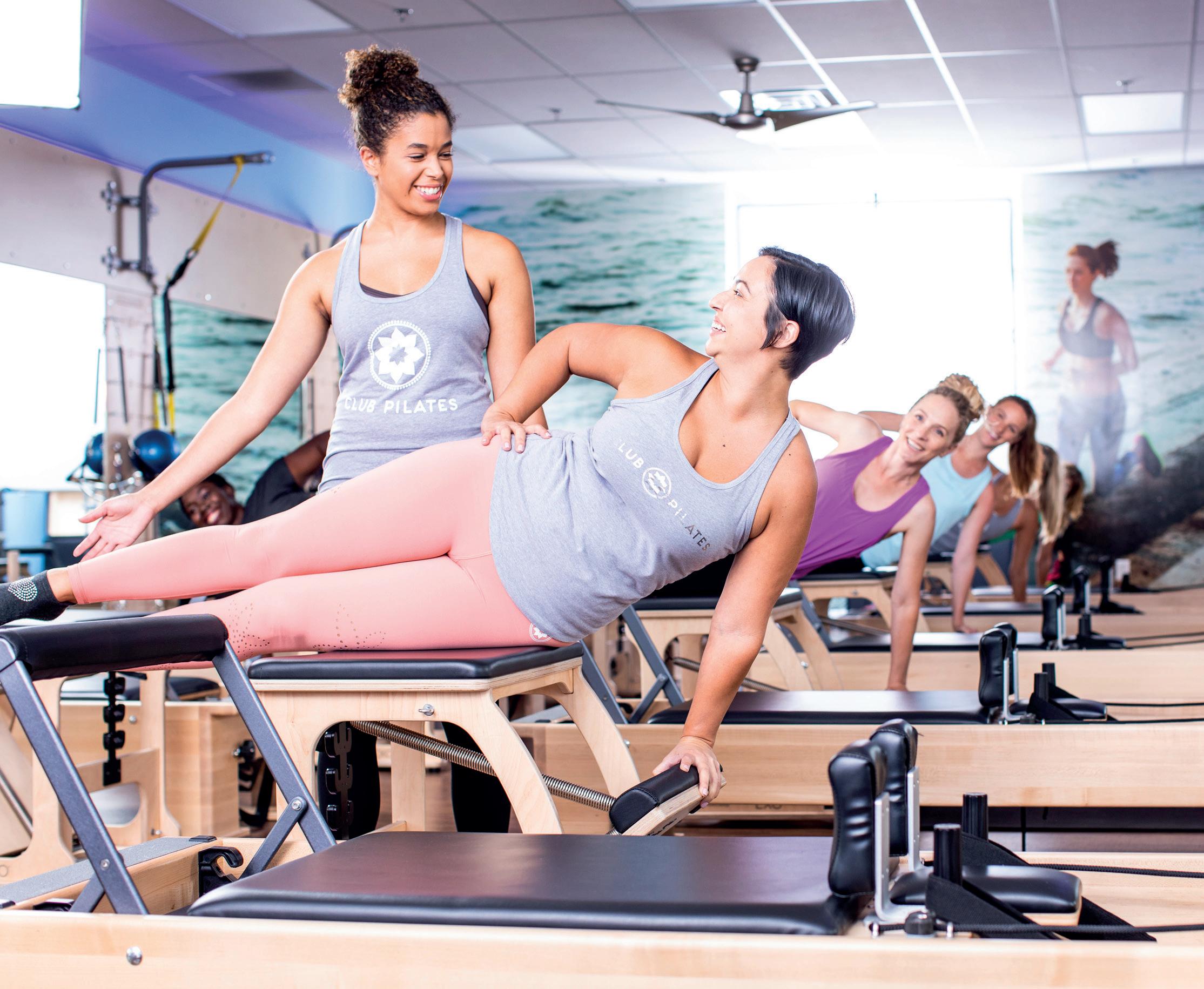
We use Reformers, mats, springboards, the chair and tons of other accessories. There are eight formats, each with a different emphasis, such as cardio, restorative and strength and four levels of difficulty.
We focus on making a welcoming and inclusive environment for everyone, whether they’re new to Pilates or are seasoned practitioners and have a range of membership options from once a week to twice a week and every day. We have some men as members, but our main audience is women over the age of 35.
Xponential has divested brands and taken on a new CEO. Has that impacted you?
Change is change and happens every single day. We continue to stay focused, we know the brand and our role, responsibilities and mission to continue to innovate on the brand and support our franchisees.
My mentality is, let’s do something great, and then let’s find a way to make it even better
CEO Mike Nuzzo is very hands-on. He’s working with the team on all the details, making sure no stone is left unturned. It’s been good to get to know him and his style and do everything we can to make this business better.
Is there any crossover with the other Xponential brands?
We have an incredible partnerships team here at Xponential Fitness and the portfolio is synergistic with complementary modalities speaking to slightly different audiences.
One collaboration is with sister brand, Pure Barre and virtual women’s clinic, Midi Health, which supports mid-life women. The campaign –Strong Through Every Stage – has been running since Q3 2025 and ends at the end of February. It involves in-studio educational and experiential workshops run by Midi clinicians and is a great fit
for our customers and a good brand alignment. So far the response has been really positive.
What are the challenges and opportunities?
As Pilates gets more popular the space is getting more competitive, however my personal view is that more people doing Pilates makes the world a better place, so we welcome all the new players.
Club Pilates has a long history – almost 20 years – however it’s important for us to continue to provide new experiences and constantly elevate our spaces, so we can remain a leader and have our members stick with us.
We continue to innovate, while staying true to who we are. My mentality is, let’s do something great, and then let’s find a way to make it even better, making sure our members have a fantastic experience from the minute they walk through the doors, to every class they take and every person they interact with.
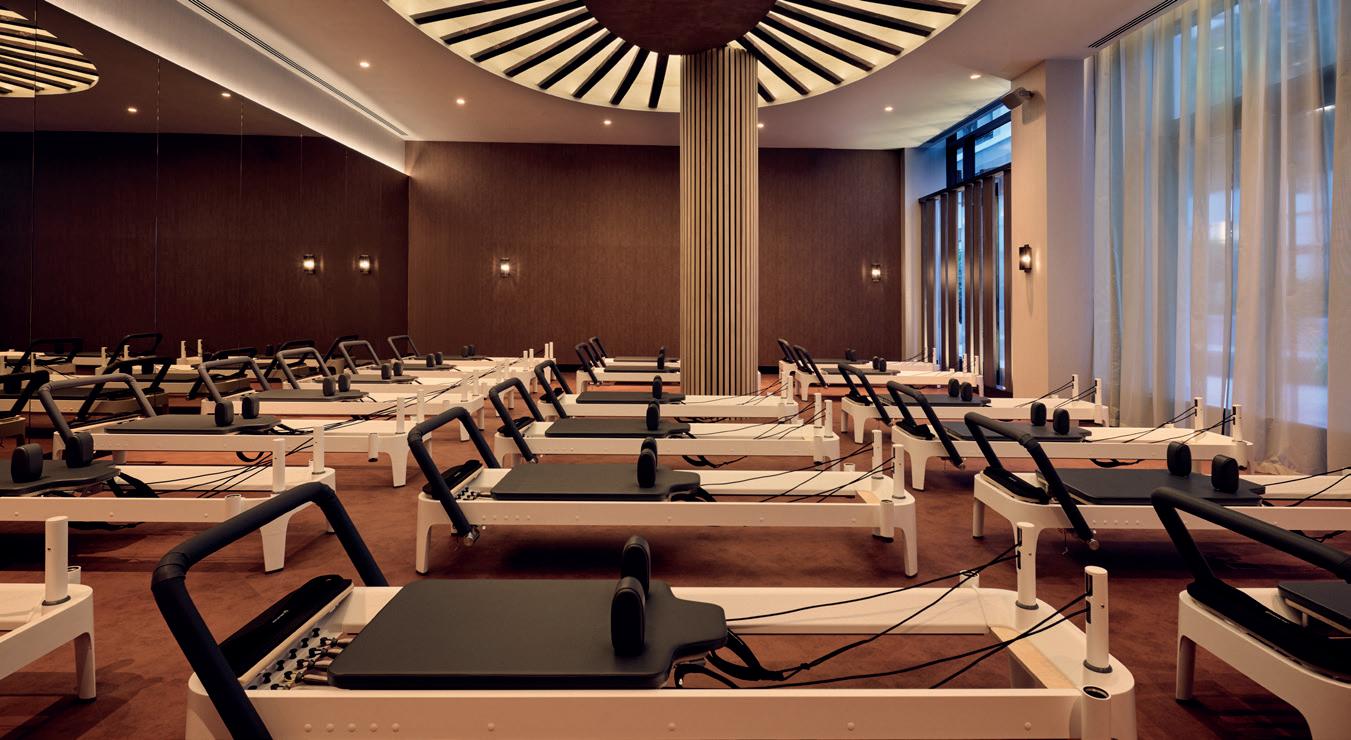
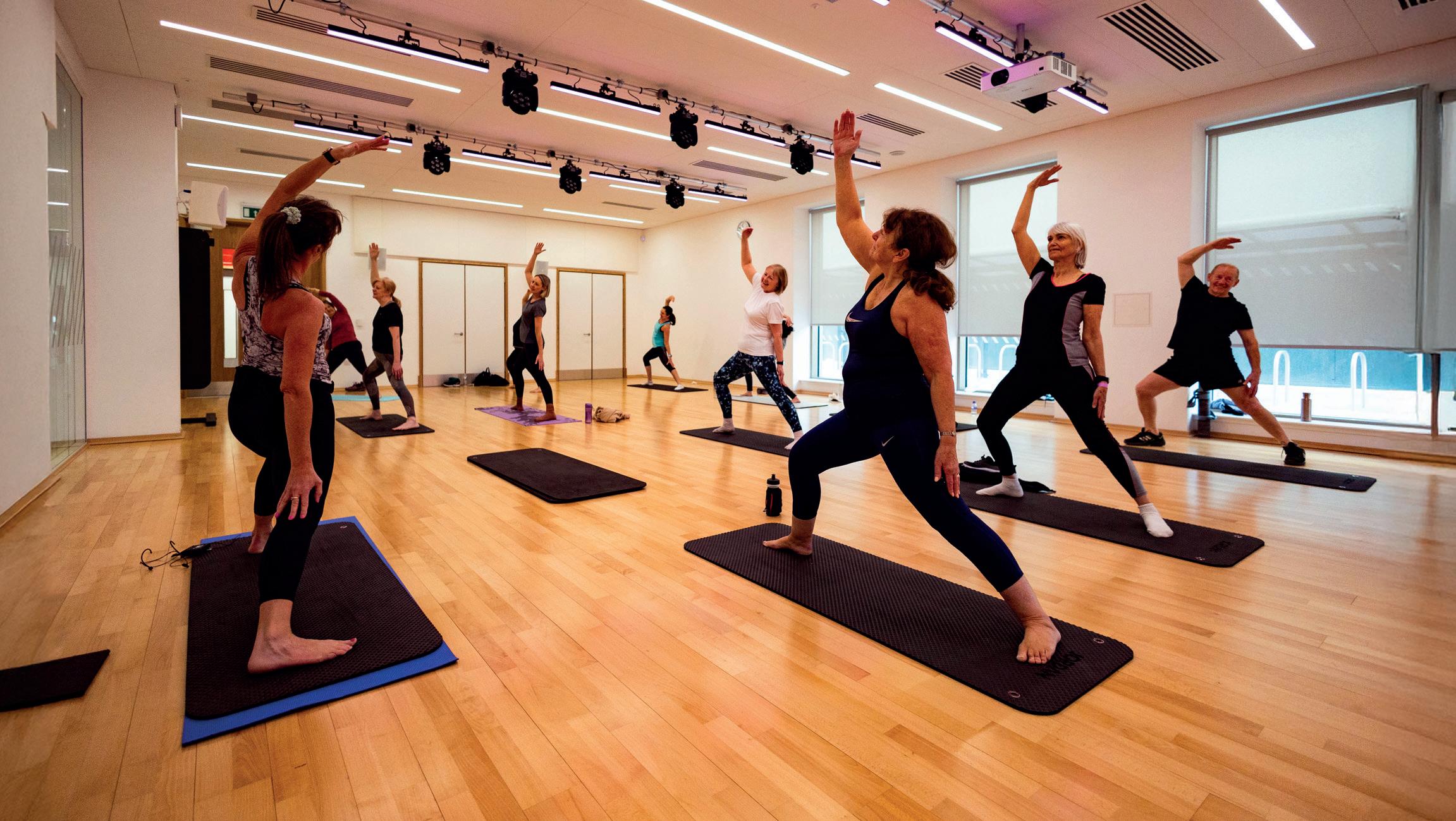
Club Pilates classes use Reformers, mats, springboards and chairs
Tell us about your recent innovations
We started doing our first experiential events with some of our members, for example the Pilates Body Challenge, which encouraged them to complete a certain number of Pilates classes in a specified timeframe.
We’re also launching our first brand new class in seven years. It’s called Circuit and is more of an athletic circuit-based class – higher intensity and more cardio-based than our usual workouts, but still very much Club Pilates.
It’s a progressive, full-body class designed to challenge strength, stamina, and coordination. Offered in Levels 1.5 and 2, it works for advanced beginner and intermediate members who are looking to elevate their practice through circuit-style training.
Multiple pieces of equipment are used, including a reformer, springboard, mat, and chair to target the upper body, lower body and core. Built-in cardio bursts between rounds elevate intensity. Each class begins with a warm-up and concludes with prone work and a cool-down to rebalance the body. and support postural muscles.
It’s not going to be like some of the more intense Pilates concepts you see out there, but it does have more of that athletic spin that I think
We’re now seeing studios be successful in increasingly rural and low-population areas
some of our members are looking for. We’ve piloted it in some studios and had a really positive response, so we’re super excited to roll it out.
How are you extending the brand?
We keep looking for more ways to connect with our members, even outside the studio, to thank them for being a part of the brand.
In addition to the nationwide rollout, select studios will deliver Circuit to local communities through ‘Move Stronger with Circuit’ events – free, outdoor mat Pilates classes designed to introduce the format in an accessible, equipment-free setting.
Hosted at local community spaces, these beginner-friendly classes adapt Circuit’s signature circuit-style structure into a dynamic mat experience, welcoming both current members and new faces to move, connect, and experience Pilates beyond the studio walls.
How is it having Sarah Luna back on the scene with a new Pilates brand?
I think it’s great. Sarah has been in the Pilates space for a very long time and she’s doing an amazing job bringing Pilates to more people. I think it’s fantastic that this modality continues to grow.
The brand has 1,300 studios globally with Switzerland coming on stream soon
What are your priorities?
We’re focused on continuing to run the operations we run and grow strategically, medium- and longterm. We want to keep innovating the brand, finding new ways to offer an incredible member experience, as well as finding better ways to support our franchisees, ensuring they have the tools they need to be as successful as they can be.
What are your expansion plans?
We’re currently at 1,300 Pilates studios globally and have master franchise agreements in many new territories. We opened our first site in France in 2024 and we have Switzerland coming on stream soon. We recently opened in Paris, France and in Spain. Every day is exciting. There’s definitely room for more studios in the US. Initially we thought it could only work in areas with a certain number of people and certain demographics –when I started the studios were based in metropolitan and densely-populated areas. But we’ve been proven
wrong and are now seeing studios be successful in increasingly rural and low population areas. I love the stories of Club Pilates going into towns where people haven’t heard of Pilates and seeing how those studios grow.
Around the world there’s considerable white space and we’re partnering with some great master franchisees. We have 150 doors outside the US already and close to 50 in Europe.
Do you think Pilates will keep its upward trajectory?
My view is that it will keep going because it offers such diversity. Joseph Pilates worked with so many people when creating the practice – he rehabbed injured soldiers, worked with dancers and regular people. The practice was formed to be modified and adapted to meet everyone where they are at, so I think it’s got staying power to be here for a very long time. It’s restorative, and just has so many amazing benefits, no matter where you are in your life. l
The brand’s main audience is women over the age of 35
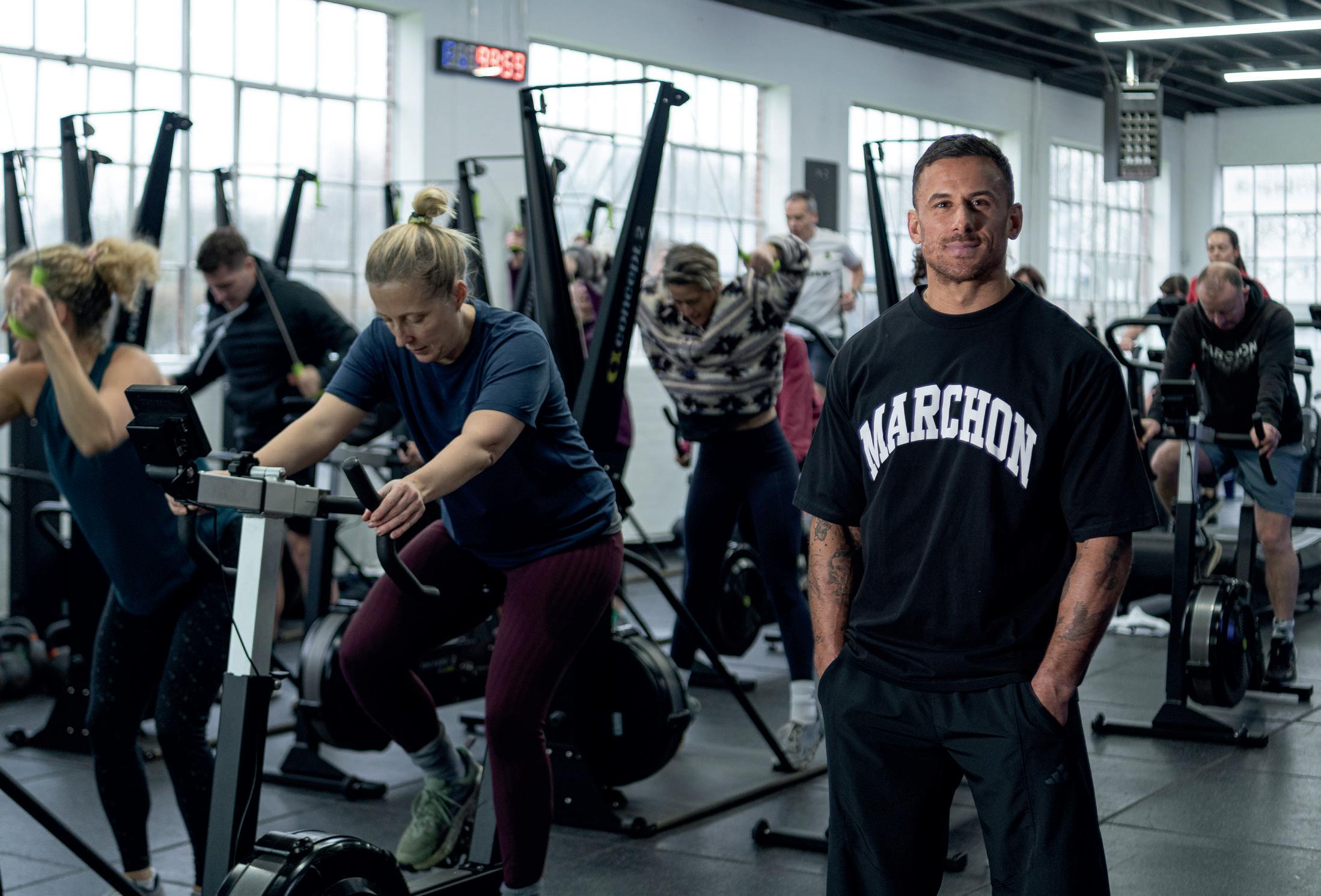
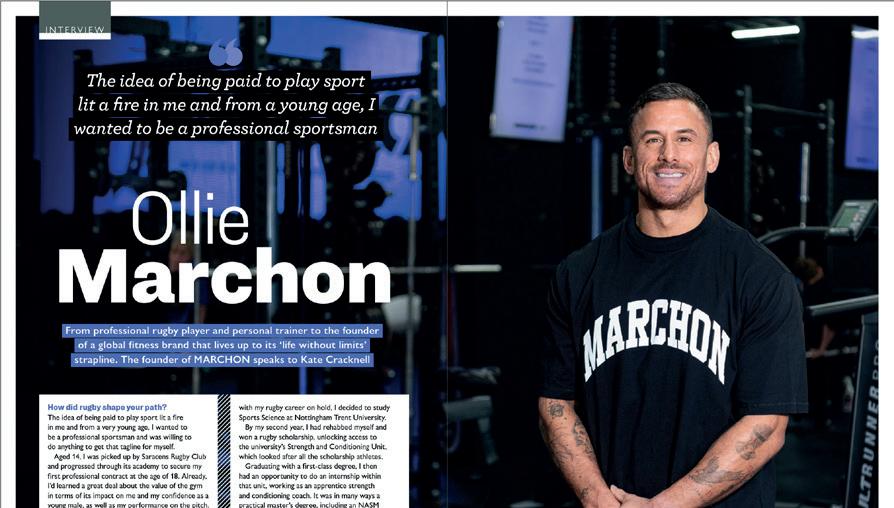
The idea of being paid to play sport lit a fire in me and from a young age, I wanted to be a professional sportsman
Marchon Ollie
From professional rugby player and personal trainer to the founder of a global fitness brand that lives up to its ‘life without limits’ strapline. The founder of MARCHON speaks to Kate Cracknell
How did rugby shape your path?
The idea of being paid to play sport lit a fire in me and from a very young age, I wanted to be a professional sportsman and was willing to do anything to get that tagline for myself.
Aged 14, I was picked up by Saracens Rugby Club and progressed through its academy to secure my first professional contract at the age of 18. Already, I’d learned a great deal about the value of the gym in terms of its impact on me and my confidence as a young male, as well as my performance on the pitch.
Unfortunately, nine months into that contract – before I’d really had a chance to prove myself – I tore my cruciate and lateral collateral ligaments, stopping my rugby career in its tracks.
My family had always been successful in business – my dad was an orthopaedic surgeon, A&E consultant and a firm believer in academia – and some of that must have been instilled in me and
with my rugby career on hold, I decided to study Sports Science at Nottingham Trent University.
By my second year, I had rehabbed myself and won a rugby scholarship, unlocking access to the university’s Strength and Conditioning Unit, which looked after all the scholarship athletes.
Graduating with a first-class degree, I then had an opportunity to do an internship within that unit, working as an apprentice strength and conditioning coach. It was in many ways a practical master’s degree, including an NASM personal training qualification, a corrective exercise specialist course and so on.
For a couple of days a week, I worked with the university’s scholarship athletes across various sports. For the rest of the week, I was back home in Hertfordshire working as a selfemployed personal trainer and progressing towards my UKSCA qualifications.
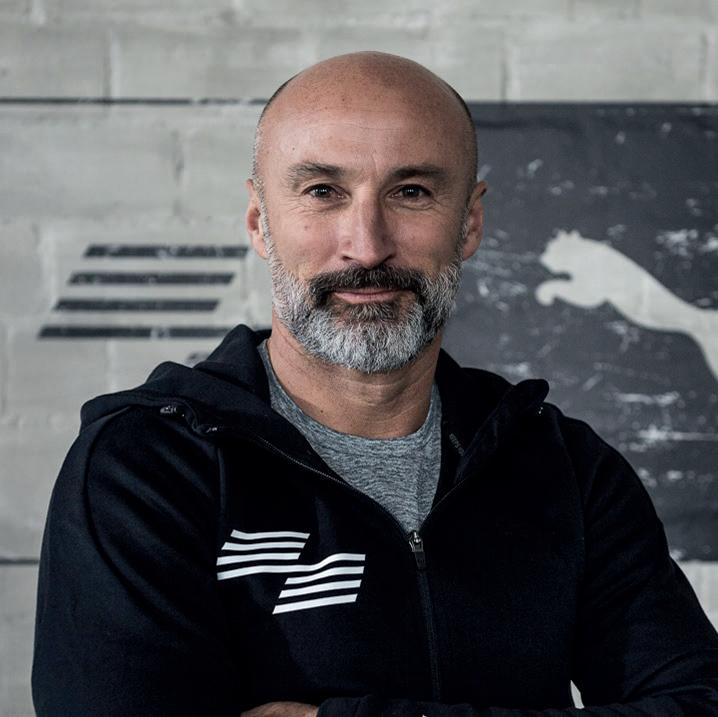
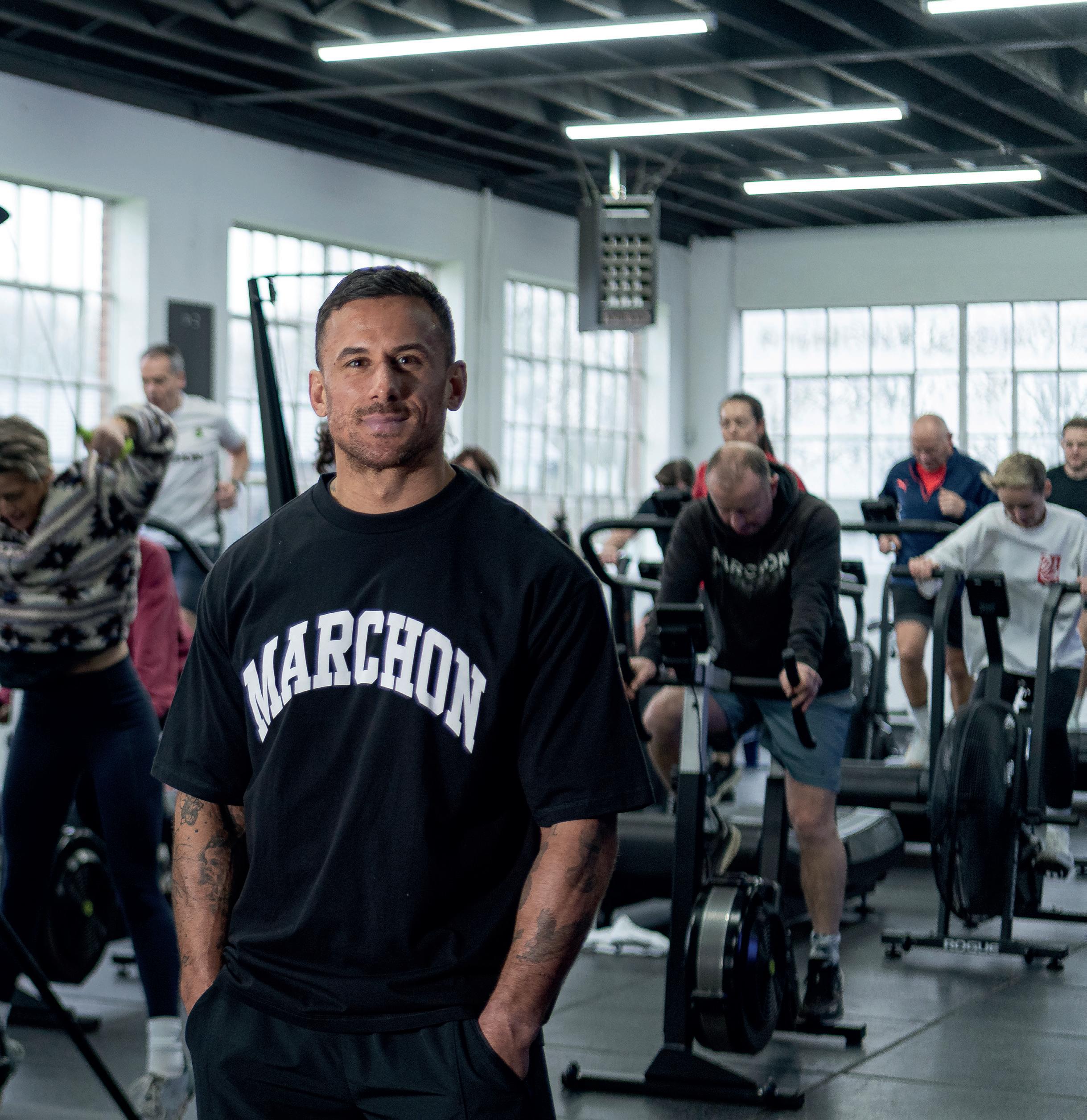
Marchon launched his company while playing professional rugby
At this point, aged 22, it was all about getting back into professional rugby: I saw personal training as a good set-up to allow me to eat well, train right and fight my way back into contention. Aged 23, I was selected to play for the England Sevens rugby team.
When did you double down on fitness?
Even while I was playing Sevens, training with England from Sunday to Thursday every week, I still had my PT business. Where other players went home to rest, I’d come home and train clients from Thursday to Sunday.
I opened my first studio in a cattle shed on a farm: a functional training space with sled tracks, power racks, lifting platforms and so on. It was essentially a budget version of the American collegiate gyms and the rugby gyms that had inspired me as a younger lad.
I now believe that doing both at the same time – building a fitness business and being a professional sports player – was fundamental to the results I’ve achieved since. When, aged 27, my contract with England wasn’t renewed and I found myself at a crossroads, I no longer felt the need to chase the professional sports tagline. I’d already built a robust, exciting, profitable business in the increasingly dynamic fitness industry – an industry that was fast moving towards the functional style of training I’d always favoured and that I was using to achieve great results with a wide range of clients.
This was 2016 and I saw a chance to go all-in on my fitness brand, MARCHON. I knew I had a great product. I’d lived in the US for four months when I finished rugby, exploring the west coast gyms to really understand what was emerging. Combined with my pro sports experience, I felt I had a product that could lead the market.
Ours was a strong unit, built on trust, aligned mindsets and close personal relationships and I think that’s a big part of why we were successful so quickly
JACK EMMERSON
What I still needed to work out was how to scale my business, taking what I’d done as a one-to-one personal trainer and amplifying it so I could serve more people, drive consistent cashflow and employ people.
At the time, the semi-private small group training model was establishing itself, popularised by Thomas Plummer in America and, in the UK, Jean-Claude Vacassin, founder of W10 gyms – now The Foundry.
Jean-Claude was very influential in the first year of building MARCHON: I did a fair amount of work with him on scalability, gym operating systems and so on. It set me up for success and allowed me to scale the brand in a way that felt authentic to me.
Was MARCHON all about physical gyms?
Not at all. The summer I spent in LA, I was already coaching clients online, well before COVID accelerated that agenda. However, although my longer-term vision was still evolving at this point, I already knew my definition of success would involve more physical locations.
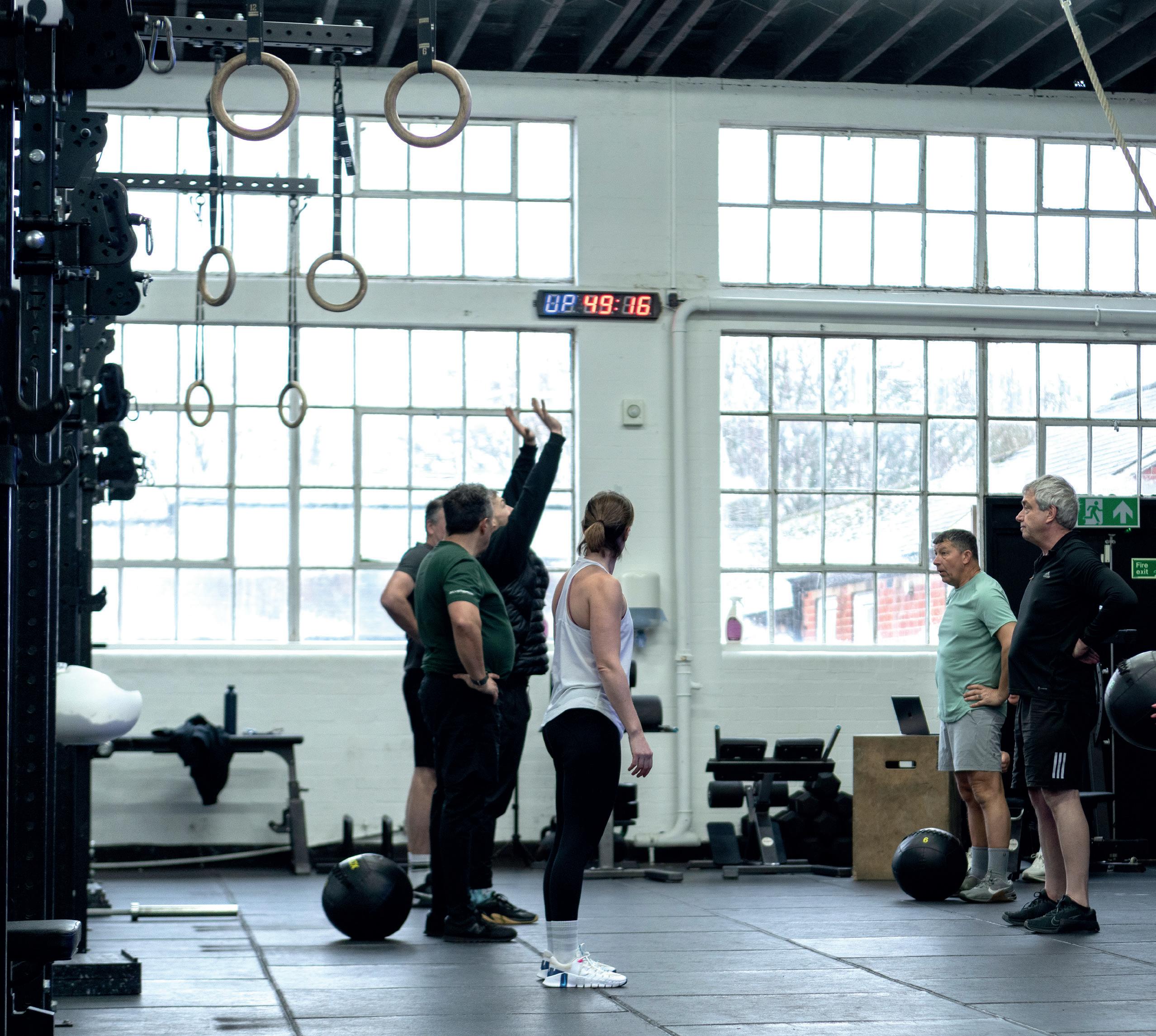
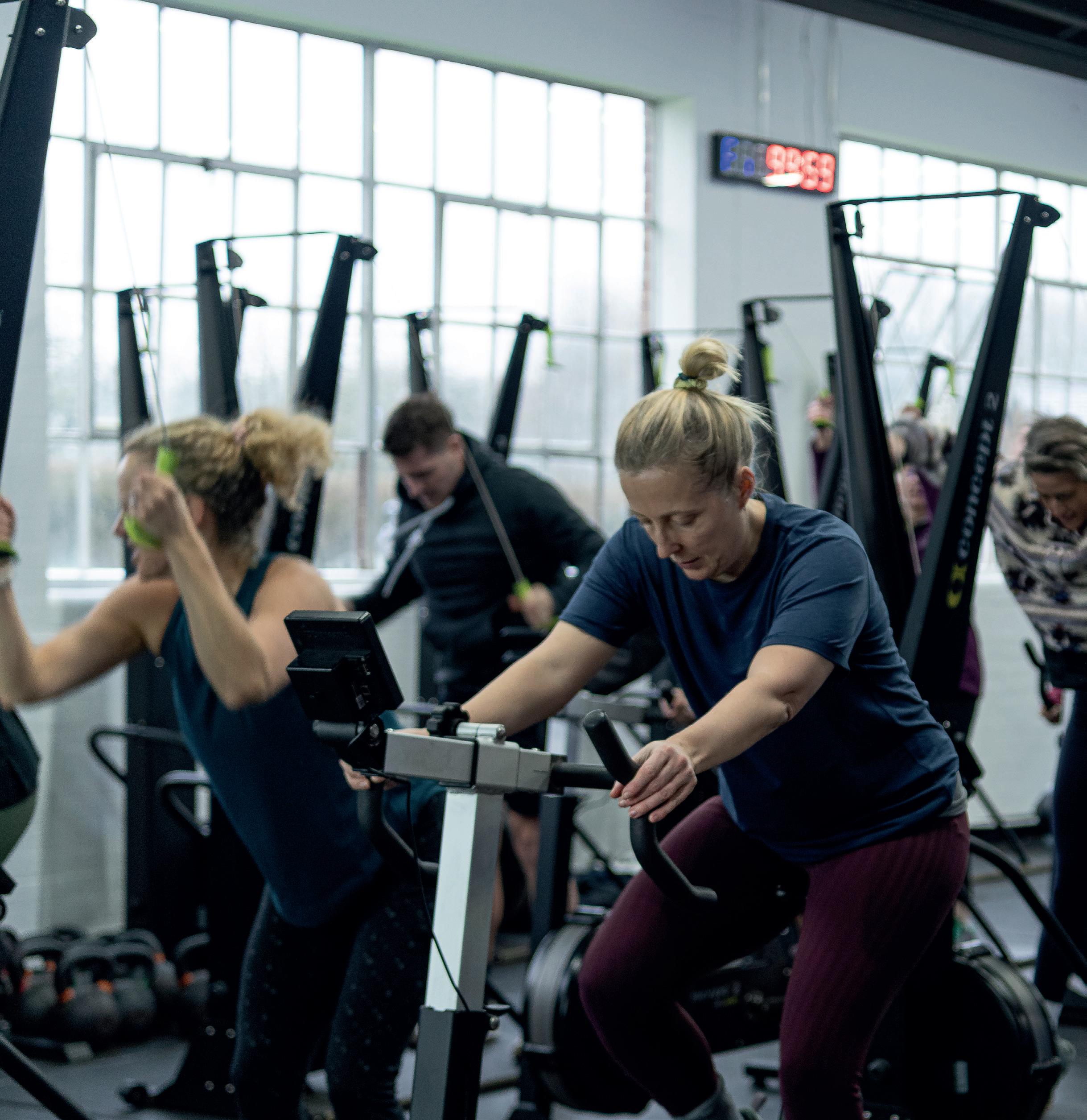
In 2016, I had one 1,200sq ft small group training gym in Harpenden. The model was four clients to one PT, with three great coaches – me, my brother and my best friend, who was a strength and conditioning coach at Saracens – all running sessions throughout the day. Ours was a strong unit built on trust, aligned mindsets and close personal relationships and I think that’s a big part of why we were successful so quickly. For 10 hours a day, six or seven days a week, we filled the gym.
Our in-person subscription model provided us with consistent cashflow, but we also filmed our
The original gym in Harpenden UK has been joined by locations in London and Bath
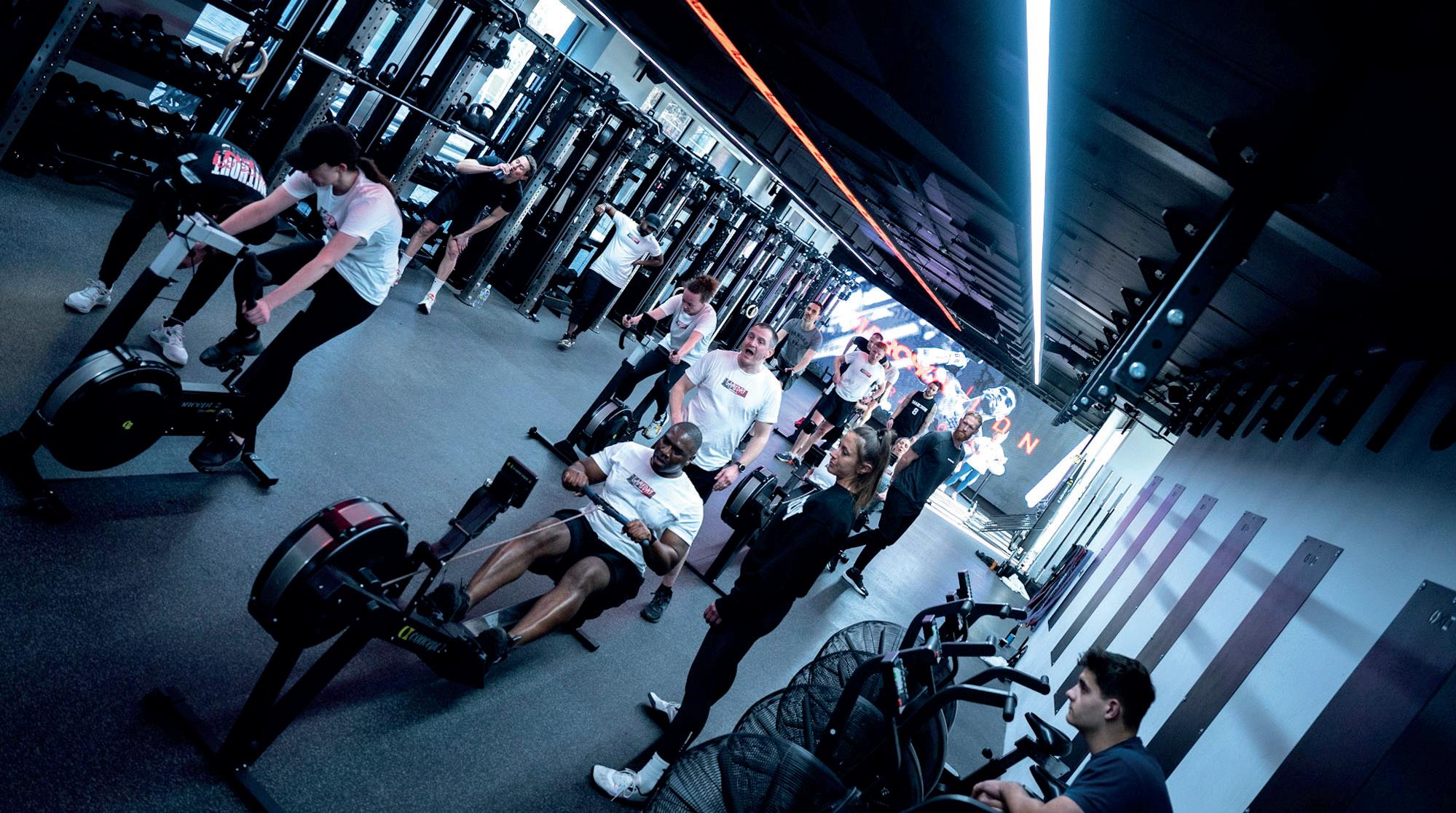
MARCHON Stratford is one of two locations in London
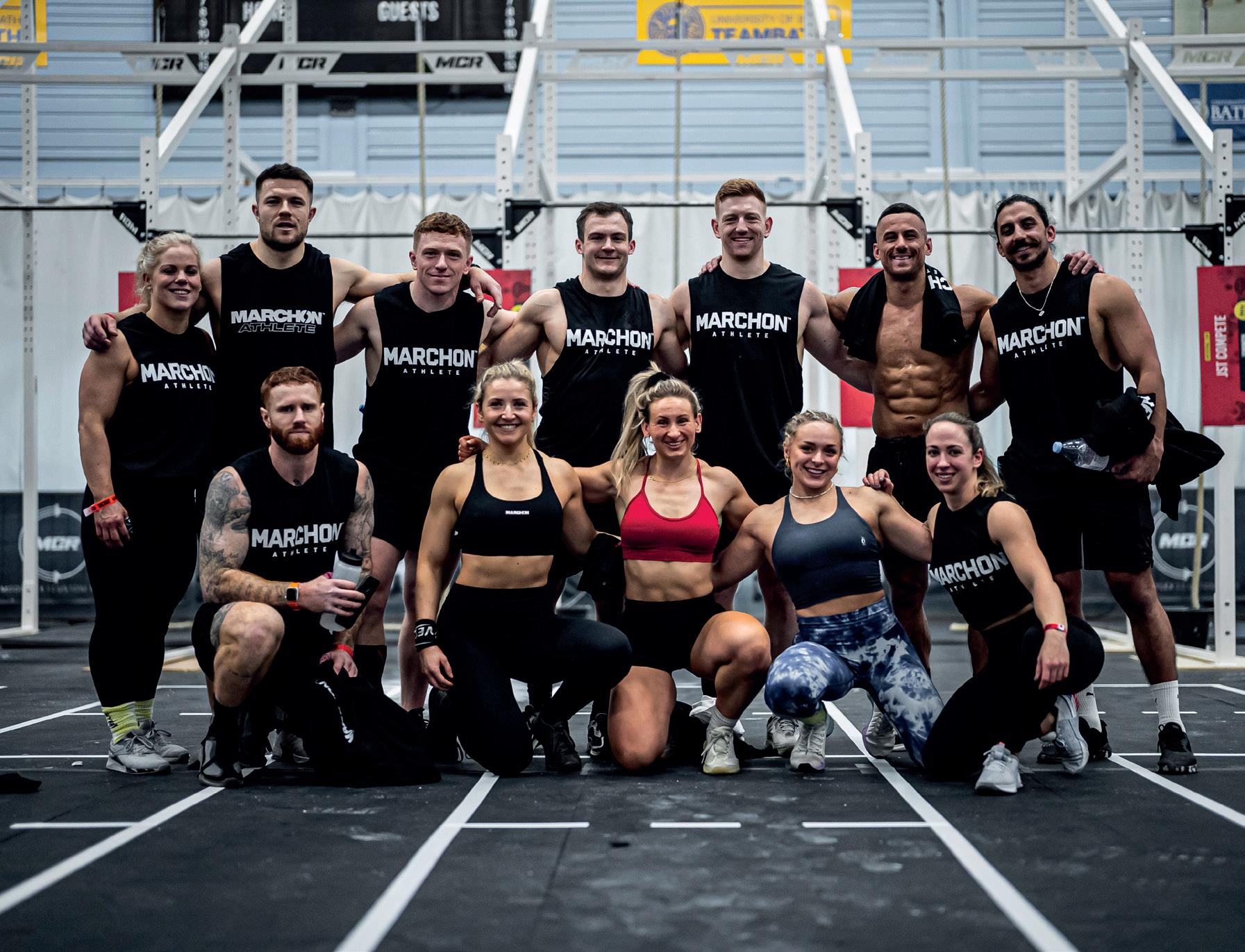
The MARCHON team regularly competes in events such as Crossfit
sessions, so the volume of content we were able to put out across social media was really high.
This strong online voice and successful physical presence, combined with my own profile – not only through rugby but through roles such as being a Nike master trainer during COVID – brought credibility and authority to the online training programmes we created. We sold these across the UK and around the world, simultaneously building a digital as well as an analogue business.
What was the plan at this point?
From a personal perspective, the vision was about forging a career for myself that would see me through to retirement. I saw so few older PTs in the sector – no-one to really inspire me – and was very aware of the short average PT lifetime.
I didn’t want to be one of those statistics. I wanted to ensure longevity for myself and, at the same time, to elevate the status of, and respect for, personal trainers.
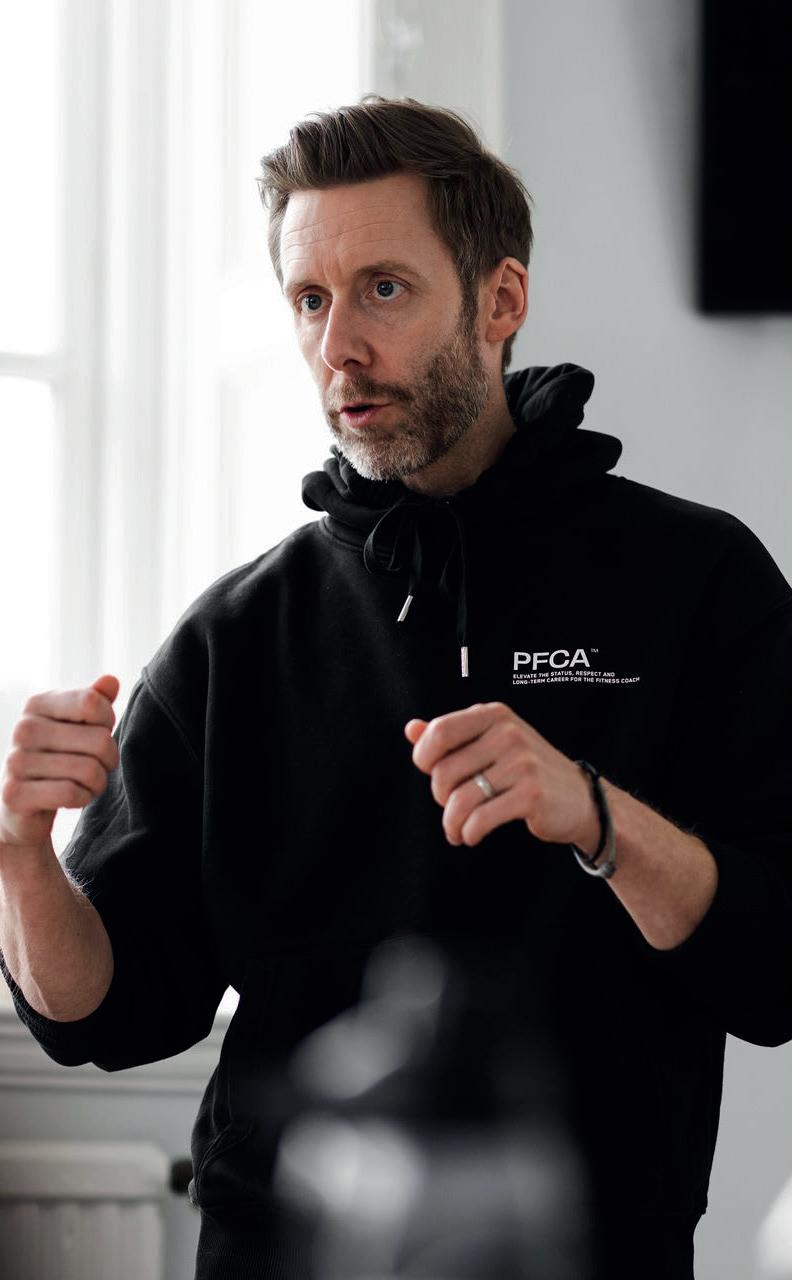
This led to the launch of the Stronger Coaches Association, now the Professional Fitness Coaches Association (PFCA) – an education business that set out to professionalise the personal training industry, which I launched in partnership with Jenz Robinson in 2018.
A separate business – and one in which I’m now a silent partner – the PFCA links back to my goal of establishing an enduring career for myself and the team of MARCHON coaches.
Tell us more about your gyms
We now have four gyms: Harpenden, which was relocated in 2019 to a 5,500sq ft space, as well as Stratford in east London, Bath and London Victoria.
I was guilty of coming out of the post-COVID gates with a little too much enthusiasm, but remote working meant there were good deals to be had on commercial buildings. It was fairly low-risk for us to open our second gym in Stratford, so we’d already signed the lease and were opening by the time we came out of the pandemic in 2022.
We then opened in Bath and London Victoria in 2025. Bath is similar to Harpenden in its feel and its community and it has gone like wildfire. And with Victoria I wanted a central London gym as a flagship. I see it as a real stake in the ground, proving that we
stand up against any other gym brand and securing the credibility I believe we deserve.
All our gyms measure 5,000–6,000sq ft with a capacity of around 350 members. Depending on the location, break-even is around 150–200 members, with a £250 average monthly yield. We typically charge around £220 for three sessions a week, but many members want more than that and £250 is the sweet spot we aim for.
In Harpenden, the model is now 6:1, operating at peak times, as this is a commuter town. For the newer clubs, to ensure we can resource the gyms and maintain quality, it’s 15:1 on strength days and 30:1 on conditioning days. Crucially, we’ve structured our programmes so everyone, from newbies to very experienced exercisers, is challenged within the same session.
I was guilty of coming out of COVID with a little too much enthusiasm, but there were some good deals to be had
Tell us about your online training and app
In-person, we knew that people who trained with us three times a week rather than once were getting better results. In fact, that figure dates back to 2016. Today, most people train with us four or five times a week.
We structured our online programmes around similar principles, creating training with accountability and progression. We also mirrored our in-person training model, forming groups of people with similar profiles and goals to train ‘together’ online. This sense of community is further reinforced through our new app, where a virtual locker room offers a space to chat to the coach as well as to peers – not only in your group, but the hundreds of people doing the same programme as you around the world.
JACK EMMERSON
Obviously being able to assess someone and write an individualised programme is the gold standard, but that limits the number of people you can impact and adds a price point as a further barrier. Instead, we’ve created group programmes –typically running in 10-week cycles – that are tightly geared around specific goals and experience levels.
For example, our Hyrox programme is different for those training for their first event, versus those who’ve competed a few times. It’s different again for those trying to get to the World Championships.
Other programmes include training for the ATHX Games, which is another of my companies – a fitness event very much outside MARCHON, with Adidas just signed as the headline sponsor.
We’ve announced 14 locations for ATHX events across Europe for 2026 and will be announcing the US and the Middle East soon as well.
Other online MARCHON programmes include marathon training, 5k, 10k, half marathon, CrossFit, female aesthetics and training for life.
Three or four times a year, we run a six-week Shred programme that includes education and communication to help people establish new habits in their nutrition and more discipline in their training.
We believe it’s important to have something to point your training towards and, with a strapline of ‘Training for a life without limits’, we attract people who want a challenge – people who want to achieve more from their fitness and their life.
Marchon started out as an international rugby player MARCHON
You mention a new app...
We developed our own training app during COVID. Up until that point, we’d been using third-party apps and had built an online community of around 700 people. Then someone asked me a really important question: “Have you ever thought about what your business would be worth if you built your own technology?”
I’d been so focused on opening my second gym that I hadn’t really thought about this. Doing the app required me to make my first major investment as a business owner, including bringing in a full engineering team and in 2022, we launched the first iteration of our app and became a tech company.
OLLIE MARCHON THE PORTFOLIO
MARCHON Gyms
MARCHON Training (app)
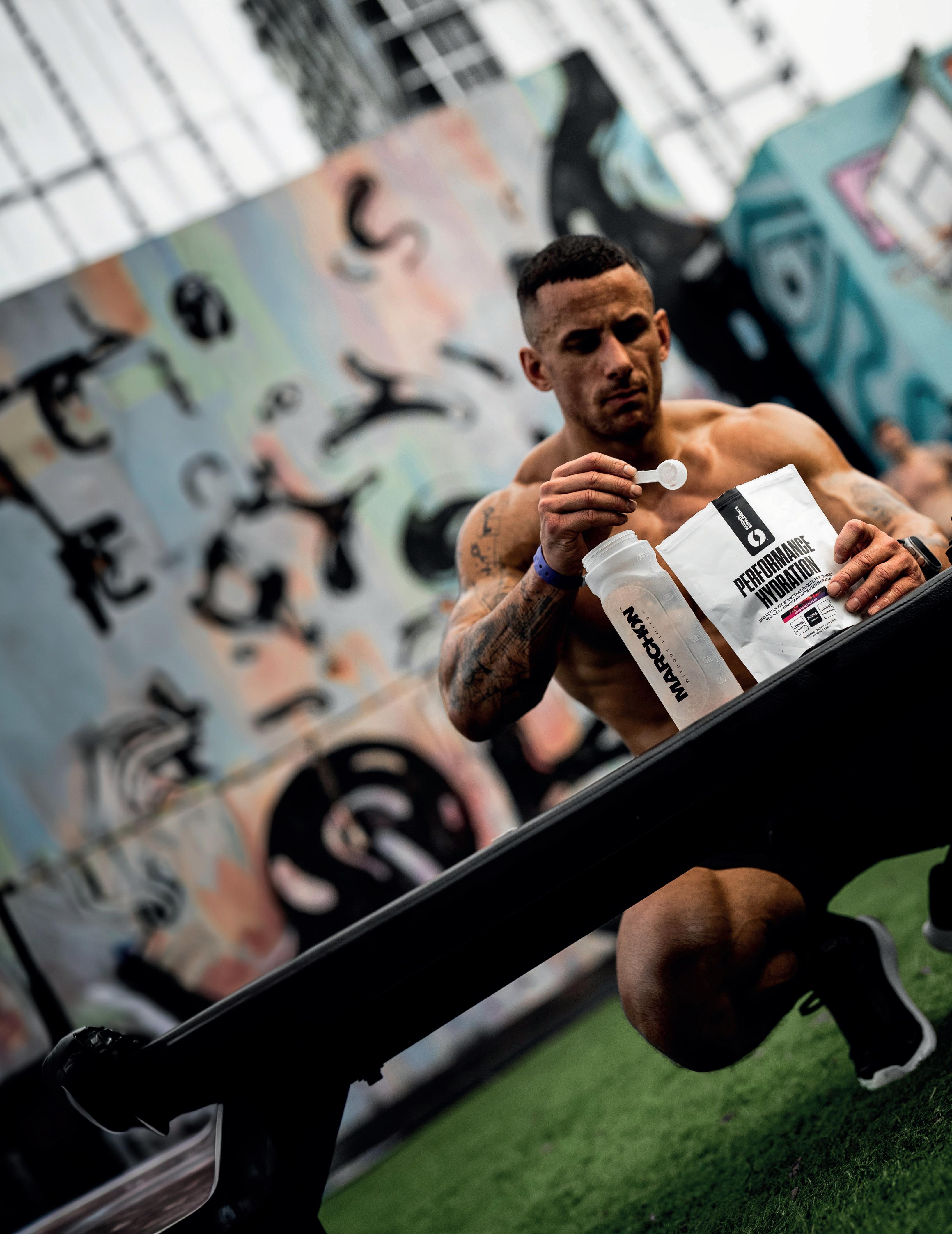
MARCHON Supplements
MARCHON Apparel
ATHX (co-founder)
Perform X (cofounder)
Professional Fitness Coaches Association
Gym Owners’ Network
Bigger picture, we want to be the Strava of fitness, with a wide-scale impact that simply can’t be achieved in person.
I believe our app is truly best-in-class and we currently have an online community of around 4,500 people using it. There are hundreds of PTs and gyms wanting to use it, but we’re not sharing it for now.
Our suite of templated programmes covers all bases, with an AI coach you can speak to if you require any modifications – if you’re injured and can’t do a particular exercise, for example.
There are leaderboards and a strong sense of community, with links to wearables for objective data that we’ll combine with subjective data from users to create individual workout prescriptions.
Bigger picture, we want to be the Strava of fitness, with a wide-scale impact that simply can’t be achieved in person and we continually review our pricing with this in mind.
When we launched the app, it was as an extension of our gyms, used by those who knew us and were willing to spend up to £79 a month on it. Now, with AI accelerating and a desire on our part to use tech to unlock scale, we charge £19–39 a month and still continue to review this price point. Even if this triggers a short-term loss, we’re confident revenues will thrive as we accelerate our global reach.
You’ve also developed a line of supplements COVID taught me the value of a diverse ecosystem for a more robust business. We were very lucky to have started our digital wrap-around four years prior, allowing us to double down on this during lockdown. However, in that same period I was the face of Maximuscle and saw other businesses able to send physical product to their customers even when gym doors were closed. I wanted to be able to do the same and saw a real gap in the market for a modern performance nutrition company.
In practice, launching supplements, a second gym and an app all within six months of each other in 2022 was a terrible thing to do! My focus was really on the app, meaning the gym and the supplements didn’t get the attention they deserved.
In 2023–24, we became more sophisticated across each of our businesses, hiring experts such as Liam Holmes, our head of nutrition. He was previously head of nutrition at Celtic Football Club and was at Tottenham Hotspur and Fulham FC prior to that – the first Premiership football club to develop its own supplement range. He has vast experience in product formulation, innovation and ingredient sourcing.
The quality of our sourcing is an important USP for us. Not every brand actually includes efficacious levels of every ingredient listed. We do. Every batch of every one of our products is third-party lab tested, proving that what we say on the pack is what’s in the product and that it’s also tested for banned substances.
And our range is extensive, spanning health and wellness, training and recovery and endurance. I believe it covers most of what today’s performancebased consumer is looking for. We’re stocked
in 700 independent gyms across the UK and are the supplement partner for Soho House.
What’s the vision for MARCHON now?
It’s about the ecosystem, looking at how we get a daily touchpoint in a person’s life that’s authentically MARCHON – and then how we grow that into multiple touchpoints.
This is where MARCHON apparel also comes in, which is ready to have its first big year in 2026. We’re working with a fantastic manufacturer in Portugal and, in the latter half of 2025, recruited our first fulltime hire: Ash Bellis, who joined us from Gymshark.
Now – with gyms, nutrition, apparel and our app – we have multiple opportunities for daily touchpoints. That might see someone waking up and putting on a pair of MARCHON socks or the latest T-shirt, drinking our pre- or postworkout shake, going to one of our gyms or using the PT in their pocket. This is our vision now.
Marchon’s Harpenden gym runs sold-out classes throughout the day
In terms of physical locations, my original vision of gyms in UK commuter towns changed during COVID, when we saw how quickly digital can accelerate global visibility: we can become a household name in markets where we don’t even have bricks and mortar. Nevertheless, there’s still a part of me that really wants lots of gyms. I realise it doesn't make strong business sense when we’re able to build technology and distribute supplements all across the world, regenerating capital far quicker than we can through gyms, where payback is typically two-and-a-half to three years. However, at its heart, MARCHON is about a real-life coaching experience and operating gyms maintains our authority in this space.
So now, my aspiration is for gyms in global fitness hubs. We’re already in London, but we’re eyeing Dubai, Australia, the US, as well as Manchester in the UK. The model is still to be confirmed, but for new markets, franchising through carefully selected partners feels like a strong contender.
Using our ecosystem, we’ll first enter a market via technology to build trust in the brand, then we’ll add supplements and apparel, digital advertising and in-person events – run clubs and so on, to build MARCHON communities, driving subscription revenues and creating daily touchpoints. Once we have confidence in a market, we can look to build a physical gym.
We’ve already started this work, launching distribution in Dubai six months ago via a local fulfilment partner, both direct to consumers and via local gyms. I expect to have a gym there within 12–18 months. Meanwhile, our first shipment to Australia will arrive in February, at which point we’ll begin to employ a local team.
How big can MARCHON get?
We’ve had some pretty cool partnerships – a track meet event in 2025 with Adidas as our headline partner, a clothing collaboration with 247 By Represent and so on – and we speak on many of the biggest stages in this space. We have people around the world wearing our brand. But I don’t get too caught up in what we’ve built so far, because we’re still a long way from where I think we can take MARCHON.
I don’t get too caught up in what we’ve built so far, because we’re still a long way from where I think we can take MARCHON
Once we have all four elements of the MARCHON portfolio in each market, we’ll be big enough for it to be exciting for everyone
I don’t yet know what the measures will be for our success – how we quantify what being a truly global brand means – but I do know that if we put arbitrary numbers on what it should look like, there’s a risk that we attach ourselves to that, which in turn might change how we show up each day.
I’d rather keep focusing on our vision of multiple touchpoints. Once we have all four elements of the MARCHON portfolio in each market, I think we’ll be big enough for it to be exciting for everyone. Until then, it’s about bringing in the right talent across the business as we scale. That will be a key focus in 2026.
What drives you personally?
With three young kids, my sense of purpose now comes from my family. In the end, that’s who I do everything for.
However, I’m still super-competitive, including with myself. Physical challenge is a big part of that: last year I ran three marathons and I’ve done ultras too. I think it’s important to always have a physical goal in mind.
The ethos I inherited from my dad is still very important. He came to the UK as a foreigner and always pushed himself and us, his kids, to achieve more. That still drives me. I’m a solutionsthinker with the confidence to attack situations, although I am now learning to harness my energy and delegate more so I don’t burn out. Ultimately, though, our tagline is ‘without limits’. That’s how I feel about my own life. I’m glass half full and want challenges at every stage that will help me grow in the way I think, move, conduct my relationships and embrace life. l
MARCHON
Performance Nutrition will be key to global expansion
The PFCA and the Gym Owners’ Network are our way of paying forward, helping others experience the successes we’ve enjoyed
RAISING STANDARDS
“Jenz Robinson and I launched the Stronger Coaches Association (SCA) when we realised the personal training qualifications we’d gone through weren’t fit for purpose,” says Ollie Marchon.
“In fact, the reasons I and some others had excelled were that we had the degree and the sporting experience. In my case, my entrepreneurial mindset and the soft skills acquired through my upbringing were also a factor. But a lot of people don’t have access to those things. So, the SCA was basically a mentorship programme that we built and delivered to other coaches.
“Over time, it evolved into the Professional Fitness Coaches Association (PFCA). I believe we’re the only personal training qualification provider in the UK that’s been able to write and deliver its own syllabus, because CIMSPA has granted us permission to do so.
“We now qualify hundreds of personal trainers at Level 2 and Level 3 every year.
“Alongside that, we’ve also developed further education courses, such as the Functional Fitness Coach certification, and we run seminars on topics such as small group personal training, programme design and so on. We have a brilliant head of education and it’s a really cool business –one that sets out to redefine the long-term career prospects for a personal trainer and elevate the status of the fitness coach.”
The PFCA delivers a CIMSPA-accredited syllabus for personal trainers
He continues: “The evolution of this business also saw the creation of the Gym Owners’ Network, which is a mentorship business for other independent operators; we work with around 150 gyms domestically and across the world.
“All our learnings from MARCHON –around hiring staff, building our product, building a commercial model that works, opening new sites and so on – we now teach to other gym owners. They maintain their uniqueness, but they get to apply the learnings from our wins and our mistakes.
“The PFCA and the Gym Owners’ Network are our way of paying forward, helping others experience the successes we’ve enjoyed.” l
PERFECT JOURNEY
Independent operator Just Move Gyms, is offering premium Technogym fitness equipment and exceptional customer service in a stylish environment
With 25 years’ sector experience, owner Scott Fenton identified a gap in the market for Just Move, a gym that delivers on fitness trends while promising high levels of customer service in beautiful surroundings.
The gym is founded on the belief that movement is for everyone and was created to empower people to move better, feel stronger and live more healthily.
The fact this ethos is shared with Technogym is no coincidence – Fenton has admired its design, innovation and vision throughout his career.
The Technogym team helped bring the space to life by advising on product selection, layout, and digital journey, making the development significantly easier for the team.
With 70 pieces of equipment in the main gym, a hybrid training studio and Technogym digital ecosystem, Just Move Gyms offers all-inclusive membership covering gym, classes, coaching and Technogym Checkup assessments.
Specifying equipment
The decision to install a complete Technogym set-up was important for the member experience, creating a joined-up member journey from sign-up to gym floor training.
During the specification process, Fenton was invited to the Technogym Village in Italy, where he recognised the value of Technogym Pure Deadlift, Belted Squat and Hip Thrust for Just Move’s community.
“Lots of female members ask about glute and hip machines and we’re able to say ‘glad you asked, look what we have’,” says Fenton. “These products have sold many memberships.”
In addition, Technogym Excite+ cardio line has been chosen to deliver an engaging, immersive experience that sets the gym apart. Members love the sleek design, variety of training options and immersive digital content that makes Excite+ different from more conventional gym cardio offerings.
In addition, Pure Strength was selected for its biomechanics that deliver an intuitive, safe and effective training experience that helps members progress – from beginners to advanced athletes.
Technogym has enabled us to go above and beyond, with best-in-class equipment, digital connectivity and ongoing support. Scott Fenton, Just Move Gym
There’s growing demand for spaces that combine physical, digital, and social in stylish surroundings
Just Move has specified wall-to-wall Technogym equipment
Exceptional training journeys
Just Move Gyms offers personalised training that combines coaching with premium equipment and digital innovation. Technogym Mywellness CRM digital ecosystem is integrated from sign-up, ensuring every member journey starts with data-driven insights.
The decision to install Technogym Checkup also sets a standard, showing that Just Move offers something exciting and different. The AIpowered assessment system allows accurate assessment and progress-tracking over time. By understanding body composition, posture and mobility, coaches can design smarter training plans and give members tangible feedback.
Following a Technogym Checkup assessment, they have one-to-one coaching sessions that connect to the member’s app before choosing Technogym Coach’s AI-driven programme or a coached programme from the gym team.
Members love seeing their Technogym Checkup data on the products and reviewing it in the Technogym App, while the ‘gentle challenge’ element of the
eco-system creates an extra level of engagement and motivation beyond their first few weeks.
Developing the business
Just Move is working with Technogym to use the marketing automation service within Mywellness CRM to create communication touchpoints, challenges and tasks for members, as well as tracking them to keep coaches aligned with their progress.
With the success of the flagship, Just Move Gyms is now looking for new sites and to add more services, such as recovery and wellness to expand the holistic offering. Reformer Pilates will be delivered on Technogym Reform, as well as guided stretching, mobility zones and mindfulness integrations.
“As a club pushing to be at the top, we need to adapt to changing expectations,” says Fenton. “There’s growing demand for spaces that combine physical, digital, and social in stylish surroundings.
“We’ve gone above and beyond, investing in things that build a motivating environment,” l More: www.technogym.com
PHOTO: COLETS
Everyone’s talking
Sober curious
Research shows the sober curious movement is gaining momentum, presenting a perfect opportunity for health club operators to support people wanting to make the shift, as Kath Hudson reports
With the sober curious movement growing and alcohol now known to be a Class 1 carcinogen, it’s a good time for operators to capitalise on the trend of people wanting to do something other than drink alcohol in their spare time.
Health and fitness operators have the opportunity to support this shift by offering a fun, social alternative. In Brooklyn, Crunch Fitness is collaborating with Soft Bar – a non-alcoholic bar that offers functional beverages. A recent event involved a 45-minute total-body workout class from the resident DJ, followed by the chance to mingle, enjoy the music, drink soft cocktails
and wellness shots and learn more about the functional benefits of the drinks for health.
“We’ve seen a significant increase in the sober curious movement, especially in our core young, strong and social demographic, which inspired the collaboration with Soft Bar in Brooklyn,” says Crunch Fitness chief marketing officer, Chad Waetzig. “Through in-person activations, events with Soft Bar and social content, we’re excited to collaborate on fostering an inclusive environment for our communities that help them truly feel good.”
While there’s data to show more people are seeking sober lifestyles, it’s not an easy change to make. Taking a pause from alcohol can be
“Our partnership with Myprotein marks a significant step forward in our mission to deliver a 360-fitness experience”
Dan Summerson, Everlast Gyms
socially isolating, so the fitness industry could be a genuine support, especially if your club can offer a fun and social alternative to the pub by running activations which build a community.
Gyms offer an alternative place to socialise where people can build true connection around a shared interest if the community aspect is promoted and many operators are building social spaces. For example, Gymbox offers free smoothies, coffees and an area to hang out, Third Space and David Lloyd have always invested in members’ lounges and Everlast Gyms has recently partnered to offer Myprotein Kitchens.
“Our partnership with Myprotein marks a significant step forward in our mission to deliver
“We’ve seen a significant increase in the sober curious movement, which inspired the collaboration with Soft Bar in Brooklyn”
Chad Waetzig, Crunch Fitness
a 360-fitness experience for our members,” says Dan Summerson, MD of Everlast Gyms.
“By connecting Everlast Gyms’ best-in-class gym spaces with Myprotein’s nutrition, refuelling and recovery products, we’re continuing to raise the bar on what a modern gym can offer.”
South London gym and Jiu Jitsu club, Arma, includes social areas as a key pillar to its offering. “We wanted to create a space that people didn’t want to leave and the members’ lounge has already become an integral part of bringing that goal to life,” says general manager, James Crew. “We have a strong and consistent contingent of members who use the lounge every day and we’ll continue to develop that space.”
Everlast Gyms is adding Myprotein Kitchens and social spaces
Choosing the health club or gym over the pub can form a virtuous circle
Wendy O’Beirne
Founder
The Completion Coach
The moment people take a break from alcohol – even briefly – they realise they feel better, sleep better, handle stress better and connect more honestly. Their self-esteem grows because it’s no longer chemically-inflated and they make decisions with a lot more clarity instead of avoidance. Talk to anyone who has stepped back from drinking and they’ll tell you that socialising sober forces you to build the kind of confidence that actually lasts – you feel braver because you can’t hide.
It also makes you more grounded because your nervous system isn’t swinging between chaos and recovery and it makes you more ‘you’, which creates a feeling of acceptance and belonging that – ironically –many people are looking for when they start drinking.
We’ve normalised alcohol as delivering connection, courage and confidence, but it’s none of those things. It’s a mask. A way to dodge the discomfort of being fully present in your own skin or feeling what you need to feel.
Real confidence is certainly a side effect of being sober curious. The more time you spend sober in situations, the more you’re cultivating true confidence rather than masked confidence, because when you take alcohol out of the equation, you lose the buffer that lets you hide. You can’t numb your nerves or outsource bravery to a drink. You start to actually build confidence, even when it feels uncomfortable.
The health club or gym is one of the easiest places to support this shift, as you have to show up sober. For a lot of people, going to a health club takes a bit of courage and it’s a sober place to connect easily as no-one there is using alcohol to mask.
Health clubs are also a great place to make friends with people with similar interests or goals and there’s a growing focus of building community, for example. through small group training and Hyrox.
Among 18- to 35-year-olds, 20 per cent are seeking alcohol-free gatherings and in the UK, 28 per cent of young adults don’t drink and according to Mintel, 71 per
cent worry about long-term health effects of alcohol, with 29 per cent citing mental health as a motivation.
Choosing the health club or gym over the pub can form a virtuous circle: better sleep, no hangovers, better energy, consistent workouts, better results. There’s an opportunity for operators to get creative about hosting events, such as talks and sharing circles, which allow people to swap out the pub for the gym.
Wendy O’Beirne
O’BEIRNE
HIGHER ORDER / MICHAEL O’MALLEY
Ryan and Brittany Brown
Co-founders
Higher Order
Arecent poll showed 54 per cent of Americans – about 100 million adults – are no longer drinking, which is the lowest rate since records began. As a result, the non-alcoholic beverage market is set to be worth almost US$250 billion by 2032.
There’s a lot of top-down focus on health and longevity and more data is coming out which is making many prioritise wellness. People are switching out alcohol for healthy activations –for example, going to bed early so they can go to the run club in the morning. It’s no longer sexy to be drunk. It’s sexy to feel good.
People are making the switch to sober lifestyles not just because they hate hangovers, but because they realise how good they feel when they don’t drink and
It’s no longer sexy to be drunk. It’s sexy to feel good
Higher Order serves coffee, teas, matcha and zero proof elixirs with nootropics and adaptogens
spend their time and money doing healthy activities instead. There’s a shift in what people are interested in and the late night experience doesn’t fit so well.
There’s also a growing offering for people who don’t want to drink alcohol – group fitness modalities, such as bootcamps and Hyrox are community-based and have a social element. There are music festivals that offer yoga, art and mindfulness instead of alcohol, delivering a fresh new concept.
We’re not saying everyone should give up drinking, but it’s time to offer an alternative way to socialise that doesn’t revolve around something that overloads the detox pathways. The data is out that even moderate drinking isn’t good for health. It used to be believed that a glass of red wine is good for sleep and heart health, but even that’s now known not to be true.
We’re seeing a lot of sober bars, zero proof bars and nightclubs, where operators are building social experiences around wellness rather than just food and alcohol. At Higher Order we offer coffee, a range of teas, matcha and zero proof elixirs, using nootropics and adaptogens. There are different ways in which you can have an alternative, social cocktail experience. We also have a signature slushie – an electrolyte beverage which is great after a hot yoga class, or following the sauna and steamroom.
Operators shouldn’t think of a social offering as an afterthought, because amenities such as smoothie bars are fundamental, giving people the chance to get to know each other and create a community.
HIGHER ORDER / MICHAEL O’MALLEY
Ryan and Brittany Brown
Dr Jonathan Leary Founder and CEO Remedy Place
The stats show the sober curious trend is definitely building – in 2025 49 per cent of consumers in the US said they planned to drink less alcohol and almost 40 per cent already follow a sober curious lifestyle, either closely or occasionally, showing the trend is moving toward the mainstream rather than being niche.
People don’t feel good when they’ve been drinking and awareness around alcohol being a toxin that slows them down is growing. By removing alcohol, people often see improvements in sleep, reduced
It’s imperative that giving up alcohol doesn’t mean giving up socialising
inflammation and better mental health. It’s imperative, however, that giving up alcohol doesn’t mean giving up socialising. If someone becomes isolated and alone, that can lead to negative health consequences. The real benefit comes from understanding this and maintaining a balance when it comes to the give and take between physical and mental health and real social connection. This trend offers endless opportunities for health and fitness operators. As AI and the digital world continue to take over, people will increasingly need physical spaces that offer real human connection. This is one of the most important challenges, and opportunities, to solve for the future. I have strong optimism in positive long-term projections for the health and fitness industry and this is one of the biggest reasons why. We can capitalise on this trend by putting the client’s health first. That means having real experts guiding the product or experience. It’s also about designing environments that support the purpose of the gathering, and creating fun and social experiences.
Dr Jonathan Leary
The lounge and nutritional bar at Remedy Place LA offers functional elixirs and bone broth
Dan D’souza
Co-founder Muush
There are multiple drivers behind the sobercurious movement. Fitness and wellness culture is booming, with people wanting to optimise their health. Podcasts and influencers, such as Andrew Huberman are pushing the message that any amount of alcohol is harmful.
The cost-of-living crisis is reshaping habits, with younger people moving away from traditional clubbing and drinking. Millennials are reassessing after overdoing it in their youth, while Gen Z never really saw heavy drinking as aspirational. Add in job insecurity, the pressure of building careers, and the ever-present risk of social media humiliation while drunk and drinking to excess simply looks less appealing!
From the data we’re seeing, Gen Z are the core drivers of this movement. For them, moderation or abstinence is more fundamental to their identity. Millennials are the next biggest group, often rethinking alcohol after their heaviest drinking years. Among Gen X and Boomers, there’s far less change – at the recent Oasis gig, Wembley Stadium sold the most pints ever in a day.
Consumer demand is the main driver of the sober curious movement
Consumer demand is the main driver. The social and cultural trends shaping the sober curious movement make it inevitable that the market would respond. Supply is catching up with a shift that was already happening and we’re already seeing the drinks industry respond with low and no versions, such as Guinness Zero. Alongside this, the functional drinks industry is expanding, giving people the chance to do something to enhance their health while having a tasty drink – Muush uses the fruiting body of Lion’s Mane, which has a strong body of evidence to support its benefits, including clearer thinking, gut health and immune system support. ●
Muush drinks are formulated with Lion’s Mane, chicory root and vitamins
Dan D’souza
CRITICAL FRIEND
The UK fi tness industry has signifi cant headroom for growth according to a new report from Total Fitness and CIL
New report , The Voice of the UK Gym Customer has been put together by insight firm CIL using data collected independently by Total Fitness. In a generous gift to the industry, the operator has chosen to share the insights to drive the industry forward.
“Think of this report as a critical friend to the industry. Honest even if a little uncomfortable” Sophie Lawler
“Over the course of the last five years at Total Fitness, we’ve generated one of the biggest catalogues of gym customer data in the UK,” CEO, Sophie Lawler told HCM . “This has been generated independently by Steve Leigh at Sensu and spans all sorts of attitudinal and behavioural insight – we’ve amassed around 75,000 primary data records.
“We use this data to stimulate our thinking as a team, to stay outside the echo chamber and inform our expectations, but once we’ve done that, it’s no longer useful to us. But it is useful for others, so last year we gave it away.
“I found some of the best and brightest strategy consultants in Liam McGuinness and Jack Turner at CIL and gave it all to them, knowing the data could be useful for the industry
when impartially analysed and presented for the benefit of all.
“From a mass of information, they’ve crafted a report that’s universally helpful and then made it available freely for everyone.
“Think of this report as a critical friend to the industry. Honest even if a little uncomfortable and helping keep your eyes up. It’s my great hope that it’s useful, to the extent that it’s updated and published annually.”
Room for growth
The findings show there’s room for growth in the UK market, with supply still not meeting demand.
Penetration varies by region, though less sharply than often thought and major cities continue to record higher participation rates, reflecting younger populations and denser, more varied supply.
This pattern points to the next phase of growth, with lower-density and suburban areas under-served, especially as participation continues to broaden geographically.
There’s also room for targeted expansion in areas outside cities, with micro-gyms and convenience-led models having potential.
Sophie Lawler at the HCM Summit 2025
While price plays a role in choice of gym, for active members it’s rarely the decisive factor
Members who attend regularly are significantly less likely to lapse, making a high baseline of usage one of the clearest signals of sector resilience
Some consumers say they join ‘to spend a bit of time on myself’
Ultimately, all business models can succeed, says the report, providing they’re aligned to local needs and executed well.
With the US at 25 per cent penetration and Scandinavia 20 per cent, the report says we need to be more ambitious in our growth targets.
It concludes that the opportunity is significant as gyms become a place to connect, recover and belong and predicts that operators that are able to meet local demand, manage capacity, integrate tech and create spaces where people want to spend time will be best positioned to capture the next phase of growth.
The capacity challenge
Interestingly, capacity – rather than price – is the sector’s most material challenge, with an average of 31 per cent of respondents saying this is their primary frustration and this combination of room for growth and capacity issues all point to the need to build more gyms.
Members most frequently cite overcrowding as their primary frustration across all segments, including low-cost (32 per cent), mid-market (30 per cent) and premium (31 per cent). Among premium members in particular, dissatisfaction tends to stem from a perceived mismatch between price paid and experience delivered.
Other issues highlighted by the consumers polled include restrictive contracts, which are a bugbear for 22 per cent of low-cost members, 25 per cent of mid-market and 33 per cent of premium. Researchers looked at feedback on a number of other issues, such as whether members are satisfied with service levels, if people leave due to poor service, their responses to being sold to and whether the operator cares about staff and suppliers. See full details in Table 1.
Reasons for having a membership are largely emotional and include ‘improve or maintain fitness’ (35 per cent on average and
55 per cent in over 65s), ‘to look better’ (15 per cent), ‘to feel better about myself’ (12 per cent), ‘because I know it’s good for me and my future,’ (10 per cent) and ‘to spend a bit of time on myself (7 per cent).
How consumers rank the sector
One of the more striking findings in the report is that consumers rarely think in terms of the industry’s classic ‘low-costmid-market-premium’ framework.
To what extent do you agree with the following statements?
n= 2,446, sum of respondents answering ‘agree’ and ‘strongly
My
My gym is too focused on selling me extra products and services
My gym is more interested in making money than in promoting fitness and health
Users of my gym are often dissatisfied with services
My gym has high rates of people leaving due to dissatisfaction
My gym doesn’t care about staff or suppliers
My gym is generally of poor quality
Many struggle to place their own gym accurately within these parameters (Table 2). Instead, their choice of gym is shaped by a more practical set of considerations, such as proximity, need-state, price tolerance and local competition. For operators, this consumer perspective complicates benchmarking and proposition design. For investors, the report says it “reinforces the importance of highly localised offers and execution, rather than reliance on top-down tiering assumptions”.
SOURCE: THE VOICE OF THE UK GYM CUSTOMER
Table 2
How would you classify your gym provider, by type of gym? n=1.671
Typical gym industry classification:
ie, 38% of low-cost members classify their club as premium/luxury
Members’ own classification of their gym’s category
Premium/Luxury
Mid-market
Low-cost
SOURCE: THE VOICE
(n=3 operators)
“Thinking in price segments assumes customers do the same and that income alone defines choice,” says Lawler. “In reality, it doesn’t. While lower incomes constrain options, higher incomes don’t dictate premium choices. Gym decisions aren’t linear. Value is the real driver, shaped by personal priorities as much as by income.”
Core part of household spend
With penetration at 17 per cent – up from 14 per cent in 2015 – gym memberships are increasingly being treated as non-discretionary, with around 38 per cent of members now classifying their gym membership as an ‘essential’ expense.
)
For many consumers fitness is a routine-defining behaviour and a preferred use of leisure time and spend. An increasing proportion describe exercise as their ‘primary hobby’, with the highest incidence among younger cohorts and multi-membership users (around 10 per cent of members).
The three biggest criteria for people when it comes to which gym to join are convenience; the quality and suitability of the proposition and value for money. However, while price plays a role, for active members it seems that it’s rarely the decisive factor.
Average exercise frequency stands at 1.7 visits per week, rising from 1.3 among those earning under £30k to 2.5 among those earning over £150k.
This shift is significant. Gyms now sit alongside core household priorities in the consumer hierarchy of spend, rather than just competing solely with other kinds of leisure activities (Table 3).
Traction is also growing among older age groups, with one third of 45 to 54-year-olds having a membership and 48 per cent of over65s saying their gym membership is ‘essential’.
Notably, frequency does not increase materially with gym tier, indicating that lifestyle and motivation – rather than price point – are the primary drivers of usage. This level of engagement is a strong indicator of stickiness.
Members who attend regularly are significantly less likely to lapse, and a high baseline of usage remains one of the clearest signals of underlying sector resilience, while also driving
Many members don’t know if their club is low-cost, mid-market or premium
the busyness that supports further supply expansion opportunities.
Thirty six per cent of consumers complement their gym membership with another paid-for fitness service. These include adding Crossfit or membership of a boxing gym (42 per cent); an organised outdoor class or activity (24 per cent); group exercise at a studio, such as Pilates (14 per cent) or a second gym membership (6 per cent).
Cleanliness is a core expectation with around 60 per cent of respondents saying it’s ‘very’ or ‘extremely’ important
“Confidence and the perceived right to belong remain barriers to gym participation, particularly for women”
especially young, high-earning Londoners (68 per cent).
This means that gym and health club layout needs to be taken into account, to encourage natural interaction and allow paired workouts, which can add to the capacity challenges already highlighted.
What matters to consumers
Health and fitness clubs are becoming increasingly valued as a social environment, with 56 per cent of members viewing their gyms as an important part of their social life,
Kerry Curtis
Nearly two-thirds of members are willing to pay for additional services. The most sought after being fitness products such as workout plans, PT and body scans (53 per cent); nutritional and wellness services (50 per cent); access to dedicated training zones (43 per cent); food and drink (39 per cent) and recovery products such as cold water therapy (38 per cent).
Table 3
Gym membership is:
A luxury Reasonably important to me
Important to me
An essential item for me
About Total Fitness
Total Fitness has 15 large mid-market clubs across the north of England and Wales, as well as the Swim Academy and The Women’s Gym brands. Lawler spoke at the 2025 HCM Summit about how she reimagined the broken business when she took the helm in 2018. Allowing boredom, being uncommercial and deep listening are all fundamental to her leadership. You can watch her keynote at www.hcmmag.com/SophieLawler25 HCM Summit 2026 will be held on 22 October. www.HCMsummit.live
Get the report
The Voice of the UK Gym Customer, is free and available to download at www.hcmmag.com/voice
“In the past six months we’ve launched two bolt-on products with close to 10 per cent of new members adding them at sign-up,” says Total Fitness CCO, Kerry Curtis. “Early signs show these members visit 44 per cent more often, underlining the role of bolt-ons driving incremental value.”
While technology is growing in importance – for tracking, personalisation and seamless membership management – two of the most important factors for customer experience are low-tech. These are high cleaning standards, with visible cleaning staff and gyms not being overcrowded.
Cleanliness is a core expectation with around 60 per cent of respondents saying it’s ‘very’ or
‘extremely’ important, with perceptions closely linked to the visible presence of cleaning staff.
Around 4 per cent of respondents are currently using GLP-1 medications, with a further 12 per cent open to future use. Users consistently report that medication supports rather than replaces exercise and many cite increased confidence, motivation and capacity to sustain activity.
“Confidence and the perceived right to belong remain barriers to gym participation, particularly for women. GLP-1 use may help more people cross the threshold,” says Curtis. “Our role is to support them once inside, by creating spaces that feel welcoming and recognise the effort it takes to show up.” ●
Life lessons ____
If I could go back and give myself some advice, it would be to embrace the feedback and drop the resistance
DAVE LONG
Co-chair, Purpose Brands
The co-founder of Orangetheory Fitness feared the essence of the brand would be compromised when the pandemic disrupted its controlled approach. He talks to Kath Hudson
The team stepped up to support members amid the upheaval
By the time the pandemic hit we’d spent 10 years fine-tuning the Orangetheory brand and building a robust franchise toolkit. Our differentiator was clear: brick-and-mortar studios offering a science-backed workout, with heart rate monitors and expert coaches, all providing a consistent, high-quality experience globally.
Then all of a sudden every studio was closed and I was momentarily at a loss. My initial thinking was to hunker down, lean on financial reserves and wait it out until studios could open again. However, the message coming back from franchisees was loud and clear: we had to keep people’s workout routines going, no matter what.
There were calls for a virtual platform. Initially, I resisted, because it wasn’t what Orangetheory had been built on and I worried about brand damage in the long term. But after listening to the team I gave the go-ahead and within 48 hours we were offering online workouts.
It wasn’t polished. Members were lifting whatever they had in their homes – tins of beans and bags of flour – and coaches were filming on their phones
I learned to listen more deeply and trust more completely
from their homes. But the authenticity, energy and motivation were clear and the charisma of our coaches resonated. Some of those early workouts reached a million people a day.
Then our franchisees started coming up with ideas about how they could offer outdoor workouts. All over the world, equipment was being dragged outside and workouts were happening in parking lots and on rooftops, any place where they could get approval.
Long says ‘what at first felt like chaos turned into creativity’
While part of me was concerned about brand consistency, what I was witnessing was innovation, grit, and an unshakable commitment to our members.
A lot of the action was happening at a local level, so we were spinning up new templates and all kinds of new toolkits to support our studio teams. It wasn’t the uniformity I was used to – but it was working. What felt like chaos at first was actually creativity in motion.
A fully virtual platform, Orangetheory Live, was built in just eight weeks. This allowed the coaches to interact with members and their performance data in real time. It was different from the usual in-studio experience, because the members were at home, but we had hundreds of thousands of members proving its impact. In markets like Canada, where they weren't even able to do outdoor workouts, it was a lifeline.
See crisis as an opportunity to learn
It was a wild time, but a crisis is when you really learn, and I don't know if there’s been any period in my business career where I learned more in such a short space of time. I had to get outside of my comfort zone and fully trust the talent and heart of our team. And they delivered – beyond anything I could’ve imagined. I realised I’d underestimated how powerful the Orangetheory community was. On social media, I kept reading how people were so grateful that they could get any type of workout with their coach. There was barely any negative feedback, because everybody could feel that as a brand we were trying to deliver whatever we could. As a result, when our
While part of me was concerned about brand consistency, what I was witnessing was innovation, grit, and an unshakable commitment to our members
studios started to re-open, a tremendously high percentage of people came back, so all those scrappy programmes kept the connectivity and routine alive. I take no credit for the way the team stepped up. I’m so proud of how committed and dedicated to the brand they all were. It wasn’t about money, it was about trying to keep the members engaged and healthy and deliver on the promise we’d made to them. It was so powerful.
A high percentage of the brand’s members returned after COVID
The Orangetheory community is strongly back by its members
I'd also underestimated the community that we had built over the preceding decade. In this emergency time all the studio staff and members came together. Members would show up to help studio staff move the equipment and set up an outdoor studio. It was incredible.
Scrappiness and innovation is in our DNA This experience has changed the company for the better. We’d always embraced innovation, but it accelerated how we thought about collaboration and saw us doubling down on listening, which became more important post-pandemic. It’s a more challenging marketplace than before COVID, so our ability to tune into the franchisees, members and our staff is more important than ever. The biggest lesson I learned personally was to listen more deeply and trust more completely. If I could go back and give myself some advice I would say to embrace the feedback, trust the team sooner, drop the resistance and allow things to move at the speed they need to.
The pandemic made us appreciate that scrappiness and innovation are in our DNA
That shift in mindset changed everything. And looking back, although the brand had evolved to be very systemised and consistent, it originally started out scrappy, just with an idea that we could do something different and that foundational thinking helped us through the pandemic and made us appreciate that scrappiness and innovation are in our DNA and that really helped us through. l
Members ‘showed up’ as much as staff during the pandemic
Market leaders are considering the impact on the member experience, rather than simply focusing on cost
Dan Savin from BLK BOX, explains how health club operators can build the right foundations for a show-stopping floor
STRONG FOUNDATIONS
The floor is the only aspect of a training facility in use 100 per cent of the time and the correct floor can maximise safety, improve performance and enhance aesthetics, as well as improving member flow.
Health club operators are increasingly embracing high performance with their flooring choices and are more aware of the importance of sub-floor structure, good acoustics and ensuring suitability for specific training modalities.
DYNAMIC BRANDING
Where branding was once limited to metalwork and wall art, it’s now a primary option when it comes to flooring and this can enhance identity, culture and motivation – which can be compelling for members and create a feeling of belonging. Dynamic branding is becoming especially popular in turf areas and on inlaid lifting platforms.
We see market leaders considering the specification of a floor, its durability, overall ergonomics and impact on people who are training, rather than focusing on outright cost, meaning more budget is being invested in achieving a high-level result.
During upgrades, operators are taking the opportunity to strip out years of flooring that has been built up to hide damage or change functionality and returning to the foundation to remove level changes, enhance accessibility and promote long-term flexibility.
Science in Sport specified branding for its gym floor
1. The sub-floor
The sub-floor is the foundation of every installation and getting it right early on sets everything else up for success. This is why we recommend bringing BLK BOX onto the team at the survey stage, so we can assess what you’re building on, flag any constraints and specify the right solutions first time.
2. Ultimate functionality
As training spaces evolve, a common issue for operators is flooring that’s over- or under-specified, creating avoidable compromises in areas such as performance, durability, comfort and noise control.
BLK BOX Performance Flooring, powered by Ecore, is available in a wide range of colours, thicknesses and densities, giving you an industryleading solution that’s properly matched to how the space will be used, however hard you use it.
Science in Sport
BLK BOX has worked on multiple projects where the primary objective has been to remove drastic level changes, which not only are detrimental to accessibility and functionality, but also heavily impact the overall flow and aesthetics of a training space, making it appear far smaller and less welcoming.
We’re fortunate to have the solutions to permit changes in function and outline specific zones where required, all while maintaining the same level of floor throughout. An example of this is the integration of a large turf area adjacent to free weights area with integrated lifting platforms, as seen at Science in Sport’s brand new HQ performance facility, which also showcases custom inlaid platforms.
3. Acoustics
Whatever the environment or training need, we have proven acoustic options to match it. BLK BOX has partnered with Getzner to develop a range of flooring solutions designed to perform in even the most challenging spaces – independently tested and verified to mitigate both airborne and structural vibration
4. Guidance you can trust
Flooring doesn’t have to be complicated. Speak to the BLK BOX team and lean on 10+ years’ experience delivering flooring solutions for elite facilities and world-leading brands. We’ll provide clarity early on in the project, specify confidently and help create better training outcomes for your customers. ●
More: www.blkboxfitness.com
Science in Sport’s new HQ performance facility with fl ooring by BLK BOX
The right flooring can enhance the member experience at every stage of the journey Surfacing
decisions
The key to getting flooring right in a health club is blending performance, safety and brand, as Liz Terry discovers
Flooring is rarely a headline-grabber in the overall scheme of things when it comes to health club development or refurbishment, yet the choices are some of the most consequential design decisions the team will make.
Members interact with flooring constantly and it absorbs impact, manages moisture, controls acoustics, defines the aesthetic and – if specified incorrectly – can become an operational liability. The most successful clubs treat flooring not as a finish but as a performance system, and each area of a club has different demands when it comes to loading, cleaning and comfort.
Compliance considerations
There are important compliance considerations across all areas. In the UK, slip risk management guidance from the Health and Safety Executive (HSE) provides a framework for assessing and mitigating hazards, including guidance on the use of on-site testing – such as the pendulum method, which is covered in BS 7976 (www.hcmmag.com/BS7976).
Building Regulations also address access and usability, recommending that surfaces on accessible routes are ‘firm, even and appropriately slip-resistant’ (www.hcmmag.com/DocumentM)
For multi-activity indoor physical activity environments, another standard – EN 14904 – clarifies what’s acceptable in terms of shock absorption and surface deformation (www.hcmmag.com/EN 14904)
Ultimately, flooring in a health club should not be a decorative afterthought. When architects, designers and operators agree performance criteria early on in the process, flooring moves from being a potential problem to being an asset that underpins safety, longevity and brand perception.
The best outcomes require architects to define structural tolerances and drainage, designers to make sure the performance of finishes are in line with the brand and operators to commit to maintaining all floor areas to a high standard and using the correct cleaning products.
When this teamworking approach is taken, flooring can enhance the member experience at every stage of the customer journey.
Tiles can be easily replaced, to keep the fl oor in good condition
THE GYM FLOOR
The advantage of rubber lies in its resilience and slip-resistance, especially when perspiration is present
The gym floor, with its cardio and strength machines demands a finish that can handle constant use, heavy equipment and regular cleaning without degrading visually or technically.
Unlike free weights zones, dropped loads are infrequent, but rolling loads from treadmills and weight stack machines can be substantial.
In many clubs, designers are leaning towards high-performance non-slip vinyl for the gym floor. These finishes provide a visually cohesive surface, strong wear resistance and good cleanability.
When paired with the correct subfloor with moisture control, levelling and appropriate adhesives, they can deliver long life and operational simplicity.
Rubber flooring is also widely used, particularly in functional training areas or where acoustic control is a priority. The advantage of rubber in these spaces lies in its resilience and slip resistance, especially when perspiration is present. However, its density and thickness must be aligned with use, as a decorative rubber product will not withstand concentrated machine loads over time.
GYM FLOOR CHECKLIST
❏ Confirm cleaning regimes are compatible with the surface finish
❏ Avoid abrupt material transitions that create trip points
❏ Specify edge protection at high-impact perimeter areas
❏ Ensure equipment layouts align with structural load capacity
Subfloor integrity is the main factor. Many flooring failures attributed to product defects are the result of inadequate moisture assessment or poor levelling. Early investment in slab testing and preparation pays dividends over the lifecycle of the building.
THE STUDIOS
Studios demand nuance – a space that’s used to host HIIT at 6.00am, dance at noon and Pilates in the evening can’t rely on a single simplistic flooring descriptor such as ‘anti-slip’.
The ideal studio floor delivers consistent traction for dynamic movement while providing sufficient shock absorption to support joint health.
For studios functioning as multipurpose sports spaces, EN 14904 (www.hcmmag.com/ EN 14904) provides relevant performance benchmarks, including shock absorption and vertical deformation standards. Purpose-designed vinyl sports floors can satisfy these criteria
while offering simpler maintenance than sprung timber systems. In contrast, dance- or aerobics-focused studios may benefit from sprung floors that provide enhanced energy return and ease the power of impact on the joints.
Surface continuity is vital. Movement-based classes amplify trip hazards, so floor panels, access hatches or inconsistent threshold detailing can introduce risk. Equally important is understanding that some cleaning products can alter floor traction, and an overly glossy finish or residual cleaning films can increase slip potential, while certain disinfectants may degrade the surface over time.
STUDIOS CHECKLIST
❏ Select surfaces aligned with the dominant class profile
❏ Maintain consistent traction through appropriate cleaning products
❏ Avoid unnecessary floor penetrations, such as hatches, or threshold changes
❏ Control humidity where timber systems are installed
WEIGHTS AREA
WEIGHTS AREA CHECKLIST
❏ Align rubber density and thickness with expected lifting loads
❏ Incorporate acoustic isolation layers where required
❏ Use modular systems to simplify replacement
❏ Plan cleaning access around rack and platform layouts
Free weights zones operate under different stresses – dropped barbells, concentrated point loading and constant mechanical impact require a flooring system designed to protect both the floor/slab and the user.
Dense rubber tiles are typically the foundation of these areas. Their thickness, which is often greater than general gym rubber, absorbs impact, reduces noise transmission and minimises vibration transfer.
In multi-storey facilities, this acoustic isolation becomes critical, particularly
where spa or relaxation zones are located beneath lifting platforms or areas where weights might be dropped.
Modularity is also a factor and tile-based systems enable operators to replace damaged sections without lifting entire expanses of flooring, reducing long-term maintenance costs.
In high-performance lifting zones, dedicated platforms with engineered build-ups often sit above the primary slab, distributing load more evenly and further protecting the structure.
Acoustic isolation is necessary to ensure a successful installation
The University of Liverpool has partnered with Matrix Fitness to transform student wellbeing with a major gym revitalisation
Redefining campus fitness
The University of Liverpool has unveiled a major refurbishment of its main gym facility, developed in partnership with Matrix Fitness, one of the world’s leading providers of commercial fitness equipment.
The newly-upgraded gym represents a significant investment in student wellbeing, reflecting the University’s commitment to providing a first-class fitness experience for its diverse community of students, staff and members.
Due to high levels of demand and extensive usage, the University’s previous equipment needed an upgrade. The decision to refurbish the facility stemmed from a need to modernise, refresh and realign the gym with evolving fitness trends.
“Our previous equipment had served us well, but it was simply time for a complete refresh,”
explains Peter Grugel, sports and fitness centre supervisor at the University of Liverpool. “The gym is an incredibly busy space and our members were ready for something new. The refurbishment has completely transformed the environment, it feels brighter, more spacious and more in tune with what our members want from a modern gym.”
Increased functional space
A major focus of the redesign was addressing the increasing popularity of strength and functional training. The new layout doubles the number of lifting platforms, expands the free weights area and introduces an open turf space for functional workouts – now one of the most popular areas in the facility.
The new equipment mix also includes an enhanced range of glute and lower-body strength machines and additional stair climbers to meet member demand.
“The old setup was quite cramped and heavily cardio-focused, but member feedback made it clear that strength and functional zones were the priority.” Grugel adds. “We’ve now got an open, well-balanced space that supports all types of training, from beginners to experienced lifters.”
The refurbishment was delivered through a highly collaborative partnership between the university and Matrix Fitness, going far beyond equipment installation. Matrix supported the project with consultancy on gym design, branding, lighting and visual identity, ensuring the space felt cohesive and onbrand with the university’s ‘Be Part of It’ messaging.
The open space supports all types of training
A major focus was addressing the popularity of strength training
“The process with Matrix has been incredibly collaborative,” Anthony Williams, sports and fitness centre supervisor at the University of Liverpool commented. “We worked closely together on every detail, from layout and equipment selection to the messaging and visual feel. The Matrix team was open to feedback, responsive and creative, helping us bring our ideas to life. It felt like a true partnership from start to finish.”
Substantial uplift in usage
During Welcome Week, new students were queuing to get in and signing up straight away
Matrix Fitness’ Stephen Nutt, head of sales for the education market, commented: “This project has been a real labour of love. Peter, Anthony and the Liverpool team had a clear vision of what they wanted and our role was to listen and deliver solutions that reflected that. The result is a dynamic, future-proofed facility that will support active wellbeing for years to come.”
Since reopening in September 2025, the gym has received overwhelmingly positive feedback from students, staff and visitors, with main
Anthony Williams
student membership numbers already showing a 25 per cent uplift when compared to previous years.
“The space speaks for itself,” adds Williams. “During Welcome Week, new students were queuing to get in and signing up straight away. The feedback has been incredible, everyone’s impressed by how modern and engaging it feels.”
With plans already in motion for Phase Two – a new purpose-built studio space in an adjacent building – the University of Liverpool is continuing its investment in health and wellbeing. The new studio will allow an improved group exercise offering and expansion of the gym into the existing studio space.
As student demand for wellness and fitness continues to grow across higher education, the University of Liverpool’s collaboration with Matrix Fitness demonstrates how thoughtful design and partnership can redefine the campus fitness experience. l
More: www.matrixfitness.co.uk and www.liverpool.ac.uk/active-liverpool
UNIVERSITYOFLIVERPOOL
The University of Liverpool has a new gym by Matrix Fitness
With members demanding personalised health insights, suppliers are stepping up to deliver a range of testing options, as Julie Cramer reports
PUT TO THE TEST
Samantha Decombel CEO FitnessGenes
FitnessGenes provides DNA-based insights that help health and fitness professionals personalise training, recovery, nutrition and lifestyle recommendations.
Including free DNA testing can be a convincing incentive for choosing a premium membership
Our tests analyse key genetic markers linked to longevity, strength, endurance, recovery, injury risk and nutrition. Results are delivered through an easy-to-use platform designed for coaches and personal trainers, translating complex genetics into practical, actionable guidance.
The focus is on improving client outcomes, strengthening long-term engagement and retention, and enabling sustainable, profitable business growth.
The fitness industry has a growing role in prevention and long-term health. DNA-led, personalised fitness and longevity programmes allow operators to deliver more relevant member experiences, improve retention, and introduce premium services and additional revenue streams, while supporting better health outcomes over time for their members.
Health clubs can work with us through a range of models, from simple reseller or referral arrangements to more integrated, white-label solutions that sit seamlessly within their premium offering. This allows operators to integrate genetic testing into their existing services, creating a differentiated offering.
Collaborations
We work with a range of operators, from independent personal training studios to multisite gym groups and wellness brands across the UK, US and other international markets. Our partners typically focus on personalised coaching, preventative health and member retention, using genetic insights to support high-quality, evidence-informed longevity programmes.
New launches
We recently launched a longevity product combining genetic data and AI to deliver clear, practical programmes for members, removing complexity around interpretation and highlighting the actions and supplements with the greatest impact. We’re also exploring blood testing integration to provide operators with a more comprehensive diagnostic solution. More: www.fitnessgenes.com
Simon Wilkinson
head of fitness sales EMEA
Tanita
Our hero product is the Tanita MC-780MA. It’s medically accurate, comes with a five-year warranty, can be personalised and integrates with other tech, giving a full breakdown of body composition.
The real strength of Tanita though, is that we don’t only have a ‘hero product’, just solutions-based products that are ideally suited no matter whether you’re a personal trainer or a major operator.
With pricing from £1,500 to £15,000, we work with leasing companies and have our own inhouse payment plan to make Tanita accessible.
On all our devices, a measurement takes less than 30 seconds. If you add value through consultations, this is the time-defining factor, not the measurement itself. Tanita technology is fast, accurate and easy to use.
Collaborations
Operators all over Europe utilise Tanita technology, including David Lloyd, Places Leisure, Virgin Active, Basic-Fit and L’Orange Bleue.
On all of our devices, a measurement takes less than 30 seconds
New launches
2026 is a big year for Tanita, with new products being launched at FIBO in April. It’s a little early to provide a sneak preview, but expect a shake-up of what’s expected from a body composition analyser.
More: www.tanita.co.uk
Tanita devices can take measurements in 30 seconds
TANITA
TANITA
Stephen Barton
country director UK
EGYM UK
EGYM Technology provides a smart fitness and health ecosystem that combines connected strength equipment, digital coaching, and physiological testing into one platform.
over time
Through guided assessments such as strength diagnostics, range-of-motion checks, body composition analysis, and metabolic fitness insights, EGYM helps establish a baseline for each member and tracks progress over time.
For health clubs and wellness operators, EGYM can deliver personalised, data-driven training at scale, improving onboarding, member engagement and outcomes that support retention and premium service offerings. By translating physiological data into simple, motivating training programmes, it enables operators to move beyond generic workouts and position their facility as a results-focused, modern health and fitness destination.
An onboarding assessment at the EGYM Fitness Hub typically takes less than 30 minutes when doing the full body setup and tests, including body measurements and strength and flexibility checks.
Collaborations
EGYM products and services are used across over 33,000 facilities worldwide. In the UK, these include David Lloyd Leisure, Places Leisure, Fitness First UK and Everyone Active.
EGYM enables operators to move beyond generic workouts and position their facility as a resultsfocused destination
New launches
The next evolution of the EGYM Ecosystem will launch this year, spearheaded by our ongoing commitment to deliver reliable processes, measurable results and lasting growth and cementing our commitment to delivering progress that counts.
More: www.uk.egym.com
/
EGYM / BENJAMIN
OLSZEWSKI
Nerio Alessandri founder and president Technogym
The Technogym Checkup uses advanced measurement technology and AI to provide an assessment for physical and cognitive conditions.
This comprehensive holistic assessment covers six key pillars: body, mobility, balance, mind, strength and CV. It uses advanced measurement technology and AI to calculate each pillar and gives users a Wellness Age – a motivational metric which is based on physio-cognitive parameters. Once the user completes all six pillars, the AI-powered Technogym Coach adjusts their training programmes to maximise results and increase engagement.
Technogym Checkup provides a comprehensive holistic assessment across six key pillars
For operators, it elevates service quality, supports onboarding and strengthens retention by showing measurable progress at every visit. By standardising assessments Technogym Checkup helps facilities differentiate their offering, enhance coaching value and unlock new revenue opportunities through consultations and wellness pathways.
A full Technogym Checkup assessment can take up to an hour to deliver an indepth wellness assessment. This allows the trainer to fully complete and deep dive into all six pillars of assessments to reveal the member’s Wellness Age.
New launches
We’ve introduced new features to Technogym Checkup to make strength and cardio assessments more accessible. Facilities that don’t have Technogym Biostrength connected strength solution can now measure members’ strength using a handgrip device to provide their one rep max quickly and accurately.
We’ve also added a heart rate monitor, enabling a squat test as an additional method for assessing a member’s cardio score and estimating their VO₂ Max. This provides a more comfortable alternative for older members or those who may prefer to avoid a strenuous VO₂ Max test on connected cardio equipment.
More: www.technogym.com
Now launched: 11 new reformed Level 2 and Level 3 technical qualifications
As the fi tness and physical activity sector adapts to evolving industry demands, Active IQ has introduced a comprehensive suite of 11 Level 2 and Level 3 technical qualifications as part of the post-16 qualification reforms.
Supporting progression onto a variety of career pathways
Launched in August 2025, these funded qualifications equip learners with industry recognised skills across a broad range of fi tness and wellbeing specialisms, aligned with employer expectations and clear progression routes.
The Level 2 and Level 3 reformed qualification suite covers:
• Fitness coaching
• Personal training
• Circuit training
• Kettlebell training
• Studio cycling
• Water based exercise
• Physical activity for children and adolescents
• Antenatal and postnatal physical activity
• Training for the ageing client
• Sports massage therapy
Visit our interactive resource demo page to see samples of our eLearning, eManuals and detailed qualification specifications.
SEATS OF
POWER
If you’re looking for innovative new services to add to your health club – either as part of the core offering or as an upsell – consider pelvic floor training. Julie Cramer outlines the options
With an ageing population, pelvic health has never been more important, with early interventions preventing issues for people of all ages and physiologies.
Thousands of people suffer from weak pelvic floor muscles, which can result in conditions such as sexual dysfunction, urinary incontinence and pelvic pain, as well as prolapse.
While Kegel exercises have been a traditional method of tackling the problem, there’s now a new generation of tech-driven, non-invasive treatment chairs that deliver the same or better improvements in a shorter period of time. Using magnetic stimulation, these deliver thousands of powerful muscle contractions in each session. Compact and aesthetically appealing, they require no staff to be present once they’re set up, allowing for a potentially high throughput of customers each day.
We talk to two pelvic chair suppliers to find out how the equipment can deliver results for health club and wellness customers.
Pelvic chairs offer a new generation of non-invasive treatments
Lutfiye
Ibrahim Opatra
The Pelvio Chair by Opatra is a professional, non-invasive medical device designed to support pelvic floor rehabilitation and muscle strengthening. It’s compact and ergonomically designed, and provides clients with comfortable 30-minute sessions. Recommended as a course of six treatments, the Pelvio Chair delivers effective, evidence-based support for pelvic health.
What’s the price?
Once the machine settings are selected, the chair operates automatically and requires no supervision
What’s the throughput?
The Pelvio has a high treatment throughput, with each session lasting around 30 minutes, plus brief setup time. Operators can comfortably accommodate up to eight to 10 clients per day per chair, making it an efficient and practical addition to any treatment schedule or wellness offering.
Which operators do you work with?
The Pelvio is priced at £10,000 + VAT, with flexible financial options available, including leasing plans to help spread the cost.
How much space does it need?
The chair is a compact, armchair-sized piece of equipment that fits easily in a smaller space or treatment room. For client privacy, we recommend placing the Pelvio chair in a quiet space, private room or curtained area.
How often should treatments be scheduled?
The six treatment sessions can be scheduled once or twice a week over a period of three to six weeks, allowing gradual muscle building and effective strengthening of the pelvic floor.
Tell about staffing
Once the machine settings are selected, the chair operates automatically and requires no ongoing staff supervision during the treatment. Comprehensive training is included in the cost of the equipment, covering each function of the Pelvio chair and providing guidance on different health concerns, along with recommended treatment protocols for different populations.
One of our valued clients, CPASE, operates within the private health and fitness industry (www.HCMmag.com/CPACE).
More: www.opatra.com
The chair offers a high treatment throughput
In 20 minutes, users experience thousands of muscle contractions, improving strength, continence and posture
Lisa Slavova
PonteMed
Pelvix Chair
When I joined PonteMed, I quickly realised how often pelvic floor health is overlooked in fitness. We talk about core strength and stability, yet rarely focus on the muscles that make it possible.
PonteMed’s Swiss-designed Pelvix Chair helps people activate those deep muscles using magnetic stimulation – all while sitting comfortably and being fully clothed.
In 20 minutes, users experience thousands of muscle contractions, improving strength, continence and posture. It’s non-invasive, supported by clinical research and suitable for everyone from athletes to those in rehabilitation. For me, it bridges medical innovation and everyday wellbeing in a way that truly changes lives.
What throughput does it have?
No cool-down time is required, so the Pelvix Chair can run back-to-back sessions every 20-30 minutes, maximising user throughput and operational efficiency.
What’s the price?
We offer flexible leasing and pay-per-use options.
How much space does it need?
It still surprises people when I tell them the chair needs only 4 sq m, which is less than the space of a yoga mat.
How often should treatments be scheduled?
Two to three sessions a week complement any training routine, enhancing core strength, stability, and overall athletic performance.
Does the chair need a private space?
The Pelvix Chair doesn’t require a private room, but a semi-private or quiet corner works perfectly.
That said, placing it where others can see often sparks curiosity. It’s amazing how many people ask, “What’s that chair everyone’s smiling about?” Visibility turns intrigue into bookings, making it both practical and a great conversation starter.
Many clubs find it fits naturally in recovery or wellness areas, blending discretion with inspiration.
Tell about staffing
The chair is flexible – it can be fully self-managed or staff-assisted.
It has a card system that works like a health club membership, offering easy access, quick setup and maximum efficiency for both users and operators.
Staff training is simple and fully-supported. Our team provides hands-on onboarding to ensure everyone feels confident using the chair safely and effectively. We also offer ongoing support, refresher training and marketing materials, so operators are never on their own and we’re partners in their success.
The Pelvix Chair isn’t just another piece of kit, it’s a quiet revolution in wellbeing and business growth. It elevates the member experience, supports lasting results and sets clubs apart with something truly distinctive. l More: www.PonteMed.com
MANAGING COVER
Enjoying record demand for group exercise, East Dunbartonshire Leisure and Culture Trust has adopted CoverMe to optimise its self-employed instructor team to deliver in excess of 300 group exercise classes a week.
The trust has gone live with the workforce operating system to improve operational efficiency, reduce class cancellations and enhance the member experience across its growing group exercise programme.
Delivering group fitness classes across three leisure centres and a Community SportsHub, the trust needed a more automated and reliable way of managing instructor cover as demand for group exercise continues to grow.
Thriving group exercise programme
“Group exercise is thriving and we see strong demand across all genres,” says Julie Forrest, health and fitness adviser at the trust. “Our manual systems were no longer fit for purpose and it felt as though we were constantly firefighting, trying to manage instructor cover through
spreadsheets, long email lists and multiple WhatsApp groups.”
Operations at the trust’s flagship Allander Leisure Centre highlight the scale of the challenge. The £42.5 million facility has seen more than a 50 per cent increase in usage since its launch in 2023 and its three exercise studios run with a full schedule on a daily basis.
“We particularly need more instructors for our Les Mills BodyCombat and BodyPump classes,” Forrest says. “Even with months of notice, finding cover for these classes can be challenging, meaning we’ve sometimes had to run virtual sessions or change the class type altogether.”
While the trust hasn’t experienced high levels of class cancellations, ensuring consistency is a priority, says operations manager, Fraser Makeham: “It’s all about the customer experience. Even a small number of cancellations and timetable disruptions can disappoint members and we know that if people are disappointed, they may look elsewhere. CoverMe allows us to fill gaps much more quickly and reduce cancellations and class changes over time.”
“CoverMe gives us a far more efficient and controlled way of working across all
sites”
Fraser Makeham
Tapping the network
CoverMe’s network of fitness professionals will also help the trust to tap into a wider pool of instructors working across the region. Looking ahead, the team can use the platform’s insights to identify gaps in instructor availability by site and by class type, helping to build strong substitute benches, recruit for targeted roles and host instructor open and audition days when needed. Compliance was another important consideration for the trust. “Ensuring our self-employed instructors were appropriately qualified, insured and keeping their training up to date was extremely time-consuming. CoverMe now takes care of all of that for us,” says Forrest. ●
More: www.covermeapp.co
Popular classes are running more smoothly with CoverMe
East Dunbartonshire Leisure and Culture Trust has partnered with CoverMe to support its expanding group fitness programme
For more insight, or to get in touch with the companies featured, visit www.fitness-kit.net and type in their keyword
Product innovation
Julie Cramer rounds up the latest health, fitness and wellness kit
Our dry model makes cold plunge a hassle-free solution, says Paul Lunter
Florida-based WellnessSpace
Brands has unveiled the PolarWave Dry Plunge – new tech that delivers the benefits of a full-body ice plunge in a dry environment. The model is designed for convenience and simplicity,
“Each ‘cold plunge’ session is fully self-guided ”
Paul Lunter
requiring no plumbing, maintenance or clean-up, no downtime between users and no sanitation concerns, making ‘cold therapy’ a solution that fits easily into gyms, spas and recovery studios.
Each session is self-guided and ranges between 3-7 minutes, simulating the combined effects of full-body cold immersion and a float-like sensation, while the user stays clothed and dry.
“The invigorating sensation you feel in a cold plunge is undeniable and it’s the reason why so many people love it,” says Paul Lunter, founder and CEO of WellnessSpace Brands.
Users experience a floating sensation
plunges, we saw the need for a more convenient solution, and that was the genesis of this new technology.”
“However, after speaking with many operators about traditional cold
Every touchpoint was designed to be exceptional, says Matthew Pengelly
Matrix Fitness has launched the Onyx Collection, a five-machine range of luxury CV products designed to complement a club’s décor and elevate the space with luxury accents.
There are five cardio pieces in the collection
Crafted by Matrix’s global product development team, the collection consists of a treadmill, Ascent Trainer, ClimbMill, upright cycle and recumbent cycle.
The design combines aesthetic angles, seamless surfaces, rippling textures and ambient lighting to make a style statement. In addition, a touchscreen console with app-based display and interactive controls create a multisensory exercise experience.
“Feedback from industry partners was central to the development process. Every touchpoint and element of the collection was
fitness-kit.net keywords
WellnessSpace brands
“The collection features aesthetic luxury accents ”
Matthew Pengelly
designed to be exceptional and immersive,” said Matthew Pengelly, MD of Matrix Fitness UK.
“It was designed to exceed the needs of high-end health clubs and luxury hotels – a growing global market expected to reach over US$300 billion in value by 2030.”
The first UK installation of the Onyx Colleciton was completed at the Four Seasons Ten Trinity Square hotel in London.
fitness-kit.net keyword
Matrix Fitness
Speedflex uses adaptive resistance to match effort in real-time, says Matt Bolam
Speedflex has launched a series of low-intensity workouts for its Blade machine, making functional, resistance-based training more accessible.
Designed with joint health and mobility in mind, the workouts provide a safe option for older adults, beginners and anyone returning from injury, managing long-term conditions or on an exercise referral programme.
Built around Speedflex’s signature low-impact technology, which has adjustable resistance on both the upward and downward phases of each movement, users can tailor the session to their needs.
A notable feature is the ability to perform single-arm or singleleg exercises that allows for targeted strengthening, aiding recovery from injury or surgery.
There are five cardio pieces in the collection
Matt Bolam, head of fitness at Speedflex, says: “Our low-intensity programme makes Speedflex more accessible. It’s inspiring to see operators reaching members who might otherwise feel left behind.”
Speedflex fitness-kit.net keyword
“Our low-intensity programme makes Speedlex more accessible”
Matt Bolam
guruPaul is an AI-powered behaviour change platform, says David Connell
Built around behaviour change science, guruPaul is an innovation from retention specialist, Paul Bedford. The app has been designed in a bid to help keep new members engaged long enough to build a lasting exercise habit.
“It shapes the microbehaviours that create lasting routines”
David Connell
“This isn’t another workout app, it’s an AI-powered behaviour change platform informed by two decades of retention modelling and research,” says Bedford. “It identifies members most at risk of dropout and guides them toward visit patterns proven to extend membership length.”
It helps members achieve four to six visits per month – the habit-forming threshold research shows can extend membership duration (Lifetime Value) by up to seven months.
The guruPaul app sits alongside CRMs, engagement tools and digital platforms as a behaviour intelligence layer.
The app integrates with existing club systems
“It works 24/7, shaping the micro-behaviours that create lasting exercise routines,” adds CEO and founder of guruPaul, David Connell.
fitness-kit.net keywords
guruPaul
FIND A SUPPLIER
Tap into HCM ’s comprehensive supplier directory and profiles to get in touch with the industry’s leading suppliers of products and services to power your business
CLICK HERE to search for a supplier on HCM’s Company Profiles Hub
CLICK HERE to visit the HCM Handbook Company Profiles
The right vibe
Researchers at the Universities of Montreal and Savoie Mont Blanc have found vibrating tendons before cycling allowed people to push harder without feeling the strain
Vibrating tendons before cycling allows people to push harder without feeling the strain, according to a study.
The research was undertaken by Benjamin Pageaux, a professor in the School of Kinesiology and Physical Activity Sciences at Université de Montréal, working with researchers from Université Savoie Mont Blanc in France.
Volunteers took part in lab tests on stationary bikes. Each completed two sessions – one after tendon vibration and another without.
The device was strapped to Achilles and knee tendons and activated for 10 minutes before cycling. After that, participants cycled for three minutes at a pace they perceived as either moderate or intense, adjusting their effort to match their target.
After vibration, participants produced more power and showed higher heart rates compared to sessions without the pre-exercise vibration. However, even though their bodies were working harder, their sense of effort didn’t increase.
“Depending on the amplitude and frequency of the vibration, we can excite or inhibit neurons in the spinal cord,” says Pageaux. “Prolonged vibration alters brain signalling.”
By changing how ‘eff ort signals’ reach the brain, the study found people can produce more power during exercise, without feeling more exhausted
Changing ‘effort signals’
By changing these ‘effort signals’ travelling from the muscles to the brain, vibration appears to reshape how movement and exertion are perceived.
Pageaux says that this brain-body disconnect could help make exercise feel less intimidating for people who struggle to stay active.
The perception of how hard exercise is plays a role in whether people stick with it. When it feels overwhelming, they’re more likely to stop or avoid it, whereas if it feels manageable, it becomes more enjoyable and easier to continue over time.
This raises the question of whether the feeling of effort could be reduced, helping people push past the sense that exercise is too hard.
Ultimately, the goal is to develop strategies that lower perceived effort and get more people active ●
More: www.hcmmag.com/vibration
JOIN W3FIT IN 2026
Representing the next generation of hosted buyer events, designed to bring together like-minded leaders in the club and fitness industry through scheduled meetings, interactive education sessions, and purpose-driven networking experiences.
W3Fit North America
Connecting suppliers with buyers representing North America.
September 21-24 • The Langham, Pasadena, California
An iconic luxury hotel set on 23 acres at the base of the San Gabriel Mountains. With elegant guestrooms, multiple restaurants, expansive gardens, flexible meeting space, and a worldclass spa and wellness center, this historic five-star property is the perfect venue for an unforgettable W3Fit experience.
W3Fit EMEA
Connecting suppliers with buyers representing Europe and The Middle East.
October 13-16 • Hilton, Malta
An iconic five-star resort set along the stunning Portomaso waterfront in St. Julian’s. With elegant guestrooms, multiple restaurants and bars, expansive pools and terraces, flexible meeting space, and a world-class spa and fitness center, this luxury property is the perfect venue for an unforgettable W3Fit experience.