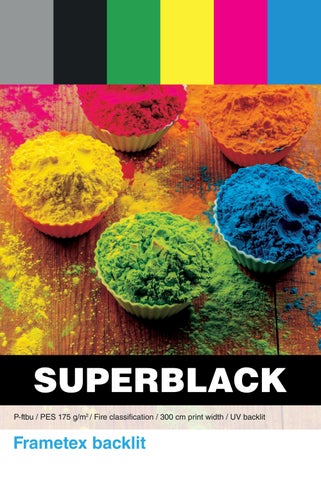

SUPERBLACK
P-ftbu / PES 175 g/m2 / Fire classi cation / 300 cm print width / UV backlit
Frametex backlit



Test Report Report No.: AJFS2404003640FF Date: APR.26, 2024 Page 1 of 7
UAB "GM Media"
Geležinio Vilko g. 18A LT-08104 Vilnius Lithuania
Sample Description: Textile Backlit 1300 - 175
SGS Ref No.: CZHL2404002534HI
Style No.: TL130175
The above sample(s) was / were submitted and identified on behalf of the client. SGS is not responsible for the authenticity, integrity and results of the data and information and / or the validity of the conclusion arising therefrom. Results apply to the sample as received.
Test Requested:
EN 13501-1:2018 Fire classification of construction products and building elements Part 1: Classification using data from reaction to fire tests.
Test Results: -- See attached sheet –
Test Period:
Sample Receiving Date : APR.09, 2024
Test Performing Date : APR.09, 2024 TO APR.24, 2024
Signed for and on behalf of SGS-CSTC Standards Technical Services Co., Ltd. Anji Branch
Echo Li
Approved Signatory
Test
Report Report No.: AJFS2404003640FF Date: APR.26, 2024 Page 2 of 7
I. Test conducted
This test is conducted as per EN 13501-1:2018 Fire classification of construction products and building elements-Part 1: Classification using data from reaction to fire tests. And the test methods as following:
1. EN 13823:2020+A1:2022 Reaction to fire tests for building products - Building products excluding floorings exposed to the thermal attack by a single burning item.
2. EN ISO 11925-2:2020 Reaction to fire tests — Ignitability of products subjected to direct impingement of flame — Part 2: Single-flame source test.
II. Details of classified product
a) Nature and end use application
The product “Textile Backlit 1300 – 175 (provided by client)” is defined as a decorative sheet. Its classification is valid for the following end use application: backlit fabric.
b) Description
Description Textile Backlit 1300 - 175 (provided by client)
Color White
Sample size
EN 13823: 1500mm×1000mm & 1500mm×495mm
EN ISO 11925-2: 250mm×90mm
Mass per unit area 188 g/m2
Exposed surface Marking surface (see the appendix photo)
Mounting and fixing:
Calcium silicate board with a density of approximate 900kg/m3 and a thickness of approximate 9mm, was used as the substrate. The test specimens were fixed mechanically to the substrate. No joint in the long wing of the specimens.
III. Test results
ISO 11925-2 Exposure = 30 s
Whether lateral flame spread (LFS) to the edge of specimen (Yes/No)
Whether vertical flame spread (Fs) in excess of 150 mm within 60s (Yes/No)
Ignition of the filter paper (Yes/No)
IV. Classification and field of application
a) Reference of classification
This classification has been carried out in accordance with EN 13501-1:2018.
b) Classification
The product, Textile Backlit 1300 - 175 (provided by client), in relation to its reaction to fire behaviour is classified:
Remark: The classes with their corresponding fire performance are given in annex A.
Test
c) Field of application
This classification is valid for the following end use applications:
--- With all substrates classified as A1 or A2
--- With mechanically fixing
--- No joint
This classification is valid for the following product parameters: --- Characteristics as described in section II b) of this test reports.
Statement:
This declaration of conformity is only based on the result of this laboratory activity, the impact of the uncertainty of the results was not included.
The test results relate to the behaviour of the test specimens of a product under the particular conditions of the test; they are not intended to be the sole criterion for assessing the potential fire hazard of the product in use.
Warning:
This classification report does not represent type approval or certification of the product. The test laboratory has, therefore, play no part in sampling the product for the test, although it holds appropriate references to the manufacturer’s factory production control that is aimed to be relevant to the samples tested and that will provide for their traceability.
Annex A
Classes of reaction to fire performance for construction products excluding floorings and linear pipe thermal insulation products
Class Test method(s)
A1
A2
Classification criteria Additional classification
EN ISO 1182 a and △T≤30, and ℃ △m≤50%, and tf=0(i.e. no sustained flaming) -
EN ISO 1716
PCS≤2.0MJ/kg a and PCS≤2.0MJ/kg b c and PCS≤1.4MJ/m2 d and PCS≤2.0MJ/kg e -
EN ISO 1182 a or and △T≤50, ℃ and △m≤50%, and tf≤20 s -
EN ISO 1716
EN 13823
EN 13823 and
B
PCS≤3.0MJ/kg a and PCS≤4.0MJ/m2 b and PCS≤4.0MJ/m2 d and PCS≤3.0MJ/kg e -
FIGRA≤120W/s and LFS<edge of specimen and THR600s≤7.5MJ
FIGRA≤120W/s and LFS<edge of specimen and THR600s≤7.5MJ
EN ISO 11925-2 i Exposure =30s within 60s Fs≤150mm
EN 13823 and
C
D
E
FIGRA≤250W/s and LFS<edge of specimen and THR600s≤15MJ
EN ISO 11925-2 i Exposure=30s Fs≤150mm within 60 s
EN 13823 and FIGRA≤750W/s
Smoke production f and Flaming droplets/particles g
Smoke production f and Flaming droplets/particles g
Smoke production f and Flaming droplets/particles g
Smoke production f and Flaming droplets/particles g EN ISO 11925-2 i Exposure=30s Fs≤150mm within 60 s
EN ISO 11925-2 i Exposure =15s Fs≤150mm within 20 s flaming droplets/particles h
F EN ISO 11925-2i Exposure = 15 s Fs>150mm within 20 s
a For homogeneous products and substantial components of non-homogeneous products.
b For any external non-substantial component of non-homogeneous products.
c Alternatively, any external non-substantial component having a PCS ≤ 2,0 MJ/m2 , provided that the product satisfies the following criteria of EN 13823: FIGRA ≤ 20 W/s, and LFS < edge of specimen, and THR600s ≤ 4,0 MJ, and s1, and d0.
d For any internal non-substantial component of non-homogeneous products.
e For the product as a whole.
f s1 = SMOGRA ≤ 30m2/s2 and TSP600s ≤ 50m2 ; s2 = SMOGRA ≤ 180m2/s2 and TSP600s ≤ 200m2; s3 = not s1 or s2
g d0 = No flaming droplets/ particles in EN 13823 within 600 s; d1 = no flaming droplets/ particles persisting longer than 10 s in EN 13823 within 600 s; d2 = not d0 or d1.
Ignition of the paper in EN ISO 11925-2 results in a d2 classification.
h Pass = no ignition of the paper (no classification); Fail = ignition of the paper (d2 classification).
i Under conditions of surface flame attack and, if appropriate to the end–use application of the product, edge flame attack.
Photo Appendix:
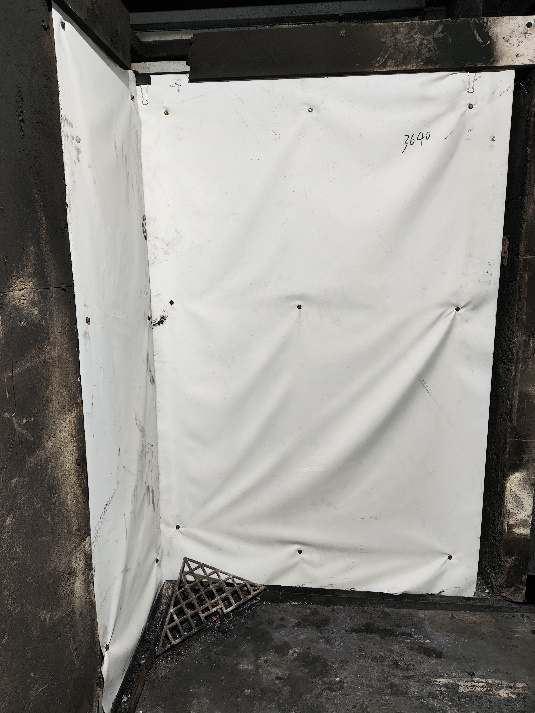
Before test
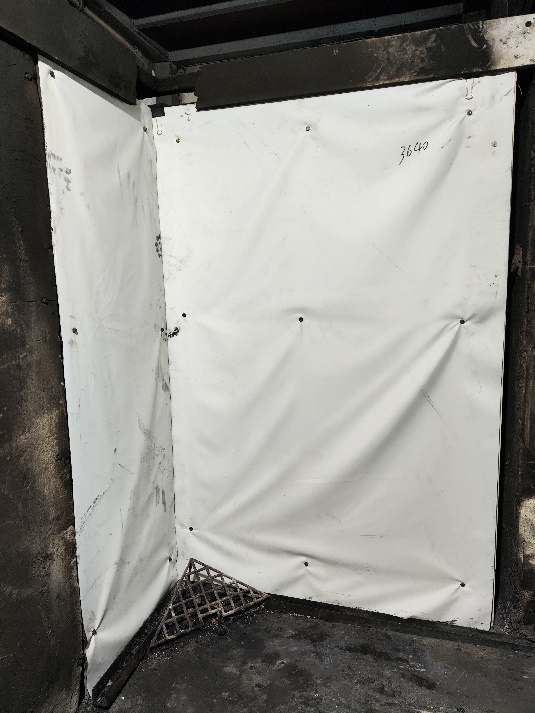
Before test
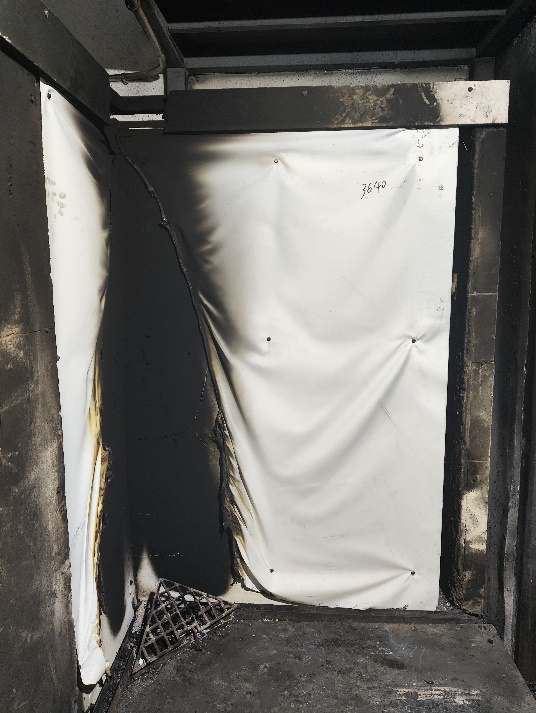
After test
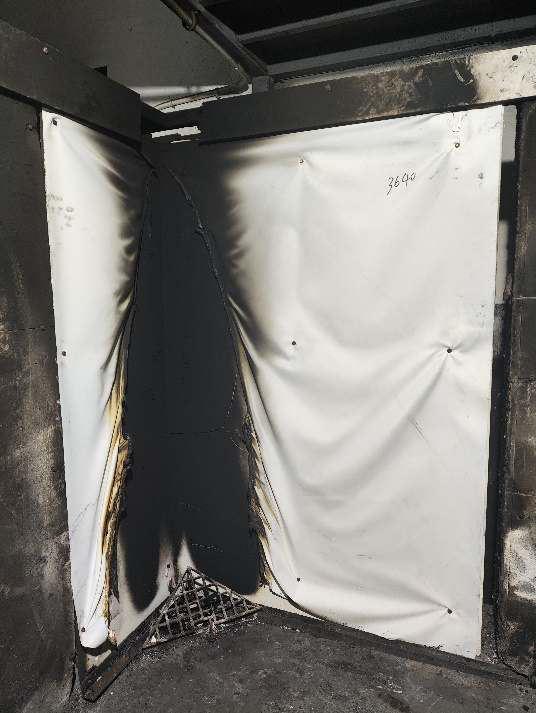
After test
SGS authenticate the photo on original report only ***End of Report***