SUMMER 2025–26


SUMMER 2025–26
Every so often, you find yourself in a room that changes you. Not because of who’s in it, but because of what it represents.
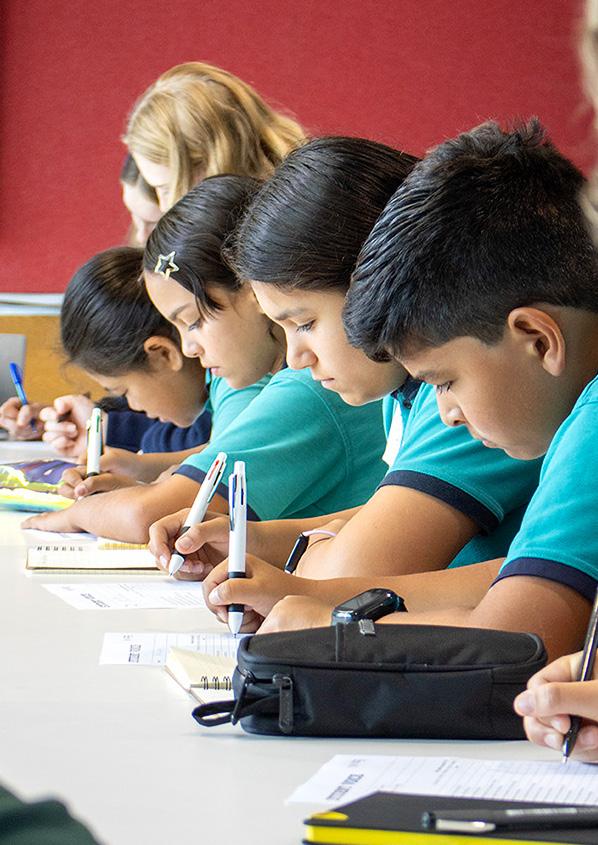
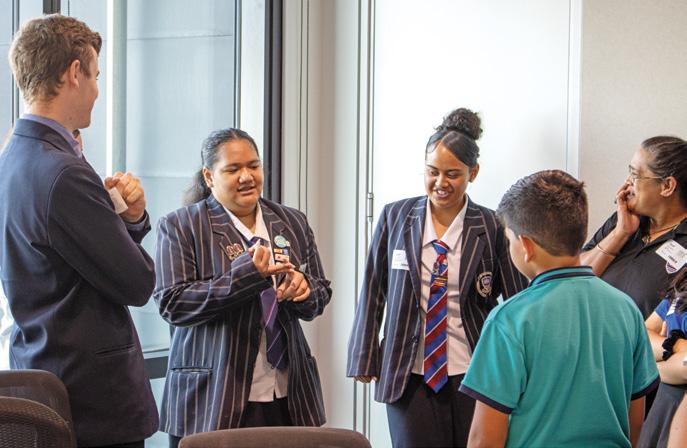
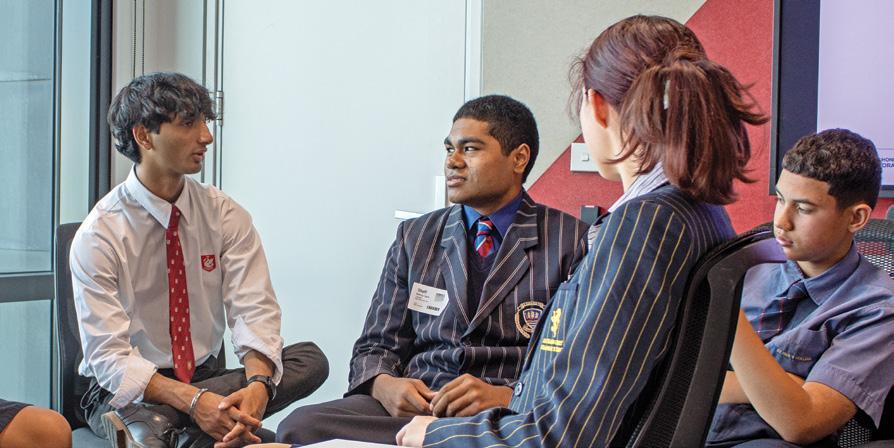
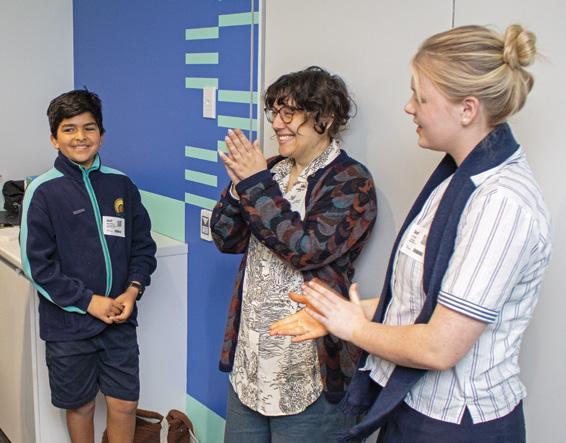
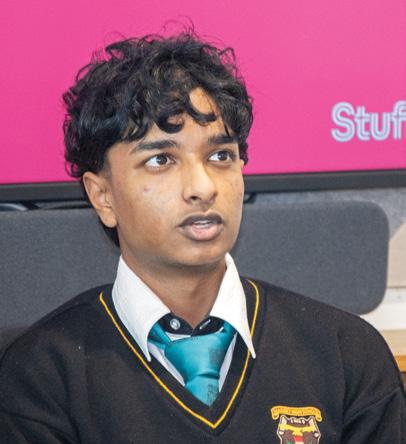
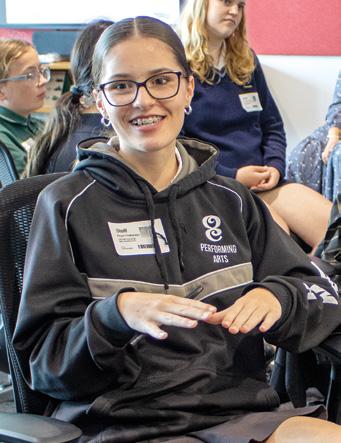
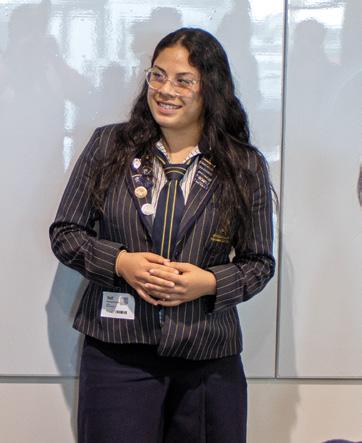
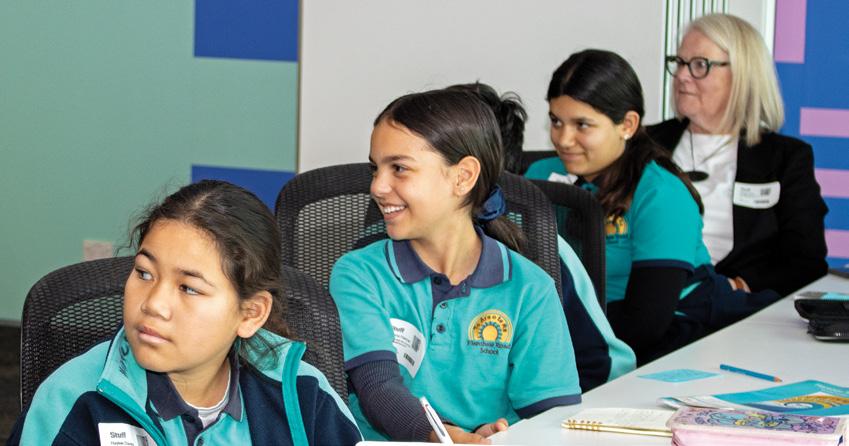
The Student Voice workshops this year were one of those powerful spaces, a gathering of forty young thinkers, writers and leaders determined to make a difference.
They came from all walks of life: primary and secondary students, public and private schools, eleven nationalities and countless lived experiences.
For all their diversity, they quickly discovered that they were more alike than not. They shared a determination to speak up, to challenge convention and to use their words as a catalyst for change.
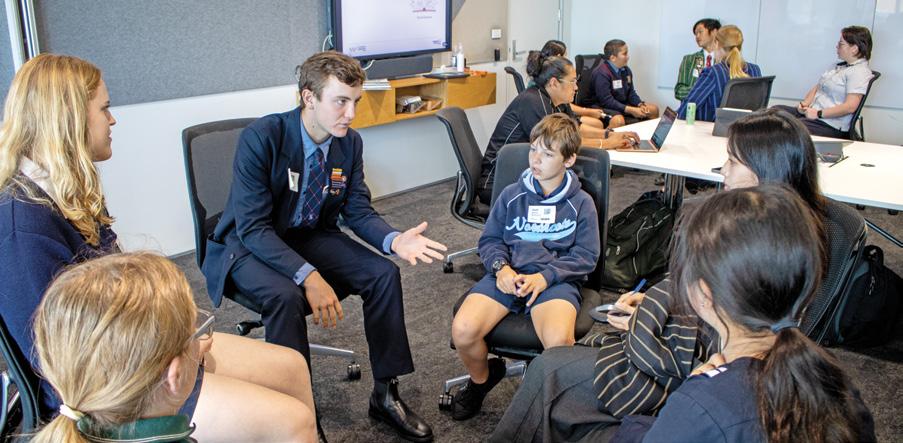
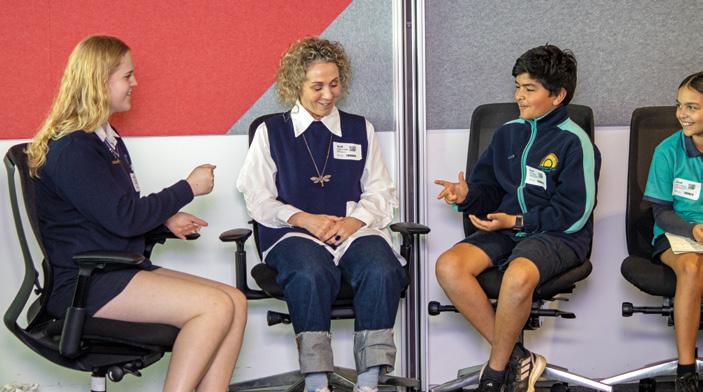
Some had written before, others were new. A 9-year-old sat talking to a 17-year-old about social issues they felt strongly about.
Their growth was guided by remarkable mentors from Stuff; journalists who, even amid change in their own industry, recognised the importance of nurturing confident communicators.
Sapeer Mayron delivered a powerful workshop packed with lived experience that no journalism course could have delivered in just one hour!
The journalists taught our students that truth-telling is not just a skill, it’s a responsibility.
Alongside them were dedicated teachers, who know all too well the weight of assumptions about a profession they’ve devoted their lives to.
The stories that follow are more than words on a page. They are declarations of hope, empathy and conviction. They remind us that the next generation is not waiting for permission to lead, they are leading, in their classrooms, their communities and their conversations.
This is Student Voice. A living reminder that courage and curiosity are timeless, and that young people are not waiting for the future, they are creating it.
Katheren Leitner Chief Executive Te Hononga Akoranga
COMET
Student Voice
Summer 2025–26
EDITORIAL TEAM
Katheren Leitner, Sapeer Mayron, Jonathan Longstaff
DESIGN & ADDITIONAL PHOTOGRAPHY
Jonathan Longstaff
CONTRIBUTORS
Mohammad-Saif Ahmed, Annabel Aitken, Alex Anthony, Magnolia Ash-Faulalo, Isobella Baggeley, Zoe Barron, Josh Benoza, Elizabeth Blanch, Henry Blakeman, Elizabeth Blanchard, Sina Brown, Ashling Collins, Haylee Davies, Awhina Fletcher, Ava Garratt, Elizabeth Han, Harmony Hurt, Ada Kim, Ryan Leong, Lisa Taina Morris White, Athrun Nair, Charlie Nesbit, Natalia Noone-Jones, Eden Parker, Liv Paull, Gwenlynea Pimentel, Megan Postlewaight, Aria Singh, Natasha Singh, Violet Tucker, Lucy Ward, Vera Xiao
GRAPHICS
Saepul Bahri
Shinpanu Thamvisead
PUBLISHER
Te Hononga Akoranga COMET ON THE COVER
Art by Roman Fruean
ISSN: 2703-5522 (print)
ISSN: 2816-1300 (online)
Copyright © 2025 Te Hononga Akoranga COMET. All rights reserved. Writing, artwork and photographs © remain with their respective authors and artists. Used with permission.
The opinions shared in this magazine belong to the individual authors. COMET respect and acknowledge these diverse perspectives. We are committed to encouraging youth voices through this project.

HAYLEE SHARES HOW EMOTIONS WORK AND WHY THEY MATTER.
For my story, I wanted to write about emotions. I had a lot of questions, like …
• What is an emotion?
• What do emotions do?
• What is an emotion’s job?
• Why don’t most adults use more than five emotions?
Emotions give us different feelings like happiness, sadness, anger and shyness.
How do emotions affect you? That depends on your reaction. You could react to a surprise or an emotional moment.
For example, if someone passes away and you cry, that’s sadness; and if you storm off stomping and yelling, that’s anger.
Happiness is an emotion that makes you smile in a happy way, not in a creepy way.
Shyness means you want to hide, and you might feel like you don’t fit in.
"We are all different. My brother and sister react differently to things.”
You might also feel like people don’t like you.
Now you know what an emotion is.
In fact, most emotions are actually fleeting, lasting only a few minutes, and they are connected to what is happening at that particular moment.
At school, we have peer mediators who help students with problems they can’t sort out themselves.
For example, two students are arguing over a basketball. One of them ordered it from the sports shed first, but the other one wants it, too.
The peer mediator comes up and asks them what happened. Each student tells their story, and the peer mediator helps them sort it out.
– Haylee – Haylee
If you feel an emotion like sadness for more than a few minutes, you might need to talk to someone you trust.
If you’re feeling just a little sad, you could play with a friend, who might help you feel better.
It's important to talk to someone if you are really worried about something. n
“I hope I don’t have just five emotions when I get older!”
AHWINA FLETCHER
If you want to do well at school and have a successful career when you’re older, then it’s important to start with being a good student.
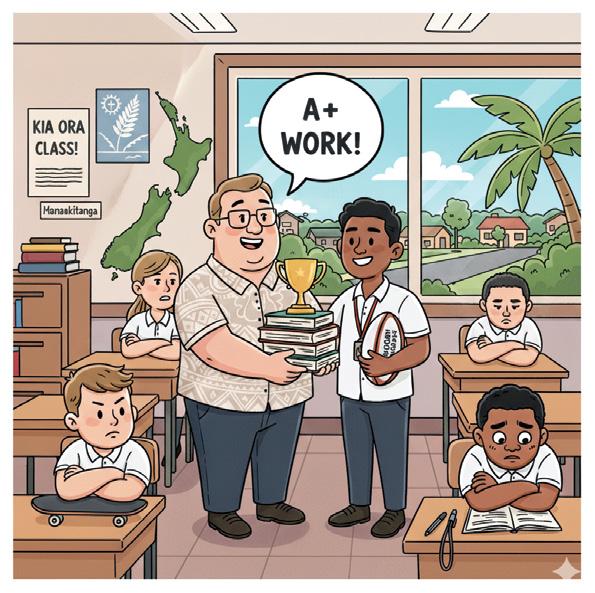
What makes a good student? At my school, some of the qualities, or core values, for being a good student include awhinatanga, pono, manaakitanga and mana motuhake
Awhinatanga means guiding and supporting. It’s about having empathy with individuals and groups in the school community.
By appreciating others’ points of view, leaders can help build a strong learning culture. This is important for both students and teachers.
Students can practise awhinatanga through roles like peer mediator, arohanui helper and buddy reader.
Pono is about valuing yourself. It includes practising resilience, selfcare, wellbeing and a healthy lifestyle.
Flanshaw Road participates in Mitey, an evidence-based, school-wide approach to teaching mental health education.
“I know you shouldn’t be rewarded for this behaviour, [but] sometimes it feels really good inside to be rewarded for it cos it means it’s been noticed.”
– Awhina
Students also learn about nutrition and take part in fitness training.
Manaakitanga is about expressing kindness and respect for others. It also means taking responsibility for being a good person.
Manaakitanga is shown in a variety of different ways at Flanshaw Road School. For example, we nurture positive relationships; we have a kind and generous community; and we encourage students to be responsible.
Being on the student council also provides opportunities to strengthen manaakitanga
Mana motuhake means empowering others and acknowledging their
contributions. It also means selfdetermination and independence.
Flanshaw Road students practise mana motuhake by taking ownership of their learning through student-led conferences, by making their own decisions and by participating in the school community, like the enviro team and the writers’ group.
If you make an effort to practise awhinatanga, pono, manaakitanga and mana motuhake as part of your student success strategy, you will become a rangatahi toa: a strong leader and good example for your peers. You might even score yourself some certificates or trophies along the way. n
ELIZABETH BLANCHARD Year 12, Orewa College
WITH NEW ZEALAND EXPERIENCING AN EPIDEMIC OF TALL POPPY SYNDROME, ELIZABETH SAYS IT'S UP TO THE YOUNGER GENERATION TO FIND A CURE.
Tall poppies in ancient Rome
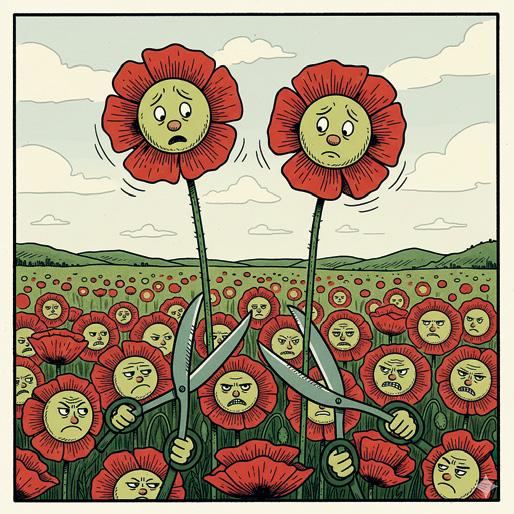
Over 2,000 years ago, poppies bloomed in the garden of the tyrant king of Rome. When the king's son asked him for political advice, the king silently decapitated the heads of the tallest poppies with a stick.
The son interpreted this act as an instruction to eliminate the most eminent citizens: those ‘tall poppies’ who might pose a threat to the king.
These days, decapitating tall poppies has taken on a less literal meaning. It is now characterised by the criticism, resentment and undermining of
those who achieve success or rise above others.
Tall poppies closer to home
In New Zealand, we feel the effects more than anywhere else in the world. For us, it's become a cultural mindset, an unspoken commandment based on the egalitarian principles that forged our country.
New Zealanders tend to be modest and self-deprecating to avoid seeming pretentious. From an early age, we learn to be quiet achievers. The worst crime is to be seen as a ‘try-
hard’ or as being ‘too big for your boots’.
New Zealand has carefully cultivated a ‘down-to-earth’ society known for its humble, relaxed and hard-working people.
Yet it's this same ethos, in the name of promoting equality, that has turned this country into a place where it's become normalised to knock people down rather than pull them up.
Tall poppies in the playground
The weed that is tall poppy syndrome has dug its roots deep in our schools.
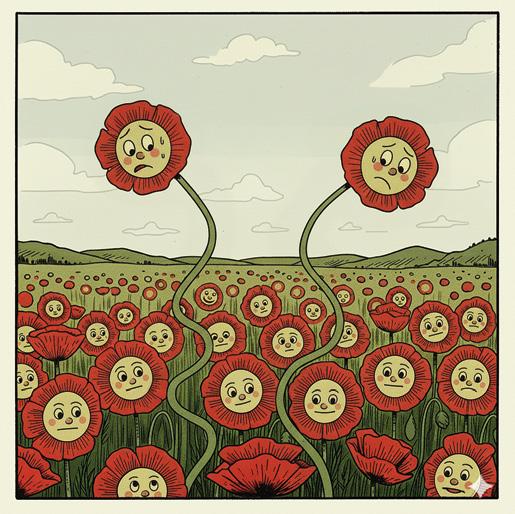
Many students are unaware of how often it creeps into their actions and words. Playtime jabs hold more weight than they might believe.
Downplaying our achievements gets drilled into us from the moment we start school. It's become an unspoken agreement that those who show signs of rising above their classmates must be ‘brought back down to Earth’.
Subtle digs like ‘try-hard’ and ‘showoff’ reinforce this message. Nobody wants to seem ‘cringe’ or weird. We have spent so long curating this image of not caring about anything because trying too hard is ‘uncool’.
While modesty and humility are virtues, actively disregarding our own achievements is a problem.
As Orewa College Principal Wiri Warriner says, “We have begun to tall poppy ourselves.”
Having unconsciously internalised our tall poppy syndrome, we spend so much time focusing on how other people might react to our success that we start cutting ourselves at the stem before anyone else can.
Tall poppy syndrome erodes selfesteem. Teenagers learn to doubt
New Zealanders tend to be modest and self-deprecating to avoid seeming pretentious. From an early age, we learn to be quiet achievers. The worst crime is to be seen as a 'tryhard' or as being 'too big for our boots'.
themselves, which can sometimes lead to imposter syndrome. We've been conditioned to feel self-doubt when we succeed.
When receiving an award at prizegiving, for instance, we question whether we deserve it. Our brains are hard-wired to constantly remind us of the social repercussions that come from ‘trying too hard’.
Tall poppies on the playing field
Academic achievement is not the only area where tall poppy syndrome is noticeable. The sporting world experiences its own version, albeit to a lesser extent.
Sport is often seen as a team thing. If an individual succeeds in a team sport, it’s due in part to their coaches, teammates and supporters. Because success can be shared, people are more willing to celebrate it.
It's harder for people to accept individual sporting achievements, however, because there's no team with which to share them. Here the achiever stands alone, and the spotlight makes them a target.
While solo athletes do have coaches and others who help them reach
their goals, it's still less appreciated. People are more likely to question the athlete’s success: “How could they achieve such a thing on their own?”
Tall poppies on the internet
Social media is an amplifier of tall poppy syndrome. Now such an integral part of our lives, social media gives us the chance to say things we would never say out loud. Social media also provides us with a platform to compare ourselves to others, allowing feelings of inadequacy and resentment to creep in. It only takes one text for hurtful comments to start spreading.
Dr Jodyanne Kirkwood, a senior lecturer at the University of Otago, has studied tall poppy syndrome. She says quiet achievers "do well then go back to [their] lane.”
She also makes an important point that schools could use social media in a positive way to highlight these quiet achievers.
Instead of leaving these successes unsung, schools could create an environment where student success is regularly appreciated, no matter how big or small.
"We can't just brush [tall poppy syndrome] under the carpet and pretend it's not happening."

– Dr Jodyanne Kirkwood, senior lecturer, University of Otago
This way, they could foster a culture where celebrating success, even of individuals, is normalised and encouraged.
Tall poppies of the past
We can trace New Zealand’s tall poppy syndrome to the workingclass British colonists who came here seeking to escape Britain’s rigid class hierarchy.
When introduced to core Māori values like kotahitanga (unity) and whanaungatanga (kinship), the colonists created a society primarily built on shared ideas of egalitarianism.
The famous Māori proverb “kāore te kumara e kōrero mō tōna ake reka” means “the kumara does not speak of its own sweetness”.
This whakataukī expresses the value of humility, reminding people that it's
better to let others recognise your qualities than to boast about them yourself. It has long reinforced the idea that modesty is a virtue.
However, this way of thinking has contributed to New Zealanders’ inclination to silence success rather than celebrate it.
Our egalitarian principles and culture of oneness are not necessarily a bad thing; in fact, we often benefit from them. However, it takes just one negative …
As Dr Kirkwood says, “We can't just brush [tall poppy syndrome] under the carpet and pretend it’s not happening when it’s certainly there. It's alive and well, unfortunately.”
Tall poppies of the future Tall poppy syndrome is real. We must recognise that it exists and acknowledge it as an uncomfortable
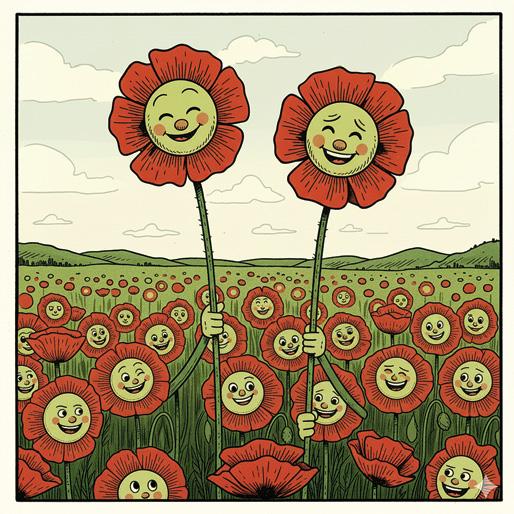
Instead of bringing those around us down, we need to rise together by lifting them up. We need to be the ground that helps the poppies stand taller than ever, not the shears that bring them down.
part of our culture. Only then can we start moving forward.
As Principal Warriner explains, in our lives there is both the controllable and the uncontrollable. We cannot help the uncontrollable. Whatever people around us say, think and do is out of our reach. Our focus should stay on the controllable: what we do and how we choose to act.
The real cost of tall poppy syndrome is not the criticism itself but the opportunities that are lost when young people are not able to grow to their full potential.
Instead of bringing those around us down, we need to rise together by lifting them up. We need to be the ground that helps the poppies stand taller than ever, not the shears that bring them down.
We need to shift this culture by challenging negativity and learning to embrace a growth mindset.
The challenge for the next generation is to build a culture where every poppy has the chance to stand tall. n
SINA SAYS SUPPORTING LANGUAGE LEARNING IS KEY TO PRESERVING STUDENTS’ CONNECTIONS TO IDENTITY, CULTURE AND COMMUNITY.
In New Zealand, language is a key part of identity and culture. There are over 160 different cultures and languages across the country, each with their own unique aspects.
While Aotearoa has made progress in promoting Te reo Māori, there is a concerning decline in language learning in schools overall.
How can students from Pacific and other migrant backgrounds celebrate their languages within the New Zealand education system?
personal pserspective
As a Pasifika person, I have always been fascinated with learning or knowing more than one language. I think it is a crucial to our identity and, as youth, we should prioritise it for the future.
I come from a small village in Samoa, where I learnt the value of my culture and language. After arriving in New Zealand in 2023, I noticed that many young Pasifika
people here don't appreciate their language or heritage. They also don't have the chance to learn about them.
In the islands, language is not just about communicating; it also provides a sense of belonging. It’s a living part of who we are, a constant reminder of our culture.
For many Pasifika peoples, our language holds our songs, prayers, humour and wisdom. Losing that would mean losing more than words; it would mean losing part of ourselves.
Through the years, there has been a huge decline in teaching languages in schools. As ACG Strathallan reports, “fewer students are studying languages today than in the 1930s”, indicating a shift from early schooling to today.
The lack of a national student language policy and a perceived ‘English is enough’ mindset
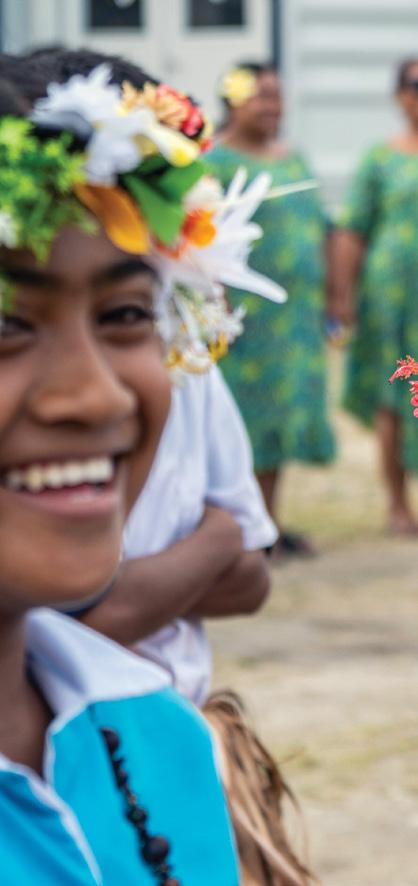
contribute to the marginalisation of languages in New Zealand schools.
In a 2023 article on Forbes.com, Dr Tracy Brower wrote that multilingual people have significant cognitive, cultural and career advantages, with “40% of multilingual employees [saying] language skills helped them land a job, and they earned 19% more than single-language speakers.”
Why language diversity matters
Saunoamaali’i Dr Karanina Sumeo is of Samoan descent from the village of Vailima, Upolu.
A mother of three, Dr Sumeo has held roles at the Ministry of Social Development, the Ministry for Pacific
For many Pasifika peoples, our language holds our songs, prayers, humour and wisdom. Losing that would mean losing more than words; it would mean losing part of ourselves.
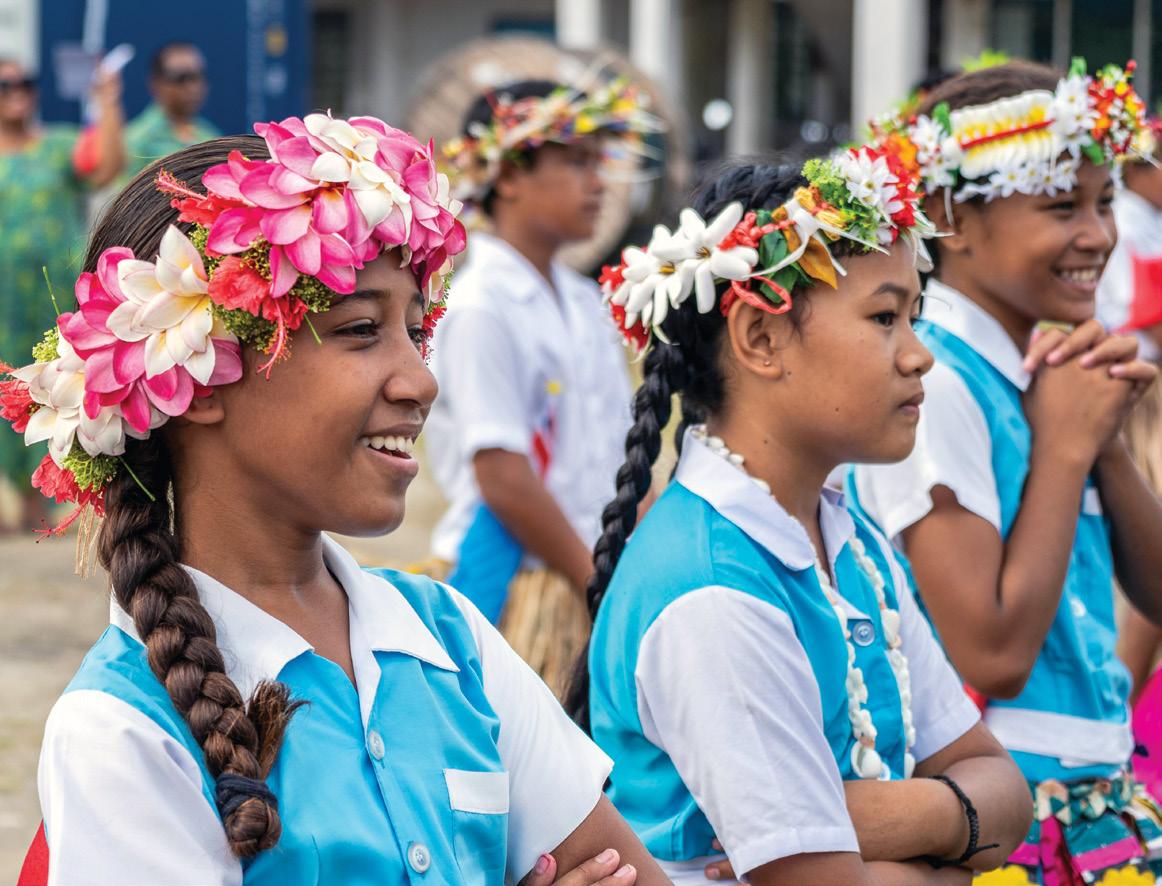
Peoples, the Tertiary Education Commission and the Auckland District Health Board.
In her foreword to a 2024 report on language diversity in Aotearoa, Dr Sumeo states that “individuals, communities and organisations" will all find the report to be "a useful tool to bring about better support for strengthening and celebrating language diversity in our local communities and nationally.”
This gives us insight into why Dr Sumeo values language diversity and how it has influenced her career and her life as both a mother and a Pasifika woman.
The report also underlines that, while Aotearoa is home to many different languages, English remains
(Census results, Stats NZ, 2018)
Without stronger policies or resources, languages risk being further ignored, which can negatively impact cultural identity. This is a serious challenge for New Zealand's education system.
New Zealand population, despite its cultural importance.
Asian and Pacific languages (e.g. Hindi, Northern Chinese and Samoan) are also present, reflecting New Zealand’s multicultural communities. However, their small percentages compared to English highlight the ongoing decline and marginalisation of other languages.
This supports my concern that the lack of language diversity in education and the ‘English is enough’ mindset can lead to cultural disconnection, especially for Māori and Pasifika people, whose languages are a key part of our identities.
Other statistics from the same report indicate that the New Zealand Government has helped only 31% of the 538 local organisations that support language diversity around the country.
These views illustrate how language shapes a society’s identity and highlights the impact of declining language diversity.
The school perspective
To dive deeper into this topic, I spoke with Tāmaki College principal, Ms Soana Pamaka.
Her answers (see 'A Principal's Perspective' at right) address both the value of language learning and the practical challenges schools face with introducing more language learning options.
Overall, Ms Pamaka supports language as a core part of identity and acknowledges its positive cultural and social impacts. However, Tāmaki College’s current priority is improving literacy and numeracy.
This tension between celebrating language diversity and meeting immediate educational needs reflects a broader issue in Aotearoa, where many schools and communities can see the benefits of teaching languages but often lack the resources, funding and policy support to make it a reality.
Without stronger policies or resources, languages risk being further ignored, which can negatively impact cultural identity. This is a serious challenge for New Zealand’s education system.
With limited funding, schools can’t act, creating a wider societal
problem. How can we maintain and contribute to saving our languages if they are being ignored by the government?
While English continues to dominate, the lack of opportunities for students to engage with Māori, Pasifika and other languages risks disconnection for many communities.
To secure a future where students can be proud of their language and identity, we need stronger commitment and investment in language education. n
Sina sat down with Ms Soana Pamaka, principal of Tāmaki College in Glen Innes, to discuss language learning in New Zealand schools.
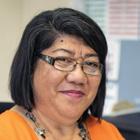
Sina: Do you agree that students should have the option to learn languages at school?
Ms Pamaka: Yes, because it gives students a choice. It also supports the community and keeps the language going. Our language is part of our identity.
Sina: What would the impact of students learning languages at school be?
Ms Pamaka: The impact would be wider learning of languages,
which can help students learn more. Learning languages can impact how a student thinks.
Sina: What are some of the challenges that might occur if students didn't take languages?
Ms Pamaka: We would have to remove them as an option.
Sina: Why is Tāmaki College the only school in our decile that doesn’t offer languages?
Ms Pamaka: At Tāmaki College, English literacy is a big problem. It’s very important for us to focus on literacy and numeracy.
Languages would be nice to do, but at the moment, we are focusing on numeracy and literacy. Language is not our priority. If I had the money, I would do it.
AHWINA FLETCHER
Year 6, Flanshaw Road School
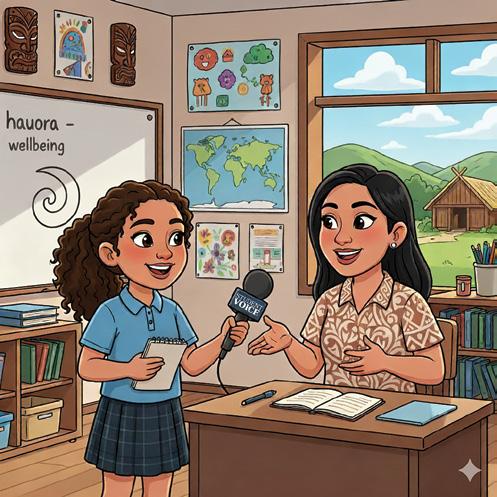
AWHINA TALKS TO TEACHER ADRIENNE ACKERMAN ABOUT THE MITEY MENTAL HEALTH LESSONS THAT HELP CHILDREN UNDERSTAND THEIR FEELINGS.
Have you ever felt overwhelmed by life’s changes, like pressure inside a bomb, ready to explode?
Many of us have felt that way, and the Mitey programme can help us through it every step of the way.
Mitey is a mental health programme that helps children in Years 1–8 regulate their emotions.
Mitey was designed for New Zealand schools only. It helps children all over the country reach out to an adult if they feel helpless, depressed, anxious, stressed, neglected and all kinds of emotions or feelings that are hard to express to others.
“I want people to not be afraid to tell someone that they feel anxious or are having a low mental health day.”
– Awhina
Mitey: A teacher's perspective
To learn more about Mitey, Awhina spoke with Mrs Adrienne Ackerman, lead teacher for Years 5–6 at Flanshaw Road School.

Awhina: Do you think Mitey is helpful and worthwhile?
Mrs Ackerman: Yes, Mitey is valuable, helpful and worthwhile.
Knowing that one in five New Zealanders experience some form of mental health issue by the time they turn 18 is one reason we teach Mitey at primary school.
Mitey takes a school-wide approach, so all stakeholders (students, staff, parents, iwi and our community) can be involved in our Mitey journey.
Awhina: What are the two or three Mitey lessons you think
are the most useful for children’s mental health?
Mrs Ackerman: All of the lessons are useful, but if I must choose three, they would be the following lessons from Unit 3 – Focus: Lesson 2.1 Meeting Mophead Help ākonga understand bullying, racism and flourishing.
Mophead is one of my favourite units because I went to school with the author, Selina Marsh.
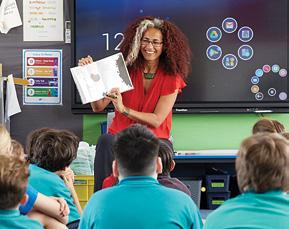
Mophead is about ‘name calling’. I would say 98% of children will have been called a hurtful name.
Talking about this issue brings up the ways we can deal with name calling, and then together we find ways to empower each other instead.
We also link our peer mediation strategies and processes to this lesson. I take this one step further and have my students write a poem in the same format Selina Marsh used for her famous poem, ‘Fast Talking PI’
3.3
Describe and affirm my feelings and beliefs about myself and others. Identify and articulate a range of emotions accurately and sensitively, using appropriate vocabulary.
This lesson involves being able to name different emotions. I enjoy this one because we can extend our vocabulary from words like ‘sad’ to ‘depressed’. We then have a shared understanding of what those words mean so we can use them appropriately.
As you can see, Mrs Ackerman is very supportive of the Mitey programme. As a Flanshaw Road School student, I am also supportive of Mitey.
I have found the lessons to be helpful, especially in my role as a peer mediator when I often need to help students deal with conflict.
Mitey has also helped me to better prepare myself for intermediate next year. I know it will be a big change with lots of challenges but also some new and exciting opportunities.
Thanks to Mitey, and a good support network, I know I’m going to be OK. n
I also like that we can use other languages to name feelings and emotions, like Te reo Māori, Pasifika languages and others.
3.4
Identify and describe the importance, diversity and changing needs of relationships. Discuss how different types of relationships influence my own and others’ wellbeing.
I believe it's important for children to understand the many relationships that may occur in their lifetime. This lesson shows how relationships change over time.
This is helpful for when our Year 6 students move on to intermediate and then to college. It’s relevant for them to understand that change is normal and it will / can happen.
It also gives children an opportunity to make some connections and understand the relationships they’ve had, the relationships they still have and perhaps the
relationships they could make in the future.
Awhina: Do you think the teachers in the Mitey programme also benefit from teaching it?
Mrs Ackerman: Absolutely. Teachers gain insight into the different mental health issues that could arise with children and adults.
In planning, teaching and times of reflection, it can help the teacher understand their own past trauma (if any), and teachers learn about their students in a creative and deeper way than ever before.
Mitey is a great advocate of the Arts (visual art, drama, dance and music), which is integrated throughout the programme.
The lessons are a lot of fun, and I enjoy always putting ‘Mrs Ackerman’s spin’ on each of the lessons I teach.
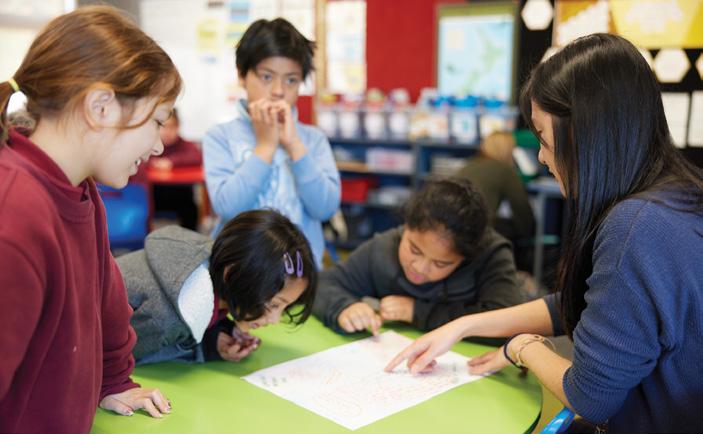
“I walk around, and people seem happy. Now I realise they might not be.”
– Aria Singh, Year 6, Flanshaw Road School
ATHRUN NAIR
Year 13, Massey High School
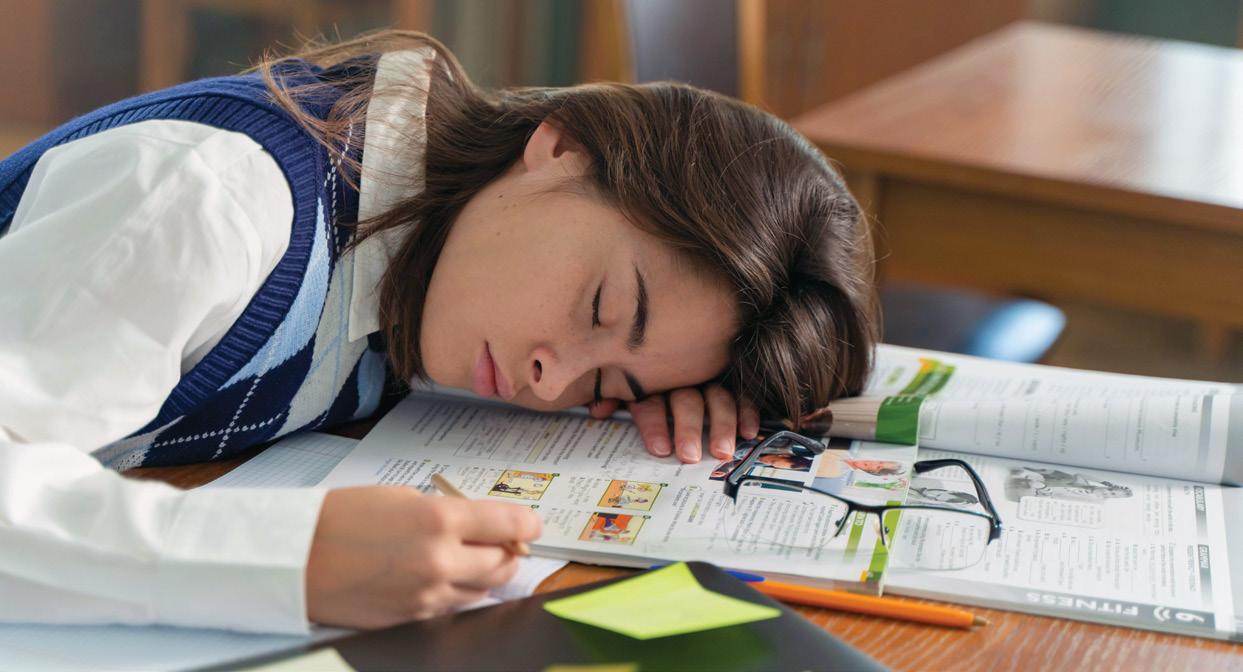
ATHRUN CHALLENGES THE IDEA THAT TIRED STUDENTS ARE HARD-WORKING AND EXPLAINS WHY REST IS POWER, NOT WEAKNESS.
We’ve all grown up with the idea of ‘you snooze, you lose’, planting the thought in our minds that sleep really isn’t that important. What if the real problem is that students aren’t snoozing enough?
Across New Zealand and beyond, students are praised for dragging
themselves out of bed before dawn, showing up with heavy eyes and somehow staying awake through their busy school periods.
But if a student dares to sleep in, perhaps due to circumstances from the day before or just because they’re listening to their bodies, they’re
labelled as ‘lazy’. It’s time to question this double standard.
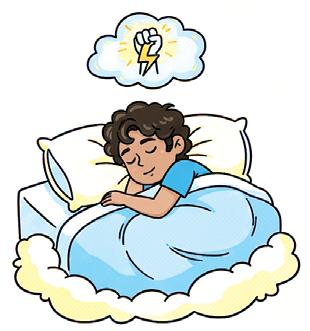
Sleep is not a luxury. It’s a biological need, just as important as food or water. This is especially true for teenagers, who need around 8–10 hours of sleep a night to develop properly.
Imagine a New Zealand where walking into class alert, awake and focused is the norm, not the exception. Imagine a school system where rest is respected, not ridiculed.
Yet a 2023 health survey of New Zealand youth showed that fewer than half of Kiwi secondary school students are getting the sleep they need. The consequences are everywhere: lower focus, mental health struggles and declining grades. Why is it that being tired at school constantly is seen as a badge of honour? It’s almost like a twisted competition: whoever can stay up later finishing assignments, cramming for externals and trying to catch up with everyone else wins.
When a student listens to their body and sleeps in, suddenly they’re a slacker. This mindset is part of the wider problem: we reward exhaustion instead of rest.
Within many schools, including my own, I’ve witnessed students with horrible sleep schedules who end up either sleeping in and coming to school late or missing school entirely.
Others force themselves to wake up, feel groggy and unable to focus at school until they sleep, which is usually right when they get home. They wake up when they should really be going to sleep for the night, creating a negative feedback loop. Or they take supplements to make up for the lack of sleep, risking their health. Now, not all students who strive for greatness are going to be able to get the best sleep, but it is both the neglect and the thought that this is the only way to obtain excellence that are the problems.
With sleep being an essential necessity for adolescents, society should strive to learn and teach ways to integrate it better in our students’
habits rather than rewarding the idea that sacrificing sleep and health is for the greater good.
Part of the blame lies with biology. Teens’ sleep cycles naturally shift during puberty, meaning they don’t start feeling sleepy until later into the night.
But while teenagers are still awake at midnight, school bells in New Zealand often ring at 8:30 am sharp. For many, that means getting up early just to make it to school on time. This isn’t about being lazy; it’s about clear science being ignored. Sleep deprivation doesn’t just effect learning. It’s tied to mental health, which is already a crisis for many adolescents. Anxiety, depression and burnout are all worsened by lack of sleep.
Fatigue also increases the chance of accidents, especially for those who drive. Being sleep-deprived doesn’t make students hard-working; it makes them vulnerable.
What can schools do? I believe we should start by incorporating extra sleep time into our schedules. Secondary schools could trial later start times, even just 30 minutes, to line up better with teens' body clocks. Schools could even build in wellness or ‘catch up’ periods on certain days of the week, giving students a chance to reset rather than run on empty.
However, I acknowledge it’s not all on the schools. We teens should try to ensure proper sleep to meet our school’s time schedules.
Too many of us lack the interest, coming to school late or trying far too
hard, neglecting our bodies’ needs for sleep and food.
Students can take small steps to prioritise rest. Setting a consistent bedtime, reducing screens and food an hour before sleep and even taking short power naps after school can all make a difference. But here’s the catch: we should not have to battle against an entire system just to get the rest our bodies need.
What we need is a cultural shift. We need to stop glorifying all-nighters and start recognising that a well-rested student is not lazy but responsible in most circumstances.
Imagine a New Zealand where walking into class alert, awake and focused is the norm, not the exception. Imagine a school system where rest is respected, not ridiculed. Because here’s the truth: tired students don’t learn better, either at home or at school; they just suffer more.
If we really care about education in New Zealand, then we need to stop treating sleep as an optional extra. Rest is not weakness. Rest is power. n
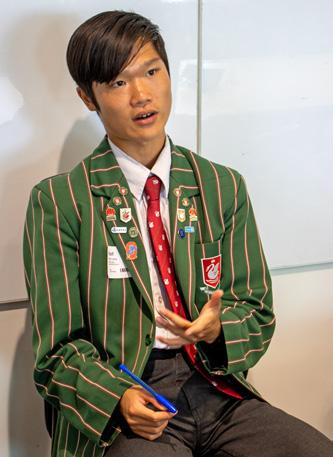
Imagine you’re 14 years old, and your whole life has just been uprooted to move to a foreign country. Friends and family, gone in a flash.
Flying into Aotearoa from Australia in the summer of 2022, I was lost; a young boy looking to find his way through the rigorous depths of school and fitting in without knowing anyone or the culture of this new precious land that I called home. It was a bit of a hard reset. A harsh one to fathom, too.
As I shuffled onto the campus of my new school for the first time, with
only my oversized blazer to comfort my sweating hands, I feared that the next four years would be a daunting and challenging experience for me. I had to pave my way somehow.
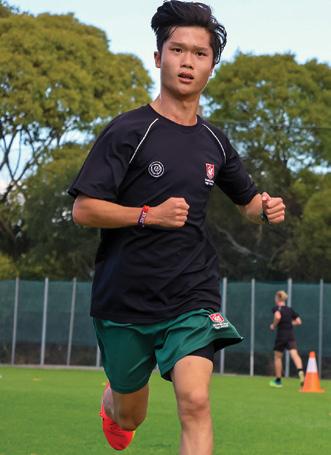
It didn’t take long for me to figure out that if you wanted to fit into this small world named Aotearoa, you needed to do sport; a stark difference to which I quickly adapted, picking up distance running.
I carried on with running throughout my high school years. Although not as highly valued within the school’s sporting hierarchy, it still gave me
an edge over those who didn’t play any sport and a leg up to meet new people and form new connections. Without realising it, this was the beginning of my pursuit to the top in the ‘big race’ of athletes. Training more than six days a week, sacrificing sleep and even going so far as to miss social events with my mates was the norm. Not even three months in, and I was already feeling the pressure.
As a nation, we are undoubtedly one of the greatest and most feared sporting countries in the world, a
The reality is, when students see academic qualifications as a side quest to sporting achievements, we have gone too far.

fact we have integrated into our education system. It’s a big plus that as students we are immersed in active environments; not only is this good for our physical health but also our mental wellbeing.
There’s long been a debate about the quality of New Zealand’s education system, and with the upcoming replacement of NCEA with the new and improved NZCE qualifications, I wonder: “How did we get ourselves in this predicament in the first place?”
I asked some of my classmates about the current state of NCEA at our school. Some said it was unfair that you could be downgraded from an Excellence grade to a Not Achieved over a single wrong word.
There's also ‘credit farming’: gaining credits from easier subjects for a Merit or Excellence endorsement (50 credits at either level) as quickly as possible to ‘finish the year’ early so you can focus on other disciplines like sport, allowing you to ‘train more’.
The system is gameable, and the Government admits this, stating in
their NCEA changes consultation report that some students pass without having all the important skills or knowledge they need. This possibly alludes to the students’ lack of seriousness to achieve these qualifications.
The reality is, when students see academic qualifications as a side quest to sporting achievements, we have gone too far.
We are undermining the value of academic education, which leaves us unprepared for real life, where physical abilities are no longer enough to secure our opportunities in the future.
Top sporting achievers at my school receive trophies, medals, badges and, in some cases, media attention. This contrasts with academic achievers, who receive nowhere near as much recognition. This imbalance raises the question: “What do we truly value as a community?”
School is intended to give students the best academic ‘toolkit’ to set us up for more than just a qualification;
it’s also meant to teach us how to be disciplined and problem solve.
Students don’t feel this with the current education system as our learning is inhibited through an underdeveloped system contrary to sporting environments.
We need to feel challenge and value from both aspects of school life to become a well-rounded person.
It’s gratifying that we live in a country that can provide this much opportunity for our students, and schools do a lot to supply and meet the demands of students already.
However … What if we can value our futures with the health benefits of sport while also securing our futures with the power of learning and discipline through academic purpose? n

EDEN EXAMINES THE FINE LINE BETWEEN FOSTERING UNITY AND STIFLING INDIVIDUALITY IN AOTEAROA’S HIGH SCHOOLS.
As young people, we're told that uniforms are meant to create unity and equality. I question whether they restrict individuality and remain relevant in a modern, evolving society; particularly when the rules go beyond the matching material we wear.
School is a place for growth, change and preparing young people for the future. Yet, in Aotearoa, many schools continue to hold on firmly to the tradition of uniforms.
Are these rules regarding students’ appearance still relevant in the world we live in today?
For the majority of colleges across Aotearoa, the school uniform rules extend beyond clothing, often prohibiting things like piercings,
hair dye, painted nails and even facial hair. Why do these rules still exist in a world that has evolved so significantly since they were created?
A uniform tradition
Some of New Zealand's stricter schools often cite tradition, history and school pride as reasons behind their up-keep of these policies. For instance:
• Mount Albert Grammar School has "a long history and tradition … [as] a uniform school.”
• Epsom Girls’ Grammar School “maintains the traditions and identity of the School within our local community.”
• Auckland Girls’ Grammar School “takes pride in our uniform,
which fosters a sense of unity and belonging, and connects us to our rich history.”
School pride is important to these schools. Does this pride allow for and encourage students’ growth and preparation for the future?
In her 2005 sabbatical report, Waitaki Girls’ High School Principal Linda Cowan posed the question: “Does positive school spirit allow students to engage more positively in learning and achieve greater success?”
Principal Cowan concluded that school spirit is “a very important dimension of what makes a school a place where students can achieve to their academic potential and
develop as well rounded humans able to operate in and contribute to our society.”
In other words, the unity that schools believe uniforms foster does benefit students.
When tradition goes too far
Traditionalism is also a big part of many schools’ culture, with strict school uniforms and appearance policies often upholding that. This is part of the issue as there are some who may see enforcement of these rules as going ‘too far’.
In 2014, 16-year-old Lucan Battison was suspended from St John's College, Hastings because his hair was deemed ‘too long’.
The Battisons took the school to the High Court, where Justice David Collins ruled that Lucan's suspension was unlawful, "as was the hair rule set out by the school."
In 2019, 13-year-old James Hunt was stood down from Auckland Grammar School for the same reason as Lucan. In this case, James was forced to cut his hair. These strongly enforced rules are rooted in tradition, which isn't by
When school appearance rules force students to hide or change aspects of their identities, it can make them feel ashamed, lowering their self-esteem and self-worth.
"It's important that [adolescents] get to figure out who they are through expressing things, trying things on and figuring out what suits them."
– Kyle MacDonald, psychotherapist
itself an issue. The problem arises when schools put traditionalism over their students’ learning.
Regardless of how we view this enforcement of school rules, we all can agree that school is about the students and their education.
Obviously, tradition is a foundational value for many schools, but what about the students? How is this beneficial or relevant to us?
To find out more, I spoke to psychotherapist Kyle MacDonald: “On the one hand, I think it's really important that [adolescents] get to figure out who they are through expressing things, trying things on and figuring out what suits them.
"On the other hand, I think part of the challenge is that … high schools are trying to help people figure out

how to meet and negotiate … going out into the wider world.”
What MacDonald is highlighting here is the difficulty in finding a balance between school rules and students' developing identities.
Considering this, I believe the schools involved in the two haircut cases mentioned above could have taken a different approach towards the students impacted.
Standing up to tradition
These policies not only disengage students from their education, but they can also take a toll on the students' mental health and identity.
For James, his hair "has been an important part of his identity his whole life." After the school forced him to cut it, he was determined not to cut it again. He also believes his

school shouldn't have a say in what he does with his body.
For James, this was about more than just his appearance; it was about his right to make decisions concerning his own body, which prompts me to ask: Are school rules impeding on students’ autonomy?
A strong sense of identity can also be seen in Lucan’s case, with his parents saying they ”always taught him to stand up for what he believes in.”
Lucan's perceived disobedience towards his school was merely his way of standing up for his identity.
At the end of the day, schools want to produce leaders, and these two boys were doing just that: leading.
According to Depression.org.nz (Te Whatu Ora | Health New Zealand), “Our identity shapes our thoughts, actions, values and interactions. It's a reflection of how we see ourselves and plays an important role in our mental wellbeing.”
When school appearance rules force students to hide or change aspects of their identities, it can make them feel ashamed, lowering their self-esteem and self-worth. Over time, this can
damage their confidence and stop them from being comfortable in their own skin.
As MacDonald says, workplace appearance standards are key when questioning the relevance of school appearance rules.
I partly agree. While there are still expectations for 'professional attire’, what's widely considered acceptable now isn't what was acceptable when these rules were first made.
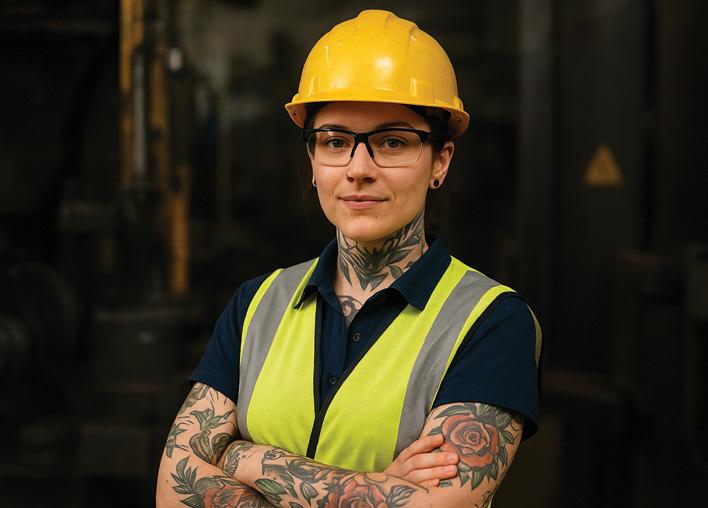
Take tattoos, for example. As reported on Stuff, a 2009 UMR Research survey showed that 19% of adults had tattoos, with the number increasing to 36% for adults aged 18–29.
This shows that, even in 2009, tattoos were becoming increasingly popular and showing up in the workplace more often.
That said, according to HR and workplace relations provider Employsure, “if your employee is in a customer-facing role and you feel that visible tattoos and piercings will affect an employee’s performance or ability to perform
their job, then it may be reasonable to request that tattoos be covered or piercings removed unless they have cultural significance.”
This tells us that employers still view tattoos and piercings as a factor in the hiring process, particularly if they believe these things will impact an employee's ability to do their job.
It would be considerably easier for companies to hire someone with no visible tattoos and/or piercings than go through the process of deciding what should and should not be covered, as well as whether the prospective employee would be willing to cover certain tattoos and remove certain piercings.
This is what schools consider when helping students prepare for the workforce.
Considering all these factors: school culture, individuality, mental health and preparation for work, I ask you: “Do you believe school rules regarding students’ appearance are still relevant in the world today?” n
Employers still view tattoos and piercings as a factor in the hiring process, particularly if they believe these things impact an employee's ability to do their job.
New Zealand's desensitisation to bullying has created a culture where an inappropriate joke — whether it be mocking someone’s accent, mispronouncing someone's name or laughing at someone’s clothing — often goes unnoticed or is defended as 'just jokes'.
However, these 'jokes' can be damaging. Mockery has become a huge part of Kiwi social life.
In a school setting where students come from all kinds of cultural and financial backgrounds, the line between joking and bullying isn’t always clear. It’s important that we learn to draw it.
As a 'white-washed' Cook Islands Māori, I’ve often found it difficult to connect with people of my culture. Even though we're from the same walk of life, they’ll never fully accept me. They'll tell me they’re my friends, and then they’ll mock me for being different.
Why would you tell someone you’re their friend and then make fun of them every chance you get?
As if face-to-face comments aren’t enough, the same attitude has carried into online spaces. My generation wasn't taught how to navigate the internet safely until cyberbullying was already everywhere.
By the time schools began addressing 'cyber safety', it was too late; most of us had already lived through rumours, screenshots and exclusion online.
With unlimited, unguided access to the internet, most of us had to figure it out on our own.
Older people are often dismissive of this, saying kids today are just 'too soft' or blaming it on 'those phones'. But the reality is that these online experiences cut deep.
Just like in person, the excuse is always the same: “It’s only a joke.” But online, those 'jokes' don’t fade; they linger, resurface and sometimes follow you for years.
Most common forms of bullying experienced by 15-yearolds in New Zealand (PISA results, 2018)
17% 13% 13%
were made fun of were purposely excluded had nasty rumours spread about them
These 2018 PISA results are more than just percentages; they show the emotional impact of bullying on students' daily lives.
Humour can be a great way to connect with others but not when it comes at someone else’s expense. What some find funny could actually be deeply hurtful to someone else.
Most 'harmless' mocking in New Zealand targets culture, ethnicity, religion, appearance or financial status; and since it’s often about such heavy topics, the mocking sticks and has a much harsher impact.
These comments may not always come from a place of hatred; more often they are from deeply rooted ignorance. While these jokes can sting, the damage is often greater when someone is excluded entirely from social and/or school activities.
Social exclusion is a huge part of the problem. Sometimes it’s not just about what’s said out loud; it’s about what’s not said or who’s not included.
A student might be excluded from hangouts, projects or conversations because their customs are seen as 'weird' or an 'inconvenience'. This kind of cultural exclusion sends a strong message: "You’re different, so you’re not welcome."
In a 2024 Mana Mokopuna report, Chief Children’s Commissioner Dr Claire Achmad notes that “when we asked mokopuna [for] solutions to eliminate racism across the motu, many shared their aspirations that future generations would not have to grow up experiencing it.”
Some critics think people who care about this topic are being overly sensitive or dramatic for calling these things out. They dismiss it as harmless fun: “Everyone teases each other" or “Toughen up”
Sure, friendly banter can be harmless when it’s mutual and respectful.
It's when the jokes only go in one direction, when they reinforce stereotypes or when they silence someone’s identity that they become something more harmful. They become bullying.
Over the years, I’ve noticed that bullying, or trying to dominate others, often comes from a place of fear or stress. When people feel overwhelmed, vulnerable or threatened, they sometimes lash out as a way to cope.
Humour can be a great way to connect with others but not when it comes at someone else's expense.
Resilience isn't the issue here; it’s a lack of self-regulation when it comes to dealing with these feelings. When someone can’t manage their own emotions, it can spill over onto others via projection.
Even if someone laughs, that doesn’t make it OK. A lot of people, especially students, laugh just to avoid looking like they 'can’t take a joke'. The pressure to fit in keeps them from speaking up, which keeps the cycle going.
These students may carry these habits into the workplace, teaching future generations that it’s OK to disrespect others for a laugh — moments that can stick for life.
If you are hurt by a joke, remember that you’re allowed to speak up. You’re allowed to say, “That made me uncomfortable.” Your feelings are valid; you don't have to feel uncomfortable for someone else's amusement.
Bullying disguised as humour has been normalised for too long. It’s time to pause and question that 'small' comment someone made about you, or the laugh your mates had about someone on the street. We need to work as a society to learn more about one another so we can become more inclusive and respectful.
Schools must teach students how to manage their emotions before they transform into bullying. It’s not enough to tell young people to 'be resilient' or to simply 'handle the jandle' by dishing it back; that just teaches defensiveness, not growth.
What we actually need are practical tools for emotional control in the moment and the confidence to be an 'upstander'. Students don’t have to start arguments, but they should feel safe to respectfully say, “That isn’t OK” when they see or experience bullying.
Simple strategies like classroom check-ins, restorative conversations instead of punishments and teachers modelling calm responses can help build a culture where young people learn to pause, reflect and choose respect over projection.
When schools prioritise these skills, they’re not just reducing bullying, they’re shaping healthier adults for the future.
By speaking up, respecting differences and teaching emotional control, we can start to understand the line between harmless jokes and real harm, making New Zealand a place where everyone truly belongs. n
BEHIND EVERY STRUGGLING STUDENT IS A BIGGER STORY. ALEX EXPLORES HOW POVERTY SHAPES LEARNING AND WHY GOVERNMENT ACTION MATTERS.
My name is Alex. I'm 11, and I'm worried about child poverty and the impact it has on education. If an adult does not do anything about this issue, then I will when I am an adult.
In New Zealand, there are lots of kids who need extra support in class. Some students can't read or write like other students, and some can’t understand what to do.
Research shows a link between child poverty and children struggling to read and write.
I would like the Government to do something about child poverty so that all children can have their basic needs met.
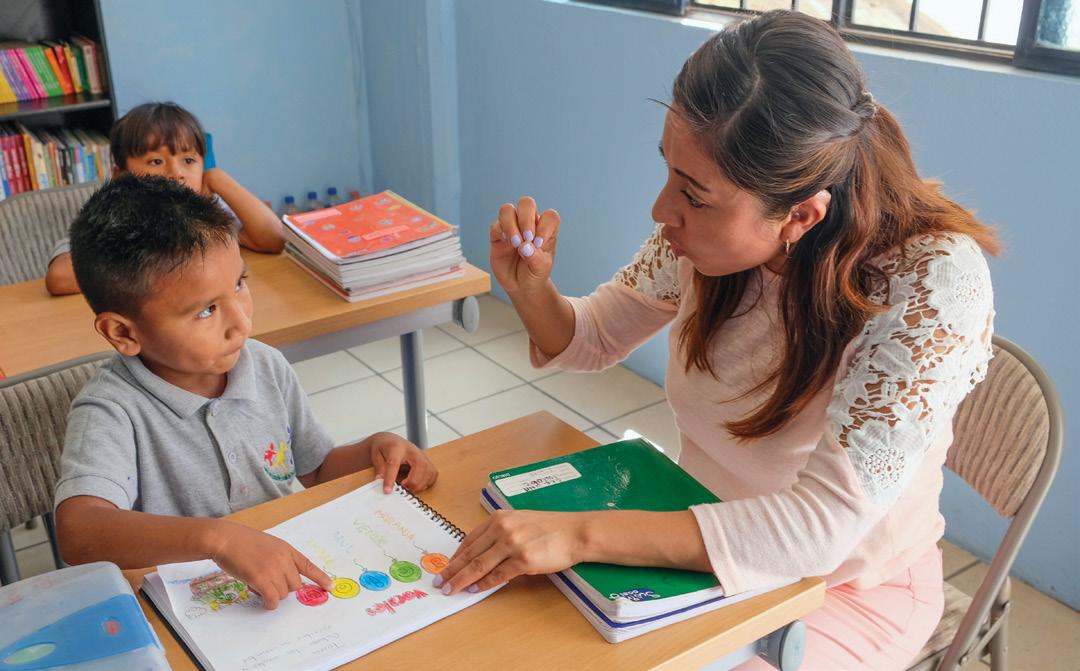
The Government should give more funding to schools in poorer areas so they can employ more support staff and teacher aides.
Teacher aides can offer one-on-one assistance to a student or help them in small groups.
For example, the teacher assigns a task for the class to write a narrative story. One child may not understand what the teacher means. The teacher aide's job is to interpret or simplify the teacher's instructions so the child can understand.
Schools could also use the money to buy more books and educational games to keep children learning and engaged.
Maybe students need more breakfast before school so they can be full of energy. Many primary school students skip breakfast.
If students don’t have breakfast before school, it can affect their academic performance.
If a student skips a meal in the morning, then their last meal would have been dinner the night before. They will be so tired and hungry, they won’t be able to learn anything.
Providing breakfast at school such as Weetbix and toast could help address this issue. Many schools now have breakfast clubs, but some still don’t.
The only food currently provided by the Government is school lunches, which they've been providing to
“If you don’t get support at this age, it gets really hard to get support later.”
– Alex
The Government should give more funding to schools in poorer areas so they can employ more support staff and teacher aides.
central and south Auckland schools. There are also some schools in the west and on the North Shore that need lunches provided.
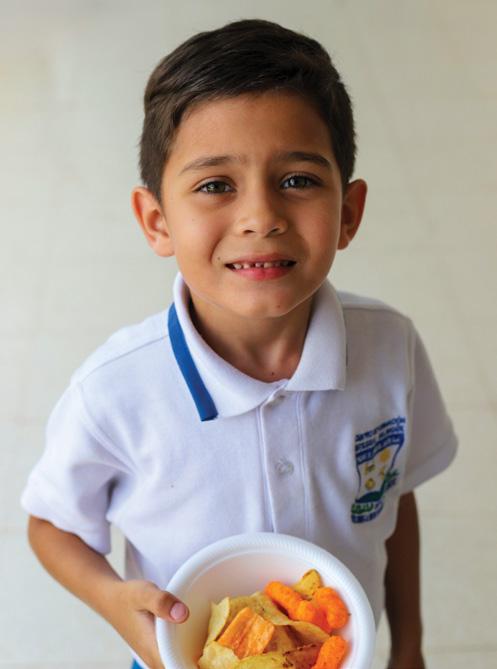
I see some people in my class coming to school with no lunch, and I also see unhealthy lunches like two bags of chips, Oreos, jelly and juice boxes.
It costs about the same for healthy and unhealthy snacks, so parents should choose the healthier options.
Some families can’t support their child’s learning. Children from these families can face more academic challenges.
Research shows that children in poverty are more likely to have low reading test results in their fourth year.
If you compare New Zealand to other OECD countries, we have a lot of differences between groups of people and how well they do at school.
Here, there are many kids brought up in families struggling with issues like financial problems and housing costs.
For example, many families don't have enough money to attend to their children’s needs, like if their child is struggling with school and needs tutoring at Kumon or NumberWorks’nWords.
Most families also have bills to pay, like mobile plans, rent or mortgage, electricity, water, gas and so on.
According to Infometrics, the average weekly rent in Auckland for the year
ending March 2025 was $632, a 1.3% increase over the previous year.
The impact of child poverty on education is an issue that we have to take seriously. Some children's parents can’t help them with learning because they do not have a lot of experience themselves.
Child poverty affects students who find it difficult to keep up with other students. It's a pressing issue in New Zealand that significantly impacts education and the future of many children.
It's crucial for the Government to take action by providing more funding to schools in poorer areas, ensuring that all children have access to the support they need to succeed.
By investing in breakfast programmes and nutritious school lunches, we can help students focus on learning rather than their hunger. n
MOHAMMAD-SAIF AHMED
Year 13, Westlake Boys High School
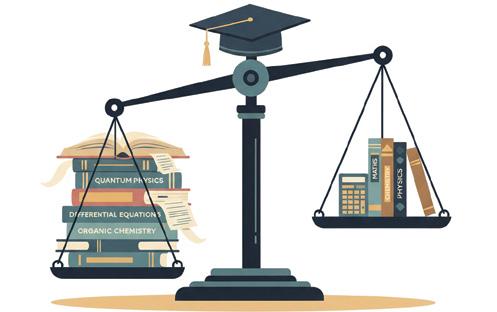
MOHAMMAD-SAIF REVEALS HOW ACADEMIC SUCCESS DEPENDS MORE ON WHERE YOU GO TO SCHOOL THAN HOW HARD YOU WORK.
When students reach Year 11 in New Zealand, they dive into the realm of the National Certificate of Educational Achievement (NCEA).
The system that takes students through their final years of school, NCEA is their ticket to entry into their future careers.
NCEA is supposed to provide an equal playing field for all students by providing choices and flexibility. When delving deeper, the reality is much less equal.
The number of subjects students can take, how many subject options they have and even the content covered in those subjects are all examples of the massive differences among schools offering NCEA.
These stark realities shaping students' futures raise a big question: How fair is this system if each student’s success is based on where they go to school?
Subject choices and workloads
A small but impactful difference between schools is the number of NCEA subjects a student can take.
Most schools expect their students to take five subjects, but some allow
up to six subjects while others only offer four.
This may seem like only a subtle difference. After all, the standards and exams are the same for all students. The differing factor is based on how much workload each school believes their students can handle.
How fair is [NCEA] if each student's success is based on where they go to school?
The impact becomes obvious when we consider that local universities calculate entry via a rank score based on a student’s five best subjects.
Students who take six subjects have a safety net if one subject doesn’t go as planned. Students restricted to only four subjects, however, have added pressure as their grades in these four subjects have to compensate for the lack of a fifth.
This creates massive inequality: a student at one school has leeway to stumble in one subject, while a student at another school must outperform the others to get the same rank score through no fault of their own.
How variety shapes engagement
The variety of subjects students can pick is another factor. Generally, schools with higher rolls can offer a more diverse range of NCEA subjects compared to smaller schools that simply don’t have the resources to accommodate more subjects.
This difference can be rather extreme. For example, at Westlake Boys High School, students can choose from 68 NCEA Level 3 subjects. In contrast, students at St Paul’s College have a choice of only 15 Level 3 subjects.
This isn’t just about having a long list of options; it’s about whether a student is able to connect their learning to their interests and future aspirations.
For instance, a Westlake Boys student interested in photography can take the subject to explore a possible future career. A student at a smaller school might not get that chance if
Without access to the same options, students can lose opportunities to discover potential passions and talents or understand a career they might be interested in.
photography isn't offered as a subject at their school.
Without access to the same options, students can lose opportunities to discover potential passions and talents or understand a career they might be interested in.
A lack of options can also impact how enjoyable students find school. This can be crucial, especially in the hardest and most important years.
With fewer options, students can end up feeling stuck with unwanted subjects. Over an extended period, this can lead to lower motivation, disengagement and a general sense that school isn’t catering to their future prosperity.
A digital equaliser
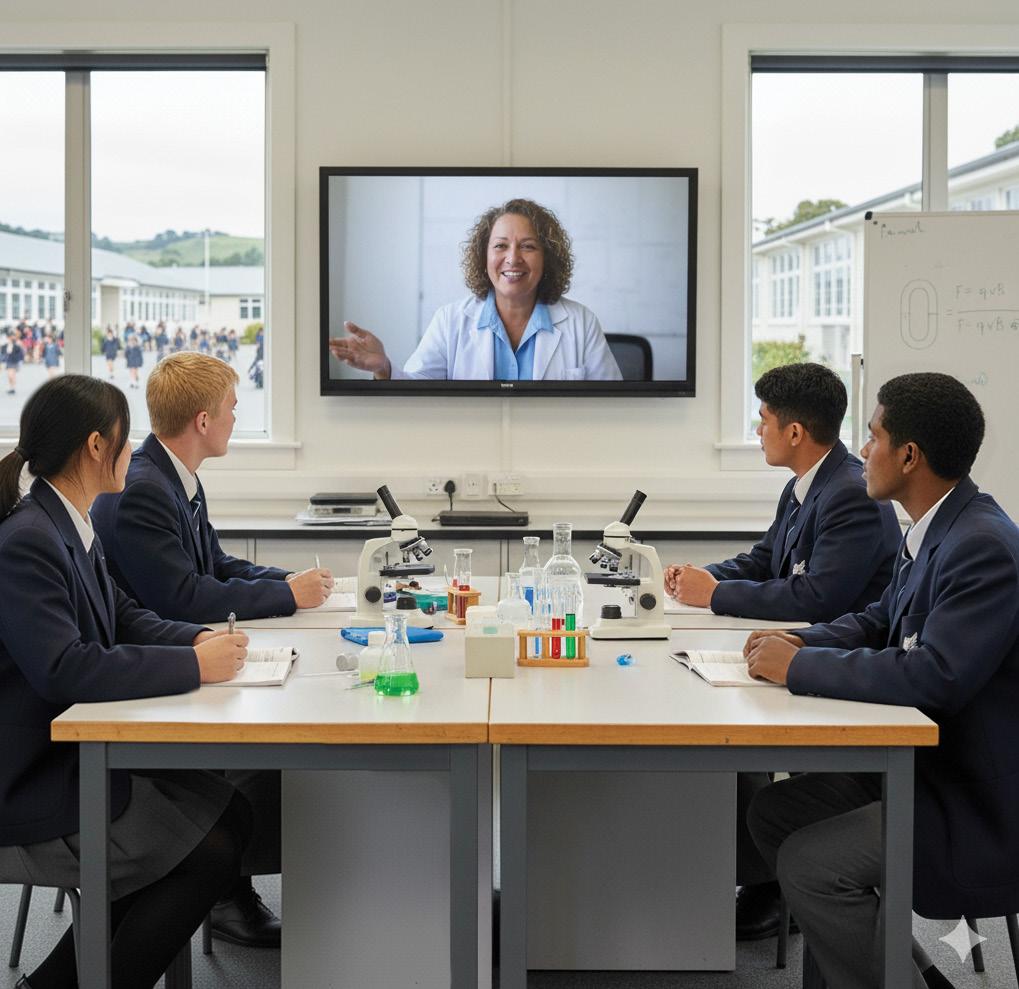
I believe a potential solution would be to take advantage of digital learning. If a school can't offer a subject in person, why can’t online study be an option instead?
Imagine students logging into a digital classroom to connect with a specialist teacher through chat or video.
This would allow students to keep up with a subject their school can’t teach while keeping costs minimal for the school itself.
This model could be cheaper for the school as they could fund just a portion of the online teacher’s salary, depending on how many students from their school take the online class. This would also remove the need to hire a full-time teacher just for a small group of students.
This isn’t meant to solve everything, but it could at least give students
across the country a chance to have the same opportunities regardless of their school.
The same but different
Interestingly, even when two schools do offer the same subject, the experience for students can be completely different because of the way NCEA works.
NCEA is a ‘pick-and-choose’ system, allowing schools to decide which internal and external exams to offer their students. This means the same subject can have different versions at different schools.
An example of this is Level 3 Physics, which has a total of four internals and three externals. Most schools only pick certain exams rather than offering them all.
For instance, at James Cook High School, students taking Level 3 Physics complete two internals and one external, with another optional external. In contrast, students at Westlake Boys take one internal and three externals, with optional internal. The table below compares the Level 3 Physics credits a student at each school can achieve.
As you can see, the reality of students sitting the same subject at the two different schools is very different.
A Westlake Boys student can attempt 20 credits’ worth of Level 3 Physics standards with four optional credits, while a James Cook student can attempt only 14 credits’ worth of standards, with four optional.
Even if James Cook students attempt the optional credits, they still can’t reach the minimum credits the Westlake Boys students can attempt. This means James Cook students are disadvantaged from the start, regardless of how good they are at physics.
A potential solution would be to take advantage of digital learning … This would allow students to keep up with a subject their school can't teach while keeping costs minimal for the school itself.
The impact worsens when looking at university entrance. The University of Auckland, for example, requires students applying for Engineering to pass all three of the NCEA Physics externals.
For James Cook students, this isn’t even possible, unless they are allowed to take the Electricity external outside of normal study.
A hardworking student wanting to pursue engineering could leave school doing everything asked of them only to find they can’t pursue their desired career at the country’s top university because of decisions their school made and because of the way NCEA works.
This is the worst kind of inequality as it punishes students not for their work ethic or performance but rather for where they live and go to school.
Students completing the exact same subject shouldn’t end up with vastly different outcomes, yet under this system that is exactly what happens.
NCEA was designed to be flexible, and its strength is in allowing students to mix subjects that suit their interests and gain credits through them. But with this flexibility come huge challenges around providing everyone with the same resources and opportunities.
NCEA’s flaws in this area create inequalities for students. These differences aren’t minor and can affect a student’s future.
When a student’s future depends on the school gate they walk through rather than on their own ability, the system is not truly fair.
If the Ministry of Education wants to prepare every student for life after
school, then it first must ensure that every student gets an equal chance.
As the Government plans to replace NCEA with a new system, it's vitally important that they don't repeat NCEA's issues.
If the new system ignores these inequalities, then it will simply recreate the same issues in a different form.
Change is coming, and fairness and consistency should be at the forefront to ensure every student in New Zealand can feel confident in their work regardless of where they study. n
Our education system is undergoing significant change here in Aotearoa. The Government is completely restructuring the curriculum and has reintroduced charter schools.
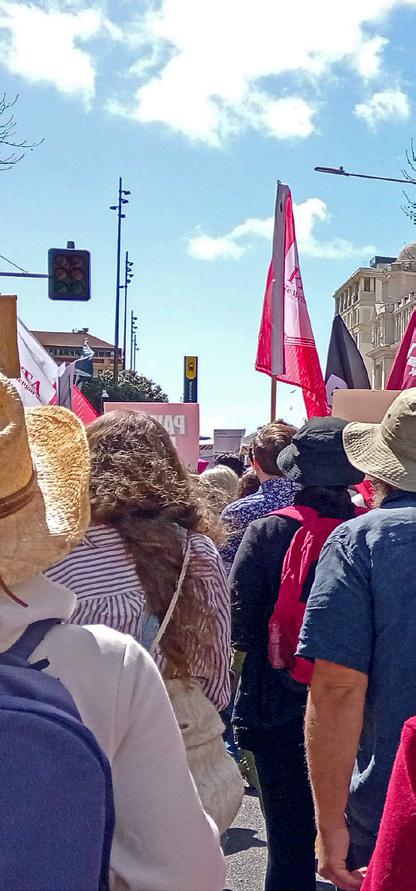
The Government is attempting to fix the underlying problems with students achievement rates, but they won't succeed unless they address the festering issue of equitable pay for our kaiako. Unfortunately, instead of a resolution, we are seeing the opposite unfold.
On 6 May 2025, Workplace Relations Minister Brooke van Velden announced major changes
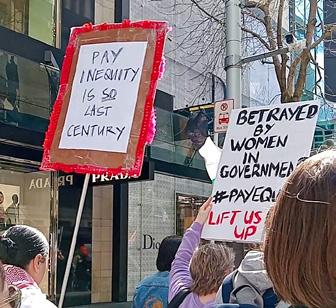
to pay equity laws, altering the claims system and cancelling all 33 active claims, including the ongoing claims from the teachers' union.
Claims covering nearly 100,000 educators with over a year's worth of investigation and data were scrapped, and the claimants have had to start again from scratch.
In line with Act Party policy, the Government has made it more difficult to make pay equity claims, raising the gender demographic requirement from 60% to 70%, limiting the industries that can make claims and ignoring modern shifts in labour demographics.
The Government has also increased the amount of evidence a claimant must provide upfront, and it has given employers more power to shut down claims from the start.
Male-dominated comparator jobs must now be from within the same employer / sector or from other settled claims as long as they were settled after 2025. This makes it nearly impossible for workers, including teachers, to make a claim, as there are no valid male comparator jobs that meet the criteria.
The Equal Pay Act 1972 and the Equal Pay Amendment Act 2020 established New Zealand's original pay equity claims system.
These laws solidified the concepts of 'equal pay' and 'equitable pay' in our legislation and workplaces. Many people get confused about the difference between these two terms. 'Equal pay' means the same pay for the same job. Under the Equal Pay Act 1972, it's a crime to pay a
The Government has made it more difficult to make pay equity claims … [making] it nearly impossible for workers, including teachers, to make a claim.
woman less than a man (and vice versa) for the same job, meaning that, theoretically at least, a wage gap shouldn't exist.
'Equitable pay' means equal pay for different work of equal value. This is fully protected under the Equal Pay Amendment Act 2020.
When individuals or groups (typically unions) believed they were not being paid fairly or equitably, they could make a pay equity claim to dispute their wages. Claimants just needed to find a comparable male-dominated job to justify fairer wages.
This system was designed to protect workers in historically undervalued, female-dominated industries. More than 100,000 workers have had their pay conditions improved because of these laws.
Protecting pay equity and fair wages sounds pretty great, so why is the Government changing it? One significant reason is the vast amount of money the Government will save.
By scrapping current claims and making the process more difficult for future claimants, the Government will effectively save $12.8 billion (around $3 billion per year).
The Government will dedicate most of these savings to tax cuts for businesses and landlords alongside frontline service investment.
Don’t teachers deserve fair wages more than landlords deserve tax cuts?
Here we need to address the longrunning under-valuation of female
labour. The following examples are actual quotes Auckland teachers have heard:
• “Teachers have it easy enough already.”
• “I should get into teaching; I could really use the holidays.”
Let’s unpack these statements, which come from two key lines of thought:
1) teaching is an inherently easy or comfortable career (especially compared to high stress or manual labour jobs)
2) teachers receive more holidays and benefits than other workers
The idea that teaching is an easy job is rooted in the belief that traditionally female labour is unskilled and thus unequal to traditionally male labour.
Work that involves caretaking and children, from schools to retirement villages, is associated with women and therefore devalued.
Work in female-dominated industries is associated with traditional gender roles and stereotypes; it's therefore categorised as less labour-intensive and less valuable.
Skills required to work in these industries, such as empathy, are seen as feminine and inherently connected to centuries of unpaid labour in the home, reinforcing the idea that this type of labour is easy and has less value even in modern contexts.
"I could really use the holidays"
The idea that teachers get loads of time off work is also fundamentally flawed. In 2023, 5.4% of employees in New Zealand worked more than
The idea that teaching is an easy job is rooted in the belief that traditionally female labour is unskilled and thus unequal to traditionally male labour.
60 hours per week. In contrast, over 22% of teachers worked more than 60 hours per week!
Teachers work through weekends and holidays, before and after school hours. Essentially, teachers sign contracts for 39 weeks of paid work but end up working the equivalent of nearly 50 full-time weeks.
How do the changes to pay equity claims affect teachers and students?
The changes directly hurt our kaiako. By making it more difficult to achieve higher pay, the Government is allowing teachers' wages to stagnate in a time of rising living costs.
The Government is allowing teachers' wages to stagnate in a time of rising living costs.

With more households struggling to pay bills, new teachers on lower salaries will certainly also struggle.
Low salaries and high labour input combine to drive teachers out of the industry and create obstacles for new teachers entering the industry.
This actively harms the learning environment for children by worsening the teacher shortage we are already experiencing.
It also worsens the public school teacher-student ratio. Students achieve better learning outcomes with smaller classroom sizes, as they have more interaction and engagement with their teachers.
The teacher shortage also disproportionately affects public school students — and low-decile achievement outcomes — as private schools can maintain higher staff levels than public schools.
The impact of a decision like this also leaves some teachers feeling undervalued, hopeless or even angry, worsening their morale and burnout (something almost 60% of educators already struggle with).
One Massey High School teacher describes the situation as “deeply distressing.”
Another male teacher states that the decision to change pay equity systems
“degrades the teaching profession and undervalues traditionally female labour.”
Ultimately, teachers deserve fair wages in line with what they deserve for their labour.
Legislators need to recognise the value that quality teachers have on society and the economy, and they need to acknowledge the impact their decisions have on teacher/ student wellbeing.
Meanwhile, we students need to support our kaiako and demand equitable pay. n
Year 13, Tāmaki College
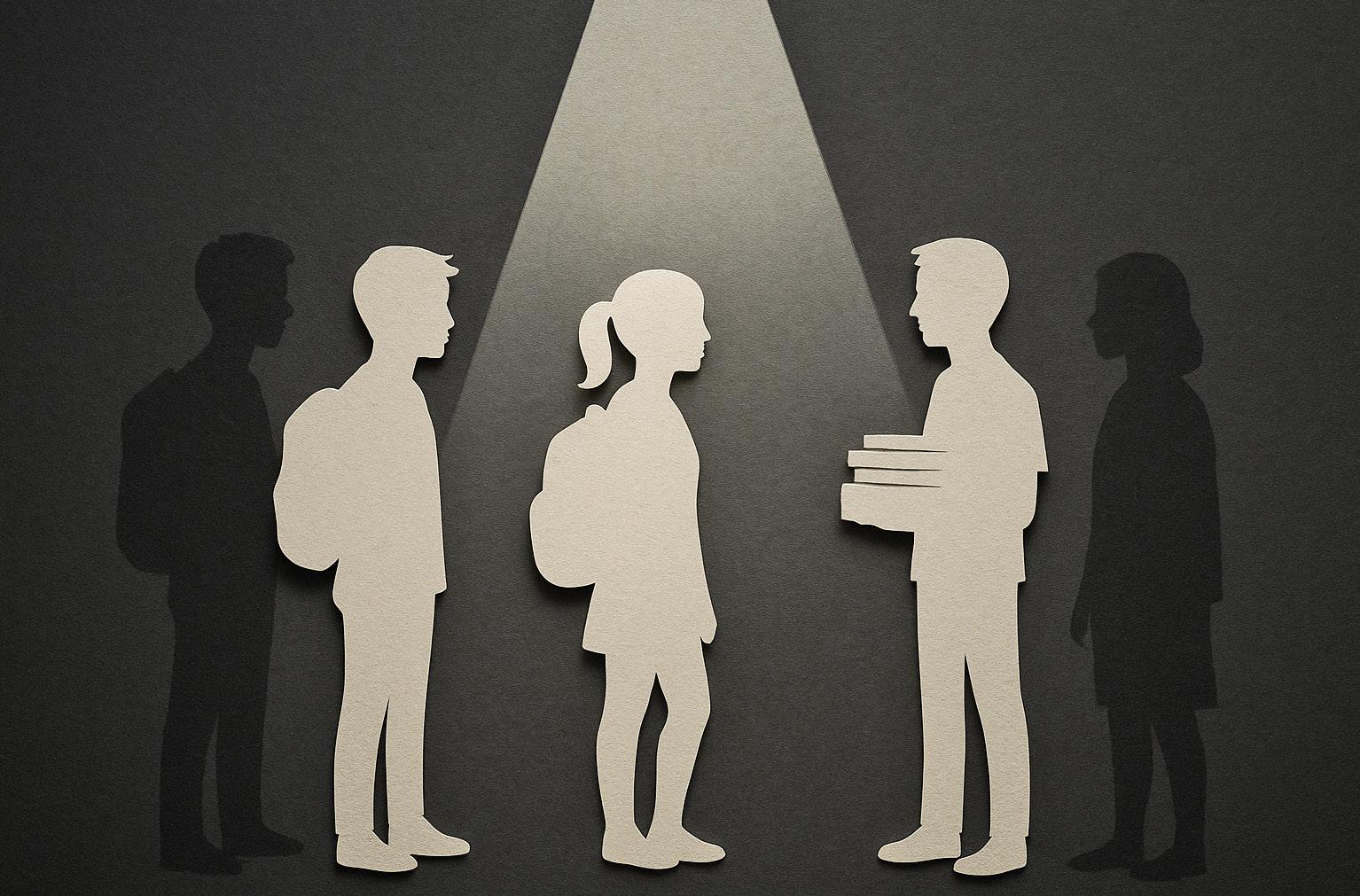
NATASHA EXPOSES HOW NEW ZEALAND SCHOOLS ARE INCREASINGLY REWARDING WHO YOU KNOW OVER WHAT YOU CAN DO.
Across Aotearoa, a concerning trend is emerging: students are learning to rely on personal connections to school staff rather than on their own hard work and merit. This creates a culture of preferential treatment, which can take many forms, such as:
• a student is granted an extension because of their close relationship with their teacher
• a star athlete or performer avoids disciplinary action because of their status at school
• parents use their influence as donors to affect how their child is treated
Experiences like these can shape a student’s perspective of equality and success, which may lead them to expect special treatment instead
of taking responsibility for achieving their goals.
A teacher's candid perspective
To learn more, I spoke to a teacher at my school. They told me that the extent that favouritism occurs varies from school to school, even from department to department.
When working with students who have close connections to school leaders, the teacher expects them to have "a higher level of selfmanagement and responsibility than their peers."
They are more inclined to be lenient with students who "typically have more difficult days than most. Any generosity that stretches beyond normal expectations comes from wanting to give a potentially
overlooked young person a genuine shot at success, rather than giving students with powerful connections better access again."
Although they feel their students' expectations to succeed, the teacher doesn't think they've been pressured to be lenient with anyone based on who they or their parents are. They always award grades "as they've been earned.”
However, the teacher acknowledges that students don’t always see the system as fair. “Young people aren’t stupid. They know when people get different treatment … it can be incredibly discouraging."
While Excellence-level work is always rewarded with credits, the teacher acknowledges that other aspects of
student life can sometimes feel like a popularity contest, or a “who-youknow rigamarole.”
What the data shows
There is evidence of this inequity in the broader data on New Zealand's education system.
For instance, a 2018 PISA report indicates that New Zealand had the third-highest rate of school bullying cases in the OECD.
A 2023 ERO report establishes that one in five ethnic students in New Zealand has faced racist bullying. Meanwhile, over one-quarter of secondary school students feel their ethnicity has influenced the subject recommendations they've received.
This research indicates a lack of psychological safety in our schools, with students fearing what others may say or do and believing they need personal connections with staff to get by.
These findings about racism and bullying also suggest that students from diverse backgrounds are judged differently to Pākehā students.
This leads to them finding other ways to be judged fairly. Often, this is through personal connections at school to gain a higher status.
When silence speaks
Other teachers and staff I approached for this article chose not to comment. Their choice not to respond implies a fear of retaliation or repercussions. It also implies a fear to acknowledge or publicly address this sensitive topic.
When those working in the system feel unable to discuss the topic of favouritism or nepotism in their industry, it reinforces the view that these biased practices are an accepted (if unspoken) part of the school environment. This makes it harder to challenge.
Beyond the school gates
People often carry the habits and expectations they pick up in school into the workforce.
While networking is undeniably valuable, it becomes a problem when networking overtakes merit, resilience, problem-solving and skill development as a means for career
This issue is a matter of equity. When people view connections as more valuable than merit, those without such networks are unfairly disadvantaged.
advancement, resulting in an overall sense of entitlement.
New Zealand has a competitive job market. As a recent BERL analysis highlights, young people had the highest rate of unemployment in late 2024, meaning skills like resilience and problem-solving are more critical than ever.
Ultimately, this issue is a matter of equity. When people view connections as more valuable than merit, those without such networks are unfairly disadvantaged.
Instead of dismantling privilege, a culture of favouritism may be reinforcing it, undermining the hard work of students and creating a costly misunderstanding for both young people and New Zealand's future workforce.
If a culture of ‘who you know’ is replacing ‘what you know’, starting at school, what kind of future are we really building for this country and for ourselves? n
HARMONY HURT & MAGNOLIA ASH-FAULALO Year 13, Auckland Girls' Grammar School
HARMONY & MAGNOLIA EXPLORE HOW PASSIONATE TEACHING CAN IGNITE STUDENT ENGAGEMENT AND TRANSFORM LEARNING EXPERIENCES.
Harmony's perspective
I still remember my first history class. I was in Year 11, and I didn’t really expect much; I was just trying out a new subject, to be honest.
However, my teacher greeted me with warmth and positive reassurance. She took pride in making essay planners and study tips, and she broke down difficult topics through engaging activities.
Although I had low expectations when going into history, my teacher's passionate perspective was so engaging that I ended up receiving the Amber Williams History Cup that year! I admired my teacher's efforts and felt encouraged to put the same dedication into the subject.
To this day, I am still taking history because of how interesting my teacher makes each lesson, and how encouraging she is.
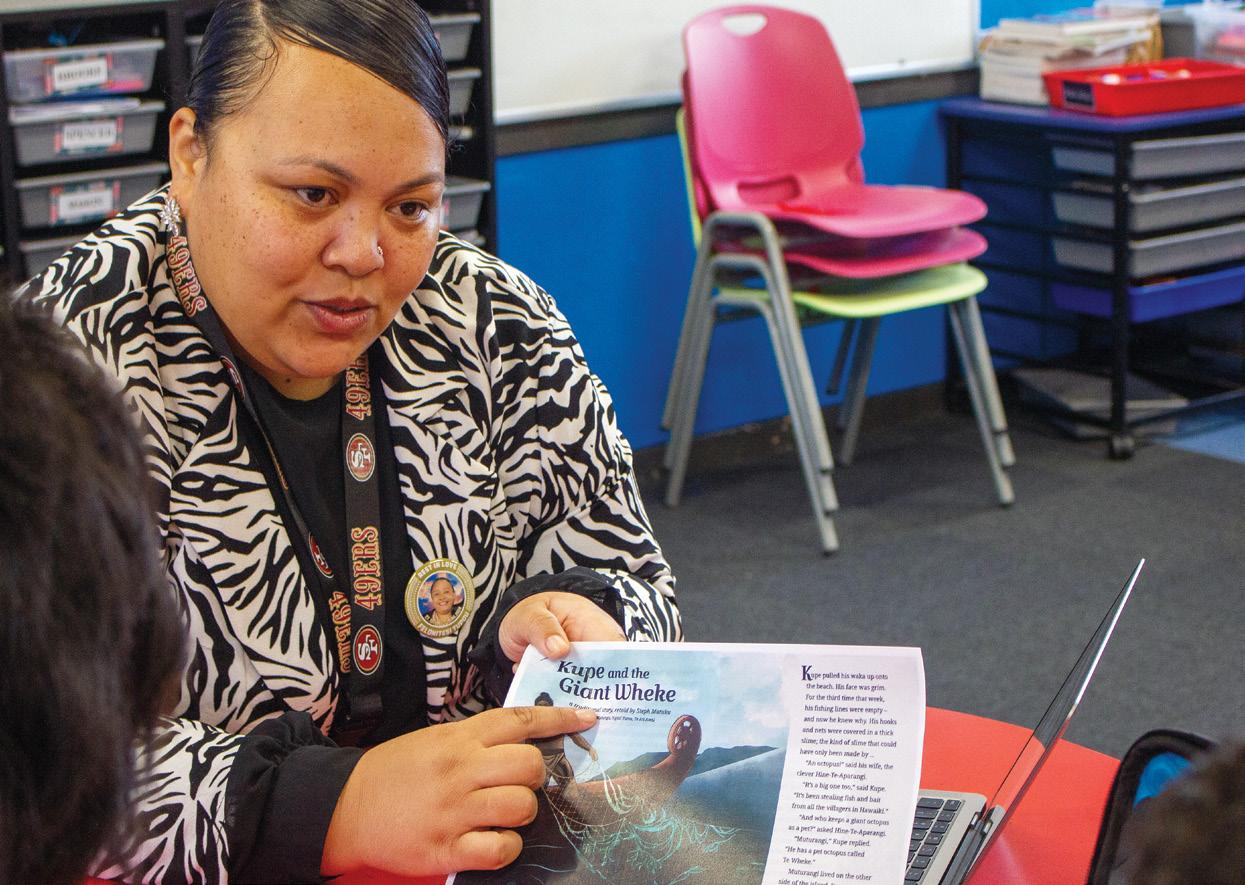
Passion inspires passion, and nowhere is it more important than in the classroom. Teachers who bring energy, care and genuine enthusiasm to their lessons can transform the way students learn.
Passionate teachers lead to higher levels of student motivation, engagement and overall enjoyment. It’s not just about what’s being taught but also how. When teachers bring subjects to life through their energy, body language and creativity, students feel seen, valued and inspired.
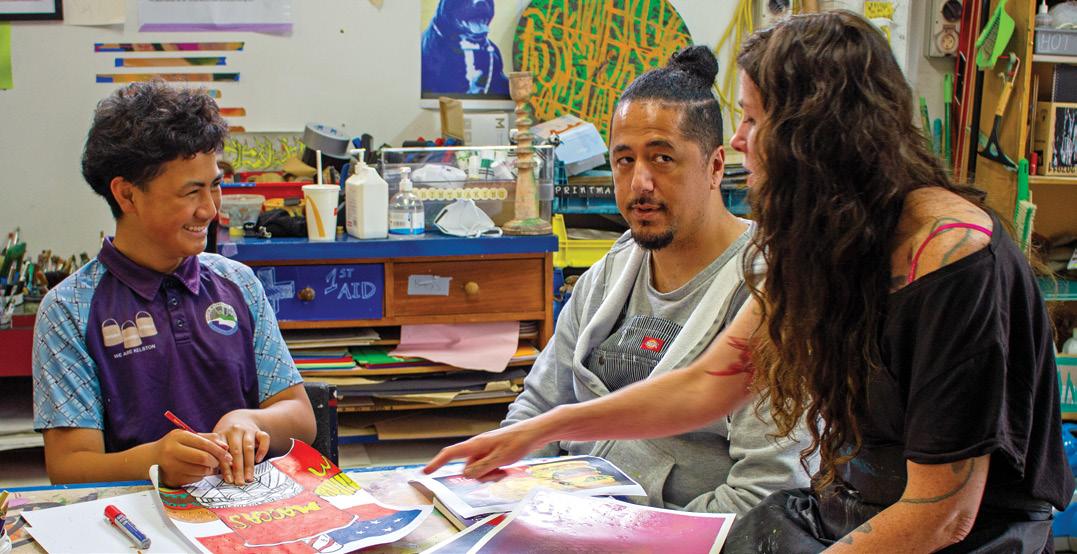
When teachers bring subjects to life through their energy, body language and creativity, students feel seen, valued and inspired.
In contrast, disinterested or disengaged teaching can result in distracted and unmotivated students. This reduces engagement, decreases academic achievement, creates learning gaps and leads to frustration.
Contagious passion is especially important today, as many students in Aotearoa and around the world navigate the lasting effects of the COVID-19 pandemic.
The pandemic intensified mental and social challenges for both teachers and students. Now, more than ever, learners need consistent and positive role models in the classroom to reignite curiosity and confidence.
At times, it does feel as if COVID has become an excuse and the main factor for unmotivated teaching today.
We acknowledge the elevated burnout teachers endured trying
Although I've had some amazing teachers since COVID, I've also experienced unmotivated and disengaged teachers.
Sometimes I've been given work very generally, and I didn’t feel a sense of passion or intent towards my best interests as a student. As a result, most of the students in the class, including me, did not pass at the level we'd hoped to.
to maintain family-work balance. We all had to adapt to new learning methods and environments.
The question now is: “How long will these effects last till things return to normal?”
Instead of accepting COVID as justification for unmotivated teaching today, we can acknowledge its impact by supporting our teachers more.
We can also work together to create a positive resolution by reinvesting in motivating and engaging learning environments.
After all, passionate teaching isn’t limited to influencing behaviour in the classroom. It can spark lifelong interests, ambition for the future and shift a student’s outlook on learning.
A teacher who loves their job is someone students find truly admirable. These are the teachers who make
"If you look behind every exceptional person, there is an exceptional teacher."
–
Stephen Hawking, Brief Answers to the Big Questions
learning fun, who motivate teenagers to stay curious and who create an environment where students thrive.
The passion effect
A passionate teacher can affect a student's motivation, confidence and future aspirations. Studies also show that students focus better when teachers make us feel included and excited to be there.
According to one Year 12 student at our school, they like history because of their teacher's enthusiasm for teaching new topics. "I feel excited to learn more when [the teacher] interacts with us because it shows me that they care about us as well as our education,” the student says. A highlight for one of our maths teachers is when their students have "light bulb moments." They feel a sense of accomplishement when they see in a student's eyes "that they got something right — especially when they achieve something they initially found difficult."
They also want students to know that it's OK to experience challenges, and that they can "overcome them with resilience.”
Passion doesn't mean perfection
Passionate teachers don't change lives because they’re perfect but because they care. Teachers are human; they face real challenges in life like burnout, lack of support and sometimes uncooperative students.
Passionate teaching needs room to breathe. Schools, students and communities must support and uplift our passionate educators.
Why passionate teaching works Teachers are more than mere content
deliverers; they are motivators, mentors and role models. Students are far more likely to feel excited about a subject when their teacher views it as meaningful and exciting.
This is especially true after long periods of remote learning and digital fatigue, when many students struggle with motivation.
Why passionate teaching works
Passionate teachers often go beyond the curriculum to build real-world connections, critical thinking and creativity. Research supports this.
For instance, according to a 2003 study on classroom environments, teacher enthusiasm contributes to more positive classroom environments and higher student motivation.
"True teachers rise to the top, not by chance but through passion and purpose."
– Robert John Meehan [attributed]
Further, a 2016 study on passionate teaching states that “passionate teachers profoundly influence student motivation and engagement, leading to greater academic commitment and success. In turn, student passion learning improves wellbeing and achievement.”
Lastly, a 2023 study on teacher enthusiasm adds that “enthusiastic
teachers stimulate and enhance students’ interest in learning by first making them perceive the teacher’s own values and interest gained from knowledge possession through implication in the process of education and teaching, gradually transforming them into the students’ own values.”
Passion activates attention and engagement in the brain. Students pay more attention and participate more when the teacher is clearly invested. This style of teaching often leaves a lasting impression, inspiring students to pursue careers or hobbies they might never have considered otherwise.
That said, we acknowledge not all students learn the same way, and not all teachers express passion loudly or outwardly.
Suggesting that every teacher must be ‘on fire’ 24/7 is unrealistic and puts pressure on educators, especially those who are quieter but still care deeply.
We’re not asking for perfection or a 'dramatisation' of teaching. We’re asking for more authenticity; when students see the passion, they respond.
Something we personally enjoy and believe other students can benefit from is when teachers end lessons in a reflective manner.
This invites students to share what they found meaningful and helpful in the lesson, which simultaneously encourages belonging.
Another simple, effective suggestion is showing an interest in students’ lives outside the classroom (hobbies, dreams and aspirations) and drawing them back into the lesson.
This makes students feel seen and appreciated and can result in positive change in their participation levels. n
CHARLIE & GWENLYNEA SHARE WAYS TO MAKE THE TRANSITION TO COLLEGE EASIER AND LESS SCARY. GWENLYNEA PIMENTEL & CHARLIE NESBIT Year 7, Glenbrae School
We decided to write this on behalf of other students who feel like us to let teachers know how they could encourage and help transition students to college.
Transitioning to college is a big thing. it feels hard, and we are going to experience that in one year. It worries us because we don’t know what we’ll be learning or doing in college. There is so much unknown. We would like to be more prepared so we can understand a bit more of what we’re meant to be learning instead of stressing when the time comes as we already know what we need to do beforehand.
Perhaps when we are adults, we won't worry about these sorts of things anymore, but we’re kids, so we need help so we can worry less about what feels like a very scary move!
If we were prepared well, we would understand some of the things about college, and we would get into the learning much quicker and easier. We’ve thought of a number of ways that teachers and older students could help prepare us for college. Here are a few ways that we think are quick and easy to put into place.
A Q&A platform
As students, we could post questions and then teachers or senior students could answer our questions.
It would be great if this platform was open for all Year 8 students to see, as everyone will have different questions and concerns.
A website specifically for students who want to learn some of the basic education learnt at college. This could be a big step in helping us understand some of the basics.
The website could also have things like photos of teachers, a map of the school, the teachers' names and a whole class photo with each student's name on it.
By doing this, the new students could get to know the names of their classmates and the name of their teacher based on what college they are going to.
A handbook filled with maths, reading or writing that college students learn could be helpful for advanced students who want a larger enlightenment.
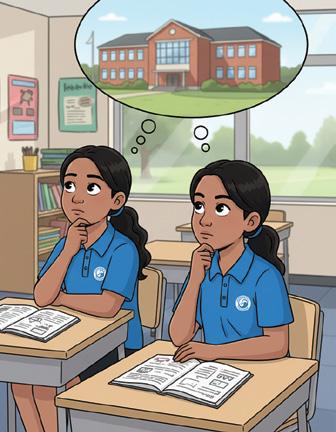
A handbook could also be useful for teachers who don't want their students using technology as their learning system.
Being prepared could make the difference in loving or just surviving our first year in college. n
“We spent a lot of time worrying about if we will do well in college. Will we make any friends? Are we just going to be bad at everything because we don’t know what we'll be learning?”
– Gwenlynea & Charlie
LIV TAKES US INSIDE THE STRESS OF NCEA’S SHIFTING DEMANDS: HEAVY WORKLOADS, RUSHED STANDARDS AND INEQUALITY ARE PUSHING STUDENTS TO THE EDGE.
Students struggle to 'keep up' with their 'insane' NCEA workloads, and with teachers moving too fast through material, they aren’t motivated to keep studying once they've met the minimum standards. NCEA was created to be accessible and flexible. Now, it's leaving students behind.
'Minor' reforms, major issues
Recent reforms have left students reeling after the constant influx of ‘minor’ adjustments to the standards. For example, a compulsory corequisite introduced in 2024 means students must earn 10 credits each
in English and maths before they leave school.
While this may be a bonus for students flourishing at higher decile schools, it's disproportionately impacting students from low socio-economic background, causing their achievement rates to plummet and raising concerns about access to qualifications.
After failing one literacy & numeracy area, students must keep studying for the next standard until they pass, eating into their study time for other internals that count towards the passing rate of 60 credits.
Students and teachers have found the literacy & numeracy enforcement overly rushed and stressful, with
"NCEA was created to be accessible and flexible. Now, it's leaving students behind.
little class time to prepare for other internals.
Critics and consequences
89 principals from across Aotearoa have joined other critics in arguing that the new online literacy & numeracy tests are too high stakes, poorly suited for some students and may result in many leaving without any qualifications for university.
In 2023, Education Minister Erica Stanford, then National’s education spokesperson, criticised “Labour’s rewriting of NCEA [as] a disaster from start to finish.”
Considering how NCEA wasn’t fully in place until 2011, anyone over the age of 30 contributing to the widespread discussion of this topic won't have undertaken the NCEA standards.
By statistical rule, any information collected from them can't be valid, since it doesn’t reflect first-hand experience.
Does NCEA prepare students for the future?
With only a 50% passing rate nationally, NCEA does not prepare students thoroughly for university.
St Cuthbert’s College Principal Justine Mahon told the NZ Herald in 2023 that the refreshed NCEA Level 1 curriculum doesn’t provide sufficient in-depth learning, calling parts of it "dumbed down" when compared to expectations of more academic programmes.
One fellow Year 13 student disagrees with Principal Mahon's conclusion: “I often find I’m crying over the workload I have week after week … A lot of adults say that NCEA is easy, but the workload is insane, and I never feel like I’m able to give 100%.”
Adults dictating NCEA choices is chaotic and harmful, encouraging students to make more mistakes as their stress levels rise.
There is a vast difference of opinion regarding NCEA standards between years 11 and 12, which shows that NCEA does not prepare students for future pathways.
International Baccalaureate (IB) is a not-for-profit foundation offering a university-focused Year 12–13 timeline. Teachers are pushing students to switch to the IB standard over NCEA because it's ‘easier.’
IB allegedly offers a higher passing rate than NCEA at 80%. However, this isn't a valid comparison as only about 13 schools in New Zealand offer IB, with only a few thousand students taking the course nationally.
"A lot of adults say that NCEA is easy, but the workload is insane, and I never feel like I'm able to give 100%."
– Year 13 student, Diocesan School for Girls
NCEA remains the predominant qualifications pathway in New Zealand, closely followed by the Cambridge exams.
IB students are typically highachieving, well-supported and self-selected. IB schools usually have strong academic resources, experienced teachers and selective admissions.
Here are some pertinent statistics:
• The academic persistence mean between IB (4.52) and non-IB students (4.39) is just 0.05
• Critical thinking shows an even larger gap: IB (4.97) and non-IB (4.61) is a difference of 0.36
These stats suggest that IB students generally begin the programme with stronger tendencies towards academic success. As a result, current IB pass rates aren't reflective of how the general population would perform under the same system.
Many current NCEA students, especially those who struggle with literacy & numeracy, would likely not meet IB’s internal / external assessment demands.
Unlike NCEA’s flexible credit system, IB is all-or-nothing. Failing any component can result in no diploma. Realistically, the IB pass rate would likely fall to 40–60% if participation scaled to match NCEA.
Therefore, it wouldn't be practical for most NCEA students to switch to the IB diploma programme.
Cracks in the curriculum
As reported by Radio New Zealand, the 2024 Level 2 Biology Exam revealed one of many gaps in the NCEA curriculum.
During the final exam, students found themselves struggling with a question that didn't match what they'd been taught in class because it wasn't part of the curriculum.
This error cost many NCEA students from all over the country Excellence and Merit endorsements.
The NCEA pathway is disorganised, with teachers and students struggling to follow the extensive amount of work required to pass.
While passing only requires 60 credits, internals are lengthy, extensive and grating, with many exams occurring at the same time.
In 2025, students are having to prioritise certain subjects over others due to overlapping deadlines.
As one student explains, she will manage exam prep time by putting “more work into Psychology than
Statistics because they’re both due at the same time, and I desperately need an E in Psychology.”
Students shouldn’t have to tossup between subjects because the timetable is poorly organised. It's not their fault that the 2024 adjustment requiring NCEA to include adequate amounts of internals and externals made things worse both by increasing everyone's workloads and decreasing the total numbers of credits available per internal.
The credits chase
A teacher at Diocesan School for Girls explains that, when NCEA was first established, "the intentions were good: if you meet the standard, you should pass."
Unfortunately, internals were gradually simplified, resulting in students focusing on credits over learning. Subjects became "disjointed", with an increasing number of internals, resulting in "overwhelming” workloads.
One Year 13 student confirms this, pointing out that “teachers have to move so fast through the subjects, most of my friends can’t catch up …”
According to a 2024 ERO report, 30–40% of NCEA Level 1 students feel they are learning simply for credits, not for the pursuit of knowledge. They find school boring and repetitive, with some internals becoming ‘rinse and repeat.’
All these recent discussions have made many things clear. For one thing, students should have a say in what is wrong with the standards. For another, not everyone contributing to the discussion has undertaken an NCEA qualification. These people's opinions may be informed primarily by their children's experiences.
As evidence of this, Year 12 Dio student Victoria Bakers admits she has "never raved about NCEA to my parents. I only complain."
In comparison, IB students describe their pathway as "transformative." For instance, Ruby Qu of Rangitoto College says what she values most about IB is “how it teaches you to think, to ask questions, to reflect and to keep pushing beyond surface-level understanding.”
From this, we note what appears to be a serious gap between the experiences of IB and NCEA students.
It’s important that government officials take note of these gaps so they can
[Many] NCEA Level 1 students feel they are learning simply for credits, not for the pursuit of knowledge. They find school boring and repetitive, with some internals becoming 'rinse and repeat'.
Students we interviewed about the replacement qualifications system admitted they "didn’t know this was happening” and expressed concerns they would fail.
Students need a steady pathway without confusing changes. Will the new system provide them with one?
Some Year 8 students we interview expressed worry. Some repeated some misinformation they'd heard.
prevent them from reoccurring in 2029. They must also source valid feedback from students and teachers.
Meanwhile, students are hopeful that the new standards will ensure a comfortable, organised and challenging pathway allowing them to gain their qualifications without undue stress. n
ASHLING COLLINS & MEGAN POSTLEWAIGHT
Year 13, Orewa College
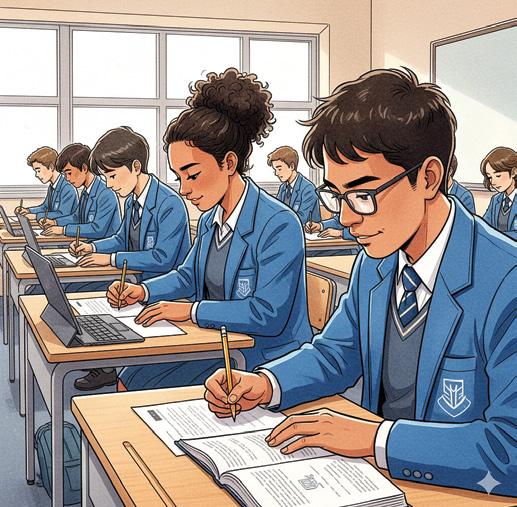
WITH ANSWERS ONLY A CLICK AWAY, ASHLING AND MEGAN WONDER WHETHER EXAMS SHOULD STILL REWARD RECALL OVER REASONING.
As New Zealand’s education system continues to evolve, the debate about open book exams is growing more prominent.
“The future of education should rely on understanding and actual learning skills instead of memorisation,” argues Sarah, a fellow Year 13 student who is a strong advocate for the inclusion of open book exams in the new curriculum replacing NCEA.
Adopting open book exams isn’t just about making assessments easier; it’s
about transforming them into a more authentic, engaging and equitable experience.
When external exam time comes around, we prepare by rote-learning our essays, as do our classmates. As Sarah explains, there is “no point in studying anything else when I can just memorise the same essay.”
Looking internationally, we note that a 2023 survey of Korean university students found that 71% would prefer open book exams.
Adopting open book exams isn't just about making assessments easier; it’s about transforming them into a more authentic, engaging and equitable experience.
The problem with rote learning
By focusing on learning an exact essay, we aren’t learning the critical transferable skills needed to answer questions, analyse information or solve problems like we often do with internal exams.
There’s no denying that memorisation and recall are important tools for students’ learning and development. However, we’ve reached a point where memorisation is more important than other learning skills.
With subjects like English and History, for which the exams are primarily essay- and writing-based, students are rewarded for how well they can recall knowledge under pressure.
This doesn’t set us up for our futures. As employees, we'll need more skills than just a good memory. Employees
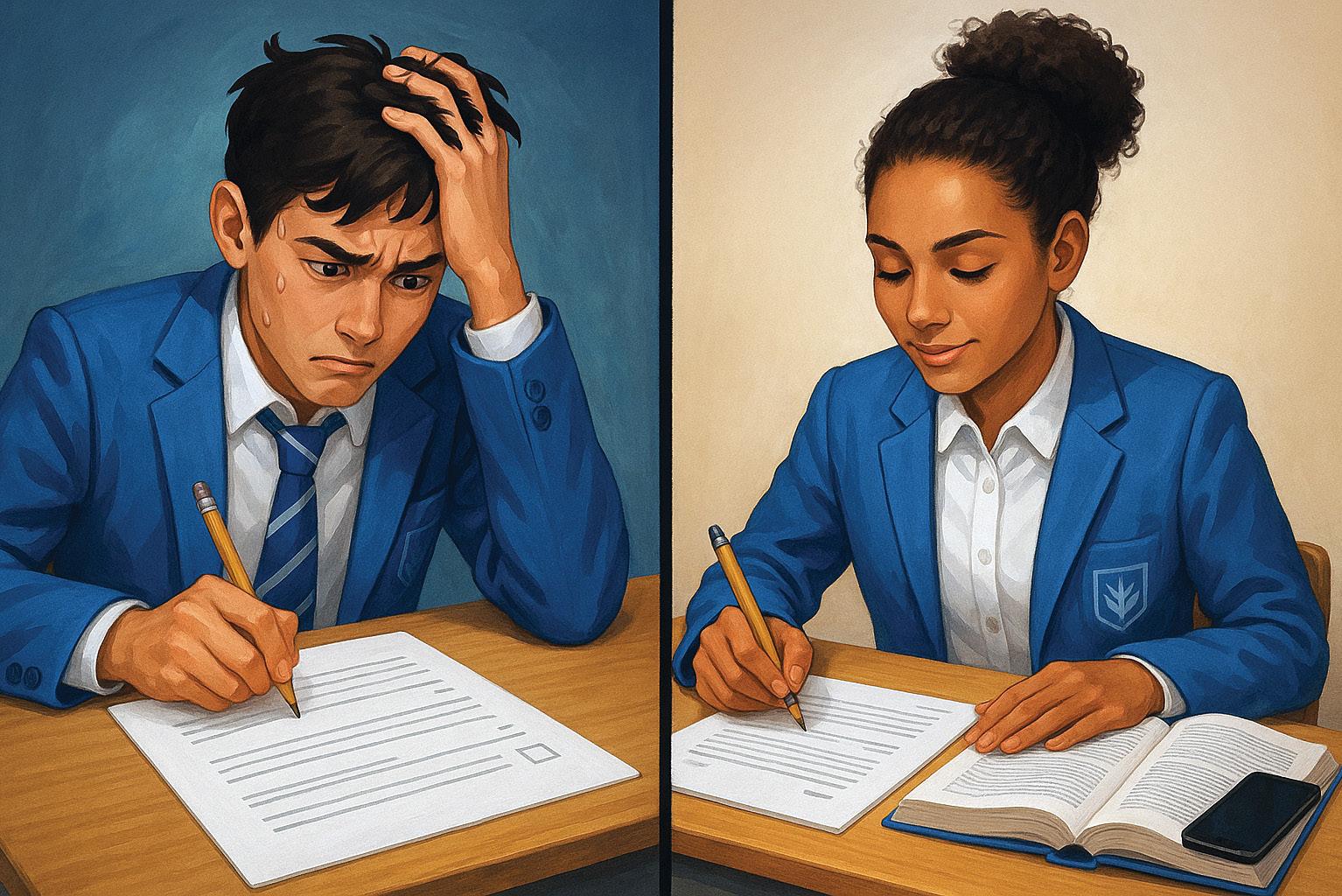
Open book exams would allow students to access notes, shifting the focus from rote memorisation to higher-level thinking. They can then spend their time and energy [more] effectively.
must be able to think critically and how to retrieve information from a source and then apply it elsewhere — skills not taught via exams relying on rote memorisation.
Open book exams would allow students to access notes, shifting the focus from rote memorisation to higher-level thinking. They can then spend their time and energy structuring their arguments, engaging with the material and applying their knowledge effectively.
This is deep learning, where students actively retrieve and apply knowledge, improving their critical thinking,
knowledge integration and active engagement.
Open book exams will also benefit students by better preparing them for the real world, where people aren’t expected to work purely from memory. Rather, they're expected to use available resources, like textbooks and databases, and they must be able to interpret and apply information efficiently.
Orewa College humanities teacher Mr Paul Tucker disagrees, arguing that existing exam methods replicate “conditions you will face in the real world, where preparation, pressure and opportunity intersect.”
We challenge this stance, given the AIdriven world we're moving into. Why make us compete with a computer?
The intense pressure and stress of external exams can be challenging for many students, especially those with anxiety and other mental health conditions. These students find internals much less stressful, since they can often spend a few weeks working on them, and they have the chance to get feedback.
The open book approach would create fairer exam conditions for all students, as the opportunity to bring resources to the exam would reduce
the chance of exam anxiety negatively impacting on a student’s performance.
People with neurological differences like ADHD and Dyslexia would also benefit from open book exams.
ADHD can make it difficult for people to encode knowledge into their working memory, meaning they struggle with memorisation and recall.
Students with Dyslexia can experience deficits in their working memory, making it harder for them to memorise and process information.
Open book exams would be easier and less stressful for these students since they would not have to rely as much on rote memorisation.
In short, open book exams would level the playing field for students with learning and/or mental health challenges that could influence their exam performance.
That said, there are some students who oppose open book exams. For instance, fellow Orewa College student Maria calls open book exams are “an outrageous concept” and questions how the public would receive them.
There is also debate over whether open book exams make assessments easier by reducing the amount of studying students need to undertake.
Some people argue that open book exams might encourage students to become overly dependent on their notes, creating a false sense of security about assessment difficulty.
Open book exams could look different depending on the subject, with some offering unlimited online access and others only handwritten notes. The assessment’s requirements and the students’ performance needs would determine what materials are allowed in the exam.
Yes, internet access during exams could lead to an increase in
plagiarism, with students able to copy answers they've found online or download pre-written essays.
There are, however, many ways to maintain the integrity of open book exams. For instance, schools could use plagiarism checkers, screen monitoring and similar tools.
Some NCEA internals already allow students full internet access, and schools have systems in place to detect cheating. Therefore, this shouldn’t be a significant problem.
We acknowledge that the open book model won’t work for every subject. We’re not suggesting that the entire assessment system be changed.
Open book exams would suit subjects like English, History and Social Studies more than Biology or Calculus. Sarah agrees, believing they “would work for my Media Studies exam, but for Maths? No, that’s pointless.”
Finding the fine line between allowing students equal access to information to support their exam performance across subjects will be something that needs development.
Overall, we believe the implementation of open book exams where suitable would create more meaningful and beneficial outcomes for students’ futures.
This approach encourages students to move beyond rote memorisation into deep learning, which can increase their academic achievement and establish the skills they’ll need for higher education and work.
While there may be some challenges around academic integrity and appropriateness, these are not impossible to overcome.
Through careful implementation, open book exams could help New Zealand’s education system become more inclusive, authentic and beneficial for future generations. n
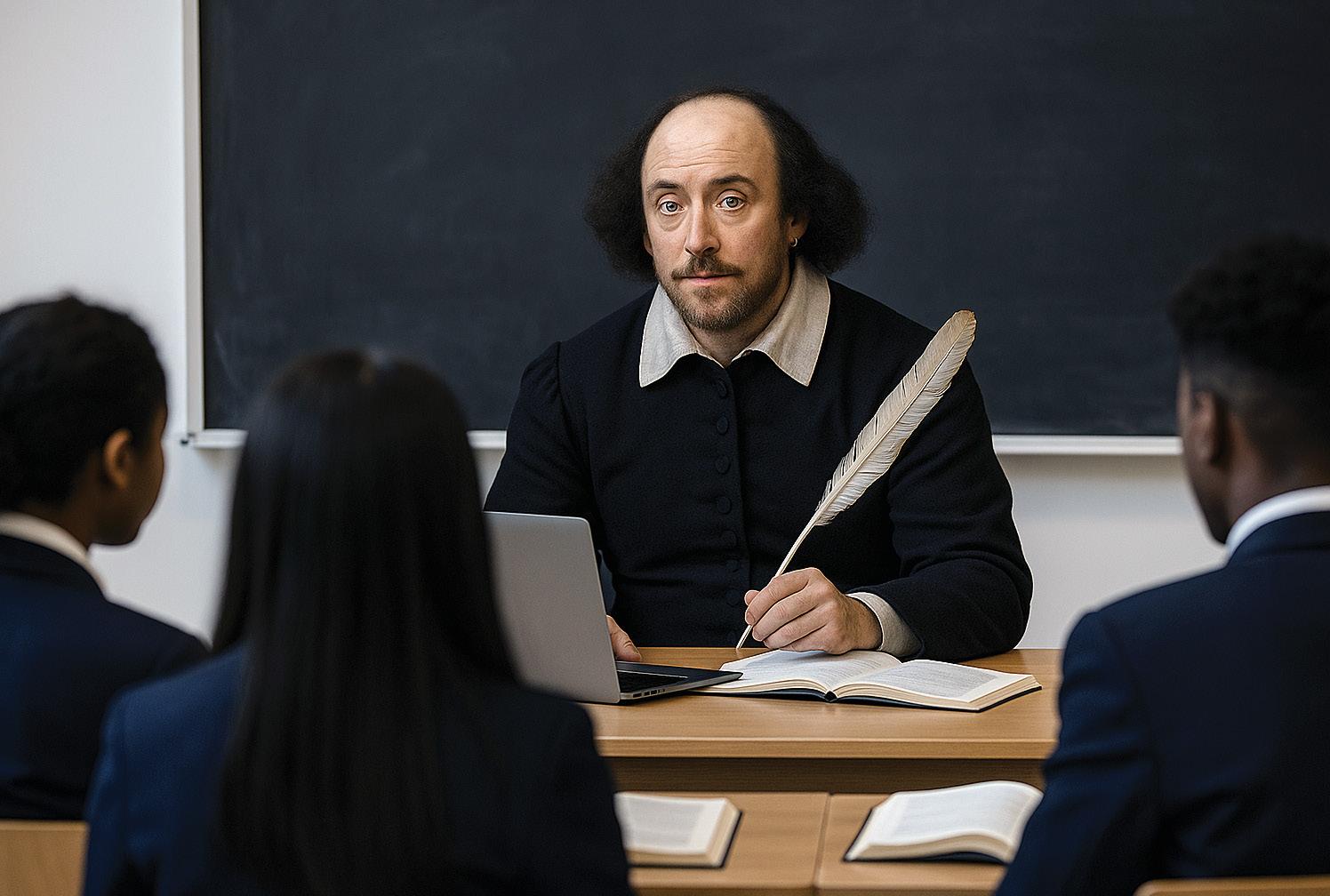
Year 13, Rutherford College
SHAKESPEARE DIED IN 1616. OVER 400 YEARS LATER, NATALIA QUESTIONS WHETHER HIS WORK SHOULD STILL BE COMPULSORY IN HIGH SCHOOL ENGLISH.
Out now for consultation, the proposed 2026 English curriculum for Years 11–13 is bringing back a familiar face.
Shakespeare will be compulsory reading for all year levels, along with recommended texts ranging from Jane Austen’s Pride and Prejudice and Winston Churchill’s wartime speeches to Oscar Kightley’s Dawn Raids Slings and arrows
David Taylor, Head of English at Northcote College, says he won't be teaching the new curriculum because those making it “are expressly trying to stop teaching strategies which
help Māori students to achieve at the same level as their peers.”
As RNZ reports, Taylor also believes the new curriculum will “take us backwards” and is urging others to boycott it as well.
Katie Betanzo, Head of English at Rutherford College, is not entirely sold on the new curriculum either.
While she doesn’t plan on joining Taylor's boycott, Betanzo shares his concerns about its impact on Māori and Pasifika students.
She argues the new curriculum will "completely discount" Māori and
Pasifika perspectives as there aren’t any surviving indigenous texts from the 19th century.
“Early New Zealand literature will all be Pākehā," she notes. "The first novel by a Māori person wasn't published until 1973.”
Betanzo attended high school in Canada, where her English classes did not include any Canadian texts for her to study. There were "no Canadian voices, no indigenous voices, no sense of place.” She doesn’t want to see that to happen to the English curriculum here in New Zealand, too.
She says that Te Mātaiaho, the curriculum introduced in 2023, was "the decolonisation of our curriculum."
However, Professor Elizabeth Rata, head of the group writing the new English curriculum, argues that “a decolonised curriculum does not provide quality content.”
“This new English curriculum is not the real enemy,” says Tansy Oliver, an English teacher at a formerly decile one secondary school. “The real enemy is the impact of inequity and discrimination on Māori and Pacific students.”
A sea of troubles
Betanzo flags the new curriculum’s prescriptiveness as an issue, not just in terms of the compulsory authors, but also in the amounts and types of texts required.
Under the new plan, students will have to study four types of extended written text each year: a novel, a poetry collection, a drama and a film.
At Rutherford College, students currently only study two texts per year, increasing to three in Year 13.
Betanzo calculates there are fewer than 30 teaching weeks per year, excluding exam leave, and that each text study takes at least four weeks.
“[If] I need to do a minimum of four text studies,” she says, “that only leaves me ten weeks to do everything else.”
Some students worry that the new plan's prescriptiveness will lead to the loss of teacher choice.
Josh Benoza (Year 13, St Paul’s College) says that removing school autonomy in the selection of texts “does not aid the education of students” and “sidelines diverse or non-traditional perspectives … for specific government- approved ones.”
Matthew Blanch (Year 13, St Paul’s College) argues that teachers know their classes best and giving them
the freedom to select books will result in better student engagement.
Professor Rata claims the listed texts are only suggestions and that teachers will still be able to select their own titles.
Oliver thinks the prescriptiveness may benefit some students. She says low-decile students are especially in need of clear, specific guidelines, which she believes the new curriculum will provide.
According to Pip Tinning from the Association of Teachers of English: “One of the joys that comes with teaching English is the freedom we have to choose texts … that work for our students.”
"While I do think it provides some benefits, I don't really see the point of having Shakespeare … [He] is a classic author, and his work is highly regarded, but does that mean we should focus solely on it?"
– Natasha, Year 13 student
With all this in mind, it seems like the flexibility to choose complex texts other than Shakespeare will be lost with the new curriculum.
Much ado about Shakespeare
While Natasha (Year 13) loves Shakespeare’s work, many of her peers don’t, preferring easier modern texts instead.
“While I do think it provides some benefits, I really don’t see the point of
having Shakespeare … it just seems a bit off to me,” she says. “[He] is a classic author, and his work is highly regarded, but does that mean we should solely focus on it?”
One Year 13 student from Auckland Girls’ Grammar School finds Shakespeare’s language difficult. She “wouldn't mind his work being taught in class … It can be very interesting to learn about his use of language," but she doesn't think schools should "drag out" learning about him.
While Matthew appreciates the shift towards classic literature, he sees difficulty in getting his peers to read Shakespeare willingly. “It's too easy to get AI summaries … which defeats the purpose,” he says.
For Josh, “Shakespeare’s works … offer students the chance to expand their vocabulary, sharpen their critical thinking skills and engage with complex themes.”
Alex Boyack (Year 13, Rutherford College) believes there is value in learning about the state of society in Shakespearean times. However, many of his classmates don't see the point of Shakespeare "when you could read any other book.”
Ryan Leong (Year 13, Westlake Boys High School) is one such student. He finds Shakespeare “very boring, irrelevant and difficult to interpret. I felt a severe disconnect to his texts.”
He calls the Shakespeare mandate "absurd" and worries that it may deter people "from pursuing Englishrelated subjects past high school."
On this point, Betanzo agrees: “If you knew … you were going to [read] Moby Dick and Shakespeare, you might think twice about taking English.”
She believes that Shakespeare isn't right for every class. “I wouldn't want a student's view of Shakespeare to be tainted by a teacher who is only doing it because they have to.”

"Shakespeare's works … offer students the chance to expand their vocabulary, sharpen their critical thinking skills and engage with complex themes."
– Josh Benoza, Year 13, St Paul's College
She also warns that ESOL students struggle with Shakespeare’s language. The extra support they need prolongs study and requires additional teaching resources.
While the debate over Shakespeare’s place in the classroom has drawn strong opinions, Taylor argues that the Bard himself isn’t really the issue.
“Shakespeare never left the building,” he says, warning that focusing on his works risks obscuring deeper problems with the new curriculum.
The current English curriculum requires “very little reading other
than the transactional reading you do day-to-day,” Katie Betanzo says.
Ryan sees the challenge every day: “Even now, in Year 13, I notice people struggling to read, interpret and spell words that should be easy at [this] level.”
He welcomes the greater focus on these skills in the new curriculum: “Reading, writing and spelling are all fundamental skills needed for the workforce and for life.”
Finn Lloyd (Year 13, St Paul’s College) wants to see greater use of traditional and classic texts. He has also noticed the lack of reading
and writing opportunities, and he is not impressed by "the desparately sad attempt … to reduce English classes to modern writing and film expression courses."
Josh, however, is concerned that a return to more traditional English learning could reduce opportunities for “creative or expressive forms of writing due to the emphasis on academic, formal writing.”
Betanzo wants a proposal mandating one extended text and that writing opportunities be “judged on the quality of the students’ expression.”
She also notes a misalignment between the existing Years 0–6 curriculum, which focuses on skills, and the proposed Years 7–13 curriculum, which she understands will focus more on content.
This misalignment is problematic, she says, because it means teachers won't be able to track students' progress from beginning to end.
All's well that ends well?
Educators worry about the new curriculum's effects on decolonisation. Every classroom’s needs are unique, and prescriptiveness limits teacher choice.
“Perhaps a change is necessary, but it should be progressive rather than regressive,” Josh says.
The new plan should prioritise critical skills over content, emphasising reading, formal writing and spelling. This would help ensure English courses focus on students’ writing skills rather than just marking their ideas through film and creative expression standards.
Student opinion remains mixed. The changes will affect their workloads, literacy skills and connection to texts. All in all, I’d have to agree with Natasha: “I’m a bit 50/50.”
But is it to be or not to be? That is the question. n
that should concern us all
ADA KIM & LUCY WARD
Year 13, Massey High School
ADA & LUCY TRACE THE FADING BRUSH STROKES OF ART HISTORY IN THE NEW ZEALAND HIGH SCHOOL CURRICULUM.
Art History is quietly disappearing from New Zealand high schools. This is a significant cultural and educational shift with long-lasting consequences, but it’s not making headlines.
On 11 September 2025, the Ministry of Education released a list of new NCEA subjects. The list includes Civics, Politics, Philosophy, Media, Journalism, Te Ao Māori, Pacific Studies and Music, among others. One major subject is notably absent: Art History
In an era when AI is changing how we produce and consume images, Art History has never been more relevant.
Visual culture is central to modern day media literacy. Images construct and reflect societies, politics, ideologies and identities.
Analysing art is not just an academic exercise. It’s an essential skill in our society, especially given the huge risk of AI taking away critical thinking and originality. Art History helps people think critically and critique the world around them.
Barbara Ormond, president of the NZ Art History Teachers Association, finds the Government’s decision "very shocking". As she points out, “we are confronted with [so many images] daily, and we need to be able to interpret them well, be able to critically look at them.”
Renowned Kiwi director Dame Jane Campion credits Art History as being the only subject she looked forward to in high school, calling it “a crucial step” towards her career in film.
She calls scrapping Art History “a terrible, tragic idea. Students like
myself deserve a chance to discover themselves [and] find something they feel passionate about and can pursue to enrich their lives.”
Hearing the opinions of individuals who have had their lives influenced by Art History, it becomes apparent how central this subject is to many Kiwis. Removing Art History could
"[Art History] made me a strong writer, expanding my vocabulary and improving my articulation."
–
Mrs Hill, teacher Massey High School

"[Scrapping Art History] is a terrible, tragic idea. Students … deserve a chance to discover themselves [and] find something they feel passionate about and can pursue to enrich their lives."
– Dame Jane Campion, film director
prevent people from finding their passion and/or their future career.
The Ministry of Education claims that Art History content will be integrated into other visual arts subjects like painting, design and photography. What about the many Art History students who don’t also take these practical art subjects?
Existing art courses are already heavy in content and workload. It's not fair to assume that the depth of Art History can be condensed into segments of other subjects, especially considering its vastness.
Level 2 and 3 Art History cover specific time periods in art, where students are taught how to formally analyse artworks and apply them to the context of their historical periods. Due to the technicality of the subject, Art History is impossible to substitute.
Decreasing student enrolment in Art History is the key reason why the Government has removed it as a subject.
"Art History is one of the most academic and knowledge-rich subjects on offer."
– Ms Nicholas, teacher Massey High School

In 2024, only 763 students took the subject at Year 12 and just over 1,000 took it at Year 13.
One can attribute the low student numbers to timetable clashes, lack of course availability and the perceived difficulty of the subject.
For one Art History external, students must understand the historical context, formal elements and meaning of over 20 paintings to pass. Many students find these kinds of tests too difficult, so they avoid the subject completely.
We think these logistical issues are a reason to change the framework, not remove the subject entirely.
Rather than eliminate Art History, the Ministry of Education should explore alternative solutions.
For instance, to address the issue of low enrolments, the NZQA could continue to develop and promote Te Kura, providing accessibility to Art History for schools previously unable to offer it locally.
NZQA could also look at improving the Art History curriculum to be more suitable for a wider range of students. They could do this by implementing diverse credit opportunities, such as unit standards or more practically based assessments.
To further lower the preconception of Art History as a difficult and inaccessible subject, basic concepts could be integrated into junior courses like Social Studies to spark interest and remove prejudice.
To quote art critic and TV producer Waldemar Januszczak: “All history we see is known through the art left behind. Art History is the study of nothing less but humanity.”
As Massey High School prefect and passionate Art History student Simeon Kim says, “[Art] teaches us about sensitivity: to beauty, cultural phenomena and the brilliance of the human mind … to capture and redefine an idea through an image."
For Simeon, "Art is a mediator between artist and viewer. Viewing, analysing and understanding it is a conversation. Why should this conversation be any less important than the ones we make with words?”
Art History is irreplaceable, a subject like no other. Let’s not quietly erase it from the curriculum. n
ANNABEL AITKEN
Year 13, Waitākere College
ANNABEL UNCOVERS HOW CUTTING PERFORMING ARTS FUNDING FOR SCHOOLS UNDERMINES STUDENTS' CREATIVITY, IDENTITY AND CONFIDENCE.
Last July, the Ministry of Education discontinued the Creative in Schools (CiS) programme as "part of a broader strategic reallocation of funds to better support current priorities".
In short, the money would be put towards things the Government deemed 'more important.’
In its announcement, the Ministry acknowledged "the disappointment this will cause. We’d like to take this opportunity to extend our appreciation to everyone who has contributed to the success of the CiS programme and acknowledge its ongoing legacy."
The CiS programme included a co-funding format, with schools receiving funding to work on creative projects with freelance artists, who received a living wage. This enabled students to work on creative projects that would not have happened otherwise.
Waitākere College Year 9 Dean and dance teacher Whaea Kate Bartlett ran a CiS project in 2020, bringing in a choreographer and photographer to work with her Level 2 Dance class. The class created a dance film, which was shown at a dance festival and played in Aotea Square.
“[This project] uplifted the students [and] uplifted the mana of performing arts within the school because, by working with a professional in the industry, it meant our students were exposed to that,” Whaea Kate says.
She feels "incredibly frustrated" by the cancellation of CiS, adding that "it feels as though they're saying arts aren't important in schools."
Waitākere College Level 3 dance student Angelica Sabili says learning shouldn't be restricted to textbooks. “It’s like putting people in a box of
what they ‘should be’. Not everyone is good at maths and not everyone is good at science.”
According to Prime Minister Christopher Luxon, the Government is "focused on outcomes; achievement in maths and reading and getting our kids to school. That may well mean we’re going to have to defer our arts and music curriculum for now."
However, Angelica says she's learnt more history through her Drama class than her History class. She also learnt more about Whatipu through a related performance piece than she did researching the area on Auckland's west coast.
Additionally, the optional Dance scholarship standard requires 18 pages of academic writing, more than what an English scholarship requires.
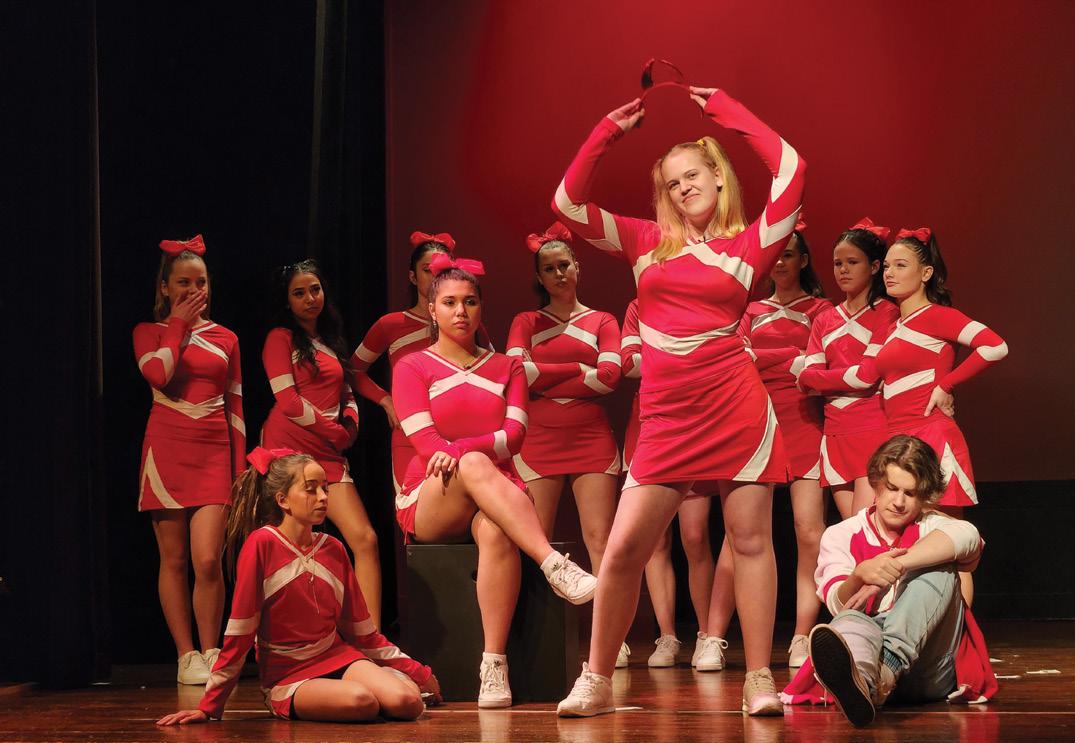
Looking overseas, research group Americans for the Arts reported in 2017 that students who took four years of arts and music classes scored higher on their SAT tests than students who took only half a year or less.
Stephen Nightingale, a former Waitākere College performing arts teacher, acknowledges the positive impacts the performing arts subjects bring to schools.

“School is about having as rounded an education as you can possibly get," he says. "All those core subjects are immensely important, but they shouldn’t be at the expense of a student wanting to explore their talents in performing arts.”
Nightingale also considers what it would be like if students didn’t have performing arts subjects: “You can always pursue it outside of school with amateur theatre companies,
but it’s not quite the same as enjoying it in class with 20–30 other students who love it as much as you do.”
The arts get kids to school, Prime Minister Arts education is associated with lower dropout rates and better academic outcomes.
According to a 2012 US National Endowment for the Arts study tracking 22,000 American students over 12 years, students with high
"School is about having as rounded an education as [possible]. All those core subjects are immensely important, but they shouldn't be at the expense of a student wanting to explore their talents in performing arts."
– Stephen Nightingale, performing arts teacher
levels of involvement in the arts were five times more likely to graduate high school than those with low involvement in the arts.
In 2017, the US National Dropout Prevention Center, which focuses on increasing graduation rates through research and evidence-based solutions, found that performing arts subjects improves academic outcomes, reduces suspensions, and predicts higher levels of college attendance and graduation.
Whaea Kate knows students who only make it through the day because of their creative arts classes. “They get to feel a real sense of themselves, their identity and success,” she says. That confidence carries over into English, Maths and other subjects.
Regarding dropout rates, Angelica says that “many of those students only stay for the performing arts compared to what Christopher Luxon has given us.”
Arts education is a powerful tool that educators and ministers can and should use more intentionally in the fight against students dropping out of high school.
The hidden consequences of losing performing arts
“Taking away the performing arts is like taking away an essence of culture,” Angelica says.
Kapa Haka, a ceremonial Māori dance involving chanting and music, illustrates this connection, having been recognised as art form since the late 1800s. Its long history shows how performing arts preserve cultural identity, a role shared by many other art forms.
Angelica notes that the performing arts also support diverse learners: “There are people here who are neurodivergent. There are people who belong to different cultures and learn differently."
"Taking away the performing arts is like taking away an essence of culture."
– Angelica Sabili
, Year 13, Waitākere College
Whaea Kate also believes that the arts teach essential skills: “We forget doctors need to have people skills, lawyers need to have creative thinking, a teacher of maths needs to be able to find a way to connect to their students.”
Research supports this: the US National Dropout Prevention Center found that an arts education raises "students’ ability to critique themselves, their willingness to experiment, their ability to reflect and also to learn from mistakes."
Culture, identity and performance go hand in hand. Through expressive performance methods, we flourish creatively. The performing arts are part of our identity.
Without the arts, do we educate the whole child?
Performing arts shouldn’t come at the expense of other subjects. While the fundamentals such as English, maths and science are vital for a student’s education, the arts provide them with other life skills.
For Angelica, her classes provide plenty of examples: “In drama, you work with other students to devise a performance, which develops your teamwork skills. Then you perform in front of your peers, which develops your confidence.”
Her dance classes also provide mental health benefits. "Students leave feeling less stressed and connected with each other through their passions,” Angelica says.

Performing arts subjects shouldn’t be the first option for funding cuts when money needs to be rearranged.
For Whaea Kate, this highlights a bigger problem: “I always hope the arts gain more funding. But even then, we are so far behind as a country. The way in which we hold arts up as a ‘nice to have’ and not integral to society, an ideal future would be where that doesn’t exist.”
Even students can sense the lack of respect for these subjects. “Being in this place where you’re belittled because of what you’re passionate about is something I can’t handle in society,” Angelica says.
The performing arts are intertwined with daily life. Even those who don’t actively participate experience the positive effects of creative works.
Whaea Kate has one final message for the Government and Prime Minister Christopher Luxon: “Dear ministers: do you like movies? Do you like TV shows? Do you like looking at art? You forget that art is intricately [woven] into every single part of your life … Look around you. Do you enjoy it? Do you want your mokopuna and all the generations to come to be able to enjoy what you get to enjoy? If so, stop coming for the arts.” n
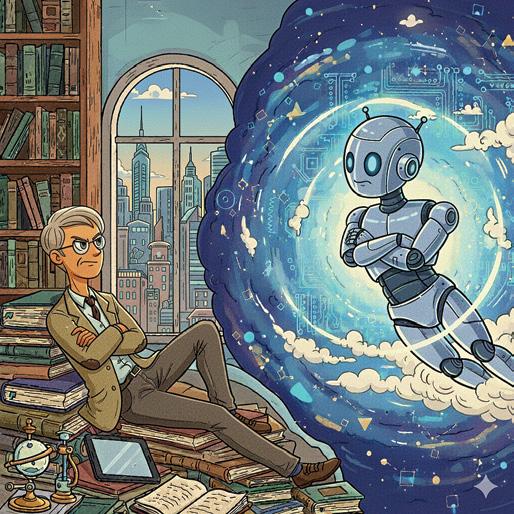
Year 13, Diocesan School for Girls
While STEM is celebrated as the future, there's an implicit risk in consigning the humanities to the past as a nostalgic luxury.
VIOLET & ISOBELLA PROBE THE BALANCE BETWEEN CODING AND CRITICAL THINKING.
On 11 September 2025, Education Minister Erica Stanford announced an amended curriculum for senior high school students.
Stanford made the announcement at Rocket Lab, where she lauded the new curriculum as a launchpad to elevate New Zealand education into a tech-driven future.
The Government is introducing additional STEM-focused subjects including Electronics, Statistics and Data Science, Mechatronics and Further Maths. Two standouts are a proposed Year 13 subject on Generative AI and the introduction of a dedicated Civics course.
Not surprisingly, these forward-facing changes come with trade-offs. Subjects like Art History are set to be cut. This immediately raises questions on the kinds of knowledge we value and the elements of learning in these socalled ‘redundant’ courses.
Those analysing the implications of the changes were quick to ask whether the promotion of technology-based subjects must come at the cost of sociological, aesthetic and historical understanding.
In its bluntest form, the new focus on STEM subjects raises an interesting philosophical question on the relative merits of prioritising the empirical over the theoretical.
The humanities have long been stereotyped as soft or amorphous, especially when compared to the more ‘serious’ fields of science, technology, engineering and maths (STEM).
For centuries, mastery of philosophy, rhetoric and the classics was regarded as the highest mark of learning and the foundation for leadership and civic life. Their decline into marginal status reflects a culture that increasingly equates value with profit and speed.
Some view the ability to weave together disparate threads — such as social movements, artistic trends, literary influences, political disruptions and personal motivations — as an amorphous distraction.
While STEM is celebrated as the future, there's an implicit risk in consigning the humanities to the past as a nostalgic luxury. Particularly in a world where ethical questions, manipulation of information, rapid cultural upheavals, geopolitical challenges and dangerous historical tropes loom large in every society.
Perhaps now more than ever, we should challenge the suggestion that humanities offer little in terms of tangible skills or economic value.
These disciplines cultivate critical thinking, reasoning, cultural fluency and communication skills that are not only transferable across industries but also increasingly in demand in a
world where judgement, sentiment and intuition remain among the most difficult skills for technology to replicate.
Data on student engagement in Level 3 subjects reveals clear patterns, with STEM courses dominating overall.
STEM subjects:
• Maths and Statistics: ~60%
• Biology: 24.6%
• Chemistry: 19.8%
• Physics: 19.4%
Humanities subjects:
• English: 41.4%
• History: 14.5%
• Business: 10.6%
• Economics: 6.8%
• Classical Studies: 6.1%
• Art History: 1.9%
Maths and Statistics lead the way, but English retains its central role in education. The smaller numbers in Art History and Classical Studies reflect their more specialised nature.
These figures illustrate the precarious balance between STEM priorities and the diverse perspectives and critical skills fostered by the humanities.
When STEM subjects are prioritised over the humanities, it's not just the study of novels or historical dates that disappears; it's the very training ground of thought as well.
Literature asks us to step inside lives and voices not our own, widening the scope of empathy. Philosophy unsettles us with contradictions and forces us to ask uncomfortable questions about purpose and meaning. History interrupts our sense of novelty, reminding us that every crisis arrives with echoes, precedents and warnings.
We see the consequences already: trust in journalism collapsing,
conspiracy theories travelling faster than truth and public debate shrinking to slogans.
The humanities pull us beyond the limits of our own experience and insist that complexity is not a problem to be solved but a reality to be lived with and learned from. Without them, citizens can build machines but cannot interrogate the motives of those who programme them.
The development of a curriculum cannot be a competition; it must be an integrated, stable and audited spectrum of skills.
current STEM/humanities divide. The dominance of women in the humanities is not an accident of preference; it reflects a long history of exclusion.
For centuries, women were denied entry into universities all together. When doors finally opened, they were often steered towards ‘acceptable’ subjects like literature, languages, teaching and the arts.
These were framed as extensions of natural feminine qualities like empathy, communication and nurturing. Maths, physics and engineering, on the other
To strip the humanities of relevance is to strip communities of resilience. It is to choose shortterm efficiency over long-term stability.
Lurching towards extremes doesn't benefit most students. We must all know how to read, write, analyse and consider how pathways evolve.
There is a place for our writers, our mathematicians, our chemists, our journalists, our farmers, our purveyors of social good, our policy specialists and so much more.
Our willingness to engage with learning, especially in the final years of school, often depends on what we find interesting.
Regardless of the form it takes, education should teach us how to learn, how to think critically and how to recognise the difference between truth and opinion.
While it’s important to prepare for the future, basing that preparation on fixed ideas of what the future will look like, especially in a world that is constantly changing, risks misrepresenting what lies ahead.
We must acknowledge the slight gendered stigma associated with the
hand, were cast as fields of masculine logic and authority. That history still casts a shadow over how these disciplines are valued today.
What about the popular phrase ‘women in STEM’? We celebrate women in science not just for their achievements but also for crossing into traditionally male spaces, as if legitimacy must be earned by entering someone else’s domain.
Meanwhile, women in the humanities are still taken for granted and their work diminished, precisely because it is familiar, feminised and therefore invisible. This tells us that success only counts as significant when it looks like STEM.
This has material consequences. The narrative that women in STEM are ‘beating the odds’ implicitly paints women in the humanities as ‘settling’, reinforcing the idea that their fields are less serious, less demanding and less worthy.
If the humanities had always been male dominated, would they still be
treated as ‘soft’ subjects? Or would they too have been wrapped in the aura of seriousness STEM enjoys?
Until we confront how deeply gender shapes the prestige of entire disciplines, we can't untangle the stigma that shadows the humanities.
Reclaiming relevance
The myth of unemployability long associated with the humanities also collapses under closer scrutiny.
Society might make a young woman who studies History instead of Physics feel like she has taken an easier or less ambitious path, even though the demands of interpretation, analysis and judgement are no less rigorous. When the Government promotes “new strengthened industry-led subjects”, they risk bolstering the narrative that only certain kinds of knowledge are economically and commercially valuable.
Individuals do not bear this cost alone. When entire fields are downgraded, societies lose capacities they cannot easily replace — e.g. cultural memory, ethical reasoning and the ability to disagree without dismantling the possibility of dialogue.
To strip the humanities of relevance is to strip communities of resilience. It is to choose short-term efficiency over long-term stability.
This devaluation of the humanities reflects a deeper failure to understand what education should accomplish.
The real question isn't whether we need STEM or the humanities, but whether we can afford to keep them both apart.
The irony of 'future-focused' thinking is that it often makes us less prepared for what actually comes. The humanities teach the ultimate future skill: adaptability.
History shows that societies thrive not by predicting change but by developing the flexibility to respond to it.
Creating this synthesis requires more than good intentions. It demands restructuring how we organise knowledge, assess achievement and allocate resources.
Instead of separate humanities and STEM departments competing for funding, we need interdisciplinary programmes that reward collaboration.
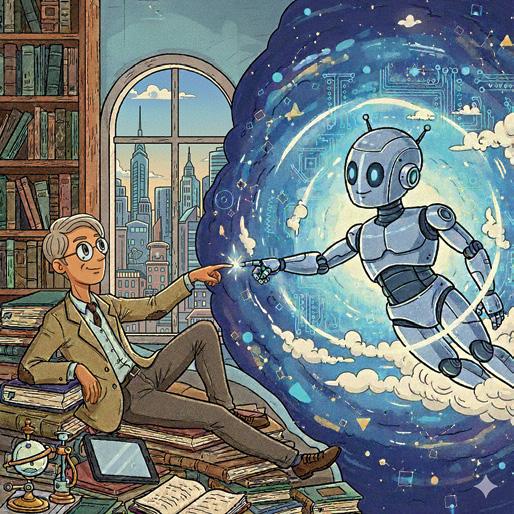
Most importantly, we need employers who recognise that the challenges of the next economy will require both technical expertise and humanistic insight.
A curriculum that “recognises the growing importance of STEM in a future-focused world” isn't hedging its bets. The future won't be a binary between logic and meaning. The analytical and the aesthetic don't have to be opposed. The future can be a synthesis.
We must prepare young people not just to build the systems of tomorrow, but to understand the societies those systems will shape.
Let us teach them to build bridges, to ask where those bridges lead and to determine how best to cross them.
Let them learn to code and to question. To analyse data and to understand the human lives behind it.
This is not about balance for balance’s sake. When the hypothesis is proven, the intelligence is verified, the extrapolations become more sophisticated, what is left?
What's left is humanity. n
The future won't be a binary between logic and meaning. The analytical and the aesthetic don't have to be opposed. The future can be a synthesis.
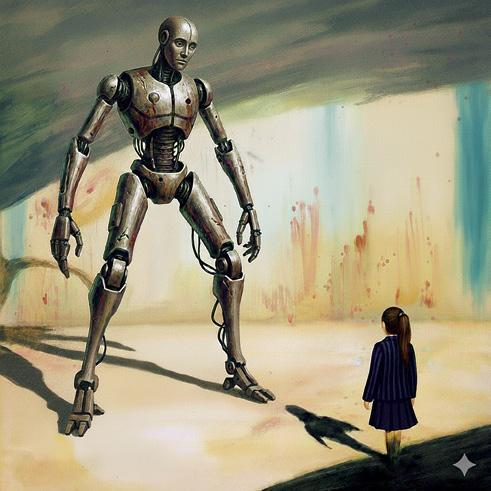
VERA XIAO
VERA EXPLORES WHETHER THE BENEFITS OF AI OUTWEIGH THE COSTS.
As technology advances, it makes its way into our everyday lives. One of the first major breakthroughs was when Siri made the leap from being an online chatbot to an assistant that can control things like light switches and electronic door locks.
What about us as students? Is this technology a good thing to have?
Or are we ultimately entering a time when we start to rely more on technology and less on building our own skills academically?
More recently, AI has officially jumped from a voice in a speaker to human-like robots, which possess more lifting power, speed and durability than regular humans.
AI and humanoid robots are becoming more common in schools, and they are starting to change how education works.
They can take over repetitive tasks like marking tests, create personalised learning programmes for students and even help identify when someone is struggling. This gives teachers more time to focus
on guiding and supporting their students.
At the same time, there are some challenges. Using AI in schools can be very expensive, and there are concerns that relying too much on it could reduce the role of teachers.
Every day there seems to be a revolutionary AI breakthrough. AI could imitate human speech by 2018. It was able to sound like humans and host voice chats by 2020. Lately, it's been able to act and move like humans as robots.
While AI clearly brings benefits, schools need to find a balance between the new technology and the social side of learning.
There are also questions about privacy and whether technology can ever replace the important human connection in classrooms.
While AI clearly brings benefits, schools need to find a balance between new technology and the social side of learning.
The majority of people believe that AI is dooming humans to an end. However, that is not necessarily the case. For the generations where AI remains in our grasp, it will serve as an exceptional tool to save time with.
AI is slowly slithering its way into schools, too. With no plagiarism detectors yet, it’s far too easy for students to write a short prompt and simply press the generate button and save hours of work on exams.
For experimental reasons, I have chosen to put in a paragraph that is completely made by ChatGPT in the essay above. Can you detect which one it is, or is AI getting too real to notice? n
College
AI and education have come to an interesting crossroads. Many schools are now intentionally adopting AI into their teaching methods and are actively promoting it as a tool for students to use.
This is a paradigm shift after the past few shaky years when schools rejected AI. It's easy to see the motivation behind the switch: if students are going to use AI in their work, schools should be monitoring and regulating.
After interviewing teachers, I found it wasn't just a case of "If you can’t beat ‘em, join ‘em". There has been a fundamental shift in how teachers, and the wider New Zealand school system, views AI.
The mass introduction of AI has had a mixed reception around the world. Many AI advocates have taken to social media to express their desire for more resources and money to be given to AI tech powerhouses like OpenAI, Google and Microsoft.
Powerful pro-AI individuals like Sam Altman and Jensen Huang, the founders of OpenAI and Nvidia respectively, talk about how AI is a new frontier, bringing productivity
and efficiency to their work and home lives.
AI tools can condense hours of work into minutes. The encouragement to adopt these tools has spread over the last year or so, and the advocacy only gets louder as AI continues to evolve and offer quicker, more efficient solutions to human problems.
There is some backlash to this, however. Many individuals, including me are apprehensive about adopting AI into our daily lives. Many people have shared concerns about the social, ethical and environmental consequences of using AI.
Education should be at the forefront of the discussion on AI. Schools, both secondary and tertiary, have the most to gain and lose from AI’s implementation. I think that if students become over-reliant on AI, the future of the world will be bleak.
Shortly before founding OpenAI in 2015, Sam Altman told a tech conference that "AI will probably most likely lead to the end of the world, but in the meantime, there'll be great companies."
Students becoming reliant on AI is a particularly harmful possibility, as the resulting stunted critical thinking skills will not only impact their education but also their future careers.
The recent push for AI in classrooms has left some people understandably nervous. They argue that AI is still too unregulated to be a viable educational tool.
In fact, we can already see an overreliance on AI forming. One Year 12 student I interviewed uses AI tools daily but doesn't think they are a good thing. They believes these tools are "dangerous because students can become dependent on [them]."
Students becoming reliant on AI is a particularly harmful possibility, as the resulting stunted critical thinking skills will not only impact their education but also their future careers. Despite these concerns showing up in nearly every debate around AI, schools are still pushing for its use.
Craig Borich, Deputy Headmaster –Curriculum at St Paul’s College, says students can use AI positively if they are taught and monitored. “We need to teach AI use, because it's not just a fad. It's here to stay, and students will use it in their future careers,” he says.
A recent MIT study highlights the negative impacts of AI use. The study shows students who use AI have far less brain usage while writing. Even though they were told to use it only as a tool, as the study went on, students resorted to directly copy-pasting AIgenerated paragraphs.
There's no denying that generative AI as a technology is here to stay. Generative AI can do, quite literally, everything a student needs to pass their school year. It can either help you with an assignment or it can do it for you. In the drive for good grades, it's not hard to understand the temptation to choose the latter.
In my experience, it's easy to be sucked into the trap of relying on AI. What started as an easy way to get quotes and references quickly escalated to idea generation and paraphrasing.
While it’s no surprise AI is addictive, the level at which it changes our brain chemistry as we work is detrimental to the development of adolescent minds.
I could finish an entire year’s worth of essays and reports in a matter of days. Technically I have delivered on the work, but what have I learnt? What do I understand? How can I apply the information I have submitted?
Like all tools, if we can use AI maturely, or with proper regulation, I see little problem from a pedagogical perspective.
Perhaps it's like when calculators were introduced in the 1970s. Many people voiced concern about them, believing they would render students incapable of basic maths skills. The same might be true about AI. As a
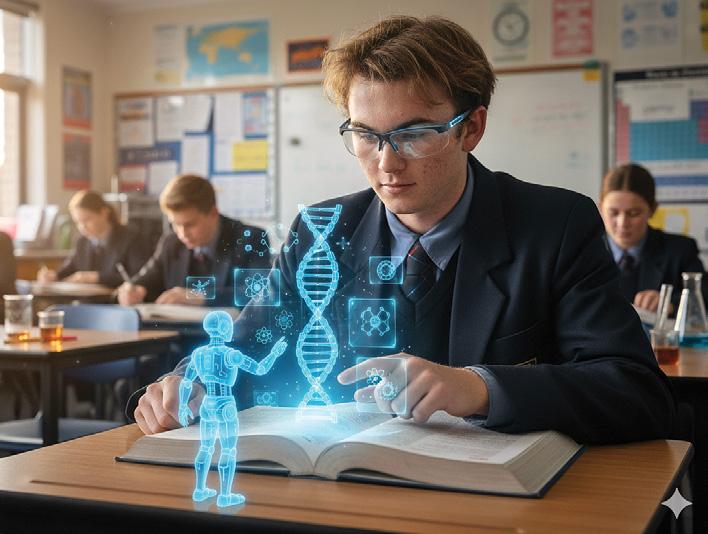
People talk about students using AI to game the system, but with the right conditions, maybe AI can game the students into learning.
society, we will adapt to it, however it evolves. The challenge this time is the speed in which it is evolving.
During an AI-focused online forum held in May, New Zealand video game developer Maru Nihoniho told viewers that no matter how advanced generative AI gets, people will always be at its core.
In other words, students will have to read the syllabus or the course requirement to know what they need to put into the AI tool. They will also need to be able to recognise when a blatantly wrong answer comes out of the AI tool, which requires some learning at a fundamental level. There are ways that schools can adapt AI to foster students' learning. People talk about students using AI to game the system, but with the right conditions, maybe AI can game the students into learning.
We see this happening already with students utilising services like Chegg or Grammarly. These services don't control what the students create, but rather provide backseat support to the student’s original ideas.
They can do this through suggestions and reminders as the student works, giving active advice that adapts to who the student is and what they are writing about.
I believe there should be a governing body around AI in schools, with clear legislation and multiple perspectives taken into account.
We have to understand why and how students use AI, proactively or otherwise, if we wish to create viable pathways to use AI in schools. n
ELIZABETH HAN
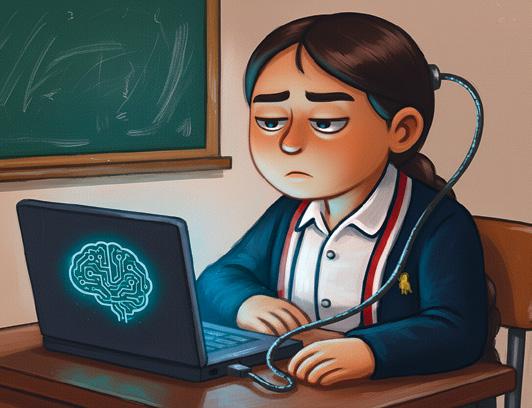
Artificial Intelligence has made its way into every aspect of modern life. People use it to generate images and videos, send emails and plan holidays. My mum has even used it to find out what shoes were most comfortable and where she could buy them.
Now AI has made its way into the classroom. It can explain maths to students, give them ideas to write about in their essays and even generate polished paragraphs about whatever subject they want.
AI is reshaping education, which prompts me to ask: "Is AI helping us learn or is it teaching us to depend on machines?"
I remember when AI was first introduced. We were all a bit skeptical of its abilities at first. After all, we had thoughts of robots quickly evolving to eliminate humanity, or we assumed that AI wasn’t accurate or advanced enough to be useful.
Slowly but surely, we discovered how quick, smart and convenient AI was in helping generate ideas or solving complex equations.
All those hours of hard work making cue cards and hurried memorisation could now be solved with a few quick
prompts into ChatGPT. What once required time, effort and knowledge was achieved instantly.
We've become accustomed to using AI as a solution to any issue, and this dependency is the problem.
We've lost our instinct to figure things out for ourselves. When we generate big paragraphs and ideas, we aren’t only plagiarising; we are also losing our problem solving skills and personal writing style. We lose the ability to think critically because of the way we depend on AI to instantly help us.
We've lost our instinct to figure things out for ourselves.
The skill that education helps to build — critical thinking — weakens. All the messy but essential thinking of brainstorming, planning and wracking our brains for the perfect answer is replaced with automation. This is also an issue with teachers. Some of them use AI to mark their students’ work and generate
feedback. Though this might be more efficient and make students happier to get their grades back faster, it simply isn’t good enough.
The feedback given is vague, and it's obvious a real person hasn’t put any effort into it. It stops being meaningful. Why should I take the time to write properly if my teacher hasn’t bothered to look at my work?
I think one thing we've ignored about AI when it comes to education is this problem of dependency.
We talk about how plagiarism is bad, and how AI is bad for the environment, but students still use it. We need them to understand how dependency on AI can cause them to lose all the skills they might have had before AI was introduced.
Learning is not just about getting the right answer. Just like with maths, it’s about how we find the answer and what personal skills we develop as we learn.
Teachers and adults can help with this. They can show us that real understanding comes from human effort and engagement. AI doesn’t need to be the villain, replacing what really matters: us. n
“No grand finale. No final catastrophe. No helicopter evac. Make your peace or your final stand in whichever part of Malton you called home,” announced Kevan Davis, the creator of the longrunning zombie survival MMO Urban Dead, before officially shutting down the game's servers last March.
According to Davis, the game's demise was due to the cost and complexity of complying with the UK's new Online Safety Act (OSA), which came into force on 25 July 2025.
A sweeping piece of legislation marketed as a child protection initiative, the OSA regnited public debate over whether or not its measures represent “the beginning of the end of Free Speech.”
At its core, the OSA forces all digital platforms to implement procedures intended to make the internet a safer medium, especially for children. Any firm operating in the UK must abide by the following conditions:
• Change their algorithms (if any) to filter potentially harmful content from children's feeds
• Implement age verification (face ID, biometric data, identification) to check for underage users
• Remove harmful content and support exposed children
• Appoint a senior manager responsible for online safety
Much of the political momentum behind the OSA rests on protecting children from online abuse, grooming and graphic content. While the OSA aims to protect children from such content, it also creates new problems in terms of privacy and data sovereignty.
To comply, platforms must collect users’ personal information — names, phone numbers, birthdays and even biometric data — which can be accessed by intermediaries or sold by data brokers. This data can also be used to train AI models, often without users’ informed consent.
Ironically, Ofcom, the UK regulator charged with enforcing the OSA, has twice suffered major data breaches. One nearly releases six years’ worth of data to media companies, while another leaked the personal information of more than 400 Ofcom employees.
The Wikimedia Foundation, whose mission relies on anonymous
In its attempt to build a safer digital world, the UK has instead created a compliance regime that disproportionately punishes the very communities it claims to protect.
contributions and open access, emerged as one of the most vocal critics of the OSA.
The Foundation took legal action against the law, arguing that it threatens the open, decentralised nature of the internet by forcing platforms to abandon privacy and and oppenness in favour of government-approved control.
Stephan LaPorte, the Foundation's General Counsel, said at the time: “We trust the Court will protect Wikipedia … from rules crafted for the internet’s riskiest commercial sites and safeguard the open internet for everyone.”
Although the High Court dismissed the Foundation's case, it warned that Ofcom could face legal consequences if it fails to safeguard Wikipedia and the rights of its users.
In theory, children in the UK are now safer. In reality, the biggest winners may be the tech giants, who already have the legal teams, moderation tools and surveillance infrastructure in place to comply with the OSA. The losers are everyone else, from independent developers and educators to all users and marginalised communities seeking safe online spaces.
Here in New Zealand, the Harmful Digital Communications Act (HDCA) 2015 takes a different approach. Instead of blanket surveillance, the HDCA focuses on addressing harm after it occurs. It also establishes a set of communication principles and empowers agencies like Netsafe to receive complaints and mediate takedowns of harmful content.
According to one New Zealand digital technologies teacher, the
OSA turns "every platform to act as a border agent, collecting sensitive data from every user just in case."
While the HDCA "targets the harmful act itself," the teacher says the OSA "treats every user as a potential suspect and every small platform as a potential risk that must be managed through invasive data collection."
Advocates argue that online safety and user autonomy are not mutually exclusive. Without reform, the UK's Online Safety Act may become a blueprint for a sanitised, centralised and far less free internet — a future that small communities like Urban Dead's gamers simply can't survive. n
In theory, children in the UK are now safer [because of the Online Safety Act]. In reality, the biggest winners may be the tech giants ...
Year 12, Orewa College
EXPLAINS WHY
Social media’s impact on mental health is concerning, particularly for young people, because it can lead to anxiety, low self-esteem and isolation.
Given that young people are most vulnerable at this time of life, schools can help by taking the lead in educating students on how to use social media safely.
In a world where a single post can ruin a reputation; where bullying moves into once safe spaces like bedrooms; and where friends' and influencers' posts can encourage self-doubt, nothing has been done to teach teens how to navigate social media safely.
Social media concerns
17-year-old Orewa College student
Chloe Bradley has been using social media apps like Instagram, TikTok and Snapchat since she was 13. She believes the apps have shortened her attention span and made it harder for her to focus.
“After watching reels for a while, I feel like I have just wasted time,” she says. On the plus side, she likes that she can use social media to keep in touch with her friends overseas.
Research from the US-based Child Mind Institute shows an increasing connection between social media and mental health issues, with educators and experts all over the
world raising concerns over the growing trends.
“There's no question kids are missing out on very critical social skills," says clinical psychologist Catherine Steiner-Adair, EdD. "In a way, texting and online communicating puts everybody in a context where body language, facial expression and even the smallest kinds of vocal reactions are rendered invisible.”
The recent cell phone ban in New Zealand state schools could be seen as schools starting to step up. However, I believe banning phones at school doesn't fix the problem; it just diverts it.
social media is changing us
Every day, as platforms become more addictive, the risks and consequences of uneducated use are becoming increasingly visible.
Studies done over the years by the World Health Organisation and the University of Auckland show that social media use increases mental health issues, including anxiety, depression, cyberbullying and isolation.
Everything teens see online — pictures of holidays, perfect bodies and great looking lives — can fuel self-doubt and negative comparisons. I've witnessed first-hand the significant impact social media has on my peers. In different classes during the day, I have noticed that about 80% of students have trouble making eye contact or holding a conversation with teachers.
I have observed this a few times with different students, and the pattern was always the same. I think it's because we get so used to talking through

"There's no question kids are missing out on very critical social skills. In a way, texting and online communicating puts everybody in a context where body language, facial expression and even the smallest kinds of vocal reactions are rendered invisible."
– Catherine Steiner-Adair, EdD, clinical psychologist
"I didn't realise how much time I spent on social media until I started setting time limits on apps … I'm now making better use of my time and doing things I actually enjoy more."
– Zoe
screens that we lose confidence to connect naturally in person.
At the same time, others constantly compare themselves to unrealistic standards and lifestyles, leading to self-doubt and insecurity. Genuine real-life connections become harder to form and maintain, as digital interactions often take their place.
Social media, for many, has even started to replace real-life experiences and memories, driven by its addictive nature.
Sometimes I get caught in the algorithm of reels before realising how much time has gone by.
I especially get annoyed at myself when it's a beautiful sunny day outside and I’ve spent even just a little bit of time on a screen because I know how much more fun I would have enjoying the sun.
Social media causes less in-person interaction, so when teens progress to adulthood, some may lack basic conversation and communication skills. This could affect them when it comes to getting a job or making friends outside of school.
Teaching students how social media is made to be addictive can help them understand why time limits are important.
I didn't realise how much time I spent on social media until I started setting time limits on apps. Instead of letting social media control me, I am now in control of my time and usage.
I find I'm now making better use of my time and doing things I actually enjoy more. This is something I'll benefit from in the future as I know social media won’t be the centre of my life.
Learning to manage social media use takes time, much like how society had to learn to use new technologies safely in the past.
For instance, when electricity first became publicly available, accidental electrocutions were a real issue! Not because people were careless but because they hadn’t learned how to use it safely.
Once safety measures were put in place, people adapted to electricity. Using this example from the past, we can see how we can avoid similar mistakes with social media today.
By learning the effects of social media and how to navigate them, teenagers will be prepared to cope with the challenges social media presents, and they will be able to build healthy social media habits.
Just as people learnt to use electricity safely through education, teenagers can also be taught how to use social media safely to stop problems before they get worse.
How schools can lead the way
Social media is increasingly becoming a fundamental part of students' lives. Ignoring this leaves students vulnerable to mental health problems. These mental health issues not only affect their wellbeing but also their academic success.
Education on safe social media use doesn't have to replace core subjects; it can complement them, preparing students to thrive safely in the world around them. If schools really care about preparing students for the future, then safe social media education must be part of the plan.
Australia recently banned children under the age of 16 from using social media. This might seem like a good idea, but once teens are old enough to use it, the same issues will still be there. Students will still not know the dangers and what to look out for.
I think it would be much more beneficial if we actually learn how to use social media the right way instead of just blatantly banning it.
While parents certainly play a role in helping teens build wise habits around technology use, we don't all receive the same level of guidance at home.
Schools offer a consistent, equal learning space where every student could receive guidance around social media, no matter what their home situation is like.
I understand that not all teenagers may be open to listening to this guidance, but even adding it to the school environment will increase the chance they at least will be exposed to helpful information that could benefit them.
For generations, schools have been preparing students for the real world. Now that social media is so prevalent in our everyday lives, the demand for guidance on how to use it safely is more urgent than ever.
Schools have the tools and resources. Teachers are trained to educate students on critical thinking, communication and other skills. How is teaching critical thinking when using social media any different?
If a student can learn how to break down an essay or solve an algebraic equation, they absolutely can learn how to spot fake news, avoid unnecessary self-doubt and recognise addictive algorithms.
Safe social media education doesn't necessarily have to be a whole new subject.
Let's be real, students probably wouldn't pick that class anyway. Instead, schools could integrate it into existing classes like Health, English, Social Studies or Life Skills classes.
Activities could include watching documentaries like The Social Dilemma; inviting digital experts to speak and share experiences; and running interactive workshops focused on online well-being and digital footprints.
All these things could provide lifechanging guidance that makes using social media a safe and healthy experience for all students.
Social media as a learning tool Schools could even engage students to create their own educational content.
For example, students could create their own Instagram reels, TikToks or short videos that share tips about managing screen time, online safety and not falling prey to online comparisons.
This would make the learning behind it fun and creative, encouraging students to take part in activities that are educational around this topic.
Even primary school students, particularly those aged 8–11, could benefit from age-appropriate lessons.
Something interactive and creative like an art project around digital footprints or using emoji cards to express online emotions and discuss how tone could be misinterpreted. These ideas could make early education about social media both fun and meaningful.
Preparing for life online
Social media is here to stay. It is here to connect us. It is here to provide entertainment. And it will continue to be a prominent part of our lives and generations to come.
Yes, it can be a great tool, but it can also be a dangerous one if used without guidance. If something isn't done to teach people the consequences, we're letting generations walk blindly into danger.
Safe social media usage must be taught in schools now to benefit the lives of those using it during their teen years and beyond.
If schools are truly around to prepare students for life, they can no longer ignore the place where so much of life is happening … on social media. n
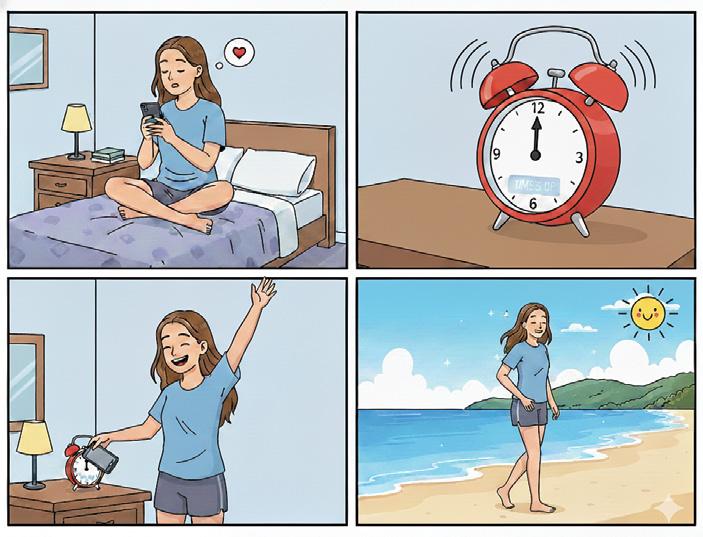
WONDERS WHY FAIRNESS STILL HAS LIMITS WHEN IT COMES TO
We all know life is supposed to be fair. People talk about equality and respect. But the world doesn’t treat men and women the same.
One of the biggest unfair things is money. Women often don’t get paid the same as men, even when they are doing the same job. Like what?!
Imagine being a teacher, a doctor or even an athlete and knowing the man next to you is earning more just because he’s a man. Does that sound right?
Another unfair thing is opportunities. Men are often chosen for important jobs more than women are. Girls are sometimes told they’re ‘not good at’ science, maths or sport.
How can anyone know unless girls are given a chance to try? If we don’t give women opportunities, then the world misses out on their talent.
This comes from old-fashioned ideas. A long time ago, people thought women should stay home and look after the family while men worked. Even though times have changed,

If we don't give women opportunities, then the world misses out on their talent.
those old ideas haven’t fully gone away. They still make people treat women differently.
It's not always men's fault. Many men believe in equality and support women. The real problem is the old unfair rules and habits. Those are what need to change.
Women have shown over and over that they can do amazing things:
• Malala Yousafzai stood up for girls’ education.
• Kate Sheppard helped New Zealand become the first country in the world to give women the right to vote.
• Dame Whina Cooper led the famous Land March to stand up for Māori rights.
• Dame Lydia Ko became one of the best golfers in the world while still a teenager.


These women prove that, when given the chance, women shine just as bright as men.
It’s not just about women; it’s about everyone. If half the people in the world are not given the same chances, then half the ideas, discoveries and leaders are missing. Imagine how many new inventions, books or cures for sickness we lose because women aren’t treated equally.
Women aren't asking for special treatment. They just want equal pay, equal respect and equal chances. The world will only be truly fair when women and men are treated the same. And when that happens, it won’t just be women who win; it will be all of us.
The real question is this: If women and men are equally talented, why don’t they get the same chances? n


HENRY BLAKEMAN
Year 8, Orewa College
OLD ENOUGH TO DRIVE, WORK AND PAY TAXES BUT NOT TO VOTE? HENRY ASKS WHY NEW ZEALAND STILL SAYS NO TO LOWERING THE VOTING AGE TO 16.
I am advocating for the voting age to be lowered to 16. 16-year-olds can apply for a firearms licence; drive a car; legally change their name; leave school and home; and consent to sex. But for some reason, they can’t vote.
If students who are under the voting age don’t have a say in the leaders of the country, and those leaders turn around and cut funding to educational courses, where was the students’ right to say no?
If students with part-time jobs have the minimum wage lowered, where is their right to express their lack of confidence in leadership decisions?
Without the ability to vote, they have no opportunity to express disagreement through a vote. Denying them that right — especially when government decisions directly impact their daily lives — is a serious concern that should not be ignored.
I recently had the opportunity to interview David Seymour on this topic on an episode of Dom Harvey’s podcast. During the interview,
16-year-olds can apply for a firearms licence; drive a car; legally change their name; leave school and home; and consent to sex. But for some reason, they can't vote.
Seymour said “there should be no taxation without representation.”
It’s often said that anyone can work in New Zealand. Children under 14 can earn money from casual jobs that meet the criteria to ensure their wellbeing. 16-year-olds can have full-time jobs that generate taxable incomes.
This shows that age does not automatically preclude participation in the workforce, providing there are
safeguards in place. And the whole world is starting to come around. Youth engagement has become increasingly relevant in global conversations, particularly in countries where the voting age has been lowered.
In 2007, Austria became the first country in the European Union to lower its voting age to 16 for all elections, following the introduction of compulsory civics education in schools. Germany allows 16-yearolds to vote in local and state elections in many federal states. In 2023, the European Parliament lowered the voting age for its federal elections to 16.
In Scotland, 16- and 17-year-olds gained the right to vote in the 2014 independence referendum and can now vote in the Scottish Parliament and local council elections. England's parliament recently informed voters that the voting age will be lowered to 16 in the coming general election, affecting all elections in the country.
Brazil allows citizens to vote from the age of 16, although voting only becomes compulsory at 18. Similar laws exist in Argentina and Ecuador, where voting is optional for 16- and 17-year-olds.
The change for these countries was informed by evidence that 16- and 17-year-olds are socially and politically aware; often responsible through work or taxes; and can benefit from civic education programmes that prepare them for informed voting.
Studies also suggest that involving younger voters can increase longterm political engagement, as firsttime voters at 16 tend to vote more consistently.
Even with this in mind, many would argue that 16-year-olds aren’t mature enough to vote in a New Zealand election, the results of which could change the course of the country for the next three years. One might suggest that if 16-year-olds can swing the direction of an election, then the country has more serious issues with its voting population.
Looking at facts, the jump in maturity between the ages of 16 and 18 is
I asked Orewa College teachers to survey their students on how much thought they have given the 2026 election.
33%
35% put no thought into the election at all
had no idea which party they would vote for
To combat political apathy and support [democracy], political education should be implemented in schools and the voting age lowered to 16.
almost non-existent. The first real gap in maturity comes between the ages of 14 and 16. The second is between 18 and 21. These two jumps are separated by the ages of 16–18.
This is a place where maturity barely changes. We’ve already decided that 18-year-olds are mature enough to vote, so why aren’t 16-year-olds, when their decision-making skills and maturity are basically the same?
The density and intensity of political apathy through the adolescent community is interesting to ponder. Too many 17-year-olds show little interest in the political system.
Political education is of poor quality within high school communities, and this issue has led some, like the previous Labour government, to call for reform to truly adapt to democracy.
They might not yet have the right to vote, but some of these students are about to leave school. Where do we expect their political literacy to come from? Will it be well-structured, balanced and informed, or will it be guided by their peer groups and social media?
If New Zealand followed Austria’s lead by funding civic and political education, it would play a huge part in regulating informed and helpful decisions, bringing an impactful change to our electorate laws.
In an ideal world, political education would be a course outlining the surface beliefs of each party in Parliament. This would cover the basics and help students understand what's at the core
of each party and develop their basic knowledge about our government.
To guarantee effectiveness, students would need at least a 50% attendance rate to pass, which would allow students to vote.
Maybe a pass could be indicated by a stamp or mark on their ID, or they could be issued with a separate card legally allowing them to vote.
I understand that people can and do make uninformed decisions. If we don't teach young people about politics, then not only are they more likely to stay uninformed through later life, their family and friends might also get an extra vote. This would have the opposite effect in giving people the option, and isn’t that what democracy is all about?
Political education at a young age would play a huge part in regulating informed and helpful decisions. If we lower the voting age, it will help ensure the change to our electorate laws is impactful.
If the voting age is lowered, then the course I proposed above should be mandatory. While voting isn't compulsory in New Zealand, it is mandatory to enrol to vote. For 16-year-olds, enrolment could be optional, meaning only those who want to participate can vote.
There are plenty of intelligent, informed ways to make this possible. There is no reason to refuse. To combat political apathy and support democratic representation, political education should be implemented in schools and the voting age lowered to 16. n