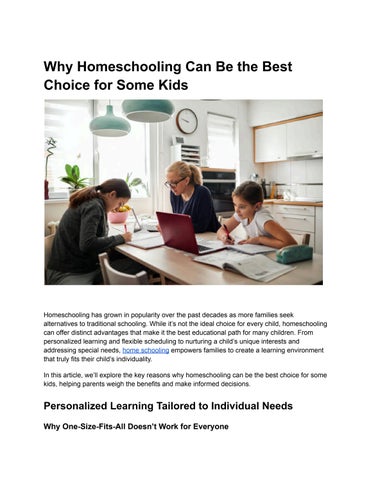
Why Homeschooling Can Be the Best Choice for Some Kids
Why Homeschooling Can Be the Best Choice for Some Kids
Homeschooling has grown in popularity over the past decades as more families seek alternatives to traditional schooling. While it’s not the ideal choice for every child, homeschooling can offer distinct advantages that make it the best educational path for many children From personalized learning and flexible scheduling to nurturing a child’s unique interests and addressing special needs, home schooling empowers families to create a learning environment that truly fits their child’s individuality
In this article, we’ll explore the key reasons why homeschooling can be the best choice for some kids, helping parents weigh the benefits and make informed decisions
Personalized Learning Tailored to Individual Needs
Why One-Size-Fits-All Doesn’t Work for Everyone
Traditional schools often follow standardized curricula and schedules designed to accommodate large groups of students. This approach, while efficient, can overlook individual learning styles, paces, and interests Some children may struggle to keep up, while others feel unchallenged and bored.
How Homeschooling Makes a Difference
Homeschooling allows for personalized learning a curriculum and teaching style tailored specifically to a child’s strengths, weaknesses, and passions. Parents can adjust lesson plans in real-time based on their child’s progress, ensuring concepts are fully understood before moving forward.
For example, a child who excels in math but struggles with reading can spend extra time on literacy without feeling pressured to keep pace with a class Conversely, a child passionate about science can dive deeper into experiments and projects that spark curiosity.
This individualized attention helps children develop confidence and a love of learning, reducing frustration and promoting success.
Flexibility to Fit a Child’s Lifestyle and Needs
The Limits of the Traditional School Calendar
Conventional schools operate on rigid schedules with fixed hours, school days, and vacation times This structure may not suit every family or child, particularly those with health issues, travel opportunities, or unique extracurricular interests
The Freedom Homeschooling Offers
Homeschooling provides flexibility in scheduling families can decide when and where learning takes place. This adaptability can accommodate children who thrive at different times of the day, those who need frequent breaks, or kids involved in professional sports, arts, or other commitments
For instance, a child who is a morning person might complete lessons early, leaving afternoons free for music practice or sports Families can also take extended vacations during off-peak times without worrying about missed classroom instruction.
This flexibility reduces stress and allows education to integrate naturally into family life, enhancing overall well-being.
Supporting Children with Special Needs
Challenges Faced in Traditional Settings
Children with special needs whether related to learning disabilities, giftedness, physical health, or emotional challenges often face difficulties in mainstream schools. Large class sizes, limited resources, and standardized teaching methods may not adequately address their unique requirements
Homeschooling as a Customized Solution
Homeschooling offers a customized and compassionate approach to special education Parents can incorporate therapies, sensory breaks, or specialized curricula into their child’s day. Instruction can be paced and adapted to reduce anxiety and build skills incrementally
Additionally, homeschooling environments can be designed to minimize distractions and sensory overload, which benefits children with autism, ADHD, or sensory processing disorders
By tailoring education to their child’s abilities and needs, parents can help their kids reach their full potential in a supportive setting.
Cultivating Strong Family Bonds
The Impact of Family Involvement in Education
Spending significant time together in a homeschooling setting naturally strengthens family relationships Parents and children learn, grow, and solve problems side by side, creating a unique bond that extends beyond academics.
How Homeschooling Enhances Connection
Homeschooling allows for daily, meaningful interaction Parents witness firsthand their child’s struggles and triumphs, enabling timely encouragement and support. Siblings often learn together, building teamwork and empathy
This close-knit environment fosters emotional security, communication skills, and shared values. Children often develop a strong sense of belonging and trust, which can positively influence their social and emotional development
Encouraging a Safe and Nurturing Learning Environment
Concerns About Bullying and Peer Pressure
Unfortunately, bullying and negative peer influences remain persistent issues in many schools These challenges can impact a child’s self-esteem, academic performance, and overall happiness
Homeschooling as a Protective Alternative
By homeschooling, parents can provide a safe, nurturing environment free from bullying, peer pressure, and negative social dynamics Children learn in a positive atmosphere tailored to their emotional needs, helping them develop resilience and self-confidence.
Homeschoolers still have social opportunities through clubs, sports, and community activities, but in a more controlled and supportive setting. This balance helps children build healthy friendships without the harmful effects of school-based bullying
Fostering Individual Interests and Passions
Limitations in Standard Curriculums
Traditional schools must cover a broad range of subjects, sometimes leaving little room for in-depth exploration of a child’s particular interests or talents A student passionate about music, coding, or creative writing might find their enthusiasm stifled by rigid lesson plans.
Homeschooling’s Ability to Nurture Passions
Homeschooling offers the freedom to focus on individual passions and incorporate them into daily learning A child interested in astronomy can spend more time stargazing and studying space science, while a budding artist can integrate art projects into history lessons
This customized learning cultivates creativity and motivation, making education more meaningful and relevant to the child’s life It can also open doors to future careers by allowing early specialization and skill development.
Building Life Skills Beyond Academics
The Narrow Focus of Traditional Education
Many traditional schools emphasize academic achievement but may neglect practical life skills like cooking, budgeting, time management, or problem-solving These skills are crucial for independence and adulthood
Integrating Life Skills in Homeschooling
Homeschooling naturally blends academic learning with real-life experience Parents can involve children in household chores, financial planning, meal preparation, and community service as part of their education
This hands-on approach teaches responsibility, self-reliance, and critical thinking. It prepares children for life beyond school in ways that textbooks alone cannot
Addressing Socialization Misconceptions
The Myth of the Socially Isolated Homeschooler
One common criticism of homeschooling is that children miss out on socialization opportunities However, this stereotype doesn’t hold true for most homeschooling families
How Homeschooling Supports Healthy Social Development
Homeschoolers often engage in a wide variety of social activities, including sports teams, clubs, volunteer work, community classes, and co-ops. They interact with people of all ages, gaining diverse social skills and experiences
Because homeschooling isn’t limited to peer groups of the same age, children learn to communicate and collaborate with a broader range of individuals Many homeschooling kids develop strong friendships and excel socially in adulthood
Conclusion: Is Homeschooling the Best Choice for Your Child?
Homeschooling is not a universal solution, but it offers many unique advantages that can make it the best choice for some kids. Whether a child thrives on personalized learning, needs a flexible schedule, benefits from a nurturing environment, or requires special accommodations, homeschooling can meet those needs in ways traditional schooling might not
The decision to homeschool should be based on careful consideration of your child’s personality, needs, and family circumstances When done thoughtfully, homeschooling can provide a rich, empowering, and joyful educational experience that prepares children for success in life as well as academics
If you’re exploring options for your child’s education, homeschooling might just be the path that unlocks their full potential