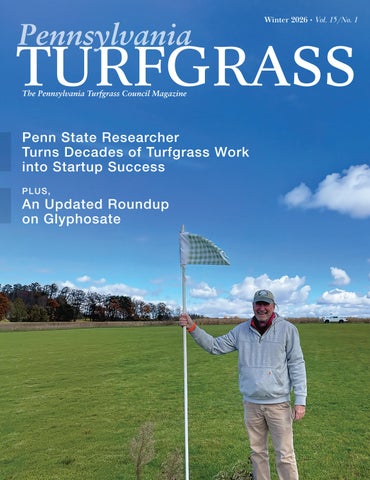
Penn State Researcher Turns Decades of Turfgrass Work into Startup Success



Penn State Researcher Turns Decades of Turfgrass Work into Startup Success




Pennsylvania Turfgrass Council P.O. Box 99 Boalsburg, PA 16827
Phone: 814-237-0767
info@paturf.org www.paturf.org PUBLISHER
Leading Edge Communications 206 Bridge Street, Suite 200 Franklin, TN 37064 Phone: 615-790-3718 info@leadingedgecommunications.com President Pennsylvania Turfgrass Editor
Bettle Penn State 724-321-0321 trb19@psu.edu
Secretary
John
Denny Fellers Baker Equipment
Thomas Goyne Pittsburgh Steelers
Rob Guthrie Little League International
Chris Markel Grove City CC
Pete Ramsey Range End Golf Club
Kristen Althouse Director of Operations






Aswe enter another demanding turfgrass season, I want to express my appreciation for your dedication to the art and science of turf management. Each spring, as the snow recedes and the first hints of green emerge, we are reminded of the role we play in maintaining the landscapes of our communities. Whether you manage golf courses, athletic fields, parks, or commercial grounds, your expertise ensures that Pennsylvanians experience safe, sustainable, and beautiful turf spaces.
With the arrival of the busy season, I recognize the challenges ahead. Long days, unpredictable weather, pest pressures, and the constant need for innovation can test even the most seasoned professionals. Yet it is times like these that our community truly shines. The camaraderie, shared knowledge, and mutual support that define the Pennsylvania Turfgrass Council are what sets us apart and enable every member to meet the challenges of the job.
This year, I encourage each of you to approach the coming months with a renewed sense of purpose and pride. Remember, every challenge is an opportunity to grow — both personally and professionally. The grass you maintain is more than just a surface; it is the foundation for play, recreation, and community connection. Your work has a direct impact on the quality of life in our state.
As you navigate the complexities of the season, I urge you to take full advantage of the wealth of resources provided by the PTC. Our association exists to support you — whether through continuing education, networking events, research updates, or technical guidance. Our events are tailored to address the specific needs and emerging trends facing Pennsylvania turfgrass managers.
Don’t forget to access our online resources, including the member portal, digital newsletters, and the ever-expanding library of research articles from our turf researchers at PSU. These tools are designed to keep you informed, providing timely information on best management practices, regulatory changes, and innovative solutions.
As president, I am continually inspired by the passion and resilience of our members. Your commitment to excellence elevates the standards of our industry and ensures that turfgrass management in Pennsylvania remains a model for others to follow. I encourage you to make the most of this season — to innovate, educate, and support one another. Lean on the association, engage with your peers, and never hesitate to ask for help or share your insights. Together, we are stronger, more knowledgeable, and better equipped to meet the demands of our profession
Tom Bettle President, Pennsylvania Turfgrass Council
Tom Bettle Turf Research Center Manager 724-321-0321 • trbettle@psu.edu
Monoj Chhertri Professor of Turfgrass Science 814-863-3606 • mkc6518@psu.edu
Michael A. Fidanza, Ph.D. Professor of Plant & Soil Science 610-396-6330 • maf100@psu.edu
David R. Huff, Ph.D. Professor of Turfgrass Breeding and Genetics 814-863-9805 • drh15@psu.edu
Bradley Jakubowski Assistant Teaching Professor 814-865-7118 • brj8@psu.edu
John E. Kaminski, Ph.D. Professor of Turfgrass Science 814-865-3007 • kaminski@psu.edu
Timothy Lulis Teaching and Research Assistant 814-865-0697 • ttl101@psu.edu
Ben McGraw, Ph.D. Professor of Turfgrass Science 814-865-1138 • bam53@psu.edu
Dianne Petrunak Academic Adviser, Turfgrass Science and World Campus 814-863-0139 • dmp6@psu.edu
Max Schlossberg, Ph.D. Associate Professor of Turfgrass Nutrition / Soil Fertility 814-863-1015 • mjs38@psu.edu
Chase Straw Professor of Turfgrass Soils 502-229-9838 • cms9424@psu.edu
Decreased down time, increased revenue.
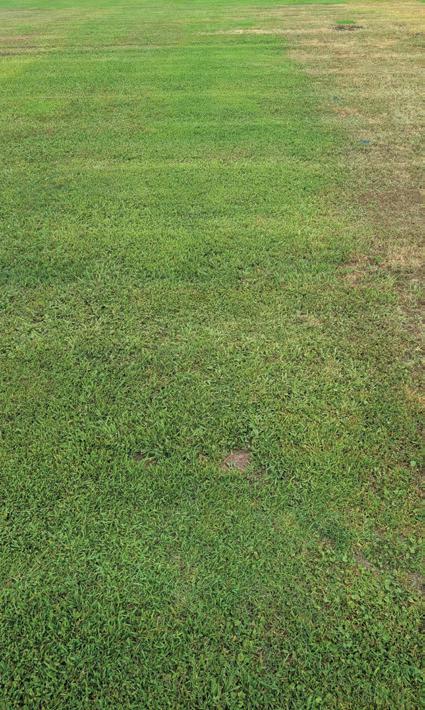
The surface is very “puttable.”
The dots are sand that is level with the turf.
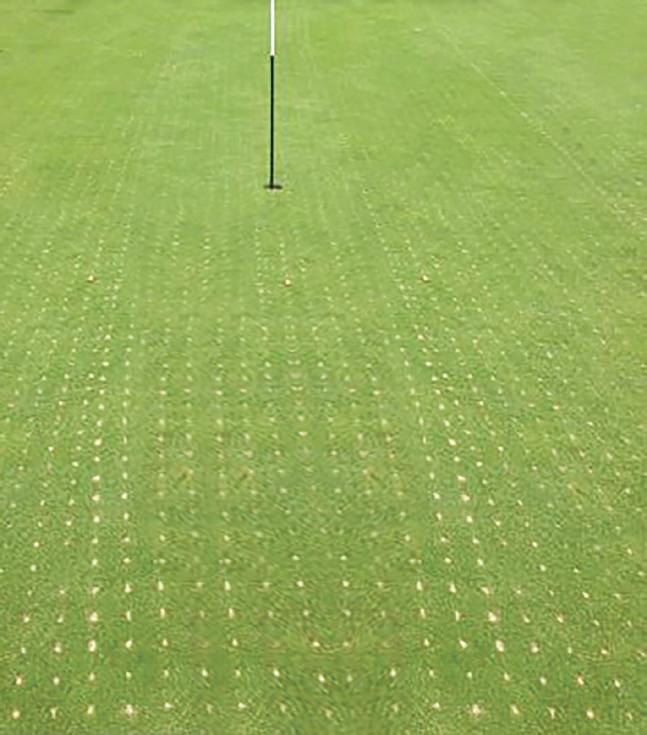
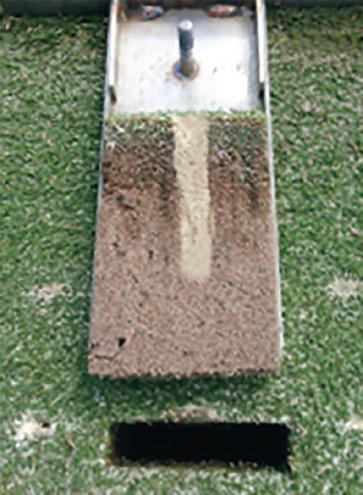
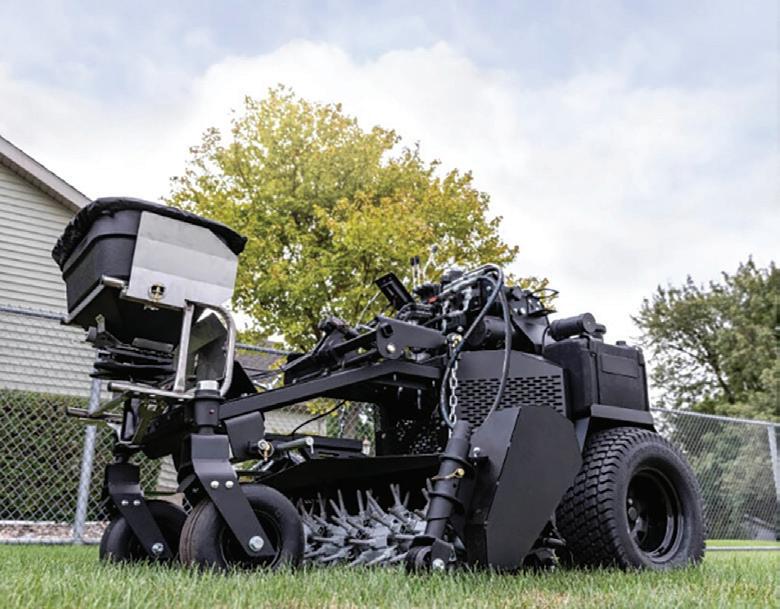
DryJect® is a high-pressure, water based injection system that blasts holes through the root zone and fractures the soil profile. Plus, it automatically fills holes as it aerates.
DryJect®
Pennsylvania Turfgrass Council’s Dr. George W. Hamilton, Jr. Distinguished Service Award is presented to individuals who have exhibited outstanding service to the turfgrass industry. The award is considered PTC’s highest individual honor and recipients are recognized by the membership in a formal ceremony at the PTC winter conferences. The 2025 Award is presented to David Guerin, Jr.
For more than half a century, Dave Guerin Jr. has been a pillar of the turfgrass and golf course management community. His journey at E.H. Griffith, Inc. began humbly - working in the warehouse, unloading fertilizer from rail cars, and serving customers face-to-face. From those early days, Dave absorbed every detail of the business, building a foundation of knowledge and respect for the industry that would shape his career.
After earning his business degree from Penn State University, Dave returned to E.H. Griffith with renewed purpose. Rising through the ranks to vice president and ultimately president, he carried forward the legacy of his father while forging his own path of leadership. His tenure has been marked not only by business success but by an unwavering commitment to service, integrity, and community.
Dave’s contributions to the industry are widely recognized. He has consistently invested in the future of the profession, offering financial support to both local and national golf associations and funding turfgrass scholarships for Penn State students. His philosophy of “paying it forward” has ensured that generations of young professionals have the opportunity to thrive.
Equally important is the culture Dave has cultivated at E.H. Griffith. He surrounds himself with a team he considers family, instilling values of respect, integrity, and dedication to customer service. Many of his employees have spent their entire careers at the company, a testament to the environment he has nurtured. Under his leadership, E.H. Griffith has earned numerous national awards for sales and service—achievements rooted in Dave’s genuine appreciation for the turfgrass industry.
Dave Guerin Jr.’s career is more than a story of professional success; it is a testament to the power of legacy, mentorship, and community. His decades of service, his generosity, and his leadership embody the very spirit of this honor.
PTC congratulates David on this award! •
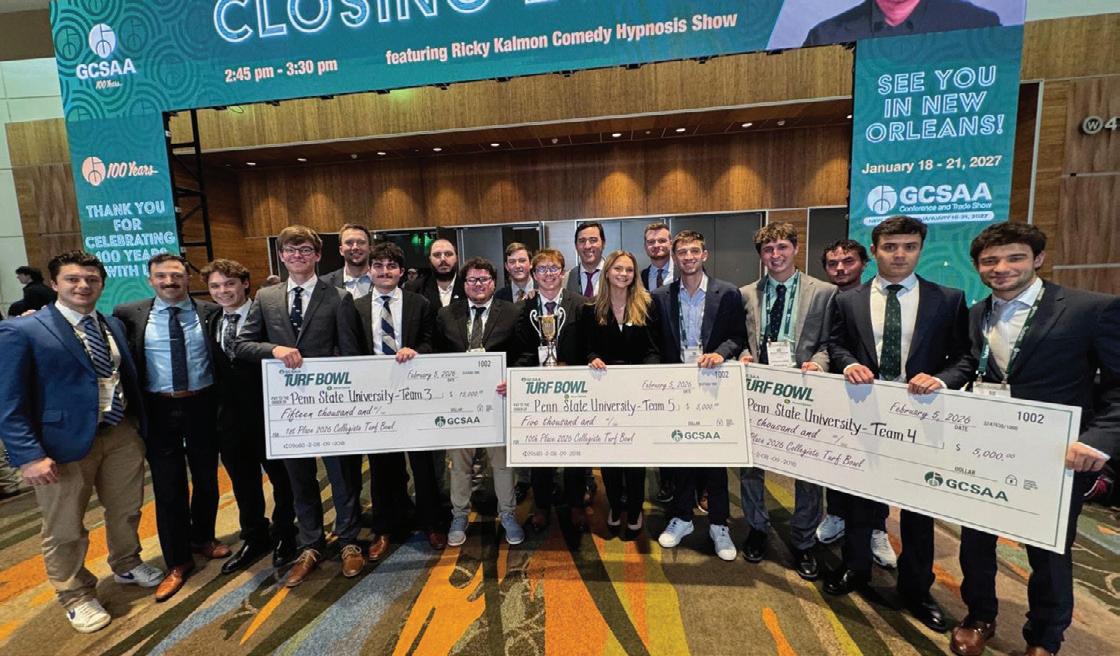
Students from Pennsylvania State University’s College of Agricultural Sciences continued to make a name for themselves at the 2026 Golf Course Superintendents Association of America (GCSAA) Conference and Trade Show, held in Orlando, Florida, demonstrating not only exceptional turfgrass knowledge but also leadership potential in the turf industry. The GCSAA Conference, one of the most influential gatherings of turf professionals in the world, brought together students, educators, researchers, and industry leaders for education, competition, and networking.
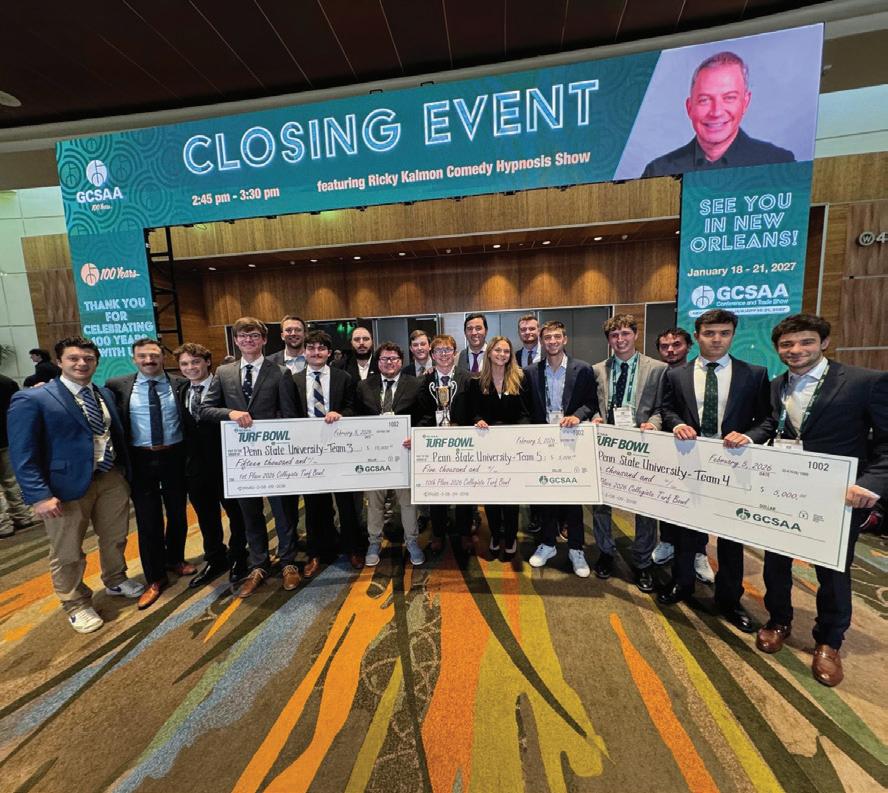
At the Collegiate Turf Bowl, a high-pressure competition testing comprehensive turfgrass management knowledge, Penn State turfgrass science students once again rose to the top. The Penn State team comprised Wilson Kreitz, Joseph Lofland, Carter Marshall, and Jacob Straw, who delivered a commanding performance across written case studies, visual identification, multiplechoice questions, and short-answer segments. Their mastery of topics ranging from soil science and irrigation to pathology and entomology earned them first place, continuing a remarkable legacy for the university—this marked the team’s seventh Turf Bowl championship since 2015.
The Turf Bowl victory underscores both the depth and breadth of Penn State’s turfgrass science curriculum, which blends rigorous academic training with hands-on experiential learning. Ben McGraw, associate professor of turfgrass science and the team’s academic adviser, praised the students not only for their results but for the dedication, teamwork, and preparation they demonstrated. “They put in countless hours preparing, studying, and supporting one another,” McGraw said, noting that these skills extend far beyond competition and directly translate into professional turf management careers.
In addition to team success, individual Penn State students also garnered accolades at the GCSAA Conference. Most notably, Zachary Newsome, a graduate student in the College of Agricultural Sciences, was named a 2025 Dr. James Watson Fellow by the GCSAA Foundation, one of the association’s most prestigious honors for emerging turfgrass researchers. Newsome’s fellowship recognizes his academic excellence and research contributions to turfgrass science. He received a $5,000 scholarship and the opportunity to engage further with professionals across the industry during the conference and trade show.
Newsome is pursuing a master’s degree in agricultural and environmental plant science. His research focuses on how soil moisture affects the behavior, fitness, and control of the annual bluegrass weevil—a pest of significant concern to turfgrass managers.
The success at the 2026 GCSAA Conference reflects the sustained excellence of Penn State’s turfgrass science students and the supportive academic environment that helps students thrive. With national titles and competitive honors, these students are not only enhancing the reputation of their university but also helping set the stage for the future of turfgrass management—a field where scientific innovation and practical skills come together to support sustainable, highperforming landscapes.
Congratulations to Dr. McGraw and his PSU turfgrass science students! •




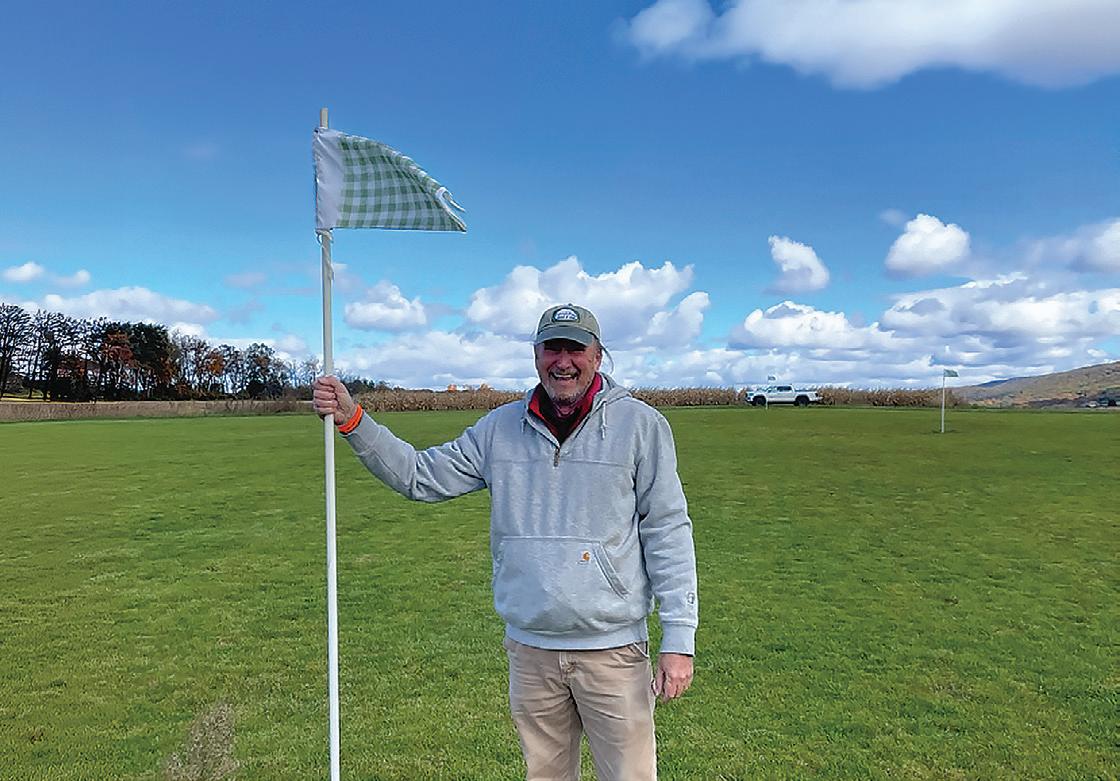
David Huff, professor of turfgrass breeding and genetics
Penn State, recently earned the Research Innovator Award through the College of Agricultural Sciences for the research and entrepreneurial leadership that led to the founding of his startup, PennPoa.
By Katie DeFiore
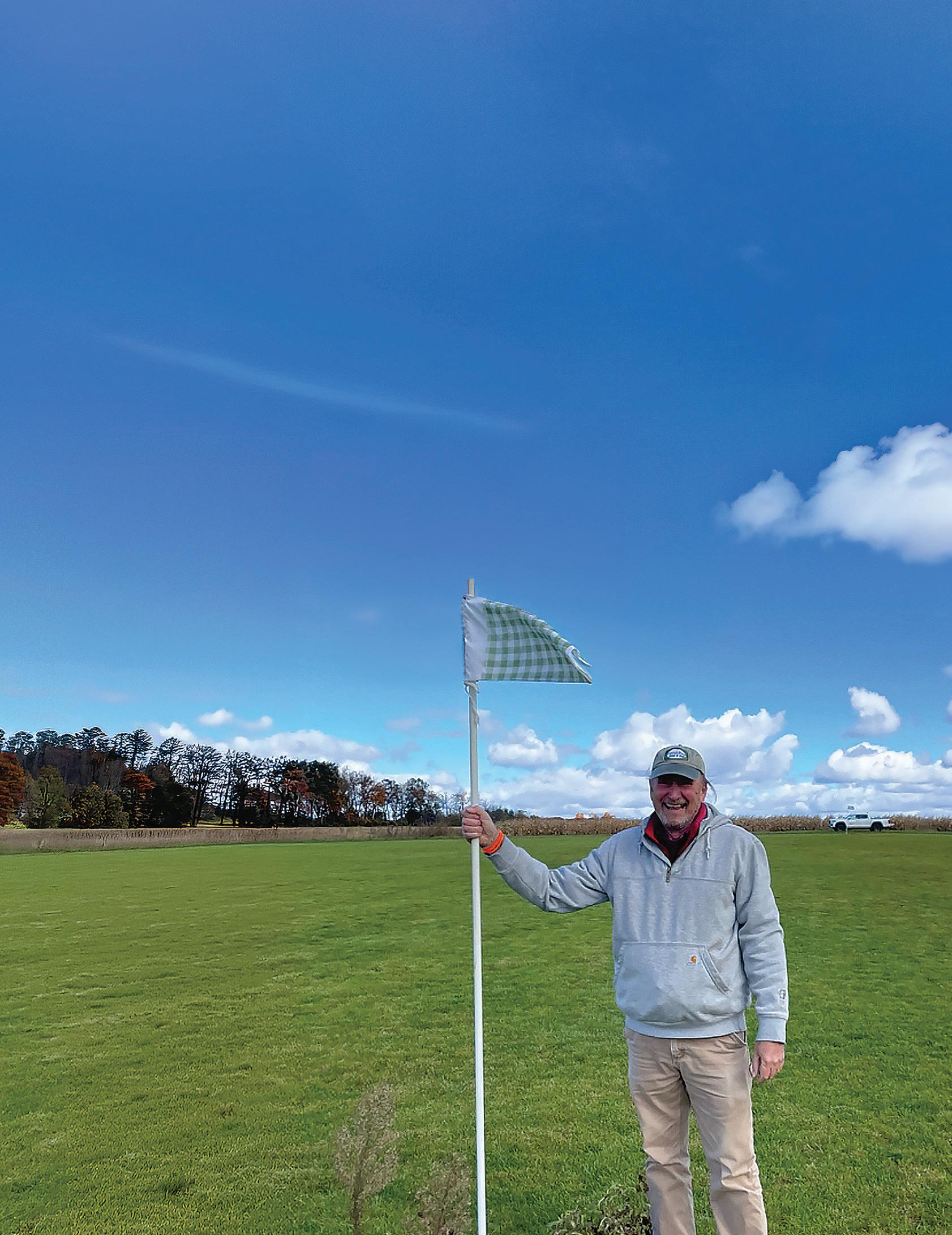
David Huff, professor of turfgrass breeding and genetics at Penn State, recently earned the Research Innovator Award through the College of Agricultural Sciences for the research and entrepreneurial leadership that led to the founding of his startup, PennPoa.
PennPoa aims to transform the turfgrass industry through the commercialization of highly cultivated Poa annua, or annual bluegrass, seed varieties for the golf course industry.
To launch his turfgrass startup, Huff utilized Penn State entrepreneurial resources including the Penn State Small Business Development Center (SBDC), Ben Franklin Technology Partners of Central & Northern Pennsylvania and the Office of Technology Transfer.
When Huff came to Penn State in 1994, his goal was to breed and improve varieties of Poa annua for the golf course industry. This strain has desirable traits, Huff said, such as high shoot density and dwarfism, which allows the grass to tolerate extremely low mowing heights — an important characteristic for golf course turfgrass, where mowing heights can be less than one-tenth of an inch.
Huff said he quickly realized there was no commercially available seed for this top-quality grass, forcing golf courses to either use lower-quality grass species or rely on bluegrass that naturally emerges as a weed. However, when Poa annua establishes itself as a weed, it can take 50 to 100 years of golf course maintenance for it to naturally evolve into the highly soughtafter strain, according to Huff.
“There was no one out there helping the golf industry with this problem, and so I decided it would be a good project to work on,” Huff said. “I collected seeds from a lot of places across the U.S. and Europe, bred them, and after 13 years I had a top 10 — they were just beautiful grasses.”
However, when Huff moved into the seed production process with those 10 strains, he lost the dwarfism trait that made the grasses so valuable. The plants reverted to weedy grasses, prompting another 13 years of research and the additional support of three graduate students to understand why this was happening and how to ensure the seeds retained their dwarf perennial traits.
After a total of 26 years of research, Huff’s new seeds were finally ready for beta testing.
“I ran those beta tests on five golf courses, covering the east coast, west coast and the northern and southern United States regions, and everything looked good. So, in the meantime, that’s when I started the company,” Huff said. “I had no idea I’d be doing a startup. When I first started, I thought this grass was going to behave like all grasses and that I would be able to license it to a seed company.”
Huff said he was already familiar with the licensing process at Penn State, as he breeds other grass varieties that are released to seed production companies. However, because of the complex and novel seed production technology he and his team developed to maintain Poa annua’s favorable traits, he realized he could not simply hand off the process to a seed company.
The Penn State Office of Technology Transfer (OTT) suggested that he launch a startup.
“To be honest, when OTT suggested launching a startup, I thought, ‘I can’t do that, I’m faculty, I’d be using the product I’m researching, it’s a conflict of interest,’” Huff said. “And they said Penn State has a support system in place to help manage that for you.”
OTT connected Huff to the Office for Research Protections, where a team helped Huff navigate the research commercialization process.








Introducing a new fungicide powerhouse that is ready to take your fairway spray program to the next level. Add it to your rotation and prepare your course to be The G.O.A.T. - The Greatest of All Turf.
He later entered the Ben Franklin Technology Partners Big Idea Contest, where he won the People’s Choice Award. Through that experience, Huff learned more about the entrepreneurial ecosystem at Penn State and in State College, and he began attending entrepreneurial events, meetups and competitions hosted by Ben Franklin, the Penn State SBDC and other local community organizations.
At one of these events, Huff met Martin Brill, a business consultant and coordinator for the Pennsylvania SBDC Agriculture Center of Excellence, who became a long-term mentor.
“Martin and everyone else that I’ve met has just been very encouraging, and that was very important to me,” Huff said. “Starting a new company like this was very scary — I wasn’t planning on it, and I haven’t been trained for it. But Martin, Ben Franklin, OTT, the individuals in the Office for Research Protections, they all encouraged me, and that’s what propelled me forward. I followed their advice, and I never really hit a roadblock. I hit a lot of hurdles, but everyone helped me get over those. Before I knew it, I had a license agreement, I had a formal company and we started sales.”
Huff said 2025 marked his first year of sales, and he sold out of both his 2024 and 2025 crops. He already has received orders for 2026 and 2027. He added that the Penn State College of Agricultural Sciences has also been critical to his startup success. Huff received funding through the College’s Research Applications for INnovation (RAIN) grants program and has been able to lease college-owned land to support seed production.
“One of the other things that helped me was that, at all these various workshops and seminars provided by the SBDC, there were all sorts of other folks just like me — people with ideas who live in this area who were starting their own businesses,” Huff said. “Talking with them helped me, because they are in the same boat I’m in — they don’t know what they’re doing either, but they’re doing it, and you learn as you go.”
Most recently, Huff entered the Invent Penn State Startup Leadership Network Board of Advisors program for 2026, which provides Penn State startups with industry-specific advisory boards to guide founders as they enter the market.

“I’ve just been impressed by the entrepreneurial ecosystem that’s here at Penn State, both on and off campus,” Huff said. “It has helped give me the confidence to know that I can do this. Everybody has been so helpful and has given me their time and their interest. They really are passionate about helping people, and with that kind of help, you just go forward.”
Pennsylvania Small Business Development Centers are funded in part through a cooperative agreement with the U.S. Small Business Administration, by the Commonwealth of Pennsylvania through the Department of Community & Economic Development,
through support from Penn State, and by other sources of state and federal funding. Full disclosures available at:
https://www.pasbdc.org/funding-sources
SBDCs are hosted by leading universities, colleges, state economic development agencies and private partners, and funded in part by the U.S. Congress through a partnership with the U.S. Small Business Administration. There are nearly 1,000 local centers available to provide no-cost business consulting and low-cost training to new and existing businesses. The Penn State SBDC services Centre, Clinton, Lycoming and Mifflin counties in central Pennsylvania. •
Covers trusted by those who know...

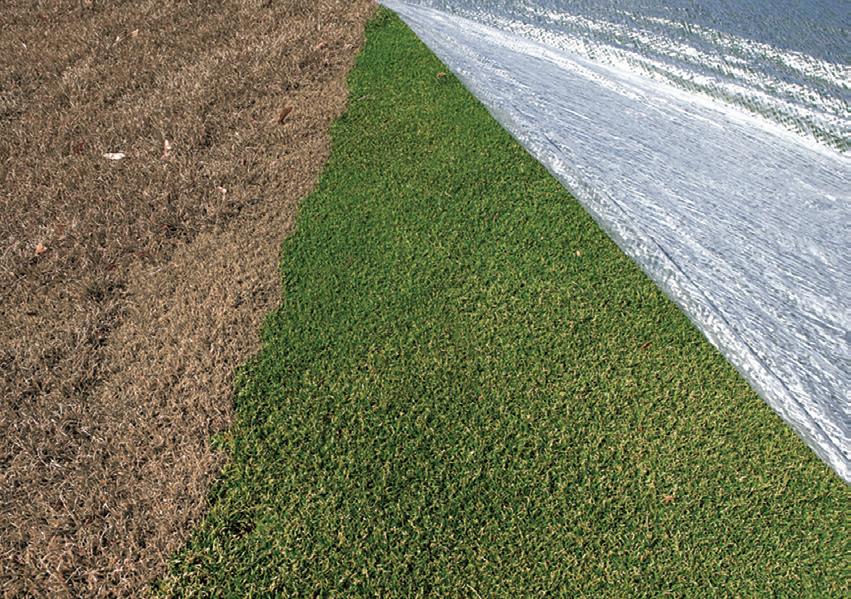
This article was originally published at https://www.psu.edu/news/invent-penn-state/story/penn-stateresearcher-turns-decades-turfgrass-work-startup-success and is reprinted with permission. Our lightweight EVERGREEN™Turf Cover produces a greenhouse type effect that allows your turf to breathe and retain the right amount of heat and moisture.
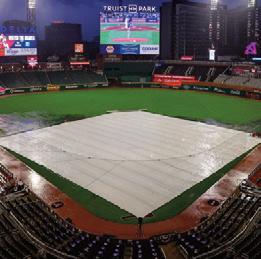
RAINCOVERS, from supreme lightweight right to classic vinyl types, there are models and accessories to meet your needs

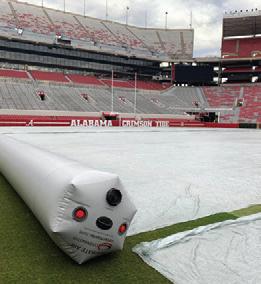
TARPMATE™ AIR roller is a revolutionary storage and handling system for field covers. 2-3 people can roll out or roll up a 100’ wide cover in minimum time.

FOOTBALL FIELD COVERS are made of superior strength material, providing protection from rain or snow.

An INFLATABLE FIELD COVER allows for ongoing field maintenance during periods of inclement and extreme cold weather.
By Jeffrey Derr, Ph.D. and Adam Nichols Virginia Tech, Hampton Roads Ag. Res. & Extension Center
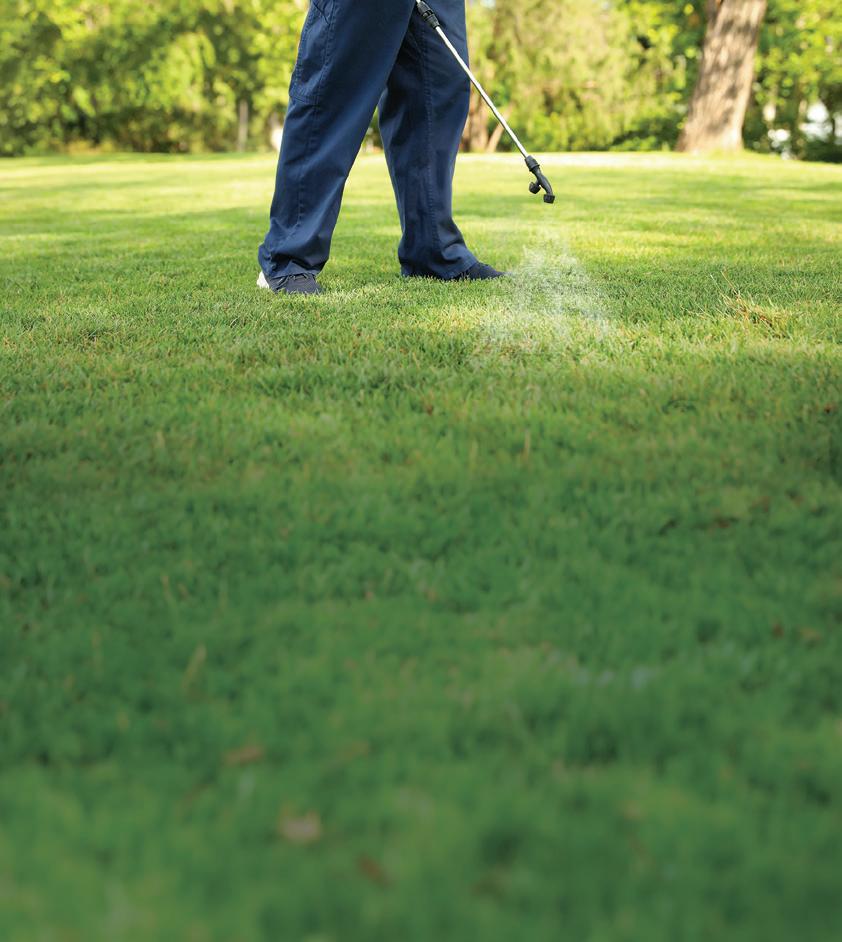
lyphosate continues to be in the news, primarily because of the court cases concerning glyphosate and human health. There are still thousands of lawsuits related to glyphosate and human health (https://www.lawsuitinformation-center.com/roundup-lawsuit.html). In this article we discuss some background information on this herbicide as well as alternatives to this chemical.
The glyphosate molecule is similar to the amino acid glycine. The chemical name is N-(phosphonomethyl)glycine, a relatively small molecule compared to newer herbicides. It is the active ingredient in products such as Bayer’s Roundup PROMAX, as well as in generic products sold under a variety of trade names. Since the chemical is off patent (patent expired around 2000), other companies besides Bayer can sell this herbicide under their own trade name. Some examples of other trade names for products that contain glyphosate include Glyphosate, Gly Star, Glypho, and Prosecutor, among others, for terrestrial use. There also are formulations that can be used in aquatic sites, such as Accord, AquaMaster, and Rodeo.
Bayer does not market glyphosate to homeowners, only to commercial applicators. However, glyphosate is still available to homeowners, with one example being Hi-Yield Super Concentrate Killzall Weed & Grass Killer, which is sold in quart containers. Homeowners also can purchase the commercial formulations, such as Razor Pro, Prosecutor, Roundup ProMax, and Roundup QuikPro as there are no restrictions on homeowners purchasing those products. A disadvantage to homeowners is that the commercial products are sold in quantities often too large for homeowner needs, such as 2.5 gallon jugs which can treat 5 acres.
To add some confusion, there are products being sold that do not contain glyphosate but use the Roundup name and are primarily targeted towards homeowners. For example, there is Roundup for Lawns, which contains MCPA, quinclorac, dicamba, and sulfentrazone. These four herbicides are selective in lawns for general weed control compared to the nonselective herbicide glyphosate. There is Roundup Weed and Grass Killer Concentrate, which contains triclopyr, fluazifop, and diquat and is an alternative to glyphosate for weed control in driveways, along fences, and certain other areas. Roundup Dual Action contains triclopyr, fluazifop, and diquat, along with imazapic to extend the residual control.
The initial formation of this herbicide was an isopropylamine salt of glyphosate, which is still widely used, although other salt formulations are available now, such as the potassium salt and the dimethylamine salt. This becomes important when comparing products. We need to look at the amount of glyphosate acid in products, not the amount of active ingredient, since the different salt formulations differ in their molecular weight. For example, Roundup PROMAX contains 5.5 pounds per gallon of the potassium salt of glyphosate (ai) or 4.5 lbs/gallon glyphosate acid (ae). Prosecutor Pro contains 4.0 lbs/gallon of the isopropylamine salt of glyphosate (ai) or 3.0 lbs/gallon glyphosate acid (ae). So Roundup PROMAX contains 50% more glyphosate acid than Prosecutor Pro per gallon and applications rates in terms of fluid ounces of product per acre are lower that for Prosecutor Pro.
Besides glyphosate, there are other chemicals in commercial formulations, usually water and a surfactant. As an example of a formulation, Roundup PROMAX contains the potassium salt of glyphosate at 48.7% by weight, surfactant(s) at 8.8%, and water plus minor ingredients at approximately 42%.
Surfactants can aid in the absorption of herbicides by weeds. One example would be POEA (polyoxyethylene tallow amine). Concerns have been raised about the toxicity of this surfactant to aquatic organisms such as tadpoles, salamanders, and frogs. Aquatic formulations of glyphosate either do not contain a surfactant or contain a surfactant that has not shown to be an issue. That is why certain formulations of glyphosate are not labeled for aquatic use – not due to the toxicity of glyphosate but due to toxicity concerns about the surfactant to amphibians and other aquatic organisms. For glyphosate products that do not contain a surfactant, one generally needs to add an approved one for optimum weed control.
Glyphosate was found to control weeds by a Monsanto scientist in 1970. The herbicide was patented in 1971 and was introduced commercially as Roundup in 1974. Glyphosate use has increased over time, especially when Roundup-Ready crops were introduced, starting with Roundup Ready soybeans in 1996. These soybean lines, and later corn, cotton, and other crop cultivars, were developed to be resistant to glyphosate through biotechnology. For these genetically-modified crops, glyphosate could be applied overtop for selective weed control. Bayer purchased Monsanto in 2018 and continues to market glyphosate to commercial applicators.











Glyphosate inhibits the enzyme enolpyruvyl shikimate3-phosphate (EPSP) synthase, needed for synthesis of the aromatic amino acids tryptophan, tyrosine, and phenylalanine in plants. Animals, including people, do not make these amino acids as they need to get these chemicals in their diet. Plants though must make these amino acids, which are the building blocks of proteins. So glyphosate inhibits a process that occurs in plants but not in animals. Result – a chemical that controls plants with low acute toxicity to animals.
Glyphosate is a nonselective postemergence herbicide, meaning that it controls essentially all weeds. The recent development of certain weed species developing resistance, such as glyphosateresistant horseweed, has pushed researchers and growers to find alternative means to control these weed species. However, most weed species are still susceptible to glyphosate.
Glyphosate is systemic, so it moves into and controls underground portions of weeds (roots, rhizomes, tubers, etc.), making it the preferred product for perennial weed control in many situations. This chemical binds to soil particles and has essentially no soil activity, so crops can be planted a week after application.
Glyphosate is used for preplant weed control/site preparation, lawn renovation, spot treatment of weeds in landscape beds, as a directed spray application in fruit and nursery production, and for noncrop weed management, such as guard rails, railroad lines, and parking lots, among other uses. It controls grasses, sedges, and broadleaf weeds, making it a broadspectrum herbicide.
One measure of acute toxicity is the LD50, the dose required to kill 50% of the test animal, usually rats. The higher the LD50, the lower the toxicity. The acute oral LD50 for glyphosate is greater than 5,000 mg/kg (Bayer 2023). For comparison, the acute oral LD50 (rat) for aspirin ranges from 200 to 1,500 mg/kg according to the National Center for Biotechnology Information (2025) and ThermoFischer (2025), making aspirin significantly more acutely toxic than glyphosate.
Another point to keep in mind is that risk associated with a given pesticide is based on the toxicity of the chemical along with the exposure level.
It has been suggested that glyphosate causes non-Hodgkin lymphoma (NHL), a type of cancer, and other diseases, although the link between glyphosate and cancer is inconclusive (see the review articles Boretti 2024, Gonzalez-Moscoso 2023). In a 2020 publication, Boretti states that the link between nonHodgkin lymphoma and Roundup is shown to be extremely weak.
The International Agency for Research on Cancer (IARC), part of the World Health organization, lists glyphosate as a probable human carcinogen in Group 2A, along with burning of wood, eating red meat, high-temperature frying, night work shifts, being a hairdresser or barber, exposure to inorganic lead compounds, spraying insecticides, and manufacture of art glass, among others (IARC 2025).
In February 2020, the Environmental Protection Agency (EPA) published the interim decision registration review decision (ID) for glyphosate (EPA 2025). As part of that decision, EPA found that when glyphosate is used in accordance with its current label, glyphosate is unlikely to be a human carcinogen. EPA scientists had performed an independent evaluation of available data for glyphosate and found no risks of concern to human health from current uses of glyphosate, no indication that children are more sensitive to glyphosate, no evidence that glyphosate causes cancer in humans, and no indication that glyphosate is an endocrine disruptor. On March 20, 2020, the glyphosate ID was challenged in the U.S. Court of Appeals for the Ninth Circuit. On June 17, 2022, the U.S. Court of Appeals for the Ninth Circuit vacated the human health portion of the glyphosate ID and the EPA determined that withdrawal of the glyphosate ID was appropriate. The EPA is currently updating its evaluation of the carcinogenic potential of glyphosate to better explain its findings and to include the current relevant scientific information.
Another issue that has been mentioned is that glyphosate may affect bacteria in the gut microbiome. Certain bacteria can be adversely affected by exposure to glyphosate. One concern is an impact on the gut bacteria in honeybees, potentially increasing susceptibility to pathogens (Mottaa et al. 2018, Castelli 2021.)
We do not have a ready alternative to glyphosate that provides the same level of weed control and use, especially for perennial weeds. There are other chemicals that have little to no soil residual and that affect both grasses and broadleaf weeds when applied postemergence and thus can address some of the uses for glyphosate.
There are contact nonselective chemicals available for control of annual weeds and suppression of perennial weeds that do not have soil residual. This group includes pelargonic acid (Scythe) and diquat (Reward, Diquat), which are targeted towards commercial applicators. These chemicals work very quickly, with injury to weeds often within hours when applied under warm, sunny conditions. Keep in mind that contact herbicides have no effect on underground plant parts, so perennial weeds will regrow from underground tubers, rhizomes, or bulbs, requiring additional applications. Also, large plants of annuals can be harder to control as thorough coverage of weed foliage is required. Ideally, annual weeds are treated when they are less than four inches tall. In addition, annual grassy weeds can be harder to control than annual broadleaf weeds as their growing points are less exposed compared to broadleaf plants.


Ortho Ground Clear is a combination of pelargonic acid, the contact herbicide mentioned above, along with imazapyr, a preemergence and postemergence herbicide. Imazapyr poses a risk to desired trees and shrubs due to the potential for root uptake and systemic injury, thus significantly limiting where it can be applied in homeowner situations.
Another contact herbicide that we have evaluated is Spruce, a product targeted towards homeowners. This product, from Proctor and Gamble, contains geraniol (an alcohol in geranium, rose oil, citronella oil), cornmint oil (from wild mint Mentha arvensis), and sodium lauryl sulfate (surfactant found in coconut and palm kernel oil). It is not EPA registered, but is exempt under the Federal Insecticide, Fungicide, and Rodenticide Act (FIFRA). Also, Spruce is not approved for organic use. Spruce did not perform well in our trial, although we did have some difficult-tocontrol weed species in that study.
Roundup Weed and Grass Killer Concentrate, mentioned earlier, contains two systemic herbicides, triclopyr for broadleaf weeds, and fluazifop for grassy weeds, along with the contact herbicide diquat. We have not seen the same level of perennial weed control as we have seen with glyphosate products. Also, this mixture will
have a degree of residual activity, potentially poses a concern if seeding a treated area soon after application.
In my opinion, the best alternative to glyphosate is glufosinate, another nonselective postemergence herbicide that is inactivated upon contact with soil. It works faster on weeds than glyphosate, but it is not as systemic as glyphosate. So glyphosate generally provides greater control of perennial weeds, especially perennial grasses, compared to glufosinate. Glufosinate will generally provide better control of perennial weeds than contact herbicides. Commercial formulations of this active ingredient include Cheetah Pro and Finale, among others. One homeowner formulation of this herbicide is BioAdvanced Weed and Grass Killer Super Concentrate which is sold in a ready-to-use container as well as a one quart concentrate, so the quantity sizes are appropriate for homeowners.
In the study we conducted at the station in 2025, the contact herbicides Scythe and Spruce caused rapid injury to the weed species in the trial. But by 12 days after treatment, the weeds recovered from that injury. Glufosinate (Cheetah Pro) and glyphosate (Roundup Quik Pro), both with systemic action, showed significant weed control at 12 days (Figure 1). We showed those plots at our Turfgrass Field Day in June of this year.
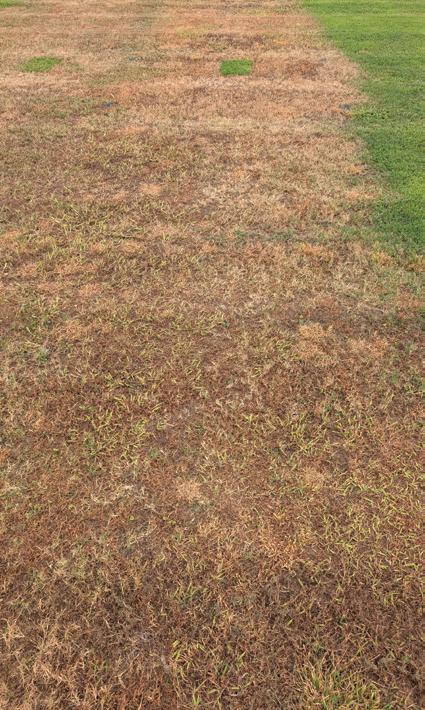
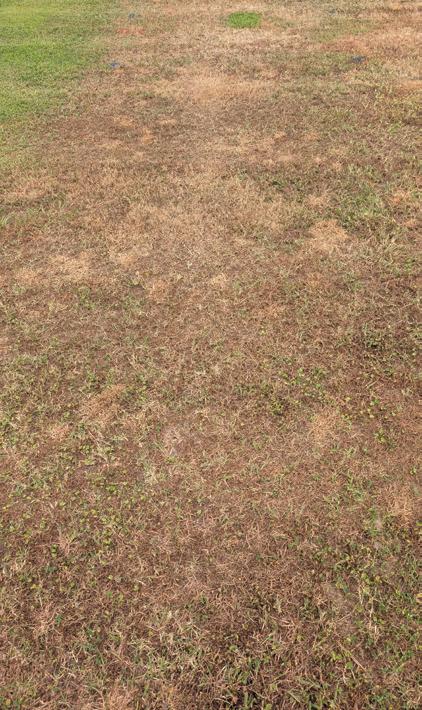
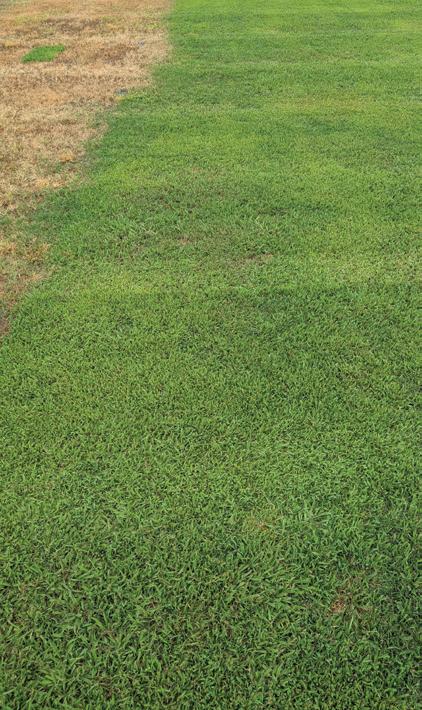
These are chemicals that are OMRIapproved (Organic Materials Review Institute) for weed control. All of the products we have tested are contact herbicides and thus much less effective than the systemic herbicide glyphosate for perennial weed control. One such chemical is 20% acetic acid, sold under such names as Weed Pharm but this formulation carries a danger label. There are long-chain fatty acid products such as ammonium nonanoate (AXXE) and Suppress (capric/ caprylic acid). Scythe is similar to these fatty acid products but Scythe is not approved for organic use. There are products based on plant oils, such as citrus oil (d-limonene) sold as Avenger. There are other plant oil-containing products sold, using clove oil, cinnamon oil, or others but some of these products are not approved for organic use. These plant oils have also acted as contact nonselective herbicides.
Keep in mind that you must use products labeled for weed control. Mixing vinegar, table salt, and dishwashing liquid and applying it as an herbicide is not a legal treatment.
Read the literature cited in this article and determine for yourself the benefits and risks to use of glyphosate and the other chemicals mentioned. Be careful about articles you read on the internet, in newspapers, and in other media. Sometimes claims are made about chemicals that are not supported by scientific research. Ask to see data from published, peer-reviewed articles in scientific journals.
If you plan to continue using glyphosate, as we continue to do here at the research station, follow information listed on the label. For example, the Personal Protective Equipment (PPE) for Roundup PROMAX is a long sleeve shirt, long pants, shoes, and socks (https://www.cdms. telusagcg.com/ldat/ld0RI000.pdf) Read and follow all label directions. Make sure the product you use has a label for the site to be treated. •
This article was originally published in Virginia Turfgrass Journal , November/December 2025 and is reprinted with permission.
Bayer. 2023. Roundup Promax Safety Data Sheet. https://www.cdms.telusagcg.com/ldat/mp0RI003. pdf
Boretti, A. 2024. Comprehensive risk-benefit assessment of chemicals: A case study on glyphosate. Oxico.l Rep. 2024 Nov 7;13:101803. doi: 10.1016/j. toxrep.2024.101803.
Boretti, A. 2020. Glyphosate and non-Hodgkin Lymphoma. Asian Journal of Organic & Medicinal Chemistry 5(4), pp. 340–347. doi: 10.14233/ajomc.2020. AJOMC-P301.
Castelli, L,. S. Balbuena, B. Branchiccela, P. Zunino, and J. Liberti. 2021. Impact of Chronic Exposure to Sublethal Doses of Glyphosate on Honey Bee Immunity, Gut Microbiota and Infection by Pathogens. Microorganisms . DOI:10.3390/microorganisms9040845.
EPA (Environmental Protection Agency). 2025. Glyphosate. https://www.epa.gov/ingredientsused-pesticide-products/glyphosate. Accessed October 3, 2025.
LIED BIOLOGICAL Gonzalez-Moscoso, M., D. Meza-Figueroa , N, V. Martínez-Villegas, and M. R. Pedroza-Montero . 2023 GLYPHOSATE IMPACT on human health and the environment: Sustainable alternatives to replace it in Mexico. Chemosphere (Nov 2023). DOI:10.1016/j.chemosphere.2023.139810.
International Agency for Research on Cancer. IARC Monographson the Identification of carcinogenic hazard to humans. https://monographs.iarc.who. int/list-of-classifications. Accessed October 3, 2025.
Mottaa, E.V., K. Raymanna, and N.A. Morana,1. 2018. Glyphosate perturbs the gut microbiota of honey bees. Proc. Nat. Acad. Sci. 115( 41):10305–10310.
National Center for Biotechnology Information (2025). PubChem Compound Summary for CID 2244, Aspirin. https://pubchem.ncbi.nlm.nih. gov/compound/Aspirin#section=Acute-Effects Accessed October 3, 2025.
ThermoFischer. 2009. Safety data sheet for acetylsalicylic acid. https://www.fishersci.com/ store/msds?partNumber=AC158180500&produc tDescription=ACETYLSALICYLIC+ACID+50GR& vendorId=VN00032119&countryCode=US&langu age=en. Accessed October 10, 2025.
Jeffrey Derr and Adam Nichols are located at Virginia Tech’s Hampton Roads Agricultural Research and Extension Center in Virginia Beach.