S SPRING HAS SPRUNG!
pringtime is here and I’m sure everyone has been looking forward to it, as have I. We’ve had a brutally cold winter in parts of Mississippi, and I hope everyone has recovered from the winter storms. Longer days and warmer weather are finally here!
We hope you are well rested as the grass will start growing soon. The turf industry gets no rest from now to November as there is so much to do.
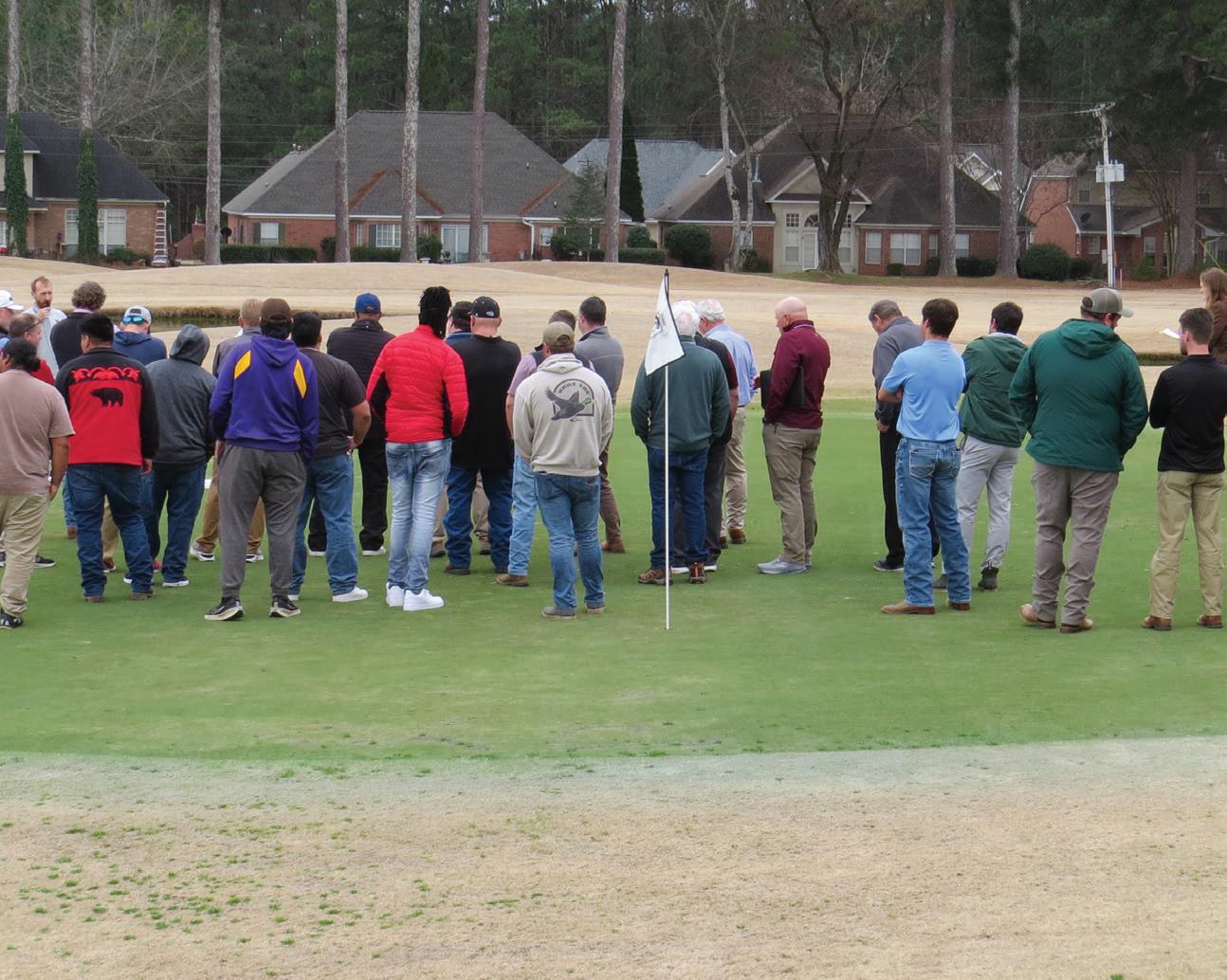
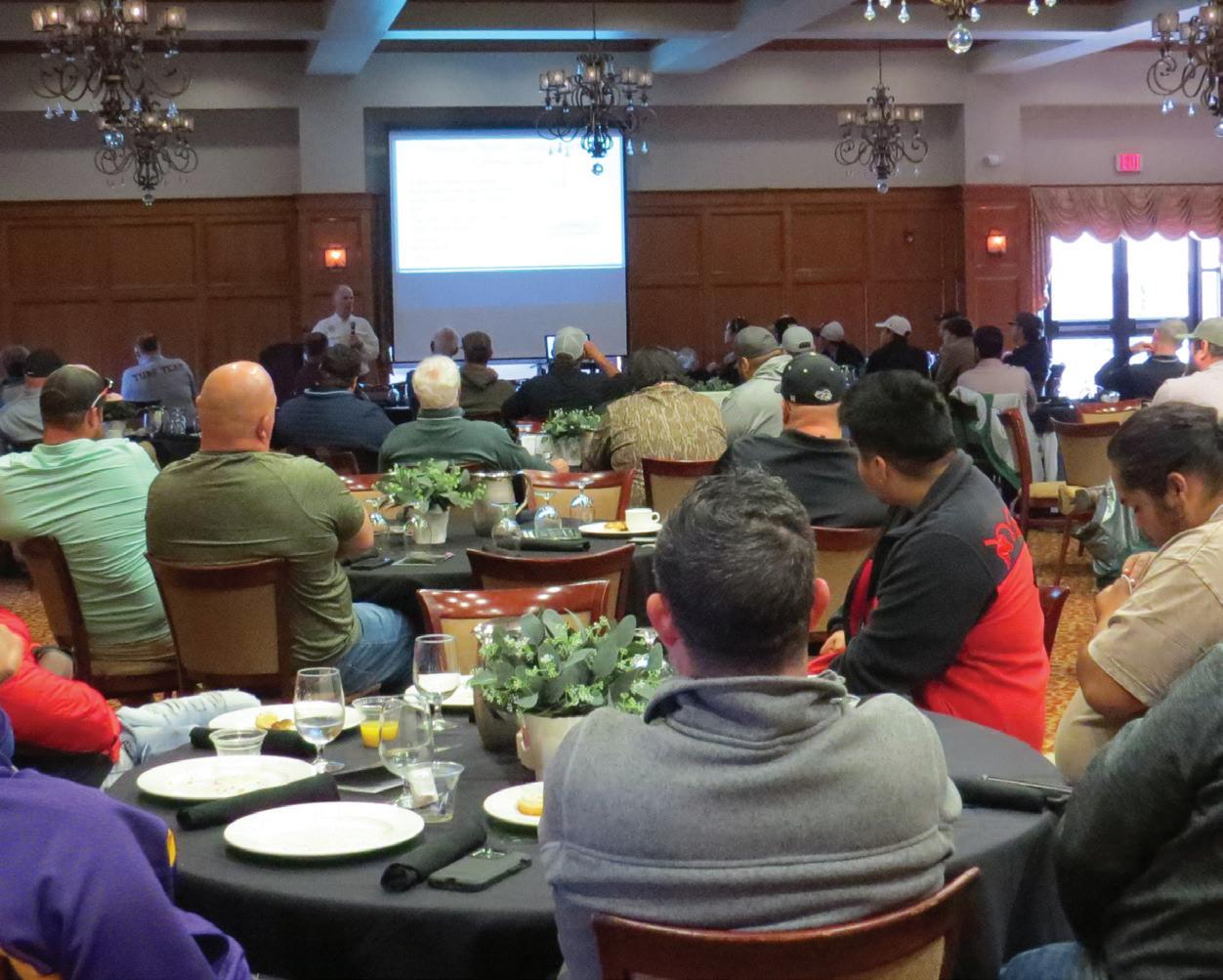
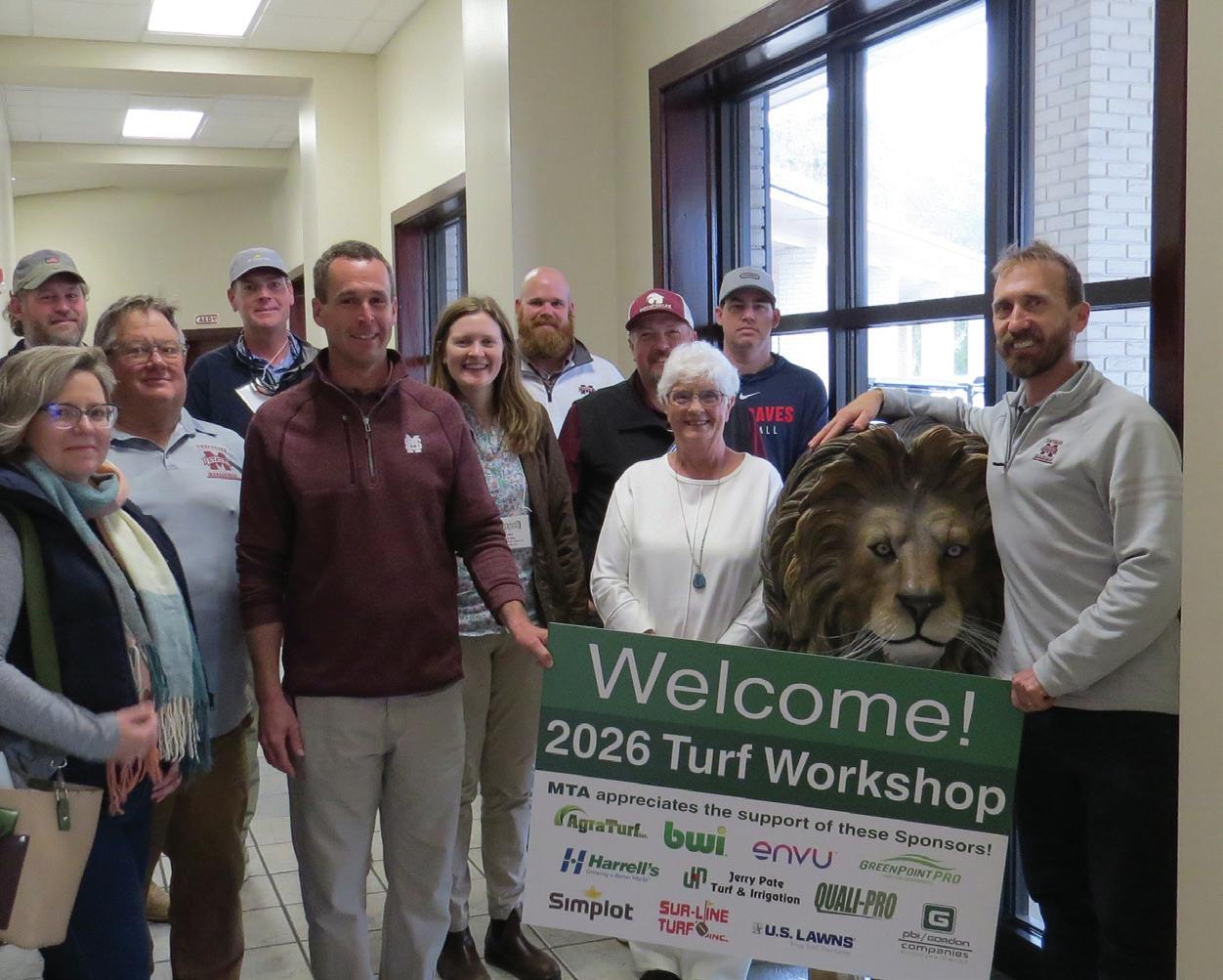
The Turfgrass Roadshow at Lion Hills in Columbus had an awesome attendance this past month and we greatly appreciate the support. Our next event is the Yard Dawg Classic held at the MSU golf course on June 9th. Hope to see you all there!
Hope you all have a great year!
Zak Holloway
Mississippi Turfgrass Association
President
JUNE 9, 2026
Yard Dawg Classic Golf Tournament
Mississippi State University Golf Course Starkville, MS
Mississippi Turfgrass is the Mississippi Turfgrass Association magazine. Subscriptions are complimentary to MTA members. The statements and opinions expressed herein are those of the individual authors and do not necessarily represent the views of the association, its staff, its board of directors, Mississippi Turfgrass, or its editors. Likewise, the appearance of advertisers, or their identification as MTA members, does not constitute an endorsement of the products or services featured in any issue of Mississippi Turfgrass. Copyright © 2026 by the Mississippi Turfgrass Association. Mississippi Turfgrass is published quarterly. Subscriptions are complimentary to members of MTA. Presorted standard postage is paid at Jefferson City, MO. Printed in the U.S.A. Reprints and Submissions: MTA allows reprinting of material published here. Permission requests should be directed to MTA. We are not responsible for unsolicited freelance manuscripts and photographs. Contact the managing editor for contribution information. Advertising: For display and classified advertising rates and insertions, please contact Leading Edge Communications, LLC, 206 Bridge Street, Suite 200, Franklin, TN 37064, (615) 790-3718, Fax (615) 794-4524.
Mississippi Turfgrass Association Box 9555
MS State, MS 39762 Office: (662) 325-0517 www.msturfassociation.org
Published by:
Leading Edge Communications, LLC 206 Bridge Street Franklin, TN 37064 Office: (615) 790-3718 Fax: (615) 794-4524 info@leadingedgecommunications.com
MISSISSIPPI TURFGRASS EDITOR Dr. Jay McCurdy MTA OFFICERS
PRESIDENT Zak Holloway MSU Golf Course (662) 386-8042
VICE-PRESIDENT / PRESIDENT ELECT Josh Smith City of Columbia, MS (601) 441-8029
SECRETARY-TREASURER Dr. Barry Stewart Mississippi State University Office: (662) 325-2725
IMMEDIATE PAST PRESIDENT
Scott Hampton Laurel Country Club (601) 467-2718
ADMINISTRATIVE SECRETARY
Linda Wells Mississippi State University Box 9555 MS State. MS 39762 Office: (662) 325-0517 Cell: (662) 769-7558 lmw218@pss.msstate.edu
DIRECTORS
Chance Meredith / Sod Rep Winstead Turf Farms (901) 430-5620
Jimmy McPherson / Golf Rep MSU Golf Course (662) 610-3260
Stephen Robertson / Central Region Rep Deerfield Country Club (662) 418-7888
Reuben Wedgeworth / South Region Rep Greenpoint AG (601) 498-0750
Mitch O’Banion / Lawns & Landscape Rep Grass Roots Turf (601) 573-7537
Scott Kuhn / Industry Rep Simplot (870) 315-2796
EX-OFFICIO
Dr. Jay McCurdy / Faculty Advisor Mississippi State University (662) 325-2331
The
larger turfgrass and landscape industry has a labor issue—mainly that there’s not a reliable pipeline for accessing young and capable employees. I have this conversation almost weekly when discussing the state of the industry and how my role in a “turfgrass program” relates. I’m now in my 12th year at Mississippi State University, so I no doubt have some ownership of the problems. But I also wanted to relay to a wider audience just what some of the solutions might be to solve this problem. Yes, higher industry pay might help, but there’s more to the story than just that.
Our landscape management industry includes a broad range of job titles, but most of us reading this magazine are either bootson-the-ground landscape managers (ex. superintendents, lawn care professionals, sports field managers, sod producers, equipment managers, etc.) or are somehow involved in the industry/ supply side (sales, accounts, research and development, chemical, equipment, etc.). We know the technical mastery and skill required to do this job. We know the rewards and challenges. Nevertheless, I find the perspective from academia is often a little different from what it was when I was a practitioner.
We are all concerned about a shrinking pipeline of new professionals entering our field. Turfgrass academic programs are often criticized for producing too few graduates, and those graduates are said to be underprepared for the demanding, multifaceted roles that await them. The same is said for students fresh out of high school. There’s always a debate about whether it’s generational or whatnot. Maybe there’s something to that, but what, pragmatically, can we do to figure all this out?
The issue is more complex than a simple academic shortfall. The challenges facing turf programs reflect deeper structural and cultural dynamics within the larger society, as well as within the green industry and our academic institutions. I think we need to embrace a new model of mutual investment between academia and industry in order to restore vitality and sustainability to the profession. Whatever the model, it must redefine recruitment, enhance the talent pool, and demonstrate that green-industry roles are both professionally rewarding and personally sustainable.
This essay outlines a vision for such a partnership, built on five key principles: shared recruitment, broader inclusion, job-quality reform, experiential learning, and a mutual commitment to long-term workforce development.
The Myth of the One-Way Pipeline
Turfgrass academic programs are too often viewed as workforce development pipelines. In this paradigm, universities are expected to “turn out” graduates who are job-ready, immediately employable, and long-term loyal to the industry. These are ambitious goals that can only be achieved through industry partnerships. Universities cannot solve structural labor shortages in isolation. For starters, the looming demographic cliff, where student enrollment drops due to fewer babies having been born ~18 years ago, is self-evident. We have to reframe the relationship as a two-way street: industry leaders and employers must engage as co-investors in the success of the next generation.
The declining number of turfgrass students is not solely a turf problem—it mirrors trends across many science, technology, engineering, agriculture, and mathematics (STEAM) disciplines. Yet in turf, the impact is more acute. Fewer students are entering, and those who do are frequently drawn away by careers with higher salaries, greater mobility, and more stable work-life balance—fields like wildlife biology, ecology, food science, and agricultural engineering. If return on investment (ROI) for college interests you, I highly recommend Preston Cooper’s Is College Worth It? A Comprehensive Return on Investment Analysis article.
If the green industry wants to retain talented, committed professionals, it must work with academic programs to create clearer, more appealing, and more stable career pathways for students entering the field.
Recruitment: A Shared Responsibility
One of the most common critiques from green industry professionals and hiring managers is that turf programs are not doing enough to recruit students into the field. In truth, recruitment cannot be the sole responsibility of faculty or universities. Few high school students grow up dreaming of becoming a golf course superintendent, especially if they’ve never been exposed to the role or the science behind it. Lots of kids grow up mowing lawns, but do they view that as a stable profession? How many golf course superintendents leave the industry for better working hours or more stable family lives? The stories of our profession are not always positive. How do we improve that?
Meaningful recruitment requires visibility, storytelling, and early engagement. That means:
• Hosting and organizing Golf Course Superintendents Association of America’s (GCSAA’s) STEAM program, First Green.
• Industry professionals visiting high schools, FFA programs, and 4-H events to talk about careers in turf and to give hands-on help managing facilities.
If we want to build a workforce that reflects the broader demographics of our society, the turfgrass industry must actively recruit from historically underrepresented communities, including women, students of color, and first-generation college students. Many turf programs sit within land-grant institutions with a mission to serve all citizens of their state. Partnerships with historically Black colleges and universities (HBCUs), tribal colleges, and community colleges offer promising avenues for talent development.
Additionally, the industry must take steps to ensure that students from diverse backgrounds are not only recruited but also retained. That means:
• Paid internships with real mentorship, not just summer labor. This is something our industry does well. Though pay and working conditions could always be improved, I understand the financial realities for most businesses— margins matter, and you can’t pay a 20-year-old more than your loyal long-time employees.
• Hosting youth days, career shadowing, or field trips in coordination with FFA, agricultural teachers, 4-H, and Extension educators.
• Alumni sharing their stories, not just of agronomic challenges overcome, but of career development, family stability, and lifelong learning.
Academic programs can support these efforts with marketing materials, introductory coursework, event production, and advising. Industry partners can develop their own materials, and my academic colleagues and I would be happy to collaborate. But unless the industry is willing to support or do the work, recruitment will remain a leaky pipeline. The Golf Course Superintendents Association of America has promoted its First Green program and has invested heavily in promoting the profession to kids in FFA. This is a good example of how we might target youth to entice them into our profession.
Reaching the Future of the Profession
A second issue compounding recruitment challenges is the profession’s lack of demographic diversity (this isn’t a DEI discussion!). This is not simply a turfgrass issue; it reflects broader underrepresentation across many STEAM fields. However, the profession’s visual and cultural homogeneity isn’t always inviting to those from different socioeconomic or cultural backgrounds. That’s to say very little of the lack of female representation—it’s improving. Still, it lags considerably behind many other attractive career fields for the same candidate pool we are competing for.
• Scholarships and travel support to attend GCSAA and regional turfgrass conferences. GCSAA and our regional events have done a great job supporting our students. Our state and regional associations have covered almost all the costs for our students attending events like Deep South. GCSAA allows students and academic advisors to attend the Golf Show for free. They allow students to be members for free. We just have to cover flight and meal costs—sell more hats and pullovers!
• Storytelling campaigns that highlight successful professionals in our industry. Barry Stewart hosts MSU Turf Seminar speakers, and I’m sure he’d love to hear from those of you who can share your secrets to success and happiness.
If the profession remains perceived as culturally insular or exclusionary, we will continue to miss out on a generation of bright, capable professionals who simply chose other welcoming fields.
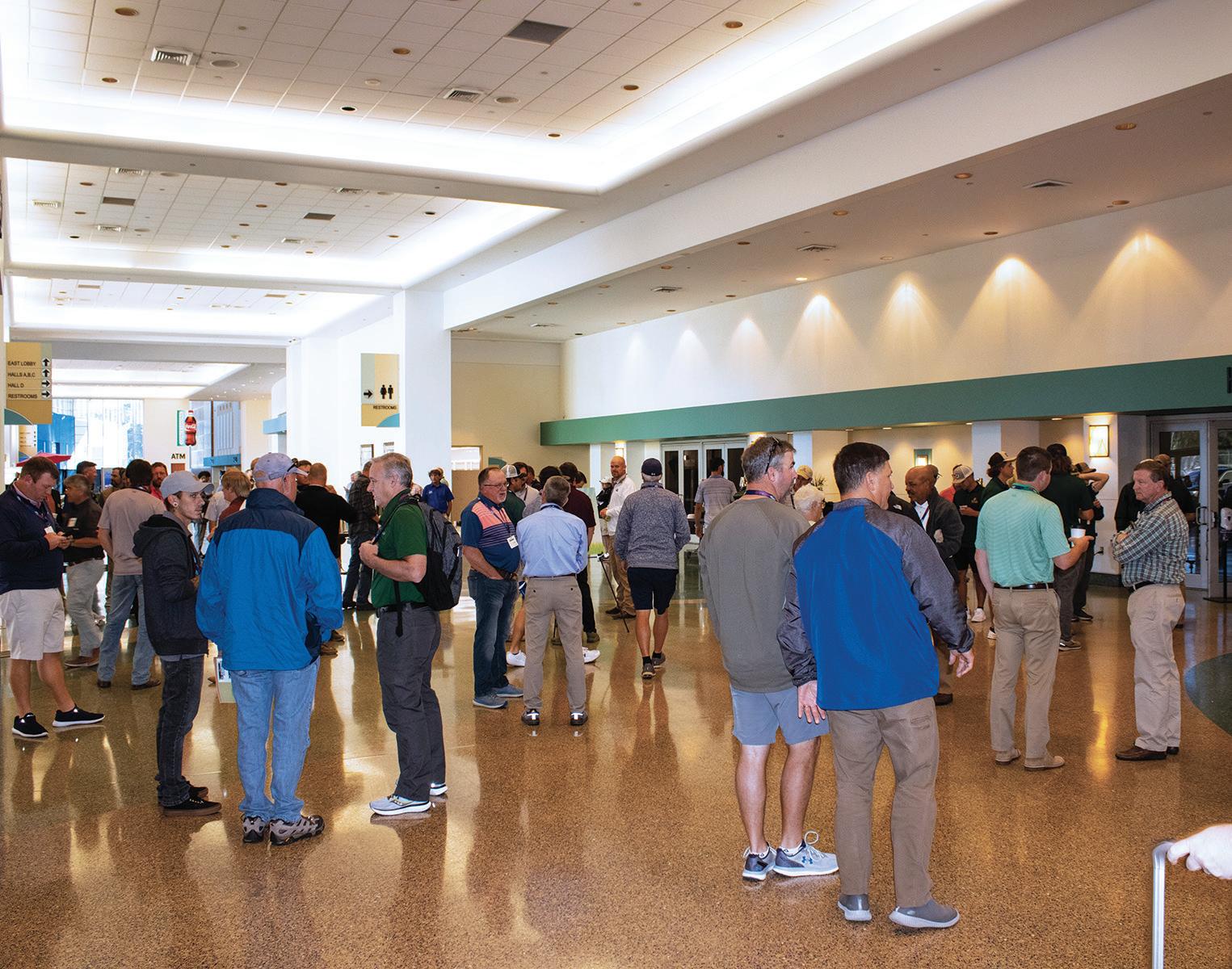
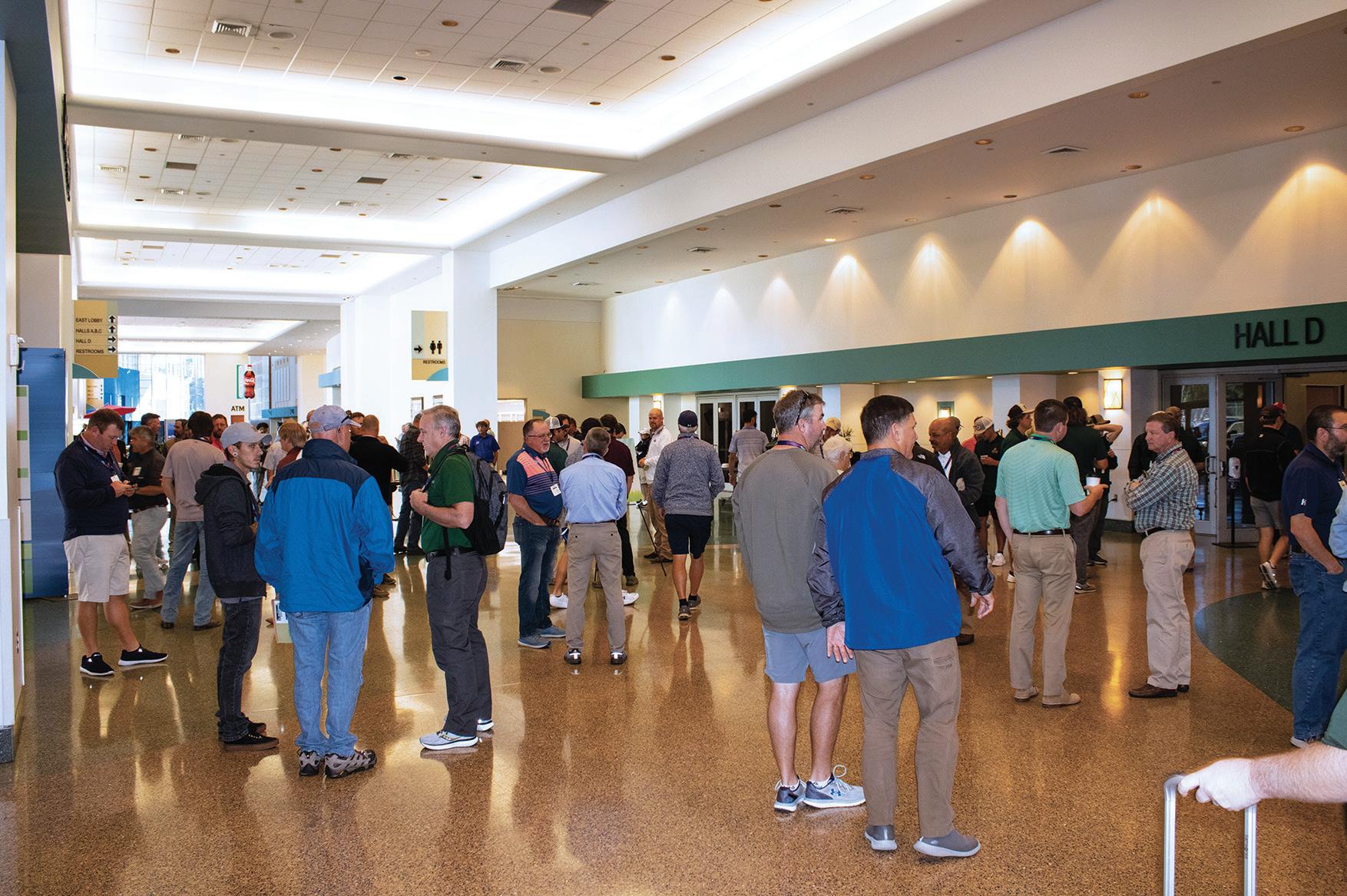
Students attending local and national conferences benefit from the wisdom and experience of generations of turfgrass managers.
Career Quality: The Hidden Cost of Turnover
Recruitment efforts alone are not enough if the jobs themselves are perceived as undesirable. One of the most pressing challenges facing the green industry is career sustainability and burnout. Even for students who graduate from turf programs and enter the profession, the early-career reality can be discouraging.
Starting roles are often physically demanding, geographically isolating from home, and poorly compensated relative to the skill and responsibility required. I won’t disagree: early careers are hard in many professions, and ours has a history of heartiness and resilience that we pride ourselves on. And that’s great, but let’s face it, positions frequently involve long hours, especially in golf and sports fields, weekend shifts, and high turnover. Relocation is common, placing strain on young professionals with families or community ties. Burnout is not only likely, but it’s also all too often expected.
In many cases, internships play a decisive role. While some students have transformative experiences, others emerge disillusioned. Internships are often where students determine whether they see a long-term future in the profession. Unfortunately, too many internships treat students as temporary labor rather than future colleagues.
Our profession must take a hard look at its entry-level roles and ask:
• Are we investing in mentorship or extracting labor?
• Are we helping build careers or merely filling seasonal gaps?
• Are we creating a profession that values work-life balance and career advancement?
Until the industry addresses these questions honestly, retention will remain low, and turf programs will struggle to retain students who see more stable options elsewhere.
Experiential Learning and Academic Alignment
To ensure that students are prepared for professional success, universities must evolve as well. Turfgrass programs must incorporate not only plant science and weed control, but also:
• Business management and budgeting
• Communication and conflict resolution
• Human resources and leadership
• Sustainability, data analytics, and emerging technologies
Faculty must engage in continuous dialogue with industry professionals to align curricula with real-world expectations. This can happen through advisory boards, curriculum reviews, and co-developed experiential learning opportunities.
Meanwhile, the industry must treat internships and co-ops as educational experiences, not just temporary employment. Golf courses that offer structured mentorship, performance feedback, and leadership development will not only see better short-term productivity, but they’ll also help shape the long-term workforce of the profession.
The Role of Associations
The Sports Field Management Association (SFMA), GCSAA, and other professional landscape associations have a unique opportunity to lead systemic change. Many in the industry look to them for guidance, advocacy, and professional standards. But as organizations, they can:
• Develop and promote best practices for internship mentorship
• Recognize organizations that invest in student development
• Partner with academic programs on workforce development grants
• Support early-career professionals through networking and continuing education
Just as importantly, associations must continue to help shift cultural expectations within the profession. That means promoting superintendent and field manager roles as executive leadership positions, not just agronomic technicians. It means celebrating the intellectual and managerial skills required to succeed in this career, and advocating for compensation, stability, and respect commensurate with those demands.
Learning from Other Industries
Much can be learned from adjacent fields. Engineering, for example, has long faced similar challenges: rigorous academic programs, intense internships, and high attrition. Yet leading companies and associations in that field have invested heavily in university partnerships, student engagement, and early-career support.
Top manufacturing and technology firms fund campus recruiting, sponsor capstone projects, offer paid site visits to facilities, and offer career ladders with clear promotion timelines. These students, like our own, are not afraid of hard work. They are attracted by clear career outcomes and structured support along the way.
There is no reason the green industry cannot offer the same. But doing so requires a shift in mindset: from “you have to earn your place” to “we will invest in you as the future of our profession.”
A Vision for the Future
In many places, these goals are already occurring, but here are just a few to imagine as being widespread:
• High school students attend “turf career days” hosted by their local superintendent and Extension agent.
• Universities and employers codesign internships that develop not just technical skills, but leadership and confidence.
• Interns feel welcomed and valued from their first day on a golf course.
• Assistant superintendents are mentored, paid fairly, and see clear paths to advancement.
• Associations and turf programs work side by side to tell the story of a modern, rewarding profession.
This future is not only possible but also essential. The alternative is the status quo, or worse, decline: fewer students, fewer assistants, more burnout, and an aging workforce with no one ready to take the reins.
Conclusion: A Call to Shared Action
The challenges facing the profession are real, but they are not insurmountable. What is required is not blame, but shared responsibility. Universities must modernize curricula and deepen student support. Turfgrass managers must invest in mentorship and help reshape early-career roles. Our industry associations must lead with vision, coordination, and advocacy.
Ultimately, this is about stewardship of the profession itself. The same care, foresight, and commitment that turfgrass managers bring to managing turf must now be brought to cultivating the future of the workforce.
The author would like to thank Barry Stewart for his suggestions and edits to this article.
Grading • Super Topdressing
No-Till Planting • Sodding • Sprigging
On-Site Custom Built Turf Covers
Fertilizer • Seed • Turf Colorant
Sod Staples • Bunker Nails • Bunker Liners
Sod • Sprigs • Sand • Mixes
Infield Mix • Infield Conditioners
Warning Track Stone • Mound Clay
SPRING STARTUP WITHOUT THE SCRAMBLE:
A Simple Operating Plan for Your Busiest Season
Spring can feel like a wild sprint in the turfgrass industry. Demand rises fast, the weather shifts by region, and crews are expected to move from preparation to production with little margin for error. Whether you own a large landscape company, supervise grounds, or work independently, the same business question pops up this time of year: how do you stay organized when everything speeds up at once?
North Carolina makes this even more important because spring does not look the same across the state. Both cool-season and warm-season grasses are grown in North Carolina, with cool-season grasses performing best in spring and fall, while warm-season grasses are slower to green up in spring and grow best in summer. That means your startup plan needs to align with your region, turf type, and service mix, rather than relying on a single statewide timeline.
Here is a framework for all types of turfgrass managers:
1. Set your spring capacity before you fill the calendar.
A full schedule doesn’t always mean a profitable schedule. Start by estimating what your team can realistically handle each week based on labor hours, travel time, equipment availability, and the complexity of your work. For a sports turf manager, this may mean planning field preparation windows around game schedules and weather. For a landscape business owner, it may mean separating recurring maintenance from installation work so one category does not disrupt the other. For an independent operator, it may mean limiting new clients until recurring customer routes stabilize.
This step helps you avoid the spring trap of saying yes too quickly and spending the next six weeks fixing preventable delays. It also gives you a better basis for quoting timelines, setting expectations, and deciding whether to outsource any work.
2. Build a startup checklist for equipment and supplies.
Spring problems often look like labor problems when they are really equipment and supply problems. A mower down for two days can throw off an entire route. A missing part can delay an athletic field prep. A late material delivery can create a client communication issue that your team then has to manage.
Create one checklist for startup readiness and assign dates to each item. Include inspections, maintenance, blade sharpening, tire checks, calibration, backup equipment options, and commonly used supplies. If you manage a crew, assign ownership to specific people and confirm completion in writing. If you work alone, schedule this work like billable time because it protects billable time later.
The goal is not perfection. The goal is fewer surprises when everyone needs service at once.
3. Standardize your onboarding before hiring pressure hits.
Many businesses wait until they are short-staffed before considering training. Spring is the worst time to build onboarding from scratch. A simple onboarding process can help new hires become productive more quickly and reduce the burden on your strongest crew members.
Keep it practical. Focus on safety, equipment basics, site expectations, communication standards, and what good work looks like in your operation. For sports turf settings, include event-day expectations and the chain of communication.
For landscape crews, include job-site photos and quality examples. For independent operators who occasionally bring in help, use a one-page field guide that outlines your process and customer standards.
Education is one of the strongest retention tools available because it helps people build confidence and feel invested in their work. It also protects quality when the pace increases.
4. Protect your schedule with proactive client and stakeholder communication.
Spring startup gets harder when communication becomes reactive. A short round of outreach before your busiest stretch can prevent many avoidable issues. Confirm service windows, clarify what is included, and explain what may shift due to weather or field use.
For sports turf professionals, this can mean a quick pre-season update to athletic directors, coaches, or facility contacts about timelines, field conditions, and scheduling limits. For contractors, it can mean a reminder about spring demand, response times, and approval timelines for add-on work. For independent operators, it can mean confirming your route days and the best way to reach you for non-urgent requests.
Clear communication reduces interruptions and helps people understand that good turf outcomes require planning, timing, and patience.
5. Track a small set of weekly numbers.
You do not need a complex dashboard to run your Spring startup well. You need a short list of numbers that tells you whether your plan is holding up. Pick metrics that align with your role and review them weekly.
EXAMPLES INCLUDE:
• labor hours scheduled versus labor hours worked
• completed jobs or field tasks versus planned
• equipment downtime
• callbacks or rework
• weather delays
• material usage on high-volume items
• outstanding approvals or invoices
These numbers help you spot problems early. If labor hours are running high every week, your route density or staffing plan may need adjustment. If callbacks spike, training or quality checks may need attention. If equipment downtime keeps increasing, preventive maintenance may be slipping.
6. Build your plan around your market, not a generic template.
The turf and landscape industry is broad, and that matters for business planning. NALP (National Association of Landscape Professionals) reports that the landscape services industry reached a market size of $188.8 billion in 2025 and includes more than 692,000 landscaping service businesses. That scale reflects a wide range of business models, from solo operators to larger firms, along with very different customer expectations across markets.
A startup plan that works for a municipal sports complex may not fit a residential landscape route. A plan that works in one region of North Carolina may need adjustment in another. Chris
The NC State Extension puts it plainly: “No one type of grass is best suited to all situations.” The same principle applies to operations. Build your plan around your turf, clients, team, and region.
A practical spring takeaway…
Spring will always be busy. While we can’t remove the pressure, we can reduce preventable chaos.
A simple operating plan can do that. Set your capacity, prep equipment early, standardize onboarding, communicate before problems start, and track a few meaningful numbers. These steps require intention, and they pay off when the season starts moving faster than expected. •
This article was originally published in North Carolina Turfgrass, March / April 2026 and is reprinted with permission.
linkedin.com/company/theturfzone x.com/theturfzone
facebook.com/theturfzone
sales@leadingedgecommunications.com