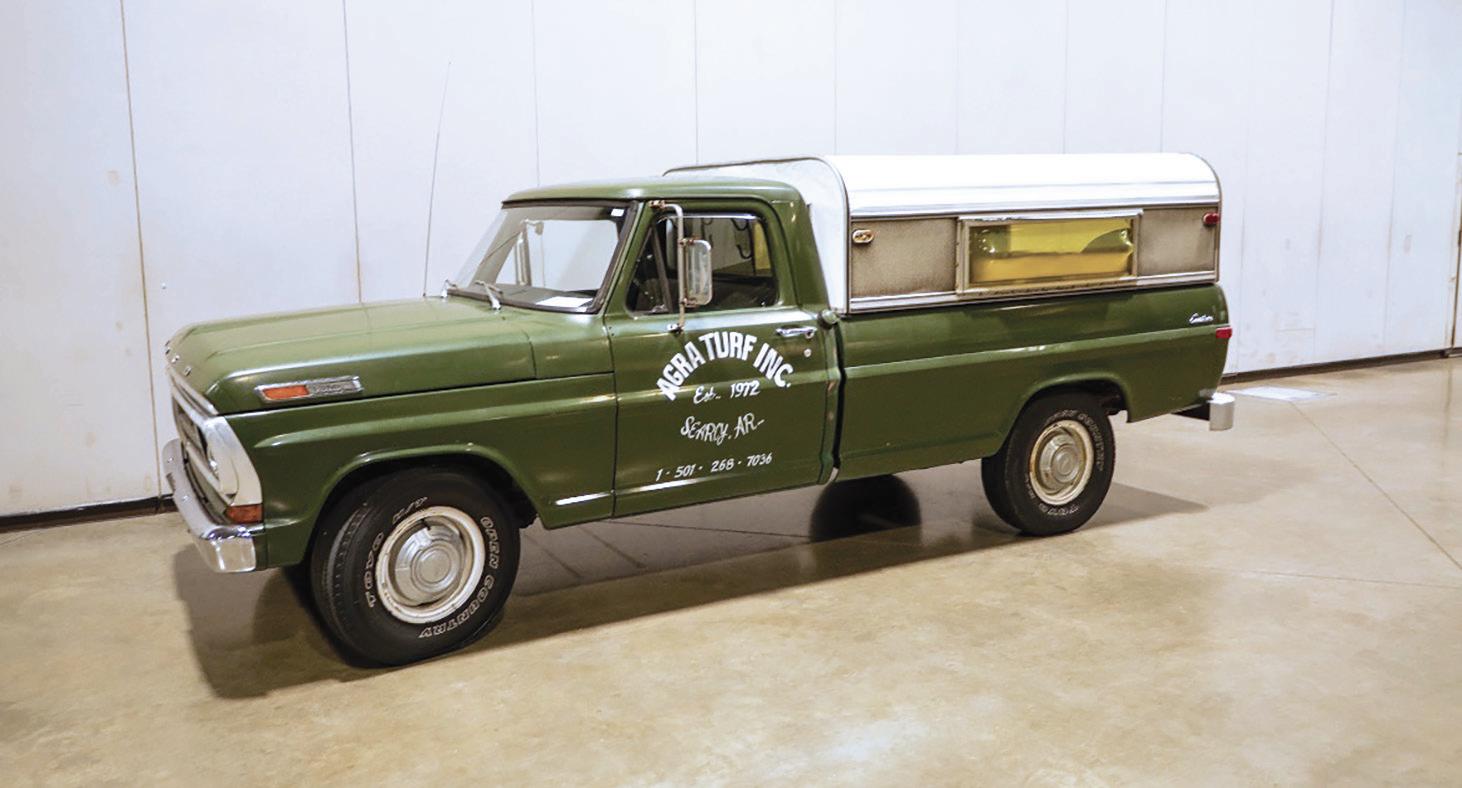
Rodney Fisher Agra Turf, Inc. • 501-268-7036 agrarod@yahoo.com
Josh Landreth, Vice President Ace of Blades • 479-530-7001 aceofblades@cox.net
Jay Randolph
Sebastian County Park Admin. & Golf Course Superintendent jrandolph@co.sebastian.ar.us
Ricky Self
Cypress Creek r.self@yahoo.com • 501-605-8000
Healthy Turf starts with Greene County Fert.
Friends and Mentors
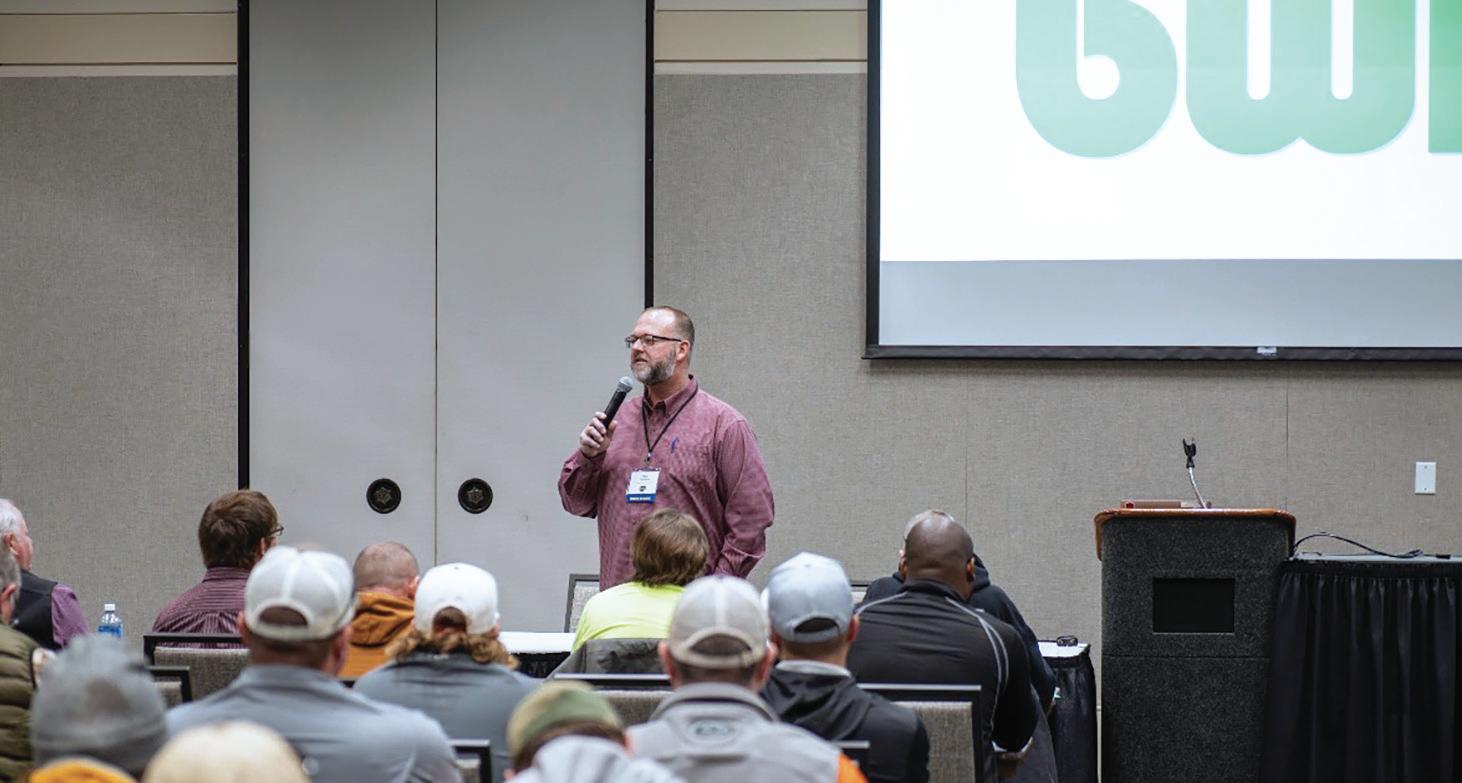
What an awesome conference we had in January! Huge shout out to our sponsors, our vendors, our speakers, and to so many that contributed to the success of the conference. It was great to see so many of you there!
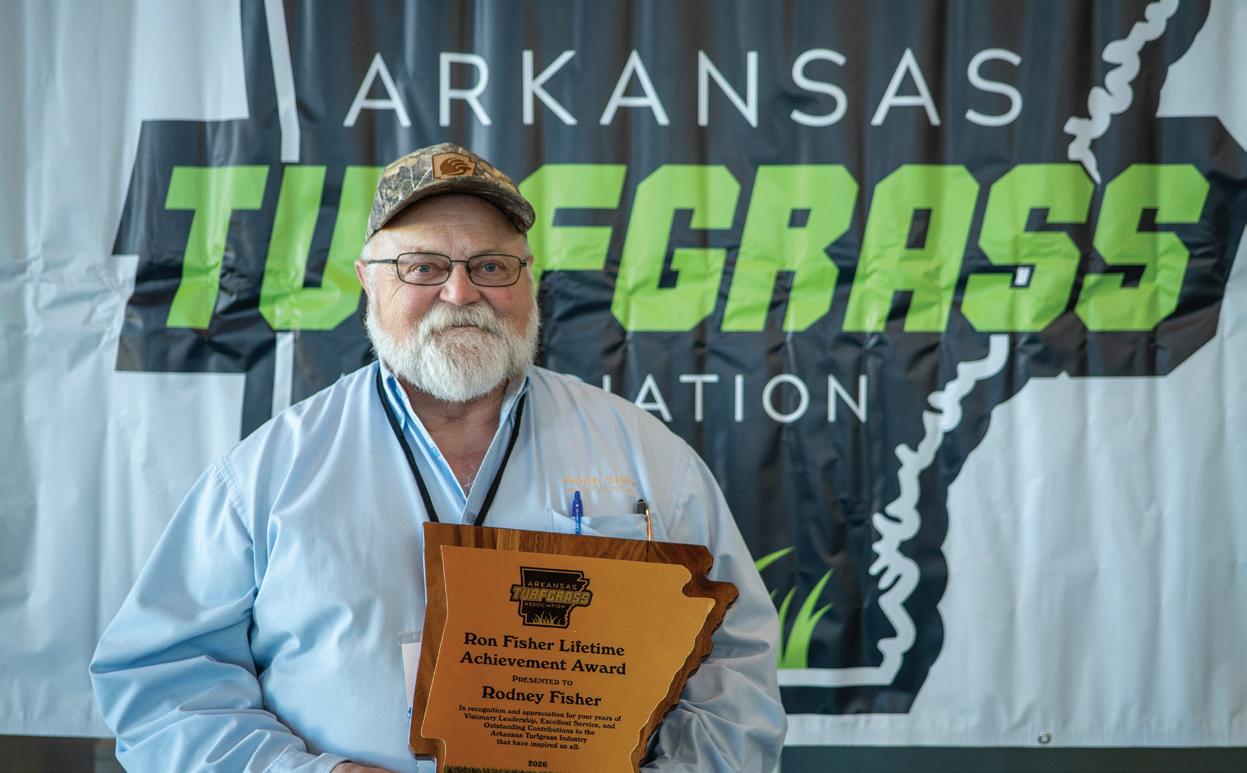
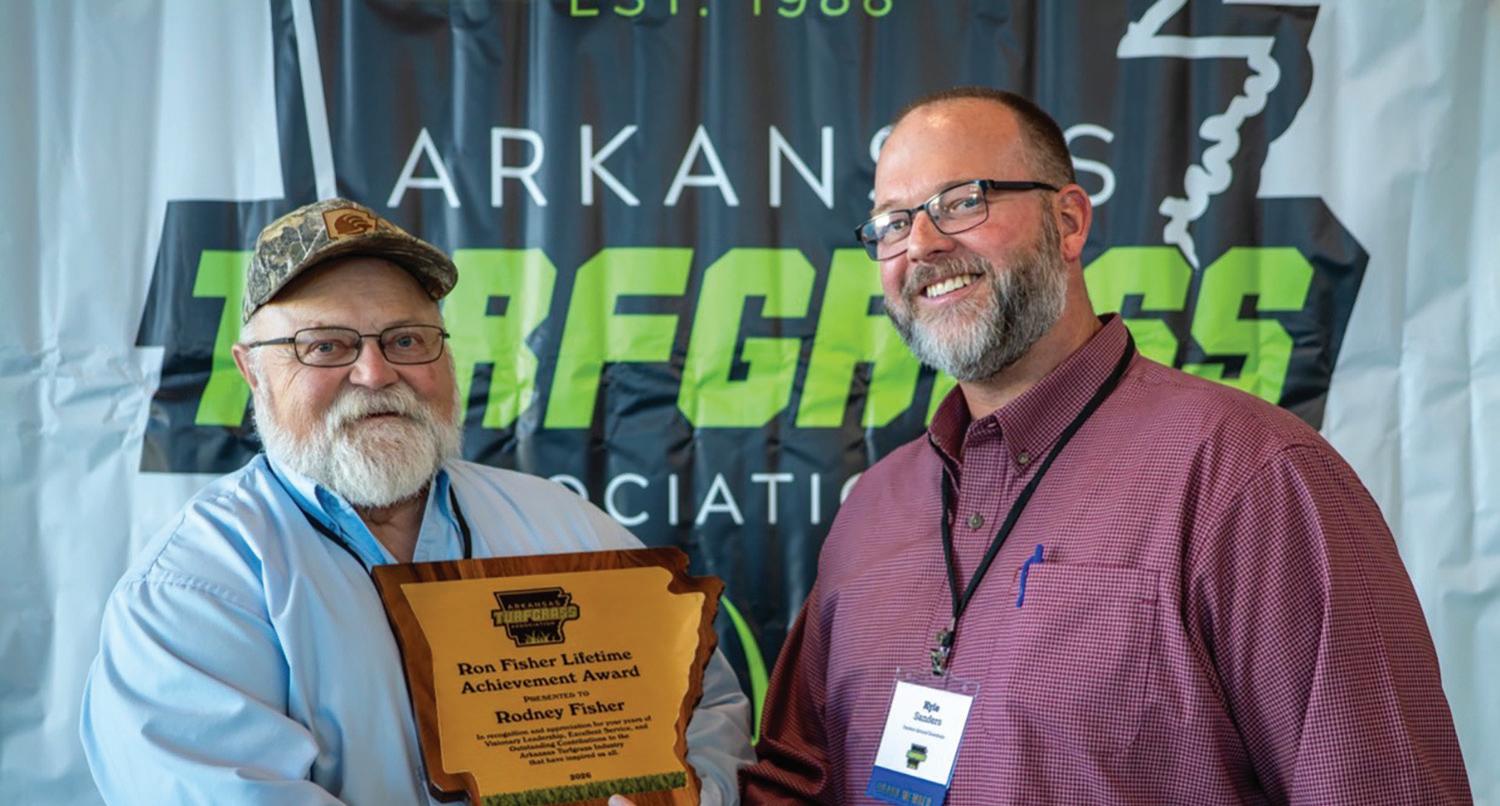
The highlight of the 2026 conference for me was seeing my good friend Rodney Fisher receive a Lifetime Achievement Award from the ATA. Rodney is the epitome of what makes our industry great. He’s one of the hardest workers you’ll meet, and he’d give you the shirt off his own back. There is no one more deserving to be recognized for his contributions to the turf industry than Mr. Rodney Fisher. Congratulations my friend!
It’s truly amazing how many life-long friends like Rodney I’ve met because I thought it sounded cool to work with grass. I’ll never forget walking into Dr. Mike Richardson’s office and telling him, “I think I want to study Turfgrass Management.” An hour earlier, I’d never known there was such a thing. Mike was the first person I knew in the industry, and he has been pouring into my life for the 26 years since that first conversation.
The second person I met in the industry was Dr. Doug Karcher. He had just arrived in Fayetteville when I started the program, and like Mike, chose to pour into me and countless students like me over the years. A few years later, I started a Masters program under Doug’s leadership. Eventually, I started my business as a part time side gig while I was working as Doug’s research assistant full time. He supported me every step of the way.
Those guys went from being teachers, to bosses, to friends, and I’m so thankful for their influence in my career as well as my personal life. If you’ve been around the industry long, I bet you have your people too.
The Karchers live in Columbus, Ohio now, and unfortunately have recently gone through a tragic family situation. As tragic as the situation was, it was inspiring to see so many friends from the Turfgrass Industry (many from Arkansas) make the pilgrimage to Ohio to support their family. That’s just how turfies do it. We celebrate the victories together. We laugh together. We help each other. We give our time. We support. We care. And sometimes we just sit in the mud together. In was awe-inspiring to see so many from Doug’s tree of influence there to support him, when he’s supported all of us in so many ways.
As I write this letter, the Bermuda is starting to break dormancy. The weeds are popping. Pollen is going nuts. With spring in the air, I received calls from three friends today that needed advice with things going on in their businesses. Today was a good day. I’m thankful for those friends. I’m thankful for the excitement spring brings in our industry. I’m thankful for the friends I have because I walked into Dr. Richardson’s office and asked, “What’s this Turf Management stuff about?”
Josh Landreth ATA-Vice President
Wendell Hutchens, Ph.D. Assistant Professor of Turfgrass Science University of Arkansas, Department of Horticulture Cell: 276-952-8186 Office: 479-575-6205 wendellh@uark.edu X / Twitter: @HutchensWendell Mike Richardson, Ph.D. Professor 479-575-2860 mricha@uark.edu UNIVERSITY
John H. McCalla Jr. Program Technician III 479-575-5033
jmccall@uark.edu
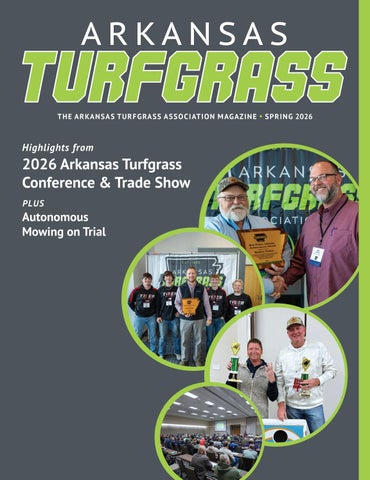
HIGHLIGHTS FROM THE 2026 ATA Conference and Trade Show
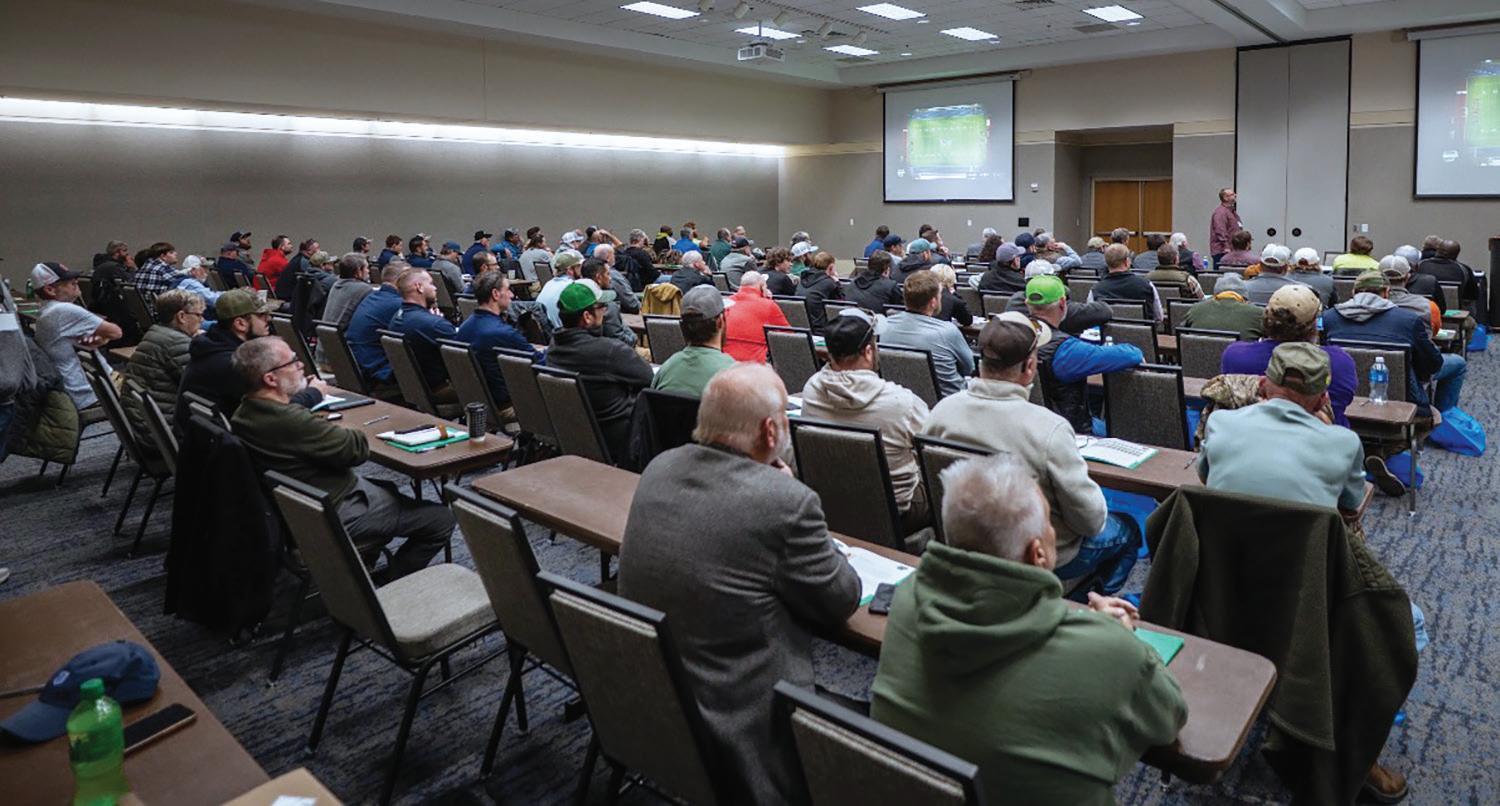
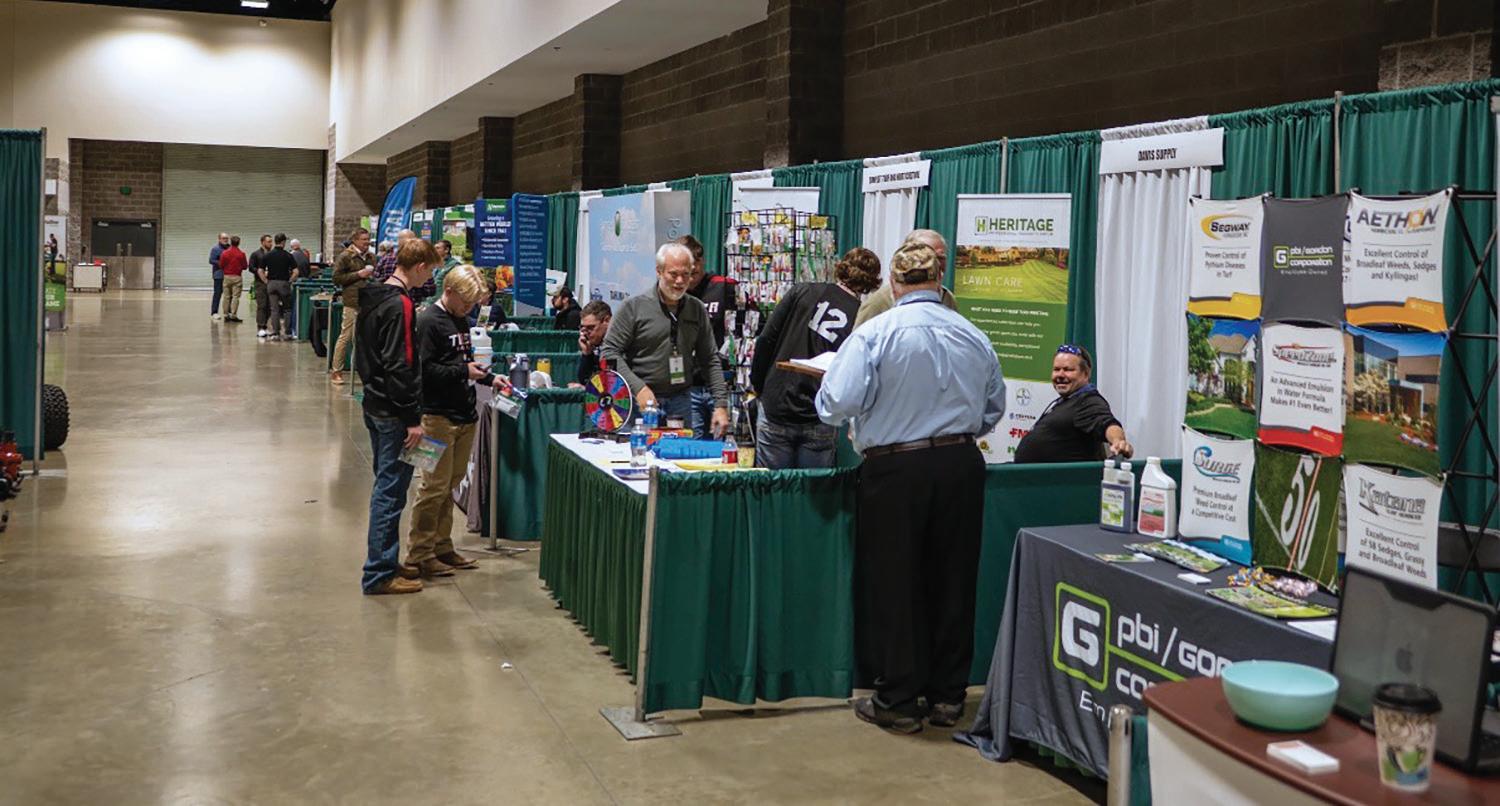
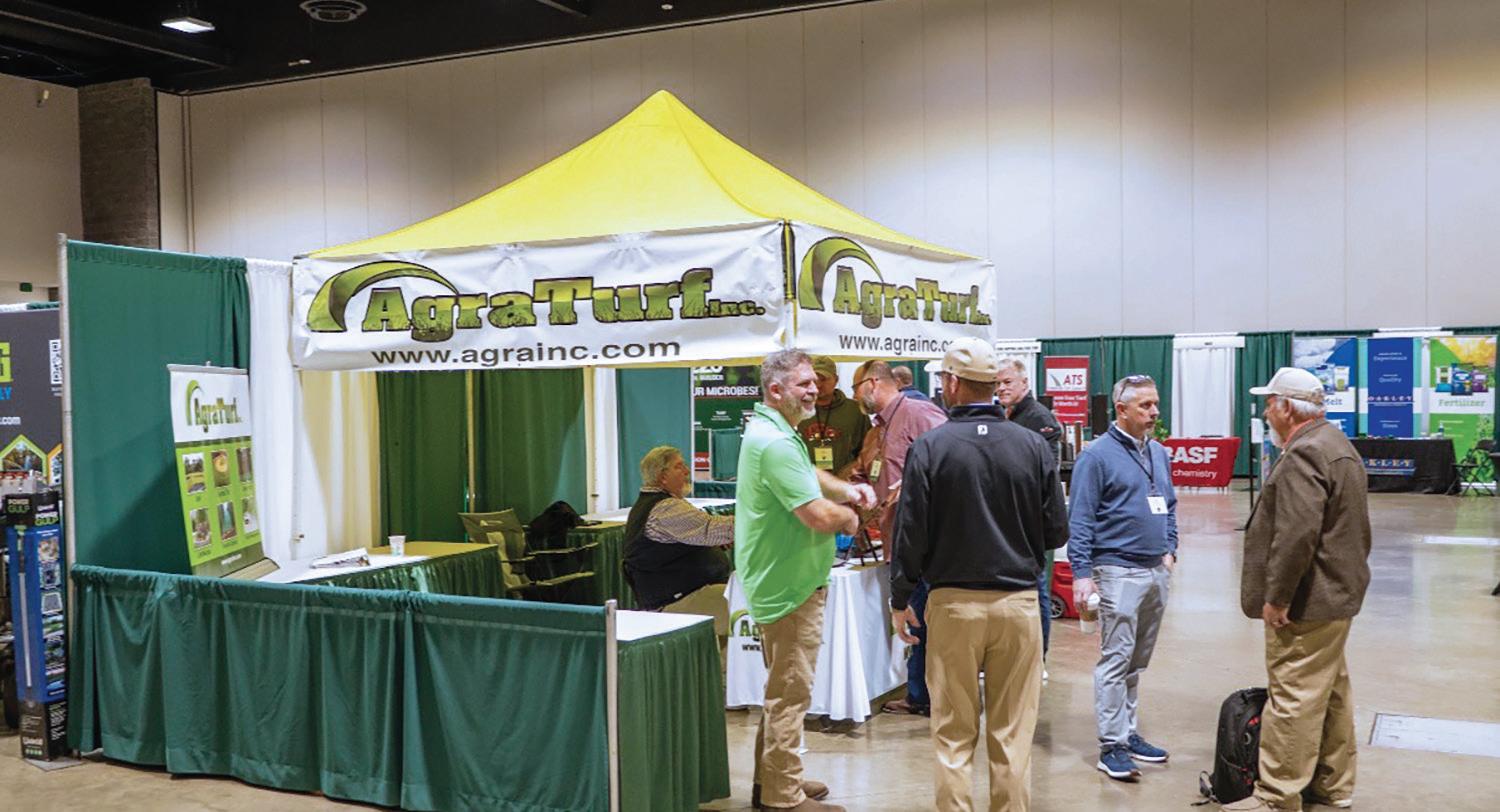
We had a great 2026 Conference and Trade Show. We had 216 attendees, 39 vendors (including several new ones), and a total of 50 booths sold.
Our speakers from the University of Arkansas, Oklahoma State, Auburn, and Virginia Tech were excellent, and many attendees stayed for the Friday sessions as well. We want to thank our sponsors, attendees, vendors, and speakers for making this event such a success.
Award and Scholarship
Winners
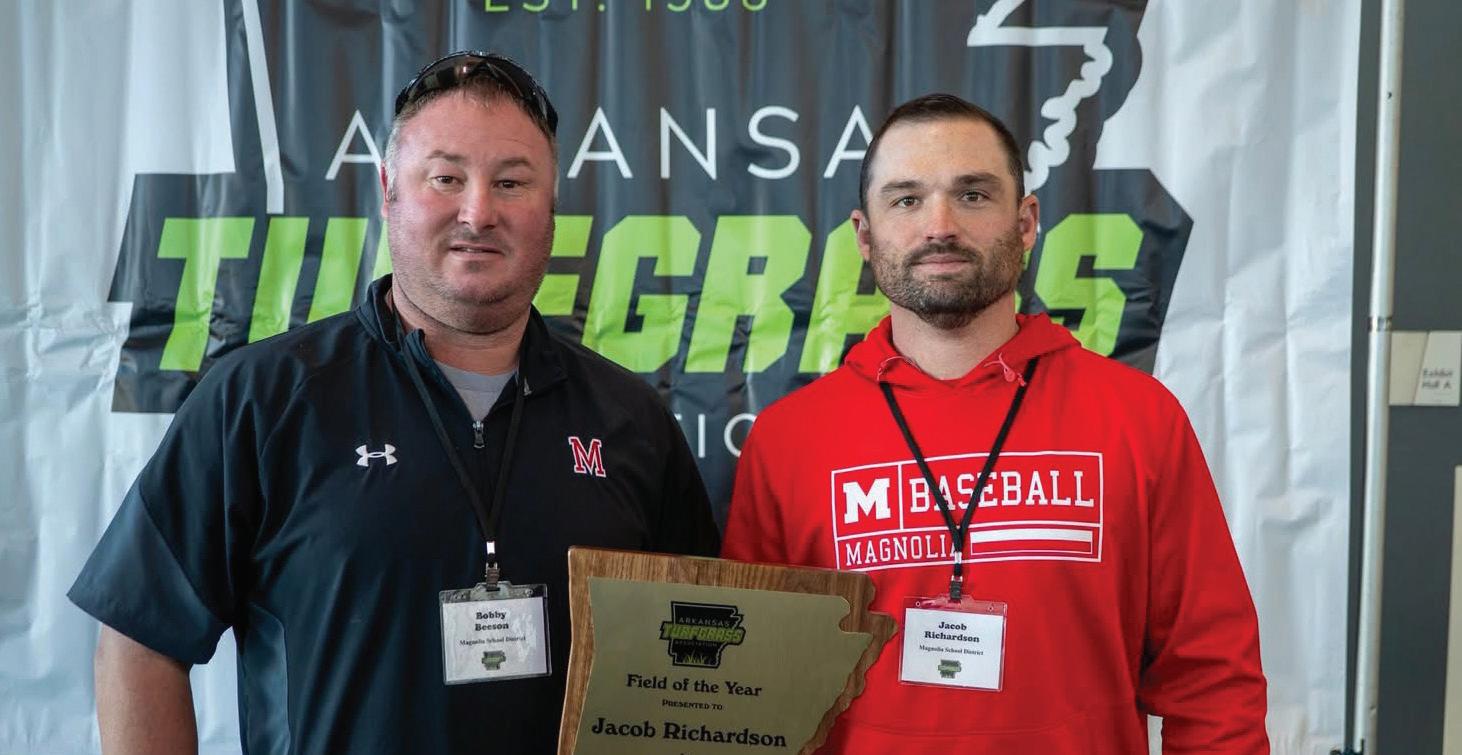
Richardson,
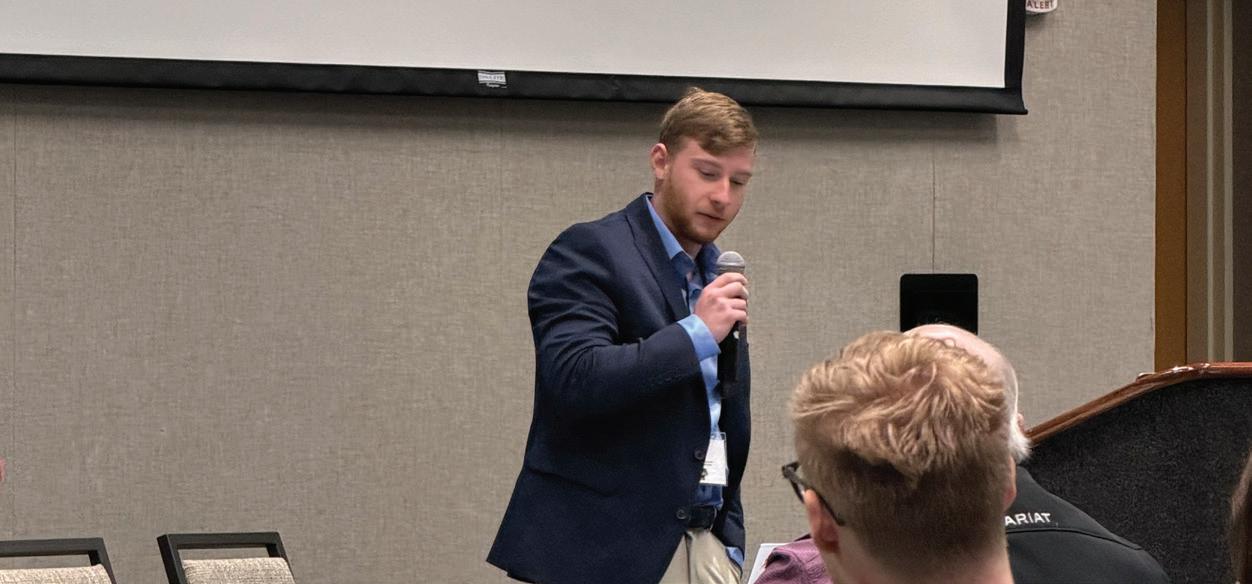
Congratulations to both Seth Ford (pictured) and Hayden Hawthorne (Hayden not pictured, since he was working in New Jersey) for each winning the ATA Outstanding Intern $1,000 Scholarship. Each person who supports the ATA makes it possible for us to give back to students entering the turf industry.
Rodney Fisher received the Ron Fisher Lifetime Achievement Award which is named after his Dad. We appreciate Rodney and everything he has done not only for the ATA but our whole turf industry. Thank you Rodney for being someone people can come to.
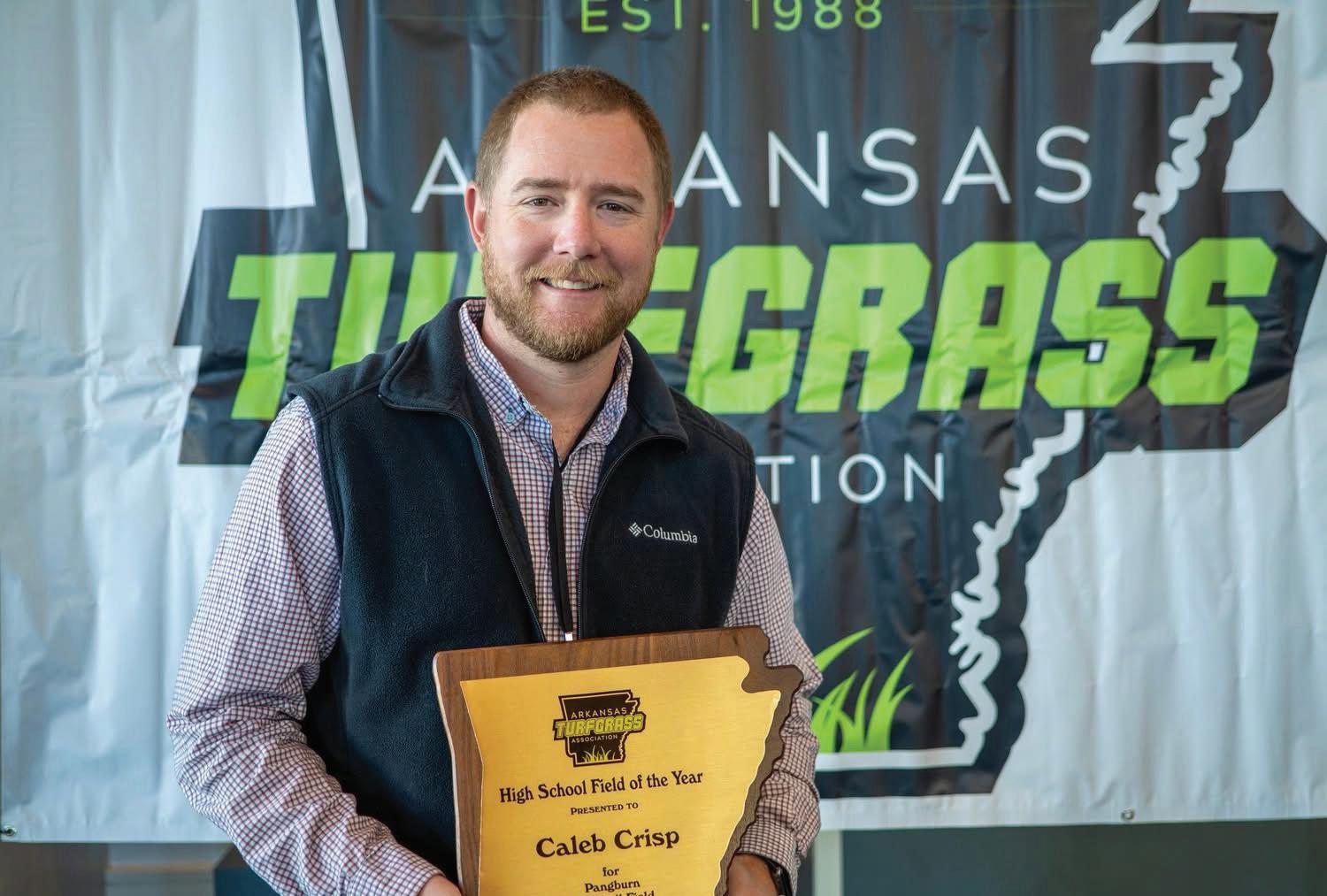
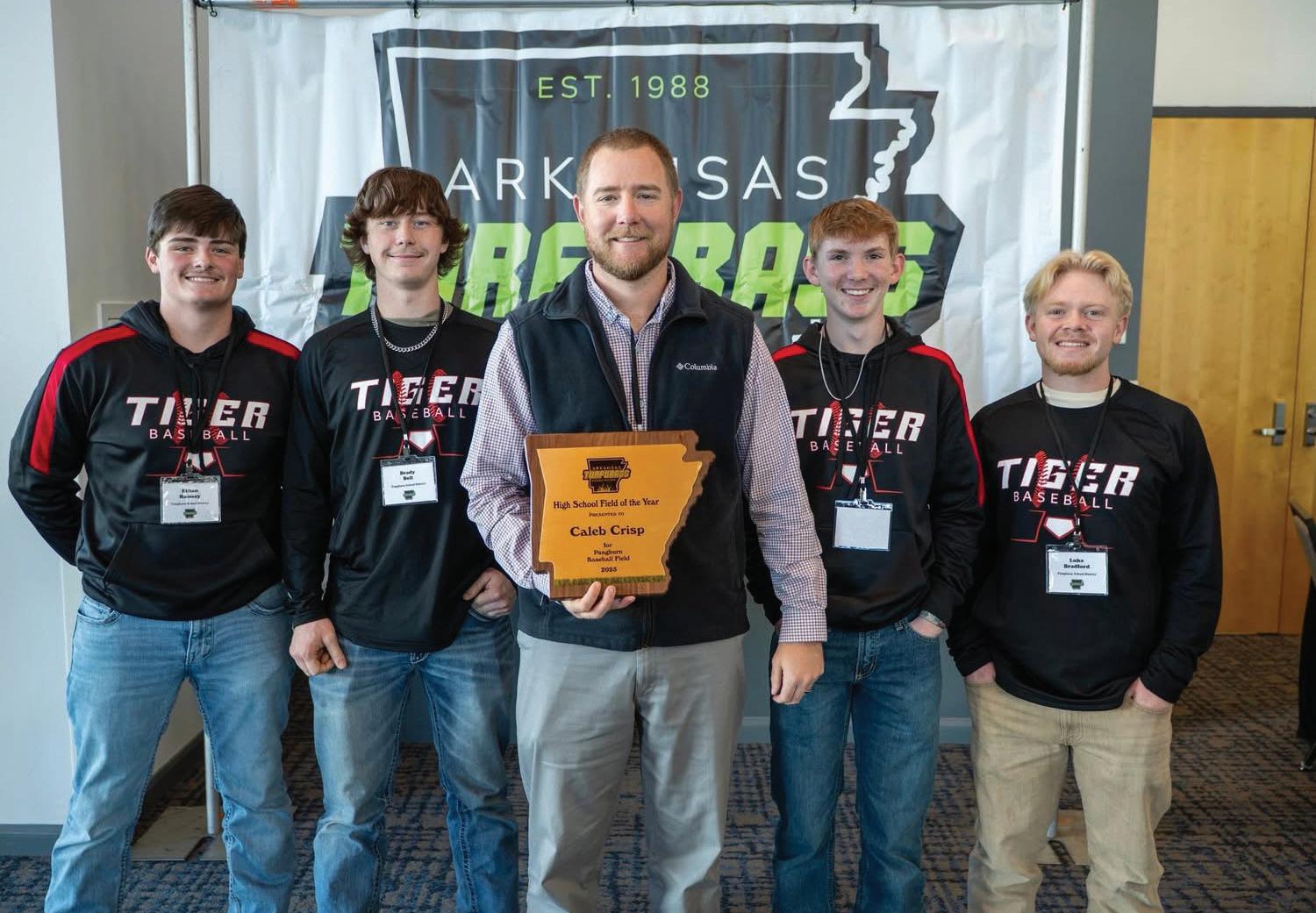
Caleb Crisp, Head Baseball Coach of Pangburn, and the Pangburn School District won the ATA High School Field of the Year award.
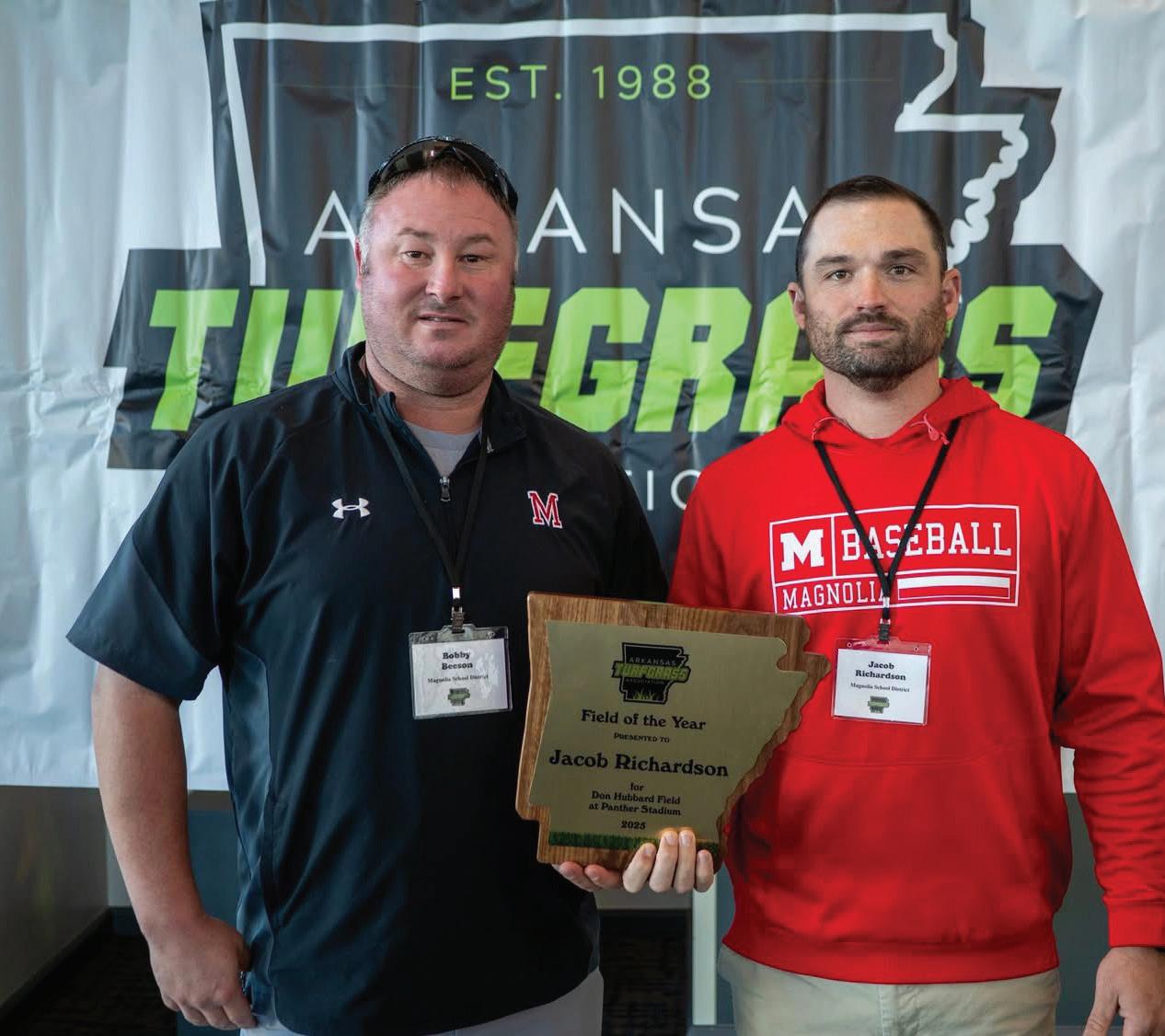
Jake
Asst. Baseball Coach at Magnolia, and the Magnolia School District won ATA Field of the Year.
3rd Annual BAGGO TOURNAMENT
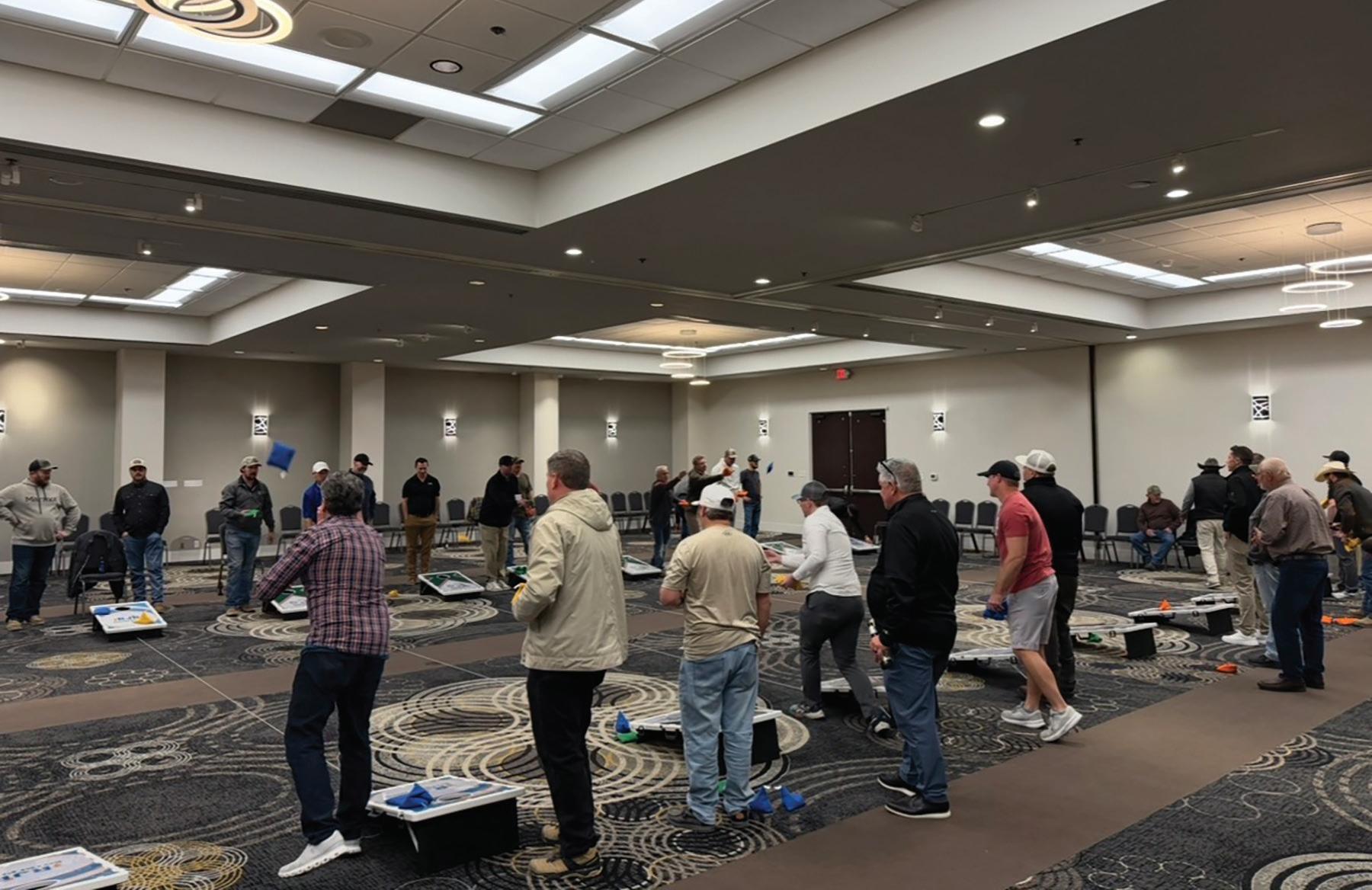
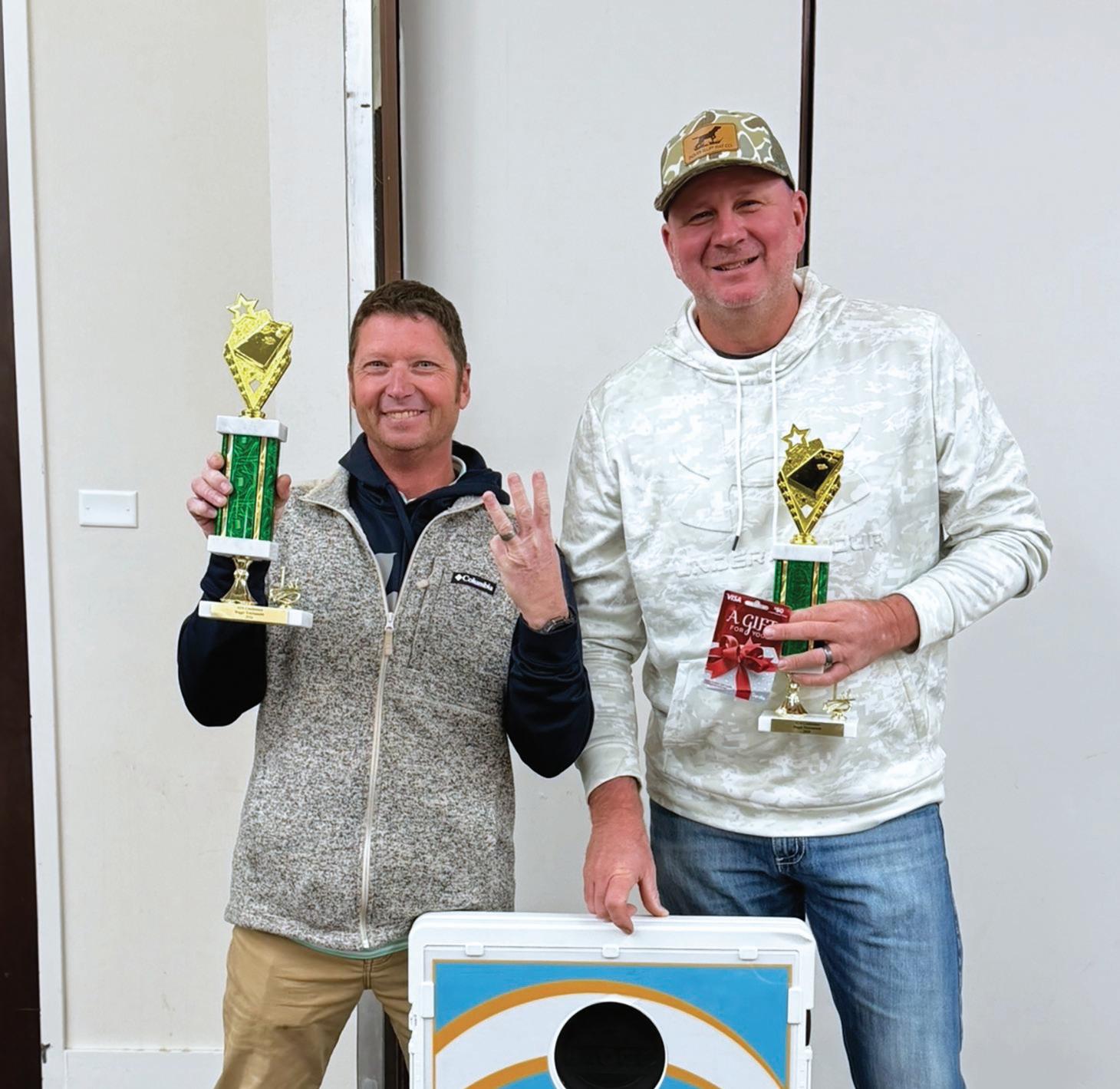
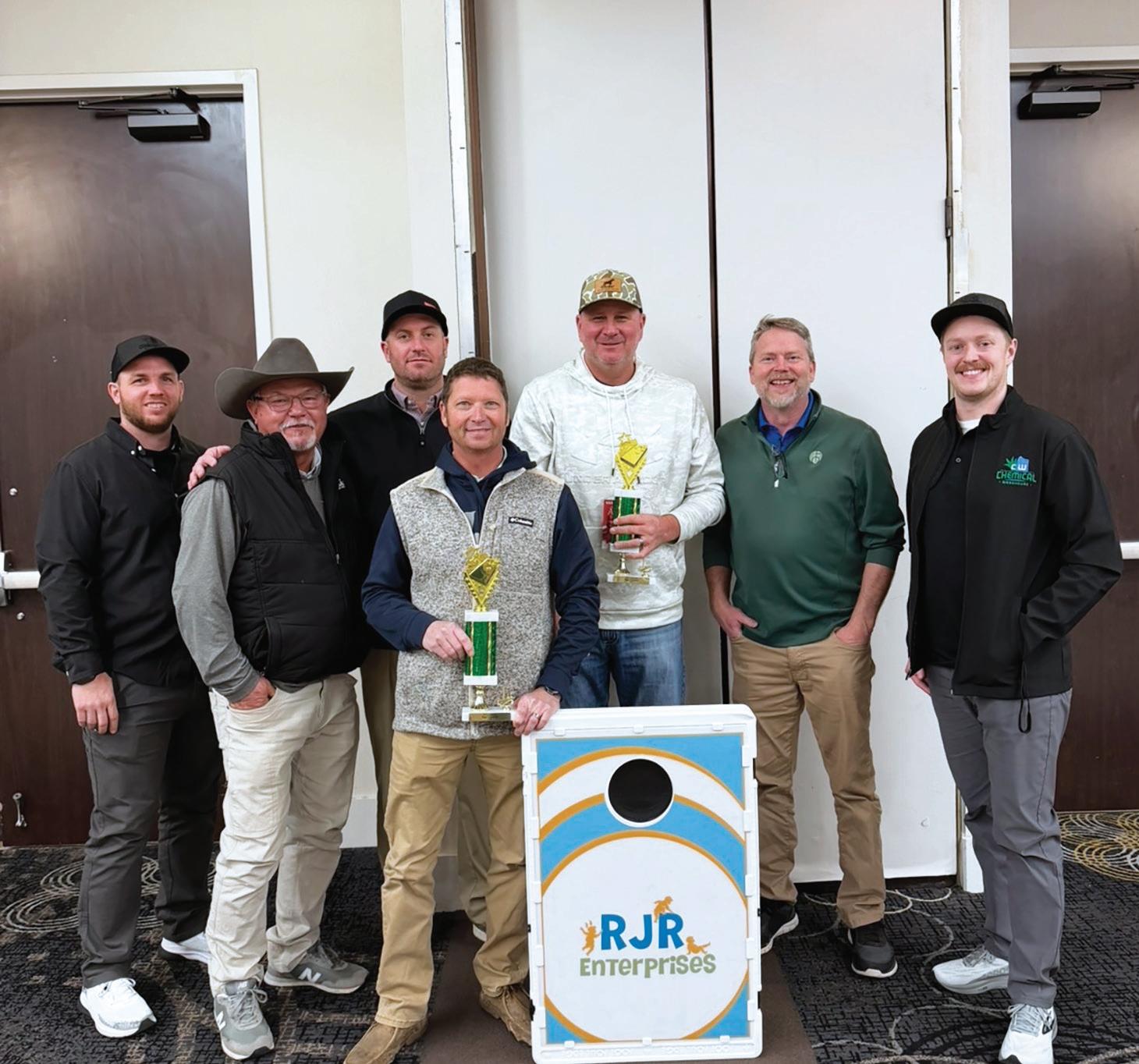
We hosted our 3rd Annual Baggo Tournament. Team Diamante took home first place again, dominating the competition. This is something that we look forward to every year. There is always good company, snacks, and drinks for people to enjoy. Thanks to our sponsors of this event.
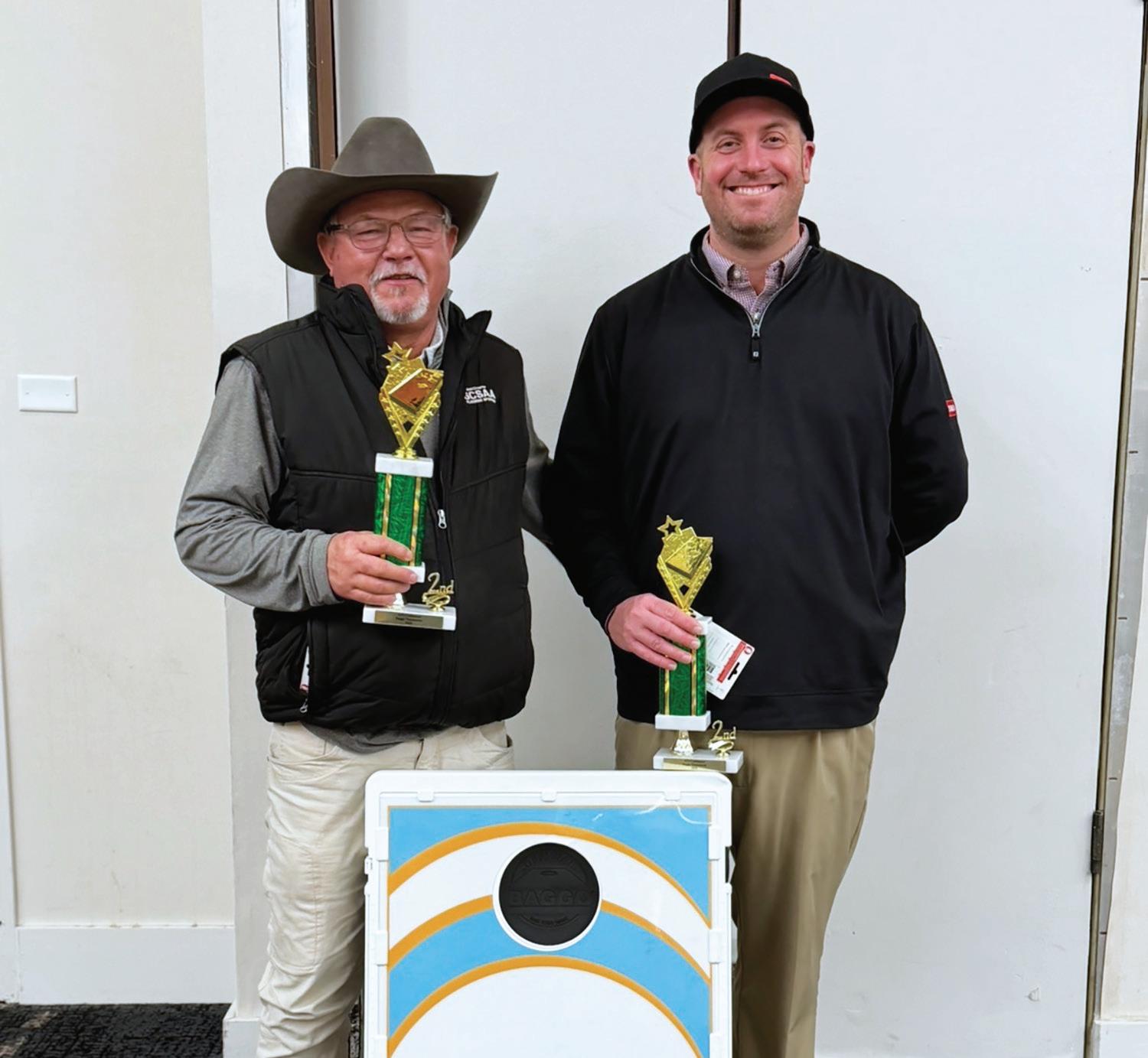
1st Runner up team was Aaron Cantrell and Guy Oyler.
Team Diamanté with Will Owens and Sonny Robertson.
Thanks to Chemical Warehouse, Cunningham Rec./RJR Enterprises, Keeling Co., and Harrell’s for sponsoring the Baggo Tournament!
AUTONOMOUS MOWING ON TRIAL
As
the landscape industry faces mounting labor challenges, tightening environmental regulations, and growing pressure to improve efficiency, the emergence of mowing technologies are generating widespread attention. But do these machines actually deliver on their promises of cost savings, labor efficiency, and sustainability?
A multi-disciplinary team of researchers from Auburn University, the University of Florida, and the University of Georgia has launched a multi-year research initiative to answer that very question. Supported by industry partners and the United States Department of Agriculture (USDA), this effort is part of a larger grant-funded project titled “Landscape Equipment Sustainability Strategies: Do More with LESS.” The project involves a comprehensive evaluation of large-platform autonomous mowers to assess their real-world performance, cost-effectiveness, and operational safety across a variety of landscape conditions.
Why This Research Matters
The adoption of automation in turf care is no longer a theoretical discussion. Manufacturers have introduced commercial autonomous platforms, and early adopters are already deploying them on sports fields, university campuses, and business parks, yet independent research remains scarce on the topic.
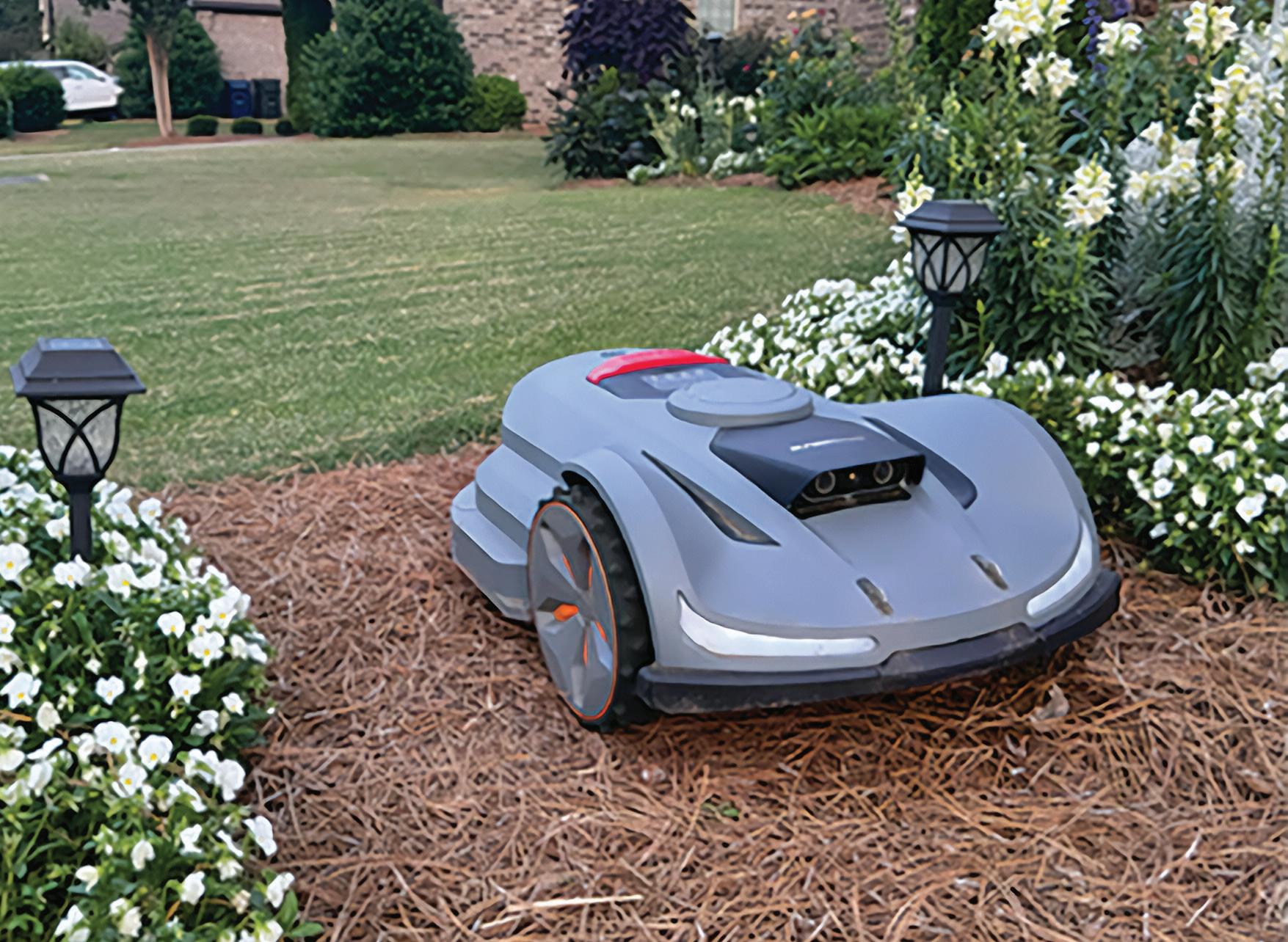
Most prior studies have focused on small-platform robotic mowers primarily used in residential settings (Figure 1). Traditionally, these machines relied on perimeter wires and random navigation patterns, limiting their efficiency and scalability. However, recent technological advancements—such as real-time kinematic (RTK) positioning and EPOS (Exact Positioning Operating System) navigation—have dramatically improved the precision, reliability, and adaptability of small autonomous mowers. This rapid evolution in positioning and sensing technologies has expanded the potential for autonomy in turf management far beyond the homeowner market.
Building on these advancements, large-platform autonomous mowers, that is, commercial-scale machines capable of operating both manually and autonomously, have now entered the market. These systems aim to address many of the industry’s most pressing challenges, including labor shortages, rising operational costs, and increasing sustainability demands. Our research seeks to evaluate these emerging technologies through a rigorous, data-driven approach to help landscape contractors, municipalities, and turf managers make informed decisions about integrating autonomy into large-scale operations.
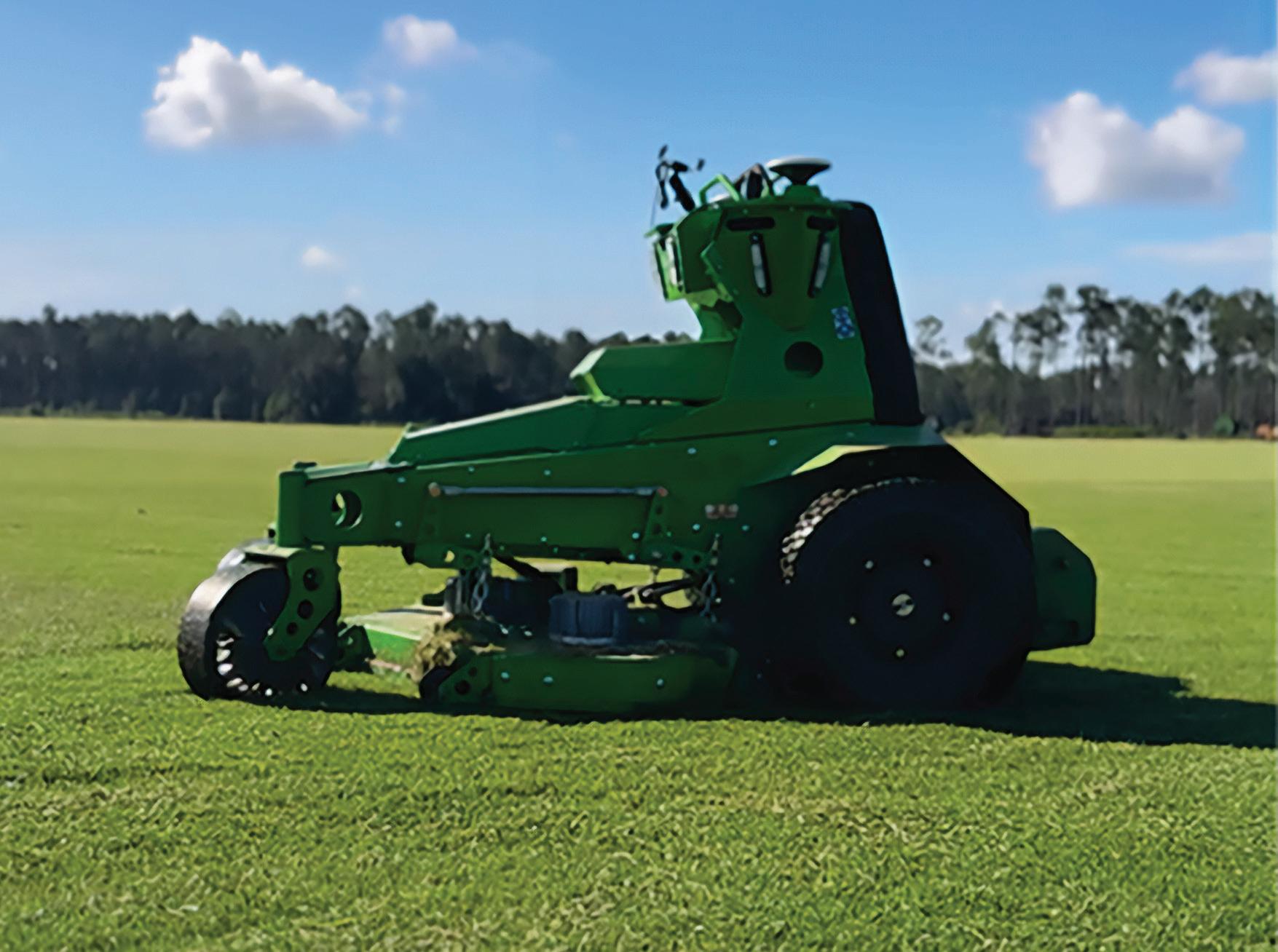
Figure 1 . A small-platform autonomous mower manufactured by Sunseeker, Inc. (A) and a large-platform, commercial autonomous zero-turn mower manufactured by Mean Green (B).
Landon Erbrick, Paul Bartley, Mark Hoffman and Tanzeel Rehman – Auburn University
J. Bryan Unruh – University of Florida
YOUR
ARKANSAS TURFGRASS
Arkansas Turfgrass allows you to narrow the focus and get your message directly in the hands of your customers. The magazine is a key benefit of Arkansas Turfgrass Association membership – providing valuable research, education, and industry information. Readers can also access the Digital Edition through The Turf Zone website. Archived issues ensure that your advertising will continue to be seen indefinitely, for long-ranging impact. ATA Members Include:
Lawn Care Operators Golf Course Superintendents
Parks & Recreation Supervisors Landscape Contractors
Contact us today to learn about effective and unique advertising strategies that target turf industry professionals.
sales@leadingedgecommunications.com
What We’re Testing & Why It Matters
This project is evaluating large-platform commercial mowers across four equipment categories:
• Manual gas-powered
• Manual battery-powered
• Autonomous gas-powered
• Autonomous battery-powered
We’re conducting real-world field trials using standardized test plots with varying levels of landscape complexity, from open square acres to obstacle-rich environments designed to mimic trees, bed edges, and other site constraints. Our goal is to understand how different combinations of power source (gas vs. battery) and operator mode (manual vs. autonomous) influence performance, cost, safety, and usability in professional landscaping scenarios.
What We’re Measuring
Across hundreds of acres of mowing in diverse conditions, we’re tracking:
• Labor Efficiency – Time per acre, supervision requirements, and total operator hours
• Energy or Fuel Consumption – Gallons or kilowatthours per acre
• Mowing Productivity – Speed (acres/hour) under manual vs. autonomous operation
• Cost of Ownership – Lifetime return on investment (ROI) including equipment price, maintenance, energy, and labor
• Operational Safety & Setup Time – Issues related to autonomous deployment, landscape variability, and required oversight
• Adaptability to Landscape Types – How autonomy performs in simple vs. complex site conditions
Together, these data will help landscape contractors, fleet managers, and municipal buyers evaluate whether, how, and when to adopt autonomous and battery-powered equipment based on real numbers, not hype or pressure.
Safety and Supervision Under the Microscope
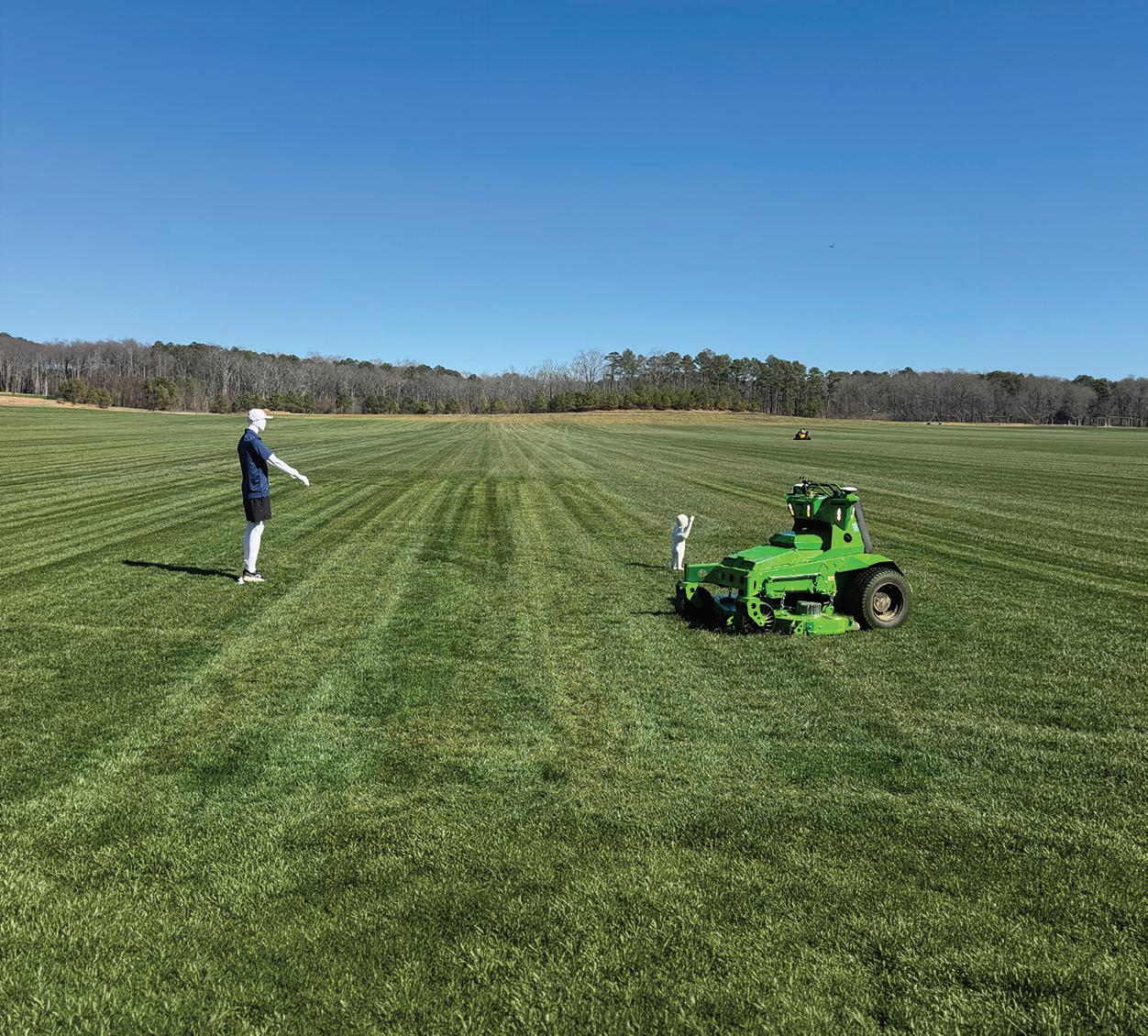
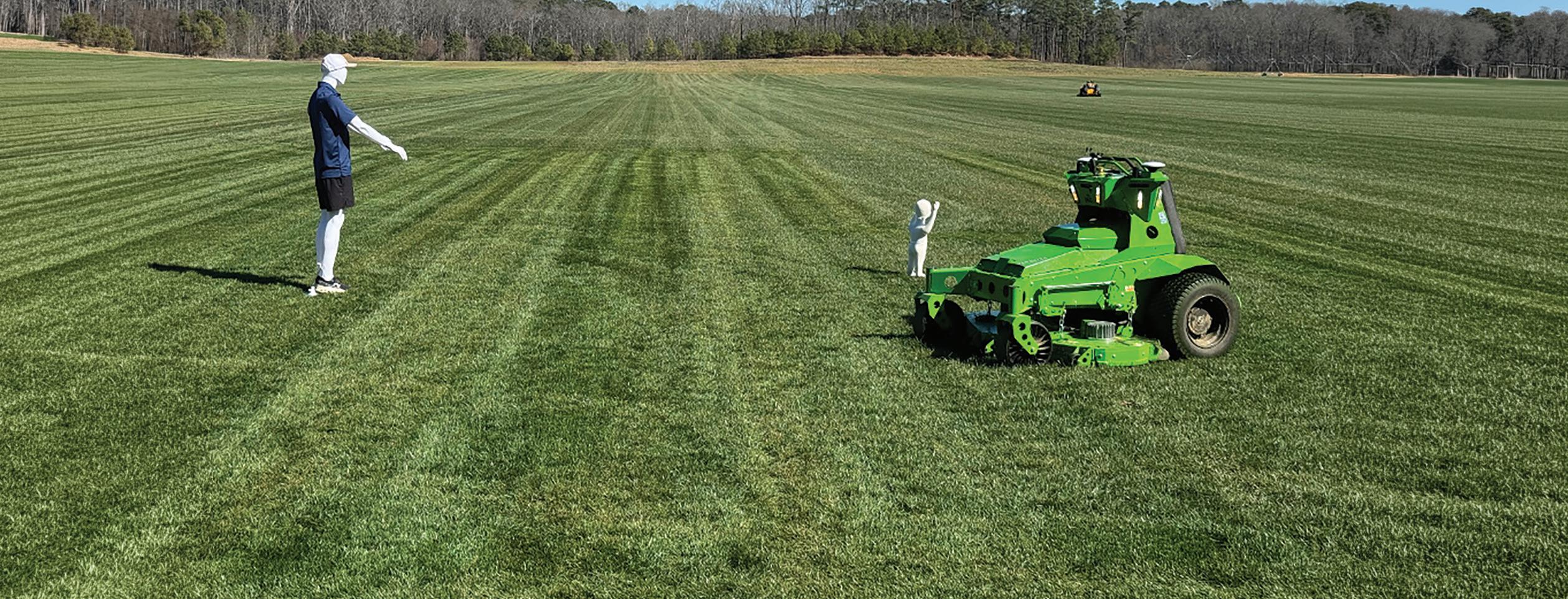
We’re also conducting obstacle detection trials using mannequins and field hazards at multiple approach angles to understand how these machines interpret and react to real-world variables (Figure 2).
Our team is especially interested in hybrid operation strategies, where a single operator supervises an autonomous unit while mowing with another, significantly boosting productivity without a full leap into autonomy.
Implications for the Green Industry
This research comes at a critical time. As noise restrictions, emissions regulations (e.g., California AB 1346), and labor shortages reshape the industry, many contractors are asking: What’s the smart next investment?
By delivering field-tested, brand-agnostic insights, our goal is to help professionals:
• Make evidence-based equipment choices
• Optimize labor deployment strategies
• Understand technology limitations and serviceability
• Prepare for future regulations and automation trends
•
Figure 2 (below) . Large-format, autonomous mowers equipped with an RGB camera-based system used to detect obstacles encountered by the mower.