The Medium Term Financial Strategy (MTFS)
The ability to deliver the outcomes set out in Lichfield District 2050 is dependent on the resources available over the life of the plan. Therefore, the Council prepares a Medium Term Financial Strategy (MTFS). This covers how we will use reserves, our investments, and our approach to council tax and how we deploy our capital. It also looks at the medium term given the cost pressures we are likely to face and how these could be financed. The MTFS covers revenue and capital expenditure for the four financial years 2026/27, 2027/28, 2028/29, and 2029/30 It was approved by Full Council on 24 February 2026
MTFS Budget Principles and Assumptions
To assist in preparing the Medium Term Financial Strategy, in common with several Councils, a set of principles were established to guide the preparation and management of the MTFS.
Council, on 15 October 2019, approved the budget principles identified below:
Council will consider the medium term outlook when setting the level of Council Tax to ensure that a sustainable budget position is maintained
Council will prioritise funding for statutory and regulatory responsibilities to ensure these are delivered in a way that meets our legal requirements and customer needs.
Council will continue to seek continuous improvement to enable further savings, efficiencies and income gains and provide budgets that are appropriate to service needs.
Council will ensure that all growth in the staffing establishment will be fully understood through robust business cases in order to ensure our resources match service and customer needs. Growth will usually be allowed where costs are offset by external funding, savings or additional income.
Council will not add to other ongoing revenue budgets unless these are unavoidable costs or corresponding savings are identified elsewhere.
Council will use robust business cases to prioritise capital funding so that we have a sustainable Capital Programme that meets statutory responsibilities, benefits the Council’s overall revenue budget position, and ensures that existing assets are properly maintained.
Council will maintain an overall level of revenue reserves that are appropriate for the overall level of risks that the organisation faces, in order to overcome any foreseeable financial impact.
The Final Local Government Finance Settlement for 2026/27 to 2028/29
The Council received the Final Local Government Finance Settlement on 9 February 2026. The Final Settlement marks the first time in this decade that the Government has illustrated multiple years’ worth of funding allocations covering 2026/27 to 2028/29.
However, it should be noted that the settlement remains an annual event and figures for future years are subject to change until they are ‘locked in’ by their own settlement.
This settlement has resulted in more redistribution of funding within the sector than any other for at least the last 25 years. Funding distribution was last updated in 2013/14, and since then there has been an updated 4-year settlement (2016/17 to 2019/20) and a series of one-year settlements.
The redistribution has been achieved through a full Business Rates Baseline reset (all growth since 2013/14 has been redistributed), major changes to all the Relative Needs Formulas (RNFs), and the simplification of many grants into either the allocations or into one of four consolidated grant streams (this Council will only receive homelessness, rough sleeping and domestic abuse grant and crisis and resilience grant).
The key features of the settlement for this Council are:
The Council Tax referendum limit for District Councils remains at the higher of £5 or 2.99% (The approved MTFS assumes an annual increase of 1.99%) – 2.99% is higher for this Council.
Council Tax is assumed to fund 74% of the settlement increase and this means that the increase in the settlement is very reliant on Council applying the maximum increase in Band D and delivering the Government assumed taxbase growth.
The ability to raise income from Council Tax has been taken into account in the settlement through the relative resource deduction from relative need – this Council is a relative low need/relative high taxbase Council. Therefore, with this approach, we are at the more negative end of the impact spectrum.
This Council has been included in the 95% income protection floor grouping, i.e. a maximum 5% reduction in Core Spending Power was possible. To achieve this level of protection a separate grant is paid. This approach does however potentially create the risk of a ‘cliff edge’ in 2029/30 when the current three-year settlement ends.
Individual specific grants have been consolidated into the Final settlement. This makes comparison from 2025/26 quite complex with a real risk of either ‘double counting’ or omission.
A full reset of Business Rates with all growth accumulated since 2013/14 redistributed within the sector. A change was made at the Final settlement to the way pooling gains are
reflected in the settlement. The Provisional Settlement allocated all gains to Tariff Authorities such as Lichfield DC, the final settlement splits them 50:50 with Top Up Authorities such as Staffordshire CC. A new adjustment Support Grant is payable in 2026/27 to negate the impact.
A full Business Rate revaluation of Rateable Values from 1 April 2026 and new Business Rate multipliers for Retail, Hospitality and Leisure businesses.
The approach to Business Rate Retention has been updated including how the Council’s share of Business Rates is calculated in relation to reliefs, appeals and bad debts together with changes to the safety net and levy regime – this creates significant risk in business rate income projections.
Revenue grant to operate the Food Waste Collection service from 1 April 2026 has not been separately identified and is therefore assumed to form part of Revenue Support Grant. However, it is therefore not possible to confirm if the funding fully offsets the cost of this new service mandated by central Government.
Government Core Spending Power Analysis
The Government analyses Local Government Funding using its preferred measure of Core Spending Power. There a several key points to make in relation to this measure:
It now includes several service grants including food waste collection funding that have been ‘rolled in’ to Revenue Support Grant.
It excludes any Business Rate Growth above the Government Set Baseline.
It assumes all Councils Taxbase will increase based on previous trends and will approve the maximum available Council Tax increase – for this Council in it is 3% (2.99% for modelling purposes).
It excludes any other local income sources such as the benefits of previous year Collection Fund surpluses or deficits.
The comparison of the Core Spending Power (CSP) using the comparative Settlement for 2025/26 to the Final Settlement and the Approved Budget is shown below:
The Final Settlement outcome is in line with the assumptions used in the Approved MTFS of (£13,883,000) This means that the level of uncertainty for 2026/27 can be reduced to LOW with future settlements confirming allocations for 2027/28 and 2028/29 these years are assessed as Medium
Local Government Reorganisation is to be implemented on 1 April 2028 and therefore future settlements will be beyond this date and therefore the level of uncertainty for 2029/30 has been assessed as High.
The Revenue Budget
Cabinet was presented with a Revenue Budget on 10 February 2026, and this reflects:
The inclusion of updated projections from the 8 month Money Matters Report.
The inclusion of financial implications from any further Approved Reports.
The Final Local Government Finance Settlement for 2026/27 to 2028/29
Any significant inflationary or other changes identified from the detailed review of base budgets.
The estimated inflation and budget variations for all scenarios (with additional income or savings enclosed by brackets) compared to the approved Medium Term Financial Strategy are shown below:
The Revenue Budget changes (with additional income enclosed by brackets) compared to the approved Medium Term Financial Strategy are shown below:
Modelled Changes and their Impact on the Revenue Budget and the Funding Gap
The Revenue Budget modelled changes and their impact on the Funding Gap (surpluses and transfers to General Reserves are enclosed with brackets) together with scenarios based on more optimistic and more pessimistic funding assumptions are shown in summary below:
The key features of the proposed central scenario Revenue Budget are:
Updated inflation and budget modelling – inflation currently is above the Bank of England target rate of 2% and certain classes of expenditure such as pay awards, IT licenses, fuel and utilities are inherently volatile and/or increase annually by a predetermined index such as the Retail Price Index which tends to be higher than 2%. Therefore, this annual budget of £250,000 is maintained centrally to mitigate the risk of higher inflation and equates to c1% of the pay bill. The inclusion of an assumption of a pay award of 3.2% in 2026/27.
Updated Pay Award modelling - the approved budget assumes annual increases of 2%. However, the increase in 2025/26 was 3.2% and with inflation being above the 2% target, the risk of higher pay awards is elevated. Therefore 3% is now assumed for 2026/27 and 2027/28.
Food Waste – the grant provided to operate this service has not been identified by the Government and therefore this is the Council’s estimate of our share of operating the service. The budget includes contingency given this is a new front-line service with some uncertainties together with the potential risk that this service has wider implications for waste budgets.
Joint Waste Service – following the budget review, this is the additional cost to the Council that is offset by Extended Producer Responsibility Grant in 2026/27 (no allocations are currently provided beyond this year).
Community Asset Transfer – this is a budget set aside for legal costs, valuations and other support to enable Community Asset Transfers.
Pavement Licenses – no charge for pavement licenses was agreed for the two-year period 2024/25 and 2025/26. An assumption has been made that this approach will become permanent.
Car Parking Charges – charges for evening parking have been removed from December 2025. An assumption has been made that this approach will become permanent and funded by reprioritising existing budgets.
Cinema Development – Council approved a budget neutral approach until further information was available from the Business Plan. In the absence of a business plan, a prudent estimate has been included in the Revenue Budget based on the central budget scenario with rent free periods.
Treasury Management – these projections have been updated based on latest cash flow projections and interest rate forecasts.
Service and Financial Planning – bids for revenue budget growth have been assessed and those of the highest priority have been included.
Final Settlement – updated grant streams for Homelessness, Rough Sleeping, Domestic Abuse and Employers National Insurance that have been consolidated into Revenue Support Grant are reflected. In addition, the new Crisis and Resilience Grant that includes Discretionary Housing Payments has been incorporated for the full MTFS (only first two years in Settlement).
Funding Projections – all changes resulting from the Final Local Government Finance Settlement assuming a 1.99% Council Tax increase have been incorporated.
In terms of Council Tax, the Revenue Budget models an increase of 1.99% or £3.94 in 2026/27 on the 2025/26 Band D of £197.85 with 1.99% subsequent annual increases.
To understand the impact of various Council Tax increases on the Revenue Budget, four Council Tax scenarios with annual increases of 2.99%, £5, 1.99% and 0% have been modelled:
Longer Term Financial Planning
The updated longer term financial plan is shown in the chart below:
A funding gap is projected from 2028/29 onwards and although this will be after Local Government Reorganisation is implemented, the Council should not take actions that negatively impact on the financial sustainability of the new authority.
A summary of the Revenue Budget for 2026/27 by Service Area excluding accounting charges, is shown in the table below, with more detail by Service Area and Strategic Priority in later sections:
A summary of the Revenue Budget for 2026/27 by type of spend is shown in the table below:
Costs
A summary of the Revenue Budget for 2026/27 is shown by type of expenditure below:
Revenue Budget 2026/27 (£000) - by type
The Capital Strategy
The Capital Strategy sets out the Council’s framework for managing the Capital Programme:
Capital expenditure, including the approval process, long-term financing strategy, asset management, maintenance requirements, planned disposals and funding restrictions.
Debt and borrowing and treasury management, including projections for the level of borrowing, capital financing requirement and liability benchmark, provision for the repayment of debt, the authorised limit and operational boundary for the coming year and the authority’s approach to treasury management.
Commercial activities, including due diligence processes, the authority’s risk appetite, proportionality in respect of overall resources, requirements for independent and expert advice and scrutiny arrangements.
Other long-term liabilities, such as financial guarantees.
Knowledge and skills, including a summary of that available to the authority and its link to the authority’s risk appetite.
The Capital Programme
The Capital Programme was updated to reflect:
The inclusion of updated projections from the 8 month Money Matters Reports.
The inclusion of financial implications from any further Approved Reports.
Any other changes identified from review of the Approved Budget and Service and Financial Planning.
The additional capital investment projections included in the Capital Programme are:
The key features of the capital programme are:
The inclusion of Business-as-usual capital investment in 2029/30 for property/estate maintenance, Disabled Facilities Grants, waste bins, non-leased vehicles, ICT, car parking and parks, open spaces and play etc. to ensure sustainable service delivery.
The inclusion of capital contingency to manage inflation and unforeseen project risks.
An additional £742,000 of capital investment in Socially Rented Housing (in addition to the £2m approved last year) funded from the Council’s share of additional Right to Buy Receipts.
A match funded grant programme for retail and hospitality focussed properties.
Budgetary provision to increase car parking capacity to support the city centre and the cinema development.
Capital investment to improve the operation of Pedestrianisation in Lichfield City Centre.
A few projects contained in the Approved Capital Programme have revenue implications such as operating costs, capital financing costs for internal borrowing, revenue funding or savings.
The Capital Programme revenue implications contained in the Approved Budget (at the 8 month’s stage of 2025/26) and the revenue implications of additional capital spend are shown below:
The Capital Programme is summarised below:
The Borrowing Need identified in the Capital Programme of £10,972,000 is related to:
The approved new Leisure Centre - £5,000,000.
The approved cinema development - £495,000
Forward funding the BRS projects temporarily using internal borrowing for up to three years pending the capital receipt being received - £3,636,000.
Social Housing - £1,741,000.
Treasury Management
CIPFA has defined Treasury Management as:
“The management of the organisation’s investments and cash flows, its banking, money market and capital market transactions; the effective control of the risks associated with those activities; and the pursuit of optimum performance consistent with those risks.”
The Council is responsible for its treasury decisions and activity. No treasury management activity is without risk. The successful identification, monitoring and control of risk are an important and integral element of its treasury management activities. The main risks to the Council’s treasury activities are:
Liquidity Risk (Inadequate cash resources)
Market or Interest Rate Risk (Fluctuations in interest rate levels)
Inflation Risk (Exposure to inflation)
Credit and Counterparty Risk (Security of Investments)
Refinancing Risk (Impact of debt maturing in future years)
Legal and Regulatory Risk
The Strategy also projects the impact of the Council’s Revenue Budget and Capital Programme on the Balance Sheet position, the current and projected Treasury position, the Prudential Indicators and the outlook for interest rates.
Minimum Revenue Provision Statement 2026/27
The Council is required to make prudent provision for debt redemption (known as Minimum Revenue Provision (MRP)) and each year the Council must approve its MRP statement, and this will include an allowance for finance leases that appear on the Council’s Balance Sheet.
£900,000
£800,000
£700,000
£600,000
£500,000
£400,000
As in previous years, the Council proposes to base its MRP on the estimated life of the asset. The estimated MRP chargeable during the MTFS is shown below: £250,063
£300,000
£200,000
£100,000
£0
Balance Sheet Projections
Integrated Revenue and Capital Programme budgets are prepared. These budgets together with the actual Balance Sheet from the previous financial year are used to prepare Balance Sheet projections.
These Balance Sheet projections are significant in assessing the Council’s Treasury Management Position in terms of borrowing requirement, investment levels and the Investment Strategy.
The Balance Sheet Projections for 2025-30 are shown below:
(Rounding may result in slight differences in figures in the wider Report)
Non-Current Assets and Long Term Debtors:
Non-Current Assets will increase mainly due to capital provision for a replacement Leisure Centre.
Long Term Debtors will increase to reflect the loan to the Cinema for Lichfield District.
Investments and Working Capital:
The levels are projected to reduce due to the financing of the Capital Program from earmarked reserves, grants and contributions and Internal Borrowing. In addition, the potential use of general reserves throughout the MTFS to ensure a balanced budget would also reduce investments.
Pension Fund Obligation:
This value is projected to increase in line with previous trends.
Unusable Reserves:
Pensions Reserve – the negative value of this statutory reserve will increase to offset projected increases in the long-term liability for pensions.
Collection Fund – any surplus or deficit on Council Tax and Business Rate collection will be transferred to or from the revenue budget in line with regulatory requirements.
Usable Reserves:
Earmarked Reserves – these will reduce as they are used to fund both revenue expenditure and the Capital Programme.
General Reserve – there will be a projected reduction to reflect the potential use of general reserves throughout the MTFS to ensure a balanced budget.
Treasury Management Advice and the Expected Movement in Interest Rates
The Official Bank Rate outlook provided by the Council’s Treasury Advisor, together with the Council’s assumption (also the central case) where interest rates will decrease from March 2026 is shown below:
The Council assumptions have been used as the basis for preparation of the investment income including income foregone from internal borrowing for 2026/27 and future years.
Cash Flow Forecast
Treasury Management includes the management of the Council’s cash flows as a key responsibility. The cash flow forecast takes account of the income the Council receives including Housing Benefits Grant, Council Tax and Business Rate income and expenditure such as payments to precepting bodies, employee costs and Housing Benefit Payments.
The graph below shows average investment levels (in £m) throughout the financial year with a significant reduction in February and March due to minimal Council Tax income being received.
The planned monthly cash flow forecast for the 2026/27 financial year has been used to calculate the investment income budget. The key components of this calculation are the average level of investment balances, and the rate or yield achieved.
The Treasury Management estimates for 2026/27 for both investment income and borrowing are shown in the table below:
The gross investment income has been estimated as (£1,665,876) and this equates to 10% of the Council’s total funding of (£16,147,000) in 2026/27.
Investment Strategy Report for 2026/27 - The investment strategy meets the requirements of statutory guidance issued by the government in January 2018. It focuses on how the Authority invests its money to support local public services and earns investment income from any commercial investments.
Reserves
There are two types of reserve:
The General Reserve is primarily held as a contingency to provide the Council with operational funds and as a safeguard against financial risks.
Earmarked Reserves have been built up over time to provide funding for specific activities in line with the Council’s medium term aims and objectives. These can be for both Capital and Revenue purposes.
General Reserves
It remains prudent for the Council to maintain an adequate ‘working balance’ or Minimum Level that is part of its general reserves. A risk assessment approach in line with Best Practice that has been updated to take account of the challenging economic environment is used to determine the required Minimum Level and the level of general and earmarked reserves.
The Chief Finance Officer (CFO) has been involved throughout the entire budget process, including revising the MTFS, input to the drafting of the budget, the ongoing financial monitoring and reporting process, evaluation of investments and savings, engagement with M embers of the Cabinet and Overview and Scrutiny Committee, advising colleagues, the strategic choices activities, challenge and evaluation activities, and scrutiny of the budget.
I am of the opinion for a Council of this size, and with our recent record of prudent spending, effective Risk Management, robust budgeting and effective Budget monitoring and control, a revised General Minimum Reserve level of £2,000,000 is adequate.
It is important to note that the level for 2026/27 has remained at the 2025/26 assessed level. In addition, several risks such as Business Rates have specific earmarked reserves and specific budget risk based allowances related to inflation have been incorporated within the MTFS.
There is a potential that project risk related to the Greenway Project may need to be managed through self-insurance by setting aside reserves. However, until the insurance company complete their review of the project risk register, proposed mitigations including the projected costs and identify the risks they are prepared to insure together with the premium cost, I am at this stage unable to quantify the level of reserves that will be required.
The risk management approach for the Greenway Project will therefore need to be identified in a future report to Cabinet and Council.
Projected General Reserves
The total projected level of general reserves is shown below based on the Revenue Budget:
Original Approved Budget Budget
Government has announced that Local Government will be reorganised in two tier areas into Unitary Councils. It is unknown what financial implications will arise in the period prior to the new structure being implemented in 2028 or later.
Therefore, at this stage, no provision has been made in the Revenue Budget for the Council’s share of costs related to implementation.
Earmarked Reserves
A review of the level of Earmarked Reserves has been undertaken as part of the process of identifying funding for the cinema development and through the annual Budget. The projected levels are shown in the Balance Sheet Projections. Ongoing review of Earmarked Reserves takes place as part of the Money Matters Reports in line with the approved earmarked reserves policy to ensure we are only holding funds for known and essential purposes.
The Balance Sheet projections in the MTFS are shown below:
Council Tax Requirement
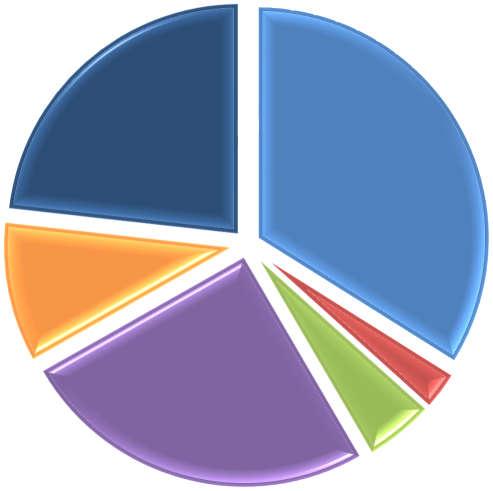
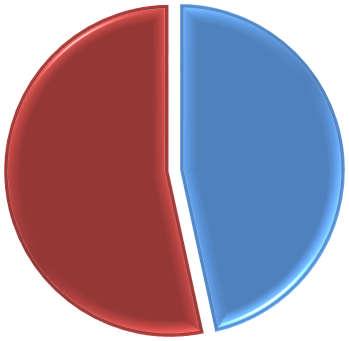
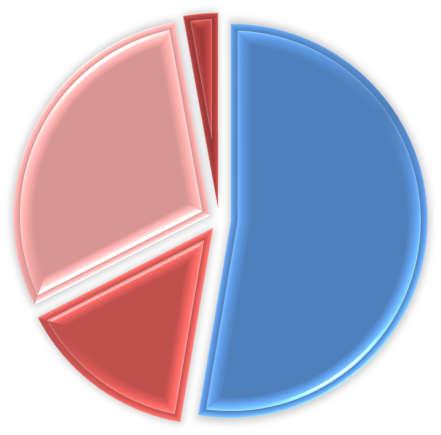
In 2026/27, Council Tax is 52% of the money that the Council receives (excluding fees and charges). The two graphs below show how Council services (after fees and charges and excluding income transferred to corporate reserves) were funded in 2010/11 and how they are funded in 2026/27 to illustrate the changes:
Council Funding 2010/11
Core Government Grant, £6,099,950, 53%
Council Tax, £5,323,570, 47%
Council
Funding 2025/26
(Surplus)/Deficit on council Tax and Business Rates …
Other Grants, £4,790,000, 30%
Retained Business Rates, £2,395,000, 15%
Council Tax, £8,502,000, 52%
A summary of the Revenue Budget for 2026/27 by Strategic Priority (excluding accounting charges) in the format included in the Council Tax Leaflet is shown in the table below:
(last Year)
Net Expenditure and Funding
Collection, Recycling, Pools, Open Spaces, Street Cleansing
Tourism, Car Parks, Major Projects
- Housing Benefits, Environmental Health, Building Control, Planning, Housing, Garrick Theatre
Elections, Corporate Costs
or Deficit on the collection of Council Tax and Business Rates from the previous year
net spend was planned to be
The Council Tax for 2026/27
The Council Tax for a property consists of several components according to the varying services provided to the household. The total Council Tax consists of an element for Lichfield District Council and amounts for Staffordshire County Council (the largest amount), Staffordshire Commissioner –Police and Crime, Staffordshire Commissioner – Fire and Rescue and Parish Councils.
The 2026/27 Band D Council Tax for each body is shown in the chart below:
Lichfield District Council, £201.79, 8%
Staffordshire CommissionerPolice and Crime, £302.57, 13%
Staffordshire Commissioner - Fire and Rescue, £96.77, 4%
Average Parish Council, £64.35, 3%
Staffordshire County Council, £1,686.42, 72%