Larry Towell Boundaries
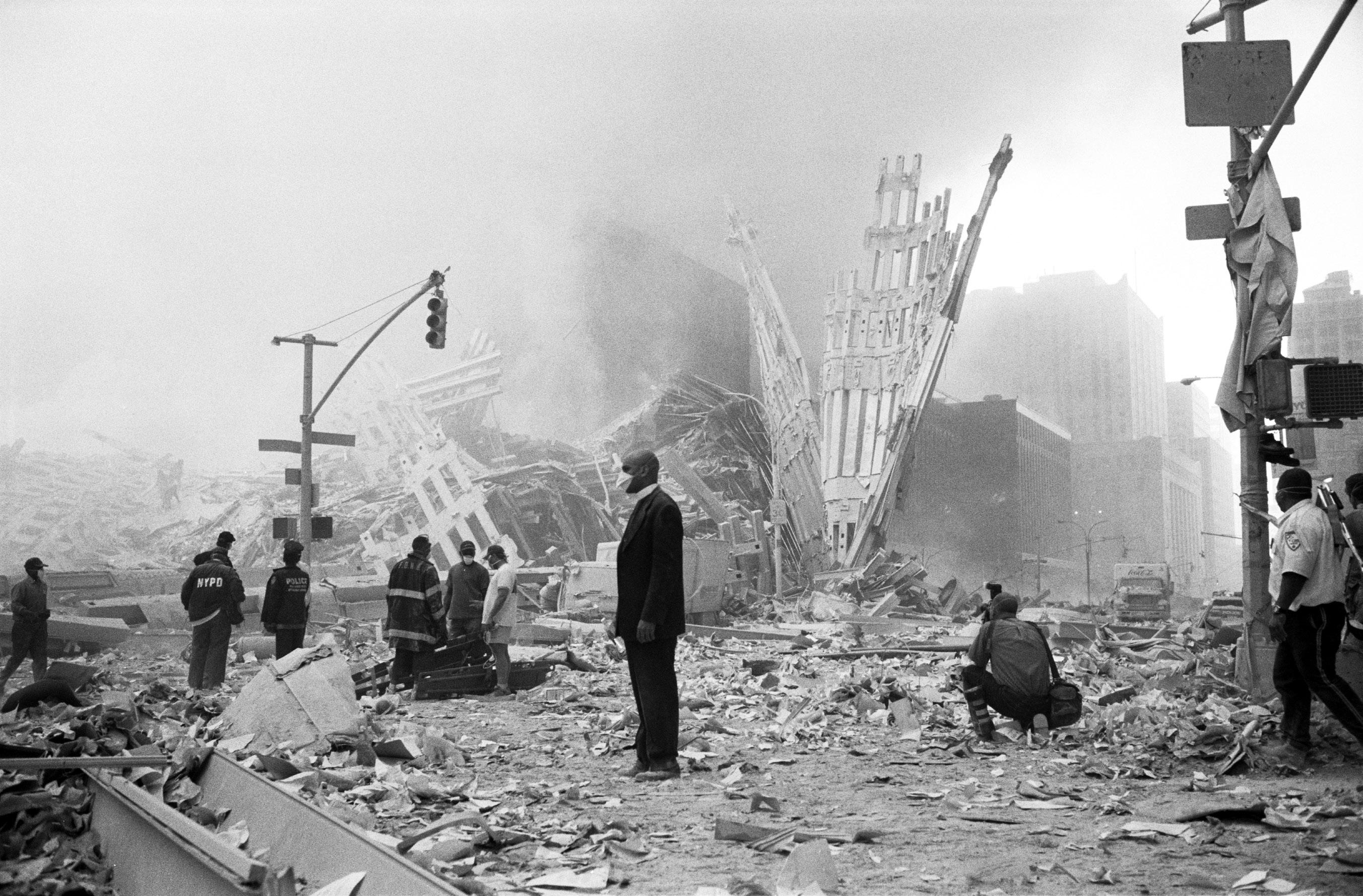
Minister in front of collapsed World Trade Center, New York City, U.S., 2001; gelatin silver print

Dust storm, Durango Colony, Durango, Mexico, 1994; gelatin silver print
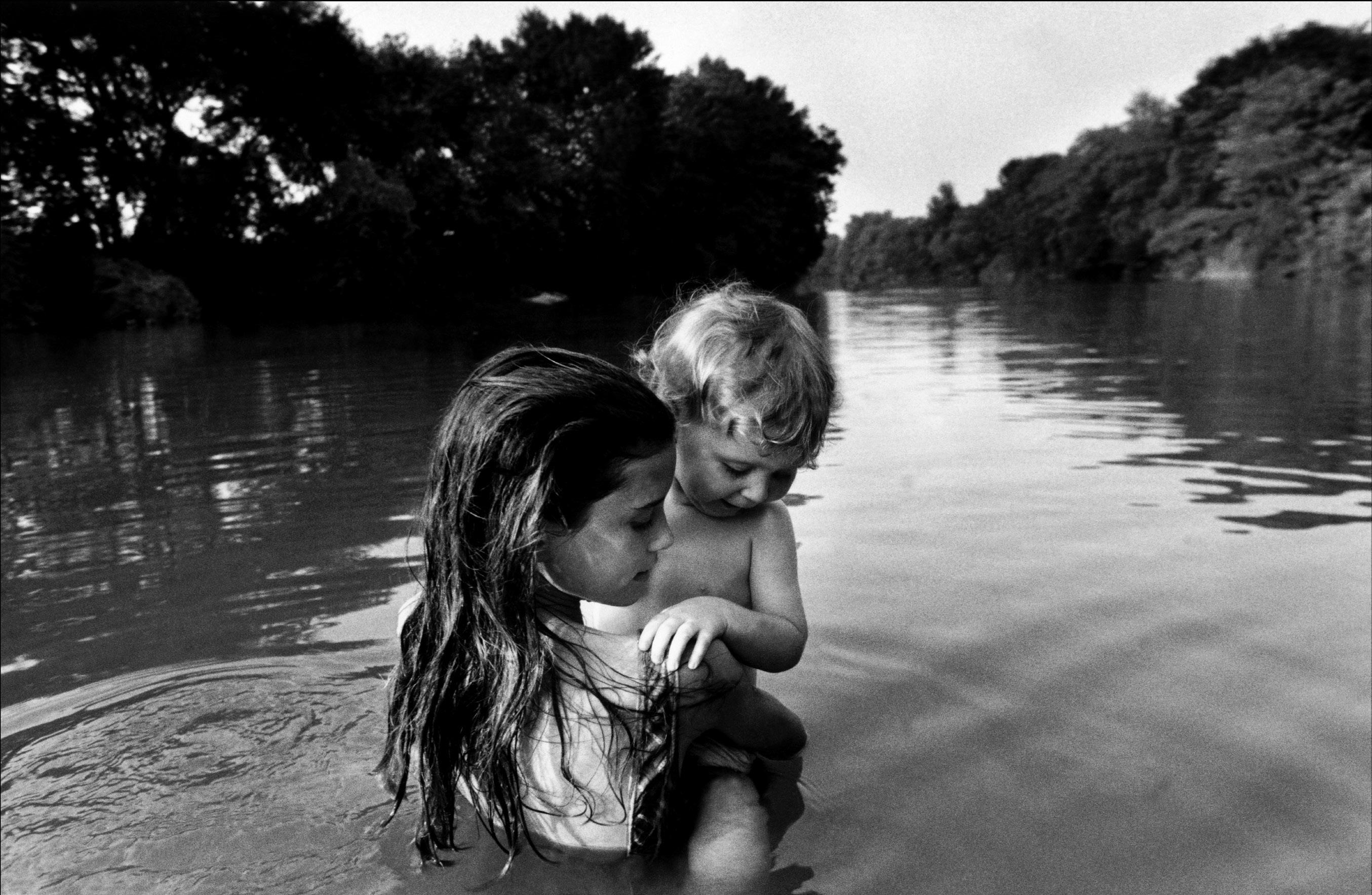
Isaac’s First Swim, Lambton County, Ontario, Canada, 1996; gelatin silver print
Extended Engagement: Larry Towell’s Photographic Practice
From our present standpoint, it is hard to imagine a world without photographs. The camera frame operates as a bulwark to still, hold and contain the flux and flow of existence. It is a place of rest within the restlessness of daily life, a point of momentary control, however illusory, that represents the promise of a desired vision of the world. However, the photographic frame is also inherently unstable. As much as is revealed, much more is not. This very condition breaks the image open, demonstrating how the photograph does not suspend life, but rather flows with it, entangling viewers in multi-spatial and -temporal experiences. Further, the photograph’s flexibility encourages other types of engagement, such as sharing images and stories with family and friends, and supplementing images with text or other creative interventions. In this way, photographs create and consolidate community. Instead of representing a moment frozen in the past, the photograph lives in the present, prompting future viewers to continue to enrich its many histories and meanings.
At first glance, this open understanding of the photograph seems at odds with the photojournalistic or “documentary” approach for which Larry Towell is celebrated. The only Canadian member of Magnum Photos, Towell developed his work in the context of this highly prestigious and selective photo agency.1 In a general sense, documentary photographers are understood to practice with impassioned reserve, seeking out dramatic images believed to encapsulate conflict. Often outsiders to the areas affected by discord, many operate as detached observers, using their cameras more as recording devices. In this scenario, the documentary photograph is understood to directly and transparently represent events that have occurred in the world. Their status as truthful representations makes them powerful agents in the struggle to raise awareness of critical issues and redress social injustices. However, this singular idea of photography is not entirely accurate, as fiction and truth have always been intertwined. The history of documentary photography is long and complex, but increasingly by the mid-twentieth century, the role and intentions of the photographer were considered crucial in the presentation of subject matter. The photographer now balanced artistry with transcription, storytelling with social activism. As much as the image was a record of an event in the world, it also represented, as one writer notes, “an act of self-expression on the part of the artist.” 2
In both his gallery exhibitions and book projects, Towell skillfully balances these concerns. A major theme in his projects is landlessness, an inquiry that started while visiting Nicaragua in the early eighties when he met peasants who had been forced off their land because they challenged the dictatorship of the Somoza regime. The lives of dispossessed people similarly informed his decision to follow Mennonite migrant workers in their journeys along the continent, from southern Ontario to Mexico. The theme also informed his travels to Palestine and El Salvador, where, especially in the former, he often placed himself directly in the centre of conflicts. Towell has produced dramatic, very engaging images of these events, but eschews what he terms the “adrenalin world of war photography.” 3 Rather, his approach is to “go narrow and deep,” which means engaging in an extended study of a place and its constitution to provide some overview and include a focus on individual experience and intimate moments. His holistic method
aptly reveals the callousness and self-interest of governments and agencies who pursue power at all costs, and the effect of their actions on hapless citizens.
The depictions of the endless depth of human suffering and the destruction of homes, family and community often strain the photographic frame. The photograph acts as a site of intense focus, leaving the viewer open to imagine even more distress. However, photographs encapsulate more than what images depict. There are actions surrounding the photographic session to consider, such as how the photographer interacts with subjects and the context of the shot. To avoid sensationalism, Towell spends time with people, gaining their trust to access private encounters that testify to courage and resilience. This approach humanizes the subjects; they cease to be simply victims who are revictimized through the photograph. Towell also avoids proselytizing. Rather, through his careful attention to layout and design, interacting with his books is an intimate experience, heightened by the lyrical presentation of image and text. The image is not in the service of a storyline. Instead, viewing is a cumulative experience; images stand alone but also interact with other images, narratives and poems. Viewers move back and forth in their interaction with the book, dwelling on certain photographs that are full spread; appreciating certain juxtapositions that are presented face-toface. There is a rhythm to the works, a poetry that is felt as much as it is seen.
Because Towell’s projects often take him to places torn apart by violence, either by human or natural means, images are sometimes jarring. However, these are tempered by others that are quieter and more personal. Throughout his photographs and his book projects, Towell counters the ruptures inflicted on people’s lives, families and communities with images of the human capacity to connect, care for and support one another. One project that displays the strength of familial and collective bonds is his roughly ten-year involvement with the Mennonite community, culminating with the publication of The Mennonites (2000). This extended engagement produced a respectful and extensive record of their daily lives and showed how an outsider group maintains integrity while keeping the modern world at bay.
A more personal example of Towell’s belief in the strength of personal bonds is seen in his publication The World From My Front Porch (2008). Like previous publications, the book format provides a prolonged viewing experience, and like the photograph, the book is an object with tactile qualities. Its subject matter is the land Towell owns in Dawn-Euphemia, Ontario where he and his wife Ann have raised their family. The project underscores the numerous inherent qualities that land, photo book and photograph share. The photograph, like the land, contains many traces of human interactions. Through extended human engagements, photographs gather stories as they move through time and space. As much as the photographic image retains an inscription of a past action or place, it also has temporal depth through its capacity to provoke memories and retain histories. The temporal depth of the land is also ever-present as past occupations or uses are retained at various levels, always in a state of suspended discovery.
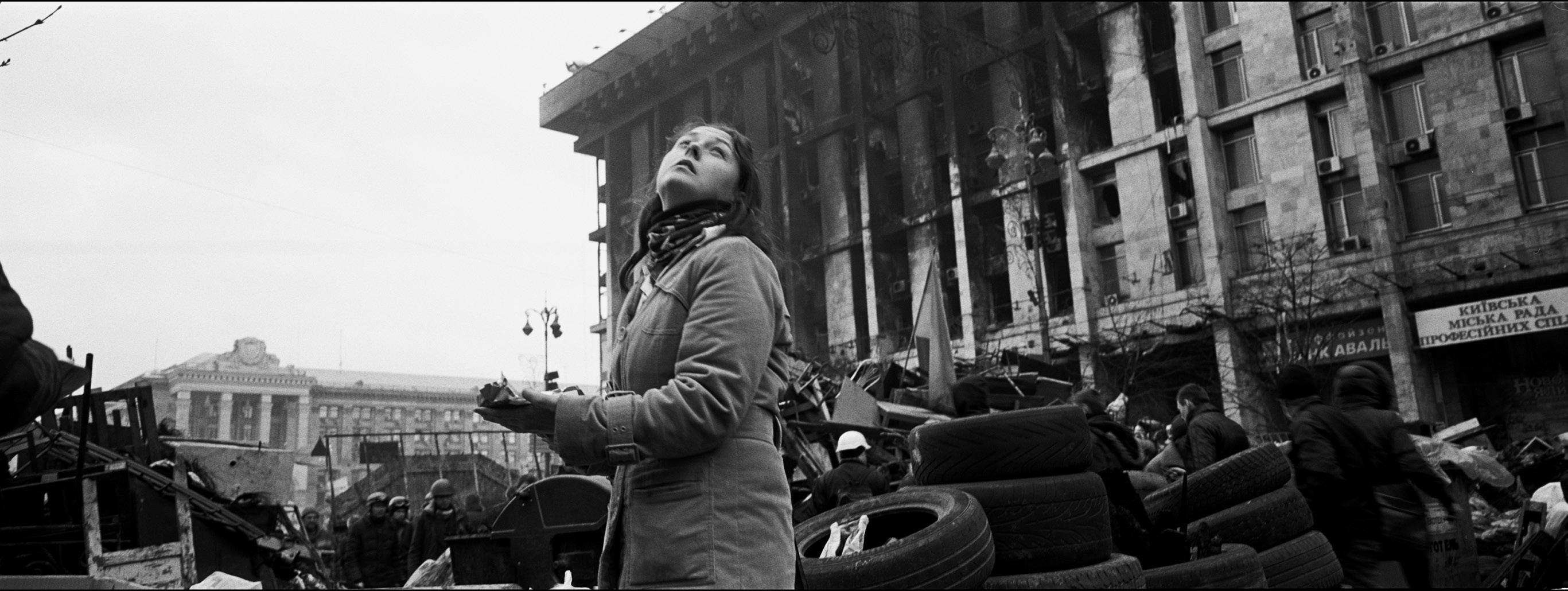
Other projects demand more of viewers in their denouncement of war and suffering. Afghanistan (2014) and The History War (2024) examine conflict in two highly
(right) Maidan uprising, Kiev, Ukraine, 2014; gelatin silver print
volatile geopolitical areas, Afghanistan and Ukraine. In the publications accompanying these exhibitions, Towell again evokes the temporal and spatial collage of photo albums to critique the history of wars through a pastiche of images, observations, and testimonials. Afghanistan includes photographs depicting a land and people repeatedly disfigured and maimed through a surfeit of explosive devices supplied by sources of varied political, religious and ideological agendas and beliefs. Images are presented in scrapbook style, with commentary written in the margins. The History War presents Towell’s personal understanding of Ukrainian history from the fifth century to the present day. Once more, although the publication is loosely chronological, images from different time periods are collaged in such a manner as to suggest that history is anything but linear. Rather, Towell’s arrangement implies that seemingly unrelated or deeply buried events have the capacity to collide or erupt sometimes violently in the present. Handwritten listings of significant moments in history appear on masking tape, which are then placed on top of images in a variety of formats, such as photographs, stamps, cards, lithographs, currency, legal documents, and maps. In both publications, Towell presents a highly visually tactile arrangement of materials to underscore his personal involvement in his subject matter. Because military interests in the two countries are multiple and unpredictable, rational explanations based on original causes and their effects are ineffective; past and present become enfolded into one another. In their entirely, Afghanistan and The History War present areas so ruptured by violence that people’s capacity to sustain a cohesive identity appears to be severely compromised.
Towell’s presentation of the human condition is a far cry from the sanitized version that fellow photographer Edward Steichen displayed in the 1955 exhibition The Family of Man, which promoted a vision of humanity where all were united in their experiences of joy and sorrow. For Towell, family, and by extension community
and nation, appear as fragile and precious states, ones always in danger of being eradicated. However, his works also reveal people’s struggle to preserve and cherish their history, identity and need to connect to one another. Through Towell’s publications, and in the gallery space, we as viewers can become immersed in the extremity of human actions, from their violent intensity to their moments of calm. And perhaps, we can imaginatively join Towell in a moment of peaceful respite and refuge on his front porch.
Andrea Kunard is Senior Curator, Photographs at the National Gallery of Canada in Ottawa. She curates, researches and publishes on historical and contemporary photography. Exhibitions include Shifting Sites (2000); Susan McEachern: Structures of Meaning (2004); Steeling the Gaze (2008); Clash: Conflict and Its Consequences (2012); Michel Campeau: Icons of Obsolescence (2013); Photography in Canada 1960–2000 (2017); Marlene Creates — Places, Paths, and Pauses (2017) with Susan Gibson Garvey; Photostories Canada (2017, virtual exhibition); Anthropocene (2018) with Sophie Hackett and Urs Stahel; Moyra Davey: The Faithful (2020); and Kan Azuma: A Matter of Place (2024) with Assistant Curator Euijung McGillis. Kunard has taught photo history, Canadian art and cultural theory at Carleton University and Queen’s University. Co-editor of The Cultural Work of Photography in Canada (McGill-Queen’s University Press, 2008), she has also published in the National Gallery of Canada Review (University of Toronto Press), The Journal of Canadian Art History, the International Journal of Canadian Studies, and Early Popular Visual Culture
Notes
1. Magnum Photos is a cooperatively-run international photo agency founded in 1947 by photographers Robert Capa, David Seymour, Henri Cartier-Bresson, and George Rodger.
2. Alan Sekula, “Dismantling Modernism, Reinventing Documentary,” Photography: Current Perspectives (Rochester, NY: Light Impressions Co.), 236.
3. Daniel Baird, “Eye of the Storm: The Quiet Force of Photographer Larry Towell,” The Walrus, June 2008. https://thewalrus.ca/2008-06-photography/, accessed 22 May 2025.
About the Artist
Larry Towell (b. 1953) was raised in rural Lambton County, Ontario. After studying visual arts at York University in Toronto (1972–76) and volunteering in Calcutta, India (1976), he spent two years living in solitude on a homemade raft, where he began to write. His photojournalist career launched in the 1980s, when he documented the civilian victims of the Nicaraguan Contra War. He would go on to be the only Canadian member of the prestigious Magnum Photos agency (1988) and Canada’s most decorated photojournalist. Over the past four decades, Towell’s photographs of historic events, human rights, and conflict have appeared in leading publications that include The New York Times, Life, Rolling Stone, Geo, Stern, Vanity Fair, The Atlantic, The Nation, and The New Yorker, and have resulted in the publication of 16 books.
Towell’s photographs bridge the divide between journalism and art, and between the objective statement and the personal point of view. His most recent publications are The History War (GOST Books, UK, 2024) and a second expanded edition of The Mennonites (GOST Books, UK, 2022). Towell is also the creator of five original music albums and two films, including his feature length
film, The Man I Left Behind, which screened in 2024 at Visions du Réel Festival, Nyon, Switzerland; International Documentary Film Festival, Amsterdam, Netherlands; Visa pour L’Image, Perpignan, France; and Cinémathèque québécoise, Montréal, Canada. He is the recipient of numerous awards, including the World Press Photo of the Year Award, Pictures of the Year International Award, Henri Cartier-Bresson Creation Award, W. Eugene Smith Grant, Leica Oskar Barnack Award, Ernst Haas Award, Roloff Beny Foundation Photographic Award in Fine Arts, Alfred Eisenstaedt Award for Magazine Photography, The Prix Nadar of France, and a Hasselblad Foundation International Award in Photography. In 2020, he was named a Guggenheim Fellow.
Larry Towell has exhibited internationally, and his work is included in collections at the Getty Center, Los Angeles; National Gallery of Canada, Ottawa; George Eastman Museum, Rochester; National Museum of Qatar, Doha; and The Archive of Modern Conflict, London UK.
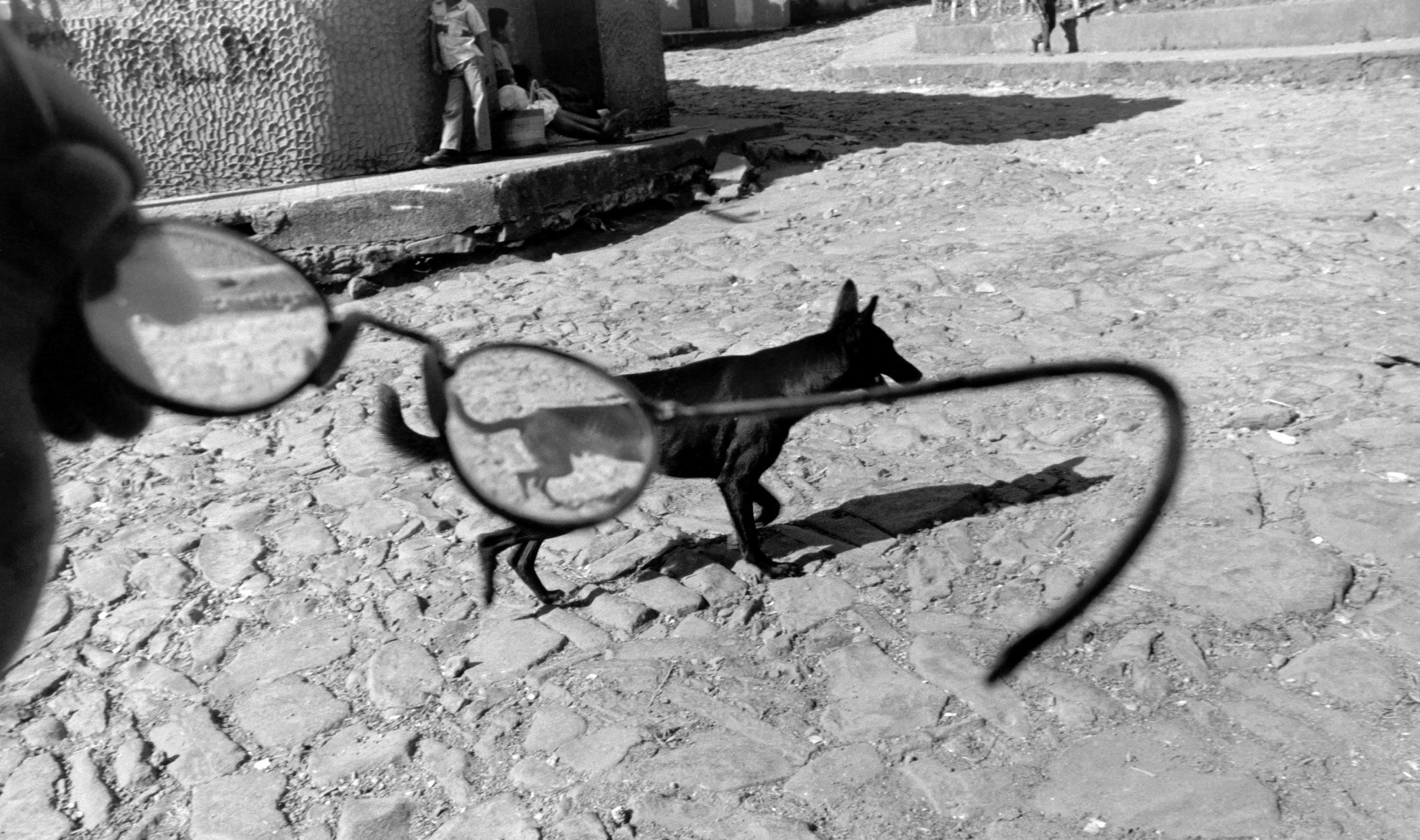
(above) Perquín, Morazán, El Salvador (detail), 1991; gelatin silver print
Larry Towell: Boundaries
October 3, 2025 – March 14, 2026
Curator Sonya Blazek
Writer Andrea Kunard
Editor Alison Kenzie
Installation Tim Churchill, Shelly Mallon, Dale Workman
Publication Design Otto Buj
Printing Aylmer Express
Acknowledgments
On behalf of the Judith & Norman Alix Art Gallery and the County of Lambton, we gratefully acknowledge the support of JNAAG members, donors, sponsors, and volunteers. Additionally, sincere thanks are extended to Magnum Photos, the Stephen Bulger Gallery, and the individuals involved in the print making process.
Prints made by: Bob Carney, Brian Young, Dan Eberts, Pablo Inirio, Ann Towell, Jonathan Groeneweg and Larry Towell.
Artist Acknowledgments
Larry Towell would like to thank all the staff at Magnum Photos, New York, Paris and London UK.
List of Works
The exhibition Larry Towell: Boundaries includes photographs from the following series: New York: September 11 (USA), Afghanistan, Aamjiwnaang (Ontario), El Salvador, Fort McMurray (Alberta), Migrants (Mexico), The Mennonites (Mexico and Ontario), No Man’s Land (Palestine), Standing Rock (North Dakota), The History War (Ukraine), and The World From My Front Porch (Lambton County, Ontario).
For a detailed list of works contact the Judith & Norman Alix Art Gallery.
© 2025 Judith & Norman Alix Art Gallery
ISBN 978-1-7753346-4-4
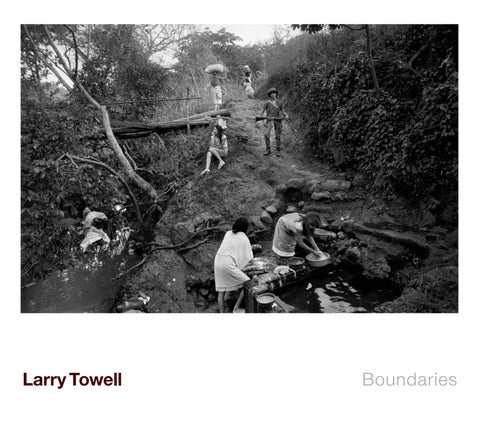
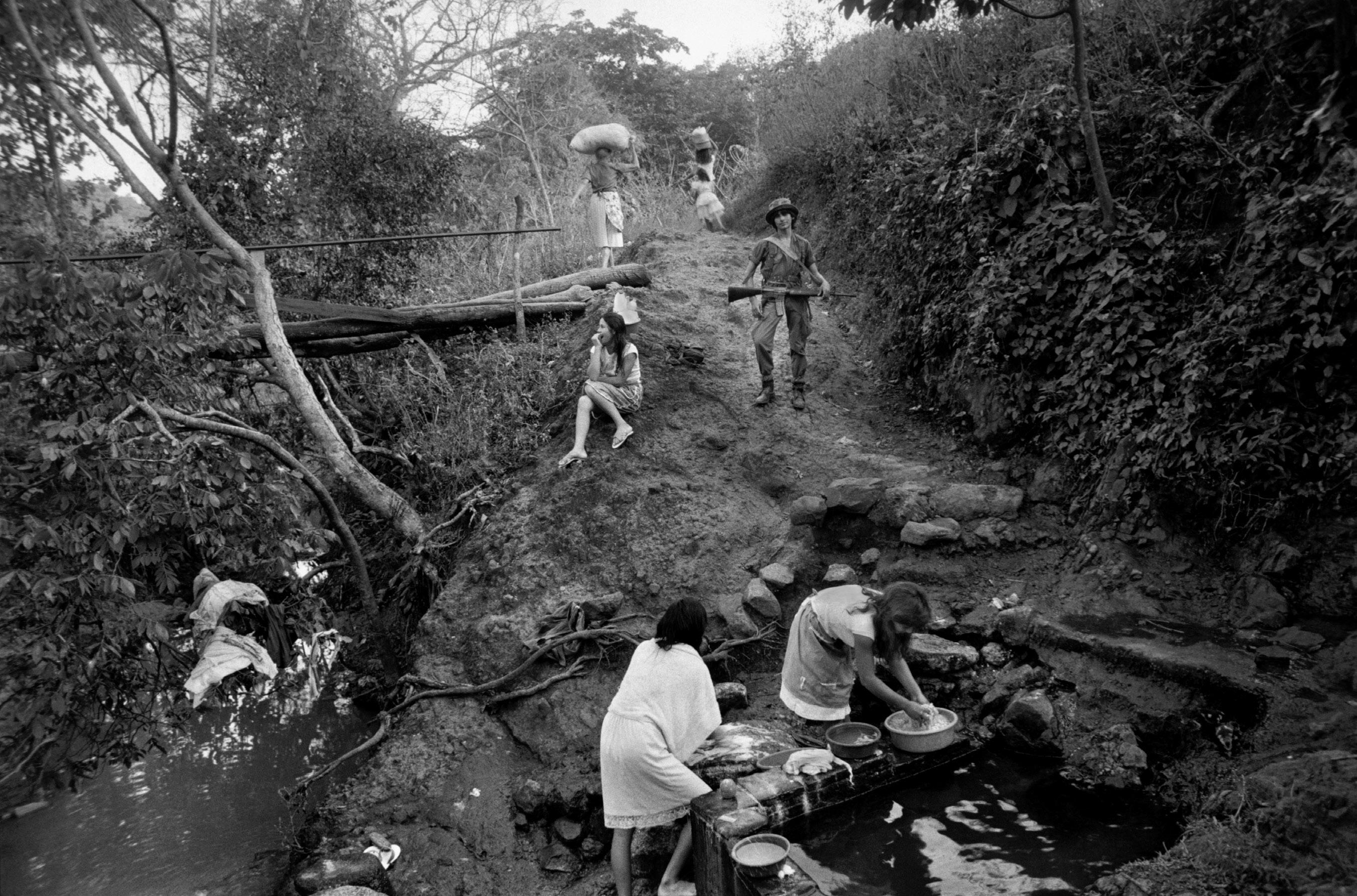
(cover) Santa Marta, Cabañas, El Salvador, 1991; gelatin silver print
Library and Archives Canada Cataloguing in Publication
Title: Larry Towell : boundaries.
Other titles: Larry Towell (Sarnia, Ont.) | Boundaries
Names: Container of (work): Towell, Larry. Photographs. Selections. | Container of (work): Kunard, Andrea. Extended engagement. | Judith & Norman ALIX Art Gallery, publisher, host institution.
Description: Includes essay Extended engagement : Larry Towell’s photographic practice by Andrea Kunard. | Catalogue of the exhibition “Boundaries” held at the Judith & Norman Alix Art Gallery, Sarnia, Ontario from October 3, 2025 to March 14, 2026.
Identifiers: Canadiana 20250240076 | ISBN 9781775334644 (softcover)
Subjects: LCSH: Towell, Larry—Exhibitions. | LCSH: Photography, Artistic—Exhibitions. | LCGFT: Exhibition catalogs.
Classification: LCC TR647 .T69 2025 | DDC 779.092–dc23


147 Lochiel Street
Sarnia, Ontario
N7T 0B4 Canada
www.jnaag.ca
Judith & Norman Alix Art Gallery
The Judith & Norman Alix Art Gallery is a department of the Corporation of the County of Lambton.