
AN UNEXPECTED JOURNEY OF EMPATHY AND IMPACT

Whether selling or buying, I’m here to guide you with care and experience.


With over 2 decades of Real Estate expertise, Kris Gelbart is no stranger to today’s ever changing market. With countless awards, recognitions, and certifications, Kris is your one-stop-shop for everything Real Estate.

Kris Gelbart Cal DRE 01345809 858-395-0761 gelbartrealtygroup.com



PUBLISHERS
Diane Benaroya & Laurie Miller
EDITOR-IN-CHIEF
Alanna Maya
CREATIVE DIRECTOR
Laurie Miller
CONTRIBUTORS
Barbara Birenbaum, Franklin Felber, Donald H. Harrison, Jacob Kamaras, Stephanie D. Gittleman, Salomon Maya, Jana Mazurkiewicz Meisarosh, Mimi Pollack, Rachel Stern, Eva Trieger, Deborah Vietor, Cheri Weiss
ADVERTISING & SALES
Diane Benaroya: dianeb@lchaimmagazine.com L’CHAIM SAN DIEGO, LLC (858) 776-0550 P.O. Box 27876, San Diego, CA 92198
EDITORIAL editor@lchaimmagazine.com
dianeb@lchaimmagazine.com
Copyright ©2025 L’Chaim San Diego LLC. All rights reserved. No part of this publication may be reproduced, distributed or transmitted in any form or by any means, including photocopying, recording, or other electronic or mechanical methods, without the prior written permission of the publisher, except in the case of brief quotations embodied in critical reviews and certain other noncommercial uses permitted by copyright law. For permission requests, write to the publisher, addressed “Attention: Permissions Coordinator” to: publisher@lchaimmagazine.com
Published in San Diego, CA • www.lchaimmagazine.com


My husband, Dan, is a long-time hospice nurse, caring for people whose lives are drawing to a close. He and his colleagues bring kindness and compassion not only to their patients but to their families, who are also suffering as their loved ones move closer to the end of their time on Earth. Every day they have many opportunities to do what we commonly refer to as a mitzvah —a good deed.
The actual translation of the word mitzvah, however, is “commandment." There are 613 mitzvot in our Torah, the most well-known of these referred to as the Ten Commandments. That is a lot of opportunities for each of us to fulfill God’s commandments! Out of this number, 248 are considered “positive” mitzvot, meaning they require that we take positive action to fulfill them. Some of these mitzvot directly involve our relationship to God: believing in, loving, fearing and worshipping God, as well as walking in God’s ways. Each of us must determine for ourselves what those words mean to us and how that will be reflected in our daily living. Other examples of positive mitzvot are keeping and sanctifying Shabbat, honoring
and respecting one’s parents, and visiting those who are ill or in mourning. We are obligated to thank God after consuming a meal, as well as before and after studying Torah. There are numerous commandments to care for the poor, some in general terms (“You must open your hand and lend whatever is sufficient to meet the need.” [Deuteronomy 15:8]), some more specific (“In the seventh year you shall let [your land] rest and lie fallow. Let the needy among your people eat of it, and what they leave let the wild beasts eat. You shall do the same with your vineyards and your olive groves.” [Leviticus 23:11])
The other 365 mitzvot are considered as “negative” commandments, i.e. things we are told not to do. For example, we are commanded not to kill, steal, commit adultery, or covet someone else’s possessions. We may not bear false witness (lie), worship idols, or eat from the list of prohibited foods (the foundation of kashrut). We are forbidden from shaming another person publicly. (The Talmudic rabbis considered this action particularly egregious, tantamount to murder.) There are many negative commandments regarding sexual prohibitions and over twenty
commandments directed specifically at judges to ensure fairness and true justice in all legal proceedings.
Some of the mitzvot are no longer relevant to contemporary life, such as those related to animal sacrifice or the obligations of the priests. There are both positive and negative mitzvot related to our holidays: Do celebrate Sukkot with the four species (lulav, etrog, myrtle, willow); do not eat leavened bread during Passover. (For a comprehensive list of mitzvot, visit: www.mussar.center/lists/613) By observing God’s mitzvot, we are choosing to live within an ethical and moral framework accepted by our ancestors at Sinai. Espousing Jewish values and setting behavioral expectations in our daily lives aligns us with Jews throughout the world and across the centuries, fostering a connection that transcends space and time. We become connected to the generations who came before us and to those who will follow in our footsteps.
Because eight nights is a long time, why not go a little meshuga with unique activities? Forget ordinary spinning for gelt. Instead play the Dreidel Stock Market! Assign fluctuating financial values to nun, gimel, hey, and shin, then shock guests by hollering, “The Gimel bubble is about to burst! Sell everything now!” Next, hold a Latke Olympics featuring a Speed Potato Grating event (aka The Finger Bandage Relay) after which everyone performs synchronized frying routines. Craft Time! DIY Menorahs made from household items you’ll never use. Think outside the box—and inside the junk drawer. Potential menorah materials might include eight old iPhones plus a shamash made from a discarded Android. (Bonus points if it looks like a modern art installation titled, “Oy!”)
Time to inspire a little “Chanukah Envy” from the gentiles next door (whose tradition it is to hire the Joffrey Ballet to perform Nutcracker nightly on their front lawn) by opening your windows and yelling to your 16-year-old, “Guess what, Jonah? You’re getting EIGHT brand-new cars! Yes, that’s right! A different one for each of the EIGHT nights of Chanukah!” (Always emphasize our holiday lasts more than an entire week) If you feel a bit remorseful, continue shouting, “But since you’re not supposed to use electricity on Shabbos, we’ll give the Tesla to the nice Smith family.” Follow this up with
a little something I like to call “Khanukah Kandle Lighting Karaoke.” Windows still ajar, entertain your neighborhood by belting out The Doors “C’mon Baby Light My Fire!” and The Talking Heads “Burning Down the House!” Then dedicate Gloria Gaynor’s “I Will Survive!” to the Maccabees.
And because Jews love to argue, finish off the celebration with a passionate debate, “Latkes vs. Sufganiyot: Which Chanukah food reigns supreme?” Rules: Must reference a historical fact that’s probably untrue. Must cite a study from Tel Aviv University that absolutely does not exist. When all the attendees are exhausted from quarreling, it’s time to remind everyone it’s nearly January 1st and therefore we need a list of New Year’s Resolutions that no Jew would ever consider making. I’ll help launch it off with a few of mine:
1. “This year I’ll stop asking people if they’re hungry.” Sure. And next year I’ll stop breathing. Asking “Did you eat?” is our people’s way of saying, “Hello.”
2. “I’ll stop kvelling about my children’s accomplishments unless asked.” Impossible. If you so much as make brief eye contact with me, you’ll hear about someone’s SAT score, violin solo, or the grand opening of their dental practice! Mazel Tov to me!
3. “I’ll embrace minimalism.” Right after explaining ‘minimalism’ to my drawer of 100 plastic Ralphs grocery bags nesting
inside the other drawer of larger Trader Joe’s brown paper bags.
4. “I will not pre-slice the bagels under the guise that I’m helping the hostess.” It’s a reflex. Put a bag of bagels on a counter and within minutes a Jewish person appears with a serrated knife like some kind of carb-loving Superhero.
5. “I’ll stop interrogating servers.” I’ll only ask a few necessary questions like “Is it dairy-free?” and “What’s the wildest thing your wild salmon has ever done?” and “Instead of the hollandaise sauce, can you substitute a breakfast steak?” and “Do you have something that’s not on the menu but similar?” We keep waiters on their toes. It’s our gift.
6. “I’ll stop arguing with people about the best place to buy lox.” This will never happen. Everyone knows the best lox is from a place that moved to La Jolla in 1993 and now no longer exists and was run by that man who invented the Dreidel Stock Market and Latke Olympics.
7. “I will not worry anymore.” Ha! Okay, let’s be serious. The only resolution a Jew might make is “Next year, I’ll try to feel less guilty.” But even then? We’d feel guilty for not feeling guilty.
STEPHANIE D. GITTLEMAN WILL INJECT HUMOR INTO ANYTHING YOU HIRE HER TO WRITE. EMAIL HER AT THEQUOTEGAL@YAHOO.COM.
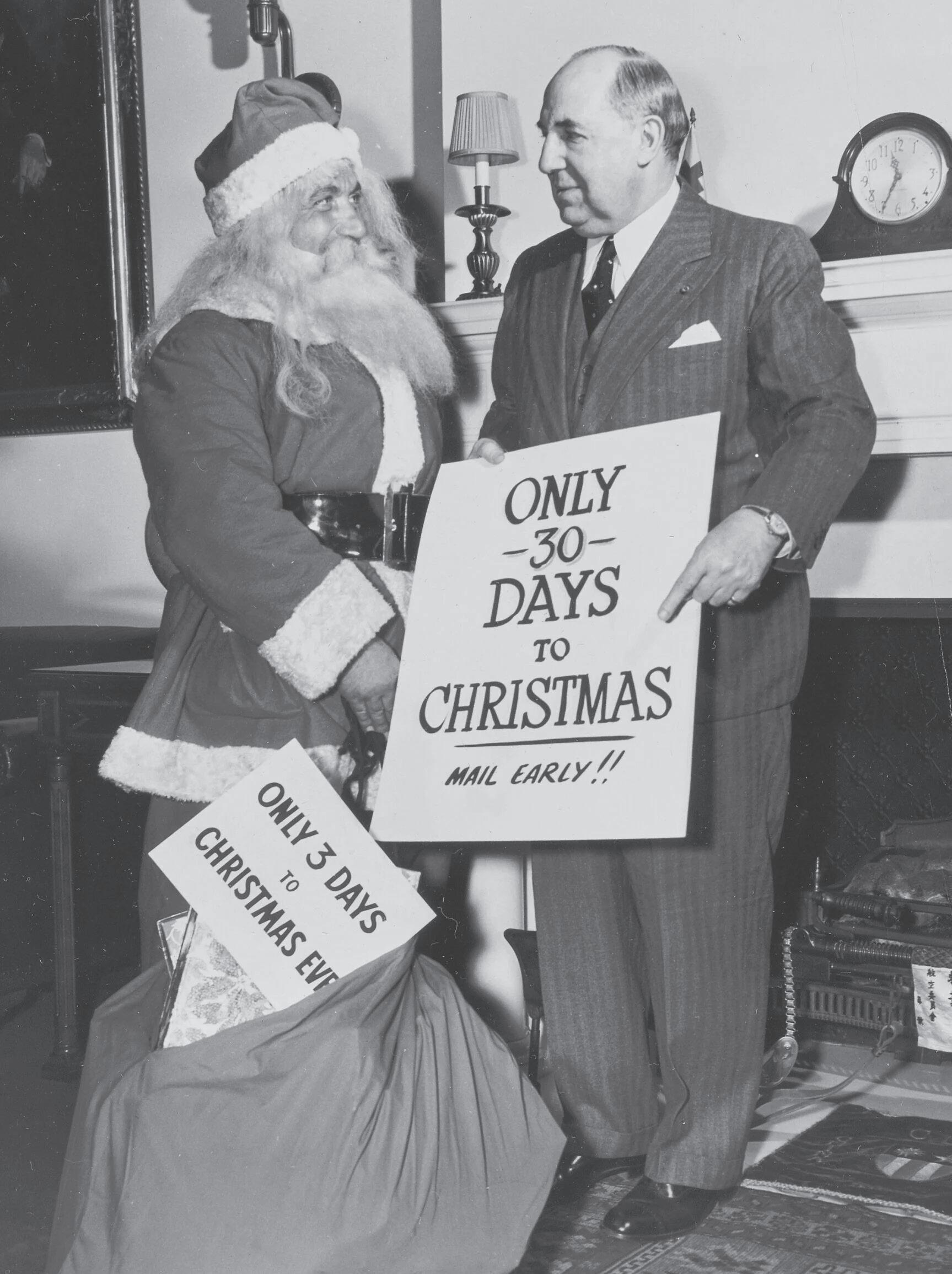
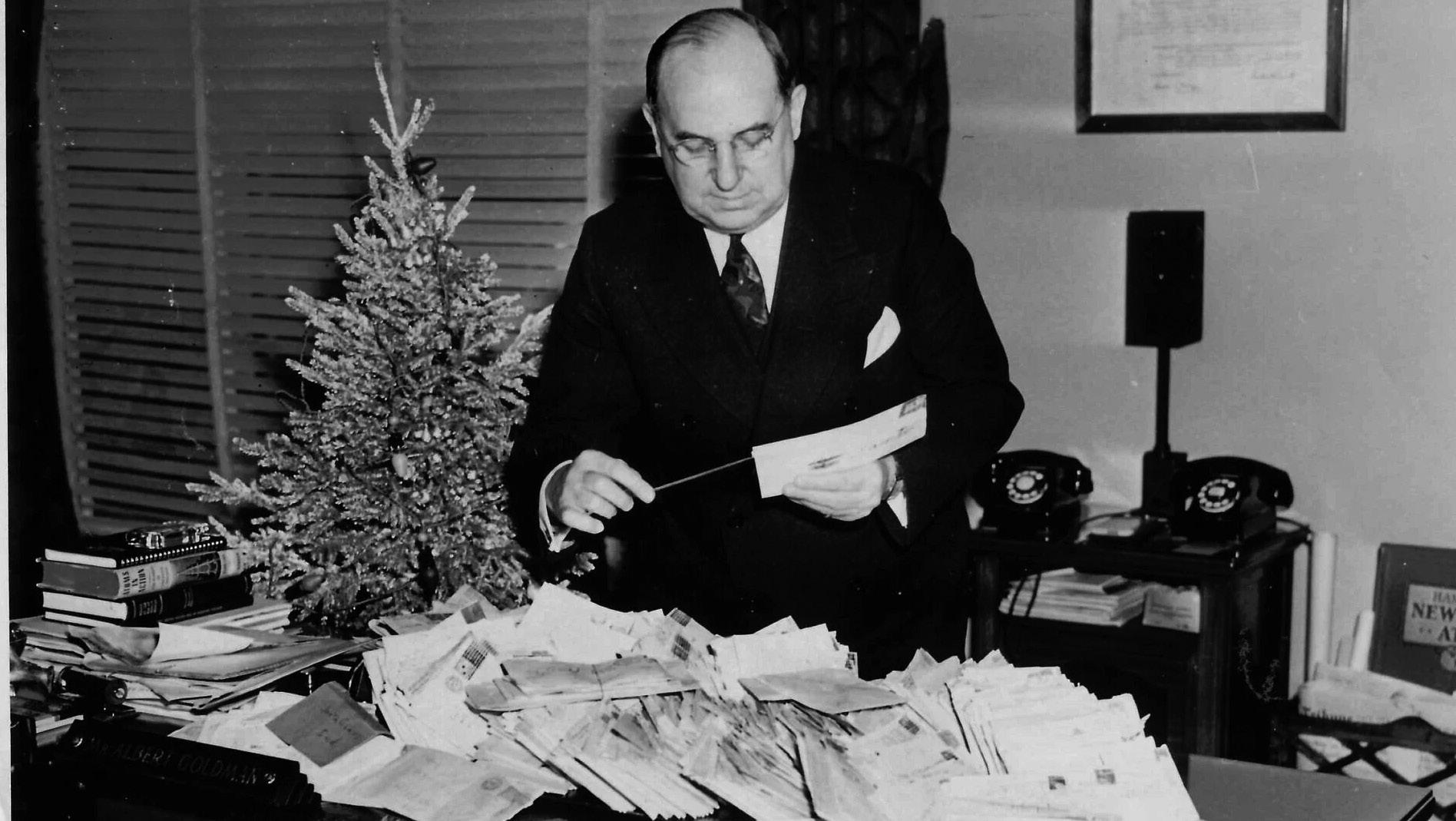
The U.S. Postal Service has a term for when the independent federal agency cannot sort or deliver a piece of mail due to an incorrect, illegible or insufficient address: a “nixie.” The same term could apply to Albert Goldman, the Jewish New York postmaster in the 1930s and 1940s, who in many ways foreshadowed social-media “influencers” of today and, in other ways, particularly his personal faith and motivations, proved to be ANK, “address not known.”
The day after Goldman died on May 5, 1967, The New York Times reminded readers that it called the late postmaster “most friendly, helpful and accommodating” when he retired in 1952, after more than 25 years in public office. “No worthy cause in this city has ever had to ring twice to enlist the enthusiastic support of Albert Goldman,” it added.
The Times recorded that Goldman, a “baldish, stout man, talkative, cheerful and energetic” who died at 84 of a stroke after a two-month illness, was most proud of supervising “4,000 Army and Navy postal units at home and abroad in World War II.” That corresponded with “the largest wartime mail volume handled anywhere” and earned him a Medal of Merit, the Times said.
The only hint the newspaper gave of the postmaster’s faith was noting that he was a founder of Yeshiva University’s Albert Einstein Medical College—now distinct from the university—and director of the Hebrew Home for the Aged. It also neglected to mention something upon which it had reported extensively: his role in expanding the postal service’s “Operation Santa” and shaping what remains a lively program nearly 100 years later.
As the Times put it in December 1947, Goldman was the “ father of the Santa Claus fund.” TIME recorded in 1941 that Goldman was “official opener of letters-to-Santa Claus.” (One letter Goldman read that year, per the magazine, said: “You better bring all this stuff, or
I’ll beat you to a pulp.”)
Jews penned many of the holiday’s central songs, including Irving Berlin’s “White Christmas” and Mel Tormé’s “Chestnuts Roasting on an Open Fire,” and Morris Propp, founder of M. Propp Company, was one of the first to sell Christmas lights widely. Goldman, who often spoke at churches and interfaith events, joins that tradition of Jews who have made their mark on the holiday.
But after poring over more than 500 news stories, photo captions and advertisements in secular publications and in Yiddish and English Jewish ones to try to understand Goldman, his work and his Jewish identity, and after meeting for about an hour and a half with historians at the U.S. Postal Service’s sprawling headquarters in L’Enfant Plaza in Washington and thumbing through hundreds of photographs and documents from the USPS archives about Goldman, this author came away with the distinct impression that this was a very public man, who remained fiercely private.
Although I followed a paper trail of hundreds of instances in which Goldman spoke at official New York and Jewish events, on the radio and to newspaper reporters, and a larger number of times he arranged to have himself photographed with celebrities and others, who Goldman was as a man—what he believed, what he felt deep down, how he grew up—appears to have been, to use a phrase, lost in the mail.
It took hours to establish, for example, that the son of two Russian immigrants who came to America as adults appeared to understand Yiddish.
I spoke at length at USPS headquarters with June Brandt, senior research analyst in postal history, and Stephen Kochersperger, USPS historian.
Kochersperger said that Goldman’s public role “in a post office of that size would have probably been as much a part of his job as
actually running the post office.”
“He would have had underlings to do the day-to-day post office operations,” he said. “He was supposed to be the public face of the post office.”
The historian said that Goldman, who was acting postmaster starting on Sept. 1, 1934, and postmaster from Jan. 16, 1935, until his retirement in 1952, “knew how to use the media.”
“I don’t know if you ever saw the famous movie ‘Miracle on 34th Street.’ I’m certain that that would not have happened but for Albert Goldman—the fact that the Postal Service was incorporated into that film to such a large extent,” he said.
I asked if Goldman’s PR acumen might have helped him land the job in the first place. Kochersperger said he wasn’t sure, but even if it did, “he took it to a whole other level.”
“Look how the media changed over that period of time. Radio was pretty young. There was no television. Movies were the thing, and he embraced it,” he said.
Kochersperger said that Goldman had enormous mailbox-shaped temporary postal stations set up in busy places around the city. The
stations, which might be 20 feet tall, had clerks inside who sold stamps, mailed packages and did “whatever you needed to do at the post office.”
“I’m sure that was his invention,” he said of Goldman.
There had been a U.S. Postal Service program since 1912, when people could respond to letters addressed to Santa. Goldman expanded the program to include charitable organizations and corporations, which he encouraged to provide written responses and small toys to needy children.
There are dozens of photos of Goldman posing with people dressed as Santa. “Santa letters were his big thing,” Brandt said.
To read more, the full article can be found at https://www.jns.org/nevera-photo-op-he-didnt-like-jewish-ny-postmaster-grew-shaped-uspsletters-to-santa-program-in-1930s-40s/

SINGING & SHARING
a variety of traditional Jewish music
We welcome new members!
Email Rita for more info: rheller8@gmail.com levyaudiology.com (760)571-9465 @hearwithyourbrain

1. In Israel today, when someone says, “I am dying for you,” met alaicha to a male or met alaich to a female, in what spirit are these words spoken?
a. Romantic – I crave your love
d. He was executed by stoning
6. Ashkenazic Jews are to Yiddish as Sephardic Jews are to which language?
a. Spanish

b. Empathetic – I’m so sorry for you
c. Sarcastic – Your loss is really trivial
d. Hyperbolic – I’m exaggerating my sacrifice for you

Joyful conversations. Family laughter. The stories that connect generations. Hearing is at the heart of connection — especially during the holidays.
We help children and adults strengthen how the brain processes sound, improving listening, communication, and learning. Auditory training can help you or your child thrive at school or at work.


Schedule your evaluation today and experience the joy of hearing what truly matters.

�
2. According to the Talmud, an aylonit refers to an individual in what gender category?
a. A female who fails to develop female characteristics
b. A male who fails to develop male characteristics
c. One who has both male and female characteristics
d. One whose sex is unknown or concealed within the body
3. Which of these Israeli national security agencies is often compared to the U.S. Federal Bureau of Investigation?
a. Aman
b. Mossad
c. Shin Bet
d. Ministry of National Security
4. Which of these is the worst of all traits, in the nearly unanimous opinion of Jewish ethicists?
a. Greed
b. Wrath
c. Envy
d. Vanity
5. Haman, who tried to eradicate all the Jews living in the Persian Empire, met what fate?
a. His wealth was confiscated and he was exiled to Cush (Ethiopia)
b. He was decapitated by Mordecai the Jew
c. He and his ten sons were hanged
b. Catalan
c. Ladino
d. Portuguese
7. On what occasions is it common for a Jewish man to wear a simple white linen or cotton robe called a kittel?
a. On Yom Kippur
b. At his wedding
c. At his burial
d. All of the above
8. The Spanish Jews who converted to Christianity during the Inquisition, but who lived as secret Jews, became known as Marranos, a term meaning what?
a. Proselytes
b. Swine
c. Acceptors
d. Canonists
9. Which Jewish prophet tried unsuccessfully to decline his mission to warn the people of Nineveh of impending doom?
a. Jeremiah
b. Jonah
c. Joshua d. Joel
10. Before Sigmund Freud won permission from the Gestapo to emigrate to England, his inner circle of proteges in Vienna were all Jewish, with which exception?
a. Carl Jung
b. Alfred Adler
c. Karen Horney d. Erik Erikson
Answers on page 25. ©2025 Felber, Starmark, Inc., all rights reserved.
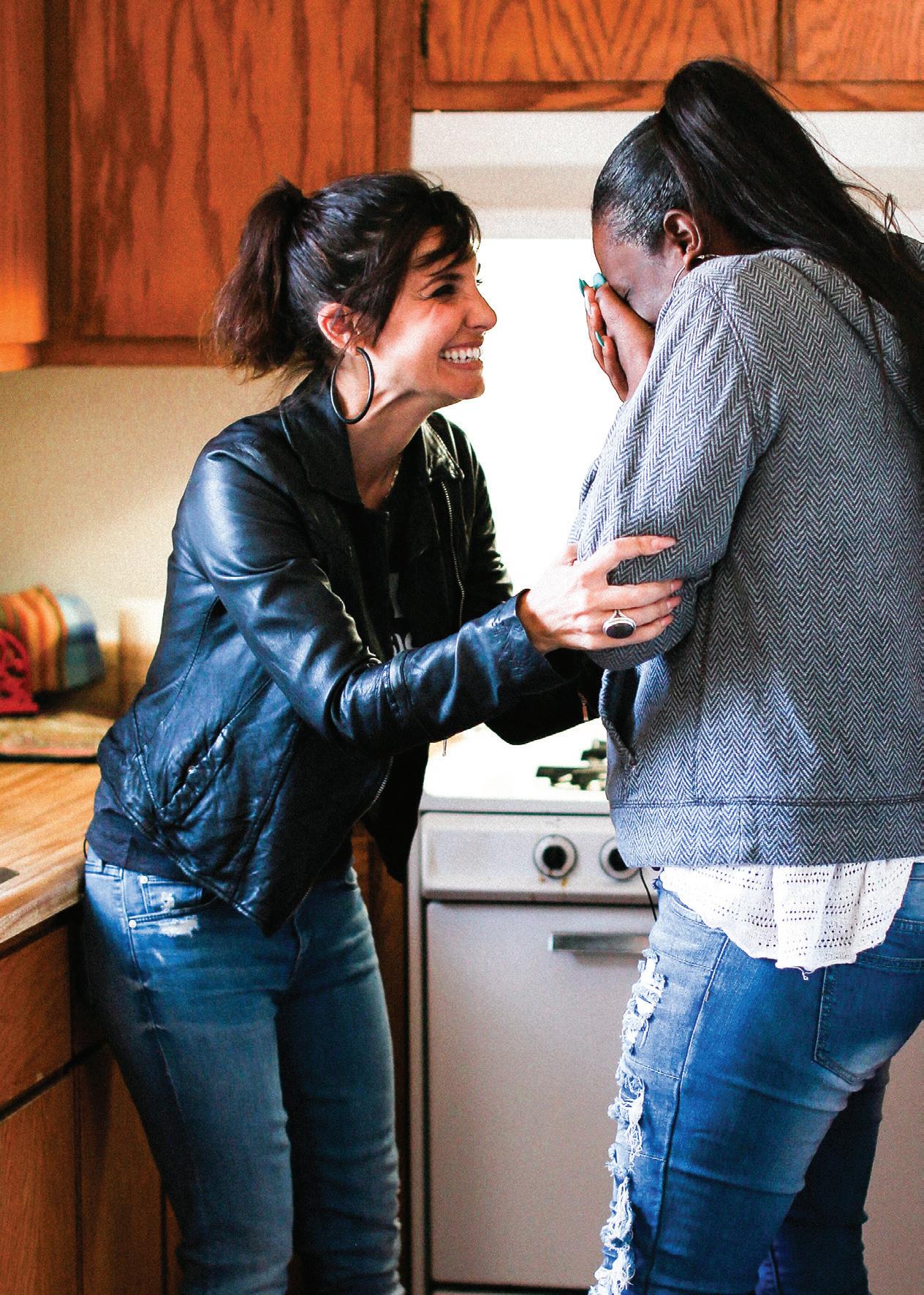
Treger Strasberg embodies Tikun Olam. Her mission: helping individuals and families transitioning out of homelessness by fully furnishing their new living spaces. Tiny in stature, but gigantic in character, she founded Humble Design in 2009, now a national non-profit.
She quoted the Talmud, “Tzedakah and acts of kindness are the equivalent of all the mitzvot of the Torah. If I were to base my life on one principal of the torah this would be it.”
She went on to say, “I realized through my work that there is no great divide. There is no difference between those struggling and those living in comfort. Heartache is heartache, loss is loss and suffering feels the same in any tax bracket. All of Humble Design’s clients are devastated by the prospect of being homeless. It never hurts less to lose everything, even if you have very little to begin with.”
She often thinks about Rabbi Shlomo Carelebach.
“Rabbi Carlebach spoke to members of Manhattan’s Diamond Dealers Club and was challenged by one of the attendees as to why he wasted so much time with people who had lost their way,” she says. “Reb. Shlomo responded by asking the group whether they had ever accidentally thrown out a million-dollar diamond in the rough. ‘Never!’ shouted the group, ‘An expert would know the worth of that which he held in his hand.’ Reb. Shlomo responded softly, ‘I’ll let you in on a little secret, my friends. I’m also an expert on diamonds. I walk the streets every day, and all I see are the most precious diamonds walking past me. Some of them you have to pick up from the gutter and polish a bit. But once you do, oh how they shine! So you see, the most important thing you have to know in life is that everyone, everyone, is a diamond in the rough.’”
Humble Design was born out of Strasberg’s desire to help mothers and children coming out of homeless and abuse shelters. The nonprofit helps families to rebuild their lives by taking gently used donated home goods and furniture and repurposing them to build a comfortable home.
“When leaving the shelter these families are often worse off because they have nothing,” she said. “No pots, no plates, no silverware, rugs, towels or bed. They often return to the shelter, because as hard as shelter life is, it is sometime preferable to living in the dark and sleeping on the floor.”
“We start by getting the families off the floor, and into beds,” Strasberg said. “Then we move in the other essentials. Lamps, desks, dressers, pots and pans and kitchen tables.”
All of the items are collected from homes and basements that are overrun with excess and families looking to re-decorate. Strasberg’s team picks up the furniture and other items for free, and delivers them to the families in need. Humble Design then designs the homes from top to bottom, cleaning, fixing, putting clothes away, making beds, filling vases with flowers and everything in-between.
“Families are left with a home they can be proud of, and one that functions as a springboard for success,” she said. “Their kids have a place to do homework, the family can eat dinner together at a table and no one has to sleep on the floor.”
About 98% of Humble Design’s clients stay in the houses they procure after leaving the shelter because they take pride in their
home and want to work hard to stay there. The effect spreads through blocks and neighborhoods.
“By removing the obstacles facing previously homeless families, we can increase their chances of breaking the cycle of chronic homelessness,” she said.
Strasberg never set out to launch a national nonprofit, build a continuum of care for families emerging from homelessness, or lead a movement rooted in dignity and design. She simply wanted to help a friend.
In 2009, newly relocated to Detroit, Treger learned that a close friend—along with her two young children—was homeless. After helping them secure an apartment, the joy of finding a new place quickly faded when Treger realized the family would be sleeping on the floor. That night, tucking her own children into warm, comfortable beds, she couldn’t shake the image of her friend facing bare floors and empty rooms.
So she acted. She gathered items from her own home, asked others in her community for anything extra they could spare, and furnished the apartment with love and intention. What she witnessed was profound: a thoughtfully designed, welcoming space did more than fill a room—it restored dignity, stability, and hope. That single act of kindness became the spark that ignited a national movement.
From that first home grew Humble Design. The belief is simple yet transformative: when people come home to a clean, comfortable, personalized environment, they are far more likely to rebuild their lives successfully.
To date, Humble Design has furnished more than 3,500 homes, supporting over 10,000 moms, dads, children, and veterans across the country. The impact is extraordinary: 99% of the families served remain in their homes long-term, breaking the devastating cycle of chronic homelessness.
“I have seen a great sift inside of myself since beginning this process,” she said. “I have learned how to be humble every day and teach my kids the same. I will occasionally take them to see where their bed went, or where their teddy bear lives now. It is touching, and I feel very important in their development and in mine.”
She continued, “I am very grateful for the blessings I have in my life, and every day at Humble Design forces that into the front of my brain. The ideas I had about what a homeless person looks and acts like have been decimated by the last 16 years of this work.”
UC San Diego’s Homelessness Hub evaluated Humble Design’s work and found that 98% of clients stay housed after receiving services—and that having a home, not just housing, is a critical determinant of health and well-being.
At its heart, Humble Design believes in ending homelessness one home at a time. Through thoughtful design, they create spaces that uplift the human spirit, restore dignity, and empower families toward long-term stability.
They don’t just furnish houses. They welcome people home.
LEARN MORE AT HUMBLEDESIGN.ORG.






BY SHARON GOMPERTS AND RACHEL ENQUIES SHEFF, THE SEPHARDIC SPICE GIRLS
This hearty harvest vegetable soup is perfect for days that have you craving a warm, comforting soup. The first step of the recipe—roasting all the vegetables on a sheet pan enhances flavor by caramelizing their natural sugars, which creates a deeper, sweeter taste. We layered tons of root veggies—butternut squash, sweet potatoes, carrots and parsnip— with aromatics like leek, onions, garlic, tomatoes, sage and thyme. We seasoned with olive oil, turmeric, Himalayan pink salt, freshly ground black pepper and a generous drizzle of honey.
After the vegetables were roasted to caramelized, deep earthy perfection, we puréed this perfect base with vegetable broth to create a silky, smooth, creamy copper-colored soup with perfectly rich flavor and aroma.
FALL HARVEST SOUP
Ingredients
1/3 cup extra-virgin olive oil
1 medium butternut squash, peeled, seeded and diced
2 large sweet potatoes, peeled and diced
4 medium carrots, peeled and diced
2 parsnips, peeled and diced
4 large Mexican squash
1 large onion, cut into wedges
8 garlic cloves, roughly chopped
3 tablespoons honey
2 teaspoons sweet paprika
2 teaspoons turmeric
2 teaspoons cinnamon
Salt and pepper, to taste
8 cups vegetable broth or water
Directions
1. Preheat oven to 425°F.
2. Drizzle half the oil over a large parchment lined baking sheet. Then arrange all the vegetables on the tray.
3. Drizzle the vegetables with the remaining oil and the honey. Then sprinkle with paprika, turmeric, cinnamon, salt and pepper.
4. Bake for 30 to 40 minutes or until vegetables are fork tender.
5. In a large pot, add the roasted vegetables and 1 cup of broth and blend all the ingredients using an immersion blender.
6. Place pot over low heat, add the remaining broth and stir well until the soup is a smooth consistency. Taste soup and add salt and pepper, if desired.
7. Cover pot and simmer for 20-25 minutes. Serve hot.
THE SEPHARDIC SPICE GIRLS, SHARON GOMPERTS AND RACHEL EMQUIES SHEFF, HAVE BEEN FRIENDS SINCE HIGH SCHOOL. THE SEPHARDIC SPICE GIRLS PROJECT HAS GROWN FROM THEIR COLLABORATION ON EVENTS FOR THE SEPHARDIC EDUCATIONAL CENTER IN JERUSALEM. VISIT SEPHARDICSPICEGIRLS.COM TO SEE MORE OF THEIR SEPHARDIC RECIPES WITH A MODERN TWIST!
SUBMITTED BY SHARSHERET: THE JEWISH BREAST AND OVARIAN CANCER COMMUNITY, A NATIONAL NON-PROFIT ORGANIZATION THAT PROVIDES FREE AND CONFIDENTIAL GENETIC AND MENTAL HEALTH COUNSELING, EMOTIONAL SUPPORT, FINANCIAL ASSISTANCE, AND LIFE-SAVING EDUCATION TO WOMEN, MEN AND FAMILIES OF ALL BACKGROUNDS FACING BREAST CANCER, OVARIAN CANCER, OR AT ELEVATED HEREDITARY RISK. VISIT SHARSHERET.ORG FOR MORE INFORMATION.
BY DEBORAH FRIPP
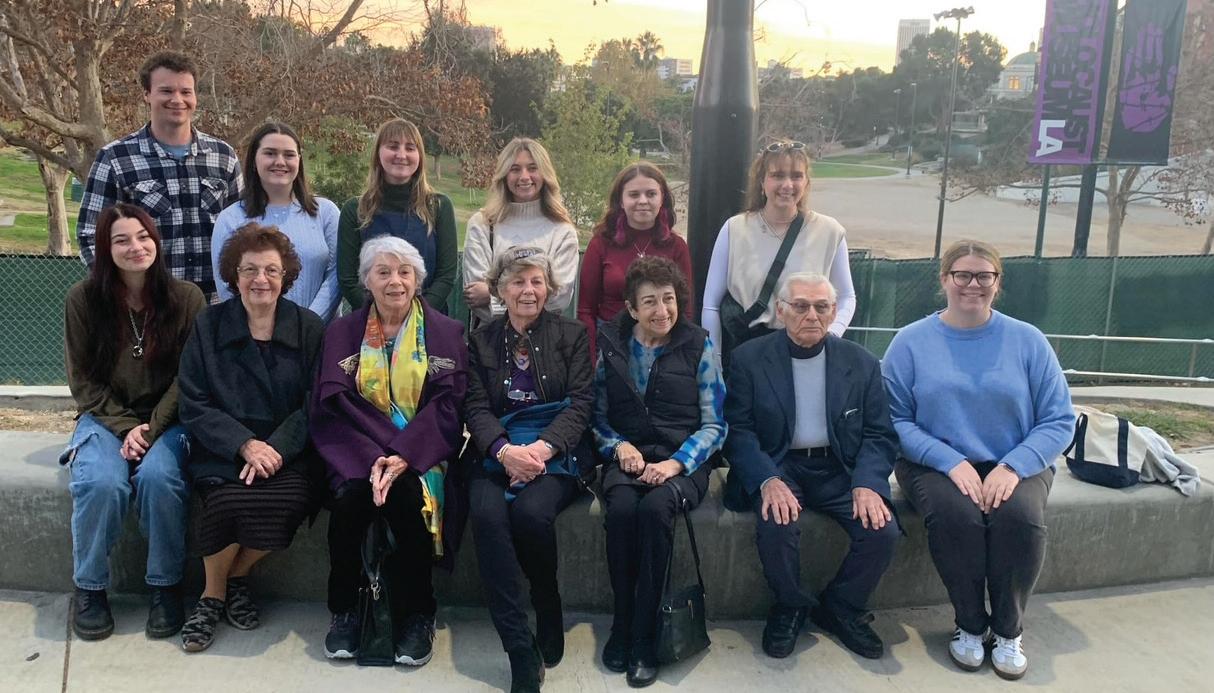
In Arkansas, where Holocaust survivors are rare, eight young adults have become keepers and tellers of survivors’ stories.
“I promise to keep your memory and tell your story.”
One by one, eight storytellers stand in front of a Holocaust survivor in the library of Holocaust Museum LA in Los Angeles, CA and make this promise. These young adults, ranging in age from 19 to 22, have spent the six weeks getting to know the survivors and learning to tell their stories—becoming keepers of their memories. The survivors have just heard their stories for the first time.
The storytellers might seem an unlikely group to be learning to tell Holocaust stories. They are students from the University of Arkansas in Fayetteville and the University of Central Arkansas in Little Rock. None are Jewish, and only one has a background in Holocaust history. Nonetheless, when the opportunity arose, they embraced it, understanding they were making a life-long commitment.
“Being a part of [this] program changed my life,” says Riley Farco, who learned to tell the story of Holocaust survivor Lya Frank. “Sharing Lya’s story is such a privilege and an honor, and I could
not be more thankful to be able to do so. Being a voice for my dear friend’s memory is something I will cherish forever. Every survivor’s story deserves to be told, and [this program] gives life to this goal.”
The program is called Lesaper: From Survivor Memory to Living Teller. Lesaper means “to tell” in Hebrew. It is a collaboration between Holocaust Museum LA (HMLA) and Teach the Shoah (TTS), an online nonprofit that specializes in training people to tell testimonybased stories of the Holocaust.
Lesaper is the brainchild of TTS’s Executive Director Dr. Deborah Fripp and Director of Holocaust Scholarship Lynne Feldman. The program was born after they heard a talk by a representative from the Claims Conference, the organization that distributes reparation money from the German government to Holocaust survivors.
“Ten years ago, survivors asked us: How can I get home healthcare?” he said. “Now they also ask us: Who will tell my story?”
“When we heard that, we realized we had an answer,” Fripp says. “The aim of Lesaper is to create direct connections between the next generation of storytellers and living survivors. It’s a race against time. Eighty years after the end of the Holocaust, few survivors are left to even ask the question.”
They partnered with HMLA Education Project Manager Fanny Wolfowitz and docent Zuzana Landres, who is also a TTS storyteller, to gather a group of interested survivors. Most of the participating survivors are volunteers at HMLA.
“When we were approached, we jumped at the opportunity to say yes,” Wolfowitz says, “because we found a shared commitment to ensuring that the history of the Holocaust and its enduring lessons resonate across generations.”
When a TTS storyteller connected them to Emily Hand, a graduate student in Holocaust history at the University of Arkansas, Fripp and Feldman recognized they had an unusual opportunity. They had the chance to create a cohort of storytellers from Arkansas, a place where few survivors are left. Not only could they pass the survivors’ memories to a new generation of tellers, but they could also bring those memories to a place where few people have the chance to hear Holocaust stories from a living speaker.
Hand presented the idea to classes at two nearby universities. Eight students, six undergraduates and two graduate students, Hand included, were accepted into the program. They signed an agreement promising to tell the stories they were about to learn for as long as
they were able.
The students were each matched with a single survivor. They met online twice a week for five weeks. Under the guidance of instructors trained by the Shoah Foundation in interviewing survivors, the students conducted three interviews with their matched survivor, focusing on the survivor’s pre-war, wartime, and post-war experiences respectively. During this period, the students began to develop deep relationships with the survivors.
At the same time, the students worked with TTS storytelling instructors. They learned to understand the Jewish and historical contexts of what they were hearing and to retell those memories in their own words.
At the end of the online training, the students and instructors gathered in Los Angeles for an intensive week-long “bootcamp” to complete the stories and to meet the survivors in person. Meeting in person cemented the close personal ties between the survivors and the students. For the students, telling the survivor’s story became more than a contract; it became a commitment.
Before they returned home, the students presented their stories to the survivors and their community. Standing in front of the survivors, they promised to carry on each survivor’s memory and to continue to tell their stories.
The survivors were overcome. After listening to storyteller Riley Farco tell her story, survivor Lya Frank said, “It was totally different from how I present my own story. Very, very insightful. I’m almost emotional, and I’m not an emotional person.”
“This is all we ask,” Lya told Riley. “Share, share our story.”
In the months since returning home, these eight young storytellers have brought the survivors’ stories to hundreds of people across Arkansas. Audiences of all backgrounds, people who might otherwise never have had the chance to hear such a story in person, have been moved by these storytellers and the important stories they tell.
THE LESAPER PROJECT IS ONGOING: RIGHT NOW, A SECOND COHORT STORYTELLERS IS LEARNING TO TELL THE STORIES OF A SECOND GROUP OF HOLOCAUST SURVIVORS. YOU CAN HEAR THEIR STORIES ON SUNDAY, DECEMBER 21AT 2 PM PST AT THE MUSEUM OF TOLERANCE IN LOS ANGELES.
REGISTER TO ATTEND IN PERSON: HTTPS:// THEIRSTORIES.ORG/21DEC2025. JOIN THE LIVESTREAM (NO REGISTRATION NECESSARY) AT HTTPS://THEIRSTORIES. ORG/21DEC2025STREAM.

Anationally recognized nonprofit organization, Bright Light Volunteers has a long history of making the world a brighter place for all. Working closely with middle and high school educators and parents, young student volunteers learn skills and experiences necessary to become global leaders of our future.
Founder & Executive Director of BLV Catherine Greenberg has created opportunities for educators and students to experience the world as travelers, not tourists. All of the programs are designed to provide transformative, culturally immersive experiences abroad. Their alumni return home with stories of pickup baseball games in Cuba, Mayan cooking techniques in Guatemala and hugging llamas in Peru! Their programs in Latin America, South America, Southeast Asia, Europe and Africa include exemplary itineraries, experiential learning opportunities, community-led service projects, and highly qualified program directors to accompany the volunteers.
Through Bright Light programs, students participate in meaningful, community-driven service projects—building and renovating schools, installing solar energy systems, supporting environmental conservation efforts, constructing wells, implementing biodigesters, and more. These projects are carried out in partnership with local leaders and NGOs in their partner communities in order to ensure long-term sustainability and real community impact.
Beyond the service itself, the program strengthens students’ global awareness and fosters skills that support them throughout their lives. Participants develop leadership, cultural competency, teamwork, and communication abilities—skills that employers look for but are rarely taught in traditional classroom settings.
BLV is raising money to support the Grow Peace Scholarship Fund, which allows them to provide full or partial scholarships to deserving students so they can participate in international service-
learning programs. These scholarships help remove financial barriers and ensure that youth from diverse backgrounds have the opportunity to engage in transformational global experiences.
On the afternoon of Sunday, January 25, BLV will host a special fundraising event in support of the Grow Peace Scholarship Fund, with a goal of raising $5,000 to provide much-needed financial assistance to deserving students. These scholarships directly empower young people to participate in global citizenship programs that promote education, leadership, and meaningful service in communities around the world.
Guests will enjoy small bites, drinks, and a featured performance by an ensemble from the acclaimed Sabrosas Latin Orchestra. The afternoon will offer not only entertainment but also an opportunity to connect with others who are passionate about education, crosscultural learning, global engagement, and volunteerism.
The gathering will take place in the beautiful community room of a private residence in Bankers Hill, across from Balboa Park. In addition to supporters and community members, the event will also welcome past BLV program participants, who will share personal stories about how the program has shaped their academic journeys, broadened their worldviews, and inspired continued civic engagement.
In short, the event will celebrate global citizenship, highlight the transformative impact of experiential learning, and mobilize support to help more students access life-changing opportunities.
The vision of BLV and their Grow Peace Scholarship Fund is to make the world a brighter place by creating a more peaceful, just, interconnected world where global challenges and opportunities are met by educated, compassionate, global citizens and leaders.




In November, Jewish Federation of San Diego reached a meaningful milestone: four immersive travel programs unfolding across three countries in a single week. It was a Federation first, and a powerful reflection of the organization’s increased investment in immersive travel.
This expansion is rooted in community need. The recent Blueprint for Our Future: San Diego Jewish Community Study showed that many San Diegans feel only somewhat, or not at all, connected to Jewish life locally. National insights from RootOne point to immersive travel as a proven catalyst for long-term engagement and pride. Together, these findings have guided Federation’s effort to create experiences that build belonging—connecting participants with global Jewish communities while deepening their relationships within San Diego, as travelers return home with shared purpose and stronger bonds.
During this extraordinary week, four delegations—totaling more than 40 local participants – set out on transformative journeys across the globe.
The Giborim Program, a yearlong leadership and professional development experience for early-career Jewish communal professionals, traveled to Israel to meet their peers in Sha’ar HaNegev, San Diego’s longtime partner region. Participants witnessed a community rebuilding with extraordinary courage after the profound trauma of the October 7 attacks and resulting war. As participant Maya Satnick shared, “Getting to hear firsthand about the experiences our friends have gone through was inspiring and incredibly impactful. I was shocked how much Sha’ar HaNegev felt like home even though it was my first time in the region.”
During the Men’s Mission to Cuba, participants balanced the vibrancy of Cuban culture with the economic and leadership crises facing the Cuban people. The group spent time with Cuba’s small but
proud Jewish community, bringing much needed medicines, financial support and other supplies. Participant Josh Erickson reflected, “I saw a Cuba broken in many ways… But I also saw the way people are –good, kind, and resilient.”
The fifth cohort of Pauline Foster Women’s Leadership Institute, Federation’s premier leadership program for emerging Jewish women leaders, spent the week in Mexico City. Participants engaged with local Jewish leaders, explored cultural and historic sites, and reflected on their own leadership journeys. As participant Stacey Wallach noted, “My time in Mexico City was profoundly moving – a journey of connection, sisterhood, and shared spirit.”
Rounding out the week was Honeymoon Israel, a program that helps young couples experience Israel’s culture, beauty, and society in a way they might never do on their own. Together, the couples from San Diego traveled through Israel while forming a chavurah – a close, supportive circle that often becomes the foundation of their Jewish lives once they return home.
Though each delegation encountered a different expression of Jewish life, all returned with strengthened relationships—both with these global communities and with one another—and a deepened sense of Jewish peoplehood. These trips illustrate the transformative power of immersive experiences at a moment when connection is both urgently needed and deeply valued.
WITH A ROBUST CALENDAR EXTENDING THROUGH 2027, FEDERATION IS COMMITTED TO ENSURING THAT EVEN MORE COMMUNITY MEMBERS CAN EXPERIENCE THE POWER OF IMMERSIVE JEWISH TRAVEL. THOSE INTERESTED IN LEARNING MORE OR RECEIVING UPDATES ON UPCOMING TRAVEL PROGRAMS CAN VISIT JEWISHINSANDIEGO.ORG.

JEWISH WISDOM FOR A HEALTHIER MIND AND BODY BY GAVRIEL FACTOR
The New Year offers a chance for renewal. It is a moment to pause, reflect, and imagine the year ahead. Many of us set goals, celebrate achievements, and learn from setbacks. But what if, instead of our usual routine, we draw inspiration from Jewish teachings and modern psychology and apply them to our New Year’s planning? By blending these concepts, we can approach the year ahead with a fresh start and a calmer, clearer mind.
Long before wellness apps and mindfulness podcasts, the Rambam—a 12th-century rabbi and physician—wrote profusely about the value of a balanced and healthy lifestyle. He taught that caring for our bodies is a way of serving God, and he encourages healthy eating, getting adequate sleep, regular movement, and emotional steadiness. The Rambam’s guidance feels surprisingly modern, showing us that spiritual life and personal wellbeing go hand-
in-hand. In many ways, we are reminded that living a grounded, healthy life begins with mindful, intentional choices.
In the business of everyday life, it’s easy to rush from one task to the next without ever truly being present. Our schedules fill up, stressors accumulate, and we often forget to step back and live in the present moment. But Judaism and psychology illustrate that slowing down is essential.
One powerful tool is the STOP technique: Stop, Take a breath, Observe, Proceed. When we are in stressful situations, this simple practice helps us to create a pause, take a deep breath, center our thinking, and respond thoughtfully rather than react impulsively. After we calm ourselves down, we move on with a clear mind. Another important idea is for us to check in on ourselves, our mental, emotional, and physical well-being. When life gets hectic and we’re juggling multiple tasks at once, we have to ensure that we are taking care of ourselves and our basic needs. The H.A.L.T. method— Hungry, Angry, Lonely, Tired—offers a simple way to pause and assess how we’re feeling. Recognizing these states can help prevent excess anxiety and allow us to respond more thoughtfully, whether taking a break, having a snack, or addressing emotions before they take over.
In addition to focusing on our well-being, Judaism teaches us the concept of Tikkun Olam, repairing the world around us. Yet, before we can make a meaningful impact externally, it’s essential to start with Tikkun Hamiddot, the work of refining our own character. Through strengthening our inner qualities, we can prepare ourselves to contribute positively to the world.
Once we’ve paused, reflected, and worked on ourselves, the New Year offers a perfect opportunity to set intentions that align with both our inner growth and our aspirations for the year ahead. Many people set goals for the New Year with overly ambitious plans. However, these goals are often overwhelming and are often abandoned after a few weeks. A better approach is to focus on small, incremental steps that build lasting habits. For example, instead of trying to wake up two hours earlier right away, start with just 15 or 30 minutes. Over time, these tiny habits add up, helping us to stay consistent, reduce stress, and feel accomplished.
I encourage everybody to take one STOP pause each day. Take one moment to breathe, reflect, and be grateful for what you have. Say one blessing with intention, noticing the small details in your life. By practicing pausing mindfully, caring for ourselves, and refining our character, we set the stage for meaningful growth. In the New Year, we can live more fully in the present, embrace renewal, and step forward with a sense of clarity, purpose, and gratitude.
GAVRIEL FACTOR IS A RECENT GRADUATE OF YESHIVA UNIVERSITY WITH A BACHELOR’S IN MARKETING AND STRATEGY, AND AN ASSOCIATE’S IN TORAH STUDIES. HE IS INTERESTED IN BUSINESS AND LAW, AND IS COMMITTED TO HELPING OTHERS LIVE WITH INTENTION AND MEANING. FEEL FREE TO REACH HIM WITH ANY JOB PROSPECTS OR COMMENTS AT GFACTOR@MAIL. YU.EDU.



Todd S. Frank, CLU
4660 La Jolla Village Drive, Suite 300 • San Diego 92122
(858)202-2366 • Cell: (858) 922-1415
tfrank@financialguide.com

1. a. “I am dying for you” is romantic, tinged with humor – I am so much into you that I could die.
2. a. An aylonit, “ram-like woman,” has masculine traits and is infertile. The saris (b), often translated as eunuch, is also infertile. An androgyne (c) has both male and female genitalia. The genitalia of a tumtum (d) is unknown.
3. c. The Shin Bet is Israel’s internal security service, often compared to the U.S. FBI. The Mossad is Israel’s foreign intelligence agency, often compared to the U.S. CIA.
4. d. In his famous letter to his son, Nachmanides (Ramban) comments that vanity is the worst of all traits, because vanity can only exist when a person denies that whatever he has is a Divine gift. According to Rabbi Moshe Chaim Luzzatto (Ramchal), “Vanity is but a blindness, that the person is unaware of his defects and limitations.”
5. c. Haman and his ten sons were hanged from the same 50-cubit (75 to 100-foot) gallows on which Haman intended to hang Mordecai, Queen Esther’s cousin.
6. c. Ashkenazic Jews, primarily from Europe, spoke Yiddish, a Jewish language based largely on German and Hebrew. Sephardic Jews, primarily from Spain and Arab lands, after the expulsion from Spain, continued to speak a form of Judeo-Spanish that became known as Ladino.
7. d. The most common occasion for wearing a kittel is perhaps Yom Kippur. But in many Ashkenazi traditions, the kittel is worn by the groom under the wedding chuppah and is also used as a burial shroud. In no way does this suggest any connection between a man’s wedding and his funeral.
8. b. Marranos is a contemptuous term meaning swine. Many descendants of Marranos live in the American Southwest, particularly New Mexico, where they are known by the less derogatory name, Conversos.
Are you interested in sharing it with our audience and can you work best on deadlines?
WANTED: CONTRIBUTING WRITERS
Email editor@lchaimmagazine.com with your resume and areas of expertise.
9. b. After Jonah jumped on a boat heading west to Tarshish, thought to be present-day Spain, he was thrown overboard and swallowed by a great fish, which deposited him back on land to resume his mission to Nineveh. Jonah’s mission was successful. The king and the people of Nineveh repented.
10. a. Freud wrote in a letter, “It was only by his [Carl Jung’s] appearance on the scene that psychoanalysis escaped the danger of becoming a Jewish national affair.” Even today there may be no other branch of medicine in which Jews are as heavily represented as psychiatry.
0 – 2 Talmid/Talmida (Student)
3 – 5 Melamed/Melamedet (Teacher)
6 – 8 Talmid Chacham/Talmidat Chacham (Scholar)
9 – 10 Gaon/Gaona (Genius)
Your comments are welcome at Felber@Jewish-IQ.com
©2025 Felber, Starmark, Inc., all rights reserved.
Gen. (Res.)

BY YAAKOV LAPPIN | JNS.ORG
Senior defense officials, tech investors, and military commanders from across the globe gathered in Tel Aviv for DefenseTech Week 2025 this month, a conference that showcases cuttingedge advances in Israeli defense technologies that shape the future of global security.
The summit is a deep dive into technologies that have been battle-tested in Israel’s ongoing multi-front conflicts against jihadist adversaries.
The event has been organized by the Defense Ministry’s Directorate of Defense Research and Development in collaboration with the Blavatnik Interdisciplinary Cyber Research Center and the Yuval Ne’eman Workshop for Science, Technology and Security at Tel Aviv University.
Col. Yishai Kohn, head of the Planning, Economics and IT Department at the DDR&D, said that the conference has grown significantly compared to last year, reflecting a clear growth of interest among international partners coming to learn from the Israeli experience.
Alongside cooperation with Israel’s large defense companies, the conference also raises awareness about the startup ecosystem “that played a significant role in the recent war—in drones, counter-UAVs, AI, and logistics,” Kohn said. “The Iron Dome, the Arrow and Trophy are the really famous systems in the world that almost every country considers purchasing, but we want to raise awareness that it is not just the big systems. It is also the issue of incubation and start-ups.”
Kohn noted that the war has accelerated the integration of “dualuse” technologies—innovations that can be sold to the civilian market and are rapidly adapted for military needs. He said that more
than 100 startups have had their products integrated into Israeli combat operations over the past two years, bringing agility, speed and lower costs.
The summit comes at a time when Israel is facing intense diplomatic pressure and delegitimization campaigns. Yet, paradoxically, the demand for Israeli defense technology has never been higher. Kohn attributes this to the “Battle Lab” effect.
“There were years when we were alone in the world as a combat lab. Today, there is competition, there are wars in all sorts of other places in the world, and there are other combat labs in the world. But still, there are things where the world looks to us and sees for the first time what is happening here,” he stated.
The summit will also aim to encourage large international defense firms to set up research and development sites in Israel, much like large civilian tech firms have done.
Among those attending the conference is Michael “Mike” Dodd, Assistant Secretary of War for Critical Technologies and Acting Deputy Director of the Defense Innovation Unit, and other government representatives from around the world.
In an opening address to the conference, Defense Ministry Director General Maj. Gen. (Res.) Amir Baram said Israel has transformed from a global “Cyber Nation” into a full-scale “DefenseTech Nation,” as wartime innovation rapidly reshapes its security and industrial landscape.
He said the country’s technological edge now spans aerial defense systems, unmanned vehicles, electronic warfare, quantum-resistant communications, cyber defense and space technologies.

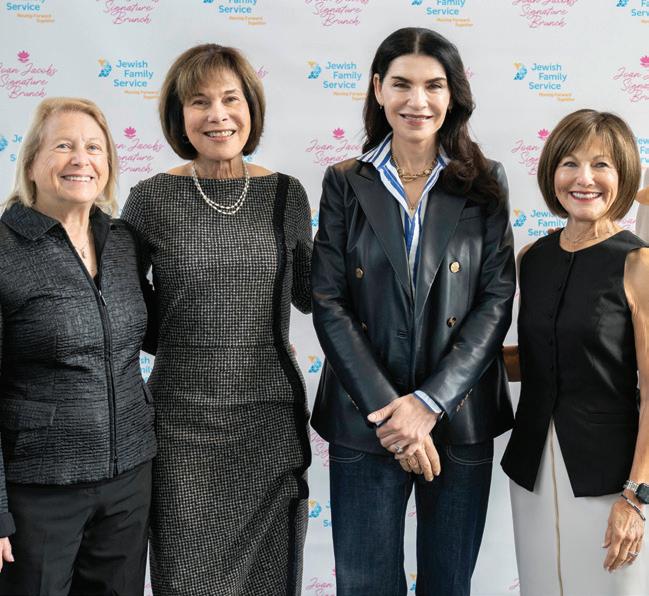
JULIANNA MARGULIES HEADLINES FIRST-EVER JOAN JACOBS SIGNATURE BRUNCH
You could hear a pin drop as more than 400 guests listened to Emmy and Golden Globe award-winning actress Julianna Margulies at the first-ever Joan Jacobs Signature Brunch, hosted by Jewish Family Service of San Diego (JFS) on Sunday, October 26, at the Hyatt Regency La Jolla at Aventine.
Margulies—best known for her roles in “ER” and “The Good Wife”—captivated the audience with her reflections on her career, upbringing, resilience and work with the Holocaust Educator School Partnership, an education program managed by the Museum of Jewish Heritage in New York City.
The brunch, named in memory of Joan Jacobs z”l, celebrated the beloved community leader, philanthropist and lifelong supporter of JFS. Jacobs’ inspiring legacy of community impact was felt throughout the program.
The event, chaired by Elissa Davis, Daryl Gelender and Sally Shaps, honored Elaine Galinson with the inaugural Pauline Foster Leadership in Action Award, presented by Foster’s daughters. Foster z”l was a visionary San Diegan whose leadership, philanthropy and
compassion shaped the local community.
Galinson’s philanthropic, civic engagement and community leadership are well-respected throughout the community. She has served as the past board chair of the San Diego Jewish Community Foundation and UC San Diego Foundation and been the honorary campaign chair for the Glickman Hillel Center. Galinson has held leadership roles with Rady Children's Hospital, the San Diego Jewish Federation, the Joint Distribution Committee, the National Conflict Resolution Center, Planned Parenthood and many others.
“This inaugural brunch was a reminder of how community and empathy can transform lives—and a celebration of several powerful women. We were honored to have Julianna Margulies join us and applaud Elaine Galinson’s impactful contributions,” said JFS CEO Dana Toppel. “I am confident people in attendance will help us continue to honor and carry forward Joan Jacobs’ legacy in meaningful ways.”
Proceeds from the Joan Jacobs Signature Brunch support Jewish Family Service of San Diego’s programs.
To get help, volunteer, or support JFS, visit jfssd.org or call (858) 6373000.
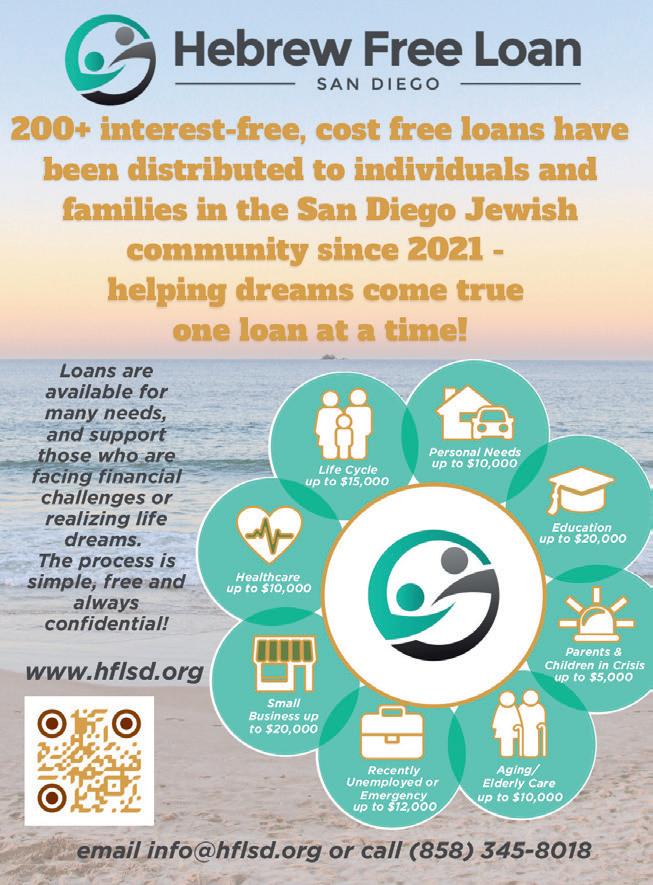
Hebrew Free Loan of San Diego (HFLSD) has achieved a momentous accomplishment, celebrating the issuance of its 200th interest-free loan, an inspiring milestone. This achievement represents far more than a number; it is a profound affirmation of the organization’s mission to aid and empower members of the San Diego Jewish community with interest-free loans, providing a "hand-up, not a hand-out" to members of the local Jewish community.
Rooted in Jewish values, HFLSD offers confidential, interest-free loans for a diverse range of needs, from rental assistance and medical expenses to Jewish education and emergency financial shortfalls to small business expansions. By removing the burden of interest, HFLSD empowers individuals and families to overcome temporary financial challenges, pursue their dreams, and achieve financial stability and self-sufficiency.
This 200-loan mark highlights the vital role HFLSD plays in strengthening the fabric of Jewish San Diego. As the demand for compassionate, interest-free lending continues, the community's support remains crucial to ensure this revolving fund can help the next 200 families on their path to financial security.
Learn more at https://hflsd.org/.
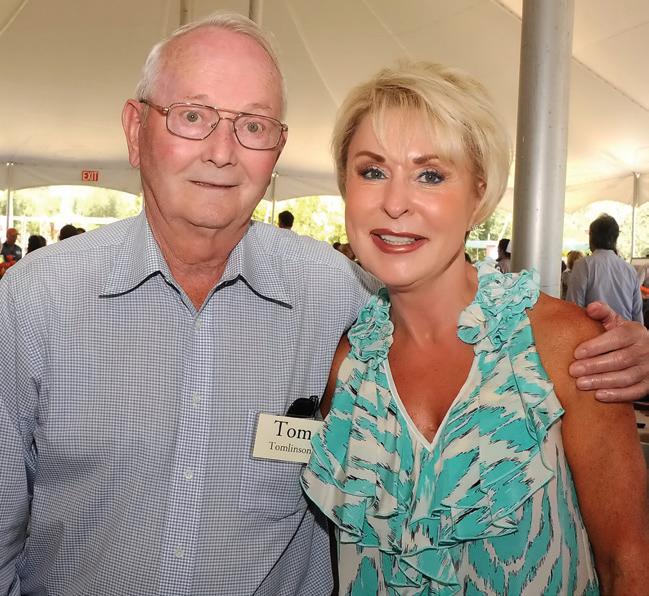
TERI RECEIVES $3 MILLION CHALLENGE GRANT FROM TOM AND MARY TOMLINSON FOUNDATION TO SUPPORT COMPLETION OF TERI CAMPUS OF LIFE
TERI, a leading nonprofit dedicated to serving individuals with intellectual and developmental disabilities and their families, has received a $3 million challenge grant from the Tom and Mary
Tomlinson Foundation. This commitment accelerates the final phase of construction for the TERI Campus of Life — a first-of-its-kind community designed to empower individuals and families of all abilities through education, enrichment, and inclusion.
The grant will be distributed over three years at $1 million per year and is unlocked through a 2:1 match. For every $2 raised by TERI’s supporters, $1 will be contributed by the Tom and Mary Tomlinson Foundation — effectively tripling the impact of every gift.
“The Tom and Mary Tomlinson Foundation has stood with TERI for decades, fueling our vision to transform lives,” says Cheryl Kilmer, Founder and CEO of TERI Campus of Life. “Their challenge grant ensures TERI’s innovative model of care can be replicated, amplifying hope for generations to come and impacting countless families who need lifelong, individualized care.”
One in six children in the U.S. live with a developmental disability, according to the Centers for Disease Control (CDC), and the 20acre TERI Campus of Life is a nationally recognized community redefining what is possible for individuals with autism and other disabilities.
TERI was founded on the belief that a person’s ability to function in the world does not only depend on how their brain and body work, but rather on the environment they live in – a supportive environment, tailored to their needs to help individuals live as independently as possible. Since 1980, TERI has been a lifeline for children, adults, and families, providing personalized, evidence-based programs and support that foster growth, independence, and joy.
The completion of the TERI Campus of Life will allow TERI to
move their schools and gym from their Oceanside location to San Marcos. TERI purchased the land for the Campus of Life with one goal – to unite their programs and services alongside the community into a purpose-built environment designed for growth, connection, and opportunity.
Every gift toward the Tom and Mary Tomlinson Foundation Challenge accelerates TERI’s ability to finish the Campus and expand programs for those who urgently need them.
To learn more or contribute to this fundraising effort, visit tericampusoflife.org/donate.