




Hearing the words, “You have cancer,” is something no one wants to face. If it happens though, the Cancer Center specialists at Lake Charles Memorial Hospital are here with you every step of the way.
Say goodbye to long commutes for ongoing treatments — Memorial brings you cutting edge cancer care, delivered precisely as your oncologist prescribes — right here, close to home.
Your quality of life is important.
Stay Local for Cancer Care.









By Rodrick Anderson

1. Louisiana Railroad Days Festival
The Louisiana Railroad Days Festival, one of the longest-running festivals in Southwest Louisiana, will be held April 9-11. Held at the DeQuincy Railroad Museum, the festival is free and family-oriented, featuring pageants, a washer board tournament, a “Railroad Idol” contest, a fun 5k run/walk, a children’s scavenger hunt and musical acts, including Gerard Delafose and the Zydeco Gators.
2. This is Home Fest
Started in 2021, This is Home Fest highlights local artists and musicians. The free festival on the lakefront features music, great food and shopping as you experience what Southwest Louisiana has to offer. There is also a kid zone loaded with fun activities and games.
The 14th annual Cyphacon returns to the Event Center on April 10-12. Billed as the largest fanrun pop culture convention in the state, the event will feature three days of celebrity and cosplay guests, many hours of panels, musical acts, tabletop board gaming, cosplay contests and more.


Large community-wide water fights are held in Poland to celebrate the start of spring and also to symbolize the cleansing after the Lenten season.
On Holy Saturday, people on the Greek island of Corfu toss pottery out of their windows and onto the street to symbolize the earthquakes that were experienced (Matt. 27:50-52) during the Resurrection of Jesus Christ.
In the Nordic countries of Sweden and Finland, Easter can look more like Halloween. Similar to the Halloween we are used to in October, children dress up as Easter Witches with colored head scarves and paint their cheeks rosy-colored, then go door-to-door with copper kettles and swap paintings or drawings for candy.

1. Solar-powered lights
2. Add some native plants
Want to liven up your floor bed? Look for some native Louisiana plants. Louisiana iris loves moist ground and can handle sun and partially shaded areas, and add great color. Plant some butterfly milkweed if you want some beautiful butterflies fluttering around outside. Or maybe some colorful Indiana Blanket flowers that can handle the summer heat; there are so many options to choose from.
Add some solar-powered lights around your flower bed or walkway and driveway. It adds a nice accent, there will always be lights on when you come home late at night, and they are easy to install; no need to worry if you are not a certified electrician.
3. Upgrade kitchen cabinet hardware
Tired of the same old knobs or handles on your kitchen cabinets or drawers, make a trip to a local hardware store to find something more modern. Some color options include matte black, brushed brass, or even a minimalist style. They are generally easy to change out; usually, just a Phillips or flat head screwdriver is needed.
is
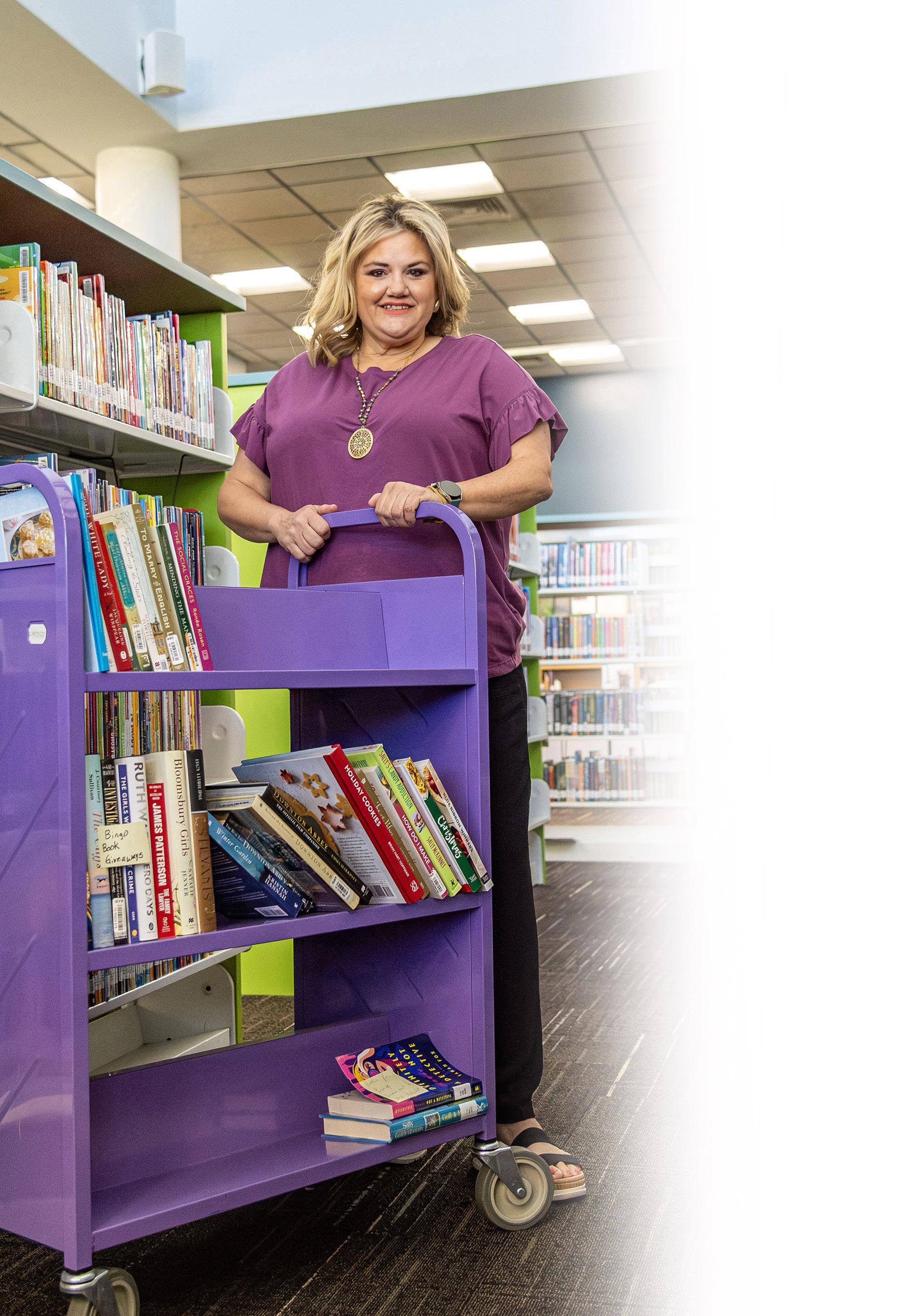
The culture of Southwest Louisiana is what I cherish most. Having grown up here, I’ve always felt the genuine warmth of this community. It’s the kind of place that wraps you in familiarity and makes you feel like you belong.
Why did you become a librarian?
I became a librarian because of my deep commitment to serving the public and strengthening the community through education and literature. As a library programmer, I love hosting special guests to bring diverse and engaging cultural experiences to everyone. During story time, I love seeing a child connect with a story and discover something new. And most of all, the library is a safe space for everyone.
What is your favorite children's book?
It's hard to pick a favorite children's book, but I absolutely adore anything written by Mo Willems. I especially love the “Elephant & Piggie” series because the characters are so expressive and make me laugh. I even have two shelves in my office dedicated to Mo Willems and all of his wonderful characters.
What was your last moment of gratitude?
I have a patron, who is now in college, who still loves to sneak into my office and give me a spook. I've watched her grow up in the library, and she still has a spark every time she walks through the door. Moments like these remind me how special it is to build lifelong connections with the families I serve.
a

Story, Photos By Crystal Stevenson

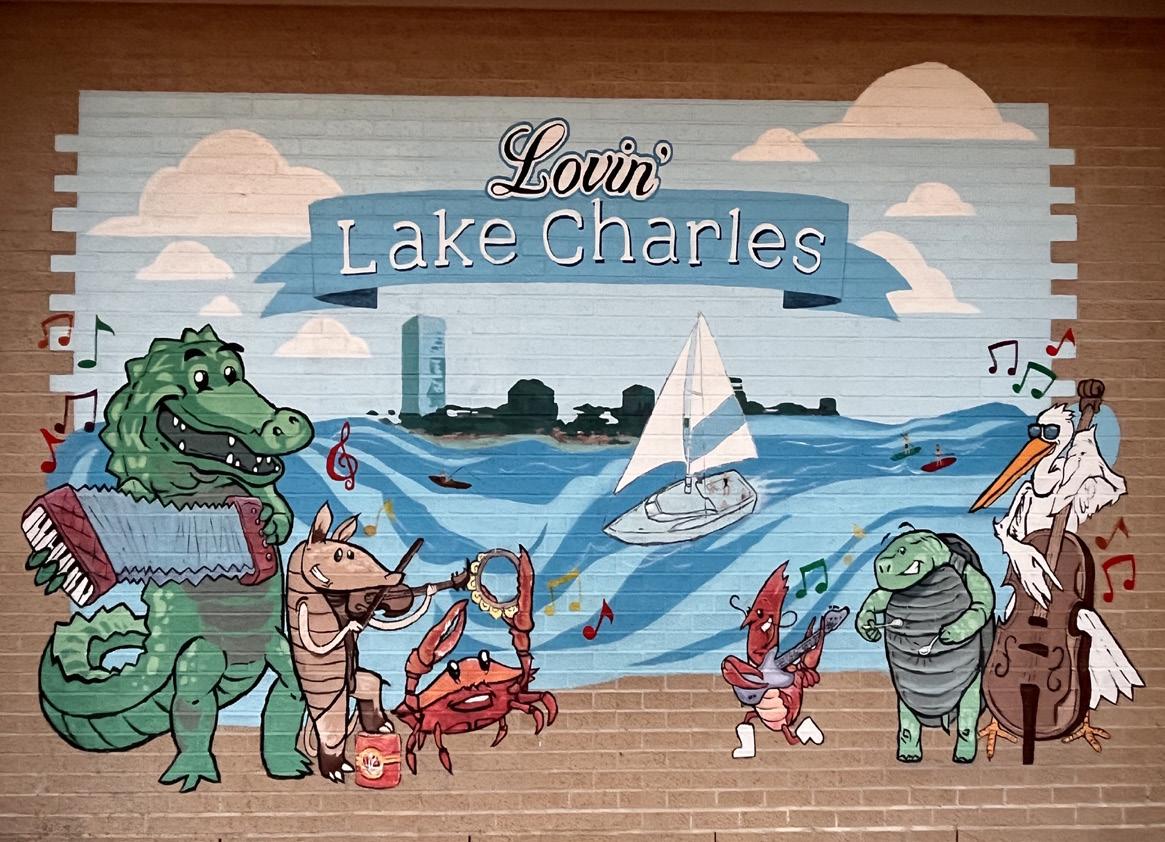
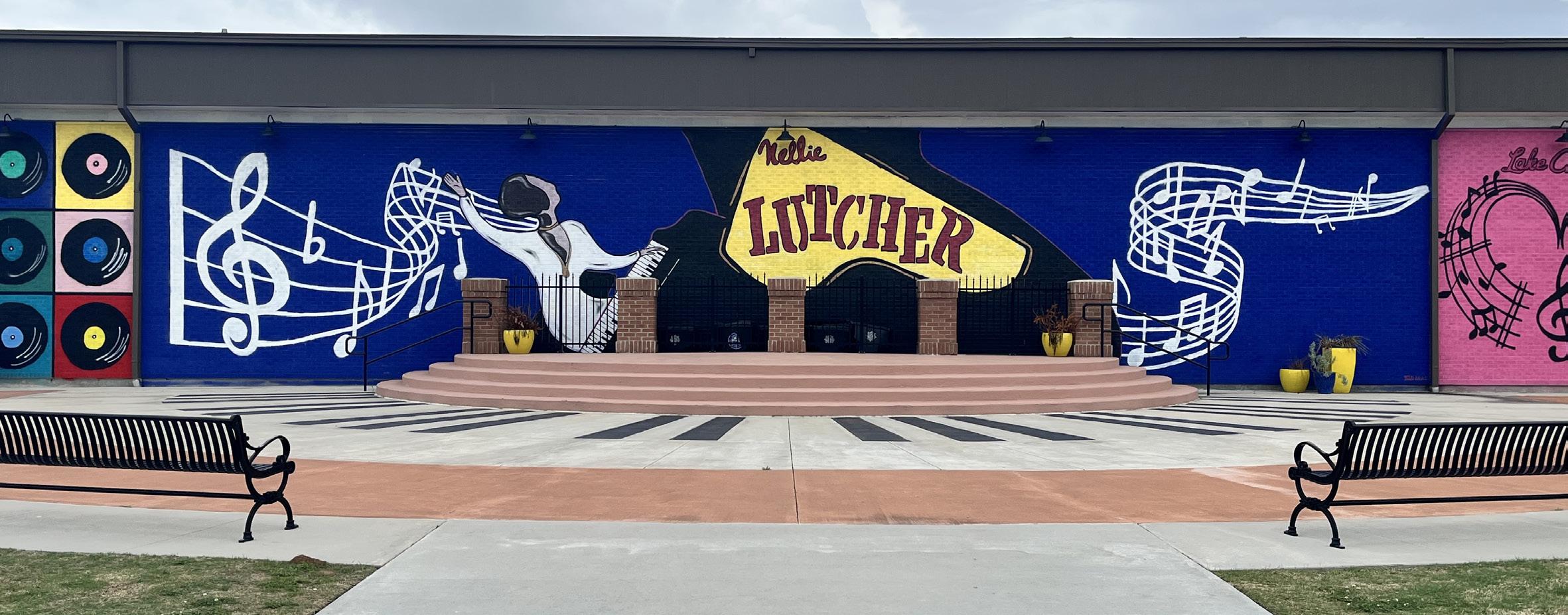
It doesn’t take long when touring Downtown Lake Charles to discover the city’s affection for murals. The colorful creations can be found on the sides of historic structures, on brick or concrete walls, and even a few modern buildings. The murals not only add beauty and interest to Lake Charles, but they also underscore its support and appreciation for the creative culture prevalent throughout the area. These murals are not merely decorations; they are active, living pieces of the city.
Jeremy Price and Haley Vincent painted “Home Is Where The Heart Is” (above) on the exterior wall of CrossFit Lake Charles at 426 Broad St. The project was crafted from the artistic vision of Paige Vidrine, owner of Buffi’s Peauxboys, who wanted to create a community mural project

that would inspire.
Price went on to paint “Still I Rise Wings” amid the community’s recovery efforts following the
double-punch of Hurricanes Laura and Delta on the walls of Vidrine’s business. The mural can be found at 345 Broad St.

Many have seen the mural painted on the outdoor seating area of Luna’s Downtown, but there’s also an artistic creation in the back of the restaurant near the employee entrance. Artist Price includes a quote attributed to Hunter S. Thompson — author of “Fear and Loathing in Las Vegas” and “Hell’s Angels” — “... reality was much weirder than anyone’s imagination,” in his design on the wooden fence posts.
This mural of Bacchus — the Roman god of wine — can be found outside Cotten’s Downtown at 110 Broad St. The mural was painted by Blujay Arts — which includes Price, Ashley Broussard, Lindsey Johnson, Shawn Ardabili, Rachel Andrepont Rougeau, Jon Meaux and Alex Landry.


part of

Local artists
Derrick Thornton and Shannon DeJean commissioned this painting at 1707 Broad St. to showcase businesses lost in recent years — and inspire community members to bring new business to the area.
“Do
What You LOVE What You Do” was painted by Price at 711 Enterprise Blvd.

By Metro Creative Services
Many people will admit that home ownership tops their lists of long-term goals. Finding a home that is affordable may require moving into what many real estate agents bill as a “starter home.” But the arrival of a child, and then more children thereafter, could make a home that was perfectly functional for two or three feel too close for comfort.
Anyone who would like to raise a family in the future might want to consider certain factors when choosing a residence or designing living spaces. A home that can grow with life changes can truly be a forever home.
The following strategies can expand space when a family grows.
• Declutter. It is important to go through belongings regularly and remove anything that is no longer needed. This can be the first step to free up physical space in a room or the home in general. Donate any items that still have utility.
• Reassess your existing storage. Look at different ways to maximize existing storage. Utilizing vertical space is one way to do so, so an investment in shelves, hooks and storage systems that maximize space in an upward direction can get items off the floor. Make use of storage under the stairs or in eaves. Loft beds with open space underneath are great for
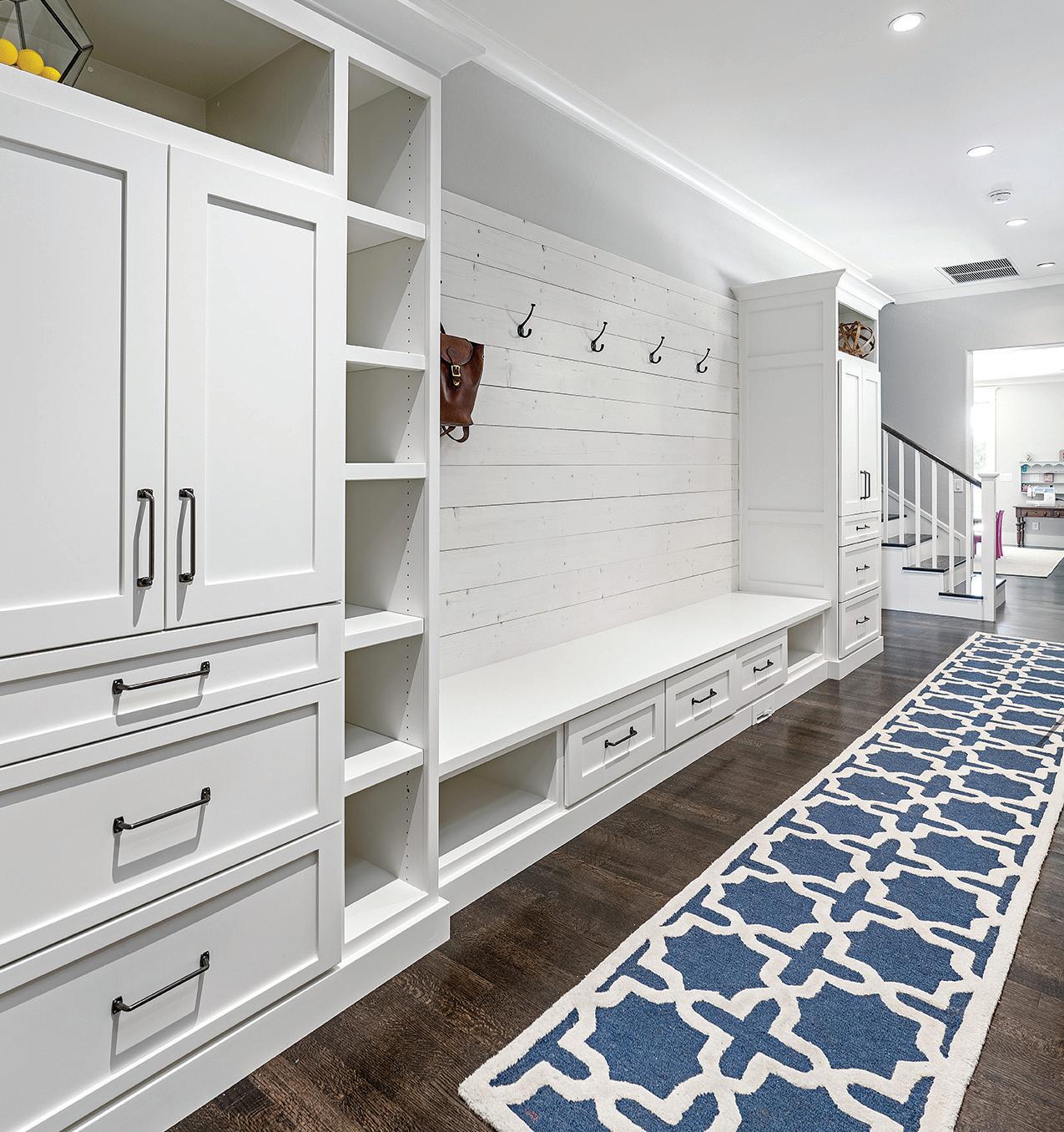
children’s rooms because they maximize floor area.
• Think about toy storage. Children love to play with toys, and once kids are in a home, toys will accumulate quite quickly. Have a plan for keeping toys neat and stowed away when not in use. Underthe-bed storage, toy armoires (that are secured to the wall) and furniture that can double as storage, such as storage ottomans, are ideal.
• Revamp a closet. Although closet space may be at a premium, particularly in older homes, a closet can be turned into a nook to hold a desk for a homework station or remote office space. Compact and organized, it’s easy to
hide away when not in use by closing the door.
• Utilize room dividers. Open floor plans have been the norm for some time. But at some point as a family grows, privacy and multi-functional spaces may be needed. It can be costly to put up permanent walls, but bookcases or pieces of tall furniture can be used as room dividers to cordon off areas as specific spaces, like a child’s play area.
• Convert a basement or garage. Garages and basements have a reputation for being catch-alls for storage boxes and holiday decorations. However, such rooms have plenty of potential as functional living spaces. Invest
in transforming a garage or basement into a room that can grow with the family. At first it may be a play area for young kids. Afterwards, it can be a gaming or homework hangout. As children grow older, spaces can be converted to a family media room. Having this extra space can free up room in the rest of the house so people can enjoy alone time when they need it.
• Maximize outdoor space. A yard or another outdoor space can add valuable square footage to a home. A covered patio or deck can make the outdoor areas more usable throughout the year and zones can be created for family meals, play and relaxation.
By Crystal Stevenson
It’s the “Grand Central Station” of the home — as ABC News recently highlighted — so it needs to be durable, moisture-resistant and stylish.
While cabinets and countertops garner considerable attention when pondering kitchen renovations, Craig and Cathy Morton, owners of Foret Flooring, said it’s equally important homeowners pay attention to flooring.
“It might be the designer in me, but I like to start from the ground up,” Cathy said. “Your flooring is the last thing that goes in your house but generally it’s the most expensive part of your building project so I like to start there. Pick out the floors you like and we will work around the area.”
Cathy said once flooring decisions have been made, then the next step would be finding countertops that “compliment with your floor and your paint.”
“It’s so easy after that,” she said. “Plus, the floor isn’t something you’re going to change out easily so I think you should start there and work your way on up.”
Checkerboard flooring is experiencing a major resurgence.
“What is so popular right now is checkerboard, checkerboard, checkerboard — and not just black and white,” Cathy said. “Marble, cream and beiges are back.”
The current trend is

Special to the American Press
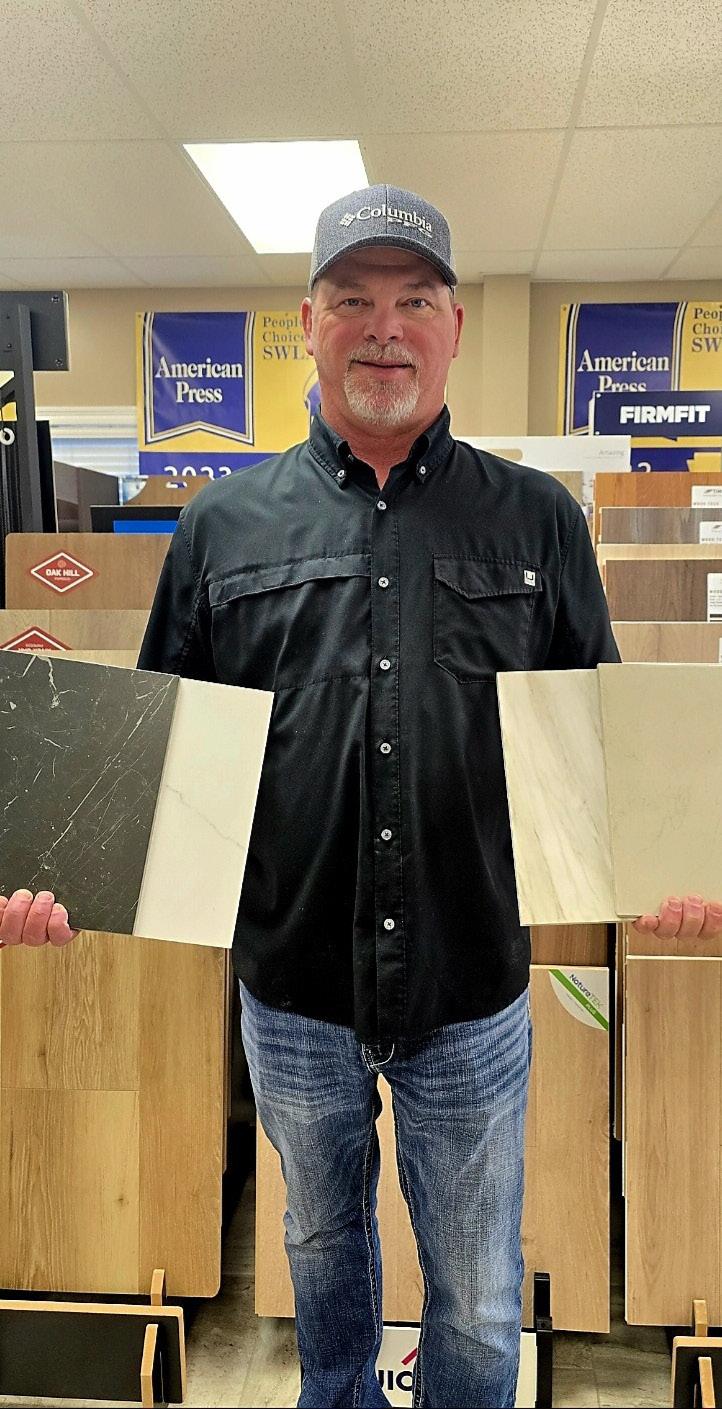
Foret Flooring, owned by Craig and Cathy Morton, has served the community for more than 20 years. Their showroom is located at 959 Sam Houston Jones Parkway in Moss Bluff.
shifting away from cool grays toward warm, natural tones like honey, caramel, and creamy beiges
“The world turned gray 10 years ago and everything we had in the store went gray and now it is being phased out and the traditional colors, like brown, are back. We’re putting check-
erboard floors in just about every new construction we’ve been doing over the last year and it is gorgeous,” she said.
When you use the right colors, the pattern isn’t busy at all, Cathy said.
“People are doing a lot of marble in a subtle white Carrara. Some are using a
porcelain version of marble with a tan and white pattern or a tan with a white and gray and it’s unbelievable.”
Travertine — a durable, natural limestone formed in mineral springs and favored for its warm, rustic appearance in flooring — is also gaining popularity.
Large “travertine-look”
porcelain tiles are a popular choice for creating a seamless, expansive look in modern and classic interiors. Because they cover more area per piece, they require fewer grout lines, which can make smaller rooms feel larger and provide a continuous feel across open-concept living areas, Cathy said.
Laminate flooring is a budget-friendly option that’s available in a wide range of styles, colors and patterns.
The smooth surface of the flooring makes it easy to clean, and it’s resistance to water is another characteristic that appeals to homeowners.
“Laminate has really made a comeback and it really is the top-selling floor. I have
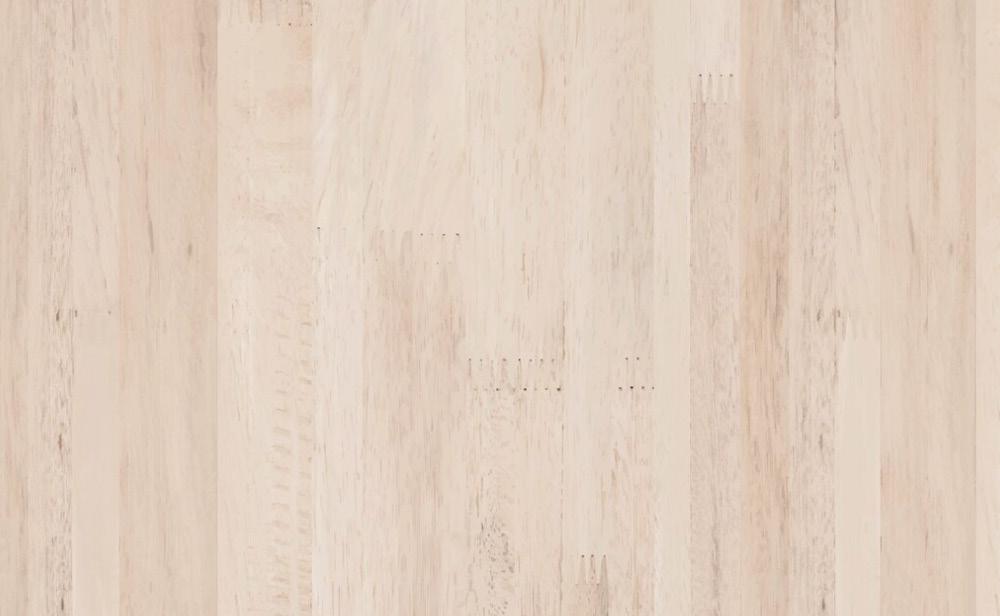
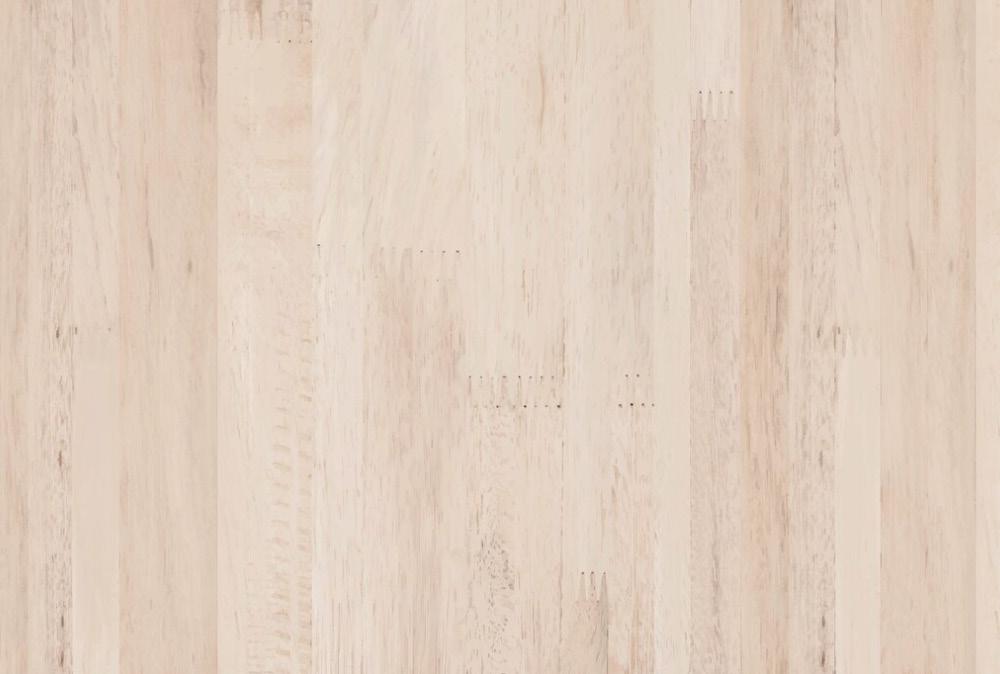
some in my own house and I had the option of putting anything in,” Cathy said. “About 10 years ago, water-proof vinyl came out and it’s been hit or miss the way it’s adapting to our environment. I believe our humidity has a lot to do with it. Now, laminate is out and it actually is water-proof and very durable, very scratch-resistant.”
But she said it’s important to take the term “waterproof” with a grain of salt.
“If your house floods, those floors are not waterproof. They’re water-resistant — pet accidents, you spill something, your kids jumping out of the bathtub, or your bathing a pet and they jump out of the tub, those kind of things. I’m the kind of person who
drops an ice cube and it slides across the floor and I never go looking for it; that’s what is meant by ‘water-resistant.’ ”
Craig said “performance-wise” laminate is more scratch-resistant and it breaths better.
“It doesn’t trap moisture coming through your slab and turn it to mildew like the vinyls are doing.”
But, he said, vinyl can be more pleasing with sound.
“Sound is a con for laminate because it’s a little bit louder when you walk on it because it’s got air in it.”
Additional flooring options in kitchens are porcelain and ceramic tiles.
“Porcelain is incredibly durable, water-resistant, and scratch-resistant, making it ideal for the
high-traffic kitchen area,” Craig said.
“Ceramic is for interior-use only because it can absorb a very minute volume of water. It you had it as an exterior and it freezes overnight, it can crack.
Porcelain does not absorb that amount of water so it does not.”
Craig said porcelain and natural stone can be used outside; ceramic cannot.
“Inside, both ceramic and porcelain perform equally,” he added. “They’re both glazed tile, but porcelain is just a stronger material.”
The Mortons said homeowners have several options to consider as they ponder which material to install on their kitchen floors.



By Metro Creative Services
Functionality is important when designing the interior spaces in a home. Homeowners who redesign their interior spaces can emphasize functionality to help reduce clutter and create a more efficient and even calming space.
Laundry rooms may not be the most glamorous rooms in a home, but they do get lots of usage, particularly in homes with children. Because laundry rooms tend to be well-trafficked areas, it makes sense for homeowners to make them as functional and user-friendly as possible. With that in mind, homeowners can consider these tips to make laundry rooms more functional spaces.
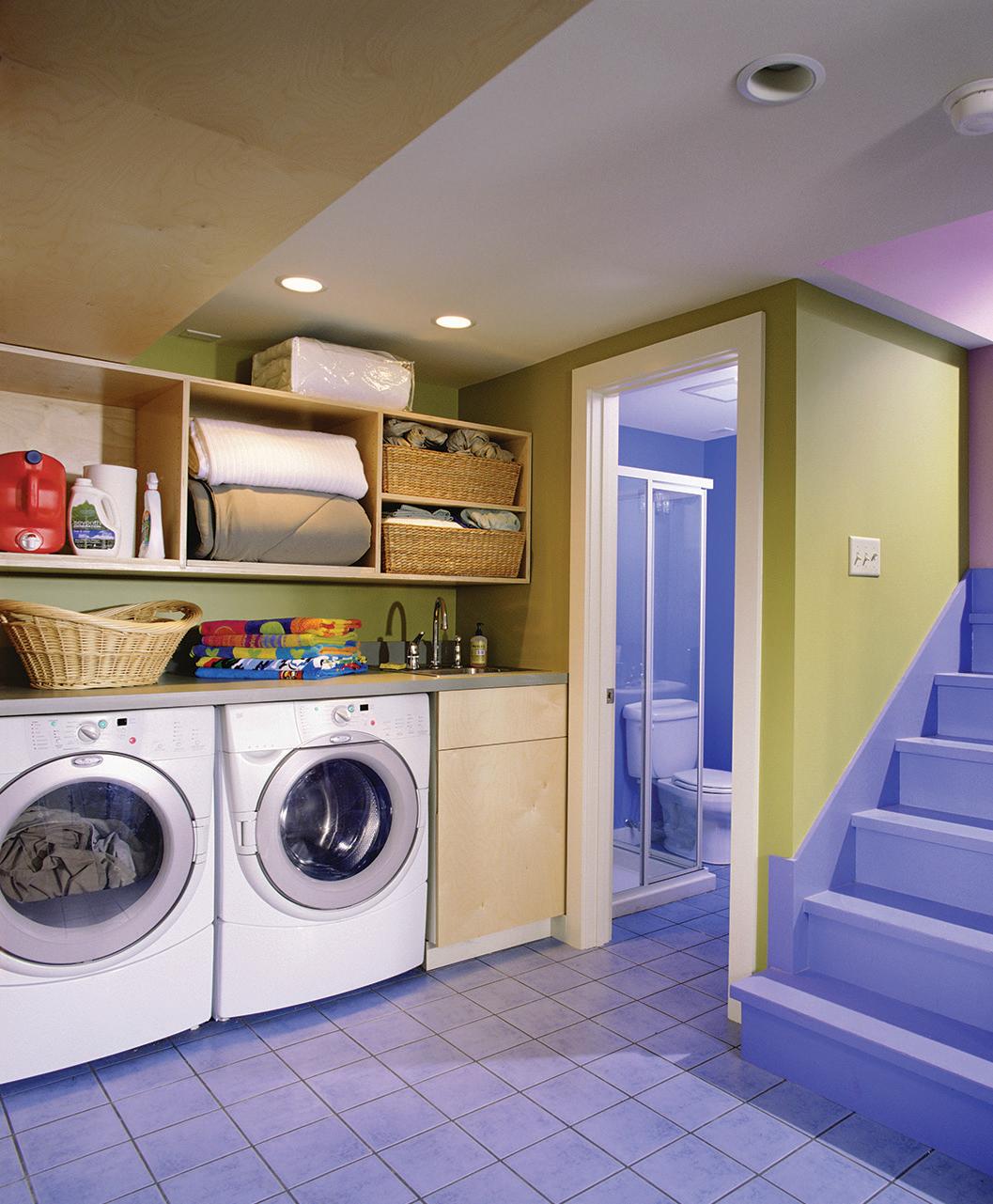
• Purchase laundry pedestals with storage capacity. Laundry pedestals make useful additions to a laundry room. Many homeowners place their washing machines and dryers on top of pedestals with storage drawers, which can be used to store everything from dryer sheets to clothes irons to stain removal kits. Pedestals can be particularly useful in cramped laundry rooms where the only means to adding storage is to go up and not out.
• Install a freestanding laundry sink. A laundry sink also adds function to a laundry room by enabling homeowners to hand wash certain clothes and apply stain removal products in the same space where the rest of their clothes are being cleaned. Installing
Metro Creative Services
A countertop workspace above a dryer provides an accessible space to fold laundry the moment it dries, reducing the likelihood that clothes will become wrinkled and ensuring you won’t put off folding.
a laundry sink is a relatively inexpensive job, but the cost may go up if new plumbing, venting or electrical work is necessary.
• Add a countertop work space. If you already have ample storage and won’t be
placing the washer or dryer atop a laundry pedestal, then installing some countertop above the appliances can add function and aesthetic appeal. A countertop workspace above a dryer provides an accessible space to fold laundry the
Because laundry rooms tend to be well-trafficked areas, it makes sense for homeowners to make them as functional and as user-friendly as possible.
moment it dries, reducing the likelihood that clothes will become wrinkled and ensuring you won’t put off folding.
• Install floating shelves. Floating shelves won’t cost a lot of money, but they can be ideal in cramped laundry rooms. Shelves provide a space to store detergent and other items that may not fit inside laundry pedestals, including baskets.
• Add hanging storage Some articles of clothing should not be dried in a dryer for fear of shrinking the fabric or destroying the item. In such instances, some readily accessible hanging storage capacity can make the laundry room more functional. Items can be hung on hangers or over a hanging rack suspended from the ceiling if space is minimal.
Laundry rooms are heavily used spaces in a home, so it makes sense to take steps to make these areas as functional as possible.
By Metro Creative Services
Memorial Day weekend is a popular time to entertain. For many, the weekend marks the first outdoor entertaining opportunity of the year, which is certainly something to look forward to.
As outdoor entertaining season begins, homeowners can take these steps to prepare their outdoor living spaces for the first big backyard get-together of the year.
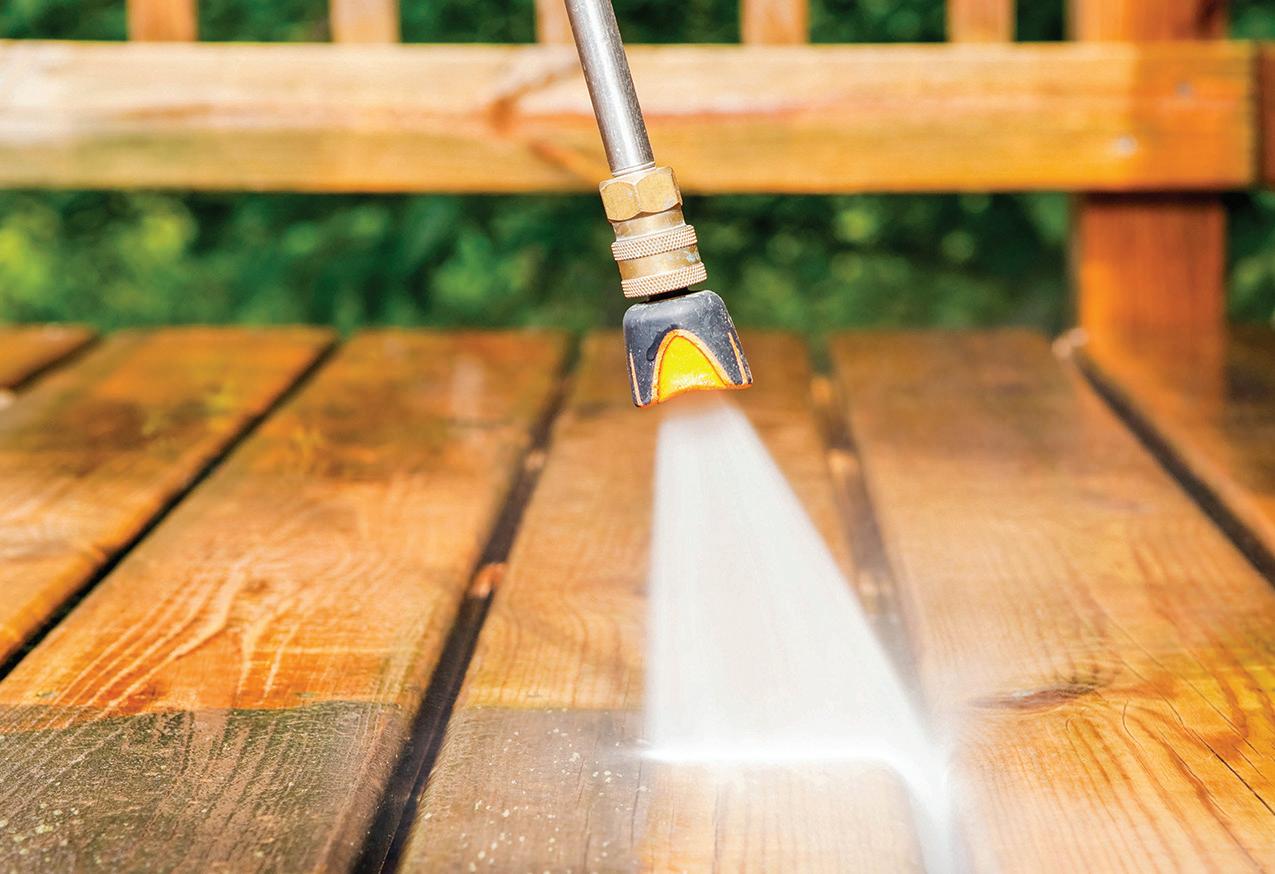
• Break out the power washer. Pressure washing is an important component of spring home cleanup. The warmer temperatures of spring allow water from power washing to dry more quickly, which can decrease the chances that mold and mildew will grow on
surfaces like siding. A freshly power washed home also makes for a welcoming entertaining space. A power washer also can be used on outdoor entertaining spaces to remove dirt and debris that built up over the winter. Just make sure to read manufacturer instructions before using a power washer to clean paving stones, decks and outdoor furniture.
• Inspect outdoor furniture. Now is a good time to inspect outdoor furniture if the task was not performed in late fall or early winter before items were moved into the garage or placed in storage. Check to make sure furnishings are still safe to use, addressing any issues before guests come over for a Memorial Day weekend gathering.
Wash cushions for outdoor furniture and replace any that might be showing their age.
• Clean the grill. A thorough cleaning of the grill also is in order prior to summer entertaining season. Many homeowners do little or no grilling during winter, so now is the time to give grilling surfaces and the interior of the grill a deep cleaning. Check for leaks if using a gas grill, and scrub the interior of any grease that accumulated last season.
Many grilling experts advise lighting a grill and letting it burn for roughly 20 minutes prior to putting any foods on the grates for the first time. Such a strategy allows residual fluids like soap, vinegar and de-greasing products used
when cleaning the grill to burn off before food is placed on the grates.
• Inspect the landscaping, too. It’s not just seating areas like patios and decks that need some investigation prior to outdoor entertaining season. Take a walk around the landscape and make sure there’s no potentially dangerous spots where people could be injured when playing backyard games. Fill in any holes with soil and fresh grass seed, and inspect trees to see if any branches need to be pruned.
Summer entertaining season begins each Memorial Day weekend. Homeowners can take various steps to ensure their outdoor entertaining spaces are comfortable and safe.
By Metro Creative Services
Kitchen renovations continue to top the list of improvements that offer a high rate of return on investment. Buyers pay attention to kitchens, which undoubtedly affects the ROI of kitchen renovations. According to the Journal of Light Construction’s “Cost vs. Value Report 2025,” a minor kitchen remodel offers an ROI of 113 percent, while a midrange remodel offers an ROI of 51 percent.
Replacing a kitchen countertop can help homeowners see improvements to the functionality of their spaces and improve the value of their homes.
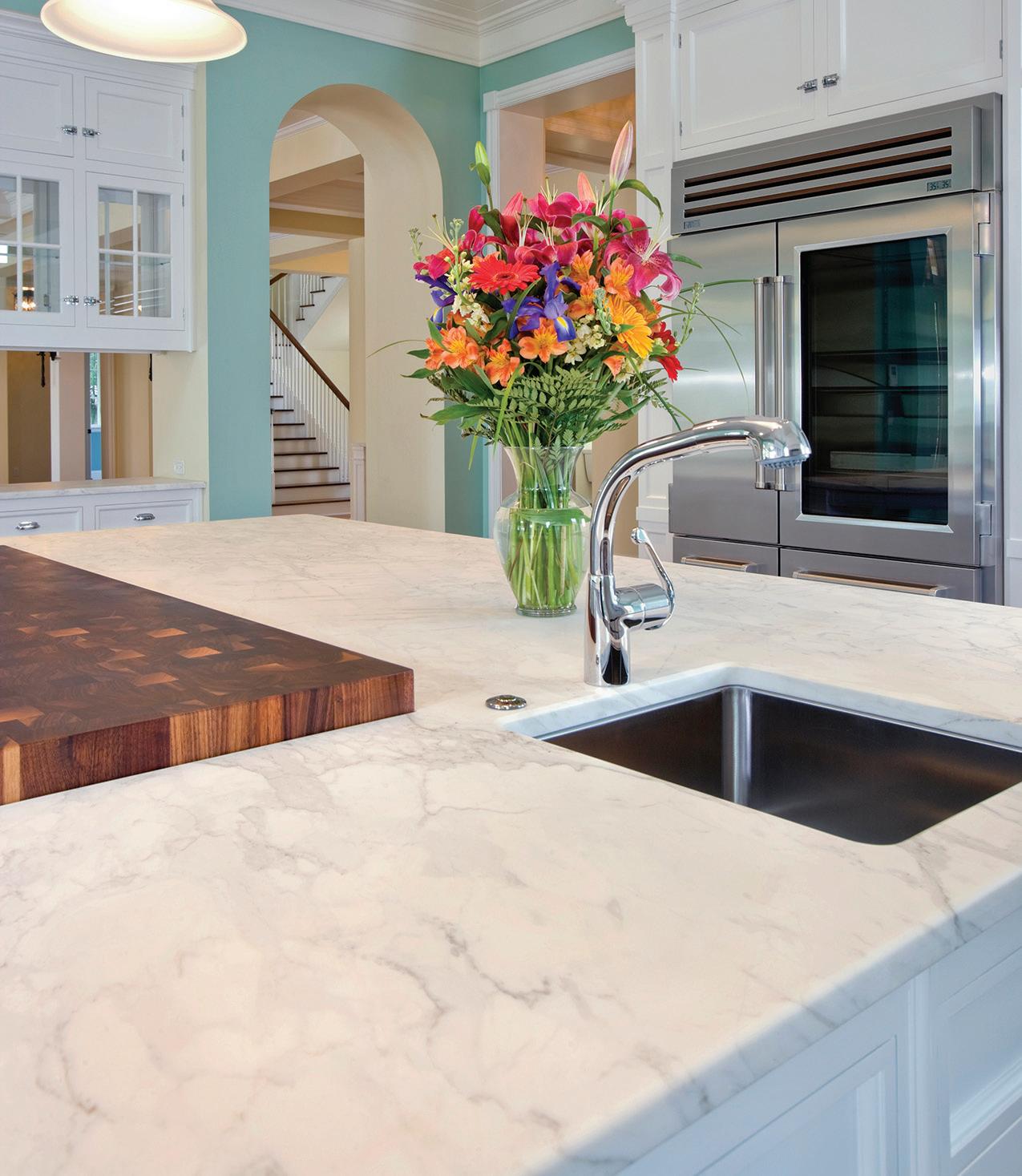
According to data from Grand View Research, the U.S. countertops market is projected to reach $35.57 billion in 2026, driven by homeowners who desire high-value renovations over relocating. Those thinking about overhauling their spaces with new countertops can consider the leading materials and how they rank in cost, maintenance and durability.
The National Kitchen & Bath Association reports that 78 percent of design professionals expect quartz to be the preferred countertop material over the next several years. Quartz is non-porous, so it will resist stains, scratches and bacteria infiltration without
Those thinking about overhauling their spaces with new countertops can consider the leading materials and how they rank in cost, maintenance and durability.
having to be sealed. Unlike natural stone, quartz offers pattern uniformity, which makes it easier to map out seamless transitions. Quartz costs between $50 and $150
per square foot installed.
Granite still holds a considerable chunk of the countertops market and remains a
solid standard for those who value a one-of-a-kind look of natural stone. Granite has exceptional heat resistance and adds significant resale value. However, it requires periodic
sealing to maintain its good looks. Costs range from $40 to $190 per square foot.
Porcelain tiles and slabs are projected to become the fastest-growing segment in the ceramic tiles market, according to reports from Yahoo Finance. High-precision printing technology enables porcelain to mimic rare marble and other stone with superior accuracy.
Porcelain is even harder than granite and effectively impervious to UV rays. This makes the material a solid choice for outdoor kitchens. Plus, at a cost of $60 to $120 per square foot, it is competitive with other similar materials.
Those who appreciate a soft, organic texture and “warmth” in their spaces can look to butcher block. Wood is making a comeback, as many homeowners are moving away
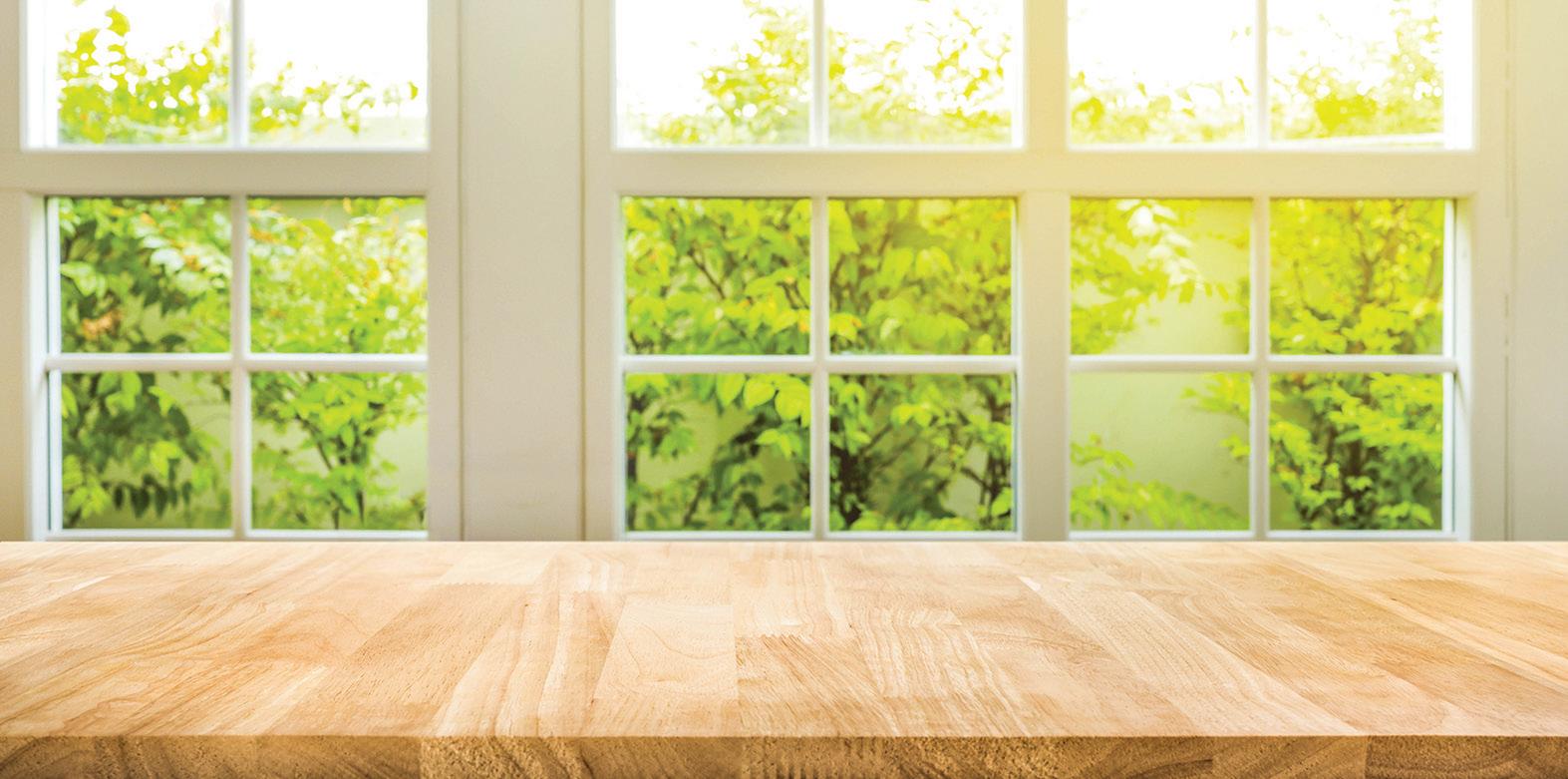
from stark, white designs. Butcher block is self-healing, meaning scratches can be sanded out. While they offer a natural aesthetic that complements various kitchen styles, they require regular maintenance, such as monthly oiling, to prevent drying, cracking, and water damage. Butcher

block costs between $50 and $150 per square foot.
Laminate is a budget-friendly option for homeowners at $20 to $80 per square foot, but is not as durable as other materials.
Some laminates mimic the look of high-end materials, and they don’t require much maintenance.
Countertops affect the look and feel of kitchens and other interior and exterior spaces. Choosing materials comes down to cost, durability and maintenance.


By Melinda Myers
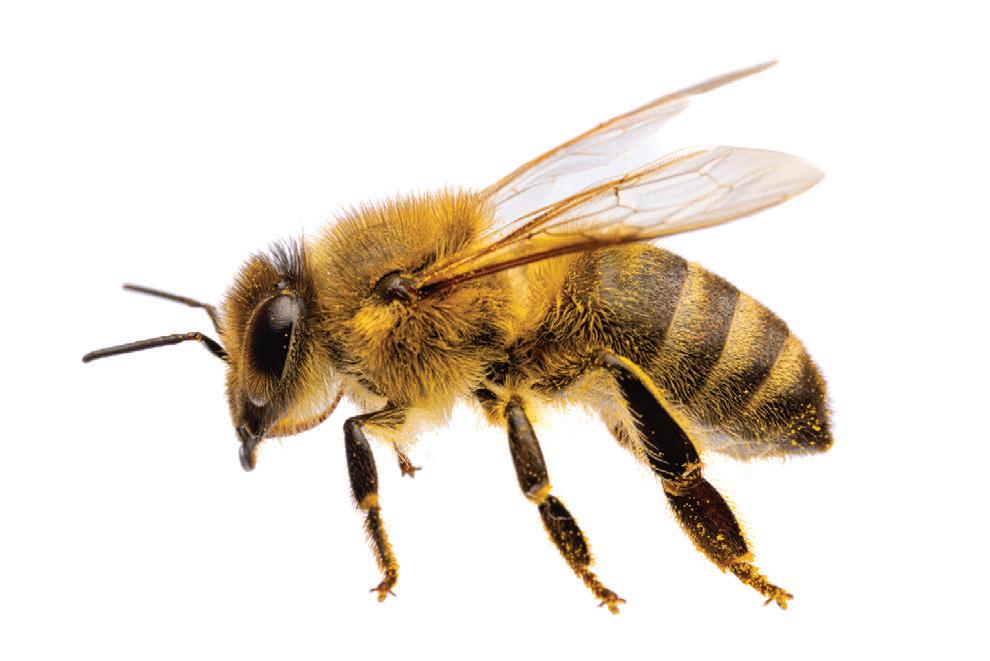
Plant a variety of bee-friendly shrubs and enjoy year-round beauty and loads of pollinator appeal. Include a mix of spring, summer and fall bloomers, providing nectar and pollen for visiting bees throughout the season. Selecting bee-friendly shrubs suited to the growing conditions and the available space also boosts your landscape’s beauty and reduces maintenance.
Start the season off with dwarf fothergilla (Fothergilla gardenia). Its honey scented white flowers first appear before the leaves, offering food to early foraging bees and other pollinators. The bluegreen leaves turn shades of red, orange and yellow in the fall.
Include black (Aronia melanocarpa) and red chokeberries (Aronia arbutifolia) with white flowers in spring, great fall
color and the black or red fruit that persists into winter. These plants tolerate some shade, wet and occasionally dry soil.
Grow the native ninebark (Physocarpus opulifolius) in those sunny well-drained locations. This durable drought-tolerant shrub also tolerates occasionally wet soil. White flowers with a pinkish tinge appear in late spring and the rugged exfoliating bark adds texture to the winter landscape.
If you are dealing with black walnut toxicity and dry locations, consider planting New Jersey Tea (Ceanothus americanus). This North American native shrub is deer-resistant and prefers full-sun and well-drained soil. White flowers appear in summer that not only support bees and other pollinators, but this plant is also a host for several butterflies.
Adding bee-friendly shrubs is an excellent way to support these important members of our community.

Your garden will be abuzz with bee activity when growing Kalm’s St. John’s Wort (Hypericum kalmianum). This small shrub is covered with bright yellow flowers in mid-summer. Grow this drought-tolerant shrub in full to part sun and welldrained soil.
For moist to wet locations consider Buttonbush (Cephalanthus occidentalis). Its round white flowers appear mid-summer, inviting a variety of pollinators to the garden.
Summersweet (Clethra alnifolia) and Virginia sweetspire (Itea virginica) are two more summer-blooming shrubs that are shade and moist to wet soil tolerant. Look for varieties of these deer-resistant shrubs that fit your available space and garden design.
For dry shade consider dwarf bush honeysuckle (Diervilla lonicera). This is
not one of the invasive honeysuckles but rather a native plant with yellow summer flowers and leaves that turn from yellow to orange and red then purple in fall.
Brighten your late summer and fall landscape with Rose of Sharon (Hibiscus syriacus). This large shrub appeals to several specialized bees, prefers full sun to partial shade and is moderately deer resistant.
Finish off the season with Seven-son flower
(Heptacodium miconioides) considered a large shrub or small tree. You and the many visiting pollinators will appreciate the late season fragrant white blossoms. The rosy-purple calyx persists and the attractive exfoliating bark extends its ornamental appeal through winter.
Protect shrubs that are susceptible to animal damage with an organic repellent like Plantskydd (plantskydd. com). It is safe for pollinators and rain and snow resistant,
which means fewer applications are needed. Apply any repellent you select before animals start feeding and according to label directions for best results.
Adding bee-friendly shrubs is an excellent way to support these important members of our community. Don’t stop there. Consider including some pollinator-friendly flowers in your gardens to further extend the bloom time and beauty of your landscape.
l Melinda Myers has written more than 20 gardening books, including “Midwest Gardener’s Handbook, 2nd Edition” and “Small Space Gardening.” She hosts The Great Courses’“How to Grow Anything” streaming courses and the nationally syndicated Melinda’s Garden Moment radio program. Myers is a columnist and contributing editor for “Birds & Blooms” magazine. Her website is www.MelindaMyers. com.
By Melinda Myers
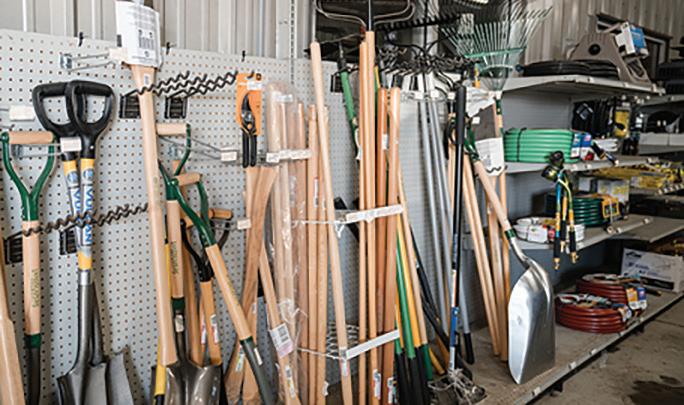
Gift the gardeners in your life with tools that are sure to make them smile as they put them to work throughout the coming years. No matter your budget, you are sure to find the perfect gift.
Help gardeners track the weather and rainfall in their backyard. You can find decorative and functional low- and high-tech thermometers in a wide range of prices. Consider giving them a rain gauge to help monitor rainfall so they know when and how much to water.
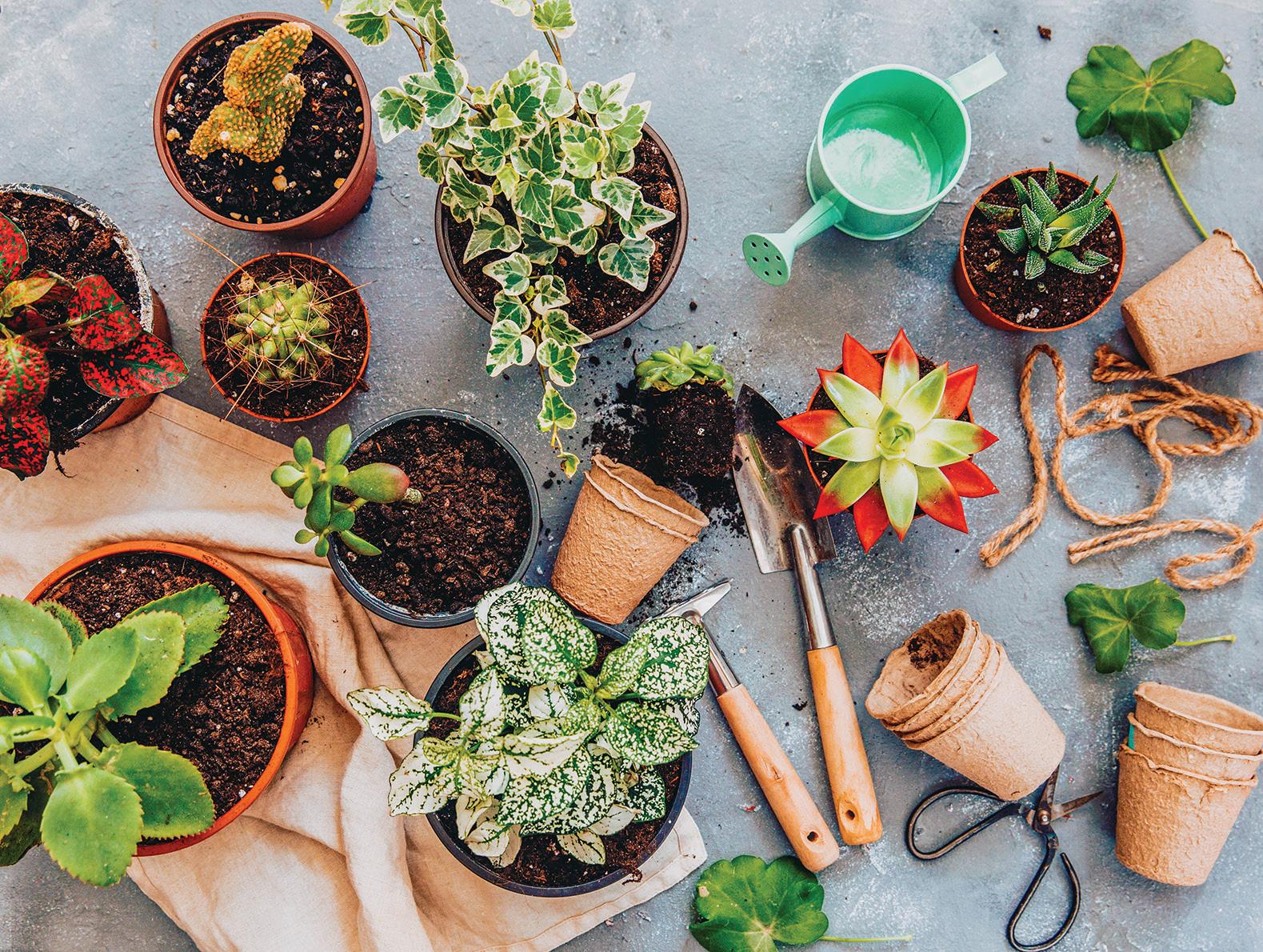
For the indoor gardener, paint a pot, preferably one with drainage holes, that they can use to display their favorite plant. If your budget allows, add potting mix and a plant or gift certificate so they can select a new or favorite plant from the garden center. Include a pair of snips to help them trim, groom and keep their indoor plants looking their best.
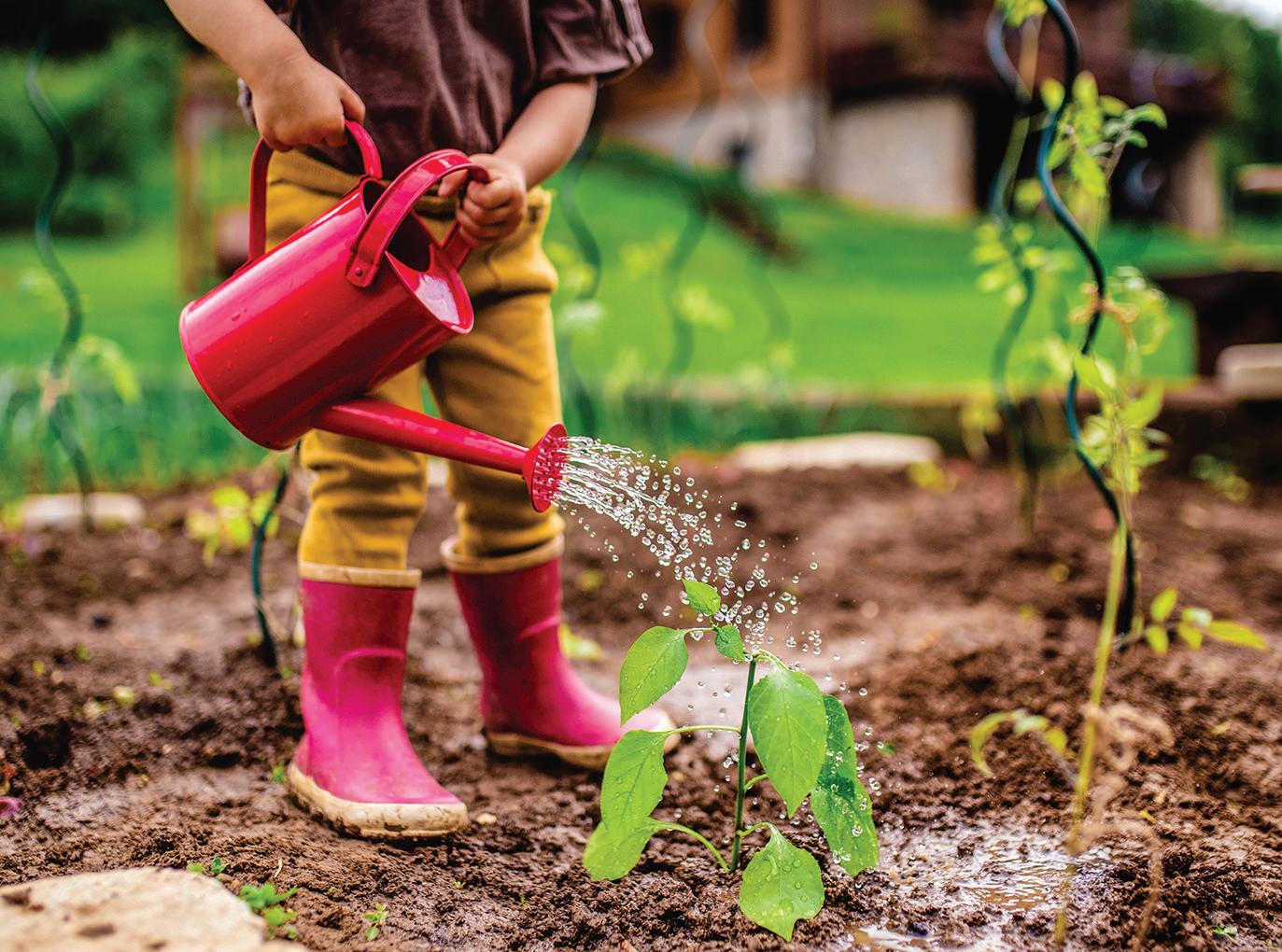
Purchase a fun watering can or decorate one with decoupage. This is a fun gift for kids and adults to make for family and teachers. Just select a plastic or metal watering can, gather pictures, and secure and seal them to the watering can with a suitable material found at craft stores.
Dress up your favorite gardener’s gear with colorful tools like the British Meadow Pruner & Holster Set endorsed by the Royal Horticultural Society. The pruners have a comfort grip and are perfect for cutting small branches and stems and the floral holster will keep them handy when gardening.
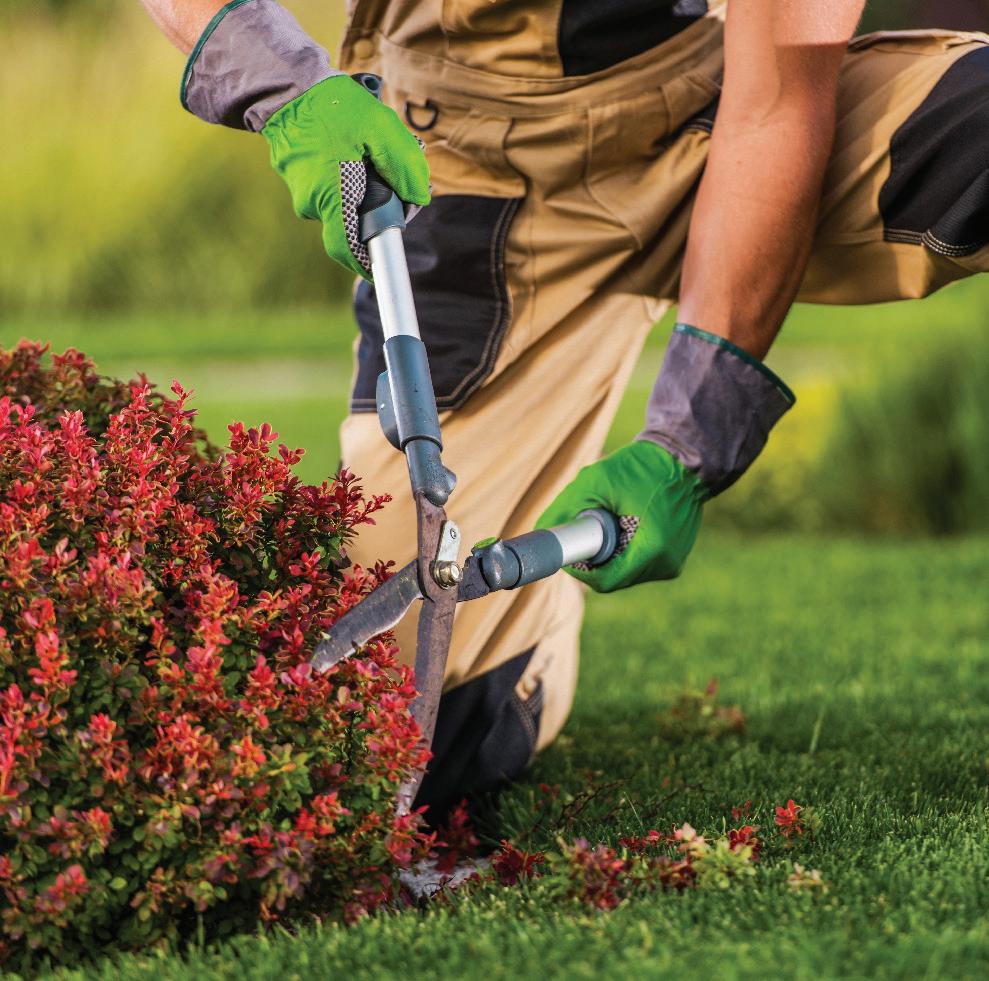
And what gardener doesn’t need a good bypass hand pruner with two sharp blades to make clean cuts. Look for one with a large ¾” cutting capacity if your gardener does extensive pruning. Select one with narrow, comfortable nonslip grips for those with small- to medium-sized hands.
Don’t forget the youngsters on your list. Research shows children exposed to the outdoors and gardening are more focused, do better in school, and have less severe ADHD symptoms. Girls raised in a landscaped environment are more confident and less subject to peer pressure. By encouraging them to garden you might be helping them acquire a lifelong skill and get help planning, planting and tending the garden. Giving them their own kid-sized garden gear can make gardening more fun and easier as they garden by your side or in their own garden plot or container. Look for tools designed to fit children’s hands. A kid-sized wheelbarrow is just the right size for hauling plants, soil and mulch.

By Metro Creative Services
Landscape lighting has been growing in popularity, and industry experts anticipate that growth will continue for years to come. According to the market research firm Technavio, the market size for outdoor landscape lighting is estimated to grow by nearly $133 million between 2024 and 2028. That growth is evident in data sheets, but it’s also visible to the naked eye, as more and more property owners are utilizing outdoor landscape lighting to increase security and draw attention to their lawns and various features on them.
Homeowners considering adding landscape lighting to their properties may be overwhelmed by the options at their disposal. Indeed, there
are many ways for homeowners to accentuate landscape features and create a stunning nighttime look. The following rundown of landscape lighting options can illuminate the many different ways homeowners can use light to make their properties more appealing at night.
• Spotlights: Spotlights are among the more popular landscape lighting options. Spotlights are used by fans of uplighting, which places the light beneath a particular feature and then aims light upward to draw attention to it. Many homeowners utilize spotlights and uplighting to illuminate statues and trees.
• Step lights: Step lights help to make moving around a property at night more safe. Step lights are installed on the vertical face of the step or
along the sides of each step. Homeowners who have a deck may find step lights particularly useful, especially if the deck is multi-level and/or attached to a staircase that leads down into a yard.
• Flood lights: Flood lights are a type of spotlight that are generally used to illuminate large areas, such as a driveway or a deck. Flood lights illuminate from above, so these typically are best for lighting up manmade portions of a home’s exterior rather than natural features like trees or gardens.
• Garden lights: Garden lights direct light downward toward a garden. These provide a soft light that can draw attention to plants at dusk and throughout the night. Many homeowners like the sense of serenity garden lights help to create during twilight and
evening hours.
• Path lights: Similar to step lights, path lights typically are installed as a safety feature. But path lights still boast aesthetic appeal, as they help to light up walkways and driveways without providing a burst of light that can feel overwhelming for residents and visitors. Path lights come in a variety of styles and sizes, so homeowners can experiment with their options to find the one that best suits their needs.
• Ground lighting: Ground lighting is like recessed lighting inside a home, only these lights are placed in the ground and send light upward rather than downward from a ceiling. Ground lighting fixtures are often installed in gardens, directing light upward toward shrubs or trees.
Story, Photos By Ashlyn Little
Since 2006, children and adults wanting to learn more about crawfishing have visited Tallgrass Farm for a tour with Burt Tietje, a third-generation farmer on the land his grandfather homesteaded in 1890.
Being a crawfish farmer wasn’t always in Tietje’s plan, but now he says he wouldn’t have it any other way.
Tietje said he came up with the name for Tallgrass Farm because the area was a tall grass prairie when his grandfather first settled on the property. His grandfather, William F. Tietje, first arrived in Iowa — the state — after leaving Germany at 14 years old before ultimately moving to Louisiana to homestead. Up until his grandson started crawfishing, the family were solely
rice farmers.
According to the United States Department of Agriculture, Jeff Davis and Acadia parishes produce the most rice in the state. Tietje said still farms rice but isn’t as hands on with the rice farming as he is the crawfish due to leasing out his rice production. Tietje is a Jennings High School and Baylor University graduate and earned a bachelor's degree in education. Following graduation, he pursued a career in photography, his dream job.
He owned Burt Tietje Photography with his wife and mother-in-law for 25 years in Jennings, but when Hurricane Rita hit Southwest Louisiana in 2025 it blew their studio’s roof off and damaged 12 windows. Tietje said he took the
damage as a sign from God to do something else with his life.
“I was actually getting tired of photography and was looking to close the studio down and the hurricane just made my decision for me,” Tietje said.
It wasn’t until he decided to leave his photography studio that he turned half of the rice farm into a crawfish farm and started crawfishing on the side.
He said when he first started crawfishing 27 years ago it was common in Jeff Davis Parish but wasn’t as big of an industry as it is today. Initially, he’d sell his catch to individuals but today sells solely to I10 Crawfish, which he says is more efficient for him.
“When I first started I’d crawfish all morning and spend the afternoons on the phone with somebody trying to buy my crawfish. Now we catch our crawfish and deliver it to I10 Crawfish,” he said.
Tietje practices crop rotation with his ponds each year — if one pond has crawfish this year then next year it will have rice.
Once Tietje closed Burt Tietje Photography he also began working for the Jeff Davis Parish Economic Development and Tourist Commission. During a brainstorming meeting with some fellow colleagues and his boss, Marion “Butch” Fox, they were asked how they could attract more tourism to Jeff Davis Parish. Tietje said together they developed the idea of the crawfish tours.
“She said to me, ‘You oughta do a crawfish tour, Burt,’ and I said, ‘What’s a crawfish tour?’ That’s how it all started and now it’s been 20 years,” he said.
The interactions are his favorite part about the tours. Tietje said when giving adult tours it’s a different presentation and they ask very different questions than the children but he enjoys the teaching aspect and interacting with people — whether
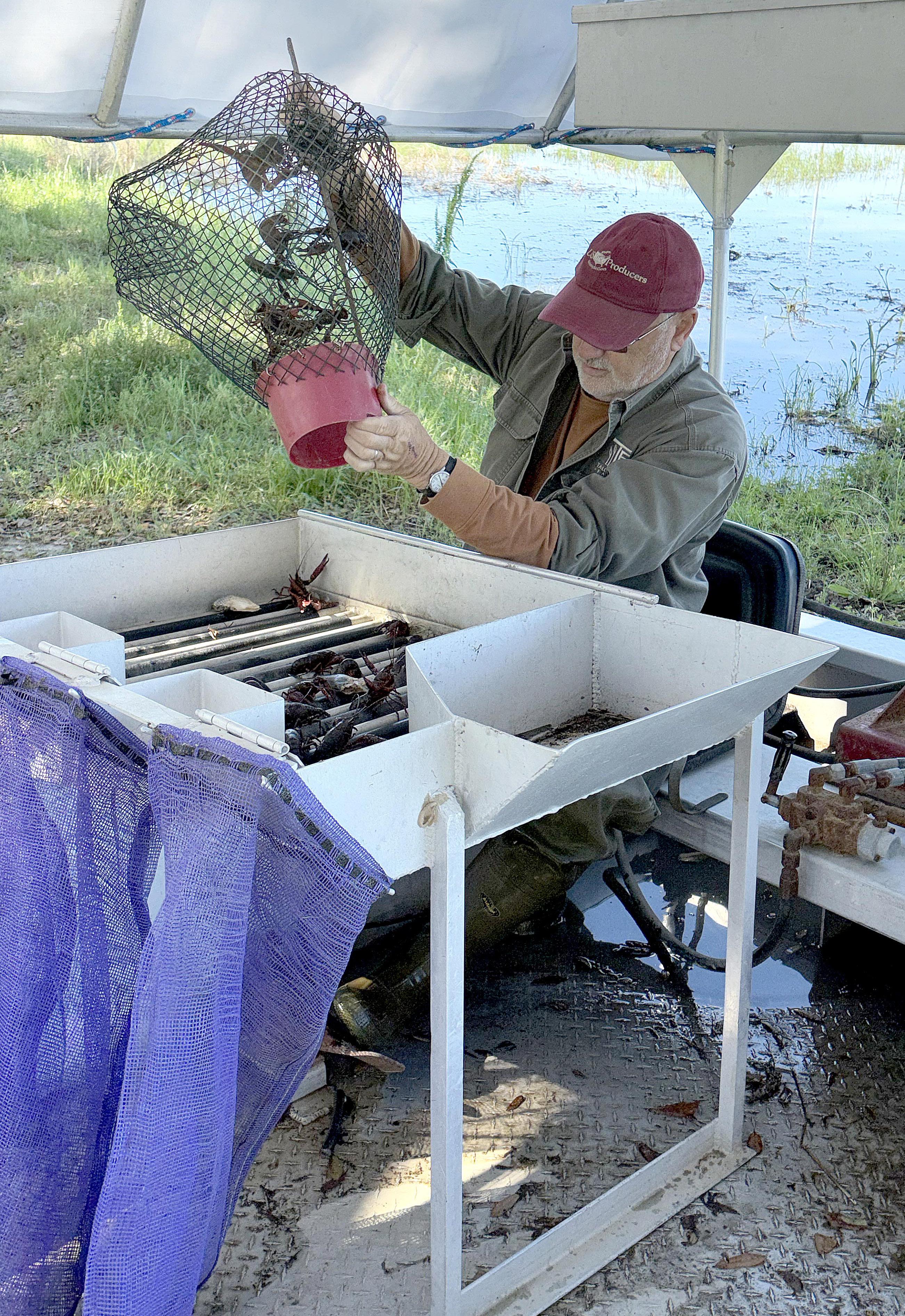
it’s a first-grade class or a couple of adults wanting to learn something new. He said he has people from all over the world visit Tallgrass Farm — from Australian to French tourist groups. During the tours, Tietje enjoys explaining the biology behind craw-
fish and seeing the reactions. On field trips days Tietje gets to teach children of all ages, their teachers, parents and grandparents all about crawfish farming and the many hard-working days and hours it takes for the crawfish to go from the pond to your next
crawfish boil.
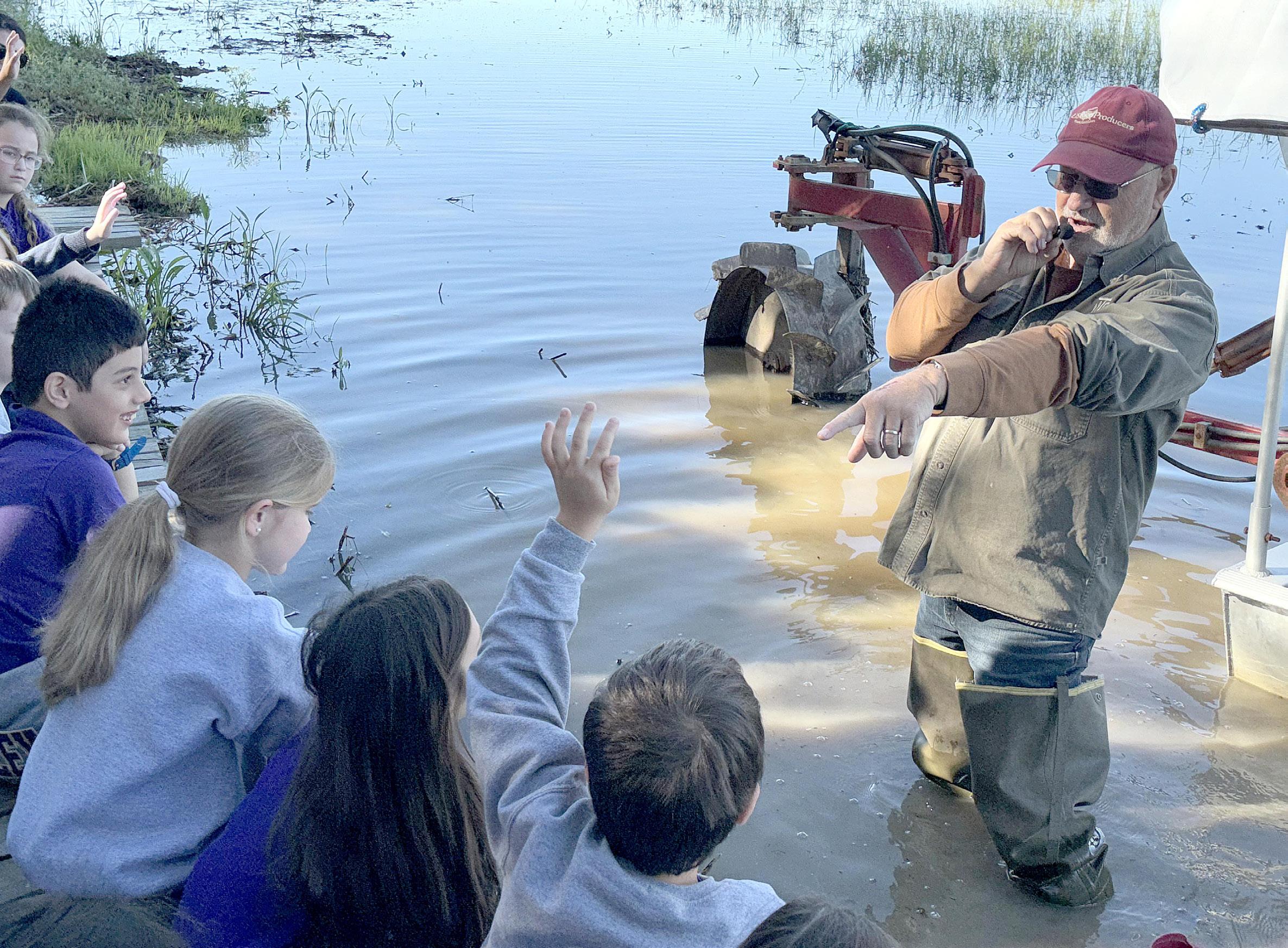
“This farm is a food factory — on this farm we’re going to hopefully catch about 100,000 pounds of crawfish this year — this is where your food comes from,” he said to an elementary class full of eager students last week. “All
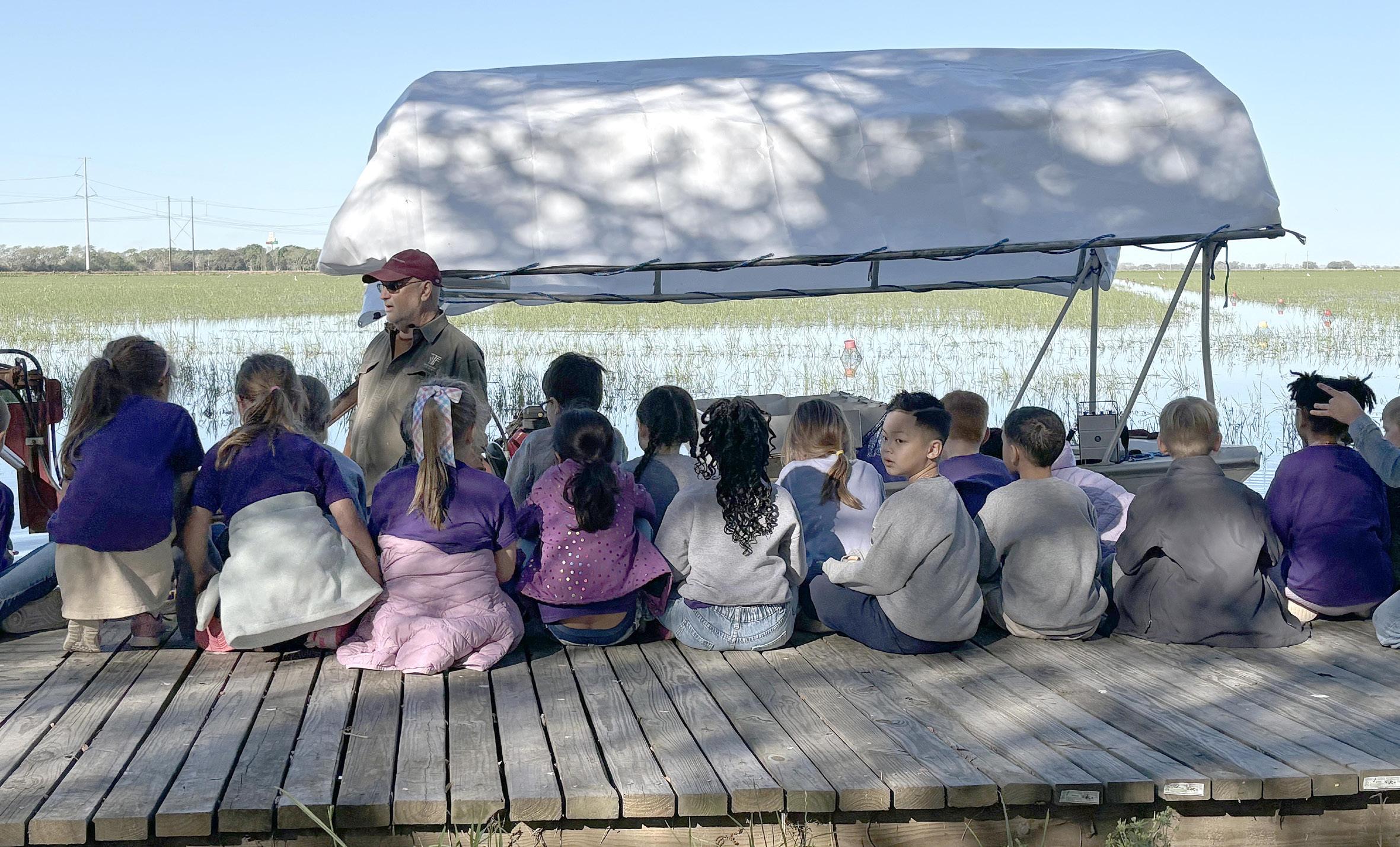


we have is land, water and sunshine and from those natural elements we grow the food that keeps you alive everyday,” he said.
Tietje’s mother was a biology teacher and with his background in education,Tietje said he’s getting to teach all ages about what he loves to do and the science behind it, while also being outdoors in the sunshine — a wonderful combination.
“This comes so natural to me. All I’m doing is teaching a lesson out here. Every time I teach the biology lesson I’m thinking about my mother teaching, that’s always been in my DNA and I love doing it,” he said.
He also enjoys getting to remind children where their food actually comes from. He is interactive with the kids and likes to hear where they think their meals come from first — usually getting answers like the grocery store, Walmart or a restaurant — then he explains how someone, a farmer like himself, spends their lives dedicated
to providing the food we eat every day.
“Every time you pick up a fork and you put a bite of food in your mouth I want you to think about the fact that there’s a farmer someplace out on the land, growing the food, that goes into that box that goes on the shelf of your mama’s pantry,” he said.
Tietje said he starts harvesting in January and stops in June and on average runs his ponds 120 times a year. On average, Tallgrass Farm will get over 100,000 pounds of crawfish in one year. He said when he first began farming crawfish the income was only 2 percent of his yearly total. Now it’s up to 40 percent of the overall farm income.
Tietje said he has had guests from all over the world come to visit Tallgrass Farm including two Russian gentlemen who told him how in southern Russia people also like to catch crawfish and it is then imported to Moscow. He said while standing on the

dock with the men how they shared stories and found a similarity between southern Russia and southern Louisiana.
“He told me how in Russia they eat crawfish and drink beer and I laughed and said we do that here, too,” Tietje said, laughing.
Tietje said people have a misconception about cold weather and crawfish. He said cold weather doesn’t affect crawfish besides pushing the peak season either earlier in the year or later. He said sometimes people can’t find crawfish early in the season but it’s because the crawfish aren’t active yet due to the colder weather. He said the best months for crawfish are usually in April or May but it all depends on the temperature.
“Crawfish are cold-blooded creatures so when it gets cold, their metabolism slows down and they’re not moving, eating or growing but it
doesn’t harm them at all,” he said.
Tietje went on to say how after more than 21 years of crawfishing he has noticed a sudden peak in catching that usually occurs no matter if it’s in March or April, and that peak is during the week of Easter.
“It’s kind of funny and after all the scientists I’ve talked to nobody’s ever been able to give me an answer but we always have a peak and the crawfish are more active on Holy Week and Holy Week is always different times but it always peaks then — we catch more crawfish on that week than any other time,” he said.
He said over the past two decades he has also noticed the general overall peak has moved slowly from April to May in the previous years.
Tietje said he does worry about the future of Tallgrass Farm, stating he is concerned about government interven-
tion because rice is a worldwide commodity and not worth much and is all about volume and not quality. He also worries about the water source, saying the reason he is able to farm rice and crawfish is due to his property being on top of the Chicot Aquifer, which he fears might be ruined due to the possibility of carbon sequestration storage in northern parishes, such as Beauregard and Allen.
“The Chicot Aquifer has been a wonderful resource that is constantly recharging and it moves from north to south,” he said.
He is concerned that if carbon dioxide leaks into the Chicot Aquifer it will destroy the agricultural water in Southwest Louisiana.
“We were here long before industry got here and we’re going to be here long after industry is gone. We need to desperately save anything we can to preserve our aquifer
and it is in imminent danger with carbon sequestration,” he said.
When asked how he likes to enjoy his crawfish himself he said he personally likes to steam his crawfish rather than boil it. He finds by steaming the crawfish it’s easier to peel and much faster.
He also loves crawfish etouffee, which combines his two crops — rice and crawfish.
“It’s the perfect dish and it’s the two things we grow,” he said.
To book a crawfish tour with Tietje call the Jeff Davis Parish Economic Development Tourist Commission at 337-821-5534 or check out their website at www.jeffdaviscrawfishtours.com.
“I get to be on the farm, in the sunshine, listening to the birds, talking and interacting with people and kids — it just makes me happy,” he said with a smile.
By Metro Creative Services

Small businesses are the economic engine that runs countries across the globe. Such businesses comprise a larger share of the economic landscape than big firms. Despite how essential a thriving small business sector is, such firms are vulnerable to the fluctuating economic conditions, particularly in the aftermath of the global pandemic.
According to ValuePenguin, powered by Lending Tree, 86 percent of small businesses are facing economic challenges as of 2022. The latest MetLife and U.S Chamber of Small Business Index has identified issues that many small businesses are confronting in the current economic climate.
• Inflation: The Index indicated inflation is the number one concern for small businesses today, with 53 percent of firms reporting this is the biggest challenge they are facing. When the survey was conducted, inflation was up 30 percentage points yearover-year. Also, according to Goldman Sachs’ 10,000 Small Businesses Voices survey, more than 76 percent of respondents said the financial health of their business had been hurt by inflation in recent months.
• Supply chain issues: Larger corporations may be able to source their products from many different vendors to keep shelves stocked, but smaller businesses often experience difficulties when items become unavailable. An Oracle survey reported that 80 percent of consumers would stop buying from a brand entirely if they experienced delays or shortages in their orders. This has been troubling to small businesses who have found it harder to compete with larger firms amid supply chain disruption.
• Revenue generation: As the costs of supplies and labor has risen due to inflation, small businesses have struggled to generate revenue. The U.S. Chamber of Small Business reported that, in the fourth quarter of 2022, nearly seven in 10 small business owners said they raised prices to cope with rising inflation as a measure to help mitigate revenue lags. Even after raising prices, certain small

businesses have been having trouble breaking even.
• Rising interest rates: Small business owners who rely on loans and credit to finance their business operations have been hit hard by the rising interest rates the Federal Reserve has been implementing to stem inflation. These rising rates, coupled with revenue struggles, are added costs to doing business.
• Recruitment and retention: Finding and keeping quality employees has been challenging for some time. This has been exacerbated by the fact that everyone is feeling the pinch of rising costs, and individuals need jobs that will offer salaries and benefits that can help them make ends meet. This means that employees may be lured away by the prospect of better pay at big box businesses that may have more available capital to pay employees. In addition, large firms can provide access to less expensive health care plans because they are servicing a greater number of employees. Small businesses are facing considerable obstacles in the modern economy. Consulting with a business advisor may help entrepreneuers solve these issues.



Information Technology Instructor
Sowela Technical Community College
Most people rely on the mouse almost entirely to navigate their Windows computer. Sure, it is easy and you feel in control left and right-clicking away through documents. However, there are a few keyboard shortcuts you have likely overlooked while being so reliant on moving around that little cursor to get your daily tasks done. Learning just a few of these shortcuts can save time, reduce frustration, and make everyday work flow more smoothly. Here are 10 Windows shortcuts that professionals, students, and everyday Windows users utilize to amplify their Microsoft Windows experience. Start using these shortcuts today and you may be surprised how much faster your daily computer tasks become.
Upon pressing Windows Key + Shift + S at the same time, your screen will slightly dim allowing you to select the area you want to capture. You can choose to capture a rectangular box selection, an open window, the full screen, or freeform. The image is then instantly copied to your clipboard so that you can paste into emails, documents, photo editing applications, or messaging apps.


Most people know that Ctrl + C is Copy and Ctrl + V is Paste, but did you know that Windows also keeps a history of everything that you put on your clipboard? All you have to do is press the Windows Key + V and your clipboard his-
tory appears as a dialog box. (You must first enable clipboard history for Windows to begin saving your copied items.) From here you can access previously copied text and images that you can reuse just as if you were copying and pasting them the first time. The Clipboard History feature allows you to have a repository of frequently copy and pasted items at the ready instead of just relying on copy/pasting one item at a time.
We have all had an experience where we have 20+ tabs open deep diving into a project and finding a stopping point hoping to pick up right where you left off at a later time. However, someone decided to close all of your carefully placed tabs in Chrome/ Edge/Firefox. When you open a new instance of your browser, all of your tabs are now gone! Well, the days of frustration are finally over, you can simply press Ctrl + Shift + T to reopen all of your recent tabs. If you had several instances of your browser open filled with tabs, you can simply open another instance of your browser and hit Ctrl + Shift + T and it will load more recently closed tabs. Repeat these steps until all of the tabs you had open across multiple instances of browser windows to get them all back.

If you are like me, you have multiple applications open at any given moment while working in Windows. Sometimes, I generally have multiple monitors as well to keep several applications opened and working on them at once. To quickly switch between more applications than the number of monitors can handle, just hold down the Alt button while pressing Tab and Windows will show you all of your open applications (Word, Excel, Chrome, Photoshop, etc.) and allows you to quickly jump between them.
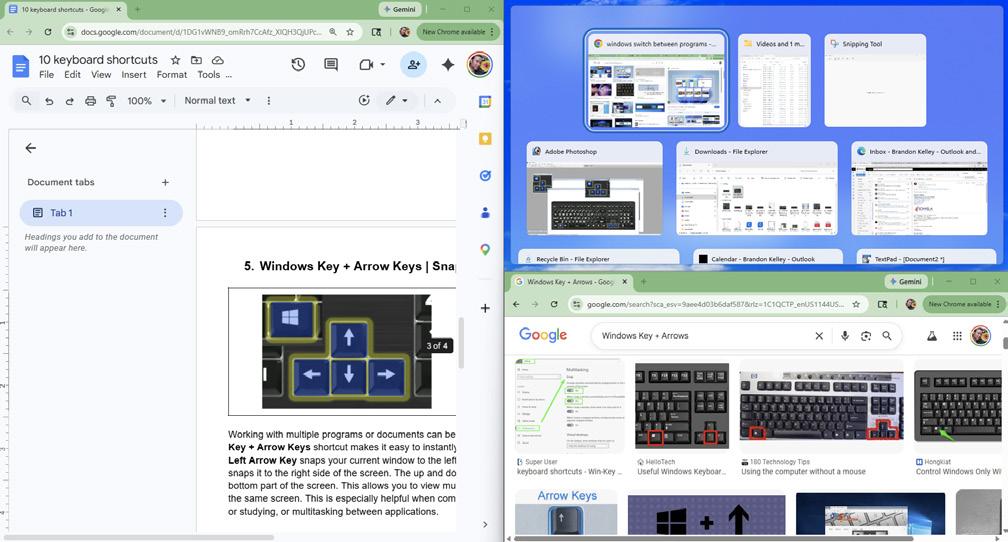
Working with multiple programs or documents can be frustrating to organize on your desktop. The Windows Key + Arrow Keys shortcut makes it easy to
instantly organize your workspace. Pressing the Windows Key + Left Arrow Key snaps your current window to the left side of the screen, or Windows Key + Right Arrow Key snaps it to the right side of the screen. The up and down arrow keys maximize to full-screen and minimize your current window respectively. This allows you to view multiple programs, documents, or windows side by side on the same screen. This is especially helpful when comparing documents, referencing information while reading or studying, or multitasking between applications.
Need to jump past all of your open windows, documents, and programs and go directly to your desktop? Pressing the Windows Key + D instantly minimizes all of your open windows and reveals the desktop. Pressing Windows + D again will return all windows to their original positions. This shortcut is useful when your screen is filled with open windows that you don’t want to move or close, but you quickly need to access something on your desktop.

While browsing the internet, there isn’t a need for you to click on the address bar to type in a new website address. You simply press the Ctrl + L and start typing. This allows you to quickly type in a new website or search term. This shortcut works on Chrome, Edge, and Firefox and is very useful when you frequently move between websites or perform multiple searches.

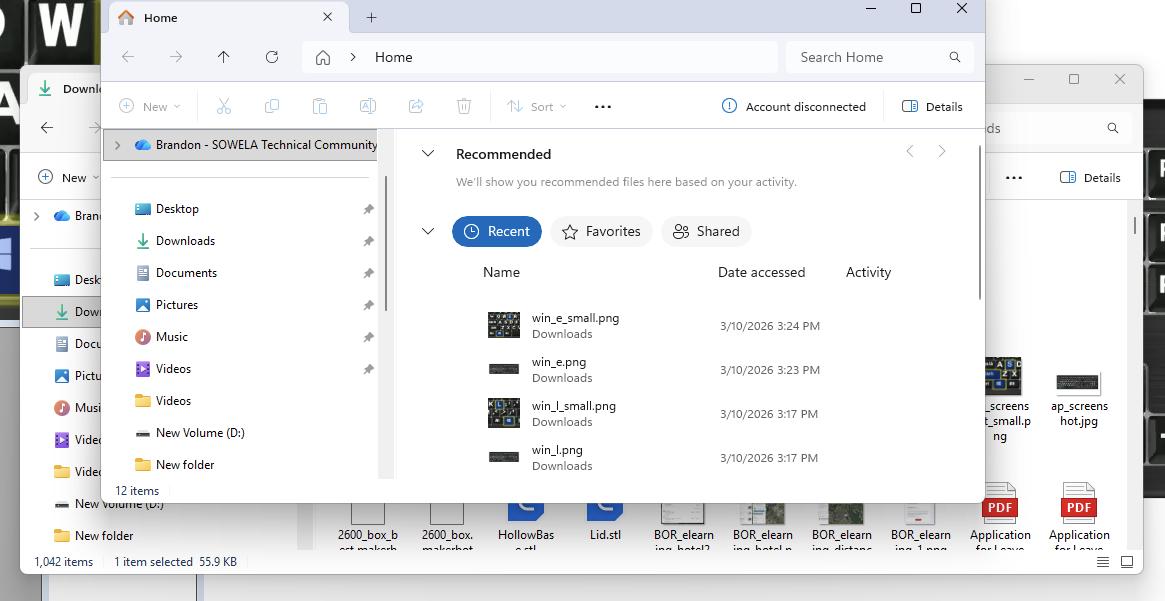
When you need to quickly access your files, folders, or external storage, pressing the Windows Key + E instantly opens the File Explorer. You will recognize this as the place where you find your documents, downloads, and This PC. Instead of clicking through the Start menu or searching for the folder icon, this shortcut is a fast and convenient way to manage and find files using the File Explorer.
Mistakes can happen, whether you accidentally delete text, move a file, or make an unwanted change to a document. Pressing Ctrl + Z quickly undoes your last action and restores things to how they were before the mistake occurred. This functionality exists inside many word processors (Word, Google Docs), spreadsheets (Excel, Google Sheets), email programs (Gmail, Outlook), and even the File Explorer in Windows. It is one of the most useful shortcuts in the Windows environment because it allows you to quickly recover from small errors without having to manually fix them.
When stepping away from your Windows computer, you should always lock your system to keep prying eyes off of your sensitive documents. Pressing Windows + L will immediately lock your system and take you to the login screen. This prevents anyone else from accessing your files while you are away. It is a quick and easy way to protect sensitive information in workplaces, classrooms, or shared environments. Locking your computer when you leave it is a simple but effective step towards practicing better cyber security.
Technology doesn’t always require pricey upgrades or complex software to improve productivity. Sometimes the most powerful improvements to your digital workflow come from simple habits that expedite everyday tasks. By learning just a few of these keyboard shortcuts, you can reduce repetitive clicks, stay focused on your work, and navigate your Windows computer more efficiently. Try incorporating some of these shortcuts into your daily work routine and before long, they will become second nature to you. You may even find yourself wondering how you ever got work done without them.