Administrative Assistant Michael Winikoff (612) 436-4660
Distribution Metro Periodical Partners (612) 281-3249
Founders George Holdgrafer, Stephen Rocheford
Inspiration Steven W. Anderson (1954-1994), Timothy J. Lee (1968-2002), Russell Berg (1957-2005), Kathryn Rocheford (1914-2006), Jonathan Halverson (1974-2010), Adam Houghtaling (1984-2012), Walker Pearce (1946-2013), Tim Campbell (1939-2015), John Townsend (1959-2019), George Holdgrafer (1951-2024), Julie Dafydd (1951-2025)
Editor, 5200 Willson Road, Suite 316, Edina, MN 55424 or e-mail editor@lavendermagazine.com.
For our Privacy Policy, go to LavenderMagazine.com/resources/ privacy-policy
Edina, MN 55424
Universe Calling: Yes, You!
I had no intention of watching the 2026 Winter Olympics, didn’t even view the Grand Opening on February 6 in the San Siro Stadium in Milan, Italy. Nope, nothing, and come the 15th, I’d have a task-free week, free to work on a project of my own. “No Olympics for me!” I proclaimed, smug in the assumption I controlled my frail humanity.
Above, in the aether, someone — something — took up the challenge: “Oh, really? No Olympics for you? We’ll see…”
And, thus, when a friend dropped by to visit the afternoon of the 15th, I couldn’t have sorted out my name, much less the topic of my project. I faintly heard him saying, “… ambulance, now!” then … nothing.
I woke, flat on my back, attached to tubes, in possession of my name in the ER of a local hospital. I could vocalize, but the intervening hours were gone forever — erased, I learned, when my BP plunged to 69/49. After further rounds of questions and tests, my visitor friend returned bearing concern, my iPhone, charger cord and a pair of old spectacles (not my readers). Six or so hours later, I was whisked from the ER up and away into a room illuminated only by an overhead TV eye, on and broadcasting … the 2026 Olympics. The Universe, I conceded, was driving the bus.
My friend, when he visited me in the ER, had gushed about the fantastic figure-skating doubles he’d just seen. Odd, since I knew he didn’t have a TV, and I couldn’t recall, over the past couple of decades, us ever discussing figure-skating or any Olympics-watching of any of the numerous summer or winter extravaganzas since 2001. Of course, some folks — even “no TV ever” friends — have learned to stream all kinds of things via other devices, while I, wedded to paper, lag far behind the digitally literate.
But now, there they were, those pairs, skating their hearts out for supine me in the dark of night. (My time frame was out of joint, so I can’t pinpoint exactly, but if an event was broadcast between the evening of February 15 and ‘round 2 p.m. on the 19th, it/they/them was unfolding before my eyes.)
Wagering on February 14th, I’d have bet the farm I wouldn’t be staring glassy-eyed at curling competitions at 3 a.m., nor would I ever, even in the most melatonin-infused dreams, envision Alysa Liu, clothed in gilded samite and a smile, floating effortlessly, joyously, scarcely scoring the ice, to claim the gold.
I mention melatonin, given to me, the nurses said, “to help you sleep,” but which my metabolism used paradoxically to keep my eyes wideopen, riveted to the screen hour after hour. Take snowboarding, first allowed as an event in the 1998
Winter Olympics in Nagano, Japan. My first viewing, February, 2026. Stunning! How do they even practice? Perhaps these were sole survivors… And curling. “Rocks and brooms” were in my head, but so many participants? So passionate! So many hours filmed…
Those five days didn’t further my own project, yet offered a unique educational experience, about others, yes, but myself as well. Ms. Liu was conceived by surrogacy (as were her four siblings) to be raised by a single, immigrant dad. He was her coach until she retired at 16 to rest, to take possession of her own life, then to re-enter skating at 19 to do it her way, with joy, winning gold at 20 with that ecstatic, shining smile.
From such heights to one’s own small victories, calmly calling, “Excuse me, I’ve inadvertently ripped out my IV line,” and the patient assistant, on her own life path, stoically mopping up my splashy Bates Motel cosplay, draping me in a fresh gown and calling nurse for another IV stick. Another computer-savvy aide who jiggered my iPhone into working.
Everyone, it became clear (or was it just the melatonin?), is somewhere along their life’s path — nurse’s aide to patient to gold medalists. Each intent on their own mortal business as the Cosmos murmurs, “Oh, really?” and casts the dice.
‘All Out Here’ Film Festival Showcases Love and Joy Found in Trans Community
From an all-trans hockey team to Godzilla figurines, the show highlighted the importance of community for those whose livelihoods are consistently in jeopardy.
As a trans refuge state, trans people have been migrating to Minnesota from across the country for protection, stability and community.
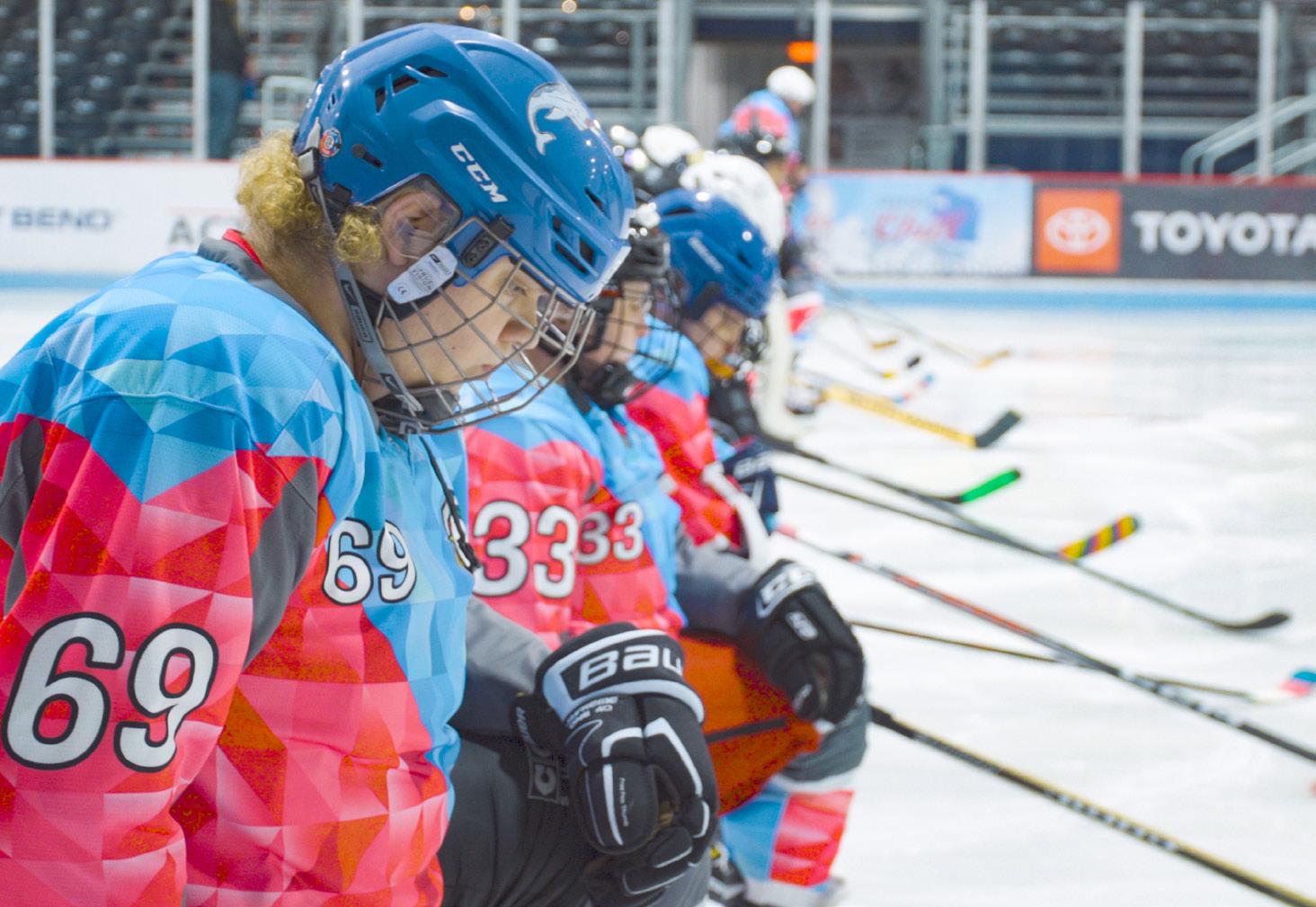
Minneapolis filmmaker Connor O’Keefe, born and raised in the Longfellow neighborhood, knew this going into production of his latest short film, “Quiet On The Ice,” that documents Team Trans, an all-trans and nonbinary hockey organization, and their Twin Cities chapter.
“There were a few articles done on our particular chapter that I thought were interesting, but when it’s not done by someone in our community, it can feel a little surface level,” O’Keefe explains. “So I reached out to the team, saying, ‘I’m a filmmaker, I’m trans, I’m interested in just getting to know you all. Let’s see where something could go,’ and they were super into it. I think they were, in particular, very interested in someone who was trans covering what they do and bringing in that perspective.”
O’Keefe says the film’s title comes from the testimony of a Team Trans player who said the world felt “quiet on the ice,” that they could put their worries away for the time being and just play the sport they loved with their people.
From its inception, O’Keefe knew he wanted to show “Quiet On The Ice” alongside other films by trans creators, particularly from Minnesota. The result: “All Out Here,” a one-night-only, one-hour screening of seven short films showcasing the joy, love and empowerment trans people find in community with each other.
“I wanted it to be a free screening where people could come and see these ideas playing off of each other,” O’Keefe says. “I really wanted all these films to be about communal and collective trans experiences.”
Though “festival” may be the wrong word for such a short event, “All Out Here” does indeed celebrate the trans community through a variety of techniques and genres. The program begins with “Coming Out” by Cressa Maeve Áine, a two-minute stop motion animation of a Godzilla figurine noticing his child does not take as much joy in destroying a metropolis as usual. We see the mini Godzilla entranced with a Sailor Moon-esque cartoon and lying despondently in bed. Then, at tea time, miniGodzilla coos in subdued growls how she feels like a girl, not a boy.
Godzilla is immediately supportive, searching on its doll-sized laptop how to best support his daughter and crocheting her a trans flag. At their next metropolis matchup against their monstrous foe, mini Godzilla is wearing a pink hair bow.
It’s an endearing introduction to following shorts that are tender, thought-provoking and imbued with emotion. The second film, “The Songs of Water” by Phạm Minh Quân, intersperses pristine, well-lit footage of BIPOC trans folks peacefully exploring nature with one-on-one conversations in a studio as they discuss both personal and largescale narratives relating to their identities.
“I’d love to leave behind the trauma, but it happened,” one cast member says to another.
“Folks fully don’t comprehend what it feels like for the government to want to harm you,” says Candi Brings Plenty, who is Indigenous.
“This is all worth it. This is a miracle,” Gia Loving, a trans woman, says over footage of her floating in a river.
Other films included “A Letter from Minneapolis,” a place-based commentary on the commercial-
ization of healthcare, “Die Räuberinnen,” a tender German-language film of three trans women planning a robbery and their camaraderie with each other, a triptych called “trannies live forever: turn your eyes to the sky” detailing sorrow and violence as well as trans joy in spite of it and “Even Still,” a flowy, hand-drawn animation of trans people of all ages finding joy with each other set to funky music.
Though O’Keefe says he plans to bring “All Out Here” elsewhere, I encourage readers to seek these films out on their own, as each of them are too brilliant for the space allocated here to describe them.
“Quiet On The Ice” concludes the program and, perhaps ironically, opens with the familiar sounds of hockey fading in: the woody slaps of sticks on pucks and the whooshing of players gliding around the ice. Voiceovers describe trans realizations happening with hockey as a backdrop, as well as feelings of misplacement within the sport.
O’Keefe’s presence is known only by his view from the camera, the narrative being guided by the Team Trans ensemble cast. Still, O’Keefe says he “never felt like just the camera person” during production. Many shots come from inside the locker room, a usually fraught space for trans people that, in the film, is devoid of the typical machismo that tends to drive them away from sports, enabled by O’Keefe’s closeness with the cast.
“A locker room as ever quite felt like church,” O’Keefe says.
In the locker room, as on the ice, players laugh with each other, help each other put on gear and encourage each other. They flop on their bellies and slide across the ice with an unmistakable childlike air.
Physicality is a key theme in the film, highlighting the rarity of spaces where trans people can fully inhabit their bodies and move freely within them. Any bodily dysphoria is quieted by the singular bulk of a hockey uniform.
“You can disappear into a hockey uniform,” O’Keefe says.
Shots of the hustle and bustle of Minneapolis, as well as Twin Cities Pride, frame Team Trans’s time on the ice, highlighting the role the group plays as a refuge from a constantly changing world that is increasingly antagonizing trans people.
Being trans is an inherently political existence, but “Quiet On The Ice” shows how Team Trans players recognize this while also allowing each other to inhabit a shared humanity first and foremost.
“We’ve all been through a lot, especially in the past few years,” another player says. “I think the only thing we can do as queer people is lean on each other and build those support networks. Otherwise, we’re not going to make it.”
O’Keefe says he hopes viewers of “All Out Here” leave with inspiration and the excitement to get involved with their communities, especially in physical spaces.
“If hockey isn’t your thing, find what is.”
O’Keefe
Twin Cities Gay Men’s Chorus’ Upcoming Concert
‘Wicked
Wisdom’ explores Belonging and Queer Identity
A concert exploring belonging, resilience and queer identity will bring Broadway music and storytelling to the stage of Orchestra Hall through “Wicked Wisdom,” a collaborative performance centered on the universal human need to belong.
The piece features music by Stephen Schwartz, the composer of the Broadway musical “Wicked,” alongside “Song of Wisdom” from “Old Turtle,” blending choral music, narration and live puppetry to examine how themes of inclusion and self-acceptance resonate deeply within the LGBTQ+ community.
“The concert is really about belonging, and the LGBTQIA community continually searches for belonging not only externally into the non-queer world but also internally,” says Gerald Gurss, the Artistic Director for TCGMC.
“We have our own struggles with our own community, we have so many ways that we can be more inclusive and embracing of each other,” Gurss says. “I think that every human experience seeks belonging, but especially queer people and queer identities.”
The story concludes with Old Turtle whispering to the humans that there can be enough for everyone, that there is a place where all belong, and that perhaps one day humans will learn to live in peace.
“We’re taking inspiration not just from ‘Wicked,’ but from many of the musicals Stephen Schwartz has written, including ‘Godspell,’ ‘Pippin,’ ‘The Prince of Egypt’ and, of course, ‘Wicked,’” Gurss explains.
“In each of these musicals, there is a character searching for a place to belong. In ‘Pippin,’ you have someone journeying to find where their corner of the sky is. In ‘Wicked,’ you have someone with green skin thrown into a world of people who don’t look like her. That’s why queer people identify with her so strongly, because sometimes we feel like we don’t fit in.”
For many LGBTQ+ people, TCGMC’s concerts have long provided more than entertainment, offering a sense of belonging and affirmation that extends well beyond the stage.
“We all want to belong in some way,” Gurss says. “Whether it’s our gender identity, sexuality, faith, political beliefs or our chosen and blood families. Belonging is such a powerful force for everyone, but especially for queer people.”
Gurss said the production is strengthened by its visual elements, particularly the collaboration with Heart of the Beast Puppet Theatre.
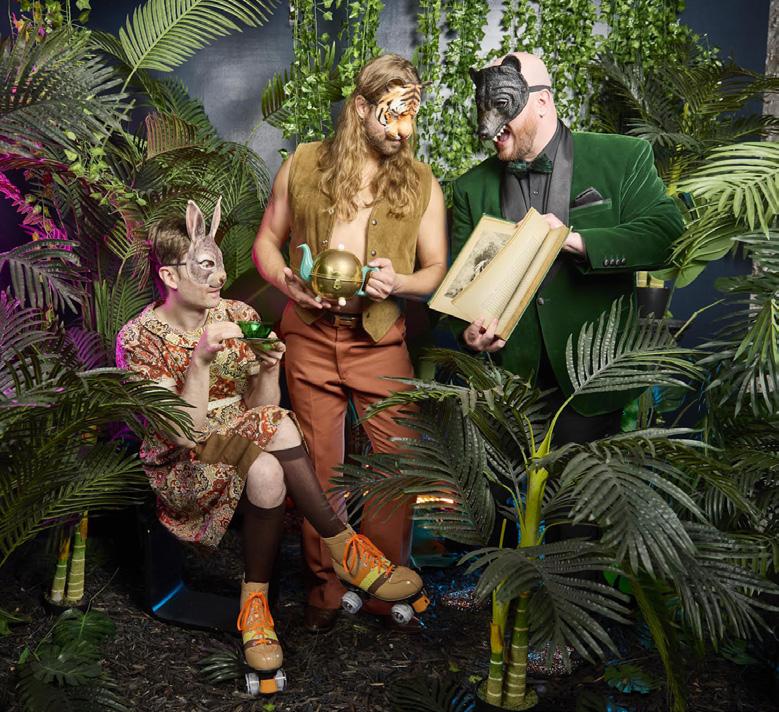
“They are iconic in the Twin Cities,” Gurss says. “They make puppets the size of elephants and sometimes the smallest, simplest masks. They move among the audience, create awe and make people smile.
Having them portray animals and help tell the story on stage really brings the storytelling to life.”
The concert also features two narrations by KARE 11’s Jason Hackett, which help guide the story over the music.
“All three organizations involved are aligned in their core values,” Gurss says. “Leaving space for all voices to be heard and showing respect for the community and the individual. They are artistic forces in this community, and together we elevate each other.”
Gurss said the concert is designed to offer both reflection and escape.
“I want the audience to experience moments that transport them away from what’s happening in our world,” Gurss says. “Sometimes we can’t sit in that brutal space for too long, or we lose the energy to give hope to others. You can’t pour from an empty cup.”
The program also addresses current social issues. One song in the first half, “God Help the Outcasts” from “The Hunchback of Notre Dame,” features music by Alan Menken and lyrics by Schwartz.
The song is paired with the inscription from the base of the Statue of Liberty.
“‘Give me your tired, your poor, your huddled masses yearning to breathe free,’” Gurss recites. “There’s a hypocrisy in our country where this is what we claim to stand for, yet we tell certain people they don’t belong.”
The concert ultimately leaves audiences with a message of responsibility and hope, encouraging people to consider how they show up for one another and to remember that belonging is not just a theme of the performance, but a call to be better human beings.
On their Facebook page, TCGMC wrote “This will be a special one” in reference to Wicked Wisdom. Performances will take place on April 4 at Orchestra Hall in Minneapolis at 2:30 and 7:30 p.m.
Photos by Paul Owen
The Subtle Queerness of Summit Hill, St. Paul
Or, how not to judge a book by its cover
My girlfriend and I moved into our first apartment in St. Paul’s Summit Hill neighborhood on the first day of Pride Month.
It was also Grand Ol’ Day, the annual celebration of all things Grand Avenue, complete with a parade, hundreds of local business booths and even more Twin Citians milling up and down the thoroughfare. Indeed, it made for a completely painless move-in into our second-floor unit, only accessible by stairs. (I hope you can detect my sarcasm.)
As time passed and we settled in, a sort of restlessness fell over us. We were used to the punk-y grunge and working-class family vibe of Southeast Como, Minneapolis, a hub for UMN students, and Summit Hill felt stuffy by comparison. We didn’t think we would find other queer and trans folks amongst the stately Victorian mansions we could only dream of owning ourselves, and we were feeling isolated from our Minneapolitan friends.
However, once you stroll Summit’s quiet streets, you’ll start seeing the occasional pride flag fluttering in the breeze. You’ll find your community hidden in plain sight.
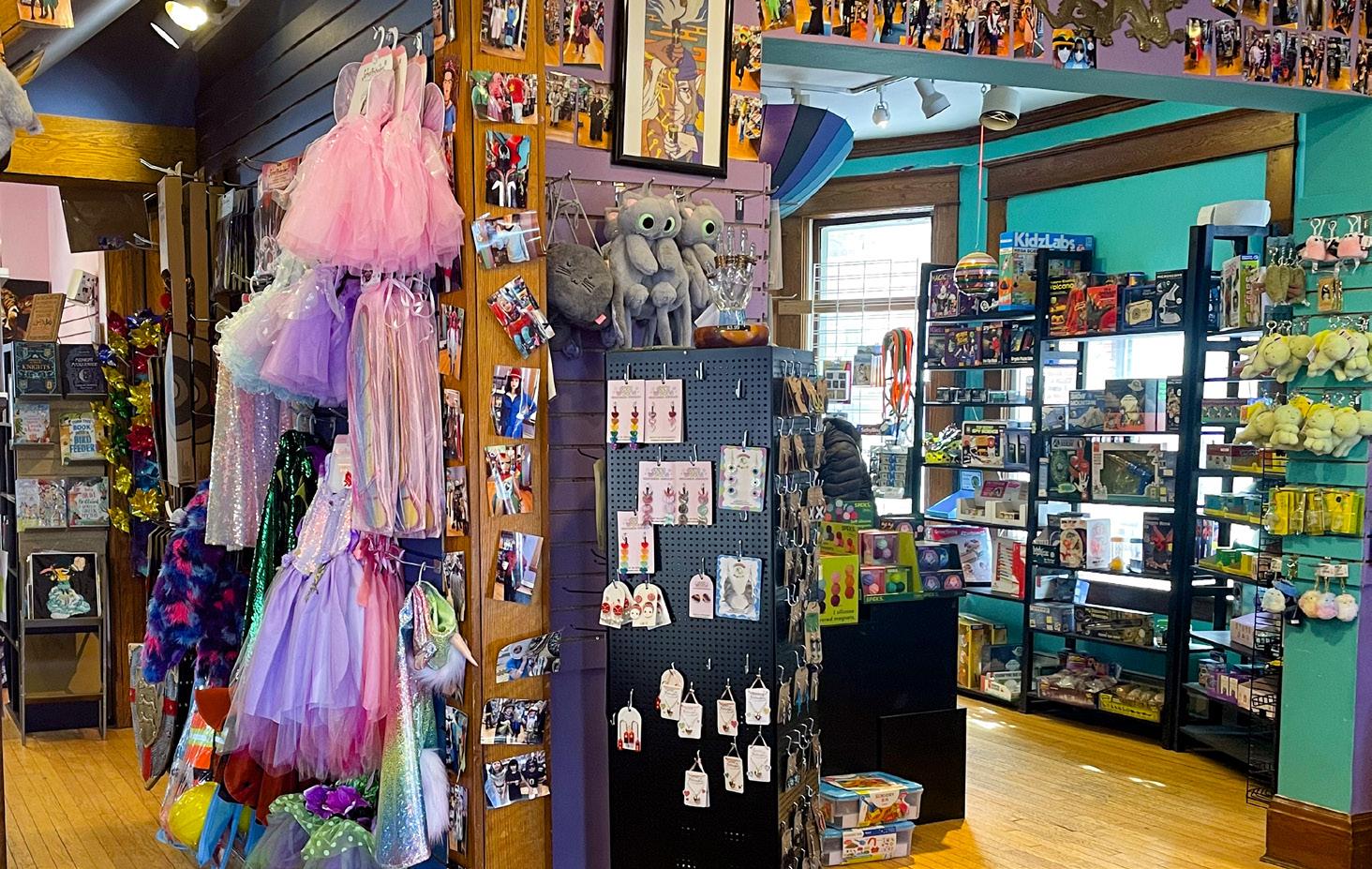
I got a lesbian flag sticker for my water bottle and a matching full-size flag for our bedroom wall at Mischief Toys & Games, located just a few blocks east of us.
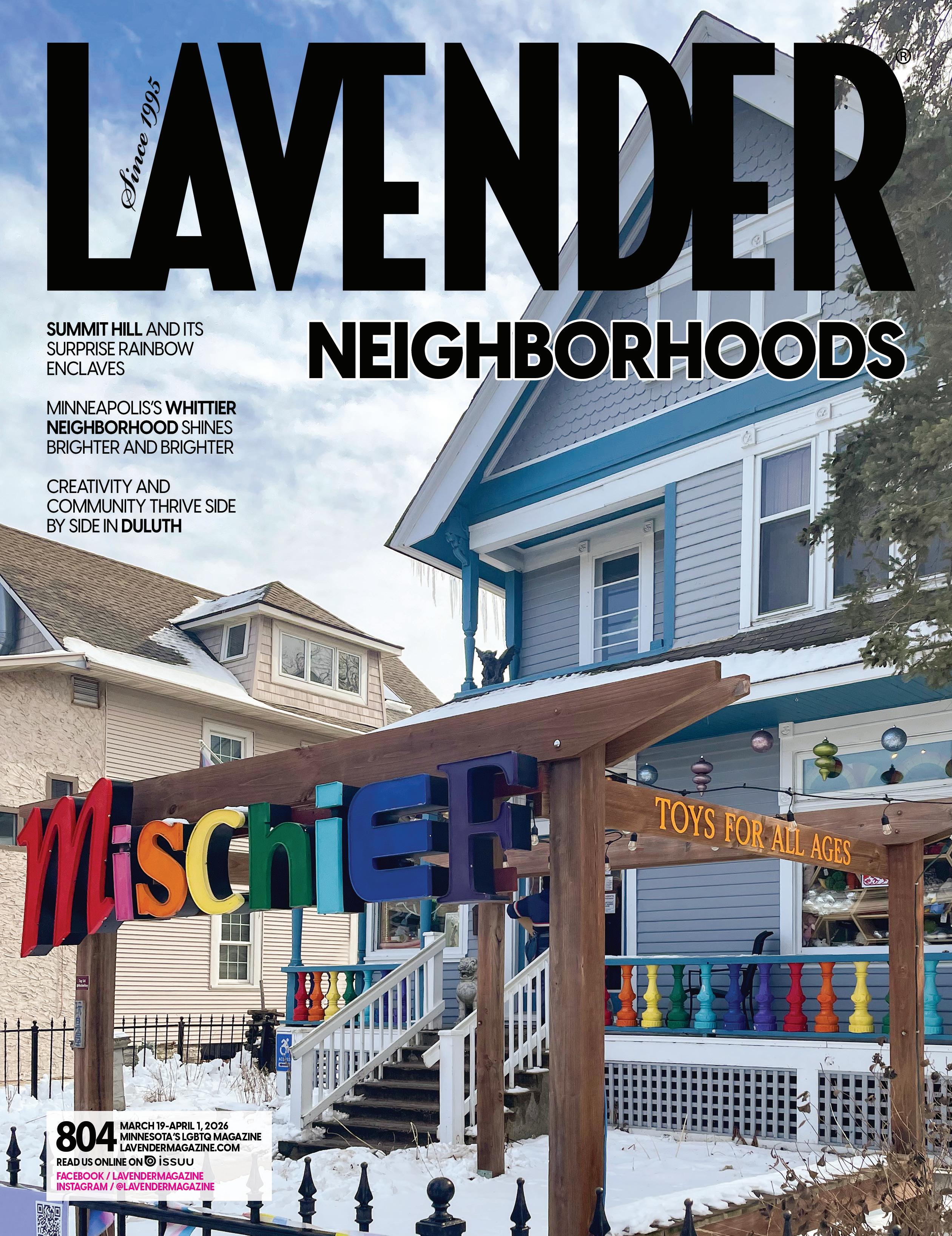
Mischief has been a Grand Avenue institution for a decade now, occupying a typical Victorian-era Summit Hill home, save for its periwinkle blue paint job and walls covered in toys from stuffed animals to board games, from earrings to sarcastic pins and stickers.
The story of Mischief closely follows that of the Adelsheim-Marshall family, its proprietors. Once Abigail Adelsheim-Marshall, who uses any and all pronouns, and her sibling entered their teenage years, her parents, Dan Marshall and Millie Adelsheim, wanted to accommodate their changing tastes and offer older kids in general more than what big box stores could offer.
“‘We think that big kids and teens deserve better than iTunes gift cards for their birthdays,’” Marshall told Mpls.St.Paul Magazine in 2015.
Originally located in St. Anthony Park in the family’s former baby goods store, Peapods, the Grand Avenue house offered the Adelsheim-Marshalls an affordable price and prime location, being just down the block from another St. Paul institution, Café Latte.
Adelsheim-Marshall, now 29 and Mischief’s store manager, says that their queerness is inextricable from the store’s identity. She also says that being queer-affirming is necessary to be a welcoming space to teenagers and young adults.
“There are a lot of queer teenagers, you know, a lot of trans, nonbinary teenagers,” they say. “There’s this underlying energy that teenagers aren’t really welcome in the world, because they’re boisterous. Most toy stores kind of top out at like 12 (years old), and they don’t have much beyond that. We want (Mischief) to be a place that is explicitly affirming and welcoming to them.”
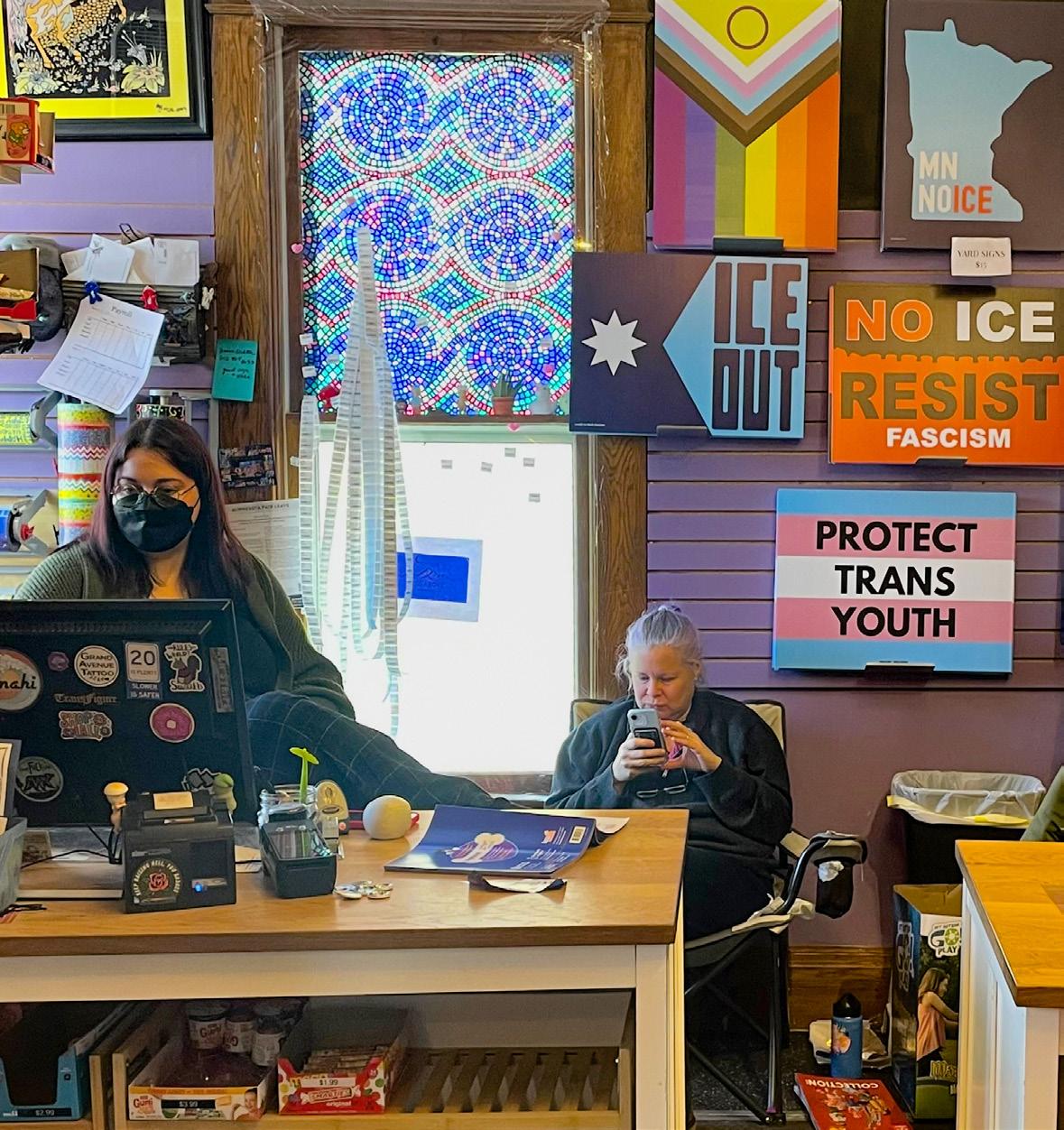
Mischief has also set itself apart by raising awareness and giving back to community. They sell a variety of yard signs proclaiming that Black Lives Matter and calling to Protect Trans Youth, among other messages.
“We’ve sold upwards of 5,000 yard signs in the last month-and-a-half, and we have donated $38,000 to local nonprofits based on those proceeds,” she says.
Overall, Mischief is a youthful breath of fresh air in Summit Hill and is a truly unique Grand Avenue business that is not going anywhere anytime soon.
Like many queer folks, I have a complicated relationship with Christianity, this country’s majority religion with an infamously vocal conservative intersection. There is no shortage of churches in Summit Hill, particularly north of Grand Avenue, but what has intrigued me is how several of them are outwardly progressive and queer-affirming.
On my walks through the neighborhood, I noted St. Paul’s United Church of Christ, House of Hope Presbyterian Church and Unity Church-Unitarian as such places of worship. Millie Adelsheim of Mischief also mentioned St. Clement’s Episcopal Church on Portland Avenue.
Queer allyship appears to be inherent to Presbyterianism and Unitarian-Universalism as religious sects. The General Assembly of the Presbyterian Church has an LGBTQ+ advocacy committee that seeks to “address and rectify injustices … due to oppressive power structures perpetuated by human sinfulness,” per its website.
Marcia Hayes, chair of Unity Church’s board of trustees, says, “(Unitarian-Universalism) has moved away from the parts of Christianity that deny the inherent worth and dignity of every person.”
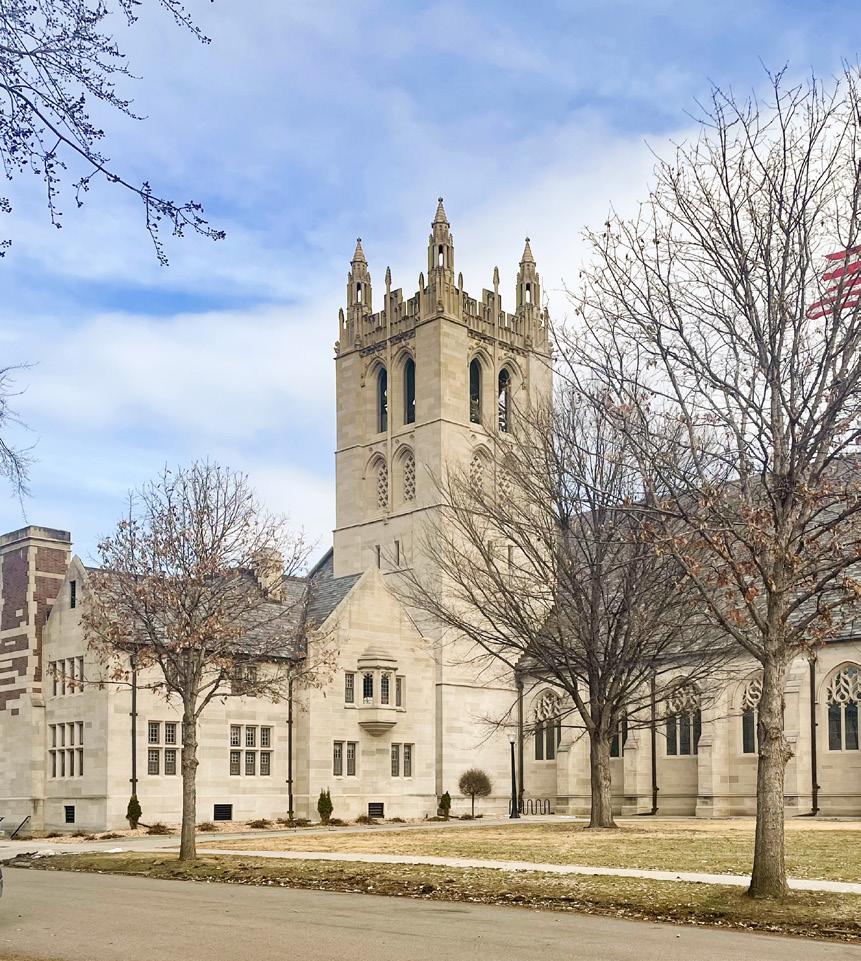
Mischief Toy Store, The House of Hope Presbyterian Church. Photos by Sommer Wagen
Hayes and her wife have been attending Unity for a decade and raising their child in the faith.
Beyond these core tenets, these denominations’ locations in Summit Hill are led by queer people, which is significant. Rev. Dr. E. Scott Jones, senior pastor at House of Hope, moved from Nebraska to Minnesota last May because of the state’s queer-friendly reputation. In fact, he wrote an entire book about coming out as gay while serving as a Baptist preacher in Texas.
“When I came out, I could finally be my authentic self and feel this sense of freedom. Not only did it make me a better human being, it made me a better minister, too,” Jones says.
Both Rev. Dr. Jimmy Hoke, who leads HoH’s youth and family ministry, and Johan Wyckoff, their communications coordinator, attested to Jones’ “timely,” “thoughtful” and “uplifting” sermons.
Hoke, whose background is in academia, teaches young HoH members about the Bible through a queer lens, challenging how children are often used as weapons in hateful rhetoric from the Christian right.
“I couldn’t be a person of faith without my queerness,” they say. “(Hateful rhetoric) often limits the way that queer and trans people can talk constructively about their faith. I appreciate being in a space where we can give other people a chance to ask, ‘What do I actually believe?’”
All three HoH members acknowledged the irony of cultivating such a welcoming space in a centuries-old Gothic cathedral with a painfully dated historical marker in the front, but there’s also a playground affectionately called Hippo Park and a community garden outside, too.
Both Hayes and the HoH members said queer folks looking to explore their faith are welcome to worship with them and see what they’re about. While I’m personally not ready to do so, it’s nice to know the invitation is open.
My girlfriend and I moved to Summit Hill mostly on a whim, and it likely won’t be where we settle for good. I wouldn’t call Summit Hill a gayborhood, but it’s been a pleasant setting for this phase of adulthood we stepped into together.
Most of all, Summit Hill has asked me to keep an open mind about things until they give me a reason to close it. It has yet to give me any.
BY STACY DAHL
Creativity and Community meet in Duluth’s Queer Spaces
Where creativity and community meet in Duluth’s queer spaces, art is more than expression; it is connection, livelihood and sanctuary. From handcrafted jewelry shaped by the stones of Lake Superior to dance floors that pulse with drag performances, Duluth’s LGBTQ+ community continues to carve out spaces that are both affirming and deeply rooted in place.
Together, Little Leaf Goods and The Flame Nightclub reflect the heart of Duluth’s queer community — one through nature-inspired craftmanship and a commitment to giving back, the other through nightlife that offers visibility, safety and celebration. Both spaces demonstrate how creativity and community continue to thrive side by side in the Twin Ports.
Little Leaf Goods: Nature-inspired craft and queer community connection
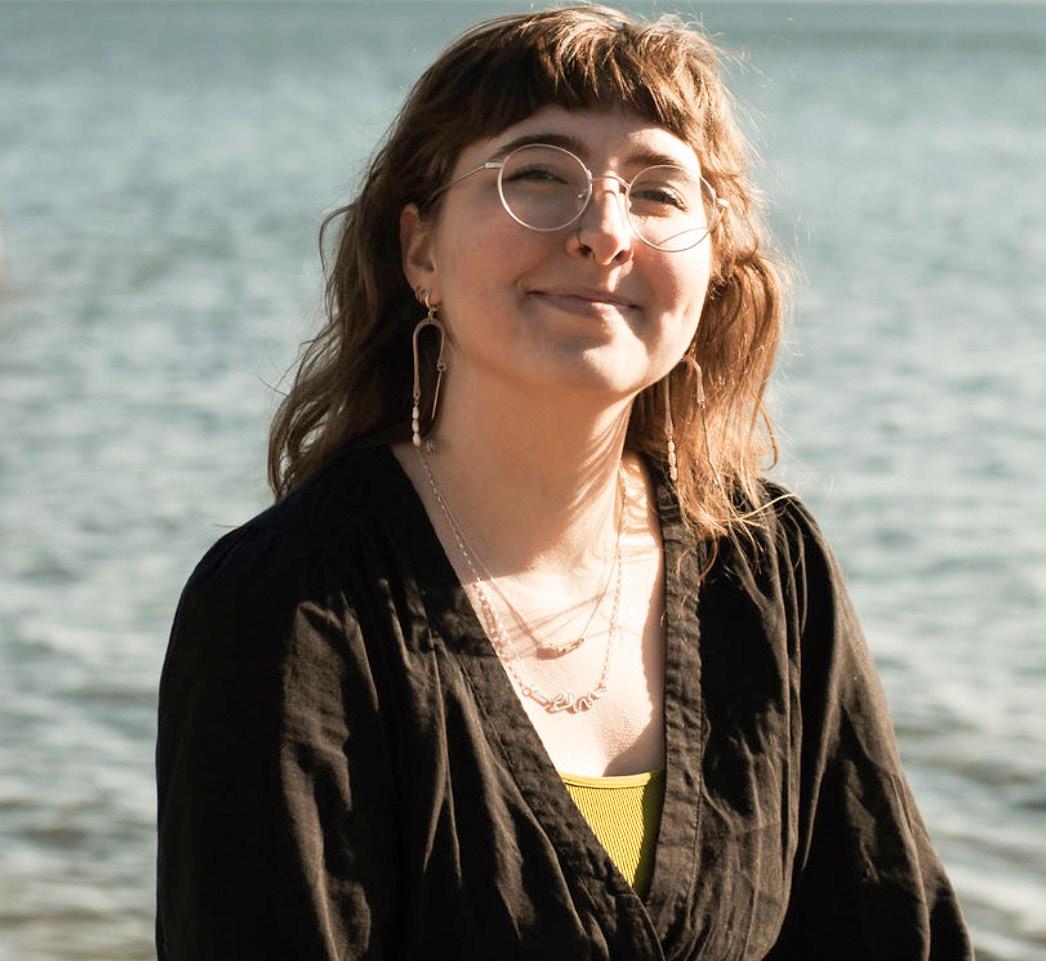
Little Leaf Goods is a handcrafted jewelry business based in Duluth and owned by Ruby Dammann, a queer woman artist who draws inspiration directly from the North Shore landscape.
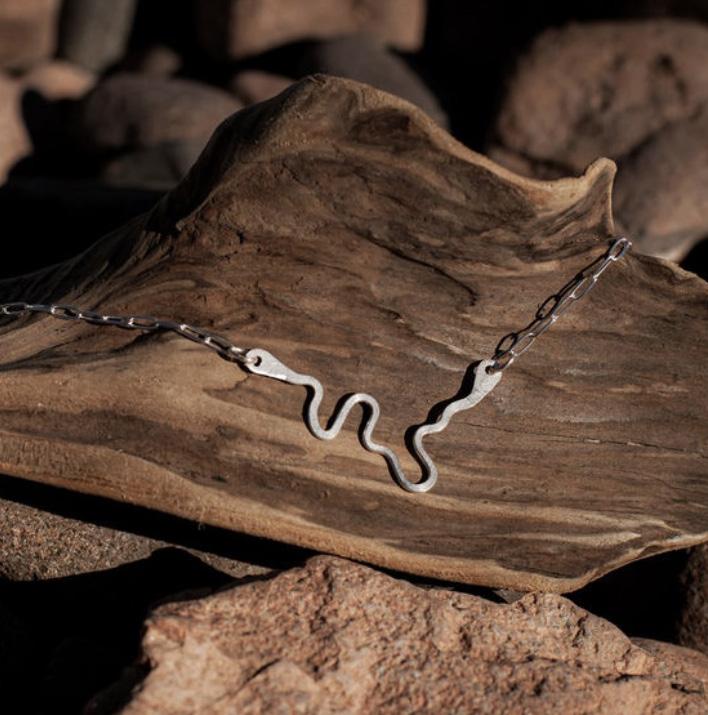
Dammann creates each piece using metals, gemstones and stones she sources along Lake Superior’s shoreline. Little Leaf donates 10% of all direct sales to Seeds Worth Sowing, a local organization that provides economic support, housing navigation assistance and community connections through mutual aid and harm reduction practices.
Originally from St. Paul, Dammann moved to
Duluth in 2018 to attend the University of Minnesota Duluth, where she studied cultural entrepreneurship. She has remained in the city since graduating.
“Growing up, I always knew I wanted to do something artistic,” Dammann says. “I was always drawing or painting, making collages and doing various creative projects.”
She launched Little Leaf Goods while still in school and opened an Etsy shop in 2020. When she lost her job during the COVID-19 pandemic, Dammann leaned fully into her creative work.
“I posted a couple pairs of earrings on Instagram just to see if people were interested,” she says. “The response surprised me.”
While Dammann is the sole owner, she says her wife, Marcy, plays a major role behind the scenes. The couple lives in Duluth with their dogs, Onni and Skip.
“The actual making of the jewelry is a small part of what the business entails,” Dammann says. “There’s social media, photography, applying for shows, writing applications, packaging for stores and moving boxes in and out of the basement.”
Little Leaf Goods initially focused on earrings but has expanded in recent years to include necklaces, hats and other merchandise. Dammann recently introduced block prints she designed herself, along with branded beanies and ball caps that quickly gained popularity.
Summer and fall are her busiest seasons, driven by art fairs and markets throughout Duluth and the Twin Cities. Many events are hosted by small businesses, breweries and cideries that organize weekend markets.
“I couldn’t do this without community support,” Dammann says. “I felt supported right away by friends and family, but I was really surprised by the encouragement from people I didn’t know. My earrings and necklaces almost feel like my own children. You spend so much time with them.”
Dammann says she hopes to expand her presence at Twin Cities markets while continuing to build strong roots in Duluth’s queer community.
“It’s really special,” she says. “I’ve felt incredibly supported by the queer community here, and it’s been meaningful to be part of it.”
The Flame Nightclub remains a cornerstone of queer nightlife
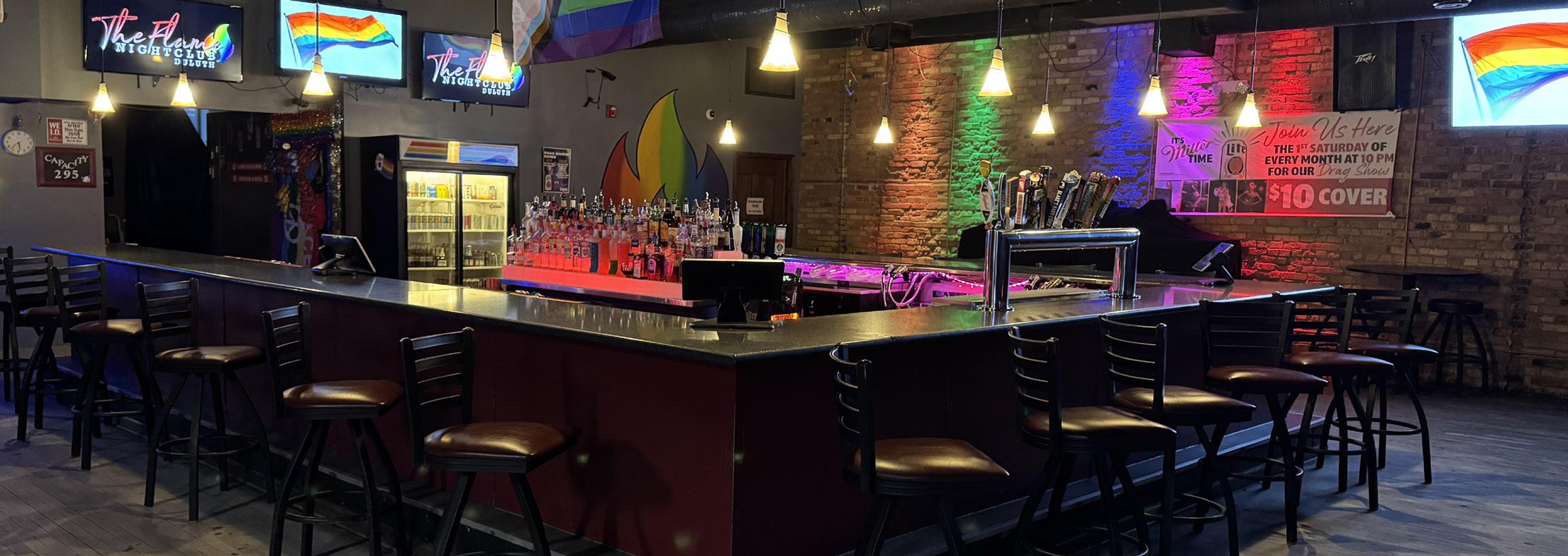
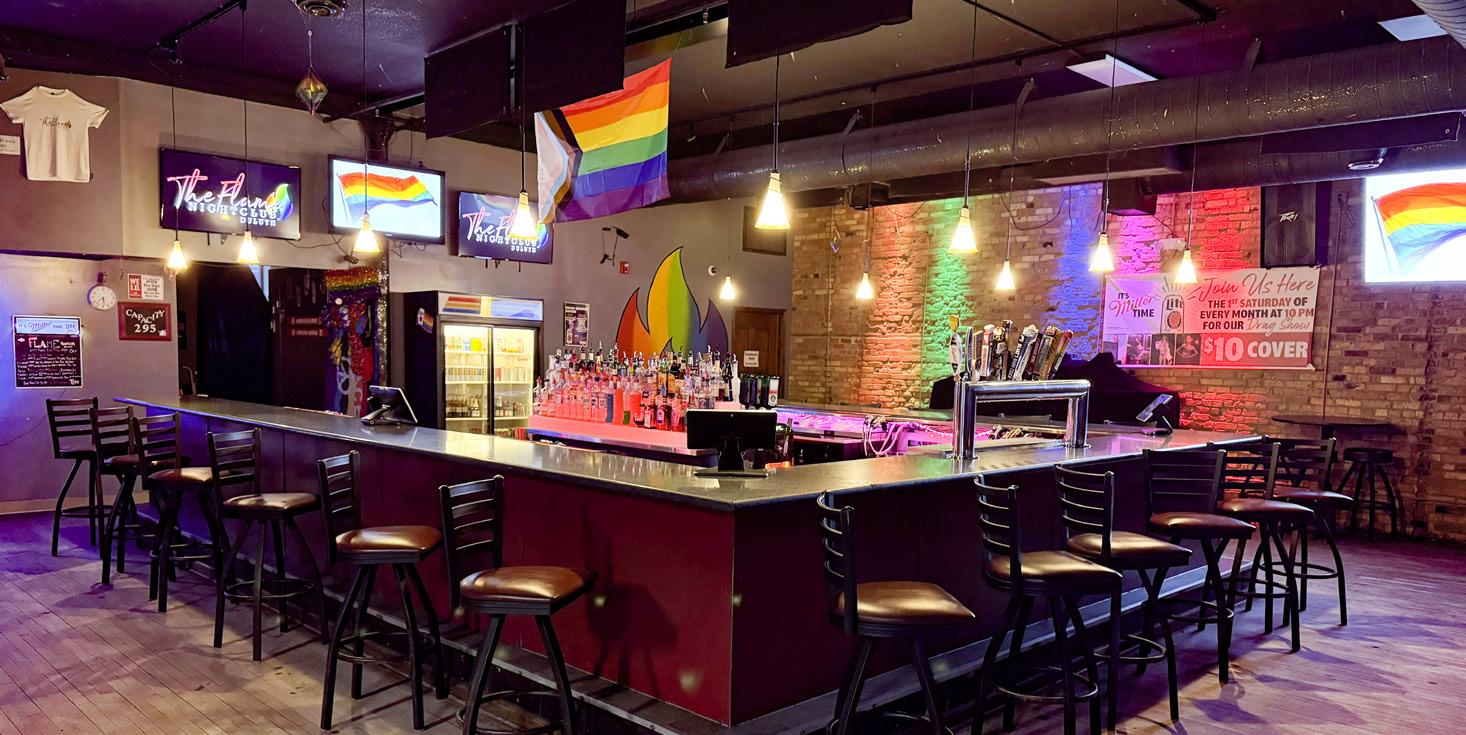
The Flame Nightclub is Duluth’s first and only gay bar and has served as a central gathering space
Ruby Dammann sitting by Lake Superior, necklace on driftwood. Photos by Makayla Steele / Helldiver Design. The Flame Nightclub. Photo by Nicole Barclay
Continued on page 17
Community Connection brings visibility to local LGBTQ-friendly non-profit organizations. To reserve your listing in Community Connection, email advertising@lavendermagazine.com.
ANIMAL RESCUE
Second Chance Animal Rescue
Dedicated to rescuing, fostering, caring for, and adopting out dogs and cats into forever homes.
P.O. Box 10533
White Bear Lake, MN 55110 (651) 771-5662 www.secondchancerescue.org
BUSINESS ASSOCIATIONS
Quorum
Minnesota's LGBTQ+ and Allied Chamber of Commerce working to build, connect, and strengthen for a diverse business community.
2446 University Ave. W., Ste 112 St. Paul, MN 55114 (612) 460-8153 www.twincitiesquorum.com
ENVIRONMENT
The Nature Conservancy
TNC is an environmental nonprofit working to create a world where people and nature thrive. 1101 W. River Pkwy., Ste. 200 Minneapolis, MN 55415-1291 (612) 331-0700 minnesota@tnc.org www.nature.org/minnesota
EVENT VENUES
Landmark Center
A classic venue, with a grand cortile and beautiful courtrooms, accommodates celebrations of all sizes.
75 W. 5th St. St. Paul, MN 55102 (651) 292-3228 www.landmarkcenter.org
FOUNDATIONS
University of Minnesota Foundation
Connecting passion with possibility to transform the future through philanthropy. 200 Oak St. SE, Ste. 500 Minneapolis, MN 55455 (612) 624-3333 giving@umn.edu www.give.umn.edu
GRANTMAKERS/FUNDERS
PFund Foundation
PFund is the LGBTQ+ community foundation that provides grants to students and grants to non-profits. PO Box 3640 Minneapolis, MN 55403 (612) 870-1806 www.pfundfoundation.org
HEALTH & WELLNESS
Aliveness Project
Community Center for individuals living with HIV/AIDS – on-site meals, food shelf, and supportive service. 3808 Nicollet Ave. S. Minneapolis, MN 55102 (612) 824-LIFE (5433) www.aliveness.org
COMMUNITY CONNECTION
MEDIA & COMMUNICATIONS
Radio K
Radio K is the award-winning studentrun radio station of the University of Minnesota.
330 21st. Ave. S. Minneapolis, MN 55455 (612) 625-3500 www.radiok.org
MEDICAL SERVICES
Red Door Clinic
HIV and STI screening, treatment, education, and referrals. Doxy PEP, nPEP, PrEP, and Reproductive Health. 525 Portland Ave., 4th Fl. Minneapolis, MN 55415 (612) 543-5555 reddoor@hennepin.us www.reddoorclinic.org
MUSEUM
Bell Museum, University of Minnesota
Discover Minnesota’s rich natural history through engaging exhibits, wildlife dioramas, and an exciting planetarium experience!
2088 Larpenteur Ave. W. St. Paul, MN 55113 (612) 626-9660 bellinfo@umn.edu www.bellmuseum.umn.edu
Minnesota Historical Society
Create your own adventure at MNHS historic sites and museums around Minnesota. www.mnhs.org
Minneapolis Institute of Art
Home to masterpieces from around the world and through the ages. Always free. Everyone welcome.
2400 3rd Ave. S. Minneapolis, MN 55404 (612) 870-3000 www.artsmia.org
Science Museum of Minnesota
Mississippi Riverfront Museum featuring dinosaurs, hands-on exhibits, Omnitheater films, and interactive science performances. Café onsite. 120 W. Kellogg Blvd. St. Paul, MN 55102 (651) 221-9444 www.smm.org
PERFORMING ARTS
ARENA DANCES
ARENA DANCES presents innovative contemporary dance, fostering community, dialogue, and inclusion through performance and education
711 W. Lake St., Studio 308 Minneapolis, MN 55408 (612) 804-0238 www.arenadances.org
Chanhassen Dinner Theatres
The nation's largest professional dinner theater and Minnesota's own entertainment destination.
501 W. 78th St. Chanhassen, MN 55317 (952) 934-1525 www.chanhassendt.com
Children’s Theatre Company
Children’s Theatre Company excites the imagination with world-class family-friendly theatre for kids, teens, and adults.
2400 3rd Ave. S. Minneapolis, MN 55404 (612) 874-0400 www.childrenstheatre.org
Guthrie Theater
Open to the public year-round, the Guthrie produces classic and contemporary plays on three stages. 818 S. 2nd St. Minneapolis, MN 55415 (612) 377-2224 www.guthrietheater.org
Minnesota Opera
World-class opera draws you into a synthesis of beauty; breathtaking music, stunning costumes & extraordinary sets. Performances at the Ordway Music Theater - 345 Washington St. St. Paul, MN 55102 (612) 333-6669 www.mnopera.org
Minnesota Orchestra
Led by Music Director Thomas Søndergård, the Minnesota Orchestra, one of America’s leading symphony orchestras. 1111 Nicollet Mall Minneapolis, MN 55403 (612) 371-5656, (800) 292-4141 www.minnesotaorchestra.org
Ordway Center for the Performing Arts
Leading performing arts center with two stages presenting Broadway musicals, concerts & educational programs that enrich diverse audiences. 345 Washington St. St. Paul, MN 55102 (651) 224-4222 info@ordway.org www.ordway.org
Twin Cities Gay Men’s Chorus
An award-winning chorus building community through music and offers entertainment worth coming out for! 1430 W. 28th St., Ste. B Minneapolis, MN 55408 (612) 339-SONG (7664) chorus@tcgmc.org www.tcgmc.org
RELIGIOUS & SPIRITUAL
All God's Children Metropolitan Community Church
A welcoming, inclusive, safe place to explore and discover God's love for ALL God's children. 3100 Park Ave. Minneapolis, MN 55407 (612) 824-2673 www.agcmcc.org
A Christian community of creative, quirky, curious folx where All Means ALL. Sundays, 10:30am.
100 W. 46th St. Minneapolis, MN 55419 bigdoor@spiritgarage.org www.spiritgarage.org
Westminster Presbyterian Church
An open and affirming congregation, welcoming persons of all sexual orientations, gender expressions and identities. 1200 Marquette Ave. Minneapolis, MN 55403 (612) 332-3421 www.westminstermpls.org
SENIOR LIVING
Lyngblomsten
Offering caregiver education, resources, support groups, and The Gathering (daytime respite, memory-loss enrichment program).
Minnesota’s Sweet Spot! St. Louis Park & Golden Valley offer exceptional dining, attractions, shopping, hotels and event space.
1660 Hwy 100 S., Ste. 501 St. Louis Park, MN 55416 (952) 426-4047 www.westopolis.org
for queer nightlife in the Twin Ports since opening in 2012.
The nightclub was founded by Alvin Berg and Vince Nelson, a married couple who previously operated the Superior Flame. After samesex marriage became legal, Berg and Nelson became the first same-sex couple to marry in Douglas County, Wisc. They later expanded across the bridge to open a dedicated gay bar in Duluth.
The business was sold in 2020 to Justin Phranish, who continues to own and operate the club.
Nicole Barclay, the club’s general manager, has worked at The Flame since 2015 and experienced the transition through both ownerships. She began as a bartender before moving into management.
“It’s this mix of queer people and young college kids who don’t care that they’re in a gay bar,” Barclay says. “They recognize they’re in our house. They’re guests here, and they respect us.”
Barclay says what sets The Flame apart is its zero-tolerance approach to disrespectful behavior.
“If people misuse pronouns or use antiqueer slurs, our security takes it seriously and they’re removed,” she says.
Music at the club includes a blend of classic hits and current Top 40, with rotating DJs on weekends. Drag shows have been a fixture since the club opened and typically take place on the first Saturday of each month. Current drag leadership includes Dixie Diamond and Queer Issa.
Beyond nightlife, The Flame regularly partners with community organizations. In the past year, the club hosted a fundraiser with WeHelp and collaborated with Dance TV, a local arts collective that produces an annual musical.
Barclay also serves on the board of Duluth Superior Pride.
“This community really needs pride and queer spaces,” Barclay says. “I’m proud to help facilitate both, and I’m proud that this community continues to show up.”
More Duluth queer spaces
At Sara’s Table Chester Creek Café — A lesbian-founded, queer-run breakfast and coffee café known for its community-centered atmosphere.
Positively Third Street Bakery — Widely described by community members as largely queer-owned and celebrated for its baked goods and welcoming vibe.
Deep Cuts Hair Studio — A queer and trans-owned hair studio offering inclusive, appointment-only services.
Estimates 7:30am-4:30pm
BOOKSTORES
Love, literature, and lattes
GUN SHOPS
‘Prove the Improve’
Minneapolis’s Whittier Neighborhood Just Keeps Getting Better and Better
The land has seemingly improved the people who have lived there from the beginning … from the very, very beginning, as it turns out.
The first denizens of the area were, according to archaeologists, PaleoIndians. They asserted themselves when the final ice age began to de-ice, the retreating glaciers taking their parting shots at the gasping land, leaving cosmic fist prints that 10,000 years later would give the region its name.
The newly-forming forest forced those proto-Minnesotans to improve by forming community: when living in a world populated by wild beasts with a hungry hankerin’ for bipedal prey, the slower, weaker, smarter beings with the folded brains and opposable thumbs knew they’d have to collect their efforts at survival or end up as water buffalo palate cleanser.
Over the course of the subsequent 10 millennia, give or take a century, other people would come to the improving land and learn that era’s version of the same lesson. Some were improved and moved on … but still others were improved and stayed.
Just north of this land, two cities formed. Although they would be called twins, the sorry truth is they would take disparate forms that could scarcely be more different. Finally, in the year 1849, a 21-year-old entrepreneur, John T. Blaisdell, squatted within the throbbing heart of the improving land. Eventually, among many other endeavors, young Master Blaisdell, along with two brothers, built the first space where the land’s improvement might be more formalized: the Blaisdell School.
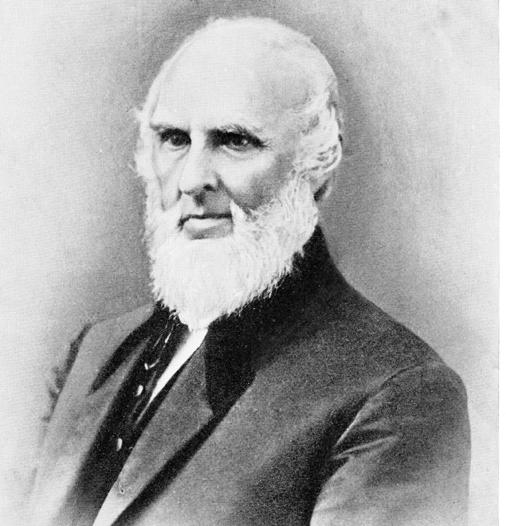
For decades, the Blaisdell School did pretty much what you’d expect, until in 1883, when Hennepin County took over its improving duties. Before turning it over to the government, John T. Blaisdell himself re-branded the institution. Adhering to late-19th-century tradition, he named the new version of the school after a popular contemporary poet, John Greenleaf Whittier. Also adhering to late-19th-century tradition, and perhaps somewhat evoking the community spirit of the Paleo-Indians, the surrounding blocks of houses absorbed the re-name of the re-named school.
And in this way, Minneapolis’s Whittier Neighborhood was born.
Despite the new name, the improvement that had defined the area endured: just north of Whittier, Minneapolis’s elite used the Mississippi River to transport the land’s grand, ground bounty, flour, from Minnesota to the rest of the world. Families made rich by this process, like the Pillsburys and the Turnblads, turned some of that fabulous improvement into oversized Whittier Neighborhood cribs.
Such Bruce Wayne-esque structures still stand today, these days housing history more often than people. These include the Charles J. Martin House, the Fair Oaks Mansion, the Snyder Mansion, the Turnblad Mansion and the Van Dusen Mansion, collectively embodying the fancy styles of the time — Brownstone, Foursquare, Italianate, Renaissance Revival and Victorian. Some of these dwellings have been repurposed as museums or as social spaces, but all remain like the giants of a bygone era who refuse to be gone.
Happily, one of the most obvious improvements that Whittier supplies is Eat Street. The 1997 brainchild of the Whittier Alliance, Eat Street is a 17-block length of Nicollet Avenue deliberately dominated by diners and dives, cafés and coffee houses, offering multi-ethnic restaurant options that would put to shame most grocery store Global Food aisles. The cornucopia climaxes at Eat Street Crossing, which features American, Asian and Latin cuisines.
And best of all, in contrast with the ice age proto-Minnesotans, modern denizens and visitors don’t have to catch and fight their own meals.
Mental and emotional improvement options are easy to find in the contemporary Whittier Neighborhood. The Minneapolis Institute of Art, Minnesota’s largest art museum, features 100,000 bits o’ perpetually-rotating inspiration that traverse 50 centuries and touch six continents. And while basic ecology teaches us there’s no such thing as a free lunch, there is such a thing as free admission, which can be constantly found at Mia, barring “special exhibitions and selective events,” according to its website.
Just next door is the Children’s Theatre Company, which has improved the lives of performance-loving rugrats since 1965. CTC is the largest kidoriented theater in the United States. This is mostly because it operates two stages, one that accommodates 300 audience members and a second that accommodates 747.
That’s a lot of accommodation.
Finally, on the same campus, there’s another opportunity for modern improvement: the Minneapolis College of Art and Design, a private college that specializes in teaching visual arts, can focus any student’s artistic prowess, no matter where their starting point is. MCAD is only one of a handful of such North American institutions that offer a degree in comic art.
Of course, MCAD is only one of several specialized schools that have sprouted up within the Whittier Neighborhood in the last few decades. The City of Lakes Waldorf School and Watershed High School share occupancy within the Hardware Mutual Insurance Company, and the Minneapolis Japanese School asserts itself not far away.
These institutions extend this land’s legacy of improvement through community: the neighborhood improves the people who currently live there by making smart people smarter and making witty people Whittier.