In Greater Palm Springs, every traveler belongs. Explore a vibrant oasis where inclusivity and individuality shine beneath endless blue skies — and mark your calendars for March 6-8, 2026, when the Cathedral City LGBT+ Days returns with a celebration of love, joy, and community.
Spring Home & Garden
Senior Financial Planner, Financial Services Representative 2013 Quorum Business Leader of the Year 100 S 5th St, Suite 2300, Minneapolis MN 55402 rmoltaji@financialguide.com Call Roya today at 952-769-2126
EDITORIAL
Managing Editor Noah Mitchell (612) 461-8723
Editorial Assistant Linda Raines (612) 436-4660
Editor Emeritus Ethan Boatner
Contributors Lakey Bridge, E.B. Boatner, Bianca Caputo, Stacy Dahl, Natasha DeLion, Alyssa Homeier, Terrance Griep, Shane Lueck, Elise Maren, Jen Peeples-Hampton, Linda Raines, Aspen Rush, Gregg Shapiro, Allie Skarda, Randy Stern, Susan Swavely, Natalie Trimble, Sommer Wagen, Carla Waldemar, Todd P. Walker, Emma Walytka, Spencer White
ADVERTISING
Vice President of Sales & Advertising
Barry Leavitt (612) 436-4690
Account Executives
Nathan Johnson (612) 436-4695
Richard Kranz (612) 436-4675
Sales & Event Administration
Linda Raines (612) 436-4660
National Sales Representatives
Rivendell Media (212) 242-6863
CREATIVE
Creative/Digital Director Mike Hnida (612) 436-4679
Administrative Assistant Michael Winikoff (612) 436-4660
Distribution Metro Periodical Partners (612) 281-3249
Founders George Holdgrafer, Stephen Rocheford Inspiration Steven W. Anderson (1954-1994), Timothy J. Lee (1968-2002), Russell Berg (1957-2005), Kathryn Rocheford (1914-2006), Jonathan Halverson (1974-2010), Adam Houghtaling (1984-2012), Walker Pearce (1946-2013), Tim Campbell (1939-2015), John Townsend (1959-2019), George Holdgrafer (1951-2024), Julie Dafydd (1951-2025)
editor@lavendermagazine.com.
For our Privacy Policy, go to LavenderMagazine.com/resources/ privacy-policy
What Do You Say When Words Fail?
In parlous times, what can an individual say? What may one say, and to whom? What words will even affect a given situation? Will a single voice ameliorate or inflame? Should one acknowledge and perhaps amplify, calling attention to oneself? Or, pass on in silence and be judged cold and/or compliant?
Individuals throughout history have had to balance these questions while taking into account their own situation at a given moment. Are you young or old? Healthy and competent, or elderly and unsteady? Married? Single? Have you offspring?
Where do you live, city or suburb? What’s the weather, the neighborhood, the emotional temperature of those involved? And what, if you have time and temperament to consider, will be the judgments of others and of your future self — a sentence you will serve for life?
Literature has dealt with these questions since its inception, and one of the words — concepts, perhaps — that inevitably surfaces, in every era and every language is “truth.” Some languages have a neat way of shading even the simplest verities. In Dutch, for example, recall may be voiced according to accountability. Take, for example, the verb “vergeten,” to forget:
“Ik ben zijn naam vergeten” is understood as “I have forgotten (I no longer know) his name,” while “Ik heb mijn boek vergeten” reveals, “I have (negligently) forgotten my book.”
For the English “have,” in the present perfect, the use of two different working verbs, “zijn” or “hebben,”reveals a certain “truthfulness” from the speaker to the listener.
I can’t answer here the above questions for our particular time and setting, but a recently published mystery novel by Italian author Alessandro Robecchi deals very artfully with the problems involved.
“Broken Truths,” published in 2024 and just translated by Gregory Conti, introduces the reader to acclaimed film director Manlio Parrini, “Maestro” to myriad fans for his world-acclaimed film, “Broken Truths,” after which he abandoned the cinema altogether. He retired to a villa sold for a song by Cavalier Bastoni, an immensely wealthy admirer, who, with his wife, resided in the adjacent villa on the property.
Parrini had declared the film industry “a place without truth,” but now, in his 70s, is planning a comeback with a film about Augusto De Angelis, a crime novel writer ruined by fascist censorship in the ‘40s and brutally murdered July 2, 1944, in what Parrini believes remains an unsolved case.
Just as he gets underway, the widow Bastoni in the adjoining villa is herself brutally murdered, strangled, just steps away.
Reality, police investigations, publicity hounds and reporters become threaded through Parrini’s life as he insists on hewing to the truth of De Angelis’
murder and to the truth of his own cinematic vision.
The announcement of the Maestro’s return draws dark wings circling with offers from Hollywood extravaganza producers to French cinématistes, which Parrini refused, focusing on his own treatment of De Angelis’ Inspector De Vinicenzi as the thoughtful intellectual of his author’s creation. De Angelis had resisted the cruder punch-‘em-out types the ‘40’s fascist regime demanded: allowing no Italian criminals, then increasing restrictions until mystery novels were banned entirely.
Parrini assembles his own band of fiercely loyal co-workers, including red-haired Sara De Viesti, co-writer on the screenplay, and a young historical researcher with whom Parrini and De Viesti travel to the hinterlands to locate a nonagenarian whose grandfather, a Major Astarita, was a Carabinieri who arrived at the site of De Angelis’s fatal beating. They discover things. They return home.
The next-door murder of the elderly becomes as complex and shrouded as that of the mystery author. Parrini, tangled in the midst, is taught through two deaths that “When you break the small truths, you also break the big ones.” A lesson to draw from fact or fiction, past or present — right here and now.
BY CARLA WALDEMAR
Meat Up
We came for the ribs.
Alas, so did everyone else. By 5:30 p.m. on a snowy Sunday, they were sold out. (It’s so embarrassing when, in public, a grown woman bursts into tears.)
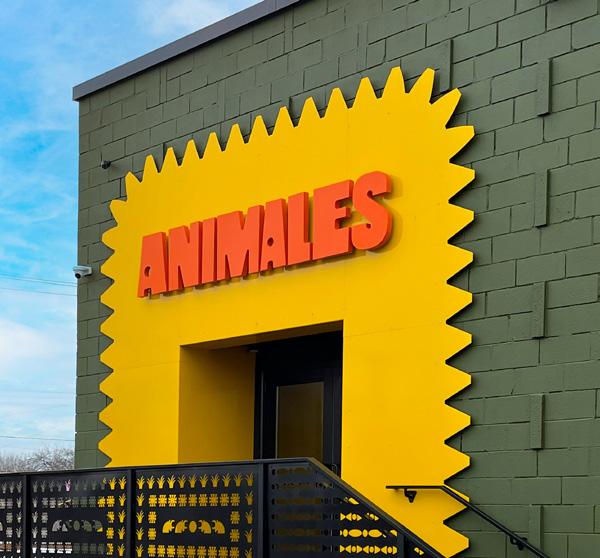
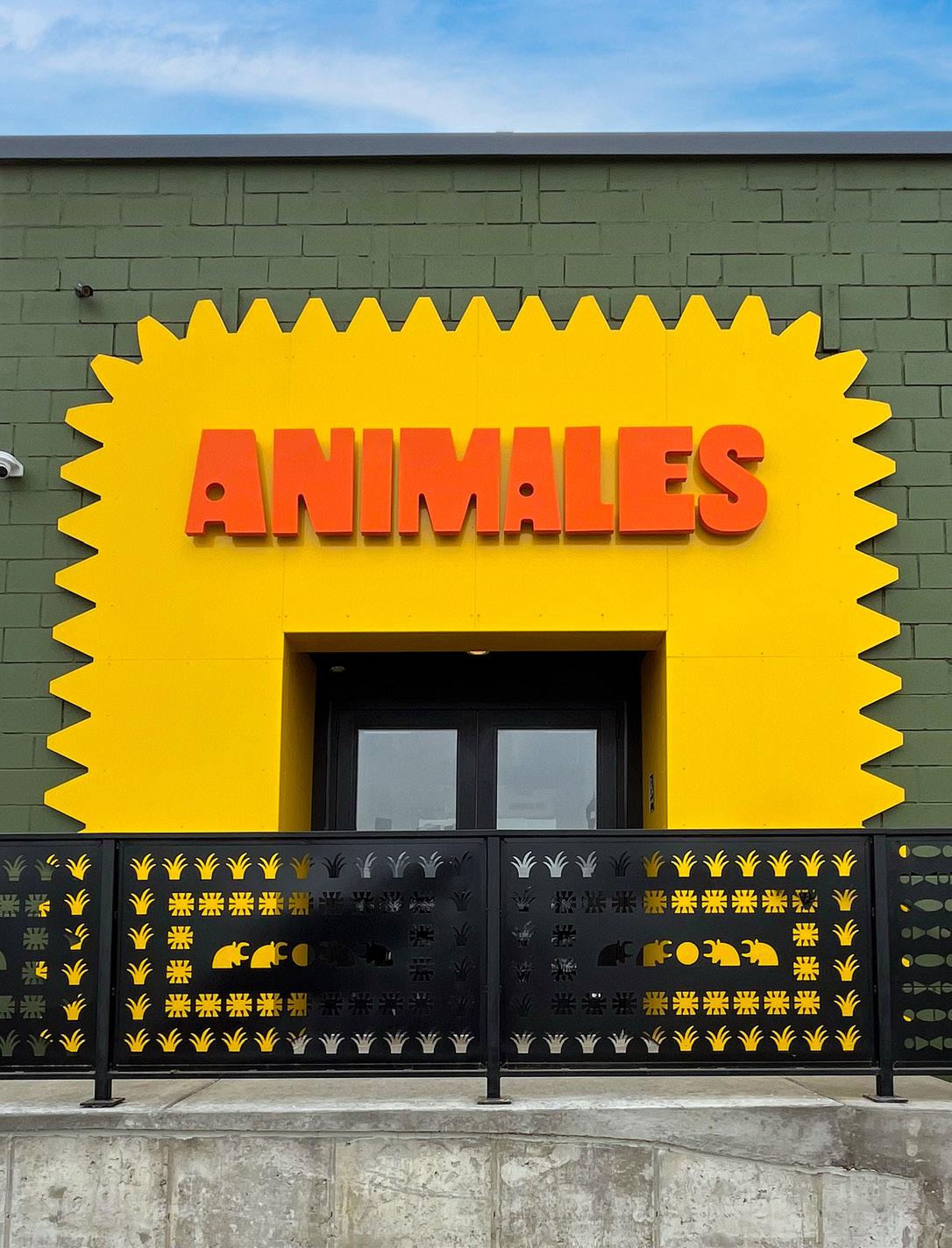
Fortunately, there was plenty-o-meat on hand in other forms, as promised in the restaurant’s name, Animales. And on that blizzard of a Sunday, it looked like a convention of carnivores had braved frostbite to snag their fair share.
The huge, cavernous space, brightened by vines of lightbulbs swaying from the ceiling, was crammed with picnic tables (expect to share the benches and bottles of vibrant sauces) at which devotees of all ages, stripes and sizes fumbled (or didn’t) with ordering from an app and awaited delivery of pork on a platter. (Yes, there are poultry and veggie offerings, but why would you?) There’s also a stage for frequent live music, but tonight the hum of sated diners served as our backdrop. Not bad for a business that started life as a food truck.
Our 35-minute wait at the bar went fast, fueled by (in my case) a Stone Pit Old Fashioned ($18), light on the booze. My pal’s glass of Albariño, a Spanish white, was one of four wines available BTG, $13. Oh, there’s also Aperol and other hipster libations, but that’s like walking in swinging your scepter. My advice: stick to beer.
And stick to pork. It’s available from 4-9 p.m. “or until sold out.” I went for the combo of one meat, one side dish, $20. (All prices include a 20% service charge to support the kitchen’s no-tip policy.) From the choices of ribs (all gone, sob), smoked sausage, chopped pork or pork belly, I went for the chopped pig — juicy and easy to eat, straight-up in mildly sweet porkiness, no tricks, no added sugar. And plenty of it on the paper plate.
To accompany it, choose mac & cheese, dilly green beans, coleslaw or borracho beans. I opted for the slaw, a generous portion of chopped cabbage touched — just barely — with vinegar. We also ordered a side of the dilly green beans, served whole and crisp and cold, and grand for munching with one’s drink.
In a moment of mild rebellion, my pal ordered the shrimp po’ boy sandwich, $19, served on a milk bun. The critters proved small-ish but sweet beneath a salt-piqued exterior, moistened by a remoulade sauce and sided with a cabbage-and-poblano slaw, mild and yummy. An order of Memphis fries (whatever that is: Was it that hint of sweetness?) provided our MDR of fat and salt on potatoes.
And a maverick order of “green spaghetti” ($12) proved fun — an improbable but tasty Tex Meets Italy creation abetted by a topknot of mild, white cotija cheese. (Leftovers made a fine breakfast this morning, too.) Speaking of maverick, the menu also offers bone marrow toast, $20, and crab hush puppies, $13. Pimento dip with Ritz crackers ($13), too, but that makes a bit more sense.
Does one need dessert in a cathedral of meat? Sure, one does — it’s the final sacrament. Especially if it’s house-made, as our server swore on the Holy Menu. Six sweets are on offer: two cookies, carrot cake, peanut butter pie and two puddings. We settled on the most barbecue-friendly, in our estimation: the classic banana pudding number ($14, serving up to four), built upon vanilla pudding topping vanilla wafer cookies, which also lent themselves to a crumble on top, amid a frost of commercial whipped cream. It’s serviceable or skippable, depending on your own dependence on sweets.
Would I return? Oh, sure — if only to chase down those elusive ribs.
Animales
241 Fremont Ave. N., Minneapolis animalesbbq.com
Barbecue 4-9 p.m.
No reservations
Playwright Nathan Yungerberg and PRIME Productions Co-Artistic Director Allison Edwards Talk ‘Abuelita’
In 1969, Nina Simone said, “An Artist’s duty, as far as I’m concerned, is to reflect the time.”
Decades later, those words feel less like a quote and more like a charge, one that resonates deeply as communities navigate questions of belonging, care and visibility.
It is within that spirit that “Abuelita,” the world-premiere play written by Nathan Yungerberg and produced by PRIME Productions, arrives in Minneapolis.
Although “Abuelita” was written six years ago and is set during a 10-day heatwave in New York City in 1993, its themes feel very present. The play opens on a stoop in Spanish Harlem, where three Nuyorican women over 50 gather to pass the time through talking, teasing, remembering and witnessing the rhythms of their block. All this changes when Davia Johnson, a white grandmother from the Midwest, arrives unexpectedly with her multi-ethnic grandson Jesús. Davia has come so that Jesús can experience the culture of the father he’s never known. “Abuelita” describes a layered portrait of how community forms under pressure.
In Minnesota right now, conversations around immigration are not hidden. They are lived openly, at kitchen tables, in school hallways, in neighborhoods where people are checking on one another with heightened care. For many immigrants and Latinx and queer people, the moment carries uncertainty. Yet amid the tension, people are gathering. Where there are hints of fear, there is tenderness. “Abuelita” does not attempt to respond to policy or headlines but rather aims to reflect something more enduring about how people survive the pressure together.
“I wrote this play years ago,” Yungerberg says, “but so many of the themes are really relevant now.”
One of those themes, he noted, has risen more clearly with time: caretaking. It lives in the bodies of the play’s elder women. The grandmothers are not softened or simplified, but rather allowed to be sensual, opinionated, funny and deeply human.
“We need the grandmothers,” Yungerberg says plainly. “The world needs that. Minneapolis and St. Paul need that right now.”
For PRIME Productions, this emphasis is foundational. Co-Artistic Director Allison Edwards described PRIME as a company founded specifically to center women over 50 as cultural anchors and leaders and roles often pushed to the margins of storytelling.
“When I read ‘Abuelita,’ I thought, oh my God! This is exactly why we started PRIME,” Edwards says. “These women are wise, different from one another, full of warmth. They’re sitting on a stoop having a good time, but they’re also offering empathy and perspective in a way that feels very real.”
Edwards shared that PRIME had been searching for stories that expanded beyond their own lived experiences.
“We’re a company of seasoned white women,” she says candidly. “We wanted to broaden our storytelling. These three Nuyorican women felt like a gift.”
Throughout the interview, it felt as though the stoop itself became the emotional anchor of the play: a place of gathering, humor and survival. For Yungerberg, who has lived in New York City for more than two decades, it is both literal and symbolic.
“In New York, space is such a commodity,” he explains. “That little plot of land becomes a place for gossip, music, food, watching the world go by. You can shut the gate and be held.”
That sense of being held feels resonant now. At a time when immigration narratives are often framed through urgency and division, “Abuelita” insists on intimacy. It asks, what happens when cultures meet not in conflict but in conversation? When does difference become curiosity rather than fear?
Fundamentally speaking, the world of “Abuelita” is a spectrum of queer presence that exists without explanation. A charismatic gay man, a bold queer woman and a young boy beginning to understand himself are woven into the fabric of the
block not as lessons, but as neighbors. Relatable narratives intertwined.
Yungerberg spoke openly about how rare it still is to see layered queer lives reflected onstage.
“Very rarely do I see myself represented in a way that feels fully human,” he says. “This play offers a variety of queer experiences across generations. That alone is validating.”
For Minnesota’s LGBTQ+ community, where chosen family is often not a metaphor but a necessity, that validation is recognition. Queerness in “Abuelita” is not framed as conflict, but rather as presence.
That tenet of recognition and understanding extends beyond the stage through PRIME’s decision to implement a Pay As You Are (PAYA) ticketing model for the production, allowing audiences to choose what they can afford.
“I would much rather have 200 people paying $15 than 75 paying full price,” Edwards says. “A full room changes everything, even for the actors and for the audience.”
In moments of social tension, access becomes more than logistics; it becomes care. The PAYA model reflects how communities already support one another collectively, quietly and without judgment.
Yungerberg describes his work as a form of healing.
“Healing is about unblocking something,” he says. “Moving what’s stuck.”
That unblocking might look different for everyone: a queer young person seeing themselves in Jesús, a grandmother recognizing her own longing for expression or an audience member identifying with the labor of caretaking.
So, to go back to Nina Simone and how she spoke of reflecting the times, she was not asking artists to shout over the noise; she was asking them to tell the truth without hardening the heart. “Abuelita” does exactly that by offering a space where people can gather, sit together in the heat and remember that even in moments of uncertainty, community remains a source of strength. At the Capri Theater, “Abuelita” becomes more than a play. It becomes a stoop of its own — a place to pause, listen, and be reminded that care, humor and connection have always been how communities endure.
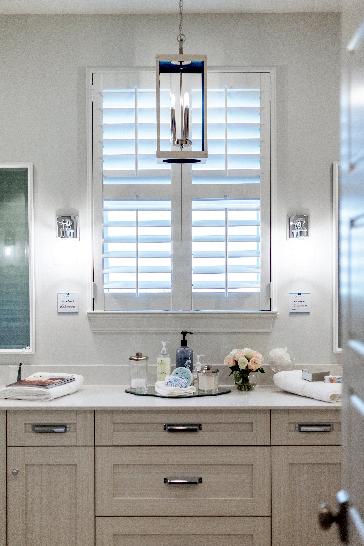
Get a fresh look for your home this Summer with Polywood® Shutters! Save 25% on all shutters for a limited time* and transform your outdated window coverings into a stylish focal point for any room. * Offer is only good until June 30, 2024, and cannot be applied to previously quoted items or combined with any other offer.
Captain Sandy Brings Yacht Life Home
When Captain Sandra “Sandy” Yawn takes the stage at the Minneapolis Home + Garden Show, she won’t be delivering a scripted keynote or a polished monologue. Instead, the “Below Deck” star is coming ready for conversation shaped as much by leadership at sea, sobriety and the very real lessons she and her wife, Leah, learned while rebuilding their lives and their home.
“I don’t know. What do they want?” Sandy says with a laugh when asked what audiences can expect from her appearance.
Her speaker slot at the show will take the form of a fireside chat, a format she prefers precisely because it’s unscripted and takes questions from the audience. That flexibility and desire to meet people where they’re at has become her signature, whether she’s navigating the open ocean or a room full of curious fans. While leadership is often the entry point for her public speaking, she knows the conversation rarely stays there.
“They usually want to know about ‘Below Deck,’” she says.
Yet, what grounds her perspective (and gives her something deeper to share in Minneapolis) is the life she and Leah have built off-camera. Sandy’s appearance is rooted in a love of design and innovation, but it’s also informed by a deeply human story: a dream home derailed by fraud, rebuilt through persistence, and ultimately shaped by trust, resilience and a whole lot of learning along the way.
From Browsing to Partnering
Leah admits their connection to home shows began almost accidentally.
“I didn’t even really know about it […] and then we went to the one here in Jacksonville, and it was amazing,” she says.
What started as a casual visit quickly turned into something more.
“We got to know the people that were in charge of it and just hit it off right away,” Leah says. “It was just a perfect fit, so we partnered.”
Photos courtesy of Liz Morgan
For Sandy, the appeal was simple, if not a little frustrating.
“I wanted to walk around it, but it was very difficult because obviously I’m on television,” she says. “I just wanted to see everything. They have some cool stuff there.”
“We wanted to shop,” Leah adds with a chuckle. “It was hard!”
Their enthusiasm for design and innovation hasn’t faded. If anything, it’s been sharpened by experience, even after the couple’s own renovation journey took a devastating turn.
A Dream Home and a Nightmare
While building their dream home, Sandy and Leah discovered they were among at least a dozen others in their Florida community defrauded by builder Spencer Calvert. The experience left them navigating legal action and emotional fallout. Calvert is now facing charges of misapplication of construction funds, organized scheme to defraud and grand theft in excess of $100,000.
“We got robbed. Straight up, robbed,” Leah says plainly. “We were paying cash, and he took the cash and didn’t use it towards our house.”
The warning signs didn’t appear all at once. Leah recalls knowing something was wrong “when the tiles were on the roof for three years.”
“It looked like the movie ‘Beauty and the Beast’ before the Beast turned into a prince,” she adds. “It looked like a rundown property with weeds and grass.”
For Sandy, concern turned into certainty after a call from family.
“My sister was like, ‘There’s nothing happening here, Sandy. You guys need to come here,’” she says.
At the time, the couple was living in Colorado. Despite the anger and stress, neither Sandy nor Leah frames the experience as defining their lives.
“At the end of the day, we made a beautiful home, and we’ve had parties and celebrated birthdays, and life’s short,” Leah says. “So hopefully we get something back.”
That ability to acknowledge pain without being consumed by it echoes a philosophy Sandy has carried with her long before reality television.
Lessons from the Job Site
For fans of “Below Deck,” Sandy’s calm-under-pressure leadership style is familiar. But she’s quick to point out that it didn’t come from television or from being on the bridge of a yacht. She credits getting sober and working the 12-step program as the foundation for how she approaches problems.
Those principles guide her daily life.
“The first reaction is really not the one you should go with; it should always be the second one or maybe the third,” she explains, sharing the example of wanting to snap back at comments on social media or in an email.
That mindset shaped how the couple navigated their renovation crisis and how they continue to share decision-making at home.
“She’s the boss,” Sandy jokes, nodding toward Leah.
“Not true!” Leah immediately counters.
Their dynamic is affectionate and complementary.
“We have completely different styles,” Leah says. “She’s very colorful, and I’m very boring. I love beige. She loves color.”
Despite those differences, Sandy says conflict was never part of the process.
“There were never any arguments or disagreements,” Sandy says, crediting Leah’s background in design. “I love our house. I just want more art on the walls. Colorful art.”
Leah ultimately took the lead on finishing the house, overseeing contractors and refusing to settle for subpar work.
“You have to oversee it and not settle for mediocre work and stand up for yourself,” she says. “They underestimate the mind of women who have lived a full life and are smarter than they think.”
For homeowners attending the Minneapolis Home + Garden Show, their advice is simple but firm: stay involved.
“Pay attention to every aspect,” Leah says. “It’s a big babysitting job.”
Bringing Yacht Life Home
Audience members watching Sandy on stage at the Minneapolis Home + Garden show shouldn’t be surprised if she explores how yacht design principles can translate to everyday living (without requiring a superyacht budget). That includes sound insulation, lighting systems and thoughtful organization.
“On a boat, when your door closes, you don’t want to hear the sound of the engines,” Sandy explains. “So the insulation’s really big.”
Leah says she learned from Sandy that everything has a place. Although she jokes that she’s struggling with organizing all of her makeup.
Sandy teases her about needing to help her and buying organizational trays before sharing where that instinct comes from.
“In training, we’re taught if there’s a fire, you better know where [the hose] is,” she recalls. “So if I don’t put the hose back where it belongs and it’s blackout and I can’t see and I go to reach for the hose, I’m not going to find it.”
They also acknowledge that some luxury upgrades can be smaller and surprisingly accessible (like heated toilets!), but ultimately, quality is a key decision driver in home design.
“What you pay for is what you get. I really believe that,” Sandy adds. “You pay cheap, you pay twice.”
A Larger Mission
While design brought Sandy to the Home + Garden Show, a bigger purpose currently drives much of her work.
Through her organization, Captain Sandy’s Charities, she’s helped develop middle and high school programs to spark interest and highlight industry careers both on land and at sea.
“I didn’t have that opportunity until I was 25,” she says. “I didn’t know about it.”
Her goal is to expand access, particularly for students who may not see themselves reflected in traditional career pipelines.
“People like me; people who have come from the school of hard knocks,” she says. “Because we find ways, because you have to think outside the box a lot.”
Beyond technical skills, the program emphasizes life skills essential for longterm success.
“You’re learning people skills, you’re learning service, but you’re also learning how to show up,” Sandy says. “It’s going to teach them how to respect each other and themselves first, how to trust and also how to follow direction. And when you learn all those skills, then you become a leader.”
At the core of that philosophy is humility.
“It didn’t make me less than the client,” she says of cleaning a guest’s shoes as a captain. “I’m just serving because that’s my job.”
Centered, Together
As the couple balances new ventures (including a new charter business and Leah’s upcoming skincare line), they keep returning to the same foundation.
“Just staying solid with each other and putting each other first,” Leah says. “And starting the day off mentally healthy.”
That grounding shows up in small moments: reciting the 12-step prayer, calls with overseas partners or shared dinners at home. It’s a reminder that even amid ambition, visibility and pressure, what matters most remains simple.
When Sandy takes the stage in Minneapolis, audiences may arrive curious about yachts or television fame. What they’ll likely leave with is something more lasting: a reminder that the most meaningful builds are the ones that happen slowly, intentionally and together.
The Minneapolis Home + Garden Show returns from February 25 to March 1. For more information or to buy tickets, visit homeandgardenshow.com.
BY EMMA WALYTKA
When Growth Means Survival: Inside Avenues for Youth’s Shelter Expansion
What does it mean to outgrow? Often, we view growth as a reason to buy new, something to be celebrated. A new blouse because the last time you wore your current one was in middle school, and you are now entering college, a fresh set of sneakers because Twinkle Toes (you hate to face it just as much as you hate to say it) just aren’t as cool anymore.
Yet, for the nearly 4.2 million youth and young adults experiencing homelessness in the United States, growth is not a quiet celebration or a rite of passage, but rather a forced reckoning that requires leaving behind not just clothes or trends, but homes, stability and basic levels of safety before they are ready to do so.
When I learned about the expansion of the over 90-year-old shelter for homeless youth, Avenues For Youth, it initially brought me the familiar excitement we often associate with renovations and structural improvements. But that feeling was quickly replaced by a sobering reality: this expansion exists not because of growth alone, but because of a community in dire need.
On a national level, up to 40% of youth who experience homelessness yearly identify as LGBTQ+ and are 120% more likely to experience homelessness than their heterosexual/cisgender peers due to being kicked out, mistreatment because of their identity and family instability. And, according to the National Alliance to End Homelessness, the number of youth experiencing homelessness increased by 33% between 2023 and 2024, the highest increase of any age group.
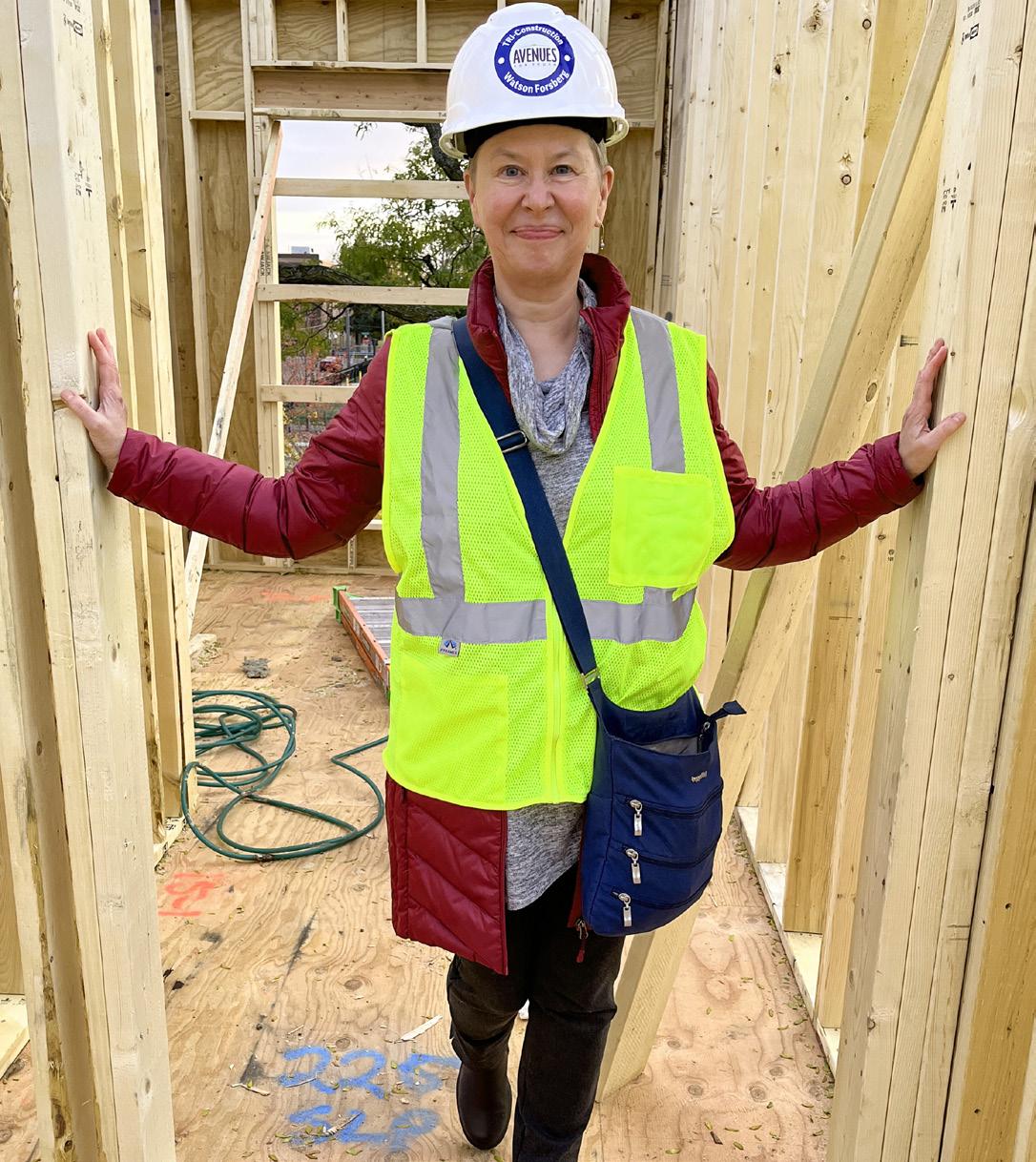
The expansion project began in 2018, says Katherine Meerse, executive director of Avenues for Youth. Although COVID-19 slowed down the expansion process, a new facility is projected to be completed by summer 2026.
“I want for young people to be healthy, for them to get a good education, for them to be able to dream, and then go after their dreams,” Meerse says. “It’s not impossible to do that if you don’t have housing, but boy, it’s a whole lot harder.”
Upon entering Minneapolis Avenues, the organization’s first facility, it is clear that all are welcome. Graffiti-inspired art decorates the wall and LGBTQ+ flags line the opening archway. Yet, the space is dated, with no elevators, cramped
stairways, and 17 youth sharing two bathrooms on the second floor, tripling up in bedrooms.
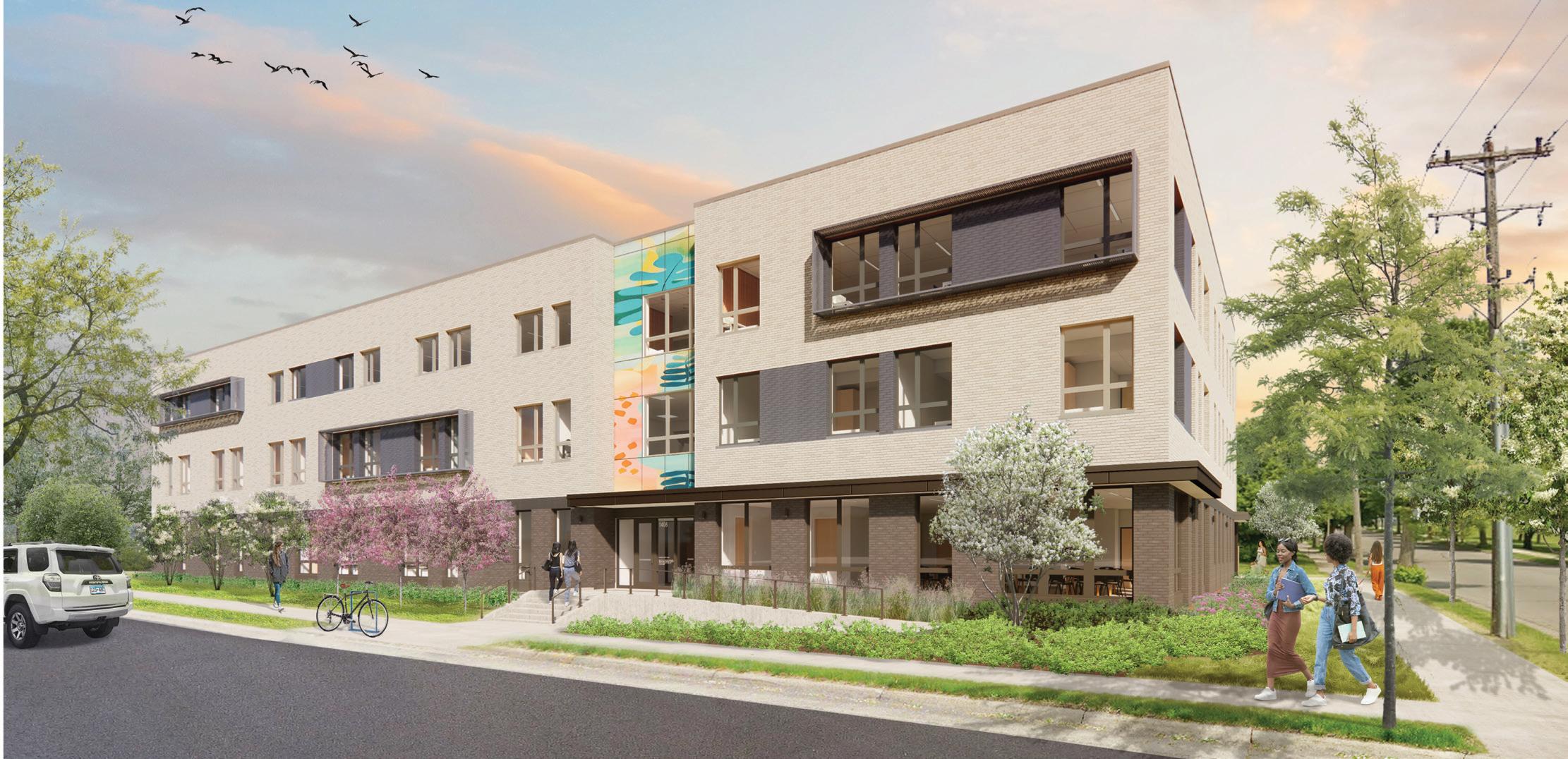
On any given night, homeless youth are turned away due to a lack of space, something Meerse says was a key reason for the expansion. The new shelter at 1401 N. 8th Ave. is estimated to cost $24 million, with $863,110 still needed in donations to meet their campaign goal.
Photos courtesy of Katherine Meerse
Meerse says the expansion, inspired by Avenues’ Brooklyn Park location, aims to further their support for LGBTQ+ youth experiencing homelessness by moving toward trauma-informed design.
According to Meerse, each location holds a 30-day shelter program, yet only 15% of youth can resolve their situation in that time period. Many youth who are unable to be reunified with their families or are ineligible for benefits that could assist with rent move to Avenue’s 18-month transitional living program.
Between 30-40% of the 300-plus youth Avenues supports each year identify as LGBTQ+, Meerse says. The Brooklyn Park location has two elements that Minneapolis lacks: single bedrooms and gender neutral bathrooms.
“We see that youth tend to stay longer in Brooklyn Park, and that they are more likely to move into stable housing after they leave us,” Meerse says.
After data collection, done on behalf of Meerse and Avenues, they found that though the two buildings’ demographics, programming, and staff were virtually the same, which Meerse says pointed to the vitality of the built environment and the difference that inclusivity and personability make.
Not only will the new building provide space to serve nearly 200 more youth annually, but it will also include a community room, a spacious entry lobby that holds administration in the same building as the youth they serve, and more emergency shelter beds and individual rooms.
Meerse says Avenues will also include affordable apartment spaces for those who are 18 and older, allowing them to build rental history, with youth being able to furnish their own spaces and pay for rent at an affordable price, increasing their chance of approval down the line.
As for the design process itself, architecture and engineering firm LHB conducted a series of design meetings with staff and youth, bringing in pictures of specific spaces and asking what they did, or didn’t like.
“They would do it first with the youth and then with the staff,” Meerse says. “And when the staff and youth disagreed, unless it was a safety issue, we told them to do what the youth said.”
As for the soon-to-be old Minneapolis shelter, it is owned by the Minneapolis Public Housing Authority, which rents it out to Avenues for $1 a year. Meerse says that no decision has been made on what will become of the building in the future.
Two things can be true at the same time. Our homeless and LGBTQ+ youth can be struggling and in need of security, safety, support and community, while we celebrate the expansion of a new chapter for them that comes in the form of a space. A space that affirms, grows with them, and celebrates who they are and who they want to become.
To donate to help support Avenues For Youth now and into the future as they expand at their new space, go to avenuesforyouth.org/ways-to-give/
Community Connection brings visibility to local LGBTQ-friendly non-profit organizations. To reserve your listing in Community Connection, email advertising@lavendermagazine.com.
ANIMAL RESCUE
Second Chance Animal Rescue
Dedicated to rescuing, fostering, caring for, and adopting out dogs and cats into forever homes.
P.O. Box 10533
White Bear Lake, MN 55110 (651) 771-5662 www.secondchancerescue.org
BUSINESS ASSOCIATIONS
Quorum Minnesota's LGBTQ+ and Allied Chamber of Commerce working to build, connect, and strengthen for a diverse business community.
2446 University Ave. W., Ste 112 St. Paul, MN 55114 (612) 460-8153 www.twincitiesquorum.com
ENVIRONMENT
The Nature Conservancy
TNC is an environmental nonprofit working to create a world where people and nature thrive. 1101 W. River Pkwy., Ste. 200 Minneapolis, MN 55415-1291 (612) 331-0700 minnesota@tnc.org www.nature.org/minnesota
EVENT VENUES
Landmark Center
A classic venue, with a grand cortile and beautiful courtrooms, accommodates celebrations of all sizes.
75 W. 5th St. St. Paul, MN 55102 (651) 292-3228 www.landmarkcenter.org
FOUNDATIONS
University of Minnesota Foundation
Connecting passion with possibility to transform the future through philanthropy. 200 Oak St. SE, Ste. 500 Minneapolis, MN 55455 (612) 624-3333 giving@umn.edu www.give.umn.edu
GRANTMAKERS/FUNDERS
PFund Foundation
PFund is the LGBTQ+ community foundation that provides grants to students and grants to non-profits. PO Box 3640 Minneapolis, MN 55403 (612) 870-1806 www.pfundfoundation.org
HEALTH & WELLNESS
Aliveness Project
Community Center for individuals living with HIV/AIDS – on-site meals, food shelf, and supportive service. 3808 Nicollet Ave. S. Minneapolis, MN 55102 (612) 824-LIFE (5433) www.aliveness.org
COMMUNITY CONNECTION
MEDIA & COMMUNICATIONS
Radio K
Radio K is the award-winning studentrun radio station of the University of Minnesota.
330 21st. Ave. S. Minneapolis, MN 55455 (612) 625-3500 www.radiok.org
MEDICAL SERVICES
Red Door Clinic
HIV and STI screening, treatment, education, and referrals. Doxy PEP, nPEP, PrEP, and Reproductive Health. 525 Portland Ave., 4th Fl. Minneapolis, MN 55415 (612) 543-5555 reddoor@hennepin.us www.reddoorclinic.org
MUSEUM
Bell Museum, University of Minnesota
Discover Minnesota’s rich natural history through engaging exhibits, wildlife dioramas, and an exciting planetarium experience!
2088 Larpenteur Ave. W. St. Paul, MN 55113 (612) 626-9660 bellinfo@umn.edu www.bellmuseum.umn.edu
Minnesota Historical Society
Create your own adventure at MNHS historic sites and museums around Minnesota. www.mnhs.org
Minneapolis Institute of Art
Home to masterpieces from around the world and through the ages. Always free. Everyone welcome.
2400 3rd Ave. S. Minneapolis, MN 55404 (612) 870-3000 www.artsmia.org
Science Museum of Minnesota
Mississippi Riverfront Museum featuring dinosaurs, hands-on exhibits, Omnitheater films, and interactive science performances. Café onsite. 120 W. Kellogg Blvd. St. Paul, MN 55102 (651) 221-9444 www.smm.org
PERFORMING ARTS
ARENA DANCES
ARENA DANCES presents innovative contemporary dance, fostering community, dialogue, and inclusion through performance and education
711 W. Lake St., Studio 308 Minneapolis, MN 55408 (612) 804-0238 www.arenadances.org
Chanhassen Dinner Theatres
The nation's largest professional dinner theater and Minnesota's own entertainment destination.
501 W. 78th St. Chanhassen, MN 55317 (952) 934-1525 www.chanhassendt.com
Children’s Theatre Company
Children’s Theatre Company excites the imagination with world-class family-friendly theatre for kids, teens, and adults.
2400 3rd Ave. S. Minneapolis, MN 55404 (612) 874-0400 www.childrenstheatre.org
Guthrie Theater
Open to the public year-round, the Guthrie produces classic and contemporary plays on three stages. 818 S. 2nd St. Minneapolis, MN 55415 (612) 377-2224 www.guthrietheater.org
Minnesota Opera
World-class opera draws you into a synthesis of beauty; breathtaking music, stunning costumes & extraordinary sets. Performances at the Ordway Music Theater - 345 Washington St. St. Paul, MN 55102 (612) 333-6669 www.mnopera.org
Minnesota Orchestra
Led by Music Director Thomas Søndergård, the Minnesota Orchestra, one of America’s leading symphony orchestras. 1111 Nicollet Mall Minneapolis, MN 55403 (612) 371-5656, (800) 292-4141 www.minnesotaorchestra.org
Ordway Center for the Performing Arts
Leading performing arts center with two stages presenting Broadway musicals, concerts & educational programs that enrich diverse audiences. 345 Washington St. St. Paul, MN 55102 (651) 224-4222 info@ordway.org www.ordway.org
Twin Cities Gay Men’s Chorus
An award-winning chorus building community through music and offers entertainment worth coming out for! 1430 W. 28th St., Ste. B Minneapolis, MN 55408 (612) 339-SONG (7664) chorus@tcgmc.org www.tcgmc.org
RELIGIOUS & SPIRITUAL
All God's Children Metropolitan Community Church
A welcoming, inclusive, safe place to explore and discover God's love for ALL God's children. 3100 Park Ave. Minneapolis, MN 55407 (612) 824-2673 www.agcmcc.org
A Christian community of creative, quirky, curious folx where All Means ALL. Sundays, 10:30am.
100 W. 46th St. Minneapolis, MN 55419 bigdoor@spiritgarage.org www.spiritgarage.org
Westminster Presbyterian Church
An open and affirming congregation, welcoming persons of all sexual orientations, gender expressions and identities. 1200 Marquette Ave. Minneapolis, MN 55403 (612) 332-3421 www.westminstermpls.org
SENIOR LIVING
Lyngblomsten
Offering caregiver education, resources, support groups, and The Gathering (daytime respite, memory-loss enrichment program).
Minnesota’s Sweet Spot! St. Louis Park & Golden Valley offer exceptional dining, attractions, shopping, hotels and event space.
1660 Hwy 100 S., Ste. 501 St. Louis Park, MN 55416 (952) 426-4047 www.westopolis.org
BOOKSTORES
GUN SHOPS
BY STACY DAHL
At California Street Farm, Queer Ownership and Urban Agriculture Intersect
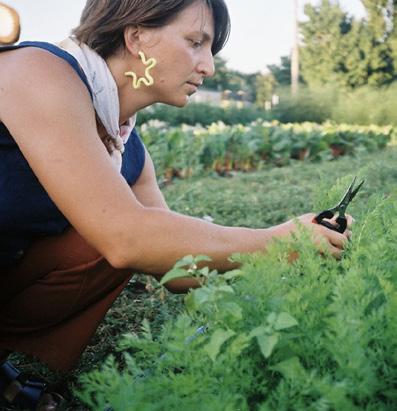
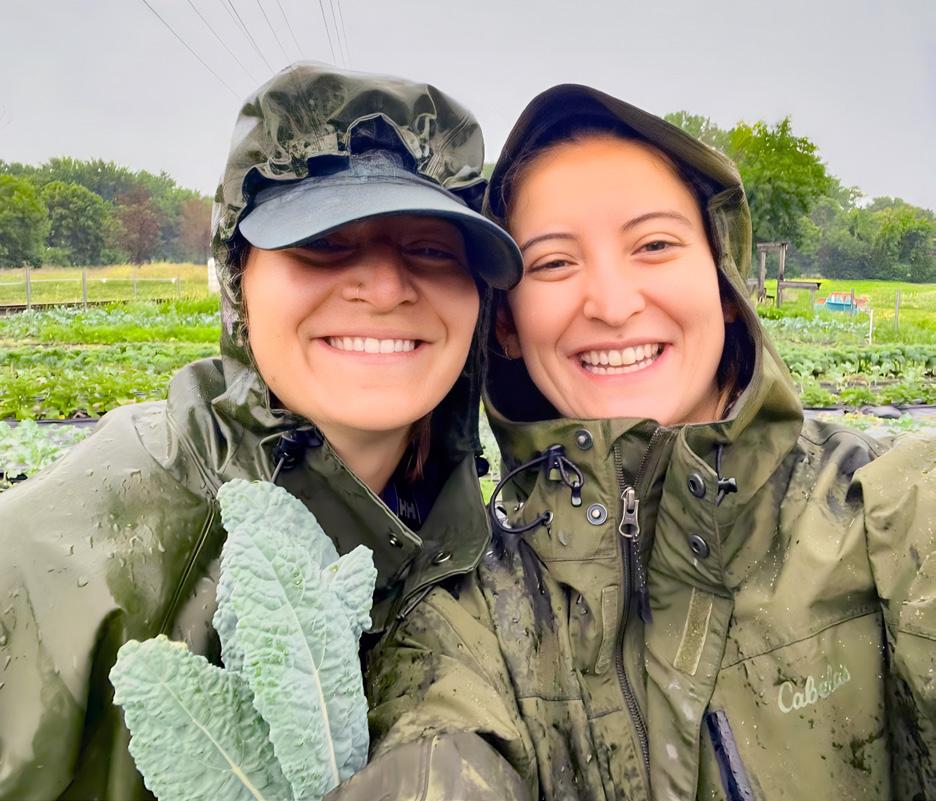
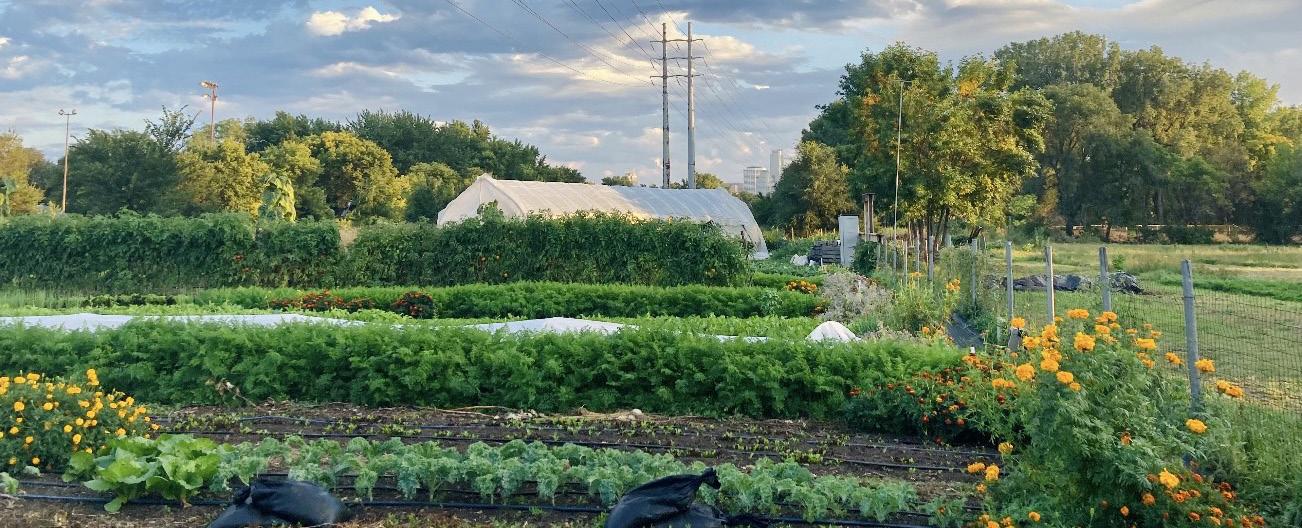
Located on a residential block in northeast Minneapolis, California Street Farm has grown into more than an urban farming operation. Owned and operated by queer sisters, the small neighborhood farm is both a source of fresh produce and a visible expression of LGBTQ+ presence in the local urban vegetable and flower farming community.
California Street Farm sits on land leased from the owners of the California Building and was originally founded in 2012 by Jim Bovino and Jillia Pessenda. Over the years, several growers worked the land before the farm was reinvigorated in 2019 by Ashley Thorfinnson and Chris Barth.
In 2022, Elyssa Eull took a business class through the Land Stewardship Project, where she met Thorfinnson and Barth. During the course, the pair mentioned they were looking for someone to take over management of the farm. After an interview process, Eull was selected and has managed California Street Farm since.
Before taking on the role, Eull worked on various vegetable and livestock farms in Minnesota and Massachusetts for several years. Her goal with California Street Farm is to create a space rooted in belonging and learning while growing nutritious, accessible food and respecting the soil.
Eull describes the farm as “a third of an acre smushed up against a railroad track that one could almost miss.” A closer look reveals densely packed vegetable beds alongside pollinator species such as honeybees, butterflies and wasps.
The farm grows a wide variety of vegetables, fruits, herbs and flowers. Produce is sold at the Northeast Minneapolis Farmers Market, through a community-supported agriculture (CSA) program at a Monday night farm stand, and to restaurants in northeast Minneapolis.
“It’s really important for me to find other female farmers and other queer farmers that I can connect with who get me,” Eull says. “Being in an urban setting makes that a lot easier. I feel like there are a lot of like-minded folks around me.”
Farming remains a male-dominated field, and the average age of a U.S. farmer is 61. Eull says her work differs significantly from traditional agriculture.
“The type of farming I do is so different from what people consider traditional farming in our country,” she says. “It’s not large-scale crop farming. It’s community-based, small-scale vegetable production.”
Through local agriculture organizations such as the Land Stewardship Project and social media platforms like Instagram, Eull has connected with other nontraditional farmers.
“Minnesota is a great state to be a queer farmer,” she says. “There are a lot of people doing similar work, and you’re able to find support and connection.”
Eull recalls an incident from a year or two ago when a Pride flag displayed outside the farm was burned.
“When I showed up, someone had already taken the remains of the flag down, folded it neatly and left a note,” she says. “They wrote that they had ordered a new, fire-resistant flag and explained that they were also a queer urban farmer.”
“I feel like we are very held by our community, and folks love having us here,” Eull continues. “It would be entirely different — and much harder — to find that kind of support in a rural setting. We really feel that love in Minneapolis.”
Sustainability is a core principle at California Street Farm. Eull says the farm uses low- and no-till practices to minimize soil disruption.
“We’re not coming in with heavy machinery,” she says. “Everything is done at a hand scale, which allows us to better care for the soil. That holistic approach is more sustainable in the long term.”
Affordability and accessibility are also central to the farm’s mission. While
prices at farmers’ markets reflect the true cost of production, the farm accepts EBT and offers a sliding-scale CSA.
“People can opt in at different levels,” Eull says. “We trust that folks will selfselect in a way that evens out and allows the farm to remain viable while keeping food accessible.”
Eull’s sister, Cory Eull, serves as the farm’s harvest assistant and marketing coordinator. She manages social media and the newsletter while also assisting with harvesting and transplanting. Event coordination is another major part of her role.
“It feels very foundational to be present and away from the computer, working with the earth, the community and the plants,” Cory Eull says. “My mental health is at its best during the farming season, even though the work can be physically demanding.”
She says the farm has naturally become a gathering place for the neighborhood.
“It feels like the farm has become a hub in the community without us intentionally trying,” she says. “People are drawn to the green space and the work we’re doing.”
The farm’s next public event is a farm-to-table dinner scheduled for late May, marking the first on-site gathering of the season. California Street Farm will also return to the Northeast Minneapolis Farmers Market in mid-May. CSA shares for the upcoming season are currently available.