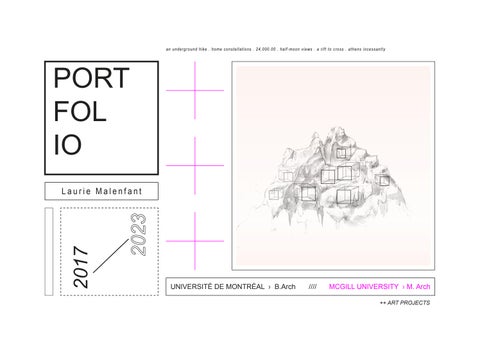
an underground hike . home constellations . 24,000.00 . half-moon views . a rift to cross . athens incessantly
PORT FOL IO
Laurie Malenfant
UNIVERSITÉ DE MONTRÉAL › B.Arch //// MCGILL UNIVERSITY › M. Arch
Montréal, Canada laurie.s.malenfant@gmail.com
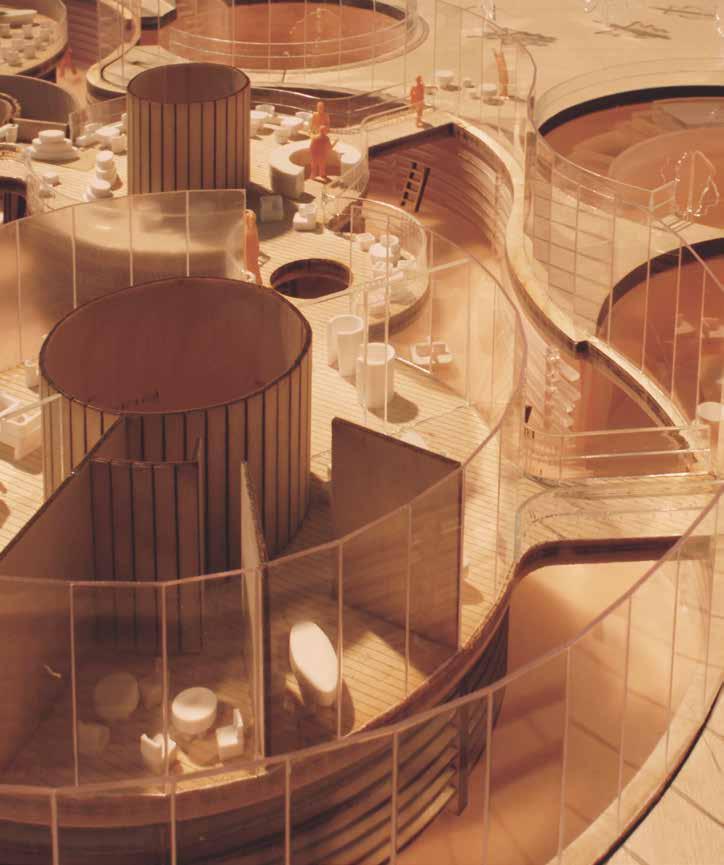
NEW LIBRARY FOR ‘LE PLATEAU’ GATINEAU, CANADA
ACADEMIC
Université de Montréal
> ARC 2012 Atelier d’architecture IV
Professor /// Manon Asselin
+ Corinne Leclerc
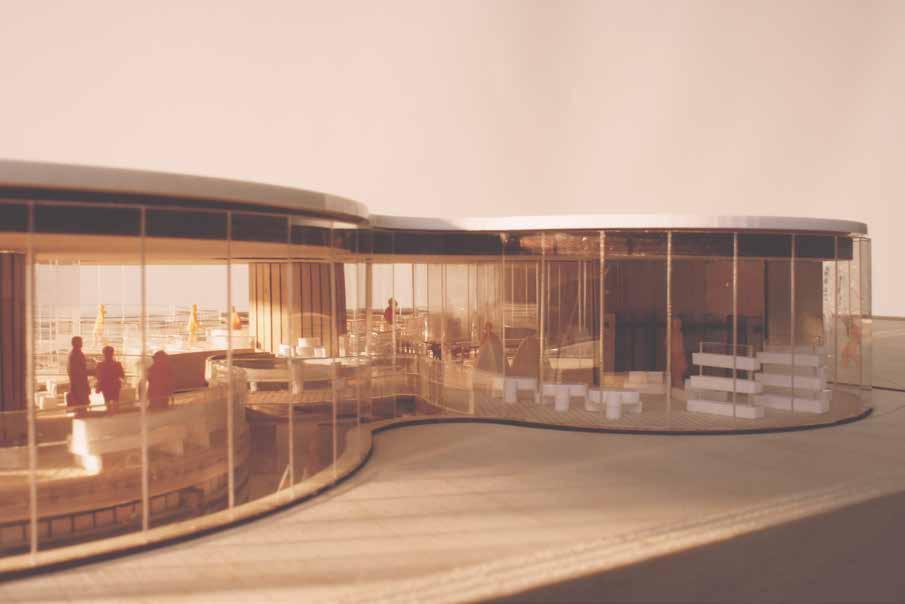
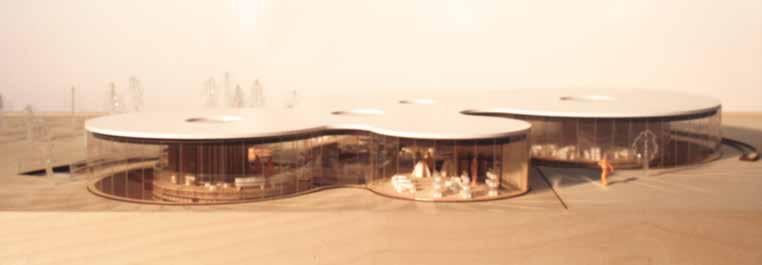
The New Librabry for ‘Le Plateau’ provides a reflection on the role of the public library in the 21st century through the architectural shape and its response to the user’s experience and to the interaction between tradition and technology.
With the advent of new media, the conversation quickly turned to the obsolescence of the book as a medium for knowledge. The criticisms are easy to draw: heavy, space consumming, waste of material. Yet, decades in the computer era and the book is still a favored object. It is desired artefact to own, to offer, or to borrow, from the pleasure of its graphic design to its weigth in one’s hands, to the visual comfort of the printed characters, to the passion of the literate collector. This proposition for a library does not, then, question the place of the book. Rather, it seeks its meaningful cohabitation with new media. For the latter suggests different tools for learning and communicating, it becomes clear that public libraries don’t bear the unique task of providing a quiet space to read anymore. Social interactions are key to defining an architecture which should also focus on accessibility, inclusivity, and exchange.
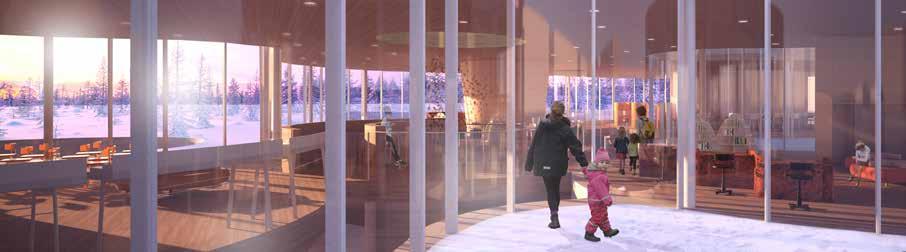
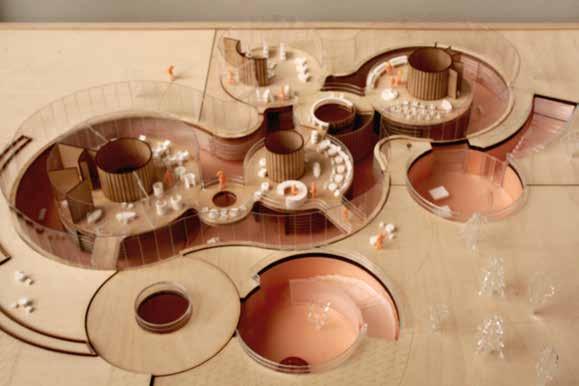
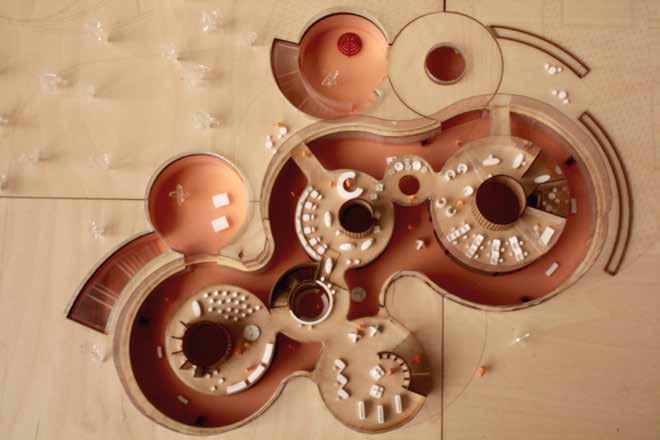
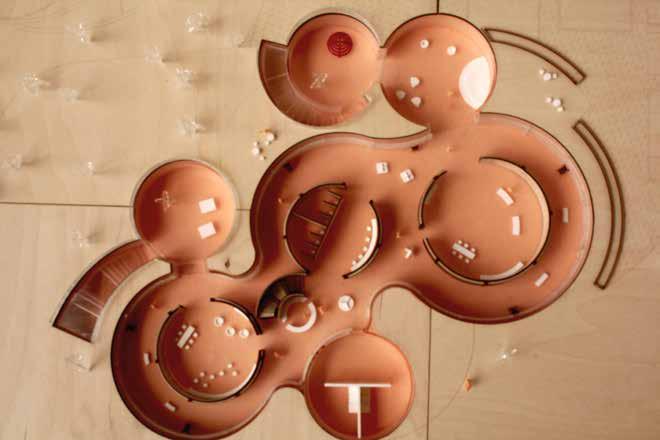
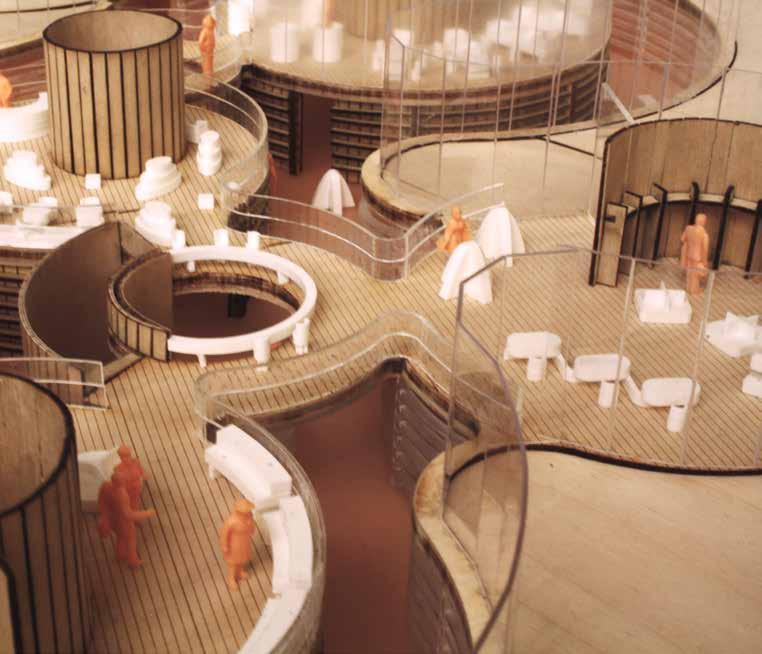
The program is split in two parts: the multimedia set on the ground floor sits on the undeground floor where the book collection lives. This situation achives two tasks. First, the architecture becomes a mean of mediation. With the site located in a park, the fully glazed multmedia platform, which hosts workshop spaces, creative spaces, café, news and media access, and a boutique, works as a direct connection between interior and exterior. The users can interact while enjoying the proximity of nature and the passerby is invited to peek in or come in for a while. Meanwhile, the bookshelves and study spaces are placed downstairs, in the deep and sheltered underground level providing the readers with a naturally lit, sanctuary-like area. Second, the architecture activates a symbolic and playful experience. While the multimedia platform is centered on the ground floor, the bookshelves follow the perimeter of the building. One one hand, the users above can have a look down at the users searching for a book. On the other, the bookshelves are the bearing structure of the platform; tradition becomes the base upon which technolgy stands.



1. Roof 2. Curtain wall and skylights
Multimedia platform
Bookshelves and foundation
View from the front








South Elevation
Morphological Diagram
Underground plan / Bookshelves path and reading areas
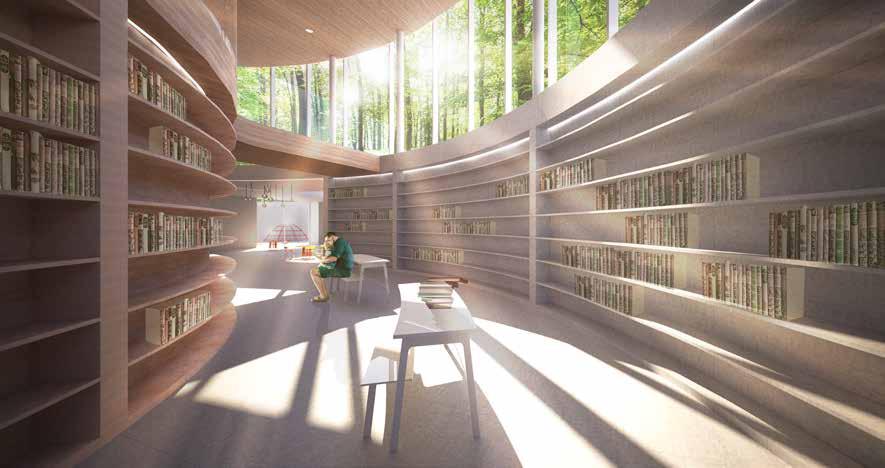
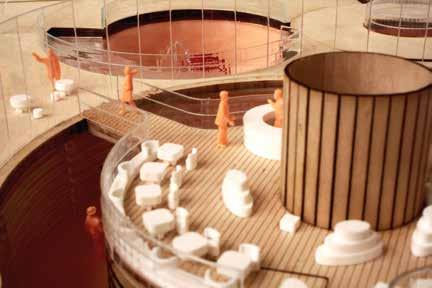
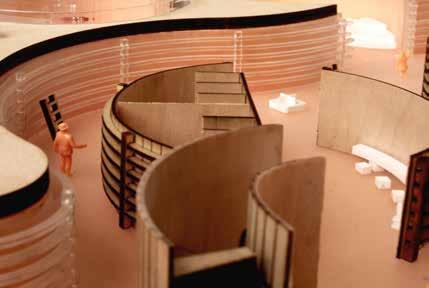
View from the underground showing the bookshelves path
Envelope detail : Roof, curtain wall and foundation
DESIGNING AN ECO-HAMLET IN MÉTIS-SUR-MER
MÉTIS-SUR-MER, CANADA
ACADEMIC
McGill University
> ARCH 683 Directed Research Project
Professor /// Michael Jemtrud
-- Individual work
Located in Métis-sur-Mer, Québec, the eco-hamlet project looks at the different ways design can shape strategies to help small-scale communities achieving greater levels of agency and self-sufficiency. Similar to many municipalities around the province, Métis is dealing with a context of change associated with climate disturbances, the aging of the population, the dependency on tourism patterns, and the migration of populations. In recent years, this complex situation has emphasized the inevitable reliance of remote communities on centralized institutions such as governments. As such, the eco-hamlet represents a good opportunity to shift the focus on the local scale and rethink dynamics to provide flexibility in the face of change.
Taking the shape of residential agglomerations placed on two neighboring sites, the eco-hamlet project proposes a multilevel program meant to respond to its residents’ needs and to increase amenities for the general population of Métis. First, working according to a cooperative model of organization at different scales, housing clusters are implemented on both sites and form micro-communities within the hamlet. A mix of housing typologies is introduced — affordable housing, intergenerational housing, single-family housing, and rental units. Second, the sites provide space for additional functions that serve both residents and the community: zones of permaculture/agriculture, an educational center with a workshop space, a restaurant and marketplace, an animal shelter, and parks. Third, the hamlet participates in the seasonal patterns of tourism by providing rental opportunities such as a small campsite and cabins and by connecting the sites to the village through a network of pedestrian and bike paths.

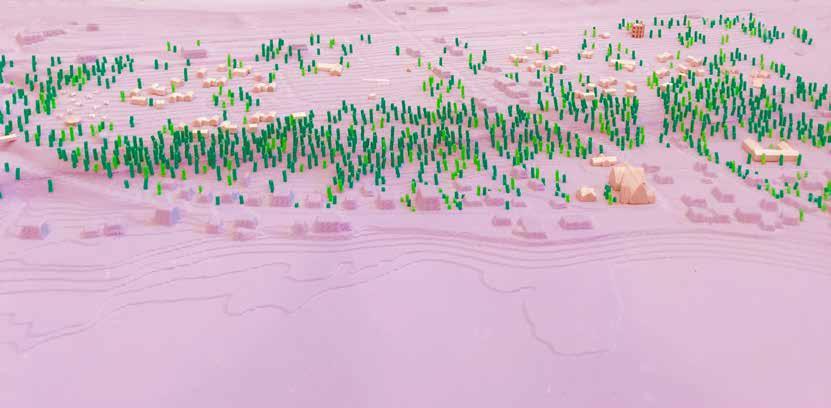
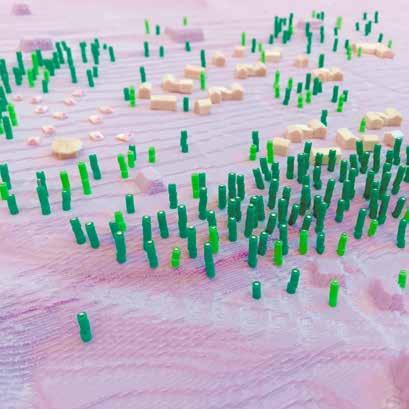
Model: (front) Métis village, (back) eco-hamlet
Model: view on campground and housing clusters
Shared car
Affordable housing (5 units) Single family houses
Intergenerational housing
workshop/storage waste shed
Housing cluster: typical ground floor plan
Housing cluster: program
KITCHEN EXTENSION TO GREENHOUSE
CONNECTIVITY: BIKE AND PEDESTRIAN NETWORK ON EASTERN SITE
RESTAURANT AND MARKETPLACE
Pedestrian bridge
AQUAPONIC GREENHOUSE
‘DÉFINIR LE CONTENU LATENT DES ALENTOURS’
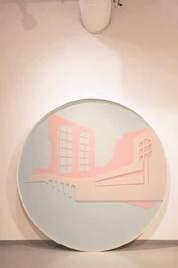
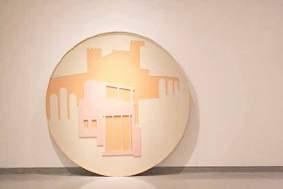
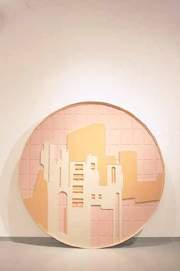
4 BAS-RELIEFS
Centre Bang
> Saguenay, Canada
-- Individual work
MATERIALS
Latex paint on 1/4” masonite supports and 1/2” plywood boards, 1/4” flexible plywood frames, nails, wood glue.
DIMENSIONS
215 cm in diameter.
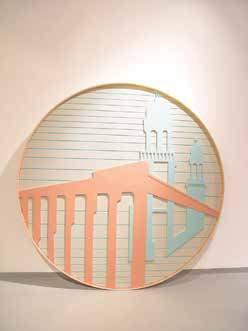

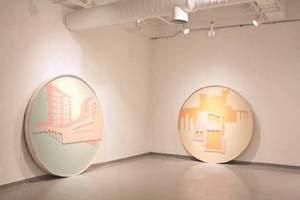
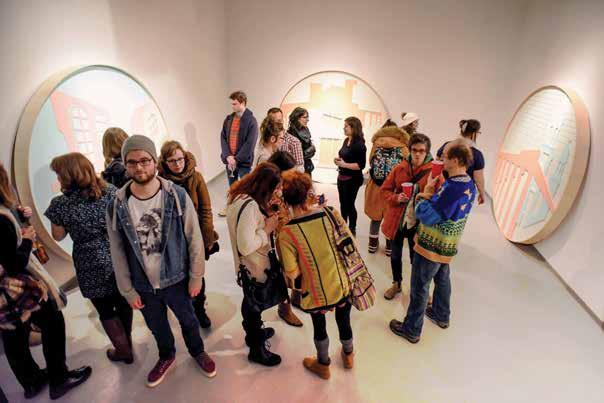
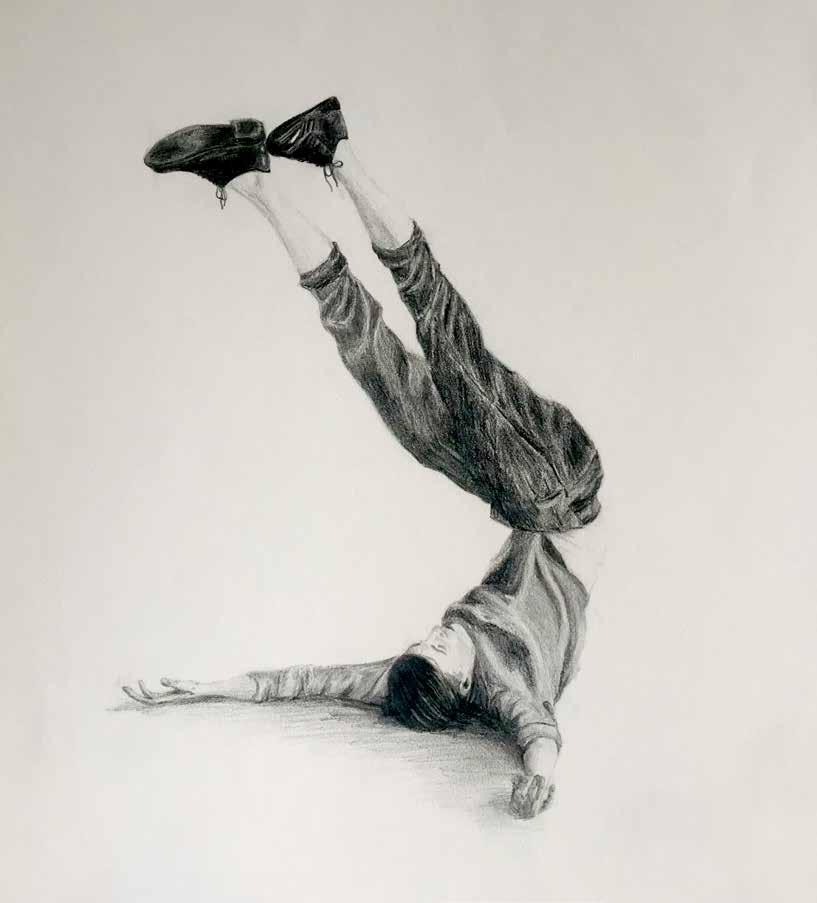
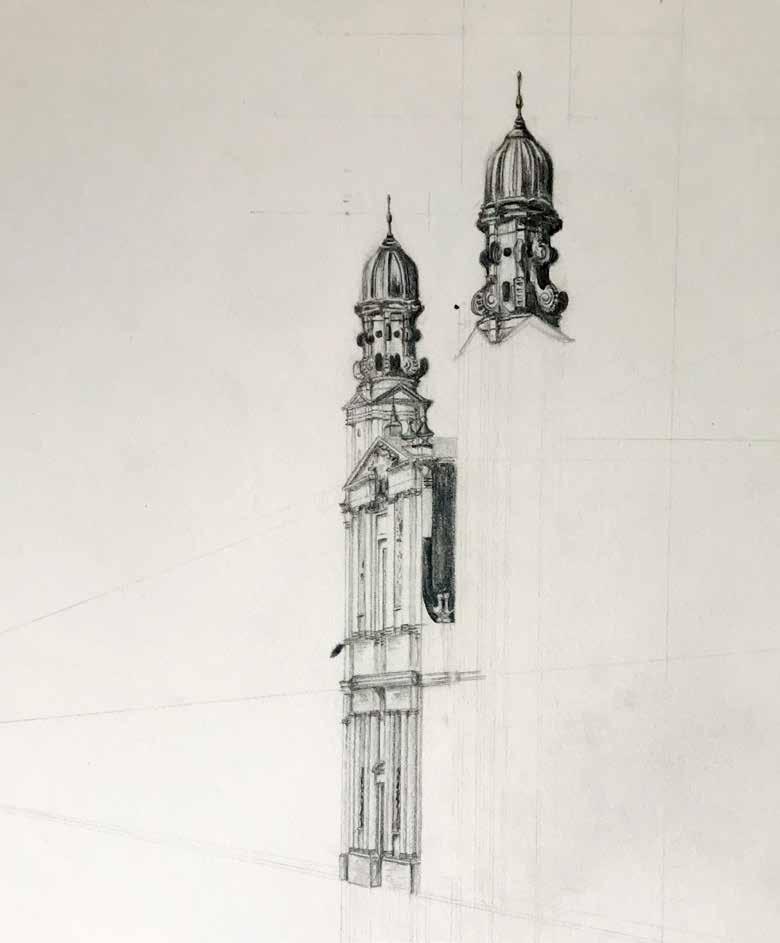
Définir le contenu latent des alentours is an idea born out of hundreds of contemplative walks in the city of Chicoutimi and the subsequent intention to explore the vast and elusive territory of memory. How does the immediate surroundings influence one’s visual imagination? What traces does it imprint on one’s mind? And then, what memory is kept or lost and how does the fragments come together? In an attempt to answer these questions, a series of urban perambulations was set up, each of them followed by a session of sketching focusing on architectural shapes. Elements of the drawings were later selected to generate four bas-reliefs. Assembled, the fragments (sometimes recognizable, sometimes not) appear as whole and new architectural entities. They become an autonomous representation of an original world, giving significance to an underlying content.
CARING FOR WASTE UNITED-STATES
ACADEMIC
McGill University
> ARCH 673 Architectural Design Studio II
Professors /// Rosetta S. Elkin, Nik Luka
+ Lucas Cormier-Affleck, Jimmy Ear
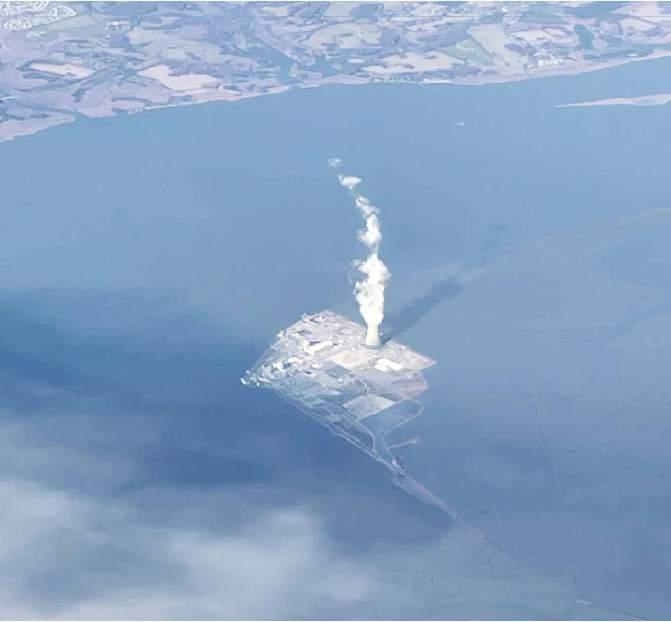
Nuclear power plants are always situated in close proximity to rivers, estuaries, lakes and oceans as they require vast amounts of water to keep both their reactors and spent fuel pools cooled. The increase of extreme weather events, sea level rise and land shifts tied to climate change have highlighted the precarity of this condition. Notably, the Fukushima Daiichi disaster of 2011 is telling of the risks of water acting as a vector of radiation.
In order to move water for cooling, nuclear power plants require an uninterrupted power supply, even when not producing electricity themselves. Water generally does not mix well with electricity, hurricanes with power lines, floods with generators, droughts with dependency. As a plant blackout could lead to radiation leaks, overengineering, ‘hardening’, has become the norm.
The inability of nuclear waste management organizations to establish off-site repositories for the storage of spent fuel, in addition to a generalized reluctance to host high-level nuclear waste, keeps it by the reactors that produce them. Spent fuel remains on the sites of nuclear reactors, in perpetually renewed temporary arrangements, amplifying the risks tied to the proximity of plants to bodies of water and increasing exposure to extreme weather events.
Colonial governments and the organizations they have designated to manage nuclear waste have adopted the idea of geological repositories as both a permanent and centralized solution to the ‘disposal’ of nuclear waste. Within a colonial/neoliberal context, the path of least resistance for nuclear waste relocation is always to target disenfranchised communities and indigenous land. Retreat inevitably involves sacrifice.
Nuclear energy’s role in reducing carbon emissions remains a contended issue. Several countries have hedged their bets on nuclear energy to achieve their emission reduction objectives. How can the condition of both existing and growing quantities of spent fuel accumulating by increasingly volatile bodies of water be reconciled with the systematic targeting of indigenous lands for waste relocation? Does design’s only potential lie in mitigation, or further “hardening” of vulnerable sites? Is sustaining visibility, ensuring transparency, and maintaining awareness sufficient?
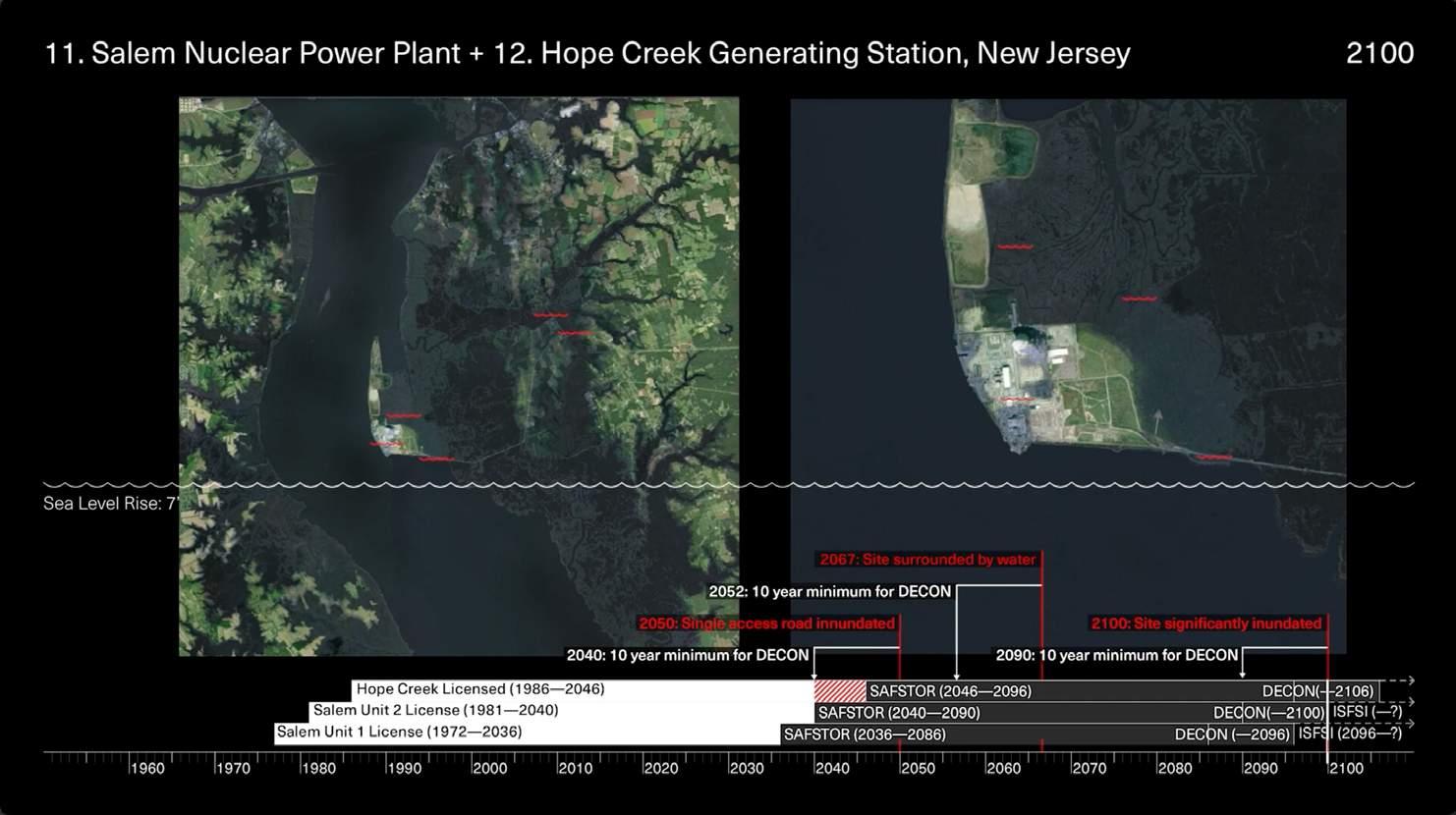
LINK TO VIDEO: https://www.youtube.com/watch?v=9uZSoUZRUMo
URBAN PALIMPSEST
REMIXING METAXOURGEIO/KERAMEIKOS ATHENS, GREECE
ACADEMIC
Technische Universität München
> AR20052 Project 5 with Short Design Exercise
Professor /// Mark Michaeli
Assistants //// Norbert Kling, Tasos Roidis
++ Maddalena Gioseffi, Ilona Van Mol
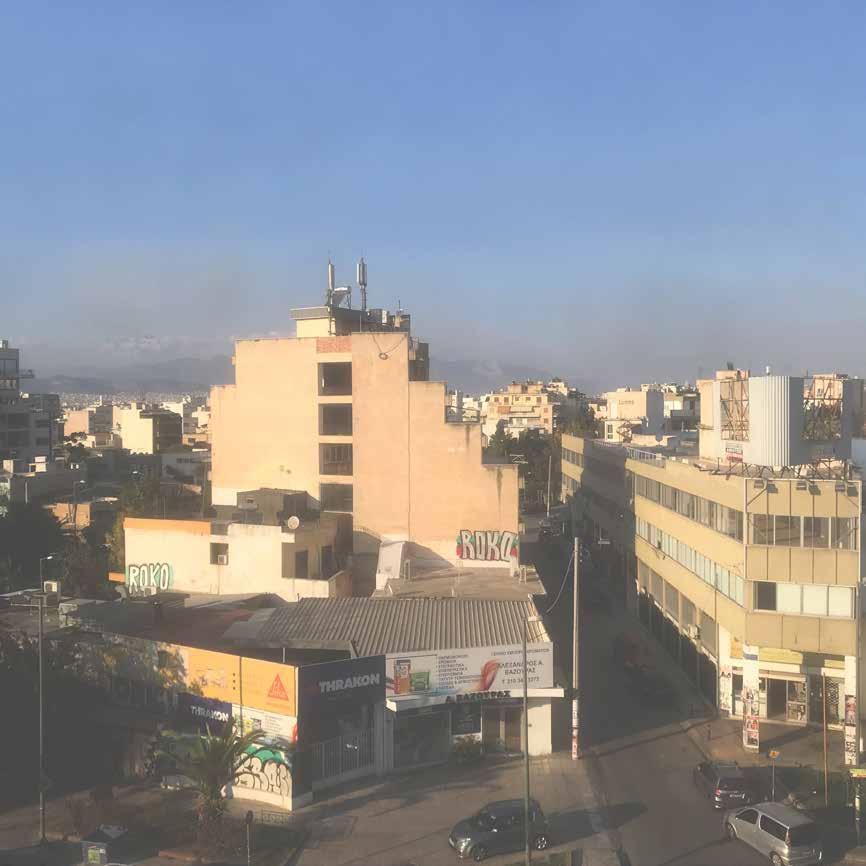
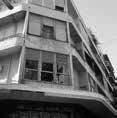
Kerameikos and Metaxourgeio, two adjacent neighbourhoods of a former Anthenian industrial area of the first half of the 19th century have undergone many changes over their history, resulting in the patchwork of building typologies for which they are known today. After the WWII, they became the home of low-income and minority groups. Nowadays, after the 2010 debt crisis, the area is characterized by its social diversity, attracting groups from various backgrounds. A mixture of locals, working class, artists, intellectuals, drug addicts, tourists, immigrants come together to form a disparate whole. Recently, the place became a host for new investments and an experimentation hub. If this situation creates an effusive ambiance, it also generates an apparent vertical and horizontal segregation as a result of specific renting conditions, legislation, and class disparities.
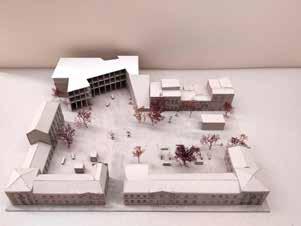
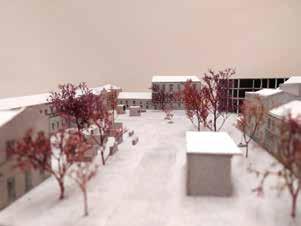
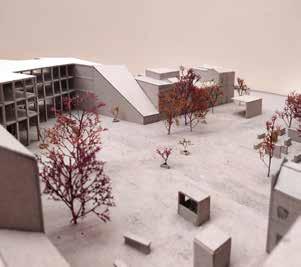
With this in mind, the Urban Palimpsests design project wishes to offer better social and housing conditions for the residents of Metaxourgeio/Kerameikos. To make this possible, it targets a central area within the neighborhoods, a strip crossing them from North to South, which presents existing opportunities to enhance and build upon: the former silk factory building, now a municipal art gallery, along with the Avdi square, theatres, a vocational school and a large scale abandoned building. The idea is to use this strip as a social threshold, a place that provides locals with more services and allows them to gather, while creating new entertaining and cultural activities attracting external residents. The project establishes on the one hand strategies to deal with empty housing structures and plots, offering more living spaces and fostering community. On the other hand, two larger scale multifunctional buildings are designed to serve as catalysts: one is a library mixed with an elderly home and the second a permanent food market with doctor offices and health services. A large public space and a central pedestrian street are designed to trigger social interactions in this dense, devoid of green, traffic heavy area.
High school
Elementar y school
Vocational school
Private/Professional school
Research center
nternational institute
Language school
Learning center for immigrants
school
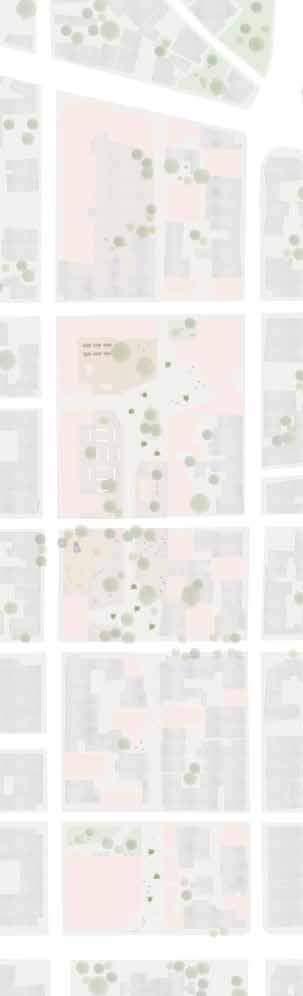
Concept Diagrams
Preliminary Analysis and Field Research



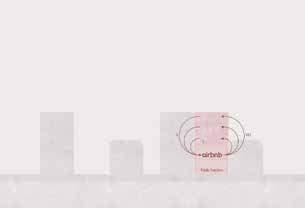

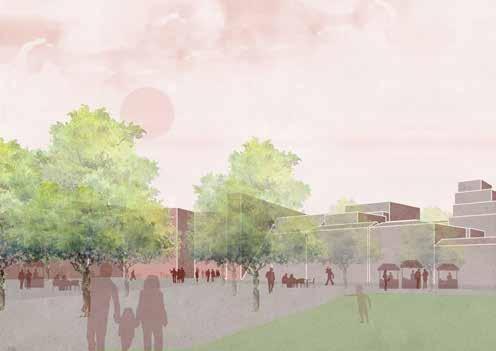
Food Market: extension to an outdoor public space
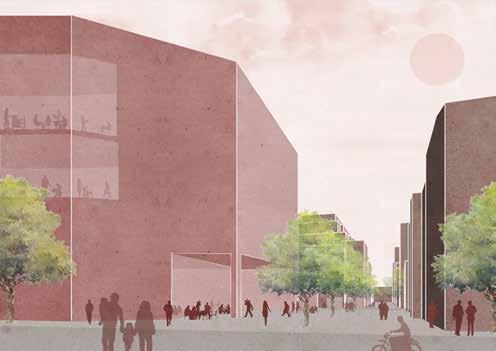
Library: starting point of the pedestrian street
FOOD MARKET + MEDICAL CLINICS + OFFICES
STRATEGIES 1 + 2
STRATEGY 3 phase 1 phase 1 phase 1 phase 1 phase 2 phase 2 phase 3
construction of public library and retirement homes
development of food market, medical clinics and o ces
development of strategies 1 and 2 within project area
development of strategies 1 and 2, following the food market intervention development of strategies 1 and 2, following the library intervention
development of strategy 3 within project area development of strategy 3, following the food market and library interventions
‘DE MES ESSAIS DE CONVERSION’ ESPACE PLATEFORME
Le Lobe
> Saguenay, Canada
-- Individual work
MATERIALS
Wall:
Latex paint on gypsum boards, wood timbers, joint compound, screws.
Funnel:
Cotton bedsheets on masonite boards, metal wires, 5/8” round wooden dowels, all-purpose glue.
DIMENSIONS
Wall :
244 cm x 458 cm
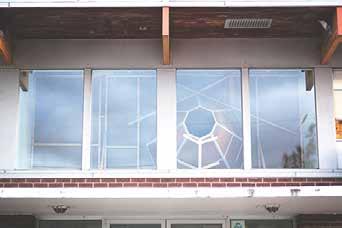
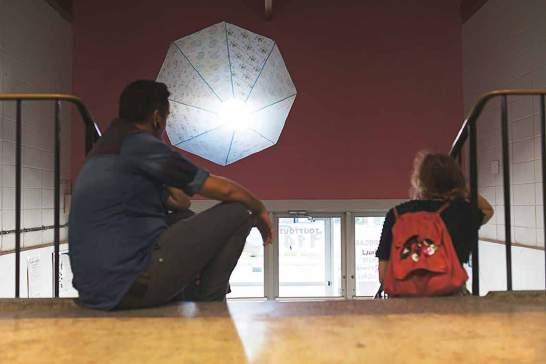
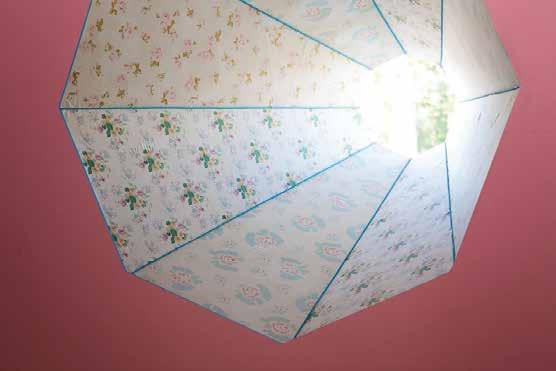
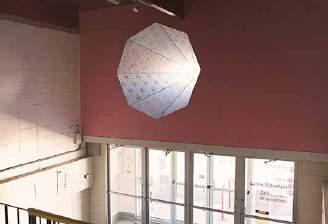
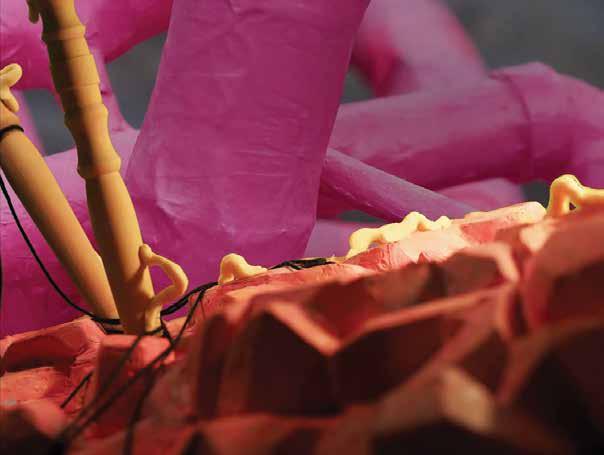
At Le Lobe artist center, there is a space above the main entrance called the “Platform”. Every few months, an artist is invited to invest the platform and to use it as a vitrine for sculptural and installative projects.Instead of using the platform as a display space, De mes essais de conversion rather focused on working the architecture of the space and to transform what usually works as a threshold between inside and outside. The whole opening was covered by a pink wall which was in turn perforated by a large-scale octagonal funnel oriented towards one of the existing windows. By making the sight converge in this reduced opening, the funnel shape created different framed scenes changing with the viewer’s position. As a result, the interaction between the passers-by and the environment gained a new meaning, becoming a space of play and contemplation.
COLLECTIVE HOUSING IN OLD PORT 25 UNITS
MONTRÉAL, CANADA
ACADEMIC
Université de Montréal
> ARC 2011 Atelier d’architecture III
Professor /// Cécile Baird
+ Charlotte Saint-Amour
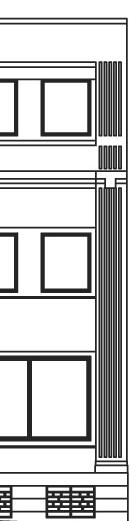
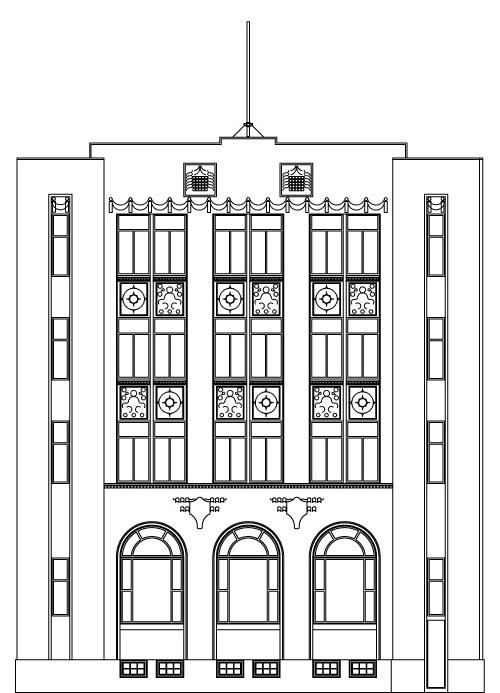
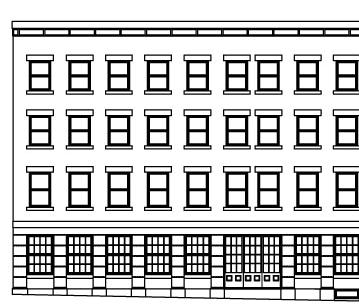
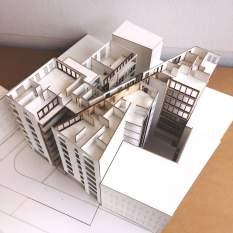
Located in the upscale and touristic Old Port of Montréal, the site for this project, currently used as a parking lot, is set in the middle of patrimonial buildings and landmarks, with dense and narrow streets. The plot has a particular surrounding: on the North is the three storeys high, pitched-roof Maison Silvain-Laurent dit Bérichon, on the South, the adjoining John Lovell & Son - former printer and editor building, and on the West the six storeys high Montreal Board of Trade building. On the East side, a secondary street opens up on an empty plot identified as a potential site for a second phase development.
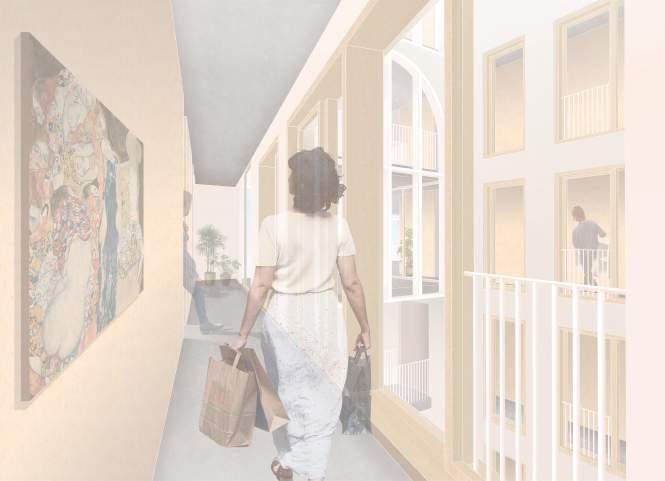
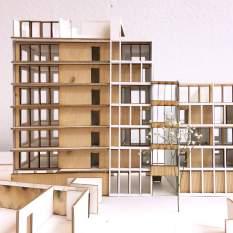
The proposition presented here aims to be respectful of the existing buildings, to offer a variety of units affordable to different kind of households, and to maximise the access to exterior space. The variations in storeys height is thought in order to open up the view and optimize sunlight gains in a way that accomodates the neighbouring configuration. The ground floor, reserved for commercial use and an art gallery, proposes an enlarged street mimicking the Board of Trade situation. A plaza is then created providing a welcoming space which marks the main entrance. The building is separated in two parts - two wings with different unit typologies joined by a central glazed connection. This split morphology provides the necessary space for a large semi-public internal courtyard, mindful of an eventuel extension towards the adjacent site. Terrasses are available for the café and the art gallery, and green areas are designed for the residents. Above the gallery, an enclosed playground for children works as an outdoors extension for the resident’s common area. Every apartment, be it a studio, a one or two rooms unit, is provided with a loggia oriented towards the courtyards.
Transversal Section
View from the southern hallway, fifth floor
Materiality: Wooden walls oriented towards the inner courtyard 2 Bedrooms Units 1 Bedroom Units Studios
ON THE OTHER SIDE
TOPOGRAPHY / STRUCTURE FOR A PUBLIC SPACE
ACADEMIC
Université de Montréal
> ARC 1011 Atelier d’architecture I
Professor /// Denis Bilodeau
-- Individual work
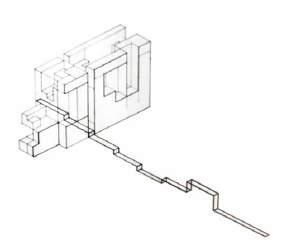
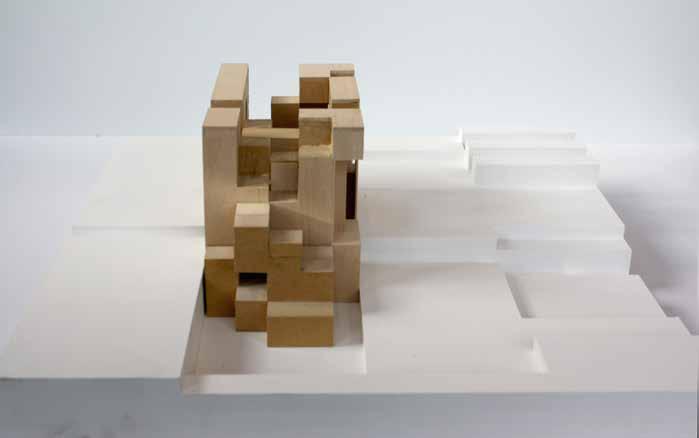
On The Other Side is the result of a two phases decomposing exploration: first a pictorial then a geometric shape.
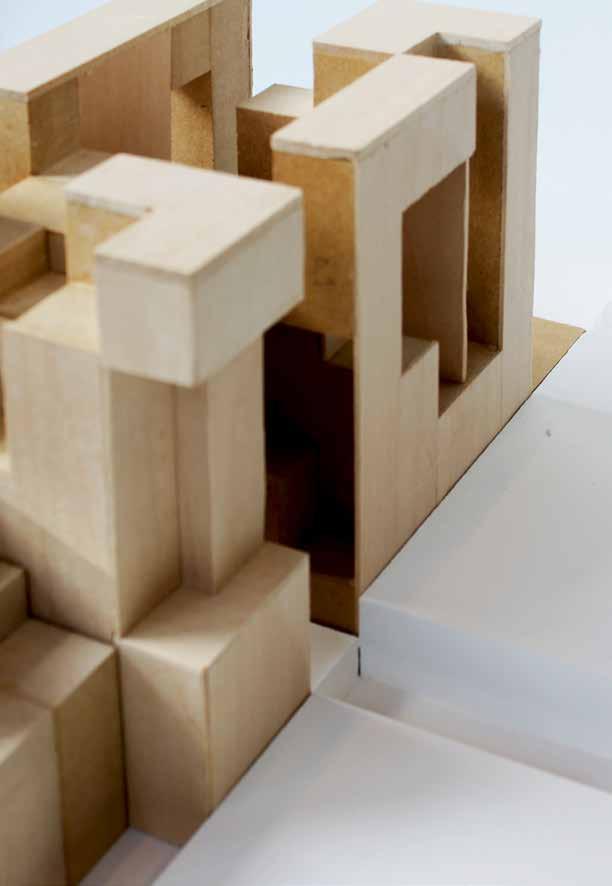
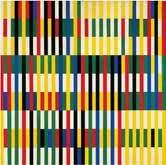
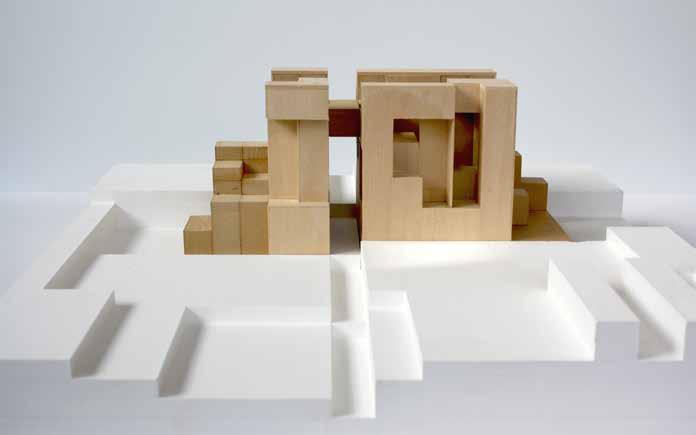
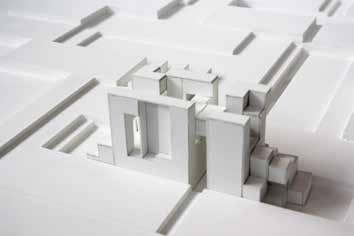
As a starting task a 30 x 30 meters public space had to be conceived. To limit the parameters of the composition, a grid-like painting from the Elemente zu rhythmischen Guppen konzentriert series of artist Richard Paul Lohse was provided. The artwork was used as the generative system of the topography. Patterns and height parameters had to be extracted from the colorful strips in the painting. The second task consisted of the implementation of an appropriable structure on the public space. A 3 x 3 meters cube was given as the core geometry. The systematic deconstruction of the cube in modular elements had to be done in a logic which would open a dialogue between the previously designed public space and new generated structure.
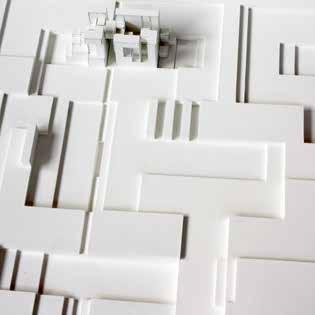
The project experiments with the idea of the restriction in trajectory. On one of its sides, the topography is crossed by a fissure. This gesture makes the terrain rugged and unpredictable, as it would be the case in a natural landscape. As a result, the user is confronted with a path deviation. The cube structure, meant to be climbed up and crossed over, comes along as an element of reconciliation between both sides of the site. From the uneasiness which demands a prior evaluation of the space and imposes a detour, rises the potential for playfulness: a labyrinthic game.
All documents were hand-drawn and the models fully handmade.
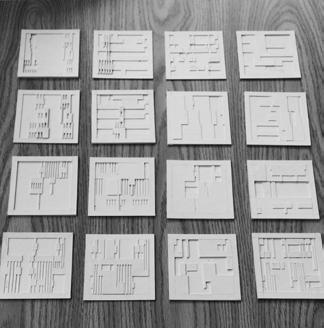
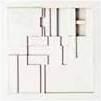
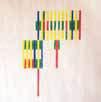
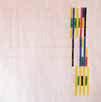
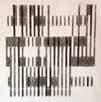
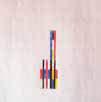
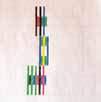
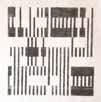
Explorations: Patterns analysis, composition, topography formation

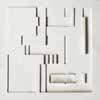
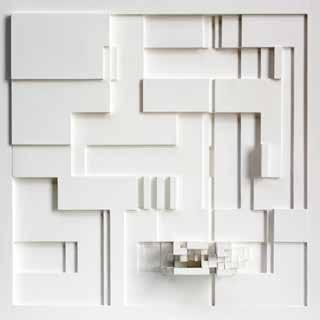
Final topography proposition: wooden model, scale 1:100
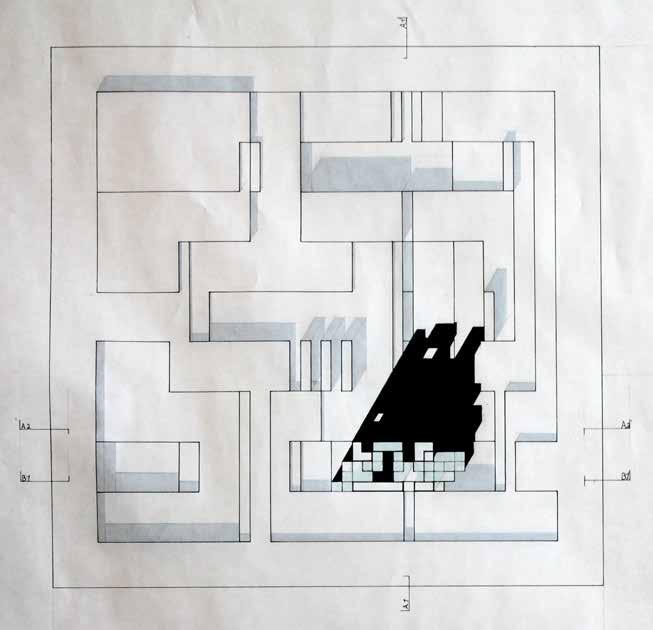
and Cube Structure Plan
Richard Paul Lohse Elemente zu rhythmischen Guppen konzentriert (1946-1956)
Topography
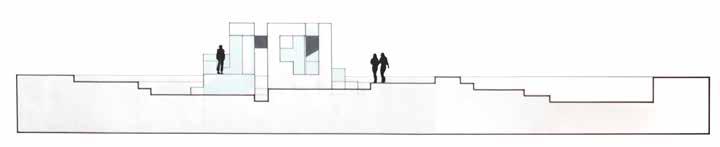
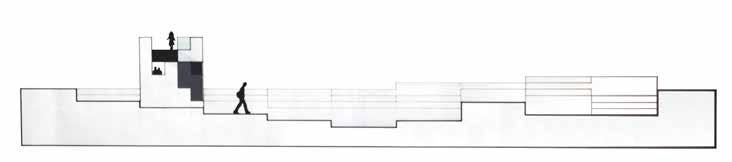
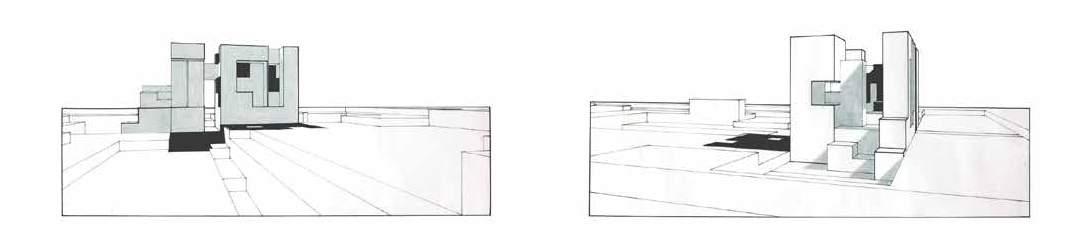
Section A2-A2”
Section A1-A1”
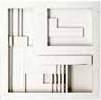
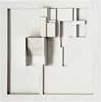
Cube structure model: wood, scale 1:25 / North
Cube structure model: wood, scale 1:25 / East

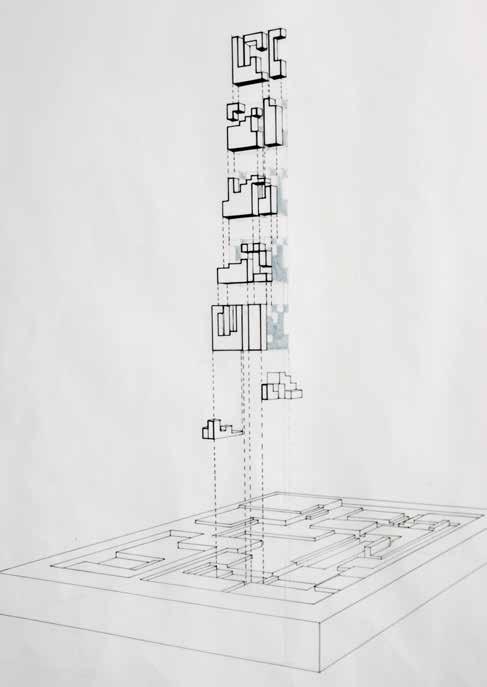
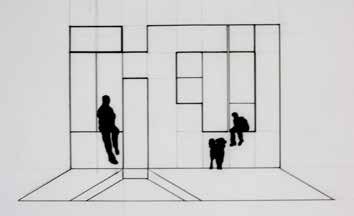
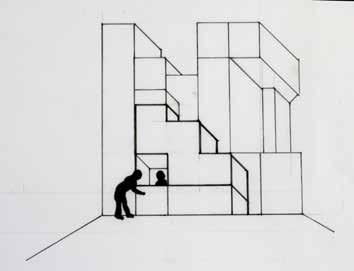
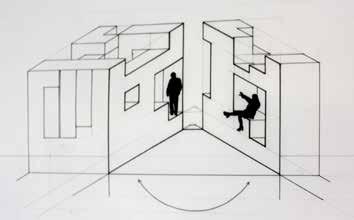
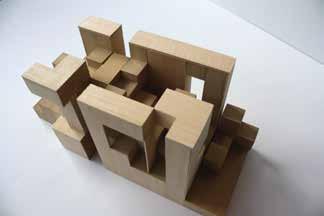
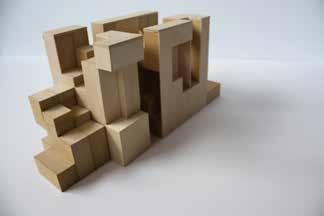
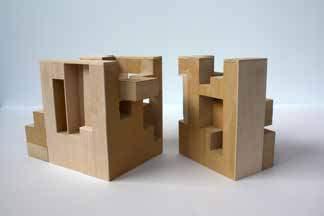
Deconstruction of initial cube in 125 modules
Usage Diagrams
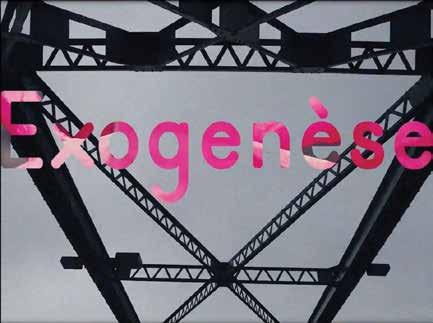
EXOGÉNÈSE
SHORT ANIMATED FILM
Université du Québec à Chicoutimi
> Saguenay, Canada
++ Team work
ANIMATORS:
Gabirel Brochu LeCouffe, Guilaume Internoscia, Laurie Malenfant, Alexandra Tremblay.
MONTAGE: Guillaume Internoscia.
MUSIC: Gabriel Brochu LeCouffe.
SCULPTURES AND FIGURATION
Laurie Malenfant.
LINK TO VIDEO:
https://player.vimeo.com/video/110848620
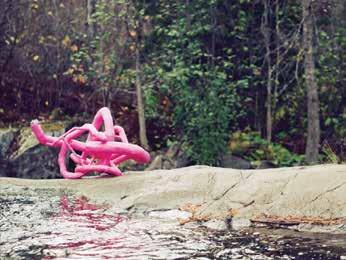
Exogénèse is a short film experimenting with animation and stop motion. Heteroclite elements, from sculptural forms, random objects, plasticine-shaped characters were used as the visual foundation of the video. The plot puts them in action in what appears to be a disturbed world, all of them moving together, converging, to the rhythm of an unsettling, attracting force. Without dialogues, the film relies on the visual narrative and sequence of action to give a somewhat mind-bending experience to the spectator. The animation as well as the video montage, the soundtrack and the sculptures were done by the team.
LAURIE MALENFANT