laurenwilwerding@gmail.com
402-709-5108 resume
https://issuu.com/laurenwilwerding
University of Nebraska-Lincoln
5th Year M. Architecture
NEW HEIGHTS 1.
Arch 411 | Spring 2024
Professor: Beau Johnson P 4-15
BRIDGING THE GAP 2.
Arch 410 | Fall 2023
Professor: Brian Kelly P 16-23
MUSEUM OF THE MOVING IMAGE 3.
Arch 310 | Fall 2022
Professor: David Newton P 24-31
CO-HOUSING 4.
Arch 311 | Spring 2023
Professor: Steve Hardy P 32-35
RESTAURANT & RESIDENCY
5.
Arch 211 | Spring 2022
Professor: Ally Pierce P 38-41
MUSEUM OF VOLUMES
6.
Arch 21O | Fall 2021
Professor: Hilary Wiese P 42-43
7. London | Fall 2024
TEA SPOT
Professor: Matt Miller P 44-47
PROFESSIONAL WORK
8. Summer 2023
APMA P 48-49
NEW HEIGHTS
In collab with: Carson Beard
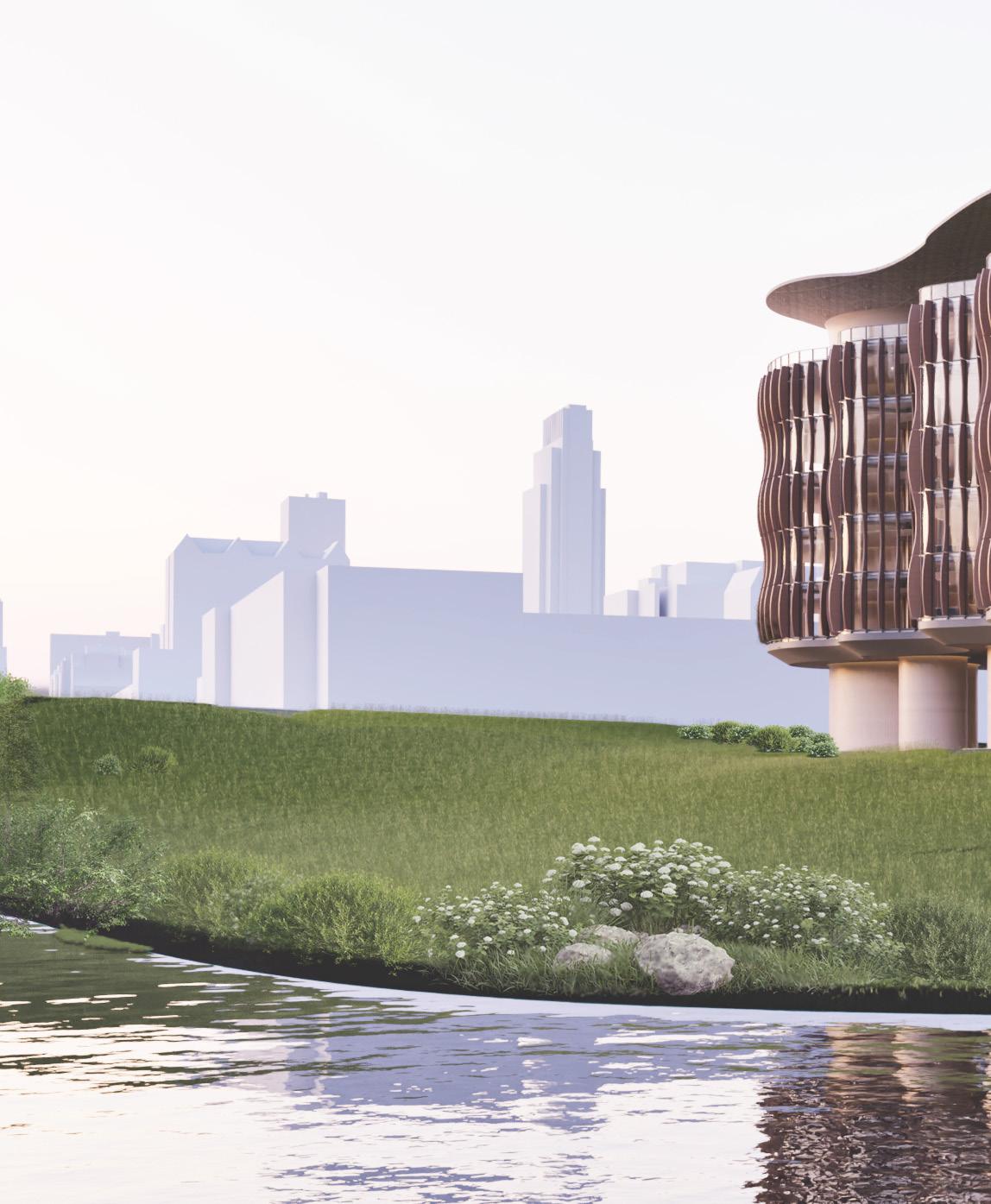
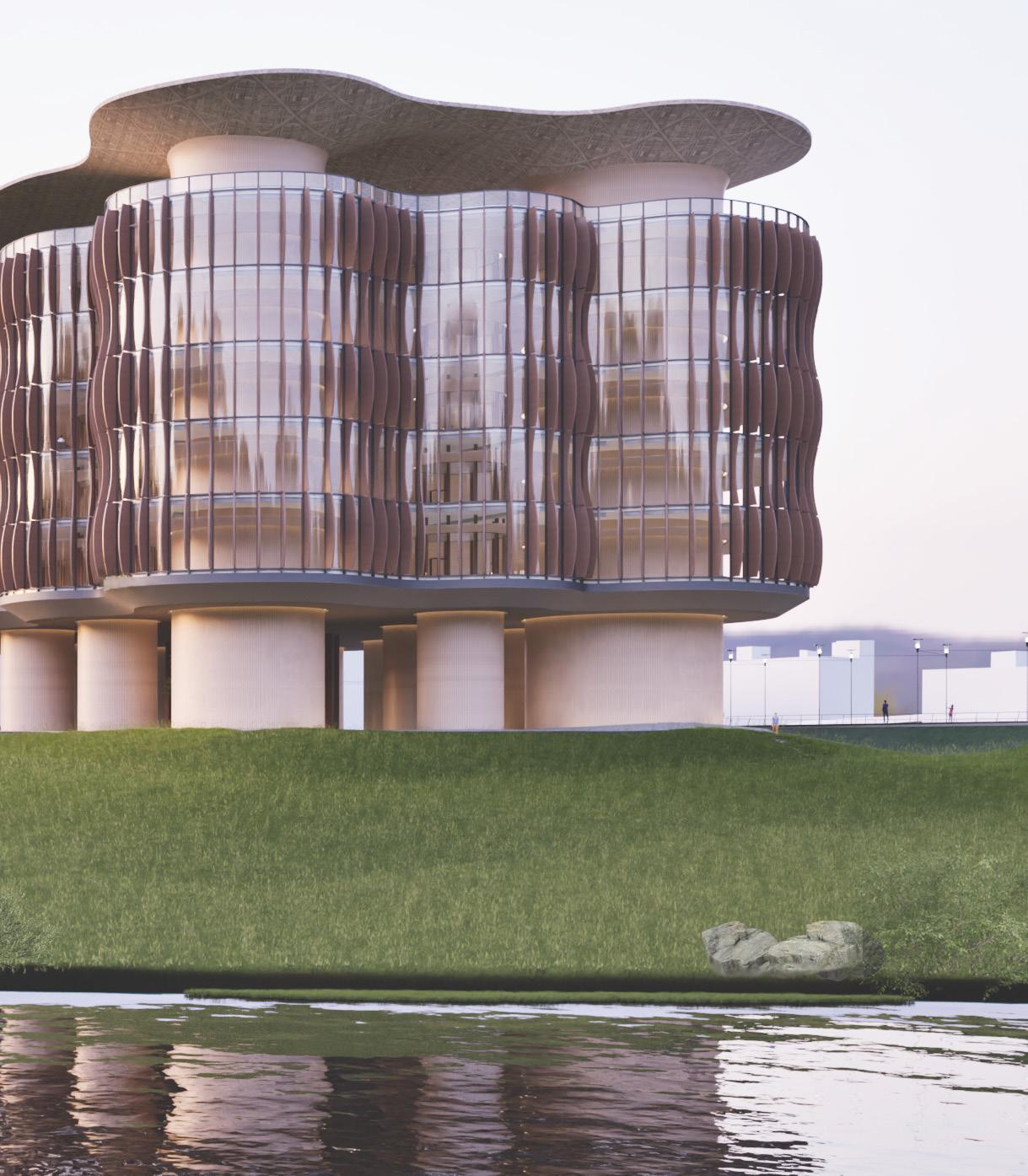
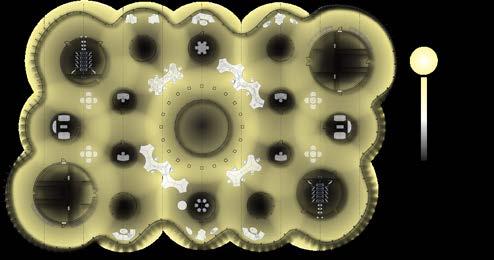
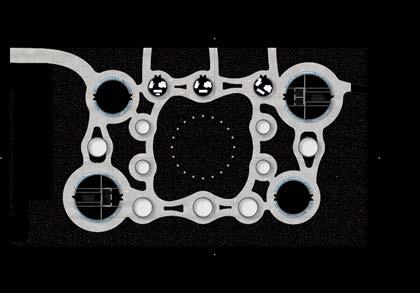
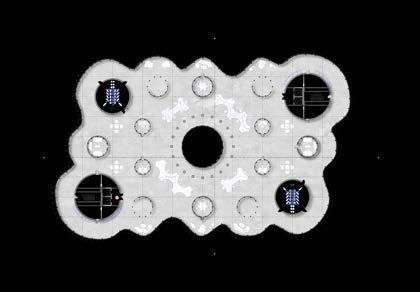
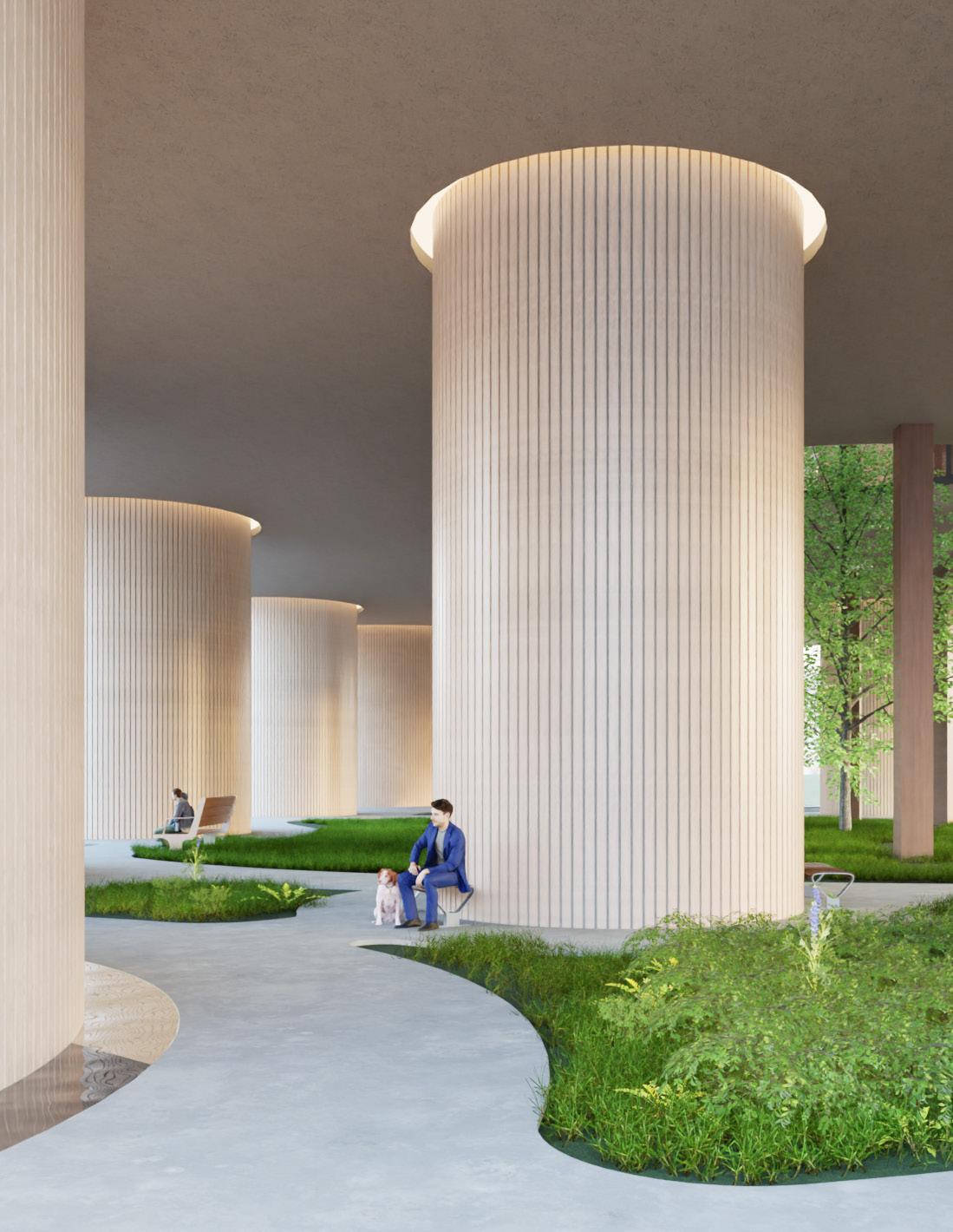
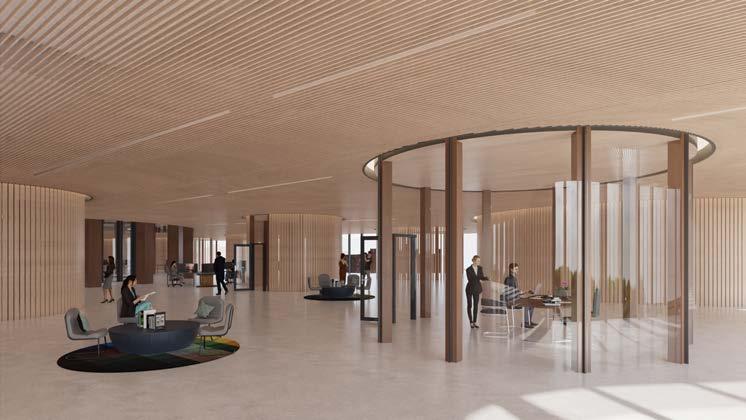
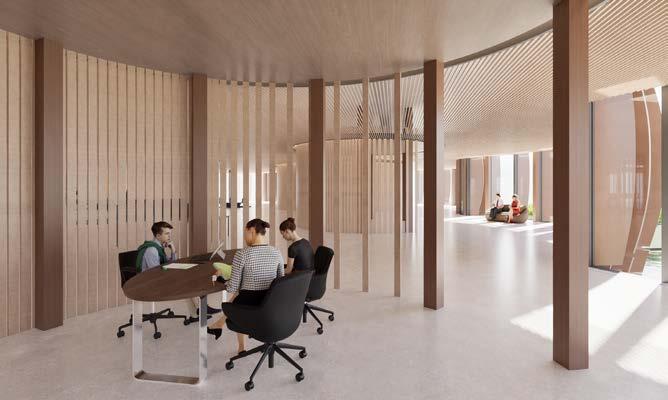
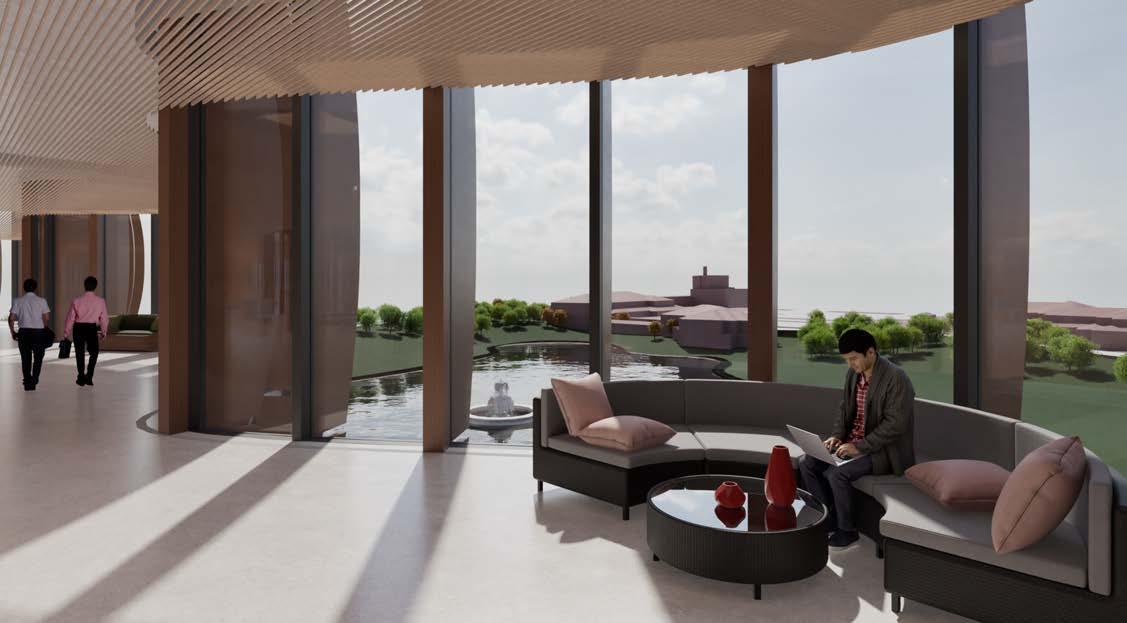
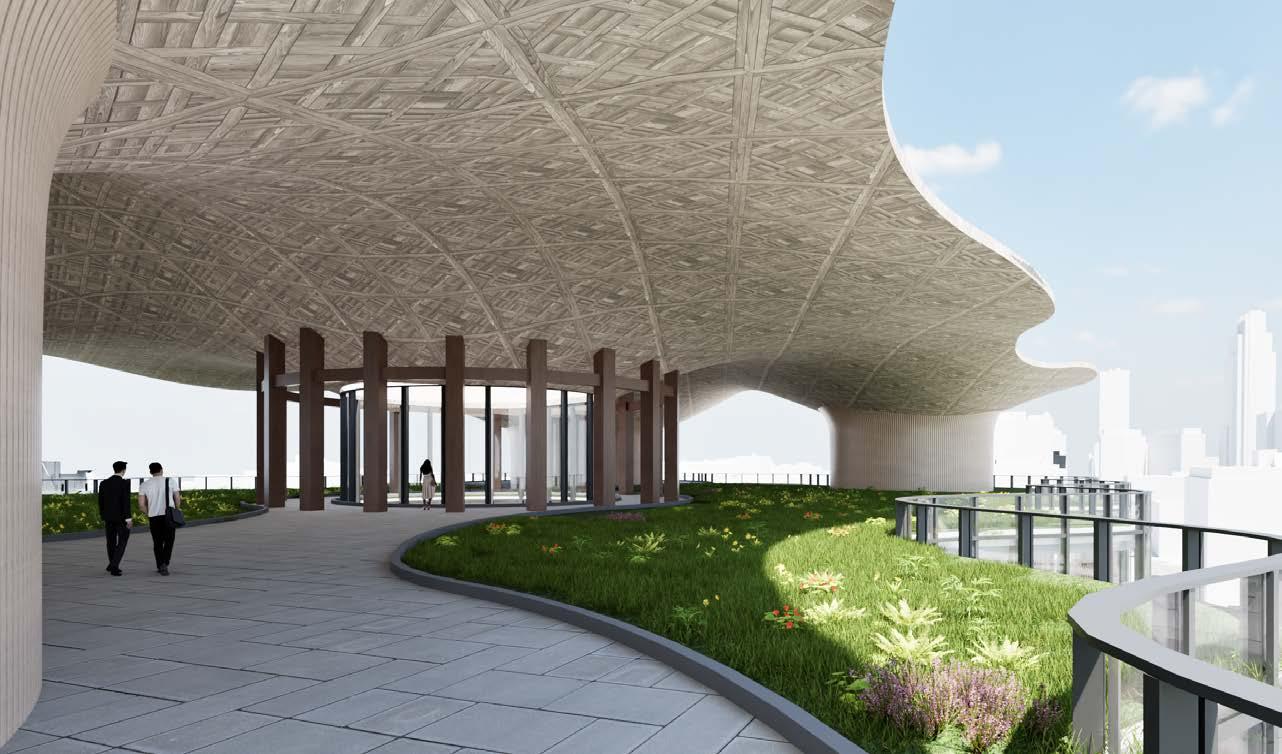
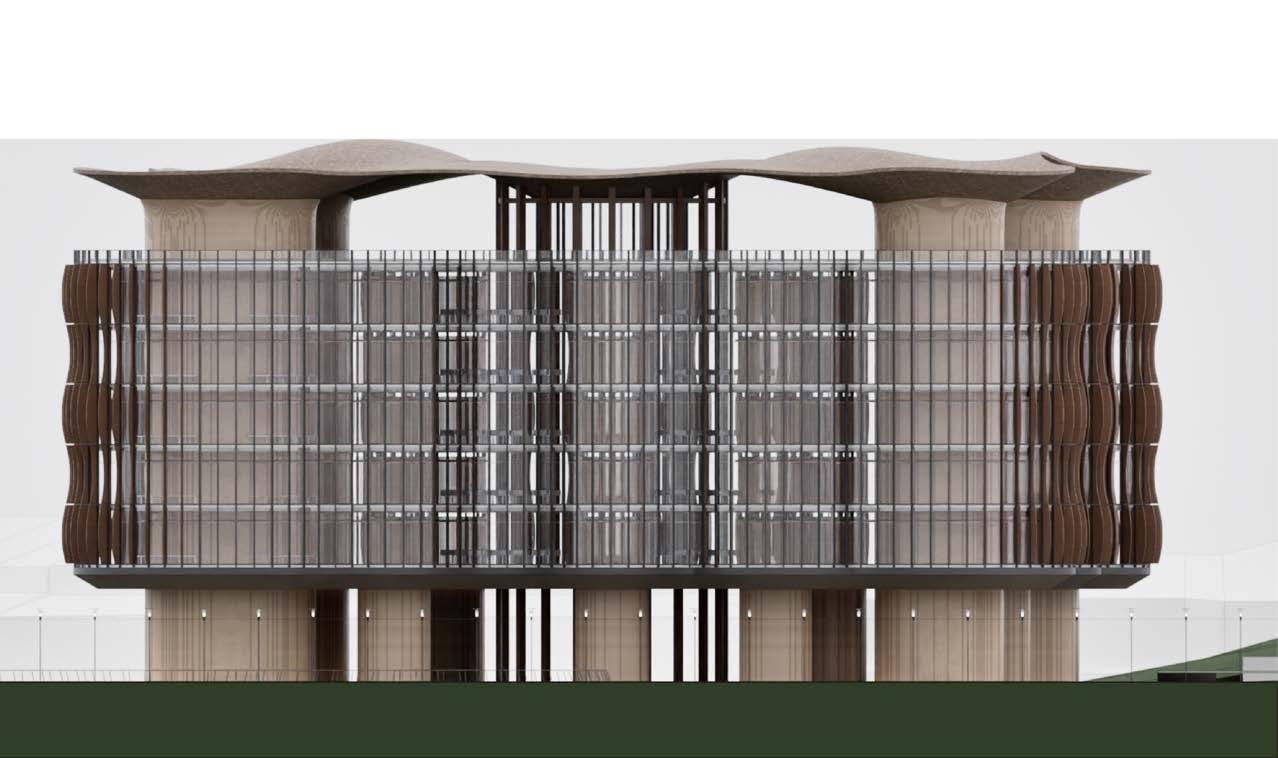
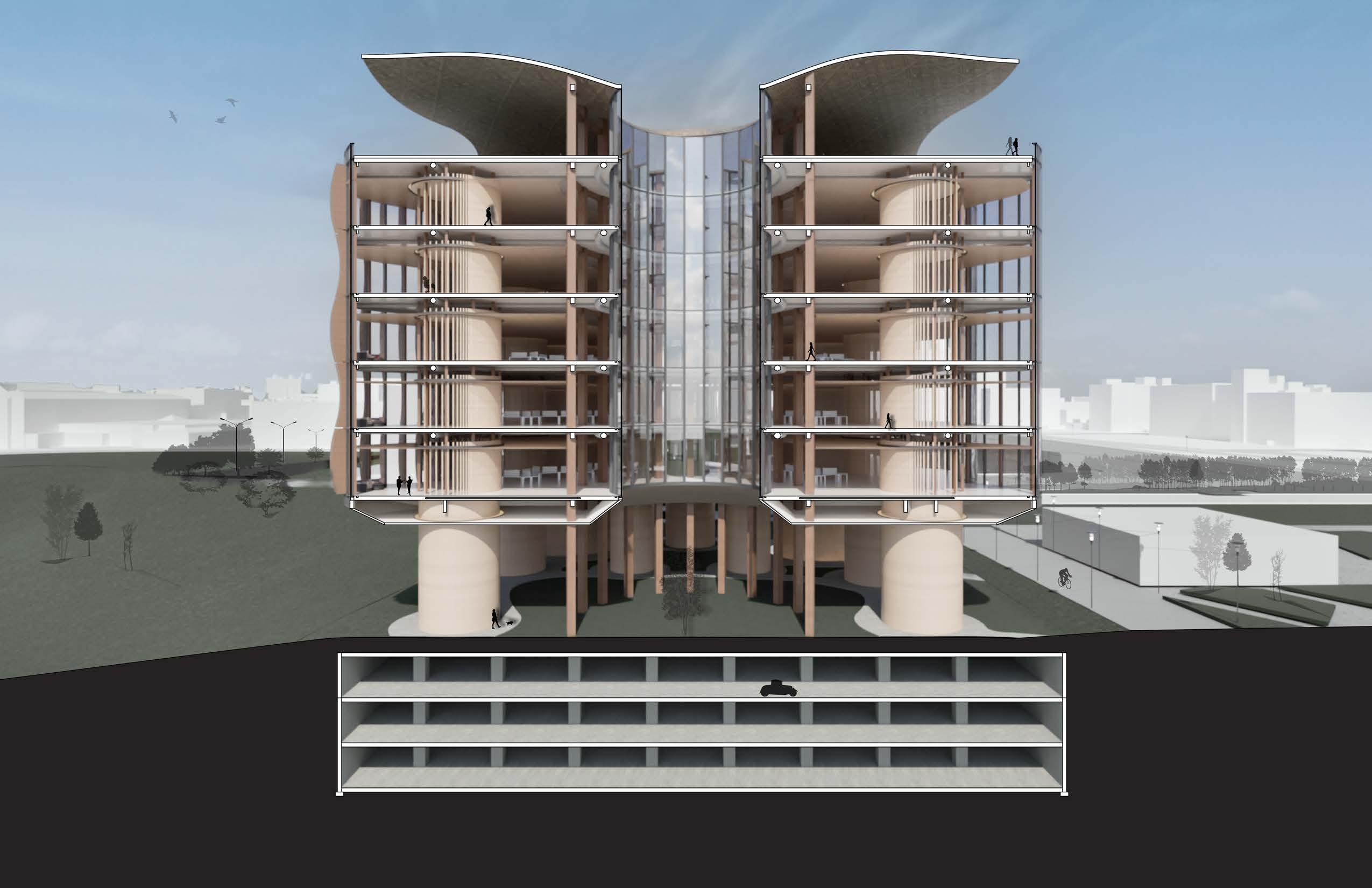
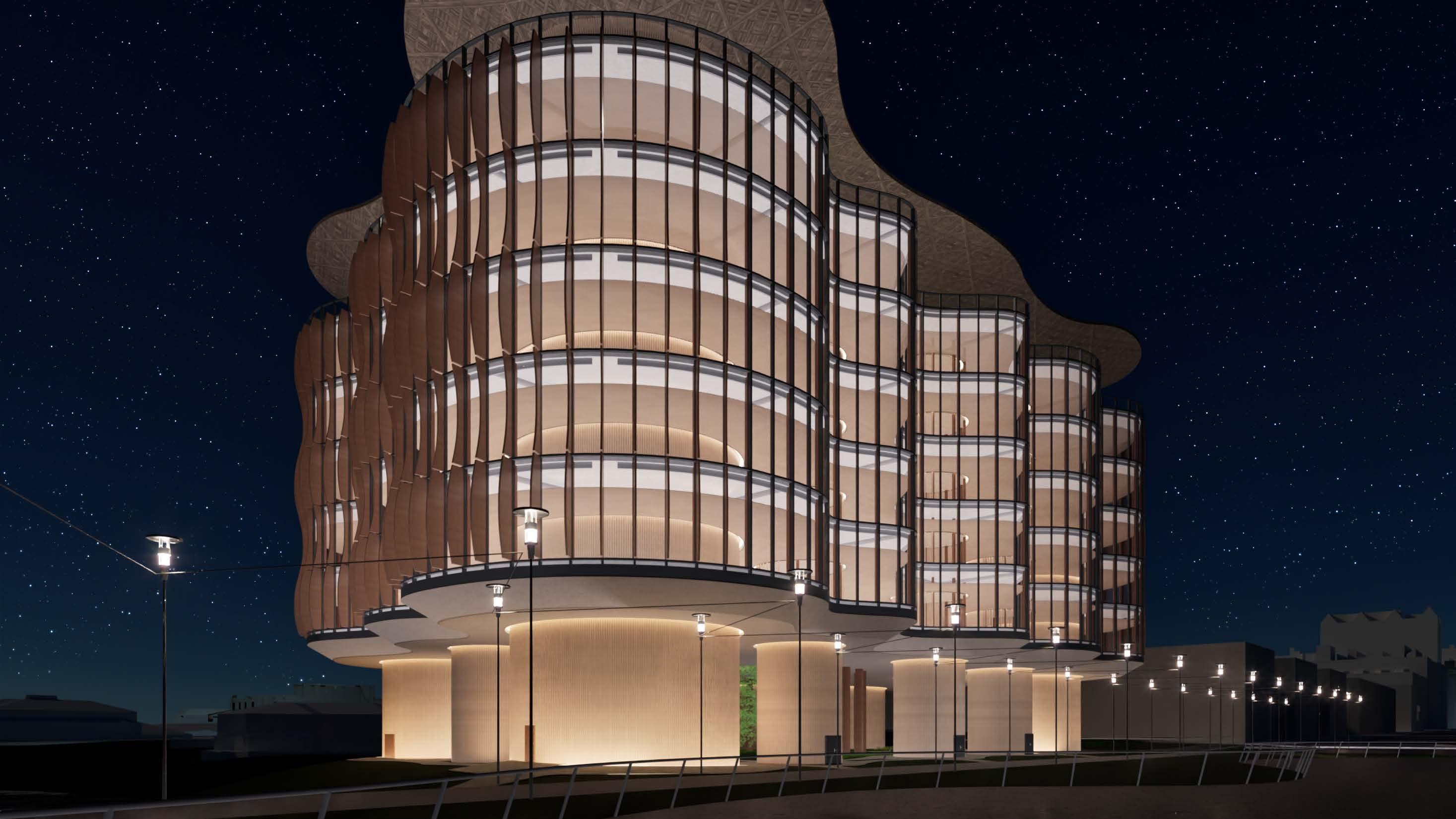
When tasked with imagining the office of the future in downtown Omaha, our design aimed to rethink the constraints of the conventional workplace. Our design embraces natural conditions such as openness, flexibility, and connection, to create a built environment that feels fluid and dynamic.
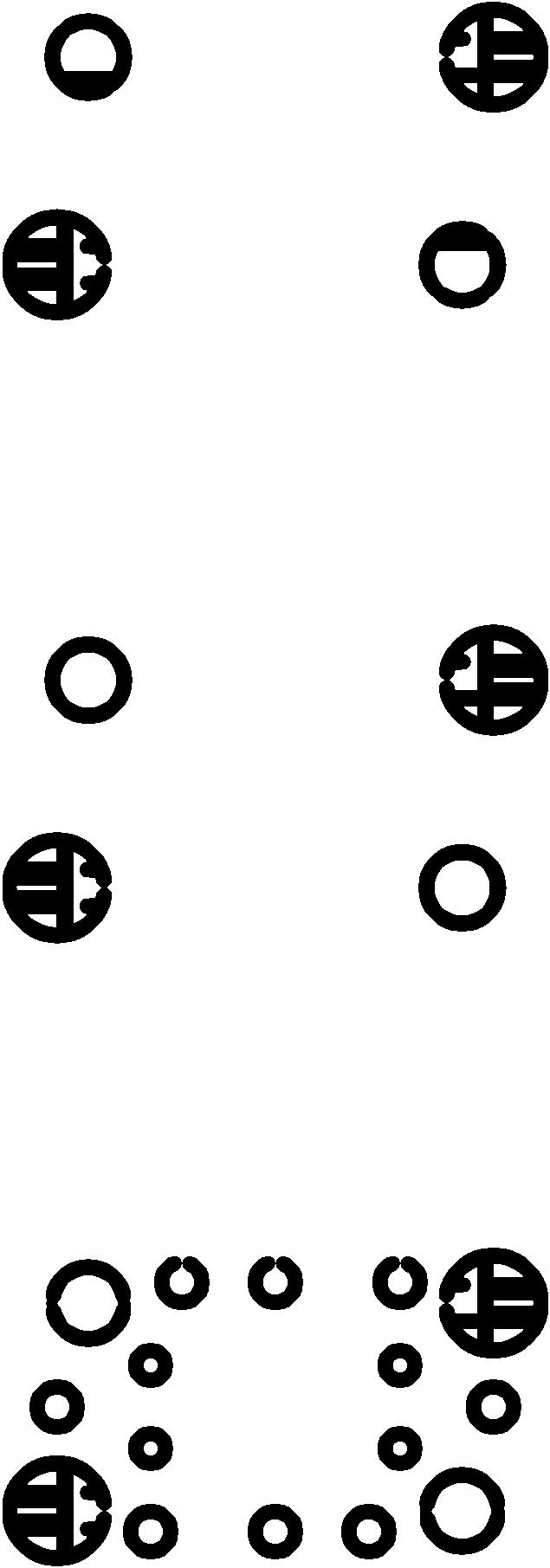
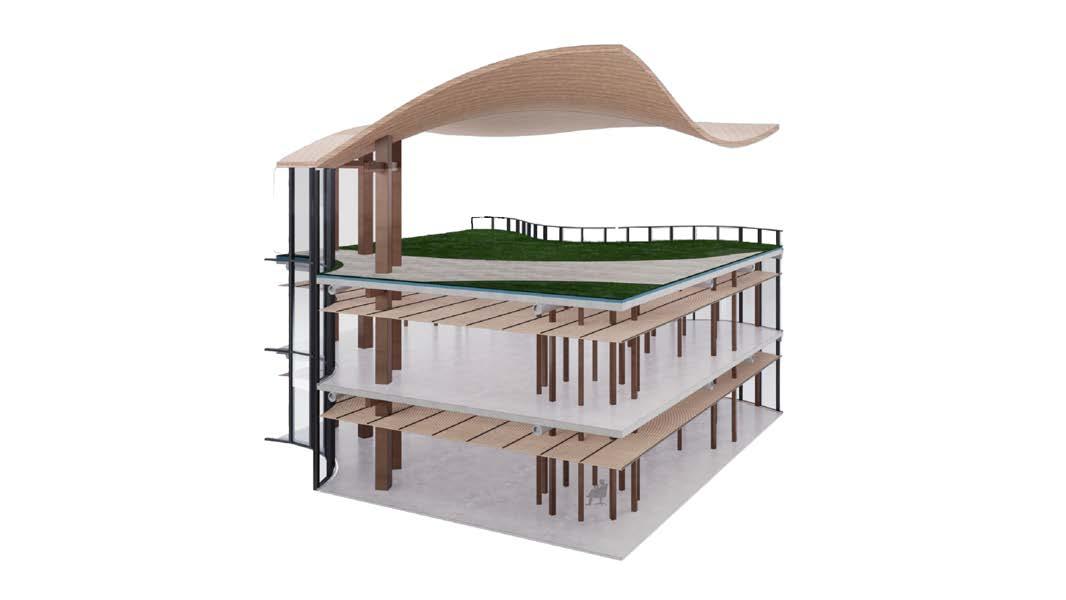
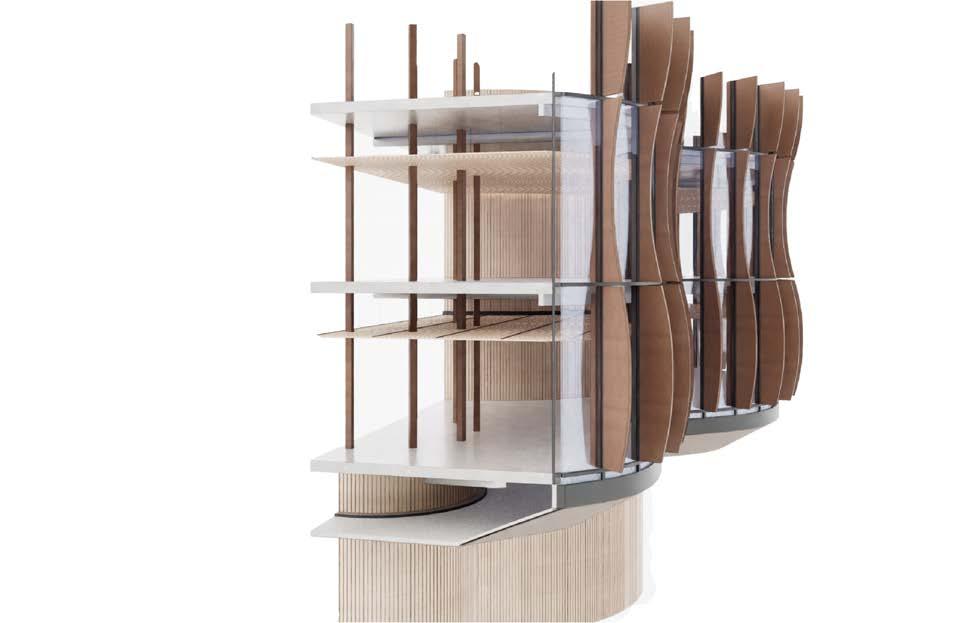
This integration begins at the building’s cores, which serve as structural and conceptual anchors. Like trunks in a forest, these cores provide stability while allowing for increasing lightness and openness as one moves outward from the cores. Balancing privacy with interaction, we introduce open, dynamic spaces that foster vitality and connection. By breaking down the barriers of traditional office design, our approach brings the natural environment into the workplace, enhancing both its atmosphere and functionality.
SEMI-TRANSPARENT
PRIVATE
NORTH ELEVATION
SECTION CHUNK MODELS
Stucco Finish
Di
Steel Fascia
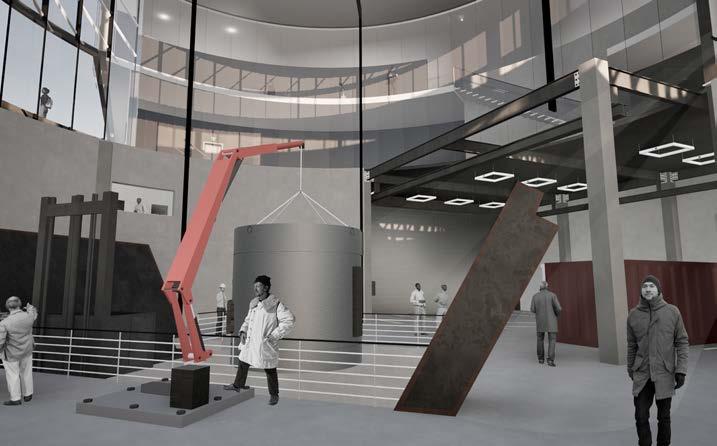
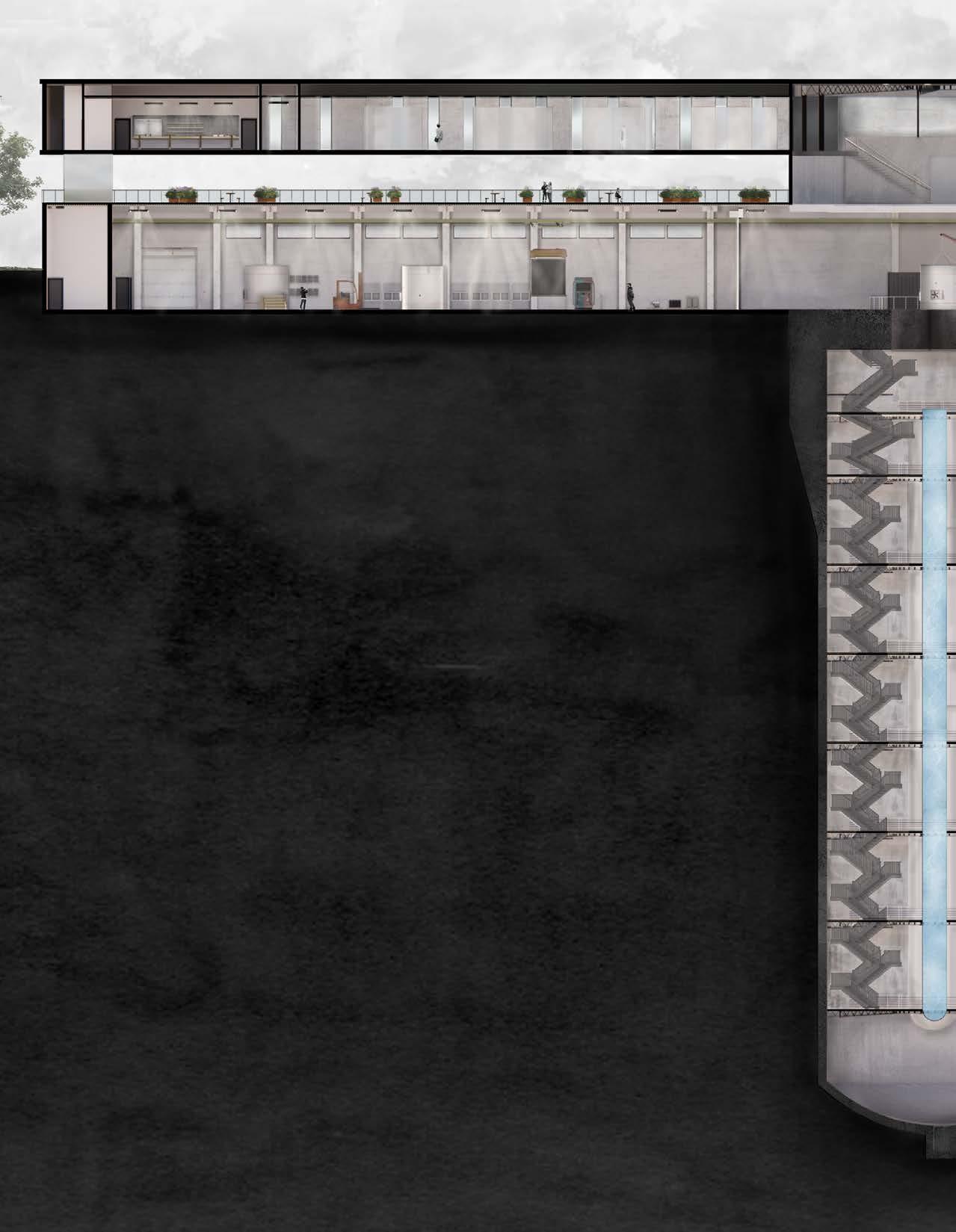
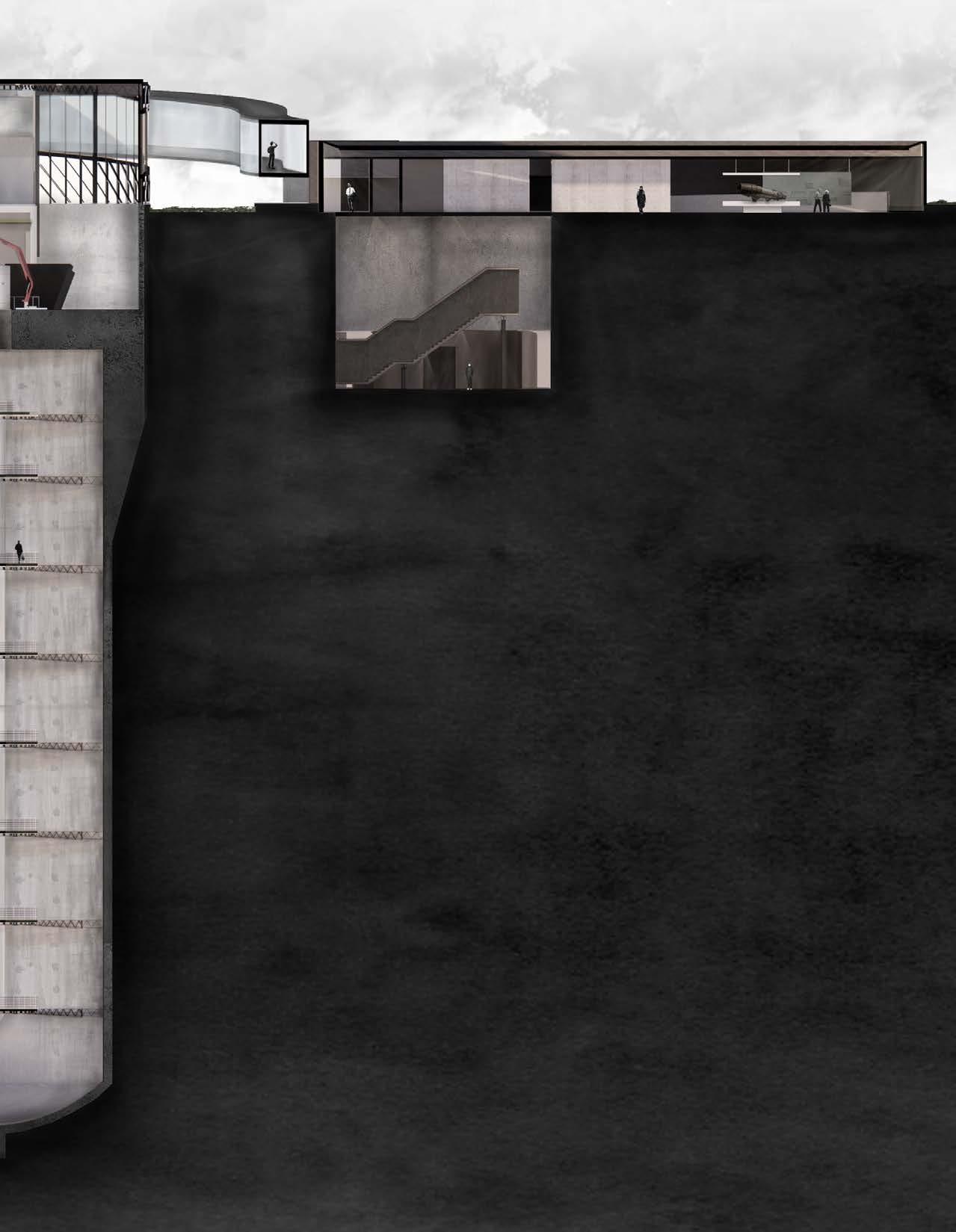
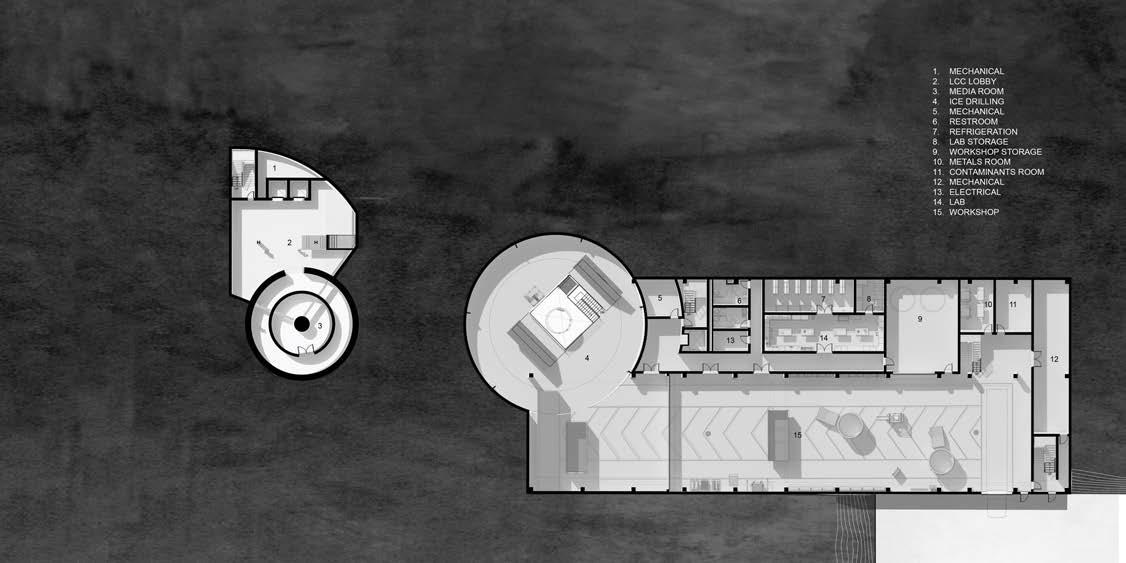
MISSILE SILO RE-IMAGINED
In collab with:
Jenda Simonsen, Callahan Weeks, Ella Rawlings
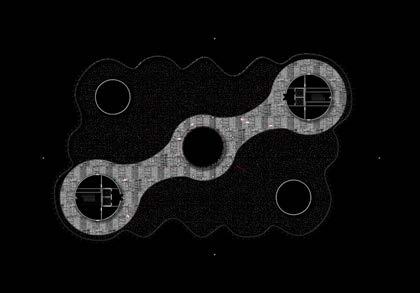
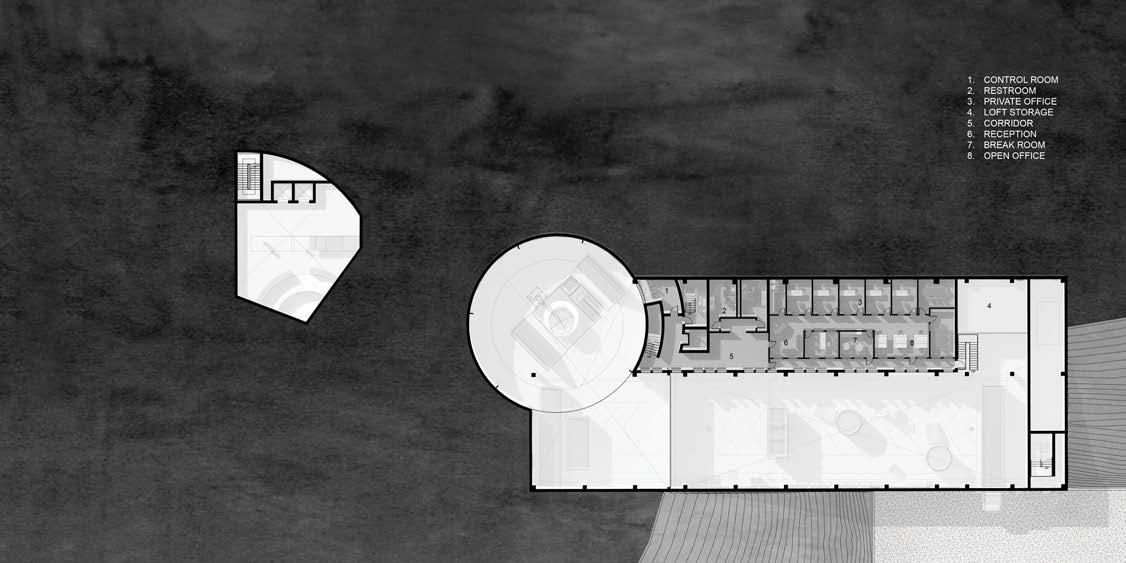
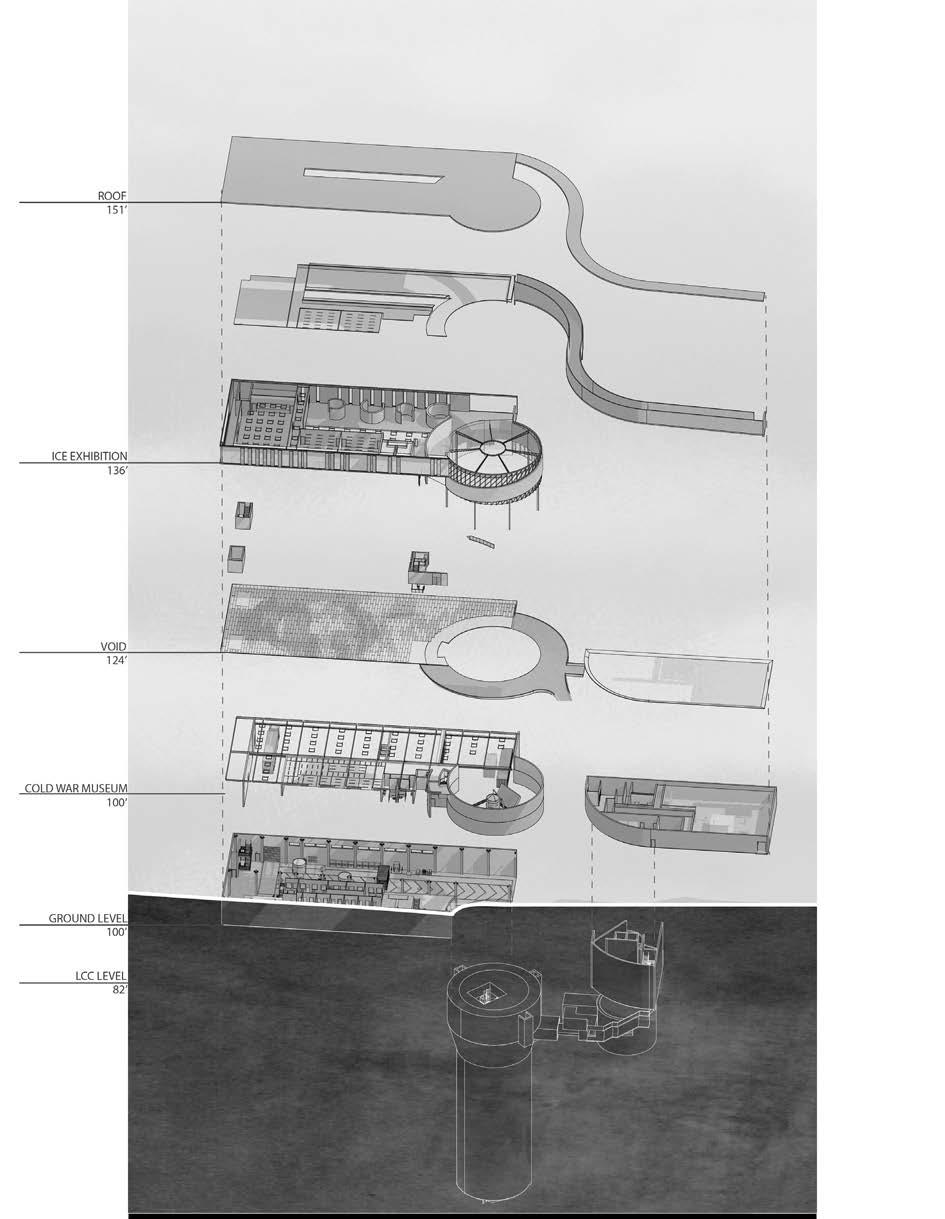
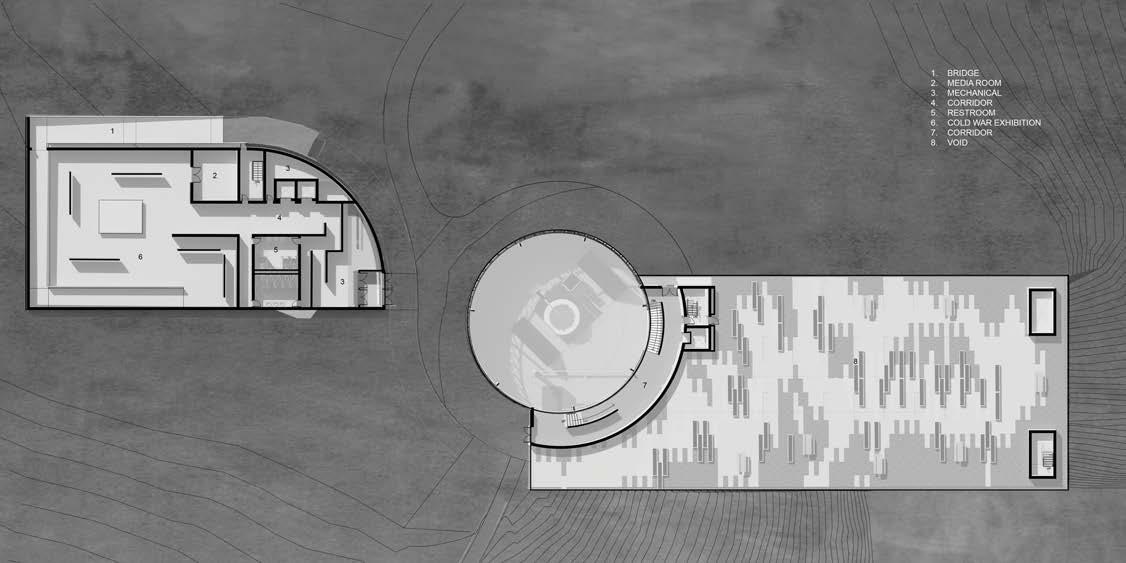
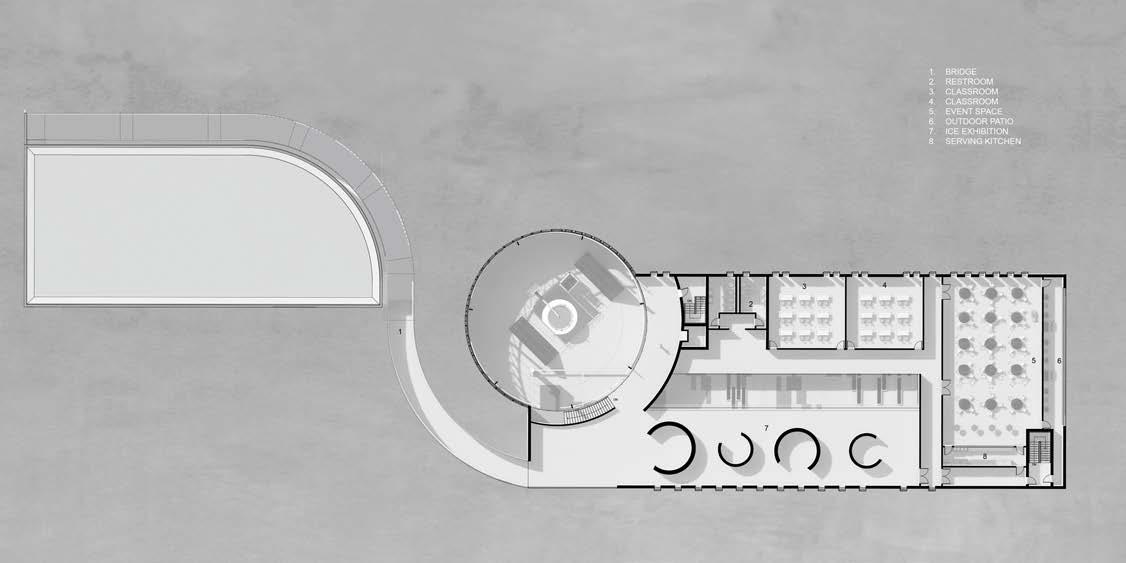
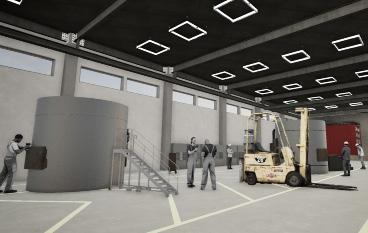
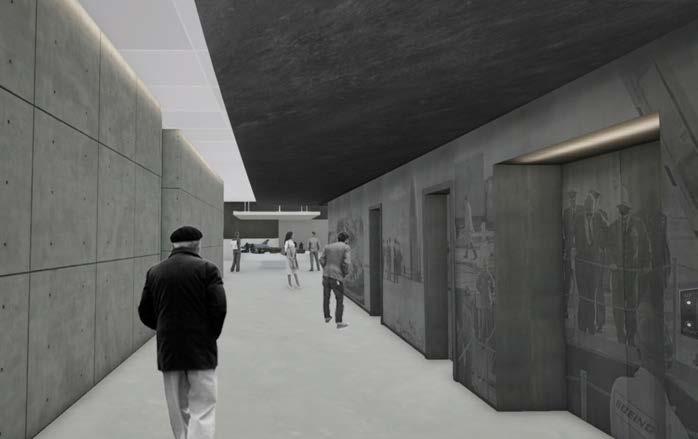
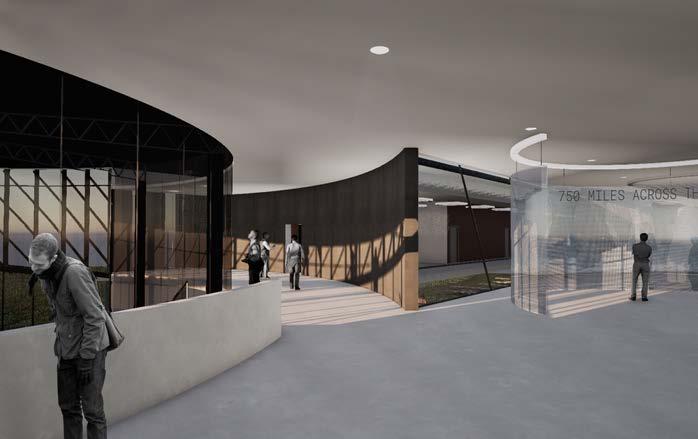
In considering the design for this space, our team visited the notion of the passage of time, highlighting the site’s historical significance and contemporary relevance.
Originally, this site functioned as an atlas-f missile silo, housing and controlling a nuclear weapon with significant historical implications. Following the decommissioning of the program, the site remained inactive for many years.
The re-purposing of this space represents a heightened application of historic preservation and adaptive reuse principles. Converting the missile silo into an ice drilling facility offers potential for valuable research addressing the ongoing environmental crisis. Additionally, the proposal includes an exhibition that recounts the site’s history and its role in the cold war era, bridging the past and future. This connection emphasizes how historical contexts inform future endeavors and the social responsibility visitors hold to prevent further environmental crisis.
MUSEUM OF THE MOVING IMAGE
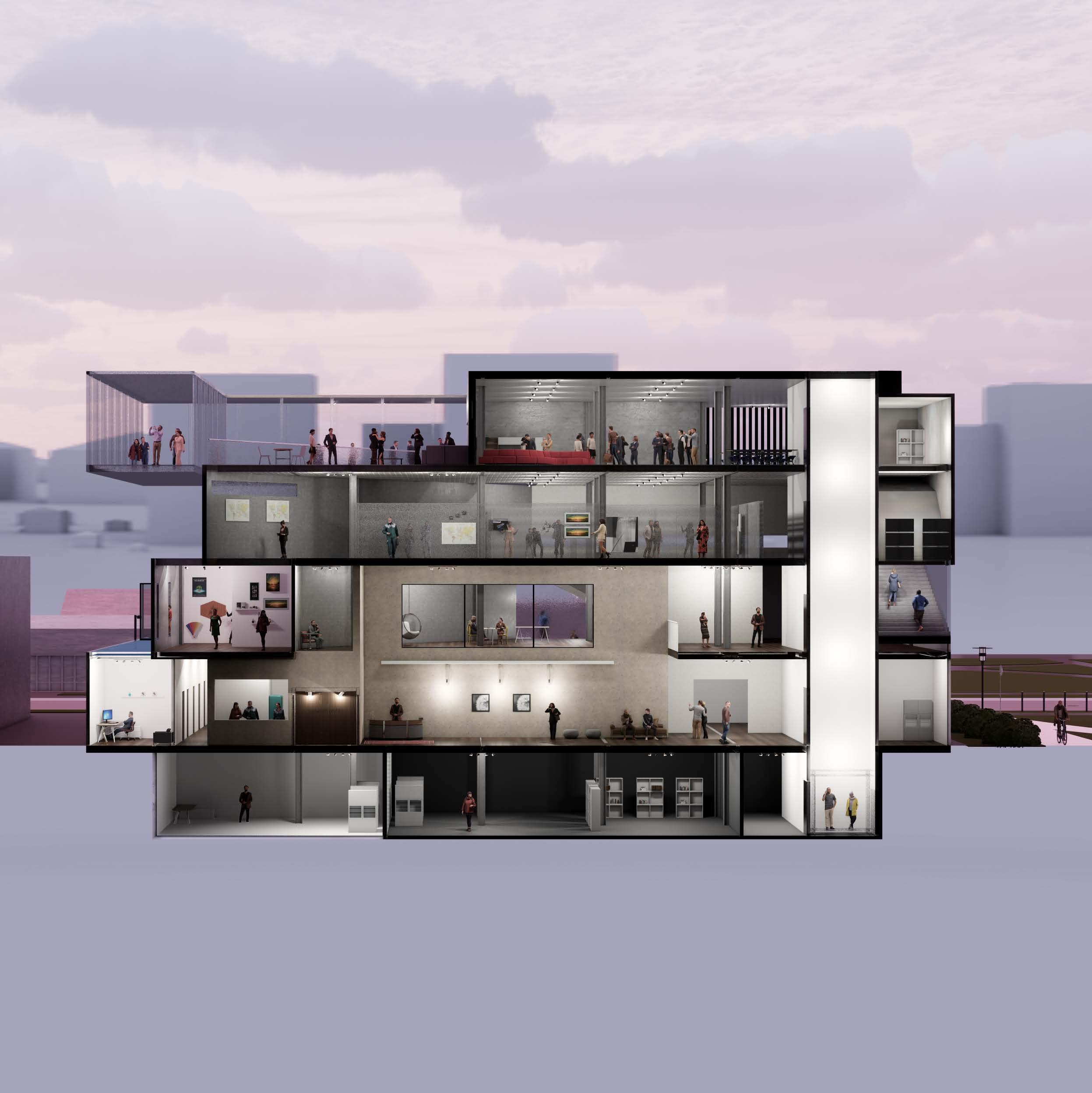
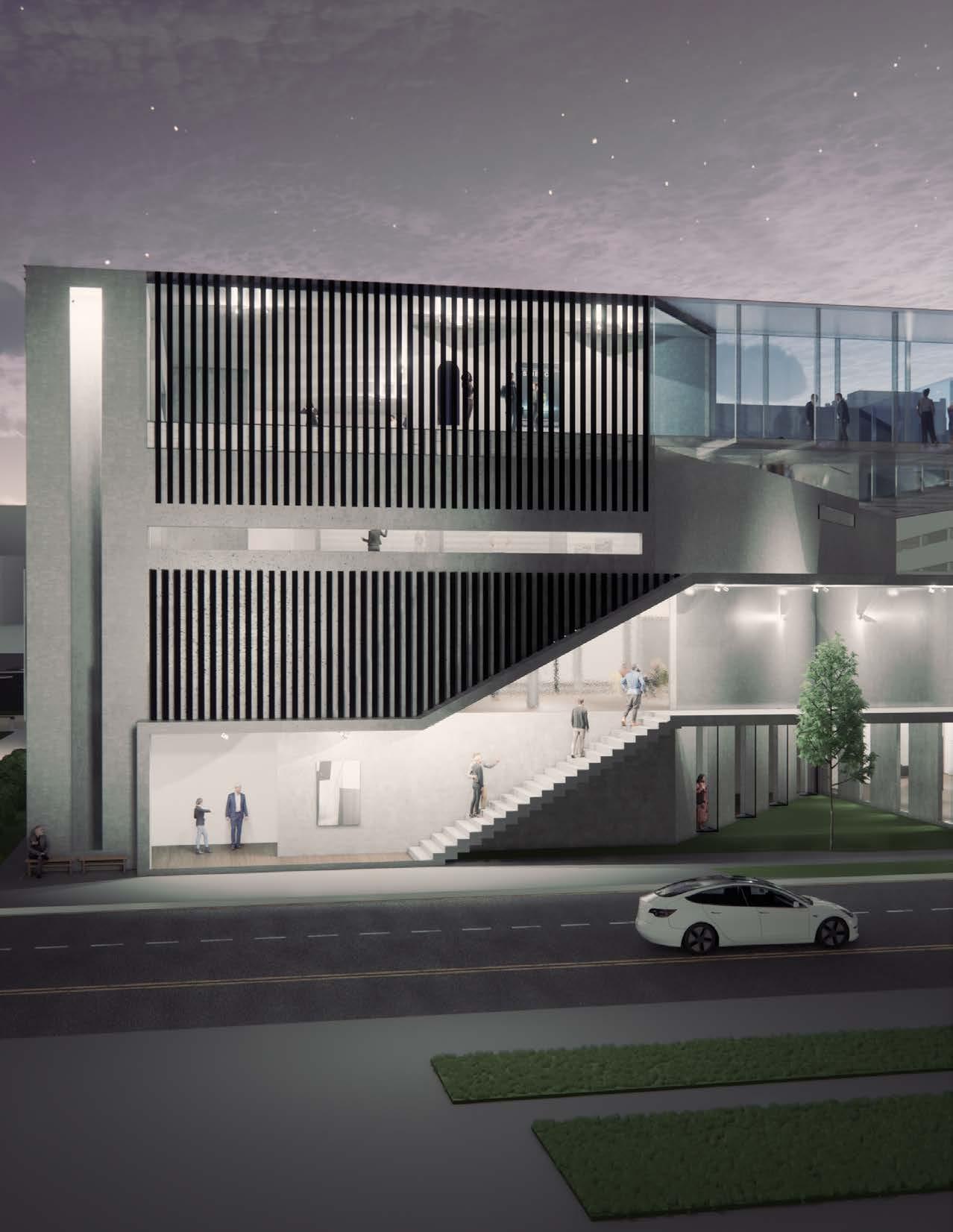
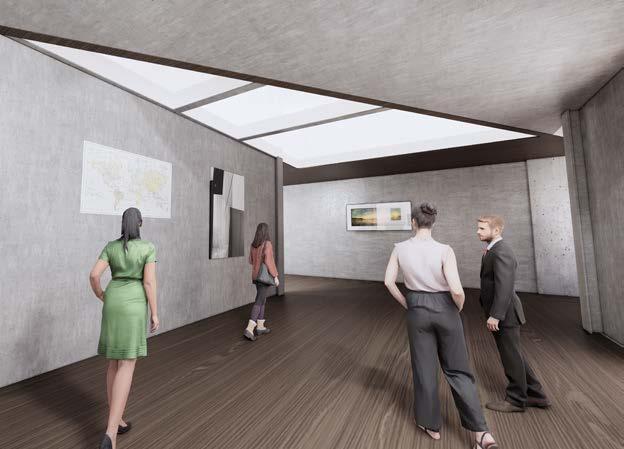
The museum of the moving image aims to bring film strategies into architecture. My project began with an analysis of the movie Rear Window by Alfred Hitchcock.
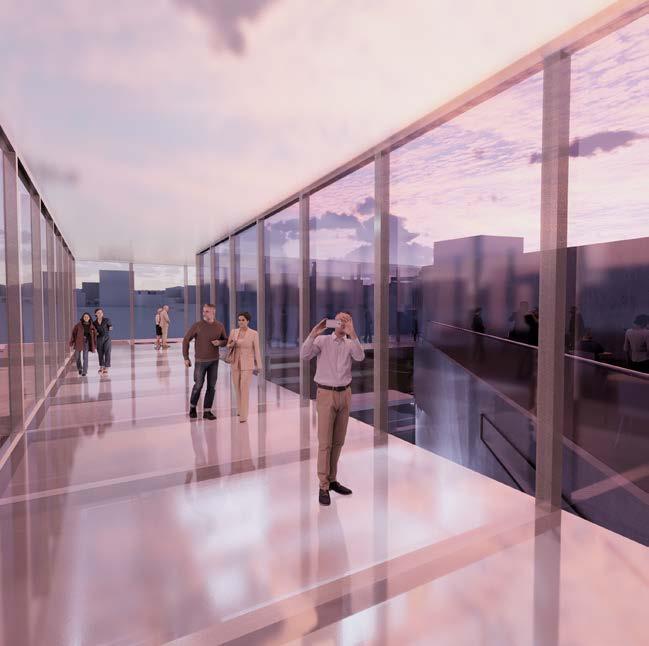
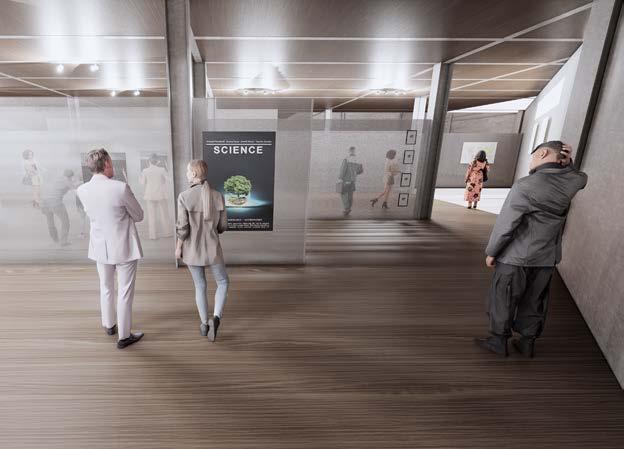
The film utilizes many suspenseful strategies to keep viewers engaged. These include moments of voyeurism, and the build and release of tension. My museum intends to create suspense in order to retain visitor interest while guiding them through the promenade.
The execution of this goal was based on three main priorities: alluding to destinations, voyeuristic spacial connections, and tantalizing glimpses into spaces.
Suspenseful strategies in this museum give visitors a deeper connection to similar strategies used in film. It intends for the emotional pull of film to be felt while decoding its spatial sequences.
MUSEUM OF THE MOVING IMAGE
MUSEUM OF THE MOVING IMAGE
PLANS: GROUND FLOOR
FLOOR PLAN: GROUND FLOOR
PLANS: FLOOR
PLANS: FLOOR 3
30 FLOOR PLAN: 3
FLOOR
= 1/16”th
WAYNE NEBRASKA CO-HOUSING
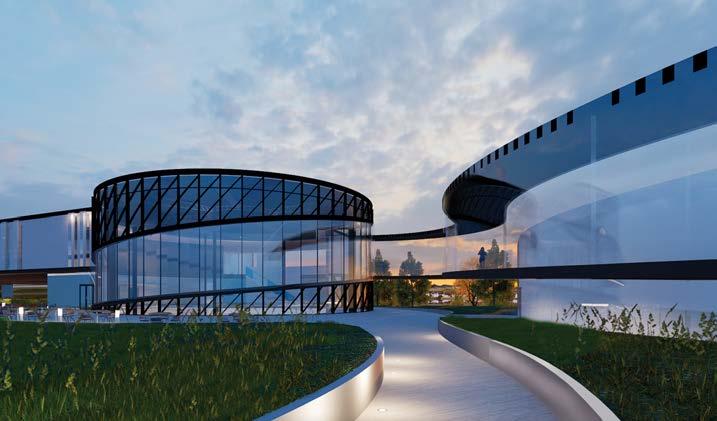
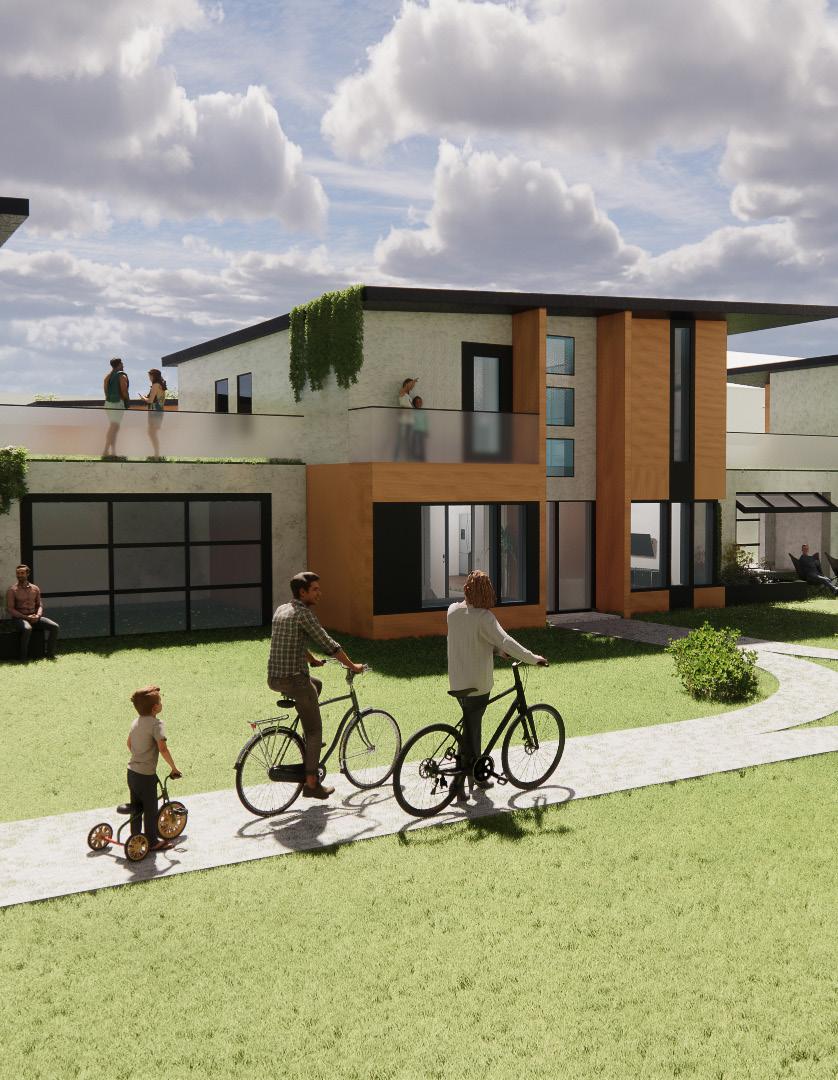
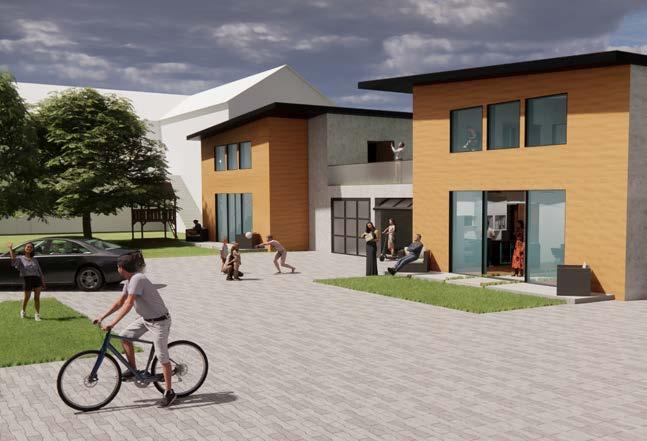
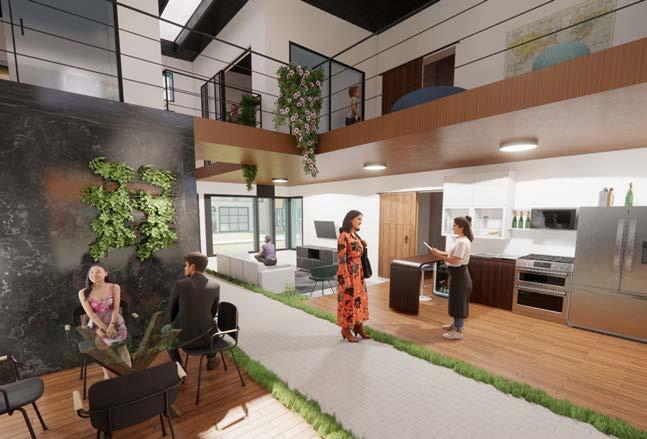
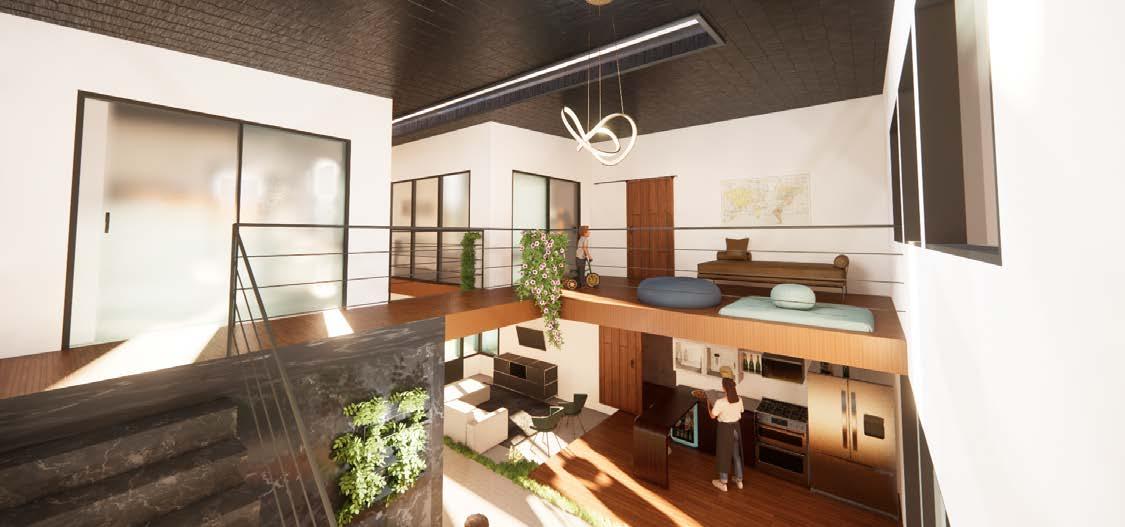
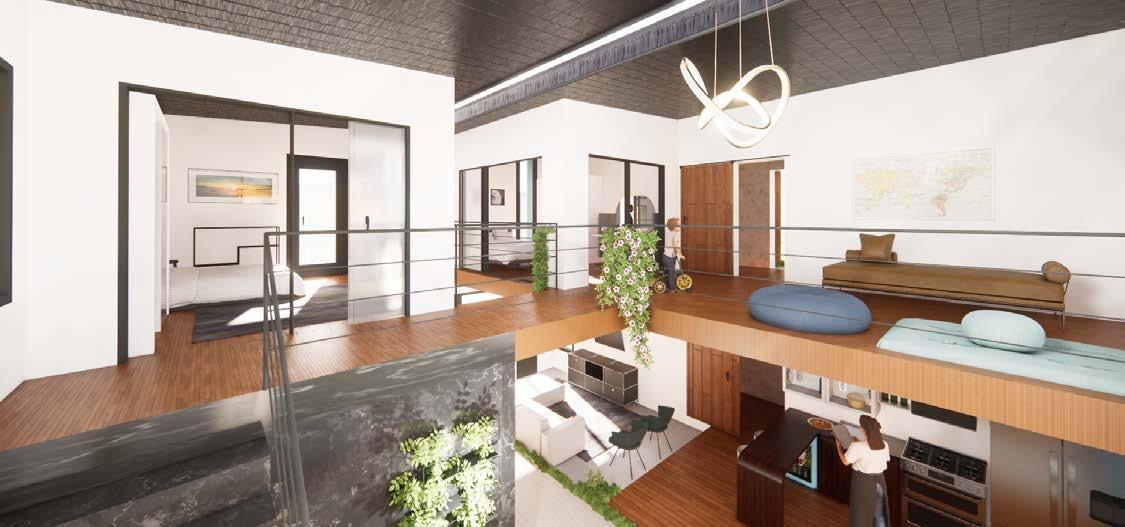
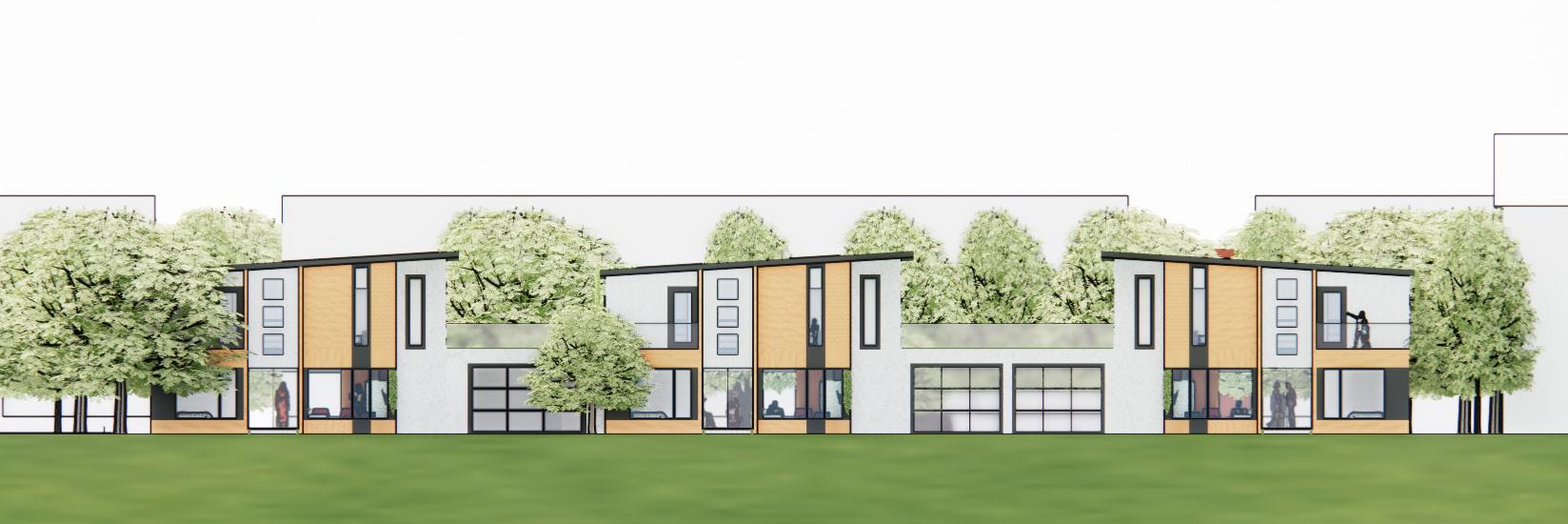
The goal of this project was to create a co-living situation for residents in Wayne, Nebraska. My design of this space centered around biophilic design that enhances human connectivity to nature, promoting well-being and community.
By mirroring the natural environment, this architecture supports positive interactions and a sense of belonging. Spaces prioritize ventilation, openness, and freedom, inviting exploration and connection.
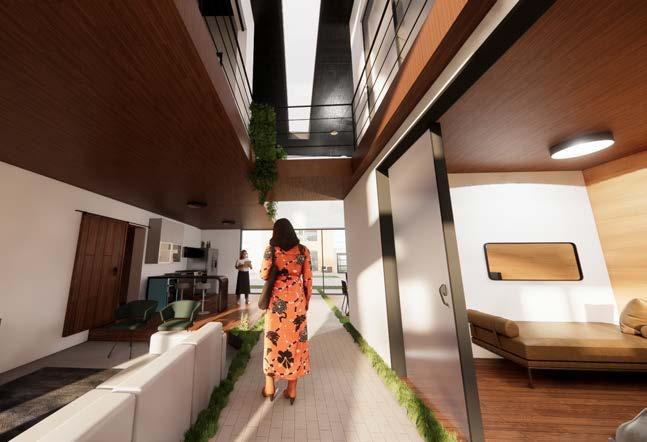
Central axes frame views to communal areas, while natural light permeates living spaces.
The design blurs indoor and outdoor boundaries, allowing for fluid movement and interaction. Double-height spaces and sliding glass doors facilitate airflow and merge environments, reinforcing the home’s symbiotic relationship with nature. This setting intends for residents to feel both grounded and free, fostering a strong sense of community and well-being..
GROUND FLOOR
FLOOR 2
RESTAURANT & RESIDENCY
partner: Mike Mancuso
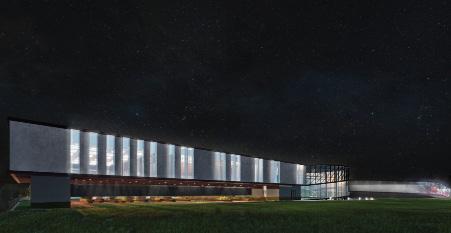
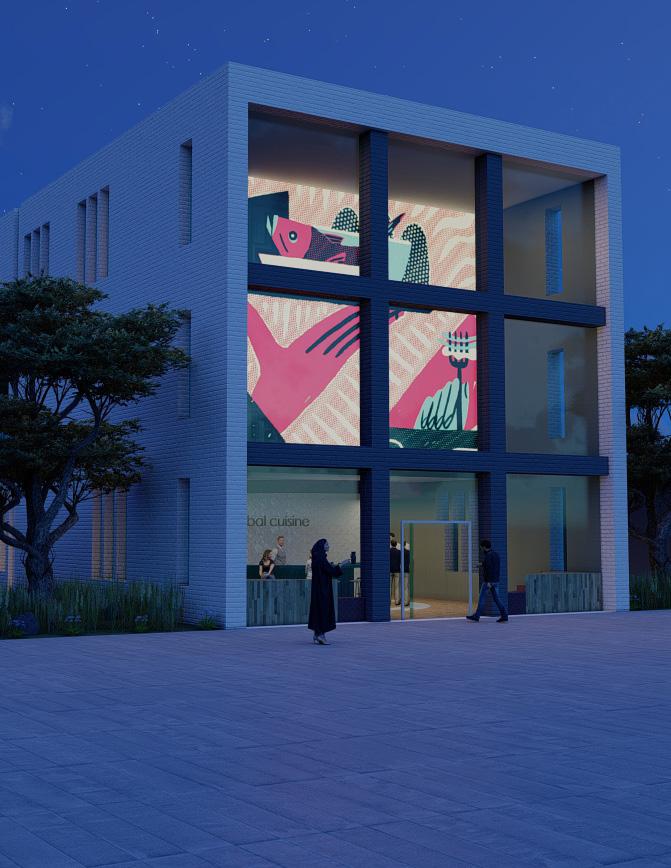
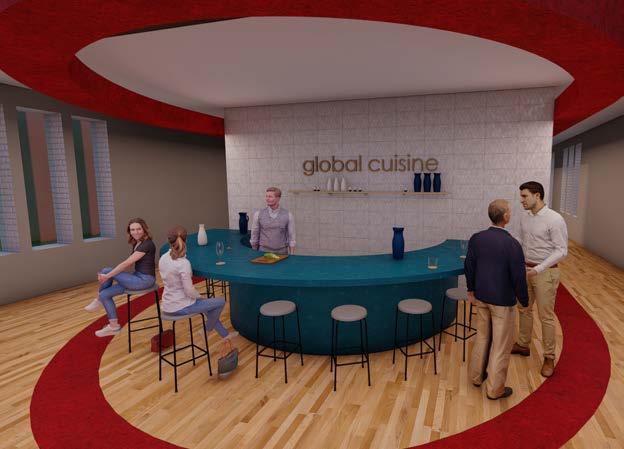
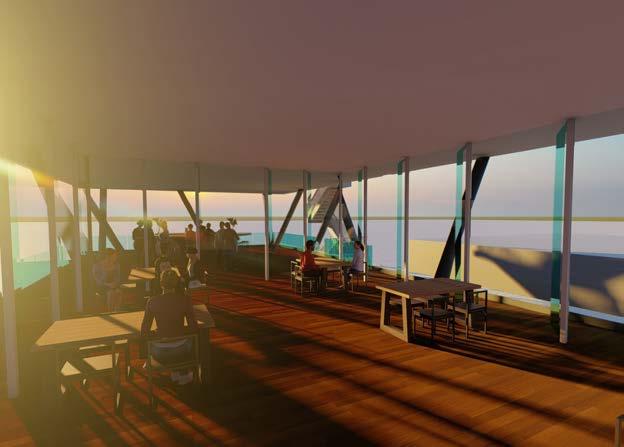
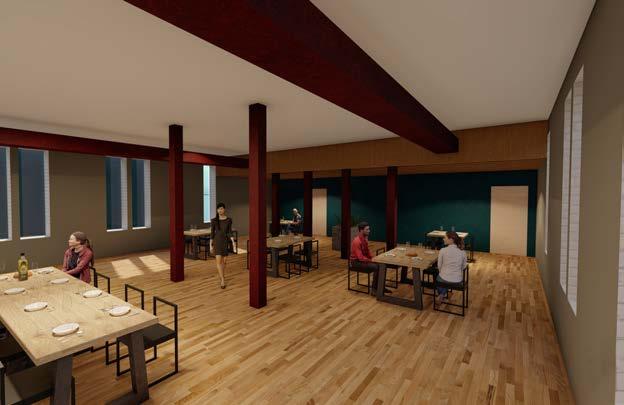
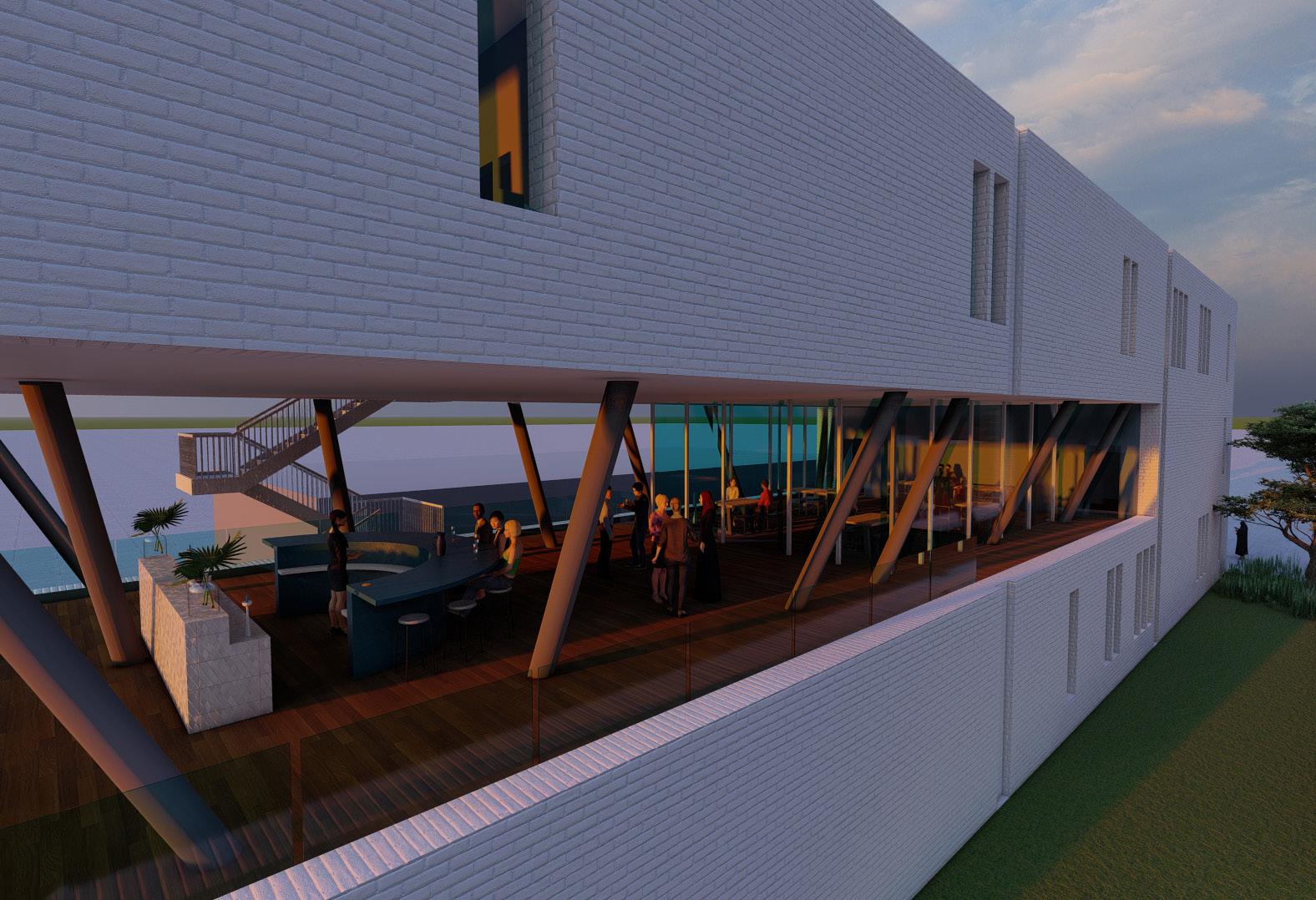
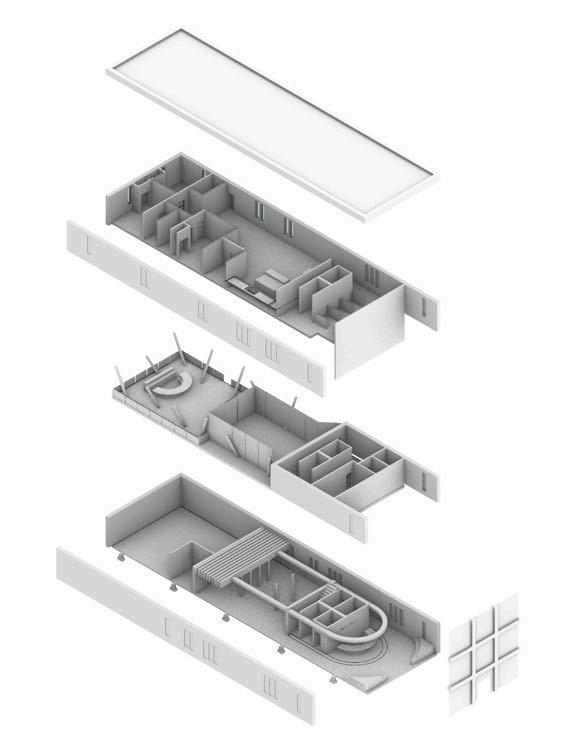
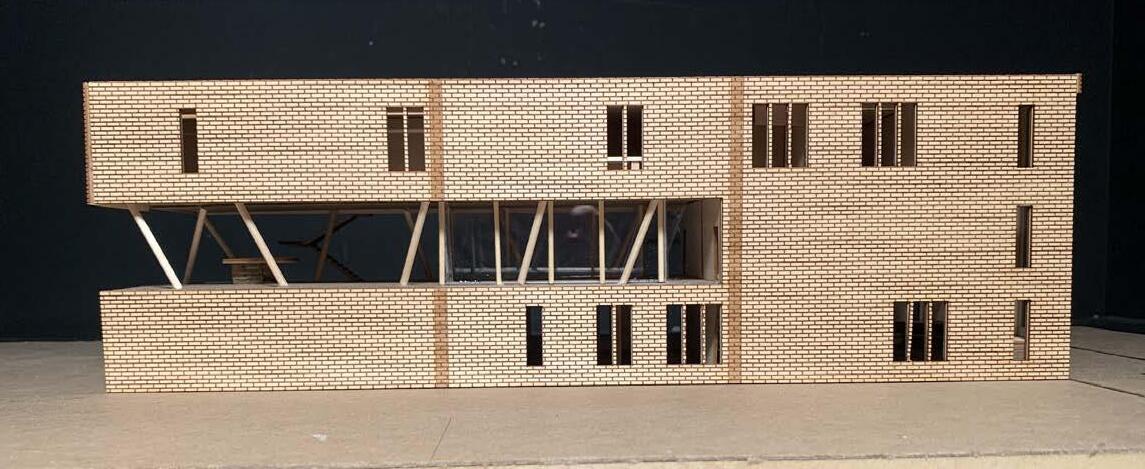
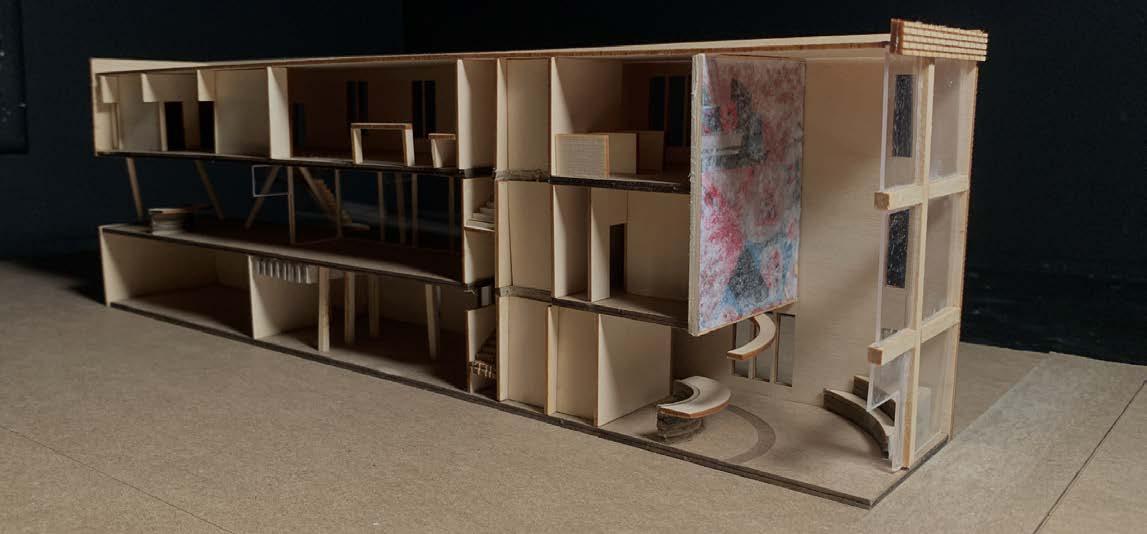
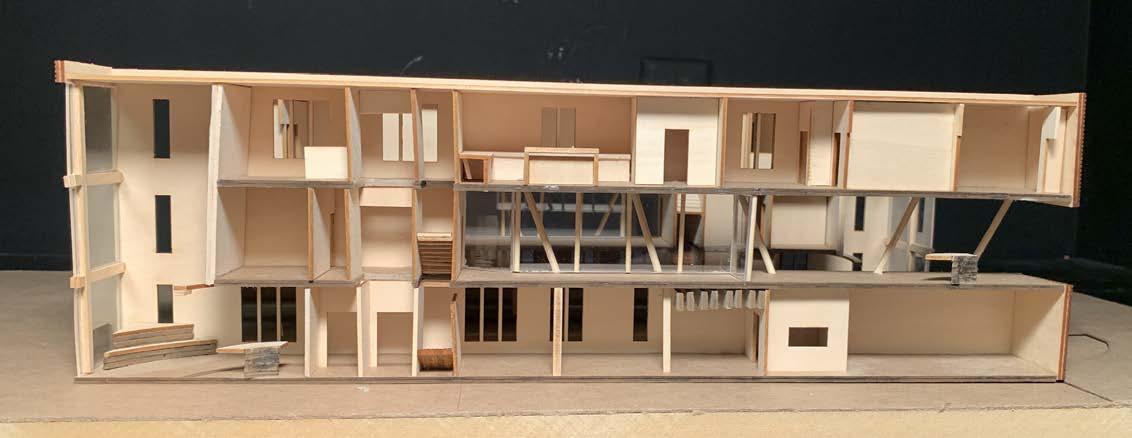
The goal of this project was to create a restaurant and living quarters for traveling chefs. The building has three levels. Level one contains the restaurant and kitchen space, level two is a partially outdoor and indoor event space, and level three is the apartment for traveling chef’s.
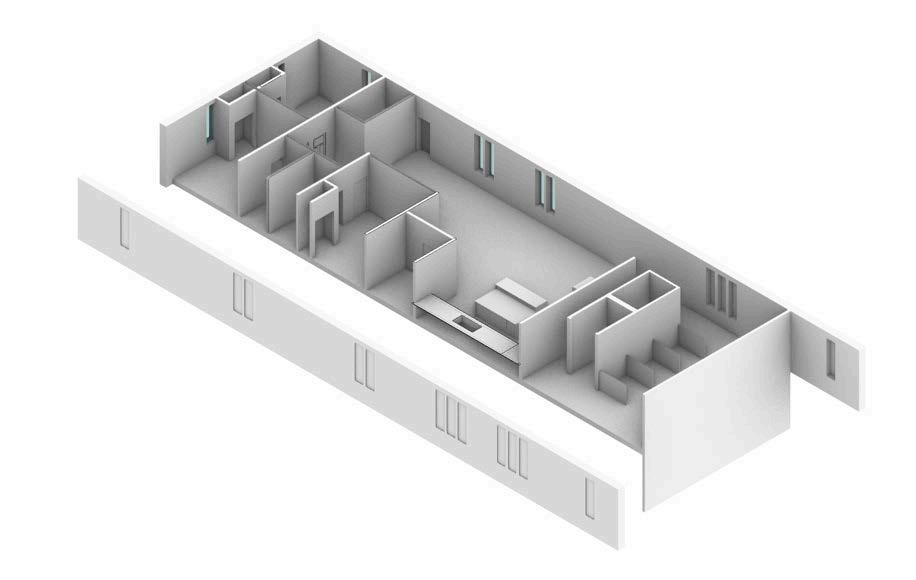
This project was designed entirely based on the rule of thirds and progressions of privacy. More public spaces can be found towards the front of the structure while privacy levels increase towards the back. Each third of the building is intended to have a change in the level of privacy, changing from public to semi-private to private.
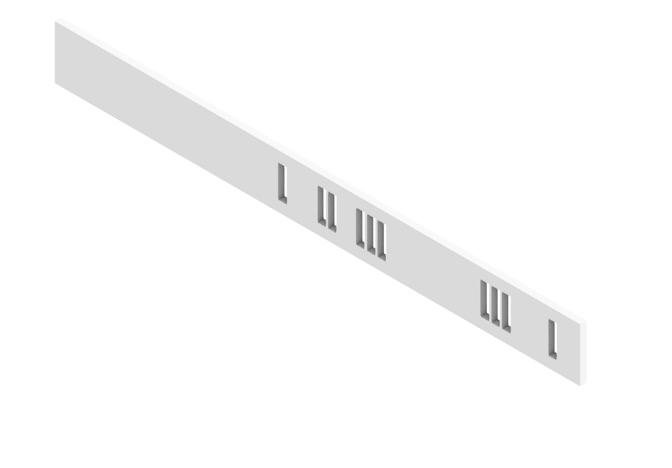
Lighting was a large factor considered for privacy. The front facade is a glass surface that allows in large amounts of light. The screen on this facade also adds to the lighting while displaying anything the chefs want to share. The lighting fades as areas become more private. Windows begin in sets of three then decrease to only one as they reach more private areas. All of these windows are snapped to a grid of thirds that is carried across the building. Each level is divided into three sections, and each of those sections is divided into a grid of thirds. The thirds assist in the progression of privacy and guide the arrangement of the space.
& RESIDENCY
WEST ELEVATION 1/8” = 1’-0”
EXPLODED AXONOMETRIC
MUSEUM OF VOLUMES
MUSEUM OF VOLUMES
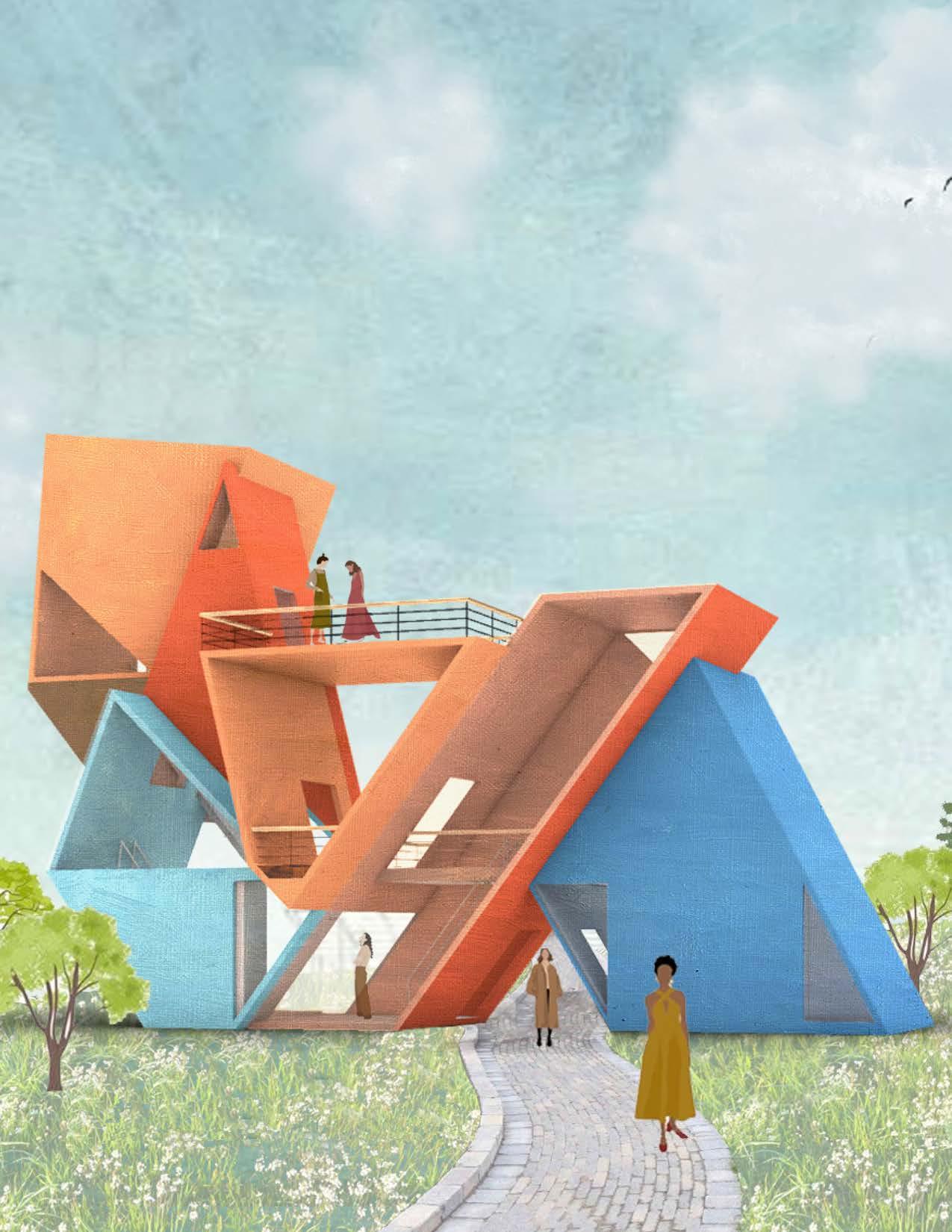
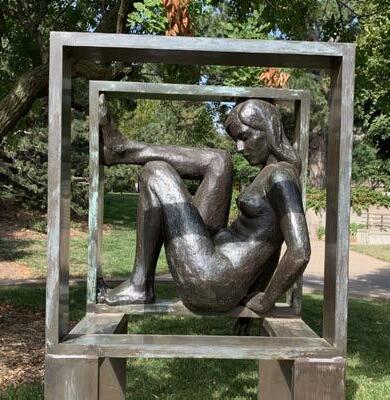
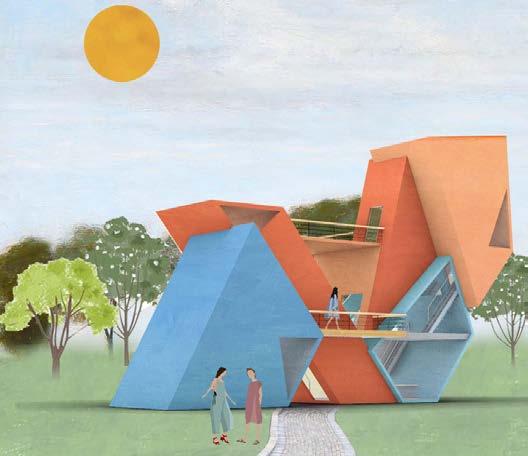
The design of this museum began with an exploration of sculptures and artwork around Lincoln. I was drawn to a sculpture of a woman and used its forms as inspiration, abstracting the shapes of the human body to shape the structure.
The design process for this museum started by looking at sculptures or artwork around Lincoln. I chose to focus on the sculpture of a woman pictured below. From here, I abstracted the shapes of the human body to form the structure.
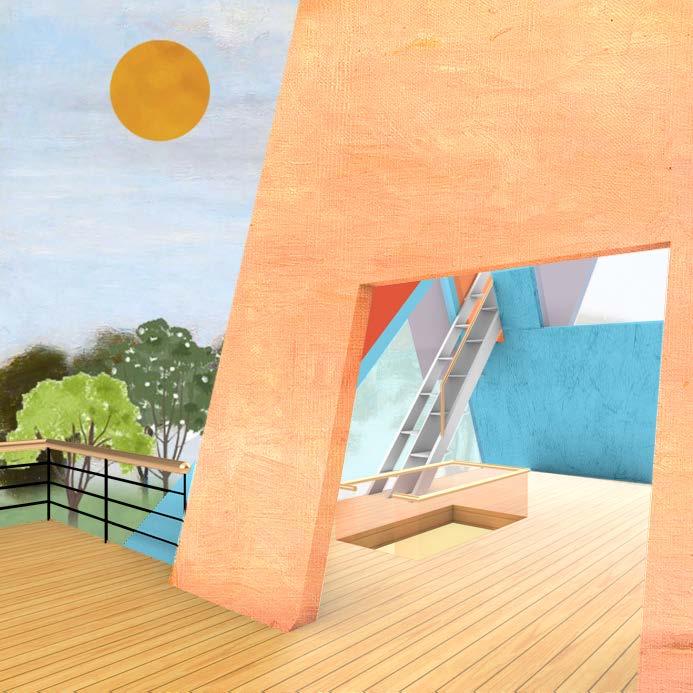
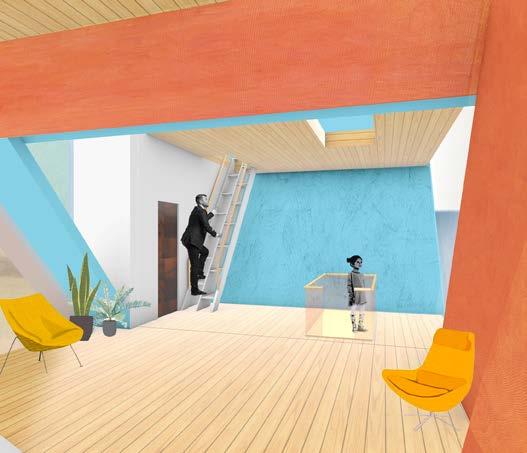
With the structure resembling a human body, I chose to design the museum as a museum for movement. Each of the buildings rooms were designed for a specific purpose, focused on motion. On the first floor there is a theater for performing arts , second floor is a gallery of moving objects, along with a balcony to watch the theater, and on the third floor a outdoor patio.
With the building resembling a human figure, I envisioned the museum as a space dedicated to movement. Each room was designed with motion in mind. The first floor features a theater for performing arts, the second floor houses a gallery of kinetic sculptures with a balcony overlooking the theater, and the third floor opens to an outdoor patio.
As this was a more creative rather than technical project, ladders replaced stairs and moving platforms were used as elevators. All to try and promote different types of movement.
This project was an opportunity to explore movement in architecture, creating a dynamic experience that engages visitors in new and unexpected ways.
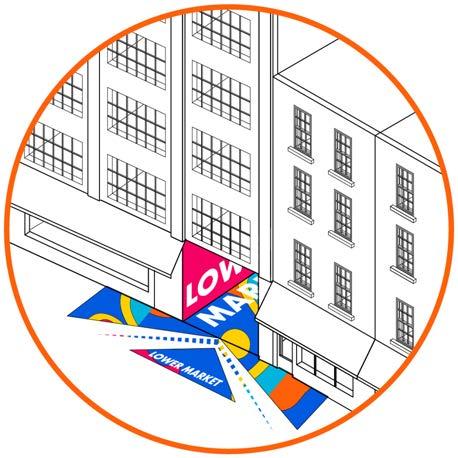
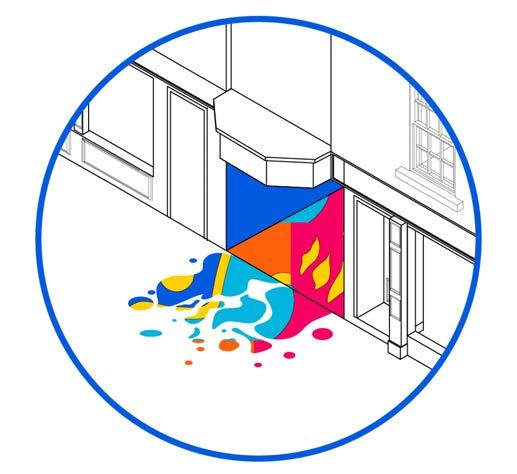
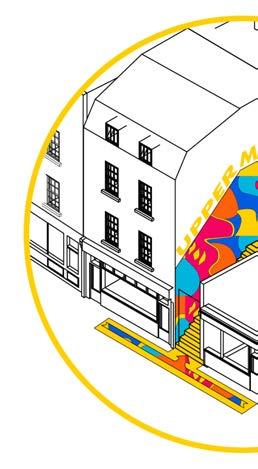
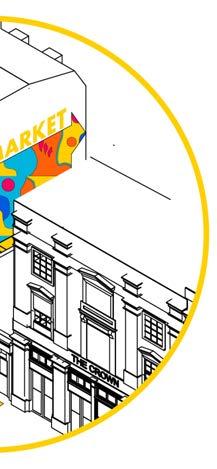
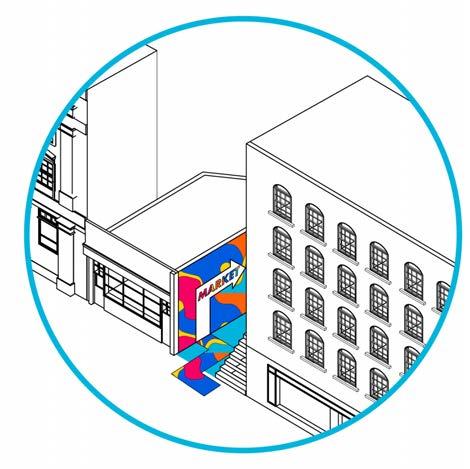
MARKET ENTRANCES
CLASSROOM LEARNING COMMONS RESOURCE
RESOURCE ROOM CORRIDOR
EXTERIOR WALK