LAUREN JASPER
Cornell University
B.Arch Thesis
Cornell University
B.Arch Thesis
An Urban Design Proposal In Pittsburgh’s Hill District
B.Arch Thesis Project: Cornell University (Spring 2024)
Thesis Advisors: Milton Curry and Imani Day
This project is an urban design proposal for Pittsburgh’s Hill District, along Wylie Avenue, that re-imagines cultural life and catalyzes urban economic development for the district’s native Black residents. From the 1930s to the 1950s, the Hill District was one of the most influential and profitable African American neighborhoods in the country, with Wylie Avenue being its central artery. However urban renewal efforts by the city destroyed the Lower Hill District, displacing over 8,000 people and 400 businesses. In the decades since the area has been subject to extreme disinvestment and population loss.
This project aims to rectify historic injustices though a series of urban design strategies designed to give power of development back to the neighborhood’s African American community, preserve the area’s history and cultural capital, and support the neighborhood’s future through economic growth and affordable housing.

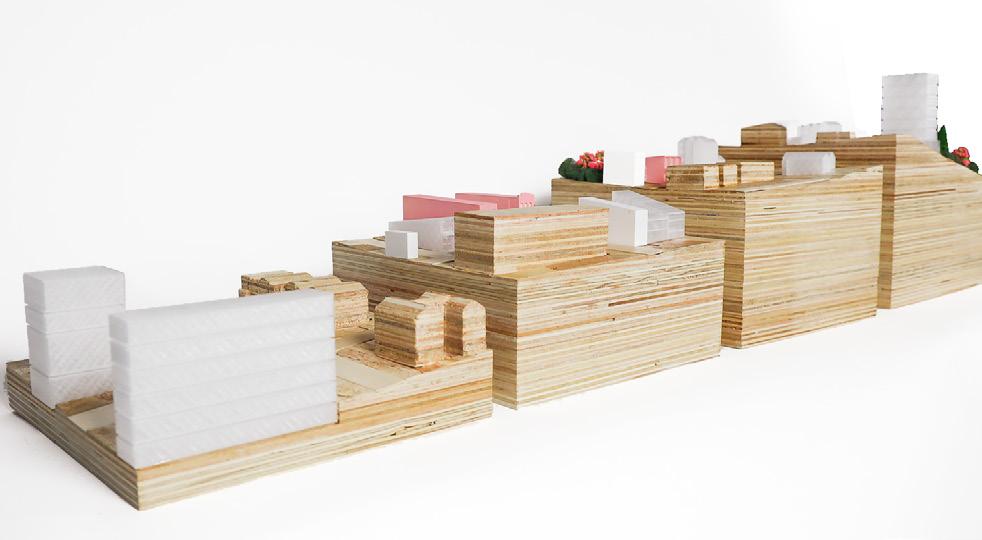
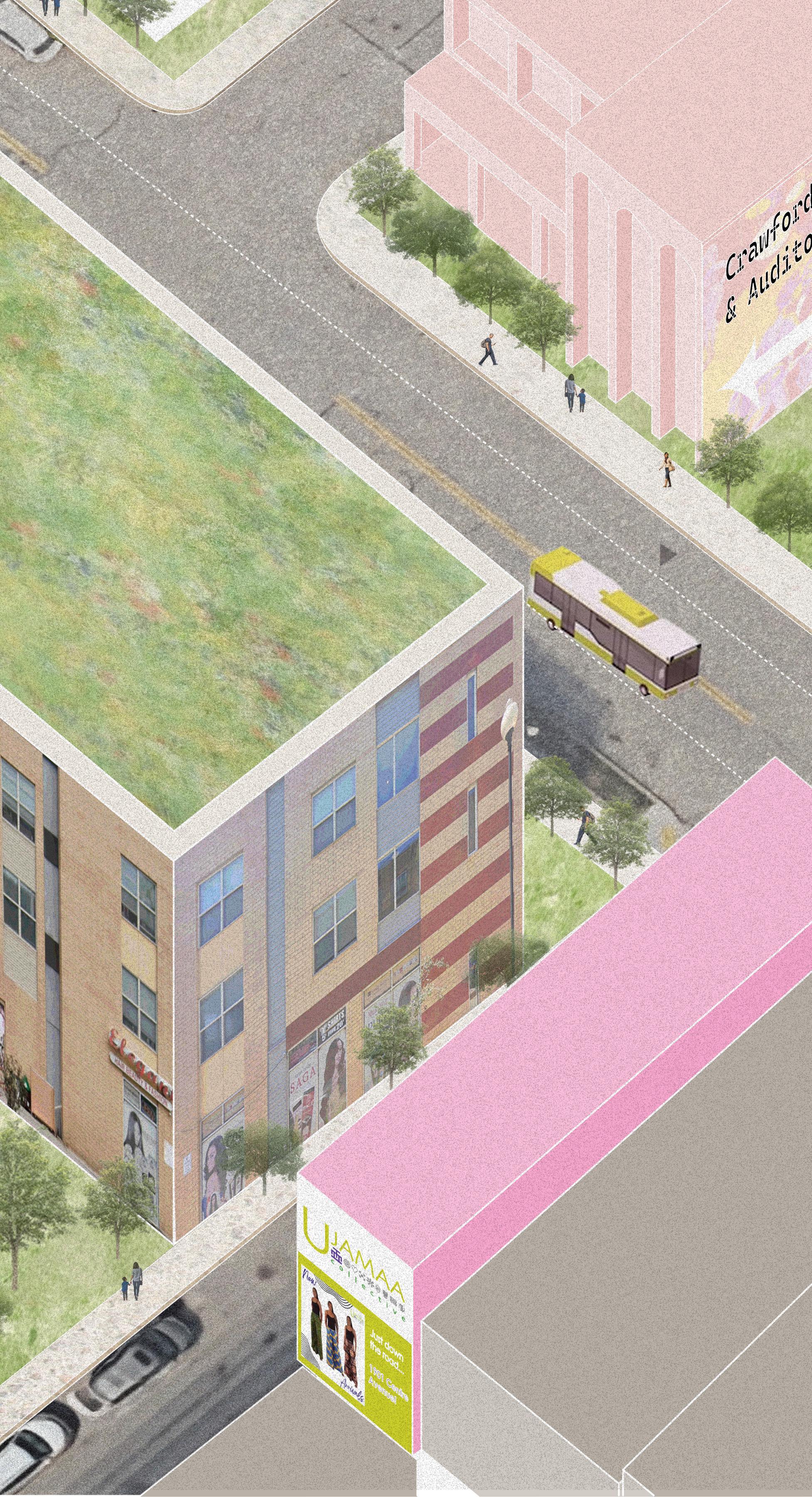
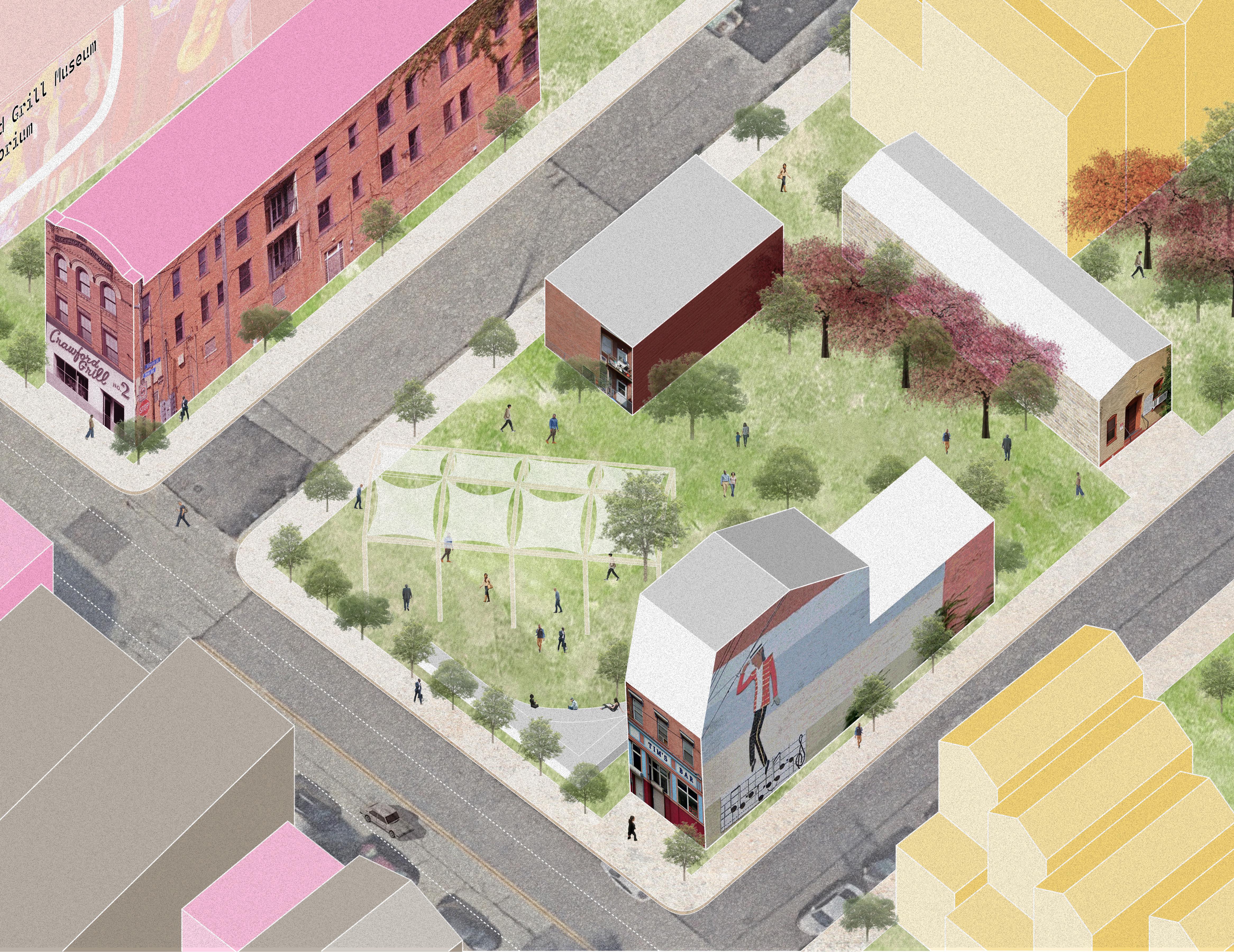
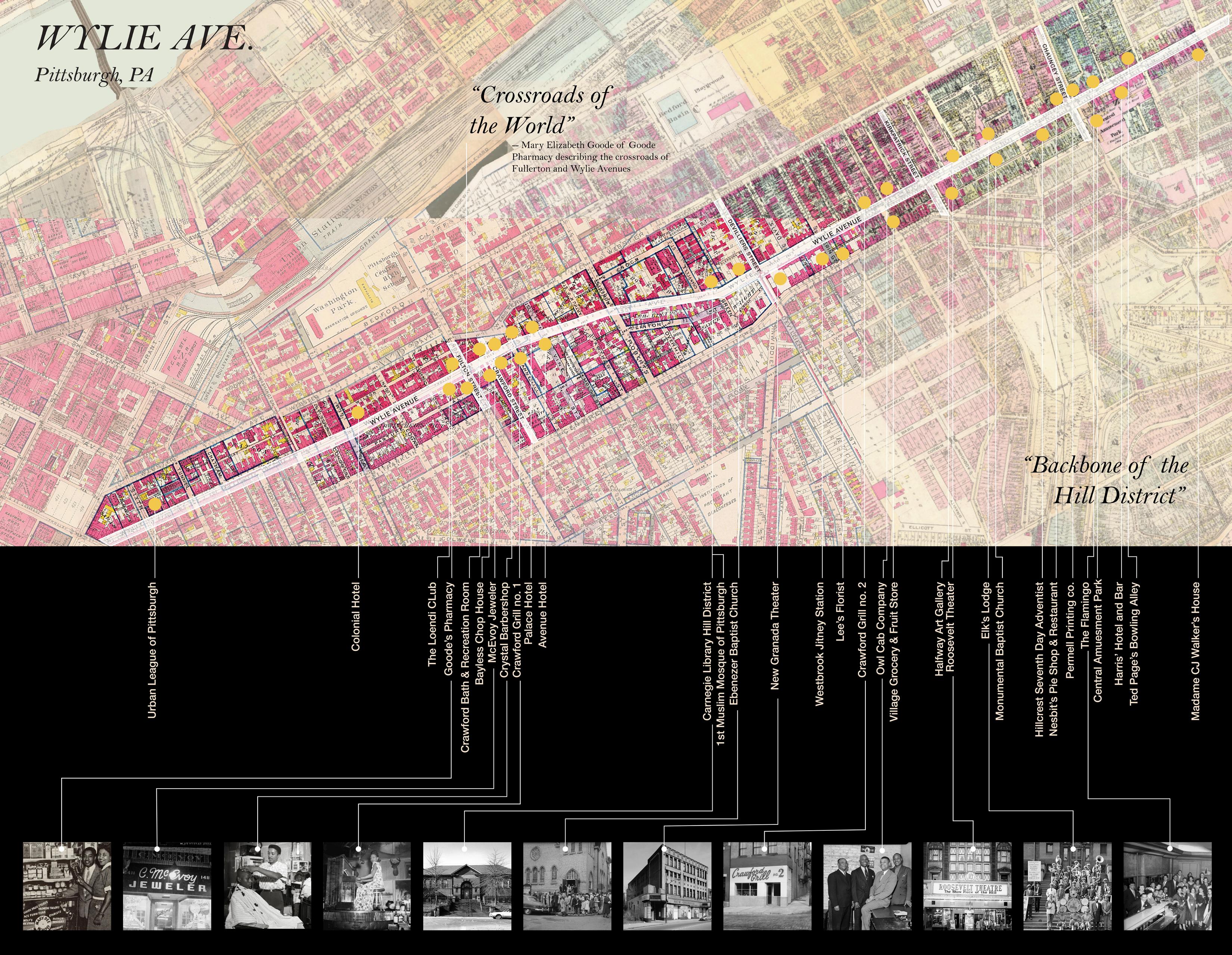
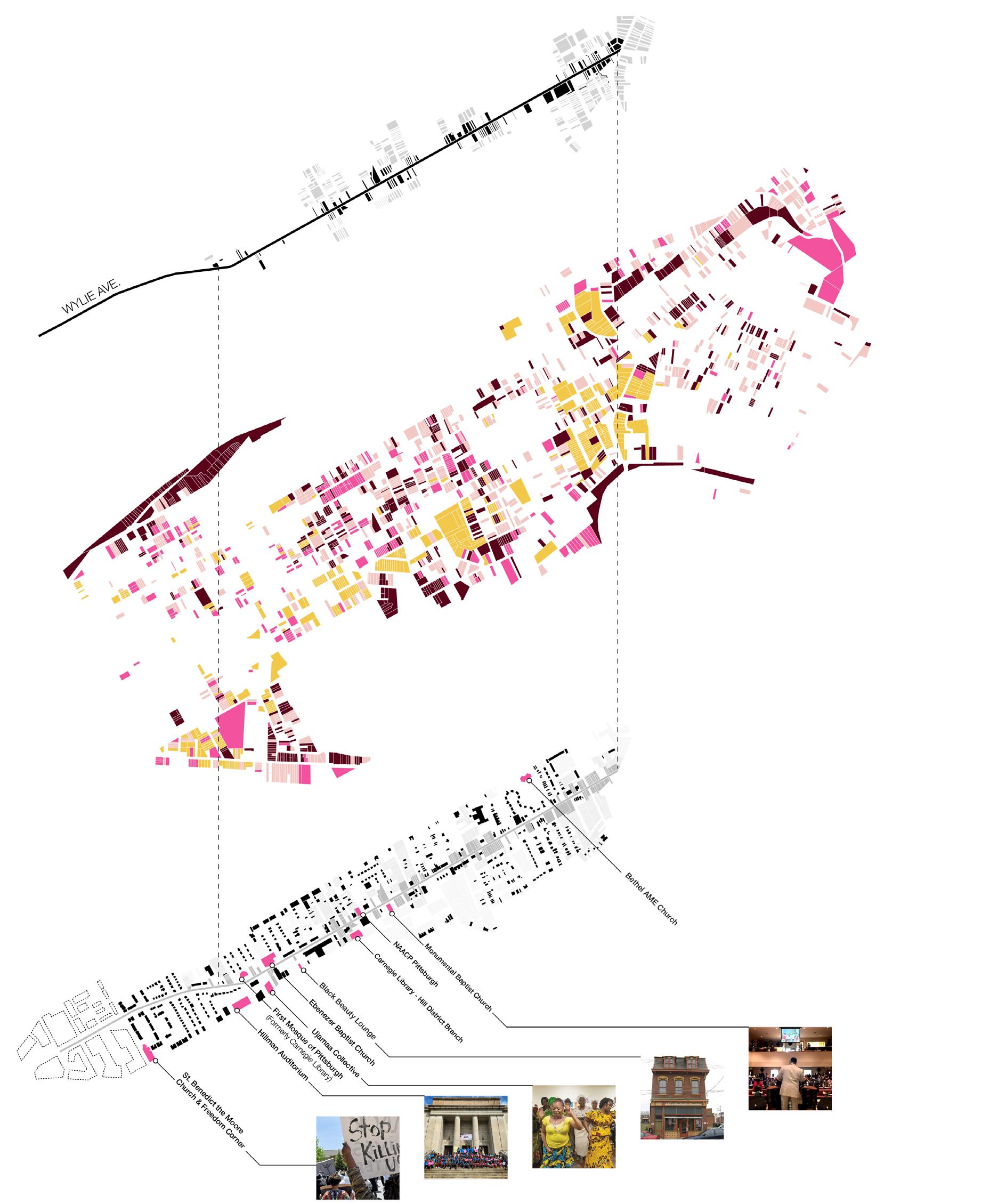
Present-Day Site Conditions
Wylie Avenue
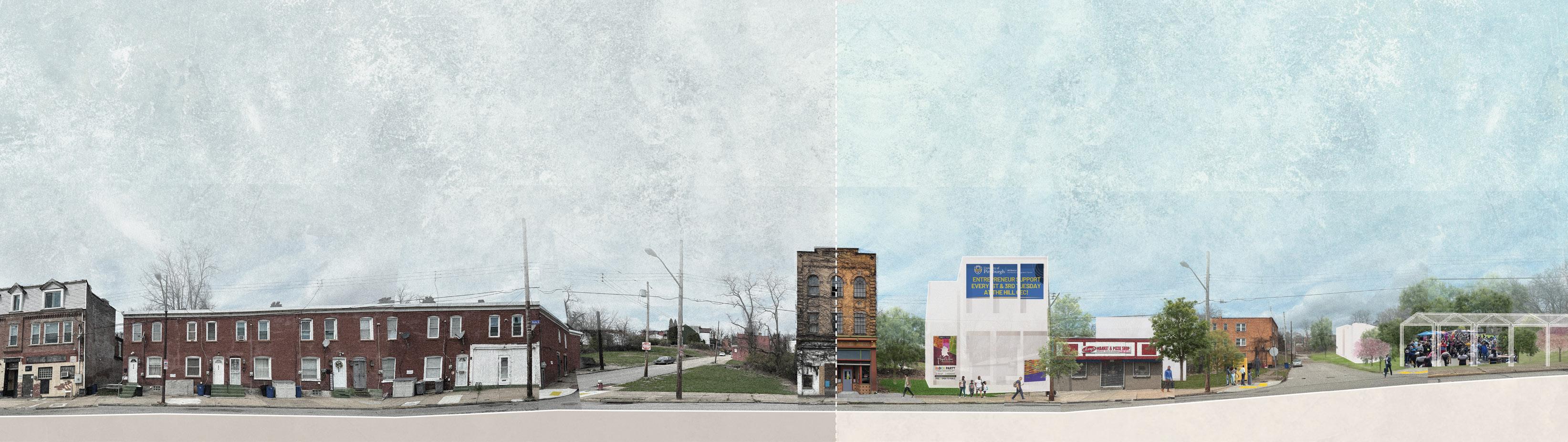
Just along Wylie avenue, there is over 800k square feet worth of vacant lots.
Fabric of Vacancy: Land Parcel Ownership
Owned by the URA
Owned by the City of Pittsburgh
Owned by other public corporation
Private ownership
Just over 50% of all properties and 30% of total land in the Hill District are vacant, but the neighborhood is also rich in existing cultural assets including religious institutions and community centers.
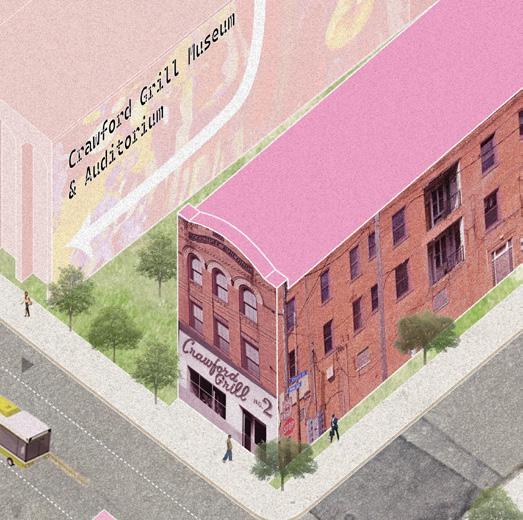
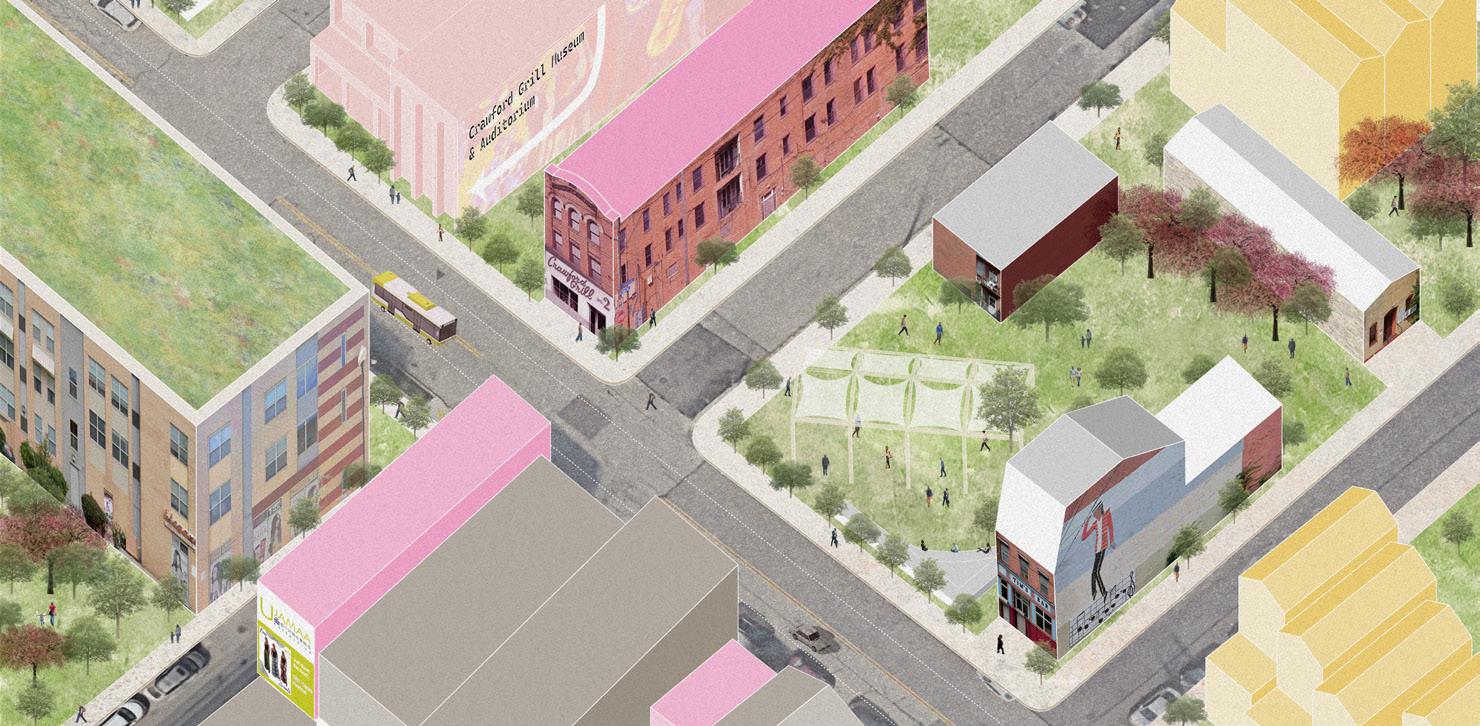
ANCHOR the cultural capital of the district through old and new Black-owned cultural institutions.
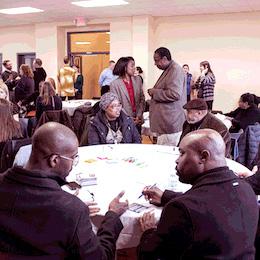
the Hill District’s current Black community through the PREC model.
strategy to address high amounts of land vacancy utilizing publicly-owned land parcels.
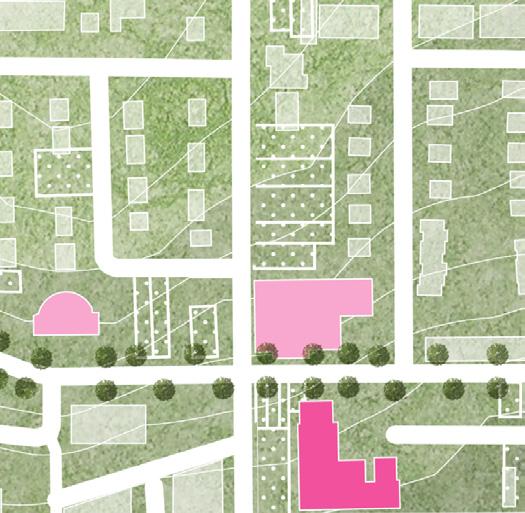
an urban framework for future housing, commercial, and cultural development.
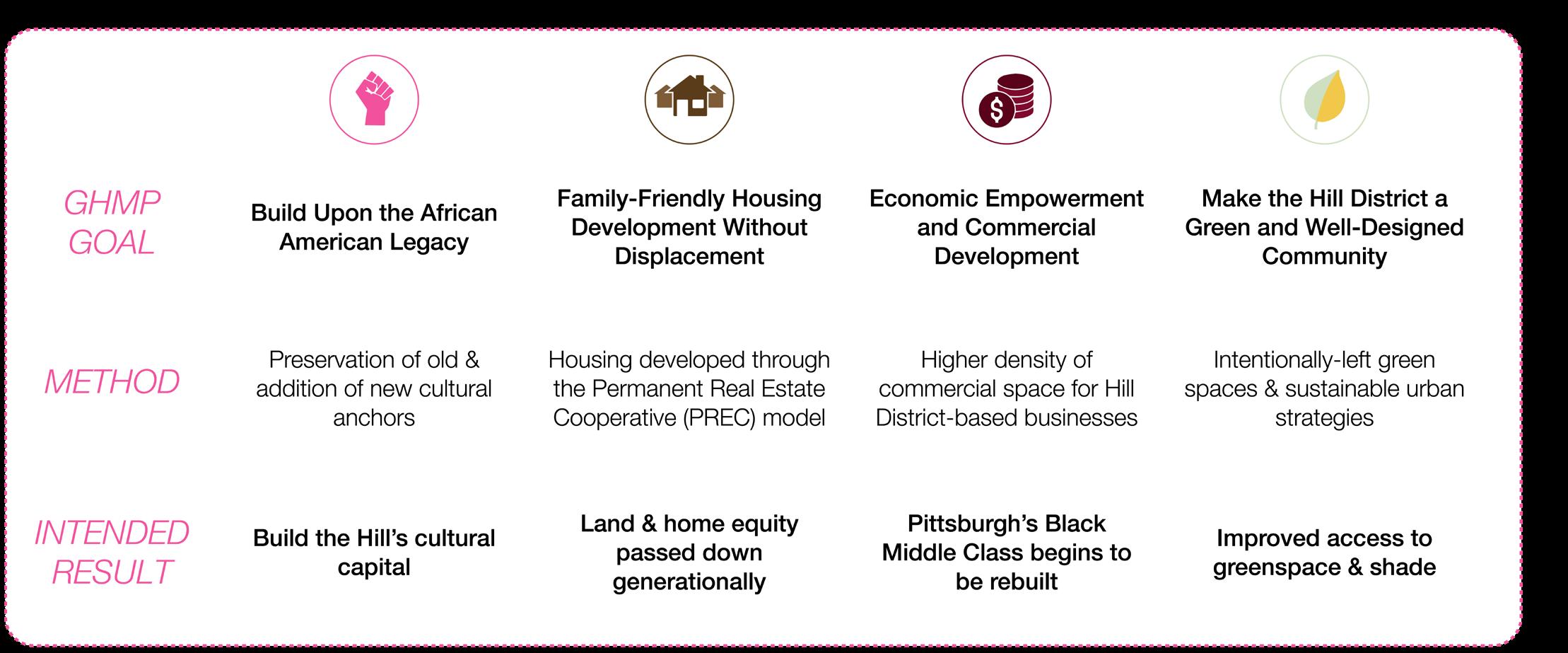
Strategies from the Greater Hill Master Plan (2022)
This proposal is guided by the goals outlined in the Greater Hill Master Plan and produces alternatives to the Lower Hill development site.
This scheme provides access to vital necessities that are presently not available within the Hill and encourags the population of new black-owned businesses that are reflective of the Hill’s culture.
EXISTING CASE: Lower Hill Redevelopment Plan
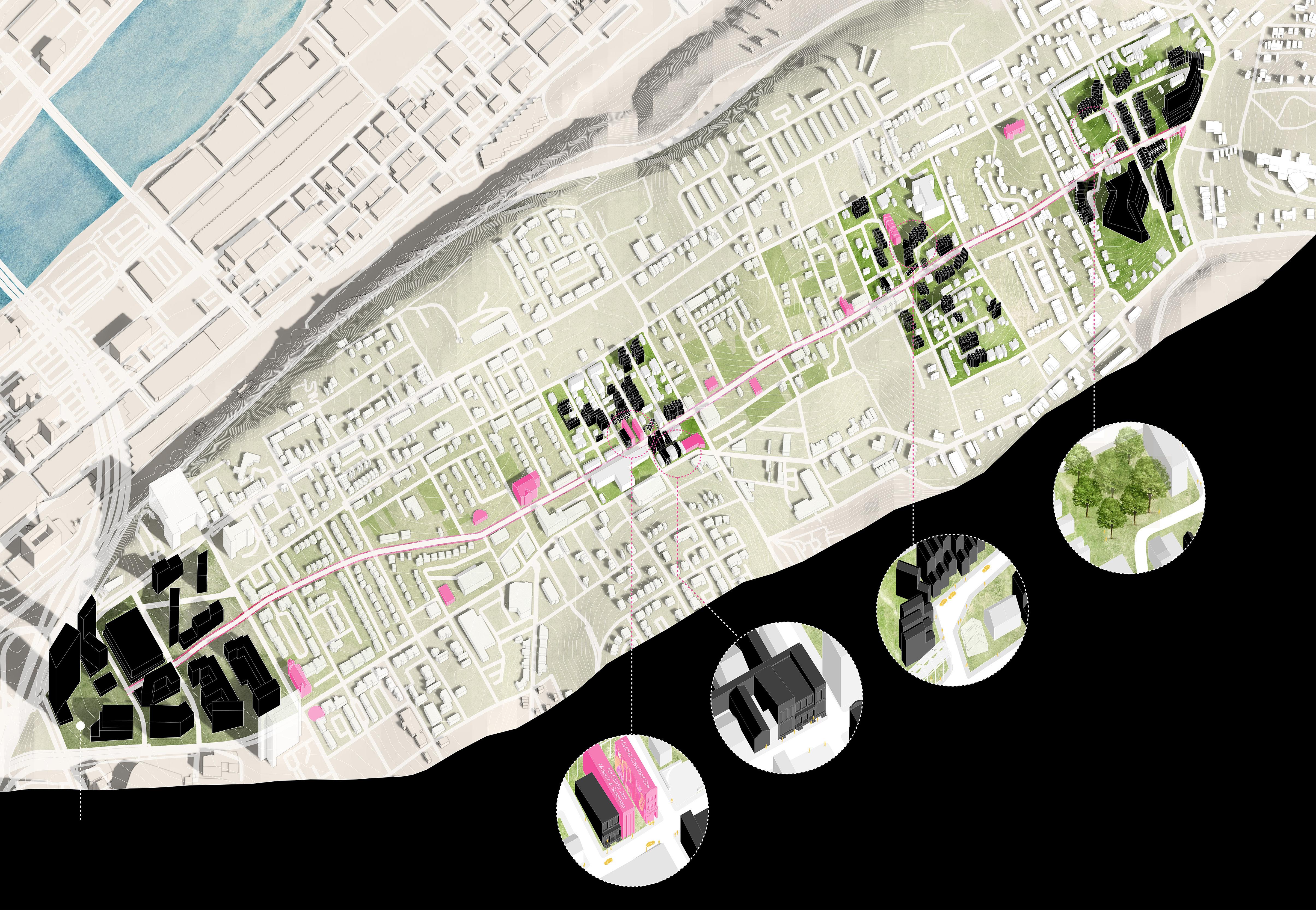
Preservation of old & addition of new cultural anchors
Improved access to green space & shade
Housing developed through the Permanent Real Estate Cooperative (PREC) model
Higher density of commercial space for Hill District-based businesses
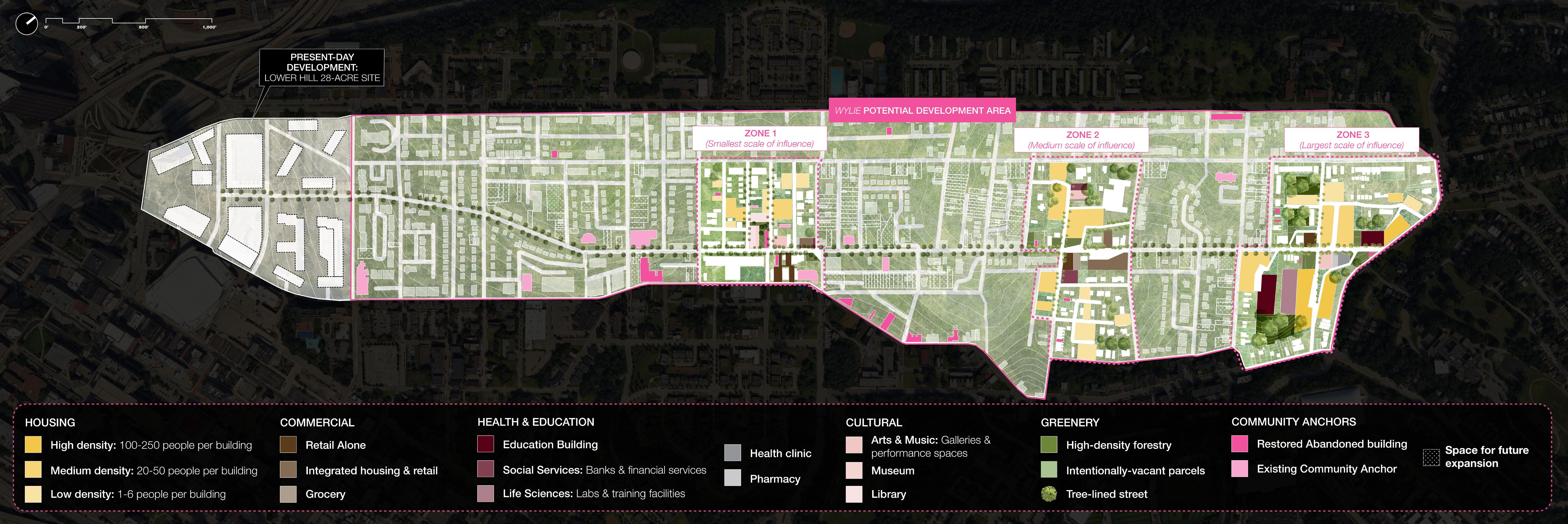
Zone 1:
Small-Scale Cultural Capital Development
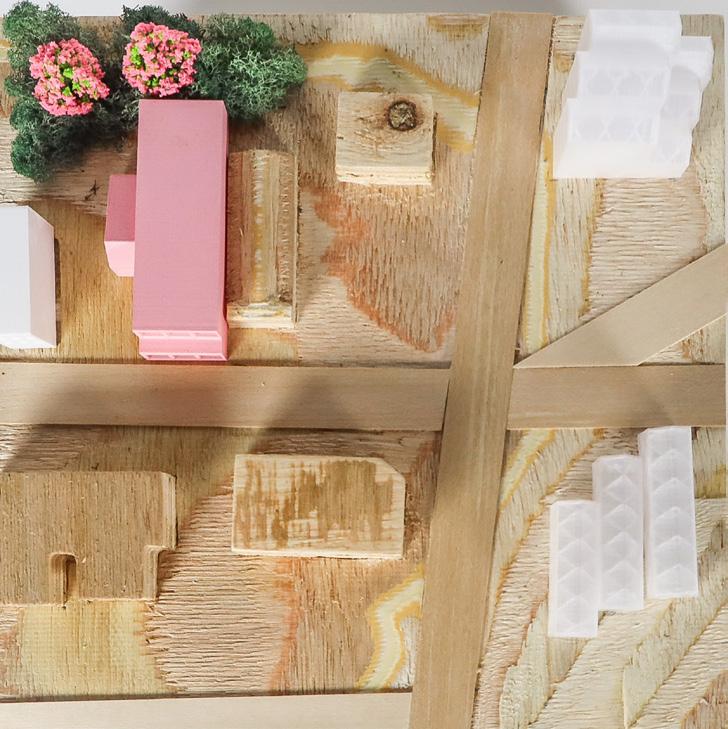
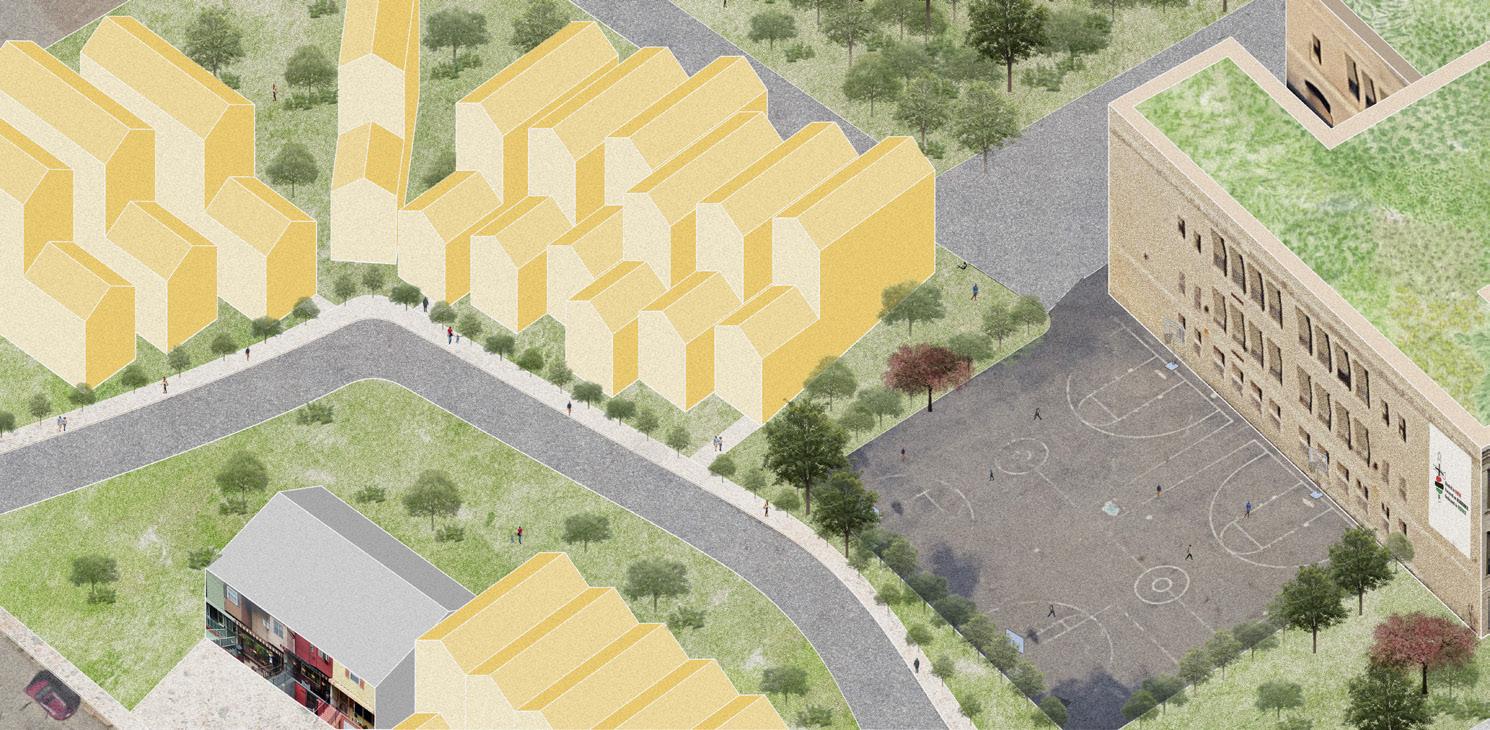
Zone 2:
Multifamily Housing & Consolidated Land Ownership
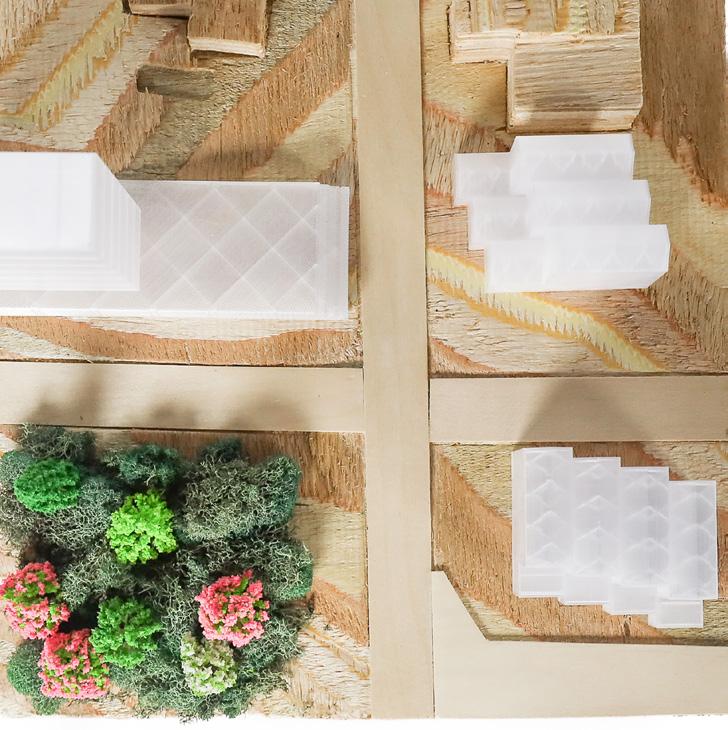
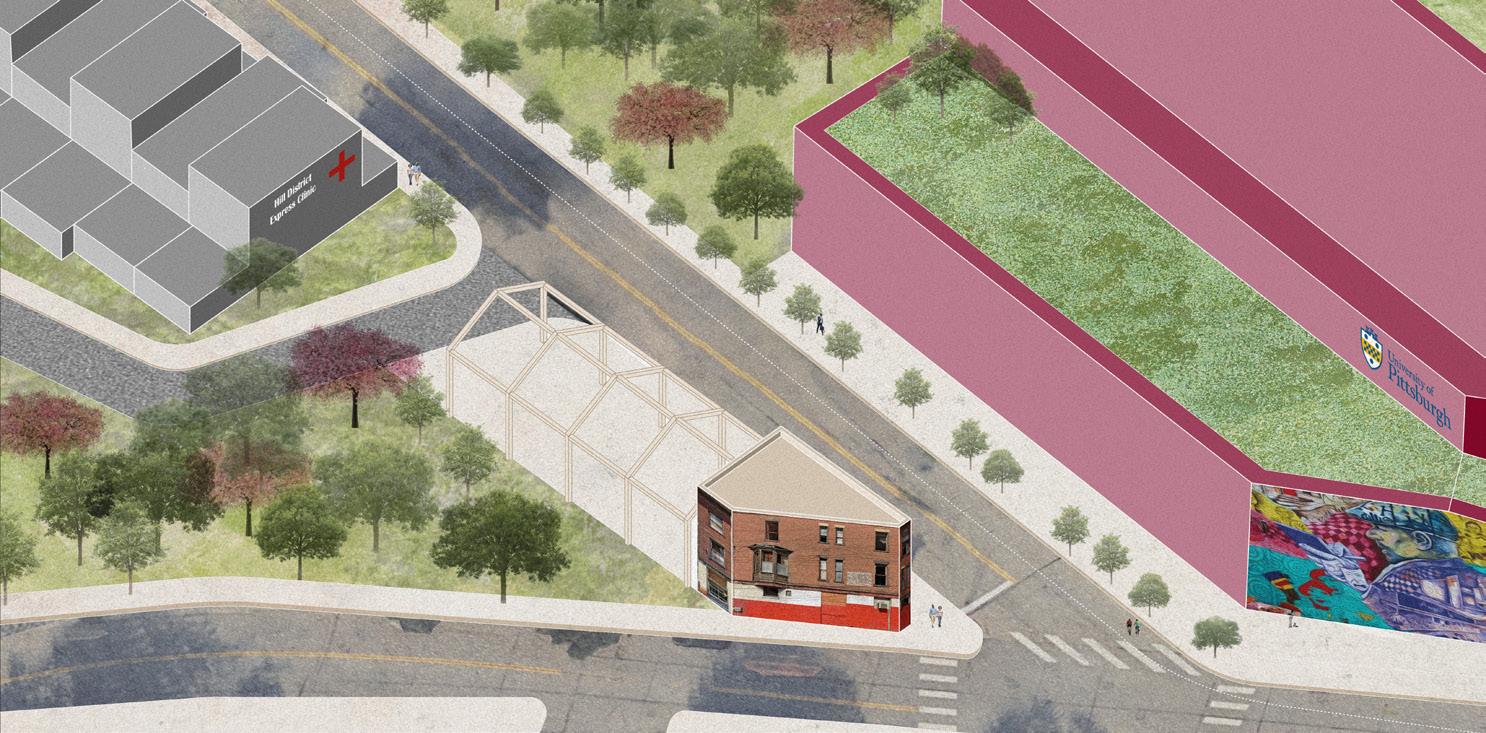
Zone 3: Public/Private Partnership with the University of Pittsburgh
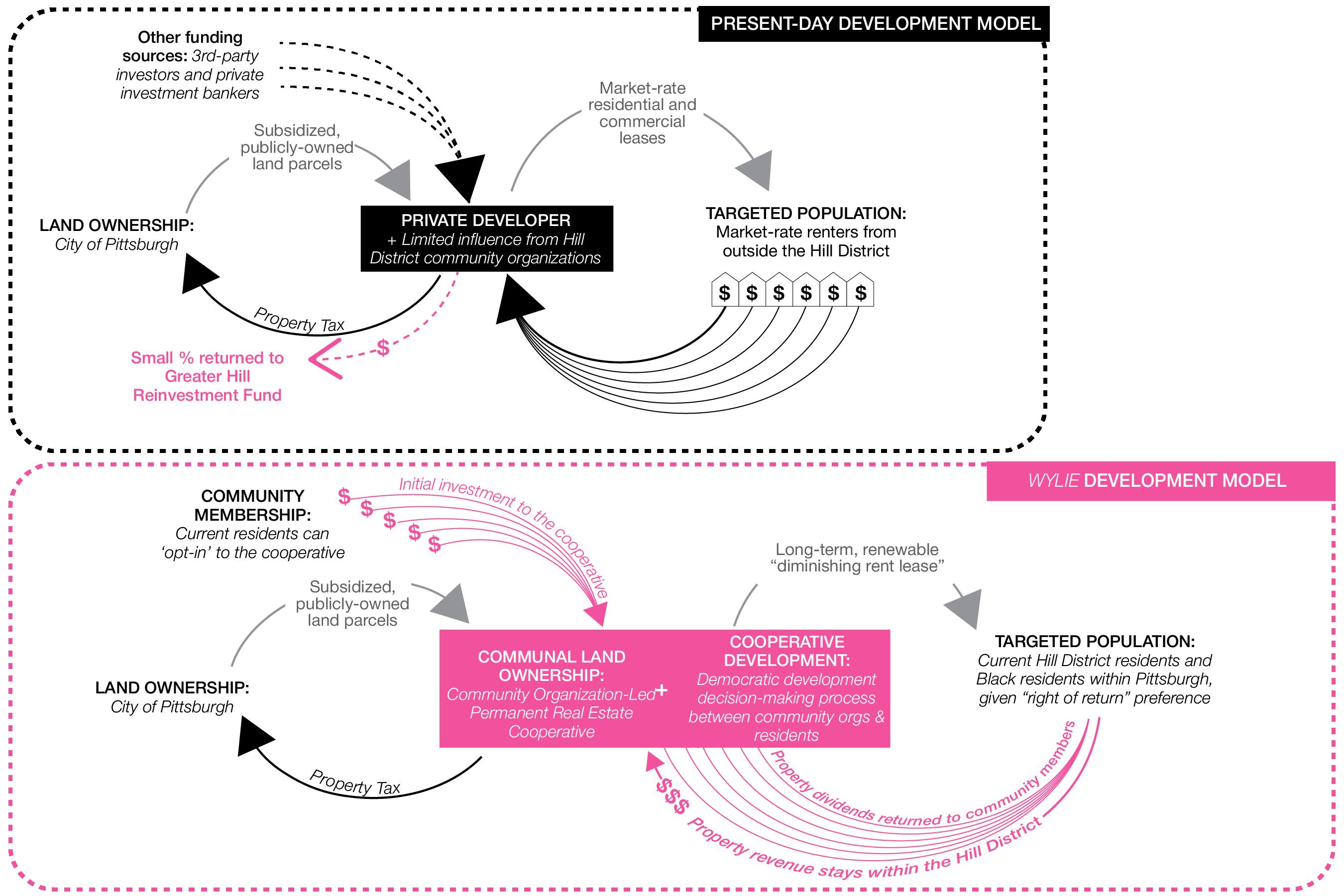
The primary economic method of achieving this scheme is through the permanent real estate cooperative model. It operates similarly to a community land trust, and puts development decisions in the power of a democratic collective made up of residents and administered by the community organizations.
Land would be owned by the cooperative, but would still allow residents to build property equity through simulated homeownership. It contrasts the existing development in the Lower Hill by giving the power of land ownership and decision making to the district’s current population.