
WE ARE LATINO BOLD MAGAZINE
Bienvenidos to the inaugural issue of Latino Bold Magazine, a vibrant new voice celebrating the rich tapestry of Hispanic and Latino experiences across the United States.
Editorial Team
Jossy Menjívar
Susana Reyes
Iván Morataya
Aaron Eisenberg
Margarita Navas
Alejandro González Cruz
Visual concept & design
Kevin Vaquerano
Producer
Bold Communication
Please cite as:
Latino Bold Magazine. Washington, DC. October 2024.
In a world where ideas ignite change and voices inspire movements, Latino Bold stands as a powerful platform to amplify our stories, our heritage, and our visions for the future. We believe that every opinion holds the potential to influence, transform, and empower communities far and wide.
Our pages are dedicated to you, the dynamic and diverse individuals who shape the Latino identity every day. From bustling city streets to quiet suburban neighborhoods, from seasoned professionals to ambitious young adults, we represent the multitude of backgrounds, lifestyles, and dreams that make our community so incredibly unique.
Reading Latino Bold, you’ll find a diverse array of topics that matter the most to today’s Latino American community. Engage with us in discussing matters of culture, and celebrate our evolving identities. Find thought-provoking perspectives on our nation’s political landscape, and witness the impact of current events through the eyes of Latinos all across the country. Learn from insightful articles on health and wellness that are tailored to our specific needs, and whose research reflects our lifestyles.
True to our name, we’re here to spark bold and innovative ideas that challenge the status quo and foster meaningful conversations. We aim to be a catalyst for creativity, progress, and unity, encouraging each reader to not only absorb information but also to contribute their own voice to this national dialogue.
As we embark on this exciting journey together, we invite you to turn each page with curiosity and pride. Let Latino Bold Magazine be your source of inspiration, knowledge, and connection—a place where your story is told, your voice is heard, and your ideas have the power to shape the world.
Welcome to Latino Bold. This is our story. This is our voice. This is just the beginning.
¡Adelante!
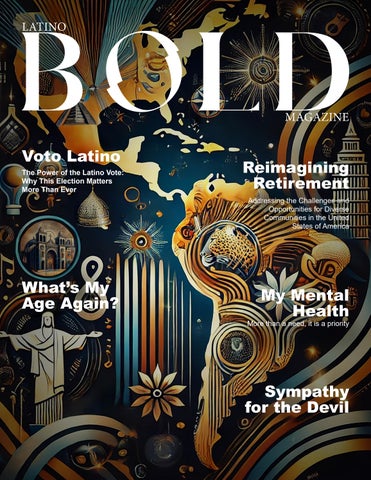
Voto Latino: What is This Election About?
The Power of the Latino Vote: Why This Election Matters More Than Ever
Maria Cardona - Political Strategist
Come every election cycle, political pundits claim that the Latino vote can deliver the win to a candidate. In other words, the Latino vote can be the decisive factor, and this has never been more true than in the upcoming election, this November. It is also true that there has never been a more consequential election in our lifetime. As such, it is our responsibility to inform and educate ourselves, our families, and our communities to ensure we make the best decision that will advance the interests of Latinos across the country.
To do that, it is important to first lay out what this election is all about. This election is a choice between Vice President Kamala Harris, newly minted as the Democratic Party nominee, and former President Donald Trump. Harris promises to lower costs for families, continue fighting for women’s reproductive freedoms, protect our democracy, and create more opportunities for everyone. In stark contrast, Trump is running a campaign driven by revenge and retribution, showing little care for whom he hurts. He is a thirty-four-times convicted felon whose primary motive is avoiding prison. Our country, and certainly our community, deserves better.
Vice President Kamala Harris has been a leader, alongside President Joe Biden, in making historic progress for the entire country, and specifically for the Latino community. Together, they created nearly 16 million jobs nationwide, with 4.8 million of those jobs going to Latinos, resulting in the lowest unemployment rate in more than 50 years for the country, as well as the lowest Latino unemployment rate on record.

We have experienced unprecedented economic growth and the creation of new businesses at a record pace, with Latino-owned small businesses opening at the fastest rate in the last decade. Latinos now have more access than ever to affordable health insurance thanks to the Affordable Care Act. In fact, Latino enrollment increased vastly, with coverage growing by 900,000, or 53%, from 2020 to 2022. Between 2010 and 2022, the percentage of uninsured Latinos dropped from 32.7% to 18%.
The Biden-Harris administration took on Big Pharma and won, delivering a significant reduction in prescription drug prices. This benefits our abuelos and abuelas, and all Latinos with diabetes who need insulin, capping the cost at $35 for seniors and limiting prescription costs to $2,000 per year. Many in our community are more prone to developing diabetes, so these policies are deeply impactful to the lives of so many families.
Donald Trump, on the other hand, has been obsessed with destroying affordable health care access for millions of Americans with his promise of repealing the Affordable Care Act (ACA). More than 4.3 million Latinos rely on the ACA, and the Trump-Vance ticket does not care how much damage they will do to the millions of families that depend on this affordable coverage. The uninsured rate among Latino Americans plummeted thanks to the ACA. If overturned, the uninsured rate for Hispanics would spike to 30%.
Let us be clear about what this means: Trump is openly campaigning on a promise to gut health care coverage for communities of color and increase their health care costs. Trump may claim that he is fighting for these communities, but the reality is he will side with big insurance companies at their expense.
Latina health care is also on the ballot in the form of our reproductive freedom. The Trump-Vance ticket is committed to taking away bodily autonomy from American women, including the millions of Latinas who will be disproportionately affected by the loss of access to reproductive care. As Trump proudly brags, he was the one who “got rid of Roe v. Wade,” unleashing cruel abortion bans across the country that are putting Latina lives at risk, and threatening doctors with jail time.
Latinas are disproportionately impacted by Trump’s agenda, with more than six million Latinas living in states that have abortion bans. Many older Latinas may have passed their child-bearing years, but one thing we will not tolerate is having to raise daughters and 2
granddaughters in a country where they will have fewer rights than we had. This should not be happening in our America, but Donald Trump will finish the job if it becomes his America again. As Kamala Harris is fond of saying, “we are not going back!”
This election, there is so much at stake for the Latino community–for our families, our freedoms, and our health care. We will also decide what kind of country we want to live in. Will we choose a Commander-in-Chief who wakes up every day to fight for our families, expand our rights, protect our democracy, keep families together, and ensure we have the tools to live a better life? Or will we choose someone who is only in it for himself: a convicted criminal, a fraudster found liable of sexual assault, who tried to steal a fair and free election, who ripped babies from the arms of their mothers, and who has said he wants to be a dictator on day one?

Latinos have a voice in this election, and their vote can very well be the deciding factor. We cannot afford to make the wrong decision. So, let us get out there and talk to our friends, families, networks, and neighbors, and understand the choice at hand. Vice President Kamala Harris has always had the backs of Latinos and their families, from her work as a DA in San Francisco, an Attorney General for California, the Senator for California, and President Biden’s Vice President for the last three and a half years. Let us make history and elect the first Black woman, South Asian woman, daughter of immigrants, who is incredibly qualified, astoundingly accomplished, and who will fight for each and every one of us.
The choice is in our hands.
Reimagining Retirement:
Addressing the Challenges and Opportunities for Diverse Communities in the United States of America
Dr.
President and CEO of National Hispanic Council on Aging (NHCOA)
As baby boomers reach retirement, we’ve begun to see significant shifts happening in the United States’ retirement landscape. One notable trend is the growing number of individuals who have never received Social Security benefits by the time they reach retirement age. As found in studies conducted by the Social Security Administration, this phenomenon leads us to the evolving nature of work: the changing demographics within the workforce, and the level of retirement preparedness that they respectively exhibit.
Recent research suggests that a large portion of the workforce (currently consisting of four different generations) now faces a far more challenging process in adequately preparing for their retirement. Today’s workforce struggles with less reliable employment patterns throughout their careers, keeping them from building their savings, and making them less prepared, or even informed, about retirement planning options. With such inconsistency, and often a sheer lack of aid from their employers, much of the current US workforce will either receive extremely poor Social Security benefits, or none at all.
The aging population now facing this stark reality has become poised to make profound improvements to retirement systems and financial markets. With such a large cohort transitioning into retirement, many experts are now warning of a potential retirement crisis on the horizon. There are growing concerns regarding the strain on social safety nets, such as Social Security, and the sustainability of retirement savings.
Yanira Cruz
However, amidst these challenges, there are opportunities for innovation and reform. Efforts by policymakers, advocates, and like-minded organizations, are underway to promote financial literacy, expand retirement savings options, and adapt social programs to demographic shifts. And among these efforts, there’s recognition of the importance of intergenerational cooperation and support to properly address the evolving needs of current and future aging populations.


It is clear that the convergence of demographic changes, economic dynamics, and policy considerations, underscores the importance of reimagining retirement in the United States. By fostering collaboration between government, employers, and individuals, it’s possible to navigate the complexities of retirement planning and ensure a secure future for aging populations. Such methods do include improving financial literacy, and other non-systemic intervention, but more must be done. The safety net that is Social Security must be expanded to account for an exponential growth of unconventional employment histories, and for immigrants whose careers in other countries do not account for any kind safety net like Social Security. Cultural incongruencies should not determine whether an individual is able to retire comfortably.

Amidst these discussions about retirement preparedness in America, it is essential that we consider the unique challenges and opportunities that Hispanic communities face. Studies indicate that Hispanic workers, particularly those in younger generations, face significant hurdles in achieving financial security in their retirement. Much of the Hispanic workforce is burdened by lower wages, and limited access to employer-sponsored retirement plans. Cultural norms within the Hispanic community also pose a challenge in informing their perspective on retirement preparedness, with an inclination to lean on family support. That same inclination is also sabotaged by an overall disadvantaged intergenerational wealth transfer when compared to non-Hispanic demographics. These challenges contribute to the retirement gap among Hispanics, and are further compounded by disparities in educational attainment, employment opportunities, and access to financial services.



Despite these obstacles, there are signs of resilience and adaptability within Hispanic communities. Studies show that Hispanic workers increasingly embrace entrepreneurship and self-employment as pathways to financial independence. Additionally, there’s a growing recognition of the importance of financial education and empowerment initiatives specifically targeted at Hispanic populations. To ensure that Hispanic communities are receptive, any effort to address the retirement savings gap among Hispanics requires a multifaceted approach that implements cultural competency.

By expanding access to retirement savings vehicles, promoting financial literacy, and advocating for policies that support economic inclusion and upward mobility, we can begin to address this intersectional dilemma. By acknowledging the unique needs and strengths of Hispanic communities in the context of retirement planning, stakeholders can work towards creating more equitable and sustainable retirement systems. When delivered in a culturally and linguistically appropriate manner, collaborations and targeted interventions like these can bridge the retirement savings gap and ensure that Hispanic individuals and families can enjoy a secure and dignified retirement.
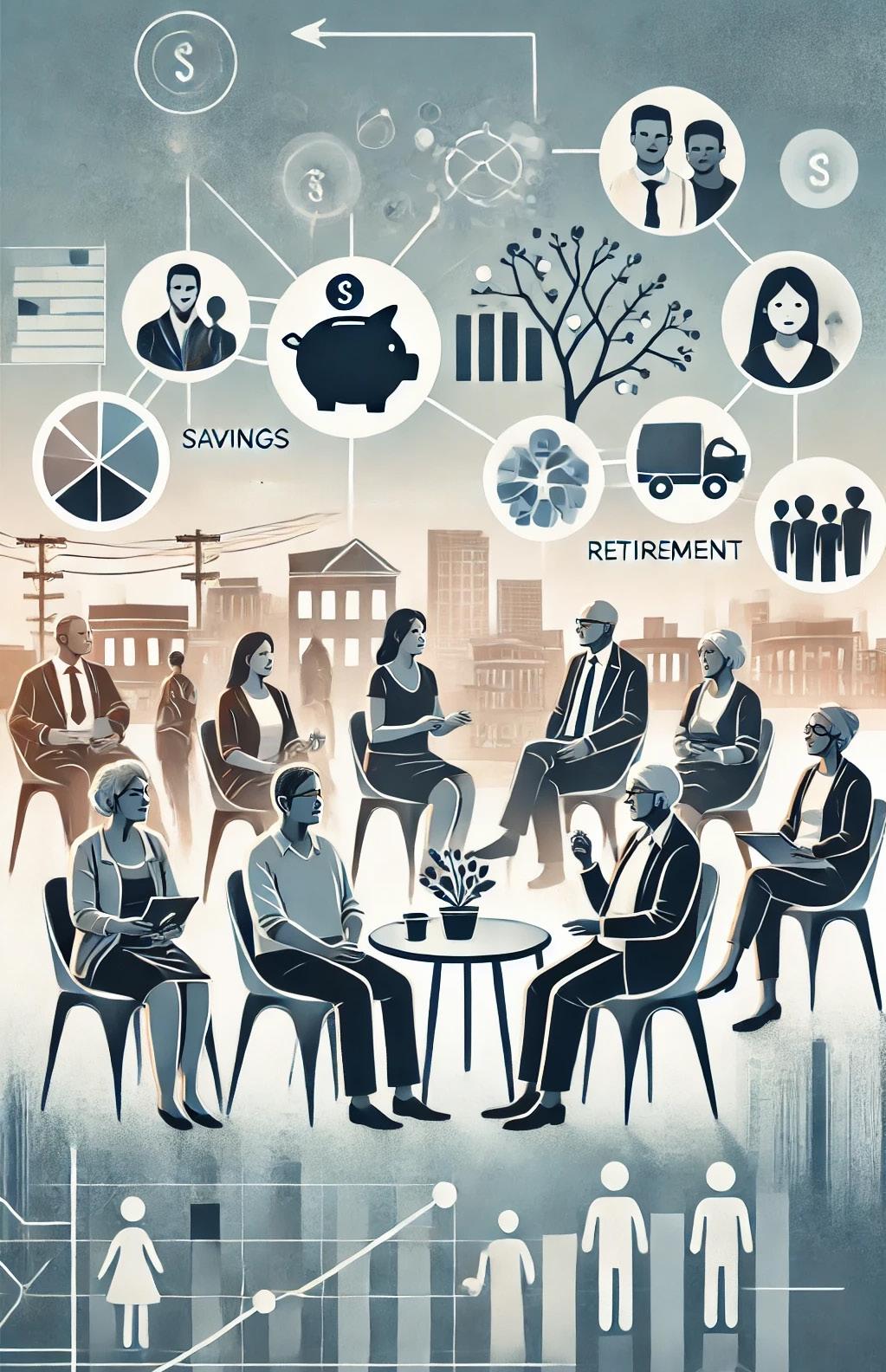

Within the current aging population is also a significant demographic of late-life immigrants, who now face a distinct set of challenges as they navigate their later years in America. The complexities of this population’s disadvantage in the retirement landscape stem from limited English proficiency, immense cultural adjustment, and fragmented work histories. For many late-life immigrants, retirement planning is further complicated by the absence of traditional support networks and social safety nets that may exist in their countries of origin. Language barriers make comfortable retirement practically insurmountable, by exacerbating these challenges and obscuring information about retirement benefits, financial planning resources, and healthcare options.
Moreover, late-life immigrants may have experienced disruptions in their employment trajectories, including periods of unemployment or underemployment due to their immigration status, credential recognition issues, or discrimination. These disruptions can have long-term consequences for retirement savings and eligibility for Social Security benefits.
Despite these significant hurdles in retirement planning, these late-life immigrants show a resilience and resourcefulness within their communities. Social capital and community networks are key in providing informal support and sharing information related to retirement planning and accessing social services, to these underserved people.
Efforts to address the retirement challenges faced by late-life immigrants require a nuanced understanding of their unique needs and experiences. This includes targeted outreach and culturally competent services that address language barriers, facilitate access to retirement savings programs, and provide assistance navigating complex bureaucratic processes. However, it is absolutely necessary that we remember these interventions to help immigrants and Hispanic/Latino communities overall, are just band-aid fixes to a much larger issue. The current level of coverage seen in the United States Social Security system is outdated and misguided. To truly ensure that decent retirement is secured for generations to come, requires an expansion of Social Security, to account for the unconventional employment patterns that we are seeing in today’s workforce.
By recognizing the diversity and complexity of late-life immigrant experiences, we can work towards creating more inclusive and equitable retirement systems that ensure all individuals have the opportunity to age with dignity and financial security in America.




What’s My Age Again?
“What’s my age again? What’s my age again?” played in my headphones. How personal my playlist suddenly became. How old am I? 38. When I first heard Blink182’s song, I was 17 years old, and the world looked different. Now, at 38, the same melody brings a mix of nostalgia and concern. When did I go from being a carefree youth to an adult, worried about the future?
I remember that time, and think that I would have liked to prepare better for the stage of life I’m in now. Migrating to the United States from El Salvador could have been less… uneven. Lesson learned: the stage I am in sets the foundation for how I will live in the next one. I still have time to prepare for my 50s, 60s, and so on.


But how does that work? I see what older adults face, especially Latinos, and things don’t seem easy: access to health insurance, the cost of housing, health issues. Who will take care of me when I can no longer take care of myself?
The Latino community in the United States has historically struggled with a lack of access to quality medical services. Latinos are one of the groups with the lowest percentage of health insurance coverage in the country. Aging without adequate insurance is a terrifying prospect. What if I need an expensive operation? Or if I am diagnosed with a chronic illness? These questions assault me in moments of quiet, when the music of my youth can no longer silence adult concerns.

The cost of housing has become more pressing concern over the years. As a young person, I shared an apartment with friends, and the rent wasn’t too heavy a burden. Now, at 38, I have to think about long-term stability. Rent and housing prices have risen considerably, and as a Latina, I often face additional challenges. Economic barriers and discrimination make finding affordable and safe housing a constant battle.
I also think a lot about how to take better care of myself. In my 20s, I didn’t care. At 38, I go to the gym when I can, and I see many people of my generation. It seems I am the average client. I wonder, where do older adults go when they want a bit of physical activity?
In Latino culture, we place a high value on family and caring for our elders. Here, in the United States, it feels a bit different. Working long hours, and meeting economic demands, leaves little time to take care of myself and others. There must be an answer for people of my generation so that aging doesn’t mean being alone or isolated. And if there isn’t an answer, we need to create one.
In my culture, it’s common for children to take care of their parents, but I have no children, and my family is far away. The idea of depending on strangers or an institution fills me with anxiety. Long-term care options are expensive, and often do not provide the level of care we would desire. I think my friends might

be asking themselves these same questions. I hope we grow old together. Maybe as a group, we’ll find the solution.
Maybe the answers to my anxieties lie close to that initial memory: What’s my age again? 17, I said back then. I knew my friends would answer for me if something happened. What if we extend that network of friends until it becomes huge? We could create a community. And if we all have to demand changes in how things work, then we’ll just have to do it.
Yes, I can imagine it. A young woman of 65 or 75 years old, mornings of exercise, afternoons of coffee, and nights… of going to bed early. Right now, I would like more nights of going to bed early.
Maybe, when that moment comes, I can recover much of what I miss now.

My Mental Health:
More Than a Need, It Is a Priority
Yakima Kuan Duque Psychologist – Social Worker
Nowadays, it is common to hear that there isn’t enough time, that everything moves incredibly fast, and it seems we are being carried away by this rush. This acceleration does not allow us to enjoy each thing we do. Sometimes people say that the day has passed, and they don’t remember how they spent all those hours, or the opposite, they had many tasks pending and the whole day was spent in meetings, waiting in lines, waiting to be attended to, etc. We sometimes go through life without enjoying each thing, each moment, the people around us, and the situations right in front of our eyes.
It is important to pause and evaluate how we are living our lives, identifying that it is essential to work on our well-being, and not just on satisfying basic needs like shelter and food. Sometimes we get carried away by the pressure of trends or unnecessary objects, and we neglect what really matters: our mental health.

Abraham Maslow, in his hierarchy of needs, describes the importance of having basic needs met. However, he also presents us with the challenge of not stopping there, but also seeking self-actualization, which requires clarity about what is important.


Sometimes when we enjoy important but intangible things like good humor, the pleasure of good company, savoring a soul-nourishing meal, the aroma of a delicious glass of wine, or the delight of a sunset, we say, “This is life, this is something we must repeat.” It is then that we understand our mental health is directly linked to the enjoyment of life itself and, therefore, to our relationships for the benefit of others.
When we are well, and when our mental health gives us pleasure, we genuinely desire that others also feel well and enjoy their own lives through self-care. This is especially true in the emotional area, which supports other aspects of being human.
Authors like Viktor Frankl teach us that in the midst of difficult situations, it is a personal choice to decide how we want to live them. To do so, we must draw on what shapes our minds through our mental health and the motivation to move forward and seek wellbeing. This is a call not to remain paralyzed by life’s complexities, but to build even from pain and suffering.
It is in the mix of experiences of love with pain, of joy with suffering, that we can define what benefits and builds us, and thus, what we must maintain and continuously improve upon.
health care not as a need, but as a priority. “Needs” are sometimes seen with the perspective of lacking or mere fulfillment, not always from enjoyment or growth. By prioritizing my mental health, I am prioritizing my own care, my well-being, and deciding what is most important because from there I will draw the strength to face various life situations.
Prioritizing my mental health speaks to my self-esteem, the love I give myself. To the extent that I take care of myself, I can take care of others. To the extent that I consider myself, I can consider others. To the extent that I respect myself, I can respect others.
Based on the above, I highlight the importance of viewing mental

Some strategies to start working on my mental health include changing the word “try” to “do”. It is a simple syntactic change, but it produces significant positive changes in how I act towards myself, as I begin to exercise my well-being through action itself.
Waking up with a smile for a new day is an ideal start, smiling at life regardless of the situations I may be experiencing. Enjoying the morning shower, seeing it as a cleansing of thoughts and prejudices, and receiving the water on my body as a new beginning. Enjoying food and being grateful to those who made it possible: those who planted it, harvested it, transported it to markets, prepared it, and served it. It is assuming a chain of good energy for everyone involved in my nourishment.
Each of these suggestions is an example of daily actions that can reflect positively on our mental health. It is important to make peace with those we feel have

offended us or whom we have offended, every day. I say “feel,” because sometimes we act based on our perceptions, and those perceptions can lack empathy. Therefore, the next suggestion is to put ourselves in an empathetic position, before forming opinions about others.
As you can see, mental health is an art. The most important thing is that each person is the artist of their own mental health. It is not problems that define our state. I challenge you to vibrate positively, vibrate in love, vibrate in harmony with your life essence. It is the best way to work on, and enjoy, healthy mental health.

Sympathy for the Devil Sympathy for the Devil
Democracy can be intricate and complex, as every vote is meant to contribute to a brighter future, but this often creates a rather confusing pattern in the system. Voters, acting seemingly against their best interests, cast ballots for candidates whose policies undermine their own well-being. This phenomenon, wherein individuals support leaders who do not represent their interests, raises a critical question: why do people feel sympathy for the devil?

The Enigmatic Appeal of Unsuitable Leaders
At the heart of this conundrum lies a blend of emotional connection, identity politics, and the pervasive influence of charismatic personas. When aligning themselves with candidates, voters frequently base their support not on policy but on perceived personal traits, cultural affinity, or a sense of shared identity. This alignment often leads to the puzzling scenario where people support leaders whose actions are detrimental to their own communities.
Take, for example, the case of former United States President Donald Trump. Despite enacting policies that arguably harmed many of his working-class supporters, such as tax cuts favoring the wealthy and attempts to dismantle healthcare provisions under the Affordable Care Act, Trump maintained a steadfast base. His appeal was not necessarily rooted in policy but in his ability to tap into the frustrations and fears of a significant portion of the electorate. His rhetoric resonated with those feeling left behind by globalization and societal change, creating a powerful, emotional bond that transcended rational policy considerations.

Public Policies Against Supporters’ Interests
This phenomenon is not unique to the United States. In Brazil, President Jair Bolsonaro gained popularity despite promoting policies that endangered the Amazon rainforest and, by extension, the indigenous communities and global climate health. His tough-on-crime stance and nationalistic rhetoric struck a chord with voters concerned about safety and national pride, overshadowing the long-term environmental and social costs of his policies.
Similarly, in the Philippines, President Rodrigo Duterte’s brutal drug war has led to thousands of extrajudicial killings. While this policy ostensibly aimed to reduce crime, it has disproportionately affected the country’s lower class. Despite international condemnation and clear human rights violations, Duterte’s popularity remained high, thanks to his image as a strongman willing to take drastic measures to ensure safety and order.

The Decline of Demanding Electorates
This trend raises concerns about the electorate’s declining demands on presidential candidates. The traditional expectation that leaders should be chosen based on their ability to enact beneficial policies and uphold moral standards seems to be waning amongst voters. Instead, they are increasingly swayed by spectacle, personality, and immediate emotional gratification.
The media climate plays a significant role in this shift. In an age where sensationalism often trumps substantive discourse, candidates who master the art of media manipulation can overshadow their more policy-focused counterparts. The 24-hour news cycle, now driven by sound bites and viral moments, creates an environment where complex policy discussions are sidelined in favor of catchy headlines and polarizing statements.

WE ARE LATINO

The Danger of Charismatic Leadership Changing the Culture of Political Engagement
Charismatic leaders have an undeniable allure. They can galvanize a nation, inspire movements, and create a sense of hope and possibility. However, when charisma becomes a substitute for genuine civil service, the consequences can be dire. Leaders who rely on their personal appeal as their platform, rather than any approach to creating sound policy, can lead their countries into economic turmoil, social strife, and international isolation.

Take Venezuela, where Hugo Chávez, and later Nicolás Maduro, captivated the country’s population with promises of social justice and anti-imperialism. Contrary to these bold claims, their economic policies were characterized by excessive state control and mismanagement, and led to hyperinflation, shortages of basic goods, and mass emigration. Despite the evident collapse of the nation’s economy, a significant portion of the population remained loyal due to a deep-seated belief in the leaders’ rhetoric and promises.

To address this concerning trend, a global cultural shift in political engagement is imperative. Voters must be encouraged to prioritize substance over style, policy over personality, but how?
1. Civic Education: Comprehensive civic education should be a cornerstone of any democratic nation’s curricula. Educating citizens, from a young age, about the importance of policies, governance, and critical thinking creates a better-informed electorate. Understanding the long-term impacts of political decisions is crucial for making sound electoral choices.
2. Media Literacy: In an era of information overload, media literacy is vital. Teaching people how to critically evaluate news sources, discern between facts and propaganda, and understand media biases can help voters make informed decisions. Encouraging independent research and skepticism towards sensationalist media can mitigate the influence of charismatic, yet unqualified, candidates.

3. Policy-Focused Campaigns: Political campaigns should be held accountable for presenting clear, detailed policy proposals. Debates, interviews, and campaign materials should prioritize substantive discussions over emotional appeals and personal attacks on political opponents. Media outlets and civil organizations can play a significant role in demanding and highlighting policy-focused discourse.

4. Community Engagement: Encouraging grassroots political engagement can empower communities to voice their specific needs and hold leaders accountable. Town hall meetings, local political forums, and community organizing can create a direct line of communication between voters and candidates, fostering a sense of accountability and responsiveness.
5. Voter Empowerment: Efforts to increase voter turnout and participation can lead to a more representative and demanding electorate. When more people are engaged in the political process, the pressure on candidates to address diverse concerns, and present coherent policies, increases. Initiatives to make voting more accessible and to combat voter suppression are essential in this regard.