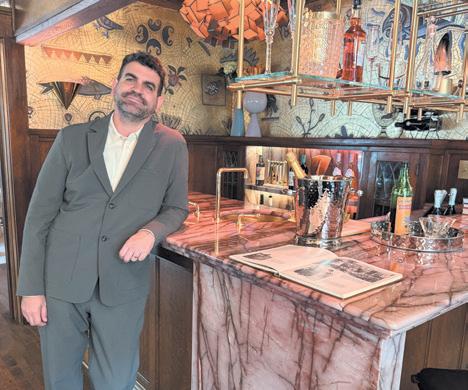
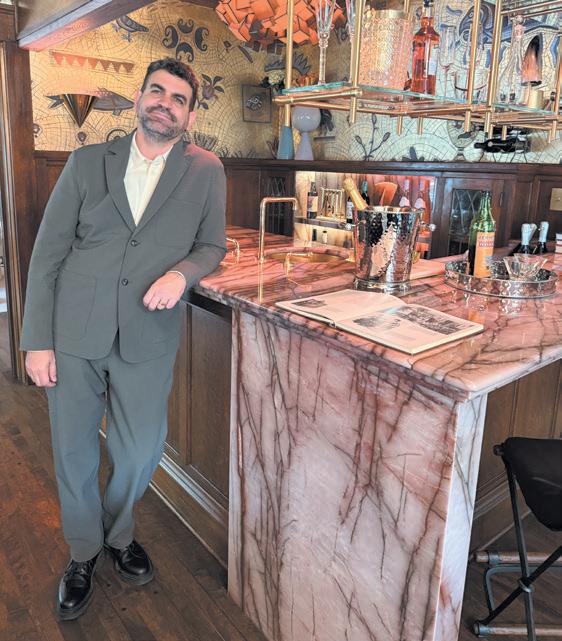
House of Design’s many looks included Hattas Studios. Page 5
HONOREE
Karla Ahmanson of Hancock Park is honored at “An Evening of Grace and Gratitude.” Page 11
HANCOCK PARK • WINDSOR SQUARE • FREMONT PLACE • GREATER WILSHIRE • MIRACLE MILE • PARK LA BREA • LARCHMONT
DESIGN FOR LIVING
Local roots and outside influences inspire architect Meg Fain
By Barbara Sueko McGuire
Over a century after Larchmont first took shape as a streetcar suburb, the neighborhood has evolved in almost every visible way, except for one: its strong sense of community. The feeling of being in a small town in the middle of Los Angeles persists, and architect Meg Fain has quietly become one of its chief caretakers.
Fain was born and raised in the neighborhood, moving only once—from Van Ness Avenue to Windsor Boulevard when she was 7. The daughter of architect Bill Fain, she grew up surrounded by design but said her path to the profession stemmed from a love of art, history, people, and culture. From drawing with her grandma to being encouraged in her creative pursuits by her parents, she knew early on that she wanted to study architecture. She went on to major in the subject at the
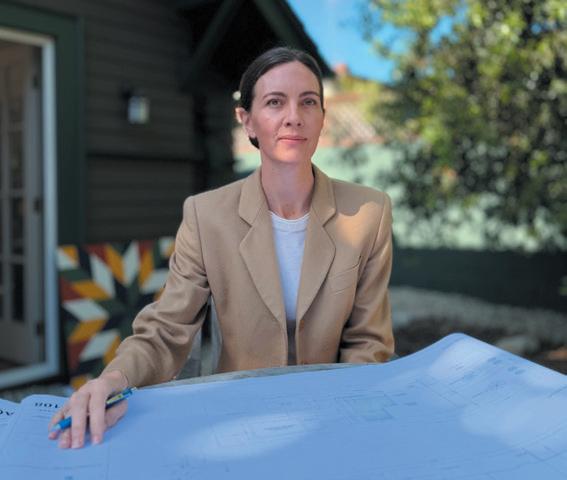
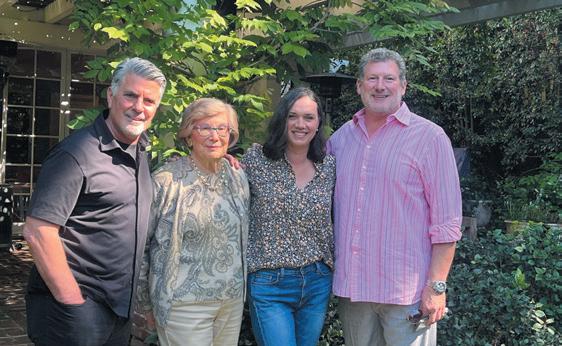
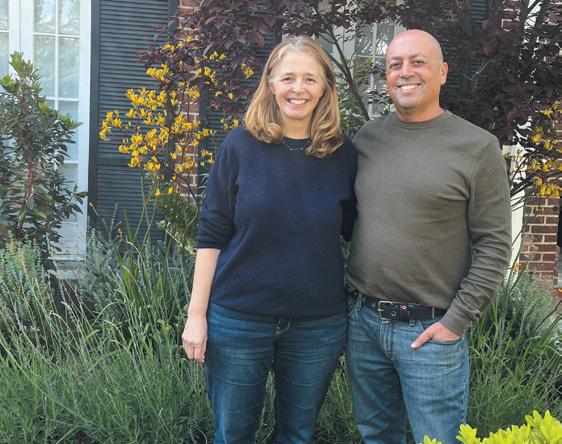
MEG FAIN and her husband, Evan Jenkins, are the proprietors of Jenkins Fain architecture, interiors, and project management.
University of Virginia before attending the Harvard Graduate School of Design.
“I saw it as a way to combine a lot of interests,” she explained. “It’s a profession that allows you to engage with a lot of different people and places and then use your creative skills to come up with different solutions. That was really what ended up resonating with me—and then the excitement of being able to do something different
with every project.”
Growing up in Larchmont shaped not only Fain’s aesthetic sensibility, but also the way she approaches architecture itself. In 2015, she and her husband, Evan Jenkins, launched their own architecture, interiors, and project management firm. Today, nearly 75% of their work is based in and around the Larchmont area, including Windsor Square and Hancock Park.
Their projects range from interior renovations to additions, ADUs, and new construction, often with a strong emphasis on how interior and exterior spaces work together. Fain says her respect for the area’s historic homes and overall design has been central to the firm’s work.
“Being around all these beautiful historical homes—there’s a level of craftsmanship, attention to detail, and thought that was
put into them,” she said. “And not just the homes themselves, but also the way the neighborhoods are laid out— the relationship between the homes and the streetscapes and the yards. These components make it feel like a community and, at least subconsciously at first, have definitely influenced me.”
That sensitivity to context carries into the way Fain works with clients. Rather than imposing a signature style, she describes the design process as deeply collaborative—less about replicating
an image and more about understanding what a client wants a space to feel like. Her familiarity with the neighborhood, and the homes that define it, has helped shape that process.
At the same time, Fain says some of her most important inspiration comes from stepping outside her immediate surroundings. Travel, taking walks, drawing and close observation have all been essential to her growth as an architect.
“With architecture and de-
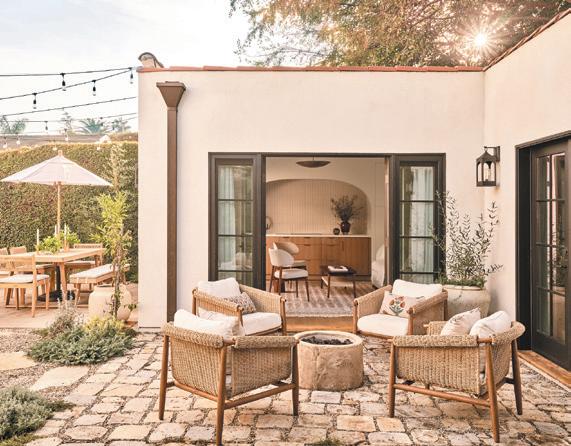
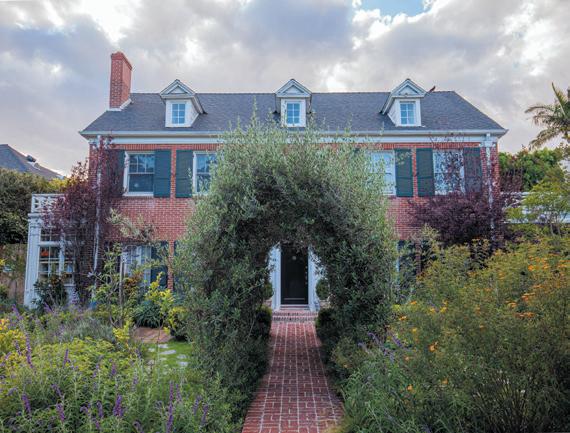
ORGANIC flow from exterior to interior achieved when Fain designs all components.
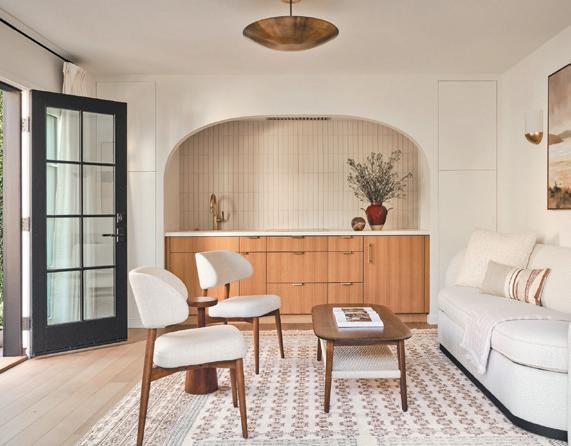
CALIFORNIA ELEGANT neutral-tone space in Hancock Park.
From board rooms to robots, designer/builder keeps evolving
By H. Hutcheson
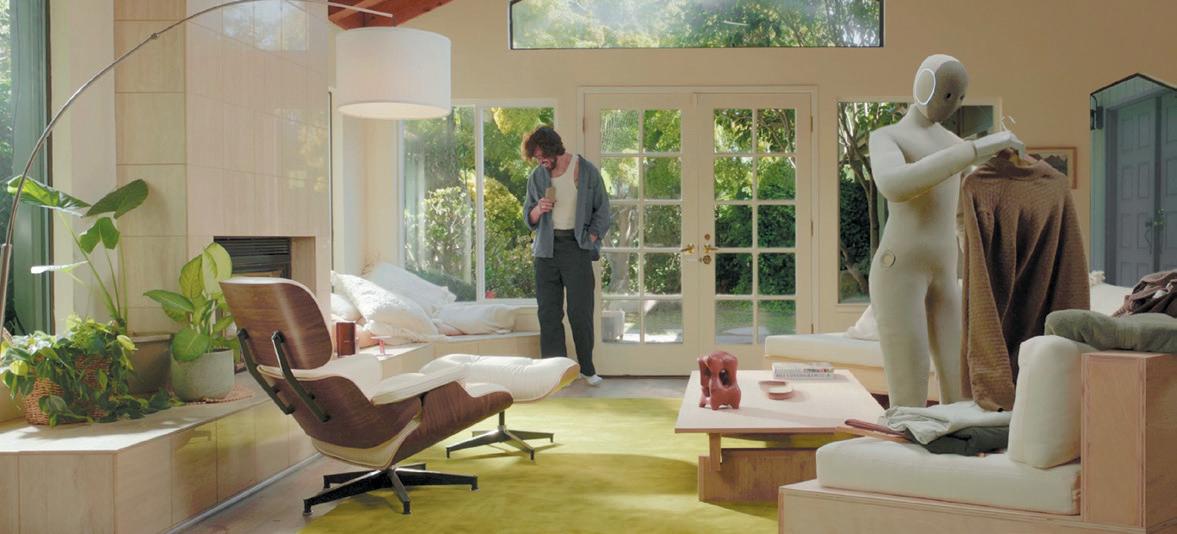
It’s difficult to give Benjamin Armstrong, 29, an exact title for the type of collaborative design/build work he does. He creates hard-to-navigate surfaces for robots, codesigns and builds Japanese style board rooms, sculpts imaginary landscapes of a snowy planet, and will be part of the design and build team for a new Hollywood luxury hotel. He’s adaptable, and this seems to be the skill our rapidly changing world demands. For the last eight months Armstrong has been working
NEO THE ROBOT learned how to maneuver by practicing on spiral stairs and slippery surfaces Armstrong created.
in house at 1X, an AI robotics company in Palo Alto, where he is part of the team to help Neo, a personal AI companion,
Photo courtesy of 1X
learn to be more human— physically. “I’ve built all sorts of staircases: spiral, overly deep or shallow stairs, slippery surfaces full of rollers. The head of hardware and I meet, then I go to the design team and work with their design language to make an environment that is challenging for Neo,” said Armstrong. His relationship with 1X began when he built a set of steel walls for a commercial. He was then asked to design and build a meeting room— with furniture—that had to be done in a week’s time. “Everything in Silicon Valley is ‘right now’—that’s how they operate. They hear that some venture capitalist is in town— ‘Let’s give them a demo they’ll never forget!’ But they are going to leave on Monday—‘We need it here Sunday’—and it’s Wednesday!” said Armstrong. He said, “Yes, I can do it.”
When asked how he got the job done with such a tight
turnaround, Armstrong replied, “Friends. Because no one else will pull 18-hour days for me.”
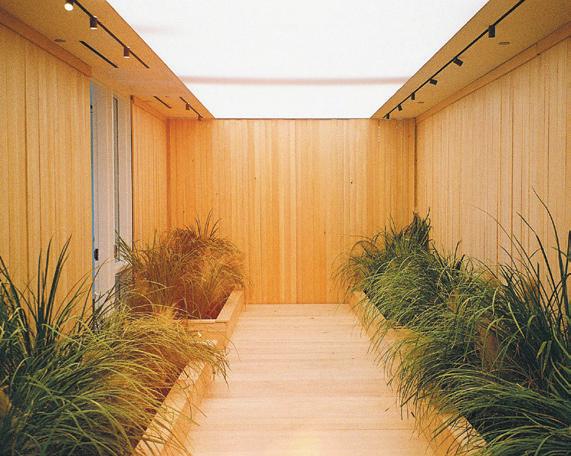
So be adaptable, and keep your contacts from college, he advises. He worked with Alex David, a buddy from his alma mater, NYU, and his design team to build a warm wood paneled room in the style of traditional Japanese inns called ryokan.
I asked him if going to college was useful to his career. “NYU was an excuse to be in New York City. Sure, I met tons of great people—a huge networking time for me— but I can’t tell you one hard skill I learned from college. I can tell you a million skills I learned from my dad [who is a carpenter and sculptor back home in Florida], and the boatyard I worked in upriver in New York with fiberglass and painting sailboats. But college? One class—the history of set design dating back to Japanese kabuki theater. I still reference images in my mind from that,” he recalled. But college still has its value. “There would be some missing piece of the world had I not gone,” he said.
After university Armstrong moved to Los Angeles, specifically to the cottages Paramount Studios built in the 1930s for actors. He took a production assistant job, which led him to work in
set design with Wesley Goodrich, including for music videos such as Miley Cyrus’ “Flowers.” “I really tapped into L.A. and the work here creating and building sets,” he said. He also did set design and build for Paramount’s live events and premieres. He recalled the building he made Benjamin Armstrong
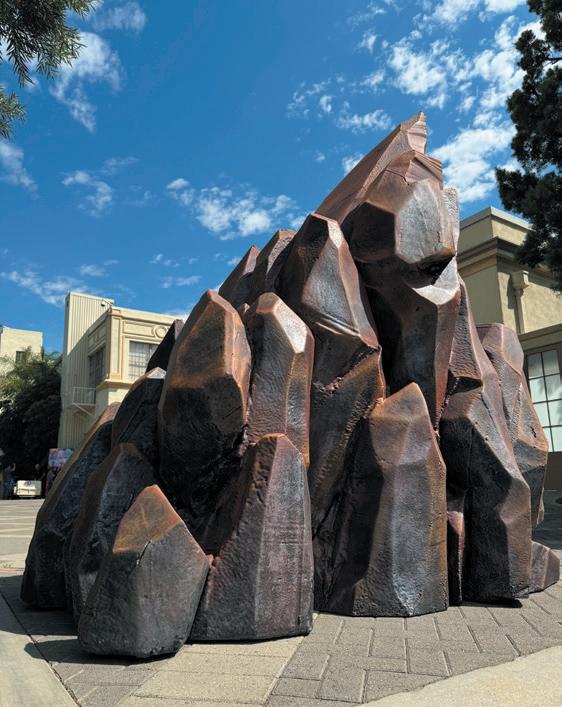
“TRANSFORMERS ONE” premiere set.
(Please turn to Page 6)
WARM WOOD paneled hall built by Armstrong.
Larger-than-life personality comes to life at Showcase House
By Sondi Toll Sepenuk
Every year that I attend the Pasadena Showcase House of Design, I think to myself, “This is the best house yet. They’ll never be able to top this.” And every year, they do. When you walk onto the property of this year’s 61st annual showcase house in Arcadia, called the Baldwin Oaks Estate, you are immediately pulled back in time.
The home belonged to Clara Baldwin Stocker, the eldest daughter of California pioneer Elias “Lucky” Baldwin, who at one time was the wealthiest landowner in Southern California. He helped shape the development of the city of Arcadia, and at one point owned the land that later became Monrovia, Sierra Madre, Temple City, El Monte, West Covina, La Puente, and more.
Have you heard of Baldwin Park, Baldwin Hills, Baldwin Lake, or Baldwin Avenue? Yep, that’s him.
Baldwin’s eldest daughter was a real party girl and loved to entertain. Her house, the Baldwin Oaks Estate, was the place to be. Parties would last for days, Clara was dripping with diamonds and fine jew-
elry (she was known as “the Diamond Princess”), and good vibes were in abundance.
The designers of this year’s showcase house wanted the rooms to reflect her largerthan-life personality, and I have to say, they nailed it.
Built in 1907, the shingle-style residence is set on nearly two acres of giant oak trees and lush green California native plants. A circular shaded driveway leads to the blue and white Arts and Crafts style home, with its wraparound porch and multiple balconies. Stepping inside, you instantly feel the grandeur of the home, greeted by
an enormous oak staircase.
To the left is a game room/ bar/sitting room that practically drips with conversations of parties past. To the right is an elegant and ginormous living room that screams luxury, beauty, and elegance. In total, there are 26 spaces that have been transformed by various designers. Each room reflects the California surroundings and Clara herself. Throughout the home, designers chose colors, materials, and textures that harken back to a woman who loved sparkle, shine, energy, and fun.
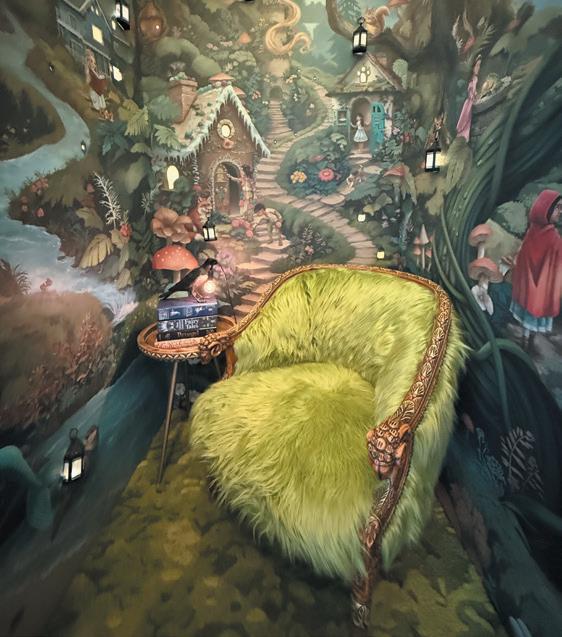
I was impressed with the dark colors of many of the rooms, reflecting the home’s Craftsman style, which were then balanced with soft, feminine colors and textures that reminded me of the jewelry I imagined Clara once wore. There are the Enchantment Nook by Hattas Studios designers that you really need to see to believe; the Minkwood library by James Hernandez Interior Design, featuring a rich color and pattern palette combination that will blow your mind; and a laundry room by Arterberry Cooke Architecture that honestly makes me want to do nothing
but wash clothes all day long.
The showcase house isn’t just rooms in a home, though. Outside, visitors will find a restaurant nestled among the landscaping to sit and enjoy food and drink, as well as boutique shops to find something fun and fabulous that you never knew you needed but now can’t live without.
The showcase house is a real annual treat for southern California and is something not to be missed. The event runs through Sat., May 17, and tickets can be purchased at pasadenashowcase.org/tickets.
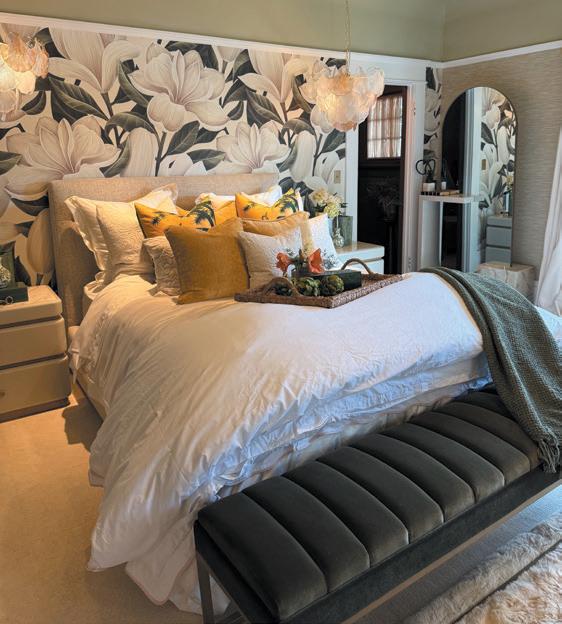
ONE OF THE home’s several redesigned bedrooms, called the Magnolia Room, oozes luxury and comfort. Designed by Steven Cordrey of Cordrey Collection.
EVERY HOME needs an enchanted nook! This creative space was designed by identical twin sisters Jeanine Hattas Wilson and Julie Hattas Kennedy of Hattas Studios.
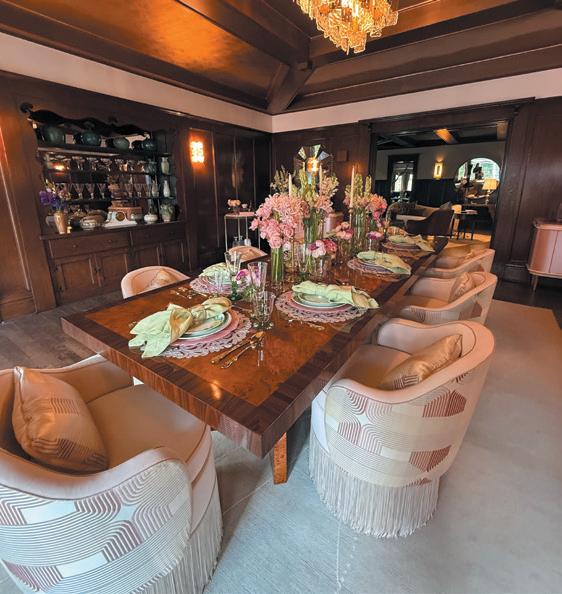
MIDNIGHT GARDEN dining room, inspired by Clara Baldwin’s love of luxury and entertaining, was designed by the House of Pontovi.
DESIGNER Joshua Praught of Studio-Joshua shows off his vision for the home’s entertainment room.
Trifecta
(Cont. from Sec. 1 Page 1)
Third [in a historic house] and whenever my parents had money, we’d fix up part of the house—bathrooms were from the 1920s, the kitchen from the 1950s. I grew up around all these construction projects. I liked [the atmosphere] and assumed I’d be an interior designer because that’s what I saw all the women doing.
I was a student at Marlborough all-girls college preparatory school, then Eugene Lang College of Liberal arts at the New School in New York, and then Parsons also in New York. I studied interior design and architecture and when I graduated, worked as an assistant to a contractor who offered design and build. This is when I realized it’s what I liked the whole time. It’s not that I didn’t think I
CURVED SKYLIGHT designed and built to be finished with smooth white plaster.
could do this sort of work, it just never occurred to me. If you don’t see women in it, you don’t automatically think that way. The women I saw on-site [when I was young] were architects or designers.
LC: With all the talk of jobs being lost to AI, I understand you and your subcontractors might be well poised for the future.
Howley: Formal education is valuable, but I think about all the money spent on colleges and what jobs there will be
in the future and wonder why more people don’t recognize the value of these trades— plumber, electrician, etc.
[LC: I later had my son ask his Claude AI about this and it said, “Skilled tradespeople working in existing structures are likely the last to be displaced by AI.” From the horse’s mouth!] LC: I’m noticing you’re not the six-foot, lift a redwood tree type [Howley is more in the mid-five-foot range, albeit very strong]. I’m so embarrassed to even say that, but good to know brains outdo brawn here. Howley: That’s because that’s what we see! There are multiple kinds of contractors: contractors that wear the tool belts and do heavy framing work, the “country club” contractors that schmooze to get the jobs, and then there’s me, somewhere in the mid-
dle. I learned trades and the management side of things with a design background. So, I don’t do the heavy lifting but did learn how to do the framing because I think that’s important. I can fully check and see to make sure it’s done correctly. It’s important to learn every job. There is a huge value to showing your employees that you are not above any job in construction and know how to do it. We are all a team. You might not see me with the tool belt on, but you’ll see me with a tape measure, a laser and level, a broom, and a trashcan.
LC: What might be the benefits (or challenges) of being a female contractor?
Howley: I think of Marlborough again; it really did teach me I could be whatever I wanted to be. When I went to college, I noticed most of my female classmates did
not speak out as much or as loud. After eight or nine years working construction, it finally hit me: Do you think they are treating me different because I’m a woman? It didn’t even occur to me that I would be heard differently because I was a woman. I just didn’t operate like that—that’s the field side of my work.
On the client side, there’s a night and day difference, especially working for women. I’ve seen more than one male contractor bulldoze over women’s questions or not want to explain and teach them what’s going on. Communication is the biggest difference. I overcommunicate with clients. I think that is beneficial and comforting. LC: It sounds like you grewup around strong women. Howley: I’m a third generation Marlborough student. My best girlfriends are still Marlborough women. My mom went there, my great aunt, my grandmother, my godmother. The all-girls school environment and the women in my family taught me to have a voice.
For more information, visit howleybuilds.com.
Designer
(Continued from Page 3)
for the “Transformers One” film premiere: “It was an entirely animated movie, and I took the moonscape from the film and sculpted 12-foot foam versions of this imaginary place. I brought it into the real world.”
What’s next on the horizon for this designer/builder? “Oh yeah, we are working on a small luxury hotel in the Beachwood Canyon area. It will have 40 rooms with a restaurant and some sort of L.A.-type roof scape. You know the Greenwich Hotel in N.Y.? Similar, but more L.A. style with local character and design influences. Each hotel room will be unique. Lots of friends are working on it,” he said. Where? Who’s investing? “Can’t say exactly where. And investors? Maybe a New Yorker, maybe someone from Silicon Valley.” It’s yet to be revealed. It’s evolving as is his multi-faceted, everdeveloping, undefinable career in design.
HOWLEY’S construction firm builds challenging, unique designs such as infinity pools in the Hollywood Hills and smooth coved plaster ceilings.
Colorful gardens come to bloom on Garden Tour May 2
By Helene Seifer
April showers bring May flowers, as the saying goes, and even though California receives little rainfall in spring, Windsor Square-Hancock Park Historical Society’s highly anticipated annual garden tour promises a riot of colorful blooms, leafy shrubs, stately trees, and cozy outdoor living spaces befitting our beautiful historic neighborhood. For this year’s self-guided tour, Gardens in Bloom: A Floral Legacy, guests are welcome to roam and wander through four exceptional gardens.
A charming Georgian home on Plymouth Boulevard is the setting for one of the featured gardens. Homeowners Lindsay Sturman and Ben Paul modeled their front and backyard plantings on the wild
GARDEN TOUR COMMITTEE: (from left) WSHPHS President Richard Battaglia, June Bilgore, Heather John Fogarty, and Joseph Guidera (not pictured, Jane Gilman).
English country gardens Sturman’s mother, a landscape designer, favored. “It should feel like you’re in nature, with natural materials, stone, and brick, rather than it being too planned,” Sturman explained. In their backyard, lush plantings create intimate spaces for lounging, conversing by a fire pit, hosting dinners al fresco, and swimming.
Other garden tour high-
and Ben
WILD ENGLISH COUNTRY GARDEN on Plymouth
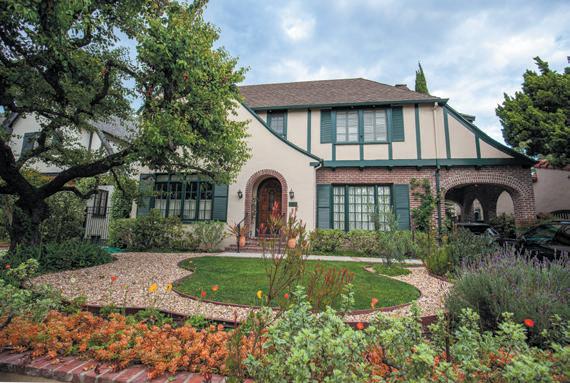
lights include a stately home on Lorraine Boulevard along with sculpted hedges and a drought-tolerant succulent garden at a graceful Tudor home on June Street that backs onto the newly refurbished Wilshire Country Club golf course.
Whether in possession of a magnificent garden or just covetous of one, this stunning
Tierra del Sol: a full-service center
By Helene Seifer
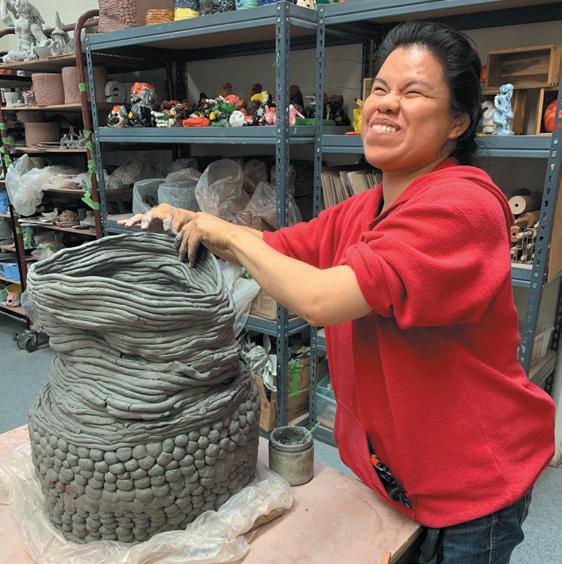
Ericka Lopez is a remarkable artist. Her hand-built ceramic pieces are highly textured and detailed. Ropey coils, knobby spots, smooth slabs alternating with incision-laden surfaces, her vases and sculptures beg to be touched. There’s a very good reason for that: Lopez is blind and shapes and bends the clay exclusively by feel. Lopez had some sight when she was a child, so when it’s time to glaze her pieces, she will ask to be handed particular colors, referencing her memory of them, explains Paige Weary, gallery director. “Erica will say, ‘The color of the sun; the color of the sky.”
Lopez is one of 170 artists represented by the gallery, part of the Tierra del Sol Foundation, which helps adults with developmental disabilities such as autism, cerebral palsy, Down syndrome and blindness live meaningful lives. Participants in their programs are referred from regional centers, the high school from which they graduated, or parents who come to them directly. Those who can work are trained and receive career support or help finding volunteer opportunities. Those with art talent can opt to join their studio programs in Sunland or Upland, where they have full access to art supplies that support their creative interests, from painting, ceramics, and collage to weaving and sewing.
Weary is quick to emphasize the talent of the artists rather than their disabilities and seeks to provide them
with the exposure that they deserve. The West Hollywood gallery holds six exhibits a year and participates in art fairs. Most recently several of their artists, including Lopez, were exhibited at Felix Art Fair in Los Angeles. In 2025 Tierra del Sol Gallery took painter Kyle Johnson to The Armory Show in New York— his first-ever plane trip. In June some of their artists will be exhibited at the Basil Open Invitational in Switzerland. Their artists have had work purchased by collectors across the country and abroad and some have art pieces in the permanent collections of the Museum of Modern Art and the American Folk Art Museum, both in New York City.
Tierra del Sol’s current exhibition is “Vessels,” a group show whose theme explores the idea of carrying, holding, containing, and traversing water. An urn or vase might carry water; a body, such as the one depicted in an acrylic painting by Vincent Siso, contains it. Angel Rodriguez’s painting of a fountain made from a Coca-Cola bottle dispenses with water and disburses soda instead. There
selection of varied home gardens is sure to inspire! Gardens in Bloom: A Floral Legacy benefits WSHPHS planting and improvement projects. The self-guided tour will be held Sat., May 2, from noon to 4 p.m. Tickets are $55 for WSHPHS members and $100 for non-members, and include lunch, dessert, and prosecco. Raffle tickets will also be available for purchase. Check in at 355 S. Windsor Blvd. For more information and to reserve tickets, go to wshphs.com.
for exceptional artists
are paintings of the shoreline and of ships crossing the seas. The fundamental nature of water is explored in myriad ways by the 13 artists selected for the exhibit, including pottery by Ericka Lopez, an expressionistic painting of a boat glimmering on the water by Catherine Benita, and Kyle Johnson’s dynamic paintings.
Tierra del Sol’s art program is often a lifeline for the artists and is open-ended.
“Some artists have been there over 30 years,” noted Weary.
“Some are in their 80s. A lot of our artists look at magazines or look at their phones [for inspiration] or we set up still lifes. We take them to art galleries and museums. We do workshops, teach how to do zines. Sometimes they get paid for art jobs.” Siso has been an artist with Tierra del Sol since 2012. When asked if he had other interests, he replied, “No, this is my thing.”
Tierra del Sol Gallery; 7414 Santa Monica Blvd., West Hollywood; tierradelsolgallery.org; 323-243-0658.
“Vessels” is on view Sat., May 9, to Thu., July 2.
UNTITLED by Catherine Benita.
UNTITLED #41, 2022, by Vincent Siso.
PAINTER KYLE JOHNSON, pictured at the Tierra del Sol studio, showed his work at the Armory show in New York.
ERICKA LOPEZ is a blind ceramicist who works by touch.
GRACEFUL TUDOR HOME backs onto the newly refurbished Wilshire Country Club.
SCULPTED HEDGES frame stately home on Lorraine Boulevard.
Boulevard.
LINDSAY STURMAN
Paul in the lovely front garden of their Georgian home, which will be featured on the Garden Tour.
COCA COLA by Angel Rodrigez. Images courtesy of Tierra del Sol Gallery
Sigh of relief: Disaster diverted and delayed from housing bill
A collective sigh of relief was heard throughout the neighborhoods of Greater Wilshire, particularly the Citrus Square Historic District and the Hancock Park Historic Preservation Overlay Zone. The passage of two plans, one by the City Council and the other by the Metro Board, effectively mitigated much of the threat posed by state housing law Senate Bill 79.
I have been chronicling the progress and passage of SB79 over the last year with a focus on its potential threats to the historic resources and historic districts in our area as well as throughout the city. At the time of writing only preliminary maps have been made available by the Los Angeles Department of City Planning, and none by the Southern California Association of Gov-
ernments, whose maps will be considered the official documents to identify parcels subject to the new law. City Planning’s maps caused great alarm in Greater Wilshire communities, with affected zones including Melrose, Brookside, Sycamore Square, La Brea-Hancock, Citrus Square, Hancock Park, Windsor Square, Western-Wilton, Wilshire Park, and Country Club Heights. Affected areas all fell within one mile of an existing or proposed qualifying transit stop, allowing for the construction of buildings up to nine stories even within historic districts and single-family neighborhoods.
A reprieve was granted for most of these areas on March 24, with the unanimous decision by the City Council to
On Preservation by Brian Curran
opt for a phased approach to the implementation of SB79. By choosing what is known as Option C1, the development of three- to four-story buildings in areas zoned for single-family is restricted to high and moderate opportunity zones. They followed this with a delay of full effectuation of SB79 in most affected sites— including low-resource, high-fire-severity zones, and historic districts until 2030, thus exempting for a few years all affected areas in Greater Wilshire, including Hancock Park, Citrus Square, Windsor Square, Wilshire Park, and Country Club Heights HPOZs. The delay also allows the city time to develop its own city-
wide Local Alternative Plan to enable the city to find a way to place the density required by the law in a more sensitive manner to affected communities.
This good news was followed on March 26 with the approval of the Metro K Line extension, which directed the north/south lines to follow San Vicente Boulevard from Mid-City up through West Hollywood then terminate at the Hollywood Bowl. This change of route entirely eliminated the threat to Citrus Square, Melrose, and almost all of Hancock Park that was posed by two potential K Line stops on La Brea Avenue at Beverly and Santa Monica boulevards.
We owe a rare debt of gratitude to our Los Angeles city leaders in this instance as they
deftly outmaneuvered Sacramento legislators, taking back local control of land use, at least temporarily, from a state government that would see a “one size fits all” solution to the problem of housing. It is a lesson to the legislators that passed this bill, the majority of whom represented communities that would be unaffected by this legislation, that without local support from those to be impacted, the intended outcomes of such laws will inevitably be blunted or fail. Four years of delayed effectuation is an eternity for opponents now given the opportunity to lobby for changes to the law. It’s time to mold SB79 closer to needs of the city and its individual communities rather than the political ambitions of state Sen. Scott Wiener.
City approves permit for a synagogue at Citrus Square home
By Suzan Filipek
The City Planning Department has approved a request by members of a Modern Orthodox Jewish synagogue to worship at their rabbi’s home, at 200 S. Orange Dr.
A conditional use permit was granted in the Letter of Determination, which is effective April 24, which is also the last day to file an appeal of the decision.
Rabbi Yekusiel Kalmenson of the synagogue, Beis Medrash of Hancock Park, welcomed the news.
“We’re grateful to the city for its thoughtful consideration and appreciate the opportunity to continue serving as a place of prayer, connection, and community,” he wrote us in an email.
“From the outset, our goal has been to create a respectful and welcoming environment that adds positively to the neighborhood. We recognize that any new use can bring questions, and we remain committed to being attentive, responsible neighbors and to
maintaining an open, constructive dialogue with the community.
“We look forward to building strong relationships and contributing in a meaningful way to the fabric of the neighborhood,” Kalmenson said.
Residents and congregants have been at odds about worship services held at the home, which have grown in numbers in recent years.
“We strongly oppose the Zoning Administrator’s decision to approve a Conditional Use Permit (CUP) for 200/202 South Orange Drive and are evaluating our options,” Leslie Maisel, a neighbor and member of the Citrus Square Neighbors Association, told us in an email following the city decision.
“For years, residents have raised concerns about the expansion of unpermitted institutional use in this residential zone, which impacts housing, traffic, parking, and noise levels. This approval does not resolve those issues. Instead, it allows
an existing violation without fully addressing its effects on the neighborhood,” Maisel continued.
“We are especially concerned about the apparent removal of housing units at a time when Los Angeles faces a severe housing shortage.
“We also question the timing of the Determination Letter, which appears to have been issued before required processes, inspections, and compliance steps were completed. These are typically prerequisites to approval, and issuing the Determination Letter prior to their completion raises serious concerns about regulatory consistency. The city has a responsibility to protect residential neighborhoods and to apply change of-use zoning standards uniformly and equitably. The residents of Citrus Square deserve an outcome that reflects those principles, and this decision falls short.”
Longtime residents—some of whom have lived in the Citrus Square neighborhood,
which is on the National Register of Historic Places, for decades—said the home, which is a former duplex, had been operating “illegally” as a place of worship. On weekends its religious services bring more than 100 people on weekends to the quiet neighborhood, they said at a public hearing last year.
By contrast, members of Bais Medrash of Hancock Park spoke of how the synagogue has changed their lives. They explained that the synagogue brings a sense of peace as a welcoming space that is open to all and also as a safe haven for Jews, who are being persecuted more and more in the city of L.A.
In the city’s determination, as part of A Good Neighbor Program, the synagogue is required to provide an email address on its website, where neighbors can voice concerns and questions.
Also as part of the program, members of the synagogue are required to participate in annual meetings with
the Greter Wilshire Neighborhood Council and/or the Citrus Square Neighbors Association to stay informed of any concerns that arise. Other requirements include limited worship hours and times for Friday night services, holidays, and other schedules, according to the city Letter of Determination released April 9 by Associate Zoning Administrator Phyllis Nathanson.
Gatherings can be held on the first floor of the main building, with up to 147 people, and childcare is allowed in the garage and backyard for children under 8, with a maximum of 59, while par-
WORSHIP SERVICES were approved for a home on South Orange Drive.
Delicious rice pudding is paired with balsamic strawberries
Stodgy and gloopy aren’t adjectives I associate with enjoyable food. And yet the lunch ladies at my primary school in London seemed to have an inexhaustible repertoire of dishes that leaned hard into both. The rice pudding was perhaps the most haunting—a thick, grey, barely-sweetened affair that invited terror. Its only redeeming quality was the reluctant teaspoon of jam or brown sugar placed on top, which you had to ration carefully. I did not leave those lunches with fond memories of rice pudding.
And then, last month, I was invited to dinner at a French couple’s home in Silver Lake. It was exactly as chic as you’d imagine—and for dessert, they served rice pudding. I nearly didn’t believe it. What arrived was nothing like the school lunches of my childhood. It was light, cooling, and creamy, without any of that heaviness. Fragrant with vanilla. Somehow both comforting and elegant at the same time. I went home a changed man.
A few weeks later, I set myself the task of recreating it—with a twist on the accompaniments that I think you’re going to love.
Ingredients (serves 4)
For the rice pudding
1 Earl Grey tea bag
1⁄2 cup arborio (risotto) rice
1 cup heavy cream
1 cup water
Something’s Cooking
by Jai Dattani
1⁄2 cup sugar
Scraped seeds of half a vanilla
pod
Sea salt to taste
For the strawberries
1 pint fresh strawberries, quartered or halved
3 tbsp. good balsamic vinegar
1 tbsp. honey
1⁄2 tsp. orange blossom water
Fresh black pepper
Pinch of salt
For the whipped cream
1 cup heavy cream, fridge cold
1⁄4 cup sour cream or crème fraîche
1 tsp. sugar
Bring a medium pan of water to boil with an Earl Grey tea bag and a teaspoon of salt.
As soon as it’s simmering, fish out and discard the tea bag, then add the arborio rice letting return to a simmer for five minutes.
While the rice boils, mix the heavy cream, water, sugar, a good pinch of sea salt, and the vanilla. Fresh vanilla really is worth it here—it’s the backbone of the whole dish, and you’ll taste the difference. Combine this with the drained rice and pour everything into a small to medium baking dish. Cover tightly with foil and bake at 330°F for 40 minutes.
Now, the strawberries— and please entertain me here.
More legacy benches installed on Boulevard
By Nona Sue Friedman
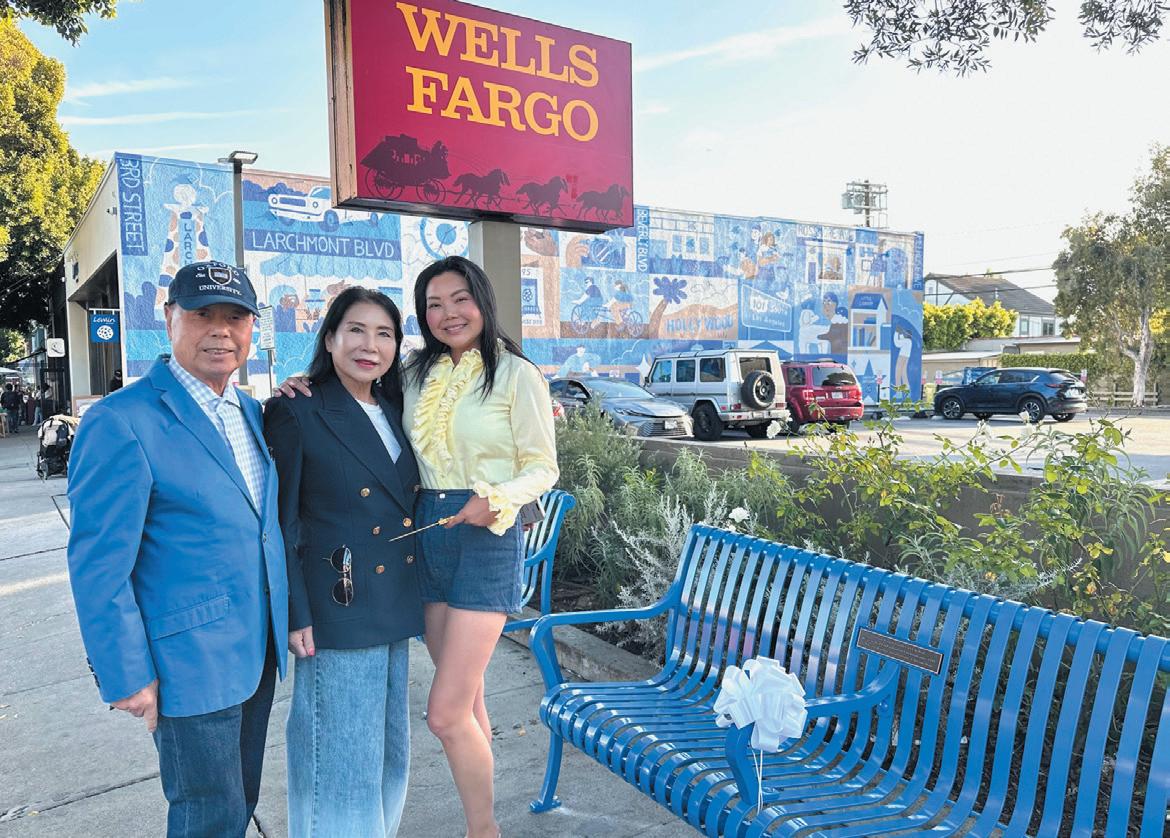
The last two French blue legacy benches replaced old wooden ones on the western side of Larchmont Boulevard April 16. One is in front of the Wells Fargo parking lot, and the second is at the opposite end of the Boulevard in front of Chase Bank.
Christina Won of Hancock Park bought one of the benches for her mom as a birthday present.
Romi Cortier, president of
The ones at farmers markets right now are beautiful, and you don’t need to spend $22 on Harry’s Berries for this to sing. Quarter or halve them depending on size and tumble them into a clean baking dish. Drizzle over the balsamic vinegar, honey, and orange blossom water, then add a really good grind of black pepper and a pinch of salt. Yes, black pepper and balsamic vinegar. On strawberries. Trust me. Slide the dish into the oven alongside the rice pudding for the final 25 minutes, then take it out, let it cool, and refrigerate until you’re ready to serve. The balsamic and honey will have melded into a glossy syrup that makes the strawberries taste more intense than you thought possible.
When the rice pudding comes out of the oven, leave it to sit for 20 minutes before removing the foil and giving it a gentle stir with a fork. There may be a little liquid remaining, which is fine. It can be made the day before and refrigerated; just bring it back to room temperature for an hour before serving.
When you’re ready to eat, whip the cold heavy cream to stiff peaks, then mix in the sour cream or crème fraiche and sugar and beat briefly to combine. Using a spatula, fold the rice through the whipped cream—gently, so you don’t knock all the air out. Taste as you go and adjust with a little
more salt or sugar if it needs it. I love how the bowl looks when everything is folded together— the white cream
studded with flecks of vanilla and the tea-tinged rice.
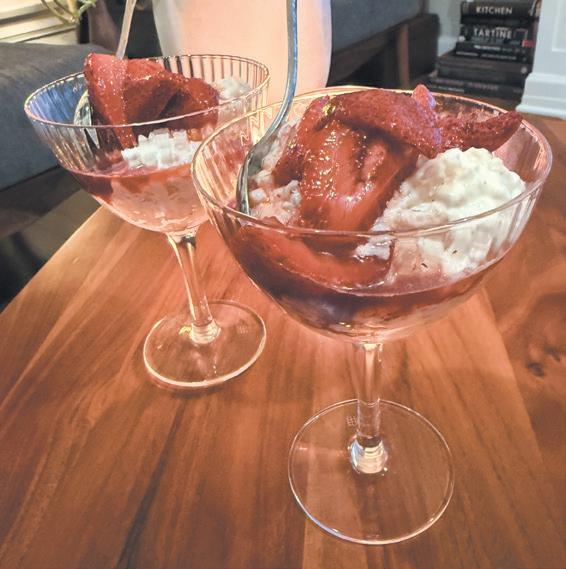
I like to serve this in coupes—whether for a dinner party or a weeknight on the sofa. I don’t believe in saving nice things for special occasions. Spoon the strawberries and their syrup generously over the top before enjoying.
Spring in Los Angeles is essentially the universe handing you the best fruit of the year and asking what you’re going to do with it. This is what I’m doing with it.
See you next month. ˆ
The snap of green beans is back in time for spring
By Erica Wilhite
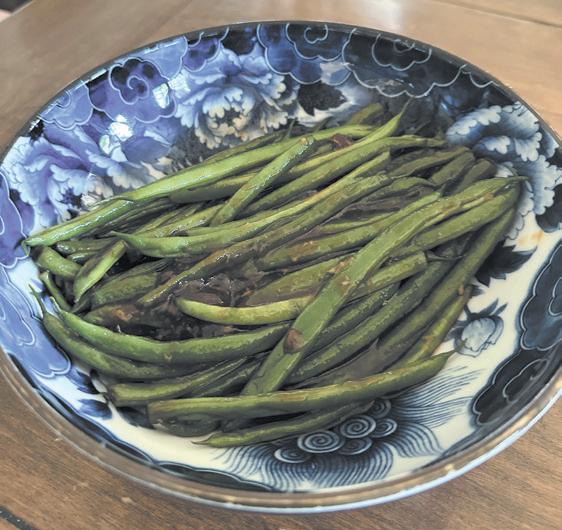
Late spring and early summer see crisp, sweet green beans at farmers markets in California. These green beans are a quick and easy side dish for dinner.
12 oz. of green beans
2 tbsp. hoisin sauce 1 tbsp. oyster sauce
5 tbsp. water
1/2 tsp. chili oil
1/2 tsp. sesame oil
1 tbsp. finely minced garlic 2 tsp. cornstarch
Steam green beans for five minutes. They should be a nice bright green. Set aside. Mix together hoisin sauce, oyster sauce, chili oil, sesame oil, garlic, and 3 Tbsp. of water.
In a separate bowl mix cornstarch and 2 tsp. of water until smooth.
GREEN BEANS are crisp and plentiful at the Larchmont Farmers’ Market. Enjoy!
Mix hoisin and cornstarch mixtures together. Heat a large frying pan with a little oil and, when hot, add green beans. Add sauce mixture to pan and toss until green beans are fully coated. You can add a little water if the sauce is too thick. Cook for 3-5 minutes and enjoy hot or cold!
the Larchmont Boulevard Association, has been working tirelessly replacing 10 old wooden benches.
Now Cortier will focus on the east side of the Boulevard and the sidewalks north of Beverly Boulevard. Page Academy is interested in four benches and some planters. Romi has also approached Bank of America. Visit Larchmont.com to donate to help beautify the Boulevard.
ELEVATED RICE PUDDING with balsamic strawberries.
CHRISTINA WON STANDS with her parents, Drs. Il Sung and Ock Ja Won, at the legacy bench she bought for her mom.
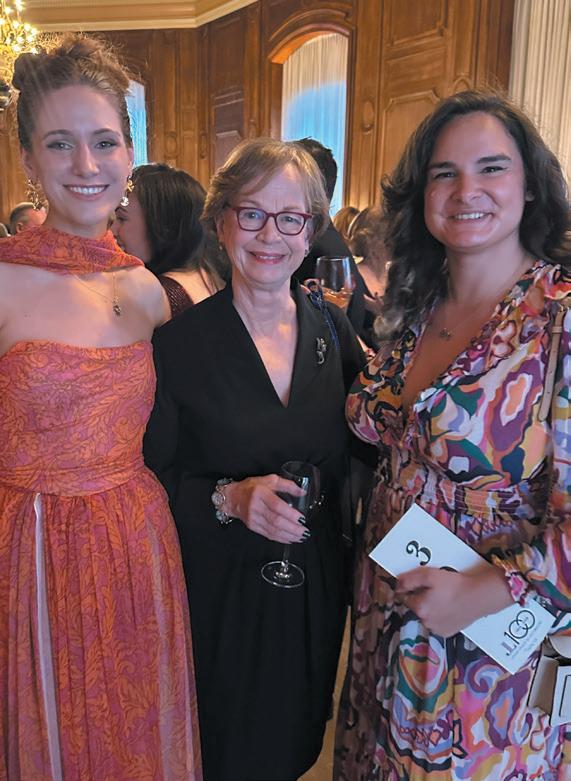
Junior League of Los Angeles celebrated its 100th at gala
Part of this story by Sondi Toll Sepenuk was missing from the April article last month. Here is some of that text.
President Dawn Eash Wazzan looked back on the work of JLLA women and recounted, “one hundred years of women stepping forward, leading with purpose, and making Los Angeles stronger.”
She added the venue for the March 21 gala—the historic California Club—was “built in the same time as our [JLLA’s] founding, 1926, but at that time women weren’t allowed to be members yet. Yet 100 years later, here we are celebrating women’s leadership.”
Rebecca Mellos, Centennial Gala chair, reminded guests of John C. Maxwell’s words, “Teamwork makes dreamwork.”
The evening was a reflection on the legacy that brought the League to where it is today, a celebration of everything they have achieved together, and a look ahead.
Correction: In the April issue of the Larchmont Chronicle, we incorrectly stated that the Junior League of Los Angeles’ Players Group is still actively performing in and around Los Angeles.
The group formed in 1927, then expanded to become the Children’s Theater, performing for approximately 9,000 children in 14 schools in underprivileged areas of Los Angeles.
The program ended in 1972.
PLOTKE Plumbing
Gift reflects Las Madrinas commitment to children
The president of Las Madrinas, Kimberly Root Sandifer, presented a $1.5 million contribution to the Las Madrinas Endowment and Chair in Developmental-Behavioral Pediatrics at the group’s annual meeting in February.
At the luncheon, four members were recognized for their generosity, including Louise Cavanaugh Griffith, of June Street. In recognition of their dedication, Griffith’s name, along with the three other benefactors, will be added to a plaque displayed in the lobby of Children’s Hospital Los Angeles.
The gift was received by Dr. Douglas Vanderbilt, Las Madrinas chair and division chief of Developmental-Behavioral Pediatrics; and Bonnie Blackman McClure, chair of the Associates and Affiliates of Children’s Hospital Los Angeles.
“It was a meaningful moment that reflects both the group’s long history and its continued commitment to children’s health in our community,” said spokeswoman Nora Lopez Chaves.
A new board of directors was also elected.
Las Madrinas was founded in 1933, during the Great Depression, by 65 Southern California
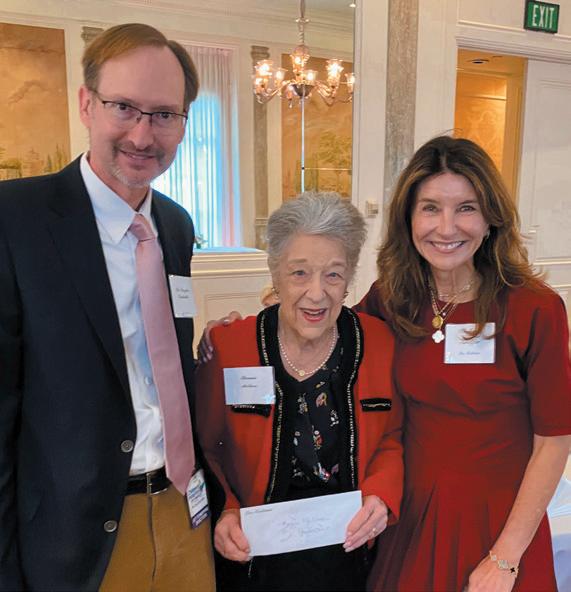
CHECK PRESENTATION with Dr. Douglas Vanderbilt, Las Madrinas chair (left); Bonnie Blackman McClure, chair Children’s Hospital Los Angeles Associates and Affiliates; and Las Madrinas President Kimberly Root Sandifer.
women who recognized the need to save what was then known as the Convalescent Home of Children’s Hospital. As the first affiliate group of Children’s Hospital Los Angeles, Las Madrinas has been supporting equity, quality, and innovation in pediatric medicine for 92 years. Since 1939, Las Madrinas has honored families who have demonstrated a commitment to the civic, cultural, and philanthropic life of Southern California by presenting their daughters at the Debutante Ball. Donations made in honor of the young women, together with the annual support of Las Madrinas Members and friends, have enabled Las Madrinas to give over $60 million in support of Children’s Hospital Los Angeles, including the funding of 12 Las Madrinas endowments and projects.
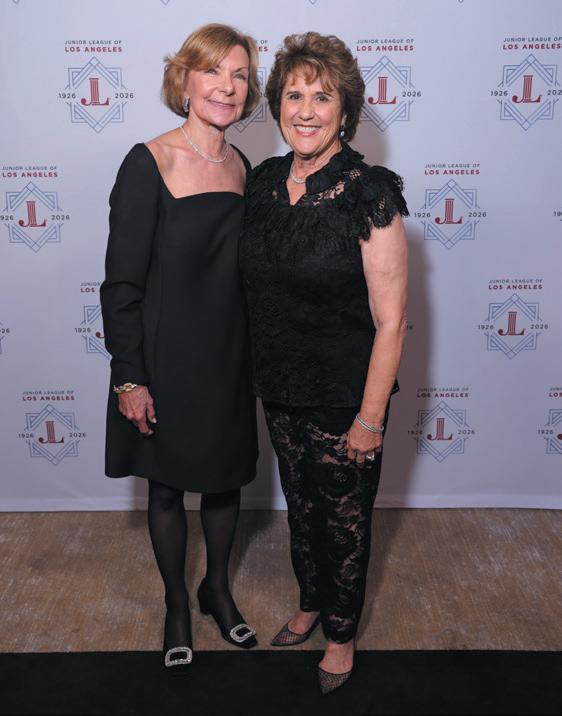
GUESTS Barbara Bundy (left) and Ellen Weitman.
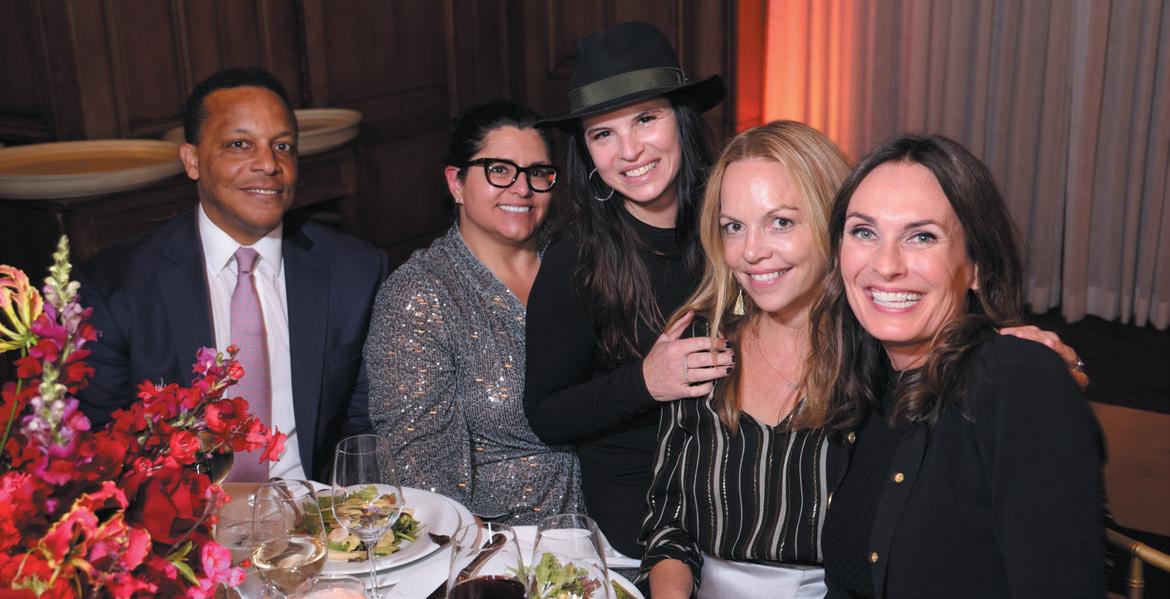
GUESTS (from left) Chris Hopkins, Iran Hopkins, Erica Anenberg, Audra Gold, and Beth Benson.
GUESTS (from left) Isabella, May Eileen, Clifford, and Arianna Hutcheson.
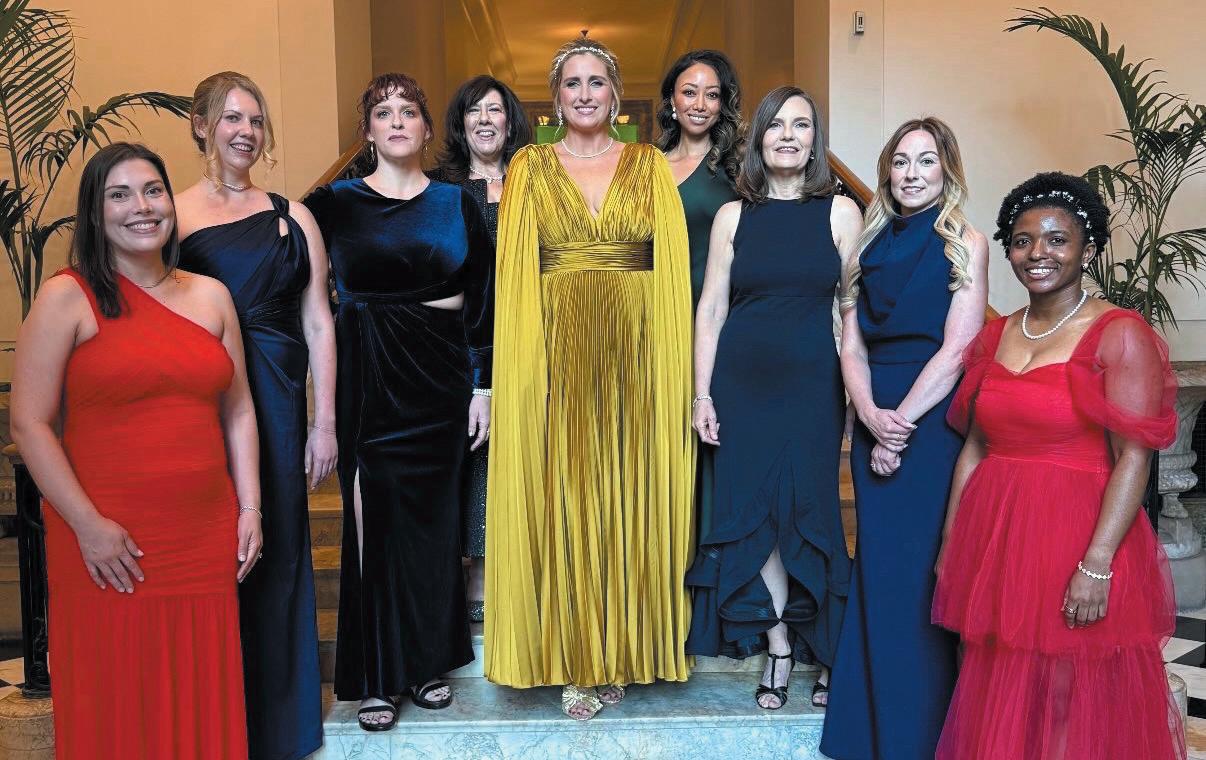
CENTENNIAL Board of Directors.
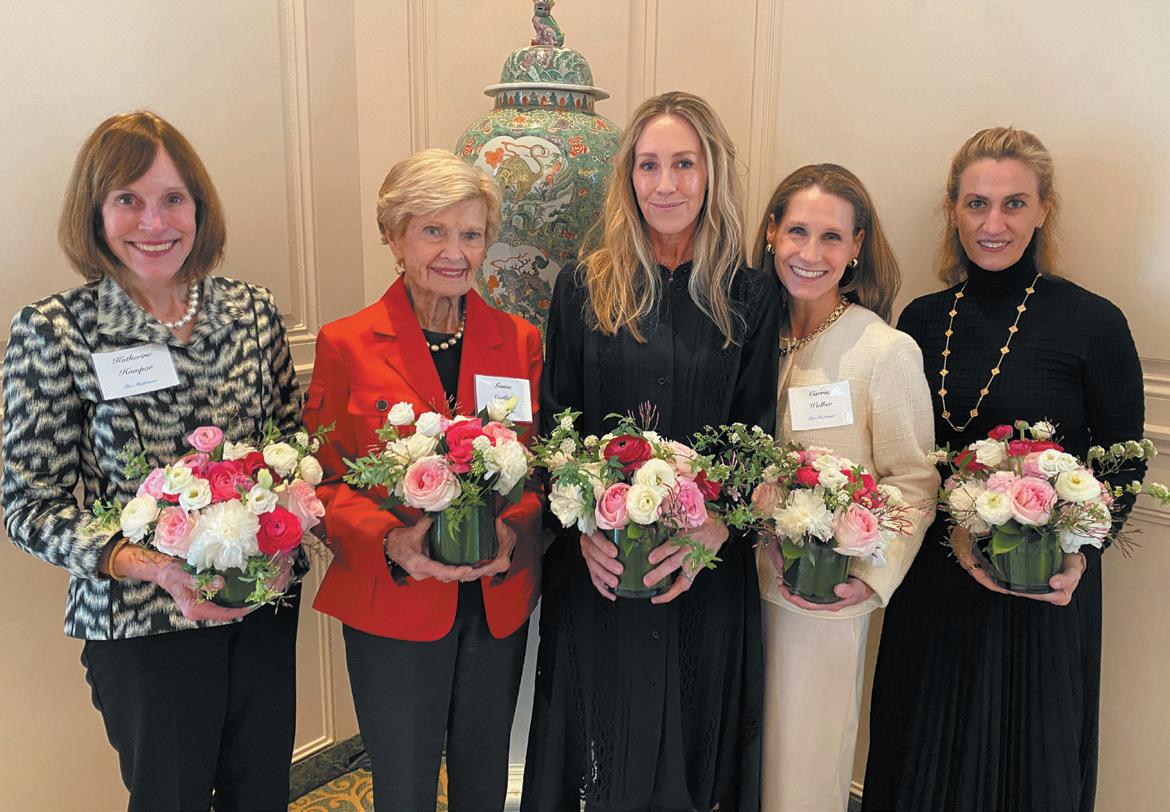
PLAQUE HONOREES (left to right) Katherine Archer Hampar, Hancock Park resident Louise Cavanaugh Griffith, Jennifer Smith Keller, Carrie Sullivan Walker, and Anne Donnellon Burkley. Keller is the daughter-in-law of Sally and the late Steve Keller of Las Palmas Avenue. Photos courtesy of Las Madrinas
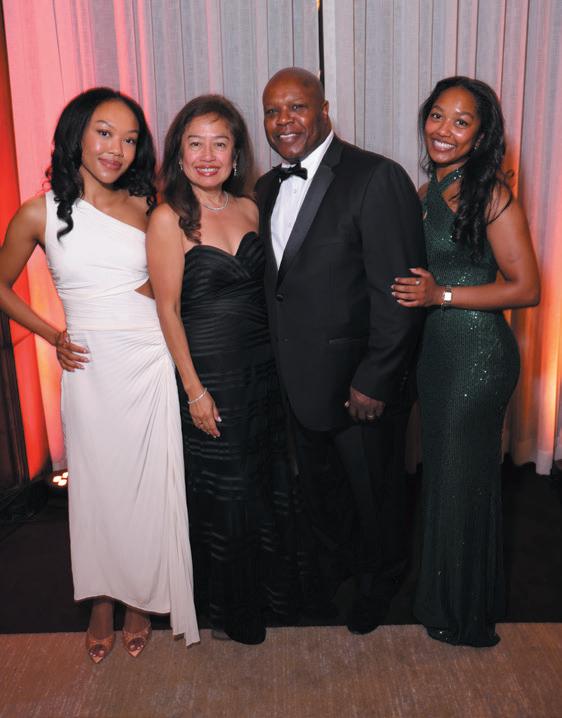
ATTENDEES at the gala were Rachel Clark (left) and Leon Powell.
ATTENDEES (from left) Eloise Kowal and Sandy and Betsy Peinado.
Karla Ahmanson honored; ‘Charlie’s Angels’— once upon a time
The 2026 Archbishop Awards Dinner, held on April 11, was an evening honoring individuals who dedicate themselves to the Catholic church and community. This year’s annual black-tie affair took place at the Beverly Hilton Hotel in the historic International Ballroom, honoring David Furhman, Bob Graziano and Wendy Wachtell, Kevin Shannon, Joseph “Pep” Valdes, and Hancock Park’s own Karla Ahmanson. The festivities were billed as “An Evening of Grace and Gratitude.”
Karla Ahmanson converted to Catholicism 25 years ago at the encouragement of Monsignor Antonio Cacciapuoti. It was a conversion that changed her life. Born in Inglewood to immigrant parents, Ahmanson was determined to live the American dream, saying, “My parent’s formed me. I am not about what happened to me, but what happened to them.”
As Ahmanson prepared to pursue her graduate studies, she met her husband, Bill, a banker, wealth management executive, philanthropist, and reserve officer with the Los Angeles Police Department, who had a deep connection to Christ the King Catholic Church in Larchmont.
She said, “I felt something stirring deeply inside. I knew I wanted to do this and to be a better role model for my children.”
Monsignor Cacciapuoti reflected, “I could see that strong moral formation from her parents—that sense of kindness, responsibility and empathy.” Ahmanson is now a Dame of the Pontifical Equestrian Order of St. Gregory the Great. She serves on the Finance Council and, as a Eucharistic Minister, has served on the board, chaired committees, and lent her expertise to the Assistance League’s Operation School Bell.
She was a decade-long re-
Summer fun
(Cont. from Sec. 1, p. 22)
After a long day filled with fun in the sun there’s nothing better than a scoop of ice cream. Luckily, Larchmont is home to four ice cream shops. While you are probably wondering why there are not five ice cream stores, I can assure you that four is enough. With a wide variety of seasonal flavors scattered throughout, you are guaranteed to find an ice cream you like and have a great summer day close to home.
Lucy Margolis is a sophomore and Chronicle School News Reporter for Windward School.
Around the Town with Sondi Toll Sepenuk
gent of Loyola High School, served on the parent board at Claremont McKenna College, and is president of the Los Angeles Police Reserve Foundation.
Ahmanson also was head of the Parent Association at St. James’ Episcopal School, co-founded the Angelics Auxiliary, and served with The Luminaires Juniors of the Doheny Eye Institute.
She currently also serves as a trustee of The Institute of World Politics, a graduate school of national security, intelligence, and international affairs in Washington, D.C.
Ahmanson was deeply humbled upon learning she was to receive this award. “Once I began serving, there was no turning back,” she said. “It truly is better to give than to receive. Serving others is part of our duty and our humanity—a deeply Christian value. I do not feel more special than anyone else.”
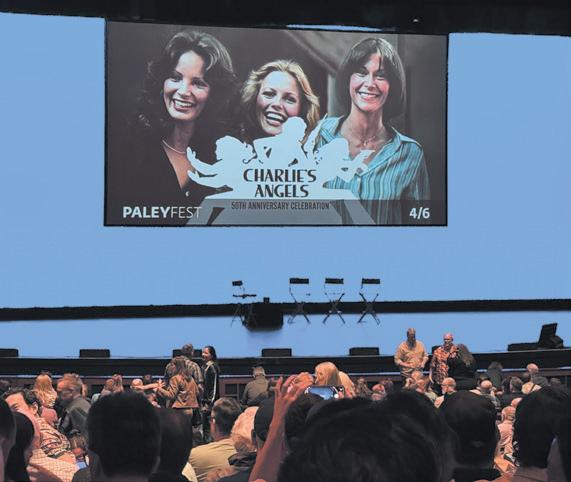
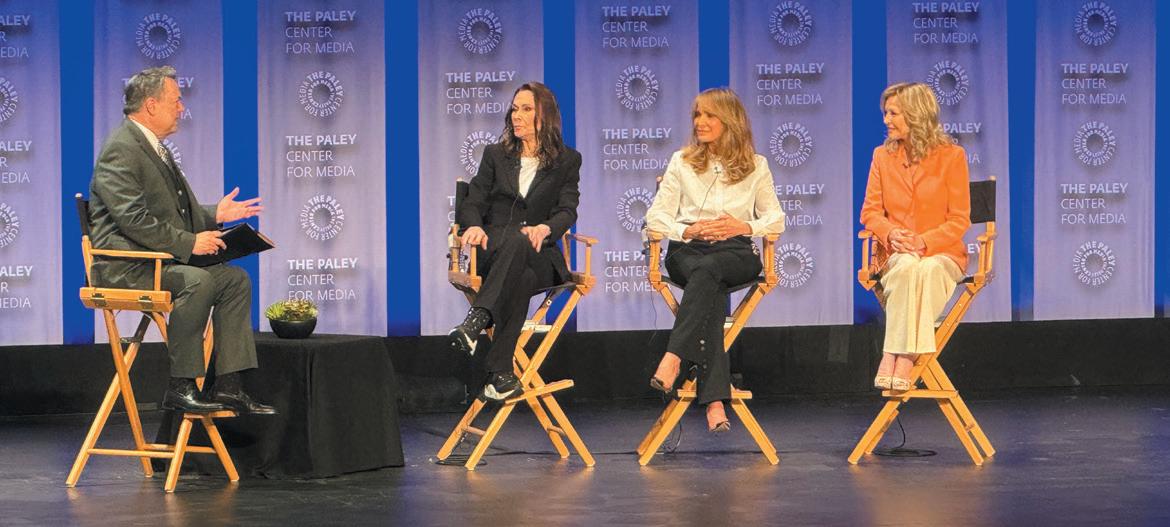
“Once upon a time, there were three little girls who went to the police academy.” If you know that line, then this story is for you! PaleyFest, sponsored by the Paley Center for Media, is in full swing right now, and on April 6 one of the most anticipated panels was the 50th anniversary celebration of “Charlie’s Angels.” To the audience’s delight, three of the OG angels were in attendance—Jaclyn Smith, Kate Jackson, and Cheryl Ladd. The audience roared with delight as the three former angels walked onto the Dolby Theatre stage, feeling all sorts of emotions about their own youth, TV history, and the impact of a bold, strong, female-centric show being produced in the 1970s. Entertainment reporter George Pennacchio emceed the Q&A session, asking questions that ranged from deep and emotional (all three actors have fought breast cancer) to downright silly (the bikinis!). The groundbreaking show, which ran from 1976 to 1981, was originally dismissed by network executives as a show that would amount to nothing. The television audience proved them wrong, and 50 years later, the television show, which inspired two theatrical reboots in 2000 and 2019 (including a sequel in 2003), has shown that the angels stand the test of time. The three actors spent the 50th anniversary evening reminiscing about backstage stories, talking fondly of their friend and co-star Farrah Fawcett, who passed away in 2009, and
spoking of the importance of a series that highlighted strong female characters. The best reveal of the night, though, was when Kate Jackson, who played Sabrina, told the story of pitching the show to Aaron Spelling, who developed and produced the show.
After first pitching a concept with Leonard Goldberg called Alley Cats, which Jackson was none too thrilled about, Spelling looked at the pink revision pages in her hand and said, ‘“What’s that? Have you got something?” and she said, “Well, yeah” and he said, “Let’s hear it!”
“And I stood up, and I didn’t know how to start, so I said, ‘Okay, well, once upon a time…’”
We know you’ve been eagerly watching and waiting to “run through the tunnel” of The Pawn Shop, a new L.A.-first culture club for food, hospitality, sports, and community—and lucky for you—the wait will soon be over!
Hard-at-work construction workers have been seen at the Melrose and Cahuenga
site hammering, installing, renovating, plastering, and transforming the 1934 art deco building, previously occupied by Brothers Collateral since 1980, and the space is slated for a June opening! Keep your eye on this space with more exciting information to come! And now you’re in the Larchmont know!
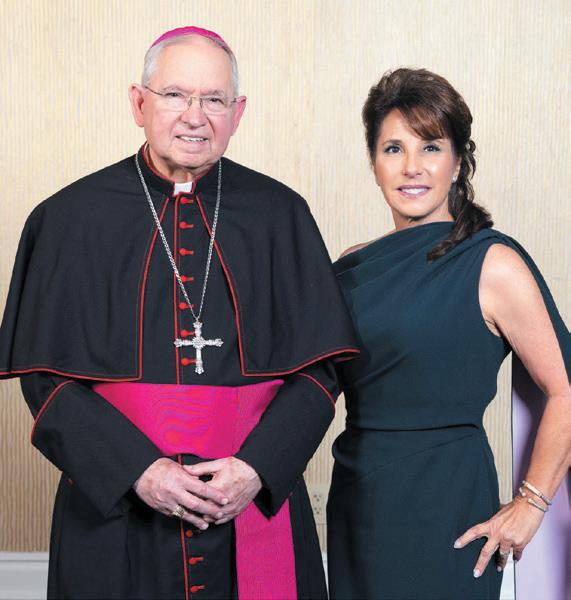
ARCHBISHOP José H. Gomez and Karla Ahmanson.
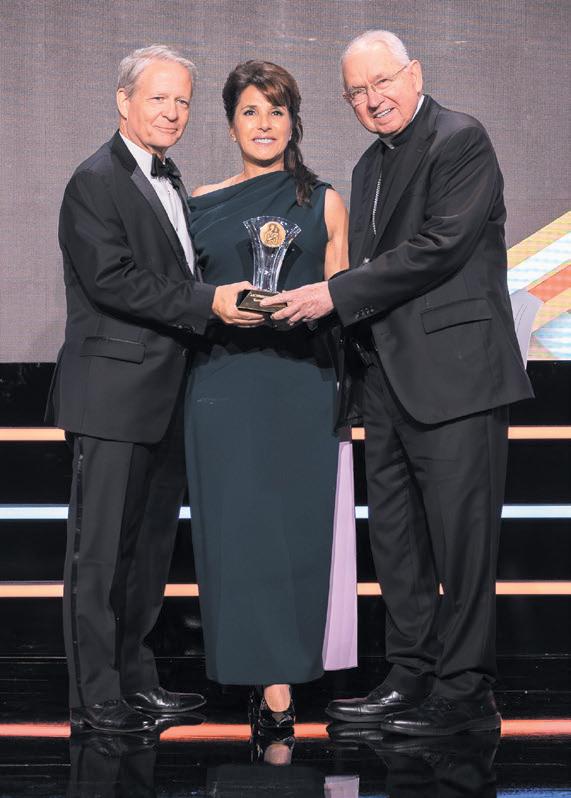
KARLA AHMANSON, Bill Ahmanson (left), and Bishop José H. Gomez.
AUDIENCE waits in anticipation for Jaclyn Smith, Cheryl Ladd, and Kate Jackson to take the stage.
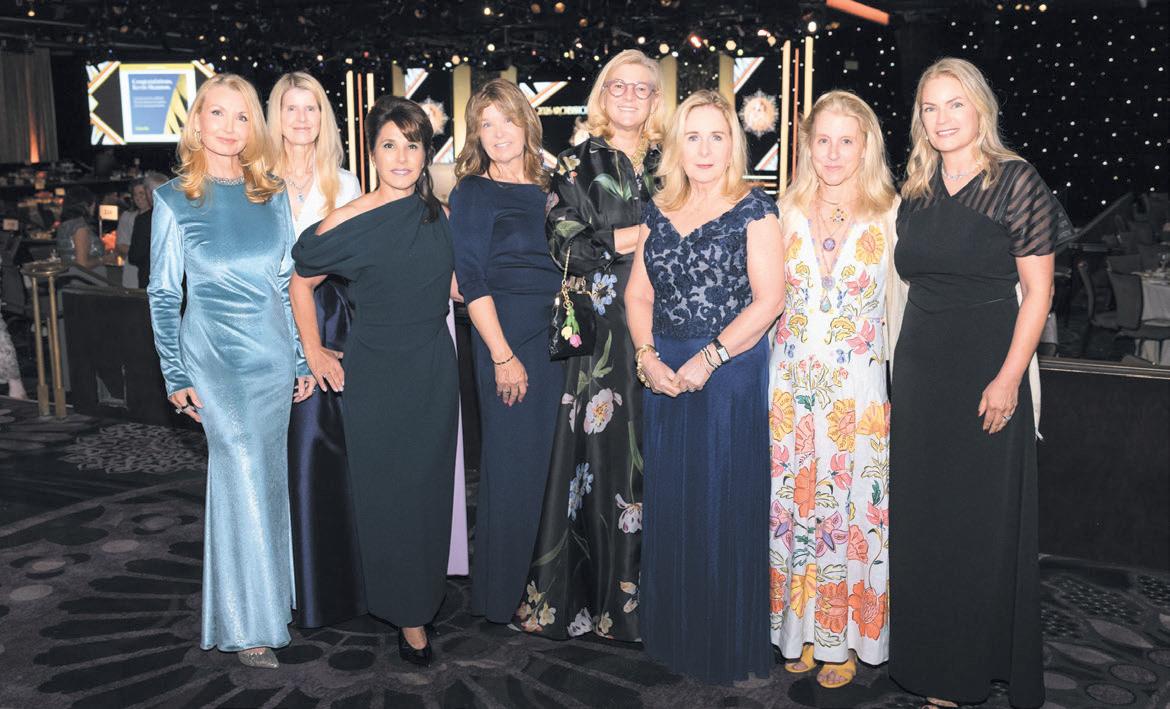
AT AWARDS DINNER, left to right, Michele McMullin, Beatrice Grimmla, Karla Ahmanson, Sue Cunningham, Laura Collins, Shar Penfold, Electra Lange, and Stephanie Sourpas.
JACLYN SMITH speaks with reporters before the Charlie’s Angel’s 50th Anniversary.
PALEYFEST PANEL: George Pennacchio interviews three of the original Charlie’s Angeles: Kate Jackson, Jaclyn Smith and Cheryl Ladd.
Iran irrelevant in ‘English,’ & ‘Escape’
Sanaz Toossi, the author of English at the Wallis in Beverly Hills (to Sun., April 26), wrote her play as a response to President Trump’s 2016 “Muslim” ban. The play went from off-Broadway to Broadway, won the 2023 Pulitzer prize, and has been touring (with the four original, talented actresses) ever since.
Set in Iran in 2008, the play takes place in an ESL night school where three women and a hunky young man come to learn English for various personal reasons (even though the young hunk turns out to speak English fluently and has a valid, if expired, U.S. passport).
In 2023, the Pulitzer committee called the play “quietly powerful.” Other reviews refer to it as “contemplative” or a “low key comedy.” I found it simply frustrating, not only for its gaping plot holes, but also for its total lack of any political point of view. These Iranians could be learning English in Brentwood.
In 2008 Iran saw “a dramatic rise in arrests… for peacefully exercising [the right] of free expression,” according to a UN report. The same year, a women’s rights group, the One Million Signatures Campaign, was a target of government censorship. According to the Center for Human Rights in Iran, at least 200 students were arrested in 2008, many of whom were tortured. By 2008, the UN had adopted three resolutions to sanction Iran for its nuclear
program.
All of which is nonexistent in Toossi’s play. The women speak freely, watch American movies, and have plenty of cell phone access. Their chief concerns are apolitcal (getting into med school, seeing a grandchild in Canada). No one comes from a demonstration or worries about the classroom being bugged. The hunk chooses to live in Iran, even though he was born in America, because he is more “himself” in Farsi. That seems to be the extent of his critique of the Great Satan. The biggest crisis for the class’s teacher was her not being her fully integrated “self” in English while she lived abroad.
Toossi seems more influenced by Oprah than by any anti-Islamic event. Given our President’s recent civilizational threat to Iran, Toossi’s play, while pleasant and touching, seems strangely irrelevant (310-246-3800; thewallis.org).
Not all theater has to be political, but it should have something to say. Diavolo’s Escape: Architecture in Motion brilliantly manages to do this with barely a spoken word.
Diavolo is a movement/ dance/theater company that expands what we think the human body and spirit are capable of. I first saw them
“Experience
in a warehouse in Europe 30 years ago, and, if the current production is not quite as dangerous and thrilling, it is still a testament to shared vision, community, risk and, oddly, love.
Using huge geometric constructs that turn into doorways, stairways, locomotives and ocean liners, the 20 or so performers fling, leap, fly, tumble and explode across the warehouse space that is Diavolo’s L.A. home. The theme of escape is played in many forms: escaping traps, bad relationships, death, fear, and the limits we think our bodies (and daily lives) put on us. The message here is clear: no one puts limits on us except ourselves! Escape to Diavolo (at the Brewery in downtown) for one of the best nights of your life. Weekends to Sun., June 14; diavolo.org/ escape; 323-335-4290.
What to watch for GUAC, Manuel Oliver’s oneman play about his son and the Parkland High School shooting, Kirk Douglas Theatre; Tues., April 28, to Sun., May 17. Not to be missed! (centertheatregroup.org).
Michael Michetti directs Ionesco’s absurdist Exit the King at A Noise Within; Sat., May 9 to Sun., May 31; 626356-3100 anoisewithin.org.
Brigadoon, the classic Lerner and Lowe musical is at the Pasadena Playhouse Weds., May 13, to Sun., June 14; 626-356-7529; pasadenaplayhouse.org.
Real Women Have Curves continues its 35th anniversary run at Casa 0101 in East L.A. to Sun., May 3; 323-2637684; casa0101.org.
School News
(Cont. from Sec. 1 Page 14)
need. This year, our students donated and assembled hygiene kits for the Jewish Family Service of L.A. to support needy individuals and families across Los Angeles. The sixth-grade students also read from the Megillah, a Hebrew scroll recounting the story of Purim, and performed a Purim Spiel. We wrote, directed, and acted out scenes
Single-family homes
SOLD: This home at 588 N. Gower St. in Larchmont
Theater Review by Louis Fantasia
Historic Larchmont building sold for first time in 50 years
By Jack Brownlee
On the corner of Larchmont and Beverly boulevards sits a two-story building built in 1921. With a Spanish tile roof, wooden window shutters, and ornate metal balconies, it’s an architectural artifact rarely seen in our modern world. The property, at 251 N. Larchmont Blvd., was sold for the first time in more than 50 years in March for $9.6 million.
The Fenady family of Hancock Park owned the building until that point. Andrew J. Fenady was a writer of Western films, television, and
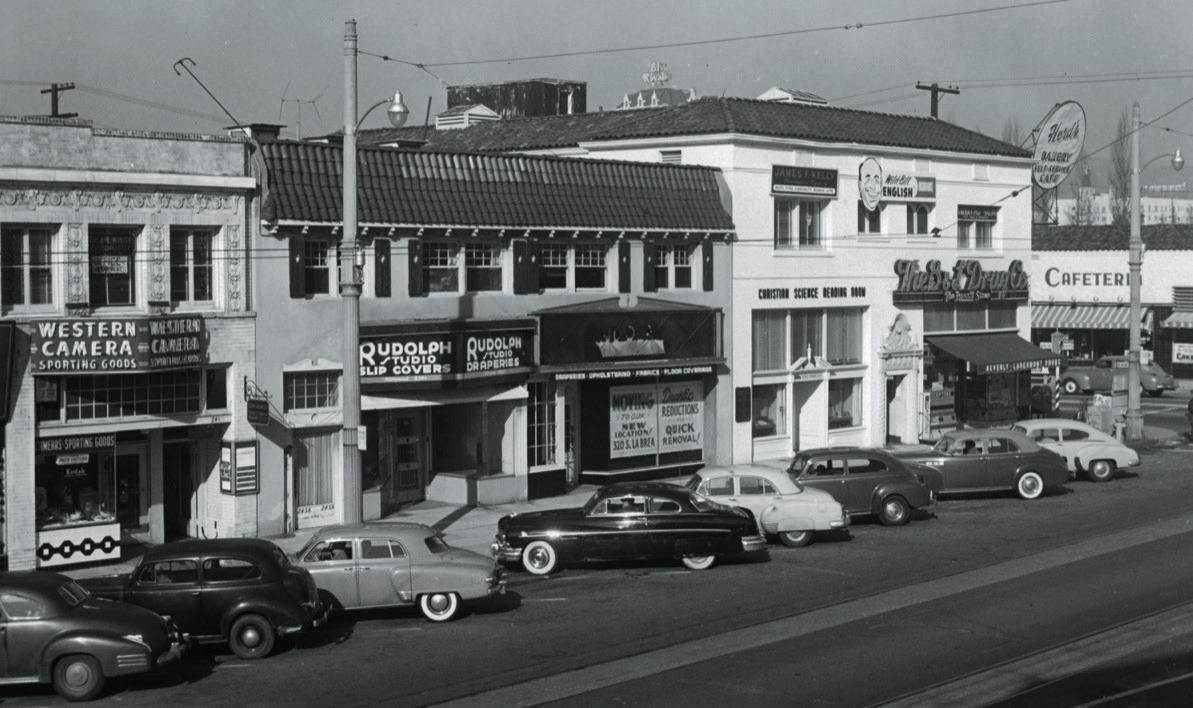
PROPERTY AT 251 N. LARCHMONT BLVD. (right) when it was home to The B&L Drug Co. in 1952.
novels. He wrote out of the second floor of the building, which he purchased in 1968. His son Duke joined him at his
production company, Fenady Associates, in 1983. The two had offices in the building for decades. The senior Fenady died in 2020, leaving Duke in control of the Larchmont building.
Coldwell Banker Realty has been the first-floor tenant since 1975. They recently moved just up the street on Larchmont Blvd. “It truly is an end of an era for this corner,” said Daniel Signani of Coldwell Banker. The vacancy at such a prime location is sure to draw the attention of many businesses looking to expand into the Larchmont
Gosling lifts off in ‘Hail Mary,’ ‘Company
Project Hail Mary: After eight years, we’ve finally sent Ryan Gosling back to space, albeit he’s singing quite a different tune this time around.
Rather than the quiet Neil Armstrong we saw in Damien Chazelle’s underrated 2018 film “Last Man,” in “Project Hail Mary” we see a cheeky, clever, and overwhelmingly charismatic version of Gosling as Dr. Ryland Grace, a middle school science teacher who wakes up on a ship with foggy memories and one mission: to save humanity.
Gosling’s unlikely partner in this undertaking is Rocky, an alien being who looks like a crab made of solid granite. How do you even communicate with a being that lacks eyes and ears and a nervous system, let alone work with it to save the universe? This is the question Dr. Grace must answer. Just as in the source material, Andy Weir’s wonderful 2021 novel of the same name, the film does an excellent job of walking us through all the steps, each one researched with vicious scientific accuracy, to solve each problem this mind-boggling situation brings.
Despite the stakes being as high as possible, directors Phil Lord and Christopher Miller (“The Lego Movie,” “Spiderman: Into the Spiderverse”) never leave us without laughter and hope. Their first film directed since 2014’s “22 Jump Street” is also their first venture away from comedy and family films into the wide world of drama. Teed up with great source material (as anyone who read the book will tell you), Lord and Miller smashed it. It’s big, it’s fun, and it’s got a Harry Styles moment. Do you really need anything more? Catch it in theaters; it’s worth seeing on the big screen.
Jury Duty Presents Company Retreat: 2023’s “Jury Duty” was a television darling, the type of event you hadn’t seen before and simply had
What We’re
Watching by Jack Brownlee
to tell your friends about because you didn’t think you’d ever see it again. Now it’s back, and crazier than before.
If you missed it, season one of “Jury Duty” took an unsuspecting man, Ronald Gladden, and pretended to give him jury duty. Unbeknownst to him, everyone involved, including the judge and his fellow jurors, was an actor. Everything, both inside the courtroom and outside while they were sequestered, was planned.
Season two, subtitled “Company Retreat,” takes that idea to a whole other level. Anthony Norman is the mark this time around, and he’s hired as a temp to assist a family-owned hot sauce company at their company retreat. The show, naturally, takes the retreat off the rails, and Anthony finds himself wrapped up in all manner of insane coworker drama. There are proposals, fights, even pop
star appearances.
The excitement of the show as a concept is lessened because, well, we’ve already seen it. Showrunners Lee Eisenberg and Gene Stupnitsky understand this and fill the void with big-budget, insane antics. It’s just as hilarious and even more heart-warming than season one. See it on Amazon Prime.
Something Very Bad Is Going to Happen: Beginning with 2018’s “Haunting of Hill House,” Netflix has been consistently cranking out bingeable horror miniseries. “Something Very Bad Is Going to Happen,” the debut of writer/director Haley Z. Boston, is the next iteration in that sequence.
At first, the plot seems fairly regular, something we’ve seen in films like “Get Out” and “Ready or Not”: Rachel and Nicky are engaged, but when they visit Nicky’s family, Rachel quickly learns that they aren’t what they seem. Fortunately, the story quickly twists and turns in ways you’d never see coming.
area.
From the 1920s, the building was home to a series of drug stores. In the 1960s, it was home to a Winchell’s Donut House.
Arash Danialifar is the new owner of the building. His real estate company, GD Realty, has acquired commercial properties across the Greater Los Angeles area since its founding in 2006. One such property is 215 N. Larchmont Blvd., a four-tenant building which houses Rhodes School of Music, Burger Lounge, Faherty Clothing, and Eli Massage.
Retreat’ gets a giggle
Camila Morrone is phenomenal as the lead, and Adam Dimarco is solid acting across from her. If you’re looking for a fix of modern horror à la Jordan Peele or the Philippou Brothers, this will surely be enough. Watch it on Netflix.
The Night Agent: Flying a bit more under-the-radar was season three of Netflix’s action thriller starring Gabriel Basso. After two seasons filled with espionage and conspiracy, season three somehow manages to both retain the focus and formula that worked so well in the first two sea-
sons while still feeling fresh. When season one debuted three years ago, everyone was talking about it. The chatter has died down, but don’t misunderstand: it’s because high-quality mystery and action has become standard within the series.
Basso continues to shine as Peter Sutherland, but we miss seeing Luciane Buchanan as his love interest Rose. However, one must admit that her character’s absence allows the show to explore Peter’s character and psyche deeper than ever before. You can see it on Netflix.
Photo courtesy Larchmont Boulevard Association
Getting carried away with the Viennese royals’ fanciful fleet
When I say I’m a design enthusiast, I mean it in the broadest sense. I will visit a museum dedicated to the manufacture of just about anything: hand fans in Paris; barges in Bangkok; perfume bottles in Bucharest; torture devices in Naples; lace in Bulgaria; oil lamps in Kyoto; glass in Redlands, California; and, of course, cars here in Los Angeles (namely at the Petersen and Nethercutt museums).
Most recently, I got my kicks in Vienna, where grandiose palaces hold treasures passed down from the nobility of the Austrian Habsburg Empire, which met its end in 1918 at the close of the First World War. One can peruse the royal family’s art collection at the Art History Museum (including 12 of only 40 surviving Bruegel paintings in the world), their regalia and crown jewels at the Imperial Treasury, their means of coming and going at the Imperial Carriage Museum, and their means of going (for good) at the Imperial Crypt.
The Carriage Museum is located at the Habsburgs’ main summer residence, Schönbrunn Palace, translating to “beautiful spring” and so named for an artesian well hidden in its gardens. Inside the museum, ornate hand-painted and gilded horse-drawn vehicles tell of a time when one’s carriage was not only a means of transportation, but an indicator of rank.
Dating to 1700, the oldest artifact in the collection is a two-seater “litter,” a wheelless vehicle with two poles extending out from either side to be attached to mules, though some were carried by humans. The name of this particular type of carriage arises from the Latin “lectus,” meaning “bed” or “sofa,” from the Proto-Indo-European “legh,” meaning “to lie down.” While the rise of rail travel during the mid-19th century caused the gradual disappearance of litters from the streets of
Word Café by Mara Fisher
Europe, this particular specimen was kept in use due to its ceremonial function, transporting the crown of the province of Lower Austria in an eight-mile procession from Klosterneuburg Abbey to the capital.
Further along was a “landau,” a stately black carriage with dark upholstery and gilded detailing. Generally believed to be named for the German town where they were first produced (the word “coach” comes from the Hungarian village of Kocs for the same reason), the four-wheeled landau and smaller “landaulet” had an adjustable leather cover—think 19th-century convertible. The one before me was so highly regarded during its era that it held the status of coronation carriage (in lieu of the typical enclosed coach), having presented Karoline Auguste, the fourth wife of Emperor Franz I, for her ceremony in 1825.
The progressing galleries revealed even more magnificence, including a summer carriage known as a “barouche,” from the Latin “birotus” or “two-wheeled;” a calash, styled like an adultsized stroller and named from the Czech “kolo,” or “wheel;” and a “chariot,” from the Latin “carrus,” meaning “two-wheeled wagon” (an etymological cousin to both “car” and “carriage”).
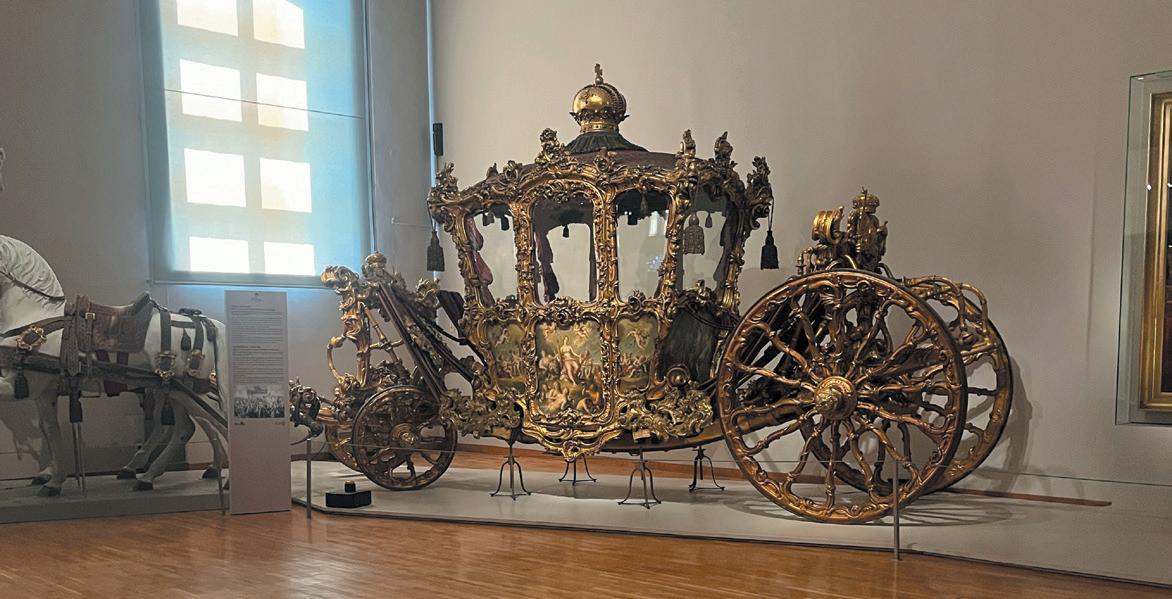
But the pièce de résistance of this imperial fleet was surely the “Imperialwagen,” a gilded and pastel-painted four-wheeled confection straight out of a fairy tale.
Constructed for Emperor Charles VI around 1735-40, the carriage is outfitted with eight Venetian glass windows and panels painted with allegorical scenes by Franz Xaver Wagenschön (a shoo-in for the job, with a last name
THE IMPERIALWAGEN (c. 1735-40) transported Austria’s beloved Empress Elizabeth to her coronation as the Queen of Hungary in 1867.
translating to “beautiful wagon”). The Imperialwagen, the name of which arrives from the Proto-Indo-European root “wegh,” meaning “to go,” was used only for the highest occasions, including the 1867 coronation of Austria’s beloved Empress Elisabeth, nicknamed “Sisi.”
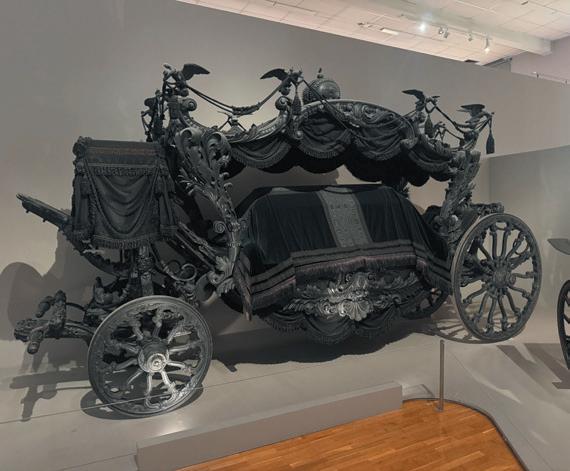
Amid all the bibbity bobbidy within the collection, there was also a bit of “boo”—a gigantic black hearse used for the funerals of Empress Elisabeth in 1898, Emperor Franz Joseph in 1916, and, as recently as 1989, Empress Zita. Upon seeing a photo of the murdered-out masterpiece, a friend of mine later commented, “It looks like it would swallow you up and take you to hell.”
“Hearse” originates from an earlier definition, describing a framework used to hang multiple candles over a coffin, from the Old French “herce,” a word for a type of large rake. That term is thought to have journeyed through many twists and turns from the word “hirpus” in the extinct Oscan language of southern Italy, translating to “wolf,” perhaps in allusion to the rake’s teeth. The word “rehearse,” though far flung in meaning, arrives from the same root, invoking the repetitive motion of the “herce” dragging on the ground.
My carriage awaits Leaving the museum, I wandered around the palace grounds, where gardeners had begun their late winter
, this 19th-century imperial hearse was used as recently as 1989 for the funeral of Empress Zita.
plantings for what was sure to become a brilliant spring display. Heading to Karlsplatz station, I boarded an electric train—an elegant, streamlined Type V, designed in the
late 1990s—and journeyed back to my humble Viennese digs, where visions of riding like royalty in gleaming horse-drawn carriages faded to the realm of fantasy.
Visit museum at La Brea Tar Pits
while you can
By Suzan Filipek
There’s still time to visit the Page Museum at the La Brea Tar Pits before it closes for a major transformation of the site. Construction is expected to begin in late 2026.
The museum’s final weeks before it closes Mon., July 6, include a free Summer Nights event on Fri., June 12, and a Last Dance disco party for museum members Sat., June 27.
The surrounding park will remain open, and on-site excavation and scientific re-
Synagogue
(Continued from Page 8)
ents attend religious services.
In October 2024, the owner of the home, Rabbi Kalmenson, applied for the permit to convert the existing building on the 8,000-square-foot lot into a house of worship.
He purchased the residence 10 years ago, opening his home to small, daily prayer services for up to 10 people.
As his congregation grew he rented a space on nearby La Brea Avenue. However, he moved his growing services to his backyard after the COVID-19 pandemic, when concerns of safety regarding homeless encampments grew and threats against Jews increased.
Meg Fain
(Continued from Page 2) sign, it’s important to have experiences outside of your comfort zone,” she said. “A lot of ideas and understanding of space come from exploring new things. The world around you is kind of like a laboratory, and I think that’s where the best inspiration comes from.”
For more information, visit jenkinsfain.com.
search of the global Ice Age destination will continue during the first major renovation in its 50-year history. The museum will reopen in 2028 in advance of the Los Angeles Olympic and Paralympic Games.
Reimagining the 13-acre campus, where mammoths and dire wolves once roamed, include modernizing and improving access to the building, visible research laboratories and displays and an immersive theater.
Also new will be a roof terrace with views of the park and a historic atrium and frieze.
The $240 million transformation is led by architecture firm Weiss/Manfredi. A 1-kilometer pedestrian loop through the park will connect active excavation sites, research and exhibition spaces and a central green.
Research began at the La Brea Tar Pits—the richest Ice Age fossil site on the planet—in 1875 and its tar has yielded millions of samples of saber-toothed cats, insects, and plants.
The George C. Page Museum opened in 1977. It was burrowed into the earth to preserve as much of the landscape as possible and has sloping, grass-covered exterior walls.
Museums opens their doors to night time visitors
As the weather warms, museums are reviving evening activities.
Don’t miss Jazz at LACMA, held Friday evenings until October. Visit lacma.org.
First Fridays are offered at the Natural History Museum. You can hear live music, scientific presentations, and explore the museum after hours. Visit nhm.org.
MACABRE MASTERPIECE
MAY EVENTS
DAVID GEFFEN GALLERIES opens with a free day of activities. Spanning Wilshire Boulevard, the much-anticipated elevated exhibition space across Wilshire Boulevard is 10 years in the making. Works from diverse cultures and eras are exhibited side by side in the gallery, forging a new perspective on art, history, and Los Angeles. Located at the Los Angeles County Museum of Art, 5905 Wilshire Blvd., access to the galleries is free for NexGenLA, a youth membership for L.A. County residents 17 and younger. RSVP at lacma.org.
GRIFFITH OBSERVATORY featuress
“Spaceballs” at an after-hours screening celebrating Star Wars Day, from 6 p.m. to 10 p.m. Admission is open to the public, and includes complimentary parking, hosted beer, wine, and light fare, and photo opportunities with costumed “Star Wars” enthusiasts. Tickets are at griffithobservatory.lacity.gov. Members of the Griffith Observatory Foundation receive discounted admission.
MARCIANO ART FOUNDATION opens new programs, its inaugural MAFter Hours, and a conversation with visionary choreographer Toni Basil and curator Douglas Fogle. The exhibit “Magdalena Suarez Frimkess: Ninety-six and Pissed” opens Wed., May 6, and continues through Sat., July 18. More than 30 new drawings are featured. Ongoing exhibits “Bruce Conner/ Recording Angel” and “John Giorno: No Nostalgia” continue through Sat., July 18. MAF, 4357 Wilshire Blvd. RSVP for free tickets at marcianoartfoundation.org.
SASSY SOUTHERN STORIES will be told in the Ebell of L.A. salon, 743 S. Lucerne Blvd., on Wed., May 6, at 7:30 p.m. The program is hosted by members Wendy Hammers and Suzanne Weerts. Arrive early for music and mingling; Jamie and the Silver Dollars will perform and mint juleps will be poured beginning at 6 p.m. For tickets and more information, visit ebellofla.org.
7
LOCAL AUTHOR Rich Michalski will sign and read from his new book, “In the Fight: My Stories of Fighting for the American Worker,” Thur., May 7, at 7 p.m. at Chevalier’s Books, 133 N. Larchmont Blvd. The former union leader takes us behind the scenes of corporate meetings with CEOs, senators, governors, and presidents from the
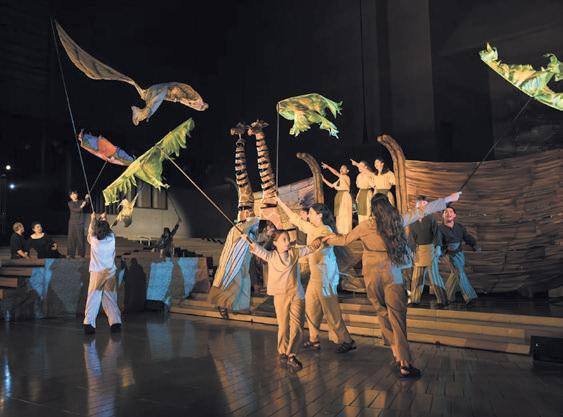
“NOAH’S FLOOD,” an LA Opera program for all ages, is featured in two free performances this month at Cathedral of Our Lady of the Angels.
heyday of American manufacturing jobs to its tragic post-NAFTA downfall—setting the stage for Trump. The Larchmont Village resident will be in conversation with Liba Wenig Rubenstein, director of the Future of Work Initiative at the Aspen Institute.
LA OPERA will showcase a cast of hundreds in two free one-hour performances of “Noah’s Flood” at the Cathedral of Our Lady of the Angels, 555 W Temple St., Fri., May 8, at 7:30 p.m. and Sat., May 9, at 3 p.m. Composed by Benjamin Britten and conducted by James Conlon, the opera features immersive sets, stunning animal costumes, interactive sing-alongs, and fun for all ages. Visit laopera.org/noah to reserve tickets and for more information.
VENICE FAMILY CLINIC
Art Exhibition + Auction is Fri., May 8, to Sun., May 17, at 910 Abbot Kinney Blvd. in Venice. Works by established and emerging artists will be featured at the free event. Proceeds from art sales support comprehensive health care services. Visit venicefamilyclinic.org/artexhibition.
KOREAN CULTURAL CENTER
LA monthly series “Frames of Korea Through Films” features commentary by film experts accompanying each screening. “Aimless Bullet” will screen on Wed., May 13, at 6:30 p.m. The 1961 film portrays two brothers as they navigate Korean post-war reality. Korean Cultural Center, 5505 Wilshire Blvd. RSVP at tinyurl.com/emv75m2f. Visit la.korean-culture.org
Continuing
HEAVY METAL, the Los Angeles Municipal Art Gallery’s new group show, featuring works by 20 contemporary feminist sculptors, continues through Sat., June 20, at Barnsdall Park, 4800 Hollywood Blvd. Two solo exhibitions by Ivan and Rachel Bridges are also on view. Visit barnsdall.org. 8