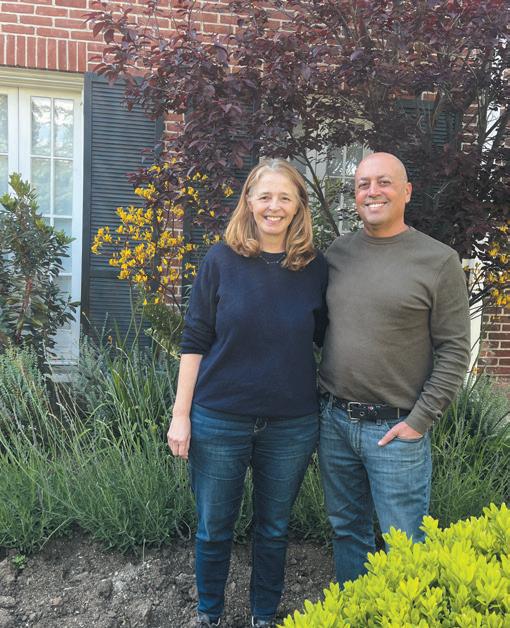
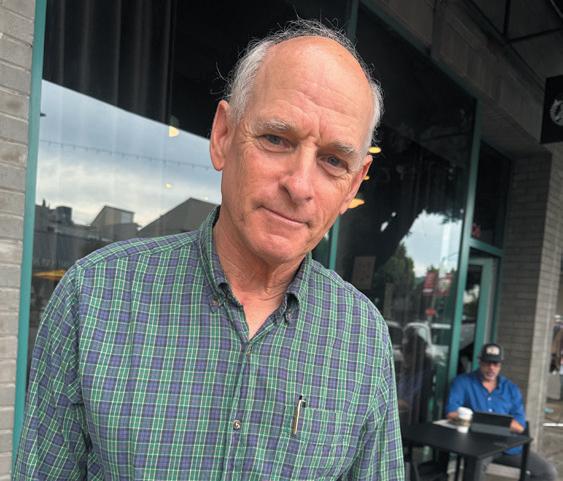
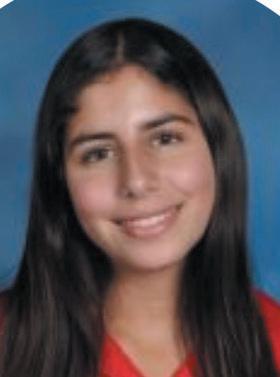
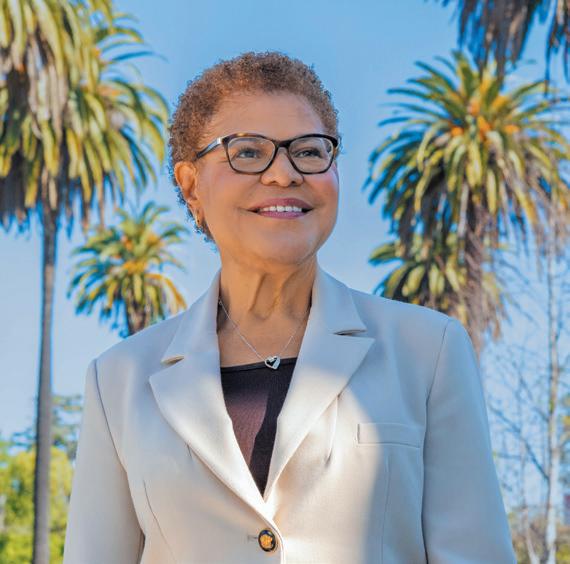
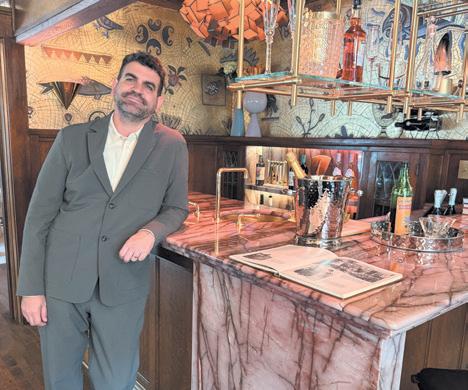
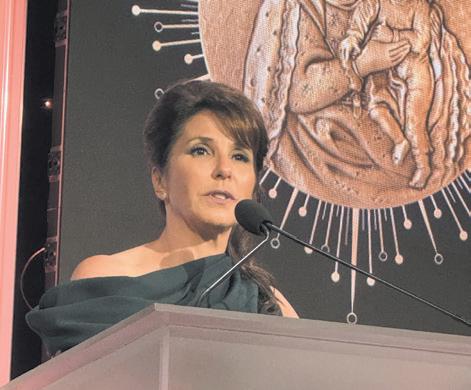
Recently, in our effort to inform voters, we spoke with Nithya Raman for an expansive conversation regarding her run for mayor and what she strives for in the city of Los Angeles. Her name is definitely recognizable to our readers as she was our councilperson prior to the redistricting in December 2021. Surprisingly, Raman did not ask for our range of questions beforehand, and nothing was off-limits. Her answers were thoughtful and certainly not scripted.
Obviously, many voters have a notion of who they believe Raman is and what she
By Jon Vein
We asked the leading candidates for mayor, Council District 5, and Council District 13 to respond to three questions:
1) Why should voters choose you?
2) Where do you stand on Senate Bill 79, which was recently passed into law. And how are you going to work within its restraints?
3) What’s your plan for getting people off the streets and keeping them housed? Here are their responses: Candidates for mayor Mayor Karen Bass:
By Suzan Filipek
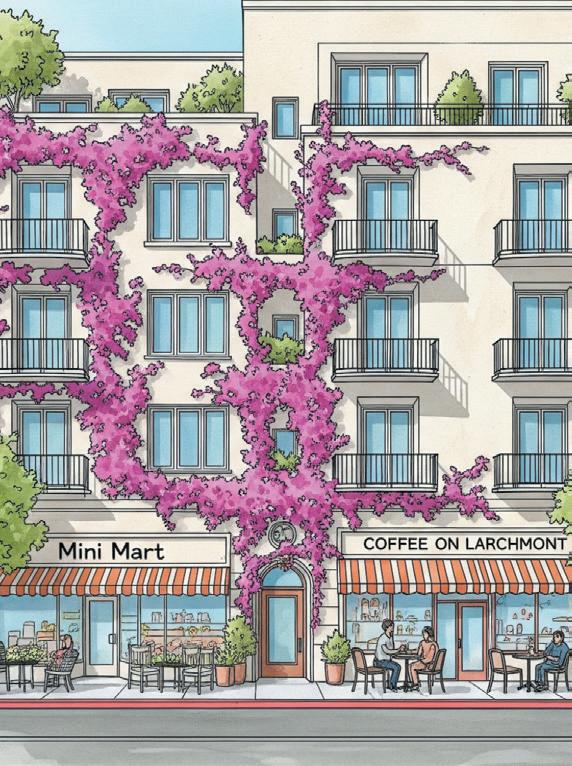
Neighbors, architects, designers, and everyone and anyone interested in the future of Larchmont Boulevard—north of Beverly Boulevard and south of Melrose Avenue—is invited to enter a design competition aimed to bring new life, housing and architectural wonder to the three-block strip.
“We’re hoping to engage neighbors to share what they think Upper Larchmont should look like,” said Lindsay Sturman, co-founder of the Livable Communities Ini-
Blvd.
tiative, which is heading the project.
Ground-floor commercial space with affordable, and family-size housing above are major components of the project, known as Larchmont 2030, created by Sam Uretsky.
City Council is considering amending the city’s building code.
There are around 80 underutilized parcels on Upper Larchmont that could be redeveloped, as members of the planning initiative estimate.
In addition, more than 1,000
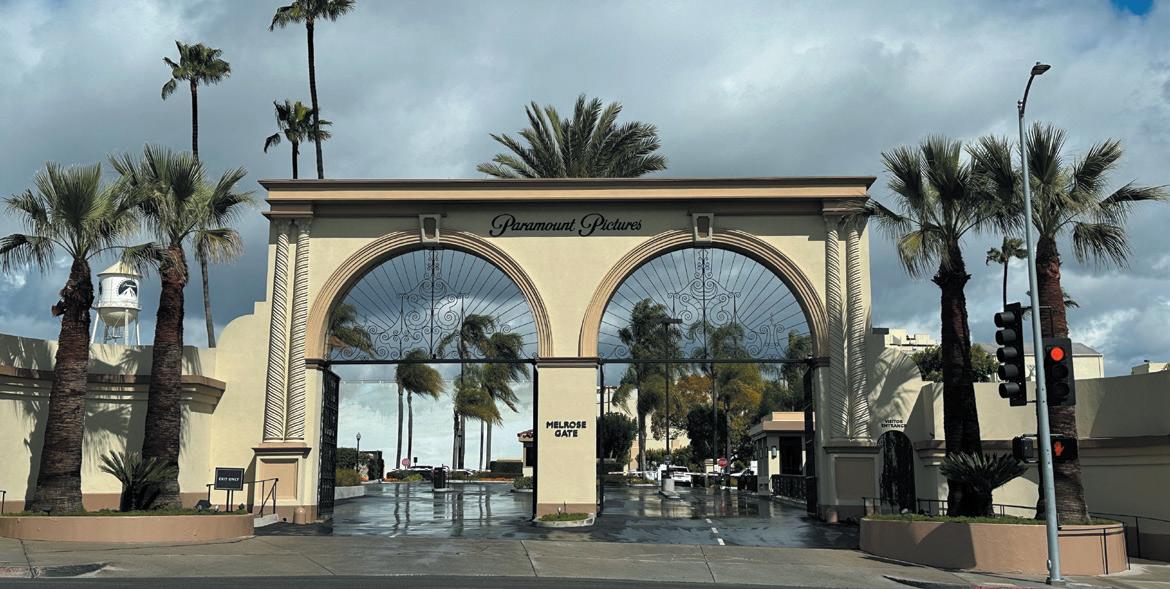
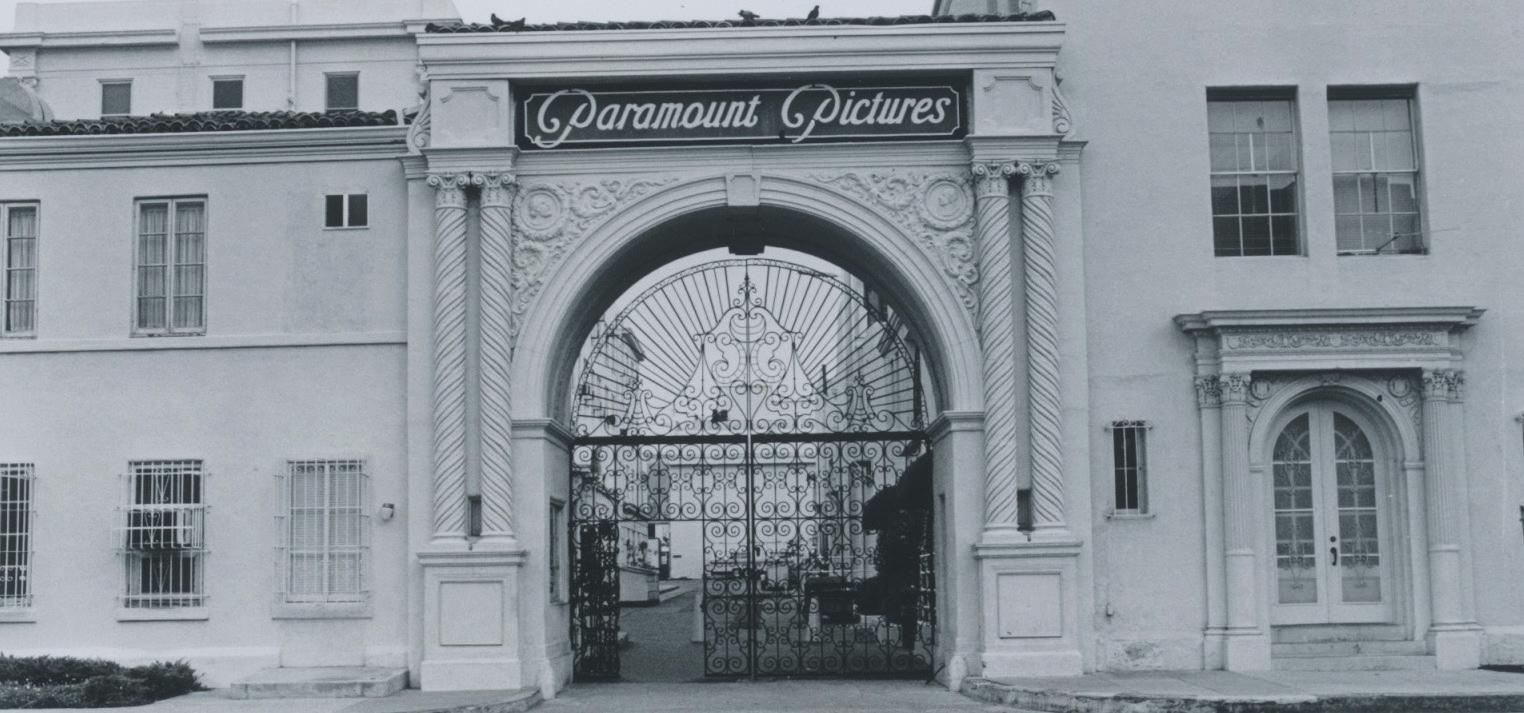
For more than a century, the gates of Paramount Studios on Melrose Avenue have stood as both a literal and symbolic entrance to Hollywood. Behind them, generations of filmmakers built the mythology of the American film industry—long before “content” became a commodity and streaming platforms began reshaping the business. Now, those gates may soon open to a very different future.
With the recent acquisition of Paramount by Skydance— and broader consolidation pressures across the entertainment industry—serious questions are emerging about the long-term fate of the 65acre studio lot. While no final decisions have been announced, enough signals have surfaced to make one thing clear: the land itself is now as much a financial asset as it is a creative one.
And in Los Angeles today, that raises an unavoidable question: if not a studio, then
By H. Hutcheson
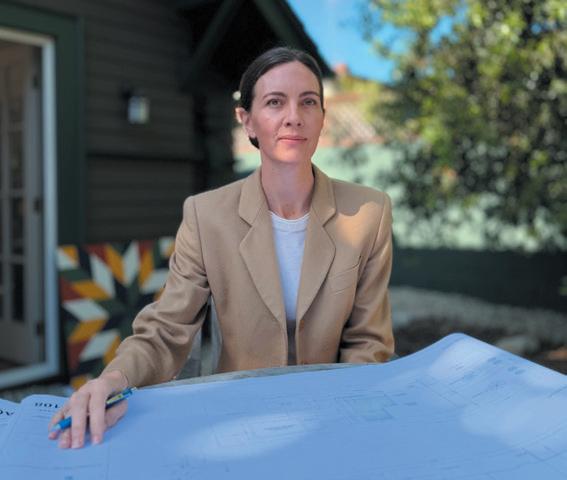
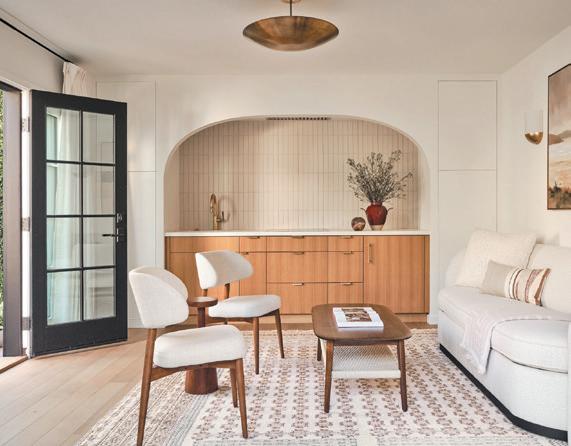
Candidates, P 15 n She’s a contractor, architect, & designer
Our annual section honoring local high school graduates will be featured in the June issue of the Larchmont Chronicle Advertising deadline is Mon., May 11. To reserve space, call 323-462-2241, ext. 11, or email jesse@ larchmontchronicle.com or sandy@larchmont chronicle.com.
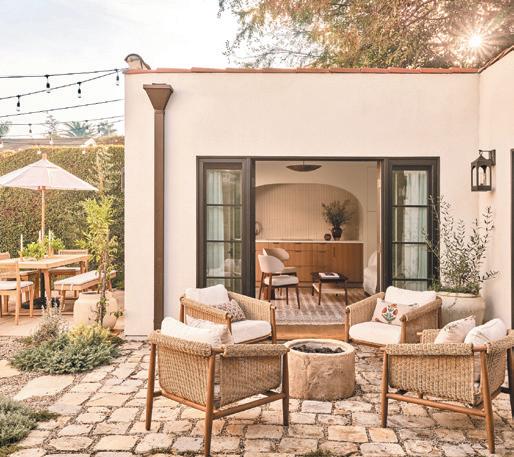
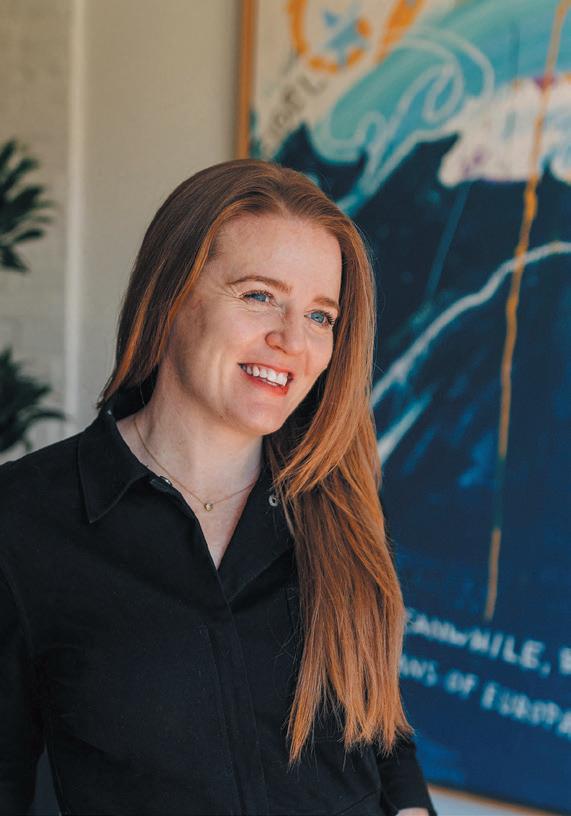
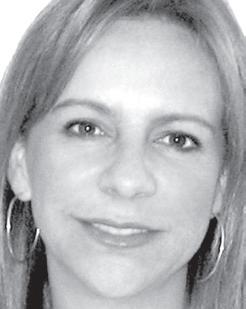
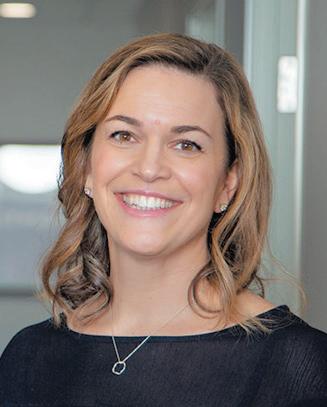
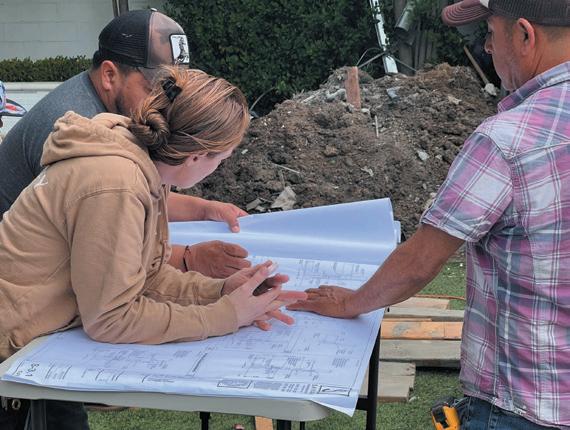
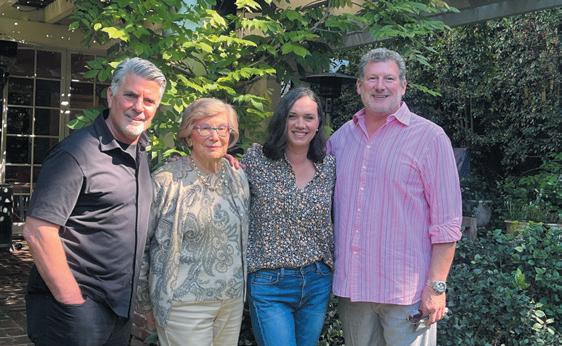
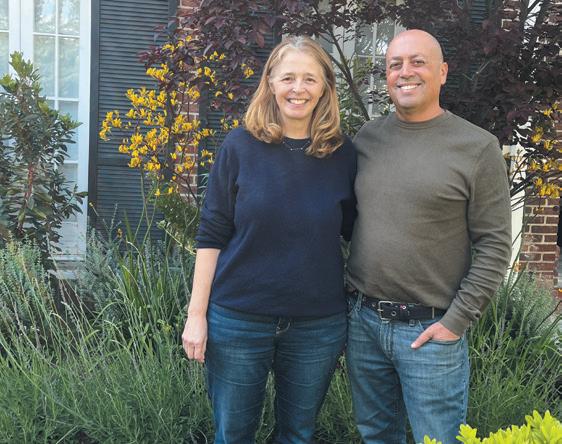
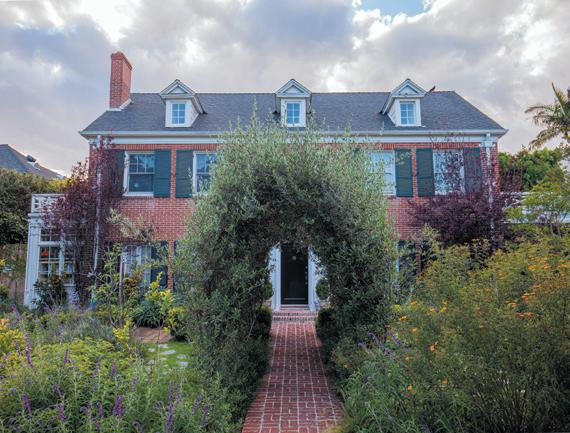
Lauren Howley started her construction firm, Howley Design Build, because she always loved her experiences watching her family remodel their 1920s house on Lucerne Boulevard. She studied interior design and architecture, but upon graduation in 2008 took a job with a contractor. She found her place in the world of construction and never looked back.
I visited Howley at her current project in Los Feliz and spoke with her about the journey of becoming a design contractor and her experience as a female in a
world dominated by men. Larchmont Chronicle: I feel wrong even
asking you this, but… Lauren Howley: How did a Marlborough girl get into construction? LC: Yes! A woman. Howley: Yeah, it’s a great question, and there’s more and more of us. I’m on a group chat with two other female contractors. We talk almost daily and share knowledge, which I think is unique to our gender in contracting—there’s enough room for everyone, we feel. One’s more commercial, the other works more on the westside, and I’m more in Hancock Park, Los Feliz, Hollywood Hills. It’s definitely a growing community.
I grew up on Lucerne and
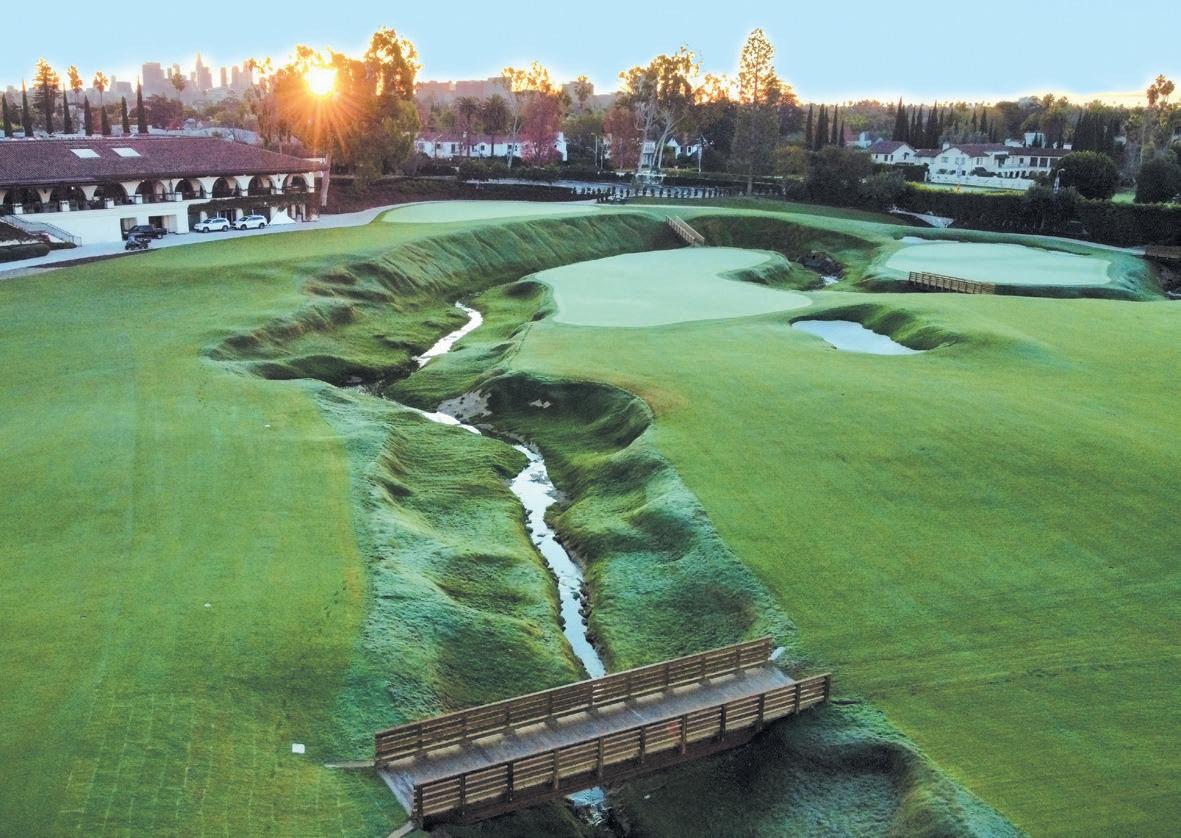
WILSHIRE COUNTRY CLUB has finished the Kyle Phillips-led restoration of its 18-hole golf course, first designed by Normal Macbeth in 1919. See story, Page 8
Photo by Bill Johnson
LAUREN HOWLEY grew up in Windsor Square in
borhood. Photo by Betsy Newman
Editorial
By Chronicle Editorial Board
Housing is important, but at what cost?
Virtually every candidate running for any office in our city will exclaim fervently “We need more housing.” While it’s true we need more housing, the type of housing should be of great importance for every resident.
A large part of a city is the character of that city, architecture being a huge factor, and yet not many candidates express what housing will look like. I am sure we have all seen the big square boxes that have been built throughout our streets, many of which look empty or are simply unaffordable. Is it too much to ask that the housing being built preserves the unique aspect of the community it is being built in?
Can we ask that they keep the overall character of a neighborhood intact? The rush to build as much housing as possible can have negative consequences, which can be seen in cities throughout the country. The increase in dollars put behind housing initiatives are going to be astronomical. Maybe as part of the contracts the developers receive, there should be an expectation there will be some forethought and planning around integrating architecture that will not depress, but inspire.
325 N. Larchmont Boulevard, #158 Los Angeles, California 90004 windsorsquare.org
157 N. Larchmont Boulevard
“The world’s favorite season is spring. All things seem possible in May.”
Edwin Way Teale
CD13 CANDIDATE TOWN HALL: Thank you to all of the candidates who participated in the forum; Coun- cilman Hugo Soto-Martinez, Colter Carlisle, Dylan Kendall, and Rich Sarian and all of the Windsor Square residents who attended and made your voices heard! o o o
CRIME IS DOWN!: New released statistics show a 20% drop in burglaries in our area, on top of the 35% drop in crime in 2025. Thank you to all of our vigilant neighbors, area police at the Wilshire and Olympic Divisions and district attorney Nathan Hochman for working so hard to keep our community safe.
o o o
WSA WELCOMES NEW BLOCK CAPTAINS: Thank you to neighbors Neda Disney (400 S Windsor block) and Charlotte Toumanoff & Allison Meyerson (200 S Larchmont block) who have stepped up to join our volunteer Block Captain network. Block Captains are essential to the collecting and disseminating of important information to the WSA and the community at large.
o o o
REPORT STREET LIGHT OUTAGES: the WSA continues to track street light outages throughout Windsor Square so that they can be properly reported and scheduled for repair. If your street is experiencing an outage please report it by contacting blockcaptains@ windsorsquare.org and CD13 representative Mark Fuentes mark.fuentes@lacity.org.
o o o
“ARE YOU PREPARED?” The WSA’s one page sheet on preparing yourself, family and A Guide to Neighborhood Disaster Preparedness is now available online. Download your copy at windsorsquare.org/prepare o o o
WE NEED BLOCK CAPTAINS! Be the leader of your block and point person for all that’s going on the neighborhood. The WSA has numerous block captain positions open. A great opportunity to engage with neighbors and community leaders. blockcaptains@windsorsquare.org
The Windsor Square Association, an all-volunteer group of residents from 1100 households between Beverly and Wilshire and Van Ness and Arden, works to preserve and enhance our beautiful neighborhood.
325 N. Larchmont Blvd., #158, Los Angeles, CA 90004, or windsorsquare.org.
Calendar
Tue., May 5— Cinco de Mayo.
Sun., May 10— Mother’s Day.
Mon., May 25—Memorial Day.
Thu., May 28—Delivery of the June edition of the Larchmont Chronicle
by
Letters to the Editor
Public schools, too
We are a family living on Arden Boulevard and our children have grown up entirely in Larchmont. We care deeply about this neighborhood, and we truly appreciate how the Larchmont Chronicle reflects so much of what makes this community special.
I was disappointed to see once again that our local LAUSD public schools are largely absent from the School
Larchmont Chronicle
News section, while many private schools are prominently featured, including one in the Valley and one west of the 405 freeway. In the most recent issue, Third Street Elementary was included on the last page, but our neighborhood public middle and high schools were not represented. When we first moved here 14 years ago and began raising our children, we were often told we couldn’t send our kids to local public middle and high schools. Our experience has proven otherwise. Our two kids attended Third Street Elementary and are now thriving at John Burroughs Middle School. We also have friends whose children are having wonderful experiences at Bancroft Middle School, and we know many students at Fairfax High School who are doing impressive and inspiring work. These are strong, vibrant school communities that deserve recognition. As a local newspaper, I would hope the default would be to
(Please turn to Page 12)
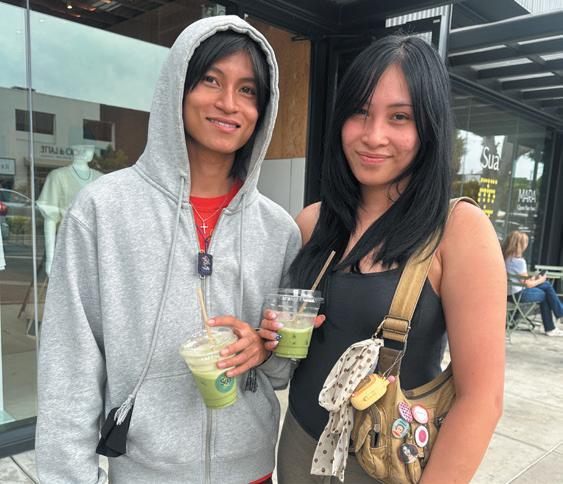
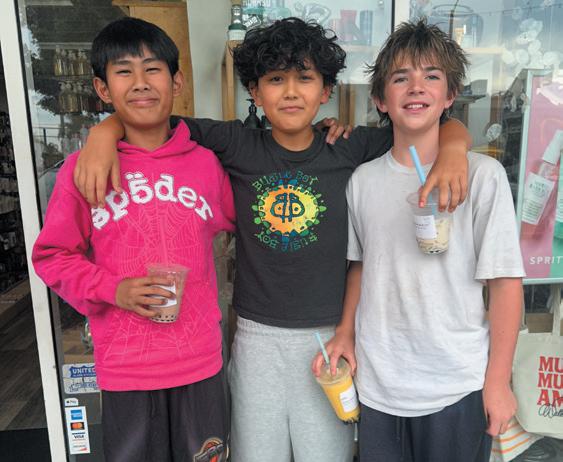
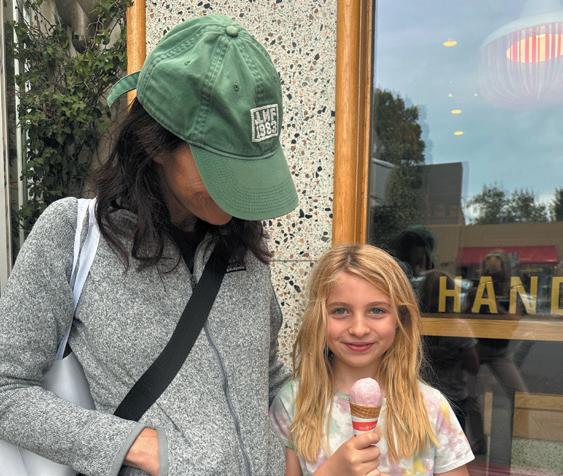
‘What’s the best advice your mother ever gave you?’
That’s the question our inquiring photographer asked locals.
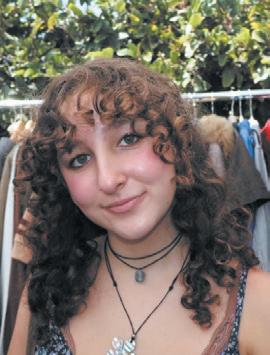
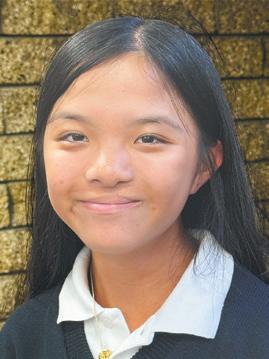
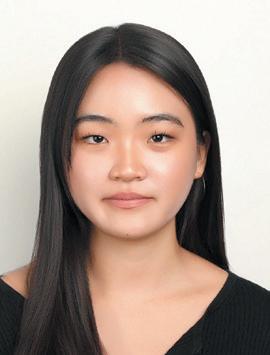
“Two words, ‘Have fun,’” said Nguyen. “I think I stress out a lot,” said Hua. “My mom tells me every day, ‘Nothing is ever that serious.’”
Bao Nguyen and Amy Hua
“I have one from my mom, ‘Respect others the way you respect yourself,’” said Leyva. “Mom says, ‘You only live life once,’” said Abraham. “My mom always tells me, ‘Don’t judge a book by its cover,’” said Sais.
Leon Leyva (left), Louie Abraham, and George Sais
“If you be kind to someone, they’ll remember it, but if you don’t be, they’ll also remember you were mean to them. And so, you want to always be nice!,” said Frankie B. “My mom would say, ‘People remember how you make them feel,’” said Natalie B. Frankie B. (right) and Natalie B.
Circulation
Nona
Digital
606 N. Larchmont Blvd., #103 Los Angeles, CA 90004 323-462-2241
larchmontchronicle.com
Write us at letters@larchmontchronicle.com. Include your name, contact information and where you live. We reserve the right to edit for space and grammar.
CORRECTIONS
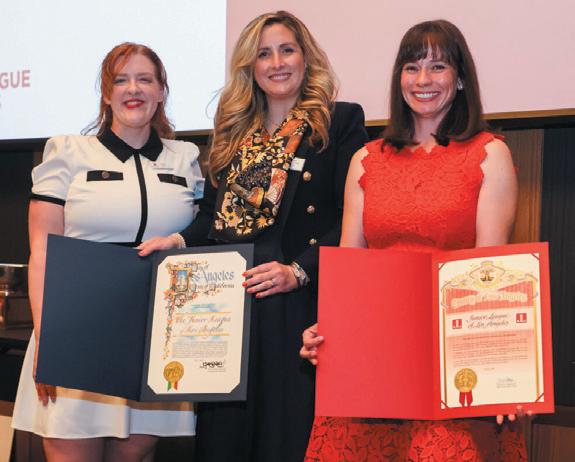
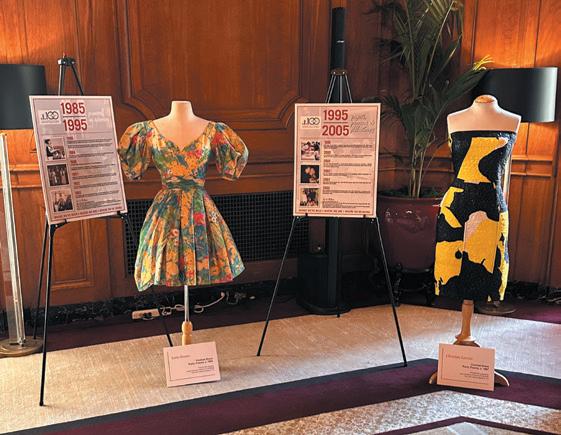
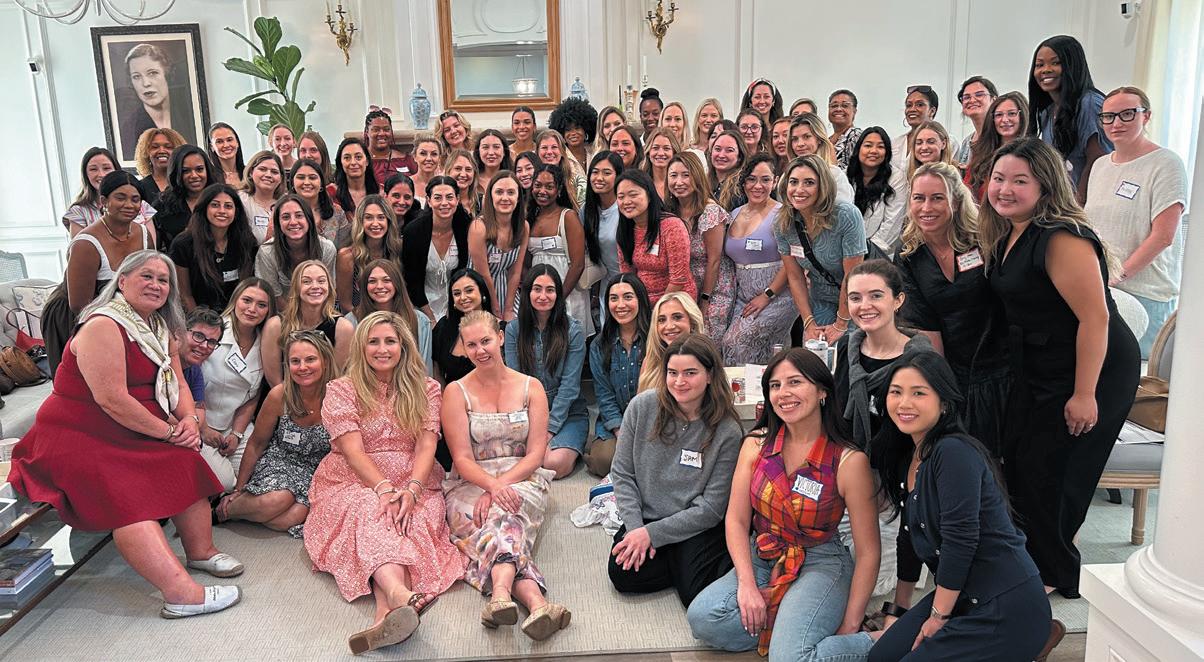
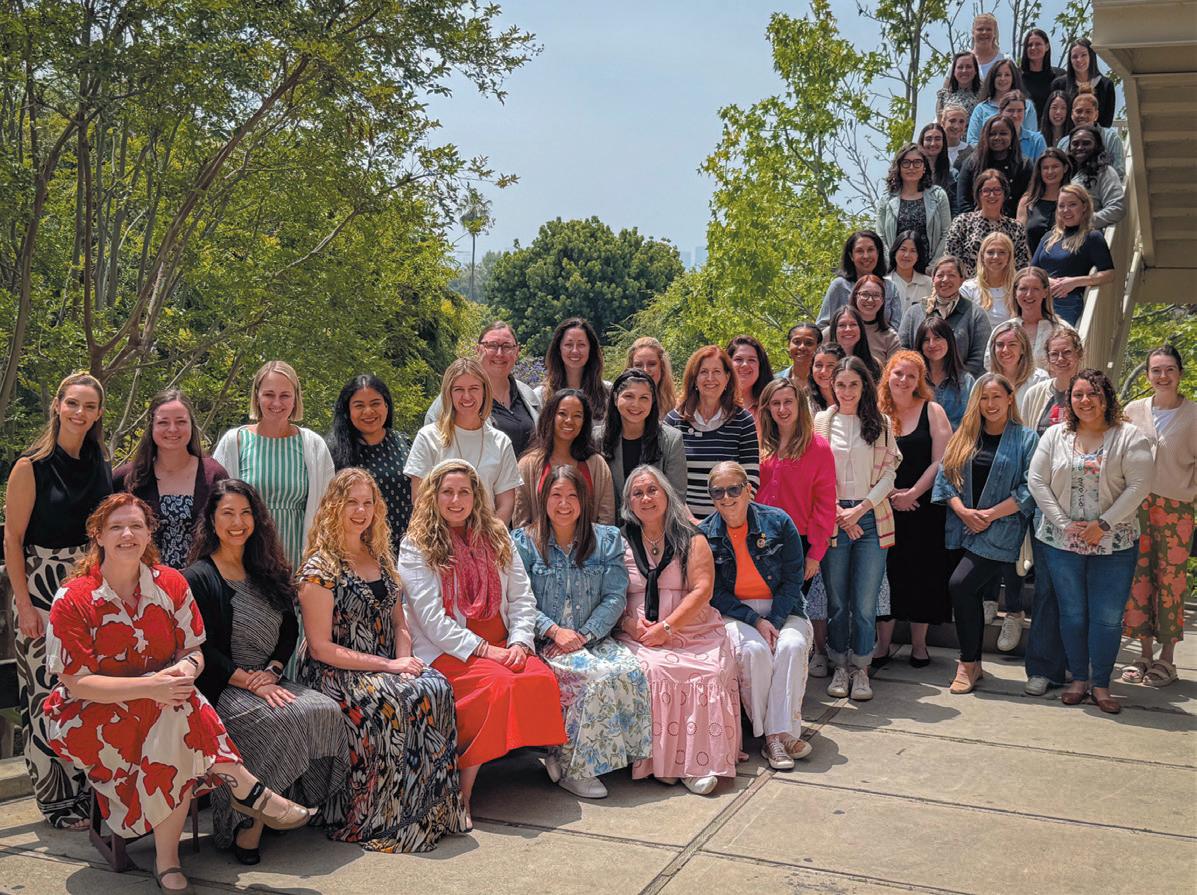
In last month’s issue, part of a story about the Junior League of Los Angeles’ Centennial Gala was omitted. Read the correction in Sec. 2, Page 11.
“‘Your reputation is everything.’ That’s one I remember when I was starting real estate,” said Day.
Bob Day
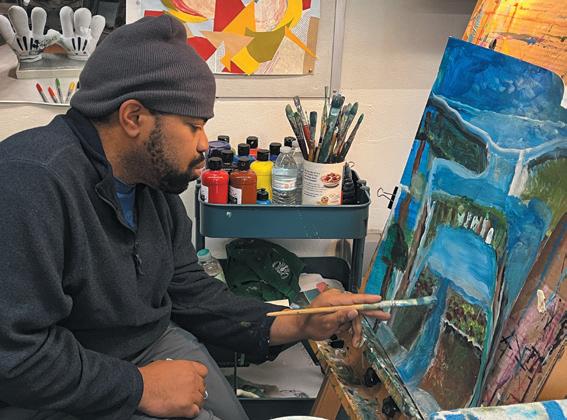
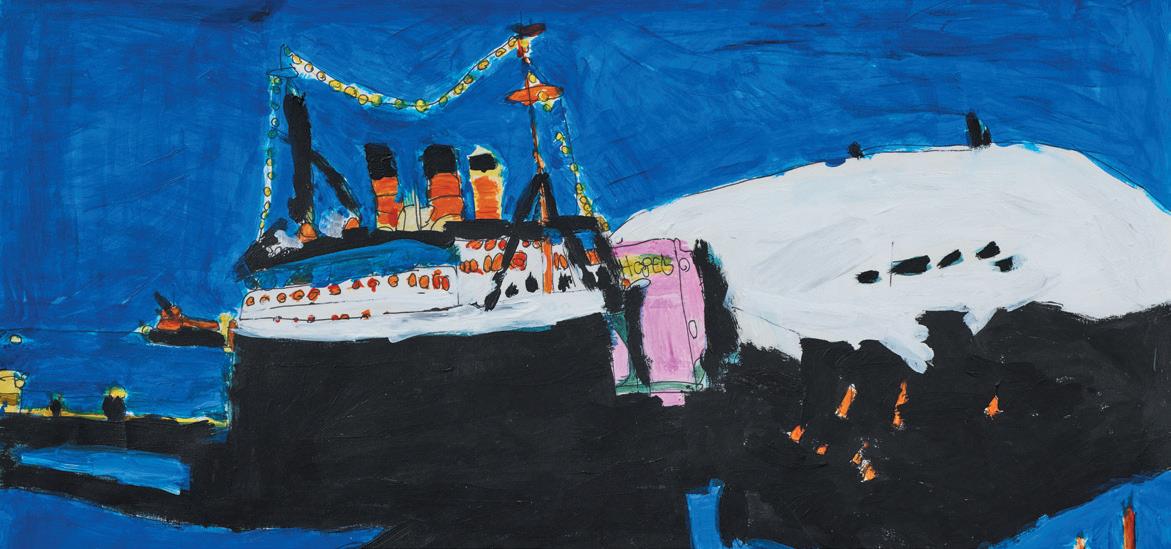
Finn Walker Instagram @finnwalkersart
New moms diving into endeavors to help each other
By Nona Sue Friedman
Have you heard of the word “matresence”? If you haven’t, it means the developmental transition to motherhood; colloquially the “culture of moms.” As most moms will attest, you totally change when you have a child.
The term was coined in the late 1960s in a dissertation by Dana Louise Raphael at Columbia University but never made it into the mainstream. Lately, it has come into vogue. New moms are much more aware of their own needs, and that awareness has revealed there is a deficiency in some areas of motherhood.
Four moms in the neighborhood each creating their own product to make the transition from pregnancy to motherhood easier. In this way, they are consciously supporting each other personally and professionally.
Aside from motherhood, the other thing the following
SECTION ONE
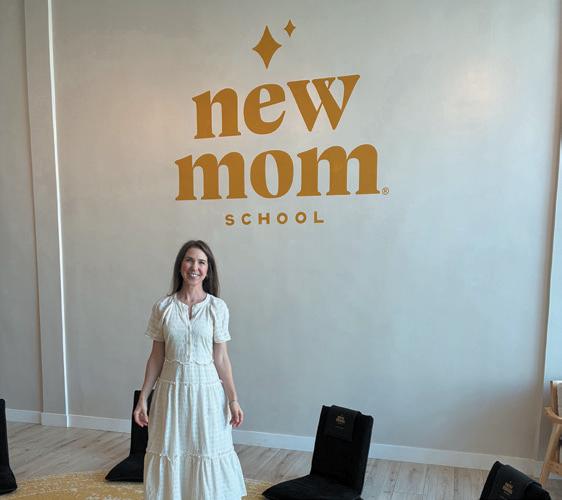
OWNER OF THE NEW MOM SCHOOL, Stephanie Marker stands in the middle of the newly designed space on Larchmont Boulevard.
moms all have in common is their love and appreciation for this neighborhood, all likening it to a village, which isn’t the norm these days. School for new moms
The New Mom School, at 658 N. Larchmont Blvd., is exactly that—a place for new or soon-to-be moms to take a class and create community.
Owner Stephanie Marker had
her two kids during COVID-19, when meeting other moms was only possible online. She craved a different, less isola ing kind of experience.
Having grown up in Orange County, she knew of the New Mom School, which originated in Newport Beach. Many of her childhood friends participated in the program and had wonderful experiences. With the company now offer-
ing franchise opportunities, Marker thought this would be a great chance to give other moms the experience and comradery she had wanted. Her first-choice location was Larchmont, and working with a realtor, she got it. Marker said, “It’s been great. A perfect place to land.
The LBA [Larchmont Boulevard Association] and LUNA [Larchmont United Neigh-
borhood Association] are all invested in our success.” She designed a space that is inviting, calming, and serene the moment you enter, both visually and audibly. Classes are held once a week for eight weeks with a different topic each meeting, such as bonding, tummy time, sleeping,
(Please turn to Page 6)
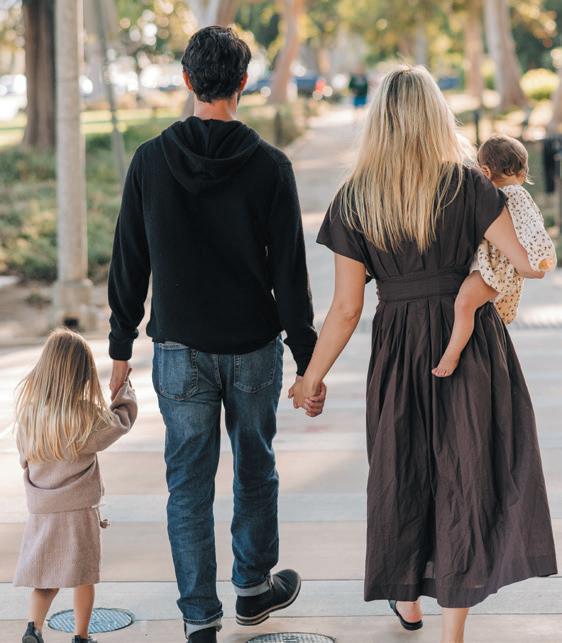
MELANIE KAPLAN, creator of the platform oPPal, strolls the neighborhood with her family.
Photo by Betsy Newman
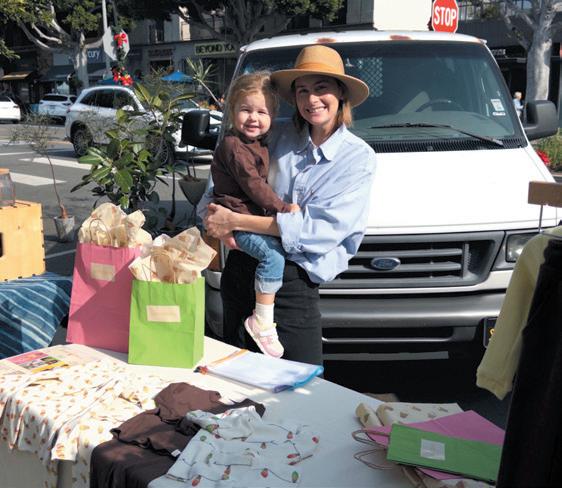
SET UP TO SELL ON the Boulevard, Lauren Breiding and her daughter Murphy display the beloved Sweet Cream Baby pajamas.
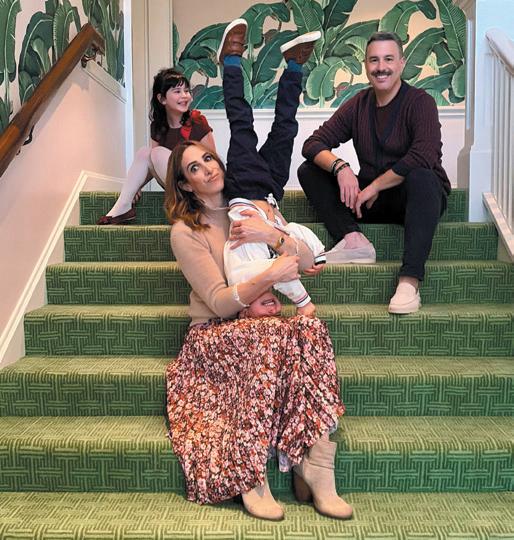
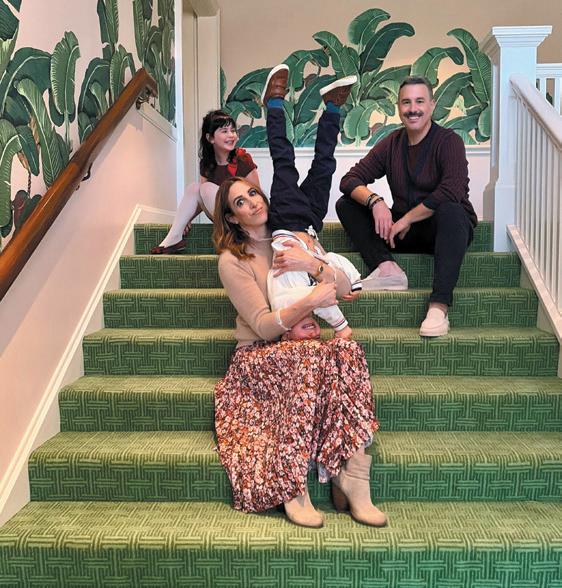
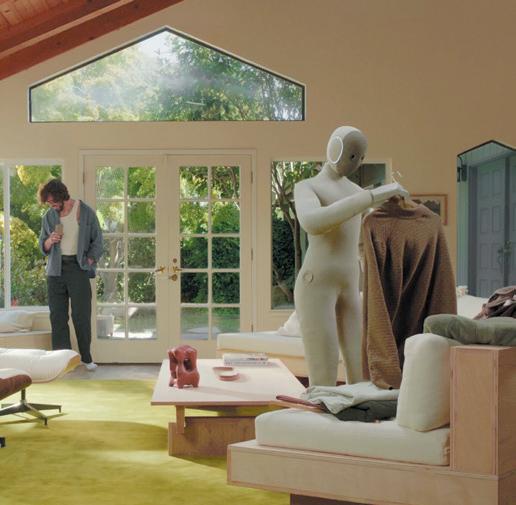
GOOFING AROUND WITH her family is Elissa Shenkman. Photo by Laura Ise
Book takes us behind the scenes of megaproject
By Jack Brownlee
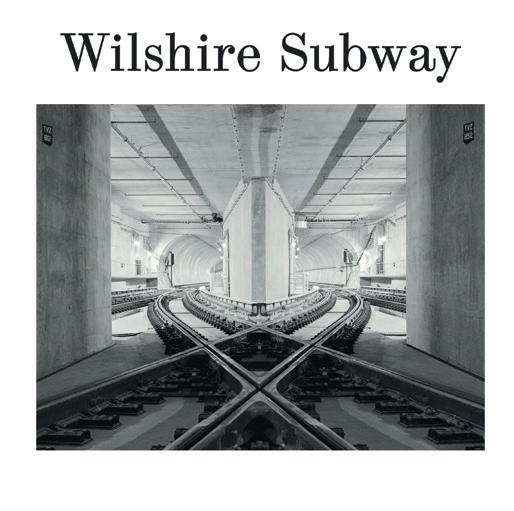
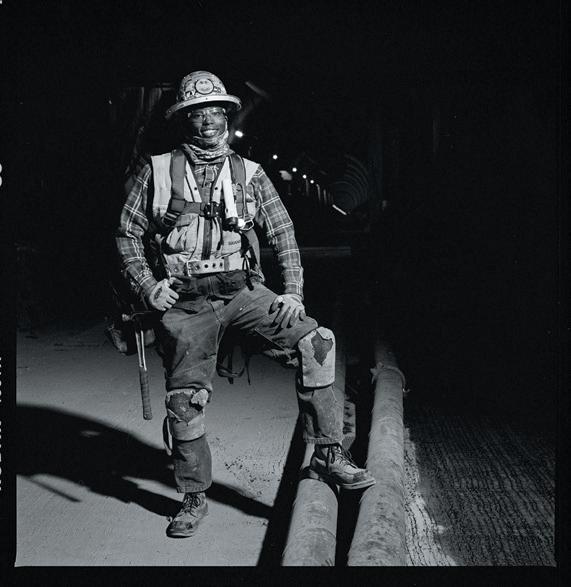
The opening of the first D Line subway extension stations Fri., May 8, marks a huge advancement in Los Angeles’ public transport system, and few people have kept up with the project’s progress like India Mandelkern and Ken Karagozian. In her new book “Wilshire Subway,” Mandelkern walks us through the history of the extension, from its early proposals in the 1960s to its current, near-finished state. Along the way, Karagozian’s photography gives us a look into an underground world of giant machines, tar-infested earth, and the men and women who worked for years to make the Wilshire subway a reality.
Karagozian, who has been photographing Metro projects since the Red Line was built in the 1990s, approached Mandelkern with his photography, wanting to combine his work with her historical writing. “The most interesting line for me personally has always been this D Line extension because it has this very fraught history,” said Mandelkern. “They’ve been trying to build this subway since the 1960s, and for one reason or another, funding or fears of underground [construction] or politics, it just never came to fruition.”
The book features a foreword by former L.A. Mayor Antonio Villaraigosa along with several guest essays. Writer David Ulin remarks on how the D Line reminds us of the past and encourages us to look to the future. Architect Leo Marmol recounts a prank he pulled involving a fictional Aqua Line construction project connecting downtown to Santa Monica. Urban planner James Rojas shows us how megaprojects are emblematic of the indomitable spirit of Angelenos, including his grandfather, who helped channelize the Los Angeles River after the flood of 1938.
“It’s looking at the subway project not just from one angle, but from 360 degrees,”
Metro to open new stations on Wilshire
By Jack Brownlee
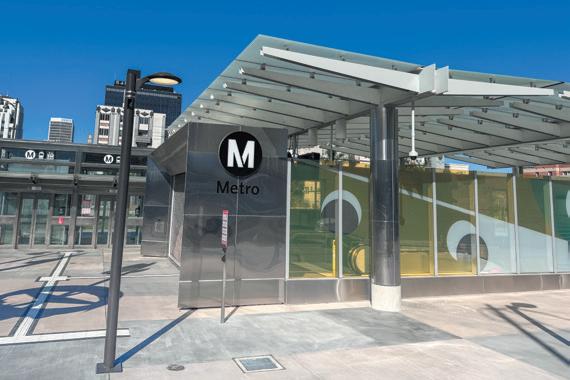
Three Metro subway stations will open along Wilshire Boulevard Fri., May 8, bringing the decades-long D Line Extension project one step closer to completion. Stations at Wilshire/La Brea, Wilshire/ Fairfax, and Wilshire/La Cienega will connect Beverly Hills and Miracle Mile to Koreatown and Downtown via the D Line, with a terminus at Union Station.
CD5 Councilwoman Katy Yaroslavsky’s office has several activation events planned for the two stations in Miracle Mile. The Wilshire/Fairfax station will have a weekly farmers market on Tuesdays from 3:30 p.m. to 7:30 p.m., and the Wilshire/La Brea station will have one on Sundays from 10 a.m. to 2 p.m. Additionally, both stations will have coffee vendors from 7 a.m. to 11 a.m. daily. Dance classes, concerts,
and food events are planned for the stations in the months following the openings.
Leo Daube, communications director for CD5, said there were multiple reasons for the activations. “It’s not just about bringing community together,” he said. “It’s about safety. You feel safer at a station if it’s full of people.”
The upcoming openings are the first of three phases for the D Line Extension. Phase Two, expected to open Spring 2027, includes one station in the Rodeo Drive shopping district and another in the heart of Century City. Phase Three will add a station near UCLA and another at the West Los Angeles VA Hospital, expected to open Fall 2027.
The seven new D Line stations anticipate 49,000 riders per day. Metro estimates it will take riders only 21 minutes to travel from Wilshire/
WILSHIRE/LA BREA station is one of three new subway stations to open May 8.
La Cienega to Union Station, and a mere 14 minutes to go from Wilshire/La Brea to Union Station.
While the extension of the D Line to Westside communities was first proposed in the 1960s, it was not until 2009 that Metro officially began the assessment process to figure out how to make the subway a reality. Construction on Phase One began in 2014, with groundbreaking on Phase Two and Three beginning in 2018 and 2021, respectively.
CONCRETE CARPENTER
Jenna Dorough in the tunnel on her birthday in 2022.
MINERS pose in front of a drill cutterhead after completing Reach Four of the extension project. Photos by Ken Karagozian
POLICE BEAT
Pellet gun shooting, suspects wave knife at construction site
OLYMPIC DIVISION
BURGLARIES: Two male suspects attempted but failed to gain entry to a residence. They entered the backyard, disabled a camera, and smashed a window April 3 at 9:20 p.m. on the 100 block of North Van Ness Avenue. While a victim was asleep, an unknown suspect entered through the front door, moved a surveillance camera, and damaged a TV April 12 at 1:30 a.m. on the 5100 block of Moms
(Continued from Page 3)
and feeding. The school offers classes for parents with newborns, infants 6 to 12 months, and toddlers. There’s even a class for pregnant moms. She advises signing up for a baby class when you’re pregnant to guarantee a spot when your little bundle of joy arrives.
One mom graduate from the first cohort of classes, Hannah Hutton, of Larchmont Village, said, “This is a must, must, must. It was great. There was a sense of community I didn’t even know I needed.”
Marker wants the space to be a community hub for moms. In addition to classes, she offers a free breastfeeding clinic to anyone at any stage of motherhood.
Coming from the corporate world, the Ridgewood Place
resident said, “I’m loving it so much, seeing the impact on a day-to-day basis.” She is already looking for a second location in Culver City. For class information, visit newmomschool.com.
App for moms with resources galore
Mum’s the Word is a onestop shopping app to find people, places, and services for motherhood and kids. After working in the entertainment industry for more than a decade, Elissa Shenkman, of Hancock Park, took the voluntary leave she was offered to work on her app full time.
After having two kids later in life, motherhood wasn’t exactly what she anticipated. Shenkman wondered, “Why is it so hard to find so many things? It’s so time consuming.” She was referring to
stolen from a parking lot April 10 at 2:40 a.m. on the 3400 block of West Eighth Street.
anything from doctors, swim teachers, and parks to meet other moms to “how to get my colicky kid to stop crying”—and the list goes on. She felt everyone knew a secret that she wasn’t in on.
Mum’s the Word is here to make the task of finding help easier. It’s been around for one year, but a more nuanced and informative version of it is coming out at the end of this month.
Shenkman is rolling out a pilot version with her favorite and most familiar areas, Larchmont Village and MidWilshire. “My goal is to make it easier to find all of the things you need to be a parent.”
The new version will include lists like an editorial, a chat room, and discounts. To join the waitlist, visit mumstheword.com.
BURGLARY THEFT FROM AUTO: A catalytic converter was stolen from a vehicle April 4 at 9 p.m. on the 500 block of North Norton Avenue.
AGGRAVATED ASSAULT: A suspect punched a victim during an argument then brandished a knife April 3 at 6 a.m. on the 300 block of South Manhattan Place.
The Beauty of Experience
Larchmont's own Rebecca Fitzgerald M.D., a board certified dermatologic surgeon, brings extensive experience and up-to-theminute expertise to the convenience of your own neighborhood.
AGGRAVATED ASSAULT
AND BURGLARY: Two Hispanic male suspects entered a construction area on Beverly Boulevard and North St. Andrews Place. They took electrical wires April 12 at 2:59 a.m. When confronted, the suspects waved a knife.
WILSHIRE DIVISION
The Chronicle did not hear back from Wilshire Division this month.
A suspect in a black Dodge Ram shot a victim in the stomach with a pellet gun April 12 at 3:18 p.m. at Western Avenue and Wilshire Boulevard.
I need help. Who can I turn to?
Melanie Kaplan suffered from severe postpartum depression after giving birth to her first child in 2022. In 2024, when her second child was born, she had a mom community and knowledge, and her experience took a 180. One night before bed, she posted a few questions on her personal Instagram to see if moms would be interested in helping other moms navigate the first year of motherhood. By the next morning, she had hundreds of responses and knew she had to do something. “There is an amazing transformation when you become a mom. And there’s a maternal instinct to help other moms get through it,” claimed Kaplan. She found there was a gap in care for moms after childbirth. Everyone was so focused on the baby; the mom went practically unnoticed.
She created oPPal , an online village to forge relationships for those who don’t have Larchmont Village, the area she adores. Like a sorority for moms, Little oPPals, new and expecting moms, are paired with Big oPPals, seasoned moms who are at least one year past the birth of their first child. The match is made intentionally, taking into consideration birth experience and physical location. Bigs must complete a seven-video training program designed by a team of postpartum professional before being assigned
Book
(Continued from Page 5) said Mandelkern. “There were so many people that this project really brought together.”
As you look at Karagozian’s portraits of workers and read Mandelkern’s history, with all its ups and downs, it’s hard
to a little.
Bigs regularly reach out to littles to check in on the mother, not their baby. “My brand is to be the neighbor or friend who gives you a glass of wine and tells you what to do,” said Kaplan a Windsor Square resident and former PR agent. The website Myoppal.com will launch Thu., May 7. Cost to participate is $20. Clean, cozy kids’ clothes created and made in L.A. Sweet Cream Baby is a clothing brand for kids designed with organic cotton in cute patterns, safely dyed, and made in Los Angeles. Mother of two and Larchmont Village resident, Lauren Brieding, started working with a partner on the clothing line during COVID-19. Learning curves and restrictions during the pandemic delayed the launch of the line until 2025. Their clothes are made for kids aged 9 months up to 6 years. They make T-shirts, sweatshirts, and, of course, pajamas, among other items.
not to see the D Line project as a microcosm of Los Angeles as a whole.
A reception for the launch of “Wilshire Subway” is on Fri., May 1, at 4 p.m. at 6150 Wilshire Blvd. Mandelkern’s book can be bought online or in stores, including at LACMA and Craft Contemporary.
“I never expected to get the feedback I’ve been getting. I have moms tell me their kids say, ‘More Sweet Cream please,’ and ‘If the Sweet Cream pajamas are clean that’s what I want to wear,’” said Brieding. The line is at sweetcreambaby.com. Pop-ups are announced at @ sweetcream baby. You can also shop the collection in-person at the Larchmont Block party, Sun., May 9, from 11 a.m. to 4 p.m. on the 500 block of North Bronson Avenue. Ecclesia Gnostica Gnostic
A most significant golf course renovation in Hancock Park
You can probably relate. Have you ever hired a contractor to, perhaps, install new counters and cabinets in your kitchen; just a little fresheningup? But once he’s there he mentions that if you open this one wall, it will dramatically improve the flow, and “Oh while we’re at it, this is a good time to replace all your pipes.” Next thing you know, your small project turns into a complete overhaul.
Wilshire Country Club can relate. The proud golf club, established in 1919 and occupying more than 100 acres of prime Hancock Park real estate, was designed by British native and amateur golf champion Normal Macbeth, and just reopened after a 16-month overhaul. The work is getting rave reviews from the membership, who’ve been salivating to get back onto their home course. The renovation touched nearly every facet of the golf course, but that wasn’t the original intent.
The genesis of the project began under then Club President Bradford Hughes, and wound up being executed under current President John Shipka, aided by a robust committee of members who helped get the project
working on one nine while closing the other. This renovation called for a different course of action.
approved and launched.
“We originally looked at redoing the greens and the infrastructure,” Shipka explained. “They had never been redone, which is almost unheard of for a 105-year-old golf course.”
Over the years Wilshire had completed certain projects here and there to improve the greens, sometimes patching problem spots and grafting in new grass, but always chasing solutions and never really getting out in front of it. A complete redo was the only way to ensure an optimally performing course going forward.
“The other issue was irrigation,” Shipka continued. “It
Photos by Bill Johnson
was horribly old. The irrigation system was watering the fairways inconsistently—too much in some places, not enough in others. The bunkers also had no drainage. Great golf courses require great infrastructure that no one sees.”
So, greens and infrastructure stretched into bunkers [obstacles on a golf course such as sand traps] too, but then there was the issue of the barranca. It’s a natural snaking water feature that pre-dates the golf course and is part of the Rancho La Brea land upon which the course was built. Functionally, the barranca performs an important drainage role; it also
touches 14 of the 18 holes on the course, adding both natural beauty and a challenging hazard. But over time, even the most beautiful features need updates.
“Parts of the barranca were held up by concrete masonry unit, chain link fences, and in some areas, nothing,” Shipka explained. “We had to address it for the long-term benefit not only of the barranca, but the golf course itself.”
Shipka credited the m6 Consulting engineering firm for coming up with a plan that dramatically repaired and improved the course’s critical feature, shoring up its banks and making sure it performs its role of diverting water from the course effectively.
“It was easiest to do it all at once rather than piecemeal,” said Shipka, who issues high praise for the architect who oversaw the project. “We were blessed to have Kyle Phillips work with us to create a masterpiece. He’s a historian of Normal Macbeth and did a fantastic job; we were blessed to have someone of his stature work on our course.”
Shipka explained that the course was restored and reimagined from Macbeth’s original vision, including the use of bridges. Phillips used
archives to recreate Macbeth’s initial concept.
Macbeth wanted a golf course that was challenging. Given that the game has changed with longer hitters, better equipment, and faster greens, the course had to change with it, while still adhering to its roots.
“Membership loves it, and I’ve heard no complaints,” marveled Shipka. “Especially the architecture. We just opened a few months ago and it’s still in its infancy; the course still needs to grow and mature. The true result will be apparent in a couple of years, but so far, we are thrilled.”
Additional changes included enlarging the 18th green, which had shrunk over the years, to now 75 yards from front to back. Similarly, the 10th hole had eroded over the years and had a neck in the middle; it was widened and is now pinnable in the center. The same is now true of the 15th green.
The third hole was described as totally different, with bunkers now occupying the center
WILSHIRE COUNTRY CLUB executed numerous projects at times
Chasing Sports by Chase Campen
Geffen opens to the public May 4
By Nona Sue Friedman
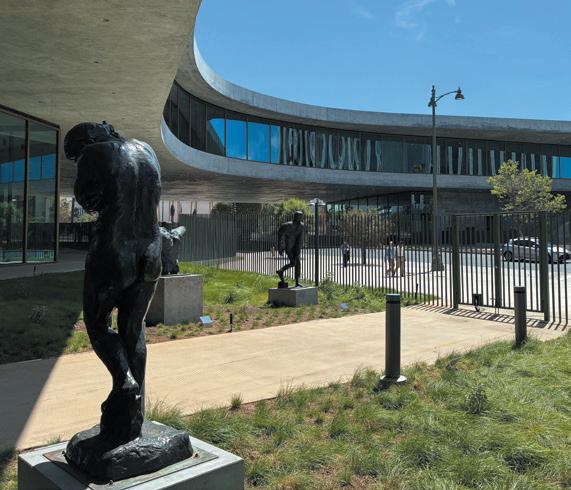
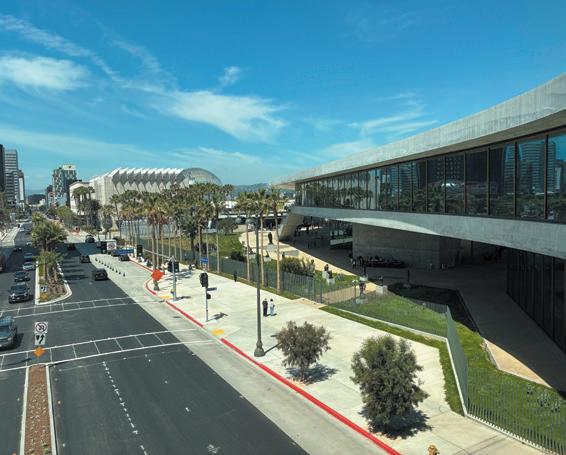
After nearly seven years of construction and a $724 million price tag, the David Geffen Galleries at LACMA will open to the public Mon., May 4. Members were able to visit starting April 19.
The undulating shape, which floats 30 feet above the
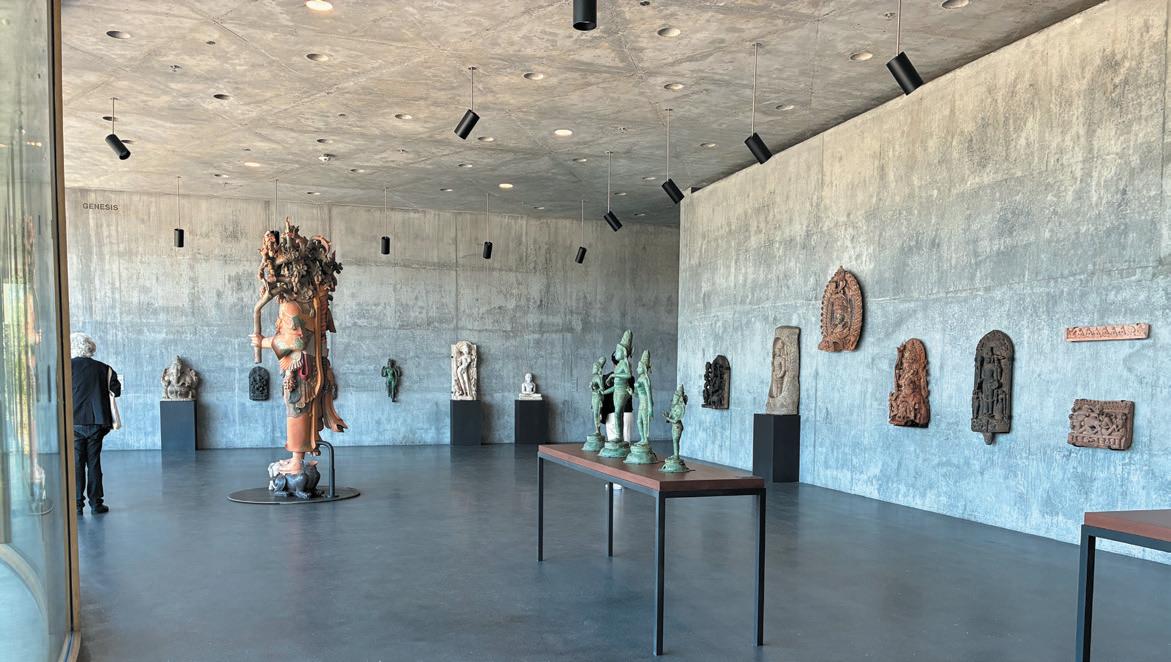
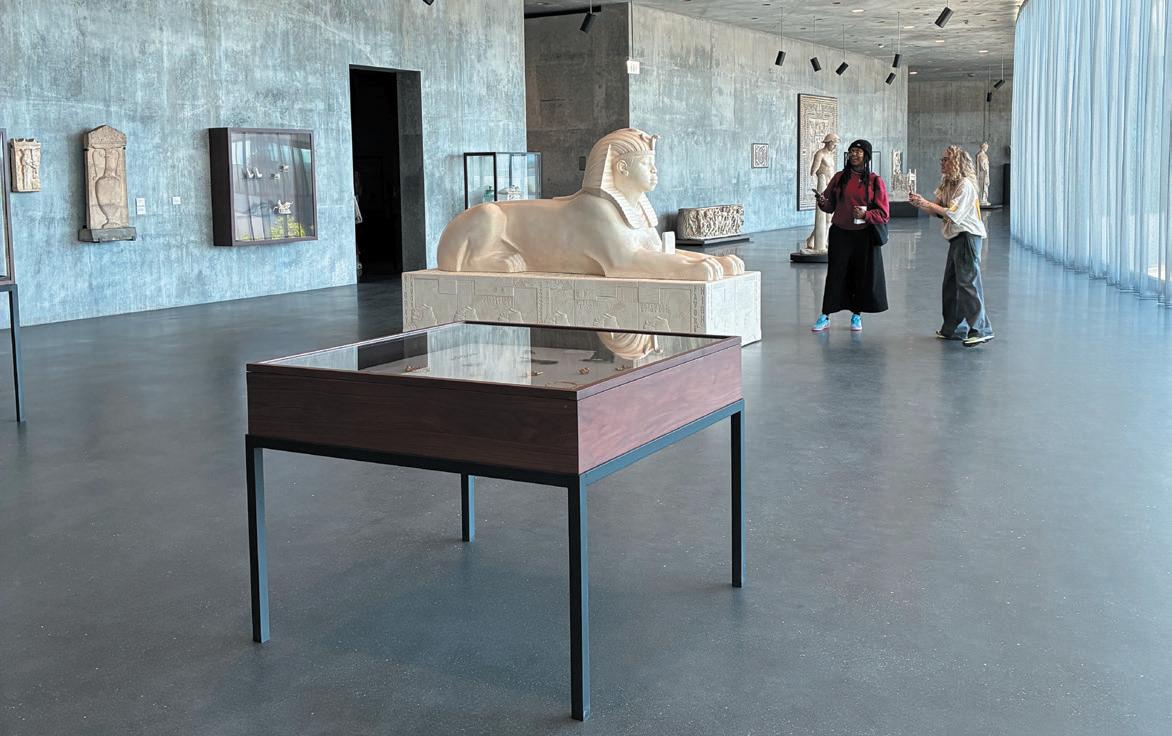
ground and spans Wilshire Boulevard, houses the museum’s permanent collection, covering 6,000 years of world history. The ground floor includes an Erewhon cafe; a restaurant and wine bar are also set to open later this year. The free-form structure mimics the way one can wan-
der through the exhibition areas—there isn’t just one way to go. The perimeter of the organic shape is floorto-ceiling glass, which allows light to dance through the spaces and off the artwork, depending on the time of day. Tickets available at lacma. org.
LIGHT WASHES IN THROUGH floor-to-ceiling windows in the David Geffen Galleries.
VIEW OF WILSHIRE BOULEVARD and the rest of the LACMA campus from inside the Geffen Galleries.
DAVID GEFFEN GALLERIES span Wilshire Boulevard.
SCHOOL NEWS
LARCHMONT CHARTER
LAFAYETTE PARK
Ella Woolrich 10th Grade
of May and beginning of June.
As students return from spring break at LFP, there is lots of excitement as we prepare for the final stretch of the school year and get ready for summer. But before we’re able to enjoy a well-deserved break, there are AP tests, finals, and more events coming up. AP tests will take place in the first two weeks of May, and other finals will happen between the end
During this time, seniors are enjoying their last few months in high school and committing to various colleges! Some of those include Yale, Rhode Island School of Design, UC Berkeley, UCLA, and many more.
IMMACULATE HEART
Madison Dang 11th Grade
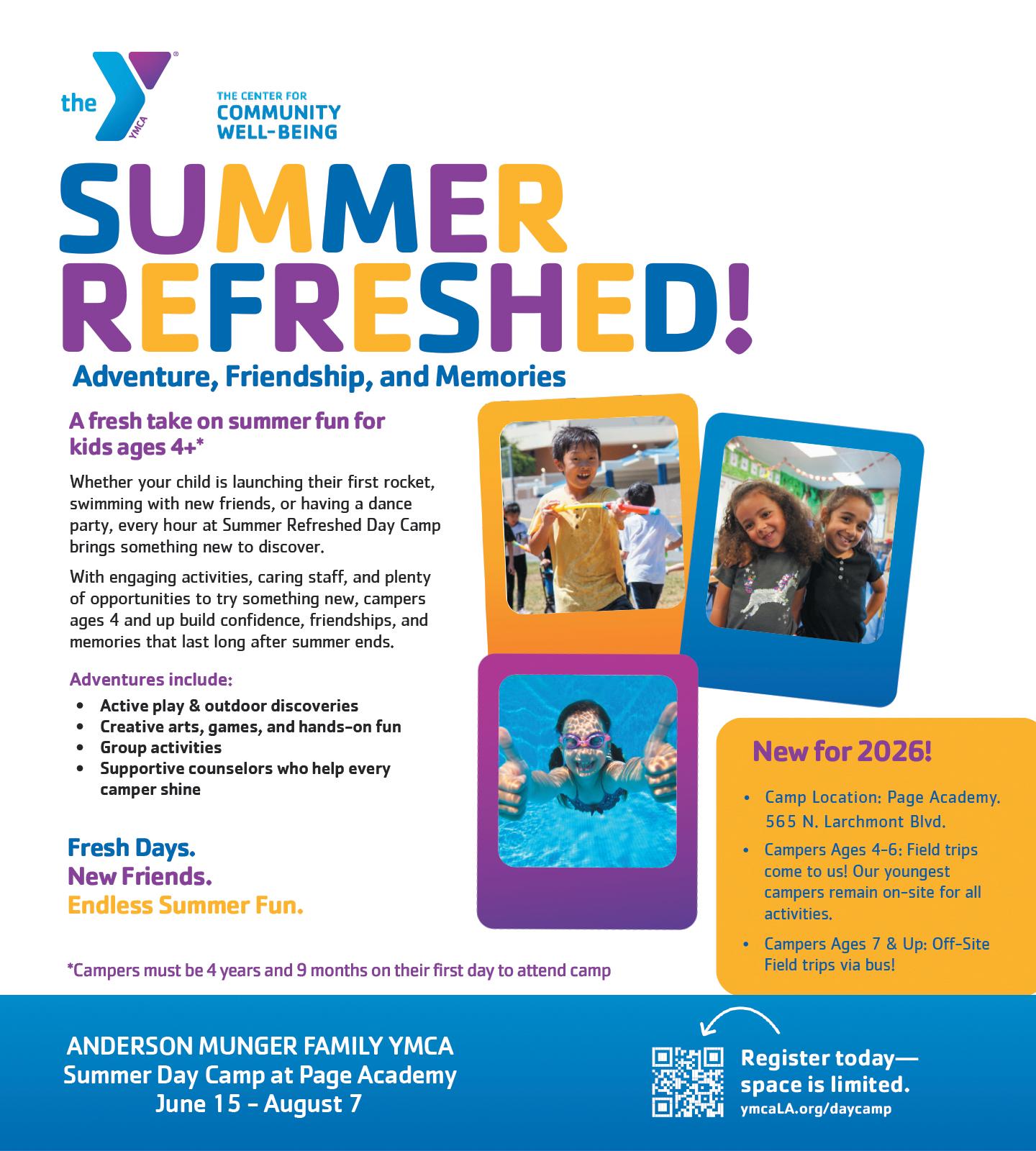
Summer Camps
Early Bird Discount
Expires May 1
After a relaxing spring break, students returned to campus ready to prepare for one of Immaculate Heart’s most anticipated and beloved traditions. Mary’s Day,
which will take place Fri., May 1, celebrates not only Mary, our school patroness and the mother of Jesus, but also the sisterhood and friendships that are created and nurtured at Immaculate Heart. This year’s theme, Journey Through Healing, emphasizes finding a path toward inner healing amid suffering and uncertainty in current times. With this overarching theme, students have spent weeks partaking in different aspects of the preparation process. From practicing the maypole dance to putting together campus decorations, every student has had the chance to contribute to making Mary’s Day special. Students and faculty alike are excited to see this year’s Mary’s Day come to life!
Summer Riding Camps Summer
For over 25 years we have offered a safe, fun-filled program
June 8 - Sept. 11 (weekly) 9 am to 3:30 pm
Applications accepted NOW … first come, first served
• Beginner to Intermediate
• Ages 6 and up
• Patient instructors, gentle school horses
• Limited group size
• Health precautions observed
• Arts & Crafts
Gene Gilbert, USPC Professional Member located at the Paddock Riding Club 4010 Verdant Street, Los Angeles, CA 90039 Tel: 323-665-8977 gggilbertent@aol.com www.EnterpriseFarms.com
FAIRFAX HIGH
Joyce Kang 12th Grade
WINDWARD
Lucy Margolis 10th Grade
May will be an extremely busy month for Fairfax students as they take on AP and IB exams after months of hard work. On Fri., May 29, Fairfax High School will be hosting the Spring Performance Arts Showcase starting at 6 p.m., featuring the talented band and other student artists! Additionally, the Visual Arts Magnet program will be hosting its VAM End of Year Showcase, showcasing our students’ artistic and creative talents. The week after, Thu., May 28, a big night of celebrating our seniors’ accomplishments will be taking place with Senior Awards Night, beginning at 6 p.m. in the auditorium.
NEW COVENANT
Evelyn Lee 11th Grade
The month of April was full of blasting activities at NCA! Our high school students embarked on their annual field trip to Six Flags Magic Mountain, where they took a day off to experience the thrills of roller coasters. Our elementary students learned about the vast marine life as they took a field trip to the Long Beach Aquarium.
Our middle school and elementary students participated in the annual Science Fair and presented their extraordinary findings!
The High School Student Council hosted the 2026 Prom with the theme “Enchanted Garden” and filled the night with delicious food, prizes, and a photobooth.
High school students also hosted the World Food Festival, where they created their own menu and served different cuisines to students. Go Huskies!
HOLLYWOOD SCHOOLHOUSE
Reece Bagley 6th Grade
HSH deeply values its faculty and staff, and the first week of May is recognized as Teacher Appreciation Week.
This special week is a schoolwide celebration of the dedication and effort that educators and support staff have contributed to enhance the students’ learning experience. Parents and students not only verbally thank the faculty, but they also gift them bouquets, gift cards, and sweet treats to thank them for their service to the school. The hope is that all of the staff members feel acknowledged. Nonetheless, every adult at Hollywood Schoolhouse ends up feeling like their work is not in vain by the end of the year.
The Windward Wildcats came roaring back from spring break, ready to finish the year strong. While Windward might not have canvassers stopping you between classes asking you to sign petitions about saving the world, we do have teachers and deans constantly reminding us to turn in assignments. Annoying, but for a good cause.
Seniors now know where they’re heading for college and can finally focus on more pressing matters like senioritis, prom, and planning senior ditch day. After years in such a close-knit community, they’re getting ready to head out into the real world.
As for campus life, the cafeteria is holding steady. No major changes yet, but there is always hope for something new. Like the Larchmont Farmers’ Market, you never really know what might show up. Maybe not ceramics, but an upgraded kombucha selection would not hurt.
MARLBOROUGH
Madison McClure 10th Grade
The day before spring break, our all-school council continued the tradition of an all-school talent show! Or as we call it, Marlborough’s Got Talent. It was amazing to see everyone’s hidden talents and tricks. As for Marlborough Athletics, our varsity lacrosse is having an amazing season so far, with a perfect record (14-0) as of their last game against Village Christian. Additionally, four of our water polo players and two of our basketball players made Mission League 1st Team and two of our water polo players were named Mission League MVP. Lastly with athletics, all Marlborough Varsity teams earned recognition from CIF Southern Section for student-athlete Academic Awards. Furthermore, in life as a Marlborough student, we just had All-School Council Election for 2026-2027, where many current juniors pitched their ideas for improvements for the next school year. It is always so interesting to hear what ideas students have to make Marlborough even more enjoyable.
THIRD STREET ELEMENTARY
Cole Bigus 5th Grade
Hello Larchmont! The 3rd-5th graders have been preparing for state testing all year taking place in the first two weeks of May. Also, early this month is Teachers Appreciation
School News
(Continued from Page 10)
Week (May 4-8), when we’ll show our teachers how much they mean to us. The 4th graders have been practicing for their musical (“Wendy in Neverwood”), which they will perform after the May 25th Memorial Day holiday. On Wed., May 29, students will perform their best talents at the 3rd St’s Got Talent show. It’s a fun way to end the school year. The 5th graders have all been talking about their dance coming up on Thu., May 30, at Fairfax High School. We’re grateful to all the parents helping. We are sad to be leaving Third Street but excited for middle school. Sadly, this will be my last article. I’ve enjoyed writing for the Chronicle
ST. JAMES’ EPISCOPAL
Sloan Kennedy 6th Grade
terms of daily life, students have enjoyed several fun “free dress” days this past month, most notably a “beach boardwalk” day this Friday, which was accompanied by a Dip-N-Dots sale by our student council. Go Griffins!
CENTER FOR EARLY EDUCATION
Hugo Payne 5th Grade
Whimsy comes to Coachella festival
By Jack Brownlee
In the last few months of school, we have some very memorable events! After returning from spring break, the St. James’ golf team had a tournament at Rancho Park. Our 3rd graders had a field trip to the LA River, and on April 17 we had an All-School Spirit Day, where all students had the option to wear any and all of their St. James’ apparel! Then, on April 19 we had a fun baking party at Republique Bakery with host Marge Manzke and made many memories and delicious treats. To kick off Earth Day, we had an entirely student-led assembly featuring Science Fair results and next steps on student-designed recycling initiatives. On May 1, Kindergarten Career Day took place, when our kindergarteners dressed up as what they want to be when they grow up! I always look forward to this. See you next month!
This Spring, we enjoyed several cultural and engineering highlights with an amazing author visit, a dynamic STEAM festival, and a memorable field trip to the LA Opera. Fifth and sixth-grade students met authors Gloria Moskowitz-Sweet and Hope Anita Smith when they came to discuss the memoir, “It Rained Warm Bread,” which tells the story of Gloria Moskowitz-Sweet’s grandfather
(Please turn to Page 12)
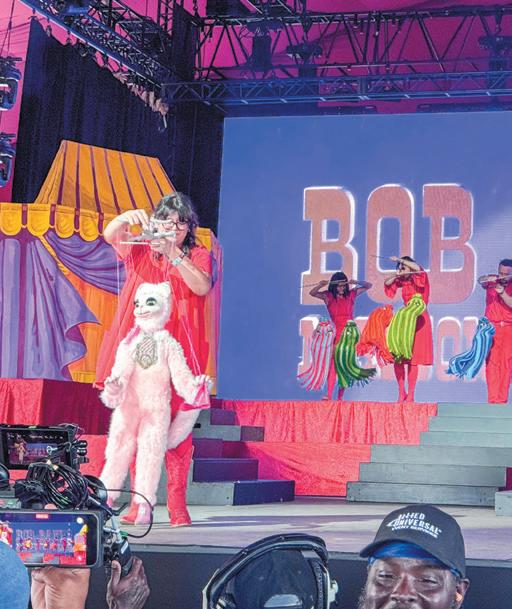
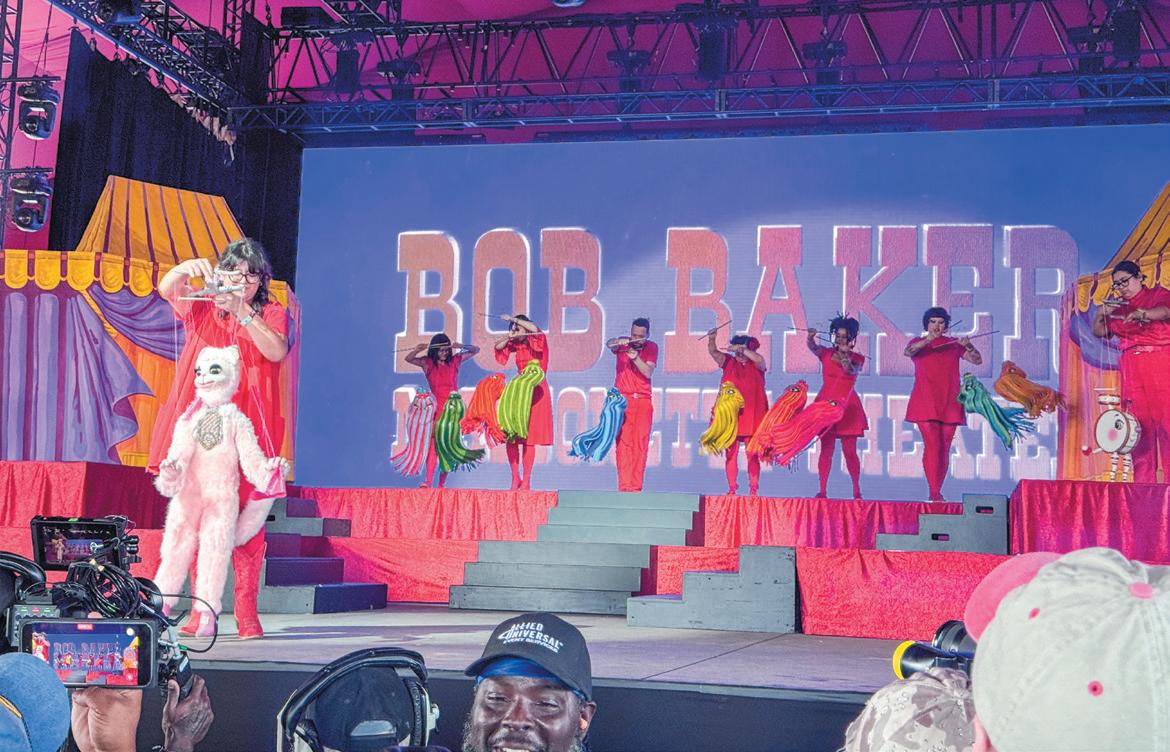
The Coachella Valley Music & Arts Festival is famous for bringing the biggest names in music together, but this year’s festival included one local act that is a bit more niche: Highland Park’s own Bob Baker Marionette Theater. Performing early on the festival’s first day, many in the audience came with curiosity, some with skepticism, but all left with smiles, laughter, and a feeling of childlike wonder.
The Marionettes put on a wonderful show, delighting the audience with renditions of showtunes like “All That Jazz” and “Puttin’ On the Ritz.” The show built to a cover of Addison Rae’s pop hit “Diet Pepsi,” and the audience went wild. Comedian Kate Micucci voiced “Pink Cat,” the show’s anthropomorphic feline emcee, who introduced each song with wit and a pull-
With Coachella being held over two weekends, the Marionettes got to delight fans twice in Coachella’s Gobi Tent, a smaller stage which holds around 9,000 people. After their performance, the Marionettes could be found all over the Coachella grounds throughout the weekend, with puppets taking photos with
fans and puppeteers teaching marionette skills to those interested.
Back in L.A., BBMT launched a capital campaign to purchase a forever home theater at 4949 York Blvd. in Highland Park. They’ve already raised $4.5 million of the $7 million needed. Want to help? Visit bobbakermarionettetheater.com.
THE BUCKLEY SCHOOL
Lilah Feuerstein 10th Grade
With spring break coming to a close, much is to look forward to in our final quarters here Buckley. Many students are excitedly awaiting screening of our first student-produced movie, “The Wolves,” filmed over spring break, featuring an all-female cast. Spring athletics are also in full swing, with our boys’ baseball and tennis teams currently dominating in league, and swim having its first league meet! After competing at the end of March, our model UN team scored big in New York, beating out thousands of schools to win a research preparation award of merit, the most prestigious award Buckley’s model UN team has ever received. In
BOB BAKER’S MARIONETTES take the stage at Coachella.
string wink.
Letters
(Continued from Page 2)
highlight the public schools that serve our neighborhood, in addition to including independent and charter schools. When the School News section is dominated by independent schools, with minimal representation from
neighborhood public schools, it risks reinforcing the misconception that these schools are not great options for local families. Sarah Greene Windsor Square
Editor’s note: Each summer the Chronicle reaches out to all the public schools, charter schools, and independent schools that serve the
area. It is up to the individual school to supply a school reporter. Participation varies month-to-month and yearto-year.
Musing on ‘I’m fine’
“I’m fine…” We hear it or say it at least once a day. But what is “fine?” Is it that space between awful and great? Or is fine frustrated, insecure, neu-
rotic, and emotional? Yeah, I’ll go for that one. Some days one more than the other. Listen the next time you ask someone how they are. Look up at them and see their face. Just maybe, your kind words will help them get through a neurotic and/or emotional day. It’s nice to know that today you were seen. That you mattered, just for a second. Just give it a thought today. How are you? Just OK, that’s alright. However you’re feeling, OK is OK. Not every day is or has to be great. Anonymous
Lights out!
Nine months. That’s how long the streetlights have been out at the southern end of Windsor Village—with no end in sight.
For nine months, a major thoroughfare and bus route along Olympic Boulevard—as well as a significant stretch within our neighborhood—has been left in total darkness. During this time, residents have logged dozens of requests through LA311, the Bureau of Street Lighting, and our representatives at Council District 5. We’ve attended meetings, followed every instruction, and been thanked for our patience while being assured we are “doing all the right things” to be prioritized.
Meanwhile, our safety is compromised. We use flashlights to walk our dogs and to get from our cars to our homes. We’ve installed commercial-grade lighting and security cameras, and we’ve launched a neighborhood WhatsApp group. We clean up trash and sanitation debris from encampments that continue to appear on the vacant Rite Aid lot at Olympic and Crenshaw boulevards—while calls to [city agencies] too often lead nowhere. It feels like we are doing more than our share to compensate for services we are not receiving, while our local government shrugs its shoulders.
We understand the challenges—limited budgets, staffing shortages, aging infrastructure, and theft. We hear that emergency funding is being allocated and that we are “on the list.” That all sounds promising. But acknowledging the problem and assuring us that efforts are underway is not the same as fixing it—not after nine months. Right now, the system feels disconnected from the urgent reality on the ground.
So, what’s next? The District Council primary elections are June 2, and we will vote. Our communities deserve basic services—and local leadership that delivers solutions aligned with the real needs of
our neighborhoods.
Sharon Merle-Lieberman Windsor Village
Loving the Chronicle
We’ve lived in Larchmont for a little over three years and had no idea how special of a community we were joining. The Larchmont Chronicle does such a great job capturing the joy of our sweet village—we get so excited every time it arrives on our doorstep!
Hannah Hutton Larchmont Village
Registration for TK gets a crowd at Third Street
By Nona Sue Friedman
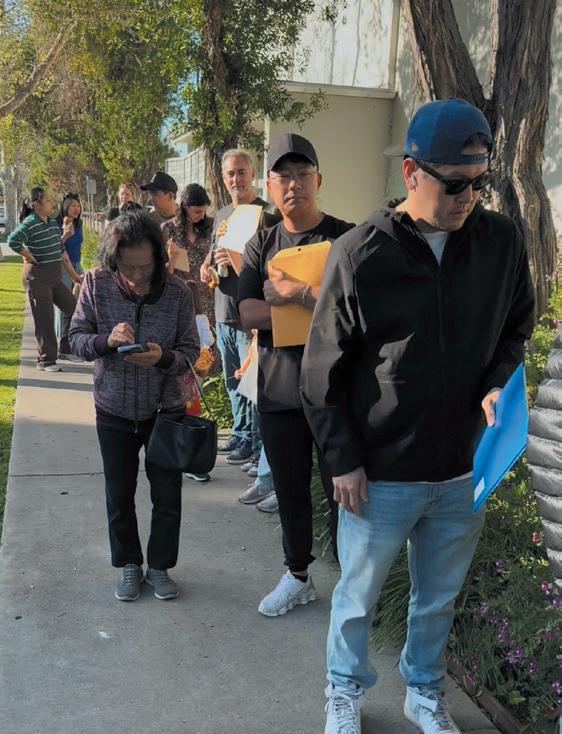
Families wanting to enroll their child in TK for fall 2026 faced some competition registering this year. According to Hancock Park mom Elissa Shenkman, “The lines started at 4 a.m.! There were chairs set up like [lines to buy] tickets for a Taylor Swift concert.” Next year, Third Street Elementary will have two transitional kindergarten classes for 4- to 5-year-olds, each with 20 students. Principal Helen Lee said some residents are on the waitlist and will be notified if there’s availability. According to a Los Angeles Unified School District spokesperson, “Families are encouraged to enroll in the closest Early Education Centers, which are Wilton Place and Laurel EECs.” There’s also the chance that Van Ness or Vine Street elementary schools have space.
School News
(Continued from Page 11)
who survived the Holocaust. It was a powerful experience for everyone. This month’s STEAM festival offered hands-on fun for students to learn all about science and engineering through telescopes, AR sandboxes, and static electricity experiments! Finally, the 5th grade capped off the excitement with a trip to the L.A. Opera, where they enjoyed a performance of “German Opera Tales.” The show included several well-known stories such as “Hansel and Gretel” and “The Rheingold.”
LINE AT THIRD STREET SCHOOL for families hoping to enroll their child in TK.
For this month’s issue, I was inspired to write about a topic that’s been on my mind for a while: microdosing psychedelics. I was 16 the first time I heard someone talk about this phenomenon. It was 2017 and, unsurprisingly, I was in Joshua Tree, traveling with a group of people. A man whom I had just met that weekend started going on about this new thing he was doing—microdosing psilocybin—and all its beneficial effects. Essentially, he was taking a small, sub-hallucinogenic dose of psilocybin mushrooms three to four times a week in the morning. He said it was, “like taking Adderall without the bad parts.” It increased “focus, creativity, and an elevated mood,” he said, “but no crash, anxiety, or irritability.”
My interest was piqued, and over the course of the next few years, I heard about microdosing increasingly. Honestly,
skin deep
by Dr. Rebecca Fitzgerald
Weight loss is one of the most personal yet noticeable transformations a person can make. With an estimated one in eight Americans using GLP1’s, many of us can relate to the stops on the journey: the inquisitive glances, the daily compliments, the thrill of fitting into old and new clothes. Less discussed, is the realization that loose skin makes many of us feel as insecure as extra weight once did. Let us help.
Rapid weight loss often does not allow skin time to adjust to a new body. Add to that the damage to collagen and elastin from skin having been stretched and you know what you’ve got. Tightening devices including Sofwave and Thermage work to tighten skin, while collagenstimulating fillers such as Sculptra and Radiesse help to maintain volume and collagen production. Abdomen, upper arms, thighs, buttocks, breasts, jawline and neck can all be lifted and firmed. No need to wait. To help your skin keep up, we advise beginning treatments during your weight loss journey.
Contact our office to schedule your consultation. We understand that physical transformations are as much about self-esteem as beauty. Let’s get started.
Dr. Rebecca Fitzgerald is a Board Certified Dermatologist located in Larchmont Village with a special focus on anti-aging technology. She is a member of the Botox Cosmetic National Education Faculty and is an international Training Physician for Dermik, the makers of the injectable Sculptra. She is also among a select group of physicians chosen to teach proper injection techniques for Radiesse, the volumizing filler, around the world. Dr. Fitzgerald is an assistant clinical professor at UCLA. Visit online at www.RebeccaFitzgeraldMD. com or call (323) 464-8046 to schedule an appointment.
Health & Wellness
By Priscilla Duggan
it sounded like something fun to explore, but there were a couple of reservations I had about it. The first being a bit abstract, and the second more scientific.
As always, please note that I am not a medical professional and no information written in my articles should be taken in place of medical advice.
Firstly, it felt weird to hear that people were essentially trying to find ways to use psychedelics in the same way that other medications already worked. On one hand it makes sense to use a drug in the way we already use other drugs— we follow what we already know. Nevertheless, the initial excitement about psychedelic research/medicine was about
the potential of disrupting our preexisting medical models. From what I understood, there was a growing exhaustion with the idea of waking up and taking medicine every morning with no end date in mind to help with issues like anxiety or depression. And so, the idea of these special medicines that had the potential to reshape your relationship to your life, and maybe only had to be taken once was radical. But now, I was hearing people talk about how they were using them to work for longer hours each day or help make their office job more tolerable. Something felt weird about that but, of course, that’s my opinion and not something to impose upon others. After all, we are all free to engage with whatever we ingest in whatever ways we wish.
Dentistry for Children and Young Adults
newborns to 18-year-olds feel comfortable (323) 463-8322 • 321 N. Larchmont Blvd, Suite 809 ilovemydentist809@gmail.com
My second concern may be a bit more obvious and is what I’ll discuss for the rest of this article. Historically, taking psychedelics for such frequent and sustained periods of time has not been a common method of use, so we have little information about the effects. Could there be adverse biological effects? To explore this topic, I’ll reference an article published in the “Journal of Psychopharmacology” by David Nutt at the Imperial College London and colleagues in 2019. For those interested in further reading, I highly suggest seeking out this article, as it is much more extensive than the limited topics covered here.
Pharmacodynamic studies have confirmed that one of the many targets of psilocybin in the body is a serotonin receptor called 5-HT2B. Repeated activation of this receptor over time has been found to result in serious adverse cardiac valvopathies, which basically means serious issues with the valves in the heart. Other medications have been pulled off the market for this same reason, for example, the diet medication Phen/Fen, which was found to have a high fatality
rate due to activation of this same receptor. There have not been sufficiently conclusive animal studies to investigate whether low-dose psilocybin administration might produce valvular heart problems and, so far, the available animal studies with psilocybin testing had not revealed any signs of this problem.
Even so, information like this should be taken seriously when considering experimenting with the idea of self-tailored dosing regimens. Moreover, please remember that psilocybin remains illegal in California and is classified as a Schedule I controlled substance.
In the meantime, single sessions with psychedelic drugs such as psilocybin, MDMA, and ibogaine are being researched for their potential in treating conditions such as depression, PTSD, and substance use disorders. The field is both promising and emerging, as it offers hope of an alternative way of treating common yet debilitating conditions.
If you have any questions, please feel free to reach out to me by email: pcd1130@ gmail.com
School News
(Continued from Page 12)
BRISKIN ELEMENTARY SCHOOL
Emme Feldsher Goldberg 6th Grade Spring is in the air at Briskin Elementary. While the switch to daylight saving time has been a bit of a challenge, we are slowly adjusting and enjoying the longer days. March was another exciting month, highlighted by our school’s celebration of Purim. The holiday of Purim is commemorated with a really fun celebration where we dress in costumes and share treats, but it also has great purpose and meaning. To celebrate, we fulfill the mitzvah of Matanot La’Evyonim, caring for those in
(Please turn to Sec. 2,
PROMISING STUDIES are in progress, but the saefty of self-dosing is unclear. Photo by Igor Omilaev
Candidates
(Continued from Page 1)
1) Before I took office, homelessness only went in one direction in L.A. — up. In the six years before my election, homelessness had nearly doubled — from 25,000 to more than 46,000 people on our streets. Housing was being underbuilt, crime was rising, and LAPD was shrinking. For decades, City Hall had avoided taking on tough and unpopular issues.
In three years, we delivered the first-ever consecutive-year decline in street homelessness. It’s down in L.A. by 17.5%, while at the same time, nationally it went up 18%.
Homicides are at a 60-year low. We’ve accelerated 42,000 units of affordable housing. And when the Trump administration came after our city and our immigrant communities, I stood up and fought back.
We still have a long way to go. But we changed the direction of this city, and there’s too much at stake to go back.
2) SB 79 is the law. The plan approved by the Council and that I signed represents a path forward that builds the housing we need while protecting neighborhoods the best that we can.
3) Before I was mayor, the de facto city policy was to leave people out on the street until an apartment was built. That is why homelessness exploded—going from 25,000 to 46,000 in the six years before I was elected. That’s why I declared a state of emergency on homelessness and launched the city’s first encampment strategy. Now, for the first time ever, LA saw consecutive-year reductions in street homelessness and an 18% decline — while the rest of the country saw an 18% increase.
But getting people inside is only half the equation. We have to keep people from becoming homeless in the first place. In partnership with the Mayor’s Fund, we have connected 31,000 Angelenos with resources to stay in their homes—legal help, rental assistance, healthcare. Prevention is how you stop the cycle.
And we’re building the pipeline to make this sustainable. LA4LA, our public-private partnership, is acquiring existing buildings so we don’t have to wait on new construc-
tion. We’re also investing in housing with real services— mental health, addiction treatment, job placement—so people can actually rebuild their lives. And we fought Washington to remove barriers that kept veterans and low-income Angelenos from accessing housing vouchers they’d earned.
This isn’t just about clearing encampments. It’s about treating people with dignity while making our neighborhoods safer and cleaner.
Rue Huang and Spencer Pratt did not respond by presstime. Nithya Raman is interviewed on Page 1. Adam Miller was interviewed in the April issue.
Candidates for CD5
Henry Mantel: 1) As a tenants’ rights’ attorney, I’ve seen firsthand just how much harm the housing crisis is causing and how necessary it is that we have leaders who are willing to face it head on. Young people are moving out, working families are struggling, business is suffering, our infrastructure is crumbling, our government is bankrupt, our streets are unsafe, and homelessness persists all because of the city’s failure to allow for more housing. We need leaders who will address this crisis with the urgency it demands and that’s what I will do.
2) I support SB79 wholeheartedly. Under city law, it is outright illegal to build more housing in more than 70% of the city and has been since segregation. The only way we are going to solve the housing crisis and make L.A. more affordable, walkable, and beautiful is by making it legal to build more housing, especially by transit stations. The city should have done this on its own years ago without needing to be forced to by the state. SB79 only exists because of the L.A. political establishment’s abject failure to address the housing crisis.
3) So long as we have a shortage of housing, homelessness will persist. I plan on legalizing and streamlining housing construction, including permanent supportive housing, so that there are places for people living on the streets to go. I also plan on investing in more mental health services so that those dealing with severe mental illnesses
and drug addictions can get the help they need. I would also expand L.A.’s unarmed crisis response program so that those dealing with severe mental health episodes are handled by trained professionals, leaving the police to handle more urgent matters, like violent crime and burglaries.
Morgan Oyer: 1) I am the best candidate for District 5 because I have the background and knowledge to craft policy that benefits all residents in the district and the commitment to service to ensure that the people’s interests are well represented. I have degrees in history, accounting, and economics; five years of direct social service experience; and over 10 years of real-world private sector experience. Los Angeles faces a lot of challenges, and those currently in power have shown little desire or ability to meaningfully address these issues. Only with new leadership will we be able to fix this city.
2) I support SB79 because the housing crisis is the number one issue facing our city. Decades of housing constraint have led us here, and we need to take substantive action to fix it. It’s not a perfect piece of legislation, but the choice is not between implementing state law and doing nothing, it’s a choice between implementing state law at the local level or having Sacramento decide what gets built and where. I would prefer these decisions remain within the purview of local electeds. We must do something, and SB79 is one tool we can use to build a more affordable and equitable city.
3) The best way to fix the homelessness problem is to ensure there is enough housing stock for all income levels. Only then can we reduce the risk for people on the margins and focus on providing services to those who need them most. For the most visible of the homeless population, we should provide service and treatment with expectation and consequence for both individuals and providers. Fundamentally, the homeless crisis derives from the broader housing crisis. By addressing this issue with the full force of city government, we can make progress on this issue.
Councilwoman Katy Yarosklavsky: 1) Over the
past three years, I’ve focused on delivering real results, building coalitions, and making City Hall more effective.
In Council District 5, we’ve made measurable progress. Street homelessness is down 27%, we’ve expanded interim housing so people have a path off the street, we passed historic renter protections, and we’ve improved core services like street paving, tree trimming, and streetlight repair, even during a difficult budget year.
As Budget Chair, I helped guide the city through a nearly $1 billion deficit while protecting core services. I also voted against the risky Convention Center expansion and led investments to make streetlights more reliable.
I’m running for re-election because there is more work to do. There is a clear gap between what residents expect from city services and what the city delivers, and my focus is to close that gap and make Los Angeles more livable and affordable.
2) On housing, my focus is on fixing what we control and doing it with urgency. We need to make sure housing actually gets built by fixing the city’s slow and unpredictable approval process. We also need to build housing that meets our community’s needs, including mid-rise, family-sized homes and more pathways to ownership, while
planning for growth by aligning infrastructure, design, and fire safety, and focusing the most density along major corridors.
3) On homelessness, I’ve focused on results and ac-
(Please turn to Page 18)
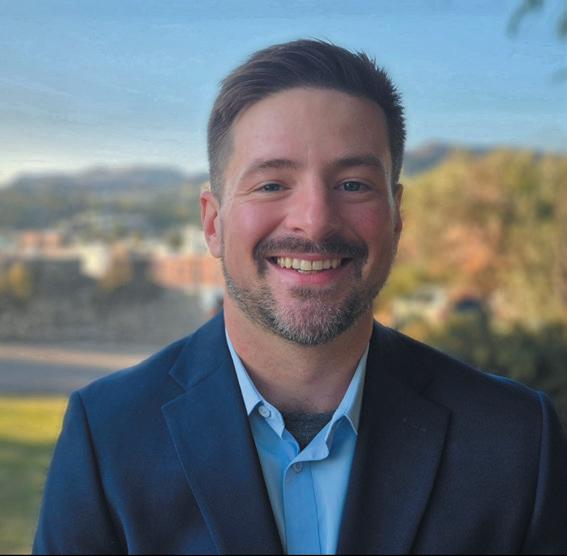
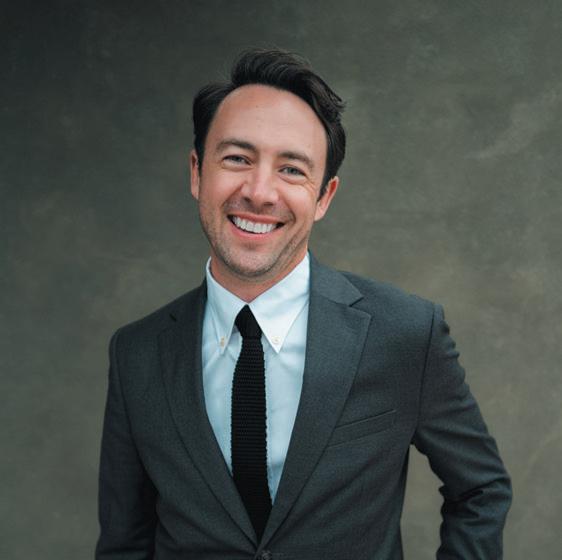
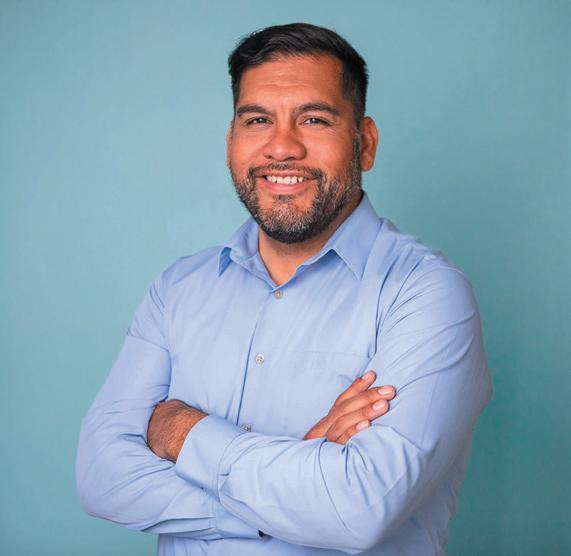
Rich Sarian, CD13
Kylan Kendall, CD13
Colter Carlisle, CD13
Morgan Oyer, CD5
Henry Mantel, CD5
Mayor Karen Bass
Hugo Soto-Martínez, CD13
Katy Yaroslavsky, CD5
Mayoral candidate Adam Miller showed up in Windsor Square
By H. Hutcheson
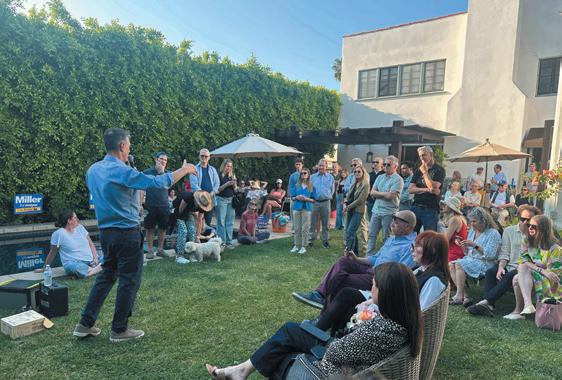
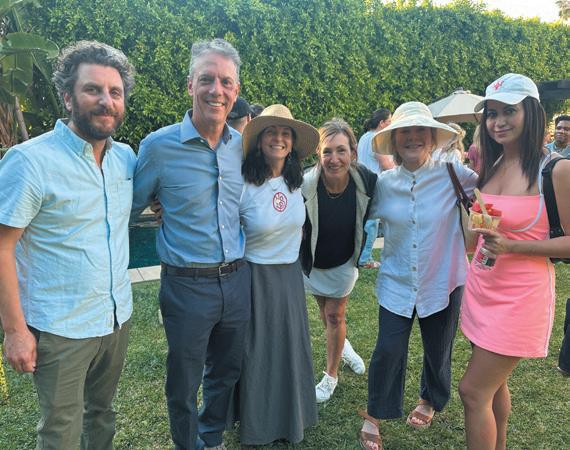
Mayoral candidate Adam Miller made a backyard appearance at Paulette Light and Jeff Rake’s home in Windsor Square, addressing a gathering of more than 70 neighbors to disseminate his views on how to better run the city of Los Angeles.
His top priorities include accountability and transparency, which he expressed are of the utmost importance and need to be addressed on day one. Second, he said, is homelessness, which he pointed out L.A. has spent over $10 billion on and still has not solved much of the problem (Miller is cofounder and CEO of the nonprofit Better Angels, which has had measurable success).
Third on Miller’s list was the housing crisis, where he promised, “We can have more housing without ruining neighborhoods. The only way we are going to fix the affordability problem is by having more housing
supply.” And fourth, he impressed, “We have to attract businesses back to L.A. We have to attract Hollywood to Hollywood. We have a deficit in L.A.—so you can spend less or you can make more. We have to do both. We have to do a better job of optimizing our budgets, which the mayor absolutely has control over.”
MILLER told the crowd, “There is a tremendous amount that can be done in the first hundred days—even hours—if you know what you want to do and leverage the tools at your disposal.”
Light to his left) said, “We have to do a better job of optimizing our budgets, which the mayor absolutely has control over.”
When asked why he might find success in implementing his ideas where others have failed, he replied, “Have you ever worked at a company where a great employee gets
Nithya Raman
(Continued from Page 1)
4X2.5.qxp_BLUTHNER/LARCHMONT 4X2.5 8/22/16 11:04
Leipzig, Germany since 1853
Concert, Recording, Home Rentals
Henle Editions
Helga Kasimoff
LA’s oldest family piano store kasimoffpianoslosangeles.com
Why would someone worth millions want the job of mayor? “The city is broken. We want our kids to want to live in L.A.—a place they can afford and thrive in—and it’s not that city today. I’m really concerned if we stay on our current trajectory we become another Detroit. Detroit was an amazing city, but now it’s having a really tough time digging out of what they’re in. It takes a generation to dig out of something like that. We have the opportunity now to not become that. It’s not about bringing back the good old days—let’s make it better than it’s ever been, where everyone can thrive.”
KASIMOFF-BLUTHNER PIANO CO. ¨ 337 N. LARCHMONT BL. • HOLLYWOOD, CA 90004 323-466-7707
represents. When asked what the biggest misperception of her might be, her candid response was, “There is a belief that I am driven by some farleft ideology in my work when in reality my brand of progressivism means that I really want the government to work well for residents of Los Angeles. I want programs to function as they are meant to and be accountable.”
When pressed about her ties to the L.A. chapter of the Democratic Socialists, she was not trying to “run away from the fact” she was a member of the organization, and in fact they had endorsed her. What drew her to the organization, she said, was they were doing the most politically engaging work for renters’ and housing rights. She emphasized she
promoted to be a manager, and they are just a terrible manager? It’s kind of what’s going on. We have legislators who were pretty good at doing legislation who suddenly move into an executive job and don’t know how to operate. Fiscal responsibility, budgetary management, operational excellence, high performing teams—this is what leaders do. I’ve done it at the corporate level and with nonprofits, [the latter] being more important, where consensus and collaboration skills come in.”
has been endorsed by a range of different groups and feels she is, “one of the most independent voices on the council. To make the city work better, when programs aren’t working or have unintended consequences for the city I stepped up and said things need to change, and received significant political blowback for my decisions.”
Researching Raman’s council voting record, there are several instances where she has broken with the DSA-LA group, such as the appointment of LAPD Chief Jim McDonnell (which triggered a formal “Expression of Disapproval” from DSA), voting yes on LAPD funding increases in 2023, and her recent proposal to amend Measure ULA (the “Mansion Tax,” which taxes high-value real estate sales).
In regards to the latter, Raman proposed an exemption for the first 15 years for new multifamily and commercial construction, “to remove the disincentive for new apartments to be built.” Since Measure ULA has been passed, according to a study by UCLA Lewis Center and Rand, 1,910 fewer multifamily units per year have been built, an 18% decline. It would appear that Raman’s proposal would help rectify the unintended consequences of Measure ULA.
When asked what she would do differently than Mayor Bass, she opined on her frustration with City Hall and the lack of urgency and leadership. On the issue of housing, she mentioned that the city hasn’t had a Deputy Mayor of Housing for the last two years as Mayor Bass did not appoint someone for the role. She spoke at length about bringing all the relevant departments together and driving them forward to address the challenges. According to Raman, there has been no push from the mayor’s office to do that work. The lack of impetus from Mayor Bass has therefore led to delays in building new housing and issuing new permits, and has led to a deepening crisis, according to Ra-
man. She states the Bass administration has many of the same general managers that were there during the Garcetti administration, with no clarity around what the priorities are, and no real metrics to hold each department accountable.
It has been mentioned many times that the City Council of Los Angeles makes the mayor’s job particularly hard to get things done. Raman believes that the Council President is a close ally of Mayor Bass, and if Bass wants to get things done, then she needs to present clear metrics. As an example, Ms. Raman said, she has, “Been pushing for greater oversight in the homeless system for quite some time, namely, looking for better outcome data and advocating to bring contracting in-house because there is hardly any staff in that area—only four— even though we are spending hundreds of millions of dollars. We created this Bureau of Homelessness Oversight last year during the budget process, and we haven’t hired anyone there yet, in a year.” Raman feels a push from the mayor could make those programs a reality, but she has not yet seen that push. “We need to centralize homelessness oversight into the city. We cannot rely on LAHSA anymore,” she said. Her goal is to have the convening power to bring all of the various agencies together to drive outcomes.
As it relates to SB79, Raman feels our city and neighborhoods needed advocacy in Sacramento when the legislation was being introduced. She seemed to understand that maintaining our neigh-
ADAM MILLER, (second from left, with Paulette
Nithya Raman
Cyndi Lauper—She’s still having fun, and now in Vegas!
I have interviewed many recording artists and musical theater performers over the years, but I rarely enjoy speaking to an artist as much as I did with Cyndi Lauper. She was open and honest and held nothing back. Her sense of humor was fully charged, even in the early morning hours when we spoke via telephone. I was in L.A. and Lauper was in her native New York. She may have been a bit sleepy at the beginning of the interview, but it took just a few minutes to get her wheels spinning. She opened up about how blessed she felt to have achieved some special accomplishments through the years.
Lauper burst onto the music scene in the fall of 1983 with her debut single “Girls Just Want to Have Fun” and her extraordinary album “She’s So Unusual.” She didn’t just have a catchy hit song and album, she had a mega-smash hit with both. “Unusual” went platinum several times over, and “Girls,” with the help of the MTV generation, was a phenomenon as colorful as her hair. Lauper had five smash singles from that debut, including “Time After Time,” “She Bop,” and “All Through the Night.” When I asked Lauper if she had any favorite songs from her first album, she replied, “I always liked ‘All Through the Night.’ I just remember making that album. Each album marks a certain part of your life and that was a very spe-
cial time for me, working at [New York recording studio] The Record Plant.” She then added, “‘Time After Time’ obviously will always be special because it really became a classic pop song. That’s a really great thing, because I had to wrestle to get that one on the album.”
If that wasn’t enough, Lauper won the 1984 Grammy for Best New Artist. Two years later, her follow-up album “True Colors” also went through the roof, spawning multiple smash singles and proving that Cyndi Lauper was a talented artist many were comparing to the reigning Queen of Pop, Madonna. By the end of the ’80s, Lauper had over a dozen hit singles on just three critically acclaimed albums.
When I asked who her favorite singers are, she replied, “I always listen to Billie Holiday. I love her and she’s taught me so much about singing and phrasing.” She also mentioned Ella Fitzgerald, Nina Simone, and Celia Cruz. She
even joked about the latter saying, “I have no idea what the heck she was singing because I don’t speak Spanish.” She also confessed, “I can’t even mention all of it because there is so much. I just really love music, all different kinds. I think it’s important to listen to all different kinds, and I think it’s important to know music history. There’s nothing like a great Led Zeppelin song! Janis Joplin and the whole ’70s era, which is fantastic, with Teddy Pendergrass and Ann Peebles—so many wonderful soul singers. Then there’s the Motown era and people like Marvin Gaye. Then, of course, The Beatles. I grew up listening to their sense of pop. They were extraordinary.”
During a four-year hiatus from recording, when, Lauper informed me “I lost my voice,” she turned to acting. She
landed the part of “Marianne” on the hit ’90s sitcom “Mad About You” and won an Emmy Award for Best Guest Appearance Female. Her comedic timing was outstanding. She gratefully acknowledges the show’s creator and star, Paul Reiser, for helping her achieve another plateau in her career.
After several years of time off, during which she got married and had children, Lauper found time to make the occasional album. However, her heart and soul were now focused on her family.
After her first few albums, Lauper discontinued touring until she returned to the stage with Cher in 1999. She performed several times with the legend over the past two decades.
In 2013, Lauper won a Tony Award for Best Original Score (music and/or lyrics) for the Broadway musical “Kinky Boots.” She made history as the first woman to win solo in that category. “Kinky Boots” was a massive success, winning six Tonys that year,
including for Best Musical.
In 2016, Lauper released her 12th studio album, “Detour,” a country album recorded in Nashville and featuring duets with Vince Gill, Emmylou Harris, Jewel, Alison Krauss, and Willie Nelson. They were country songs which were first made famous in the 1950s and ’60s.
After ending the Girls Just Wanna Have Fun Farewell Tour and shortly before she was inducted into the Rock and Roll Hall of Fame last November, Lauper confirmed 2026 touring dates. She is on the verge of her very first residency at The Colosseum at Caesars Palace in Las Vegas, which began last month and running through early May. She then will perform in the Bahamas and Lisbon, Portugal. Rumor has it she’s negotiating a return to her residency in Vegas shortly after that.
At 72, the Grammy, Emmy, and Tony-winning performer is excited to have her very first Vegas residency—and is still a girl who just wants to have fun.
Dance performances not to miss in Los Angeles
By Laurie Sefton
May is usually the end of the season for most large performing arts centers. However, you can get tickets now for some not-to-be missed shows coming up this summer. Listed here are four dance performances.
L.A.-based repertory company Bodytraffic will be closing their company after 20 incred-
ible years of commissioning new works and touring internationally. Known for high caliber dancers and a diverse repertory, their final performances in L.A. will be Thur., June 4, to Sat., June 6, at The Wallis, 9390 N. Santa Monica Blvd.
Los Angeles Ballet is performing “Giselle” with the incredible Bolshoi-trained
dancer Matisse Love as part of the cast. It is always worth seeing her onstage. Shows are Thur., April 30, to Sun., May 3, at the Ahmanson, 135 N. Grand Ave.
New York City Ballet will be performing two differ-
(Please turn to Page 19)
HEIDI DUCKLER DANCE performs “Ask the Wrath” at L.A. Central Library.
Photo by Jason Quigley
BODYTRAFFIC will have their final performances after 20 years in Los Angeles.
Photo by Trey McIntyre
Musical Notes by Steven Housman
Candidates
(Continued from Page 18)
countability. We’ve seen a 27% decrease in homelessness by expanding housing options and setting a clear standard for encampments. No-camping laws around sensitive sites like schools, parks, and daycare centers are enforced consistently. For new no-camping zones, we pair enforcement with outreach and verified housing options so people are moved into housing, not from block to block.
We’ve made progress, but more needs to be done, especially for people with serious mental health and addiction challenges. My focus is to scale what works and ensure the city delivers results people can see.
Candidates for CD 13
Colter Carlisle: 1) Voters should choose me because I am the only candidate with the experience to lead the district. As vice president of the East Hollywood Neighborhood Council and chair of its Land Use Committee, I have spent five years working to defend rent-controlled housing and pushback against policies that prioritize luxury development over community stability. I am the only candidate who will fight irresponsible density, create more parking, and keep lanes of traffic open and moving. I will also fight back against growing antisemitism and make sure everyone can live with dignity and respect in their own communities. Lastly, I will ensure City Hall is responsive, accessible, and grounded in the needs of everyday Angelenos.
2) SB 79 is a disaster for Los Angeles. It will lead to the destruction of our neighborhoods and rent-controlled apartments in favor of 10-story luxury buildings that few can afford. Because SB 79 applies to major transit hubs and bus lanes, the expansion of bus lanes will not only make it harder to park and drive in Los Angeles, but is, in fact, a ploy to expand SB 79 zones across the city. As your next City Councilmember, I am the only candidate who will fight back against SB 79 and protect our communities.
3) In March 2025, a court-ordered independent audit found that City and County of Los Angeles officials could not accurately track $2.4 billion in homelessness spending. As your next Councilmember, I will rebuild the system from the ground up, restore accountability, and enforce SB 43, which allows the city to place individuals experiencing severe mental health or substance use crises into medical facilities where they can receive proper care. My opponent has refused to enforce this law, leaving both unhoused individuals and the broader community at greater risk.
Kylan Kendall: 1) A 30-year community member of Council District 13 who raised my kids here, I’m running because I’ve never seen our district so neglected. Over the past three years, residents have endured visible disorder on our streets, disregard for our small businesses, and indifference from our elected leadership. We’ve lost the ethos that once made this district the creative and cultural heart of Los Angeles and that erosion has left neighbors feeling forgotten and frustrated.
This decline didn’t happen overnight. It’s the cumulative result of years of neighborhood development without a coherent vision. We’ve failed to invest in leadership that understands how to design livable cities. My vision for CD13 is grounded in holistic planning built around the “15-minute city” model—designing neighborhoods where residents have access to housing, green space, local shops, cultural activities, and jobs. Our office will curate neighborhood growth that reinforces stability, community character and sustainability.
2) On housing, I oppose Senate Bill 79 because it wields a mallet where we need a scalpel. I believe in building more housing— affordable, workforce, starter, and supportive—but with respect for each neighborhood’s social and physical fabric.
3) In 2005, I founded the nation’s only arts-based educational agency dedicated to breaking the path to homelessness for high-risk young adults—proving that preven-
tion and opportunity change lives. My approach begins with compassion tied to measurable results. Today, one in four shelter beds goes unused because city departments and outreach providers fail to coordinate. I will enforce existing laws like 41.18 [prohibits sitting, sleeping, etc. on public property particularly withing 500 feet of schools, parks, etc.] because compassion means protecting both unhoused and housed neighbors from unsafe conditions, fire hazards, and the loss of public space.
Council District 13 deserves leadership rooted in accountability, design, and empathy. I’m ready to restore our pride, safety, and shared sense of place.
Rich Sarian: 1) Council District 13 deserves real leadership that delivers results and restores trust in City Hall. I’m a third-generation Angeleno, lived in the district most of
my adult life, and have a legitimate track record of bringing people together to solve tough problems, from public safety to economic opportunity. I’ve worked alongisde every level of government and led complex, people focused initiatives, managing budgets, building coalitions, and delivering real results.
Voters should choose me because I’ll be a hands-on, accountable councilmember focused on safer neighborhoods, more affordable housing, and a city that works for everyone, not just the well-connected. I’ll actually show up, listen, and fight to make sure our communities see real progress, not just empty promises.
2) SB 79 is now law and reflects the urgency of our housing crisis and the need to build more homes, especially near accessible transit. I support its goal of increasing housing supply, resulting in
lower costs for our residents, but implementation matters. As councilmember, I’ll work to ensure new development includes meaningful affordability, protects existing tenants, and reflects community input. That means pushing for smart planning, strong anti-displacement measures, and infrastructure investments so growth benefits current residents, not just future ones. We need more housing, but it must be affordable, equitable, sustainable, and aligned with neighborhood needs and character.
3) We need a results-driven, compassionate approach that moves people indoors quickly and keeps them there. That starts with scaling proven solutions like interim housing, permanent supportive housing, and rental assistance.
I’ll push for better coordination across agencies, faster
(Please turn to Page 23)
Book investigates teen’s death after posing as Russian rich kid
If you’ve read “Say Nothing” (2018) or “Empire of Pain” (2021) you know that Patrick Radden Keefe tells a really good story. In my opinion, the man can’t miss. I will read anything he writes. His latest, London Falling: A Mysterious Death in a Gilded City and a Family’s Search for Truth, did not disappoint.
The Premise: This nonfiction book is about the death of London teenager Zac Brettler, who died after falling from a luxury apartment building into the River Thames in the middle of the night on Nov. 29, 2019. The 19-year-old’s death is under mysterious circumstances, and very soon, his parents find out that their son
By Suzan Filipek
A Larchmont Village resident’s experience founding and developing a program to bring the arts to prisons is told in a new book.
Annie Buckley will discuss “Changemakers’ Guide to Prison Arts Programming” at Chevalier’s Books, 133 N. Larchmont Blvd., on Thur., April 30, from 6:30 to 8 p.m.
Published by Routledge, the book is a step-by-step guide on developing comprehensive programming behind bars.
Buckley’s program, Prison Arts Collective, has brought the arts to over 10,000 people
Dance
(Continued from Page 17)
Larchmont Bookshelf by
Katie Urban
had been living a secret double life, moving around London pretending to be the son of a Russian oligarch. If you think that sentence is unbelievable, the rest of the book will have you floored. The book is an investigation into Zac’s death, as well as the shady criminal underworld he found himself driven into.
The Verdict: Ultimately, this book is about a family losing a son and the investigation following his death. The book has so many layers and themes. It’s a story
about social class and the hustle-and-aspiration culture we all live in. We learn that Zac was obsessed with social media and extreme wealth, something deeply ingrained in today’s influencer culture. The book also focuses on the idea of parenthood. What’s our responsibility toward our kids as they become adults? How much rope do we give our kids to make mistakes and fix them? And how much do you really know your own kid?
Radden Keefe structures his books in such a way that makes them compulsively readable, leaving the major revelations at the end so you finish the story stunned. I didn’t love this one as much as
“Say Nothing,” but I did tear through it, and that says a lot. I have a feeling this will be one of the top nonfiction books of 2026.
In full transparency, when I first picked up this book, I found myself immediately thinking of Anna Delvey, the young woman who famously posed as a German heiress to con New York’s high society. The wildly unbelievable true story was adapted into the Netflix series “Inventing Anna.”
Fun Fact: Radden Keefe told an interviewer that whenever he goes out looking for a story, he never finds one. Ideas find him. He first heard about this story by chance while on set for the television adaptation of “Say Nothing.” This book began as a 2024 New Yorker article, also penned by Radden Keefe.
Village resident launches book on bringing art to prisons
incarcerated in 17 California state prisons since 2013. The program, which began with three art classes at the
“As an artist and writer, I wanted to share the powerful impact of this work and hopefully inspire others.”
California Institution for Men in Chino, California, is based on the belief that art is a human right that empowers the incarcerated to find their creative voice, cultivate community, and share
Pavilion, 135 N. Grand Ave.
their knowledge. The book uses narrative, theory, and guidance to explore themes of hope and transformation, grief and loss, and interconnection and mutuality, Buckley said.
“Right as it started, I got a call from the men’s prison in Chino, and they wanted art classes. I was inspired to say “yes” to this opportunity, in part by my mother, who volunteered in juvenile detention centers in L.A. for nearly 20 years,” Buckley told us.
“Since our first class at the men’s prison, everyone involved was super engaged.
the author accompanied by PAC colleagues on the challenges of building a program from the ground up, including the perspective of faculty and formerly incarcerated artists. Buckley was raised in Windsor Square and attended both Third Street School and Immaculate Heart before going on to UC Berkeley and Otis College of Art and Design. She is a professor at San Diego State. ent programs. I recommend program A, which includes “Signs,” “Red Angels,” “A Suite of Dances,” and “The Times Are,” which are sure to have blazing fast dancing and clean, beautiful choreography by some of the best dancers in the country. Program A covers works by Gianna Reisen, Justin Peck, Ulysses Dove, and Christopher Wheeldon Wed., June 24, to Fri., June 26, at the Dorothy Chandler
Nithya Raman
(Continued from Page 16)
borhoods character was extremely important. She mentioned a fast-tracked standard plan for housing that incorporated design elements and preserved the look and feel of the area as one of her ideas. With a housing plan on her website that incorporates public and private partnerships, Raman spoke of having a conversation with a developer who told her the hardest part about building new affordable housing in Los Angeles is the city of Los Angeles.
Heidi Duckler Dance celebrates the Los Angeles Central Library’s centennial by welcoming all ages to a 25-minute site-responsive dance performance titled “Ask the Wrath,” taking place Sat., May 2, at 7 p.m. as part of the library’s celebration “Night at the Library: A Century of Light” at Richard J. Riordan Central Library, 630 W. 5th St. HDD is a pioneer in the relationship between performance, audience, and space, encouraging guests to inter-
The bureaucracy of the city makes it extremely hard. Her opponents would argue that she has been part of that bureaucracy, therefore part of the problem. She would counter that there is only so much she can do from her City Council seat, and a run for mayor would help her achieve her lofty goals.
First and foremost, she wants accountability for how every dollar is spent and wants to make sure every dollar works the way it should be working.
She emphasized the point that her vote, against a raise for the police in the last budget, was because the city sim-
act. Richard J. Riordan Central Library, 630 W. 5th St. For tickets, visit tinyurl.com/ f2ccjftf.
If you get to New York City, see the musical “The Lost Boys ,” featuring incredible music by L.A.’s own indie pop rock band The Rescues at The Palace Theater, 160 W. 47th St., in New York city. I saw it in previews, and it is an absolute must-see.
Laurie Sefton is a devotee of live performance and art. For more information visit Laurie Sefton Creates.
ply could not afford it. She voted against the convention center renovation for the same reason.
Her vision is a city where the citizens do not pay more for less. These are lofty goals, and whether they are achievable or not remains to be seen.
One hopes that if elected, she can keep her promises to all Angelenos, and each citizen will feel they have a voice. The argument could be made by some of her current constituents that they do not feel their voice is being heard right now. It will be up to the voters to decide, on June 2, if Nithya Raman is listening.
Bringing something so creative and fluid as art into prisons—some of the most restrictive spaces imaginable —proved to be inspiring and life changing. As an artist and writer, I wanted to share the powerful impact of this work and hopefully inspire others.”
The launch on Larchmont will feature a book signing with the author, a raffle of photography by Peter Merts, and a panel discussion with
AUTHOR ANNIE BUCKLEY with artist participants in Prison Arts Collective. Photo by Peter Merts
LIVING AT ALL AGES
Moving your parents can be difficult—here’s some help
By Nona Sue Friedman
Whether you are part of the sandwich generation— with kids at home and aging parents to care for—or faced with just the latter, figuring out if and when to move your folks into a senior living community is no easy task. Having recently ventured into this world, I’m sharing what I’ve learned.
The first choice is always to keep parents at their home, if it’s working. However, life gets more difficult as you get older. Driving day or night can be challenging. Buying and preparing food, navigating stairs, and having a supportive community of family and friends nearby all play into the equation.
After searching the internet for hours and looking to friends for recommendations, I was overwhelmed with the options and the lists of amenities, not understanding half the descriptors online. Then, I came across a listing for Assisted Living Locators L.A. (assistedlivinglocatorsla.com), which seemed to do everything I needed. I called them and the journey began. If your parents need to move, you don’t have to find a place for them alone. There are people out there who specialize in locating an ideal living situation for seniors— taking into consideration your parents’ physical capabilities, what part of town they’d be most comfortable in, their mental capacity, and budget. And it’s at no cost to you! Advisors get paid by the senior community.
Laura Barrett, who recently became the new co-owner of Assisted Living Locators L.A. but has worked for the organization for years, walked me through all the different options. With her questions about my parents’ health, budget, insurance, and mobility we narrowed the list to about five potential best-fits.
Golf
(Continued from Page 8)
of the fairway, causing players to adjust their aim points as they target a green that’s now 30-40% larger. The 5th and 12th holes are also now closer to the barranca, which touches more meaningful shots on the course and is in play more frequently.
Shipka is grateful to the membership for supporting and paying for the project, which exceeded $20 million and took 16 months rather than the expected 12. The fin-
Her years of experience and the multiple areas of certification, including dementia care and senior advising, were invaluable. “These are all things that make me better at my job and help my clients,” Barrett commented.
“My clients sometimes go kicking and screaming only to contact me later to tell me they wished they had done this years ago,” said Barrett. This comment was mirrored by everyone else I spoke to who worked with seniors.
Wanting to vet any place I would consider, Barrett and I toured the facilities together. She always asked questions that I would never have considered. She was an invaluable asset.
Working with Barrett, I learned that one of the reasons apartments tend to be smaller in senior or assisted living communities is because the facilities want residents to engage in the community and not be in their apartments by themselves. As I heard on numerous tours, the lobbies and communal spaces should be considered the resident’s living room.
After having my folks tour a few communities, one spoke to them.
Making the move
Now, the move. How were we going to take 30 years’ worth of stuff from a 2,500square-foot house and put it into a small apartment? Bar-
ished product is only available to members so far, but the golf world knows something special transpired.
“People throughout L.A. understand we went through this transformation,” Shipka says proudly. “No one outside our membership has seen it yet, so they don’t yet know how great it is. People applying for membership understand we hired a world-class architect to transform it, and they are excited. It will only increase the demand for people to join Wilshire and create a truly unbelievable golf experience.”
rett to the rescue again. A certified senior advisor will have ideas and strategies to best work with parents who might be resistant or dealing with limited mental capacity.
There are senior downsizing companies who specialize in this. Who knew?! They can pack, move, unpack, sell, and donate all the furnishings in a home. You decide what you want. These companies also help with clearing out homes in your darkest hours, when loved ones have passed.
Barrett of course had a few downsizers up her sleeve. I
spoke with Dina Braverman of Organizing Concepts and Designs (organizingconceptsanddesigns.com). She’s been doing this for close to 20 years, she was a paralegal and legal assistant for 30 years before that. Like Barrett, she is chock-full of experience and resources that are incredibly helpful and necessary during this process. “A lot of seniors won’t move because it’s too daunting,” said Braverman. That’s where she and her team come in.
The downsizing company assesses and measures the
furniture the seniors are living with, and they visit and take measurements at their future home. They then advise and make suggestions for the best configuration in the new space, taking into consideration space for a possible walker in the future and general ease of operation for seniors within their space. Moving day comes and they pack it all, move it, and then unpack it all, down to placing framed pictures on the table.
And hopefully that is the start of a new, safer, and more social era for your folks.
ASSISTED LIVING LOCATORS co-owner Laura Barrett.
Paramount
(Continued from Page 1)
what?
What’s actually likely
Despite the swirl of speculation, the most immediate future of the Paramount lot is not dramatic transformation—it’s continuity with subtle change.
In the near term, the lot is expected to remain operational as a working studio. Leasing, in this context, largely means renting soundstages and production space to third-party film and television projects, a practice already common across Los Angeles. It’s a way to generate steady revenue without fundamentally altering the property.
But even that assumption— continued demand for large physical production space— no longer feels as certain as it once did.
The industry is already shifting. Production has been migrating to other states and countries for years, chasing tax incentives and lower costs. Now, emerging technologies, including AI-assisted production workflows, are beginning to reduce the need for some of the physical infrastructure that defined Hollywood for decades. Fewer large crews, more virtual environments, and increasingly flexible pipelines may gradually shrink the footprint required for certain types of content.
That doesn’t mean studio lots disappear. But it does suggest that the long-term demand for a 20th-century-style production campus may not fully translate into a 21st-century business model.
Which makes the future of the land itself all the more consequential.
The real estate reality
From a purely economic standpoint, the Paramount lot sits on extraordinarily valuable land. It occupies a central position in Hollywood, adjacent to transit corridors and surrounded by neighborhoods grappling with a severe housing shortage.
If even a portion of the site were rezoned for residential or mixed-use development, the numbers become significant very quickly.
At a moderate urban density—say 75 to 125 units per acre—a 65-acre site could theoretically support between 4,800 and 8,000 residential units. Even if only half the land were developed, that still translates to several thousand apartments, potentially including a meaningful share of below-market housing depending on city mandates.
In a city where affordability has become a defining political issue, that kind of capacity is hard to ignore.
And yet, numbers alone don’t tell the whole story.
The promise and the pressure of mixed use
The most realistic long-term scenario is not a wholesale conversion to housing, but a hybrid: a mixed-use campus combining residential units, retail, office space, and some form of retained production capability—though perhaps in a leaner, more modern form than what exists today. Think less traditional studio, more urban village—something not unlike The Grove, though on a larger and more layered scale.
Done well, this kind of development can bring real benefits. It can increase walkability, create local jobs, and activate streets that might otherwise go quiet after business hours. It can also align with Los Angeles’ broader push toward transit-oriented development and reduced car dependency.
But “done well” is doing a lot of work in that sentence.
Because developments of this scale also come with very real costs—especially during the years it takes to bring them to life.
The in-between years
Large mixed-use projects in Los Angeles typically take four to five years from entitlement to completion, sometimes longer. For neighbors, that timeline is not an abstraction—it’s a daily reality.
Construction traffic alone can reshape a neighborhood. Heavy trucks, lane closures, noise, and dust become part of the landscape. Local businesses often feel the strain as foot traffic becomes less predictable and access more difficult.
Even after completion, increased density brings its own challenges. More residents mean more cars—at least in the near term—placing additional pressure on already congested streets. While planners often point to walkability and transit as mitigating factors, behavioral change tends to lag behind design intent.
None of this is insurmountable. Thoughtful phasing, infrastructure investment, and traffic management can soften the impact. But they rarely eliminate it entirely.
A question of identity
Beyond economics and logistics, there is a deeper question at play: what does it mean for Los Angeles to
lose—or transform—one of its last great studio lots?
The history here is not theoretical. Paramount traces its roots back to the silent film era. Its stages have hosted everything from Golden Age classics to modern blockbusters. The front gate alone is one of the most recognizable landmarks in the city.
Los Angeles has faced this kind of moment before—with mixed results.
The former May Company building on Wilshire Boulevard, now home to the Academy Museum of Motion Pictures, is often cited as a success story: a historic structure preserved and given new life with cultural relevance.
By contrast, the demolition of the Dodge House in 1970 remains a cautionary tale— an architecturally significant property lost to development, replaced by something far less meaningful.
The difference, in many cases, comes down to intention. When preservation is treated as an asset rather than an obstacle, the results tend to endure.
What should be preserved
If the Paramount lot does evolve, the question is not whether change will happen, but how much of its identity will survive.
At a minimum, certain elements feel non-negotiable: the Melrose gates, key soundstages, and portions of the backlot that carry historical and architectural significance. Integrating these into any future development is not just about nostalgia—it’s about continuity.
There is also an opportunity here, if approached creatively, to do something more ambitious: to build a model for how Los Angeles can honor its past while addressing its future.
The bigger picture
It would be easy to frame this as a binary choice: preserve the studio or build housing. But that frame misses the complexity of the moment.
Los Angeles needs housing. That’s not in dispute.
It also needs to retain the infrastructure—and the identity—that made it the entertainment capital of the world.
At the same time, the definition of that infrastructure is changing. If the industry itself requires less physical space, the argument for preserving every square foot of a traditional studio lot becomes harder to make—whether we like that reality or not.
The challenge is not choosing one over the other. It’s deciding what version of Hollywood we’re trying to preserve—and what we’re willing to let evolve.
A final thought
If the Paramount lot ultimately becomes something new—a mixed-use development, a residential hub, a hybrid campus—it will almost certainly be justified in the language of progress. More housing. More efficiency. Better use of land. All of which may be true.
But progress, in Los Angeles, has a habit of erasing the very things that made the city worth progressing in the first place. So, the real question isn’t what will be built on that land. It’s whether, years from now, anyone will still recognize what used to stand there—and whether we’ll feel like we traded up, or simply traded away.
PARAMOUNT GATES on Melrose Avenue, a historic symbol of Hollywood’s Golden Age.
BRONSON gate that Charles Bronson got his stage name from.
Unique and complex flavors of Sri Lanka shine at Kurrypinch
A corner property in Thai Town with clean lines, warm lighting, textural touches, and a calm color palette is the setting for Kurrypinch, chef and owner Shaheen Ghazaly’s modern exploration of Sri Lankan cuisine.
The island nation of Sri Lanka, known as Ceylon until 1972, was at the crossroads of a major oceanic trade route and so adopted spices from southern India, Malaysia, and other southeast Asian countries. Dishes were also influenced by Sri Lanka’s colonization by the Portuguese, the Dutch, and the British, until they claimed independence in 1948. They are famed for cinnamon, which factors heavily in their cooking, and the ubiquitous coconut, with coconut milk and shredded coconut appearing in appetizers, entrees, and desserts alike. Also Ceylon tea, as tea from Sri Lanka is known, is a globally prized beverage, and Sri Lanka is the third biggest exporter of tea in the world.
Besides the fusion of flavors found in their cooking, another thing to note is that the region is known for fiery tastes, and Sri Lankan cuisine
On the Menu
by Helene Seifer
is no exception. Some of Kurrypinch’s menu items come at a set heat level, but others can be set at mild, medium, or “Lankan” hot. The three of us who were enjoying a ladies’ night out decided to stick with medium for everything we ordered. Although some dishes had more of a slow burn than others, and some required a water glass refill to get through, we found medium to be the perfect spiciness for our group. Beverages assist in handling the heat, since both the mocktails and soju cocktails are fruit juice-centric and help cool the palate. There is also wine.
We started with little mackerel croquettes, a perfect way to sample the complex layering of flavor found in Sri Lankan cooking. Consisting of shredded mackerel, onion, and potatoes rolled into bite-sized balls, the “wow” factor came from the seasoning of mustard, pandan and curry leaves, curry powder, turmeric, and cumin. Swipe the crispy orbs through the
accompanying red chili sauce and enjoy!
Curry, or here often spelled “kurry,” features prominently in the island’s cuisine, and there are many versions available on the menu, including northern Sri Lankan shrimp curry, paneer coconut curry (soft cheese with tomatoes, green chilis, and chili flakes), and fried chicken simmered in a black curry blend. We ordered the simple-sounding rice and kurry, which came with three vegetable curries, a protein of choice (we selected lamb over chicken, beef, shrimp, or ahi tuna), a vinegary tomato salad, and papadam, a small bowl of almost weightless crackers typically made from rice, lentil, or chickpea flour. It was a fun eating experience with all
Bagel makers of the west vie for votes
By Nona Sue Friedman
It was a yeasty day when fifteen different bagel makers from west of the Rockies described their baking process and different schmears all in one big room at BagelFest West April 12. Samples of their products were abundant. Vendors with adjacent products, such as smoked salmon, joined in the festival
with giveaways, too.
About 1,000 people attended the event at Audrey Irmas Pavilion on Wilshire Boulevard. Attendees were each given a cardboard tray to carry samples and a “passport” to record thoughts about each creation. Each had the chance to vote for Best Bagel, Most Creative Topping, Best Sandwich, and Schmear of the Year, among others.
The night before this inaugural event, chef Eric Greenspan’s newest restaurant concept, Mish, a deli with a modern twist set to open on La Brea Avenue this month, catered a meet and greet for bagel makers, vendors, and press.
Best Bagel at this event went to Hey Bagel, from Seattle, Washington. For the list of other winners, visit their Instagram @bagelfest.
FUN
are (from left) Senior Lead Officers Matt Oropeza and Alex Cho and Capt. Rachel Rodriguez.
BROKER OWNER
Benjamin Levy (right), who donated fruit and muffins for the VIP lounge, stands with Wilton Drive resident Laura Dine Million.
the different elements to try, although the well-seasoned lamb was tough. I will try chicken or shrimp next time.
A South Indian string hopper pilau—skinny rice noodles stir-fried with vegetables and spices—was a comforting dish. A similar choice of proteins was again offered, and the plump pan-seared shrimp were delectable.
We wanted one more dish and it was difficult to decide among seared salmon on curried pumpkin purée; the risotto with kale, cilantro, and curry leaves; and the
coconut milk risotto with baked mahi-mahi, which we ordered. Topped with tomato gravy, chili oil, fried onions, and curry leaves, the dish was complex, hearty, and very good, although the fish was slightly overcooked. We were too full to have dessert, but the rice pudding with coconut milk, cinnamon, cashews, raisins, fried onions, and curry leaves sounded intriguing enough to warrant a return visit.
Kurrypinch; 5051 Hollywood Blvd.; kurrypinch.com; 323-407-6176.
Try these off-the-beaten path, awesome summer ideas
By Lucy Margolis
When most people think of the classic summer activities in Los Angeles they think of going to the beach. While the beach is fantastic, there are many equally awesome summer activities that don’t require sitting on the 10 freeway wondering where it all went wrong.
If you are looking for a stunning—and more local view—you can take a short drive to the Mulholland Drive Lookout, which is absolutely breathtaking as you can see all of L.A., Universal Studios, and the San Fernando Valley.
A little farther from Larchmont is Frogtown, officially Elysian Valley. This neighborhood is perfect for a relaxing summer walk along the Los Angeles River. For the best access, head to Lewis MacAdams Riverfront Park at 2944 Gleneden St., where you can walk along one of the greenest stretches of the river. The L.A. River gets a bad rap as a concrete channel filled with waste and graffiti, but this section, known as the Glendale Narrows, is full of nature and wildlife. If you are lucky, you might spot great blue herons or egrets. While in Frogtown, be sure to visit coffee shops, explore street art and murals, and enjoy a peaceful spot to spend time outdoors and even kayak (lariverkayaksafari.
org). It’s a nice way to experience a different side of L.A. away from the usual crowds. Summer is also the perfect time to pick up a new hobby such as cooking or crafting. Using the fresh produce from a farmers market you can make a great refreshing summer meal and enjoy it in a backyard or at a park, like Burns Park, 4900 Beverly Blvd. which has some awesome workout machines where you can burn off some of the calories from all the delicious baked goods available on Larchmont Boulevard. The Silver Lake Meadow, 2300 Silver Lake Blvd., is also perfect for picnics. You can wander over to the dog park nearby for some people and puppy watching.
An activity kids will love is the Hollywood Pool, at 1122 Cole Ave. The pool fee starts as low as $1 for kids and $4 for adults, and it has an enormous waterslide and multiple diving boards, with lifeguards ensuring everyone’s safety.
SRI LANKAN FEAST with vegetable curries, pan-seared shrimp, and coconut milk rice with mahi-mahi.
TROPICAL FRUIT JUICE mocktail; mackerel croquettes burst with flavor.
CLEAN lines, warm lighting, and textural touches make for a comfortable space.
BAGEL
JOINING IN THE BAGEL
RISE BAGELS, FROM IRVINE, explain their globally influenced bagel sandwiches.
THE L.A. RIVER sparkles with ducks on shore.
Design contest
(Continued from Page 1)
planning initiative estimate. In addition, more than 1,000 new residential units could be built, along with a center parking median with over 200 new spaces.
Currently, Upper Larchmont is home to a mix of office buildings, bungalows, empty lots and apartment buildings. Most of the commercial lots, are similar in size, making the transformation of the street easier, said Uretsky.
The local groups aim to incorporate “gentle density housing” (three to five stories) over retail space with façades in a variety of styles, such as Art Deco, Spanish Colonial and Modernist. Housing units would range in size from one to three bedrooms, with private patios and a shared courtyard. The plans conceived specifically for Larchmont will have the rear of the building tiered, allowing residents more privacy.
The project aims to continue the wonderful feel of Larchmont Village—its neighbor to the south.
“Housing debates get bogged down in arcane rules and laws when the number one thing people care about is: What does it look like?” Sturman notes.
“If neighbors support beautiful buildings, new residents want to live in beautiful buildings, and builders want to build beautiful buildings it makes sense for the city to unlock what literally everyone wants,” she adds.
LCI has asked neighbors at every step of the way what they want the area to look like, Uretsky added. “We want to understand what people in the neighborhood find compatible and what architectural styles people in the neighborhood would prefer on the Boulevard. So when we get to create final plans we know what resonates.
“It’s an optimistic time,” he added.
What the LCI project doesn’t want is oversized block-size buildings. “They add nothing to the community visually.”
Less busy than the bustling strip south of Beverly, a redo of Upper Larchmont has been in the works for several years.
It lost momentum recently because of a controversial housing measure, Senate Bill 79, which recently passed with some caveats.
“SB 79 got in the way. Now we’re regrouping to get the requirements to put the program into place,” said Uretsky. Likewise, the Larchmont project has gained approval from elected officials and the neighborhood’s residents alike.
Two major hurdles stand in the way of the local plan. One
UPPER LARCHMONT design created by Martin Tomasz.
is a city code that requires two stairwells, which is more costly and less necessary for the four- and five-story housing being considered on the Boulevard, Uretsky said.
Another roadblock is the complex mix of attainable ownership and condo liability reform to ensure new residents can purchase their units at reasonable terms.
Encouraging home ownership is a plus for the community as homeowners tend to put down roots and add to the character of the neighborhood, Uretsky said.
The competition
To enter the design competition, submit a drawing, watercolor, or photograph of a four- or five-story building, real or imagined, or a series of buildings. Include ground floor small businesses. Entries can be hand drawn or found images.
Place several architectural styles in a grouping to create a street scene while showing how stylistic diversity can create coherence along the Boulevard between Beverly and Melrose.
Original architectural designs are very welcome.
Deadline for submissions is midnight, Tue., May 5. Email submissions with the subject line “entry” to livablecommunitiesla@gmail. com.
Larchmont Spring Block Party
Select entrees will be displayed at the annual Larchmont Spring Block party, which takes place on Sat., May 9 between 11 a.m. and 4 p.m. on the 500 block of North Bronson Avenue.
“We think this will be fun for people. Tell us what you’d like to see there,” said Uretsky.
Candidates
(Continued from Page 18)
project delivery, and accountability for real results. We also need to expand mental health and substance use services and prevent homelessness in the first place by stabilizing renters at risk.
This crisis demands urgency and focus, and I’ll bring both to ensure fewer people are living on our streets and more are on a path to stability.
Councilman Hugo Soto-Martínez: 1) My approach is rooted in community engagement and delivering results.
My focus is improving quality of life across the district. Our office has invested more in streetlight repairs than any other district, and we’ve worked closely with neighbors on projects like the proposed sale of Larchmont lot 694. We listen, engage, and move forward in a community-driven process.
I’ve also taken on citywide issues, including co-authoring LA’s Sanctuary City law and raising wages for working people to build a stronger and more inclusive city.
2) My team has been very involved with residents in Larchmont, Windsor Square, and across the district to understand the potential impacts of SB 79 and how the City is implementing it. We’ve also worked closely with the Livable Communities Initiative and organizations like LUNA to think proactively about how to bring more housing into our communities in a way that preserves neighborhood character.
3) Since we took office, street homelessness in the district has decreased by 25%.
First, we created CD13’s first dedicated homelessness team to coordinate with the more than 40 service providers in the district and provide direct outreach.
When we took office, the vacancy rate at some of our district’s shelters was nearly 50% on any given night. Today, it’s nearly zero.
That has allowed us to shift to expanding new interim and permanent housing options, including 52 beds in Hollywood and 51 more beds opening next year in East
Hollywood. We also know it’s more effective to keep people housed than to rehouse them after they’ve lost their homes, so we created the city’s first Homelessness Prevention Team, which has helped hun-
dreds of tenants stay housed through legal support and rental assistance. By following what works — housing along with mental health and addiction treatment — we can make real progress.
Larchmont Village Neighborhood Association
Serving the Larchmont community between Beverly and Melrose, Arden to Wilton Place
“The objective and purpose of the LVNA has, since 1987, been the preservation and enhancement of our neighborhood.”
Homelessness, with all its complexity and intractability, can impact our lives in many ways, including encampments, vehicles and a variety of other scenarios.
Here is some information to help if you have a problem on your block:
Residents and community members should report vehicle dwellings, trash, debris, abandoned items, homeless encampment services, illegal dumping, traffic safety, parking issues, or hazardous materials through the MYLA311 app or website, the City of Los Angeles’ primary platform for reports. Entries submitted through MYLA311 are routed to LADOT and the Bureau of Sanitation for appropriate response. Once the community member submits MYLA311 service request you can email CD 13 with the service request order number. You can also cc your LAPD Senior Lead Officer at the Olympic or Wilshire Division.
While LAPD may respond to public safety concerns or repeated complaints, the department follows a services-led, voluntary compliance approach with a graduated response to enforcement when interacting with unhoused persons. Voluntary compliance is always the primary objective. LAPD policy does not allow officers to remove personal property, tents, or hazards from the public right-of-way, and the department does not have the equipment, storage capacity, or ability to properly dispose of hazardous items in bulk. As frustrating as it may be, repeated calls for service especially involving RVs or vehicle dwellings can have limited immediate impact in warning or citing with the individual(s), since the police cannot displace people or remove property directly.
LAPD serves as a support agency in matters related to homeless outreach, assistance programs, and vehicle dwelling. Officers cannot rely solely on arrests or citations to resolve every situation, in fact department policy limits their ability to remove personal property from public rights-of-way.
CD 13 has a commitment to counseling and resource support on this issue. You can email them for help at CD13HOMELESSNESS@ LACITY.ORG or call 213-473-7013.
The LVNA is non-partisan and works with every elected official. We strongly encourage each and every local stakeholder to participate, ask questions and highlight local issues with our prospective representatives. The June primary is just around the corner! CD13, the council district which represents our neighborhood, is included in this election.
There are four candidates running to represent us: incumbent Hugo Soto Martinez, Dylan Kendall, Rich Sarian and Colton Carlisle.
The GWNC, along with 14 other neighborhood councils from across the district, are sponsoring a LIVE in person Candidates forum Thursday, April 30 at 5:30 PM at LA City College. This will be your opportunity to hear directly from the candidates!!
See www.greaterwilshire.org for further information and updates.
If you have a problem, idea or project on which you’re looking for support, we’ll connect you with a member who’s got exactly the right combination of interest and knowledge to help you. The solution to the issues of our community comes from participating, working together and making our voices heard. Reach out at www.lvna.info
You can write to the LVNA at: Larchmont Village Neighborhood Association 325 North Larchmont #294 Los Angeles, CA 90004
You can email the general LVNA box at lvna90004@gmail.com or President Charles D’Atri at lvgwnc@gmail.com
lvna.info • lvna90004@gmail.com
Section Two
May 2026
SHOWCASE
Pasadena Showcase
House of Design’s many looks included Hattas Studios. Page 5
HONOREE
Karla Ahmanson of Hancock Park is honored at “An Evening of Grace and Gratitude.” Page 11
HANCOCK PARK • WINDSOR SQUARE • FREMONT PLACE • GREATER WILSHIRE • MIRACLE MILE • PARK LA BREA • LARCHMONT
DESIGN FOR LIVING
Local roots and outside influences inspire architect Meg Fain
By Barbara Sueko McGuire
Over a century after Larchmont first took shape as a streetcar suburb, the neighborhood has evolved in almost every visible way, except for one: its strong sense of community. The feeling of being in a small town in the middle of Los Angeles persists, and architect Meg Fain has quietly become one of its chief caretakers.
Fain was born and raised in the neighborhood, moving only once—from Van Ness Avenue to Windsor Boulevard when she was 7. The daughter of architect Bill Fain, she grew up surrounded by design but said her path to the profession stemmed from a love of art, history, people, and culture. From drawing with her grandma to being encouraged in her creative pursuits by her parents, she knew early on that she wanted to study architecture. She went on to major in the subject at the
MEG FAIN and her husband, Evan Jenkins, are the proprietors of Jenkins Fain architecture, interiors, and project management.
University of Virginia before attending the Harvard Graduate School of Design.
“I saw it as a way to combine a lot of interests,” she explained. “It’s a profession that allows you to engage with a lot of different people and places and then use your creative skills to come up with different solutions. That was really what ended up resonating with me—and then the excitement of being able to do something different
with every project.”
Growing up in Larchmont shaped not only Fain’s aesthetic sensibility, but also the way she approaches architecture itself. In 2015, she and her husband, Evan Jenkins, launched their own architecture, interiors, and project management firm. Today, nearly 75% of their work is based in and around the Larchmont area, including Windsor Square and Hancock Park.
Their projects range from interior renovations to additions, ADUs, and new construction, often with a strong emphasis on how interior and exterior spaces work together. Fain says her respect for the area’s historic homes and overall design has been central to the firm’s work.
“Being around all these beautiful historical homes—there’s a level of craftsmanship, attention to detail, and thought that was
put into them,” she said. “And not just the homes themselves, but also the way the neighborhoods are laid out— the relationship between the homes and the streetscapes and the yards. These components make it feel like a community and, at least subconsciously at first, have definitely influenced me.”
That sensitivity to context carries into the way Fain works with clients. Rather than imposing a signature style, she describes the design process as deeply collaborative—less about replicating
an image and more about understanding what a client wants a space to feel like. Her familiarity with the neighborhood, and the homes that define it, has helped shape that process.
At the same time, Fain says some of her most important inspiration comes from stepping outside her immediate surroundings. Travel, taking walks, drawing and close observation have all been essential to her growth as an architect.
“With architecture and de-
ORGANIC flow from exterior to interior achieved when Fain designs all components.
CALIFORNIA ELEGANT neutral-tone space in Hancock Park.
From board rooms to robots, designer/builder keeps evolving
By H. Hutcheson
It’s difficult to give Benjamin Armstrong, 29, an exact title for the type of collaborative design/build work he does. He creates hard-to-navigate surfaces for robots, codesigns and builds Japanese style board rooms, sculpts imaginary landscapes of a snowy planet, and will be part of the design and build team for a new Hollywood luxury hotel. He’s adaptable, and this seems to be the skill our rapidly changing world demands. For the last eight months Armstrong has been working
NEO THE ROBOT learned how to maneuver by practicing on spiral stairs and slippery surfaces Armstrong created.
in house at 1X, an AI robotics company in Palo Alto, where he is part of the team to help Neo, a personal AI companion,
Photo courtesy of 1X
learn to be more human— physically. “I’ve built all sorts of staircases: spiral, overly deep or shallow stairs, slippery surfaces full of rollers. The head of hardware and I meet, then I go to the design team and work with their design language to make an environment that is challenging for Neo,” said Armstrong. His relationship with 1X began when he built a set of steel walls for a commercial. He was then asked to design and build a meeting room— with furniture—that had to be done in a week’s time. “Everything in Silicon Valley is ‘right now’—that’s how they operate. They hear that some venture capitalist is in town— ‘Let’s give them a demo they’ll never forget!’ But they are going to leave on Monday—‘We need it here Sunday’—and it’s Wednesday!” said Armstrong. He said, “Yes, I can do it.”
When asked how he got the job done with such a tight
turnaround, Armstrong replied, “Friends. Because no one else will pull 18-hour days for me.”
So be adaptable, and keep your contacts from college, he advises. He worked with Alex David, a buddy from his alma mater, NYU, and his design team to build a warm wood paneled room in the style of traditional Japanese inns called ryokan.
I asked him if going to college was useful to his career. “NYU was an excuse to be in New York City. Sure, I met tons of great people—a huge networking time for me— but I can’t tell you one hard skill I learned from college. I can tell you a million skills I learned from my dad [who is a carpenter and sculptor back home in Florida], and the boatyard I worked in upriver in New York with fiberglass and painting sailboats. But college? One class—the history of set design dating back to Japanese kabuki theater. I still reference images in my mind from that,” he recalled. But college still has its value. “There would be some missing piece of the world had I not gone,” he said.
After university Armstrong moved to Los Angeles, specifically to the cottages Paramount Studios built in the 1930s for actors. He took a production assistant job, which led him to work in
set design with Wesley Goodrich, including for music videos such as Miley Cyrus’ “Flowers.” “I really tapped into L.A. and the work here creating and building sets,” he said. He also did set design and build for Paramount’s live events and premieres. He recalled the building he made Benjamin Armstrong
“TRANSFORMERS ONE” premiere set.
(Please turn to Page 6)
WARM WOOD paneled hall built by Armstrong.
Larger-than-life personality comes to life at Showcase House
By Sondi Toll Sepenuk
Every year that I attend the Pasadena Showcase House of Design, I think to myself, “This is the best house yet. They’ll never be able to top this.” And every year, they do. When you walk onto the property of this year’s 61st annual showcase house in Arcadia, called the Baldwin Oaks Estate, you are immediately pulled back in time.
The home belonged to Clara Baldwin Stocker, the eldest daughter of California pioneer Elias “Lucky” Baldwin, who at one time was the wealthiest landowner in Southern California. He helped shape the development of the city of Arcadia, and at one point owned the land that later became Monrovia, Sierra Madre, Temple City, El Monte, West Covina, La Puente, and more.
Have you heard of Baldwin Park, Baldwin Hills, Baldwin Lake, or Baldwin Avenue? Yep, that’s him.
Baldwin’s eldest daughter was a real party girl and loved to entertain. Her house, the Baldwin Oaks Estate, was the place to be. Parties would last for days, Clara was dripping with diamonds and fine jew-
elry (she was known as “the Diamond Princess”), and good vibes were in abundance.
The designers of this year’s showcase house wanted the rooms to reflect her largerthan-life personality, and I have to say, they nailed it.
Built in 1907, the shingle-style residence is set on nearly two acres of giant oak trees and lush green California native plants. A circular shaded driveway leads to the blue and white Arts and Crafts style home, with its wraparound porch and multiple balconies. Stepping inside, you instantly feel the grandeur of the home, greeted by
an enormous oak staircase.
To the left is a game room/ bar/sitting room that practically drips with conversations of parties past. To the right is an elegant and ginormous living room that screams luxury, beauty, and elegance. In total, there are 26 spaces that have been transformed by various designers. Each room reflects the California surroundings and Clara herself. Throughout the home, designers chose colors, materials, and textures that harken back to a woman who loved sparkle, shine, energy, and fun.
I was impressed with the dark colors of many of the rooms, reflecting the home’s Craftsman style, which were then balanced with soft, feminine colors and textures that reminded me of the jewelry I imagined Clara once wore. There are the Enchantment Nook by Hattas Studios designers that you really need to see to believe; the Minkwood library by James Hernandez Interior Design, featuring a rich color and pattern palette combination that will blow your mind; and a laundry room by Arterberry Cooke Architecture that honestly makes me want to do nothing
but wash clothes all day long.
The showcase house isn’t just rooms in a home, though. Outside, visitors will find a restaurant nestled among the landscaping to sit and enjoy food and drink, as well as boutique shops to find something fun and fabulous that you never knew you needed but now can’t live without.
The showcase house is a real annual treat for southern California and is something not to be missed. The event runs through Sat., May 17, and tickets can be purchased at pasadenashowcase.org/tickets.
ONE OF THE home’s several redesigned bedrooms, called the Magnolia Room, oozes luxury and comfort. Designed by Steven Cordrey of Cordrey Collection.
EVERY HOME needs an enchanted nook! This creative space was designed by identical twin sisters Jeanine Hattas Wilson and Julie Hattas Kennedy of Hattas Studios.
MIDNIGHT GARDEN dining room, inspired by Clara Baldwin’s love of luxury and entertaining, was designed by the House of Pontovi.
DESIGNER Joshua Praught of Studio-Joshua shows off his vision for the home’s entertainment room.
Trifecta
(Cont. from Sec. 1 Page 1)
Third [in a historic house] and whenever my parents had money, we’d fix up part of the house—bathrooms were from the 1920s, the kitchen from the 1950s. I grew up around all these construction projects. I liked [the atmosphere] and assumed I’d be an interior designer because that’s what I saw all the women doing.
I was a student at Marlborough all-girls college preparatory school, then Eugene Lang College of Liberal arts at the New School in New York, and then Parsons also in New York. I studied interior design and architecture and when I graduated, worked as an assistant to a contractor who offered design and build. This is when I realized it’s what I liked the whole time. It’s not that I didn’t think I
CURVED SKYLIGHT designed and built to be finished with smooth white plaster.
could do this sort of work, it just never occurred to me. If you don’t see women in it, you don’t automatically think that way. The women I saw on-site [when I was young] were architects or designers.
LC: With all the talk of jobs being lost to AI, I understand you and your subcontractors might be well poised for the future.
Howley: Formal education is valuable, but I think about all the money spent on colleges and what jobs there will be
in the future and wonder why more people don’t recognize the value of these trades— plumber, electrician, etc.
[LC: I later had my son ask his Claude AI about this and it said, “Skilled tradespeople working in existing structures are likely the last to be displaced by AI.” From the horse’s mouth!] LC: I’m noticing you’re not the six-foot, lift a redwood tree type [Howley is more in the mid-five-foot range, albeit very strong]. I’m so embarrassed to even say that, but good to know brains outdo brawn here. Howley: That’s because that’s what we see! There are multiple kinds of contractors: contractors that wear the tool belts and do heavy framing work, the “country club” contractors that schmooze to get the jobs, and then there’s me, somewhere in the mid-
dle. I learned trades and the management side of things with a design background. So, I don’t do the heavy lifting but did learn how to do the framing because I think that’s important. I can fully check and see to make sure it’s done correctly. It’s important to learn every job. There is a huge value to showing your employees that you are not above any job in construction and know how to do it. We are all a team. You might not see me with the tool belt on, but you’ll see me with a tape measure, a laser and level, a broom, and a trashcan.
LC: What might be the benefits (or challenges) of being a female contractor?
Howley: I think of Marlborough again; it really did teach me I could be whatever I wanted to be. When I went to college, I noticed most of my female classmates did
not speak out as much or as loud. After eight or nine years working construction, it finally hit me: Do you think they are treating me different because I’m a woman? It didn’t even occur to me that I would be heard differently because I was a woman. I just didn’t operate like that—that’s the field side of my work.
On the client side, there’s a night and day difference, especially working for women. I’ve seen more than one male contractor bulldoze over women’s questions or not want to explain and teach them what’s going on. Communication is the biggest difference. I overcommunicate with clients. I think that is beneficial and comforting. LC: It sounds like you grewup around strong women. Howley: I’m a third generation Marlborough student. My best girlfriends are still Marlborough women. My mom went there, my great aunt, my grandmother, my godmother. The all-girls school environment and the women in my family taught me to have a voice.
For more information, visit howleybuilds.com.
Designer
(Continued from Page 3)
for the “Transformers One” film premiere: “It was an entirely animated movie, and I took the moonscape from the film and sculpted 12-foot foam versions of this imaginary place. I brought it into the real world.”
What’s next on the horizon for this designer/builder? “Oh yeah, we are working on a small luxury hotel in the Beachwood Canyon area. It will have 40 rooms with a restaurant and some sort of L.A.-type roof scape. You know the Greenwich Hotel in N.Y.? Similar, but more L.A. style with local character and design influences. Each hotel room will be unique. Lots of friends are working on it,” he said. Where? Who’s investing? “Can’t say exactly where. And investors? Maybe a New Yorker, maybe someone from Silicon Valley.” It’s yet to be revealed. It’s evolving as is his multi-faceted, everdeveloping, undefinable career in design.
HOWLEY’S construction firm builds challenging, unique designs such as infinity pools in the Hollywood Hills and smooth coved plaster ceilings.
Colorful gardens come to bloom on Garden Tour May 2
By Helene Seifer
April showers bring May flowers, as the saying goes, and even though California receives little rainfall in spring, Windsor Square-Hancock Park Historical Society’s highly anticipated annual garden tour promises a riot of colorful blooms, leafy shrubs, stately trees, and cozy outdoor living spaces befitting our beautiful historic neighborhood. For this year’s self-guided tour, Gardens in Bloom: A Floral Legacy, guests are welcome to roam and wander through four exceptional gardens.
A charming Georgian home on Plymouth Boulevard is the setting for one of the featured gardens. Homeowners Lindsay Sturman and Ben Paul modeled their front and backyard plantings on the wild
GARDEN TOUR COMMITTEE: (from left) WSHPHS President Richard Battaglia, June Bilgore, Heather John Fogarty, and Joseph Guidera (not pictured, Jane Gilman).
English country gardens Sturman’s mother, a landscape designer, favored. “It should feel like you’re in nature, with natural materials, stone, and brick, rather than it being too planned,” Sturman explained. In their backyard, lush plantings create intimate spaces for lounging, conversing by a fire pit, hosting dinners al fresco, and swimming.
Other garden tour high-
and Ben
WILD ENGLISH COUNTRY GARDEN on Plymouth
lights include a stately home on Lorraine Boulevard along with sculpted hedges and a drought-tolerant succulent garden at a graceful Tudor home on June Street that backs onto the newly refurbished Wilshire Country Club golf course.
Whether in possession of a magnificent garden or just covetous of one, this stunning
Tierra del Sol: a full-service center
By Helene Seifer
Ericka Lopez is a remarkable artist. Her hand-built ceramic pieces are highly textured and detailed. Ropey coils, knobby spots, smooth slabs alternating with incision-laden surfaces, her vases and sculptures beg to be touched. There’s a very good reason for that: Lopez is blind and shapes and bends the clay exclusively by feel. Lopez had some sight when she was a child, so when it’s time to glaze her pieces, she will ask to be handed particular colors, referencing her memory of them, explains Paige Weary, gallery director. “Erica will say, ‘The color of the sun; the color of the sky.”
Lopez is one of 170 artists represented by the gallery, part of the Tierra del Sol Foundation, which helps adults with developmental disabilities such as autism, cerebral palsy, Down syndrome and blindness live meaningful lives. Participants in their programs are referred from regional centers, the high school from which they graduated, or parents who come to them directly. Those who can work are trained and receive career support or help finding volunteer opportunities. Those with art talent can opt to join their studio programs in Sunland or Upland, where they have full access to art supplies that support their creative interests, from painting, ceramics, and collage to weaving and sewing.
Weary is quick to emphasize the talent of the artists rather than their disabilities and seeks to provide them
with the exposure that they deserve. The West Hollywood gallery holds six exhibits a year and participates in art fairs. Most recently several of their artists, including Lopez, were exhibited at Felix Art Fair in Los Angeles. In 2025 Tierra del Sol Gallery took painter Kyle Johnson to The Armory Show in New York— his first-ever plane trip. In June some of their artists will be exhibited at the Basil Open Invitational in Switzerland. Their artists have had work purchased by collectors across the country and abroad and some have art pieces in the permanent collections of the Museum of Modern Art and the American Folk Art Museum, both in New York City.
Tierra del Sol’s current exhibition is “Vessels,” a group show whose theme explores the idea of carrying, holding, containing, and traversing water. An urn or vase might carry water; a body, such as the one depicted in an acrylic painting by Vincent Siso, contains it. Angel Rodriguez’s painting of a fountain made from a Coca-Cola bottle dispenses with water and disburses soda instead. There
selection of varied home gardens is sure to inspire! Gardens in Bloom: A Floral Legacy benefits WSHPHS planting and improvement projects. The self-guided tour will be held Sat., May 2, from noon to 4 p.m. Tickets are $55 for WSHPHS members and $100 for non-members, and include lunch, dessert, and prosecco. Raffle tickets will also be available for purchase. Check in at 355 S. Windsor Blvd. For more information and to reserve tickets, go to wshphs.com.
for exceptional artists
are paintings of the shoreline and of ships crossing the seas. The fundamental nature of water is explored in myriad ways by the 13 artists selected for the exhibit, including pottery by Ericka Lopez, an expressionistic painting of a boat glimmering on the water by Catherine Benita, and Kyle Johnson’s dynamic paintings.
Tierra del Sol’s art program is often a lifeline for the artists and is open-ended.
“Some artists have been there over 30 years,” noted Weary.
“Some are in their 80s. A lot of our artists look at magazines or look at their phones [for inspiration] or we set up still lifes. We take them to art galleries and museums. We do workshops, teach how to do zines. Sometimes they get paid for art jobs.” Siso has been an artist with Tierra del Sol since 2012. When asked if he had other interests, he replied, “No, this is my thing.”
Tierra del Sol Gallery; 7414 Santa Monica Blvd., West Hollywood; tierradelsolgallery.org; 323-243-0658.
“Vessels” is on view Sat., May 9, to Thu., July 2.
UNTITLED by Catherine Benita.
UNTITLED #41, 2022, by Vincent Siso.
PAINTER KYLE JOHNSON, pictured at the Tierra del Sol studio, showed his work at the Armory show in New York.
ERICKA LOPEZ is a blind ceramicist who works by touch.
GRACEFUL TUDOR HOME backs onto the newly refurbished Wilshire Country Club.
SCULPTED HEDGES frame stately home on Lorraine Boulevard.
Boulevard.
LINDSAY STURMAN
Paul in the lovely front garden of their Georgian home, which will be featured on the Garden Tour.
COCA COLA by Angel Rodrigez. Images courtesy of Tierra del Sol Gallery
Sigh of relief: Disaster diverted and delayed from housing bill
A collective sigh of relief was heard throughout the neighborhoods of Greater Wilshire, particularly the Citrus Square Historic District and the Hancock Park Historic Preservation Overlay Zone. The passage of two plans, one by the City Council and the other by the Metro Board, effectively mitigated much of the threat posed by state housing law Senate Bill 79.
I have been chronicling the progress and passage of SB79 over the last year with a focus on its potential threats to the historic resources and historic districts in our area as well as throughout the city. At the time of writing only preliminary maps have been made available by the Los Angeles Department of City Planning, and none by the Southern California Association of Gov-
ernments, whose maps will be considered the official documents to identify parcels subject to the new law. City Planning’s maps caused great alarm in Greater Wilshire communities, with affected zones including Melrose, Brookside, Sycamore Square, La Brea-Hancock, Citrus Square, Hancock Park, Windsor Square, Western-Wilton, Wilshire Park, and Country Club Heights. Affected areas all fell within one mile of an existing or proposed qualifying transit stop, allowing for the construction of buildings up to nine stories even within historic districts and single-family neighborhoods.
A reprieve was granted for most of these areas on March 24, with the unanimous decision by the City Council to
On Preservation by Brian Curran
opt for a phased approach to the implementation of SB79. By choosing what is known as Option C1, the development of three- to four-story buildings in areas zoned for single-family is restricted to high and moderate opportunity zones. They followed this with a delay of full effectuation of SB79 in most affected sites— including low-resource, high-fire-severity zones, and historic districts until 2030, thus exempting for a few years all affected areas in Greater Wilshire, including Hancock Park, Citrus Square, Windsor Square, Wilshire Park, and Country Club Heights HPOZs. The delay also allows the city time to develop its own city-
wide Local Alternative Plan to enable the city to find a way to place the density required by the law in a more sensitive manner to affected communities.
This good news was followed on March 26 with the approval of the Metro K Line extension, which directed the north/south lines to follow San Vicente Boulevard from Mid-City up through West Hollywood then terminate at the Hollywood Bowl. This change of route entirely eliminated the threat to Citrus Square, Melrose, and almost all of Hancock Park that was posed by two potential K Line stops on La Brea Avenue at Beverly and Santa Monica boulevards.
We owe a rare debt of gratitude to our Los Angeles city leaders in this instance as they
deftly outmaneuvered Sacramento legislators, taking back local control of land use, at least temporarily, from a state government that would see a “one size fits all” solution to the problem of housing. It is a lesson to the legislators that passed this bill, the majority of whom represented communities that would be unaffected by this legislation, that without local support from those to be impacted, the intended outcomes of such laws will inevitably be blunted or fail. Four years of delayed effectuation is an eternity for opponents now given the opportunity to lobby for changes to the law. It’s time to mold SB79 closer to needs of the city and its individual communities rather than the political ambitions of state Sen. Scott Wiener.
City approves permit for a synagogue at Citrus Square home
By Suzan Filipek
The City Planning Department has approved a request by members of a Modern Orthodox Jewish synagogue to worship at their rabbi’s home, at 200 S. Orange Dr.
A conditional use permit was granted in the Letter of Determination, which is effective April 24, which is also the last day to file an appeal of the decision.
Rabbi Yekusiel Kalmenson of the synagogue, Beis Medrash of Hancock Park, welcomed the news.
“We’re grateful to the city for its thoughtful consideration and appreciate the opportunity to continue serving as a place of prayer, connection, and community,” he wrote us in an email.
“From the outset, our goal has been to create a respectful and welcoming environment that adds positively to the neighborhood. We recognize that any new use can bring questions, and we remain committed to being attentive, responsible neighbors and to
maintaining an open, constructive dialogue with the community.
“We look forward to building strong relationships and contributing in a meaningful way to the fabric of the neighborhood,” Kalmenson said.
Residents and congregants have been at odds about worship services held at the home, which have grown in numbers in recent years.
“We strongly oppose the Zoning Administrator’s decision to approve a Conditional Use Permit (CUP) for 200/202 South Orange Drive and are evaluating our options,” Leslie Maisel, a neighbor and member of the Citrus Square Neighbors Association, told us in an email following the city decision.
“For years, residents have raised concerns about the expansion of unpermitted institutional use in this residential zone, which impacts housing, traffic, parking, and noise levels. This approval does not resolve those issues. Instead, it allows
an existing violation without fully addressing its effects on the neighborhood,” Maisel continued.
“We are especially concerned about the apparent removal of housing units at a time when Los Angeles faces a severe housing shortage.
“We also question the timing of the Determination Letter, which appears to have been issued before required processes, inspections, and compliance steps were completed. These are typically prerequisites to approval, and issuing the Determination Letter prior to their completion raises serious concerns about regulatory consistency. The city has a responsibility to protect residential neighborhoods and to apply change of-use zoning standards uniformly and equitably. The residents of Citrus Square deserve an outcome that reflects those principles, and this decision falls short.”
Longtime residents—some of whom have lived in the Citrus Square neighborhood,
which is on the National Register of Historic Places, for decades—said the home, which is a former duplex, had been operating “illegally” as a place of worship. On weekends its religious services bring more than 100 people on weekends to the quiet neighborhood, they said at a public hearing last year.
By contrast, members of Bais Medrash of Hancock Park spoke of how the synagogue has changed their lives. They explained that the synagogue brings a sense of peace as a welcoming space that is open to all and also as a safe haven for Jews, who are being persecuted more and more in the city of L.A.
In the city’s determination, as part of A Good Neighbor Program, the synagogue is required to provide an email address on its website, where neighbors can voice concerns and questions.
Also as part of the program, members of the synagogue are required to participate in annual meetings with
the Greter Wilshire Neighborhood Council and/or the Citrus Square Neighbors Association to stay informed of any concerns that arise. Other requirements include limited worship hours and times for Friday night services, holidays, and other schedules, according to the city Letter of Determination released April 9 by Associate Zoning Administrator Phyllis Nathanson.
Gatherings can be held on the first floor of the main building, with up to 147 people, and childcare is allowed in the garage and backyard for children under 8, with a maximum of 59, while par-
WORSHIP SERVICES were approved for a home on South Orange Drive.
Delicious rice pudding is paired with balsamic strawberries
Stodgy and gloopy aren’t adjectives I associate with enjoyable food. And yet the lunch ladies at my primary school in London seemed to have an inexhaustible repertoire of dishes that leaned hard into both. The rice pudding was perhaps the most haunting—a thick, grey, barely-sweetened affair that invited terror. Its only redeeming quality was the reluctant teaspoon of jam or brown sugar placed on top, which you had to ration carefully. I did not leave those lunches with fond memories of rice pudding.
And then, last month, I was invited to dinner at a French couple’s home in Silver Lake. It was exactly as chic as you’d imagine—and for dessert, they served rice pudding. I nearly didn’t believe it. What arrived was nothing like the school lunches of my childhood. It was light, cooling, and creamy, without any of that heaviness. Fragrant with vanilla. Somehow both comforting and elegant at the same time. I went home a changed man.
A few weeks later, I set myself the task of recreating it—with a twist on the accompaniments that I think you’re going to love.
Ingredients (serves 4)
For the rice pudding
1 Earl Grey tea bag
1⁄2 cup arborio (risotto) rice
1 cup heavy cream
1 cup water
Something’s Cooking
by Jai Dattani
1⁄2 cup sugar
Scraped seeds of half a vanilla
pod
Sea salt to taste
For the strawberries
1 pint fresh strawberries, quartered or halved
3 tbsp. good balsamic vinegar
1 tbsp. honey
1⁄2 tsp. orange blossom water
Fresh black pepper
Pinch of salt
For the whipped cream
1 cup heavy cream, fridge cold
1⁄4 cup sour cream or crème fraîche
1 tsp. sugar
Bring a medium pan of water to boil with an Earl Grey tea bag and a teaspoon of salt.
As soon as it’s simmering, fish out and discard the tea bag, then add the arborio rice letting return to a simmer for five minutes.
While the rice boils, mix the heavy cream, water, sugar, a good pinch of sea salt, and the vanilla. Fresh vanilla really is worth it here—it’s the backbone of the whole dish, and you’ll taste the difference. Combine this with the drained rice and pour everything into a small to medium baking dish. Cover tightly with foil and bake at 330°F for 40 minutes.
Now, the strawberries— and please entertain me here.
More legacy benches installed on Boulevard
By Nona Sue Friedman
The last two French blue legacy benches replaced old wooden ones on the western side of Larchmont Boulevard April 16. One is in front of the Wells Fargo parking lot, and the second is at the opposite end of the Boulevard in front of Chase Bank.
Christina Won of Hancock Park bought one of the benches for her mom as a birthday present.
Romi Cortier, president of
The ones at farmers markets right now are beautiful, and you don’t need to spend $22 on Harry’s Berries for this to sing. Quarter or halve them depending on size and tumble them into a clean baking dish. Drizzle over the balsamic vinegar, honey, and orange blossom water, then add a really good grind of black pepper and a pinch of salt. Yes, black pepper and balsamic vinegar. On strawberries. Trust me. Slide the dish into the oven alongside the rice pudding for the final 25 minutes, then take it out, let it cool, and refrigerate until you’re ready to serve. The balsamic and honey will have melded into a glossy syrup that makes the strawberries taste more intense than you thought possible.
When the rice pudding comes out of the oven, leave it to sit for 20 minutes before removing the foil and giving it a gentle stir with a fork. There may be a little liquid remaining, which is fine. It can be made the day before and refrigerated; just bring it back to room temperature for an hour before serving.
When you’re ready to eat, whip the cold heavy cream to stiff peaks, then mix in the sour cream or crème fraiche and sugar and beat briefly to combine. Using a spatula, fold the rice through the whipped cream—gently, so you don’t knock all the air out. Taste as you go and adjust with a little
more salt or sugar if it needs it. I love how the bowl looks when everything is folded together— the white cream
studded with flecks of vanilla and the tea-tinged rice.
I like to serve this in coupes—whether for a dinner party or a weeknight on the sofa. I don’t believe in saving nice things for special occasions. Spoon the strawberries and their syrup generously over the top before enjoying.
Spring in Los Angeles is essentially the universe handing you the best fruit of the year and asking what you’re going to do with it. This is what I’m doing with it.
See you next month. ˆ
The snap of green beans is back in time for spring
By Erica Wilhite
Late spring and early summer see crisp, sweet green beans at farmers markets in California. These green beans are a quick and easy side dish for dinner.
12 oz. of green beans
2 tbsp. hoisin sauce 1 tbsp. oyster sauce
5 tbsp. water
1/2 tsp. chili oil
1/2 tsp. sesame oil
1 tbsp. finely minced garlic 2 tsp. cornstarch
Steam green beans for five minutes. They should be a nice bright green. Set aside. Mix together hoisin sauce, oyster sauce, chili oil, sesame oil, garlic, and 3 Tbsp. of water.
In a separate bowl mix cornstarch and 2 tsp. of water until smooth.
GREEN BEANS are crisp and plentiful at the Larchmont Farmers’ Market. Enjoy!
Mix hoisin and cornstarch mixtures together. Heat a large frying pan with a little oil and, when hot, add green beans. Add sauce mixture to pan and toss until green beans are fully coated. You can add a little water if the sauce is too thick. Cook for 3-5 minutes and enjoy hot or cold!
the Larchmont Boulevard Association, has been working tirelessly replacing 10 old wooden benches.
Now Cortier will focus on the east side of the Boulevard and the sidewalks north of Beverly Boulevard. Page Academy is interested in four benches and some planters. Romi has also approached Bank of America. Visit Larchmont.com to donate to help beautify the Boulevard.
ELEVATED RICE PUDDING with balsamic strawberries.
CHRISTINA WON STANDS with her parents, Drs. Il Sung and Ock Ja Won, at the legacy bench she bought for her mom.
Junior League of Los Angeles celebrated its 100th at gala
Part of this story by Sondi Toll Sepenuk was missing from the April article last month. Here is some of that text.
President Dawn Eash Wazzan looked back on the work of JLLA women and recounted, “one hundred years of women stepping forward, leading with purpose, and making Los Angeles stronger.”
She added the venue for the March 21 gala—the historic California Club—was “built in the same time as our [JLLA’s] founding, 1926, but at that time women weren’t allowed to be members yet. Yet 100 years later, here we are celebrating women’s leadership.”
Rebecca Mellos, Centennial Gala chair, reminded guests of John C. Maxwell’s words, “Teamwork makes dreamwork.”
The evening was a reflection on the legacy that brought the League to where it is today, a celebration of everything they have achieved together, and a look ahead.
Correction: In the April issue of the Larchmont Chronicle, we incorrectly stated that the Junior League of Los Angeles’ Players Group is still actively performing in and around Los Angeles.
The group formed in 1927, then expanded to become the Children’s Theater, performing for approximately 9,000 children in 14 schools in underprivileged areas of Los Angeles.
The program ended in 1972.
PLOTKE Plumbing
Gift reflects Las Madrinas commitment to children
The president of Las Madrinas, Kimberly Root Sandifer, presented a $1.5 million contribution to the Las Madrinas Endowment and Chair in Developmental-Behavioral Pediatrics at the group’s annual meeting in February.
At the luncheon, four members were recognized for their generosity, including Louise Cavanaugh Griffith, of June Street. In recognition of their dedication, Griffith’s name, along with the three other benefactors, will be added to a plaque displayed in the lobby of Children’s Hospital Los Angeles.
The gift was received by Dr. Douglas Vanderbilt, Las Madrinas chair and division chief of Developmental-Behavioral Pediatrics; and Bonnie Blackman McClure, chair of the Associates and Affiliates of Children’s Hospital Los Angeles.
“It was a meaningful moment that reflects both the group’s long history and its continued commitment to children’s health in our community,” said spokeswoman Nora Lopez Chaves.
A new board of directors was also elected.
Las Madrinas was founded in 1933, during the Great Depression, by 65 Southern California
CHECK PRESENTATION with Dr. Douglas Vanderbilt, Las Madrinas chair (left); Bonnie Blackman McClure, chair Children’s Hospital Los Angeles Associates and Affiliates; and Las Madrinas President Kimberly Root Sandifer.
women who recognized the need to save what was then known as the Convalescent Home of Children’s Hospital. As the first affiliate group of Children’s Hospital Los Angeles, Las Madrinas has been supporting equity, quality, and innovation in pediatric medicine for 92 years. Since 1939, Las Madrinas has honored families who have demonstrated a commitment to the civic, cultural, and philanthropic life of Southern California by presenting their daughters at the Debutante Ball. Donations made in honor of the young women, together with the annual support of Las Madrinas Members and friends, have enabled Las Madrinas to give over $60 million in support of Children’s Hospital Los Angeles, including the funding of 12 Las Madrinas endowments and projects.
GUESTS Barbara Bundy (left) and Ellen Weitman.
GUESTS (from left) Chris Hopkins, Iran Hopkins, Erica Anenberg, Audra Gold, and Beth Benson.
GUESTS (from left) Isabella, May Eileen, Clifford, and Arianna Hutcheson.
CENTENNIAL Board of Directors.
PLAQUE HONOREES (left to right) Katherine Archer Hampar, Hancock Park resident Louise Cavanaugh Griffith, Jennifer Smith Keller, Carrie Sullivan Walker, and Anne Donnellon Burkley. Keller is the daughter-in-law of Sally and the late Steve Keller of Las Palmas Avenue. Photos courtesy of Las Madrinas
ATTENDEES at the gala were Rachel Clark (left) and Leon Powell.
ATTENDEES (from left) Eloise Kowal and Sandy and Betsy Peinado.
Karla Ahmanson honored; ‘Charlie’s Angels’— once upon a time
The 2026 Archbishop Awards Dinner, held on April 11, was an evening honoring individuals who dedicate themselves to the Catholic church and community. This year’s annual black-tie affair took place at the Beverly Hilton Hotel in the historic International Ballroom, honoring David Furhman, Bob Graziano and Wendy Wachtell, Kevin Shannon, Joseph “Pep” Valdes, and Hancock Park’s own Karla Ahmanson. The festivities were billed as “An Evening of Grace and Gratitude.”
Karla Ahmanson converted to Catholicism 25 years ago at the encouragement of Monsignor Antonio Cacciapuoti. It was a conversion that changed her life. Born in Inglewood to immigrant parents, Ahmanson was determined to live the American dream, saying, “My parent’s formed me. I am not about what happened to me, but what happened to them.”
As Ahmanson prepared to pursue her graduate studies, she met her husband, Bill, a banker, wealth management executive, philanthropist, and reserve officer with the Los Angeles Police Department, who had a deep connection to Christ the King Catholic Church in Larchmont.
She said, “I felt something stirring deeply inside. I knew I wanted to do this and to be a better role model for my children.”
Monsignor Cacciapuoti reflected, “I could see that strong moral formation from her parents—that sense of kindness, responsibility and empathy.” Ahmanson is now a Dame of the Pontifical Equestrian Order of St. Gregory the Great. She serves on the Finance Council and, as a Eucharistic Minister, has served on the board, chaired committees, and lent her expertise to the Assistance League’s Operation School Bell.
She was a decade-long re-
Summer fun
(Cont. from Sec. 1, p. 22)
After a long day filled with fun in the sun there’s nothing better than a scoop of ice cream. Luckily, Larchmont is home to four ice cream shops. While you are probably wondering why there are not five ice cream stores, I can assure you that four is enough. With a wide variety of seasonal flavors scattered throughout, you are guaranteed to find an ice cream you like and have a great summer day close to home.
Lucy Margolis is a sophomore and Chronicle School News Reporter for Windward School.
Around the Town with Sondi Toll Sepenuk
gent of Loyola High School, served on the parent board at Claremont McKenna College, and is president of the Los Angeles Police Reserve Foundation.
Ahmanson also was head of the Parent Association at St. James’ Episcopal School, co-founded the Angelics Auxiliary, and served with The Luminaires Juniors of the Doheny Eye Institute.
She currently also serves as a trustee of The Institute of World Politics, a graduate school of national security, intelligence, and international affairs in Washington, D.C.
Ahmanson was deeply humbled upon learning she was to receive this award. “Once I began serving, there was no turning back,” she said. “It truly is better to give than to receive. Serving others is part of our duty and our humanity—a deeply Christian value. I do not feel more special than anyone else.”
“Once upon a time, there were three little girls who went to the police academy.” If you know that line, then this story is for you! PaleyFest, sponsored by the Paley Center for Media, is in full swing right now, and on April 6 one of the most anticipated panels was the 50th anniversary celebration of “Charlie’s Angels.” To the audience’s delight, three of the OG angels were in attendance—Jaclyn Smith, Kate Jackson, and Cheryl Ladd. The audience roared with delight as the three former angels walked onto the Dolby Theatre stage, feeling all sorts of emotions about their own youth, TV history, and the impact of a bold, strong, female-centric show being produced in the 1970s. Entertainment reporter George Pennacchio emceed the Q&A session, asking questions that ranged from deep and emotional (all three actors have fought breast cancer) to downright silly (the bikinis!). The groundbreaking show, which ran from 1976 to 1981, was originally dismissed by network executives as a show that would amount to nothing. The television audience proved them wrong, and 50 years later, the television show, which inspired two theatrical reboots in 2000 and 2019 (including a sequel in 2003), has shown that the angels stand the test of time. The three actors spent the 50th anniversary evening reminiscing about backstage stories, talking fondly of their friend and co-star Farrah Fawcett, who passed away in 2009, and
spoking of the importance of a series that highlighted strong female characters. The best reveal of the night, though, was when Kate Jackson, who played Sabrina, told the story of pitching the show to Aaron Spelling, who developed and produced the show.
After first pitching a concept with Leonard Goldberg called Alley Cats, which Jackson was none too thrilled about, Spelling looked at the pink revision pages in her hand and said, ‘“What’s that? Have you got something?” and she said, “Well, yeah” and he said, “Let’s hear it!”
“And I stood up, and I didn’t know how to start, so I said, ‘Okay, well, once upon a time…’”
We know you’ve been eagerly watching and waiting to “run through the tunnel” of The Pawn Shop, a new L.A.-first culture club for food, hospitality, sports, and community—and lucky for you—the wait will soon be over!
Hard-at-work construction workers have been seen at the Melrose and Cahuenga
site hammering, installing, renovating, plastering, and transforming the 1934 art deco building, previously occupied by Brothers Collateral since 1980, and the space is slated for a June opening! Keep your eye on this space with more exciting information to come! And now you’re in the Larchmont know!
ARCHBISHOP José H. Gomez and Karla Ahmanson.
KARLA AHMANSON, Bill Ahmanson (left), and Bishop José H. Gomez.
AUDIENCE waits in anticipation for Jaclyn Smith, Cheryl Ladd, and Kate Jackson to take the stage.
AT AWARDS DINNER, left to right, Michele McMullin, Beatrice Grimmla, Karla Ahmanson, Sue Cunningham, Laura Collins, Shar Penfold, Electra Lange, and Stephanie Sourpas.
JACLYN SMITH speaks with reporters before the Charlie’s Angel’s 50th Anniversary.
PALEYFEST PANEL: George Pennacchio interviews three of the original Charlie’s Angeles: Kate Jackson, Jaclyn Smith and Cheryl Ladd.
Iran irrelevant in ‘English,’ & ‘Escape’
Sanaz Toossi, the author of English at the Wallis in Beverly Hills (to Sun., April 26), wrote her play as a response to President Trump’s 2016 “Muslim” ban. The play went from off-Broadway to Broadway, won the 2023 Pulitzer prize, and has been touring (with the four original, talented actresses) ever since.
Set in Iran in 2008, the play takes place in an ESL night school where three women and a hunky young man come to learn English for various personal reasons (even though the young hunk turns out to speak English fluently and has a valid, if expired, U.S. passport).
In 2023, the Pulitzer committee called the play “quietly powerful.” Other reviews refer to it as “contemplative” or a “low key comedy.” I found it simply frustrating, not only for its gaping plot holes, but also for its total lack of any political point of view. These Iranians could be learning English in Brentwood.
In 2008 Iran saw “a dramatic rise in arrests… for peacefully exercising [the right] of free expression,” according to a UN report. The same year, a women’s rights group, the One Million Signatures Campaign, was a target of government censorship. According to the Center for Human Rights in Iran, at least 200 students were arrested in 2008, many of whom were tortured. By 2008, the UN had adopted three resolutions to sanction Iran for its nuclear
program.
All of which is nonexistent in Toossi’s play. The women speak freely, watch American movies, and have plenty of cell phone access. Their chief concerns are apolitcal (getting into med school, seeing a grandchild in Canada). No one comes from a demonstration or worries about the classroom being bugged. The hunk chooses to live in Iran, even though he was born in America, because he is more “himself” in Farsi. That seems to be the extent of his critique of the Great Satan. The biggest crisis for the class’s teacher was her not being her fully integrated “self” in English while she lived abroad.
Toossi seems more influenced by Oprah than by any anti-Islamic event. Given our President’s recent civilizational threat to Iran, Toossi’s play, while pleasant and touching, seems strangely irrelevant (310-246-3800; thewallis.org).
Not all theater has to be political, but it should have something to say. Diavolo’s Escape: Architecture in Motion brilliantly manages to do this with barely a spoken word.
Diavolo is a movement/ dance/theater company that expands what we think the human body and spirit are capable of. I first saw them
“Experience
in a warehouse in Europe 30 years ago, and, if the current production is not quite as dangerous and thrilling, it is still a testament to shared vision, community, risk and, oddly, love.
Using huge geometric constructs that turn into doorways, stairways, locomotives and ocean liners, the 20 or so performers fling, leap, fly, tumble and explode across the warehouse space that is Diavolo’s L.A. home. The theme of escape is played in many forms: escaping traps, bad relationships, death, fear, and the limits we think our bodies (and daily lives) put on us. The message here is clear: no one puts limits on us except ourselves! Escape to Diavolo (at the Brewery in downtown) for one of the best nights of your life. Weekends to Sun., June 14; diavolo.org/ escape; 323-335-4290.
What to watch for GUAC, Manuel Oliver’s oneman play about his son and the Parkland High School shooting, Kirk Douglas Theatre; Tues., April 28, to Sun., May 17. Not to be missed! (centertheatregroup.org).
Michael Michetti directs Ionesco’s absurdist Exit the King at A Noise Within; Sat., May 9 to Sun., May 31; 626356-3100 anoisewithin.org.
Brigadoon, the classic Lerner and Lowe musical is at the Pasadena Playhouse Weds., May 13, to Sun., June 14; 626-356-7529; pasadenaplayhouse.org.
Real Women Have Curves continues its 35th anniversary run at Casa 0101 in East L.A. to Sun., May 3; 323-2637684; casa0101.org.
School News
(Cont. from Sec. 1 Page 14)
need. This year, our students donated and assembled hygiene kits for the Jewish Family Service of L.A. to support needy individuals and families across Los Angeles. The sixth-grade students also read from the Megillah, a Hebrew scroll recounting the story of Purim, and performed a Purim Spiel. We wrote, directed, and acted out scenes
Single-family homes
SOLD: This home at 588 N. Gower St. in Larchmont
Theater Review by Louis Fantasia
Historic Larchmont building sold for first time in 50 years
By Jack Brownlee
On the corner of Larchmont and Beverly boulevards sits a two-story building built in 1921. With a Spanish tile roof, wooden window shutters, and ornate metal balconies, it’s an architectural artifact rarely seen in our modern world. The property, at 251 N. Larchmont Blvd., was sold for the first time in more than 50 years in March for $9.6 million.
The Fenady family of Hancock Park owned the building until that point. Andrew J. Fenady was a writer of Western films, television, and
PROPERTY AT 251 N. LARCHMONT BLVD. (right) when it was home to The B&L Drug Co. in 1952.
novels. He wrote out of the second floor of the building, which he purchased in 1968. His son Duke joined him at his
production company, Fenady Associates, in 1983. The two had offices in the building for decades. The senior Fenady died in 2020, leaving Duke in control of the Larchmont building.
Coldwell Banker Realty has been the first-floor tenant since 1975. They recently moved just up the street on Larchmont Blvd. “It truly is an end of an era for this corner,” said Daniel Signani of Coldwell Banker. The vacancy at such a prime location is sure to draw the attention of many businesses looking to expand into the Larchmont
Gosling lifts off in ‘Hail Mary,’ ‘Company
Project Hail Mary: After eight years, we’ve finally sent Ryan Gosling back to space, albeit he’s singing quite a different tune this time around.
Rather than the quiet Neil Armstrong we saw in Damien Chazelle’s underrated 2018 film “Last Man,” in “Project Hail Mary” we see a cheeky, clever, and overwhelmingly charismatic version of Gosling as Dr. Ryland Grace, a middle school science teacher who wakes up on a ship with foggy memories and one mission: to save humanity.
Gosling’s unlikely partner in this undertaking is Rocky, an alien being who looks like a crab made of solid granite. How do you even communicate with a being that lacks eyes and ears and a nervous system, let alone work with it to save the universe? This is the question Dr. Grace must answer. Just as in the source material, Andy Weir’s wonderful 2021 novel of the same name, the film does an excellent job of walking us through all the steps, each one researched with vicious scientific accuracy, to solve each problem this mind-boggling situation brings.
Despite the stakes being as high as possible, directors Phil Lord and Christopher Miller (“The Lego Movie,” “Spiderman: Into the Spiderverse”) never leave us without laughter and hope. Their first film directed since 2014’s “22 Jump Street” is also their first venture away from comedy and family films into the wide world of drama. Teed up with great source material (as anyone who read the book will tell you), Lord and Miller smashed it. It’s big, it’s fun, and it’s got a Harry Styles moment. Do you really need anything more? Catch it in theaters; it’s worth seeing on the big screen.
Jury Duty Presents Company Retreat: 2023’s “Jury Duty” was a television darling, the type of event you hadn’t seen before and simply had
What We’re
Watching by Jack Brownlee
to tell your friends about because you didn’t think you’d ever see it again. Now it’s back, and crazier than before.
If you missed it, season one of “Jury Duty” took an unsuspecting man, Ronald Gladden, and pretended to give him jury duty. Unbeknownst to him, everyone involved, including the judge and his fellow jurors, was an actor. Everything, both inside the courtroom and outside while they were sequestered, was planned.
Season two, subtitled “Company Retreat,” takes that idea to a whole other level. Anthony Norman is the mark this time around, and he’s hired as a temp to assist a family-owned hot sauce company at their company retreat. The show, naturally, takes the retreat off the rails, and Anthony finds himself wrapped up in all manner of insane coworker drama. There are proposals, fights, even pop
star appearances.
The excitement of the show as a concept is lessened because, well, we’ve already seen it. Showrunners Lee Eisenberg and Gene Stupnitsky understand this and fill the void with big-budget, insane antics. It’s just as hilarious and even more heart-warming than season one. See it on Amazon Prime.
Something Very Bad Is Going to Happen: Beginning with 2018’s “Haunting of Hill House,” Netflix has been consistently cranking out bingeable horror miniseries. “Something Very Bad Is Going to Happen,” the debut of writer/director Haley Z. Boston, is the next iteration in that sequence.
At first, the plot seems fairly regular, something we’ve seen in films like “Get Out” and “Ready or Not”: Rachel and Nicky are engaged, but when they visit Nicky’s family, Rachel quickly learns that they aren’t what they seem. Fortunately, the story quickly twists and turns in ways you’d never see coming.
area.
From the 1920s, the building was home to a series of drug stores. In the 1960s, it was home to a Winchell’s Donut House.
Arash Danialifar is the new owner of the building. His real estate company, GD Realty, has acquired commercial properties across the Greater Los Angeles area since its founding in 2006. One such property is 215 N. Larchmont Blvd., a four-tenant building which houses Rhodes School of Music, Burger Lounge, Faherty Clothing, and Eli Massage.
Retreat’ gets a giggle
Camila Morrone is phenomenal as the lead, and Adam Dimarco is solid acting across from her. If you’re looking for a fix of modern horror à la Jordan Peele or the Philippou Brothers, this will surely be enough. Watch it on Netflix.
The Night Agent: Flying a bit more under-the-radar was season three of Netflix’s action thriller starring Gabriel Basso. After two seasons filled with espionage and conspiracy, season three somehow manages to both retain the focus and formula that worked so well in the first two sea-
sons while still feeling fresh. When season one debuted three years ago, everyone was talking about it. The chatter has died down, but don’t misunderstand: it’s because high-quality mystery and action has become standard within the series.
Basso continues to shine as Peter Sutherland, but we miss seeing Luciane Buchanan as his love interest Rose. However, one must admit that her character’s absence allows the show to explore Peter’s character and psyche deeper than ever before. You can see it on Netflix.
Photo courtesy Larchmont Boulevard Association
Getting carried away with the Viennese royals’ fanciful fleet
When I say I’m a design enthusiast, I mean it in the broadest sense. I will visit a museum dedicated to the manufacture of just about anything: hand fans in Paris; barges in Bangkok; perfume bottles in Bucharest; torture devices in Naples; lace in Bulgaria; oil lamps in Kyoto; glass in Redlands, California; and, of course, cars here in Los Angeles (namely at the Petersen and Nethercutt museums).
Most recently, I got my kicks in Vienna, where grandiose palaces hold treasures passed down from the nobility of the Austrian Habsburg Empire, which met its end in 1918 at the close of the First World War. One can peruse the royal family’s art collection at the Art History Museum (including 12 of only 40 surviving Bruegel paintings in the world), their regalia and crown jewels at the Imperial Treasury, their means of coming and going at the Imperial Carriage Museum, and their means of going (for good) at the Imperial Crypt.
The Carriage Museum is located at the Habsburgs’ main summer residence, Schönbrunn Palace, translating to “beautiful spring” and so named for an artesian well hidden in its gardens. Inside the museum, ornate hand-painted and gilded horse-drawn vehicles tell of a time when one’s carriage was not only a means of transportation, but an indicator of rank.
Dating to 1700, the oldest artifact in the collection is a two-seater “litter,” a wheelless vehicle with two poles extending out from either side to be attached to mules, though some were carried by humans. The name of this particular type of carriage arises from the Latin “lectus,” meaning “bed” or “sofa,” from the Proto-Indo-European “legh,” meaning “to lie down.” While the rise of rail travel during the mid-19th century caused the gradual disappearance of litters from the streets of
Word Café by Mara Fisher
Europe, this particular specimen was kept in use due to its ceremonial function, transporting the crown of the province of Lower Austria in an eight-mile procession from Klosterneuburg Abbey to the capital.
Further along was a “landau,” a stately black carriage with dark upholstery and gilded detailing. Generally believed to be named for the German town where they were first produced (the word “coach” comes from the Hungarian village of Kocs for the same reason), the four-wheeled landau and smaller “landaulet” had an adjustable leather cover—think 19th-century convertible. The one before me was so highly regarded during its era that it held the status of coronation carriage (in lieu of the typical enclosed coach), having presented Karoline Auguste, the fourth wife of Emperor Franz I, for her ceremony in 1825.
The progressing galleries revealed even more magnificence, including a summer carriage known as a “barouche,” from the Latin “birotus” or “two-wheeled;” a calash, styled like an adultsized stroller and named from the Czech “kolo,” or “wheel;” and a “chariot,” from the Latin “carrus,” meaning “two-wheeled wagon” (an etymological cousin to both “car” and “carriage”).
But the pièce de résistance of this imperial fleet was surely the “Imperialwagen,” a gilded and pastel-painted four-wheeled confection straight out of a fairy tale.
Constructed for Emperor Charles VI around 1735-40, the carriage is outfitted with eight Venetian glass windows and panels painted with allegorical scenes by Franz Xaver Wagenschön (a shoo-in for the job, with a last name
THE IMPERIALWAGEN (c. 1735-40) transported Austria’s beloved Empress Elizabeth to her coronation as the Queen of Hungary in 1867.
translating to “beautiful wagon”). The Imperialwagen, the name of which arrives from the Proto-Indo-European root “wegh,” meaning “to go,” was used only for the highest occasions, including the 1867 coronation of Austria’s beloved Empress Elisabeth, nicknamed “Sisi.”
Amid all the bibbity bobbidy within the collection, there was also a bit of “boo”—a gigantic black hearse used for the funerals of Empress Elisabeth in 1898, Emperor Franz Joseph in 1916, and, as recently as 1989, Empress Zita. Upon seeing a photo of the murdered-out masterpiece, a friend of mine later commented, “It looks like it would swallow you up and take you to hell.”
“Hearse” originates from an earlier definition, describing a framework used to hang multiple candles over a coffin, from the Old French “herce,” a word for a type of large rake. That term is thought to have journeyed through many twists and turns from the word “hirpus” in the extinct Oscan language of southern Italy, translating to “wolf,” perhaps in allusion to the rake’s teeth. The word “rehearse,” though far flung in meaning, arrives from the same root, invoking the repetitive motion of the “herce” dragging on the ground.
My carriage awaits Leaving the museum, I wandered around the palace grounds, where gardeners had begun their late winter
, this 19th-century imperial hearse was used as recently as 1989 for the funeral of Empress Zita.
plantings for what was sure to become a brilliant spring display. Heading to Karlsplatz station, I boarded an electric train—an elegant, streamlined Type V, designed in the
late 1990s—and journeyed back to my humble Viennese digs, where visions of riding like royalty in gleaming horse-drawn carriages faded to the realm of fantasy.
Visit museum at La Brea Tar Pits
while you can
By Suzan Filipek
There’s still time to visit the Page Museum at the La Brea Tar Pits before it closes for a major transformation of the site. Construction is expected to begin in late 2026.
The museum’s final weeks before it closes Mon., July 6, include a free Summer Nights event on Fri., June 12, and a Last Dance disco party for museum members Sat., June 27.
The surrounding park will remain open, and on-site excavation and scientific re-
Synagogue
(Continued from Page 8)
ents attend religious services.
In October 2024, the owner of the home, Rabbi Kalmenson, applied for the permit to convert the existing building on the 8,000-square-foot lot into a house of worship.
He purchased the residence 10 years ago, opening his home to small, daily prayer services for up to 10 people.
As his congregation grew he rented a space on nearby La Brea Avenue. However, he moved his growing services to his backyard after the COVID-19 pandemic, when concerns of safety regarding homeless encampments grew and threats against Jews increased.
Meg Fain
(Continued from Page 2) sign, it’s important to have experiences outside of your comfort zone,” she said. “A lot of ideas and understanding of space come from exploring new things. The world around you is kind of like a laboratory, and I think that’s where the best inspiration comes from.”
For more information, visit jenkinsfain.com.
search of the global Ice Age destination will continue during the first major renovation in its 50-year history. The museum will reopen in 2028 in advance of the Los Angeles Olympic and Paralympic Games.
Reimagining the 13-acre campus, where mammoths and dire wolves once roamed, include modernizing and improving access to the building, visible research laboratories and displays and an immersive theater.
Also new will be a roof terrace with views of the park and a historic atrium and frieze.
The $240 million transformation is led by architecture firm Weiss/Manfredi. A 1-kilometer pedestrian loop through the park will connect active excavation sites, research and exhibition spaces and a central green.
Research began at the La Brea Tar Pits—the richest Ice Age fossil site on the planet—in 1875 and its tar has yielded millions of samples of saber-toothed cats, insects, and plants.
The George C. Page Museum opened in 1977. It was burrowed into the earth to preserve as much of the landscape as possible and has sloping, grass-covered exterior walls.
Museums opens their doors to night time visitors
As the weather warms, museums are reviving evening activities.
Don’t miss Jazz at LACMA, held Friday evenings until October. Visit lacma.org.
First Fridays are offered at the Natural History Museum. You can hear live music, scientific presentations, and explore the museum after hours. Visit nhm.org.
MACABRE MASTERPIECE
MAY EVENTS
DAVID GEFFEN GALLERIES opens with a free day of activities. Spanning Wilshire Boulevard, the much-anticipated elevated exhibition space across Wilshire Boulevard is 10 years in the making. Works from diverse cultures and eras are exhibited side by side in the gallery, forging a new perspective on art, history, and Los Angeles. Located at the Los Angeles County Museum of Art, 5905 Wilshire Blvd., access to the galleries is free for NexGenLA, a youth membership for L.A. County residents 17 and younger. RSVP at lacma.org.
GRIFFITH OBSERVATORY featuress
“Spaceballs” at an after-hours screening celebrating Star Wars Day, from 6 p.m. to 10 p.m. Admission is open to the public, and includes complimentary parking, hosted beer, wine, and light fare, and photo opportunities with costumed “Star Wars” enthusiasts. Tickets are at griffithobservatory.lacity.gov. Members of the Griffith Observatory Foundation receive discounted admission.
MARCIANO ART FOUNDATION opens new programs, its inaugural MAFter Hours, and a conversation with visionary choreographer Toni Basil and curator Douglas Fogle. The exhibit “Magdalena Suarez Frimkess: Ninety-six and Pissed” opens Wed., May 6, and continues through Sat., July 18. More than 30 new drawings are featured. Ongoing exhibits “Bruce Conner/ Recording Angel” and “John Giorno: No Nostalgia” continue through Sat., July 18. MAF, 4357 Wilshire Blvd. RSVP for free tickets at marcianoartfoundation.org.
SASSY SOUTHERN STORIES will be told in the Ebell of L.A. salon, 743 S. Lucerne Blvd., on Wed., May 6, at 7:30 p.m. The program is hosted by members Wendy Hammers and Suzanne Weerts. Arrive early for music and mingling; Jamie and the Silver Dollars will perform and mint juleps will be poured beginning at 6 p.m. For tickets and more information, visit ebellofla.org.
7
LOCAL AUTHOR Rich Michalski will sign and read from his new book, “In the Fight: My Stories of Fighting for the American Worker,” Thur., May 7, at 7 p.m. at Chevalier’s Books, 133 N. Larchmont Blvd. The former union leader takes us behind the scenes of corporate meetings with CEOs, senators, governors, and presidents from the
“NOAH’S FLOOD,” an LA Opera program for all ages, is featured in two free performances this month at Cathedral of Our Lady of the Angels.
heyday of American manufacturing jobs to its tragic post-NAFTA downfall—setting the stage for Trump. The Larchmont Village resident will be in conversation with Liba Wenig Rubenstein, director of the Future of Work Initiative at the Aspen Institute.
LA OPERA will showcase a cast of hundreds in two free one-hour performances of “Noah’s Flood” at the Cathedral of Our Lady of the Angels, 555 W Temple St., Fri., May 8, at 7:30 p.m. and Sat., May 9, at 3 p.m. Composed by Benjamin Britten and conducted by James Conlon, the opera features immersive sets, stunning animal costumes, interactive sing-alongs, and fun for all ages. Visit laopera.org/noah to reserve tickets and for more information.
VENICE FAMILY CLINIC
Art Exhibition + Auction is Fri., May 8, to Sun., May 17, at 910 Abbot Kinney Blvd. in Venice. Works by established and emerging artists will be featured at the free event. Proceeds from art sales support comprehensive health care services. Visit venicefamilyclinic.org/artexhibition.
KOREAN CULTURAL CENTER
LA monthly series “Frames of Korea Through Films” features commentary by film experts accompanying each screening. “Aimless Bullet” will screen on Wed., May 13, at 6:30 p.m. The 1961 film portrays two brothers as they navigate Korean post-war reality. Korean Cultural Center, 5505 Wilshire Blvd. RSVP at tinyurl.com/emv75m2f. Visit la.korean-culture.org
Continuing
HEAVY METAL, the Los Angeles Municipal Art Gallery’s new group show, featuring works by 20 contemporary feminist sculptors, continues through Sat., June 20, at Barnsdall Park, 4800 Hollywood Blvd. Two solo exhibitions by Ivan and Rachel Bridges are also on view. Visit barnsdall.org. 8
2025-2026 President’s Message: Dawn Eash Wazzan
In 1926, a small group of visionary women came together with a simple yet powerful idea: when women are trained, empowered, and united in purpose, they can transform their communities. One hundred years later, that idea has not only endured, it has flourished in ways those founders could never have imagined.
As we celebrate the Centennial of the Junior League of Los Angeles, this special edition invites you to look back at a century of women’s leadership and community impact across our city. Within these pages, you will find stories and photographs that capture mo-
ments both large and small, each one a thread in a much larger tapestry of service.
What begins with one woman’s decision to show up, to learn, to lead, and to serve becomes something far greater when leveraged multiplied across generations. Over the past 100 years, thousands of JLLA members have carried that commitment into every corner of Los Angeles, into classrooms and courtrooms, into nonprofits and neighborhoods, into moments of crisis and moments of hope. Together, they have built programs, shaped policy, strengthened institutions, and most importantly, improved lives across our community.
Our history is rich with milestones. From our founding project, a convalescent home for children, to partnerships that continue to evolve alongside the needs of our city, JLLA has remained grounded in a single purpose: to advance women’s leadership for meaningful community impact through volunteer action,
collaboration, and training. That purpose has guided us through times of growth and challenge alike, always calling us to listen first and lead with intention.
This Centennial year has been both a reflection and a renewal. We have created a new strategic partnership with the Los Angeles City Recreation and Parks and completed the first transformation of many at the Green Meadows Dance and Movement Studio in South Los Angeles, creating a lasting investment in youth, wellness, and community. We have advanced a million dollar plus Legacy of Impact Campaign to fund community projects, expand training opportunities, and fund our endowment for long term sustainability. Lastly, we have continued to invest in what has always set JLLA apart; developing women leaders who carry their training far beyond our organization and into every sector of our city.
But as meaningful as these accomplishments are, they are only part of the story. The true legacy of JLLA lives in the col-
lective impact of its members, past and present, whose leadership ripples outward in ways that are not always captured in headlines, but have been extremely meaningful in communities across Los Angeles. This Centennial commemorative history stands as a moment to reflect, to celebrate, and to preserve that impact for our members, our donors, our community, and for generations to come.
It has been an incredible honor to serve as President during our Centennial year, but truly, the greatest gift has been a front row seat to understanding what so many League members have contributed to this organization and to our city.
Each story in these pages, and the thousands more that live beyond them, comprise the JLLA Centennial Legacy of Impact.
As you turn these pages, we hope you see not only where we have been, but what is possible when women come together with purpose. Because one hundred years later, the story of the Junior League
of Los Angeles is still being written. And its next chapter begins with us.
JLLA Centennial Issue
Editorial Committee
Dawn Eash Wazzan
Kylee Peña
Marsha Sallai
Charlotte Otremba
Candy Beaver
Board of Directors
Dawn Eash Wazzan, President Ashley Corp, Treasurer
Lynn Lipinski, Secretary
Latoya Vickers
Kylee Peña
Marsha Sallai
Jen Shah
Kim Pettiford
Candy Beaver, Advisor
Management Council
Leanna Wood, President-Elect
Amy Mathias, Communications
Coley Nelson, Community
Michelle Amado, Development
Jessica Begley, Development-Elect
Rebecca Fleming, DEIB
Elissa Refold, Finance
Janine Moy, Membership
Jenna Murphy, Nominating-Elect
Raffaella Liserre, Operations
Jasmine Tabankia, Public Policy
Lauren Ekerling, Sustaining
Bonnie Wong, Training
Special thanks to the Larchmont Chronicle for their support and partnership over the decades.
JLLA Centennial: Legacy of Impact Campaign
By Elizabeth Tegley Curtis & Dawn Eash Wazzan
As the Junior League of Los Angeles approached its Centennial, the question was not simply how to celebrate 100 years, but how to do so in a way that honored its legacy while boldly shaping its future.
The answer was not immediate. Over several years, the League engaged in a thoughtful and inclusive process, gathering insight through focus groups, member surveys, and conversations with past presidents, donors, community partners, and civic leaders. From this work, a clear vision emerged to honor a century of impact by leaning into what the League has always done best, showing determination to create meaningful and visible change in the community.
From this foundation, the JLLA Centennial: Legacy of Impact Campaign was born, structured around three pillars designed to both celebrate the past and secure the future.
The first pillar, Commu-
nity Improvement Projects, represents the most visible expression of the campaign. The vision was both simple and powerful. Invest in spaces. Partner deeply. Go where the need is greatest. Renovate green spaces. Expand access to youth programming. Work hand in hand with the City of Los Angeles Recreation and Parks to deliver targeted, sustainable impact across Los Angeles. This Centennial partnership stands among the largest in JLLA’s history and sets a new standard for the next century of community empowerment and impact.
In many ways, this work reflects a return to the League’s roots. For generations, JLLA members have strengthened their communities through hands-on service, like the school library renovations at Clover Avenue Elementary and 3rd Street Elementary, highlighted by the Los Angeles Times in 2000. The guiding idea remains the same. Tens of thousands of women rolling up their sleeves to build, restore, and strengthen the
communities around them.
The campaign’s second pillar, Special Centennial Year Training Opportunities, reinforces the League’s core mission. For 100 years, JLLA has served as a training ground for women leaders, equipping members with the skills, confidence, and experience to lead both within the organization and far beyond it. The Centennial Campaign expanded this commitment in meaningful and tangible ways.
Members were awarded scholarships to attend trainings through the Association of Junior Leagues International, including miniMBAs, Organizational Development Training, and the Annual Conference. In addition, two members were selected as fellows for the prestigious CORO Leadership Center.
The League also deepened its commitment to fundraising education through the creation of its Fund Development Institute, an annual five-session program designed to build members’ confidence and expertise in philanthropy,
JLLA Across a Century
No celebration is complete without a look back at the years that went into getting JLLA to where it is today. Throughout this issue, we’ll take a stroll down memory lane from the Junior League of Los Angeles’ early days
in 1926 through today. We even dug into the archive and pulled out some photos and newspaper clippings from several of these important moments in JLLA’s history. Enjoy this march through time.
donor engagement, and creating a culture of giving. Together, these initiatives represent a significant investment in the next generation of women leaders and ensure that training remains at the heart of the League’s mission.
The campaign’s third pillar, Endowment and Sustainability, represents a critical step forward. As the League began receiving more significant philanthropic gifts, including M’Leigh Koziol’s bequest, it became clear that a more formal structure was needed to steward these contributions responsibly. The creation of the JLLA Endowment ensures that such gifts are preserved, grown, and deployed with intention, providing a stable financial foundation to sustain the League’s mission for generations to come.
Momentum continued through a series of thoughtfully designed engagement opportunities, including the introduction of the 1926 Society, a leadership giving circle recognizing those whose generosity is helping to shape
the League’s future. Through gatherings and events, the 1926 Society fostered not only philanthropy, but connection, bringing members and supporters together around a shared vision of impact.
To date, the JLLA Centennial: Legacy of Impact Campaign has raised $1.3 million in support of its three pillars, a remarkable achievement and a testament to the collective commitment of our members and supporters.
More than a Centennial initiative, the Legacy of Impact Campaign has become a bridge between generations, bringing together new members and 50+-year members alike to celebrate, reflect, and build what comes next. It connects a century of service to a future defined by even greater possibility and reinforces a truth that has guided the Junior League of Los Angeles for 100 years. When women come together with purpose, there is no limit to the impact they can create.
Thirty-three women form the Convalescent Children’s League, which is responsible for the operation and support of a twelve-bed children’s convalescent home. The home is presented to Children’s Hospital Society, today known as Children’s Hospital Rehabilitation Center.
Green Meadows Dance Studio Project Breathes New Life Into Community
By Charlotte Otremba & Dawn Eash Wazzan
Ona sunny afternoon in South Los Angeles, cheers and applause echoed off the crisp white walls of a newly transformed studio. Inside, groups of elementary and middle school students raised pom-poms high and moved in unison across the floor, celebrating not just a performance, but a long-awaited beginning. What was once an empty, underutilized space had been reimagined into the new Dance & Movement Studio at Green Meadows Recreation Center and has become a place now filled with energy, creativity, and community.
The project, a collaboration between the Junior League of Los Angeles (JLLA) and the Los Angeles City Department of Recreation and Parks (RAP), marked the official opening of JLLA’s Centennial Community Improvement Project.
“Now the girls of the dance and cheer troops have somewhere beautiful to practice,” said JLLA President Dawn Eash Wazzan in an interview
with Los Angeles Channel 35 News. “It’s going to serve the entire community, not just youth, but also seniors and families.”
For Erica Anenberg, Owner Operator of Girl Flip Construction, the impact was immediate and deeply personal. “This dance studio is crucial to the community,” she shared. “It is so important to give both children and adults a creative outlet so they can see their community grow, flourish, and thrive.”
The journey to this moment began several years earlier. As JLLA shaped its Centennial vision around community improvement, the organization made a deliberate decision: to prioritize need over visibility.
That commitment led to a pivotal moment in 2022, when RAP invited JLLA leaders on a bus tour of parks across Los Angeles. By the end of the tour, three locations stood out. But the guiding question remained unchanged: where could this investment make the most difference? The answer was Green Meadows.
At the time, the site in-
cluded a vacant preschool classroom that was quiet, worn, and in need of significant care. Yet within that space was undeniable potential.
Over the following year, JLLA worked closely with RAP and city partners to bring the vision to life. The process required careful coordination, persistence, and collaboration, including navigating approvals and finalizing agreements.
Led by Girl Flip Construction, a women-led firm that contributed additional time and resources, the renovation transformed the space into a vibrant, purpose-built studio. Throughout the process, JLLA volunteers worked alongside partners, reinforcing the League’s commitment to hands-on community impact.
“By transforming an underutilized space into a vibrant movement studio, we are creating long-term impact that will serve generations of families,” said Jenn Hsu, Chair of the JLLA Centennial Community Improvement Project.
For Girl Flip Construction, the experience was equally meaningful. “Every detail was done with love and joy,” said
Anenberg. Today, the Green Meadows Dance & Movement Studio stands as a dynamic space designed to serve a wide range of programs, from youth dance and cheer to fitness classes, after-school activities, and community wellness initiatives. The studio is expected to reach hundreds of local residents each year, offering a positive outlet for physical activity, creativity, and personal growth.
“Partnerships like this allow us to expand access to programming in neighborhoods where it matters most,” said Jimmy Kim, General Manager of the City of Los Angeles Department of Recreation and Parks. “We are grateful to the
Junior League of Los Angeles for their leadership and for choosing Green Meadows as part of their Centennial legacy.”
For JLLA, the project represents more than a single renovation. It reflects a century-long commitment to empowering women and strengthening communities.
“This studio is a tangible expression of our mission,” said Wazzan.
From an empty classroom to a vibrant community hub, Green Meadows is now a place where something meaningful has taken root— and where its impact will continue to grow for years to come.
Centennial Gala: A Night 100 Years in the Making
By Rebecca Mellos & Charlotte Otremba
The Junior League of Los Angeles (JLLA) celebrated its 100th anniversary with a landmark black tie optional Centennial Gala on Saturday, March 21st, 2026. Nearly three hundred and fifty members, community partners, and guests arrived in their finest gowns and tuxedos to dine and dance the night away at The California Club, which was richly decorated in the Junior League’s signature red. Throughout the night, one could spot meaningful moments of celebration, connection, and reflection amongst members. The energy in the lustrous wood-paneled room was palpable.
JLLA President Dawn Eash Wazzan, wearing an ethereal floor-length chartreuse dress, and Centennial Gala Chair Rebecca Mellos, wearing a striking pale pink gown, each gave rousing speeches commemorating JLLA’s accomplish-
ments and lasting community impact. Twenty-three past Junior League of Los Angeles presidents were in the audience.
“Our legacy began 100 years ago with visionary founders whose commitment to service created something enduring. Those women didn’t just imagine change— they built it. They saw a need, created a place for care, and ultimately donated the children’s convalescent home to Children’s Hospital to serve children in need during World War II. That spirit of action is the foundation of who we are,” said Dawn Eash Wazzan, JLLA President. “Our Centennial has been years in the making and was shaped by thoughtful input from our members. One thing was clear: this moment deserved to be celebrated. Because milestones are not meant to pass quietly; they are meant to honor what has been built and carry it forward.”
The evening featured a lively cocktail hour, curated
auction, elegant seated dinner, and a popular live band. Attendees also enjoyed a screening of “Because of You,” an original short film featuring the voices of JLLA presidents who shared personal accounts of meaningful impact throughout their own JLLA career. The women’s powerful experiences highlighted the scale of JLLA’s impact over one hundred years in Los Angeles, both in community action and training.
After dinner, Matt Mauser, the Sinatra-style vocalist and “America’s Got Talent” finalist, took to the stage with The Matt Mauser Big Band and played a rousing mix of Frank Sinatra classics and upbeat pop hits. Guests dusted off their dancing shoes and the dance floor was bustling the entire evening.
“The League has always been strongest when we stand side by side, and this historic evening would not be complete without the community that made it possible,” said
The Convalescent Children’s League is admitted to the Association of Junior Leagues International (AJLI) and becomes the Junior League of Los Angeles.
Rebecca Mellos, Centennial Gala Chair.
All told, Leaguers raised nearly $300,000.
“The evening reflects on the legacy that brought us here, celebrates what we have accomplished together, and looks ahead with anticipation to the century to come,” Rebecca Mellos added. We’ll toast to that!
JLLA forms Players Group and performs for local children.
THE 2025-2026 Board of Directors with incoming President-Elect Chelsea El-
PRESIDENTS PAST, PRESENT, AND FUTURE gathered at The California Club to celebrate the Centennial Gala.
der.
100 Things You Might Not Know About the Junior League of Los Angeles
By Kristin Stark & Charlotte Otremba
One hundred years of JLLA – that’s a lot of sustained woman power benefiting the citizens of Los Angeles! But have you ever wondered what JLLA members have done during that time? Like, where was JLLA housed before Rainey House? What fundraisers did we have before Harvest Boutique and Legacy Ball? And, is it true Carol Channing once auctioned a dinner party at her house to benefit JLLA? We certainly did and to appease our curiosity, we created the following list of 100 things you might not know about the Junior League of Los Angeles!
1 In 1923, 14 women gathered in Mrs. Braley’s drawing room to form a group known as the Convalescent Children’s League. The founders raised $100 each, then leased and renovated an old house to care for patients discharged from the Children’s Hospital. In 1926, this group of women became the 86th member of the Association of Junior Leagues.
2 Helen Bullis was the first president of the newly-formed Convalescent Children’s League and the first president of the subsequent Junior League of Los Angeles.
3 What was the first JLLA Headquarters? According to limited information in the Archives, the Junior League of Los Angeles likely set-up shop in the Town House at Wilshire and Commonwealth across from Lafayette Park. The Doheny family owned the building.
4 One of the city’s movers and shakers in the 1920s and 1930s was the Doheny family. Led by patriarch and oil tycoon Edward L. Doheny, he gifted his son and his daughterin-law, Lucy Smith Doheny, with the infamous Greystone Mansion in Beverly Hills. Lucy was not only a JLLA member, but was its 2nd President.
5 The first Junior League gift shop opened on November 8, 1926 at 641 Carondelet Street and the profits contributed to the later construction for a new home for convalescent children.
6 “I’ll get you, my pretty, and your little dog, too!” Did you know this famous line from The Wizard of Oz is uttered by a Junior Leaguer? Margaret Hamilton, the actress who played the Wicked Witch of the West, was a member of the Junior League of Los Angeles. She outlined and executed a complete year’s program of Educational Therapy at the Convalescent Home.
7 The Flintridge Horse Show was one of the first fundraisers JLLA used to raise funds at the Flintridge Riding Club. In 1930, the 6th annual event opened and attracted 2000 fans.
8 With assistance from the Board of Education, JLLA’s Players Group eventually expanded to become the Children’s Theater, performing for roughly 9,000 children in fourteen schools in the underserved areas of Los Angeles. The program continued until 1972.
9 Did you know Junior League of Los Angeles published the first official League cookbook? The Junior League Recipes included 500 recipes and was dedicated to the children of the Convalescent Home. There is currently an exhibition at The Book Club of California in San Francisco entitled “Serving the Community: The Junior League Cookbook - Regional Cookbooks, Historical Monographs, Programs, and Guidebooks” through July 17, 2026 which showcases the rare early publications of the Association of Junior Leagues International, Inc. and includes the self-published and now very collectible material produced by the women of The Junior League from the early 1920s to the early 2000s.
10 In 1934, Junior League of Los Angeles sponsored an all-in-motionpicture polo game with riders including Hal Roach, Walt Disney, Spencer Tracy, Frank Borzage, and Jack Warner. Walt Disney promised to bring Mickey Mouse to hold his mallets. This fundraiser was held for several year and in 1936, Joan Crawford was chosen as the hostess and it was held at Will Rogers Memorial Field!
With assistance from the Board of Education, Players Group expands to become a trouping group, renamed Children’s Theater. It performed for almost 9,000 children in fourteen schools in underserved areas. The program continues until 1972.
11
In the 1940s, JLLA created a children’s radio program called the “Radio Group.” It presented adaptations of children’s books every Wednesday on radio station KHJ. The program was sponsored by the Los Angeles Public Library and the Los Angeles Board of Education.
12
Imagine writing a paper as part of your provisional requirements. Well, back in 1941, that’s exactly what Provisionals had to do! Patsy Burr titled hers “An Ounce of Prevention” about health and social welfare. Luckily, she earned an “A” on her paper and thus bestowed membership into JLLA.
13
The League sponsored an original radio program called “Young America Speaks Out,” in which young Americans would voice their opinions on world topics. The radio program won a Peabody Award for outstanding student participation and was later telecast on KFI Channel 9.
14
Chic headquarters alert! In 1943, the League made their home in the Beverly Hills Hotel and stayed there until 1962.
15
JLLA held an upholstery class for its members in the 1940s and 1950s. The group met each Friday for over 15 years in JLLA member Mrs. John Bullis’ garage where they turned furniture trash into designer treasure.
16
As World War II was coming to an end, JLLA lent its services by helping sell war bonds to help pay for service men’s returning rehabilitation and hospital expenses. League members sold the war bonds at the Santa Anita and Hollywood Park Thoroughbred racetrack, where they also received hot tips on bad horses. One man even bought a $500 bond for “Goldie Goldfinger” every week.
17 JLLA co-sponsored Symphony Previews with the Junior Philharmonic Committee at the L.A. Philharmonic in 1950, later presenting lectures preceding the afternoon concerts at the Music Center. 600 people attended each lecture. JLLA will be holding its Centennial Training at the Music Center this year!
18 During the 1950s, JLLA took advantage of its HQ at LA hotspot The Beverly Hills Hotel and held two annual events open to the public. One was a show of architects’ plans and models; the other was a show of holiday decorations. On more than one occasion, the Los Angeles Times featured the League’s holiday decorations in its Sunday magazine.
19
The annual Ballet Ball would follow a performance by Sadler’s Wells Ballet company each year throughout the 1950s. In 1955, “Sleeping Beauty” was the chosen ballet. To promote the ball, League members dressed in their “fairy tale finery” and trekked down to Disneyland for a publicity photo shoot at Sleeping Beauty’s castle.
20 Former JLLA president Jean Webb Vaughan Smith (1954) served as president of AJLI from 1958 to 1960. In 1958, she was named Los Angeles Times Woman of the Year. She was a close friend of Nancy and Ronald Reagan.
JLLA’s Radio and Television Committee, in connection with the Public Library and Board of Education, produces the “Tell Me a Story” network radio program.
21 Every May, starting in 1954 and continuing for over a decade, the Junior League of Los Angeles held the Junior League Race Day at the historic Hollywood Park Racetrack. The festivities included a pre-race luncheon followed by the “Junior League Handicap” horse race; the winner would be crowned by the JLLA President. The day’s events were always capped off by cocktails and dancing to Barney Sorkin and his orchestra in the Club House. Funds raised went into the League’s Community Trust Fund.
22 JLLA…recording artists? Yes, indeed. In 1958, the League’s vocallytalented members formed The Larks: a singing troupe to provide “music for the mending” to children, senior citizens, and hospital patients. The Larks performed for nearly two decades and recorded 3 LP albums. Grammy nominated singer Rico Owen Moore, a soloist with the Ray Coniff Singers, directed the a cappella group.
23 Puppets Committee?! Yes! JLLA had its very own Puppets Committee, which constructed puppets, wrote scripts, and gave weekly performances in the wards of the Children’s Hospital. Over the years, the program expanded to 40 hospitals, special schools, day cares, and youth centers throughout the 1950s.
24 JLLA devoted incredible services to the blind in the 1950s and 1960s, transcribing and binding Braille textbooks and Children’s Zoo guides, Subsequently, the Junior League Information for the Blind Center was created, which collected and disseminated facilities and services for the blind and visually handicapped in Los Angeles.
25 For JLLA’s 30th Anniversary luncheon in 1956, members celebrated in Roaring Twenties style at the Beverly Hills Hotel, modeling the “vogues of three decades ago.” The fashion “antiques” were borrowed from the Brooklyn Museum.
26 “Around the Town,” first published by Leaguers in 1959, was a free directory of children’s activities throughout Los Angeles.
JLLA co-sponsors with the Southern California Society for Mental Hygiene to establish the Veterans Psychiatric Clinic.
27 Throughout the 1950s, JLLA hosted annual Christmas parties for members’ children and their friends. Admission wasn’t free; pint-sized attendees were asked to bring a giftwrapped toy to gain admission to the party. The gifts were then distributed to community partners.
28 The Salvation Army presented JLLA with the Sally Award in 1958 for its work creating the Girls Club at its Red Shield Youth Center in Los Angeles. Premiere filmmaker Cecil B. DeMille presented the award.
29 JLLA moved its headquarters just down the street from The Beverly Hills Hotel to the Beverly Wilshire Hotel in 1962 and was officed there until 1970.
meetings.
31 Why did every move JLLA make get printed in the local papers early in its founding? Was it bribery? Well, not exactly. But in the 60s, the League did throw an annual luncheon for the local newspaper editors of the Los Angeles Herald and Express, Examiner, Mirror-News, Valley Times, Beverly Hills Citizen, Hollywood Citizen News, Santa Monica Evening Outlook, and of course, the Los Angeles Times. Charities across Los Angeles would compete for precious ink in the papers to publicize their organizations and their events. The luncheon certainly did the trick: JLLA received extensive coverage in all the papers over the years.
32 When First Lady Jacqueline Kennedy caused a ruckus by strolling through the White House in slacks, the Los Angeles Times turned to the Junior League of Los Angeles’s President Dorothy Haight for her take on the hot button issue issue. Mrs. Haight stated she much prefers slacks “at home – and that means indoors – or in a mountain cabin… I’m not the slacks type. I have one pair, and I wear them at Arrowhead.” (Published April 4, 1961)
33 Did you know JLLA used to have a thrift shop called “Just the Answer”? It opened its doors in Brentwood in 1966. Staffed by JLLA members, the shop raised funds for League Community projects and remained open for 19 years.
JLLA’s “Young America Speaks” radio program debuts on KFI. Program wins the Peabody Award for outstanding student participation programming. It is later turned over to the Board of Education in 1953.
34 During the 1960s, JLLA held an annual fashion brunch at the Bullocks Wilshire’s Tea Room. JLLA members would serve as the runway models for an array of themed fashion shows, including “What We’d Wear to League Events,” “Heroines of Fashion,” “Political Fashion Options,” and “Fashion Horoscope –Your Future in Fashion.”
35 JLLA hosted Husband of the Year Awards at the first general meeting of the year throughout the 1960s.
36 Inspired by the earlier 1959 Around the Town directory, JLLA published Around the Town With Ease in 1966. This free guide listed activities and accessibility points around Los Angeles. Around the Town With Ease received awards from the National Rehabilitation Association of Southern California and the March of Dimes.
37 What is a Junior Leaguer?
Merriam-Webster’s Dictionary once defined Junior Leaguers as “Young women of leisure and the upper social class organized to engage in volunteer welfare work.” In 1966, after some Junior League members wrote a letter of protest to the editor, Webster changed the definition to reflect the new Junior Leaguer as “a member of a league of young women organized for intelligent participation in civic affairs, especially through direct volunteer services to civic and social organizations and agencies for community betterment.”
38 Tapping into the talents of its membership, JLLA held a Cabaret to benefit its Community Trust Fund during the 1960s. The evening included dinner and dancing, but the main event was the floor show. League members, their husbands, and friends displayed their singing and dancing talents under professional direction. Participants had to audition for their roles and spent many hours rehearsing, learning new dance steps, and “participating in all the hard work of a theatrical production.”
39 “Views and Reviews” was the theme of JLLA’s 40th Anniversary in 1966. At the celebratory general meeting, sustaining members presented a decade-by-decade look back on the League with a review of fashions, song hits, and memorable moments from its history. The Larks provided musical accompaniment.
40 The JLLA headquarters moved to an office above the Farmer’s Market, provided through the generosity of the Gilmore Corporation and Foundation, from 1970 until 1995.
41 The Junior League of Los Angeles made headlines in 1971 when the League elected Janice Ogden Vest its president. Turns out, at 30, she was the youngest JLLA president in its history.
42 JLLA’s Historic Education committee hosted a series of lectures in the early 1970s called “Yesterdays.” The lectures aimed to stimulate interest in the history of Los Angeles and to encourage the preservation of our historical heritage: “Our todays and tomorrows may be enriched by knowing more about our yesterdays.”
43 In 1974, JLLA organized a 90-minute debate-style meeting between California gubernatorial candidates Houston I. Flournoy and Edmund G. Brown. Of the six scheduled joint appearances with the candidates during that election year, this was the only one televised statewide. An estimated 2,500 persons watched the debate in person at the Los Angeles Convention Center.
44 The Performing Tree was an award-winning three-year joint pilot program with the Performing Arts Council of the Music Center. Its purpose was to expose young children to the performing arts and their own creative potential. In 1976, The Performing Tree, Inc. was formed to carry the program forward and continued into the early 2000s and reached over eight million school children in five counties.
45
JLLA helped found The Alcoholism Project, co-sponsored by the National Council on AlcoholismLos Angeles, to address the needs of women alcoholics. It included a school program, the Alcoholism Information Center, and a downtown information and referral center for alcoholics and their families.
46
“Going once! Going twice! Sold!” J. In 1968, “ACTION, an auction” was (at the time) the largest fundraising event ever hosted by a Junior League. Six years later in 1974, the event was revived as Auction II. The 1974 revived Auction II event featured a variety of extravagant auction items, including a ride in the Goodyear blimp; a package that included a wedding dress, cake, nightgown, and one night at the Beverly Wilshire in the Bridal Suite; a skiing vacation at Mammoth with a complimentary setting of a fracture included (just in case!); a private yacht for a cruise to the Virgin Islands; an Arabian stallion; and a dinner for six cooked and served by comedian and actress Phyllis Diller at her home. The LA Times published a story about the dinner.
47 The League adopted new procedures in the 1970s to reflect its changing membership. Traditionally, League events like board and general meetings were held during the day, but with more women entering the workforce and working at an office, the League agreed to hold at least one general meeting at night. JLLA also created a new category of membership called “Professionals.” This was just the beginning; new projects would be additionally assessed on their ability to accommodate the busy schedules of its members. The League also extended the maximum membership age to 45, since many women were joining later and focusing on their careers right out of college.
48 “Women tend to shy away from power because they have seen its abuse by men. But it is important that they, we, recognize that power is to be exercised—and not ignored. We need to re-define power, to pull it away from aggressive bindings. Rather, we should view it as the use of some control over our lives and over the decisions we must make.”
– Aileen Hernandez, founder and former president of the National Organization for Women (NOW), in her keynote address at the national conference of the Association of Junior Leagues International hosted by JLLA in 1974.
49 The Coro Fellows Program in Public Affairs is the gold standard in public affairs training, dedicated to preparing citizen leaders to effectively lead with impact and purpose. In 1977–78, the League funded 12 members to participate as Fellows. According to sustainer Marion Banning, this “changed the course of JLLA.”
50 The Los Angeles Antiques Show began in 1979 and ran for 10 years. JLLA’s annual event – and only antique show in LA at the time – was held after Thanksgiving at various venues over the years, including The Ambassador Hotel, The Biltmore, and the Santa Monica Civic Auditorium. JLLA’s highly-respected event planner selected antique dealers from around the country to showcase their items. The three-day event kicked off with an opening night party of cocktails, dinner, live music, and a preview of the items. The following three days included a lecture series covering topics such as trends in interior design, decorative arts, or popular styles of furniture – all open to the public. Barbra Streisand was a regular attendee!
51 The Children’s Bicentennial Map Committee developed a graphic guide to downtown and its historic architecture in 1979. For two years, the committee gave docent tours to school children and promoted the map during the Los Angeles Bicentennial Celebration.
52 JLLA co-sponsored the Victim Assistance project with the District Attorney’s office in 1980 to provide aid to victims of violent crime. The project ultimately expanded to seven DA branch offices. The new V.A. Committee wrote a training manual that became available for all victim advocate programs in the state.
53 The Crime Prevention Alert project, co-sponsored with the Los Angeles Police Department, developed a program for neighborhood watch seminars in 1981. The league also published a training manual and the booklet Are You Fed Up With Crime?
54 Back when computers were brand new, JLLA founded Computers for Non-Profits in 1984, co-sponsored with the California Community Foundation, to offer hands-on, fundamental micro-computer training to representatives of non-profit organizations.
55 In anticipation of the 1984 Olympics held in Los Angeles, JLLA and the Los Angeles Olympic Organizing Committee produced, wrote, printed and distributed the 1984 Official Olympic Youth Handbook. The goal of the project was to inspire and educate young people in matters relating to the Olympics and the 1984 Games.
JLLA establishes the Volunteer Bureau, which places volunteers in the community, and becomes an integral part of the Welfare Planning Council, Los Angeles Region.
League members write and star in a seven-week live talent show produced for radio station KMPC. Project is developed into Free Radio and Television Committee and presents local Christmas and Easter telecasts.
30 In 1964, Vin Scully—the voice of the Dodgers—spoke to League members at one of the League’s general
56 On the League’s 60th Anniversary, First Lady Nancy Reagan sent the following letter:
THE WHITE HOUSE
March 24, 1986
Dear Friends: I would like to extend my warmest greetings to all of you celebrating the 60th anniversary of the Junior League of Los Angeles. It’s been so heartening to learn of the valuable contribution the Junior League of Los Angeles has made over the years. As volunteers, you have done so much to enrich the lives of others – not to mention your own sense of fulfillment in self giving. I am reminded of a wonderful saying that goes, “You only begin to live when you begin to give.” How true that is!
You have my sincere wishes for many more years of success.
Sincerely,
Nancy Reagan
57 JLLA was the first league in the Association of Junior Leagues International, Inc. – and one of the first groups in Los Angeles – to establish an AIDS project. Started in 1986, the AIDS Community Education Outreach Project staffed a hotline and a corporate Speaker’s Bureau to provide much needed information to the community. It was co-sponsored with AIDS Project Los Angeles.
58 In a Los Angeles Times article in 1986, at the time of the League’s 60th Anniversary, Junior League members shared how the League had changed since its early years. Gone were the days of “exclusive” membership; the only requirements were a woman between the ages of 22 and 39. What has not changed? “The substance, that concern with social issues, the desire to make things better.”
59 JLLA hit the airwaves in 1988 with its cable television project “City Window,” focused on the League’s Caring for Babies With AIDS project. It produced forty-seven half hour pre-taped segments, including one in Spanish. AJLI awarded JLLA first place in the Creative Public Relations Awards for the project in 1993, and the Silver Angel Award in Local Television in 1996.
60 In 1985, JLLA membership counted 526 Active members, 1300 Sustaining members, and $6.7 million raised over time and 23 million hours donated.
61 For Gourmet LA: A Collection of Elegant Recipes from the Junior League of Los Angeles, JLLA’s cookbook published in 1988, each recipe had to be tested a minimum of three times – leading to more than 4,500 total tastings! The Cookbook Committee focused on easy, refreshing recipes tailored for busy readers – to great success.
62 JLLA held its annual rummage sale at the Santa Monica Civic Auditorium from the late 1980s until 1999. Designed as both a fundraiser and community service event, members were required to donate merchandise and work the event as part of their development service hour requirement.
63 The Done in a Day Committee was established in 1991 to perform projects in the community that could be completed with a single day-long activity.
64 JLLA, along with co-sponsor Mount St. Mary’s College, created the Women’s Internship Program (WIN) in 1991 to provide public policy role model mentoring and career development options for college women. The Junior League found female mentors in various public policy careers and matched them with students at the college. This successful program ran for 15 years.
65 In 1992, JLLA and the Jewish Family Service of Los Angeles (JFSLA) established Women And The Court System, a program that helped support women experiencing domestic violence, including legal advocacy and court accompaniment. The program also created a Legal Training Advisory Committee to train judges and attorneys working in the area of domestic violence.
66 The “Adolescent Pregnancy Prevention Education” Project, which the League co-sponsored with Planned Parenthood LA, developed a curriculum to teach positive role modeling and skill-building reinforcement to adolescents. It earned the annual BMW Community Impact Award from AJLI in 1993.
67 Rainey House officially opened its doors in 1995 ending JLLA’s nearly 70-year search for a permanent headquarters! JLLA’s 18th President Marjorie Hamlin Rainey (1943-44) left a bequest specifically to build a long-wished for headquarters. Her stipulations were that the building be in the French Regency style, the groundbreaking had to take place within one year, and it had to be named after her. Although she left land in Santa Monica, that land was sold so the headquarters could be more central. The bungalow on Larchmont was then purchased and the Board got busy with architects and construction. City of Los Angeles Mayor Richard Riordan presided at the grand opening ceremonies!
68 To commemorate JLLA’s 70th Anniversary and JLLA’s new headquarters, a silk scarf was designed with an artistic rendering of Rainey House and it still hangs on the wall of the house today. A silk scarf was also designed to commemorate our 100th Anniversary, too!
69 JLLA was the first League in the Association of Junior Leagues International (AJLI) to dedicate its own independent council strictly for the purposes of advocacy and advancing public policy with the founding of the Public Policy Council in 1990. Today, the Public Policy Council is responsible for the League’s advocacy efforts and government relations and has recently been merged into the Training and Advocacy Council.
70 Also in 1990, JLLA formed The Women’s Appointment Collaboration with over 80 other organizations to obtain the appointment of women to Los Angeles County and City Boards and Commissions.
71 The Silent Witness Initiative was a national traveling visual memorial to victims of Family and Intimate Partner Violence. In 1996, JLLA collaborated with the project to display the bright red, life-size wooden silhouettes on the steps of Los Angeles City Hall and the Capitol in Sacramento.
72 In partnership with the Wonder of Reading, JLLA completely renovated two libraries in 2000: Clover Street Elementary School in Culver City and 3rd Street Elementary School in Hancock Park.
73 Due to the attacks of September 11th, JLLA’s first General Meeting of 2001 was cancelled. The League sent a donation to the Junior League of New York with funds raised at the September Rainey Friday and the Community Assistance Funds.
74 To celebrate JLLA’s 75th Anniversary, the League published a special insert in the Larchmont Chronicle, which it also did for the 85th Anniversary, and again for the 100th Anniversary (which you’re reading now)!
75 JLLA welcomed a recordbreaking provisional class of over 150 new members in 2003, earning AJLI’s Best Practice Award for member recruitment. Feeling motivated, JLLA revitalized Leadership Retreat and created the Leadership Boot Camp, leading to a second AJLI Best Practice Award. JLLA then enhanced the Training Non-Profit Leaders program and renamed it Board Fellows Program, resulting in a THIRD AJLI Best Practice Award and $10,000 grant from Crest Whitestrips.
76 JLLA was honored as Outstanding Volunteer Organization at National Philanthropy Day LA in 2002. Six community partners nominated the League for this award.
77
Project partner Hollygrove, which provides health services and developmental programs for children and families in Los Angeles, nominated JLLA for the Los Angeles Mentoring Coalition Award. The Los Angeles City Council presented the League with the Award in 2004.
78
JLLA participated in the inaugural AJLI volunteer week event “Kids in the Kitchen” at the Boys & Girls Club of Venice in 2005. More than 220 leagues across the country and in Canada, Mexico, and Great Britain planned simultaneous events.
JLLA co-sponsors Symphony Previews with the Junior Philharmonic Committee at the L.A. Philharmonic. Later at the Music Center, Symphony Previews presents lectures preceding the afternoon concerts. Average attendance for the free lectures was around 600 attendees. 1953
79 The Holiday Boutique & Tea Party was held at the iconic Beverly Hills Hotel in 2006, with 603 guests, 32 vendors, a silent auction, and a fashion show, bringing guests together for an uplifting holiday shopping event that would lay the foundation for the future Harvest Boutique.
80 Turning Point, an organization that offers crucial shelter and recovery programs for unhoused individuals in Los Angeles, recognized the League’s volunteer impact on its resident guests with its 2006 “Open Heart Award.”
81 In 2009, JLLA’s Leadership Development Institute (LDI) training program won AJLI’s Leadership Development Award and $10,000. LDI is a program designed to empower women with intensive workshops focused on self-discovery, strategic leadership, and effective management techniques.
82 Recognizing what this product could do for women’s health and mental well-being, JLLA brought the topic of microbicide development to the California State Public Affairs Committee (CalSPAC). With the help of State Senator Jackie Speier, the League authored legislation that became SJR22 and was later approved by the California Assembly and Senate in August 2006. In 2007, the Board of Directors voted to support the Federal Microbicide Development Act (MDA), which received bipartisan support in Congress.
83 JLLA authored a significant piece of legislation on Human Trafficking which was passed into law in 2008. The Human Trafficking Victims Protection Act (AB2810) strengthens the state’s response to human trafficking and increases its protections for victims.
84 JLLA launched California’s “Speak Up When You’re Down” campaign to address perinatal depression throughout the state in 2010. The campaign was designed to raise awareness about postpartum depression (PPD), reduce its associated stigma, and encourage women to seek help. The month of May is now, officially, Perinatal Depression Awareness Month.
Along with the Junior Leagues of Long Beach, Pasadena and Santa Barbara, JLLA produces a thirteen-week television series, “Voluntarily Speaking,” which airs on KTTV.
85 In 2007, the Junior League of Los Angeles established the Public Policy Institute (PPI), a training program that prepares members to serve in public policy within and outside the League. The program received AJLI’s Leadership Development Award in 2010 and has since trained numerous women on state and local advocacy. Thanks to PPI, JLLA members have served on commissions or board appointments, have run for or been elected to public office, or have pivoted to a career in public policy.
86 At the end of 2010, JLLA established the Appointments to Boards and Commissions Institute (ABC). ABC is a training program designed to inform, educate and encourage League members to pursue appointments on California’s many boards and commissions of the local, county and state level and, in turn, to develop civic leaders within JLLA membership.
87 A historical record of the Junior League of Los Angeles’s extraordinary community service and voluntarism now resides at California State University, Northridge (CSUN). As a part of the 85th Anniversary celebration in 2011, JLLA donated its archives to the CSUN Oviatt Library’s Urban Archives Center, the main research facility in the San Fernando Valley and has been updating its archive every year since then. The CSUN Oviatt Library is dedicated to preserving the history of Los Angeles and especially the LA women’s leadership evolution. CSUN published a “Peek in the Stacks” article highlighting some of the items in the Special Archives in honor of our Centennial this year!
88 Leadership runs in the family at JLLA! Our 64th President Robin Nenninger Nugent was the niece of Biddy Liebig, our 48th President, following in the footsteps of Biddy’s mother-in-law, Caroline Liebig, our 15th President proving that women’s leadership is passed down through generations.
89 Membership voted to split JLLA’s governance structure in 2014, dividing strategic and management duties between the Board of Directors and the newly created Management Council in 2014. AJLI recognized JLLA for its groundbreaking governance plan at the Annual Conference in St. Louis, Missouri.
90 JLLA welcomed Junior Leaguers from all over the world to Los Angeles in 2015 as it hosted the 93rd Annual AJLI Conference. More than 600 delegates from the United States, Mexico, Canada and the United Kingdom attended. JLLA hosted the opening reception at Greystone Mansion in honor of its historical relevance to the League. The year, JLLA won the first-ever AJLI Award for Public Policy for joint efforts to promote awareness for maternal mental health along with California SPAC and the Junior League of San Francisco.
91 Following the Los Angeles riots, JLLA responded immediately by organizing the first of many Donein-a-Day food and clothing drives to help the residents of South-Central Los Angeles.
92 Touch-a-Truck took off! Since its debut in 2018, JLLA’s hands-on event has become a fan favorite: kids can climb aboard fire trucks, hop into police cars, and explore massive construction vehicles up close. Now in its seventh year, it draws thousands of families each year… and yes, a few familiar celebrity faces have been spotted joining in the fun, kids in tow!
93 John Welbourne of the Larchmont Chronicle isn’t just a longtime supporter of the League—he’s part of its origin story. His mother, Pauline Cornwell Schoder, was one of JLLA’s founding members and later became Mrs. William E. Welbourne, tying one family of many directly to the League’s very beginnings.
94 For over a decade, JLLA’s Casino Night wasn’t just a fundraiser— it was a full-on Hollywood moment. Picture rolling the dice at Sony Studios, Jim Henson Studios, or the Natural History Museum of Los Angeles County, then realizing your blackjack dealer might be Christina Applegate, Lisa Rinna or Eva Longoria. Only in LA do you gamble for a good cause and get dealt a hand by a celebrity!
95 In California, taking time to grieve a pregnancy or reproductive loss is now legally protected—and the Junior Leagues helped make it happen. Through CalSPAC, Leagues co-sponsored SB 848, signed by Gavin Newsom in 2023, giving families the space to heal starting in 2024. The impact was so meaningful that Association of Junior Leagues International honored CalSPAC with its top Public Policy and Advocacy Award in 2024.
96
In 2025, wildfires devastated the Pacific Palisades and Altadena neighborhoods of Los Angeles, destroying the homes of many members and their families. JLLA members jumped into action, assisting in evacuations, offering housing and support, sharing updates, hosting donation drives, and swapping resources. Some members even coordinated relief efforts while evacuating from their own homes. JLLA launched a Wildfire Relief Fund to provide immediate and long-term financial support to community partners, and earned commendation from the LA County 3rd District Supervisor Lindsay P. Horvath (2025) and Commendation from LA City Councilmember Hugo Soto-Martinez (2025) in recognition.
97
“Dance and you’ll feel better!” In January 2026, JLLA proudly celebrated the construction of a new Dance & Movement Studio at Green Meadows. JLLA formed an innovative partnership with the LA Department of Recreation and Parks, one of the largest community partners in JLLA history, with goals to renovate and renew future park spaces across the city.
98 The 2026 Centennial Gala at The California Club wasn’t just a celebration — it was a walk through fashion history. Thanks to the FIDM ASU Museum, guests experienced what Leaguers might have worn across the decades — from a flowing 1974 Halston caftan to a glamorous 1985 Loris Azzaro cocktail dress— because in true LA style, even the past shows up dressed for the occasion.
99 As of 2026, the Junior League of Los Angeles is 850+ members strong—and in true Centennial style, welcomed a powerhouse New Member class of 100+, smashing one of its milestone goals for the year!
100 Today, Merriam-Webster’s Dictionary defines a Junior Leaguer as “a member of a league of young women organized for volunteer service to civic and social organizations.”
1954
With the assistance of JLLA, a Girls’ Club is added to the existing Salvation Army Red Shield Youth Center. In its second year, over 400 girls register for Junior League run activities at the center.
1964
League volunteers assist teachers in a Teachers’ Aide program. JLLA volunteers are instrumental in providing the Junior Great Books enrichment program in public and parochial schools throughout Los Angeles County.
Interested in joining us? You’ll develop leadership skills, volunteer with impact, expand your network, learn to advocate in California, and become part of women’s history in Los Angeles! Applications re-open this summer – go to www.jlla.org for more information.
1969
JLLA kicks off a seven year partnership with the Los Angeles County-USC Medical Center. Efforts include volunteering at the main admitting and emergency desks, at the Family Planning Center, and staffing a Child Care Center formed and financed by the League in 1972 which provides an education program for healthy siblings of pediatric patients.
THE NEW MEMBER class of 2025-2026 at Rainey House.
ON LEADERSHIP DAY, 2025-2026 JLLA leaders gathered for training and community.
JLLA’s Beginnings: The Convalescent Home
By Liz Tracton
Originally published in June 2011
Founded in 1901, Children’s Hospital Los Angeles had been treating sick and injured children for twenty-five years when, in 1926, a one-year old group of women known as the Convalescent Children’s League came to the hospital and offered to build and maintain a twelve-bed convalescent home for children discharged from the Hospital to receive continued care in a related facility. Thus began the first of many life-altering projects created by the group that was admitted to the Association of Junior Leagues International (AJLI) in 1926 and became known as the Junior League of Los Angeles.
From 1926-1943, JLLA ran the facility, located on Westmoreland Avenue, just a few blocks from the hospital. League Sustainer, Bonnie McClure, has dedicated much of her adult life to this very special hospital. She served
on the hospital’s Board of Directors for nineteen years and is currently a member of the hospital’s Board of Trustees. “The Westmoreland Convalescent Home of the Junior League accommodated the children who needed rehabilitative services following their hospitalization,” McClure explained. Many of the patients in the home were orthopedic patients suffering from the effects of polio and rheumatoid arthritis.
Junior League members volunteered their time, helping the nurses and entertaining the children. In 1943, the League turned over the convalescent home to Children’s Hospital. The Children’s Hospital Convalescent Home continued to care for children who required longer periods of treatment and many JLLA members continued to do their volunteer placement there until 1973. That year, all the patients were moved to the new Rehabilitation Center on the top floor of the newly
completed McAlister Building of the hospital. Following the relocation of the patients, the former convalescent home’s building was used by the hospital’s Division of Adolescent Medicine.
In 2000, the original building on Westmoreland was torn down due to earthquake damage. When the building was demolished, a time capsule was discovered inside the Cornerstone of the building. The capsule was opened during the Children’s Hospital Centennial Celebration in 2001 by members of the Junior League and contained various articles put there by the determined Junior League members who were devoted to bringing excellent pediatric health care to Los Angeles. These items are now on display in JLLA’s Headquarters, Rainey House, which was built with assets bequeathed to the League by Marjorie Hamlin Rainey, JLLA President, 1943-1944.
The Junior League Cookbook Started In Los Angeles
By Charlotte Otremba
Nearly 100 years ago, the women of JLLA put their heads together. They needed another way to raise funds for their newly-formed League; The National Association of Junior Leagues (ALJI) had only accepted the group a few years earlier in 1926. By then, there were Junior Leagues in 110 cities in the United States and counted over twenty thousand in number between the ages of 20 and 40 years. Their decision would make a lasting impact on Junior Leagues across the country for decades to come.
The ladies of JLLA asked members and friends to submit their favorite recipes. The goal? A casual cookbook: simple recipes compiled into a straightforward book. “We have not attempted to compile a comprehensive recipe book but rather have we selected five hundred favorite recipes of members of the Junior League and their friends,” the dedication reads. The Junior League Recipe Book was pri-
vately printed in 1930, its recipes printed across two hundred six pages. It is dedicated to the Children of the Convalescent Home.
The recipe book is straightforward, indeed. There are no pictures, but there are a touching dedication, description of the Junior League, and a Table of Contents that reflects the wide range of included recipes: Soups, Fish, Spanish and Mexican, Eggs, Desserts and Ices, Cookies, and Sandwiches, to name a few. Among the recipes are Water Cress Soup, Prune Whip with Soft Custard, Chile Con Carne-California, Brains and Artichoke Dore’ from famed The Victor Hugo restaurant, and California Club chef Eugene Voueluscher’s Almond Souffle Pudding.
Fifty-five years later, a new JLLA Cookbook Committee gathered for their first meeting. They, too, had devised the idea as a way to boost JLLA’s yearly fundraising goals. The committee sought fresh, elegant recipes that were easy to prepare and captured the
JLLA joins forces with the Junior League of Long Beach to create a docent marine biology program for children at Cabrillo Beach Marine Museum in San Pedro. In June of 1976, this project was turned over to the Cabrillo Museum Volunteers.
wide range of local ingredients of Los Angeles. “We were a lot of busy women working in the ‘80’s,” Barbara Wright, past JLLA President and Head of Marketing for Gourmet LA told Inspire Magazine in 2010, “so we did focus on making sure that recipes were relatively easy to prepare.”
The Committee also wrote original recipes, conducting research and taste-testing to ensure their quality. Each recipe was tested a minimum of three times, leading to more than 4,500 total tastings! More than three hundred recipes were ultimately chosen; favorites include Baked Goat Cheese with Garlic and Herbs, Roasted Rosemary Chicken, Tortilla Pastel Con Pollo (Tortilla Pie With Chicken), Cranberry Orange Bread, and Polka Dot Brownies With White Chocolate.
Self-published in 1988, Gourmet LA: A Collection of Fresh and Elegant Recipes from the Junior League of Los Angeles is still beloved nearly forty years later.
“It is representative – a
SHERRY SCLAFANI, left, Ellen Weitman, and Catherine Maywood share an array of appetizers from JLLA’s cookbook. Weitman served as cookbook committee chair – the sage stuffed mushrooms (below) remain a family favorite!
benchmark – of one of our most successful fundraising efforts,” said Wright. “We are using it and it’s in our kitchens.”
Two cookbooks capture two eras in the history of JLLA. For both, women were motivated by a desire to raise funds to give back to Los Angeles. They were also motivated by excellence: to create a useful cookbook that reflected and connected members through food. Today, over a third of Junior League chapters have published more than two hundred individual cookbooks that reflect the diverse cultural and regional tastes of their members across the nation. With nearly 20 million copies in print, they are recognized and prized by home cooks around the country.
“Junior League cookbooks have served the organization in so many ways,” AJLI CEO Melanie Schild told League Life Magazine. “Not only did they serve as a massively successful fundraising opportunity for many of our Leagues, but they also provided a hugely effective vehicle for relevance and visibility.”
The Performing Tree, co-sponsored by the Performing Arts Council of the Music Center and the Junior League in cooperation with the Los Angeles Unified School District, brings cultural performances to elementary and secondary schools with a series of music, theater, dance and opera utilizing paid professional performers. The project was the recipient of several large grants and service awards. In June 1976, Performing Tree, Inc., a non-profit corporation was formed to carry on the work begun by the League.
SAGE STUFFED MUSHROOMS
10 ounces bulk sage pork sausage
1 tablespoon finely chopped green onion
1 tablespoon chopped fresh parsley
1/4 teaspoon black pepper
1 clove garlic, minced 1(8 ounce) package cream cheese, softened and cut into large cubes
40 medium mushrooms 1/3 cup butter, melted
Brown sausage in medium skillet until crumbly. Drain.
Add onion, parsley, pepper and garlic. Add cream cheese cubes to sausage mixture.
Remove mushrooms stems and discard. Place mushrooms in single layer in large shallow baking dish.
Brush with melted butter. Stuff with sausage mixture.
Bake at 350 degrees 20 minutes, or until bubbly.
Makes 40 appetizers.
MRS. BRADNER LEE and Mrs. Catherine McCahill Lane with Eddie Cantor and the children of the Los Angeles League’s Convalescent Home, taken when the children were entertained on the Cantor set.
JLLA Creates Variety of Children’s, Veteran’s Programs
Originally published in October 2000
In the early 1940s, the League’s long desired dream of creating a children’s radio program became a reality through the hard work of the “Radio Group.” Every Wednesday on radio station KHJ (the Don Lee School of the Air), adaptations of children’s books were presented to enthused listeners. The program was sponsored by the Los Angeles Public Library and the Los Angeles Board of Education, and Junior League members prepared and produced each broadcast.
A few years later, together with the Los Angeles Times, the Board of Education and station KMPC, the League introduced “Youth Interprets the News” to the Los Angeles Community. Each week, four students from junior and senior high schools participated in the program. These students were invited to read news reports on the air and then make on the air commentaries.
In 1947, a League spon-
sored radio program, “Young America Speaks Out,” won the George Foster Peabody Award. The Peabody Award honored a program inaugurated and broadcast by a regional radio station that made an outstanding contribution to the welfare of the community. “Young America Speaks Out” was recorded weekly from various schools as young Americans would voice their opinions on world topics. In addition to the radio broadcast, the show was later telecast on KTLA Channel 5.
In 1944, when veterans were being discharged by the score and little was known about psychiatric problems resulting from the war, the Junior League of Los Angeles had the wisdom and vision to support the development of a psychiatric facility for veterans in the community.
The pressures of civilian life, crowded housing, dead end jobs and tough military experiences increased the demand for a rehabilitation center for discharged servicemen.
Almost immediately after it came into operation in the spring of 1945, the Veterans Psychiatric Clinic was at full capacity.
Thanks to the Good Hope Clinic, the League secured space for four and a half years. And thanks to the cosponsorship by the Southern California Society for Mental Hygiene, the League set up a Clinic that met every professional requirement. The Junior League supported the Clinic completely for three years after which time it became a Community Chest Agency, which in itself was a tribute to what the League had done in the way of pioneering a service.
In only four and a half years, through the services of one part time psychiatrist, a psychiatric social worker, and a volunteer staff, the Clinic cared for hundreds of veterans with non-service-connected psychiatric problems.
With the support of the Welfare Foundation, the Junior League established the
Music, Arts Programs Flourish in the 50s
Originally published in October 2000
The Junior League of Los Angeles continued its focus on “arts for the community” during the 1950s. Through a co-sponsorship with the Los Angeles County Museum Association, the JLLA Art Views Committee offered a series of free lectures in conjunction with major art exhibitions on view at Los Angeles County Museum of Art. JLLA also created the Symphony Previews, a lecture series preceding Friday afternoon performances by the LA Philharmonic Orchestra.
This project was co-sponsored by the Junior Philharmonic Committee. In 1958, the League’s vocally talented members performed and provided “music for the mending.” Known as the “Larks,” the singing troupe created inspiration for children, senior citizens and hospital patients for nearly two decades and recorded 3 LP albums.
The Puppets Committee, which originated in the previous decade, continued to visit
1978
hospitals, schools, day-care centers and orphanages, entertaining many youngsters.
Another popular trouping committee was Children’s Theater which brought “the stage” to schools and hospitals for years.
A significant amount of League members’ time was devoted to Services for the Blind from 1950 to 1955. JLLA provided soundproof testing booths for this organization. In addition, League members transcribed and bound Braille textbooks and printed Braille guides for the Children’s Zoo.
In 1952, JLLA collaborated with the Salvation Army to establish the Junior League Girls’ Club. The club, which is still located on 11th Street, provided daily recreational and educational programs for hundreds of young girls.
The facilities included playgrounds, recreation rooms, a gymnasium, and an Olympic-size pool. The League then opened the doors of the Girls’ Club to senior citizens and offered a variety of activi-
JLLA co-sponsored the Victim Assistance project with the District Attorney’s office in 1980 to provide aid to victims of violent crime. The project ultimately expanded to seven DA branch offices. The new V.A. Committee wrote a training manual that became available for all victim advocate programs in the state.
THE VOLUNTEER BUREAU recruited, trained, and placed volunteers in health, welfare, and cultural agencies in Los Angeles. It was established with support of the Welfare Foundation.
Volunteer Bureau in 1947. The Bureau’s objectives were to recruit, train and place volunteers in health, welfare, and cultural agencies of the community. Located on South Figueroa Street, the Bureau was jointly financed by the League and the Community Chest.
For the second time in its history, the Junior League be-
gan a project with Childrens Hospital.In this project, the League provided the funding for remodeling and operating expenses for Childrens Hospital School of Physical Therapy. Physical Therapy was a relatively new science at the time and the League selected this program as a major focus area for the next three years.
Programs Diversify in the 1960s
ties — arts, crafts, book reviews, discussion groups and interaction with members of the Girls’ Club.
Parents breathed a sigh of relief when the Junior League answered a child’s age-old question, “What can we do today?” For eight years the League published “Around the Town,” a guide to children’s activities throughout the Los Angeles community. This detailed booklet was free of charge and provided points of interest as well as admission prices and directions to the activities.
Originally published in October 2000
In the 1960s, the most notable and recognizable contribution to the blind community was the inception and staffing of the Junior League Information for the Blind Center. The Center, which opened at the Farmers Market in 1961, collected and disseminated facilities and services for the blind and the visually handicapped in the Los Angeles Community.
Art exposure and appreciation were major focus areas for the League in this decade.
JLLA initiated and participated in the Los Angeles County Museum of Art docent program, which was later turned over to the community.
Support of the museum continued through special events such as Art Views and the Costume Council. In 1965, Leaguers proudly teamed with the City of Los Angeles to fund and staff the Junior Arts Center in Barnsdall Park. The center supported creative art instruction for 3 to 18 year olds, in addition to housing an art
1979
gallery and workshop area. Other significant achievements included Opportunity Open Door, a cultural and educational enrichment program for underprivileged teen boys and the Teachers’ Aide Program, a collaboration with the City School District Office of Urban Affairs, with the goal to combat absenteeism and high dropout rates. For the next two decades, the League published a guide called “Around the Town with Ease” which focused on providing the disabled with vital information on handicapped accessibility. Just The Answer Gift Shop, a vehicle to raise funds for League Community projects, opened its doors in 1966. For 19 years, the shop was staffed by League members and offered a variety of gifts, antiques and decorative items for purchase.
Children’s Bicentennial Map Committee develops a graphic guide to downtown and its historic architecture. For two years the committee gives docent tours to school children based on the map and promotes the map during the Los Angeles Bicentennial Celebration.
The Los Angeles County Museum Docent Council is about to celebrate its 65th anniversary and continues to touch the lives of thousands of members of the community each year. The role of the docent is more crucial than ever today since the focus on art in classrooms has diminished, with much less funding for art education. The Junior League of Los Angeles played a crucial role in the establishment of the docent program at the museum, thus exposing thousands of children over the years to art.
LACMA has its roots in the Los Angeles Museum of History, Science and Art, established in 1910 in Exposition Park. LACMA was founded in 1910 in Exposition Park, containing a collection of the late Pleistocene fossil bones from the La Brea pits. In 1913, the museum became known as the Los Angeles County Museum of History, Science and Art and the art collection was strengthened through gifts from Preston Harrison, Paul Rodman Mabury and William Randolph Hearst in the 1920s, 1930s and 1940s. In 1961, the Los Angeles County Museum of Art was established as a separate, art-focused institution.
The Junior League of Los CelebratesAngeles Its Contribution to Art Education
In 1965, LACMA opened its doors at its current location on Wilshire Boulevard.
In the late-1950s, ads appeared in Museum Quarterly about the opportunities for docents. At the time, there were three groups that eventually combined their expertise and dedication to form the current Docent Council.
In 1961, one group of fourteen members gave “highlight” tours that included the bones and rocks as well as art.
Another group of volunteers consisted of sixteen members of the Volunteer League of the San Fernando Valley who provided tours for valley residents and their children. The third founding group consisted of twenty-three members of the Junior League of Los Angeles who set out to provide an art experience for fifth and sixth graders.
In 1925, the goals of the Junior League of Los Angeles were to provide volunteer community service in areas where there is need, in fields of education, social services and the arts. The Junior League’s project began when the museum was still downtown. “I was in the second class in the fall of 1961. There was already a small group of women who
The Los Angeles Volunteer Roundtable is convened by the League during National Volunteer Week in 1982. The leaders of 76 volunteer organizations are invited to hear Marlene Wilson speak on “Volunteerism in the 80’s: Challenges Unlimited.”
worked as volunteers in the museum who were very well trained,” said JLLA Sustainer and Docent, Jo Ann Ganz. “It was a big push for arts education. It was a great placement for docents because you learned so much and became qualified to pass it along to the children so it was a benefit both ways.”
One of the early members, Docent Nancy Manella, wrote in a report that the volunteers were encouraged to really “see” the art. The Monet exhibition in 1960 was impactful for her, she wrote, “The group felt slide talks would be more efficient so they found chairs, a projector, a screen and slides, wrote a script and gave the talks.” This new approach to experiencing art was a quantifiable success as 500 people attended the talks on the last day of the exhibit.
In 1961, when LACMA was established as a separate entity with the directive to embrace the entire range of the history of art, the volunteer organizations re-organized into one entity, the Docent Group. They were given one year to prove themselves in order to become a Council, which they easily did. Their goal was to have 200 trained docents by
Computers for Non-Profits, co-sponsored with the California Community Foundation, offers hands-on microcomputer fundamental training to representatives of non-profit organizations. This project is continued with the Center for Non-Profit Management as the co-sponsor in 1986.
“Not only is the appreciation of art important for students, but... here are thousands of docents whose lives have been touched by giving back, exciting, engaging and educating the community about art.”
--
2011 Docent Chair Eleanor Baril
the new museum’s opening date of 1965. On July 1, 1962, the Board of Trustees of the Los Angeles County Museum of Art officially recognized the LACMA Docent Council as a council. In keeping with the educational goals of the museum, the Council’s mission was to extend the museum experience in the fullest possible way to the widest possible audience. Glenn Janss, from the Junior League group, was named the first Chairman. Later, another docent from the Junior League group, Mary Waycott, would become the Docent Chair. “The fact that the Ju-
nior League was a part of the original group of volunteers indicates the League’s commitment to the same goals expressed in the Docent Council’s Mission Statement,” said 2011 Docent Chair Eleanor Baril, “and its understanding that the appreciation of art is an important component of one’s own life as well as that of a thriving community.” Not only is the appreciation of art important for students, but, additionally, there are thousands of docents whose lives have been touched by giving back, exciting, engaging and educating the community about art.
Contemporary ArtStart, in partnership with the Museum of Contemporary Art, provides a hands on participatory program to children of the Los Angeles Unified School District to acquaint them with contemporary art and artists.
By Erin Laurence
Originally published in June 2011
1970s Projects Meet Health Challenges
Originally published in October 2000
During the 1970s, JLLA tackled many different social issues in the community.
The League launched a public information campaign to heighten the awareness and prevention of sexually transmitted diseases and hosted a conference with medical, legal, and civic experts about the community problem of rape.
The growing concerns of alcohol and drug abuse were addressed through such programs as Sunrise and the Alcoholism Project. The League continued its commitment to community art education with two specific projects, Art At Your Fingertips and the Craft and Folk Art Museum Project.
The League embraced a multi-faceted project in the late 1960s which extended
throughout the 1970s, the LA County-USC Medical Center Project. Members were able to staff the admitting and emergency areas as well as the Child Care Center. This center provided an education program for healthy siblings of pediatric patients.
The most visible and defining project during the 1970s was the Performing Tree, a three year joint pilot program with the Performing Arts Council of the Music Center. Its purpose was to introduce the best in the performing arts to young children and to expose them to opportunities to realize their own creative potential.
A two-year study of art education in the LAUSD, conducted by JLLA, found that art education was sorely lacking. The League pledged $45,000
Rummage Sales Raise Critical Funds
By Kylee Peña
In 1985, a new tradition began – The Rummage Sale. This massive undertaking by the Development Council soon became one of JLLA’s larges fundraisers, a well-regarded community service, and an unmatched experience for members. The Rummage Sale contributed more than half a million dollars for the support of the League’s projects and community effors. These funds enabled our trained volunteers to impact the community by providing an extensive range of services for children and families at risk.
Sales were held at facilities such as the Santa Monica Civic Center, with items for sale contributed by JLLA members. There was even a
pre-sale party for members, friends, and family. Donating to or volunteering at the Rummage Sale was a requirement – sign-ups for shifts were accepted via mail! Plus, members received additional credit for recruiting friends to work the Sale with them.
The 14th and final Rummage Sale in October 1999 raised $83,100. Corporate sponsors and donors contributing to the event’s success included Circuit City, Coffee Bean & Tea Leaf, Souplantation, Western Bagel, Universal Pictures, and many more.
Today, many Junior Leagues continue to host annaul Rummage Sales.
JLLA is the first League to start an AIDS Community Education Outreach Project, co-sponsored with AIDS Project Los Angeles. It creates a JLLA staffed hotline and corporate Speaker’s Bureau providing much-needed information to the community.
over three years to bring diverse performing art experiences such as opera, dance, improvisation, magic and mimes, into the school curriculum.
The project received sizable grants and service awards in addition to widespread academic support. JLLA extended its commitment to the project for a fourth year and then in 1976, The Performing Tree, Inc. was formed to carry the program forward.
IN 1984, JLLA and the Los Angeles Olympic Organizing Committee produced an Olympic Youth Handbook to distribute to schools and libraries across LA, Orange, and Ventura counties. Written for fourth to eighth graders, the 176-page Handbook includes sections on the history of the Olympics and explanations of each sport. The book was written and designed over four years by JLLA members.
JLLA’s LA28 committee is currently planning our involvement in the 2028 Summer Games!
90s Projects Assist Babies with AIDS, Education
In 1990, Caring for Babies with Aids, a non-profit organization in Santa Monica, asked the Junior League of Los Angeles to co-sponsor a new project with them. For the next three years, JLLA members developed a Volunteer Manual as a guide for working with HIV-positive children, coordinated a volunteer program, developed the traveling resource center, and provided home support through donations of goods and services. During this time, the League also began a project with Culver City Youth Center called "Ask Us About AIDS" which focused on peer counseling for high risk adolescents.
In 1993, JLLA received two awards at the Association of Junior Leagues International Annual Conference.
JLLA received the first place Creative Public Relations Award for the City Window episode, "Caring for Babies with AIDS" and the BMW Community Impact Merit Award for "Adolescent Pregnancy Prevention Education."
For well over five years the Junior League has been involved in the area of Domestic Violence. Our first program, Silent Witness, began in 1996 when the Junior League of Los Angeles
organized the Silent Witness Exhibit as part of the National Silent Witness initiative to end domestic violence. This exhibit is a public display of life-size silhouettes and represents Los Angeles County women who were murdered in acts of domestic violence. The goals of Silent Witness are to: remember the women; raise awareness of the issue; advocate to and for those in need; and encourage legislative action to end violence in our society.
JLLA has also held a number of "Refuse to Abuse" student assemblies providing education for teenagers to help break the domestic violence cycle. Currently, JLLA members are working with LA County/U.S.C. Medical Center's Violence Intervention Program which focuses on sexual assault and domestic violence victims. JLLA members support the efforts of the staff by working with the children implementing the Free Arts
program at its treatment facility. Finally, as part of its public awareness program against Domestic Violence, the Junior League provides both Domestic Violence Pamphlets, currently in six languages, and the Survivor Wallet Cards. As of October 2000, JLLA will have refurbished and restocked 6 elementary school libraries: Carthay Elementary School; Kester Elementary; Denker Elementary; Windsor Hills Elementary; Third Street Elementary; and Clover Avenue Elementary. In many of these schools, JLLA has also provided volunteers to work with the students on their reading skills.
The Chrysalis project also began in 1998 with the objective of helping disadvantaged women become self-sufficient through employment. JLLA volunteers provide many of the basic skills needed, such as resume writing and interview techniques to obtain a job.
JLLA collaborates with the non-profit Caring for Babies With AIDS and developes a Volunteer Manual as a guide for working with HIV-positive children. The League also helps coordinate the volunteer program and the traveling resource center and provides support in the home through coordination of donated goods and hands-on projects.
CITY WINDOW, a JLLA produced local access series, produced an awardwinning episode on Caring for Babies with AIDS. The episode was hosted by former JLLA president Wendy Woods Chandler.
JLLA creates the first Public Policy Council in the Association of Junior Leagues International, Inc.
Originally published in October 2000
Partnership to End Homelessness: Downtown Women’s Center and JLLA
By Kristin Stark
Originally published in June 2011
Los Angeles’ Skid Row has the largest concentration of homeless in the country with between 8,000 and 11,000 people living in this part of downtown Los Angeles under appalling conditions. Although there are several shelters serving this area, only a few of them cater exclusively to addressing and meeting the needs of homeless women on Skid Row. The first shelter to do so was The Downtown Women’s Center (DWC).
The partnership between the Junior League of Los Angeles and the Downtown Women’s Center grew out of a shift in thinking about how we chose our community partners. Previously, community partners that received assistance from JLLA were selected from a field of applicants. At some point, however, it became clear that many organizations were so overwhelmed with their own work, that applying for JLLA assistance was a low priority.
When past JLLA President, Julie Guest, was Projects Director in 2001-2002, she saw that the process was in need of revamping. During the following year, as Community Director, she, along with JLLA’s Projects Research and Development Chair, Shelli Herman, went about developing a new selection system. The decision to partner was clear from the moment Ms Guest and Ms. Herman visited the Center. “From the moment we walked in,” recalls Ms. Herman, “we knew it was absolutely the right place for the League to be. The energy was good, they were a group that was totally together, but they still needed help, and I think that’s what was important for us. We just instinctually knew that they really, truly needed a group like ours to help them. It was women, it was Skid Row. There were so few organizations working down there because people were afraid to be there. But the League has never been afraid to be where they need to
be and we’ve never shied away from problems and issues.”
Ms. Guest adds, “DWC was helping homeless women in the heart of the business community of our city. The Center was succeeding as a model for other cities to build upon. How could we not make that a Junior League priority?
Once JLLA chose DWC as a community partner, the next step was creating a program that would resonate for the women there. The committee tasked with this job spent time speaking to the DWC staff as well as the potential participants to gain an understanding of their backgrounds and interests. After much data gathering, JLLA created the “Whole Woman: Saturdays for Yourself” program which aims to assist DWC participants –both residents and drop-ins – to both redefine and realize their potential. The program guides women on paths toward self-awareness, self-motivation, and self-sufficiency with supportive services.
For JLLA volunteers, the
experience of working at DWC has been enlightening. “You get to see first hand what women of extremely diverse backgrounds are experiencing in downtown Los Angeles,” says Erika Zimmerman, a former JLLA and DWC committee member. “I left with an extremely humble heart and feeling that generalizations are often so inaccurate when it comes to this population. I met extremely bright and educated women with great life stories. I respected them… and really felt as though my time at DWC brought about a difference in the lives of the women I interacted with. This project really shaped me into the person I am today.”
All JLLA projects are transitioned back to the community after three to four years;
once it is clear that the community partner can self-sustain the program should it choose to do so. Due to the success of the partnership between the League and DWC, the project has had a prolific six-year life, but we will be handing over the “Whole Woman” program to DWC in May 2011.
As the two groups began the separation process, it was clear that both have benefited from the experience of having the other involved in their organization and that they are better organizations because of the partnership. But, most important, they have each helped countless homeless women make better lives for themselves. And, that is the mark of true success for all of us.
Letting Kids Be Kids in Nature with Happy Trails
By Marsha Sallai
What began as a personal act of love and care in 1982 by Pepper Edmiston has grown into a vital source of support for foster youth across Los Angeles. Happy Trails for Kids carries the promise that every child deserves moments of joy, connection, and hope. For the past six years, the League has stepped in with compassion and commitment, creating experiences that offer not only fun, but also healing
and belonging.
Happy Trails delivers more than outings, it brings smiles, laughter, and a sense of belonging to Los Angeles foster youth. For many of these children, the program provides rare opportunities to simply be kids: to explore, discover, and dream.
The children served by Happy Trails have often experienced profound trauma and significant loss of safety, stability, and love. And yet,
they continue to embody remarkable resilience and hope. League members have shared meaningful outdoor experiences with the children of Happy Trails, whether walking along the beach, observing wildlife, or learning from experts in nature. Time spent in nature and shared experiences remind them that difficult seasons pass and brighter days are possible. Together they are creating space for curiosity, growth, and healing.
Supported by League members, these moments underscore the difference a single day can make. “To be given the opportunity to serve as Chair of the Happy Trails for Kids Committee for three of my seven years in JLLA is one of the great privileges of my heart and life,” reflected Bess Rous, Happy Trails for Kids Committee Chair 2023–2026.
JLLA is proud to be a partner in creating moments that are simple yet powerful, re-
minding us that even one safe, joyful day can shift a child’s perspective and help build confidence, curiosity, and a sense of possibility.
Our long-standing commitment to Happy Trails for Kids demonstrates the League’s ongoing dedication to service, collaboration, and compassion, ensuring meaningful experiences that positively shape young lives every day.
Two Decades of Impact with The People Concern
By Julie Guest
JLLA has partnered with The People Concern for more than two decades, creating a sustained and meaningful impact on individuals experiencing homelessness in Los Angeles.
JLLA Past President Julie Guest credits her League training for her leadership on the boards of both OPCC and The People Concern, including serving as board chair during the merger of the Ocean Park Community
JLLA establishes a Community Assistance Fund enabling local non-profits to request and receive emergency funding from the League.
Center (OPCC) and LAMP. Reflecting on her experience, she shared that being part of the work is “uplifting,” as it helps vulnerable neighbors become housed, healthy, and safe.
JLLA’s work began with the Turning Point project in 2003 through OPCC, providing transitional housing and support for individuals experiencing homelessness. Residents received shelter, meals, counseling, and the opportunity to save the majority of their income as they
prepared for long-term stability. The League enhanced this program through its Life Leadership Workshops, which equipped participants with practical skills such as budgeting, goal setting, and securing housing. Activities like creating “Dream Boards” helped participants envision and plan for a more stable future.
Through this work, League members formed meaningful connections and gained insight into the complex causes of homelessness,
With Planned Parenthood, Los Angeles, JLLA develops curriculum to teach positive role modeling and skillbuilding reinforcement to adolescents as part of Adolescent Pregnancy Prevention Education.
including medical debt, job loss, domestic violence, and the high cost of living.
In 2008, JLLA expanded its partnership to include Daybreak, a program serving women experiencing homelessness, many of whom faced trauma and mental health challenges. Through book discussions, wellness activities, and creative outlets like Daybreak Design, participants built confidence, community, and income opportunities.
Over the years, this part-
Domestic violence brochures and survivor cards are developed and printed in English and Spanish. In 1994, JLLA joins with the LA District Attorney Office in launching city-wide domestic violence billboard campaign.
nership has grown through volunteer events, training, and leadership pathways— demonstrating the lasting impact of collaboration, compassion, and women’s leadership in action.
JLLA VOLUNTEERS discuss food nutrition with a DWC participant.
Holiday Boutique: A Legacy of Friendship, Leadership, and Heart
By Marsha Sallai
For many members of the Junior League of Los Angeles, the Holiday Boutique in all its evolutions holds a special place in our hearts. More than a shopping event, it has always been a celebration of friendship, leadership, and women coming together to make a meaningful difference.
In 1994, Marsha Sallai (Tauber) chaired Holiday LA, a two-day event that filled The Ebell of Los Angeles with energy and excitement. The event sold out and drew overflow crowds for both the wine tasting and boutique. More than fifty vendors, a VIP KickOff, fashion show, auctions, cooking demonstrations, and a lively luncheon created an unforgettable weekend.
Equally meaningful were the behind-the-scenes moments, Provisionals, Actives, and Sustaining members working side by side and forming friendships that would last for decades. The event united League members, friends, and the greater Los Angeles com-
munity around a shared purpose.
That spirit continued as the Boutique evolved. In 2006, Lauren Ekerling chaired the Holiday Boutique & Tea Party at the iconic The Beverly Hills Hotel. Encouraged to step into leadership before she felt fully prepared, she embraced the opportunity and led the event to a sell-out of six hundred three guests, featuring thirtytwo vendors, a silent auction, and a fashion show. Though the late nights were demanding, the sense of accomplishment and the pride of bringing something beautiful to life with a dedicated team made it worthwhile.
Elissa Refold, Harvest Boutique Chair (2018–2019), recalls arriving at the JW Marriott before sunrise with her committee after months of preparation. Setting up as the light changed, taking photos in their dresses, and watching the first attendees trickle in for the VIP hour, the venue soon buzzed with excitement. What struck her most was that they were carrying forward a
tradition built by generations of women before them. Every detail coordinated and every dollar raised connected directly to JLLA’s mission and programs. Watching months of teamwork culminate in both community connection and meaningful impact was deeply rewarding.
In 2023, Chair Katie McGorman described Harvest Boutique as one of the most meaningful leadership experiences of her time with JLLA. Producing the event required vision, discipline, and collaboration from managing the committee to partnering closely with League leadership and it stretched her in all the best ways. She was proud to welcome a packed room of friends, colleagues, and family, knowing the team had created an afternoon that was both beautiful and purposeful. Sharing the stage with admired League leaders and her co-chair, Ashley AllenMurphy, reflected the strength and generosity that define the organization.
From Holiday LA to Holi-
day Boutique, Harvest Boutique, and Rainey Market, the details may evolve, but the heart remains constant. These events do more than invite us to shop; they cultivate leadership, deepen mentorship, and strengthen community.
When women come together with purpose, the impact extends far beyond a single day — it becomes part of a legacy that continues to shape Los Angeles for generations to come.
JLLA Finds a Home of Its Own on Larchmont
Originally published in October 2000
In 1995 the Junior League of Los Angeles moved into its permanent home, Rainey House, on Larchmont Boulevard. Prior to this, JLLA has served the community from rented donated office space. From 1925 until 1970, a number of locations had been used, including a cottage at the Beverly Hills Hotel and a room at the Beverly Wilshire Hotel. For the next 25 years, the League had been headquartered in 1,600 square feet of space at the Farmers Market, provided through the generosity of the Gilmore Corporation and Foundation.
For many years, the Junior League dreamed of building a home of its own. To realize this dream, a feasibility study was conducted in 1986. And following the study, the Board of Directors began looking for a site on which to build the JLLA headquarters. The new headquarters would serve as a meeting place for members to collaborate with each other and with community leaders.
Aided by the continuing generosity of Grace Ford Sal-
vatori and of our membership, the Junior League dream of a permanent headquarters building was finally realized when Marjorie Hamlin Rainey, a past president of the League, bequeathed a million dollars to the League to build a headquarters. That permanent headquarters is fully functioning today at 630 North Larchmont Boulevard.
Groundbreaking for the new Junior League of Los Angeles home took place on November 16, 1993. The Dedication Ceremony for the Marjorie Hamlin Rainey Headquarters followed almost two years later on September 22, 1995.
JLLA hosts “At The Table,” a national com munity outreach effort sponsored by the White House. Ms. Gwendolyn Brown, Assistant Secretary for Defense, facilitates the event, which focuses on issues facing women in the Los Angeles community. Participants include women from the political arena, the arts community, law enforcement, senior citizens, and JLLA members.
AT DEDICATION: (left)
Mayor Richard Riordan (surrounded by JLLA board members) was guest speaker at the dedication of the Junior League of Los Angeles headquarters building at 630 N. Larchmont Blvd.
THE GROUNDWORK for the League’s first permanent headquarters was laid when past president Marjorie Hamlin Rainey, pictured left, bequeathed assets worth more than one million dollars to the organization.
JLLA participates in the inaugural AJLI volunteer week event, “Kids in the Kitchen,” at the Boys & Girls Club of Venice. Over 220 Leagues across the country and in Canada, Mexico and Great Britain plan simultaneous events.
in September 1995. Members are, from left to right, Mary Ruth Hardesty, Fran Muir, Lisa Hallaian, Beth Quillen Thomas, Kimila Ulrich (1995 president), Mayor Riordan, Linda D. Small, Yolanda Brown, JoAnn Bourne, Melody Mishida, M'Leigh Koziol and Joanne Coghill. (right) Members held a groundbreaking ceremony on the site nearly one year from the date of the gift on November 16, 1993.
AT THE 2024 HARVEST BOUTIQUE at the Skirball Center, Spirit of Voluntarism honoree Terrie Weeden (center) celebrates with Shaunna Raab, Bonnie Wong, Alexa Bleifer, Nichole Kuclok-Waldman, Elizabeth Curtis, Lauren Ekerling, Maria Higgins, and Joan Prestine. THE NOVEMBER 1995 issue of the Larchmont Chronicle covered the dedication of Rainey House.
As part of the 85th Anniversary celebration, JLLA donates its archive to the CSUN Oviatt Library’s Urban Archives Center. Since then, the League contributes materials every year so the archive remains a complete collection of our history.
Across LA, Leaguers Answer Call to Action
By Coley Nelson
On February 28, 2026, the Junior League of Los Angeles (JLLA) demonstrated the power of collective action during its annual Impact Day, a dedicated day of service that saw over 100 JLLA volunteers support seven non-profit organizations across Los Angeles County. Since 2023, the Impact Day initiative has partnered with nearly 20 local organizations to provide hands-on volunteer support in areas including food insecurity, youth empowerment, childhood literacy, and foster youth support services.
In celebration of JLLA’s Centennial year, Community in Action Co-Chairs Sandi Bourbeau and Nicole Kucera prioritized reconnecting with the League’s most storied community partners. This historic focus included a volunteer shift supporting Children’s Hospital of Los Angeles (CHLA)—the recipient of the JLLA Convalescent Home in 1943—and a project with AIDS Project LA (APLA
Health), honoring JLLA’s legacy as the first Junior League to establish an AIDS project. The committee also strengthened long-standing ties with Make Good Inc. and Children’s Institute while reconnecting with historic partner Pacific Clinics - Hollygrove.
In North Hollywood, our team of volunteers worked diligently to sort and bag food items at the AIDS Project LA (APLA Health), an agency that provides HIV/AIDS health services and housing services, to support their robust food pantry program. During their designated on-site shift, volunteers prepared 622 bags of food for clients in just three hours! In Santa Monica, JLLA members hosted bingo games and served lunch to clients of The People Concern, which provides housing, services and advocacy to unhoused individuals in Los Angeles.
At JLLA Headquarters, two teams of volunteers initiated projects preparing supplies to distribute to community partners. Members assembled over 100 art supply kits for patients
at Children’s Hospital of Los Angeles and packed over 80 snack bags for the Downtown Women’s Center. In Larchmont, non-profit organization Pacific Clinics - Hollygrove, which provides health services and developmental programs for children and families in Los Angeles, hosted a family event for their clients. JLLA volunteers helped set up the event, facilitated games for the youth attendees, and ensured the families in attendance had an unforgettable experience.
At its Echo Park campus, a team of over 30 JLLA members supported the Children’s Institute in hosting their 12th annual Father/Daughter Tea in collaboration with Project Fatherhood with the theme of “Alice in Wonderland.” The Children’s Institute provides education and youth programs, counseling services, and parenting support to underserved communities. Community in Action Committee members Erin Murray and Holly Freeman oversaw JLLA’s support by planning hands-on activities for the fa-
ther and daughter attendees by setting up a headband and hat decorating station and offering customized goodie bags for elementary, middle, and high school participants. Attendees enjoyed refreshments such as tea, mini desserts, and cupcakes generously donated by SusieCakes.
At the Make Good Inc. at Emporium site in Mid-City, a dedicated group of sustaining members supported staff in organizing and categorizing donations and supplies that will be utilized for future programs supporting foster youth
Leading Through Crisis When LA Burned
By Cristina Rivard
On the morning of January 7, 2025, I received a text from Dawn Eash Wazzan, who was serving as President-Elect at the time, flagging a wind advisory and asking whether we should consider contingency plans for our upcoming Junior League of Los Angeles (JLLA) General Membership Meeting. Like many Angelenos that morning, I had no way of knowing what the next few hours would bring. In a blink of an eye, the first flames broke out in Pacific Palisades.
What began as a wind advisory would become one of the most consequential moments in our organization’s century of service — and one of the most clarifying. Within twenty-four hours of the first fire’s ignition, I activated the JLLA Crisis Management Team, which expanded organically as members reached out to help; some team members even coordinated relief efforts while evacuating from their own homes. I also called on Junior League leaders across the country who had navigated natural disasters in their respective cities. The relationship I built with Junior
League of Pasadena President Sara Langley was particularly meaningful. We became each other’s sounding boards and resource-sharers throughout the response.
Over six weeks, JLLA hosted ten volunteer opportunities, mobilizing over 80 members who contributed approximately 300 hours of direct service in addition to regularly scheduled programming. We felt that maintaining continuity was just as important as responding to the crisis. We partnered with Project Angel Food, where members prepared thousands of meals for people impacted by serious illness. At LA CAN DO’s Soft Landing relief effort, volunteers helped displaced families “shop” for furniture and home goods, helping restore dignity to people who had lost nearly everything. At the Los Angeles Regional Food Bank, our members sorted and packed critical donations. We also organized a Necessities Drive with the LA Regional Food Bank and Junior Achievement of Southern California, collecting food, hygiene products, and household essentials for displaced families.
JLLA membership selects Literacy and Self Esteem/ Empowerment as its future focus issues. In 2014, foster youth is also added as a focus area.
JLLA also promptly launched a Wildfire Relief Fund to provide immediate and long-term financial support to community partners, raising over $7,600. We directed $5,000 to 4th Trimester (formerly Mama2Mama) a nonprofit headquartered in Pasadena focused on direct cash assistance to pregnant and postpartum mothers displaced by the fires, and over $2,600 to the American Red Cross for ongoing recovery. Beyond organized deployments and fundraising, many members contributed independently by hosting donation drives, volunteering with additional nonprofits, and sharing resources throughout the community, leveraging skills they had developed through JLLA.
As a membership organization, we also focused on supporting our members as we navigated the daily reality of loss, worry, confusion, exhaustion, and the fragile hope that perhaps each day would be the last of the fires. Many members lost their homes. Others evacuated and began the long process of smoke recovery. Some re-
JLLA hosts the 93rd Annual AJLI Conference. JLLA jointly wins the first ever AJLI Award for Public Policy for our efforts to promote awareness for maternal mental health.
turned to find their homes standing beside neighbors whose homes had burned. Others evacuated outside official zones but were unable to return for weeks. Many packed belongings and lived with phones nearby, monitoring alerts and the Watch Duty app late into the night, waiting for warnings that could require evacuation within the hour. And across the League, members wondered whether their own neighborhoods might be next as new fires continued to emerge.
As senior leaders of JLLA, we divided our membership roster by zip code and began conducting welfare checks. On one call, a member answered hurriedly, thanking us for checking in before explaining she was moments away from fleeing her home and needed to hang up immediately. We reached hundreds of members, though in the chaos we were unable to connect with dozens more.
I was moved by how the greater Los Angeles community showed up for one another. Volunteer shifts
For the second year in a row, JLLA wins the AJLI Award for Public Policy for that year’s Community Leadership Forum which explored the disturbing link between Foster Youth and Human Trafficking.
participants. Make Good Inc. is a nonprofit dedicated to supporting underserved youth in Los Angeles; it often hosts pop-up shopping events to equip foster youth attendees with supplies and clothing for school, professional life, or special events like prom. Impact Day has become and will continue to be a signature event for the Junior League of Los Angeles: a group of dedicated volunteers can come together, even for one day, to make a lasting impact in the greater community.
POWER IN NUMBERS
takes on new meaning as hundreds of JLLA members participated in volunteer shifts across Los Angeles. Elizabeth Tegley Curtis (pictured left) packed pantry bags for the AIDS Project LA. Impact Day is named in her honor.
were snapped up; nonprofits couldn’t post opportunities fast enough. For a city sometimes defined by individual ambition, the community action was genuinely faithrestoring. But we at JLLA also knew the enthusiasm would wane and recovery would far outlast the public’s attention, so we made a deliberate decision to play the long game. We formed a Wildfire Recovery Committee to identify how JLLA could best support ongoing recovery efforts. Our January Meeting may have been canceled and rescheduled, but they did not interrupt our centennial story. They became part of it — perhaps one of its most honest chapters. Indeed, it highlighted that JLLA has existed for 100 years through wars, pandemics, economic crisis, national mourning, civic upheaval and through the challenges, we’ve relied on our foundation as the gold standard of volunteers ready to roll up our sleeves and listen to what our community needs from us.
JLLA forges a new strategic partnership LA Regional Food Bank to provide pandemic-proof volunteering through non-client-facing foodpacking shifts throughout COVID-19.
Reproductive Loss Leave Becomes Law
By Jill Flores
Families who have experienced reproductive-related losses now have job-protected leave to grieve and heal thanks to a 2023 California Bill co-sponsored by the Junior Leagues of California State Public Affairs Committee (CalSPAC). The Junior League of Los Angeles (JLLA) is a proud member of CalSPAC and worked to support the drafting and passing of this new law. The bill, Senate Bill (SB) 848 – Reproductive Loss Leave, was formally signed into law by Governor Newsom on October 10, 2023, and went into effect on January 1, 2024.
The California Family Rights Act (CFRA) requires employers to allow employees to take up to 12 weeks in any 12-month period for family care. The CFRA was expanded in 2022 to also provide up to 5 days of job-protected Bereavement Leave for time to grieve and attend to logistical matters in the event of the death of a close family member. Until 2024, however, the CFRA failed to provide similar leave
for a reproductive loss, such as a miscarriage, failed adoption, or failed fertility treatment.
Thanks to S.B. 848, California workers are now guaranteed five days off after a miscarriage, stillbirth, and other types of reproductive loss. The new measure creates a separate category of leave specifically for “reproductive loss,” which also includes failed adoption, failed surrogacies, and failed assisted reproductions, and extends to spouses and domestic partners.
“We are thrilled to see Senate Bill 848, the Reproductive Loss Leave Act, successfully drafted and passed. This critical legislation acknowledges the profound impact that miscarriage, failed IVF attempts, and other forms of pregnancy loss can have on individuals and families,” states Summer Smith, SB 848 Policy Lead and CalSPAC Trainer, hailing from the Junior League of Long Beach. “The passage of this bill is a testament to the tireless efforts of our dedicated team and our commitment to advocating for policies that support women and families
in our community.”
AJLI awarded its 2024 Public Policy and Advocacy Award to the Junior Leagues of California State Public Affairs Committee (CalSPAC) for successfully leading this co-sponsored policy project in collaboration with Southern California-based nonprofit Forever Footprints and Senator Susan Rubio, representative of California Senate District 22.
“Senate Bill 848’s passage is a powerful example of the strength that comes from collaboration. Building a broad coalition of supporters, from healthcare professionals to labor advocates, was essential in securing bipartisan backing for this critical legislation,” says Janelle Greenlee, SB 848 Legislative Lead, CalSPAC Co-Chair, and member of the Junior League of San Jose. “While navigating complex amendments during the legislative process could have been divisive, we prioritized open communication and a focus on the shared goal of supporting Californians experiencing reproductive loss. Ultimately,
SB 848’s success as the most bipartisan bill of its kind in the US speaks volumes about the unifying power of empathy and the importance of recognizing this often-silenced experience.”
CalSPAC’s effort was conducted with 100% volunteer work. This project and its success culminated in the connections and collaboration of diverse stakeholders across the state with multiple Junior League members of various California-based Leagues acting as catalysts for this change.
This is CalSPAC’s second AJLI Public Policy and Advocacy Award; the first was in 2015. Over three years beginning in 2009, CalSPAC introduced one bill and two resolutions, resulting in ACR 105 (Nava) (Chaptered 2010), which declares every May Perinatal Depression Awareness month in California; and ACR 53 (Hernandez)(Chaptered 2011), which urges health care stakeholders to invest resources to educate women about perinatal depression risk factors and triggers.
In 2011, the California
Maternal Mental Health Collaborative was created and is now a separate nonprofit. CalSPAC supported the Collaborative’s sponsored ACR 148 (Lowenthal)(Chaptered 2014), creating the State Commission on the Status of Maternal Mental Health Care.
Since 1971, the Junior Leagues of California State Public Affairs Committee (CalSPAC) has represented the interests of its member Leagues and their community projects to policymakers at the national, state, and local levels. CalSPAC advocates for legislation favorable to its member Leagues’ projects and issues in health, education, family support, violence prevention, and anti-human trafficking.
The Junior League and CalSPAC provide members the volunteer training and support they need to advocate on behalf of our communities, focus areas, and our mission. The Junior League of Los Angeles is a proud member of CalSPAC to support its critical work of tackling some of the state’s most vexing issues.
Touch-a-Truck Wins the Hearts of Adventurous Tykes and Families
By Jamie Shapiro & Lauren Lyster
The Junior League of Los Angeles Touch-a-Truck is in its seventh year and has grown to an event that draws thousands of local families who come together to see many of the vehicles and first responders that power our Southern California community. From the fire department to police and garbage collectors, it’s a chance for kids to get up close and personal with cool cars and trucks, while also interacting with local heroes, all while supporting the charitable cause of the Junior League.
Over the years, this event has only grown. During Jamie Shapiro’s time as Chair of Touch a Truck for the 2023 to 2024 League year, she focused on reimagining the event to better serve families in the Los Angeles community and create a more engaging and thoughtful experience for children. One of the most impactful changes was relocating the event from Westfield Topanga
to Westfield Sherman Oaks, making it far more accessible for many members and families throughout the Valley. As a Valley parent with young children and strong connections within the Sherman Oaks, Studio City, and Valley Village parenting communities, she brought a firsthand understanding of what excites young children and encourages families to attend. In addition to the traditional trucks, she expanded the event to include interactive experiences such as a kid sized digger attraction inspired by children’s fascination with construction vehicles, train rides that contributed a percentage back to the League, and live performances from beloved children’s entertainers The Beat Buds and Jason Mesches, both of whom generously donated their time. Building on a popular element from the prior year, we also brought in characters from Paw Patrol, which proved to be a major draw for families and helped attract even larger crowds.
Senate Bill (SB) 848 – Reproductive Loss Leave, co-sponsored by JLLA and CalSPAC, is formally signed into law by Governor Newsom on October 10, 2023, and goes into effect on January 1, 2024.
Organizers also introduced a VIP early hour so families could enjoy the attractions with shorter lines, which was especially helpful for those attending with young children. In addition, creating sponsor supported VIP gift bags filled with exciting surprises for children, giving the experience the festive feel of receiving a birthday party favor. To further support younger children and those with sensory sensitivities, they expanded “Horn Honkers” hours to only the final portion of the afternoon, allowing families to enjoy a quieter environment earlier in the day.
These enhancements helped elevate Touch a Truck from a simple truck viewing event into a vibrant family festival that strengthened community engagement and increased excitement around the Junior League’s work. As both a League member and a parent, this event holds a special place in Jamie’s heart, with her own children looking forward to Touch-a-Truck
every year, and it is incredibly meaningful to help create an experience that brings so much joy to families throughout our community. Members have continued to build on these successes in recent years, with KTLA 5 News becoming a media sponsor, Westfield giving an everexpanding footprint to the successful event, and a growing list of community partners joining in to participate in the fun. At the same time, more and more families have come to count on the festivities each year!
JLLA earns commendations from the LA County 3rd District Supervisor Lindsay P. Horvath (2025) and Commendation from LA City Councilmember Hugo Soto-Martinez (2025) in recognition of our response to the wildfires in the Pacific Palisades and Altadena.
2026
SOCIAL AND SPECIAL
EVENTS Co-Chair Emily Craig and committee members launched Touch-aTruck at the Santa Monica Pier in 2018. Touch-a-Truck became an official project and committee the following year.
On January 5th, 2026, JLLA officially celebrates 100 years as part of AJLI!