Community Liaison / Enlace Comunitario: Ramon Chapa Jr. r.chapa@laprensatexas.com
Layout / Maquetación: Nicodemus Gonzalez
Advertising & Production Coordinator / Coordinadora de Publicidad y Producción: Jessica Medrano
Contributors / Colaboradores: Dr. Ricardo Romo, Henrietta Hernandez info@laprensatexas.com
Editor Español: José I. Franco
Sales Representative / Representante de Ventas: Maria Cisneros
La Prensa Texas is a grassroots, bilingual publication that serves as a vital voice for the community — especially for those who are too often left out of mainstream media conversations. Since its founding, La Prensa Texas has been dedicated to providing relevant, accessible, and culturally rooted news that reflects the lives, struggles, and triumphs of the people of San Antonio and surrounding counties. Our mission is simple yet powerful: to inform, inspire, and empower our readers through storytelling that uplifts the diverse voices of our community. This publication continues to be the lifeline of local news, bridging the gap between the people and the stories that matter most.
Sales Info: Our Circulation
45,000 Printed And Distributed Weekly English And Spanish Send Press Releases And Advertising Inquiries To: Info@LaPrensaTexas.com 210-628-9611
When Teaching Starts to Hurt
By Yvette Tello
Nearly 8,000 student-caused injuries reported by Bexar County educators—and many say that number is just the tip of the iceberg.
Teachers are now speaking out, saying getting hurt is becoming “part of the job.”
Let that sink in. Classrooms are supposed to be places of learning, growth, and safety—not environments where educators fear physical harm. When a teacher says, “I can’t physically do it anymore,” that’s not just burnout—that’s a system waving a red flag. So what’s really going on?Are students acting out more—or are we failing to give them the structure, support, and accountability they need? Have discipline policies shifted too far?
Gregorio De La Paz: “Blame the parentsAlso, those criminals need to be removed from the . campus”
Vanessa Jackson: “Perhaps it’s time for parents to have insurance policies to send kids to school - if the kid hurts a teacher or does property damage, the teacher or school can file against insurance.”
Jenna Gutierrez: “Don’t forget about bus drivers/assistants that get hurt as well, especially in busses that deal with special needs”
Lydia Lee Willis Reeves: “I know the numbers must be higher. Most incidents are not documented”
Rose Tovares: “Sorry, but getting hurt by the students is not part of the job . Teachers are there to teach , not to wrestle ! Students are there to learn , not to fight !”
Angela Casburn: “Things I didn’t learn in college to become a teacher.”
Dixie Rose Gaspard: “I bet if hazard pay was to be issued in situations like this, the least restrictive environment would look a lot different.”
Nathan Silver: “It’s the parents fault 100%. As parents we should be able to control our kids.”
Elizabeth Lopez: “I agree, all kids should be held responsible for their actions, They need to go back to paddle spanking best believe they will learn.”
Robert Bubba Huffman: “If the students put their hands on a teacher it should be assault and be able to defend themselves”
Chris N Jen Mercado: “Start holding parents responsible. Respect should be taught. If children are acting up, then parents should have to miss work and sit in with them.”
Melissa Yearsley Harper: “I’ve seen plenty of general ed students who get violent on the regular.”
Gloria Ventura Sepulveda: “I’ve had shoes thrown at me. I have been chased around the classroom so as not to get hit all by a first grader. And all of this was going on while I was trying to teach a class with 20 plus students.”
Scott Sprowls: “We have become such a stupid society. This is what happens when people have no consequences for bad behaviors”
Janis Amador: “Yup, I’ve gotten stabbed in the shoulder. Luckily, not that bad, I just got an eraser thrown at my face near my eye so yes it’s hard.”
Jana Mercado: “Thank you for bringing this to light. People don’t know. Anyone in a school setting knows the struggle is real!” \
Brian Christopher: ”Yea no they would find out real quick; I’d be like Morgan Freeman in the movie Lean on me”
Lane G. Bertrand: “You think this is the only district it’s happening in?”
Sandy Encina: “Not only our teachers are at risk, so are the nurses and any other adults that work in a school. I’ve seen it firsthand. It is not only the school that has lost control. The parents have no control over their children either”
Gregorio De La Paz: “It’s parents fault. Those kids need to removed”
Shannon Russell: “Bring back corporal punishment and start enforcing capital punishment more often.”
Robin T Bedolla:”Authority and discipline needs to be pushed onto kids. We have to be serious and tell them your not doing this right and show them that it’s wrong”
Richard Cortez: “The problems started when parents began complaining about disciplinary paddles. The ‘time out’ generation has become the norm, and the blame lies entirely with the parents. That is why we now see so many people protesting in the streets.”
Anastacia Lopez: ”Teachers deserve better “
Herb Rockman: “Complex problem with no quick fix. Ironically, lack of education is the root of this problem, and most of America’s current problems, going back several generations.”
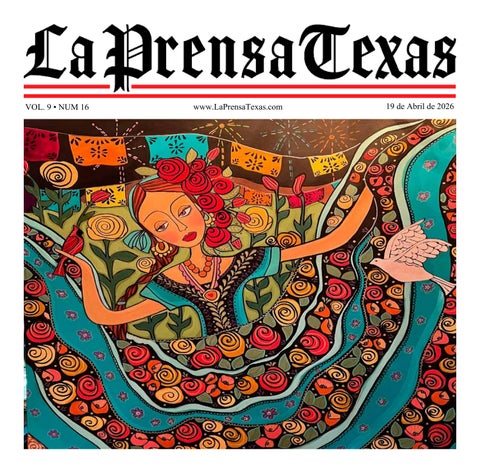
About the Artist: Geri Garcia
Born and raised on the Southside of San Antonio, one local artist is proving that talent, heart, and community roots can create something far greater than art alone— they can create legacy. This self-taught freelance artist has spent more than 15 years developing her craft, turning passion into purpose. Without formal training, she built her artistic voice from the ground up, guided by lived experience, culture, and an unwavering connection to her community.Her work tells stories—stories of family, faith, history, and identity. Each piece reflects the spirit of the Southside, brought to life through bold color, intricate detail, and
a deep sense of meaning. One of her most celebrated collections honors the four historic missions of San Antonio, a powerful tribute that resonates with both cultural pride and historical significance. That body of work earned her recognition at University Hospital Vida Clinic, where four of her paintings are now permanently displayed—serving as a daily reminder of heritage, resilience, and beauty for all who walk through its doors. Her reach continues to grow. Her art has also been featured in LNF Weekly Digital Magazine, introducing her work to a broader audience and solidifying her presence as a rising creative voice in the community.But
her story doesn’t end on canvas. By day, she serves as a hospice aide—a role that requires compassion, strength, and grace. Working closely with individuals and families during life’s most sensitive moments has profoundly shaped her perspective. That experience carries into her artwork, adding emotional depth and humanity to every piece she creates. Her commitment to service extends beyond her profession. She has generously donated artwork to support local organizations and fundraising efforts, using her talent as a tool to give back. Through her volunteer work with Methodist Healthcare Ministries, she continues to invest in her community, supporting programs that uplift and empower others. In every brushstroke, she honors where she comes from. Her art is not just visual—it’s personal. It’s cultural. It’s healing.And in a city rich with history and heart, she stands as a reminder that some of the most powerful stories aren’t just told— they’re painted.
Remembering Diana “Dee Dee” Fuentes: A Life of Journalism, Mentorship, and Love
By Louis R. Escareño
The loss of Diana R. “Dee Dee” Fuentes has landed with unusual force across San Antonio, South Texas, and the journalism world beyond. Her passing was sudden. The grief has been deep. And for those who gathered to honor her life, one truth came through again and again: Dee Dee was not simply a distinguished journalist. She was a rare human being whose warmth, brilliance, humor, and generosity changed lives. At her memorial service in San Antonio, the feeling in the room was unmistakable. Journalists, civic leaders, former students, friends, and family came together not only to remember a towering professional figure, but to grapple with the loss of someone who had quietly, consistently held people together — across newsrooms, across communities, and across generations. The program reflected the many dimensions of her life. There was music. There was laughter. There were stories of courage, of mischief, of mentorship, and of love. Ken Slavin’s moving rendition of What a Wonderful World lingered in the room as more than a performance — it felt like a reflection of Dee Dee herself: generous in spirit, grounded in joy, and deeply connected to the people around her. Yet it was the words of State Senator Judith Zaffirini that most fully captured the arc of Dee Dee’s life. Zaffirini, the dean of the Texas Senate, first knew Dee Dee as an 18-yearold student at Laredo Junior College. Over the next 50 years, their relationship evolved into one of mentorship, partnership, and deep friendship. Her tribute was extraordinary — personal, eloquent, and profoundly moving. She recalled the young Dee
Dee as vibrant, curious, and full of life — already demonstrating the intellect, humor, and leadership that would define her career. As a student, Dee Dee stood out: a gifted writer, a critical thinker, a persuasive communicator, and, perhaps most importantly, a unifier of people. In one of the most powerful moments of the afternoon, Senator Zaffirini offered a line that captured both pride and legacy: “The student surpassed the teacher.” It was more than praise. It was testimony. Dee Dee would go on to become a pioneering force in journalism — the first female editor of the Laredo Morning Times, a respected leader in Texas newsrooms, and ultimately the first person of color to serve as executive director of Investigative Reporters and Editors (IRE), one of the most influential journalism organizations in the world. She covered history as it unfolded — from violence along the border to major national and international events. She interviewed presidents. She shaped coverage that mattered. She advocated tirelessly for freedom of the press, open government, and equity. But as Zaffirini reminded those gathered, her legacy cannot be measured by accomplishments alone. Quoting Maya Angelou, she asked: How did Dee Dee make you feel? Hands rose across the room. She made people feel seen.She made people feel valued.She made people feel like they mattered.That truth echoed again in the reflections of those she mentored. Francisco Vara-Orta, now a respected journalist and leader in his own right, shared a story that began when he was just 19 years old. Dee Dee opened a door for him — offering an internship at a critical moment that allowed him to continue his
path in journalism. It was an act that would shape his career and, ultimately, his life. He described her as a mentor who believed in people before they believed in themselves — someone who pushed young journalists toward excellence while also encouraging them to embrace who they were. She trusted them with real work. She challenged them. She lifted them. “She taught me to be myself,” he reflected, in an industry that often pressures people to do the opposite. He spoke of her leadership — how she united teams, expanded opportunities, and redefined what leadership could look like as a Tejana and a woman of color. He spoke of her resilience, her humor, and her insistence that even in the most demanding profession, one must “schedule joy.” That balance — of seriousness and joy, discipline and humanity — was a defining trait. It was also evident in the tribute from Arelis R. Hernández of The Washington Post, who described Dee Dee as both trailblazer and friend. She called her “one of the originals” — someone who endured the hardships of the profession so others could walk a smoother path. But even as a trailblazer, Dee Dee never stopped
being a guide. She challenged assumptions. She mentored generously. She offered wisdom freely. She helped others navigate not just journalism, but leadership, governance, and life. And yet, Hernández reminded us, she was also playful, spontaneous, and deeply human — someone who could move effortlessly from serious institutional work to laughter, music, and shared moments of joy. That fullness — that ability to live fully in both purpose and presence — is what made Dee Dee so extraordinary. She was fearless in her advocacy, relentless in her work, and unwavering in her belief that journalism matters — that truth matters. But she was equally committed to people. She showed up. She stayed connected. She made time. She cared. She brought people together. In a profession often defined by deadlines and distance, Dee Dee chose connection. Her roots in Laredo, along the Texas-Mexico border, shaped her worldview. She understood stories not as abstractions, but as lived experiences. She never lost sight of the people behind the headlines. And she carried that perspective with her throughout a nearly five-decade career that left an indelible
mark on journalism. But perhaps her greatest legacy is not found in the stories she wrote or the titles she held. It is found in the people she lifted. In the young journalists she mentored. In the colleagues she inspired. In the friends she gathered. In the communities she strengthened. Her passing has been met with an outpouring of love — from San Antonio to newsrooms across the country. Tributes have been shared. Honors have been established. Her place in the profession is secure. And yet, what remains most powerful is something far more personal. Diana “Dee Dee” Fuentes made people feel like they mattered. In the end, that may be the truest measure of a life. San Antonio has lost a beloved daughter. Journalism has lost a fearless advocate. And many have lost a friend whose presence made the world feel larger, kinder, and more connected. But her story does not end here. It lives on in every journalist she mentored, every life she touched, and every standard she set. And in that way, Dee Dee Fuentes is still with us — in the work, in the community, and in the enduring belief that we are all better when we lift one another.
Audiencia de Aviso y Comentarios
Proyecto de Permiso Núm.: O4790
Este es un aviso para una audiencia de aviso y comentarios sobre el Permiso Federal de Operación Número O4790. Durante dicha audiencia se responderán preguntas informales sobre el Permiso Federal de Operación y se recibirán comentarios formales. La Comisión de C alidad Ambiental de Texas (la TCEQ) ha programado la audiencia de aviso y comentarios sobre esta solicitud y proyecto de permiso como se indica a continuación:
Fecha:
28 de mayo de 2026
Hora: 7:00 p.m.
Ubicación: Courtyard by Marriott San Antonio SeaWorld ® /Westover Hills, Alamo-Concepcion
Ballroom
11605 State Highway 151, San Antonio, TX, 78251 San Antonio, Texas
Teléfono de la ubicación: 210-509-3700
Solicitud y Proyecto de Permiso. Vantage Data Centers TX21, LLC, 14720 Omicron Dr, San Antonio, Texas 78245-5131, una instalación de Procesamiento de datos, alojamiento y servicios relacionados ha solicitado a la TCEQ una emisión inicial Renovación del Permiso Federal de Operación (en lo sucesivo denominado “permiso”) Núm. O4790, Solicitud Núm. 38600 para autorizar la operación de la Vantage Data Center TX2. El área mencionada en la solicitud se ubica en 5207 Rogers Rd en la ciudad de San Antonio, Condado de Bexar, Texas 78251-3632. La TCEQ recibió esta solicitud el 17 de julio de 2025.
La Directora Ejecutiva de la TCEQ ha completado la revisión técnica de la solicitud y ha preparado un proyecto de permiso el cual, de ser aprobado, codificará las condiciones bajo las cuales debe operar el sitio. Asimismo, la Directora Ejecutiva recomienda que se emita el proyecto de permiso federal el cual tiene como propósito mejorar el cumplimiento integral de las normas que rigen el control de la contaminación del aire a través del listado claro de todos los requisitos aplicables como se define en la sección 122.10 del Título 30 del Código Administrativo de Texas (30 TAC). Dicho permiso no autorizará nuevas construcciones o emisiones.
Audiencia de Aviso y Comentarios. La audiencia estará estructurada para la recepción de comentarios orales o por escrito de personas interesadas. Tanto la inscripción como un periodo de discusión informal con personal de la comisión se llevarán a cabo durante los primeros 30 minutos, en los cuales también se anima al público a realizar preguntas y a participar en una discusión abierta con el solicitante y el personal de la TCEQ sobre esta solicitud y proyecto de permiso. Las cuestiones planteadas durante este periodo solamente se abordarán en la respuesta formal a comentarios si dichas cuestiones también se presentan durante la audiencia. Tras la conclusión del periodo informal de discusión, la TCEQ llevará a cabo una audiencia de aviso y comentarios sobre la solicitud y el proyecto de permiso. Las personas pueden presentar comentarios orales al ser llamadas por orden de inscripción. A fin de garantizar que cada persona interesada cuente con tiempo suficiente para poder hablar, podría establecerse un tiempo límite de cinco minutos durante la audiencia. Aunque no habrá discusión abierta durante la audiencia, miembros del personal de la Comisión estarán disponibles para hablar sobre la propuesta y responder preguntas después de ésta. El propósito de esta audiencia será la recepción de comentarios públicos formales que la TCEQ tomará en cuenta para determinar si es necesario revisar o emitir el permiso, así como determinar su precisión e integridad. Cualquier persona puede asistir y presentar comentarios orales o por escrito en esta audiencia, la cual se realizará de conformidad con la sección 382.0561 de la Ley de Aire Limpio de Texas, según lo codificado en el Código de Salud y Seguridad de Texas y en la sección 122.340 del 30 TAC.
Las personas con necesidades especiales de comunicación o que requieran otros arreglos especiales que planeen asistir a la audiencia deben comunicarse con el Programa de Educación Pública de la TCEQ mediante llamada sin costo al 1-800-687-4040 o bien al 1-800-RELAY-TX (TDD, dispositivos de telecomunicación para sordos) por lo menos cinco días antes de la audiencia.
Asimismo, cualquier persona puede enviar comentarios por escrito antes de la audiencia a la Oficina de la Oficial Mayor de la Comisión de Calidad Ambiental de Texas a la siguiente dirección: Texas Commission on Environmental Quality, Office of the Chief Clerk, MC-105, P. O. Box 13087, Austin, Texas 78711-3087, o bien electrónicamente en www14.tceq.texas.gov/epic/eComment/. Los comentarios por escrito deben incluir (1) su nombre, dirección, número de teléfono y (2) el número del proyecto de permiso que se encuentra en la parte superior de este aviso.
Se enviará por correo un aviso de acción final propuesta (que incluye una respuesta a los comentarios e identificación de cualquier cambio al proyecto de permiso) a todas las personas que hayan presentado comentarios por escrito o solicitudes de audiencia, hayan asistido a la audiencia o hayan solicitado ser parte de la lista de correo para esta solicitud. Este aviso por correo también contendrá instrucciones para peticiones públicas a la Agencia de Protección Ambiental (EPA, por sus siglas en inglés) para poder solicitarle que se oponga a la emisión del permiso propuesto. Después de recibir una petición, la EPA podría oponerse solamente a la emisión de un permiso que no cumpla con los requisitos aplicables o con los requisitos del Capítulo 122 del 30 TAC.
Lista de correo. Además de enviar comentarios públicos, una persona puede enviar una solicitud para ser parte de una lista de correo de esta solicitud a la Oficina de la Oficial Mayor de la TCEQ a la dirección antes mencionada. Aquellas personas en la lista de correo recibirán copias de avisos públicos futuros para esta solicitud de parte de la Oficial Mayor (si es que los hay).
Información. Para más información sobre esta solicitud de permiso o el proceso de tramitación de permisos, favor de comunicarse con el Prog rama de Educación Pública de la TCEQ por correo a la siguiente dirección: Texas Commission on Environmental Quality, Public Education Program, MC108, P.O. Box 13087, Austin, Texas 78711-3087 o mediante llamada sin costo al 1-800-687-4040. Es posible consultar información general sobre la TCEQ en www.tceq.texas.gov. Para información en español, favor de llamar al 18006874040. Para obtener más información sobre Vantage Data Centers TX21, LLC, favor de comunicarse con Emily Weissinger al (602) 734-7739.
Fecha de emisión de este aviso: 6 de abril de 2026
Por Franco
Registros Abiertos Para Los 2026 Spurs Basketball Summer Camps
“Durante cuatro décadas el exitoso programa Spurs Basketball Summer Camps ha tenido gran éxito y aceptación entre la comunidad de jóvenes atletas y sus familias en diversos aspectos. Lo cual seguirá recibiendo nuestro apoyo y prioridad en nuestra organización. Somos creyentes
por continuar creando excelentes formas deportivas enfocadas para el aprendizaje de niñas y niños para que logren posteriormente con sus habilidades competir y crecer con excelente seguridad personal,” así se refirió Mitch Johnson, entrenador en jefe de la franquicia Silver and Black [Los Spurs de San Antonio].
Todo ello mediante boletín
de prensa enviado a los medios especializados que cubren la fuente del pentacampeón San Antonio Spurs.
Spurs Sports Academy, convoca a la comunidad de San Antonio y la ciudad de Austin, para que registre a sus niñas,niños y adolescentes para su inscripción dentro del programa 2026 Spurs Summer Basketball Camps.
Lo pueden hacer visitando el sitio electrónico Spurs. com/camps. Las actividades serán dirigidas por un equipo de entrenadores con gran experiencia, quienes le darán la bienvenida a niños y adolescentes entre las edades de seis a 18 años de edad.
A ellos se unirán expertos médicos del sistema Methodist Healthcare, socio oficial de los Spurs.
Quienes brindarán educación a los participantes sobre salud esencial entre otros aspectos de salud física que les ayuden a desarrollar sus respectivas habilidades dentro y fuera de la cancha. Para más información favor de visitar el sitio SAHealth.com.
Los campos de baloncesto ofrecerán a los participantes seis sesiones diferentes para residentes de San Antonio y Austin.
Coyote Camp: para las edades 6-12 años. Spurs Player Camp, para niños y niñas de 6-13 años. Jr. WNBA Camp, para niñas de 9-18 años. Skills Training Camp, para el desarrollo de los participantes edades 7-18 años. Austin Skill Camps: llevará a Spurs Sports Academy Academy coaches a llevar sus experiencias al centro de Texas. Spurs Overnight Camp, será para evaluación de aprendizaje en las edades 10-18 años, quienes tendrán oportunidad de expresar sus experiencias y habilidades obtenidas durante los campos de entrenamiento.
(Fotos de cortesía SS&E).
Haym Salomon: A Hero of the American War for Independence
By J. Gilberto Quezada
You probably have already heard of Haym Salomon and his role in the War for Independence. But just in case you have not, I am sending you the following information on him. He was honored in 1975 with a U.S. postage commemorative stamp.
During the American Revolutionary War, Polish-Jewish American banker Haym Salomon was George Washington’s financial rainmaker. Salomon raised more than $9 billion (in today’s dollars), converted French loans into working capital and donated his personal fortune to help the Continental Army buy supplies,
pay troops and provide the resources for the 1781 threemonth march from Westchester, NY to Yorktown, VA. Born in Leszno, Poland in 1740, Salomon spoke several languages. He co-founded the first synagogue in America, in Philadelphia, and was a champion of religious freedom.
Sculptures honoring Salomon, who died at age 45, can be found in Chicago (with Washington and Robert Morris) and Los Angeles.
This is an Encyclopedia Britannica online biography on Haym Salomon: Haym Salomon (born 1740, Lissa, Poland—died January 6, 1785, Philadelphia,
Pennsylvania, U.S.) was a Polishborn American businessman who was a principal financier of the fledgling American republic and a founder of the first Philadelphia synagogue, Mikveh Israel.
In 1772, probably because of his revolutionary activities for Polish liberty, Salomon fled to New York City, where he established himself as a commission merchant. He soon became a successful financier and supported the patriotic cause on the outbreak of the American Revolution. In 1776 the British, who controlled New York City, charged Salomon with espionage and
arrested him; exposure suffered in prison later contributed to his early death. He was paroled but was arrested again in 1778 on more serious charges; he escaped and went to Philadelphia. There he established a brokerage office and acted without salary as the financial agent of the French, doing all in his power to facilitate the FrancoAmerican Alliance.
Among his many other contributions to the colonies, Salomon subscribed heavily to government loans, endorsed notes, gave generously to soldiers, and equipped several military units with his own money. Robert Morris, the superintendent of finance from 1781
to 1784, appointed Salomon as broker to his office. Morris records in his diary that between 1781 and 1784 Salomon lent more than $200,000. In addition, he made private loans to prominent statesmen such as James Madison, Thomas Jefferson, and James Monroe, from whom he would not take interest. According to some reports, the government owed Salomon more than $600,000, though the exact amount is unknown. At the time of his death in 1785, Salomon was penniless. Generations of his descendants tried in vain to collect some portion of these loans.
The Mexican American Cultural Center in El Paso Presents Mujer Moderna: The Life and Artwork of Mago Gándara
By Dr Ricardo Romo
El Paso’s new Mexican American Cultural Center’s (MACC) exhibit, Mujer Moderna: The Life and Artwork of Mago Gándara, opened in the fall of 2025. Curated by Ramon Cardenas, the exhibition honors Margarita “Mago” Orona Gándara (1929–2018), celebrated as the first Chicana Modernist artist and the first female muralist and sculptor of the U.S.–Mexico Borderlands.
On view through June 7, 2026, the show features over 100 works—including oil paintings, watercolors, sculptures, drawings, photographs, and personal writings by Gándara—many shown publicly for the first time. In the MACC’s second Main Gallery exhibition, the art show outlines key components “To recognize Gándara as the first ‘Chicana Modern Abstract artist in our region who broke from traditional depictions of people and nature.”
Born in El Paso during the Great Depression, Gándara first received artistic recognition in grade school for a drawing contest, and later, a supportive teacher affirmed her artistic potential during high school. After graduating in 1946, Mago pursued art studies—first at El Paso Technical School, then at Texas Western College (now UTEP)—supported by her
mother’s wartime savings. Her formal art education placed her under the influence of notable instructors, including Spanish sculptor Urbici Soler, best known for his monumental Christ the King sculpture atop El Paso’s Mount Cristo Rey, symbolizing sacrifice and transcendence.
Graduating with a BFA, Mago taught art at Bowie High School in El Paso but felt constrained by family tensions. When her studio was vandalized, she determined to pursue her art independently. Mago saved money from teaching and enrolled at the Art Institute of Chicago in 1949. There, she experienced artistic freedom and community for the first time, drawing inspiration from the museum’s collections and from working with nude models—an experience denied in El Paso. She pursued further studies at the Chouinard Art Institute and the University of Southern California, earning her master’s degree from Antioch College.
In Dr. George Vargas’s excellent essay on Gándara, we learned of her difficult life in postwar Chicago. She devoted all of her time to her children and seldom drew or painted. She found Chicago increasingly bleak, marked by racial tensions and personal isolation as a new mother. In 1952, Mago Orona and her family moved west in pursuit of
the post-war American dream. Although she dedicated herself to raising her children, she struggled to balance family life with her passion for art.
Gándara lived in California from 1952 to 1970, and then returned to the borderlands.
After her relocation to El Paso, she taught Chicano Art at El Paso Community College, where she began developing the idea of the “art warrior,” an artist guided by purpose and spiritual strength, inspired by Carlos Castañeda’s Journey to Ixtlan.
At El Paso Community College, Gándara proposed a “sculptural mural” for the new Valle Verde campus—a vision combining art, education, and desert symbolism. With determination, she secured college support, a National Endowment for the Arts grant, and admission to Antioch University’s University Without Walls program to complete a master’s degree in bicultural art education. Her thesis project became the large-scale mural Time and Sand (1973–78), marking her emergence as a leader in community-based and Chicano public art.
She lived in El Paso for a decade and moved to Ciudad Juárez, the Mexican city across the border from El Paso, in the mid 1980s. In Juarez, where she lived for 25 years, she transformed her home studio,
Mago Gándara, “Female flying over the town playing guitar,” Oil on Canvas, 2010. Courtesy of Mexican American Cultural Center.
Mago Gándara, Courtesy of Mexican American Cultural Center.
CUI, into a magical creative space filled with mosaic murals, sculptures, and lush plant life.
Over time, Gándara’s artistic instincts became a means of personal liberation from a difficult marriage. Her early work included The Machineries of Hope, a ninepanel mural critiquing modern mechanization. Through these projects, Mago began
transforming personal struggle into universal, humanistic art and found her voice as a woman artist.
Art Historian Dr. George Vargas described Gándara as a “Mexicanized Georgia O’Keeffe,” reflecting her powerful reinterpretation of the desert landscape and modern forms. Dr. Vargas found in her work influences from
Pre-Columbian art, Byzantine mosaics, and Modernist movements from Mexico, Europe, and the United States. Ramon Cardenas noted that Gándara chose abstraction to render her imagery. She Depicted, Cardenas stated, “the border’s landscape and people through free-flowing lines, abstract forms, and color theory, to express universal human emotions of love, anger, yearning.” The oil paintings and watercolors in the exhibit reveal how she incorporated a modernist approach to landscapes and portraiture. Through abstraction, she portrayed border landscapes and family life.
One of Gándara’s bestknown murals in Juarez, El Milagro de Tepeyac (1993–present), honored the Virgin of Guadalupe and her preHispanic roots as Tonantzin, the Aztec earth goddess. The mural depicted the Virgin descending from the heavens toward Juan Diego, blending Indigenous and Christian imagery — a visual metaphor for Mexican mestizo identity and spiritual fusion. Gándara funded the mural project by selling small “milagro” mosaics and drawings, transforming each purchase into a symbolic act of faith and community support.
Her perseverance and belief in collective creativity culminated in eventual grant support from Los Murales of the El Paso Junior League, enabling the completion of a mural that united artistry, spirituality, and community engagement. According to art historian Arteaga Roberto Carrillo, some of her works
were influenced by Aztec themes, such as those displayed on La Avenida de los Aztecas and in the Tourist Information Center for Chamizal in Juarez.
Gándara is considered Texas’s first female muralist. Teresa Palomo wrote in the Handbook of Texas that Manuel Acosta painted Iwo Jima, perhaps the earliest of El Paso’s known Chicano murals, at the Veterans of Foreign Wars office in 1966, and that in the early 1970s, Mago Orona Gándara painted at least two murals as a solo artist, Señor Sol and Time and Sand.
The concept of border art emerges from the cultural and historical reality of the U.S.–Mexico border—an expansive, complex frontier where two nations sharply divided by wealth and politics nonetheless share intertwined cultures. This 2,000-mile region represents a dynamic space of mestizaje— the blending of Mexican and U.S. American heritages. For Latino artists, this cultural fusion inspires new forms of
expression and identity beyond rigid categories of “Mexican” or “Chicano.” In 2011, Gándara relocated permanently to her Altura Street studio in central El Paso, where she continued to create until she died in 2018 at age 89.
Curator Ramon Cardenas framed Gándara as an artist who lived and worked amid the dualities and contradictions of life on the El Paso–Juárez border. The MACC exhibition reveals her as a Chicana Modern Abstract pioneer, whose groundbreaking murals and sculptures reshaped public art in the region. The exhibit presents Gándara as a Border Art Warrior, whose art fosters community cohesion and offers a shared vision of cultural unity, turning creativity into both a survival strategy and a form of resistance.
Admission is free, with MACC open Wednesday through Saturday (10 a.m.–6 p.m.) and Sunday (11 a.m.–3 p.m.).
Mago Gándara, Courtesy of Mexican American Cultural Center.
Mago Gándara. Exhibit entrance. Courtesy of Mexican American Cultural Center.
Mago Gándara, Courtesy of Mexican American Cultural Center.
Guardians of the Children Bring Joy to San Antonio Youth with Fiesta 2026 Bicycle Giveaway
By Yvette Tello
In the true spirit of Fiesta, Guardians of the Children (GOC) turned compassion into action last week with a heartfelt bicycle giveaway that left a lasting impact on dozens of local families. Held on April 11, 2026, the free community event brought together children, parents, and volunteers for a day centered on giving, healing, and hope. As part of Fiesta celebrations across the city, this event stood out not for music or food— but for the powerful mission behind it.
Guardians of the Children, a nonprofit organization dedicated to supporting children who have experienced abuse, created a space where kids could simply be kids again. With each bicycle given away, there was more than just excitement— there was a sense of empowerment, independence, and joy. Families gathered as volunteers worked tirelessly to ensure every child felt seen and celebrated. Smiles stretched across faces as bikes were rolled out, helmets adjusted, and first rides began.
For many of these children, it wasn’t just about receiving a bike—it was about feeling supported by a community that cares. The event was completely
free, removing any barriers for families and reinforcing the organization’s mission to serve those who need it most. Community members and supporters also showed up in full force, helping make the day not only successful but meaningful. Guardians of the Children continues to be a strong presence in San Antonio, advocating for and protecting children while providing mentorship and emotional support. Events like this bicycle giveaway are a reminder that real change happens when a community comes together with purpose. As Fiesta 2026 continues to celebrate culture and tradition, this event highlighted something even deeper—the power of giving back.
PACfest 2026 Honors Palo Alto College’s
40 Years of Care and Corazón with Its Largest Lineup
By Yvette Tello
PACfest 2026 returns April 23 (12–11:30 p.m.) at Palo Alto College, celebrating 40 Years of Care and Corazón with live music, food, and family-friendly activities. For the first time, attendees can purchase entry, food, and drink tickets with cash or card (onsite only; no pre-sale). New Platinum Parking Package (starting at $60) includes reserved parking, admission tickets, and fast entry access. Raffle for a Cause: $20 tickets (or 3 for $50) for a chance to win a $1,395 prize package. All proceeds support PAC student organizations. PACfest, the beloved and largest official Fiesta® San Antonio event south of Highway 90, is gearing up for another year full of Fiesta® fun. PACfest 2026 will be held on April 23, 2026, on the College’s campus from noon to 11:30 p.m. PACfest 2026 holds special significance as Palo Alto College celebrates 40 Years of Care and Corazón. Four decades of service,
community commitment, and student-centered education on the Southside of San Antonio.
PACfest 2026 will feature a high-energy Latin music lineup, including: DJ Cesar
K-OSO – San Antonio native and cumbia-focused DJ known for high-energy sets that keep Fiesta crowds dancing.La
Tropa Estrella – A popular local cumbia group with a strong San Antonio following and lively live performances.
Los Palominos – Grammywinning Tejano legends from Texas, known for hits like Corazón de Cristal.Grupo Control – Internationally recognized as Los Reyes de la Cumbia, delivering highenergy Regional Mexican favorites. Los Tigrillos –Long-standing cumbia and norteño favorites with multiple gold-status albums. Together, the lineup promises nonstop dancing and an unmatched Fiesta experience from start to finish. “PACfest continues to be a celebration of the culture, and music of the Southside community that Palo Alto
College has called home for 40 years,” said Robert Garza, President of Palo Alto College.
“This year’s lineup is a tribute to the heart of the Fiesta Cultura, and a commitment to ensuring that our campus is a place that brings our community of all ages together.” PACfest began in the early 1990s and became an official Fiesta San Antonio event in 2003. Today, it stands as the largest official Fiesta event on San Antonio’s Southside, known for its vibrant atmosphere, live entertainment, iconic Fiesta food, and strong community impact.
The family-friendly event features live performances, food booths, Kid’s Activities, Social Media Alley, and more, all to raise funds to support student organizations and community initiatives at Palo Alto College. For the first time ever, PACfest attendees will be able to purchase entry, food, and beverage tickets using both cash and card, making it easier than ever to enjoy everything the event has to offer. All tickets will be available for
purchase on-site the day of the event—there are no online pre-sale options.
Guests looking to enhance their experience can take advantage of the new Platinum Parking Experience, starting at $60. This premium package includes one (1) reserved parking space in Lot 10 with priority placement, two (2) Grounds Admission tickets, and exclusive Fast Entry Gate access for a seamless arrival. Packages can be expanded to include up to five (5) admission tickets, with pricing available up to $105.
Attendees can also participate in the PACfest Raffle Experience Package, with tickets available for $20 each or three (3) for $50. One lucky winner will receive four (4) tickets to the PACfest Partner Reception with complimentary food, drinks, and valet parking (valued at $600), one (1) signed guitar from the PACfest 2026 headlining artist (valued at $135), one (1) fishing trip sponsored by APEX (valued
at $600), and four (4) official PACfest Fiesta medals (valued at $60), for a total estimated value of $1,395.All raffle proceeds support Palo Alto College student organizations, helping transform lives through education while celebrating PAC’s vibrant community tradition. Community members are encouraged to bring lawn chairs, blankets, and dancing shoes for a full day of music, food, and Fiesta for a cause. PACfest 2026 will take place on Thursday, April 23, 2026, from 12:00 p.m. to 11:30 p.m. on the Palo Alto College campus. General admission is $15, with free admission for children ages 12 and under, as well as free entry for Alamo Colleges students and employees with a valid ID. Free parking available.
For more information on ticket prices, performance schedules, premium parking, or to purchase your raffle ticket, visit alamo.edu/pac/ pacfest.
2026 Notices of Appraised Value in the Mail
SAN ANTONIO, Texas – April 10, 2026 -
Bexar Central Appraisal District
FOR IMMEDIATE RELEASE
CONTACT: Jennifer Rodriguez, Communications Director 210.216.4398| jgarza@bcad.org
The Bexar Central Appraisal District (BCAD) is mailing 2026 Notices of Appraised Value this week to approximately 196,000 property owners whose values have changed by more than $1,000 from the prior year – a continued decrease from prior years as property values remain relatively flat across much of Bexar County. While more than 734,000 properties were reviewed, most did not see a significant enough change in value to require a notice. The 2026 appraisal year reflects a continued softening in the residential market, with many properties showing slight declines in value, while some areas continue to demonstrate stability or modest growth. New construction continues to add value to the tax roll, though activity has begun to moderate. Commercial property values vary by sector, with some areas showing growth while others remain stable.
With a substantially lower number of notices in the mail, Chief Appraiser Rogelio Sandoval wants to remind property owners that they can still file a protest. “Even if you don’t receive a notice, you still have the right to review and protest your property’s value. You can review your 2026 value online or contact our office with any questions.”
Property owners are encouraged to submit protests as early as possible ahead of the May 15 deadline to avoid delays. Protests can be submitted conveniently through the Online Services Portal at www.bcad.org, in person or by mail.
Bexar Central Appraisal District is responsible for appraising more than 790,000 properties across Bexar County in accordance with the Texas Property Tax Code. Filing for exemptions and protests is free and handled directly through the district. For more information regarding BCAD services, contact (210) 242-2432 or visit the Help Center at www.bcad.org.
ALAMO COLLEGES DISTRICT BID/PROPOSAL INVITATION
The Alamo Colleges District is releasing the Request for Qualification Statement (RFQS) on April 15, 2026, unless otherwise indicated on the date shown. RFQS 2026-0090 PURCHASE OF CONSTRUCTION MANAGER AT RISK (CMAR) SERVICES ON INDEFINITE DELIVERY, INDEFINITE QUANTITY (IDIQ) BASIS (Step One)
Proposal Deadline: May 15,2026, at 2:00PM
Specifications are available by visiting the Alamo Colleges District website: www.alamo.edu/purchasing or by emailing dst-purchasing@alamo.edu
Por Sendero Deportivo
En categoría Abierta Liga Potranco, los aficionados se divirtieron a lo grande en el clásico observando las espectaculares acciones entre los equipos Tuzos del timonel Roberto Villarreal (propietario de la compañía Villarreal Concrete), y sus coaches Carlos Iglecias y Efraín Cruz Franco, y los White Sox del manager y jugador Jesús “Chuy”
Tuzos Ganó El Clásico A White Sox
Ramírez.
El estadio Potranco
Baseball Field, del artista Eloy Rocha bajo la presidencia de Simón
Sánchez- compilador y comentarista-, registró buena entrada, y los fans salieron contentos porque se realizaron espectaculares acciones hasta el noveno capítulo en el que Tuzos con pizarra en
contra de 7-5 carreras, con bases llenas en pavoroso imparable conectado por el número 44 Peewee Barrientez, anotaron tres carreras para dejarlos tendidos sobre el terreno de juego.
Luis García, se llevó la victoria con derrota para Carlos Reyes. Ambos lanzadores sobresalieron en sus repertorios, por lo que fueron ovacionados. Reyes, aceptó jonrón de Sergio Gómez, en el tercer episodio con uno abordó poniendo la pizarra 3-1 carreras. García, permitió largo cuadrangular por el jardín izquierdo pegado por el prospecto Isaac Pérez, quien se trajo de paso a un compañero para igualar el score 3-3.
White Sox con su delantera de 7 carreras a cinco, lamentablemente no logró conservar la ventaja, sin embargo con su actuación dejó establecido seguir siendo duro rival. Por igual Tuzos del timonel internacional La Yerba Villarreal. En otros resultados de este circuito temporada dedicada a Santos Vaquera, el campeón
Piratas noqueó a Despos. Diablos blanqueó 2-0 al popular Potosinos.
Rol de juegos domingo 19 de abril campo 1: 9:30am Potosinos vs White Sox. 12:30pm Tuzos vs Despos. 3:30pm Potros vs Piratas.
Resultados categoría Masters 50+ datos aportados por José Sánchez, comentarista y compilador: Yankees 16 Los Rojos 4, con victoria para Moisés Cervantes y derrota para Alfredo Obregón.
Astros 11 Rangers
3. Con victoria para el pitcher campeón Ubaldo Montelongo y salvamento de Chris Hux. Macario
Rosas cargó con la derrota. Rol de juegos: 11am Rangers vs Despos. 2pm Astros vs Yankees. En las fotos aparecen Isaac Pérez de White Sox tras su jonrón, el receptor es Jassiel Flores “El Morro” de Tuzos. Yerba Villarreal con el corredor Ramón Maldonado y los fans de San Antonio Missions; Nica, Nacho. John, Lolo. Cabiche, Shamu y Mr. Palos, en partido de pretemporada Tecos de 2 Laredos vs Flying Chanclas en el estadio Nelson Wolff. (Fotos de Franco).