
Issue 9.10 - FOR WEB

Page 1


LA PRENSA TEXAS

Founded 1913 - Fundada en 1913

Publisher / Editora: Yvette Tello y.tello@laprensatexas.com

Community Liaison / Enlace Comunitario: Ramon Chapa Jr. r.chapa@laprensatexas.com

Layout / Maquetación: Nicodemus Gonzalez

Advertising & Production Coordinator / Coordinadora de Publicidad y Producción: Jessica Medrano

Contributors / Colaboradores: Dr. Ricardo Romo, Henrietta Hernandez info@laprensatexas.com

Editor Español: José I. Franco

Sales Representative / Representante de Ventas: Maria Cisneros

La Prensa Texas is a grassroots, bilingual publication that serves as a vital voice for the community — especially for those who are too often left out of mainstream media conversations. Since its founding, La Prensa Texas has been dedicated to providing relevant, accessible, and culturally rooted news that reflects the lives, struggles, and triumphs of the people of San Antonio and surrounding counties. Our mission is simple yet powerful: to inform, inspire, and empower our readers through storytelling that uplifts the diverse voices of our community. This publication continues to be the lifeline of local news, bridging the gap between the people and the stories that matter most.

Sales Info: Our Circulation

45,000 Printed And Distributed Weekly English And Spanish Send Press Releases And Advertising Inquiries To: Info@LaPrensaTexas.com 210-628-9611

INFLATION IN 2026

As inflation and economic pressures continue to strain household budgets, a new report shows that many Americans are struggling financially — and San Antonio is no exception. Rising prices for groceries, housing, utilities, and everyday necessities are forcing families to make difficult choices. What once stretched through the month now seems to run out halfway through it. For many households, paychecks are not keeping up with the cost of living. Rent continues to rise, food prices remain high, and even basic needs like gas and childcare are becoming harder to manage. Across our community, people are working harder, sometimes working multiple jobs, yet still feeling the weight of financial uncertainty.These challenges are not just numbers on a report — they are real conversations happening around kitchen tables, in grocery store aisles, and among neighbors trying to support one another. San Antonio has always been a resilient community, but resilience should not mean people have to struggle silently. It’s important that we talk openly about what families are experiencing so leaders, businesses, and community organizations understand the realities people are facing. How is inflation affecting your household? What changes have you had to make to keep up?Let’s talk about it.

Benjamin Godina: “It’s hard to see many of our major retail spots full of customers. It’s just hard. The struggle is real!”

Aicrag Ogirdor: “Thank you Abbot, Trump , and Israel”

Nicole Muzquiz Gomez: “The average person always gets the short end of the stick.”

Robbin Goslin: “I’m doing a lot better now than I was under Biden”

Tanya Nicole: “The only reason the job market is up, is due to people having to work 2-3 jobs just to make it. It’s ridiculous to think that we are better off, we are NOT great, far from it!”

Eddie Castillo: “Thanks to Trump!! Way to go there dude”

Reynaldo Flores: “Tell the real story. Thousands are running to MEXICO for their own sake”

Salvador C. Flores: “Why are people laughing, this is serious stuff”

Amanda Rodriguez: “Exactly why we need to stop electing Devilcrats into office they do nothing for us the citizens of this city!! They swap seats all the time to stay getting paid milking our system”

Teresa Cleghorn: “Inflation is the lowest it has been in years according to Consumer Reports. Is it cuts to SNAP, HUD housing, and such causing this?”

Art Villarreal: “Gee I wonder why”

Jasmine Alexander: “No way… the dow is up 50k”

Heath Gsh: “Reminder that Democrats caused the affordability crisis and they loved every second of it.”

Timmy Iron B Briseño: “Hmm seems that this report was nowhere to be found during the Biden years, why is that? Was it because we didn’t see the $3 and above gas prices? Or maybe this good one the price of eggs, look we know none of y’all were eating eggs since they didn’t come in a bag like Cheetos or a package that was marked fat free.Ksat do better at your research because we know who is paying your

salary and it rhymes with Morge Horos.”

Eddie Luis: “Lower property taxes”

Robert Vasquez: “People buying new cars big new trucks restaurants waiting time 30-45 mins”

Edward Ashby: “Life will never be the same again. We will all end up homeless and hungry. There’s no hope or help for anyone anymore”

Allen Garcia Sr.: “SA is struggling because the former mayor ruined our economy.”

Valerie Bee: “ Cheeto diaper wearing cuck said gas prices are down. Egg prices are down. We’re doing great! The economy is booming”

Apple Ashley: “You don’t say. Is America great yet?!”

Peter Sandoval: “Show the Epstein files and then we will all be rich.”

George Ramirez: ”Nobody’s making it. Even if you have a high dollar job or career. The cost of insurance is too high. They say it’s normal, the food bill. Your gas.”

Nate Garcia: “Insurance, taxes, overpriced rent all play a role!”

Teddy Gelato: “I don’t spend any money downtown. Rodeo, Fiesta, Spurs. Who wants to spend $125 dollars for 3 hours of trashy so-called fun.”

Oscar Perez: “Lies!! President Trump said everything is almost free. Gas would be less than $1.99. eggs pennies per dozen–Stop lying “

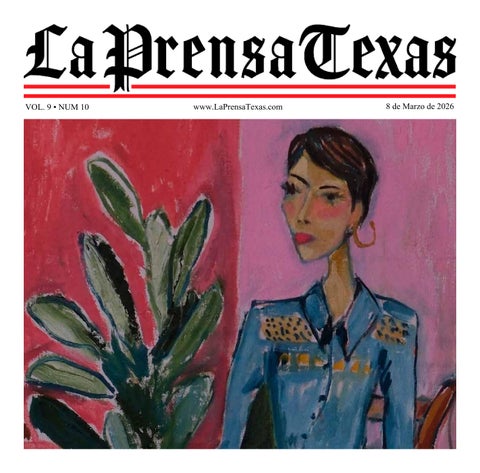
About The Cover Artist: Cruz Ortiz

Cruz Ortiz approaches art as an act of freedom. Rejecting rigid definitions and categorical boxes, he insists that “there are no rules at all with art.” Though the Chicano experience informs his work, Ortiz resists being confined to identity alone. His philosophy centers on movement—across media, histories, and emotions— because, as he puts it, his job is simply “to make,” leaving history to decide what the work means later.

Ortiz’s practice crosses painting, printmaking, clay, welding, woodcarving, tile, performance, and film. His most recent exploration— puppetry—emerged from curiosity and humor but evolved into a profound engagement with art history. Studying Paul Klee and other artists who turned to puppets under fascism, Ortiz uncovered a lineage of playful resistance. In understanding why Klee, Calder, Frida Kahlo, and Joaquín Torres created puppets during times of political crisis, Ortiz found inspiration in their choice of joy and imagination over despair.

His own puppet and marionette performances echo this spirit. The first began informally, when Ortiz built figures from studio scraps and staged a small show paired with his brother’s dinner. The result—unexpectedly

emotional—revealed how silent acts, set to corridos, could blend humor, pathos, and political reflection. Like Calder’s Cirque Calder or Luis Valdez’s farmworker theater, Ortiz’s handmade circus performances carry subtle yet potent social commentary.

Clay offers another channel for Ortiz’s experimentation. Early failures with exploding river clay led him to treat the medium as paint. Gathering distinct clays from rivers like the Rio Bravo, Nueces, and San Antonio, he began producing “clay paintings” where each color marks a specific waterway—a geological and cultural mapping of South Texas.

Deeply attuned to art history, Ortiz insists that artists like Van Gogh, Rivera, Klee, and Munch left “messages” for those who come after, messages that can only be received through direct study of their actual works. This continuity between past and present grounds his multidisciplinary practice in both historical awareness and living creativity.

Whether building his own printmaking presses or developing communitybased projects through the Mellon Foundation, Ortiz sees art as a shared space of learning and liberation. For him, art is at once cosmic and punk—an urgent, analog expression of collectivity, defiance, and joy.

Thank You For An Unforgettable Evening At The Inaugural Primary Watch Party Brought To You By La Prensa Texas Jmt Media And The Bexar Democrats

A heartfelt thank you to everyone who joined us last night at the Deco Ballroom for the primary watch party! The event was a wonderful opportunity to bring the Democratic Party together, and your presence made it truly special. The evening featured delicious food and amazing entertainment from Shelley Lares and SHELLSHOCK 3 Records artists. We were also honored to hear from inspiring speakers, including:

- Texas State Representative Trey Martinez Fisher

- Bexar County Commissioner Tommy Calvert

- Texas State Representative Josey Garcia

- San Antonio Mayor Gina Ortiz Jones

- Bexar County Democratic Chair Michelle Lowe Solis

Also in attendance was - Honorable Judge John Longoria

- Bexar County Tax Assessor Albert Uresti

Your enthusiasm and support created an atmosphere of celebration and solidarity. Together, you strengthened your

Democratic family, standing united for a cause that transcends any single campaign. You shared a vision for the future, bound by your collective principles. A special thank you to the community members, elected officials, candidates, and supporters who came out to show Bexar County what Democratic unity truly looks like. Your commitment is vital as we move forward, and congratulations to all candidates who made it to the runoffs! Continue to support your party and make your movement bigger than yourselves. Together, you can achieve great things! Thank you once again for an incredible evening. Let’s keep this momentum going!

Two weeks ago, La Prensa Texas hosted a roundtable conversation bringing together candidates running for District Attorney of Bexar County. The purpose was simple but meaningful: create a space where candidates could openly discuss what they would do if elected and how they would bring change to an office that plays one of the most critical roles in our justice system. Five candidates accepted the invitation — Jane Davis, Shannon Locke, Oscar Salinas, Veronica Legarreta, and Meredith Chicon — each arriving with their own experiences, priorities, and visions for the future of the District Attorney’s Office. What unfolded was something many of us rarely witness during

When Candidates Come to the Same Table

an election season. Instead of confrontation, there was conversation. Instead of division, there was dialogue. As the discussion moved through issues affecting Bexar County — public safety, fairness in prosecution, transparency, community trust, and reform — it became clear that while the candidates did not agree on everything, they agreed on far more than expected. Each offered thoughtful solutions, demonstrated deep knowledge of the law, and spoke passionately about serving the community. Perhaps most striking was the tone of the room. The candidates listened to one another. They agreed openly when common ground existed and disagreed respectfully when perspectives differed. There was no attempt to overshadow

another voice. No personal attacks. Only professionals exchanging ideas about how to improve a system that impacts thousands of lives every year. By the end of the roundtable, one conclusion became unavoidable: there was not a single person at that table who was unqualified to serve as District Attorney. Each candidate presented important priorities. Each highlighted challenges that deserve attention. And each addressed issues that are necessary pieces of a much larger puzzle facing Bexar County. Which brings us to a rare and honest moment for La Prensa Texas. After careful reflection, we have reached an endorsement that may surprise some readers — we cannot endorse just one candidate. Not because the decision was avoided, but because

the discussion itself revealed something deeper. The issues raised were all valid. The solutions presented were all necessary. No single platform outweighed another; rather, they complemented one another. Choosing one voice over the others would ignore the collective strength demonstrated at that table. What we witnessed was not competition, but a meeting of minds — proof that when candidates from the same party are not forced into constant opposition, meaningful dialogue can happen. It was hopeful. It was encouraging. And it reminded us that leadership is not only about winning elections but about listening, collaboration, and shared purpose. In another encouraging sign of unity, all five candidates agreed to

come together again — this time at the Democratic Primary Watch Party, hosted by La Prensa Texas in partnership with JMT Media and the Bexar Democrats. For the first time, candidates, their teams, and supporters are invited to gather in one place to witness the results together, reinforcing the idea that democracy is stronger when community comes before division. Elections will always require voters to make a choice. That responsibility belongs to the people. Our role is to inform, create space for dialogue, and elevate conversations that strengthen civic engagement. Two weeks ago, we saw what is possible when respect leads the conversation. And for Bexar County, that may be the most encouraging outcome of all.

Los Ángeles. Ca.

El Béisbol como uno de los pilares históricos de su identidad, FOX Deportes inicia conmemoración de su 30vo aniversario poniendo en primer plano al World Baseball Classic (WBC), uno de los torneos internacionales más importantes del deporte a nivel mundial, que convierte el béisbol en un punto de encuentro entre países, generaciones y culturas.

Desde su lanzamiento en 1996, FOX Deportes ha acompañado a generaciones de aficionados en Estados Unidos, con una narrativa deportiva en español que entiende el ritmo, la pasión y el contexto cultural de la comunidad hispana.

Esta cobertura global se ve reflejada en el World Baseball Classic, un torneo que reúne a los

FOX Deportes En Su Treintavo Aniversario Transmitirá El WBC

mejores jugadores del planeta representando a sus países de origen y celebrando el impacto cultural del béisbol a nivel internacional.

Qué enfrenta a selecciones nacionales de distintas regiones del mundo y que se ha consolidado como una de las competencias más relevantes del béisbol moderno. La edición 2026 trae rosters que mezclan estrellas consolidadas, héroes nacionales y narrativas de orgullo cultural, figuras como Shohei Ohtani (Japón), Aaron Judge (Estados Unidos), Ronald Acuña Jr. (Venezuela), Randy Arozarena (México) y Yoshinobu Yamamoto (Japón) han confirmado su participación en el Clásico Mundial de Béisbol 2026 (WBC), elevando la expectativa entre los fanáticos del deporte.

El inicio de esta celebración coincide con

el arranque del WBC 2026 que se disputará del 4 al 17 de marzo con sedes en Tokyo, San Juan, Houston y Miami.

FOX Deportes transmitirá 28 partidos en vivo del torneo incluyendo la final desde Miami el 17 de marzo. El impacto del WBC es importante; en su edición 2023 estableció récords de audiencia. La final entre Japón y Estados Unidos, transmitida en todas las plataformas de FOX, incluyendo FOX Deportes, registró un promedio de más de 5.2 millones de espectadores, confirmando el creciente interés por el torneo y su capacidad de generar conversación masiva.

La cobertura del World Baseball Classic 2026 estará encabezada por los narradores Adrián GarcíaMárquez, Carlos Álvarez y Ronaldo Nichols, junto con los analistas Edgar González y Jaime Motta. Adrián García Márquez y

Carlos Álvarez, dos de las voces más emblemáticas de FOX Deportes, liderarán la cobertura del torneo, mientras que Edgar González aportará su experiencia como exjugador de Grandes Ligas y figura histórica del béisbol mexicano, tras haber representado a México en los clásicos del 2009 y 2013 y dirigir a la selección nacional en la edición 2017.

A tres décadas de su lanzamiento FOX Deportes celebra su legado mirando hacia adelante, con el compromiso de seguir llevando a sus audiencias los eventos deportivos más importantes del mundo desde una perspectiva que refleje la diversidad, la pasión y las historias de la comunidad latina.

Lanzada en 1996, FOX Deportes, una división de FOX Sports, es la primera y más antigua cadena deportiva en

español de Estados Unidos. Incluyendo más de 2,100 horas de programación exclusiva en vivo incluyendo Liga MX, Selección Mexicana, Serie A, Coupe de France, MLS, Saudi Pro League, ligas de Honduras, Copa Do Brasil, NFL, MLB temporada regular, All-Star Game, Series Divisionales, Serie de Campeonato de la Liga Nacional y Serie Mundial, El Clásico Mundial de Béisbol, NASCAR, MotoGP, INDY CAR, UFL y fútbol universitario. Los programas originales incluyendo Boleto a Norteamérica, Total Sports 360, Punto Final y Gol X Gol América, FOX Deportes Digital alcanza casi 20 millones de visitantes mensuales y ofrece una experiencia robusta en contenidos editoriales, resultados en vivo y videos exclusivos en FOXDeportes.com.

As we commemorate the 190th anniversary of Texas Independence from Mexico and the battle of the Alamo on Friday, March 6, 2026, a dear friend of mine recently sent me an email commenting that he had always been interested in knowing, from the Mexican point of view, what the history of Mexico high school textbooks teach about the battle of the Alamo and the battle of San Jacinto. I would like to share with you my response to his query. I hope you find it interesting. My friend raised an interesting and insightful point, and one, which I have always considered in my study of Texas history. To answer his question, I needed to check out some books in our personal library at home. Many years ago, when I lived in Laredo, Texas, and going to Nuevo Laredo was just as prosaic as crossing a street in Laredo. I went to the “Papeleria Laredo,” a bookstore I frequented often. It was located across the second plaza, on the south side, at 1118 Avenida Guerrero. And, on this particular afternoon, I purchased a textbook on the history of Mexico by C. González Blackaller and L. Guevara Ramírez, entitled, Síntesis de Historia de México, Libro De Texto Para El Segundo Grado De Las Escuelas Secundarias, and was published by Editorial Herrero, S.A., México, D.F. In reference to the treatment of the Texas Revolution,

The 190th Anniversary of Texas Independence

the United States was depicted as the aggressor and imperialistic– “Desde la época colonial Estados Unidos ambicionó posesionarse del territorio nuestro; deseaba que sus límites llegaran hasta el río Bravo, y con mucha frecuencia invadió nuestro país,...Esta tendencia imperialista se vio presionada por fuertes intereses políticos.” And in reference to the battle at the Alamo, there is a small section entitled, “La desafortunada campaña militar de Santa Anna,--Santa Anna ocupó sin resistencia por parte de los rebeldes, el fuerte de San Antonio Béjar; sus ocupantes habían marchado al Alamo y hasta ese lugar los persiguió el ejército mexicano. Cuando los rebeldes fueron vencidos, Santa Anna ordenó el fusilamiento de todos los supervivientes.” Now, allow me to add, parenthetically, that this last statement was verified by an eyewitness by the name of José Enrique de la Peña, a keen observer who was an active participant and a lieutenant colonel in Santa Anna’s army. Fortunately, his diary survived, and to make a long story short, it was acquired by the late John Peace of San Antonio, former chairman of the University of Texas Board of Regents and an avid collector of Texana, who open upon his death in 1974, donated the diary to UTSA. At this time, my good friend and former boss at St. Mary’s University (when I worked with the Laredo Archives), Miss Carmen Perry, who was

now the archivist at UTSA, translated and edited the diary, and was published by Texas A&M University Press as, With Santa Anna in Texas: A Personal Narrative of the Revolution by José Enrique de la Peña. And, according to the diary, Davy Crockett surrendered and was executed by Santa Anna, and this statement demolished the Hollywood myth perpetuated by the movie and starring John Wayne of how Davy Crockett actually died. After the publication of her book, Miss Perry received numerous death threats. It is interesting to note how the Mexican history textbook treats the attitude of the Texas patriots after the battle of the Alamo–“Los rebeldes empezaron a desmoralizarse;...Los mexicanos derrotaron al general Fanning, que estaba en el fuerte Goliad, y después de quitarle tres banderas lo fusilaron junto con todos sus compañeros de infortunio por órdenes de Santa Anna. Después de estas derrotas, los rebeldes decidieron no presentar combate, sino hacer la guerra de guerrillas, arrasando las siembras e incendiando pueblos para que los mexicanos no pudieran adquirir viveres; ellos, en cambio, recibían pertrechos, bastimentos y hombres de Estados Unidos.” The short section on the battle of San Jacinto is entitled, “Santa Anna fue hecho prisionero.-Santa Anna fue derrotado en San Jacinto por un ejercito rebelde que llevaba como

jefe a Houston; los mexicanos se desbandaron y el propio general en jefe con ellos; a poco Santa Anna resultó entre los prisioneros que los rebeldes hicieron a los mexicanos y la campaña de Texas terminó en un rotundo fracaso; Santa Anna en el cautiverio asumió una actitud vergonzosa y humillante; para no perder la vida, reconoció la independencia texana y...” On a personal note, I might add that Jo Emma’ greatgreat-great-grandfather, John Andrew Box, fought in the battle at San Jacinto. He was also Judge Bravo’s greatgreat-grandfather and that is why his full name is Manuel Box Bravo, the surname of ‘Box’ comes from his maternal side. John Andrew and his two brothers, Thomas and Nelson, joined a company organized in Nacogdoches, known as the Nacogdoches Volunteers. Later, the company changed its name to the First Company in Colonel Sidney Sherman’s Second Regiment of Texas Volunteers. All three brothers are listed as “privates” in the muster rolls of March 7, 1836, under Captain Hayden Arnold’s command. For his patriotic service to the Republic of Texas, John Andrew received a Donation Certificate No. 742, for 640 acres from the Secretary of War on January 11, 1839. In addition, he also received a Bounty Land Grant No. 1691, for 320 acres in Houston County. It was not bad getting paid with land since there was an abundance. John

Andrew was born in Franklin County, Tennessee on July 2, 1803, and he died in 1874 in Crockett, Texas. We have three photographs of him at various stages of his life. He was also one of the creators of Houston County in 1837. I have in our personal library, another very interesting book that was translated by the eminent historian at the University of Texas, Carlos Eduardo Castañeda, Ph.D., and is entitled, The Mexican Side of the Texas Revolution (1836) By The Chief Mexican Participants, General Antonio Lopez de Santa-Anna, D. Ramon Martinez Caro (Secretary to Santa-Anna), General Vicente Filisola, General José Urrea, General José María Tornel (Secretary of War), and was published by the P.L. Turner Company of Dallas, Texas, in 1928. These five documents are in the order in which their authors appear on the title of the book:

1. Manifesto Relative To His Operations In The Texas Campaign And His Capture

2. A True Account Of The First Texas Campaign And The Events Subsequent To The Battle of San Jacinto

3. Representation To The Supreme Government With Notes On His Operations As General-In-Chief Of The Army of Texas

4. Diary Of The Military Operations Of The Division Which His Command Campaigned In Texas

5. Relations Between Texas, The United States Of America, And Mexico.

Cruz Ortiz: A Latino Art Entrepreneur, Puppeteer, and Portrait Virtuoso

Cruz Ortiz is a prominent San Antonio-based contemporary artist known for his Chicano-Pop style and his social activism through art. He blends personal South Texas experiences with pop culture, consumer imagery, and political themes. Ortiz’s work features bold screen prints, abstract portraits, dream-like landscapes, murals, videos, sculptures, and public installations using murals and puppet shows to elevate Tejano culture in art history.

Ortiz’s approach to life was shaped as a young boy by his family’s religious commitment to serving the poor in the borderland communities of El Paso and Juarez. To undertake their Jesuit missionary work, Ortiz’s family gave up their home and life in Houston, traveling with their three children in a pickup truck to the border city of El Paso.

The younger Ortiz recalls many visits to Juarez, Mexico, where his family joined the Jesuit missionaries in delivering food and attending to the social needs of those living next to the large urban trash dumps of Juarez, among the poorest families in Mexico. These experiences gave Ortiz a greater understanding and appreciation of people living day by day on the edge of starvation and social deprivation.

Missionary work on the Border was consuming, and ultimately, the Ortiz family moved to Schertz, Texas where they continued working with the Jesuits. The move also enabled young Cruz to start high school in a community just north of San Antonio. Only a

handful of Latino kids attended his high school, and Ortiz found it perplexing that the counselors pressed him to enroll in traderelated classes.

Ortiz enrolled in vocational classes, specializing in welding, which he mastered over his four years of high school. When he was not taking those classes, Ortiz expanded his artistic skills by learning printmaking and silkscreening. Numerous high school friends played in PunkRock bands, and they asked Ortiz to design and print posters advertising their music gigs. He also silk-screened T-shirts with band images and slogans.

In the early 1990s, Ortiz met Manny Castillo, a drummer at TacoLand, and artist Juan Miguel Ramos. He credits both for supporting his early efforts to become an artist. Ortiz’s teen years had been limited to the small projects of designing and printing posters and T-shirts. Manny Castillo was a musician who loved art, and Juan Miguel Ramos was an emerging artist who played in a band and loved to paint. The three bonded, founding in 1993 the San Anto Cultural Arts, a vulnerable Westside non-profit cultural organization. San Anto’s goals were straightforward--to beautify the Westside with murals.

Ortiz painted his first mural, “Educacion,” on the street corner of Chupaderas and Guadalupe.

Ortiz completed his college education at UTSA in 2000 and took a job teaching high school. While at UTSA, his approach to art took on new meaning and purpose following the discovery of Chicano history and Chicano

art books in the campus library.

My most recent conversation with artist Cruz Ortiz at his art compound in South San Antonio began with a question about his philosophy of art. He answered, “There are no rules at all with art.”

In his art, he sees parallels among struggles in Ireland, Palestine, and South Texas, focusing on public art as an act of education, resistance, and survival. He is a big admirer of the Latin American print movements for their power to disseminate revolutionary imagery, valuing printmaking as both an aesthetic and a political medium.

Ortiz links artistic freedom to the ability to shift fluidly between painting, clay, printmaking, welding, woodcarving, tile, performance, video, and film, insisting his job as an artist is simply “to make,” while history later decides how to read the work. He also acknowledged consistently resisting being boxed solely into Chicano or identitybased categories, even as that history is an important part of his work.

Ortiz’s art transitioned into socio-political art following George Floyd’s murder in 2020. When the Mellon Foundation launched the Monuments Project, a major initiative in direct response to the racial justice uprisings in the U.S., Ortiz found his niche. The goals of the project were to rethink monuments, memorials, and public storytelling spaces in the U.S. In its initial stages, Mellon artist grantees questioned how history was taught in public schools, who was commemorated, who was missing,

and how monuments reinforce or challenge white supremacy. In San Antonio, a statue of William Travis, a slaveholder who died at the Alamo, was removed from a downtown park. Cruz painted a portrait of Juan N. Cortina, a South Texas Mexicano rancher who resisted Anglo occupation of South Texas.

Ortiz and other Latino artists celebrated the Mellon Foundation’s support of projects that “reimagine and rebuild commemorative spaces” to tell a richer, more inclusive story of U.S. history. Latino artists know that this is especially difficult in Texas, where legislators have passed laws banning books about race, racism, and civil rights , as well as titles

that discuss systemic racism, U.S. racial history, or antiracist ideas, including memoirs and youth and young adult novels centering people of color. These books often feature teen protagonists or themes of adolescence (identity, friendships, family, sexuality, school, and coming-of-age). In the 2023–24 school year, about half of all banned books in Texas featured characters who represented people of color, and nearly 40% had LGBTQ+ characters. Local librarians say that book bans on stories of migration, race, and ethnic identity directly affect San Antonio’s majority-Latino student population.

Cruz Ortiz, Educación, San Anto mural.
Photo by Ricardo Romo.

As a serious student of art history, Ortiz took an interest in Paul Klee, the Swiss-German artist whose work in the pre-WWI era is known for its childlike lines, symbolic shapes, and vibrant color harmonies. Studying Klee and other artists working under fascism, Ortiz noticed the grotesque puppets Klee made for his children and a broader pattern of artists like Alexander Calder, Frida Kahlo, and Joaquín Torres, who also made puppets during periods of political oppression. These artists chose to focus on joy and play as a form of resolve rather than protest imagery likely to be censored.

Inspired by Klee and his resistance to fascism, Ortiz’s newest major body of work includes puppets and a marionette theater, which he initially approached with humor but came to see as a serious, historically grounded project. Ortiz reflected on his earlier work painting protest murals and posters—staking a claim to land and community— as important but ultimately not “enough” for him. The puppet and circus-based performances are quieter yet “almost political action,” aligning with traditions such as Luis Valdez’s farmworker theater and Mexican circuses. These performances brought joy and education simultaneously to audiences. In the 1960s and early 1970s, Cesar Chavez’s union organizing drives teamed with the Luis Valdez Teatro Campesino. The Teatro performers created joy followed by a political message–Don’t buy grapes!

Ortiz’s first puppet performance developed almost casually; he built puppets from studio scraps, his chef brother from Austin proposed pairing a dinner with a puppet show, and a small family audience ended up in tears, revealing the emotional power of the format. Drawing inspiration from Calder’s nonverbal circus, Ortiz structured the show as a series of silent circus

acts set to corridos, with simple staging, costumes, and repurposed materials, and later adapted the marionette theater for a family day performance at the San Antonio McNay Museum of Art and other institutional settings.

Ortiz discussed a difficult but productive relationship with clay. His early ceramic attempts literally exploded because of impurities in the local clays he collected. Rather than abandon the material, he began harvesting clays from different South Texas rivers—Rio Bravo/Rio Grande near Laredo, the Nueces near Cotulla, and San Antonio-area riverbeds. He uses the clay for ceramic works, but also creates painted works where the distinct clay colors correspond to specific waterways, turning regional geology into a material art map.

Ortiz stresses reading about art history and seeing “real” artworks in person—Van Gogh, Diego Rivera, Klee, Munch, and others— as essential, arguing that artists across time leave “messages” for future artists that can only be unlocked through long study. For Ortiz, this study informs his current choices: using puppetry, corridos, circus, clay, and print to echo historical creative responses to crisis (songs, quilts with coded stitches, pottery, weaving) while addressing contemporary social and political conditions in the United States after treaties and battles that reshaped the Southwest.

In his website biography, Ortiz notes that he “is interested in the exhausting narratives searching for love and the sense of belonging.” He adds, “Most of my works are created with a sense of exigency, only so I can keep up with the ever-evolving ideas and visual manifestos eager to be revealed.”

Ortiz has demonstrated that there are no rules–and no boundaries with art–and we marvel at his performance.

Cruz Ortiz. Late 1990s painting. Gift to the SA Public Library from Harriett and Ricardo Romo. Photo by Ricardo Romo.
Cruz Ortiz, San Anto mural on the Westside. Photo by Ricardo Romo.
Cruz Ortiz. Juan N. Cortina and his Borderland ranch army. Featured in the Queretaro, Mexico art exhibition. Photo by Ricardo Romo.
Cruz Ortiz painting in his studio.
Photo by Ricardo Romo.
Cruz Ortiz completed works.
Photo by Ricardo Romo.

Art lovers go to EL Café On The Go. My uncle, architect José Jiménez, also an accomplished watercolorist and sketch artist, shows up faithfully each morning for his mug of black coffee and a quiet space to read his art history books. Born in 1939, and retired from the architecture faculty at UTSA, my uncle enjoys hanging at Jerry Villareal-Medina’s shop more than any other. It’s the place where he gets to meet the shining stars, young and old, in the San Antonio art scene – those whose works go up and down the walls of this small and cozy Olmos Park gallery.

I join my uncle at Jerry’s café whenever I can for a chat with him or his colleagues – a solid section of the intelligentsia of Monte Vista and Olmos Park. If you want to strike up a conversation with a septuagenarian ballet dancer, Jerry’s may be your place. If you want to strike up a conversation with a Gen Z oil painter, Jerry’s may be your place. True, the clientele tends to be on the mature side, but they radiate love, warmth, and affection. Their dogs are also happy pups and they’re just as welcome to relax and contemplate the wonders of life as their owners.

Knowing coffee to be a stimulant, we expect to be uplifted on a neurological

More than Coffee is Brewing at El Café On The Go

level, but there is no substitute for the people and pets at Jerry’s café to put you at ease as you sip on the latest sieves from Hawaii, Brazil, Mexico, Colombia or Ethiopia. The real money is probably in the caffè latte and the cappuccinos, but the classic mug of ebony delight – the “black drip” – is the most common request. Caffeine aside, you shouldn’t leave Jerry’s without tasting a scoop or two of his mother’s chicken salad.

It doesn’t take a connoisseur to distinguish good chicken salad from bad. This one leaves a piquant imprint in the memory of the taster. The limited range of tarts and pastries on display offer an aromatic treat, if nothing else, but he doesn’t claim a hand in their making, as he contracts with local patisseries for them. Olmos Park might have a snobby reputation but the snobs must go elsewhere, because at Jerry’s it’s all congeniality. That’s why his customers are so loyal.

His coffee machine reads prodotto in Milano. You might have guessed it from a man who spent his formative years apprenticing with local coffee roasters. When asked what he enjoys the most about his Latino owned and operated business, he said: “If you want to get the customers to invest in you, you’d better be ready to invest in them, take the time to actively listen to their stories, develop relationships, remember their names, get to

know their families.

This neighborhood has five or more coffee shops, depending on where you draw the lines, so to keep a competitive edge you’d better love what you do and do it with dignity and respect – but in a relaxed frame of mind: no matter what worries you may have about tariffs and the rising cost of doing business.”

Jerry believes there’s no sense in doing what doesn’t make one happy. He loves what he does. That doesn’t mean he’ll stay there forever though. As a ‘dreamer,’ he’s always had his heart in two places at once: Monterrey and San Antonio. In times like these, he reveals, “it’s hard not to think about going back to México.” As a practical matter, however, he expects to be here for his customers for a long time to come.

ALAMO COLLEGES DISTRICT

Purchasing & Contract Administration Office: (210) 485-0100 Fax: (210) 486-9022

ALAMO COLLEGES DISTRICT BID/PROPOSAL INVITATION

The Alamo Colleges District is receiving sealed bids/proposals prior to 2:00 PM (CST), unless otherwise indicated, on the date shown.

RFP# 2026-0088 Rolling Owner Controlled Insurance Program (ROICP) Services

Proposal Deadline: April 6, 2026, at 2:00 PM

Specifications are available by visiting the Alamo Colleges District website: www.alamo.edu/purchasing or by emailing dst-purchasing@alamo.edu

Elementary TeacherMath and Science (San Antonio, TX):

Teach Math-Science at elementary sch. Bachelors in Mathematics, related field, +1 yr exp as elementary tchr at elementary sch. Mail res.: Riverwalk Education Foundation, 1450 NE Loop 410 San Antonio, TX 78209, Attn: HR Dept.,

Refer to Ad# APH

RENTA/ RENTAL

Casa de renta/House for rent @ 2627 San Luis

3 Bedroom, 1 Bath, W/D connections, Central Air/Heat. - Apartamento para atras/Rear Apartment for rent

@ 236 Furnish Ave for a single or a couple (chico para una persona or pareja)

Para informacion llama/for information call: (210)584-3333 or (210) 753-6848

Bexar County Announces New Identification Requirements Adopted

The Bexar County Tax AssessorCollector’s Office is notifying residents about updated identification requirements adopted by the Texas Department of Motor Vehicles (TxDMV).

Effective today, customers submitting certain motor vehicle title applications with an initial registration must provide increased photo identification. These changes are intended to enhance security, prevent fraud, and ensure compliance with newly adopted TxDMV administrative rules.

“These updated identification requirements enhance safeguards within the motor vehicle title and registration process and help protect Texas vehicle owners from fraud. Unfortunately, it will adversely impact certain drivers who do not have, or cannot obtain, the required identification. Our office remains committed to providing secure, accurate, efficient, and helpful service while implementing Texas Department of Motor Vehicles administrative rules,” said Albert Uresti, Bexar County Tax Assessor-Collector.

All identifications must be valid and unexpired.

Acceptable forms of identification include:

REAL IDcompliant driver’s license or REAL State ID card

Texas license to carry a handgun issued by the Texas Department of Public Safety

Driver’s license or state ID issued by a state that requires proof of legal presence

Non-Real Driver’s license or Non-Real State ID that has not been updated must be accompanied by

by the Texas

one of the following:

U.S. birth certificate, Certificate of Naturalization, or Certificate of Citizenship Foreign passport accompanied by one of the following: Form I-94 (No Parole status), current permanent resident card, or unexpired immigrant visa from the U.S. Department of Homeland Security

U.S. passport or passport card

“I want to encourage our customers to review identification requirements before visiting a Bexar County office or submitting their application. We are here to help and don’t want you to encounter processing delays for incomplete documentation or lack of acceptable identification,” said Albert Uresti, Tax Assessor-Collector. For additional information regarding acceptable identification and specific transaction requirements, residents may view the TxDMV website at www.txdmv.gov . You can also call the Bexar County Tax Assessor-Collector’s Office directly at 210-335-2251 or visit our website at www.bexar.org/tax .

Congratulations to the Treviño family on the 50th Anniversary of the Fiesta Ballroom in Seguin, Texas

Congratulations to the Treviño family on the 50th Anniversary of the Fiesta Ballroom in Seguin, Texas! The celebration brought out a packed house as fans gathered to enjoy an unforgettable night with legendary performers Little Joe and Sunny Ozuna. The evening was filled with recognition and community pride. State Senators Donna Campbell and Judith Zaffirini honored Lydia Marie Treviño with official proclamations and presented a Texas flag in recognition of the ballroom’s lasting cultural impact. Seguin Mayor Donna Dodgen also joined the celebration, presenting Little Joe and Sunny Ozuna with Keys to the City of Seguin for their contributions to music and their influence on generations of fans. For five decades, the Fiesta Ballroom has been more than a venue— it has been a gathering place where music, culture, and community come together to create memories that last a lifetime. Cheers to the Treviño family and to many more years of music and celebration.

Playball El Próximo Domingo En Liga Potranco Abierta Y Másters

Por Sendero Deportivo

De acuerdo al presidente Simón Sánchez, el domingo 15 de marzo se cantará el tradicional “Playball”, en Liga Potranco con sede en el complejo deportivo y social Potranco Baseball Field propiedad del artista Eloy Rocha.

Las acciones en las categorías Abierta y Másters 50+, serán entre los equipos Diablos vs

Despos (9:30 am en el nuevo horario), campo 1 [Estadio Potranco], 12:30pm Piratas vs Dodgers y 3:30pm Potros vs White Sox.

Esta temporada de primavera será dedicada al beisbolista Santos Vaquera, oriundo de Anahuac, Nuevo León, quien escribió su propia historia jugando en la pradera derecha, por su apoyo en el béisbol regional de San Antonio donde ha celebrado campeonatos en los que sus hijos Iván y Jonathan, han logrado, recientemente ganaron el banderín con Piratas de Sabinas, Iván de manager y Jonathan de jugador. Santos durante la temporada colaboró

cocinando platillos que fueron los manjares del campeón Piratas.

En Másters el presidente Sánchez y los equipos a participar; Despos, Astros, Yankees. Rangers y Los Rojos. La campaña regular será en honor del beisbolista Servando Hernández, quien ha hecho historia como directivo y jugador del popular equipo Rieleros, quien lanzará la primera bola en el intermedio del final del primer partido y comienzo del segundo cotejo a celebrarse en el campo 2. (2pm).

En partido amistoso categoría 60+ celebrado en el campo 1, entre los equipos Yankees capitaneados por Ruperto

Ortega y Dodgers del organizador Jimmy Martínez, se logró ver el talento de jugadores en ambos equipos, lo cual los llevó a ser ovacionados por compañeros y aficionados, y sus familias, durante las acciones se logró apreciar el trabajo monticular de Jorge Morales de Yankees e Hilario Álvarez de Dodgers.

Jimmy Martínez, se llevó la tarde tras conectar grand slam de campo y posteriormente realizando en el jardín central espectacular atrapada con dos outs y dos corredores en bases, cortando lo que hubiera sido gran batazo conectado por Abel Ávila.

Al final del partido ganado por Yankees 15 Dodgers 14, se dieron el saludo deportivo y posteriormente convivieron alegremente, con las felicitaciones y reconocimientos del presidente Simón Sánchez.

En las fotos aparecen Piratas celebrando su sexto campeonato, en el que participaron directivos, jugadores y seguidores.

Pedro Espinoza, jugador de Dodgers captado en robo de segunda base contra el relevista Adolfo Morones de Yankees. (Fotos de Franco).

Understanding the Election Process: What Happens After the March 3, 2026 Primary

The March 3, 2026 Primary Election has now passed, and many voters are wondering what happens next. One of the most common misunderstandings about elections is the belief that once you vote in the primary, your job as a voter is done. In reality, the election process often requires voters to participate more than once before the final winner is decided. Let’s break it down in simple terms. The primary election is the first step political parties use to decide which candidate will

represent their party in the general election. In Texas, voters choose the candidate they prefer from within their party. However, for a candidate to win the primary outright, they must receive more than 50 percent of the vote. If no candidate receives more than half of the votes, the race moves to what is called a runoff election. A runoff election happens when the top two candidates from the primary compete again in another election to determine the winner. This runoff will take place in May 2026. If the candidate you voted for on

March 3 makes it into the runoff, you will need to go vote again in May to help determine who becomes the party’s official nominee. Many people do not realize this step exists. Some voters think their first vote automatically carries over, or they believe the race is already decided. That is not the case. The runoff is a brand-new election, and voters must return to the polls if they want their voice to count. After the runoff determines the party nominee, the next step is the General Election in November 2026. This is when the candidates from

each political party compete against each other, along with any independent candidates, and voters decide who will ultimately hold the office. This means in some races, a voter may participate three times:

March – Primary Election (choose your preferred candidate within the party)

May – Runoff Election (if no candidate won more than 50%)

November – General Election (the final election that decides who takes office)

Many voters were never taught this process in school, and it can be confusing. It is not

uncommon to hear people say, “I already voted,” thinking that their participation is finished. But in reality, elections are often a multi-step process, and each step matters. Voting again in the runoff and the general election ensures that the candidate you support has the best chance of moving forward and ultimately winning the office. Democracy works best when people understand the process and stay involved from beginning to end. Your vote does not lose its importance after the primary—it may actually matter even more in the runoff and the general

Entendiendo el proceso electoral: ¿Qué pasa después de la primaria del 3 de marzo de 2026?

La elección primaria del 3 de marzo de 2026 ya pasó, y muchas personas se están preguntando qué sucede ahora. Una de las confusiones más comunes entre los votantes es pensar que una vez que votan en la primaria, su participación ya terminó. En realidad, el proceso electoral muchas veces requiere que los votantes participen más de una vez antes de que se decida el ganador final. Vamos a explicarlo en términos sencillos. La elección primaria es el primer paso que usan los partidos políticos para decidir qué candidato representará a su partido en la elección general. En Texas, los votantes eligen al

candidato que prefieren dentro de su propio partido. Sin embargo, para que un candidato gane la primaria de inmediato, debe recibir más del 50 por ciento de los votos. Si ningún candidato obtiene más de la mitad de los votos, la contienda pasa a lo que se conoce como una elección de segunda vuelta, también llamada runoff. Una segunda vuelta ocurre cuando los dos candidatos que recibieron más votos en la primaria vuelven a competir en otra elección para decidir quién será el ganador. Esta elección se llevará a cabo en mayo de 2026. Si el candidato por el que usted votó el 3 de marzo logra avanzar a la segunda vuelta, entonces tendrá que ir a votar otra vez en mayo para ayudar a decidir

quién será el candidato oficial del partido. Muchas personas no saben que este paso existe. Algunos votantes piensan que su primer voto automáticamente cuenta para el resto del proceso o que la elección ya quedó decidida. Pero no es así. La segunda vuelta es una elección completamente nueva, y los votantes deben regresar a las urnas si quieren que su voz siga contando. Después de que la segunda vuelta determine al candidato del partido, el siguiente paso es la Elección General en noviembre de 2026. En esa elección, los candidatos de cada partido político compiten entre sí, junto con cualquier candidato independiente, y los votantes deciden finalmente quién ocupará

el cargo. Esto significa que en algunas contiendas un votante puede participar hasta tres veces:

Marzo – Elección Primaria (elige a su candidato preferido dentro del partido)

Mayo – Elección de Segunda Vuelta (si ningún candidato obtuvo más del 50% de los votos)

Noviembre – Elección General (la elección final que decide quién gana el cargo)

Muchas personas nunca han aprendido este proceso en la escuela, y puede resultar confuso. No es raro escuchar a alguien decir: “Yo ya voté”, pensando que su participación ya terminó. Pero en realidad, las elecciones suelen ser un proceso de varios pasos, y

cada uno es importante. Volver a votar en la segunda vuelta y en la elección general ayuda a asegurar que el candidato que usted apoya tenga la mejor oportunidad de avanzar y ganar. La democracia funciona mejor cuando las personas entienden el proceso y permanecen involucradas hasta el final. Su voto no pierde importancia después de la primaria; de hecho, puede ser aún más importante en la segunda vuelta y en la elección general. Así que si el candidato por el que usted votó el 3 de marzo pasa a la segunda vuelta, recuerde: tendrá que votar otra vez en mayo. Y después, los votantes regresarán nuevamente a las urnas en noviembre para tomar la decisión final. Su voto importa cada vez que lo emite.

Por el personal de LPT

Turn static files into dynamic content formats.
Create a flipbook