Community Liaison / Enlace Comunitario: Ramon Chapa Jr. r.chapa@laprensatexas.com
Creative Director / Director Creativo: Nicodemus Gonzalez
Advertising & Production Coordinator / Coordinadora de Publicidad y Producción: Jessica Medrano
Contributors / Colaboradores: Dr. Ricardo Romo, Henrietta Hernandez info@laprensatexas.com
Editor Español: José I. Franco
Sales Representative / Representante de Ventas: Maria Cisneros
La Prensa Texas is a grassroots, bilingual publication that serves as a vital voice for the community — especially for those who are too often left out of mainstream media conversations. Since its founding, La Prensa Texas has been dedicated to providing relevant, accessible, and culturally rooted news that reflects the lives, struggles, and triumphs of the people of San Antonio and surrounding counties. Our mission is simple yet powerful: to inform, inspire, and empower our readers through storytelling that uplifts the diverse voices of our community. This publication continues to be the lifeline of local news, bridging the gap between the people and the stories that matter most.
Sales Info: Our Circulation
45,000 Printed And Distributed Weekly English And Spanish Send Press Releases And Advertising Inquiries To: Info@LaPrensaTexas.com 210-628-9611
Let’s Talk About It: 1973 — Not That Long Ago
By Yvette Tello
In 1973, in Texas, many children were still being punished for speaking Spanish in school. Let that sit with you. We’re not talking about the 1800s.We’re not talking about some distant era. We’re talking about our parents. Our grandparents. Some of us. For decades, “English Only” policies were enforced in classrooms across Texas. Children were shamed. Some were disciplined. Some were physically punished. Many were made to feel that the language spoken at home — the language of their mother — was wrong. It wasn’t just about words.It was about identity. Although federal change began with the Bilingual Education Act of 1968, it wasn’t until the early 1970s — and key legal rulings like Lau v. Nichols in 1974 — that the door truly opened for bilingual protections in public schools. But before that shift, Texas classrooms often reflected a different reality. Spanish was survival at home.English was survival at school.And generations learned to navigate both. Today, bilingualism is considered an asset. Employers seek it. Schools promote it. Politicians campaign in it. But there was a time when children were told to leave it at the door. That wasn’t ancient history.That was 1973. So when we celebrate culture, when we speak Spanish freely, when we teach our children both languages — it isn’t just pride. It’s resilience. Did your family experience this? Were you told to “speak English” in school? How did that shape who you are today? Let’s talk about it....
Michael Betancourt: “Technically speaking Spanish was not our native language. The only reason we know Spanish is because of the conquistadores. You know the colonization and Spanish conquest by Hernan Cortes in like 1519. Correct me if I’m wrong”
Lela Remijio: “My husband, a Texan, was slapped in the face by his Kindergarten teacher for speaking Spanish. He grew up and became
a Spanish teacher at South High School in Omaha, NE “
Lucy Cisneros: “Born and raised in Texas and yes, I was paddled several times for speaking Spanish. All my siblings still speak Spanish to this day. They couldn’t make us stop speaking Spanish completely. Proud of my culture, mi raza y mi familia.”
Gilbert Rosales: “When my teacher told me not speak Spanish, I did anyway”
Daniel Zendelem: “This was tried in Puerto Rico in the 1920s but failed.”
Lonny Cantu: “Texas has come a long way, right...?”
Erika Stachura: “I grew up in California, and I’m very blessed I grew up in a bilingual household. I’m fluent in Spanish I am making sure I’m passing that down to my only child.”
Eddie Alvarado: “Yep, we only spoke Spanish at home. If it wasn’t t for Grandma, I would have been a no sabo tejano. Gracias a mi Abuela, nunca olvidaré que la Frontera se movió no nuestra familia, nuestra raíz es más vieja que 250 años”
Richard Grijalva; “Since there are many American Mexicans and immigrant Mexicans, I feel it would be a benefit for kids to learn to speak Spanish. Our work industry could use more bilingual speaking workers.”
Richard Aguilera; “That’s why our parents didn’t teach us Spanish”
Denise Sisneros: “This happened in Colorado too. My generation wasn’t taught. My parents spoke English in our home unless they didn’t want us to know what they were saying. Spanish was spoken at grandparents’ places.”
Fabby Romero; “When you are bilingual you are worth two persons. When you are trilingual you are worth three. Etc. When you are monolingual you’re only worth one.You choose.”
Gilles Cecile ArseneaultChevrier: “Louisiana did the same for the French.”
Sofie Nieto: “Oh that is so true we couldn’t speak Spanish but I wasn’t ashamed cause I speak Tex-Mex I’m from South Texas”
Edward Lallow Pena Jr.: “I used to get paddled in El Paso!”
Gilbert Tellez: “My parents spoke Spanish to each other, but not to us because they were paddled as kids for speaking Spanish. As I grew older and wiser , I discovered that the system was built to squash our heritage. We will not be erased. We are the Heart and Soul of America!”
Maribel Martinez: “My US citizen mom of Mexican descent stood her ground! At home we spoke Spanish! She would say, English in school, en mi casa se habla Español! I was more scared of mom than any gringo or pocho teacher for sure! Gracias mami!!”
Jana Martinez: “My father went through all this hate back in the late 30’s & early 40’s and because of the crap he went through, he decided not to speak to us in Spanish! I was never able to communicate with my grandparents who spoke only Spanish!”
Yolanda Tovar-Valenzuela: “That was true. Thank God my smart parents instead of being bilingual. All four kids learned to speak and wrote in Spanish at home. In school, we learned and read English. We succeeded thanks to our smart and loving parents. Gracias mama y papa por la escuela en casa. (Home schooled)”
Alfredo Sanchez: “Not only Texas, I went to school in New Mexico and would get paddled for speaking Spanish. My mom would teach me to read and write in Spanish at home but she spoke English perfectly!”
Daniel Martinez: “It wasn’t Spanish!! It was the native language”
Diana Guajardo; I was spanked for speaking Spanish, and so I was very quiet until I learned English.”
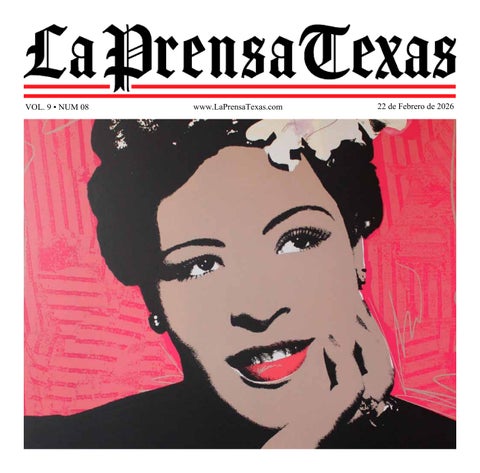
About The Cover Artist: Richard Duardo
By Dr. Ricardo Romo
Richard Duardo, a gifted painter and art designer, was one of the nation’s premier Latino master printers between 1990 and 2014. Born and raised in a vibrant Latino neighborhood near East Los Angeles, Duardo immersed himself in the artistic energy of his community. His formidable technical skill and entrepreneurial drive led him to found Modern Multiples, the first Chicano-owned serigraphic print studio in Los Angeles. Over 25 years, he published works for over 300 artists, helping define the visual identity of Chicano and contemporary Los Angeles art. I had the good fortune to teach Richard at Franklin High School and the Upward Bound Program at Occidental College in 1969–1970. Even then, his quick eye, inventive hand, and natural charisma stood out. After earning his degree from UCLA in 1973, he returned to the community not as a student but as a catalyst—training, promoting, and printing for both emerging and worldrenowned figures. Among the many artists he collaborated with were David Hockney, Keith Haring, Banksy, and Shepard Fairey, designer of the celebrated 2008 Obama “Hope” poster.
Duardo’s printmaking wasn’t merely an act of reproduction— it was a kind of translation, transforming photographic icons into emotionally charged and color-saturated homages. My wife and I purchased several of his “Pop Portraits,” later donated to the McNay Art Museum in San Antonio. These included his luminous images of Marlon Brando,
Lydia Mendoza, Marilyn Monroe,, and Billie Holiday.
The Billie Holiday print, in particular, stands among his most evocative works. In it, Duardo layers deep blues and purples to evoke Holiday’s melancholy brilliance, a visual echo of her voice that once turned sorrow into beauty.
Billie Holiday herself, born Eleanora Fagan in 1915, was one of America’s most transformative jazz singers. Rising from a difficult childhood in Baltimore to Harlem’s vibrant club scene, she redefined the art of singing through her ability to phrase lyrics with profound emotional intelligence. Her haunting 1939 performance of “Strange Fruit,” protesting racial lynching in the South, remains one of the most courageous artistic statements of the 20th century.
Duardo’s portrait captures this dual essence—the fragility and the defiance, the pain and the power—that defined Holiday’s life and music.
Together, artist and muse seem bound across time: Duardo, the Chicano master printer who used color and form to elevate cultural icons; and Holiday, the jazz legend who turned anguish into sound. His portrait of her becomes not merely an homage, but a dialogue between music and pigment, between memory and legacy. When Duardo passed away in 2014 at age 62, as the Los Angeles Times wrote, he left behind “a gregarious, prominent figure” in the city’s art world—and an indelible record of how Chicano artistry could reinterpret and reimagine the American cultural canon.
La Prensa Texas Hosts Civil Roundtable with Bexar County Candidates
By Yvette Tello
On Presidents Day 2026 at 6 p.m., La Prensa Texas hosted a Bexar County candidates roundtable moderated by its Publisher/CEO. While it was called a debate, the evening unfolded as something far more constructive — a respectful, issue-focused conversation among public servants seeking to lead.
Five candidates were invited to participate. Jim Benke was unable to attend due to a prior commitment but sent his regrets, a professional courtesy that was sincerely appreciated.
Meli Powers did not respond to the invitation. Luz Chapa’s campaign declined participation, sending word through a friend of La Prensa Texas that they would not be taking part in these events.
The candidates who did attend represented a range of priorities and perspectives. Each spoke on the issues most important to their campaign and to the residents of Bexar County. Rather than attacking one another, they listened. Rather than interrupting, they explained. Rather than trading insults, they offered solutions.
La Prensa Texas is in the process of endorsing a candidate — a responsibility the publication does not take lightly. This is the first time in its history that such an endorsement process has been undertaken, and it has required careful consideration. After hearing the candidates in person, one thing became clear: every individual in that room was qualified and passionate about serving Bexar County.
There were moments of disagreement, as expected in any political discussion. But the tone remained courteous. The candidates openly acknowledged that while they all intend to win, they ultimately share a broader goal — strengthening their party and serving the community. They even joked that while they would certainly be disappointed not to prevail, they would stand behind whoever does.
La Prensa Texas intentionally structured the evening to allow equal speaking time. No one was pitted against another. No one was ambushed. The goal was clarity, not conflict.
The roundtable reflected what many voters say they want more of — civility, substance, and leadership focused on service rather than spectacle.
As the endorsement decision approaches, La Prensa Texas remains committed to thoughtful deliberation. Every candidate who participated demonstrated commitment to Bexar County and a willingness to engage respectfully.
La Prensa Texas invites the community to gather on Election Night for a watch party on March 3, 2026, at the Deco Ballroom on Fredericksburg Road in San Antonio, Texas.
This event is open to the public. Admission is free, and food will be provided. A cash bar will be available.
No matter which candidate earns your support, the evening is about civic engagement, community, and participation. All are welcome.
COMISIÓN DE CALIDAD AMBIENTAL DE TEXAS
Aviso de Recepción de Solicitud e Intención de Obtener un Permiso de Desechos Industriales No Peligrosos No. de Permiso Propuesto. 99200
Solicitud. VLS Environmental Solutions, LLC, ha solicitado a la Comisión de Calidad Ambiental de Texas (la TCEQ) un permiso para autorizar una instalación comercial e industrial de reciclaje y procesamiento de residuos industriales no peligrosos. La instal ación está ubicada en 5350 Buffalo Ranch Drive, New Braunfels, 78132, en el Condado de Comal, Texas. La TCEQ recibió esta solicitud el 6 de Noviembre de 2025. El siguiente enlace a un mapa electrónico de la ubicación general del sitio o instalación se ofrece como una cortesía pública y no forma parte de la solicitud o el aviso: https://arcg.is/1LzDLu1. Para la ubicación exacta, favor de consultar la s olicitud. La solicitud de permiso está disponible para su consulta y reproducción en la sucursal Westside de la Biblioteca Pública de New Braunfels, ubicada en 2910 South Interstate Highway 35 South Frontage Road, New Braunfels, 78130 en el condado de Comal. La solicitud está disponible (junto con cualquier actualización) en la página web www.tceq.texas.gov/goto/wasteapps.
Aviso adicional. El Director Ejecutivo de la TCEQ ha determinado que la solicitud está administrativamente completa y llevará a cabo una revisión técnica de ésta. Después de que se complete dicha revisión de la solicitud, el Director Ejecutivo podría preparar un proyecto de permiso y emitirá una decisión preliminar sobre la solicitud. El Aviso de Solicitud y Decisión Preliminar se publicará y enviará por correo a aquellas personas en la lista de correo de todo el condado y a aquellas personas en la lista de correo de esta solicit ud. El aviso contendrá la fecha límite para presentar comentarios públicos.
Comentarios y reunión públicos. Es posible presentar comentarios públicos o bien solicitar que la TCEQ lleve a cabo una reunión pública sobre esta solicitud. El propósito de una reunión pública es ofrecer la oportunidad de presentar comentarios o de hacer preguntas sobre la solicitud. La TCEQ lleva a cabo una reunión pública si el Director Ejecutivo determina que hay un grado significativo de interés público en la solicitud o si la solicita un legislador local. Una reunión pública no es una audiencia de caso impugnado.
Oportunidad para una audiencia de caso impugnado. Después de la fecha límite para presentar comentarios públicos, el Director Ejecutivo tomará en cuenta todos los comentarios puntuales y redactará una respuesta a todos los comentarios públicos sustanciales o significativos. A menos que la solicitud se remita directamente a una audiencia de caso impugnado, la respuesta a los comentarios se enviará por correo a todas las personas que hayan presentado comentarios públicos y a aquellas personas que son parte la lista de correo de esta solicitud. Si se reciben comentarios, el envío de correo también ofrecerá instrucciones para solicitar una audiencia de caso impugnado o una reconsideración de la decisión del Director Ejecutivo. Una audiencia de caso impugnado es un procedimiento judicial similar a un juicio civil en un tribunal de distrito estatal.
Para solicitar una audiencia de caso impugnado, es necesario incluir lo siguiente en su solicitud: Su nombre, dirección, número de teléfono, el nombre del solicitante y el número de permiso, la ubicación y distancia de su propiedad/actividades en relación con la instalación, una descripción específica de cómo sería afectado(a) negativamente por esta instalación de una manera que no sea común para el público en general, una lista de las cuestiones de hecho en disputa que planteó durante el periodo de comentarios, y el siguiente enunciado: "[I/we] request a contested case hearing”
("[Yo solicito / nosotros solicitamos] una audiencia de caso impugnado”). Si la solicitud de audiencia de caso impugnado se presenta en nombre de un grupo o una asociación, la solicitud debe designar al representante del grupo para que reciba correspo ndencia en el futuro. Favor de identificar con su nombre y dirección física a un miembro individual del grupo que se vería afectado neg ativamente por la instalación o la actividad. Proporcionar la información mencionada sobre la ubicación del miembro afectado y la distanci a de la instalación o actividad, y explicar cómo y por qué el miembro se vería afectado, así como por qué los intereses que el grupo bu sca proteger son relevantes para el propósito del grupo.
Tras la conclusión de todos los periodos de comentarios y de solicitud aplicables, el Director Ejecutivo enviará la solicitud y cualquier petición de reconsideración o para una audiencia de caso impugnado a los comisionados para su consideración en una reunión programada de la TCEQ. La Comisión solo puede conceder una solicitud para una audiencia de caso impugnado sobre cuestiones que el solicitante haya presentado en sus comentarios puntuales que no hayan sido retirados posteriormente.
Si se concede una audiencia, el tema de ésta se limitará a cuestiones de hecho en disputa o preguntas de hecho y de derecho mix tas que sean sustanciales y relevantes a la decisión de la Comisión sobre la solicitud presentada durante el periodo de comentarios.
Lista de correo. Al presentar comentarios públicos, una solicitud de audiencia de caso impugnado o una reconsideración de la decisión del Director Ejecutivo, se le agregará a la lista de correo de esta solicitud para recibir avisos públicos futuros enviados por la Secretaría Oficial de la TCEQ. Además, puede solicitar ser parte de (1) la lista permanente de correo para un solicitante y número de permiso específico, o bien (2) la lista de correo para un condado específico. Para formar parte de cualquiera de estas dos listas, favo r de especificar claramente a cúal(es) listas desea pertenecer y enviar su solicitud a la Secretaría Oficial de la TCEQ en la dirección que aparece más abajo.
Información disponible en línea. Para detalles sobre el estado de la solicitud, favor de visitar la Base de Datos Integrada de los Comisionados (CID, por sus siglas en inglés) a través de www.tceq.texas.gov/goto/cid , y una vez que tenga acceso, ingresar el número de permiso de esta solicitud que aparece en la parte superior de este aviso.
Contactos e información de la agencia. Todos los comentarios públicos y solicitudes deben presentarse ya sea electrónicamente a través de www14.tceq.texas.gov/epic/eComment/ o enviarse por escrito a la siguiente dirección: Texas Commission on Environmental Quality, Office of the Chief Clerk, MC-105, P.O. Box 13087, Austin, Texas 78711-3087. Favor de tener presente que cualquier información de contacto que proporcione (nombre, teléfono, dirección de correo electrónico y dirección física inclusi ve) será parte de los registros públicos de la agencia.
Para preguntas sobre el proceso de tramitación de permisos, favor de visitar https://www.tceq.texas.gov/agency/decisions/participation/ permitting-participation o bien ponerse en contacto con el Programa de Educación Pública de la TCEQ mediante mensaje de correo electrónico a pep@tceq.texas.gov o mediante llamada sin costo al 800-687-4040. Para información en español, favor de llamar al 800-687-4040.
Para más información. Es posible obtener más información escribiendo al representante del solicitante a Mr. Bennett M.L. Sansbury, VLS Environmental Solutions, LLC, 19500 State Highway 249, Suite 440, Houston, Texas 77070 o bien llamando al (713) 936-0960.
Fecha de emisión: 5 de febrero de 2026
Woodlawn Pointe Center
1103 S. Frio
702 Donaldson Ave.
MAIN EARLY VOTING LOCATION
San Antonio, TX 78207
BRANCH EARLY VOTING LOCATIONS
(Localidad Principal de Votacion Adelantada)
BEXAR COUNTY ELECTIONS DEPARTMENT
(Ubicación de la sucursal para la votación anticipada)
1103 S. Frio
San Antonio, TX 78207
Bexar County Justice Center
BRANCH EARLY VOTING LOCATIONS
Shavano Park City Hall (closed February 19)
(Ubicación de la sucursal para la votación anticipada)
300 Dolorosa
Bexar County Justice Center
San Antonio, TX 78205
300 Dolorosa
San Antonio, TX 78205
900 Saddletree Ct.
Shavano Park City Hall (closed February 19)
San Antonio, TX 78231
900 Saddletree Ct.
San Antonio, TX 78231
Hours of Operation: (Horario de atención)
Monday thru Friday (lunes a viernes)
8 am – 5 pm
**Branch Location is unavailable on the weekends**
8 am – 5 pm
**Branch Location is unavailable on the weekends**
(La sucursal no está disponible los fines de semana.)
For more information contact the office of the Bexar County Elections Administrator
Michele Carew, Early Voting Clerk
For more information contact the office of the Bexar County Elections Administrator
1103 S. Frio, San Antonio, Texas 78207 or by calling 210-335- VOTE (8683)
Michele Carew, Early Voting Clerk
(Para mas informacion comuniquese con la oficina del Condado de Bexar Administrador de Elecciones, Michele Carew, Secretario de Votacion Anticipada
1103 S. Frio, San Antonio, Texas 78207 or by calling 210-335- VOTE (8683)
1103 S. Frio, San Antonio, Texas 78207, o al telefono (210) 335-VOTE (8683)
Applications for a ballot by mail must be received no later than 5:00 p.m. on February 20, 2026.
(Las solicitudes para una boleta por correo deben recibirse a más tardar a las 5:00 p.m. el 20 de febrero de 2026 www.bexar.org/elections
(Para mas informacion comuniquese con la oficina del Condado de Bexar Administrador de Elecciones, Michele Carew, Secretario de Votacion Anticipada
1103 S. Frio, San Antonio, Texas 78207, o al telefono (210) 335-VOTE (8683)
Applications for a ballot by mail must be received no later than 5:00 p.m. on February 20, 2026.
(Las solicitudes para una boleta por correo deben recibirse a más tardar a las 5:00 p.m. el 20 de febrero de 2026 www.bexar.org/elections
Yankees SextaCampeón
Categoría Másters 50+ Liga Potranco
Por Franco Yankees en cerrado tercer partido derrotó 8-7 carreras a los Astros ganando su sexto campeonato consecutivo en categoría Másters 50+ Liga Potranco que preside Simón Sánchez con aval del artista Eloy Rocha propietario del complejo deportivo y social Potranco Baseball Field. El campo número 2, fue el escenario una vez más de la gran final del playoff, en este ya popular circuito, creado
por Sánchez, para darle énfasis al desarrollo de dicha categoría en la que han venido destacando beisbolistas mayores de cincuenta años quienes retornaron al terreno de juego tras ausencia en dicha disciplina deportiva.
Yankees dirigidos por el manager y jugador Luis Velázquez, con sus coaches y también jugadores Sammy Sosa, José Montes y Jaime Guerrero, lograron la conquista de su sexto campeonato consecutivo, derrotando a un gran rival dirigido por los jugadores Pedro Espinoza y el coach jugador Jay Mora.
Astros ganó el primer partido y Yankees logró empatar la serie a ganar dos de tres partidos.
Acto seguido el domingo 15 de febrero en el tercer cotejo, Astros abrió con su lanzador Ubaldo Montelongo (Campeón de temporada regular con marca de 4-1), quien contuvo al pentacampeón con ventaja
de 5-2 carreras hasta que concedió jonrón de tres carreras pegado por Kelly Skeens, siendo relevado por Greg Carrera quien a la par fue el pitcher derrotado. Por Yankees comenzó en la lomita Moisés Cervantes, quien tras aceptar cuatro carreras fue relevado por Alan Mow, (foto), quien se adjudicó el triunfo.
La premiacion de la temporada dedicada a Erick Montes, campo corto de Yankees, fue encabezada por Eloy Rocha, y José Sánchez, comentarista y compilador oficial quien en la narración de jugada por jugada compartió la cabina con el buen amigo Tony Gómez.
Los trofeos de campeón de temporada y del playoff fueron aceptados por Sammy Sosa y José Montes. Pedro Espinoza recibió el flamante trofeo de subcampeón. Ubaldo Montelongo recibió su segundo trofeo de campeón pitcher en Másters
y felicitaciones del señor Rocha y su manager Pedro Espinoza.
El trofeo de campeón bateador fue para el ausente Doug Rosini de Yankees.
Erick Montes, recibió trofeo y felicitaciones por su cumpleaños el cual celebró durante el baño de Champagne y deliciosa cena en honor del sexto campeonato consecutivo.
Jaime Guerrero y su compañía Oncore
Communications patrocinaron los nuevos uniformes y las botellas de fina champán que cada uno de los jugadores esparcieron entre ellos y sus seguidores. Con ello Yankees celebró a lo máximo su sexto banderín, que en la siguiente temporada será ubicado en su sitio preferido por fuera del jardín derecho.
(Fotos de Franco).
By J gilberto Quesaeda
Two weeks ago today, February 16, 2026, after my pacemaker implant on the first floor of the Methodist Stone Oak Hospital in San Antonio on Monday, February 2nd, I am reflecting on an experience that has settled deeply into my heart. The memory of that day remains vivid, not because of fear or uncertainty, but because of the profound peace that surrounded me. As I lay conscious on the operating table, on my back, wrapped in warm white blankets, I felt an unexpected calm wash over me. Even with the red sheet placed gently over my face, I sensed that I was not alone. I knew that the prayers of my family and friends had formed a protective circle around me, lifting me into the loving presence of my Almighty God, and I felt
A Bright Light and A Beautiful Experience
deep comfort knowing that Jo Emma was at home praying and my niece Veronica was by my side the entire time.
In that sacred moment, I felt the nearness of our Lord Jesus Christ, my Guardian Angel, my Blessed Mother, Our Lady of Guadalupe, Our Lady of San Juan, Our Lady of Lourdes, St. Jude, San Martín de Porres, and my beloved madrecita. Their presence was not imagined. It was felt. It was real. It was warm. Their love wrapped around me with a tenderness that words can barely hold. I understood then that faith is not only something we practice in quiet moments of prayer. It is something that rises to meet us when we need it most.
As the procedure began, I felt a renewed
spirit stirring within me. Hope, courage, and strength flowed through me in a way that I had not felt in a long time. The big round bright light shining through the red sheet above me became more than a mechanical lamp. It became a symbol of something far greater. It was the light of my Almighty God breaking through the veil, revealing His love and protection in a way that was unmistakable. It was His reassurance that I was held, guided, and watched over.
That light did not simply illuminate the room. It illuminated my soul and it reminded me that God’s presence is not distant or abstract. It is personal, intimate, and constant. In that moment, I felt His love surrounding me with a strength that carried me through the procedure and continues to carry
me now. I realized that the challenges of life are not meant to weaken us, they are meant to deepen our trust and renew our spirit.
Now, two weeks later, I walk forward with a heart full of gratitude. And from the bottom of my heart, I want to profusely thank the cardiac surgeon who performed the pacemaker implant for the excellent surgical work and the staff for their great and wonderful care. I face life’s challenges with renewed hope and strength, knowing that I am never alone. The memory of that divine light stays with me, reminding me that God’s love shines even through the darkest coverings. It shines through fear, uncertainty, and pain, and it shines into the deepest parts of the soul. And it continues to guide me, protect me, and fill me with the courage to embrace each new day.
As I am months away from becoming an octogenarian, I carry this beautiful experience as a reminder that God’s light continues to guide me with unwavering love. My hope is that my family and friends can take the lessons from my journey and weave them into their own lives. May they remember that faith is a powerful companion, that courage grows when we lean on God’s presence, and that strength is renewed each time we choose hope over fear. Life’s challenges will always come, but so will God’s grace, and it is my prayer that they, too, will feel surrounded by His light as they walk their own paths forward.
By Ricardo Romo, Ph.D
The art exhibit, Frida: The Making of an Icon, currently showing at the Museum of Fine Arts in Houston, has been a spectacular success. Gary Tinterow, Director of the Museum of Fine Arts in Houston, commented that “Frida Kahlo occupies an extraordinary place in the history of Western art of the last century.” In his assessment, Frida’s “paintings and her story… have touched millions of people worldwide with an intensity rivaled only by the life and art of Vincent van Gogh.”
Mari Carmen Ramirez, Curator of the exhibit, wrote that although Frida Kahlo had been well-known to members of the artistic and cultural intelligentsia in the United States dating back to the early 1930s—when she accompanied Diego Rivera to San Francisco, New York, and Detroit (1930-33) — “her work and image did not circulate broadly in the U.S. until the 1970s, when the Chicana/o movement, or El Movimiento, turned her into a standard-bearer for its own cultural and political causes.”
Chicana/o Artists Expand Frida Kahlo’s Legacy
During the early rise of the Chicano Movement, community and student activists, as well as writers and artists, drew inspiration from Mexican history and culture. Across the Southwest, Chicano artists painted murals that featured resistance by the Aztec chief Cuauhtémoc, as well as hailed the Mexican Revolution heroes Emiliano Zapata and the women soldiers known as the Adelitas. Ramirez notes that Chicanos “strongly identified with and promoted [Frida’s] radical political views and activism regarding notions of ethnicity and class, which paralleled the focus of their own resistance to dominant white Anglo society.”
Chicano/a artists active at Galeria de la Raza in San Francisco–René Yañez, Rupert Garcia, and Amalia Mesa-Bains–began to explore Mexico, their ancestral homeland. They visited the Museo Frida Kahlo (Casa Azul) in Coyoacán during the mid-1970s and saw Kahlo’s paintings and possessions, including her collection of folk art. By that time, the Chicano Art Movement had created hundreds of
murals in Los Angeles and San Francisco that adorned the cities’ Latino communities. Judy Baca began her famous Great Wall of Latino murals in the San Fernando Valley, and Carlos Almaraz, Los Four, and Asco had exhibited in major Los Angeles museums.
In the United States, Frida’s emergence as a cultural icon exploded after the publication of author Hayden Herrera’s Frida: A Biography of Frida Kahlo in 1983. For Chicano artists, the iconization of the Mexican artist had begun earlier, in the late 1970s. Chicano artists from the Galería de la Raza, the community art space in the San Francisco Mission District, took the lead in raising her profile in the US. The Galería de la Raza oranized an homenaje (homage) to Frida Kahlo in the late 1970s that proved transformational. Texas native Carmen Lomas Garza led the artistic charge forming a planning committee, assisted by Amalia Mesa-Bains, Rupert Garcia, María Pinedo, and Kate Connell. The Frida homage opened as Galería’s Día de Muertos on
November 1-2, 1978.
Carmen Lomas Garza, whose lithograph of a community dance is featured in the Houston exhibit, moved to San Francisco in 1976, where she became involved with Galería de la Raza and the broader Latina/o artist and activist community. Lomas Garza had years of experience as an art activist. She participated in the Chicano movement organizing in Kingsville, San Antonio, and Austin. She explicitly framed her
practice as a response to discrimination and racism, describing her art as a way to “heal the wounds” of those experiences and to provide affirming images for Mexican American audiences.
During her early years as an artist, Amalia MesaBains, a native of Northern California and also an activist artist, installed her first altar for a Day of the Dead exhibit titled “Five Woman Altar” at San Francisco’s Galeria
Rubert García, “Homenaje A Frida Kahlo”. Courtesy of The Museum of Fine Arts Houston. Photo by Ricardo Romo.
de la Raza. Among the five women featured in the 1975 altar was Frida Kahlo. At the Galeria de la Raza, Mesa-Bains also prepared ofrendas for Frida and Diego [1977] and Homage to Sor Juana Inés de la Cruz [1981]. These two important exhibits demonstrated her devotion to feminist subjects.
Allied with Lomas Garza and Mesa-Bains, Rubert Garcia also paid homage to Frida. His Frida image emerged as the first and most widely recognized of the Chicano Frida portraits. Garcia’s silkscreen prints of the Mexican artist with Indigenous skin tones are among the earliest Frida screenprint renditions. His Frida was inspired by a 1973 trip to the Museo Frida Kahlo. He created the Fridas for the “September” page in Galería’s 1975 poster calendar, a yearly fundraising effort. One hundred and twentyfive calendars circulated Garia’s Kahlo image to the Northern California Chicano/a community.
Art historian Ramón Favela noted that Garcia’s use of “Frida’s distinctive closeup face was an expression of indigenous and political, cultural, artistic pride in things Mexican and nonEuropean.” Curator of the Houston exhibit Mari Carmen Ramirez suggested that by highlighting Kahlo
as a Brown, Chicana/o, and Latina/o artist, by extension have drawn attention to their own racial and cultural identities.
East Los Angeles artist Richard Duardo created two of the Fridas in the Houston show and helped print and reimagine a demure portrait of Frida by Raul Caracoza. The three Duardo prints received prominent exhibit space in the Frida: Making of an Icon exhibition. Duardo was my student both at Franklin High School near East Los Angeles and in a summer Upward Bound program at Occidental College. I am honored that my long-time association with Duardo helped connect him to Texas collectors and institutions.
The many Chicano/a artistic renditions of Frida in the Houston exhibition and the insightful essays in the exhibit catalogue stimulate thoughts about gender, race, and class. Frida dressed herself as a mestiza and Indigena, but she painted herself as white or European. Chicanos saw her as a Brown goddess. Charlene Villasenor Black noted in the catalogue that “by emphasizing the Indigenous aspects of Kahlo’s mestiza heritage, Chicana/o artists elevated her as a Brown icon.”
Influenced by the artist Rupert Garcia, others
“created portraits that also emphasized their own Indigenous heritage.” Frida’s openness about sexuality, feminism, and her activism also inspired Chicana/o artists. I loved the Frida: The Making of an Icon show and learned much about Frida Kahlo, who was a very complicated person. She has become a worldwide recognized artist, and she continues to inspire Chicana/o artists to explore their own heritage and their own lived experiences.
Judy Baca as Las Pachuca. Photos by Donna Deitch. From Las Tres Marias. Courtesy of The Museum of Fine Arts Houston. Photo by Ricardo Romo.*
Ester Hernandez, “If This Is Death, I Like It”. Courtesy of The Museum of Fine Arts Houston. Photo by Ricardo Romo.
Carmen Lomas Garza, Altar for Frida Kahlo (Altar para Frida Kahlo). Courtesy of The Museum of Fine Arts Houston.
Photo by Ricardo Romo.Romo.
Yreina D. Cervantez, “Homenaje a Frida Kahlo (Homage to Frida Kahlo)”. Courtesy of The Museum of Fine Arts Houston. Photo by Ricardo Romo.
Endorsement letter from Steve Duran
The Duran Family of La Prensa Foundation is proud to wholeheartedly endorse Judge Peter Sakai for continued leadership and service to our community.
For decades, Judge Sakai has proven that public service is not just a title — it is a calling. From his early days as an Appellate Assistant District Attorney in Bexar County to his time as Associate Judge of the Children’s Court, he has dedicated his career to protecting children, strengthening families, and improving our justice system.
Under his leadership, adoptions of foster children in Bexar County increased by 1,000%. That is not just a statistic — that represents children placed into loving homes and families given a second chance. His creation of innovative programs like the Family Drug Court, Early Childhood Court, and the College Bound Docket have become nationally recognized models because they work. They save taxpayer dollars, hold individuals accountable, and most importantly, give families hope.
Judge Sakai has always brought people together — attorneys, social workers, law enforcement, and community leaders to find real solutions instead of political talking points. That kind of steady, experienced leadership matters now more than ever. We also recognize the strength of the Sakai family. His wife, Rachel Sakai, has served our community faithfully for more than three decades in education and volunteer leadership. Together, they represent integrity, compassion, and commitment to San Antonio and Bexar County.
As a family that believes deeply in community, accountability, and service, we are confident that Judge Peter Sakai is the right choice to continue moving our city forward. We encourage our friends, readers, and neighbors to support Judge Peter Sakai.
— The Duran Family La Prensa Foundation
By Jaclyn Tacoronte
Two years ago, my father passed away on Valentine’s. Yesterday… was a full circle moment.
My dear friend Ramon Chapa Ramon Chapa Jr. introduced me to the legendary Little Joe.
The day after my father died, I answered a call on his phone. It was a limousine driver waiting outside his home. He said he was the regularly scheduled driver for my dad — because my father attended every single Little Joe concert. When I told him my dad had passed, he paused and said, “I’m so sorry, mijita… your dad talked about you all the time.” Fast forward to yesterday. When I was introduced to Little Joe, I asked him if he knew my father. He smiled and said, “Yes. He attended every concert.” And there I was… at the incredible Fiesta
A Full Circle with Little Joe
Ballroom — surrounded by beautiful music, couples gliding across the dance floor, the sound of legacy filling the room — feeling my dad everywhere on a very busy political day with his spirit surrounding me. It was especially meaningful after five campaign events in one day for Shannon Locke for District Attorney Shannon Locke — LULAC breakfast, Northeast Democratic event, Carlos Quezada Carlos Quezada breakfast at Don Pedro’s (Honorable Former Councilmember Henry Avila was a pallbearer for my father), plus block walking. From the campaign trail… to the dance floor. From loss… to legacy. Yesterday was truly an incredible full circle moment..
Hernandez Crew Avianca De La O, thank you for joining me.
How Community Patrols and Observer Groups Are Responding to ICE Enforcement in 2026
By Yvette Tello
Across the United States, a wave of grassroots activism has risen in response to intensified immigration enforcement and controversial federal actions in cities like Minneapolis. In the wake of high-profile incidents involving U.S. Immigration and Customs Enforcement (ICE) — including the fatal shootings of two local residents — community members have organized, mobilized, and taken to the streets not just to protest, but to protect.The Trump administration’s expanded immigration operations in 2025–2026 prompted tens of thousands of people to join what are commonly called ICE observer groups. These locally led initiatives emphasize non-violent observation and documentation of enforcement actions. Within just days of a widely shared training session, more than 280,000 people had watched or participated in online sessions aimed at learning how to monitor ICE activity, record actions, and alert
neighbors when agents enter their communities. Organizers say this sort of peaceful vigilance not only helps document encounters but can also act as a deterrent to arbitrary detentions and confrontations. This surge in participation reflects a broader desire among many Americans to hold power accountable — to ensure that enforcement happens under the rule of law, and not through fear or intimidation. These observer initiatives have adapted safety protocols, including encrypted communications and well-organized legal support, to protect volunteers and preserve evidence of misconduct. Activists stress that there is a role for everyone, whether on the frontlines documenting, inside homes providing mutual aid, or supporting efforts behind the scenes.A Legacy of Protection and Community Care
Some groups participating in protests and neighborhood watches carry names and symbols root-
ed in historic movements, like the Black Panther Party and Brown Berets — though contemporary activists stress that their focus is on community defense, solidarity, and legal education rather than paramilitary action. Observers and civil rights defenders draw inspiration from the Panthers’ original “cop-watch” models — an approach dedicated to transparency, accountability, and community trust.
Regardless of labels, people involved in these efforts argue that what unites them is a commitment to human dignity. They emphasize that undocumented people — including children, the elderly, and long-established community members — are not threats, and should not be treated as such. They call on ICE to carry out its legal duties without resorting to excessive force, and to respect constitutional and human rights at all times.
Perhaps the most striking aspect of this recent
wave of activism is the diversity of participation. Volunteers include Black, Brown, white, and immigrant residents all united by a shared belief: that the United States is strongest when it protects the vulnerable, defends rights, and fosters community across differences. In Minneapolis and other cities, ordinary people have shown up in large numbers to safeguard their neighbors — whether by monitoring enforcement, organizing peaceful demonstrations, or simply sounding the alarm when agents appearThis movement resonates with broader calls for justice and unity during Black History Month, when the nation reflects on the struggles and triumphs of freedom movements past. Activists see parallels not as a direct duplication of historical organizations, but as a continuation of the fundamental principle that communities should be their own defenders — that love, solidarity, and collective courage are among the most pow-
erful forces against fear and division.
Critics of ICE emphasize that no one denies the agency has legal responsibilities — but many argue that enforcement must be carried out with humanity, due process, and respect for basic human rights. The growing involvement of citizens in peaceful observation and mutual support reflects a profound desire for justice without violence. It’s a reminder that patriotism isn’t measured by division, but by the willingness of people to stand up for the rights of others — even when it’s difficult, even when it’s unpopular.
At a moment when social and political tensions can feel like a “civil war behind the keyboard and media,” community-led defense efforts offer another story — one of shared purpose, cross-cultural solidarity, and the belief that a nation can be a source of pride when its people protect each other.
By Comissioner Tommy Calvert
“Today, my family and I say goodbye to a hero for civil rights and for the American Dream. Growing up, I witnessed my father campaign tirelessly for Jesse Jackson in South Texas, as he led a movement based on working class issues that would lay the foundation for Senator Barack Obama to become President and would help shape my view of people-powered politics. On the advice of my father, Jackson stayed with the mother of County Clerk Lucy AdameClark in Alazan Apache Courts, where he worked to improve living conditions for residents who dealt daily with the challenges of neglected public housing and acute crime. He refused
The passing of the Rev. Jesse Jackson; an American Icon, Hero, and Legend.
limo rides—he wanted a simple van. He could raise money effortlessly on the phone in between visits with a swagger few have obtained. His eloquence spoke to the power of love. When someone was treated as less than
human, he would summon hope, telling them to declare, “I am somebody!” To African- Americans in San Antonio, who are a minority within a minority, he was a messenger of God’s promise. Like the Pope for many in San
Antonio, his photo hung on the walls of homes across Precinct 4, because he was a champion and a voice for the voiceless.
At my church, Friendship Baptist, he stirred the souls of the congregation and pointed them toward the ballot box. He will be remembered as a trailblazer, and we are thankful for his service to humanity around the world. May his spirit guide our country towards love over hate.” – Bexar County Commissioner Tommy Calvert
Tuesday, February 17 thru Friday, February 20 __________________________ 8:00 AM to 6:00 PM
(martes, 17 de febrero a viernes, 20 de febrero)
Saturday, February 21 ______________________________________________ 7:00 AM to 7:00 PM
(sabado, 21 de febrero)
Sunday, February 22_______________________________________________12:00 PM to 6:00 PM
(domingo, 22 de febrero)
Monday, February 23 thru Friday, February 27__________________________7:00 AM to 7:00 PM (lunes, 23 de febrero a viernes, 27 de febrero)
JOINT PRIMARY ELECTION
(Elección Primaria Conjunto) March 3, 2026 (3 de marzo de 2026)
THE HOURS OF EARLY VOTING WILL BE (las horas de votacion adelantada son):
Tuesday, February 17 thru Friday, February 20 __________________________ 8:00 AM to 6:00 PM
(martes, 17 de febrero a viernes, 20 de febrero)
Saturday, February 21 7:00 AM to 7:00 PM
(sabado, 21 de febrero)
Sunday, February 22_______________________________________________12:00 PM to 6:00 PM
(domingo, 22 de febrero)
Monday, February 23 thru Friday, February 27__________________________7:00 AM to 7:00 PM (lunes, 23 de febrero a viernes, 27 de febrero)
DEAFLINK is available for the hearing impaired at ALL POLL SITES
(DEAFLINK está disponible para personas con problemas de audición en TODOS LOS SITIOS DE VOTACIÓN)
In addition to the main early polling place, early voting will be conducted at the following locations (Ademas de la localidad principal, votacion adelantada se llevara a cabo en las siguiente localidades):
*** SUBJECT TO CHANGE ***
Por Sendero Deportivo
Todo un atractivo beisbolero se ha convertido la espectacular serie por el campeonato del playoff categoría Abierta dominical Liga Potranco, entre los finalistas Piratas (12-2 temporada regular clasificado en primer lugar), y Broncos clasificados en segundo lugar con marca de 9-3-2. En el primer partido en serie a ganar 2 de 3 partidos, Piratas
Piratas Ganó El Primero A Broncos
dirigidos por el novel timonel y jugador Iván Vaquera y el coach-jugador Mauricio Esparza (La Malaka), con pitcheo del abridor José López (El Látigo), quien tiró siete entradas sin permitir carrera ponchando siete bateadores rivales, y relevo de Miguel Rondon, campeón pitcher de temporada con récord de 8-1, quien se adjudicó la victoria . Todo comenzó en el octavo
episodio que se encontraba 0-0, Piratas anotando par de valiosas carreras para una pizarra de 2-0. Broncos de la presidenta Linda Garza y los directivos Roberto Garza (manager) y José Pérez (coach y pitcher), le confiaron la pelota al abridor Juan Rosa quien cargó con la derrota y el relevista Leo Terán quien logró detener la ofensiva contraria.
Ambos equipos al final del partido se dieron el saludo deportivo y posteriormente disfrutaron deliciosos platillos.
Broncos ahora se encuentran comprometidos para igualar la espectacular serie en este circuito catalogado como el mejor en el béisbol invernal independiente del sur de Texas.
La base de seguidores de Piratas, recibió agradecimiento de los directivos por su apoyo citando
entre ellos a Lalo Olivares, Max Vega (hijo del fallecido gran amigo Coco Vega, ha quien en su memoria le dedicaron la presente temporada). Jars Salinas [Diablo Salinas], “Tacuache de Cloete, Coahuila”. Así como de ex jugadores y directivos de Piratas: Sergio de Luna, Iván Rubinsky, Malaka Esparza, durante la época de los hermanos Guerrero y el Capitán Brayan Guerrero. Quienes festejaron cinco campeonatos conquistados en el gran béisbol independiente del sur de Texas.
Ahora solo queda que los Broncos un gran equipo con su capitán Víctor Mercedes “El Caminante”, y el magnate Roberto Garza, acostumbrado a ganar campeonatos de temporada y playoff’s logren imponerse en sus estrategias ofensivas y defensivas que los ayudarán por empatar la
gran serie. Para ambos equipos hay mucho buen béisbol por jugarse sobre el terreno de juego del estadio Potranco Baseball Field, sede de Liga Abierta Potranco que preside Simón Sánchez y es propiedad del artista Eloy Rocha.
De acuerdo al presidente Simón Sánchez, el segundo partido se jugará este domingo 22 de febrero en el horario de las 12pm.
En las fotos aparecen: La porra, y patrocinadores de Piratas encabezados por Lalo Olivares y El Diablo Salinas, así como de Max Vega y “El Tlacuache de Cloete, Coahuila”. Quienes celebraron en grande el retorno de Piratas al “Big Show” en la gran final del playoff de Categoría Abierta Liga Potranco.
[Fotos de Franco].
Embajadores de Oportunidad
Encarnan el espíritu y la misión del Distrito.
Narradores y Defensores Amplifican el impacto de la oportunidad para inspirar a otros.
Conectores Comunitarios Construyen puentes entre el Distrito y la comunidad a la que sirve.
Participantes Activos
Lideran a través de la mentoría, la orientación y acciones significativas.