
Issue 9.07 - FOR WEB

Page 1


LA PRENSA TEXAS

Founded 1913 - Fundada en 1913

Publisher / Editora: Yvette Tello y.tello@laprensatexas.com

Community Liaison / Enlace Comunitario: Ramon Chapa Jr. r.chapa@laprensatexas.com

Creative Director / Director Creativo: Nicodemus Gonzalez

Advertising & Production Coordinator / Coordinadora de Publicidad y Producción: Jessica Medrano

Contributors / Colaboradores: Dr. Ricardo Romo, Henrietta Hernandez info@laprensatexas.com

Editor Español: José I. Franco

Sales Representative / Representante de Ventas: Maria Cisneros

La Prensa Texas is a grassroots, bilingual publication that serves as a vital voice for the community — especially for those who are too often left out of mainstream media conversations. Since its founding, La Prensa Texas has been dedicated to providing relevant, accessible, and culturally rooted news that reflects the lives, struggles, and triumphs of the people of San Antonio and surrounding counties. Our mission is simple yet powerful: to inform, inspire, and empower our readers through storytelling that uplifts the diverse voices of our community. This publication continues to be the lifeline of local news, bridging the gap between the people and the stories that matter most.

Sales Info: Our Circulation

45,000 Printed And Distributed Weekly English And Spanish Send Press Releases And Advertising Inquiries To: Info@LaPrensaTexas.com 210-628-9611

Let’s Talk About It: Love, Culture, and the Courage to Show It/The Moment That

When I posted about Demarcus Lawrence

celebrating his Super Bowl win with the Mexican flag, it clearly struck a nerve — in more ways than one. For some, it was a powerful moment of pride and representation. For others, it sparked a deeper conversation about identity, culture, and what it means to be American. I feel it connected it to Bad Bunny’s halftime message — how it boldly highlighted Latinos, love, and unity over hate. Maybe that cultural shift, that unapologetic visibility, is exactly why moments like this are happening more openly. Maybe it’s giving people the courage to celebrate who they are and who they love, even on the biggest stages. Representation, backlash, pride, and why moments like these feel so significant right now.

“THIS HIT DIFFERENT. After winning the Super Bowl, Demarcus Lawrence stepped onto the field and celebrated with the Mexican flag. Not for clout. Not for headlines. For his family; his wife is Mexican American; his kids are half Mexican and in that moment, on the biggest stage in sports, our culture was right there with him. For so many of us, this felt like seeing our families, our culture, and our roots finally reflected where we’re often told we don’t belong. It was a reminder that Mexican heritage and American success are not opposites — they exist together, every single day. This is what representation looks like.This is what pride looks like. This is what Together, We Are America really means.Mexican blood. American dreams. Super Bowl champions”

What do you think of this? Let’s talk about it…

Amanda Cena: “Loved it! Definitely showed love and respect for his wife and children.”

Herb Rockman: “Regardless of who he’s married to I see it as a symbol of support and respect for Hispanic Americans, who

are having a bit of a rough time in today’s America. For any who say it is not patriotic, I have never heard any complaints over German or Irish Americans waving the flags of their origin at Wurstfest or on St Pats. As far as the long standing issue over athletes addressing social issues at games, that’s another topic altogether, I personally feel it is important in these unusual times.”

Shannon Russell: “From my late teens on I’ve had this mentality of not “Keeping up with the Jones”.....A big part of that is not consuming yourself with what others have or do! I have no problem when people waive other countries’ flags. If I married a woman from another country, I would be proud of her heritage too. Especially if you have kids with her!”

Ryan Thomas Holley: “God darn, I hate the Seahawks. However, I love the crap outta this. Yasssss.”

Michelle Penaloza: “ 10,000 % love this”

Todd Forbes: “Ya know Yvette- I love that you poke the bear with topics to get people talkingSo- do I really care that he was waving the Mexican flag? No! But he’s not Mexican- so I look at it like he’s grandstanding and not legitimate- But it’s everywhere these daysit’s a bite to the hand that feeds him! - I think people need to see that the narratives out there are designed to divide us not bring us togetherbecause divided we can be controlled- America first means that no matter where you came from - once you’re here - you assimilate and make us all better- if the other country is so much better …. Then why are you here? Go back! Make that place better- Have you ever had a player on your team that all they did was talk about how much better their old team was ? You’re like … then go back to the other team- get off our team cause you’re poison! So bottom line I see his display as fake! And attention seeking!”

Charles Edward Rodriguez: “If you look at our maps the United States is known as North America and below our border is known as South America ,the flag shown represents one of the country’s within. We are the TRUE

Started a Conversation

Americans.”

Robert Vasquez: “I’m an American first”

Patricia Ann Maldonado Martinez: “Incredible! Congratulations”

Margaret Sandoval: “I’m in love with this. No one should be offended by what other people are proud of. Love one another.”

Frank Kreusel: “God bless Trump and God bless ICE and God bless Turning Point USA. 3 more years then Vance and Rubio. LMAO.”

Jeff Hull; “I think it’s awesome that others need to learn to respect and appreciate different cultures and races. Not only when it’s convenient for them.”

Patricia Ann Maldonado Martinez : “ 100% agree”

Jesse Ramos: “We should simply be happy for him winning the Super Bowl—any reasonable person would be. There’s no need to turn him holding a Mexican flag into something negative. If anything, it’s a reflection of his pride in his family, especially his wife and their children, who share that heritage. Let’s celebrate his achievement and respect the moment. The more we respond with positivity instead of controversy, the more normal moments like this will become.”

Arturo Ramirez: “Viva Mexico”

Yolanda Rios Wurgler: “It’s wonderful that he celebrates his wife’s heritage! And his kids should be proud too. “

Richard Cortez: “Naw, I didn’t agree with that; he didn’t make millions playing in Mexico from Mexican people. Mostly from Americans who bought and paid their salaries. Maybe he should have waved both flags, especially in a city where it’s a blue state and United States citizens living under bridges. Something doesn’t pass the litmus test… just saying, no matter what heritage you are”

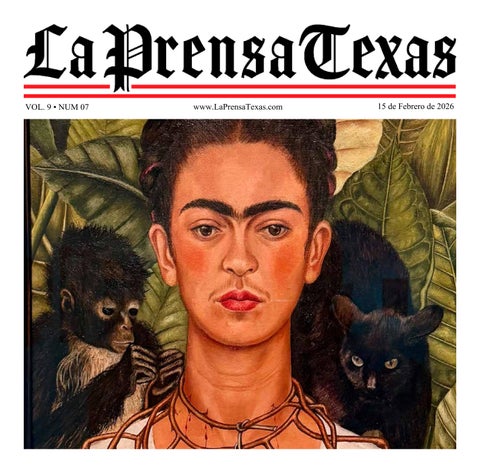
Frida Kahlo: The Making of an Icon

Frida Kahlo (1907–1954) was born in Mexico City to German-born photographer Guillermo Kahlo and Matilde Calderón y González, a mestiza of Indigenous and Spanish ancestry. From early on, Kahlo embraced her mother’s heritage, crafting a public persona deeply rooted in Mexicanidad and Indigenous traditions. Her life changed irrevocably in 1925 when a tram accident left her with severe injuries to her spine, pelvis, and legs. During her long convalescence in La Casa Azul, she began painting, using a specially designed easel and a mirror suspended above her bed to create intimate self-portraits that investigated identity, gender, pain, and nationhood.

In 1929, Kahlo married the renowned muralist Diego Rivera, entering a passionate and

tumultuous partnership that profoundly shaped her artistic and political identity. Together, they became central figures in the postrevolutionary Mexican avant-garde and in the global exchange of ideas linking art and politics. Though often introduced through Rivera’s shadow, Kahlo increasingly asserted herself as an independent artist, a self-fashioned modern woman who refused fixed definitions. Her work gained international attention after André Breton, leader of the Surrealist movement, invited her to exhibit in Paris in 1938. This show marked her emergence as “Frida Kahlo,” no longer “Frida de Rivera.” Her paintings— such as Self-Portrait Dedicated to Leon Trotsky—combined personal experience with revolutionary symbolism, underscoring her identification

with both political and emotional struggle. By the time of her death in 1954, Kahlo had produced more than 100 paintings that blended autobiography with Indigenous iconography, Catholic mysticism, and surreal imagery.

Kahlo’s posthumous fame accelerated with the feminist art movement of the 1970s and the publication of Hayden Herrera’s Frida: A Biography of Frida Kahlo (1983). The landmark exhibition Mexico: Splendors of Thirty Centuries further cemented her cultural status in the 1990s. Today, Kahlo’s image—and its many reconstructions—symbolizes resilience, rebellion, and self-creation.

The exhibition Frida: The Making of an Icon, curated by Mari Carmen Ramírez, situates Kahlo within a global network of dialogue and influence. Featuring more than 80

artists who acknowledge Kahlo as a core reference, the show reexamines how her persona and art have been endlessly recast across generations. As Ramírez observed,

Kahlo’s legacy persists because her struggles “echo those of millions,” transforming her into an enduring emblem of endurance, creative freedom, and fractured beauty.

San Antonio doesn’t just celebrate Fiesta — it lives it. And every now and then, someone steps into that tradition and leaves a mark that lasts well beyond the season. Johnny Gabriel is one of those names. On January 31, 2026, community leaders, longtime friends, and Fiesta family gathered at The Club at Sonterra to celebrate a man whose legacy is woven into the culture of this city — as Fiesta royalty, a respected businessman, and a steady supporter of education and community pride. Johnny Gabriel served as Rey Feo XLII in 1991, a milestone year that coincided with the 100th anniversary of Fiesta San Antonio. But his reign wasn’t only about the crown — it was about what the crown could do. Through his leadership and long-standing involvement with the Rey Feo Scholarship Foundation, Gabriel helped advance a mission centered on opportunity. The foundation’s work has been part of Fiesta’s deeper promise: celebrating San Antonio while investing in its future — especially its students. Many in San Antonio also recognize the Gabriel name from Gabriel Liquors, a longtime local business tied to the city’s history and neighborhoods. But what stood out most to those who know him isn’t simply what he built — it’s how he carried himself while building it: with consistency, humility, and community-minded leadership. One of the most powerful stories shared in tribute is that Johnny Gabriel overcame a childhood speech stutter — a challenge that could have pushed someone into silence.

A Rey Feo Legacy of ServiceHonoring Johnny Gabriel

Instead, it shaped him into a leader who understood resilience firsthand. That journey — from struggling to speak, to standing before rooms full of people with confidence — has become part of what inspires those who follow his example. As one supporter put it that night, he didn’t let anything stop him — and that’s why people show up for him. The celebration at Sonterra was filled with laughter, photos, embraces, and the kind of camaraderie that comes from shared traditions. Former Rey Feos and longtime supporters gathered in a show of unity and respect — honoring not just a title, but the man behind it. Johnny Gabriel’s story is a reminder that in San Antonio, legacy isn’t measured by attention — it’s measured by service, by consistency, and by how many people you lift as you rise. Cultura y Gente salutes Johnny Gabriel — Rey Feo, leader, and San Antonio original.

Comisión de Calidad Ambiental del Estado de Texas

AVISO DE RECIBO DE LA SOLICITUD Y EL INTENTO DE OBTENER PERMISO PARA LA CALIDAD DEL AGUA

MODIFICACION

PERMISO NO. WQ0010066002

SOLICITUD. La Ciudad de Boerne, P.O. Box 1677, Boerne, Texas 78006, ha solicitado a la Comisión de Calidad Ambiental del Estado de Texas (TCEQ) para modificar el Permiso No. WQ0010066002 (EPA I.D. No. TX0131831) del Sistema de Eliminación de Descargas de Contaminantes de Texas (TPDES) para autorizar un aumento en la descarga de aguas residuales tratadas a un volumen que no exceda un caudal promedio anual de 3,900,000 galones por día. La planta está ubicada en 41 Old San Antonio Road, en la Ciudad de Boerne, en el Condado de Kendall, Texas 78006. La ruta de descarga es del sitio de la planta a Menger Creek y luego hacia Upper Cibolo Creek. La TCEQ recibió esta solicitud el 7 de enero de 2026. La solicitud para el permiso estará disponible para leerla y copiarla en el Ayuntamiento de Boerne, 2.º piso-Departamento de Servicios Públicos, 447 North Main Street, Boerne, en el Condado de Kendall, Texas antes de la fecha de publicación de este aviso en el periódico. La solicitud y los avisos asociados están disponibles electróni camente en la siguiente página web: https://www.tceq.texas.gov/permitting/wastewater/pending-permits/tpdes-applications. Este enlace a un mapa electrónico de la ubicación general del sitio o de la instalación es proporcionado como una cortesía y no es parte de la solicitud o del aviso. Para la ubicación exacta, consulte la solicitud. https://gisweb.tceq.texas.gov/LocationMapper/?marker=-98.71349,29.772953&level=18

AVISO DE IDIOMA ALTERNATIVO. El aviso de idioma alternativo en español está disponible en https://www.tceq.texas.gov/permitting/wastewater/pending-permits/tpdes-applications.

AVISO ADICIONAL. El Director Ejecutivo de la TCEQ ha determinado que la solicitud es administrativamente completa y conducirá una revisión técnica de la solicitud. Después de completar la revisión técnica, el Director Ejecutivo puede preparar un borrador de l permiso y emitirá una Decisión Preliminar sobre la solicitud. El aviso de la solicitud y la decisión preliminar serán publicados y enviado a los que están en la lista de correo de las personas a lo largo del condado que desean recibir los avisos y los que están en la list a de correo que desean recibir avisos de esta solicitud. El aviso dará la fecha límite para someter comentarios públicos.

COMENTARIO PUBLICO / REUNION PUBLICA. Usted puede presentar comentarios públicos o pedir una reunión pública sobre esta solicitud. El propósito de una reunión pública es dar la oportunidad de presentar comentarios o hacer preguntas acerca de la solicitud. La TCEQ realiza una reunión pública si el Director Ejecutivo determina que hay un grado de interés público suficiente en la solicitud o si un legislador local lo pide. Una reunión pública no es una audiencia administrativa de lo contencioso.

OPORTUNIDAD DE UNA AUDIENCIA ADMINISTRATIVA DE LO CONTENCIOSO. Después del plazo para presentar comentarios públicos, el Director Ejecutivo considerará todos los comentarios apropiados y preparará una respuesta a todo los comentarios públicos esenciales, pertinentes, o significativos. A menos que la solicitud haya sido referida directamente a una audiencia administrativa de lo contencioso, la respuesta a los comentarios y la decisión del Director Ejecutivo sobre la solicitud serán enviados por correo a todos los que presentaron un comentario público y a las personas que están en la lista para recibir avisos sobre esta solicitud. Si se reciben comentarios, el aviso también proveerá instrucciones para pedir una reconsideración de la decisión del Director Ejecutivo y para pedir una audiencia administrativa de lo contencioso. Una audiencia administrativa de lo contencioso es un procedimiento legal similar a un procedimiento legal civil en un tribunal de distrito del estado.

PARA

SOLICITAR UNA AUDIENCIA DE CASO IMPUGNADO, USTED DEBE INCLUIR EN SU SOLICITUD LOS SIGUIENTES DATOS: su nombre, dirección, y número de teléfono; el nombredel solicitante y número del permiso; la ubicación y distancia de su propiedad/actividad con respecto a la instalación; una descripción específica de la forma cómo usted sería afectado adversamente por el sitio de una manera no común al público en general; una lista de todas las cuestiones de hecho en disputa que usted presente durante el período de comentarios; y la declaración “[Yo/nosotros] solicito/solicitamos una audiencia de caso impugnado”. Si presenta la petición para una audiencia de caso impugnado de parte de un grupo o asociación, debe identificar una persona que representa al grupo para recibir correspondencia en el futuro; identificar el nomb re y la dirección de un miembro del grupo que sería afectado adversamente por la planta o la actividad propuesta; proveer la información indicada anteriormente con respecto a la ubicación del miembro afectado y su distancia de la planta o actividad propuesta; explicar cómo y porqué el miembro sería afectado; y explicar cómo los intereses que el grupo desea proteger son pertinentes al propósito del grupo.

Después del cierre de todos los períodos de comentarios y de petición que aplican, el Director Ejecutivo enviará la solicitud y cualquier petición para reconsideración o para una audiencia de caso impugnado a los Comisionados de la TCEQ para su consideración durante una reunión programada de la Comisión.

La Comisión sólo puede conceder una solicitud de una audiencia de caso impugnado sobre los temas que el solicitante haya presen tado en sus comentarios oportunos que no fueron retirados posteriormente. Si se concede una audiencia, el tema de la audiencia estará limitado a cuestiones de hecho en disputa o cuestiones mixtas de hecho y de derecho relacionadas a intereses pertinentes y materiales de calidad del agua que se hayan presentado durante el período de comentarios.

LISTA DE CORREO. Si somete comentarios públicos, un pedido para una audiencia administrativa de lo contencioso o una reconsideración de la decisión del Director Ejecutivo, la Oficina del Secretario Principal enviará por correo los avisos públicos en re lación con la solicitud. Además, puede pedir que la TCEQ ponga su nombre en una o más de las listas correos siguientes (1) la lista de correo permanente para recibir los avisos del solicitante indicado por nombre y número del permiso específico y/o (2) la lista de corr eo de todas las solicitudes en un condado especifico. Si desea que se agrega su nombre en una de las listas designe cual lista(s) y envía p or correo su pedido a la Oficina del Secretario Principal de la TCEQ.

INFORMACIÓN DISPONIBLE EN LÍNEA. Para detalles sobre el estado de la solicitud, favor de visitar la Base de Datos Integrada de los Comisionados en www.tceq.texas.gov/goto/cid. Para buscar en la base de datos, utilizar el número de permiso para esta solicitud que aparece en la parte superior de este aviso.

CONTACTOS E INFORMACIÓN A LA AGENCIA. Todos los comentarios públicos y solicitudes deben ser presentadas electrónicamente vía http://www14.tceq.texas.gov/epic/eComment/ o por escrito dirigidos a la Comisión de Texas de Calidad Ambiental, Oficial de la Secretaría (Office of Chief Clerk), MC-105, P.O. Box 13087, Austin, Texas 78711-3087. Tenga en cuenta que cualquier información personal que usted proporcione, incluyendo su nombre, número de teléfono, dirección de correo electrónico y dirección física pasarán a formar parte del registro público de la Agencia. Para obtener más información acerca de esta solicitud de permiso o el proceso de permisos, llame al programa de educación pública de la TCEQ, gratis, al 1-800-687-4040. Si desea información en Español, puede llamar al 1-800-687-4040.

También se puede obtener información adicional de la Ciudad de Boerne a la dirección indicada arriba o llamando al Sr. Terry Nolan, Administrador de Operaciones de Servicios Públicos al 830-248-1538.

Fecha de emisión: el 6 de febrero de 2026

Wemby Nombrado Como El Defensive Player Del Mes NBA Western Conference

El poste y delantero francés Víctor Wembanyama “Wemby”, en esta su segunda temporada como jugador estelar del pentacampeón equipo San Antonio Spurs (Los Spurs de San Antonio). Recientemente por su espectacular y productiva actuación en la temporada regular NBA 2025-26, bajo la dirección del entrenador en jefe Mitch Johnson, resultó ser nombrado “Western Conference Defensive Player

of the Month” para el pasado mes de enero.

Lo cual viene a ser su segunda vez que recibe el distinguido honor el cual le fue concedido durante la campaña de 2024-25.

Toda esa información fue aportada para los medios especializados, en lo qué se aportó también más información mediante boletín oficial informativo de la empresa Spurs Sports and Entertainment (SS&E), que es la propietaria de esta gran

franquicia.

Wemby, logró destacar en 13 partidos jugados durante el mes de enero, con la obtención de 132 rebotes, 29 bloqueos y 12 robos de balón.

Así como de ser el único jugador en la conferencia del oeste con marca de más de 100 rebotes, 25 y más de 10 robos. Su promedio de 2.23 bloqueos por partido lo ubicó en el tercer lugar de la NBA logrados durante 27.7 de juego por partido.

Con Wemby en la alineación estelar los oponentes de Spurs dispararon al aro un promedio de 42% comparado con un 48% de Spurs.

En lo que va de la temporada Wemby, tiene promedio de 24.1 puntos encestados y 11.0 rebotes con 2.7 de asistencias y 2.71 en bloqueos durante 28.9 minutos de acción.

Wembanyama, se encuentra en el primer escaño en el circuito de la NBA como líder en bloqueos por cotejo, así como cuarto lugar en la liga en rebotes. Wemby, ha logrado obtener más de tres bloqueos a lo largo de 16 partidos y cuando menos un bloqueo y un robo en 22 partidos.

Los Spurs guiados por Wemby, se encuentran firmes en el cuarto lugar contra sus oponentes con promedio en anotaciones de canasta con 45.6% y sexto en la NBA contra rivales por partido (111.9).

San Antonio ha sobresalido con marca de 27 victorias por 11

derrotas conteniendo a rivales dentro de los 110 puntos, por igual 23-7 sobresaliendo ante sus rivales en posesiones de rebotes.

Por otro lado SS&E, informó la elección del guardia prospecto Stephon Castle, actual novato del año (NBA 2024-25), quién fue nombrado NBA Western Conference Player of the Week, tras finalizar la semana del 8 de febrero, aportando sus habilidades en la ofensiva y defensiva.

Castle, en esta su segunda temporada con San Antonio, compartió honores con Jalen Johnson, del equipo Atlanta Hawks afiliado a la NBA Eastern Conference.

Castle, se hizo merecedor del nombramiento tras haberse desempeñado gran colaborador en tres victorias consecutivas de Spurs ante Mavericks de Dallas como visitante en el Frost Bank Center, y también contra el actual campeón OKC Thunder, y de visitantes en la sede de los Mavericks. (Fotos de Franco).

COMMUNITY SERVANT SPOTLIGHT: RAMON CHAPA

JR. AND THE IMPACT OF I.D. RECOVERY PROGRAM REFLECTION MINISTRIES

In Bexar County, meaningful change often comes from people who understand both the system and the struggles of the community.

Ramon Chapa Jr. is one of those leaders—a trusted right hand to the County Commissioner and a tireless advocate for those working to rebuild their lives. Ramon Chapa Jr. is known for showing up where help is needed most. His work is rooted in service, compassion, and accountability, guided by the belief that everyone deserves a real second chance. That belief is the foundation of his nonprofit, I.D. Recovery Program Reflection Ministries. The organization serves a vital and often overlooked role in the community: helping individuals recover or obtain proper identification and driver’s licenses—

especially men and women transitioning from halfway houses back into society. For many formerly incarcerated individuals, the absence of a valid ID or driver’s license creates immediate roadblocks to employment, housing, transportation, and compliance with probation or parole requirements. I.D. Recovery Program Reflection Ministries works hands-on to remove those barriers. By guiding participants through the complex process of securing birth certificates, state IDs, and driver’s licenses, the program restores more than documents— it restores independence, dignity, and opportunity. This support can be the difference between relapse and stability, between unemployment and a steady job, between frustration and forward progress. As a

commissioner’s right hand, Ramon Chapa Jr. brings deep knowledge of county systems while staying closely connected to real-life community needs. He understands that reentry is not just about release—it’s about readiness. His nonprofit fills a critical gap where policy alone cannot reach. Ramon’s work reflects the true meaning of public service: meeting people where they are, advocating without judgment, and creating pathways instead of obstacles. Through I.D. Recovery Program Reflection Ministries, lives are being rebuilt one document, one license, and one opportunity at a time. In a community that values redemption, responsibility, and resilience, Ramon Chapa Jr. stands as a quiet force for change—proving that second chances are strongest when paired with real support.

Mexican Artist Frida Kahlo’s Brilliance Resonates in Houston Exhibit Frida: The Making of an Icon.

The impressive exhibit Frida: The Making of an Icon at the Museum of Fine Arts in Houston traces Frida Kahlo’s posthumous evolution from a relatively unknown Mexican painter to a multifaceted global icon and brand. Mari Carmen Ramirez, the main curator of the exhibit, organized the show into seven sections. Each selection addresses the reception and projection of Kahlo’s works, exploring how this dynamic engagement helped shape Frida’s iconic status. Ramirez noted in her introduction to the exhibit book, Frida: The Making of an Icon, that the “Frida phenomenon is unlike anything else in past or recent history. It is not limited to Kahlo’s artmaking but extends to all aspects of her social image, innermost character, as well as her attire.”

In addition to numerous paintings by Frida Kahlo loaned from Museums in Mexico, the US, and private collections, the Museum of Fine Arts

exhibition features over 80 intergenerational artists from around the world.

Mari Carmen Ramirez aimed to place Kahlo’s art in dialogue with these artists, some of whom were her contemporaries, while others had not yet been born at the time of her death in 1954. The curators proposed that all artists included have or had “an acknowledged relationship to Frida, whom they consider a core reference.” Featured artists, noted the curators, “recast their appropriations of Kahlo’s facial and bodily features, motifs, or stylistic elements into innovative proposals that transcend their inspiration to comment on pressing issues of their own place and time.”

Frida, now a recognized world-famous artist, was born in Mexico City in 1907. Her father was Germanborn photographer Carl Wilhelm [Guillermo] Kahlo. Her mother was Mexican-born Matilde Calderón y González, a mestiza from Oaxaca with Indigenous and Spanish ancestry. Frida often

emphasized her mother’s heritage when constructing her own public identity as Mexican and mestiza. She frequently wore a Tehuana dress, highlighting Indigenous roots in her self-portraits. At age 22, Frida married the worldfamous artist Diego Rivera. He was 20 years her senior.

Frida Kahlo is known for establishing unique and creative art styles to construct and project a multifaceted persona. The curators explained, “From early on, she rejected the notion of a fixed identity, wielding her art and appearance to project a multivalent sense of Self, which included: the avant-garde artist and intellectual, the liberated flapper, the self-taught painter, the mestiza, the political activist, the enamored and devoted wife, the bisexual woman, the transgressor, and the disabled artist.”

Over her lifetime, Frida Kahlo created more than 100 paintings. Many of her self-portraits enhanced her notoriety for her distinctive attitude toward

her disabled body and nonconforming sexuality.

The Museum of Fine Arts curators noted that in numerous self-portraits, Frida “depicts herself with a slight mustache and a unibrow, often wearing dresses and braided hair but occasionally in masculine garb with cropped hair.”

When Andre Breton, theoretician and leader of the Surrealist art movement, invited Frida Kahlo to show in Paris in 1938, the exhibit brought

her, for the first time, international attention. Mari Carmen Ramirez noted that before the Paris show, Kahlo had never had a solo exhibition, did not consider herself a professional artist, and had sold few works. “Her experiences in New York and Paris,” wrote Ramirez in the Fine Arts exhibit catalogue, “encouraged her to become a painter in her own right, subsequently presenting herself as Frida Kahlo and not Frida de

Frida Kahlo, “Portrait of Miguel N. Lira. 1927. Courtesy of The Museum of Fine Arts, Houston. Photo by Ricardo Romo.

Rivera.”

For the New York and Paris exhibitions, Frida produced a new body of work that included “Self Portrait Dedicated to Leon Trotsky.” Trotsky, a Marxist revolutionary strategist and writer, helped lead the Russian Revolution and later opposed Stalin’s rise to power. Trotsky spent the last years of his life in exile in Mexico, arriving in 1937. He was granted asylum by President Lázaro Cárdenas after Stalin forced him from the Soviet Union. He initially lived with Diego Rivera and Frida Kahlo at the Casa Azul. During his stay at their home in 1937, he had a brief romantic affair with Frida. Trotsky was assassinated in Coyoacán, Mexico City, in August 1940. Following the publication of Hayden Herrera’s masterpiece, Frida: A Biography of Frida Kahlo, published in 1983 by Harper & Row and its translation into twentyfive languages, Frida became a global sensation. The world further learned about Frida following her prominent inclusion in the 1990 exhibition Mexico: Splendors of Thirty Centuries. My wife Harriett and I saw “Splendors” at the San

Antonio Museum of Art and at The Metropolitan Museum of Art in New York City.

Herrera’s book and the Splendors exhibition, organized collaboratively by major New York, San Antonio, and Los Angeles museums, boosted Frida’s rise as a cultural icon and coincided with the rise of feminism in the United States and Mexico in the 1970s and 1980s. Frida’s artistic works and the many identities explored through self-presentation in her paintings and dress styles “provided the perfect context for intellectual and artistic engagement with Frida and the validation of her transgressive Self,” noted the Fine Arts Museum curators.

Frida: The Making of an Icon stands as an artistic marvel of the 21st century. The imagery is so powerful that one’s first thought after leaving the exhibit is to return to see it again. The impressive collection of her art demonstrates the ways Frida evolved as an artist. In her 1931 painting “Frida y Diego,” she places herself petite and clearly in the shadow of Diego. In the powerful 1946 painting “The Wounded Deer,” Frida represents herself as an injured deer with multiple arrows through her body.

In a 1949 painting, she cuddles Diego Rivera like an infant in her lap.

Frida: The Making of an Icon is a remarkable art and history exhibition. In addition, our knowledge of Mexican art and its worldwide influences has been greatly enhanced by the extensive catalogue. Viewing the exhibition and reading the wellresearched essays in the catalogue gave Harriett and me a greater understanding of the phenomenal impact and commercialization of Frida Kahlo.

In the words of Mari Carmen Ramirez, “Kahlo’s struggles as a disabled woman, distraught lover, and striving artist echo those of millions of individuals around the world, making possible her transmutation into a symbol of resilience to gender biases, physical ailments, professional marginalization, and hardship.” Frida’s legacy is kept alive in memory of her remarkable qualities and in her complex artistic expressions of life experiences.

In my next essay, I will explore how Frida inspired Chicano and Latino artists in the United States. I will begin with analyzing the excellent essay “Chicana Frida” by Adriana Zavala and Angelica Becerra.

Frida Kahlo, Self Portrait in a Velvet Dress. 1926. Courtesy of The Museum of Fine Arts, Houston.
Photo by Ricardo Romo.
Frida Kahlo, [Still Life 1951] “I Belong to Samuel Faslicht”. Courtesy of The Museum of Fine Arts, Houston. Photo by Ricardo
Frida Kahlo,” My Dress Hangs There”. 1933-1938. Courtesy of The Museum of Fine Arts, Houston.

LEGAL NOTICE

Application has been made with the Texas Alcoholic Beverage Commission for a Wine and Beer Retail Dealer’s On-Premise License (BG) to sell beer and wine for on-premise consumption by Iron Wolf Games and Hobbies LLC to be located at 7122 San Pedro Avenue, Suite 106, San Antonio, Bexar County, Texas 78216. Officers of said business is Jason Davis.

Gil Coronado: West Side Son, National Leader, and Champion of Hispanic Heritage

San Antonio — Gil Coronado, a decorated Air Force colonel, national public servant, and one of the driving forces behind the creation of National Hispanic Heritage Month, is being remembered across San Antonio as a symbol of perseverance, service, and cultural pride rooted in the city’s West Side.

Coronado, who rose from humble beginnings near the Alazán-Apache Courts to become the first Hispanic director of the U.S. Selective Service System, died at age 89 in San Antonio.

His life story reflects the journey of a generation shaped by hardship but defined by service. Raised in a working-class West Side neighborhood, Coronado often described himself as a young man searching for direction before the military gave him discipline, purpose, and opportunity.

He enlisted at just 16 years old and went on to serve nearly three decades in the Air Force, Army Reserve, and Air Force Reserve. His service included assignments in Southeast Asia during the Vietnam era as well as postings in Spain, Germany, and Panama. Over time, he rose through the ranks to

colonel and earned numerous commendations, including the Legion of Merit and Bronze Star Medal.

After retiring from the military, Coronado continued his service in Washington, D.C. He worked on President Bill

Clinton’s 1992 campaign, joined the Pentagon transition team, and later served as deputy assistant secretary for congressional affairs at the Department of Veterans Affairs. In 1994, he was appointed director of the U.S. Selective Service System — becoming the first Hispanic to lead the agency.

He is also widely recognized for helping lead the effort to expand National Hispanic Heritage Week into National Hispanic Heritage Month, a milestone that elevated recognition of Latino contributions nationwide.

For many in San Antonio — particularly on the West Side — Coronado’s life represented more than personal achievement. It reflected the promise of what can emerge from communities long defined by struggle but rich in resilience, culture, and faith.

Leaders and community members across the city shared tributes honoring his legacy.

U.S. Congressman Joaquin Castro described Coronado as “a shining example of the American dream — and of what service to country and community truly means.”

Former San Antonio Mayor Ron Nirenberg reflected on his mentorship and civic impact, saying, “I will treasure his friendship and his quiet advice. His contributions to San Antonio and our country will endure for generations.”

Retired Air Force officer and former Selective Service director Lawrence Romo emphasized his character and leadership: “He lived the Air Force value of ‘service before self’ every day — not just in uniform, but in how he treated people.”

Family members noted that Coronado “was proud to be a padrino of Hispanic Heritage Month — and proud of the culture and community that shaped him.”

Coronado remained deeply connected to San Antonio throughout his life, mentoring young people, encouraging veterans, and supporting civic efforts tied to opportunity and recognition for Hispanic communities.

Visitation for Gil Coronado will be held Thursday, February 19, 2026, from 1:00 to 3:00

p.m. at Porter Loring Mortuary North, 2102 N. Loop 1604 East in San Antonio.

A Funeral Mass will be celebrated Friday, February 20, 2026, at 11:00 a.m. at St. Elizabeth Ann Seton Catholic Church, 8500 Cross Mountain Trail. Burial will follow at Fort Sam Houston National Cemetery.

He is survived by his wife of 67 years, Mary Helen Coronado; their children Elaine, Todd, Troy, and Troup; grandchildren and great-grandchildren; and a community that continues to draw inspiration from a life defined by service, resilience, and pride in the West Side roots that shaped him.

George D. Ibarra Sr. was born on May 6, 1937, in San Antonio, Texas, to Loreto and Adela Ibarra. He was one of five children, all of whom preceded him in death.

George attended Fox Tech High School but left school at an early age to help his mother support his siblings. He later learned the trade of sheet metal work alongside his uncle, a skill that would serve him well throughout his life. He went on to work for Gillette Air Conditioning, where he remained employed until his retirement at the age of 67.

George married the love of his life, Elena E. Martinez, who preceded him in death. Together they were blessed with eight children. He is survived by his children: George Ibarra Jr. (Gina), Laura R.

George D. Ibarra

May 6, 1937 – January 25, 2026

Ibarra, Javier A. Ibarra,

Juan A. Ibarra, Maricella Ibarra (Pedro Moncada III), and Chriscelda

Panga. He was preceded in death by his children

Azalea C. Paiz (Jesse Paiz Jr.) and Joaquin A. Ibarra.

George also leaves behind 23 grandchildren:

Mark A. Ibarra, Yvette E. Ibarra, Timothy J. Paiz, Sebastiano A. Ibarra, Vanessa Pena, Joaquin Ibarra Jr., Thomas Ibarra, Ashley

A. Garcia, John A. Ibarra, Dennis A. Ibarra, Abagail M. Kaiser, Juan N. Ibarra, Ozzy L. Ibarra, Starr D. Ibarra,

Jennifer M. Morales, Samantha Morales, Maritza Morales, Claudia Morales, Francisco Morales Jr., Samuel Davis IV, Lance

E. Davis, William D. Sonsanya, and one grandchild, Leslie M. Alcorta, who preceded him in death. He was

also blessed with 44 great-grandchildren, as well as numerous nieces, nephews, cousins, and dear friends.

In 1964, George gave his life to Christ and became a devoted member of St. Gabriel’s Catholic Church. His faith was the foundation of his life. Aside from his love for Christ, George’s greatest joy was his wife and family. He treasured family gatherings, especially Thanksgiving, when everyone would come together and share what they were thankful for. He found great happiness when his grandchildren stopped by to visit, moments he cherished deeply.

George will be remembered for his strong work ethic, unwavering faith, and deep love for his family. His legacy lives on through all who knew and loved him.

“Death of a Prisoner in County Jail”

Provided by Law Offices of Dean Malone, P.C./ Dean Malone

Attorney General Ken Paxton found, in an opinion issued today, that county jails need only seek an outside investigation of a prisoner’s death only when the death occurs within the confines of a county jail itself. The Attorney General determined: The phrase “death of a prisoner in a county jail” in Government Code subsection 511.021(a) requires appointment of an independent law enforcement agency to investigate a prisoner death that occurred in the county jail itself.” (Emphasis added). Therefore, no such investigation is necessary if the death occurs in an ambulance that is only 10 feet from jail property, or in a local hospital emergency department right after prisoner transport from the jail. A copy of the opinion is attached to this press release.

Constitutional rights lawyer Dean Malone represents families regarding jail deaths across Texas. Mr. Malone said, “This is an unfortunate decision and one which allows counties to avoid independent investigations if they can quickly transport a dying prisoner off of jail property. If a Texas county jail knows that a prisoner is near death, the jail can quickly take the person away

from jail property, in a sheriff’s vehicle or ambulance, and avoid independent scrutiny of the death. This is yet another way for county jails to avoid responsibility for failing to treat detainees’ serious medical issues, a problem that my law firm sees time and again. And lest one think that this cannot happen, counties already regularly discharge people from custody when they know that the person is seriously ill and needs hospitalization. County jails do this to avoid the death occurring “in custody,’ thus avoiding responsibility for reporting the death to the Texas Commission on Jail Standards or Attorney General of Texas. Texans should know what happens in their county jails whenever a person dies needlessly. This opinion makes that goal much harder to reach. The Texas legislature or the Texas Commission on Jail Standards needs to take quick action to fix this problem.”

Attorney General Ken Paxton found, in an opinion issued today, that county jails need only seek an outside investigation of a prisoner’s death only when the death occurs within the confines of a county jail itself. The Attorney General determined: The phrase “death of a prisoner in a county jail” in Government Code subsection 511.021(a) requires appointment of anTexas – February 12, 2026

Attorney General Ken Paxton found, in an opinion issued today, that county jails need only seek an outside investigation of a prisoner’s death only when the death occurs within the confines of a county jail itself. The Attorney General determined: The phrase “death of a prisoner in a county jail” in Government Code subsection 511.021(a) requires appointment of an independent law enforcement agency to investigate a prisoner death that occurred in the county jail itself.” (Emphasis added). Therefore, no such investigation is necessary if the death occurs in an ambulance that is only 10 feet from jail property, or in a local hospital emergency department right after prisoner transport from the jail. A copy of the opinion is attached to this press release.

Constitutional rights lawyer Dean Malone represents families regarding jail deaths across Texas. Mr. Malone said, “This is an unfortunate decision and one which allows counties to avoid independent investigations if they can quickly transport a dying prisoner off of jail property. If a Texas county jail knows that a prisoner is near death, the jail can quickly take the person away from jail property, in a sheriff’s vehicle or ambulance, and avoid independent scrutiny of the death.

This is yet another way for county jails to avoid responsibility for failing to treat detainees’ serious medical issues, a problem that my law firm sees time and again. And lest one think that this cannot happen, counties already regularly discharge people from custody when they know that the person is seriously ill and needs hospitalization. County jails do this to avoid the death occurring “in custody,’ thus avoiding responsibility for reporting the death to the Texas Commission on Jail Standards or Attorney General of Texas. Texans should know what happens in their county jails whenever a person dies needlessly. This opinion makes that goal much harder to reach. The Texas legislature or the Texas Commission on Jail Standards needs to take quick action to fix this problem.” independent law enforcement agency to investigate a prisoner death that occurred in the county jail itself.” (Emphasis added). Therefore, no such investigation is necessary if the death occurs in an ambulance that is only 10 feet from jail property, or in a local hospital emergency department right after prisoner transport from the jail. A copy of the opinion is attached to this press release.

Constitutional rights lawyer Dean Malone represents families regarding jail deaths across Texas. Mr. Malone said, “This is

an unfortunate decision and one which allows counties to avoid independent investigations if they can quickly transport a dying prisoner off of jail property. If a Texas county jail knows that a prisoner is near death, the jail can quickly take the person away from jail property, in a sheriff’s vehicle or ambulance, and avoid independent scrutiny of the death. This is yet another way for county jails to avoid responsibility for failing to treat detainees’ serious medical issues, a problem that my law firm sees time and again. And lest one think that this cannot happen, counties already regularly discharge people from custody when they know that the person is seriously ill and needs hospitalization. County jails do this to avoid the death occurring “in custody,’ thus avoiding responsibility for reporting the death to the Texas Commission on Jail Standards or Attorney General of Texas. Texans should know what happens in their county jails whenever a person dies needlessly. This opinion makes that goal much harder to reach. The Texas legislature or the Texas Commission on Jail Standards needs to take quick action to fix this problem.”

For more information and to read the official letter from the Attorney General in its entirety, please visit www.laprensatexas.com.

From San Antonio Roots to National Impact: Jaclyn Tacoronte’s Powerful Return Home

Success stories often begin with a strong foundation, and for Jaclyn Tacoronte, that foundation is San Antonio. Her journey is one of resilience, determination, and purpose — shaped by the Southwest Side community that raised her, strengthened by adversity, and brought full circle by her decision to come home and give back. Born and raised in Southwest San Antonio, Jaclyn grew up in the Indian Creek and Heritage Park neighborhoods, where family, faith, and hard work were constants. She attended Southwest High School and continued her education at UTSA before earning the opportunity to attend the prestigious Yale Campaign School. Each step forward reflected her drive to rise above challenges and create a different path for herself and her future. Her childhood was not easy. Like many who grow up facing obstacles, Jaclyn learned early that perseverance would be her greatest tool. Those early struggles helped shape the strong, determined leader she would become. The discipline and grit she developed during those years would later carry her far beyond city limits. Eventually, that determination took her to New York, where she

built a successful media company in one of the most competitive markets in the country. There, she learned to move at a faster pace, think bigger, and operate at a level that few ever experience. She gained knowledge, built connections, and proved that someone from the South Side of San Antonio could stand shoulder to shoulder with the best in the industry. But no matter how far her career reached, her heart remained in San Antonio. The passing of her father brought her back home — a moment that changed everything. What began as a return rooted in grief became a renewed sense of purpose. In just her first year back, Jaclyn has made an undeniable impact across the community, stepping into leadership roles, supporting families in crisis, and creating opportunities for others. She has been appointed to boards, recognized for her work, and received accolades and nominations that speak to how quickly she has become a respected voice and leader in the region. Her commitment to service became especially visible during the crisis response efforts in Kerrville, where she was part of the Global Recovery team assisting in the difficult mission of recovering victims. That team helped locate 38

individuals, bringing closure and comfort to families during an unimaginable time. Her passion for service does not stop there. Jaclyn has coordinated multiple community giveback efforts in the very neighborhoods that shaped her. Through partnerships with her new media collaborator, La Prensa Texas, she helped organize giveaways at Providence Divine Church and Miller’s Pond, making sure families in the area received support. She also worked alongside Bexar County Commissioner Tommy Calvert during a state of emergency on the Southeast Side of San Antonio to help coordinate a community giveback event for residents in need. In addition to her civic work, Jaclyn has stepped into the political arena as a campaign manager, lending her expertise and strategy to local leadership. She currently serves as campaign manager for Shannon Locke, who is running for District Attorney, and for Elva, who is running for District Clerk. Her experience from New York, combined with her deep understanding of the local community, has made her a valuable force in shaping conversations and helping candidates connect with voters. Beyond her professional accomplishments, Jaclyn is

also a proud mother of two — a son and a daughter — balancing family life with a demanding schedule and an unwavering commitment to making a difference. She is a strong advocate for small businesses, understanding firsthand the sacrifices and risks that come with building something from the ground up. What sets Jaclyn apart is the energy and knowledge she brought back with her. The fast-paced experience of New York sharpened her skills and expanded her vision, and now she is pouring that expertise into San Antonio. She is helping others grow, connecting people to opportunity, and working to elevate the city

she loves. Her upbringing in Southwest San Antonio is at the core of who she is. It gave her strength. It gave her perspective. And it gave her the drive that continues to push her forward. That foundation is why she is a force to be reckoned with today. Jaclyn Tacoronte is more than a success story. She is a reminder that where you come from matters. She returned home not just to rebuild, but to contribute, to lead, and to uplift. In a short amount of time, she has shown that she is not only a leader but a true treasure to San Antonio — someone committed to using her voice, her experience, and her heart to help move the community forward.

Piratas Vs Broncos Final Abierta Potranco Astros Y Yankees Al Tercero De Su Serie

Por Sendero Deportivo

Esté domingo 15 de febrero en el estadio Potranco Baseball Field, al punto del mediodía arrancará la serie final por el trofeo del playoff categoría Abierta en la que los equipos finalistas Piratas dirigidos por Iván Vaquera y el coach Mauricio Esparza (Malaka), enfrentarán a los Broncos de la presidenta Linda Garza que es dirigido por su esposo Roberto Garza y el coach-jugador José Pérez.

Los Piratas en semifinales en tres partidos eliminaron al duro rival Acereros de los directivos y jugadores Memo de la Cerda y Luis Mendoza “El Tronco”. Broncos en dos partidos dejó fuera al trabuco Dodgers del receptor y mánager Carlos Iglecias y los coaches Nacho García y Efraín Cruz Franco. De acuerdo al presidente Simón Sánchez, el jugador internacional Víctor Mercedes “El Caminante”, de Broncos

logró su tercera corona de campeón de bateo en la pasada temporada dedicada al beisbolista Jorge Calderón (Shamu). Mercedes, tuvo promedio de bateo de .565 y con dos jonrones empató en primer lugar con cinco jugadores.

En su bateo del playoff ante Dodgers, El Caminante, durante su primer partido dio de 5-4, y en el segundo cerró dando de 4-3, con dos bases por bolas.

El club Rieleros, apoyaron a Piratas con donación para su deliciosa comida festiva y a los Acereros les ofrecieron exquisito guiso estilo coahuilense.

José López “El Látigo”, pitcher abridor de Piratas superó al gran rival Jheyson Manzueta, recetando diez ponches. Miguel Rondon, campeón de pitcheo entró a su relevo para exitosa actuación conservando la favorable pizarra 8-3.

Broncos con su as del pitcheo Leo Terán y relevo de Juan Rosa, derrotó 10-3 a Dodgers con derrota para Emiliano Chávez quien tuvo relevo de Kevin García. Juan Díaz de Broncos dio jonrón en el séptimo episodio remolcó a El Caminante.

En categoría Masters 50+ Liga Potranco, Yankees de Luis Velázquez empató la serie ante Astros de Pedro Espinoza. El abridor Moisés

Cervantes se quedó con la victoria y Gilbert Salazar, anotó el salvamento.

Greg Carrera, fue el serpentinero derrotado, sus compañeros Ubaldo Montelongo y José Espinoza, cubrieron las últimas entradas.

Esté domingo 15 de febrero, ambos equipos se enfrentarán a las 12 pm campo 2 Potranco, donde al final el artista Eloy Rocha, propietario del estadio, como ha sido la tradición,

estará presente para entregar los respectivos trofeos, tanto de temporada como serie del playoff, en honor del capitán Erick Montes campocorto de Yankees. En las fotos aparecen: Gilbert Salazar de Yankees pitchando contra Gustavo Torres, ex bicampeón de bateo. El Caminante potente bateador de Broncos en su turno al bate contra Dodgers. (Fotos de Franco).

Coming Soon: “Let’s Talk About It” — The Podcast

La Prensa Texas is proud to announce the launch of Let’s Talk About It, a bold new podcast built on the foundation of a column that has long captured the heartbeat of the community. For years, the column has been a place where voices are heard, stories are preserved, and culture is recorded in real time. Now, that spirit moves from print to sound — stronger, louder, and more personal. Let’s Talk About It — the official podcast of La Prensa Texas, hosted by Yvette Tello and produced by

JMT Studios, this space carries forward a tradition rooted in culture, memory, and the power of community voices — our history told by us, in our own words. From City Hall to the corner store, from policy to personal experience, real conversations live here, in English, en Español, and always grounded in where we come from. This podcast will bring together leaders, neighbors, and everyday voices to speak openly about culture, identity, local issues, and the experiences that shape our lives. It will honor the

overlooked, the resilient, and the people who built families, neighborhoods, and opportunity through strength and sacrifice. Not from the sidelines. Not from a distance. This is the community speaking for itself. Welcome to “Let’s Talk About It…”

VOTA

CON CONFIANZA

O O O

FECHAS IMPORTANTES

• Febrero 17-27, 2026: Votación temprana en persona

• Febrero 20, 2026: Fecha límite para que la solicitud de boleta por correo sea recibida

• Marzo 3, 2026: Día de elecciones

LO QUE NECESITAS

• Revisa los centros de votación: Con tu condado o en VoteTexas.gov

• Identificación con foto: 1 de las 7 formas de ID aceptadas

• Documentos adicionales: Si corresponde

PASOS CLAVE

• Ve a VoteTexas.gov: Verifica el estado de tu registro

• Vota en persona: Votación temprana o en el día de las elecciones

• Vota por correo: Si eres elegible

Secretaría de Estado de Texas Jane Nelson

¿Tiene Medicaid y es nuevo a Medicare?

Usted podría ser

elegible para

un

plan

con un subsidio mensual de $215 para ayudar a pagar gastos diarios

Humana Gold Plus SNP-DE H4461-070 (HMO D-SNP)

Con un plan Plan de Necesidades Especiales para Personas con Doble Elegibilidad de Humana, recibe un subsidio mensual para ayudar a pagar artículos elegibles de venta sin receta, como vitaminas, analgésicos y suministros de primeros auxilios. Lo que no use se acumula para el mes siguiente. Además, si tiene una condición crónica que cumple ciertos criterios, también podría usar este dinero para alimentos elegibles, servicios de agua o luz, renta y más.*

Su plan también podría incluir estos beneficios:

Copagos de $0 en cientos de medicamentos recetados**

Prima mensual del plan de $0†

Cobertura dental, de visión y de audición en todos los planes

Programa de recompensas saludables de Go365 — Gane recompensas que puede canjear por tarjetas de regalo de las principales tiendas minoristas cuando complete actividades saludables elegibles‡

Utilice el subsidio Healthy Options Allowance de Humana para artículos esenciales elegibles en tiendas como Albertsons, Dollar General, Jewel Osco, Kroger, Safeway, Sam’s Club, Uber, Walgreens, Walmart® y más.

Nuestro

Llame para hablar con un agente de ventas autorizado 833-217-5050 (TTY: 711)

8 a.m. – 8 p.m., diariamente Hablamos español

Visite DescubraHumanaMedicare.com o escanee el código QR

Humana es un Plan de Necesidades Especiales para Personas con Doble Elegibilidad HMO SNP, PPO SNP con un contrato con Medicare y un contrato con el programa estatal de Medicaid. La afiliación en cualquier plan de Humana depende de la renovación del contrato. Las cantidades de los subsidios no se pueden combinar con otros subsidios para beneficios. Pueden aplicarse limitaciones y restricciones. *Este subsidio de gastos es un programa especial para afiliados con afecciones médicas específicas. Las condiciones que califican incluyen diabetes mellitus, trastornos cardiovasculares, afecciones de salud mental crónicas e incapacitantes, trastornos pulmonares crónicos o insuficiencia cardíaca crónica, entre otras. Algunos planes requieren al menos dos afecciones y se aplican otros requisitos. Consulte la Evidencia de Cobertura del plan para obtener más detalles. Si utiliza este programa para pagar el alquiler o servicios públicos, el Departamento de Vivienda y Desarrollo Urbano (HUD, por sus siglas en inglés) requiere que se informe como ingreso si busca ayuda. Póngase en contacto con su oficina local del HUD si tiene preguntas.

**La cobertura para medicamentos recetados puede variar según los planes. El copago de $0 puede estar limitado a niveles específicos, etapas de cobertura, suministro para 3 meses y determinadas farmacias de pedido por correo.

†Los Planes de Necesidades Especiales para Personas con Doble Elegibilidad tienen una prima de $0 para los afiliados que reciben Ayuda Adicional de Medicare (subsidio por bajos ingresos). Los afiliados que no califican para recibir Ayuda Adicional pueden tener una prima de hasta $41.50 al mes en mercados seleccionados.

‡Las recompensas no tienen valor en efectivo y se deben ganar y cambiar dentro del mismo año del plan. Se perderá el derecho a las recompensas que no se hayan canjeado antes del 31 de diciembre.

Todos los nombres de productos, logotipos, marcas y marcas registradas pertenecen a sus respectivos dueños, y su utilización no implica aprobación alguna.

Turn static files into dynamic content formats.
Create a flipbook