Community Liaison / Enlace Comunitario: Ramon Chapa Jr. r.chapa@laprensatexas.com
Creative Director / Director Creativo: Nicodemus Gonzalez
Advertising & Production Coordinator / Coordinadora de Publicidad y Producción: Jessica Medrano
Contributors / Colaboradores: Dr. Ricardo Romo, Henrietta Hernandez info@laprensatexas.com
Editor Español: José I. Franco
Sales Representative / Representante de Ventas: Maria Cisneros
La Prensa Texas is a grassroots, bilingual publication that serves as a vital voice for the community — especially for those who are too often left out of mainstream media conversations. Since its founding, La Prensa Texas has been dedicated to providing relevant, accessible, and culturally rooted news that reflects the lives, struggles, and triumphs of the people of San Antonio and surrounding counties. Our mission is simple yet powerful: to inform, inspire, and empower our readers through storytelling that uplifts the diverse voices of our community. This publication continues to be the lifeline of local news, bridging the gap between the people and the stories that matter most.
Sales Info: Our Circulation
45,000 Printed And Distributed Weekly English And Spanish Send Press Releases And Advertising Inquiries To: Info@LaPrensaTexas.com 210-628-9611
Let’s Talk About It:
What is your idea of a perfect date?
By Yvette Tello
Everyone has a different idea of what makes a date special. For some, it’s a quiet dinner and deep conversation. For others, it’s something fun, spontaneous, and full of laughter. Sometimes it’s not even about where you go — it’s about the time, the effort, and the company. For you, is it something simple and meaningful, or something exciting and adventurous? A walk downtown, a home-cooked meal, live music, coffee and conversation, or maybe a full night out? Share your thoughts, memories, or dream date ideas. Let’s talk about it….
Mike Gonzales Watterson: “Breakfast at Jim’s to start the day, then a stop at Hogwild Records to dig through some vinyl, and wrapping up the night at The Aztec to catch Saxon live.”
Salif Monique Harper: “ Roses delivered in the morning to start the day, with a note that says, “I can’t wait to spend today with you. Happy Valentine’s Day.” Then I take the day to get ready — a little spa time, hair, nails, just enjoying the moment. A 6 p.m. pickup for a movie and dinner, and at dinner a beautiful dessert arrives with “I love you” written in chocolate next to a slice of New York cheesecake. Maybe a bracelet or a ring given with a promise or a shared vision for the future. Afterward, back to our room where a warm bath is ready, a little wine, soft music, and time to just talk, laugh, cuddle, and give each other massages. Ending the night simply being together, enjoying every moment
until the sun comes up.”
Herb Rockman: “She pays”
Margaux Gonzalez: “ Huckabay. Making custom hats at Hat Bar on Broadway. , Then lunch or dinner and Chispas at Soluna”
Diana R. Lopez: “Visit the Alamo then dinner at Mi Tierra”
Edeymar Higuera Zepeda: “Wine , pasta,Texas Jazz at the Pearl”
Rene Rodriguez: “Nice dinner and a walk down the Riverwalk followed by a performance at the Majestic and then back to my house where I will turn on “Barry White” on the stereo for the after-party..”
Kris Edwards; “Going fishing then to a farmers market at the Pearl for dinner. Then ending the night with a nice show at Sugars”
Feliz Stays: “Riverwalk stroll at sunset, dinner at a local spot, maybe a nightcap downtown . Make it a full getaway. The perfect home base for a San Antonio date”
Ozzie Navejas: “Tacos from West Ave then honking Downtown”
Trista Marie: “Going to a park or having a picnic. Sitting outside and talking under a moonlit sky.”
Michelle Mcconney: “Dinner at the Moon’s daughter, then watching Hamilton, the play. Drinks and dancing to live jazz at Luna. They used to have a food truck that sold fried catfish outside. That would be nice too”
Congratulations to Sonya Chapa Webber on receiving the Greater New Braunfels Chamber of Commerce Chair of the Board District Relations Award! A well-deserved recognition for her dedication, leadership, and commitment to building strong connections within the community.
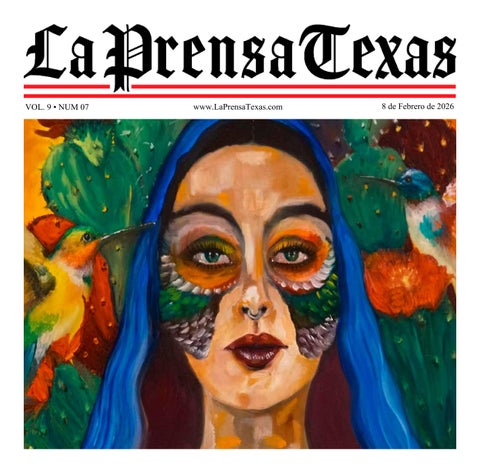
About The Cover Artist: Gigi Morales
By Dr. Ricardo Romo
Gigi Morales (b. 1969, Monterrey, Mexico) is a San Antonio–based visual artist and fine-arts educator whose work spans painting, drawing, and mixed media. Working primarily in acrylics and drawing media, Morales has cultivated a distinctive expressionistic style rooted in process, intuition, and transformation. Her practice, which she describes through the notion of “retakes and variations,” relies on layering, revision, and erasure—methods that allow each composition to evolve organically rather than conform to a fixed plan. Morales’s artworks often deconstruct recognizable
forms, reducing figures and structures to fluid lines and gestural traces. By embracing abstraction, Morales invites viewers into an interpretive dialogue, where emotion, memory, and imagination converge. Critics and colleagues have noted the way her paintings balance control and chance, presence and omission, generating a dynamic rhythm between what is seen and what is withheld. This deliberate incompleteness encourages personal interpretation, allowing meaning to shift with each encounter. For Morales, painting is less an act of declaration than of discovery—an intuitive search that resists singular narrative
or historical constraint. Through these explorations of ambiguity and transformation, Morales creates visual environments that objectify emotion while suggesting the duality between perception and reality. Her works do not reference specific forms or stories, but instead open a field of possibility in which meaning becomes multifaceted and fluid. The resulting images, both intense and hypnotic, invite the viewer to linger within their circular, looping movement of mark and erasure—a rhythm that reflects the artist’s deep engagement with both the physical process and psychological space of making.
Beyond her studio practice, Morales has devoted more than two decades to arts education and community mentorship. She has taught throughout San Antonio’s arts network, including with the Northside Independent School District, and has developed visual arts curricula and workshops for learners of varied backgrounds and abilities. Her teaching philosophy mirrors her artistic approach, emphasizing experimentation, process, and self-discovery.
Morales’s work has been featured in regional exhibitions such as Centro Cultural Aztlan’s annual Virgen de Guadalupe show and the 2025 Virgen de Guadalupe
Exhibition at the Latino Cultural Center in Dallas. She has also participated in public programs like Una Plática, produced by Centro Cultural Aztlan and the Mexican American Library program—extending her commitment to art as a form of connection and cultural storytelling.
District Attorney Debate Draws Attention Raises Questions Across Bexar County
By Yvette Tello
The February 3 District Attorney debate hosted by the Greater San Antonio Chamber and the San Antonio Report brought together a crowded field of candidates and sparked strong interest from voters across Bexar County. With an open seat on the line and eight candidates stepping forward to make their case, the event gave the public one of its first real opportunities to hear directly from those hoping to lead one of the most powerful offices in the local justice system. For many, the debate was an eye-opening experience.
Attendees described the evening as informative and engaging, especially for those seeing the candidates share the same stage for the first time. The moderator kept the conversation moving smoothly, guiding the discussion with thoughtful, well-structured questions that allowed each candidate to speak about their priorities, experience, and vision for the office. One of the biggest takeaways was not just what the candidates said, but how they carried themselves. Observers noted that it became clear early on which individuals demonstrated professionalism, composure, and a strong understanding of the weight of the position. The debate gave the public a chance to see their temperament and demeanor in real time — something that cannot be captured in campaign mailers or social media posts. There were moments when candidates challenged one another, and not all interactions maintained a respectful tone. For some viewers, that added another layer to the experience. In a role that requires judgment, patience,
and leadership under pressure, the way candidates handled themselves spoke volumes.Interestingly, some who were initially thought to be frontrunners did not perform as strongly as expected, while others emerged as surprisingly likable and well-prepared.
A few stood out for their ideas and presence, leaving attendees hoping that, regardless of who ultimately wins, the next District Attorney might consider bringing some of these talented individuals into the office to help strengthen the team. One of the biggest concerns raised during the debate was the ongoing challenge of case backlogs, staffing shortages, and the overall workload inside the District Attorney’s office. While progress has been made in recent years, candidates acknowledged that there is still work to be done.
Voters listening closely seemed to recognize that whoever steps into the role will be walking into a demanding environment that requires both strong leadership and practical solutions. Another theme that stood out was the
contrast between experience and change. Some candidates emphasized their years working within the system, pointing to their knowledge of the courts and daily operations. Others positioned themselves as fresh leadership, saying the office needs a new direction and a different approach to management and public trust. That divide left many voters weighing a familiar question: is this a time to continue with experience, or a time to try something new? Public safety remained front and center throughout the discussion. Candidates spoke about the need to support victims, communicate better with families, and ensure cases are handled efficiently and fairly. For residents, the message was clear — people want to feel protected, but they also want a system they can trust. Even with limited time, the debate left a strong impression. In under an hour, many attendees felt they had gained a clearer picture of how certain candidates think, how they respond under pressure, and how they interact with one anoth-
er. It was enough to leave people more informed and more engaged in the process.The debate did not produce a clear winner in the court of public opinion, but it did accomplish something just as important: it got people paying attention. It reminded voters that the District Attorney’s role reaches into every corner of the justice system — from crime prevention to victim advocacy to courtroom outcomes. As the election approaches, the conversation is only beginning. Residents left the debate with a better understanding of the candidates and a growing curiosity about how the race will unfold in the months ahead.
The City of San Antonio invites the community to visit Historic Market Square, La Villita Historic Arts Village and Houston Street this February for fun, free events and to kick off the San Antonio Stock Show & Rodeo. While enjoying La Villita and Market Square events, don’t forget to stop inside their stores to shop for one-of-a-kind treasures.
Downtown San Antonio Rodeo Events
Western Heritage Vaquero Cook-Off
Friday, February 6 – Sunday, February 8, see event website for hours; free
Location: Historic Market Square, 514 W. Commerce Street
Step back into the 1800s and savor classic vaquero flavors at Historic Market Square. Cook-off teams will compete for the title of grand champion while serving traditional dishes like chili, menudo, and arroz con pollo. For more information, visit the Western Heritage Weekend website.
San Antonio Stock Show & Rodeo Stampede 5K Run/Walk
Saturday, February 7, 9 a.m.; registration required
Location: Milam Park, 201 W. Commerce St.
The San Antonio Stock Show & Rodeo Stampede 5K Run/Walk takes place on the streets of historic downtown San Antonio, starting and ending at Milam Park. After participating in the Stampede 5K, stick around to watch the Western Heritage Cattle Drive & Parade and enjoy great entertainment at the Vaquero Cook-Off at Historic Market Square. To register, visit the event website.
Free February Events in Downtown San Antonio
Western
Heritage Parade & Cattle Drive
Saturday, February 7, 10:55 a.m.; free
Location: Downtown Houston Street
Celebrate Texas roots and kick off the San Antonio Stock Show & Rodeo with a parade along historic Houston Street. The event features a Texas longhorn cattle drive, authentic wagons, and heritage groups showcasing the rich western culture of San Antonio and Texas. For more information, visit the event website.
Rodeo Roundup
Saturday, February 28 – Sunday, March 1, 10 a.m. – 6 p.m.; free
Location: Historic Market Square, 514 W. Commerce Street
Wrap up the rodeo season at Historic Market Square’s Annual Rodeo Roundup. Enjoy live music, familyfriendly entertainment, artisan shopping, and delicious food. Highlights include rodeo characters, a petting zoo, and mechanical bull rides for all ages. For more information, visit the Market Square website.
La Villita Events (418 Villita Street)
Painting in the Plaza
Saturday, February 7, 11 a.m. – 1 p.m.; free
Join us through May 2026 for a free, family-friendly art experience at the Cos House in La Villita Historic Arts Village. San Antonio acrylic artist Chantia “Tia” Bailey returns with a nine-part series themed around music. Arrive early to enjoy light bites and beverages from onsite restaurants. Registration is required; sign up online. All supplies are provided. For more information,
Sana Sunday: Goat Yoga at La Villita
Sunday, February 8, 10-11 a.m.; free
Start your Sunday with a free 45-minute Goat Yoga class at Plaza Juarez in La Villita Historic Arts Village. Led by a certified instructor with Goat Shenanigans, the session ends with 15 minutes of goat cuddle time. Bring your own mat and enjoy a serene, tree-shaded setting with family and friends. For more information, visit the La Villita website.
Craft Tuesday: Stained Glass Hearts
Tuesday, February 10, 6-8 p.m.; free Join a free, family-friendly DIY evening in the Cos House at La Villita Historic Arts Village. This month’s Craft Tuesday features stained glass hearts with local stained glass artist Antony “Tony” Perez. Arrive early to enjoy dinner or drinks from onsite restaurants. Registration is required; sign up online. All supplies are provided.
Downtown Tuesday free parking begins at 5 p.m. in City-owned lots and garages. For more information, visit the La Villita website.
SAAACAM Art Market
Saturday, February 21, 11 a.m. – 3 p.m.; free
Celebrate the 100th anniversary of Black History Month with the San Antonio African American Community Archive & Museum (SAAACAM) at La Villita. Explore current exhibitions honoring the legacies that shaped our cultural landscape and immerse yourself in the vibrant work of today’s artists. The market features vendor booths, music, arts and crafts, and keepsakes
to take home. For more information, visit the event website.
Dancing in the Dark
Tuesday, February 24, 6-8 p.m.; free Looking for a fun, free date night?
Join us for La Villita’s Dancing in the Dark series with free dance lessons in Maverick Plaza! Come a little early to grab a bite or a beverage from onsite restaurants.
Downtown Tuesday free parking begins at 5 p.m. in City-owned lots and garages. For more information, visit the La Villita website.
Market Square Events (514 W. Commerce Street)
Valentine’s Day at Market Square
Saturday, February 14, 10 a.m. – 6 p.m.; free
Celebrate Valentine’s Day at Historic Market Square and explore a variety of food and artisan booths offering delicious treats and unique handcrafted items. Pick up a free rose from 10 a.m. to noon (while supplies last), meet Valentinethemed characters from noon to 2 p.m., and listen to live performances from noon to 6 p.m. For more information, visit the Market Square website.
Market Square Weekends: Live
Performances, Local Eats & Art in Action
Every weekend, 10 a.m. – 6 p.m.; free
Enjoy music, working artists, and food booths at Market Square every weekend in February. For more information and the entertainment lineup, visit the Market Square website.
Downtown Events
Lunch Break on Houston Street (in front of the Majestic Theatre, 224 E. Houston Street)
Thursday, February 5 & 19, 11 a.m. – 2 p.m.
Enjoy food trucks and live music along Houston Street in front of the Majestic Theatre. For more information, follow @ satxfoodtrucks on Instagram.
Make a Plan
Downtown can get busy, so make a plan. Take public transportation, rideshare, taxis, bike, walk, or consult Google Maps or Waze before you leave. Visit the City’s Know Before You Go Downtown website for helpful resources and parking information. Find nearby VIA Metropolitan Transit routes by visiting Google Maps and selecting the public transport option. VIA also offers its Link ride-sharing service for $1.30 a ride within its downtown service area zone and Park & Ride for certain large events. For more details, visit VIA’s website.
Visitor Parking
For easy, convenient, and affordable parking, visit the City’s SAPark website. The parking map provides a full list of City-owned garages and lots. Note that event parking rates (up to $15 at City parking facilities) may be in effect at some parking facilities during busy event weekends.The St. Mary’s Garage (205 E. Travis St.) and the City Tower Garage (60 N. Flores St.) are located just steps from the River Walk, Houston Street and Travis Park and generally, there are many parking spots. Downtown Tuesday offers free parking on Tuesdays from 5 p.m. to 2 a.m. in City-owned parking facilities, and City Tower Sundays offers free parking on Sundays from 7 a.m. to midnight at the City Tower Garage (60 N. Flores St.).
visit the La Villita website.
¿Tiene
Medicaid y es nuevo a Medicare?
Usted podría ser elegible para un plan con un subsidio mensual de $215 para ayudar a pagar gastos diarios
Humana Gold Plus SNP-DE H4461-070 (HMO D-SNP)
Con un plan Plan de Necesidades Especiales para Personas con Doble Elegibilidad de Humana, recibe un subsidio mensual para ayudar a pagar artículos elegibles de venta sin receta, como vitaminas, analgésicos y suministros de primeros auxilios. Lo que no use se acumula para el mes siguiente. Además, si tiene una condición crónica que cumple ciertos criterios, también podría usar este dinero para alimentos elegibles, servicios de agua o luz, renta y más.*
Su plan también podría incluir estos beneficios:
Copagos de $0 en cientos de medicamentos recetados**
Prima mensual del plan de $0†
Cobertura dental, de visión y de audición en todos los planes
Programa de recompensas saludables de Go365 — Gane recompensas que puede canjear por tarjetas de regalo de las principales tiendas minoristas cuando complete actividades saludables elegibles‡
Utilice el subsidio Healthy Options Allowance de Humana para artículos esenciales elegibles en tiendas como Albertsons, Dollar General, Jewel Osco, Kroger, Safeway, Sam’s Club, Uber, Walgreens, Walmart® y más.
Nuestro
Llame para hablar con un agente de ventas autorizado 833-217-5050 (TTY: 711)
8 a.m. – 8 p.m., diariamente Hablamos español
Visite DescubraHumanaMedicare.com o escanee el código QR
Humana es un Plan de Necesidades Especiales para Personas con Doble Elegibilidad HMO SNP, PPO SNP con un contrato con Medicare y un contrato con el programa estatal de Medicaid. La afiliación en cualquier plan de Humana depende de la renovación del contrato. Las cantidades de los subsidios no se pueden combinar con otros subsidios para beneficios. Pueden aplicarse limitaciones y restricciones. *Este subsidio de gastos es un programa especial para afiliados con afecciones médicas específicas. Las condiciones que califican incluyen diabetes mellitus, trastornos cardiovasculares, afecciones de salud mental crónicas e incapacitantes, trastornos pulmonares crónicos o insuficiencia cardíaca crónica, entre otras. Algunos planes requieren al menos dos afecciones y se aplican otros requisitos. Consulte la Evidencia de Cobertura del plan para obtener más detalles. Si utiliza este programa para pagar el alquiler o servicios públicos, el Departamento de Vivienda y Desarrollo Urbano (HUD, por sus siglas en inglés) requiere que se informe como ingreso si busca ayuda. Póngase en contacto con su oficina local del HUD si tiene preguntas.
**La cobertura para medicamentos recetados puede variar según los planes. El copago de $0 puede estar limitado a niveles específicos, etapas de cobertura, suministro para 3 meses y determinadas farmacias de pedido por correo.
†Los Planes de Necesidades Especiales para Personas con Doble Elegibilidad tienen una prima de $0 para los afiliados que reciben Ayuda Adicional de Medicare (subsidio por bajos ingresos). Los afiliados que no califican para recibir Ayuda Adicional pueden tener una prima de hasta $41.50 al mes en mercados seleccionados.
‡Las recompensas no tienen valor en efectivo y se deben ganar y cambiar dentro del mismo año del plan. Se perderá el derecho a las recompensas que no se hayan canjeado antes del 31 de diciembre.
Todos los nombres de productos, logotipos, marcas y marcas registradas pertenecen a sus respectivos dueños, y su utilización no implica aprobación alguna.
Por Franco
Con gran entusiasmo y buenos deseos la base de seguidores del equipo pentacampeón Los Spurs de San Antonio, festejaron la elección del timonel en jefe Mitch Johnson, quien en su primera temporada resultó elegido para dirigir al equipo de la conferencia del oeste en la 75a edición del tradicional partido NBA All-Star Game, que será jugado ante su rival de la conferencia del este. Dicho encuentro será
Mitch Johnson Fue Nombrado
2026 NBA All-Star Head Coach
celebrado en el nuevo estadio Intuit Dome sede del club Los Ángeles Clippers en la “Ciudad de Campeones”, Inglewood, California el domingo 15 de febrero en el horario de las 4:00 pm.
En boletín oficial de la empresa Spurs Sports and Entertainment (SS&E), se indicó lo siguiente: “La NBA anunció que Mitch Johnson (Spurs head coach), será quien represente la Western Conference como head
coach durante el 2026 NBA All- Star Game”. Johnson, se convierte como el segundo entrenador en jefe AllStar en la historia de la franquicia y el primero desde que el legendario Gregg Popovich, fue nombrado con dicho cargo en la temporada del 2016. Johnson, en esta su primer temporada como head coach, ha guiado a Spurs ha obtener la excelente marca de 33 victorias por 16 derrotas (foja que le valió para ser elegido ha dirigir a jugadores estrellas allá en Inglewood).
Con ubicación en el tercer escaño de la tabla general del circuito, con el mejor récord durante 49 partidos jugados desde la campaña de 2016-17. En la defensiva San Antonio marcha en el “top 10”, y como oponente segunda oportunidad en puntos en el segundo lugar, sumando con otras marcas en el tercer lugar con promedio de 111.4.
Bajo la dirección de Mitch Johnson, la escuadra de San Antonio, tiene el tercer lugar en cierres de partidos ganados en la NBA con 17, así como de un promedio de 124.8 en su promedio ofensivo, desde la noche de apertura del 22 de octubre al 11 de enero. Los Spurs se han destacado bajo Mitch Johnson, encestando más de cien puntos durante
39 partidos consecutivos, que viene a ser la segunda marca más larga en la NBA durante la presente temporada, alcanzando la marca de 100 puntos durante el periodo de 46, sobretodo de 49 cotejos. Johnson, nombrado en diciembre como el “Western Conference Coach of the Month”, por sus logros hará se debut como entrenador en jefe dirigiendo al oeste en el 75th NBA All-Star Game durante el domingo 15 de febrero, donde alineará su
pupilo el delantero francés Víctor Wembanyama (Wemby), quien ahora como titular estará participando en su segundo partido consecutivo en la conferencia del oeste, donde en 2025 fue convocado como suplente All-Star. Todo un gran orgullo para nuestra deportiva ciudad de San Antonio, con ambas representaciones de Mitch y Wemby, en el clásico de mitad de temporada del mejor baloncesto universal. (Fotos de cortesía).
Las Velas Ocultas de Monterrey/ The Hidden Candles of Monterrey
By J. Gilberto Quezada
The other evening, I was looking through some old family albums, and I came across a photograph of my uncle, Tío José, who already has passed away and lived in Monterrey, Mexico. He once lived in Laredo, Texas when his parents or my paternal grandparents and their two sons, my father Pedro and Tío José moved after coming from Mexico. Years later, he moved to Monterrey, Mexico and worked for many years as a truck driver delivering merchandise all over Mexico. Many times, when he would come to Laredo to visit his parents during the late 1950s and early 1960s, he would stop by our house to visit. And on other occasions, he would come to visit his aunt and husband in Nuevo Laredo, Mexico and my father and I would go during the evening to visit him. And the two things that he would always tell me and that I still remember to this day were (1) Dios por delante y yo detras del (God goes before me, and I follow behind Him), and (2) the story of las velas ocultas de Monterrey (the hidden candles of Monterrey.)
His first story conveys trust in divine guidance—placing God at the forefront of one’s path, while one walks in His shadow, protected and directed by faith. The phrase “Dios por delante y yo detrás de Él” (God
goes before me, and I follow behind Him) carried a simple but profound meaning. It was his way of reminding me that faith should guide every step, that I must follow God’s path with humility and trust. For a young boy listening to his uncle, those words became a compass, a gentle lesson in perseverance and devotion that lingered long after the visits ended.
But it was the second story— las velas ocultas de Monterrey (the hidden candles of Monterrey)—that always captured my imagination. My uncle spoke of families who, behind closed doors, lit two candles every Friday evening. To outsiders, it seemed a harmless ritual, perhaps even a Catholic tradition. Yet within those homes, the candles were a secret act of remembrance, a quiet echo of Jewish faith carried across oceans and centuries.
Tío José would tell me that in the quiet homes of Monterrey, a peculiar ritual took place every Friday night. Families would turn off their lamps, gather in silence, and light two candles—not as decoration, nor out of Catholic devotion, but for reasons whispered across generations. To outsiders, it seemed like an ordinary act of piety. To those within, it was a fragile bond with a faith they dared not name. According to him, these families were descendants
of Sephardic Jews who had fled Spain and Portugal during the Inquisition. Forced to convert to Christianity, they carried fragments of their traditions into the New World, hiding them beneath layers of Catholic practice. Monterrey, nestled in the mountains of northern Mexico, became a refuge where secrecy was both survival and identity. The candles symbolized more than light. They were a silent resistance against centuries of persecution, a way to honor the Sabbath without arousing suspicion.
Mothers taught daughters, fathers reminded sons, and the ritual endured even as names, languages, and prayers faded. In kitchens and living rooms, the glow of two flames became the heartbeat of memory. And these customs persisted in South Texas and northern Mexico. Families spoke of grandmothers who insisted on lighting candles at dusk, of households that avoided pork, and of prayers whispered in Spanish but with a Hebrew cadence. What neighbors dismissed as quirks were in fact remnants of a crypto-Judaic identity, passed down quietly through generations, much like the stories my uncle shared with me.
What was once hidden in the shadows now emerges into the light, offering descendants the chance to reclaim their legacy.
To tell the story of the hidden candles of Monterrey is to tell the story of resilience: of families who risked everything to preserve their faith, who transformed ordinary acts into sacred rituals, and who carried their identity through centuries of silence.
Today, scholars recognize Monterrey as a center of crypto-Jewish heritage. Archival records from the Mexican Inquisition detail trials of suspected Judaizers, while modern DNA
studies reveal Sephardic ancestry among many families in the region. For me, the memory of Tío José and his words connect personal family history to this broader legacy. In the flicker of those hidden candles lies a testament: that faith, even when concealed, can endure and illuminate the path forward.
This photo was taken on May 6, 1945. Tío José is on the left and Papá in his Navy uniform during WWII.
Latinos Overcame War and Broken Treaty Pledges to Become Americans
By Ricardo Romo, Ph.D
February 2, 1848 marks the date of the end of the war between Mexico and the United States and the signing of the Treaty of Guadalupe Hidalgo, which resulted in the U.S. annexation of fifty percent of Mexico’s territory.
Latinos were the first Europeans to settle North America, founding St. Augustine, Florida, in 1565. Before the Pilgrims landed in Plymouth Rock in 1620, Latino mining families from Northern Mexico forged new towns in New Mexico starting in 1598. More than 100,000 Latinos lived in Mexican communities in the Southwest when AngloAmerican settlers began arriving in the 1830s-1840s. The life of Southwestern Latinos changed dramatically with the U.S.-Mexican War of 1846-1848.
The Mexican War had its origins in the post-Texas Independence movement of 1836, when Texas officially became a Republic. The Republic of Texas claimed a vast territory encompassing parts of what are now New Mexico and Colorado. Under the Act of December 19, 1836, the First Congress of the Texas Republic declared its southern and western boundary to be the Rio
Grande from its mouth to its source, and from there due north to the 42nd parallel. This line swept in the upper Rio Grande valley (including Santa Fe and much of today’s New Mexico), including a broad wedge of High Plains and Rocky Mountain country reaching into future Colorado, Kansas, and Wyoming.
When James K. Polk campaigned for the U.S. presidency in 1844, he promoted the concept of Manifest Destiny that encouraged U.S. territorial expansion, especially in Texas, California, Oregon, and New Mexico. Polk supported the annexation of Texas, knowing U.S. statehood for Texas would inflame tensions with Mexico, which still regarded Texas as its own province.
A disagreement over the boundary claims between Mexico and the newly created Republic of Texas led to war in 1846. After Texas entered the Union in 1845, the United States claimed the Rio Grande as Texas’s southern border, while Mexico insisted the boundary was the Nueces River, 150 miles to the north.
In July 1845, President Polk ordered General Zachary Taylor to Corpus Christi, Texas and by late 1845
had positioned about 3,500 troops near the disputed frontier.
In January 1846, Polk instructed Taylor to advance into the contested zone between the Nueces and the Rio Grande, an area Mexico regarded as its territory. Mexico perceived this as an invasion. On April 25, 1846, Mexican cavalry attacked a small U.S. detachment in this disputed region, killing and wounding several and capturing dozens. President Polk used this clash as the trigger, arguing in his May 11, 1846, war message to Congress that Mexico had “invaded our territory and shed American blood upon American soil.”
The signing of the Treaty of Guadalupe Hidalgo on February 2, 1848, marked one of the most consequential events in the Mexican American experience and the history of the U.S.–Mexico borderlands. The treaty brought an end to the Mexican-American War (1846–1848)—a two-year conflict that reshaped both nations. Under the Treaty’s terms, Mexico ceded approximately 525,000 square miles, or 55 percent of its territory, to the United States, including present-day
Morales, “El Espíritu de la Soldadera”. Courtesy of Centro Cultural Aztlan.
California, New Mexico, Arizona, Colorado, Nevada, Utah, and parts of Wyoming.
In exchange, the U.S. paid Mexico $15 million— roughly five cents per acre— and assumed certain debts owed to American citizens. More importantly, the treaty established the Rio Grande as the official boundary between Texas and Mexico, settling years of territorial dispute dating back to the Texas Revolution of 1836.
For the nearly 100,000 Mexicans living in the
annexed territories, the Treaty of Guadalupe Hidalgo promised civil rights, property protection, and freedom of religion, along with the opportunity for Mexicans living in the Southwest to become U.S. citizens. About 90 percent chose to become American citizens, anchoring Mexican cultural continuity in places like Santa Fe and San Antonio, cities established long before the United States existed. Yet, although the treaty professed to guarantee equality, Mexican
Gigi
Photo by Ricardo Romo.
Americans soon faced loss of lands, discrimination, and disenfranchisement, setting the stage for ongoing struggles over identity and rights–struggles that continue to resonate today.
The war’s aftermath severely weakened Mexico politically and economically. Just weeks after the Treaty’s signing, the discovery of gold in California accelerated American migration westward, intensifying pressures on Mexican and Indigenous communities already displaced by the Mexican War. Loss of territory and sovereignty contributed to decades of political instability in Mexico. Meanwhile, in the United States, debates over whether the new territories could allow slavery inflamed national tensions, helping to sow the seeds of the American Civil War.
The Treaty of Guadalupe Hidalgo also reflected the limitations of 19th-century American democracy. It excluded Native Americans and enslaved people from its protections and referred to Indigenous nations as “savage tribes,” thereby denying them citizenship. The U.S. military’s subsequent campaigns against native peoples throughout the Southwest continued until 1886. The capture of Apache leader Geronimo ended the Indian Wars. However, Native Americans in these regions did not obtain full citizenship until 1924, and some, such as those in Arizona and New
Mexico, only gained voting rights after World War II.
Largely ignored for more than a century, the Treaty of Guadalupe Hidalgo emerged as a powerful symbol during the Chicano Movement of the 1960s. Activists like Reies López Tijerina invoked the Treaty to demand the restitution of stolen land grants in New Mexico, and Chicano students studied its clauses as part of a rediscovery of Mexican American history and identity. The annual celebration of Segundo de Febrero (February Second) revived awareness of this pivotal event, particularly in regions like Texas and New Mexico, where the Treaty’s legacy remains entwined with daily life.
In San Antonio, this reclamation of history has found expression through art. In 1977, the Centro Cultural Aztlan launched the first Segundo de Febrero Exhibition, curated by Ricardo Jasso under the directorship of Ramón Vásquez-Sánchez. This groundbreaking exhibition invited Latino artists to interpret the Treaty’s historical and emotional weight—its promises and betrayals, its borders and bridges—through visual language. Over the past 49 years, the exhibit has evolved into a national model for artistic reflection on Mexican American identity, or Mexicanisimo, within the United States.
Artists exhibiting at the Centro blend historical memory with contemporary politics, linking the 1848 border redefinition to ongoing struggles over immigration, deportation, and belonging. Many recent works—including those created amid contemporary political rhetoric and heightened scrutiny by U.S. Immigration and Customs Enforcement (ICE)—depict border patrol agents, migrant families, and symbolic landscapes such as the Presa Falcón reservoir, reminding viewers that the Treaty’s consequences continue to shape lived experience along a border that remains both real and psychological.
The observance on February 2 is vital, argues the Mexican American Heritage Association, because it transforms the historical memory of 1848 into collective action, giving Mexican American communities a space to honor our origins, assert our cultural presence, and reaffirm that Mexican American history is an essential thread in the broader American story. By gathering on February 2 each year across the country, Mexican Americans not only remember the moment our identity was born, but we also strengthen the intergenerational bonds that ensure the Mexican American story continues to be carried forward with dignity, pride, and purpose.
Samuel Agustus Mitchell. [Land Claims by the Republic of Texas]. “State of Texas in 1846”. Courtesy UT Austin Benson Latin American Collection. Photo by Ricardo Romo.
Raul Servin, “The Destiny of the Latino in the USA.” Courtesy of Centro Cultural Aztlan. Photo by Ricardo Romo.
Eduardo Garcia, “Border Wall Scream”. Courtesy of Centro Cultural Aztlan. Photo by Ricardo Romo.
NOW HIRING
Math Teacher (San Antonio, TX):
Teach Math at secondary school.
Bachelors in Math or Math Edu.
+1 yr exp as Math tchr at secondary sch.
Mail res.: Riverwalk Education Foundation, 1450 NE Loop 410 San Antonio, TX 78209, Attn: HR Dept., Refer to Ad#SMR.
By Eduardo Jiménez Mayo Ph.D., J.D.
Art lovers go to EL Café On The Go. My uncle, architect José Jiménez, also an accomplished watercolorist and sketch artist, shows up faithfully each morning for his mug of black coffee and a quiet space to read his art history books. Born in 1939, and retired from the architecture faculty at UTSA, my uncle enjoys hanging at Jerry Villareal-Medina’s shop more than any other. It’s the place where he gets to meet the shining stars, young and old, in the San Antonio art scene – those whose works go up and down the walls of this small and cozy Olmos Park gallery.
I join my uncle at Jerry’s café whenever I can for a chat with him or his colleagues – a solid section of the intelligentsia of Monte Vista and Olmos Park. If you want to strike up a conversation with a septuagenarian ballet dancer, Jerry’s may be your place. If you want to strike up a conversation with a Gen Z oil painter, Jerry’s may be your place. True, the clientele tends to
More than Coffee is Brewing at El Café On The Go
be on the mature side, but they radiate love, warmth, and affection. Their dogs are also happy pups and they’re just as welcome to relax and contemplate the wonders of life as their owners.
Knowing coffee to be a stimulant, we expect to be uplifted on a neurological level, but there is no substitute for the people and pets at Jerry’s café to put you at ease as you sip on the latest sieves from Hawaii, Brazil, Mexico, Colombia or Ethiopia. The real money is probably in the caffè latte and the cappuccinos, but the classic mug of ebony delight – the “black drip” – is the most common request. Caffeine aside, you shouldn’t leave Jerry’s without tasting a scoop or two of his mother’s chicken salad.
It doesn’t take a connoisseur to know good chicken salad from a bad. This one leaves a piquant imprint in the memory of the taster.
The limited range of tarts and pastries on display offer an aromatic treat, if nothing else, but he doesn’t claim a hand in their making, as he contracts with local patisseries for them. Olmos Park might have a
snobby reputation but the snobs must go elsewhere, because at Jerry’s it’s all congeniality. That’s why his customers are so loyal. His coffee machine reads prodotto in Milano. You might have guessed it from a man who spent his formative years apprenticing with local coffee roasters. When asked what he enjoys the most about his Latino owned and operated business, he said: “If you want to get the customers to invest in you, you’d better be ready
to invest in them, take the time to actively listen to their stories, develop relationships, remember their names, get to know their families.
This neighborhood has five or more coffee shops, depending on where you draw the lines, so to keep a competitive edge you’d better love what you do and do it with dignity and respect – but in a relaxed frame of mind: no matter what worries you may have about tariffs and the rising cost of doing busi-
ness.”
Jerry believes there’s no sense in doing what doesn’t make one happy. He loves what he does. That doesn’t mean he’ll stay there forever though. As a ‘dreamer,’ he’s always had his heart in two places at once: Monterrey and San Antonio. In times like these, he reveals, “it’s hard not to think about going back to México.” As a practical matter, however, he expects to be here for his customers for a long time to come.
Emma Castillo Bedoy
September 21, 1926 – January 26, 2026
Emma Castillo Bedoy was born on September 21, 1926, in Michigan, but her early life was deeply shaped by the years she spent living in Monterrey, Mexico. Those experiences — the culture, the closeness of family, and the traditions of her community — stayed with her throughout her life and became part of the warmth she later brought to San Antonio. Emma spent many hours working alongside her father at Castillo Bakery, where she learned the rhythms of the bakery world and developed the quiet strength and work ethic that would define her. It was in that same bakery that she
met Manuel Bedoy, the man who would become her husband and partner in building a legacy. Together, Emma and Manuel founded Bedoy’s Bakery, a business that would grow into a cherished San Antonio institution. Emma was involved from the very beginning — not just helping, but shaping the heart and spirit of the bakery. She knew the customers, honored the traditions, and carried forward the values she learned in her father’s shop. When Manuel passed away, Emma stepped into full leadership, managing Bedoy’s Bakery with determination, grace, and unwavering commitment. She kept the bakery thriving for many years, preserving its recipes, traditions, and community connections until she retired several years ago. Emma was more than the force behind the bakery — she was the matriarch of the Bedoy family. Her guidance, strength, and devotion shaped generations. Her legacy lives on in her
family, in the traditions she protected, and in the bakery that continues to honor her spirit every day.
Biografía de Emma Castillo Bedoy 21 de septiembre de 1926 – 26 de enero de 2026
Emma Castillo Bedoy nació el 21 de septiembre de 1926 en Michigan, pero gran parte de su infancia y juventud transcurrió en Monterrey, México. Aquellos años — marcados por la cercanía familiar, la cultura y las tradiciones— formaron la base de los valores que llevaría consigo toda su vida. Desde joven, Emma pasó muchas horas trabajando junto a su padre en la Panadería Castillo. Allí aprendió el ritmo del trabajo, la disciplina y el profundo sentido de responsabilidad que siempre la caracterizó. Fue también en ese ambiente donde conoció a Manuel Bedoy, quien se convertiría en su esposo y compañero en la construcción de un legado familiar.
Juntos fundaron Bedoy’s Bakery, una panadería que con el tiempo se transformó en una institución querida en San Antonio. Emma no solo apoyó el negocio: fue parte esencial de su corazón. Conocía a los clientes, respetaba las tradiciones y mantenía vivos los valores que había aprendido desde niña. Tras el fallecimiento de Manuel, Emma asumió por completo la dirección de la panadería. Con determinación, gracia y un compromiso inquebrantable, mantuvo a Bedoy’s Bakery en funcionamiento durante muchos años, preservando recetas, tradiciones y la conexión con la comunidad hasta su jubilación. Emma fue mucho más que la fuerza detrás de la panadería: fue la matriarca de la familia Bedoy. Su guía, su fortaleza y su amor moldearon a generaciones. Su legado vive en su familia, en las tradiciones que protegió y en la panadería que continúa honrando su espíritu cada día.
A message from State Representative Lloyd Doggett
Thank you for your recent communication expressing our shared outrage over the horrific abuses committed by ICE. I voted NO on Republican legislation to fund DHS/ICE. Taxpayer dollars should protect us from criminals but never subsidize cruelty or lawlessness led by Kristi Noem and Stephen Miller. Without real accountability, transparency, and enforceable safeguards, more funding only guarantees more harm. More violence, more suffering, more chaos, more tragedies. My thoughts recorded about the Trump regime flooding cities with unwanted and unnecessary ICE agents. Time and time again, wherever ICE goes, chaos follows. As they intimidate communities, they are not seeking to find “the bad ones;” they’re after anyone they can remove—no matter how much that individual is contributing to the community. This is not about removing criminals, but to condition Americans to accept Trump’s abusive practices. As liar-in-chief, Trump has clearly inspired his agents to lie about Minneapolis killings of American citizens and to obstruct state and local law enforcement from conducting independent investigations. We need accountability, including an independent investigation of this latest killing of Alex
Pretti, not another cover up like that regarding Renee Good. Masked operations dragging law-abiding neighbors out of their homes is unfair, unjust, and un-American. Just as criminals must be held accountable, those ICE agents, who provoke violence and brutalize immigrants, must be held accountable. They have no “absolute immunity” for their wrongdoing. Abusing her authority, Secretary Noem is a disgrace. I am an original sponsor of the resolution calling for her impeachment and will continue voting against funding for ICE abuse. You can watch my interview with KVUE on this by clicking here. Trump and his chief architect of antiimmigrant cruelty, Stephen Miller, regularly stir fear to justify unchecked executive power, even floating daily quotas of thousands to arrest and remove. So often, that means targeting people who are working hard, paying taxes, and contributing to our community. From trying to eliminate legal immigration pathways to attacking birthright citizenship, from shutting down refugee programs, to slashing support for asylum seekers, the Trump regime is dismantling every piece of our immigration system that reflects our Nation’s traditional values. This is not reform, but racism
at its core. ICE raids continue with little transparency or accountability—warrantless stops, harassment around schools, and detentions without due process. Masked, plainclothes operations only heighten confusion and risk. No family should fear school dropoff, a hospital visit, or worship. What I am personally doing: Supporting legal action against the Trump regime through my service on the House Democratic Litigation Working Group & Rapid Response Task Force.
Pressing for Congress to use the power of the purse to restrain the Trump regime in government funding bills. During my interview with CBS Austin, I shared my opposition to bills that fail to hold agencies like ICE accountable. You can watch my interview here.
Joining my colleagues in exerting our Congressional oversight power in ordering transparency and accountability in this investigation. Additionally, we have demanded the suspension of the surge of federal officers and agents to Minneapolis.
Calling out the Trump regime at every opportunity online and on the Floor of Congress. Demanding specific answers directly from the Trump regime about their wrongdoing and their lies.
Voting to impeach and reject any measures that enable Trump.
Urging awareness that a Democratic House and Senate are the best way to restrain Trump.
Supporting legislation that a new Democratic majority could employ to restore due process, stop deceit, and keep families together. Sponsoring: the ICE Visibility Act (clear, visible uniforms for immigration officers), the NO BAN Act (ending discriminatory travel bans), the Protect Vulnerable Immigrant Youth Act (preventing “age-outs”), the No Anonymity in Immigration Enforcement Act (badge/name transparency), the Combating Deceptive Immigration Enforcement Practices Act (banning impersonation and deception), the No Round Up Act (blocking mass raids), and the American Families United Act (relief for mixed-status families).
Though you are not in elected office, there are actions you personally can take to join in pushing back against all of this wrongdoing. I support protests. They can be useful in building public awareness, but they must be protests that utilize only the power of nonviolent resistance. It’s clear that violence begets violence. Those who respond to regime
wrongdoing with violence and destruction are only helping Trump. It enables Trump and Kristi Noem to shift the focus to violence by protesters instead of answering for their own wrongs. The Republican House and Senate have been little more than a doormat for Trump. The election at which they can be held accountable is already underway. While I will not be on the ballot, I am working to secure a Congress that holds Trump accountable and hope that you and many more of our neighbors get actively engaged now to bring about the change that we so desperately need. I hope you will do your part, not just to vent our shared anger, but to work to stop those who are enabling Trump. We have not just the right, but the duty to make our voices heard and to work for genuine change.So you can more easily follow my work, I forward occasional email updates on my ongoing work in Congress regarding important issues. To receive such messages, please indicate your own priorities online at doggett.house.gov/survey. You can also follow me on Bluesky, Twitter, Instagram, Threads and visit my Facebook page.
Sincerely, Lloyd Doggett
By Yvette Tello
In recent weeks, Congressman Joaquin Castro has made headlines for his unwavering commitment to advocating for immigrant rights and addressing the consequences of U.S. immigration policies. His visit to Dilly, Texas, to perform a welfare check on a five-year-old boy and his father, both caught in the crosshairs of an ICE controversy, exemplifies his dedication to these critical issues. The backdrop of Castro’s visit involves a troubling situation where families were separated due to ICE raids and the harsh conditions often found in detention centers. The father and son, whose identities were not disclosed for privacy reasons, had been affected by these policies, highlighting the emotional and psychological toll such actions take on families.
On his visit to Dilly, Castro aimed to assess the wellbeing of the young boy and his father, ensuring they were receiving the necessary support following their ordeal. The inspection was not merely a formality; it was a significant step in advocating for humane treatment of families affected by immigration enforcement. Following the welfare
Advocacy and Action in Response to ICE Controversies
check, Castro participated in a rally protesting the ICE raids and the conditions of detention centers. The event drew attention to the broader implications of these policies, with community members, activists, and fellow politicians joining Castro in voicing their concerns. The rally underscored the need for systemic change in how immigration laws are enforced and the treatment of individuals in detention.
During the rally, Castro spoke passionately about the impact of family separations, emphasizing the emotional scars left on children and parents alike. He called for comprehensive immigration reform and highlighted the importance of compassion over punishment. In a further demonstration of his commitment, Castro took the next steps by advocating for the release of the father and son through legal channels. He approached a San Antonio judge, presenting the case for their humane treatment and arguing against their continued detention. His efforts, alongside dedicated legal teams, culminated in a ruling that ordered their release. This victory was not just a legal win but a poignant reminder of the power of advocacy. Castro’s
actions reflect a broader movement aimed at reforming immigration practices and ensuring that families remain united.
Following their release, Castro picked them up from the detention center. The father and son returned home to Minnesota, a significant relief given the uncertainties they faced during their time in detention. Their story serves as a testament to the resilience of immigrant families and the importance of community and political advocacy in effecting change. Joaquin Castro’s efforts in Dilly, Texas, underscore the critical role of elected officials in advocating for vulnerable populations, particularly in the face of contentious immigration policies. His actions not only provided immediate relief to a family in distress but also contributed to a larger dialogue on the urgent need for reform in the immigration system. As the rally and subsequent legal advocacy demonstrated, the fight for humane treatment and justice continues, with leaders like Castro at the forefront. This was a win. There is still a lot of work to be done but we must recognize every effort, every prayer, every voice. Keep up the good fight.
Piratas Empató Serie Vs. Acereros Astros Ganó El Primero A Yankees
Por Sendero Deportivo
En la semifinal del playoff categoría Abierta dominical Liga Potranco (Estadio Potranco), el primer partido entre Acereros y Piratas, que había sido postergado con pizarra a favor de Acereros 9-4 carreras, con éxito se reanudó jugándose las tres entradas restantes.
Quedándose el mismo marcador con triunfo del abridor Jheyson Manzueta y excelente
relevo del novato Max Vega de Piratas, quien suplió al relevista Sebastián Cuéllar, que por motivos personales no pudo estar presente en la alineación. Posteriormente de acuerdo al presidente Simón Sánchez, ambos equipos jugaron el segundo partido de su serie ha ganar dos de tres partidos. Los directivos de Acereros Memo de la Cerda y Luis Mendoza “Tronco”, ambos jugadores
decidieron continuar con Manzueta de abridor, mientras que por Piratas su manager Iván Vaquera y el coach Mauricio Esparza “Malaka”, también jugadores, confiaron las responsabilidades a su as del pitcheo José López “El Látigo”, quien dejó el montículo sin decisión, entrando al relevo Miguel Rondon (campeón pitcher de temporada 8-1), quien a la par vino adjudicándose la victoria en forma espectacular teniendo pizarra adversa y con empate de 4-4 carreras en la apertura del noveno episodio, sus compañeros lo respaldaron anotando par de carreras poniendo el marcador a favor 6-4 carreras.
Rondon, tiro el cierre del noveno capítulo ha tambor batiente conservando el score de 6-4.
Cabe anotar que las carreras del triunfo fueron anotadas por Jacob Morales (5-4), y el valioso receptor José Ferrer (6-4).
Rol de juegos domingo 8 de febrero: 10am Piratas vs Acereros en el tercer partido de su serie en semifinales. 1:30pm segundo partido serie semifinal Broncos contra Dodgers. Broncos ganó el primer partido con pizarra de 5-2.
En la final del playoff categoría Liga Potranco Masters 50+, el pentacampeón Yankees del manager y jugador Luis Velázquez, cedió terreno ante los Astros del también manager y jugador Pedro Espinoza, quien celebró en grande la victoria de 5-4 carreras.
Por Yankees abrió el lanzador Doug Rosini (campeón bateador de la temporada), quien tuvo
relevo de Alan Mow, (Rosini perdió el juego. Mow, realizó efectivo relevo sin permitir carreras).
Ubaldo Montelongo (campeón pitcher de temporada dedicada al campo corto Erick Montes de Yankees), comenzó el partido, tras cuatro entradas lo dejó empatado 2-2 carreras, siendo relevado por Lee Mann y Greg Carrera, quien se adjudicó la victoria.
Este domingo 8 de febrero a las 12pm se jugará el
segundo partido en el campo 2 del Potranco Baseball Field propiedad del artista Eloy Rocha, bajo la presidencia de Simón Sánchez.
En las fotos aparecen José Ferrer y Jacob Morales, celebrando anotaciones que dieron el triunfo a Piratas contra Acereros, empatando la serie 1-1. Greg Carrera, lanzador de Astros que en relevo ganó el primer juego ante Yankees. (Fotos de Franco).
BUILT ON LEGACY Artists of San Antonio
OPENING RECEPTION
Thursday, February 12, 2026 | 6pm – 9pm
Cu lture Commons Gallery
Maria Jessica Brown, Ruth Buentello, Mel Casas, Juan de Dios Mora, Juan Carlos Escobedo, Jose Esquivel, Barbara Felix, Doroteo Garza, Paul Hurd, Lucia LaVilla-Havelin, Marilyn Lanfear, Leigh Anne Lester, Joe Lopez, Cesar Martinez, Linda Monsivais Hernandez, Deborah Moore Harris, Howard Rhoder Jr., Elizabeth Rodriguez, Jesse Treviño, Anita Valencia, Kathy Vargas, Ramon Vasquez y Sanchez, Andy Villarreal
Exhibition on View Through January 15, 2027 Free and Open to the Public 115 Plaza de Armas, San Antonio, TX 78205
Tuesday – Friday | 9am – 5pm
CON CONFIANZA
Secretaría de Estado de Texas Jane Nelson
O O O
FECHAS IMPORTANTES
• Febrero 17-27, 2026: Votación temprana en persona
• Febrero 20, 2026: Fecha límite para que la solicitud de boleta por correo sea recibida
• Marzo 3, 2026: Día de elecciones
LO QUE NECESITAS
• Revisa los centros de votación: Con tu condado o en VoteTexas.gov
• Identificación con foto: 1 de las 7 formas de ID aceptadas
• Documentos adicionales: Si corresponde
PASOS CLAVE
• Ve a VoteTexas.gov: Verifica el estado de tu registro
• Vota en persona: Votación temprana o en el día de las elecciones
• Vota por correo: Si eres elegible
Happy Birthday, Commander Gilbert Rodriguez!
La Prensa Texas Community Liaison Ramon Chapa Jr. had the honor of being invited to a very special celebration—the birthday party of Commander Gilbert Rodriguez. Surrounded by love, laughter, and good vibes, Commander Rodriguez celebrated alongside his lovely wife, Guadalupe Rodriguez, as well as family and close friends who came together to make the day unforgettable. Ramon shared that Gilbert and Lupe are familia, and the celebration was filled with joy, memories, and plenty of fun. It was truly a heartfelt gathering honoring a man who means so much to so many.
From all of us at La Prensa Texas—Happy Birthday, Commander Gilbert Rodriguez!