Understanding Diabetes: Preventing The Damaging Effects on Your Body & Brain
More than 39% of the adults in the U.S. have prediabetes, and most don’t even know it. Blood sugar issues often creep up silently: a little fatigue after meals, stubborn belly fat, frequent thirst, or frequent urination. Over time, these clues can lead to insulin resistance, prediabetes, and eventually Type 2 diabetes. And, did you know that dementia is now being called Type 3 Diabetes? There is a correlation between impaired insulin signaling and Alzheimer’s disease, so watching your blood sugar has far more benefits than simply avoiding the complications of diabetes. The good news? Diabetes is not a destiny. With the right testing, nutrition, and gut-focused lifestyle approach, it can be prevented, improved, and even reversed.
Step 1: Find It Early
Traditional lab work often misses early insulin resistance. By the time blood sugar (glucose) levels rise, the imbalance has been developing for years. Ask your healthcare provider or functional practitioner to check the following markers:
Test / Tool
Fasting Insulin
Hemoglobin A1C
HOMA-IR (Homeostatic Model Assessment for Insulin Resistance)
C-Peptide
Continuous Glucose Monitor (CGM)
What It Measures
Measures how much insulin your body produces in a fasting state.
Reflects the 3-month average of blood sugar levels.
A calculated ratio of fasting glucose and insulin that helps detect early insulin resistance.
Shows how much insulin your pancreas is making and indicates beta cell function — predicts future diabetes risk.
Tracks real-time blood sugar response to foods and lifestyle factors.
Optimal / Key Insight
Ideally below 7 mclU/ml.
Optimal is under 6%.
Lower values indicate better insulin sensitivity.
Helps assess if your pancreas is over- or under-producing insulin.
Helps identify foods that spike your blood sugar — responses vary by person. You can order one without a prescription to better understand and manage glucose levels.
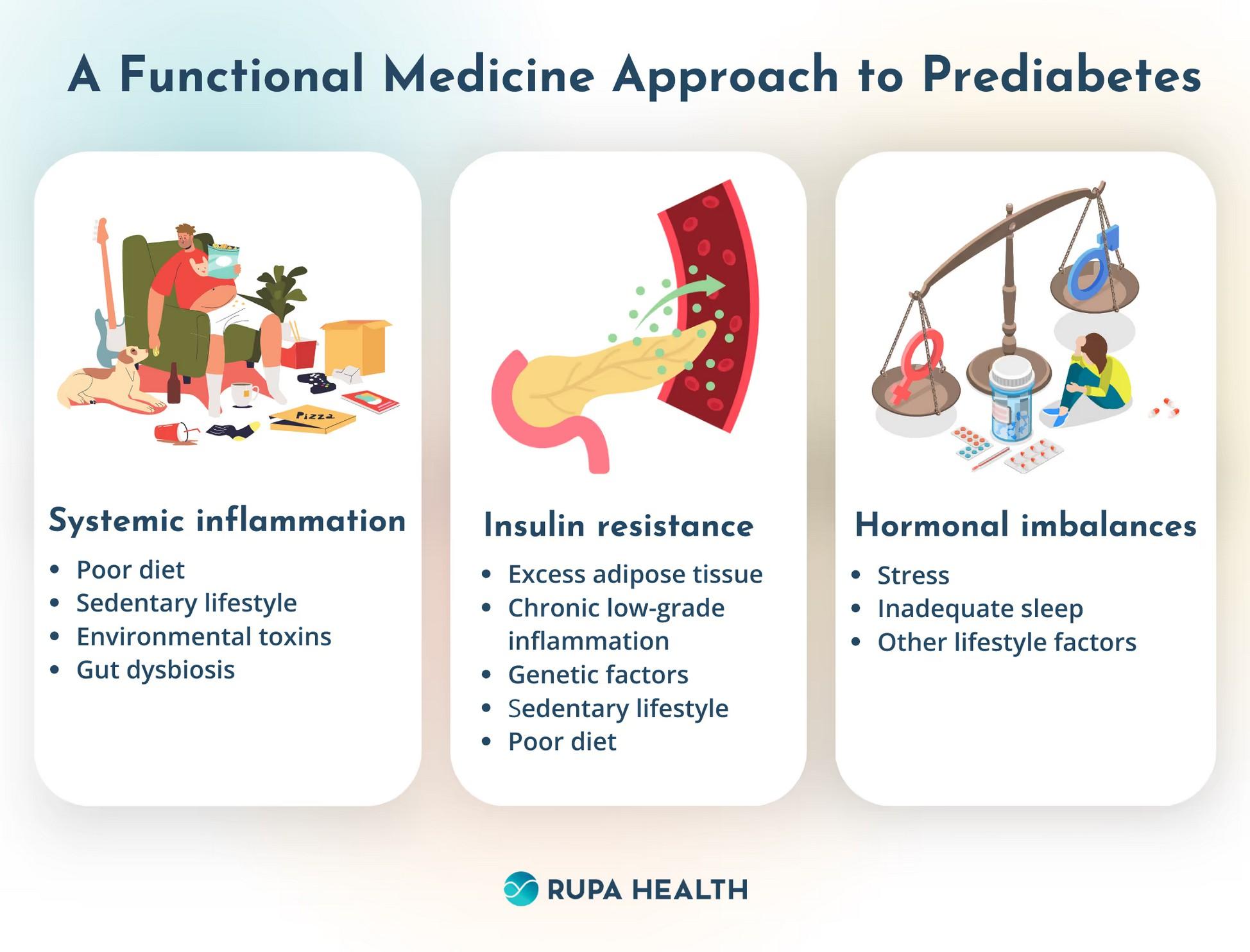
Functional medicine looks deeper: not just at glucose, but how your body is using insulin, your level of inflammation, and your gut health. Imbalanced gut microbiome have shown a direct correlation with diabetes and certain strains of bacteria are consistent among those with diabetes.
“We believe that changes in the gut microbiome cause type 2 diabetes — the changes to the microbiome may happen first, and diabetes develops later, not the other way around,” said Wang, who is also an assistant professor in the department of nutrition at the Harvard T.H. Chan School of Public Health
Step 2: The Gut–Blood Sugar Connection
Your gut microbiome (the trillions of bacteria in your digestive tract) plays a powerful role in blood sugar control. Here’s how:
Gut bacteria regulate inflammation: When the gut lining is leaky or inflamed (“leaky gut”), it can trigger systemic inflammation that worsens insulin resistance.
GLP-1 dysfunction: Certain gut bacteria affect how your body releases GLP-1, a hormone that helps balance blood sugar and appetite. It seems many people are taking a GLP-1 medication, however we do naturally produce GLP-1 by the L cells of the small intestine and colon. Sadly, many individuals today have impaired production and the signaling of GLP-1 has become dysregulated or blunted because of our disrupted gut microbiome. So, when natural GLP-1 function is healthy, your body self-regulates hunger, energy, and blood sugar beautifully.
Fiber feeds friendly microbes: A high-fiber, plant-rich diet helps your gut produce short-chain fatty acids (like butyrate), which improve insulin sensitivity and lower glucose spikes.
Step 3: Lifestyle Medicine – Daily Steps to Prevention & Reversal
Small, consistent changes have a massive impact. Here’s a functional medicine roadmap:
1. Eat in a way that supports insulin balance
Try 12–14 hours of overnight, intermittent fasting to give insulin a rest. Stopping all eating and drinking (except water of course) three hours before bed will make fasting super easy without causing added stress on your body or mind.
Limit sugars and refined carbs (think anything in the middle isles of the store or bakery department) and swap for fiber-rich foods like lentils, quinoa, low glycemic fruits like bluberries, leafy greens, and broccoli.
Build balanced meals to include the following: Protein sources such as lean poultry, fish, eggs, beans; Fiber from vegetables, legumes, whole grains; Healthy fats from olive oil, avocado, nuts, seeds. Bonus inclusion to help your gut: Add a fermented food daily (sauerkraut, kefir, kimchi, yogurt) to support gut bacteria.
2. Move after meals
A 10–15 minute walk after eating helps muscles absorb glucose before it builds up in the bloodstream. In general, move or stand more than you sit.
3. Prioritize restorative sleep
Lack of sleep increases cortisol and raises blood sugar. Aim for 7–9 hours nightly, and try to be in bed before 11:00 PM for the most restorative sleep. Bonus: stop eating three hours prior to bedtime to easily incorporate intermittent fasting = cellular healing, rest and repair in the gut & brain, and deeper sleep!
4. Lower stress
Chronic stress triggers insulin resistance by raising your cortisol levels for too long. Practice deep breathing, prayer, meditation, and definitely take a five minute, brisk nature walk daily. Play an instrument, talk with a friend, snuggle with your pet, but do something throughout the day that brings you just a few minutes of peace and joy. It might be time to reframe your schedule and filter out the unnecessary things that weigh you down to give you just a little extra time to decompress. Get laser focused on the things that make a positive difference in your life and success, and then say no to the things within your control. Often we are guilted to do more and be more for everyone else, but you have to prioritize your sanity to stay healthy for the long haul.
Functional Medicine Treatment Tools
If you’ve already been diagnosed with prediabetes or diabetes, functional medicine can complement your conventional care plan by:
Addressing gut imbalances: Comprehensive stool testing to identify dysbiosis or inflammation.
Supporting healthy glucose: Supplements like magnesium, berberine, alpha-lipoic acid, and chromium can help your body utilize insulin appropriately, especially when combined with proper nutrition (see above) and exercise (simply move more throughout the day). For a complete supplement to help support insulin receptor function as well as healthy glucose metabolism, try Metabolic Xtra by Pure Encapsulations.
Balancing the microbiome: Probiotics and prebiotics specific to metabolic health (like Akkermansia muciniphila and Bifidobacterium longum) help boost the good bacteria you need to offset the harmful, destructive bacteria that lead to SIBO, Dysbiosis and inflammation of the gut.
Reduce toxin load: Environmental toxins and heavy metals can impair insulin signaling. Because there are toxins we can’t prevent being exposed to, it’s best to use filtered water, avoid using plastics for your food or drink, and dry brush for extra help detoxifying through the largest organ – our skin!