
BACHELOR OF ARTS (HONS) IN INTERIOR ARCHITECTURE
BACHELOR OF ARTS (HONS) IN INTERIOR ARCHITECTURE
LAM JING SYE 0351688
01 02 03 04
ASSIGNMENT
Group Presentation
Spreadsheet
Group Video
Screenshot
Class Exercise
Reflection
Group Presentation Spreadsheet
Group Video Screenshot
Progression
Reflection
Presentation
Spreadsheet Progression Reflection
As future Graduate Interior Designers, students must possess a broad vocabulary and understanding of contractual, professional and legislative terms used daily whether amongst clients, contractors, peers, authority or the general public.
This assignment serves as an introduction to the standard of Professional Conduct and Practice It aims to outline the general Professional Conduct and self-discipline expected of Interior Designers registered with the Board of Architects (Lembaga Arkitek Malaysia)
Students are required to refer documents that relate closely to the legal and regulatory framework in practice such as the Architects Act 1967, Architects Rules 1996, Uniform Building By-Laws 1984, PAM/MIID Contract and other regulatory provisions related to the profession.
At the end of this exercise, students will engage in knowledge transfer amongst their peers to understand, question and later apply in their individual projects
Extensive data collection, assimilation and elaboration in this assignment shall be the groundwork & fundamentals for Assignment 3 & Assignment 4

HTTPS://YOUTU.BE/PGQ9PKHVMKI?SI=OPBTVOYFFJXEWAGW
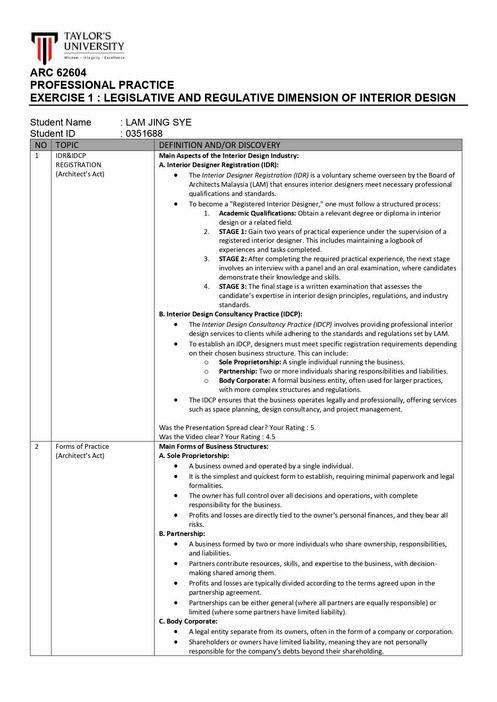
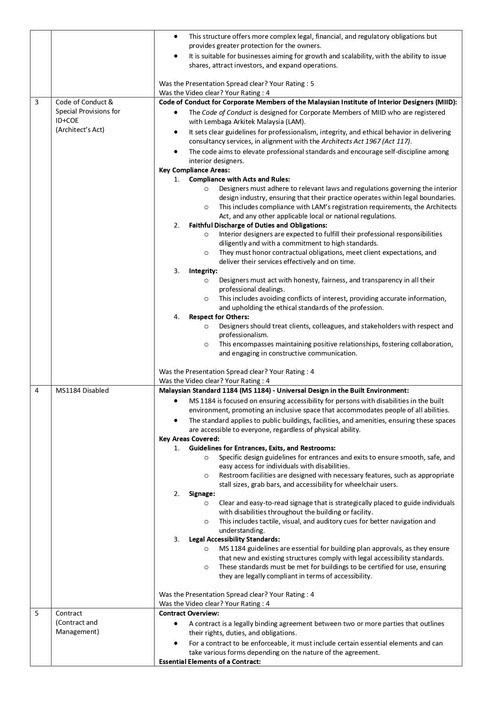
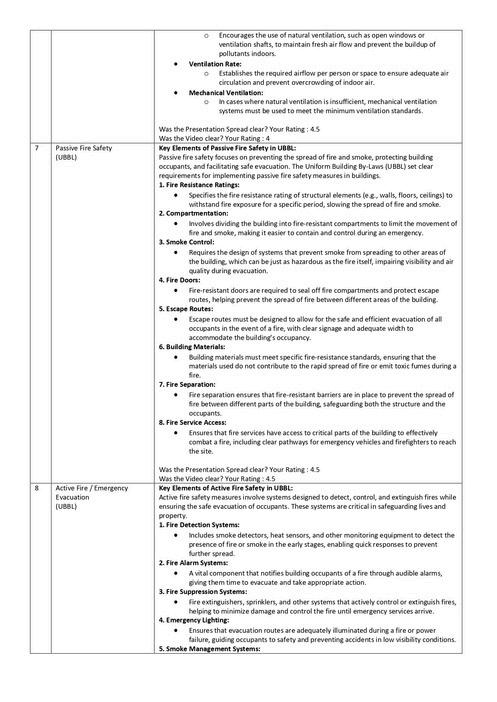
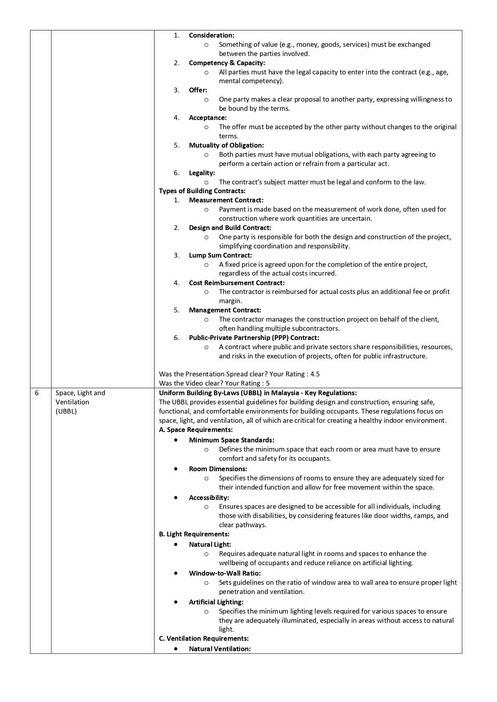
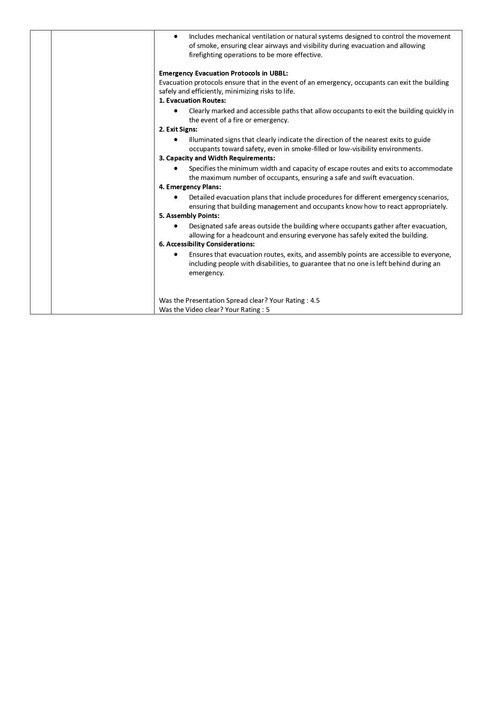
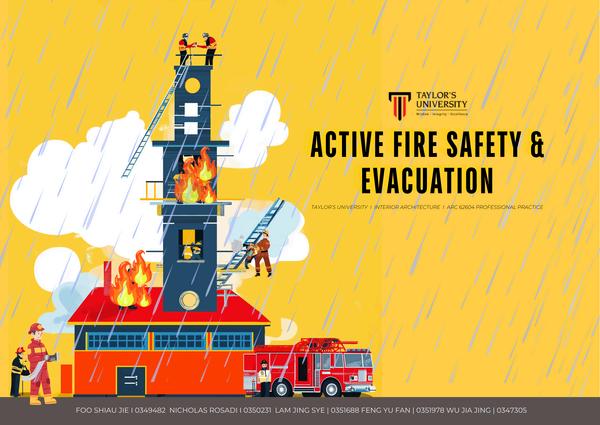
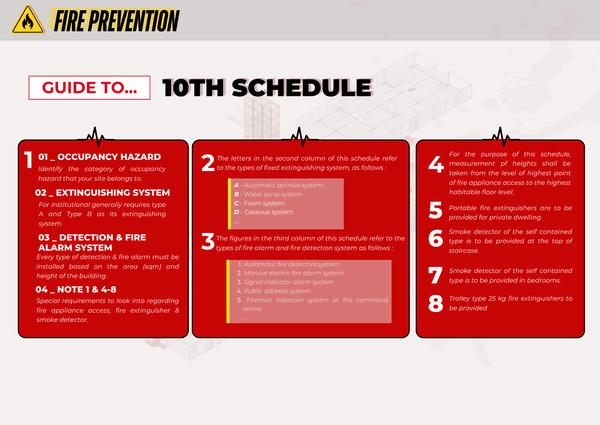
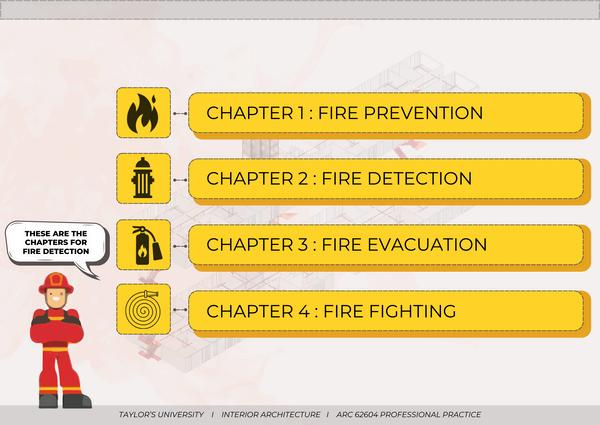
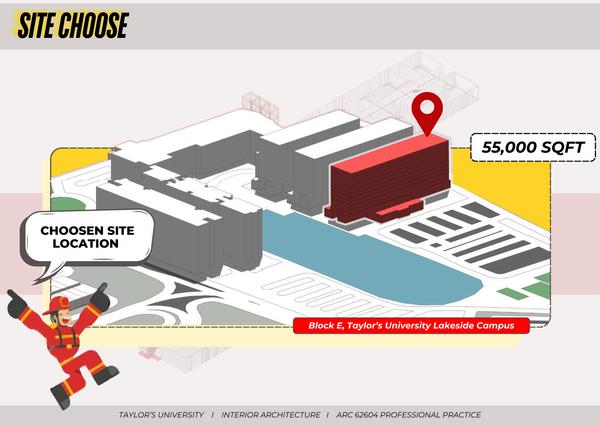
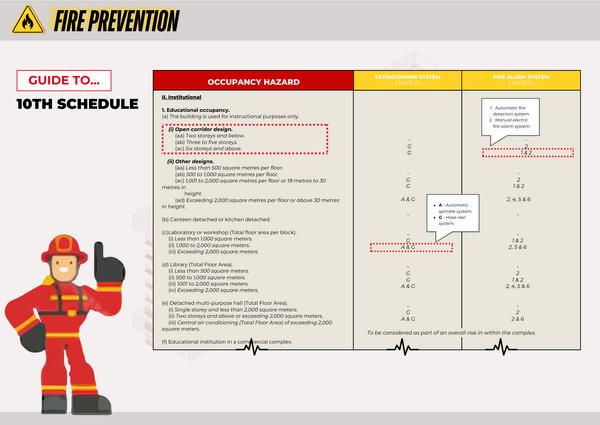
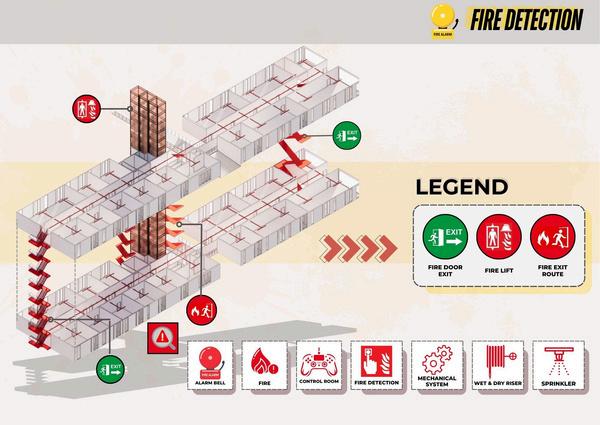
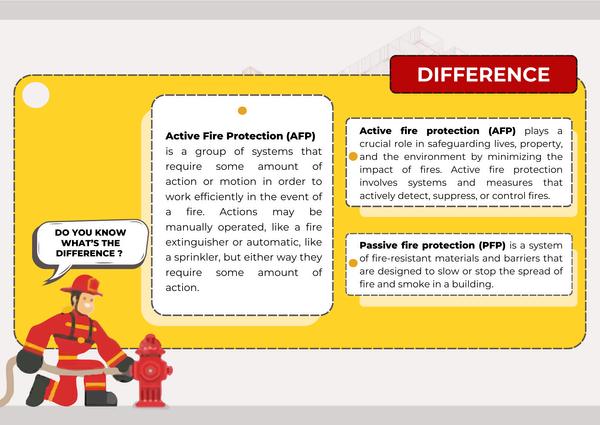
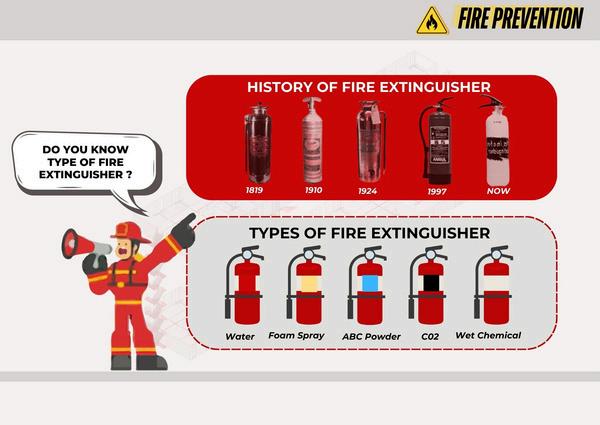
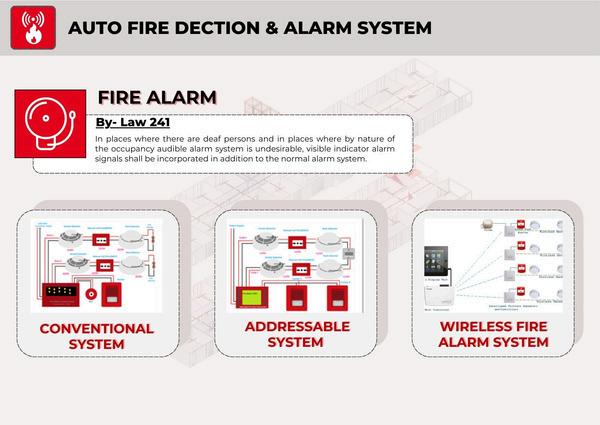
For Group Assignment 1, I had the chance to work with my classmates Shiau Jie (SJ), Nicholas, Yufan, and Jia Jing, and we decided to focus on Active Fire Safety & Evacuation in Malaysia.
During the project, we delved into the essential procedures, systems, and protocols that ensure effective fire safety measures and evacuation plans. We looked into how these measures are applied across different types of buildings, the technologies involved, and the regulations that shape fire safety standards in Malaysia. This research helped me understand the detailed steps in fire safety planning, from the early design phase all the way to emergency responses.
What stood out to me was not just the technical side, but the real-life importance of these systems in protecting lives and minimizing damage during emergencies
In conclusion, this assignment was a real eye-opener, enhancing our knowledge and deepening our understanding of fire safety and evacuation protocols in architecture and design It highlighted the importance of proactive planning and strict adherence to safety standards when creating spaces that are not only functional but truly safe for everyone
This task is to encourage more democratic exchanges whereby in the online forum, each student has a voice that will be heard by anyone who chooses to read his or her comments Students will experience personal and academic gains as result of their communication with their peers The goal is for the students to gain professional interchange, and seek out ideas among their colleagues through electronic communication to facilitate the process
Forums Students are to divide themselves in the assigned groups as per Project 1 Each group must propose 2 suitable abstracts in Week 4 (see below format) that relates closely to their group theme (AA/Contract/UBBL) All students in the class MUST participate in the forum each week as your participation carries marks
Task 2 :
Forum Summary Each student will be required to conclude a summary/reflection of their personal thoughts of each forum (with text and images) in an A4 size MindMap format exported as a Jpeg Image file
PDW Summary Participate in Professional Development Week at Week 8, the University will require you to join at least 6 seminars (TBC) & at the end of the PDW week each student will be required to conclude a summary/reflection of their personal thoughts of your selected PDW seminars (with text and images/screenshots) The summary shall not be more than 500words, and each seminar s summary must be done separately with clear naming of each topic Submission is in A4 size, MindMap format exported as a Jpeg Image file
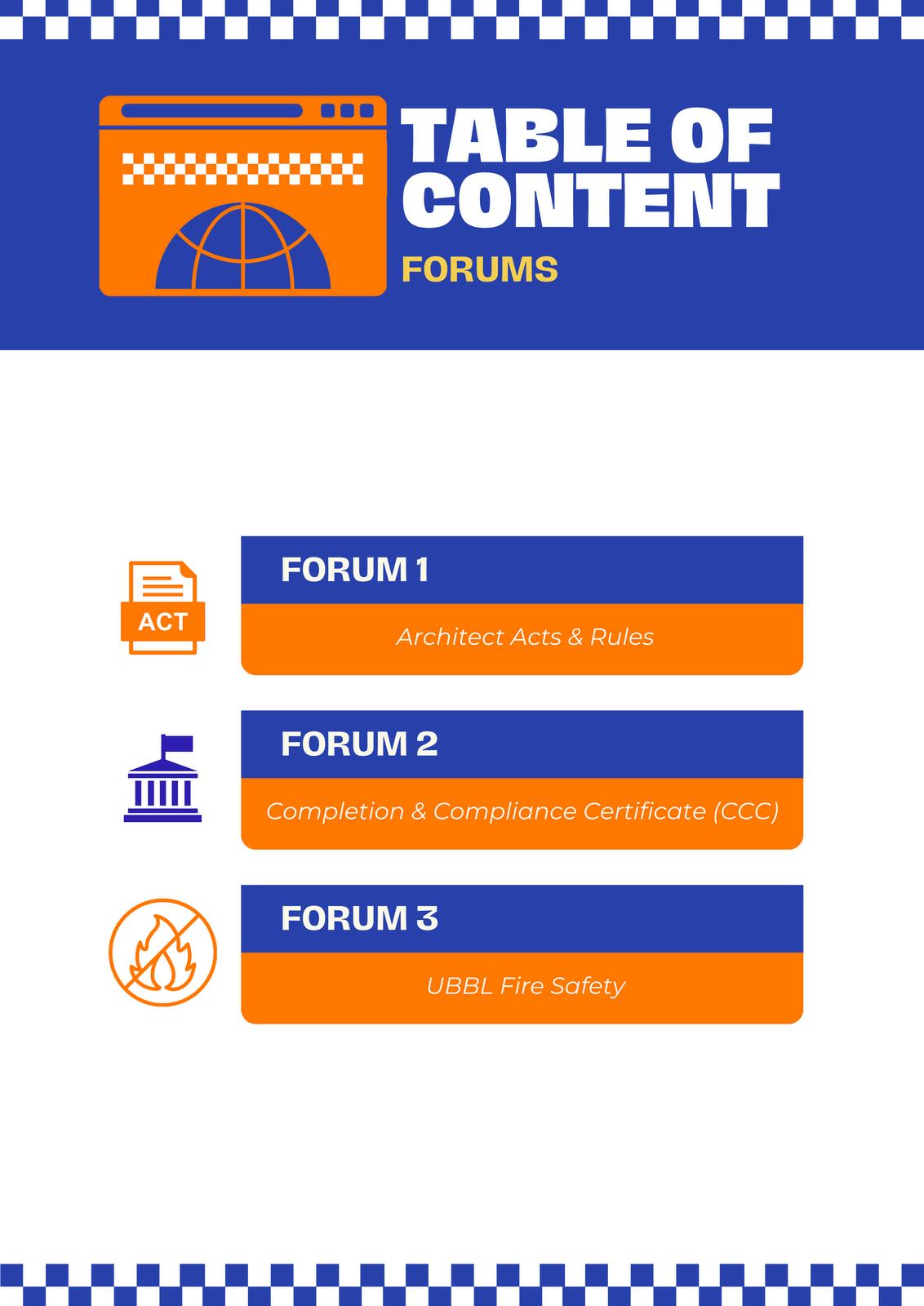
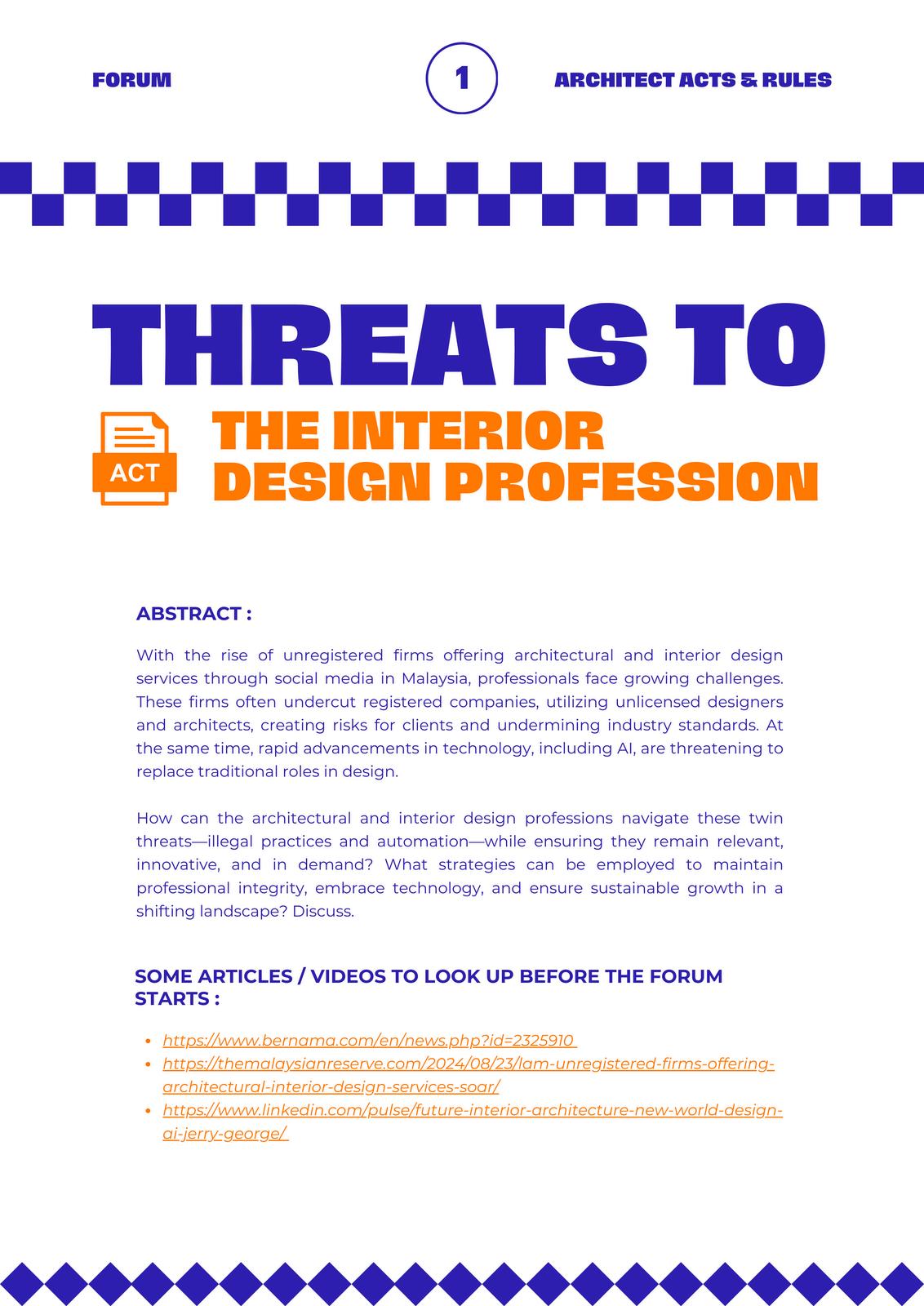
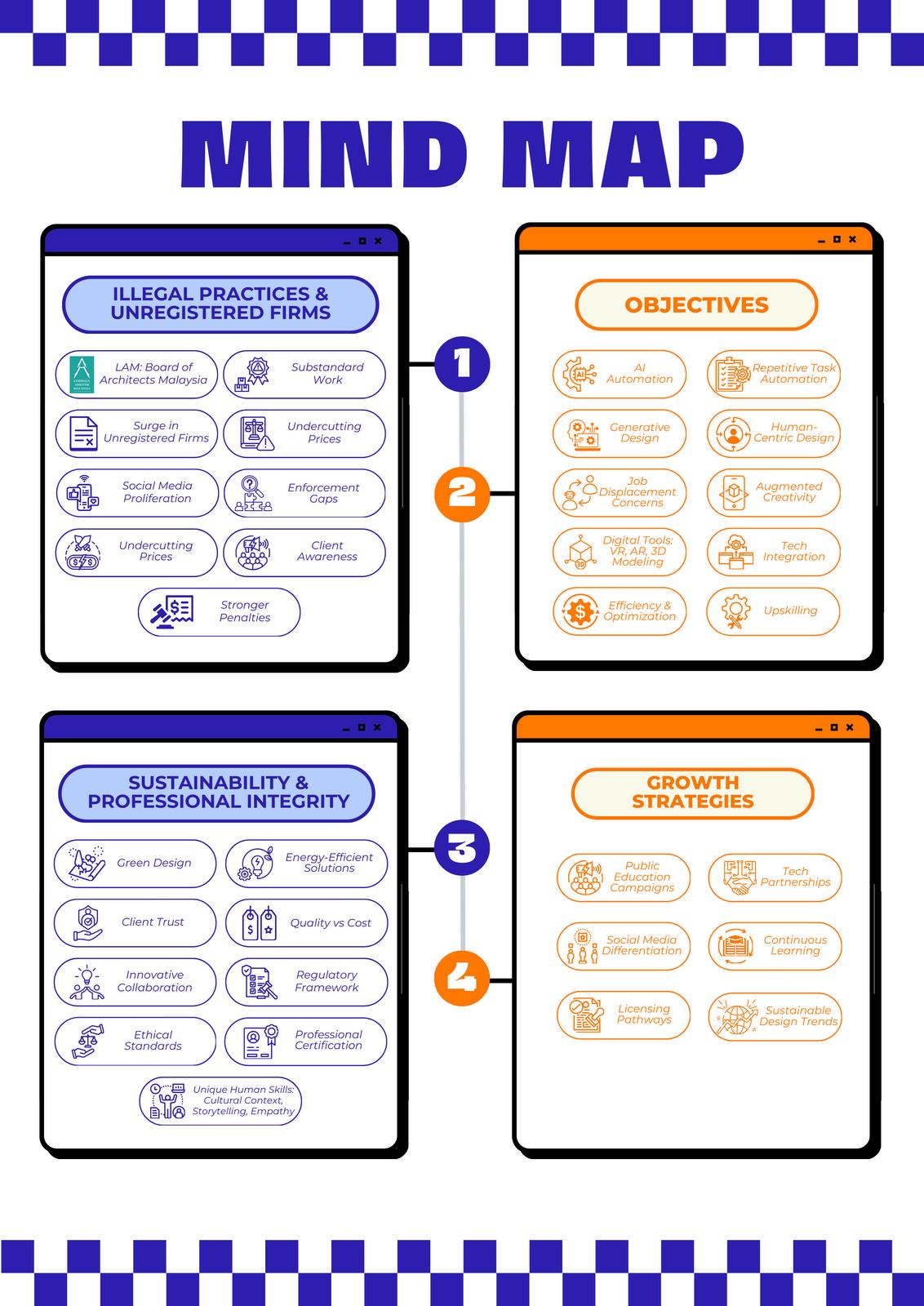
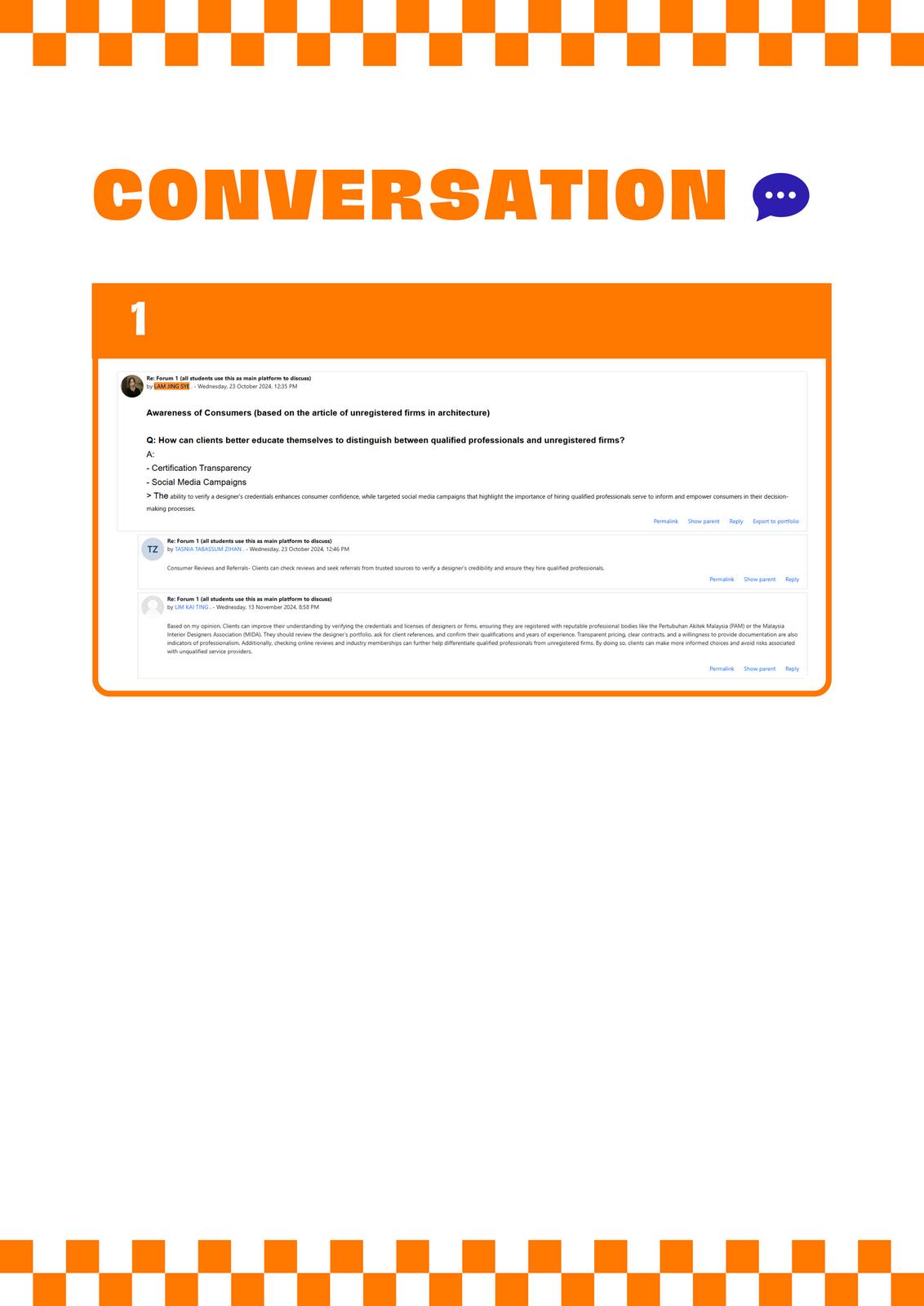
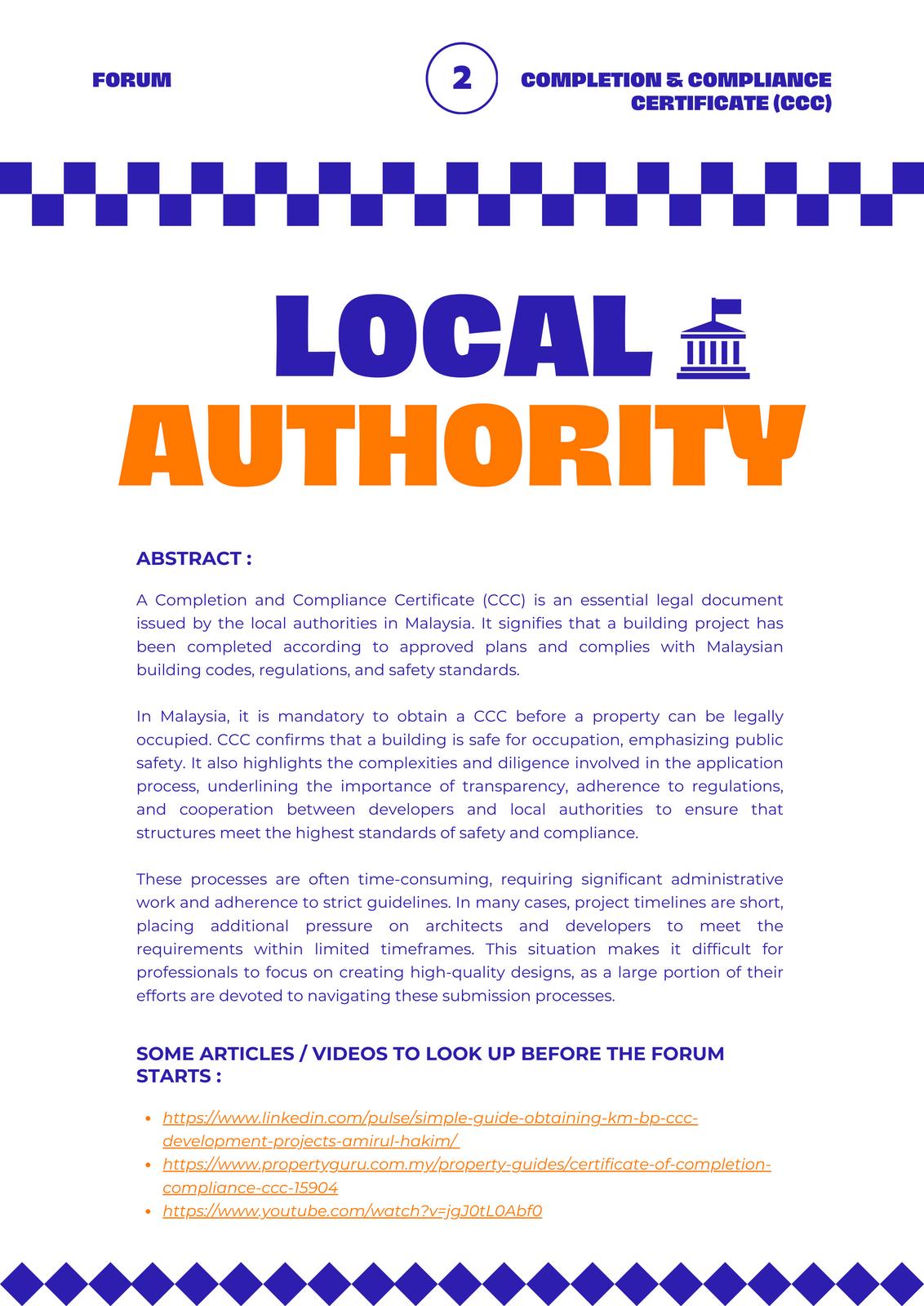
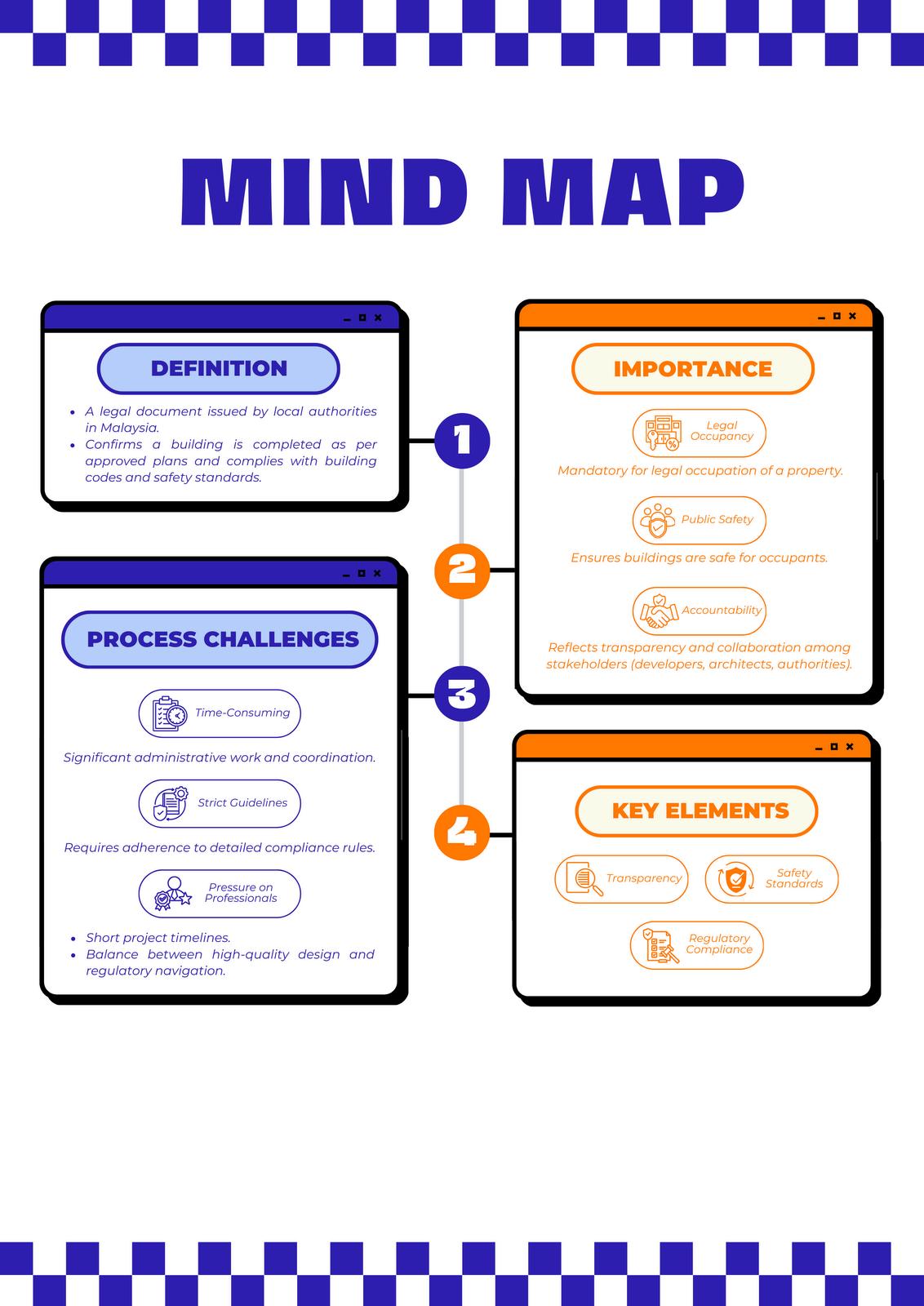
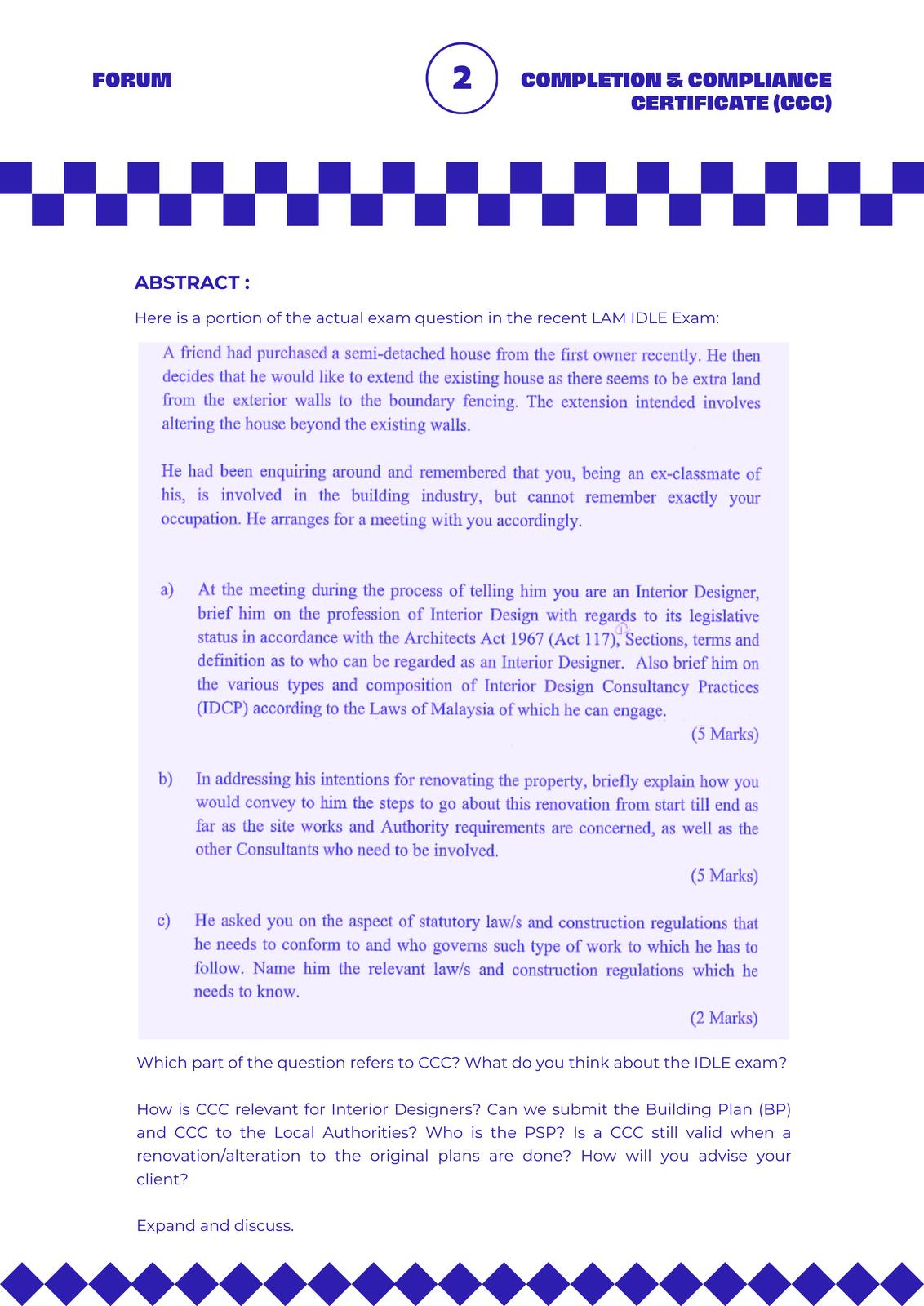
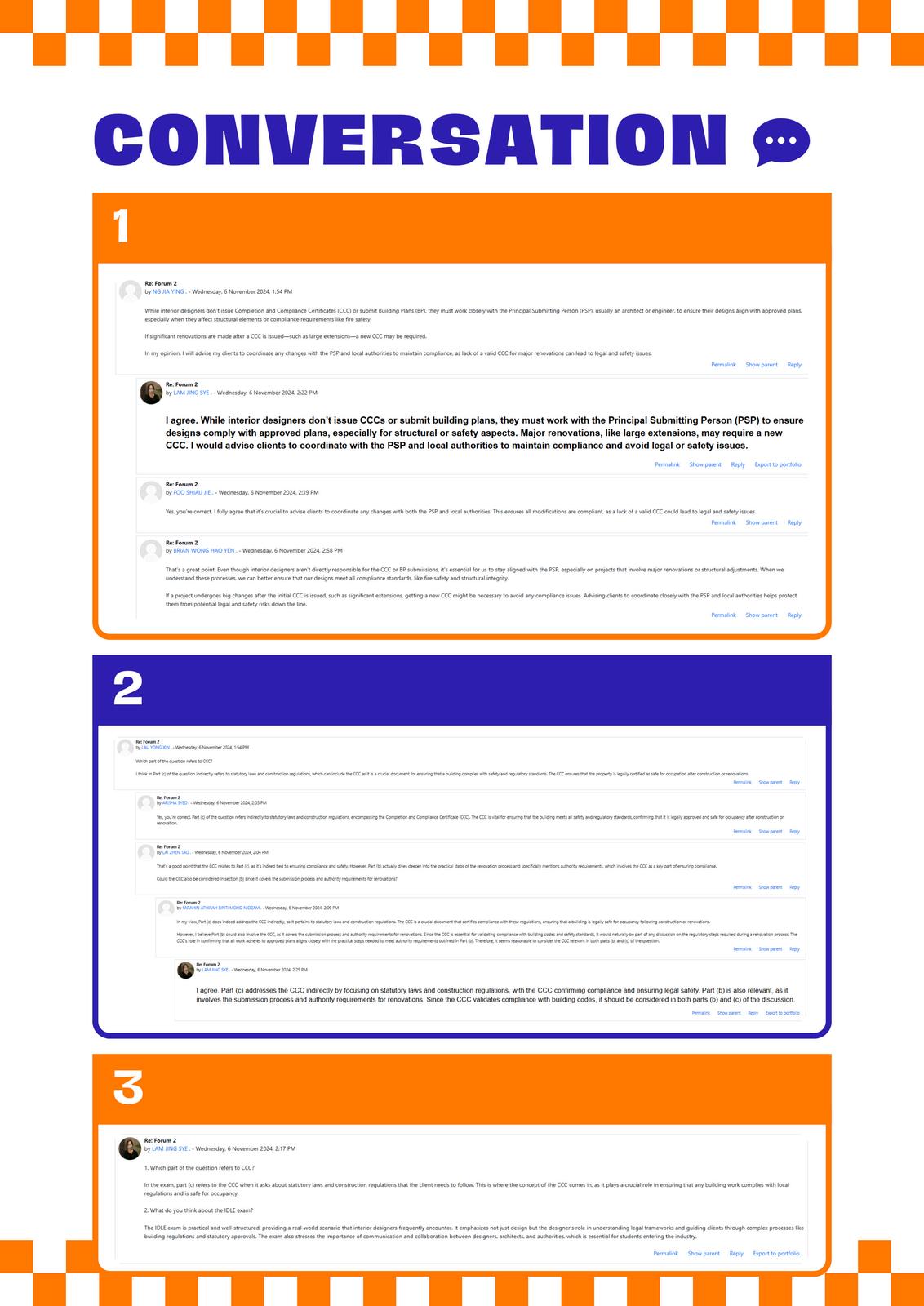
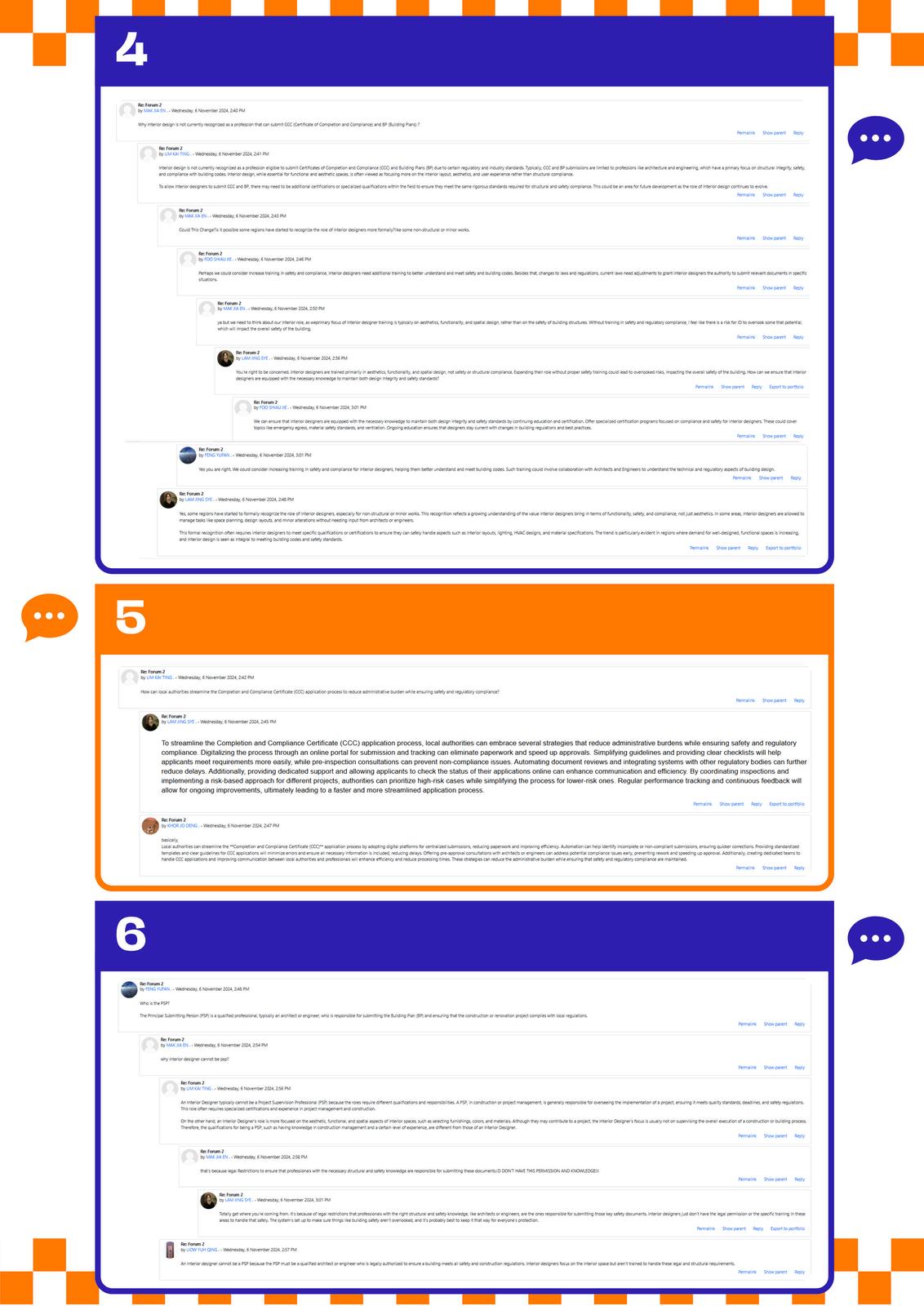
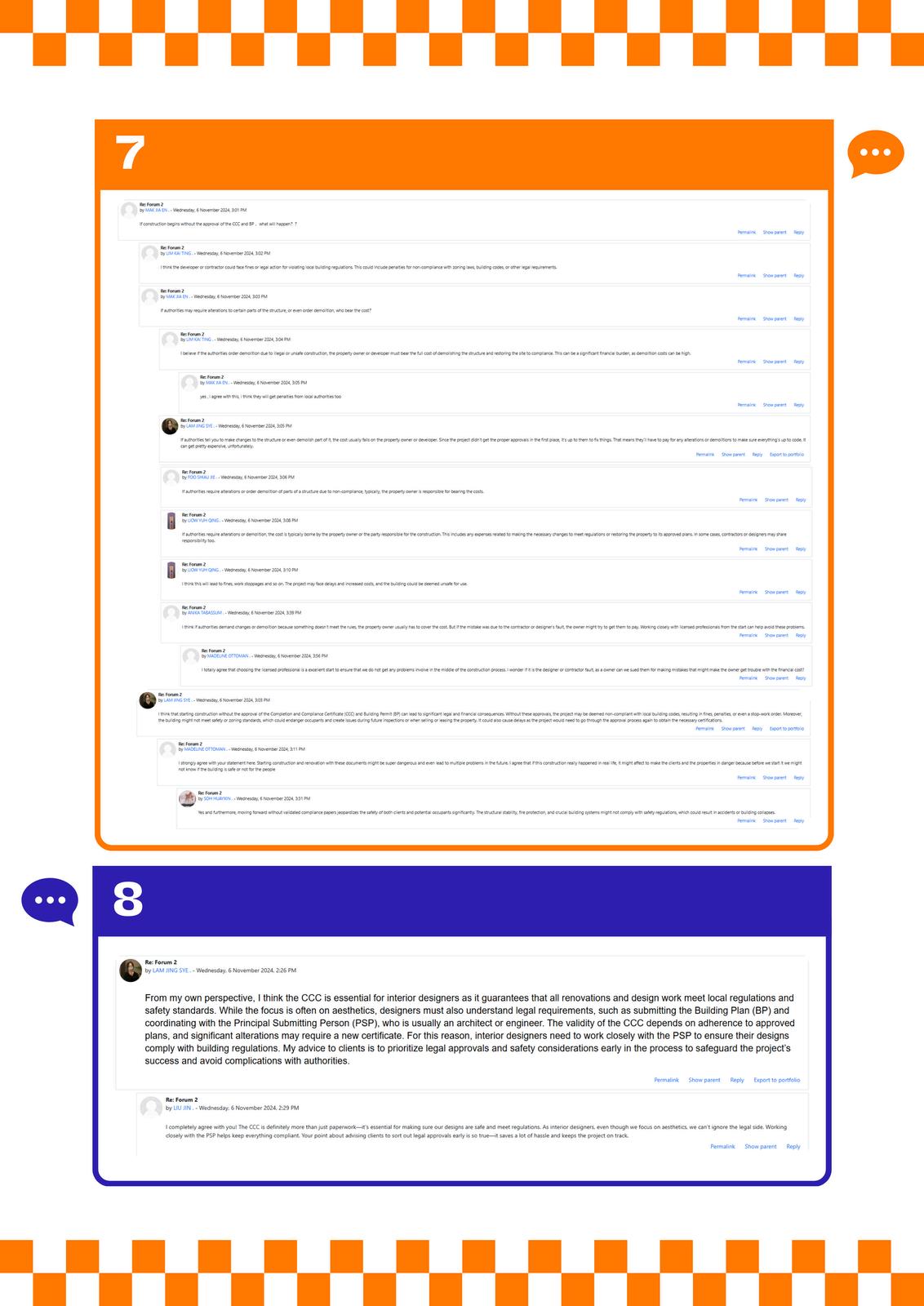
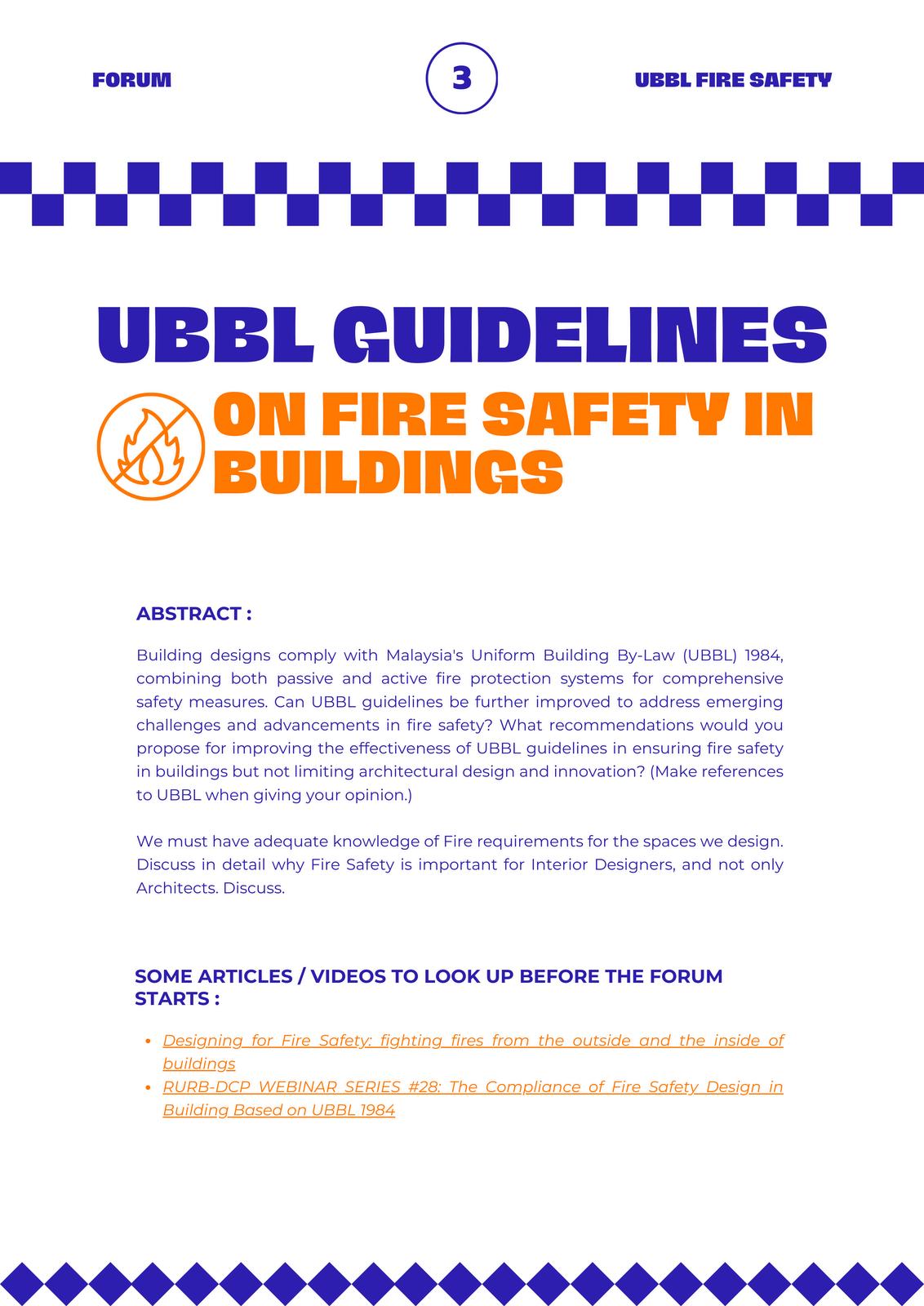
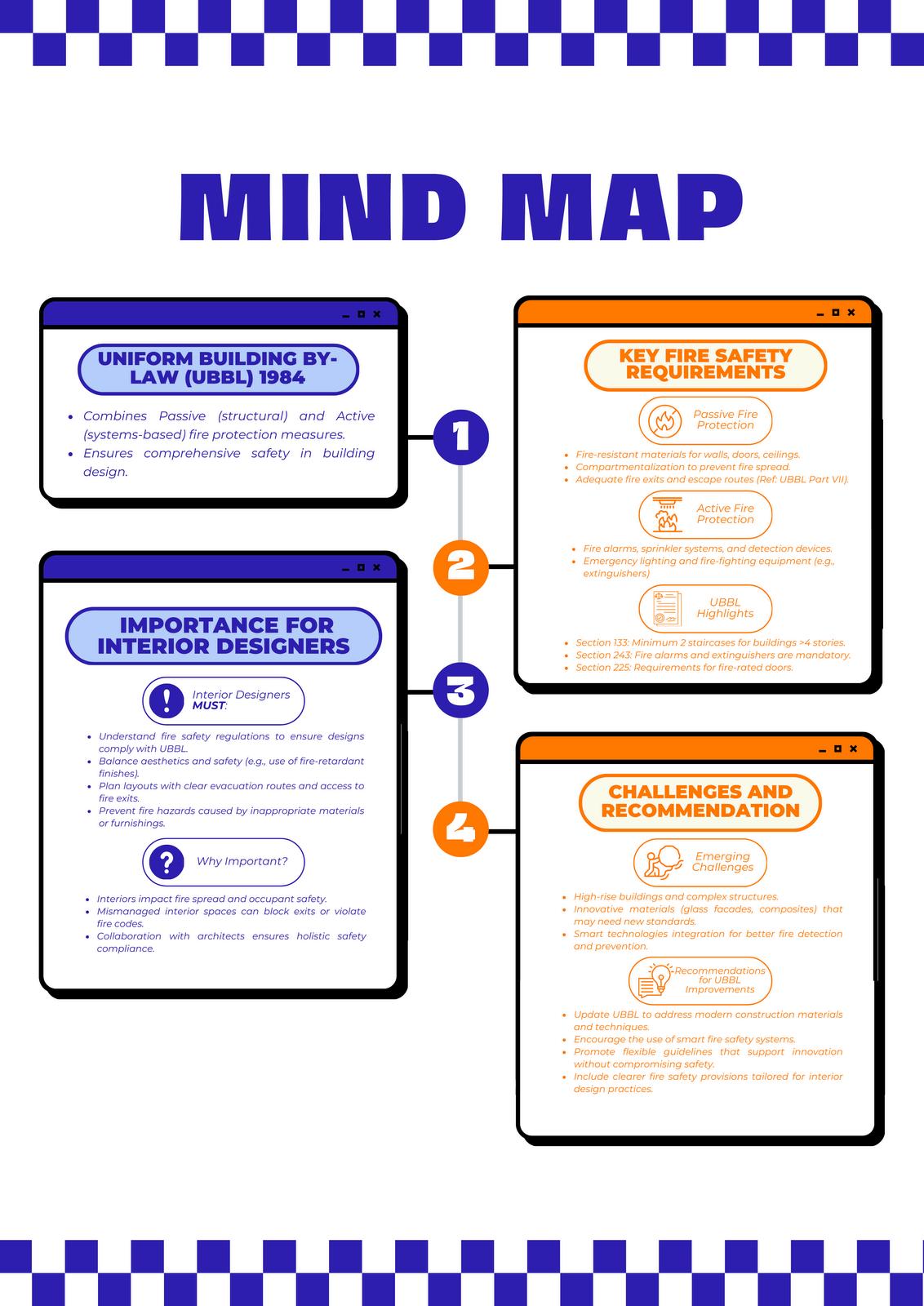
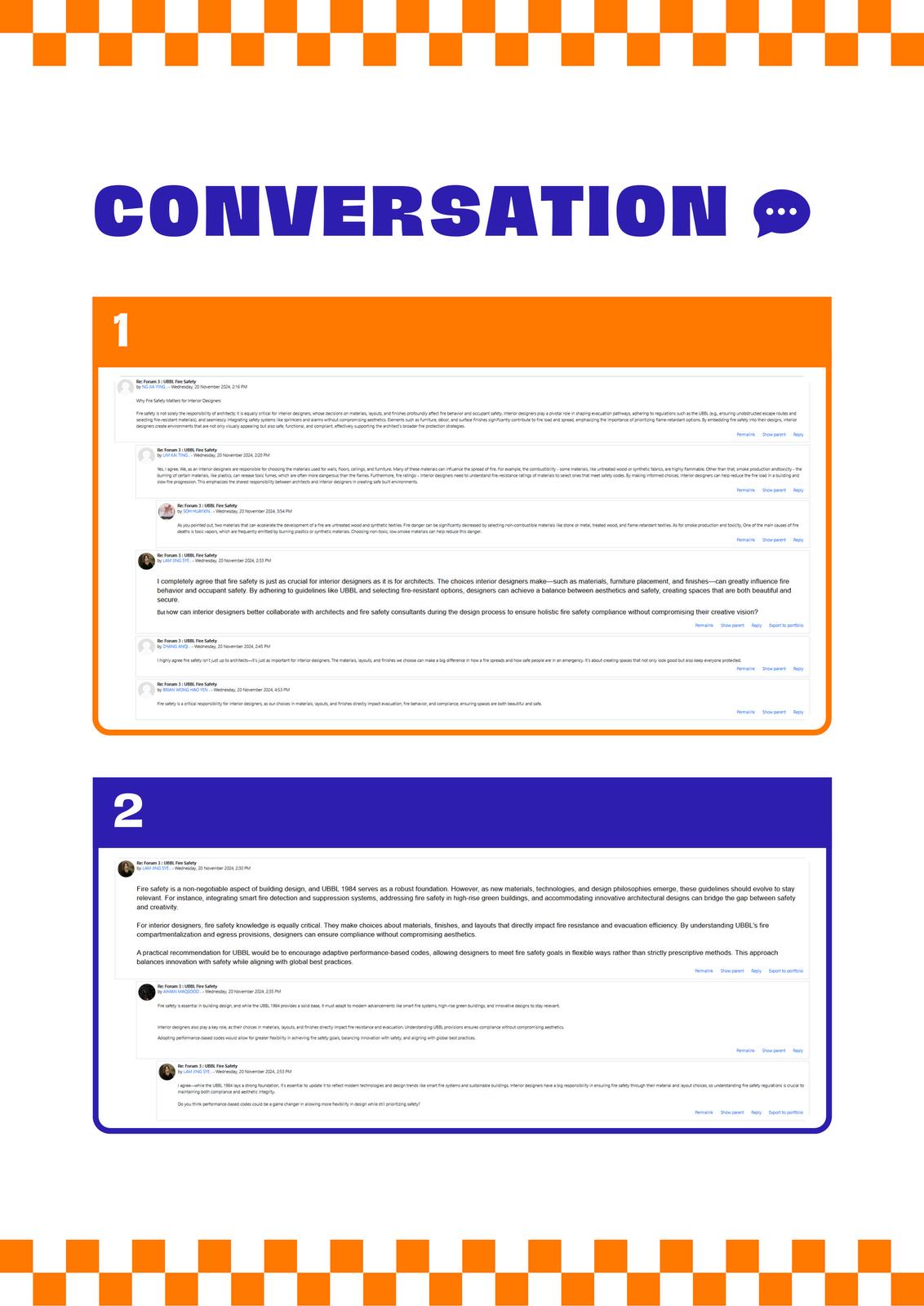
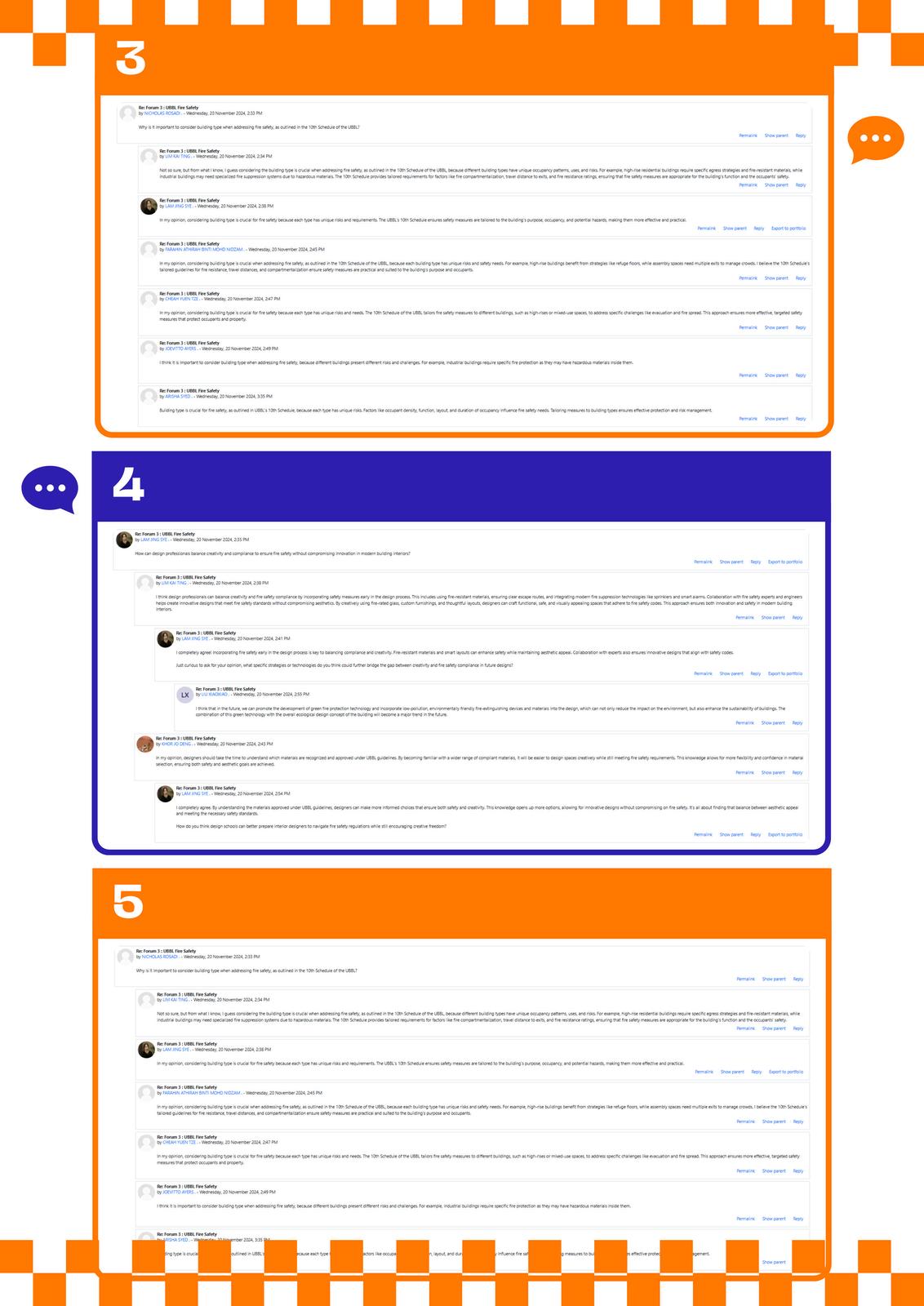
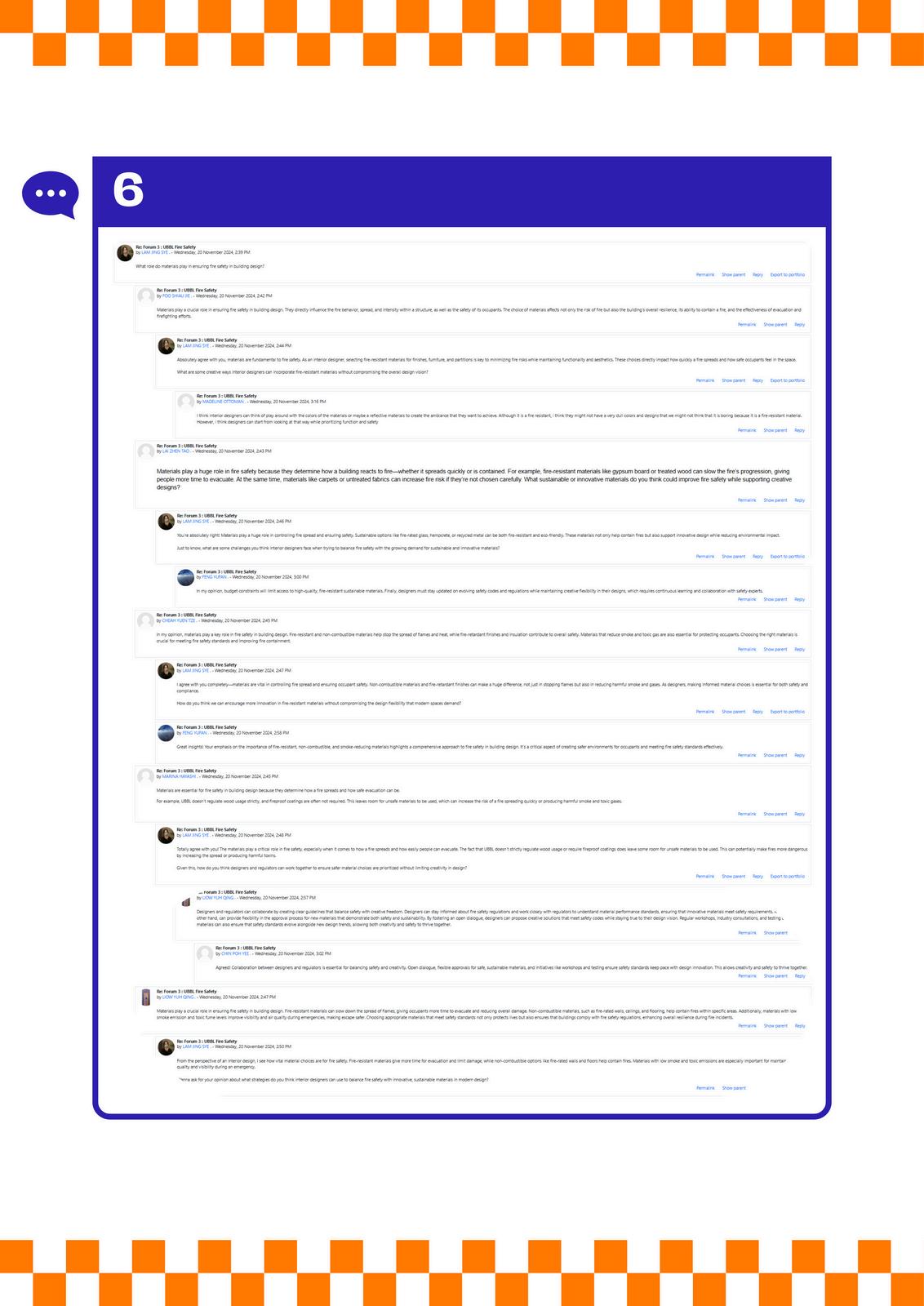
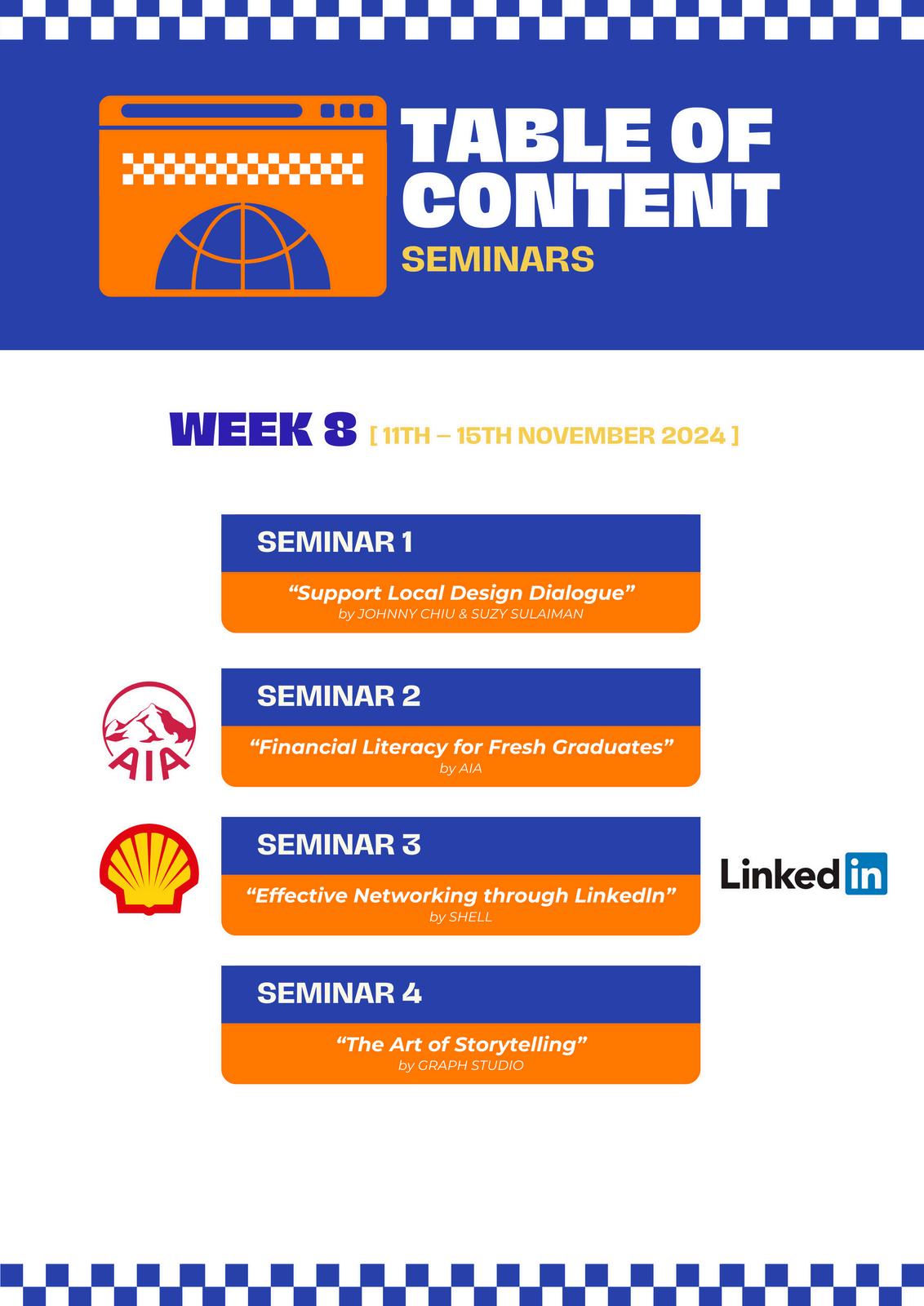
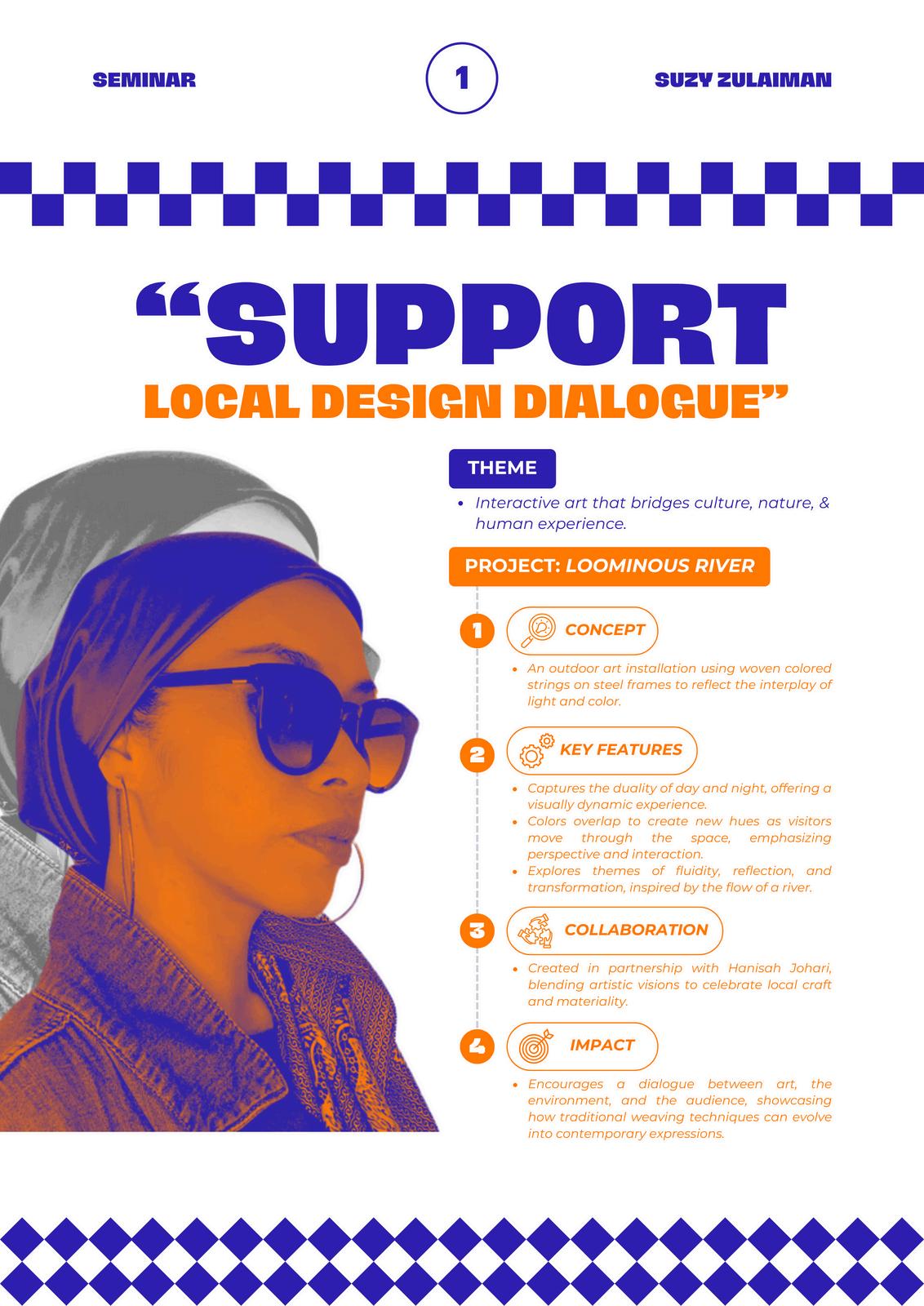
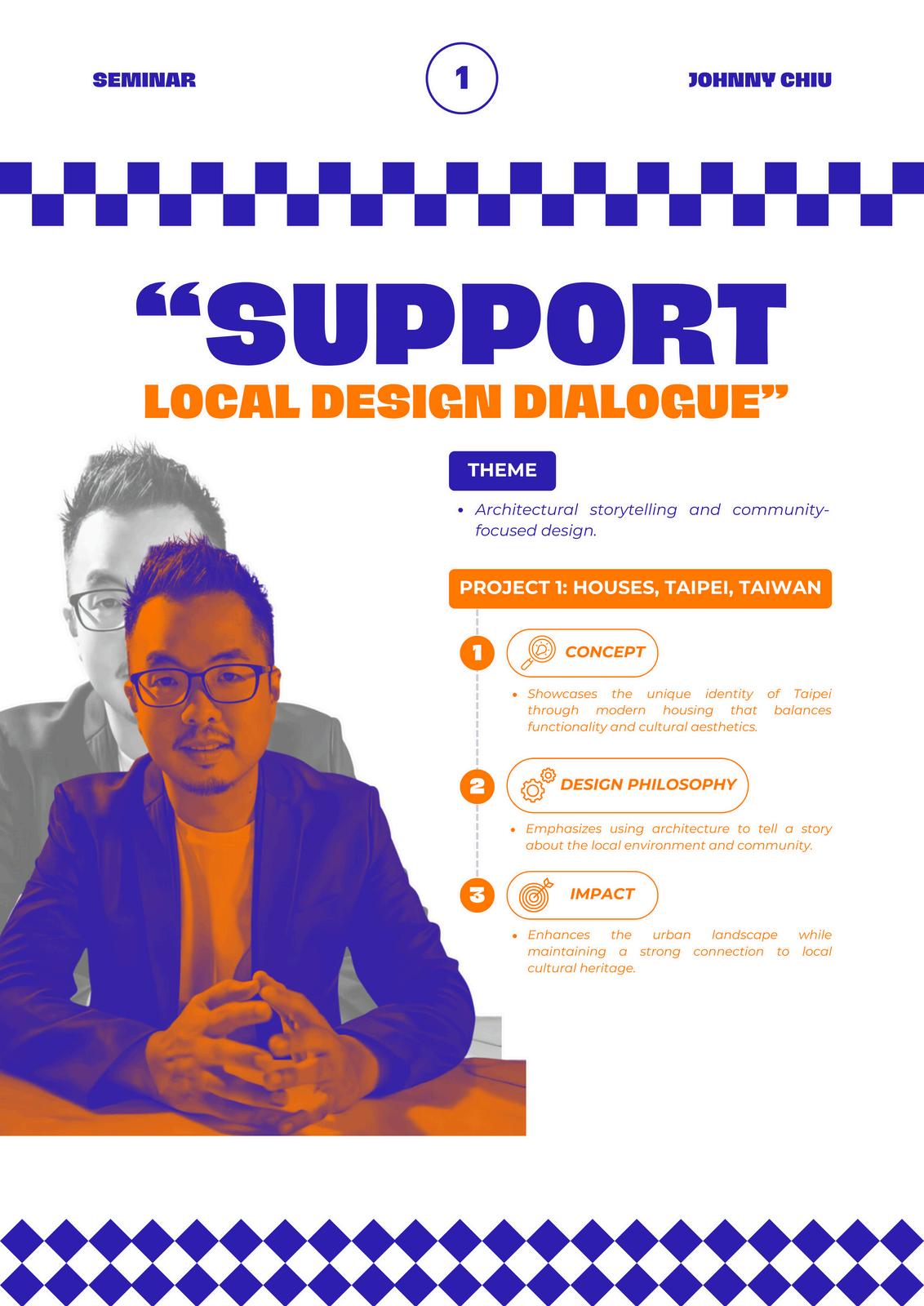
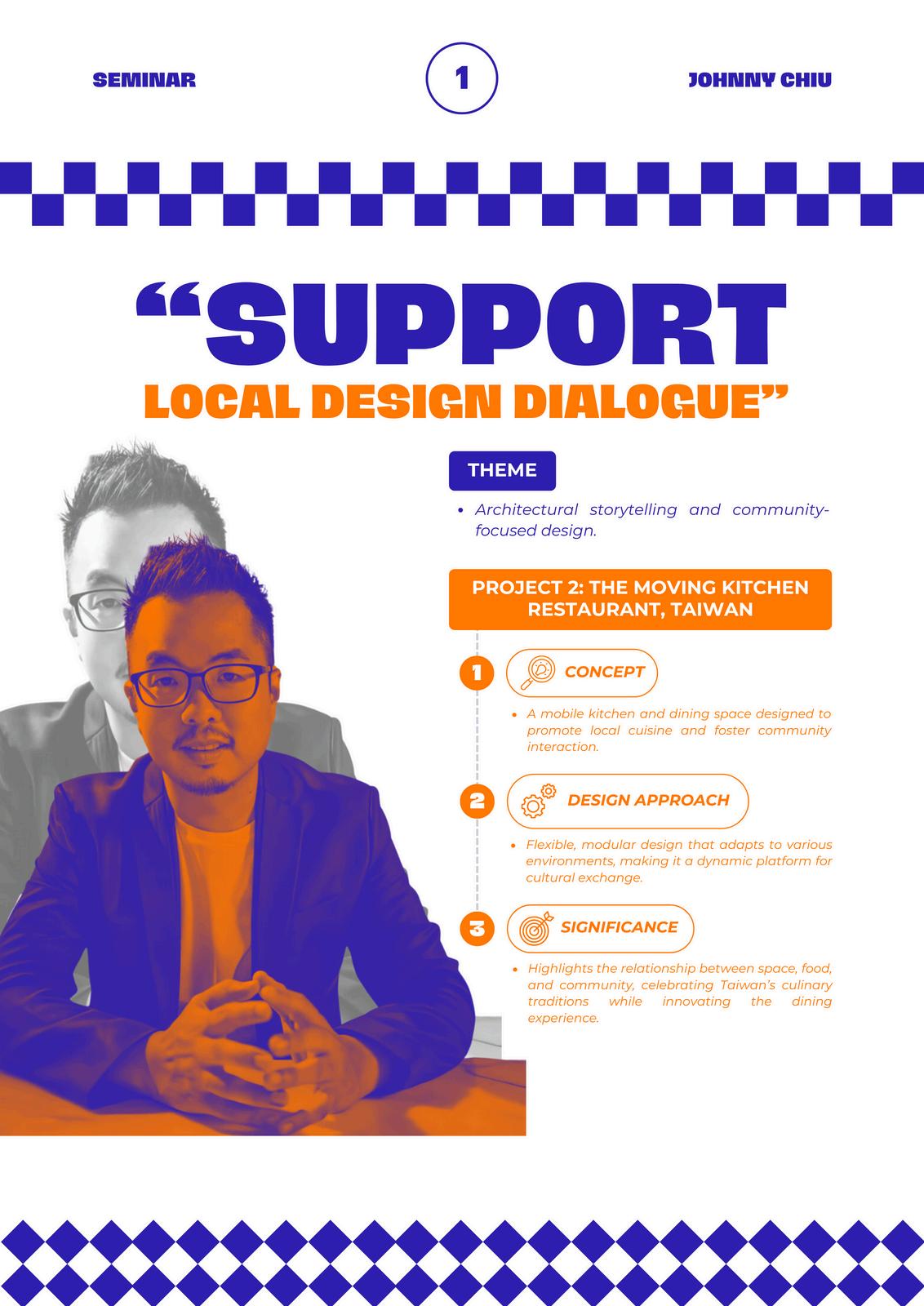
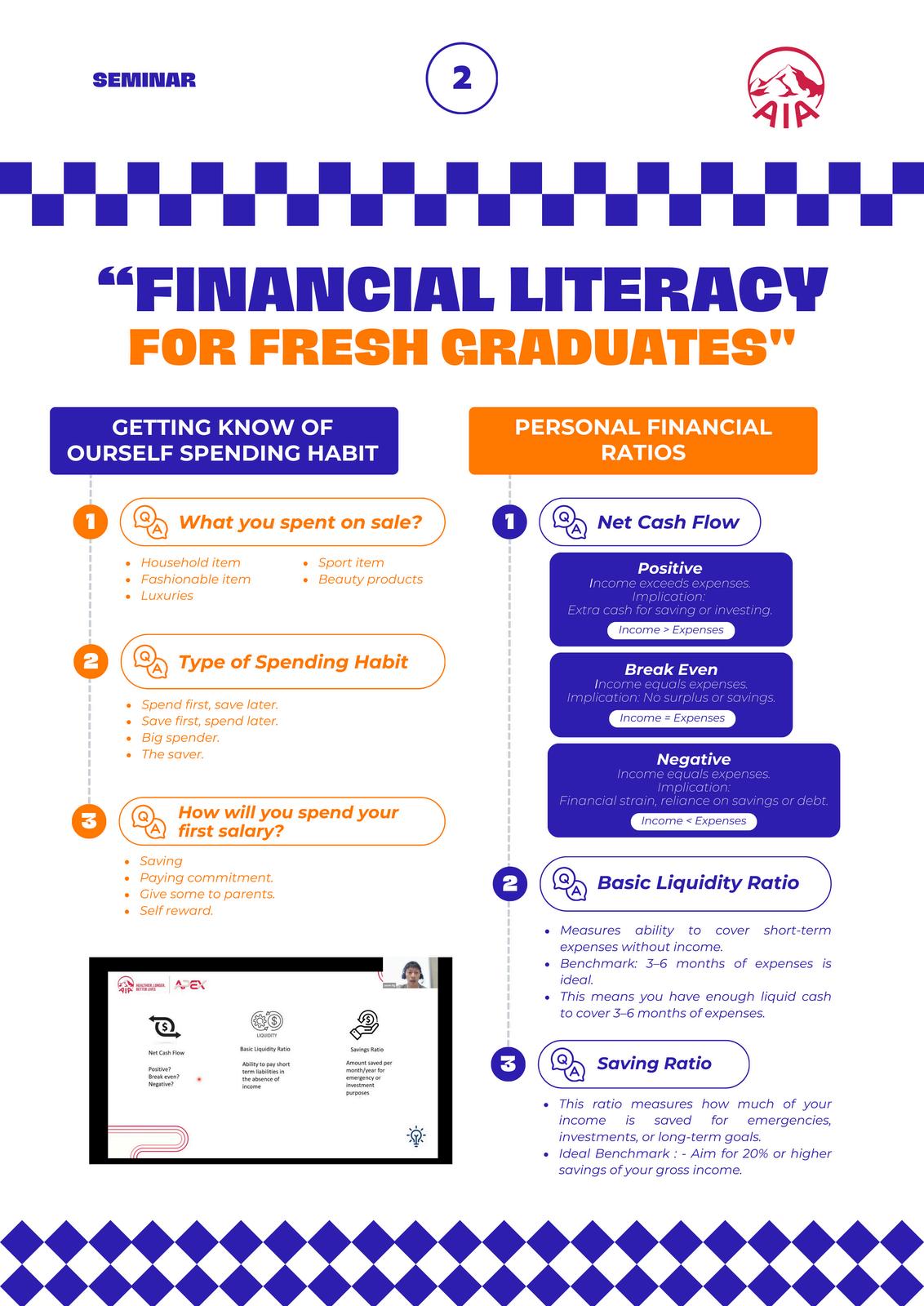
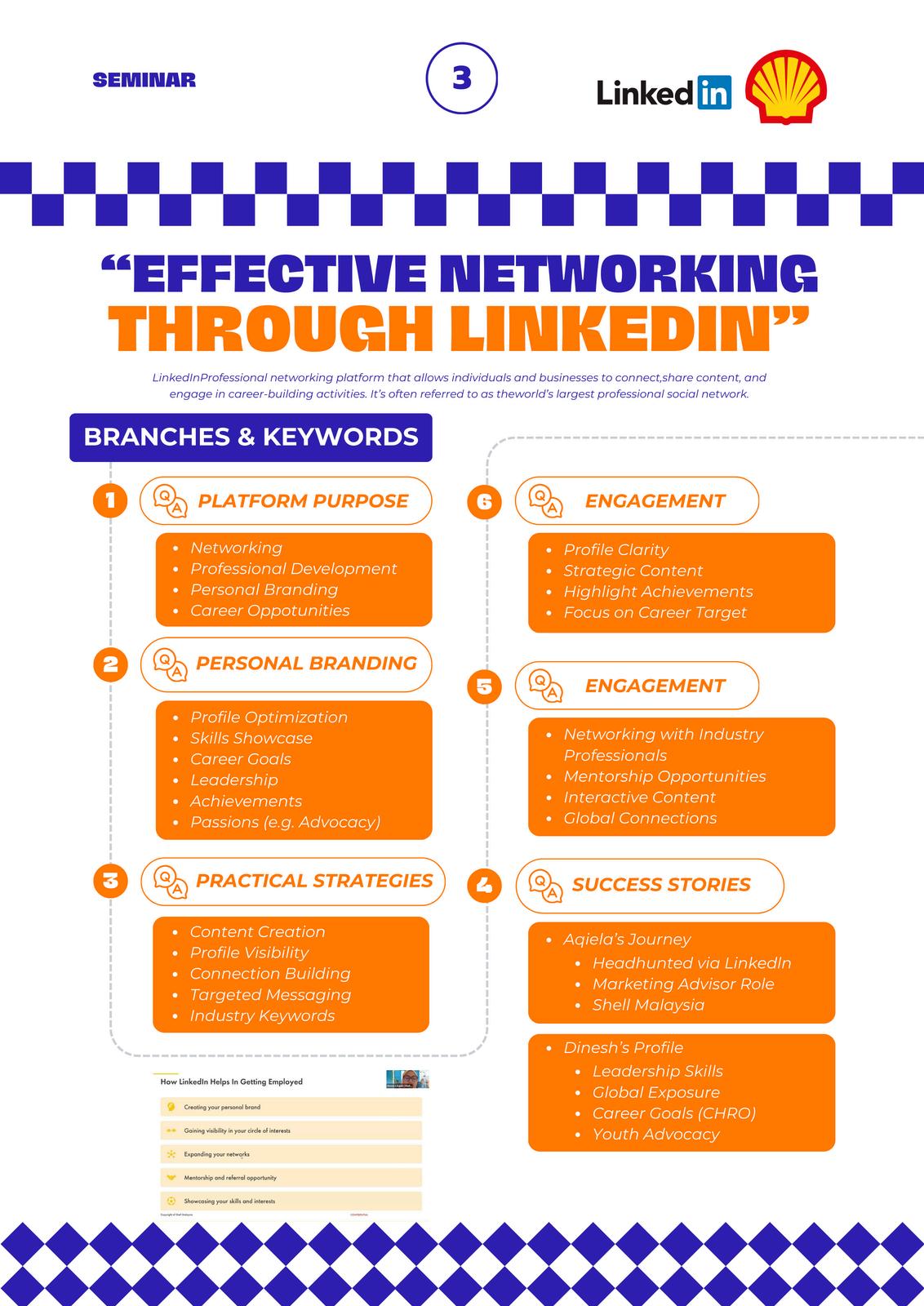
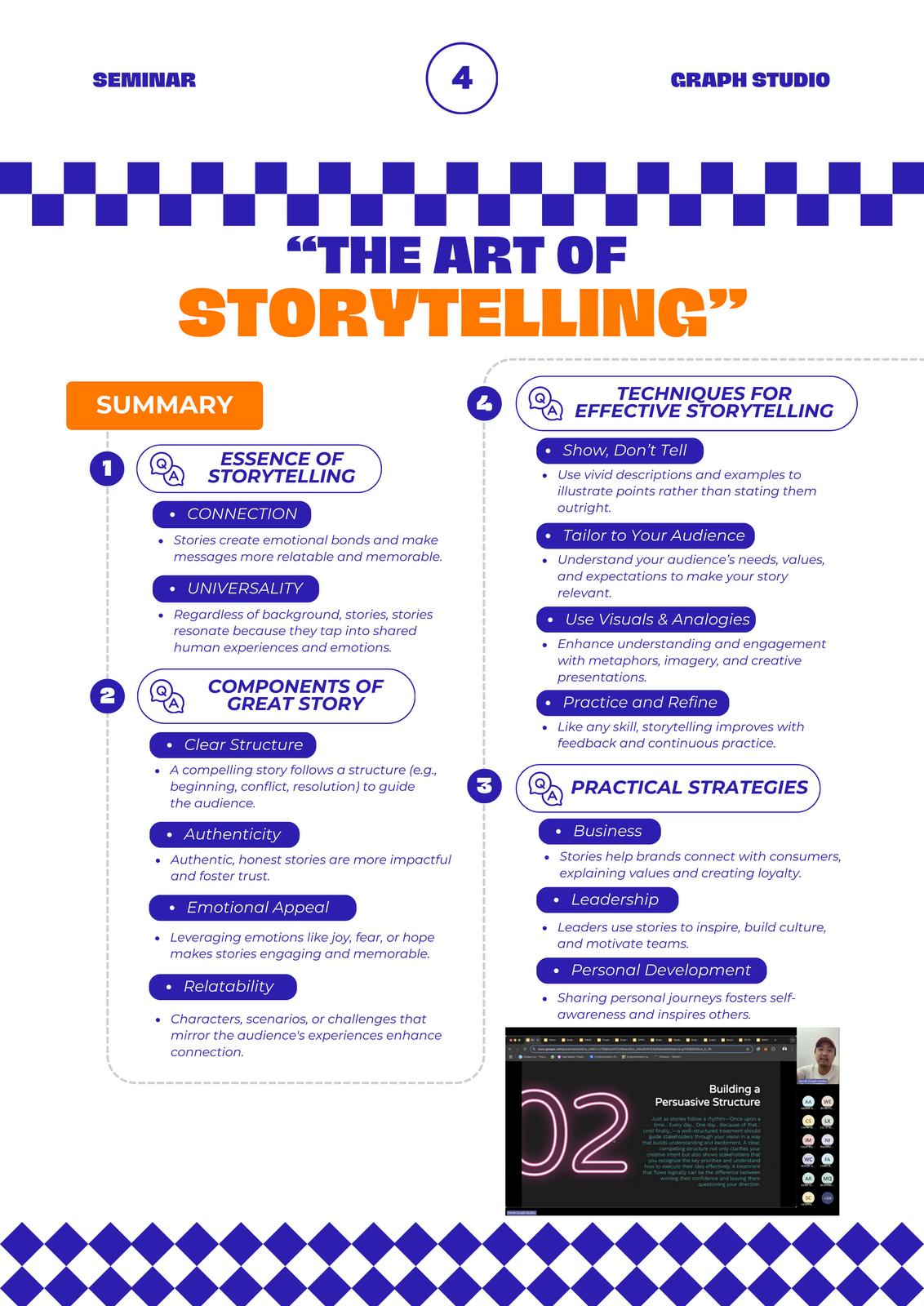
Participating in the school’s forums and seminars has been a truly valuable experience, offering me a wealth of knowledge on a wide range of topics. The forums, held on the Mytimes online platform, gave me a chance to exchange ideas with my peers in an interactive way. It made the learning process more engaging and allowed me to view things from different perspectives I was able to dive into topics like how Artificial Intelligence is shaping the future of interior design, the connection between CCC and interior design practices, and the significance of UBBL fire safety regulations in building design
The seminars were equally impactful, providing practical insights in a convenient online format I learned valuable skills on managing savings and investments, improving my LinkedIn profile, the steps to becoming a professional architect, personal branding, and the key skills needed for the future
All in all, these forums and seminars weren’t just about gaining knowledge they were experiences that allowed me to grow, expand my outlook, and prepare myself more effectively for my future career.
This assignment sets the scenario for students to to re-imagine and reconceptualize the ideal architectural practice of the future Participants are encouraged to consider various challenges often faced by architects/designers and propose solutions, and innovative business models
In deciding the desired business context, students need to evaluate critically the data obtained in Project 1 In doing this assignment, students will be clearer of their own vision and mission in forming their own design company within the business context. This is achieved through reflection of one ’ s own action and learning in applying effective business practices.
MLO 2: Differentiate the types of a business formation, process of setting up a design practice and standards of professional conduct
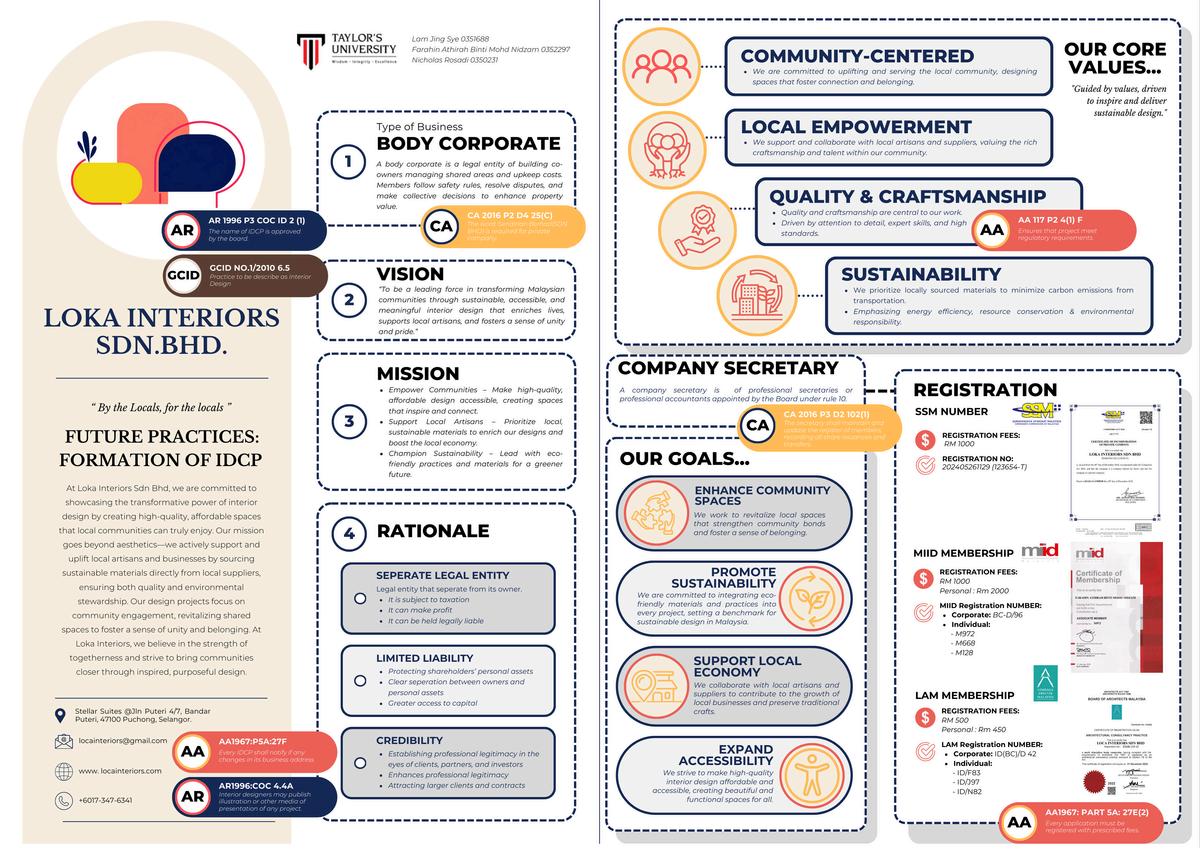

GOOGLE DRIVE
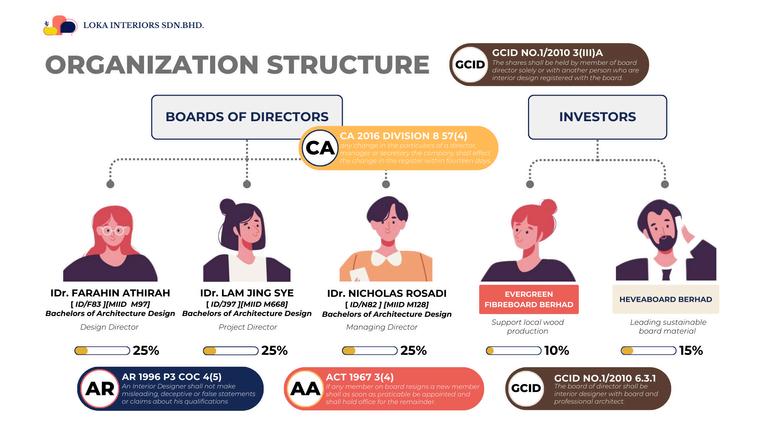
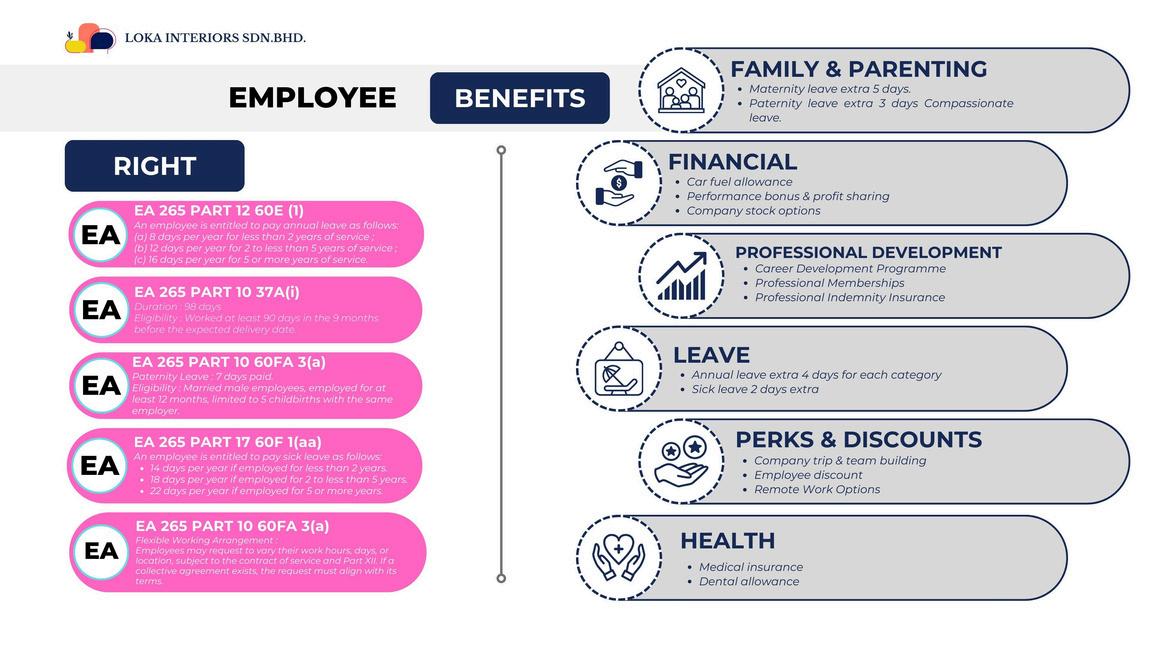
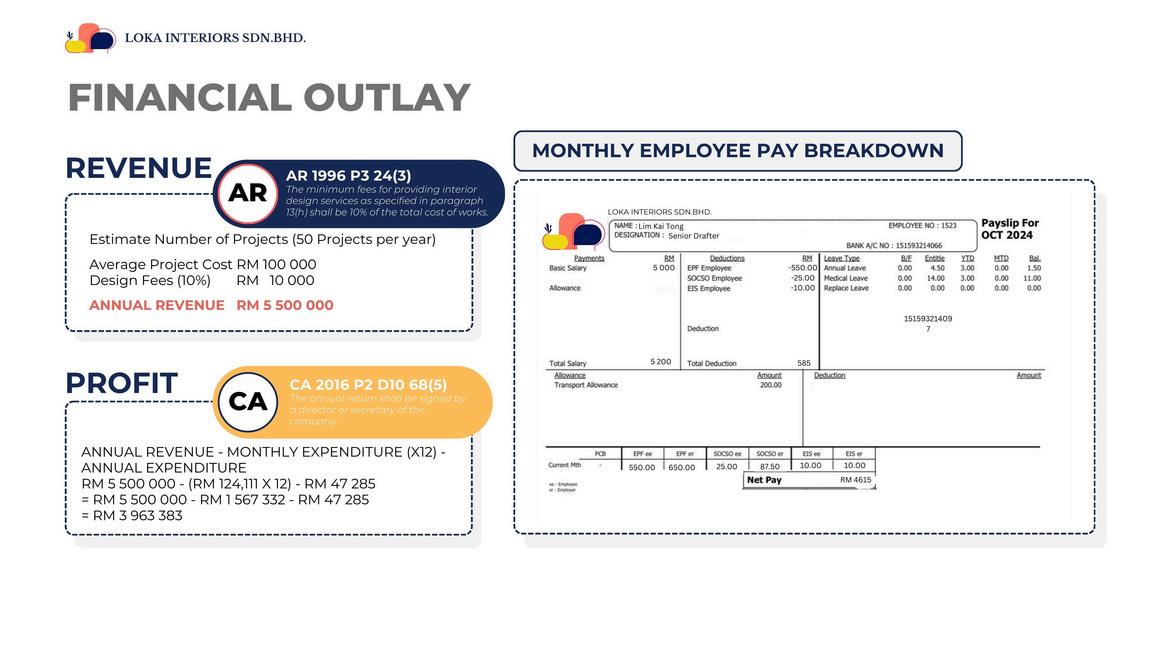
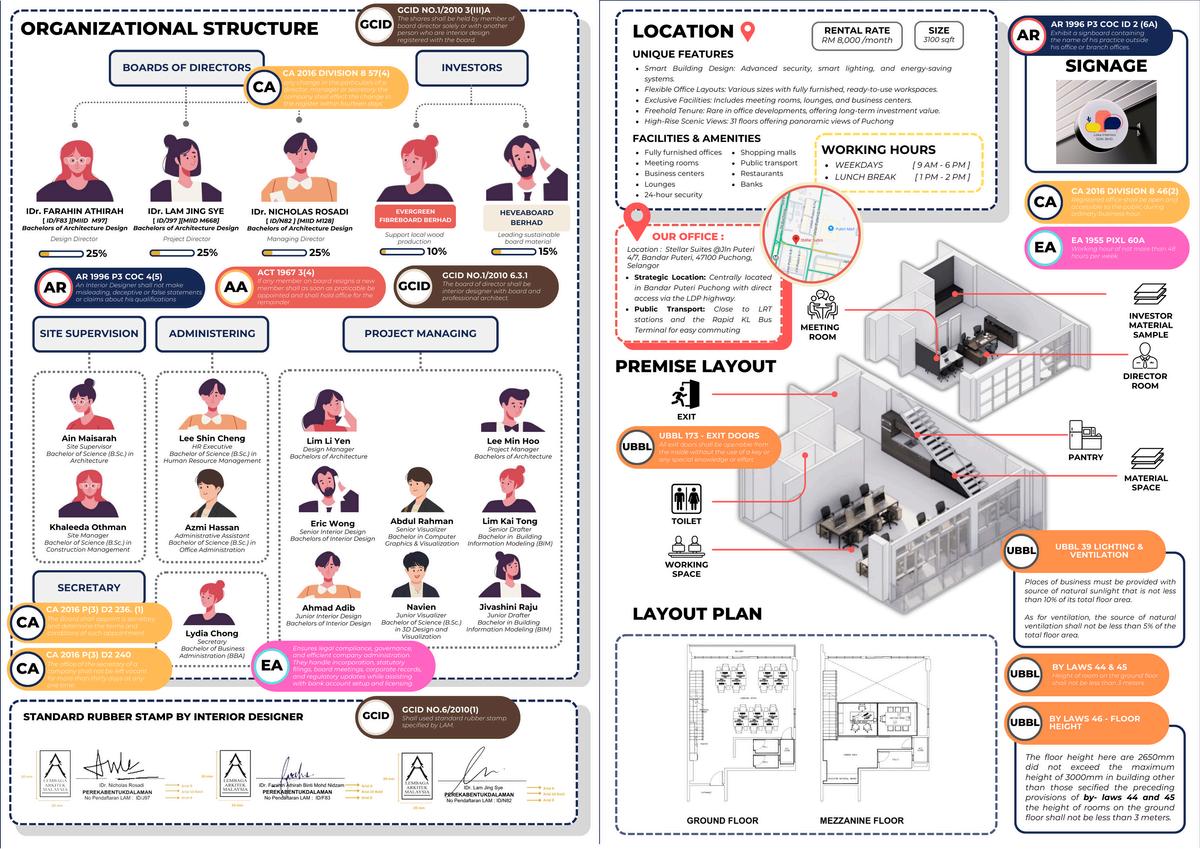
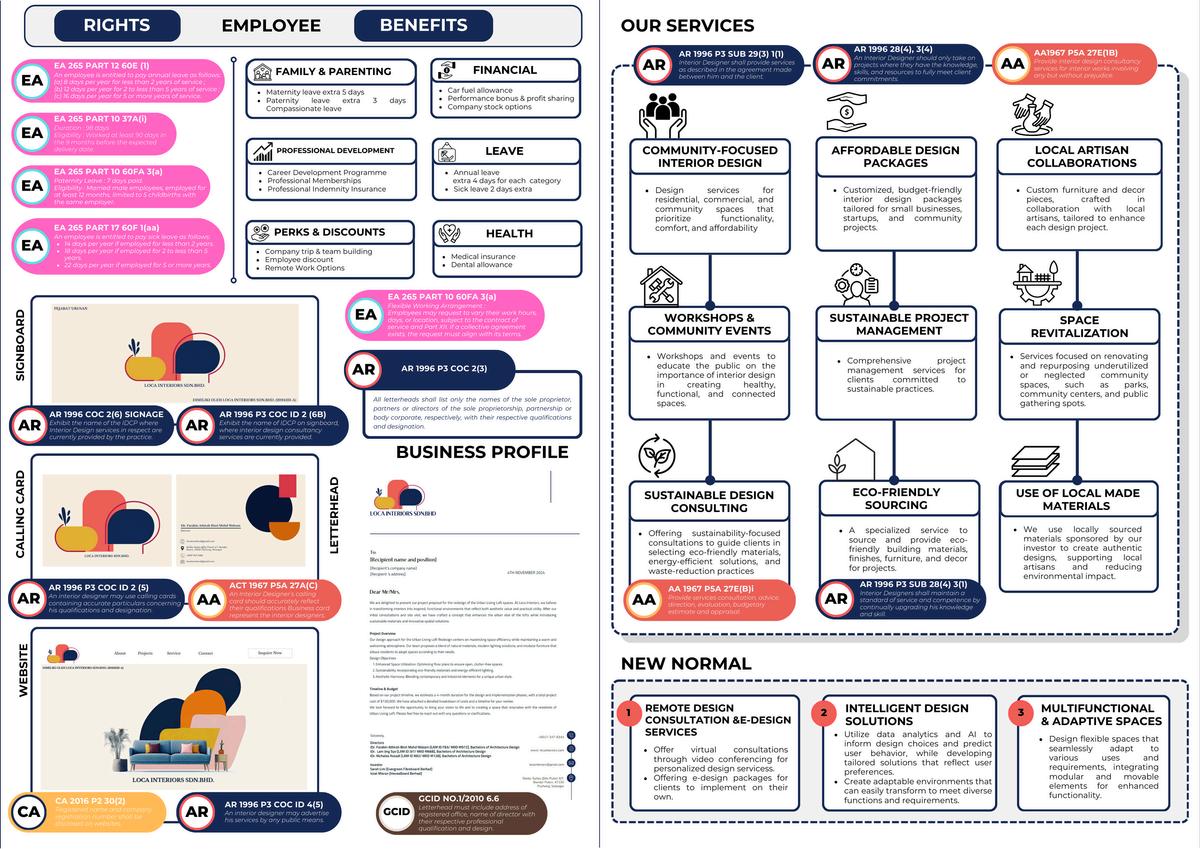
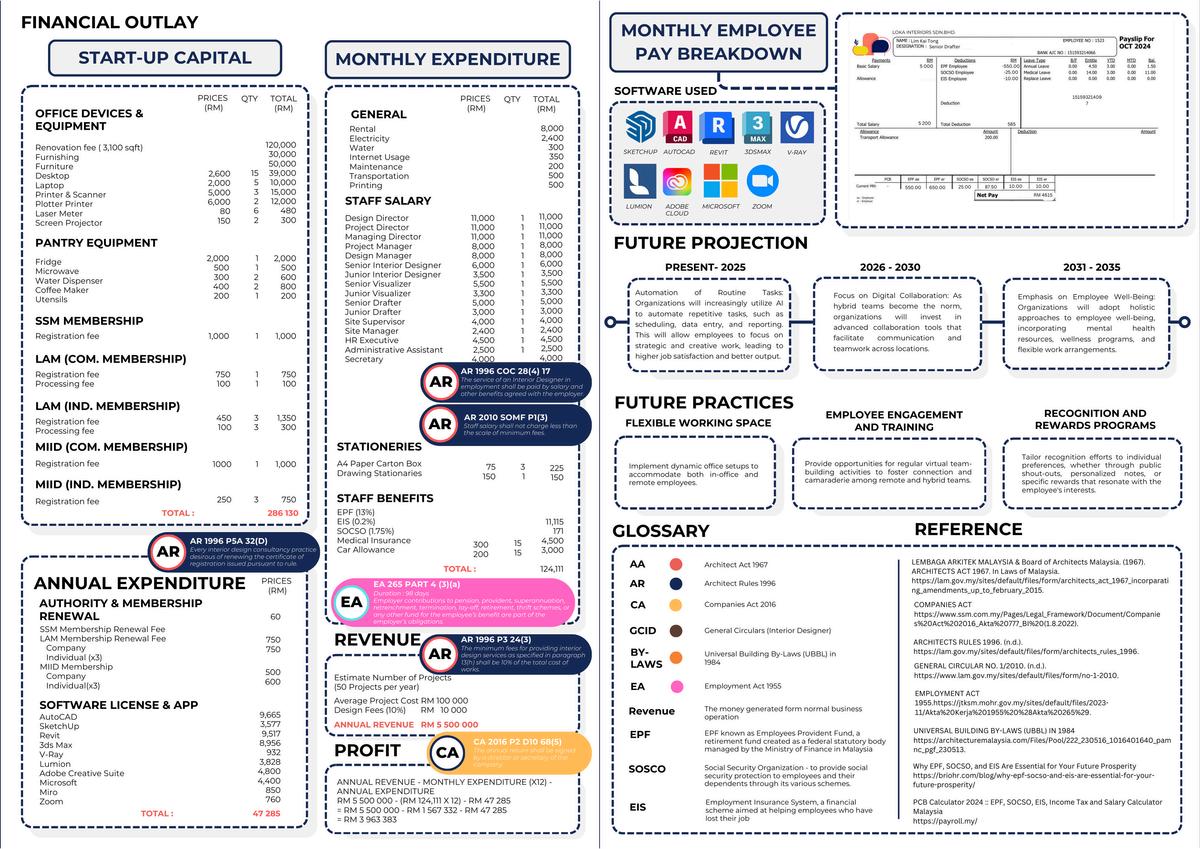
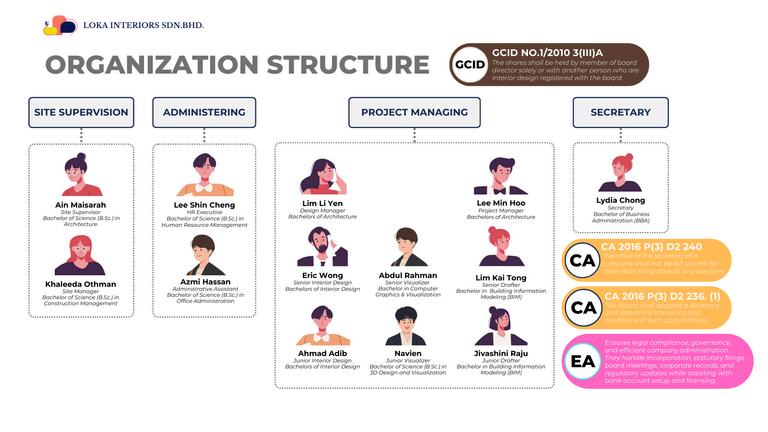
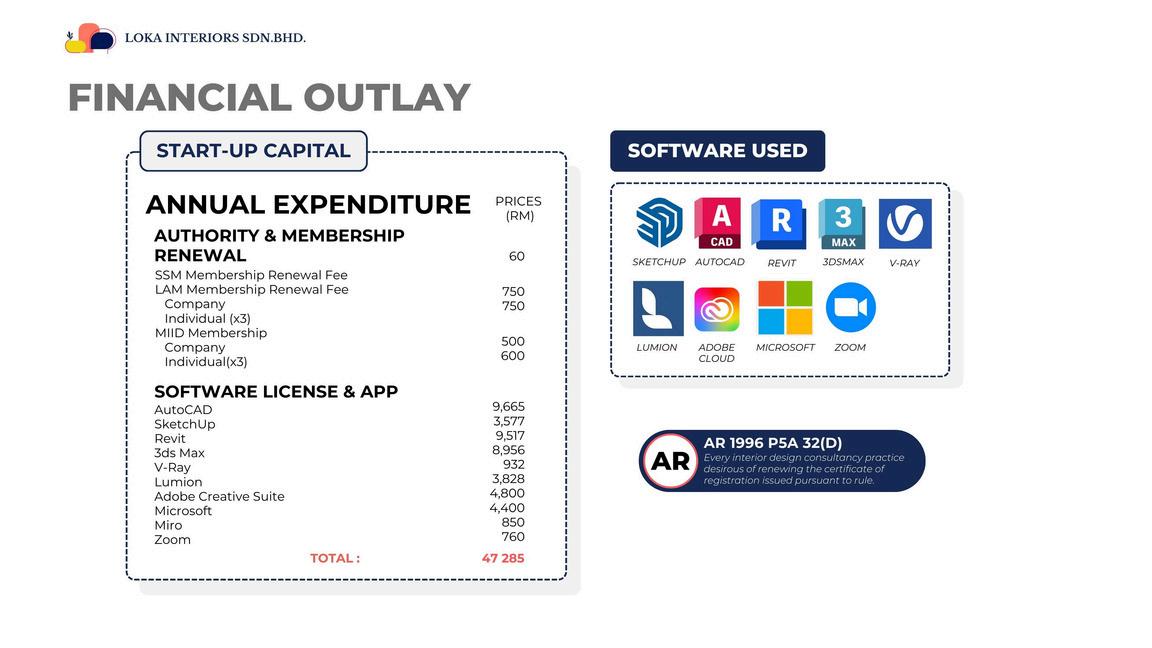
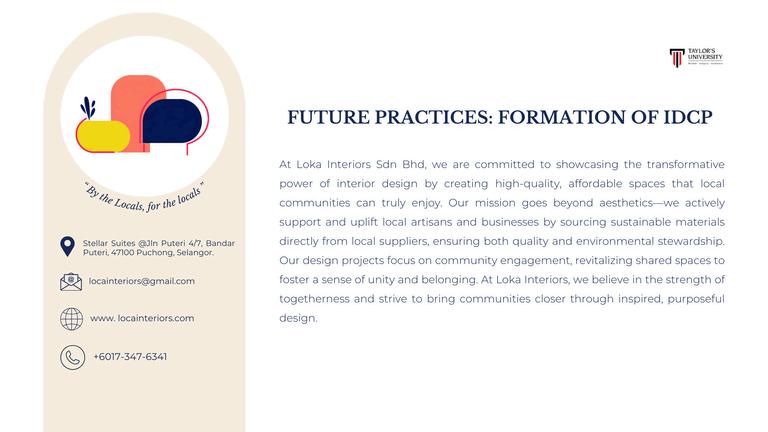
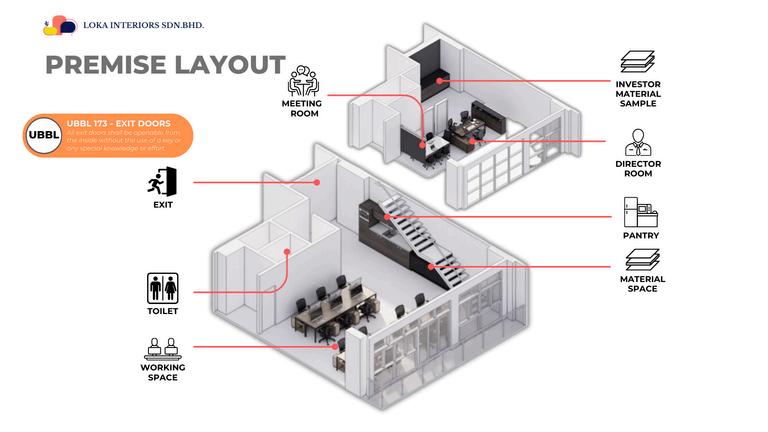
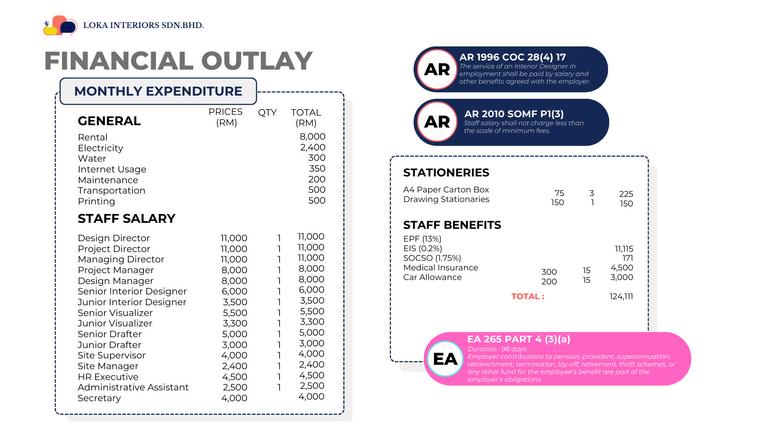
In Group Assignment 3, I had the chance to work alongside my teammates, Farahin and Nicholas, to reimagine the future of architectural practice. We were tasked with exploring the ins and outs of operating an Interior Design Consultancy Practice (IDCP), and our group was assigned to the Body Corporate project. Together, we dug into the core knowledge, procedures, and regulations needed to run a successful IDCP, while also identifying the challenges we might face along the way. We quickly realized that starting a body corporate IDCP requires a lot of careful planning and thoughtful decision-making.
As part of the assignment, we tackled everything from designing a company logo and business cards to defining our organizational structure. We also chose an ideal location for the business, worked on crafting our company vision, mission, and goals, and took a close look at how we would manage expenses and estimate potential revenue
In a nutshell, this assignment gave me a real-world perspective on what it takes to start and manage a business It helped me understand the practical side of things in a way that textbooks just can’t capture
This assignment allows students to apply their knowledge gained in Project 1 into their individual projects in AIAD2 Each regulatory, legislative and technical provision must be illustrated into an informative report presentation with dimensions, drawings (including isometrics) and materials where necessary Students will be assessed based on their ability to explain and apply knowledge and understanding to their Final AIAD2 Project
This exercise serves as a working paper for AIAD Students’ design shall not change or be influenced by the laws due to both module’s time constrain factor, instead it acts as an overall guideline to address the next forthcoming steps before finalizing the building plans Thus students are asked to identify noncompliance by marking an (x) and describing the next course of action for design rectification This rigorous process is essential to ensure compliance with the law before the drawings can be submitted to the Local Authority
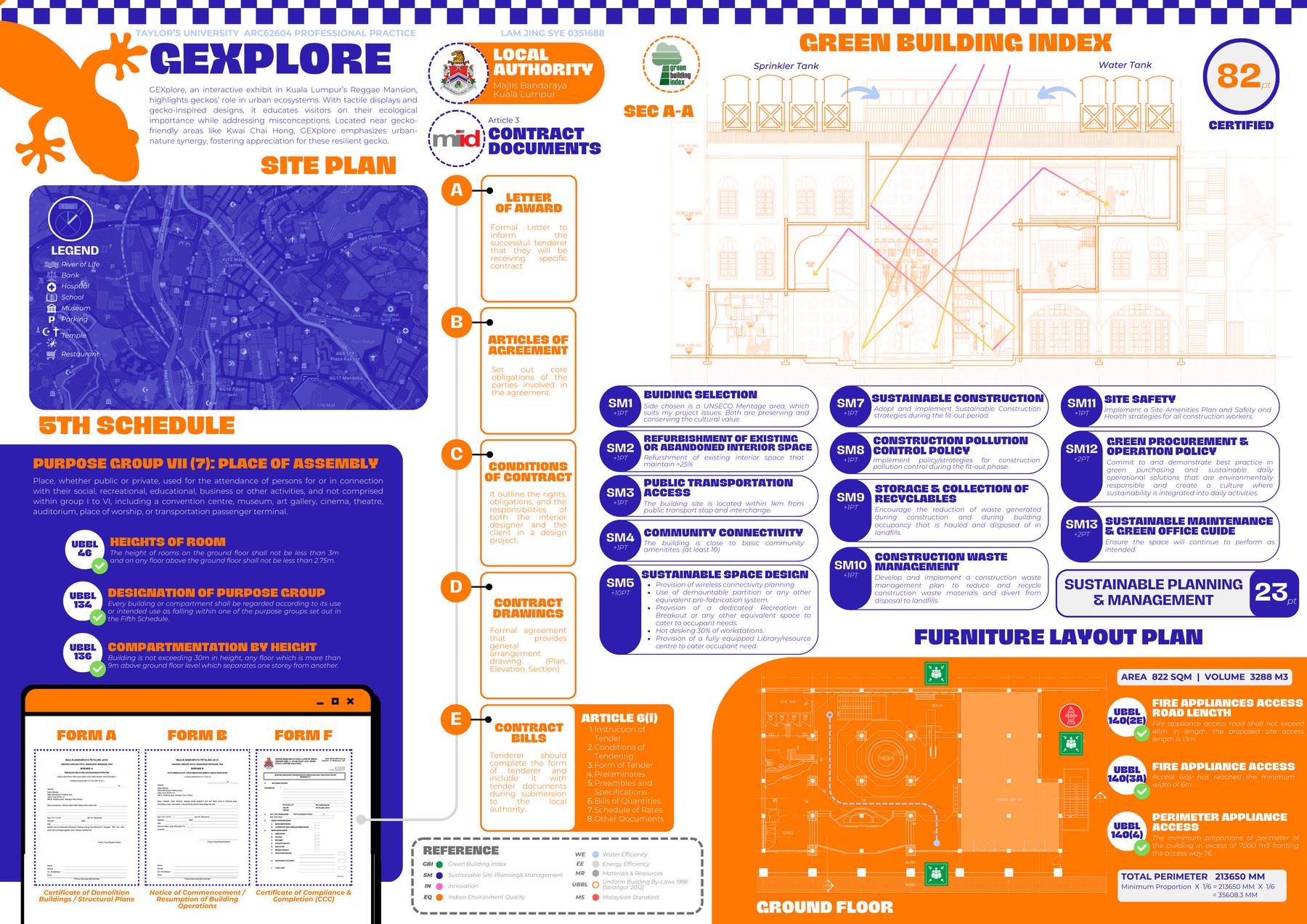
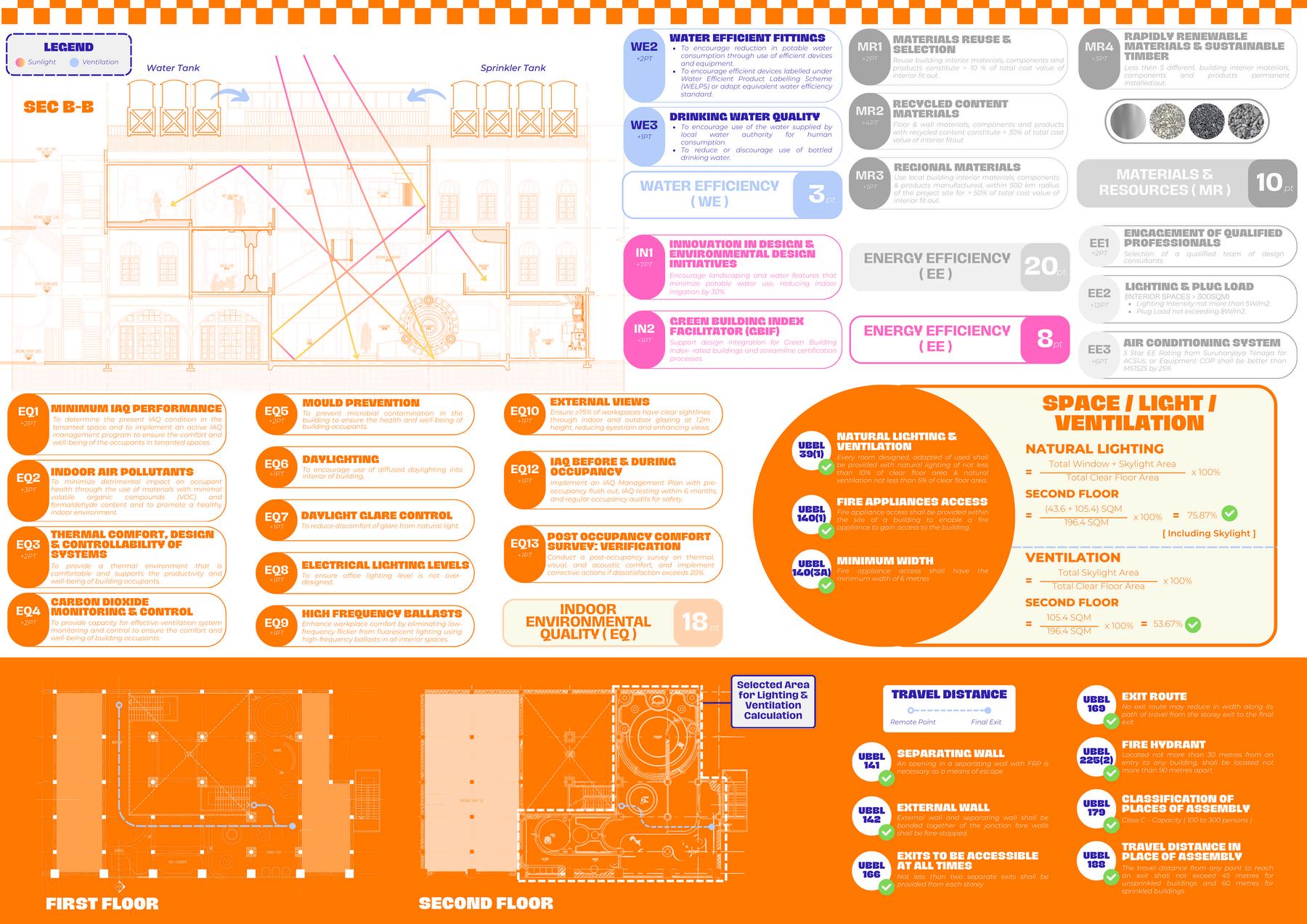
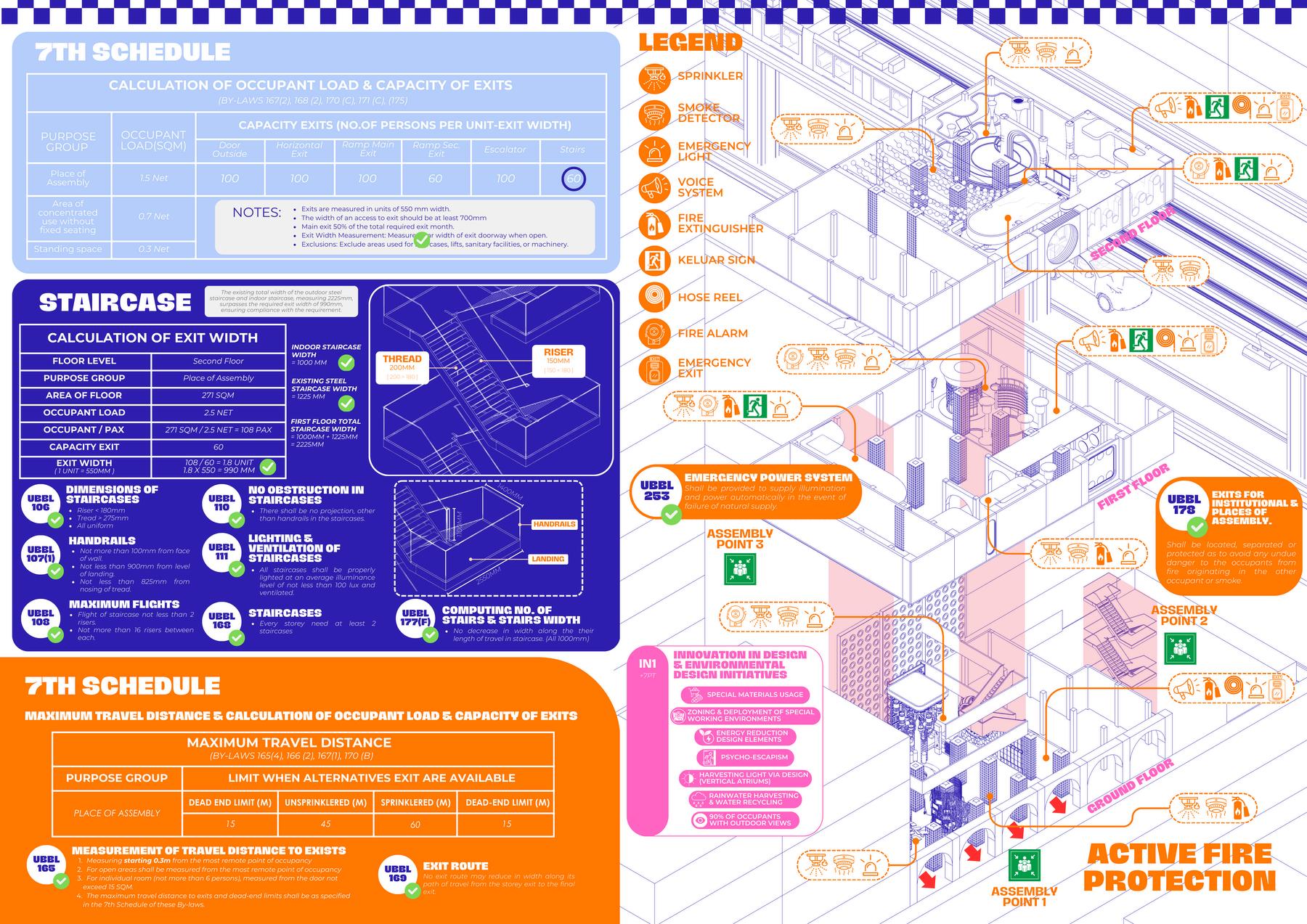
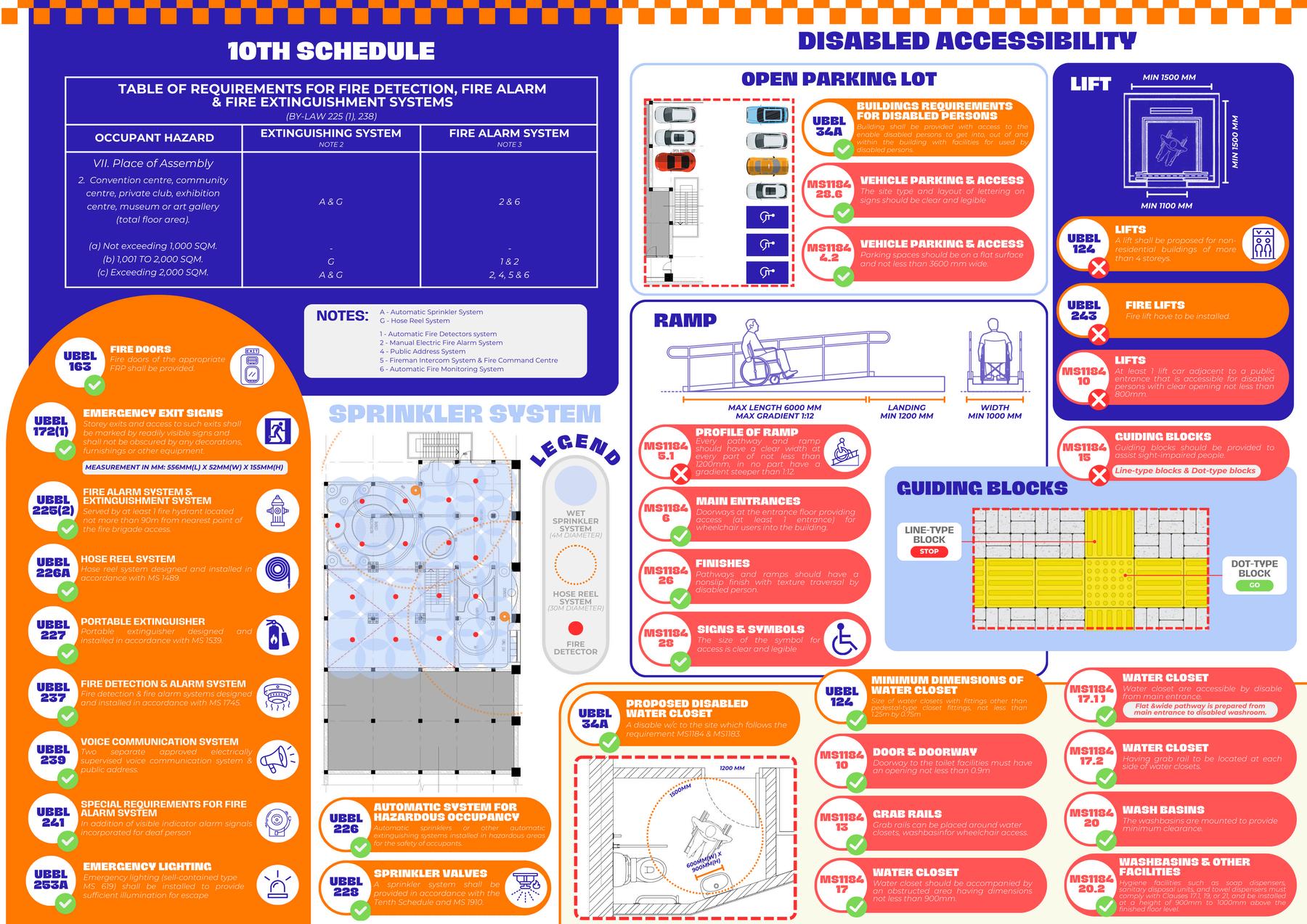
For this final project, we went back to our AIAD2 design and checked how well it aligned with the Uniform Building By-Law (UBBL) requirements. We had to identify both the areas where the design was compliant and where it fell short. This process really helped me understand how important it is to follow safety, functionality, and regulatory standards when designing a space.
Along the way, I also learned a lot about key things like purpose group classification, GBI ratings, the requirements for space, light, and ventilation, fire safety escape routes, and the need for accessibility features for people with disabilities. It made me realize how crucial it is to strike the right balance between creativity and making sure the design meets all the necessary standards.
In short, this project gave me the chance to put my theoretical knowledge to use in a real-world setting, improving my ability to create designs that are practical, well-thought-out, and in line with essential regulations