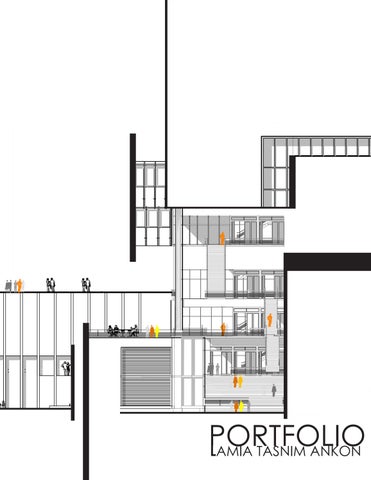
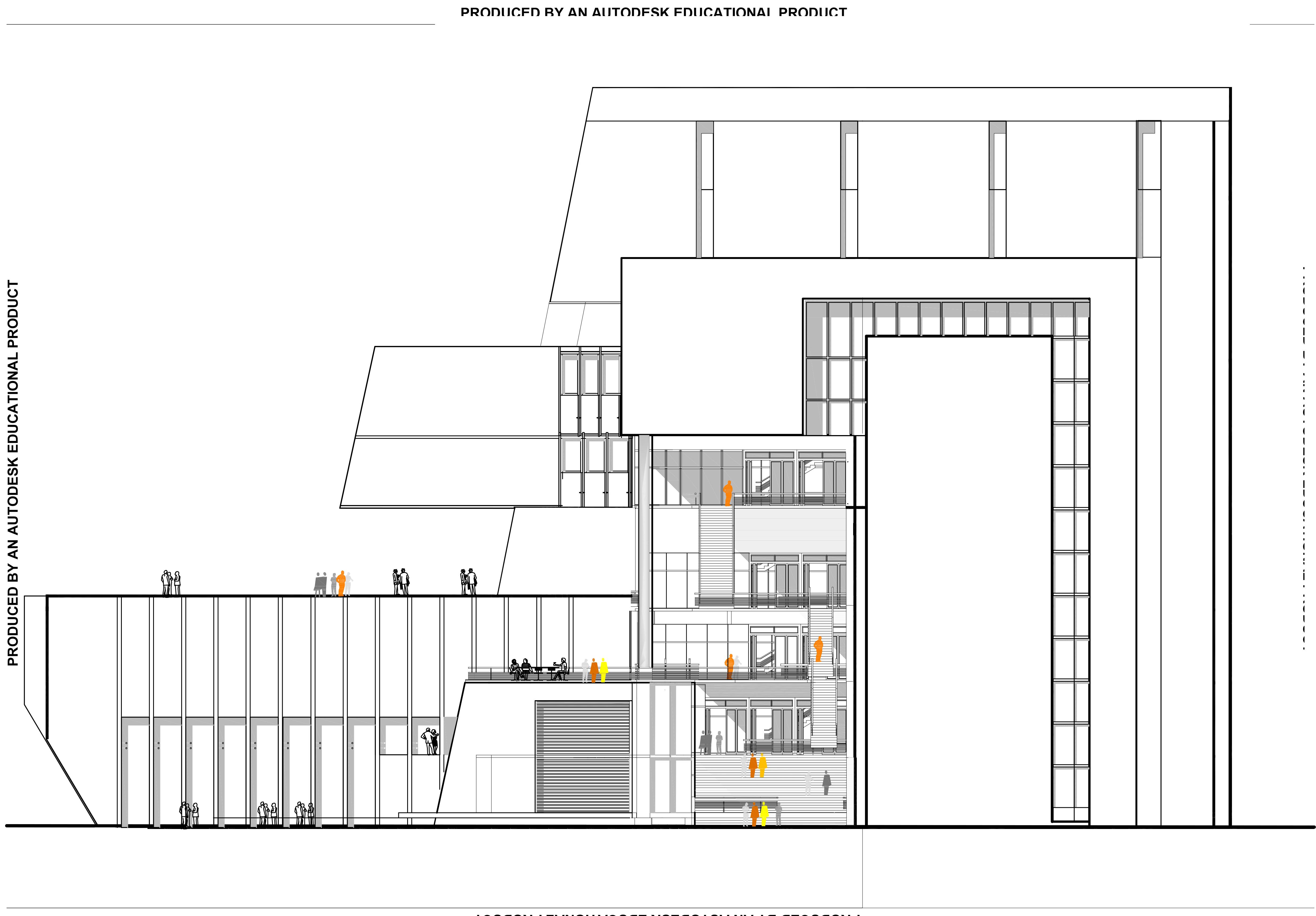
LAMIA TASNIM ANKON
(605)690-9591
arch.lamiatasim@gmail.com
EDUCATION
Master of Architecture, CGPA 3.83 out of 4.00 I May 2024
South Dakota State University (SDSU)
Brookings, South Dakota, United States of America
Bachelor of Architecture, CGPA 3.91 out of 4.00 I 2018
Khulna University, Khulna, Bangladesh
Merit Position: First with Distinction
SKILLS
Computer
AutoCAD, Revit, Adobe Illustrator, Adobe Photoshop CC, Adobe InDesign, Adobe Fresco
Sketch Up, Lumion, Rhino, Viray, Enscape, Twinmotion, Nxt I render, Corel Draw x5, x7, Microsoft Office Suites
Fabrication Technology
Laser cut, CNC Milling Machine
Art Skills Water painting, watercolor, Photography, and Sketching
EXPERIENCE
Architectural Designer, Building Engineering Division
Mead & Hunt I July 2024 to August 2025
Graduate Teaching and Research Assistant, Department of Architecture
South Dakota State University I August 2021 to May 2024
Event Management Staff
South Dakota State University I August 2023-Jan 2024
Architect, Engineering Division
Bangladesh Atomic Energy Commission, Dhaka, Bangladesh I Sep 2019 to 2021
Lecturer, Department of Architecture I July 2018 to Sep 2019
Hajee Mohammad Danesh Science and Technology University, Bangladesh
PORTFOLIO CONTENT
PROFESSIONAL WORK
DICKINSON-THEODORE ROOSEVELT REGIONAL AIRPORT
New Terminal Design, North Dakota
ROCHESTER INTERNATIONAL AIRPORT [RST]
FBO Pre-Design, Minnesota
ACADEMIC WORK
RETHINKING SPACES FOR SOCIAL INTERACTION
Outdoor Gathering Spaces of SDSU
DESIGN THESIS
An attempt towards Affordability : Housing for lower-middle income people in Dhaka
BUILDING STUDIO
Technical Vignettes and Design Sheets
NEO-COLONIAL AMERICAN INFLUENCE
Construction of the National Assembly Complex in Bangladesh
DESIGN OF CHITTAGONG CITY MUSEUM
RESURGENCE OF HIGHRISE BUILDING
Breaking the verticality
AGRICULTURAL HERITAGE MUSEUM EXPANSION
I, Lamia Tasnim Ankon, hereby certify that the work submitted in my portfolio/sample of work for review is entirely of my own hand, or, where produced in collaboration with others, has been clearly identified as such.
Sincerely, Lamia Tasnim Ankon
DICKINSON-THEODORE ROOSEVELT REGIONAL AIRPORT
New Terminal Design,North Dakota Professional Work
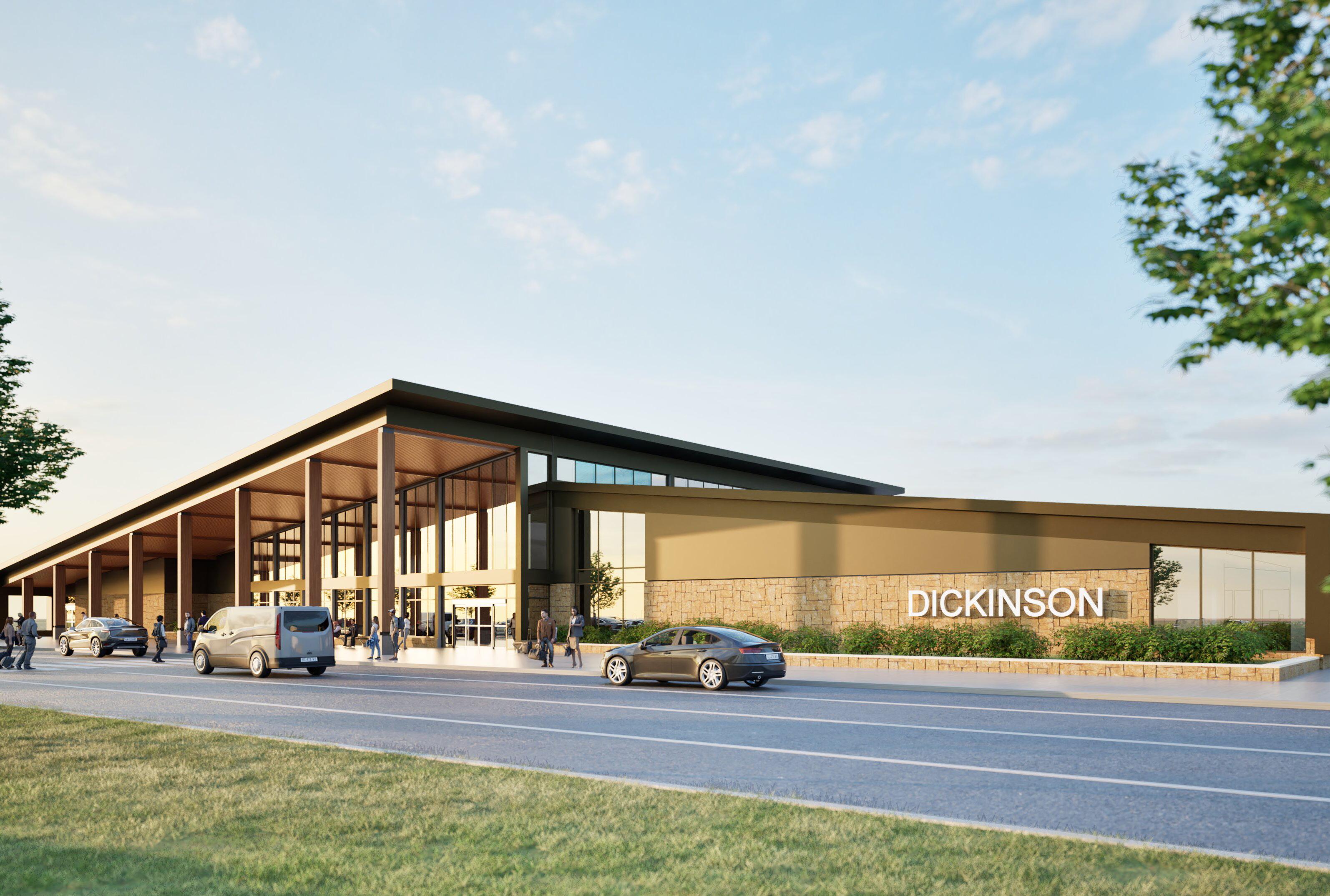
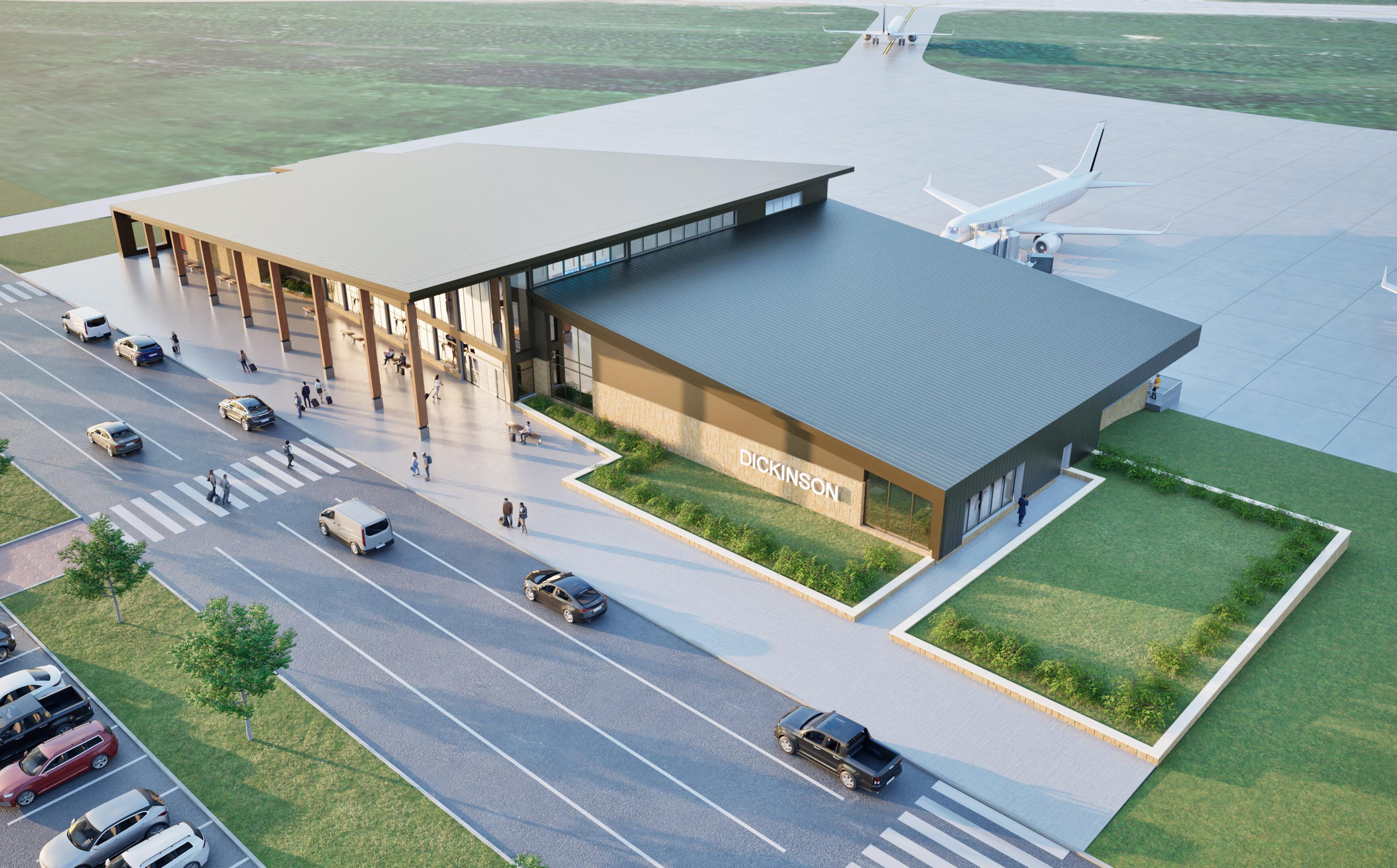
The Dickinson-Theodore Roosevelt Regional Airport is poised to become a cultural anchor within the community.As the region grows and prospers, we are reminded of histories, people, and lands that make this part of the country unique.This thoughtfully designed terminal nestled within the plains of North Dakota is set to become a welcoming beacon to the area for both those who call Dickinson home and new visitors alike.
A sense of place brings about unique opportunities to celebrate the natural beauty of the North Dakotan landscape. How can the airport bring about pride in place, functionality, and a sense of calm and tranquility at the same time? The design team’s charge is to collaborate on a design for the DickinsonTheodore Roosevelt Regional Airport that successfully provides a necessary transportation service to the area while equipping the new facility for future growth and potential expansionall while celebrating the unique culture of the surrounding community.
Left Top: Exterior - Landside
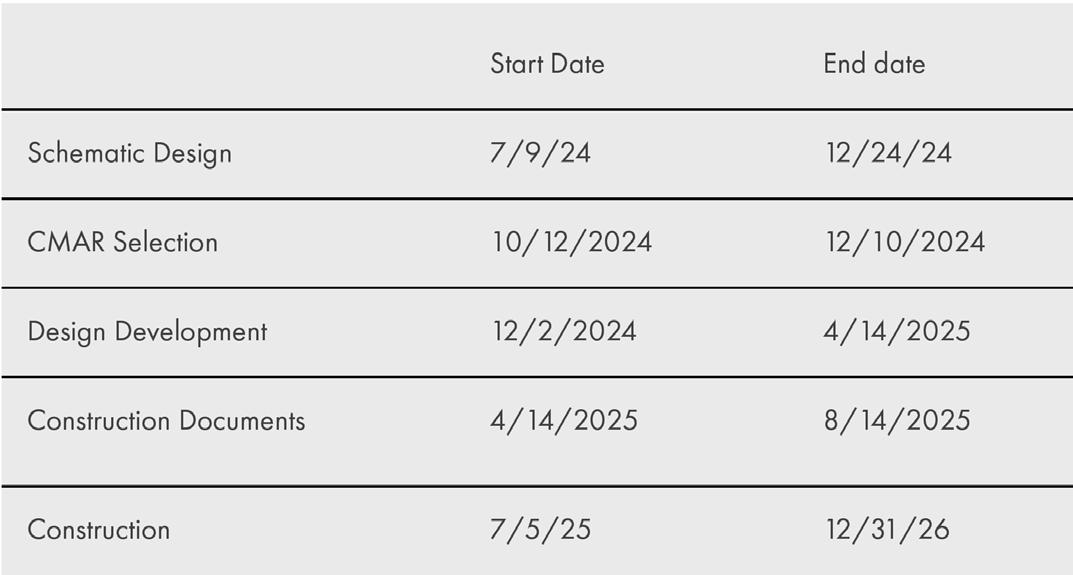
Left Bottom:Exterior - Northeast Right: Project Schedule Summary
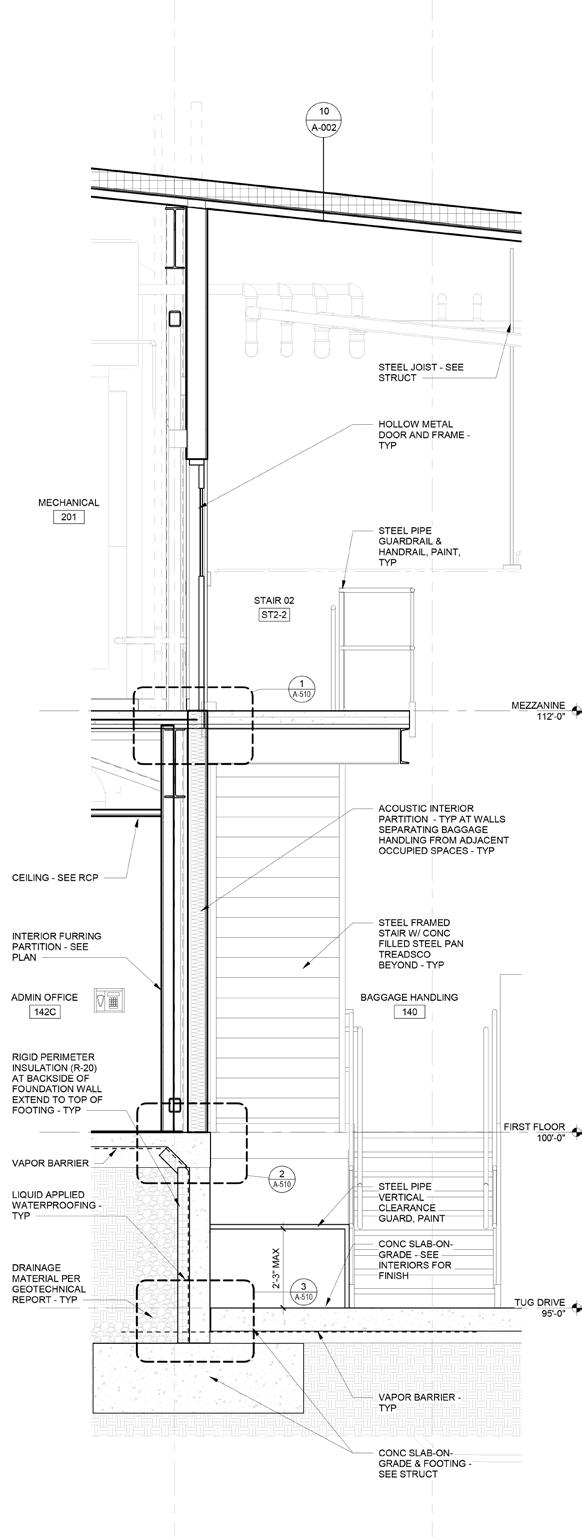
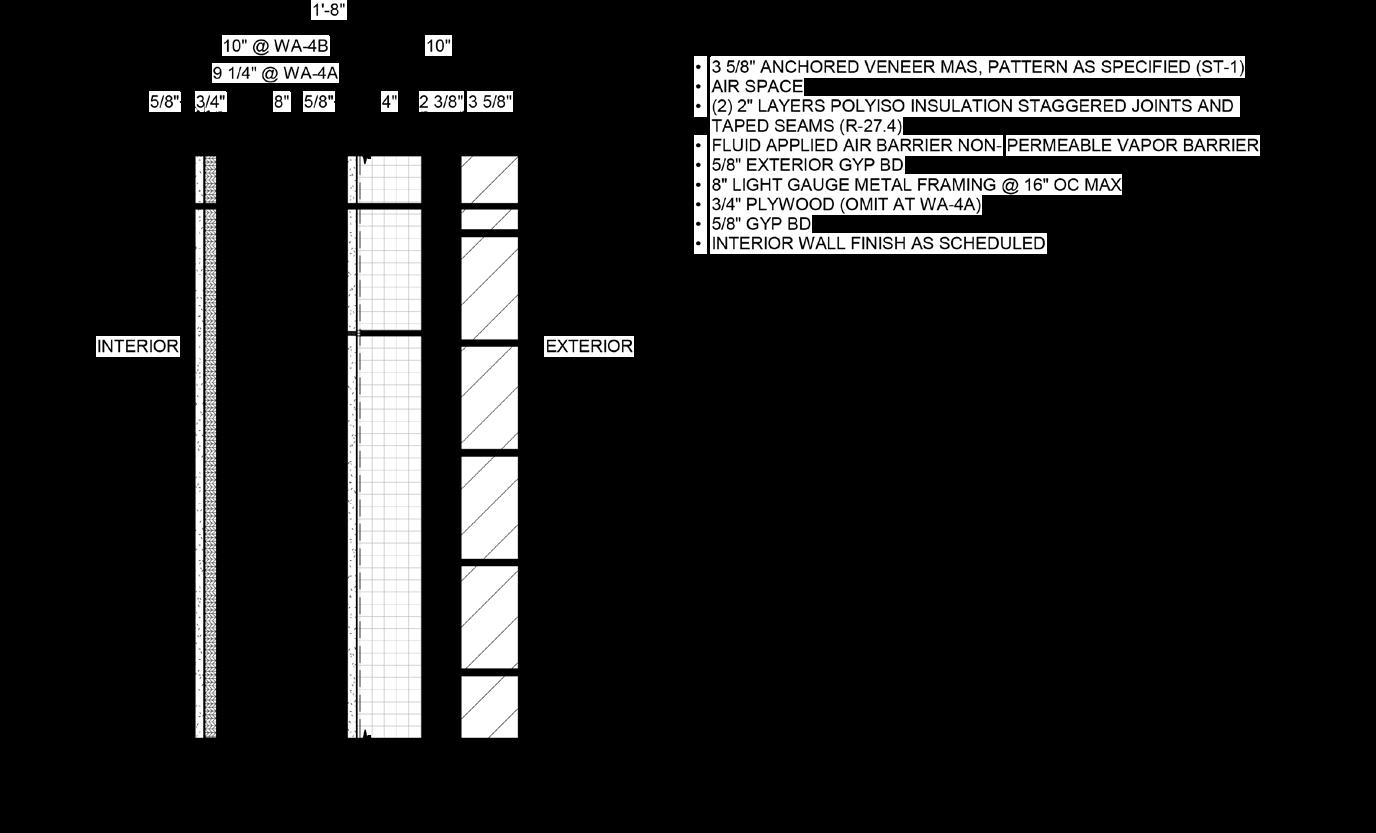
CONSTRUCTION DOCUMENTS
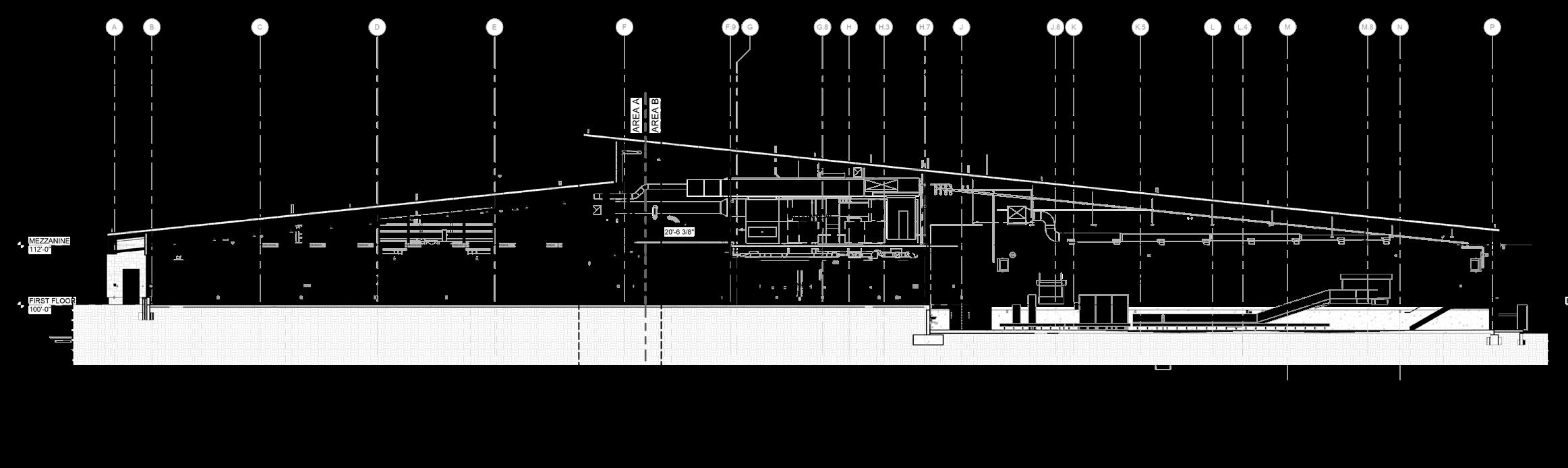
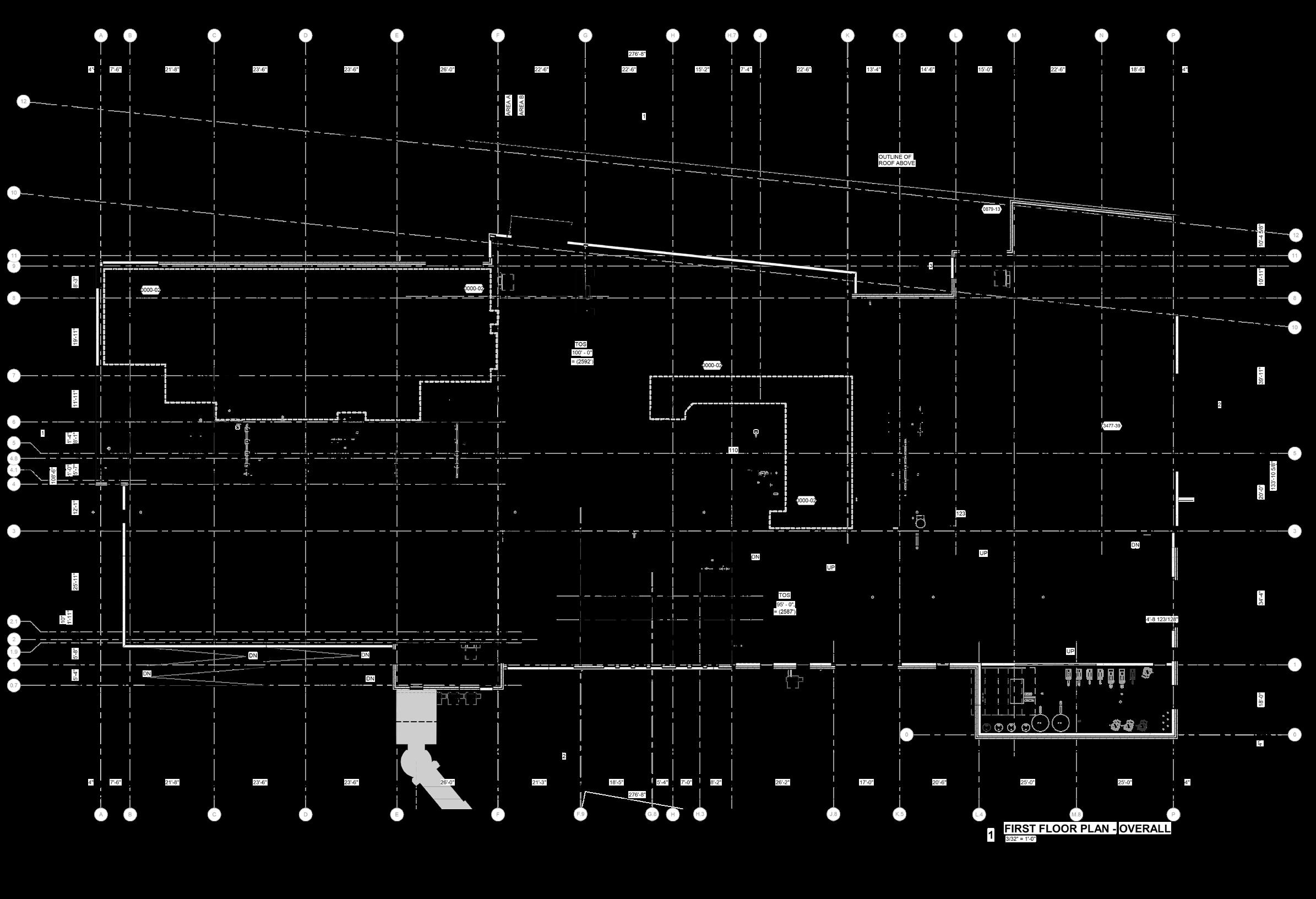
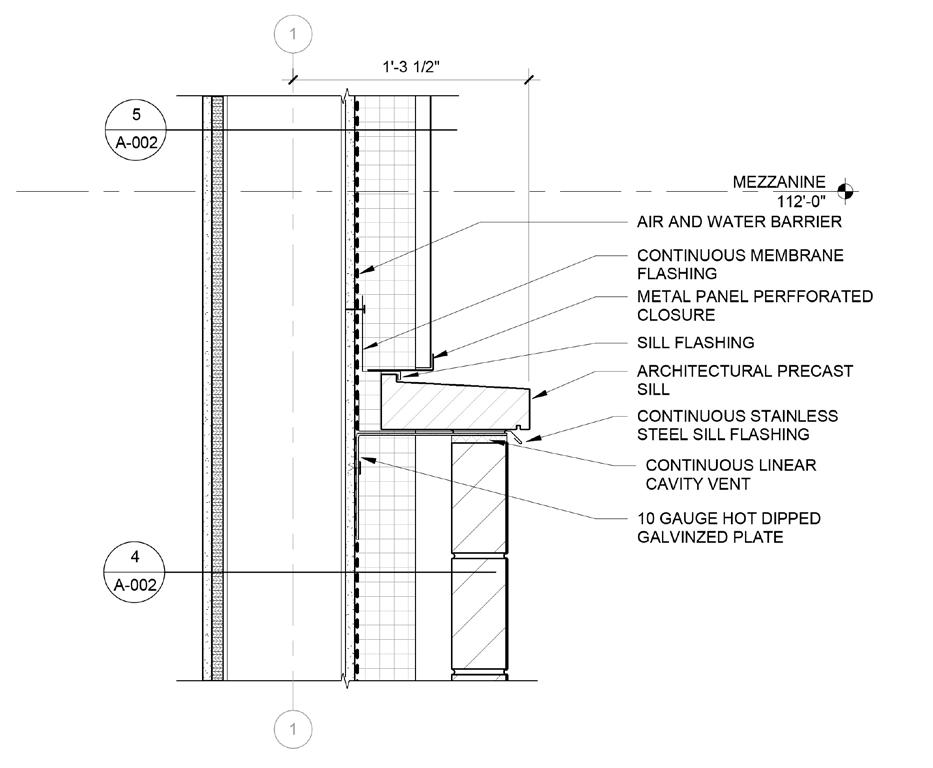
EXTERIOR WALL TRANSITION AR MASONRY CAP
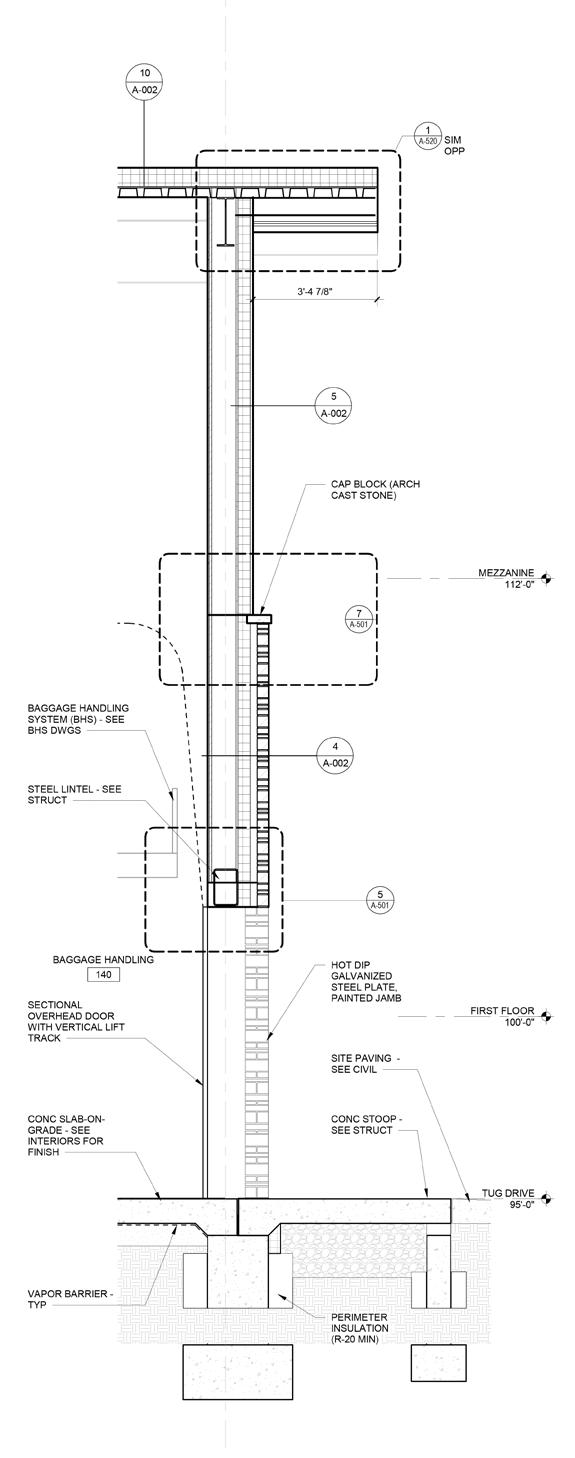
CONSTRUCTION DOCUMENTS
WALL SECTION AT MECH STAIR
VENEER MASONRY
WALL SECTION AT BAG HANDLING
ROCHESTER INTERNATIONAL AIRPORT [RST]
FBO Pre-Design ,Minnesota
Professional Work
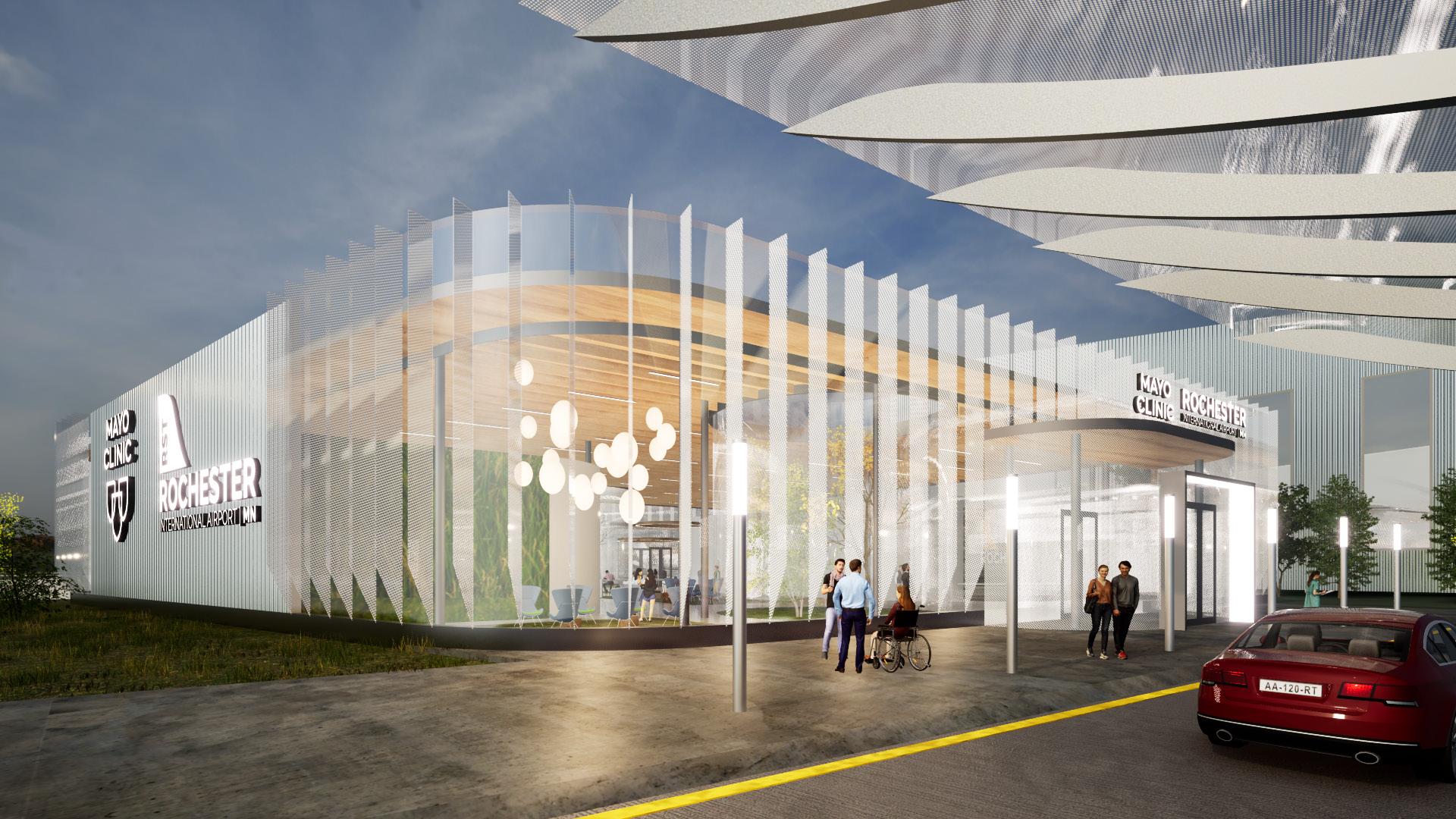
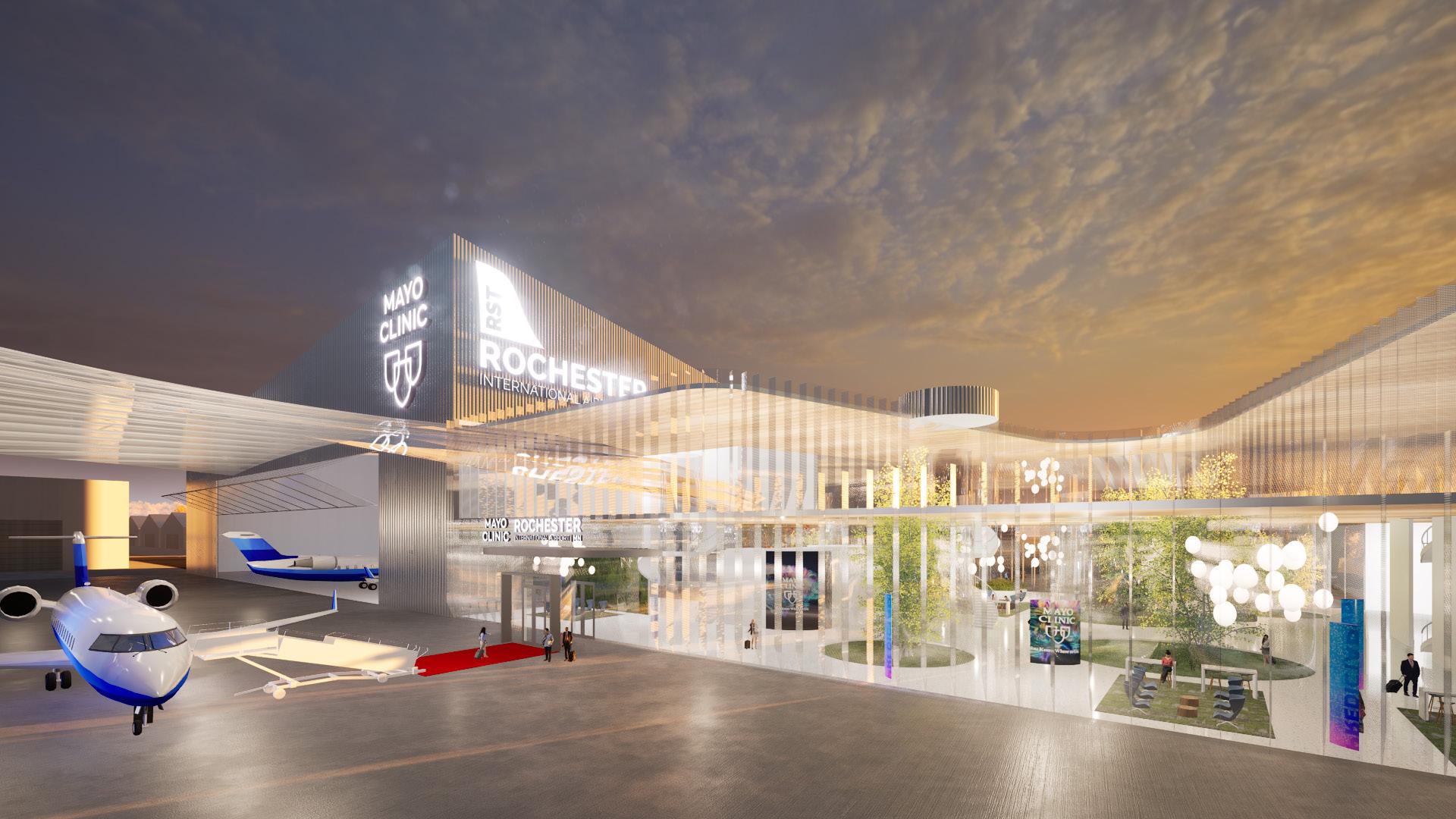
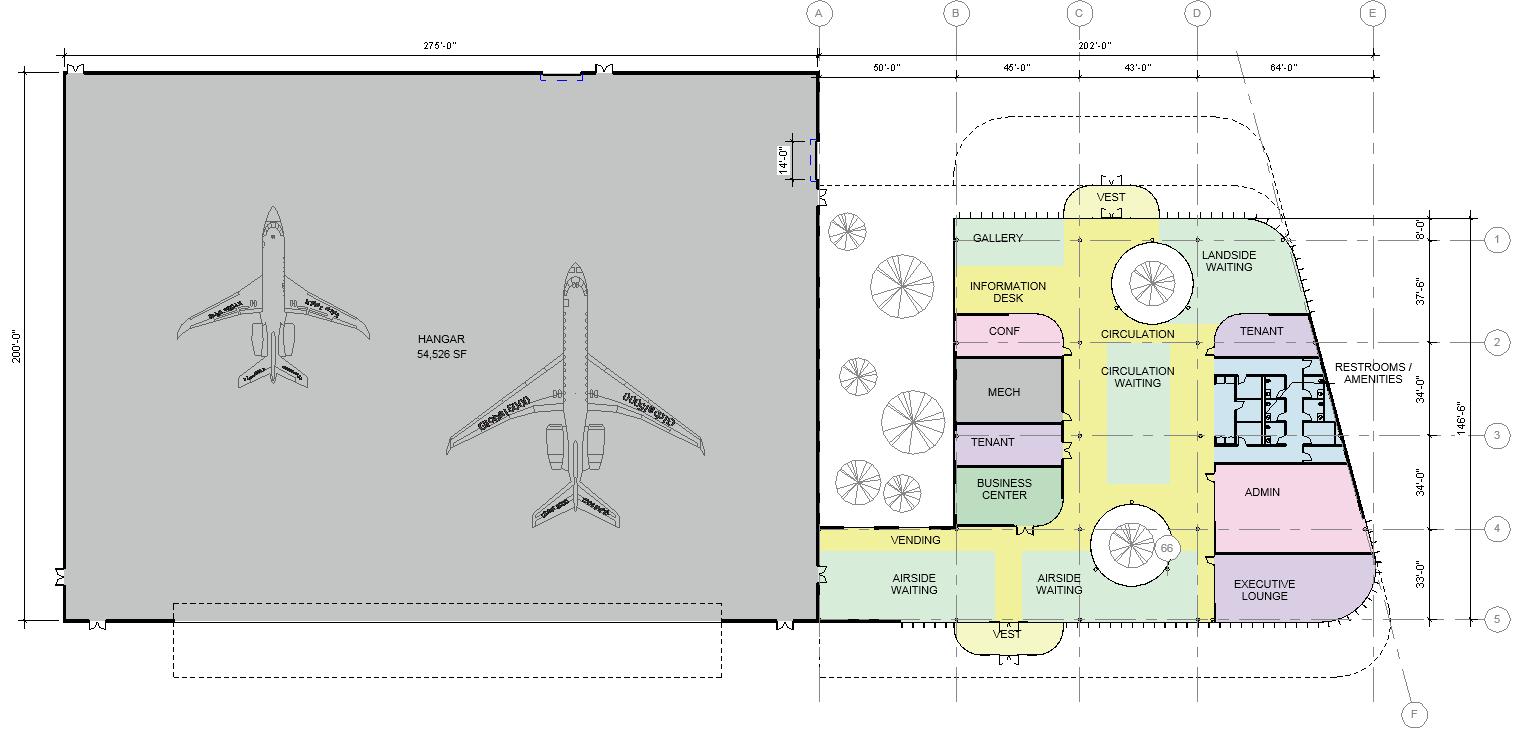
Mayo Clinic, based in Rochester, Minnesota, is undertaking a $5 billion, six-year strategic initiative called Bold. Forward. Unbound. This proposed project, which includes building new facilities, aims to transform healthcare for a global clientele of high-profile patients. The initiative focuses on infrastructure designed for global patients, including dignitaries and highprofile visitorsstarting from their arrival at the airport. The new airport facility is designed to be clean, intuitive, and seamlessly connected, with a transparent facade and interior green spaces. It will offer premium amenities, including an executive lounge, quiet rooms, a mother’s nursing room, and a service animal relief area, all designed to make each patient feel uniquely important and cared for.
Left Top: Curbside Entry
Left Bottom :Airside Entry Right Bottom: Proposed Floor Plan
RETHINKING SPACES FOR SOCIAL INTERACTION
Outdoor Gathering Spaces of SDSU
Independent Project
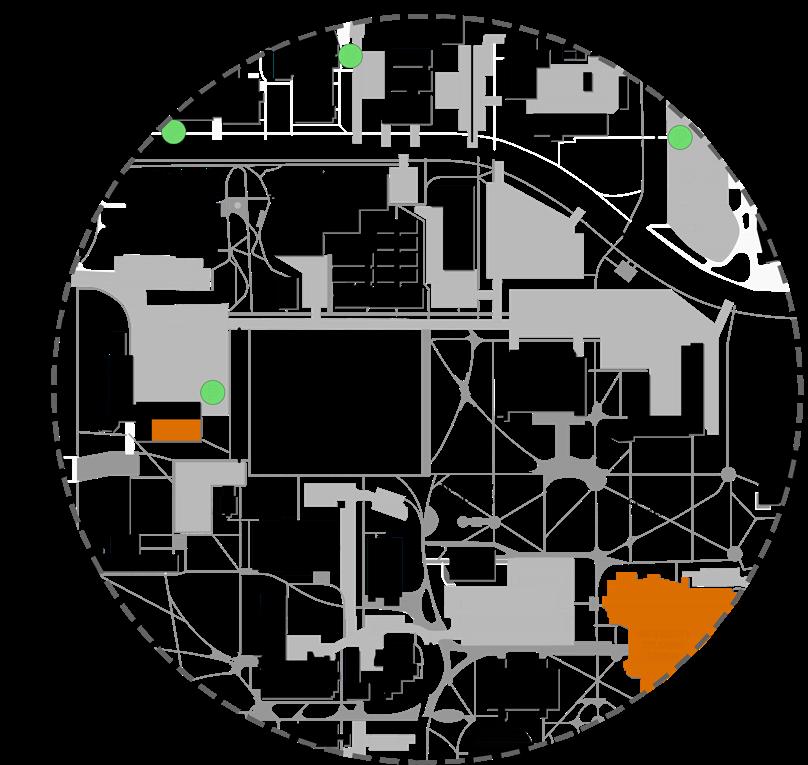
Outdoor gathering spaces are essential for fostering social interactions and shaping social identities. These spaces serve as hubs for communication, interaction, and personality development among young individuals.The efficiency of a campus is traditionally associated with formal activity settings, the significance of public open spaces for circulation, study, relaxation, and aesthetic enjoyment should not be underestimated. These spaces demand greater attention due to their potential to amplify the sense of belonging and contribute to overall student well-being in university campuses.
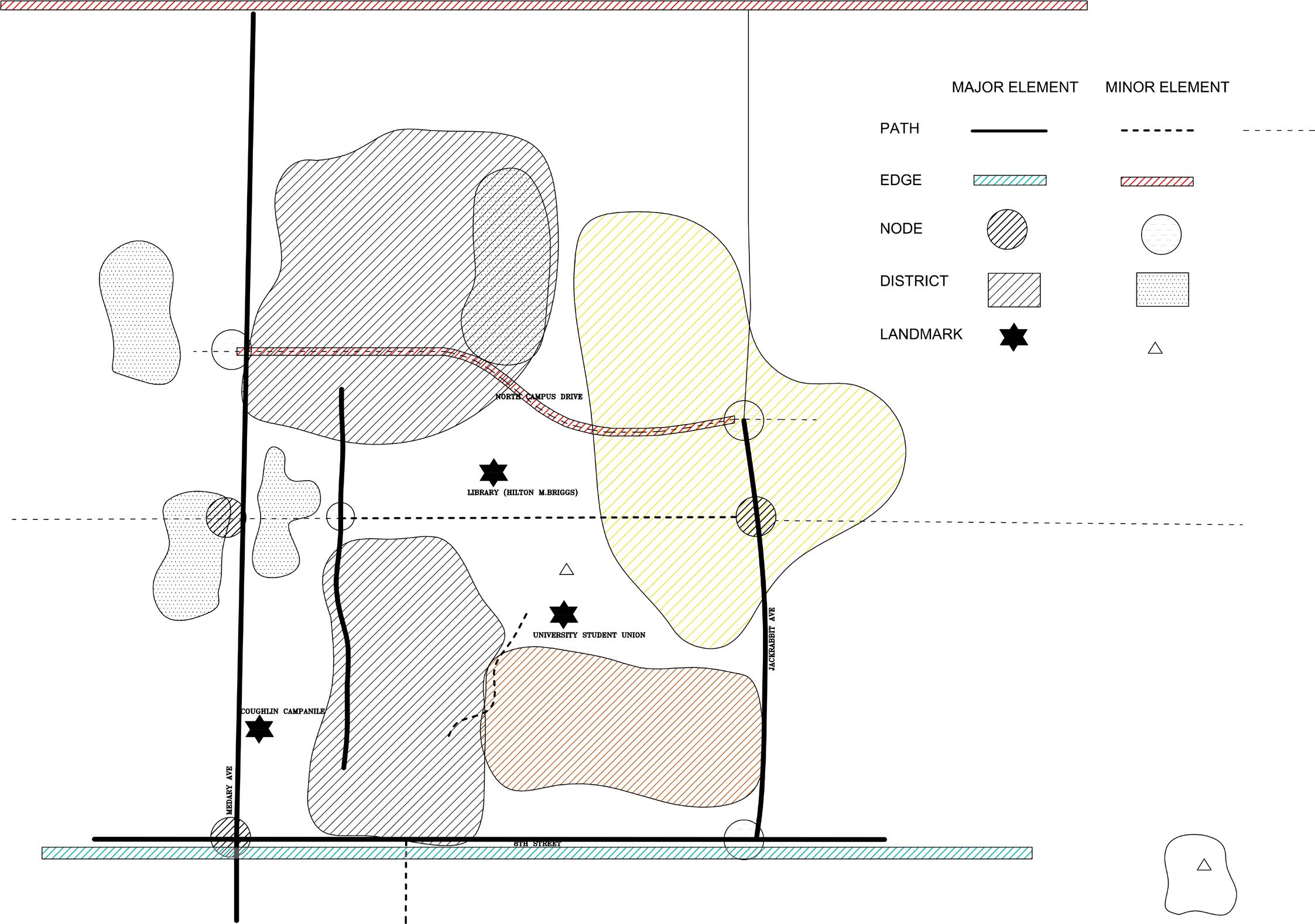
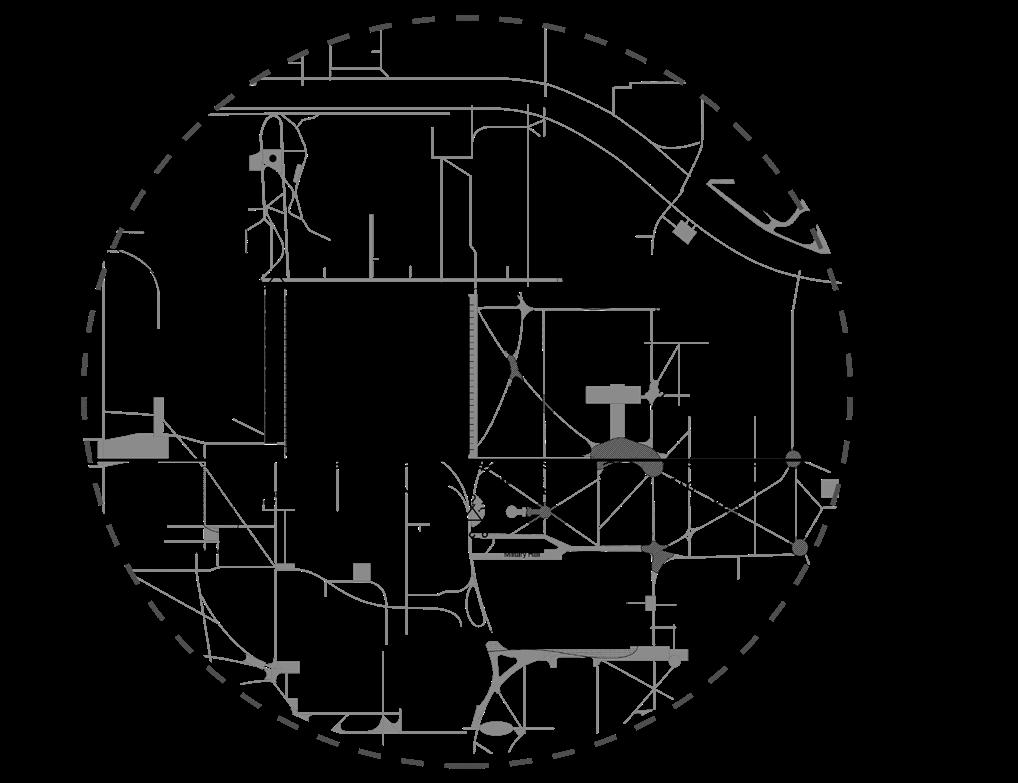
This project is a combination of research and design. In research phase, the master plan of SDSU has been studied in macro and micro scale to understand whether the public open spaces of SDSU are responsive enough for young students to promote youth activities as social inclusion by investigating existing locations, paths, routes, space between buildings and overall outdoor spaces that they are meeting the student needs. With the theory of Kevin Lynch, the mental maps of the campus in macro and micro scale consist of five elements path, edge, node, district and landmark, has been produced based on several verbal and written interviews with students of different background. Finally, in the design phase the project proposes the kind of outdoor open spaces we should be building in our campus.
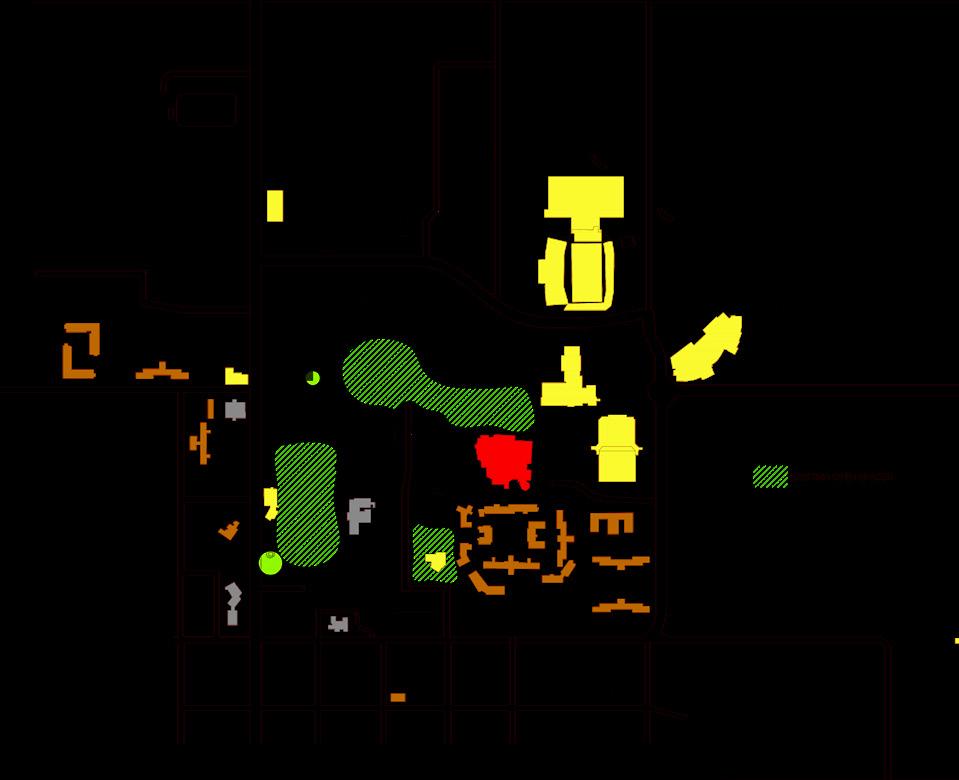
Top:Landuse map
Middle: Existing Outdoor spaces
Bottom:Network of Streets
Left: Indoor gathering space by Lamia Tasnim Ankon
RESEARCH PHASE
Cognitive Mapping: Macro Scale
With the theory of Kevin Lynch, the cognitive map of SDSU was produced consist of five elements path, edge, node, district and landmark based on written and verbal interviews of students and alumnae. These elements are defined as follows:
Paths: Paths are the channels along which the observer customarily, occasionally or potentially moves.
Edges: Edges are the linear elements not used or considered as paths by the observer.They are boundaries between two phases. Some edges may be barrier, more or less penetrable.
Districts: Districts are large areas that have common identifying characteristics.
Nodes: Nodes are points, the strategic spots into which an observer can enter.
Landmark: Landmarks are point references considered external to the observer. They are more easily identifiable.
According to the experience of the campus community, there are three major and one minor districts in the campus. The orange color presents districts of housing while the black shows educational environment. The yellow color presents the recreational zone. The black line is considered the major paths while the dotted line represents the minor path. The Briggs library and student union and the Campanile tower are serving

Cognitive Mapping: Micro Scale
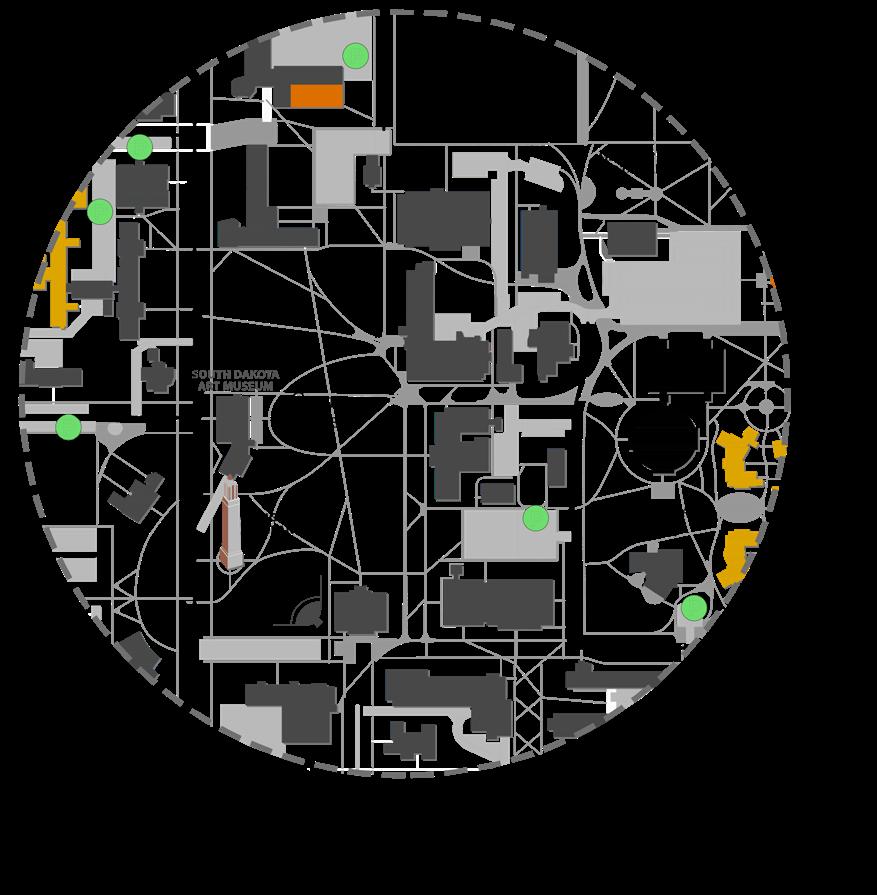
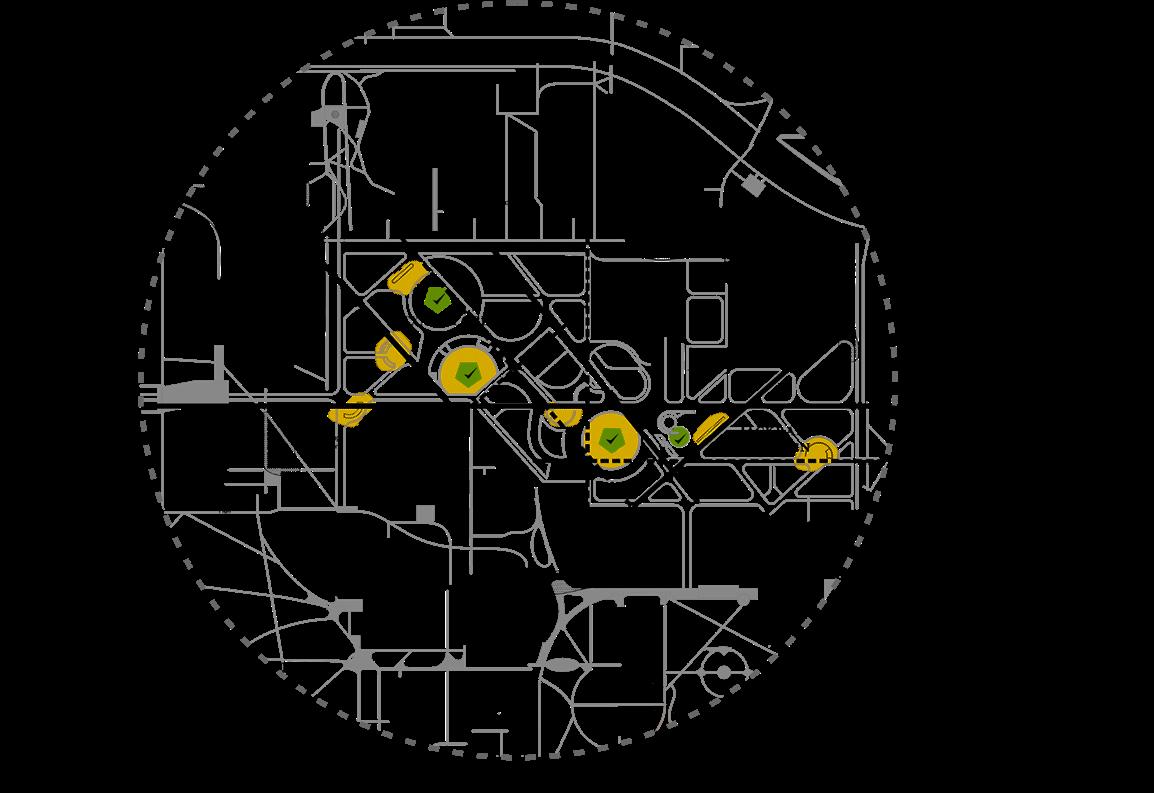
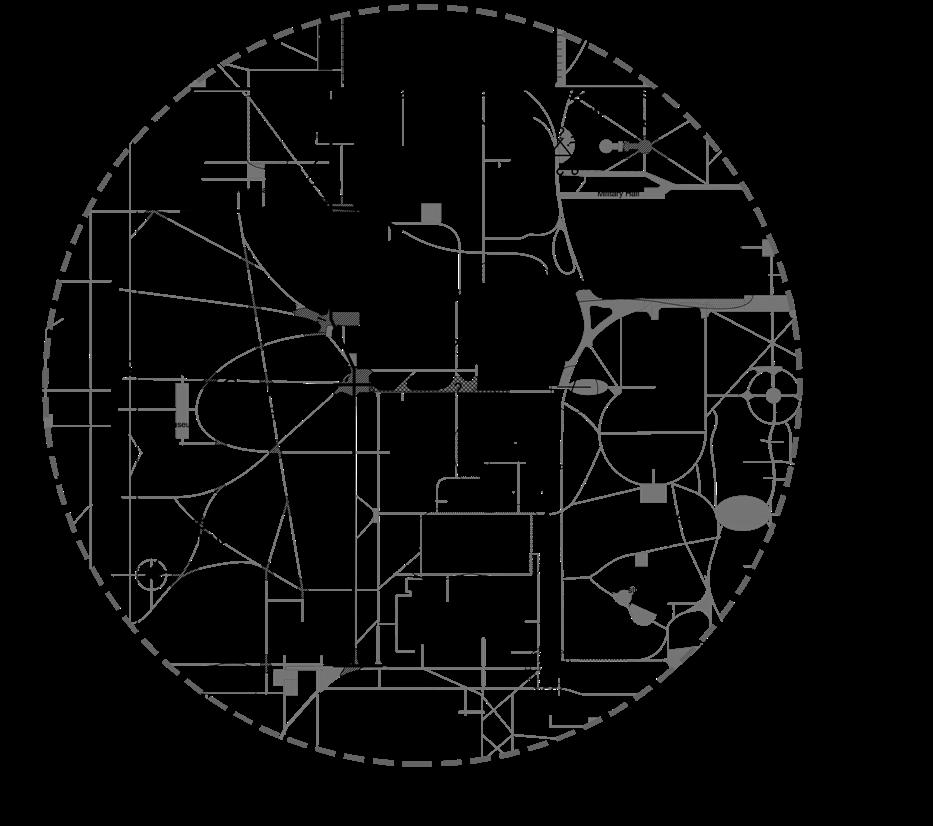
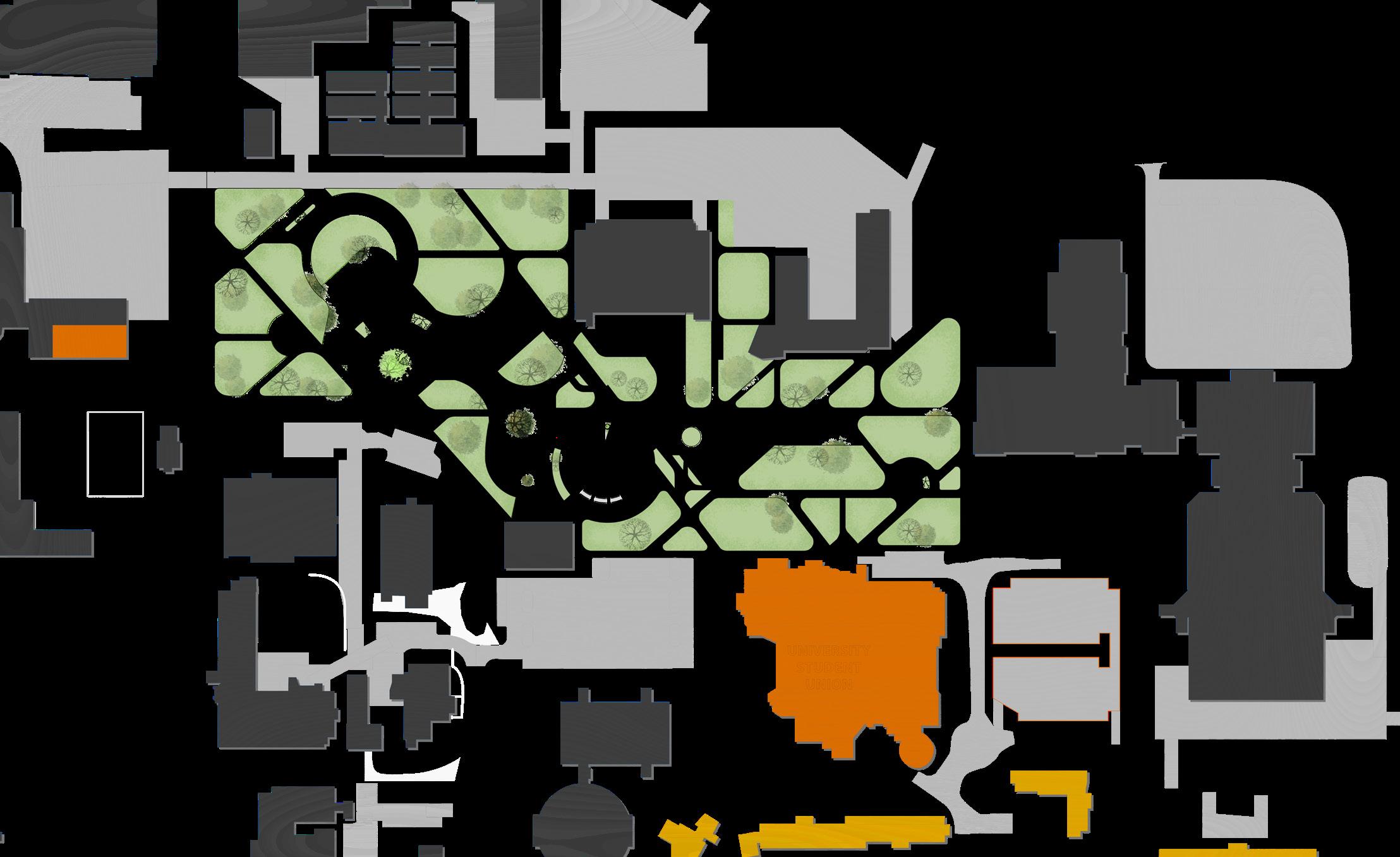
Two micro mental mapping for existing outdoor zones were created to understand the issues. Zone 1 includes the Jackrabbit green and Sexaur green space. As this zone is the center of the campus and has the potentiality to connect all the four districts, it is strategically chosen for further design development phase. After investigating the micro mental mapping, a proposal mental map has been designed where the junctions of pedestrian circulation have been retreated to be responsive enough for social interaction. Some major and minor paths are recreated to create connection among all the existing districts. It will facilitate pedestrian, vehicle, bike, and transit connections within campus and to the broader community.
Top: Zone 1(Left), Zone 2(Right) Middle:Cognitive Map zone 1(Left),Cognitive Map zone 2 (Right), Bottom: Proposed Cognitive Mapping zone 1
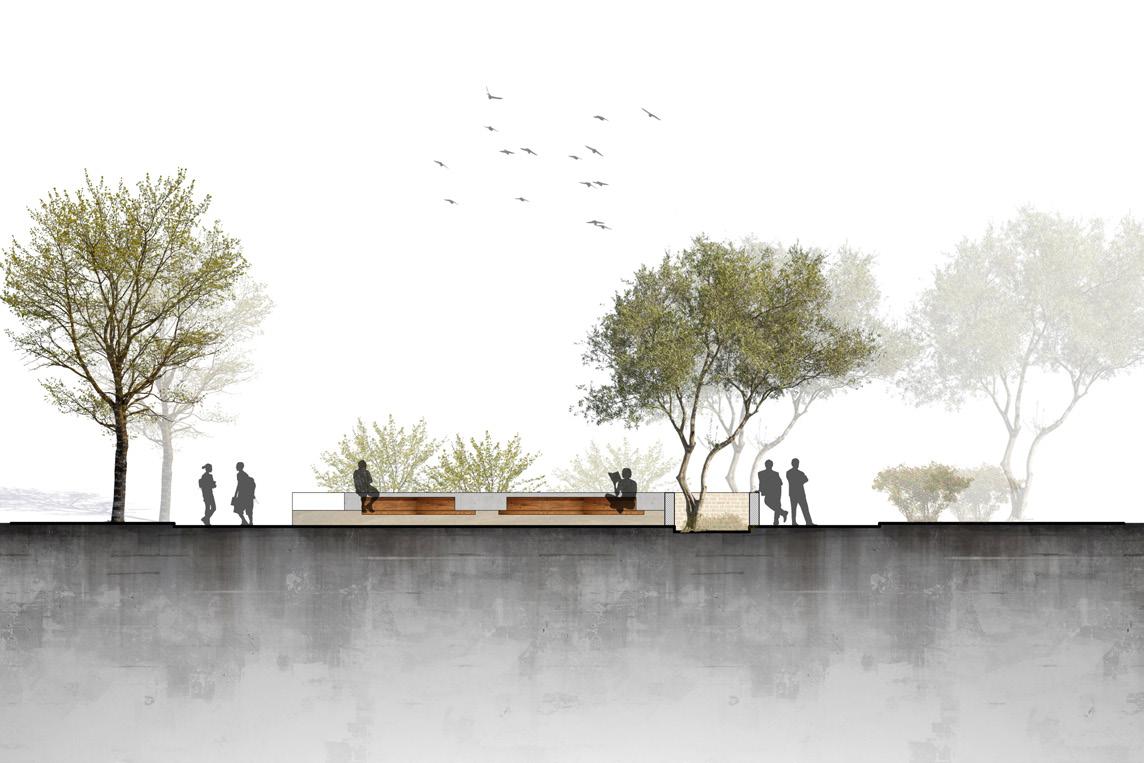
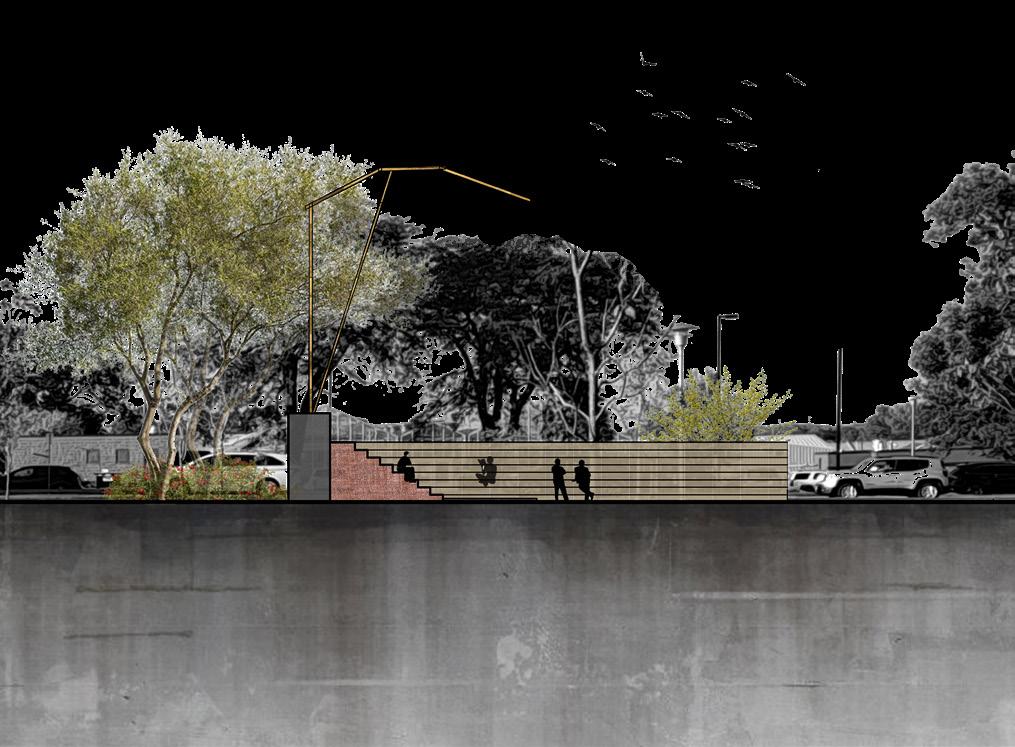
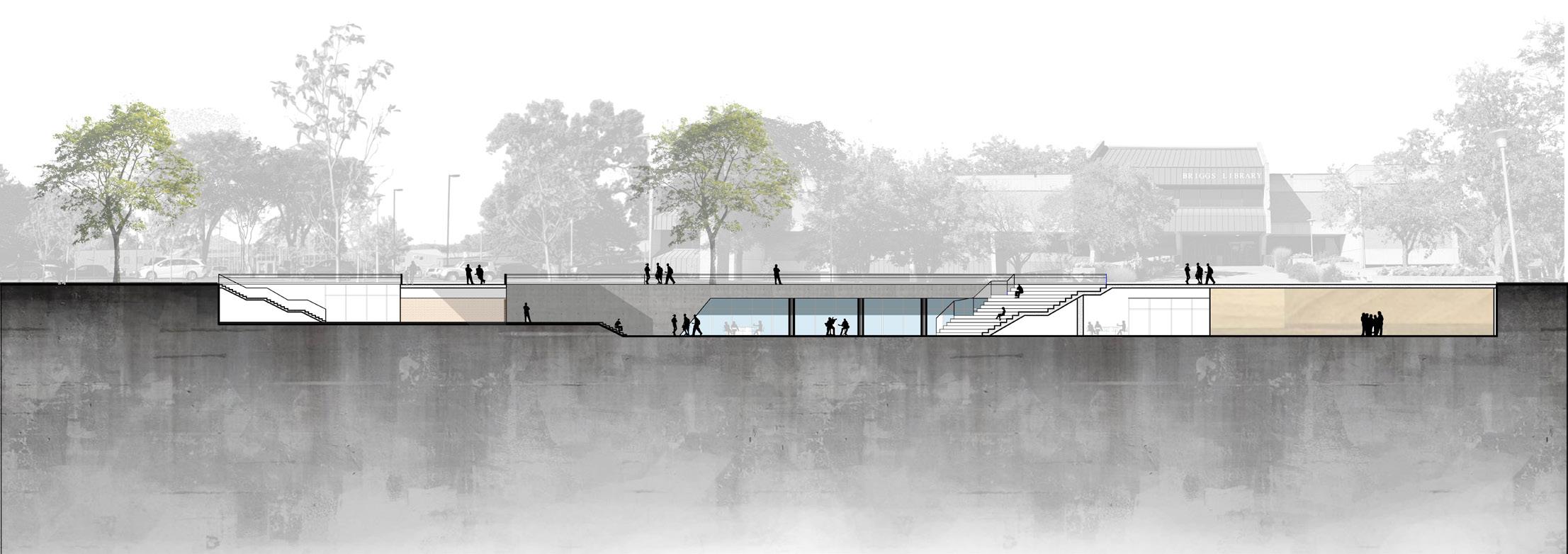
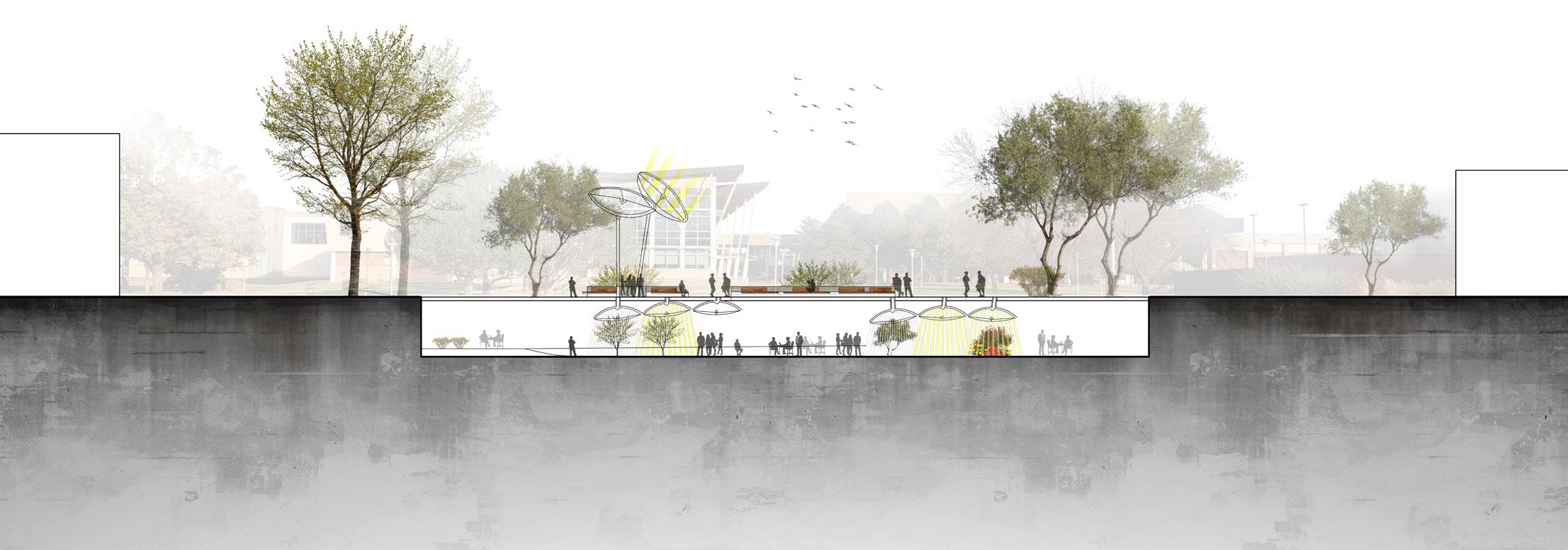
Top: Section AA’ left , Section BB’( Right) showing seating spaces
Center: Section CC’ showing central gathering space
Bottom: Section DD’ showing indoor space and outdoor plaza
DESIGN PHASE
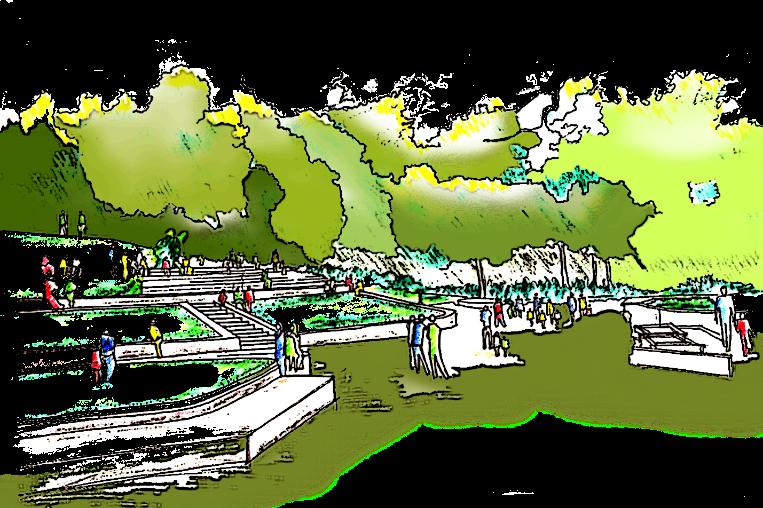
A central gathering space for campus community is proposed where the major pedestrian flow pass by,where people can meet,bands play,displays are placed,rallies are staged,and people come to watch other people or just to relax between classes.It is strategically designed as a sunken plaza so that it does not act as a visual barrier rather it promotes legibility and permeability .Hence the proposed pathways naturally focus on it,bringing many people to the plaza.
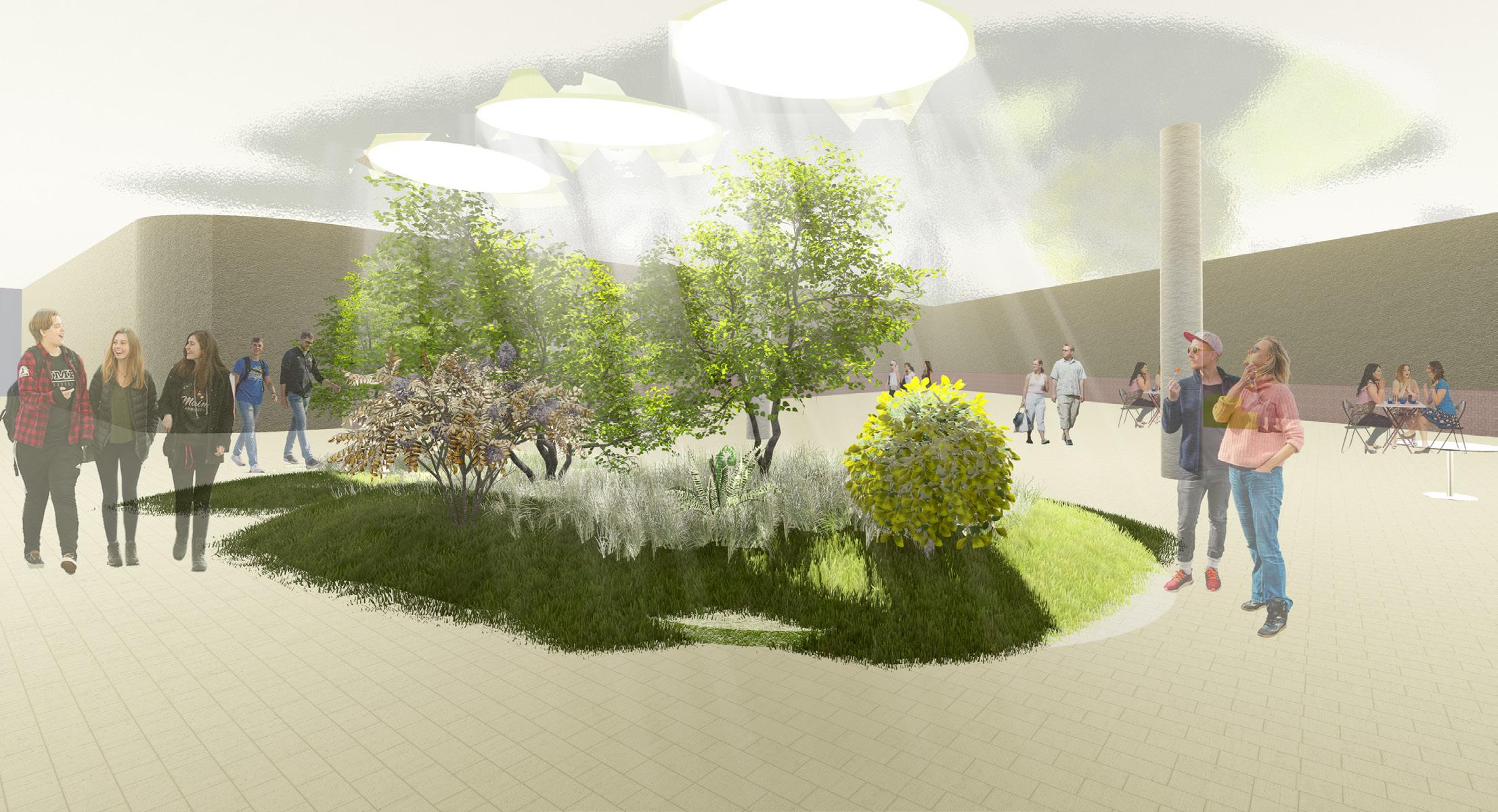
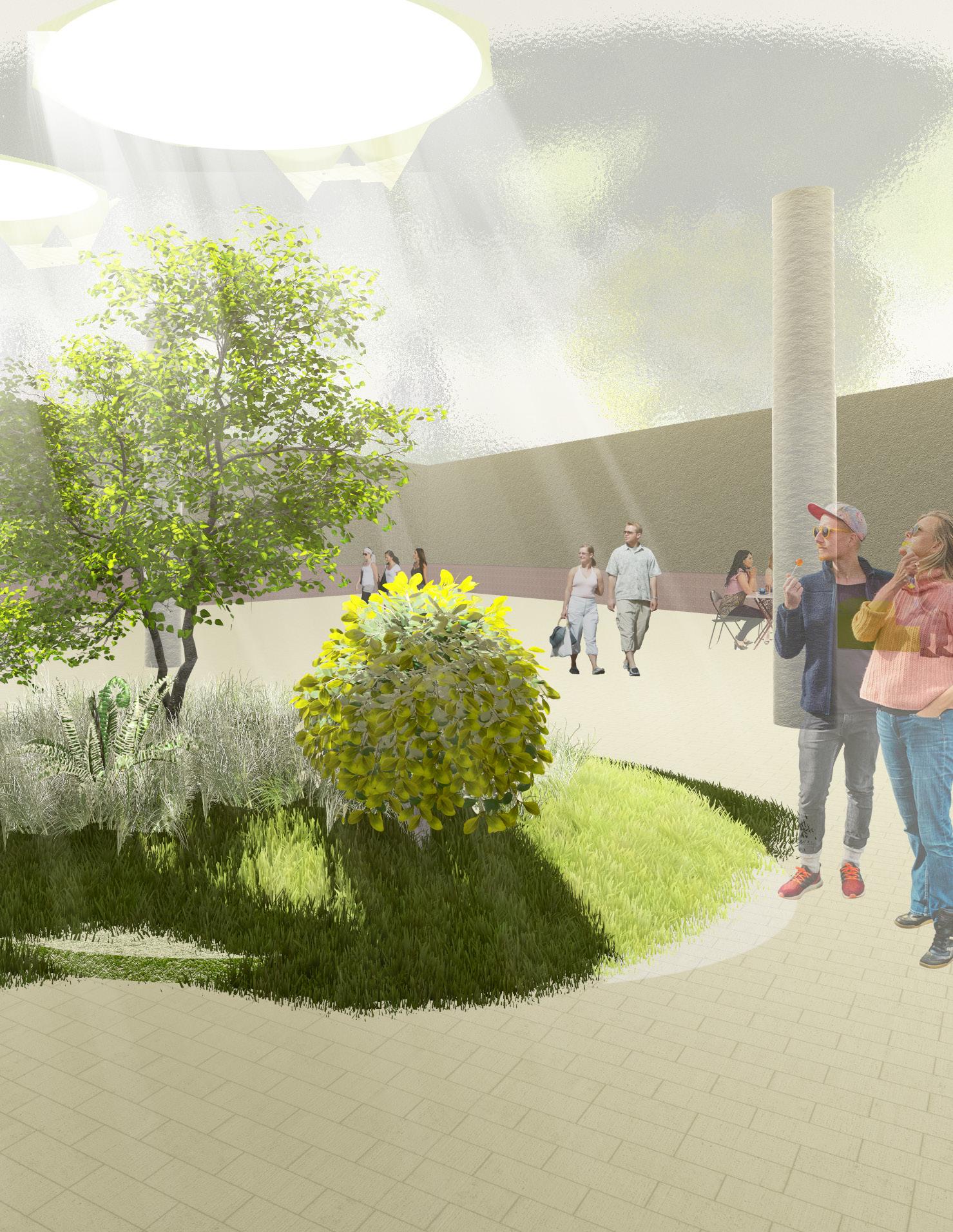
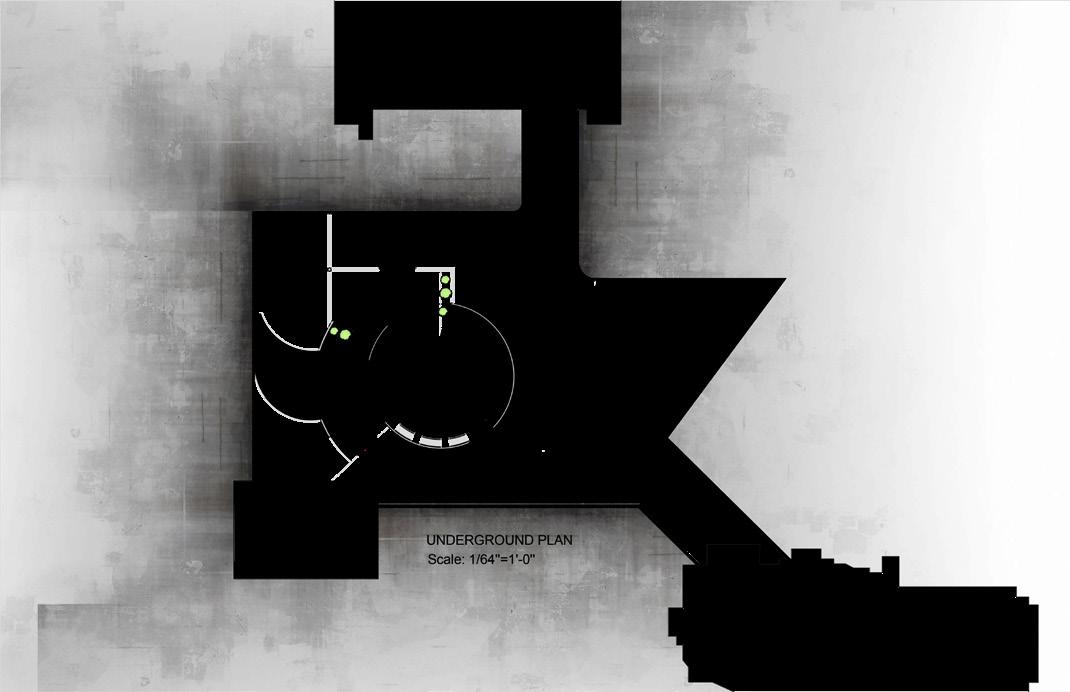
The underground connections are increasing amenities for student’s interaction during winter. It allows direct underground connections between Briggs library and student union. Innovative solar technology has been used so that indoor space can be utilized properly .Sunlight passes through a glass shield by a parabolic collector and transmit the necessary light waves to support photosynthesis enabling plants and trees to grow inside.
Underground Space
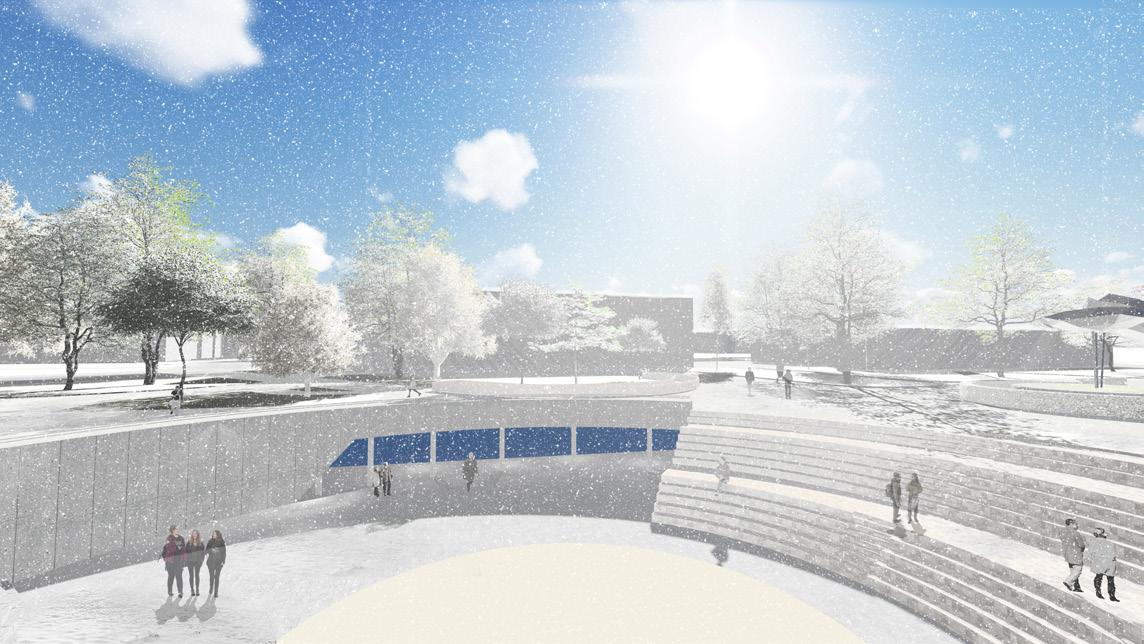
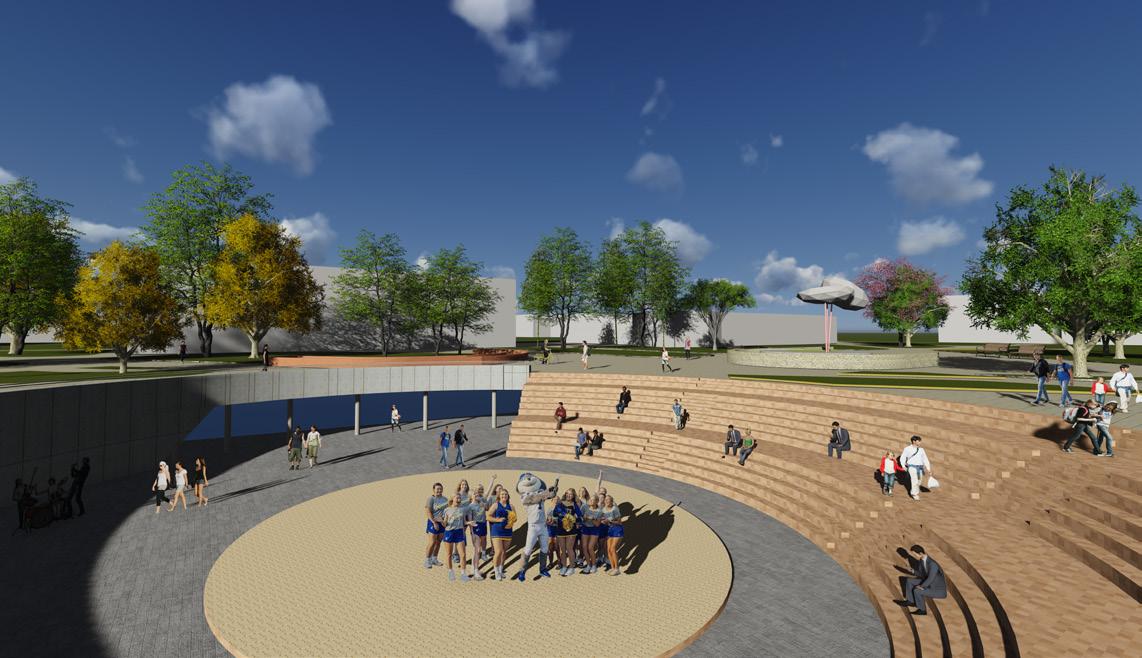
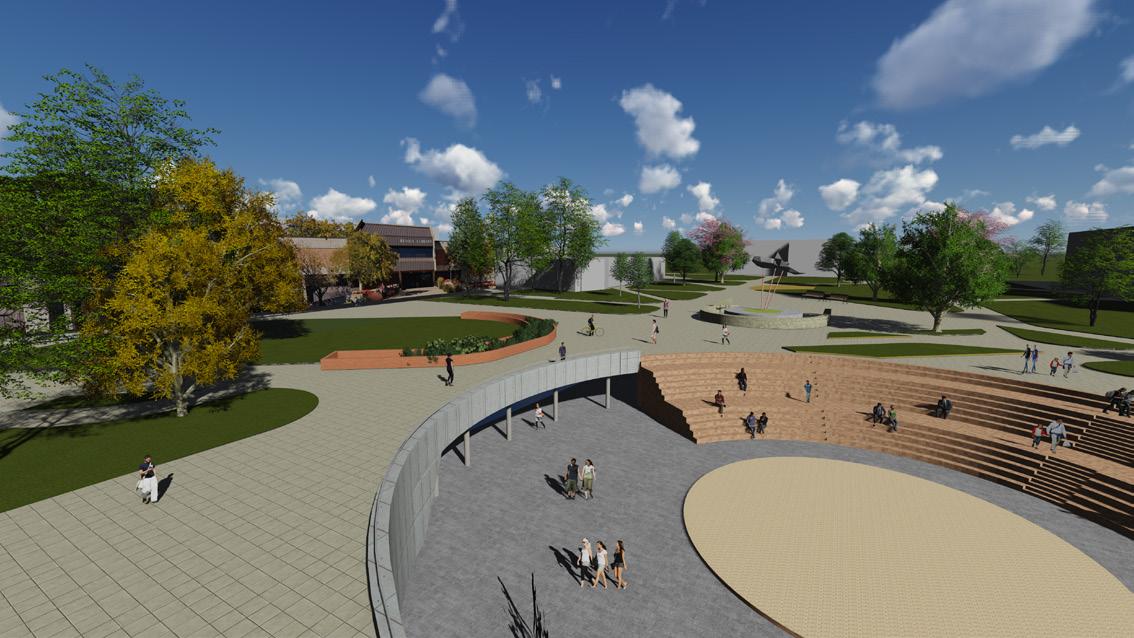
The proposed outdoor gathering spaces are providing three intimate experience:
• Principal gathering space
• Outdoor plaza and
• Seating spaces
Informal and formal seating areas are designed to accommodate a great variety of needs, from quiet studies to surreptitious people watching, to more blatant people watching, to waiting for a friend in a prominent space. Different activities, such as kangaroo court, goose ball, bump stu, and dance forms, might take place in these places on occasions like Hobo Day.
The central plaza is located in a way where the denizens of all buildings or districts can feel equally comfortable. While the proposed pedestrian network is promoting connections among different districts, landmarks and edges.
An informal outdoor amphitheater has been designed so that it can strengthen a sense of place and support sustainable, interactive and social conditions that contribute to healthy wellbeing of the students, faculties, staff as well as the outside people of the campus.
Top:Principal gathering space during Winter
Middle:Principal gathering space during Summer Bottom: Outdoor plaza
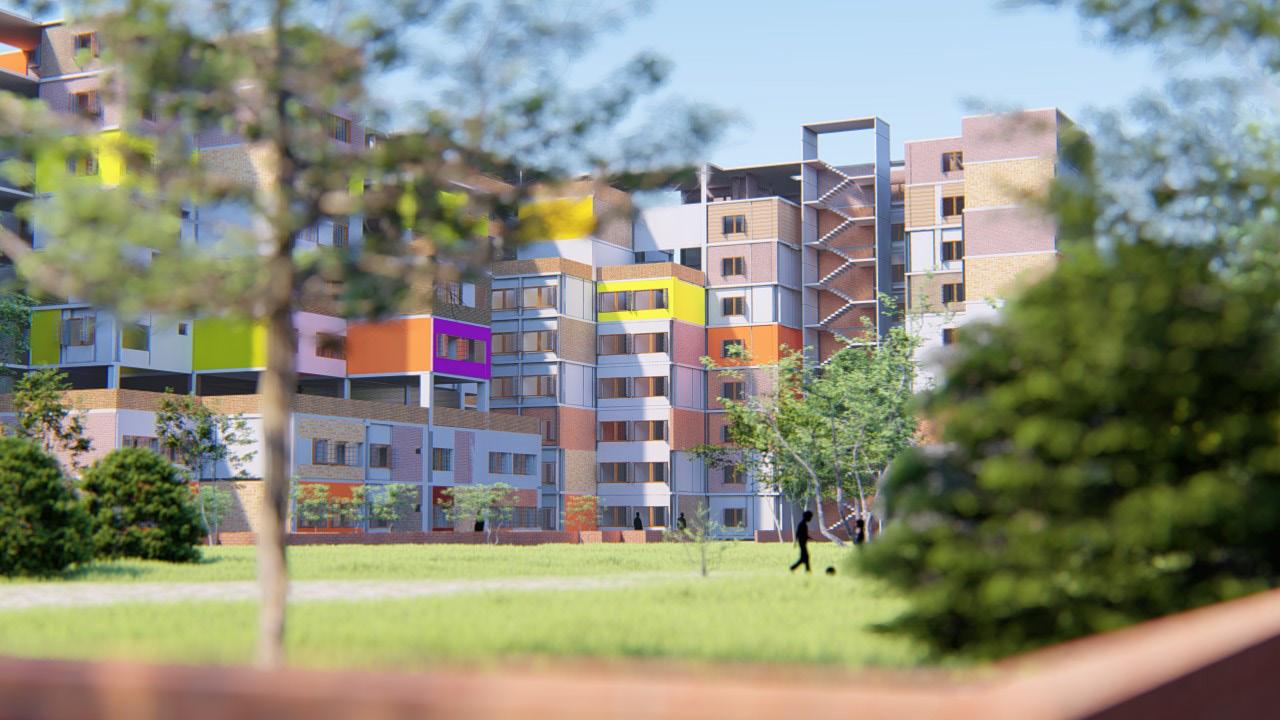
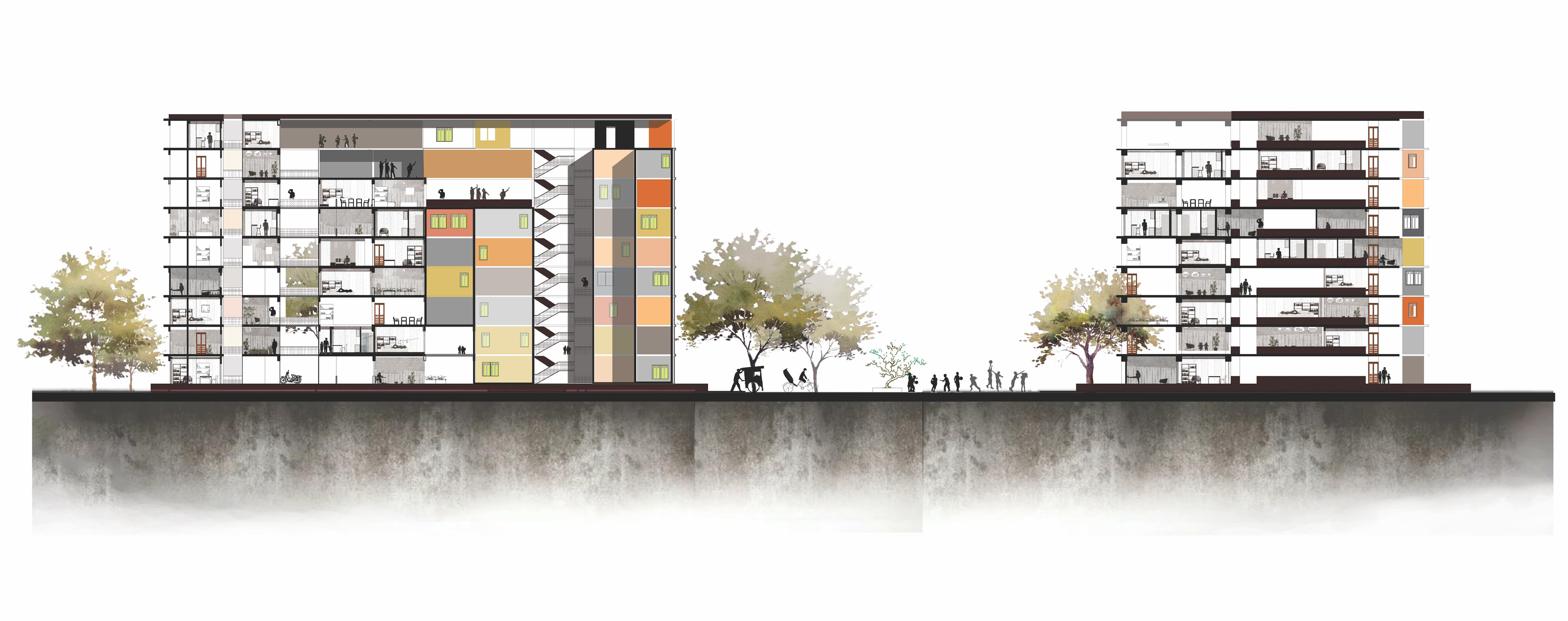
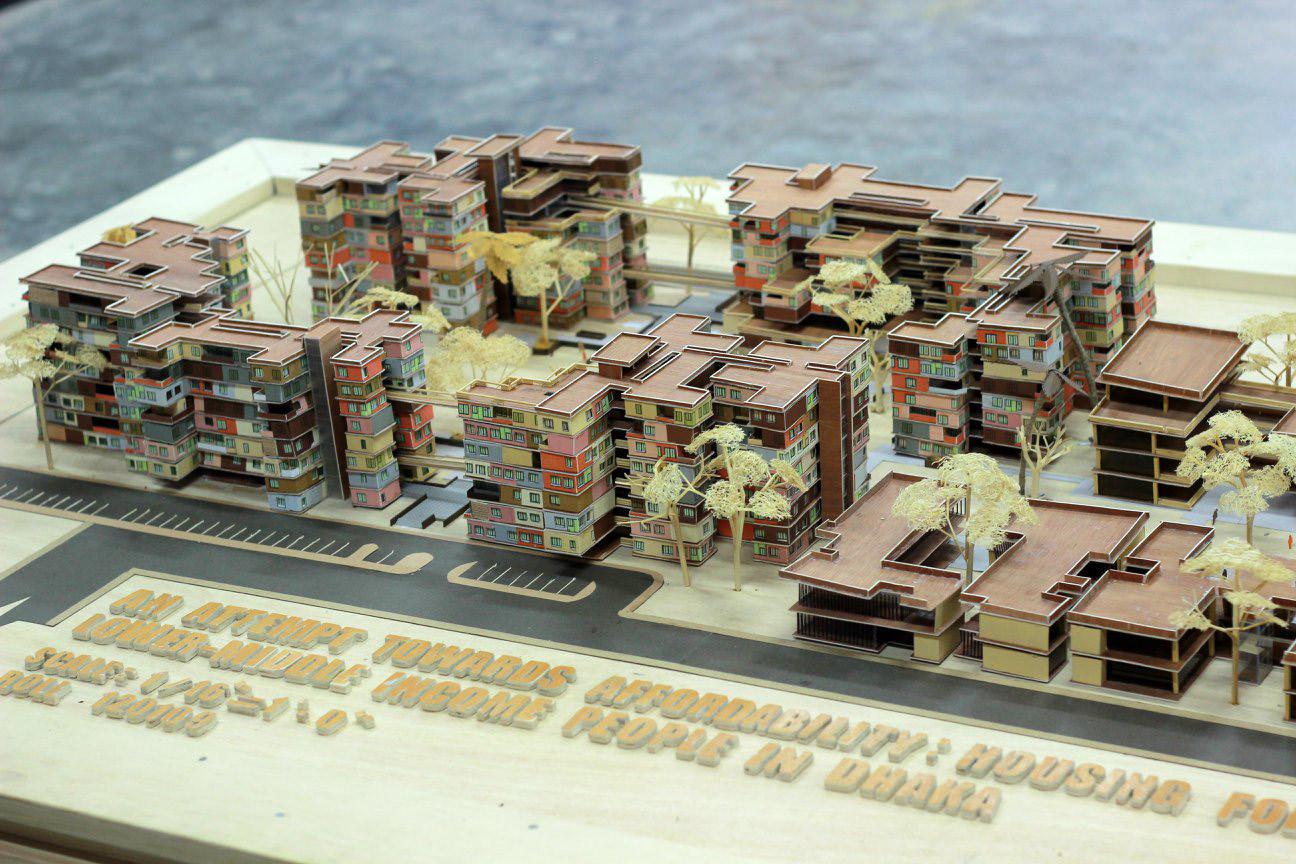
AN ATTEMPT TOWARDS AFFORDABILITY
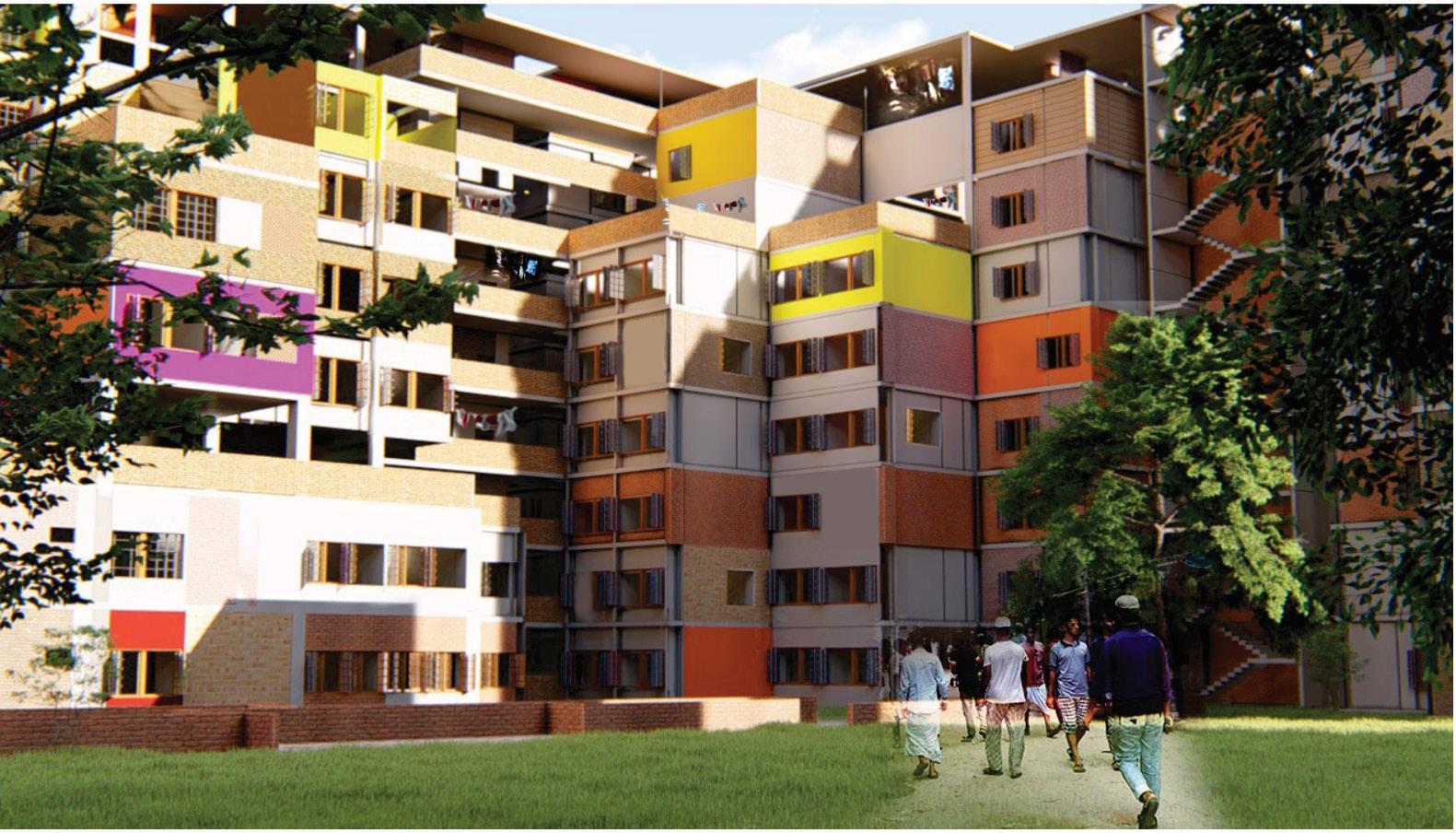
Housing for lower-middle income people in Dhaka,Bangladesh
Design Thesis
Thesis Supervisor
Dr.Khandokar Mahfuz ud Darain
Dr. A.T.M. Masood Reza, Associate Professor Sk. Kabir Ahmed, Assistant professor
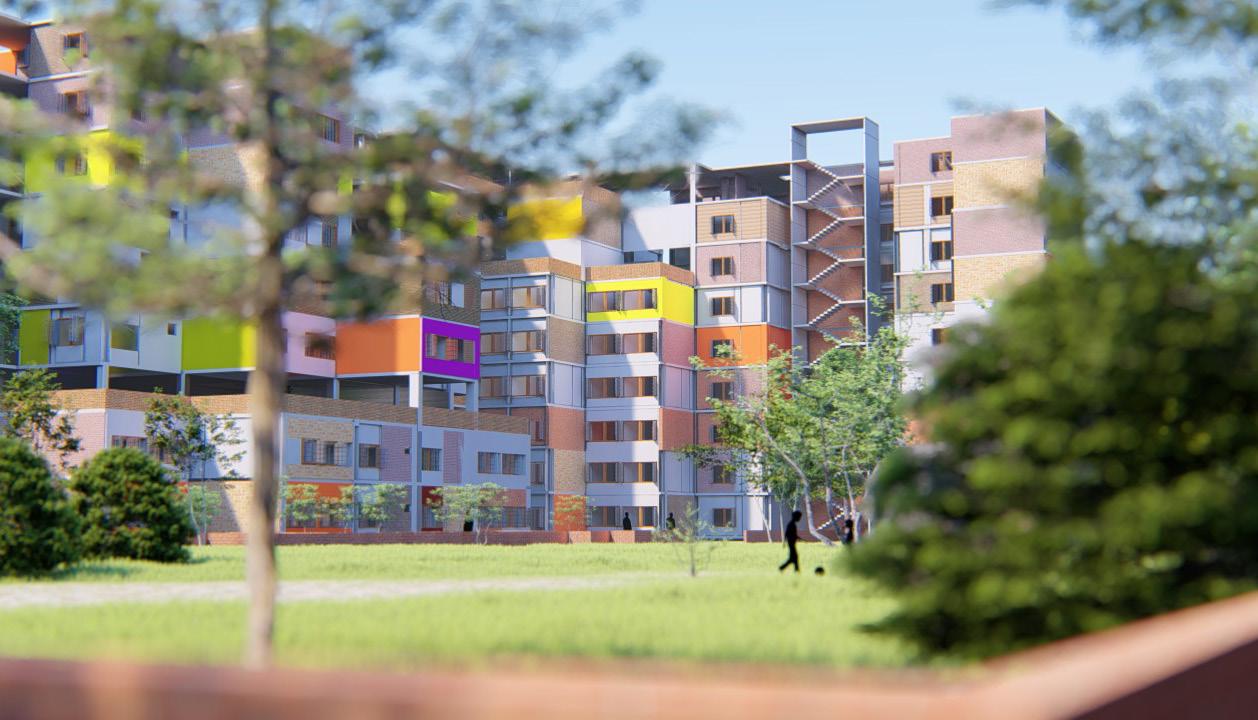
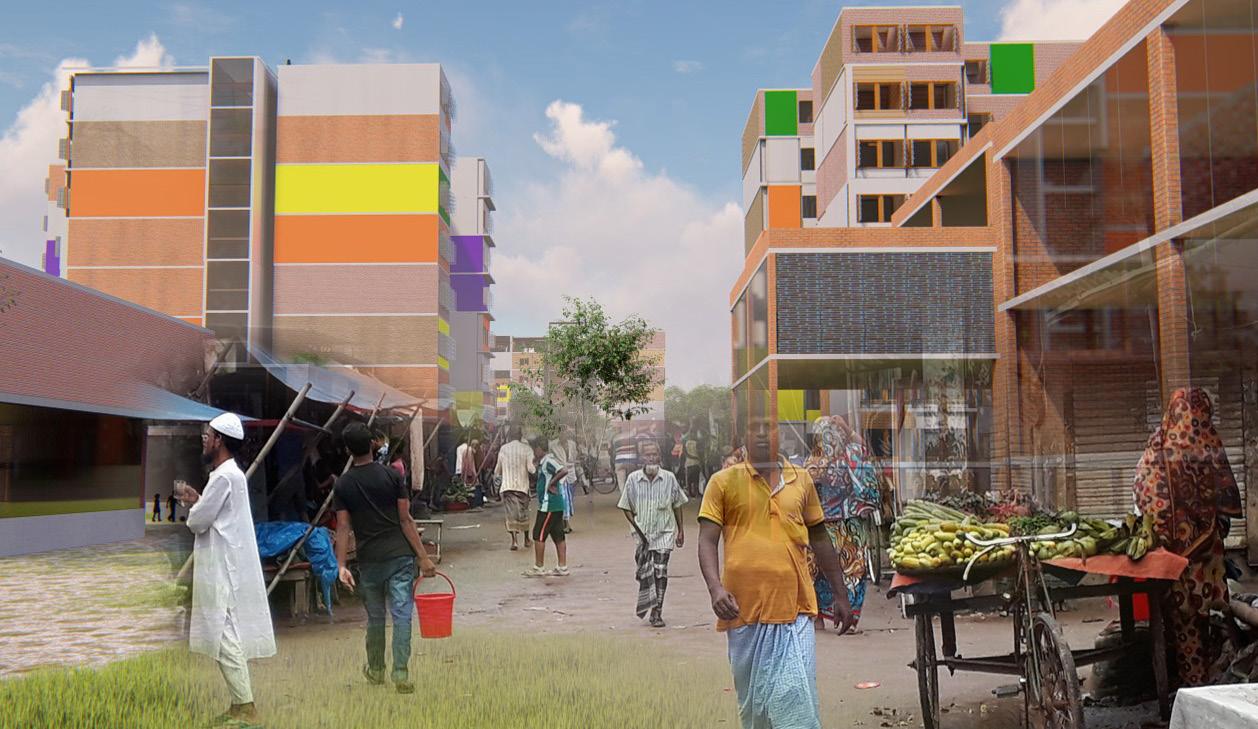
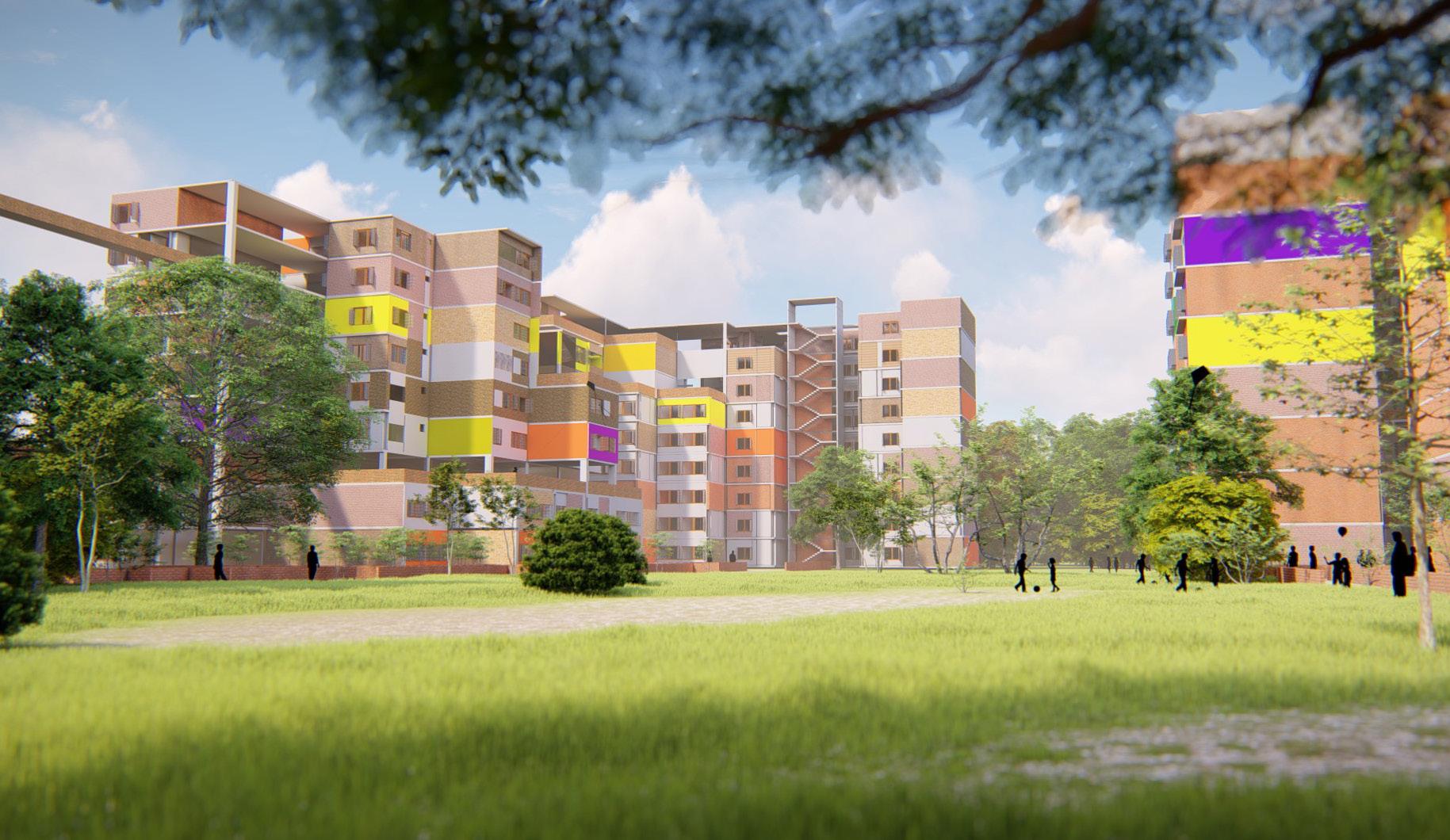
Housing is one of the fundamental rights of human being. But housing in Dhaka, one of the most populous cities in the world has become more of a necessity rather than ambition. Due to socio-economic reasons, Dhaka is currently with scarcity of home for its inhabitants. Study reveals that the formal housing market in Dhaka failed to provide affordable housing for the lower middle income groups. The lower-middle income groups struggle to maintain a minimum standard of living and largely rely on rental housing.
Therefore, the major focuses of this research are:
(I) to investigate the issues related to housing affordability problems faced by the lower middle income group
(ii) to give them possible design solution to meet the housing cost and find their own space requirements.
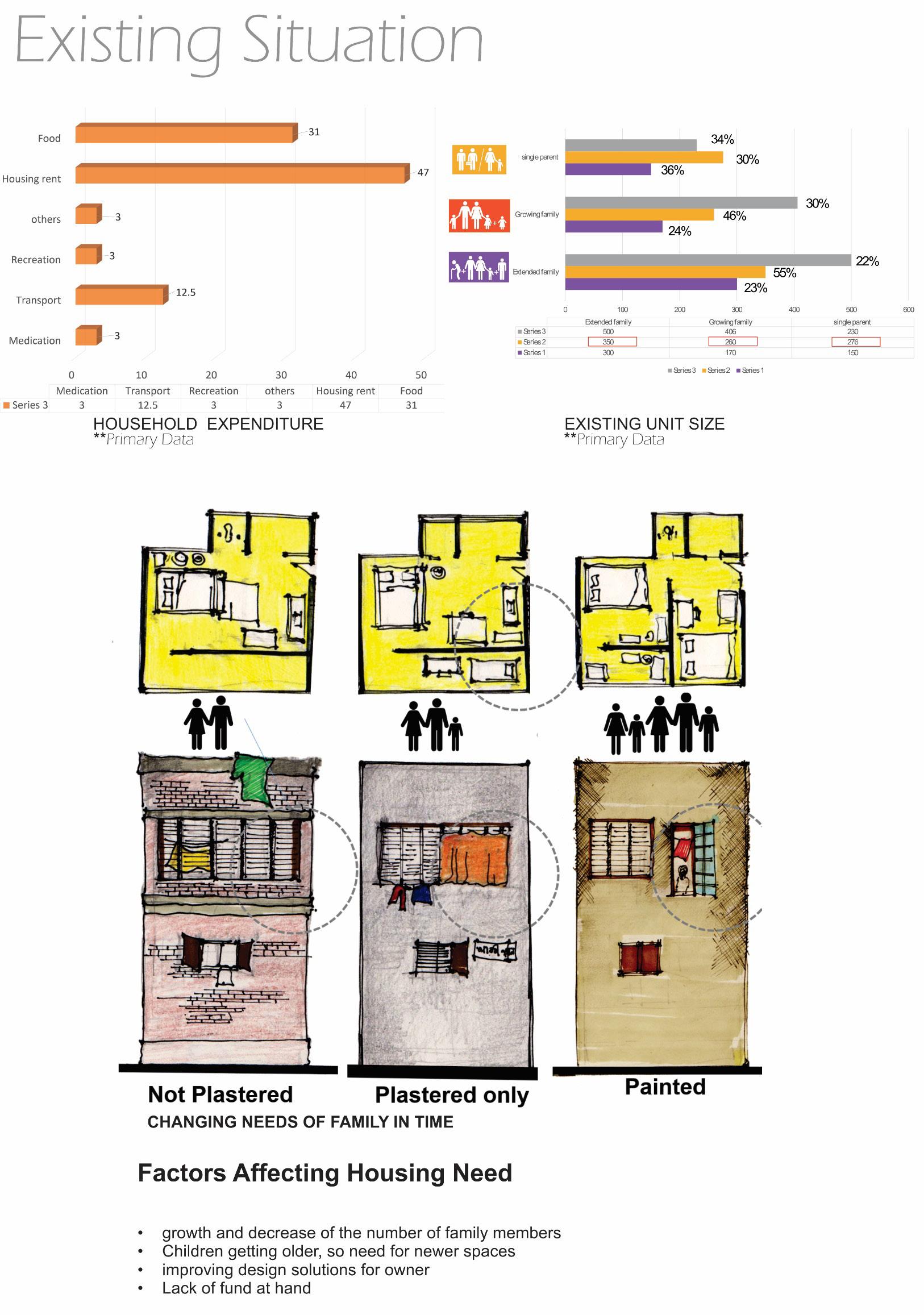
Consequently, a field survey was conducted among the residents of Dhaka to obtain data on the monthly income and expenditure on housing for each family to understand the residents’ perspective on the housing situation and to ensure the participation of the target income groups .
Consumption of Space
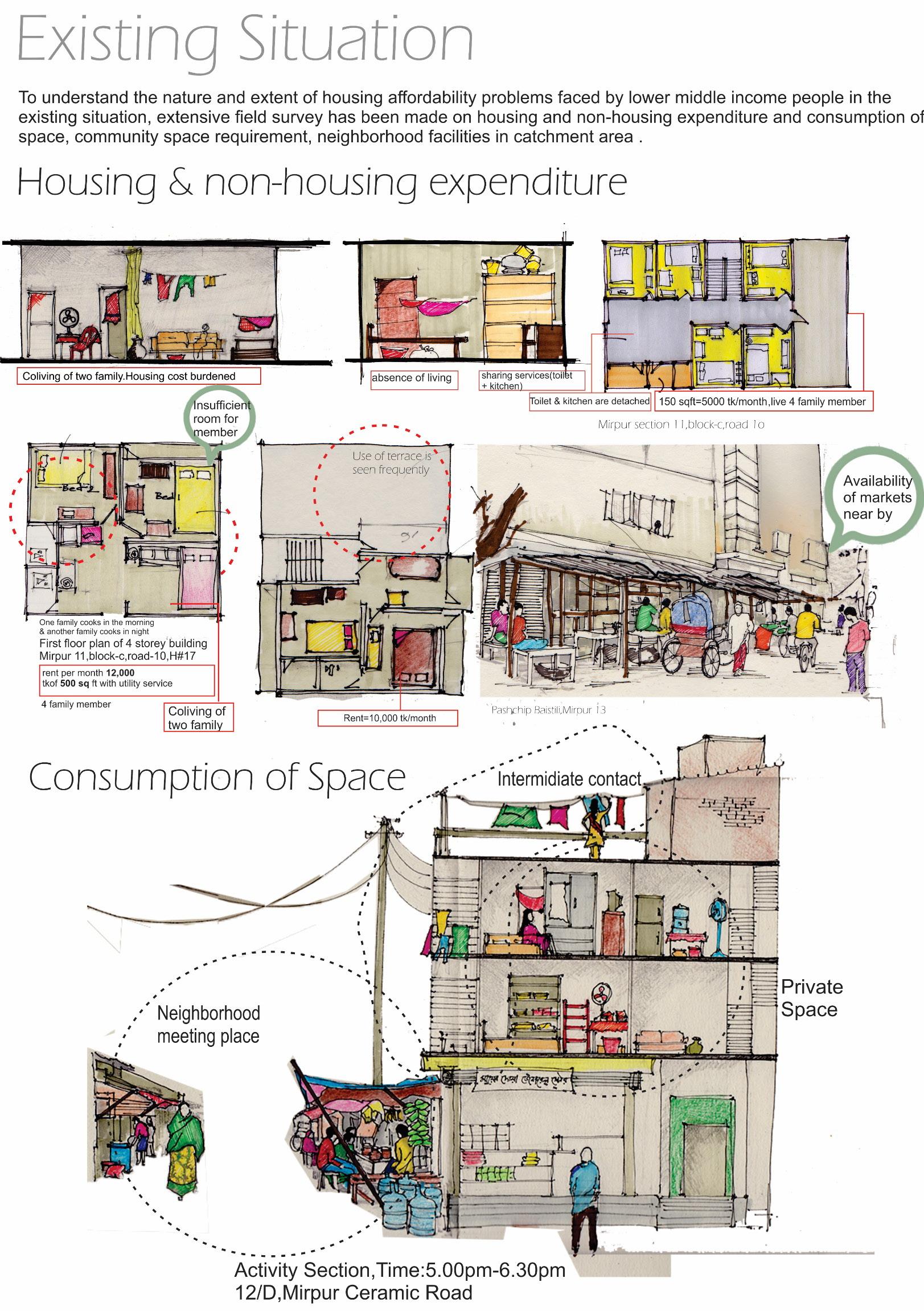
Housing and Non-houing Expenditure
Problem Mapping
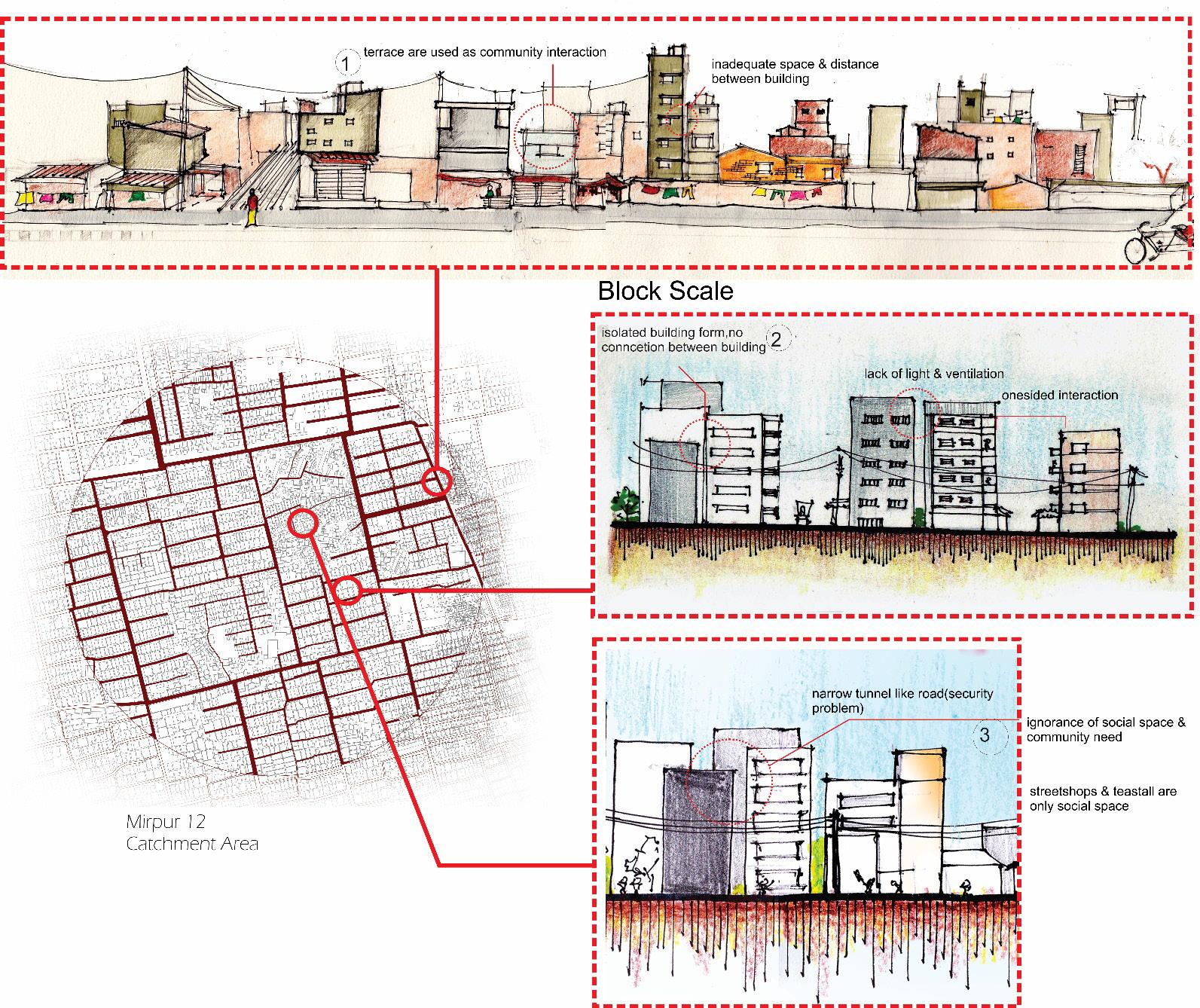
To undersatnd the nature and extent of existing housing affordability problems faced by lower middle income people ,extensive field survey has been made on housing and non-housing expenditure and consumption of space,thier community spcae requirement and neughborhood facilities in catchment area.
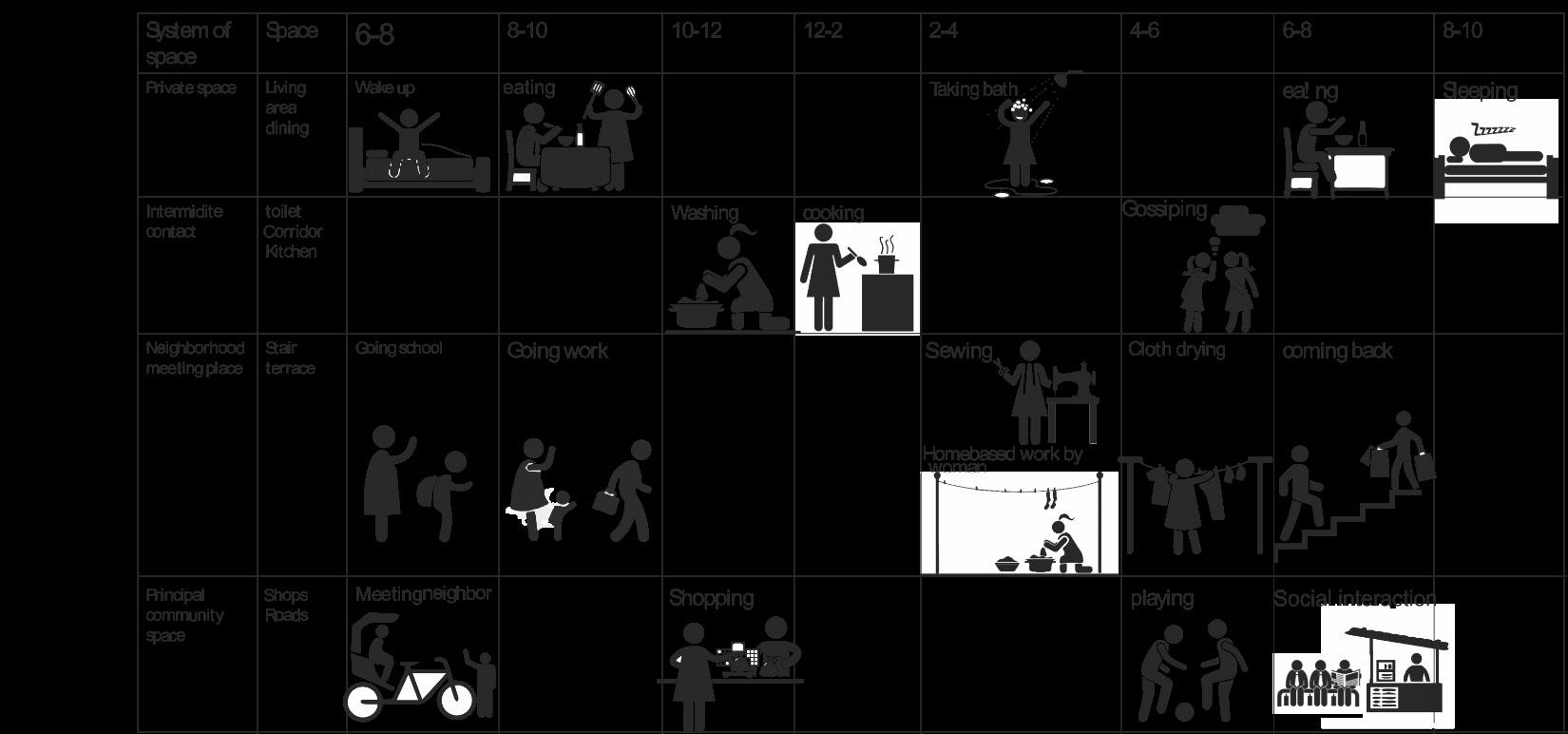
Conceptual Frame Work
Consumption by dwellers Issue
Objective
Design Consideration
Expensive housing expenditure
Provide cost effective privileges
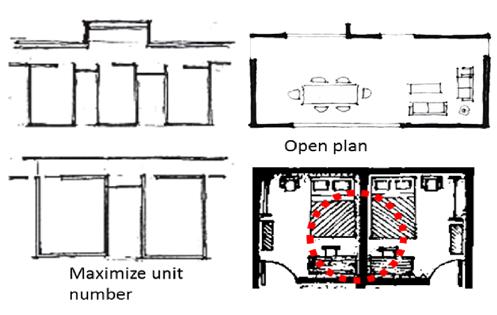
• Maximize unit number
• Wall sharing
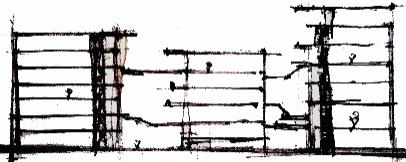
• Building height
• Open plan
• Construction technique
• Multipurpose room with kitchen/toilet facilities
P olicy guideline
Government Subsidized Land Core Shelter by Government
Identify space requirement for target group
• Unit size
• Multipurpose use of space like verandah
• Single family & multifamily structure
• Use of roof top as common sharing space
• Customization of single space


• Maximum flexibility in housing decisions of user
• Expansion of their housing based on their needs and resources
Ignorance of social space & community need
Design Considering social need
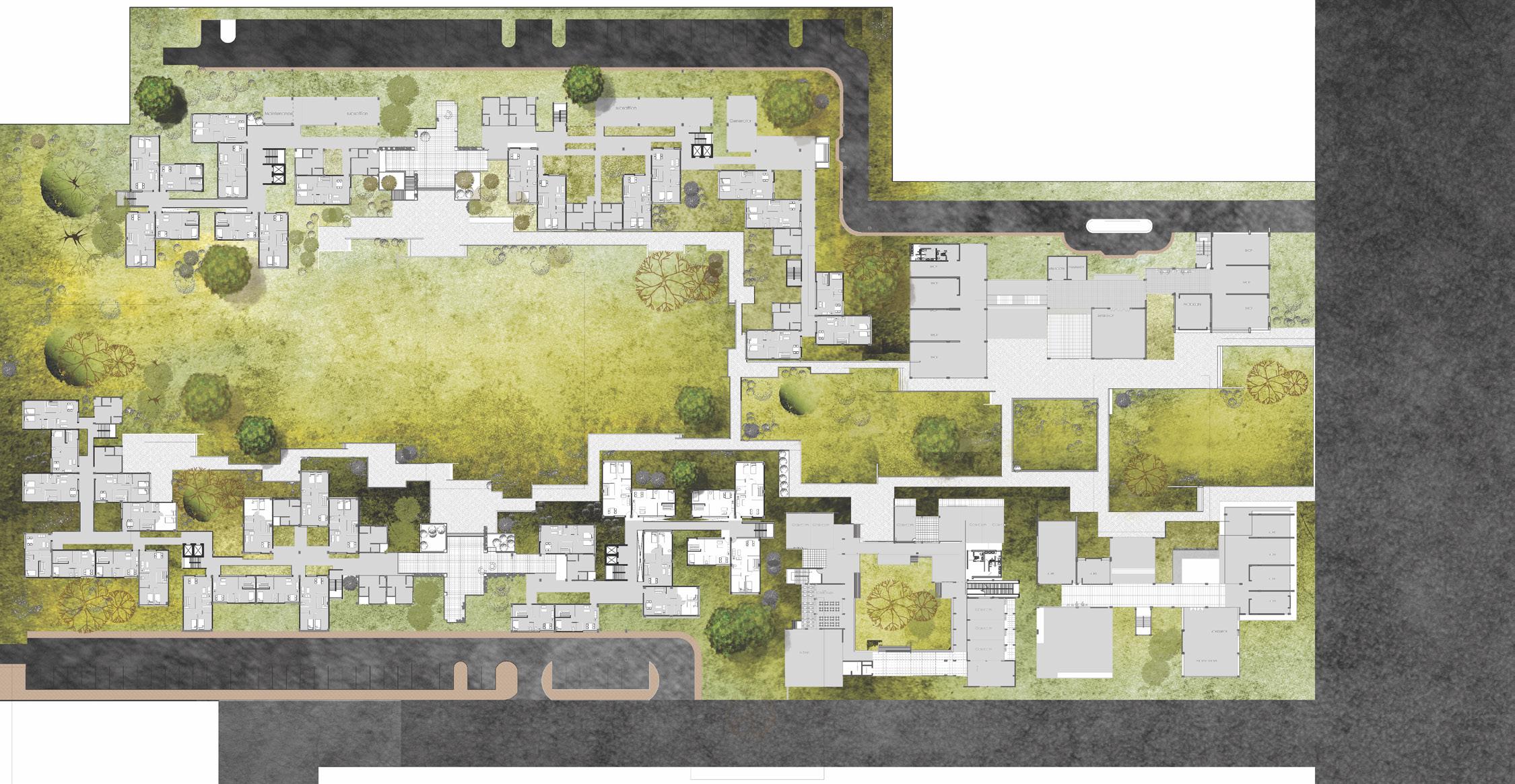
• Social sharing space
• Street shops with neighborhood access
• Social bondage
• Community facilities near by
Strengthening individual identity and sense of community

Technical Vignettes and Design Sheets
In this studio, we are tasked with creating a graphic and technical inventory of detailed material and structural elements, creating detailed architectural elements such as foundations, walls, floors, roofs, and openings, all connected to diverse construction systems. We also forge connections between these details and specific construction systems. The goal is to integrate technical aspects and construction systems in the design of a single building, considering programmatic and site constraints. Through the production of detailed “Technical Vignettes,” we explored various areas of study, including ground and foundations, envelopes and walls, and spans and roofs. The vignette series serves to enhance experiential and technical knowledge of construction materials.
Our goals include developing a comprehensive graphic and technical inventory of architectural elements, understanding how these details link to specific construction systems, and integrating them to address design challenges related to programmatic and site constraints for a single building. Learning objectives also are aimed at understanding contemporary construction details’ graphic conventions, appreciating their impact on construction sequencing and material trades, showcasing the interconnectedness of conceptual and technical design criteria, and refining our design practices through iterative processes.
Left:Wall and Envelop
Right Top:Roof and Span
Right Bottom: Ground and Foundation
NEO-COLONIAL AMERICAN INFLUENCE
Construction of the National Assembly Complex in Bangladesh Research Studio
In 1962, when Dhaka was established as the legislative second capital of East Pakistan, construction began on the National Assembly Complex. Louis Kahn, an architect from the United States, designed the project. Professional protocols, such as building codes and specifications, which were common in the United States, had not been standardized in East Pakistan. Instead, letters written between Louis I Kahn and the Public Works Department of East Pakistan (between1962 and 1980) provided the written instructions for the experimental work. The letters not only show how experimental the concrete work was in creating complex geometric forms with local materials and methods, but also how the United States inserted itself into the politics of the newly established Bangladesh.
The 1960s was both a dynamic time in the emergence of Bangladesh, as well as a rather ebullient moment of American presence in Pakistan. Considered a critical geo-political location in the theater of the Cold War, an economically impoverished Pakistan was seen as a strategic partner by the United States, and was propped up as a bulwark against the Soviet presence in Asia. This was carried out through huge supplies of aid, mostly in the form of defense, but also in social programs such as food, education, health, and institution building for that developing nation. Many of the technical institutions that were vital to the development of a modern Pakistan were created by American financial and logistical support through the agencies of USAID, the Ford Foundation, and the World Bank. In the wake of the American development initiatives, three American architects Louis Kahn, Stanley Tigerman, Paul Rudolph were invited to Bangladesh through the intervention of the Bengali architect Muzharul Islam. Robert Boughey, Danial Dunham,Richard Edwin Vrooman and other american architects are also seen to work on that time in Bangladesh. The works of the American architects added a new dimension to shape the future architectural profession in Bangladesh.
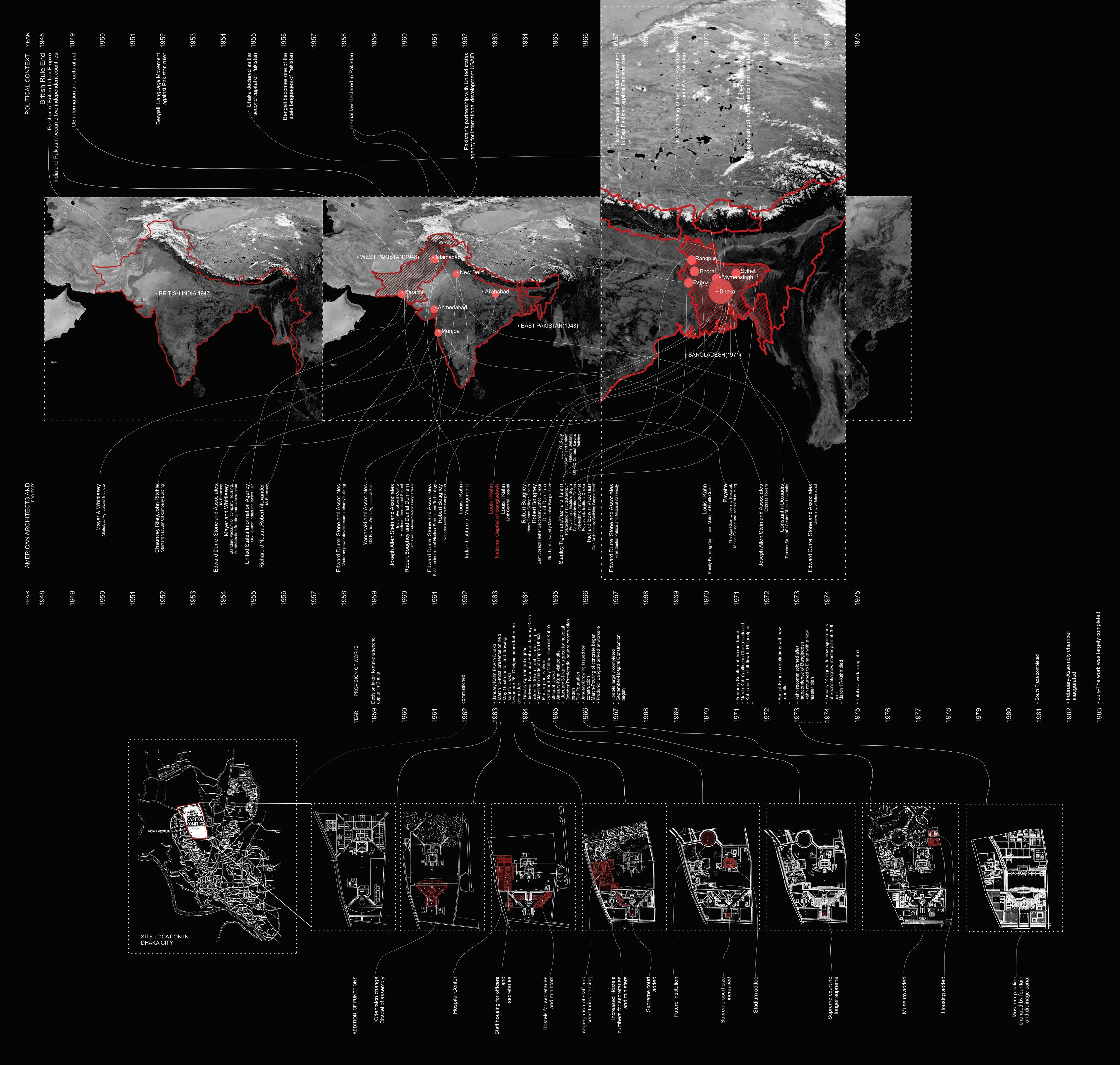
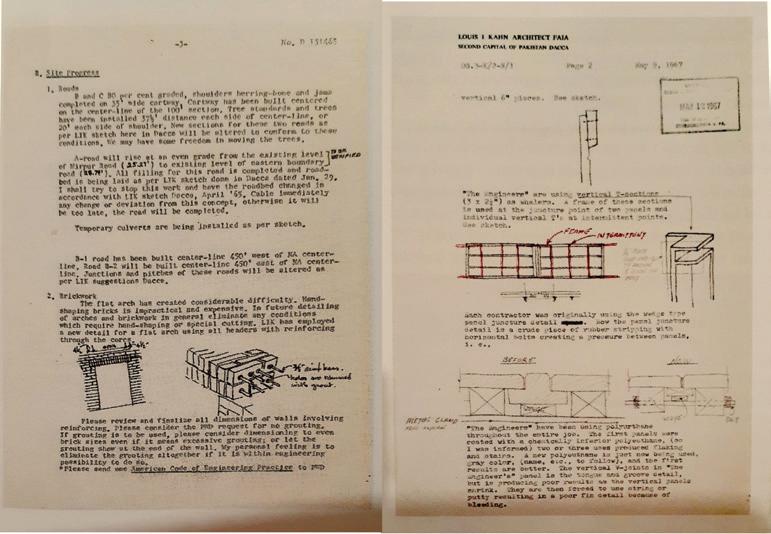
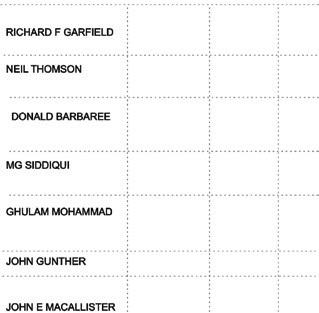
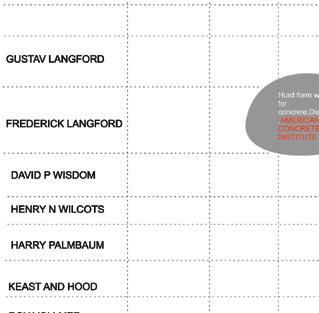
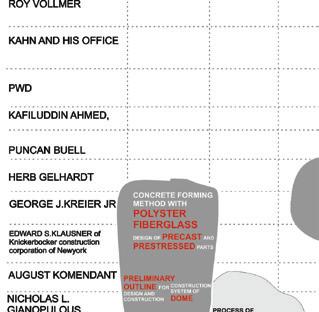

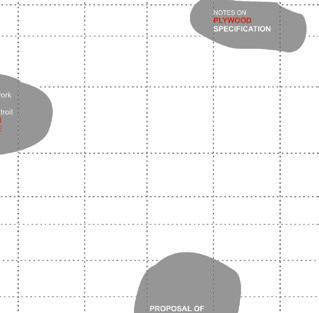
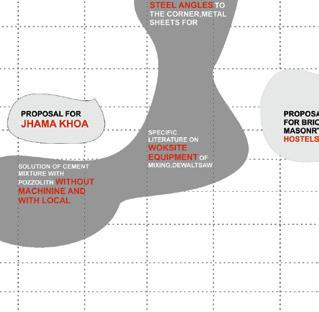
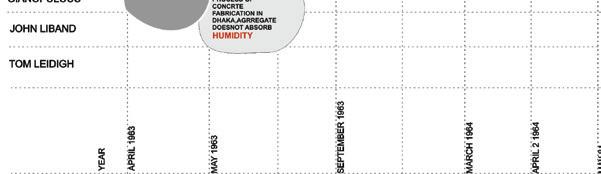

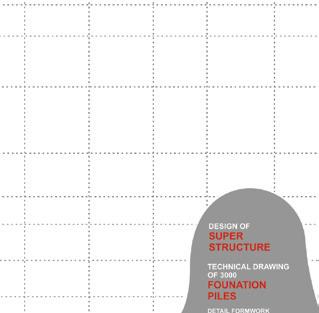
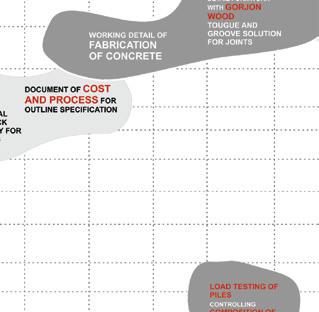
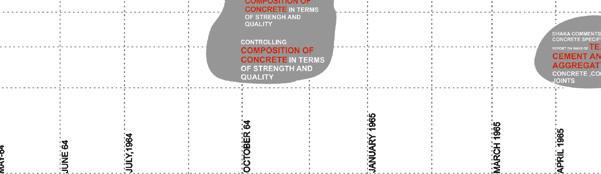
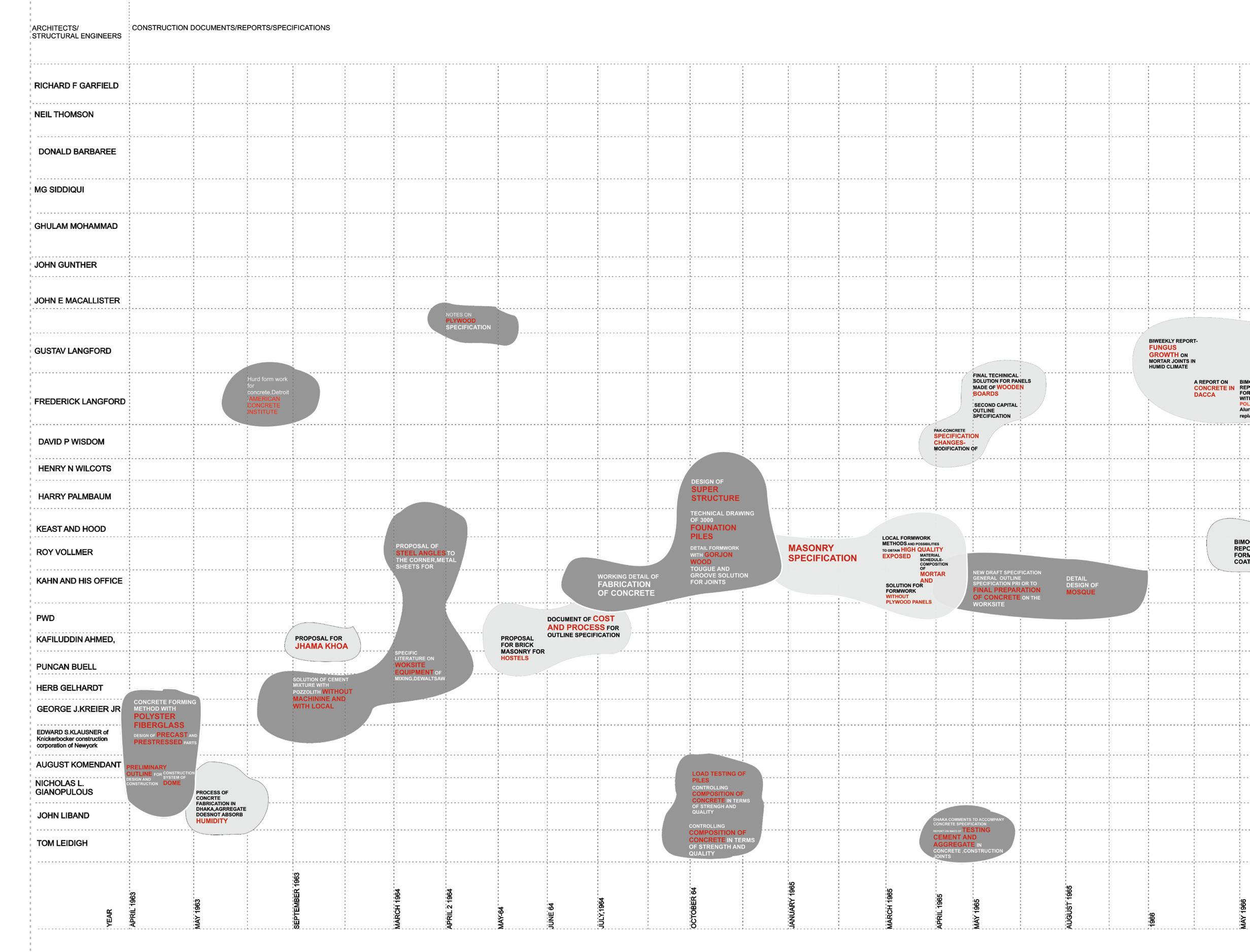
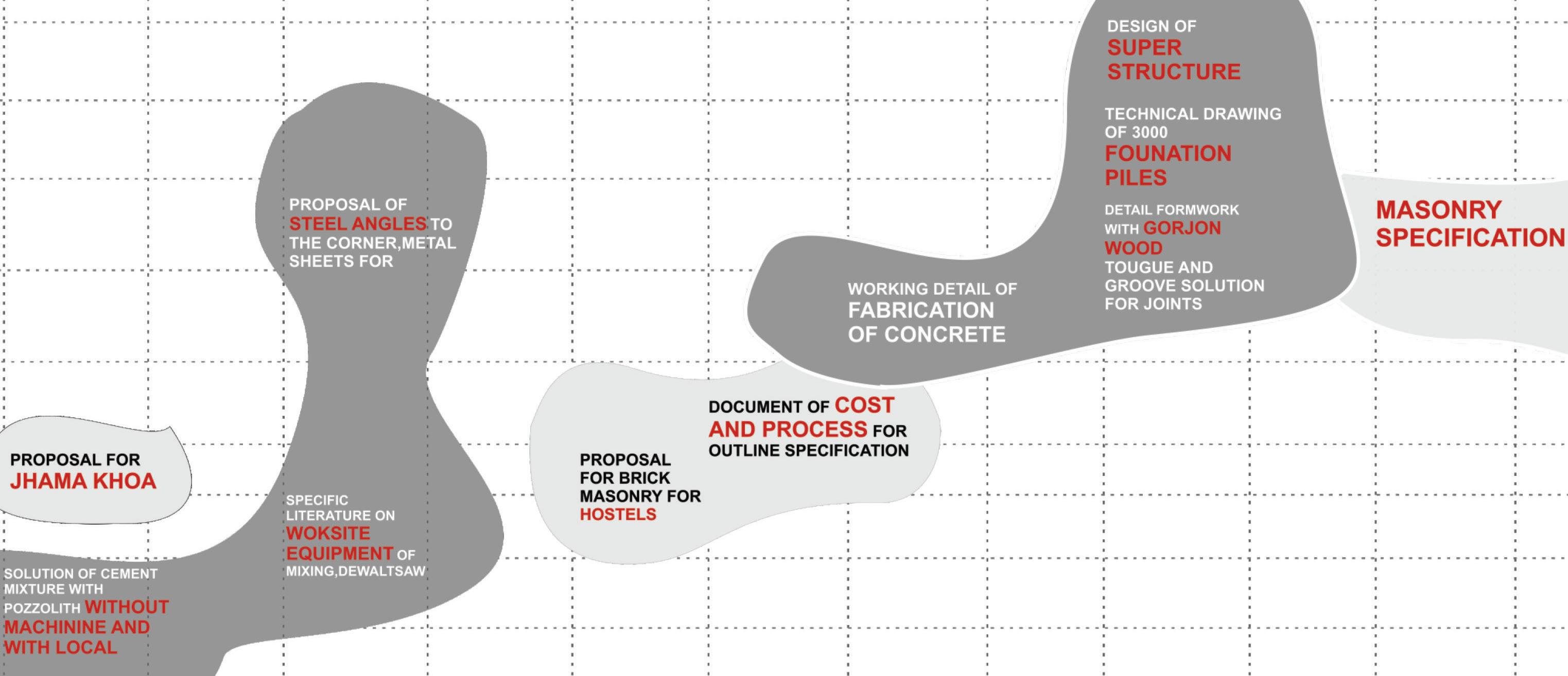
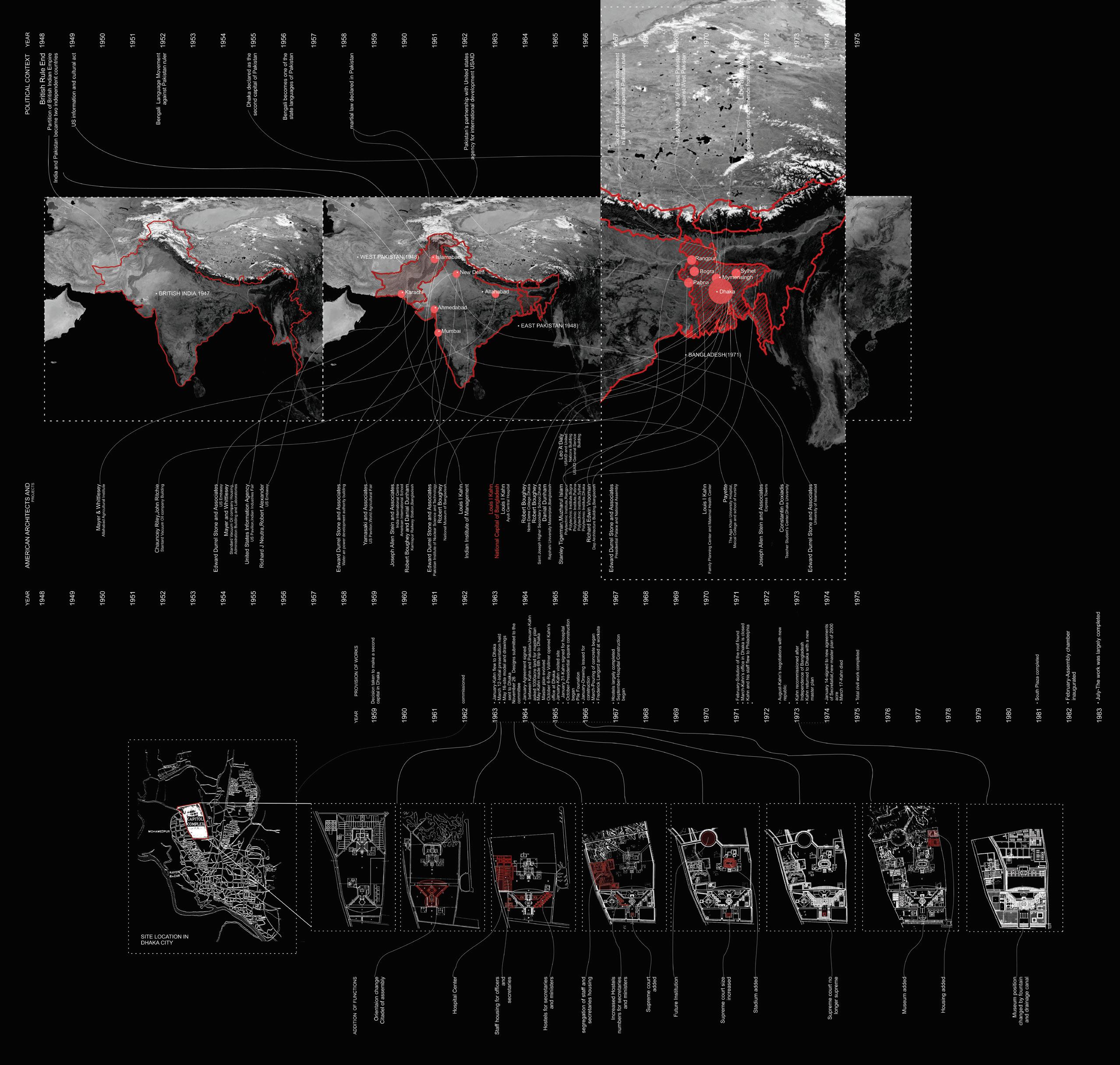
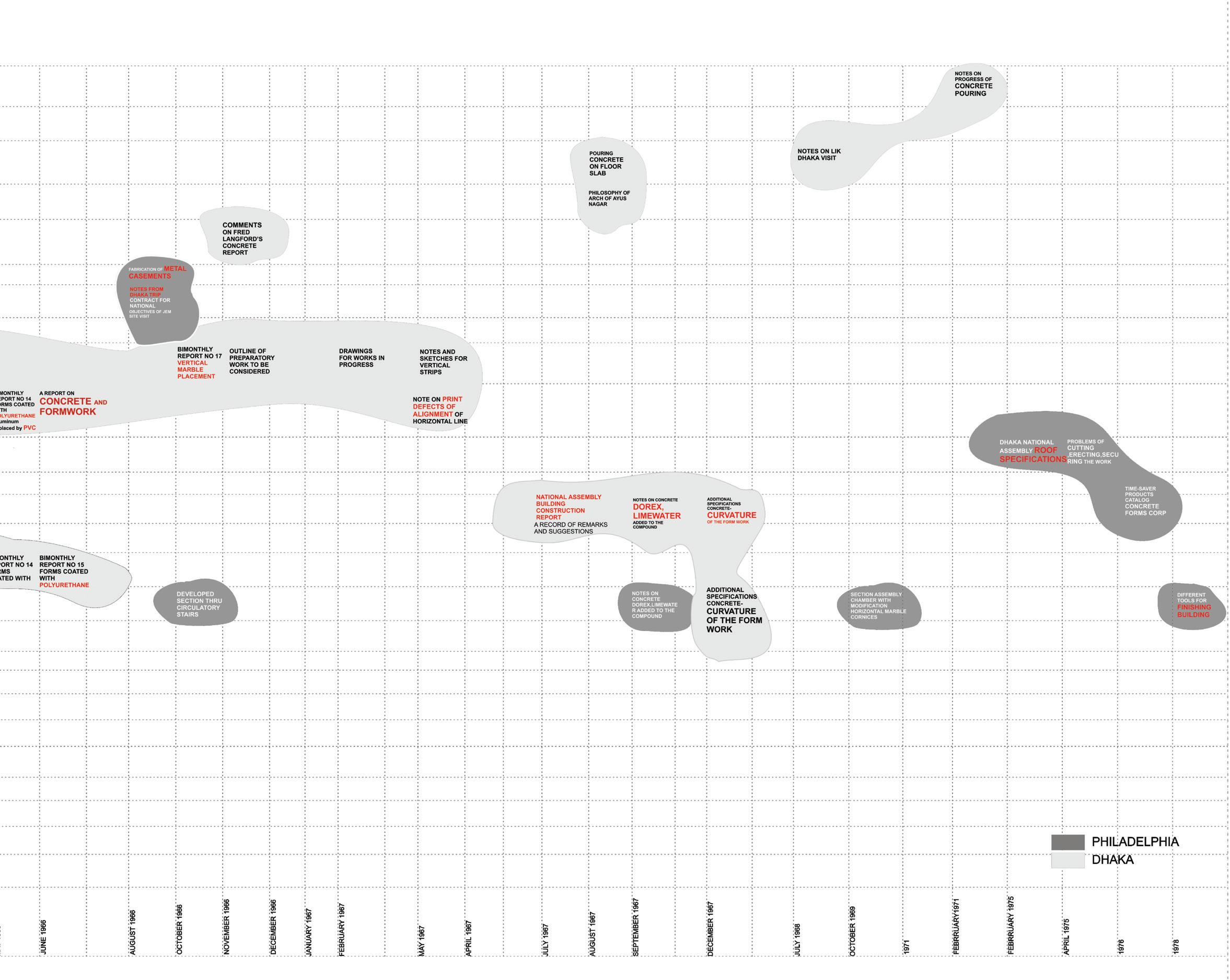
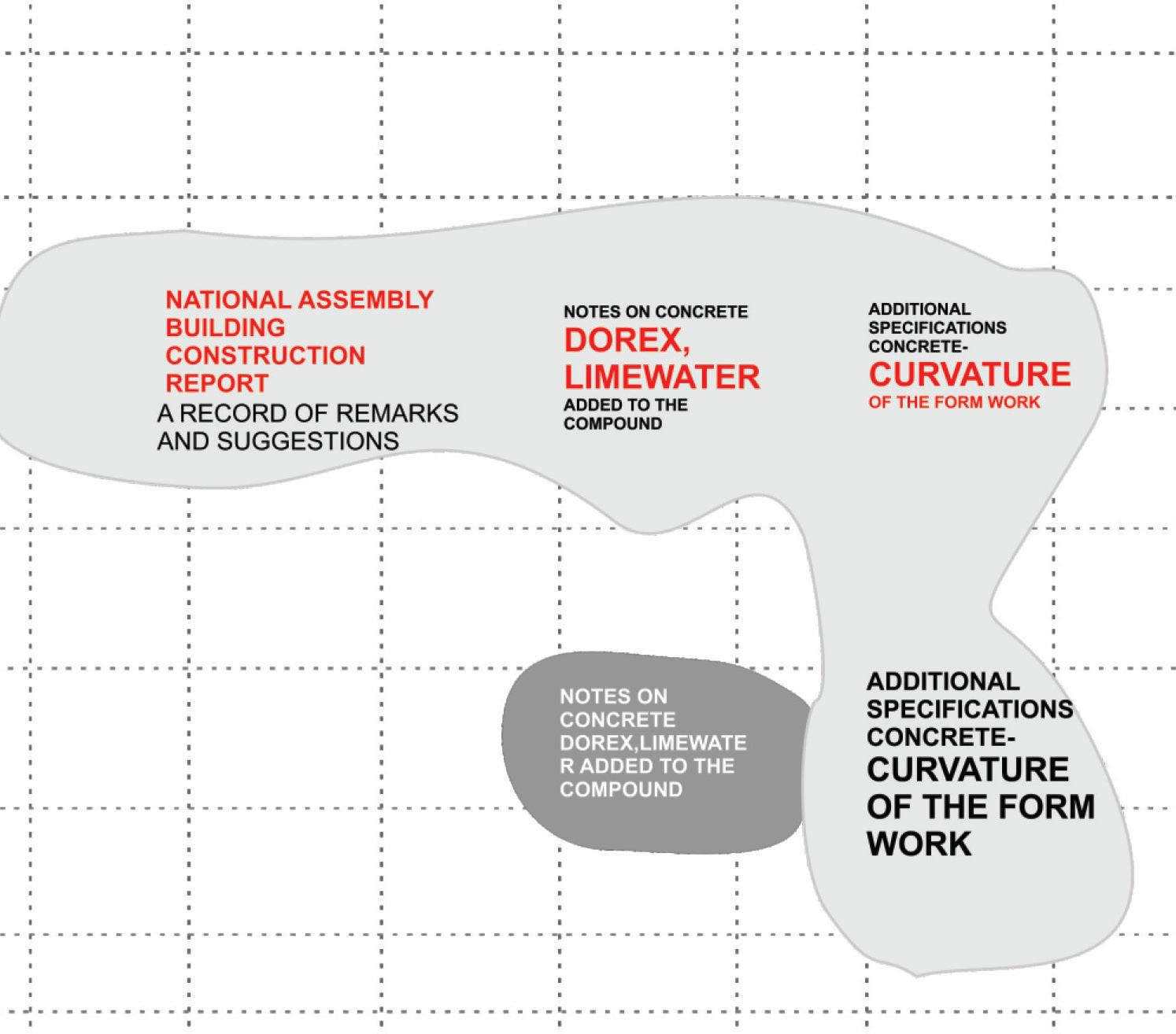
Top: Operative Mapping on construction documents and specification Bottom Left and Right : Zoomed version of operative mapping
OPERATIVE MAPPING
In employing operative mapping as a critical perspective, I have systematically analyzed various construction documents and specifications, exploring the intricate connections between architects, engineers, and the specific contexts of place and date. It involves a methodical examination of the relationships and interactions embedded in construction processes. Through this lens, I have dissected the nuances of architectural and engineering decisions, deciphering their impact on the overall construction framework. The dark gray area represents documents from Philadelphia, the light gray area from Dhaka. The lower bar shows dates, and the perpendicular bar highlights construction personnel.

CHITTAGONG CITY MUSEUM
Lamia Tasnim Ankon
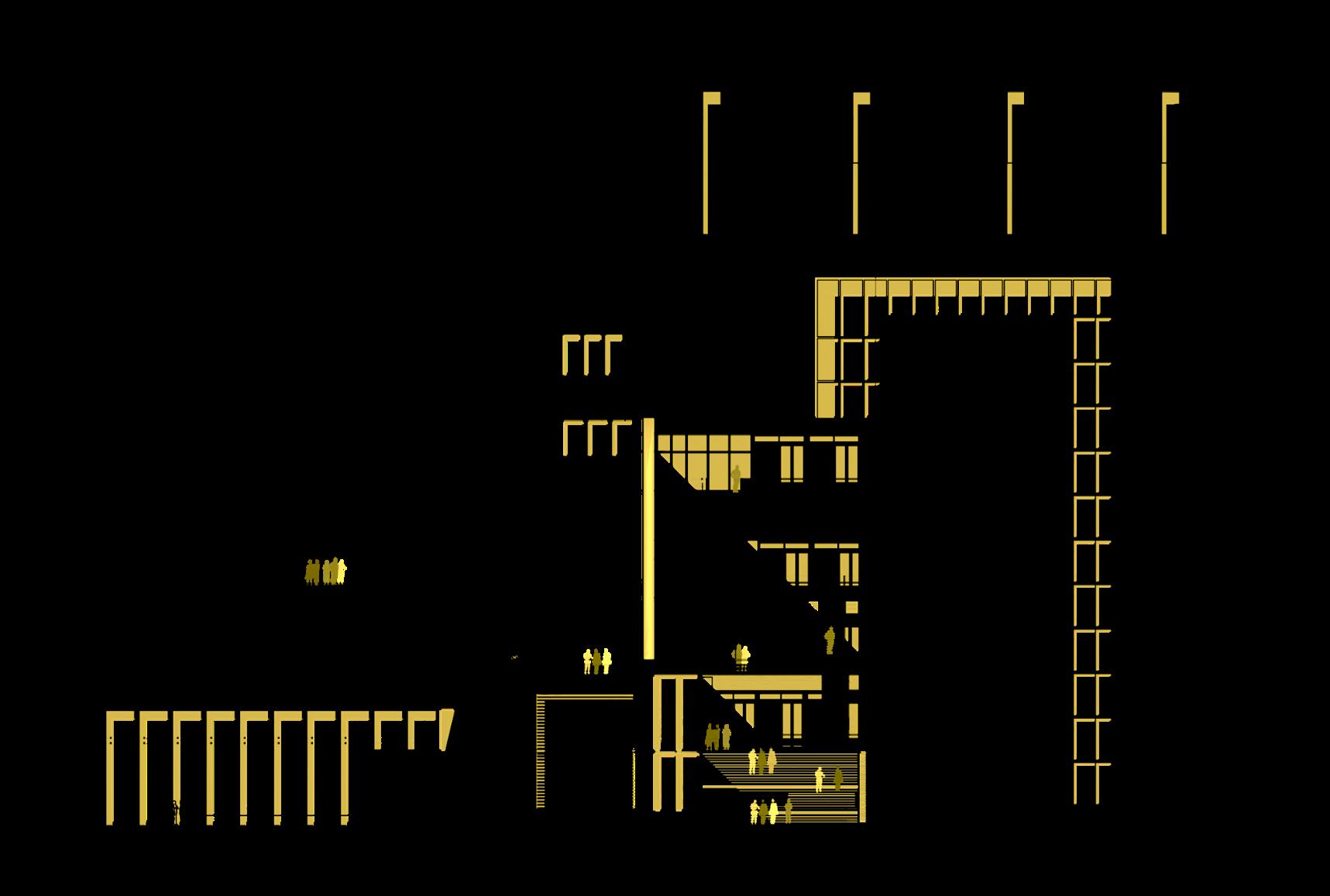
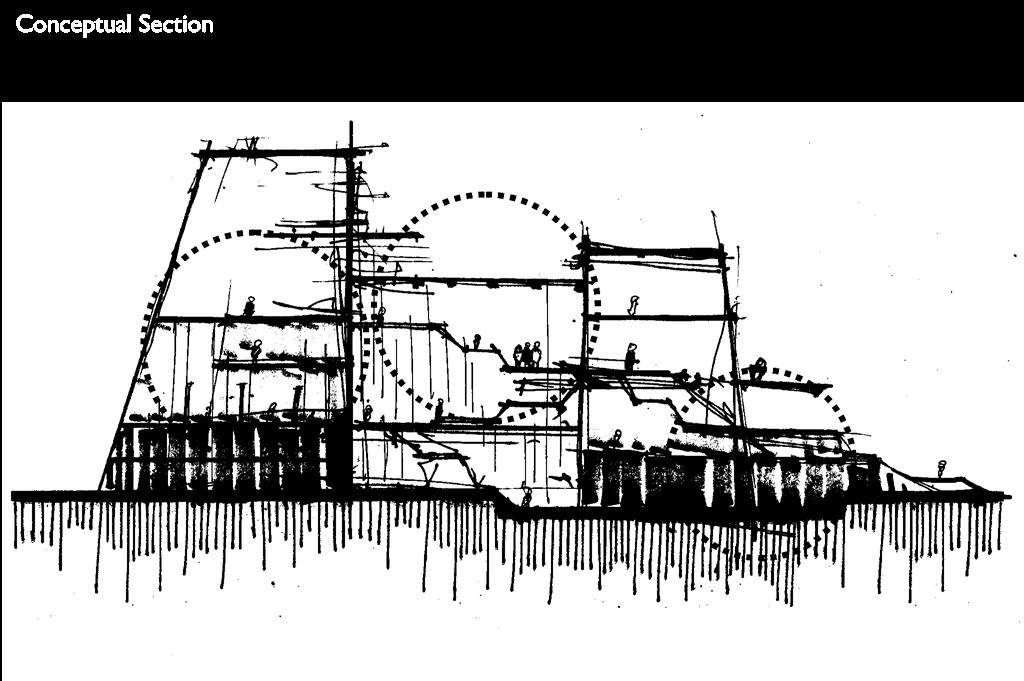
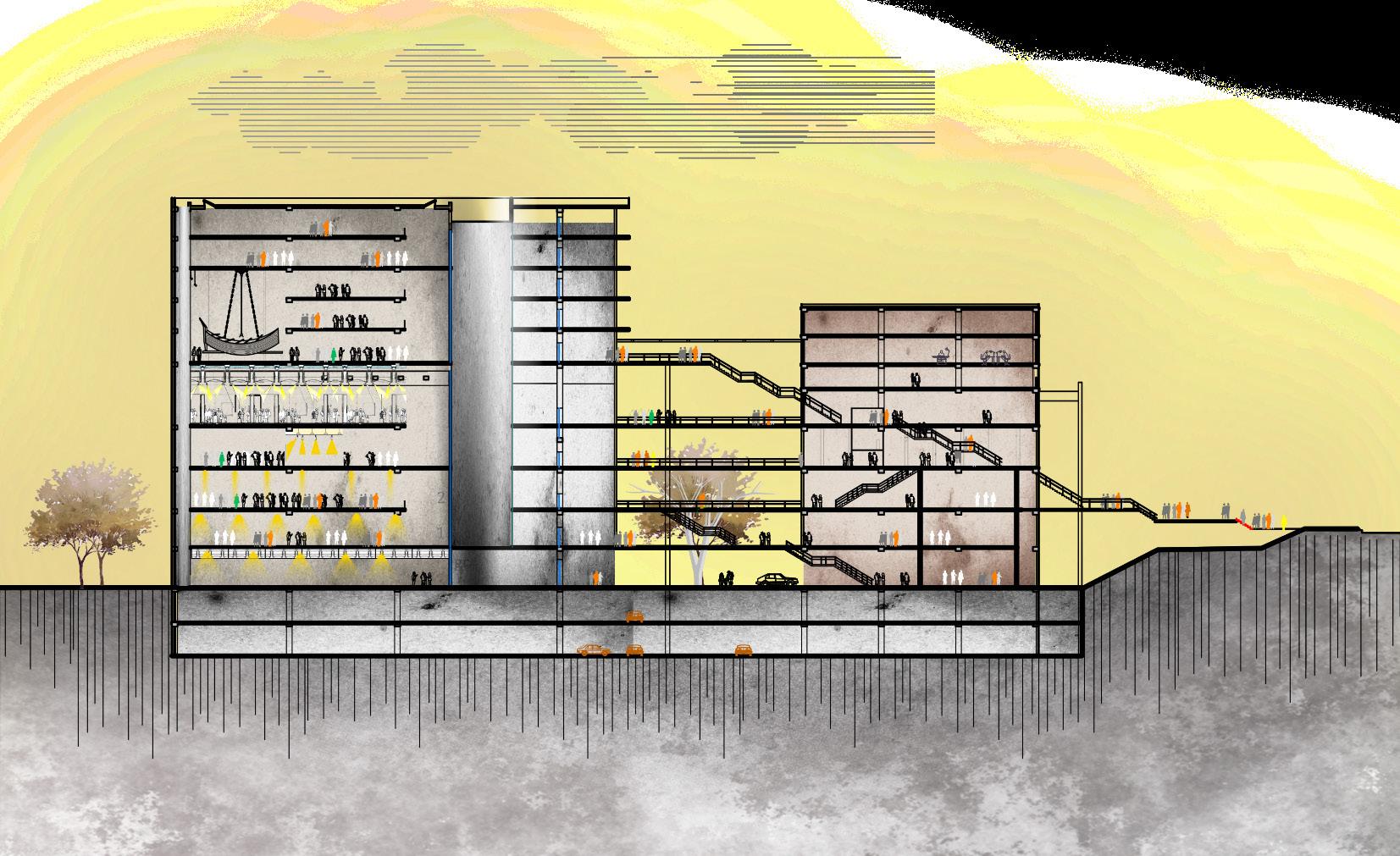
Designing the Chittagong City Museum was a riveting endeavor that melded cultural sensitivity with modern architectural principles. My role encompassed a meticulous understanding of the region’s rich history and diverse heritage, reflected in the museum’s layout and thematic exhibits. Collaborating closely with curators and historians, I integrated interactive and immersive elements to engage visitors in a narrative journey through Chittagong’s past. The design prioritized accessibility, sustainability, and community engagement, ensuring that the museum not only showcased artifacts but also served as a dynamic space for education and cultural appreciation.
Additionally, the museum’s architectural layout incorporated flexible spaces, allowing for the adaptation of exhibits and events, fostering an ongoing dialogue between the past and present. Engaging local artists and craftsmen, the design integrated indigenous art installations and landscaping elements, creating a seamless blend of tradition and modernity. The Chittagong City Museum, thus, stands as not only a repository of historical treasures but also as a sustainable, culturally vibrant hub within the heart of the city.
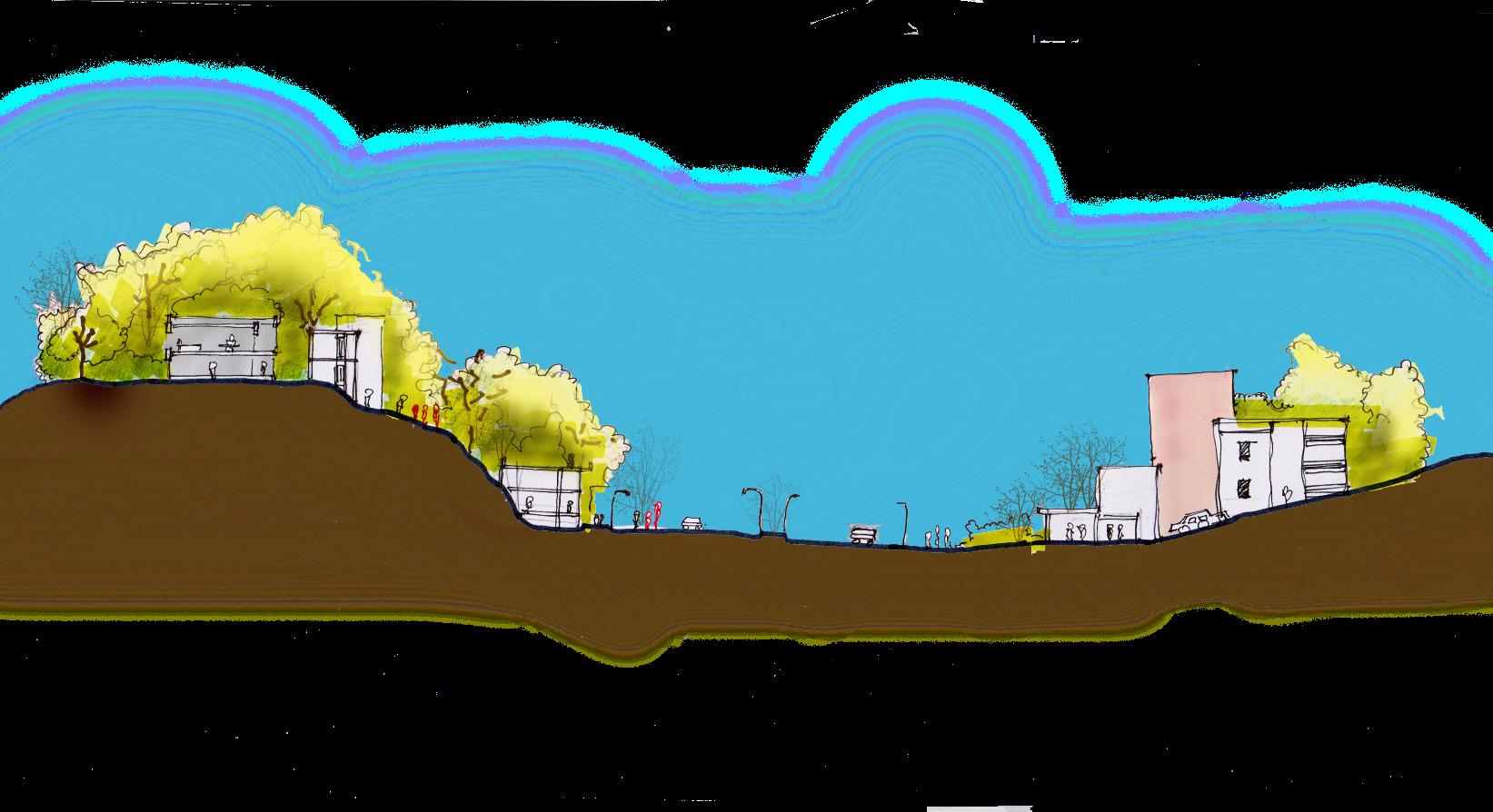
Residential Pattern , GEC More,Chittagong
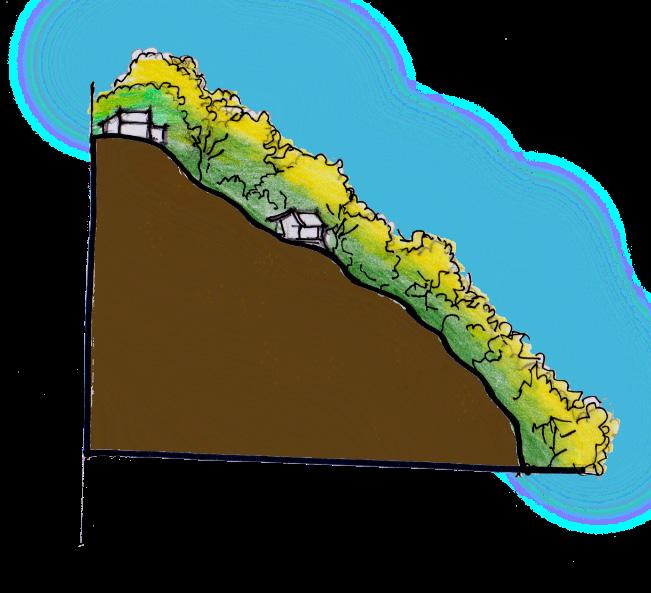
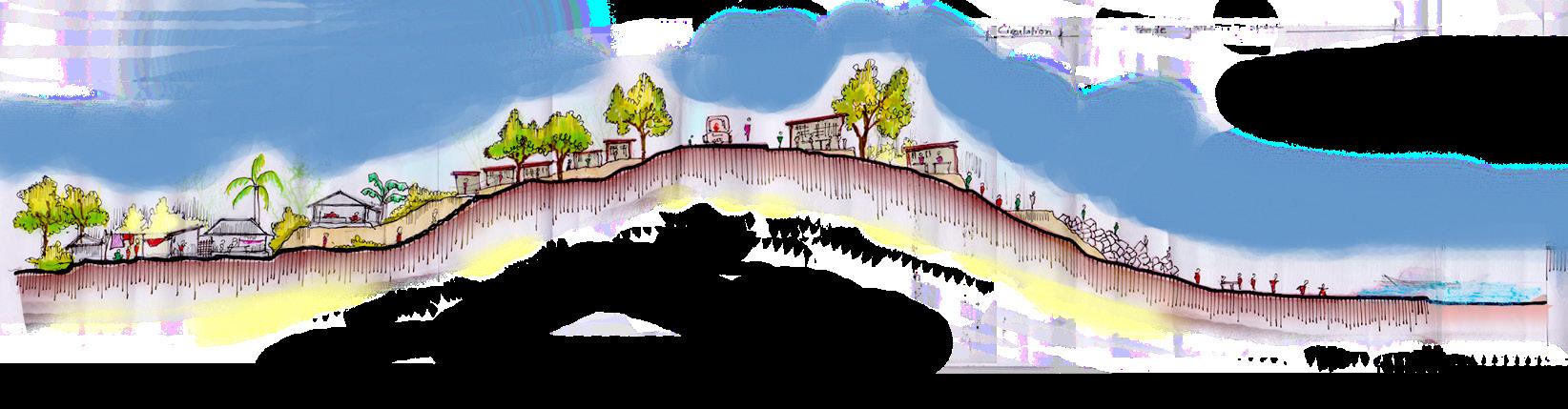
Different Activities in different layers,Patenga Beach
residence of People Local Shops
Shops
Tourist & City dwellers
sea beach
Tigerpass
DC hill
RESURGENCE OF HIGHRISE BUILDING
Breaking the verticality
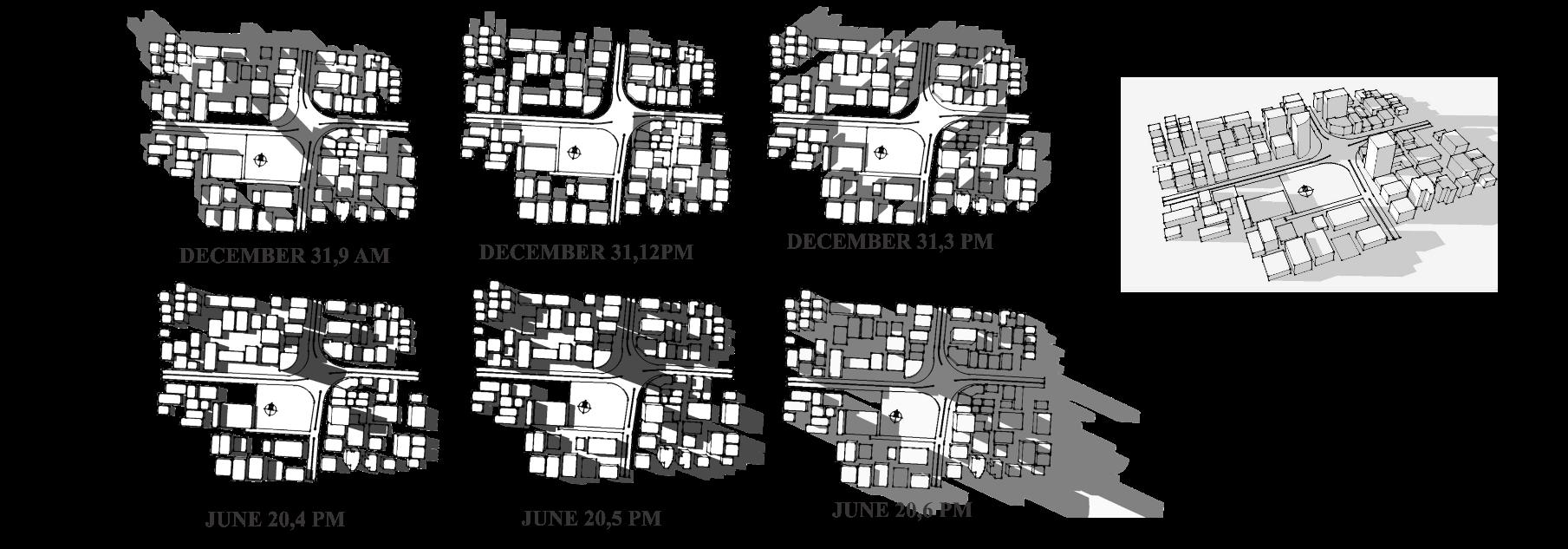
Design Studio
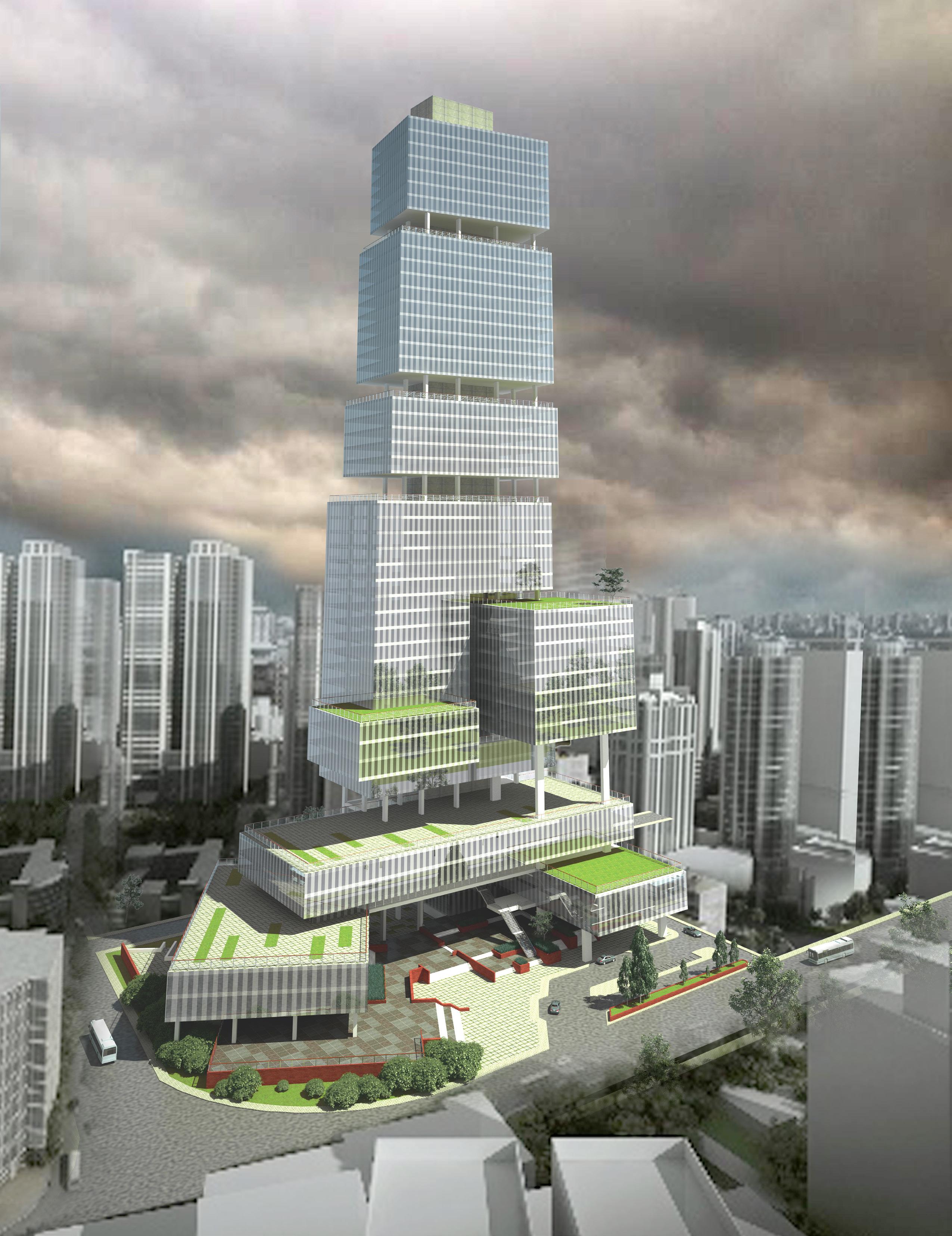
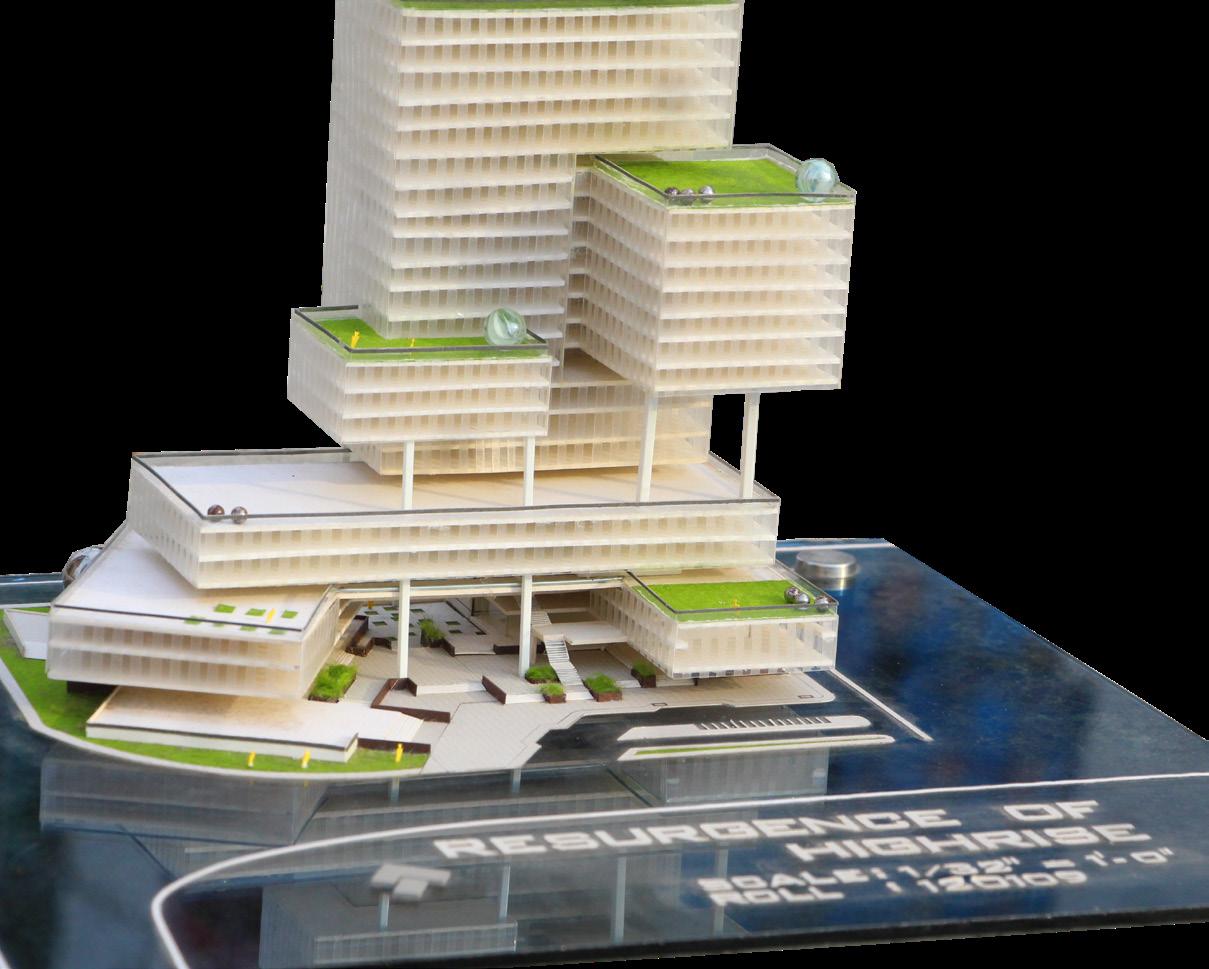
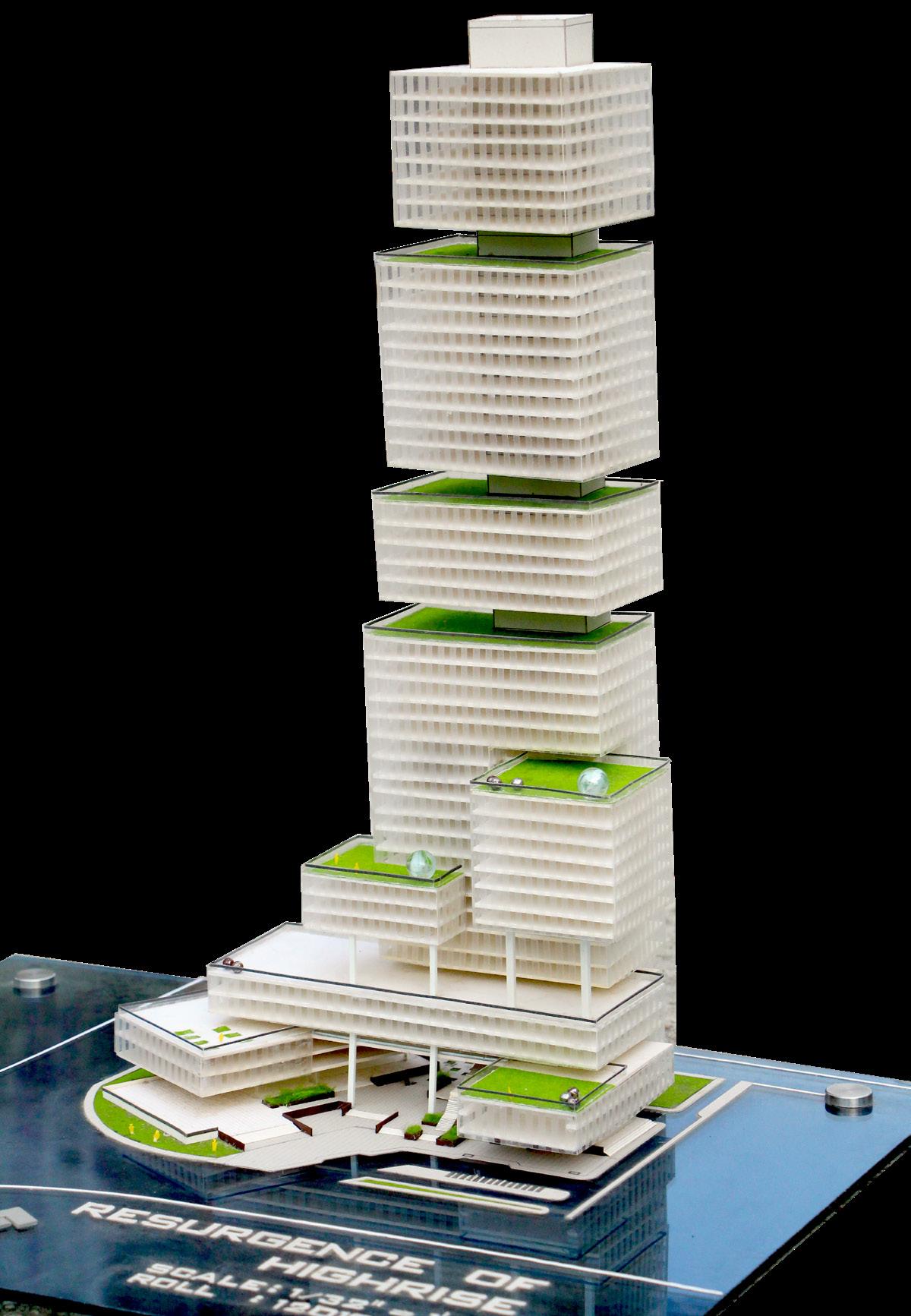
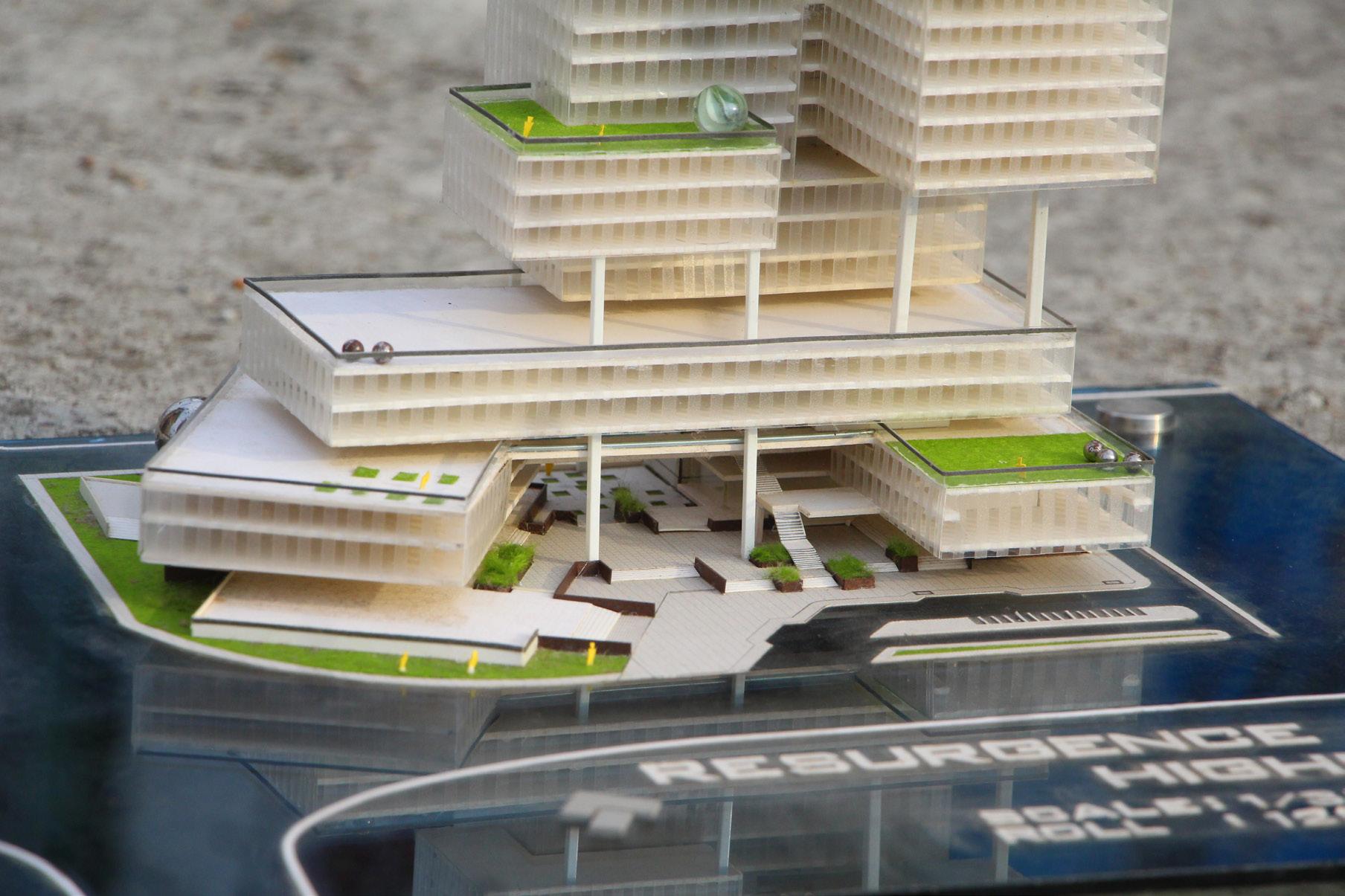
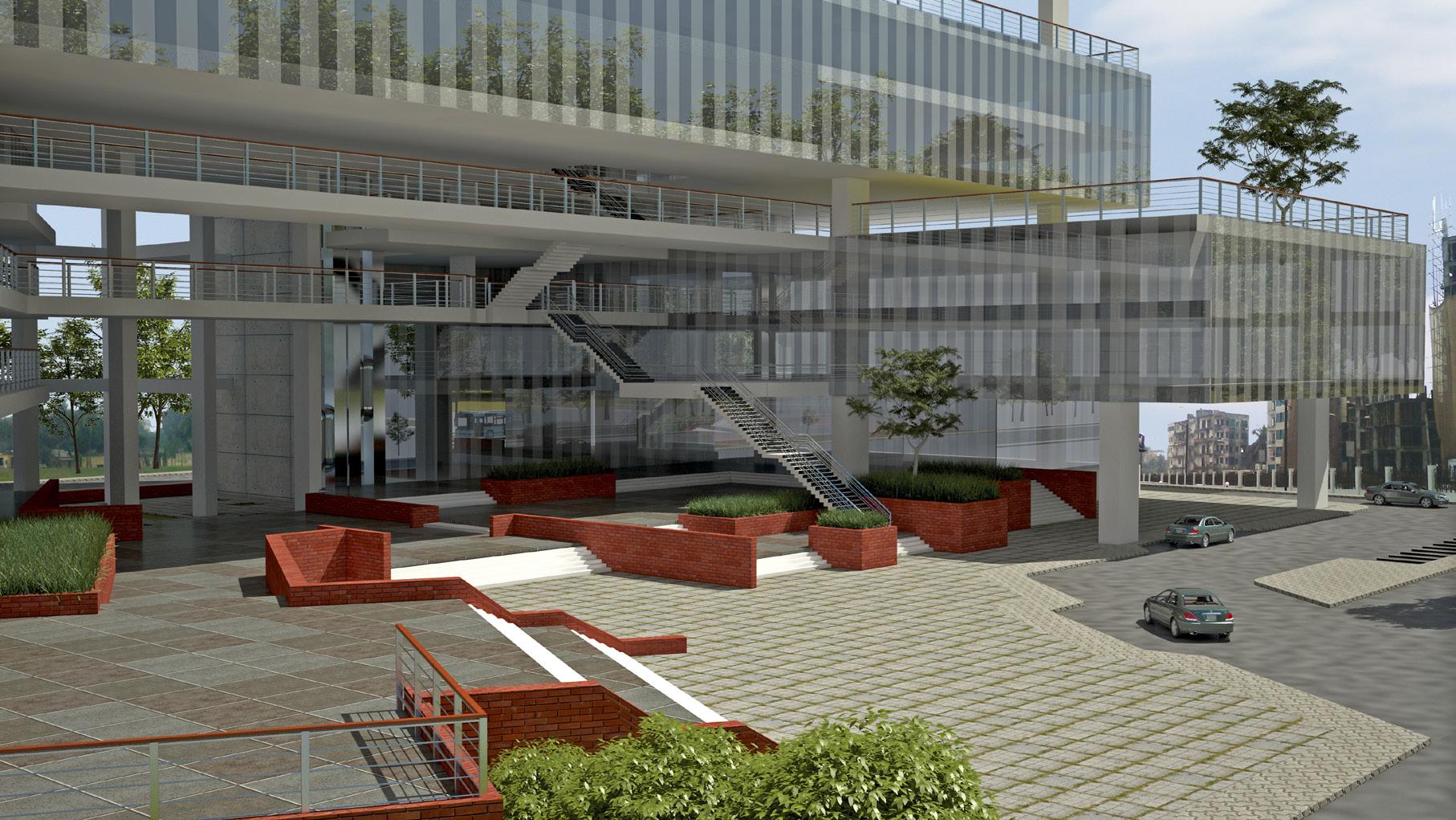
In my architectural endeavors, I had the opportunity to contribute to the design of a high-rise building, a project that underscored my proficiency and creativity in shaping urban spaces. Embracing a multidisciplinary approach, I navigated the complexities of spatial planning, structural considerations, and aesthetic elements. I integrated sustainable design principles to enhance energy efficiency and environmental harmony. My role involved conceptualizing innovative layouts, collaborating with engineering teams, and employing cutting-edge technologies while also understanding the context and its need. The outcome was a high-rise structure that not only met functional and safety requirements but also added a distinctive aesthetic to the city skyline. This experience reinforced my commitment to pushing the boundaries of architectural design, considering both the practical and visionary aspects of creating impactful urban structures.
AGRICULTURAL HERITAGE MUSEUM EXPANSION
Comprehensive Studio
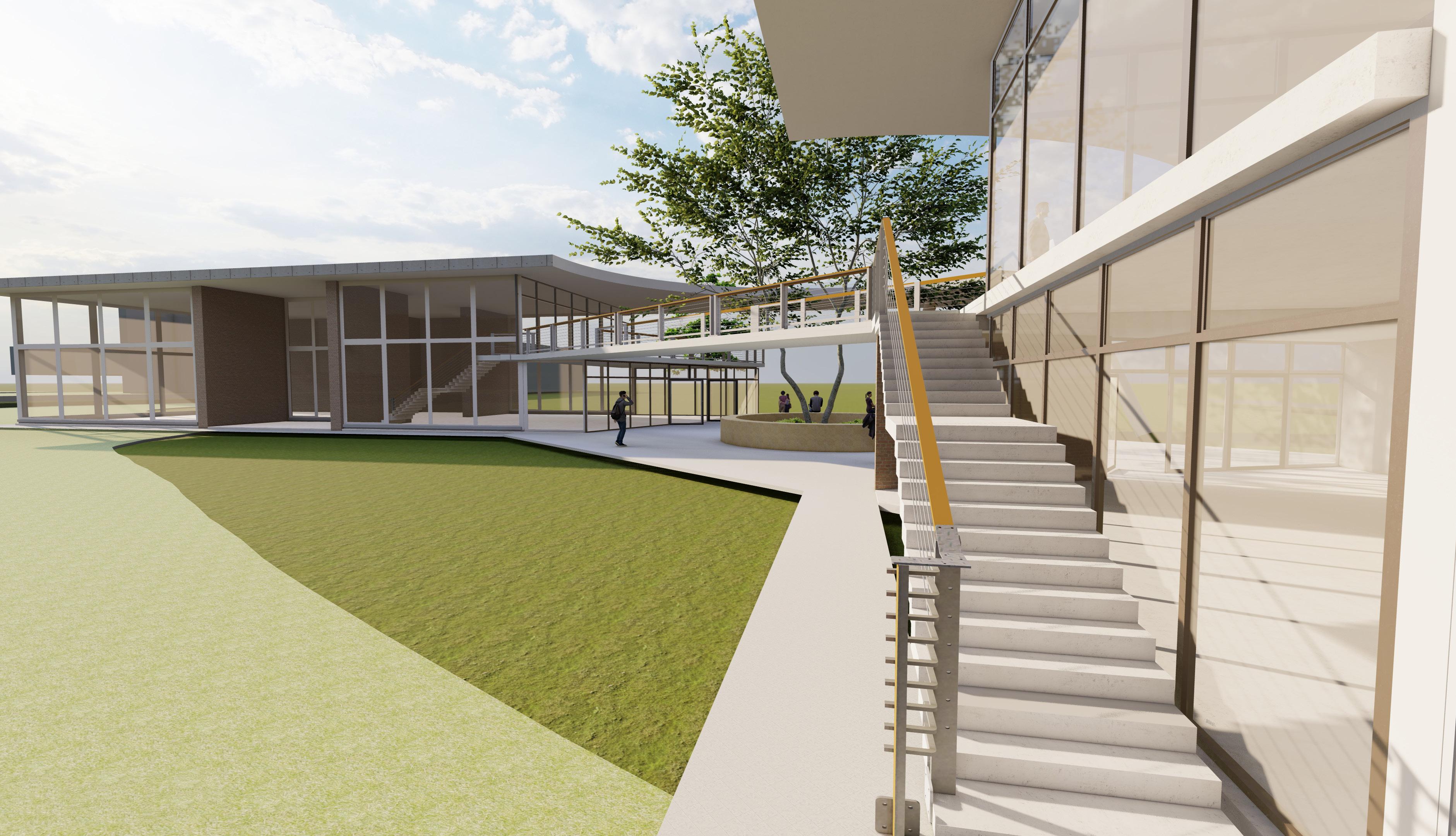
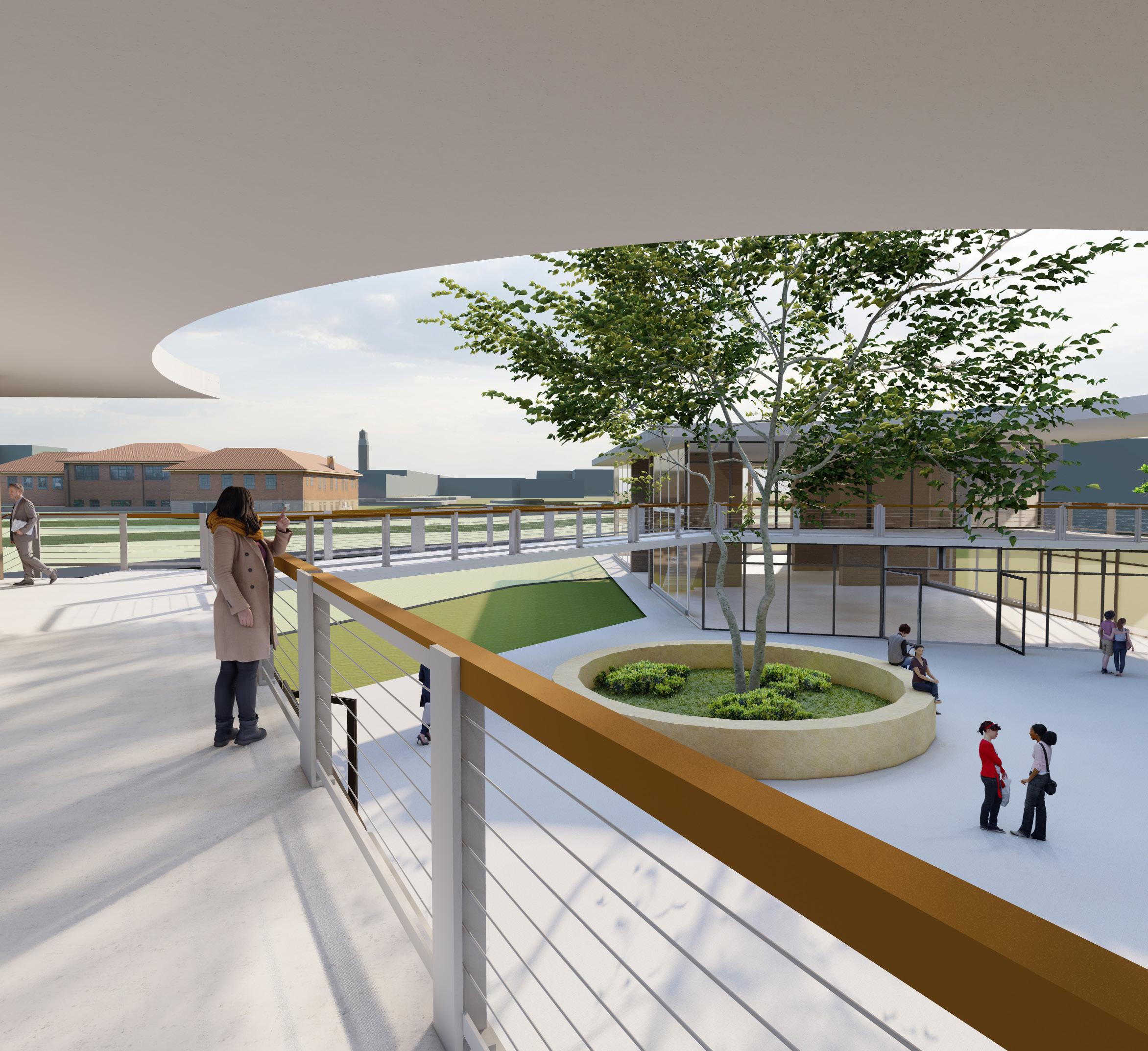
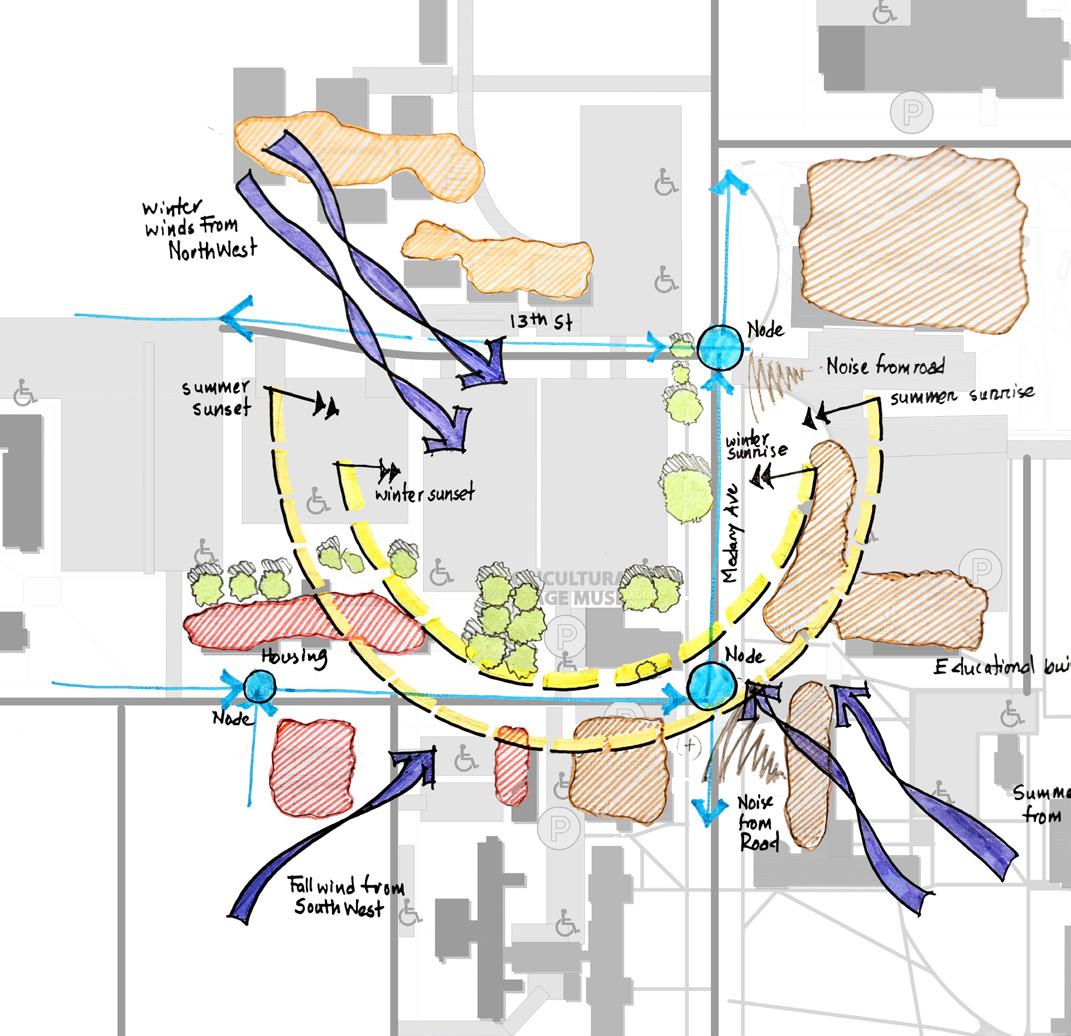
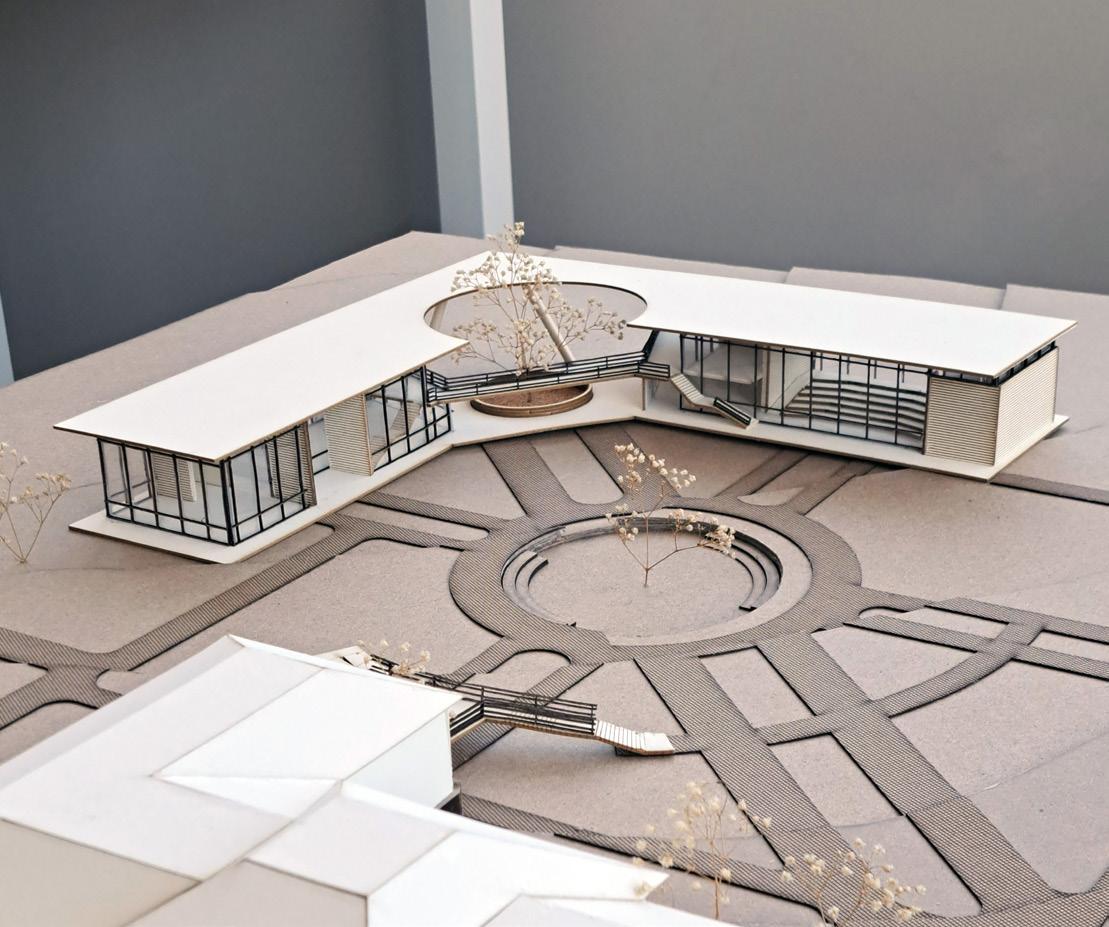
The comprehensive professional architectural studio measured competency across all aspects of a coordinated building design.We prepared detailed drawings, documents, and models describing acomplex building program, integrated systems and structure, and an appropriaterelationship to site We began by identifying issues in existing design, then narrowing the focus of the design by selecting lenses for further development. The tasks included analyzing design position and focus, mapping materials, examining the site’s forces and demographics, evaluating egress and structural systems, and addressing mechanical, electrical, plumbing, fire safety, and envelope considerations.
Design Position
Grounds cape and spatial configuration
A welcoming entrance -public accessibility, circulation space would complement the characteristics of a museums functions.
Indoor outdoor relationship
We can experiment with the indoor, semi outdoor relationship where the connection point can integrate the nature. The common spaces can promote an uninterrupted flow between the inside and outside. Relationship between structure, envelope and Material
The structure, envelope and services should work in a way that it can contribute for the reduction of energy consumption.
Site surroundings, context and the user group
The museum would work as a whole with the existing museum considering the context and user group
Left: Ecperiential views
Right Top:Site Force Diagram
Right Bottom: Physical Model
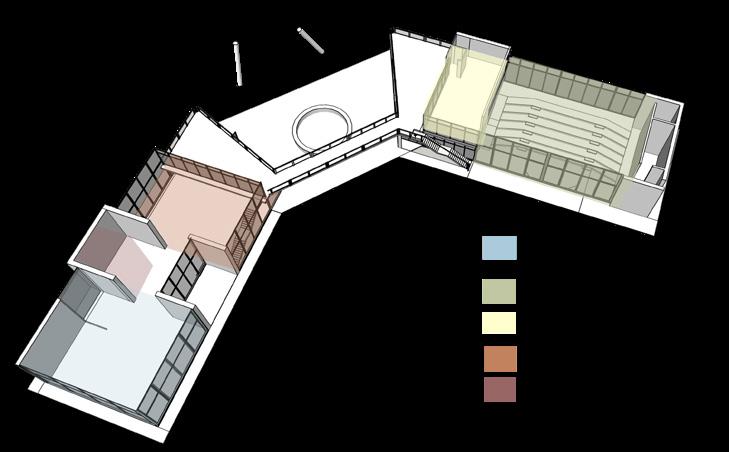
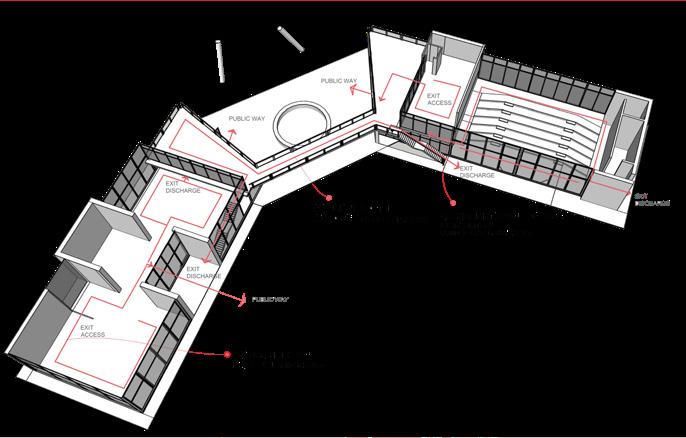
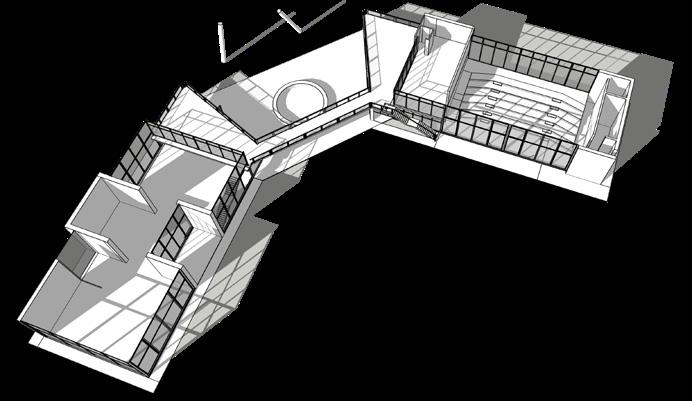
Top: Proposed Detail Sections
Bottom left: Sq Ft & Occupancy Load Calculation
Bottom middle: Means Of Egress
Bottom right: Maximum Daylight Utilization
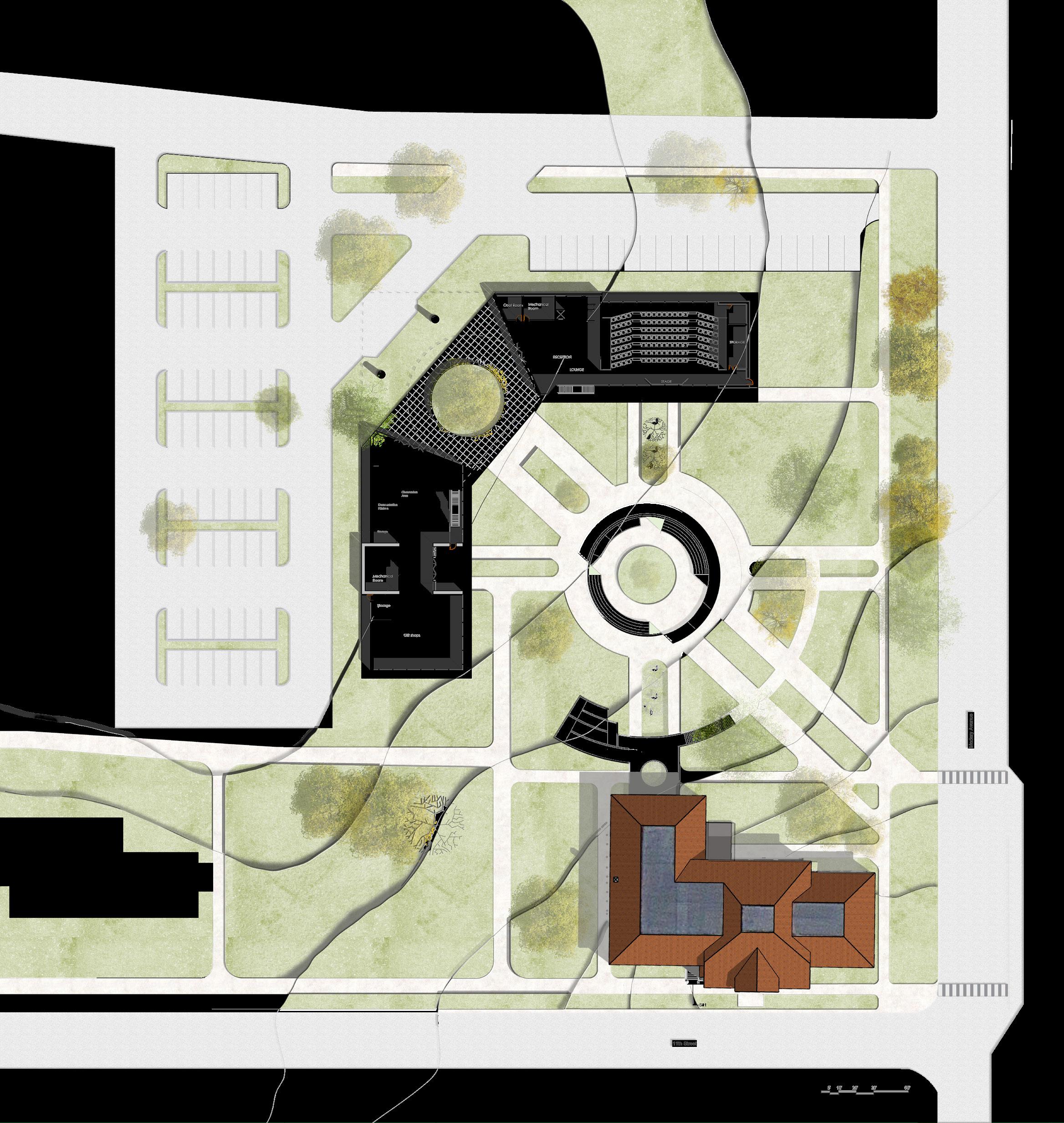
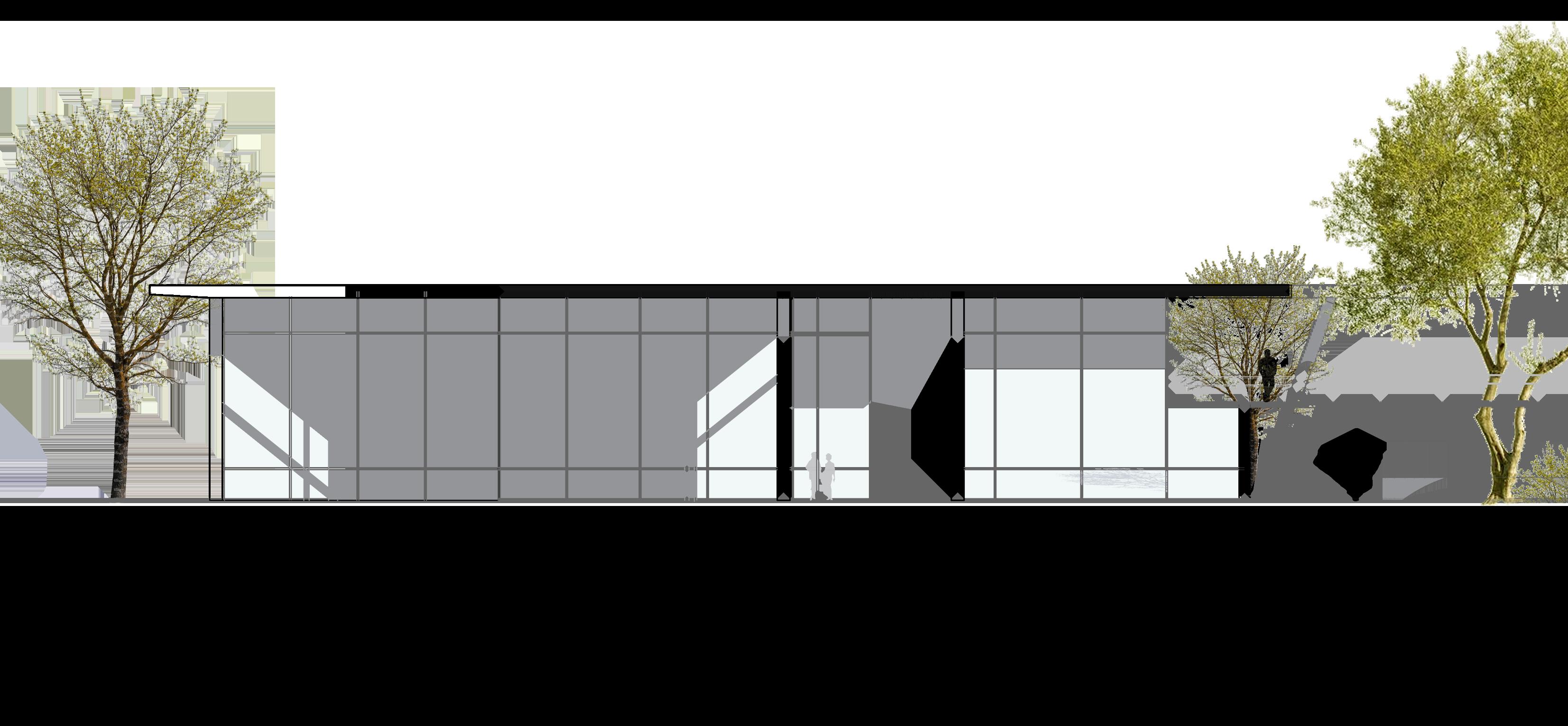
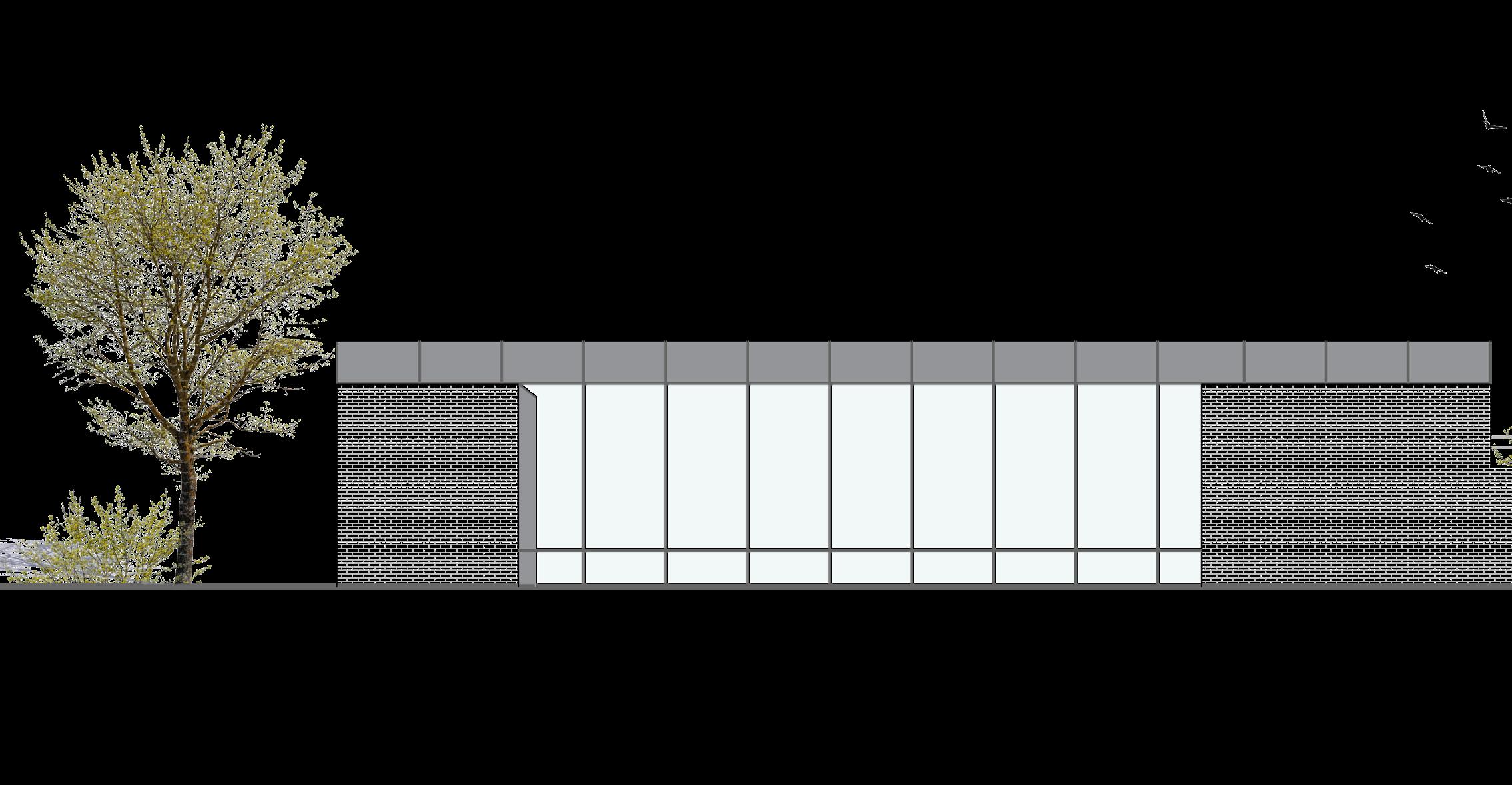
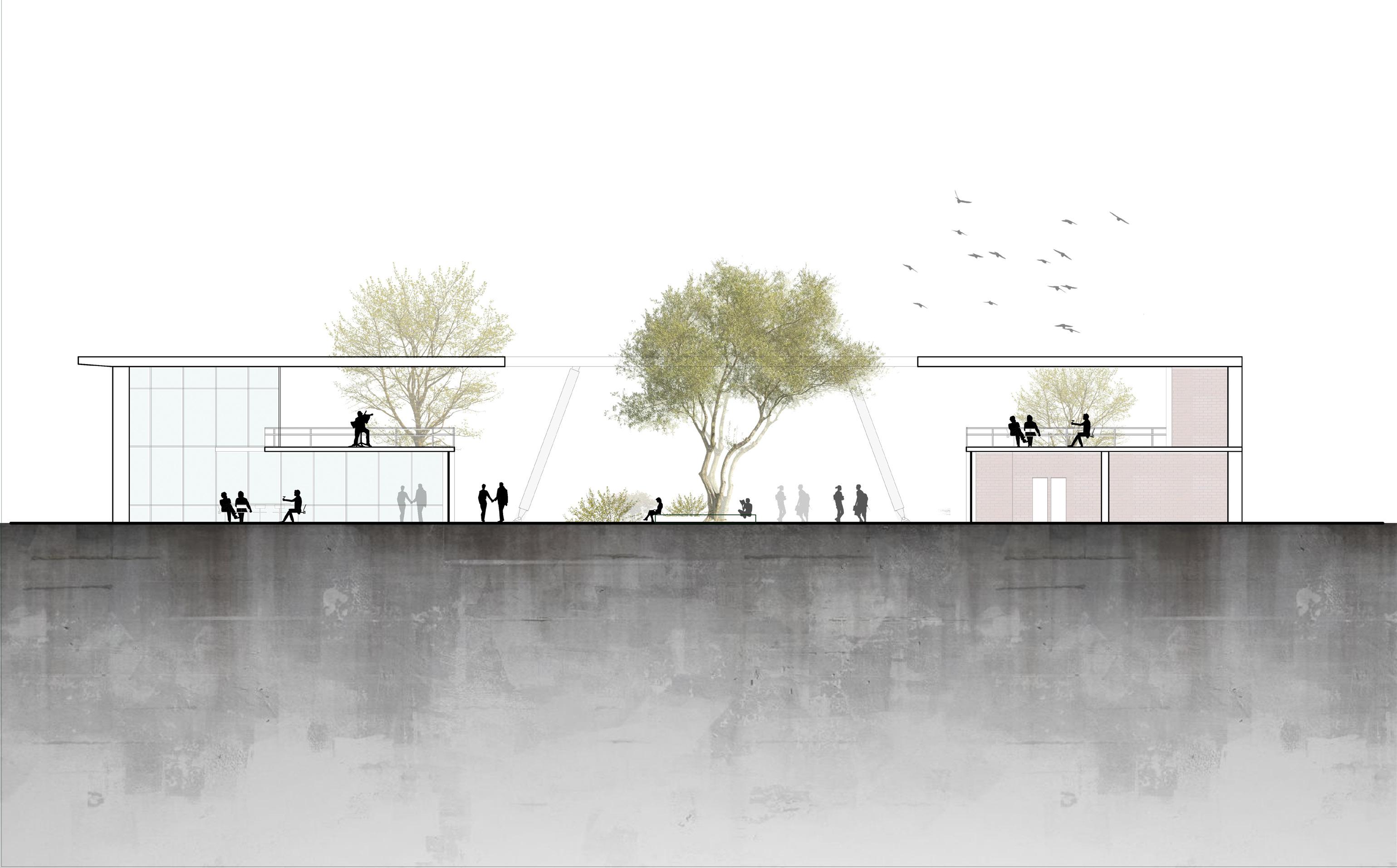
Top:South East Elevation
Middle: North Elevation
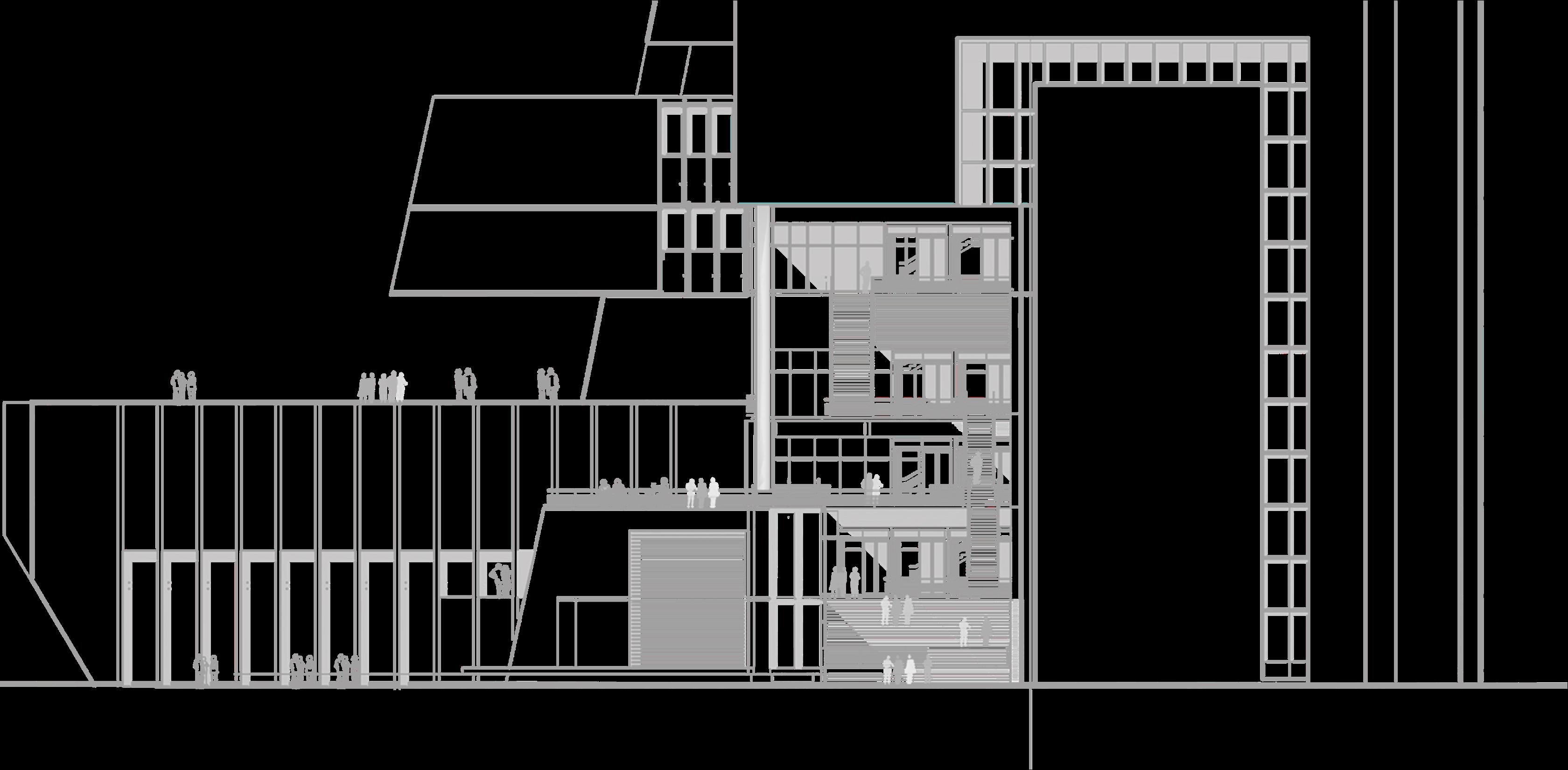
Bottom:Section
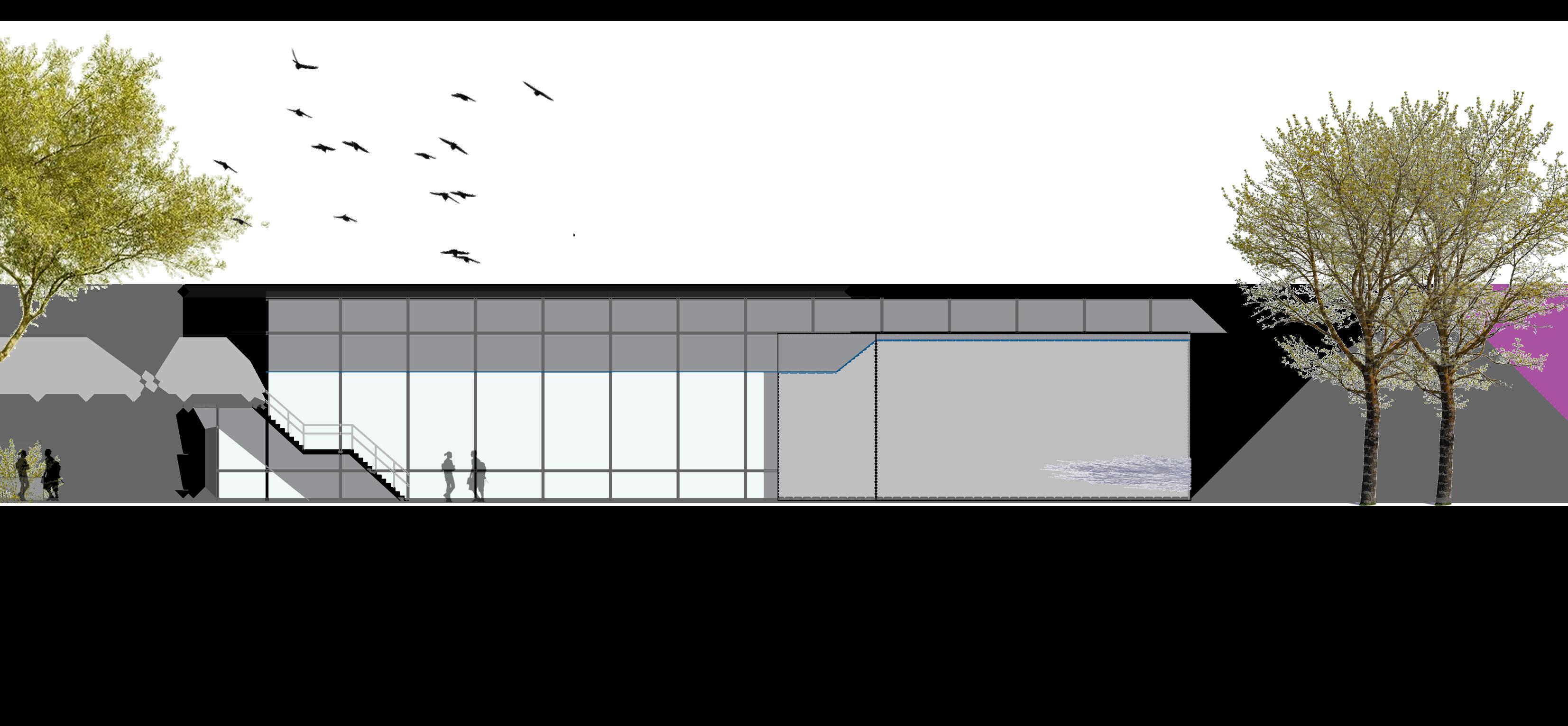
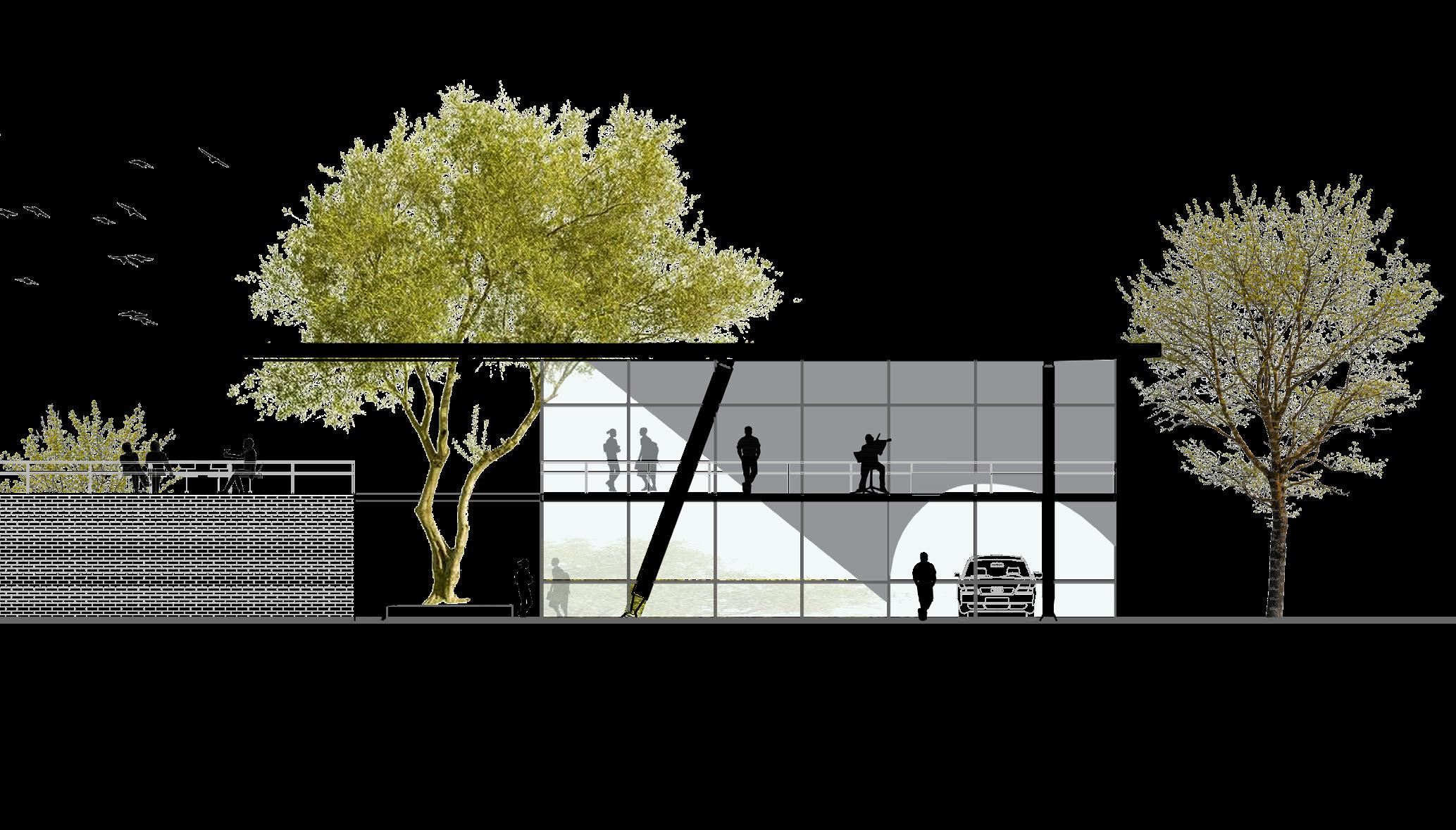
PROPOSED SECTIONS
Exploring the interplay between indoor and outdoor spaces involves experimenting with a semi-outdoor relationship, where the connecting points seamlessly integrate with nature. By designing common spaces that foster an uninterrupted flow between the interior and exterior, I enhanced the overall connection with the surrounding environment.
Contact
arch.lamiatasnim@gmail.com https://www.linkedin.com/in/lamia-tasnim-64037120a/