Constructing Narratives & Challenging Histories - Exploring the Narratives In “My Memory Book”
I have always liked Cindy Sherman’s Untitled Film Stills. The story created in her individual images through makeup and staging are captivating. However, when these images are presented as a collection, we see a multitude of female types portrayed We no longer see the one woman in one photograph. Instead, we see the artist in each photo posing as a different woman This creates a new narrative because Sherman forces us to see her portrayals as characters based on societal stereotypes. When just one photo is presented, the viewer can read a variety of narratives that are more susceptible to their own experiences and views. However, when multiple images are presented as a collection with a narrative, they can narrow our perspective and reinforce the intent of the artist. Likewise, when multiple images of one subject are taken over time, the collection can create a historical narrative that is broader than just a single image.
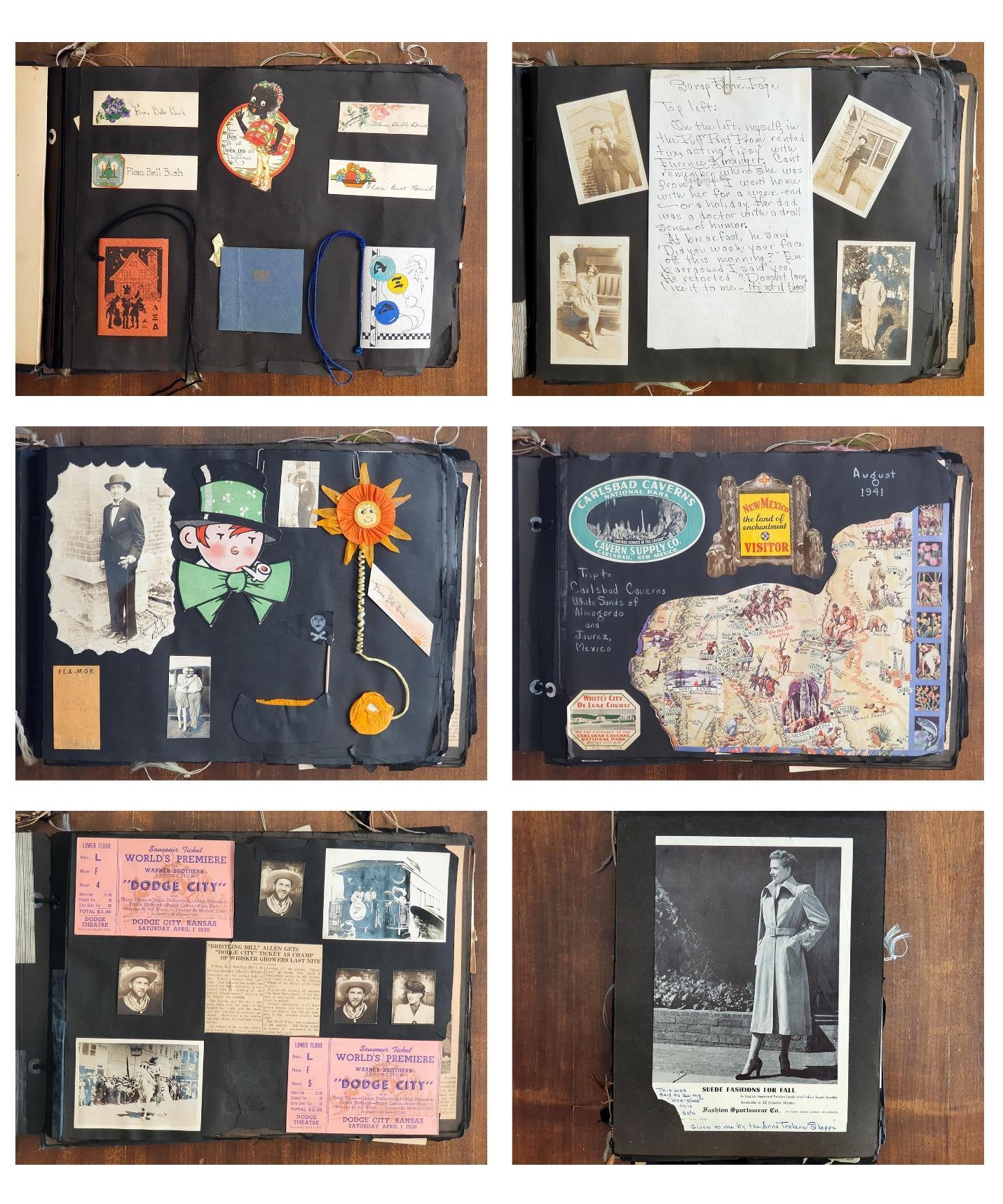
During this week I was also struck by “The Story of My Life ” the antique photo album dating back to 1914. Not only did I find it interesting that someone’s personal scrapbook made it into the MoMA archives, but it also shared many similarities to ‘My Memory Book” created by my late grandmother. Although my grandmother appears to have started her book 14 years later in 1928, she uses the same black background paper as “The Story of My Life”, she also includes handwritten notes, postcards, letters, telegrams, newspaper clippings and a variety of other printed material from the era. Both scrapbooks chronical the lives of their individual creators, but similarities in the scrapbooks highlight a common experience. If more of these scrapbooks were collected and compiled, we might see a broader narrative of what life was like in the early 1900’s Even the authorship of these scrapbooks can give us insight into who had the time, desire, and resources to document and share their life experiences.
When revisiting “My Memory Book” created by my grandmother, I was struck by pictures of her in drag. If a viewer were to look at just the photo, one may not realize it was my grandmother. However, her inclusion of handwritten scrapbook pages offers an explanation to the photos and creates a larger narrative. Newspaper clippings and menu items listed at 15 cents puts the book into historical context. Also, racist and sexist greeting card and cartoons remind us of historical stereotypes She begins the book with her high school graduation and as it moves through time, you can see my grandmother’s priorities changing. Its collective pages offer a broader perspective on her life. Perhaps the most telling is that her last entry appears to be from 1950. It is a photo of a fashion model in a suede coat said to be her “look-a-like”. By 1950 she was the mother of two young kids. It seems that with this last entry she is somehow saying goodbye to her younger, freer, more independent, glamorous self.