Monoprint Workshop
Seasonal Sensations
An exploration of print, colour and non-literal image making.
SUPPORT EXAMPLES
Light colours mixed and layered to create atmospheric sensation of Spring or summer.
• Summer morning
• Plunge Pool
• 5am May

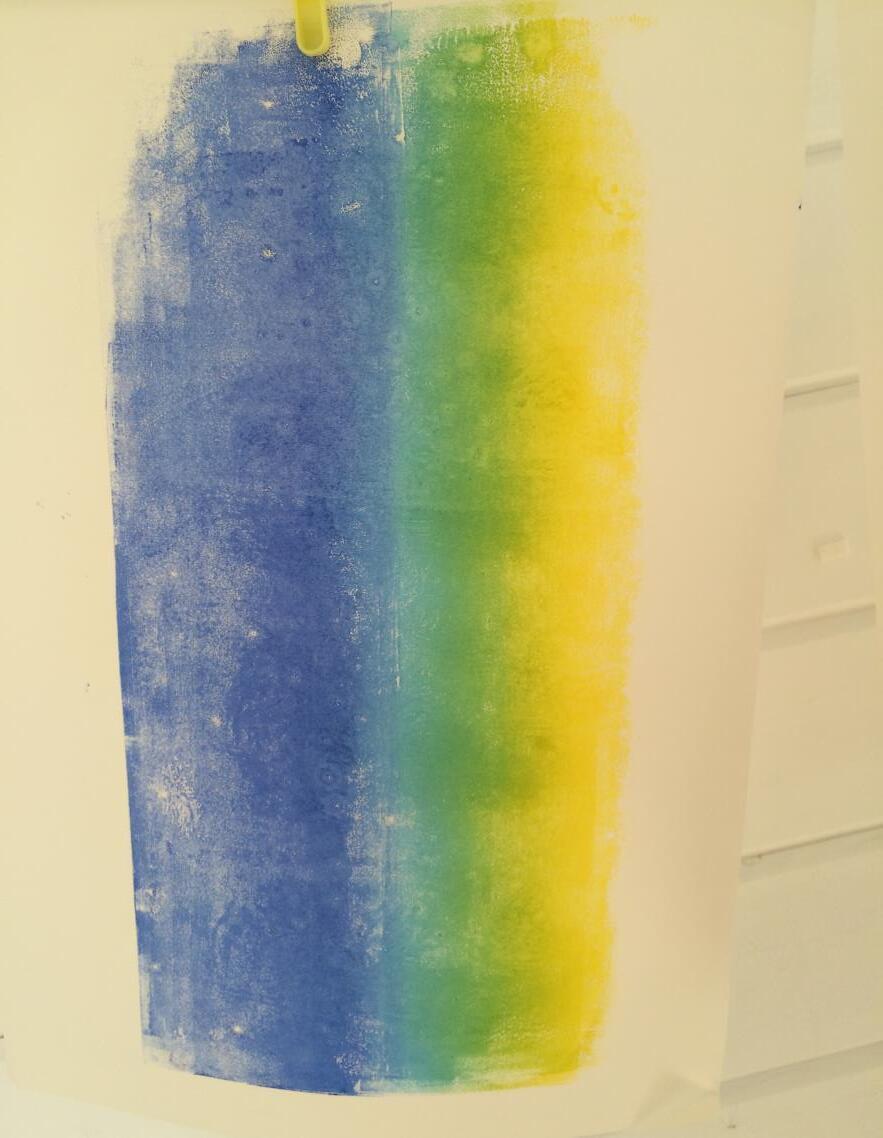
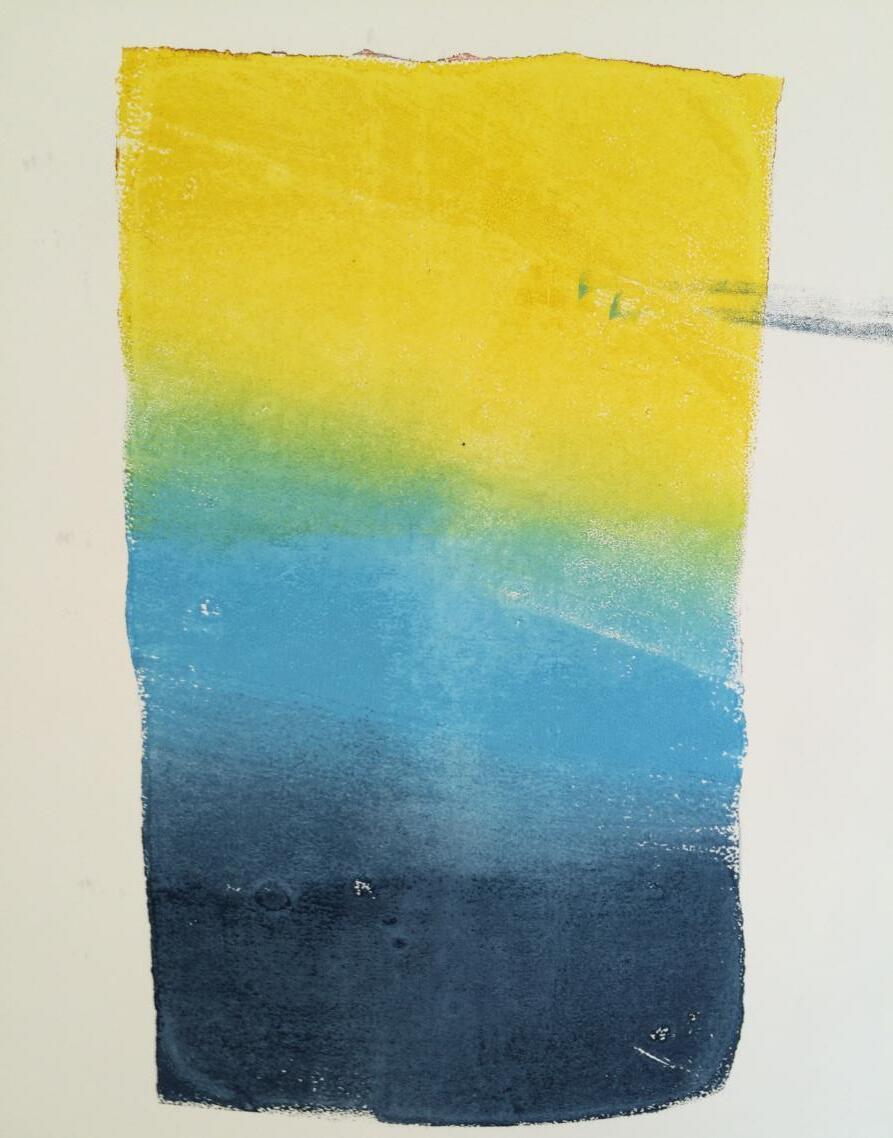
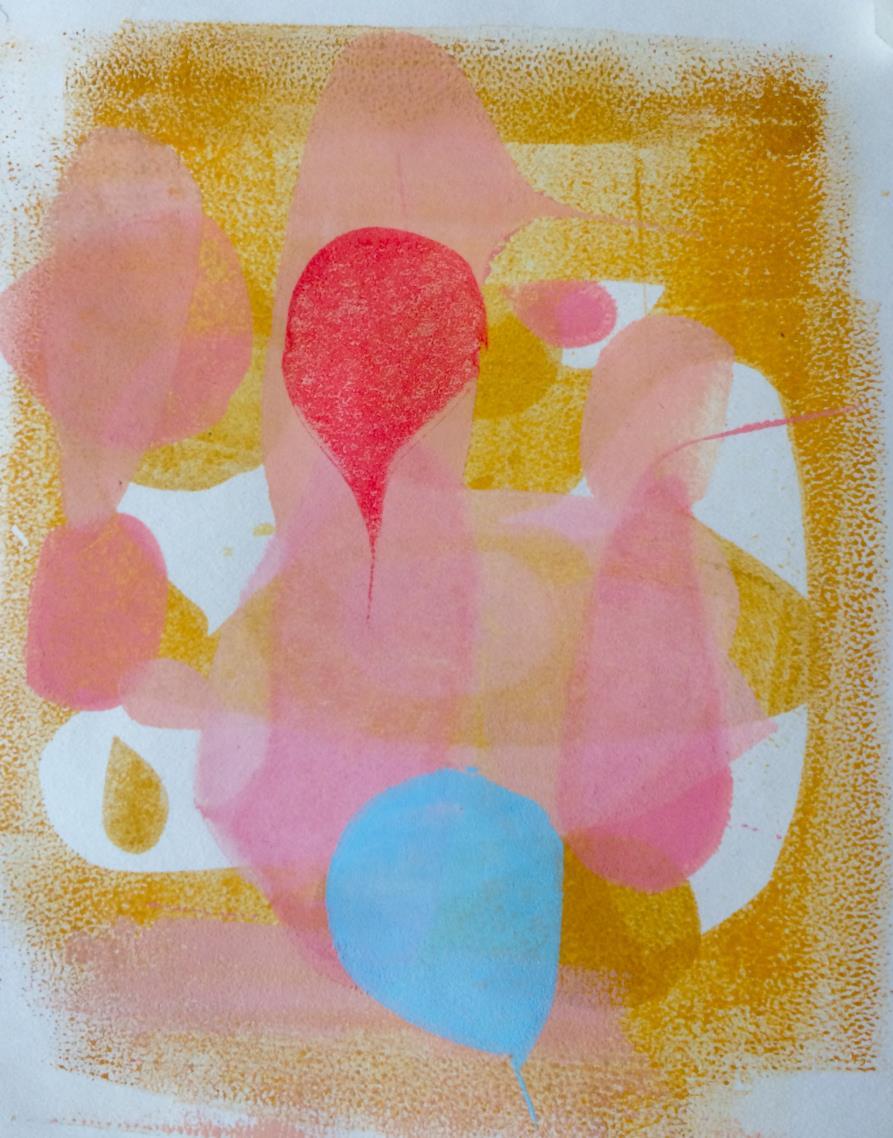
An exploration of print, colour and non-literal image making.
Light colours mixed and layered to create atmospheric sensation of Spring or summer.
• Summer morning
• Plunge Pool
• 5am May
ʻMONOʼ means that you get one printed image however this can be the result of a long process of layering techniques onto the one artwork. To register (the process of ensuring your paper is placed exactly so the layers are lined up correctly) you can tape down the edge of one side of the paper and lift it and replace it for printing. This enables you to rework your plate (smooth surface usually glass on which ink is rolled, painted etc.).
Roll ink onto plate using clean roller. Carefully place paper onto rolled ink and draw onto the back of the paper. Remember your printed drawing will be back to front so if you are using lettering - take care.
Paint directly onto the plate to build up layers of colour in stages. This enables you to produce a very expressive image. Mix the inks and use various techniques such as scraping, mark making using rags, scratching etc. Mark up the table where the plate is positioned using tape. Place a blank sheet of paper over the print plate and tape it to the table along one edge, so that you can flip it up like a page. This means you can build up your colours in layers. Remove the plate to wash and dry it in between stages. The register tape on the table will allow you to replace the plate in exactly the right place and you can continue to develop your layers of colour on your print. Make sure that you DO NOT remove the paper from its taped position on the table until your monoprint is finished.
3. Use stencils. Roll ink onto plate. Cut, tear and use any 2D shape to develop images on your print. Place the stencil onto the ink. Take print. Tape edge of paper to register your print and experiment with layers, colours and combining techniques. Try using cut/torn paper, fabric, organic matter such as leaves, grasses, flowers.
[CC][Block 1][Task 2Monoprints][Printmaking Illustration].pdf
monoprinting refresh.docx