
The Charpentier Historic District, listed on the National Register of Historic Places, includes more than 400 structures and can be explored through several neighborhood tours. These tours help organize your visit and share the story of this diverse area. “Charpentier,” meaning “carpenter” in French, reflects the language of its earliest builders.
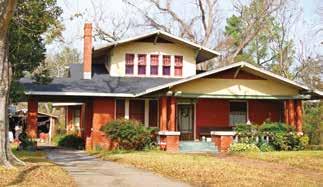
Broad Street, once part of the Old Spanish Trail linking the Deep South to the Pacific, became the showcase boulevard for the “Michigan Men” who rebuilt the lumber industry after the Civil War.
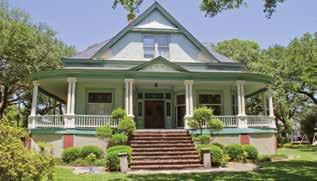
By 1894, electric streetcars connected downtown Lake Charles to Central Place, a prestigious South Division Street neighborhood still lined with elegant, distinctive homes.
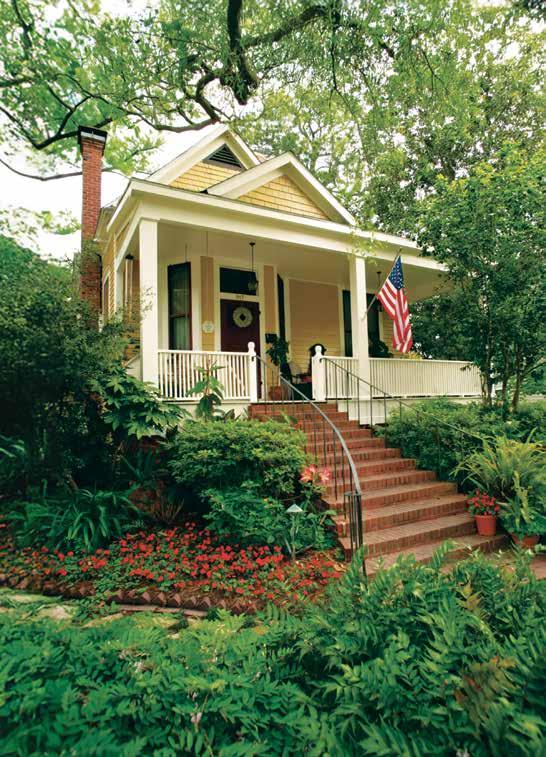
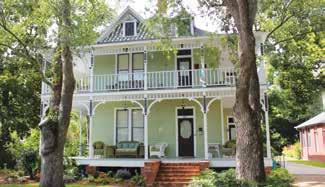
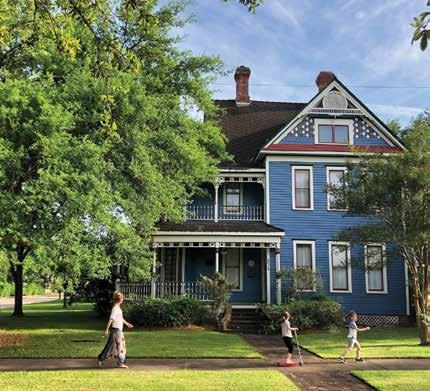
This tour showcases homes built between the 1880s and 1930s, set among live oaks, magnolias, and gardens, with styles from Eastlake to Craftsman bungalow.
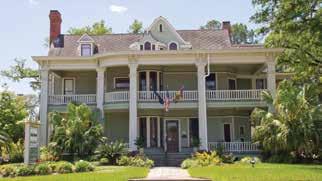
In the 1840s and ’50s, the Goos family brought German settlers to Goosport, leaving a legacy of skilled woodcraft still seen in local homes and structures.
CIRCA 1912
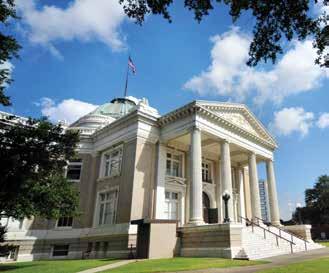
1000 Ryan Street
The green copper-domed courthouse has been a feature of downtown Lake Charles for over 100 years. Designed by Favrot and Livaudais to replace the courthouse that had been leveled by the 1910 Great Fire, the massive classic palladian lines of the structure were meant to impress. The main interior Courtroom A has been authentically restored to a bygone age and is still used for large court cases and ceremonially. The structure is said to be haunted by the ghost of a woman murderer tried and convicted in the early 1940s and electrocuted on the premises.
CIRCA 1911
1001 Ryan Street
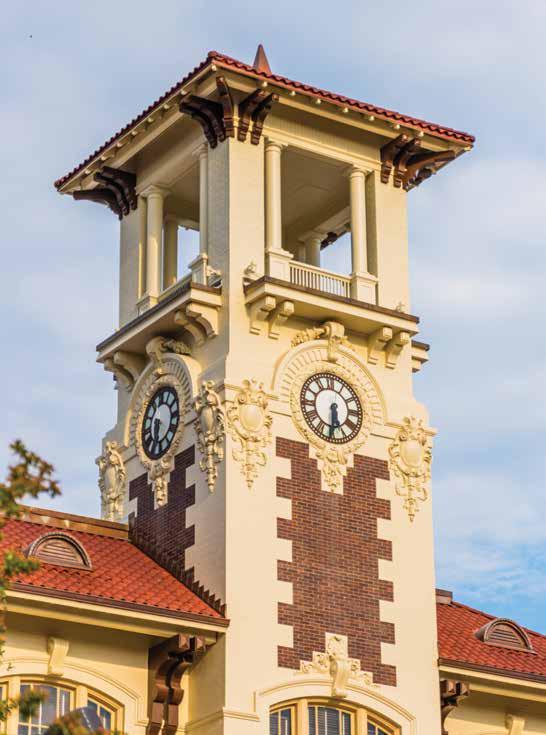
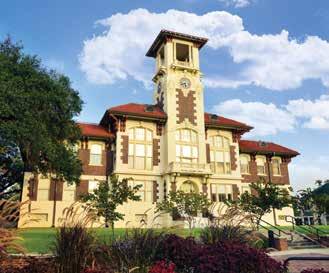
The red-tile-roofed Italianate City Hall is in contrast to the buff and marble Courthouse across the street, but it too was a commission of Favrot and Livadais, started immediately after the Great Fire and opened in 1911. The open belfry tower features working clocks. Inside, three floors of galleries showcase various traveling arts and science exhibits.
CIRCA 1913
935 Bilbo Street at Kirby Street
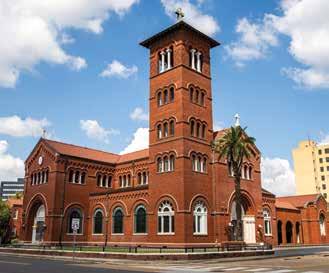
Built using a dramatic dark red brick, the Romanesque Revival Cathedral of the Immaculate Conception serves the Roman Catholic Diocese of Lake Charles and is the third of the Favrot and Livadais buildings in this trio of recovery architecture from the Great Fire. The great interior spaces are graced by Viennese stained-glass windows and Carrara marble gothic altars in the naves. The five-story bell tower houses a one-ton working bell named “Mary.”
Completed in 1912 after the 1910 fire, the Historic Calcasieu Courthouse is a Neo-Classical/Beaux-Arts landmark by Favrot and Livaudais, featuring a solid copper dome and modeled after Italy’s Villa Copra (Rotunda).
720 KIRBY STREET CIRCA 1890
A charming example of a stick style Queen Anne house with an asymmetrical side tower, bay window and Eastlake corner entrance porch.
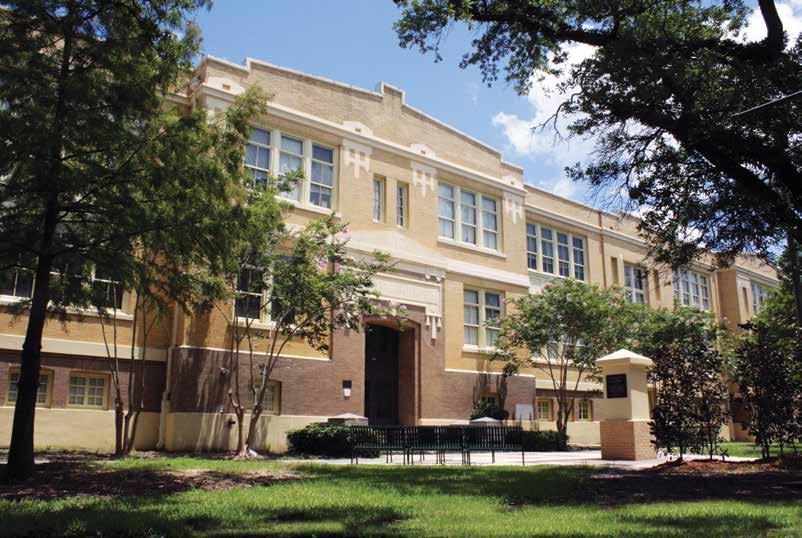
809 KIRBY - CENTRAL SCHOOL ARTS AND CULTURAL CENTER CIRCA 1912
Note the symmetrical front with the pediments marked Boys and Girls on either side of the central portico. Inside the restored facility are the Mardi Gras Museum, art galleries, performing art spaces, and working artists’ studios. Parking in rear.
902 KIRBY – THE GEORGE ROCK HOUSE CIRCA 1900
This is a decorative Eastlake-style house built for the Rocks, the first couple married at Episcopal Church of the Good Shepherd. The three gabled windows feature true leaded diamond-paned glass.
904 KIRBY – THE ERASTUS BOLING HOUSE CIRCA 1923
Double-bricked walls and a solid brick foundation fortify this sturdy 20s bungalow with craftsmen trim. Much of the interior is authentic with edge pine flooring, cabinetry and built-ins of the period.
917 KIRBY – THE WILLIAM PETERS HOUSE CIRCA 1908
William Peters, a retail lumberman, used only fine lumber for his home with beautiful edge grain long leaf pine featured throughout. This foursquare uses Lake Charles style columns and a Palladian style dormer.
922 KIRBY – THE ARTHUR HOLLINS HOUSE CIRCA 1905
The odd number of columns is a common characteristic of Lake Charles architecture. Wide brick steps lead to double glass French doors with sidelights.
1015 KIRBY – THE ROBERT LEAKER HOUSE CIRCA 1905
Bracketed turned columns support the double porches of this Queen Anne-style house with a large bay window.
1019
1890
A Victorian Queen Anne cottage with front bay, turned columns and balusters, and many ornamental period details, including geometric shingles and bull’s-eye interior trim.
1021
A true Italianate villa style with wide bracketed eaves, beveled glass in the entry door, transom and sidelights, and a distinctive Palladian-style dormer.
1030 PUJO CIRCA 1895
The original Eastlake porch for this house was lost in the 1918 hurricane and was replaced with a colonial revival double-columned doubleporch. The stained-glass feature window is from a historic Texas church.
1019 PUJO CIRCA 1900
This dormer-on-gable house with spacious front porch was physically relocated from its address on Lakeshore Drive, tucked into this wooded lot, and completely restored quite recently.
1018
1914
A sterling example of a craftsman airplane bungalow built of longleaf pine, brick and stucco. Five windows in the “cockpit” dormer and a broad front porch roof acting as the “wing.” A sleeping porch was added in 1920 over the porte cochere, and 360 pieces of polished, beveled, leaded glass make up the front door.
1004
A beaux-arts colonial revival house with an impressive four column portico and Juliet balcony is perfectly symmetrical except for a large conservatory and sleeping porch addition to the west.
Built from local cypress and pine, the homes reflect the lumber industry that fueled Lake Charles’ growth.
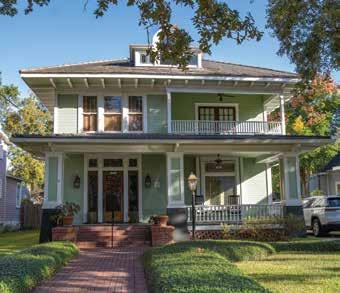
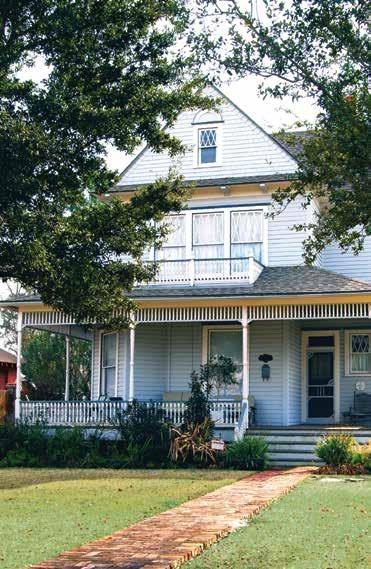
919 PUJO – THE ABRAHAM CHRISTMAN HOUSE CIRCA 1908
A Louisiana cottage version of a Queen Anne style Victorian, this house originally stood on six foot tall piers until the 1918 storm. The house received significant damage after the storm, but was preserved and righted closer to ground level. The home remains owned by descendants of the original family.
PUJO CIRCA 1920
A superior example of a rare house type in the South, this is a camel-back California stick craftsman bungalow with prominent brackets and extended beams. In addition to its unusual style, it is built of brick and stucco.
742 PUJO – THE SAMUEL
HOUSE CIRCA 1907
Samuel Woodring, general manager of the Calcasieu Longleaf Lumber Company, hand selected the lumber for his massive show house. Originally built in the Queen Anne style, the house was remodeled sometime after 1918 to add the fluted columns and the wrap-around porches. Note the odd number of columns on the Pujo Street façade.
736 PUJO – THE EDMOND CHAVANNE HOUSE CIRCA 1905
This American four square had been constructed originally with no porches, but by 1911 the owner decided to add double porches on three sides supported by fourteen large square pillars. Note the five columns on the Pujo Street façade— they have always been spaced as you see them.
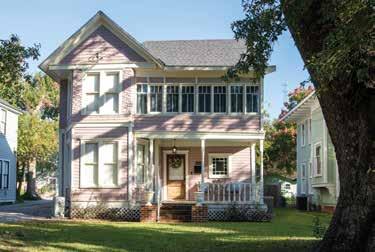
714 PUJO
This is a three-story house that combined Queen Anne-style massing with Colonial Revival trimmings. Note the shaped shingles on the gables, dentil cornices, and the leaded floraldesigned windows in the bays.
The first house in the city designed by an architect, this house has had three major remodelings. Especially interesting are the separate servant quarters and conservatory on the grounds.
Angles and gables jut, turn and surprise inside and out in this large Queen Anne style house with Eastlake style porches, elaborate shingle patterns and stick style gables.
This house is shipbuilder-strong having been built using only cypress timbers held together with pegs. The original one floor house had a wide central hall and two rooms on either side, and a second floor was added in 1902 to accommodate the owner’s 10 children.
1019 KirbyThe Leslie Coleman House circa 1890
Four houses chart the interesting history of John and Mary McCormick who came to the area to publish the Lake Charles Echo, an early weekly newspaper, and later the Commercial, an early daily newspaper. They first lived at the 508 Pujo house, and built a one-story addition to house the printing business. In 1893, Mrs. McCormick built another two-story at 512 Pujo as rental property, and in 1915 she constructed a two-story four-square house at 504 Pujo as her new home. In 1920, the one story addition to 508 Pujo was detached, moved and remodeled into 510 Pujo as another rental property.
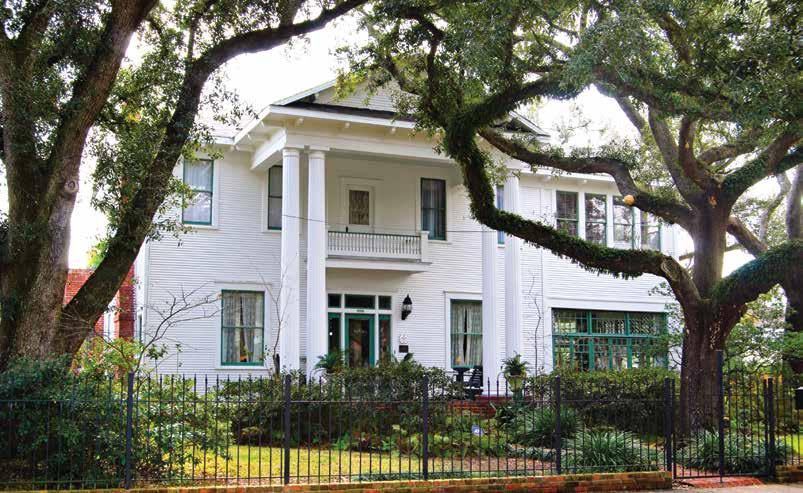
The library is built on the site of the original 1903 Carnegie Library, and the 1950 building now houses both the downtown branch and the Southwest Louisiana Genealogical and Historical Library.
Originally constructed by the Vincent and Welch Oil Company, the Pioneer Building was purchased by the City of Lake Charles and internally remodeled for housing city offices and council chambers. The exterior retains its distinctive mid-century look with fossilized limestone, green slate and Prairie-style moderne lines.
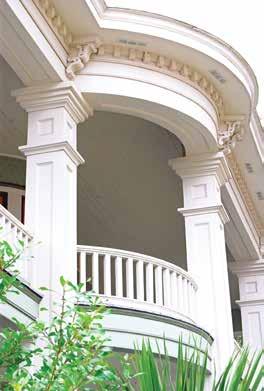
A distinctive architectural detail that emerged during this period is the Lake Charles column. It is a slightly tapered, two-story pillar often used on porticos, creating a stately look.
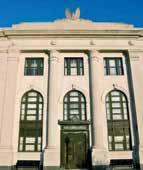
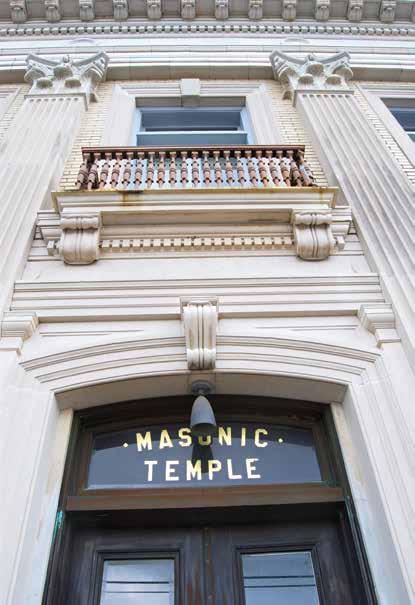
CIRCA 1928
Elegant neo-classical design elements distinguish this Favrot and Livaudais designed “temple of money” with massive order pilasters, bronze front door, and arched windows. Currently used as an event center the interior spaces are magnificent with molded coffered ceilings, terrazzo floors, bronze windows and trims, and enormous holding vaults.
CIRCA 1929
Built at the twilight of the Roaring Twenties, the ten story hotel has a Moorish design style with an exceptional lobby done in Spanish tile and stucco. Currently the building houses retail businesses, office spaces, apartments and a ballroom.
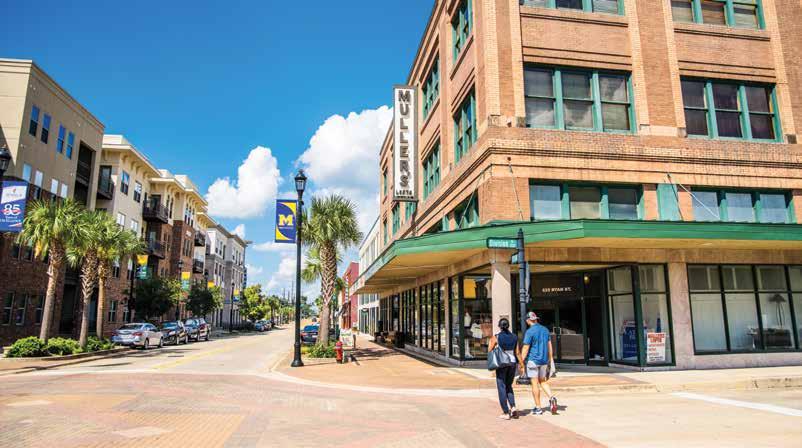
Just north of the Masonic Temple is the Byzantine-Romanesque Jewish synagogue. The Jewish community helped to shape both commerce and the arts in Lake Charles with such important contributors as Julie Muller-who founded Muller’s Department Store, Mayor Adolph Meyer, through Rosa Hart and the remarkable Kushner family of musicians, conductors and a Pulitzer Prize-winning author.
This impressive and elegant French beauxarts style building is just north of the historic Post Office building. This is the third temple on the property, beginning with the first lodge constructed in 1860.
501 BROAD – OLD U.S. POST OFFICE AND COURTHOUSE CIRCA 1910
An exceptionally refined three story Renaissance revival palace with arched windows, bracketed eaves, tiled roof and strict symmetry, this building was constructed at a time when handwritten letters were an art form.
517
An ornate Queen Anne House once stood where this Colonial Revival building now stands. In fact, it still does, as in the 1940s the owners removed the Queen Anne elements and added the brick and the Colonial features in an effort to “update” the old building.
A Michigan Man, Ramsey was the president of the largest lumber company in the region and organizer of the First National Bank. The house features 11 foot ceilings, exquisite wood work, trim and flooring, and a very animated, shingled and clapboard exterior.
705 BROAD – THE R. H. NASON HOUSE CIRCA 1885
A Gothic-revival Victorian with a tower, arched windows, porticos, leaded glass, and Italianate touches, this is the robust show home of another Michigan Man who came to the area in 1883 to form the Calcasieu Lumber Company.
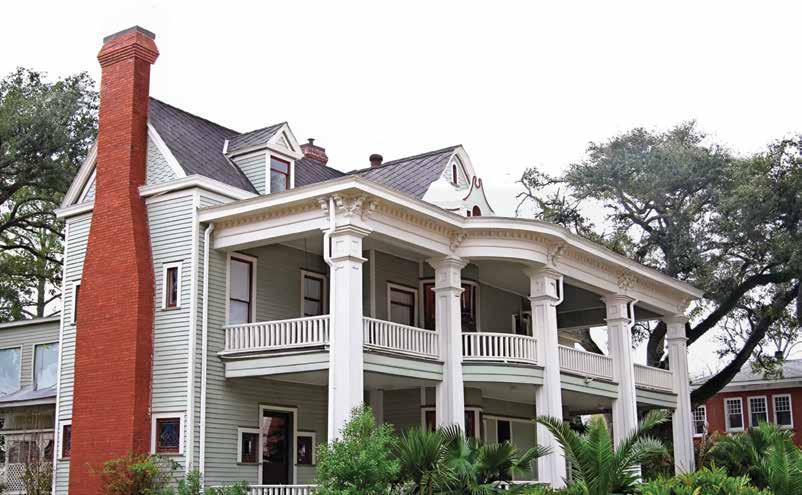
723 BROAD – THE ARTHUR WACHSEN HOUSE CIRCA 1905
This sprawling Italianate-Colonial Revival villa, with a sprawling verandah and porte-cochere, was added in 1920 with the distinctive green Ludowici tile roof.
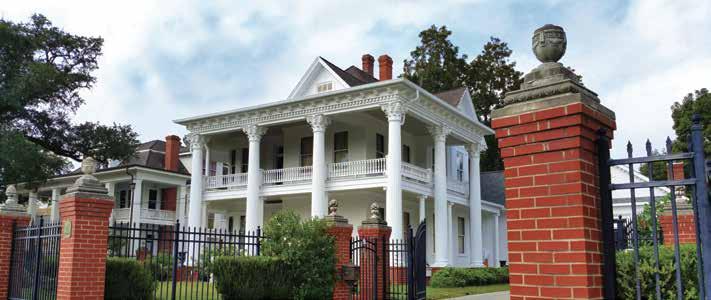
This sprawling Gothic-inspired complex with strong vertical lines, large lancet stained glass windows and clustered piers is locally known fondly as “Big Methodist.” Note the rose window in the nearby Paxton Church Hall.
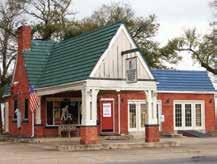
CIRCA 1920
This quaint picturesque red brick, tile roofed building represents the earliest generation of automobile service stations, when actual uniformed attendants would tend to your motoring needs. Originally a Pure Oil Company station, the building has had many other uses in its 90+ years.
A sawmill version of a Greek revival temple, this massive house was built for the treasurer of the Ramsey lumber Company. Eleven massive Lake Charles style columns support the “L” shaped gallery. The balcony is supported by rods from the roof.
Large Victorian-style mansions, known as “Michigan Man” houses, were built by northern sawmill owners to showcase their mills’ capabilities.
An exceptional Colonial Revival with four massive Corinthian columns on the front and a semi-circular double gallery supported by Ionic columns on the west, this house was obscured for over 60 years by a commercial add-on that was removed recently.
A impressive Greek Revival house with four fluted modified Doric columns and triangular pediment that makes for a grand entrance. The house was constructed with lumber hand selected from the Locke-Moore Lumber Company for this, his own home.
This is a picturesque Hollywood Moorish style stucco villa suitable for the Baillios who owned a chain of regional movie theatres. Note the elegant arches and the Spanish tile roof.
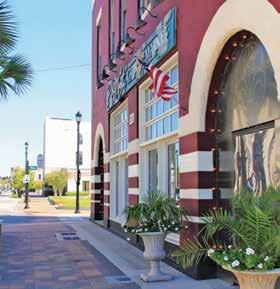
Broad Street changes character from a residential neighborhood to that of a commercial and warehouse district at this intersection. On the southeast corner of the intersection, Cash Grocery and Sales is one of the last remaining railroad warehouses. Historically, it supplied independent grocers and restaurants; currently restored, it serves as an event venue.
722 MOSS – THE E. H. GREEN HOUSE CIRCA 1905
Three fluted columns are uniquely set on the porches of this unusual Greek Revival house, with smaller columns supporting the second floor gallery.
MOSS AT MILL – SOUTHWEST CORNER –530 MILL – THE LELAND H. MOSS HOUSE CIRCA 1883
An early example of a Greek Revival house with irregular massing, three massive Ionic columns supporting the porch roof and Italianate brackets support a Juliette balcony above the front door.
605 MILL THE FLANDERS HOUSE CIRCA 1900
This grand raised house was built for Catherine Goos and Willie Flanders and is an outstanding example of intricate workmanship. A masterful mix of Flemish, Gothic and American Shingle style, the exterior is of cypress clapboard with unique bowed windows. The wide curved porches have double columns supporting the pent roof.
German immigrants, guided by the Goos family, left their mark on Germantown through shipbuilding, fine woodwork, and historic design.
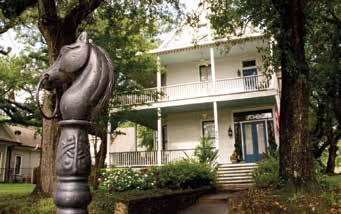
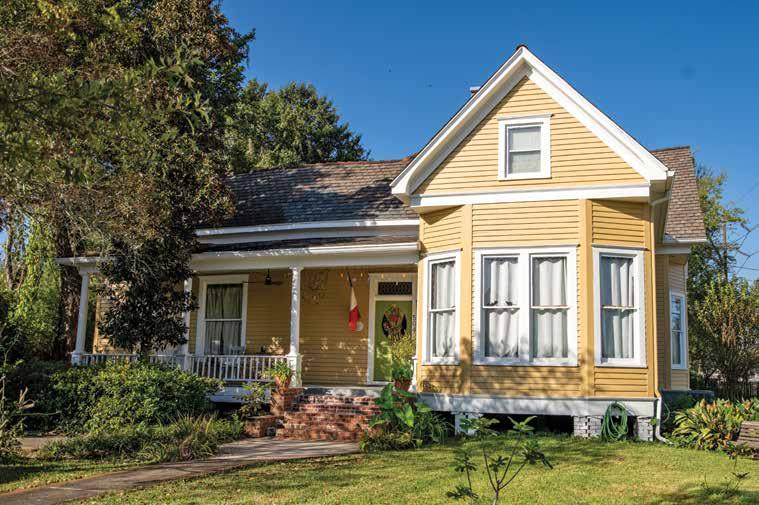
504
Built by J. A. Bel for his son as a wedding present, this substantial house has 17 rooms and a five room carriage house. There is a hidden widow’s walk above the attics.
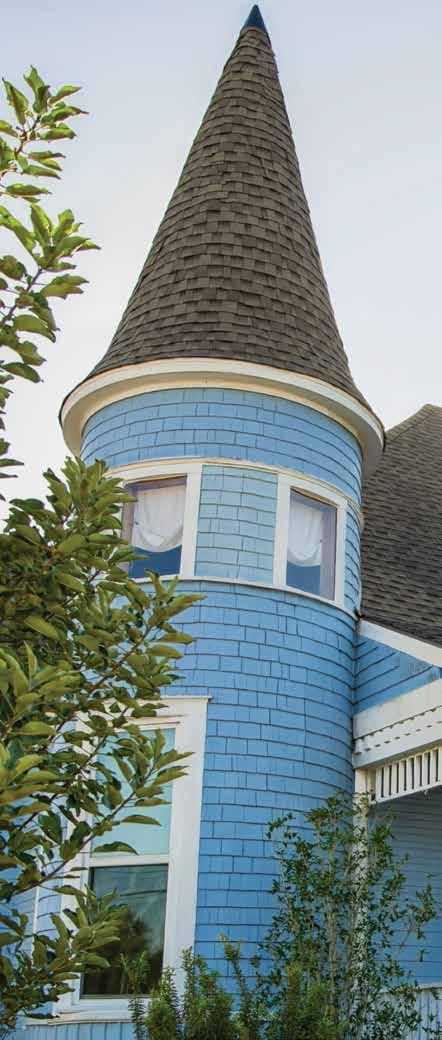
The witch’s hat turret is the eye-catching feature of this raised Victorian cottage with half timbering and shingling. A mirror-flipped twin of this house is located at Moss and Division Street minus the witch’s hat.
Built of pine and cypress, this impressive two-and-a-half-story sawmill Victorian has exceptional dentil work at the roof eaves and dormers. The original elaborate porches were destroyed in the 1918 hurricane, however they have been replaced by simpler wraparound porches.
A Victorian raised cottage with turned columns supporting a front gallery, this is a good example of the millwork, shingles, and lumber produced in the area.
This frame chapel-style building is the oldest standing church in Lake Charles and first served the German community. The open belfry was closed in when the bell was relocated to the new church.
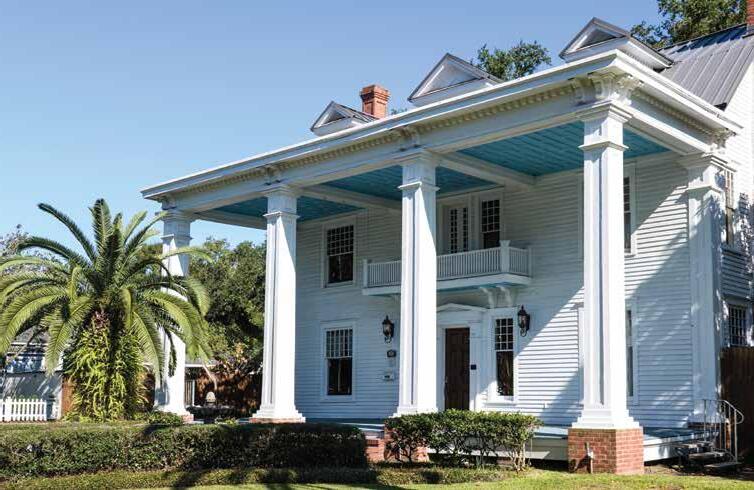
A strongly geometrical roofline with large eaves gives this Victorian cottage a tailored masculine feel.
When finances improved, Walter Goos built this impressive three-story home with a grand portico supported by massive Lake Charles columns. This Colonial Revival gem is entirely built of cypress, and together with the first Walter Goos house serves as a bed and breakfast inn.
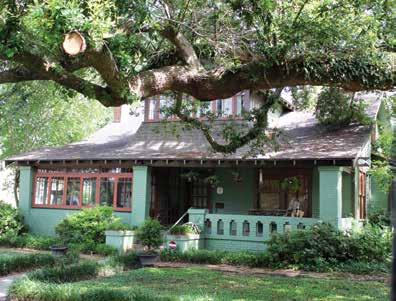
This is a good example of the so-called “airplane bungalow” which appears in various forms throughout the District in both wood and in brick (see 714 Division). In airplane bungalows, the projecting dormer is the “cockpit” above the wide “wing,” the porch roof.
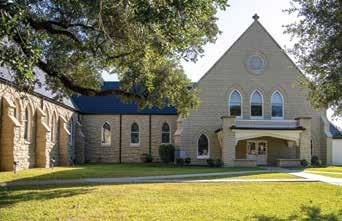
This English Gothic gray sandstone church features elegant stained glass windows and an exceptional hammer-beam ceiling in the sanctuary. While the sanctuary dates to the 1897 date, additions including the church hall and portico were designed to match the authentic Gothic look.
825 SOUTH DIVISION – THE DR. JOHN GREENE MARTIN HOUSE CIRCA 1900
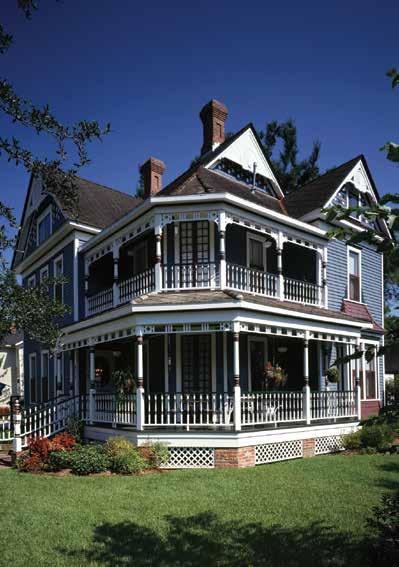
A good example of a Victorian villa with Italianate styling, this house is characterized by box bay windows and a flatter roofline than on other styles.
824 SOUTH DIVISION—THE GUY BEATTY HOUSE, CIRCA 1892
This large Eastlake-style Victorian features decorative gables and fretwork trim. It was originally constructed for Beatty, who was the editor of the daily Lake Charles American Press.
901 SOUTH DIVISION – THE JUDGE WINSTON OVERTON HOUSE CIRCA 1901
The original Queen Anne Revival turned posts and railings of this house were replaced with more stylish Lake Charles columns in 1910; however, the basic lines of the house were not changed one bit.
902 SOUTH DIVISION – THE WILLIAM K. GRAY HOUSE CIRCA 1922
A Georgian brick mansion was designed by Favrot and Livaudais to replace the original Gray house on this site that was damaged in the 1918 hurricane. Clustered Corinthian columns support the entrance portico, and the entire house has an elegant refined grace.
907 SOUTH DIVISION – THE HARRY MULLIGAN-IDA WINTER CLARKE HOUSE CIRCA 1896
Built of heart pine and cypress, this Victorian house has extensive Steamboat Gothic trim, trelliswork, and cutout fretwork, which gives this house an open, playful air.
917 SOUTH DIVISION – THE BEATTYPONTON HOUSE CIRCA 1896
This Victorian raised cottage has a three sided entry bay and patterned shingling on the gables.
928 SOUTH DIVISION – THE ROBERTS HOUSE CIRCA 1918
This Colonial Revival is reputed to be an upscale “kit house.”
Eastlake-style Victorian homes are known for their intricate woodwork, decorative gables, ornate fretwork, and finely crafted details.
Step into a beautifully crafted past, where native cypress and pine were shaped by hand into cottages, mansions, and entire communities that still reflect the area’s cultural history.