*(0030) 6986216706*
*laisioannarch@gmail.com *
*https://www.linkedin.com/in/lais--margiori/*
/ C O N T E
“School of Planetary and Space Sciences at the Technical University of Crete”, Graduate Diploma Thesis, 5th year, 2022
“Uintah and Ouray Music and Performing Arts Center”
After Gaudí: From Computation to Composition Seminar, Master in Advanced Architecture 01, IAAC, 2024
r c h i t e c t u r a l c o m p e t i t i o n
r c h i t e c t u r a l d e s i g n
1.
2.
4. C o m p u t a t i o n a l d e s i g n U r b a n d e s i g n
3.
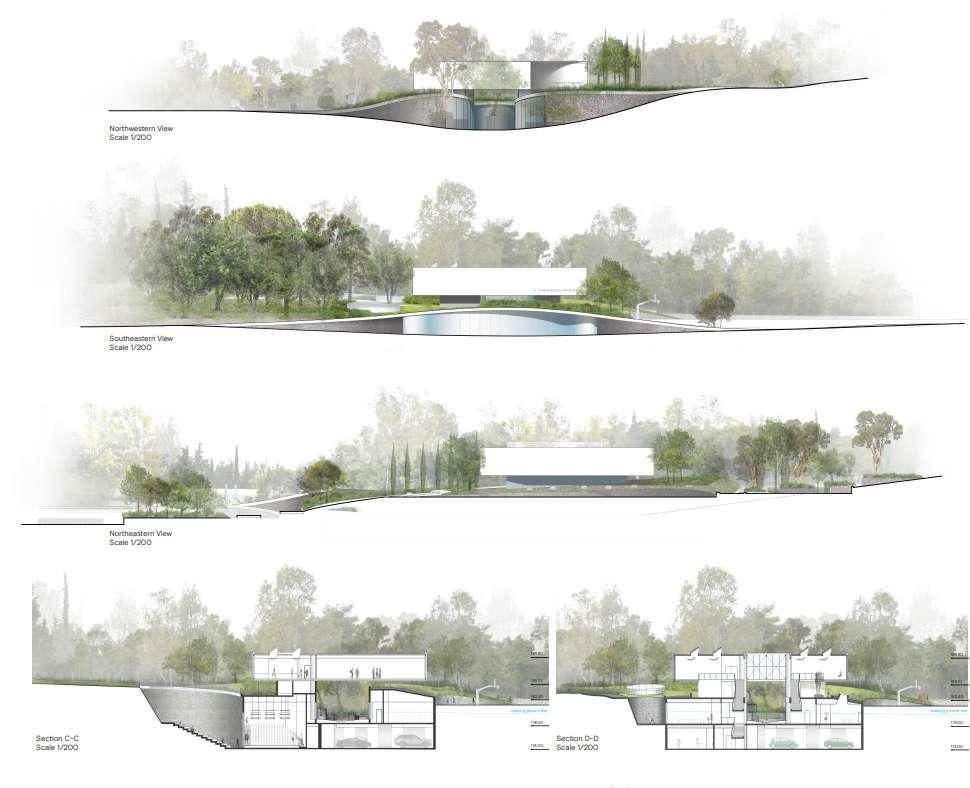
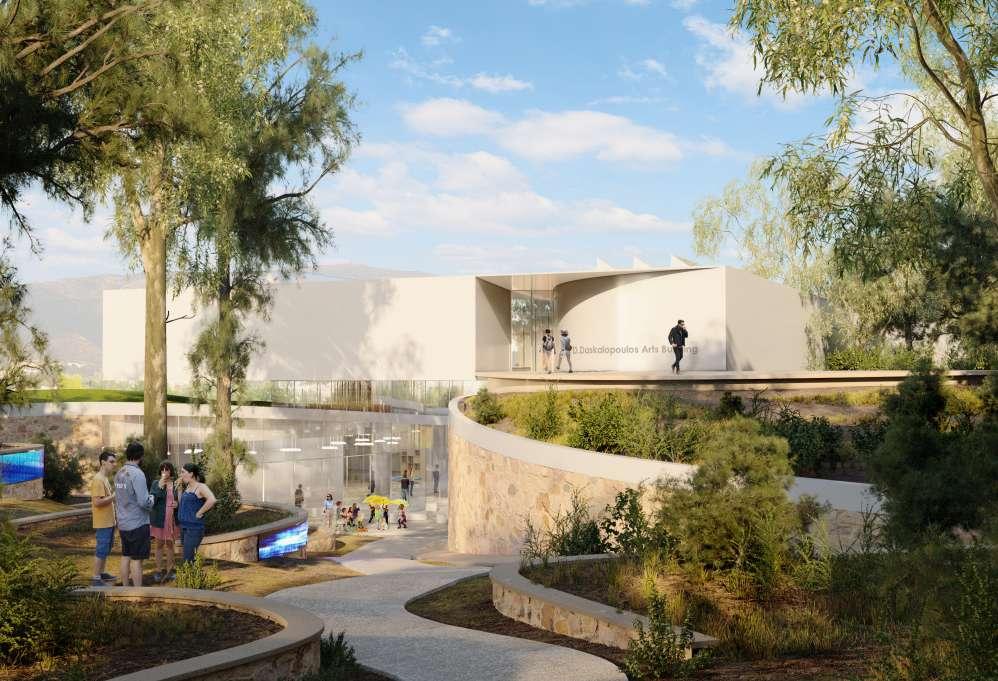
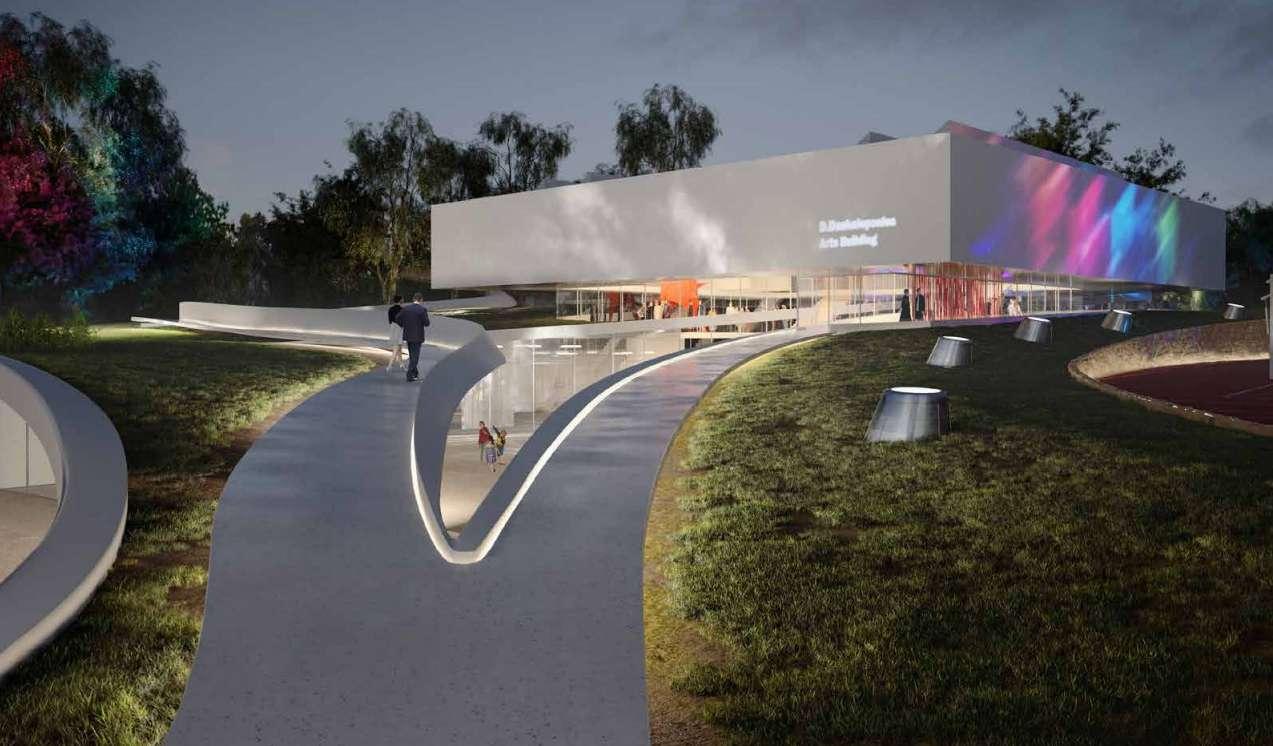
Architectural competition, D. Daskalopoulos Arts Building from the Hellenic American Educational Foundation-Athens College, 2021
Academic course, 4rd year
Urban planning no.2, 2021
Graduation Diploma Thesis.
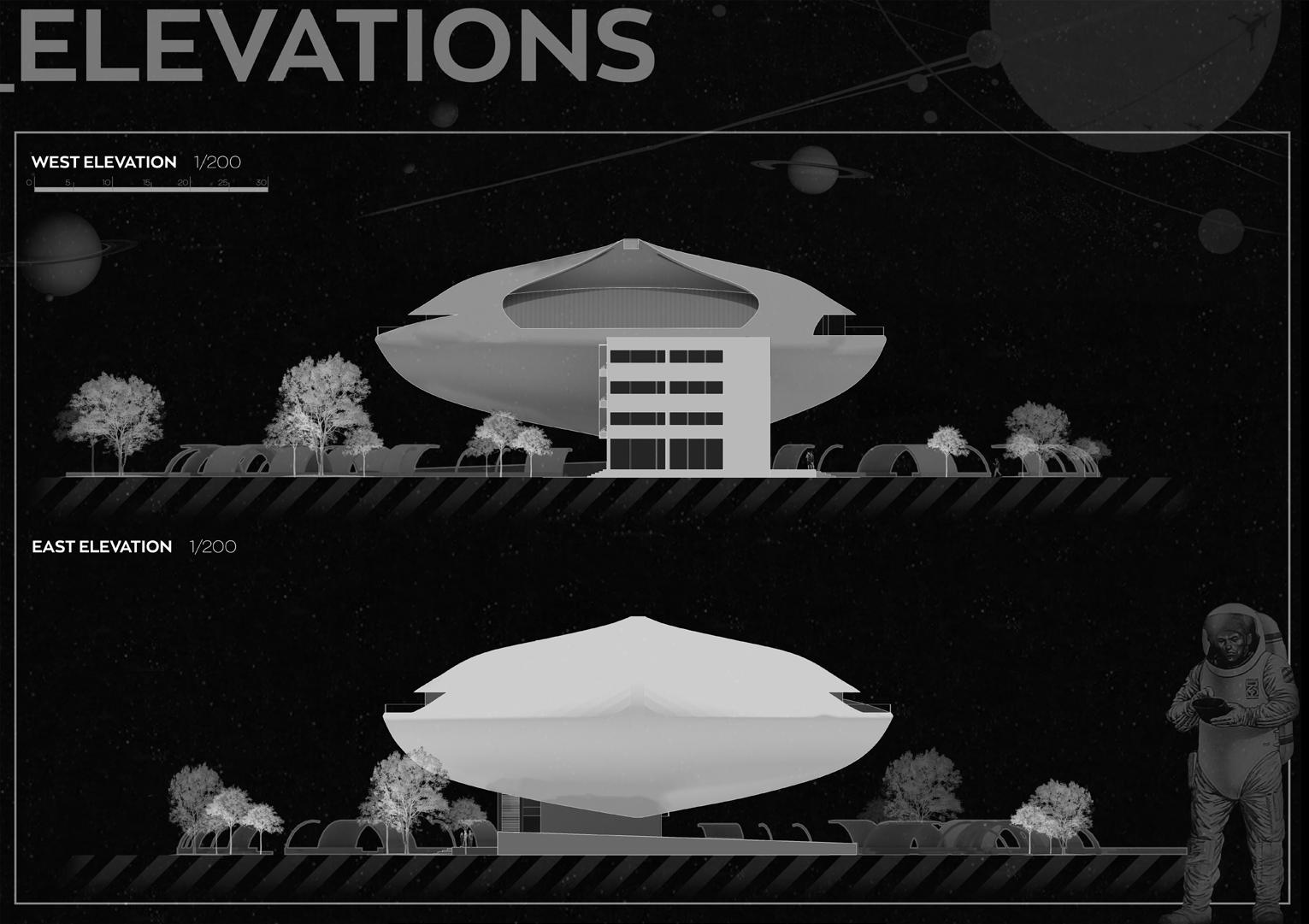
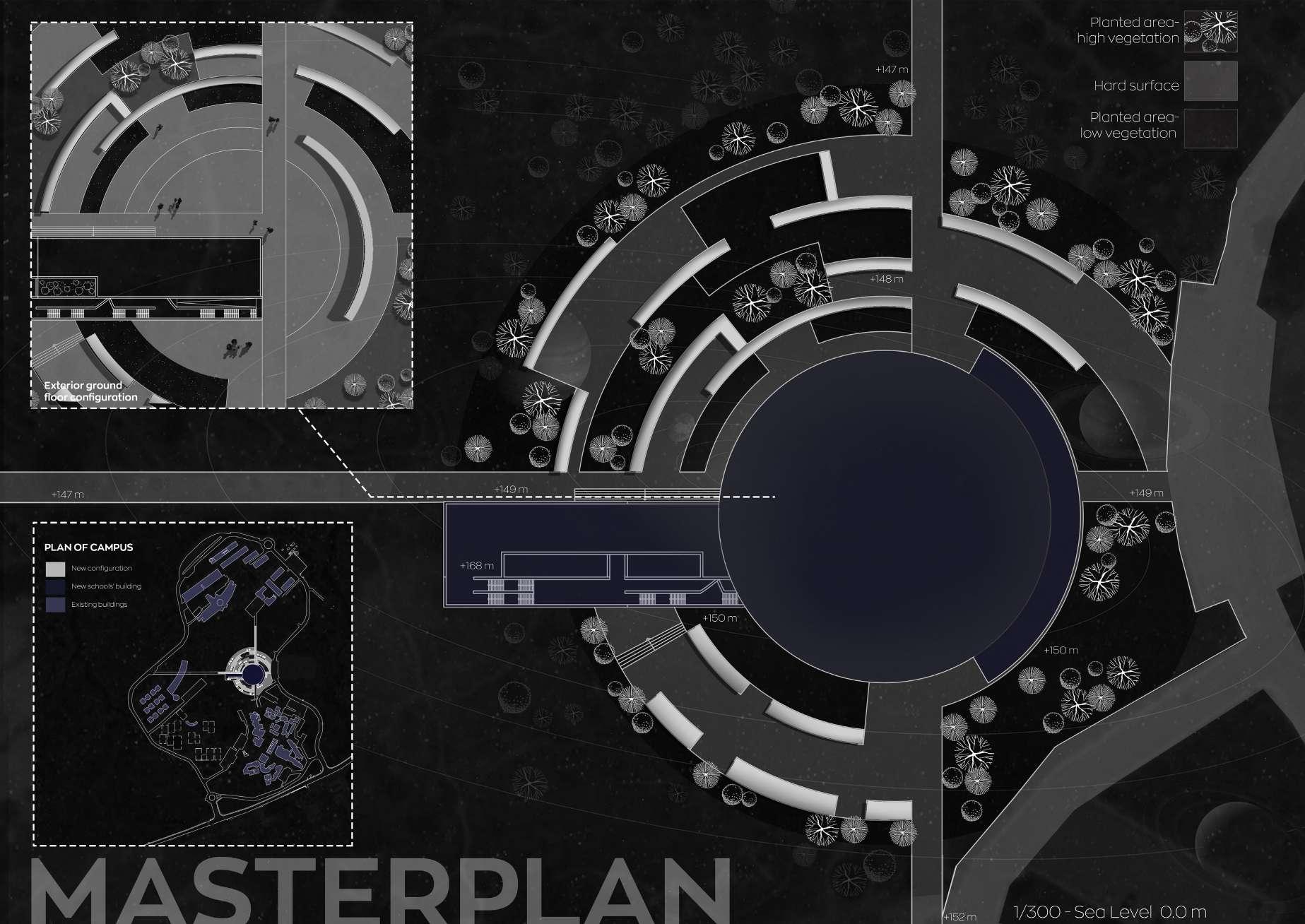
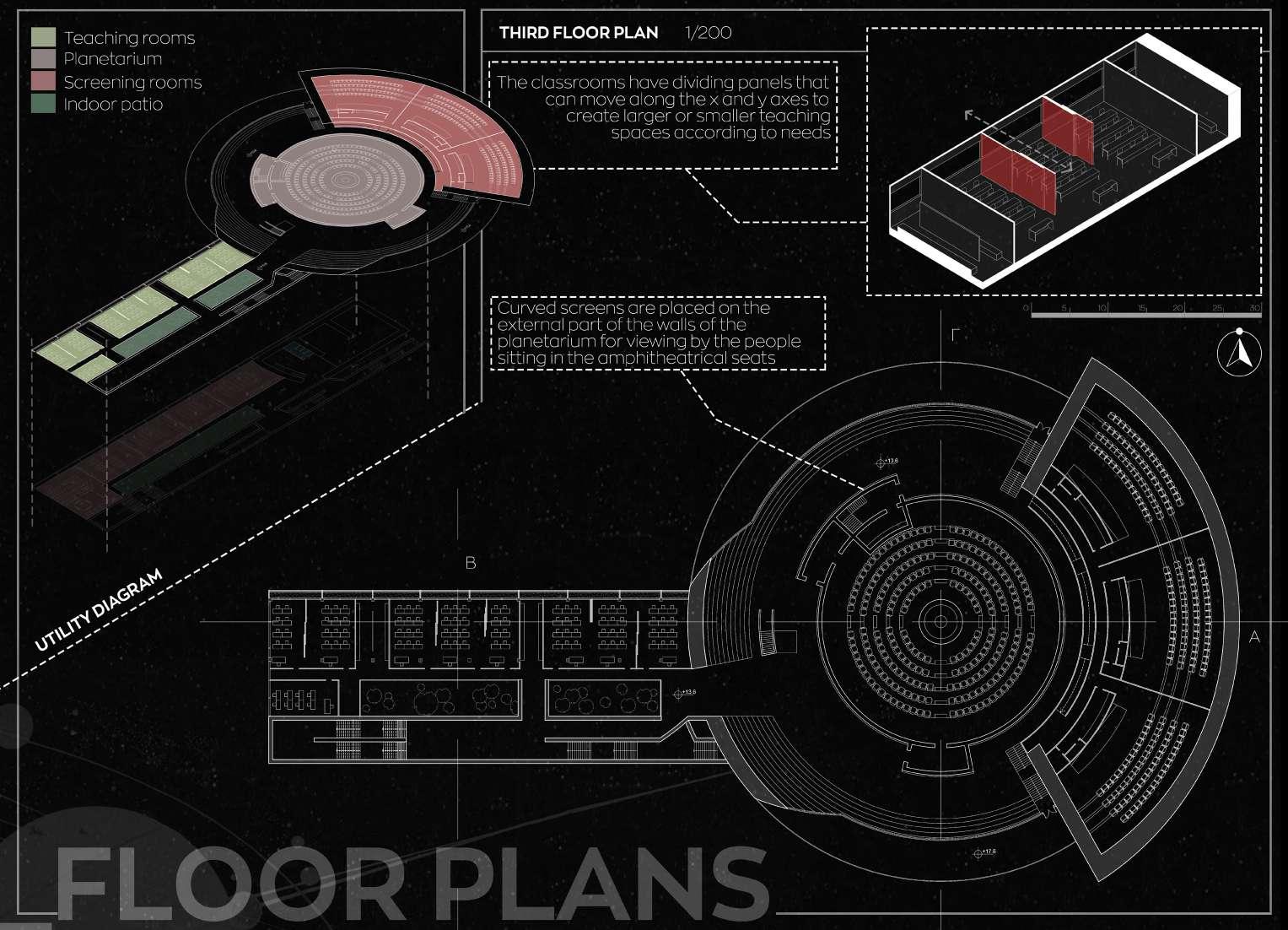
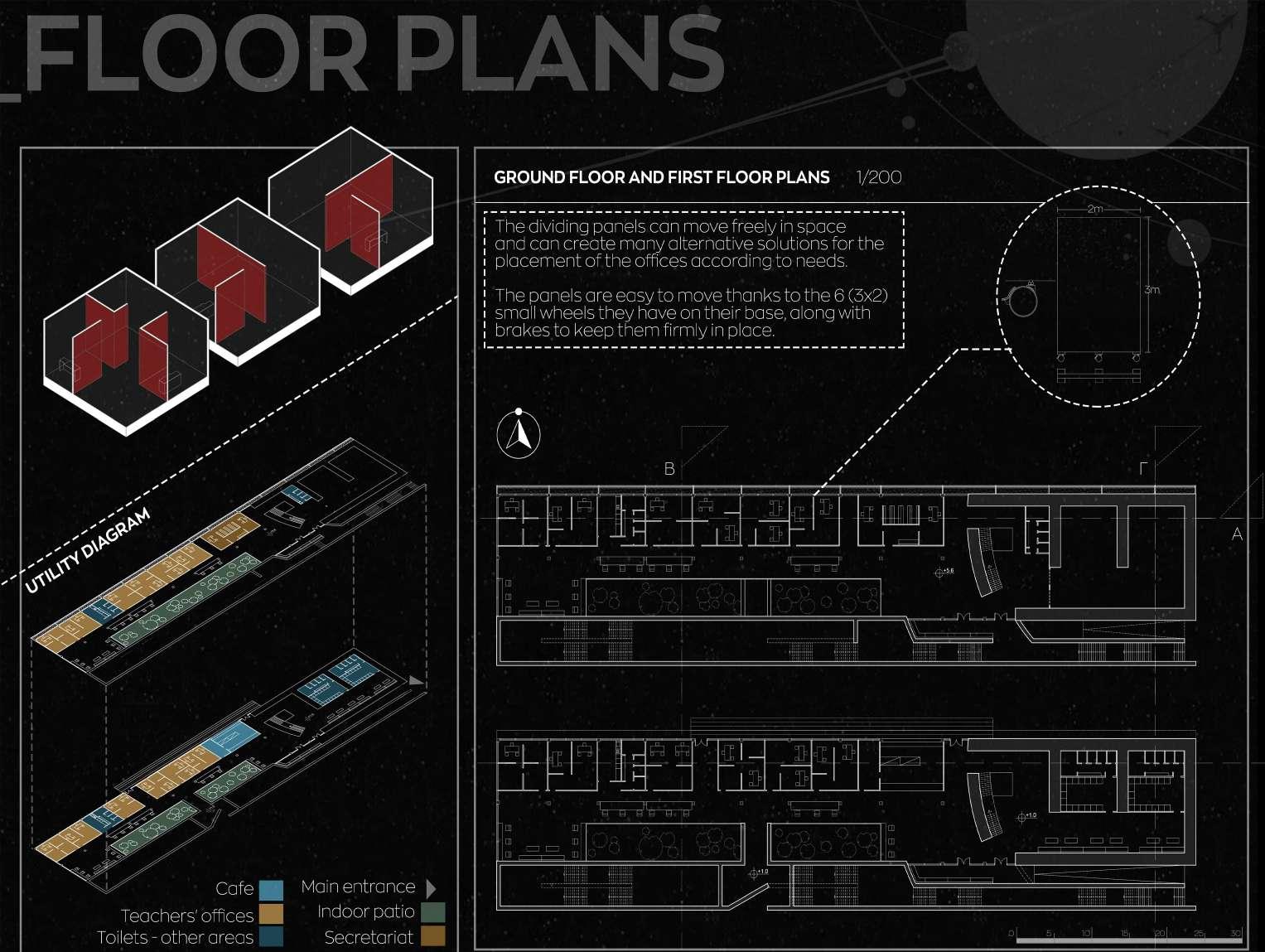
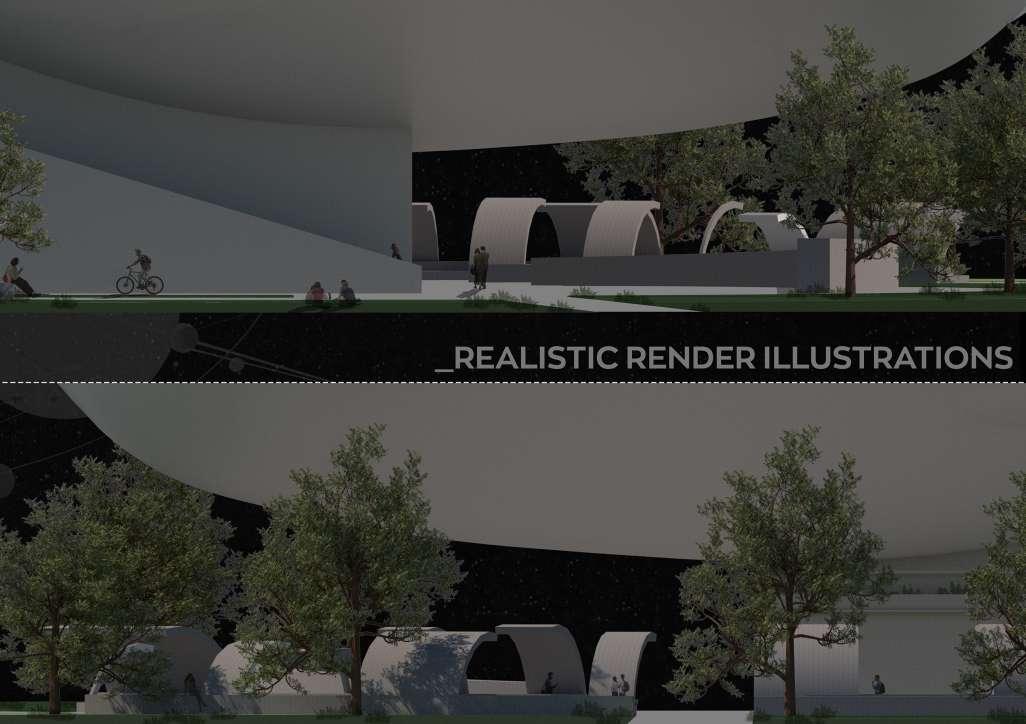
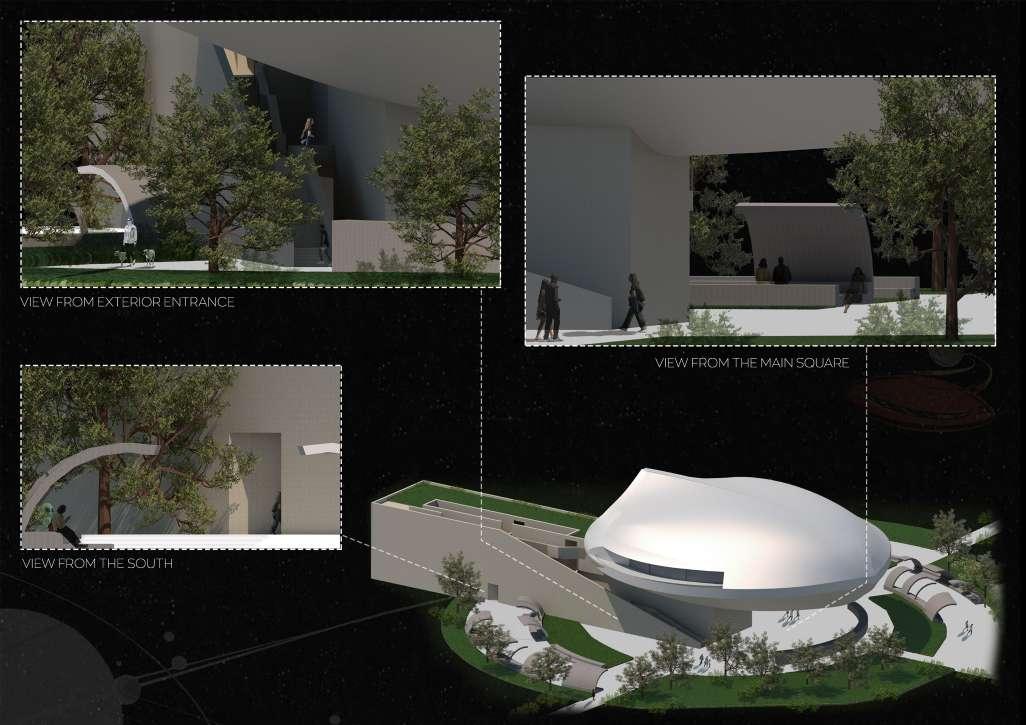
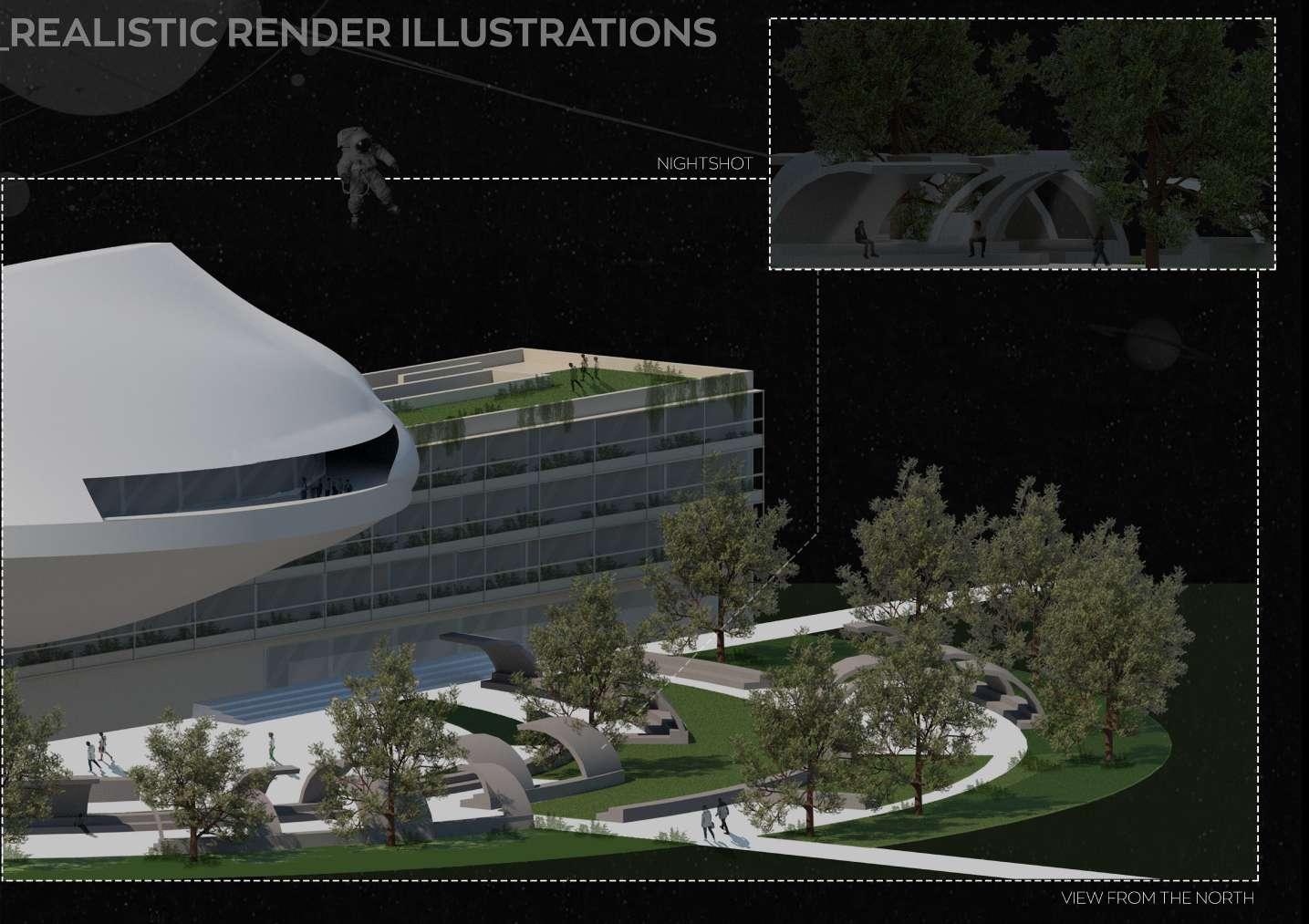
5th year, “School of Planetary and Space Sciences at the Technical University of Crete”, 2022
The aim of this project is to construct a hypothetical new School at the Technical University of Crete. A scenario is created in which the need for a new school is established. An analysis is composed of the area where the school is located.
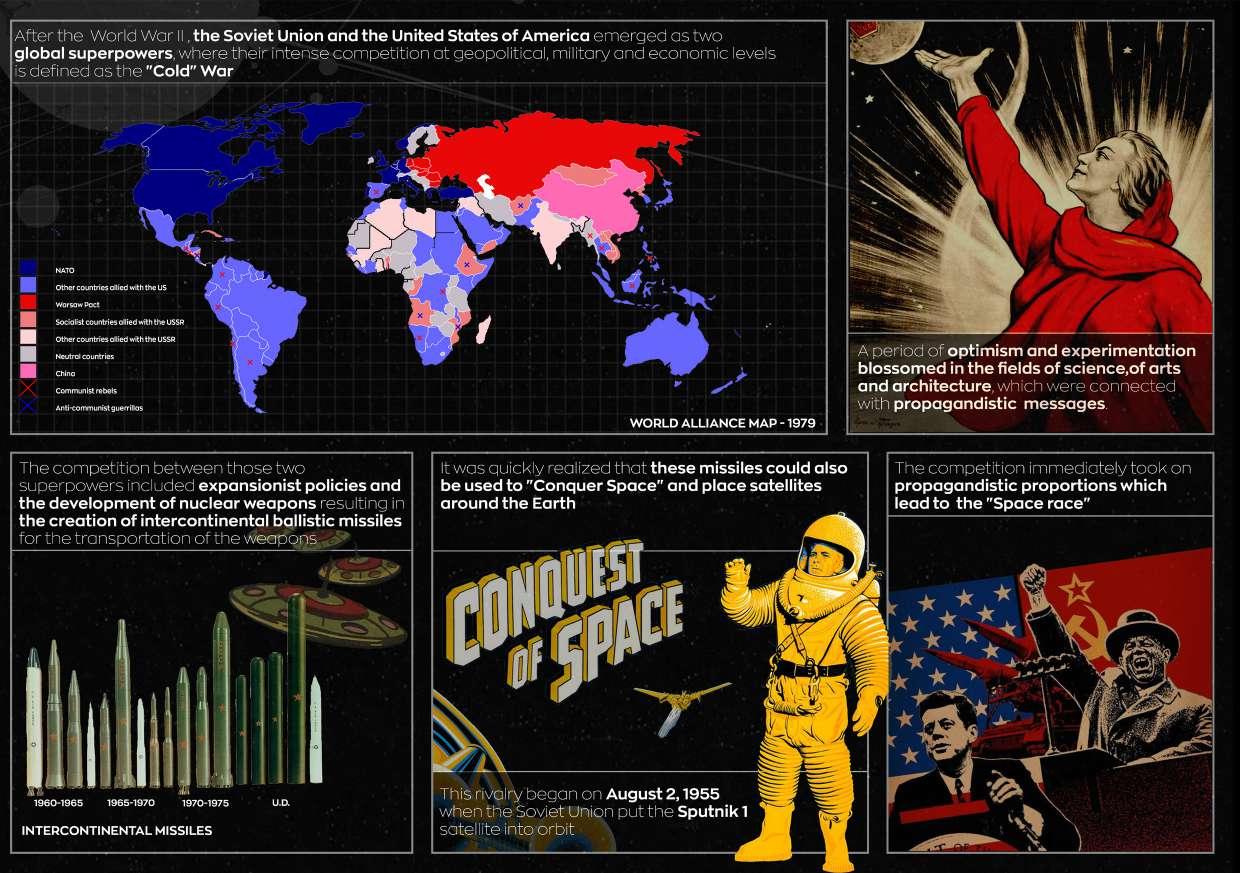
Initially, a historical flashback is made to justify the design of the building, which has been influenced by “Space Race” during the Cold War mainly by buildings from the countries of USSR, Warsaw Pact and Yugoslavia (Socialist Modernism).
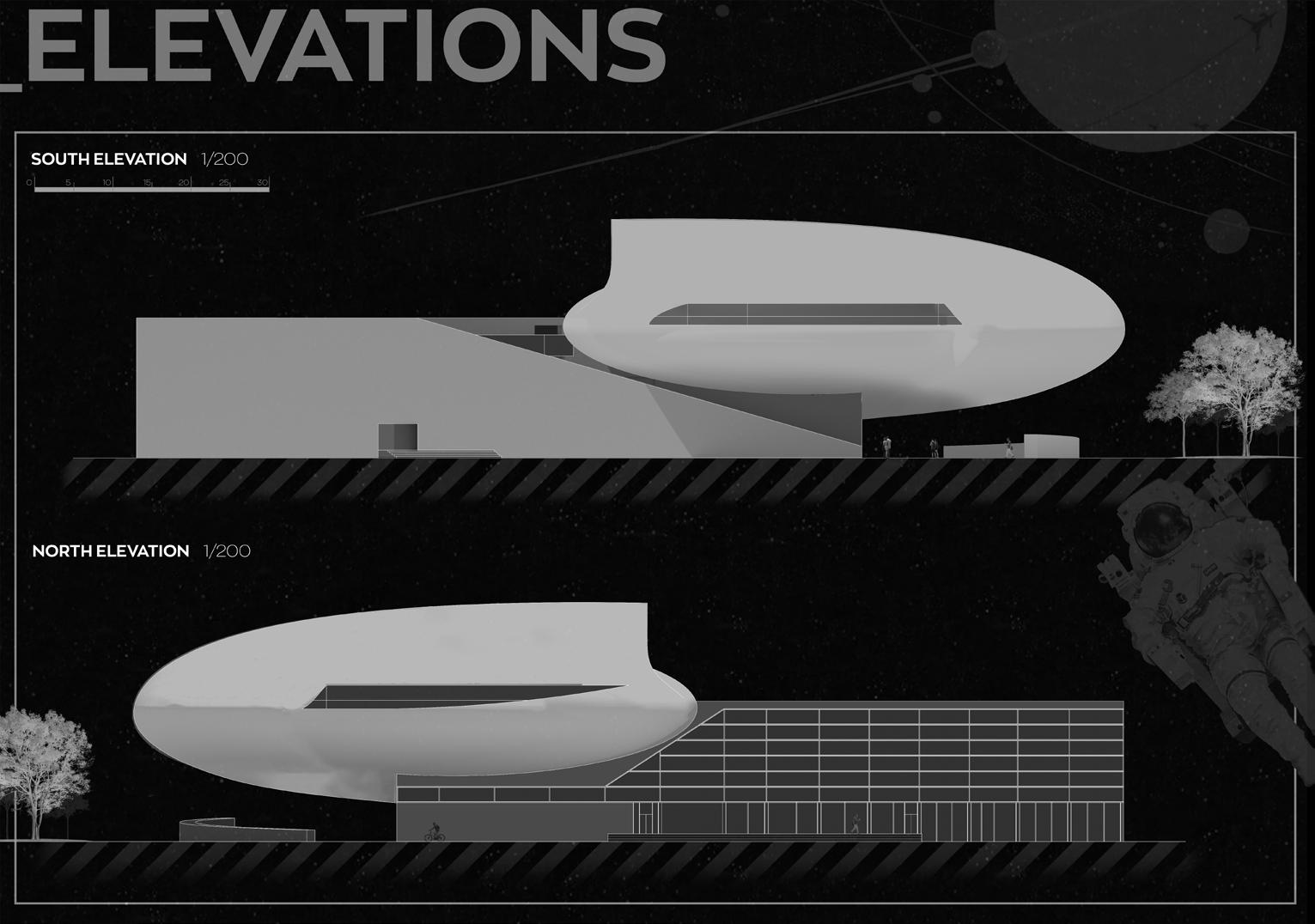
The new school consists of two components, a rectangular building that serves as a base and a flying saucer, which sits on the base.
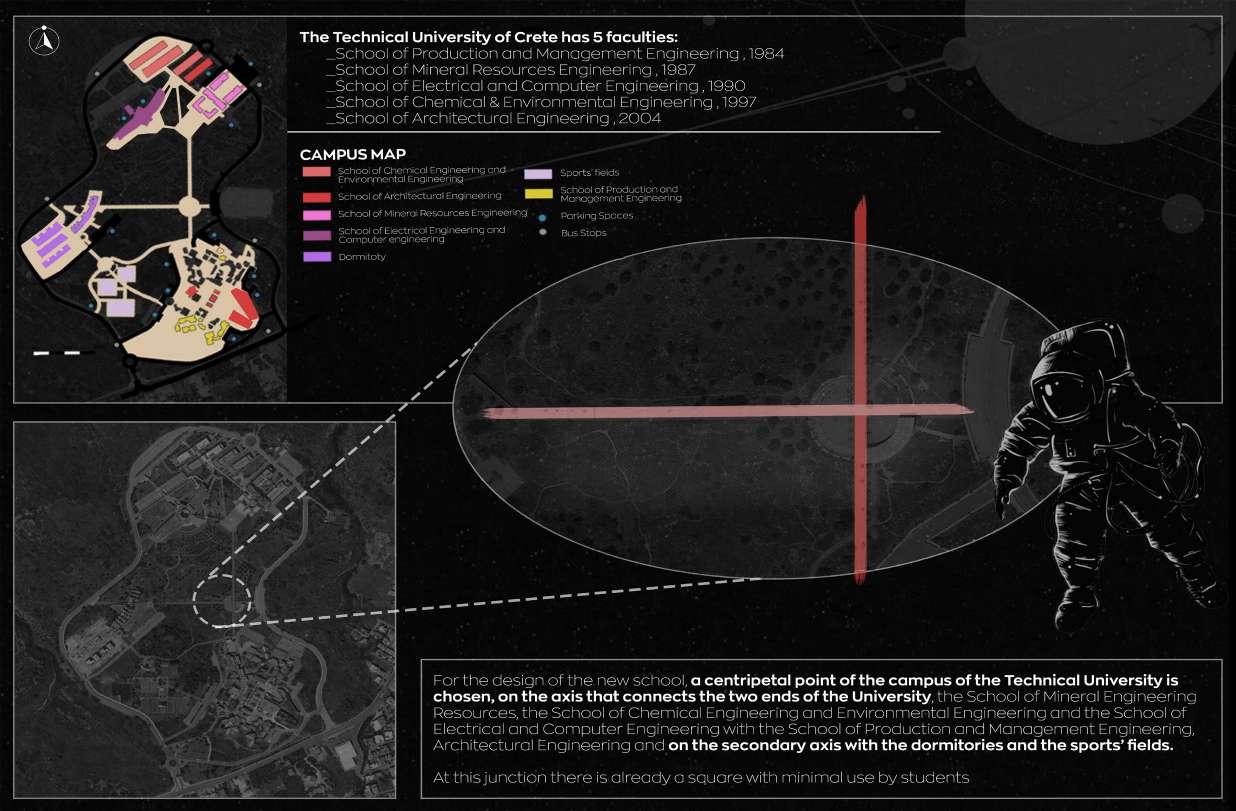
The building is located at the most central point, at the intersection of the two axes that run through the campus, which is empty.
Morphologically, the building emerges as a landmark with an absolutely dynamic shape, as if it has just landed at the campus.
“A utopian design that envisions the future while praising the past.”
There is an external passage that connects all four floors of the building and ends at the planted - green roof.
The project started with an analysis of the surrounding area, the existing campus and the environmental elements.
This architectural design plan deviates from conventional lines in favor of organic shapes that strive to blend the structure into the surrounding environment and fill any gaps by extending the natural topographic lines.
Academic course, 4rd
year, Technical University of Crete, Urban planning II, 2021 Team project
Personal contribution: __main research __composition of maps __designing for the new residential area __photorealistic designs __architectural and urban plans __presenting project
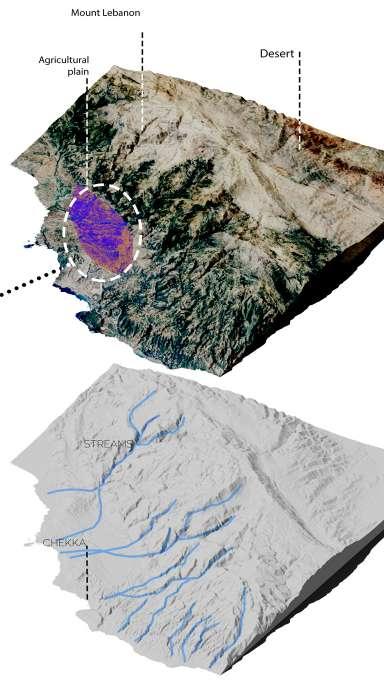
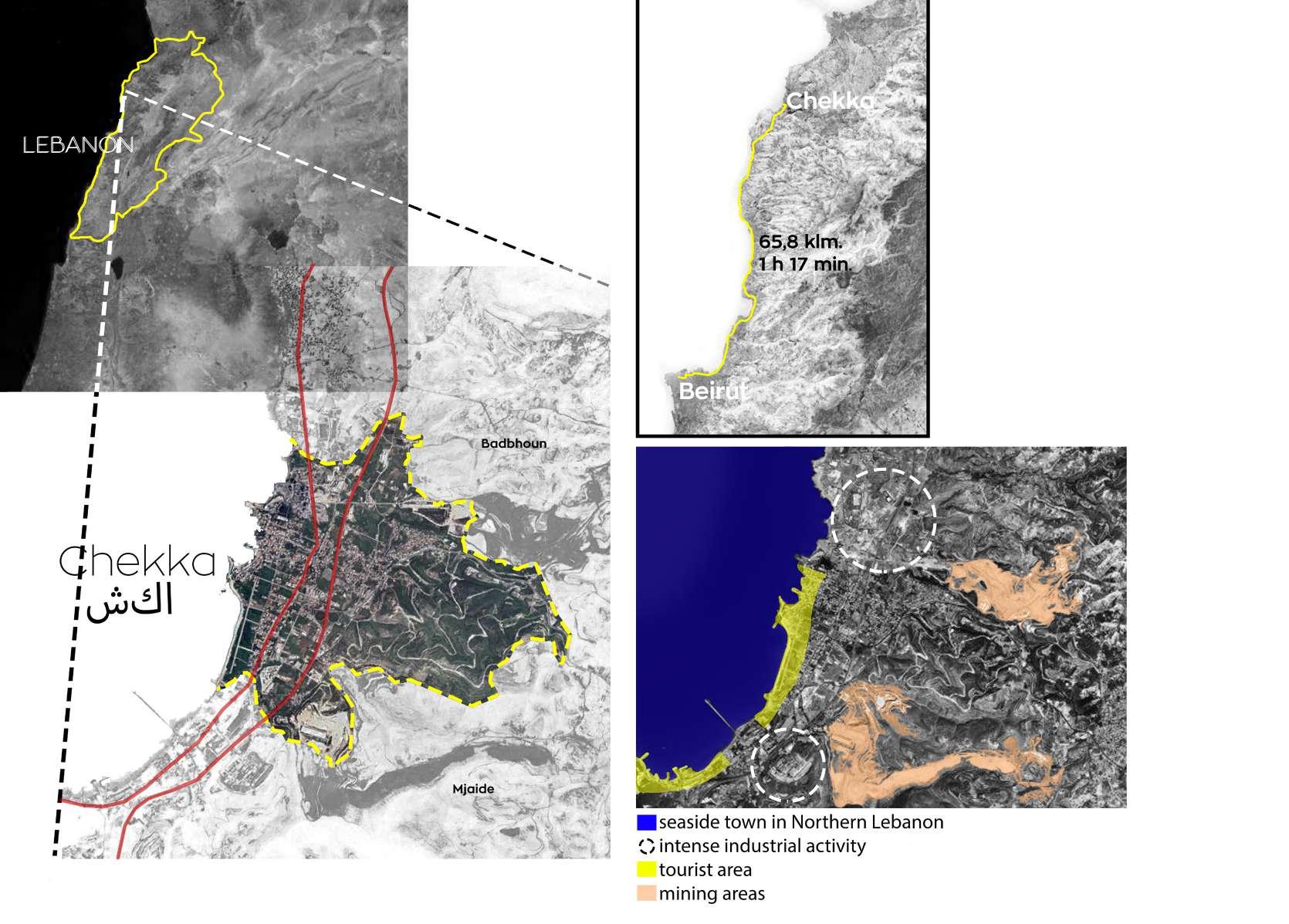
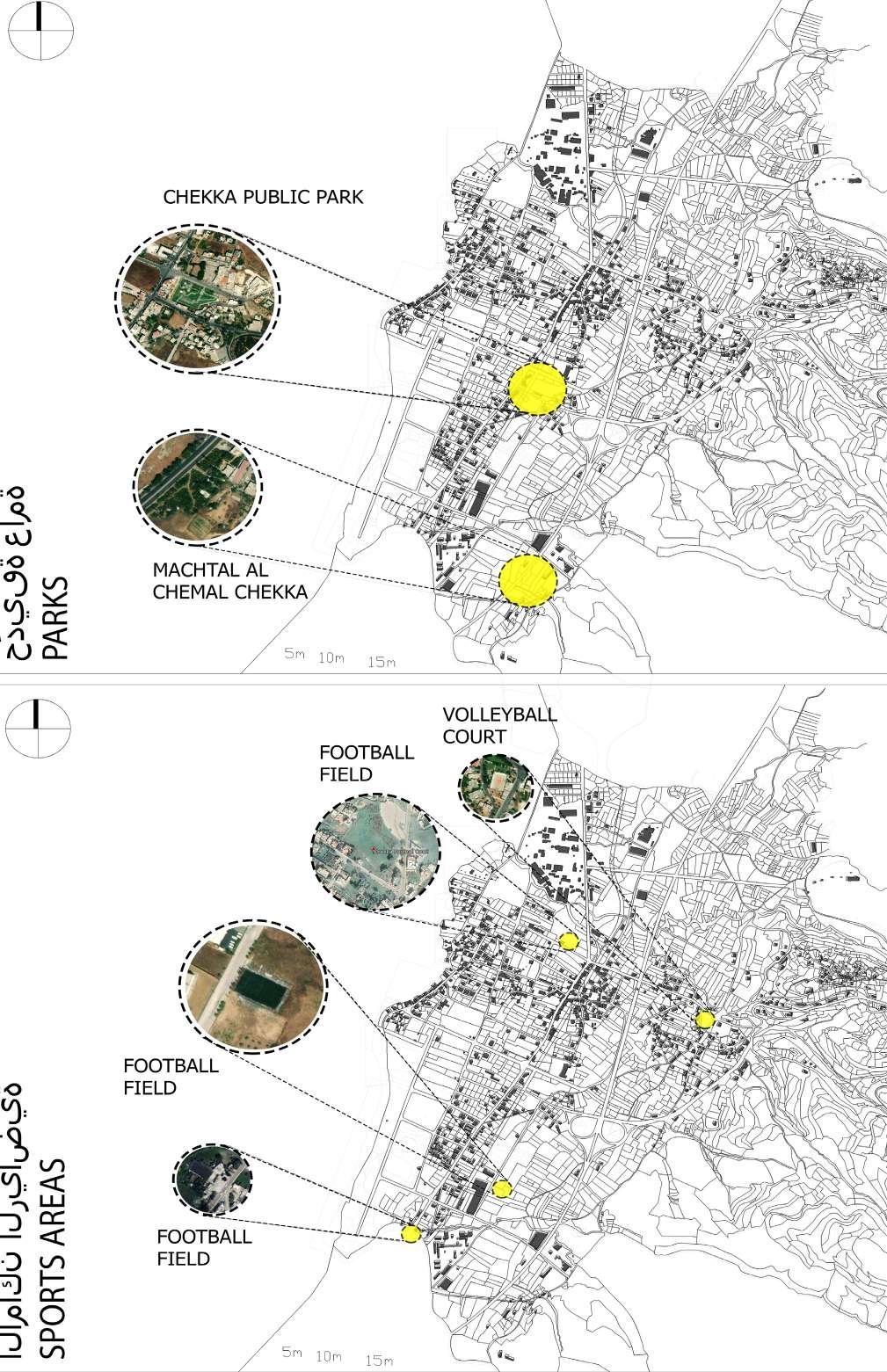
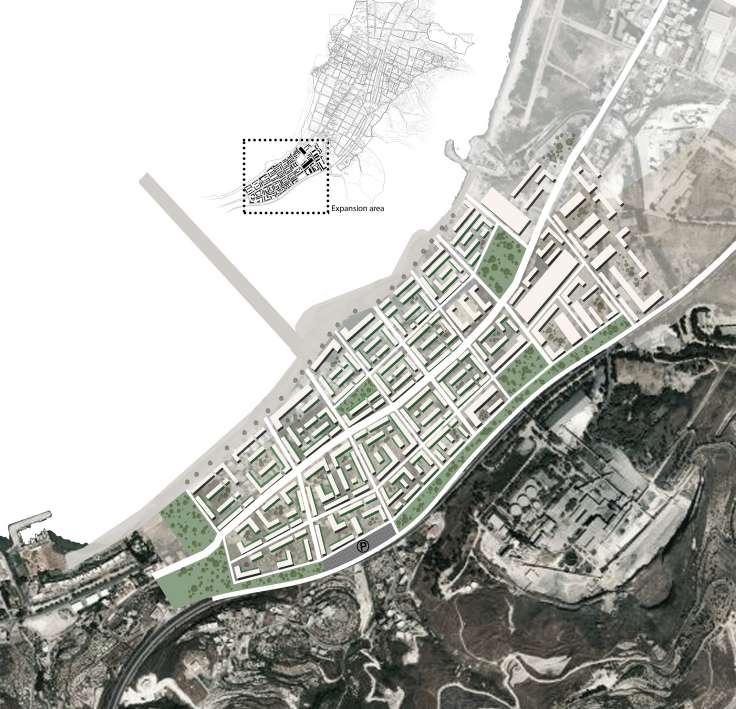
The purpose of the course was to study from an urban planning point of view a particular town in Lebanon, Chekka.
The course was initiated by analyzing the current situation in this town: the historical development of the area, the geomorphological features, the land uses, the traffic, the natural elements, the environmental and typological features, the building regulations with a population identification, as well as many other subjects.
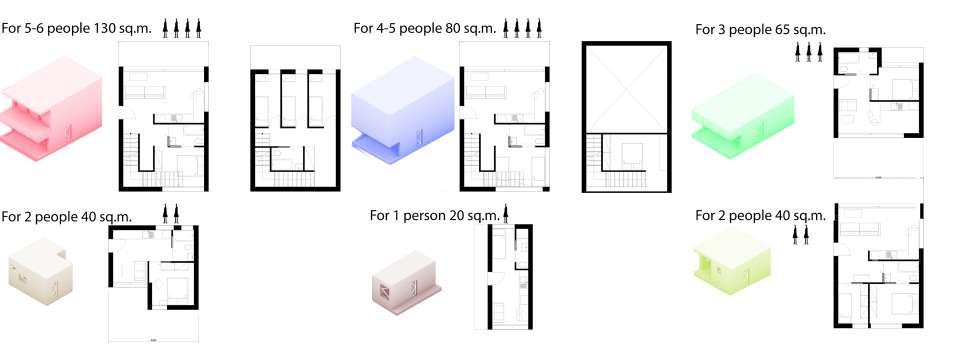
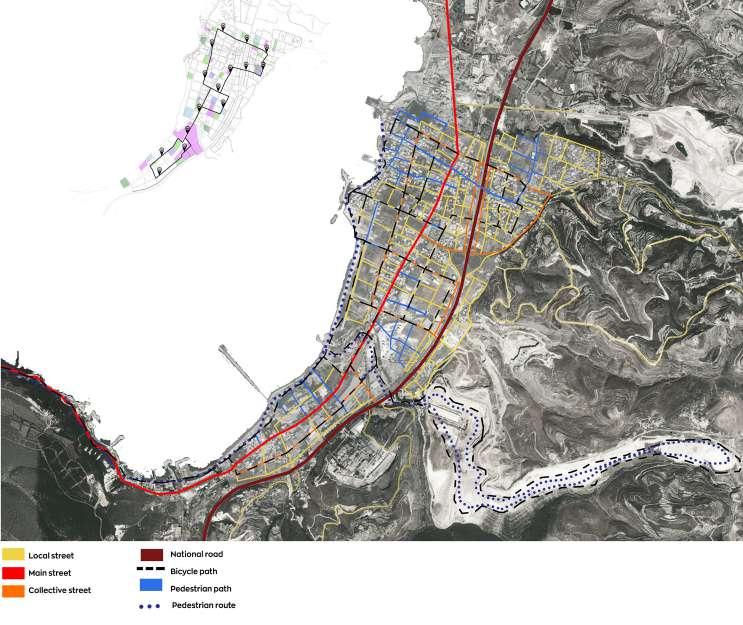
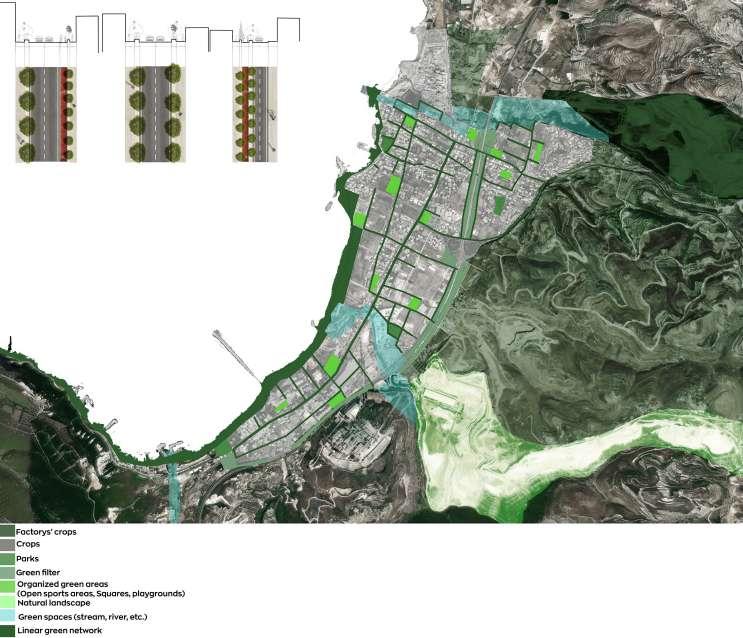
With a a SWOT analysis, a proposal for intervention in the existing parts of the town was made, as well as in the creation of a new residential area.
Castor-topia
Introductory Studio G4: Kin Infrastructures
Master in Advanced Architecture 01 IAAC, 2023, Team project
Personal contribution: __main research __composition of maps __fabrication of prototypes
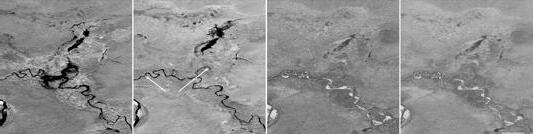
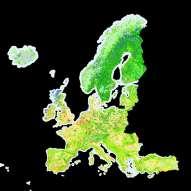
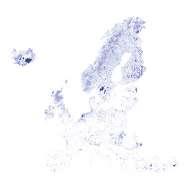
A Sym-praxis toolkit for wetland activation.
The project harnesses the unique behaviors of Eurasian Beavers to restore wetlands and address environmental challenges.
The comprehensive toolkit, guided by a co-design strategy with beavers, emphasizes minimalistic, biodegradable materials and on-site 3D printing.
It envisions a future where their project contributes to reducing desertification and fostering biodiversity.
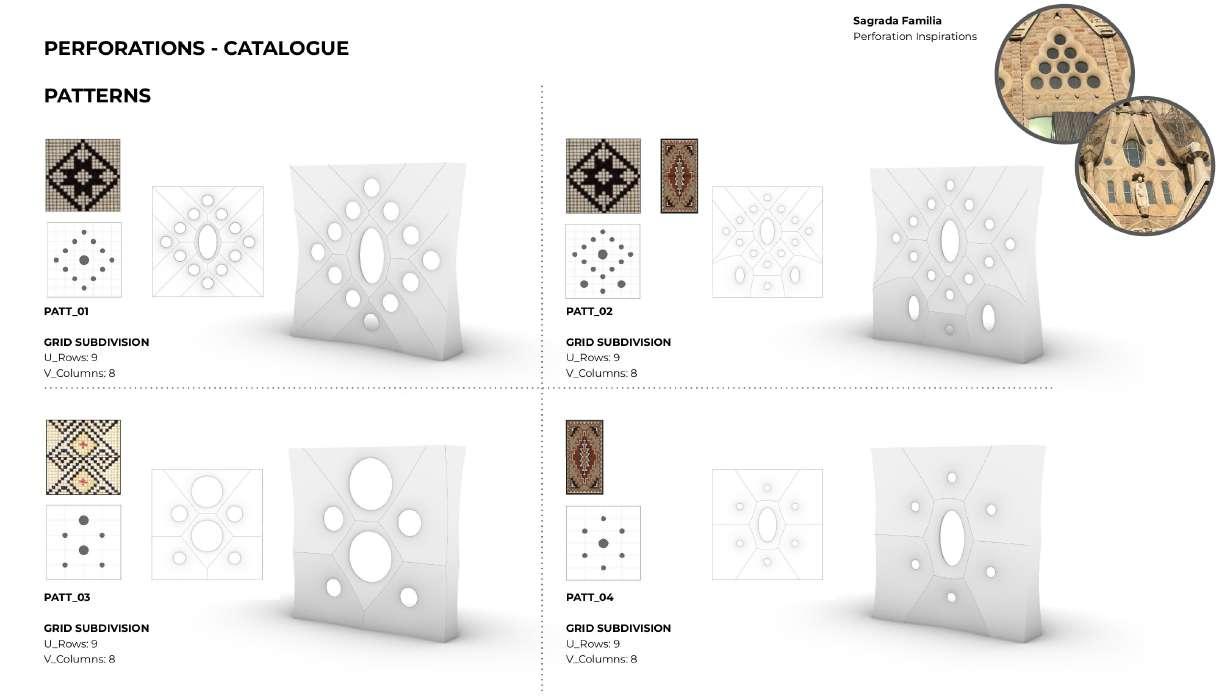
Weaving Natural Materials MRAC & MAA Workshop 1.2, Master in Robotics & Advanced Construction 01. IAAC, 2024 Team project
Personal contribution: __pattern idea __connection detailing and prototyping __robotic scripting and simulations __fabrication process __renderings
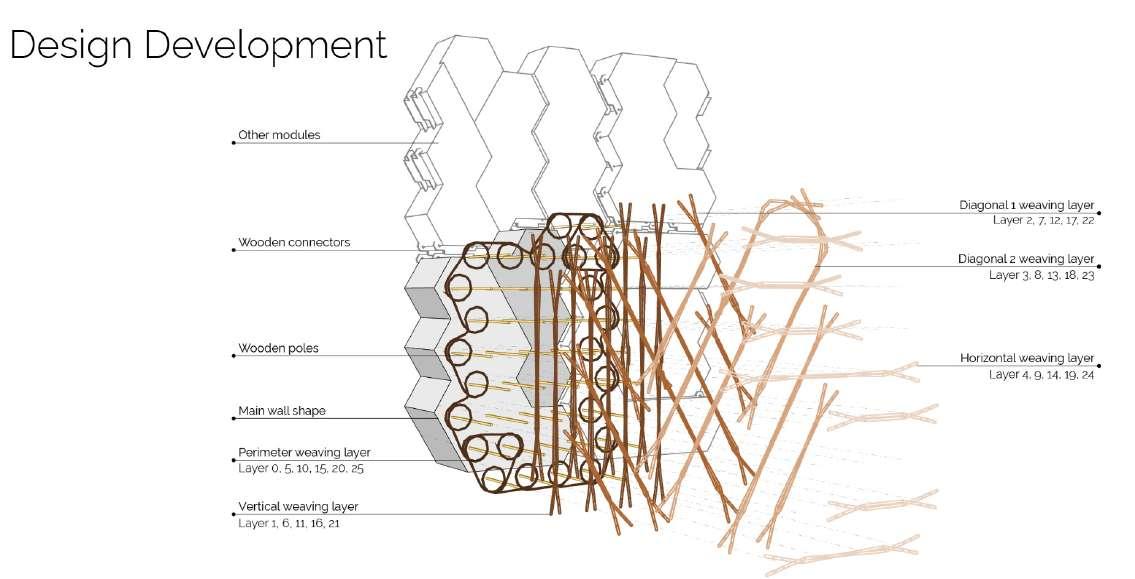
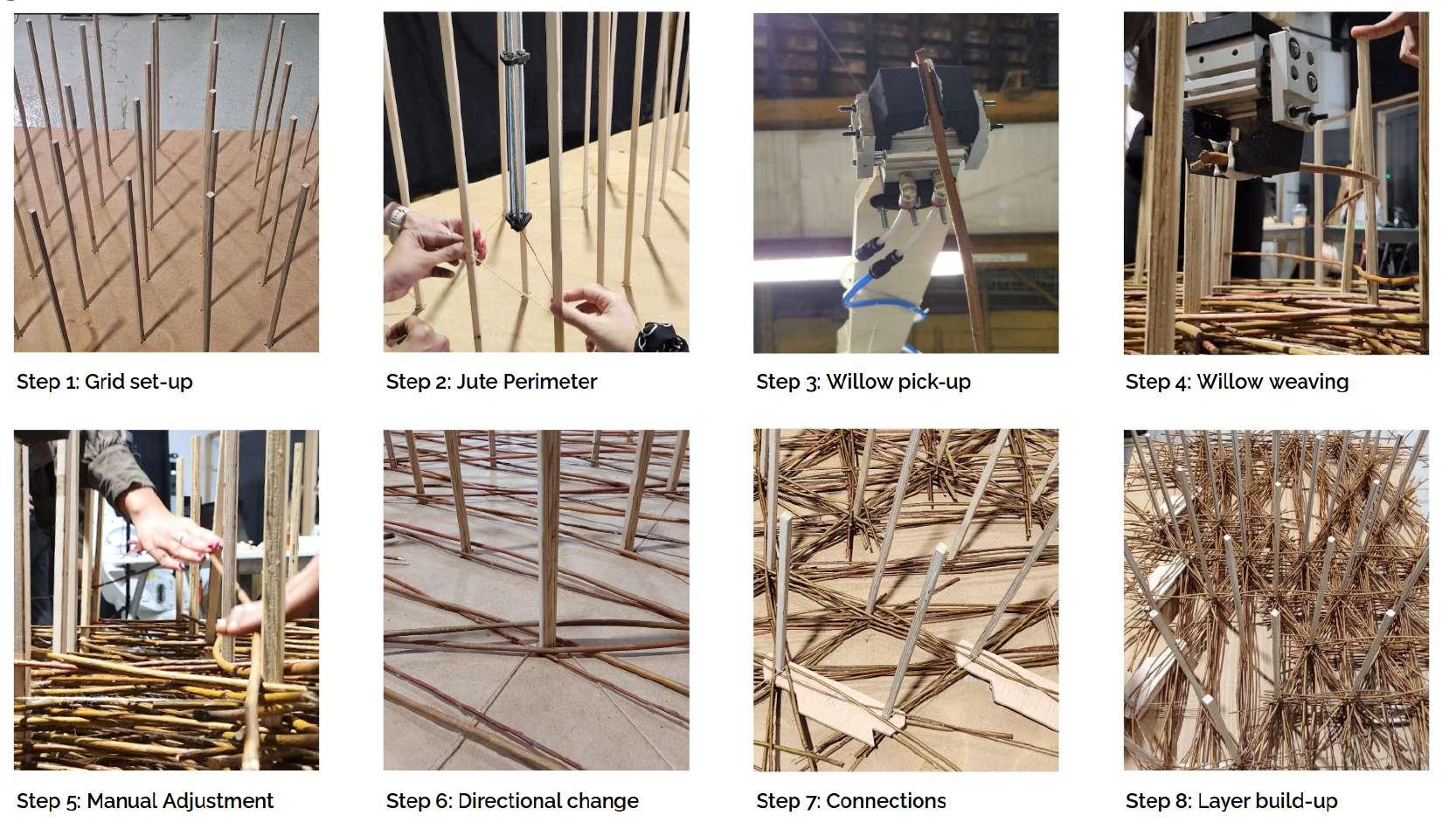
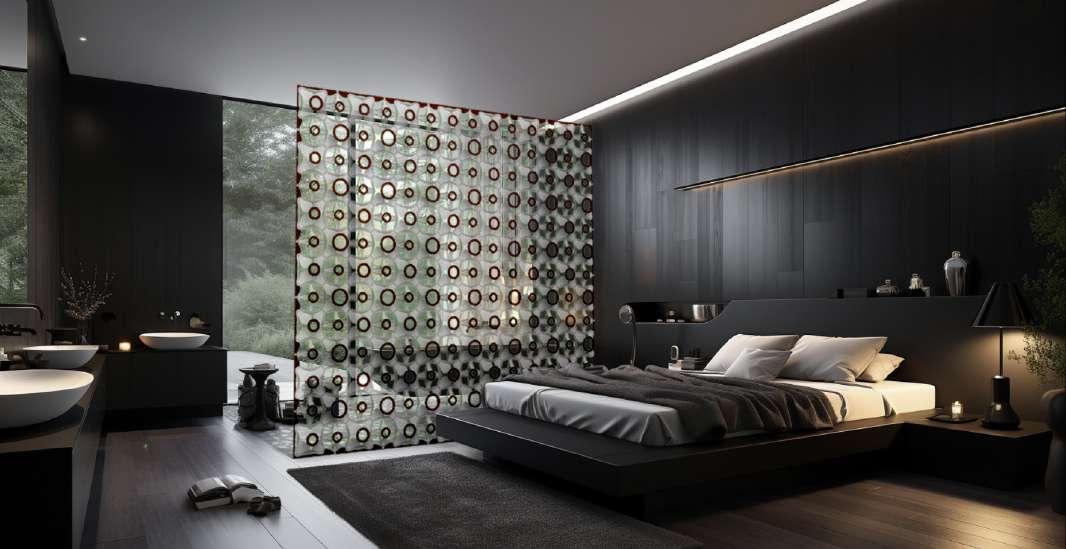
This project explored the reinterpretation of traditional weaving techniques through robotic fabrication, using willow and jute.
A modular wall system was developed using component based design, responding to material and robotic constraints.
The project incorporated parametric patterning, variable densities, and a joinery logic that allowed vertical and horizontal modular assembly.
A final 1:1 prototype was built using a 6-axis robot, combining manual and automated weaving to meet fabrication limitations. Manual adjustments were introduced where robotic limitations required material pre- bending or path simplification.
“Three Tiles for Barcelona” Introduction to Digital Fabrication Seminar, Master in Advanced Architecture 01, IAAC, 2023 Team project
Personal contribution:
__architectural ideas
__parametric scripts
__diagrams
__fabrication process
__CNC milling leader
__model making
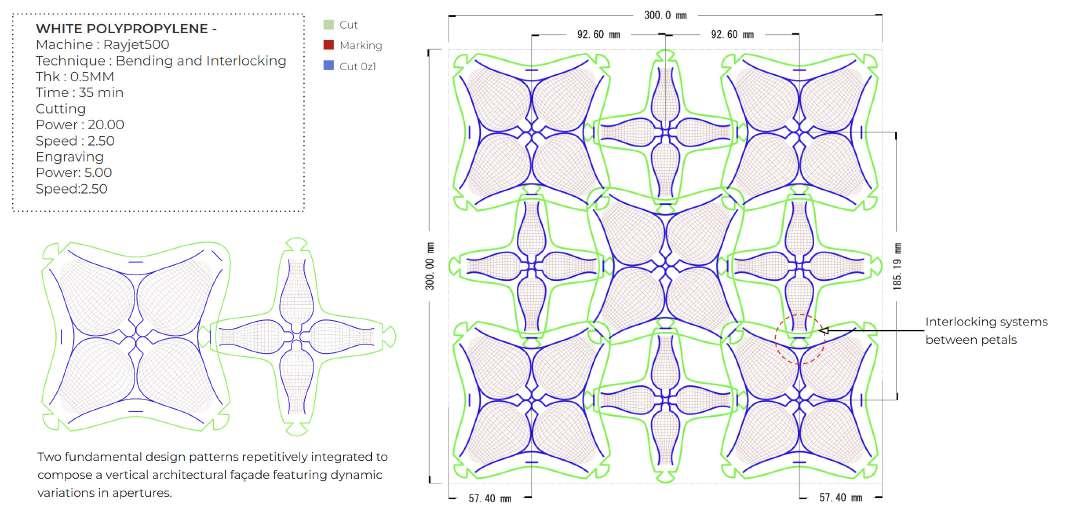
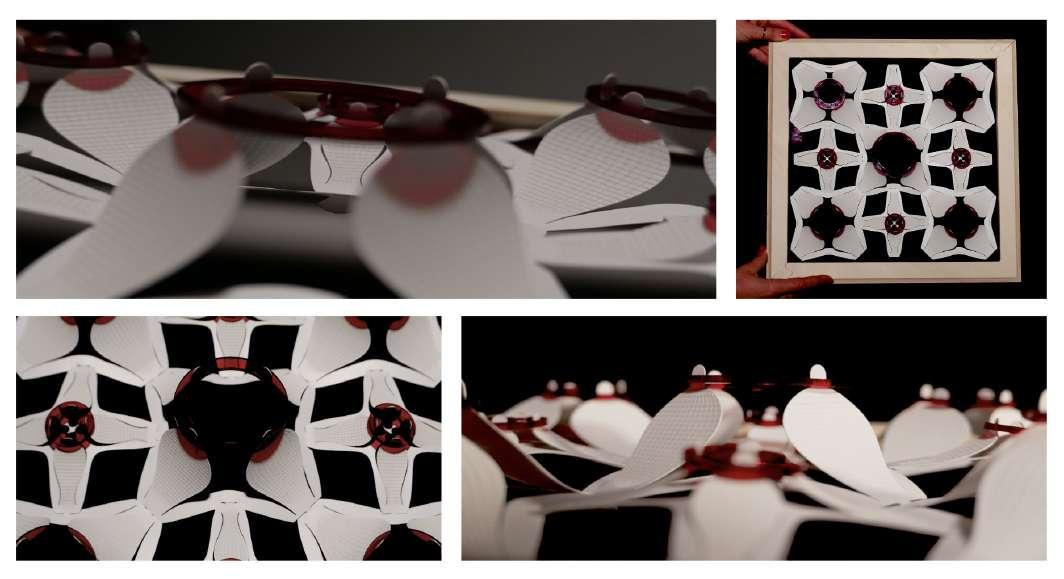
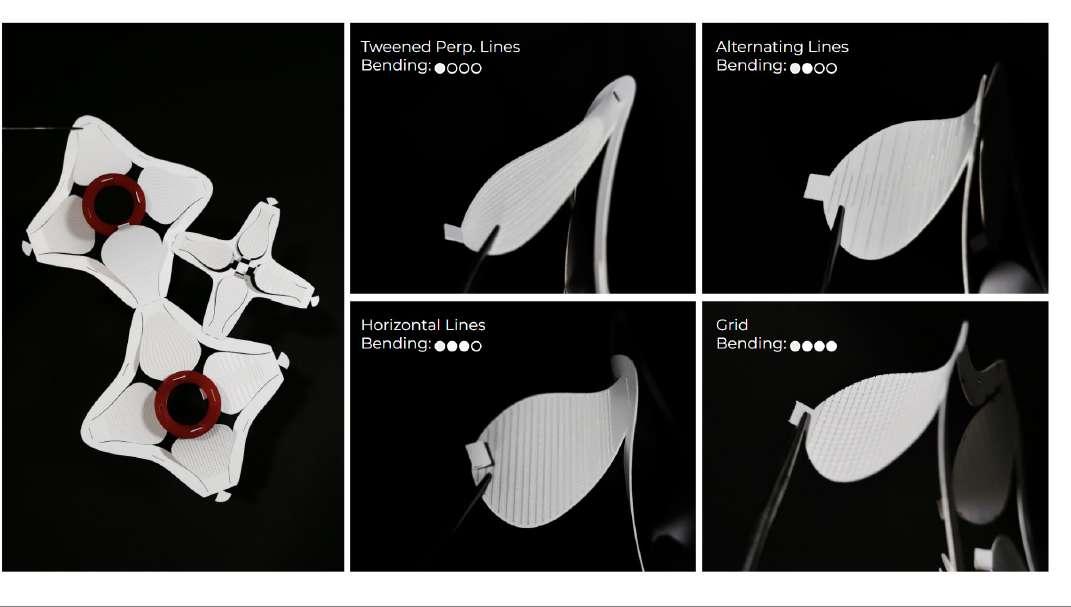
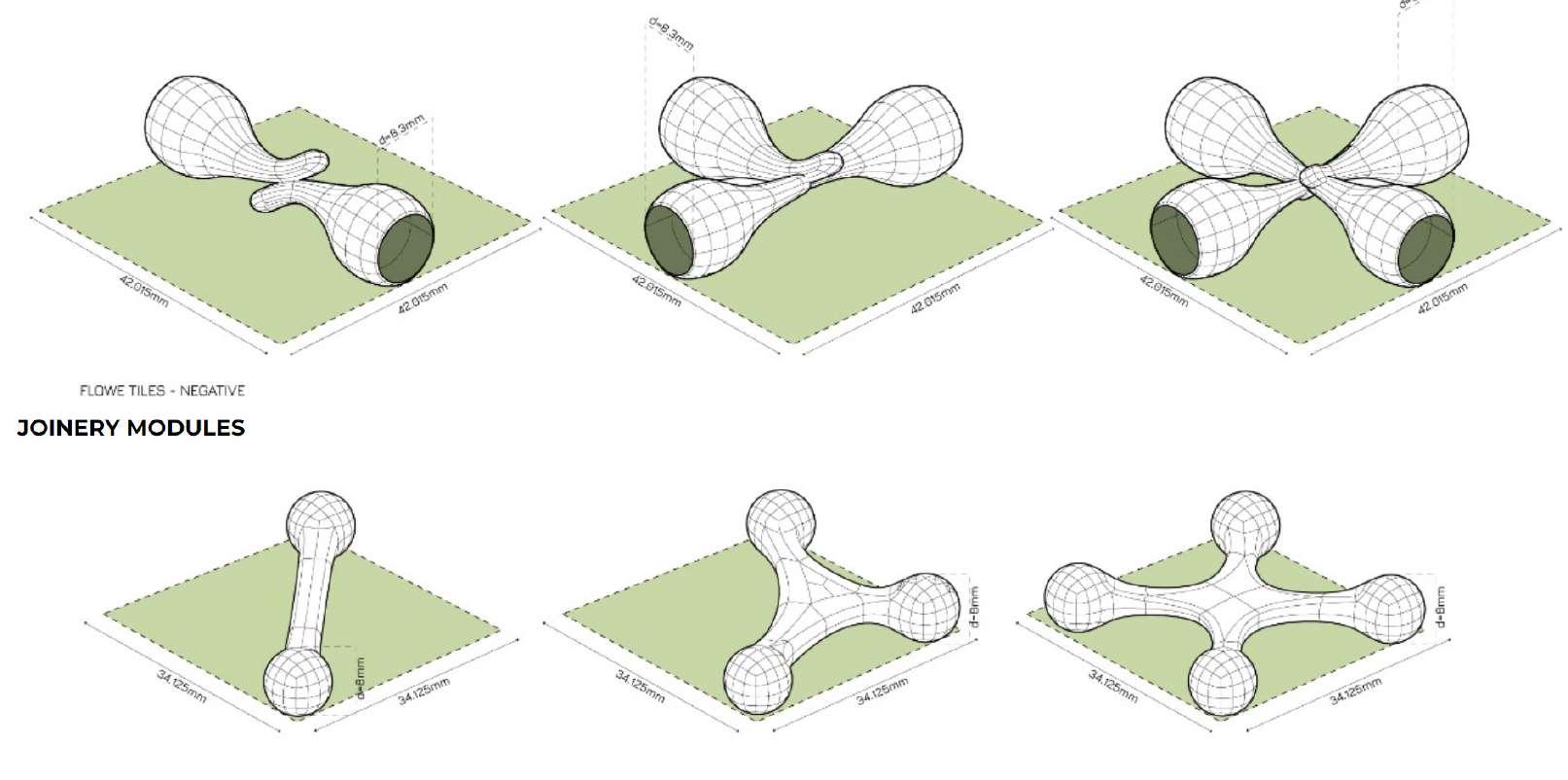
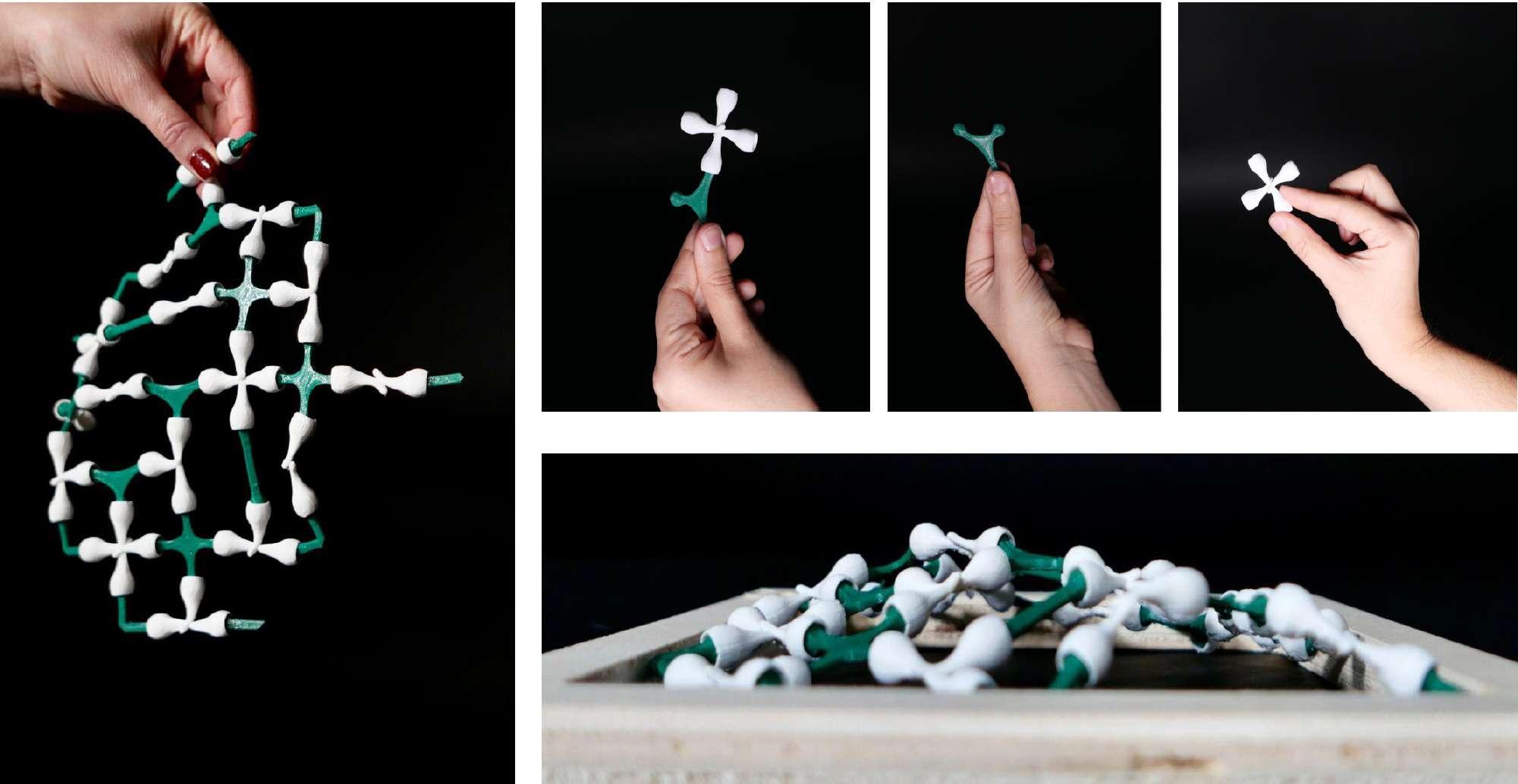
This project explores three distinct fabrication processes to produce a cohesive family of products inspired by Barcelona’s iconic Panot tiles. It begins by lasercutting the city’s most famous flower motif, experimenting with various grid layouts and bending techniques to transform the 2D petals into 3D forms. The design then evolves through a range of petal sizes and shapes to introduce depth, alongside a custom interlocking system.
The second iteration revisits another Panot pattern, this time inspired by bone-joint geometry to achieve greater flexibility and articulation. The reinterpretation of the Panot was mainly based on redesigning a 4 petal flower that would welcome its stems element with the use of press-fit joints technique.
In the final approach, motifs from Casa Batlló’s façade and Gaudí’s spiral-flower mosaics are turned into a minimalist spiral petal tile, CNC-cut in modules. This version emphasizes a modular logic, demonstrating how ornament can be reinterpreted through contemporary computational and fabrication methods.
“Beyond cork” Digital Matter Studio,
Master in Advanced Architecture 01, IAAC, 2024
Team project
Personal contribution:
__general research of materials __fabrication and heat pressing process
__computational exploration __construction detailing __robotic fabrication __website and interface creation
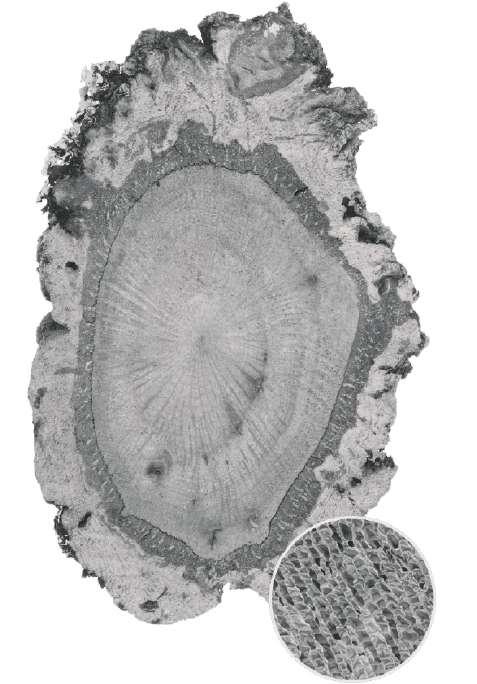
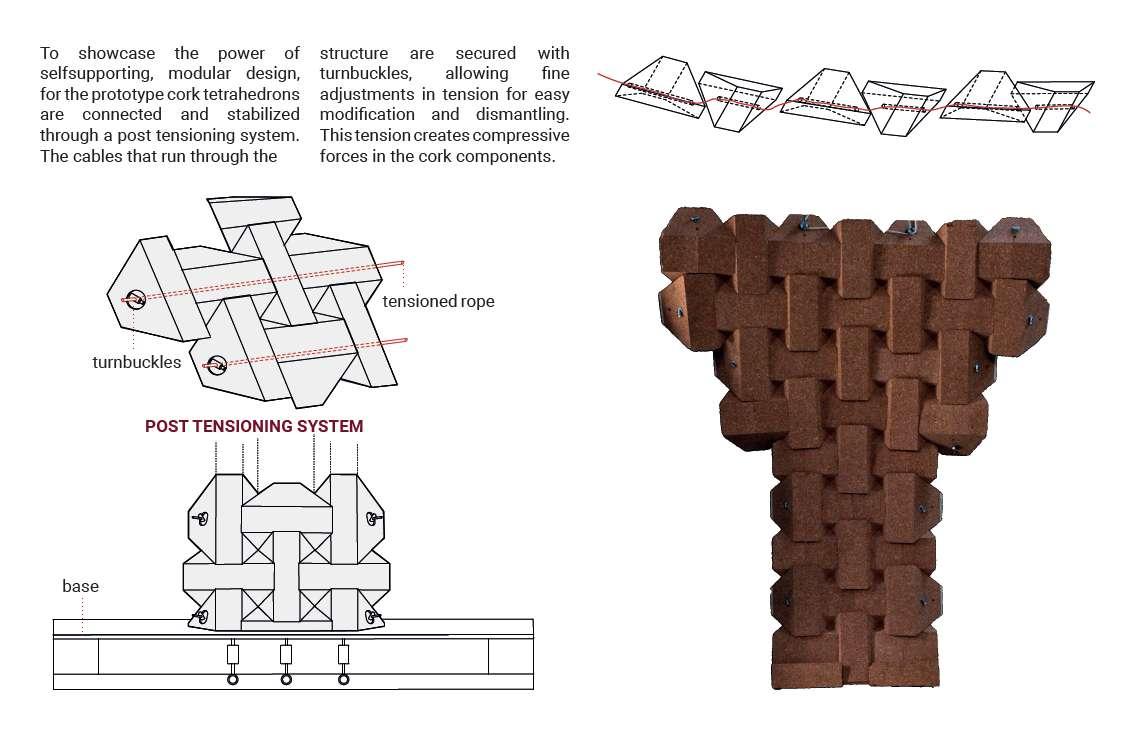
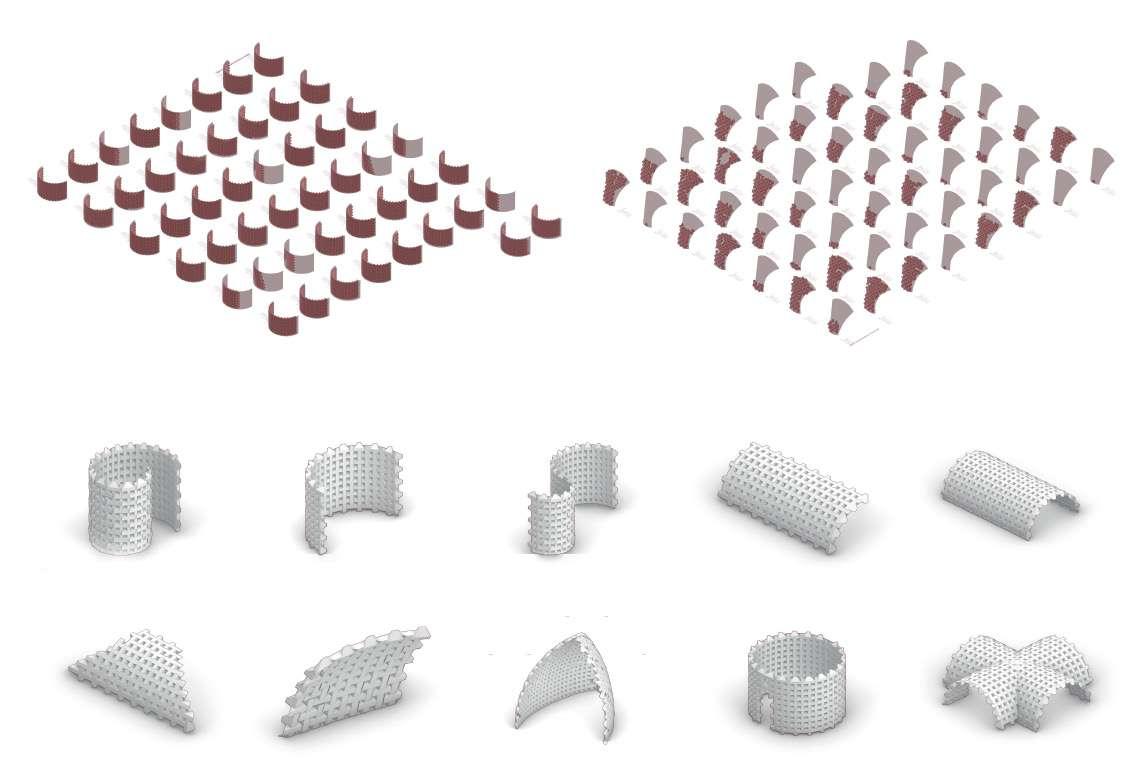
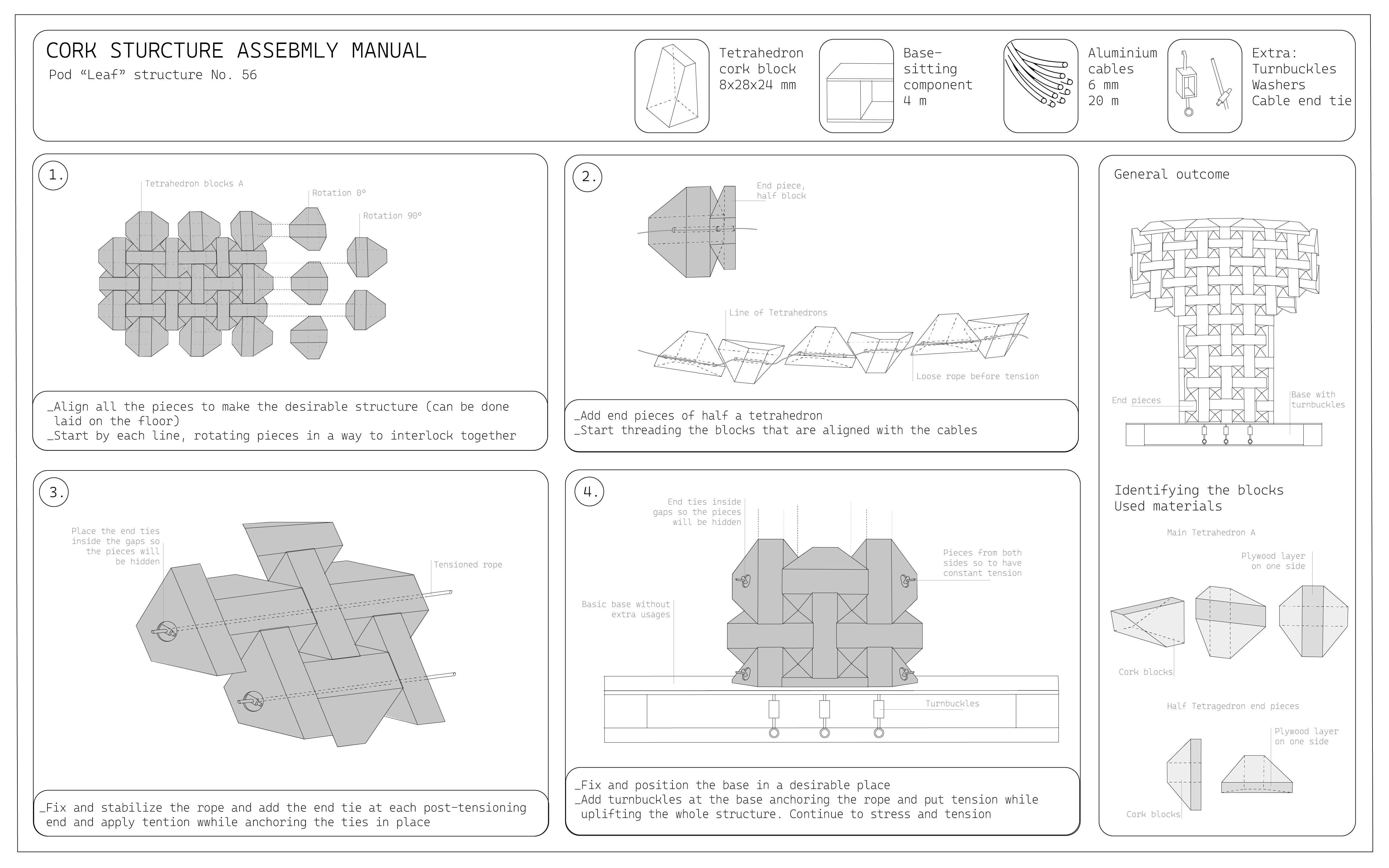
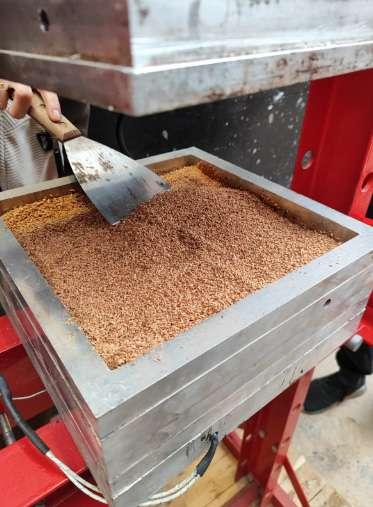
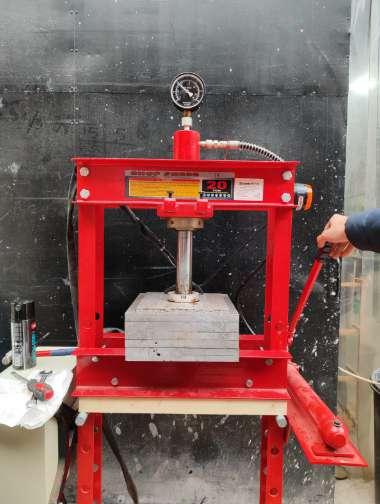
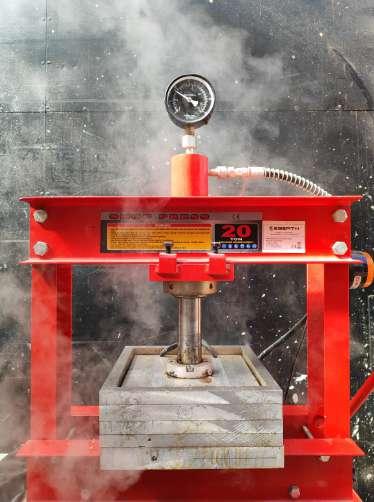
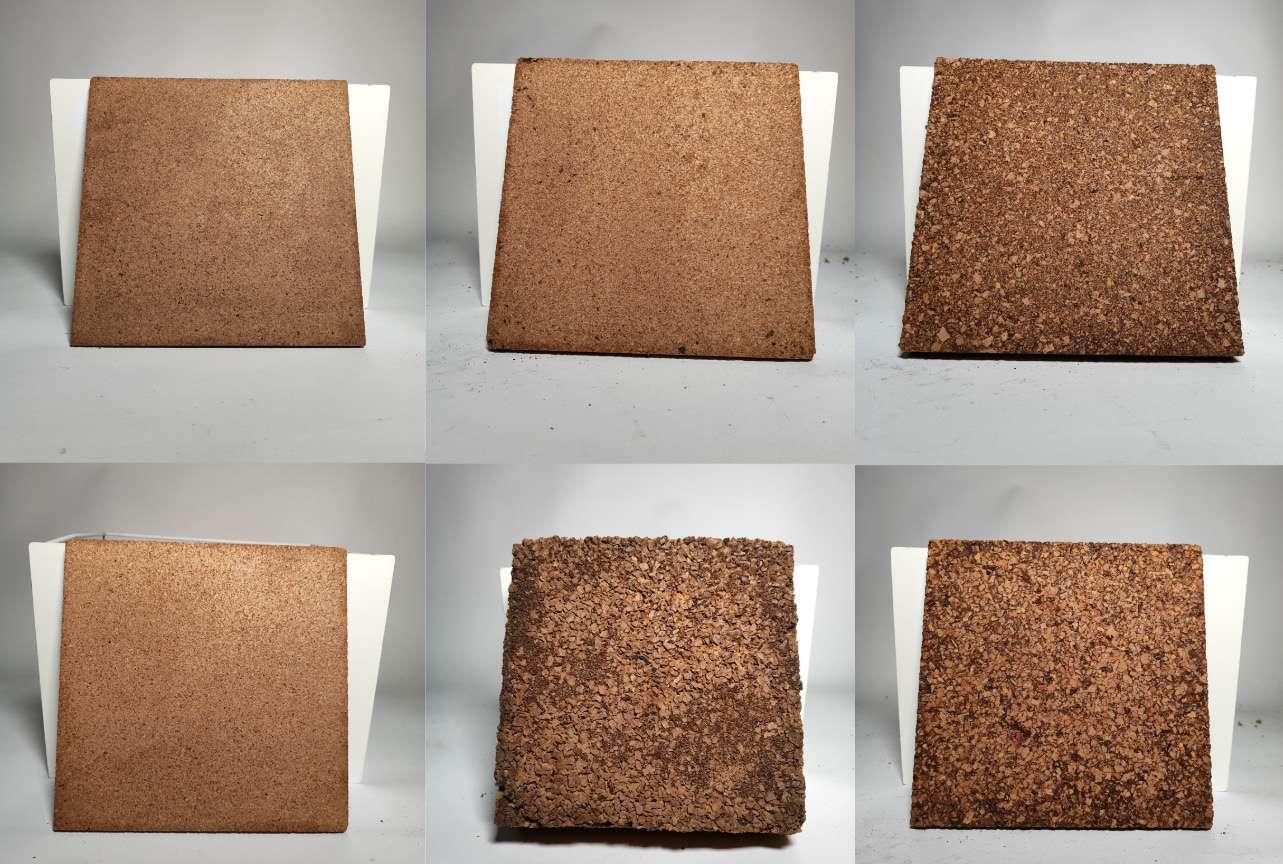
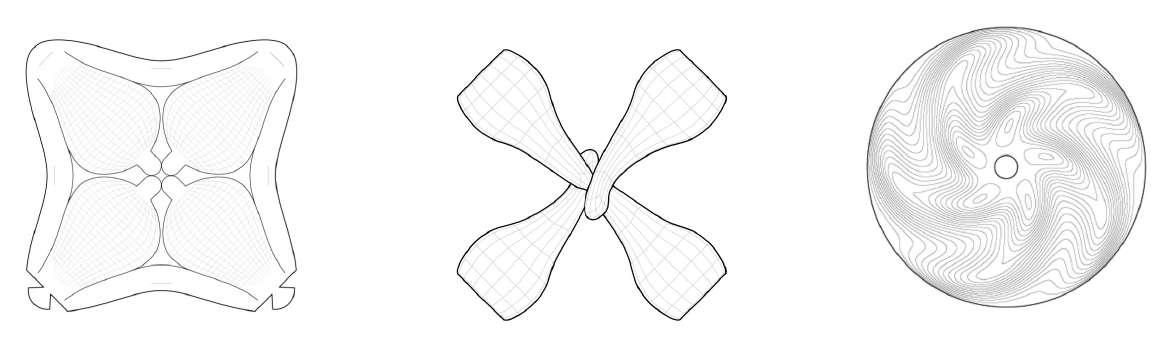
Beyond Cork develops a carbon-negative cork system with no synthetic binders. Recycled granules are heat-pressed to activate suberin’s self-binding, creating solid blocks.
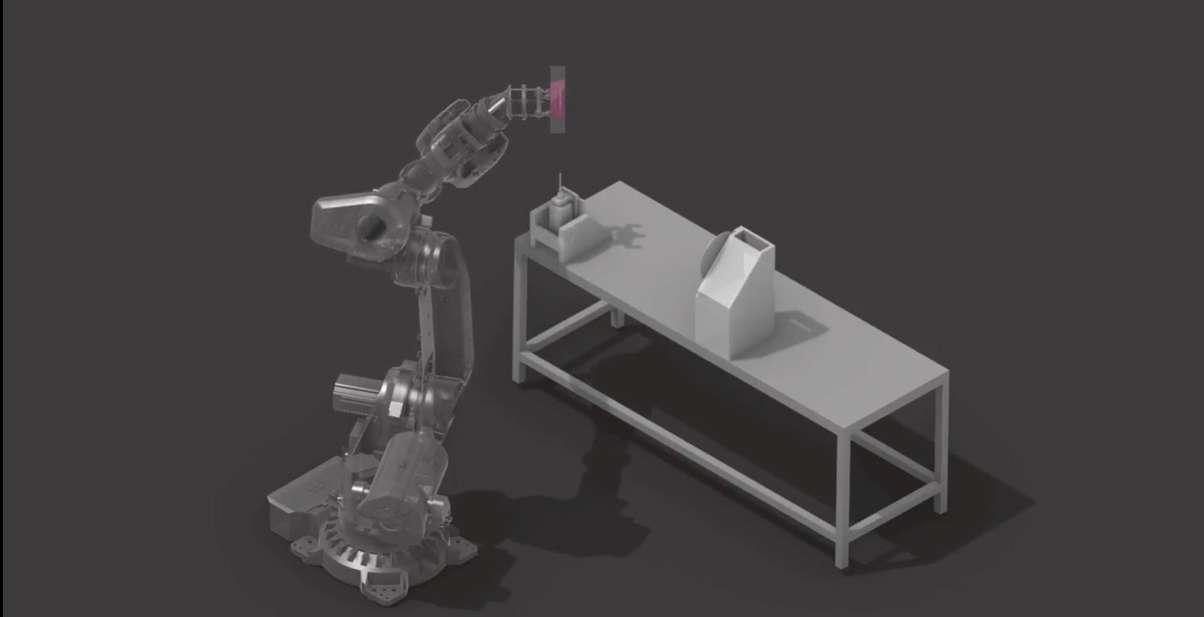
Robotic fabrication then converts blocks into post-tensioned tetrahedral modules that are post- tensioned.
Computational analysis optimizes acoustic performance and geometric efficiency.