PORTFOLIO
 JACOB S. LAIER
EDUCATION
2020 - 2023
-
JACOB S. LAIER
2020 - 2023
-
Aarhus school of Architecture, Master, studio 2a, habitation, building design and techniques
Aarhus school of Architecture, Bachelor, studio 1c, transformation.
Århus design school architecture, fashion and design.
Vuc, Hf single subjects. Dalgas Avenue.
Århus design school, architecture, fashion and design.
Eux, innovation. Sønderhøj.
RHINO AUTOCAD ENSCAPE
Hhx, innovation/design. Vejlby Risskov.
rasmusrasmus Architects, Student job.
rasmusrasmus Architects, Intern.
Alberts bar, Bartender.
Bar smil, Bartender.
Holme kirkegård, Gardener.
Shen Mao, Bartender.
Handicap helper, Egmont højskole.
Buddha tattoo, Tattoo artist.
Plante skole, Skæring, Gardener.
Shallow grave tattoo, Tattoo apprentice.
Jacob Spolum Lajer
Cand.arch, MAA, RIBA
Phone number
From Aarhus school of architecture, Denmark 2023 +45 26742796
Laier92@hotmail.com
Address
Rørvangen 16, 8520 Lystrup, Aarhus, Denmark
ADOBE ILLUSTRATOR ADOBE INDESIGN
ADOBE PHOTOSHOP QGIS Revit LUMION GRASSHOPPER
Newly graduated architect.
I am an open and energetic young man from Aarhus with high spirits and both feet firmly planted on the ground. I am very social and like to be surrounded by people and enjoy working in a team.
In my young years, I grew up in the city of Aarhus, Denmark skater environment, and from a young age I went exploring the city and its architecture and from there I experienced from an early age how important architecture is to the life that takes place in and around it.
I have a background in the tattoo industry, where i have worked as an tattoo artist.
I find most facets of architecture interesting, and the more I learn or know about something the more interesting it becomes to me.
As a young and driven architect, I bring a fresh perspective to the field of architecture. With a passion for creative problem solving, a keen eye for detail and a deep understanding of design principles, I am equipped to create functional and aesthetically pleasing spaces.
Alongside my studies, I gained practical experience in the industry through internships and student jobs. Which has given me a clear picture of the work as a practicing architect.
Throughout my studies, I have been committed to keeping up to date with the latest trends and technologies in architecture. This includes using sustainable and environmentally friendly materials and applying innovative design techniques to create spaces that are not only beautiful, but also sustainable.
As a young architect, I am excited about the opportunity to contribute to the architecture industry and continue to grow and learn as a professional. I am passionate about combining my technical skills, creativity and love of architecture to create meaningful and impactful spaces that will positively impact people’s lives.
I am a team-oriented person with strong communication and collaboration skills and I am eager to work in a creative and challenging atmosphere where I can learn and continue to develop my skills as an architect.
“ This is a collection of my selected projects that express my creative thinking, learned skills and persona as an architect ”
AARHUS / SYDHAVN
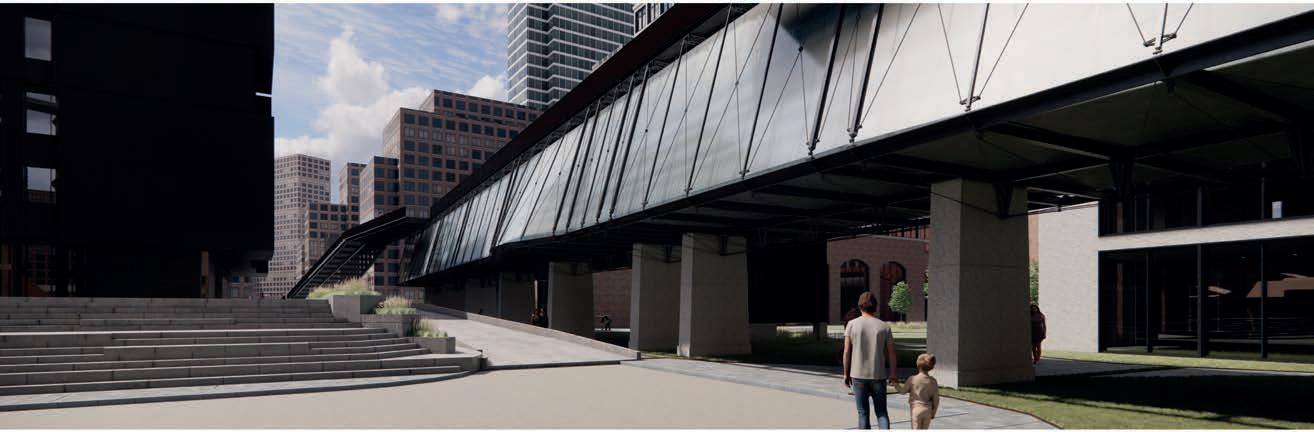
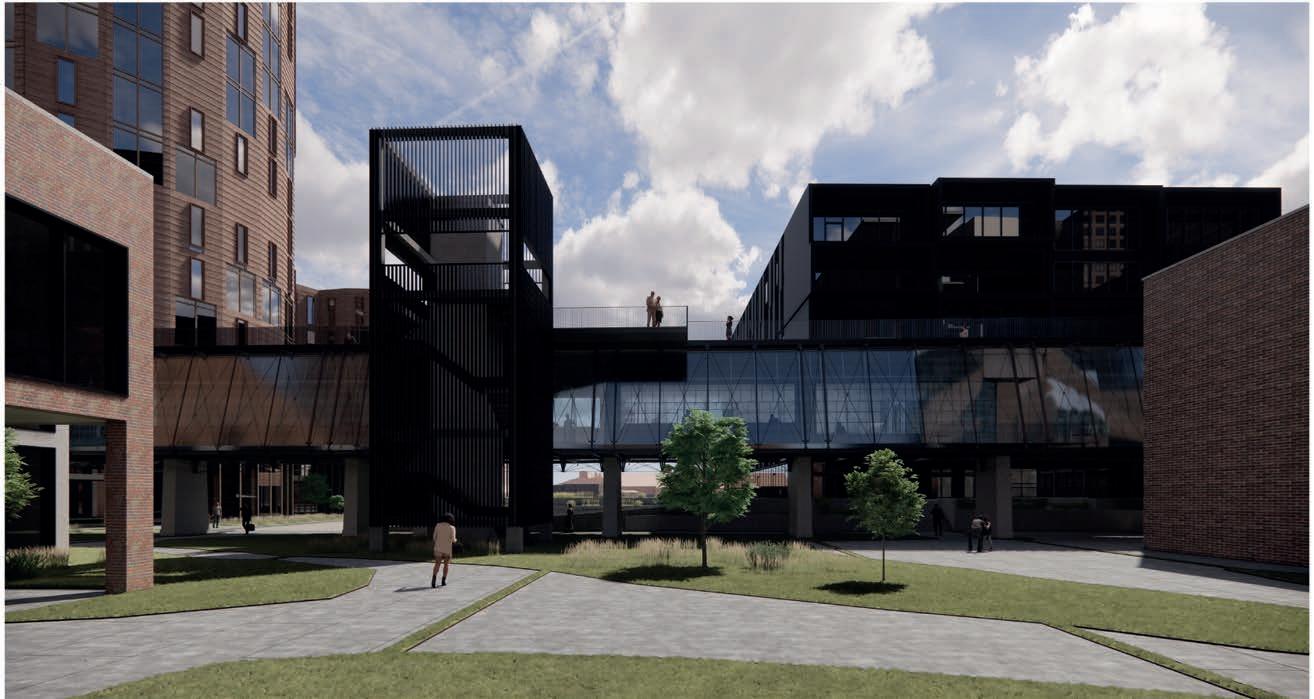
COAL CRANE BRIDGE TATTOOCENTER
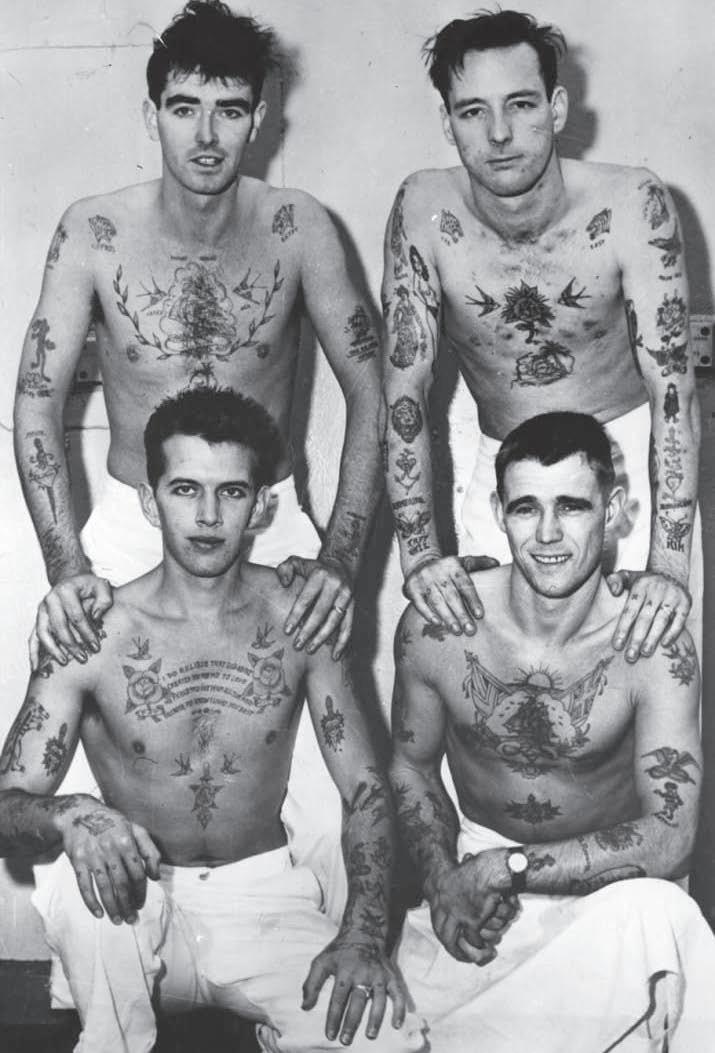
By virtue of the self-selection and property of permanent decoration of the person’s own skin, tattooing is deeply rooted in ownership. Tattooing still has a significant element of provocation in relation to society and its governance and norm-setting. The tattoo’s signal was before as now:
“I am my own”.
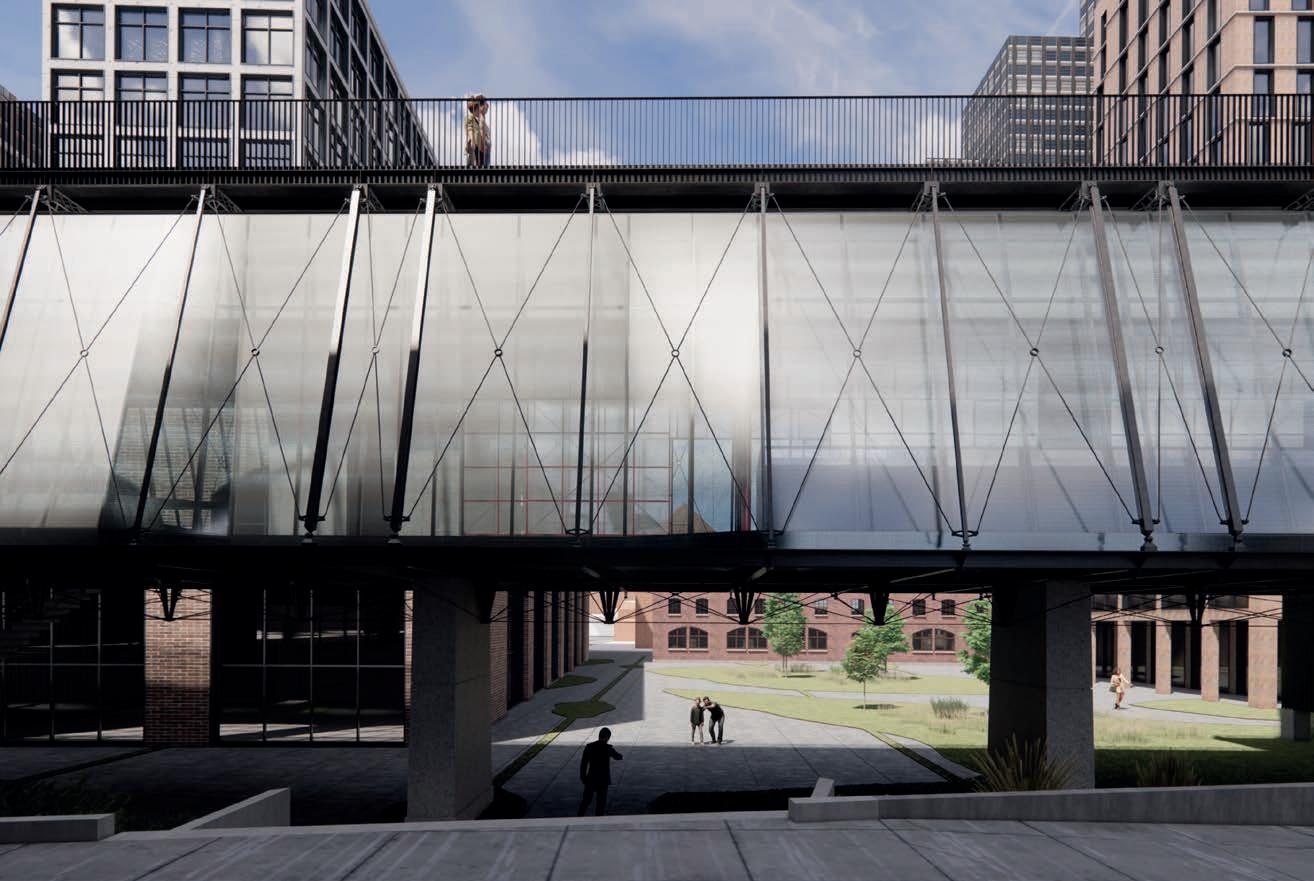
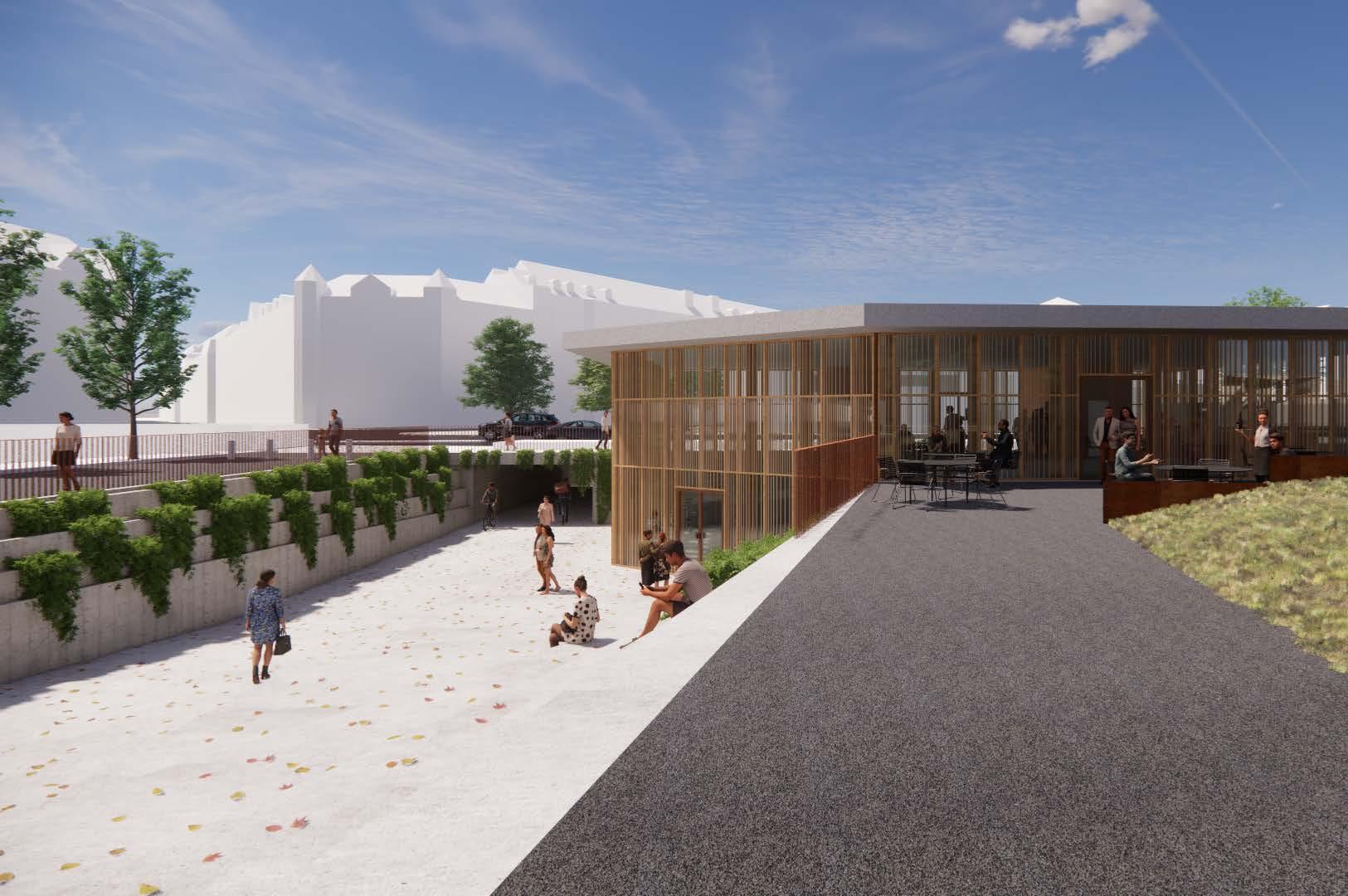
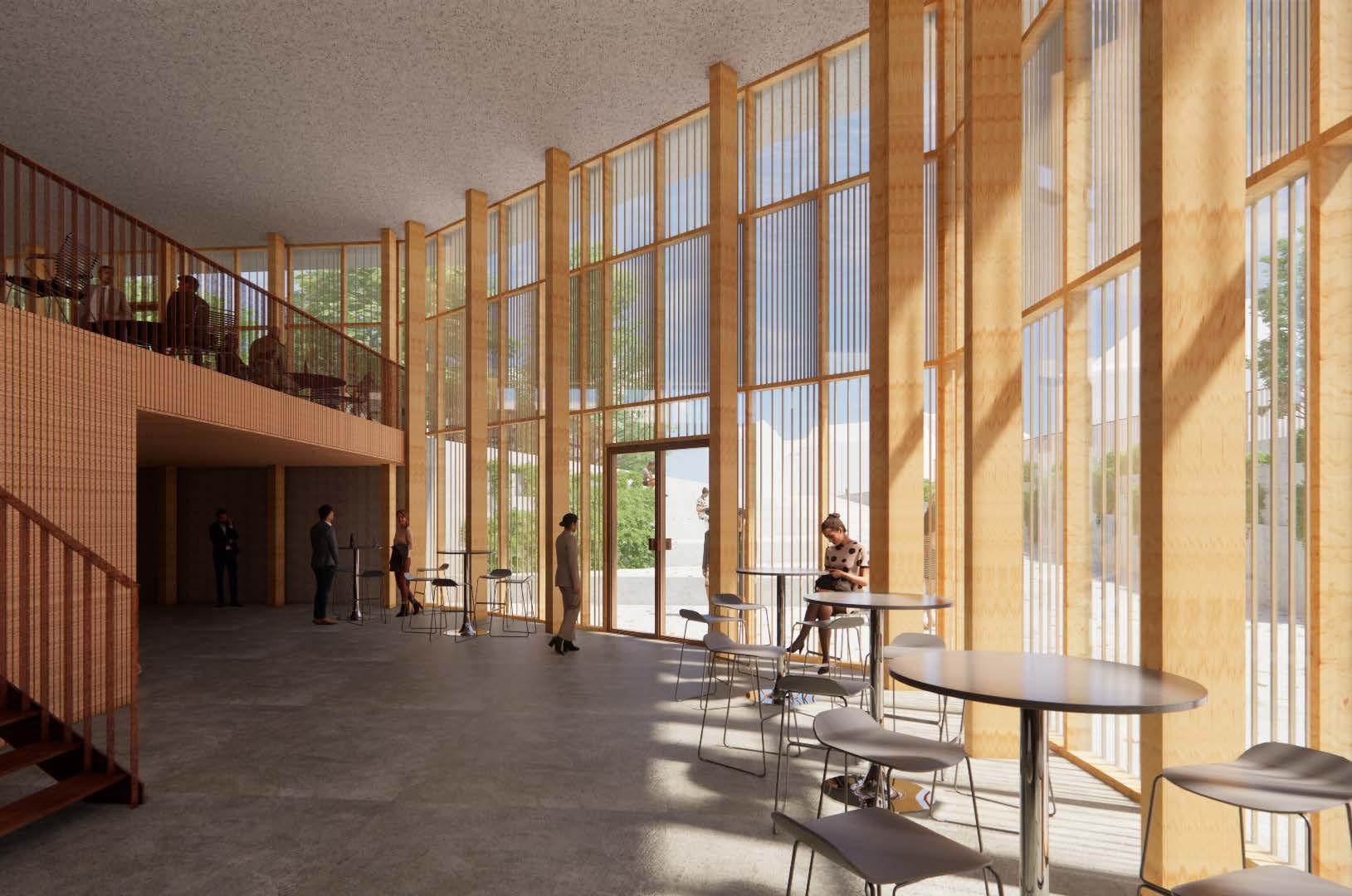
In thread with that i have i have also been working with my proposal, as an architecture that detatches itself from the more classic typologies of architecture, to show this is a special place, with its own personality.
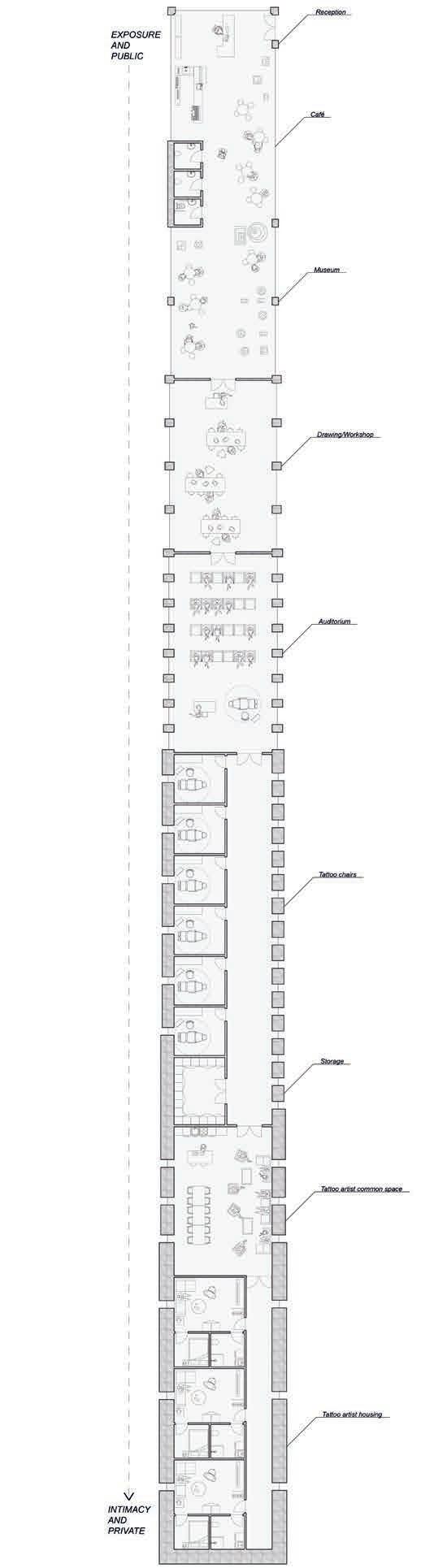
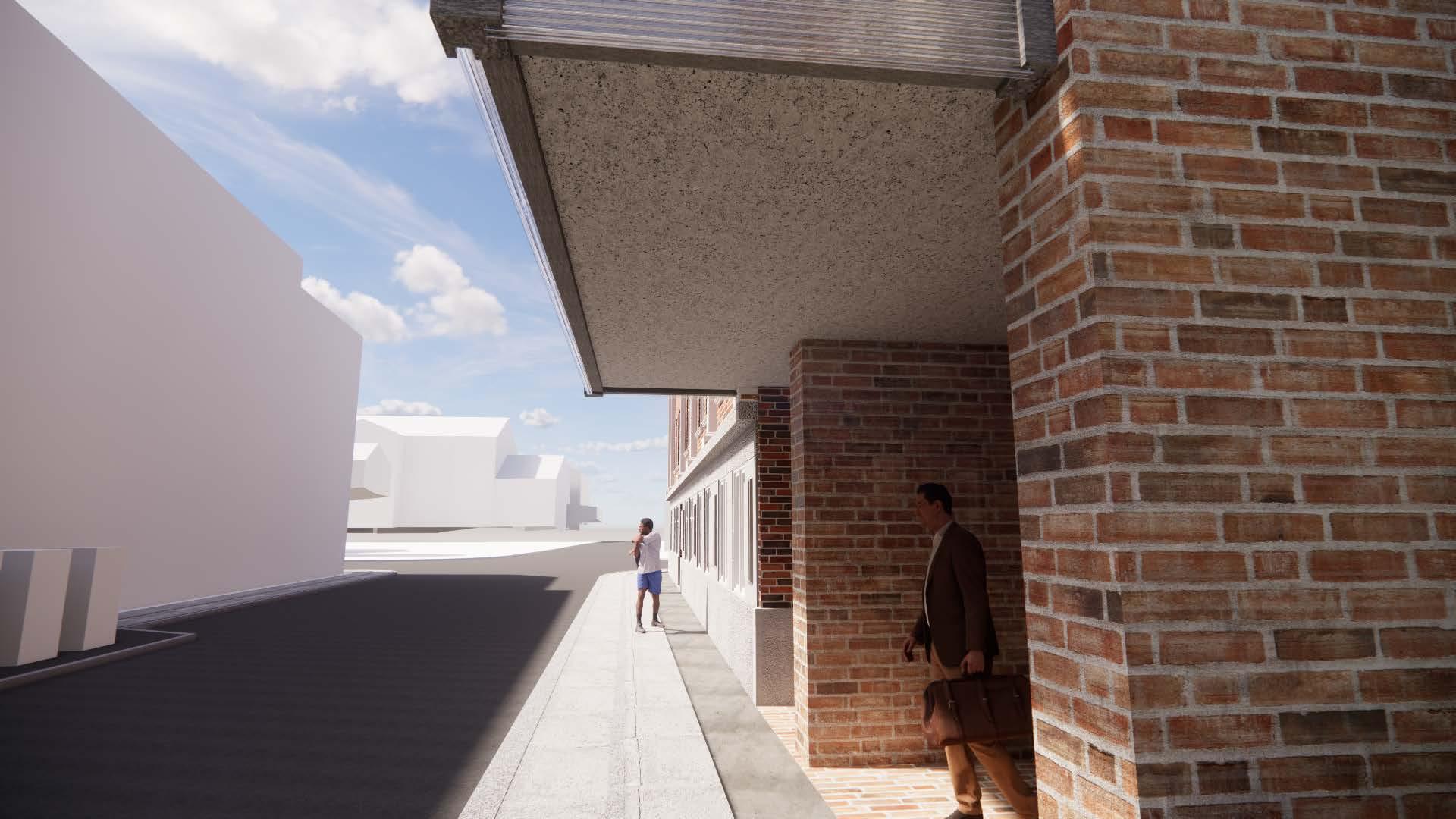
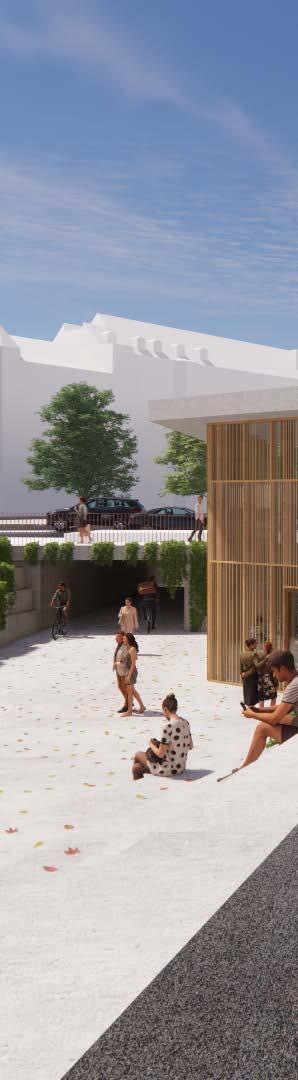
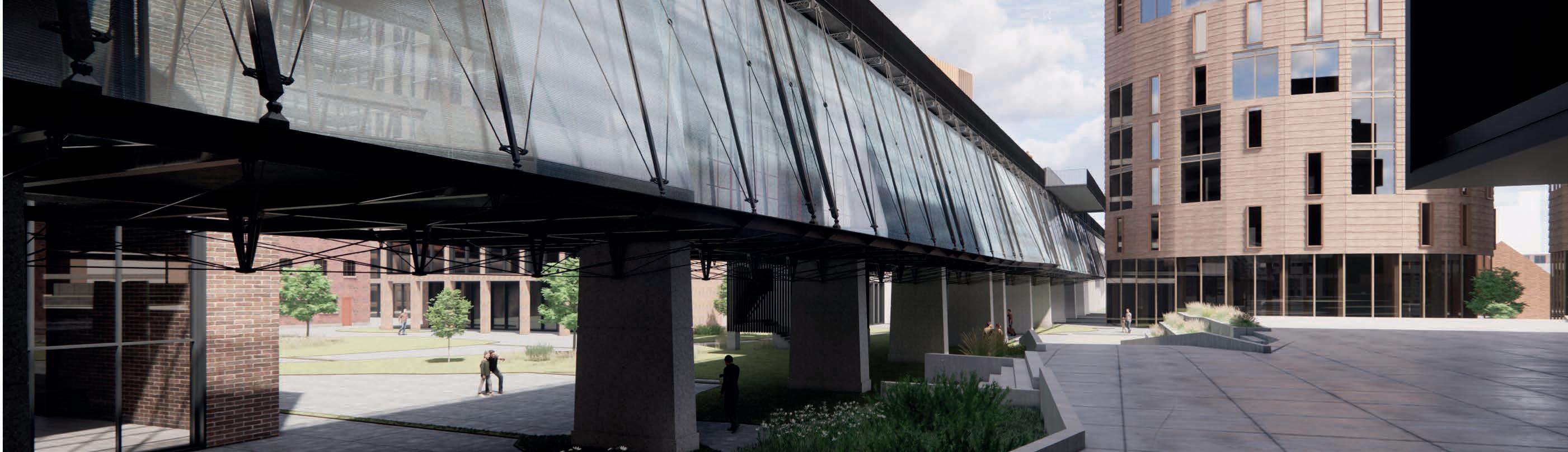
This project is proposing a new future for the life of the harbor and the underground cultures/tattooing. Letting the architecture respond to the challenges and qualities, and thereby foster a way of inhabiting, belonging, and connecting.
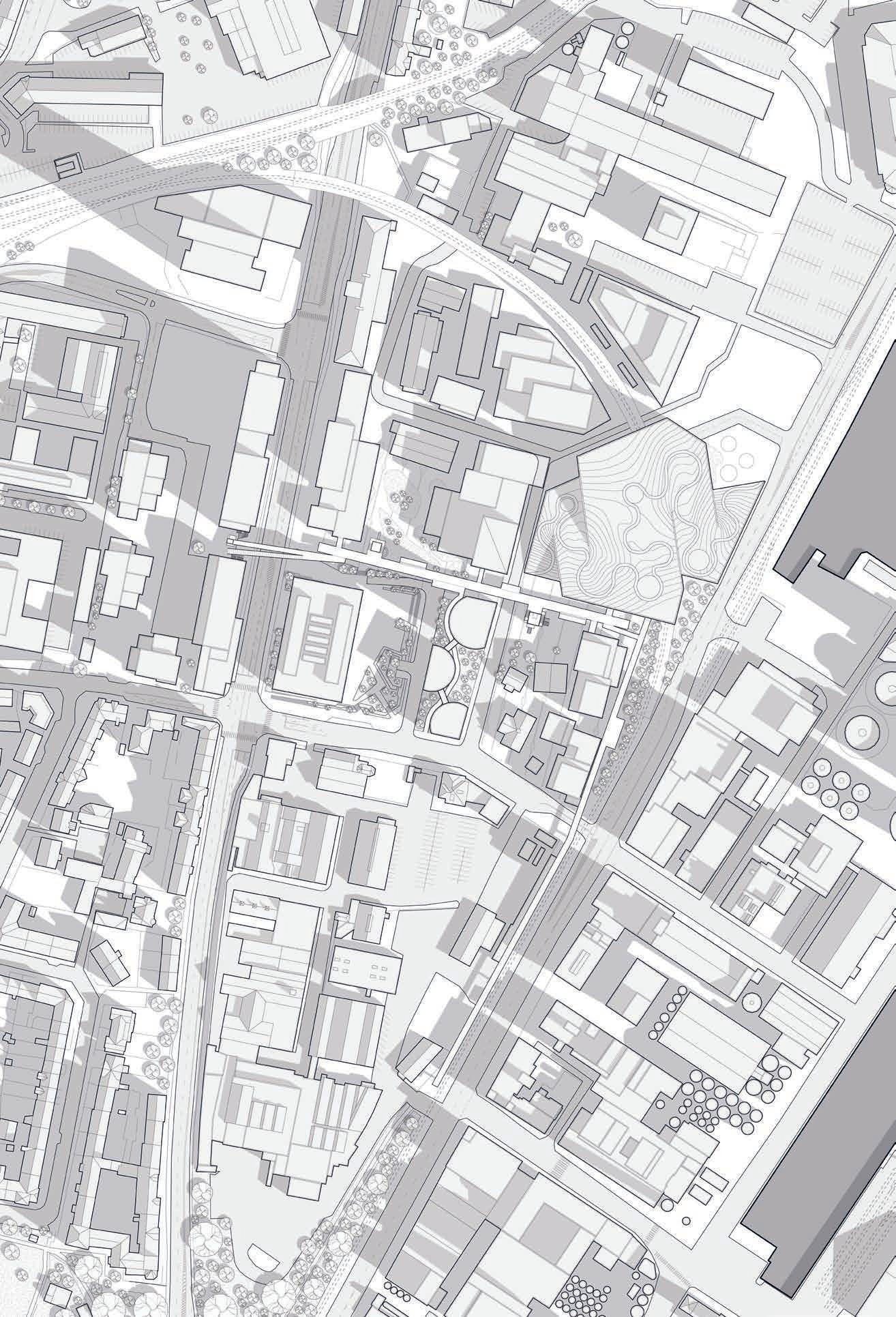
The project will suggest a way of how we can build for underground cultures and how we can arrange them, within the accelerating development, at Aarhus south harbor. How can abandoned harbor spaces be designed to maintain specificity and identity while addressing the on-going cultural and development changes of our cities?
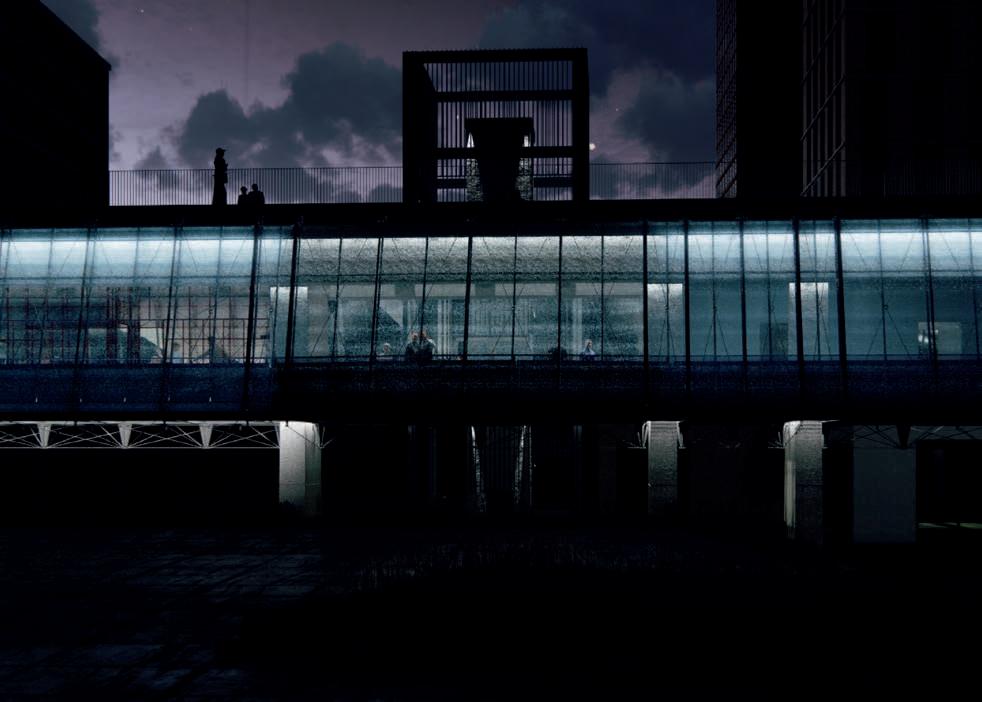
The aim of this project is to explore an architecture that can help bring the experience of what it means to be part of an underground culture, to a broader audience. And reveal the special qualities they hold.
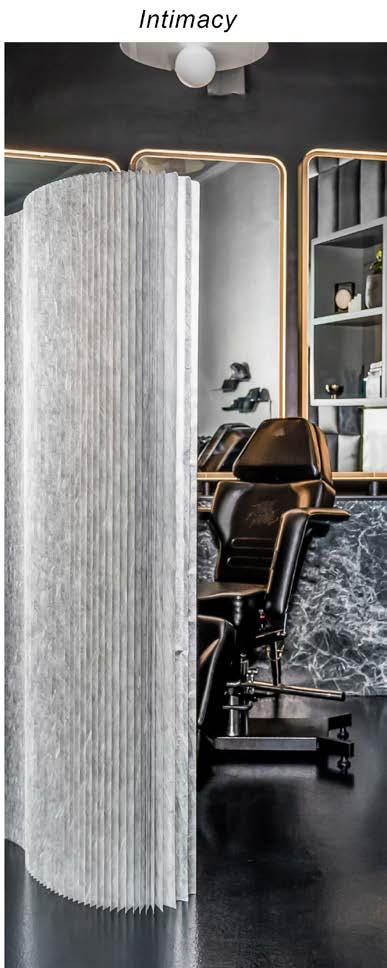
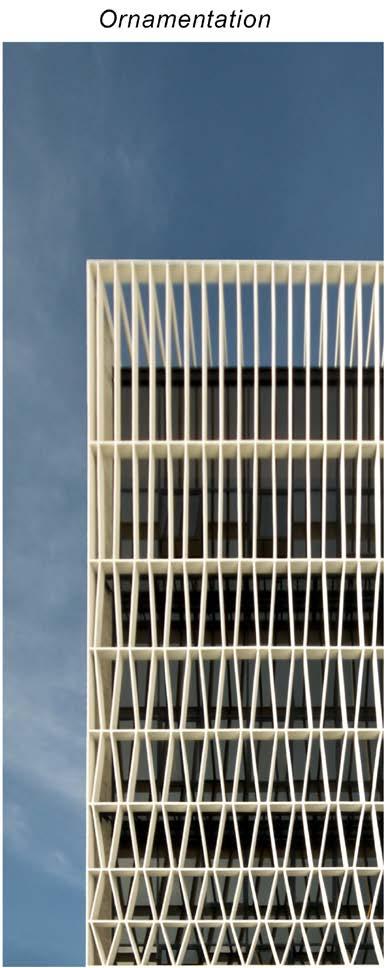
Give them a space where these often fragmented cultures, you find scattered around the city, a space where they can interact with each other, share knowledge and socialize with like-minded.
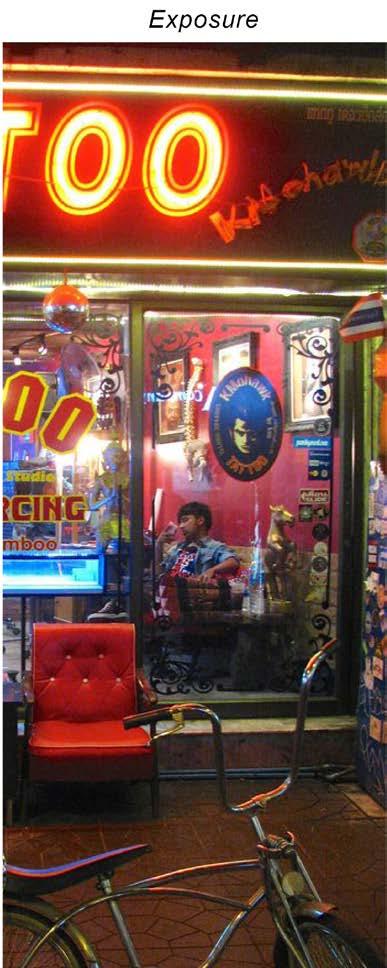
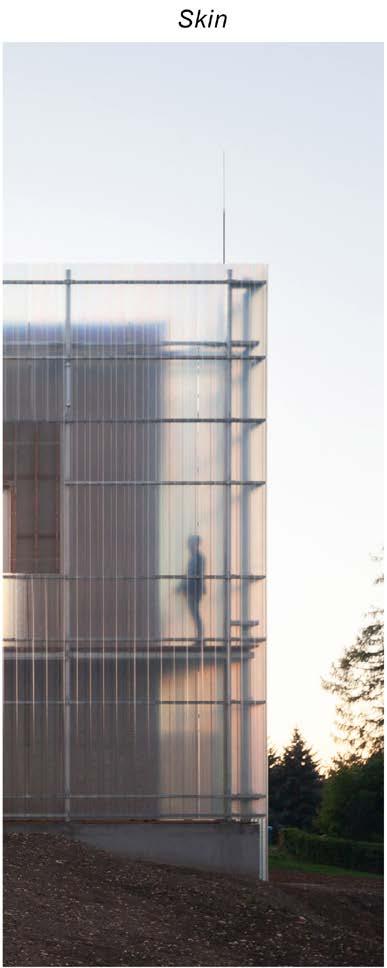
While still being careful not to pull it towards a more mainstream culture, but letting the culture live on, in its own way, and keeping the special qualities it holds. But letting the city and the life around benefit from the qualities it can give to the city and the area.
This project is also set out to make visible the impact underground cultures can have on urban spaces, by questioning how these cultures may be altering the meaning and uses of urban spaces and the built environment we live in.
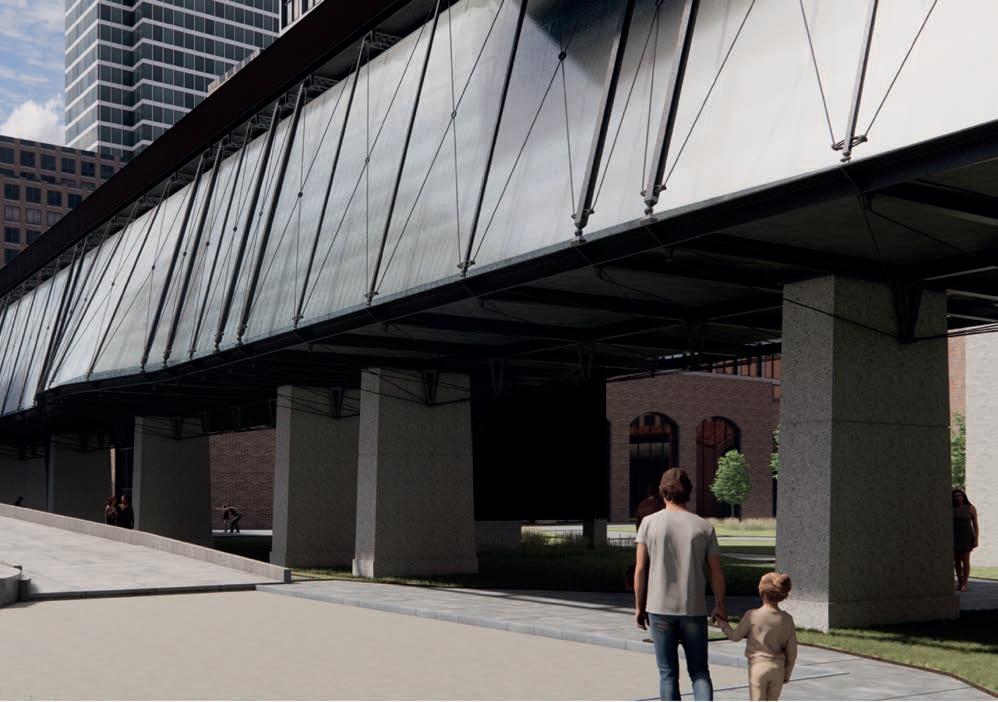


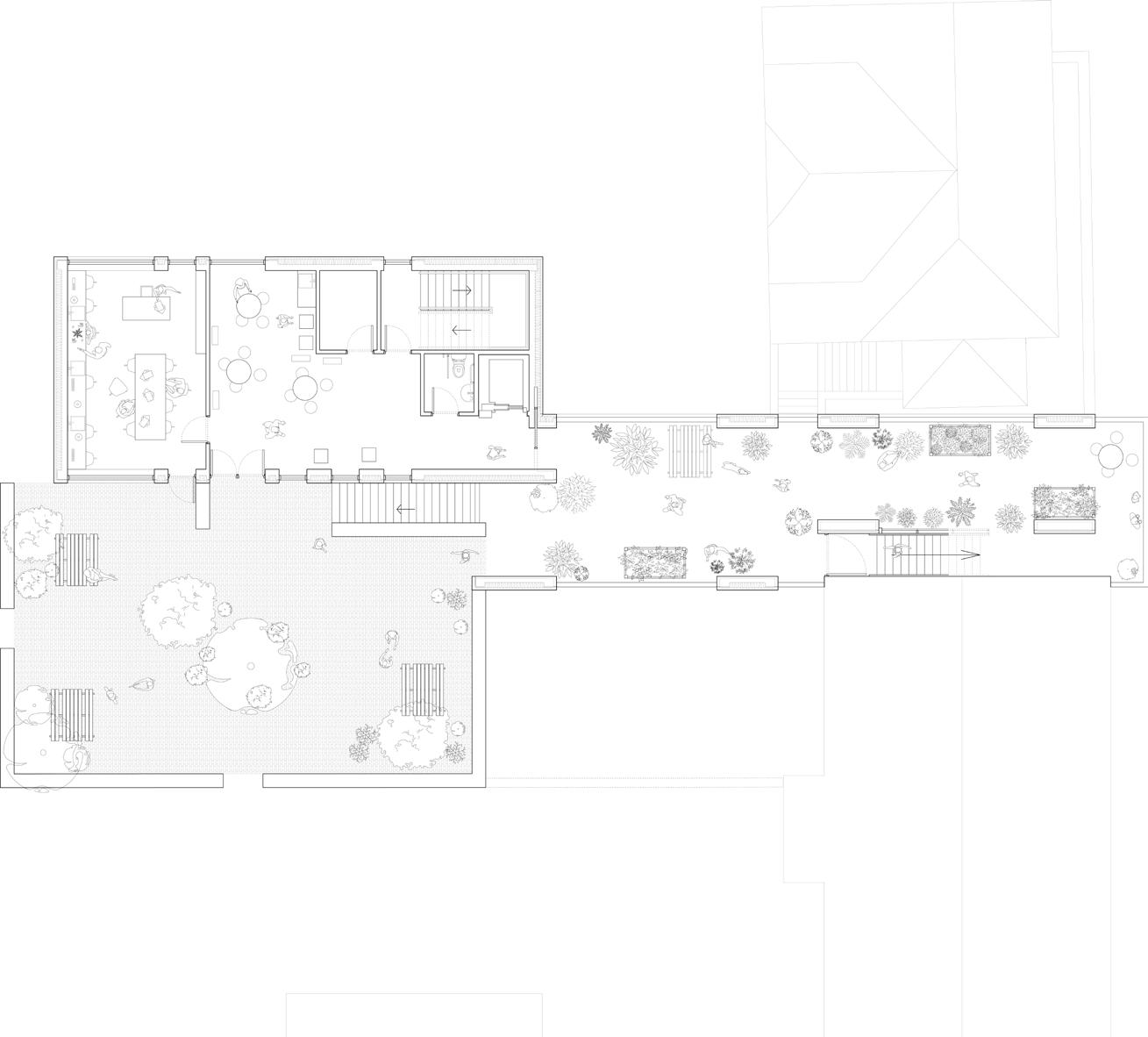
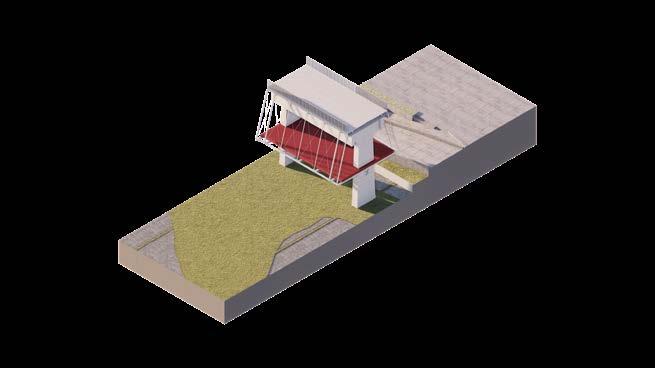
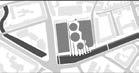
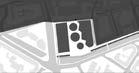
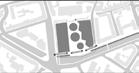
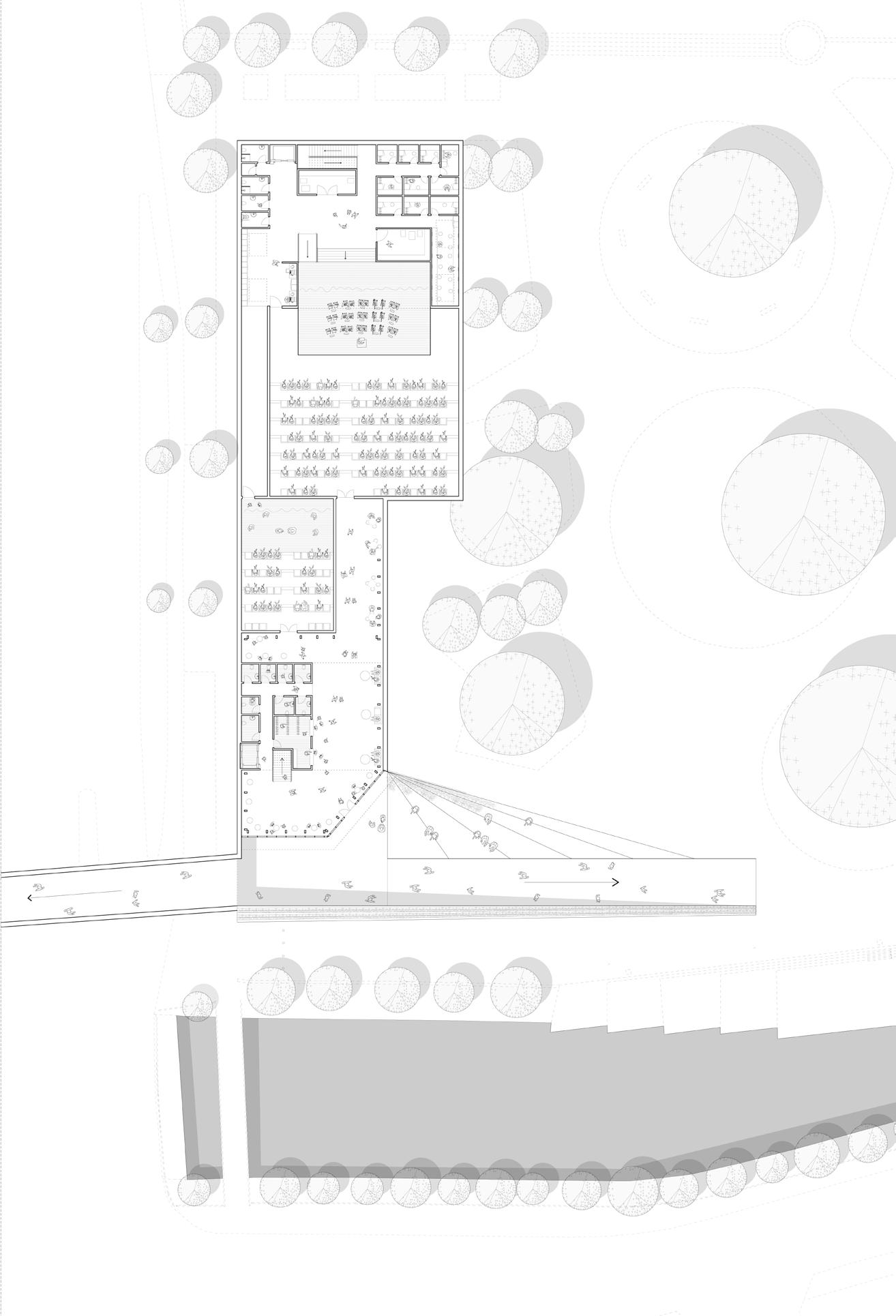
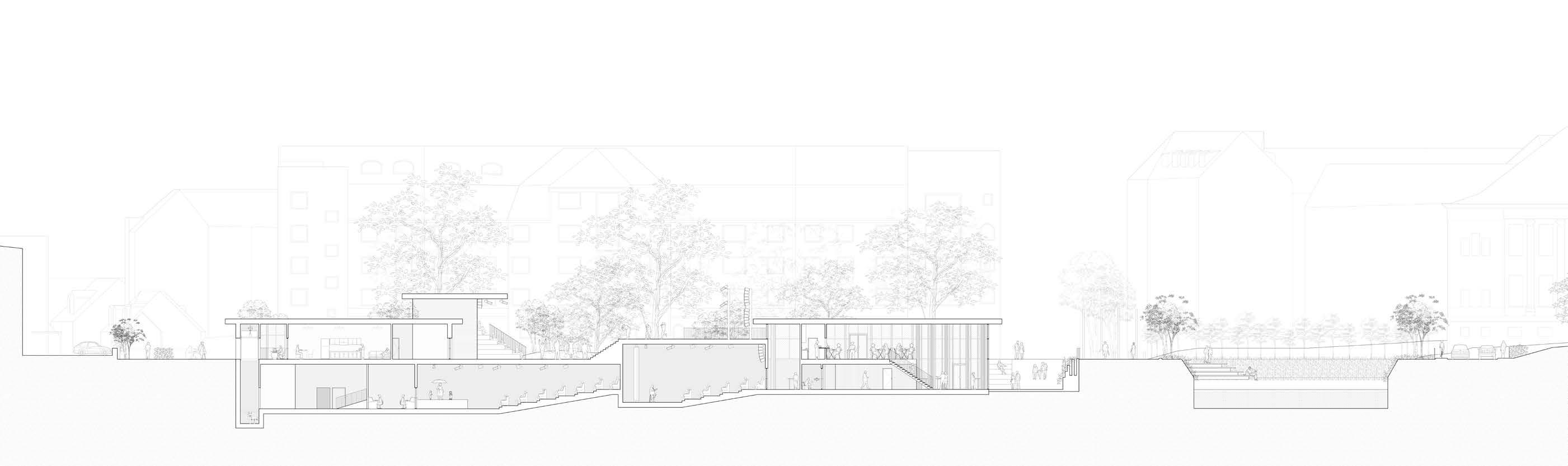
 GROUND FLOOR - THE AREA UNDER THE PROJECT
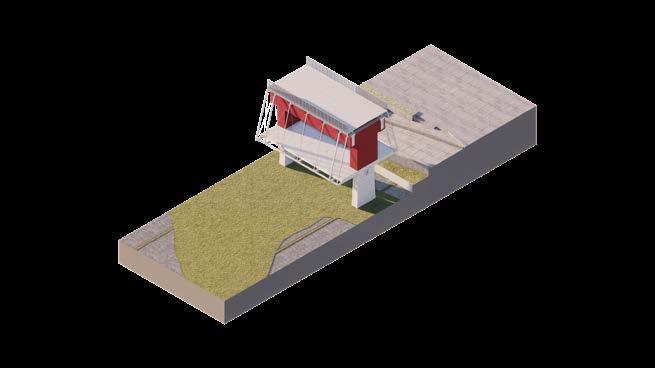
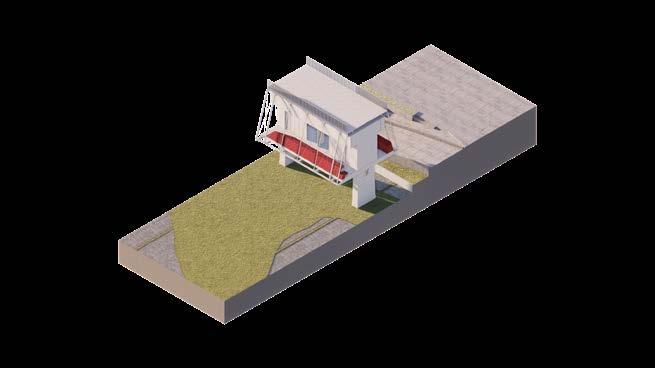
FIRST FLOOR - THE TATTOOCENTER
GROUND FLOOR - THE AREA UNDER THE PROJECT
FIRST FLOOR - THE TATTOOCENTER
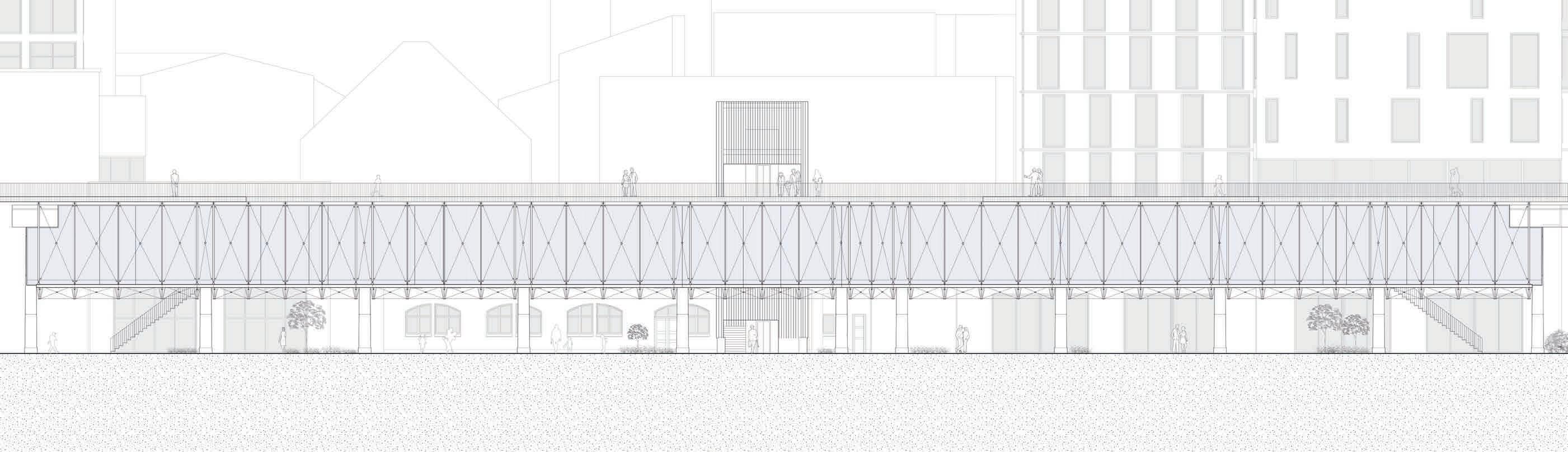
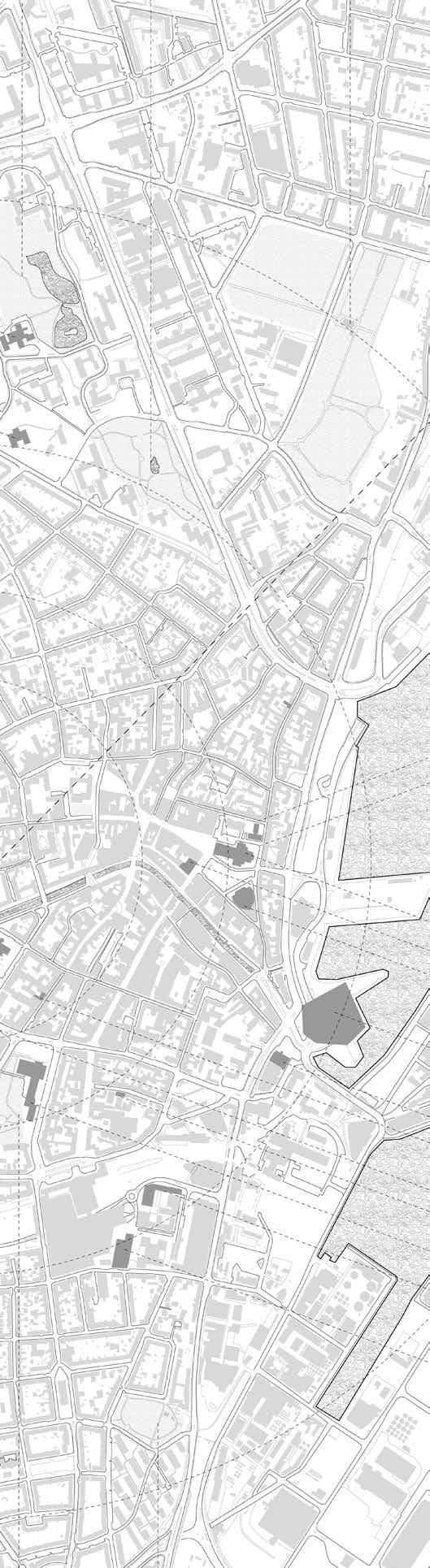
Aarhus south harbor is a former industrial harbor area, which in Aarhus City Council’s development plan from 2018 is thought to be transformed into a space for creative businesses, offices and socially vulnerable groups.
Since its establishment in 1905, the south harbor had an industrial character with, among other things, gas, heating, electricity plant, lime works, and Aarhus Oil Factory. This character was reduced when Midtkraft closed in the years 1994-97. It instead made room for creative professions such as Aarhus Filmby, artists workshops, and architects.
The construction of the south harbor started in 1905 as a new harbor area along Frederiksbjerg. The purpose of the south harbor was to create space for industrial companies that needed close proximity to shipping traffic. The work was done by filling landfill in the sea, which pushed the coastline further east. Construction was completed in 1911.
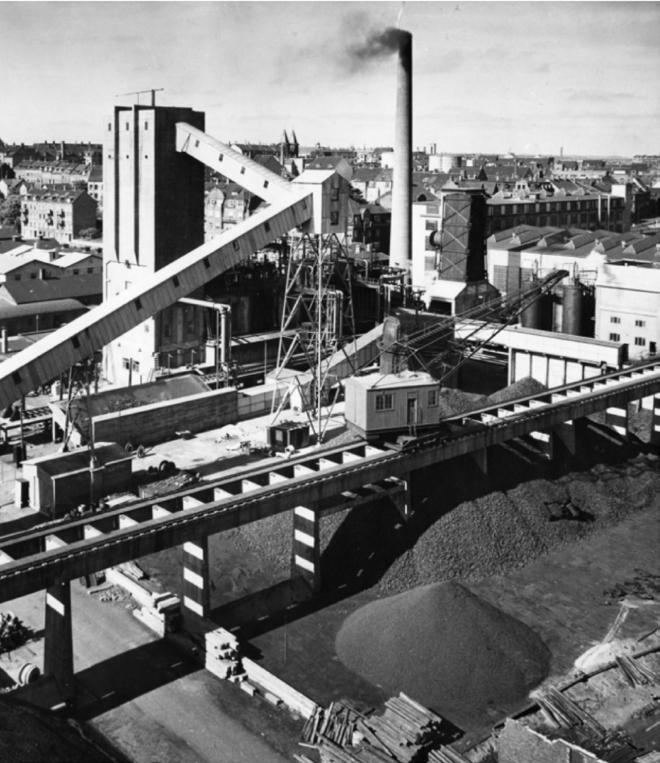
The south harbor was characterized by large mountains of coal that were brought by ships and used for firing. However, as a result of increased environmental interest, coal firing was discontinued. As a result, the coal mountains disappeared in the years from 1994 to 1997, and the power plants were shut down. Instead, a restaurant and congress center, as well as a film village, was set up in the Turbinehallen and the surrounding complex, which originally housed a steam-powered turbine.
At the same time, diverse groups flocked to the south harbor. Among these were artists and architects who settled in the remaining industrial buildings. Later warming rooms and shelters have been established in the south harbor for the city’s vulnerable groups such as drug addicts and homeless people.
The deindustrialization of the south harbor took place in parallel with the adoption of a long-term plan for the development of the entire south harbor area in 1998. At the same time, it was outlined how the south harbor should be urban developed with buildings for culture and offices, and how the old coal bridge should be preserved with the possibility of establishing a viewing platform at the top.
However, the realization of such plans was slow. For this reason, the south harbor came to be an abandoned and rustic area for several years, while the Coal Bridge remained as an industrial historical sculptural relic painted with graffiti and with vegetation along it.
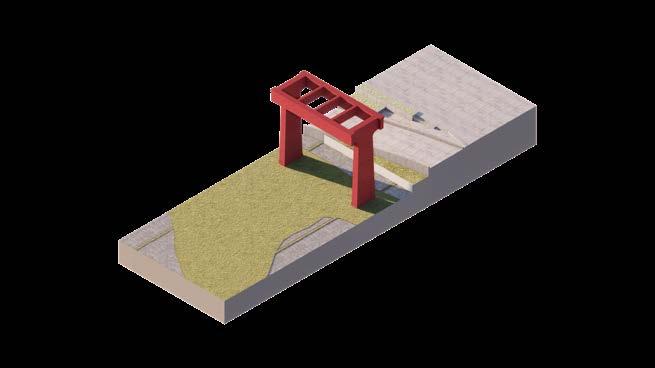
In 2014, Kulbroen became the focal point for the neighborhood’s future, when the association Kulbroens Venner was founded. The association’s ambition has been to transform the coal bridge into a green, planted footpath that will connect the city center with the south harbor.
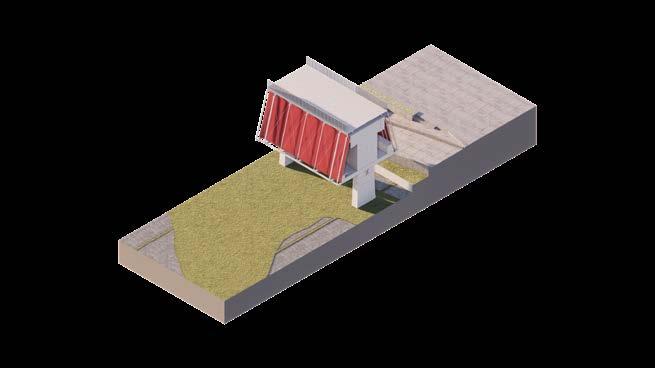
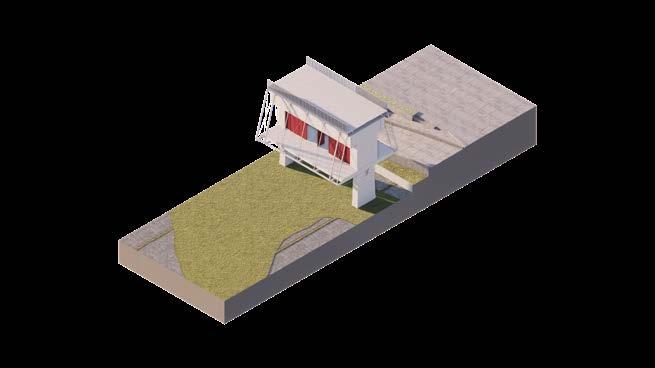
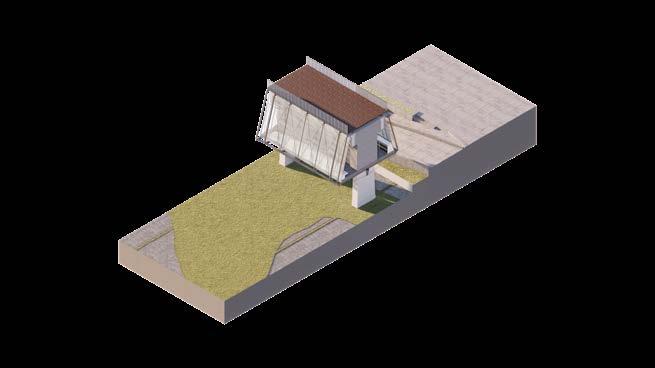
The project for the Kulbroen became the focal point since 2015, when the city council decided to initiate planning work, where the Kulbroen must be a landmark for the Sydhavnskvarteret. This led to the publication of an architectural competition in 2017, and it was won in March 2018 by the architect group Transform consisting of the architects Dissing + Weitling, Lendager Group, VEGA landscape and Søren Jensen. Under the headline “Kulkransporet”, the architects have outlined how Sydhavnen will in the future accommodate buildings for offices, culture and socially vulnerable groups. At the same time, the Coal Bridge with a footpath on top will be a central connecting road for pedestrians in the neighborhood. The plan also outlines the preservation of historic buildings and traces.
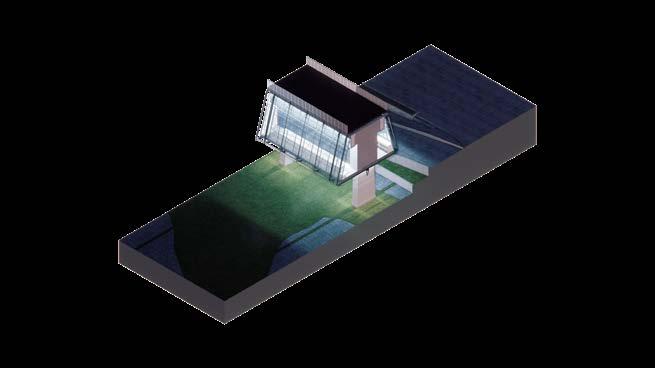

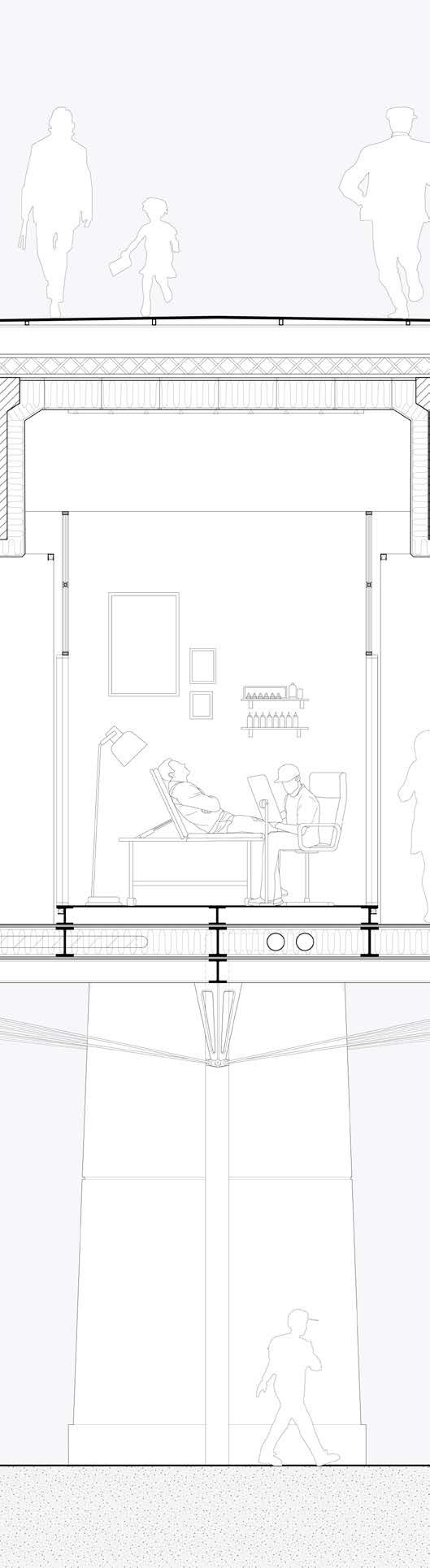
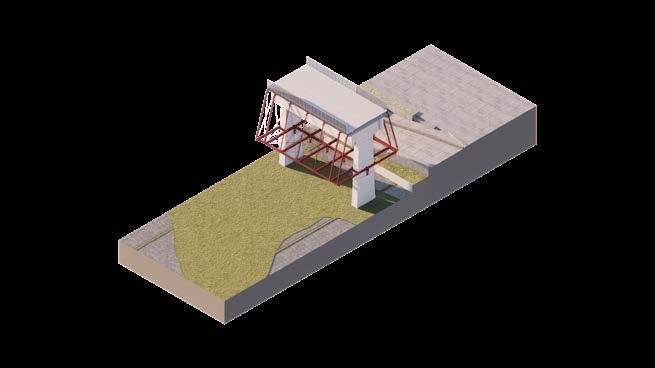
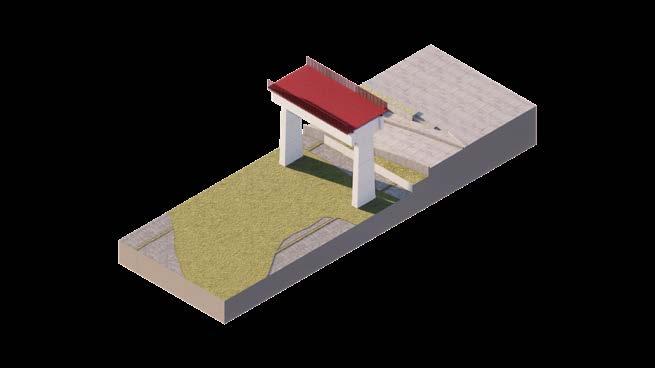
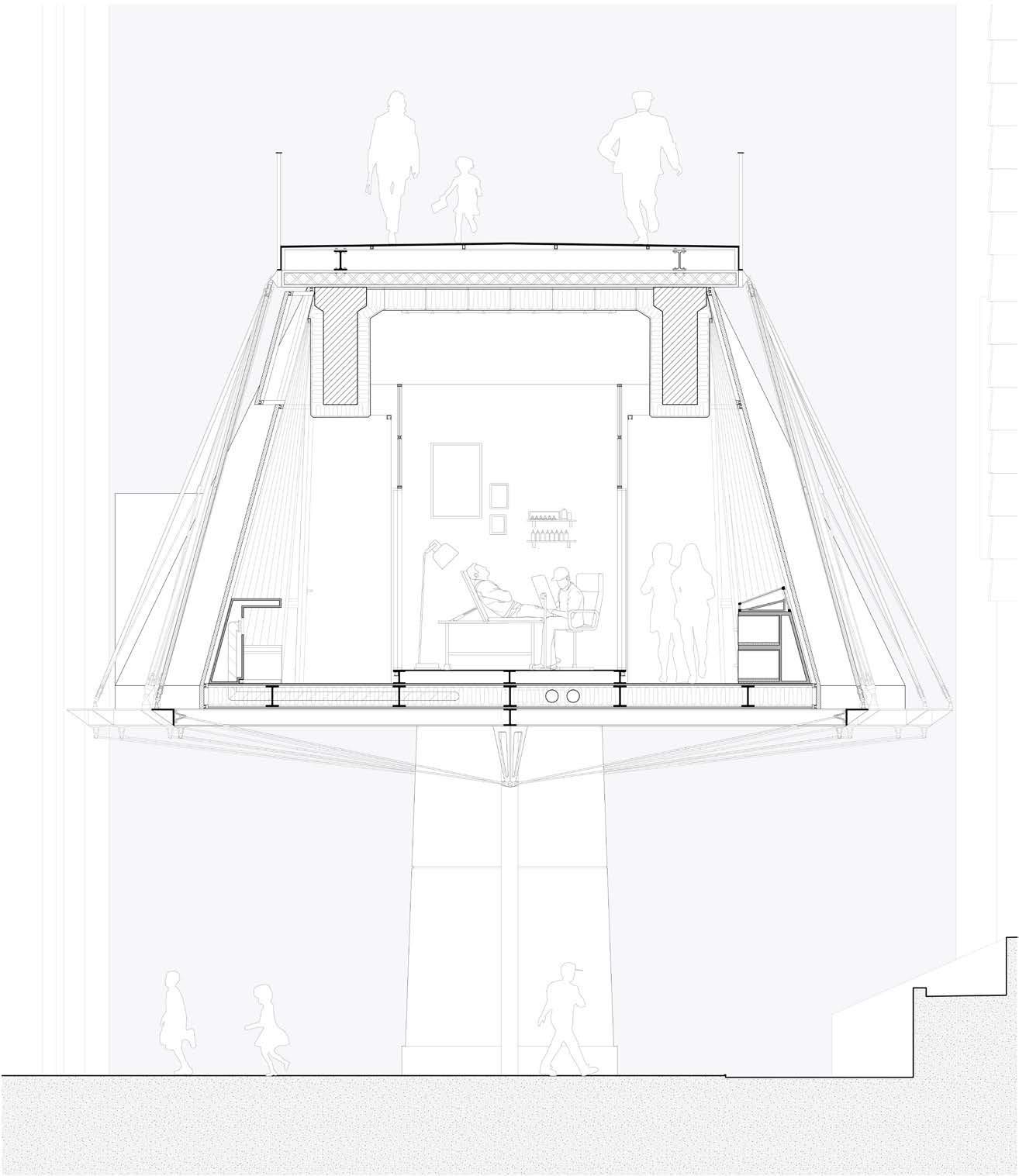
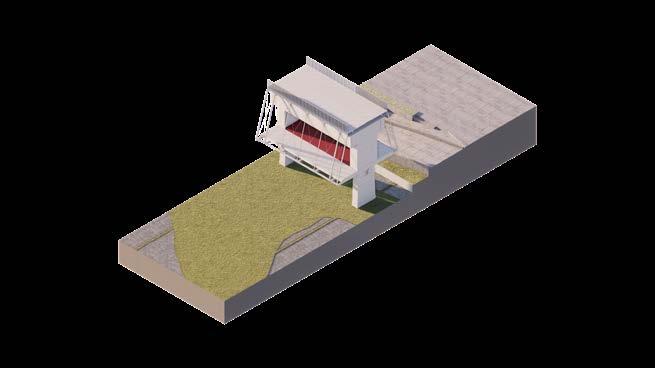 - THE COALCRANE BRIDGE
- THE WALKWAY
- THE HANGING STRUCTURE
- LIGHTWEIGHT SLAB
- INSULATION OF THE BRIDGE
- PODIUM FOR THE TATTOO ROOMS
- TATTOO ROOM ENCLOSURE
- FURNITURE
- POLYCARBON FRAME
- POLYCARBON FACADE
- LIGHT FIXTURES
- THE COALCRANE BRIDGE
- THE WALKWAY
- THE HANGING STRUCTURE
- LIGHTWEIGHT SLAB
- INSULATION OF THE BRIDGE
- PODIUM FOR THE TATTOO ROOMS
- TATTOO ROOM ENCLOSURE
- FURNITURE
- POLYCARBON FRAME
- POLYCARBON FACADE
- LIGHT FIXTURES
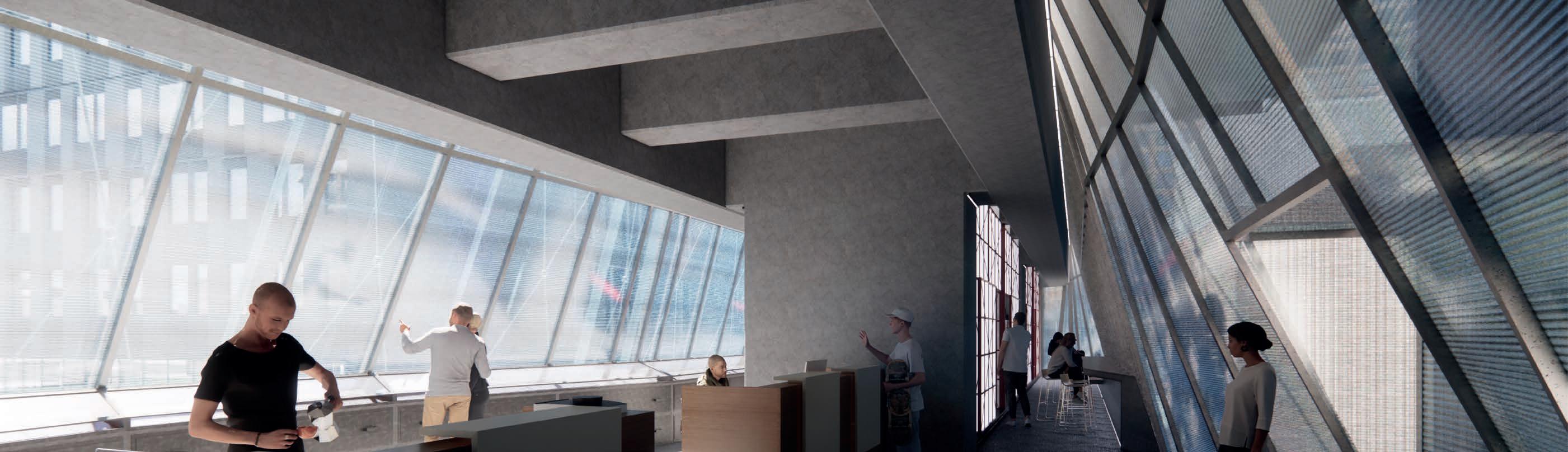
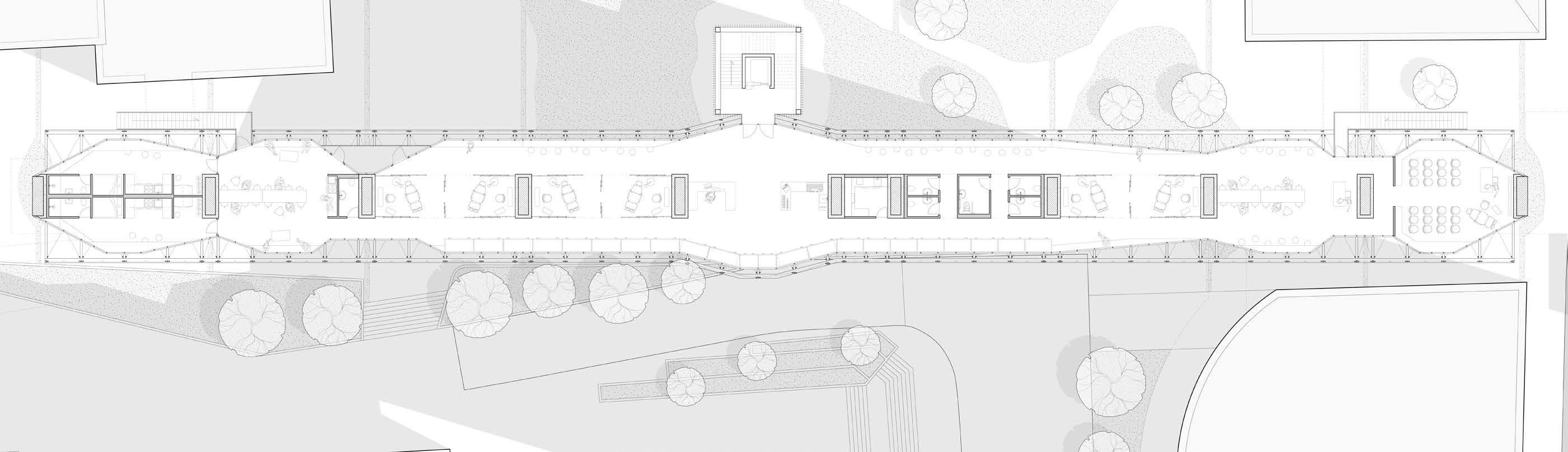
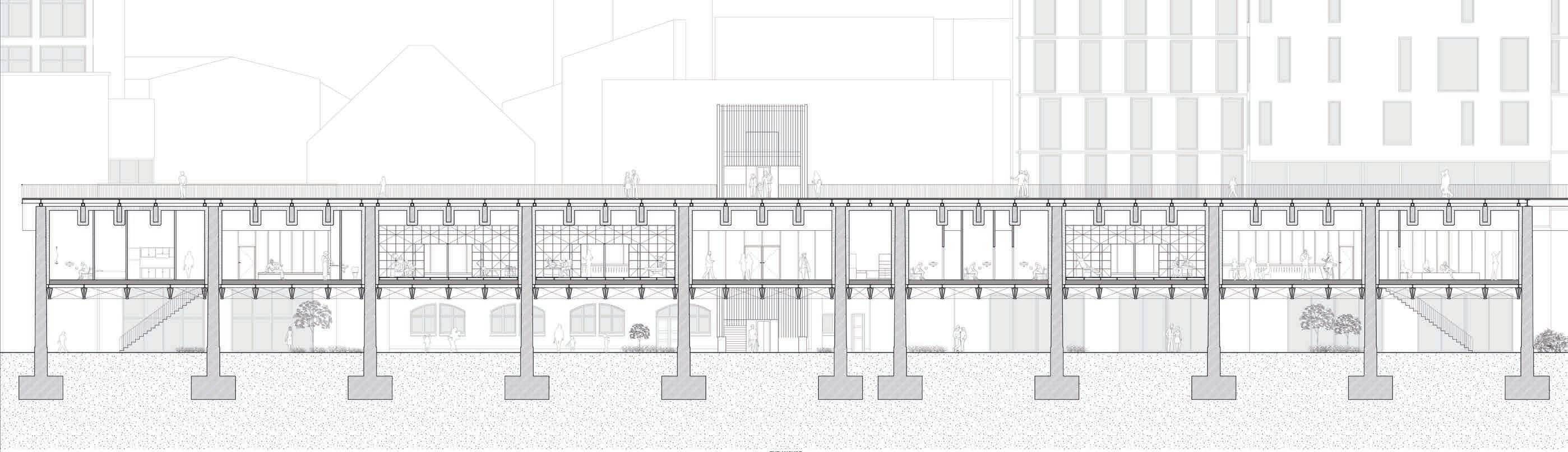
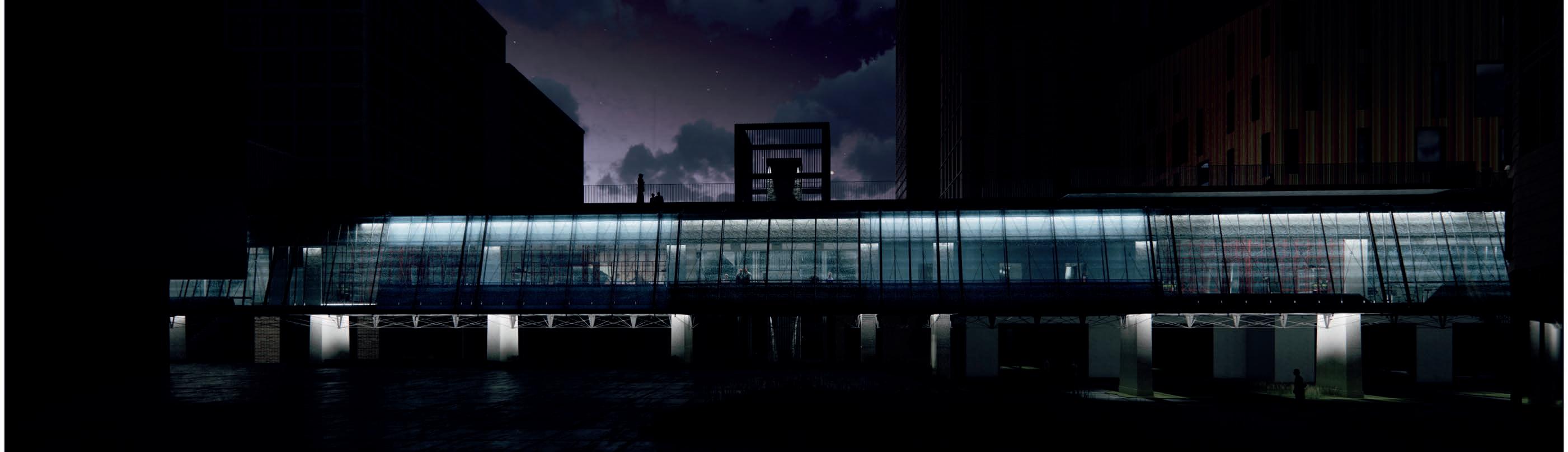
The tattoo industry and harbors share many cultural links, it was with the sailors that tattoos were brought to modern society. And most often in the beginning it was only sailors and harbor workers that got tattoos in Denmark. And as the first tattoo shop and the South harbor of Aarhus opened within a few years of each other, they undoubtedly have a shared history as they consisted of the same group of people.
And for the contemporary connection, the project will situate itself within an area that will hold many different creative and artistic groups and will be standing as an opposition to the more commercial character that will also be brought to the area. And the project will also relate itself to the different socially vulnerable/disadvantaged groups that also will be inhabiting the South harbor in the future. As people have historically been marginalized and looked down upon, by the established society, and socially disadvantaged groups hold one of the highest percentages of tattooed people. So, the South harbor area will in the future be a space in the city where people are allowed to be and express themselves without being marginalized.
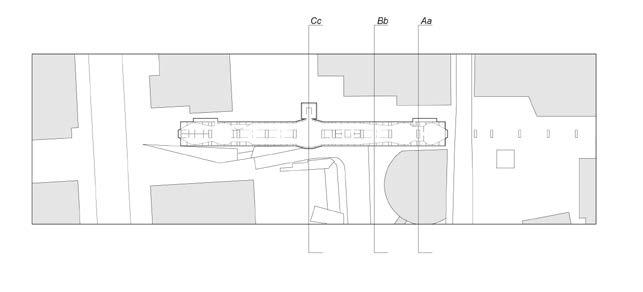
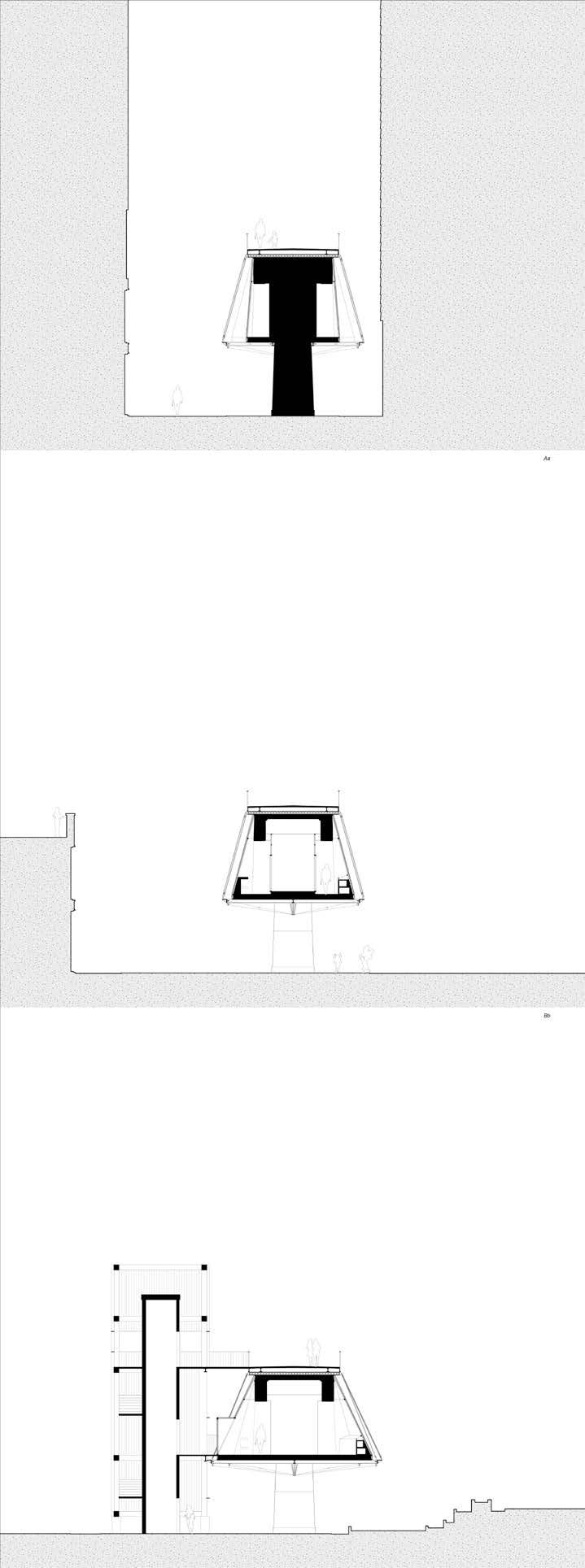
This project will be the connecting link between the artistic and creative group, the socially vulnerable people and the commercial side of the future South harbor, and by that melting the different cultures together, and form a shared life that anchors them all to the south harbor.
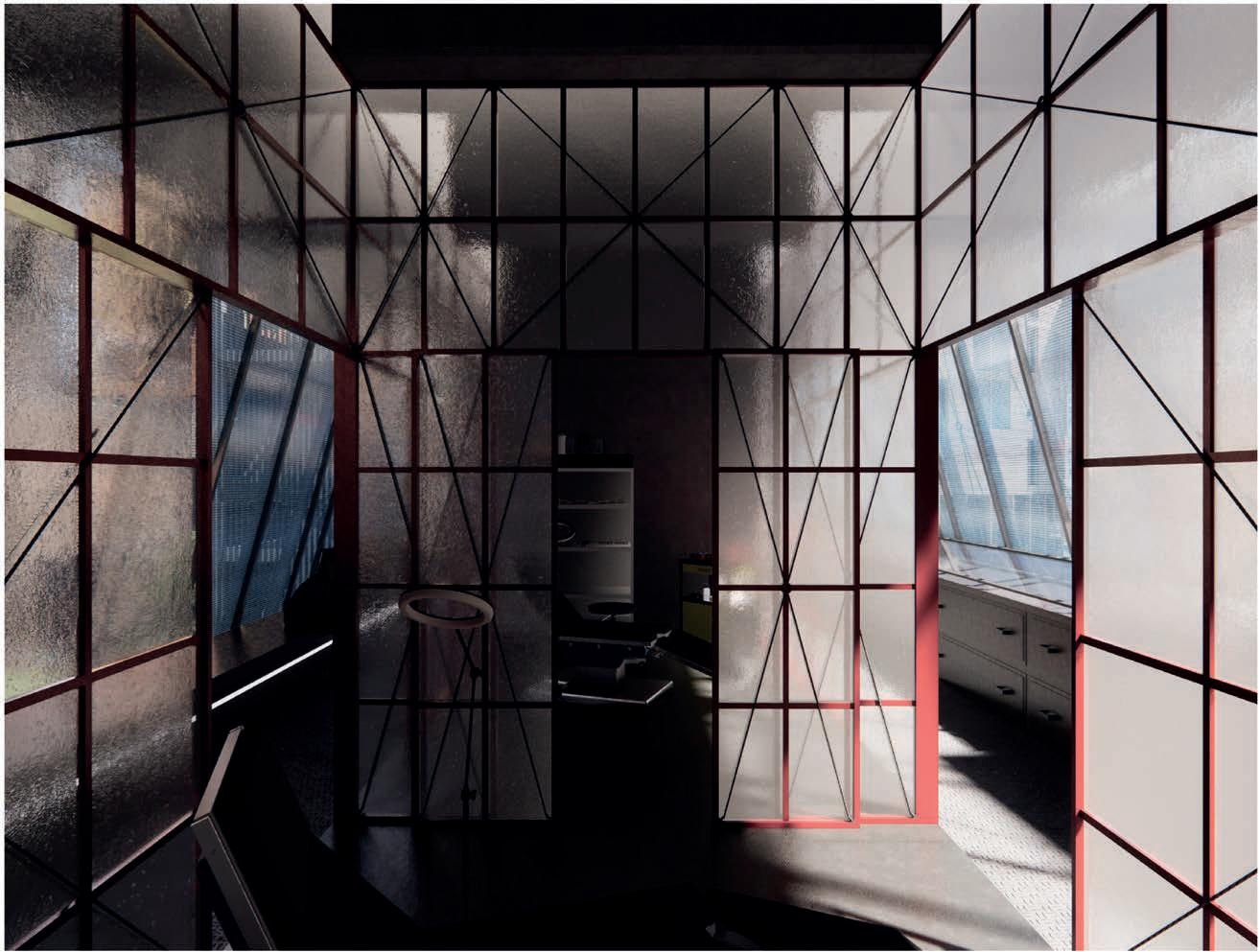
As a tattoo stand as a certain moment and feeling in a person’s life, the South harbor will also still stand as a memo of what used to be.
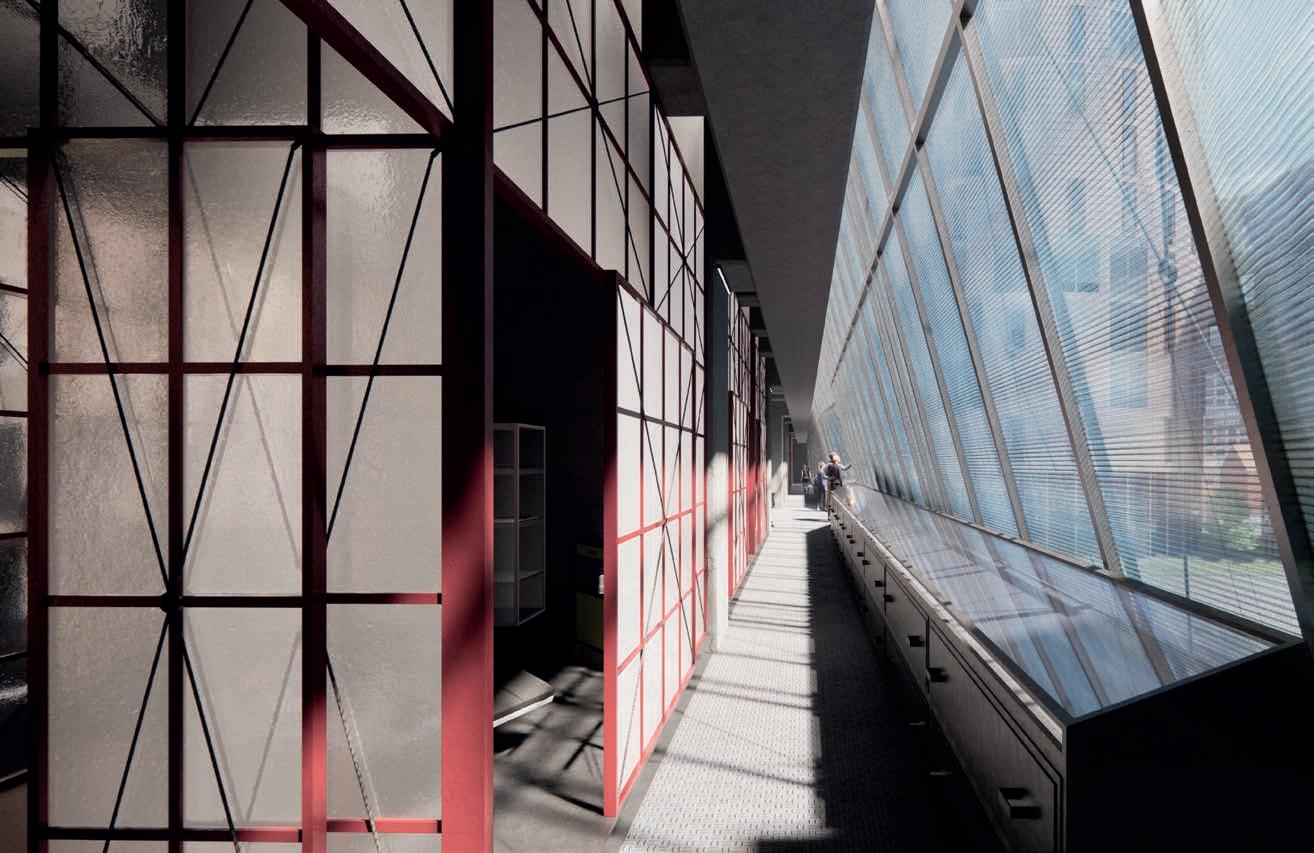
The aim of this project is to explore an architecture that can help bring the experience and what it means to be part of an underground culture, exposing the history and the culture of it, and create a stronger connection with it and the city. By questioning the way we as a city, have been dealing with and treating them throughout history. And by looking at how they have been navigating themselves in the urban context of the city. And create a space in the city where they can belong and put a mark on the city themself.
So this project will not only try and transform an area itself but also preserve the qualities of the existing built and cultural. By bringing in a new culture that shares some cultural links with the cultures that used to inhabit the area and the new one being introduced to the site. To create a greater sense of belonging and ownership of a culture and place.
09. SEMESTER
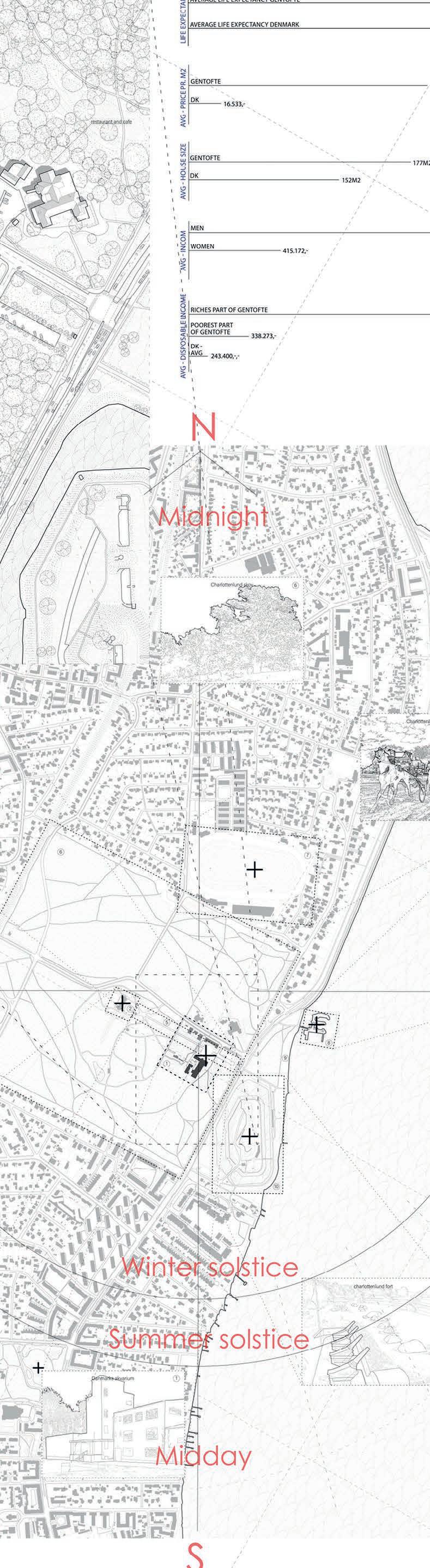
GENTOFTE / CHARLOTTENLUND
DENMARKS AQUARIUM TRANSFORMATION GREEN SCHOOL
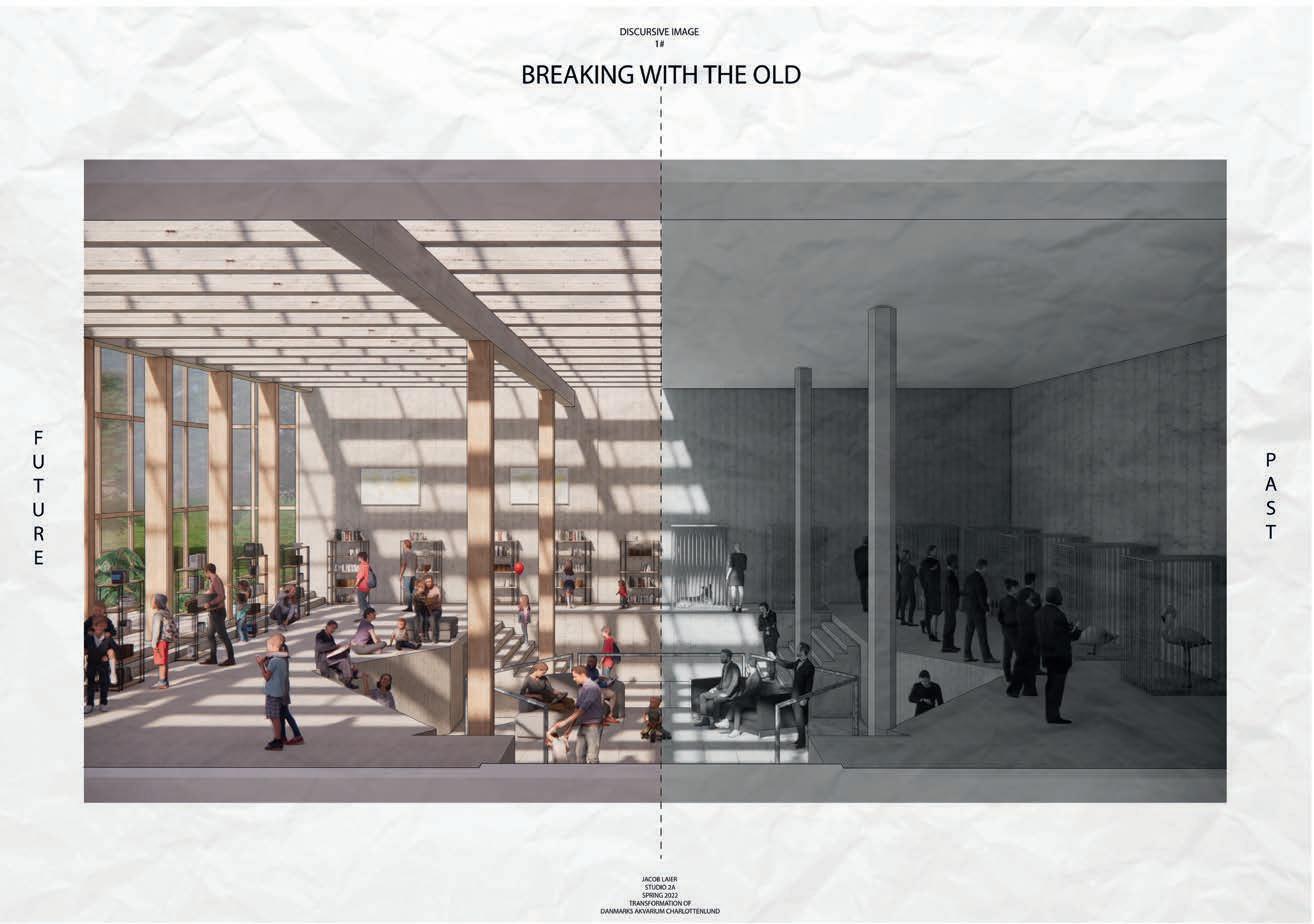
BREAKING WITH THE OLD THROUGH - ILLUMINATION
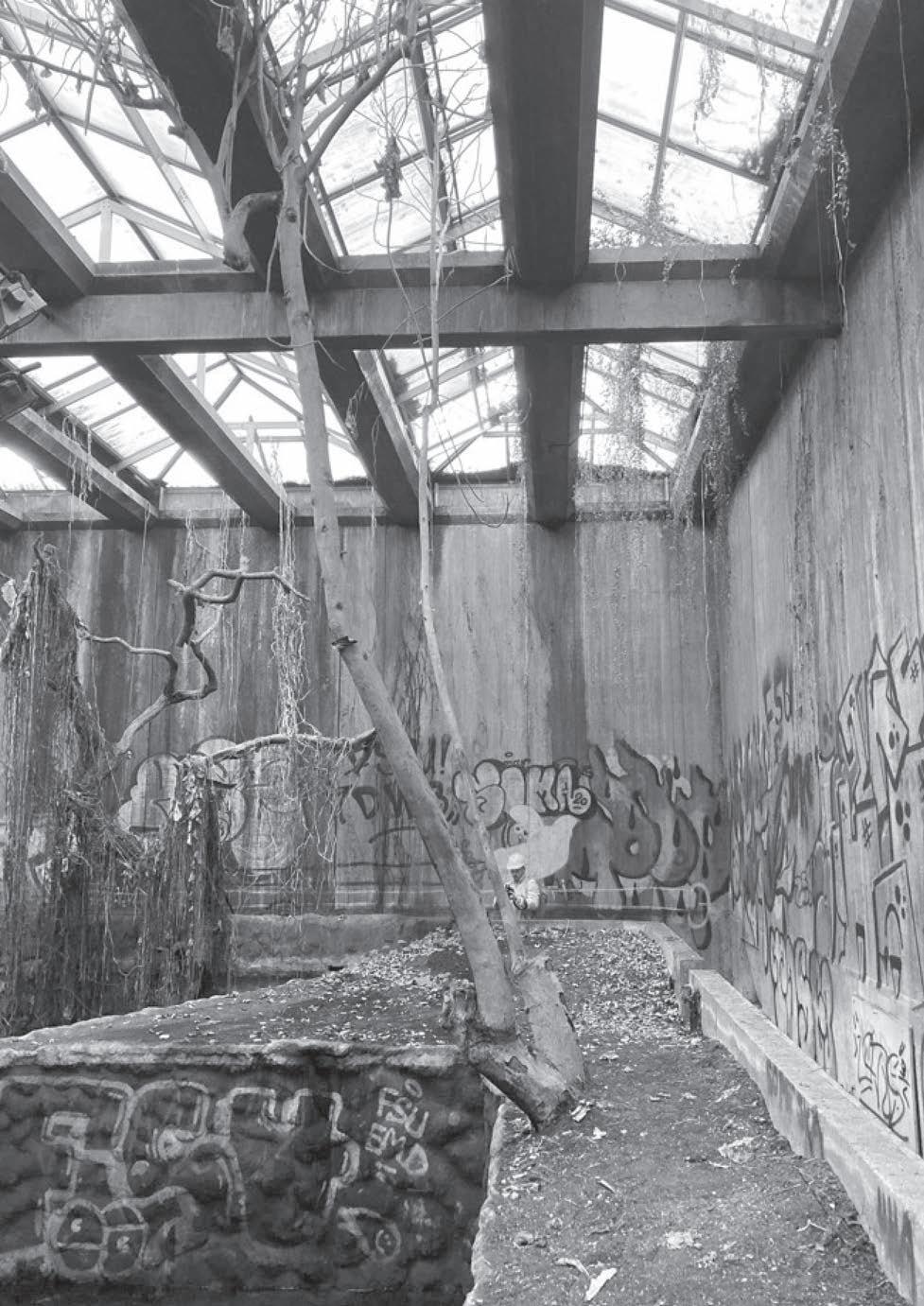
A new learning space and office that will connect people with their surroundings.
As humans get more and more disconnected from their soundings, and where knowledge is more often second-hand experience being taught through a screen. This project seeks to break with that to re-establish a closer connection to the close surroundings and learn kids by giving them their own first-hand experiences of the world of the water and the forest.
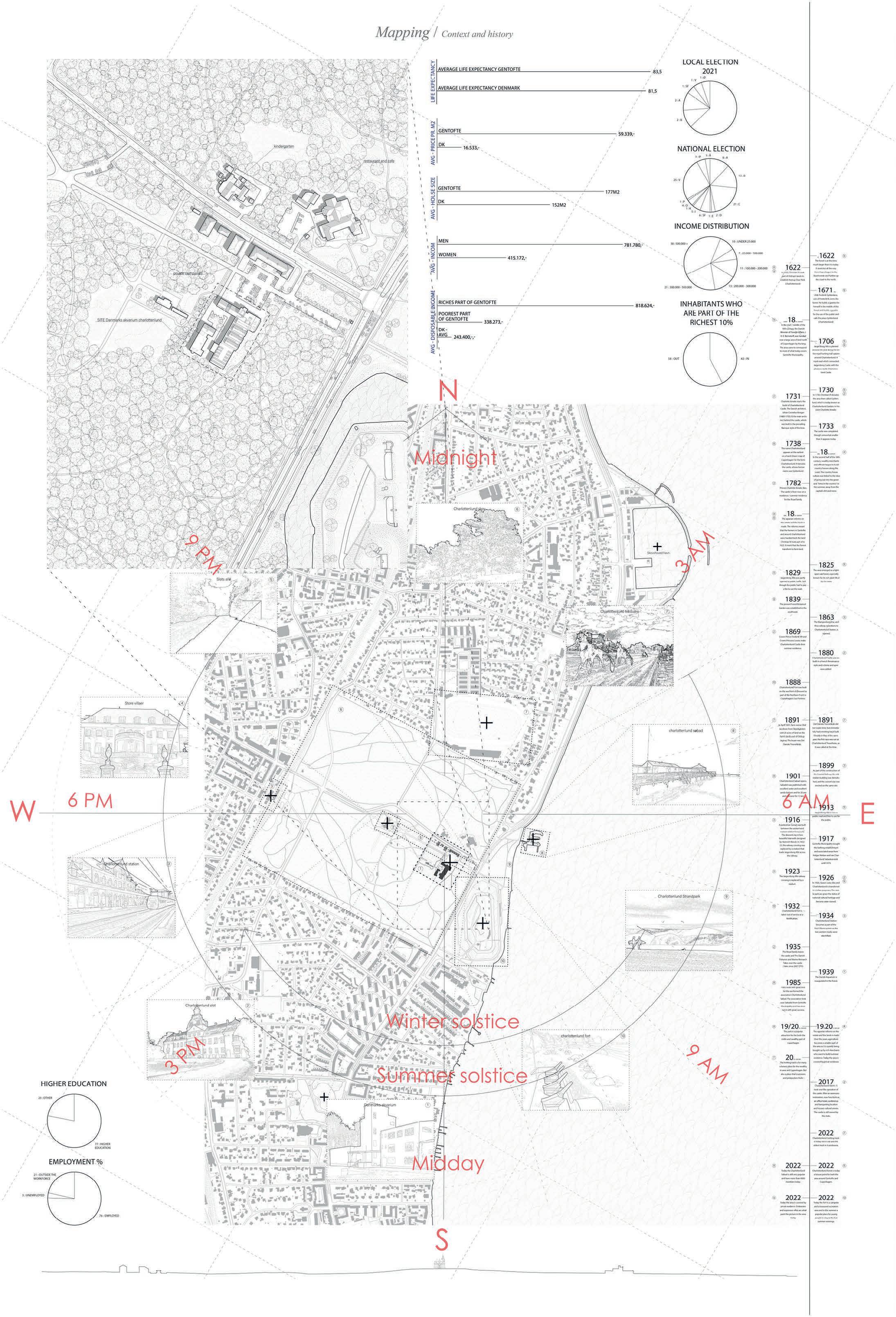
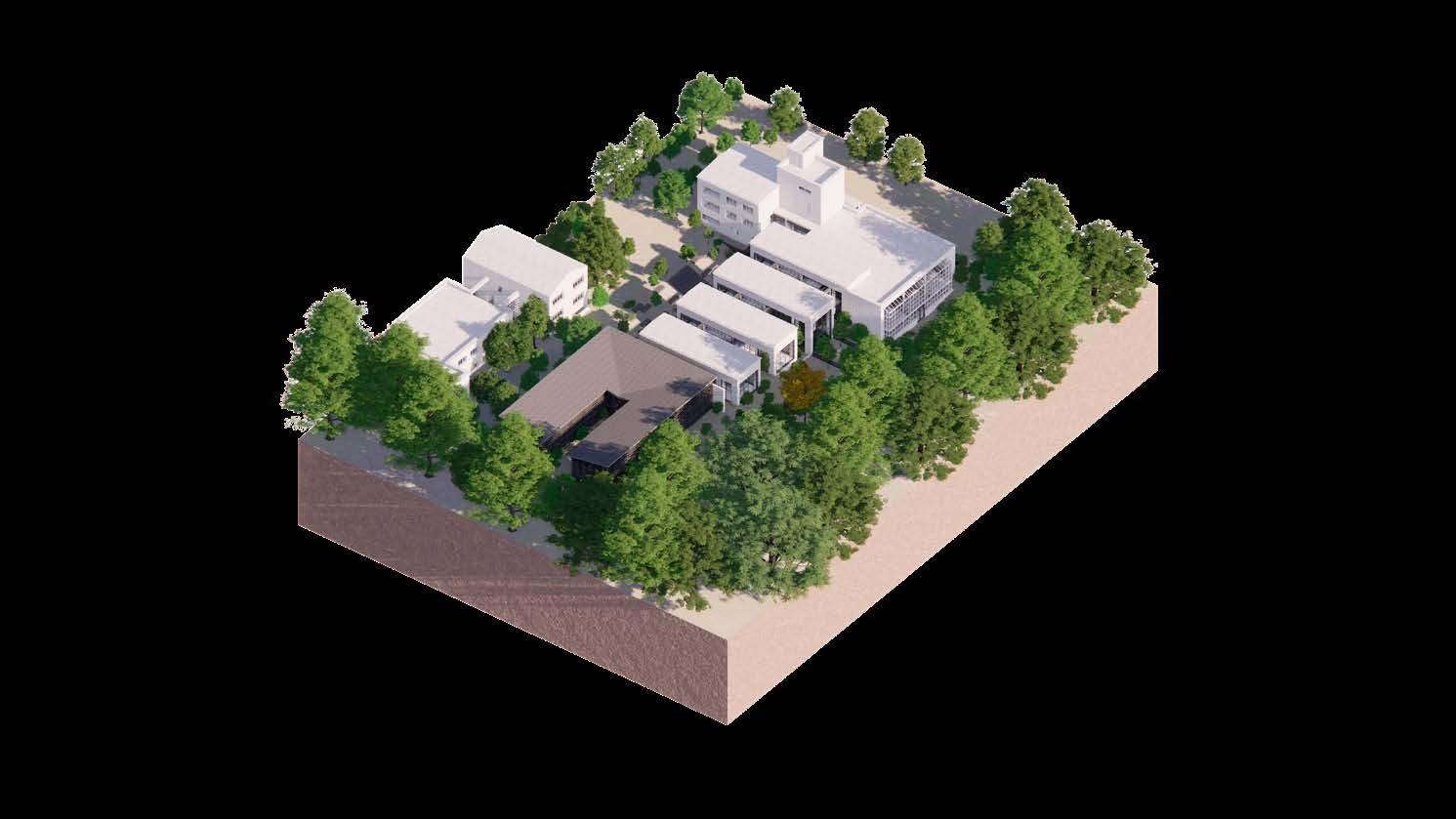
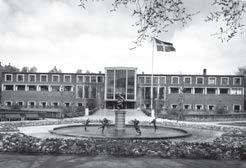
The project is situated in the old Danish aquarium building in the Danish city of Charlottenlund just north of Copenhagen and right out to the Øresund sea and in the Charlottenlund Forrest.
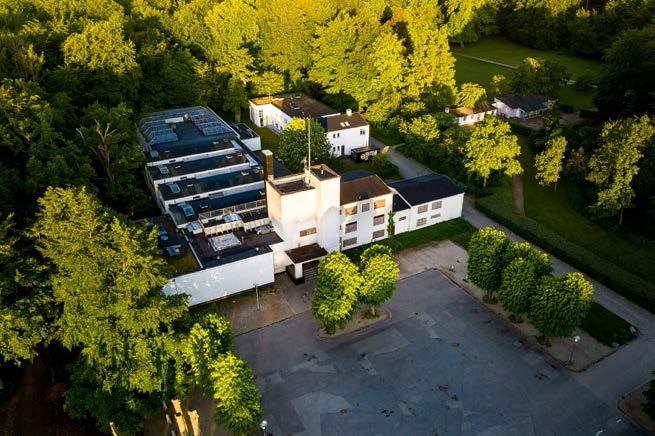
The building itself was built in the 1930s in a functionalistic style
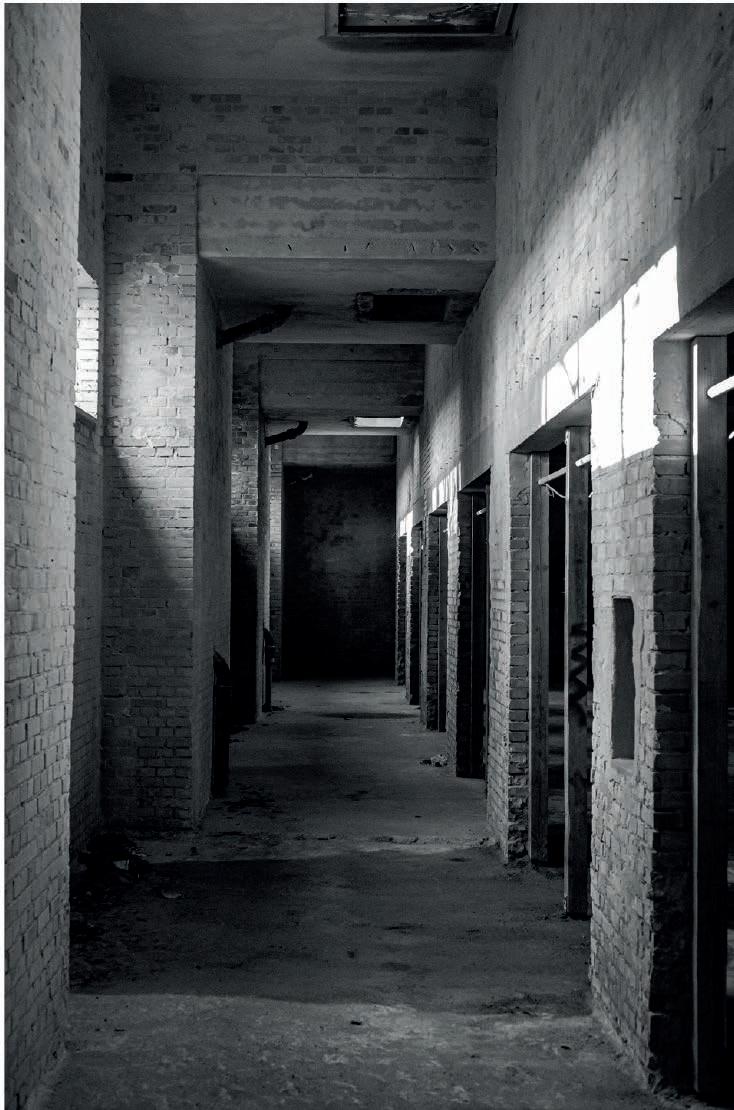
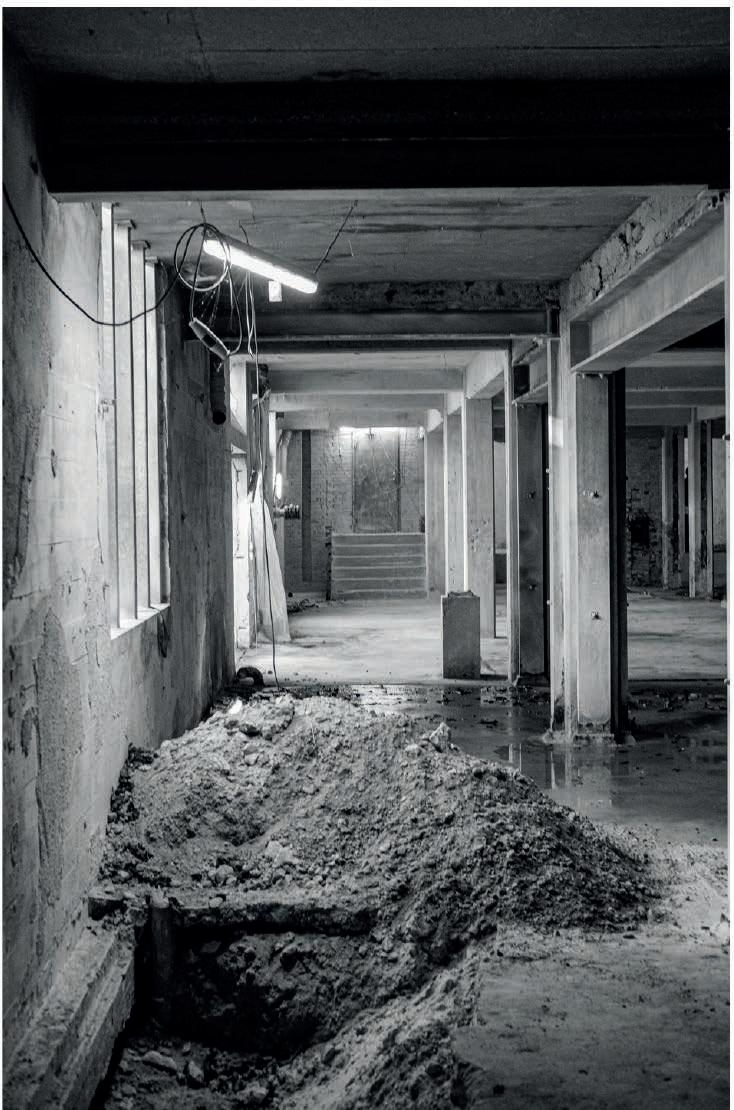
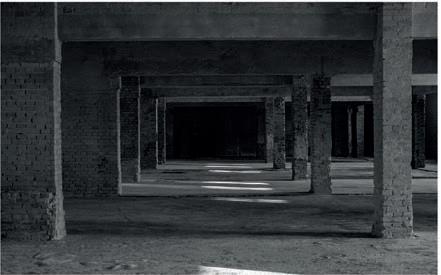
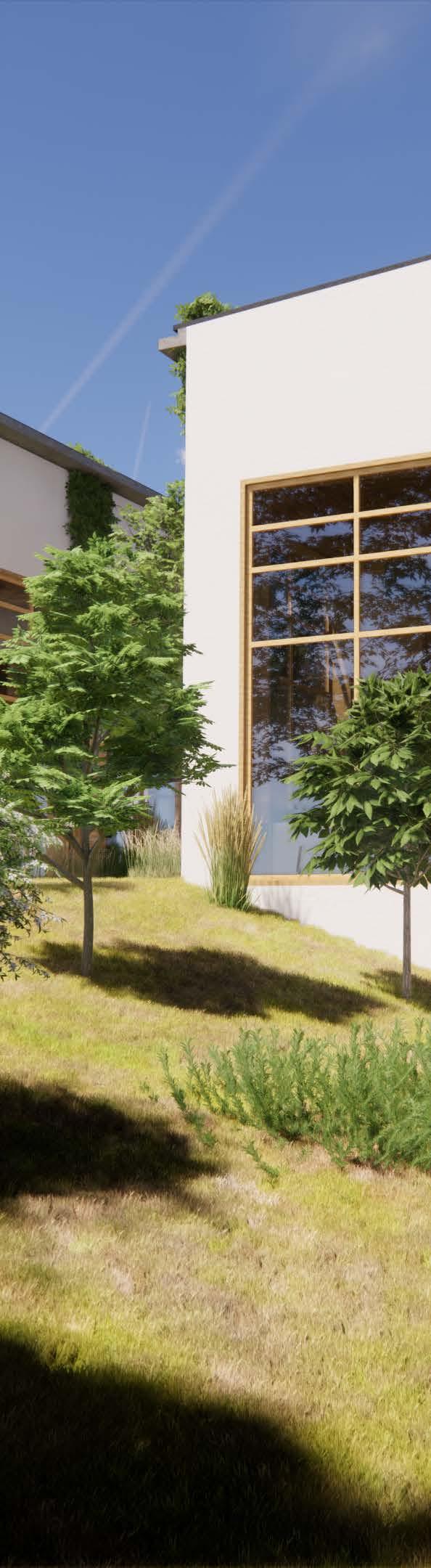
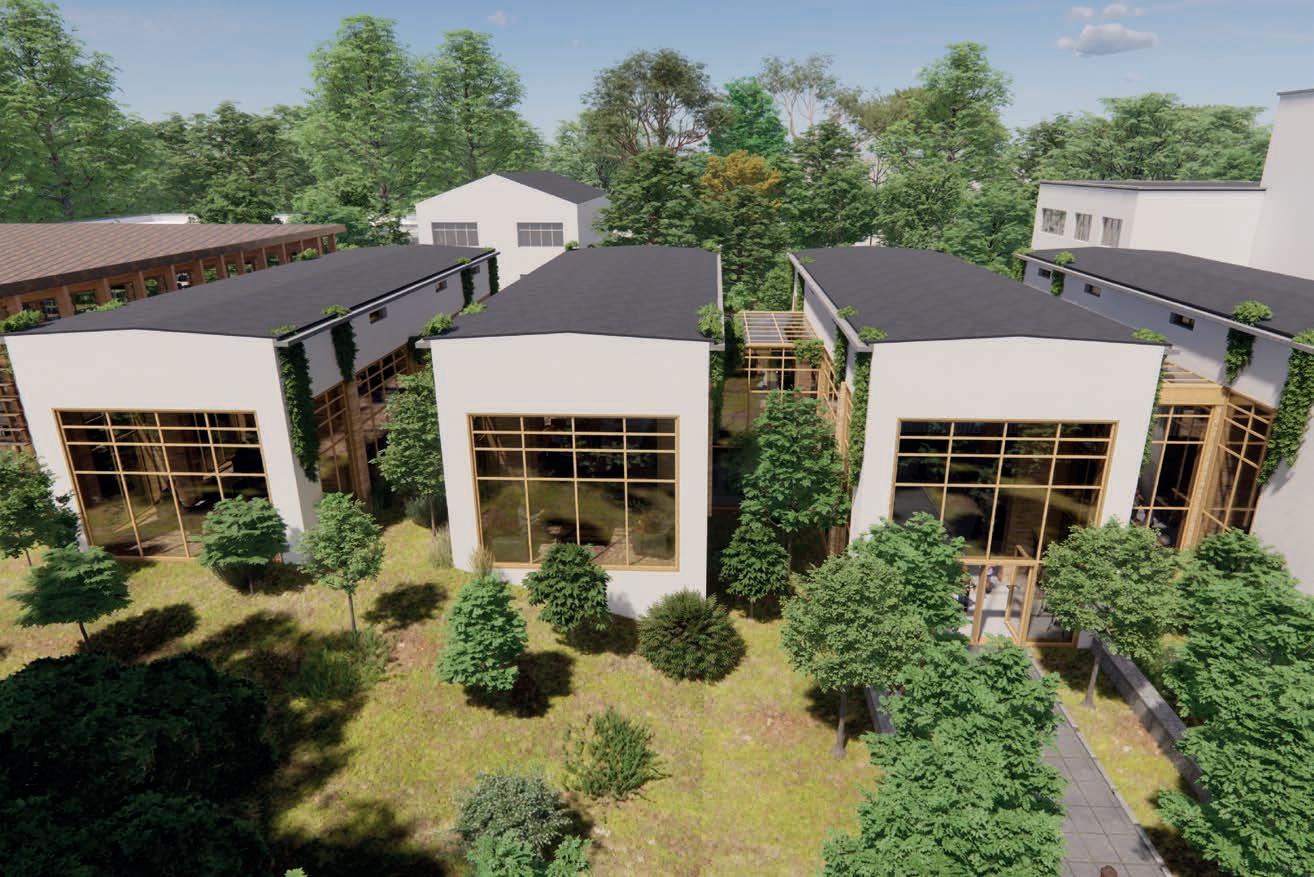
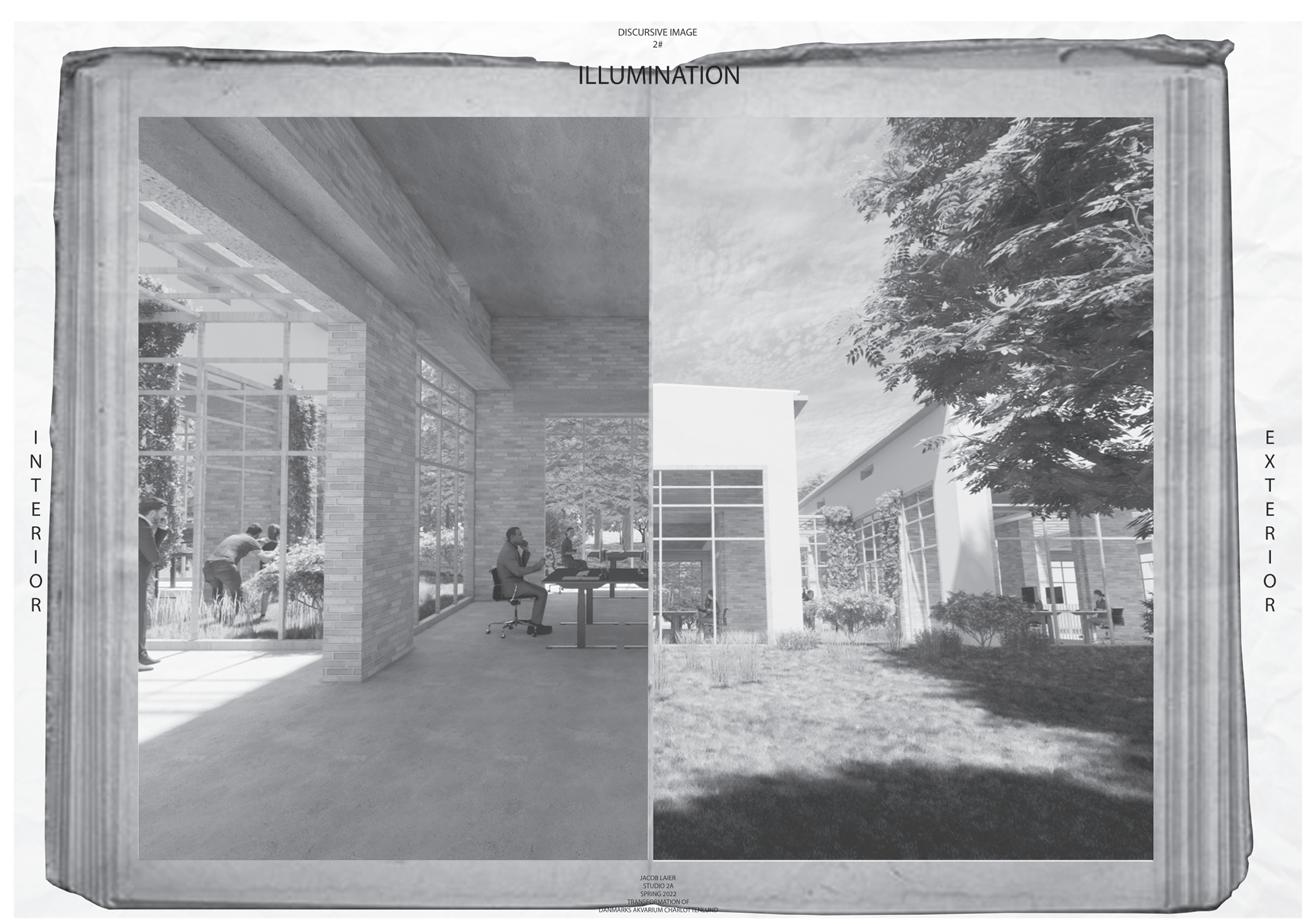
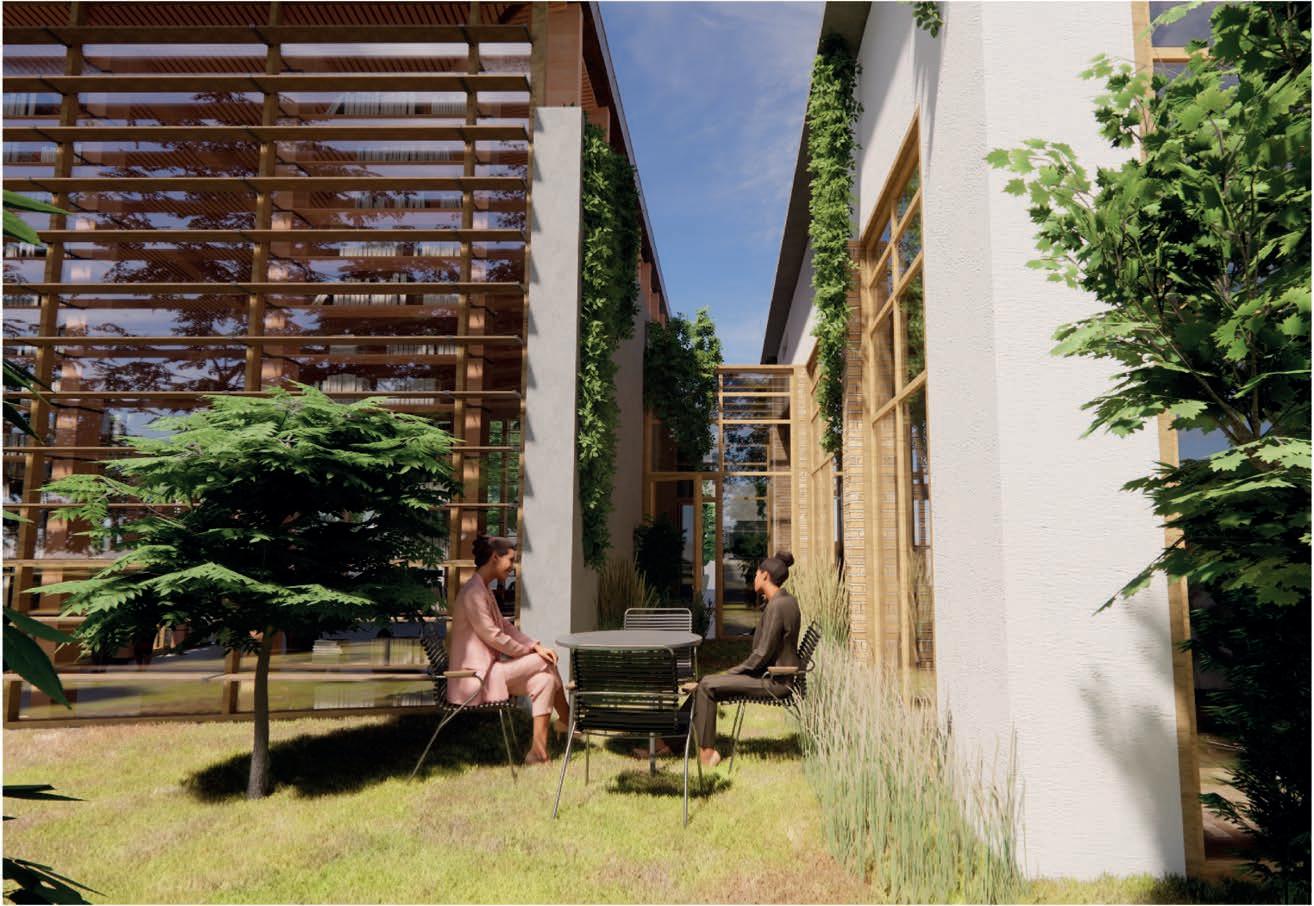
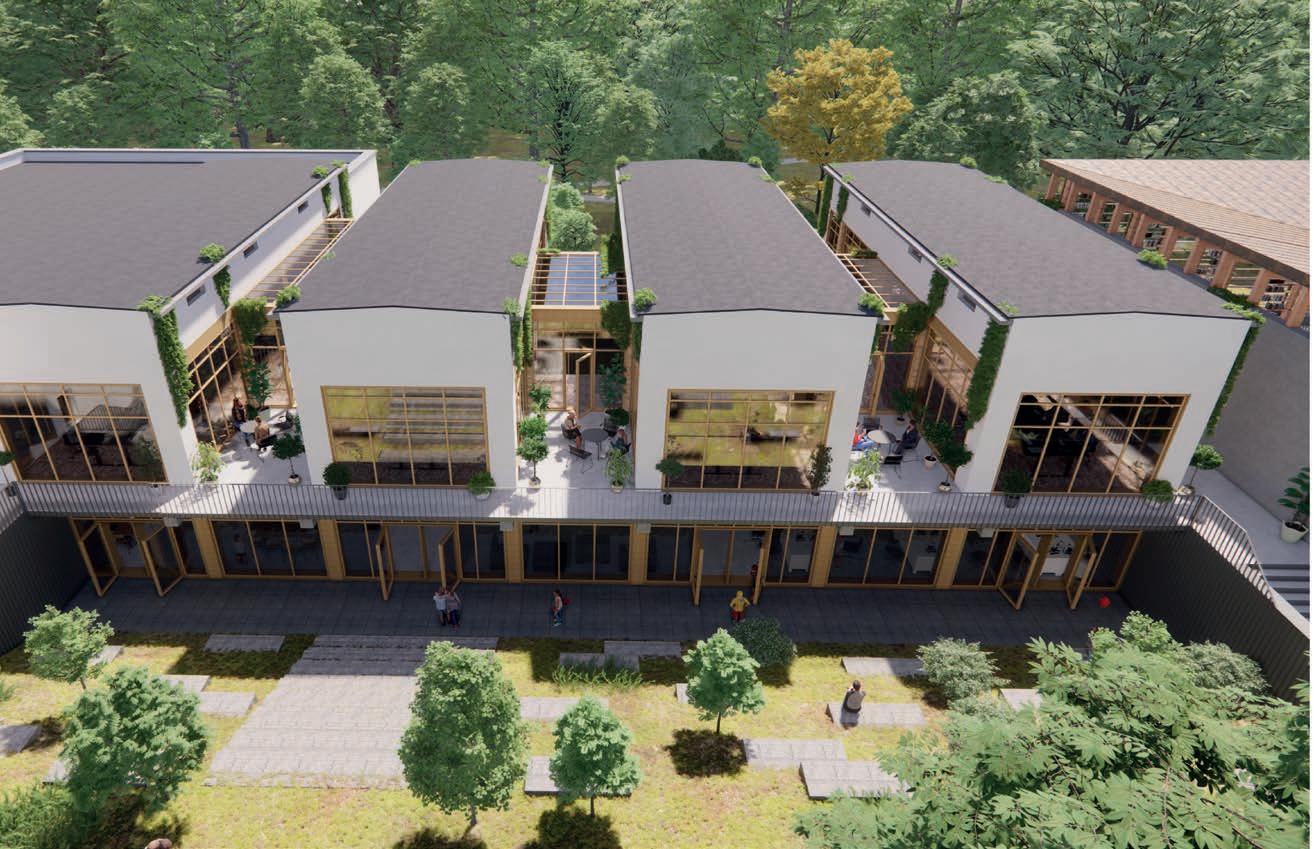
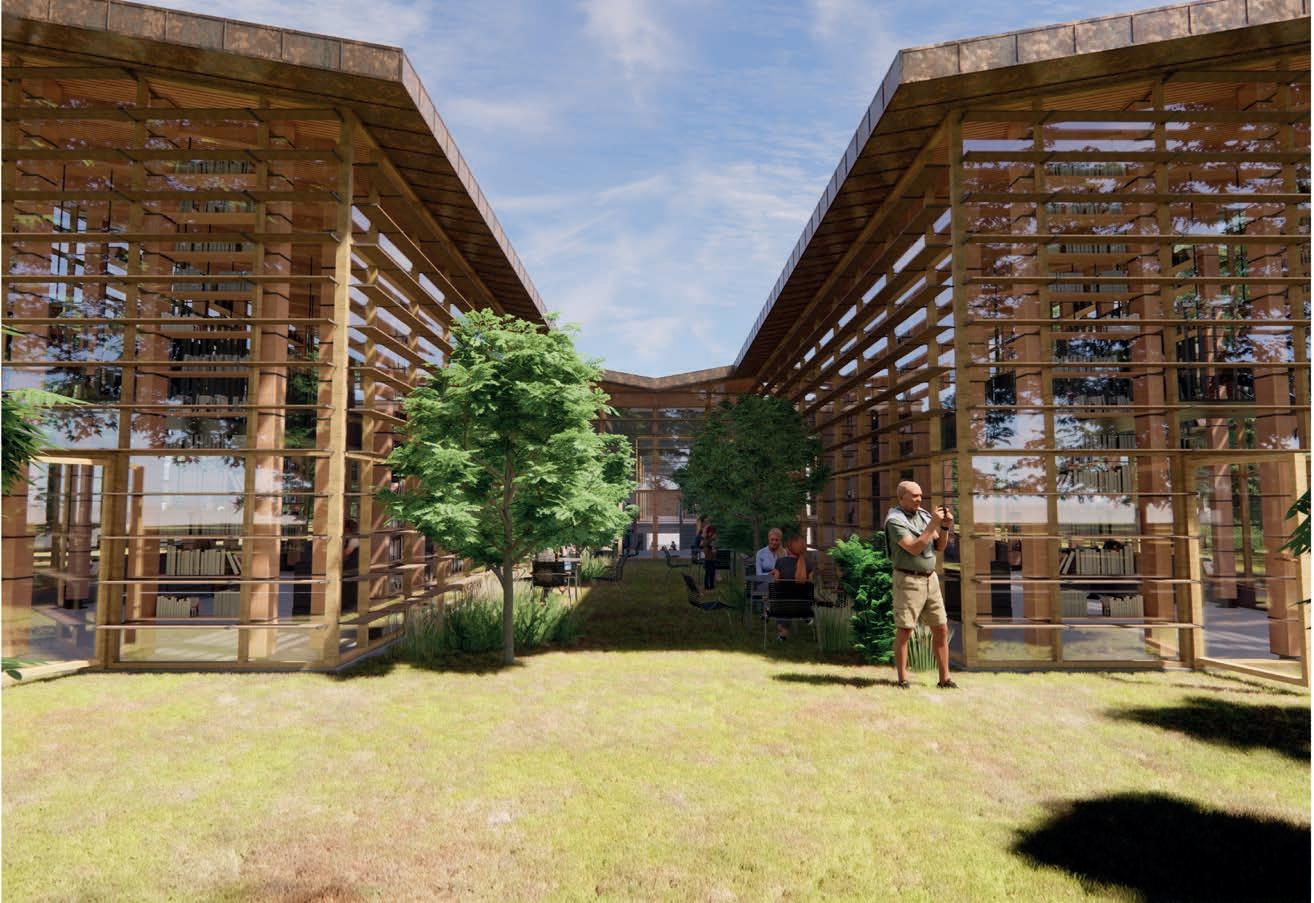
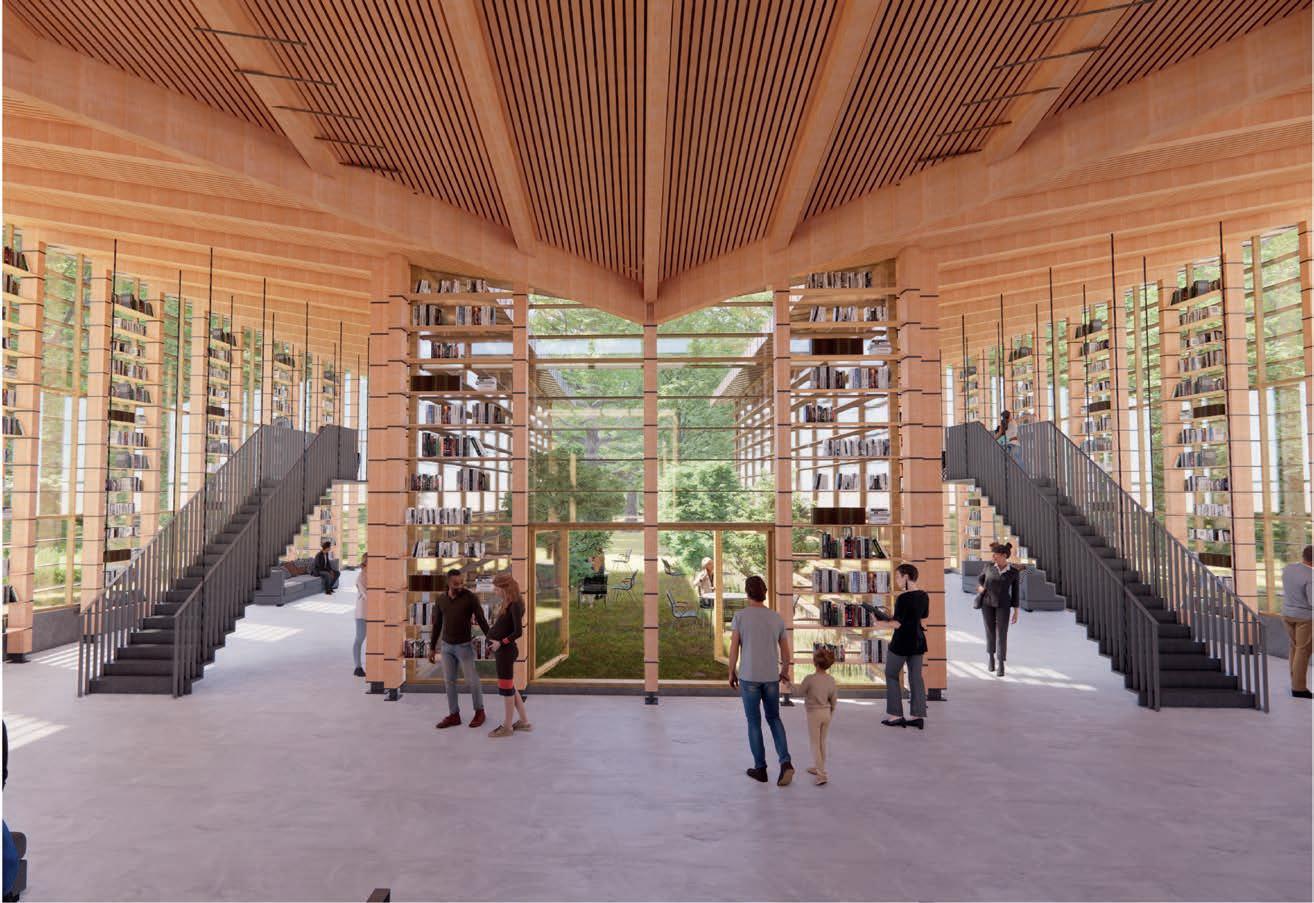
The project is transforming the now abandoned old Danish aquarium building, from a very closed introvert building into a very extrovert building inviting the surroundings inside.
The new program that I suggest for the building is to relocate Green schools office to the old aquarium building, and give them a space where they can invite school classes to come and make workshops for them and teach them about the water and the forest
Green school is an organization that develops and provides educational material for elementary and high schools in Denmark to teach about nature.
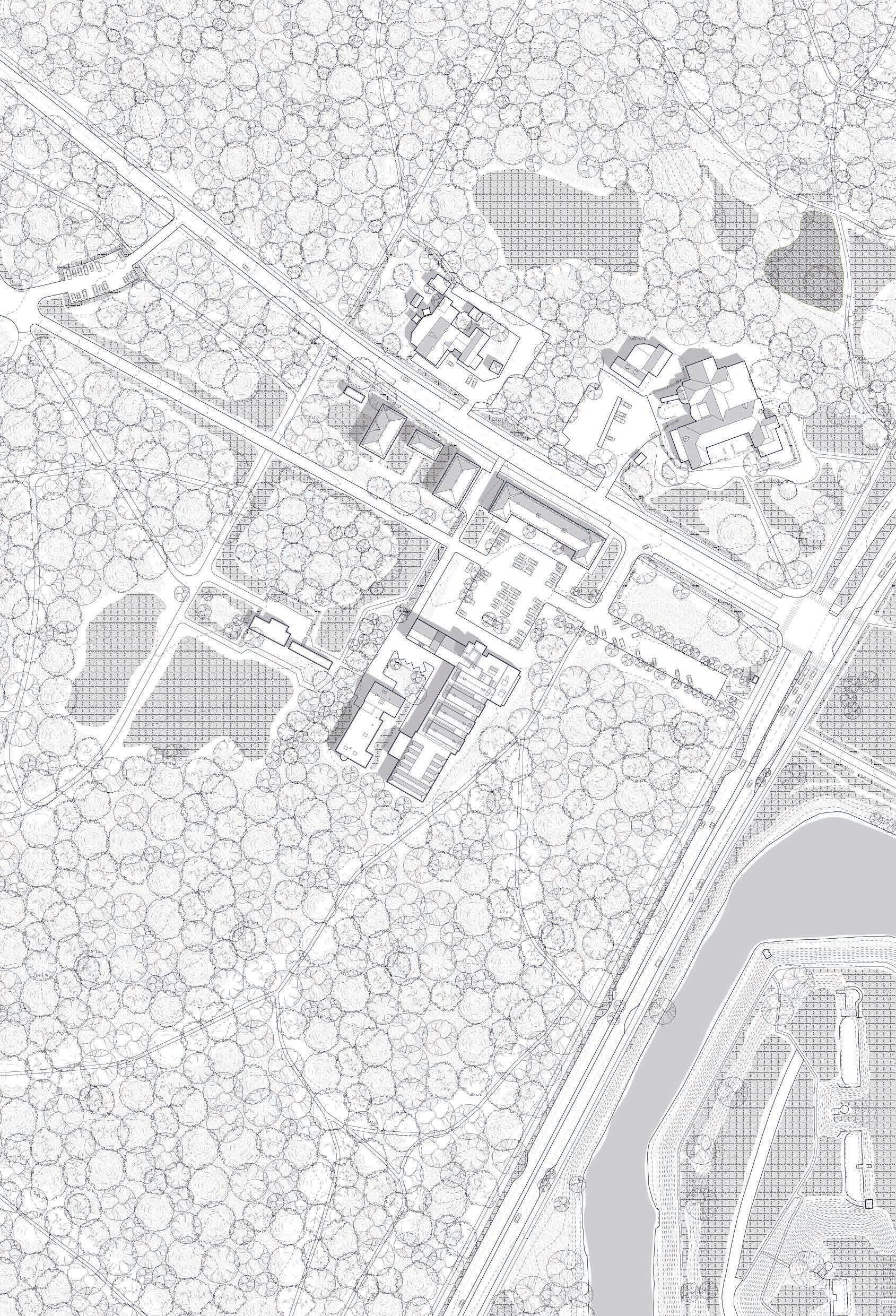
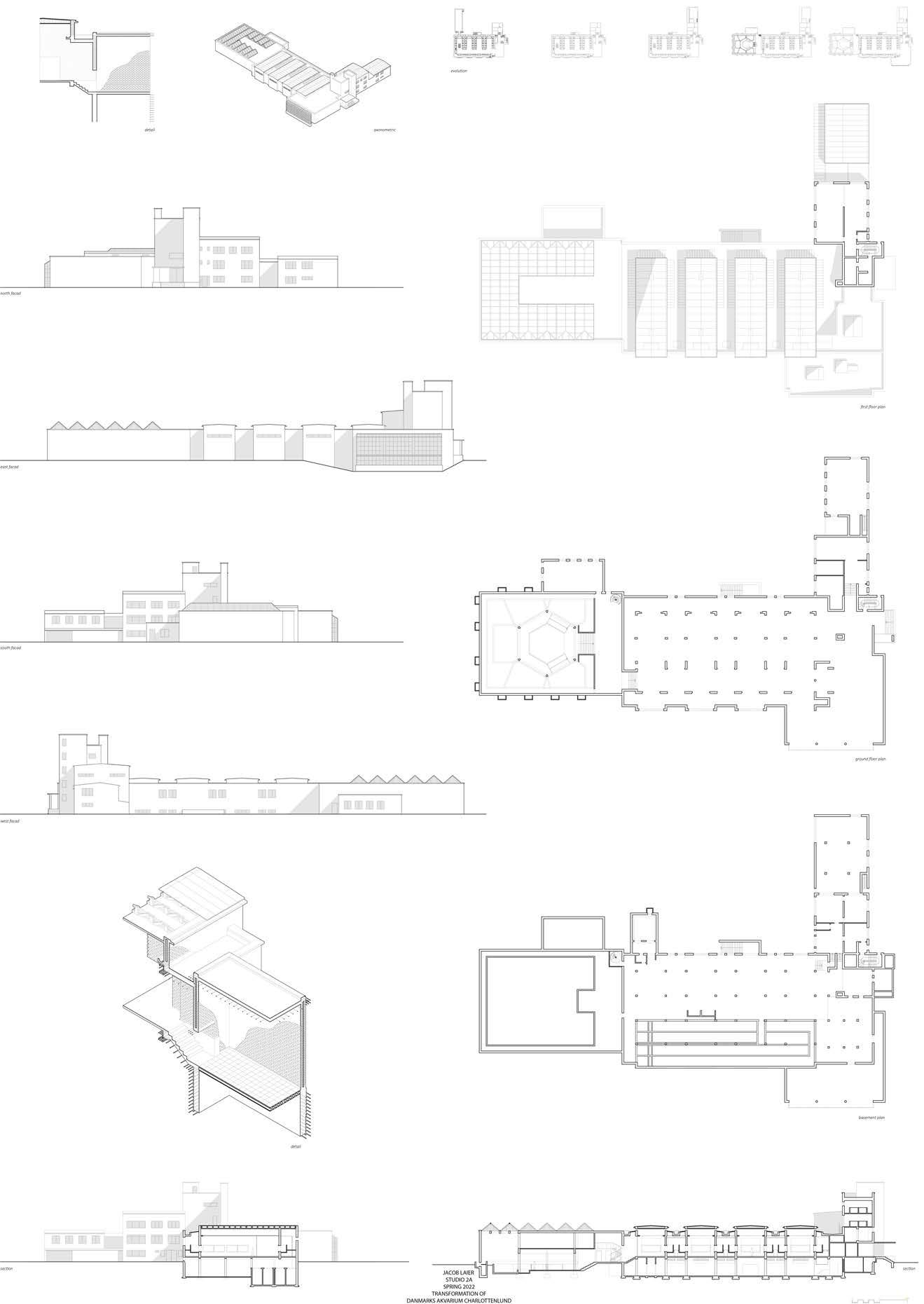
Since the first settlements in Denmark humans located themself right next to the water and the forest. The water and the forest were the biggest source of food and the water provided an important way of transportation, and the forest also provided material for construction, tools, and fire.
By these things essential to sustain life. people were all very connected to the water and the forest, as they lived by it were fed by it, and were traveling on it. It was the two of the most important part of human life since the first settlements in Denmark.
But how connected are we actually with the water that surrounds all of Denmark and the forests within the land now? How much do we really know about the water and the forest?
In Denmark, the furthest you can get from the coastline is 52 km, and have forests spread around all over the landmass, which makes both very accessible from everywhere. And yet most people still know very little about it, and it seems like a different world to many. How come most knowledge people have, comes from second-hand experiences like books, tv, the internet and aquariums. And not from their own experience.
I think it is due to the way we live in urban cities and the way we teach in school. The way we use the water and the forest primarily as a leisure place, going to the beach in summer, taking a through the forest or at the coast, sailing on top of the water. And how we nowadays get our seafood from the supermarket and the wood from a store. All these things have been part of creating a more distant relationship with the water and the forest and the world it beholds.

Over time our connection with the water and the forest has changed, from something of daily importance and necessity to an optional choice.
We have forgotten the wonders and importance of the surrounding world of the water and the forest. And we have thereby detached ourselves from it. What used to be an integral part of living so close to the water and the forest, is now only deeply experienced by a few, that still is connected to the water and the forest on a daily basis.
The daily tides, the seasonal fishes coming at different times of the year, the algae growing in the summer, the trout and salmon coming up the rivers to lay their eggs. The plants getting greener in the spring, the squirrel collecting acorns, the birds building nest in the treetops. It is all very strange things to most people, even though it used to be part of our daily life.
With this project, I wish to investigate how architecture has been dealing with the water and the forest and teaching/knowledge/storing knowledge in architecture. I believe architecture can help facilitate and re-establishing a closer connection to the water and the forest again and become a mediator between people and the water and the forest.
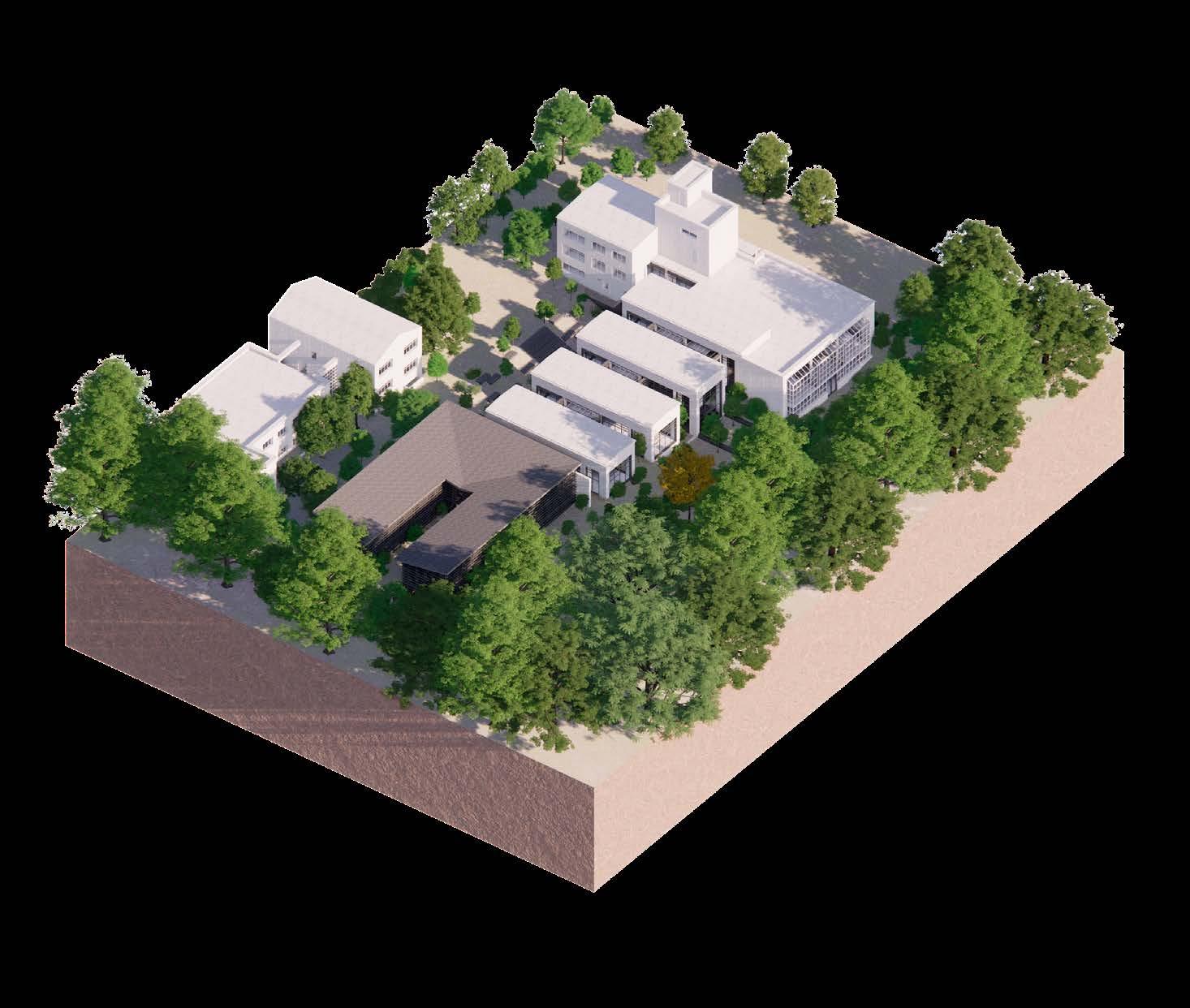
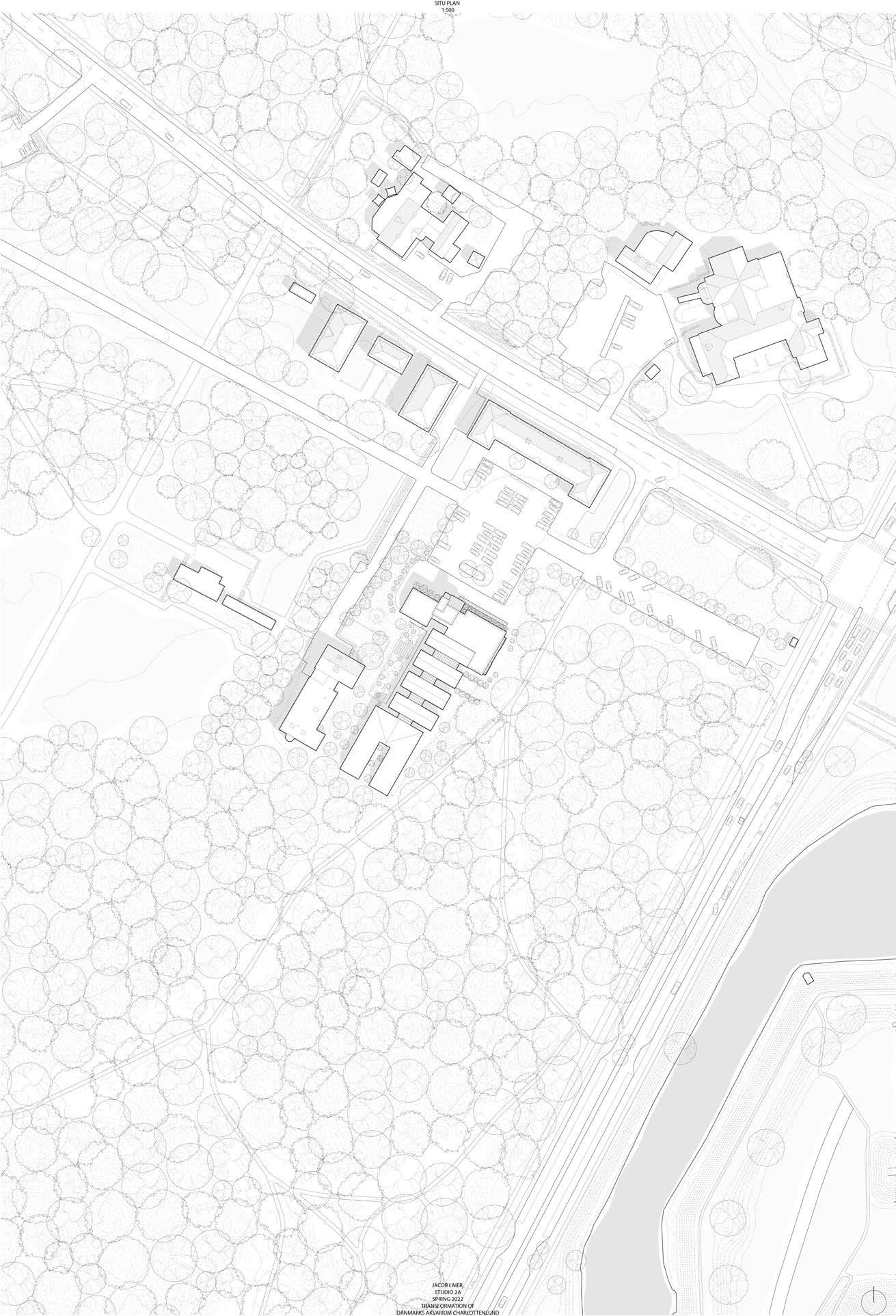
The project is situated in the old Danish aquarium building in the Danish city of Charlottenlund just north of Copenhagen and right out to the Øresund sea, it has around 75.000 inhabitants.
The name Charlottenlund has its origin in princess Charlotte Amalie, who was the daughter of Fredrik IV and sister of Christian VI, who rebuilt the manor Gyldenlund into Charlottenlund castle in 1733 and named it after the princess. Charlottenlund is one of the wealthiest areas in Denmark and houses many Danish celebrities, business leaders, and many other wealthy families and individuals.
The aim of this project is to explore an architecture that can help bring the experience of being closer to the water and the forest and create a stronger relationship with them. By questioning the way, we have been teaching about it and where we get our knowledge about them. With this proposal, I have made a building that opens up to the closer environment and invites it in, and establish a closer connection to the surroundings.
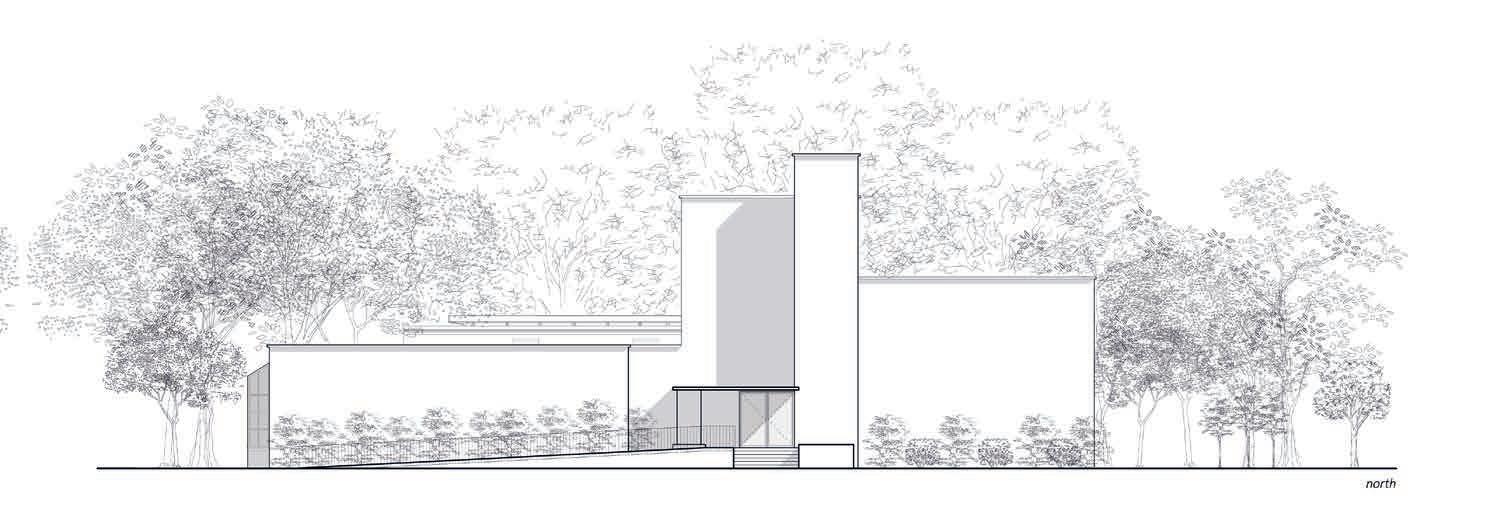

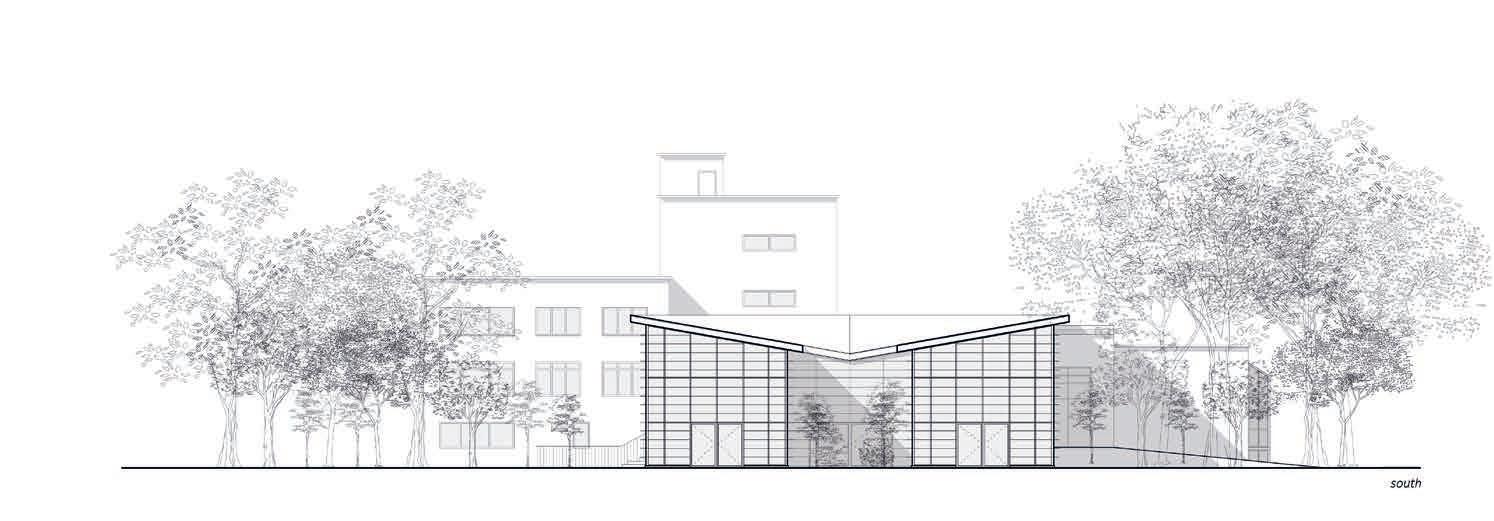
The project will be situated in the old and now abandoned Danish aquarium that took living organisms out of their natural habitat to exhibit and try and teach people about it.
This project suggests a new way of teaching and connecting people with the world of the water, and the world of the forest.
Instead of looking in a book, a screen, or hearing it from someone, this project seeks a new way of looking out at the world and getting people to be out there and getting their own experiences.
Many mansions can be found along the Straandvejen, which begging in Hellerup and goes through Charlottenlund and further up along North Zealand’s east coast to Helsingør. The renowned Danish architect Arne Jacobsen inhabited and designed several houses in the area for example the Skovshoved gas station, the Bellavista residential complex, and the Bellevue theater, all designed in Jacobsen’s famous functionalist style.
Charlottenlunds largest recreational area is Charlottenlund forest which is located by the beach park and out to the Øresund sea. In the Charlottenlund forest, the old Danish aquarium building is located.
“The students’ education must contribute to children and young people becoming active citizens who, among other things, can take care of our nature and environment.
When students take the initiative and implement actions for a better nature and a better environment, they gain more commitment, knowledge, understanding, and a desire to make a difference.
The case I have chosen to work with is to make a new office space for Grøn skole and give them a place where they can invite school classes in to make workshops and teach them about the nature.
Green school is Denmarks outdoor council’s teaching program for education in sustainable development with nature, the environment, and outdoor life as a central focal point. What they precisely do and work with is to develop and provide, ways of teaching and material for Danish elementary and high schools. The Green school consists of 35 office employees. Their main object is to help the schools in teaching about nature.
Students must gain professional knowledge and insight throughout their schooling, but they should also gain experience in acting on current issues and translate knowledge and insight into concrete projects that help to make a difference.
Green School brings the school and the local area into play as a framework where students can experience contributing to concrete and tangible results that contribute to a richer nature and greater environmental awareness.

Grøn Skole is also a flexible framework that the individual educational institution can fill in to suit the local initiatives and focus areas “
 -Green school
Now the Green school office is located in the heart of Copenhagen far away from any nature, so what I am suggesting with this project is to move them closer to the water and forest themselves, to give them a closer relationship with what they try and teach other people about.
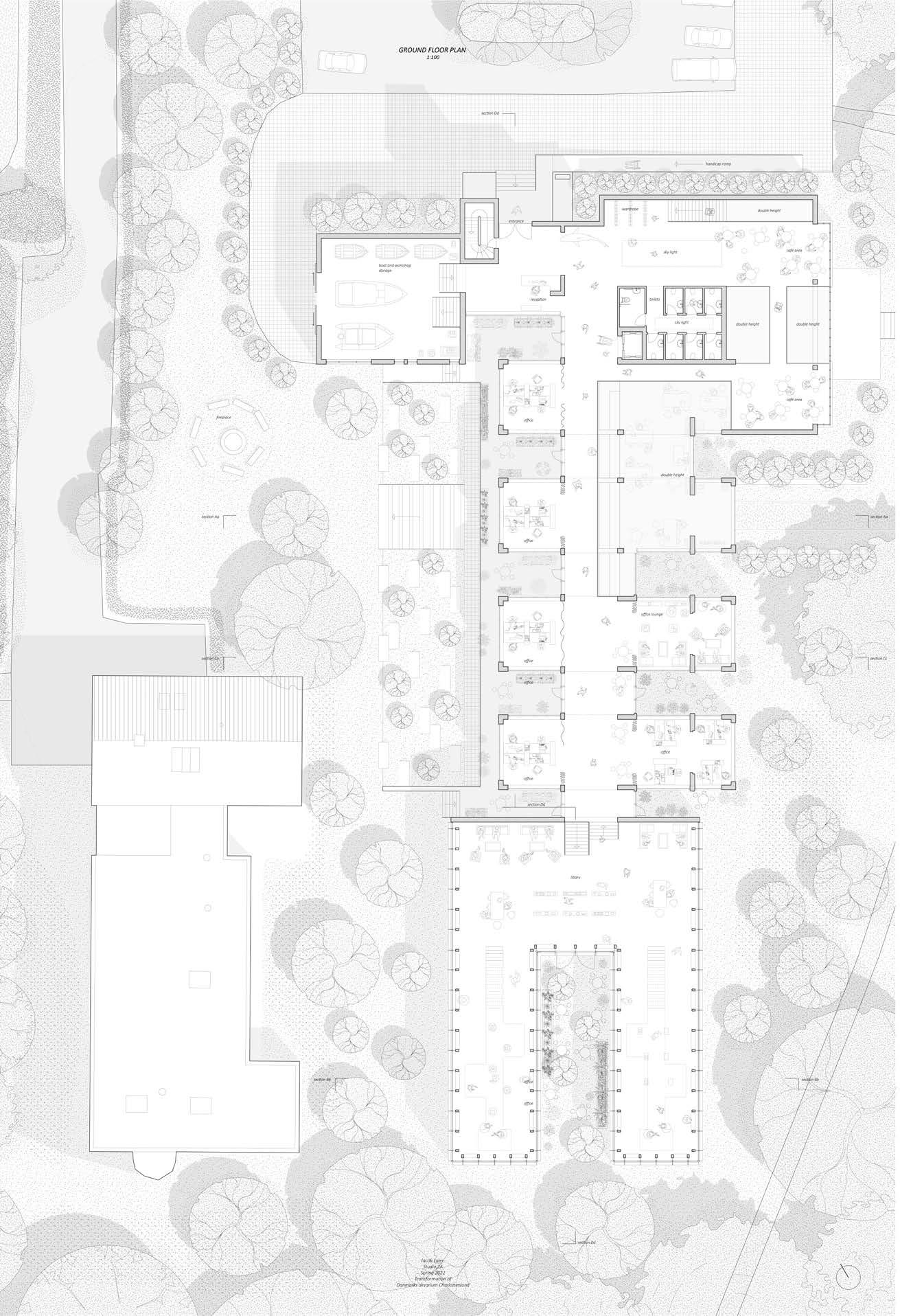
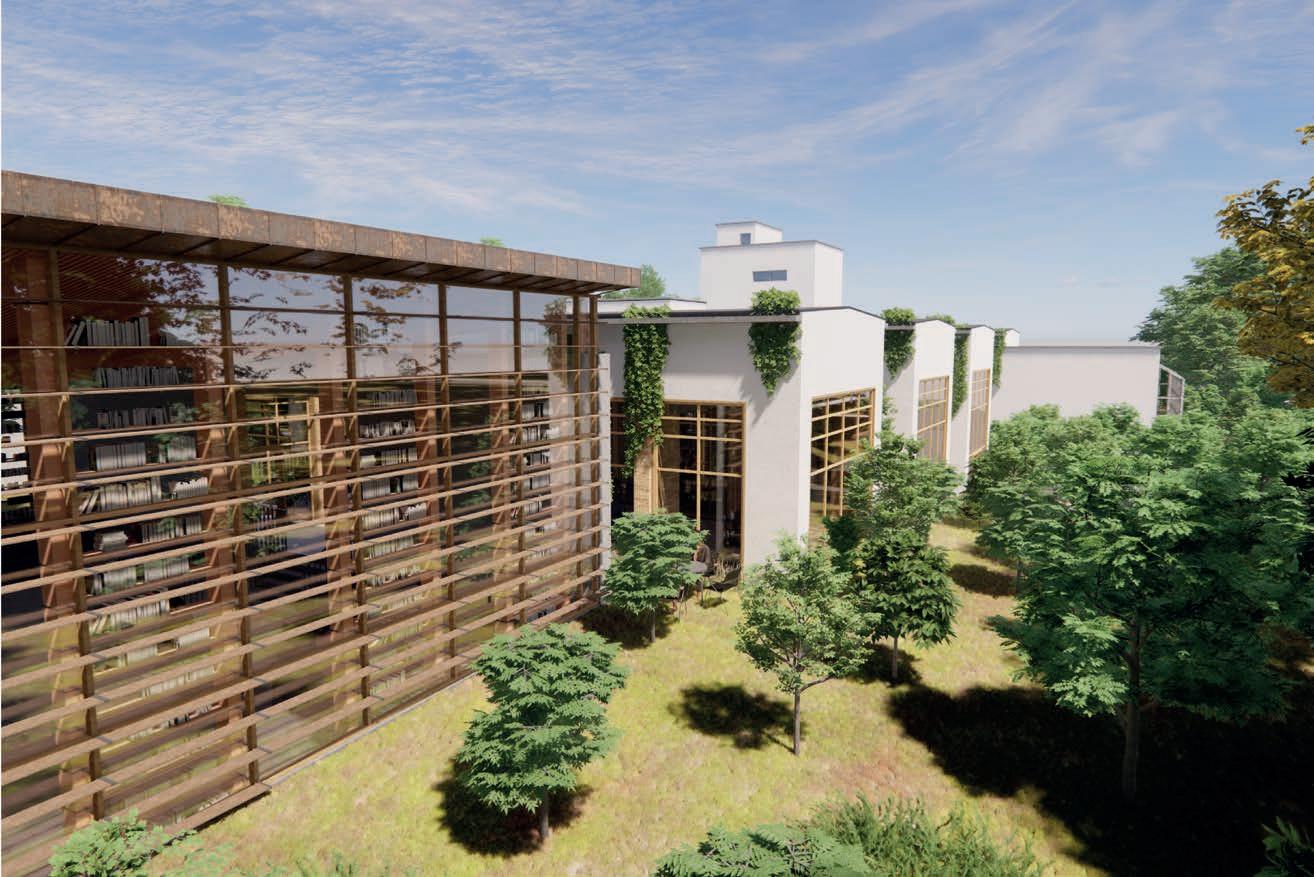
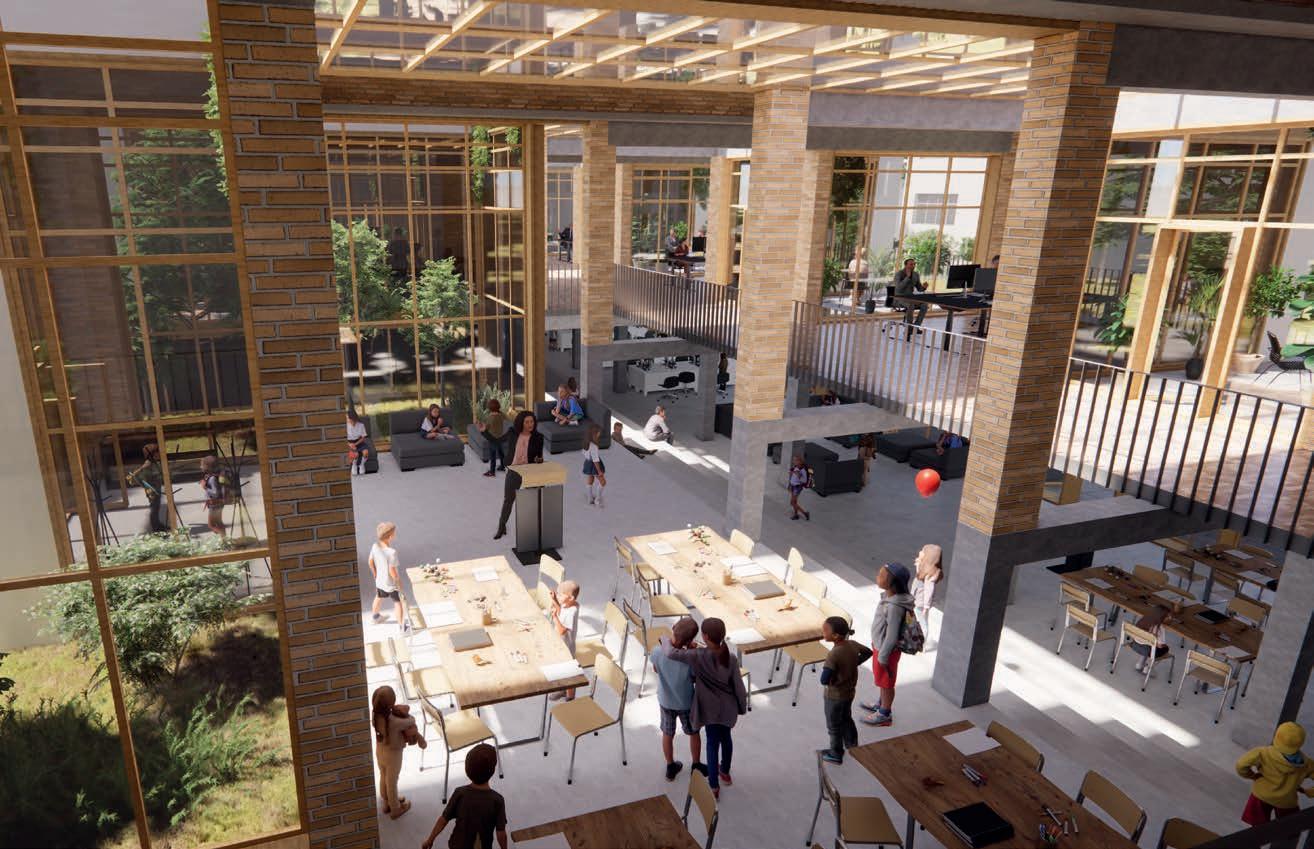
And give them a space where they can invite school classes to come and have workshops and learn about nature, and use it as a hub where the kids then can come get some knowledge and tools to go out to the water and the forest and learn things first hand, and then come back to the workshop and examine and evaluate what they have experienced themselves out there.
Another important part of this space is also that it works the symbiosis between the kids and the Grøn skole. As the kids come and learn, the Green school will also be able to learn themselves by it. They will now get the chance to see firsthand how the material they have developed and provided, is used and how the kids interact with it. In that way, they will get a better understanding of how the material they have made is used, and thereby be able to make better material.
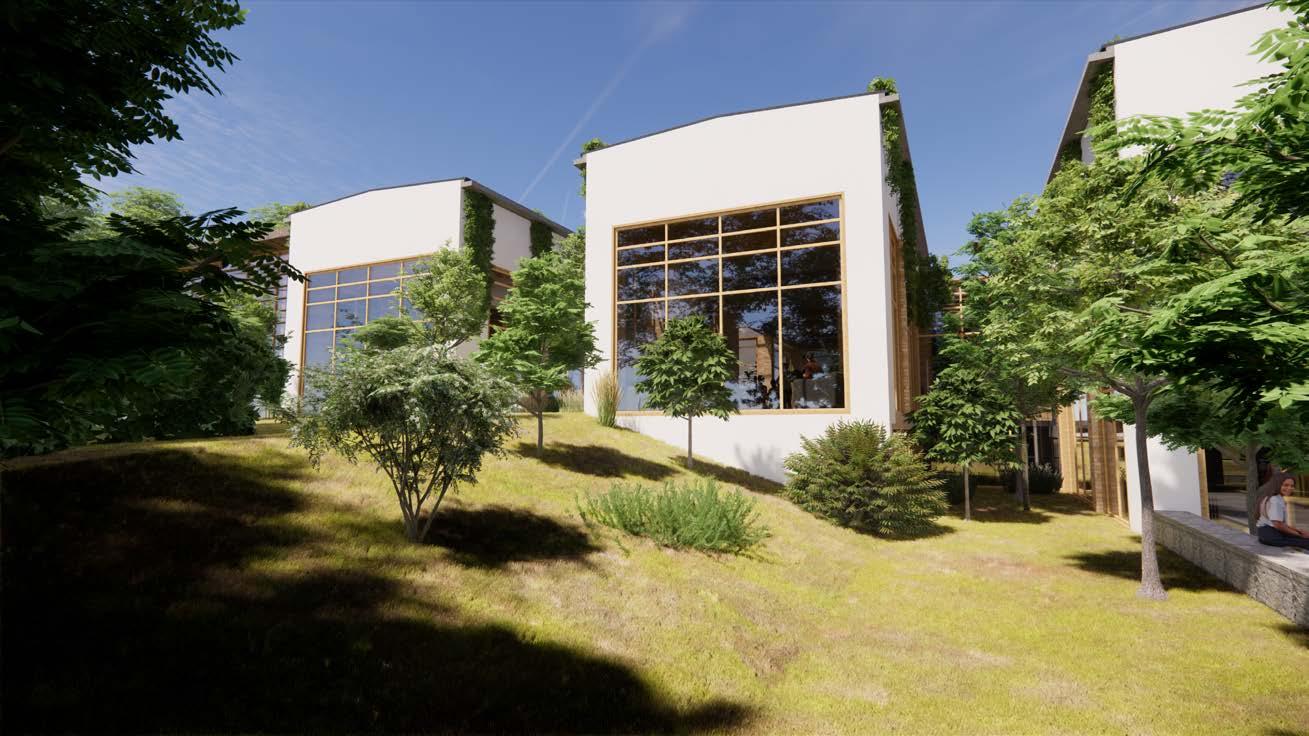
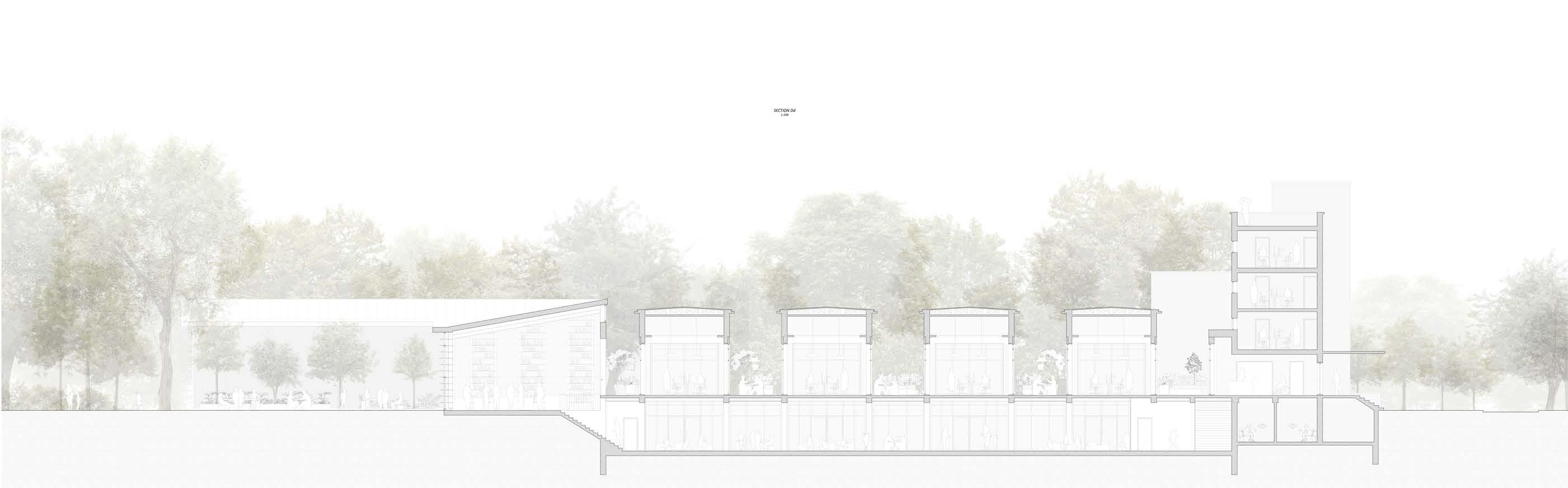
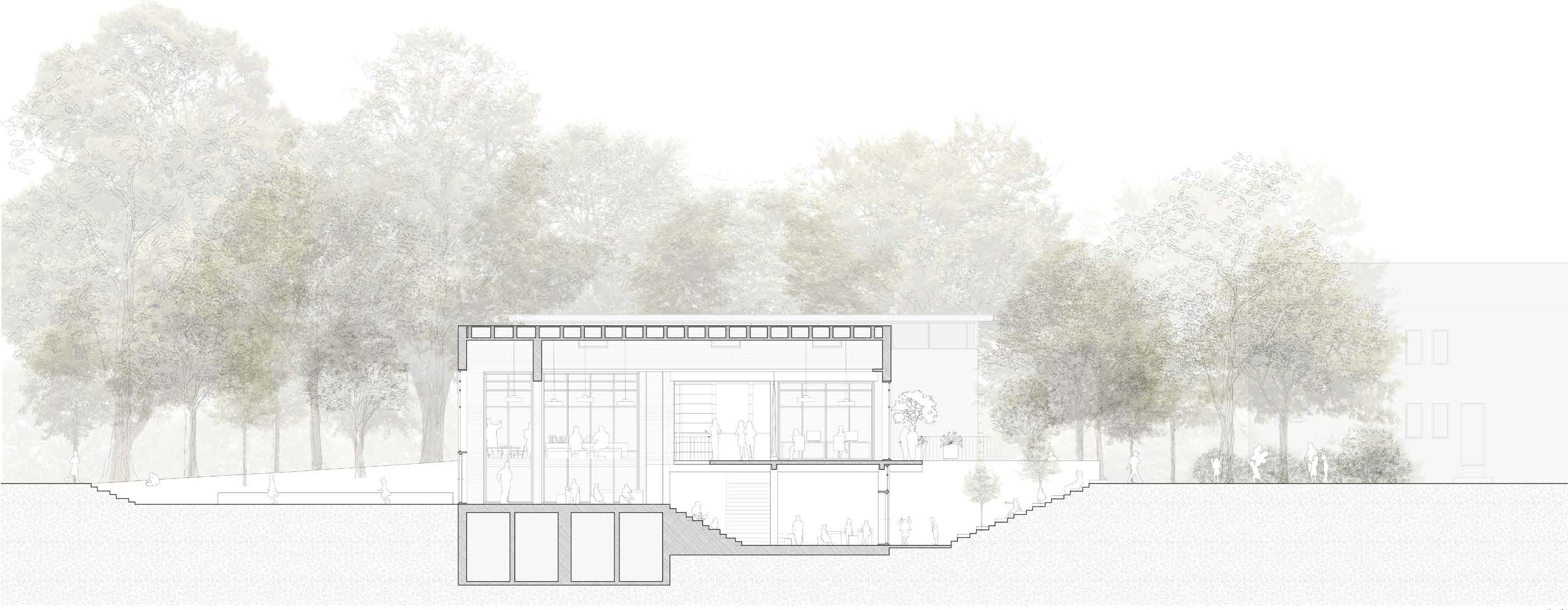
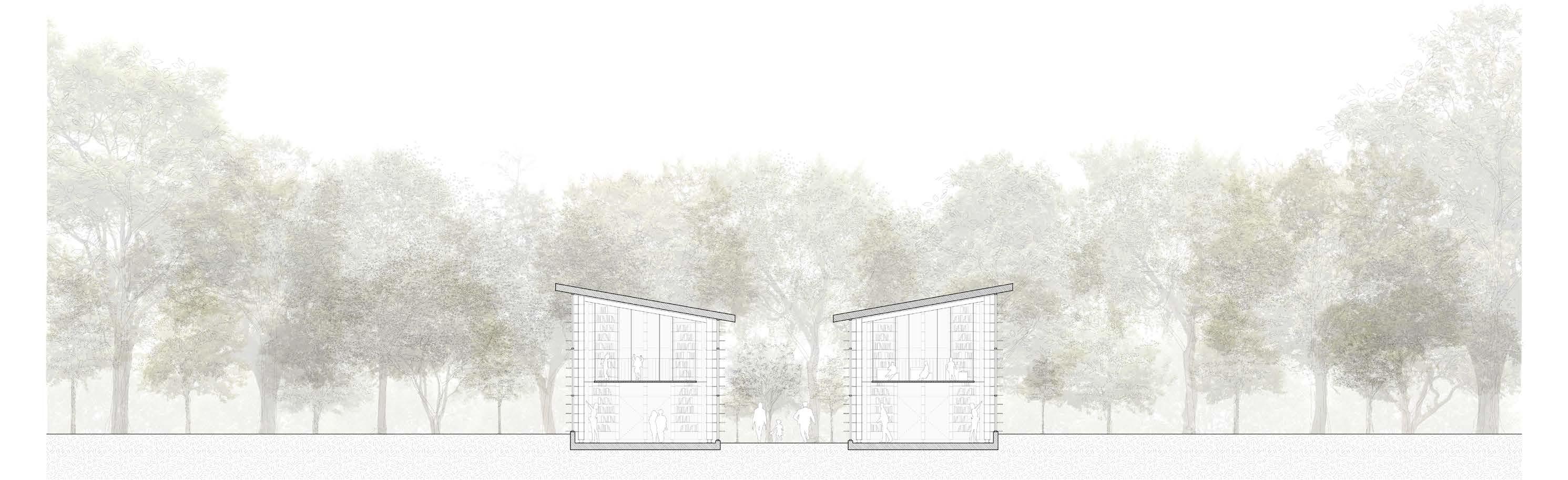
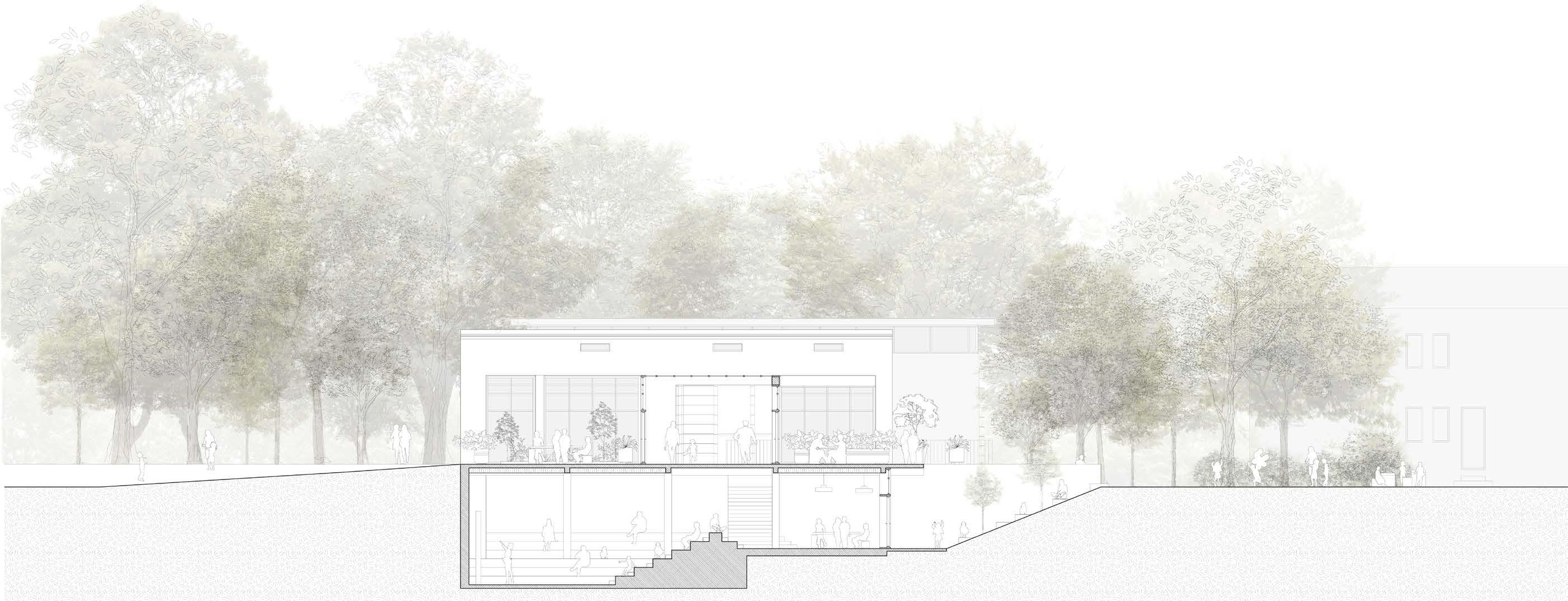
The transformation of the old Danish aquarium building in this project very much revolves around opening up the building and making it a very extrovert building, to allow in the surroundings and allow the program to go out of the building itself. It will be a big change for the now very introverted building it is with very few and small openings. A big move is also to remove some of the surrounding terrain, mostly on one side to allow the basement to be used as a workshop space for the kids with a lot of light coming in and views and movement to go out.
An important part of this transformation has been keeping the existing structural system of the building and working around that. Yet subtracting part of the existing without removing bearing column and beams, that would alter the structural integrity too much.
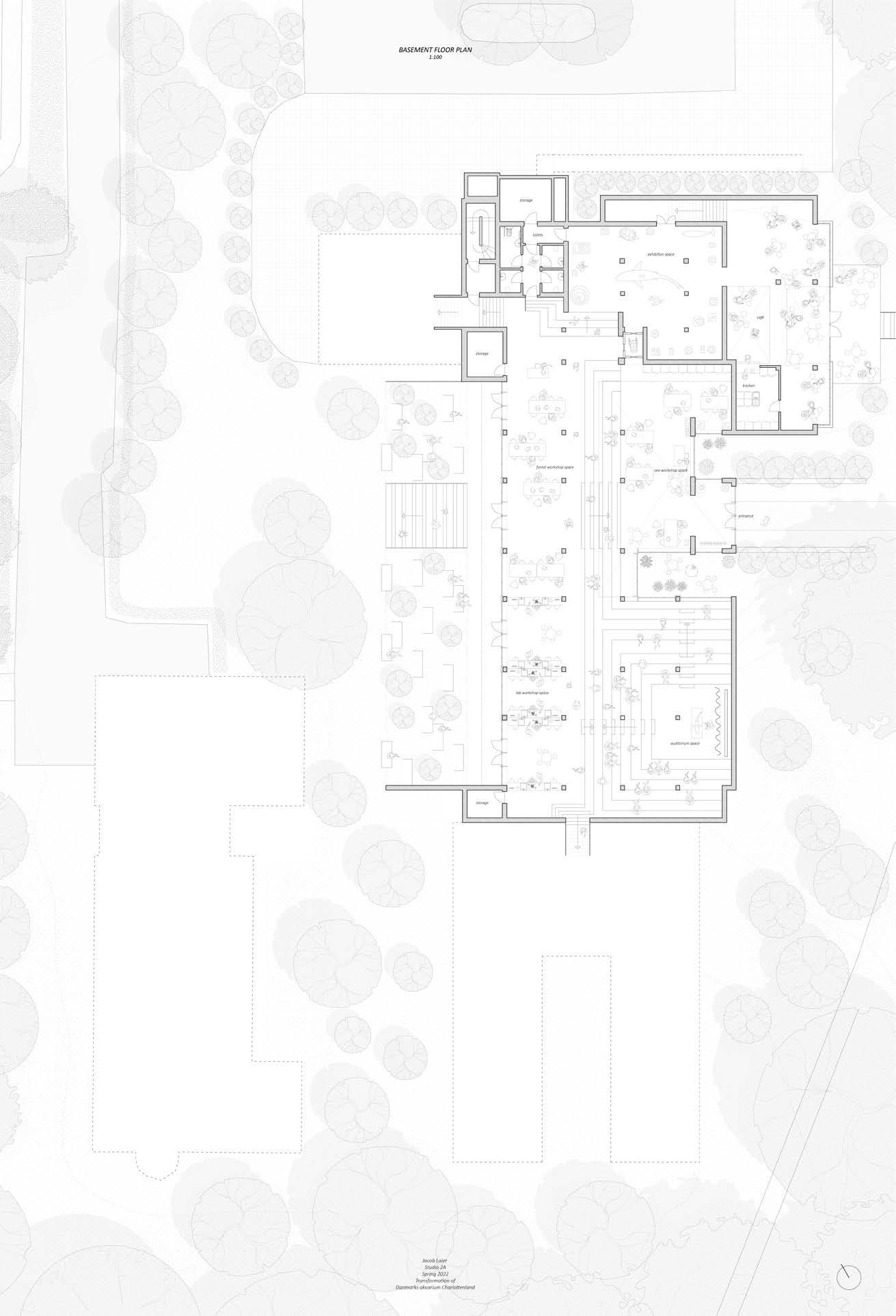
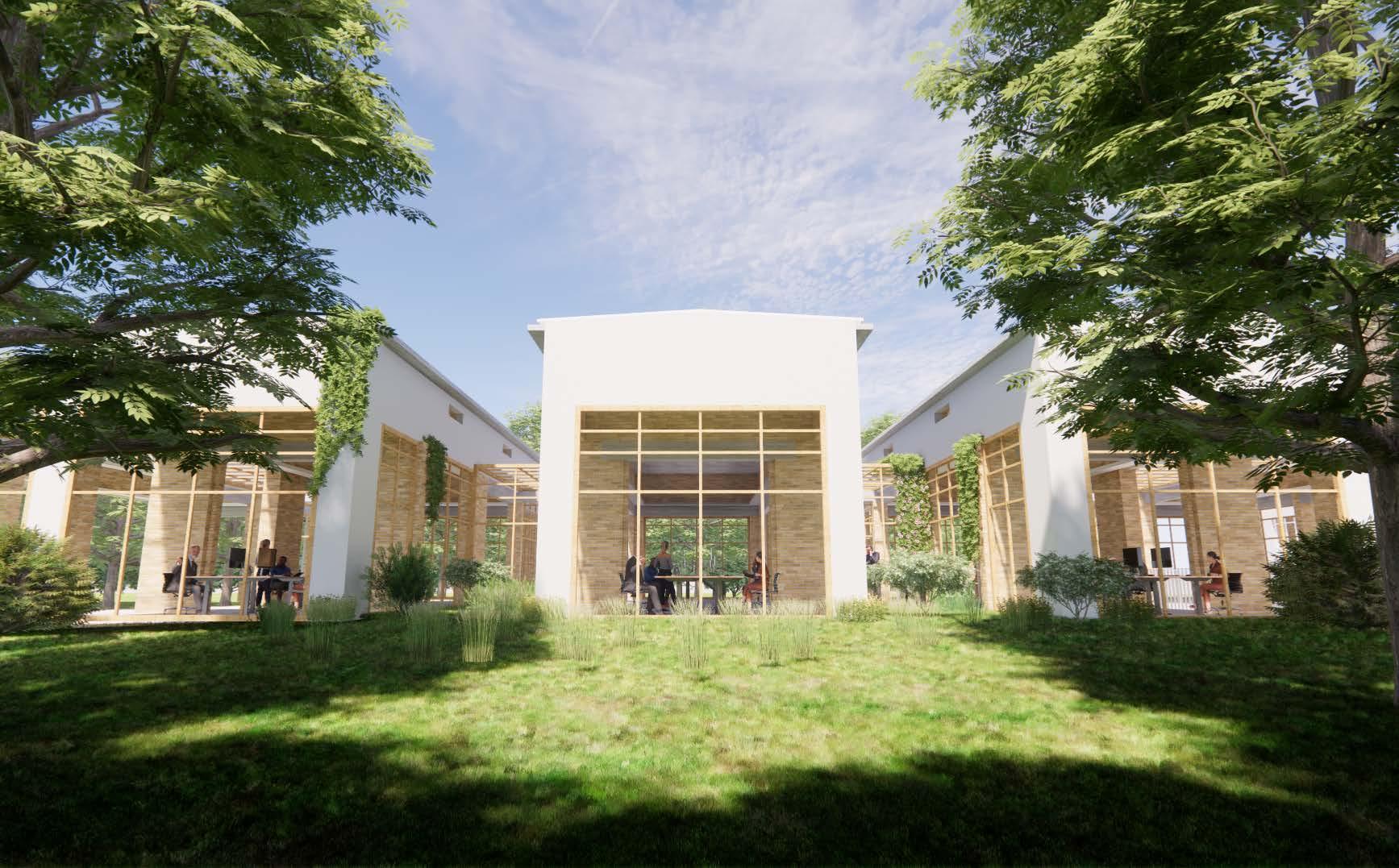
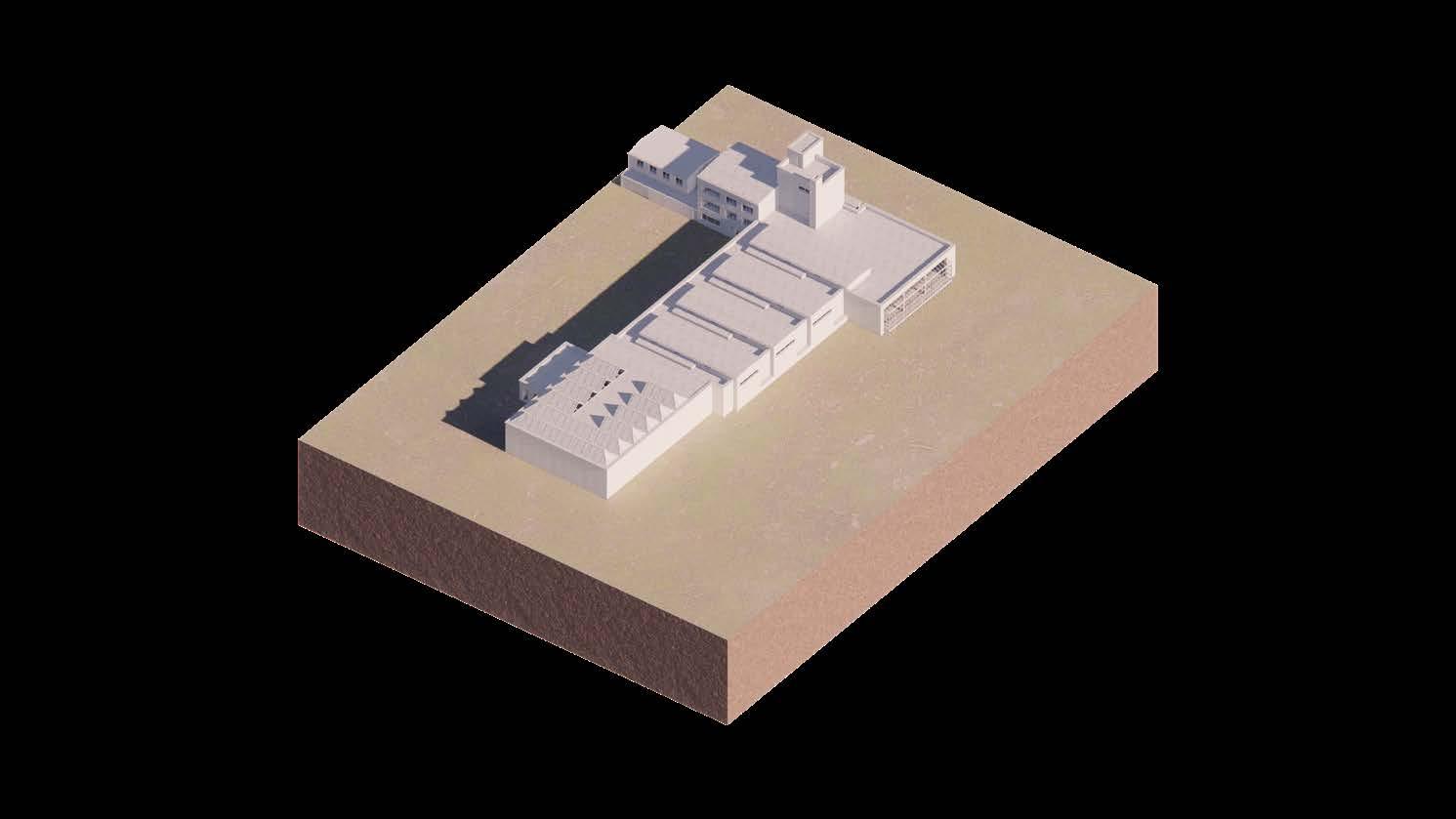
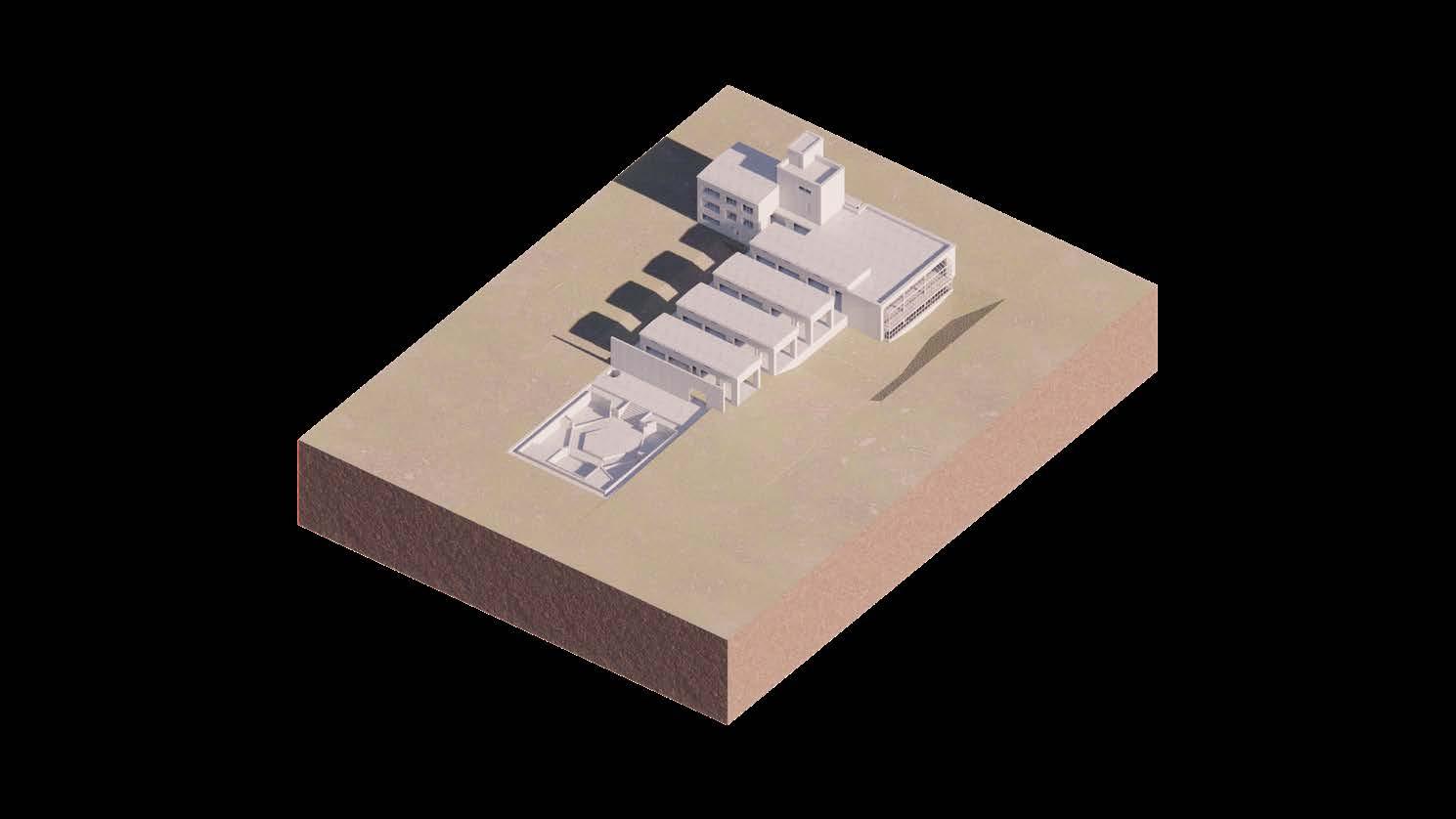
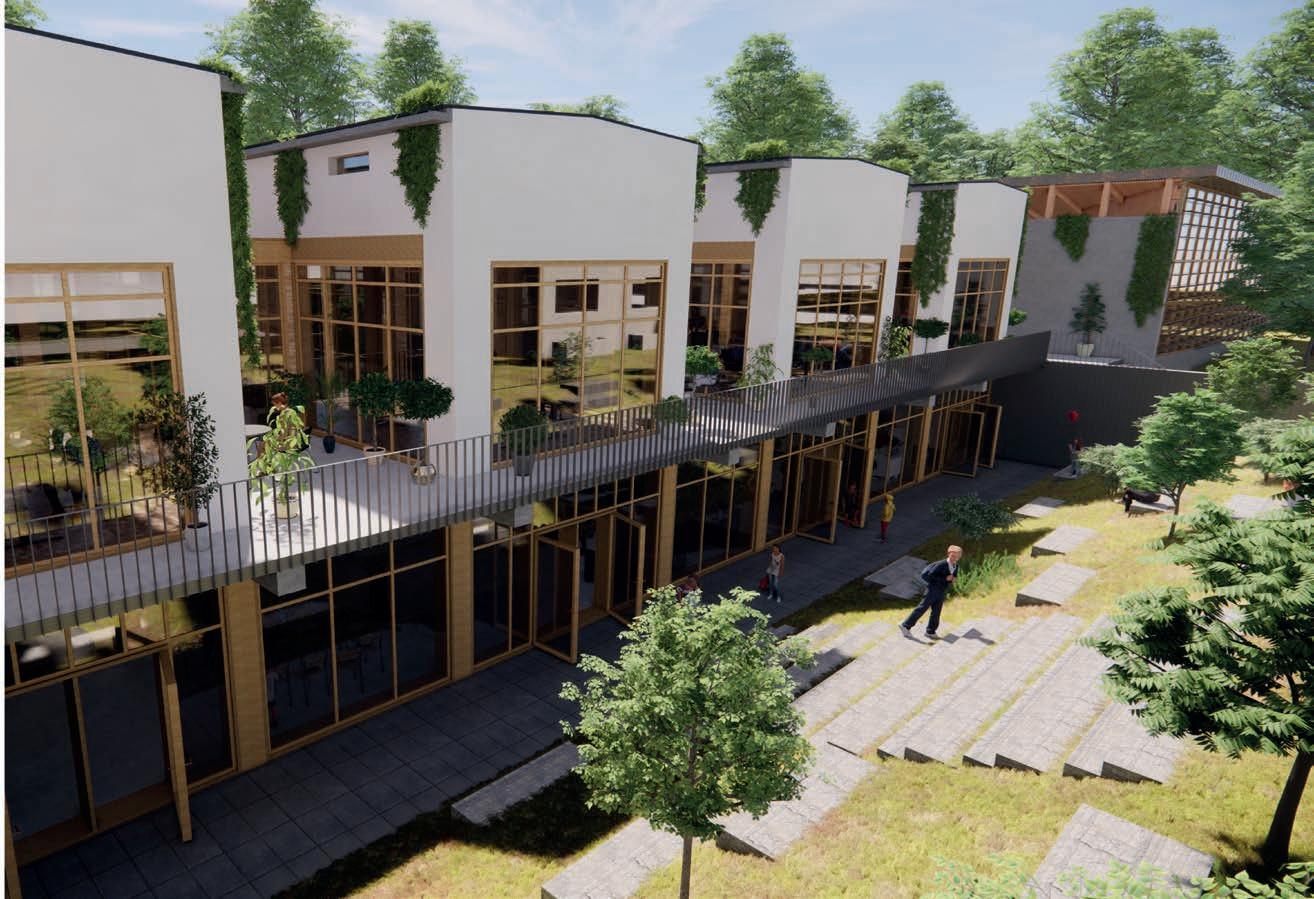
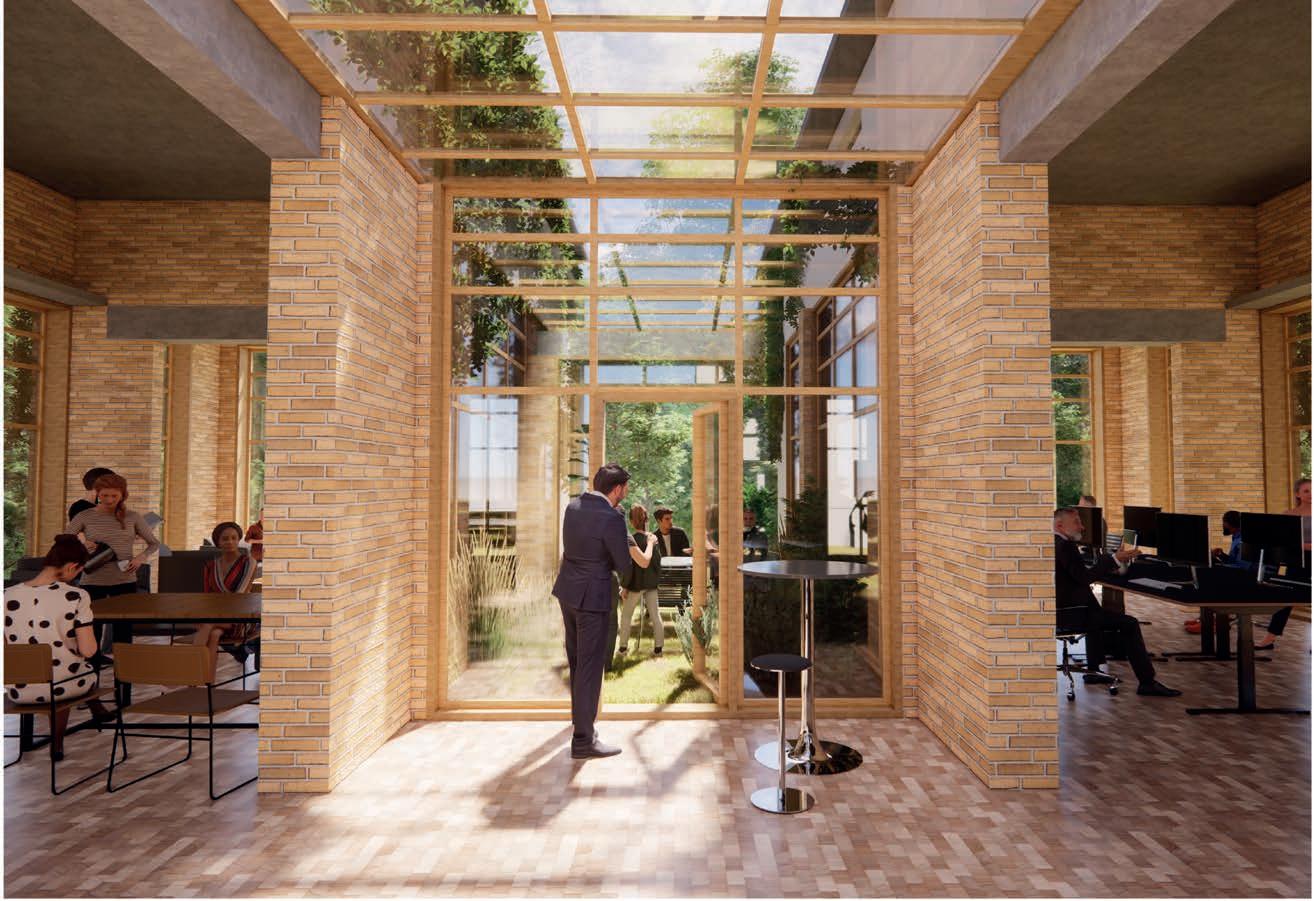
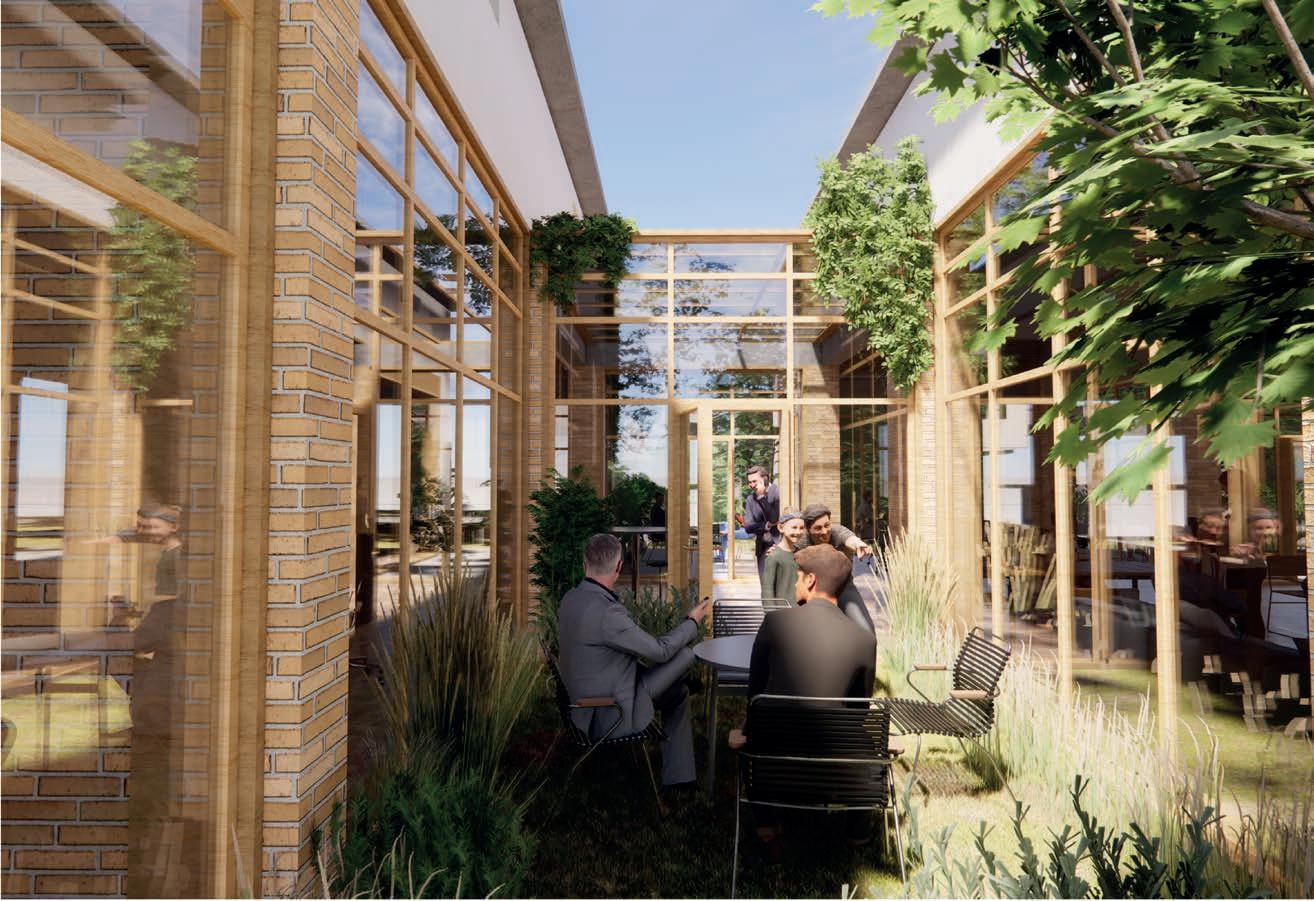
Though I will be removing some of the smaller additions, built on to the existing ones throughout the years it will also help clean up the exterior, and keeping the clean functionalistic look towards the main entrance, and then slowly change the look more and more towards the back, where it ends in a complete transformation of the old landscape aquarium room, where it is only the foundation and back wall that will be kept. Between the entrance and the landscape aquarium, where the first aquarium rooms were, I will cut out the connecting parts between to pull in the landscape and gardens and introduce a glass hallway to keep them connected in the middle.
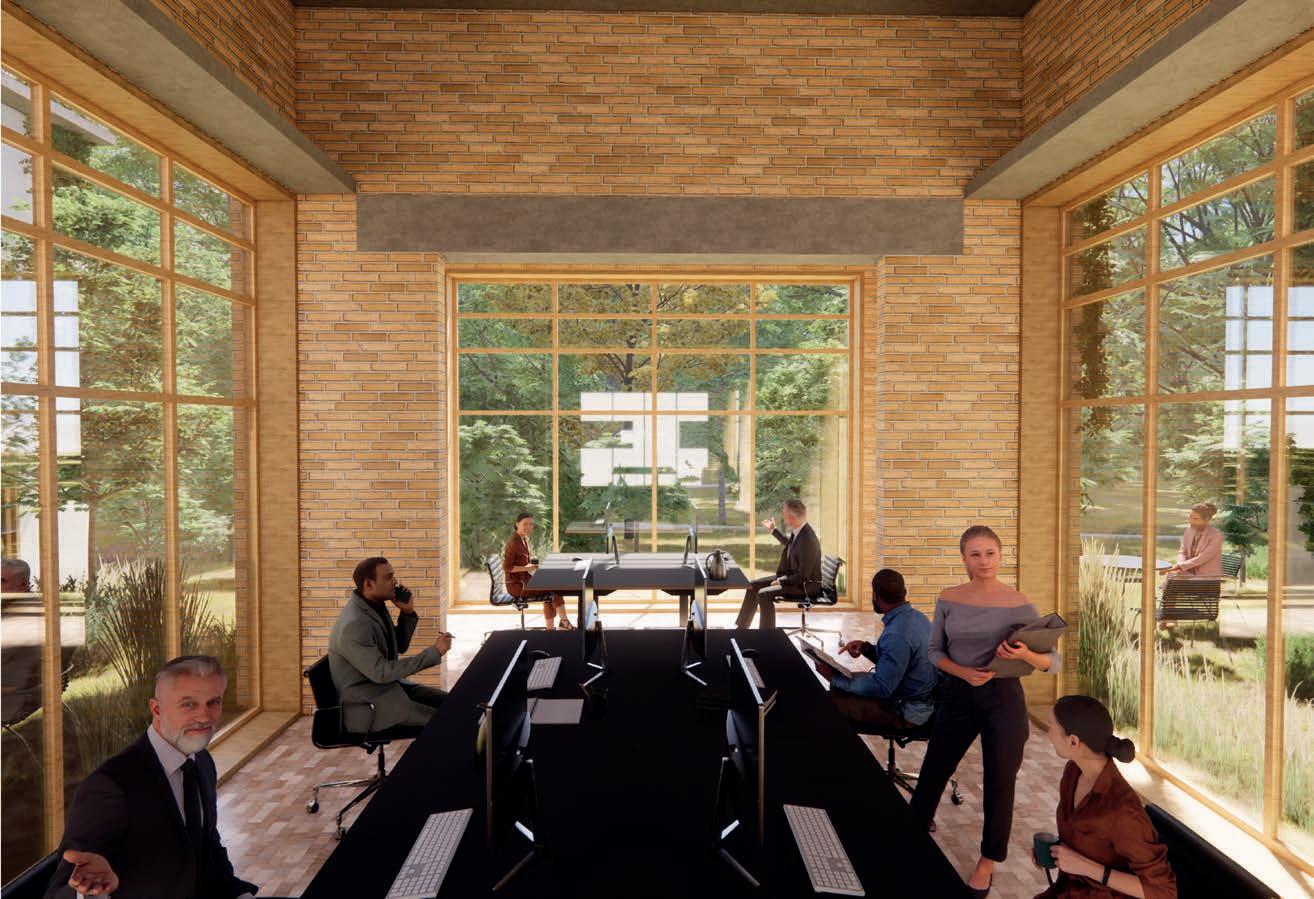
On the exterior, I will be keeping the existing façade and the look of the clean surfaces with the white plaster and then add wooden frames for the new windows. In the interior, I will be exposing the brick and the concrete structures and then add wood around the new windows and other places to give a softer feel on the inside as an oppose to the harder outside.
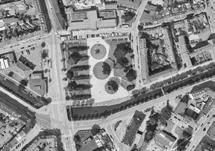
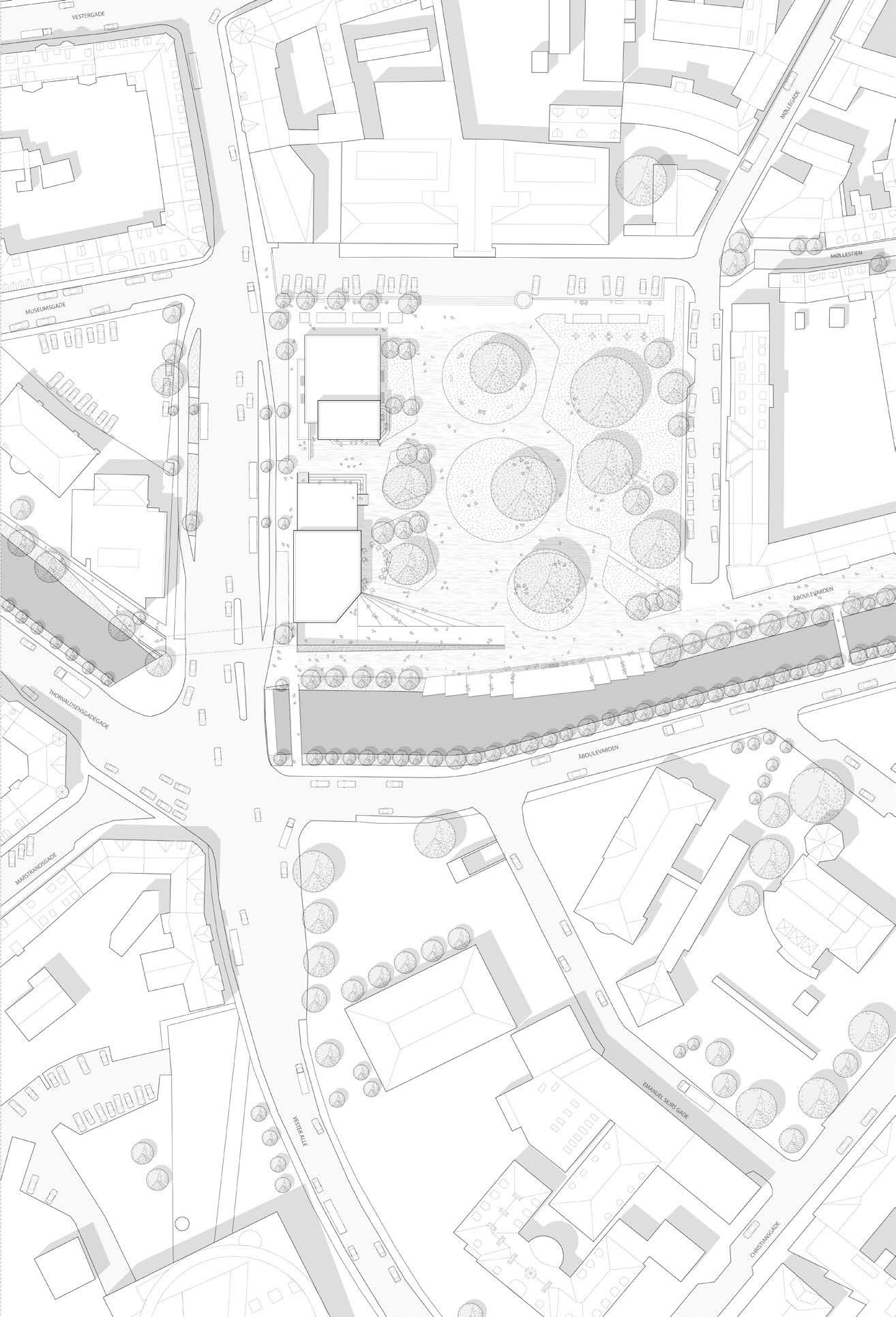
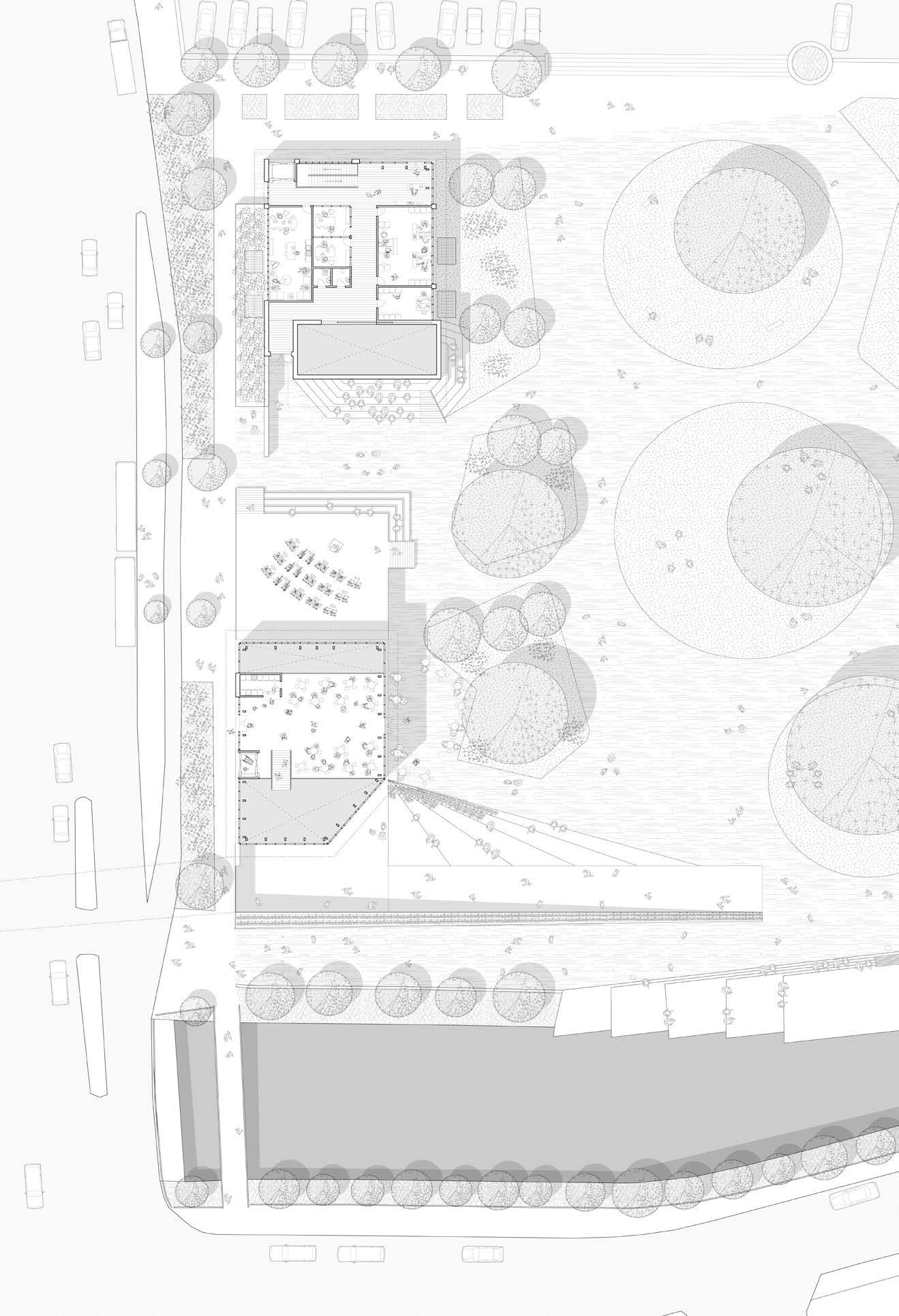
08. SEMESTER AARHUS / MØLLEPARKEN
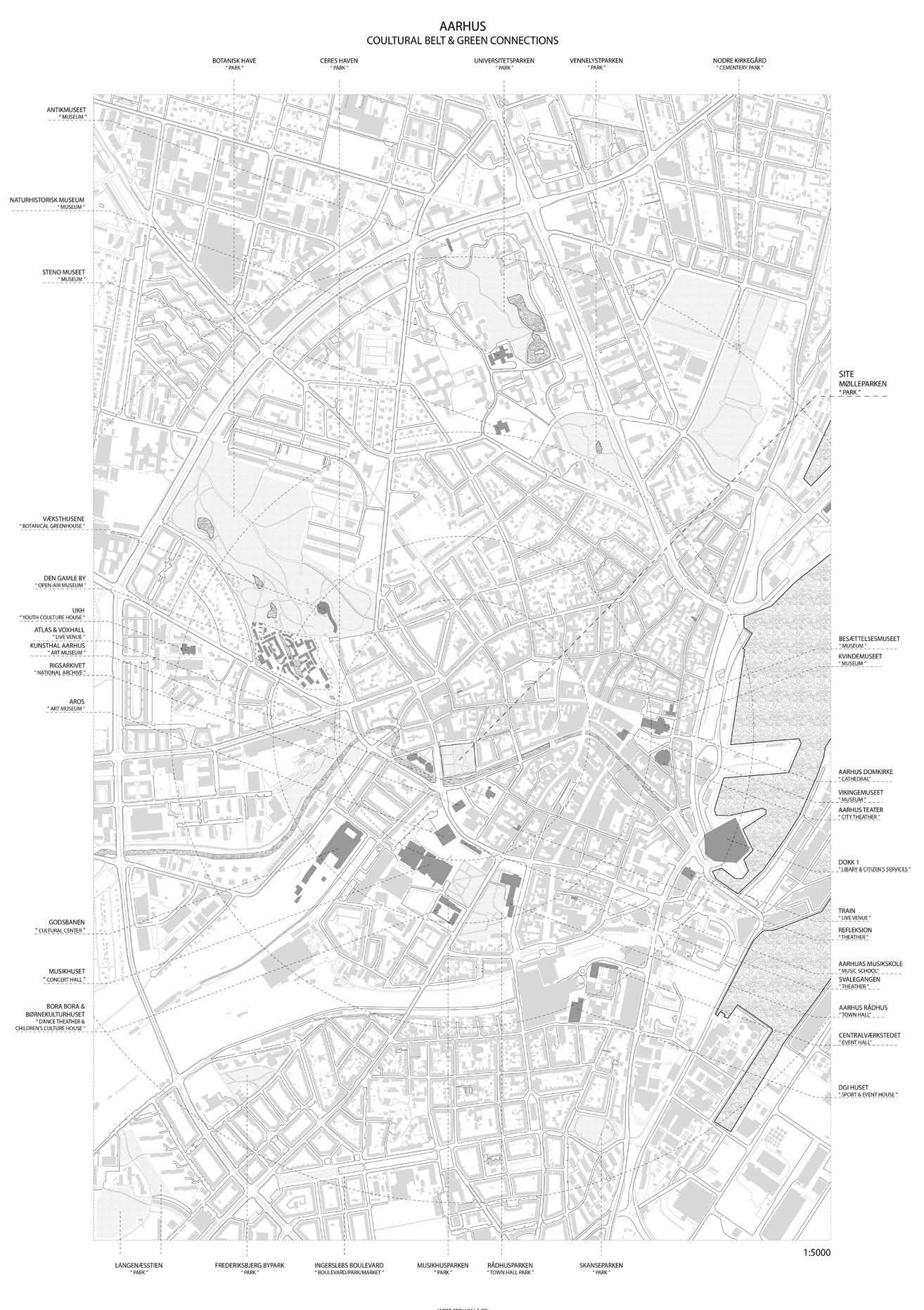
URBAN CHARACTER / PARK / LANDSCAPE CASE / STUDIE THEATER
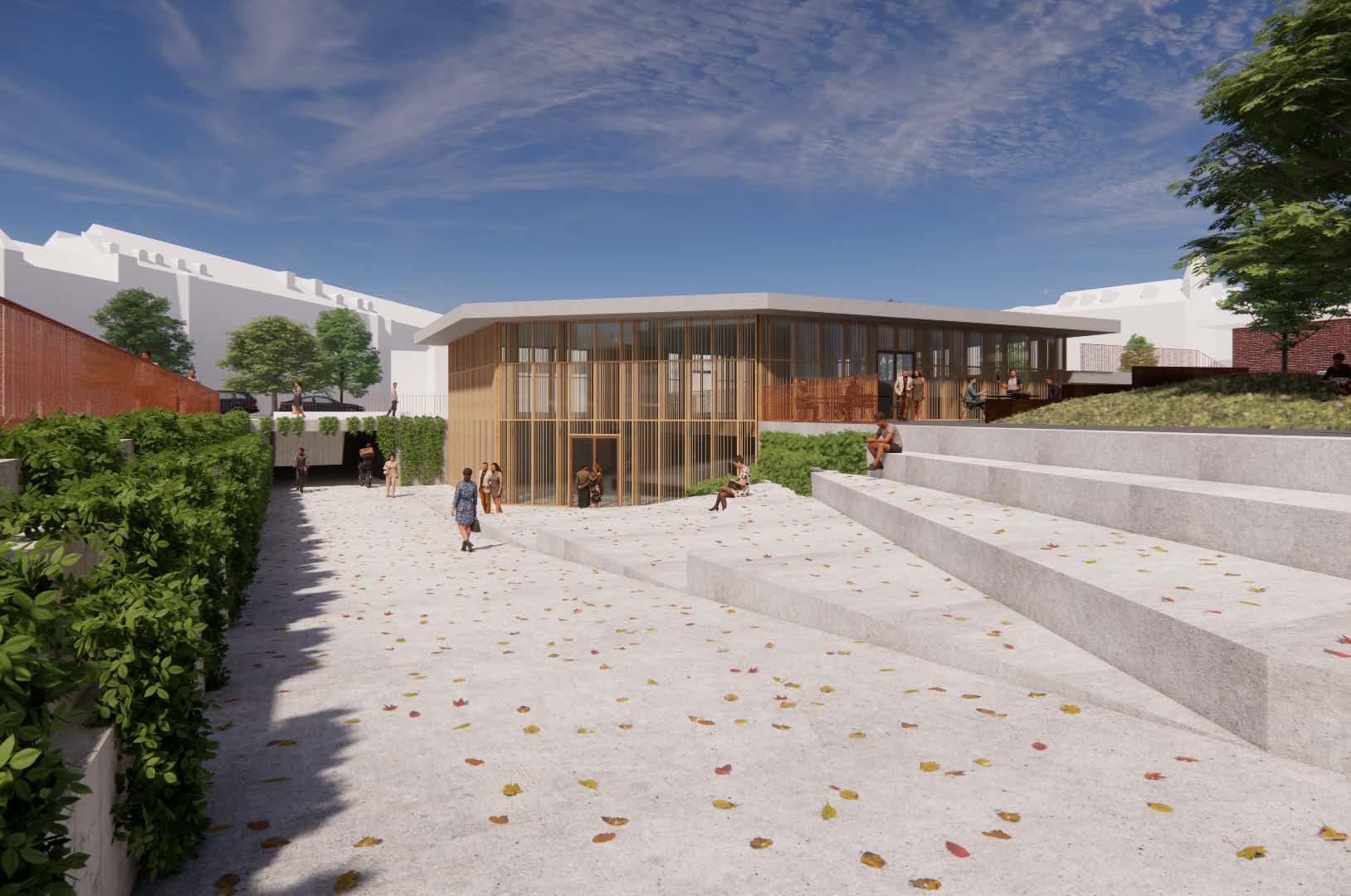
“The Cities psychologist, that always listens” “We are all connected through nature”
“The Cities psychologist, that always listens” “We are all connected through nature”
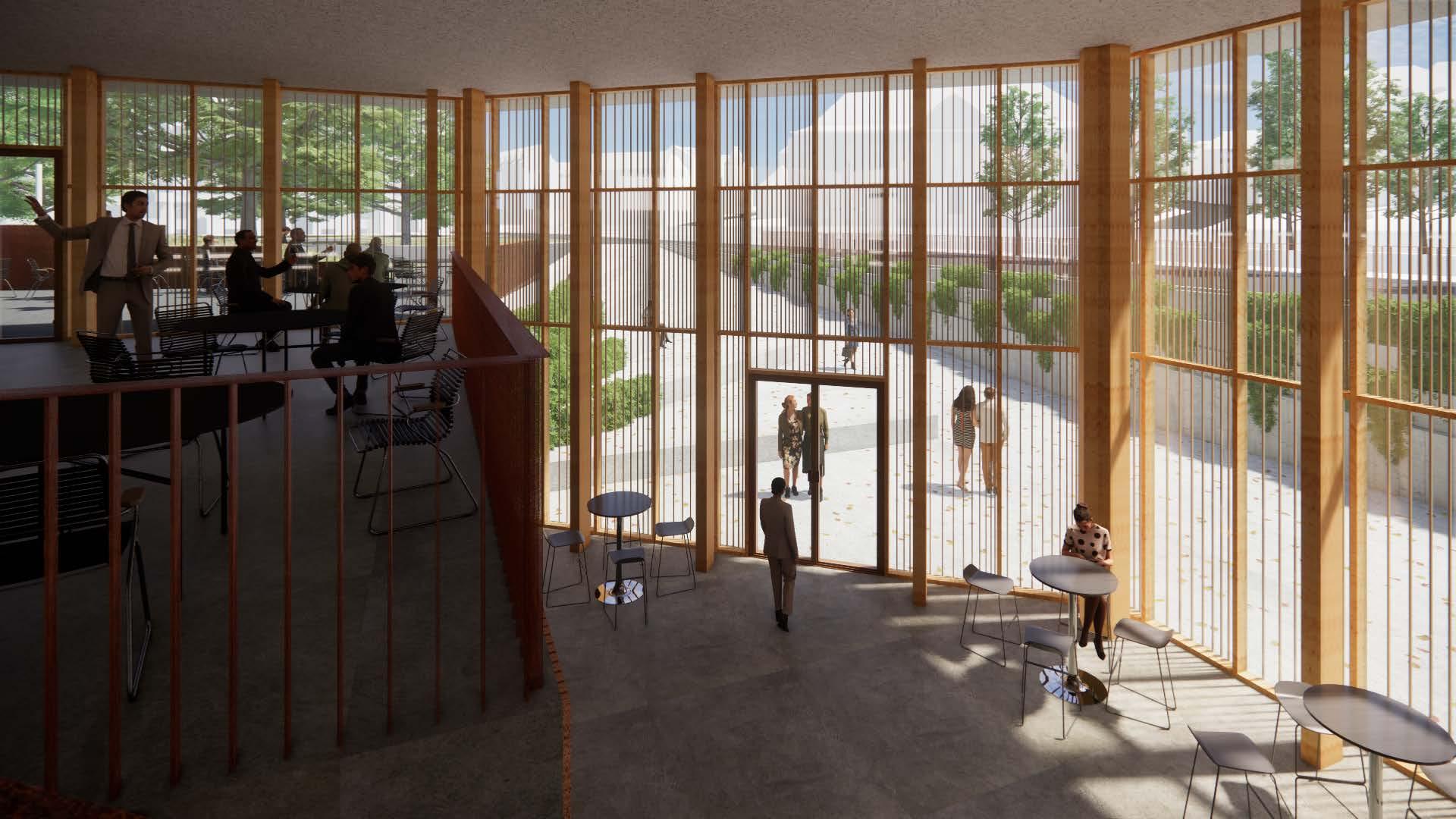
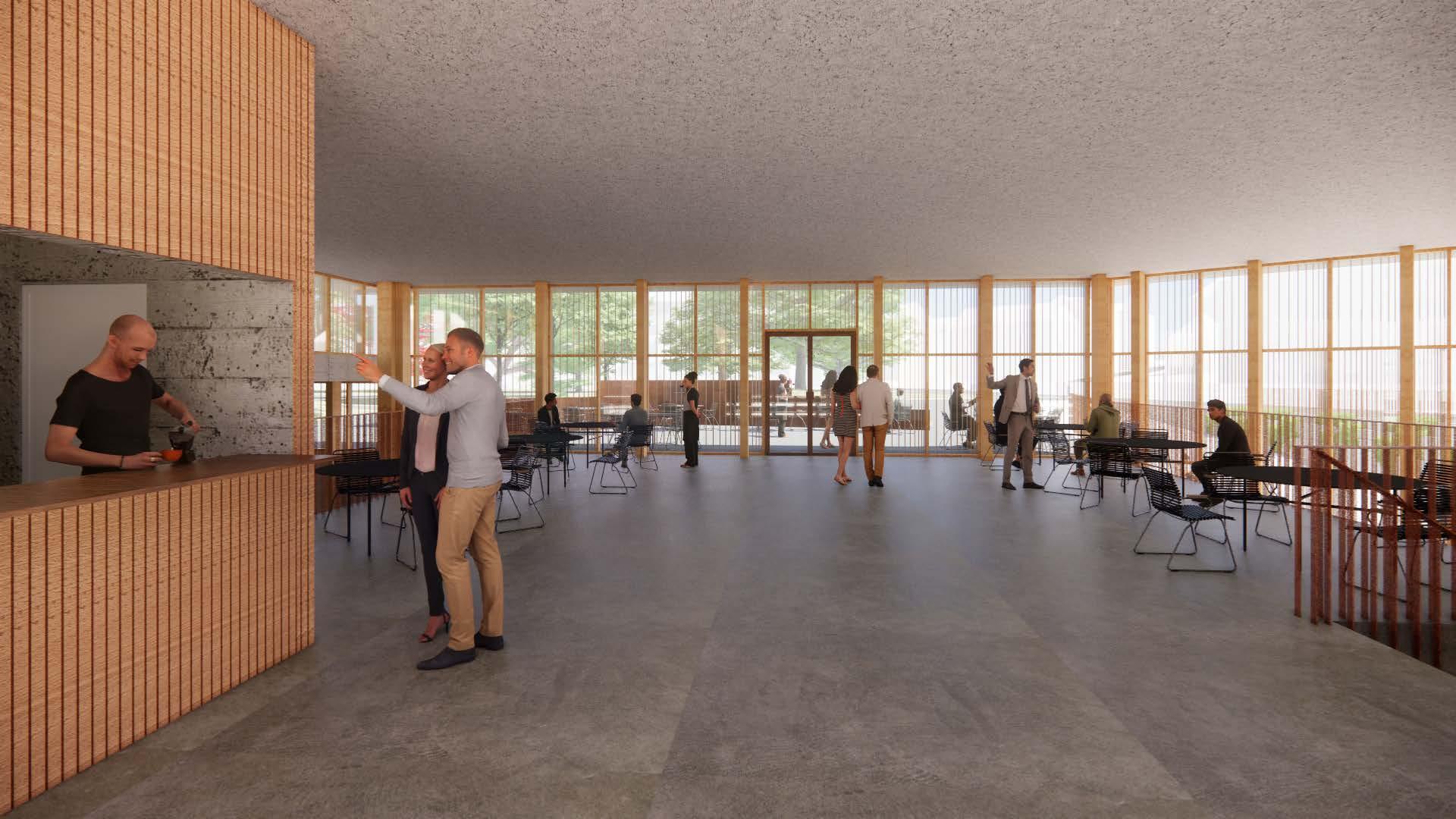
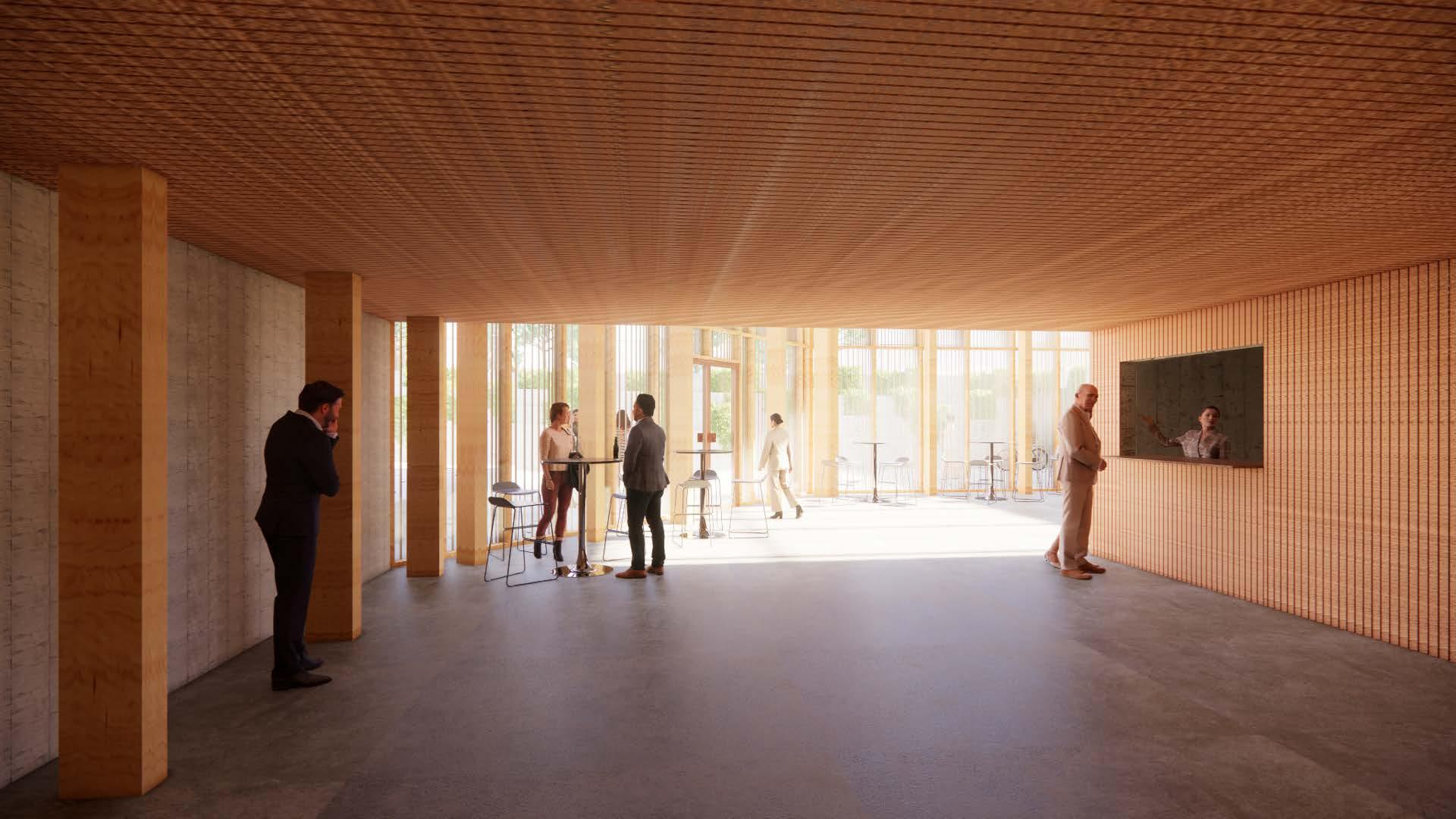
flexible and open to exploration by different people in different ways.
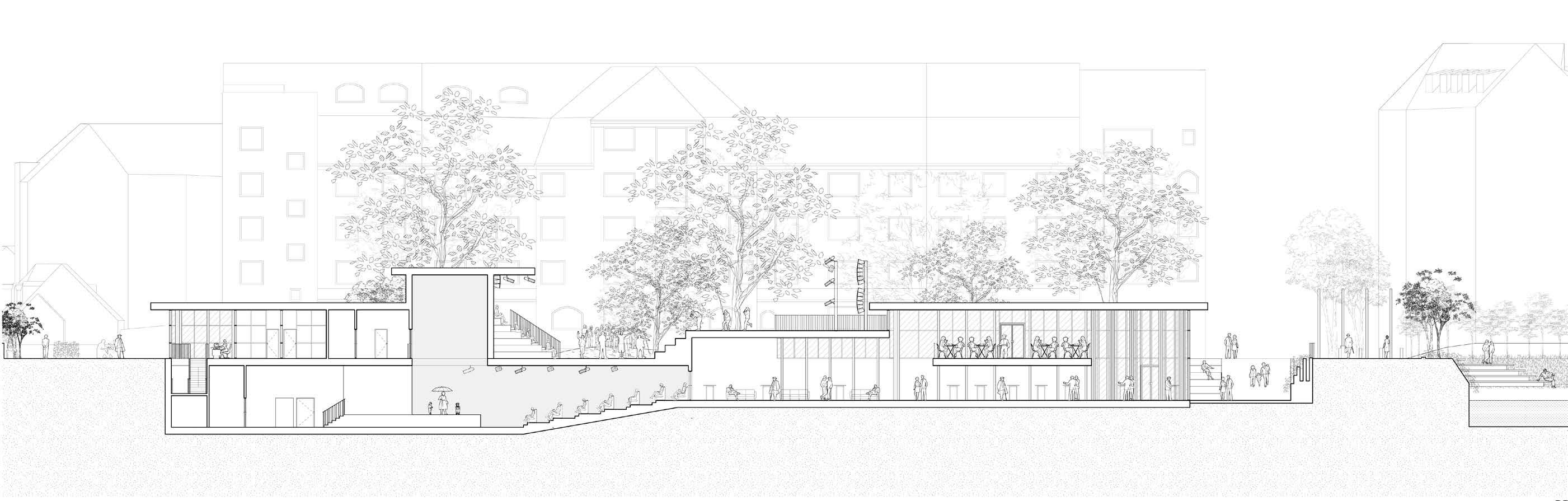
This project is also aiming to treat the different sides and views of the context according to their own character, while also dividing and merging them together in harmony for a smooth transition. It is striving to give more to the ecological and urban life by treating architecture as part of the landscape and not just an autonomous object.
The core research questions of the project ave been to explore the ambiguity of the natural and urban landscape, the relationship between landscape and identity, and the ecological and sustainable gains of landscape integration in architecture. The project have also been trying to understand how the landscape affects architecture and the city, and vice versa.
Overall, the project seeks to embrace the new collective imagination of what comprises the landscape by considering architecture as a constructed landscape and a unique niche in landscape ecology. It would prioritize the ecological performance of form and raise awareness of the environmental damages caused by urbanization. The architecture would become an active part in restoring and creating a sustainable urban ecology and microclimate.
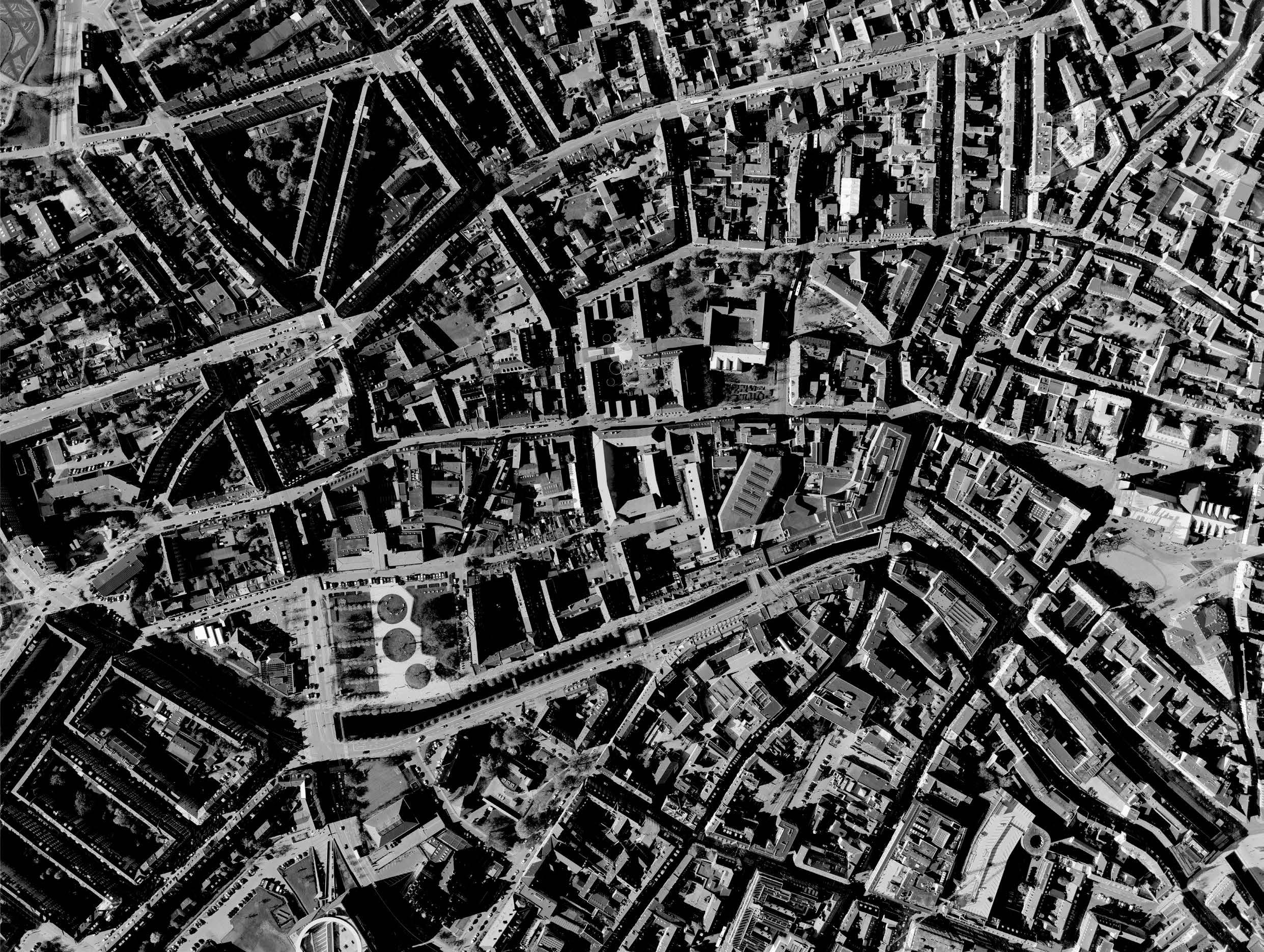 JENNIFER ALICE HEIKIUS & JACOB SPOLUM LAJER
GROUP 7
JENNIFER ALICE HEIKIUS & JACOB SPOLUM LAJER
GROUP 7


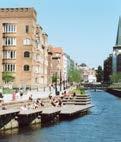
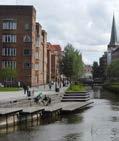
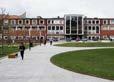
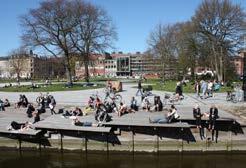



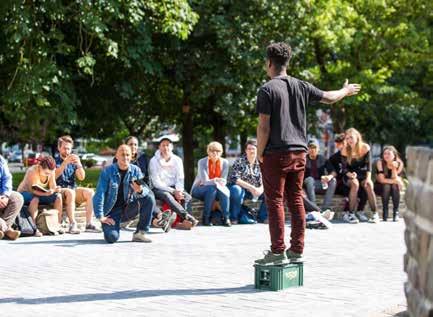
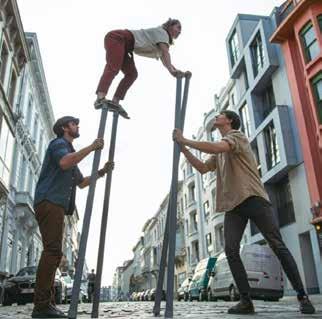
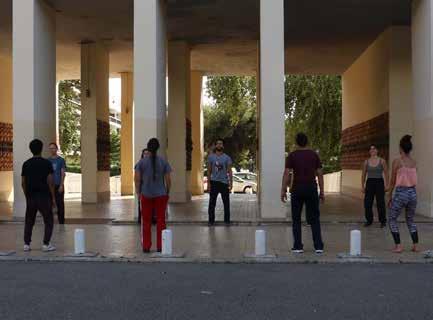
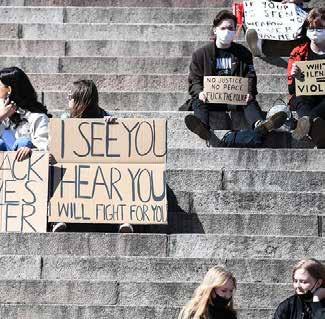
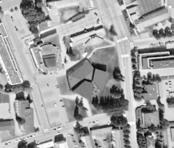
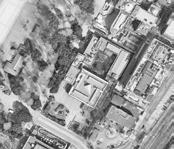
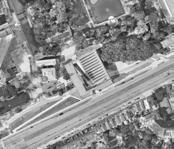
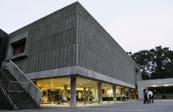
it is important to note that no feature of the landscape is, of itself, a boundary. It can only become a boundary, or the indicator of a boundary, in relation to the activities of the people (or animals) for whom it is recognized or experienced as such.
this is a critical view on what the understanding of nature and landscape is and how we have been treating it, in an architectural context. How earlier times architectures connection to the landscape, and a view on the changes in the contemporary way, of integrating the architecture with the nature, landscape and ecology in a holistic manner.
We are now living In a time where money, fast production and short-lived material seems to have had a bigger saying, the last couple of decades. With a buy cheap and throw away mentality. With the fast and ever-changing processes and technologies. Than the quality, and long lasting materials and respect for the place.
We are now turning into a shift, of mentality. Where people are being much more aware of the environmental changes and what damages, we as humans has caused, with our urbanizing of huge parts of the earths surface.
And this has been accompanied by, a bigger focus of our local context, and more sustainable and ecological way of living. Where the interest in local and handmade sustainable things have gotten much more popular.
This has also made many people much more aware, about their own cities, and how the nature and landscape they live in is. And how we have neglected it in many places. But now want to restore. And let the nature and landscape move more back into our urban spaces.
And that leads people to be more aware of the context they are situated in and starts to care more about it. And asks for bigger quality of the built and unbuilt environment they live in. caused by the bigger awareness of how it affects them and their daily life.
-Core research questions
The ambiguity of the natural landscape and the urban landscape. The ambiguity of the relationship between landscape and identity.
The ecological and sustainable gains of landscape integrated in architecture.
What is there to gain for a city and its people by integrating landscape and architecture.
How the Landscape affects the architecture.
How the architecture affects the Landscape.
How the Landscape affects the city.
How the city affects the Landscape.
Can we make architecture that gives better does more for the ecological and urban life, thinking and treating architecture, As part of the landscape and not just as autonomous object.
How does the urban landscape and architecture give identity to the urban space.
New interpretations of modernism architecture started to reconsider the notion of landscape in architecture. Critical reinterpretations arose from a modern architecture that was perceived as a constructed landscape and rejected the notion of landscape as a purely external state bound to nature. Le Corbusier used his architectural works both as an instrument to see the landscape and as constructed landscapes in themselves. For example, in Villa Savoye (1929-31), Le Corbusier explored architecture as both framed views that borrowed the distant landscape and as constructed landscapes through the architectural promenade that culminated on the roof terrace.
A place gets its character by the experiences it gives to the people who spend time there, it is the views, sounds and smell that gives the place its special ambience. And depending on the kinds of activities people engage in, that each place gets its own unique importance.
What that is creating identity for a place is the interaction between the actors/humans/animals and the landscape of that place. if it is human made or ``natural landscape`` it doesn’t matter. What matters to the identity is what actions is happening in that place.
Tim Ingold, The perception of the enviroment: The temporality of the landscape [Routledge, 2000] P.170-171
07. SEMESTER AARHUS / ØGADERNE THUNØGADE / INFILL / CHARACTER
30% PRIVAT / 70% PUBLIC RESEARCH LAB / COMMUNITY GARDENS
Jens Hornenberg
The Horticulturist
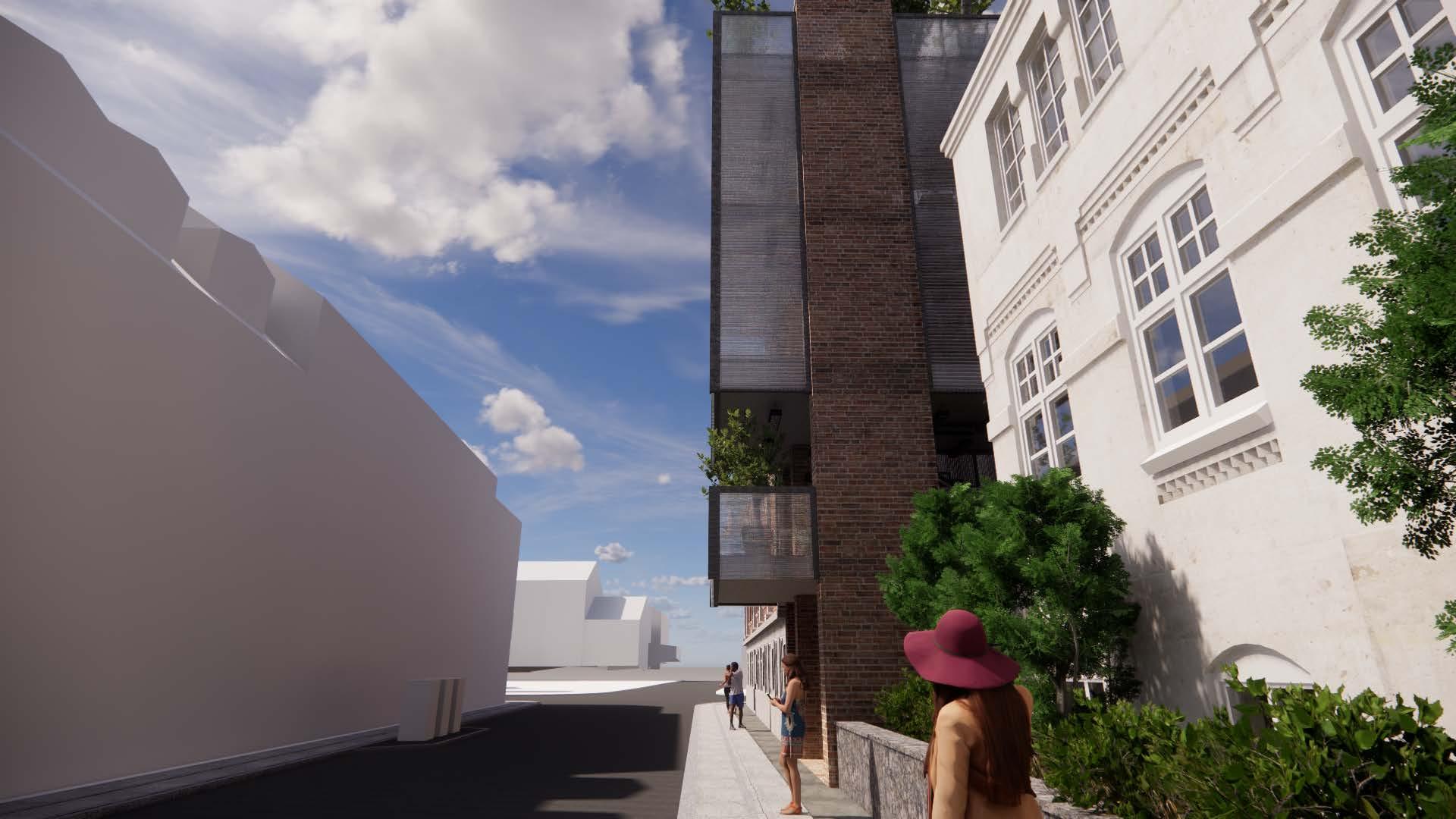
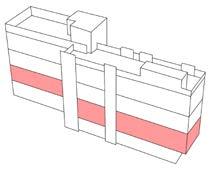
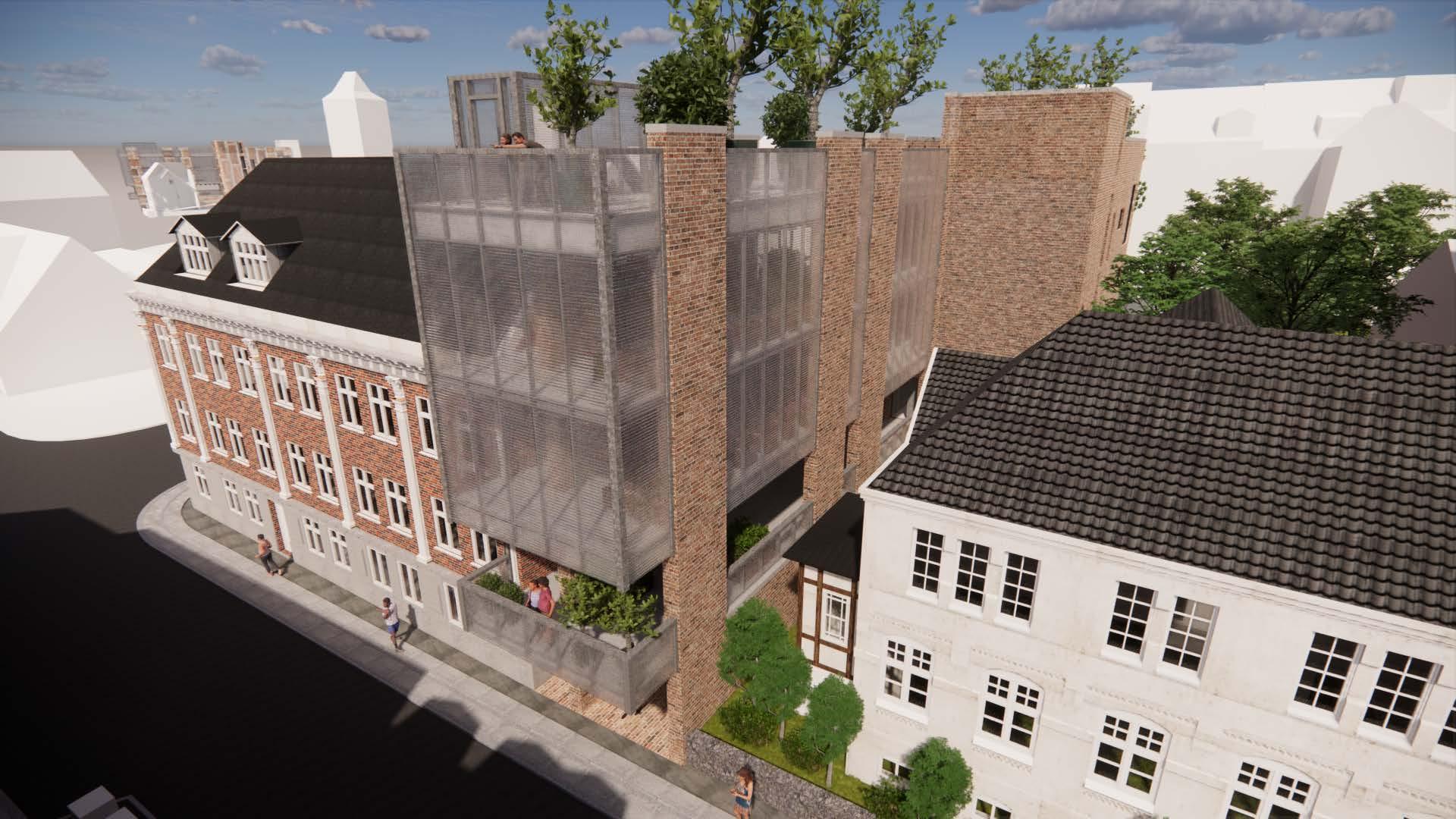
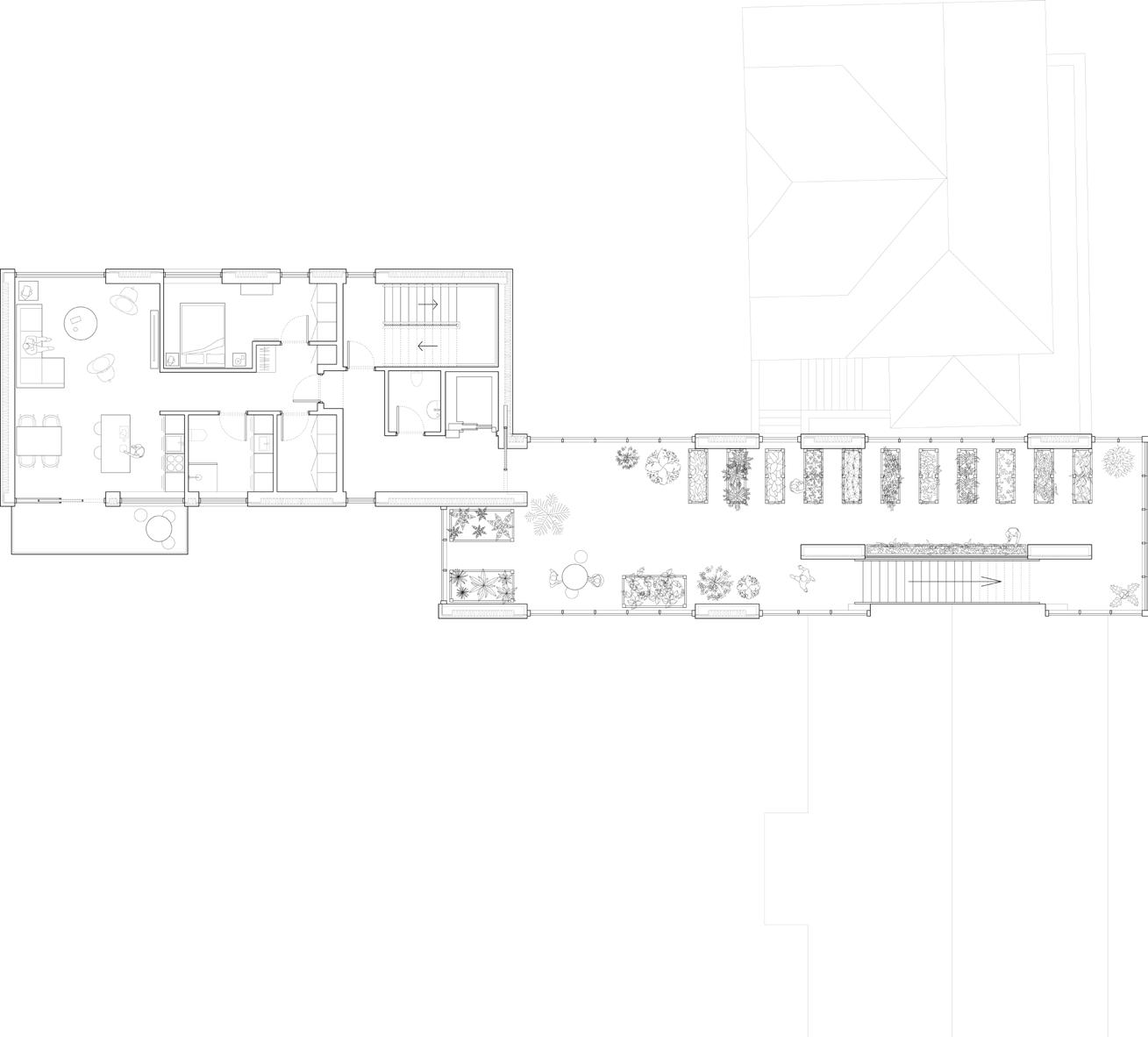
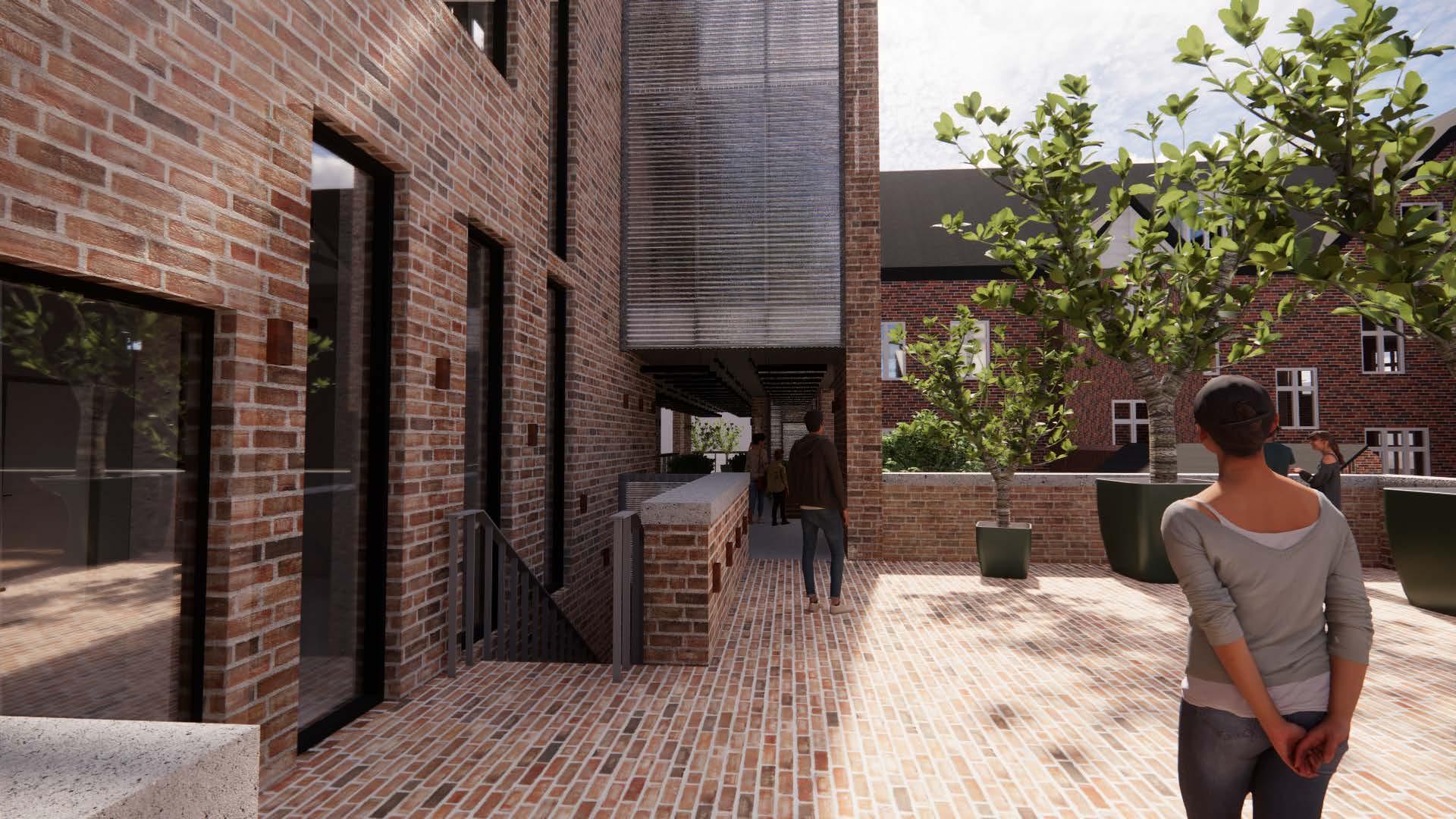
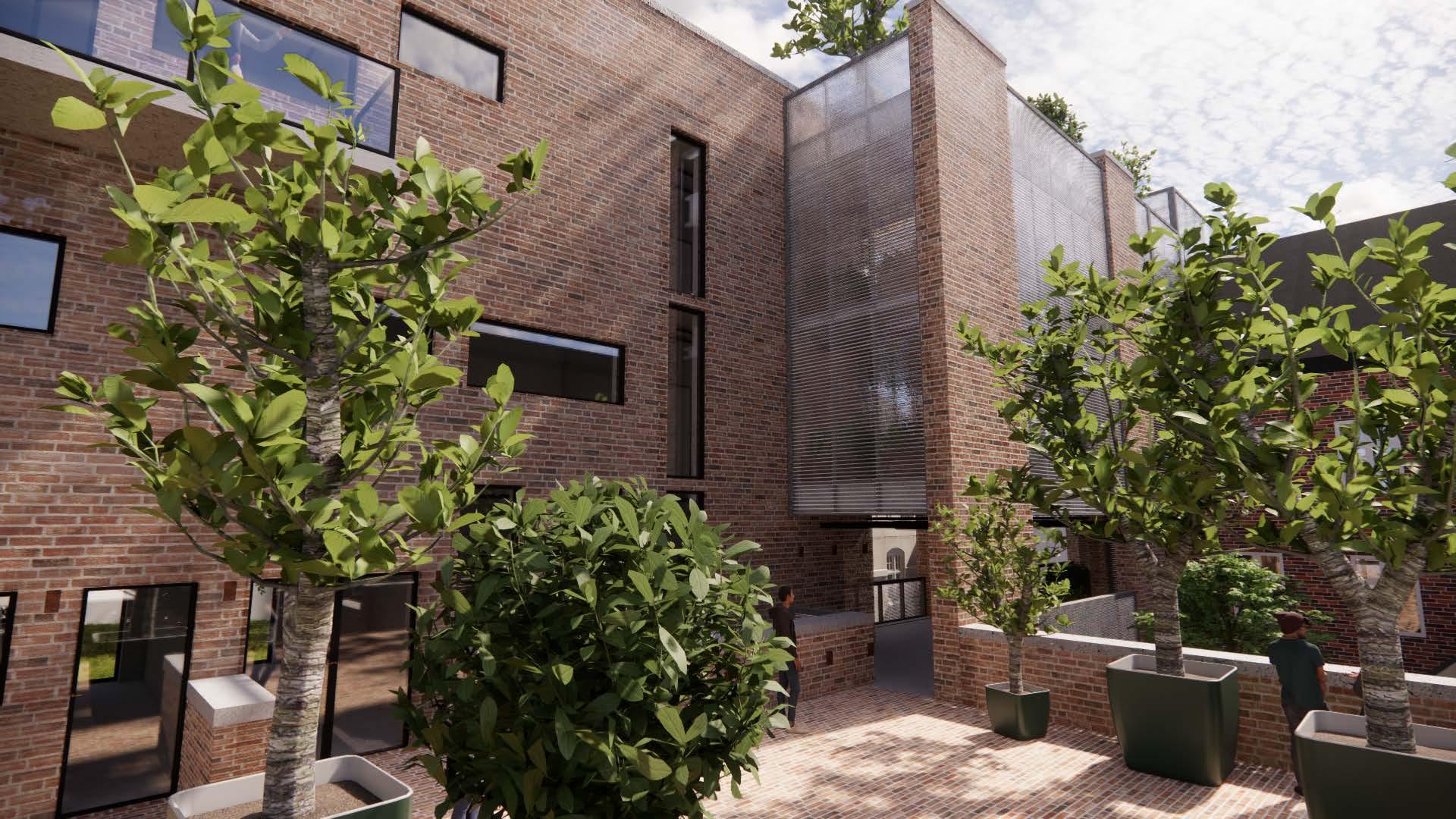
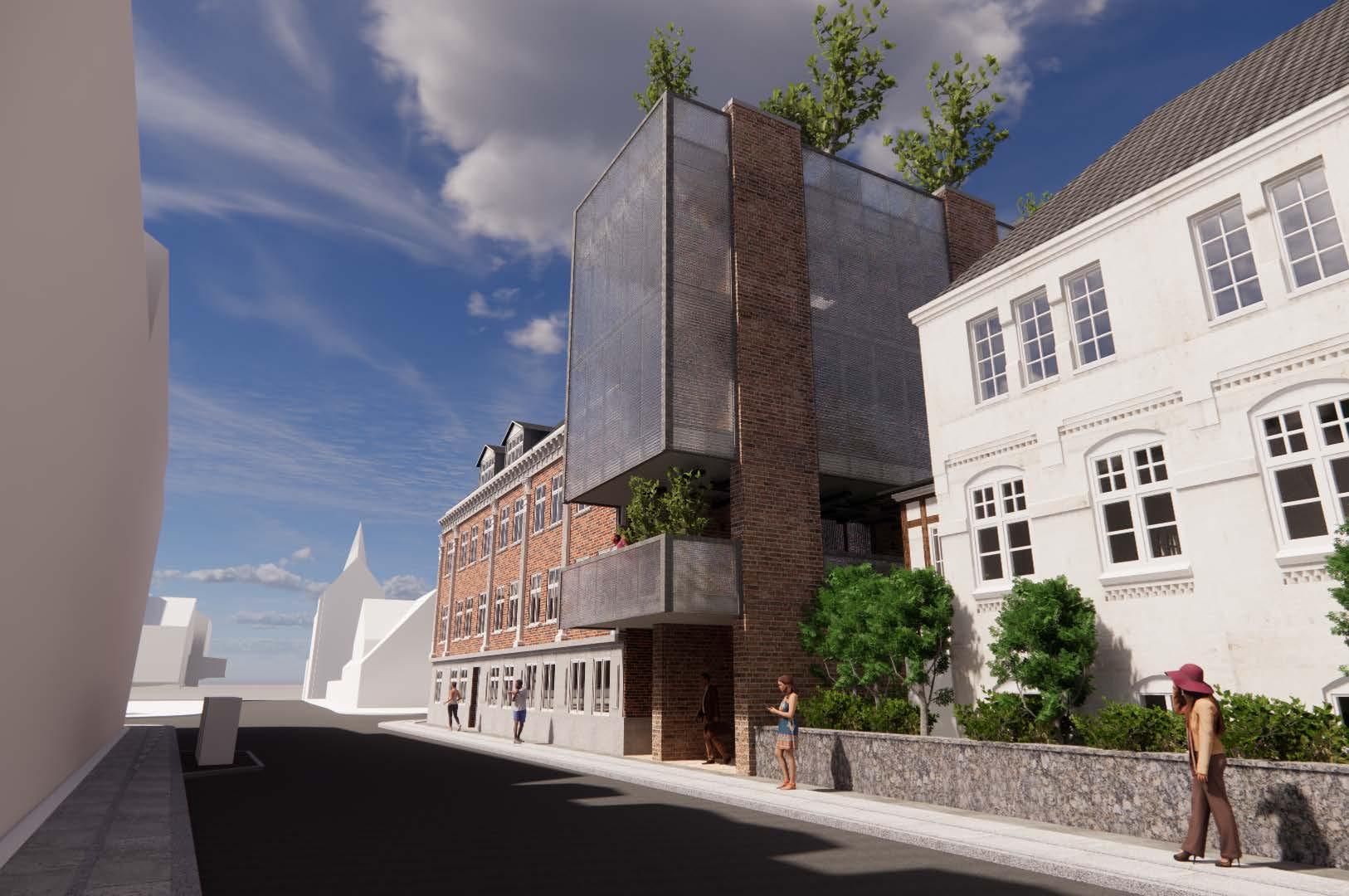
The architectural project for the horticulturist is focused on creating a sustainable and environmentally conscious space that merges research, experimentation, and urban farming, with a focus on public and private community engagement. The project consists of several interconnected spaces that aim to showcase the latest advancements in hydroponic gardening and urban farming, while also providing a tranquil setting for research and communal gardening.
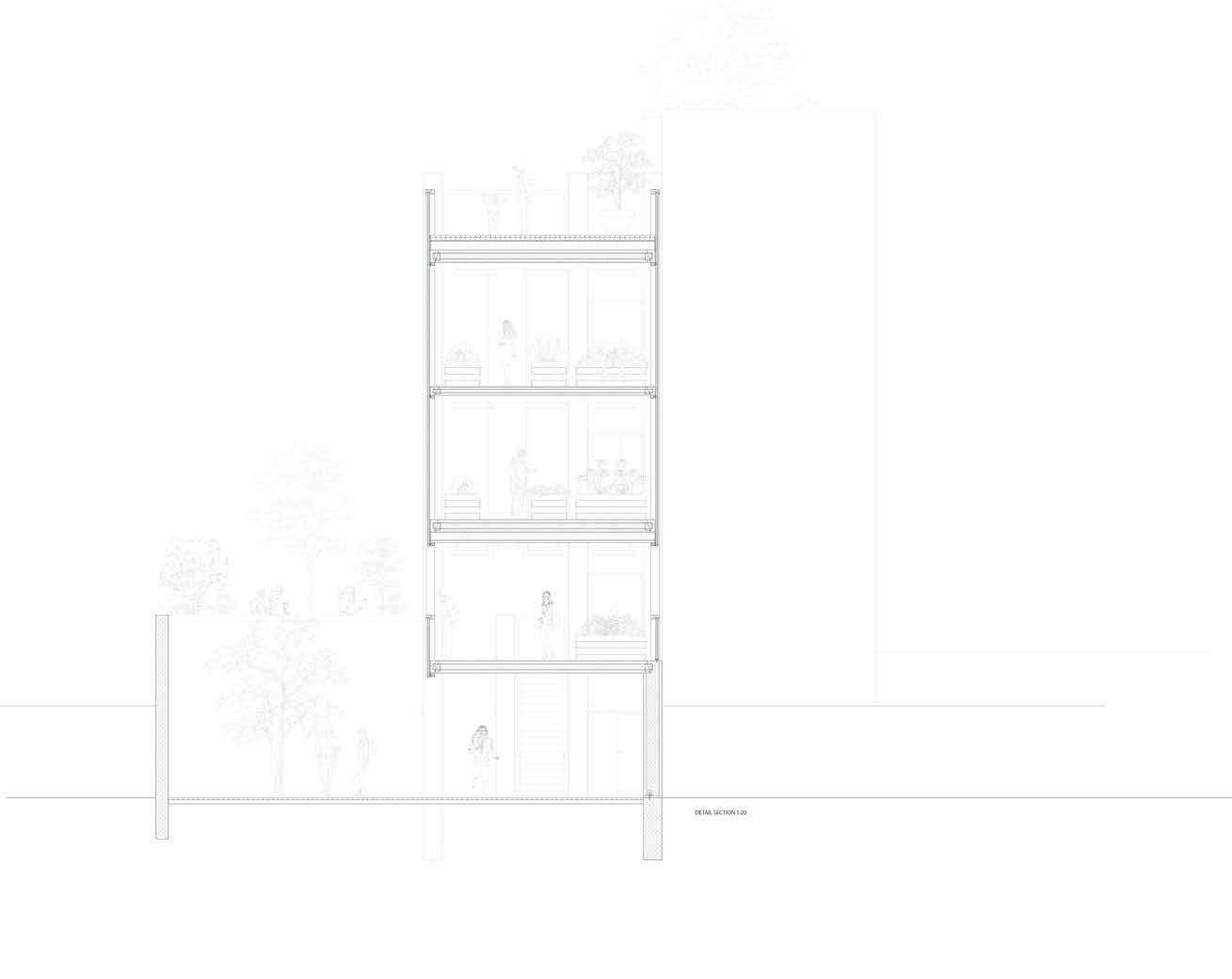
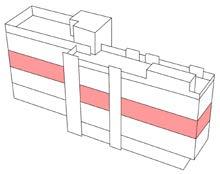
The project is divided into two main areas: a 30 percent private area for the horticulturist’s personal use, and a 70 percent public area for research and public use.
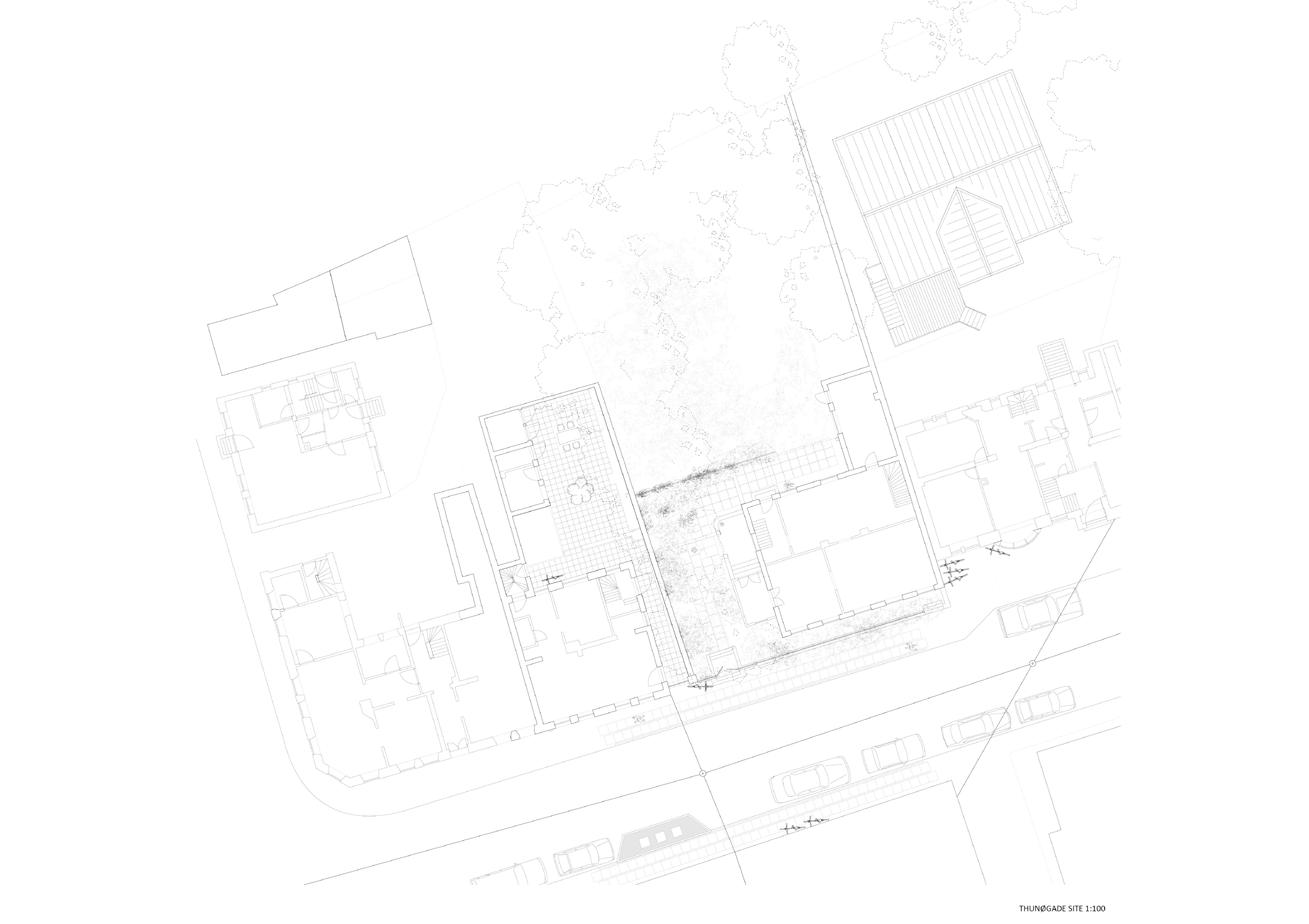
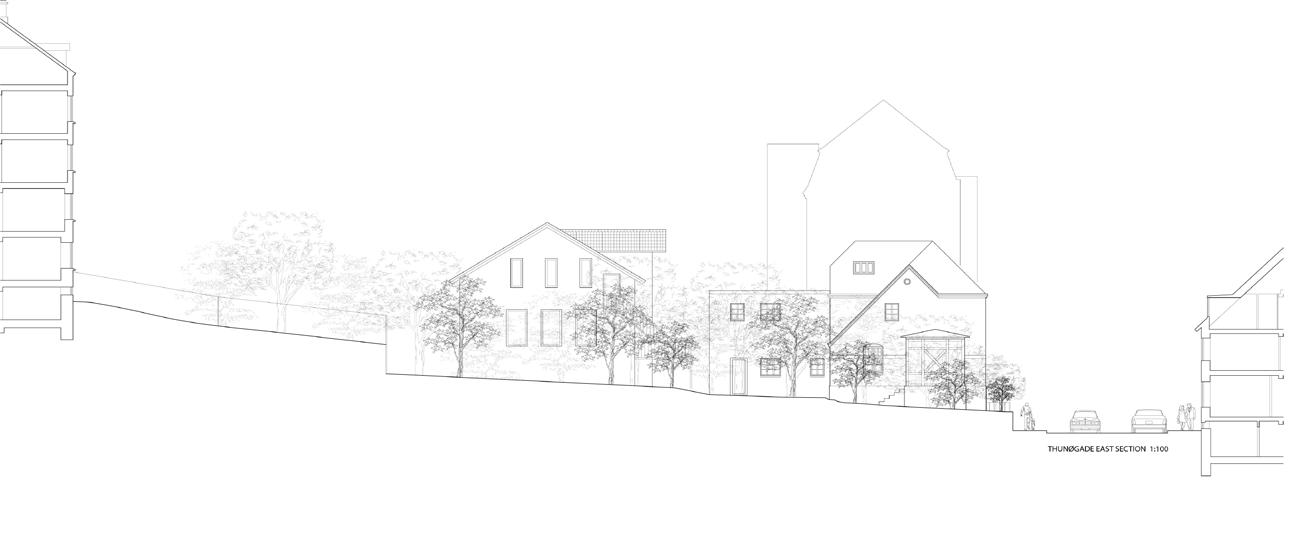
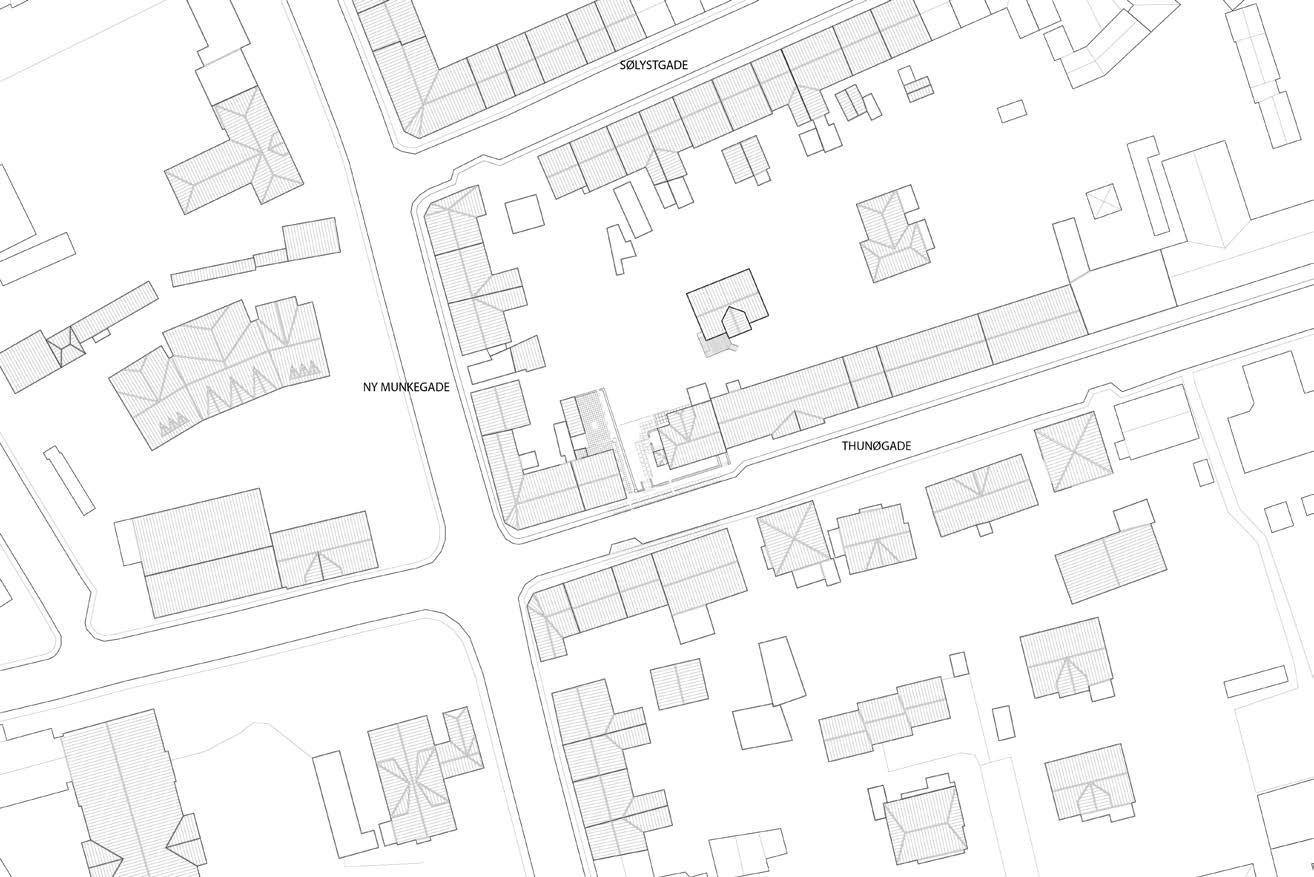
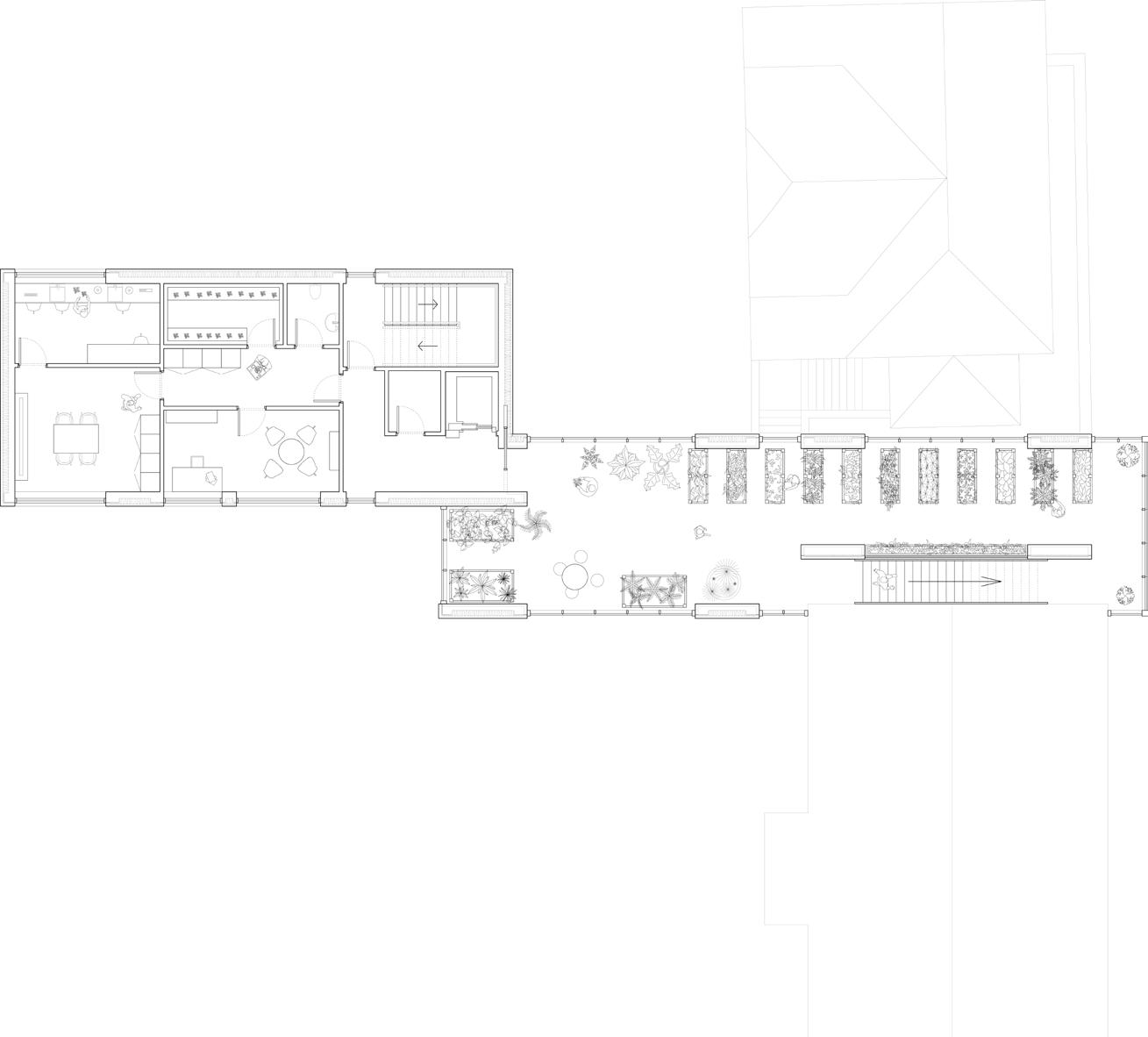
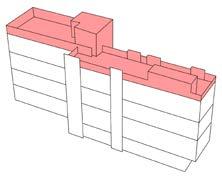
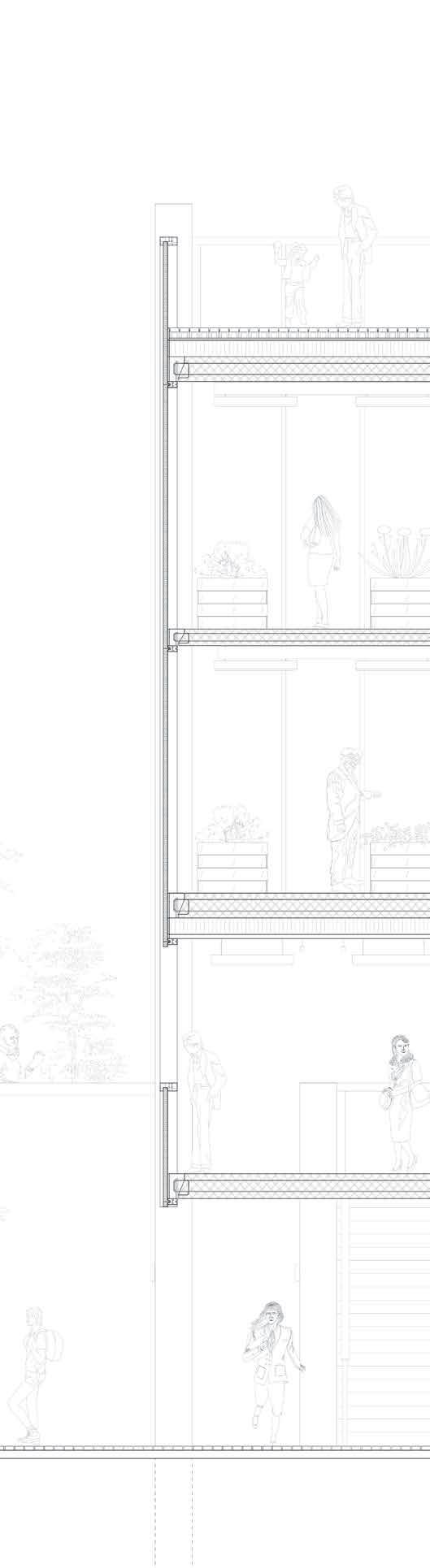
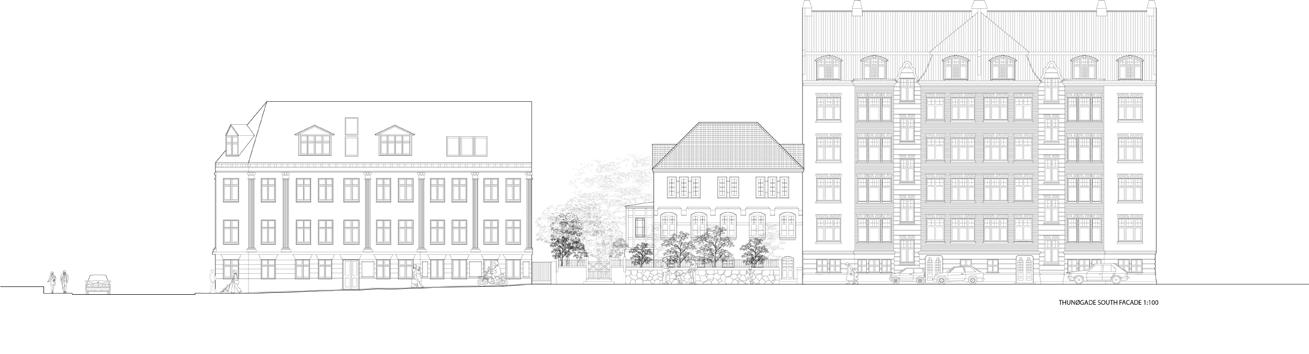
The building is a five-storey structure that sits on a small plot, inbetween two excisting buildings. The ground floor is designed for the public flow, and with a research lab, hydroponic gardens inside. The research lab features cutting-edge technology for plant research and development, allowing for experiments with different growing conditions that are not possible with traditional soil-based gardening. The hydroponic gardens consist of rows of vertical plants, grown using a specially designed hydroponic system that conserves water and energy. These gardens are used to grow a variety of greens, herbs, and vegetables that can be used in research, local restaurants and sold at farmers’ markets.
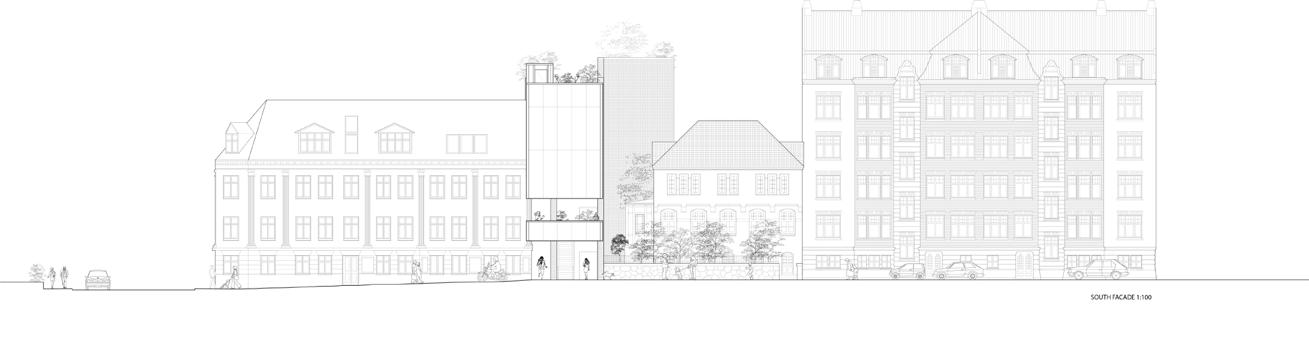
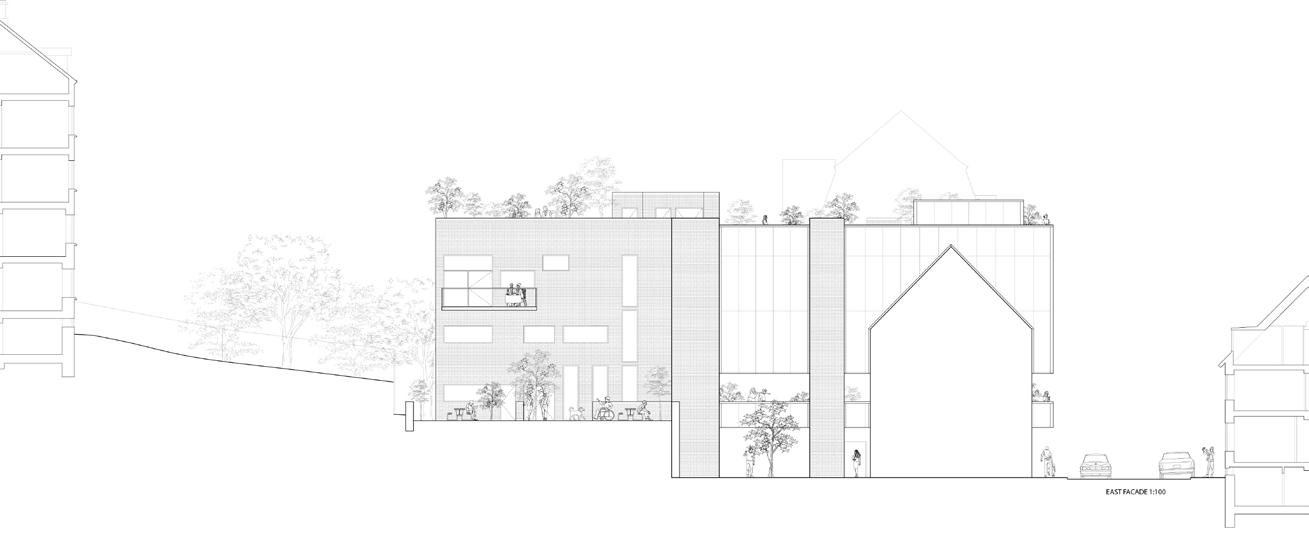
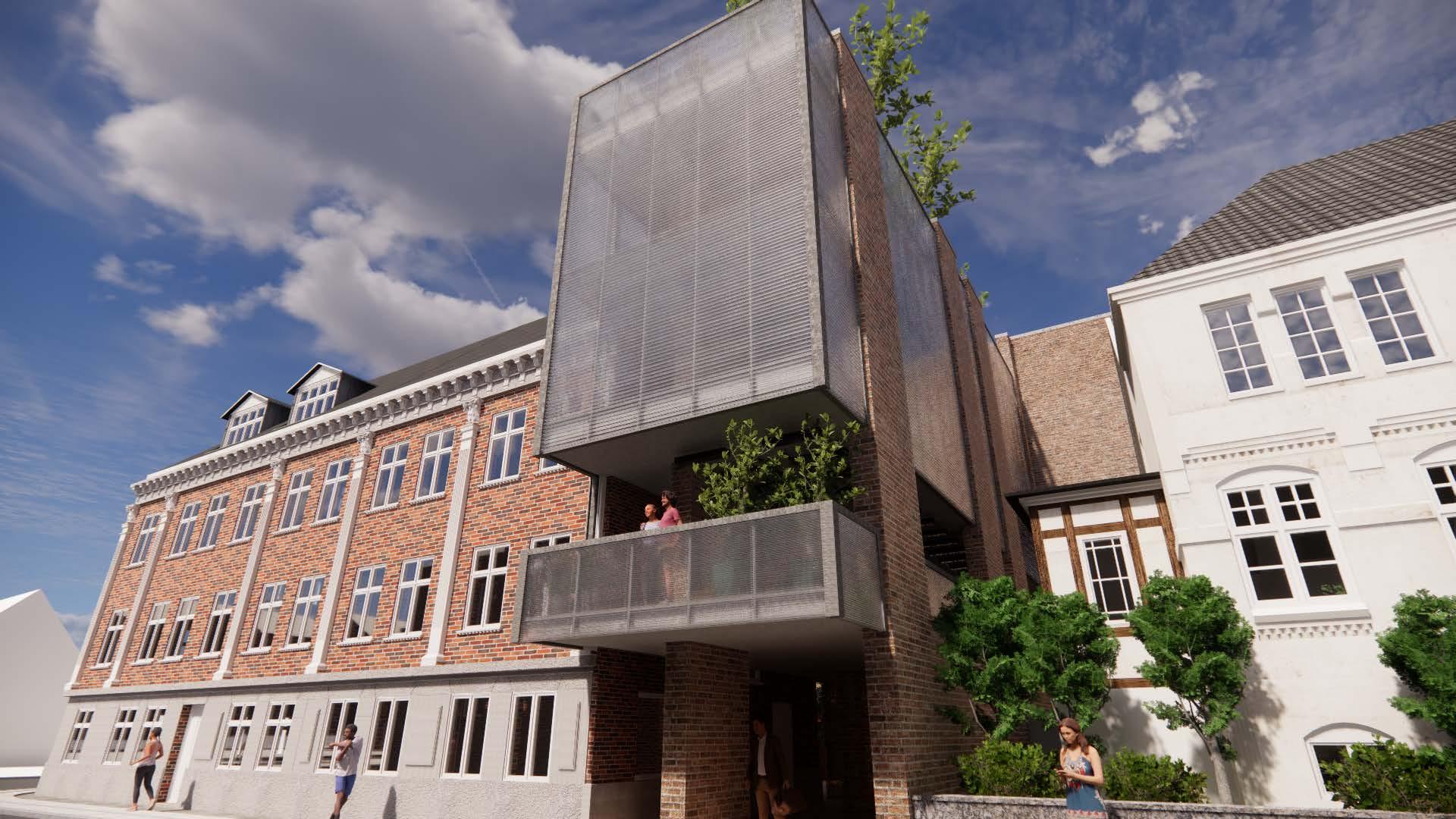
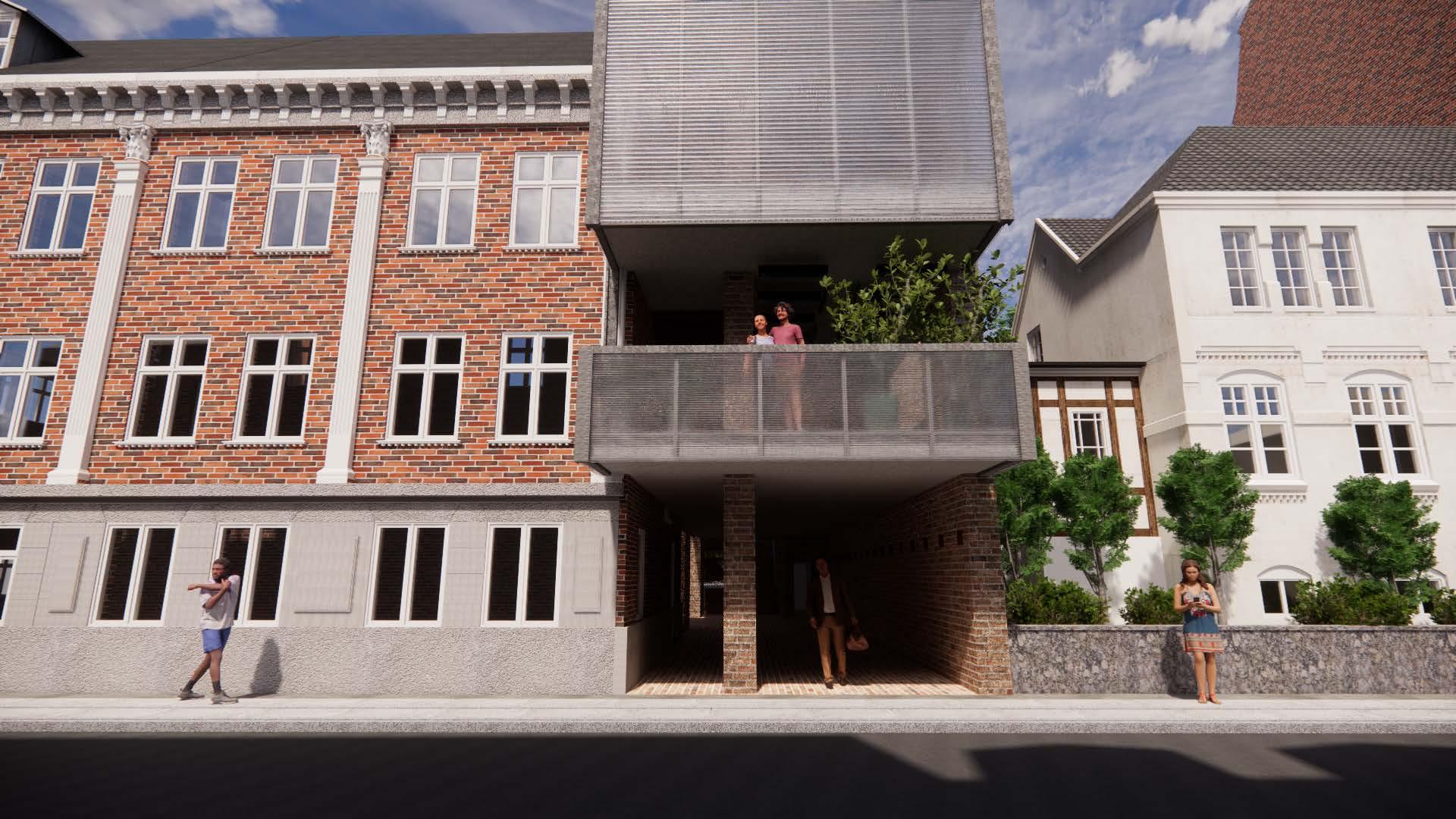
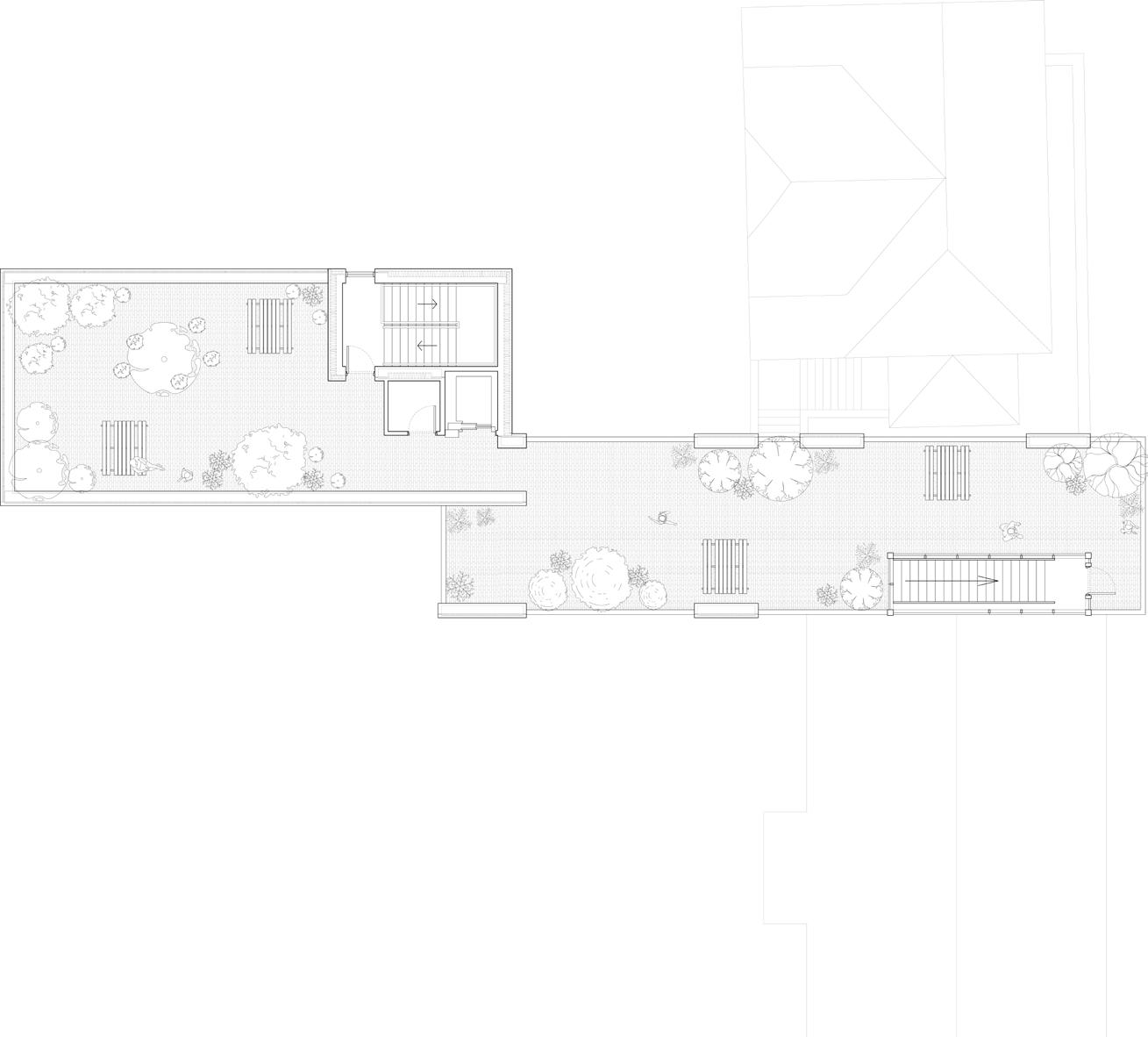
The community gardens are designed to serve as a public space for the local community. They feature a variety of plants and crops that are grown by the community, and provide a space for people to gather and enjoy the natural environment. The community gardens are also used to host educational programs and events, such as workshops and gardening classes.
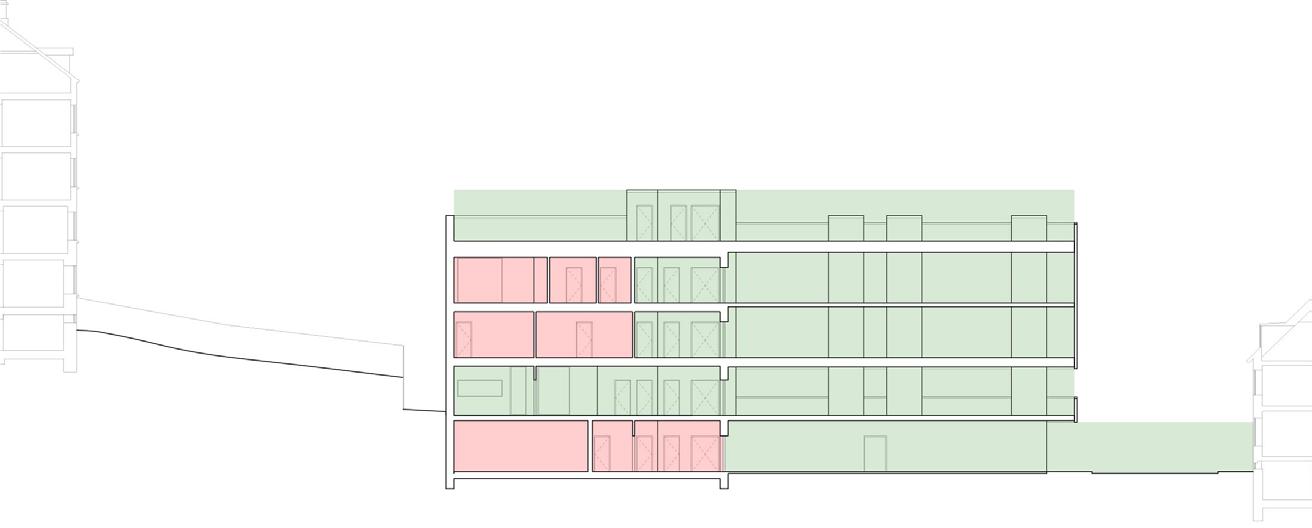
The project also includes a school and teaching function. The school is designed to provide education on various aspects of horticulture, from basic gardening techniques to advanced research methods. The teaching function is provided through a range of workshops, seminars, and other events designed to engage the public in the world of horticulture.
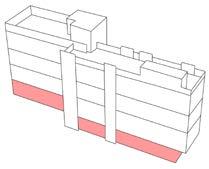
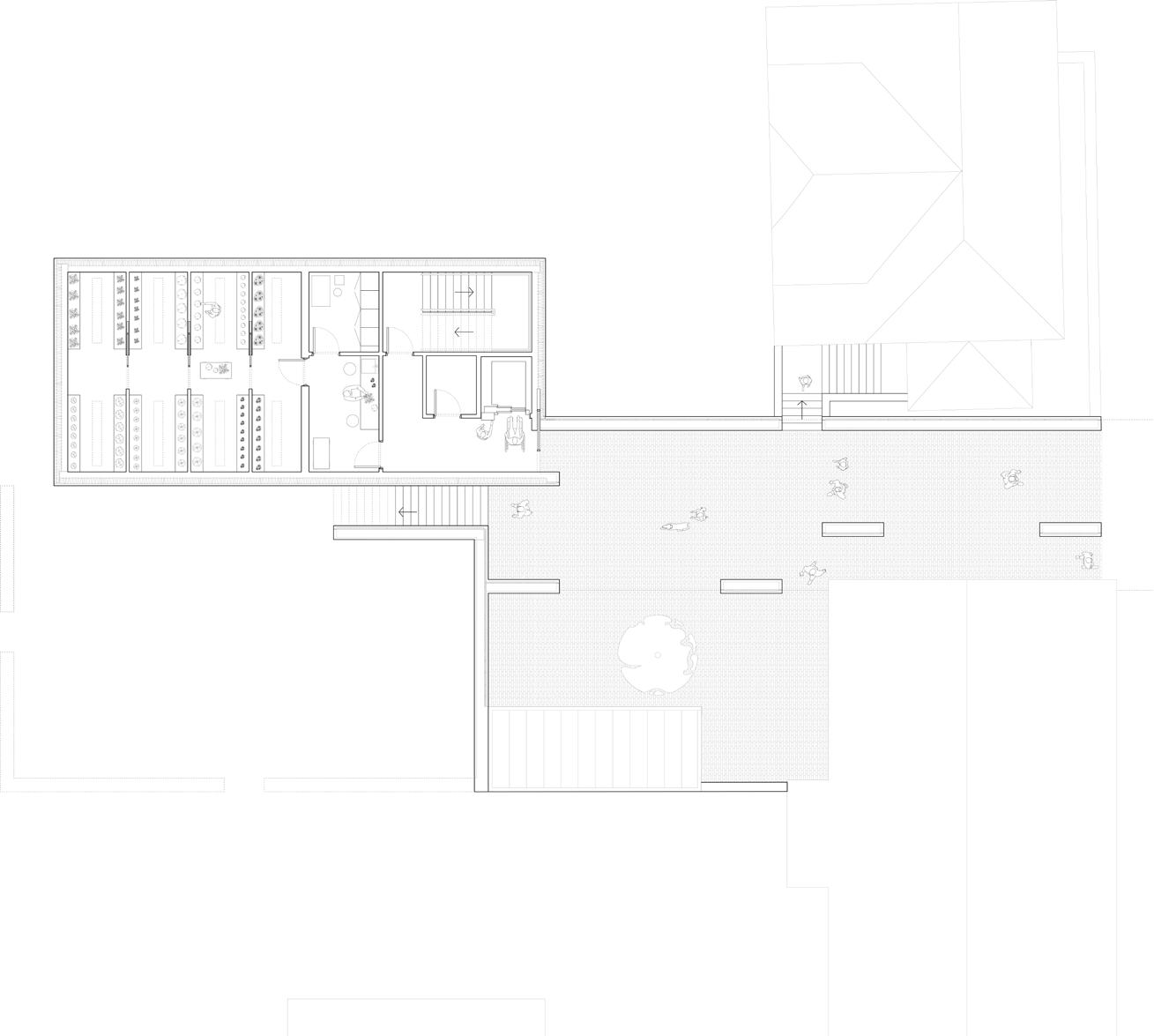
Overall, the project aims to create a community space that encourages engagement with nature, healthy living, and urban farming. It combines cutting-edge technology with traditional farming methods, creating an exciting and vibrant space that reflects the future of urban agriculture.