Director of Communication & Events: Christan Spires
Accountant: Melanie Key, CPA
Design: Christan Spires
TO CONTRIBUTE
Troup Trends welcomes your ideas. Please send inquiries to info@lagrangechamber.com for consideration.
As we close out the third quarter, I continue to be amazed by the momentum and energy within our business community. Year to date, we’ve welcomed 78 new members to the LaGrange-Troup County Chamber of Commerce — a reflection of the growth, collaboration, and entrepreneurial spirit that make our community so special.
This quarter alone, we’ve hosted over 20 events, providing countless opportunities for networking, learning, and celebration. One of the most meaningful highlights was our Valor Awards in September, where we had the privilege of honoring the incredible men and women who serve and protect our community every day. With 170 nominees and over 500 in attendance, it was truly a night to remember — a powerful reminder
of the strength and heart that define Troup County.
As we move through the final quarter of the year, I’m grateful for the continued support of our members, sponsors, and volunteers who make everything we do possible. Together, we’re not just growing businesses — we’re building a stronger community.
SUMMER DEAL
Chairman, Board of Directors
LaGrange-Troup County Chamber of Commerce
CONTRIBUTORS
IRISHA JONES
Troup County School System
ANDREA LOVEJOY
Community Member
SCOUT MOSLEY
Youth Leadership
LEWIS POWELL
Troup County Archives
CAROLINE PULLIAM
Troup County Government
ZAC STEELE
Troup County Public Safety
PHIL WISE
UGA Small Business Development Center
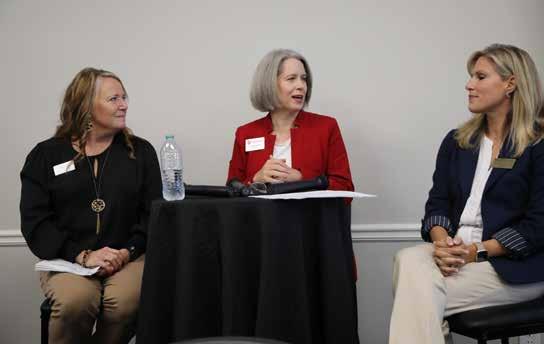
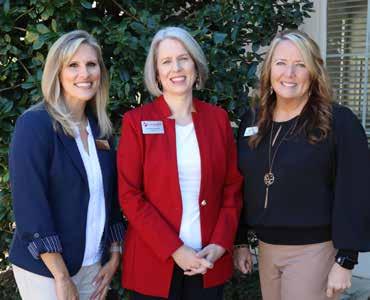
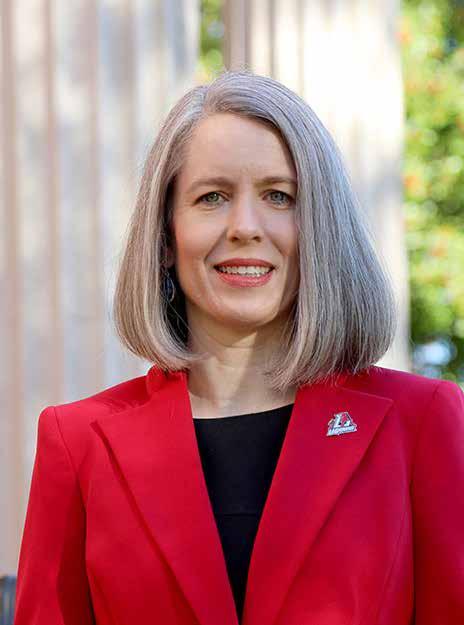
Across the U.S., about 30 percent of college presidents are women. In Troup County, that number is an impressive 100 percent. Dr. Stacy A. Bartlett became President of Point University in July, joining Dr. Susanna Baxter, President of LaGrange College and Dr. Julie Post, President of West Georgia Technical College, as the county’s top higher education leaders. Troup may just be the only county in Georgia in which all the college presidents, plus the School Superintendent, Dr. Rachel Hazel, are women. This edition of Troup Trends features each of the three college presidents who, as panelists at the Chamber’s State of Education luncheon last month, noted their shared commitment to workforce development. Three takeaways from the panel : the presidents genuinely like each other; they believe their gender is a visible example to students that they can achieve their goals. And, perhaps most important: “Women do get things done!”
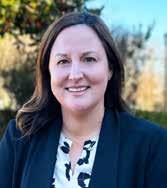
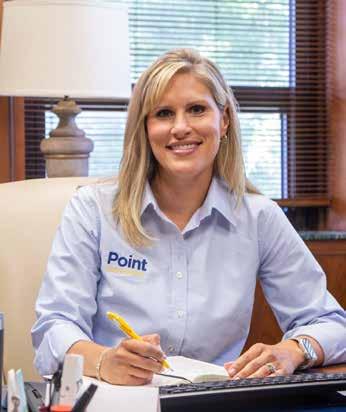
DR. STACY BARTLETT POINT UNIVERSITY
You are about to embark on a grand adventure,”
Dr. Stacy A. Bartlett told incoming students at her formal inauguration as the eighth president of Point University in August.
She might have been describing herself.
Bartlett wasn’t aiming to become a college president when she graduated from Atlanta Christian College in East Point in 2005. She needed a job, quickly, and there was an opening for an admissions counselor at her alma mater. She got the job and has served the school, which became Point University in 2011 and moved to West Point in 2012, ever since.
As the university grew and developed, so did Bartlett. Rising through the ranks, she came to see Christian higher education as her calling, administration as the area most suited to her Godgiven talents and non-denominational, faith-based Point University as her passion.
Bartlett worked in successively higher roles in admissions, enrollment management, fundraising and more, taught adjunct courses while earning her master's and doctoral degrees at Mercer University and served as chief of staff alongside immediate past President Dean Collins for five years.
Following Collins’s retirement earlier this year, Bartlett emerged from a national search as the unanimous choice to become the eighth president and first female president of Point University in July 2025.
She recognizes that it is unusual to rise to the top job at the same place you started and never left.
“I was given a lot of opportunities that I might not have had elsewhere,” she said. “And I’ve had mentors who had a willingness to let me learn and grow.”
She counts Collins, now serving as chancellor of Point, as chief among those mentors.
As the mother of two daughters, ages 8 and 10, Bartlett said it was not exactly the ideal time for the presidential opportunity. With support of her husband, Jeremiah Bartlett, a Point alum, pastor and communications manager at Southside Church, she tossed her resume into the ring.
“I prayed my way through the process. I feel called to this work,” she said. “We are a Christian university. It’s who we are. Our mission is to educate students for Christ-centered service and leadership throughout the world.”
Her experiences as chief of staff helped prepare her for many of the challenges she faces as president.
“I was in the room, often at the table. I saw the hard work, the tenacity. It’s a very tough role,” Bartlett said. “It’s where the rubber meets the road, and sometimes it requires hard, but necessary decisions.”
Bartlett believes her leadership style is a combination of transformative and collaborative. She loves working toward a shared goal, partnering as a team, soliciting feedback. She also believes in
celebrating others, recognizing the worth and contributions of all.
She aspires to servant leadership.
“There must be a willingness to serve,” she said. “You are not called to lead if you are not called to serve.”
She believes leaders, like students, must continue to grow.
“God has given me some talents He can work with. I’m still learning. I’m being stretched like never before.”
In her inaugural address, Bartlett announced the University’s spiritual formation theme for the year, “Formed,” based on Ephesians 2:10. (For we are God’s handiwork, created in Christ Jesus to do good works, which God prepared in advance for us to do. NIV)
“There is a reason for you being here, students,” she said. “No matter where you find yourself, I want you to rest in knowing that you are God’s masterpiece, and He will do the work of forming you if you allow Him.”
The need for Christ-based higher education, she said, has never been greater.
“We need Christian doctors, Christian attorneys, Christian educators, Christian business people. Some of the most holy work takes place in the classroom.”
Still in the early stages of her presidency, Bartlett has identified several challenges and set several goals, including boosting residential student enrollment which dropped significantly during the pandemic and has not recovered.
The school’s overall enrollment is up by 5 percent and now tops 2,600. That includes 1,400 online students from 42 states and 800 high school students pursuing dual enrollment. Fall 2025 residential enrollment is about 460, compared to more than 700 prior to Covid.
“We want to grow our residential program. We believe that impacts the community and impacts individuals,” Bartlett said.
Current classroom facilities can accommodate up to 1,000 students, though housing would be inadequate. A realistic “sweet spot” is 750 residential students, Bartlett said.
The growth in online students has been accelerated by Point’s Elevate program, which Bartlett helped launch as chief of staff. Elevate allows workers to receive a debt-free education paid for by their employers. Businesses pay one annual fee and employees can enroll in any online program for free.
Started less than four years ago, the Elevate program has already had about 350 graduates, many of whom might never have had a chance at higher education otherwise.
Innovations have included creating new majors, like cybersecurity and supply chain management, to prepare students for opportunities in growing fields.
“If you aren’t innovating,” Bartlett said, “you aren’t going to thrive.”
But along with innovating, Bartlett believes it’s equally important to focus on upgrading existing majors.
“When I think about the years ahead, yes, we need to innovate, but quality and excellence must be the bottom line,” she said.” It’s not just head knowledge, but making sure students can apply what they learn.”
The move from East Point to West Point has been beneficial to both college and community, she believes. Point has given new purposes to many vacant downtown buildings, even turning a former auto dealership into a performing arts center. West Point has seen new businesses and a much more vibrant downtown.
“West Point has been fantastic with us,” Bartlett said. “It is a blessing to be in a community like West Point. We are proud to be a part of West Point and Troup County.”
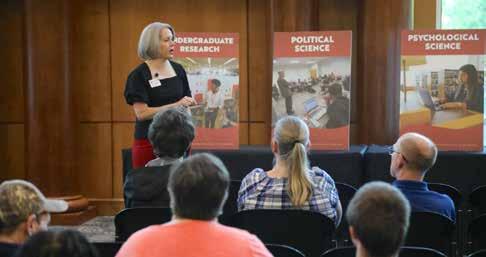
DR. SUSANNA BAXTER LAGRANGE COLLEGE
Ears perked up and smiles creased dozens of faces on September 12, as LaGrange College President Dr. Susanna Baxter, her voice ringing with conviction, spoke these words during the annual State of the College address:
“I want you all to hear loud and clear; LaGrange College is doing well. LaGrange College has gotten its house in order…. The state of LaGrange College is strong, and I want you to help me spread the word.”
The college is once again on solid footing, Baxter said, with growing enrollment, innovative new majors, new sports, refurbished facilities and a record endowment. The gathering of alumni, faculty, staff and community leaders heard her report with excitement. And relief.
Baxter became the college’s 26th president five years ago—in July 2020 —the early days of the Covid-19 pandemic. By the time pandemic-related restrictions eased in 2022, the 194-year-old United Methodist college had lost 35 percent of its enrollment and 37 percent of its income. Recovery was by no means guaranteed.
Baxter stops short of calling it a silver lining, but says the pandemic created an opportunity.
“Keeping a small private college going is a challenge without Covid,” she said, “but as a campus, we could rally around the danger that Covid presented.”
Rally they did. While many colleges chose a “wait it out” approach, the LC board didn’t count on that.
“Our board was bold and courageous,” Baxter said, choosing to “live within our means and not raiding the endowment,” as some colleges did. The board and administration saw the pandemic as an opportunity to innovate and get stronger.”
Some choices were hard and painful. Others were creative and forward-looking.
“We are becoming an innovative institution. We’re creating new programs, so that we can attract more students,” Baxter said.
One of the popular new programs is manufacturing engineering technology, which was sparked by a conversation Baxter had with a local industry leader. Another is the college’s first doctoral-level program, the Doctor of Education in Curriculum and Instruction, also spurred by community input.
Baxter loves what she calls “sidebar conversations” that trigger innovation. She’s an eager listener when someone pulls her aside and asks a question beginning with “Have you thought about?”
“Our times call for innovation,” Baxter said. “We must innovate to stay relevant. The same
old, same old won’t work.”
Another innovation this year is a new initiative called “You Are More.”
“We asked ourselves what makes us different as an institution,” Baxter explained.
Market research identified five pillars: close-knit community; guided growth; purposeful place; industry integration and soulful service.
“All these five pillars make us unique,” Baxter said. “Not one separately, but all of them together.”
In many ways, Baxter said, her career path prepared her for the unexpected challenges of Covid.
As an undergraduate majoring in Christian education and religion at Pfeiffer College, a United Methodist institution in North Carolina, she was “pushed to think grander” by a cherished mentor. He saw her becoming a theology professor, but Baxter’s self-analysis told her she was more of an administrator.
“I am all about making things happen,” she said, smiling.
She shifted her focus to higher education, earning both a master’s in education in general administrative leadership and a doctorate in higher education leadership and policy from Vanderbilt University.
After a stint at Barton College, where she was director of residence life and intramural sports before becoming dean of students, she joined Tennessee Independent Colleges and Universities Association in 2000 as head of member services and grants and was named chief operating officer in 2007. In 2010 she moved to Atlanta as president of the Georgia Independent College Association, where she worked with 24 member colleges, including LaGrange College, and is credited with reinvigorating the organization.
The 20 years of association experience “shaped me,” Baxter said. She worked with a wide variety of leaders at dozens of private colleges, tasked with helping them work together to improve effectiveness and reach goals.
“I learned there is wisdom in observing,” she said. “I saw what worked and what didn’t work. I think it helped me be a better leader and not step in as many potholes.”
Most recently, she has led the development of new master plans and
strategic plans and begun developing a fundraising campaign to be conducted in connection with the college’s 200th anniversary in a few years.
Baxter aims for a leadership style that is student-focused, collaborative and transparent. It all starts with faith, she said. A lifelong United Methodist, Baxter’s Christian faith is central to every aspect of her life.
“I try to embody my faith in my leadership, to be a role model as a person of faith, to be kind, to not expect the worst from people, a lot of the Golden Rule,” she said. “We are all children of God. It fundamentally changes our interactions if we remember that. It gives life meaning and purpose.“
intensive, she explained, and Mark has helped her learn to “be present” whenever she is at home.
She and her husband, consultant and author Mark Huffman, are active at LaGrange First United Methodist Church, as are their sons, Inman Huffman, a 17-year-old junior at LaGrange High and Wade Huffman, 12, a seventh grader at Hillside Montessori, where Mark Huffman is board president.
Baxter said her husband’s support is essential to her success. “I couldn’t do this without Mark.”
Her work is demanding and time
“My children get my best when I am home. Until they go to bed, I try to be present.”
Higher education is “fundamentally different post-Covid,” Baxter said, and the success of LaGrange College is important beyond the Hill. As Georgia’s oldest private college, she believes LaGrange College should be a point of pride for the community and vice versa.
“We want a vibrant LaGrange, and we think a vibrant LaGrange requires a vibrant LaGrange College,” Baxter said
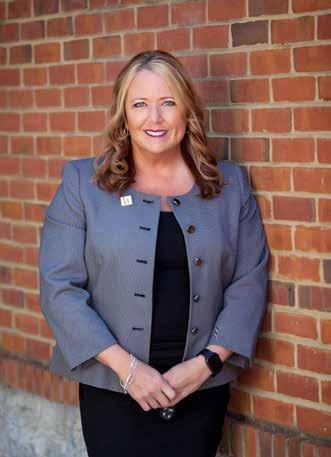
DR. JULIE POST WEST GEORGIA TECHNICAL COLLEGE
Leadership is about getting the right bus, putting the right people on the bus and making sure the gas tank is full so the bus can go where it needs to go.”
Dr. Julie Post has been driving the bus at West Georgia Technical College since becoming its president in April, 2021. The college currently serves more than 15,000 students in credit, noncredit, dual enrollment and adult education classes in seven counties, including Troup.
At the Troup campus, 1,336 students and 438 dual enrollment students can pursue higher education in more than 20 fields.
Dr. Post routinely tells students “We are here to get you from wherever you are to where you want to be.”
After some 30 years in technical education, she still finds joy in seeing transformational change.
“Changing lives, often generationally, with attainable opportunity and seeing success make dreams come true - what could be better?”
Post said her desire to work in a twoyear technical college system solidified after years of teaching high school in Ohio and working in technical ed as an adjunct professor and supporting GED classes after moving to Georgia. She had seen students get lost on the way to a four-year track and others who planned to go straight to work.
“The need for every student to feel that anything is possible and no two possibilities have to look the same is reality,” she said. “The space I have the privilege of serving in higher education has been incredibly rewarding.”
Post held various roles, including vice president for student affairs, during 16 years at Gwinnett Tech and earned a doctorate in education from the University of Georgia before being named to helm WGTC four years ago. Expansion of programs, facilities and enrollment has been a hallmark of her tenure.
“The college is in its eighth consecutive semester of enrollment growth. Three major construction projects are in action, including one in LaGrange,” she said. “There are new programs being developed and launched to meet community needs. Innovation and application of new technology is abundant in classrooms. Partnerships with industry to tailor programs are growing faster and faster. It is so incredibly exciting and rewarding to be a part of it all.”
Innovation is a word Post uses frequently.
“I may not describe myself as an innovator, but I do like to be one who inspires, pushes, supports, and champions the innovative ideas of others.”
With a laugh, she adds, “I’m competitive in that regard, as well. I’d like WGTC to be on the forefront of innovation.”
Among the innovations she cites is the partnership with the Troup County Career Center, which she calls “an innovation in and of itself.”
“The heart and souls of those who work there inspire me. I consider WGTC to be a catalyst that took that opportunity to a higher level with the Accelerated Career Diploma program through dual enrollment. It has turned around the lives of dozens of students who would otherwise be in dire circumstances.”
Another recent innovation was adding the Integrated Education & Training concept to coincide with GED instruction.
“This has opened so many doors for those without a high school diploma to get
a ‘double leg up’ out of their current circumstances. The creativity and innovation of the teams at the college to find all types of alternatives in numerous program areas has been insightful and impactful beyond measure.”
Easily the largest and potentially significant undertaking is the major renovation of the former Troup Tech building A and upcoming construction to replace the now-demolished building B. WGTC was one of two colleges in the state to receive a 2005 Governor’s Workforce Accelerator grant.
“Phase I is already completed and and students are taking classes in the facility,” Post said. “This wing holds programs in automotive technology, hybrid, and E vehicle repair and charging station repair.”
Phase 2 design phase has been completed and construction is anticipated to begin in late spring 2026. Programs to be offered include electrical technology, auto body repair, commercial truck driving, line worker, logistics and auto dealership sales/marketing/parts service programs.
The new and improved facilities have the potential for an additional 800 students.
Post sees an abundance of future opportunities.
“There are so many innovative projects in the pipeline for Troup and all our counties that I hope the ideas just keep coming, repeating and elevating!”
Post describes her leadership style as collaborative and transformational. With responsibilities at sites in seven counties, she recognizes the importance of teamwork.
“Nothing happens successfully in a vacuum,” she said. That’s not just true of faculty and staff, but of students and community partners, as well.
“In the community, we have people who embrace and trust us with their needs and place value on the contributions we can provide. The industries are our ‘customers,’ and we are grateful for those partnerships that power us. Then students who immerse themselves in learning become incredible employees, bringing the economic vitality circle to full cycle. A successful cycle is transformational for a city, county and state. I thrive on being part of this fun.”
Post offers an illustration of the economic vibrancy effect.
“For one doctor to be successful, a dozen supporting medical staff are required, and those individuals are trained at our college.” And now, she says, nurses have the opportunity to take their two-year RN degree at WGTC and matriculate in a four year degree at four year institutions, including WGTC partner, LaGrange College.
Post wants the community to be aware of an additional way to get involved with West Georgia Technical College.
“We have some amazing openings to join our faculty and be part of changing lives every day. In fact, hiring faculty to teach in our high demand, technical fields is a challenge we face. Our faculty are experts in their fields and long to help make more students love the job they love. If anyone reading this falls into that category of passion for your field, please check us out. We’d love to hear from you.”
Christopher Rechtoris VP -Senior Regional Manager
Pickleball Takes the Court
The Troup County Board of Commissioners is excited to highlight the Troup County Pickleball Complex. This brand-new facility features 19 uncovered pickleball courts with various shade structures and benches, as well as a covered pavilion with restrooms, water fountains, and a seating area with ceiling fans. Community members, press, volunteers, and more gathered to celebrate the complex’s Grand Opening and Ribbon Cutting Ceremony on August 8, 2025.
The complex is located at 131 Ragland Street in LaGrange, Georgia next to the George Harris Baseball Complex and across the street from the LaGrange Active Life Center. This new recreational amenity is open to the public and provides a communal space to socialize, exercise, and enjoy the fastest growing sport in America.
Since its opening, the Troup County Pickleball Complex has been a huge success as players from all backgrounds gather to participate in open play. “The Pickleball Complex is working out even better than anticipated,” said Parks and Recreation Director Lance Dennis. “These courts are seeing frequent use by players of all ages – anywhere from early teens to mid-eighties! We are happy to offer an opportunity for people to be physically
active and come together as a community in a quality and safe environment.” Troup County Parks and Recreation plans to host a variety of events in the future, with the first major pickleball tournament at the facility scheduled for spring 2026. Further programming for the complex, including pickleball lessons, clinics, youth programs, and mixers, will be maintained by the Troup County Pickleball Association (TCPA), whose mission is to promote the growth and development of pickleball in Troup County and its surrounding areas. With 128 active members currently, the TCPA advocates for adequate resources to support local pickleball programming and facilities. The TCPA hosted an inaugural opening event in late August as well as its first roundrobin competition on October 4th, which saw 16 teams engage in friendly matches and sportsmanship.
“The Troup County Pickleball Association is dedicated to growing the sport and ensuring pickleball thrives in our community,” said TCPA President Barrett Orendorff. “We welcome players of all ages and skill levels.” The TCPA plans to host at least two major tournaments in 2026 in addition to ongoing member programs, such as the “Pickleball 101” series, for beginners and beyond. To learn more about the Troup County Pickleball Association or to become a member,
please visit www.trouppb.com.
The Troup County Pickleball Complex is open from 7:00 am – 10:00 pm daily and is maintained by Troup County Parks and Recreation. For more information about this facility and other recreation programs and projects in our community, please contact the Mike Daniel Recreation Center at 706-883-1670 or visit www. trouprec.org.
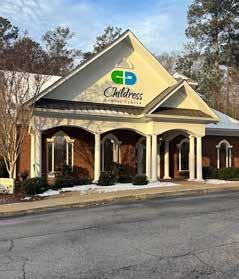
Welcome to Childress Dental Center
At Childress Dental Center, we are more than just a dental practice — we are a family committed to making you feel comfortable and cared for every step of the way. Our mission is to provide not only top-quality dental care but also a warm, welcoming environment where you can relax and feel at ease. Whether you’re here for a routine checkup or advanced treatment, we strive to make your visit as pleasant and stressfree as possible.
We understand that visiting the dentist can cause anxiety, which is why we’ve designed our office around family values and comfort. One way we do this is through our Comfort Menu — a unique service that allows you to choose amenities such as blankets, pillows, soothing music, or headphones to help you feel right at home.
Rooted in Community
Childress Dental Center is deeply invested in the Troup County community and surrounding areas. We are grateful for the trust you place in us and proud to serve the families and individuals of this wonderful region. To celebrate that bond, we have hosted Patient Appreciation Events, creating fun opportunities to connect outside the office and show our heartfelt gratitude for your continued
support.
We also love to reward our patients for helping our practice grow. Through our quarterly referral giveaways, we thank those who share their positive experiences with friends and family. After all, word-of-mouth is the highest compliment we can receive.
Staying Connected
We’re excited to share the launch of our new Facebook page, where you’ll find office updates, helpful dental tips, and details about upcoming events and promotions. Be sure to follow us and stay connected!
In addition, our commitment to giving back has led us to host a Free Clinic Day, providing essential dental care to those in need. We are passionate about offering this service again in the future, ensuring that everyone in our community has access to the care they deserve.
Our involvement in Troup County runs deeper than dentistry. We are proud supporters of local families, schools, and community initiatives. Like many businesses featured in this magazine, we understand that a strong community is built on relationships, trust, and a willingness to serve.
Our Promise to You
When you choose Childress Dental
Center, you are choosing more than a dental office. You are choosing a team dedicated to your health, comfort, and confidence — and a practice that sees itself as a partner in the growth and wellbeing of this community we all call home.
We are incredibly grateful for the opportunity to serve, and we look forward to continuing to care for the families of Troup County for years to come.
Call us today at (706) 882-1888 or visit www.childressdentalcenter.com to schedule your appointment and experience the Childress Dental Center difference.
A Heart for the Holidays
Every LaGrange Christmas parade has its heart-warming moments. This year’s parade will be packed with them.
Former Chamber board chairman and heart transplant recipient Rev. George Bailey will be honored as grand marshal. Chamber leaders chose the parade theme, “It’s a Wonderful Life,” because the main character in the classic Christmas movie is, yes, George Bailey.
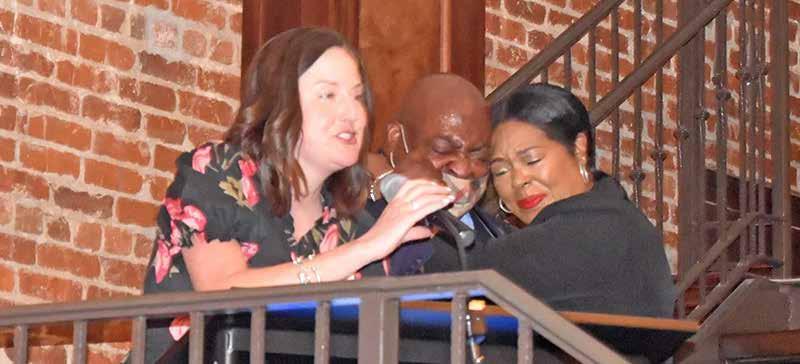
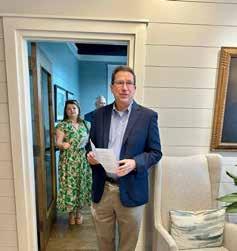
“George Bailey, we honor you because of your courage, your kindness and the way you’ve touched so many lives,” said Summer Deal, chamber board chair, at the surprise announcement at the September breakfast meeting. Bailey, a self-described “big teddy bear,” burst into happy tears.
“I’m deeply honored to be the 2025 grand marshal of the LaGrange Christmas parade,” he said. “This moment isn’t just about me. It’s about faith, healing, and community.”
The December 4 parade comes almost exactly one year after the 55-year-old pastor, former Hogansville city counciman and passionate community leader, received a new heart at Vanderbilt Transplant Center in Nashville, Tenn.
Bailey will lead the parade, but he won’t ride alone. A huge photograph of his heart donor, a 31-year-old man who died
after a motorcycle crash, will ride with him. The donor’s mother, Carlene Murray, plans to come to LaGrange for the parade and, at Bailey’s request, will ride in a car directly behind him.
“We are family now,” Bailey said of the woman he has come to know through frequent telephone calls and texts. The grand marshal is making arrangements for LaGrange to “roll out the red carpet” for Murray. Prior to the parade, he will meet her in-person for the first time and offer her an opportunity to listen to her son’s heart, now beating in his chest.
It’s sure to be a heartfelt evening, the culmination of a heart-warming series of events.
Widely known for his joyful, gregarious, people-loving spirit and willingness to serve, Bailey experienced worsening heart problems for about a decade, even receiving a defibrillator, but continued his busy schedule. Most every day found him with multiple engagements: preaching and pastoring, serving as chaplain for several organizations including Hogansville Police Department, leading multiple boards and supporting a long list of civic, religious and community events.
In May 2024, his heart nearly gave out.
“Mayor Jake Ayers had asked me to do the Memorial Day service in Hogansville,” explained Bailey, an Army combat veteran of the Gulf War. “When it started, I was so weak I could hardly stand.”
Bailey’s heart was functioning at just 15 percent. By June, he was on the heart transplant list and by August he made the first of many trips to Vanderbilt Transplant Center, which set a world record in 2024 by performing 174 adult and pediatric heart transplants.
Churches and communities in Troup County, where Bailey now lives; Coweta County, where he was born and Meriwether County, where he grew up and graduated from Manchester High School, rallied to raise prayers and funds for the hefty pastor, who had his own preparation to do.
“I had to lose weight, start eating healthy,” said Bailey, whose weight had climbed above 350 pounds.
He was motivated, he said, by a deep desire to continue his ministry, including White Oak Baptist Church in Senoia, which he has pastored for 25 years. Most of all, he wanted to see his three grandsons, ages 2, 6 and 8, grow up. He had strong support from his wife Daniela Lashawn Bailey, who became his caregiver, and their adult daughters, Jasmine Copeland and Desiree Bailey. By November, the ailing pastor was hospitalized in Nashville, undergoing preparatory treatment and waiting, filled with faith and hope, for a new heart. After two false starts, the transplant took place on Dec. 5. Bailey and Daniela remained in Tennessee for weeks for aftercare, rehab and monitoring.
Before leaving Tennessee, Bailey did two things that ultimately led him to learn the identity and story of his anonymous donor. He completed paperwork allowing his personal information to be shared with the donor’s family. Then, as he left the hospital, he rang the ceremonial bell and his family posted a video of the event on a Facebook page (KGBailey Strong) that had been set up to keep friends and the broader community up to date on his transplant journey. Among the thousands who saw the video was his donor’s mother.
In September, one day after he was named parade marshal, Bailey gave the invocation at the United Way kickoff in LaGrange. During the event, his phone lit up with a message.
Carlene Murray, the donor’s mother, reached out to him by text, referencing Clarence, the guardian angel of the movie character George Bailey and using the famous movie line “Every time a bell
“It really is a wonderful life,” he said. “God has blessed me with a second chance. I get to smell the flowers while I am still here.”
rings, an angel gets his wings.” Learning he had been named grand marshal, she decided Rev. George Bailey should know the name of his angel.
“His name isn’t Clarence. It’s Timothy,” she wrote.
For the second morning in a row, Bailey burst into tears.
In subsequent conversations he learned that Timothy, known as Tim, died about four days after a motorcycle accident in Mountain View, Missouri. He was single, white, a dog lover and proud uncle.
He’s also a hero to Bailey and all his loved ones.
Now, with the anniversary of his transplant nearing, Bailey wants the community to
know he’s doing well, though there have been a few setbacks, including two small rejections, since the surgery.
He and Daniela recently visited Philadelphia to celebrate their 32nd anniversary. He has been at birthday gatherings for his grandsons and even arranged for the oldest to have a birthday ride in his favorite vehicle, a Tesla truck. He’s published a book called Heartbeat Leadership and will soon bring out a children’s book.
Most of all, Bailey wants everyone to know he is grateful and still filled with joy.
“It really is a wonderful life,” he said. “God has blessed me with a second chance. I get to smell the flowers while I am still here.”
Youth Leadership Class of 2025
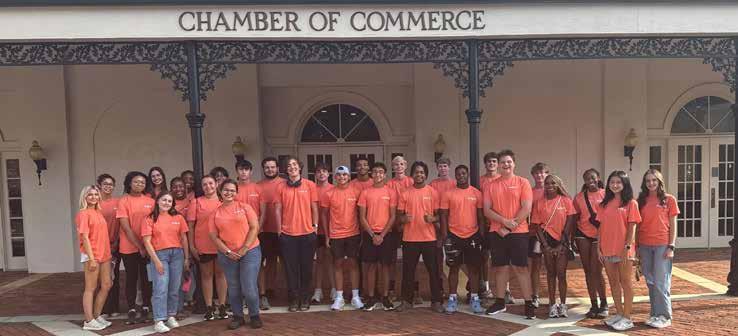
The Youth Leadership program, presented by Kia Georgia, gives future leaders insight into how they can positively contribute to their communities and schools, reaching far into their adult lives. Thirty local high school students have just graduated from the Chamber’s Youth Leadership program.
The Youth Leadership curriculum was revamped seven years ago by the J.W. Fanning Institute at the University of Georgia. Entitled “Youth Leadership in Action,” the goal of the curriculum is to embolden each of our youth participants to achieve more, to do more, to be more.
During this year’s program, the students, from both local public and private schools, participated in nine sessions that covered a range of leadership-related topics and activities, including:
• Building Teams
• Teambuilding Ropes Course
• Understanding Leadership
• Communicating Effectively
• Appreciating Differences
• Managing Conflict
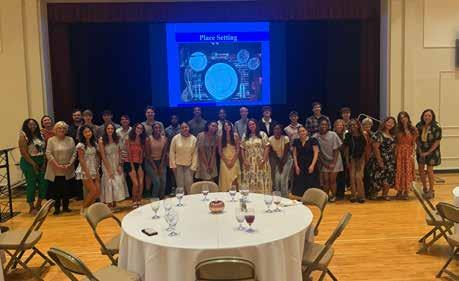
• Etiquette Dinner, sponsored by True North Wealth Advisors
• Setting Goals and Making Decisions
• Choices and Consequences
As a high schooler, it is sometimes hard to hang out with new people. For me especially, I don’t enjoy it because it really puts me out of my comfort zone because like most people, I would prefer to hang out with my friends with whom I am closer. The Kia Youth Leadership Program has really shown me what hanging out with people who you wouldn’t normally hang out with will do for you in life. I have really enjoyed meeting each and every person in the program. They are all different and all have unique skills that are important for working together as a team. This program has also taught me what being an effective leader looks like. Through different leaders in the community, I have been shown how to communicate well, what an interviewer at a job is looking for, which people skills to use when meeting new people, and how to be a respectable person at a fine dining event. Through the Kia Youth Leadership Program, I have not only been taught what being a great leader looks like, but how I can use my skills to become a better person too.
-Scout Mosley Youth Leadership Class of 2025
Her Story, Restored
The phrase, “history is written by the victors,” is often attributed to Winston Churchill, though a quick Google search dispels this notion. It seems that the phrase has been in use by historians since at least the mid-19th century. Lately, the phrase has been modified to add, “or those who just happened to write it down,” which is more apt. Modern historians frequently find scraps and shreds in newspapers, letters, diaries, or bits of historical detritus that add new facets to our understanding. It is in this aspect that history regularly evolves and clarifies itself. Indeed, history also reflects biases, not only those of the historian, but those of the world which they inhabit. For centuries, much of history was written by men who obscured women’s history, where more recent histories embrace and focus on it.
This is apparently the case with histories of LaGrange College and its early female leaders. It seems that early histories of the school, despite being an institution for the education of women, have erased, or at least muddled, the role of women in the school’s leadership.
Our late county historian, Clark Johnson, frequently contended with these opposing viewpoints. Throughout his writings on local history, he argues against the writing of earlier historians as he breaks down their suppositions with facts from his own research, and at times, with his own strong opinions. This is quite evident in his manuscript history of LaGrange College. In it, he argues that the school was led by five women in its first one hundred years, despite Clifford L. Smith’s 1933 History of Troup County, which excludes all female leaders of the school, save Daisy Davies.
While we can only guess at Clifford Smith’s motives in obscuring female contributions, he deserves credit for pulling together the tremendous amount of history that he preserved in his volume. He was a prominent educator in LaGrange and served as the City Schools’
Sketch of LaGrange Female Academy’s first building located on Broad Street. This is likely the building that Miss Benham’s School utilized.
superintendent once it was established in 1903, all the while researching for Callaway Mills and writing for the local newspaper. Notably, he was also the son of college president Rufus Wright Smith and Oreon Mann (for whom Smith Hall was named), so likely he had been immersed in college history for several decades. In his book, Smith suggests that the school was the brainchild of Thomas Stanley (who was an early president, but not the founder of the school), he ignores the contributions of several women who took on leadership of the institution, and glosses over the administration of Daisy Davies, the college’s president from 1915 to 1920.
Looking at Clark Johnson’s copy of Smith’s history, it’s easy to see how much he disagreed with the author from lines being crossed out and corrections written into the margin. Certainly, Smith’s three meager pages inspired him to expand the history to the roughly five-hundredpage tome he produced. His research took him through many sources that Clifford Smith couldn’t pursue such as newspapers from Columbus, Macon, and Atlanta; the minutes of both LaGrange and Southern Female Colleges; and private correspondence and diaries from students, professors, and other locals. Johnson’s dedicated work includes the fine details of the history that Smith had little space to include in his history. One of the first things that Smith fumbles is regarding the school’s founding. The date of 26 December 1831 is usually applied as the date the school was chartered by the state, however Clark Johnson uncovered evidence that the
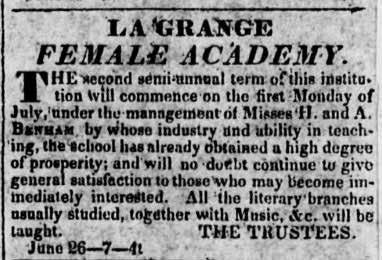
school had opened earlier in that year. A note in the diary of the Rev. Isaac Boring, the Methodist circuit rider with LaGrange on his route, says that because the church building was incomplete, he preached at the “Academa.” The term, with its female ending, Johnson posits, may refer to the school for women. More concrete evidence appears in an advertisement in the Columbus Enquirer in July of 1831, stating that the school had just finished its first term in June and was preparing for its second term to begin on July 11.
More importantly, the ad mentions that the school is “under the superintendence of Miss Harriet H. Benham, assisted by her sister, Miss A. H. Benham.” Unfortunately, the word “superintendence” is vague, though it does impart some leadership to the role. Schools at this time were often founded by a group of citizens who would form a board of trustees that would raise money for a building and hire a teacher or teachers to run it, therefore, the “superintendence” might be limited to hiring teachers and selecting the curriculum. However, Johnson includes Miss Harriet Benham as the first president of the institution. Unfortunately, nothing is known of the Misses Benham, apart from their work at LaGrange Female Academy between 1831 and the end of 1832.
Another ad in the Columbus Enquirer notifies us to a change in guard in January of 1833 when the Rev. Thomas Fielding Scott was named as new principal. In 1834, Rev. Thomas Stanley was brought in, assisted by his wife, Ellen Ramsey Stanley. With failing health, Rev. Stanley continued his work into 1835 with the
An 1831 ad in the Columbus Enquirer for LaGrange Female Academy under the management of Miss Harriet Benham and her sister.
help of another assistant, James Phelps. Sadly, Stanley died in early February, just a few weeks into the new term. The following day, the Board of Trustees held an emergency meeting in which Mrs. Stanley and Mr. Phelps were asked to “continue the operations of the school as heretofore.
An article from 1881 describes Ellen Ramsey Stanley as “a lady of rarest gifts under whose administration the reputation of the school was not only maintained but largely increased.” Again, ads from the Columbus Enquirer fill in the blanks. James Phelps assisted Mrs. Stanley through much of the year, though she is credited with the running of the school to the point where in August, an account of the public examinations refers to the school as “Mrs. Stanley’s School for Young Ladies.” Mr. Phelps left the school at the end of the year and an ad was once again placed in the Columbus newspaper announcing the opening of “The LaGrange Female Academy… under the direction as heretofore of Mrs. Ellen Stanley.” With her at the helm, the institution continued its steady course at least to 1841.
A dearth of information prevents us from knowing who presided over the school around 1841. It appears that the indomitable Mrs. Stanley took a step back from the presidency around this time, though continuing with her instructional duties. The Rev. John Dawson took over in 1842 with John Park taking over in 1843. Joseph Montgomery took over the next year, serving for eleven years before selling the school to the Methodist Conference. Ellen Stanley remained devoted to her students, teaching them until her death in 1849.
As tumult overtook the country and civil war broke out in 1861, LaGrange Female Academy struggled with a host of
challenges including a fire that devastated several of its buildings on The Hill. Its Baptist counterpart, Southern Female College had its campus destroyed while it was used as a hospital, thus leading to a temporarily merger in order for both institutions to survive. Classes continued and the college briefly returned to female leadership in 1864 when Annie E. Wright was named as acting president. She was succeeded in 1866 by Rev. James Armstrong who formerly led Marion Female Institute in Alabama. As the combined schools continued to recover, the Methodist Conference refused to appoint a new president. Luckily, four local widows, all graduates of the Academy, answered the call to keep the school going. Mary Broughton Montgomery, Mary Evans Curtright, Florida Ferrell Presley, and Avarilla Amoss Pryor assumed leadership of the school inspiring the trustees and the Methodist Conference that the institution was still viable until the Rev. Dr. Morgan Callaway was appointed in 1870.
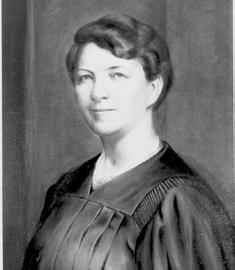
Following the devastation wrought by the Civil War, the school was set on an upward trajectory electing a female president in 1915, forty-five years after the four widows nursed the school back to health. Daisy Davies was an Atlanta school teacher with a number of social connections to LaGrange. After her appointment, she eagerly dove into the role by traveling and speaking around the South to encourage new admissions. During her five-year term, Davies ushered the school through the First World War, and she made much-needed changes to the culture. One oft told story speaks of her marching her students into town with a loaded shotgun slung across her shoulder. If any of the local men or one of her girls stepped out of line, she would fire a shot into the air as a warning. She continued the trajectory of the school by increasing its endowment and urging the dropping of “female” from its name, making it simply LaGrange College. Her presidential term helped to cement the institutions place amongst the finest in the Southeast. While many early historians obscured the roles of women in the college’s early history, Clark Johnson’s research has sought to restore their place as early leaders.
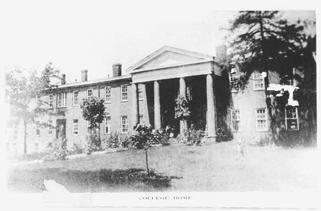
LaGrange College’s Old College Home building, now known as Smith Hall. Built on the eve of the Civil War, it was used as the campus’ central building despite its construction not being complete.
Daisy Davies, the indomitable president of the school from 1915-1920.
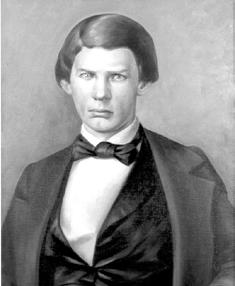
A portrait of the Rev. Thomas Stanley, the school’s third president until his death in February 1835. His wife, Ellen Ramsey Stanley assumed his position as the schools for several years thereafter.
Surgical Care Near You
Bariatrics
AUSTELL
1700 Hospital South Drive Suite 202 (770) 944-7818
Carrie Hall, MD
Suraj Menachery, MD
COLUMBUS
860 Brookstone Centre Parkway Suite B (706) 803-7570
John Woody Major, MD
LAGRANGE 1600 Vernon Road Suite A (706) 803-7570
John Woody Major, MD
MARIETTA
55 Whitcher Street NE Suite 410 (770) 919-7050
Fritz Jean-Pierre, MD
SMYRNA
4441 Atlanta Road SE Suite 312 (470) 956-4200
Carrie Hall, MD
Suraj Menachery, MD
Cardiology
GRIFFIN
619 South 8th Street Suite 301 (470) 267-3950
Valery Effoe MD
LAGRANGE 1602 Vernon Road Suite 300 (706) 803-7510
Valery Effoe MD
Thomas Gore. MD
Alexander Gedevanishvili, MD
ENT
LAGRANGE
300 Medical Drive Suite 705 (706) 803-7960
Shawn Mathews, MD
Gastroenterology
LAGRANGE
1551 Doctors Drive (470) 610-0145
Cameron Body, MD
John Coggins, MD
General Surgery
COLUMBUS
860 Brookstone Centre Parkway Suite B (706) 803-7570
Karie Jeter, MD
John Woody Major, MD
Ashley Stewart, MD
Jennifer Susoreny-Velgos, DO
LAGRANGE
1600 Vernon Road Suite A (706) 803-7570
Karie Jeter, MD
John Woody Major, MD
Ashley Stewart, MD
Jennifer Susoreny-Velgos, DO
OB/GYN
HOGANSVILLE
2000 Billy Tucker Circle (706) 803-8040
Michael Bakarich, DO
LAGRANGE
106 Lukken Industrial Drive W (706) 803-7830
Kerri Hensarling, MD
Katherine Magnuson, DO
Madhavi Naik MD
1600 Vernon Road Suite D (706) 803-7690
Michael Bakarich, DO
Brett Bowie, MD
Kerri Hensarling, MD
Katherine Magnuson, DO
1602 Vernon Road
Suite 200 (706) 803-7860
LeThenia Baker MD
Kerri Hensarling, MD
Katherine Magnuson, DO
WEST POINT
599 3rd Avenue (706) 803-7770
Kerri Hensarling, MD
Katherine Magnuson, DO
Orthopedics
LAGRANGE
300 Medical Drive Suite 707 (706) 803-7920
Chika Okafor, MD Jeremy Reifsnyder, DO
WEST POINT 599 3rd Avenue (706) 803-7921
Chika Okafor, MD Jeremy Reifsnyder, DO
Pulmonary
LAGRANGE 1551 Doctors Drive (706) 803-7490
Ariyo Olobatoke, MD Awan Rahman, DO
Urology
GRIFFIN 619 South 8th Street Suite 200 (470) 267-2940
Richard Jadick, DO
LAGRANGE 1555 Doctors Drive Suite 101 (706) 803-7540
Justin Fincher, MD Richard Jadick, DO
WEST POINT 599 3rd Avenue (706) 803-7540
Justin Fincher, MD Richard Jadick, DO
General
Pulmonary
Richard Jadick, DO
Justin Fincher, MD
Ariyo Olobatoke, MD
Chika Okafor,
Velgos,
Carrie Hall,
Jean-Pierre,
Suraj Menachery, MD
Alexander Gedevanishvili, MD
Thomas Gore. MD
Valery Effoe MD
Michael Bakarich, DO
Brett Bowie, MD
Kerri Hensarling, MD
Madhavi Naik MD
MOVERS, SHAKERS, RISK-TAKERS
Freeman Named Language and Literacy Liaison
Following a comprehensive selection process, we are pleased to announce that Charles Freeman has been selected as the inaugural Language and Literacy Liaison for Troup County. The search drew a number of highly qualified applicants with diverse backgrounds in early childhood education and literacy development. Final candidates were evaluated based on their professional experience, demonstrated collaboration, training and coaching capacity, and deep commitment to early
learning outcomes.
Mr. Freeman brings over 35 years of experience as an educator, academic coach, and literacy facilitator. He most recently served as the District Literacy Facilitator (PK–5) for Troup County Schools, where he led the implementation of evidence-based literacy instruction and professional development grounded in the science of reading. He is certified in LETRS, holds endorsements in reading and dyslexia education, and has played a pivotal role in the development of ELA curriculum and community-based literacy initiatives.
Rooted in his personal journey, Mr. Freeman’s passion for early literacy stems from a lived understanding of the transformative power of reading. His leadership, vision, and deep ties to the community uniquely position him to support the implementation of Launch Pads and strengthen literacy outcomes for children from birth to age five.
Mr. Freeman officially began his work on July 1, 2025.
Page Named School of Public Safety and Professional Services Dean at WGTC
West Georgia Technical College (WGTC) is proud to announce the appointment of Chris Page as Dean of its newly established School of Public Safety and Professional Services.
Page brings more than 19 years of public safety experience as a firefighter,
paramedic, and educator. He holds a Bachelor of Business Administration from Georgia Southern University and a Master of Public Administration from Valdosta State University. He is currently pursuing a Doctorate in Public Administration, further strengthening his expertise in public service leadership and workforce development.
Page is a Georgia licensed Instructor/ Coordinator with a paramedic endorsement and holds multiple advanced certifications, including BLS, ACLS, PALS, AMLS, and PHTLS. He is actively involved in professional organizations such as the Georgia EMS Association (GEMSA) and the National Association of Emergency Medical Technicians (NAEMT). He also serves on the Georgia Office of EMS and Trauma’s Region 9 Council and as secretary of the EMS Education Consortium Executive Council.
True North Wealth Advisors Join Raymond James Financial Services
True North Wealth Advisors, based in LaGrange, Georgia, and recently recognized as the Best Investment Firm in the LaGrange Daily News 2025 Best of Troup County, has joined Raymond James Financial Services (RJFS) – the firm’s independent advisor channel. Led by Financial Advisors Summer Deal and Aaron Mabon, alongside Office Manager Lisa Ray, the team is known for its client-first philosophy and commitment to personalized financial planning. Previously affiliated with Commonwealth Financial Network, the team manages approximately $190 million in client assets. With a combined 33 years of experience, Deal and Mabon specialize in retirement planning and investment management, serving a diverse clientele that includes business owners, women investors, and preretirees.
True North Wealth Advisors is located at 306 Church Street in downtown LaGrange and can be reached at 706223-0073.
Coffeehouse Hours: Mon - Fri 6:30am - 6pm Sat 8am - 6pm Sun 9am - 5pm
Shirley Pennebaker, M.Ed.: Turning Struggle Into Strength
When Shirley Pennebaker declared Education as her major at LaGrange College, she dreamed of teaching the gifted. What she didn’t realize then was that her true calling would be unlocking the gifts within those who struggled to learn.
During her studies, Shirley took one of the first college courses on learning disabilities following Public Law 94142. While others wrestled to identify auditory or visual memory deficits, Shirley instinctively understood how to teach through them. Her professor quickly recognized her extraordinary intuition for reaching students who learned differently. That gift found its first great test when local surgeon Dr. Glenn Bailey and his wife Evelyn sought help for their son, Chris, a bright and energetic child who struggled in every classroom. After testing at the Atlanta Speech School, the Baileys turned to LaGrange College. The professor there had only one recommendation—Shirley Pennebaker.
At Shirley Pennebaker’s birthday celebration, Chris Bailey reflected warmly:
“I was Shirley’s very first student. When my wife was at her wits’ end trying to teach our son, she asked, ‘What are we going to do?’ His speech therapist, Marcia Brock, recommended a remarkable teacher named Shirley Pennebaker. There was no need to persuade us—I had already experienced her giftedness. Today, our son is making extraordinary progress with Shirley and
Brain Jogging.”
From the beginning, Shirley connected with Chris in ways others could not. Word spread quickly, and before even earning her degree, she was teaching nearly thirty students whom others believed could not learn.
During her student-teaching at Dunson Elementary, she found more children sitting silently in the backs of classrooms—forgotten not for lack of intelligence but for lack of methods that reached them. Shirley began experimenting with games, movement, and laughter as tools for memory and attention. The principal, astonished by her results, wrote a glowing letter recommending her for future positions. That letter resurfaced when Shirley interviewed for her first job at Hollis Hand Elementary. It described her as having “a natural gift for teaching children with learning disabilities.”
Smiling at the irony—since she had once dreamed of teaching “the gifted”—Shirley accepted the position. An anonymous donor soon provided a scholarship for her master’s degree, ensuring she could continue teaching by day and studying by night. Within three years she was selected to pilot the first self-contained learning-disability classroom in the district.
But Shirley’s deepest lessons came outside the classroom. Traditional universities didn’t yet teach how the brain learns, so she began teaching herself— poring over medical texts in libraries, attending national conferences, and following every whisper of research that aligned with what she witnessed in her students. Years later, neuroscience would confirm what Shirley already believed: the brain can grow new cells and strengthen connections at any age.
Inspired by these new discoveries, Shirley spent decades learning everything she could—first through her local library, and later through the endless resources of the internet. She traveled the country to study with the best minds in neuroscience and education, explored research from the Salk Institute, attended Learning & the Brain and International Dyslexia Association conferences, and built relationships with scientists and therapists who were redefining human potential.
Out of that lifelong pursuit came Brain Jogging—a web-based cognitive program that helps individuals from age 4 to 92 improve attention, memory, and learning efficiency. For over twenty years, it has empowered children with dyslexia and autism, adults recovering from stroke, and seniors seeking sharper thinking.
Today, Shirley’s students—once struggling children—are accomplished adults. When she hears, “You won’t believe how well Ashley, Virginia, Adam, Kendrick, or Harrison are doing,” her husband Jim just smiles and whispers, “Oh, yes she will.” Shirley has followed many of their journeys. Chris Bailey went on to earn degrees in Nursing and Therapeutic Behavior Disorders and holds several patents for gun-safety devices. Others have delivered commencement addresses at their college graduations and become educators, engineers, business leaders, and innovators in their fields. They now inspire others with the same confidence and compassion Shirley once inspired in them.
Shirley’s dream of teaching “the gifted” came true—not by finding them, but by creating them. Through divine intervention, relentless curiosity, and love for her students, she transformed the way our community—and far beyond— understands learning itself.
� Why Choose Yippee Machine?
� Family Values: Honest, reliable, and focused on building long-term relationships.
� Quality/Expertise: ISO 9001:2015 certification and experience delivering high-quality machining services.
� Community-Focused: We’re here to support customers reach their goals and be efficient!
Yippee Machine
“Precision
Yippee Machine is your solution to quality machining. We are an ISO 9001:2015 certified machine shop demonstrating our commitment to quality and continuous improvement. We are a second-generation machine shop serving the community and surrounding areas with precision, care and personal touch. Every part we create reflects our dedication to quality, craftsmanship and customer satisfaction.
In the rapidly evolving manufacturing industry, sourcing obsolete parts can present a significant challenge. Yippee Machine offers reverse engineering solutions, bridging the gap between outdated designs and modern production techniques. Whether you need one custom part or a large order, you can count on us to complete the job. We are equipped to provide production with our three CNC mills and our CNC lathe.
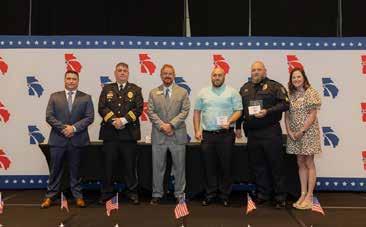
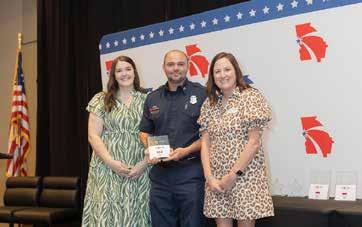
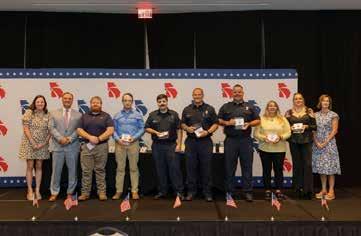
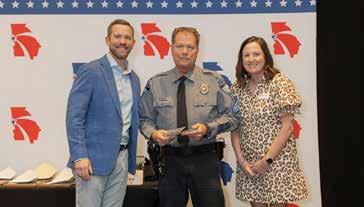
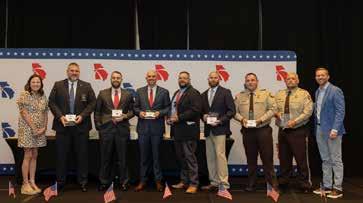
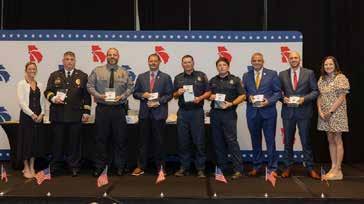
Presented by Great Wolf Lodge, we honored and recognized those who serve and protect our community every day at our second annual Valor Awards banquet. The Valor Awards pay tribute to Troup County's public safety professionals, including firefighters, police, and emergency personnel. Presentations included the Medal of Valor, Lifesaving Award, Medal of Merit, Public Safety Person of the Year, Public Safety Unit of the Year, and Communications Officer of the Year.
Communications Officer of the Year Sponsored by Motorola
Shining Star Award Sponsored by FLI Properties
Silver Medal of Valor Sponsored by Vernon Woods
Bronze Medal of Valor Sponsored by Med2You
Lifesaving Award Sponsored by FitCo Health Club
Gold Medal of Valor Sponsored by Diverse Power
Congratulations on Your Retirement Chief Strickland
Local Public Safety Leadership
Presenting Sponsor
Premier Sponsor
Supporting Sponsor
Public Safety Person of the Year Sponsored by Mallory Agency
Medal of Merit Sponsored by Avive
Public Safety Unit of the Year Sponsored by Mallory Agency
Keynote Speaker Randy Toms
EARLY BIRD BREAKFAST AUGUST
We received an update from the Callaway Foundation, including an overview of their current projects, recent impact and upcoming initiatives within the community. Thank you to our Gold Sponsor, United Way of West Georgia and Registration Table Sponsor, West Georgia Technical College.
SEPTEMBER
We received an update on Wellstar West Georgia Medical Center from Coleman Foss, Senior Vice President and Hospital President. Victoria Dune-Chari, the hospital’s new Chief Operating Officer, joined him. Thank you to our Gold Sponsor, Jane Foods and Registration Table Sponsor, Loy's Office Supplies.
OCTOBER
We were thrilled to welcome back Dr. Rachel Hazel, now celebrating her first year as Superintendent of the Troup County School System! She shared an engaging update on our schools, the progress made over the past year and what’s ahead for students, educators, and our community. Thank you to our Gold Sponsor, LivWell Health and Registration Table Sponsor, FitCo. Health Club.
STATE OF COMMUNITY PARKS & RECREATION IN TROUP COUNTY
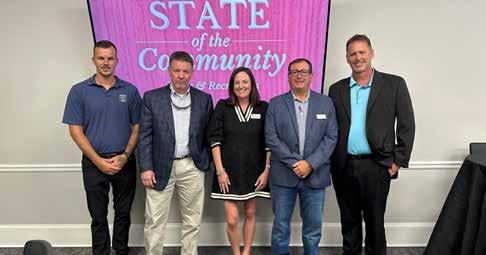
Presented by Jackson Services, our August State of Community luncheon focused on Parks & Recreation in Troup County. Our featured guests were Lance Dennis, Parks & Recreation Director, Troup County, Bill Bulloch, Assistant City Manager, City of LaGrange and Matthew Bradberry, General Manager, Highland Marina & Southern Harbor
STATE OF COMMUNITY
VOICES OF EDUCATION & COMMUNITY
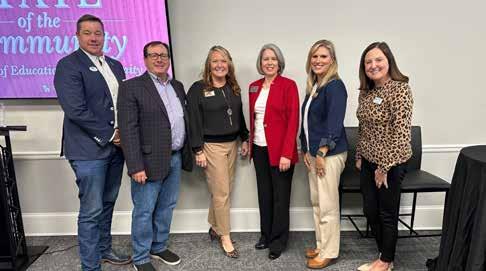
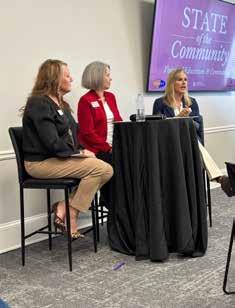
Presented by Jackson Services and sponsored by Houze & Associates, Inc., we heard from three remarkable leaders shaping the future of higher education in Troup County: Dr. Stacy Bartlett – President, Point University, Dr. Susanna Baxter – President, LaGrange College, Dr. Julie Post – President, West Georgia Technical College
This special event highlights the vision, priorities, and impact of our local colleges and how their leadership is preparing students, strengthening our workforce, and building a stronger community.
by
by
Presented
Sponsored
BUSINESS AFTER HOURS
Sponsored by
At our August Business After Hours, we had the opportunity to explore the beautiful new additions and renovations of the Callaway Foundation office. Guests enjoyed touring the refreshed space, connecting with fellow Chamber members, and learning more about the Foundation’s ongoing impact in our community. We also heard from Callaway Foundation President, Tripp Penn, who shared insight into the organization’s mission and the vision behind the recent updates.
SAFETY COUNCIL
Presented by
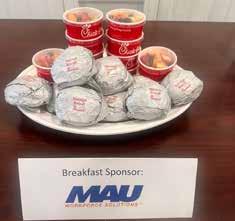
Jim Forsythe, Business Development Representative with Columbia Southern University, was our guest for Q3 Safety Council. Columbia Southern is well known for its accredited online safety degree programs, and Jim shared valuable information about the educational opportunities available to our local community. Special thanks to our registration + breakfast sponsor, MAU Workforce Solutions.
FALL INTO HEALTH: A WOMEN IN BUSINESS EVENT
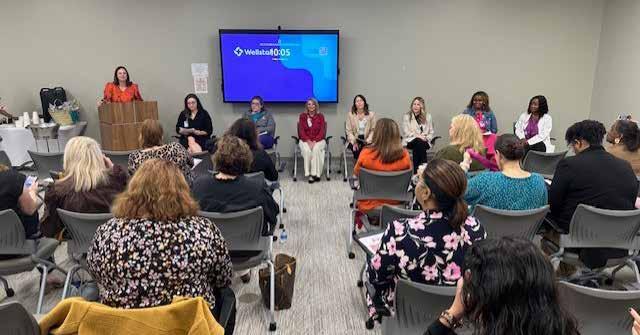
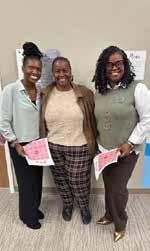
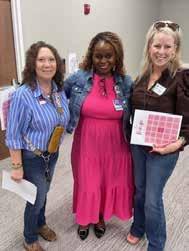
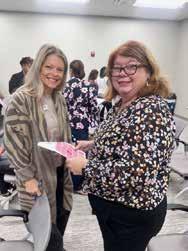
Fall Into Health, hosted at Enoch Callaway Cancer Center at Wellstar is an always inspiring event that brings together women leaders, professionals, and community members for a morning of connection, conversation, and wellness.
CANDIDATE FORUMS
The Chamber proudly hosted this year’s Candidate Forums in LaGrange, West Point, and Hogansville. These forums gave residents the opportunity to hear directly from candidates about their priorities, ideas, and plans for our communities. By fostering open dialogue and civic engagement, the Chamber continues to empower informed voters and strengthen local leadership.
2025 PEACHY GREENS GOLF TOURNAMENT Sponsors
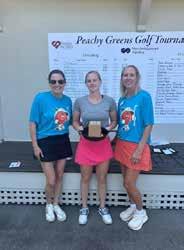
The Chamber’s 2025 Peachy Greens Golf Tournament presented by Marsh McLennan was a success! Golfers enjoyed a round of golf and several contests including the Around the World, Hole in One, Closest to the Pin, Longest/Straightest Drive, while making great business contacts.
19th Hole Sponsor
Building Roots In Troup
We’re honored to begin planting our roots in a community rich with history, heart, and opportunity. Our mission goes beyond construction - we’re here to build lasting relationships, contribute to local growth, and be a trusted partner in shaping a vibrant future. Whether it’s through thoughtful development or community collaboration, we’re proud to be part of Troup’s story and excited for what’s ahead.
www.sheridanconstruction.com
Lessons from the Classroom
Running a small business often feels like being back in school—there’s always something new to learn, a test around the corner, and the need to stay organized. By applying educational principles to entrepreneurship, small business owners can build stronger foundations and foster long-term growth.
1. Create a Curriculum (Business Plan)
Just like a teacher prepares lesson plans, business owners need a clear roadmap. A well-structured business plan outlines goals, strategies, financial projections, and operational procedures. It helps you stay focused and measure progress. Think of it as your syllabus for success.
2. Know Your Learning Style (Understand Your Market)
Educators tailor their teaching to different learning styles. Similarly, small businesses must understand their customers—what they want, how they behave, and how they prefer to engage. Use surveys, feedback, and analytics to adapt your
offerings and communication style.
3. Practice Makes Perfect (Train Your Team)
Ongoing training is essential. Whether it’s customer service, sales, or technical skills, investing in employee development boosts morale and performance. Consider short workshops, online courses, or peer mentoring to keep you and your team sharp and motivated.
4. Grade Your Work (Track Performance)
Teachers use grades to assess progress. Business owners should regularly evaluate performance using key metrics like revenue, customer retention, and social media engagement. Tools like QuickBooks, Google Analytics, or CRM systems can help you stay on top of your numbers.
5. Encourage Collaboration (Build Community)
Classrooms thrive on collaboration, and so do small businesses. Partner with other local businesses, join industry groups, or
participate in community events. These connections can lead to referrals, shared resources, and new opportunities.
6. Stay Curious (Keep Learning)
The best educators are lifelong learners. Attend workshops, read industry blogs, or connect with mentors. Staying informed about trends and innovations keeps your business competitive and adaptable.
7. Prepare for Exams (Plan for Challenges)
Every school year has tests—businesses face them too. Whether it’s economic shifts, staffing issues, or supply chain disruptions, having contingency plans and financial buffers can help you weather the storm.
By treating your business like a classroom—where learning, growth, and adaptability are constant, you’ll be better equipped to lead, innovate, and succeed. After all, in both education and entrepreneurship, the goal is progress, not perfection.
READY FOR THE STORM
As the 2026 spring severe weather season approaches, it is imperative that Troup County residents take steps to stay prepared. The past few years have shown that severe weather events are becoming more intense and less predictable. Troup County has experienced five confirmed tornadoes just in the last three years.
Forecasters predict the climate will create a conducive severe weather season, particularly for tornadoes, severe thunderstorms, and flash flooding through the primary months of March through May. While no one can control the weather, the Troup County Emergency Management Agency (TCEMA) emphasizes that preparation and response are within our control.
The TCEMA has spent the past year reviewing and updating emergency response plans in collaboration with local, state, and federal partners. The agency has conducted training exercises with first responders, upgraded early warning systems through its mass notification platform, and continues to research new technologies to monitor storm activity in real time.
But public safety is not just about government response—it's about community readiness. Here’s how you can prepare:
1. Have a Plan: Know where to go during a tornado warning. Identify safe rooms in your home, workplace, or
school. Practice sheltering drills with your family, especially children and elderly members. The agency offers presentations and Question-Answer sessions anywhere inside Troup County for groups interested in discussing severe weather planning.
2. Build an Emergency Kit: Include water, non-perishable food, flashlights, batteries, a first-aid kit, medications, and important documents. Don’t forget pet supplies if you have animals. It is paramount to remember that you should always be prepared to have enough items to last 48-72 hours when building your emergency kit.
3. Stay Informed: Follow local news and weather stations, sign up for emergency alerts, and keep a NOAA weather radio on hand. In a crisis, timely information saves lives. Visit the Troup County website to sign up for county wide mass notifications through CivicReady.
4. Check Your Property: Trim trees, secure outdoor items, and inspect your roof and gutters. Simple maintenance can prevent more significant damage during storms. If you have culverts around your driveways, it is important to ensure they are clear of debris as well to prevent flooding.
5. Be a Good Neighbor: Check in on those who may need extra help— especially the elderly, disabled, or those without reliable transportation.
Troup County Emergency Management and all public safety agencies throughout
the county will continue to share safety information through presentations, social media, and the TCEMA website. They are also working closely with schools and businesses to ensure readiness at every level of our community. Residents are encouraged to contact the Troup County Emergency Management Agency at (706) 883-1717 for assistance with preparedness efforts.
While storms cannot be predicted with certainty, TCEMA reminds residents that preparation makes all the difference. Public safety is a shared responsibility, and it starts with awareness and action. Preparedness today could make all the difference tomorrow.
Join a health plan for small businesses in your state
Enjoy a cost-saving solution providing benefits your employees want
Get peace of mind with the strength of a care network serving millions locally and nationwide
Serving millions of people in Georgia for more than 80 years
Part of the nation’s largest health benefits company
Part of the BlueCard® program through the Blue Cross Blue Shield Association which includes more than 1.7 million doctors and hospitals nationwide who contract with Blue Cross Blue Shield companies, more than any other insurer.1
You deserve an easy, affordable way to offer high-quality healthcare to your employees. The Georgia Chamber SMART Plan (SMART) plan, available through Georgia Chamber of Commerce, offers small businesses in your state access to comprehensive healthcare benefits at rates usually reserved for larger organizations. These plans are designed specifically for businesses who are Georgia Chamber of Commerce members and include the benefits, programs, and services that reflect your local communities.
Big benefits for small business
When you join the Georgia Chamber SMART Plan (SMART) plan, your small business becomes part of a large, self-funded group that shares in the overall claims risk with other small businesses. As part of this group, you’ll enjoy the financial protection backed by Anthem’s stop loss coverage, and a flexible choice of plans designed exclusively for Georgia Chamber SMART Plan (SMART) plan participants. Lower, predictable costs and easier administration make it a great alternative to Affordable Care Act (ACA) plans, letting you focus on running your business — not your health plan.
A healthy business depends on healthy employees
Along with financial peace of mind, you can offer your employees access to care through one of the nation’s largest networks of high-quality doctors, hospitals, and other healthcare professionals. Eligible businesses also receive expanded health and wellness tools, services, and resources designed to empower your employees to make more-informed healthcare decisions that can improve health and help lower costs for everyone.
Troup’s Graduation Triumph
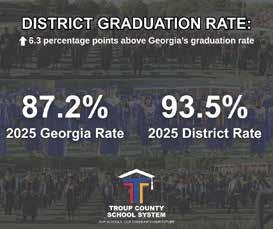
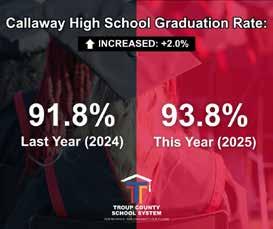
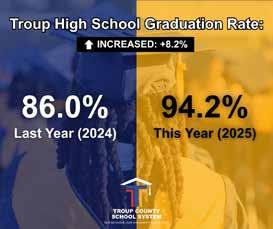
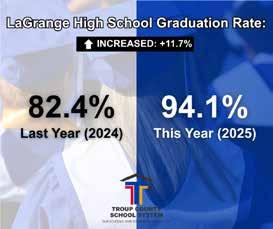
Troup County Schools is celebrating a major victory - increased graduation rates across the district. This isn't just a win for the students and their families; it's a testament to the incredible collaboration, strategic planning, and heart of our local educators. It’s a success story we can all be proud of.
A few years ago, school leaders decided to aim high. Jason Graham, principal at Callaway High School, recalls setting a clear and ambitious goal: get the graduation rate into the 90s. It was a challenge, but they mapped out a fouryear plan, believing that incremental progress would lead to a huge payoff. That belief was put into action across the county. At LaGrange High School, principal Jamie Bozeman saw the need for a new approach. After a slight dip in their numbers, they shifted from having individuals track students to creating a powerful team effort. This spirit of teamwork became the foundation for success.
One of the most impactful changes was bringing in a Graduation Coach at CHS. "Jacob's ability to build strong relationships with students was crucial," said Shalanda Lovett, assistant principal at Franklin Forest, and former AP at CHS. He didn't just look at numbers on a spreadsheet; he got to know the students, understood their challenges, and made sure they knew someone was in their corner, helping them find the path to their diploma.
Jamie Bozeman highlighted the massive effort to comb through records and improve data accuracy. This meant counselors and registrars worked tirelessly to track down students who had moved or fallen off the radar. This effort often went beyond the school walls. The team emphasized community outreach, sometimes even going door-to-door to connect with families and bring students back into
the fold. This commitment to customer service and responsiveness has been vital in building trust and showing the community that our schools are here to help every child succeed.
Under the leadership of Principal Chet Stewart, the administrative team at Troup High School spearheaded a collaborative effort that proved instrumental to our success. Dr. LaToya Whitaker formed a team to move the shift from looking at data points to looking at individual students.
Once the team listed the names of every unaccounted-for student in the Class of 2025, those students were no longer just numbers. This change in perspective, championed by the administration, was transformative. It became a personal mission to find out where each student went after leaving THS. This name-focused approach fostered a new mindset, and the team became deeply invested in locating these students and understanding their circumstances.
All three high schools are clear that this is just the beginning. They are committed to maintaining the momentum and avoiding complacency. New tools, like the new data dashboards, are being rolled out to help teachers and staff identify and support at-risk students even faster.
The focus remains on providing multiple pathways to success for all students, whether through traditional classes, specialized programs at the Troup County Career Center, or other flexible options. The goal is to lift students up and give them the tools they need to finish strong.
This incredible achievement is a direct result of our schools, families, and community working together. It’s a powerful reminder that when we unite with a positive, solution-oriented mindset, our students—and our entire community—reap the rewards.