Destinations for People.
A Collection of Architectural Ideas.
By Kyle Gilboy.
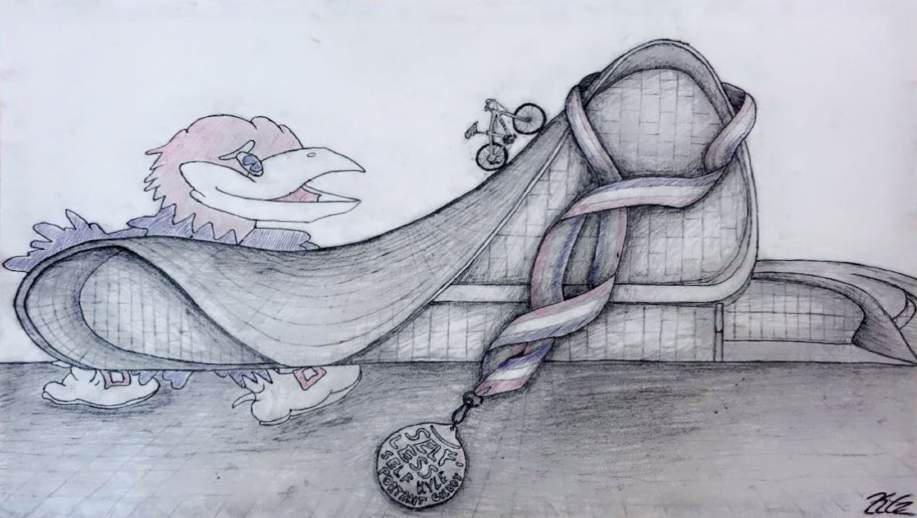
A Self-Less Self-Portrait. Created October 2017.
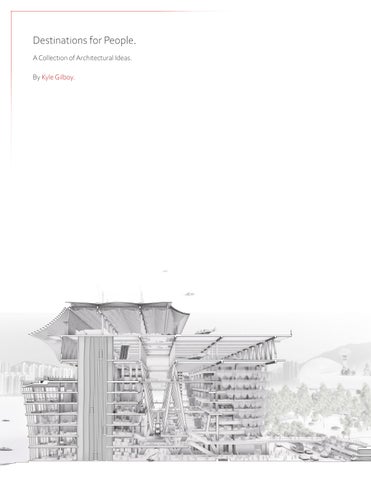
By Kyle Gilboy.
A Self-Less Self-Portrait. Created October 2017.
I’m obsessed with cities, specifically in the ways urban planning, design, architecture, construction, and human behavior come together. I explore how the built environment can improve everyday life for the people who live in it. A great city does not only function—it connects, adapts, grows, and inspires...
Updated September 24,2025.
kylegilboy3@gmail.com
847.848.8789
www.linkedin.com/in/ kylegilboy
Seattle, WA 98102
UNIVERSITY OF KANSAS
Professional Master of Architecture Degree | Class of 2024
Professional Bachelor of Arts in Architectural Studies Degree Graduate Certificates in Urban Design & Design-Build
Final GPA: 3.84
Lawrence, KS | Fall 2019- Spring 2024
Contact: Dr. Jae Chang, Associate Dean | jdchang@ku.edu
DANISH INSTITUTE FOR STUDY ABROAD
Studied Urban Design and Urban Livability
Copenhagen, DK | Summer 2022
Contact: Regitze Hess, Professor | Regitze.Hess@dis.dk
LAKE ZURICH HIGH SCHOOL
High School Diploma
Lake Zurich, IL | Class of 2018
SOFTWARE PROFICIENCY
AutoCAD | Bluebeam | Illustrator | InDesign | Lumion | Microsoft Office Procore | Revit | Rhinoceros | Sefaira | SketchUp | Smartsheet
SOFTWARE FAMILIARITY
3DS Max | After Effects | ArcGIS | Enscape | Inventor | Photoshop
PERSONAL QUALITIES
Confident in guiding interdisciplinary teams through complex design and planning processes.
Quick to learn new software and tools for architectural workflows. Thrives in fast-paced studio environments and easily transition between project phases and roles.
Excels in team settings that require clear communication, creative input, and integrated problem-solving.
Brings enthusiasm, focus, and a strong work ethic to every project. Passionate about lifelong learning, innovation, and keeping up with evolving trends in the built environment.
436 INDIANA STREET
Managed the construction site for a LEED-Platinum home in Lawrence, Kansas. The project was completed under budget and on-schedule.
KU ARCHITECTURE STUDENT PORTFOLIO AWARDS
3rd Year Award Recipient | Spring 2022
4th Year Award Recipient | Spring 2023
Portfolio Award Reviewer | Fall 2023
CHICAGO COMMUNITY BOND FUND
Co-organized a fundraising initiative, raising $4,410 for peaceful protesters arrested during the Black Lives Matter marches in June 2020.
LAKE ZURICH CROSS COUNTRY
All-Conference Award Recipient | Fall 2017
Most Improved Runner Recipient | Fall 2015

Project Engineer | Full-Time Seattle, WA | June 2024-September 2025
Contact: Jim Dow, Founder | 206.510.5538
Contact: Ryan Miller, Project Manager | 206.910.6623
Construction Manager & Site Work Lead | Full-Time Lawrence, KS | Fall 2023-Spring 2024
Contact: Dan Rockhill, Distinguished Professor | dan@rockhillandassociates.com
HKS, INC.
Architectural Intern | Full-Time Chicago, IL | Summer 2023
Contact: Janhvi Jakkal, AIA, ACHA, LEED AP, Office Leader | jjakkal@hksinc.com
JESSE OSOSKI ART
Construction Intern | Full-Time San Mateo, CA | Summer 2022
Contact: Jesse Ososki, Founder | 310.699.8684
Architecture Intern | Full-Time Overland Park, KS | Summer 2021
Contact: Niyanta Gopal, AIA, Mentor | 913.522.9353
SAWHORSE REVOLUTION
Volunteer Mentor | Strip-Plank Canoe Building Class Seattle, WA | Fall 2024
Contact: Albert Smalls, Program Coordinator | 206.661.8520
DOWBUILT + OLSON KUNDIG // PACIFIC SCIENCE CENTER
Material Coordinator, Co-Builder | “Between Baleen” Museum Exhibit Seattle, WA | Fall 2024
Contact: Nico Koppe, Designer | 206.751.9935
UNIVERSITY OF KANSAS // BJARKE INGELS GROUP
Student Liaison | KU // BIG Student Survey Distribution & Collection Lawrence, KS | Spring 2023
Contact: Mahbub Rashid, School Dean | mrashid@ku.edu
NATIONAL ARCHITECTURAL ACCREDITING BOARD
Student Representative | University of Kentucky Visiting Team | Spring 2022
Student Representative | Penn State University Visiting Team | Spring 2023
Student Representative | University of Pennsylvania | Fall 2024
Contact: Dr. Danielle Willkens, PSU Team Chair | danielle.willkens@design.gatech.edu
UNIVERSITY OF KANSAS
Lifelong Student Mentor | 2nd-Year Architecture Studios
Student Ambassador | School of Architecture & Design
Lawrence, KS | Fall 2021-Spring 2023
Contact: Richard Findley, Professor | rjfindley@gmail.com
RESURRECTION CATHOLIC SCHOOL
Volunteer Teacher | Taught Art, Science and Mathematics through Architecture Kansas City, KS | Spring 2022, Spring 2023
Contact: Mary Cate Skevington, STEM Teacher | mskevington@rcskck.org
“The building is a special place because of its architecture; but it’s people who make it special by participating in it.”
-Charlie Chaplin
An Urban Symbol for the Future of Transit
Hong Kong, China | Spring 2023 | ARCH609 | Dr. Kapila Silva
A Temporary-Living and Community Hub
Oklahoma City, USA | Fall 2022 | ARCH608 | Eddy Tavio
An Elevated Park that Reconnects a City
Copenhagen, DK | Summer 2022 | UBDS740 | Michela Nota
A Collection of Professional Work and Involvement Efforts
Summer 2021-Present
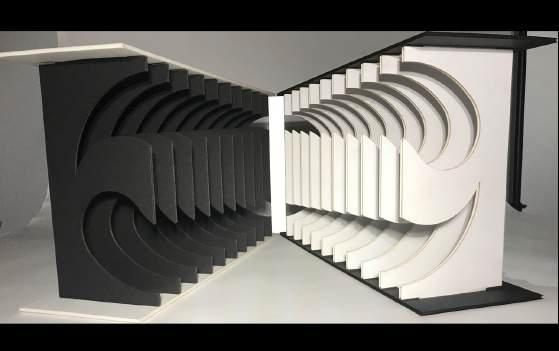
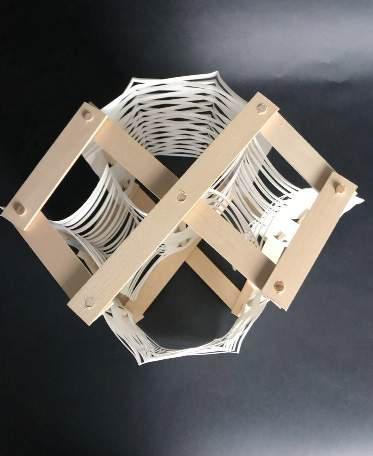
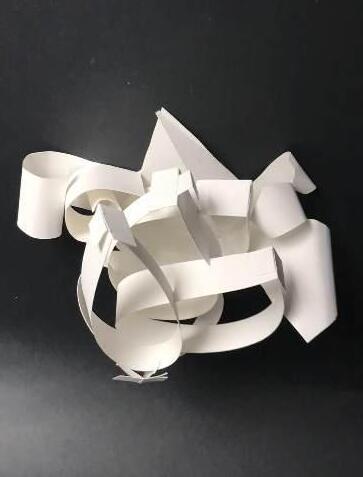
A Showcase of Sketches, Paintings, and Models
Spring 2017-Present
22.3964° N, 114.1095° E
POPULATION: 7,333,200
“Once you have tasted flight, you will forever walk the earth with your eyes turned skyward; For there you have been, and there you will always long to return.”
-Leonardo da Vinci
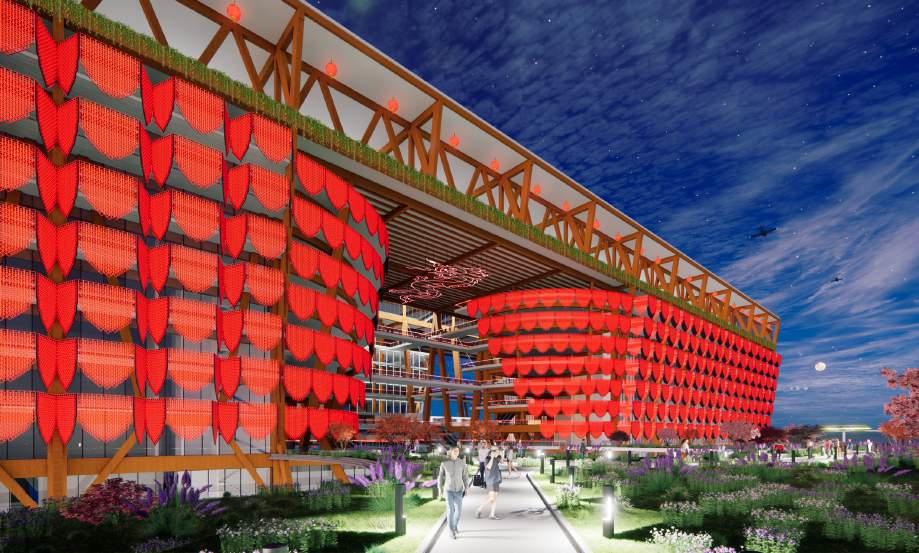
CLASS: ARCH609 | Dr. Kapila Silva
LOCATION: Hong Kong, China
SIZE: 1.63 Million SF
BUILDING TYPE: Transportation Hub
PROJECT TYPE: Partner (with Graylon Sestak)
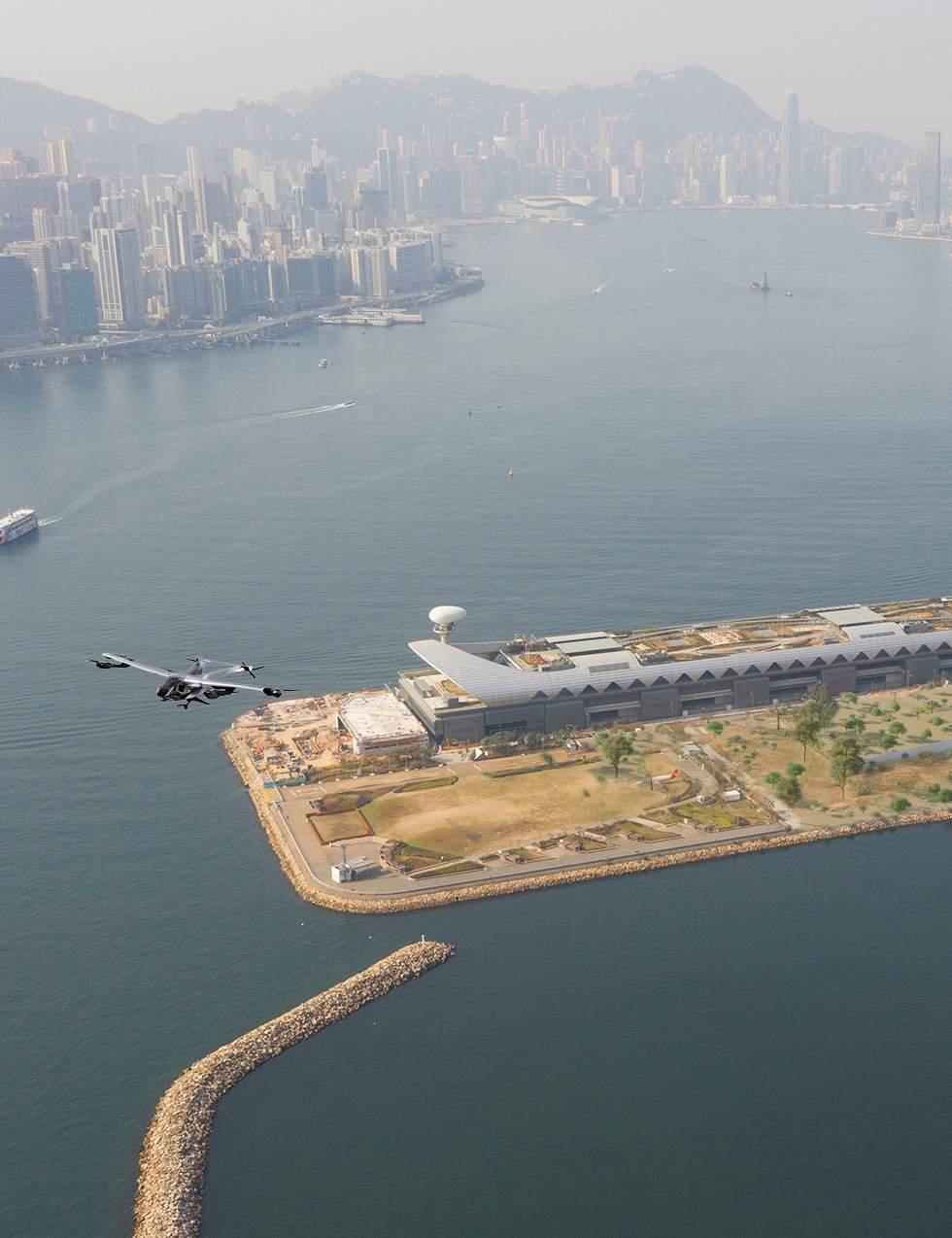
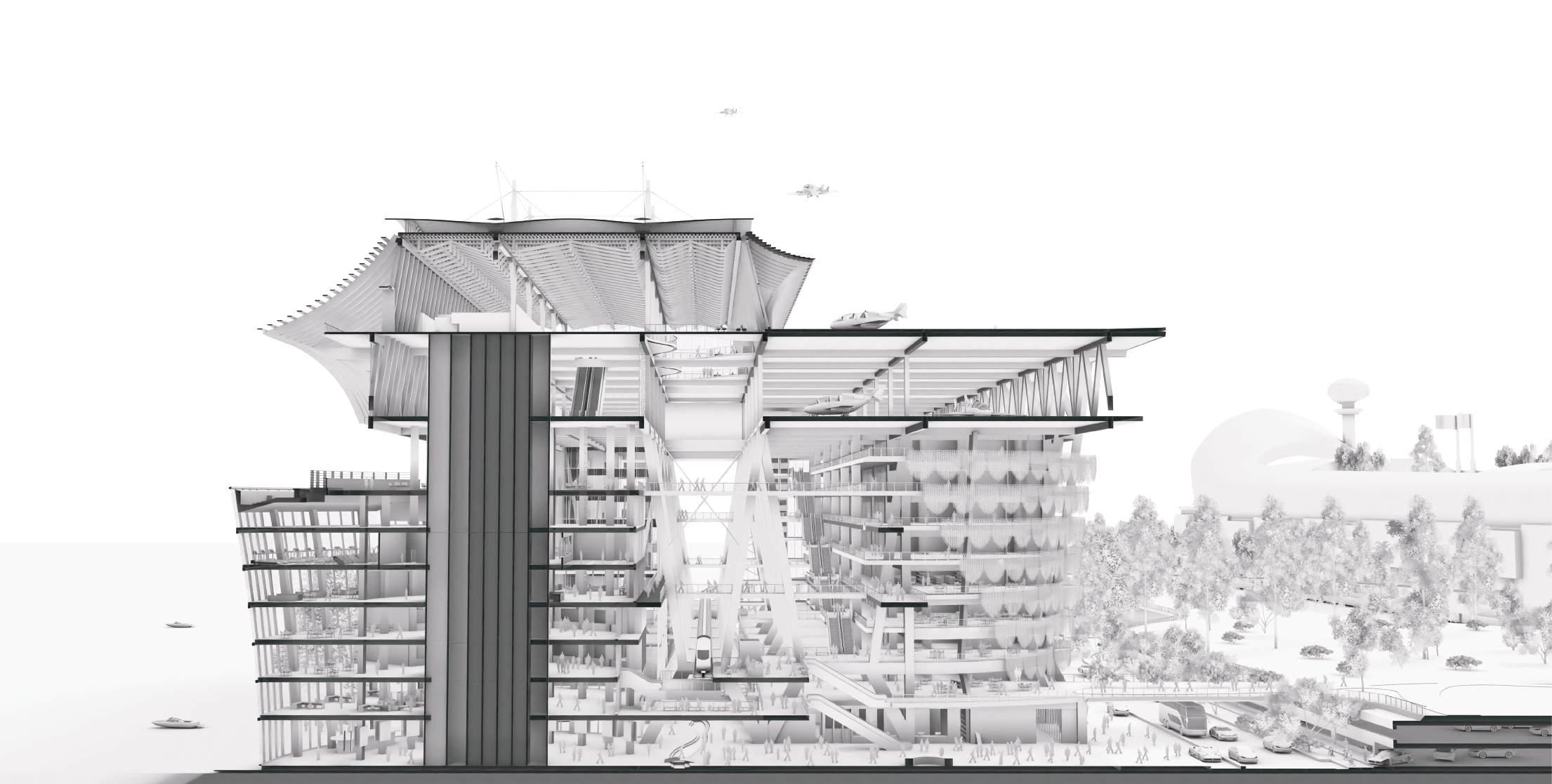
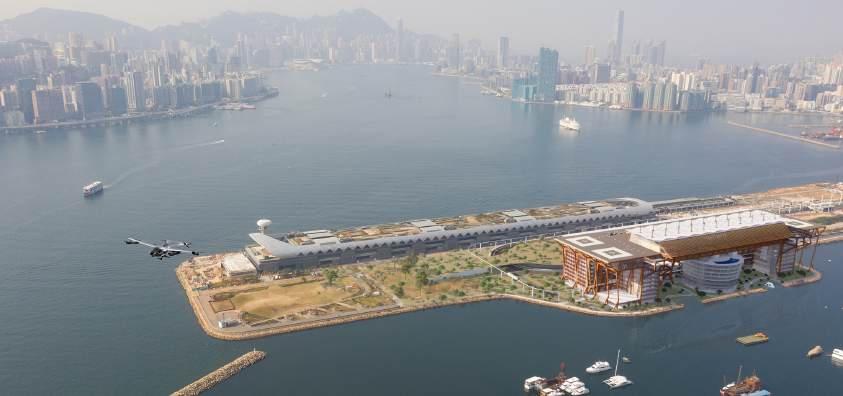
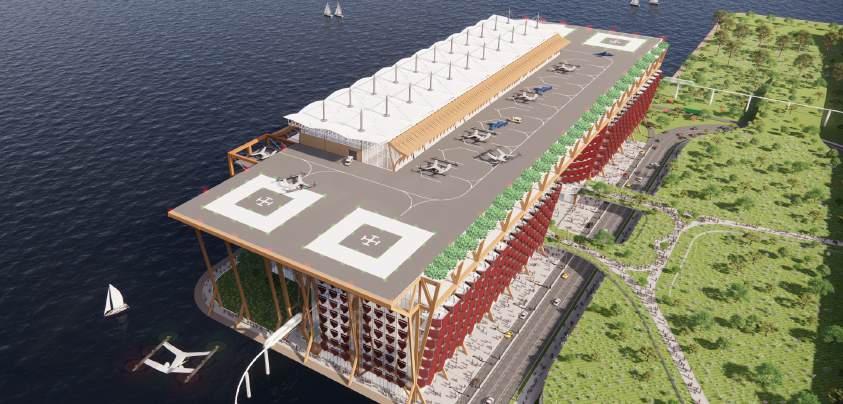
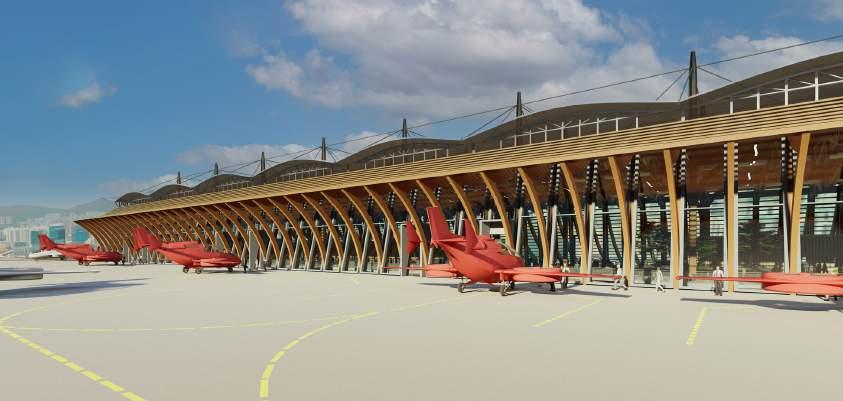
Located in the heart of Hong Kong, Kai Tak Skyport paves the way for a brand-new building typology while adding regional air mobility to the city via eVTOLs (electric vertical takeoff or landing vehicles).
Designed with state-of-the-art technology and futuristic aesthetics, the skyport features four FATOs (takeoff & landing pads) and advanced automated systems to ensure safe and efficient operations. It provides a seamless connection between different districts of Hong Kong and nearby regions, significantly reducing the travel time and easing congestion on traditional roadways.
The skyport is a multi-use building, acting as a regional maintenance hub for eVTOLs. The building also features retail, office, and hotel program within the confides of the skyport. Its innovative design incorporates sustainable practices, such as renewable energy sources and noise reduction measures, minimizing its environmental impact and bringing the building up to LEED Gold standards.
As Hong Kong embraces the future of transportation, the skyport serves as a shining example of the city’s commitment to advancing technology and enhancing urban mobility.
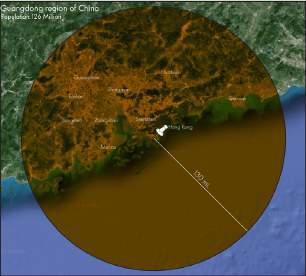
The Guangdong region of China is home to 126 million people; nearly all of its citizens are within the range of an eVTOL flight.
Hong Kong serves as a geographical and cultural hub for this region, making it perfect for a vertiport. Upon further research, we noticed a large area of undeveloped land within the city.
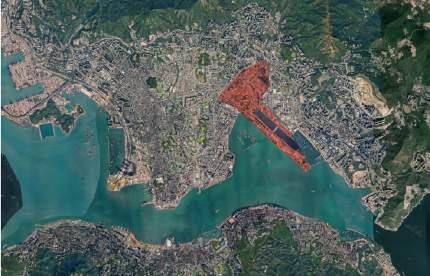
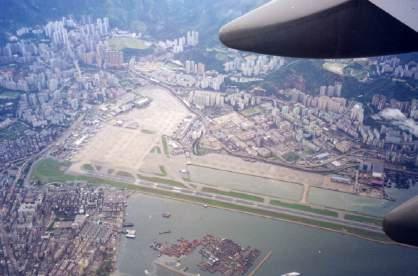
This district-sized peninsula was once Kai Tak Airport, formerly the international airport for Hong Kong.
The airport was in service until 1998 until it was closed to due noise pollution, air pollution, and an “overall sense of impending catastrophe” due to its dramatic plane landings.
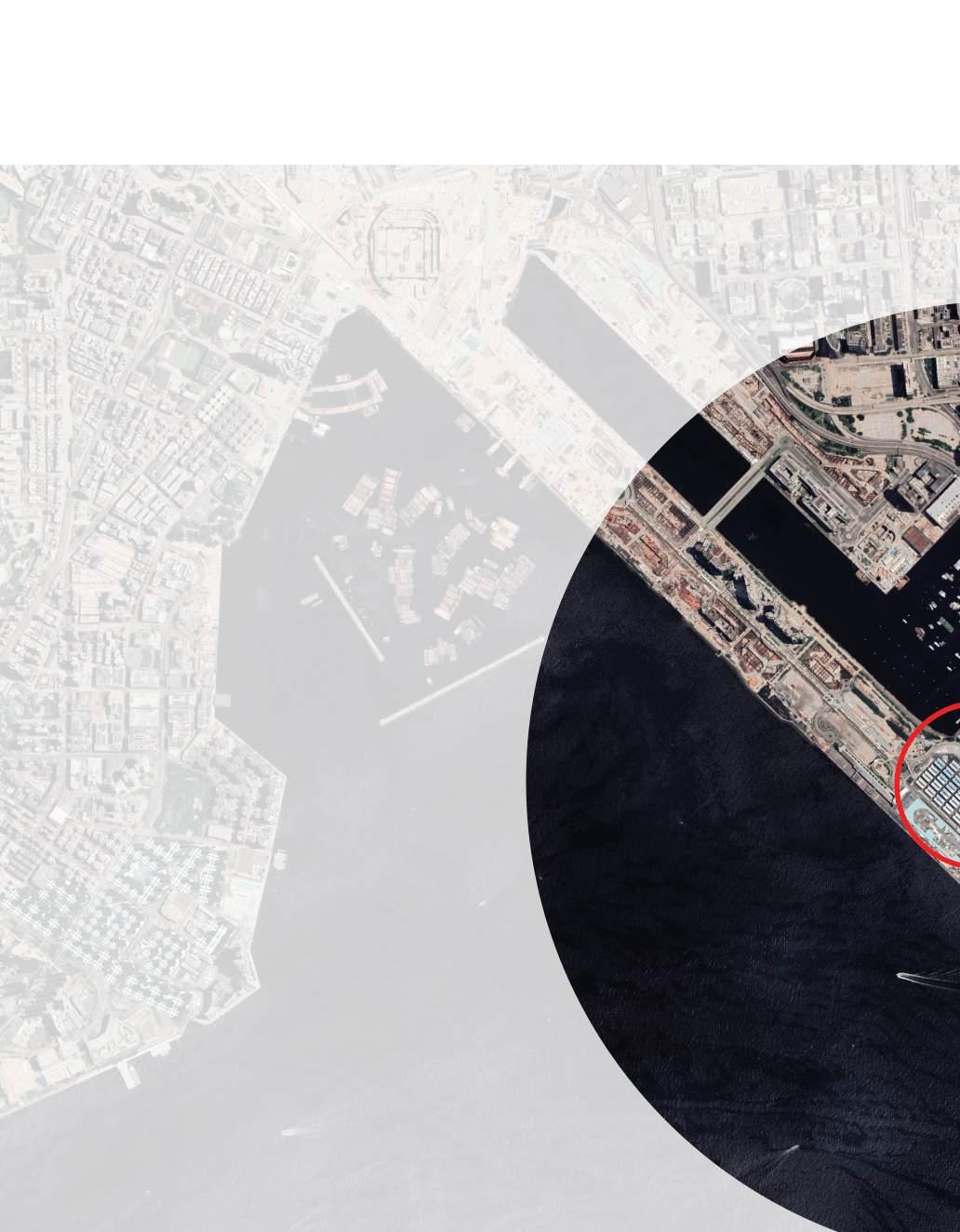
Kai Tak peninsula is currently in redevelopment. Large projects such as a sports stadium and cruise terminal are now built along the harbor. The vertiport claims an open space at the south end of the district, fitting in nicely with the existing master plan while allowing open harbor paths for takeoff and landing.
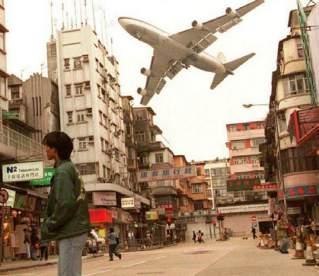
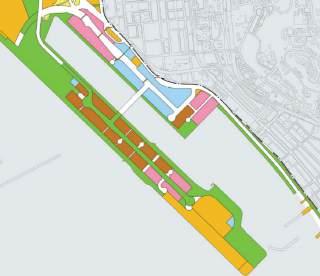
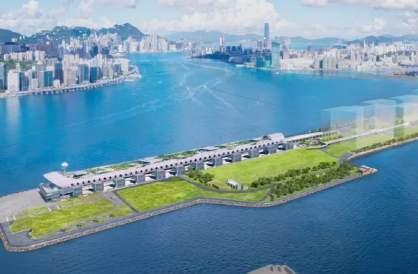
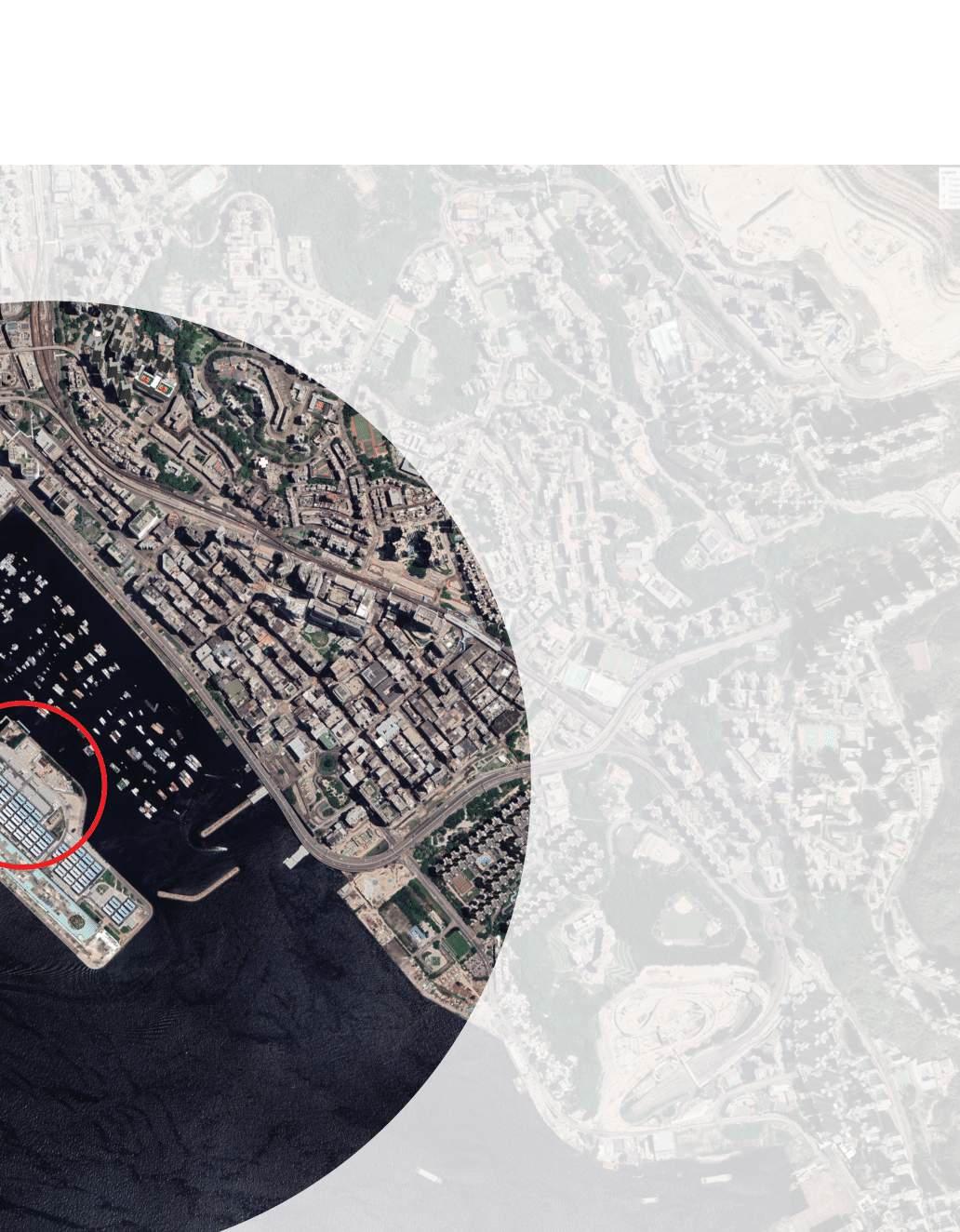
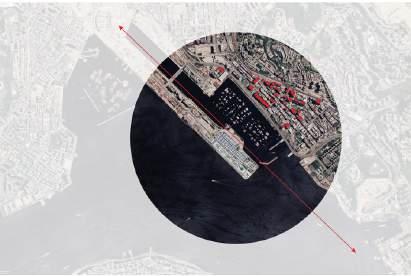
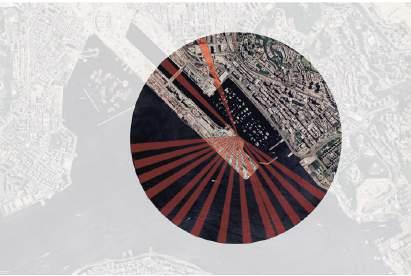
Adhering to FAA guidelines, the design ensures that no buildings obstruct the vertiport’s potential flight paths.
The design opted for a flight path running over the harbor, parallel to the peninsula
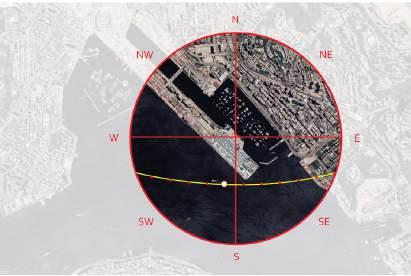
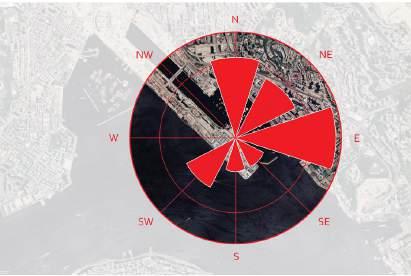
A sun study helps us locate our buildings openings to capture sunlight, while our wind study influenced the position of the flight deck so planes takeoff against the wind.
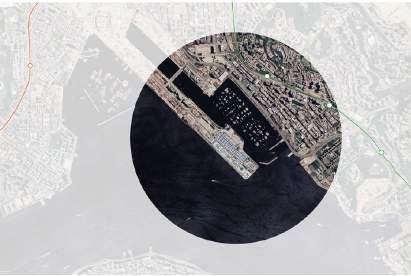
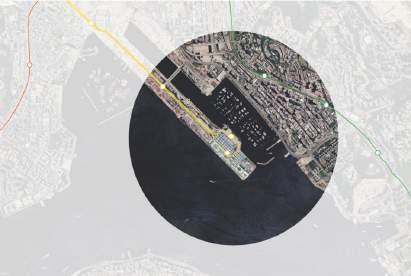
Hong Kong’s robust transit plan does not currently have a rail line to service this peninsula.
The proposed closedloop monorail links the vertiport and nearby cruise terminal back into the fabric of Hong Kong.
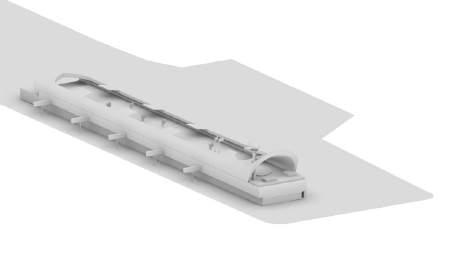
The building massing develops from the site’s context, using large moves to ensure the success of the building from an operational standpoint. On another level of detail, the building uses the ideals and elements of Feng Shui to create expansive, inviting spaces that guide the visitor experience. Finally, the vertiport incorporates details of Southeast Asian architecture to create am iconic building that can rightfully call Hong Kong its home.
An area at the end of the peninsula sits adjacent to the existing cruise terminal. This bump-out in the peninsula allows unobstructed flight paths along the harbor and has no plans for development in the current Kai Tak master plan. These attributes makes it the best place to establish a landmark transit destination.
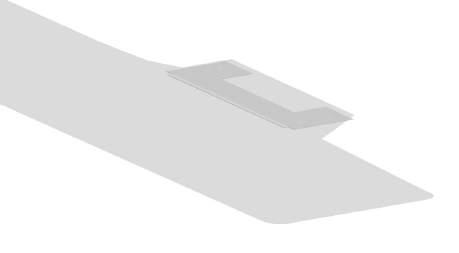
Since vertiports are most compact if eVTOLS take off from the roof, the building is designed with a top-down approach. The shape of the site and the open flight paths along the harbor suggest a linear arrangement. The landing and takeoff pads are placed at the northwest and southeast respectively, allowing the aircraft to generate lift against the wind. All dimensions adhere to FAA standards.
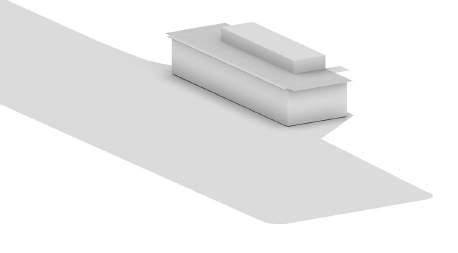
Hong Kong has some of the most valuable real estate in the world. In response, the building expands its program upward to make the most of its site. This new volume becomes an office-building, multi-story mall, and luxury hotel. A final street-side floor takes care of the operational logistics of the building.
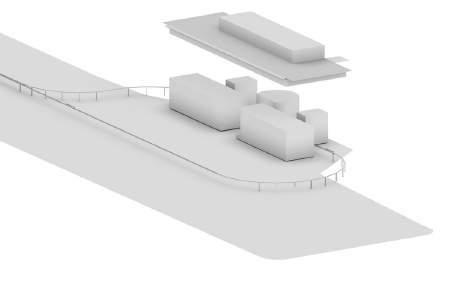
A series of open voids, or “dragon-gates” adheres to the core ideas of Feng Shui while dividing the building both visually and programmatically. This provides light, fresh air, and intuitive way-finding, while carving a path for a new monorail line to cut through the building.
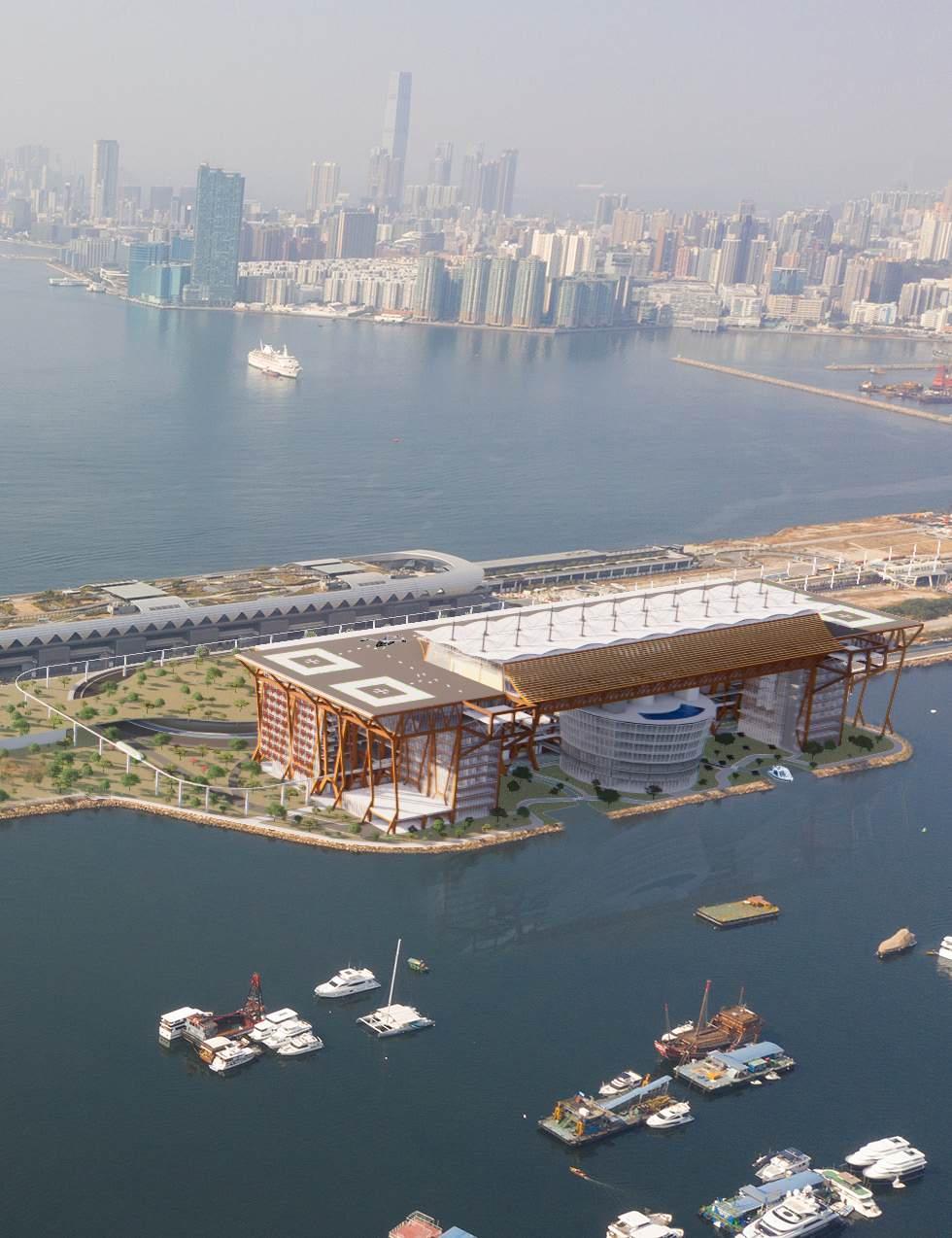
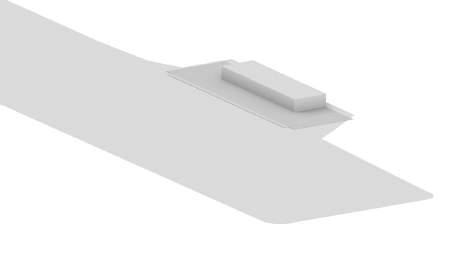
The space leftover provides space for 10 parking pads, each serving a terminal gate. The concourse is pushed to the east, giving the terminal gates expansive views of the harbor.
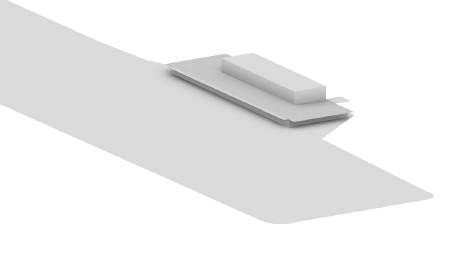
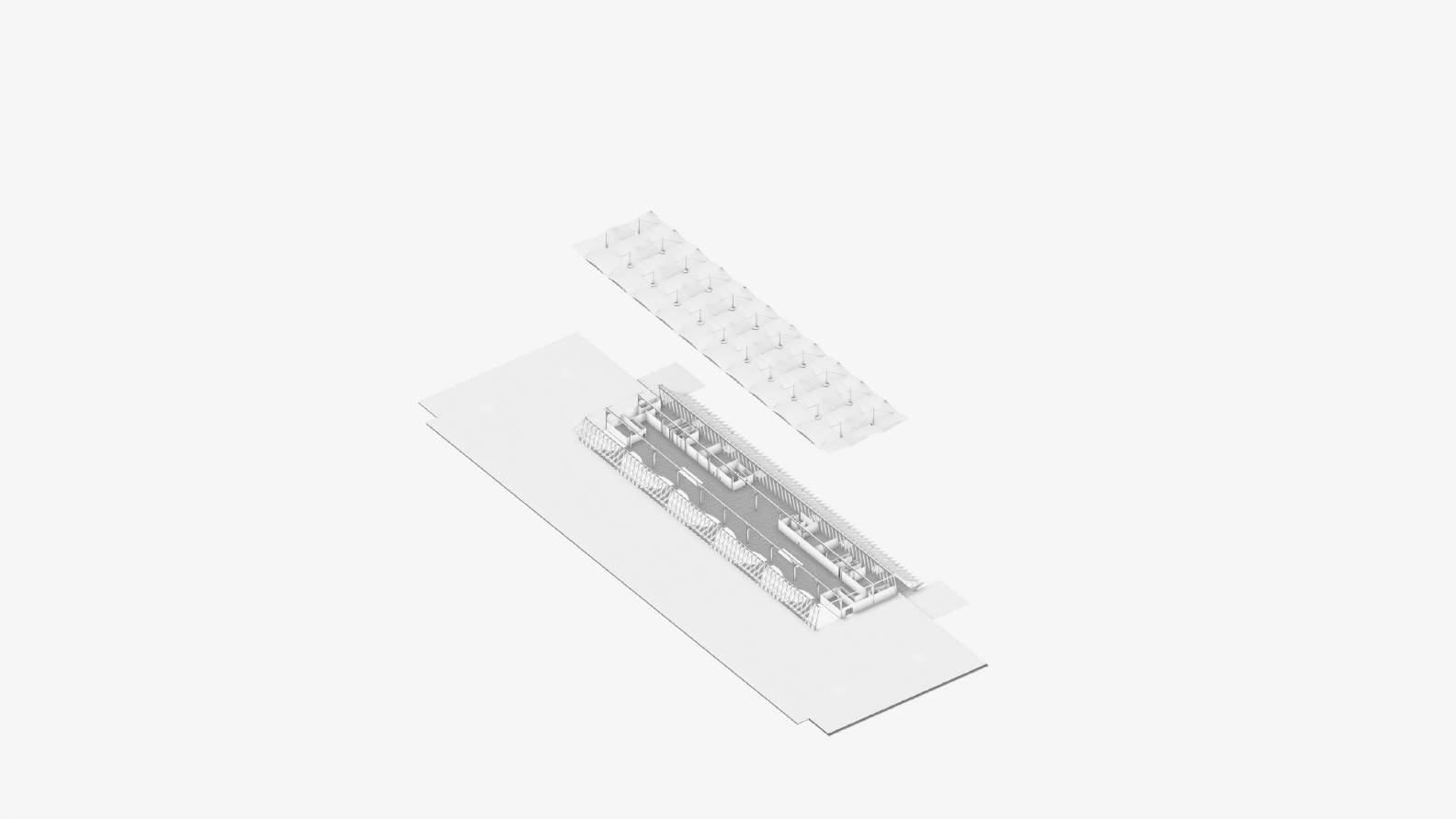
Since Hong Kong serves as geographic and financial focal point for the region, the skyport will serve as a maintenance hub, supporting a potential network of smaller vertiports across the region. In effect, a floor dedicated to maintenance shops and hangars was necessary. The layout of the maintenance floor parallels the flight deck for maximum efficiency, using an “assembly-line” approach.
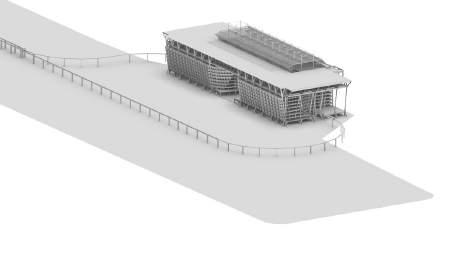
The building uses materials, resources, and lighting to represent the five elements of Feng Shui. CLT construction with steel connections represent wood and metal, while red lighting and harbor integration represent fire and water. The final element is earth, which will be represented in the park.
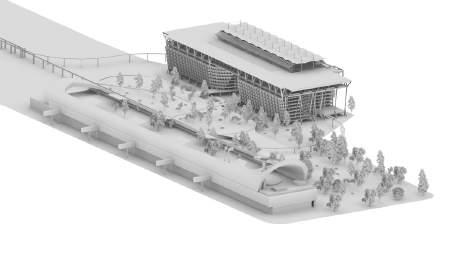
With earth as the final element, it represents itself with the creation of a half-million square-foot open park. This links the two transit hubs with a grand public space as a gift back to the city. The pathways connect the two destinations to the masterplan’s existing pedestrian bridge. This forms the Chinese symbol for Kai, meaning “to open”.
The building links air flight with water transit, a monorail system, ride-share and bus lanes, and finally, an elevated park and pedestrian walkway. Thread this into office space, hotel program, and a multistory mall, and the final product is an urban landmark that quickly becomes a global icon.
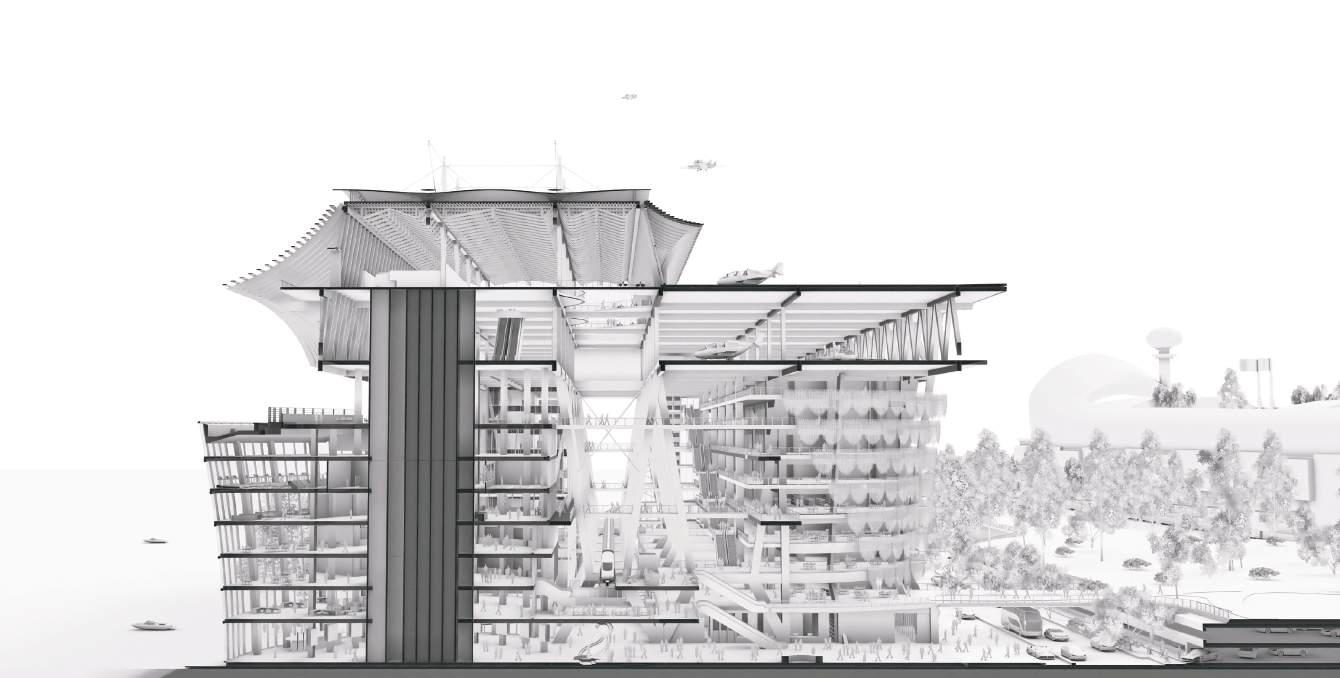
Pictured: Section Cut Looking Southeast
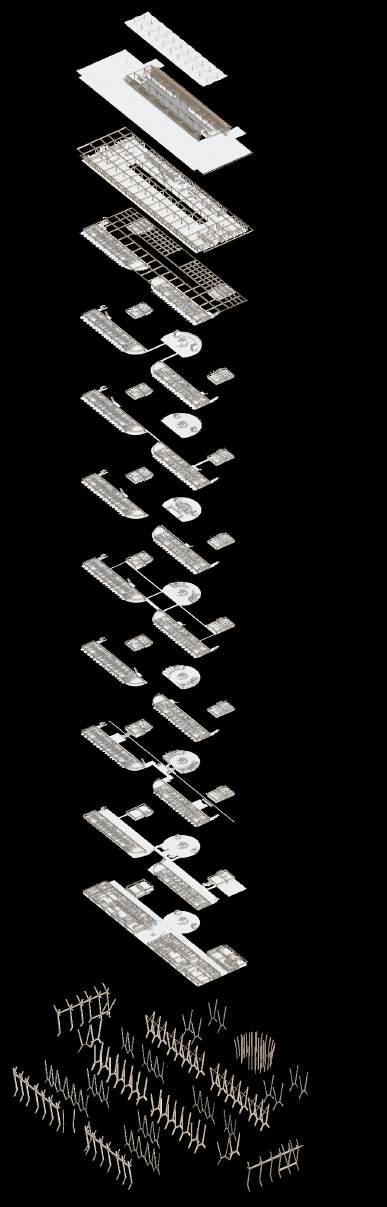
Diagonal CLT bracing in open spaces, post-lintel system in closed spaces.
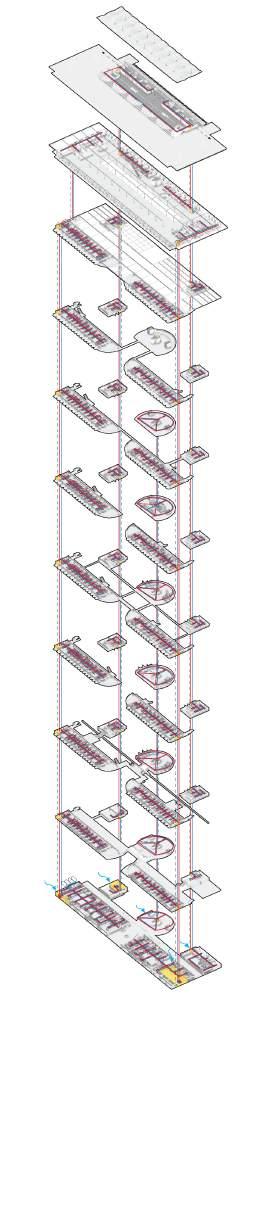
Every space in the building is within 250’ of an enclosed stairwell.

A VAV system meets cooling demands, optimizing efficiency.
Employees, fliers, and visitors all experience the building differently.
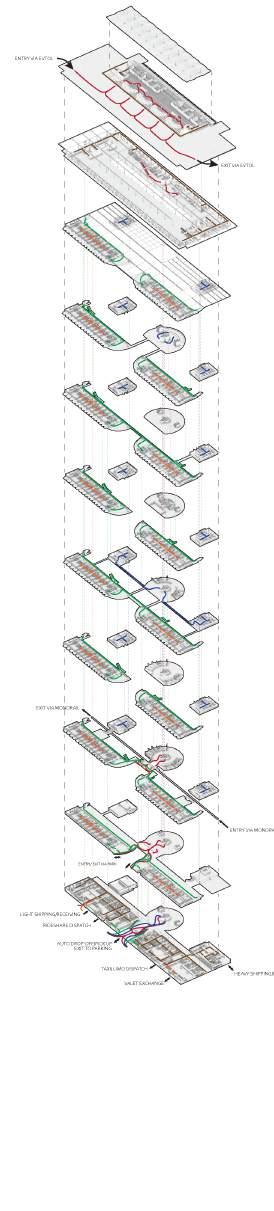
Vertiport Staff Experience Hotel Guest Experience Mall Shopper Experience Office Worker Experience
HYDRAULIC LIFT
LANDING PADS
PARKING PADS TO TERMINAL GATES
ONE-WAY TAXIWAY
CORROSION CONTROL HANGAR
HYDRAULIC LIFT
TAKEOFF PADS
AVIONICS HANGAR
PARKING PADS
HEAVY MAINTENANCE HANGAR
A maintenance floor sits below the flight deck and mirrors the program, creating maximum efficiency. The eVTOLs always move in one direction, creating an “assembly-line approach” that allows aircraft to move through its maintenance seamlessly.
The floor features four main hangars, specializing in corrosion control, avionics, heavy maintenance, and light maintenance respectively.
LIGHT MAINTENANCE HANGAR
17. Network Operations
Telecommunications
Breaker Panels
Backup Generator
Fire Suppression 22. Mechanical Room
Cooling Room
Main Generator
Receiving Room
Inventory Office
Reception Office
Closed Offices
TSA Conference Room 30. TSA Break Room
Access Control
Command Center
33. TSA IT Desk 34. TSA Training Room 35. Open Offices 36. Storage room
Report Room 38. Retail Inventory 39. Receiving Room
Trash Room 41. Ride-share Drop-Off 42. Agency HR Office 43. Compliance Room
Training Room 45. Agency Management 46. Closed Offices 47. Business Center 48. Conference Room
49. Sales Office
50. Break Room
51. Reception Desk
52. Waiting Area
53. Reservation Office
54. Call Center
55. Retail Prep
56. Open Offices
57. Accounting Office
58. Marketing Room
59. Travel Booking
60. Hotel Booking
61. Ride-share Offices
62. Mail Room
63. Security Room
64. Car Rental Desk
81. Conference Room
Training Room
Mechanical Room
Shell Space
Check-In Desks 86. Ground Transport
Medical Office
Human Resources
Reception Office
Customer Service
Lot Office
Ticketing Office
IT Support Office
Accounting Office
Legal Office
Emergency Station
Break Room
Limo Dispatch
Taxi Dispatch
Shuttle Dispatch
Shuttle Bus Stop
Retail Prep
Electrical Fuel Station
Equipment Storage
Utility Office
Utility Storage
Water Treatment Room
Boiler Room
Fire Pump Room
Pump Room
Chiller Room
Electrical Room 113. Mechanical Room
Rental Car Return
Packing Room
Receiving Area
Security Area
Staging Room
Shipping Room
Loading Bay
Warehouse Storage 122. Trash Compactor 123.Supply Room 124. Break Room 125. Open Offices
126. Closed Offices
127. Warehouse Front Desk 128. Conference Room
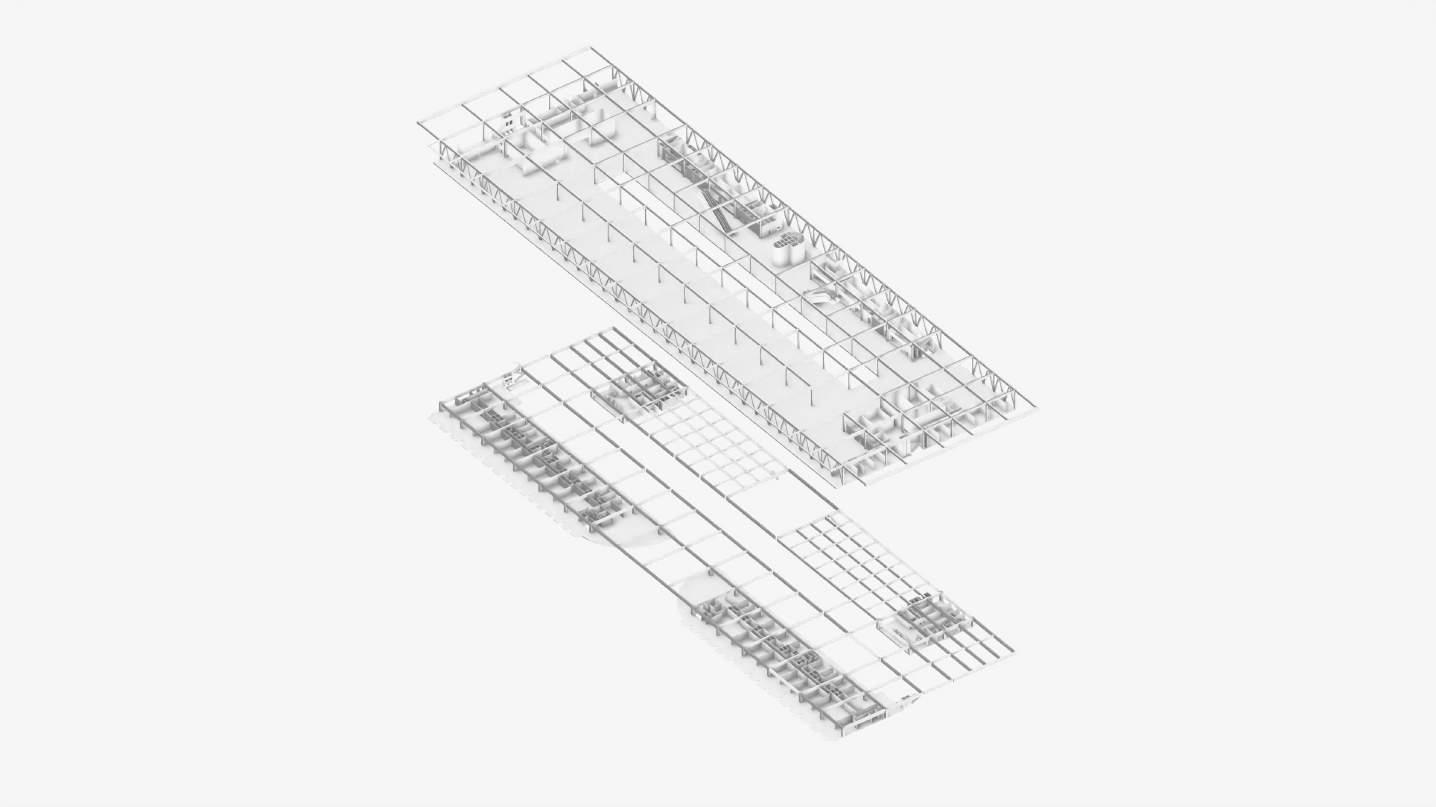
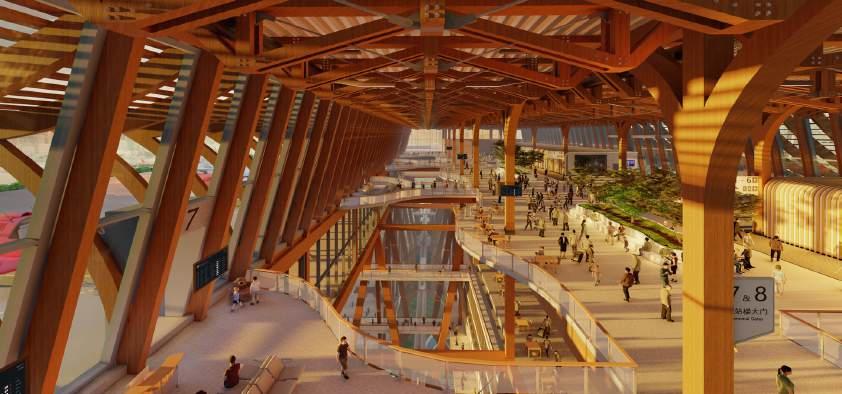
The third floor supports the monorail system and features office and mall space, as well as a food court. The center of this floor is the “heart” of the building in terms of foot traffic.
Floor 4 through 9 features office, hotel, and mall space, creating a vibrant atmosphere that is occupied 24 hours a day. A canyon of space runs horizontally across these floors which creates a monumental open-air space that continues all the way to the ground level.
This floor features four maintenance hangars, 10 parking pads, and an open-air taxiway. The north portion of the building is enclosed and designed for passengers. It looks down over the atrium and across to eVTOLs in service, framing the maintenance process as a spectacle in of itself.

The terminals are located along five dustpan-shaped platforms that overlook the 11-story atrium. Each platform services two gates. The eVTOLs pick up passengers at these gates and drive to the take-off pads where they finally take flight.
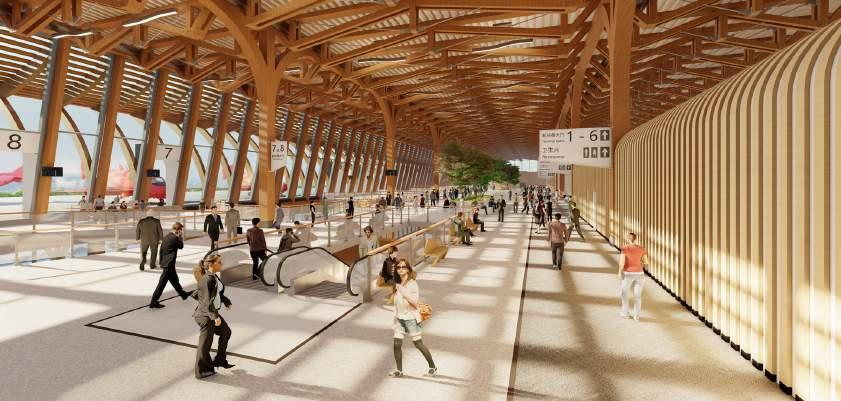
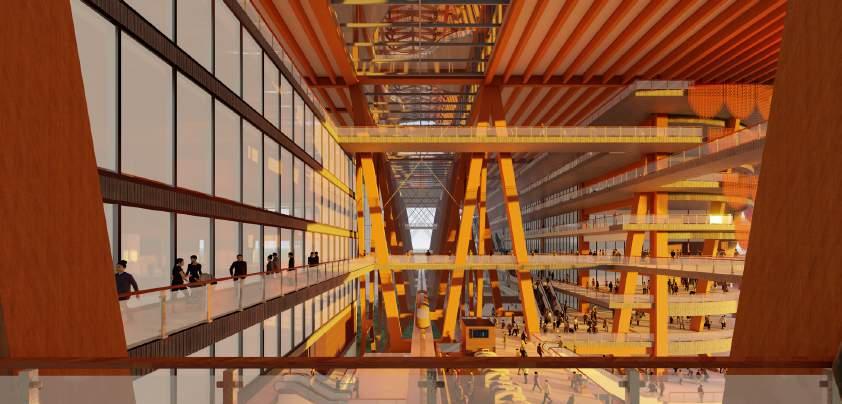
The broader approach to the vertiport promotes an “open-air” concept while the details of the building take every measure to preserve and collect clean water, generate electricity, and harness natural sunlight.
When a performance study was simulated in Sefaira, the building is expected to consume less than 10,000 BTU per square foot each year, well exceeding the standards set for the 2030 challenge.
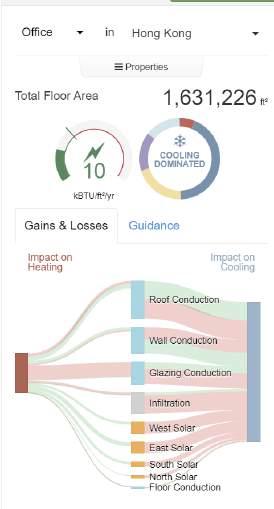
3. Runoff from the flight deck is filtered through a soil bed before it is collected.
4. The building takes advantage of the stack effect, allowing warm air to exit.
5. The building form allows sunlight to reach the busy monorail station.
6. Electrical current runs beneath the maintenance floor to charge the EVTOLs.
7. Aluminum mesh has built-in LEDs, allowing the building’s facade to be even more expressive.
8. FAA-Approved Photo-voltaic Panels harness the sun’s energy without disrupting the aircraft’s communication signals.
9. An electric track powers the monorail, allowing the system to generate zero emissions.
10. Electricity is generated from an off-site solar array.
11. Water is collected from the harbor and filtered within the building before reaching the water reservoir.
Main East Boiler
East Water Reservoir
Main West Water Reservoir
Energy Use: 28 kBTU/sf/yr
Cooling: 36.8%
Equipment: 26%
Fans: 14%
Heating: 1%
Pumps: 0.2%
Energy Use: 10 kBTU/sf/yr
Cooling: 49.4%
Lighting: 20.7%
Fans: 15%
Heating: 3.2%
Pumps: 0.1%
Since many attributes of this building have never before been created, the construction details of the vertiport are completely unique to this project.
DETAIL A | 1/10”= 1’
1. Metal Angle Bracket
2. Wooden Shelving
3. Metal Shelf Frame
4. Aluminum Sill Plate
5. Recessed LED Lighting
6. Drip Flashing
7. Pool Overflow Drain
8. Metal Cladding
9. Chlorine Water
10. Steel Angle Connector
11. Waterproof Membrane
12. Water Intrusion Drain
13. Ceramic Tiles
14. Pool Drain
DETAIL B | 1/10”= 1’
1. 4” Concrete Base
2. 4” Rigid Insulation
3. 3-Ply CLT Decking
4. Glulam Joist
5. Glulam Girder
6. 24” Diameter Air Duct
7. Acoustic Felt
DETAIL C | 1/10”= 1’
1. Glass Pane
2. Mullion Frame
3. Glulam Column
4. Transom Frame
5. 7-Ply CLT
6. 20” Hanger Connection
7. 2’ Glulam Beam
DETAIL A
15. Concrete Pool Form
16. 7-Ply CLY Decking
17. Cartridge Filter
18. Variable Speed Pump
19. Heating System
20. Chlorine Dispenser
21. 3’ Glulam Beam
22. Epoxy Coating
23. Concrete Deck
24. 11-Ply CLT Decking
25. 30” Glulam Girder
26. 5’ Glulam Girder
27. Steel Bracket Connector
28. 4’” Rigid Insulation
DETAIL B
8. Metal Railing
9. Gutter Flashing
10. Vapor Barrier
11. Glulam Beam
12. 3’ Glulam Girder
13. Glulam Column
14. Aluminum Cladding
DETAIL B
8. 24” Diameter Air Duct
9. Acoustic Felt
10. 4’ Glulam Bracing
11. Steel Bracket Connector
12. 4’ Glulam Column
13. Aluminum Cladding
14. 3’ Glulam Beam
DETAIL D | 1/10”= 1’
1. Glass Pane
2. Glulam Column
3. Anchor Bolt (5’ O.C.)
4. Metal Sill Plate
5. Control Joint
6. Concrete Slab
7. Vapor Barrier
8. Rigid Insulation
9. 2-Way Waffle Slab
10. Seismic Base Isolator
11. Crawlspace
DETAIL B
12. Isolated Foundation
13. Compacted Gravel Fill
14. Compacted Earth Fill
15. Glulam Column
16. Water-Resistant Barrier
17. Aluminum Cladding
18. Steel Angle Connector
19. Breakaway Metal Grate
20. Compacted Gravel Fill
21. Water Drain
22. Perforated Drain Pipe
1. Large Clevis Rod End w/ Pin
2. Welded Steel Fin
3. Small Clevis Rod End w/ Pin
4. 5” Diameter Compression Rod
5. Welded Steel Fin
6. Steel Anchor Plate
7. Tongue & Groove Rainscreen
8. Dimensional Lumber Louvers
9. Welded Anchor Plate
10. Aluminum Column w/ Wood Finish
11. 30” Glulam Girder
12. Drip Flashing
13. Wooden Backing
14. Backer Rod & Sealant
15. Angled Mullion
DETAIL B
16. Double Pane Glass Window
17. 3” Diameter Steel Cable
18. PTFE Fabric
19. PTFE to Cable Wrap
20. 3” Diameter Steel Cable
21. Steel Truss
22. Rainscreen Fastener
23. 1” Dens-glass Sheathing
24. 6” Rigid Insulation
25. Vapor Barrier
26. 1” Gypsum Board
27. Dimensional Lumber Purlins
28. CLT Truss
29. Welded Steel Plate
30. Glulam Column
1. Welded 2-Way Knife Plate
2. Anchor Plate
3. 30” Glulam Girder
4. 2” Diameter Downspout
5. 4” Diameter Downspout
6. 3’ Diameter Steel Column
7. 3’ Rain Disk
8. Steel Cable-Column Connector
9. Clevis Rod End w/ Pin
10. PTFE Fabric
DETAIL B
11. PTFE Cable Wrap
12. 3” Diameter Steel Cable
13. Drip Flashing
14. Rain Gutter
15. PVC Membrane & 1” Sheathing
16. 6” Rigid Insulation
17. Vapor Barrier
18. Gypsum Board
19. Dimensional Lumber Purlins
20. Clevis Rod End w/ Pin
OKLAHOMA CITY, OK, USA
35.4676° N, 97.5164° W
METRO POPULATION: 1,441,695
“Though we travel the world over to find the beautiful, we must carry it with us, or we find it not.”
-Ralph
Waldo Emerson
CLASS: ARCH608 | Eddy Tavio
LOCATION: Oklahoma City, OK, USA
SIZE: 310,000 GSF
BUILDING TYPE: Mixed-Use Residential
PROJECT TYPE: Collaborative City Plan | Individual Building
Oklahoma City is experiencing a total makeover of its inner city, recognizing that successful urban growth demands careful planning. We asked ourselves: “What would it look like if 10,000 people relocated to the heart of OKC?
The plan reunites the business district with the riverfront by extending an urban park axis, surrounded by housing, amenities, and nightlife. The studio then segmented into districts, outlining a framework. East of the park, a 72-acre area transforms into a new neighborhood—a microcosm catering to diverse lifestyles, serving as the shortest route from the city core to the river. A new soccer stadium anchors the district, adding vibrancy and character.
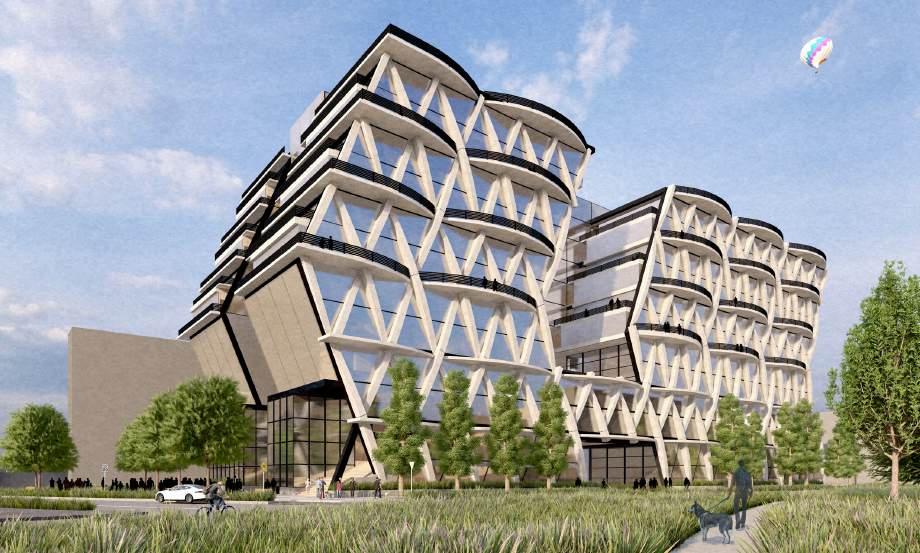
Adjacent to the soccer stadium, the Non-permanent Occupation Metropolitan Apartment Dwelling N.O.M.A.D. House complements as a community anchor, pushing the limits of temporary living. It poses the question: “Can a housing complex create an ideal environment for residents, regardless of their length of stay?” The answer lies in a fusion of six floors of community amenities and six floors of housing, fostering community integration and evolution.
The final product is a 310,000 square-foot social hub and local icon with a “laced” facade- complimenting its diagonal truss structure while mimicking the weave of a soccer net.
Downtown Oklahoma City is beginning to thrive, introducing brandnew places like Scissortail Park and the OKC Convention Center. In the city’s current framework plan, it’s clear that these projects are steps towards a greater vision. How can the city use thoughtful design to reconnect the city center with the Oklahoma River?
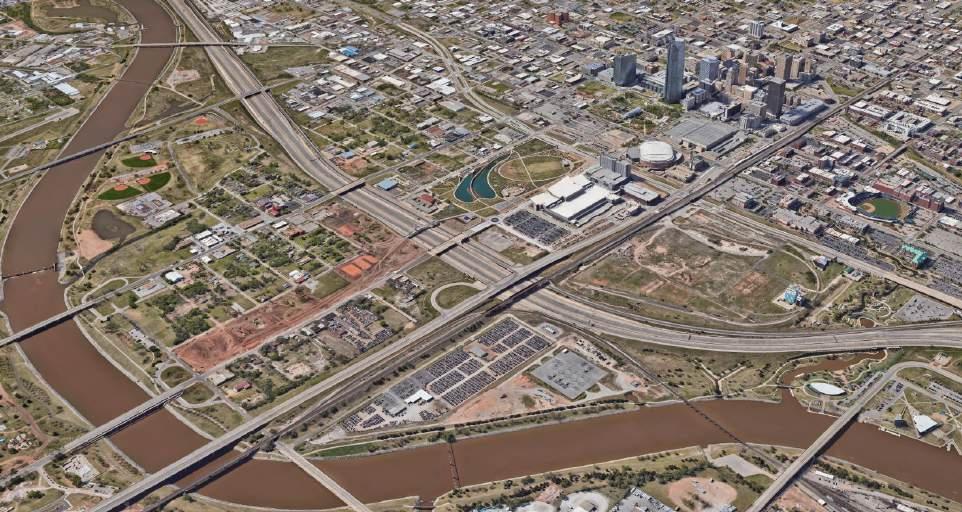
The city core connects to the river by extending the park across its northsouth axis. The park is flanked by mixed-use residential projects on either side, paying attention to a spectrum of densities and building scales. This allows for a wide spectrum of lifestyles to co-exist in one community.
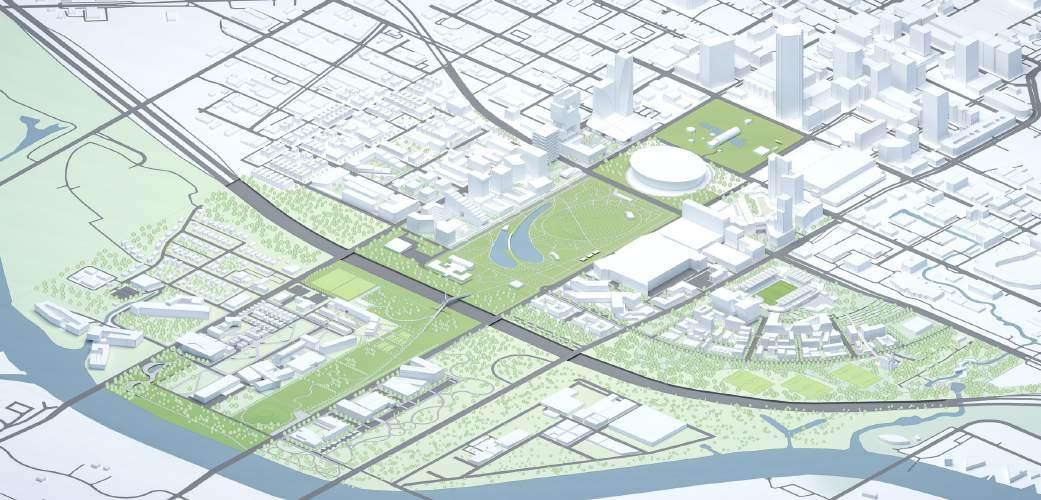
Throughout the design process, our studio considered a wide array of aspects; each plays a role in creating a successful city.
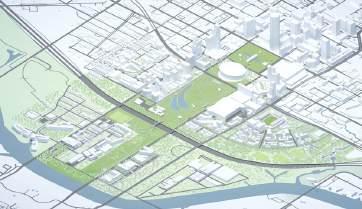
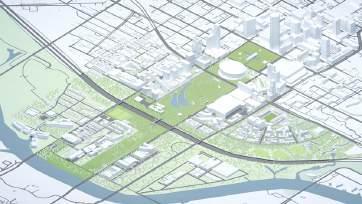
The city plan orders itself into seven distinct districts, each with their own strengths, values, and potential lifestyles. An ambitious master plan begins to break its scale into manageable subsets.
While the 824-acre plan has the density to accommodate more than 10,000 new residents, it leaves plenty of room for wild grass, manicured parks, and public plazas. This serves to encourage exercise, interaction, excellent air quality, and natural water drainage.
While each district is unique, they are all connected via bus, streetcar, and bicycle infrastructure. This gives residents plenty of transportation options beyond the conventional car, and facilitates a more equitable framework for all.
To better serve incoming residents, the city framework places an emphasis on communal spaces for recreation and education. The plan allows all residents to live within walking distance of these amenities.
The design resolves any logistical issues by creating services access to all new buildings, and required parking is allocated into multi-story garages instead of sprawling surface lots.
The Northeast District, shaped by Interstate 40, Shields Boulevard, and Oklahoma City Boulevard, forms a quarter-circle with a semi-radial layout. Centered around a soccer stadium, two main commercial strips extend outward, fostering varied densities for diverse lifestyles. The community is bordered by a natural buffer, reducing freeway noise, aiding water drainage, and enclosing a 22-acre public park.
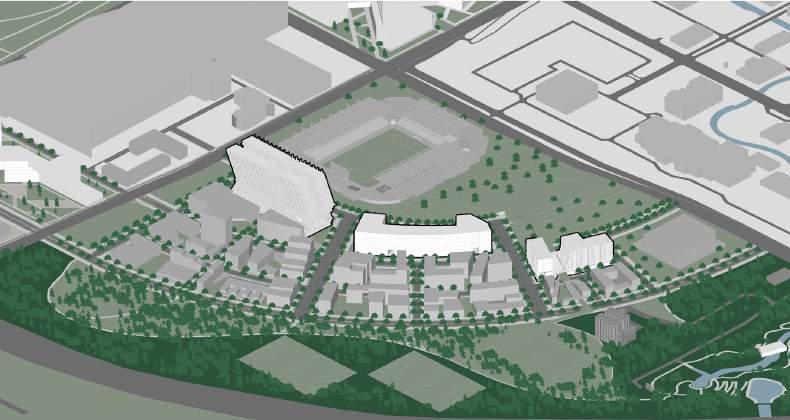
The neighborhood fits into the greater city framework by creating a microcosm of the larger vision. It does so by promoting a spectrum of densities while creating pathways from the urban center to the river. The soccer stadium completes a rectangular circuit of entertainment venues, neighboring the convention center, the new basketball stadium, and Bricktown, to the west, northwest, and north respectively.
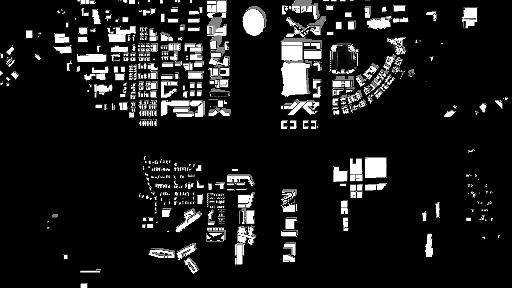
How can a temporary housing complex create a sense of permanent community?
An open design uses public spaces to welcome the outside world in, encouraging chance encounters and unique interactions.
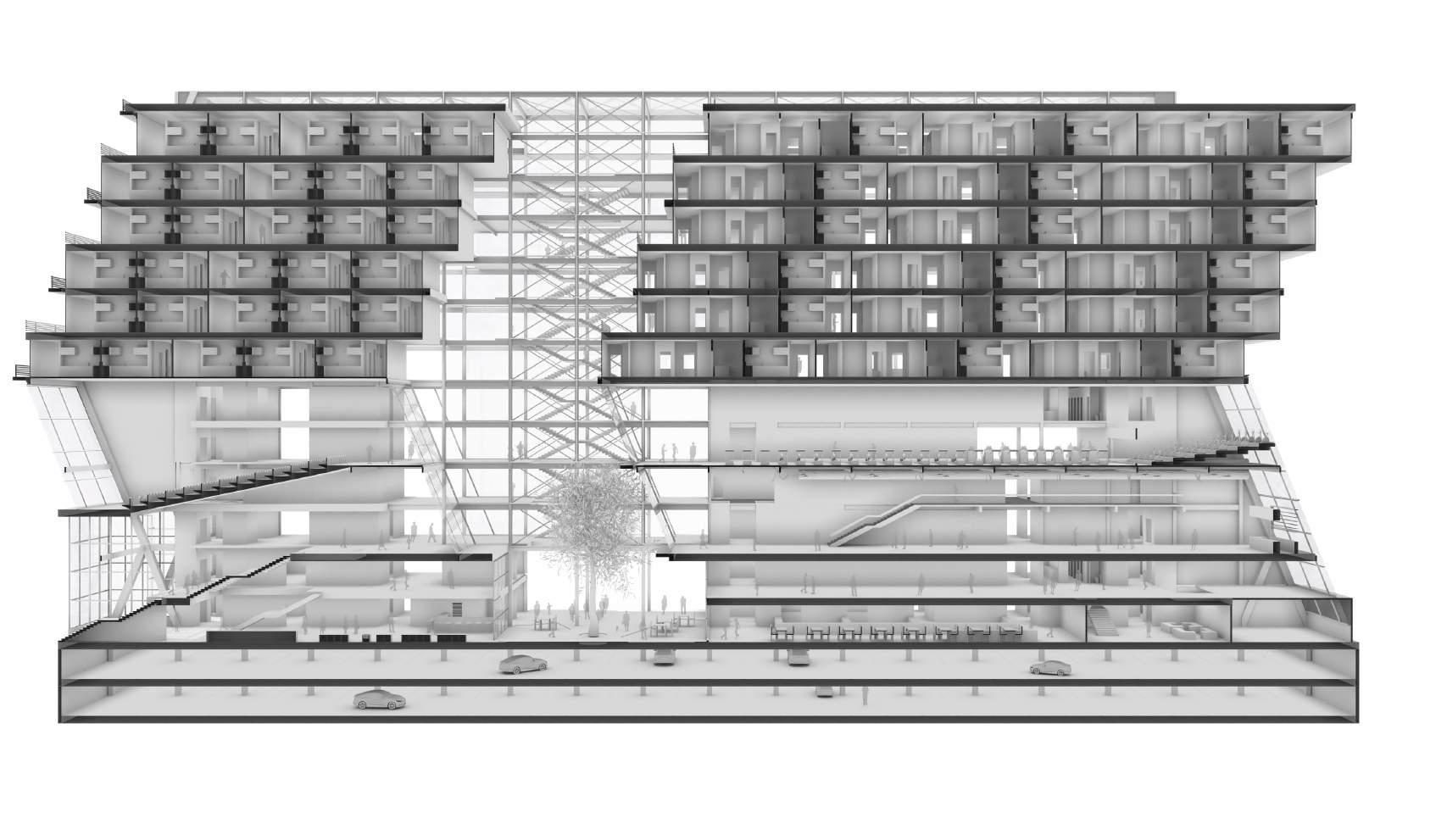
The building places 132 temporary living units atop six floors of public space; this introduces the ‘nomads’ to the Northeast District, and the OKC community. The building uses doubleheight spaces and open floor layouts, using visual permeability to facilitate social connection.
A six-story, 30ft-wide void creates a ‘vertical street’ for the units, serving as a light-well and an open hallway. This further creates visual permeability and allows all units to receive daylight from both the north and south.
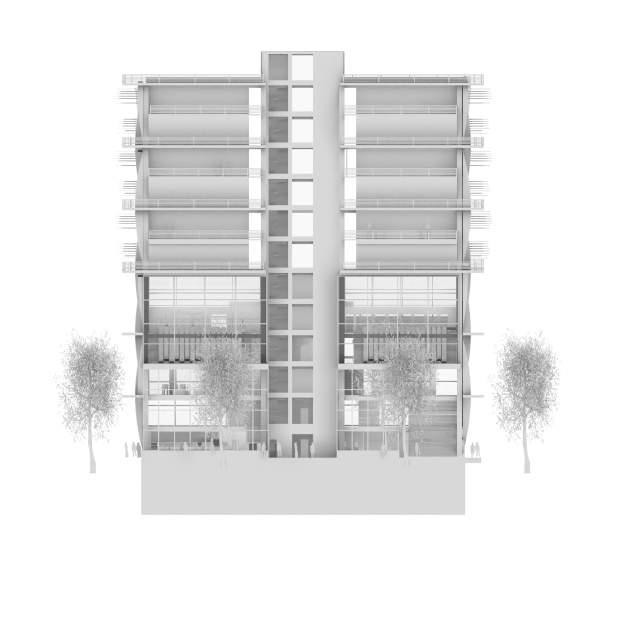
A 60ft- wide passage cuts through the building from north to south, connecting the stadium to the rest of the neighborhood. The building becomes a noise barrier without being a physical barrier, and reiterates the Core-to-Shore narrative at the individual building scale.
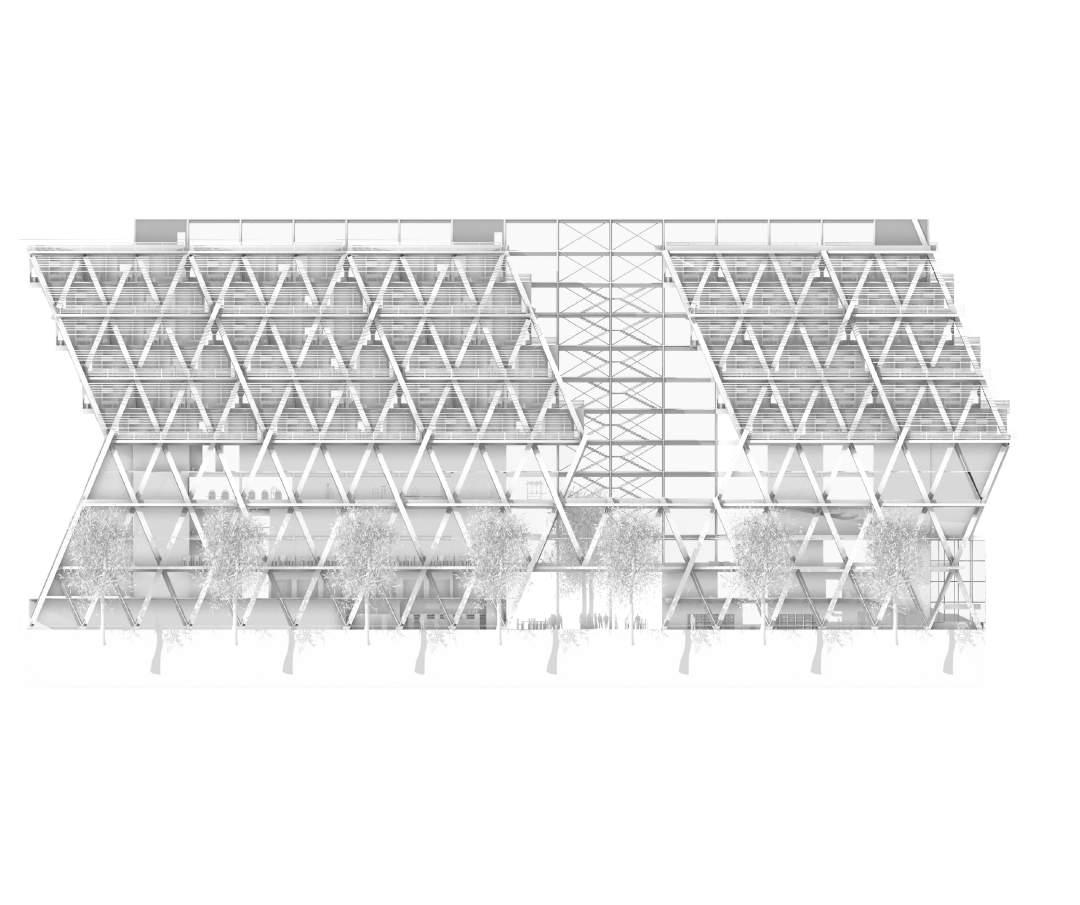
A CLT truss frame allows the building to have deep floor plates, and shifts five feet per floor to compliment the truss structure. This staggering also creates semi-private eastern balconies for both the building’s west and east wings.
NORTH SECTION
SOUTH ELEVATION
The standard 760 square-foot unit is completely furnished and features in-unit laundry, a kitchen, and a full bathroom.
The 2-bed, 2-bath units feature 1600 s.f. of living space; it boasts laundry, kitchen, ample storage and a dining table for eight.
The atrium spans the entire building and brings light all the way from the skylights to the ground floor.
The gym boasts a cardio room, weight room, and locker rooms. The high ceilings provide proper lighting and air circulation.
The auditorium and film room each have 192 seats and can be used for talks, ceremonies, watch parties, and more.
The double-height event space features an open bar and nearly 6,000 square feet of open floor. Its flexibility allows it to provide for nearly any celebratory gathering or event.
An inward slope allows the roof to collect 915,000 gallons of water annually, providing each unit up to 18 gallons per day.
The metal facade compliments the internal truss structure while symbolizing the weave of a soccer net.
The public passageway carves through the building, creating an open plaza that connects the city core to the river’s shore. The opening is 60 feet wide, creating space for open seating, food vendors, and patches of greenery.
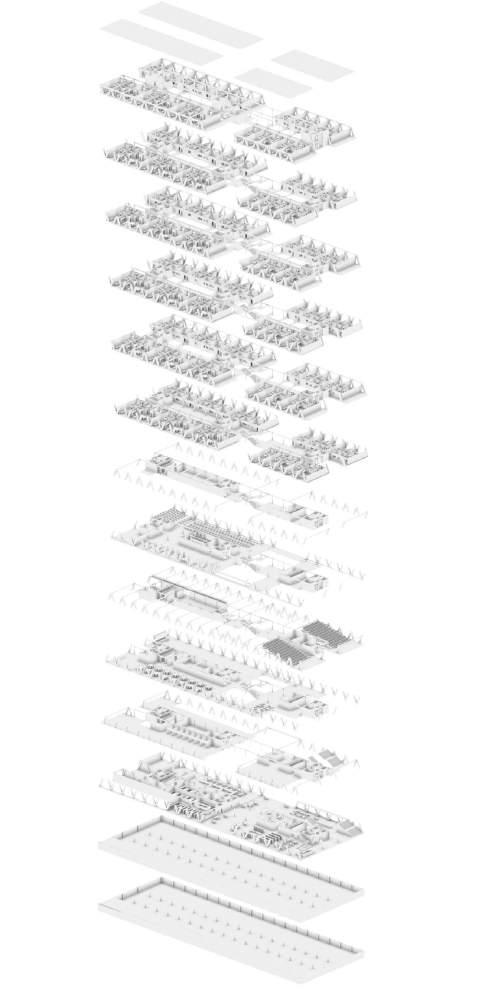

The ground level is arranged into three rows that align which the structural grid. The middle row is reserved for staff, allowing them to serve spaces to the north and south. The outer rows line the exterior which allows for street access, daylight, and views for the public.
Each residential floor is built of a set of standard modules, allowing for streamlined construction. The plan creates variety by allowing residents to choose which views they have, how large their suite is, and whether or not to have a balcony.
COPENHAGEN, DK
55.6761° N, 12.5683° W
POPULATION: 1,476,988
“Invisible threads are the strongest ties.”
-Friedrich Nietzsche
CLASS: UBDS740 | Michela Nota
LOCATION: Copenhagen, DK
SIZE: 1,100,000 GSF
BUILDING TYPE: Infrastructure
PROJECT TYPE: Individual
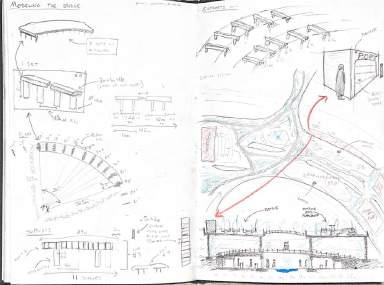
Copenhagen boasts top-tier public transit and bicycle infrastructure, priding itself on minimizing reliance on automobiles. The city continually distances from private vehicles through measures like removing on-street parking and limiting access to inner-city streets. However, a kilometer-long elevated roadway at the city’s edge remains a challenge, disrupting parkways and acting as a physical barrier to neighboring Fredriksberg.
An urban impact study under the bridge revealed a gender disparity, with men more likely to linger, implying a safety concern for women. This led to us wondering: How can urban design enhance safety for women and children?
The solution re-imagines the bridge as an urban oasis, redirecting cars below, reducing lanes and speeds. Elevated spaces ensure safety, fostering natural surveillance from adjacent buildings. Ultimately, the transformed bridge connects parkways, enhancing the city’s nature network.
The concept of “bridge” typically signifies unity, peace, and harmony when connecting distinct entities. However, Bispeengbuen, while a literal bridge, serves solely to connect two motorways, elevating itself to disconnect from the public realm. Ironically, this bridge becomes a barrier on various scales.
Private cars are elevated and separated from cyclists, buses, and pedestrians, suggesting priority to automobiles and creating a space both inhospitable and inaccessible to people.
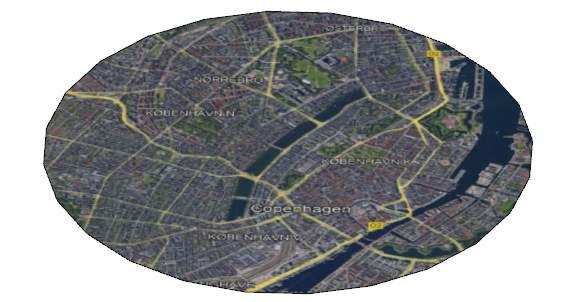
The bridge is responsible for the termination of a 9-kilometer nature path to the west, cutting it off just a few blocks away from Superkilen, a 3-kilometer park to the east. (Map: 1-km diameter)
The bridge is a concrete manifestation of the political barrier between Fredriksberg (red), and Copenhagen. This further divides the two communities on either side. (Map: 5km diameter)
There are multiple grocery stores, fitness centers, and music stores within 500 meters of the bridge. This creates possibilities to bring communities together through farmers’ markets, fitness sessions, and live concerts.
Traffic is redirected below the bridge, integrating automobiles back into the public realm and reclaiming the bridge for people. Speed limits and lane widths are reduced in the process.
Relocating pedestrians above the bridge allows for natural surveillance from the adjacent apartments. This increases safety for everyone using the bridge.
The bridge is shut down to all motor vehicles. All traffic is redirected around and under the bridge. This re-introduces the roadway back into the street-scape, placing more ‘eyes on the street’ and enhancing the sense of safety for pedestrians.
The bridge bring back greenery symbolizing nature’s reclaiming of space, connecting nearby parkways, and forming a new 12-km network from Northern Norrebro to Valbyparken.
An existing impact project beneath the bridge relocates its amenities above, enhancing each feature. Green on-ramps on both sides provide an inviting atmosphere for both communities, while an elevator ensures universal access to the upper level.
A glass elevator connects the park to Nordre Fasanvej, a busy street at the ground level. This addition provides everyone the chance to experience the park.
“ON-RAMPS”
A set of inclined green pathways let citizens easily access the top of the bridge, integrating it into the surrounding park network, drawing allusions to freeway on-ramps.
Activity spots like playgrounds, sports courts, and dining venues create a place that attracts people of all backgrounds and brings them together into one spot.
4.1 | KANSAS CITY, MO
4.2 | KANSAS CITY, KS 4.3 | CHICAGO, IL
Inset Map
“Action is the foundational key to all success.” -Pablo Picasso
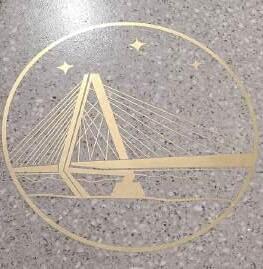
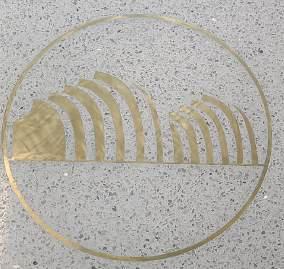
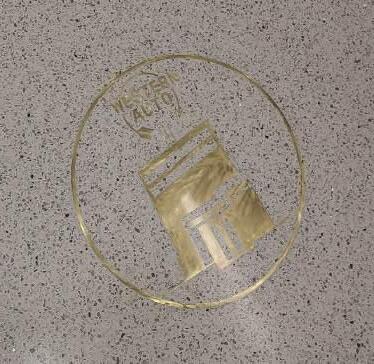
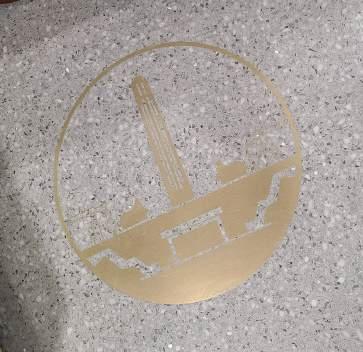
During my first internship in the summer of 2021, the team at BSA LifeStructures gave me complete freedom in designing a series of floor insets. The purpose was to serve as a way-finding tool to navigate the new cafeteria at Children’s Mercy Hospital. The artwork was designed as abstractions of local landmarks , alluding to the way real landmarks help us navigate the city.
The project was completed in January 2022.
In the spring of 2022, I volunteered to teach two architecture lessons to 2nd graders at Resurrection Catholic School in Kansas City, Kansas. The experience proved to be incredibly rewarding and I kept in touch with the teachers I was able to work with.
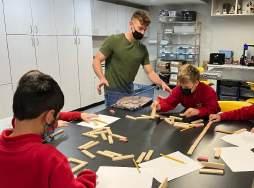
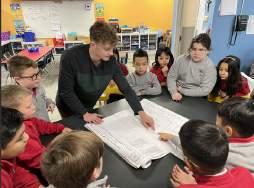

A year later, I was asked to come back to the school and teach a total of 20 architecture lessons over the course of six weeks. The classes were taught to 2nd, 3rd, 4th, and 7th graders, and each group had a small studio project tailored to their skill level.
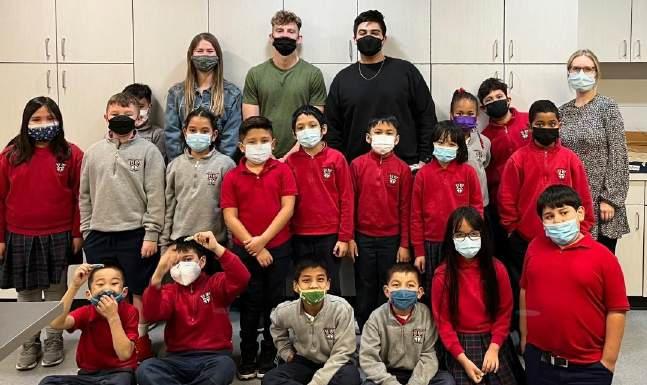
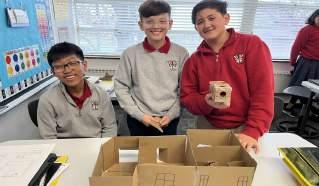
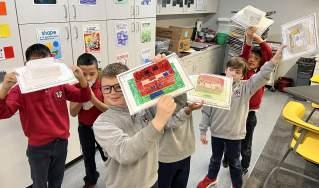
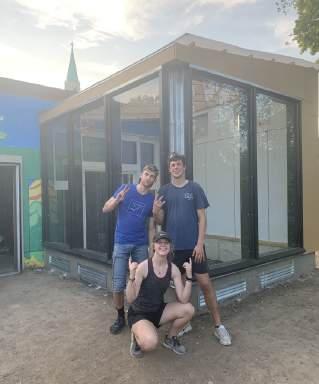
Concurrently with my first lessons teaching, our studio was designing and building a greenhouse across the street from the elementary school. The greenhouse was an extension of a local community center and was intended to teach neighborhood children how to grow their own plants.
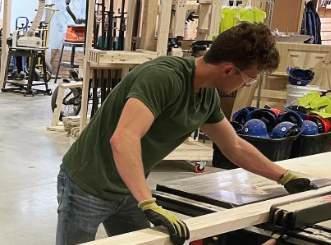
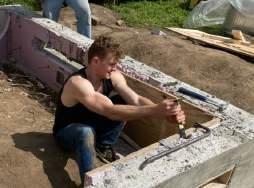
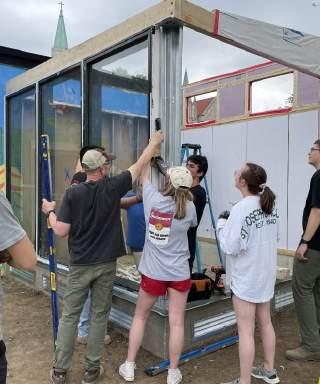
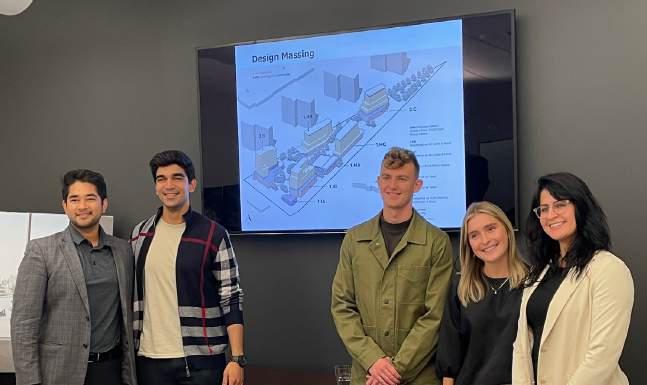
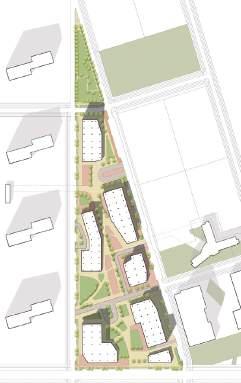
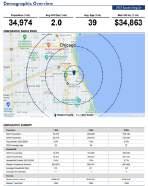
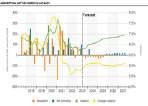
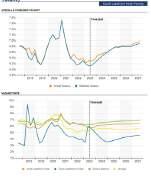
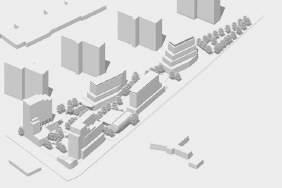
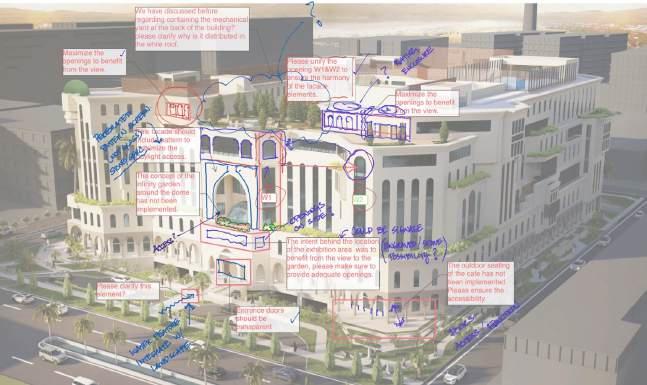
During my time with HKS Chicago in the summer of 2023, my co-interns and I teamed up with interns from a local development firm to address a 48-acre swathe of land on the south side of the city. Our project combined urban planning, urban design, and finance to imagine a new neighborhood that is not only creative and forward thinking, but practical and economically viable. The project featured an in-depth urban-analysis, a design proposal, and a market analysis , and was presented in front of leaders at both firms at the end of the summer.
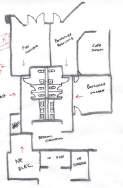
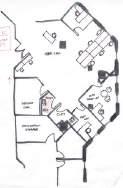
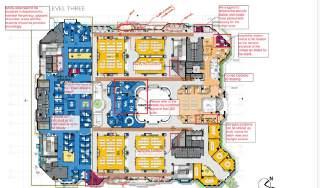
While I worked on our intern proposal with HKS, I was also aiding the development of IMC Medical College in Jeddah, Saudi Arabia, in its schematic design phase. My two areas of focus were space planning and facade articulation.
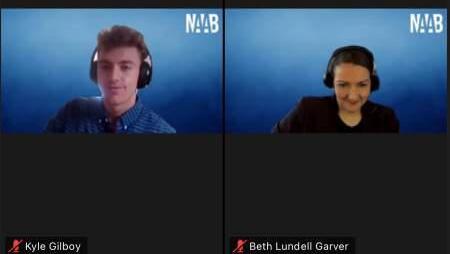
In the spring of 2022, I participated as the student representative for the NAAB accreditation of the M. Arch program at University of Kentucky. 4.6
In the spring of 2023, I was invited to come back and participate as the student representative for the NAAB accreditation of the B. Arch program at Penn State University.
During the fall of 2021, I worked on an infographic with Cairo Design for Morgan State University in Baltimore. The illustration represents Tyler Hall, a new building on the MSU campus.
At the end of summer 2022, I lived with the Ososki family in San Mateo, California and worked for Jesse to help me further understand the construction side of architecture. I spent time doing landscaping work, installing drywall, extending water lines, breaking up concrete, and more. The home is located in Belmont, California and completed in 2023.
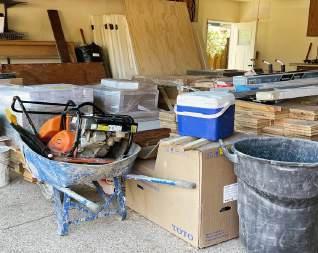

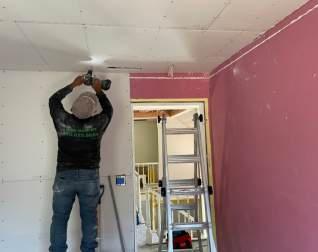
Organizing Equipment in the Garage Digging & Extending Plumbing Lines Installing Drywall Throughout the Home
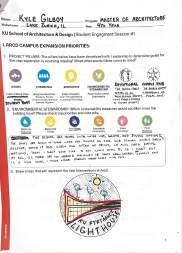
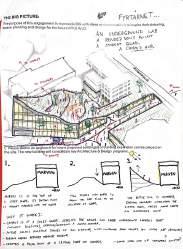
In the spring of 2023, Bjarke Ingels Group was beginning their initial ideas for our new design school at University of Kansas. The school faculty nominated me as a student representative to engage in an ongoing dialogue with architects at BIG.
As a student liaison, I was asked to distribute and collect student surveys so the designers could better understand the needs of the students. Exercising my management skills, I returned over 100 student surveys in a span of 5 days.
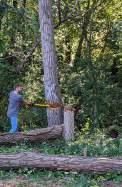
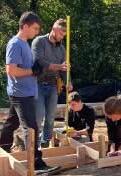
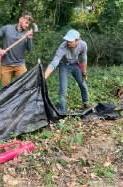
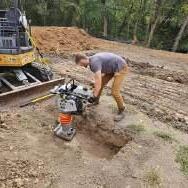
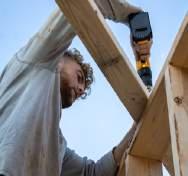
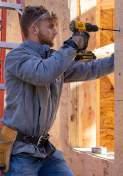
Currently in my graduate year, I serve as the site manager and site work lead for Studio 804’s 2024 project, 436 Indiana.
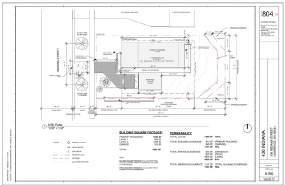
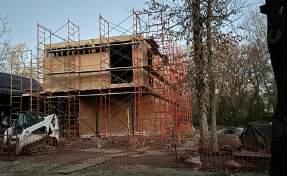
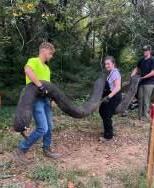
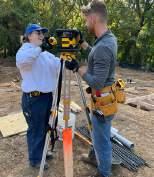
More about this experience can be found in my graduate portfolio once the house in finished in May of 2024.
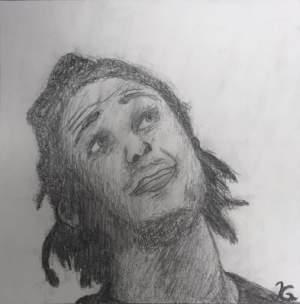
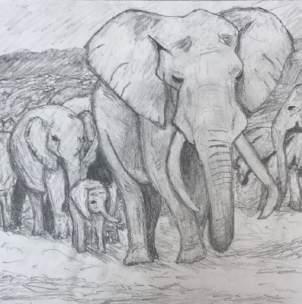
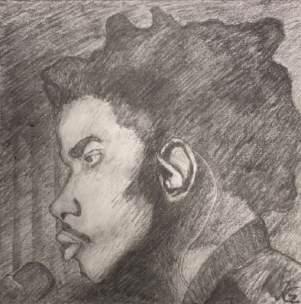
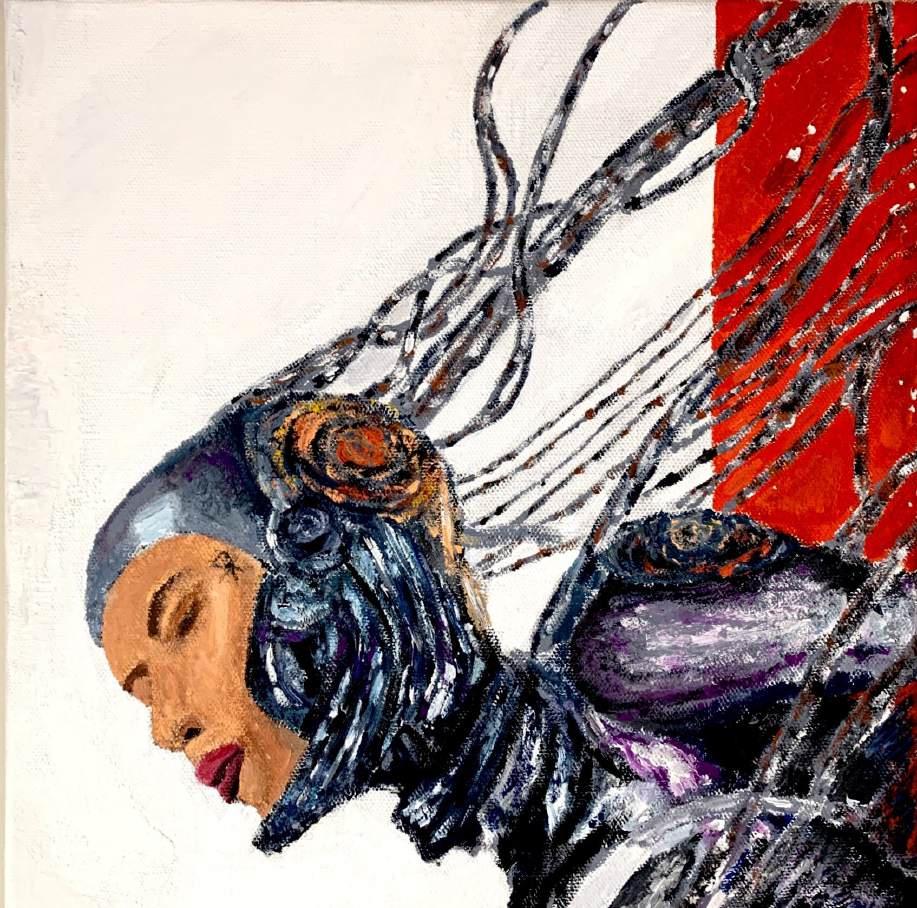
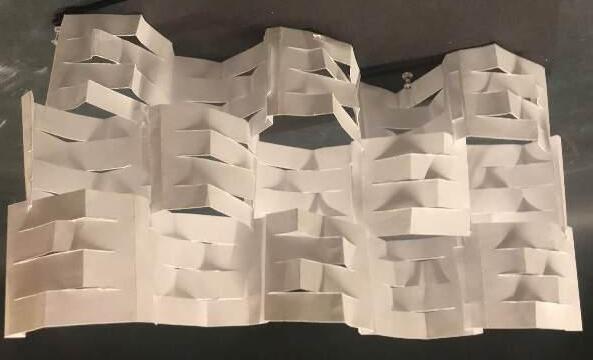
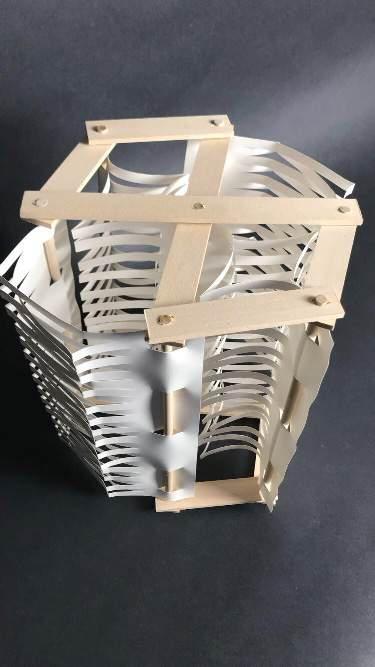
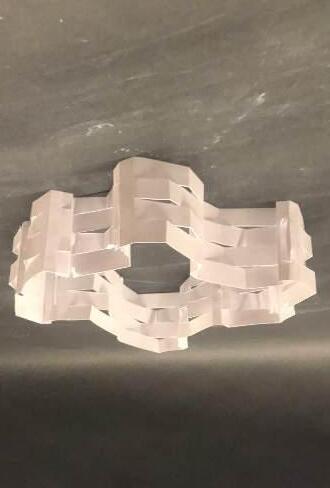
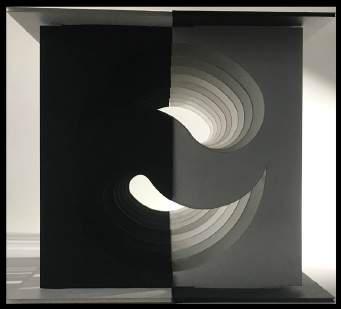
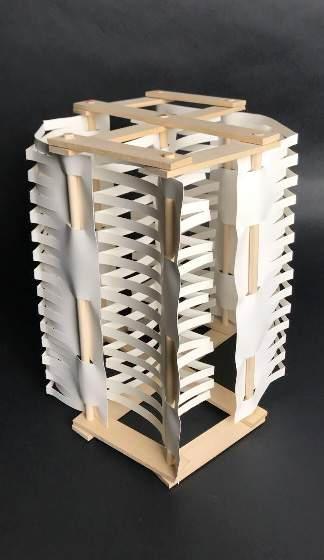
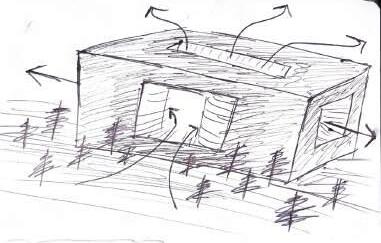
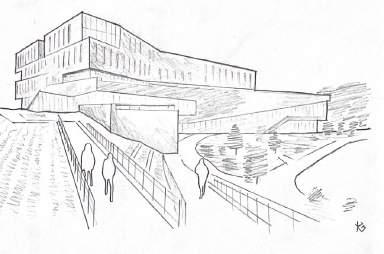
The artwork displayed is a collection of sketches, paintings and models I’ve created from my high school year up until my first years of college.
Throughout my schooling I became interested in art of many forms, such as painting, sketching, model-making, fabrication, graphic design, and tattoo art.