


Why are campus papers creating second Instagram accounts? P5
QUIZ: What sustainable gifts should you give this year? P10
What recent temperatures tell us about climate change P19
Why are campus papers creating second Instagram accounts? P5
QUIZ: What sustainable gifts should you give this year? P10
What recent temperatures tell us about climate change P19


UW women’s hockey player chosen for new national coaching development program
by Christiano Choo
The Online News Act: Why student publications across Canada are creating secondary Instagram accounts
by Sarah An
The rise of esports at UW by Jules Gravestock 10



History


Quiz:






17


UW’s Th’owxiya: The Hungry Feast Dish explores the light and dark- ness within all of us by Sophie Smith





by Sophie Smith 19 26 22 05



Another day of sun: What above-average November temperatures tells us about climate change by Bethany Poltl
A short-cut or a hazard? The rise of e-scooters in the Waterloo region by Ananya Muralidharan
Recipe: Christmas Eton Mess by Ingrid Au
December crossword by Zoe Cushman
Imprint is the official student magazine of the University of Waterloo. It is an editorially independent magazine published by the Federation of Students, University of Waterloo, carrying on business as the Waterloo Undergraduate Student Association (“WUSA”), a corporation without share capital. Imprint is a member of the Ontario Community Newspaper Association (OCNA). Content is provided for general information, education and entertainment purposes only, and does not necessarily reflect the views of the Editorial Committee, WUSA, staff or advertisers. We welcome editorial submissions, articles, letters, photos and graphics (submissions) for publication in any edition of Imprint subject to terms and conditions for submissions, which are available upon request. Imprint does not guarantee that submissions will be published. Imprint reserves the right to approve and edit any submissions to be published. A submission will not be published if it is determined to be libelous or in contravention of Imprint’s policies, code of ethics and journalistic standards. Imprint may reproduce content, including submissions, for commercial purposes in any format or medium. Imprint disclaims direct and indirect liability for reliance on or use of its content. Imprint is published monthly as a magazine and regularly online. Imprint reserves the right to screen, edit and refuse advertising. One copy per customer. Imprint [SSN 0706-7380] Imprint CDN Pub Mail Product Sales Agreement no. 40065422.
Imprint acknowledges that the University of Waterloo is situated on the traditional territories of the Attawandaron (Neutral), Anishnaabeg, and Haude-nosaunee Peoples. The University of Waterloo is situated on the Haldimand Tract, land promised to Six Nations, which includes six miles on each side of the Grand River. Therefore, Imprint recognizes and respects this land that it is situated upon.
Christiano Choo, Staff Writer
Keiara Raitt’s hockey journey began when she was merely four years old. Growing up in a hockey-loving family with two older brothers, the rink quickly became a second home. “I remember my mom taking me to free skates when I was in preschool and kindergarten,” Raitt recalls. Right from the beginning, she fell in love with the sport and constantly begged her parents to let her play even though she was just a toddler. “[I’d see] my brothers leaving for practice, and I’d tell my dad I wanted to go play too, but I was always told I had to wait… I was just too young,” Raitt says with a laugh. While it took some convincing, her persistence eventually paid off and her family finally allowed her to join her siblings on the ice. That early determination to play would become a hallmark of Raitt’s drive to succeed.
Her early years were spent playing boys’ hockey, as that was a time when girls’ hockey programs were still lagging behind. She would stay in it until she turned 13, finally making the switch to girls’ hockey in middle school. “I think part of it is that’s what my dad knew from coaching my brothers,” she explains. “At the time, girls’ hockey wasn’t as popular or well-organized in terms of player development.” Despite these challenges, Raitt thrived in her competitive environment, eventually making the leap to competitive hockey, where her love for the sport grew stronger each year.


As Raitt progressed in her career, she noticed the limited opportuni-









“I love seeing the girls develop their skills and confidence. It’s rewarding to know that I can help shape their journey, just like my coaches did for me.”

— Kieara Raitt, UW hockey player
ties available for women in the sport. “When I started playing, I used to tell my parents I wanted to play for the Leafs. That’s what I knew,” she says, reflecting on her naivete before realizing that women’s hockey was rarely broadcast outside of the Olympics or infrequent Women’s World Championships. But today, with the emergence of leagues like the Professional Women’s Hockey League (PWHL), the landscape has begun to change. “It’s really exciting, not just for me, but for all the younger girls who have the same dreams I had.”
Raitt’s passion for the sport eventually led her to explore coaching, where she hopes to inspire the next generation of female athletes. She was recently selected for the “Creating Coaches” program, an initiative aimed at increasing the representation of women in hockey coaching. The program consists of nine total student athletes, who will receive training and mentorship through the program during the 2024-25 and 2025-26 seasons. It was launched in 2021 through a partnership between Hockey Canada, U Sports, and Hockey Canada Foundation.
Nominated by her own coaches at UW who have supported her growth as a player and future coach, Raitt is more than ready to take on this new challenge.
She has already taken on a range of responsibilities that challenge her to grow as both a leader and mentor. “We’re learning how to run practices, develop game strategies, and manage a team effectively,” Raitt explains. She is also tasked with shadowing experienced coaches, organizing drills, and providing feedback to younger players. This hands-on experience is preparing her for a future where she hopes to break barriers and lead teams at higher levels of competition. “Creating Coaches” represents more than just an opportunity for personal development for her — it’s a chance to be part of a movement that’s pushing the boundaries for women in hockey. “It’s different being on the other side of the bench,” she admits. “You have to think about more than just your own game — you’re responsible for guiding the entire team.” Raitt enjoys the mentorship aspect, using her years of experience to pass down knowledge to the next generation of players. “I love seeing the girls develop their skills and confidence. It’s rewarding to know that I can help shape their journey, just like my coaches did for me.”
As women’s hockey continues to expand, Raitt is optimistic about the future, not only for her own coaching career but for all the young girls following in her footsteps. “There’s so much more opportunity now for women to progress beyond college and university, and it’s exciting to see where that can go.”


Sarah An, Staff Writer
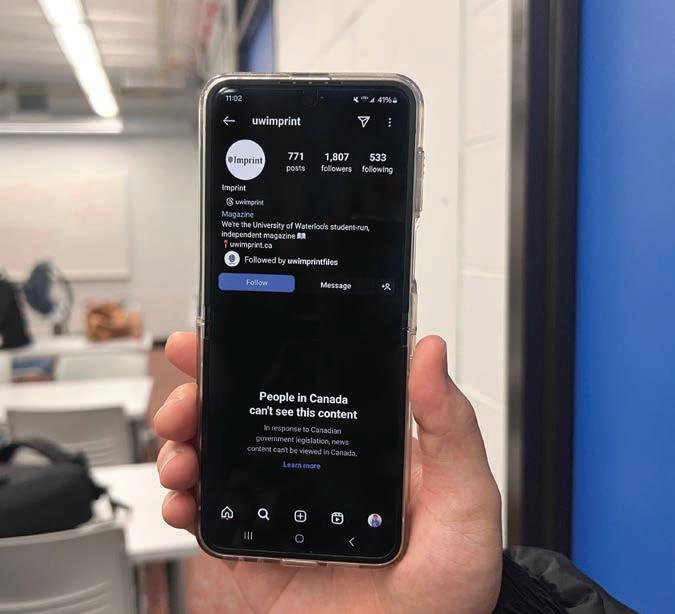
Forover a year, Imprint has been silent on Instagram. That was until Oct. 1, when Imprint created a new Instagram account, @uwimprintfiles. This account will act as a secondary account in place of the original account @uwimprint, where all content is blocked and the page instead shows: “People in Canada can’t see this content. In response to Canadian government legislation, news content can’t be viewed in Canada.”
If you’re wondering what this means, you’re not alone. Bill C-18 was passed on June 22, 2023 as the Online News Act. The act states that “large digital platforms [are required] to bargain fairly with news businesses for their content.” Only Google and Meta meet the statutory criteria as “large” digital news intermediaries. In other words, Google and Meta must pay news publishers in order to display news and journalism on their platforms in Canada. This includes links to news, meaning Canadian users are unable to even share links to news sites and articles.
Within the same month, both companies retaliated against Bill C-18 and stated that they will block news on their platforms. In August 2023, Meta proceeded to block all news on Facebook and Instagram for users in Canada, although Instagram Threads remains unaffected. On Nov. 29, 2023, the Government of Canada and Google agreed to an annual payment of $100 million instead of the original, uncapped proposal of paying based on user traffic, which Google called a “link tax.” Meta, however, remains committed to their position of blocking all news content.

Under a scan for keywords and business categories, accounts flagged as representing newspapers or magazines have been blocked on Instagram and Facebook. Accounts featuring sports news, arts, and culture are still available, while some news accounts have managed to go undetected, such as the Tribune, McGill’s independent newspa-
per. However, most news sources small and large have been affected, including student publications like Imprint.
“I remember being really, really upset. We had quite a few followers on our account — Instagram was definitely the way we were reaching students the most,” said Chiara Wallace, senior social media and layout editor at the Western Gazette. “It seems like such a small thing I think, to other people, but when it comes to reaching students you’re trying to reach them where they already are, and they’re on Instagram all the time.”
The Meta block in August took many by surprise, especially considering that the act was to take effect in December 2023. “One day we could see our Instagram account and the next day it [went] poof… we couldn’t see any of the posts we were putting up,” said Natasha Baldin, editor-in-chief for the Charlatan at Carleton University. “We [have] spent the last year kind of in shock and paralysis… What do we do, how do we adapt to this, what’s the best way to go forward?”





Given that many current students do not use or even have Facebook, which is also owned by Meta, minimal student impact seems to have occurred after news became unavailable on the platform. “Amongst my friends, the only people on Facebook are ones that stay in contact with family or are on it [solely] because they have another club that operates through Facebook,” said Allie Moustakis, co-editor-in-chief at the Queen’s Journal from Queen’s University.
Instagram, however, has been a critical tool to reach and engage with students. “[It] was our biggest platform, it was our mostused social media. We did fairly well — it would garner a lot of attention [for] our website which obviously was a great help,” Moustakis said.
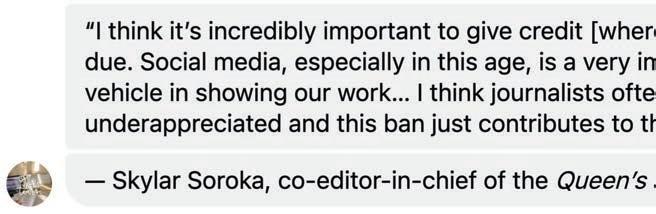
For student publications, Instagram posts were used to promote and link stories in an easy and efficient way, reaching a large audience as writers and photographers would repost their work on personal accounts as well. Co-editor-in-chief at the Queen’s Journal Skylar Soroka stated: “I think it’s incredibly important to give credit [where] credit is due. Social media, especially in this age, is a very important vehicle in showing our work… I think journalists often go underappreciated and this ban just contributes to that idea.”
Wallace shared similar sentiments: “We had so many things that we were doing and it honestly felt like a disservice to not have the Instagram [account] to promote our work and to promote people [at the Gazette] who were doing such great work for us.”
Without the ability to be seen on Instagram, various student publications have tried other social media platforms such as TikTok, but have found it difficult to mimic Instagram.
At the Charlatan: “We didn’t see a ton of engagement last year, especially on social media. We had been on Twitter [X] and TikTok for a little bit, none of which were reaching our students because realistically, students are on Instagram and that’s mainly where we’re going to reach them,” Baldin said.
At the Queen’s Journal: “For us, [TikTok] wasn’t that successful because… Instagram is our primary way of spreading information and with TikTok I think you need to be a little bit more creative, so we’re still working on how we can elevate that role
to increase engagement,” Soroka said.
At the University of Guelph’s Ontarion: “We tried TikTok first which wasn’t successful. We found that every time we wanted to do a post we had to do video editing and it was such a drain on resources… the return on that was just not very high,” said executive director Patrick Sutherland.


Similarly, it has been difficult at Imprint to find a platform that replicates the features and reach of Instagram: “We’ve been experimenting a bit with TikTok and other mediums but in terms of the ability to interact, Instagram is a better place for that. We haven’t been able to replace the ways we were using Instagram for putting out questions or seeing if there were followers who might be interested in talking to us about a certain story, or even just the polls and [functions] like that,” said publications manager Andres Fuentes.
That’s not to say that Instagram is the be-all and end-all of student engagement. Some student publications have been investing back into traditional methods, before the age of social media. At Guelph’s Ontarion, the team is leaning into the renewed interest of analog and 90’s technologies through poster campaigns. Additionally, in-person engagement efforts have increased, going beyond the typical orientation week introduction. “We’ve definitely been trying to up our in-person interactions with the campus community. Every time we release a new issue, on publishing day we’re down at the main courtyard of the university centre here on campus. We’re always handing out newspapers, we even have some extra events that we’re doing… even to just teach people more about media literacy,” said Taylor Pipe, editor-in-chief of the Ontarion. She stated that these face-to-face interactions with students, readers, and prospective volunteers has provided the opportunity to build valuable personal relationships with the university community.
Despite having no activity on Instagram for over a year, the Queen’s Journal has been working on maintaining strong visibility on campus. “There are other ways to direct people, and people do know of the Journal because we have the advantage of being around for so long and already well-established,” Soroka said. “Our publishing house as well is right on campus so we have that brand identity [and] we have a good amount of newspaper stands on campus that our logo can be seen on. I guess in terms of traditional marketing and advertising we have that down pretty well.”
Yet even with a strong presence on campus, there are aspects of engagement that have taken a hit. “I feel like in the past we had more contributors. A lot of that interest — that first point of contact — would be made through Instagram… because [students are] obviously seeing all of the stories there, what they’re interested in. That kind of went down a little bit because you’re not able to [outreach] if people are not really seeing it on Instagram,” said Moustakis. In the meantime, the Journal has made calls through their newsletter for employees and contributors.
For better or worse, Instagram was a significantly helpful tool. According to Sutherland, “[The Ontarion] decided that Instagram is still the best way to reach our core audience, and I guess it was over [this past] summer that we knew that nothing was going to change and we knew that we had to do something different.”
Two months after the ban in mid-October 2023, the Western Gazette decided to create another Instagram account, now under @westerngazettedocs instead of @westerngazette. “We were definitely scared with the idea of making a second account because we weren’t sure if we would get banned immediately — if [Meta] would [catch] onto us,” Wallace said. She explained the uncertainty regarding how strictly Meta would enforce the block of news.
Hoping to not get flagged, the Gazette has put a visual emphasis on their second account, featuring more photography and straying away from the usual template posts with a headline, picture, quote, and excerpt. “We wanted to make [the account] with a bit more purpose to it, because at the end of the day, we had no clue if we were ever gonna get our first account back,
what the timeline for that was gonna look like — we never knew it was going to be this long with the second account,” Wallace said.
Other publications have started their second accounts much later, with activity only beginning in fall 2024. “I have thought about [creating a new Instagram account] but all the advice that I had gotten from the journalists that I was working with last summer were like, ‘Wait it out, don’t create a new account, you’ll lose all your engagement, it’s so hard to start from scratch,’ [which is] fair but… it sort of seemed like a natural progression since it had been a full year since we couldn’t post on Instagram,” Baldin said.
This sentiment was shared at Imprint as well. “It’s been a year now, I honestly thought it was going to be resolved quicker than this. Either way, whether the government was going to give in or whether Meta would come to an agreement with the government, I did not think it was going to last [for over] a year,” Fuentes said. “After a year, we [figure] that if this is going to be for the long haul, then we should… actually make the effort to do something different rather than hoping that we’re just allowed to go back to the way it was before.”
At the time of the interview, the Queen’s Journal was in the midst of planning the vision for their second account. Like Imprint, they had been hoping that the Meta block would be resolved. Moustakis explained: “I think that was the biggest reason we held off [on] creating a second account… There was something in the back of our mind [wondering], ‘What if we do get our second account back, then what kind of confusion will that cause for people, what kind of confusion will that cause for us?’… Especially because our original account is much more established and has an influx of posts that we obviously wouldn’t be able to get back or transfer.”
The boundaries of what will be flagged as news by Meta are still unclear. The Ontarion has attempted to contact Meta through Instagram but found no success. “We found the lack of communication to be the most challenging thing. We’ve reached out to Meta to try and get clarification and we heard nothing from them so… We want to follow the rules, we just don’t know what they are,” Sutherland said. “We were going to try and send in a letter to their corporate headquarters but given the lack of success we’ve had otherwise and their lack of transparency around it, we’ve got better things to do.”
With no particular rulebook, student pub-
lications are moving forward with growing their second accounts. “I think we’re all just at the mercy of [Meta]. It kind of feels like we’re transporting alcohol during Prohibition, right? We know that it’s technically illegal but everyone’s doing it. It’s a service that’s needed so I don’t see any other option,” said Andrew Wilimek, co-editor-in-chief at the University of Ottawa’s Fulcrum.
Amongst all seven student publications interviewed, standard practice appears to be about watching the lingo. At Toronto Metropolitan University’s Eyeopener, Lily Han has been a digital producer managing the social media accounts: “What was drilled into me when I first started was that with the ban and everything, be careful with certain words and lingos to not get flagged by Instagram because they do watch out for those things,” she said.
Since news cannot be linked on Instagram, many publications have been finding loopholes to link their stories. Sam Tinajero, social media manager at the Charlatan, highlighted how the team was using a Linktree to go around the block of news links.
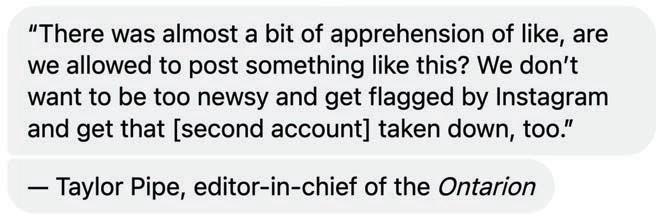
In terms of content, there are mixed feelings around what can be risked posting. “There was almost a bit of apprehension of like, are we allowed to post something like this? We don’t want to be too newsy and get flagged by Instagram and get that [second account] taken down, too,” Pipe said.
As such, there’s been a push for more creative posts amongst publications. Han from the Eyeopener says, “The media team does great content, we have Blinked, Drink of the Week: Bar Battles… [this type of] content breaks up what we’re putting out so it feels like a content creator page rather than too newsy — I think it gives that good balance of both. It’s kind of like trial and error to see how far we can push it.”
Starting a new account also means building a new following all over again, and Tinajero has been effectively analyzing social media trends to boost engagement: “It has been a bit challenging, when you start from scratch you have to think outside the box and be strategic about how much you’re posting, what kind of content you’re posting, because it’s really

just about reach. And then balancing it out with the kind of content we want to put out that might not have the best reach but is still a representation of our brand.” At the same time, she noted, “In social media management and strategy there’s no silver spoon [of] ‘This is going to work,’ it’s really just trial and error.”
Although less news-focused, the diversification of content has its positives. Soroka stated: “I think this gives time for sports and arts and culture and all these other sections because all that work being done and all that reporting is equally important. Every part of the paper is integral, so I think it would be a good time to diversify the content and also show that we write other things that [aren’t] just campus, politics, and news oriented.”
Pipe shared that there’s been a change in content at the Ontarion as well, focusing more on community updates by doing Q and A’s and collaborations with other campus groups. “As much as I am a news nerd, I’m a little more likely to watch the content that’s fun and quirky like that on my own,” she said.
Meta’s news block has directly stripped student publications from a publicity tool that was once able to freely reach the student body. Soroka described the block as the cherry on top of the dying industry of journalism: less publicity means less readership, which means less printing and therefore less journalism.
Not only does the block affect publications today, but calls into question the future of student journalism. Sutherland stated: “This feels like another example of student newspapers being caught in the middle of some battle between, in this case Meta and the Canadian government. But it’s often non-profit and student news that gets left out and suffers the most. Student newspapers are… the place where a lot of future journalists decide they want to become a journalist. So a lot of the big names that you hear in Canadian news only decided to start because they walked through those doors, and if someone’s not hearing about it on Instagram, are we losing future journalists?”
Considering that these are social media accounts, it feels natural to incorporate more lightweight, fun content. Fuentes said, “I think just by the type of content we want to be creating on Instagram, you’re going to get a diversity of content. It’s definitely less news heavy than, say, our website. There’s a little bit more social content on our… socials.”

For the Fulcrum, the transition to a new account meant reevaluating their goals and as a result, making changes for more reader-friendly posts rather than merely redirecting users to a story link. “We’ve essentially branched into some made-for-Instagram posts. For example, our student union just had an election and while we still publish[ed] an article, instead of accompanying that article with just that headline banner and two slides of summaries, we attached graphs, we attached charts, we attached stats, we attached pictures of all the candidates, and really [made] it a much more user-friendly format. We’re making it for Instagram — we’re meeting the readers where they’re at,” Wilimek said.

The reality is that many people get their news from social media. In November 2023, Statistics Canada stated that 24 per cent of Canadians get their news and information from social media. “On a broader picture, not just how it’s impacting us [student publications], it’s disturbing that we know [that] not just students but plenty of the population goes to social media as a source for news, and if they can’t see news from news providers you end up getting it from second or third [hand] sources which is opening up [room] for more misinformation. I think it’s a significant problem for all of Canada that Facebook or Instagram isn’t allowing Canadians to see news from the direct source,” Fuentes said.
Directly from the Government of Canada website, the first paragraph under the Online News Act states: “News outlets play a vital role in maintaining a healthy democracy. News and journalism serve to inform communities, drive civic engagement, and counter the rise of disinformation.” With this goal in mind, the Online News Act has certainly brought an ironic cascading effect into the world of student journalism and beyond.


Jules Gravestock, Contributor
Esports — electronic sports— is a genre of competition that has become a global phenomenon in the modern world since its humble beginnings in the gaming cafés of East Asia in the early 2000s. UW has been contributing to the esports scene in its own right for longer than one might expect, adding several esports titles to its official athletics department in 2020.
A nna Tian, who works as the coordinator for Warrior Esports, commented on the history of competitive video gaming at UW. “I would say esports has a long history at Waterloo… There was a StarCraft 2 club, or competitive team back in the middle to late 2000s… but my experience and knowledge of it [was] that it consistently started in, I believe, 2017 when an esports club was founded by our previous president… [After consolidation with the League of Legends club in 2020], somebody from athletics approached us wanting to integrate esports into [UW athletics], and that led to where we are now.”
E sports itself originated in Korea and China with real-time strategy games like the aforementioned StarCraft (1998). The rise of multiplayer online battle arena games (MOBAs) such as Defense of
the Ancients (2003), League of Legends (2009) and Dota 2 (2013) began throughout the late 2000s and early 2010s. First-person shooters and MOBAs are currently the most popular titles, helping the esports industry establish its global market of $3.2 billion in 2023, which is expected to grow to $23 billion by 2033.
T he League of Legends World Championship, an annual event featuring the best teams around the globe for esports’ biggest game, was held in London at the O2 Arena this past November. The championship finals peaked at seven million live viewers (excluding Chinese viewers, for which we do not have public data) and took place in front of 15,000 live spectators.
Luckily, you don’t have to take a seven-hour flight to watch high-level competition. UW boasts a number of its own collegiate esports teams that compete in leagues and tournaments. Eight teams across five titles, including gold teams (highest level of competition), black teams (developmental teams) and a white team (designed around inclusivity of marginalised communities). There are gold and black League of Legends teams, gold, black, and white Valorant teams and gold teams for Rocket League, Overwatch and Super
Smash Bros. Ultimate. According to Tian, there are about 60 players and staff in total.
Coming up at the start of next year, from Jan. 10 to 12, the WaterLAN Championship event will be held at Conestoga College (Waterloo campus) and at the UW Student Life Centre in the Black and Gold room. WaterLAN is an annual esports event that was founded in 2023 by UW and Conestoga College that invites collegiate teams from across Ontario to compete. Last year, they held tournaments for Rocket League and Valorant, featuring over 20 teams between the two games. This year’s event will feature Valorant and League of Legends, with more details coming as it gets closer.
W hen asked how to get involved with esports at UW, Tian responded, “We do tryouts in the beginning of the fall term every year and we have selective tryouts during the winter term.” If competition isn’t your strong suit, you can participate in other ways. As Elissa Chen, one of the UW League of Legends team managers, puts it, “Esports is more than just what you see at the competitive level. esports and gaming exist at the community lev-
el at UW and have helped to bring thousands of students together, which is what games are meant to do. If you’re concerned that you’re ‘not good enough’ at a game to take part in an event, just the experience of enjoying a beloved hobby with a community is something we want to foster.”
For many members, the most valuable element of UW esports comes down to the connections with other students. “I think being in an environment surrounded by people that enjoy the same games as I do is amazing and has led me to meet people from across campus (and other schools!) that I normally wouldn’t be able to meet through just academics,” Chen said. If this sounds enjoyable, the UW Esports Discord hosts weekly game nights and occasional watch parties and tournaments.
T his fall, they held a Teamfight Tactics tournament, watch parties for the League of Legends World Championship and a number of game nights for Roblox and Valorant. More info can be found by joining the Discord or following their Instagram, @uwaterloogg.
Mariam Naim, Staff Writer
Remember orientation? Friendly faces surround you in your orientation leaders and fellow students. Though one face — one that’s not quite human — is present with you too, joining in the festivities. Your faculty mascot, the pride and joy of students and staff alike, could never be absent at such a time. Fluffy, humorous, and lovable, that’s what the mascots are, but can you imagine that there’s more to the mascot than meets the eye?
In 1967, EngSoc president Jim Pike wanted an engineering mascot when he came upon the idea of a 60-inch straight pipe wrench from the Ridge Tool Company, an American manufacturing company. The Ridge Tool Company agreed to donate the tool on the condition that it would be named “The Ridgid Tool” and would keep its orange colour. The tool was chrome plated by the students shortly after being picked up. Around 1990, the word Ridgid was removed from the mascot’s name, becoming simply “The Tool.” Maya Baboolal, the current president of EngSoc A, spoke about how other universities often referred to UW engineers as plumbers because of their mascot. “They used that term to kind of make us feel less than, but we took it as a term of endearment,” she said. “[Plumbers] definitely use wrenches quite a bit, and I think that would [play] into the joke of ‘yeah, we’re the plumbers, but we’re proud of it.’”
The tool even has its own guard called the Tool Bearers, although not much more information is known about these Tool Bearers.
The tool, much like the other mascots, has a history of being kidnapped. The tool was kidnapped sometime in the 1970s, during a pub crawl organized by the graduating committee. The second time, in 1982, the University of Toronto (U of T) was up to no good. The engineering students were enjoying themselves at a Welcome Back Stag in January 1982. The tool made an appearance at the stag to show the pride of the UW engineering students. While the tool was to be transported back to UW, U of T engineering students took advantage of the chance to steal it from the Tool Bearers tasked with its safe return. The tool was kept by U of T until March 1982 when the UW students pleaded for its return due to the upcoming Iron Ring ceremony. U of T students agreed to return the tool, but they were not going to let the prank end without a spectacular grand finale. The tool made its way back to the UW campus, safe and sound, albeit encased in cement within an oil drum and branded with “U of T.” At least it was back in one piece, even if that piece was several times larger and you couldn’t even tell what was inside.

Baboolal described the importance of the tool within the engineering society: “Traditions are meant to adapt, so all the changes that we’ve talked about, all the things that have changed with the tool, are just a matter of trying to work with the times and really continue to make this mascot a good representation of our society.”
Pinky the pink tie saw its origins with one man, Professor Ralph Stanton, who was known for adding a bit of flair to his outfits with a unique tie, his signature one being pink. Quite the foundational figure in the math faculty himself, Stanton is the one who turned math into its own faculty, began integrating computers into the classroom, and spearheaded co-op programs for applied mathematics and computer science. In his honor, an 85-foot pink tie was positioned on the Mathematics & Computing Building when it opened in 1968.
But so long as the tie was out and about, it was not safe, as there were some mischievous students who had plans to kidnap the tie. Elisabetta Paiano, a social media and digital communications officer for the math faculty, told the story of how the Tie Guard came to be. The tie would be nabbed by some students, saved by the math students, stolen again, and saved again. It was then that UW mathematics graduate Marco Koechli, titled the Pink Tie Preservationist, established a special protection for the pink tie called the Tie Guard. This was a 24-hour watch for the tie to ensure that it was safe from being kidnapped.
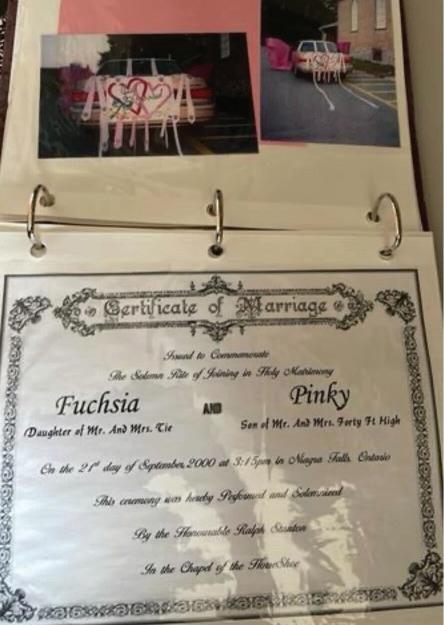
But that’s not all — did you know that the pink tie is married? Paiano remarked, “We did [recently] find his wedding certificate in which he married Fuschia the Tie in September of 2000.” Pinkie was wedded to the mysterious Fuschia Tie on Sept. 21, 2000 at Niagara Casino, with Ralph Stanton as the officiant for their ceremony. Who is this Fuschia Tie, you might ask? For now, Fuschia is just a concept. But it seems we will be wishing these ties a happy 25th wedding anniversary next year!
It was orientation day sometime during the 1970s. A student, known only under the alias Goatball, was making his way to the meeting spot for environment’s orientation when a peculiar sight caught his eye. A lone banana costume lay inside of a dumpster, the origins of how it came to be amongst the trash unknown. But upon seeing that costume, Goatball had an idea. What better way to spice up orientation than by dressing as a banana? So Goatball was off to his orientation, clad in the banana costume, ready to make some lasting memories and brighten up the day. The mascot, named Big Banana, was unexpected, but caught on with the environment faculty, still standing to this day as their symbol.
Harry Cheung, the student under the costume from May to Sept. 2022, spoke about how it is not just the costume that makes someone the Big Banana. “I guess just have an approachable personality, really being able to step up, having those kinds of communication and leadership skills and just really being able to mesh and flow with a lot of different people,” he said. “Being a Big Banana means being able to meet those kinds of perspectives and really being able to mesh and vibe.”
Back in the 70s it must have been a real shock, but also quite humorous to see a banana at orientation. Even to this day, the feeling remains. “If you’re a first year student coming onto campus, you likely don’t know anyone, and suddenly during orientation activities you just see someone in a giant banana costume walking around. I think that in itself is a really funny and memorable experience,” Cheung pondered.
Il Porcellino’s origins date back to Italy in 1634, which was home to a bronze fountain that people tossed their coins into, rubbing the sculpted boar’s nose for good luck. Pietro Tacca, an Italian sculptor, was behind the statue, having been inspired by a marble boar from the Hellenistic age. Since then, many replicas have been made of Il Porcellino, who now resides in the Museo Bardini in Florence.
In 1978 a replica Porcellino statue was gifted to the Faculty of Mathematics Descartes Foundation, a society for outstanding mathematics and computer science teachers, by Henry Crapo, a professor in the department of pure mathematics. He quickly
became a mascot for the arts faculty, having been placed in the foyer of the Modern Languages Building. He was supposed to have a fountain, but due to lack of funding this was not possible. Nevertheless, the myth of Porcellino’s snout containing good luck is still believed to this day.
In 1991, Porcellino would become the unfortunate victim of a kidnapping, where he was made to look like a dog instead of a boar. This was not the only time this happened, either. Under the cover of night in June 2022, Porcellino was nabbed right off his pedestal outside of Modern Languages for the second time. Being 700 pounds, it really does make you wonder how in the world these kidnappings were carried out. But Porcellino did not make it far this time, as the perpetrators decided to leave him right outside of Engineering 5. Porcellino made his return to the outside of Modern Languages in late Sept. 2022, where he has remained since.

The faculty of health used to be called the faculty of applied health sciences until 2021. Their student society was called AHSUM and the members of AHSUM decided to call themselves ‘AHSSIES,’ as explained by Rochelle DeSouza, student relations officer. Since the introduction of the AHSUM student society in 1995, the Aussie mascot hasn’t changed much, having always been a kangaroo. Even as the name for the faculty changed, the AHSSIE title and mascot stuck. The first iteration of the costume is believed to be from 2009, with an updated costume being introduced in 2018. This is the AHSSIE we see today.
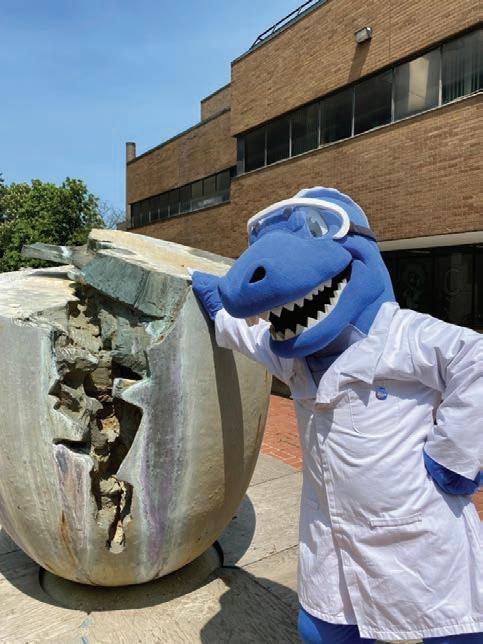
Cobalt was introduced to the science faculty in 2022, making his official debut in September of that year. Ben Smith, a student engagement officer for the science undergraduate office, explained that the name Cobalt comes from the color blue, but also the name of an Ontario town. Being a mining town, Cobalt was at the forefront of a major silver boom during the early 1900s. But before there was Cobalt, there was Arriba the Amoeba. Arriba the Amoeba was retired as the science mascot in 2019, and the next three years were spent developing the new mascot, Cobalt.




Andie Kaiser, Staff Writer


It’s officially that time of year: the exciting, or dreaded, holiday gift-buying. If your schedule prevents you from shopping early on, or you simply struggle to think of those perfect items, you’ll know it can be hard to find a gift that checks all of your boxes. And with the ever-increasing presence of online shopping and fast fashion, it can seem harder than ever to find gifts that aren’t just mass-produced products. So if you’re looking to make your loved ones AND the planet happy this year, this is the quiz for you.
First, think of the person you want to get a gift for. Next, answer the questions (and make sure to keep track of your answers)! Finally, add up your answers to see what you should be gifting this year.
1. First things first. How well do you know them?
a. Not super well, but I’m familiar enough
b. Like the back of my hand
c. Not at all
2. What’s their schedule like?
a. Wide open!
b. Honestly, I’m not sure
c. They’re a student like me, so…
3. What’s your favourite way of spending time together?
a. Anything outdoors (walking, playing a sport, etc.)
b. Talking for hours
c. Shopping in town or at the mall
4. What would they value most in a gift?
a. Something interactive/engaging
b. Personality
c. Practicality

5. What’s their favourite film/TV genre?
a. Reality/Competition
b. Romcom
c. Drama
6. What do they do in their spare time?
a. Work on perfecting their home
b. Something artistic
c. Research fashion, curate a shoe collection, etc.

7. How much time do you have to prepare the gift?
a. Basically none…
b. I have a few weeks
c. A few days
8. What’s your price range?
a. $20 to $50
b. $20 or less
c. $50 and up




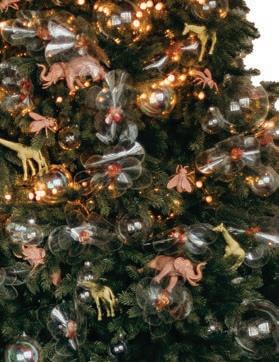


If you answered mostly a, it sounds like this person would love something all natural. Whether you’re shopping for a coworker, your best friend, or a distant relative, it’s hard to go wrong with a pot of flowers or a cute houseplant. When looking at options, think about buying something that can survive through the winter — your gift won’t be very sustainable if it dies right away! Other options could include a plant kit (the options are endless, from indoor herb gardens to DIY terrariums) or, if they’re already an experienced gardener, some tools that you’ll know they’ll get good use of for years to come.

Based on your answers, you know this person pretty well and you’re willing to spend a little time on their gift. In that case, why not give them something handmade? It might sound daunting at first, but the options truly are endless (not to mention so much better for the environment). With the internet at your fingertips, you can find instructions for everything from homemade beauty items (bath salts, candles) to decor (paper flowers, a painted dish). Even if you aren’t super crafty, there are lots of options available: something as simple as a photo/memory album, or a jar with handwritten notes can make someone’s holiday. Plus, many of these options are much cheaper than buying something new!
If most of your answers were c, think about the motto “less is more” this season. In an era of microtrends and overconsumption, it can be tempting to go all out when shopping for gifts, but sometimes all you need is that one really nice item. Rather than buying lots of items this year, focus on finding something quality that will last — that one item might be more expensive, but your recipient will appreciate it for years to come. If they’re into fashion, look for natural fabrics and staple pieces. If they’re a reader, get them a book you know they’d like, or maybe a collection that they can revisit multiple times. Artwork or even a recycled piece of jewelry are also great ideas.

The Hungry Feast Dish explores the light and darkness within all of us… and an insatiable craving for the taste of children
Sophie Smith, Contributor
How do you appease a hunger that cannot be satisfied? From the Kwantlen First Nation village of Squa’lets, the tale of Th’owxiya seeks to answer this paradigm lying at the centre of our need for endless consumption. The powerful spirit Th’owxiya inhabits a bountiful feast dish, yet it does nothing to appease her hunger for child flesh. When the feast dish is stolen from, a grand journey is embarked upon in order to achieve the impossible: appeasing the grand, evil, cannibalistic spirit. The journey is filled with surprises – you never know what woodland creatures and spirits might be encountered along the way. The actress playing the role of Th’owxiya, Becca Zadorsky, describes the central themes of the production as “giving back to the Earth, coming together as a community and finding the courage to stand up for what is right.”
Directed by Andy Houston, early stages of production began in the spring 2024 term, with auditions being held during the first week of fall term. With an intimate cast of only six actors, every person has quite a bit of heavy lifting to do. This comes in both a literal and metaphorical sense, as mask work and puppetry is foundational to this production. The actors who play both animals and storytellers are therefore tasked with the challenge of making objects come to life, signalling

their transition from one form to another.
Zadorsky described the masks as “a fully realized other character — the audience has to believe that the masks are alive.” With Th’owxiya being the only non-animal character, Zadorsky distinguished the other five roles as involving more physical movement. “My role is more stationary. It’s been fascinating for me as an actor to be able to watch their physical process,” she said. The cast worked closely with movement coach and puppeteer Brad Cook to discover the physicality of these characters. Discussing the significance each character has to the importance of the overall story, Zadorsky shared, “You can feel this sense of it really being an ensemble — we are all connected.”
Zadorsky also described the story’s driving villainous force, Th’owxiya, as “over the top and lovely. She’s [got a] very one-track mind — she is driven by hunger and she is going to do whatever it takes to get what she wants.” However, she added that as an actress, a mind limited to one thought or action is difficult to play: “I don’t want it to come off as one note, so finding the nuances of her initially was challenging. But once I found the joyful sides of her it was easier to balance out the anger. I think we all have bits of light and dark within us. It has been lovely to have a role where I can tap into

my darkness and transform it through her.”
For those who attended, this production was anything but one note. With various interactive elements, the audience was encouraged to participate in the experience of bringing the story to life.
The cast was taught this song by the playwright himself, Joseph A. Dandurand, when he attended a full week of rehearsals. In regard to UW’s interpretation of the story, Zadorsky said, “It helped to have [Dandurand’s] blessing. He was very open about doing what we wanted with this story he shared with us.” She described a shared fear of “doing the story justice as settlers” as something that was a hurdle. “But the reason the playwright gave us permission to do the show is because we are not trying to represent Indigenous people, we are telling their story but we are not trying to be them… A lot of us had to do a big deep dive into what the material was [and] got really excited about wanting to share that story.”
This will be the first time that UW has put on an Indigenous play. Considering this, Zadorsky hopes that “this is starting a new tradition and this becomes part of the norm now for [the arts] faculty.” She believes that this story is particularly powerful for its representation of the Kwantlen First Nation as a joyful and culturally rich community: “A lot of Indigenous education that we are given is about the pain, the suffering, the trauma which of course is important to learn, but what
“A lot of Indigenous education that we are given is about the pain, the suffering, the trauma which of course is important to learn, but what I love about this production is [that] we’re getting the flipside. It is so nice to tell a joyful Indigenous story.”
- Becca Zadorsky, actress playing the role of Th’owxiya
I love about this production is [that] we’re getting the flipside. It is so nice to tell a joyful Indigenous story.”
Zadorsky described the play as “a story that I think we all need to hear in this current time and climate. It holds the mirror up to over-consumerism and asks, ‘How do we have a healthier relationship with the world?’”
Th’owxiya: The Hungry Feast Dish was performed Nov. 19-23, with a running time of 58 minutes. Non-perishable food donations were accepted upon entry to support the local Waterloo Region food bank.

Bethany Helaine Pöltl, Contributor
November has been historically warm in southern Ontario, with above-seasonal temperatures reaching into the twenties. These temperatures have raised student concerns on campus.
“For me, November always means the beginning of the best time of the year; the snow starts to fall,” shared Iaseblla Mills, an honours English student. “It’s alarming that we are almost at the end of the month and we still have yet to see snow.”
Callie Sweet, honours communication studies and business student, expressed, “While I enjoy the extended warmer weather, I find it unsettling. It makes me scared about what our seasons will look like in the future.”
Milder November temperatures are having different effects on students, contributing to climate anxiety for some, while other students reported their enjoyment of the prolonged warm weather as it extends the fall season, and heavier coats can be left in the closet.
Acceptance of these unusually mild temperatures is the concept of ‘comfort bias’ in action, the preference of familiar environments and situations. In this case comfort bias leads to the tendency to overlook climate change indicators in favour of enjoying the warmer weather.
Meteorologists from the Weather Network have reported on the historical temperature differences, comparing this November to that of 2023, when there was freezing rain and accumulating snow throughout the month. This year, Toronto experienced its fourth-warmest November day on record, reaching 24.3 degrees Celsius. These patterns of warmer weath-
er late in the season are more than anomalies — they indicate a new trend. Our climate system is changing, and with this extended warmth, so too are our familiar seasons and routines.
“We are on pace to set again the hottest global surface temperatures. Something’s happening, it’s not just random cycles,” said Peter Crank, an assistant professor in geography and environmental management and a member of the Waterloo Climate Institute. According to the United Nations State of the Global Climate Report, the past nine years have been the warmest on record, with Canada warming twice as fast when compared to other countries.
“We see it in our trees, we see it in when snow is arriving, we see it in terms of our day to day activities here on campus — ‘do we need to use the tunnels or not?’ All of those things are examples and symptoms of the day to day weather that is slowly shifting over time as our climate continues to change,” Crank said.
On campus, a warmer November means a longer season without snow, which can be beneficial for those traveling to and from class. However, this immediate benefit is at odds with the long-term negative effects that climate warming will bring. As Canada warms year round, wildfires and other extreme weather events with severe socio-economic impacts become more likely.
“A good descriptor of the difference between weather and climate would be that weather is kind of like our mood. It can change quite quickly. It’s oftentimes dependent on small shifts in our environment, whereas climate is more like our personalities, they
don’t change quite as quickly,” explained Crank. “[Climate is] a bit slower in that process. If we look at the first half of November, the weather was warm, our mood was quite warm. Now we’re back to more standard [temperatures], what we’d expect for Canada. But we know that underneath that, our climate, the personality, is shifting toward a warmer climate.”
Climate change is largely driven by carbon dioxide (CO2) concentrations in the atmosphere, which have been steadily increasing since the 18th century. In 2023, it was estimated by the US National Oceanic and Atmospheric Administration that the global average of atmospheric CO2 was 413.9 parts per million.
“When we emit CO2 into the atmosphere, it has a residence time, [which refers to] how long it stays in the atmosphere. We don’t actually know exactly how long, but most of it’s between 100 to 1,000 years. That means anything [people are] putting into the atmosphere today is going to be there in 2124 and probably at least until 2224. [With] any change we make now, we might not see an immediate benefit, but rather we’re going to see in future generations an eventual leveling off and decrease in CO2 concentrations.” explained Crank.
This year’s mild November provides an opportunity to reflect on the daily choices, both personal and community-wide, that have an effect on climate
change. Conscientious decision-making, participation in climate discussions, policy work, and awareness of what our weather is telling us about underlying climate shifts is paramount to creating impactful change.
Students from any faculty interested in learning more about the climate can enroll in GEOG 341: Climate Services, being taught by Crank in the winter 2025 term. The course looks at how climate science and models are being used in different areas of society such as health, transportation, and urban planning. Crank also recommends reading Marshall Sheppard’s writing for Forbes on weather events in North America and their relationship to larger climate change.
When thinking about the future of our climate and the impact of climate change across all aspects of life, consider your emotions and actions regarding climate change. How does the weather affect your mood, and how does your mood affect the personality of our climate long term?









Ananya Muralidharan, Contributor
Ifyou spend time in the Waterloo region, you’re bound to see people zooming through the city on bright orange e-scooters. Whether it be students getting to class, groups of friends going out for a late night adventure, or couples riding about Titanic-style, these e-scooters have become an unavoidable feature of the Waterloo transportation landscape.
In spring 2023, the company Neuron Mobility partnered with the Region of Waterloo’s city council and launched a rentable e-scooter program in the region. A year after its establishment, we can examine the impact this program has had in Waterloo, as well as other regions.
In the Region of Waterloo, there is already no shortage of safety related incidents surrounding the Neuron Mobility e-scooters. “I just think they’re just so dangerous, people go way too fast on them. I have friends who have ridden without a helmet or have ridden after getting high and have gotten seriously hurt that way,” said Sarah Mah, a fourth year engineering student at UW. “I also think that we don’t really have good bike lanes, so a lot of people end up just riding on the sidewalk, which makes me feel really unsafe when they’re around me. I’ve seen people completely faceplant off the scooters while trying to avoid hitting someone walking.”

Anjali Rawal is a recent UW alumni who flew off an e-scooter on the sidewalk down Phillip Street and badly hurt her knees and ribcage. She said that “[she hasn’t] tried riding a scooter ever since,” due to a fear of injuring herself again. “It took me three weeks to get better. It was really hard because the pain in my chest made it hard to laugh, speak, or even breathe sometimes.”
When asked about her opinion on the safety aspect of e-scooters, Rawal said: “I think there could be a bit more information on the app or on the scooter itself about whether you should be following the road rules as they pertain to cars or pedestrians, especially for things like left turns or the policy on whether you can ride them on the sidewalk.” Expanding on what changes the Region of Waterloo could implement for safer roads, she said, “More bike and scooter lanes would probably also make the rides safer for both riders and vehicle drivers.”.

The fact of the matter is, with an increase in e-scooter use in Waterloo, there will most likely be an increase in unsafe operation. Unless Neuron Mobility and the Region of Waterloo dedicates more time and resources in e-scooter safety education, as well as improving the existing bike lane infrastructure, we are bound to see similar trends in injuries and collisions that many other major cities with e-scooters have been witnessing.
In general, there have been mounting safety concerns surrounding e-scooter programs. Cities such as Paris, Melbourne, Rome, and Toronto, have been winding back or outright banning the use of rentable e-scooters. “There are just too many people breaking the rules — people not wearing helmets, double dinking, riding on footpaths, creating a hazard for people around



the city,” said the mayor of Melbourne Nicholas Reece in a press conference earlier this year. ‘Double dinking’ refers to the practice of two people riding together on one e-scooter together, and while it may seem cute to witness a couple or friends riding together, it’s not a safe practice.
Cities such as Calgary and Edmonton have both reported higher amounts of e-scooter related injuries, with the number of Alberta ER and urgent care visits due to e-scooter injuries jumping by 21 per cent between 2022 and 2023. Kathy Belton, the director of the University of Alberta’s Injury Prevention Centre, said to CBC: “As e-scooters get to be more popular, we’re seeing more and more people on them and some of the behaviors that we’re seeing on them are risky, such as no helmets.”
Despite all the rising safety concerns, there are many benefits that have the potential to be realized in Waterloo with the implementation of the e-scooter program. Neuron Mobility operates similar programs in 12 other cities across Canada, and aims to provide an alternative transportation option to unnecessary car trips. The company claims that their program can give direct boosts to the local economy as well as aid cities in hitting their emission targets.

These aims have definitely been reflected in their implementation within the Waterloo Region. From April to October 2023, Neuron Mobility reported that the e-scooters in Waterloo traveled over 360,000 kilometers by e-scooters, resulting in the prevention of 12 tonnes of carbon dioxide emissions. In the same period, the program contributed $8.2 million into the regional economy, due to Neuron Mobility claiming that their program encourages locals to do more and spend more, giving a direct boost to economies.
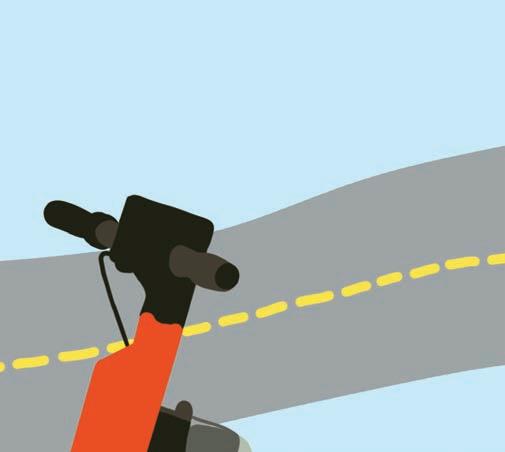




















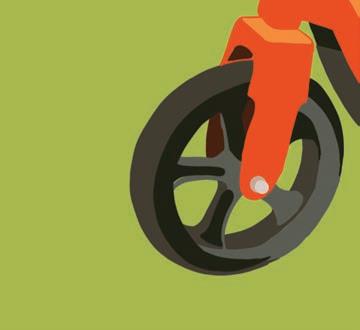




There are, however, a number of benefits that have yet to be reported within the Waterloo Region. For example, Neuron Mobility claims that the data collected from their e-scooters (such as movements, speed, drop-off/pick-up locations) can be shared with cities to better manage their transportation systems, but the Region of Waterloo has not yet released information on how the e-scooter program has been beneficial in terms of urban planning purposes. Neuron Mobility also claims that riders with disabilities are more reliant on the e-scooter program than the average rider, and that their service promotes accessible streets for all users, however the impact of the e-scooter program on riders with disabilities has not been made clear within Waterloo.
While the e-scooter program has definitely brought some positive change to our community, the question of other potential benefits must be asked, especially in the face of rising safety concerns surrounding e-scooter use. Is there a way to make the e-scooter program more beneficial for our community? And can it be done in a way that ensures a greater focus on safe operation?

The success of the e-scooter program hinges on our community’s ability to adapt to the rules and regulations that surround the use of the e-scooters, especially in terms of safety and accessibility. Whether bright orange e-scooters will continue to be a part of Waterloo’s transportation landscape, only time will tell.

Below are the rules of the road set forth by the Region of Waterloo surrounding e-scooters that you can refer to if you are thinking of trying one out:


Riding is allowed on multi-use pathways, cycle tracks, bicycle lanes, and streets where the speed limit is 50km/h or less. Do not ride on sidewalks.



Do not ride under the influence of alcohol or any other substances.




Wearing a helmet is a legal requirement.

Follow local parking guidelines. Use the vehicle lock provided to secure your e-scooter to a pole or frame at the end
Only one rider allowed per e-scooter, and no tandem riding even with children.




Maintain a safe distance between riders and pedestrians. Do not tailgate.


Give way to pedestrians and mobility devices (such as wheelchairs) at all times.





Ingrid Au, Contributor




Holiday dinners are the official awakening of warm twinkling lights, candle-lit rooms, the smell of pine and spruce, and a symphony of laughter from family and friends. Originating from Great Britain, the Christmas Eton Mess is the perfect dessert to bring to your Christmas dinners. I promise that everyone will thank you for this sweet treat.
Tools
Baking sheet
Parchment paper
Stand mixer or hand mixer with a whisk attachment
Sifter
Cooling rack
Pot
Spoon Cup
Ingredients (yields six servings)
4 eggs (egg whites only)
1 cup of white sugar
1 tbsp of cornstarch
1 tsp of white vinegar
1 tsp of pure vanilla extract
3 tbsp of unsweetened cocoa powder
1/3 cup of dark chocolate (finely or roughly chopped)
3 tbsp of peppermint candy canes (finely or roughly chopped)
3 cups of raspberries
2 tsp of lemon juice
2 tsp of white sugar
Whipped cream to taste


Instructions



Preheat the oven to 350 F. Chop the dark chocolate and peppermint candy canes. If you prefer more texture, chop them roughly. For more integrated flavours, chop them finely.
In a stand or hand mixer, beat the egg whites until fluffy. Once fluffy, add 1 cup of sugar, 1 tbsp at a time until the mixture is glossy and forms stiff peaks. Sift in the cocoa powder and cornstarch and gently fold it into the egg whites alongside the vanilla extract and vinegar. Line the baking sheet with parchment paper and evenly spread the meringue in a layer about 1-inch thick. Place the meringue in the oven and immediately lower the heat to 275 F for 1 hour. Once baked, remove from the oven and let cool for 1-2 hours at room temperature. Then, transfer onto a cooling rack for another hour.
Raspberry compote
On low to medium heat, combine the raspberries, lemon juice, and 2 tsp of sugar in a pot. Let the berries simmer for about 15-20 minutes, or until the mixture has turned thick and syrupy. Stir occasionally. Then set aside to cool.
Break the meringue into bite-size pieces with a spoon. Assemble it in a cup with the compote, chopped chocolate, and candy canes. You can also turn the assembly into a fun activity at the dinner table by laying out all the prepared ingredients for the guests to assemble themselves — less work for you, more fun for everyone. Enjoy!


Zoe Cushman, Contributor
ACROSS
1 ___ Is Born (two words)
6 Darling
10 Subjects of an infamous 2003
Colin Powell speech (abbreviated)
14 River through Paris
15 Fury
16 Rabbit relative
17 Archaic data storage units
19 DIY website
20 Fruit tree clusters
21 Organic snack company
22 Drink before the party
25 Fisherman, at times
26 Workout unit
27 Verbatim (three words)
30 Remove errors from, as a crossword
32 “Hey, ___, I Made It” (Panic! at the Disco song, two words)
33 Drums in a cappella (two words)
39 Top-tier (two words)
40 Part of an archipelago
41 Epic rock instrumentals (two words)
46 Straight, informally (abbreviated)
47 Punctual (two words)
48 White ___ (meme figure originally from a casino ad)
50 Ropemaking fiber
51 Nickname for the one-dollar coin
53 Painter known for “The Persistence of Memory”
54 Occurring in a set pattern, as a magazine
58 “Essays of ___” (Charles Lamb publication)
59 Owner of the Mystery Shack in Gravity Falls
60 Dragon armour piece
61 Mary Wells or Chris Houser
62 Blog entry
63 Exclamation in the vein of “jeez” and “golly”
DOWN

1 PEI timezone (abbreviated)
2 Realm of Neptune
3 Pointer
4 Lay ___ (two words)
5 Change borders on a map
6 “Drinking in ___ cars” (Bastille lyric)
7 Roof overhang
8 Gets older
9 Hi-___ monitor
10 Words after a digression (three words)
11 Hawaiian “thank you”
12 Monotonous speaker
13 Alaska air base
18 Football analyst Tony
21 Salon offerings
22 ‘The person I reblogged this from’, in Tumblr slang
23 Second chance
24 ___: the Musical (The Odyssey-inspired media)
25 TV streaming device
28 ‘Back’ in French
29 Center of attention (two words)
31 Strategist
34 Alpaca relative
35 Trim
36 Protegee of Jinx in Arcane
37 Margarine
38 Crusaders Quest empire
41 Spurred into action
42 Spread, as hay
43 Italy, according to itself
44 ___!!! (2019 grandson single, two words)
45 Declared
49 Dropout CEO Sam
51 Jared who played Paul Allen in American
Psycho
52 2014 Pokemon games (abbreviated)
54 Sony handheld gaming console
55 Word following ‘nanny’ or ‘web’
56 In the style of (two words)
57 Counterpart of Rin





















































Nominations open December 16th. Set the strategy of your student association, guide the financial, legal, and contractual affairs, and represent the undergraduates among stakeholders.