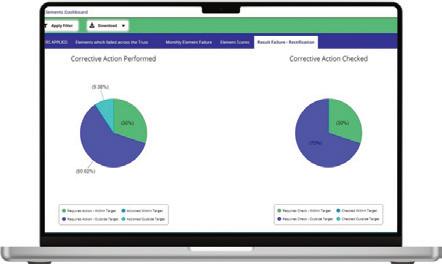
Materials passports help you understand what your building is made of. They support circularity, allowing you to reduce embodied carbon and create transparency. But they only show one part of the picture.
To manage a building with confidence, you need connected information about systems, assets and compliance. You need a single source of truth for the entire lifecycle.
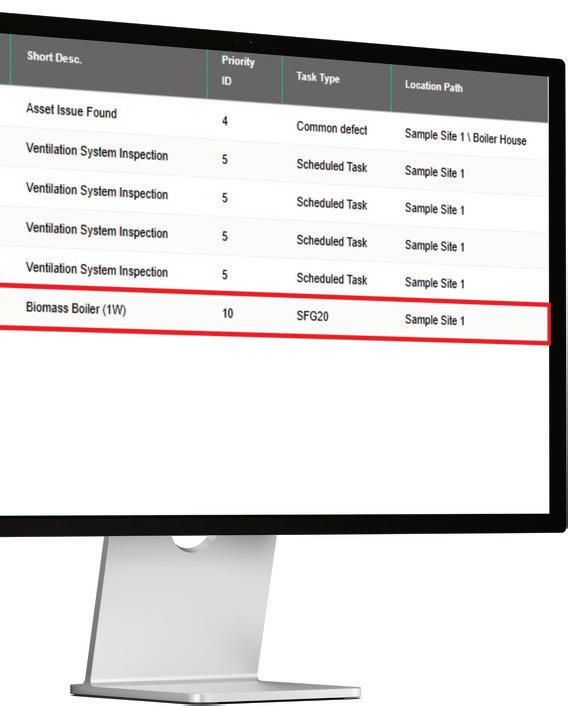
Glider creates and manages materials passports and links them to every piece of asset information. This gives FM teams full visibility, better decisions and a living digital record you can trust.
Materials passports are the start point. Glider gives you the complete golden thread.
To find out more about how Glider creates and managed materials passports and connected building information contact us:
kpm media Unit 1 Mill Place, Platt Business Estate, Maidstone Road, Sevenoaks, Kent TN15 8TB Tel: 01322 662289
Editor Sara Bean sara.bean@kpmmedia.co.uk
Assistant Editor & Social Media Development
Sarah O’Beirne sarah.obeirne@kpmmedia.co.uk Tel: 01322 476815
Director & Designer Warren Knight warren.knight@kpmmedia.co.uk Mob: 0780 1947757
Sales Director Danny Grange danny.grange@kpmmedia.co.uk Mob: 07867 418994
Business Administrator & Circulation Maxine Howell maxine@kpmmedia.co.uk
Editorial & Events Assistant Madeleine Ford madeleine@kpmmedia.co.uk
Accounts Diane Jarvis accounts@kpmmedia.co.uk
Editorial steering committee
Alan Hutchinson, Facilities Director, Howard Kennedy LLP
Alex McCann, Senior Facilities Manager – EMEA & APAC Global Support, Informa Group Plc
Darren Miller, Group Head of Real Estate & Workplace, Experian
Ian Wade, Head of UK Estates, British Medical Association
Jenni Gallop, Director of Estates & Facilities and H&S, Provide Community (NHS)
Lucy Hind, Senior FM Lecturer, Leeds Beckett University
Paul Cannock, EFM Consultant. Former Head of the Estates and FM, European Space Agency
Russell Burnaby, Head of Facilities Management, Finance & Resources, Brent Council
Simon Francis, Director of Estates and Facilities, The Institute of Cancer Research
Our December/January edition is where we reflect on the passing year and look forward to the next. If I was to sum up the main preoccupation for FMs in 2025, which looks set to continue into 2026, it would be ‘dealing with systemic change’.
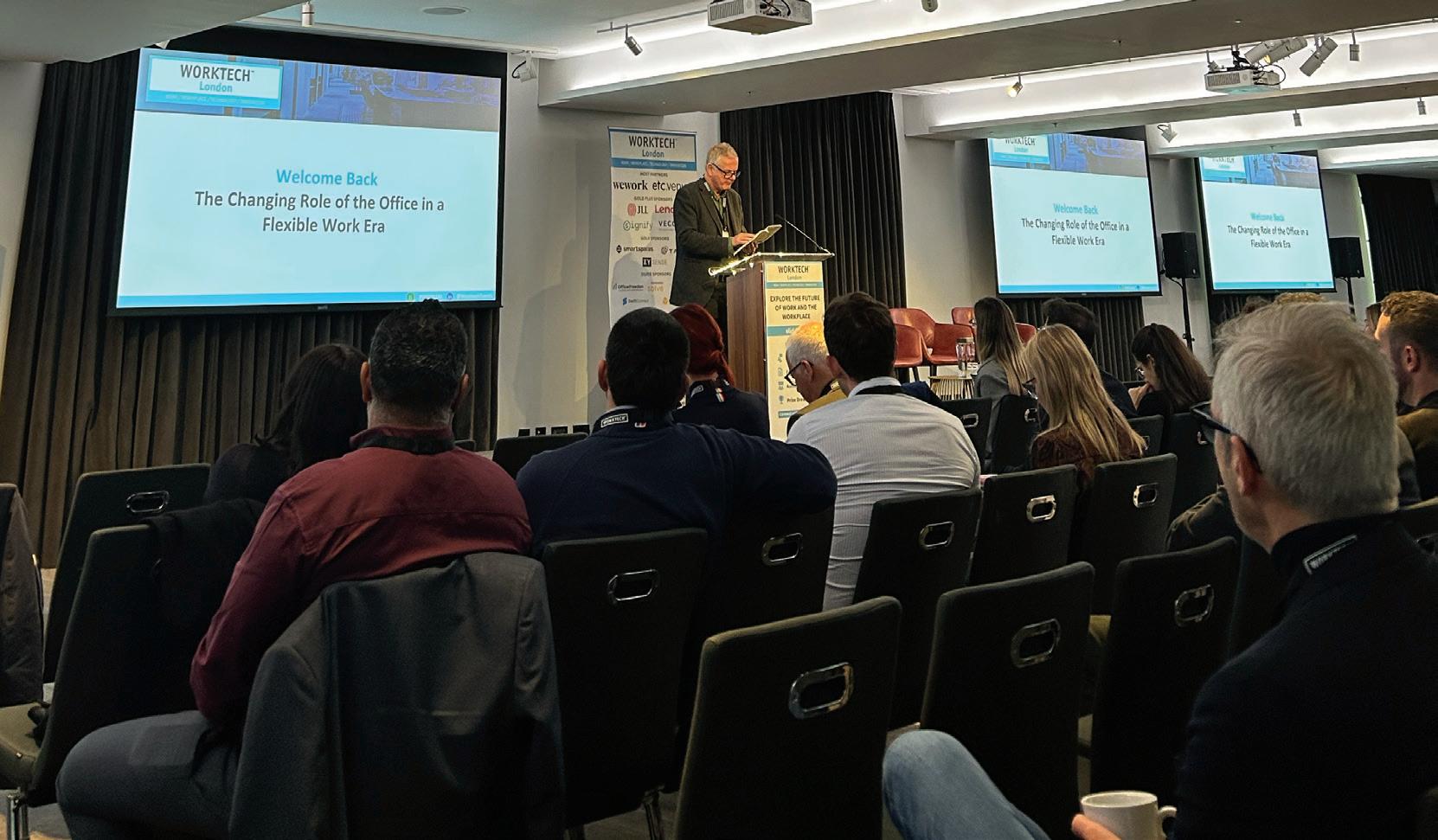
This was the focus of WORKTECH London (page 10) which fielded a series of sessions on navigating the future of work, and in particular how AI is impacting the way workplaces are managed. While technologist and Unwired Founder Philip Ross predicted a future workplace with dynamic, fluid environments all created from AI, subsequent speakers reminded us why future workplace strategies must remain focused on the needs of the people who occupy the spaces and provide them with flexible and adaptable surroundings.
Next year FMs will continue to deal with these challenges, including the fact that hybrid working is here to stay, the disruption wrought by rapid technological change and responding to skills shortages associated with an ageing talent pool.
Simone Fenton-Jarvis, Group Director of Workplace Consultancy and Transformation, Vpod Solutions
Wayne Young, Facilities Manager at DB Cargo (UK)
Total Average Net Circulation 14,670 July 2024 to June 2025 SUPPORTED BY
Group CEO Nigel Copp kpm media adopts a sustainable policy of using paper from managed forests. Printed in the UK by The Gemini Print Group www.gemini-print.co.uk
The publisher does not necessarily agree with the views and opinions expressed by contributors. No material may be reproduced in part or whole without written permission from the editor. Editorial contributions are accepted on an all-rights basis only. Letters to the editor may be published in their entirety or in edited form and remain the property of kpm media. While due care is taken to ensure the accuracy of information contained in this magazine, the publishers cannot be held responsible for any errors in editorial articles or advertisements. Subscriptions are available to non-qualifying and overseas readers at £120 p.a. (UK), £160 p.a. (EU countries) and £240 p.a. (overseas-other).
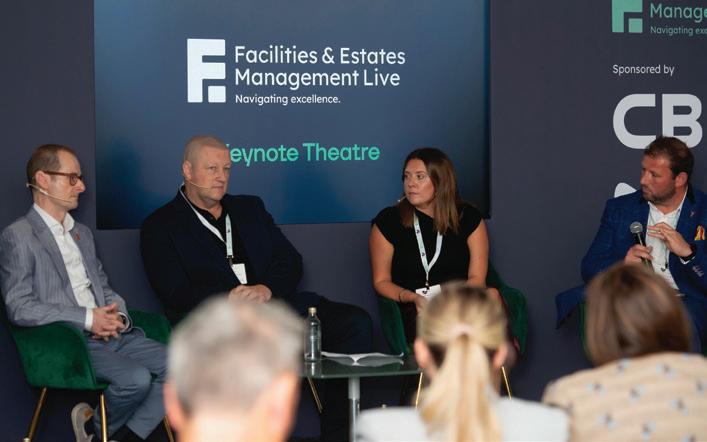
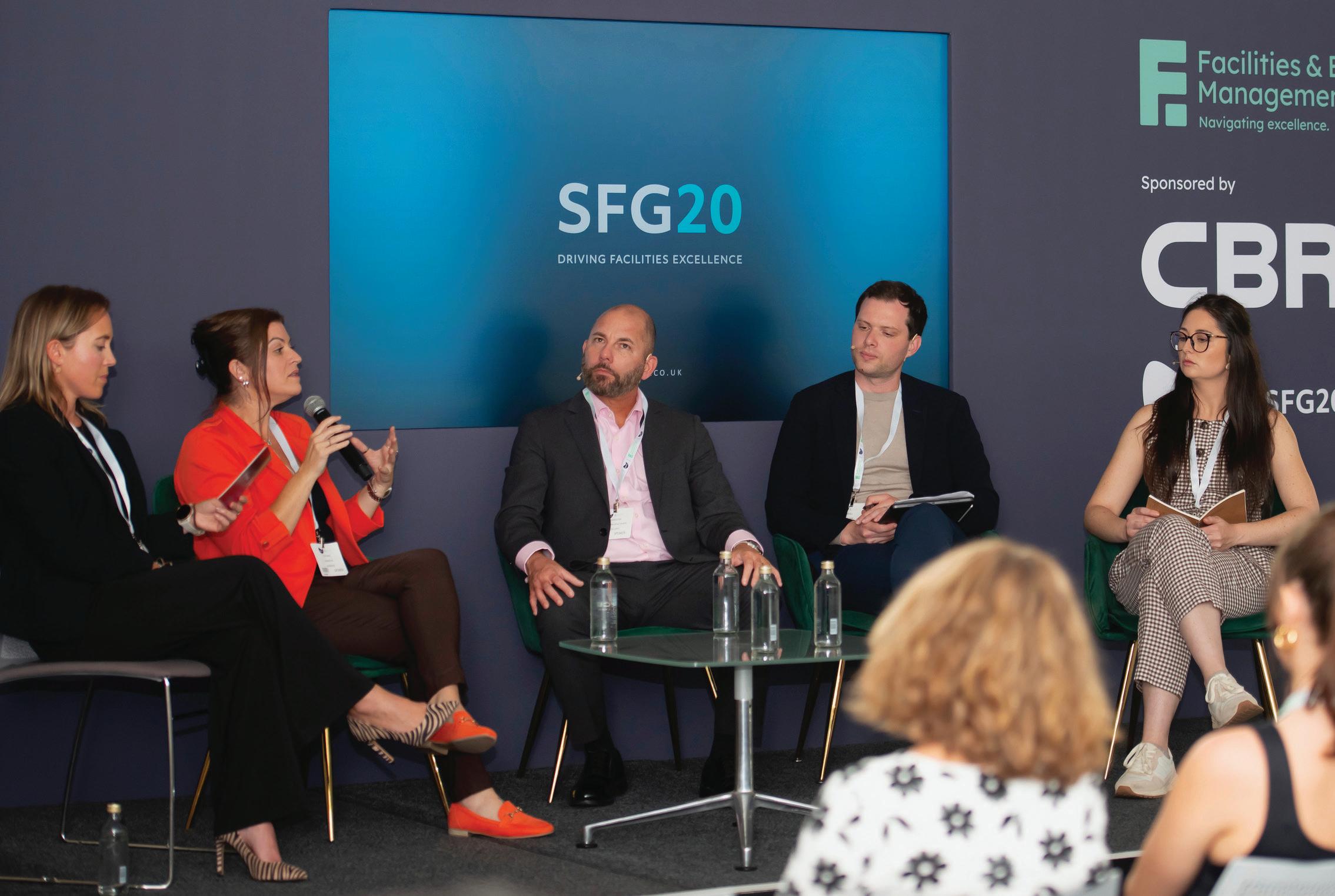
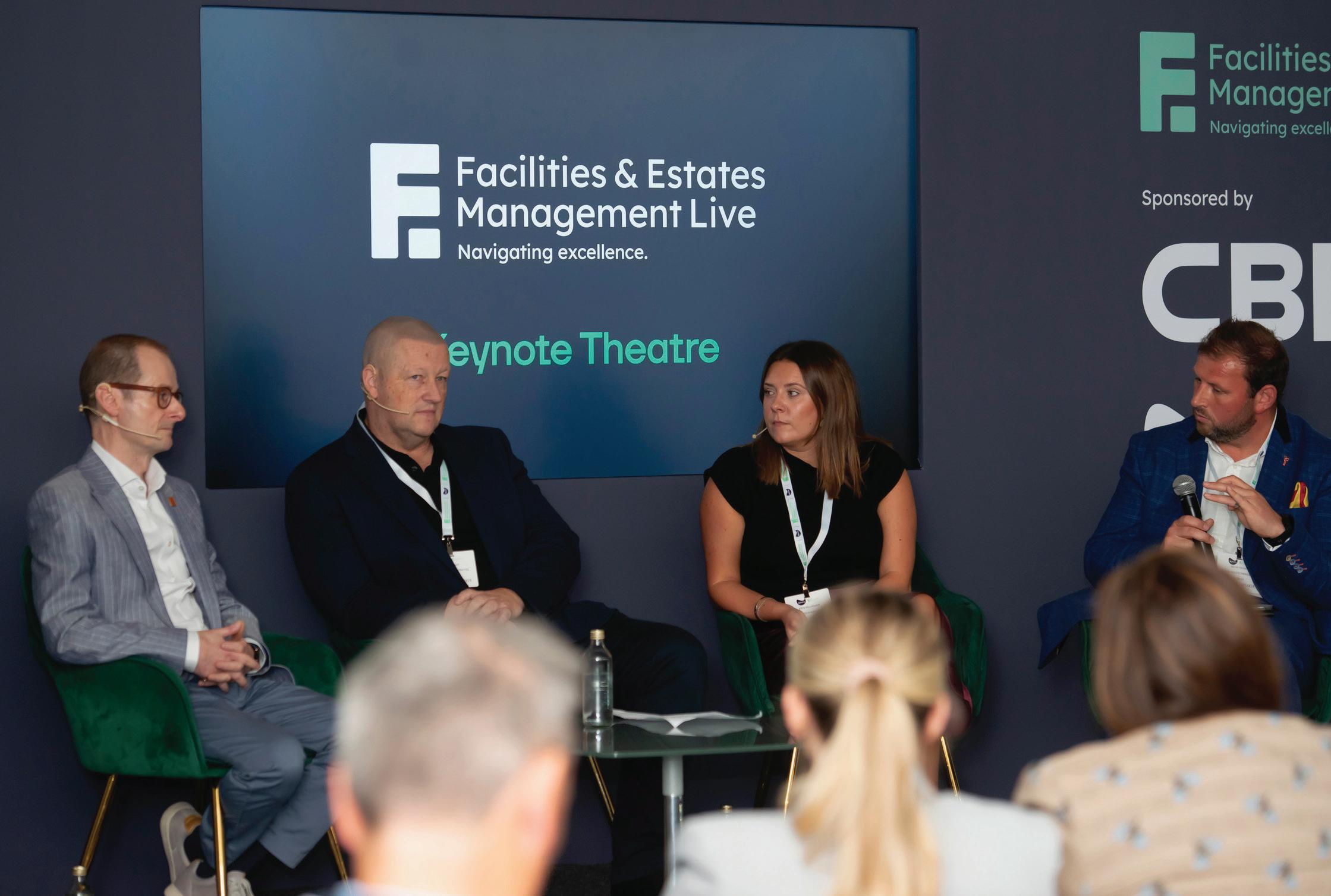
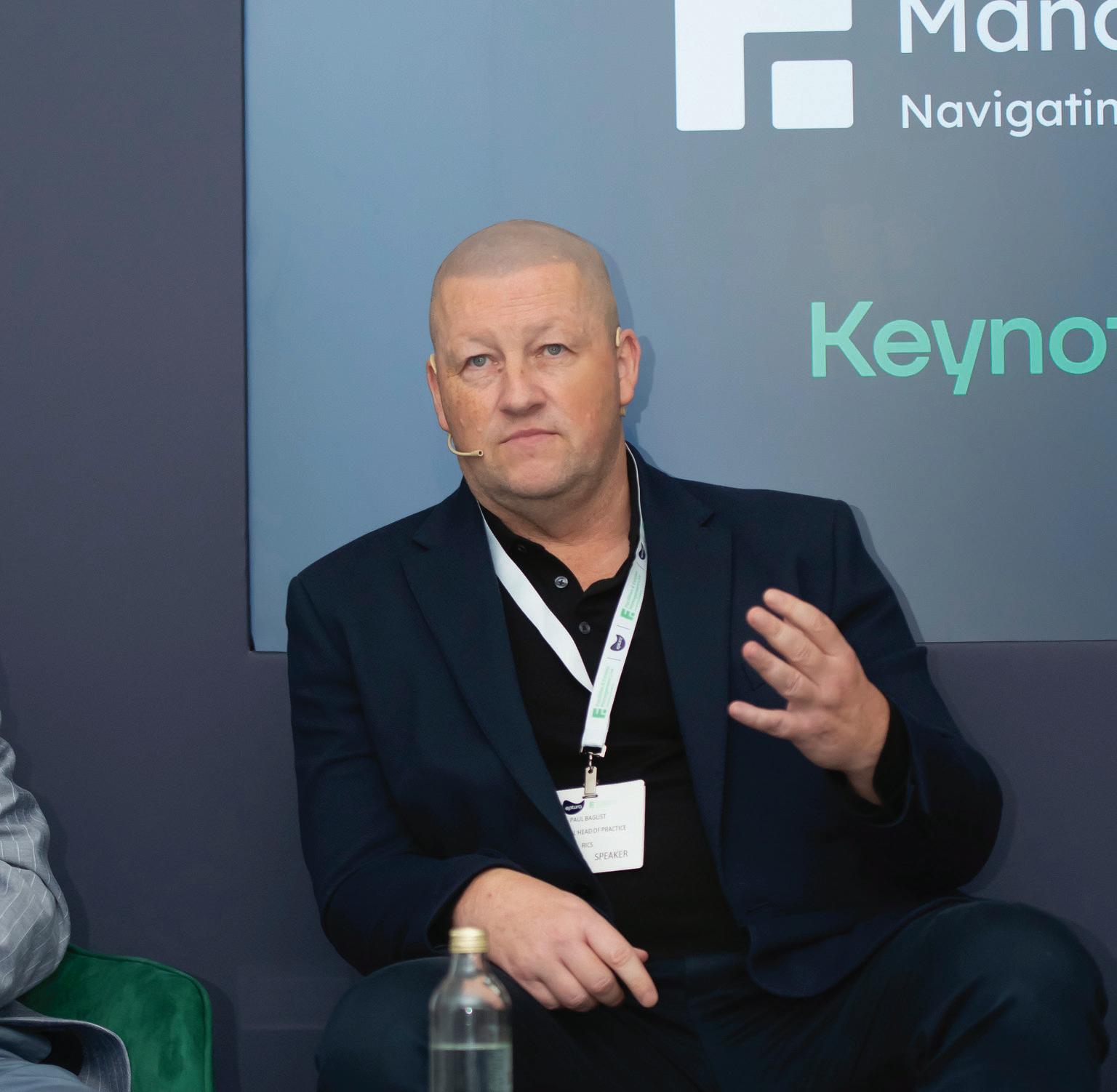
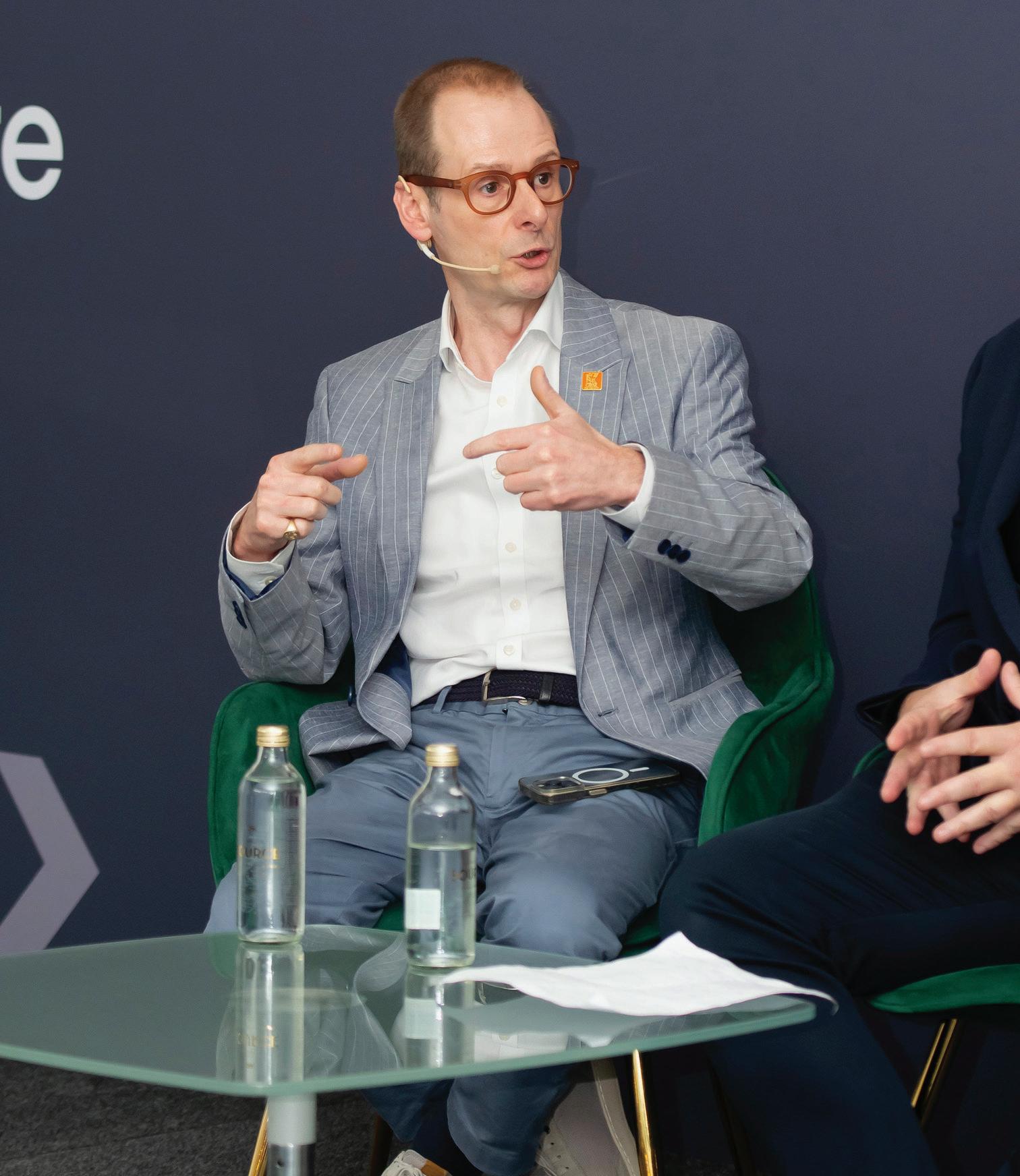
You may wonder, what is the role of the professional associations in helping FMs navigate all these issues? That was the question put to a meeting between representatives from the three main institutions, the IWFM, RICS and CIBSE for a panel discussion at Facilities & Estates Management Live, which we’ve summarised in the feature on page 28.
The panel agreed on the importance of continuous professional development (CPD) and lifelong learning to help their member’s navigate complex topics like AI and sustainability. They also stressed the continued aim of the associations to promote FM as a career of choice, particularly to younger generations, and the critical role of ethics and core skills in maintaining their professional relevance.
We’ll look to repeat that discussion in 2026 to see if much progress had been made.
As always, we’d welcome your feedback about any aspect of the magazine, together with your insight into what’s happening in the FM sector.
THIS MONTH...
ADVICE AND OPINION NEWS & ANALYSIS
This month’s summary of everything that has hit the headlines in the FM sector.
The latest news and views from membership organisations.
WORKTECH London returned with the aim to push the boundaries of how we think about work transformation.
Kate Ammirato at Jangro, explains how rethinking procurement and investing in technology can help ensure sustainable outcomes.
14 Kieran Irving, Legionella and Water Treatment Manager at Lucion Services, explains why recent school closures highlight the need for proactive Legionella management.
16 Matt Hellicar, Platinum FM on how technology can help build a more dynamic engineering service.
18 John Twitchen, Founder at Stu 4Life, talks skating towards a circular future and how action drives environmental change.
20 With the focus on mental health in the workplace becoming more proactive as opposed to reactive, we present a summary of a panel session at Facilities & Estates Management Live discussing the latest thinking.
a design and performance mindset makes meeting green targets a performance opportunity.
MAILROOMS
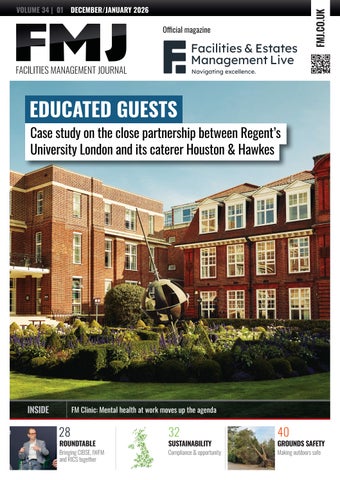
The close partnership between Regent’s University London and its caterer Houston & Hawkes reflects their shared goals to provide nutritious, sustainable and high-quality food and drink to students and sta .
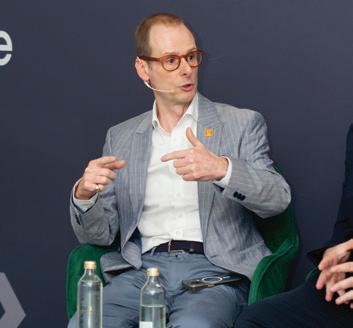
28 At Facilities & Estates Management Live, Wayne Young chaired a session that brought together leaders from the three main FM institutes, CBSE, the IWFM and RICS. SUSTAINABILITY
32 Anna Maclean, CEO of SRE argues that approaching sustainable compliance with
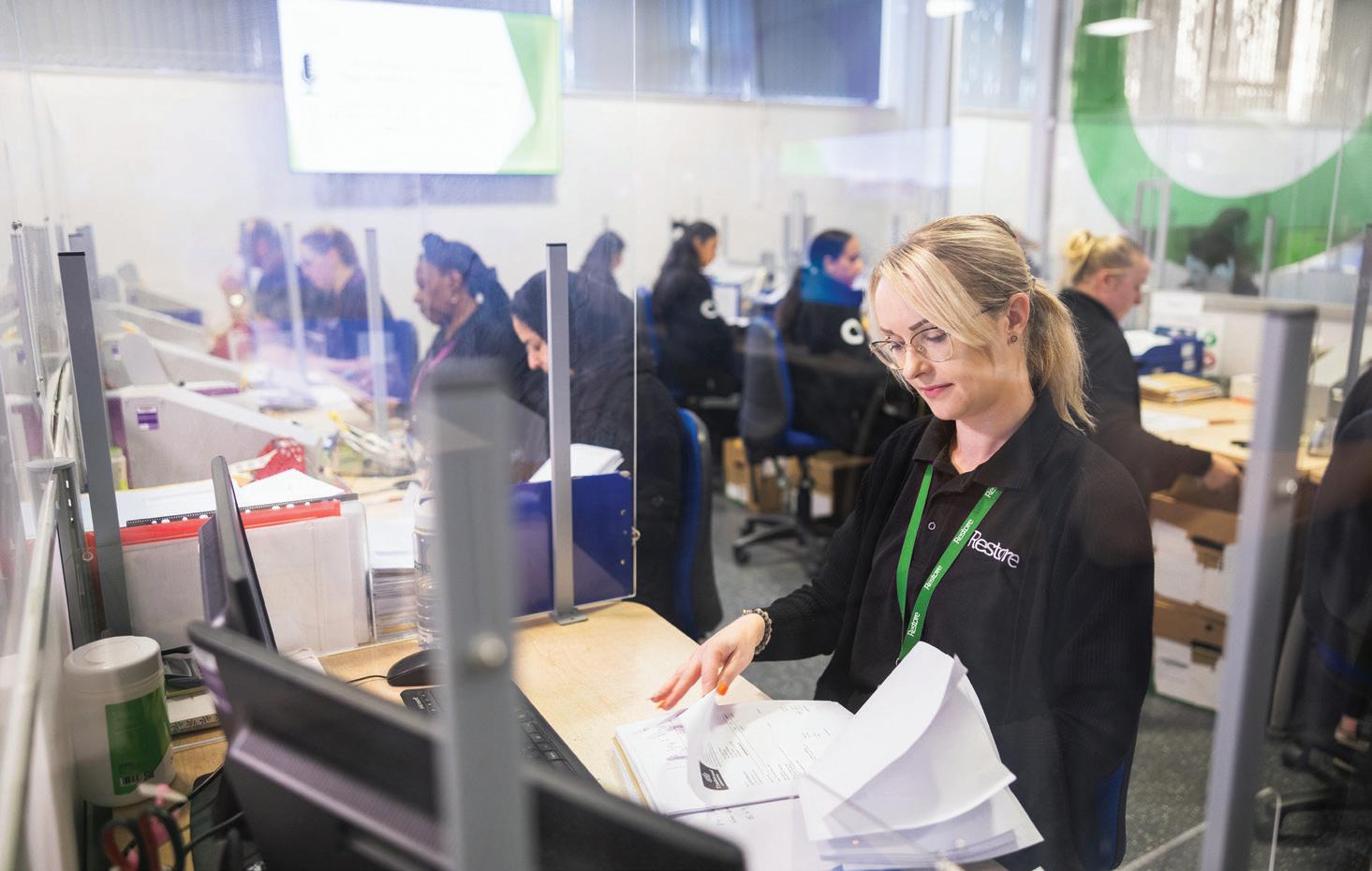
34 Simon McNair, Head of New Business, Digital Services at Restore Information Management on the benefits of outsourcing mailrooms and how AI is transforming operations.
WELLBEING
36 Nigel Oseland Environmental Psychologist and Workplace Strategist, chairs a discussion on wellbeing in the workplace.
HEALTH
38 Citation’s Safety Advice Manager David Taylor explores what’s behind the rise in RIDDOR reporting.
GROUNDS SAFETY
40
Grounds security isn’t just about preventing intruders, it starts with making the outdoor environment safe, says Brendan Aherne, OUTCO.
WASHROOMS
42
Dr. Sally Bloomfield, Chairperson of the International Scientific Forum on Home Hygiene, explains the new WHO guidelines. 43 Ramona Shellard - explores how FMs can champion greater access to period products to promote openness and workplace wellbeing.
51 Find out who’s moving where in the facilities management profession. RECRUITMENT
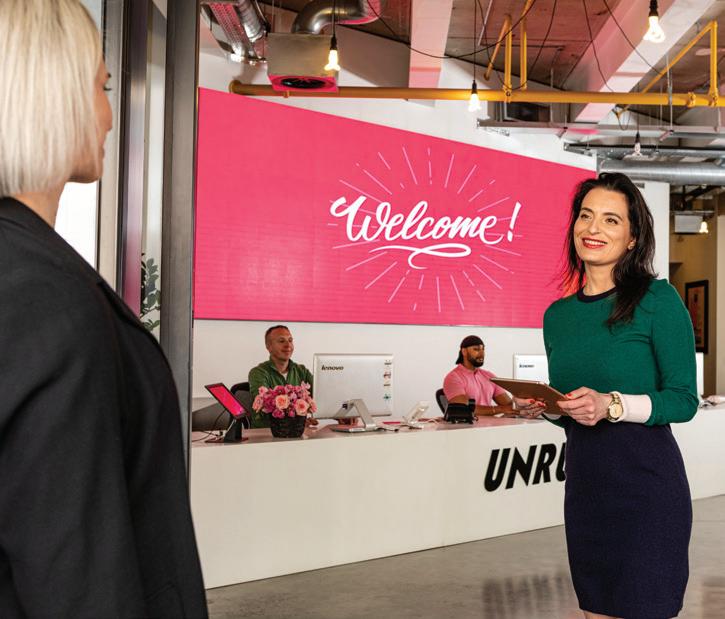
Front-of-house could be your most underused tool for making the o ice a destination, not just an obligation says Cheryl-Anne Cooper, Chief Daymaker at On Verve.
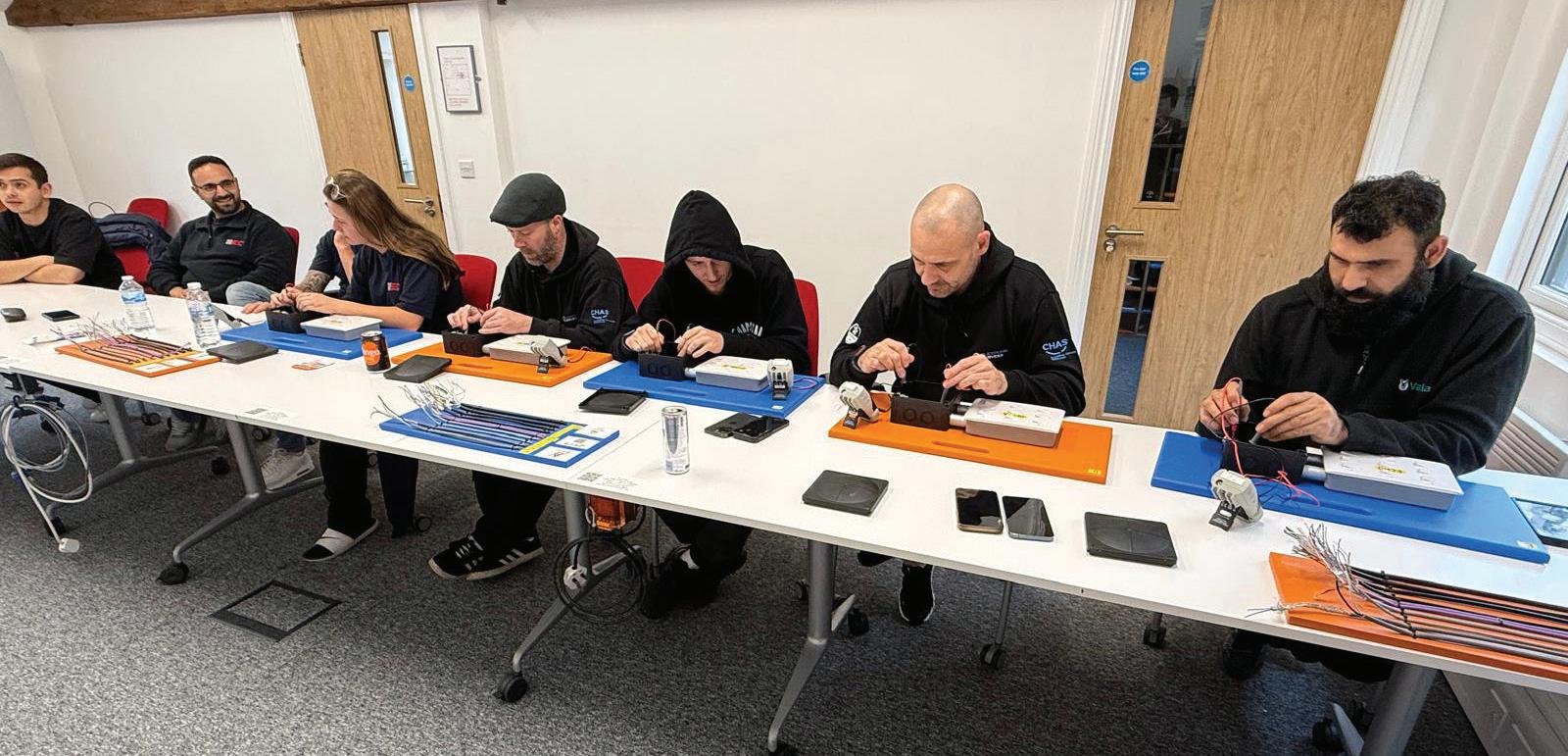
BMS Electrical Training has grown from a response to an industry shortage into a major provider of professional development in building services.
brief roundup of the latest careers news in the facilities management sector.
In February’s issue we present highlights from a roundtable discussion where a group of catering specialists discuss the provision of foodservices for a hybrid workforce. In our flooring maintenance feature, we focus on the e ectiveness of matting for floor protection and how the best choice can keep occupants and visitors safe from slips during wintery weather. In our case study we explore EMCOR’S recent project for a national water utility provider which helped the client move from reactive scheduling to predictive, risk-based maintenance. And finally, for the last of our reflections on the key panel sessions at FEML we present a discussion with a panel of experts from design, food and beverage provision to determine the key ingredients for a healthier workplace.
LEGAL VIEW OCS FORMALLY COMPLETES EMCOR UK ACQUISITION
HOW COLD DOES IT NEED TO BE TO STOP WORKING?
Sarbjit Bisla, part of Weightman’s specialist health and safety team, on legal rights working in cold temperatures and advice on how to assess whether a workplace is too cold
There are no legal minimum and maximum temperatures for workplaces. However, all employers are expected to ensure indoor workplaces are kept at a reasonable temperature. The Approved Code of Practice for the Workplace (Health, Safety and Welfare) Regulations 1992 suggests the minimum temperature should normally be at least 16 degrees Celsius. If the work involves rigorous physical effort, the temperature should be at least 13 degrees Celsius.
Employers owe a general duty under Section 2(1) of the Health and Safety at Work Act 1974 to ensure, so far as is reasonably practicable, the health, safety and welfare at work of all their employees. This is wide enough to include any risks to health, safety or welfare arising from working in cold temperatures.
Additionally, employers owe a specific duty under Regulation 7 of the Workplace (Health, Safety and Welfare) Regulations 1992 which requires temperatures in all workplaces inside buildings to be “reasonable”. The regulation also requires that a sufficient number of thermometers are provided to enable employees to determine the temperature in any workplace inside a building.
HOW TO ASSESS WHETHER A WORKPLACE IS TOO COLD
Employers are required to carry out a suitable and sufficient risk assessment of the risks from a cold workplace, and the significant findings should be recorded. The risk assessment will need to consider matters such as the nature of the work being undertaken, working hours, and shift patterns.
Employers should also consult with their workforce, including any appointed health and safety representatives or recognised trade union representatives.
Practical steps that employers can take to help reduce the risks from a cold workplace:
• Ensure a reasonable working temperature in workplaces –usually at least 16°C, or 13°C for strenuous work.
• Provide adequate workplace heating, such as portable heaters, to ensure that work areas are warm enough when they are occupied.
• Local heating, (using, for example, portable heaters and radiators), where a comfortable temperature cannot be maintained throughout each workroom, such as in cold manufacturing processes.
• Reduce draughts while ensuring adequate ventilation.
• Provide appropriate protective clothing for cold environments, such as cold stores.
• Provide insulating floor coverings or special footwear when workers must stand for long periods on cold floors.
• Provide heating systems which do not give off dangerous or offensive levels of fume into the workplace.
Employers can also change work arrangements to avoid people getting too cold by limiting exposure by introducing flexible working patterns such as job rotation; moving workers to warmer parts of the workplace where possible; relaxing formal dress codes to allow more layers of clothing and allowing enough breaks to allow workers to get hot drinks or warm up in heated areas. More advice and guidance is available here: https://bit.ly/4a8vVsZ
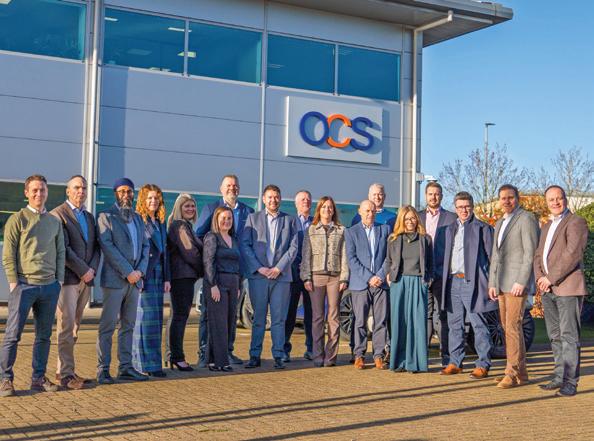
OCS has completed its acquisition of EMCOR UK from EMCOR Group Inc., bringing together two of the largest hard services-led facilities services businesses, with unmatched engineering capabilities and established operations across the UK.
The acquisition follows the purchase of FES FM and FES Support Services in December 2024, further strengthening OCS in the UK hard services market. The combined division will include more than 7,000 engineers and annual revenues exceeding £1 billion. This creates one of the largest hard services providers in the UK, with the scale, expertise and comprehensive UK coverage needed to support customers in complex and critical environments.
Rob Legge, Group Chief Executive O icer of OCS, said: “This acquisition supports our ambition to build the best hard services-led facilities services business in the world, with the skills and scale to deliver what customers need across essential sectors. We are bringing together teams known for their technical depth and commitment to safety, which strengthens our ability to make people and places the best they can be.”
SFMI REPORT: LEADERS ARE ZEROING IN ON WHAT REALLY MATTERS IN SUSTAINABILITY
The Sustainable Facilities Management Index (SFMI) has released its findings of its 2025 assessments in a new report ‘FM Leaders Zero in on What Really Matters in Sustainability’, which shows the sector is moving beyond ad-hoc sustainability projects and towards a more integrated, long-term approach.
The four overarching themes of the report, decarbonisation, wellbeing, social value, and risk management, are no longer disparate workstreams but are increasingly converging to define how FM organisations design services and strategies.
Decarbonisation: services have matured significantly over the past few years, and the next phase will be defined by integration with business and financial planning.
Wellbeing: FMs have made excellent gains in understanding how to improve wellbeing for their own sta including utilising technology, and the next step will be looking at how to extend this to their clients.
Social value: based on an initial-stage measurement has o en inadvertently led to the wrong behaviours and limited the usefulness of reporting. The next challenge is to embed these richer outcome-focused approaches into procurement frameworks and contract management, so it is judged on sustained outcomes rather than headline numbers.
Risk management and opportunity: As climate and nature-related requirements are woven into standards such as ISO 14001, FM providers will need robust processes to identify, prioritise and communicate risks. The focus going forward will be on understanding those risks and opportunities that are most material to the business, quantifying them financially, and using this insight to steer strategy.
To see this year’s findings, download a copy of the 2025 report at https:// bit.ly/4iN9Ylp
Bellrock acquires property and construction consultancy
Bellrock has acquired Axiom, a property and construction consultancy based in Scotland.
Axiom delivers project management and cost consultancy services to private-sector clients across leisure, residential and industrial developments. With offices in Edinburgh, Glasgow, Manchester and London, the acquisition expands Bellrock’s consulting capabilities and strengthens its national offer to its clients.
Axiom will join Bellrock’s Consulting Division, alongside Summers Inman, JRP, Oakleaf & Nifes and C&P. The business will continue to be led by Managing Director, Gary Logue, who will work closely with Carlo Alloni, CEO of Bellrock and Dan Weiss, Managing Director, Bellrock Consulting, to ensure a smooth transition and maintain continuity for clients and colleagues.
Alloni said: “We’re thrilled to welcome Axiom to the Bellrock family. With its expertise, regional insight and clients’ focus, this acquisition will strengthen our consulting division and unlock new opportunities to enhance our service offerings and deliver even greater value to our clients and teams.”
FM LEADERS URGED TO ACT AS COSTS REMAIN OUT OF STEP WITH OCCUPANCY
01-31 DEC/JAN 2026
Property Connect Networking Events Various locations across England www.property-connect.org
FM is failing to keep pace with how workplaces are used today according to Colliers’ latest Occupier Cost Index (OCI).
The annual cost to keep an employee in the o ice stands at €9,809 per full-time equivalent (FTE), yet European o ices operate at just 30-40 per cent occupancy. If costs were calculated on actual usage, they would soar to €25,000-€33,000 per person. This disconnect, warns Colliers is unsustainable and demands immediate action from facilities and building managers.
While overall FM costs fell by one per cent year-on-year, driven by lower energy prices and deferred refurbishments, so services costs jumped eight per cent, reflecting inflation and higher demand for security, and IT costs rose six per cent due to rising labour and licensing fees.
These increases, combined with low occupancy, expose ine iciencies that cannot be ignored, states Colliers, adding FM leaders have a clear opportunity to reset their strategies and adopt adaptive, technologydriven models that align services with real-time occupancy. Colliers estimates this could unlock savings of 25 per cent or more without compromising service quality.
Other key findings from OCI 2025, which draws on data from 4,000 buildings across 28 countries, covering 26.3 million sq m show space and infrastructure costs are down four per cent, management cost costs fell nine per cent, and while occupancy remains low, FM delivery models are largely static.
Nicholas Marsh, Head of Enterprise FM Advisory, EMEA Occupier Services at Colliers, said: “The start of the adaptive FM era is moving slowly. Technology exists to align services with real-time occupancy, but adoption is patchy. Those who act now will unlock significant value and e iciency.”
To download the full report visit https://www.colliers.com/downloadarticle?itemId=e88d38be-3b5f-4003-9268-107ae2a34a9a
If you have any knowledge of FM news from across the world, please feel free to get in touch with our assistant editor Sarah O’Beirne email sarah.obeirne@kpmmedia.co.uk
26-27 JANUARY 2026 FM FORUM Radisson Hotel, London Heathrow https://facilitiesmanagementforum.co.uk
18-19 FEBRUARY 2026 The Manchester Cleaning Show 2026
25-26 FEBRUARY 2026
Workspace Design Show
Business Design Centre, London https://workspaceshow.co.uk
26 FEBRUARY 2026
25-26 MARCH 2026 edie 26 Business Design Centre, London https://event.edie.net/home/edie26 14-17 APRIL 2026
Interclean Amsterdam RAI
13-14 MAY 2026
20-21 OCTOBER 2026
IWFM REFLECTS ON IMPACT OF THE BUDGET ON FM SECTOR
Aswe draw near to the year end, I’m taking time to reflect on the emerging narrative we’re building for our sector in the IWFM Insight team and digest the recent budget announcements from the government.
Front and centre of mind is the Building Safety Act, still of principal importance in our thinking. The resource issues within the Regulator, as well as the challenges of meeting the various Gateway processes are well documented.
The issue o en overlooked in the mainstream conversation is the occupancy phase. Where we’re looking a er new builds, the state of the information we receive can be inaccurate and inconsistent. When we are looking a er conversions or historic buildings, there can be overlooked
choices made in the past that place residents and commercial clients at risk.
We’re working to carve out the importance of WFMs as an essential element of ensuring the safety of a building throughout the lifetime of that asset. To this end, we have released guidance this year to support the operating requirements of the asset, from a Strategic approach to Asset Management through to the rigorous approach to Information Management.
The major external intervention this month was the UK government’s Autumn Budget. The main headline was the rise in the minimum wage. The upli will be welcomed by our sector’s high proportion of minimum-wage workers. However, there may be a chilling e ect on recruitment as employers revisit their decisions to hire or expand. With margins already tight, the cumulative financial pressure will be felt across the sector. Changes to national insurance add further complexity. Lower-wage employees will now fall into NI contributions, reducing take-home pay
RICS’ REVISED CPD FRAMEWORK SUPPORTED BY NEW MOBILE APP
RICS’revised CPD framework comes into e ect in January 2026, shaped by widespread member consultation and approved by the RICS Standards and Regulation Board earlier this year.
The updates respond to member feedback calling for an approach that supports career development in a profession facing rapid change - from AI-driven transformation to housing supply challenges and the transition to sustainable practice.
RICS’ Incoming Senior Vice President, Susanne Eickermann-Riepe, notes that CPD is evolving from tracking hours to focussing on how learning improves professional practice: “members were clear: CPD should support genuine professional growth”. These updates recognise quality learning, stepping away from just ticking boxes and instead aiming to deliver real value for the built and natural environment. What’s changing from 2026? While the core requirements of 20 hours annually (with 10 hours structured) remain consistent, the revised framework introduces:
Improved digital tools and content for easier planning and recording of CPD activities –including a new member app and improved CPD o ering.
Mandatory topics to be covered every three years: ethics, sustainability, AI, and data and technology.
Greater flexibility for extended learning. For example, members completing substantial programmes such as master’s degrees can carry forward up to 10 CPD hours into the following year.
Enhanced quality review: RICS will audit a higher proportion of member CPD records, focussing on the quality and relevance of activities undertaken.
for many.
The other area of note was in skills, with a levy on international students entering the UK, with the revenue funding low-income students in England to access “priority” courses. This of course begs the question, which priority courses?
Apprenticeships saw notable developments too. Training for under-25s in SMEs will now be fully funded, which is a substantial opportunity for smaller businesses looking to recruit and develop young talent.
Though these employers must still pay the higher apprenticeship wage, the removal of training costs could reinvigorate apprenticeship uptake.
For larger organisations, less levy money may need to be transferred to smaller businesses, freeing more of it for internal investment. Ideally, this helps reverse the decline in apprenticeship starts – an outcome the sector badly needs.
The longer-term impacts of these measures remain to be seen – I hope that it stimulates training and apprenticeships uptake and supports people into well paid jobs and careers. Our sector, with its range of pathways and specialisms is ideally placed to help in this aspiration.
Andrew GladstoneHeighton, Interim Head of Policy & Insight, IWFM
CIBSE CONFERENCE EXPLORES HIGHQUALITY BUILDING PERFORMANCE
CIBSE’s recent conference, Building Performance Reimagined – What’s Next?, held on 26 November 2025 at the Royal Society in London, brought together leading voices from across the building services and sustainability sectors. The event, part of Fiona Cousins’ 2024–25 presidential theme, showcased actionable insights and next steps to address the evolving challenges of building performance in a changing world.
The agenda comprised three engaging sessions focusing on fabric, research, policy, and people-first approaches, highlighting practical applications of emerging performance metrics, innovative solutions, and successful retrofitting projects.
The conference successfully brought together professionals, stakeholders, and thought leaders to share knowledge, discuss challenges, and inspire actionable change across the built environment. The event reinforced CIBSE’s commitment to advancing high-quality building performance while responding to the urgent sustainability, e iciency, and wellbeing challenges facing the industry.
Elevating Facilities, Every Day
At Bidvest Noonan, we believe in exceeding expectations. By combining the talents and expertise of our exceptional people with advanced technologies, we transform FM solutions and elevate workplace experiences.
Exceptional Service, Everywhere
We invest in dedicated teams for all our key sectors, ensuring we deliver innovative and sustainable solutions that truly make a difference. Our growing portfolio of industryleading clients is a testament to our dedication to exceptional service.
Market-Leading Technologies
Our advanced digital platforms streamline operations, improving efficiency, safety, and performance. With continuous innovation, we elevate your experience and help you achieve your goals.
The Industry’s Best People
Handpicked for their talent and passion, comprehensively trained, and expertly managed, our people are dedicated to delivering exceptional results across every sector.
Committed to a Better Tomorrow
Sustainability and inclusivity are core to our vision. We work tirelessly to reduce our carbon footprint, embrace diversity, and uplift local communities.
WORKTECH LONDON 2025
RETHINK & REWORK
WORKTECH London returned on the 18-19 November with the aim to push the boundaries of how we think about work, workplace, and workforce transformation
Thisyear’s event took place across two days, the 17th being a series of tours and talks with the conference programme commencing on the 18th from London’s County Hall with a packed agenda of keynote talks and live debates, bringing innovative ideas and inspiration to the workplace community.
THE FUTURE OF WORK
The first theme of the day was ‘Navigating the Future of Work: What’s Next and How to Prepare’. This discussed the key trends across people, place and technology that are shaping the next decade of work, from AI and autonomy to new models of leadership, decision-making and value creation.
Throughout this section of the conference, speakers emphasised the ‘reimagining’ of work, space and culture, due to accelerating technology and evolving ideas about the role of the workplace. They all expressed how future workplace strategies should focus on adaptability.
Next, Philip Ross, CEO and Founder of Cordless Group and UnGroup, shared inspiring examples from around
the world on how AI is an enabler of this process. From JP Morgan’s AI integration at their new headquarters on Park Avenue in New York City to Booking.com’s tech-enabled o ices in Europe and their use of Cisco and new Italian platform Blue GPS, the consensus was clear: those who invest in flexibility, will technologically, organisationally and culturally be best equipped to navigate what comes next.
THE FLEXIBLE WORK ERA
The second theme of the event was ‘The Changing Role of the O ice in a Flexible Work Era’ which looked at reimagining physical space to support innovation, connection, and culture. The o ice is being repositioned as a space that people choose to use, not one they’re told to. The discussions under this theme centred around designing o ices that earn the commute in a working world where flexibility is now ingrained, instead of debating the merits of return-to-o ice mandates.
Speakers, including Tim Fendley CEO and Founder of Applied Information Group, Dan Honour Enterprise Sales Manager of Vercos and WorkTech Academy, along with
a case study from AIS and Revolut, focused on showcasing environments that prioritise intentionality: spaces built for connection, creativity and collaboration. All these speakers shared workplace strategies and technologies that combine spatial intelligence, design experimentation and a culturefirst approach. As emphasised by Dan Honour, understanding real-time workforce behaviour is essential, with relevant, actionable data being used by organisations to shape smarter workplace strategies that balance space e iciency with employee experience.
These sessions demonstrated that in a flexible work era, the o ice still matters but its purpose is changing. It is shi ing from a fixed asset to a continuously evolving space, adapting to the needs of those using the space.
PEOPLE CENTRED WORKSPACES
Next, the discussion theme turned to ‘People Centred Workplaces: Cultivating Culture and Engagement’. This section of the day explored the post pandemic impact of work, space, buildings and the e ects on employee and company productivity, as well as the impact on wellbeing, behaviour
and culture. How can companies make the o ice an attractive proposition to employees who now have more choice in how and where they work?
With engagement and wellbeing now key organisational priorities, the speakers, including Chris Higgins and James Fretton of GSK, who were followed by a fireside chat consisting of industry experts from XY Sense, Phase 4, Sainsbury’s, and Capgemini, explored strategies for creating inclusive, high-trust environments that nurture performance and psychological safety. The case studies highlighted the power of co-creation, behavioural insights and employee listening as the means of shaping spaces that reflect how people really work. From neuroinclusive design to community building initiatives, the prevailing message was that thriving workplaces are built around human needs first, with space, policy, and technology acting as enablers.
CONNECTED WORKPLACE
Two separate streams in the late a ernoon explored the connected workplace: ‘where people, data & tech converge’ and ‘meeting evolving workforce expectations’. For the latter, Oliver Patrick, a leading expert in lifestyle management on embedding health and performance science into the built environment outlined the five areas essential to wellbeing, which are movement, nutrition, recovery, environment and mindset. This was followed by a panel session on how HR and Corporate Real Estate teams can collaborate to meet changing workplace practices in the era of hybrid working. With data and technology reshaping how, where, and why we work, the panel agreed data insights can help HR and CRE make the right decisions that ensure a real estate strategy is aligned with a people and capabilities strategy.
CONCLUSION
As WORKTECH London made clear, the workplace is no longer a static backdrop but a constantly evolving platform in how organisations connect and create. As technology, employee expectations and business priorities continue to intersect, rethinking old norms and designing workplaces with purpose and humanity at their core is key.
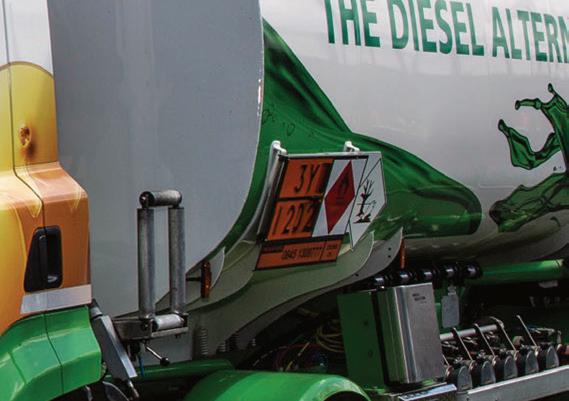
THE HVO TRANSITION EXPERTS
Transitioning your business from fossil fuels to HVO is a simple, straightforward process with Crown Oil Environmental.
Working hand-in-hand with our project planning team to minimise disruption, our experienced engineers will uplift your existing fuels, fully clean and service your tank then deliver a fresh supply of HVO fuel - maximising its benefits for your business: Contact us today to start your HVO transition!
Up to 90% lower net CO2 emissions
Approval from a wide range of OEMs
Up to 10 year storage lifespan
Visit: crownoilenvironmental.co.uk
Tel: 0330 123 3399
Email: sales@crownoilenvironmental.co.uk
FAME and fossil free, reducing the risk of bacterial contamination
Cleaner-burning, as it’s free from aromatics, sulphur and metals
RETHINKING PROCUREMENT
Kate
Ammirato, National Accounts Manager at Jangro, explains how rethinking procurement and investing in technology
can help ensure sustainable
outcomes
With operational costs continuing to rise and ESG targets expanding, FMs are under pressure to deliver the same high standards while managing restricted budgets. In a poll by CBRE 77 per cent said cost and value for money were the biggest influences on their purchasing decisions.
However, these challenges can help drive innovation. By rethinking procurement, facilities managers can transform financial constraints into opportunities for improvement. Managing budgets is no longer just about cutting corners; it is about creating partnerships that deliver dependable, consistent value and long-term performance.
MANAGING TIGHTER BUDGETS IN FM
By consolidating procurement, organisations can reduce duplication and free up valuable time and resources that can be redirected to service delivery and strategic priorities.
Many organisations are turning to one-stop, single-source suppliers for cleaning, hygiene, and janitorial products to simplify ordering and take advantage of bulk purchasing. This not only simplifies procurement and administration but also supports further cost advantages through bulk purchasing and stronger supplier relationships. Sustainable procurement also plays a key role in long-term budget management, reducing waste and extending asset life. Choosing durable, highperforming, environmentally considered products (ECP) and reducing waste can extend asset life and lower the total cost of ownership. When performance data is linked with supplier outcomes, facilities managers gain better oversight of spend and become more influential in shaping strategic business decisions.
TECHNOLOGY FOR COSTS AND COMPLIANCE
Technology has become an essential tool for facilities managers striving to control costs and meet compliance demands.
Digital platforms streamline procurement and provide real-time visibility of spending and product usage, ensuring purchases remain within budget and in line with organisational and sustainability standards. Tools like Site Manager build on this by centralising key compliance information, including COSHH data, risk assessments and training materials, enabling instant access during audits or inspections.
When used e ectively, digital tools can transform compliance from a routine requirement into a process that adds measurable value and makes e iciencies visible. Integrated data enables facilities managers to identify patterns, forecast maintenance needs and demonstrate the broader impact of their work, turning insight into informed decision-making.
TURNING ESG GOALS INTO BUSINESS VALUE
Rather than viewing ESG as an added cost, forward-thinking facilities managers must recognise it as a driver of innovation and long-term value. Sustainable procurement decisions and ecocertified products can deliver direct cost benefits through reduced waste, lower energy use, and extended product lifecycles. By embedding ESG principles into procurement and daily operations, FMs can cut environmental impact while improving e iciency and reputation.
Working with strategic supplier partners, such as those who are Planet Mark or B Corp certified, or o er transparent reporting tools like carbon calculators, means FM teams can demonstrate
progress credibly and meet compliance standards.
LABOUR SHORTAGE CHALLENGE
According to the British Cleaning Council (BCC), the cleaning industry continues to face a severe sta ing shortfall, driven by an ageing workforce and ongoing perception issues surrounding the sector. These pressures are placing extra strain on operational teams and stretching capacity across facilities services.
By redesigning work for e iciency and wellbeing, employers can reduce strain and attract new talent. Ergonomic equipment and simplified cleaning systems improve productivity and safety, while clear, well-documented standard operating procedures (SOPs) help teams deliver consistent results and give recruits the confidence to perform e ectively from day one.
Training is also central to addressing workforce challenges. As facilities teams take on wider responsibilities in sustainability and performance, structured learning helps control costs and improve outcomes. Learning Management Systems make this achievable by delivering trackable training at scale. Designed for cleaning professionals, they support faster onboarding, build specialist skills, and ensure audit readiness. This structured, measurable approach helps maintain quality across multiple sites, enhancing professional standards while supporting both ESG goals and operational e iciency.
By investing in workforce development, facilities managers can improve retention, strengthen safety and enhance the credibility of the profession, turning a labour shortage into an opportunity for long-term progress.
OPERATIONAL EXCELLENCE
The sector’s biggest challenges, including cost pressures, ESG demands and sta ing shortages, are also creating opportunities for improvement. By rethinking procurement strategies, investing in workforce development and harnessing the power of digital tools, FMs can make measurable progress.
Partnership and collaboration will define the future of FM. Working with trusted suppliers who provide transparency, innovation, and shared sustainability goals will be key to building resilience in the years ahead. The future of facilities management depends not on cutting back but on creating value through collaboration and sustainable practice, turning operational challenges into strategic success.
COMPLIANCE
LEGIONELLA PREVENTION IN EDUCATION
TKieran
Irving, Legionella and Water Treatment Manager at Lucion Services, explains why recent school closures highlight the need for proactive Legionella management
he temporary closure of Hazeley Academy in Milton Keynes, following the detection of Legionella its water system, has highlighted the compliance challenges faced by Duty Holders and Responsible Persons across the education sector.
For Duty Holders and Responsible Persons, the case underlines a crucial point: water safety compliance cannot be a one-o exercise or box-ticking process. It demands ongoing vigilance, strong procedural oversight, and a clear understanding of how complex water systems should be maintained.
UNDERSTANDING THE RISK
Legionella is a naturally occurring bacteria found in water systems but becomes dangerous when conditions allow the bacteria to multiply. It thrives in stagnant or slow-moving water, particularly at temperatures between 20°C and 45°C. When contaminated water droplets are transmitted into aerosol form and inhaled through showers, taps, or air conditioning systems, there’s a risk of contracting Legionnaires’ disease.
In well-managed buildings, regular water system turnover and temperature control minimise these risks. But even short lapses in maintenance, irregular usage, or system failures can create ideal conditions for growth. For schools and colleges, where facilities o en sit dormant during extended holidays or periods of reduced occupancy, the risks are amplified.
EDUCATIONAL ESTABLISHMENTS
VULNERABILITY
Schools present a perfect storm of Legionella risk factors. They o en operate across multiple buildings of varying ages, each with its own water network and maintenance requirements. Water use fluctuates dramatically throughout the academic year, with classrooms, sports facilities, and science labs going from high usage to near-zero flow during holiday breaks.
When systems sit unused, water stagnation can develop quickly, providing a breeding ground for bacterial growth. Add other contributing factors, such as older pipework, varied water outlets and inconsistent flushing routines, and it becomes clear why schools and universities, specifically on a
larger scale, face some of the most complex water safety challenges of any public environment.
COMPLIANCE IS A LEGAL DUTY
Under the Health and Safety at Work Act 1974 and the Control of Substances Hazardous to Health (COSHH) Regulations 2002, Duty Holders are legally required to assess and control the risks posed by Legionella and other waterborne pathogens. For Duty Holders and Responsible Persons, this means ensuring that:
Legionella risk assessments are carried out by competent professionals and regularly reviewed. Written schemes of control policies are designed and implemented, detailing safe use of water systems, precautions, responsibility and frequency of monitoring tasks.
Records of inspections, results, and corrective actions are maintained and available for audit. Responsible Persons receive appropriate training to understand and manage their systems e ectively.
PRACTICAL STEPS TO REDUCE RISK
The best defence against Legionella is prevention. That begins with understanding how water systems behave and implementing measures to keep them moving, clean, and balanced.
1. Legionella risk assessment: Ensure the risk assessment is carried out by a competent individual, and the recommendations within the risk assessment are acted on accordingly by the Duty Holders and Responsible Persons.
2. Temperature management: Ensure hot water is distributed above 60°C from any unit with a capacity greater than 15 litres and ensure this reaches the outlet within one minute above 50°C. Cold water should be stored and distributed below 20°C throughout the system and reach this recommended temperature within two minutes.
3. Flushing routines: Infrequently used outlets, such as those in remote classrooms or sports blocks should be flushed weekly (as a minimum) to prevent stagnation. Flushing of outlets that create significant aerosol release and exposure should be done in a controlled manner.
4. System maintenance: Clean and descale showerheads quarterly (as a minimum), and ensure all outlets are subject to regular inspection.
www.luciongroup.com In
Cold water storage tanks should undergo routine inspections and cleaning and disinfection (when required) to remove any potential nutrients present.
5. Sampling and monitoring: Periodic microbiological sampling verifies that control measures are e ective and enables early detection.
6. Holiday management: Extended breaks require scheduled flushing, sampling, and recommissioning before the term begins.
7. Review and update: Risk assessments and control schemes must reflect system changes, refurbishments, or occupancy shi s. All documentation should be subject to review and auditing to ensure compliance.
Embedding these measures into day-to-day operations will reduce the chance of Legionella proliferation, and this becomes a routine part of compliance management rather than a reactive exercise.
WHEN DETECTION OCCURS
The Hazeley Academy case demonstrates that proactive monitoring works. Routine testing identified Legionella before any harm occurred. The school’s swi response, including temporary closure and remedial treatment, prevented potential exposure.
However, the goal should always be prevention, not reaction. Early detection is valuable, but robust monitoring, consistent water movement, and informed oversight remain the most e ective tools for maintaining compliance and safeguarding occupants.
BUILDING A CULTURE OF COMPLIANCE
Managing Legionella risk e ectively requires more than technical fixes but demands a culture of continuous compliance. Facilities teams should ensure everyone involved in building management understands their role in maintaining safe water systems.
Training, documentation and collaboration between estates, maintenance, and leadership teams are key. When water safety is treated as a shared responsibility rather than a niche compliance issue, schools and public facilities are far better equipped to prevent problems before they occur.
Protect and Future-proof Your Buildings
Roofing & Solar Solutions
Built for performance, designed for longevity
Plan With Confidence Budget forecasting and ROI planning for your estate
Fully Compliant Specs Safe2Torch ready, designed to UK building regs
Dedicated Technical Manager On-site support, from project design to completion
Protected For The Future Up to 30 year Single-Point Guarantee
DYNAMIC APPROACH FAST FACTS
FMJ AIMS TO SUPPORT TECHNICAL EXPERTISE IN THE FM MARKET
Matt Hellicar, Executive Director Customer Solutions, Platinum FM on how technology can help build a more dynamic engineering service
Most facilities managers know the pattern. A building runs normally for days, then a small change in load, weather or occupancy pushes plant outside its usual operating range. Minor faults start to appear, routine tasks slip and the team spends the day dealing with whatever needs attention first. When this happens across several buildings at once, a rigid, site-based model may reach its limit.
THE PRESSURE POINTS IN CONVENTIONAL, SITE-BASED FM
Load rarely spreads evenly across an estate. One site may see minimal activity, while a building nearby deals with several failures in a morning. A site-based engineer cannot shi to absorb that pressure, which leaves the facilities manager balancing rising risk on one site against under-used resource on another.
Faults also cut across disciplines. An electrical issue inside a cooling unit or a water quality alert caused by reduced flow each require di erent skills. If the fault isn’t in the site engineer’s skill set, it cannot be progressed until a specialist arrives. And the delay causes smaller issues to develop into system problems.
Reactive peaks add to this strain.
Weather extremes, irregular occupancy and unplanned plant behaviour can take over a site team’s schedule within hours. Planned tasks slide and small defects are logged but not resolved.
Subcontractors might fill the gaps, but this o en introduces delay and fragmentation. Attendance depends on their availability and competing priorities. Reporting formats di er and asset history becomes split across several systems. That fragmentation makes patterns harder to detect, which lengthens future diagnostics and limits the ability to intervene early.
WHAT AGILITY LOOKS LIKE IN AN ENGINEERING SERVICE
An agile engineering service relies on engineers working across multiple sites rather than being tied permanently to one. The mobile pool holds a range of disciplines, so most faults can be progressed without waiting for external help. This gives schedulers options that a fixed model doesn’t. When a building comes under pressure, engineers can be redirected without leaving other sites short.
Agility also depends on how work is organised. Dynamic scheduling replaces fixed weekly routes. When BMS data shows a rising return temperature on a heating circuit, a pattern of short cycling on a roo op unit or a persistent flow imbalance, the scheduler can send the right engineer without waiting for the next planned visit. This prevents deterioration that would otherwise appear as a failure days later.
Mobile teams support planned maintenance as well. Smaller buildings that don’t justify resident engineers still carry statutory tasks. Mobile services allow those tasks to be completed consistently across a dispersed estate. When planned visits reveal developing issues, the same team can pick up the remedial work quickly instead of pushing it into a contractor queue.
THE LINK BETWEEN MOBILE ENGINEERING AND PROACTIVE WORK
Condition-led maintenance depends on timely action. BMS and IoT devices generate reliable signals, but those signals only improve outcomes when they trigger targeted investigation.
A mobile engineer can attend early to assess factors such as low flow, temperature dri , excessive run hours or noise that indicates mechanical stress. Intervening at this stage reduces failures and lowers the strain on plant that’s already running under varying loads. Reactive work still matters of course. Quick attendance prevents faults from spreading to related systems and keeps a building operational until a full repair can be arranged. The advantage of a mobile team is that it can absorb these demands without derailing compliance or planned tasks elsewhere. The scheduler has more options and can triage work more accurately because the skills are already within the team.
WHERE AGILITY CHANGES OUTCOMES
Operational examples make the point clear. A heating circuit that sits slightly outside its expected temperature range for multiple days can lead to wider outage if le unattended. A condensate blockage on a roo op unit is easy to overlook but can trigger multiple failures in cold conditions. A water hygiene alert may point to a mechanical restriction that a mobile engineer can identify at the first visit. Such issues are common, and their outcomes depend on how quickly specialist resource can reach them. For facilities managers, the value of an agile, responsive mobile service lies in stability as much as it does in speed. Buildings now operate under more variable conditions, and engineering models need to match that variability. When skills, scheduling and asset data are aligned, mobile services help maintain control. It is a model that matches the way buildings now operate.
Inspections that matter
Our colleagues took @theCIOB We are currently seeking members for CIOB’s Equality, Diversity & Inclusion (EDI) Advisory Panel. If you are actively involved in promoting EDI within your organisation or the wider construction industry, get in touch! Register your interest: https://brnw.ch/21wXDik
@IWFM_UK We recently launched the 2025 IWFM Sustainability Report, “Tackling the other half of the climate challenge: Adaptation.” The report explores how workplace and facilities professionals are responding to climate risks, with new data insights (like 42% of organisations assessing climate-related risks) and practical actions to strengthen resilience and sustainability across operations and supply chains. Read the full report: https://ow.ly/lMb750XpPqb
@Epturawork This Veteran’s Day, we consistently strive to uplift the voices and skills of our servicemen. Our friends at @ IFMA have always supported the transition into FM as a career for veterans and soldiers. https://okt.to/3HsRC4
@matrixbooking We’re at #WORKTECH exploring the ideas reshaping the future of work. Our team joined the workplace tours yesterday, great insights into how leading organisations are rethinking flexibility, collaboration and employee empowerment.
@mitie We are pleased to announce Mitie and University College London Hospital won the Sustainable Achievement award at the @HCEstates Awards 2025. A huge congratulations to all our Mitie colleagues involved! https://mitie.com/environmentsocial-and-governance/sustainability
@CIBSE This #InternationalMensDay, CIBSE highlights the mental health risks in construction. High pressure, stress and workplace culture put male professionals at greater risk. Let’s work together to foster safer, supportive workplaces.
@RICSnews Our 2025 Sustainability Report is here! This year’s findings reveal how built environment professionals globally view #sustainability progress. Momentum is slowing but new priorities are emerging. Download report for full findings: http://ms.spr.ly/6014tMXNm
JOHN TWITCHEN, FOUNDER AT STUFF4LIFE
SKATING TOWARDS A CIRCULAR FUTURE: ACTION DRIVES ENVIRONMENTAL CHANGE
Thirty years ago, as an Environmental Studies student at the University of Hertfordshire, I took part in an industry placement that changed my life.
At the time, I didn’t realise digging trial pits on an old landfill site would set the course for a career in sustainability, communications and innovation - but that hands-on experience did something that lectures alone couldn’t. Not only did it demonstrate that when you put stu in the ground it can take a VERY long time to decompose, it also taught me that doing is what makes the di erence.
That idea - “action speaks louder than words” - has become a thread running through everything I’ve done since. It’s also the central theme of my recent TEDx talk, ‘Environmental Entrepreneurship and Why Action Speaks Louder Than Words’.
This famous line (from a Mark Twain novel) is a philosophy for how we should approach sustainability. We don’t need more talk about awareness, ambition, or alignment - we need action, proof, and progress.
ESG (Environmental, Social and Governance) programmes should be about getting stu done - not (just) policies and commitments, but actions and outcomes. Communication alone isn’t enough. You can’t just talk the world into sustainability you have to build it.
That shi from explaining to doing is what led to Stu 4Life, the company I co-founded to develop and scale circular solutions. We set out to tackle a familiar problem: too many uniforms, workwear and clothing items being thrown away when they could be valuable resources.
The result was a new workwear service, and critically a patent-pending depolymerisation technology - an innovation that breaks polyester down into its base components so they can be remade into high-quality fibre. It’s practical, measurable and circular by design.
One of my new-favourite quotes comes from ice hockey legend Wayne Gretzky, who said: “I skate to where the puck is going to be, not where it has been.” It’s a perfect metaphor for sustainability.
Too o en, we’re reacting to yesterday’s problems - tightening regulations, changing disclosures, shi ing consumer sentimentinstead of anticipating what’s next. That’s what drives innovation in the ESG space. It’s not just about compliance or risk management
anymore - it’s about critical thinking and strategic foresight. The organisations that thrive will be the ones that understand where the puck is going towards circular systems, resource e iciency and regenerative business models. Which means buying, using and disposing di erently.
For companies serious about reducing their impact, this is the key to tackling Scope 3 emissions - the o en-overlooked impacts hidden across the supply chain, in stu .
Circular design and innovation can dramatically reduce the resources we consume and the emissions we generate. And just as importantly, they can create entirely new industries, jobs and value streams in the process.
ESG has become part of mainstream business language. We talk about metrics and targets, disclosures and frameworks - and those are important. But none of them matter if they’re not backed up by real action.
That’s what my TEDx talk is about: the move from intention to implementation. Because in the end, sustainability isn’t a communication challenge - it’s an operational one.
At Stu 4Life, we didn’t start with a press release. We started in a lab. We built something that works, and then we shared the story. That’s the order I’m signed up to - and it’s the order we all need to embrace if we’re serious about change.
Because ultimately, actions speak louder than words. It always has, and in the quest for a sustainable future, it always will.
John Twitchen, Founder at Stu 4life
FM CLINIC
In a panel session at Facilities & Estates Management Live on mental health at work, Sabrina Stubbs, Account Director at Magenta Associates was joined by Hannah Locket, Head of Nutrition at Elior UK, Oliver Hall, National Chair of the British Council for O ices (BCO) NextGen Committee, Lucy Hayes, HR Director at Q3 Services, and Chris Middleton, Director of Major Accounts at Corps Security. Here is a summary of the discussion.
which found that 44 per cent of Gen Z professionals would rather work from home. That is both a physical space thing but also, I think environmental, associated with the workforces themselves, management structures and the way that companies operate. One of the things that we’ve seen change over the last 10 years is the way that spaces are laid out in o ices. We at BCO, talk to clients and the HR department is involved
In FMJ's regular monthly column, our team of FM experts answer your questions about the world of facilities management
THE NUTRITION EXPERT’S VIEW
HANNAH LOCKET, ELIOR UK
“The focus on mental health in the workplace is becoming more proactive as opposed to reactive. In the past companies have o ered help to those who have needed it at the time, however now we are seeing a real shi in organisations putting initiatives in place to support colleagues before they are experiencing di iculties that may escalate. Additionally, over the last 10 years companies are seeing mental health and wellbeing as more than just a responsibility of the HR department, now it’s organisation wide. This shi has been caused by an increased awareness around the importance of mental health, and I think the pandemic helped with this shi because of the sheer volume of people impacted physically and mentally, so organisations had to respond to that because so much of their workforce was a ected. Also, the newest members of the workforce are millennials and Gen Z who are so much more clued up than other generations ever were on the importance of mental health, and when they are looking at where it is they want to go and work, they are looking at what initiatives are in place and using that as part of their decision making.”
from the first briefings. It used to be the FM team and they would bring in a development manager but now it’s the catering, the operations team, it’s all the people that look a er the employees and that’s a real positive change that we’re seeing.”
THE
HR DIRECTOR’S VIEW
LUCY
HAYES, Q3 SERVICES
“Mental health in a workplace sits with both the leadership teams and the employees to direct, there is such a mix of people within our workspaces so there’s a responsibility for employees to tell us what they want and how we can help them and be confident to do that. So, we as leadership have got to empower that culture for them to say if they’re struggling, and what they need from their company. We need to encourage that. Leadership teams need to be open to those conversations and making sure we have allowed space for a culture where people are open and honest can grow.”
THE NEXTGEN COMMITTEE CHAIR’S VIEW
OLIVER HALL, BRITISH COUNCIL FOR OFFICES
“The British Council for O ices recently conducted a survey
THE ACCOUNT DIRECTOR’S VIEW
CHRIS MIDDLETON, CORPS SECURITY
“They key word here is culture. There has been a shi in the culture of mental health in the last 10 years. However, there is still a stigma, it’s not something everyone is comfortable with talking about. From the leadership point of view, I think it must come from the top, it must be
Hannah Locket
Oliver Hall
Lucy Hayes
driven by leadership not just with a policy. The EAP is great and can be very useful to people but it’s not good enough to say to people in their time of crisis to refer to the EAP policy or the mental health and wellbeing policy.
We’ve also got to lead by example and talk more about it to get the conversation going. But there is still a long way to go.”
SS: “Policy is just one element when it comes to this, initiative is another, it’s a topic that can be uncomfortable for some people, so how can leaders be role models for their workforce?”
CM: “For me personally it’s something I have tried to champion, and I have had di icult conversations with di erent departments. As employers we have the duty of care for our employees, it’s about going back to the lessons learned and taking them back to the frontline. If someone brings a problem we catch them, we help them.”
LH: “I think we need to be very mindful of our own actions and how that has an e ect on the person. We can talk about putting these initiatives in place that help with work life balance, but then we’re sending that email at five o’clock in the a ernoon and not thinking about the person receiving it. Going back to the policy element, we’ve got to be mindful that we’re dealing with people every time. You have to think would I want that? The key is to be mindful of the impact we’re having.”
SS: “The point was made earlier that mental health in a workplace sits with both the leadership teams and the employees themselves to direct. How can employers educate
their workforce?”
HL: “Teaching employees to recognise signs of stress, anxiety and burnout is one of the most important things because a lot of people ignore it to the point where they are really su ering. Additionally, a bit of vulnerability from employers and creating a sense of psychological security, perhaps by sharing past experiences, can go a long way.”
LH: “Psychological safety is key. Making sure that someone feels secure in their role, and they’re not overwhelmed. It’s empowering people to speak up because we don’t always recognise what we’re either doing or having done to us when dealing with our own workload.”
SS: “Banishing the taboo and getting people to talk more in the workplace is not always easy, how can you help that to happen?”
CM: “There’s no one size fits all. We tried that during Covid with the remote workers across the country. Accountability sits with us as leaders. For example, when our hybrid workers come in, we have got to create an environment for them to want to be there. For those who don’t want to come in, can we go to their environment? Can we find a halfway point? It’s very important we don’t isolate those colleagues. We have tried several initiatives at work where we’ve tried to organise a men’s group, as we have a women’s group that works very well. But we haven’t had the same success with the men. We tried for three months and guess what? No one wants to come. We tried but we’re only as good as the people who are prepared to come and have a conversation. What I try to do with the people I work with is give them coping mechanisms, it’s beholden on me as a leader.”
OH: “The idea of having a second place to meet people is
Chris Middleton
important. Actually leaving the o ice and going for a walk to the local café for example is going to help give you that break from an o ice environment and perhaps help people talk to each other. That’s one of the reasons we’ve seen a rise in the campus style activity where the desk is not solely where you do work anymore, it’s away from the desk because you can be collaborative and give yourself the needed headspace.”
SS: “What’s the discussion around clients and providers working together in terms of spotting and supporting mental health? Is that a conversation that’s happened or something you see in the future?”
LH: “Where you see it working well is when you’re working for clients who have a good culture around mental health, wellbeing and looking a er their sta . So therefore, it helps you to have a good partnership. Do I think that it’s something that we’re looking at as an industry where there is collaborative work between the client and service provider? Probably not now, but it’s something we need to be thinking about and making it part of the KPI’s and contracts. Are we there? No. Do I think we can get there? Yes, is the answer.”
CM: “To challenge that, going back to the start of the pandemic, what I saw was a lot of clients wanting to open their doors and collaborate for the first time. And through the pandemic we saw the introduction of mental health first aiders and there was lots of conversation on LinkedIn on this topic. Looking back at the past couple of years, I can’t recall the last time I saw something on it which was mental health related in terms of completing a course or initiatives. It doesn’t feature on any agenda and hardly any reports that I see weekly or monthly. So, where’s the future going with it? I would like to see it back on the agenda as not just as a tick box. It needs to be within the ecosystem of service delivery.”
SS: “Food has o en been an element that has been overlooked in terms of workplace wellbeing. How important is food, how can it help people with not only productivity but with their mental health and wellbeing?”
HL: “Food and mental and physical health are intrinsically linked. I’ve seen a shi in the seven years that I’ve been in the contract catering industry, when we’re looking through tenders and bidding for new business, I’m seeing it is high up on a lot of organisations priorities now. If we provide nutrition and wellbeing initiatives it is a real driver in terms of whether they decide if they want to employ us as their contract caterer. So, we’re seeing a positive shi . People are beginning to understand that there is a strong relationship between what you eat and how you feel. A lot of people are relying on workplace catering for a couple of their meals per day. Nutrition is linked to psychological resilience; there are key nutrients involved in that. Omega 3, magnesium, B vitamins, they contribute to the production of dopamine and serotonin. Fibre also plays an important part in mental health which not a lot of people realise. We should be eating about 30 grams per day; it’s very beneficial for our gut health and individuals with a healthy gut have improved emotional resilience and reduced anxiety.”
SS: “What else is happening in the workplace in terms of the environment, the layouts, the collaboration, how can that support mental health?”
OH: “Sitting at the same desk in the same bland working environment is the worst thing for mental health. What we’re seeing
is spaces in a building that o er you the opportunity to get away, take a break. You’re not supposed to be at your screen for an hour or two hours at a time, you need to get away from it, work away from your screen but also meet people and feel like you have a connection with them. Additionally, access to natural ventilation, daylight, views are things that we as humans crave and are all coming back into what makes great workplaces.”
SS: “A good takeaway from what you’ve said is that sometimes it’s the simple things. It’s going back to the basics, taking a break away from your screen, going into the fresh air, making sure you’re well nourished.”
SS: “To close the discussion, what is your vision for mental health in the workplace over the next 10 years?”
CM: “First and foremost we’ve got to get it back on the agenda, we need to make it part of the ecosystem. From that, we as leaders need to be more engaged. It needs to start from the top. We need to get the environment right and the culture right. Someone needs to take the first step and try di erent things.”
LH: “I think the kids coming up now are more open to having those conversations which is hopeful for the future. Make these conversations normal and everyday things, even if they seem like awkward things you don’t want to speak about at work, why not? Hopefully that will help ease the stigma around it.”
OH: “Listen to the young people. They are more likely to say what they think, it might not always be right but include the next generation in the room at meetings. Top-down priorities always e ect the youngest ones first, so let’s just think about that.”
HL: “Initiatives need to be driven from the top down and be embedded throughout the entire organisation. It would be great to see companies start to track mental health indicators as part of their measurable outcomes and their KPI’s, so they can act on the data meaningfully. We need to keep normalising conversations around mental health, keep reducing that stigma, and keep providing safe spaces for people to have these conversations.”
Concluding the discussion, Sabrina Stubbs said: “There’s been some fabulous tips there; thank you to the panel for all the insights and the value you’ve brought today.”
Do you have a question that you’d like answered by the FMJ Clinic?
Email: sara.bean@kpmmedia.co.uk
HYGIENE IN HIGH TRAFFIC AREAS: BEST PRACTICES IN WASHROOM DESIGN
Hygiene is an ongoing commitment – something we refine and improve with each passing day in the face of ever-changing challenges
Modern
washroom design must go beyond surface-level cleanliness. It must actively reduce the risk of contamination and provide an environment that is safe, e icient and inclusive. With thoughtful planning and the right product selection, it’s possible to reduce transmission risk, cut maintenance costs and raise the standard of hygiene in even the busiest of environments.
Armitage Shanks has played a leading role in driving advancements in washroom design and e ectiveness for over a century. Below, explore the principles and practices that help maintain hygiene in high-footfall washrooms, and how innovative product design can make all the di erence.
REDUCING TOUCHPOINTS WITH SENSORACTIVATED TECHNOLOGY
In high-tra ic washrooms, touchless operation isn’t a luxury, it’s a necessity. Reducing the number of shared touchpoints in a space significantly cuts the chain of bacterial transmission. And, with heightened public awareness of such issues following the pandemic, washroom users are highly enthusiastic about adopting touchless practices.
“Touchless technology has fast become the benchmark for best practice in public hygiene,” says Stacey Seagrave, Senior Product Manager, NonResidential Fittings at Armitage Shanks. “Sensoractivated fittings allow users to interact with the washroom with minimal contact, which is a gamechanger for infection control.”
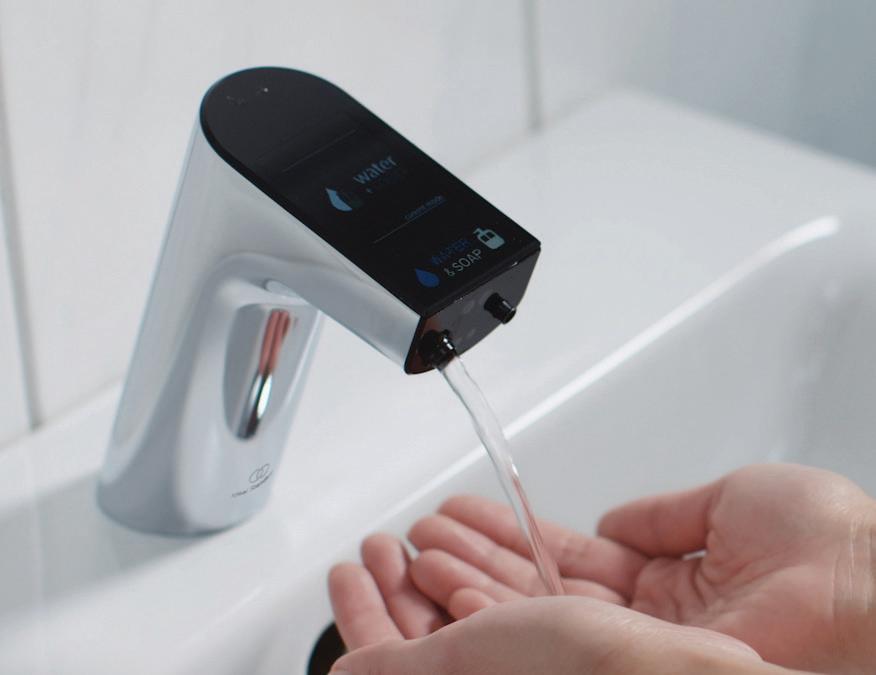
Products like our Sensorflow range of taps and Septa Pro flushplates provide sensor-activated control that eliminates the need for physical contact. Plus touchless systems can also integrate with building management systems to support smarter facilities. From usage data to maintenance alerts, sensor technology can provide insight to help manage resources more e ectively.
COMBATTING SPLASHBACK WITH SMARTER FLUSHING
Splashback is one of the less obvious, yet most persistent challenges in public washroom hygiene. When toilets or urinals flush, the aerosol e ect can release bacteria into the air and onto surrounding surfaces.
“AquaBlade technology has made a real impact in recent years for washroom hygiene,” says John Pearson, Ceramic Development Manager at Armitage Shanks. “By directing water evenly and powerfully across the bowl, we reduce the amount of airborne bacteria.” Aquablade has been independently tested to reduce airborne bacteria by 90%*.
Armitage Shanks’ Edit toilet merges elegant design with high quality manufacturing and the Aquablade flush. It’s the perfect choice for busy washrooms where hygiene and e iciency are paramount but aesthetics are also a consideration.
SUSTAINABILITY AND COST EFFICIENCY THROUGH DESIGN
Touchless fittings don’t just support hygiene, they also contribute to more sustainable operations. Sensorflow taps, for instance, are fitted as standard with 3.7 litres-per-minute flow regulators that minimise water usage without compromising on performance. These ranges can also reduce flow rates to as low as 1.3 litres per minute – below even the 1.9 litres per minute basepoint in the LEED criteria for basin taps – with the installation of additional regulators.
Because the water only runs when required, it’s possible to significantly cut down both consumption and costs. Hot water usage, and therefore energy expenditure, is also reduced, which is particularly important in large facilities with multiple washrooms. It goes without saying that reduced water usage is important for financial reasons but it is also crucial for facilities managers, specifiers and architects who are aiming to achieve sustainability standards like BREEAM and LEED.
Inclusivity should never come at the expense of hygiene. At Armitage Shanks, solutions are designed to meet both needs.
Their highly regarded Doc M packs are compliant with UK Building Regulations, ensuring that accessible washroom facilities are available to all users without compromising on cleanliness. Features
include rimless WCs and easy-to-clean surfaces which help to reduce bacteria build-up in areas where hygiene is especially critical.
“We’ve worked hard to develop Doc M solutions that are easy to install, user-friendly and aesthetically pleasing,” says Mike Smelt, Product Manager, Ceramics & Other Sanitaryware - Non Residential at Armitage Shanks. “Every element, from basin heights to tap controls, has been carefully considered to meet the needs of diverse users. And, for a striking look that’s still Doc M compliant, we also provide ceramics in our stunning Silk Black finish.”
SETTING NEW STANDARDS FOR HYGIENE
Whether in transport hubs, healthcare environments, educational institutions or retail settings, the same principles apply: hygiene matters. And in high-tra ic environments, the di iculties in achieving cleanliness are perhaps harder than in any other environments. Facilities Managers and specifiers face growing pressure to deliver cleaner, safer spaces without inflating maintenance budgets. At Armitage Shanks, we continue to evolve our product ranges to support these challenges with smart, sustainable and hygienic solutions that are trusted in even the most demanding environments.
Find out more about Armitage Shank’s high tra ic washroom solutions by contacting one of our experts to discuss your needs.
*Based on independent testing comparing AquaBlade with standard open rim flushing toilets.
FOOD FOR THOUGHT
The close partnership between Regent’s University London and its caterer Houston & Hawkes reflects their shared goals to provide nutritious, sustainable and highquality food and drink to students and sta . FMJ had a taste
In December 2024, B Corp certified catering company Houston & Hawkes began a seven-year contract to provide inhouse foodservices for Regent’s University London, including Regent’s Events, which manages internal and external commercial events for the university.Founded in 2019, Houston & Hawkes became the UK’s first B Corp certified contract caterer in 2022 and its relationship with Regent’s University reflects close cultural alignment with Regent’s University, which is also a B Corps institution.
The University occupies an enviable 11-acre private campus within London’s
Regent’s Park providing a wide range of courses, including business and management, finance, arts and culture, design, law, psychology and psychotherapy to approximately 2,500 students, of which 80 per cent are international. The University is part of the Galileo Global Education Group which represents a network of 65 institutions covering over 110 campuses around the world.
Carl Teigh, Chief Financial O icer for Regent’s University London, explains that providing students with a high-quality campus experience is a key priority.
“London is a global centre of excellence
in catering and food o ers and we try to bring as much of that back into the campus by making our foodservices a point of di erence. This is why it was important when looking at catering partners to make sure our o erings were varied, interesting and of the highest quality.”
According to Neil Brooke, Director of Food and Drink at Regent’s University London, who manages the events team and oversees the university food services contract, quality, experience, sustainability and cost management were all key concerns in choosing a foodservice partner.
He says: “I’d been here about six months
before the tender process began and it was clear to me that we could do much more. I knew there was lots of opportunity to improve the experiences of the students by going out to market and ensuring we were getting the best foodservice that we could.”
Simon Houston, Director at Houston & Hawkes felt the university’s emphasis on quality was very appealing along with the fact that both parties ‘spoke the same language’. Houston & Hawkes’ five-year plan centred around sustainability, matching the objectives in Regent’s five-year plan. An ensuing discussion confirmed Regent’s strategic, long-term goals aligned with Houston & Hawkes’ and that there was a great fit.
and customers.
For Regent’s University London the journey was prompted by moving from being an independent charitable organisation to joining the Galileo Global Education Group.
Says Teigh: “We wanted to ensure we represented who we are to our stakeholders in terms of being a business as well as a force for good and B Corp was something that I saw was getting increasing traction.
“In terms of meeting B Corp status, the key di erence between us and Houston & Hawkes is around the supply chain as we outsource, so knowing they are B Corp and that outsourcing is key part of their assessments is helpful for us.”
Explains Houston:
“We knew Regent’s the partnership was
“We knew Regent’s University London were on their B Corp journey, and they were pretty close, so the fact we were then able to support each other in many ways through that journey was really exciting and why the partnership was successful from the outset.”
B CORP STATUS
Achieving B Corp status involves a rigorous process that requires meeting a verified minimum score of 80 points on a B Impact Assessment (BIA), which evaluates how a company’s operations and business model impact workers, community, environment
As the first B Corp catering firm in the UK, we wanted to be strict on those who we chose to do business with, and Regent’s University London valued our holistic approach to ethical partnerships including our supply chain which is very important.”
Houston & Hawkes was launched in 2019 by Simon Houston and Dave Hawkes, both of whom had strong backgrounds in hospitality including senior level roles at leading caterers, including BaxterStorey and Bartlett Michell. As Houston explains, they were already notable for being the first startup in the space for over 14 years, so despite having to cope with Covid in the first 18 months of their existence they utilised the downtime to pursue B Corp status.
We’d already intended to work with local suppliers and o er sta the Living Wage, so we used it as a consultancy process to help create a framework in the way we wanted to do business.
“As the first B Corp catering firm in the UK, we wanted to be strict on those who we chose to do business with, and Regent’s University London valued our holistic approach to ethical partnerships including our supply chain which is very important.”
explains, they were
FOOD SERVICES
“There was a level of credibility that came with B Corp, which we were attracted to, as it’s a mark of quality and of authenticity.
There are a range of eateries on o er on the campus, including a main refectory spacecalled The Social which is open for the three main meals a day, from breakfast through to lunch and dinner. This represents more of a traditional environment with lots of seating and three distinct hot counters. There is a variety of menus available each day, with grab and go options, including soups, baked potatoes, salad bar and pre-packaged sandwiches, which, since the contract began are all now made on site.
Alongside this is an ancillary unit called The Deli, where customers can purchase food to take to their desks or the scenic outside seating areas. The university also boasts a flagship venue, one half operating as a premium high street quality co ee shop, o ering freshly made pastries and cakes, and the other as a full service a la carte restaurant that operates during the lunch hours Monday to Friday.
According to Houston, the initial mobilisation took place during the quieter Christmas period which included transferring around 42 team members over to the new contractors.
He says: “That December period was about engaging the team. We all set relatively realistic expectations from day
Simon Houston and
both of whom
We deal directly with our fishmongers, our butchers and our bakers, which is unusual in this sector,” says Houston. “We want that sort of entrepreneurial feel. We want the chef to be able to pick up the phone and have conversations with suppliers and come up with good deals and what to o er.”
one of service and at what we could change quickly that really needed to be changed from a customer/student experience, from the branding of the areas to how food was presented, and the kind of experience we wanted people to have.”
Of particular importance to Brooke was the ability to compete with the local food service providers in nearby Baker Street on price points as well as on quality and variety, and he was pleased to see a focus on high quality ingredients. “There is, in my opinion, nowhere providing good quality bought-in sandwiches that are any better than a petrol station sandwich. Changing to making them fresh on site has made a huge di erence and we’ve seen that in the increased sales.”
All the menus are developed and cooked on site by the head chef supported by the team and the general manager. Alongside introducing homemade sandwiches and a selection of delicious cakes, the new team improved the quality of the co ee. It was decided to switch solely to an independent brand with a good social story and without exception, sales have gone up, margins have increased and it has resulted in very positive feedback.
The contract also supports Regent’s Events, run by Houston and Hawkes’ dedicated hospitality manager and a team of chefs,
sommeliers and mixologists. Foodservices range from delivering lunches, teas and co ee breaks for conferences to providing barbecues, street food, sit down dinners, fork bu ets, canapes and drinks receptions for corporate summer parties, outdoor weddings and private dinners in larger spaces including the York Lawns, Tuke Hall auditorium and Herringham Hall.
STAFF AND SUPPLY CHAIN
Finding and retaining front of house sta , supervisors, restaurant managers, chefs and baristas in central London is a challenge, and according to Houston, with most good employers paying the Living wage, sta wellbeing isn’t just about pay but providing a good environment with space for development within the senior team.
But whatever the role, an important aspect for Houston and his partner Dave Hawkes is creating a collegiate culture.
“The fact they see me and the senior team visiting the site, popping into the kitchens and talking to the sta has always been a fundamental part of how we want people to feel supported.”
In 2025, Houston & Hawkes was named one of The Caterer’s Best Places to Work
in Hospitality for a third consecutive time. According to Houston, “This was a genuine reflection of a people-first culture and the energy, care and passion our teams bring to the table every day.”
Another key aspect of the contract is in promoting sustainability. Food production innovations include using till data to measure the types of products which get the most traction and assessing demand by forging a close relationship with the facilities and security team to discover how many people are in the building.
Sustainability is also a key component when managing the supply chain, an area which has been nurtured by David Steel, Houston & Hawkes’ Director of Food. B Corp certification requires the company to purchase at least 50 per cent from independent suppliers within 50 miles of London. It currently exceeds 90 per cent.
“We deal directly with our fishmongers, our butchers and our bakers, which is unusual in this sector,” says Houston. “We want that sort of entrepreneurial feel. We want the chef to be able to pick up the phone and have conversations with suppliers and come up with good deals and what to o er.
“All this goes back to having a general manager and a head chef, working in partnership with the client and with the freedom to flex.”
FUTURE
Explains Houston, one of the advantages of operating a seven-year contract is there is space to develop ideas, and with year one intended to “raise the bar” there are now opportunities to “wow customers” and grow the partnership over the course of the contract. He also believes there are some exciting new opportunities with technology, using tech to monitor how students interact with the food and drink services, how they pay, how they communicate, and how they manage their dietary requirements and their wellbeing objectives.
He says: “I think that is very much focused on the next, you know, five to 10 years. It’s not a one-year objective so we’ve got months to consider our tech options as we want to get that right for the long term.”
For Brooke continuing to maintain the quality and foster an entrepreneurial approach to delivering catering is the most crucial aspect and he’s pleased with how it has resulted in o ering food spaces that feel independent and not part of a corporate entity.
He concludes: “One of the real opportunities is for further engagement with the students, but also with the sta . Food and drink for me is emotive and should be an experience rather than a function. It’s why I don’t call it catering, I always call it food and drink.”
The LXT range boasts a continuously growing selection of more than 300 products, offering solutions for a wide array of tasks. You can recharge your 18V 3.0, 4.0, 5.0, 6.0, 9.0 and 12.0Ah batteries in just 22 to 55 minutes. Makita provides more than just power tools, explore our full range at makitauk.com and follow us on socials for updates.
INSTITUTIONAL CHANGE
At Facilities & Estates Management Live, Wayne Young chaired a session that brought together leaders from the three main institutes that represent FM and the built environment. The panel discussed the key role played by the IWFM, RICS and CIBSE in dealing with the speed of change impacting the FM profession
PARTICIPANTS
• Wayne Young, FM for DB Cargo and Chair of the IWFM People Management SIG
• Emma Bellingham, Head of Academy at the IWFM
• Paul Bagust, Head of Property Standards RICS
• David Stevens, Director of Estates, Facilities and Capital Development, NHS Trust & Vice President & Facilities Management Group Chair, CIBSE
Introducing the discussion Wayne Young said associations and professional networks play a vital role in helping FMs adapt to advances in technology and enhancing the reputation of the FM role. Their purpose is to attract people into the sector, develop career talent, help them keep ahead of the technological curve, and demonstrate the value that FM delivers.
Emma Bellingham shared that the IWFM’s biggest challenge was the speed of change, and the level of skills and knowledge people are now expected to acquire. Paul Bagust of the RICS agreed, stressing that the profession must fight to remain relevant, and as it moves into what will be a period of significant change the professional associations must be ready to help FMs navigate these challenges. David
Stevens of CIBSE warned that the speed of change, combined with the rapid pace of digitalisation means a significant skills and resource shortage could be round the corner.
CHALLENGES FOR THE PROFESSIONAL BODIES
Young asked the panel what they saw as the biggest issue for the institutes in supporting their communities?
For CIBSE, reported Stevens, attracting membership is relatively easy, but maintaining engagement is more di icult, especially when members achieve chartered status. With institutions that have that Royal Charter, however, the focus isn’t just on the organisation as a membership body he explained, but on delivering for the public good and societal benefit. CIBSE exists to help promote that greater interest. He also remarked that FM doesn’t have the high profile of some of the other disciplines represented by CIBSE, which means there is not as clear a pathway for facilities management careers.
Bellingham agreed on the importance of keeping institute members engaged in supporting their continuing career progress and maintaining skills they’ve built throughout their career.
We all understand the value of the built environment in terms of its environmental, sustainable, financial and social value, but I’m not sure we are articulating that as well as we could, so how do we ensure we are attractive and appealing to the best people?”
is to ensure individuals and members are continually learning by
The IWFM’s remit she said is to ensure individuals and members are continually learning by promoting a mindset of lifelong learning.
Like CIBSE, the RICS is not exclusively focused on FM professionals said Bagust, as it represents those with a wide variety of job roles in land, property, and construction, but its members have many of the same concerns. Also, with the average age of the chartered professional being over 50 it’s important to attract younger people into the profession.
He said: “We all understand the value of the built environment in terms of its environmental, sustainable, financial and social value, but I’m not sure we are articulating that as well as we could, so
how do we ensure we are attractive and appealing to the best people?”
Bagust also noted that there is o en a tendency to concentrate on the “shiny new things” such as AI, but he pointed out there are also a lot of aspects which are not changing.
approaches for lifelong learning are now available. “Think about the need to make sure that we’re recognising the knowledge experience of our membership,” she said. For Stephens, the work that CIBSE chartered members do to maintain competencies should be seen as a continuation of their academic studies.
“It’s not simply about completing the degree you need for engineering, you then do the CPD (Continuous Professional Development). That golden thread of information is now paramount, and it is going to bleed through everything that we do within the built environment.”
that ethical piece is non-negotiable.”
One of RICS primary purposes is about ethics and standards. He explained: “If you are a public interest organisation, that ethical piece is non-negotiable.”
TRAINING AND DEVELOPMENT
When attracting new people into the FM industry, how can these associations then help improve their member’s prospects for a successful career in FM? asked Young. “And how do we maintain that engagement with ongoing and professional development opportunities?”
As a learning and development practitioner, Bellingham feels it is important to o er a variety of assessment methodologies. Whereas traditionally, members may opt for formal qualifications and assessment reviews, a range of
Bagust also stressed the importance of delivering fundamental core skills, from understanding client’s needs, ensuring best practices in deploying contracts and helping meet sustainability goals, all areas that help demonstrate their value.
NEW TECHNOLOGY
With the influx on new technology to the sector, Young wondered how do we ensure that the content of the training programmes provided by the professional bodies is relevant for the next generation?
Paul Bagust explained that RICS’ new AI standard which takes e ect on 9 March 2026, sets out mandatory requirements and best practice expectations for RICS
ROUNDTABLE
institute to do one thing to support the sector what would it be?”
Bellingham’s wish is to allow people to find learning easier, and to take away the fear of learning. She disclosed that there are a lot of people who feel trepidatious about seeking a new qualification, beginning a new course, or even just learning a new skill. But she added, once people start the process, begin learning and take those skills back into their organisation, the fear goes away. “But I think ideally, we would take away that first step of ‘I don’t think I can do this’ and encourage people to take that step forwards.”
Bagust reiterated that the ongoing issue is that people don’t understand the opportunities there are available for those who choose a career in built environment. For him a huge shi would be making it much less about ‘falling into FM’ and more about making FM a conscious career choice.
“This is a brilliant professional environment and an absolutely outstanding profession with outstanding people doing great work. To get the value of that profession in a wider context through to a wider audience would be a huge win.”
members. It aims to ensure AI tools are used ethically, transparently, and with professional oversight. He added that the professional bodies probably don’t collaborate enough and AI might motivate CIBSE, RICS and IWFM to come together to determine common areas of interest, for instance the adoption of data tools to measure occupancy and FM services demands.
Stevens added that the main advantage of AI is in improving productivity, and as the discussion had already explored the skills shortage, using new tech means saving resources, not reducing e iciently. He said: “Anything like AI that can save that time, streamline delivery and maintain more e icient facilities should be embraced.”
According to Bellingham the main concerns for the IWFM are from a tech, technology and AI perspective, and the need to ensure these skills include a sustainability focus to ensure the right outcomes. She explained that IWFM’s bite-sized training consists of e-learning modules that cover topics like technology, sustainability, and strategic thinking. She added: “We’re trying to drive innovation and reflect some of the current projects and work being done by FM professionals in the field.”
Building on that thought Stevens added his wish would be to make the facilities management profession more visible, ensuring more people knew what facilities is and why working in facilities operations and the built environment is a career of choice.
If there’s one takeaway it is that the future of the professional associations and the future of FM, will depend on how well we invest in people, developing their talent, raising innovation and ensuring that the profession continues to be a central part of the success of every organisation.”
Stevens added that the engineering skills gap that CIBSE is dealing with is multi-faceted, which includes skilling up the upcoming generation of workers. CIBSE has implemented a STEM outreach programme and is engaging at school level to actively promote what the built environment is and how an engineering career fits into that space.
multi-faceted, which
workers. CIBSE has implemented
He added: “We’re also working with universities to encourage the continual teaching of building services, facilities and related degrees. I think for me, what is essential is that it has got to be all about competency, how you become competent and how you maintain your competency.”
IDEAL WORLD
Bringing the discussion to a close Young asked the panel: “If I give you a magic button for your
and the built crossroads. Skills, demographics, all present challenges, but they’re also
Summing up the discussion Young said: “What we’ve heard is pretty clear, the FM profession is at a crossroads. Skills, technology, finance, demographics, all present challenges, but they’re also creating opportunities.”
Professional associations are all about being support systems he stressed, with their role being to collaborate with members by o ering knowledge, training and encouraging members to make creative changes. They are not just about talking properties but preparing FM professionals to deliver real impact in an increasingly complex world.
He concluded: “If there’s one takeaway it is that the future of the professional associations and the future of FM, will depend on how well we invest in people, developing their talent, raising innovation and ensuring that the profession continues to be a central part of the success of every organisation.”
SANAWAY ONE GATHERS PACE IN WASHROOMS ACROSS ALL BUSINESS SECTORS
In April 2025, Sanaway launched
Nine months on, and a variety of sectors have embraced the concept resulting in excess of 1000 ONE hygiene units now being present in male, female and accessible washrooms.
Co-Founder and Director, Patrick Martin says: “Since its launch, we have received only positive feedback from existing, new and potential customers. It’s reinforced our belief that ONE is the key to a successful washroom provision, and to ensuring that no one is le feeling compromised, embarrassed or su ering from the stigma of requiring a personal hygiene unit.
“We service smaller customers that require just one unit through to larger businesses which house 300 plus units. Whatever the level of requirement, we’re delighted that our customers are going above the legal requirement to provide washroom hygiene units for everyone that needs one in a wholly inclusive way.”
WHO NEEDS ONE?
The ONE personal hygiene service is the UKs first inclusive and auditable Zero Waste to Landfill (ZWTL) solution for all washroom environments. Its aim is to normalise the presence of a universal hygiene unit that can be used by everyone who needs them, regardless of whether they use male, female, unisex, or accessible washroom facilities.
Outside of their use for female sanitary disposal, ONE hygiene units can also be used to dispose of all other personal hygiene products, both male and female.
For instance, approximately 1 in 10 people su er with urinary incontinence (UI) in the UK; men, women and children can all be a ected.*
The key to supporting employees and visitors in managing urinary incontinence discreetly and
without embarrassment is to provide accessible hygiene disposal units in every washroom to dispose of personal UI products, the use of which can be related to conditions such as prostate cancer, menopause, and more.**
“Our ethos is to make Sanaway’s services as simple and inclusive as possible,” says Co-Founder and Director, Graham Key. “Providing adequate and accessible personal hygiene disposal bins in all washrooms also creates a more hygienic environment for everyone, and prevents costly blockages, especially in older buildings with outdated plumbing. The approach and delivery are unique, and equally important, there’s no premium attached to the service and no associated ‘Duty of Care’ charges.”
HELPING BUSINESSES MEET SUSTAINABILITY AND ESG GOALS
Integrating goals like ZWTL, health messaging, and optimised service frequencies into your ESG framework will enhance your washroom provision and shows environmental responsibility and care for employee wellbeing.
Based on Energy from Waste technology, Sanaway’s auditable ZWTL provision is a sustainable solution for waste management and energy production.
99.995% of the process is recyclable, with just 0.005% non-recyclable.
This sustainable solution diverts over 50 tonnes of waste annually from landfill and helps power 50,000+ homes. The service also supports ISO 14001-certified businesses in meeting continuous improvement goals.
Supporting social governance, ONE customers also receive health information to display in washrooms through Sanaway’s partnership with organisations such as The Prostate Project.
SATISFIED CUSTOMERS
Vericlean Support Services Ltd is a family-owned cleaning company with an annual turnover of £1.5m that delivers high quality cleaning services to a wide range of businesses throughout Sussex.
Vericlean Director, Mr Robert Hearne says:
“We service a large number of small to medium businesses that include blue chip companies and well-known high street names, as well as landmark buildings.
“We experienced consistency and reliability service issues with our previous supplier, but when Sanaway came on board, reports of service issues reduced instantly. Their ZWTL services add value to the washroom services we o er our clients, and the recent introduction of the ONE hygiene disposal service brought an important service innovation to our customers. We’re delighted that some of our larger clients with multiple washrooms are starting to take up this non-gendered inclusive, washroom service.
“We’ve been with Sanaway for over 12 years now and they service around 98% of our client base that require washroom services. Their high standard of personalised service with dedicated, uniformed sta keeps our customers happy, and Vericlean has directly benefited from an increased client retention rate. They’re so good that I’d even go as far to say - I don’t know how they do it!”
Founded in 2006, Sanaway’s service provision includes the complete portfolio for the washroom, indoor and outdoor matting, as well as clinical, bulk o ensive and sharps waste removal. With a reputation built on its ZWTL philosophies, auditable process, clear communication, e icient servicing and customer first ethos, contact Sanaway for more information and to speak directly with existing customers for references.
Anna Maclean, CEO and Co-Founder, SRE argues that approaching sustainable compliance with a design and performance mindset makes meeting green targets a performance opportunity
Almostevery organisation in the UK faces a steep climb towards net zero. However, the impending cost is a source of concern, with recent research by energy supplier npower finding an overwhelming majority of large energy users (97 per cent) concerned about the cost of financing the low-carbon transition. Increasingly though, the evidence is showing that sustainability compliance doesn’t need to be treated solely as a cost centre but rather as a lever for performance, resilience and long-term asset value.
While energy pricing remains largely outside their influence, facilities managers have the tools to turn compliance and performance standards into cost-reduction and resilience strategies. The shi towards cleaner power and stricter ESG compliance, while challenging, also provides the framework for more e icient, futureproofed assets.
RETHINKING THE COST OF SUSTAINABILITY
The belief that sustainability always costs more is being challenged. Recent redevelopments show that targeted upgrades – improved building performance, more e icient HVAC systems, smarter building controls and the integration of renewables – can increase rental yields and occupancy rates while reducing long-term maintenance and energy costs.
SRE’s work on Cathedral Hill Industrial Estate in Guildford is a case in point. Working with Savills Investment Management, we advised on the redevelopment of the five-acre, 13-unit industrial site through a £10 million upgrade. The project achieved BREEAM ‘Excellent’ certification and EPC A/A+ ratings, becoming the UK’s first operational net zero industrial refurbishment. By prioritising the performance of the building envelope and integrating renewables, the refurbishment cut operational energy use to zero for some units, significantly reducing/eliminating running costs for occupiers. Tenant vacancies of 30 per cent were transformed into a waiting list for tenants, the rental value increased from £9.40 per sq. to £22.50 per sq. and the asset value more than tripled.
Cathedral Hill is just one example illustrating how sustainability, when applied strategically, can deliver operational e iciency and commercial advantage over and above the additional cost.
GETTING THE BASICS RIGHT E iciency starts with the building fabric.
Applying the energy hierarchy – what’s o en referred to as ‘lean, clean, green and seen’ – remains the most e ective route to long-term savings.
The ‘lean’ stage focuses on eliminating waste and cutting energy demand before any new systems are added. That means making the building perform better through good design, maintenance and operation. This may range from airtight construction and passive heating or cooling measures to optimised controls and occupant behaviour. There’s no point in adding cost and embodied carbon in the form of technology if the building envelope itself isn’t operating at the highest possible level. Once the building is performing e iciently, the ‘clean’ stage focuses on delivering energy more e ectively through high-e iciency plant and low-carbon systems and ‘green’, involves introducing renewable generation such as solar PV to meet the remaining demand.
At Cathedral Hill, these principles were applied through detailed building physics and performance modelling. Dynamic simulation modelling was utilised to optimise energy use, daylight and thermal comfort, ensuring each unit operated as e iciently as possible. This reduced demand before renewables were added, supporting the site’s net-zero outcome.
These principles are embedded in UK guidance including CIBSE TM54 on operational energy performance, BREEAM assessment standards and the UK Net Zero Carbon Buildings Standard. Following these standards and gaining certification helps facilities managers ensure that investment delivers measurable performance as well as benefiting marketability and, in turn, yields and value.
electricity. Rather than the landlord owning that energy, the occupants do. This provides a direct incentive to minimise energy use which in e ect reduces consumption, cuts operational costs and helps tenants strengthen their own sustainability reporting.
Live energy monitoring reinforces this behaviour by giving tenants realtime visibility of their usage and system performance. Some occupiers have achieved minimal or zero energy bills, while others have used the data to inform day-to-day operational changes. The result is a feedback loop that keeps e iciency and engagement aligned.
site materials such as stone masonry for landscaping. Beyond individual projects, thermal comfort assessments that use future weather data are becoming more common across the industry, ensuring buildings remain e icient and comfortable under changing climate conditions.
BUILDING CULTURE OVER TICKING BOXES
LOOKING BEYOND OPERATIONAL CARBON
Demand for e icient, low-carbon buildings already exceeds supply. The organisations that treat compliance as a design and performance toolkit – not a reporting exercise – are already seeing stronger returns. These
Energy audits, certification and carbon assessments generate insights that can be turned into operational savings and investment value. Facilities teams who act on this data are running buildings that are cheaper to operate, more resilient and more attractive to occupiers and investors.
ENGAGING TENANTS FOR MUTUAL BENEFIT
While building performance and technology are important, so is building use. How people use a building – and how they’re encouraged to engage with it – can o en have just as big an impact.
At Cathedral Hill, the estate’s roo op solar array generates 0.5 MW of renewable
Certification remains important, but measurable performance is becoming the defining metric. The alignment of standards such as BREEAM and the UK Net Zero Carbon Buildings Standard is reinforcing consistency and accountability across the sector.
Each regulation and standard presents both challenges and opportunities. Energy audits, certification and carbon assessments generate insights that can be turned into operational savings and investment value. Facilities teams who act on this data are running buildings that are cheaper to operate, more resilient and more attractive to occupiers and investors.
Attention is turning to whole life carbon (WLC) – the total emissions from construction, operation and end-oflife. New BREEAM and planning requirements now mandate WLC assessments, aligning with national and local policies.
It’s a shi that demands a broader view of facilities management.
refurbishment strategies and material choices all influence embodied carbon and future cost. At Cathedral Hill, for example, we integrated WLC and operational energy assessments from the outset, as well as applying circular-economy principles that reused
MAILING OUT
Simon
McNair, Head of New Business, Digital Services at Restore Information Management on the benefits of outsourcing mailroom operations and how AI is transforming operations
Manyorganisations, including FM providers outsource their mailroom operations, with the key reasons for this strategic decision being:
Cost e iciency: Outsourcing eliminates the need for significant in-house investment in mailroom equipment (e.g., franking machines, scanners), so ware and physical storage space. It also reduces overhead costs related to hiring, training and managing dedicated mailroom sta . Outsourcing provides benefit from economies of scale and consolidated postal rates. Access to expertise and technology: Using our in-depth knowledge of best practices, compliance requirements and data security regulations we utilise advanced technologies such as document scanning, optical character recognition (OCR) and secure digital platforms, which might be too expensive to implement and maintain in-house.
Focus on core business: By o loading mail management, an o en resource-intensive non-core task, companies can reallocate sta and resources. This improved focus enhances overall productivity and helps the business achieve strategic goals.
Improved e iciency and speed: Rapid and accurate mail processing through automation and streamlined workflows reduces errors, prevents bottlenecks and ensures faster turnaround times for important documents like invoices and customer communications.
Scalability and flexibility: External mail services can easily scale up or down based on fluctuating mail volumes and changing business needs, which is
particularly beneficial during peak periods or business growth (or consolidation). They also o er flexibility for remote work environments by digitising mail for anywhere, anytime access.
Risk management and security: Traditional paperbased mail systems pose risks of loss, damage, or data breaches. Outsourcing to an accredited provider with robust data security measures and clear audit trails helps mitigate these risks and ensures compliance with data protection regulations.
Sustainability: By digitising documents and reducing reliance on paper, ink, and physical transportation, outsourcing contributes to a company’s environmental sustainability goals and green credentials.
DIGITAL MAILROOM OPERATIONS
Our digital mailroom solution works by receiving physical mail and communications, digitising it through scanning and using automation to process and distribute the digital content to the intended recipients. The process starts with mail being sent to a central production location, which is then sorted, scanned, and processed using technologies like Optical Character Recognition (OCR) to extract key data. Finally, the digital documents are routed to the appropriate people or systems, and physical originals are either securely stored, destroyed, or returned as needed.
Because the digital mailroom process transforms traditional, manual mail and communication handling into a streamlined, automated workflow, it o ers some key advantages:
Receipt: All incoming physical mail is delivered to a centralised location (either in-house or an outsourced service provider’s facility).
Capture and digitisation: Mail is opened, prepped (staples removed, unfolded), and scanned using high-speed, high-resolution scanners to create digital images, o en PDFs.
Data extraction: OCR and Natural Language Processing (NLP) technologies “read” the documents and extract relevant data, such as sender details, document type, invoice amounts and key reference numbers.
Classification and Indexing: The extracted data is analysed to automatically categorise the document (e.g., invoice, contract, customer complaint, HR form) and index it with relevant metadata for easy searching and retrieval.
Smart routing and workflow automation: Based on predefined business rules and the document’s classification, the digital file is automatically and securely routed to the correct individual, department, or existing business system (like a CRM or ERP).
Access and collaboration: Authorised employees can access their mail from anywhere, at any time via a secure cloud-based portal or integrated system, facilitating remote work and seamless collaboration.
Storage and archiving: All digital documents are stored securely in a centralised document management system with encryption, access controls, and audit trails to ensure security and regulatory compliance (e.g., GDPR).
HOW AI IS INCREASING ADOPTION
Artificial intelligence (AI) and machine learning (ML) are critical to the evolution and increasing adoption of digital mailrooms, by making the process smarter, faster, and more reliable. AI significantly minimises human error associated with manual sorting and data entry, while ML algorithms continuously improve their accuracy in classification and data extraction over time, handling large volumes of diverse documents with high precision.
AI moves beyond simple automation to intelligent automation as it can understand document context and layout, making complex decisions on how to process and route information without manual intervention. AI-powered systems can easily scale to handle increasing mail volumes as a company grows, without the need for additional physical space or a proportional increase in manual labour, making the solution more viable for a wider range of businesses. With immediate digital access to mail from any location, AI-driven mailrooms directly address the needs of modern hybrid and remote work models. It also helps to monitor document access, apply appropriate security protocols (like encryption and access controls), and create detailed audit trails, crucial for organisations handling sensitive data and operating in regulated industries.
The future mailroom will be a leaner, technologydriven function, focused on processing all incoming correspondence (physical and digital) into a unified, secure, and instantly accessible digital stream that supports the modern workplace’s demands for speed, flexibility and compliance.
WELLBEING WAKE-UP
At a keynote panel at Facilities & Estates Management Live, Nigel Oseland Environmental Psychologist and Workplace Strategist, chaired a discussion on wellbeing in the workplace. Madeleine Ford reports
The panel, which consisted of Becky Turner, Workplace Psychologist at Claremont, Dan Johnson, Service Director for UK & Ireland at Zip Water, and Greg Bramwell, Director of Food at Baxterstorey opened with Nigel Oseland highlighting how ‘wellbeing’ has been a hot topic, and a sort of buzz word for the past 15 years.
He posed the questions, how genuine is wellbeing? Is it just a tick box exercise for our corporate and public sector? And can we genuinely enhance wellbeing in the workplace?
CURRENT PICTURE OF WELLBEING
Dan Johnson commented on how wellbeing manifests itself in the workplace and the advantages to organisations saying: “I’m quite passionate that it feeds all the way down to talent, it works its way through all the way down to people’s perception of how they are in the workplace.
“There was a study by Hayes Recruitment where 73 per cent of those that were questioned had either le or considered leaving the workplace that they were currently in, due to the level of wellbeing that they were o ered.”
Wellbeing in the workplace is a big topic and feeds into the bigger picture of what people come to expect - with a certain level of wellbeing now seen as an essential. But how do organisations deliver? Does it improve performance/ reduce absenteeism?
Becky Turner explained that while it is not something you can give to individuals, when we think about wellbeing, we’ve got to break it down: “You’ve got physical wellbeing, mental or emotional wellbeing, social wellbeing, and financial wellbeing. You can provide things that support each of those factors, but importantly you can’t control the response of the individual.” She gave the example of financial wellbeing where while you can give someone a bigger salary, you can’t control how they use that money and their financial literacy, or deal with other circumstances in their personal life.
DESIGN & FACILITIES
The discussion moved from trying to determine the big picture of wellbeing to what can be done in terms of design and facilities.
Both Turner and Johnson agreed that culture can help define the wellbeing of your colleagues; that culture based on behaviours and the environment around individuals and the facilities available to them can be a real influence. Turner said that from an aesthetic perspective
by simply using the right colours in a space can really help people feel more relaxed and approach situations in a calmer way. For instance, solutions as simple as the colour of the walls and acoustics of a space can really have tangible benefits.
Oseland added: “It is my personal belief that if we don’t get those basic human needs right, we will really struggle to help people enhance their wellbeing, self-esteem, sense of belonging, and self-actualisation.”
FOOD & DRINK
Greg Bramwell brought his food and beverage expertise to the discussion explaining that it is a massive part of socialisation and networking. He added: “We are finding that our top tier clients are starting to use food as medicine. They’re beginning to look at performance, at personalised nutrition plans, the opportunities of encouraging socialisation and connection and a workplace culture with food and beverages at the centre. Collaboration and trust among colleagues built on socialisation.”
Elaborating on Branwell’s points, Johnson shared his views that it is not just the choice of what is o ered to people, it is how people perceive themselves fitting in with what is o ered and how it is o ered.
He added: “For a lot of people wellbeing is about perception. They must see that it fits their lifestyle. If you try and dictate how individuals come together it won’t be as inclusive as they want it to be.”
The panel also highlighted how when it comes to encouraging healthier choices for increased wellbeing, organisations should aim for a ‘subtle nudge’ towards such choices.
Branwell further added how nutrition and wellbeing can tie into sustainability goals: “If you can just do great food with purpose, the connection between where you source your food, and the health and wellbeing benefits, all lines up. Food and beverage can be a great sweet spot to drive your wellbeing standards as well as drive your social connection to your ESG targets.” This
also ties into the sense of belonging that is so important among employees, people want to be associated with the right company and even more so if they see it lining up with their own personal goals.
community and building that trust that you need for collaboration and connection with others.”
CONCLUSION
SENSE OF COMMUNITY
As Oseland pointed out, community and coming together is deeply ingrained in human nature and psychology.
“Before we communicated through the written word, we would get around the fire, tell stories and share food. Our psychology has still got that natural a inity to create that environment, even in the workplace.”
Summing up the debate Oseland highlighted the Herzberg motivational theory, which can be used for positive change in this context. It proposes that job satisfaction is driven by a set of ‘hygiene factors’ which are “basic things like safety, comfort, good environment, and good food; if you don’t get those right, it will decrease people’s performance and chance of reaching their full potential.
We are finding that our top tier clients are starting to use food as medicine. They’re beginning to look at performance, at personalised nutrition plans, the opportunities of encouraging socialisation and connection and a workplace culture with food and beverages at the centre. Collaboration and trust among colleagues built on socialisation.”
even in the workplace.” design
This idea ties food, design and facilities all into one, creating spaces people want to come to. But how can we create those spaces and those connections?
Turner told how a er speaking to some of her clients they realised their o ices required di erent types of spaces that provided di erent functions, enabling employees to utilise their workplace and connect and collaborate, rather than seeking out those types of spaces outside of the workplace.
She said: “It’s creating a social heart of the o ice. Bringing people together with the best co ee, the best amenities in one place so that even if you’re on multiple floors, people are converging together into that sense of
reward, recognition, and that has to come leadership be
“But in parallel with that you’ve got to do the motivational side which is good leadership, good culture, reward, recognition, and that has to come from leadership and be genuine.”
RIDDOR REPORTS
Citation’s Safety Advice Manager, David Taylor explores what’s behind the rise in RIDDOR reporting and why, despite recent updates, confusion still reigns for many employers
Workplace
incident reporting is one of the most important tools we have for keeping people safe. The Reporting of Injuries, Diseases and Dangerous Occurrences Regulations (RIDDOR) define when and how employers must report certain incidents, helping the Health and Safety Executive (HSE) track patterns, investigate serious cases and adapt guidance to ensure legislation keeps pace as workplaces evolve.
However, despite being a cornerstone of health and safety compliance, RIDDOR remains one of the most misunderstood areas of regulation and despite recent improvements to its reporting process, grey areas remain.
PROGRESS, NOT PERFECTION
In April 2024, the HSE updated its RIDDOR guidance and online forms to make the reporting process clearer and more intuitive. They were designed to help answer the two key questions that determine whether an incident is reportable:
Does the incident meet one of the criteria set out in the legislation? Is the incident genuinely workrelated?
The updates include clearer definitions of what constitutes a work-related accident, along with refined guidance on occupational diseases – specifying when they must be reported, and outlining situations where reporting isn’t required.
These changes, shaped by feedback from businesses and safety professionals, have made compliance more accessible. But they haven’t removed all uncertainty.
WHY MORE REPORTS DON’T MEAN MORE RISK
RIDDOR is one of the most frequent areas the Citation health and safety team is asked to advise on, ranked second only to general health and safety policies in 2024, up from fi h in 2023. We’re on track for another rise, with nearly 400 RIDDOR cases already recorded in 2025.
But this isn’t a warning sign, in fact it’s the opposite. Even highly compliant employers will have questions about RIDDOR. More queries don’t always mean more accidents; they reflect stronger awareness, proactive engagement, and better compliance overall. The HSE estimates that only 30-50 per cent of reportable incidents are reported across the UK, so more
neatly into the examples provided by the HSE.
For example:
A worker reports an injury that only becomes apparent several days a er a workplace incident but has taken part in other activities since, for example, sport or manual work. Should this be reported?
An employee returns to work within seven days but can only perform light duties. Does that count as a reportable seven-day absence?
In both cases, a RIDDOR report may be required – but it depends on the details.
In the first example, unless medical evidence or investigation confirms the injury clearly stemmed from a work-related incident, it would not normally be reportable under RIDDOR.
In the second, the key factor is whether the employee was unable to perform their normal duties for more than seven consecutive days (not counting the day of the incident). Any combination of time o and/or time on light or modified duties during this seven-day period would be classed as reportable under RIDDOR.
organisations seeking guidance is a positive step toward safer workplaces.
RIDDOR regulations are complex, and updates were introduced precisely because interpretation can be tricky. That RIDDOR is a common advice topic shows employers are engaged and committed to reporting correctly. In fact, our experience shows those who actively seek guidance are less likely to experience accidents or fatalities, demonstrating that proactive advice and oversight improve safety outcomes.
RIDDOR’S GREY AREAS
The increased number of RIDDOR cases should be seen as positive evidence that the updates are working, compliance is rising and businesses are increasingly turning to health and safety experts like us for practical support on a more robust and comprehensive reporting process.
But a great deal of this support focuses on incidents and absences that fall into the grey areas of the rules, with help needed to determine whether an incident is truly reportable under RIDDOR.
The common reality for facilities managers and businesses of all kinds is that many incidents simply don’t fit
These examples show how nuanced reporting can be – o en depending on subtle details like timing, medical confirmation, and establishing a clear link to work activity. That’s why expert advice makes such a di erence. It’s about giving employers the confidence to interpret the rules correctly and make decisions that protect their people as well as their compliance position.
STAYING RIDDOR-READY
RIDDOR is an essential tool for protecting workers and enabling the HSE to respond e ectively to workplace safety trends over the short and long term. The 2024 updates provided important context and guidance, and the rise in reported cases shows businesses are engaging more fully – improving compliance and making workplaces safer.
But navigating the legislation remains a challenge. Penalties for non-compliance can be significant, and grey areas confuse even experienced managers, which is why practical advice is key.
For facilities managers, now’s the time to make sure your reporting processes are watertight – and that your teams understand what does (and doesn’t) need to be reported.
THE SAFE OUTDOORS
Beyond cameras and fences, grounds security isn’t just about preventing intruders, it starts with making the outdoor environment safe, says Brendan Aherne,
Chief Operating
O cer, OUTCO
When we think about security in the built environment, our minds o en turn to CCTV systems, perimeter fencing and access control. These are all valuable tools, but they only tell part of the story. For facilities managers responsible for outdoor estates, from car parks and footpaths to service yards and green spaces, real security isn’t just about preventing intrusion. It’s about preventing harm.
Every year, countless incidents on
commercial sites are caused not by criminal intent, but by unmanaged hazards: a branch that falls during high winds, a slip on an icy path, a trip on a broken kerb, or a flooded car park caused by blocked drains. These may not make the evening news, but for employers, insurers and occupiers they represent a very real and costly threat. The di erence between a safe, secure estate and a vulnerable one o en lies in the quiet, unglamorous disciplines of outdoor maintenance.
THE OVERLOOKED SIDE OF SECURITY
In the security world, “duty of care” is o en associated with people and property. Yet that same duty extends to the physical environment in which people move every day. When a delivery driver slips on untreated ice or a visitor’s car is damaged by a falling branch, the site owner bears responsibility. Increasingly, these events are being seen not as accidents, but as preventable failures of management.
Outdoor safety and security are intertwined. A well-lit, well-maintained environment naturally deters antisocial behaviour. Regular pruning can open clear lines of sight as e ectively as a surveillance camera. Good lighting and surface maintenance reduce both fear and risk, not just of crime, but of injury. The bestprotected sites blend traditional security with proactive safety management.
RISK DOESN’T ALWAYS WEAR A MASK
Facilities managers o en treat risk as something external, an intruder, trespasser or vandal. Yet many of the biggest outdoor risks originate within the estate itself:
Trees and vegetation: Dead or unstable branches can become lethal during storms, while overgrown shrubs can obscure CCTV or lighting.
Surface conditions: Slips and trips remain the leading cause of workplace accidents in the UK. Damaged paving, potholes or mossy surfaces pose risks to pedestrians and vehicles alike.
Winter hazards: Untreated surfaces lead to serious injuries and costly claims every winter. Planned, weather-responsive gritting and snow clearance can mean the di erence between continuity and chaos.
Drainage and flooding: Blocked drains and gullies cause slips, vehicle damage and even building floods, yet o en go unnoticed until it’s too late.
These risks are not new, but how we manage them is changing fast and driven by data, technology and accountability.
VISIBILITY, ACCOUNTABILITY AND DATA-DRIVEN SAFETY
Technology has transformed how outdoor safety is delivered. Facilities teams can now access real-time reporting and photographic evidence that maintenance tasks, from gritting to drain clearance, have been completed and verified.
CASE STUDY: KEEPING RETAIL ESTATES OPEN AND SAFE DURING WINTER
When a leading UK retail property group
faced repeated closures and accident claims during severe winters, they turned to us to overhaul their outdoor safety strategy across more than 100 shopping parks nationwide.
The challenge was twofold: maintaining business continuity during snow and ice events and providing auditable proof of service for multiple stakeholders.
We implemented a predictive winter maintenance programme using live MetDesk data and GPS-tracked vehicles to deliver gritting and snow clearance exactly where and when needed.
Each visit generated a time-stamped report with before-and-a er photographs uploaded to OUTCO’s client portal, giving property managers real-time visibility and assurance that every site was safe and compliant.
Over two consecutive winters, the programme achieved zero weather-related closures and a significant reduction in reported slip incidents. The data-driven evidence also helped the client negotiate lower insurance premiums, proving that proactive maintenance directly enhances both safety and financial resilience.
We’ve seen how transparency and traceability have reshaped client expectations. Our teams operate nationally across thousands of sites, using GPS-tracked vehicles, live service logs and time-stamped reports. That digital evidence trail gives facilities managers confidence that their estates are being proactively managed and that they can demonstrate compliance should an incident occur.
A verbal assurance that “the car park was
gritted” is no longer enough; FMs need data to prove it. The same applies to vegetation management, drain clearance and surface inspections. In this sense, safety data has become a new form of security.
DESIGNING IN SAFETY
Good outdoor safety starts long before an operative sets foot on site. It begins with understanding the unique risk profile of each location. A retail park has di erent vulnerabilities from a logistics depot or a hospital campus. Pedestrian tra ic, surface gradients, exposure to weather, nearby trees and drainage routes all influence the likelihood of hazards emerging.
By mapping these factors, facilities managers can move from reactive maintenance to proactive prevention. Scheduled inspections, predictive gritting based on live weather data or rolling tree surveys all build resilience into the estate. When safety is designed in, disruption is designed out.
THE COST OF COMPLACENCY
With tight budgets and rising costs, it can be tempting to reduce outdoor maintenance programmes. Yet cutting corners on safety o en leads to far greater expense down the line.
An untreated icy entrance that causes one injury claim can easily outweigh the cost of a full season’s gritting. Flood damage from a blocked gully can close a site for
weeks. Neglected trees can cause structural damage and reputational fallout. Safety and security are not separate budget lines they are investments in continuity.
SECURITY STARTS UNDERFOOT
Good outdoor safety starts long before an operative sets foot on site. It begins with understanding the unique risk profile of each location. A retail park has di erent vulnerabilities from a logistics depot or a hospital campus.
Pedestrian tra c, surface gradients, exposure to weather, nearby trees and drainage routes all influence the likelihood of hazards emerging.”
Security has traditionally been seen as a barrier, keeping threats out. But true security is also about keeping people safe within. Fences and cameras are reactive; they deal with the “what if”. Safety is proactive; it deals with the “what now”. The two must work together.
As the UK faces more extreme weather, growing maintenance backlogs and increasing demands for accountability, outdoor safety has become integral to every facility’s risk strategy. The most secure sites in the future won’t be those with the tallest fences, but those with the fewest preventable incidents. Outdoor safety may not beep or flash, but it underpins every aspect of estate management. It’s the reason sta arrive safely, customers feel welcome and businesses operate without disruption. We believe true security starts underfoot, with clear drains, safe surfaces, healthy trees and proactive winter planning. Because when the outdoors is safe, everything else works better.
HAND HYGIENE
Dr.
Sally Bloomfield, Chairperson of the International Scientific Forum on Home Hygiene, and Scientific Consultant partnering with SC Johnson Professional to promote hand hygiene, on the new WHO guidelines
On15 October 2025, the World Health Organization and UNICEF launched the first global guidelines for hand hygiene in community settings. While hand hygiene guidelines for healthcare settings are commonplace, this is the first time that science-based guidance has been published for facilities such as workplaces, transport hubs, places of education, public institutions and sports venues.
For facilities managers, the publication of these new guidelines presents an opportunity to reassess and reformulate policies for hand hygiene and other hygiene behaviours aimed at reducing the spread of infection within their facility, promoting better public health and boosting businesses’ bottom lines.
E ective hygiene in public spaces depends on shared responsibility and the development of working policies in which management not only take responsibility for the cleanliness of the space and health of their sta but enable and encourage those who use or work in these spaces to adopt e ective hygiene behaviours.
Facilities and commercial premises can represent a higher risk for infection transmission. This is because they are spaces where a variety, and sometimes large numbers, of di erent people come into close and prolonged contact with one another, interact and touch common surfaces. Hand hygiene can be profound, significantly reducing the incidence of
illness.
Equally important, it can also have a significant impact on business. According to Rand, seasonal bugs like cold and flu lead to 4.8 million lost working days each year at a cost of more than £644 million to the British economy. Put simply, better hand hygiene can lead to less illness, which means lower absenteeism and ultimately higher productivity.
PRACTICAL IMPLEMENTATION
While the new WHO guidelines present an opportunity to renew your focus on hand hygiene, the approach you take will be determined by your own particular needs. Every facility is di erent, so it’s vital that your hand hygiene implementation is tailored to your requirements.
Here are four things that facilities managers should consider:
• Behavioral change: E ective hygiene shouldn’t be confused with cleaning. The purpose of hand hygiene is to prevent the spread of infection from person to person within that space. Being prepared to adopt policies that enable and encourage e ective hand hygiene involves the use of media such as signage, video and even audio reminders to ensure hand hygiene is front of mind and correct handwashing technique is followed. Most importantly it also involves encouraging hand hygiene at the moments that matter (i.e., when there is greatest risk of spread of infection).
• Moments matter: A common route for spread of infection is from an infected person, via their hands to a surface they touch, which is then touched by another. This means that the act of contacting surfaces are key moments for hygiene. Typical moments when hand hygiene is important include entering or exiting a facility, using washrooms, handling waste, moving workstations or consuming food or snacks, but facilities managers need to carry out a risk assessment to identify key moments for hand hygiene within their own operations. Being aware that these surfaces contribute to spread of infection is key to
prompting hand hygiene practice at key moments to ensure that you do not pass infection to others or infect yourself.
• Encouraging and facilitating hand and surface hygiene: Once you’ve identified these moments, it is vital to ensure that hand hygiene systems are conveniently located where they are needed. This will act both as a prompt and encourage compliance with hand hygiene. This could mean placing sanitiser stations at entry and exit points to areas where there are numerous frequent hand contact surfaces. It could involve adding appropriate handwashing facilities to food preparation areas, eating locations and washrooms. Ensure that facilities are in good order and that handwashing and sanitiser stations are adequately replenished will help to ensure people use them.
• Make it appealing: Education, awareness and proper facilities are crucial. But so too is access to quality products that people like to use, in environments that are conducive to regular handwashing. To make handwashing a pleasant experience for everyone who uses the space, invest in high-quality hand soap and sanitisers. Quality products with skincare benefits ensure that hands stay healthy, even a er frequent washing, preventing irritation and unpleasantness that may discourage people from making the most of the facilities on o er.
KEY ROLE IN PUBLIC HEALTH
Hand hygiene in shared public spaces is a major opportunity and one that is simple to address. WHO’s new guidelines is an initiative aimed at equipping FMs across sectors - including leisure, retail, hospitality and public transport - with the necessary tools to formulate hand hygiene policies tailored to their requirements and challenges of their respective environments.
This isn’t about compliance - it’s about creating healthier spaces that keep people well and businesses running. By prioritising hand hygiene you can reduce infections, cut absenteeism, and create spaces where people can work, learn, and gather more safely.
PERIOD EQUITY
Ramona Shellard, Sales Director at WEPA Professional UK, explores how facilities managers can champion greater access to period products, promote openness and strengthen workplace wellbeing
Workplace
washrooms are more than functional spaces - they are on the frontline of supporting employee wellbeing, productivity, and inclusion. Period equity, the principle that everyone should have fair access to sanitary products and appropriate facilities to manage menstruation with dignity, is a crucial aspect of this. Yet menstruation remains a taboo subject in many workplaces, which o en leads to silent consequences. When access to period products is unreliable or hidden behind embarrassment, it creates discomfort and disruption for people who menstruate and sends a message that their needs aren’t taken seriously.
Ensuring access is not only a matter of inclusion; it also reduces disruption, supports employee focus, and strengthens operational continuity. With over 20 per cent of people in the UK who menstruate struggling to a ord period products, access has become an equity issue, and FMs are uniquely positioned to make a tangible impact. By integrating sanitary provision into hygiene contracts, providing discreet dispensers across all washrooms (including gender-neutral spaces), and selecting sustainable products, FMs can not only drive meaningful progress on wellbeing, but also support Environmental, Social and Governance (ESG) goals.
WHY PERIOD EQUITY IS AN FM PRIORITY
Inadequate washroom provision is not just an
operational oversight it is a barrier to inclusion. ActionAid UK reports that 17 per cent of employees lack suitable workplace facilities to manage their periods so they stay at home. When products are unavailable, the consequences go far beyond inconvenience. Employees may experience stress, embarrassment and disruption to their working day. For many, this anxiety is constant, as research shows that 85 per cent of UK working women feel stress or anxiety around managing their periods at work. In some cases, this leads to absenteeism, reduces productivity and creates hidden costs for employers. In fact, MetLife UK estimates that short-term sickness absence costs businesses an average of £13,800 per employee per year.
For FMs, providing consistent access to sanitary products helps break down stigma and foster inclusion, and is a highly visible way to advance period equity. This also contributes to a more open workplace culture, one where menstruation is acknowledged without embarrassment and built into the everyday environment. By embedding period equity into workplace operations, facilities management moves beyond being seen as a service provider to becoming a strategic enabler of fairer, more supportive workplaces.
INTEGRATING PERIOD EQUITY INTO OPERATIONS AND DESIGNS
The most e ective approach that facilities managers
can take is to integrate period equity into existing hygiene and wellbeing strategies, rather than treating it as a bolt-on initiative.
Incorporating sanitary products into standard hygiene contracts, aligning procurement with sustainability policies and ensuring provision across all washrooms make equity part of everyday operations. This not only supports wellbeing but also strengthens ESG outcomes, aligning with growing regulatory expectations around workplace inclusion and responsible business practice. What may seem like a small change sends a clear signal of fairness and organisational care.
Washroom design and ergonomics are equally important in supporting both dignity and operational e iciency. Features such as strategically placed dispensers, clearly visible refill points, slimline hygiene bag systems, and even practical touches like coat hooks in cubicles all contribute to an accessible, discreet and user-friendly environment. When these details are thoughtfully considered, the impact is twofold: employees can manage their needs comfortably and without embarrassment, while facilities teams benefit from easier upkeep and smoother operations. Normalising access to period products in this way helps to reduce stigma, creates a more inclusive workplace culture, and ensures that period equity is delivered in practice.
TURNING ESG POLICY INTO AN EVERYDAY EXPERIENCE
Period equity isn’t just about access – it’s also about the values reflected in the products provided. The choices organisations make can show that care for people and care for the environment go hand in hand. For example, supplying biodegradable, plastic-free, or organic sanitary products reduces waste while showing employees that their wellbeing is supported in ways that also respect the planet. This demonstrates that dignity, inclusion, and sustainability are not competing priorities but aligned goals. In this way, period equity becomes more than a wellbeing initiative. It becomes a lived expression of ESG in practice, reflected through the everyday hygiene choices that support the needs of modern workplaces.
A SMALL STEP WITH A BIG IMPACT FOR PERIOD EQUITY
Embedding period products into facilities is a small change that delivers wide-reaching benefits. It helps people feel supported, removes unnecessary stress, and makes the workplace more inclusive. For businesses, this strengthens ESG credentials and contributes to a culture where people feel supported and respected.
Access to hygiene should never be a barrier to participation and facilities managers are key to delivering these outcomes. By making period equity part of everyday operations, they reduce avoidable disruption, support employee dignity, and demonstrate how facilities management contributes to a healthier, more inclusive, and well-run workplace.
NEW HADEN PUMPS – YOUR TRUSTED SERVICE, REPAIR AND MAINTENANCE PARTNER
At New Haden Pumps we understand the critical role that pumps play in various industries. That's why we provide a comprehensive suite of services to ensure the smooth operation of your pumping systems:
Pre-planned Scheduled Maintenance: Stay ahead of potential issues with our proactive maintenance plans, developed to minimise the risk of unexpected failures and reduce downtime. Whether your equipment is newly installed or out of its warranty period, we o er customisable service agreements tailored to your specific needs.
Call Outs: Our rapid-response call-out service aims to address any faults on-site promptly and e iciently, minimising disruption to your operations.
Remote Telemetry Monitoring: Leverage cuttingedge technology to remotely monitor your pumping systems, allowing for proactive maintenance and early detection of potential issues.
System Upgrades: Through thorough surveys, inspections, and reports, we recommend upgrades to enhance the reliability and e iciency of your pumping systems, keeping them aligned with the latest industry standards.
Fully Equipped Workshop and Testing Facilities: Equipped with advanced repair and testing capabilities, our workshop facility ensures that your pumping equipment receives the attention it deserves. We stock a comprehensive range of pumping products, spare parts and associated items to facilitate swi repairs and minimise downtime.
Comprehensive Support for All Brands: At NHP we specialise in servicing NHP equipment as well as a wide range of other pump manufacturers. Our expert technicians possess the knowledge and skills to handle any pumping system with precision and care.
NHP carry out major pump and pipework installation projects throughout the UK, for both wet well and dry well type pump installations and our team of experienced engineers can o er the complete installation service. Prior to initiating any on-site work, we submit method statements and risk assessments to comply with Construction, Design and Management regulations. In adherence to regulations, our on-site teams possess current certifications for confined space work, CSCS accreditation cards and first aid training. All equipment commissioned by New Haden Pumps is o ered with a standard 12-month warranty period.
For a limited time only, NHP is o ering a free of charge site survey.
Please contact us for more information quoting ‘NHPFMJA’.
*This o er is limited to the first 50 new customers only and the promotional period is from December 1st 2025 –January 31st 2026*
HIVE CLEANING RECERTIFIES AS B CORP WITH A STELLAR
OFFICE CLEANING COMPANY IN THE WORLD
Hive Cleaning, a leading sustainable and ethical commercial cleaning company, is thrilled to announce its successful recertification as a B Corp, achieving an outstanding overall B Impact score of 122.2.
This industry-leading score rea irms Hive’s position as the highest-ranking o ice cleaning company in the world and places it among the top 5% of B Corps globally.
The achievement comes a er a rigorous, audit process that began in March, involving a detailed assessment of Hive’s operations across governance, worker practices, environmental performance, community engagement and transparency. The recertification highlights Hive’s commitment to continuous improvement and to integrating sustainability and ethics into every aspect of its business.
result,” said Louis Beaumont, Managing Director of Hive Cleaning. “A score of 122.2 doesn’t just reflect our success — it’s proof that our commitment to sustainability, ethical employment, and high service standards is genuine, e ective, and ongoing.”
“We are immensely proud of this recertification
Hive’s sustainability initiatives include using state of
the art eco technology, 100% non-toxic, cleaning products, enhanced plastic reduction, operating an electric fleet powered by renewable energy, recycling education schemes and maintaining a zero-to-landfill waste management policy, as well as operating our very own biodiversity volunteering projects, such as beehive adoption in our own apiary and a reforestation initiative a ectionately called Hive Wood.
Hive continues to build a fair, inclusive workplace, paying all the employees at least the London Living Wage, investing in training, and internal promotion and career development.
This recertification milestone reflects Hive’s core mission - People and Planet before Profit.
It demonstrates that high-quality and ambitious sustainability goals can thrive together, setting a benchmark for the industry.
SIGNIFY JOINS SUSTAINABLE VENTURES TO ACCELERATE CLIMATE TECH INNOVATION AND NET- ZERO SOLUTION
Membership expands climate tech innovation and smart building solutions
Signify, the world leader in lighting, has announced it has joined Sustainable Ventures, Europe's leading climate tech growth partner as a corporate partner. Through this partnership, Signify will bring its innovative connected lighting solutions to Sustainable Ventures’ workspaces across the UK, a showcase in how climate tech solutions can support the UK’s mission to achieve Net Zero by 2050.
Through the partnership Signify will also collaborate with Sustainable Ventures across their innovation programmes, contributing industry expertise, and exploring opportunities for co-creation in areas such as decarbonisation, net zero planning, intelligent buildings, circularity, and digital energy management.
Signify will also join Sustainable Ventures’ workspace community, gaining access to their hubs across the country, which are designed to embody One Planet Living principles. Powered by renewable energy and built with circular principles and a sustainability-first design, these spaces provide an environment that reflects and reinforces the values driving the climate tech community as well as Signify’s commitment to sustainability.
“The climate-tech sector is growing at an exciting pace, and we at Signify are proud to support that momentum by joining Sustainable Ventures. Collaborating with pioneering innovators who are part of Sustainable Ventures will enable us to amplify our impact across industries. Lighting plays a pivotal role in driving energy savings and enabling smarter, more e icient buildings. Our membership reinforces our commitment to advancing technologies that support decarbonisation, improve energy e iciency, and accelerate meaningful climate action on the path to a low-carbon future,” said Nico van der Merwe, CEO, Signify UKI.
Simon Brown, Partner, Corporate Innovation, Sustainable Ventures, commented: “We are thrilled to welcome Signify to our climate tech community. The lighting solutions that Signify have retrofitted into our unique London workspace at County Hall are truly fantastic and tell the story of what’s possible when retrofitting sustainable lighting solutions into a Grade II listed building.
“But what I am most excited about is extending this collaboration into our broader ecosystem, where we can connect Signify’s expertise with
our 1,000+ startups and other key partners. This integrated support model is what truly accelerates the deployment of commercial innovation needed to drive net-zero solutions at scale”
About Signify
Signify (Euronext: LIGHT)) is the world leader in lighting for professionals, consumers and the Internet of Things. Our Philips products, Interact systems and data-enabled services deliver business value and transform life in homes, buildings and public spaces. In 2024, we had sales of EUR 6.1 billion, approximately 29,000 employees and a presence in over 70 countries. We unlock the extraordinary potential of light for brighter lives and a better world.
We have been in the Dow Jones Sustainability World Index since our IPO for eight consecutive years and have achieved the EcoVadis Platinum rating for five consecutive years, placing Signify in the top one per cent of companies assessed.
About Sustainable Ventures
Sustainable Ventures is the leading growth partner for climate tech startups, helping them scale by providing access to funding, workspaces, expert services, and a thriving community of peers and partners. Operating across the UK, they've supported the growth of over 1000 companies, generating 7,000+ jobs and £1.2b+ in funding. Their mission: to build the world's most impactful climate tech ecosystem by 2030, connecting startups and key partners to accelerate the deployment of critical sustainable solutions on a global scale and unlock the green economy.
KÄRCHER UK UNVEILS MC 250 E!ECTRIC: A SUSTAINABLE STEP FORWARD IN URBAN CLEANING
Kärcher UK is thrilled to announce the launch of its new sustainable electric sweeper, the MC 250 e!, an innovative product that is set to clean roads more quietly and more e iciently than ever before.
The MC 250 e!ectric is completely emission-free, thanks to its all-electric drive, making it not only environmentally friendly but also ideal for councils and businesses striving to improve urban air quality and meet sustainability targets.
Built for urban cleaning, the MC 250 e!ectric delivers exceptional manoeuvrability and capacity in a compact footprint. At just 1.30m wide and under 2m tall, it still houses a 2.5 m3 stainless steel waste
container, emptied easily at a height of 1,600 mm into standard containers or trucks. The vehicle’s two- or three-brush systems allow sweeping widths up to 2,710 mm, and its chassis features like hydropneumatic suspension, all-wheel steering, and a two-person comfort cab, bring car-like driving dynamics even in tight city environments.
Thanks to its all-electric drive system the MC 250 e!ectric also runs much more quietly than its diesel-powered counterparts. It’s so quiet, it can even operate in noise-sensitive areas like near hospitals or schools, or during early morning and night hours without disturbing residents – ideal for those councils cleaning roads in busy urban areas.
Additionally, the innovative electric sweeper o ers all day performance, enabling businesses and councils, to supercharge their productivity. Driven by a high-torque electric motor and supported by e icient electric hydraulics and fan systems, it features a 78 kWh high-performance battery capable of powering up to ten hours of sustained cleaning. Fast charging is enabled by an onboard 22 kW charger via Type 2 connection, reaching a full charge in around four hours. It is recommended to charge the MC250
https://www.kaercher.com
E to 80% for optimal performance which takes approximately two and a half hours. With a top speed of 60 km/h and energy recuperation modes, the MC 250 e!ectric combines endurance and e iciency while minimising environmental impact.
With its unrivalled approach to sustainability and e iciency, the MC 250 e!ectric is the latest of Kärcher’s products that future-proof businesses looking to meet new green targets, all whilst remaining to deliver bestin-class cleaning services.
For more information on the MC 250 e!ectric and Kärcher’s broad range of eco-friendly products, please visit: https://bit.ly/4rCe0RK
THOMAS DUDLEY HAS ACQUIRED BAILEY PRODUCTS AND ITS ICONIC BLUE RODS, EXPANDING ITS RANGE OF PRODUCTS DESIGNED FOR DRAINAGE, TELECOMS, AND CHIMNEY INDUSTRIES SALES AT HOME AND ABROAD
Thomas Dudley and The Marmon Group Limited (TMGL), a US-owned (Marmon Holdings, Inc) company who provide engineering solutions across 11 industry groups, have agreed terms to transfer the production of Bailey products from Cerro EMS (a company within TMGL) to Thomas Dudley who will continue to manufacture Bailey products in the UK.
Bailey Products are well known for their range of high-quality drain rods and test plugs which are manufactured and distributed from their site in Birmingham, West Midlands. Their manufacturing pedigree stretches back to the 1940s.
Thomas Dudley will continue the manufacturing and sales operations and current Bailey Products sta will transfer on completion of the deal from 10th November 2025. Bailey Products will continue
to operate from the Liverpool Street site for the time being.
Martin Dudley, Chief Executive Thomas Dudley: “We are delighted to add such a strong brand to our portfolio and we welcome our new colleagues who are joining us. Thomas Dudley is committed
to manufacturing products in the UK and employing local people, and the addition of Bailey Products to our group will be a significant step forward for our business as we continue our plans to expand and grow to support the needs of our customers.
Bailey products have a great reputation in the market and we look forward to further developing our drain rod and test plug ranges in the UK and overseas.”
Mark Jones, General Manager Bailey Products (Cerro EMS): “We are delighted that Thomas Dudley have agreed to acquire Bailey Products. Thomas Dudley shares the same values as Bailey Products in British Manufacturing and empowering their employees.
Bailey Products are a well-established and trusted brand, and we are pleased to have found a company that is committed to strengthening and growing the Bailey brand.”
BRIDGING THE GAP BETWEEN MAINTENANCE, FINANCE, AND SALES
By Frank Hogg,
Founder of Your Maintenance Buddy
Every site leaks money.
Compressed air, steam traps, dripping taps, and idle motors the signs are everywhere.
Engineers can spot the symptoms instantly, but proving the cost to a decision-maker is another story. The real challenge in maintenance isn’t identifying the problem, it’s proving the value of fixing it. That gap between “I know it’s waste” and “I can prove it” costs UK industry millions every year. It’s not a lack of skill or awareness; it’s a lack of shared language between maintenance, finance, and sales. Engineers think in kilowatts and leaks. Finance teams think in payback and ROI. Suppliers think in performance claims and proposals. Without a bridge between those perspectives, good improvement ideas o en stall before they start.
The Missing Link
When an engineer reports a leak, finance inevitably asks: “What’s it costing us?”
Without hard numbers, the answer is guesswork — and the project is deferred.
Suppliers and consultants face a similar barrier. They know their solutions save energy, but can’t always quantify the return quickly enough to justify the spend.
The goal is simple: to make energy e iciency measurable, reportable, and investable.
Three Tools with One Purpose
That idea evolved into a connected suite of three applications designed to help engineers, managers, finance teams and suppliers speak the same language.
Your Maintenance Buddy turns shop-floor findings into professional, budget-ready reports showing cost, payback, and carbon impact without spreadsheets. Your Investment Buddy gives finance teams instant visibility on where savings are hiding, quantifying ROI before a penny is spent.
facilities will be under pressure to do more with less.
For maintenance and FM teams, that means demonstrating tangible returns on every improvement project.
Every unproven leak represents lost margin and avoidable emissions. Converting those unseen losses into quantified savings helps protect budgets, reduce carbon, and strengthen the business case for proactive maintenance.
Maintenance can no longer be viewed purely as a cost centre. With the right data, it becomes a profit and sustainability driver.
Turning Insight into Action
A er more than two decades in maintenance and reliability engineering, I built a system to close that gap a digital toolkit that converts energy waste into clear financial proof. It instantly calculates the cost, ROI, payback, and carbon impact of leaks, idle assets, and running equipment across seven common waste types.
Your Sales Buddy helps suppliers and consultants close deals faster with proposals that include live cost and carbon data turning technical claims into verified financial proof.
Together, these tools help organisations move from reactive maintenance to data-driven decisionmaking, where every fix can be justified with evidence.
Across industries, users typically identify £20,000–£100,000 in verified annual savings, with documented cases exceeding £600,000
Why It Matters Now
With rising costs, energy volatility, and the Autumn Budget expected to tighten business reliefs, many
Maintenance teams don’t need another dashboard; they need a translator a practical way to connect engineering data with financial decisions. That’s the role of the Your Maintenance Buddy suite: providing measurable proof that makes waste visible and action unavoidable.
If you can measure it, you can fund it.
Don’t let another leak go unproven.
AERMEC SIX-PIPE UNIT BOOSTS CAMPUS EFFICIENCY
Research indicates that good indoor air quality (IAQ) is key for a comfortable, e ective learning environment and also benefits health, making high-quality air conditioning vital. Barnfield College addressed air quality needs and environmental concerns by installing Aermec’s CPS system and NRP chiller. The CPS six-pipe unit e iciently delivers simultaneous heating and cooling and provides domestic hot water up to 73ºC.
This is the first installation in the UK for Aermec’s CPS multifunction unit which was launched in mainland Europe at the start of 2024 and is contributing to the decarbonisation of the college campus.
In previous building projects Barnfield College had relied on VRF systems and traditional boilers for hot water. But it was keen to migrate away from these systems and assess alternative solutions that could o er tangible energy-e iciency improvements in its buildings and the reductions in energy loads and carbon footprints that it was looking to achieve.
This latest project is the second phase of Barnfield’s development, providing a four-storey hi-tech facility on the New Bedford Road College campus.
Aermec collaborated with its Irish distributor Shilliday Refrigeration, Irwin M&E and building services experts WP3 Consultants that focused on
the college’s environmental impact and the need to ensure the new building was resource and energy e icient,
“Aermec’s innovative 6-pipe solution aided us in resolving the trade-o between low-grade heat e iciencies and high-temperature domestic hot water production inherent in modern energy e icient systems. Aermec and Shilliday’s input into our extensive and iterative energy & carbon modelling allowed us to optimise function and operational e iciency for Barnfield College year-round,” explains James Everdell, WP3 Director.
David Evans, Aermec’s National Sales Manager added: “We have delivered a cost-e ective, intelligent HVAC solution that optimises the building’s energy use and carbon emissions.”
Along with Aermec’s CPS multi-function unit, an NRP chiller, TRS heat recovery units and sixty four VED fan coil units (FCUs) were specified largely because of the attractive e iciencies, reductions in carbon emissions and the superior acoustics o ered by the FCUs.
The multi-function unit provides high e iciency even with partial loads and provides a cooling capacity of 164.2kW to 491.1kW and a heating capacity of 175.6kW up to 504kW. This provides Barnfield with simultaneous medium temperature hot water for heating and low temperature water for cooling as well
as direct hot water (DHW) at 70°C at the same time. Barnfield College's new HVAC system is 50% more e icient, reduces carbon emissions, consolidates equipment, lowers ownership costs, and demonstrates the environmental benefits of modern technologies.
EVOTECH LAUNCHES REMOTE HVAC OPTIMISATION AS-A-SERVICE AT CIBSE BUILD2PERFORM LIVE 2025
Evotech Technical Services, a leader in building performance engineering, is delighted to announce the launch of its Remote HVAC Optimisation Asa-Service, a new managed solution to help organisations achieve sustained operational e iciency, reduce energy consumption, and lower carbon emissions across their building portfolios.
The service leverages Evotech’s myBEMS platform to deliver continuous, data-driven optimisation of HVAC systems, ensuring assets operate at peak performance around the clock. myBEMS, can achieve energy savings of up to 30% per year, whilst maintaining optimal indoor environmental conditions and improving occupant wellbeing.
Developed by Evotech’s in-house team of specialist Building Performance Engineers, myBEMS Remote HVAC Optimisation is a pay-as-you-go service that integrates advanced building analytics, remote monitoring, and adaptive control strategies to deliver measurable performance improvements. The system
has been designed specifically for building managers, FM professionals, and maintenance teams seeking to enhance building e iciency without adding operational complexity.
“Our myBEMS platform represents the future of building management and provides a strategic extension of our clients’ FM capability,” says John
Lumb, Evotech’s Building Performance Director. “The system is available to all commercial organisations, not just our existing clients, and works seamlessly alongside existing facilities management arrangements. And, as a flexible pay-asyou-go solution, it enables funding of the service directly from the energy savings it delivers.”
Fully managed by Evotech’s dedicated Building Performance Team, the service transforms traditional HVAC management, which o en relies on fixed schedules or manual adjustments, into a dynamic, data-driven process. Eliminating the need for constant onsite intervention, myBEMS provides clients with a reliable, scalable approach to achieving long-term energy and operational e iciency targets.
Guaranteed to save energy, reduce operating costs, and enhance occupant wellbeing, myBEMS Remote HVAC Optimisation As-a-Service represents the next evolution in intelligent building management.
For more information: www.mybems.co.uk
EMPOWER PARTNERS WITH LEADING HVAC SOLUTIONS PROVIDER, D-MEC SERVICES
Empower is proud to announce that D-MEC Services, a specialist provider of heating, ventilation and air conditioning solutions, has joined the Empower Group.
Founded in 1996 and headquartered in Bedfordshire, D-MEC Services has built a reputation
as a trusted partner for commercial and industrial clients across the South East. The company delivers end-to-end HVAC solutions, from design and installation to servicing and planned preventative maintenance (PPM), and holds long-standing relationships across the healthcare, education, aerospace and manufacturing sectors.
Paul Dowdeswell, Managing Director of D-MEC, commented: "We all are excited to become part of the Empower Group and to work with Nick Manning and his team to ensure D-MEC Services' continued progression in o ering our existing and new clients the highest level of service that they have come to expect from us."
Nick Manning, CEO of Empower, said: "We are delighted to welcome D-MEC to the Empower Group. Their reputation, technical capability, and client first approach are second to none in the UK HVAC market. Paul and his team have built a highly respected business, and we look forward to supporting them as they continue to grow in a market with a very positive long-term outlook."
The acquisition of D-MEC marks a significant step
in Empower's mission to build a market leader in UK technical services. Founded in 2025 by Denis Pi aretti, Florian Kronawitter, and Nick Manning, Empower unites complementary capabilities and outstanding entrepreneurs to deliver end-to-end solutions for commercial and industrial clients across the UK.
HÖRMANN TRANSDEK DELIVERS V2G LIFT SOLUTION FOR NEXT’S EXPANDING DISTRIBUTION
Doncaster-based Hörmann Transdek has successfully supplied and installed a Vehicleto-Ground (V2G) li at Next’s South Elmsall distribution centre, near Wakefield. The li supports a newly built warehouse extension designed to meet the retailer’s growing demand for online fulfilment.
existing doors or loading bays. Hörmann Transdek’s V2G li was the ideal answer, with its rapid delivery and flexible design allowing for installation within weeks. To accommodate the li , a new opening was created in the warehouse’s external façade, and the li was installed directly onto the internal floor slab, avoiding disruptive civil works.
between vehicle and operator
Low-gradient loading ramp for safe equipment movement
Dedicated pedestrian walkway to separate personnel from vehicle movement
Designed for modern, agile logistics, the V2G li provides level-access loading and unloading for a full range of vehicles, from small vans to single and double-deck trailers. Its modular, free-standing design makes it suitable for both internal and external use, and its surface-mounted construction eliminates the need for pits or major groundworks, significantly reducing installation time and cost. Next faced the challenge of installing a loading solution in part of the distribution centre that had a completely flat floor and no
The installed V2G li has a 12-pallet, 5.3 tonne capacity and was supplied without cladding to make use of natural light within the warehouse. Its spacee icient design delivers a sealed, secure loading environment, aligning with Next’s operational and safety requirements.
Safety curtain and light beam system to restrict access under the platform
Interlocked safety gates, fully compliant with UK/ EU legislation
Suitable for ambient, chilled and freezer applications
Tristan Robbins, Project Manager at Next, commented, “The V2G li from Hörmann Transdek has provided an e icient, flexible solution for a challenging area of the warehouse. The team delivered quickly, and the installation allowed us to maintain our timelines with minimal disruption. The result is a li that has integrated seamlessly into our operation.”
Key features of the V2G li include:
LED tra ic light system for safe coordination
V2G li s are available in capacities from 4 to 14 pallets (4 to 12.5 tonnes) and include an MHE-compatible hydraulic bridge plate. For smaller commercial vehicles and vans, the optional ‘Vandango’ bridge plate ensures safe and e icient loading.
To learn more about the V2G li , visit Hörmann Transdek V2G Yard
Li , scan the QR code to see the V2G video or call 01302 752276.
NEW RO WATER PURIFIER FOR HUMIDIFIERS
Condair is launching the Condair RO-E reverse osmosis water purifier, which has been specifically designed for use with humidifiers. The Condair RO-E will reduce the service requirements of all humidifiers and improve humidity control when used with steam humidifiers.
The main service requirement of any humidifier is associated to managing the limescale that is le behind when the unit either boils, evaporates or sprays water into the air. The Condair RO-E removes the minerals from the supply water before they are introduced to the humidifier, thus significantly reducing residual limescale following humidification.
In steam humidifiers, this also improves humidity control, as the boiling chamber does not need to run dilution cycles to control mineral levels, and therefore water temperature and steam output is much more consistent.
As the Condair RO-E has been designed specifically for use with humidifiers, the range will deliver water with the ideal level of minerals for the type of application. Steam humidifiers benefit from water that is around 95-98% mineral-free. This quality provides a long service lifetime on the water filter membrane, optimal water consumption, and a significant reduction in the service requirements of the humidifier. The Condair RO-E+ model for spray humidifiers, will deliver 99% mineral-free water.
www.condair.co.uk uk.sales@condair.com
KIMBERLY-CLARK PROFESSIONAL EVOLVES RIGHTCYCLE™ INTO RENEW BY KIMBERLY-CLARK PROFESSIONAL
Kimberly-Clark Professional™ introduces the ReNew™ service, the next evolution of its industry leading RightCycle™ Programme. The ReNew™ Programme brings a new chapter for the company reflecting its deepened commitment to sustainability by o ering simplified and comprehensive, end-to-end solutions for hard-to-recycle hygiene products.
“With Kimberly-Clark as your partner, you have the power to bring new life to your washroom waste and lower your environmental impact with ease and confidence,” says Kristin Barrett, IFP Growth – Circularity Programme Manager, Kimberly-Clark Professional™. “We know how challenging waste management can be, so we have evolved existing programmes to deliver the same trusted service but now with expanded reach and a fiercer focus on circular solutions.”
From hand towels and dispensers to wipers, the ReNew™ Programme collects used items and transforms them into new materials and goods, supporting customers’ zero waste targets, CO2 reduction, and ESG commitments. Therefore, the programme gives customers the confidence to choose high-performance washroom hygiene products knowing there is a responsible, recovery solution in place.
“With our sustainable solutions, businesses no longer have to compromise between hygiene, sustainability, and practicality,” adds Kristin Barrett. “The ReNew™ Programme is practical, scalable, and removes the burdens of waste management from our customers. The system supports better decisions from the start, with a complete, low-e ort recycling solution behind them.”
SAME TEAM,
SAME TRAINING EXPERTISE
Following the acquisition by Apave, as one of the UK’s leading providers of Safe Systems of Work and technical compliance training, PPL Training is preparing for its final phase of its rebrand. E ective January 2026, the company will o icially adopt the Apave name and logo, completing its integration into the global group.
The core message for all clients and delegates remains clear: the exceptional quality and accredited training valued at PPL is unchanged. This alignment is a visual update, pairing PPL Training’s established UK excellence with the Apave group's presence.
By joining the Apave Group, PPL Training is now backed by an international organisation with over 150 years of experience in risk management. This powerful combination guarantees continuity in high-quality training and customer service while introducing the added benefits of Apave’s global expertise in safety, sustainability, and technical compliance. This move ensures PPL Training’s UK expertise is supported by a global commitment to safety.
www.ppltraining.co.uk
info@ppltraining.co.uk
VACHERIN CELEBRATES 10-YEAR PARTNERSHIP WITH THE LUMINARY CHARITY AND LUMINARY BAKERY
Vacherin has capped o a landmark year in its partnership with the Luminary Charity and Luminary Bakery by conquering the Three Peaks Challenge.
40 team members from the sites and o ices of London’s specialist caterer successfully scaled the three highest peaks of Scotland, England and Wales within 24 hours and raised an incredible £32,500 for the charity and social enterprise.
The expedition provided the inspiring finale to what’s been a special year celebrating the 10-year anniversary of Vacherin’s collaboration with Luminary. The money raised will directly support Luminary’s work in helping London’s most disadvantaged women – including those who have experienced homelessness, domestic abuse, violence or sexual exploitation, to rebuild their lives with training, employment and community support.
Phil Roker, Vacherin’s Managing Director, said: “It’s been a privilege to work with Luminary Bakery and the Luminary Charity for the past 10 years. Through the wonderful art of baking, they are making a real di erence. Their important work gives a safe space, opportunity and hope to women across the capital, at a time when they need it most.”
www.vacherin.com
ATLAS LONDON ANNOUNCES NEW MD
Atlas FM has appointed Dan Smallbone as Managing Director of Atlas London, which provides cleaning and support service solutions across the capital, serving some of Britain’s leading organisations.
In his new role leading Atlas London, Smallbone will focus on building on the company’s already strong operational foundations. His priority is to empower teams to manage customer relationships confidently, make e ective decisions, and continue to raise standards.
Smallbone joins the business with a strong track record of building high-performing, customerfocused operations. As former Managing Director at MCFT and later Solutions Director at Mitie, he is known for spotting opportunities, building strong teams, and delivering customer-orientated services.
SODEXO’S HALLIDAY APPOINTED CO-CHAIR OF NATIONAL SOCIAL VALUE TASKFORCE
Sodexo UK & Ireland’s Social Impact Director, Angela Halliday, has been appointed Co-Chair of the National Social Value Taskforce (NSVT).
Founded in 2016, NSVT is an open network that brings together public, private, and third-sector organisations to establish and promote best practices for integrating social value into everyday business. Sodexo became a member of the NSVT in 2018.
As Social Impact Director Halliday has represented Sodexo on the steering committee, establishing herself and Sodexo as a pivotal and active member. Her work with the NSVT has included leading and supporting the NSVT’s workstreams focused on community impact and inclusion; contributing to the content creation of the annual Social Value Conferences; speaking and facilitating sessions at conferences; supporting the development and publication of the Social Value Economy Roadmap publication and helping shape the NSVT’s strategic direction and engagement model.
CHIEF STRATEGY OFFICER APPOINTMENT AT KST
James Gilding has been appointed to the role of Chief Strategy O icer at specialist security, fire and life safety technology group, Kings Secure Technologies (KST).
Gilding, who commenced his new role on 1 December, will work alongside the senior leadership Team, playing a pivotal role in shaping the company’s strategic direction, driving innovation, and supporting continued growth across the group. In addition, he will be at the forefront of driving the international development of KST’s So ware as a Service (SaaS) o ering, exploring new overseas channels and forging partnerships to expand the reach of the company’s Quidvis risk management services.
With over 20 years’ senior leadership experience in security, FM and technology-enabled services, Gilding has a proven track record of leading transformation programmes, integrating acquisitions and developing high-performing operational platforms.
DESIRABLE DESTINATION
Front-of-house could be your most underused tool for recruitment and retention, making the o ce a destination, not just an obligation says Cheryl-Anne Cooper, Chief Daymaker at On Verve
As businesses grapple with bringing their employees into the workplace, they need to create a sense of community and belonging that reflects organisational culture, something remote work just can't o er. Front-ofhouse (FOH) teams may be the most underused resource for turning the o ice into a distinctive destination, not an obligation. Guest services go beyond simple transactions, creating moments that matter, developing genuine connections, and transforming how people experience their workplaces.
THE OFFICE IS AN ECOSYSTEM
Consider the o ice as a living ecosystem: every department is a vital organ, facilities teams provide circulation, and FOH professionals are the connective tissue, understanding how people work, communicate, and interact. This awareness enables them to smoothly support employees throughout their day, creating environments where they feel understood, supported, and appreciated.
Guest services teams do far more than order stationery and sign for packages. They coordinate travel, problem-solve throughout the day, and
LATEST JOBS ON FMJ
FACILITIES MANAGER
Salary: Up to £65,000 per annum
Location: South West London
https://bit.ly/4oLG6qS
FACILITIES CO-ORDINATOR
Salary: Up to £30,000 per annum
Location: Manchester
https://bit.ly/4pUYCht
MAINTENANCE AND COMPLIANCE SURVEYOR
Salary: £45,000 per annum +
Location: Basingstoke
https://bit.ly/4iLVF0s
handle supplier relationships, all while reading each person that comes through the door.
In spaces increasingly driven by screens, FOH teams prioritise face-to-face needs. They know who appreciates a warm welcome in the morning, who might want some space, and who might need someone to listen when their day has been di icult. This emotional intelligence, built on countless daily interactions, creates the basis for genuine connection.
REDUCING STRESS AND IMPROVING WELLBEING
Recruitment and retention are o en thought of in large-scale strategies, but the day-to-day environments candidates enter are a hugely significant factor. Two-thirds of employees are stressed at work, and 20 per cent cite workplace culture as a cause. Their health and wellbeing need support through action.
The first step in creating a healthy workplace is identifying problems colleagues face and taking that weight o them. FOH teams can do that with big and small gestures, which reduce stress and give each individual the respect they deserve.
These moments might seem small, but they show everyone that their needs matter. For example, if someone has forgotten their lip balm, a receptionist could pop out to get them a replacement. Or, if an employee has forgotten their reading glasses and is getting headaches, a simple solution is to purchase a few low-cost spare reading glasses to keep at reception, so no one faces that pesky headache again.
Larger-scale changes could involve adapting spaces to prioritise health. O ices are o en far from
parks and greenery, but access to green spaces improves mood, creativity, and cognitive function. Guest service teams could install flower boxes, herb gardens, or even work with local experts to develop wildflower gardens that provide much-needed calming spaces amidst dense city spaces.
No matter how big or how small, if a FOH colleague can fulfil someone’s request, they will. These changes don’t just improve someone’s day; they help maintain healthy workplace cultures.
BUILDING COLLABORATIVE PARTNERSHIPS
The operational centrality of guest services means that they deeply understand workplace patterns, pain points, and what can change them. We call our FOH teams DayMakers because they aim to be the reason why someone's day gets a little bit better, brighter, and easier. When they have developed that deep understanding of a customer’s culture and people, they become the heartbeat of the o ice. Understanding these spaces so intently has even led to members of our own team transitioning into roles at our customer sites. That is a testament to how strong guest service teams’ relationships with customers can become. Their understanding makes them brilliant new team members. This gives customers a proven talent pool within their environment, reducing the time, cost and uncertainty typically associated with recruitment.
The strength of these relationships highlights the value of human presence and connection. Research confirms that customers judge the experience of dealing with a person as superior to dealing with artificial intelligence.
Building relationships with people who care about your individual needs every day can be the di erence between feeling like you’ve been forced back to the o ice and feeling like you’ve arrived somewhere that values your presence.
CREATING SPACES WITH EMPATHY
When employees feel unacknowledged in the workplace, they are likely to seek new opportunities. Research from Deloitte found that a toxic corporate culture, where workers may feel disrespected or may witness unethical behaviour, is 10.4 times more powerful than compensation in predicting an organisation's attrition rates.
For businesses asking employees to return on-site more frequently, human infrastructure matters as much as physical infrastructure. To recruit and maintain colleagues, you need empathy and understanding. Receptionists, front-of-house teams, and guest services create those environments where employees feel valued.
The commute will always cost time and money, but when employees arrive to find someone who knows them and makes their working day just that bit easier and brighter, the o ice becomes a competitive advantage in building and maintaining exceptional teams.
BUILDING SERVICES TRAINING
BMS Electrical Training has grown
from a response to an industry shortage into a major provider
of professional development in building services
According to the 2025 UK Engineering and Technology skills survey by the Institution of Engineering and Technology (IET), engineering employers are generally reporting a lack of applicants for skilled roles. Three-quarters (76 per cent) struggle to recruit for certain skills, with technical/specialist sustainability skills (30 per cent) ranked as most di icult to recruit for.
A study carried out by the Engineering Construction Industry Training Board (ECITB) predicts that by 2026, nearly 20 per cent of the current UK Engineering workforce (91,000 engineers), will have retired or be just about to.
Currently, the UK requires 124,000 engineers and technicians with core engineering skills per year. The current annual shortfall of 59,000 engineering graduates and technicians (47 per cent) to fulfil these roles. This leaves a long-standing skills gap and a pressing need to step up the availability of training for engineers and skilled technicians.
The ECITB also forecasts that 40,000 additional workers could be needed for major projects, including those related to net zero, by 2030, placing employers in direct competition for labour from £531 billion of infrastructure projects in the wider UK economy.
FILLING THE GAP
When it comes to Building Management Systems, the gap between the demand for qualified professionals and the supply of skilled engineers is causing delays in project completion, increasing operational costs, and making it di icult for companies to integrate modern building technologies.
Several years ago, Charlie Butler and his partner Paul Wooster joined forces to establish a company
dedicated to Building Management System (BMS) installation in the construction sector. They had a clear focus: delivering high-quality installation works in a specialist field o en overlooked by mainstream training.
Both directors had been fortunate during their own apprenticeships to learn BMS systems in depth from electricians who understood the discipline and were willing to pass knowledge to the next generation. As demand for their services grew, however, they faced a challenge: a shortage of suitably trained engineers. This shortage forced them to turn down work from respected clients, highlighting a gap in the industry.
Recognising that BMS was not taught in colleges and could not be picked up as a standalone subject, Butler, with Wooster’s support, decided to tackle the issue head-on. Their solution was to create a training facility dedicated to BMS installation, designed to equip apprentices, electricians, and subcontractors with the confidence and skills to work in this growing field.
FROM CLASSROOM TO PLANT ROOM
A course was developed to introduce the fundamentals of BMS which covered: Understanding what BMS is and how it integrates into modern buildings.
Reading and interpreting panel drawings. Selecting and terminating cables correctly. Exploring how air handling units and other plant equipment operate.
The training ethos goes beyond PowerPoint presentations. Using a purpose-built, fully functional plant room, attendees gain hands-on experience with
real systems, tools, and cabling. The training is City & Guilds assessed, ensuring successful participants leave with recognised certification and the confidence and competence to apply their skills with immediate e ect on site.
EXPANDING THE CURRICULUM
BMS Electrical Training has since broadened its o ering. In addition to the initial three-day BMS Installation course, further modules cover safe isolation, motors & controls, and a specialist course developed with major a BMS supplier at their request, which includes training on their legacy systems.
Many companies now send new employees to BMS Electrical Training as part of their induction, giving them a strong foundation in plant rooms and system operation from day one.
Training is not just for installation electricians, commissioners learning to programme BMS systems benefit from understanding how the systems should function in practice, a perspective that’s increasingly vital as new UK building regulations now require advanced controls and monitoring in all new builds.
RESPONDING TO INDUSTRY NEEDS AND LAW CHANGES
The timing of this initiative is crucial. UK building regulations are undergoing major changes in 2025, with the Future Homes Standard and updates to Part L of the Building Regulations placing greater emphasis on energy e iciency and carbon reduction.
Part L now requires accurate metering and monitoring of heating, cooling, ventilation, and lighting systems, making BMS installation a critical compliance factor.
New builds must integrate low-carbon heating systems and advanced controls, meaning BMS engineers are essential for ensuring compliance with the Future Homes Standard.
The Building Safety Act also reinforces the need for properly managed systems in higher-risk buildings, further elevating the importance of skilled BMS professionals.
Because training is aligned with these regulatory changes, graduates are not only job-ready but also compliance-ready, meeting the evolving demands of the construction industry.
By continually listening to industry the company's new courses are being developed that cover additional aspects of the BMS sector, with the next rollout planned for the first quarter of 2026.
Boden Group launches Community Support Scheme
Workplace stress fuels shift in employee expectations around health support
According to Robert Half, workers are seeking support from their employers to help tackle the strains on their mental wellbeing. More than half (54 per cent) have stated access to mental health resources and employee assistance programmes would influence their decision to join or stay with a company, while a further 48 per cent are drawn to companies o ering stress reduction initiatives.
FM provider Boden Group has launched a new Community Support Scheme, an initiative that enables its teams to support local charities, schools, and community organisations with projects which they would otherwise be unable to complete.
The scheme gives sta the chance to volunteer their time and skills, with the company also providing equipment and materials for small-scale projects in the local community.
With o ices in Barnstaple, Tiverton and Portsmouth, Boden is looking to support projects across the Southwest and into Hampshire.
The projects already completed include assisting with conservation work at the Woolacombe sand dunes, replacing broken floodlights at a local Barnstaple Primary School, and supporting Encompass Southwest by renovating rooms so that they can be used to provide holistic therapy spaces.
With the scheme now live, Boden is hoping to be able to support even more projects and are now inviting other local companies and facilities management providers to get involved.
BOHS is ‘disappointed’ in Keep Britain Working Review
The British Occupational Hygiene Society (BOHS) has expressed disappointment that the Government’s Keep Britain Working Review to address the worsening figures of people becoming economically inactive because of ill-health hasn’t put occupational health and hygiene expertise at the heart of the recommendations. The review’s focus is on encouraging managers to play their part in supporting the general health of workers and rehabilitating people who would previously have been deemed not fit for work.
However, BOHS points out that the central importance of a healthy working environment without toxic air, unreasonable physical demands, extremes of environmental stress and unmanaged demands seems entirely absent from the report.
The Report also does not engage with a sophisticated view of prevention of workplace ill-health, according to BOHS President, Adrian Parris. “It appears that the report sees health more as an issue of management and motivation. A friendly chat and a referral to occupational health is not going to stop someone from damaging their back, from su ering progressive hearing loss or prevent them from being exposed to a substance that will cause cancer in later life.”
A large number have also indicated a desire for additional perks to help improve their physical health. Forty-nine per cent of employees say access to gym memberships influences their decision to join or stay with a company. Over a third (36 per cent) also value in-o ice physical activities such as yoga and group exercise sessions, which 41 per cent of employers currently don’t o er.
Matt Weston, Senior Managing Director UK & Ireland at Robert Half, commented: “This data reinforces what we’ve long believed – employee wellbeing must be at the heart of every organisation’s culture. When businesses prioritise wellbeing, they don’t just retain talent, they empower people to thrive.”
ACAS REPORT REVEALS NEARLY HALF OF PEOPLE EXPERIENCE CONFLICT AT WORK
Acas has marked its 50th anniversary with the publication of a new report that shows nearly half of people experience conflict at work.
The research found that:
Capability and performance issues were the most common cause of conflict (38 per cent), followed by personal disagreements and relationship issues (33 per cent).
Stress, anxiety and depression was the most common impact of conflict, a ecting 57 per cent of involved, followed by a drop in motivation or commitment (49 per cent).
Retail workers faced the highest levels of conflict, with half (50 per cent) of wholesale and retail trade employees reporting conflict.
Disabled people whose disability significantly a ects their daily life reported the highest prevalence of conflict at 68 per cent.
The most common person to report experiencing conflict with was another colleague in the organisation (34 per cent) or the person’s line manager (32 per cent).
Most conflicts were resolved through informal discussion with managers (45 per cent) or directly with the other person (30 per cent).
Niall Mackenzie, Acas Chief Executive, said:
“This year marks 50 years since we became Acas and started providing workplace advice, as well as resolving disputes. For 50 years, Acas has been at the heart of workplace relations, helping employers and employees navigate change and find common ground even in the most challenging circumstances.
“Our report into conflict prevalence shows that there is still a need for Acas’s experts to bring their experience and cool heads to workplace disputes.”
I’ve had eczema since I was born. When soap is full of chemicals, it feels like I’ve stuck my hands in stinging nettles.
One in two people are likely to face barriers to hygiene in washrooms*
Inclusive hygiene isn’t just the right thing to do for people, it’s the right thing to do for business. That’s why Tork is on a mission to make washroom hygiene more inclusive, from dermatologically tested soaps to dispensers accredited by the Swedish Rheumatism Association. Because everyone benefits when more people can use washrooms with ease.
Discover how Tork can make your washroom hygiene more inclusive. tork.co.uk or tork.ie