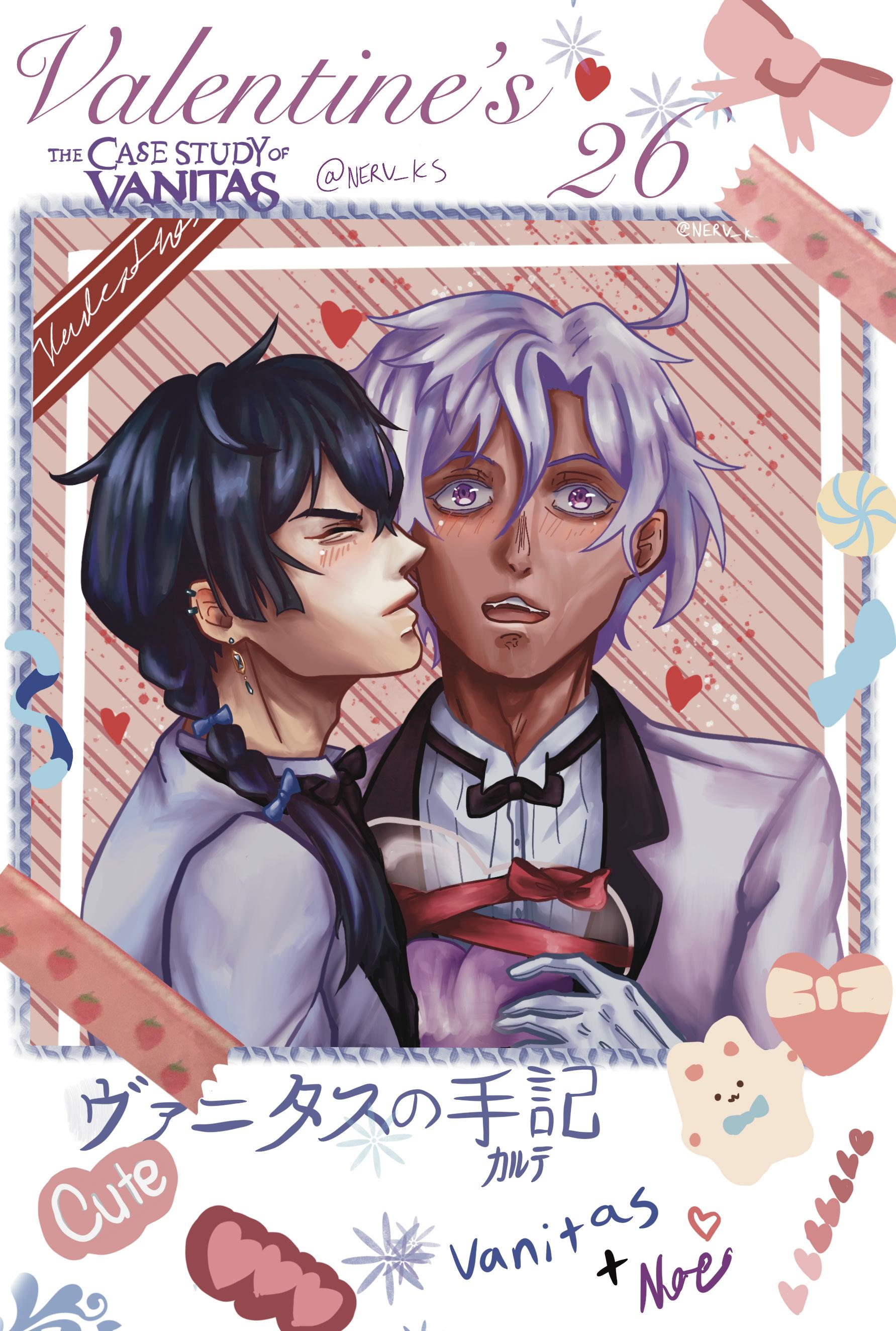
Vanitas & Noe
The Case Study of Vanitas
Art By Sarah Hinckley


Writer Karina Hernandez
1st Year, English
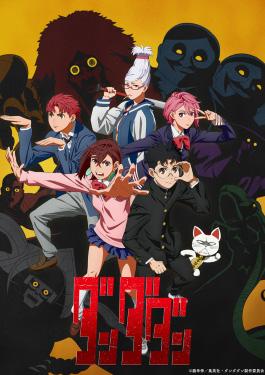
If you are an anime fan, it’s almost certain that you have watched some form of shonen anime. Shonen, a genre that is mainly aimed at teenage boys, depicting action and adventure plotlines, is arguably the most popular subsection of anime; containing cult classic titles such as Naruto and Juijitsu Kaisen. But despite its predominance in the anime industry, a lot of shonen series struggle with how they depict romance. Whether it’s having unappealing love interests or stale dynamics between characters, a lot of shonen authors seem to miss the mark on what makes a romance compelling. Still, there remains a small subsection of shonen anime that are able to achieve this balance, and whose stories see more success because of it. This is best represented in the new hit series Dandadan where the relationship between the protagonists Momo and Okarun has gained them infamy online for their appealing romantic potential.
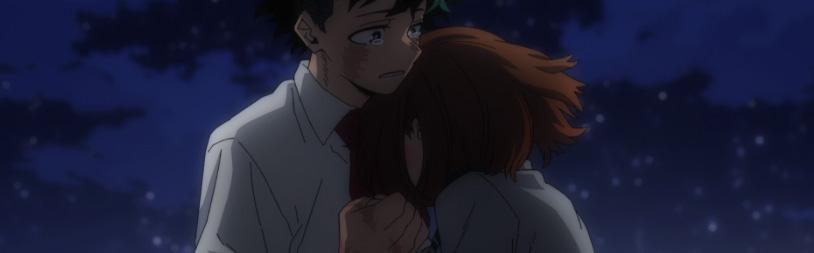
But what makes a ship bad in the first place? This question is a very subjective one, with no solid answer to satisfy all parties. However, the common consensus most people have of a bad ship is when there is a lack of development and/or chemistry between characters. For instance, in My Hero Academia there is a lot of missed potential in the relationship between Midoriya and Uraraka that stems from mistreatment of Uraraka’s character development. While Uraraka is first introduced as a part of the main cast with a promising quirk and cute personality, these aspects of her are never fully developed as much as Midoriya. While Midoriya is shown to have various interpersonal struggles and subsequent resolutions on his hero’s journey, Uraraka’s is written more as a stepping stone in his story. Although she finally has substantial development during the Final War arc, for the majority of the series all of the personal struggles revolve around her feelings for Midoriya, and all other aspects of her character are seemingly shafted in order to amplify this obsession. Her capability as an independent person seems to diminish in order to push Midoriya as the central focus of the show and her life. As such, a lot of people in the fandom dislike the ship because it feels forced and one sided, with Uraraka losing a lot of her charm in the process. This wasted potential to what could have been an amazing character is what many people believe ruined the potential of the ship.
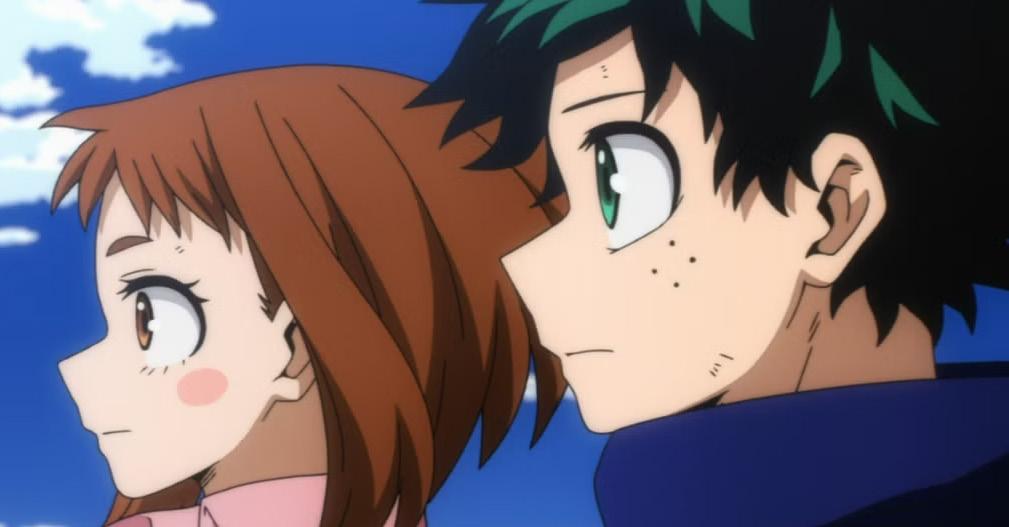
The romantic themes viewed in My Hero Academia are sadly the norm in the shonen genre, as many studios and creators believe that romance shouldn’t be emphasized in shonen. But where most shonen continue to follow the structure set before them, Dandadan’s romance deviates by providing both romantic interests with equal character development and focus, as individuals and as a couple. This is especially noticeable in the development Momo receives in comparison to other female shonen protagonists. Unlike Uraraka, Momo’s character is consistently shown to be independent and strong aside from her relationship with Okarun. Although it’s no doubt she cares for him very deeply, the author doesn’t make her reliant on him for her personality or values. Even after meeting Okarun, Momo continues to express herself through gyaru fashion, have a close relationship with her old and new friends, and explores her relationship with her grandma. And while on the battlefield, she is shown to work just as hard as Okarun to make sure she gives her best performance. As such it makes her an irreplaceable character who has depth and interest, someone essential to the plot and the people around her.
The individual dissection of characters in a ship is something very overlooked when thinking about romance. But the independence of each other is what I believe makes their relationship feel more real and compelling. In terms of Okarun and Momo’s relationship, this is most shown in the way they each approach their feelings for each other in the context of their adventure. Okarun displays love by shielding Momo from his problems, while Momo’s love lies in her undying dedication to not let Okarun suffer alone. While both characters hold deep respect and love for the other, their form of communicating these feelings can sometimes conflict and cause disruption in their teamwork.This gives them a reason to navigate through their emotions, making their emotions much richer and understandable. Watching this on the screen really shows the raw unconditional
feelings they have for each other, which I feel has contributed greatly to Dandadan’s success. Furthermore, it shows that people want ships that are not just one note, but rather complex and layered.
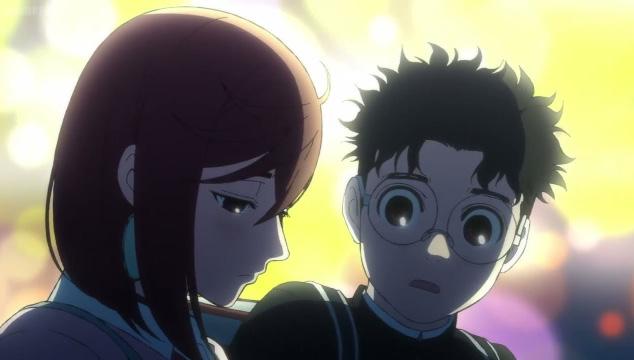
Ultimately, the rise of Dandadan’s success has opened the door to a lot of discussion, not only on what makes a ship good but what makes a shonen good as well. Whereas before many creators and studios believed that male audiences would respond to more action packed adventure stories, the good reception of a series with such a deeply involved romance has been eye opening. It’s not just Dandadan either, as shows like Chainsaw Man and Freiren have been consistently pushing the boundaries by exploring the interpersonal relationships of characters. It’s a refreshing pace for the fans and creators of shonen, and opens the possibility to what new stories could come out of this shift.
3rd
Writer
While not all viewers agree on the ship – which is fairly common for most shonen anime that don’t focus too strongly on a romance subplot – the pairing is one of the healthiest that can be found in shonen anime. Whether you like it or prefer something else, it’s difficult to – and here are some real life lessons that can be taken from the ship.
I was pleasantly surprised by how healthy Izuku and Ochaco’s relationship is. One of the things I like about it is that it’s actually built on something real. One of my biggest pet peeves when it comes to romance in film and media is that oftentimes, what sparks the connection isn’t something that has to do with the internal character of each of the characters. It’s common to see anime where characters get together because of things like proximity, looks, fighting prowess or physical strength, intelligence, rivalry, or simply “knowing someone for a long time”. While I get that this can make an author’s writing feel more exciting or sensational, and I frequently enjoy the hype around stories that involve these traits, I also feel like it’s a little unrealistic. In real life, although people often fall for others based on traits like intelligence or appearance, it is more often traits like mutual support, respect, teamwork, and choosing the relationship that help people form strong ties with each other over a lifetime. I’m not saying that intelligence, prowess, looks, or shared history are unimportant to a romance story – these are great things to have, in stories and in real life. However, character and personal development are an essential component of any romance story that, if left out, would leave any relationship feeling flat and 2D.
They both have full lives outside of their relationship with each other. Of course, the show focuses on Izuku’s relationship with everyone in class 1A, but Ochaco’s close friendships and her relationship with her family is also highlighted in the story. I appreciated that Horikoshi didn’t start off the series by having the female lead immediately fall for the male main character, like (far too) many shonen anime do. (Naruto comes to mind.) Instead, the first time they meet each other, Ochaco is simply focused on helping someone out, because she wants to use her quirk for good. Rather than this serves to reflect her character and how she chooses to act as a hero in micro-moments in her life. Izuku later saves Ochaco during the entrance exam, and even in this scene, Ochaco helps Izuku again by stopping his fall from the
air. What’s so great about these moments are that both of these characters’ actions come from a place of internal motivation. At this point in the show, both Ochaco and Izuku have shown desires to become heroes and help out others when they have the chance. They aren’t saving each other because they’re romantically interested in each other, but rather because they’re good people who want to help others. The show allows each individual’s character to shine before either person falls in love, which is why their relationship is built on something genuine and real. In real life, I think there is something that can truly be taken from this example.
Another wonderful thing is that Horikoshi allows both character’s personal growth stories to be, for the most part, separate and internal. While it’s great and common in anime and real life for a personal growth journey to be triggered by other people, I dislike when stories simply show one person in the relationship trying to be “more like” the other person in their relationship as a way of showing that both characters are undergoing personal development. In my experience, personal growth is something that is deeply internal. Real personal development isn’t something that can be obtained by just copying what other people are doing, it’s something that is most often motivated by someone feeling dissatisfied with their own life and realizing that they specifically need to make a change if they want to see their life improve. It’s about self actualization and taking the action needed to become the person one wants to become, which is why it feels like a copout when authors portray characters as taking the steps to grow only because they “want to be more like” the person they’re interested in. This motivation seems about as compelling as a piece of stale bread. Making a character’s personal development story about someone else seems cheap and inauthentic, and I’ve noticed that this specific trope seems to keep happening to female characters. When stories include grand motivations for the male main character to overcome adversity and trauma, become a person of great character, save everyone they love, and become the greatest fillin-the-blank to ever exist in the universe, and the female main character’s personal development story is triggered by the fact that she just kind of likes the male lead, naturally things feel a little unbalanced.
Zeyang Zhu
(Warning: Spoilers for Summer Pockets!!!)
Writer
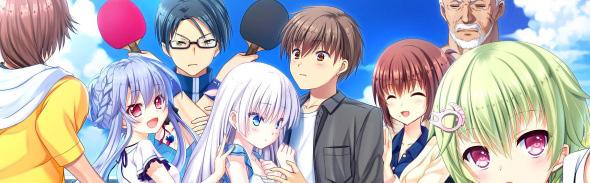
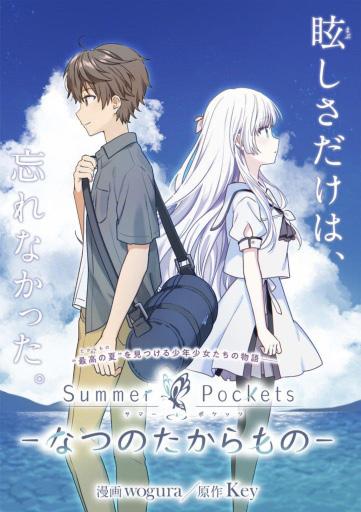
Summer Pockets finally got animated last year, despite its original visual novel being a huge success back in 2018. The rating on MAL might look average, but Key fans and visual novel lovers definitely know how moving and fantastic this work is. The male protagonist, Takahara Hairi, escapes from his trauma to a peaceful island in the Seto Inland Sea, but ends up spending one of the most unforgettable summer vacations of his life. In this story about impermanence and the true meaning of summer, many romantic relationships stand out across the alternative worlds Hairi experiences. Each of them has its own charm and popularity among fans. However, in this article, I want to specifically focus on the relationship between Takahara Hairi and Naruse Shiroha, who is often regarded as the “true route” of the whole story, and the one that moves me the most.
As the story begins, Shiroha and Hairi seem to be the most unlikely couple among the characters Hairi meets during his first few days on the island. Shiroha is always alone, deliberately keeping her distance from Hairi, and their relationship quickly reaches its lowest point after several embarrassing encounters. However, at certain moments in the story—especially when Shiroha learns that Hairi came to the island to “heal his injured wings”—she begins to understand him and shows rare smiles in his presence.
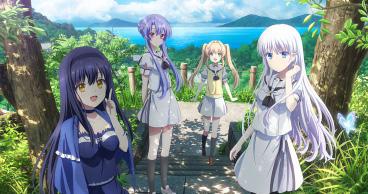

As the story progresses, we gradually learn why Shiroha chooses to isolate herself. Her loneliness comes from her fear of her ability to foresee fragments of unfortunate futures. Keeping distance from others is, in her mind, a way of protecting them. What goes on in her mind is probably that another summer has arrived, and Hairi is nothing more than part of this impermanence. If she stays away from him, nothing bad will happen. She understands exactly what her tragedy is, and she sees no escape from it.
But Hairi is the one destined to challenge this tragedy. He continues to approach her, tries to help her in every way he can, and gradually creates an environment in which Shiroha can rely on him. Eventually, Shiroha tells him the true reason for her loneliness and warns him one last time. Her future vision has become clear: she believes that she will definitely drown in the ocean during the summer festival ritual, and that the person who tries to save her will be Hairi, who may also drown because of her.
Hairi responds gently, telling her that the future is not always destined to be tragic and that they can do something about it. To persuade her grandfather to allow him to serve as her guard that day, Hairi even proposes to Shiroha and eventually earns permission through his determination and resolve. A miracle does occur. Although the predicted scene unfolds, Hairi ultimately saves Shiroha. Her route ends with an awkward but joyful scene—shown in the header image—where Hairi and Shiroha confess their feelings. Just as Hairi is about to leave the island because summer vacation has ended, he is forced to return due to a mechanical malfunction.
When I finished reading Shiroha’s route, I felt satisfied with its happy ending, yet at the same time, strangely unsettled. It felt out of place for a Key visual novel, especially one centered on
impermanent love and fleeting summer memories, as seen in all the other routes. Unfortunately, my suspicion that something more would happen proved correct. Those who have watched Clannad might already guess what comes next, especially once Shiroha is positioned as the “main heroine” of the story.
The full narrative reveals that the story consists of countless cycles of time travel carried out by Hairi and Shiroha’s daughter, Umi, all centered on the same summer vacation. In the original timeline, Shiroha dies shortly after Umi’s birth, and Hairi, overwhelmed by grief, fails to take proper care of their child. Umi inherits her mother’s tragedy and gains the ability to travel back in time. Driven by her longing to see her mother, she restarts the same summer from fourteen years ago over and over again, giving rise to multiple parallel worlds and the routes of other heroines.
Through these time travels, Umi learns that her father, Hairi, was truly kind. In her final journey, she fulfills her wish to spend one complete summer together as a family with Hairi and Shiroha, as shown in the Alka route. However, after her disappearance, the same tragedy continues to repeat itself. In the “true” world line, Shiroha and Hairi forget what happened during that summer, inevitably marry, Shiroha becomes pregnant, and one day her ability to foresee the future reappears. She sees a future in which Umi grows up without her mother. Shiroha desperately tries to avoid this outcome by researching folk tales, but ultimately fails. After giving birth to Umi, she dies from exhaustion.
The illusion of a stable and permanent romance that Shiroha’s route initially suggests collapses completely in the Alka route. Accompanied by the powerful ending theme, people who reach this point can only sigh in despair and wonder whether Umi’s final time travel—returning to the origin of everything, when Shiroha first gained her ability after wishing to see her deceased or vanished parents—will succeed.
Compared to other romantic relationships in Summer Pockets, where tragedies often still hint at brighter futures, the romance between Shiroha and Hairi begins with loneliness and separation, reaches its peak with marriage and the birth of a child, and ends—once again—in loneliness and separation (for now). We see Hairi give Shiroha the best care he can, despite having no special powers and carrying trauma that is arguably lighter than that of other characters on the island. Together, they support each other and come agonizingly close to a happy ending. Through their relationship, we experience happiness born of ini-
tial suffering and the unavoidable despair that emerges when hope feels most real. It is this coexistence of warmth and cruelty that gives Shiroha and Hairi’s story its overwhelming depth, and they become the most unforgettable anime couple I’ve ever seen in my life.
The relationship between Hairi and Shiroha is often interpreted as having a good ending after the final Pockets route, as we see two different endings in two versions of the visual novel - both lead to a new universe that breaks the unavoidable separation between this couple. I personally prefer the open ending one, where their daughter Umi disappeared completely after she travelled back, resolved her mother’s trauma, and changed the future. Yet, Hairi and Shiroha still meet again on that island at the end of another summer vacation. We’ll never know if they’ll become a couple again, and even if they do, we are sure things will be very different, since all those emotional buildup events I mentioned before will not happen, and their child won’t be Umi. Perhaps that is why this romance lingers so long after the story ends. In Summer Pockets, summer ends no matter how beautiful it is, and some love stories are meant to remain memories rather than futures. Shiroha and Hairi’s relationship is only complete for a limited time. Still, at least for the readers, we will remember that 眩しさ, the romance that shines in that summer vacation, forever.
Zeyang Zhu
2nd Year, Japanese Language Sea, You & Me
Writer
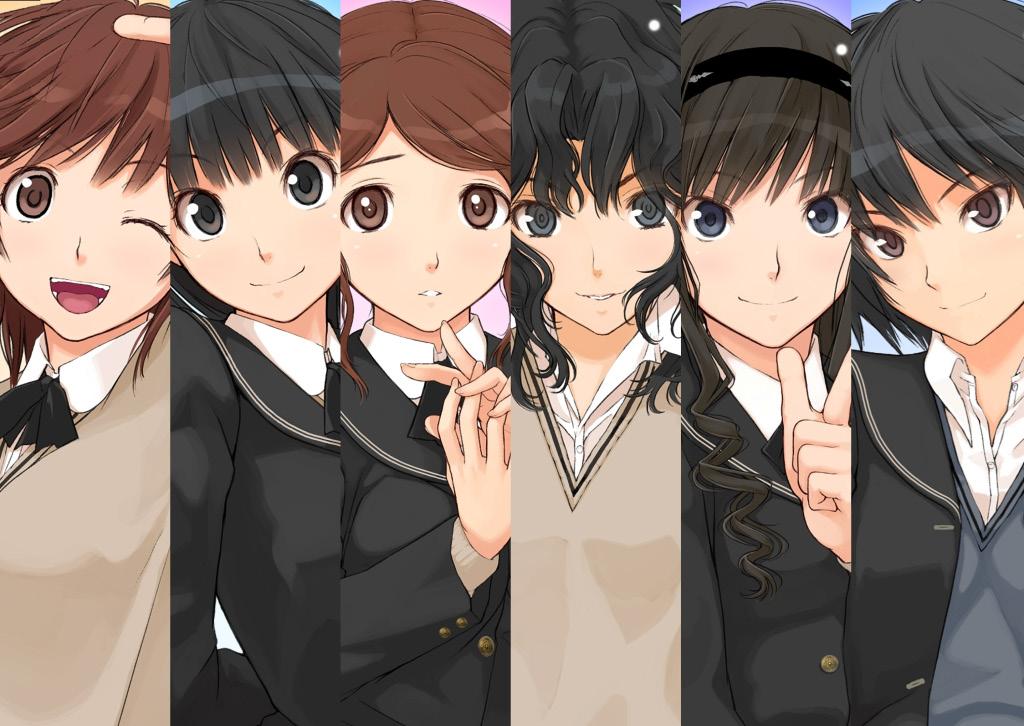
Romcoms are fun to watch, but they often carry an unavoidable downside: someone has to lose. When your favorite character ends up as the losing heroine, it hurts a lot (speaking as a sad Yui fan from Oregairu). Sometimes, you want a break from emotional damage and enjoy a straightforward love story. Still, even then, it can take ages for the heroine you like to actually “win” (Komi Can’t Communicate is a good example). If you’ve ever felt this frustration, you might want to check out a romance anime from about 15 years ago that solves this problem in the best way possible: Amagami SS.
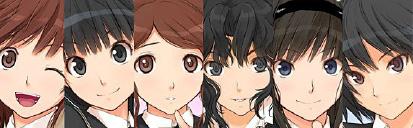
Originally based on a massive PS2 dating-simulation game that can easily take over 100 hours to complete, Amagami features six heroines, each with multiple possible endings. This setup might sound difficult to adapt into an anime—after all, many visual novel adaptations end up choosing one “true route” and ignoring the rest. Amagami SS does the exact opposite. Instead of forcing the heroines into competition, the anime adopts an omnibus structure, giving each heroine her own complete romantic storyline. Each arc spans four episodes in the first season, with two follow-up episodes in the second season, allowing every relationship to develop and reach its happiest possible conclusion fully.
What makes this structure so satisfying is that no one is treated as a losing heroine. Take one heroine, Rihoko, as an example. In most romance stories, childhood friends are generally disadvantaged—it can take countless events before the protagonist
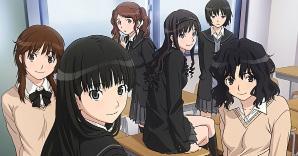
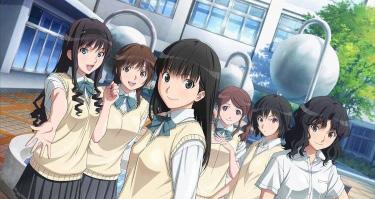
ever realizes their romantic feelings, if they have any at all. In that sense, Rihoko is usually the character closest to never even entering the “competition.” But in Amagami SS, she is given the same narrative weight as every other heroine. Her arc carefully depicts the slow development of her feelings all the way to the final confession, even extending into the second season— something that normally doesn’t happen, since confessions usually occur by the end of the first season. Such care shows how seriously the anime treats every form of love.
Each arc also presents a slightly different version of the protagonist, Junichi, influenced by the heroine he falls in love with. The story doesn’t ask which girl is “best”, but asks what kind of love each relationship represents. Some routes focus on quiet emotional growth, others on playful chemistry, long-term friendship, or awkward though sincere first love. This makes Amagami SS incredibly easy to recommend. Whether you only watch one arc or the entire series, the anime consistently delivers warm feelings and emotional closure. In a genre where romance mainly thrives on tension and suffering, Amagami SS is outstanding for being kind to both its characters and its audience. I’m confident that most viewers will end up falling in love with at least one heroine in a surprisingly short amount of time, since their personalities cover almost every romance archetype imaginable—senpai or kouhai, extremely shy or wildly outgoing, class-perfect on the surface but hiding a darker side, or even the “best bro” type of female friend you never expected to fall for.
And even if none of the main heroines fully click with you, that’s still fine. The series features a lovable younger sister, Miya, and the final episode focuses on the strong bond of family rather than romance. There’s even a fourth-wall-breaking element in episode 25, introducing a hidden heroine whose story becomes
especially meaningful once you learn the truth behind the event that started everything. As a bonus, each arc also has a special ending theme sung by the corresponding heroine, strengthening the feeling that every route really matters.
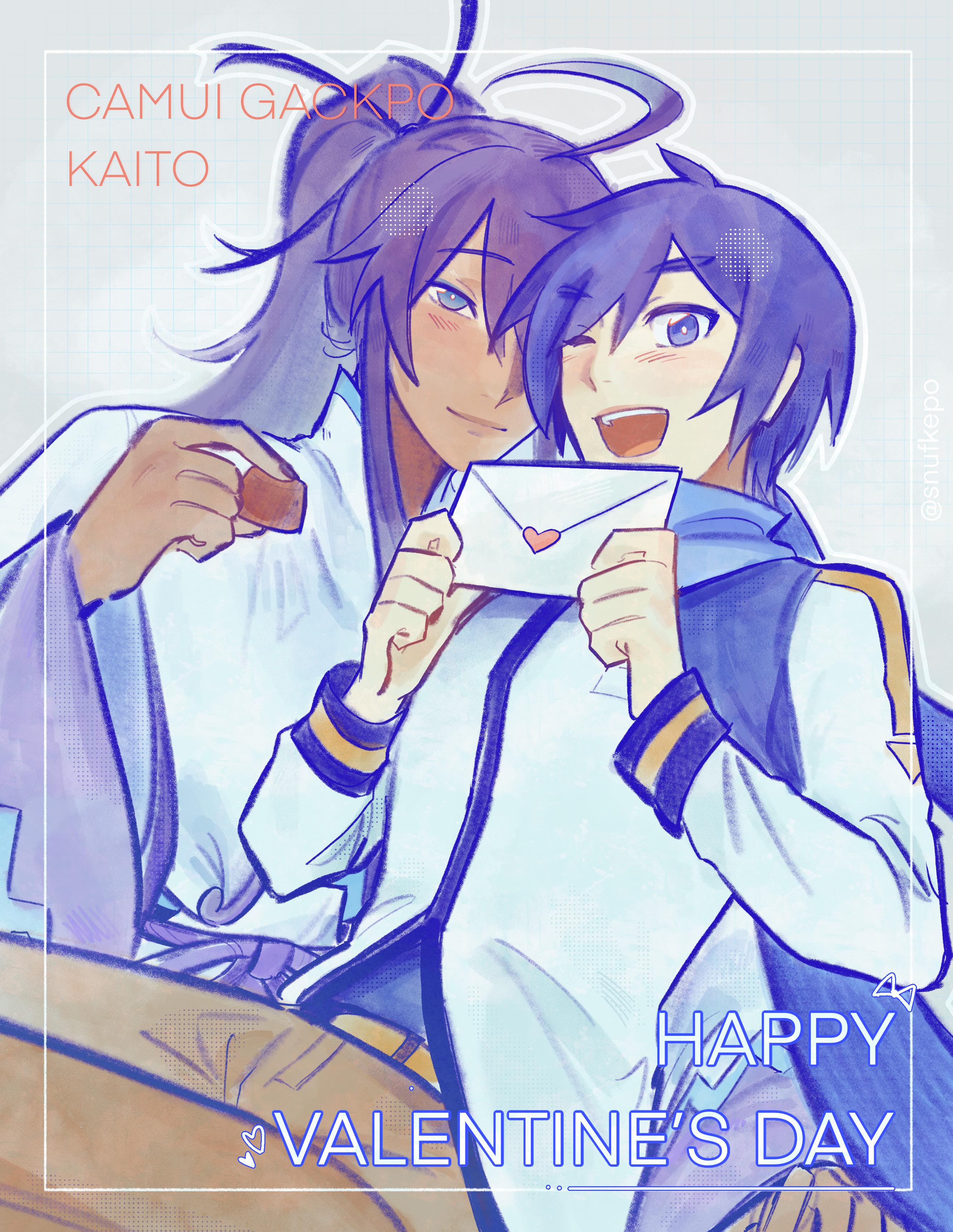
Now, let’s talk about how Valentine’s Day appears in Amagami SS. It plays a vital role in Rihoko’s arc. Many people are familiar with Japan’s Valentine’s Day culture, where girls give chocolate to boys, often distinguishing between giri-choco (chocolate given out of obligation or friendship) and honmei-choco (chocolate given to someone they have romantic feelings towards). In Amagami SS, different characters treat chocolate very differently. Some are perfectly comfortable giving giri-choco, while characters like Ayatsuji and Tanamachi only ever give honmei-choco, suggesting how seriously they approach romance. In one episode, close female friends make chocolates together to share among themselves, highlighting friendship over romantic intent.
Meanwhile, poor Junichi usually only receives chocolate from his sister Miya, his mother, and his childhood friend Rihoko. A misunderstanding involving this detail—partly caused by Miya not clearly explaining Rihoko’s relationship to others— foreshadows how the meaning of Valentine’s gifts can change over time. Because Rihoko takes a joking explanation from her senpai seriously, she ends up making cream puffs for Junichi as a Valentine’s gift, believing they symbolize something close to a proposal. Junichi, who initially views Valentine’s Day negatively while watching other boys receive chocolate, slowly begins to view it differently. Through Rihoko’s gift and a brave question about whether he wants to receive chocolate from a specific person, both characters start to recognize their feelings for each other. In Amagami SS, chocolate becomes a quiet but powerful emotional catalyst.
Despite being set nearly two decades ago in the seaside town of Chōshi in Chiba Prefecture, Amagami SS still resonates strongly today, continuing to spark people’s imagination and longing for love. If you end up falling for this anime and ever get the chance to visit Japan—especially if you’re landing at Narita Airport near Tokyo—why not put Chōshi on your travel list? By following the anime pilgrimage guide available at the local tourism center, you can experience how the world of Amagami SS gently overlaps with reality.

Tuesdays & Thursdays 8-9pm


To our readers,
Thank you everyone for your support with Konshuu. It had been our intention to relase this issue much earlier (near Valentine's Day) but due to circumstances we have had to delay our publishing. For that, we are sorry. But, I am excited that we are able to release Volume 63's 1st issue. The school year is getting close to the end, but the bell hasn't wrung just yet. Stay tuned in the next few weeks for more releases.
- Kai Kupper, Editor-in-Chief