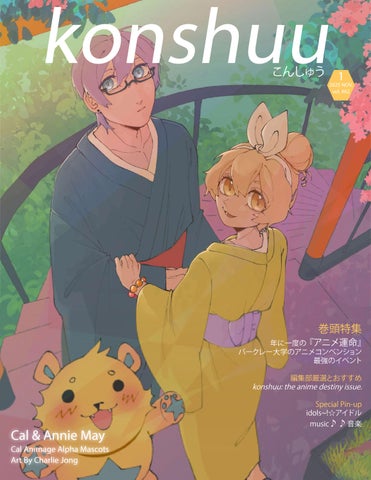
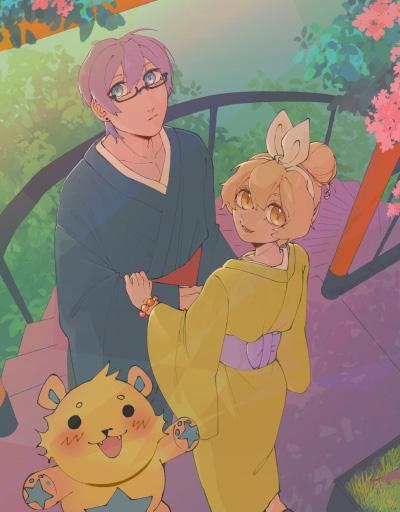
konshuu
Kirari Tsukishima
Kirarin Revolution
Art By Teresa Yu Kuang
Lilia Vanrouge Twisted Wonderland
Art By Tatum Ekstrom
Chie Satonaka, Yu Narukami & Yosuke Hanamura Persona
Art By Kat Yi
AZUSA, AND BANDS AS GROWTH

Anje Chimura
4th Year, Philosophy & Media Studies Major
“Will I be a grown-up when I grow up?”
Writer
SPOILERS FOR K-ON!!
When I first began watching K-On!, I was content to let its cozy atmosphere and good vibes just wash over me. Indeed, the first season is beautifully unassuming with how it eases the viewer into the lives of the four girls of Hokkago Tea Time. Not only are the songs they create wonderfully whimsical, but the music reflects the nature of their bonds with each other. The lyrics are playful, full of food-related puns and references, and yet the accompanying instrumentals are somehow perfectly composed around this, which further builds upon and reinforces the carefree nature of their band and friendships. Furthermore, outside of the purely musical segments, the energy of K-On!’s first season ranges from relaxed to heartwarming, and the antics of Yui, Ritsu, Mio, and Mugi outside of the band setting endears viewers to them as characters. The true brilliance of K-On!’s first season, in respect to the full plot, is how subtly and nonchalantly it sews the seeds of connection between the viewer and the characters. That is why, when I started watching the second season, marked with two explanation marks, I had completely let my guard down. And, that is exactly why the thematic and emotional sucker punches tore my heart to shreds in the best way possible.

As a gateway into K-On!!, it only feels appropriate to talk about Nakano Azusa. The fifth member of Hokkago Tea Time joins around the start of the second season, when the four older bandmates realize that they need to extend the band’s longevity with newer, younger members. Azusa herself is initially treated
as just an trophy that the other members feel they’ve earned through their hard work in marketing themselves, and her actual talent playing the electric guitar is just a plus. While this is played effectively for laughs, as the stakes of this series are hardly ever that high, it illustrates how Hokkago Tea Time did not initially value Azusa for who she was, rather simply relishing what benefits she provided. Likewise, the music itself did not evolve much, and the same formula for the creation process was mostly kept intact given the addition of another input source. This still led to fun memories for all the members, and eventually Azusa grew closer to her upperclassmen band members. She saw, from an outside perspective, what made HTT special as both a band and as a group of friends, and the longer the series continues, the more she began to treasure what everyone else took for granted.
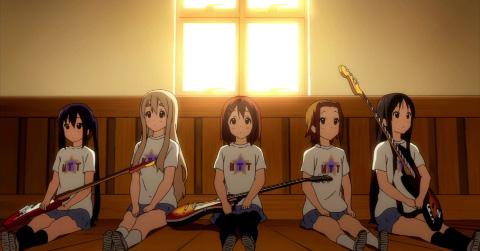
This theme naturally and emotionally culminated around the process of the older band members preparing for graduation. The band meets grew more infrequent, with Azusa’s insistence and passion for the band’s music being one of the strongest factors keeping them practicing at all. Azusa, at this ending segment of the series, had become the band’s burning soul. What comes from this, especially after their last performance, is the other members’ realization of what they’re leaving behind. And, after nearly two whole seasons worth of carefree, lazy mellowness, Azusa’s influence has rubbed off on her friends; they have come to treasure what made their group special, despite the immaturity they tended to exhibit surrounding the band’s various predicaments. And so, as both the band members and Hokkago Tea Time itself grew thanks to their youngest member, so too did their final song reflect this growth. “Tenshi ni Fureta yo!” is an ode to Azusa, from her older classmates, reminiscing over their memories and feelings with each other, and it is a beautiful testament not only to what Hokkago Tea Time stood for, but their collective friendships as well. There could not be a more perfect ending for K-On!!

THE DEVELOPMENT OF BAND

Zeyang Zhu
2nd Year, Japanese Language Major
Watch MyGO!!!!!
Writer
Band anime has always been something that I'm keen to write about. The genre is so popular in the East Asian anime community, yet it doesn't seem to be the case for the US. In this article, I will introduce the development of band-related anime and explain why it developed in such a way.
Before getting into the origin of band-related anime, let's have a look at the earliest (based on my knowledge) band-related movie, Linda Linda Linda, a 2005 film directed by Nobuhiro Yamashita. The story seems so ordinary: three high school girls and one exchange student form a band for their last School Festival, practising for days, building friendships, experiencing "youth events" like love relationships, and enjoying success. However, considering the year it was released, we could argue that they set the template for band performance at school festivals in later anime. One year later, we got the masterpiece The Melancholy of Suzumiya Haruhi (2006). Fans highly suggest that the "God Knows" live performance during the School Festival in Haruhi pays tribute to the related scenes in Linda Linda Linda. From that point, such plots became a hit in anime.
Another great example is K-ON! (2009), the most successful band-themed anime of all time. Again, the plot might seem boring to anime enjoyers these days, but that's precisely why it was such a hit back then. It reminds fans of their time in high school: forming a band or joining a club, listing dreams that seem impossible, working hard together for one goal, and enjoying the never-ending youth. The anime depicts the relationship between characters and families with warmth. Through two seasons, about 40 episodes, and a successful movie, K-ON shows us every detail of three years of high school life from the viewpoint of band members. Drink a cup of tea, enjoy the sunshine in the club room after school, and practise when you're in the mood. These beautiful moments are why fans love this anime. All we can take from this anime is admiring their pure friendship and appreciating how each other has changed throughout the period.
Some might be confused: why were these everyday life-related stuff so popular back then? My theory is that Japan was still recovering from the economic crisis in the post-bubble econo-

my era. People were devastated, and there seemed to be little motivation in life. That's also when the anime industry gradually opened to themes like bravely chasing dreams or simply enjoying everyday life, which, in a sense, influences the viewers deeply and helps them to regain the courage to face difficulties. In an anniversary K-ON event at the model school last year (an anime pilgrimage spot in Toyosato, Shiga Prefecture), I was surprised that most participants were in their 40s or 50s, some even coming with families. They might watch it in the best years of their 20s and 30s, feeling nostalgic and getting motivated by it, resulting in them celebrating the anime on-air every year by selling doujinshi or goods made by themselves and cosplaying as characters while doing live performances on the stage.
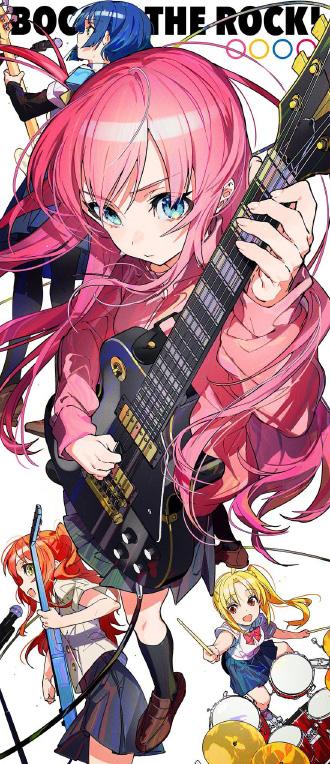
Time has changed, though. And we're undoubtedly in another period with plenty of influential, high-quality band anime. They are entirely different from K-ON! since they focus more on the reality of band life. Let's take Bocchi the Rock (2022) as an example. Again, it still has school festival-related content, which is unavoidable since Kessoku Band members are still in their high school life. However, some episodes show us the condition or reality of being involved in a band in Japan. Live House, parttime job, quota, audition... These remind you that Kessoku Band is not just a childish play. They're in Shimokitazawa, one of Tokyo's most artistic, fashionable and well-known (deep-meaning) districts. They must face those challenges to ensure their band can function normally and gain popularity. The side character Kikuri Hiroi, a typical band woman, is the most vivid picture (alcohol, borrowing money, unable to pay the rent…) of how you
live every day to feed yourself with band life in Tokyo. We only manage to see a little bit of this world in anime. The manga definitely deeply delves into it. What each Kessoku Band member wants to achieve at this band, the preparation for the summer contest, collaborations with other bands, graduation, signing with an album company, filming MVs… I won't spoil anymore, but we're all on the way to witnessing the growth of Kessoku Band and seeing how far they can go (Please, we all need an S2). Individual characters in Bocchi the Rock are also unique, especially Bocchi, a great example of someone trying to get out of her comfort zone and, luckily, meeting friends to chase dreams together. Music, unique filming technology… There is a lot to say about the success of Bocchi the Rock. However, the key point is how they focus on real band life. There are even better examples like BanG Dream It's MyGO!!!!! and Ave Mujica (seasonal), both considered masterpieces by East Asian band anime lovers (specifically Chinese), but I'll leave them for you guys to explore.

Overall, through the development of band anime in Japan, we can see how the preference of such anime enjoyers changed from time to time. The general trend shifts from everyday life to a more realistic band world. Noticeably, in each era, all these band anime are closely tied to actual voice actor groups in real life (I could even say they're prioritizing live performances sometimes). Such a unique Japanese formation of anime-related band culture is something that even general band enjoyers can appreciate. And maybe it could reversely influence Western band culture in the future.

THE EXPLORATION OF THE IDOL: LOOKING AT THE NON TRADITIONAL

Karina Hernandez
1st Year, English
“Our differences make us stronger” -@Lobopobia on Twitter.com
[SPOILERS FOR PERFECT BLUE]
Writer
Whether it be the ever popular Hatsune Miku, or the original idol anime Magical Angel Creamy Mami, there’s no denying the influence idols have on pop culture. Over time the definition of what categorizes an idol has stayed relatively the same; describing a band with a central focus on a single girl or group of girls, usually each with their own unique personality. In idol anime, episodes will typically follow their adventures, musical pursuits, or center around one girl as a way to provide fan content for specific idols. However over the years the genre has been experimented with in ways that don’t cleanly fit the preconceived notion of what an idol should be; ultimately paving the way for the evolution of the genre as a whole. One of the most unique idol bands of the 21st century is Babymetal, a small three member group that focuses on hard rock and metal music. Created in 2010’s, the group was the passion project of producer Key Kobayashi as a way to get metal into the Japanese mainstream. And although none of the members knew anything about rock before joining the group, their enthusiasm and energy made them quite popular; with their first single “Doki-Doki Morning” garnering one million views by 2012. Babymetal is revolutionary to the idol genre because it takes the standards of the idol and completely turns it on
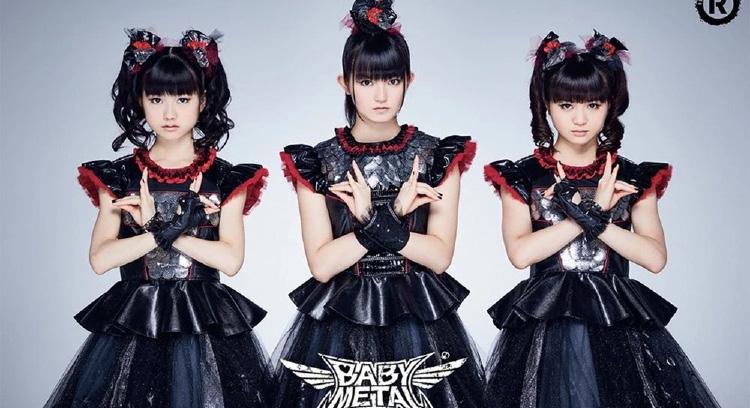
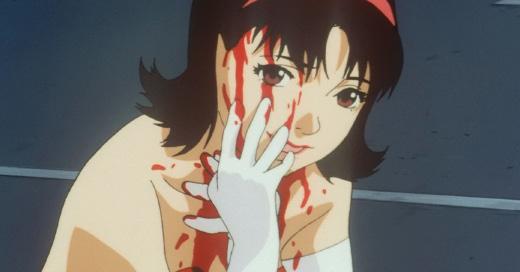
Because of this, many people in Japan have criticised Babymetal for their inability to stick to the idol standard and provide cutesy fan service. And overseas, many metal fans are scornful of their music which doesn’t fit into the masculine aesthetics that dominate the metal genre. Despite this, Babymetal is widely respected by big musicians in the space, such as Slipknot, Korn, and Bring Me The Horizon to name a few. And as such they continue to perform to their fans in sold out concert venues globally Another notable piece of idol media would be Perfect Blue, released in 1995. The story follows an idol named Mima Kirigoe and her harrowing journey as she is stalked by a fan after leaving her previous career to pursue acting; as well as dealing with murders that are happening around her. In the aftermath of this trauma she imagines an alternate version of herself who claims to be the “real” Mima, and turmoil ensues.
Unlike the glamor of most idol anime, Perfect Blue follows themes of psychological horror and distress surrounding the life of an idol. The creator, Satoshi Kon, created Perfect Blue as a critique of the idol industry; in which the controlling and obsessive environment could prove detrimental to the mental sanity of idols. Needless to say, the effects of Perfect Blue were widespread, with the film gaining critical acclaim. Although it didn’t directly change the way the idol industry functions, it certainly helped bring more awareness to their policies and the safety of idols. Additionally, the major success of a psychological thriller anime helped people overseas see anime as a valid artform worthy of praise. And in Japan, it
Kirigoe in Perfect Blue
THE MUSIC OF MAKOTO SHINKAI FILMS

Lu He
Writer
3rd Year, English Radwimp’s songs nearly glisten with celestial energy.
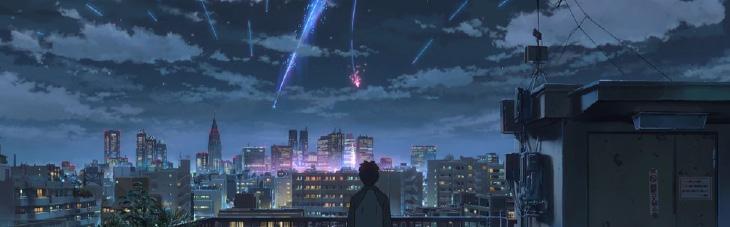
The first time I watched Your Name, I had wanted to watch it because of a music video I’d seen a few weeks before. This video featured scenes from the movie overlaid with a background song called “Sparkle”. I fell in love with both the beautiful glowy skies in the video as well as the song, which played in my playlist for several days after I finished the movie. I would later find out that Your Name, along with Weathering With You and Suzume, were some of the highest grossing anime films in history. Their director, Makoto Shinkai, has a strength for producing vibrant naturescape animations and detailed depictions of the sky. And Shinkai’s films definitely do glow with a certain light that makes each frame uniquely aesthetic. The band behind bringing this glow to life was Radwimps, who produced the soundtracks for all three blockbuster movies. While songs featured in Your Name, Weathering With You, and Suzume are all by Radwimps, their sounds are distinctly different. Your Name’s soundtrack, for example, overflows with vibrant celestial energy, while Weathering With You’s soundtrack makes use of instrumentals that sound like rain and the rising sun. In this article, I’ll discuss the different themes entangled in the Your Name and Weathering With You soundtracks. In Your Name, the story plot revolves around a comet, and the soundtracks are accordingly celestial. The piano notes that open “Sparkle” sound like stars glistening in the sky, and the song crescendos in a high, clear note that suits the mood of a comet’s crashing into the Earth. One of Radwimp’s best loved songs from the Your Name soundtrack is “Zenzenzense”, which is played in the movie over a montage of the main characters getting prepared for the day. “Zenzenzense” is a fast paced, energetic song, so it’s no surprise that this song was used in the movie to enhance an animation moment where the sun rose in the sky and the day began. “Nandemonaiya” is the
“Zenzenzense” is a fast paced, energetic song, so it’s no surprise that this song was used in the movie to enhance an animation moment where the sun rose in the sky and the day began. “Nandemonaiya” is the polar opposite, and it has the peaceful mood of a calm night sky. Its instrumentals feature a gentle rolling guitar rhythm sprinkled with high notes, which sound reminiscent of a childhood lullaby. The high point of this song is the sound effects that are featured at the end of the chorus. Radwimps uses a very simple seven note sequence that creates a magical, whimsical mood fitting for a movie about shooting stars. Listening to the Radwimps soundtrack, it’s not difficult to
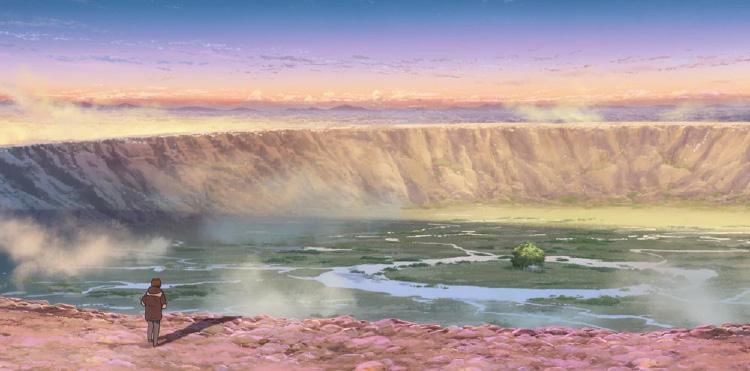
Image from Your Name
In Weathering With You, Shinkai still created a plot that centers around the sky, but this time it was about weather rather than stars and comets. Radwimps delivered accordingly, drumming up a theme song that simply sounds like the transition period between rain and sun. “Grand Escape” opens with delicate, irregularly falling piano notes that sound like lightly pattering rain. The singer’s calm and clear voice also contributes to the cloudy atmosphere of the song. The song actually features the voice of female singer Toko Miura, who collaborated with Radwimps on this piece. In my opinion, this was an excellent choice, since the result is that “Grand Escape” has a distinctly different feel from Your Name’s songs. It sounds a little lighter – a little more airy and delicate – when compared with the woodsy vintage sound of “Sparkle”. The bridge is the rhythmically heaviest part of the song, with Radwimp’s lead singer chiming in to build up the strong repetitive chant that forms the backbone of this song. The chorus of this song contains the essence of the Weathering With

MAEDA, MUSIC, AND REBELLION
Writer Ely Jethani
4th year, English
Hold up… let him cook.
Maeda Jun is nothing if not prolific (as well as being the king of nakige, but I’ve already written about that). On top of being the creative mind behind some of the most heart-wrenching and emotional anime stories, he is also often involved on the music side of production. For his original projects – including Angel Beats!, Charlotte, and Heaven Burns Red, among others – he is credited for many soundtrack, insert song, and lyrical compositions, but he also emphasizes music’s integration into the narratives of the stories themselves. In the three projects mentioned, each one features its own fictional band with their own catalogue of original songs. For Angel Beats!, Girls Dead Monster (alternatively, GirlDeMo) is a band made up of several cast members, including Iwasawa, Hisako, and Yui. Charlotte’s band, Zhiend, is spearheaded by Sala Shane, a blind yet wise singer. And, Heaven Burns Red features the band She Is Legend, which is composed of all the main characters from Squad 31A. While at a glance, one may view this trend merely as Maeda Jun having too much time on his hands, which perhaps may also be true, there is also another throughline: each band here fully takes on and comes to embody the theme of rebellion within its respective story.
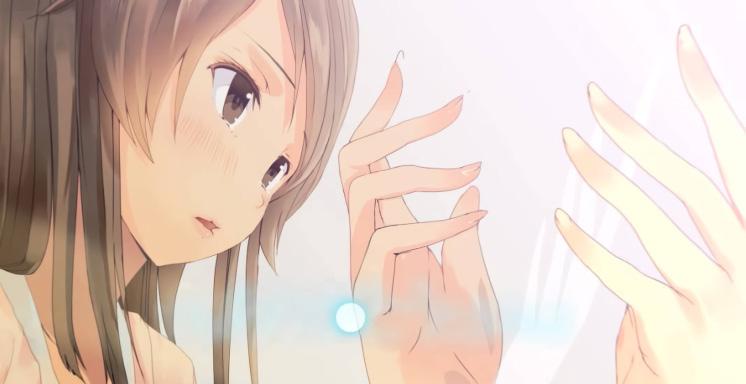
Starting with Girls Dead Monster, rebellion is baked into the band’s usage in the anime, both narratively and literally. Although the band is used by the SSS as just a tool for distraction, GirlDeMo both starts and ends due to the idea of music uniting and freeing people in a world that oppresses that kind of connection. Iwasawa and Hisako, as the band’s founders, both faced music-related problems in their lives, with Iwasawa using
Hisako abandoned it after the trauma of a band member’s death. When they meet in the afterlife, their passion for the positives of what music was able to do for them eventually leads them to forming Girls Dead Monster. With the band’s formation, its starting two members use music to reaffirm the hardships they underwent in life, which is presented beautifully in Angel Beats!’s prequel manga Heaven’s Door. Within the anime, Iwasawa’s final moments are spent in rebellion against the student council and staff to sing her final song, appropriately called “My Song.” Once she expresses and makes peace with her final regrets, she disappears, leaving the band without a singer. And, although Yui eventually steps into the role of Girls Dead Monster’s singer, the symbol of a band without their singer remains relevant due to Yui’s disappearance at the end of the anime. This symbol of an incomplete band is representative of the loss of the band’s rebellion; after Iwasawa disappears, the antics of the band become much more about enjoying the time they have together with the SSS, which aligns very well with the messages of making peace with one’s life presented in Angel Beats!’s final episodes.

Zhiend is, by comparison, perhaps a more shallow example of rebellion. While there is slight plot relevancy, not much ties the narrative of Zhiend to the narrative of Charlotte. From a characterological point of view, it is both admirable and impressive for the blind Sala Shane to have come so far to achieve the international fame she has in the series, but its insertion to Charlotte’s plot adds no noticeable impact to the anime. Its inclusion is certainly meant to highlight the idea of rebellion within Nao, who holds Zheind to be special due to her inability to connect with her brother after the experiments he underwent. Her listening to the band is a representation of her drive to look after her brother and friends as the student council president, and could be seen as a rebellion against the scientists who experimented on the children of the series. However, these interpretations are more
observations, as the significance of the band is not emphasized much within the anime itself. Zhiend’s best quality within the anime, in my opinion, is in creating a somber musical mood and vast ambience. The post-rock aesthetic fits the thoughtful nature of the moral problems presented within Charlotte extremely well, and the songs themselves are expertly crafted.
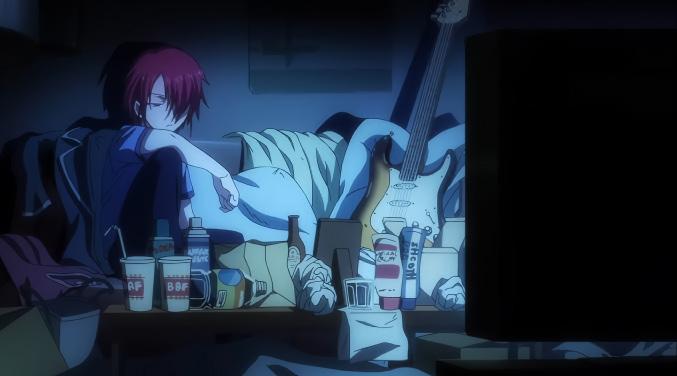
She Is Legend is a peculiar band to look at. As of writing, it has the largest catalogue of any of Maeda’s fictional bands, due to the songs being used for a currently popular and live-service game. The band still does new songs and tours for the game, starring the famous singers XAI and Konomi Suzuki as standins for the characters of Ruka and Karen respectively. Purely in terms of numbers, She Is Legend is probably the most successful band Maeda has ever created or will ever create. In terms of integration into the story, the results are also highly successful. She Is Legend acts as a very effective means of getting the cast of Squad 31A to know each other early on, especially within Chapter 1, when no one yet knows each other. Rebellion here is embodied by the fact that all the characters establish this joyful musical bond with each other within a military setting in their post-apocalyptic world. With the number of living human beings left literally hanging over the characters’ heads, it would be easy for the characters of the Seraph Corps to give up hope (and indeed, this existential threat is confronted by everyone in its own way). But, through the creative process of working together on music, through performing with each other, and through bonding with other members of the Seraph Corps over the music, hope is achieved by 31A’s rebellion against despair. The characters demonstrate their different personalities, philosophies, and aspirations quite clearly in the scenes of them composing music, and this helps familiarize both the viewer to the characters and the characters to each other. This is done expertly in Chapter 2, with the introduction of Erika Aoi into She Is Legend, but the less that is spoiled about this chapter is probably for the best. All that needs to be said about the chapter is that it showcases both the peak of hope and the void of despair that comes from clinging to rebellion as the throughline of a bond. It is done beautifully.
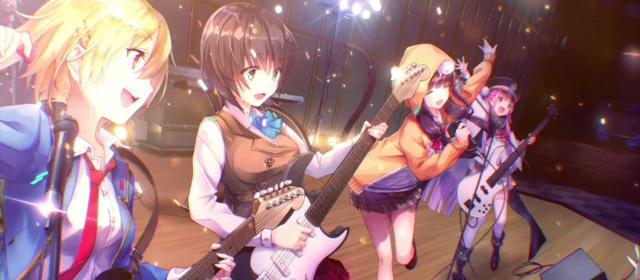
Maeda Jun’s most universally praised creations are often his musical pieces, and although his stories often face a more mixed reception, the way he connects music and narrative together so effectively is magnificent. This is especially notable because this phenomenon takes place in stories that aren’t even about bands. And, because his stories aren’t fundamentally about the music nor the rebellion it stirs within the characters, it is even more amazing that all of these bands’ songs are genuinely enjoyable compositions, too. Each band has a unique musical identity, and each album or single has appeals in ways that aren’t seen with the other bands. If one wants post-rock, they have Zhiend; if one wants J-Rock, they have Girls Dead Monster; if one wants emotional rock with a more pop edge, they have Girls Dead Monster. While Maeda’s work never fits into the traditional “band anime” genre, the ways it stands unique are the reasons why it stands tall.
Tōgawa Riko & Yakumo Runa BanG Dream
Art By Ansen
Mizi and Sua Alien Stage
Art by Tatum Ekstrom
Urakawa Minori
Art By Rachel Chen

Wait... What Even is Yuri and Girl’s Love?
(Featuring Liz and the Blue Bird)
Writer Taiga
[SPOILERS for Liz and the Blue Bird]
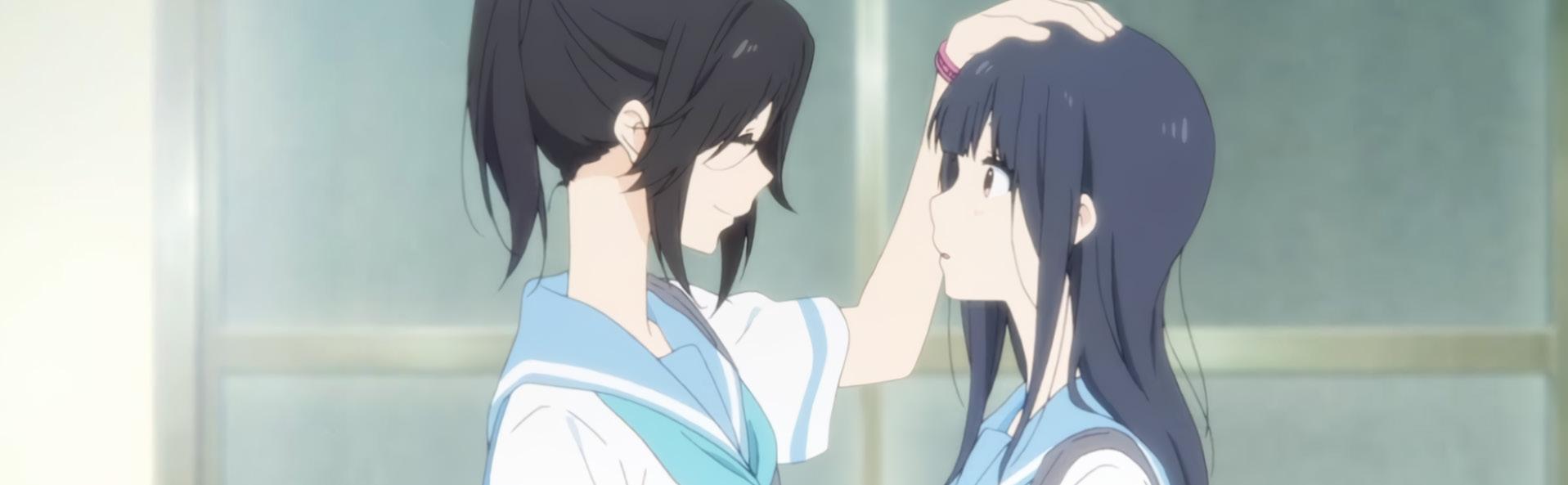
Throughout the film, we follow our two leads, Mizore Yoroizuka and Kasaki Nozomi as the narrative explores their complicated friendships and hints at Mizore’s longing for Kasaki. However, the only thought that crossed my mind during the film’s duration was “Wait… are they not even gonna kiss???”, which might be a surprise to the most avid consumers of Yuri. From my current understanding, it is common for works referred to as Yuri to not necessarily feature an overt representation of lesbianism, usually settling for subtle gestures and underlying semantics.
To be honest, I was disappointed. I thought Yuri would feature a more direct form of romance between women, so I definitely wasn’t familiar with this genre. But this made me think… Why does it have to be this way? Why are depictions of love in many Yuri works so subtle?
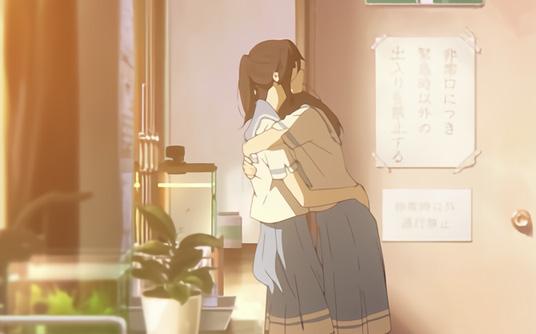
However, the nuances of the word Yuri and its associations with GL were more peculiar than I initially expected. Let’s explore this nuance.
Contrary to popular Western beliefs, Yuri and GL are not necessarily synonymous with one another. The latter, GL, represents an anime/work specifically dedicated to the representation and storylines focused on definitive lesbian depictions, akin to “Sakura Trick”. Yuri, on the other hand, carries larger implications of "love" that goes beyond traditional romance. Strong
implications of heartfelt friendships, even ones with clear physical intimacy, can be seen as “platonic” culturally. This subset of ideas can be effectively summarized by the concept of “Class S” (stands for sister, shoujo, sex, schön - the German word for beautiful/lovely, and eScape). “Class S” is a historical term used as a reference for works featuring women-centered relationships in Japanese media. This further cements the idea that Yuri as a genre can explore a wide range of intimacy, and some of it may feature romantic connotations but not always.
The understanding that Yuri doesn’t necessarily mean lesbian, but a broader portrait of intimacy between women in the Japanese context, explains why the feature hints strongly at the possible romantic tension yet never fully indulges in it.
The film’s most impactful scene is the confrontation between our leads, exploring their complicated feelings for one another. Mizore expresses her deep aspirations and love for Kasaki that stemmed from the day they met, while Kasaki explains her jealousy for Mizore’s capabilities, and eventually acceptance of their complex bond. Yet, they remain friends by the end.
Analyzing the narrative as a romance, it feels a little anticlimactic, as we never fully get to hear how Kasaki feels about Mizore directly like Mizore did for her. However, with my newfound understanding of what defines “Yuri”, this scene can be analyzed as the exploration of the bond between the two girls, dissecting their connection that transcends typical definitions of love. Perhaps the love is romantic, or it may be platonic, but what matters is that this love between one another is genuine. And as I watched the film for the second time, I couldn’t help but to like it.
From my initial confusion to the hours of research about the conceptions and subtleties of GL, this movie eloquently showed me what Yuri can be by portraying nuanced, intricate relationships between the two leads. For that, I gotta thank “Liz And the Blue Bird” for giving me further insight into what defines “Yuri”.

Former Staff, Exchange Student
It is currently 4 am. I need to sleep.
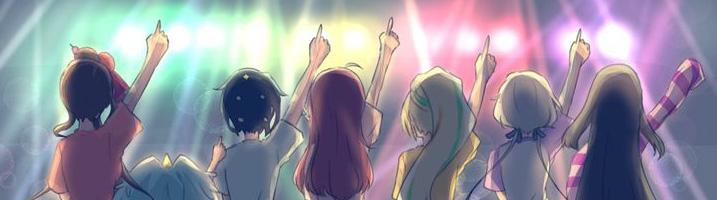
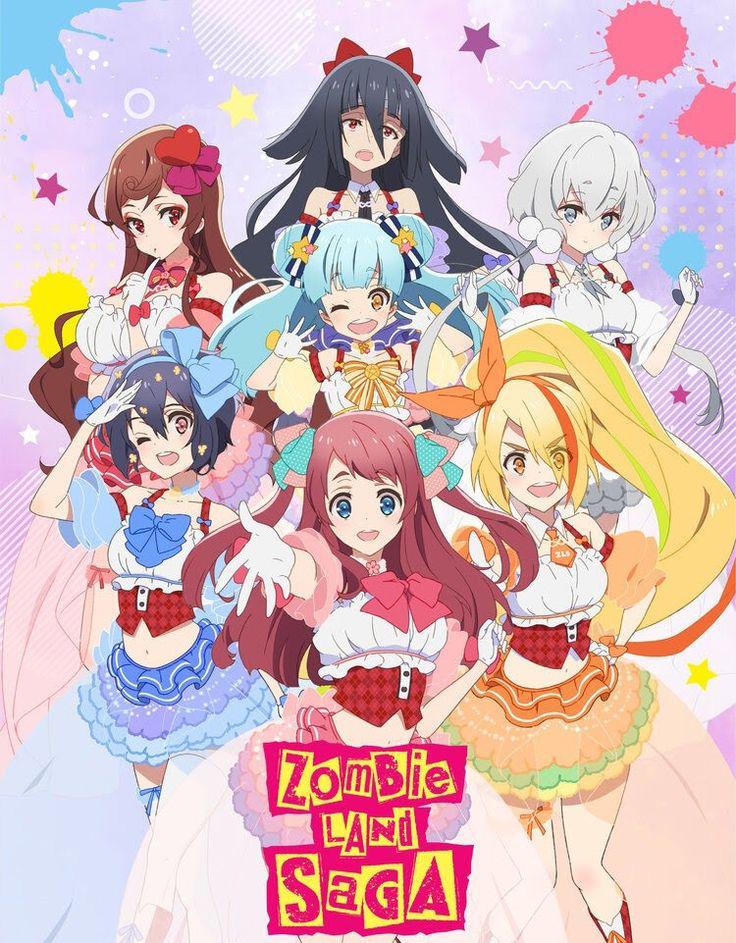
Saving Saga: The Zombie Idols Who Refused to Die

Zheyang Zhu
Writer
2nd Year, Japanese Language Major Yorushiku! (from the biggest Nikaido Saki fan)
[Warning: many spoilers of Zombie Land Saga] It’s been about four years since the second season of Zombie Land Saga ended. Many people were starting to forget about it, since the promised movie never came. However, recent news that the film will finally be released at the end of this month has brought this unique anime back into the spotlight. What makes it so charming and different from other idol anime? What kinds of struggles does it face because of its unusual setting — becoming idols in Saga Prefecture? And did it really bring economic benefits to the region? Let’s briefly go through these questions in this article.
The story begins in a legendary way: the main heroine, Minamoto Sakura, was on her way to an idol group audition, but was hit by a truck and died in the very first minute. Ten years later, she awakens as a zombie and discovers that she has been revived by a suspicious self-claimed manager, Tatsumi Kotaro, along with six other members from different eras of Japanese history. Each of them has a unique background, mostly related to music, and none of them died naturally. Their eccentric manager tells them that their mission is to form a zombie idol group to save the prefecture of Saga.
At first, some of the members are unwilling to follow his command. But they soon realize that, as zombies, there’s no place for them in modern society without hiding their identities by making up as idols. Working together gives them a new purpose. Starting from zero, they overcome all kinds of challenges, build bonds, and find ways to heal their past regrets through miraculous and emotional encounters with people they once knew. The manager, too, grows throughout the story. Despite appearing mentally strong, he is, in fact, not as strong as he might seem, due to his previous relationship with Sakura (which she has already forgotten). His ambition sometimes leads to major setbacks — especially at the start of the second season, which puts the whole group into debt. There are times when he seems lost and in desperation. However, he gains support from the members who want to achieve his dream as a unified group. Together, through becoming idols, they start their reveng on the whole world.
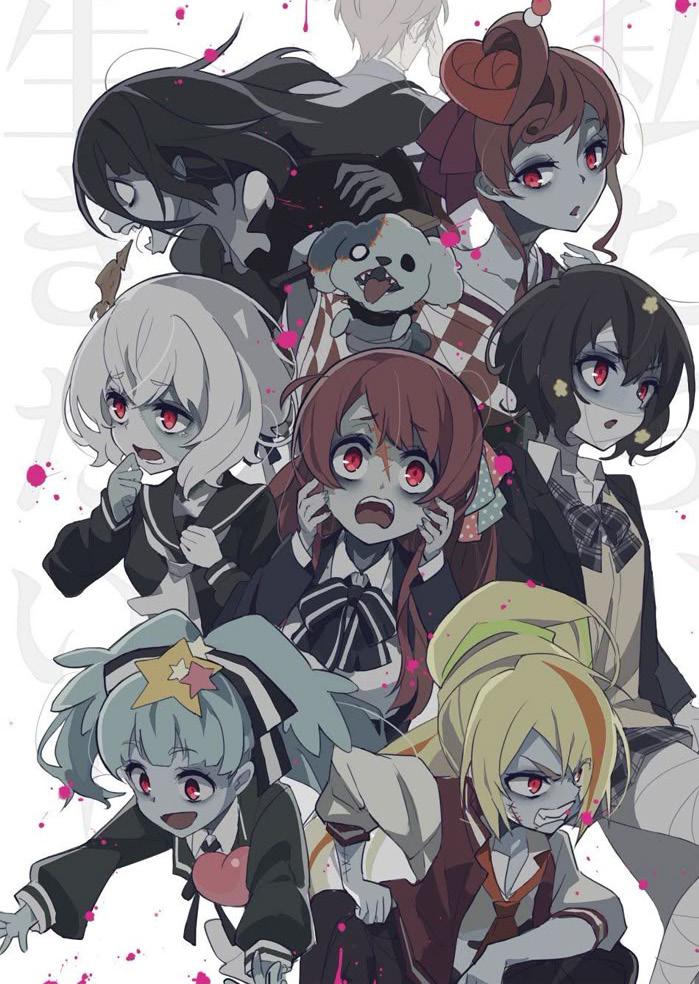
Saga itself is a remote prefecture, often ranked among the least “charming” in Japan. It has also suffered historical defeat, once being erased from the map due to rebellions. Yes, as the lyrics of their songs suggest, no matter how many they fall, they will rise again. They are determined to fight back against life’s unfairness and achieve the impossible mission of “saving Saga.” Their zombie nature allows them to perform in ways no normal idol could — being electrically charged by lightning hitting them, or performing wild and unnatural dance moves — but it also gives deeper meaning to their dream. Their motivation to use their precious chance to avenge past lives and perform is literally on another level compared to most idol anime. Each character has her own touching story, and the character designs are excellent. Once we learned what happened when they were alive
we cannot help but pray and cheer for their success. The ending of the second season also hints at a mysterious twist involving Xu Fu, a legendary Chinese figure said to have sought immortality in Japan about two thousand years ago. The manager’s connection to Xu Fu and the idea of exchanging his own life to revive the members adds a mythic scale to the story, and a perfect setup for the upcoming film (which appears that they even go to space!).
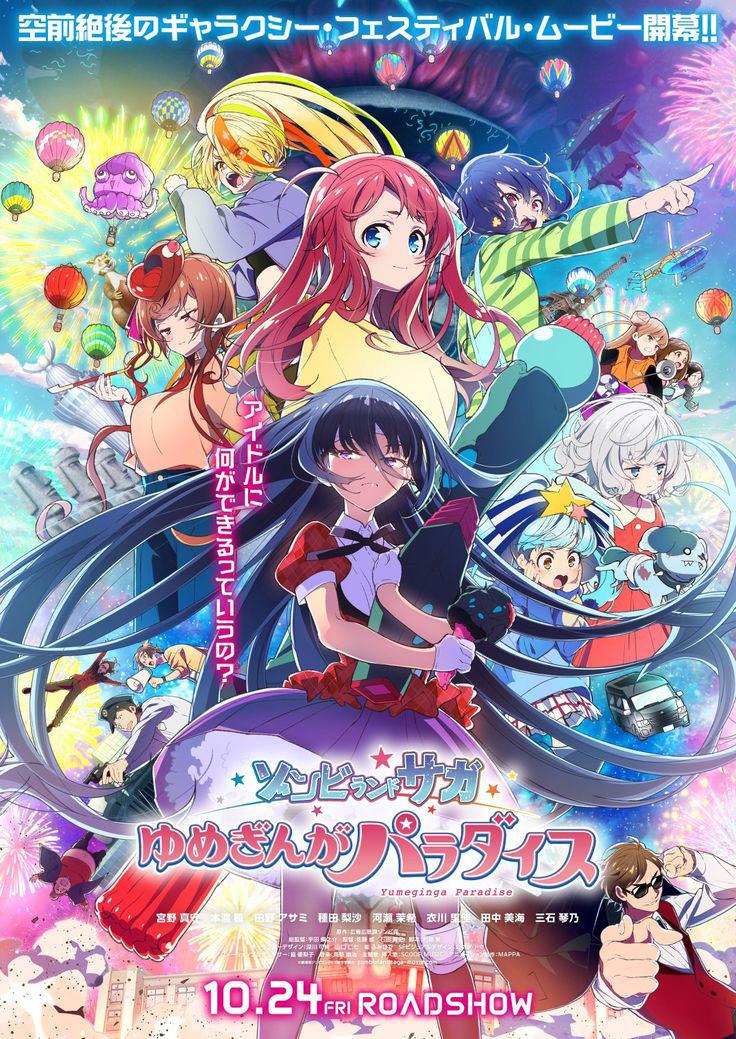
In real life, the Zombie Land Saga project also faced challenges. Like many idol anime, the voice actors formed a real-life idol group and performed live (just like the Love Live series). However, since the focus was specifically on promoting Saga Prefecture, it wasn’t easy to attract a large, loyal fan base across the country. Unlike Love Live Sunshine, whose setting is in the beautiful seaside town of Numazu, not that far away from Tokyo, Zombie Land Saga’s rural location and the widespread presence of pilgrimage sites made frequent large gatherings difficult.
The series did its best in creating fantastic local promotions — anime-themed manholes, collaborations with local shops, and iconic landmarks featured in the show (like the famous Drive-in Tori episode in season 1). But for those who are interested in anime idols, who usually live in large cities near Tokyo and Osaka, visiting Saga is more like a once-in-a-lifetime experience. It’s even more impossible for them to think about moving there, unlike other anime pilgrimages usually do for their die-hard fans.
The COVID-19 pandemic during Season 2 made things even more challenging due to travel limitations. And when things finally go back to normal, the peak has already passed. It’s no surprise that after 4 years, in 2025, when I finally made my own pilgrimage to Saga, I couldn’t spot anyone visiting those places with the same purpose, even during holidays. Zombie Land Saga had some economic impact but perhaps not as much as was hoped. If nothing is done, they might suffer the same destiny as most short-lived anime when doing publication with locals - leaving their marks, but gradually being forgotten by people when there’s no new action. Still, with the upcoming movie, there’s another chance — maybe both the anime and the real Saga can make their long-awaited “revenge” comeback.
In terms of story and creativity, Zombie Land Saga remains a legendary idol anime. If you enjoy it, I highly recommend visiting Saga Prefecture for a pilgrimage. Let’s end this article with my favorite monologue from the beginning of the opening of the second season: “Even if we have nothing else, we still have a future. A lower point? Starting over from zero? That’s just part of the Saga. Even if we burn out in the process, we’ll make it come true! This is where our revenge begins!”
































Sua & Mizi
Alien Stage
Art By Charlie Jong
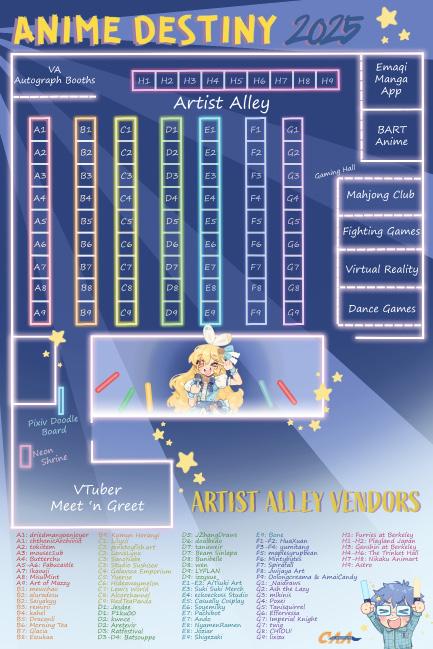
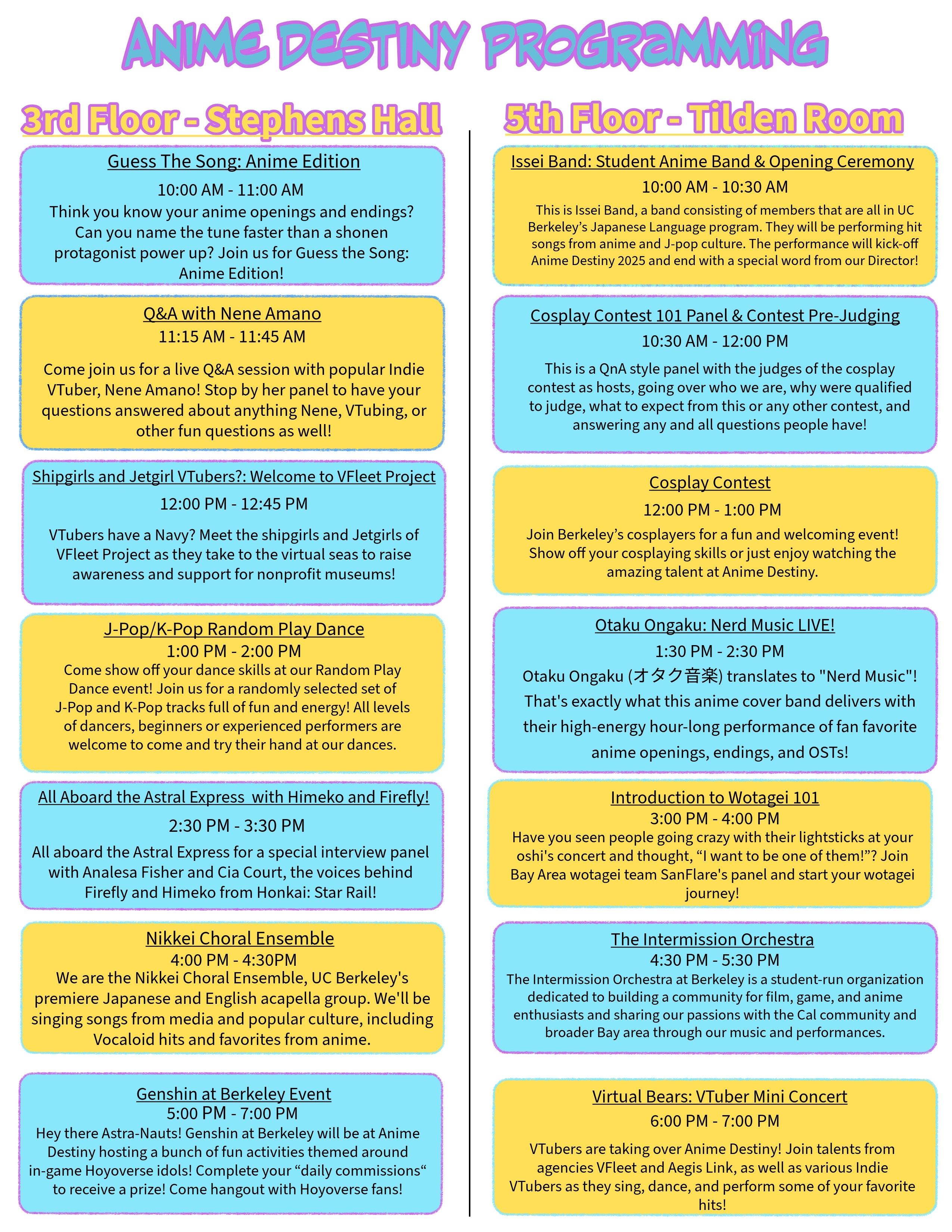
Anime Destiny
is an annual anime convention hosted, organized, and planned by UC Berkeley’s student-ran anime club, Cal Animage Alpha. Having been founded back in 1989, Cal Animage Alpha has placed its efforts for more than three decades to spread the culture and cultivate communities of the anime fan diaspora as the first of many Cal Animage clubs formed amongst California’s various universities.
This year marks one of our largest and best Anime Destiny’s yet! By the indomitable will and impressive talents of our passionate cast of club members, we have made great strides and steps in beginning to take Cal Animage Alpha to new heights. While many of you reading this will be experiencing Cal Animage Alpha for the first time today at Anime Destiny 2025, our efforts can be seen every week on the UC Berkeley Campus. Ranging from social events and anime showings to artist alleys and producing our own student run magazine, Konshuu, we do our best to make a community for all who share our passion for anime.
Anime Destiny 2025 has been our largest and most ambitious iteration yet. This time we have chosen the themes of “Idols and Music” and I believe we have delivered. This Anime Destiny is filled with music and wonder and we couldn’t have done it without Cal Animage Alpha’s hardworking members and the amazing groups we have collaborated with. We’d like to give our thanks to specifically Komun Horangi for their help in the creation of this year’s official mascot art, as well as our amazing sponsors VFleet and Pixiv for offering their support and helping make Anime Destiny happen. We are extremely grateful for all they have done for Cal Animage Alpha as Anime Destiny 2025 would not have been possible in its current greatness without their generosity.
Thank you everyone for supporting us and making this community the best it could be.