Knowledge makes a difference
DANISH PROBLEM GAMBLING COMMITTEE

DANISH PROBLEM GAMBLING COMMITTEE
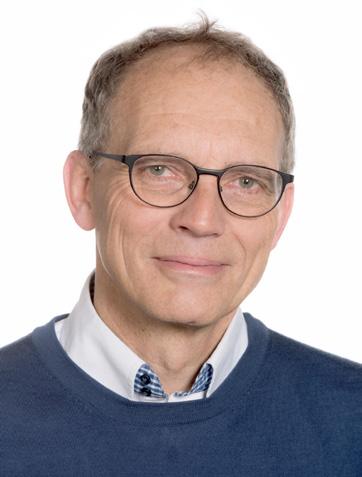
JØRGEN FRØKIÆR Chair
of the Board, Danish Problem Gambling Committee (Dansk Ludomani Komité)
Jørgen
Frøkiær is Head of Department and Clinical Professor at the Department of Clinical Medicine at Aarhus University.
Research into gambling disorder has long been underprioritized in Denmark. As a result, only recently have we begun to build a genuine research environment in this field. At the same time, gambling has become a far more visible part of everyday life, and public debate about its consequences continues to grow. The questions abound, but evidence-based answers remain scarce. Without solid knowledge, we risk inadequate regulation and exposing vulnerable groups to unnecessary harm. The need for research has never been greater.
As Chair of the Board of the Danish Problem Gambling Committee, I am pleased to reflect on the Committee’s first three years in this web magazine. I have worked across many research fields, but my engagement with gambling disorder research has sparked a particular curiosity – especially regarding gambling culture among young men. In just a few years, their spending on gambling products has doubled to around DKK 800 per month, a deeply concerning development that demands a closer understanding. I am therefore pleased that several of the projects we have supported focus on this issue in depth, making it a central theme of this magazine.
There are reasons for cautious optimism. Research has now received priority in a new political agreement in Denmark - an important step in the right direction. It is particularly encouraging that several supported projects are led by talented early-career researchers who have already delivered significant findings. With two PhD projects and one postdoctoral project, we are helping to lay the foundation for a stronger and more sustainable research environment in the years ahead. Finally, I would like to express sincere thanks to the Minister for Taxation, the Danish Gambling Authority, and Niels Brock Copenhagen Business College for contributing insights and perspectives that enrich this magazine and highlight the broader efforts taking place in the field.
danskludomanikomite.dk
Estimated figures from the Danish Gambling Authority (2021):
- 29,500 adults have a severe gambling problem
- 478,000 adults experience at least low level gambling-related problems
Among adults with moderate to severe gambling problems:
- 77% are men
- 22% are aged 18–24
An estimated 2,600 children aged 12–17 years have severe gambling problems. Most common gambling types among adults with problems:
- Online casino
- Online betting
linkedin.com/company/dansk-ludomanikomité
Anne Mette Thorhauge still remembers the day in November 2009 at the Danish Film Institute in Copenhagen, not because she was attending a conference about computer games. She had done that many times before, but this day was different.
On stage stood a representative from one of the world’s largest game producers proudly presenting the newest free-to-play version of Battlefield. The company now offered the game free of charge, generating substantial revenue through advertising and continuous in-game payments. The revelation was that this model proves far more profitable than traditional boxed games, which were purchased once.
Anne Mette Thorhauge was not sitting there with her guard up or instinctive scepticism.
But that day a quiet doubt was planted.
For years, her starting point has been that computer games should first and foremost be understood as a
legitimate and central cultural form in children’s and young people’s lives - not a marginal phenomenon, but something that shapes communities, forms identities and creates meaning in everyday life. That is precisely why she has studied games academically: not to search for problems, but to understand practices.
“Until that day, I had a predominantly positive view of gaming as a cultural form among children and young people,” she explains.
The presentation she attends centres on what the industry calls boxed content. Games sold as finished products for a one-off payment, much like buying a book or a CD. Once purchased, the producer’s revenue does not change regardless of how long or how often the game is played.
But the speaker on stage introduces a different picture. He explains how revenue in the new models largely depends on a relatively small group of players — players who, according to him, have spent very large sums of money on the game.
“That is the first time I sit there and think: Okay, what about those players? And who is looking after them?”
Free-to-play: Games that are free to start but are monetized through ads or ongoing payments.
Boxed content: Games that are sold as a finished product for a lump sum.
Ongoing transactions: Recurring in-game payments for additional content or features.
What she hears challenges her intuitive understanding of game economics. She had assumed that revenue lay primarily in the upfront purchase, not in games marketed as free. And it is not only the figures that catch her attention, but the way they are presented.
“I think it is deeply misleading to call it free. It is consumer deception.”
Payment is no longer made at the entrance but spread across the lifespan of the game through ongoing transactions. That shift fundamentally changes the nature of the product.
The centre of gravity moves from a single game experience to continuous engagement.
“Retention is absolutely central, and there are all sorts of clever ways that game producers through design can keep people’s attention,” Thorhauge explains.
She highlights design mechanisms in which excitement is tied to uncertainty - systems where players pay for access to something whose value is unknown in advance. In gaming, these are often referred to as loot boxes i.e., digital boxes containing randomised content.
“Random rewards turn out to be an exceptionally effective way of driving continuous transactions — and therefore revenue.”
According to Anne Mette Thorhauge, a grey zone has emerged that does not fit neatly into either gaming or traditional gambling logic. When is it simply a game? And when do the mechanisms resemble gambling where something of value is staked on an outcome wholly or partly dependent on chance?
“The big question is whether this should be classified as gambling and handled by gambling authorities, or whether it falls under consumer protection.”
Classification is not an abstract academic matter, she stresses. It has actual consequences. If something is defined as gambling, it triggers, among other things, an 18-year age limit regardless of how the game industry itself classifies the product.
To make the grey zones more tangible, she describes a typical pathway that often begins early.
She starts with a boy aged 11 or 12 years.
He plays a popular computer game. Perhaps he moves from Fortnite to Counter-Strike because his friends do the same. Along the way, he receives a loot box. To open it, he must buy a key. The key is inexpensive, and many parents may not hesitate to link a credit card to a gaming account for their underage son.
“He thinks he can probably manage to find the money.”
When the loot box is opened, a rare item appears (for example a knife). It is a skin: a digital item that changes the appearance of a weapon or character. If he is lucky, the virtual knife may be worth 5,000 Danish kroner.
“And that is fantastic. The uncertainty disappears, the tension is released, and it all ends with a digital prize far, far larger than the initial stake.”
The money cannot simply be withdrawn. But the skin can be sold on third-party markets — platforms outside the game itself built on the game’s infrastructure. Here, skins can be exchanged for money or other values.
At that point, the character of the activity fundamentally shifts. It can move from gaming to gambling.
“You then discover that this market is not just a place to buy and sell skins. You can also gamble with them.”
At the age of 12 years, without parental knowledge or involvement, the boy can use in-game items as stakes in gambling activities such as roulette, blackjack or betting. Not necessarily because he actively sought gambling, but because the access is already in place.
“And then you are essentially on your way,” Thorhauge says.
She is very clear that not all children follow this path; most do not. However, research and experience show that this is how minors gain access to unauthorised gambling.
Among 10–13-year-olds, around 1% have gambled several times using in-game items, and an additional 3% have done so once. In the same age group, approximately 4% have purchased scratchcards several times.
Among 14–17-year-olds, the pattern shifts significantly. In this group, the proportion with gambling experience through gaming is higher than the proportion who have purchased traditional lottery tickets. Around 6% have done so multiple times, and roughly the same number once.

Loot boxes: Digital boxes with random content that often require payment.
Skins: Cosmetic digital items in games.
Skin betting: When skins are used as stake in gambling-like activities.
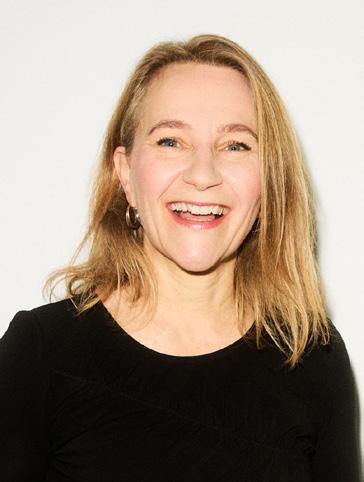
Anne Mette Thorhauge is Associate Professor at the Department of Communications at University of Copenhagen. She is affiliated with Center for Tracking and Society and the research environment for digital media and platform economies. Her research focuses on digital markets, computer games, children’s and young people’s digital media use, as well as the business models and design mechanisms that characterize digital platforms.
“It is almost as many as those who have bet on traditional sports, and it is predominantly boys ”
When young people turn 18, another shift occurs: more move into traditional sports betting. Around one quarter have tried betting on sports, and among 18–21-year-olds approximately one fifth have done so several times.
However, gaming-related gambling does not necessarily disappear.
“It remains at roughly the same level. They do not entirely leave gaming,” Thorhauge explains.
She is currently working on longitudinal analyses. There is a significant association between early loot box experiences and later gambling, but the effect is modest and depends on other factors, including whether the individual is a competitive gamer.
“What I am currently mapping is how much sex and particularly social class matters in this context ”
Anne Mette Thorhauge emphasises that most young gamers do not develop serious gambling problems. However, gambling today rarely stands alone; it is increasingly part of a broader financial youth culture in which day trading and cryptocurrency play a growing role.
“Therapists tell us they are increasingly seeing day trading as part of the clinical picture. This does not mean that investment is gambling in itself, but there are overlaps, including in how it is experienced. Watching your crypto rise in value can give you a rush similar to gambling. Day trading and crypto trading may even pose greater challenges because prices never stand still. When you play roulette or place a bet, there is a relatively quick stake and outcome, whereas with investment, values fluctuate constantly.”
Thorhauge sees parallels with familiar gambling narratives: the belief that you can outsmart the system.
Here she begins to see deeper consequences. When investment becomes not only about money but about identity - about being clever, competent and in control - losses become harder to manage, not just financially but personally.
Failures are rarely shared; instead, public attention focuses on those who succeed - those who “cracked the code”. Losses remain private, while success becomes visible.
Thorhauge then returns to gaming and gambling.
“The mechanisms are familiar: selective visibility, reward for risk-taking, and the idea that the next round can change everything. It is the same narratives recurring,” she says. “Just in different clothing.”
For Anne Mette Thorhauge, the point is not that gaming, gambling, and investment are identical, but that the same psychological and cultural patterns flow across these fields, often affecting the same young people at different stages. That is why she insists on seeing them as part of one landscape. Not three separate phenomena, but overlapping practices that reinforce one another.
And that is why she returns to her central question: not who is to blame, but how we better understand the pathways young people travel when games, risk, and money begin to mergewho is affected and whether it remains invisible.
“This is young men’s vulnerability, and we tend to look past it.”
When she speaks about young men’s situation, it does not stop at financial loss or problematic gambling behaviour. She also points to a more serious perspective that rarely becomes part of the public conversation.
“I actually think it would be interesting to examine how many of these failed financial adventures that may be connected to the elevated suicide rate among young men. Not as a conclusion, but as an open research question.”
She stresses that she is not claiming that gaming, investment, or speculation in themselves lead to suicide. But she asks whether there are connections that currently remain unexamined precisely because vulnerability is often wrapped in narratives of control, strength, and success.
She calls for more systematic knowledge about the concrete pathways into problems, not isolated anecdotes, but analyses of how gaming, gambling, and financial products intertwine over time.
“I would very much like to map these pathways. How many start in gaming? How many in sport? How many in trading? And how do these paths intersect?”
Without that knowledge, it is difficult to know where intervention should begin.
“And perhaps that is why vulnerability is so central - not because everyone is at risk, but because the landscape is full of traps, and those who feel most in control often find it hardest to see them.”
Day trading: Frequent buying and selling of financial assets in the short term.
Cryptocurrency: Digital currencies with large fluctuations in value. Financial literacy: The ability to understand financial products, risks, and consequences.

Projects developed by Anne Mette’s team, supported by the Danish Problem Gambling Committee
Gamblified Mechanics in Youth Gaming:
This project examines how gamblified mechanics such as lootboxes and chance-based rewards features in the gaming practices of Danish children and young people, and whether they are linked to gambling and risky financial behaviour. Based on a two-wave survey of 10–25-year-olds, the study tracks how gaming habits relate to factors like age, gender, and socioeconomic background over time. The project provides new insights into whether the boundaries between gaming and gambling are becoming blurred, and what this may mean for young people’s well-being and financial practices.
PI: Anne Mette Thorhauge, PhD, Associate Professor
Teenagers and gambling streaming in Denmark: a mixed-methods design study:
This project examines how gambling livestreams shape Danish teenagers’ exposure to and understanding of gambling, and how streamer practices normalise or encourage gambling among young viewers. It analyses large samples of streams from leading Danish gambling influencers using a two-stage approach: a qualitative thematic mapping of social mechanisms (e.g., community-building tactics and “big win” moments) followed by AI-assisted transcription with human validation to estimate how often these patterns occur across datasets. The findings provide an empirical baseline for understanding teenagers’ encounters with gambling content and aim to inform prevention and treatment efforts.
PI: Johanne Kirkeby, PhD
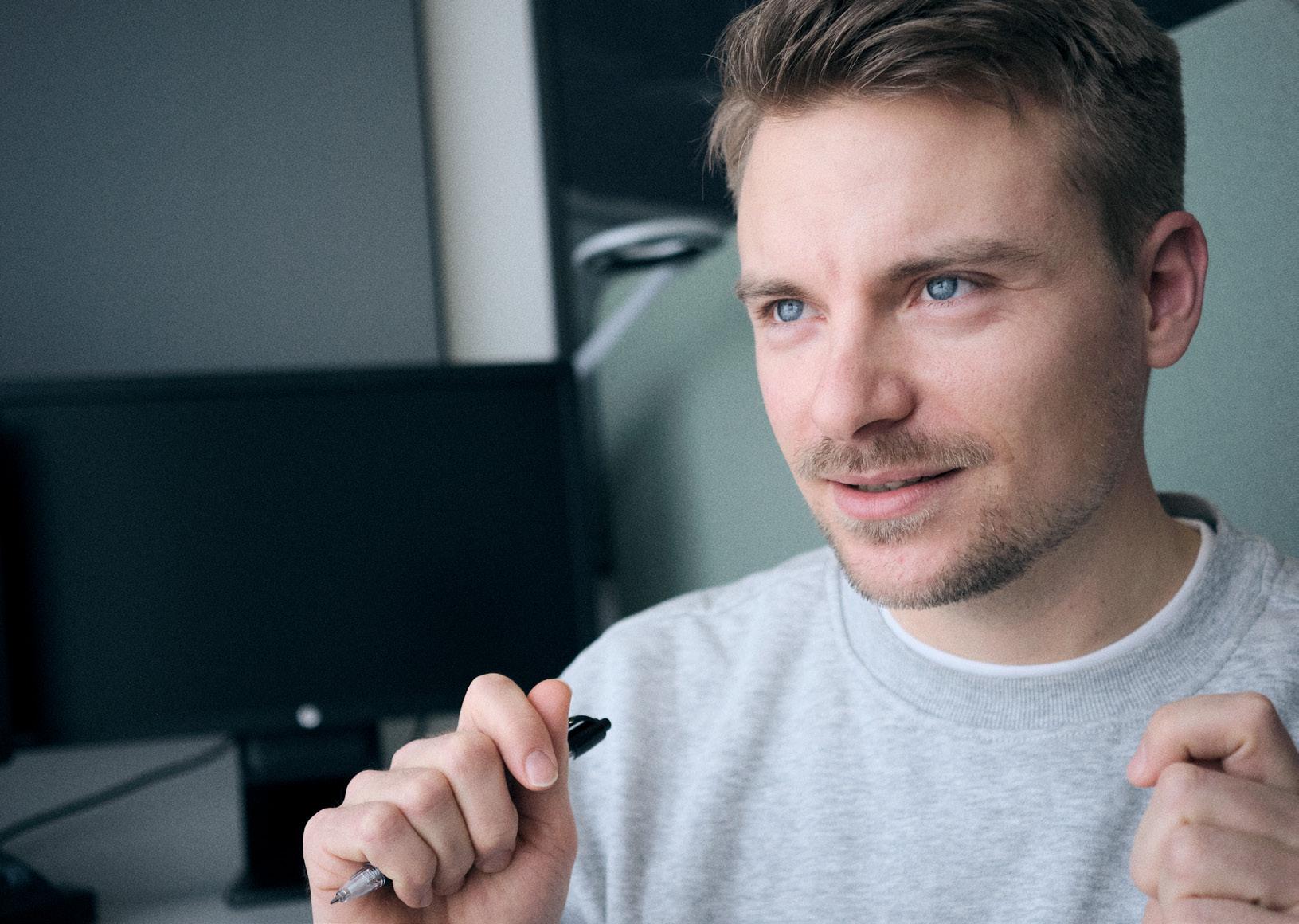
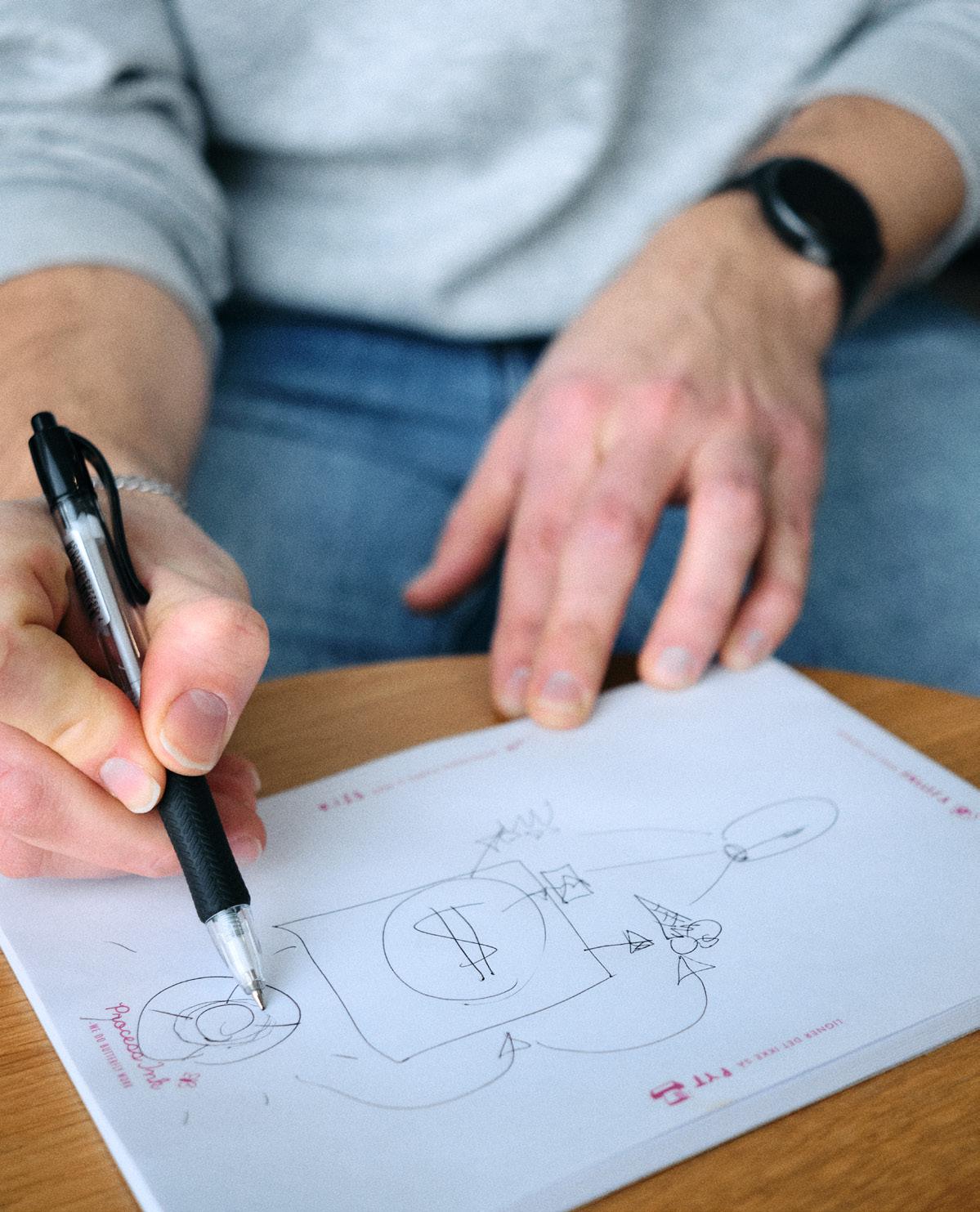
There is not one moment when everything falls into place. No single observation alone explains why Jakob Winther Eriksen, psychologist and researcher at the Research Clinic for Gambling Disorder at Aarhus University Hospital in Denmark, ends up bringing together three studies in one research project on young people and gambling. It is more of a slow realization that takes shape over several years, in the field of tension between clinical practice and research.
Jakob Winther Eriksen has long observed a pattern emerging: More and more young men are seeking treatment for gambling-related problems.
“On the treatment side, for several years now, we have seen more and more young men coming in. They are typically in their early twenties,” he explains.
“It has been a fairly stable pattern since I started.”
Much of the existing research is either based on broad population surveys or small clinical samples. What is often missing is knowledge about what happens in the period before gambling develops into a serious problem.
“I have always been interested in subgroups,” he says. “Not because the large numbers are unimportant, but because we often lack knowledge about those who are particularly vulnerable.”
His research project, ‘Youth Gambling in Denmark: Prevalence, Patterns, Drivers and Contexts –Toward Early Intervention’, is structured around three closely connected studies designed to create a coherent knowledge base.
“It is important to me that the studies speak to one another,” he says. “That we do not simply produce three separate results, but a coherent knowledge base.”
The first study draws on data from the Danish Youth Profile Survey, consisting of up to 31,000 responses from students in upper secondary education across 26 municipalities.
The survey maps well-being, health, leisure activities and risk behaviour among young people and is completed during school hours, providing detailed insights into everyday life.
“It is a dataset that provides us with very special opportunities. We can conduct analyses with a statistical power that is rarely available in this field,” says Jakob Winther Eriksen.
The study examines not only prevalence but also
associated factors such as social connectedness, performance pressure, parental contact, and gambling motives.
“It is not about identifying one single cause,” he emphasises. “It is about understanding broader patterns of risk.”
The second study focuses on gambling behaviour during school hours, typically between 8 a.m. and 3 p.m.
In collaboration with Danske Spil (Denmark’s state-owned gambling operator), gambling activity among 18–19-year-olds during school hours triggers an invitation to participate in a structured
telephone interview.
“Timing is crucial,” he says. “The longer we wait, the greater the risk that the experience becomes rationalised afterwards.”
The interviews explore context: where the young person was, whether they were alone or with others, and what prompted the decision to gamble at that moment.
“These are not interrogations,” he stresses. “They are structured conversations where we try to understand the young person and the context surrounding the gambling.”
Psychologist and research associate at the Research Clinic for Gambling Disorder at Aarhus University Hospital.
In 2026, he initiated his PhD project on problematic gambling behaviour and early intervention among adolescents and young adults.
His work combines quantitative analyses, qualitative interviews, and clinical practice, focusing on early risk factors and preventive intervention.
The project consists of three interconnected studies examining:
- Prevalence and patterns of youth gambling
- Gambling behaviour in everyday contexts, including school hours
- Development of a digital early intervention for young people
The project runs over three years and is supported by the Danish Gambling Committee.
The third study moves toward action: a digital early intervention aimed at 15–19-year-olds with emerging gambling problems.
“In an ideal world, we can draw directly on the knowledge from the first two studies,” he says.
The intervention builds on an existing treatment platform but is adapted to younger users and earlier stages of problem development.

“It is about meeting young people before problems grow large and doing so in a way that is accessible and fits into their lives.”
For Jakob Winther Eriksen, the aim is to strengthen the foundation for preventive action.
“If we succeed, we can provide municipalities, educational institutions, and treatment centres with a more precise understanding of where and how to intervene.”
“Young people do not gamble in a vacuum,” he concludes. “They gamble within an everyday life filled with demands, communities, and transitions. That is where we need to understand them and where we need to meet them.”
This research project examines how young teenagers’ self-perception as financial actors (financial literacy) is affected by the normalisation of gambling-like experiences in the their lifeworld. This development takes place through many different media and activities, including the S&P Programme, social media, shopping, sports, gaming and trading in stocks, cryptocurrencies, and the like. In addition, real illegal gambling also occurs. Addressing this problem initially calls for an investigative and indepth research approach. The project therefore uses various qualitative methods such as interviews, visual ethnography, and methods where the children themselves contribute to the documentation of their experiences, e.g., via screenshots. The objective is to gain more nuanced knowledge about the complex social and cultural consequences that the normalization of gambling-like experiences can have for young people.
The project originates from UCL University College, Department of Applied Business Research
PI: Lars Pynt Andersen, PhD, Associate Professor

Internet-based treatment compared to face-to-face cognitive behavioural therapy for patients with gambling addiction –a randomised controlled efficacy study
A PhD project that examines the effect of internetbased treatment delivered via an interactive platform and compared with traditional outpatient cognitive behavioural therapy in a large, randomised study. 150 clients will be divided between the two treatment arms over 1.5 years. The effect is primarily measured by the severity of gambling addiction, measures of the degree of gambling behaviour, anxiety, depression, and general well-being.
The objective is to clarify whether internet treatment can match the effect of traditional cognitive behavioural therapy and thereby contribute to a more accessible and geographically comprehensive treatment. The project is based at the Research Clinic for Gambling Disorder, Aarhus University Hospital
PI: Anna Westh Stenbro, PhD student
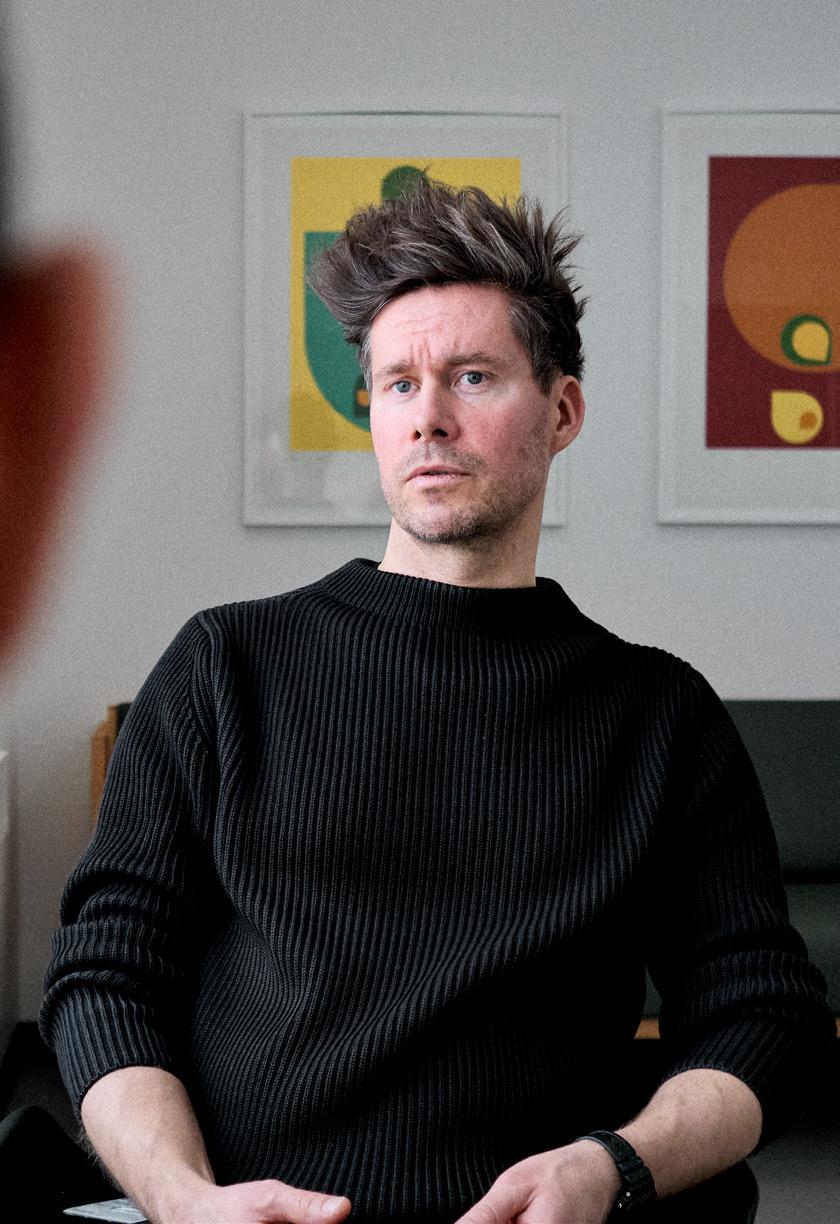
“Imagine if this is how we addressed alcohol and tobacco”
Johan Tapio Vindum Eklund wonders and asks the reader to picture the following scenario.
It is Monday morning. Johan asks a first-year business college class to listen carefully. At first, the students sit slightly restless in their chairs. It is the first lesson of the week. Some may have been partying all through weekend. Others may simply have been bored for 48 hours.
But within seconds, the room falls silent as Johan announces that the coming days will be rather special. He has planned a themed week that may stretch beyond what students — and their parents — would normally consider healthy teaching. Johan is going to teach them about tobacco. They will learn about its history. They will learn how to roll a cigar. At the end of the week, they will pose with their cigars while being photographed, although without lighting them.
He lets the image linger before expanding the scenario.
“Or imagine a pub-themed week in physics and chemistry, where students mix colourful drinks and learn about blood alcohol levels, liquid density, and chemical reactions. They would again pose with their drinks without actually drinking them.”
Johan does not need many words to describe the likely reaction.
“There would be uproar,” he says.
Parents would react. The school would be criticised. Politicians would intervene. And Johan would risk losing his job - not because alcohol and tobacco are unknown youth phenomena, but because, as a society, we recognise that they can cause harm and therefore set clear boundaries for how young people are introduced to them.
kroner and jumped up celebrating in the middle of class, many become unsure how to respond.”
Turning Off Earlier
Johan also works in treatment. With people suffering from gambling addiction. It is precisely there that his desire for prevention emerges.
“I have sat and treated and treated and treated, and I can see that they keep coming in - and they are getting younger and younger.”
He does not believe that all problems can be prevented. For him, it is about timing.
“Couldn’t we, for heaven’s sake, get someone to turn off a little earlier?” he says.
When he and his colleagues visit schools, their ambition is not to frighten the pupils/students. They do not arrive with raised fingers. Through
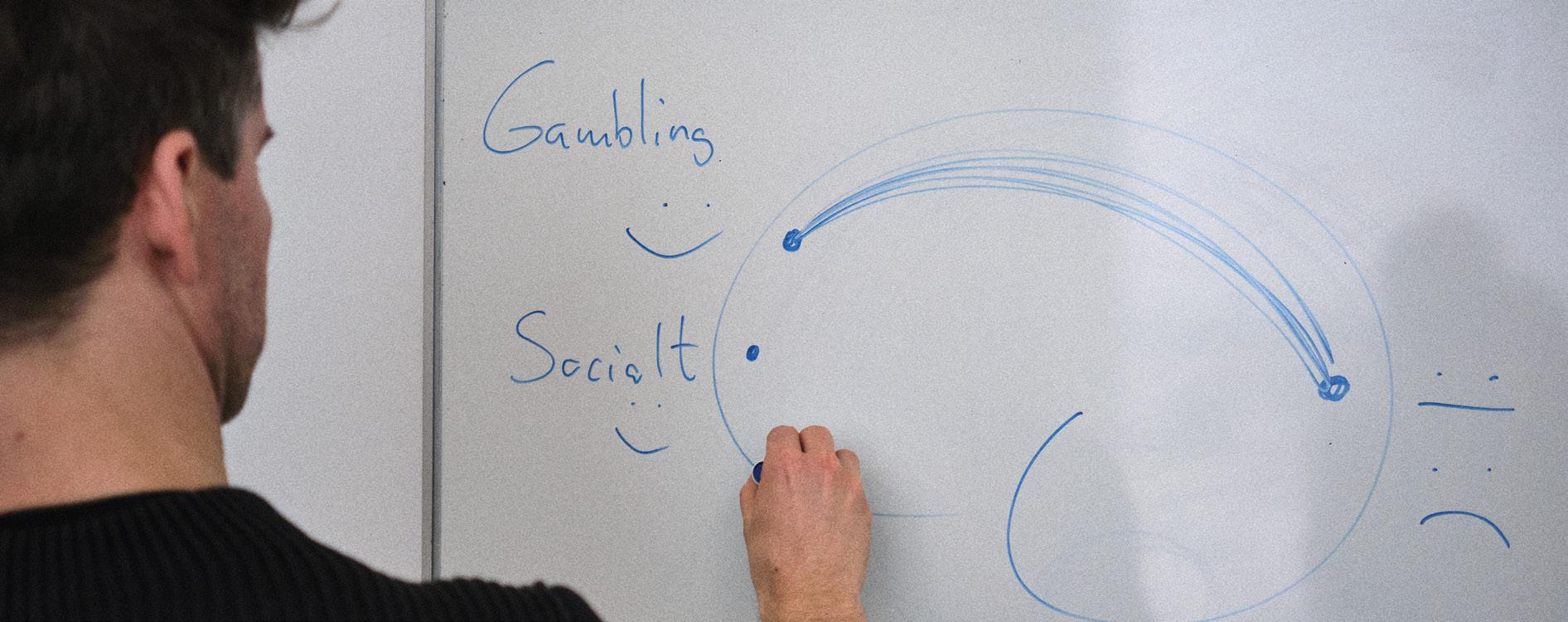
“But when it comes to gambling, we are somewhere entirely different. That is the difference I try to make visible again and again when I work with prevention in schools. Not to equate gambling one-to-one with alcohol or cigarettes, but to show how many people think of gambling as a harmless product. And if we think of gambling as harmless, it can quickly be packaged as play, community, and learning,” says Johan Tapio Vindum Eklund, adding:
“When I ask teachers, both in primary school and upper secondary education, what they would do if a student lit a cigarette or opened a beer during class, everyone knows exactly what they would do. But when I ask what they would do if a student won 1,000
their presentation, Spil For Livet (“Gambling for Life”), they bring knowledge, experience, and room for reflection.
“We want to show young people something that makes them arrive at a slightly different way of thinking themselves.”
What surprises Johan the most is how much young people share about themselves - or about a friend or partner.
Not necessarily during the presentation, but afterwards.

“It is not when we are taking questions in front of everyone. It is when we say thank you for today and remain in the room.”
Students approach, often together with friends, and talk about their own gambling behaviour.
“I gambled 23,000 kroner last year. What do you think. Do I have a problem?”
He experiences an openness he did not expect.
“It is actually very impressive how honest they are.”
To him, this signals that a space has been created where it is possible to talk about something often associated with shame and silence.
When Johan talks to young people about their gambling, one explanation returns repeatedly. It is rarely only about money; it is often about belonging.
“Sometimes it is the entry ticket to hanging out with the lads.”
He describes a pattern in which gambling does not necessarily begin as an individual choice, but as a social practice. Something done together because others are doing it.
“For some young people, betting or gambling becomes a way of being part of the group. It might happen around sport, online gaming, or simply as part of spending time together after school. Gambling becomes a shared reference point. Something you talk about, laugh about, and react to together.”
This is where he sees a decisive difference between gambling and
Johan Eklund is a clinical psychologist working with the prevention of gambling disorder among children and young people at the Research Clinic for Gambling Disorder, Aarhus University Hospital.
He leads The Dialogue Journey, a schoolbased event that uses film and personal stories to spark conversations about gambling. Students watch a short fiction film ( www.spilfor livet .dk ) about gambling disorder and hear a real-life testimony from a young person with lived experience, followed by a moderated dialogue in a safe, reflective, and fact-based setting. The format is designed to engage students emotionally and help break down taboos around gambling and risk.
many other risk behaviours: one does not necessarily gamble alone. One gambles to be included. He hears it clearly when young people articulate the consequences themselves:
“If I stop, will I also stop hanging out with them.”
It is not a statement about addiction in the classical sense. It is a statement about relationships, about the fear of exclusion, about losing access to a community that may already feel fragile.
For Johan, this means that prevention cannot only be about explaining probability and risk. It must also involve understanding the social dynamics that sustains the behaviour. If gambling has become part of how young people are together, saying no can quickly become a social no, not merely a personal one.
“Adults often underestimate how difficult it can be to leave a gambling community. From the outside, it looks simple: just stop. From the inside, it can feel like breaking with friends, routines, and identity.”
Johan is also concerned with how gambling has gradually entered digital games.
“Computer games have always been there, but gambling has moved into computer games without us really noticing.”
When he talks to young people about paid loot boxes — digital boxes with random content purchased for money — he often encounters recognition.
“They are surprisingly united in seeing paid loot boxes as gambling. It is just that their parents do not perceive it that way when their sons are gaming.”
He offers a comparison many adults may understand.
“If their son bought a Happy Meal and there was suddenly 3% alcohol in the soft drink, parents would react, but they do not show the same vigilance when it comes to games.”
In his view, gambling does not trigger the same instinctive alarm bells as alcohol, tobacco, or nicotine even though the addiction potential can be significant.
“Gambling has harmful effects even at low doses,” he says.
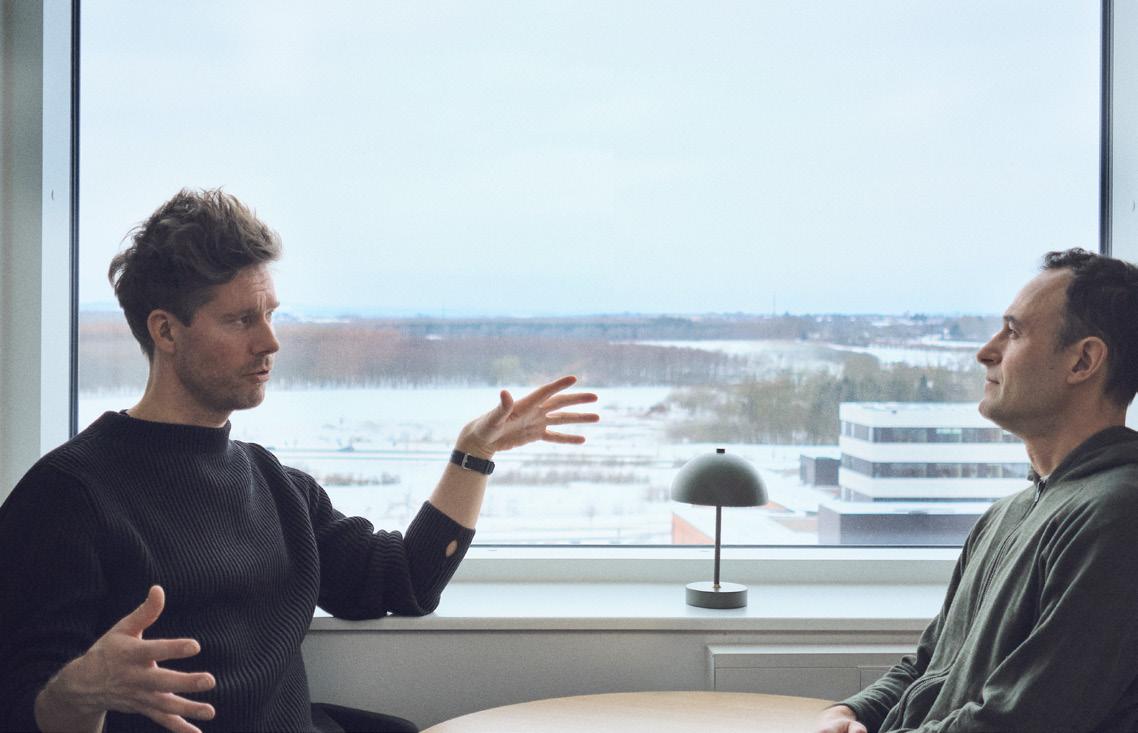
In recent years, he has observed new patterns. More young people seeking help are not only struggling with traditional gambling, but also with cryptocurrency trading and high-risk investments. They say themselves:
“If I am constantly buying and selling and checking prices, it feels like the excitement of sport.”
For Johan, again, it is not about the specific product but about the underlying dynamic.
“I deposit money, and then I gamble on whether it goes up or down.”
The fact that financial markets never close intensifies the behaviour.
“It resembles those who bet on international sports tournaments, such as tennis, that run around the clock. Young people may even set their alarm in the middle of the night to wake up and check results.”

When he stands in front of young people, balance is crucial. Prohibition alone rarely works.
“If you tell a 16-year-old he cannot do something, he will go straight in that direction.”
Johan therefore insists on dialogue. Clear dialogue.
“We do not say that you cannot gamble when you turn 18 years. It is legal. But we want to inform about both the enjoyment and the risks.”
He and his colleagues share tangible figures and rules of thumb. Not as moral judgement, but as guidance. One example that resonates particularly with those approaching 18 is:
“If, as an adult, you keep your gambling below one per cent of your total income, it has limited consequences. If you gamble more than that, the risks increase significantly.”
And then he adds something that often surprises:
“The worst thing that can happen is that you win, because that is what creates the rush you want to experience again and again.”
A recurring theme in Johan’s work concerns the signals young people receive from adults.
“If a young person goes to his father and asks whether they should place a bet together, and the father simply hands over his phone without hesitation, then our preventive work — and that of others — is worth very little.”
He experiences that parents are often attentive to risks in the physical world, but far more relaxed in the digital one.
“We hand young people the keys to the digital world without really taking an interest in what they are doing there.”
He therefore sees a strong need to involve teachers and parents more systematically.
“If we as adults see gambling as a harmless product, we handle it accordingly, and then things can go wrong.”
The Long Haul Johan does not hide that prevention is difficult to measure.
“I can only hope that someone stops a little earlier, or seeks treatment a little earlier.”
Sometimes he thinks about those he meets later in the course.
“If only I had met him two years earlier.”
But he insists that the work is necessary.
“This is a long steady effort.”
To him, the situation resembles our relationship with alcohol decades ago before society began to address its consequences openly.
“We need to shift awareness about gambling, not only among young people, but across society as a whole.”

When Headmaster Dorthe Guldbæk Møller walks the corridors of NGV Business College today, there is a different kind of silence than there was just a few years ago. Not silence as such, but a calmness. Students sit together in small groups, speaking in low voices, and no one has their eyes fixed on a mobile phone.
“It isn’t total silence, but a noticeable calm that has settled among the students. They talk to each other far more now face to face,” says Dorthe Guldbæk Møller.
The change is the result of a deliberate decision to introduce a mobile-free school day and distractionfree teaching. The policy applies to all six Niels Brock Business Colleges in Copenhagen – around 4,000 students in total.
At the beginning of the school day, students must hand in their mobile phones. They are locked away and can only be collected once the day has ended. The rule applies to all students, including those over 18. Computers may only be used for educational purposes, and access to gaming, gambling, streaming and online shopping is blocked on the school network.
“It is a fully intentional strategy within the broader initiative we call Focus on Learning, Wellbeing and Formation where we work with distraction-free teaching,” she explains.
“We genuinely want our students to learn to concentrate and immerse themselves in their
studies. And we want them to be present in the community and build even stronger social relationships.”
Locking away mobile phones does not mean that gaming and gambling disappear from young people’s lives. It simply means they do not take time away from lessons. The challenges still exist and surface elsewhere.
“I think it’s a new form of community. People gather around the one who is playing.”
For some students, gambling becomes a point of connection; for others, a barrier.
“We have students who tell us that they find it difficult socially because they don’t want to be part of the gambling.”
The school’s awareness of unhealthy gambling did not come from statistics, but from everyday experience. Teachers and advisers began to notice recurring patterns: lack of energy, difficulty concentrating, and absence.
“We could sense that a tendency was emerging, and in the past couple of years, we have had two students who ended up in treatment for gambling disorder.”
When staff step in, it is essential not to moralise.
“We have to speak to them professionally and as human beings. Many of them already know when gambling is starting to take over.”
“Boys are risk-taking. They cannot always see the consequences, which may only emerge far into the future.”
Conversations are tailored to the student’s age and situation. For students under 18, parents are involved.
“It is enormously important that parents remain attentive and insist on being parents.”
“We very much want to work together with parents – preferably as early as possible.”
As a business college, the school attracts many students with an interest in finance and investment.
“Many of our students want to make money - and perhaps large amounts of money.”
“Years ago, money was much more tangible. Now money is digital; you just swipe.”
Dorthe Guldbæk Møller points to the blurred boundaries between gaming, gambling, and investment. Young people may move from entertainment-based play to financial risk without clearly distinguishing between them.
“As a school, we have an important task in helping students distinguish between gaming, gambling, and investment. Not to moralise, but to give them the language and understanding that enable them to make more informed choices.”
One thing is for sure if the students run into trouble:
“My door is always open,” says Dorthe Guldbæk Møller. It does happen, but she wishes even more students would come forward with concerns.
“I wish even more young people – whether the student himself, his friend or girlfriend - would drop by for a conversation.”
“It is about offering help as quickly as we can.”
Finally, she calls for more knowledge.
“I would like more research into students’ transition from sports gambling to financial gambling.”
“What exactly happens when that shift occurs? And what can we do to help young people?”


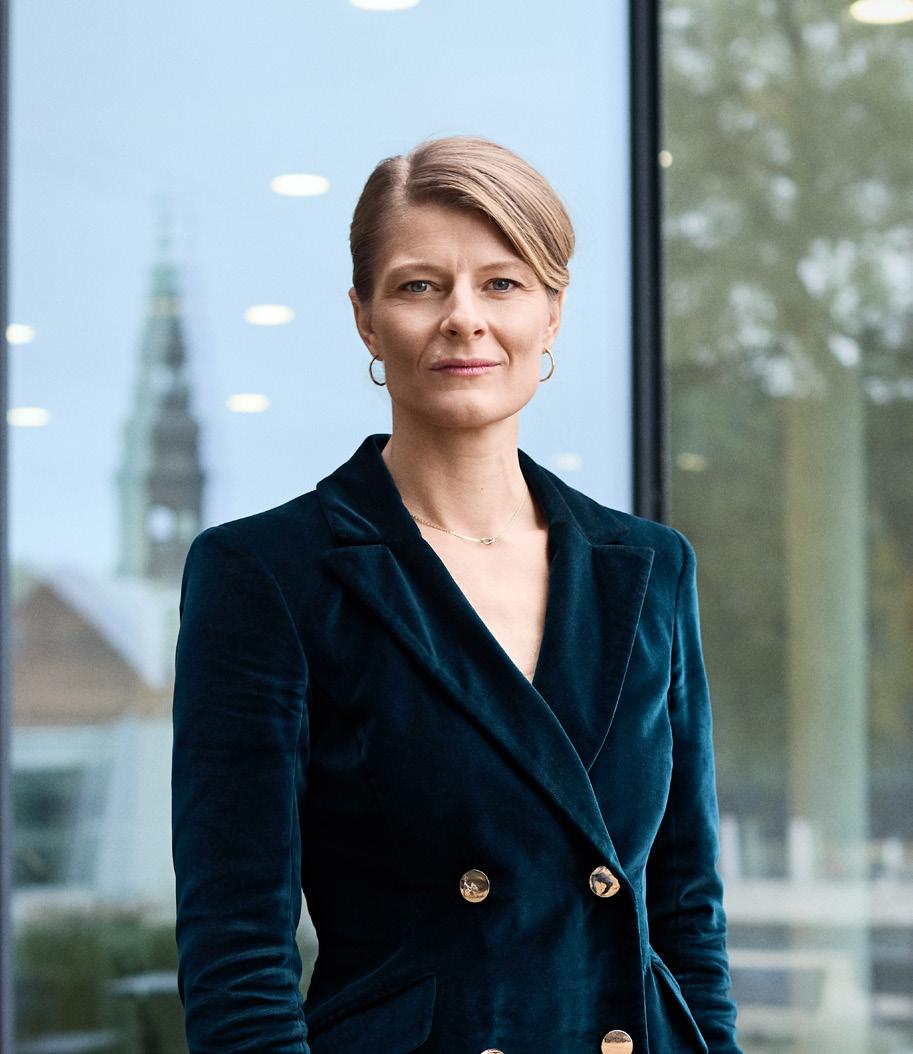
Minister does not rule out exploring a research levy on gambling operators if knowledge and regulation are to keep pace
When Ane Halsboe-Jørgensen took office as Minister for Taxation in September 2025, things began to move quickly. One of her first achievements was securing a broad political majority for the socalled Gambling Package 1, designed to regulate the gambling market. This was a task several of her predecessors had failed to complete. For Ane Halsboe-Jørgensen, there was never any doubt about her priorities.
“I could, as a new minister in this area, choose between postponing the work or prioritising it from day one and spending my first month negotiating an agreement. I made an active decision that we needed to get it done as quickly as possible.”
Just four weeks later, Gambling Package 1 had secured broad cross-party backing. Yet despite the pace, the Minister remains uncertain whether it is fast enough.
“I have a sense that this is evolving so rapidly that the knowledge we rely on risks becoming outdated before we can turn it into policy.”
Gambling among young people must not become the norm
As both a minister and the mother of a ten-yearold boy who recognises most gambling operators by name because of their extensive marketing, Ane Halsboe-Jørgensen is concerned about what she calls the normalisation of gambling, particularly among young men.
“I feel that there has been a shift, especially among young men. It is almost becoming the new normal that betting is an integral part of watching a football match together.
“I can see how it finds its way into many of the streamers and gaming influencers that young people follow, and through that channel it becomes normalised as well.”
She believes that problematic gambling often begins not with traditional betting, but through gaming environments.
“I can clearly see the mechanisms built into some games that then feed into gambling.”
“That is also something I hear when I speak to young men who have run into difficulty. Many of them started as young boys playing computer games.”
Following the adoption of Gambling Package 1, the Minister has signalled a political shift. Gambling advertising is now viewed as a societal issue requiring stronger responsibility from operators.
“Firstly, gambling policy falls under the Ministry of Taxation. Secondly, this is about regulating a market that requires the strong economic and legal tools my ministry possesses. This arrangement makes it possible to respond swiftly to new forms of gambling and business models before the consequences fully reach the health and social care systems.”
“My clear ambition is to bring forward a Gambling Package 2, which I hope can be adopted before the general election, no later than autumn 2026.”
Ane Halsboe-Jørgensen acknowledges that the balance between funding research, prevention, and treatment may need adjustment.
“It may well be that the distribution among research, prevention, and treatment is not appropriate, and I am prepared to engage in further discussions about that. I would not rule out discussing new funding models, including a possible research contribution to research from gambling operators.”
As former Minister for Culture, she was involved in introducing the cultural contribution scheme, under which streaming services contribute to Danish film and television production. This experience informs her openness to similar models in the gambling sector.
“I certainly would not rule that out. I actually think we should consider this question quite openly — how this sector should function in the future, and how the consequences of having a gambling market can be mitigated.”
“We need research. But we also simply need to keep up.”
Gambling Package 1 is a broad political agreement concluded on 24 October 2025 between the Danish Government and a parliamentary majority. The agreement aims to curb and reverse the rise in gambling addiction and strengthen the protection of children and young people.
1. Significant Tightening of Gambling Advertising
- Ban on gambling advertisements in public transport and near schools and upper secondary institutions
- Expanded “whistle-to-whistle” ban during live sports broadcasts
- Ban on the use of authority figures, sports stars, and individuals under 25 years of age in gambling advertisements
- Stricter requirements for social media marketing, including mandatory age filters
- Ban on welcome bonuses involving free gambling credit.
2. New Structure for Research, Prevention, and Treatment
- The Gambling Addiction Fund is now reserved exclusively for prevention and treatment
- A separate research fund has been established
Research funding:
- DKK 2.5 million allocated every second year for research
- Additional knowledge and evaluation funding (DKK 2 million in 2026 and DKK 1 million in 2029)
Financial framework:
- DKK 13 million in 2026
- DKK 44 million in 2027
- DKK 40 million annually from 2028 onwards
The interview with the Minister Ane Halsboe-Jørgensen was done right before a general election for the Danish Parliament was called in March 2026.
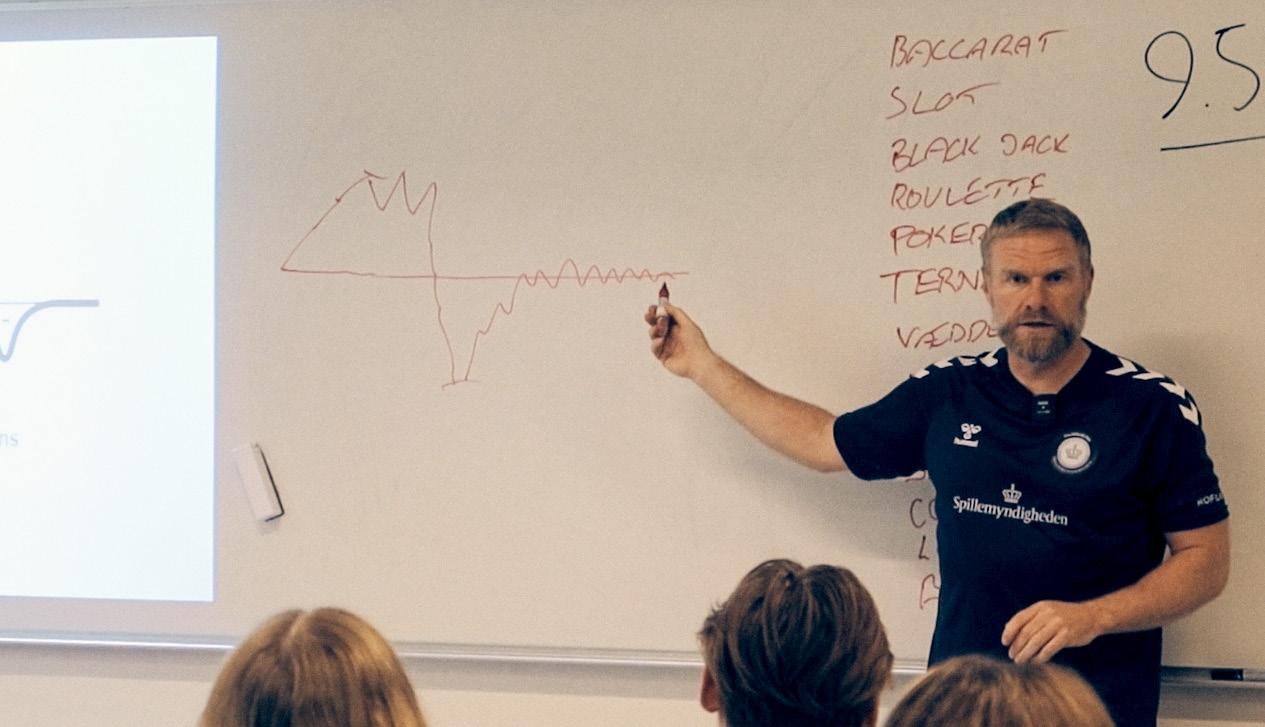
Heine Jakobsen
Educator and speaker at the Danish Gambling Authority.
He delivers educational programmes at upper secondary institutions focusing on gambling mechanisms, risks, and responsible gambling. His approach is dialogue-based and centred on making probability and return-to-player concepts understandable.
At first glance, it may seem to defy all common sense to talk to young people about the risks of gambling by presenting them with a roulette wheel. Yet that is precisely what the Danish Gambling Authority does when educator and speaker Heine Jakobsen visits upper secondary schools across Denmark.
“Yes, we have absolutely thought about that because we understand that it may look quite dramatic when we place a roulette wheel on the table,” says Heine Jakobsen.
“But it is important to remember that our overall principle when we are out at schools is to teach young people how gambling products function. We deliver a fact-based educational presentation. That is our starting point.”
“It is extremely important for us that we do not raise a finger or come across as judgemental or paternalistic. That is our approach, and we do not deviate from it.”
When Heine Jakobsen and his colleagues enter a classroom, they can clearly sense what students expect.
“Because we are the ‘adults’ coming in, and we are very aware of that,” he says.
“Young people expect us to arrive with a raised finger. They expect a prohibition lecture. They sit there — if not quite wearing a sceptical expression — then at least leaning back with folded arms.”
But once the roulette wheel is brought forward, the atmosphere shifts and the dialogue begin.
“They become extremely curious, and also a little confused, because it clashes with what they thought was going to happen,” he explains.
“So, we use it partly as an icebreaker, but also very much pedagogically, because we bring it along to underline the points we are making.”
The teaching takes place class by class, in familiar surroundings where students feel safe enough to speak openly.
“That is a conscious choice,” says Heine Jakobsen. “That is where we get the honest dialogue.”
The roulette wheel does not function as a game; it is used only once, specifically to visualise key mathematical concepts.
One student places tokens on all 37 numbers, covering every outcome. The ball lands. The winnings are paid, but because the payout is 36 times the stake, the student is simultaneously guaranteed to win and guaranteed to lose.
“We present two main concepts to the students: return-to-player percentage and variance,” says Heine Jakobsen.
“The return-to-player percentage is absolutely crucial. It is built into the structure of the game and means that the operator will always win in the long run.”
“Variance explains why gambling can feel unpredictable and exciting even though, mathematically, you will lose money if you gamble long enough.”
The second part of the presentation focuses on recognising when gambling might be becoming problematic.
“We typically operate with three signs,” explains Heine Jakobsen.
“The first is time. Are you spending a disproportionate amount of time on gambling?”
“The next sign is money. If you are spending more money than you are comfortable losing but continue gambling anyway, that is clearly a sign of loss of control.”
“Finally, we address escapism. If you are struggling with other problems in your life and try to manage them through gambling, that is also a serious sign of loss of control.”
Students are also introduced to support options and responsible gambling tools such as StopSpillet (Stop The game) and ROFUS (Denmark’s national selfexclusion register).
Since 2022, the Danish Gambling Authority has delivered more than 200 educational sessions, reaching several thousand students.
“We did not want to rely solely on our gut feeling that we could make a difference,” says Heine Jakobsen.
Evaluations show increased awareness of how gambling works and a stronger perception of gambling as entertainment rather than as a source of income.
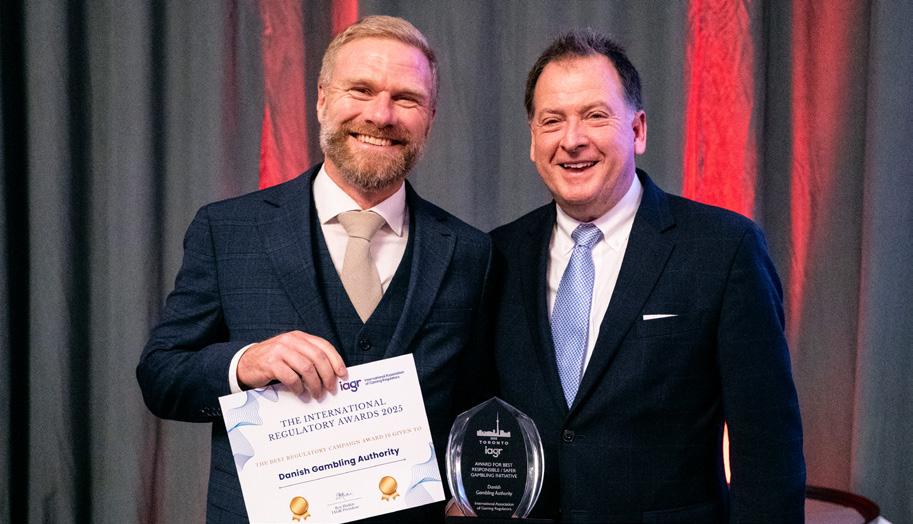
The initiative has received international recognition for two consecutive years, first for the campaign ‘The One-Armed Bandit’, and then for the upper secondary educational model itself.
“It is very unusual to receive recognition two years in a row,” he says.
Heine Jakobsen notes that gambling mechanisms increasingly resemble elements found in gaming and financial products.
“In terms of mechanisms, there are many parallels.”
For him, the purpose of the initiative is not moral condemnation, but education.
“If you want young people to listen, you have to meet them where they are and give them something they can relate to. Our teaching is not the solution in itself, but it is the beginning of a conversation that otherwise rarely takes place outside the classroom.”
The Danish public authority responsible for regulating and supervising gambling in Denmark.
Responsibilities include:
- Licensing operators
- Monitoring compliance
- Consumer protection
- Promoting responsible gambling
The Authority also conducts preventive campaigns and educational initiatives at upper secondary institutions.
ROFUS (Register of Voluntarily Self-Excluded Players) is Denmark’s national self-exclusion register for gambling.
The register is administered by the Danish Gambling Authority. Individuals who register in ROFUS are excluded from all licensed online gambling operators in Denmark, as well as from physical betting shops and casinos.
Registration can be temporary (for a chosen period) or permanent. During the exclusion period, licensed operators are legally required to block access and prevent marketing to registered individuals.
The purpose of ROFUS is to provide a tangible protective tool for individuals who wish to limit or stop their gambling and to strengthen consumer protection within the regulated Danish gambling market.
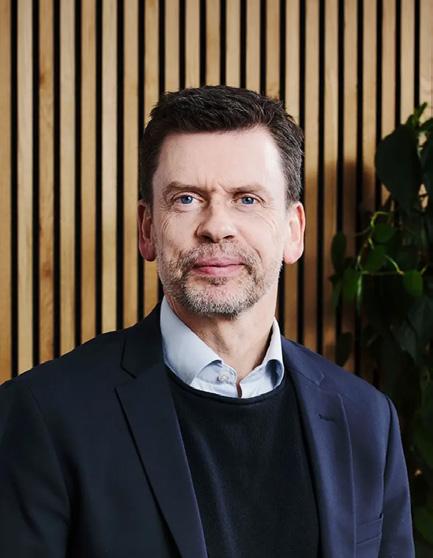
Søren Kristiansen has spent a great deal of time assessing other researchers’ ideas for projects. As an evaluator and adviser, he has served on both international and national review panels where funding is allocated on the basis of academic quality.
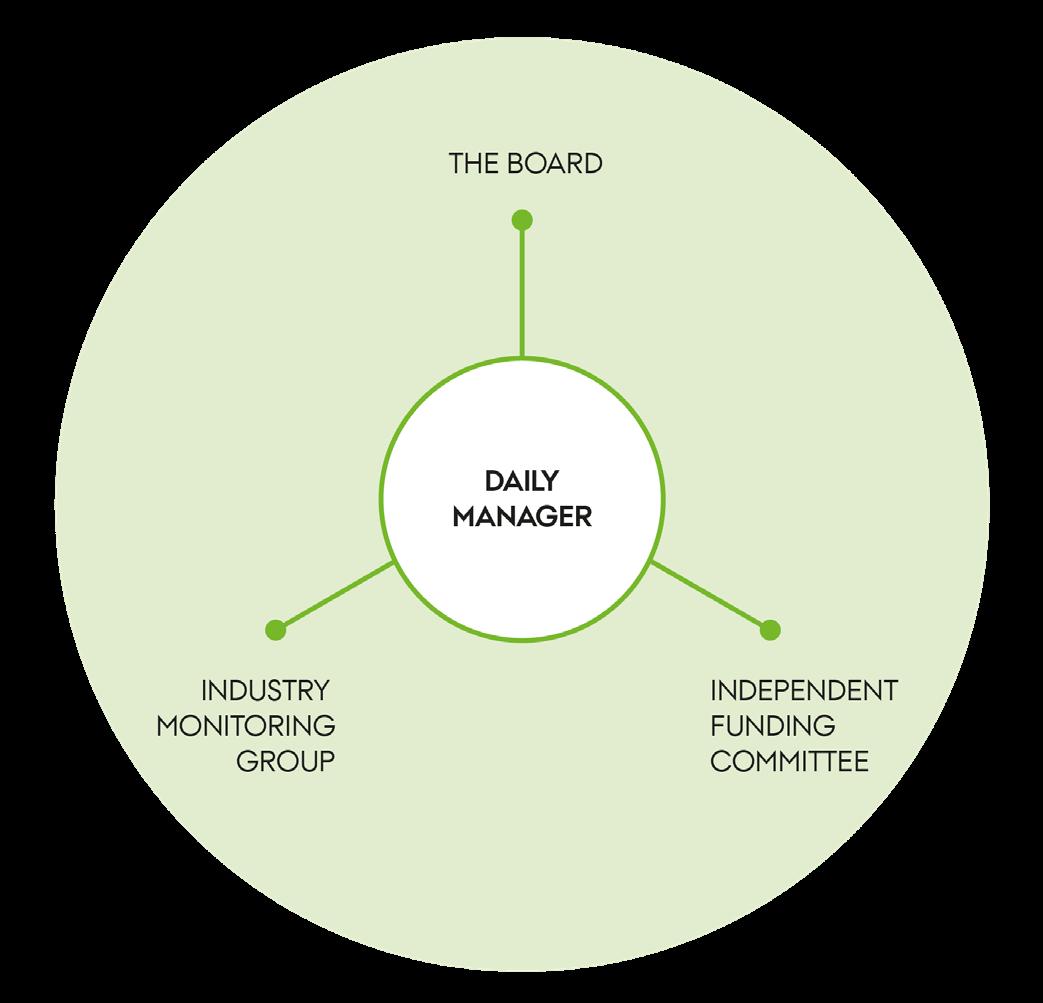
Today, he is Associate Dean at the Faculty of Humanities and Social Sciences at Aalborg University. He is also on the board of the Danish Problem Gambling Committee (Dansk Ludomanikomité, DLK), a foundation that funds research into gambling disorder. DLK also publishes the digital magazine you are reading now. The Committee’s research funding comes from voluntary donations from gambling operators licensed in Denmark.
His work with the allocation of research funding has taught him that quality and trust begin long before the money is distributed.
“The clearer the funding criteria are, the greater the likelihood of receiving strong applications. And the easier it becomes to provide a clear, fair and understandable explanation when an application must be rejected.”
For him, research funding is not just about money. It is about transparency, predictability and clearly defined rules of the game. But as a member of the DLK board a new aspect of research funding has emerged.
“It is actually the first time I have come so close to ethical concerns that relate to being funded by stakeholders who may themselves be the object of research.”
The Role of Private Foundations – and the Risk of Imbalance
Today, private foundation funding is an essential prerequisite for the current scale of Danish research.
“The Danish research environment could not sustain the volume of research we currently have without private foundations.”
“My research CV would have been shorter. I would have conducted less research and had fewer resources for data collection.”
According to Søren Kristiansen, private funding is not a problem in itself, but:
“It only becomes a problem if research integrity is threatened. But as long as researchers have the right to choose their data and methods freely, the right to publish their results, and are otherwise free to conduct the research as they see fit, I do not see major challenges.”
Large foundations can still shape research agendas and influence the research landscape when very large research areas attract a disproportionately large share of funding – often at the expense of smaller, but socially important, fields, Søren Kristiansen explains.
In recent years, major funding streams have been directed towards areas such as the green transition, climate research, health, artificial intelligence and digitalization. If you work within a niche area that is not currently on the political agenda, your opportunities are considerably more limited.”
“There have been very limited public funds available for this type of research, and very few private foundations have focused on the field.”
According to Søren Kristiansen, there are researchers who will refrain from accepting funding based on voluntary donations from an industry that may contribute to creating the very problems being studied. That may be because it can be difficult to eliminate the suspicion that those who paid for the party also chose the music.
“Even when funding decisions are made at arm’s length from the donors, the assessment is carried out by recognised experts, and the researchers retain full academic freedom, there can still some suspicion,” Søren Kristiansen explains.
“For a researcher, integrity is the most important value of all. Once that is questioned, it can be very difficult to rebuild trust later.”
“If you look at how DLK funds are allocated, who evaluates the applications, and which rights the researchers have, it meets the standards that one should expect in such funding processes. There can be a degree of initial scepticism, particularly among researchers who are not familiar with the Danish context, but when the arm’s-length principle and the academic safeguards are clarified, that concern is often reduced.”
Ultimately, research funding requires clarity: clear criteria, clear procedures, and clear boundaries between funders and researchers. That also goes for the smaller areas of research with limited access to funding, such as gambling disorder.
Today there is a growing political attention to gambling. which creates a stronger need for research-based knowledge. For Søren Kristiansen, this reinforces both hope and the importance of maintaining clear frameworks, transparent procedures and academic independence in funding structures.
“There may actually be a bit of tailwind at the moment. Things seem to be shifting.”
danskludomanikomite.dk