For advertising opportunities, get in touch with TBWA\ANG on passaggi@tbwa-ang.com or (+356) 2131 0608
Abigail: abigail@tbwa-ang.com or (+356) 9929 0518
PHOTOGRAPHERS
Aaron Borda
Arts Council Malta
Carl Farrugia
Daniel Pisani
Edward Bonello
Focus Fotos
Gozo Album
Karl Farrugia
Fr Marc Andre Camilleri
Joe Smith
Simon Alden
Terry Camilleri
Tonio Schembri
Tony Gatt
VisitMalta
HOW TO PRONOUNCE PASSAĠĠ
I /pasˈsadʒi/
Here’s the breakdown: • /p/ as in pass • /a/ as in art • /sˈ/ as in sun (with stress on the following syllable) • /dʒ/ as the sound of the j in 'judge' (geminated or doubled sound) • /i/ as in eat
The word passaġġi means 'passages' in English.
The publisher, authors and contributors reserve their rights with regards to copyright. No part of this magazine may be reproduced or copied by any means without the written consent of the publisher. Editorial features and opinions expressed in Passaġġi do not necessarily reflect the views of KM Malta Airlines, the publisher, or the editorial team. Both KM Malta Airlines and the publisher do not accept responsibility for commercial and advertising content. Although the authors and publisher have made every effort to ensure that the information in this magazine was correct before going to print, the author and publisher do not assume and hereby disclaim any liability to any party for any loss, damage, or disruption caused by errors or omissions, whether such errors or omissions result from negligence, accident, or any other cause. Special thanks to KM Malta Airlines and VisitMalta for the provision of photographic material. Printed in Malta by Gutenberg Press. All magazine rights are reserved by KM Malta Airlines.
TBWA\ANG, 3rd Floor, Professional Building, Sliema Road, Gżira GZR 1633 Malta \ (+356) 2131 0608 \ tbwa-ang.com
Welcome to
David Curmi Executive Chairman KM Malta Airlines
As we move into February, the year is already gathering pace. While winter travel continues across Europe, many passengers are also beginning to plan ahead – whether for short weekend breaks, Easter travel, or the busy summer months to come.
With demand for travel in 2026 shaping up to be strong, we encourage passengers to book early to secure their preferred dates and fares. Both our forthcoming summer and winter schedules are now on sale, and it is useful to know that KM Malta Airlines flights become available for booking up to 330 days in advance of travel.
Our KM Rewards loyalty programme continues to grow, and we are pleased to introduce exclusive memberonly discounts available to KM Rewards members when logged in on our website. These special fares are designed to reward our loyal customers with added value each time they travel. If you are not yet a member, joining is simple and allows you to start benefiting immediately.
Customer satisfaction remains a key focus for KM Malta Airlines, and we are pleased to share that in 2025 we achieved a very strong Customer Satisfaction (CSAT) score of 90 per cent, based on responses to our postflight customer surveys. Passenger feedback highlighted on-time performance, Business Class dining, and the warmth and professionalism of our crew as some of our strongest attributes. This feedback is invaluable in guiding our ongoing efforts to refine and enhance every stage of the customer journey.
For those looking to enjoy a wellearned break, KM Malta Holidays offers a convenient way to book flights
and accommodation together, with the flexibility to add extras such as airport transfers or car hire. Whether planning a short winter escape or a longer stay, this all-in-one booking experience makes holiday planning simple and stress-free.
Winter is also a wonderful time to discover Malta and Gozo. With milder temperatures, fewer crowds and a rich calendar of cultural and outdoor experiences, it is an ideal season to explore the islands at a relaxed pace. Our recently introduced car rental option makes it easier than ever to travel independently, offering flexibility, convenience and access across both Malta and Gozo – perfect for discovering scenic coastal routes, historic villages and hidden gems.
This month, we have included a very interesting article focusing on the invaluable work carried out by our KM Malta Airlines Technical and Engineering teams (see story on PG 76). Safety is our number one priority, and very often, the hard work carried out by behind-the-scenes teams goes unrecognised. This makes for a very interesting read so please enjoy it.
As we look to the months ahead, our focus remains on delivering safe and reliable operations, attractive travel options and a customer experience that reflects the pride we take in being Malta’s national airline. Thank you for choosing KM Malta Airlines. We look forward to welcoming you on board again soon
The KM Malta Airlines In-Flight Magazine
Fiona Galea Debono Editor
It is always a good sign when I have too many stories competing for space on the cover of this magazine. Narrowing them down to just three is no easy task, and Passaġġi’s designer is often tasked with persuading me to trim the word count as I enthusiastically try to squeeze as much preview as possible onto the cover.
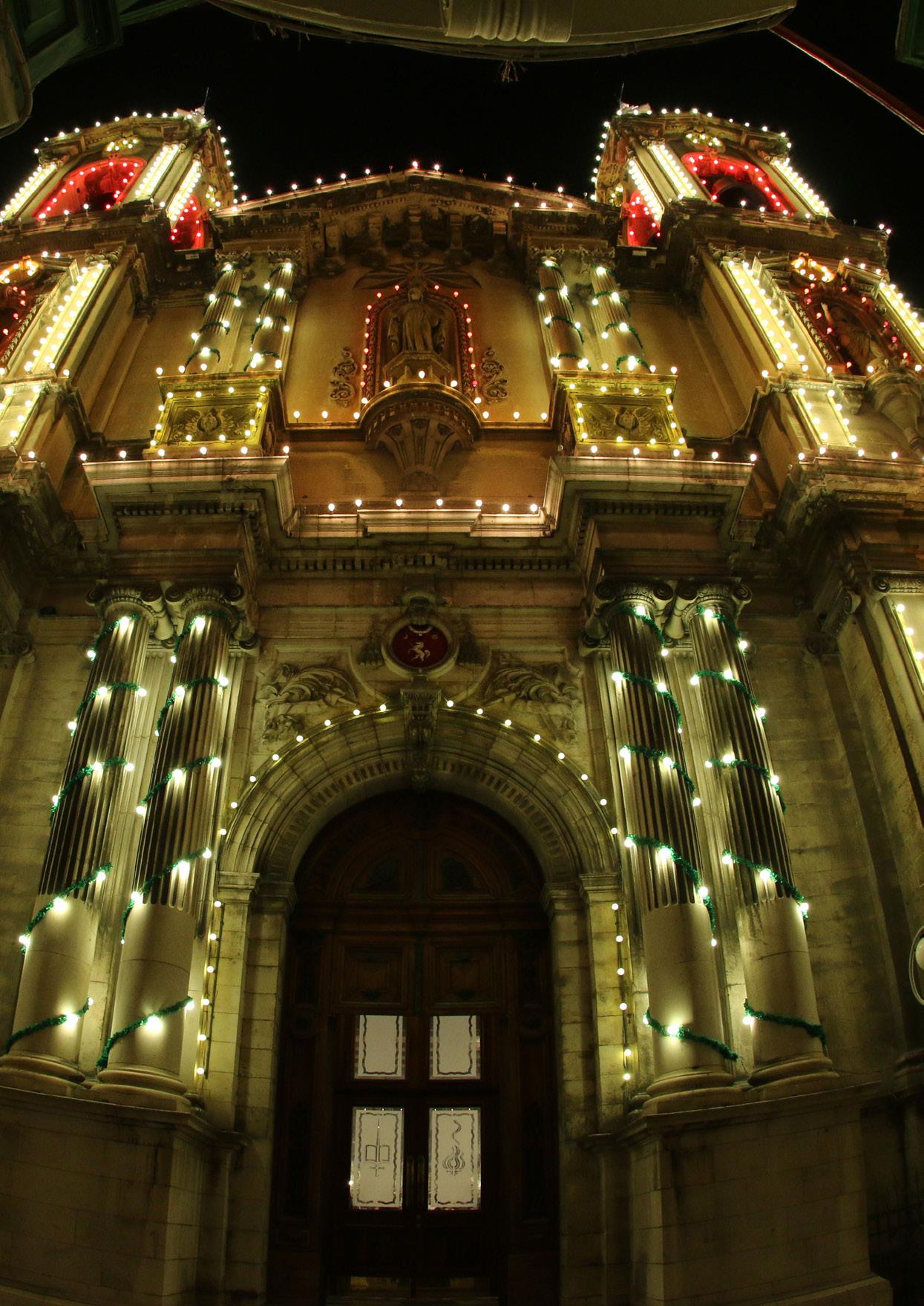
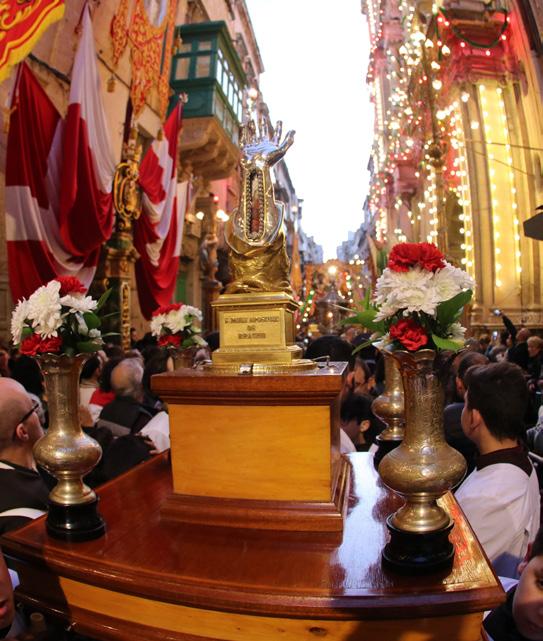
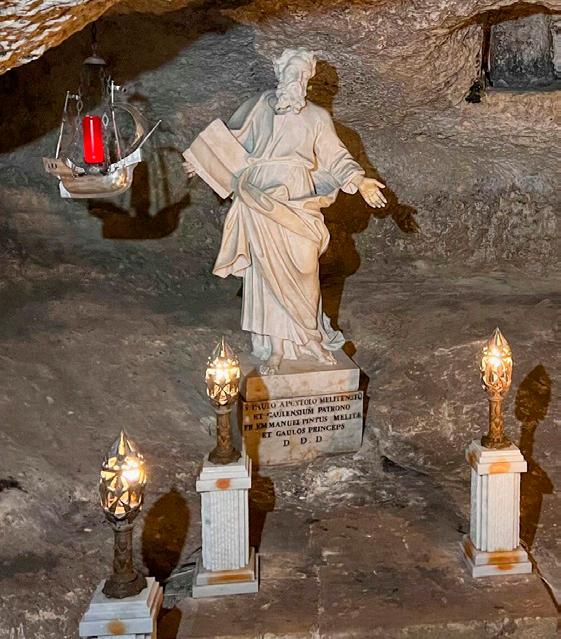
The February issue is a perfect example, brimming with stories that capture the richness of island life. Among those that did not make the cover are in-depth, meticulously researched features on the origins and evolution of Carnival in Malta and Gozo, offering a fresh perspective on this vibrant celebration of costume and creativity; on Lent, which follows Carnival’s burst of indulgence; and on the arrival of St Paul, tracing the enduring marks he left on the island’s sites, art, heritage and feasts.
A reader once remarked on the way our monthly village features combine a strong sense of place with a personal touch. February’s chosen destination, Qrendi, continues this tradition, inviting both visitors and locals to rediscover the villages we too often overlook. Join our author on an exploratory walk guided by curiosity and a thirst for knowledge, and uncover a wealth of history, art, architecture and charm within just 4.9 square kilometres and slightly beyond its borders.
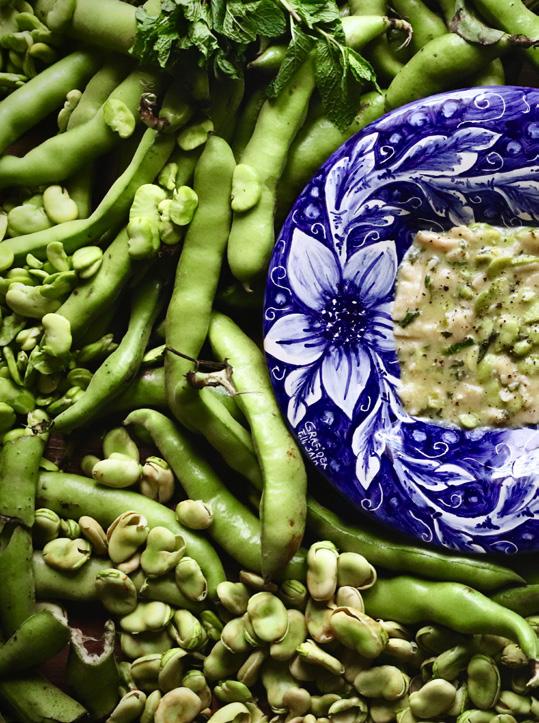
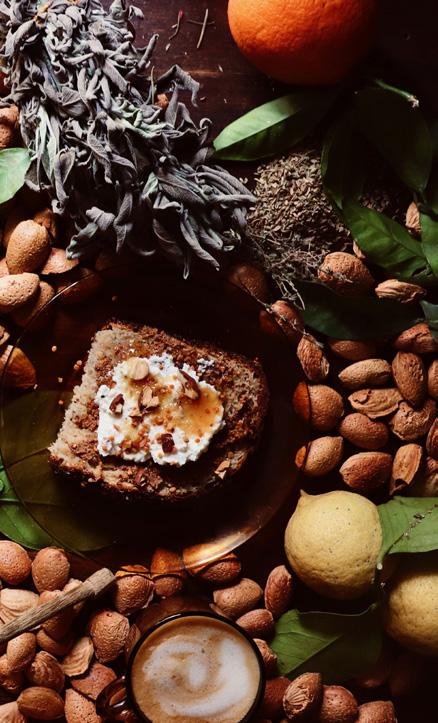
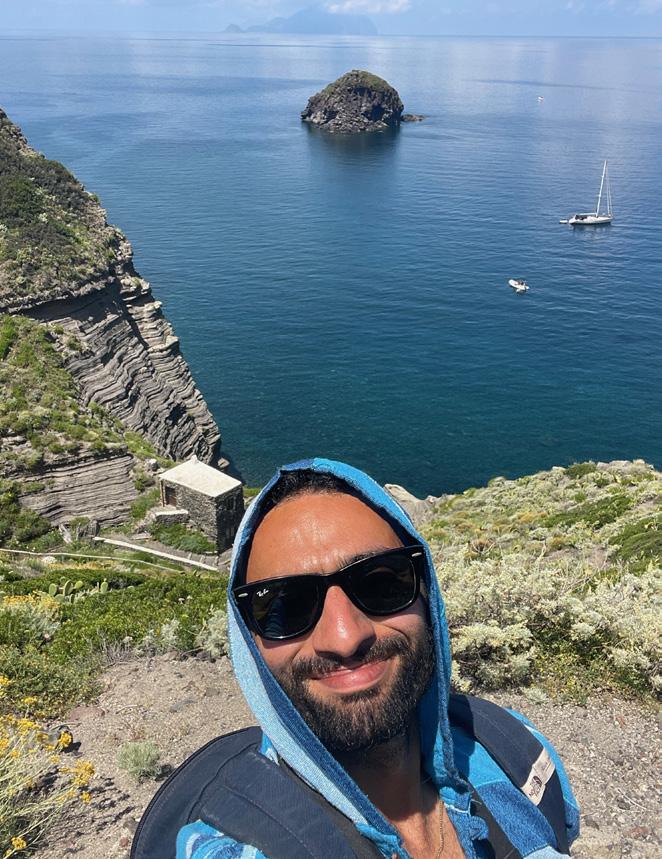
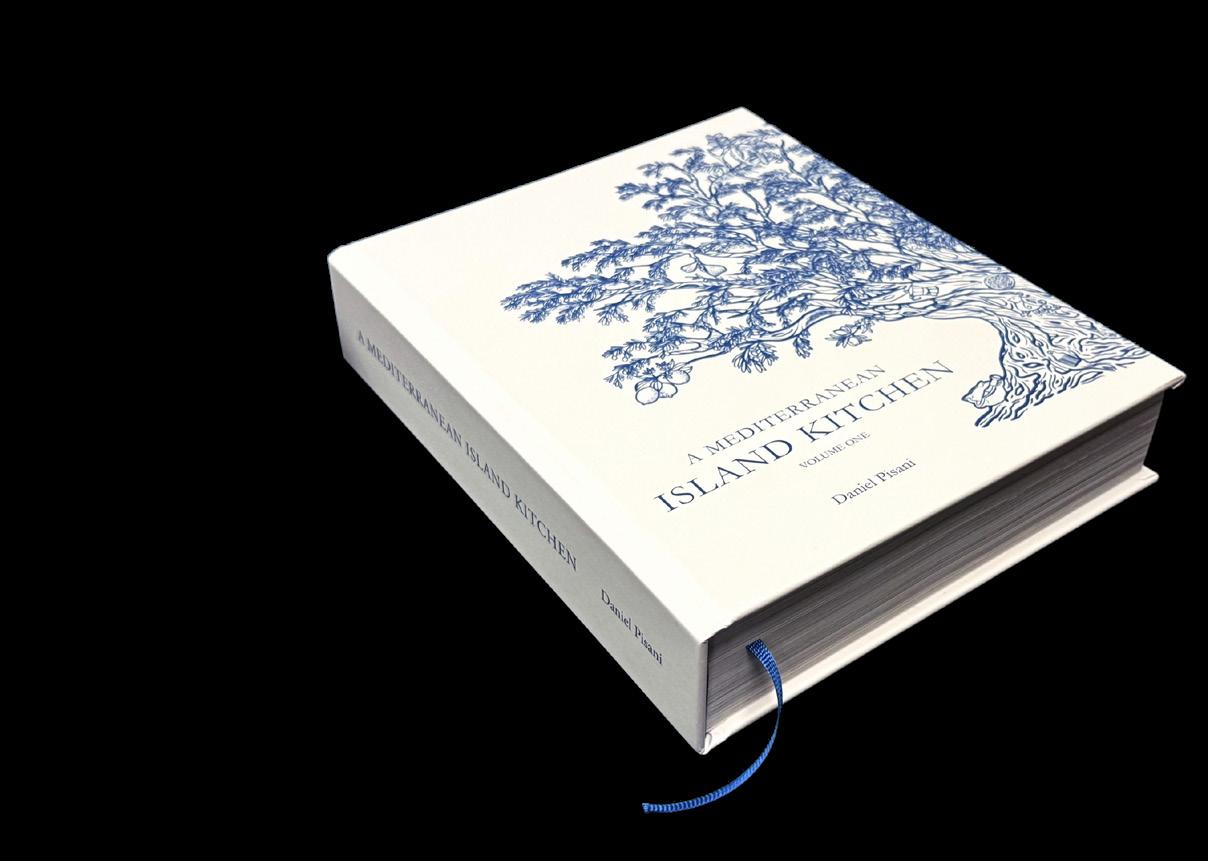
Food, as ever, plays a central role in Passaġġi. This month, we venture into a Mediterranean island kitchen to savour plant-based fare, while also introducing you to the author of the cookbook that puts vegetables centre stage. We follow his journey to reconnect with nature, one fresh and simple ingredient at a time, as it travels from farm to fork.
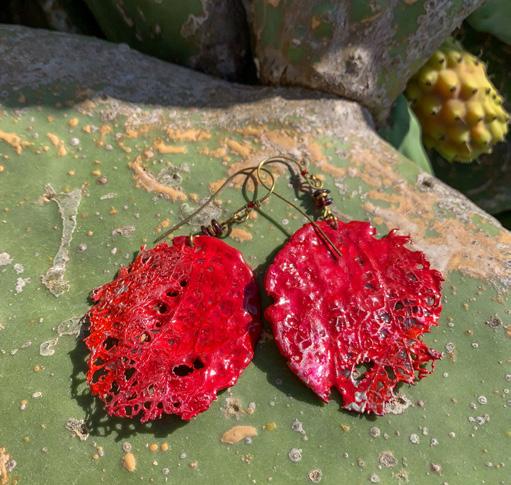
Nature inspires more than just the dishes on the table. It also gives rise to
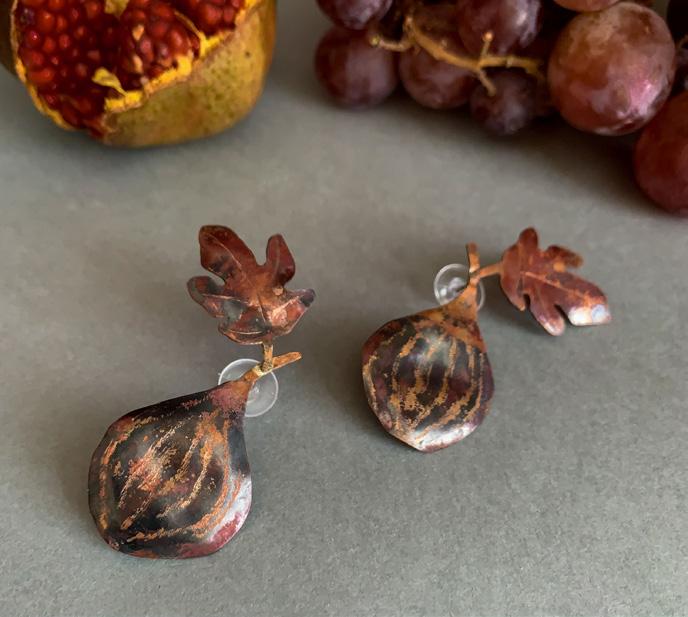
jewellery that transforms the ubiquitous prickly pear into striking earrings and pendants, celebrating local flora in original and elegant ways.
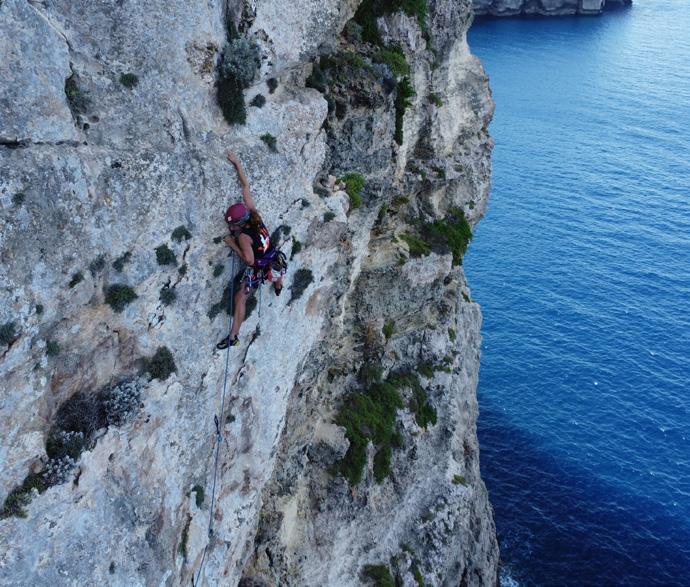
Books continue to feature prominently in our pages. Alongside the cookbook, a new guide dedicated to scaling Malta’s majestic cliff faces is launched this month, revealing the island as one of the Mediterranean’s best kept climbing secrets.
Staying with the theme of nourishment, Passaġġi also highlights a collaboration between local restaurants aimed at making climate-friendly food more visible, accessible and enjoyable for residents and visitors alike. The Eat for Impact initiative demonstrates how Malta’s dining scene is engaging with sustainability in practical and meaningful ways.
To round off the issue, we invite you to try your hand at an artisanal bitter orange marmalade. This is no ordinary recipe, but an authentic one dating back to the 18th century, revived by Heritage Malta’s culinary arm, Taste History.
In many ways, this February issue is about exactly that: savouring the past as it continues to unfold and reinvent itself in the present, giving every event, venue, experience and festivity an authentic feel rooted in history.
Take Passaġġi home with you not only as a reference guide to the month ahead, but also for an understanding of how it has been shaped by the past.
ISLANDS
8
The undiscovered charm of Qrendi
For winding streets and living architecture
TRAVEL
16
Vienna, a perfectly timed city
Combining imperial grandeur with everyday charm
TRADITION
21
Carnival in Malta: origins and evolution
One of the island’s most resilient – and colourful – customs
25
Ashes, almonds and ancient rituals
Lent: a rich tapestry of pageantry, goodies and traditions
CULTURE
28
This month’s must-see events
From glittering Carnival to grounded religious celebrations
TRENDS
32
Romance, the Mediterranean way
How to spend an indulgent
Valentine’s Day in Malta
PETS
34
Paris with a paw print
Exploring the City of Light with a small dog
ACTION
36
The Mediterranean’s best kept climbing secret
A new guidebook to scaling Malta’s majestic cliffs
41
On your marks, get set, go!
Get up to speed with the Malta Marathon
HISTORY
44
Laying spiritual foundations
Maltese devotion to St Paul over centuries
MADE IN MALTA
50
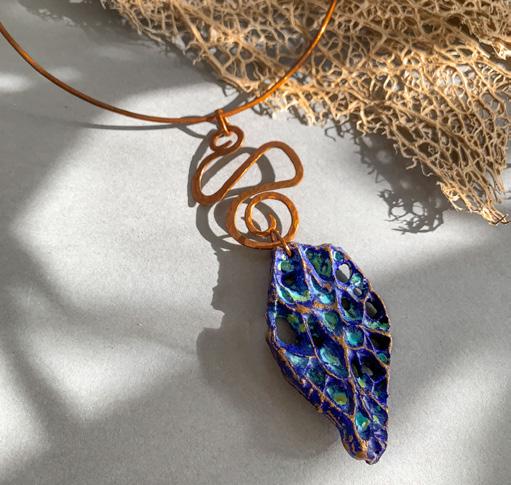
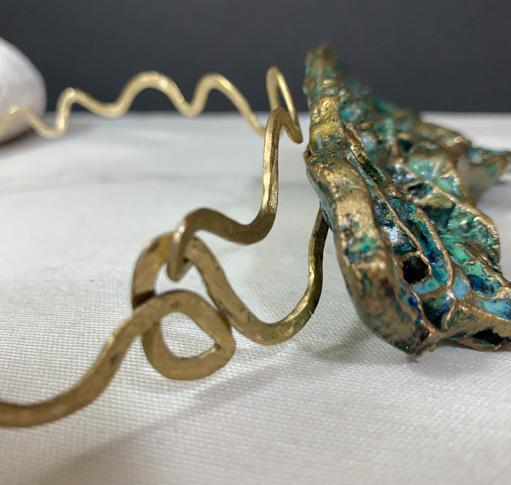
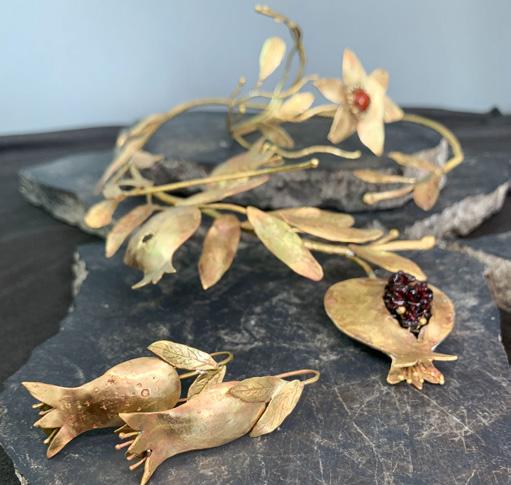
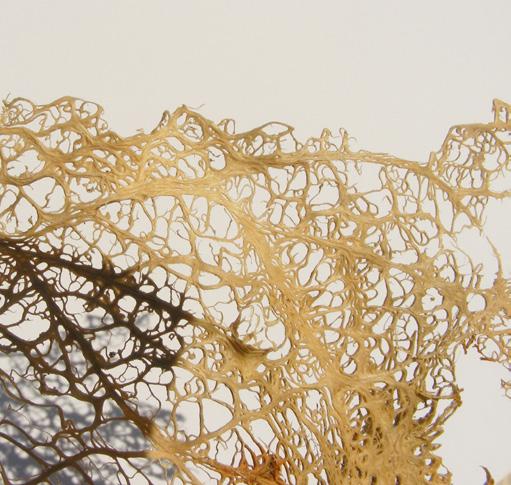
Nature-made lace
Artisanal prickly pear jewellery inspired by Gozo’s nature
MUSIC
57
Music maestro!
Women in contemporary musical composition
GOZO
60
Across the winter sea: Gozo’s Carnival before the crowds
The birth of Nadur’s spontaneous spirit
FOOD
64
Eat for Impact: a month of flavour that matters
Planet-conscious dishes that are effective and tasty
69
Reconnecting with nature, one ingredient at a time
Tales from a Mediterranean island kitchen
AIRLINE NEWS
75
Flight, company and destination information
All you need to know about flying with KM Malta Airlines
Words by David Carabott
David is a teacher, specialised in mentoring students of different abilities. An avid traveller, his target is to visit all the countries in the world. When he is not in Malta or travelling elsewhere, you can find him somewhere in Rome.
The undiscovered charm of Qrendi
Village, countryside, coast and layers of time are woven together seamlessly in the village of Qrendi, where history lives on in its streets, fields, churches and cliffs.
Some places never truly leave you. Qrendi is one of these for me. I grew up coming here day after day to walk, jog and run along the main road that leads down to the Wied iż-Żurrieq promenade. I also worked in the village for 12 years. Living in nearby Mqabba, close enough for Qrendi to feel like an extension of home, I still discover something new every time I return on foot.
WHERE THE VILLAGE BEGINS
I begin where the village rises to meet you, at the Parish Church of the Assumption. Sitting at the highest point of Qrendi, this cruciform baroque church was designed by Lorenzo Gafà and completed in 1712. Its honeycoloured limestone façade anchors the skyline, while inside, light and devotion fill the space.
Among the many religious works, one painting always captures my attention. It depicts the Santa Marija Convoy, when the tanker Ohio limped into Grand Harbour on 15th August 1942, bringing desperately needed supplies to a struggling Malta. Faith and survival intertwine here, as they do throughout the village.
WINDING STREETS AND LIVING ARCHITECTURE
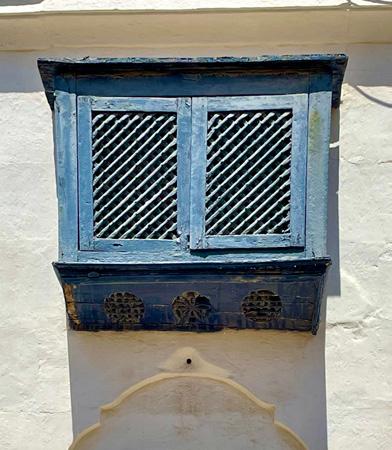
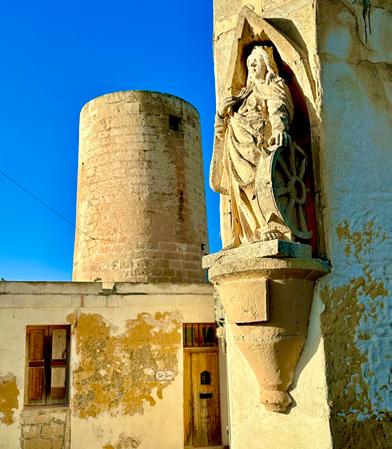
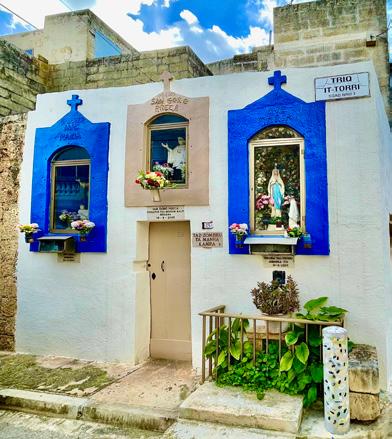
From the church square, I step into the quiet heart of Qrendi. Narrow, winding streets shaped long before cars existed gradually reveal the village’s traditional Maltese architecture: limestone façades softened by time, carved details, stone niches sheltering saints, and a small muxrabija – a type of enclosed latticework wooden box for privacy, allowing for peeping onto the street without being seen, while also letting air and light through.
Triq il-Kbira (Main Street) bisects the village, carrying you into another era. The village core remains calm and largely intact, even as modern development presses in on the outskirts, a familiar contrast across Malta.
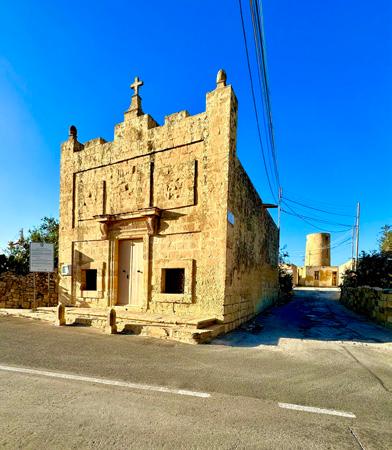
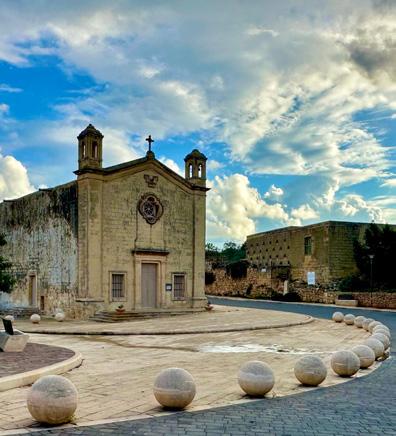
Religion is deeply woven into this landscape. There are seven churches in Qrendi, most built over earlier structures. Walking towards the votive church of St Anne, erected in thanksgiving after the Great Siege of 1565, one cannot help but feel how history, gratitude and belief are etched into stone.
Photos: Tony Gatt. The Cavalier Tower.
The church of St Catherine tat-Torba holds a quiet secret: a cherished statue of Christ the Redeemer. On rare occasions when the church is open, I slip inside and linger, admiring the statue amid the austere beauty of Maltese stone. It remains one of my personal favourites.
KNIGHTS, TOWERS AND PALACES
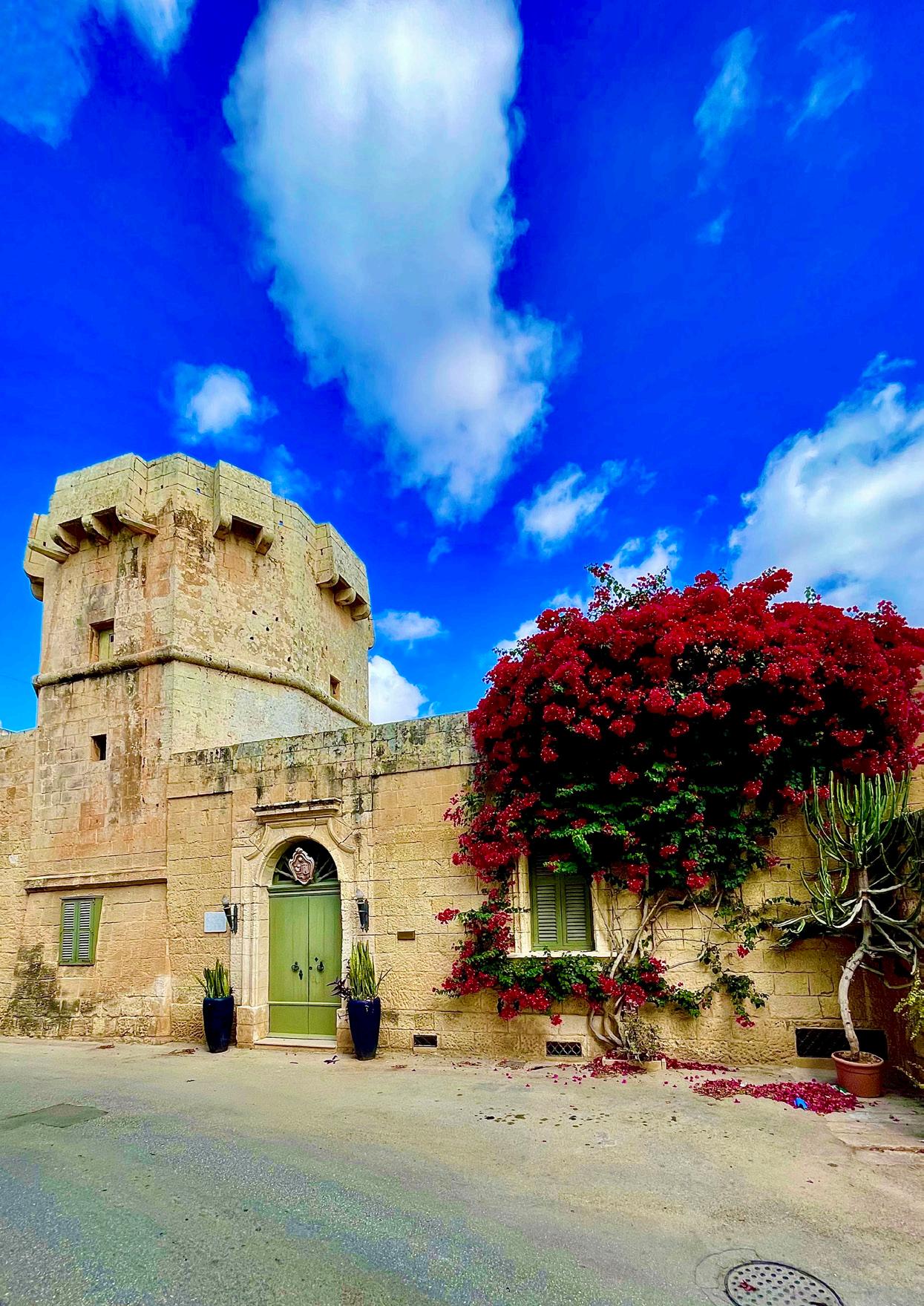
A short stroll reveals a 17th-century windmill, once essential to village life, and nearby, the striking octagonal Cavalier Tower. One of the few surviving late medieval towers in Malta, it once served as the residence of a captain of the Knights of St John from where he commanded the local militia. Qrendi may be small, but it has played its part in the defence of the surrounding area.
Scattered around the village are several palazzos that served as summer residences and were built by Knights and notable families seeking some tranquillity. Among those still standing proudly today, quite old are the Gutenberg Palace in Triq il-Fulija, the Guarena Palace on the way to Ħaġar Qim and Mnajdra Temples, and the beautifully restored De Piro Palace in San Salvatur Square. Others line Triq il-Kbira, including one beside a former convent and another almost opposite. The Palazzo Buon Consiglio, once the largest, had a magnificent garden that was partly lost when the road in front of the parish church was built in the 1960s.
GARDENS, POTATOES AND RURAL IDENTITY
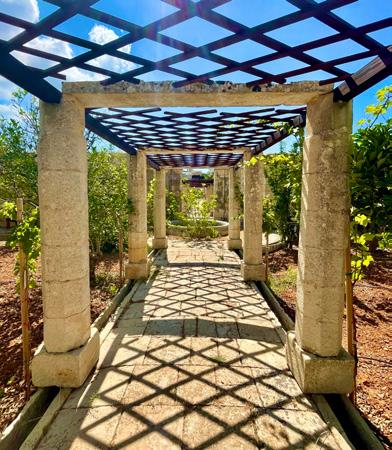
Green spaces appear unexpectedly. On the way towards St Catherine’s Church lies the walled Tal-Kmand Garden, established during the early British period by Sir Alexander Ball. Along its history, it served as both a leisure garden and an experimental agricultural centre. Various crops were tested here, including the potato.
This humble vegetable went on to define Qrendi’s modern identity. Today, the village is known as the potato harvesting capital of Malta. Potatoes remain one of the island’s main exports, and every year, towards the end of May, Qrendi celebrates the Potato and Agrarian
A traditional street niche and windmill.
Stone niches sheltering saints.
The muxrabija, latticework wooden box for privacy,
The church of St Catherine tat-Torba.
Tal-Kmand Garden.
Il-Maqluba.
Festival. The potato takes centre stage in all its forms, from cinnamon ice cream to cocktails, reflecting the village’s playful creativity.
BREAD, GROCERS AND EVERYDAY RITUALS
I often come here for one simple ritual: buying freshly baked Maltese bread from a traditional stone-oven bakery. The scent of warm crust and wood smoke fills the street long before you reach the door. Inside, loaves are still baked the old way; their dark, crackling crusts bearing the marks of generations. Carrying a loaf under my arm, still warm, feels like holding a piece of living heritage.
A stone’s throw away from the parish church, two small grocers continue to trade much as they always have. Their modest shelves and counters, worn smooth by decades of use, are reminders of a Malta where daily life unfolded at a human scale. You buy what you need, exchange a few words, and leave with more than groceries.
FROM VILLAGE TO COUNTRYSIDE
Leaving the streets behind, I step into the countryside. Scattered farmhouses and old cottages, along with remnants of spy holes carved into the stone, catch my eye as I walk. Dry stone walls frame the cultivated fields, while Royal Cypher demarcation markers appear unexpectedly along the way. These markers indicate that the land behind them was once Crown property. They bear the initials GR, likely referring to King George IV, who reigned from 1820 to 1830.
The air feels fresher and quieter here, carrying a calm that slows my pace and invites me to take in the stillness around me.
I make my way towards Madonna tal-Ħniena, the Sanctuary of Our Lady of Mercy, a place I have long wanted to visit. I imagine the sanctuary as it was in the 17th century, when it was rebuilt to welcome the growing number of pilgrims.
During restoration work in 2021, remains of the old church, probably dating back to the late medieval period, were discovered beneath the current building. Commendatore Fra Wolfgang Philippus von Guttenberg, the Knight who had his summer lodge nearby, donated various artworks to this church.
Once serving the lost hamlet of Ħal-Lew, the church houses numerous ex-voto paintings that tell stories of devotion spanning centuries, testifying to the devotion of pilgrims over time. Standing there, I feel a connection to all those who have walked this path long before me and left struck by this treasure in this remote corner of Malta.
TEMPLES,
VALLEYS AND THE SEA
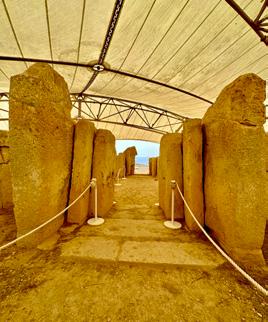
An uphill climb and gentle downhill walk take me back in time to the Ħaġar Qim and Mnajdra Temples. Dating from 3600 to 3200 BC, they predate the pyramids yet feel startlingly alive. From the limestone cliffs, with Filfla in the distance, their scale and endurance are breathtaking.
Nearby, Il-Misqa, the watering place, whispers of Neolithic ingenuity, and I feel transported to a faraway, unspoilt world.
Beyond the temples, the land drops away dramatically towards the sea. Coastal watchtowers, including Ħamrija and Xutu, stand as sentinels of Malta’s defensive past. At the cliff edge, Tal-Ħamrija Cave and the Congreve Memorial lie in quiet contemplation. My descent to hidden coves and tiny, unspoilt beaches is steep but spellbinding, each winding path revealing a secret world where nature flourishes in full bloom.
The walk ends at Wied iż-Żurrieq, once a fishing hamlet at the mouth of a valley carved during the last ice age. Swimming here, I am captivated by the landscape, with Filfla seemingly close enough to touch. Afterwards, I rest on sun-warmed rocks, enjoying fresh seafood and a glass of Maltese wine. Boat trips reveal the Blue Grotto, a complex of seven sea caves where sunlight transforms the water into vivid blues and greens. Each visit leaves me in awe of this remarkable union of geology, light and sea.
A PLACE THAT UNFOLDS SLOWLY
As I finish my walk, with water gently washing against the rocks and Filfla resting on the horizon, Qrendi feels complete. Village, countryside, coast and layers of time are woven together seamlessly. History lives in its streets, fields, churches and cliffs.
For me, Qrendi will always feel familiar, yet it continues to reveal itself in new ways. All it asks is time, attention and a willingness to walk, wander and explore.
LEGEND AND LANDSCAPE AT MAQLUBA
It is always exciting to visit the iconic Maqluba Square, home to the Church of San Mattew talMaqluba and a smaller cliff-edge church that feels distinctly ancient. This place is especially meaningful to me as one of my nephews was named after the titular saint. St Matthew’s Crypt, the smaller church, has plain exterior walls with windows added later. Inside, I was astonished by a striking 17th-century scallop shell fresco. The crypt’s size has been reduced by a stairway leading to the larger church.
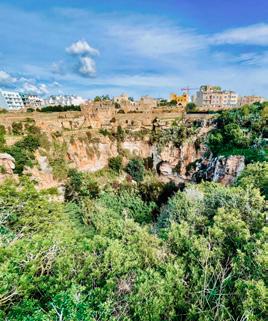
Behind the churches lies the Maqluba sinkhole, which formed during a storm in 1343. Legend tells of a sinful settlement swallowed whole, while angels flung the debris into the sea, creating the islet of Filfla. Walking to the edge, I am struck by the sheer scale, the silence and the beauty of this extraordinary place.
Must-see sites
Words by Heritage Malta
The national agency for museums, conservation practice and cultural heritage, it is the guardian of over 8,000 years of history.
If this is your first visit to the Maltese Islands, you cannot leave without ticking these sites off your list.
St Paul’s Catacombs
Rabat
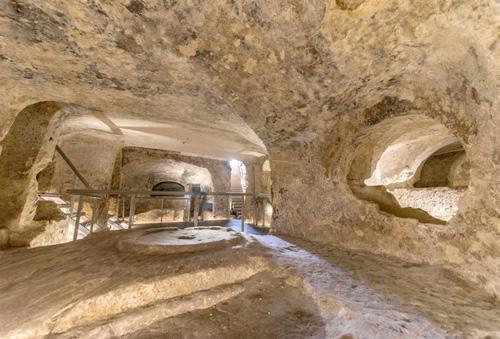
Leave the sights and sounds of modern life behind you as you step down into another world – a burial ground from Punic, Roman and Byzantine times, representing the earliest and largest archaeological evidence of Christianity in Malta. The catacombs form a typical complex of interconnected underground Roman cemeteries that were in use up to the 7th and possibly the 8th century AD. Part of the catacombs was re-utilised during the re-Christianisation of the island, around the 13th century, when an open space was re-cut and used as a Christian shrine decorated with murals.
Grand Master’s Palace
Valletta
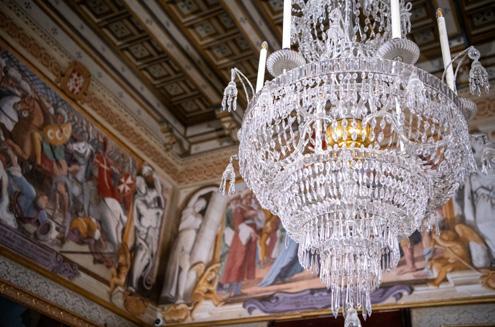
Newly restored and proudly dominating St George’s Square, the Grand Master’s Palace invites you to wander along its 450-year history as a centre of power and the symbol of a nation. Presently the seat of the Office of the President of Malta, the Palace grants visitor access to over 85 per cent of the building’s footprint, including the magnificent Armoury. The Palace’s restoration project was partly financed via the European Regional Development Fund (ERDF).
Fort St Angelo
Birgu
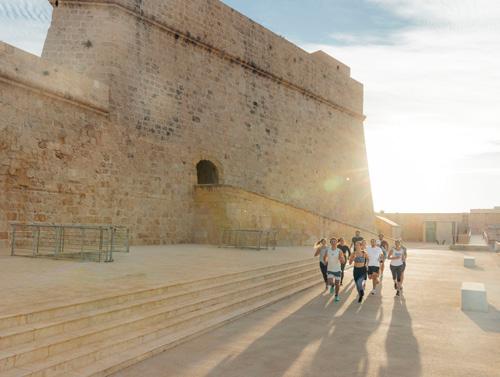
No other fortress has been engaged with the same intensity in the shaping of Malta’s destiny as Fort St Angelo! Known as Castrum Maris in medieval times, this stronghold was christened as Fort St Angelo by the Knights of the Order of St John, who turned it into their headquarters. The Knights remodelled the building extensively with the construction of a series of artillery platforms that marked the introduction of the bastioned system of defence on these islands. During the British period, the fort served as a shore establishment of the Royal Navy in Malta until the last detachment of foreign forces marched out of its walls in March 1979.
Underground Valletta Valletta
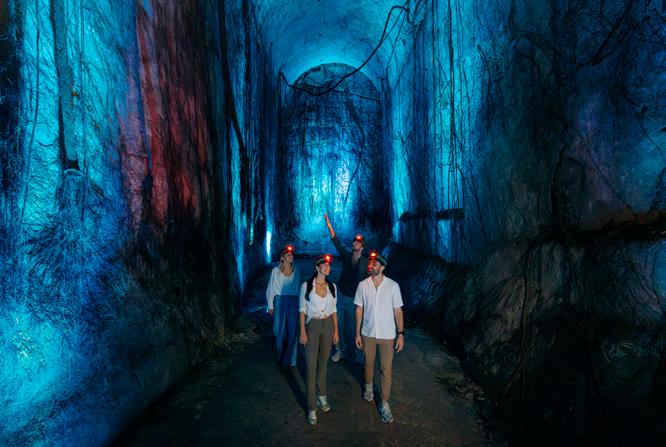
Valletta, a UNESCO World Heritage Site, cannot be fully appreciated without experiencing what lies beneath it. Descend into the capital’s fascinating depths to discover dark underground spaces, which, centuries ago, were crucial for the movement of troops, for grain and water storage, and for drainage. Then fast forward to the terrible years of World War II, when these underground tunnels and chambers provided shelter to thousands of people seeking refuge from the relentless enemy bombs, with primitive sanitary facilities and very scarce food stocks, but with a burning hope of survival that defied desperation. Pre-booking is required.
MUŻA – The National Community Art Museum Valletta
The acronym MUŻA refers to the mythological Muses of classical antiquity and to the Maltese term for artistic inspiration. Through a varied collection of paintings, sculptures, furniture, silver pieces, works on paper and objets d’art, MUŻA’s main focus is to show artistic developments in Malta impacted by its Mediterranean context as well as the cultural influences resulting from the governance of the Order of St John (15301798), the British Empire (1800 - 1964), the postIndependence period (since 1964) and the overall impact of the Church.
Inquisitor’s Palace
Birgu
The Inquisitor’s Palace is both a historic house museum and the National Museum of Ethnography.
Built in the 1530s, it was the powerhouse of the Holy Roman Inquisition that dominated Malta for over 224 years. After the French abolished the Inquisition in Malta upon their arrival in 1798, the building served French and British rules, as well as the Dominican Order for a period of time after World War II. The Inquisitor’s Palace also houses the National Textiles Collection.
‘Lampuki’
Popeye Village
Dingli Cliffs
Rabat
Dingli
Buskett
‘Luzzu’
‘Qarnita’ Octopus
Old niches and statues.
Il-Maqluba sinkhole.
Photos: Tony Gatt. Ħaġar
Qim.
Vienna's Ringstrasse.
Words by Lea Hogg
Lea is a Malta-based journalist and writer, known for her TV programme on current affairs, cultural news and in-depth interviews about politics and global issues.
Vienna, a perfectly timed city
The Austrian capital combines imperial grandeur with everyday charm: historic palaces and museums coexist with bustling cafés, markets and parks, and the city’s cultural traditions feel alive and refreshingly unpretentious.
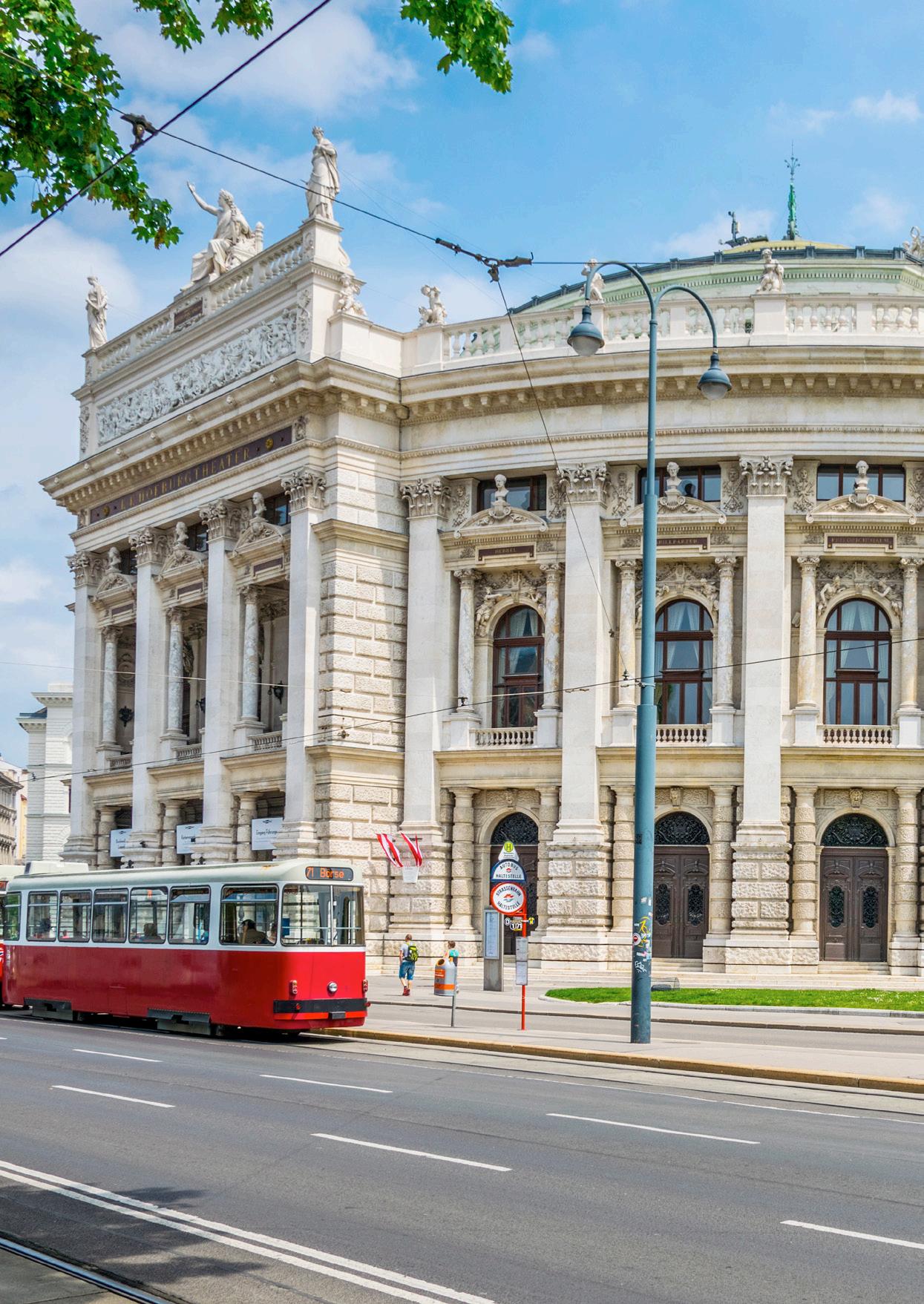
I like Vienna because it works. This may sound unromantic, even bureaucratic, but in Vienna that efficiency becomes quietly comforting. Trams arrive exactly when they promise to, gliding in on time without the usual apologies for tardiness. Museums open on time and stay open, as promised. Cafés assume you will linger for hours and make no effort to rush you out to make room for the next sitting.
The city is organised in a way that feels attentive to the individual, as though your time has been consciously respected. Service in Vienna is a shared cultural understanding.
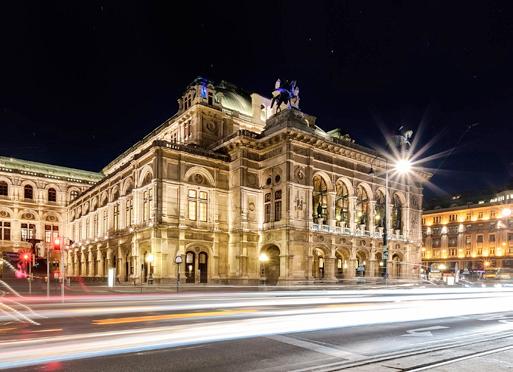
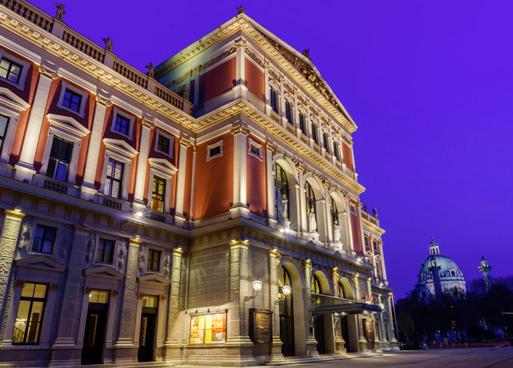
This careful order is not merely functional; it is visible in the very streets of the city. The Ringstrasse, Vienna’s grand circular backbone, makes this most apparent. Built in the mid-19th century under Emperor Franz Josef, it replaced the city’s medieval walls with something far more imposing. Instead of fortifications, Vienna built confidence through architecture. Everything that mattered was placed along this loop: parliament, the opera, the museums, the university.
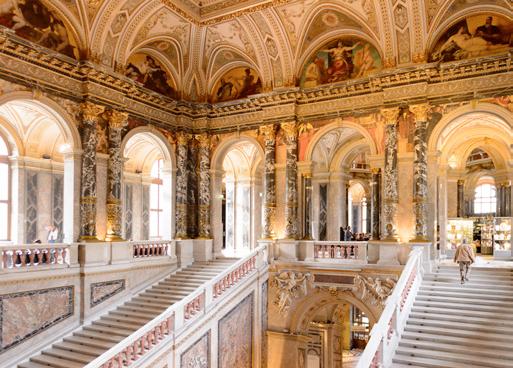
Order and ambition converge in Vienna’s museums. Along the Ringstrasse stands the Kunsthistorisches Museum. Completed in 1891, it houses the Habsburgs’ vast art collection. Room after room unfolds with masters: Caravaggio, Rembrandt, Velázquez, Vermeer, Rubens. It is overwhelming in the best possible way.
Yet the real stars are the Brueghels. Vienna holds the largest collection in the world. Standing before them feels more like a glimpse into human life itself than an exercise in history of art. Peasants skid on icy streets, neighbours shout across crowded squares, small moral failings play out with comic precision – a stolen glance, a quarrel, a mischievous trick. Human nature repeats itself in every century, unchanged and unmistakably familiar.
After a morning spent among masterpieces, it was time for more immediate pleasures: lunch, for example, is a delight. Surprisingly, I found one of the best meals I had was at the Justice Ministry’s canteen, Justizcafé, open to the public on the fifth floor of a rather ordinary government building. The lift opens onto a simple dining room, and suddenly you are tucking into excellent Austrian food at reassuringly modest prices. Through the windows, the rooftops of parliament stretch across the sky. Around you, civil servants, students and locals who clearly know where to get a good meal create a quiet, lively vibe. The clatter of cutlery and the murmur of conversation form a gentle soundtrack to a Viennese meal in unusual surroundings.
Cafés, too, are a central part of Vienna. I love cafés with history, and very few cities do them so well. Viennese pastries and cakes have travelled the world, but in Vienna they make the most sense, eaten slowly in their place of origin.
Café Hawelka, established in 1939, is still one of my favourites. Dim, a little worn, and entirely unconcerned with trends, it is quietly alive. Locals read newspapers with almost ritual focus. Coffee arrives unhurriedly. Conversations stay low. And the cakes? They taste exactly as they should. In Vienna, that matters, and cakes are as
KM Malta Airlines operates regular flights between Malta International Airport (MLA) and Vienna (VIE) kmmaltairlines.com
good as they look. The warm, sugary aroma of pastries drifts through the café, adding to the calm, therapeutic atmosphere.
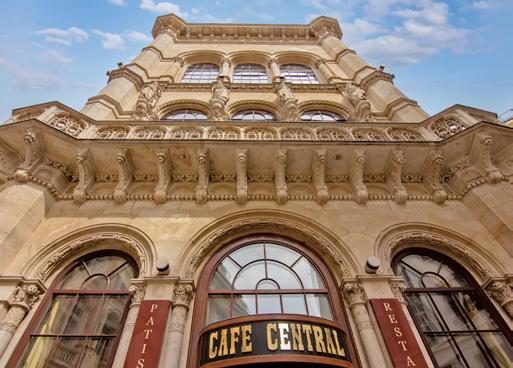
If Hawelka feels intimate and inward-looking, Café Central offers a very different experience – grand, theatrical and slightly intimidating in the best way. Opened in 1876, it has lofty ceilings and a sophisticated, understated presence. Freud and Trotsky once sat here, which the café mentions discreetly, as if it hardly needs the endorsement. Today, it remains busy, grand and kind of intellectual. Order cake. Watch the room unfold around you. And then you realise, this is Vienna in a nutshell.
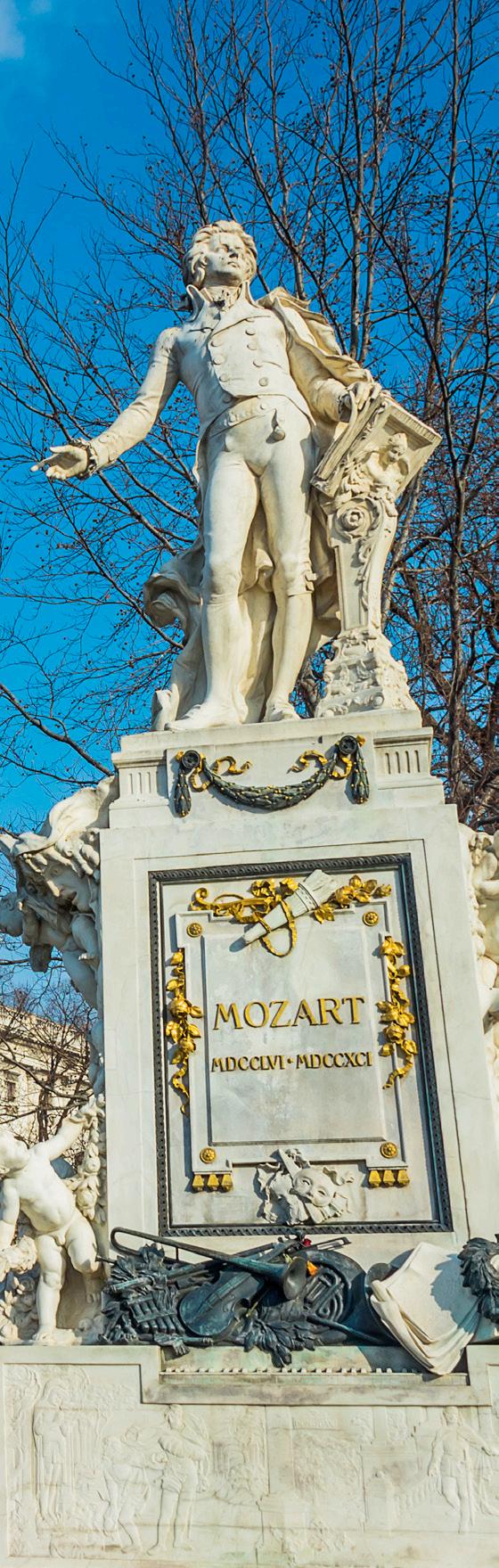
From sipping cake in a bustling café to hearing music where it was made, Vienna showcases its extraordinary past without effort. Mozarthaus Vienna is easy to miss from the street – a modest façade tucked behind St Stephen’s Cathedral. Inside, the home where Mozart lived as a young man feels tangibly real. We took a seat in the Sala Terrena for a chamber concert, and hearing the music in the very rooms he once walked through was a thrill and completely different from a formal concert hall. The city’s musical history didn’t feel like something behind glass; it felt alive, part of the present moment.
If you want fashion that feels truly Vienna cool and Instagram worthy, focus on curated stores like Marcy Vintage, Freudich Vintage Store and Burggasse 24. Stepping into these boutiques is like entering a parallel universe where past decades are alive and meticulously arranged. At Marcy Vintage, racks of pastel washed 1970s blouses and tailored 1980s jackets invite lingering, each piece telling a story of style and craftsmanship. Freudich charms with its playful retro décor of mirrored walls, velvet chairs and a faint scent of aged leather, where you can find neon trainers alongside delicate floral dresses, creating a visual collage that feels both nostalgic and contemporary.
Burggasse 24, meanwhile, offers a spacious, sunlit environment where vintage couture meets streetwise sensibility: you might find a shimmering 1960s cocktail dress next to a perfectly worn denim jacket, and locals and tourists alike move through the aisles with quiet reverence, as if savouring the thrill of discovery.
In Vienna, precision and charm exist side by side: centuries of art and music unfold effortlessly, cafés invite you to linger, and hidden corners leave small, unforgettable memories – a masterful painting, a perfect slice of cake, a vintage treasure. What makes Vienna so extraordinary is that it encourages exploration at your own pace, rewarding curiosity without the rush you would feel in most other cities. That is why Vienna endures in memory and quietly enchants.
Mozart's statue in Vienna.
heritagemalta.mt/explore
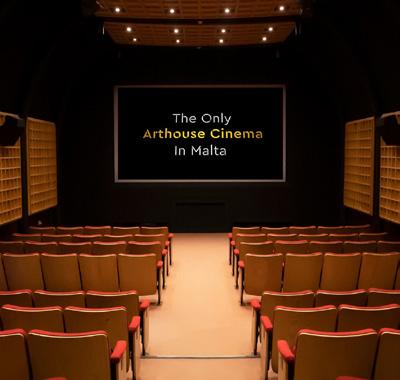
Located in Valletta, Spazju Kreattiv is home to Malta’s only arthouse cinema. It presents newly released arthouse titles, local productions and acclaimed documentaries, alongside live broadcasts from leading international stages such as the National Theatre and the Met Opera. Through its diverse film programme, Spazju Kreattiv supports Maltese filmmakers, nurtures cinematic appreciation and fosters cultural exchange by connecting audiences with distinctive voices and stories from around the world.
spazjukreattiv
spazjukreattiv.org
VALLETTA WATERFRONT
Triq il-Vittmi Furjaniżi tal-Gwerra, Floriana
Discover this hidden gem within Malta's Grand Harbour, where history meets modern indulgence. Enjoy panoramic views, exciting activities and delectable dining experiences along this strolling promenade. Savour Chinese, American, Mediterranean, sushi, or local cuisine in beautifully refurbished 1752-built stores, or dine al fresco by the water's edge. Just a short walk from central Valletta and Floriana, and across from the Three Cities, experience fun and relaxation away from the crowds. There is always something happening at Valletta Waterfront, with cultural celebrations, seasonal events, live music, special themed nights,and family-friendly activities that bring the historic promenade to life.
vallettawaterfront
vallettawaterfront.com
Words by David Carabott
Carnival in Malta: origins and evolution
Throughout its long history, Maltese Carnival has reflected society’s evolving values, tensions and aspirations. Rooted in ancient ritual yet continually reshaped by historical events, it remains one of Malta’s most resilient traditions.
Carnival is one of the island’s most enduring and richly layered traditions, shaped by centuries of cultural, social, religious and political influences. Although its origins are often dated to around 1535, shortly after the Knights of St John took control of the islands, research by Prof. Stanley Fiorini shows that Carnival existed well before their arrival.
Prof. Fiorini argues that Malta’s long-standing connections with Sicily and mainland Europe, where Carnival traditions had been firmly established for centuries, make this highly likely. Documentary evidence supports this view, including records from the Santo Spirito Hospital in Rabat dating from 1494 to 1562 and minutes of the town council from 1450 to 1498. These confirm that Carnival was already part of Maltese life.
The notion that Carnival was introduced by the Order of St John is a misconception, as Prof. Fiorini reiterates. This inaccuracy stems from the relative scarcity of medieval Maltese documentation and later misinterpretations of the writings of a 16th-century chronicler of the Order.
ETYMOLOGY AND ORIGINS
The Italian term carnevale is understood as the final opportunity to eat meat before Lent. It also traces back to the Latin carni levare, reflecting the Christian practice of fasting and abstaining from meat.
While Carnival became a sanctioned period of indulgence in Christian societies, its origins probably lie in ancient pagan festivals celebrating fertility, the renewal of the year and the retreat of winter.
These celebrations often blurred social hierarchies, relaxed societal norms and permitted behaviours frowned upon during the rest of the year. Elements of these traditions endure in modern Maltese customs, particularly in the use of satire and disguise.
THE KNIGHTS AND CARNIVAL
Records from the period of the Knights of St John suggest that, during the brief rule of Grand Master Piero del Ponte (1534 to 1535), celebrations were marked by austerity rather than excess. Del Ponte sought to curb revelry and instead redirected festivities towards chivalric tournaments and martial exercises, which he considered more appropriate for a community of Knights.
The secular conduct of some members of the Order, despite its religious character, was viewed by del Ponte as unbecoming. He therefore convened a general assembly at St Lawrence’s Church in Birgu, then the principal city of the Knights as Valletta had not yet been built, to censure what he regarded as erratic behaviour.
Under the Knights of St John, Carnival celebrations gradually evolved into more structured events, encouraged yet carefully controlled by successive Grand Masters.
The 16th-century festivities often featured tournaments, pageants and military displays, allowing the Knights to demonstrate their skills, while the wider population took part in lively street celebrations. At times, the authorities intervened to restrain excess while still permitting masking and elaborate spectacles.
THE PARATA: HISTORY IN PERFORMANCE
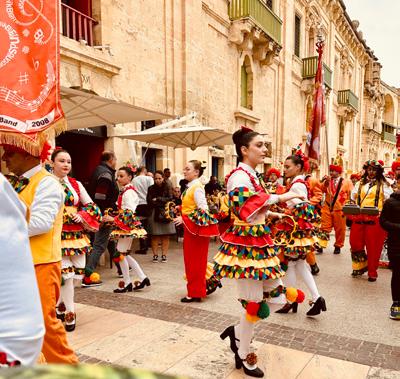
A defining element of the Maltese Carnival, the Parata, originated during this period. This ritualised sword dance, reenacting the victory of the Great Siege of 1565, captured the collective memory and renewed the sense of resilience and defiant resistance of both the Knights of St John and the Maltese.
It is still performed today by reenactors dressed as Christians and Turks. Once a solemn communal ritual meant to convey a message, it has evolved into a symbolic performance, now primarily carried out by youngsters. Yet it remains central to Maltese Carnival heritage, summed up in the saying: “no Parata, no Carnival.”
EXPANSION IN THE 17TH AND 18TH CENTURIES
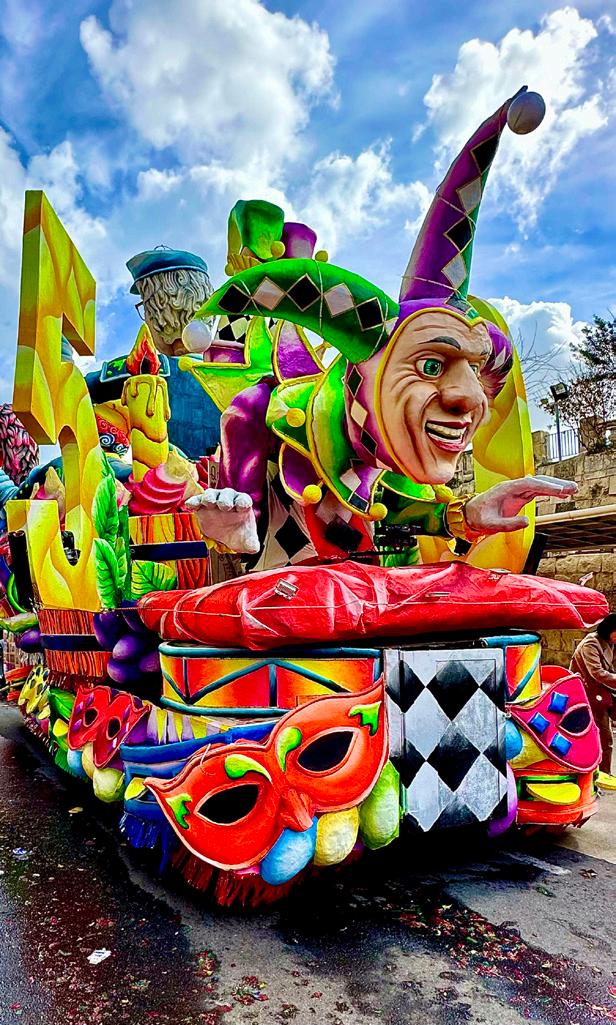
From the 17th century onwards, Carnival became increasingly elaborate. Restrictions were occasionally imposed, including bans on women wearing masks or irreverent costumes, although many of these limitations were gradually relaxed. Floats emerged as a defining feature, evolving from decorated ships into land-based parades by the 18th century.
Photos: Tony Gatt.
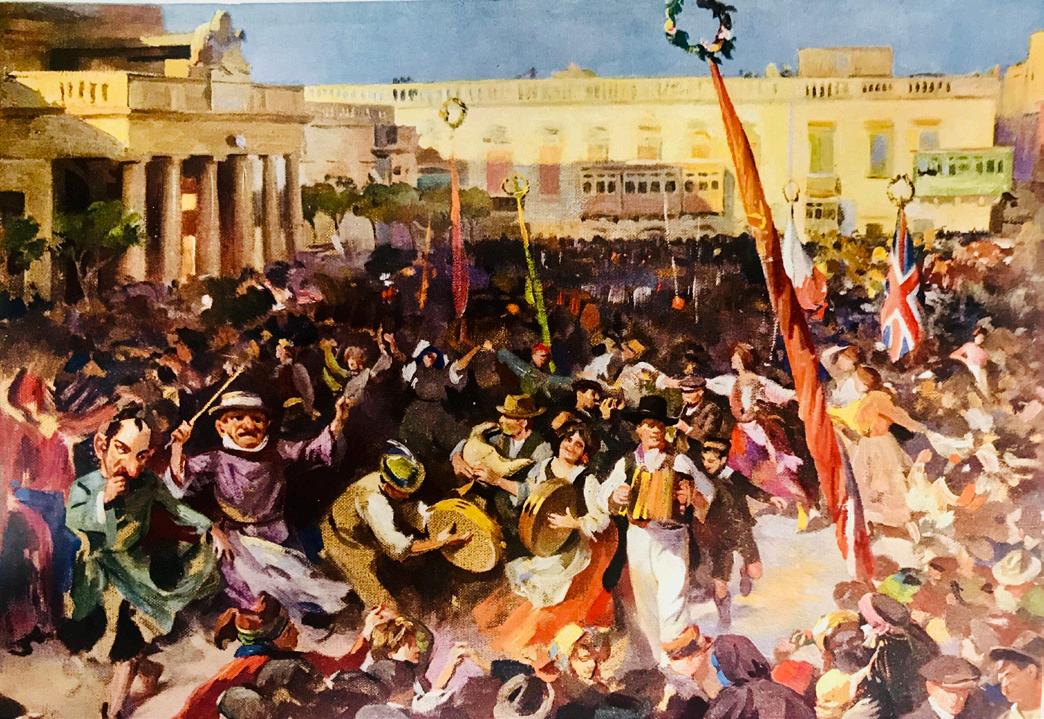
Edward Caruana Dingli's early 20th-century painting of Carnival celebrations in Valletta's Palace Square.
However, one notorious incident occurred in 1639, when tensions on the island led to the temporary expulsion of the Jesuits after Italian Knights protested restrictions on Carnival. Grand Master Lascaris had issued an edict limiting women’s masks and regulating the commedia, which prompted the young Knights to ransack the Jesuit College and demand the order’s removal, a dispute that sparked extensive correspondence with Vatican authorities.
Interesting fact: this event gave rise to the Maltese idiom wiċċ Laskri, literally meaning “face of Lascaris”, used to describe someone who is sad or frustrated.
By 1730, organised processions in Valletta featured decorated carriages, music and widespread participation. The introduction of competitive events such as the Kukkanja in 1721 highlighted Carnival’s playful and chaotic spirit.
During the 19th and early 20th centuries, Maltese Carnival reached a peak in satirical creativity. Floats caricatured political figures and decisions, reflecting public or party sentiment, though this often unsettled authorities and led to bans on political satire, notably in 1936.
Despite restrictions, however, Carnival persisted, adapting its forms while maintaining its central cultural role.
THE REVIVAL OF CARNIVAL
After World War I, the establishment of a Carnival Committee brought formal organisation and introduced competitions for dances, costumes and floats, shaping Malta’s modern Carnival. Valletta remained the central hub until the early 1970s, with St George’s Square, in front of the Grand Master’s Palace, serving as the focal point of Carnival activity.
From 1972 until 1988, Carnival was held in May, with events increasingly concentrated in Freedom Square, the site now occupied by Parliament House, designed by the renowned Genoese architect Renzo Piano. Although urban developments in the early 21st century necessitated further relocations, the essence of Carnival endured.
A notable revival occurred in 2014 when Carnival returned to St George’s Square, reintroducing lost elements such as overt satire and the Qarċilla, a wandering farce in rhyming verse. This revival highlighted renewed appreciation for Carnival’s historical depth and expressive freedom.
MALTESE CARNIVAL TODAY
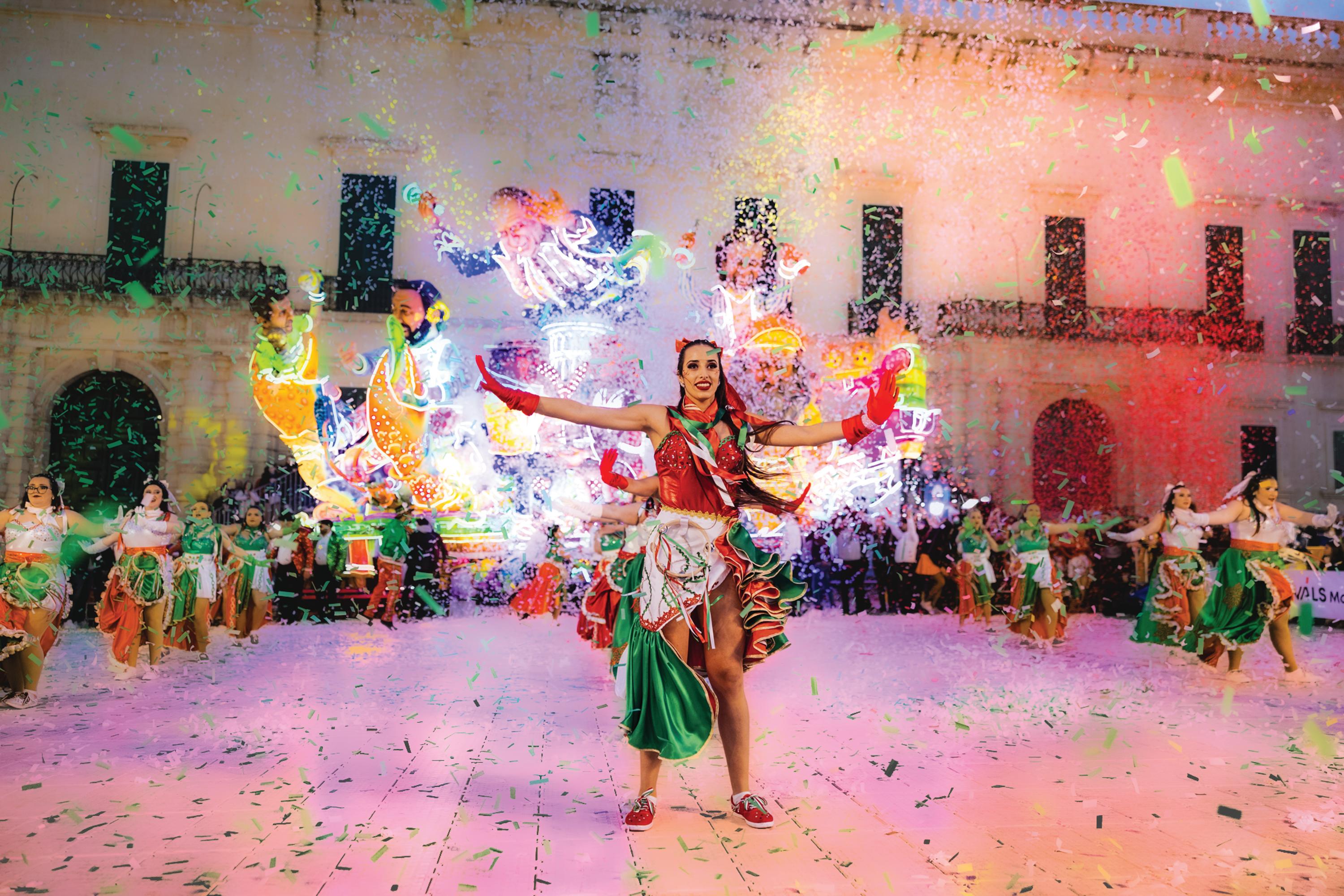
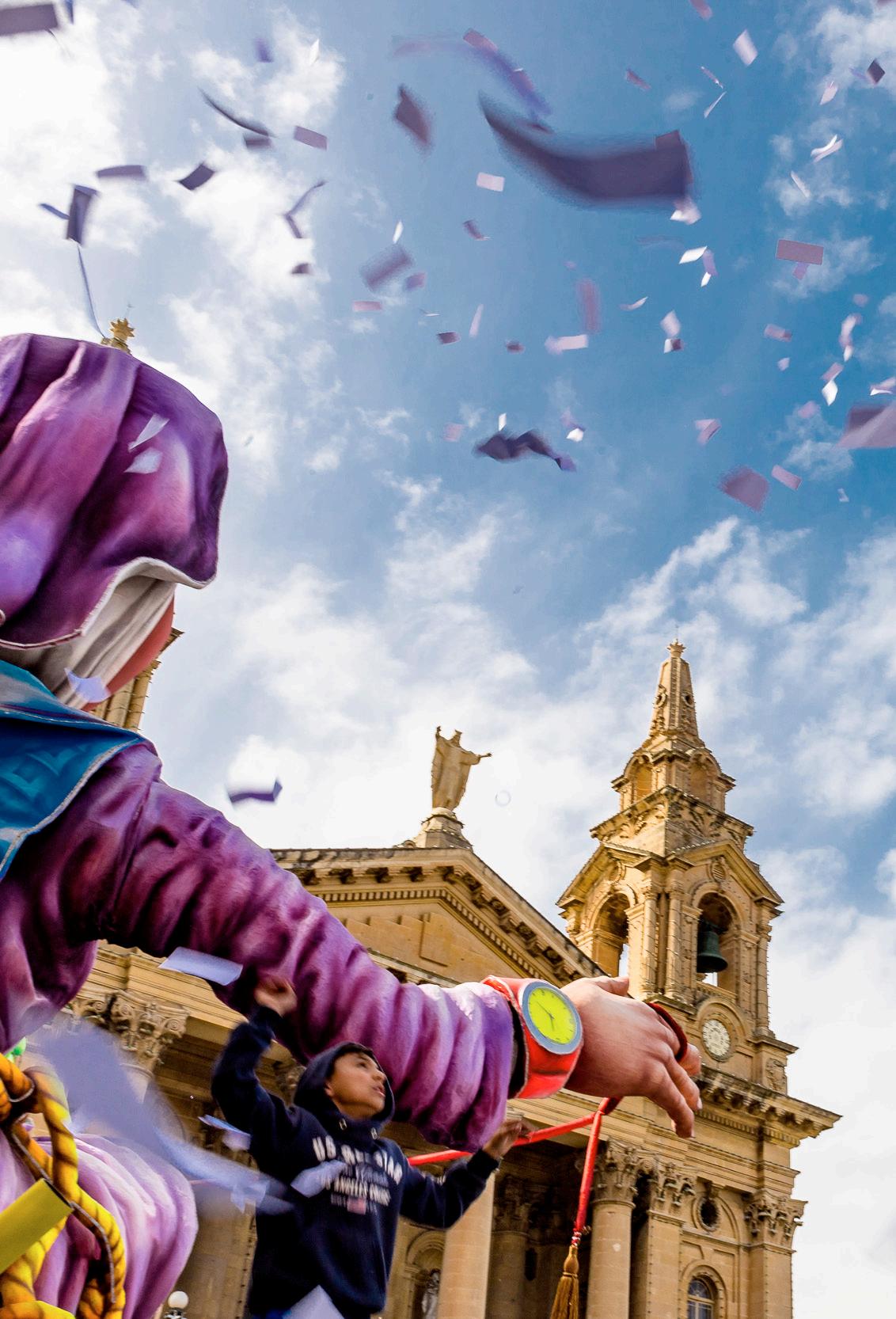
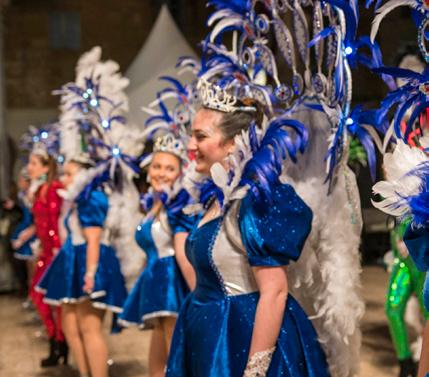
Today, Maltese Carnival is a vibrant blend of tradition and contemporary creativity, held annually between February and March. Valletta hosts the main parades, featuring large, mechanised and colourful floats, elaborate choreographed dances and competitions recognising artistic excellence.
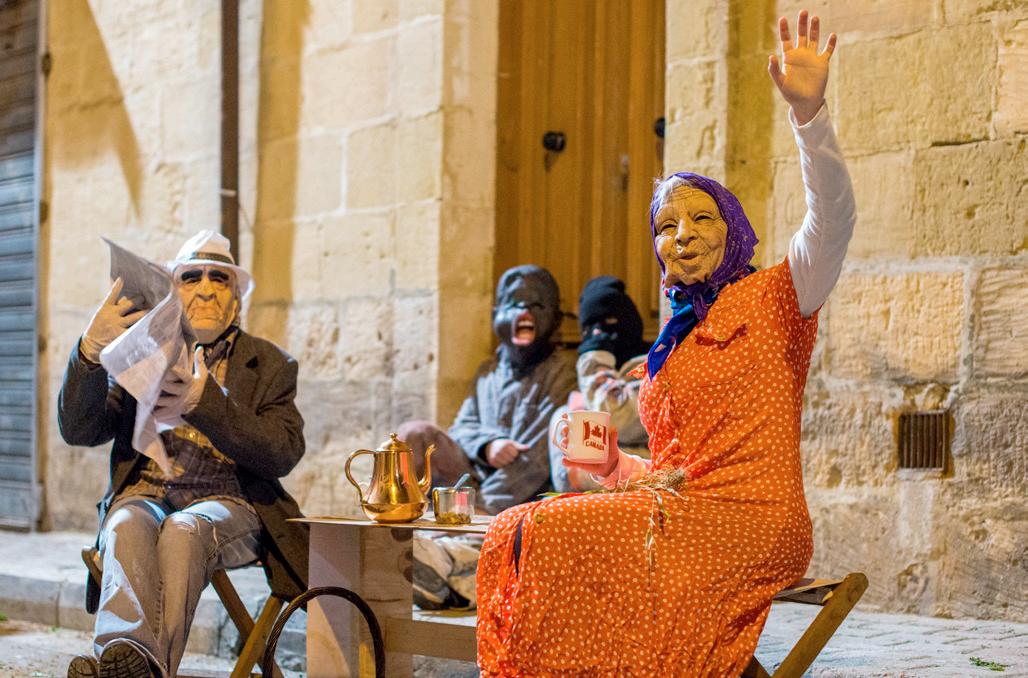
Gozo maintains a distinct Carnival identity, from the grand parades in Victoria and the festivities that animate villages across the island, to Nadur, which is unique. Here, extravagant, spirited celebrations feature satirical floats, imaginative group-themed costumes and captivating dance performances, with everyone carefree and unrestrained, creating a spontaneous, grotesque spectacle that embodies Carnival’s anarchic spirit (see story on PG 60.)
CARNIVAL AS A MIRROR OF SOCIETY
Throughout its long history, Maltese Carnival has reflected society’s evolving values, tensions and aspirations. Rooted in ancient ritual yet continually reshaped by historical events, it remains one of Malta’s most resilient traditions.
Whether as a pre-Lenten release or a communal celebration of creativity and satire, Carnival transforms Valletta and many other towns and villages in the Maltese Islands into spaces where rules are briefly suspended and collective free spirit reigns.
For details on Carnival celebrations, check out inkontru.app’s cultural calendar from PG 28.
13 - 17 ta’ Frar
Bis-Sapport ta’ Megħjun minn
Words by Edward Bonello
Edward is a content writer and PR consultant. He is interested in the wonderfully superfluous and exquisitely redundant. When he’s not happily tapping away at his laptop, he enjoys collecting useless trivia and watching B-movies.
Ashes, almonds and ancient rituals
As Malta gets ready to slow down after the exuberance of the holidays and Carnival, here’s a look into the Lenten customs that punctuate one of the most significant seasons on the island’s calendar.
Though it may not hold the intense significance it once did, Lent is still widely celebrated in Malta and Gozo and still offers a fascinating window onto the workings of this small Mediterranean island. Right after the excesses of Carnival, some well-needed detox is in order, and that comes in the form of Lent. Not one or two, but 40 days of preparation, rituals and traditions leading up to Christianity’s most significant holiday, Easter.
For many, Lent is a time for reflection and returning to basics. In fact, from a religious point of view, it offers believers an opportunity for introspection through sacred functions and spiritual retreats ahead of Holy Week and Easter Sunday. From a cultural perspective, Lent brings with it a rich tapestry of pageantry, seasonal goodies and its own set of particular traditions, which just might be unique to this little rock.
Starting on Ash Wednesday, when religious folk flock to Mass to get sprinkled with ashes and are reminded that they will die one day (the ashes being the burnt olive fronds from last year’s Palm Sunday celebration, closing the cycle), the sombre tone is set.
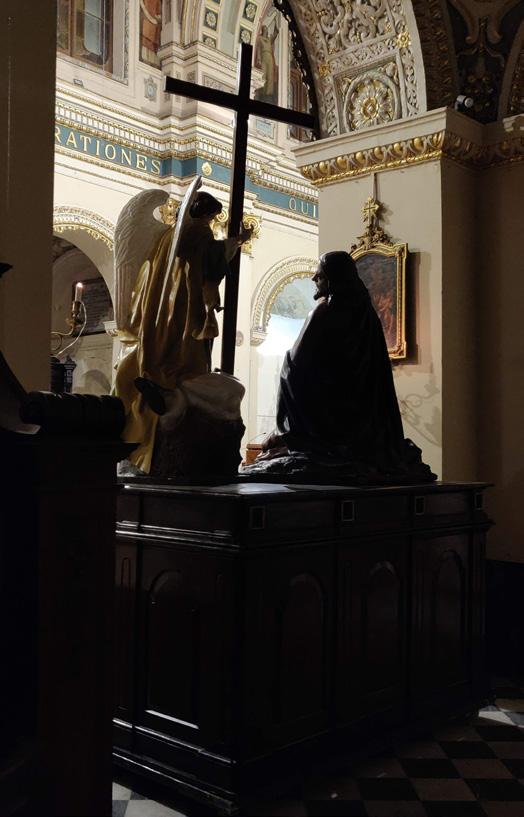
In many churches, on the following Wednesdays for the duration of the holy period, a specific statue is displayed under the nave. Starting with the Agony in the Garden of Gethsemane, followed by the Flogging, the Crowning with Thorns and so on, the life-size statues often form part of a set of tableaux that depict, in quite some dramatic detail, the episodes of the Passion of Jesus.
Especially in the older parishes, such as Valletta and the Three Cities, these statues are incredible works of Maltese master sculptors, some of which date back to the 17th and 18th century. When the whole set is on display, everyone knows Holy Week is with us, and enthusiasts are eager to carry the statues shoulder high during the Good Friday procession. But that’s for next month’s article!
These traditions are credited to have been brought over by the Knights of St John, so it will be easy for visitors to notice similarities between local customs and their cousin traditions that are still practised in Spain and Southern Italy. In Malta, naturally, things developed their own style, fitting in perfectly within the island’s particular reality.
At home, many enthusiasts mirror the tradition with miniature statues, often modelled on the bigger ones in their beloved parishes. These are set up in a special place in the house, marking the passage of weeks of Lent – much like an Advent calendar would, but instead of chocolate treats, through weekly holy figurines.
On a community level, Easter plays, often involving entire villages, take centre stage – literally. The dilettante actors would have rehearsed for many weeks to tread the boards in the roles of Pontius Pilate, the apostles, King Herod and the rest of the crew. Some productions truly go out of their way to make the play as relevant to the contemporary audience and as spectacular as possible – a remarkable exercise in community theatre in action.
Lent also brings with it its own soundtrack, which can be heard in village cores, played in band clubs as they rehearse for their performance during Good Friday’s procession. Marċi Funebri (funeral marches) are sombre compositions, written purposely for local marching bands. Some numbers are veritable works of symphonic art, often dedicated to beloved members of the community who would have passed away. Through these marches, the community unites to celebrate the lives of its members, keeping them alive through music.
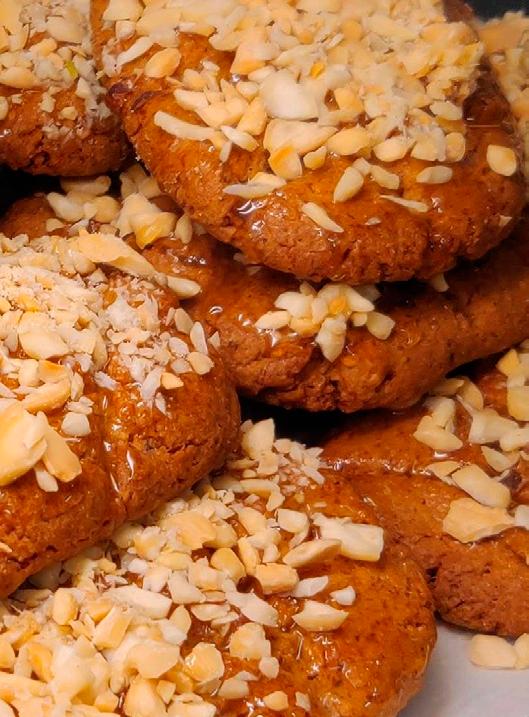
For those craving the seasonal goodies, Lent also brings with it something special. Though generally associated with restraint and fasting, it is also ironically the time of kwareżimal, a fantastic seasonal confection made with orange rind, ground almonds and love! Taking its name from the Italian word for Lent, Quaresima, it is said to have become the official sweet of Lent since it does not include eggs or animal products among the ingredients, taking on a penitential nature.
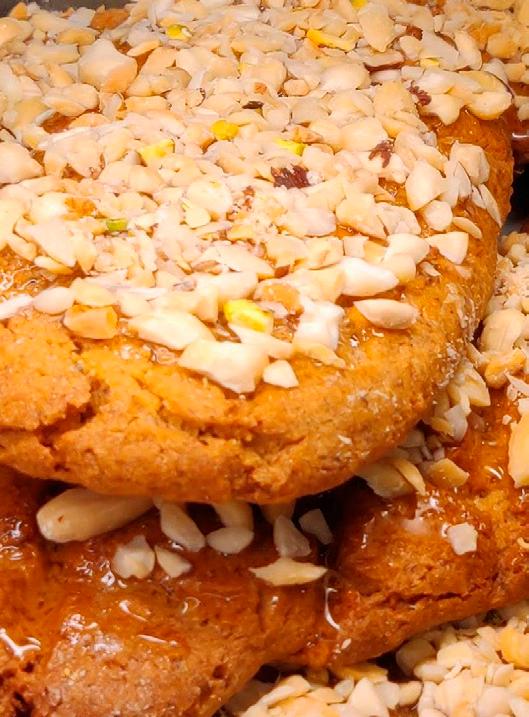
During Holy Week, stands with Qagħaq tal-Appostli sprout at every corner, selling large bread rings, complete with whole almonds for decoration. This is a favourite among families who happily share it around the dinner table, often to accompany a light fish-based dinner.
Karamelli tal-ħarrub, or carob sweets, are ultra sweet candies, made from the humble Mediterranean carob. They come in small plastic packets and look like dark brown shards of glass. They taste extremely sweet but also tangy and are meant to be savoured and chewed over a long period of time. Perhaps they’re not for everyone but do try them out if you get the chance.
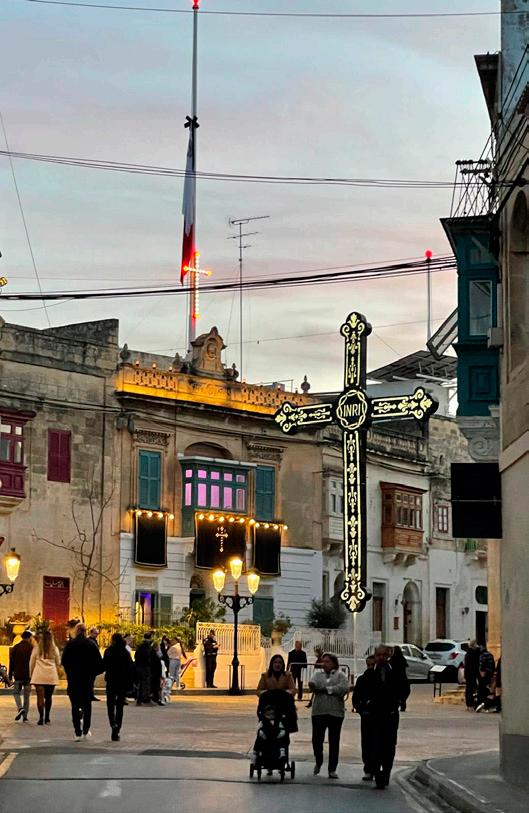
As the weeks roll on, and Holy Week gets closer, village cores start to don their Good Friday look, featuring lit-up crosses in windows and balconies, black and purple drapes hanging on façades, and the occasional framed picture of Our Lady of Sorrows.
For many, Lent is a powerful moment of spiritual healing. For others, it is a significant link to their community and roots. In any case, Lent is a fascinating time that provides a small peak into the passions and traditions that make Maltese people tick.
Each week, Good Friday statues are displayed in church to mark the passage of Lent.
During Holy Week, flags are flown at half-mast, while houses are adorned with lit crosses, black or purple drapes and the occasional framed holy picture.
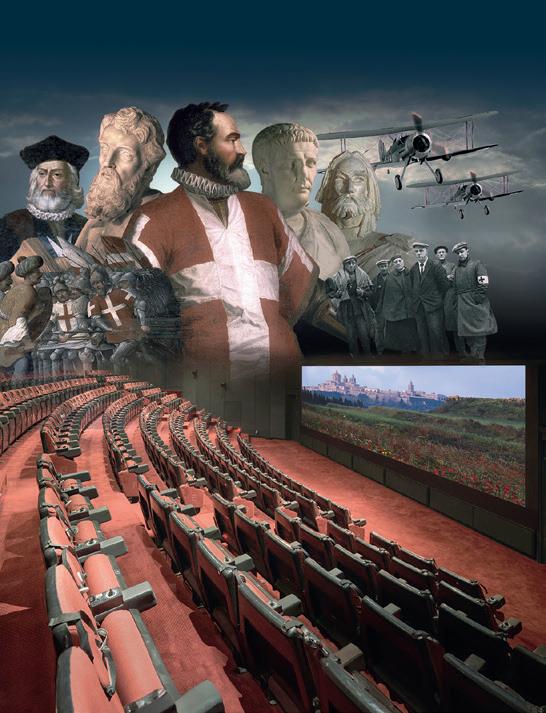
Few places have a history as turbulent and inspiring as the Maltese islands. Its gripping story is that of a country buffeted by world events, in which the bravery and resilience of its people have been tested to the limit. Through beautiful authentic imagery and a gripping commentary, the show covers 7000 years of history in 45 minutes. From the early settlers of the temple period to the Knights of the Great Siege through to the destruction of World War 2, The Malta Experience chronicles the events that have shaped the island's history.
Words by
This month’s must-see events
February in Malta bursts at the seams with colour and creativity. Carnival spills across the island with all its playful chaos, while the Feast of St Paul grounds the month in one of Malta’s most important religious celebrations. Add theatre, music, exhibitions and more, and you’ve got a month that never slows down.
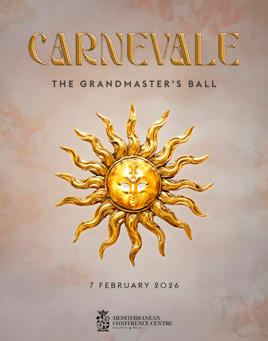
Carnevale: The Grandmaster’s Ball
When: 7th February
Where: MCC, Valletta
Set in the magnificent Sacra Infermeria in Valletta’s historic Mediterranean Conference Centre, the latest edition of Carnevale promises its guests a complete Carnival experience that will see them transported five centuries into the past. This year’s immersive Grandmaster’s Ball will be abuzz with exciting rumours of a mysterious new world recently discovered on the far side of the Atlantic Ocean.
Il-Karnival ta’ Malta
When: 13th - 17th February
Where: Valletta
Carnival in Nadur
When: 13th - 17th February
Where: Nadur, Gozo
Nadur’s Carnival is famously more anarchic and satirical, known for its darker-edged humour and unfiltered creativity. Costumes tend to be on the scarier side, and the atmosphere is raw, irreverent and unlike any other Carnival celebration on the islands. (See story on PG 60.)
Karnival Tradizzjonali Għaxqi
When: 13th - 17th February
Where: Ħal Għaxaq
For Carnival celebrations that are smaller in scale but still as rich in character, head to the village of Ħal Għaxaq. This annual activity continues to grow in popularity thanks to its more homespun nature and focus on local community participation. Get ready for plenty of homemade costumes, village dance groups, playful floats and live band club music filling the streets.
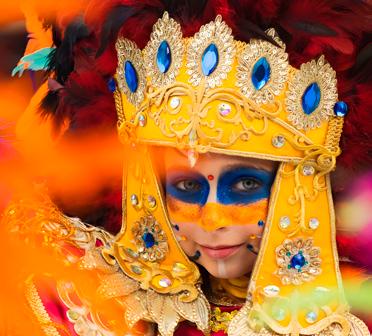
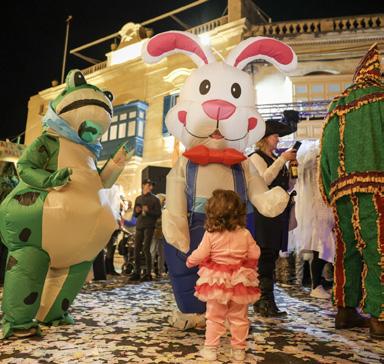
Malta’s capital is the centre of the island’s most grandiose Carnival celebrations, with huge parades, elaborate floats, dance troupes and costume competitions set against Valletta’s baroque streets and squares. This colourful and boisterous family-friendly festival blends tradition, spectacle and centuries-old pageantry.
Carnival
Exhibition
When: 1st - 22nd February
Where: Spazju Kreattiv, Valletta
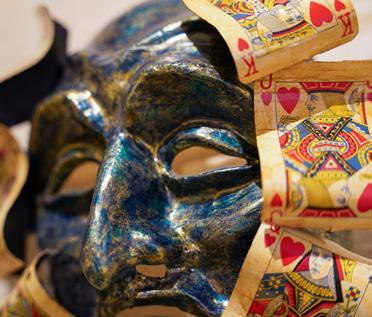
This special showcase celebrates the extraordinary creativity, craftsmanship and spirit of Malta’s Carnival. Featuring dazzling displays and imaginative works by carnival enthusiasts, the exhibition highlights both the rich legacy of this beloved tradition and the fresh aspirations shaping its future.
ŻfinDays 2026
When: 20th - 22nd February
Where: Valletta Campus Theatre, Valletta
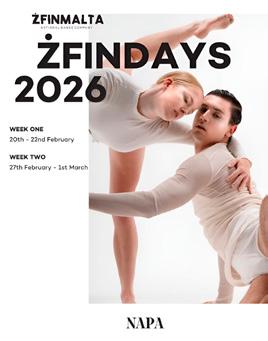
Experience the breadth of ŻfinMalta’s work, and the distinct visions of three European choreographers making their mark in the international dance scene. Featuring the world premiere of NÁCAR by Paloma Muñoz, alongside BORDER by Matthew William Robinson and Sita Ostheimer’s Mortal Heroes, all performed by Malta’ national dance company.
Press Mute
When: 20th - 22nd, 27th - 28th February & 1st March
Where: Spazju Kreattiv, Valetta
This quick-moving, satirical production is all about truth, lies, the media, fast-paced technology and the chaos in between. It follows two exhausted journalists trying to expose a scandal, a charismatic podcaster, a slick minister and the algorithm that knows us better than we know ourselves!
Akustika – The Acoustic Club
When: 27th - 28th February
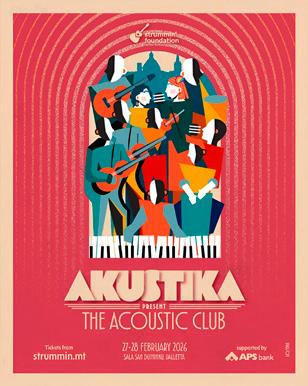
Where: Sala San Duminku, Valletta Akustika returns with an intimate, club-style concert celebrating acoustic music. Featuring a collective of local musicians, the programme reimagines rock classics, jazz standards and Maltese songs in strippedback arrangements, creating a warm, close-listening atmosphere rooted in live musicianship and collaboration.
St Paul’s Shipwreck in Valletta
Words by Edward Bonello
INSTALL inkontru.app
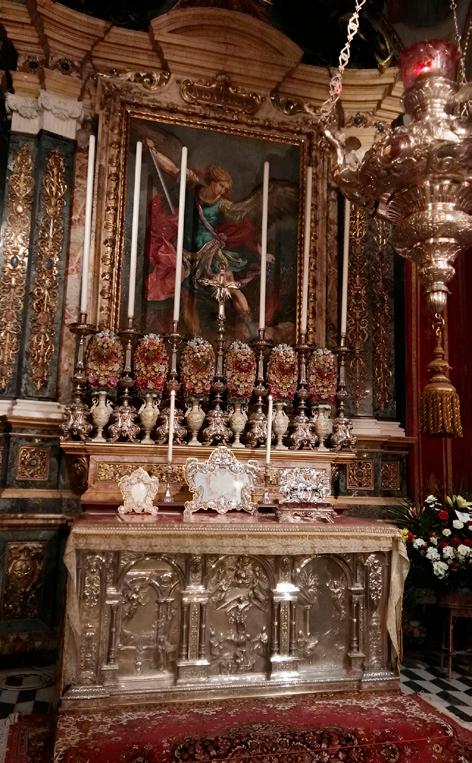
Held on every 10th February, the Feast of St Paul in Valletta commemorates the saint’s arrival on the island and the moment that would eventually lead to Malta’s conversion to Catholicism. Beyond its religious significance however, the feast also opens a window onto the social and communal life that shaped Malta’s capital.
During the week-long celebrations, the Church of St Paul's Shipwreck, which dates back to the 1570s, reveals one of its most enduring traditions. The side chapels are dressed up with extraordinary displays of silver lanterns and ceremonial pieces, with each altar linked to a different confraternity. Often tied to specific trades, these brotherhoods acted as early forerunners of trade unions, built on shared responsibility, charity and mutual support. In fact, when one of their members fell on hardship or passed away, the confraternity stepped in, funding funerals and supporting widows and families through difficult times – a mission it continues to uphold today.
This custom is deeply rooted in Valletta’s past. Situated near the Grand Harbour’s historic gateway, St Paul’s parish stood at the heart of Malta’s mercantile life during the era of the Knights of St John, serving as a first point of arrival, where merchants, goods, trades and new wealth streamed into the capital from across the Mediterranean. The silverladen altars remain a powerful reminder that this church is not just a religious monument, but a living hub of Valletta’s community and shared heritage.
For a guide to upcoming religious celebrations and traditional feasts across the Maltese Islands, be sure to visit inkontru.app
Step into Malta’s scene with inkontru.app, your personal guide to all the latest art, culture and heritage events in Malta and Gozo. More than just a calendar, the app connects you with exciting events and artists through exclusive interviews and video features. Easily find event details, get directions and purchase tickets – all in one place. Need a ride? Book a cab effortlessly through the app and share your plans with friends and family with ease.
Discover and experience more with inkontru.app, your web-based application that prioritises functionality and performance, meaning no need to download, seamless updates, no storage space taken and easy sharing. Enjoy!
Photos: Edward Bonello.
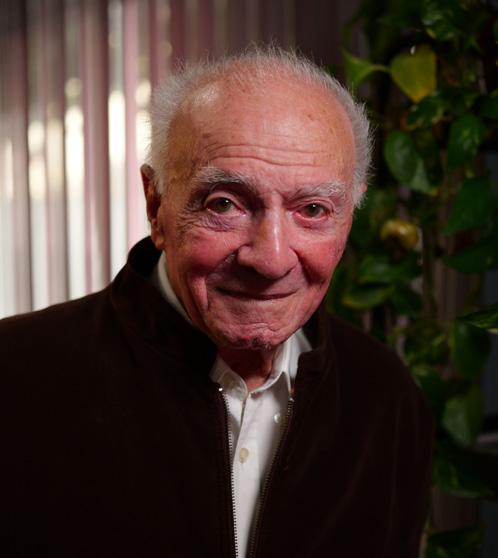
INKONTRU.APP MEETS...
George Zahra has lived and breathed Carnival for more than eight decades. Now in his 90s and still passionately involved, he reflects on Malta’s Carnival as a serious art form, a volunteer-driven cultural treasure, and a uniquely Maltese celebration built on floats, costumes, dance, satire and community spirit.
What draws you to Carnival, and how did your involvement begin?
Carnival has always been a source of strength for me; it’s what I’m most passionate about. I first got involved at the age of 17 as part of a dancing troupe. By my second year, I had already taken a step further, setting up a small company. It took me a while to realise that Carnival isn’t just about fun or spectacle. It’s an art form, and more importantly, a vital part of Malta’s cultural heritage; something that deserves care, respect and long-term commitment.
How have you seen Malta’s Carnival evolve over the years?
I’ve been part of the Carnival Committee for over 50 years, and the biggest transformation came in the 1970s. That’s when Carnival truly became what we recognise today, with the larger floats, more ambitious costumes and Valletta developing its own distinct Carnival identity. I think this decade marked a turning point, where the creativity, scale and organisation came together to change the celebration into a national cultural event.
What makes Malta’s Carnival unique on an international level?
After having the opportunity to speak with Carnival committees around the world, I am always reminded just how uniquely complete Malta’s Carnival is. Other Carnivals often focus on one strength, like the costumes in Venice, but in Malta we excel across five elements, including the costumes, dance, floats, grotesque masks and our local band clubs.
Above all, it’s the volunteers who make each Carnival special. Every year, we see more and more younger generations getting involved, dedicating months of work purely out of love for Carnival. My hope is that we keep promoting Carnival internationally and pass this passion on to future generations so Malta’s Carnival will be known among the very best festivals in the world.
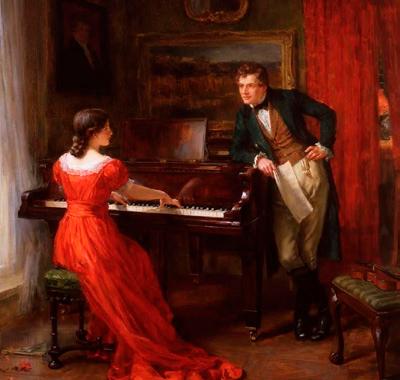
ER UND SIE: FRENCH AND GERMAN ROMANTIC ART SONGS Jesuit Church, Valletta
A recital of French and German lieder from composers like Schumann, Wolf, Fauré, Boulanger and others, this programme on 26th February at 7.30pm, is a musical reflection on the human condition, pondering love, nature and life itself. As the season of Lent starts, this music recital offers a moment of quiet reflection in one of Valletta’s most beautiful sacred spaces. Performers include soprano Mariette Borg, baritone Joseph Cutajar and Maria-Elena Farrugia on the piano. Entrance is free, but donations are welcome. Access is from Archbishop Street, Valletta.
jesuitschurchfoundation.org
George Zahra.
Words by Ramona Depares
Ramona is an author and journalist with an interest in culture-related topics. She runs her own food and culture website at ramonadepares.com
Romance, the Mediterranean way
With quiet sunsets, rooftop cocktails and plenty of opportunities for quality time, spending lovers’ day in Malta can be as indulgent as you wish.
Valentine’s Day on the Mediterranean island of Malta means lazy breakfasts and leisurely strolls, the baroque buildings providing a majestic backdrop for the perfect #couplegoals IG reel.
With quiet sunsets, rooftop cocktails, and plenty of opportunities for quality time, spending lovers’ day in Malta can be as indulgent as you wish. I’m no romance expert, but the island makes it easy to get into the swing of things, whatever your vibe happens to be.
For many of you spending Valentine’s Day here, the classic wine-anddine formula is likely to be the preferred choice. And why not, when there are so many options guaranteed to impress even the toughest romance naysayers. Your only challenge? Matching the venue to your date’s personality.
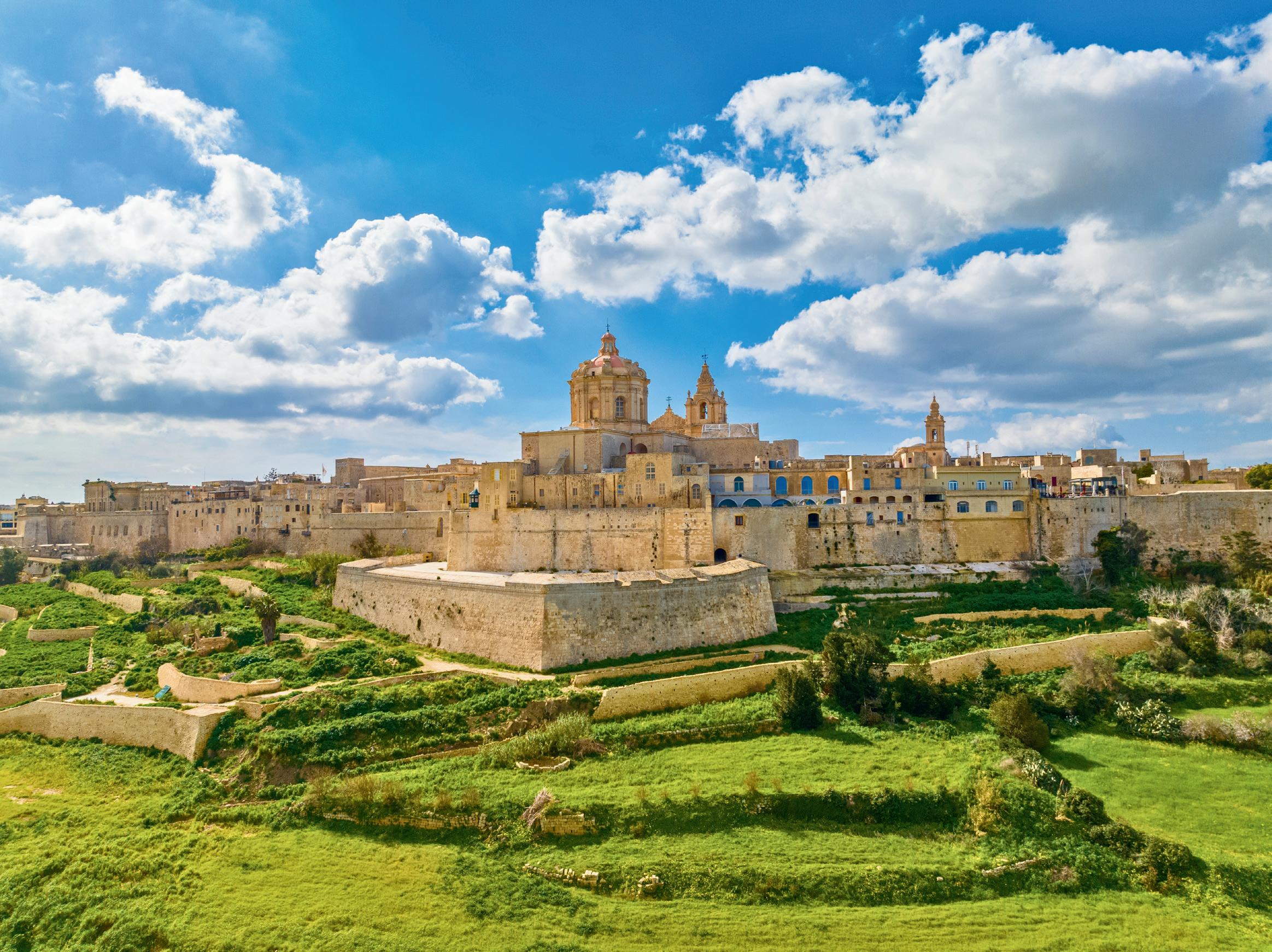
If hip and buzzy is a priority, swipe right on one of the high-end restaurants in St Julian’s, with views for miles and a cocktail menu as eclectic as the DJ’s setlist. A more sophisticated partner will likely appreciate the Valletta vibe, where you’ll find restaurants housed in old palazzi and chef patrons curating menus like it’s their memoirs. Mdina and Rabat are best suited for the diehard romantics, those who dream of moonlit proposals and engagement rings that sparkle brighter than the champagne.
The only thing all these venues have in common is that you’ll definitely need to make a reservation ahead of time – you don’t want to risk spending the most romantic night of the year eating pastizzi on the kerbside. Well, not unless that’s what floats your hipster boat.
But what if whispered sweet nothings while the maître d’ hovers around you is not your idea of romance? It’s all good. The island offers plenty of other opportunities that allow romance to flourish more organically, and the weather certainly helps.
Nothing says “I made an effort” more than planning a whole day out, and the options are endless. Sliema, St Julian’s and Valletta are replete with delicatessens, and sorting out a fancy picnic with wine or bubbly is simple enough as long as you order in advance. If you can, rent a motorino and drive up to the Northern side of the island, where you can enjoy lunch at Għadira Bay, or trek up to the Red Tower and beyond for a spectacular view surrounded by greenery.
Sounds like too much of a hassle? A bottle of bubbly and a simple food delivery right to the beach is likely to leave your date in an equally amenable mood.
Then again, if your goal is to dazzle, a private chef is more likely to do the trick than a beachside delivery. This works particularly well
if you’re Airbnb-ing or if you’ve snagged one of those super luxury suites that come with a hot tub. Chefs like Alain James, Matt Vella and Isaac Camilleri (you can find them all with a simple Google search) have built a reputation for bespoke luxury dining that removes all the stress of planning, leaving you with only one chore – giving your date a 110 per cent of your attention.
Of course, this is all very well and good if the target of your Cupid’s arrow belongs to the (admittedly large) percentage of people who are happy for romance to take a shortcut through their taste buds. Otherwise, you may need to add some nuance to your plans.
The creatives, the culture vultures and the incurably curious should probably centre their plans in Valletta, Malta’s capital. Here you can literally create a custom schedule that’s built around the intellectual kinks of the object of your affections (or lust, we’re not judging).
Dating a film buff? Book tickets at the arthouse cinema at Spazju Kreattiv so you can show off how well you know your Bergman from your Bay. The programming is always a treat, with titles that provide very good fodder for post-film conversation. It’s also good to check what’s on at Teatru Manoel and other theatres, as the winter season typically includes some excellent classic productions in the English language.
If music is more your jam, you’re also likely to have plenty of choices that range from the classical to modern jazz, live gigs and indie tunes. Lower Valletta is your spot for jazz, with tiny hole-in-the-wall bars offering live performances in appropriately low-lit venues. Outside of Valletta, venues like Storeroom and Hole in the Wall are likely to appeal to couples falling within the 30- to 40-year age group and looking for a live indie sound, a cosy vibe and a like-minded crowd.
We even have the perfect venue for literati couples, who enjoy nothing more than leafing through a Thomas Pynchon while sipping a custom drink. Kixott in Mosta is the place, and the cocktail list is excellent, with the added bonus of gorgeous décor in a traditional Maltese townhouse.
The best part about the above suggestions? If you find yourself in the Mediterranean’s most romantic island on the most romantic day of the year sans romantic partner… it matters little. They’re all just as enjoyable with your family or with your mates, or even just by yourself if this is what you feel like. After all, nothing says you're doing Valentine’s Day right than a spot of unabashed self-love.
Words by Ruth Zammit DeBono
Paris with a paw print
For
dog parents looking to experience a capital city without constant restrictions or stress, Paris proves
that style, culture and paw-friendly travel can exist beautifully side by side.
Paris has a reputation for romance, culture and café life – and happily, it’s also one of Europe’s most dogfriendly capitals.
For travellers like me, who never travel without a fourlegged co-pilot, Paris feels refreshingly relaxed. Dogs aren’t treated as an inconvenience here, but as part of everyday life: sitting patiently under café tables, strolling through gardens, or riding public transport.
Getting there from Malta is straightforward. Flying directly to Paris with KM Malta Airlines makes the journey feel seamless, especially when travelling with a small dog in cabin. Once you land, the city opens up in a way that feels surprisingly accessible – wide pavements, leafy spaces and a rhythm that encourages slow wandering rather than rushed sightseeing.
Ruth is a passionate traveller, artist and devoted dog mum, who finds joy in storytelling and discovering the world always with her pet by her side.
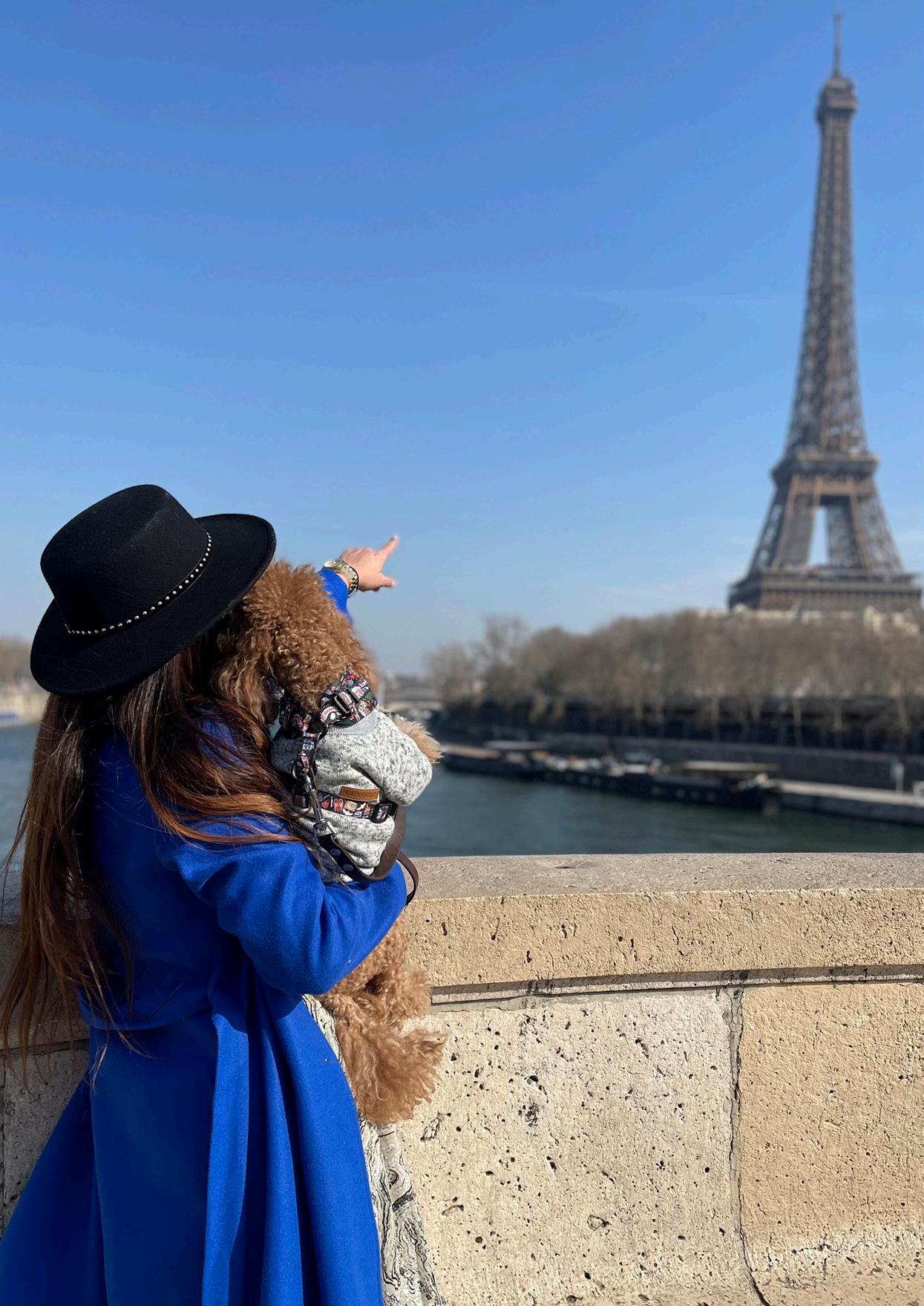
Ruth Zammit DeBono and Roy in Paris.
FIRST PARISIAN WALKS
One of my favourite ways to experience Paris is quite simply on foot. The area around the Eiffel Tower is ideal for a first walk – open, spacious and perfect for easing your dog into the city. While dogs aren’t allowed inside the tower itself, the surrounding paths and grassy areas make for a relaxed photo opportunity, with plenty of space to pause, hydrate and people-watch.
From there, long strolls along the river offer flat, shaded routes with constant visual interest. Paris is a city that rewards walking, and with a small dog, it’s all about pacing the day: early starts, frequent stops and letting curiosity set the tempo.
Montmartre is another highlight – its village-like atmosphere, winding streets and quiet corners make it one of the most charming areas to explore with a dog. While the steps can be a workout, there are gentler routes and plenty of benches to pause and soak in the views. It feels less like sightseeing and more like stepping into a postcard.
CITY ICONS, ONE PAW AT A TIME
The Champs-Élysées and Arc de Triomphe are best tackled early in the day, before crowds peak. Wide pavements make walking easy. Circling the Arc gives you that unmistakable Parisian moment – traffic swirling, cameras clicking, and your dog calmly trotting alongside you like they’ve done this a hundred times before.
The Louvre, too, is best appreciated from the outside when travelling with a dog. The square around the glass pyramid is lively yet spacious, perfect for the most Instagrammable photos and a short rest. Paris excels at offering these in-between moments – places where you don’t need to enter a museum to feel immersed in history and beauty.
GARDENS, CAFÉS AND EVERYDAY PARIS
One of the joys of Paris is its green spaces. Many gardens welcome dogs on leads, making them ideal for midday breaks. These aren’t places to rush through – they’re for sitting, observing and letting your dog rest while you take in the city’s rhythm.
Café culture is another pleasant surprise for dog parents. Small dogs are widely accepted in outdoor seating areas, and often indoors too, especially if they’re calm and carried discreetly. It’s not unusual to see dogs snoozing under tables while their humans linger over coffee – a reminder that Paris is a city built for relaxing and taking the time, not hurrying.
PRACTICAL TIPS FOR A SMOOTH TRIP
Paris is well connected by public transport, and small dogs in carriers are generally accepted. I always recommend using a lightweight carrier or stroller for busier days – not because dogs can’t walk, but because it offers flexibility when pavements get crowded or energy dips.
As always, hydration is essential. Carry a collapsible bowl, plan shaded routes, and build your days around your dog’s comfort rather than ticking off landmarks.
Flying with your dog: what to know .....
When travelling with a small dog in cabin with KM Malta Airlines, there are a few important points to keep in mind:
Only small dogs or cats are permitted to travel in the cabin, and the combined weight of the pet and carrier must not exceed 10kg.
Pets must be at least 15 weeks old and fully weaned before travelling.
Your pet must travel in an approved carrier that meets safety standards, including proper ventilation and a leakproof base, and it must fit under the seat in front of you.
Two per person: each adult passenger can bring up to two pets in one carrier (up to 10kg in total), and unaccompanied minors are not permitted to travel with pets.
It’s essential to ensure you’re compliant with the pet entry regulations of your destination country, as certain breeds may be restricted.
A city that welcomes paws
From its walkable neighbourhoods to its café-lined streets and garden pauses, Paris is a city that fits naturally around small-dog travel. It encourages slower mornings, longer lunches and evenings spent wandering without an agenda.
For dog parents looking to experience a capital city without constant restrictions or stress, Paris proves that style, culture and pawfriendly travel can exist beautifully side by side.
Dreaming of croissants, cobblestones and a pup by your side in Paris? Reach out any time – Roy and I love helping fellow travellers plan their chicest city escapes. @PupsPaintAndProsecco
Words by Alexandra Alden
Alexandra is a Maltese singer/songwriter and former X Factor Malta judge, based in the Netherlands and Malta. Her life spent touring as a musician has allowed her to explore many corners of the world.
The Mediterranean’s best kept climbing secret
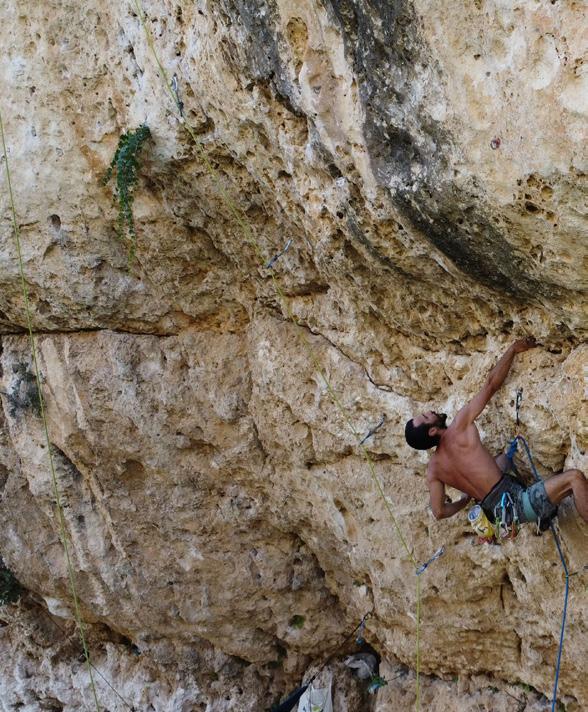
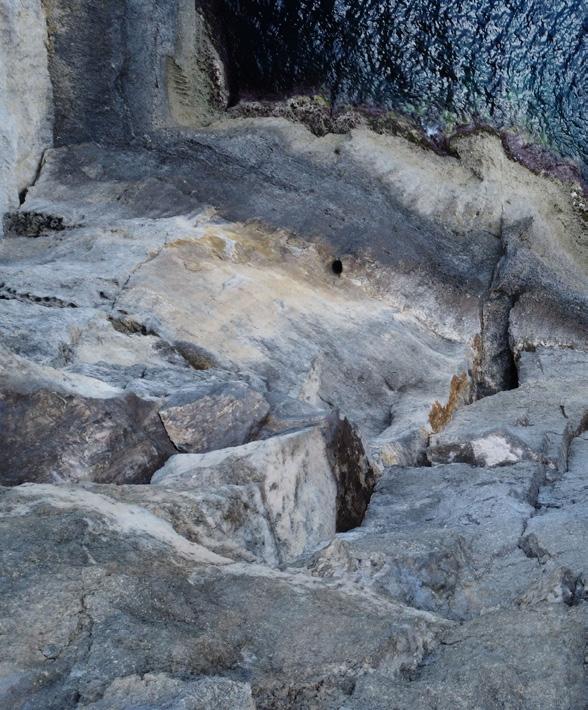
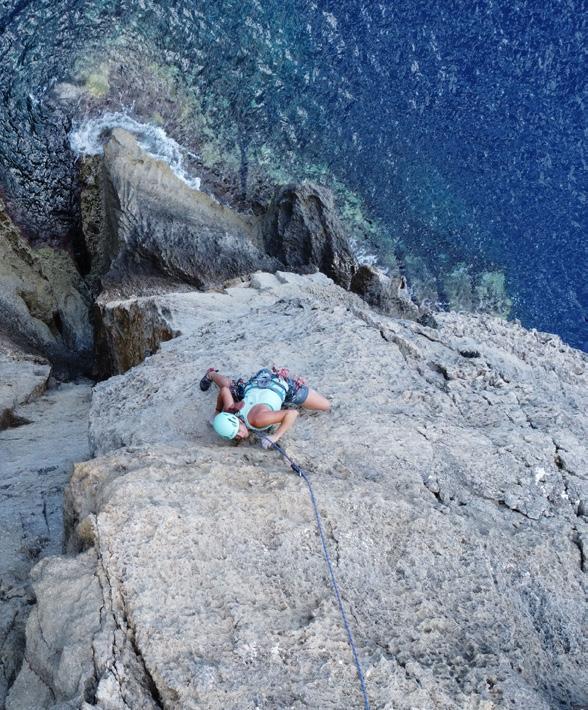
Malta’s rugged cliffs are more than just a majestic sight; they are some of the most spectacular and accessible sport climbing areas in Europe. A new guidebook that hits the shelves this February marks a milestone in the islands' move from a hidden gem to a top-quality climbing destination.
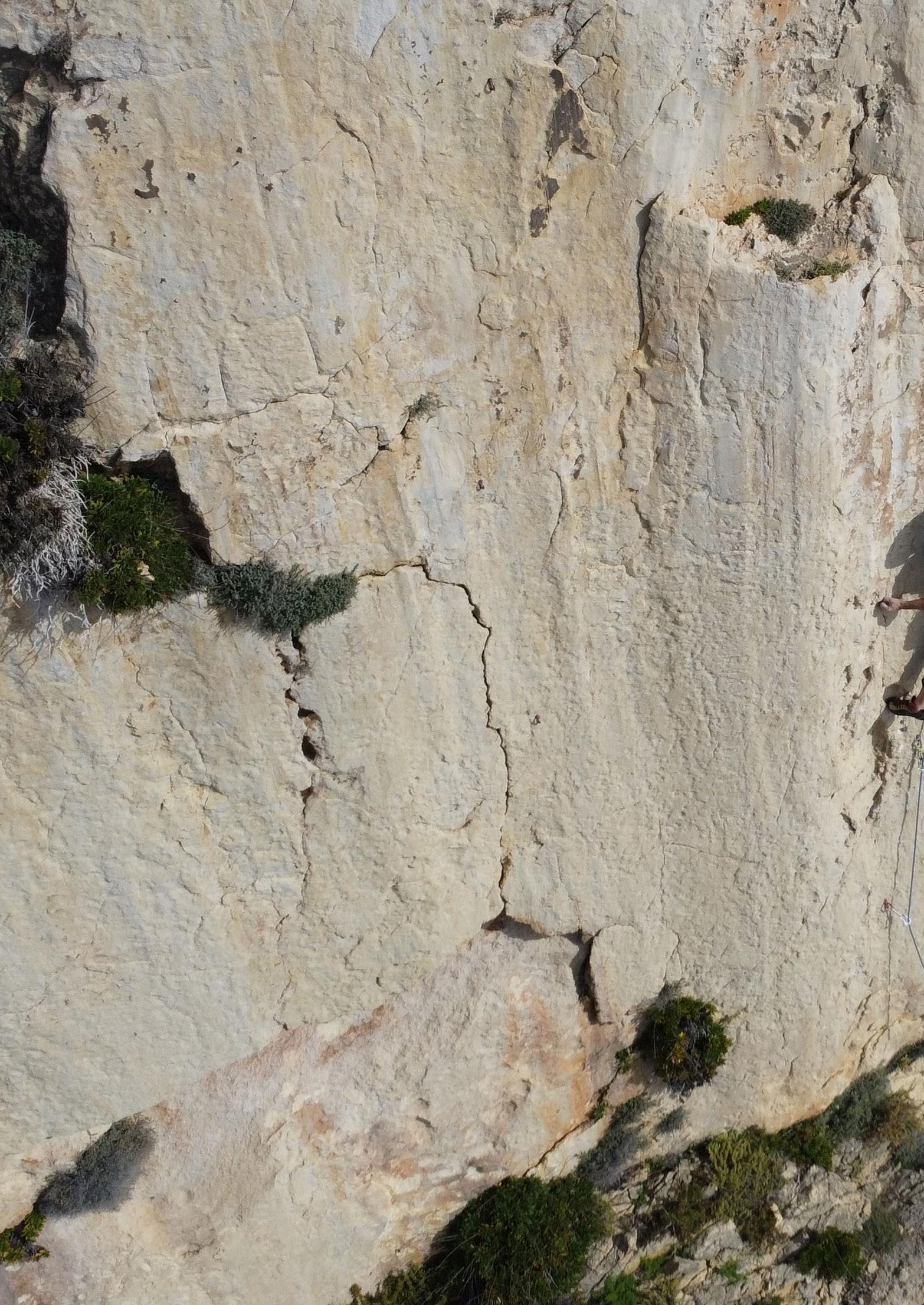
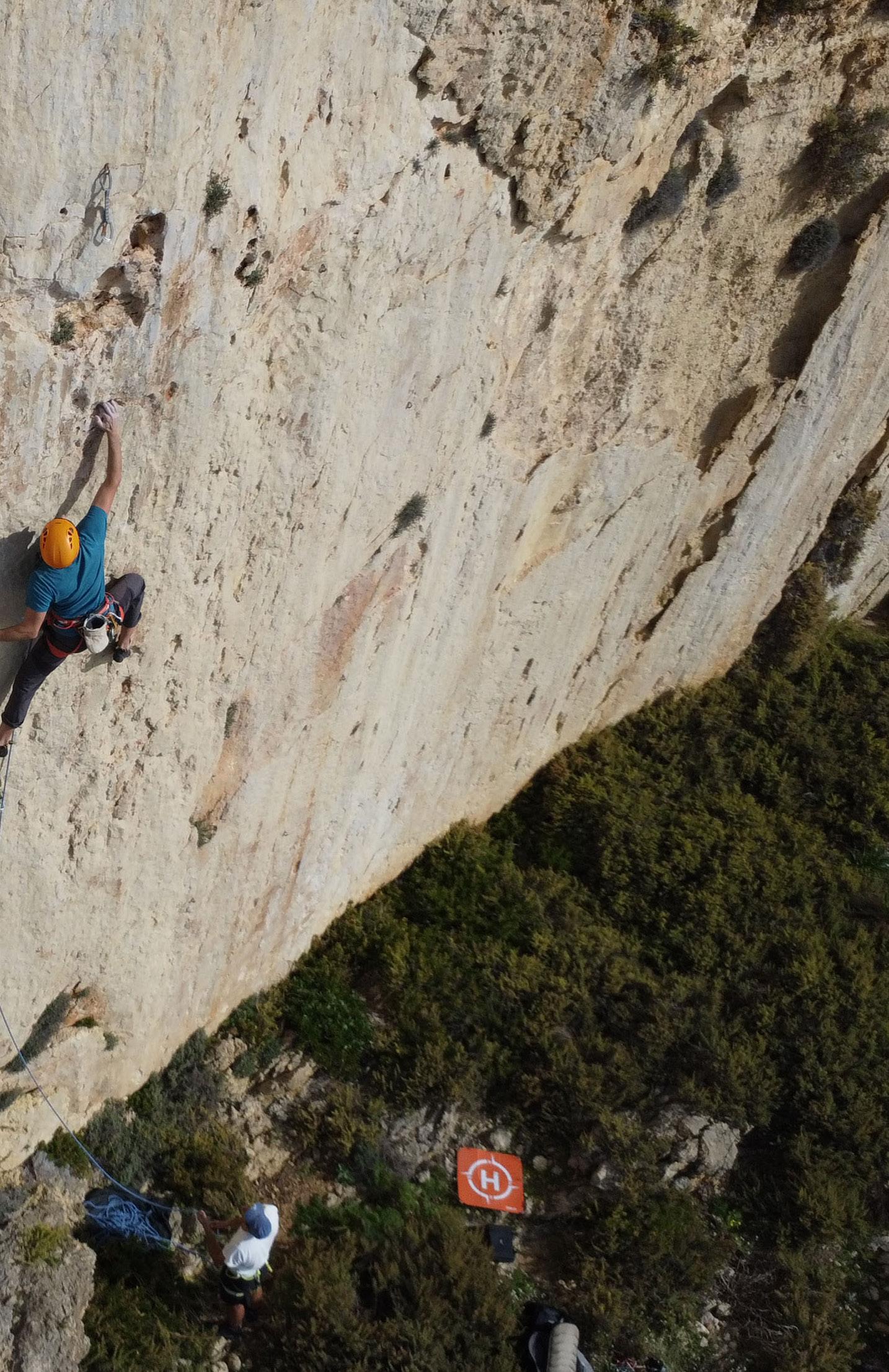
For most travellers, the appeal of Malta is that it offers stunning views of honey-coloured limestone cliffs and garigue, azure waters and historic bastions. But for a growing community of adventurers, those rugged cliffs are more than just a pretty sight; they are some of the most spectacular and accessible sport climbing areas in Europe.
This February marks a milestone for the local outdoor scene with the launch of the highly anticipated 2026 Malta Climbing Guidebook, authored and produced by Simon Alden and Jeffrey Camilleri, two veterans of climbing in the Maltese Islands, in collaboration with half-Maltese, internationally renowned climbing legend Stevie Haston and local stalwart Stephen Farrugia.
The guide is a manifesto for the islands’ maturity as a developing sport climbing hub. It is the first comprehensive update since 2013, documenting a decade of explosive growth that has transformed this archipelago from a niche trad-climbing outpost into a quality sport climbing destination.
A LEGACY CARVED INTO STONE
Climbing in Malta is woven into the islands' history. For centuries, local fishermen have scaled sheer sea cliffs to reach secluded fishing spots, using carved stone bollards and precarious handholds. In the 1940s and 1950s, the Royal Marines used these same cliffs for assault training, leaving behind a legacy of ‘traditional’ routes that required nerves of steel.
In the past, accessing Malta’s vertical frontiers was a high-stakes endeavour reserved for the few, as early routes lacked the standardised safety infrastructure we see today. The new era of Maltese climbing, however, is defined by rigorous standards and routes are equipped with high-grade marine steel or titanium.
This evolution from the precarious 'trad' lines of the mid-20th century to today’s professionally equipped sport routes means that climbers can now focus on the movement and the scenery with a level of confidence and safety that the pioneers could only have dreamed of.
Photos: Simon Alden. Il-Blieqa, outskirts of Żurrieq.
The focus has shifted toward sport climbing. It is a safer, more accessible style, where climbers use pre-placed equipment for protection. This shift has opened the islands to everyone, from families looking for a safe, weekend hobby to elite professionals.
THE ‘ONDRA’ EFFECT
The international climbing community truly took notice in 2023 when Adam Ondra, widely considered the greatest climber in the world, visited the islands for a “break”. Ondra didn’t just visit; he onsighted (climbed on the first try without prior knowledge) several elite-level routes, proving that Malta’s limestone offers challenges that satisfy even the world’s best.
That being said, you don't need to be a pro to enjoy the rock here, and the new guidebook highlights hundreds of new routes of all grades across the archipelago, including, for example:
• Wied il-Għasel (Mosta Valley): a lush inland canyon offering a mix of steep, athletic climbs and easier, family-friendly sectors.
• Wied il-Mielaħ (Gozo): famous for its dramatic natural window, providing some of the most scenic sea-cliff climbing in the Mediterranean.
• Radar Point: a stunning location near Mellieħa that has seen significant recent development and serves as the perfect winter climbing suntrap.
INDOOR BOULDERING AND CLIMBING
While Malta’s 300 days of sunshine make it a year-round outdoor playground, the local infrastructure has recently expanded indoors to support the sport's growing popularity.
In 2025, the local scene reached a new peak with the opening of Crashpad, a state-of-the-art climbing gym. Crashpad serves as a modern hub for the community. Whether it’s a rare rainy day or a post-work training session, the gym provides a world-class space for newcomers to learn the ropes, quite literally, before heading out to the crags.
Forna Point, Gozo.
The rise of facilities like Crashpad, alongside the UIAAaffiliated national association ClimbMT, ensures that the sport is growing safely. ClimbMT offers a reference point for newcomers to the sport, as well as visiting climbers, and has also developed a certified instructor and coaching programme and a thriving national indoor bouldering league and championship. It can safely be said that the infrastructure now matches the quality of the rock.
WHY MALTA?
What makes Malta unique compared to famous hubs like Spain or Greece is accessibility. You can land at Luqa airport in the morning and be tied into a harness by lunchtime. Most crags are within a 20-minute drive of each other and the approaches (the walk from the car to the cliff) are certainly the shortest in Europe.
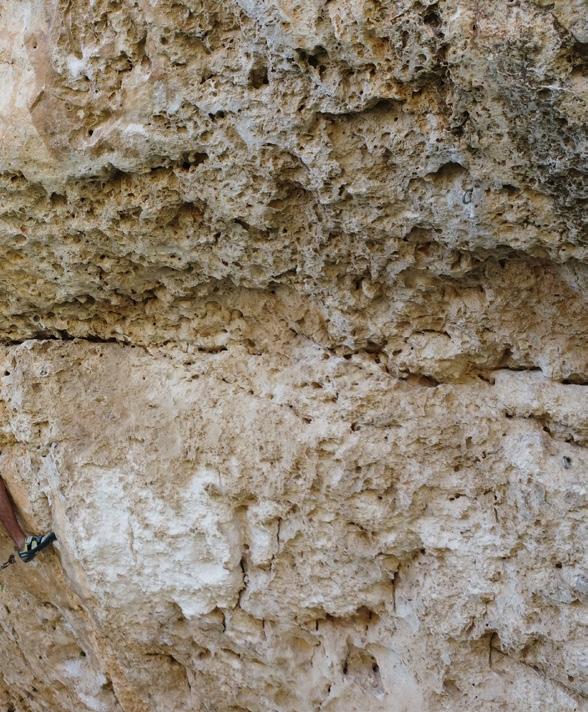
Furthermore, the variety of rock architecture is staggering. From the steep tufas and exposed overhangs of the sea cliffs to the technical slabs of the inland valleys, there is a route for every climber. Many old traditional lines have been retro-bolted, preserving the history while making the climbs accessible to the modern traveller.
A SUSTAINABLE FUTURE
The new guidebook is the most comprehensive collection of routes across Malta and Gozo to date and the ultimate labour of love. Behind every line in the book are the local volunteers who spend countless weekends equipping new routes and maintaining the old in their own free time.
This effort is supported financially by VisitMalta via the MTA ClimbMT/MRCC Bolting Fund, Malta’s national tourism organisation, which is keen to promote active tourism to the Maltese Islands.
As the 2026 edition hits the shelves this February, it marks another step in Malta’s evolution from a hidden gem to a top-quality climbing destination. Whether you’re a lifelong ‘crag rat’ or a total beginner looking for a different perspective of the Mediterranean, the advice remains the same: stop looking at the horizon and start looking up. The cliffs are calling and there has never been a better time to climb in Malta.
Mġarr ix-Xini valley, Gozo.
Segwi t-tbassir
tat-temp fuq
Words by Coryse Borg
Coryse is a broadcaster, actress and voiceover artiste. She is passionate about writing, travelling and spending time with her loved ones; discovering new places and sampling new food in as many countries as possible.
On your marks, get set, go!
The
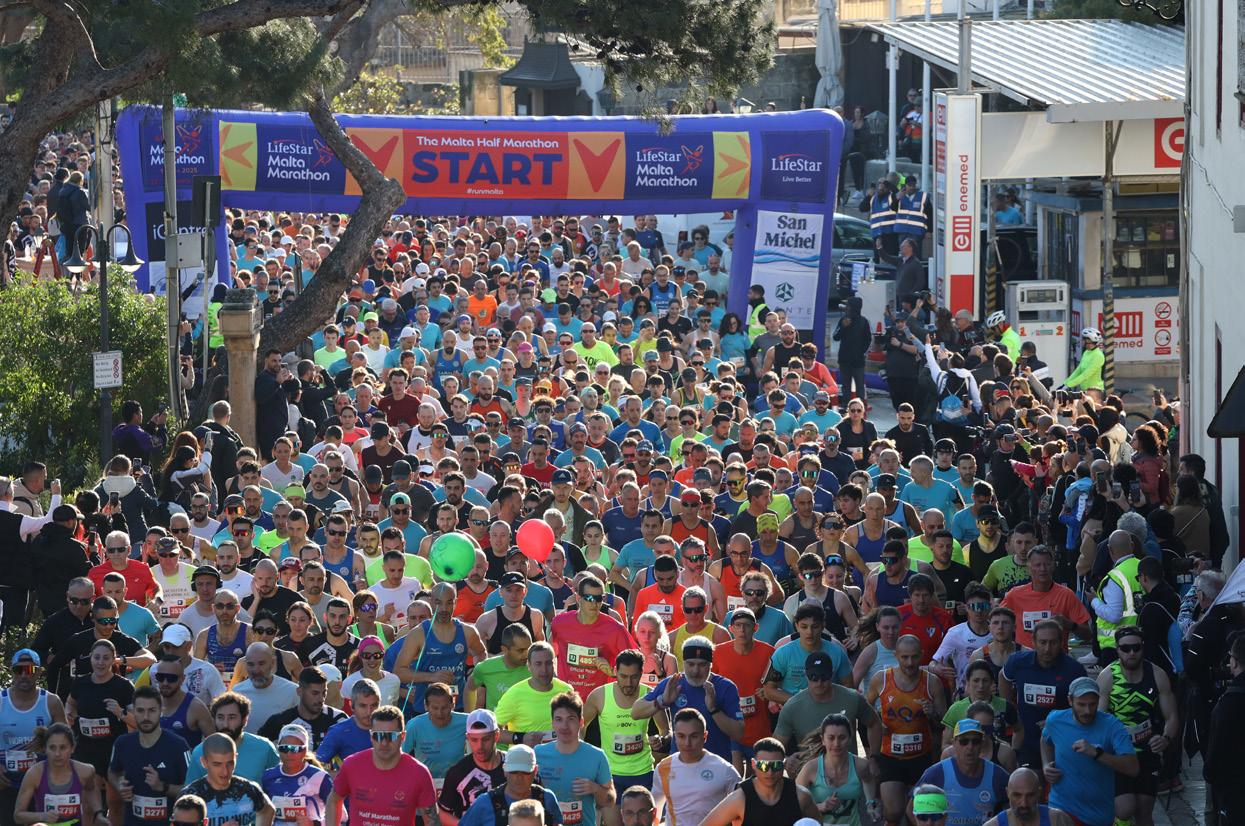
Malta Marathon attracts many visitors in February – typically an off-peak period – showcasing the island as a destination for sports tourism as well. Apart from a physical feat and a challenging competition, the race also has a social element, uniting athletes as their paths meet in their run to cross the finishing line.
Since the inaugural Malta Marathon in 1986, the annual event has grown steadily over the years. It hit the first 1,000 participants after 27 years from an initial 109 and kept growing thereon to reach 4,100 until the pandemic stopped it in its tracks. Then it bounced back with a vengeance in 2023.
The 2025 LifeStar Malta Marathon attracted a record number of 5,100 athletes, 2,700 of which were tourists coming from 80 different countries. This year, between 6,000 and 6,500 registrations are expected, with some 3,500 participants coming from 80 countries.
The Malta Marathon (42,195km) has relatively fast routes, ideal for participants to achieve personal or seasonal bests, with the weather generally much better than in Central and Northern Europe. These are just two main factors that attract participants to come back and to encourage their friends to take part.
Joe Micallef has been the Malta Marathon race director since the very first one over 40 years ago. He also ran the 1986 and 1987 editions, then ran the London Marathon in 1988… And that is when he laid down his running shoes but kept on organising races.
Given that the Malta Marathon attracts many visitors during February – typically an offpeak tourism period – the race can be seen as contributing to the broader goals of promoting Malta as a destination for sports tourism.
“There is a window when it is best to organise a marathon in Malta due to a number of reasons,” explains Joe, “foremost of which is the weather. Beyond February till October, it could be too hot and most major marathons in Central and Northern Europe are held during this time because the weather is milder. This is perfect for Malta as the marathon's economic impact is during the shoulder season.”
Every big undertaking has its own unique logistical challenges. For the Malta Marathon, which starts in Mdina and finishes in Sliema, delivering thousands of bottles of water, energy drinks, sponges and oranges along the route, as well as at the finish line, is one of the organisers’ biggest headaches. Another challenge is to get thousands of participants by bus from Sliema to the start. This involves about 25 coaches for the full marathon and 50 for the half.
Apart from the Malta Marathon, Joe also organises another seven races throughout the year. “After having organised so many races, been at it for so long and seen such a success story despite setbacks, this is my motivation to continue,” he says.
‘A RACE LIKE NO OTHER’
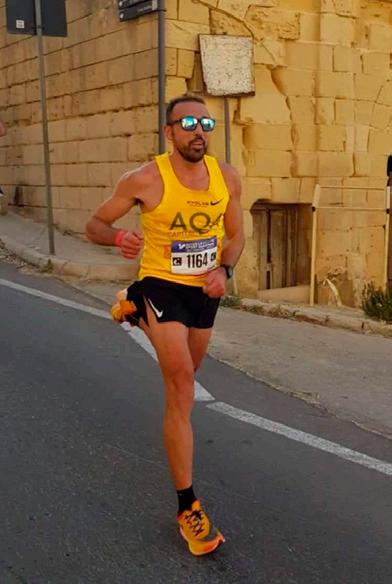
In the 2025 edition, Charlton Debono was the first Maltese runner to pass the finish line – the first time he took part in the Malta Marathon.
“I have been running long-distance races for over 10 years now. I had already run three marathons abroad, but I had not yet run the Malta Marathon. It had always been on my bucket list, and I decided it was time to go for it,” he says.
Marathon training is very specific and different from training for other distances, and Charlton typically starts preparing three months before.
“When you run a marathon, you are not simply competing against fellow runners. You are competing against the distance,” he explains.
Marathon runners tend to build a good relationship with their fellow competitors, encouraging each other before the race and along the way, Charlton says, adding that he has built many new friendships through the marathon.
Training and preparation are key: “The race starts downhill during the first few kilometres. I advise athletes not to get carried away and run too fast during these downhill stretches because it is a long way, and if you run too fast at the beginning, you will pay the price later on in the race. Drinking water at the hydration points is also very important,” Charlton explains from experience.
“Support from family and friends during the preparation towards a marathon is critical. The training is quite long and can be tough. It can drain you at times. So, the encouragement and support of those around you help to prepare properly for the race,” he points out.
Most importantly, Charlton encourages prospective participants to enjoy the race and not put excess pressure on themselves.
“The marathon is a race like no other, and there is no other distance that will give you such satisfaction and fulfillment once you cross that finish line.”
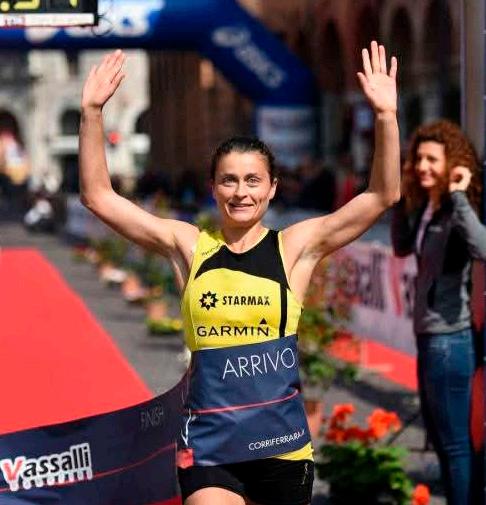
‘ALL MY LIFE IS GEARED AROUND MARATHONS’ After her coach Mark Farrugia encouraged her to enter, Josann Attard Pulis’s first Malta Marathon was in 2014. In 2025, she was the first Maltese woman to cross the finish line.
Marathons have now become her specialist event, so all her life is geared around them.
Charlton Debono.
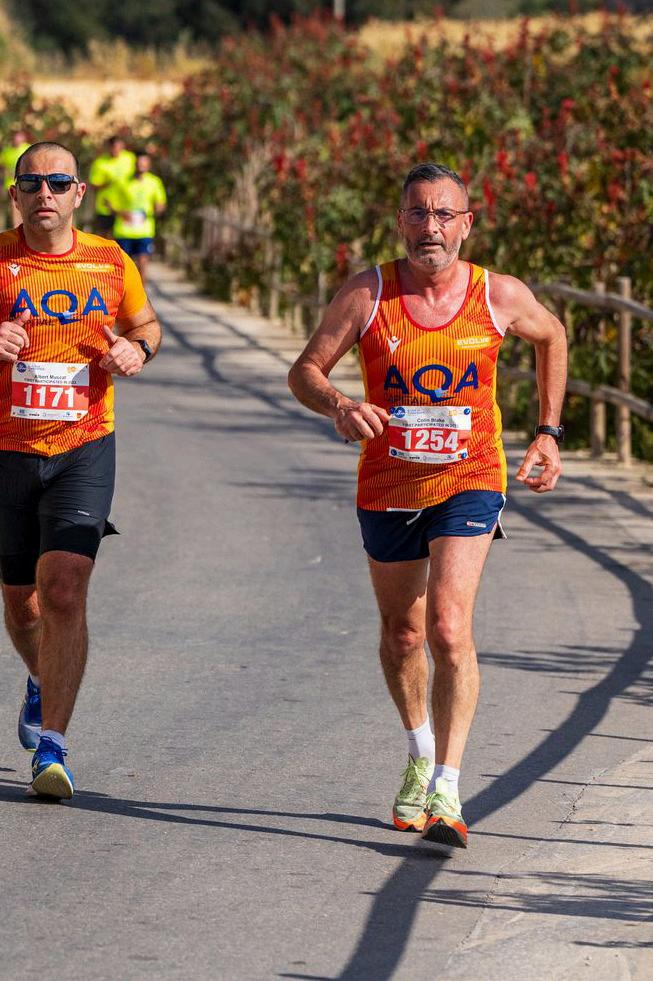
Colin Blake.
Josann Attard Pulis.
“Training has to include all fitness abilities ranging from maximum strength, specific power, speed and flexibility, besides training the five aerobic zones in a specific proportion,” she explains. “The other factors are nutrition and sleep patterns, which is the hardest part due to family commitments,” Josann admits.
For someone considering their first Maltese marathon, she recommends that they start training under the guidance of a qualified coach, who knows the 'physiology' of this event. New coaches can also use the services of mentor coaches who are more experienced and would know the science of an event such as this.
“A good number of people think that running is easy, and they register to race distances without a qualified athletics coach,” she says. “Even worse, some think they can coach without any specific course. I am a qualified athletics coach myself, and yet, I use a much higher qualified coach. Doing otherwise increases the probability of injury or other disappointments.”
‘A SHARED LOVE FOR THE SPORT’
Colin Blake may have secured first place in the Hall of Fame challenge – a series of races that include the Malta Marathon – for his age category in the 2024/25 season. But he grew up practising different sports, and athletics – especially long-distance running – was never really on his radar…
Until about eight years ago, when some friends who were training for road races and marathons encouraged him to join them.
“I gave it a try, got hooked immediately, and never looked back. Running quickly became a way of life for me, my stress buster and my energy booster,” he says. “Today, my biggest fear is an injury that keeps me from running, but that’s a reality all athletes live with.”
Colin’s preparation is ongoing throughout the year, even during summer, although the intensity is lower and supported by cross-training. The real marathon buildup starts in September, when the training programme becomes more structured for the season ahead.
“My training includes one weekly track session to develop speed, daily runs based on the programme set by my coach, and one long-distance run each week. I’m also fortunate to be part of Evolve Endurance, an amazing club that truly feels like a family. The support and motivation we give each other make all the difference.”
Colin says that what brings runners together is a shared love for the sport; it does not matter which club you belong to, or whether you’re a local or visiting from abroad.
“There’s always healthy rivalry, of course, but it’s built on mutual respect. One thing I’ve experienced time and time again is that even when you’re struggling, fellow runners will encourage you and push you forward. That sense of community is a big part of what makes the event so special.”
The 2026 Malta Marathon will take place on Sunday, 22nd February, starting in Mdina and finishing in Sliema, with various events kicking off at different times that morning. maltamarathon.com.
Words by David Carabott
Laying spiritual foundations
St Paul’s story is about a storm at sea that brought an apostle to Malta’s shores, and with him came a message that would shape centuries. The legacy endures through feasts, churches,
art, locations and in the hearts of Maltese
about the shipwreck, the viper and
February in the Maltese Islands is inseparably associated with St Paul the Apostle. From an early age, I grew up with stories of the saint woven into the very fabric of our collective memory. His figure, part history and part legend, looms large over Malta’s landscape, from the quiet grotto in Rabat to the rugged shores of St Paul’s Bay.
Paul’s story begins far from our sun-drenched islands, yet through a combination of chance and divine design, it brought Christianity to these shores and changed the course of their history forever.
SAUL OF TARSUS
Saul, a Pharisaic Jew born in the Roman city of Tarsus in modern-day Turkey, was raised under strict Pharisaic law and was initially a fierce persecutor of early Christians. His life took a dramatic turn on the road to Damascus, where, in a moment of blinding revelation, he embraced the message of Christ.
From that moment on, he became Paul, the missionary, the apostle and the tireless bearer of the Good News, who, between AD 46 and 57, travelled thousands of miles across the Roman world. His legendary journeys are recounted in Acts 28, the final chapter of the Acts of the Apostles, a book in the New Testament that tells the story of the early Christian Church and the missionary work of Paul.
who
grow up
hearing
the miraculous healing.
PAUL’S
JOURNEY TO MALTA
According to Scripture, in AD 60, Paul’s journey took an unexpected turn when he arrived by chance in Malta. Paul was a prisoner, being transported to Rome to appeal his case before Emperor Nero. During the voyage, the ship carrying him and approximately 276 others was caught in a storm. For several harrowing days, the vessel was battered by relentless winds and waves until it was finally driven onto the rocky shores of the Maltese Islands.
Luke the Evangelist, Paul’s companion and the chronicler of his travels, records that the island was called Melita and that its inhabitants welcomed them and lit a bonfire to help them warm themselves. This simple gesture of hospitality marked the beginning of a life-changing encounter.
As Paul stood by the fire, a viper, disturbed by the heat, fastened itself onto his hand. The islanders drew back in fear, convinced that the man must be a murderer or under a curse. Yet Paul suffered no harm. When the bite left him untouched, those watching recognised it as a sign of divine protection. Moved by what they had witnessed, the islanders began to listen to Paul’s words, and gradually their hearts were changed. Through his presence and teaching, Christianity took root in a land whose people had long followed ancient pagan beliefs.
Photos: Carl Farrugia. St Paul's Shipwreck Church façade during the feast in Valletta.
ST PAUL’S LEGACY
St Paul’s Bay is traditionally identified as the site of the shipwreck. During his three-month stay on the island, Paul performed acts that cemented his legacy. Most notably, he healed the father of Publius, the Roman governor, who, in gratitude and conviction, converted to Christianity. Publius would go on to become the first bishop of Malta and later bishop of Athens, establishing a line of faith that continues unbroken to this day.
Sites such as San Pawl Milqi, traditionally thought to be Publius’s villa, and the grotto in Rabat, adjacent to St Paul’s Church, where Paul took refuge, remain sacred and are visited by pilgrims and travellers alike. There stands a marble statue by Melchiorre Cafà, a renowned 17th-century Maltese sculptor, one of the most admired artists in Rome of his generation, during the splendour of the baroque era.
St Paul’s Catacombs in Rabat, regarded as the most important Christian catacombs outside Rome, testify to the early adoption of Christianity on the island. In the Maritime Museum in Birgu, a huge Roman anchor is displayed, believed to be from a ship like the one that brought Paul to Malta, providing a tangible link to the historic voyage.
ST PAUL IN ART AND HERITAGE
One of the foremost sanctuaries dedicated to St Paul is Mdina Cathedral, the principal church
of the Maltese Islands. Built on medieval foundations and rebuilt twice, it has always been dedicated to the Conversion of St Paul. According to tradition, the cathedral stands on the site believed to have been the home of St Publius. Visible from almost every part of Malta, it dominates the skyline, and I always admire its majestic presence whenever I catch sight of it.
Many of the paintings and carvings in the cathedral illustrate scenes from St Paul’s life. The cathedral’s vast titular painting depicts the Conversion of St Paul, created by Mattia Preti, a leading figure in both Malta and Rome at the time. In the apse, a mural portrays the Shipwreck of St Paul, also by Preti.
The interior of the dome features a fresco, The Glory of St Peter and St Paul, painted in the 1950s by Mario Caffaro Rore. The Apotheosis of St Paul by Francesco Zahra, a large masterpiece, covers the ceiling of the Aula Capitolare.
The original 900-year-old door of the earlier Norman church, carved in chestnut timber in a distinctive Gothic style, is still intact and now serves as the entrance to the cathedral sacristy. Its ornate decoration includes an engraving of St Paul. The door was adapted to fit the entrance of the old sacristy in the new cathedral. Its main baroque portal features a bronze statue of St Paul, among others, by Melchiorre Cafà. The cathedral also preserves the
The relic of St Paul's wrist.
Photo: Aaron Borda. St Paul's Grotto.
relics of Saints Peter and Paul, which are central to its identity and to the Mnarja procession tradition held each June.
A stone’s throw away, at the Mdina Cathedral Museum, a 14th-century polyptych of St Paul, the oldest known altarpiece in Malta, depicts the saint enthroned at the centre, surrounded by panels illustrating episodes from his life. An octagonal chapel within the complex features a trompe l’oeil dome and paintings by Antoine Favray, the leading court painter in Malta during the baroque period, including a depiction of St Paul.
The museum also houses 15 silver statues of the Apostles by the Roman silversmith Antonio Arrighi. This series, including St Paul, was inspired by statues by the same artist at St John’s Lateran Basilica in Rome.
For art lovers, Casa Manresa, the Archbishop’s Curia in Floriana, is a hidden gem. Originally built in the 18th century as a Jesuit retreat, it houses a rich collection of baroque art, including my favourite: Francesco Zahra’s captivating painting of Paul swimming to shore after the shipwreck.
In Valletta’s St Paul’s Shipwreck Church, the main altarpiece, depicting the shipwreck, is by Matteo Perez d’Aleccio. The church also contains a piece of a marble column traditionally associated with the martyrdom, along with a relic believed to be a fragment of St Paul’s wrist. Additionally, it houses a very important statue of St Paul, carved by Cafà.
ST PAUL IN MALTA TODAY
Across the archipelago, St Paul’s life and teachings are commemorated, and it is little wonder that he is revered as one of Malta’s co-patron saints, alongside St Agatha and St Publius. Even the landscape, from rugged cliffs to tranquil bays, seems to echo the rhythm of his journeys, the perilous sea voyages, the warmth of human kindness, and the transformative power of faith.
Each year, the feast of St Paul's Shipwreck is celebrated on 10th February, commemorating the storm that brought him to Malta and the faith that flourished in its wake. Valletta comes alive with solemn Masses, grand processions, and fireworks, a vivid expression of how history, tradition and community intertwine.
As I walk through the narrow streets of Mdina on my way to the cathedral, or gaze at his statue in St Paul’s Bay, I feel a connection that is both historical and personal. My island home was forever changed by a man who arrived not as a conqueror but as a witness to faith. Celebrating St Paul is also a celebration of Malta’s identity, a place where chance encounters, courage and divine purpose converged to create a timeless heritage.
Colour, Form & Composition:
The Enduring Influence of
MILTON AVERY
Harold Ancart
March Avery
Andrew Cranston
Nicolas Party
Henni Alftan
Gary Hume
Jonas Wood
Open until 4 April 2026
Malta Contemporary Art Museum Come Visit
Opening Hours
FIND US
Supported by:
MICAS, Floriana The Milton and Sally Avery Arts Foundation Waqas Wajahat, New York
Try your hand at Taste History’s bitter orange marmalade, based on an 18th-century recipe and complete with a dose of sweetness.
Taste History, the culinary arm of Heritage Malta, is reviving the past through the artisanal production of bitter orange marmalade. The oranges are handpicked from trees growing within some of Heritage Malta’s sites, including Villa Guardamangia, once home to Princess Elizabeth during her sojourn in Malta, Villa Portelli in Kalkara, and the Grand Master’s Palace in Valletta.
In the Taste History kitchen, our chefs transform these fruits into marmalade using just three simple ingredients – oranges, water and sugar – following an authentic 18th-century recipe discovered in the archives of the Inquisitor’s Palace in Vittoriosa.
Here, sugar plays a central role, just as it did in the 18th century, when it had become one of Europe’s most coveted commodities, appearing not only in refined recipes but even in the pantry of Maltese corsair ships, none of which set sail without it.
This timeless recipe now sweetens Taste History’s culinary events, including an 18th-century-inspired sorbet, where the marmalade takes centre stage, serving as a vivid reminder that the enduring sweet tooth continues to guide the development of new Taste History products, soon to be found in Heritage Malta’s museums and shops.
Chef Malcolm Baldacchino.
Chef Philip Zammit.
Words by Thomas Camilleri
Creative director by day and actor by night, Thomas also founded Lazarus Tiles, a project through which he saves and documents Malta's cement tile heritage.
Nature-made lace
Hungarian jewellery designer Adrienn Bartolich creates her handmade artisanal pieces, Bartoart, even from dried prickly pear leaves. It is her great love for nature that is her inspiration, and she finds it in bucketfuls in Gozo, where she is based.
As a Maltese man, I often find a lot to criticise about our little island home. However, hearing criticism from another, I suddenly find myself bristling with indignation. I suppose this is true of most people though we often joke that it’s a typically Maltese dynamic.
Inversely, I often feel honoured when someone from a richly tapestried country I find fascinating loves Malta enough to move here. Adrienn Bartolich and her husband Abel are one such duo, having left the long grey winters of Central Europe to seek sun and sea. More than that though, Adrienn constantly longs for connection with nature, being a source of inspiration for her work.
Her background left its mark. “I was born in Hungary to a realistic, practical-minded father and an artistic, creative mother. Two things shaped my childhood and my personality more than anything else: a deep inner need to create, and a passionate love for nature. I spent every weekend on my grandparents’ farm, surrounded by silence, animals and open fields, and my weekdays at home with paints, beads and yarn.
“I think I inherited the creative drive – there have been artists and makers in my family for generations. My mother also explored several creative fields throughout her life.”
Although I discovered Adrienn through her beautiful jewellery, it was words that first got her creative juices going. Having grown up with the maxim drilled into her that creativity can’t make you a living, it wasn’t until her 30s that she sought to explore her artistic side in greater depth.
“I first began with writing, and in 2013, my first collection of essays and short stories was published in Hungary under the title Lelkek szárnyán (By the wings of the soul).”
It was soon after this that Malta beckoned, and after a month on the main island, the couple discovered Gozo, which was exactly what they had been seeking. “We immediately felt it was the place for us; a small, peaceful island where the sea is always within arm’s reach. Twelve years later, we are still here.”
The rhythm of the sea helped her slow down and reconnect with her true self. Here she met several local artists, such as Dominique Ciancio and Emma Borg, and these friendships became a constant source of encouragement and inspiration. They gave her the push she needed to finally step into the creative path she was always meant for.
While I find her work in copper and brass interesting, she notices that I’m drawn to her jewellery made from dried prickly pear leaves and elaborates on their background: “During our very first walks in Malta, we noticed the prickly pear –this strange yet fascinating plant that dominates the landscape here.
“But I specifically remember one walk in Gozo with friends: I stopped by a prickly pear plant and noticed its dried, fallen leaves. Only the strong fibres remained – and their intricate structure looked like nature-made lace or filigree. In that moment, I knew I had to create something from it; something that preserved this natural beauty most people walk past without
noticing. That was the moment when the idea of my jewellery was born.”
Since they had only just moved here, she had no creative tools to work with. Still, Adrienn was so eager to discover how cactus fibre would look as jewellery that she cut out a shape with her manicure scissors, painted it with nail polish and dismantled an old earring to use its hook. “That’s how it all began!”
Of course, she tells me, the real work came afterwards: developing the right method to prepare the fibres, finding suitable materials, defining the style, and making the metal components. But a year later, she was already participating in local artisan markets with her cactus-fibre jewellery, and a few years later, Hungary’s main cultural TV channel made a short film about her and Abel, showcasing this unique type of jewellery, which, without exaggeration, is one of a kind.
It is her great love for nature that drives her constant search for inspiration, and she thankfully finds it in bucketfuls in Gozo. “Living in Malta, I use Mediterranean natural forms in my designs when working with metals: figs, pomegranates, seagulls, whales, rays, octopuses all take shape in my hands. I prefer figurative representation because I feel abstract forms would create distance between me and nature. I want to stay as close to nature as possible,” Adrienn says.
“I always have plans for new techniques, new materials and new collections,” she continues when asked about where her interests are currently taking her.
“I’m working on designs featuring some special creatures, as well as a new cactus-fibre collection created with a truly exciting new method. I also plan to start working with silver next year and to create my first silver collection.”
Seeing this beautiful body of work coming from a woman who has chosen, along with her husband, to make our country their home and a source of enrichment is the best compliment ever.
Adrienn Bartolich and her husband
Abel.
A I R ( P O R T )
Words by Rev. Dr Nicholas J. Doublet
A senior lecturer in the Department of Church History, Patrology and Paleo-Christian Archaeology within the Faculty of Theology at the University of Malta, he is the coordinator of the Jesuit Church project.
Where faith, art andhistorymeet
For travellers seeking more than sightseeing – those drawn to places where history speaks, art elevates and silence has meaning – the reawakening of the Jesuit Church offers an unforgettable experience. Here, in the very fabric of Valletta, Malta’s spiritual and cultural soul continues to unfold.
In the heart of Valletta, a remarkable landmark is welcoming visitors once more. After an ambitious, researchled conservation programme, the Jesuit Church reopens in February as one of Malta’s most compelling destinations for religious and cultural tourism – an immersive encounter where faith, art, education and history converge.
Built between 1593 and 1609, the Jesuit Church was conceived not as an isolated monument but as the spiritual heart of the Collegium Melitense, the Jesuit college that would later evolve into today’s University of Malta. From the outset, worship, learning and civic life were woven together within this architectural ensemble, giving the site a unique identity that still resonates today.
Even now, the University continues the Jesuit tradition by conferring postgraduate degrees within the church itself – an extraordinary continuity of purpose across four centuries.
Architecturally refined in the baroque period following the devastating gunpowder explosion of 1634, the church bears the imprint of leading architects and artists who shaped Valletta’s baroque landscape. Its interior houses one of the richest collections of late Mannerist and baroque paintings in Malta, featuring masterpieces by Filippo Paladini, Battistello Caracciolo, Mattia Preti and Francesco Romanelli.
These works were never mere decoration: their imagery reflects core themes of Jesuit spirituality – mission, sacrifice, discernment and hope – inviting visitors into a visual journey of reflection and meaning.
Equally captivating are the two adjoining Oratories of the Immaculate Conception and of the Onorati. Lavishly decorated with 17th-century fresco cycles by Filippino Dingli, Stefano Erardi and Alessio Erardi, these intimate spaces reveal the Jesuit approach to formation through beauty, disciplined devotion and communal prayer.
Recently restored, the Oratories now glow once more with their original colours and iconographic clarity, offering moments of stillness and contemplation amid the city’s vibrant rhythm.
What sets the Jesuit Church apart is not only the excellence of its restoration but the vision behind it. Guided by the Jesuits’ Church Foundation – a partnership between Church and State – the project sought to preserve the building without stripping it of life. The result is not a static museum, but a living sacred space that hosts liturgy, sacred music, cultural events and quiet personal encounter.
In Malta, the Church continues to draw the faithful through the beauty of the Traditional Latin Mass, celebrated every Sunday at 10.30am. This form of worship, shaped by centuries of prayer, allows the architecture, art, music and ritual of an early-modern church to speak in their original harmony. It offers worshippers and visitors alike a contemplative experience of the Church’s living tradition – one that has nourished generations of faithful and continues to resonate deeply in the present.
For travellers seeking more than sightseeing – those drawn to places where history speaks, art elevates and silence has meaning – the Jesuit Church offers an unforgettable experience. Here, in the very fabric of Valletta, Malta’s spiritual and cultural soul continues to unfold.
Explore more
horizons
Known as il-Qarraba, this stunning rock formation provides a spectacular viewpoint over both Riviera Bay (locally known as Għajn Tuffieħa Bay) and Qarraba Bay.
Both hiking enthusiasts and rookie explorers will happily realise that il-Qarraba and its panoramic views are an unmissable spot in Malta.
@VisitMalta
Words by Coryse Borg
Music Maestro!
Europe’s female composers have been offered a platform to develop new compositions and share them with international audiences. Two Maltese music-makers explain what they are giving and getting out of the inspiring and empowering project that supports women’s essential participation in the creation of contemporary works.
The Trans Europe Express project is shining a powerful spotlight on the role of women in contemporary musical composition, bringing their creativity, skill and innovation to the forefront. Spanning 18 months and four countries – France, Hungary, Malta and Spain – the initiative seeks to address persistent gaps in gender equality within the classical music world.
By fostering artistic growth and professional visibility, it offers young female composers a meaningful platform to develop new works and share them with international audiences.
At the heart of the project is a programme of concerts featuring original compositions commissioned specifically for the initiative. These new works sit alongside a curated repertoire of pieces by both historic and contemporary composers.
Complementing the performances is a series of educational activities, including masterclasses in composition and performance, workshops for emerging composers, public rehearsals, conferences and post-show discussions on the role of women in music, coming up with ideas for a new website that will serve as a platform for composers, particularly female.
Two of the composers taking part in this project are Maltese musicians Mariella Cassar Cordina and Veronique Vella. They have been selected to represent Malta in the Trans Europe Express, designed to promote new works by the eight female composers.
Mariella and Veronique have been commissioned to write new pieces that are being performed abroad and have held workshops for composers in the hope of encouraging more women to compose music.
“Participating in projects that highlight and support women composers has been both inspiring and empowering,” Mariella says. “They create an environment where different artistic identities can meet, challenge one another and grow.”
For Mariella, these kinds of initiatives encourage a deeper awareness of her own artistic position –rooted in Maltese heritage and soundscapes but expanded through dialogue with musicians and composers from other countries.
Across borders, the conversations naturally extend beyond music: they bring forward questions of representation, cultural identity, and how women’s voices contribute to shaping the contemporary sound world. The exchanges often reveal shared experiences, shared challenges and shared aspirations, making the creative process richer and more connected.
“One of the highlights of this project was getting to know these wonderful women from Hungary, Spain and France,” asserts Veronique. “Each brought their unique musical aesthetic to the table, and each commissioned new work seemed to be a clear reflection of that.”
Veronique adds that she found it fascinating to speak to other composers and share thoughts and processes when writing music: “It was exciting and thought provoking for me, as the creative process, though strangely comforting, joyful and satisfying, can sometimes feel a little bit isolating.”
Mariella and Veronique’s music has travelled – and will continue to travel – internationally. So, how does hearing their work performed abroad influence their thoughts on culture, identity and universality?
“Listening to my music in different countries is always revealing,” says Mariella. “Each performance context offers a new perspective, allowing me to understand how the work resonates when detached from its familiar cultural environment.”
Even when her compositions are strongly influenced by Maltese landscapes or personal experiences, Mariella finds that audiences abroad connect with them through their own interpretations.
“This confirms my belief that authenticity travels well; that when a musical language is honest, it creates its own bridge between cultures. These experiences remind me that while identity shapes the artistic voice, music ultimately has the power to communicate beyond borders,” she adds.
In Veronique’s opinion, music will always be a universal language that stirs and inspires listeners, provoking a variety of responses.
“The music I write is certainly shaped by my own identity, personal taste, musical training and other biases. When a performer interprets my works, they are also putting their own stamp on it – musical or otherwise. It is a delightful exchange of our personal worlds,
Photo: Joe Smith.
Veronique Vella.
Mariella Cassar Cordina.
Photo:
which can inform and inspire composers, performers and audience members.”
Young composers often navigate questions about identity, confidence and how to position themselves within a rapidly evolving contemporary-music world. Many are looking for guidance on balancing innovation with personal expression, or how to access meaningful opportunities.
“Lack of funding in the arts sector in general is definitely a challenge,” Veronique explains. “There is a lot of anxiety surrounding full-time music careers… Ideally, a composer could rely on composition alone to make a living, but currently this does not seem to be a feasible route for the majority of music-makers.”
Through the project, clear insight has emerged – the visibility of women in the music world is essential. When women’s creative work is actively programmed, discussed and supported, the entire musical ecosystem becomes more vibrant and inclusive.
“Through conferences and workshops connected to these initiatives, it is evident that women do not lack artistic vision. But they often lack the same level of opportunity and representation. Creating structured spaces for collaboration, exchange and professional guidance helps address this imbalance,” Mariella stresses.
The diversity of commissioned works featured in Trans Europe Express ensures a rich and rewarding experience for audiences. The programme spans a wide spectrum of styles and atmospheres – from introspective and contemplative pieces to others that embrace a lighter, more playful character.
This variety not only broadens the appeal of contemporary classical music but also challenges longstanding assumptions that the genre is inaccessible or overly complex. Projects such as this play an important role in shifting perceptions.
Remarks such as “I don’t understand it” or “it’s too complicated” are common, says Veronique, yet they overlook one of the most fundamental aspects of music; it is meant to be experienced, not decoded.
Another compelling element of contemporary composition is its potential for collaboration across artistic disciplines. Working with dancers, actors, visual artists and creators from other fields can greatly expand the context in which new works are performed and perceived.
The works created for this project have a versatility that would allow them to flourish in a range of settings, demonstrating the continued vibrancy and adaptability of contemporary music today.
More information on the Trans Europe Express project, which will run until 30th April 2026, may be obtained from www.desequilibres.fr
Words by Emmanuel Galea
Emmanuel is a Gozitan freelance writer, who draws on his global experience to promote Gozo as a destination that rewards those who take the time to explore it.
Across the winter sea: Gozo’s Carnival before the crowds
Take a nostalgic trip back to the early days of Gozo’s Carnival in the 1960s, when it existed for the island alone and laughed inwardly. Follow how it evolved and shaped Nadur’s unique spontaneous character till today.
Carnival in Gozo during the 1960s unfolded in a world shaped by limits. Travel moved slowly, while information moved even slower. The stretch of sea between Malta and Gozo did not feel like a short crossing but a genuine boundary that shaped habits, expectations and celebrations.
Carnival grew within those constraints, and because of them, it belonged almost entirely to the Gozitans themselves.
Until the late 1960s, accessibility defined everything; ferry services remained infrequent, weather-dependent and tied to daylight. A winter crossing required planning and patience. Rough seas could cancel sailings without warning, and there were no alternative routes, no fast ferries and no proper sense of flexibility.
Maltese visitors rarely crossed to Gozo for Carnival. The journey felt uncertain and
unnecessary when Malta had its own festivities closer to home. Tourism, as we understand it today, barely existed.
This isolation mattered as it meant Carnival in Gozo grew without outside influence or expectation. There was no audience to impress and no competition to measure against. Carnival existed for the island itself, shaped by its scale, its rhythms and its shared understanding. It was not a destination event. It was a season lived inwardly.
Preparation reflected that intimacy and costumes emerged from necessity and imagination rather than from shops or workshops. Old clothes found new life, while cardboard, fabric scraps and improvised masks turned kitchens into creative spaces. Beauty mattered less than covering up; in a small society where everyone recognised everyone, anonymity carried real value. A successful disguise fooled neighbours, not cameras.
Children claimed the streets as they moved freely through villages, faces smudged, pockets heavy with sweets, stopping wherever laughter gathered. Parents watched without anxiety as traffic remained light in streets that still belonged to the people. Carnival merged naturally into daily life rather than interrupting it.
The adults joined in later, usually after dusk. Groups formed informally and drifted from street to street, exchanging jokes, teasing friends and staging improvised sketches. There were no programmes, no routes and no loud announcements. Humour relied on timing and recognition rather than volume. A familiar gesture exaggerated, a local habit pushed just far enough, or a silence deliberately held too long carried more weight than words.
It was in this environment that the particular character of Nadur Carnival took shape. By the late 1950s and early 1960s, Nadur’s Carnival had drifted away from daytime formality and into the night. While other villages marked Carnival in more conventional ways, Nadur embraced spontaneity after dark. Groups gathered, faces hidden, identities erased. There were no floats and no stages. The streets themselves became the setting.
Several factors encouraged this evolution towards Nadur, slightly removed from Victoria and perched above the channel. Its narrow streets and small squares favoured close encounters rather than large gatherings. More importantly, the absence of outsiders allowed freedom. With almost no Maltese
visitors and virtually no tourists, humour could remain raw, surreal and deeply local.
Satire thrived because the audience remained entirely Gozitan. Everyone understood the references, and Carnival humour did not need to explain itself. Politics featured only through innuendo, never through naming. In the climate of the 1960s, Carnival offered a brief and trusted space where observations could be made safely through laughter.
Food anchored the celebration across the island. Homes filled with the smell of frying dough and sugar. Bakeries prepared pastries that appeared only during these days. Plates moved easily between neighbours, and sharing mattered more than display.
Photos courtesy of gozoalbum.gov.mt. Carnival in Gozo back in the 1960s.
Religion set firm boundaries: everyone knew Carnival would break off as soon as Ash Wednesday arrived with certainty, and excess withdrew without argument. That sharp ending gave Carnival its intensity. People laughed fully because they knew restraint would return just as fully.
The absence of visitors shaped behaviour as much as the neighbours. With no external gaze, Carnival felt unguarded. People simply played, and what happened during Carnival often went undocumented, preserved only in memory and retelling. This remained especially true in Nadur, where nighttime Carnival existed almost deliberately beyond record.
By the late 1960s and early 1970s, improved ferry reliability and growing mobility changed this balance. Awareness of Nadur’s unconventional carnival slowly spread beyond Gozo. Yet its core identity had already formed in isolation. Even as attention increased in later decades, the principles established in the 1960s – anonymity, spontaneity and inward-looking humour –continued to define it.
Looking back, Carnival in Gozo in the 1960s appears modest compared with today’s celebrations. Yet its power lay in its closeness. It required no promotion and left little trace. It allowed an island that lived carefully and closely to release tension briefly, then return to its routines, unchanged yet lighter.
Today, reaching Gozo feels easy and familiar. Ferries run frequently; information flows fast. Carnival attracts more attention, but you must understand the Carnival of the 1960s to explain the spirit behind it.
Wit still matters more than spectacle. Hints still carry more weight than noise. Back then, Carnival belonged entirely to Gozitans because the island itself belonged almost entirely to them. The sea kept distance, winter enforced patience and celebration grew quietly within those limits – a legacy that still shapes Gozo’s Carnival, long after the crossings became easier.
Photo: Focus Fotos. Carnival in Nadur.
Photo: Tonio Schembri.
Courtesy of VisitMalta.
Explore more
stories
Behind its fortified walls, Mdina’s timeless beauty has been mesmerising visitors throughout its 4,000 years of history.
Words by Laura Pons Wendenburg
With Spanish and German roots and a background in the arts, Laura has travelled widely through India and Nepal before settling in Malta. She uses words to capture feeling, place and experience, hoping to inspire more mindful ways of living, travelling and caring for our shared world.
Eat for impact: a month of flavour that matters
By connecting food, sustainability and community, a new culinary movement encourages diners to support Maltese restaurants while reimagining what climate-conscious eating can look – and taste – like. This February, everyone is invited to take part in the Eat for Impact project. By choosing where and what to eat, you can become part of a collective effort to shape a more resilient, flavourful future.
In February, a new culinary movement takes root in Malta, blending the island’s gastronomic heritage with a forwardthinking approach to climate change. Throughout the month, selected restaurants across the island are serving delicious, planet-conscious dishes that invite diners to explore how eating can be both impactful and tasty.
The initiative, Eat for Impact, is a collaboration between local restaurants and non-profit organisations, created to offer plant-based cuisine in a way that is accessible, enjoyable and deeply rooted in local culture. By connecting food, sustainability and community, the initiative encourages diners to support Maltese restaurants while reimagining what climate-conscious eating can look – and taste like.
At the end of the month, the collective impact will be measured in a report highlighting the greenhouse gas savings achieved by every diner who chose a plant-based meal. The report will include data from restaurant sales and other efforts by partners such as community events.
A TASTING JOURNEY YOU CAN JOIN
Malta’s Eat for Impact initiative is supported by Planted Society, an organisation helping to shape more sustainable food systems worldwide, and Friends of the Earth Malta, which has been inspiring ecological responsibility and solidarity for over 40 years.
“We are incredibly proud of our partnering restaurants, which are proving that plant-based food can be nourishing, comforting and exciting. What we choose to eat is a powerful lever for environmental and social change,” said Martin Galea de Giovanni, director of Friends of the Earth Malta.
Planted Society has previously collaborated with more than 375 restaurants and launched 19 Eat for Impact initiatives worldwide. On average, each initiative saves 1.8 metric tonnes of greenhouse gases and 2.2 million litres of water, highlighting the tangible impact of plant-based choices.
“Food choices shape the future of our environment and it's inspiring to see so many local businesses raising their hands to take action by participating in Eat for Impact. We are excited to see meaningful change – and delicious climate-friendly food – come from this locally-led initiative,” said Britty Mann, Executive Director of Planted Society.
Eat for Impact shows that small daily choices – like what we eat – can create meaningful change. As the data shows, animal agriculture increases greenhouse gas emissions, is the leading cause of deforestation and strains the world’s natural resources. It consumes about half of the world's habitable land and emits over 90 billion kilograms of methane into the atmosphere annually.
The message is clear: urgent action is needed to reform food choices and avert a climate crisis.
This February, everyone is invited to take part. By choosing where and what to eat, diners become part of a collective effort to shape a more resilient, flavourful future.
For the entire month of February, locals and visitors alike can discover the climate-friendly dining experiences at these participating restaurants and events across Malta:
Ġenna ta’ L-Art, Dingli: An invitation into Malta’s culinary soul. With no fixed menu, each service is shaped by what the land offers that day – from seasonal grazing boards to slow-cooked dishes built around fresh local produce. The food is unadorned and sincere, designed to nourish as much as it tells a story.
Palazzo Castelletti, Rabat: Dining here is an experience. Plates encompass different textures and flavours: a lemon foam that melts in your mouth, earthy mushroom notes unfolding beneath, before the sweetness of pumpkin anchors the dish at its core. Each element is deliberate, inviting diners to slow down and enjoy the different subtle flavours.
The Harbour Club, Valletta: Refined, thoughtful and deeply interlinked with local ingredients. Here, meticulous technique elevates produce sourced through foragers and small growers, resulting in dishes where precision meets restraint. Expect carefully layered flavours, gentle contrasts and a dining rhythm guided as much by the glass – with biodynamic and organic wines – as by the plate. “We’re very happy to have taken this direction – for ourselves, and most importantly for the planet’s future,” says Charlotte Sullivan from The Harbour Club.
Salumeria Gardens, St Julian’s: A world-class pizza experience set in a lush, relaxed garden. Celebrated among the world’s top pizzerias, Salumeria Gardens pairs exceptional dough with vegetables at their seasonal peak. Italian tradition meets Maltese character, served with confidence, warmth and just a hint of rebellious spirit.
Pink Garlic Malta, San Pawl: A sensory embrace of spice and warmth. Fragrant curries arrive rich and generous, layered with aromatics that linger long after the meal ends. Comforting yet vibrant, each dish invites diners to savour depth rather than heat alone.
Vincent Eco Estate, Mġarr: The journey north leads to open fields and quiet plates. Overlooking the estate’s cultivated land, guests are served dishes drawn directly from the surrounding soil – a steaming soup, a freshly harvested vegetable prepared with care. Eating here feels like stepping closer to nature, one spoonful at a time.
Heirloom Streatery, Qormi: Casual, generous and deeply satisfying. From a humble food truck comes a feast of slow-cooked soups, boldly spiced bowls and comforting favourites – food made to be enjoyed with appetite, whether standing curbside or taking it to go.
The Flying Saucer, Birkirkara: Joyful and unmistakably playful. Diners gather to share a golden, generously stuffed ‘UFO’, eaten in good company – often under the watchful eyes of two famously friendly dogs. It’s a reminder that food can be thoughtful, communal, and delightfully unexpected.
“We come in peace, and we come with plants. We joined the challenge because we want to keep this planet around a little longer – it’s the only one with good coffee. Our new dishes are 100 per cent plantbased. It’s the tastiest way to Eat for Impact,” says Mathew Taylor from The Flying Saucer.
Menus and full details can be found at www.eatforimpact.org/malta
TA’ MARIJA – YOUR GASTRO MALTESE KITCHEN
Constitution Street, Mosta
Established in 1964, Ta’ Marija is one of Malta’s most historically rich restaurants. Enjoy their cultural Folklore Dinner Shows every Wednesday and Friday evening for Maltese liveliness (Transport can be arranged). The gastro menu is bursting with creativity and local traditions, stamped with Ta’ Marija’s signature flavours. From appetizers and platters to traditional homemade ravioli, Ta' Marija brings Maltese favourites to the table in a unique way. Mains include a popular rabbit selection, fish and shellfish in season, local meats and the famous Whisper chargrilled steaks.
If you're looking for an extraordinary dining experience in the capital city, book a table at MUŻA Restaurant. Situated in the picturesque courtyard of an old auberge, MUŻA provides a cosy, laidback ambiance, perfect for a romantic dinner, or a night out with friends. The menu is bursting with fresh, local ingredients, and the knowledgeable staff can help you select the perfect wine to complement your meal.
(+356) 7979 0900 muzarestaurant.com.mt
GILLIERU RESTAURANT
66, Church Street, St Paul’s Bay
MUZARestaurantValletta muzarestaurant
The Gillieru Restaurant, located on the picturesque coast of St Paul’s Bay, is renowned to be one of the best restaurants in the area for fresh fish and local flavours. Housed within the historic Gillieru Harbour Hotel, a beloved establishment since the 1960s, it offers stunning views of the bay and nearby islands. Gillieru Restaurant delivers an unforgettable culinary journey, blending tradition and innovation in a cosy, seaside atmosphere, perfect for a memorable meal.
(+356) 7902 2371 bastions.mt
BOTTEGIN PALAZZO XARA
Triq San Pawl, Rabat
Tucked away in the heart of Rabat, just a short stroll from the historic Mdina, Bottegin Palazzo Xara offers an authentic Maltese dining experience. Situated within a local band club, the cosy bistro provides a welcoming atmosphere, while the peaceful Mediterranean Courtyard offers a tranquil setting for al fresco dining. The extensive menu features everything from hearty breakfasts to pizzas, pastas, grills, and traditional local dishes. With soft jazz music and a vibrant, social atmosphere, it's the perfect place to dine like a local!
The Michelin-recommended Grotto Tavern restaurant offers a unique and unforgettable dining experience in the heart of Rabat. Nestled in a cave, the ambience is enchanting and romantic. Grotto Tavern’s chefs expertly craft tasting menus that showcase their passion for local and seasonal ingredients. Guests can sample innovative dishes by indulging in its fiveor seven-course experience. A visit to Grotto Tavern is a must for those seeking fine dining with a twist.
St George’s Bay, St Julian’s Andrew's Bar is a freshly re-opened venue where fun is not optional, good food is compulsory, and building great memories is essential. Steeped in legacy, this is, in fact, Malta's oldest bar! The place is a go-to, and you're simply going to love indulging in the extensive menu, with a great local cuisine focus, serving traditional Maltese and modern dishes, such as pizza or pasta. Ideal for breakfast, lunch and dinner, it is also perfect for a quiet drink or two.
(+356) 2138 8031 info@andrewsbar.com
TA' KOLINA
151, Tower Road, Sliema
Ta’ Kolina is a quaint, family-run restaurant on Tower Road (one of Sliema’s most popular spots). Open since 1974, it is a typical Maltese restaurant with a traditional Maltese interior and décor. A set menu comprising of traditional Maltese food offers a choice of starter, main dish, dessert and coffee for €27 per person. There is also a vibrant à la carte menu and daily display of fresh local fish. Dining here is a true Maltese experience for a reasonable price. Ta' Kolina is open for both lunch and dinner from 12 to 10.30pm.
(+356) 2133 5106 www.takolina.mt
Words by Adriana Bishop
Adriana is a former news journalist and travel PR executive, now a freelance writer based in Switzerland, with her heart and eyes always set on her forever home, Malta.
Reconnecting with nature, one ingredient at a time
Food writer and cook Daniel Pisani is on a mission to remind us of the beauty and joy of nourishing ourselves through nature, not only via the food we eat but also in how we live our lives.
For someone who declares he was “born” the day he started working on a farm, it was only natural that this interview would be held en plein air beneath a tree, even though it’s via WhatsApp video.
Food writer and self-taught cook Daniel Pisani settles himself in the garden of his parents’ house on a glorious sunny winter morning. He’s looking fairly serene and, from my basement home office on a foggy icy day hundreds of miles away, I envy his bucolic setting.
It’s the morning after the largest dinner he’s served to date in his very intimate home-dining space, Dar irRummiena – eight covers. And the peak of a whirlwind period promoting his new book, A Mediterranean Island Kitchen Volume I, a doorstopper of a tome that is part recipes, part mental health journal, part photographic album and a lot of inspiration, especially for sundeprived souls like me who miss the sea and the juicy taste of a Maltese tomato.
Daniel’s Instagram stories are my daily visual ASMR, a moment of sensory joy and calm as I watch him peeling mountains of almonds for his homemade granita, or share in his delight at producing the perfect Sicilian breakfast brioche col tuppo. If I could eat the phone, I would, I tell him.
“If I could cry, I would,” replies Daniel, abashed and visibly moved.
ROOTS
While he was born in the food industry, his career path started very far from the fresh vegetables he lives on today. His first taste of the culinary world was his family’s business, renowned producers and importers of meat, frozen and processed food, particularly the iconic Dewfresh “pink” sausage, a staple of every Maltese BBQ.
Growing up “semi-obese” in a very urban setting in Swieqi, Daniel found that what he craved most was nature. He started dieting and looking for healthier options during his stint in the business.
Then he left the company and turned his back on its 140-year-old meat-based heritage to become a vegetarian. But his life took a definitive turn when he decided to work on an organic farm in Mġarr in 2018.
“My family thought I was crazy. Here I was with an IT degree, working on a farm. They thought it was just a phase. But on that farm is where I was born,” says Daniel with his characteristic passion.
A “whole new world” opened up for Daniel as he became obsessed with watching vegetables grow, especially, for some reason, the marrow with its beautiful yellow flower. Such was his fascination with this particular vegetable that it earned him the nickname Daniel tal-Marrow and the moniker lives on in his Instagram handle @LifeofMarrow.
From experiencing vegetables ‘fresh’ out of a packet, he was now learning the awe-inspiring journey of sowing, cultivating, growing and harvesting his own.
“With every month, every season, things change; the colours, the smells, the air, the mood, everything changes. We’ve lost this connection with nature,” he enthuses.
“When you touch soil, the microbes in it end up inside us and they are good for our gut flora and, ultimately, good for our mind. All this clean, urban environment is making us sick. The soil is the key to everything.”
Daniel learnt the joy of living “a simpler life” away from the go-go-go corporate frenzy and came to appreciate the true value of food. “Proper food is expensive; it is meant to be. If you have a packet of sliced ham for €1.50, something can’t be right,” he points out.
When the pandemic hit, he moved out of his parents’ house and went to live permanently on the farm. “Those were the best days of my life, living and working in nature,” recalls Daniel. “My mind was so creative, it was out of this world.”
That abundance of creativity led him to create a “small” e-book of Maltese recipes, with a healthy, plant-based twist. The book grew into a 300-page tome with his own photography and life stories and proved to be a huge success.
It was Daniel’s breakthrough moment. “The book opened a lot of doors for me, and it helped me establish myself as a cook. People started asking me to cook on retreats. I am not a trained chef; I am just a home cook. But people told me they had never tasted anything like this before, so fresh and pure,” he says.
DEPARTURE
After the hype of the first book, however, and the growing popularity of his cooking events, Daniel hit “an existential crisis”; a low that made him question his next career move. He decided to leave the farm. “It was the hardest decision of my life,” he confesses.
He spent a year travelling around the Mediterranean with a plan to write a second book, visiting Sicily, Sardinia, Mallorca, Cyprus, Crete and the Greek island of Icaria, living and working with locals on their farms, learning what it truly means to go from farm to fork.
“I learnt so much over that year and met so many great people. I used to forage for ingredients; I ate every part of the broccoli; I learnt how to make so many things,” he recounts.
In Sardinia, Daniel lived with an elderly couple “with a very young soul”, 15km from the nearest shop. “They were self-sustained, growing everything they needed in their garden: almonds, chickpeas, lentils. They foraged a lot for
Daniel Pisani.
ingredients like wild asparagus, wild fennel, chicory, wild spinach. They inspired me so much because they are so happy. Their life revolves around nature; they don’t have these big worries. I never felt a pinch of anxiety. I didn’t have phone reception on the farm and that helped.”
Daniel described idyllic days where he would work “a bit” in the morning, prepare lunch with ingredients that he would have just picked moments before, have a siesta, work a bit more, then head down to the deserted 7km long beach. In other words, paradise.
In Greece, he worked in tavernas that would later inspire him to open Dar ir-Rummiena as a one-table dining space on the ground floor of his own home in the heart of the old town of Rabat.
COMING HOME
Returning to Malta, Daniel was once again confronted with his mental health issues, triggered by the urban environment he was living in at that time.
“I suffer a lot from mental health issues. What keeps me going is nature. When I am in nature, I am pretty much OK. But when I am in an urban environment, surrounded by a lot of buildings, people, noise, they drive me crazy.
Creativity is the fuel that keeps the 32-year-old Daniel feeling energized, whether it is in the kitchen or with a guitar in his hand, composing and singing his songs. And it was this insatiable need to create that led Daniel to open Dar ir-Rummiena and write his second book, which he describes as “an explosion of my mind”.
A year ago, he converted one of the bedrooms in his 500-year-old house into a “special dining space”. He wanted to do “something manageable on my own”, without the associated stress of running a fullyfledged restaurant. “I cannot deal with stress because it would kill me,” he insists. “I wanted a place where I could really focus on the ingredients and the connection between the person who is feeding you and the person you are nourishing.”
Dar ir-Rummiena (the house of the pomegranate) offers a seasonal vegetarian six-course “experience”, based on and inspired by Daniel’s travels in the Mediterranean, using ingredients that are all locally sourced, or as closely as possible, to reduce the food miles to a minimum. At most, he drives as far as Modica in Sicily three times a year to stock up on any ingredients he does not manage to find in Malta itself, but otherwise, his food radius is no further than Modica-Malta.
“In Rabat, close to my house, there is a sheep farm where I buy my milk to make my own yoghurt,” he explains. Yes, he makes his own yoghurt. And bread. And couscous. And even the after-dinner liqueur. At the end of December, he was busy grinding Maltese orange peel into powder.
“I like transforming ingredients and I look for local produce as much as possible. If I don’t find ingredients
locally, I look towards Sicily which has always been a backbone for us in Malta in terms of food,” he continues. “I know where each and every component of every meal comes from.”
THE MEDITERRANEAN TABLE
One of Daniel’s biggest satisfactions is seeing clients who are not vegetarian realise how flavourful a vegetable-based meal can be, without any compromise. His broccoli affogati, cooked in red wine and olive oil, topped with Provola Dolce cheese from Sicily, regularly has clients fighting over the sauce, dipping Daniel’s homemade bread to make sure they scrape every last morsel.
A self-confessed, self-taught home cook, who shuns the idea of formal culinary school, Daniel believes his best teachers are those farmers and cooks like his nanna, who create simple food from simple ingredients, unfussy, and most certainly unprocessed.
“I just want real home-cooked food, and that is what people are missing. I want to inspire people to go back to the kitchen.”
And that is the main purpose of his second book – to serve as an inspiration and also as a context for Maltese cuisine, set within the Mediterranean’s rich tapestry of shared history, climate and ingredients.
“My goal is to expose Malta to recipes and cuisines of other Mediterranean cultures like it was in the past. We have so much from the Arabs, the Greeks, the Italians. We share the same produce, and so recipes can be recreated with local ingredients. There are so many beautiful recipes from around the vast Mediterranean and I haven’t even scratched the surface yet.”
And in fact, he is already busy working on a second volume of the Mediterranean Island Kitchen, which will be inspired by his travels around Greece and the Eastern Mediterranean.
I was curious what his parents thought of their “crazy” son now. “My mother has realised how much happier I am. What really steered them towards my decision and wholeheartedly give everything to support my venture was when they saw the success of my first book. They saw my vision and realised I knew what I was doing. Now they are my backbone. Behind the scenes, they are delivering my books; they help me clean the house, and my dad does the maintenance.
Anxiety may still creep up on him. “I had a meltdown recently and I told my dad I wanted to give it all up and go back to the family business. He told me: 'You are too talented to come and work with me.' That was beautiful.”
Daniel has come a long way since he took that brave, bold, “crazy” step to join a farm and embark on his food journey. “I always had this thing that I wanted to do something different; something great.”
Has he achieved it? “Achieved it, not yet. But I’m on the right path. I want to inspire people to return to our roots, to nature. The more distant we are from nature, the more lost we are.”
Broccoliaffogati
TryyourhandatDanielPisani’s one-potbroccolistew.
SERVES 4
“This recipe got me excited for broccoli season. I love simple dishes, where vegetables are the star of the show, and this is one I often present as a starter at my private dinners. People are always surprised by the idea of the dish and then can’t believe how good broccoli can taste. I’m sure that if my mother had made this for me as a child, I would have loved broccoli too!”
INGREDIENTS
• Broccoli or cauliflower or around 1kg mixed florets
• 10 black olives
• 100g Provola, mozzarella or similar
• 50-100ml olive oil
• 50-100ml red wine
• 1 bulb fresh garlic (or 2 cloves garlic)
• 1 spring onion
• Sea salt & black pepper to taste
METHOD
Start by sautéing the onions and garlic in a drizzle of olive oil until caramelised.
In a wide pan that can be closed with a lid, place the broccoli followed by the remaining olive oil and red wine.
Toss the black olives and cover the pot on low heat for around 40 minutes, taking care to add water if needed.
Turn off the heat and spread the Provola on top. Close the lid for around five minutes, leaving the cheese to melt, and serve with lots of good, crusty bread.
Welcome! Merħba!
Behind every SAFE FLIGHT
From hangar to runway, meet the hidden team that keep you flying at 35,000 feet. The next time you board a plane, remember that behind every smooth takeoff and safe landing is a team of highly trained engineers.
People are now travelling more than ever, always hopping from one flight to the next. And while we’re used to seeing pilots and cabin crew at the start of our journeys, there’s another team working quietly behind the scenes to make every flight possible: the engineers. Without them, no plane would ever leave the ground.
A DAY IN THE LIFE OF A KM MALTA AIRLINES ENGINEER
At KM Malta Airlines, engineers cover both the day and night operations 24/7. Their day shift starts at around 7.30am, overlapping with the night shift for a 15-minute handover. This ensures continuity so that whatever was started during the night shift can be continued seamlessly into the day shift. With a fleet of eight aircraft, the goal is simple: every plane must be kept ready to fly and be on time.
Did you know that engineers start preparing your flight two hours before take-off?
The plane is powered up so that all systems can be tested, and departments, like catering and luggage handling, rely on this time to get the aircraft ready too. During this time window, engineers perform what is known as a pre-flight inspection, checking the aircraft for fluid leaks, dents, or other issues that could affect your safety. The role of the whole team is to minimise delays, however, it’s far better to delay a flight and ensure every system is fully operational than to take even the smallest risk.
The first flight departs at 6am, after which all flights begin their routes towards different destinations operated by KMMA. While the aircraft are in the sky, the engineers are busy preparing for the upcoming night shift maintenance. This includes livemonitoring aircraft systems and engine performance through the Airbus Skywise data platform, getting ready for aircraft transit checks.
Later in the day, when the aircraft start to return from their trips, the process is repeated: as soon as an aircraft parks and shuts down, KM Malta Airlines engineers perform a turnaround inspection while passengers disembark. This involves a walk around the aircraft. They meet with the cabin and flight crew to check whether there are any issues with the cabin equipment or aircraft systems. Any faults or observations are recorded by the cabin and flight crew in their respective logbooks; such faults are
Words by Melanie Caruana
referred to as “open entries”. The engineer will close these entries once the issue has been resolved. An aircraft can only operate its next flight once all open entries have been cleared by the engineer.
After the inspection is finished, the engineer gives the final all-clear and signs the aircraft’s technical logbook, declaring that the aircraft is airworthy, meaning that it is fit to fly. The captain also signs, but only after the engineer’s approval. While the captain has ultimate authority for the flight, he relies on the engineers’ expert technical assessments to ensure the aircraft’s airworthiness. However, if the engineer does not sign, the plane cannot depart.
At the end of the day shift, there is another 15-minute handover for the next engineers coming in at night for another 12-hour shift. During the night, incoming planes usually have a night stop at the airport, and the daily check takes place to ensure that everything continues running smoothly.
At KMMA Engineering, various types of checks are performed by engineers. These include Daily Checks, Weekly Checks and A-checks. The Daily Check, as the name suggests, is carried out on a daily basis and includes several routine inspections of the aircraft in its entirety, for example, checking wheel wear and verifying fluid levels. The Weekly Check, performed once per week, involves more extensive maintenance, testing and inspections.
A-checks are carried out every 1,000 flight hours or 182 days, whichever comes first. These include routine inspections, functional and operational tests, and preventive maintenance tasks such as engine oil servicing, system servicing and lubrication.
In addition to these checks, KMMA Engineering also performs major tasks such as engine replacements, structural repairs and aircraft or engine modifications.
They also have a dedicated team of engineers who perform borescope inspections on their engines (similar to an endoscopy in the medical field) to assess the condition of internal engine components. Every two years, the aircraft undergo a more extensive inspection known as a C-Check. These checks are performed by specialised MROs (Maintenance, Repair and Overhaul organisations). Engineers from the team are sent to these MROs as technical representatives to oversee the checks, monitor the work being carried out, and ensure that their standards are maintained throughout all maintenance operations.
REASSURANCE OF SAFETY
And so, although it might surprise people, flying is the safest mode of transport – much safer than driving your car (https://news.mit.edu/2024/study-flying-keepsgetting-safer-0807). Aircraft are designed with safety and comfort in mind, backed up by multiple layers of redundancy. If one computer fails, another immediately takes over. If one engine malfunctions, the second keeps the plane in the air. Preventive maintenance, like the work undertaken by the airline engineers, means that every system is constantly checked physically, monitored, and fixed well before there is any risk to you or your trip overseas.
Even though our engineers have years of experience, they must still perform all work in accordance with the approved aircraft manuals, using the latest version. Engineers carry a great deal of responsibility and are legally accountable for certifying that each aircraft is airworthy.
TRAINING
As the safety of every passenger depends on an engineer’s signature, there is a regimented process to become a ground engineer in Malta. It starts with training and studying at MCAST or a private institution, followed by the attainment of licences from Transport Malta (the local civil aviation authority) and years of hands-on experience. Only after they have completed a dedicated ‘type course’ from their aircraft manufacturer does the company authorise an engineer to sign off work on planes. With that signature comes important responsibility: the safety of every passenger depends on it. Apart from this, engineers are legally bound to attend several refresher courses every two years.
So, the next time you board a plane, remember that behind every smooth takeoff and safe landing is a team of highly trained engineers. Their extensive training and attention to detail mean that the safety of every passenger truly rests in their hands – a responsibility they uphold every day, even when no one is watching.
Discover a world of exclusive benefits with KM Rewards, the loyalty programme designed to make your travels with KM Malta Airlines even more rewarding. Every time you fly, you earn SKYBUX, which can be redeemed for flights, extras and more!
Join for free today and start turning your SKYBUX into unforgettable journeys. Climb the tiers faster and unlock the exclusive perks of KM Elite – before you can say: ‘Ready for take-off!’
NEW FOR 2026 – FLY FOR LESS!
Better fares await KM Rewards members who book direct on our website or app! Log in and save with the KM Rewards Discount, guaranteeing the lowest available price on our website. Exclusively for members, applicable on KM operated flights.
EARN INSTANTLY!
Just joined KM Rewards? You can still claim flights you took up to three months before your enrolment date. It’s our way of helping you get the most out of every trip, right from the start.
BOOK FASTER, FLY SOONER!
Log in before you book and let us do the work for you! Your personal details are filled in automatically, saving you time and making your booking experience smoother than ever. Less typing, more travelling!
REDEEM ON THE FLY!
Whether you fly often or just once in a while, your SkyBux can help you save on your next trip with KM Malta Airlines. Just log in and use our slider on the website or app to choose how much SkyBux and Cash to combine. No blackout dates – if the flight is for sale, your SkyBux are ready to go. Use them to lower the cost of your flight or enjoy extras like extra legroom or an additional bag.
KM MALTA AIRLINES DIRECT FLIGHTS
Amsterdam (AMS)
Berlin (BER)
Brussels (BRU)
Düsseldorf (DUS)
Istanbul (IST)
London (LHR)
London (LGW)
Lyon (LYS)
Madrid (MAD)
Milan (LIN)
Munich (MUC)
Paris (CDG)
Paris (ORY)
Prague (PRG)
Rome (FCO)
Vienna (VIE)
Zurich (ZRH)
WINTER SCHEDULE 2025/2026
Paris – Orly
Madrid
Düsseldorf
Munich Berlin
Vienna
Istanbul
Prague
Milan – Linate Zurich
Paris – Charles de Gaulle
Rome – Fuminicio
Malta
FLIGHT AND COMPANY INFORMATION
INFORMAZZJONI DWAR
IT-TITJIRA U L-KUMPANIJA
Welcome on board
KM Malta Airlines
We’re excited to have you with us and want to ensure you have a comfortable and enjoyable flight. Here are a few important tips to keep everything smooth and safe for everyone.
OUR MAIN AIRPORT HUB
Merħba abbord
il-KM Malta Airlines
Aħna ħerqanin li inti tkun magħna, u rridu nkunu żguri li jkollok titjira komda u pjaċevoli. Hawnhekk issib ftit pariri importanti biex jinżamm kollox pinna u sigur għal kulħadd.
IĊ-ĊENTRU EWLIENI TAL-AJRUPORT TAGĦNA
Malta International Airport (MLA), the main hub for KM Malta Airlines, first opened in 1958 as Luqa Airport and has since grown into a modern, world-class facility. Playing a crucial role in connecting the island to hundreds of destinations, MLA supports KM Malta Airlines’ extensive network of flights. Guided by core values, the airport ensures a seamless travel experience for all passengers. By working sustainably and collaboratively with its partners, MLA continues to enhance Malta's connectivity and deliver exceptional service to travellers worldwide.
L-Ajruport Internazzjonali ta’ Malta (MLA), iċ-ċentru ewlieni għall-KM Malta Airlines, fetaħ għall-ewwel darba fl-1958 u minn dakinhar kiber f’faċilità moderna u ta’ klassi dinjija. Bi rwol kruċjali biex jgħaqqad ’il gżiritna ma’ mijiet ta’ destinazzjonijiet, l-MLA jappoġġja x-xibka estensiva tat-titjiriet tal-KM Malta Airlines. Iggwidat minn valuri tal-qalba, l-ajruport jiżgura esperjenza ta’ vjaġġ trankwill għall-passiġġieri kollha. Permezz tal-ħidma sostenibbli u kollaborattiva mal-imsieħba tiegħu, l-MLA jissokta jsaħħaħ l-konnettività ta’ Malta u jagħti servizz eċċezzjonali lill-vjaġġaturi mad-dinja kollha.
OUR FLEET
IL-FLOTTA TAGĦNA
AIRBUS 320NEO
QUANTITY: 8 IN FLEET
NUMBER OF SEATS: 180
ENGINES: CFM LEAP-1A
MAXIMUM TAKE OFF WEIGHT: 73.5 / 77 METRIC TONS
OVERALL LENGTH: 37.57M
WINGSPAN: 35.8M
CRUISING SPEED: MACH 0.78 (450KNOTS, 833KM/HR)
RANGE: 6,500KM, 3,500 NMI, 4,025 SMI
FUEL CONSUMPTION: 1.8 LITRES PER 100KM PER PASSENGER*
* Based on a 1,000NM (1,860KM) journey with 180 pax and bags.
A quick heads-up!
Inħejjuk bil-quddiem!
SEATBELT SAFETY
Your seatbelt is here for your protection! Please fasten it whenever the seatbelt sign is on or while the aircraft is moving. For your safety, we recommend keeping it fastened throughout the flight. If you’re travelling with a child under two, they’ll need to be secured on your lap with an infant seatbelt, which our crew will be happy to provide.
ALCOHOL CONSUMPTION
Only alcohol served by our crew is allowed on board, and it’s only for passengers aged 17 and over. Remember, alcohol can have a stronger effect at high altitudes, so please enjoy responsibly. In line with international regulations, we may prevent intoxicated passengers from boarding or continuing their journey.
PHOTOGRAPHY ETIQUETTE
We want everyone to feel comfortable, so please respect your fellow passengers and crew. Please do not take photos or videos on board without their verbal permission.
NO SMOKING ZONE
For the safety and comfort of everyone, smoking – including e-cigarettes and vaping – is strictly prohibited at any time when on board the aircraft. If you see anyone smoking, let our crew know immediately.
SURVEY
Customer satisfaction is of the utmost importance at KM Malta Airlines and we are always looking for ways to improve. Scan the QR code to tell us about your experience and be in with a chance to win a pair of return flights with us!
IS-SIGURTÀ TAĊ-ĊINTURIN
Iċ-ċinturin tiegħek qiegħed għall-protezzjoni tiegħek! Jekk jogħġbok aqflu kull meta s-sinjal taċ-ċinturin ikun mixgħul jew sakemm ikun miexi l-ajruplan. Għas-sigurtà tiegħek, aħna nirrakkomandaw li żżommu maqful matul it-titjira kollha. Jekk qed tivvjaġġa bl-ulied taħt is-sentejn, dawn għandhom jinżammu fuq ħoġrok b’ċinturin għat-trabi li l-ekwipaġġ ikun kuntent li jagħtik.
IL-KONSUM TAL-ALKOĦOL
Abbord huwa permessibbli biss l-alkoħol servut mill-ekwipaġġ tagħna, u dan qiegħed biss għallpassiġġieri li għandhom 17-il sena jew iktar. Ftakar, f’altitudnijiet għolja l-alkoħol jista’ jkollu effetti aqwa, għalhekk, jekk jogħġbok, ħu gost b’mod responsabbli. Skont ir-regolamenti internazzjonali, nistgħu nipprevjenu lill-passiġġieri fis-sakra milli jitilgħu abbord jew milli jissuktaw bil-vjaġġ tagħhom.
L-ETIKETT TAL-FOTOGRAFIJA
Irridu li kulħadd iħossu komdu, għalhekk, jekk jogħġbok, irrispetta lill-passiġġieri ta’ miegħek u lillekwipaġġ. Jekk jogħġbok tiħux ritratti jew filmati abbord mingħajr il-permess verbali tagħhom.
POST LI FIH MA TPEJJIPX
Għas-sigurtà u l-kumdità ta’ kulħadd, it-tipjip – inklużi s-sigaretti elettroniċi u vaping – huwa pprojbit f’kull waqt abbord l-ajruplan. Jekk tara lil xi ħadd ipejjep, għarraf lill-ekwipaġġ tagħna minnufih.
ST ĦARRIĠ
Is-sodisfazzjon tal-klijent huwa tal-ogħla importanza għall- KM Malta Airlines u b’hekk aħna dejjem infittxu modi kif intejbu dan. Skennja l-kodiċi QR biex tgħidilna iktar dwar l-esperjenza tiegħek u idħol fiċ-ċans li tirbaħ magħna żewġ biljetti bir-ritorn!
USING PORTABLE ELECTRONIC DEVICES (PEDs)
L-UŻU
TAT-TAGĦMIR
ELETTRONIKU PORTABBLI (PEDs)
Most portable electronic devices (PEDs) are equipped with powerful lithium batteries. Under certain conditions, these can overheat and catch fire. By following these instructions, you will be enhancing safety on board our aircraft. Monitor your PEDs during the flight and protect them from damage and unintentional activation. E-cigarettes and power banks can be easily activated and raise their temperature quickly. Keep them on your person if you can, and do not place them next to flammable items such as perfume when in hand baggage. Power banks are not to be used or charged during the flight.
PEDs IN FLIGHT MODE
Any devices that can send or receive data by wireless means, such as smartphones, tablets and e-readers must be switched to flight mode before departure and can be used throughout the flight. If data transmission capability cannot be switched off while the device is operating, the device itself must be switched off completely for the duration of the flight. Bluetooth connectivity can be used during all phases of flight.
LARGER DEVICES (LAPTOPS, LARGE TABLETS)
These should be turned off and stowed away during taxi, take-off and landing, but you’re free to use them during the cruise.
USE OF HEADPHONES
Headphones may be used during all phases of flight, however we ask you to remove them during the safety briefing. Customers sitting in an emergency exit row must refrain from using headphones during taxi, take-off and landing.
DAMAGED OR OVERHEATING DEVICES
If any device is damaged, starts to overheat or produces smoke, is lost or falls into the seat structure, please notify our crew immediately. Do not try to retrieve it yourself if it falls between seats; we’ll take care of it. Carriage of damaged, defective or recalled lithium batteries or devices is prohibited on board our flights.
We kindly ask that all passengers follow these guidelines for the safety and comfort of everyone on board. Have a fantastic flight with KM Malta Airlines!
Ħafna mill-PEDs huma mgħammra b’batteriji b’saħħithom tal-litju. Meta jkunu taħt ċerti kundizzjonijiet dawn jistgħu jisħnu żżejjed u jieħdu n-nar. Jekk issegwi dawn l-istruzzjonijiet, inti tkun qed issaħħaħ is-sigurtà abbord l-ajruplani tagħna. Osserva l-PEDs tiegħek matul ittitjira u pproteġihom mill-ħsara u milli jixegħlu b’mod mhux intenzjonat. Is-sigaretti elettroniċi u l-power banks jistgħu jixegħlu faċilment u t-temperatura tagħhom tista’ tiżdidilhom malajr. Jekk tista’ żommhom fuqek, u tqegħedhomx ħdejn oġġetti li jieħdu n-nar bħal fwieħa meta dawn ikunu fil-bagalja tal-idejn. Il-power banks m’għandhomx jintużaw jew jiġu ċċarġjati matul it-titjira.
IL-PEDs FUQ IL-MODALITÀ TAT-TITJIRA
Kwalunkwe tagħmir elettroniku li jista’ jibgħat jew jirċievi d-data mingħajr il-ħtieġa ta’ wajer, bħall-ismartphones, it-tablets u l-e-readers għandhom jinqalbu għall-modalità tat-titjira qabel it-tluq, u hekk jistgħu jintużaw matul ittitjira kollha. Jekk il-funzjoni tat-trasmissjoni tad-data ma tistax tintefa waqt li t-tagħmir elettroniku jkun mixgħul, it-tagħmir innifsu għandu jintefa għalkollox tul it-titjira kollha. Il-konnettività tal-Bluetooth tista’ tintuża tul il-fażijiet kollha tat-titjira.
IT-TAGĦMIR ELETTRONIKU TA’ DAQS IKBAR (LAPTOPS, TABLETS KBAR)
Dawn għandhom jintfew u jintrefgħu matul is-sewqan, it-tlugħ u l-inżul, iżda tista’ tużahom b’mod liberu tul il-kruċiera.
L-UŻU TAL-HEADPHONES
Il-headphones jistgħu jintużaw tul il-fażijiet kollha tat-titjira, madankollu nitolbuk tneħħihom waqt l-ispjegazzjoni tas-sigurtà. Il-klijenti bilqiegħda f’xi filliera tal-ħruġ tal-emerġenza m’għandhomx jużaw ilheadphones matul is-sewqan, it-tlugħ u l-inżul.
IT-TAGĦMIR ELETTRONIKU BIL-ĦSARA JEW LI JKUN SAĦAN IŻŻEJJED Jekk xi tagħmir elettroniku jkollu l-ħsara, jibda jisħon jew idaħħan, jintilef jew jaqa’ fl-istruttura tal-pultruna, jekk jogħġbok għarraf lill-ekwipaġġ tagħna minnufih. Tippruvax issibu inti jekk jaqa’ bejn il-pultruni; nieħdu ħsiebu aħna. Il-ġarr ta’ batteriji tal-litju jew tagħmir elettroniku bil-ħsara, difettuż jew wieħed li ntalab jinġabar lura huwa pprojbit abbord it-titjiriet tagħna.
Ġentilment nitolbu li l-passiġġieri kollha jsegwu dawn il-linji gwida għas-sigurtà u l-kumdità ta’ kulħadd abbord. Nixtiqulek titjira fantastika mal-KM Malta Airlines!