Judy Clark – County Planning & Zoning Administrator
Kevin Kreger – Assistant Planner/Grants Administrator
Michelle Bain – Administrative Secretary
Jason Schultz - Highway Superintendent
Lincoln County Board of Adjustments
Frank Fleecs - Chair
Jon McNeel - Vice Chair
Brent Roggow - Vice Chair/Secretary
Ron Roberts
Mike Noffsinger
Been Widener - Alternate
Lincoln County Board of Commissioners
Kent Weems-District 2- Chair
Chris Bruns-District 4- Vice Chair
Micaela Wuehler - District 3
Jerry Woodruff - District 5
Joe Hewgley- District 1
North Platte Area Chamber & Development Corporation
Gary Person - President & CEO
Cassie Condon - Vice President of Operations
Mid-Nebraska Community Foundation
Eric Seacrest - President/Executive Director
Funding Provided By: Lincoln County
CHAPTER 1 Introduction
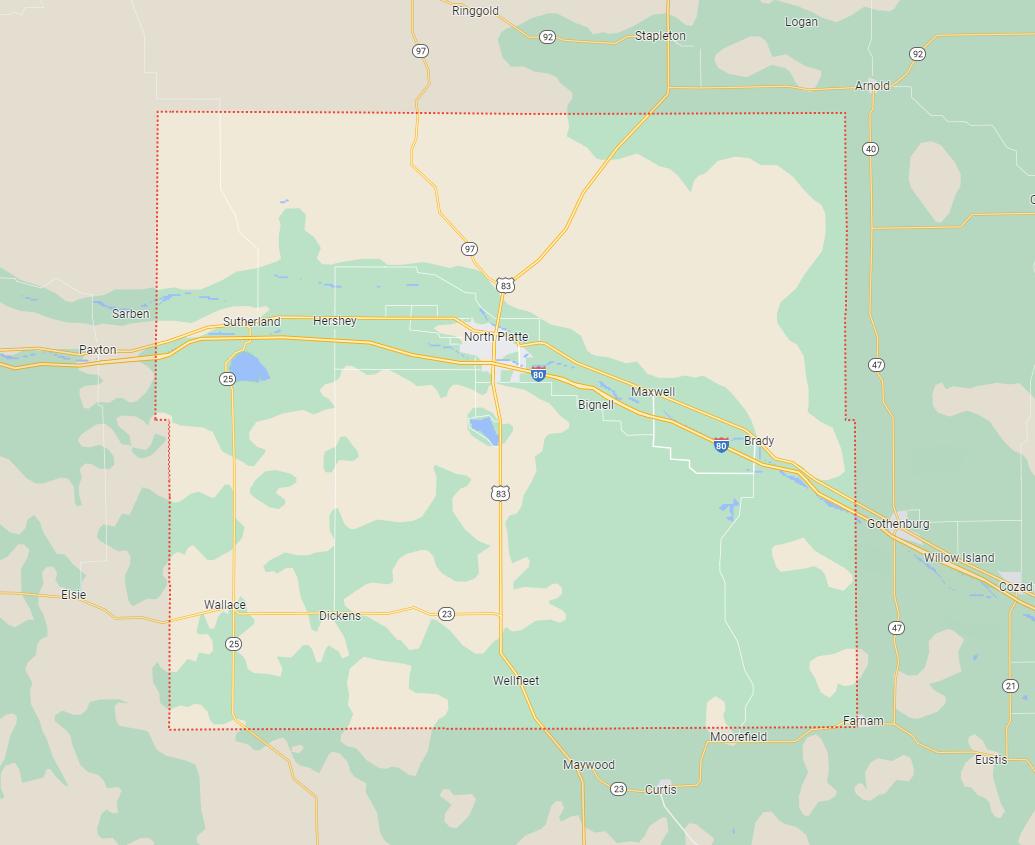
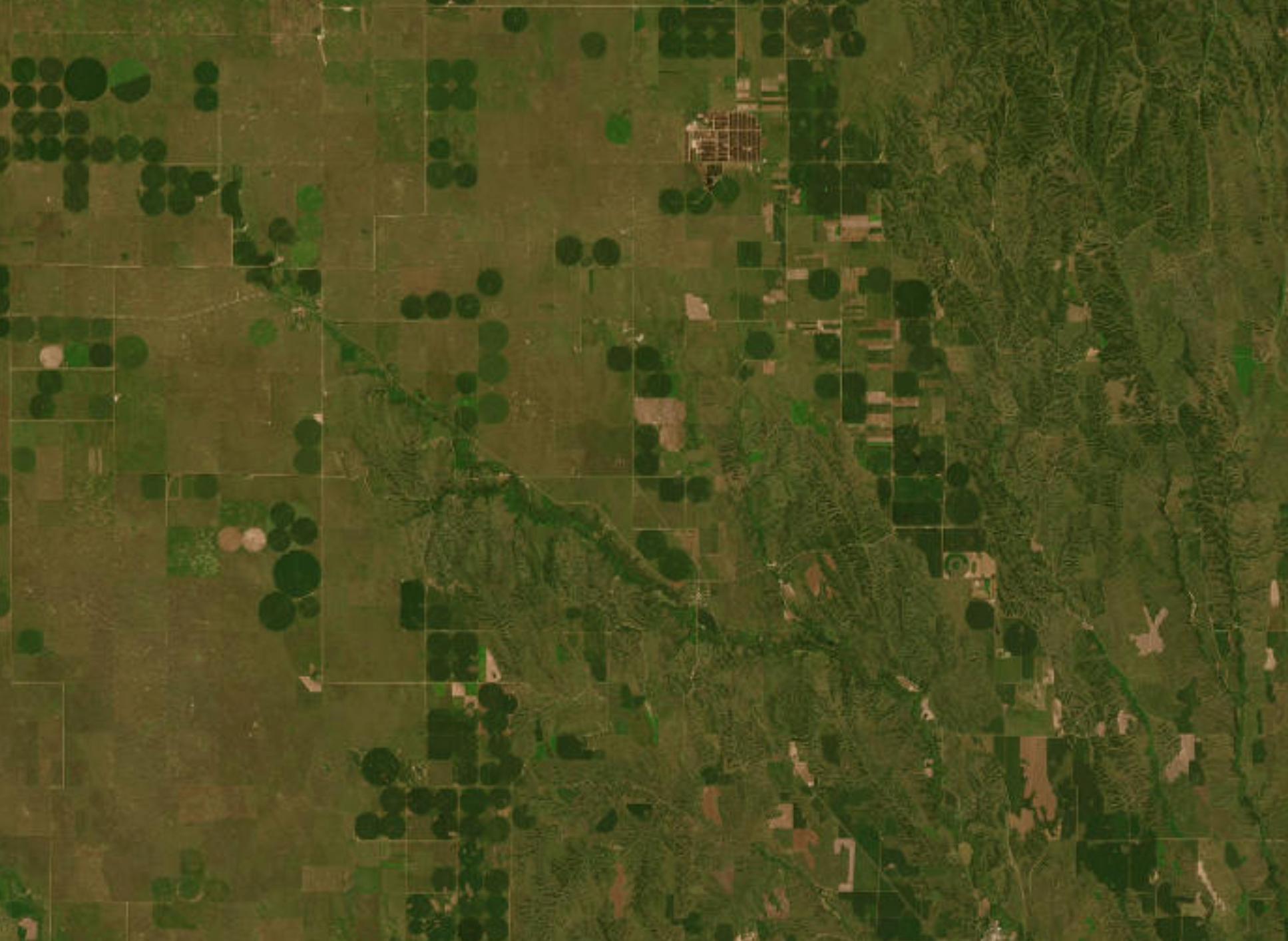
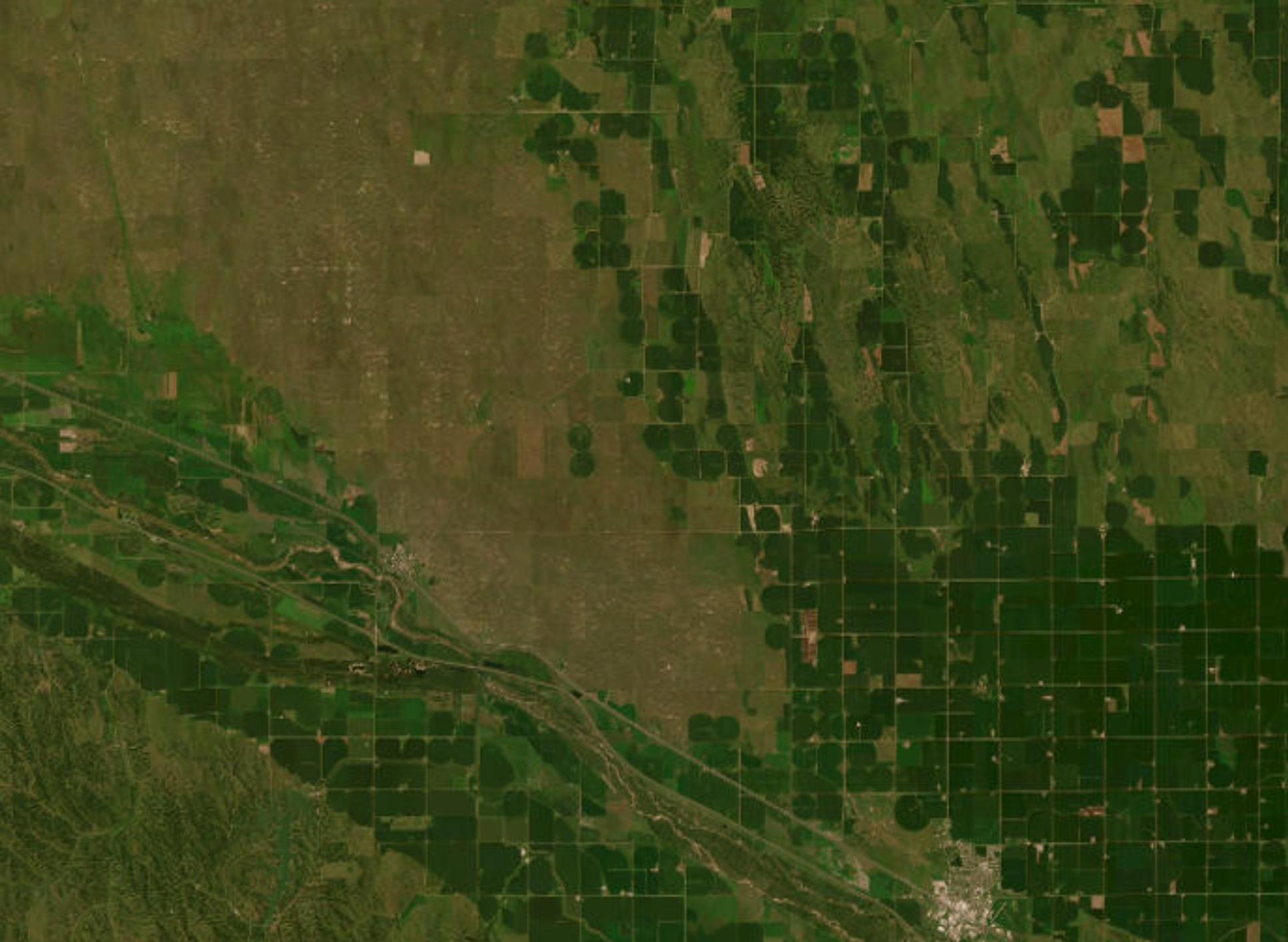
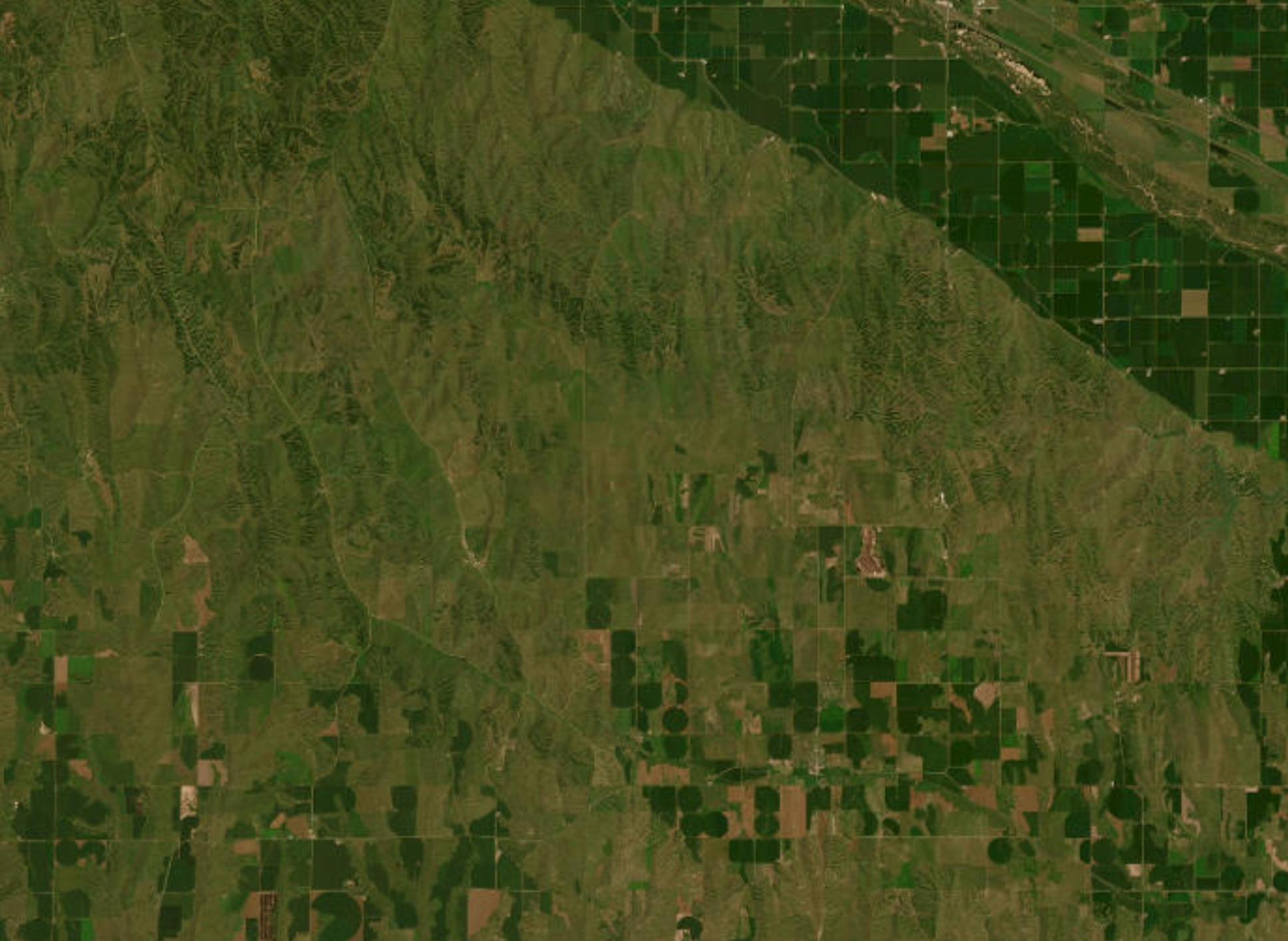
Lincoln County is home to 34,532 residents and over 27,000 jobs. Lincoln County and North Platte, the county seat, is a regional trade and jobs center, a focal point of the west central Nebraska economy. Lincoln County and its cities and villages Brady, Hershey, Maxwell, North Platte, Sutherland, Wallace, and Wellfleet are centered at the convergence of the North and South Platte Rivers with the Sandhills in the north of the county and the canyons in the south.
This Comprehensive Development Plan is a guide and map describing how the people of Lincoln County have worked to build a prospering community for themselves while maintaining their rural way of life.
LOCATION
Lincoln County is located in west central Nebraska, at the convergence of the Platte Rivers.
The county seat, North Platte, has a population of over 23,000, making it the eighth largest city in Nebraska,. It is also the core of the North Platte Micropolitan Statistical Area (MSA), which includes Lincoln, Logan, and McPherson counties.
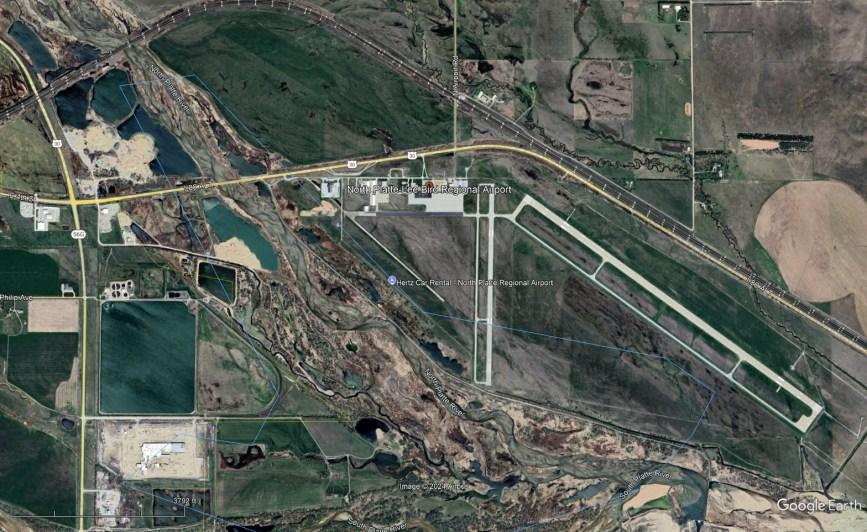
Lincoln County is served by Interstate 80, US Highways 30, and 83, and Nebraska Highways 23, 25, and 97 as well as the North Platte Regional Airport. North Platte, the county seat, is known as the economic hub of west central Nebraska, offering lodging, dining, shopping, entertainment, service programs,
and information to the 30-plus rural communities in a 90-mile surrounding area.
US Interstate 80 runs through North Platte and exits to Brady, Hershey, Maxwell, and Sutherland. US Highway 30 parallels I-80 connecting North Platte to the towns and villages north of the interstate without having to take an exit. US 83 traverses west central Nebraska north to south, running through North Platte and Wellfleet heading north to Valentine and south to McCook.
HISTORY
The first United States Government expedition was made in 1819, under Major Long, who traveled up the north side of the Platte, and crossed just above the forks of the two rivers; thence going up the valley between the two rivers about two miles, and then traveling south they passed
over the present site of the town North Platte, and crossed the South Platte about two miles below the town, probably near where the Iron Wagon Bridge is now, and then proceeded up the south side of the South Platte.
Titian Peale, the naturalist, now living in Philadelphia at an advanced age, was with this expedition. The Peale family, now living at North Platte, are relatives of his.
In 1835, Colonel Henry Dodge visited this county in the United States Government employ, with an expedition of 117 men, for the purpose of persuading the Arickaree Indians, then occupying this region, to leave their wild life and become civilized. He had the authority from the Government to give aid to them should they accept the offer. Colonel Dodge camped with his men at the Cottenwood Springs, afterward called Fort McPherson, and attempted to hold council with the tribe, but they feared the soldiers and fled to the timbered region at the head of the Fremont Slough.
On July 5th, Colonel Dodge finally held a council with the indians at this place, near what is now known as the Scherz Farm, ten miles southwest of the town of North Platte. The object of the meeting was to have the indians accept a reservation; the only real result was the usual presents from the whites; and promises of good will and friendship from the indians.
In 1843, Colonel J. C. Fremont, making his expedition up the Platte. Traveling up the south side of the Platte until he reached the forks, he crossed the South Platte at the place which is now the farm of Alex Struthers, about two
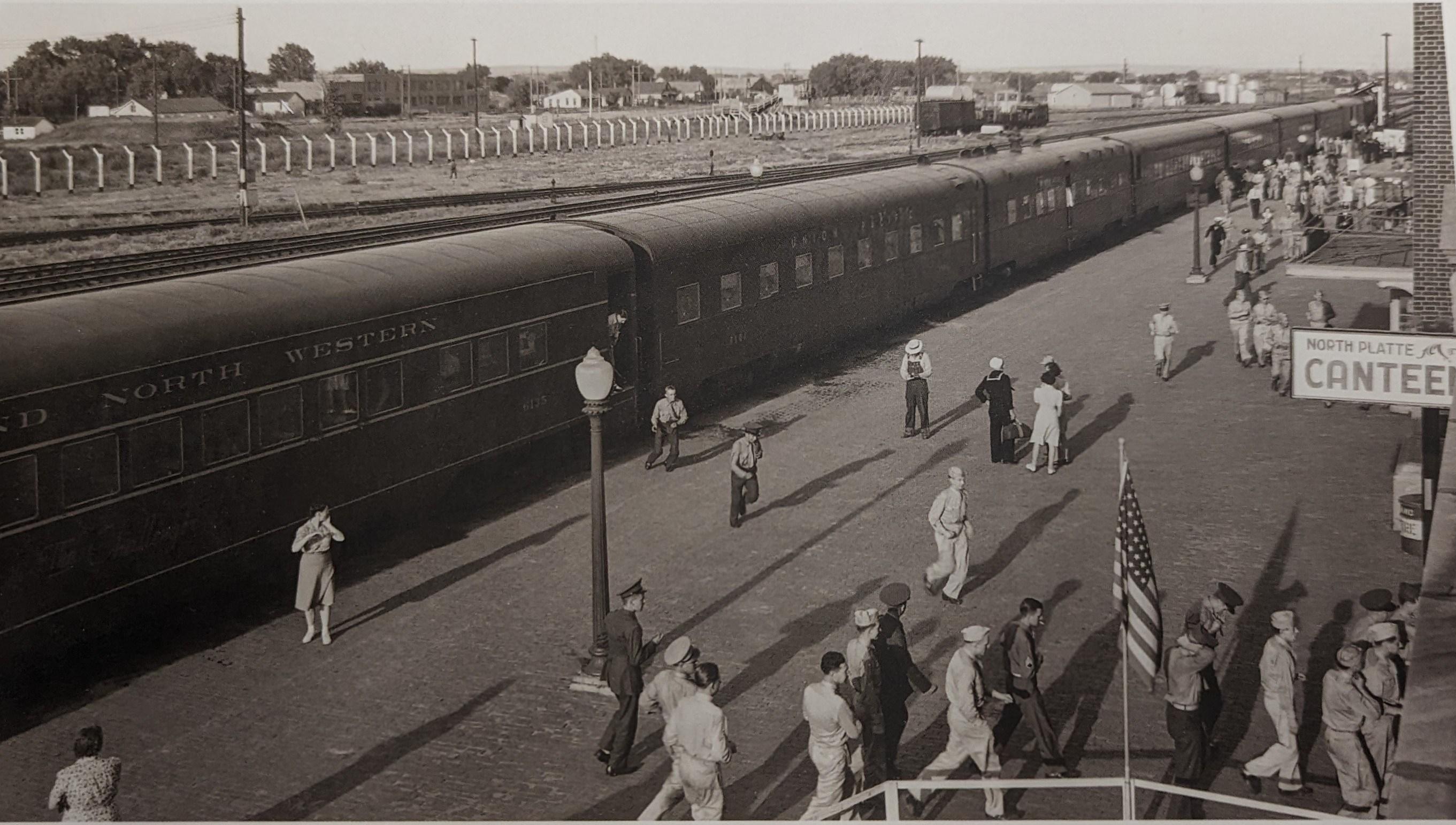
North Platte’s Union Pacific Depot, during the North Platte Canteen, 1944 Source: Lincoln County Museum
miles from the present town of North Platte. He marched west between the rivers, camping for the night about eighteen miles west of the forks near what is now known as Keith’s ranch.
During 1844, travel up the Platte River became quite frequent, and the first building in the county was built by an unknown Frenchman near the present residence of Mrs. Burke, at Fort McPherson. The building was made of cedar logs, with iron doors, and was used as a trading post, but was abandoned in 1848.
In 1852, a man named Brady settled on the south side of the island now bearing his name, and built a house of cedar logs, about one quarter of a mile from the present residence of Mrs. Burke. Brady was thought to have been killed some time during the following year by Indians.
In 1858, the first permanent settlement in the county was made at Cottonwood Springs, and the first building was built by Boyer & Robideau in the fall of that year, to be used as a trading post. The place was named Cottonwood Springs, made up of about one hundred acres, surrounded by heavy growth of cottonwood trees.
Also, in 1858, another trading post was started at O’Fallon’s Bluffs, located on the south side of the river and several miles above the town of O’Fallon’s.
Several trading posts were established at convenient distances all the way from Fort Kearney to the mountains.
In 1859, a second building was built in Cottonwood Springs by Dick Darling, but it was
purchased by Charles McDonald. He put in a large stock of supplies for the freighters and emigrants, and in fact a supply of everything that would sell to white men or Indians.
In the winter of 1860, he moved his wife, Orra McDonald, from Omaha, she then became the first white woman to settle in the county. It was three years before another white woman came to Cottonwood Springs. Although during 1860, several white women came to the county with their husbands. Mrs. Davis, living a few miles from Cottonwood Springs, was the second white woman in the county. Mrs. McDonald is now living at North Platte, where her husband is engaged in banking. She is the most intelligent and refined of ladies, and was responsible for most of the information given about the early history of the county.
In the spring of 1860, J. A. Morrow built a ranch about twelve miles west of Cottonwood Springs, and the mail company established a mail station on Box Elder Creek.
The cause for the establishment of all of these posts was the increased travel and freighting carried over this route during the great rush of emigrants and gold seekers to the Rocky Mountains and on to California. It was necessary for these posts to be built at convenient distances so that the freighters and emigrants could purchase their supplies. These posts were at first some distance apart and were soon increased in number until it was only about ten to twelve miles distance between stations, the larger stations had multiple trading posts.
Mail and stage lines were established along the routes.
In 1861, Edward Creighton, of Omaha, completed his telegraph line. For many years, until the completion of the Union Pacific Railroad, the entire route had a constant stream of travel pouring up this valley. It was not uncommon to have hundreds, maybe a thousand wagons pass on a single day.
What is now known as Lincoln County was first organized as a county under the Territorial government of Nebraska, in 1860. Cottonwood Springs was made the county seat.
Source: lincolncountyne.gov/about (verbatim)
Originally called Shorter County this county attempted to reorganize to be compliant with Nebraska territory law in 1866. They chose the name Lincoln in honor of the recent president. The county’s boundaries changed in 1871 to reflect their current dimensions.
COMPREHENSIVE PLAN
The Comprehensive Development Plan is Lincoln County’s primary policy guide addressing the location, character, and type of growth and development anticipated over the next 20 years.
The plan is only one of several tools within the toolbox helping guide the County into the future.
THE PLANNING PROCESS
The Comprehensive Development Plan is intended to:
I. Promote orderly growth and development for the community;
II. Provide policy guidelines to enable citizens and elected officials to make better informed decisions about the future of the community;
III. Provide a guideline for the location of future development and uses within the planning jurisdiction of Lincoln County;
IV. Provide a vision and direction for the future planning period of the city, and;
V. Act as an information and management tool for community leaders to use in
The Comprehensive Development Plan process begins with public and stakeholder outreach. This includes direct contact with residents and employers, as well as surveys and a project website, including crowdsource mapping and engagement on the MindMixer online platform. Results are presented in the next chapter.
The data collection phase also occurs in parallel with public outreach, in conjunction with and informing the development of goals and action items. Data are collected to provide a snapshot of past and present conditions within the community and region. Data analysis provides the basis to develop forecasts for future land use demand, as well as future needs for housing, facilities, and infrastructure.
The development of general goals and action items are based on data analysis and current and future issues identified by the community and its residents. These goals and action items are intended to be
guidelines for addressing existing conditions and guiding future growth.
The Comprehensive Development Plan document should evolve as changes in the land use, population, or local economy occur during the planning period (2025 to 2045).
The comprehensive plan is a vision presented in text, graphics, and tables representing the desires of the county and its residents for the future.
The Lincoln County Comprehensive Development Plan is a guidebook designed to identify, assess, and develop actions with the following elements:
Community Engagement
Population;
Housing;
Economic development;
County Facilities;
Parks and recreation;
Public safety;
Public health
Communications, utilities, and energy;
Natural Resources;
Annexation; and Transportation.
The Comprehensive Development Plan is a management tool containing recommendations which will be of value to the community and its residents when implemented. The tools necessary to carry out the recommendations will be identified throughout the process. Implementation of the development policies contained within the Comprehensive Development Plan is dependent upon adoption of the plan by the
County’s governing body and future leadership exercised to implement the plan.
PLAN PREPARATION
The Plan was prepared under the direction of the Lincoln County Planning Commission, with the assistance and participation of the Lincoln County Board, County staff, the Plan Review Committee, and citizens of Lincoln County. The planning consultant team consisted of experienced professionals from Marvin Planning Consultants, Inc.,
PLAN COMPONENTS
Planned growth will make the County more effective in serving residents, more efficient in using resources, and able to meet the standard of living and quality of life every individual desires.
Community Planning Insights, and Felsburg Holt & Ullevig.
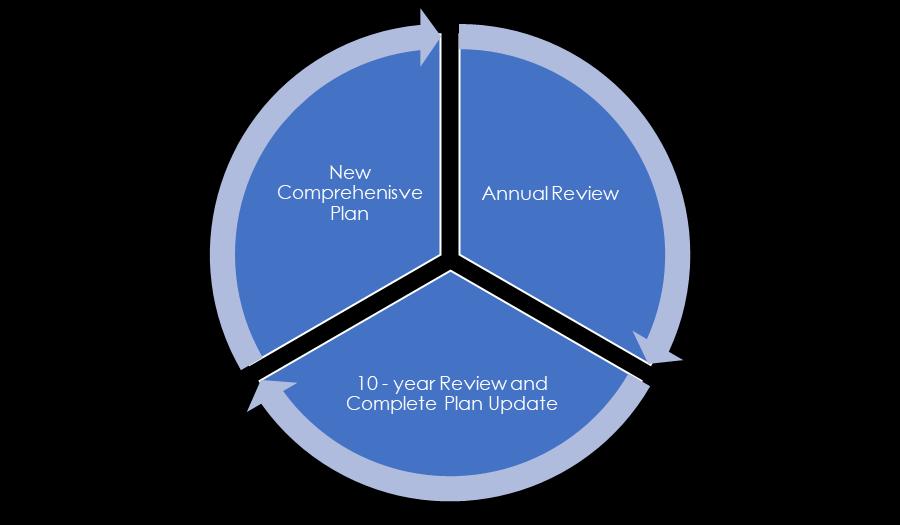
The time period for achieving the goals identified in the Comprehensive Development Plan is 20 years. However, the community should review the
plan annually and update the document every ten years (by 2034), or when major, unanticipated opportunity arises.
Nebraska State Statutes require the inclusion of certain elements in a Comprehensive Plan. A County “Comprehensive Development Plan,” must meet the requirements of Neb. Rev. Stat. §23-114.02 (Reissue 1997):
The general plan for the improvement and development of the county shall be known as the comprehensive development plan and shall, among other elements, include:
(1) A land-use element which designates the proposed general distribution, general location, and extent of the uses of land for agriculture, housing, commerce, industry, recreation, education, public buildings and lands, and other categories of public and private use of land;
(2) The general location, character, and extent of existing and proposed major streets, roads, and highways, and air and other transportation routes and facilities;
(3) When a new comprehensive plan or a full update to an existing comprehensive plan is developed, an energy element which: Assesses energy infrastructure and energy use by sector, including residential, commercial, and industrial sectors; evaluates utilization of renewable energy sources; and promotes energy conservation measures that benefit the community; and
(4) The general location, type, capacity, and area served of present and projected or needed community facilities including recreation facilities, schools, libraries, other public buildings, and public utilities and services.
The comprehensive development plan shall consist of both graphic and textual material and shall be designed to accommodate anticipated long-range future growth which shall be based upon documented population and economic projections.
The Comprehensive Development Plan presents where Lincoln County has come from, where it is today, and the likely direction it may be heading into the future. Performing regular review and undertaking updates every ten years or so will allow the community to incorporate ideas and developments not known at the time of the present comprehensive planning process.
GOVERNMENTAL ORGANIZATION
Lincoln County is governed by an elected board of five members in the Commissioners model of Nebraska county government. The five members of the Board of Commissioners, elected by their respective districts, serve as the legislative and executive of Lincoln County government. Each incorporated community in Lincoln County also has elected officials and officers overseeing how their community is governed.
The planning and zoning jurisdiction of Lincoln County, pursuant to Neb. Rev. Stat. §23114 (Reissue 1997), includes all of the unincorporated portions of the county, excluding the established extraterritorial jurisdiction of each incorporated city or village (Neb. Rev. Stat. §17-1001 (Reissue 1997)).
The Lincoln County Planning Commission consists of 11 appointed members from the public at large, who serve without compensation.
AUTHORITY and RESPONSIBILITY
Under state statute, the Planning Commission is an advisory body on land use planning matters to the respective participating elected governing bodies. State statute prohibits governing bodies from holding hearings or making decisions on matters associated with the Comprehensive Development Plan, capital improvements, annexation, building codes, subdivision plats or zoning until a recommendation has been received from the Planning Commission. However, these recommendations are not binding upon the elected bodies.
The staff of the Commission functions as a Planning Department for Lincoln County. The Department is responsible for the development, maintenance, and implementation of the Comprehensive Development Plan, administration of the development review process, and administration of land use regulations established by the member entities. The Department reviews and processes all development proposals and provides direct support to the:
Public,
Planning Commission,
Lincoln County Board of Supervisors and staff.
PROCESS FOR ADOPTION
When it is time to adopt the Comprehensive Development Plan, the Board of Commissioners has the opportunity to choose the means of adoption. State Statutes allow for the Plan to be adopted as either a Resolution or an Ordinance. However, the means used to adopt the plan is the process to be used in the future to amend it.
Adoption of the Comprehensive Development Plan requires both the Planning Commission and County Board to hold separate Public Hearings. After the Planning Commission Public Hearing, the Planning Commission makes a recommendation to the Board of Commissioners, who then holds their Public Hearing. Notice of both public hearings is required to be published in the newspaper of general circulation a minimum of ten days prior to each hearing.
CHAPTER 2
Community Engagement
Community engagement is vital to a successful planning effort. Public participation makes it possible to have a clearer understanding of how the residents feel regarding their communities. During every planning process, there are limited numbers of individuals concerned about the effort either because things are going in a good direction or specific issues do not impact them. Regardless, this does not minimize the importance of community engagement. Knowing, recording, and then acknowledging what residents think of their communities makes the Comprehensive Development Plan truly belong to a community.
PARTICIPATION METHODS
Transparent and frequent public participation was designed as a major
component of this plan. The process included multiple approaches. It was structured in a manner allowing for stakeholders to be involved in numerous ways throughout the process - if stakeholders missed a meeting, they were still able to provide their thoughts and input through other means.
The key elements of public participation for this project included:
A project website;
Planning team attendance at community events;
Interviews with local leaders in City and County government;
Focus groups;
Town hall meetings;
Crowdsourcing photography and mapping;
County and Community surveys.
PROJECT WEBSITE
A special project website, “tinyurl.com/npandlcplans”, was established at the onset of the countywide phase of the planning process. The project website served as a means to notify residents about upcoming meetings, inform them on the importance and purpose of comprehensive planning, provide links to input methods, and provide updates on the status of the project.
MINDMIXER
Leveraging the power of the Internet and social media, MindMixer’s online engagement tools energize communities by cultivating meaningful relationships within them, creating a catalyst for community achievement.
FOCUS GROUPS
The planning team of Marvin Planning Consultants, Community Planning Insights, and Felsburg Holt & Ullevig met with several different focus groups throughout the planning process.
On July 31st, 2023, the planning team met with the Lincoln County Commissioners as well as parks and recreation leaders to discuss the development situation in the region.
On August 1st, 2023, the planning team met with financial service providers, Lincoln County DEVCO, North Platte City Staff, the cities property resolution team, and the City Council.
On August 2nd, 2023, the planning team met with realtors, educators, and transportation officials.
On August 3rd, 2023, the planning team met with contractors and area non profits.
INTERVIEWS
The planning team met with local leaders throughout the process to confirm data and discuss their strategic outlook.
On August 2nd, 2023 the planning team met with state Senator Mike Jacobson.
TOWN HALL MEETINGS
Residents and business owners of North Platte and Lincoln County were invited to public Town Hall
meetings to learn more about growth and development in the city and offer input into he comprehensive planning process.
The first round of Town Hall meetings were held beginning at 6:30 PM on July 31st and August 2nd 2023, at Maria Lutheran Fellowship Hall in Hershey and the Lincoln County Fairgrounds in North Platte.
At the first round of meetings in August, attendees were asked five broad questions about their opinions and experiences of North Platte.
Why do you choose to live or have a business in Lincoln County?
What do you love about Lincoln County?
What are the biggest opportunities Lincoln County has for the future?
What are the biggest weaknesses Lincoln County has right now?
How would you describe the ideal Lincoln County 20 years from now?
Complete results of the Town Hall meetings are presented in detail in Appendix A.
Why do you live here?
Participants citied a variety of reasons whey they live or have a business in Lincoln County. They may have been born here or raised their families here. Many found jobs here. Some live here because they feel the cost of living is reasonable.
Participants may have chosen for its size not too big, not too small or the location mid-way across Nebraska in the center of the nation. Several stated how Lincoln County is a safe place to raise a family. Others were brought to the county for its recreational opportunities.
The quality of county and municipal governments was cited as another reason to live in Lincoln County. The services they provided, fire, planning and zoning, and emergency management were noted for their quality and consistency. Business owners in Lincoln County
Interview with Commissioner Hewgley Source: Marvin Planning Consultants
cited the quality partnerships between them and the city government.
What do you love about Lincoln County?
Participants love the forward thinking attitude of Lincoln County’s leadership. They love how efficient local governments are at conducting their business for the greater good of county residents.
Participants love having big city amenities with a small town lifestyle. Residents of different villages cited their local community as a reason for loving the county. Many love the diversity of recreational facilities within the county. This includes the proximity to the sandhills and canyons across the county.
What are Opportunities?
There are many opportunities for local residents and businesses. Participants called out the need to be creative to keep people in the community. They noted outsiders bringing economic development to Lincoln County due to the cost of operation being so low. Some mentioned Lincoln County’s villages as opportunities due to their quality schools, infill potential, and proximity to high quality jobs in North Platte.
Several noted the growth of the hospitality industry in North Platte as an opportunity due to the development of new restaurants, hotels, and other services along I80. With the city’s location on I-80, US Highway 83, and the UP railroad line, participants see even more opportunities in manufacturing and freight development. The community college is an important opportunity for workforce development keeping young
people in Lincoln County. Sutherland residents identified their access to water as an opportunity. Their proximity to both the South Platte and Sutherland Reservoir give the village opportunities for waterfront residential and water trail development.
The Nebraska International Port of the Plains was mentioned in every public meeting as one of the greatest opportunities for economic growth. The new Sustainable Beef Processing Plant was frequently brought up as another opportunity for Lincoln County’s economic growth.
What are Weaknesses?
Participants were realistic about the need to identify things to improve. They see infrastructure as an opportunity, but also as a weakness to be improved. Public safety is a concern. The aging population of the county was labeled as a concern due to the implications this has on the workforce. Affordable housing is an increasing concern.
Overall, participants noted plans need to be implemented to improve the quality of life in Lincoln County.
What is the Ideal Lincoln County?
The Town Halls wrapped up by asking participants to describe how they would like to see their community in 20 years. They cited a desire to maintain the balance between the rural and urban lifestyle which exists today in Lincoln County. They also cited more general concerns such as public safety, affordable housing, and workforce development.
Overall, participants described the future Lincoln County as “A welcoming place with many opportunities”.
SURVEYS
SurveyMonkey, a web based survey tool, was utilized for gathering more specific input on Lincoln County. The survey process allows individuals to provide input while remaining totally anonymous.
A community survey was created for the Lincoln County planning process. The survey was advertised using a specially designed card, as well as announcement on the city website. This survey was also made available on the project website. For those who preferred to take the survey on paper, the survey was made available at the County Courthouse, City Hall, and at all Lincoln County town hall meetings.
Survey Results
The results of the Lincoln County comprehensive plan survey help to inform the Comprehensive Development Plan. Complete results of the survey are available in Appendix A.
ADDITIONAL PLANS AND ANALYSIS
The planning team of Marvin Planning Consultants, Community Planning Insights, and Felsburg Holt & Ullevig , completed additional plans and analysis throughout the comprehensive planning process. These additional inputs informed understanding of existing conditions, and informed selection of planning policies.
NORTH PLATTE LINCOLN COUNTY HOUSING NEEDS ASSESSMENT
During the comprehensive planning process, consultants Community Planning Insights
worked with the City of North Platte and Lincoln County to supplement and update the community housing study to address the requirements of LB 866 the Municipal Density and Missing Middle Housing Act. The comprehensive planning process benefitted from the data analysis and enhanced stakeholder engagement in the process. The resulting Lincoln County/ North Platte Affordable Housing Plan (2025) is incorporated into this plan by reference.
TRANSPORTATION ANALYSIS
As part of the comprehensive planning process for North Platte and Lincoln County, Felsburg Holt & Ullevig conducted an analysis of the transportation systems in Lincoln County. This report is included as an Appendix of this plan.
GOALS AND ACTION ITEMS
Planning for future land use is an ongoing process of goal setting and problem solving aimed at creating the conditions for a better quality of life. Planning focuses upon ways of solving existing problems within the county, and providing a management tool for Lincoln County leaders and residents to achieve their vision for the future.
COMPREHENSIVE PLAN GOALS AND ACTION ITEMS
The goals and action items of the Lincoln County Comprehensive Development Plan are intended to address existing conditions and trends, to address issues and concerns of citizens as expressed through community engagement.
The goals and action items for the Comprehensive Development Plan are presented throughout the plan. Each chapter contains goals and action items to address the elements in the chapter.
Goals are statements of community desires, necessities, and issues to be attained. A goal should be stated in a manner which allows it to be accomplished. Goals in this plan may include specific objectives as a definable, measurable step to achieving the goal. Goals and objectives also inform public policies.
Action Items specifically support the community’s goals. Action items are futurefocused measures, projects, plans, or activities proposed to implement the comprehensive development plan.
It is important to establish goals, objectives, and action items for short-term as well as long-term accomplishments. Goals and action items should be evaluated, reviewed, and updated regularly as conditions and resources change.
Tools and Strategies
There are a variety of tools and strategies which lend further support to achieving the County’s goals, beyond specific action items identified in the
Comprehensive Development Plan. These activities should be reviewed during regular plan maintenance and included in the plan if and when appropriate.
Plan Maintenance and Review
As stated in the introductory chapter, the Comprehensive Development Plan is intended to address growth and development anticipated over the next 20 years. Goals are focused on the next 10 years, with more specific action items identified for short-term and longterm implementation. As noted in the final chapter, Implementation and regular review are essential to bring this plan to life.
.
CHAPTER 3 Population
The people of Lincoln County bring life to the community. Longterm residents and new residents each bring unique and vital
aspects to the health and development of the cities, villages, and rural areas of the county.
Careful analysis of population trends provides a basis for decision-makers to better understand where the county has been, where it is currently, and where it appears to be going.
Population trends impact all major elements of the county including housing, economic development, facilities and infrastructure. Population projections provide an estimate to base future land use and development decisions. The trends examined in this chapter compare Lincoln County to other counties in the North Platte Micropolitan Statistical Area as well as other MSAs in Nebraska.
Most population statistics are based on sample surveys with margins of error. Population projections are only informed estimates and unforeseen factors may affect projections significantly. A population trend line provides general guidance
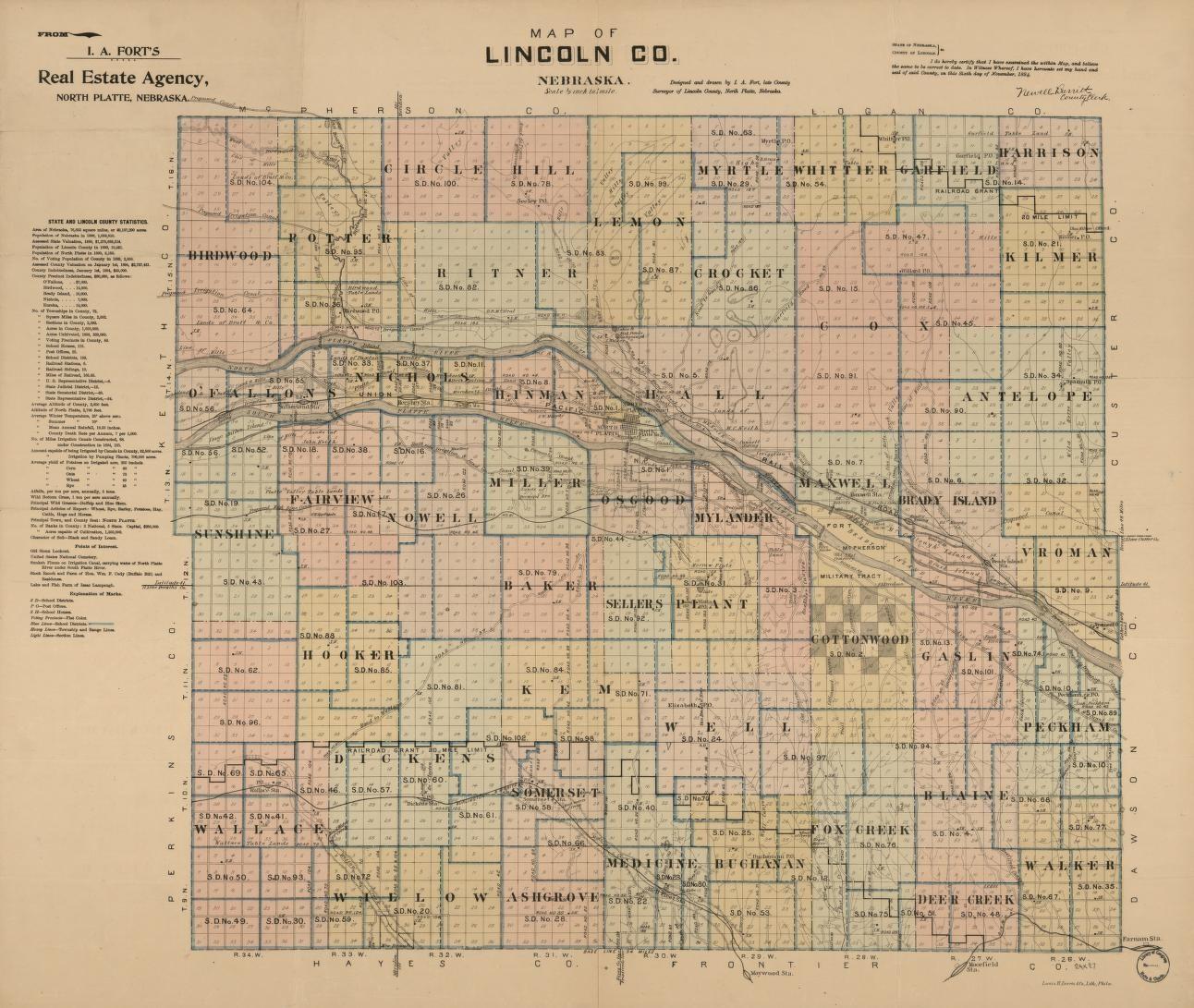
Lincoln County Landowner Map 1894
Source: Library of Congress
This chapter will present an analysis of population trends, components of population change, and population projections.
TRENDS ANALYSIS
Lincoln County’s population has stagnated in recent decades following a growth from 1860 to 1980. North Platte and Sutherland were the municipalities with the highest population.
The North Platte Micropolitan Statistical Area had a population
The US Census Bureau has estimated Lincoln County’s which should be viewed with a critical eye.
of 35,791 in 2020. The 2020 Decennial Census counted North Platte’s population at 23,390, a decrease of 1,424 people for a5.7% loss. This was a decline in population compared to the 3.5% increase from 2000 to 2010, yet more than the 5.6% from 1990 to 2000. North Platte’s population stagnation matches Lincoln County’s population trends having a –4.4% growth rate from 2010 to 2020 (Figure 3.1). The population of the unincorporated area has stagnated over the same time.
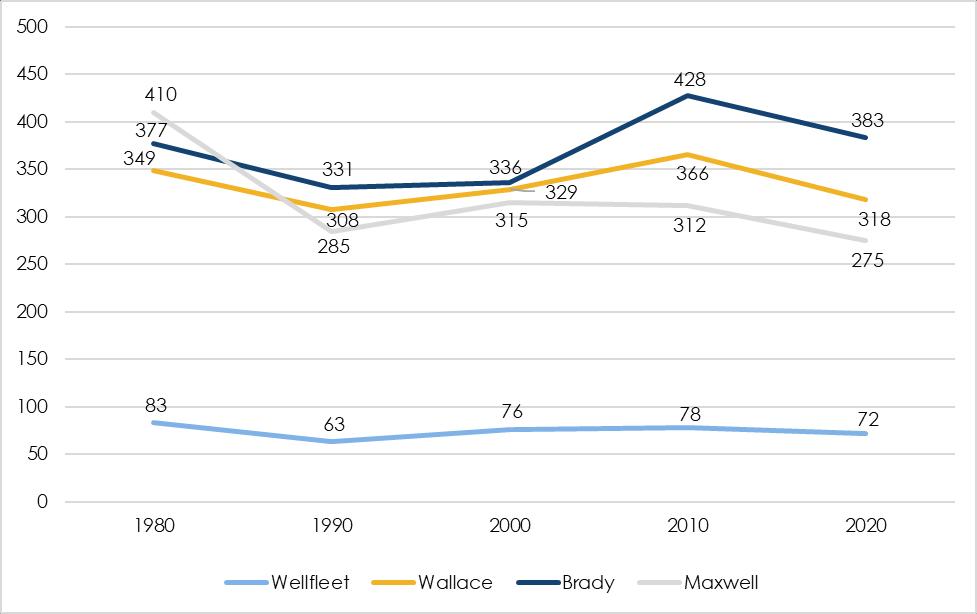
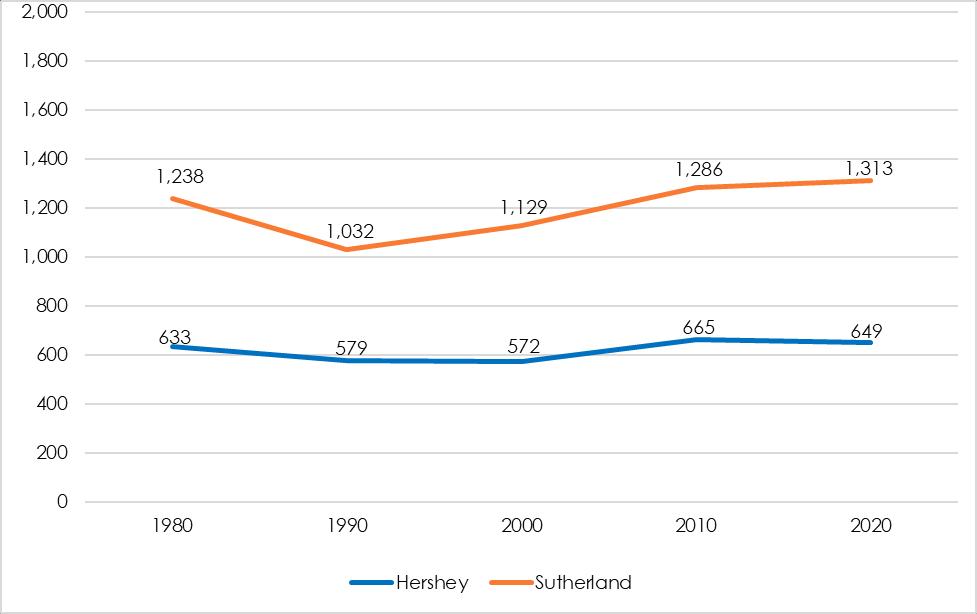
Brady, Maxwell, and Wallace’s populations have grown and contracted since 1980. Hershey and Wellfleet have maintained similar populations over these decades, while Sutherland has managed to grow slightly from 1,238 to 1,313 by 2020.
The United States Census Bureau’s American Community Survey (ACS) is the primary data source for this plan. The ACS provides a 5-year rolling average of survey data. Although some one-year survey results are available for North Platte and Lincoln County; the five-year averages are typically more reliable. Data is also provided by ESRI, a geographic information system (GIS) provider which develops forecasts using a combination of public and proprietary sources. There may be instances where US Census Bureau’s Decennial Census, ACS, and ESRI data conflict, which are noted as necessary.
Figure 3.1: Population Trends for Lincoln County and communities, 1980 2020
Figure 3.2: Population Trends for Lincoln County Villages, 1980-2020
Source: U.S. Census Bureau 1980 - 2020.
population has fallen slightly, to 33,365 as of July 1, 2023, North Platte’s population also has fallen slightly, to 22,523 The County should watch the annual US Census estimates for any changes to the trend over time.
AGE PROFILE
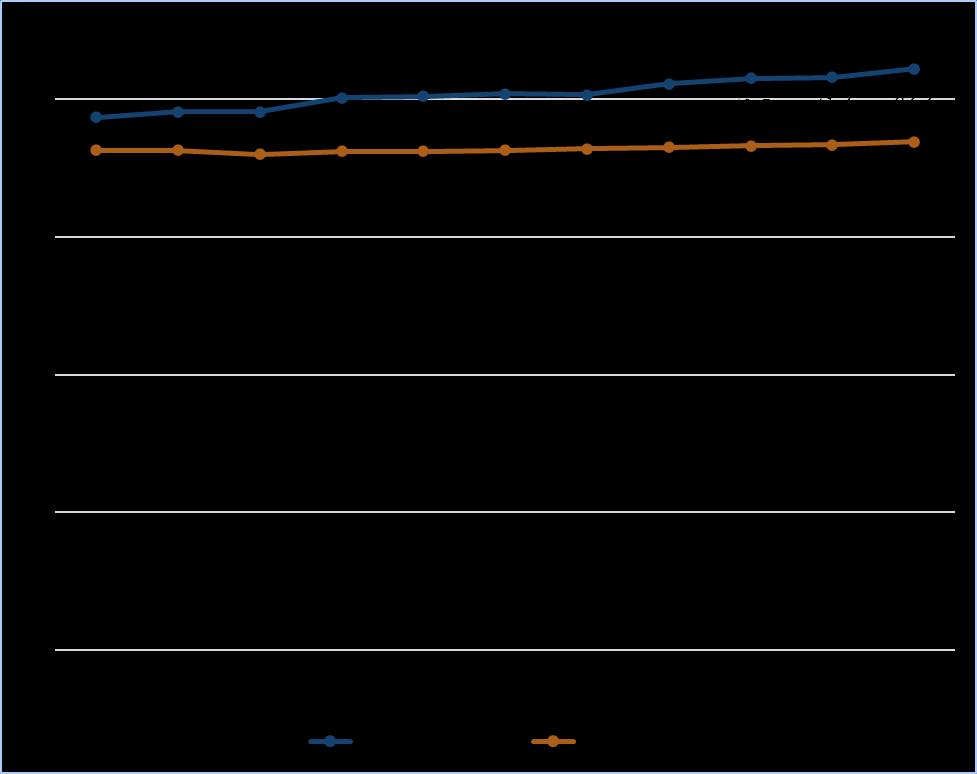
The median age for Lincoln County increased over the period from 2012 to 2022, from 38.7 to 42.4 years of age (Figure 3.3). The median age remained over the state of Nebraska statistic throughout the time period.
3.3: Median Age, 2012-2022
Source: American Community Survey 2008-2012 through 2018-2022.
Source: American Community Survey 2018-2022.
Figure
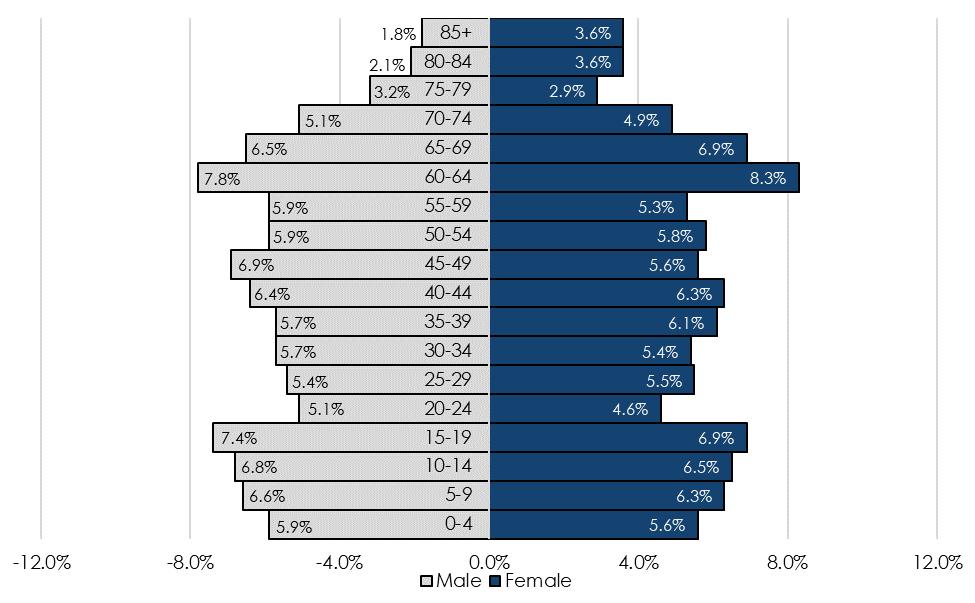
Figure 3.4: Population Pyramid, Lincoln County, 2022
Dependency Ratio
This ratio examines the portion of a community’s earnings that is spent supporting age groups typically and historically dependent on the incomes of others.
< 1: 1 Independent resident is able to support more than 1 Dependent resident
=1: 1 Independent resident able to support 1 Dependent resident
>1: 1 Independent resident able to support less than 1 Dependent resident (%18 years and younger + %65 years and older) Divided by % of remaining population.
Figure 3.4 is a population pyramid of the current age structure of Lincoln County, as reported by the American Community Survey (ACS) for 2018-2022. The largest cohort of men (7.8%) were age 60 -64 years, and of women (8.3%) were age 60-64 years. The large number of children indicates a healthy demand for education, as well as the potential for growth in the local labor force if young people can be retained in Lincoln County.
There were also more women (3.6%) than men (1.8%) age 85 and over, and of women than men in cohorts aged in their 60s. Service providers for senior citizens should take this gender discrepancy into account during program planning.
Figure 3.5: Dependency Ratio, 2012 and 2022
Sources: American Community Survey 2008-2012 & 2018-2022.
Among the working age population ages 20-64, the smallest cohort among women and men were age 20-24 with 4.6% among women and 5.1% among men. Across the country, there are smaller numbers of people in “Generation X”, which often affects the supply of experienced workers across industries. The relatively larger numbers of younger people are prime candidates for workforce training in Lincoln County.
DEPENDENCY RATIO
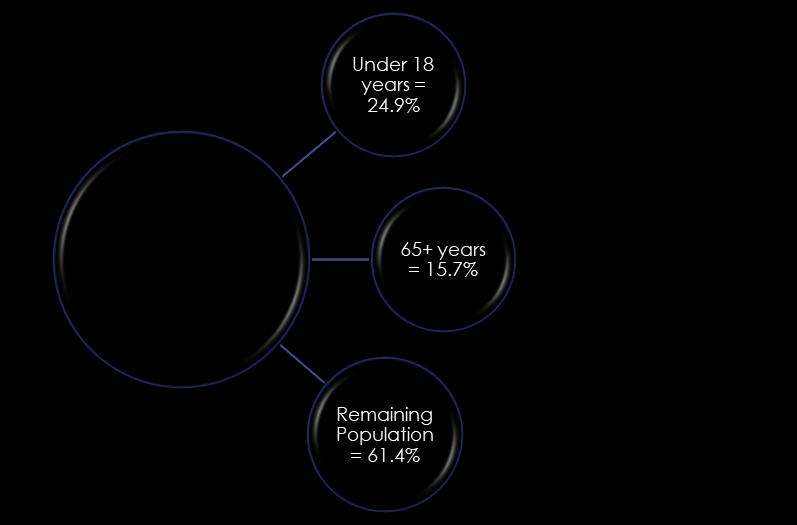
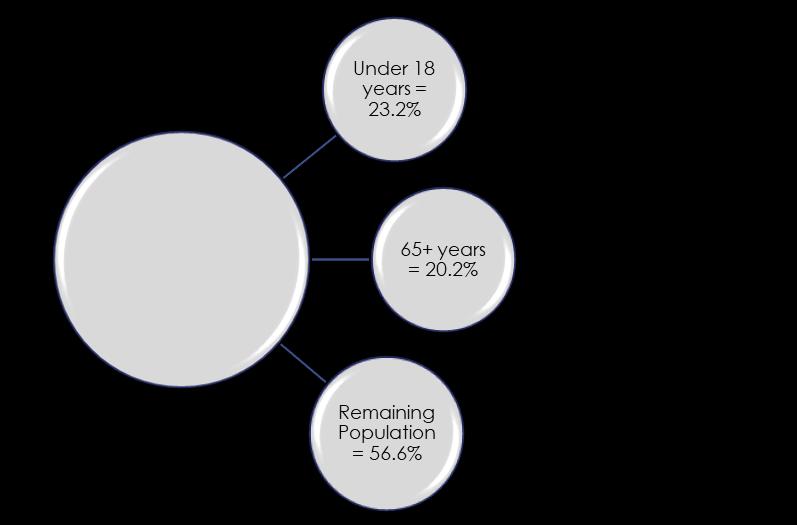
Dependency ratios examine the portion of the city’s population supporting the age groups historically dependent upon others, including those under 18 years and those 65 years and older. (See the box on this page for details on calculating the ratio.) This ratio highlights the proportion of employed persons who support themselves as well as older and younger dependent populations.
Figure 3.5 presents the dependency ratios in 2012 and 2022 for Lincoln County. The share of persons less than 18 years of age was stable, while those aged 65 years and older increased over the time period.
In 2012, Lincoln County had a Dependency Ratio of 0.68 (38.4%/61.4%); by 2021 the Ratio had increased to 0.76 (43.4%/56.6%). While there were a increasing number of residents in the county, the working age population grew at a slower rate than the historically dependent age groups. However, the 0.76 Dependency Ratio is lower than in many communities across Nebraska.
ETHNICITY
Race and ethnicity are selfidentification terms in which residents choose how they identify themselves.
According to the ACS as reported in Table 3.1, approximately 88% of Lincoln County residents identified as White Alone, compared to 81% in Nebraska statewide in 2022. About 977 county residents identified as Some Other Race Alone, 2.8% of all residents, and 1,665 (4.7%) identified as Two or More Races. There were 420 residents (1.2%) who identified as Black Alone. Those who identified as Asian Alone increased by 49% to 282. The number of residents who identify as American Indian Alone increased to 389 (1.1%). The ACS reported 20 residents
identify as Native Hawaiian and Other Pacific Islander over the 2018-2022 survey period, when only two were present in the 20082012 survey.
The number of Hispanic or Latino residents of any race grew by 26% from 2012 to 2022. Among all residents, 9.65% identified as Hispanic. Statewide, 11.8% of all Nebraska residents identified as Hispanic in 2022. The largest group identified their origin as Mexico (8%).
VETERANS
Among Lincoln County residents 18 years and over, 8.8% are veterans, compared to 7.5% of Nebraskans overall.
Approximately 6.5% of the county’s veterans are women.
Over half of all veterans are age 65 years and over. The largest group (42%) served during the Vietnam era, with 20.1% serving in the Gulf pre-9/11 and 15.9% serving in the Gulf since
Table 3.1: Lincoln County Race and Ethnicity, 2012-2022
9/11. Among veterans 29% have a disability, compared to about 19% of the county’s population overall.
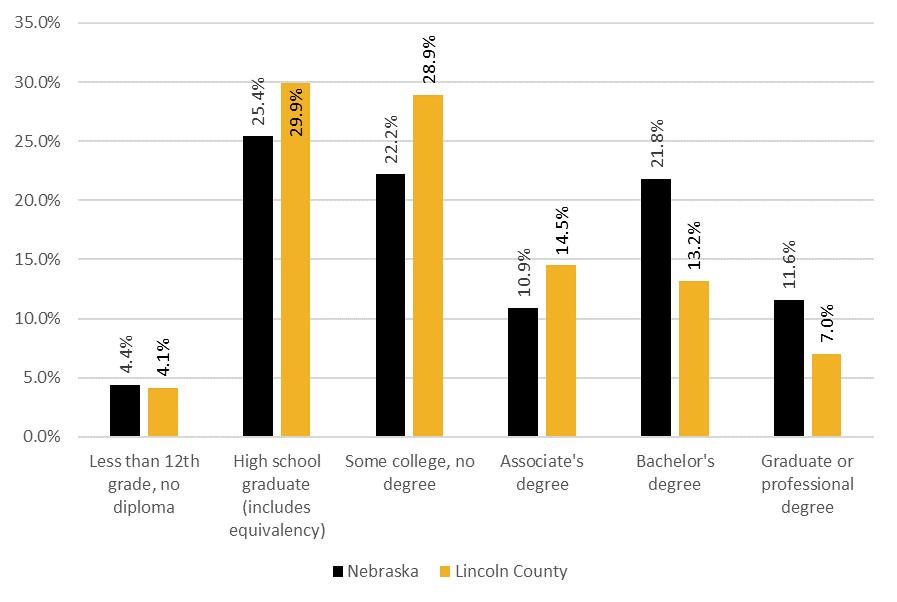
EDUCATIONAL ATTAINMENT
The greatest number of Lincoln County residents are high school graduates, or have some college with no degree (Figure 3.6). Among Lincoln County residents 25 years and over, 20.2% had a Bachelor’s Degree or higher In 2022. This compares to 33.4% of all Nebraskans. There were 93.5% of North Platte residents the same age who were High school graduate or higher, compared to 91.9% statewide.
Source: American Community Survey 2008-2012 & 2018-2022. *ACS Estimate
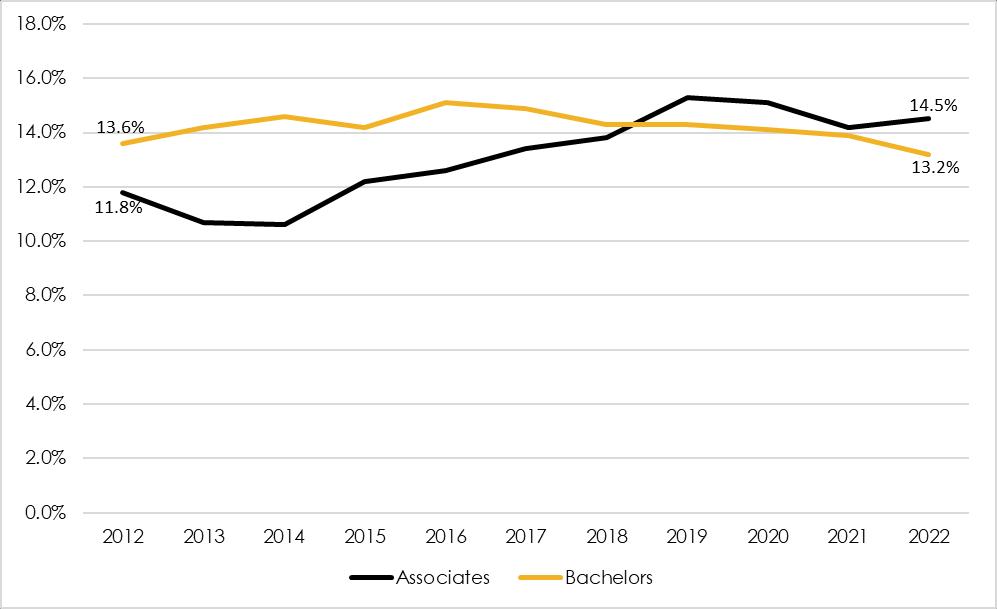
Income and higher education attainment tend to be highly corelated. Over recent years, the share of Lincoln County residents holding Associates degrees has risen gradually, from 2012 to 2022 (Figure 3.7). The share of residents holding Bachelors degrees has decreased slightly from 13.6% to 13.2%. Not all higher paying jobs
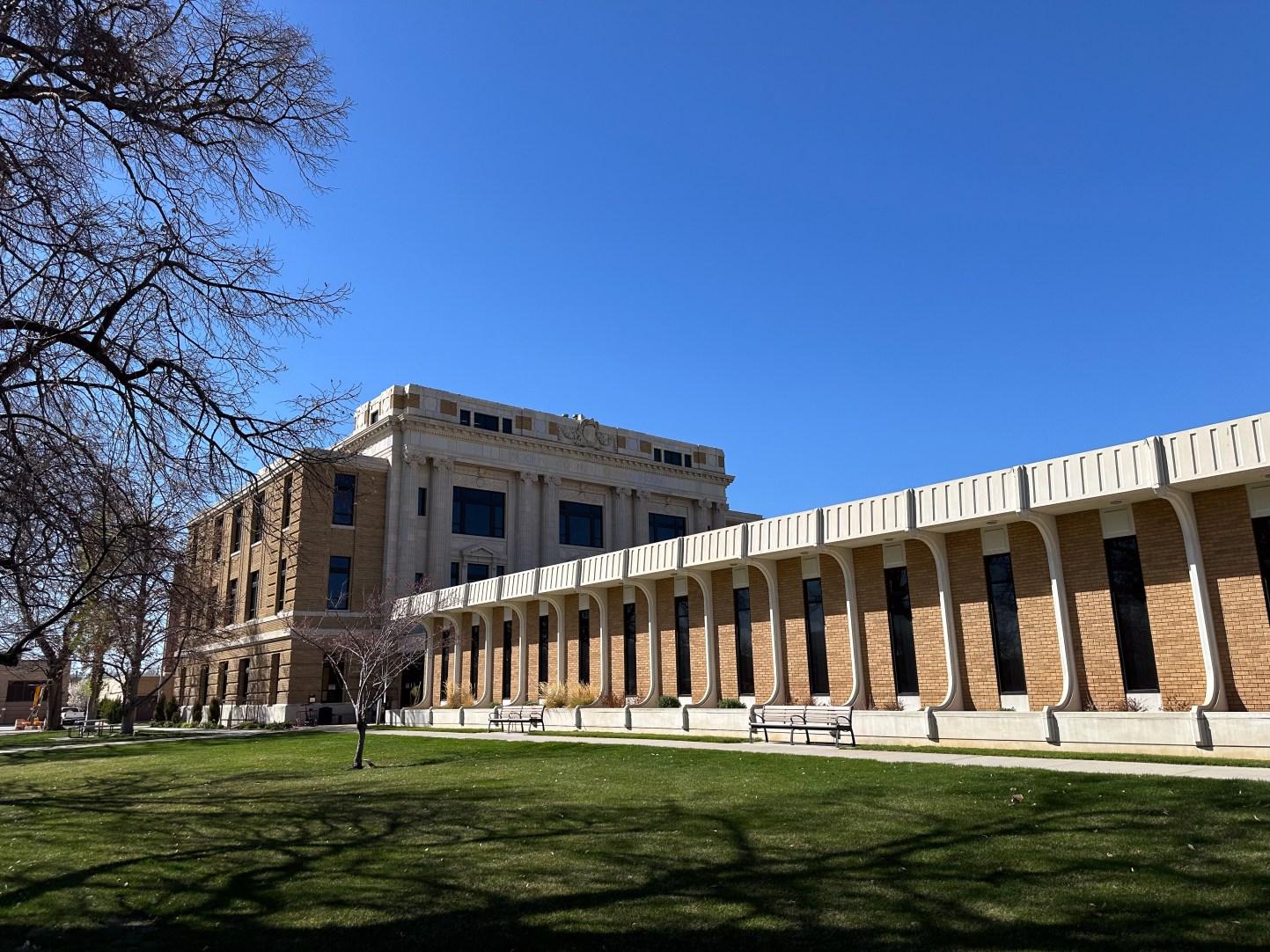
Lincoln County Courthouse
Source: Marvin Planning Consultants
require college degrees, and quality vocational and on-the-job training in this job environment can translate well into steady living wages. This said, continuing the increase in educational attainment, especially the increase in Associates degree attainment, will be beneficial to the community and economy.
COMPONENTS OF CHANGE
Population change includes both natural increase or decline (the difference between births and deaths) and migration (the difference between people moving in and out of a community). For example, many communities experience natural increase (more births than deaths) yet face a declining population due to out-migration.
AGE STRUCTURE ANALYSIS
Age structure is an important component of population analysis. Each age group affects the population in different ways, with groups of young people maturing and starting families, which adds to natural increase of population as aging leads to natural decrease over time.
Table 3.2 presents the age group structure for Lincoln County in 2012 and 2022. Age structure helps understand which age groups are moving in and out of the community. Positive changes in a group indicate in-migration or births. Negative changes in a group indicate a combination of out-migration and deaths.
Lincoln County saw growth in only two age cohorts from 2012 to 2022. These include the 20-24 age group in 2011 adding 27 people in becoming the 30–34 age group by 2022, due to migration. Age 35
Figure 3.6: Educational Attainment, 2022
Source: American Community Survey 2018-2022.
3.7: Lincoln County Higher Education Attainment Trend
Source: US Census, American Community Surveys 2008-2012 to 2018-2022.
-44 gained 21 residents in becoming the 45-54 age group.
Overall, Lincoln County had a negative population pattern occur during the past decade, with approximately 4% to 5% population growth (depending on statistical source) when accounting for births as well as in-migration, out-migration, and deaths.
NATURAL CHANGE AND NET MIGRATION
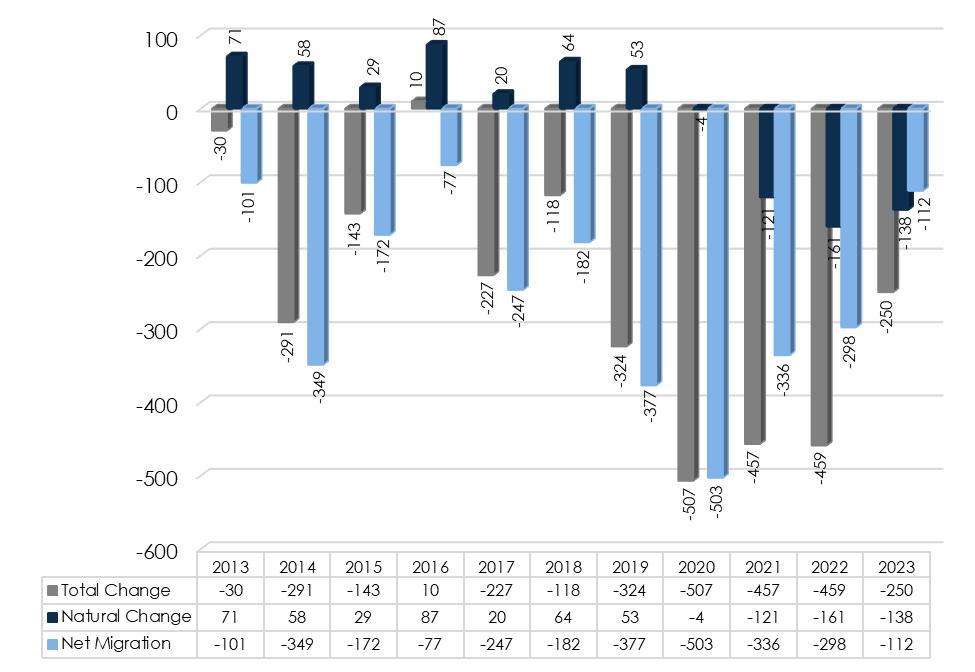
The US Census Bureau provides annual estimates of population change, aside from the ACS rolling averages. At the county and state level, the Census also estimates natural change the difference between births and deaths, and net migration the difference between people moving in to the county or state
Figure
and the people moving out including within a state, between states, and international migration.
The components of change for Lincoln County are shown in Figure 3.8. Lincoln County experienced more births than deaths each year from 2013-2019, for positive natural change. However, the Census estimates the county has been experiencing net negative migration for the entire time period, peaking at 503 more
Table 3.2: County Age and Gender Characteristics, 2012-2022
Source: U.S. Census Bureau 2013-2023.
Figure 3.8: Lincoln County Population Components of Change, 2013-2023
people moving out than moving in from 2019 to 2020. These are estimates and may not reflect actual conditions.
POPULATION PROJECTIONS
Population projections are future estimates based upon past and present circumstances. There are different methods commonly used to project population, with advantages and disadvantages for smaller and larger communities. Several factors, such as demographics, also affect the relationship between projections and ultimate population levels, positively or negatively.
Since 1970, Lincoln County’s growth has varied. Year-over-year growth ranged from over 2.0% to almost 2.0% contraction, but at an overall dropping rate (Figure 3.9). These cycles of contraction and growth make it difficult to project future rates of growth.
STATE DATA CENTER
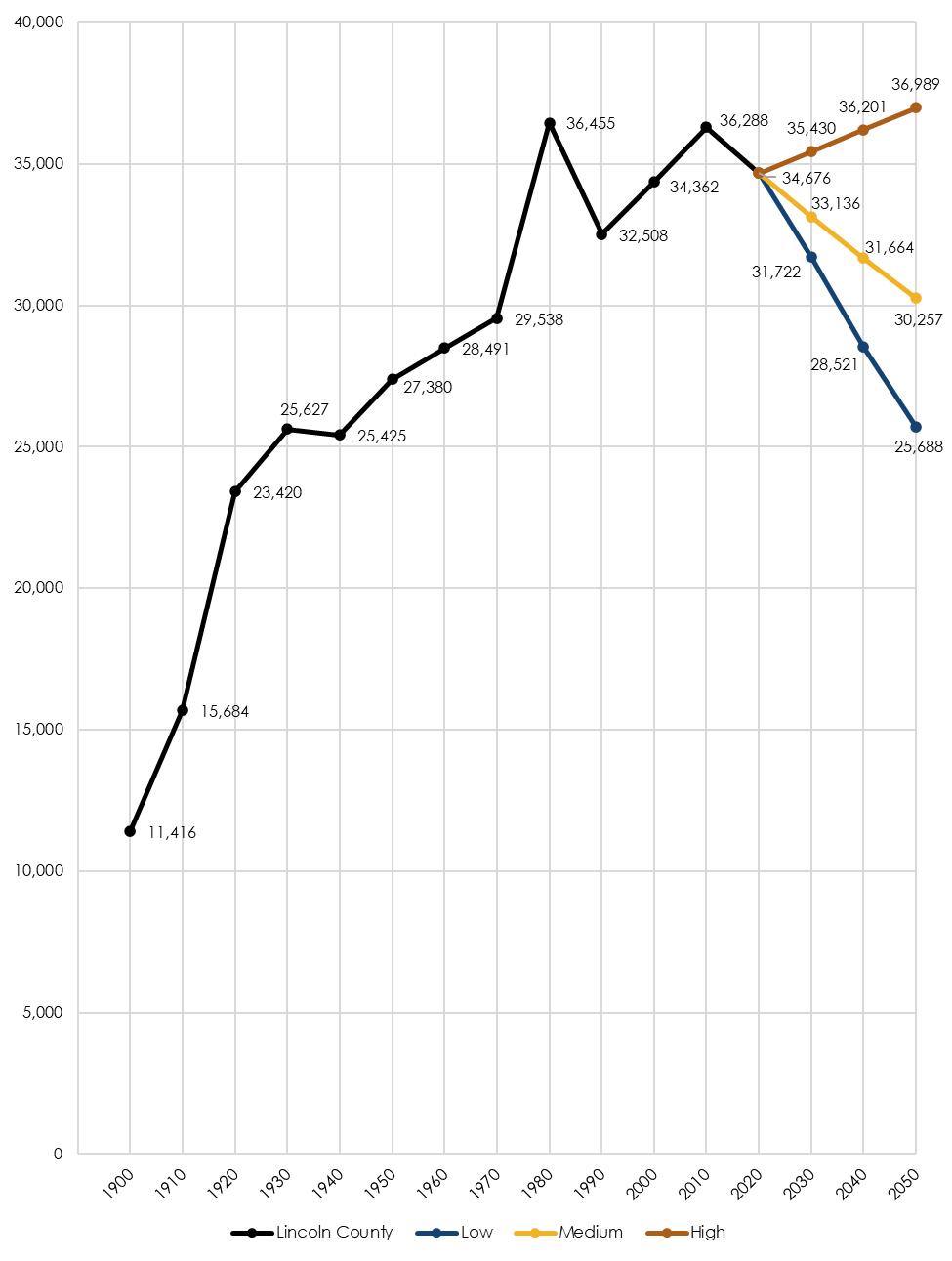
The University of NebraskaOmaha Center for Public Affairs Research (the State Data Center) develops official population projections for Nebraska counties, based on trends with both natural change and migration rates. The most recent report, composed after the release of the US Census 2020 complete count, projects Lincoln County’s population will continue to decrease by an annual rate of approximately0.7% or -9.5% per decade, to:
31,722 by 2030,
28,521 by 2040,
25,688 by 2050.
Over the past 50 years, Lincoln County population growth has been strong then stagnated.
Covid-19 and related factors over 2020 and 2021 introduced some extra volatility into this pattern.
Near-term projected growth in Lincoln County is driven by the Boomer and Millennial population bulges. Nearly 500 residents will likely be added in the 75-79 age group alone over the next five years, creating additional need for senior-friendly housing.
TREND LINE ANALYSIS
Trend Line Analysis is a process of projecting future populations based upon changes during a specified period of time. For this analysis, several different population trend lines were reviewed, including 1970 to 2020, 1990 to 2020, 2000 to 2020, and 2010 to 2020. Results for Lincoln County are shown in the side bar.
For the purposes of this plan, three population projections were selected to illustrate possible growth scenarios (Figure 3.9).
LOW: The State Data Center projection was selected for the Low Series and may be considered a worst-case scenario. This estimate applies a projected countywide growth rate of approximately 0.4%. This serves as a baseline for planning purposes. If the County is prepared for a stable population, they will be prepared for more moderate population change.
MEDIUM: The most recent 10-year trend of -0.45% annual growth serves as the Medium Series, with a population projected at 30,257 by 2050.
HIGH: The 30-year trend was selected as the High Series, with 0.22% annual growth resulting in a projected population of 36,989 by 2050. This is an optimistic scenario which can also serve as a goal for future growth and development.
Sources: Nebraska State Data Center, Center for Public Affairs Research, University of Nebraska at Omaha; U.S. Census Bureau 19702020, Marvin Planning Consultants.
Figure 3.9: Population and Projections for Lincoln County
CHAPTER 4
Housing
Every resident requires housing, yet housing preferences vary widely. Young families generally have different needs and preferences than senior citizens, and preferences change over time. Housing is also a source of economic opportunity and wealth building over time.
This housing profile examines housing market conditions in Lincoln County and the municipalities in the county. Data used in this element comes from a variety of sources including the U.S. Census Bureau, U.S. Department of Housing and Urban Development (HUD), Lincoln County Assessor, thirdparty vendors, and qualitative information from focus group participants.
Projecting future housing needs requires consideration of multiple factors including population
change, household income, housing vacancy rates, employment rates, land use patterns, and residents' preferences. This chapter incorporates findings of the North Platte/Lincoln County, Nebraska Housing Needs Assessment, and presents information on the household character of Lincoln County’s residents, describes the
existing housing stock and housing conditions, and considers future needs for housing.
HOUSEHOLD CHARACTER
Lincoln County has seen stagnant growth over the past two decades, both in population and households. As Table 4.1
Source: American Community Survey 2008-2012 & 2018-2022.
Table 4.1: Lincoln County Households, 2012-2022
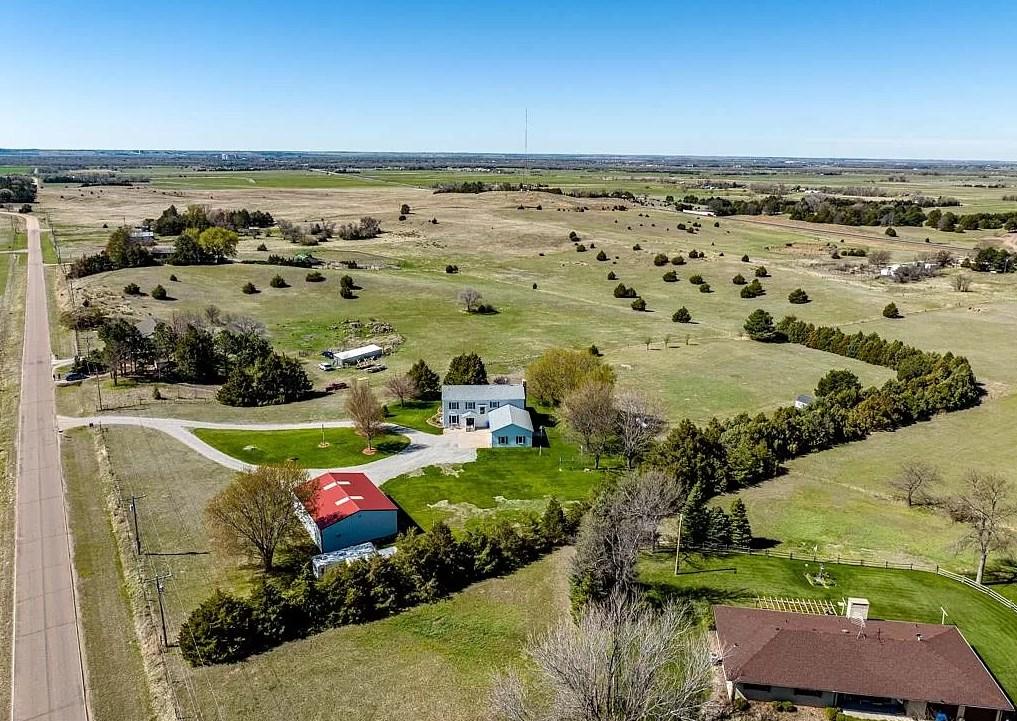
6972 N. Eshelman Road, Lincoln County
Source: Zillow.com
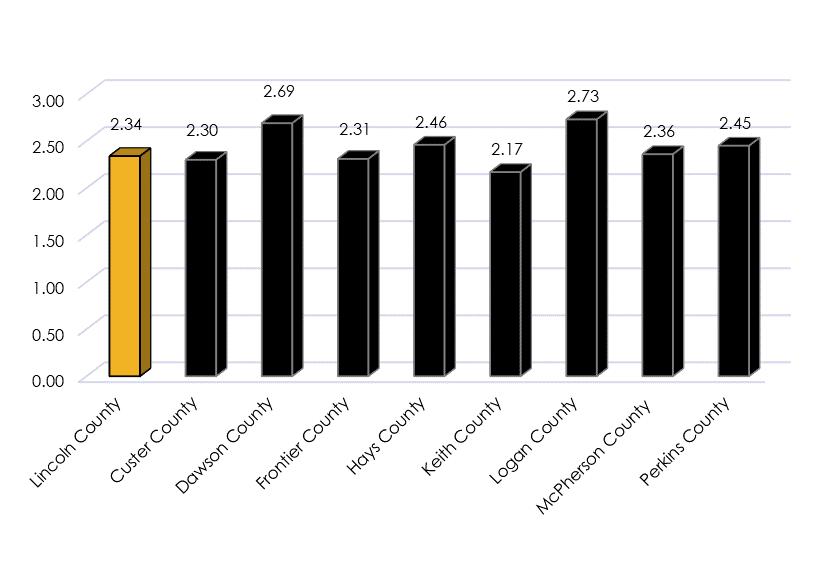
surrounding counties, Keith County (Ogallala) had a much lower average household size of 2.17 persons, while Custer and Frontier Counties were also lower. Among the surrounding counties, Logan County had the largest household size, at 2.73 persons per household.
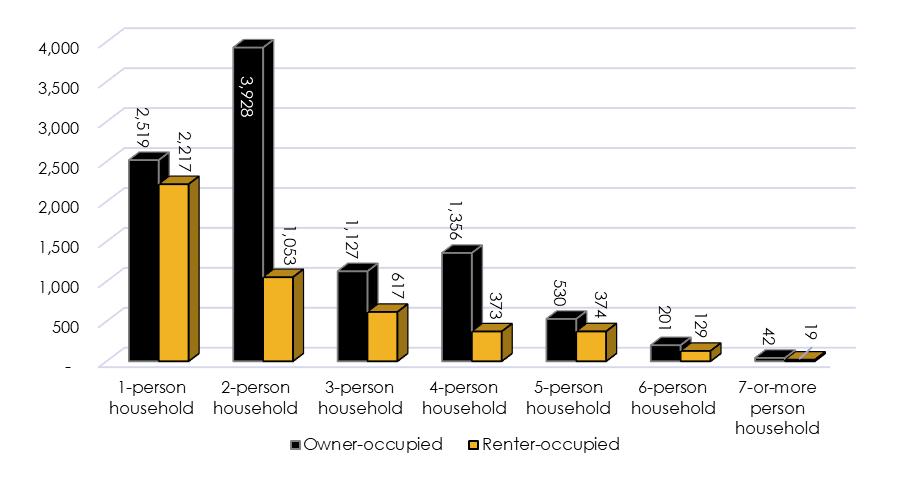
Two-person households were the largest group of owner-occupied housing in Lincoln County in 2022, with 3,928 housing units (Figure 4.3). By comparison, the largest illustrates, the number of households in Lincoln County shrunk by –3.6% from 2012 to 2022, behind the –4.5% loss rate for North Platte.
HOUSEHOLDS
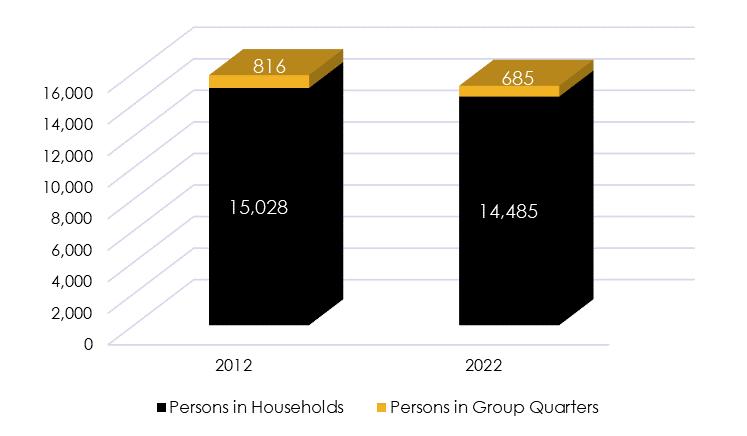
In 2022, there were fewer people living in households in Lincoln County than in 2012(Figure 4.1). Between 2012 and 2022, the number of people living in group quarters decreased from 816 people to 685, even as the overall population increased. Of those in group quarters, 585 were in the city of North Platte in 2022. Group quarters include such places as residential treatment centers, skilled nursing facilities, or group homes, among other places.
While these projections anticipate growth rates less than historical averages, there is currently significant building permit activity which indicates the number of housing units will continue to grow at, or in excess of, historical trend rates. Any significant changes to the economic base of Lincoln County, North Platte, and the Micropolitan Area over the next five years will likely have an impact on population and household growth, and ultimately housing demand.
Household Size
As seen in Figure 4.2, the average household size in Lincoln County in 2022 was 2.34 persons per household. The trend nationally has been towards a declining household size. In the
household size for rentals was one -person households with 2,217 housing units.
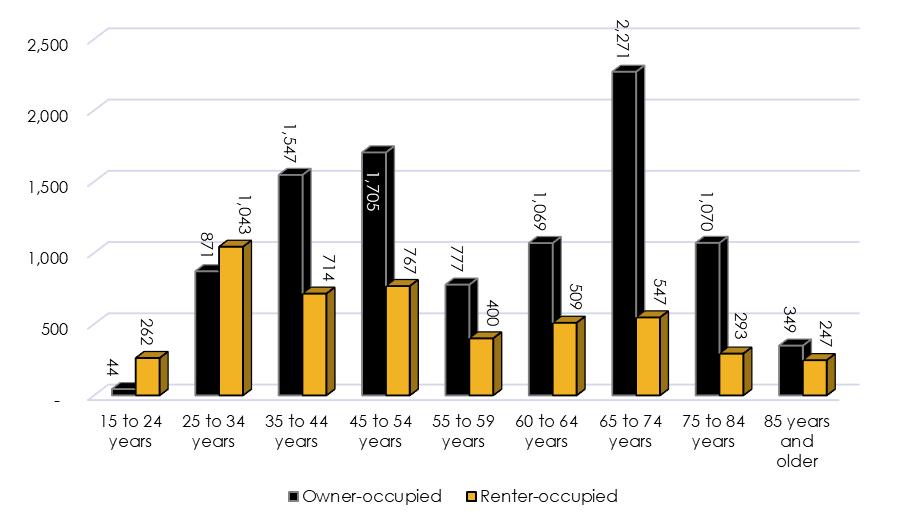
In 2022, the largest home ownership age cohort (Figure 4.4) were those 65 to 74 years old (2,271). The largest renteroccupied age cohort were those 25 to 34 years (1,043). While home -ownership does tend to skew towards older demographics, there is a demand for rental housing among residents of all ages.
Source: American Community Survey 2008-2012 & 2018-2022.
Figure 4.1: Lincoln County Household Populations, 2012-2022
HOUSING STOCK
As each year passes, housing ages. Approximately 1% of existing housing units (on average) are removed from the housing stock each year, through fires, demolition, or other means. If new units are not built and/or existing units are not maintained or renovated, neighborhoods can deteriorate, leading to disinvestment and dissatisfaction.
HOUSING UNITS
Source: American Community Survey 2008-2012 & 2018-2022.
The number of housing units counted in the US Census Bureau’s decennial Census in Lincoln County overall decreased by -0.34% from 16,583 to 16,526 (Table 4.2). North Platte accounted for 11,350 of these housing units, a decrease of –0.87% from 2010.
It should be noted the ACS surveys report an average over a five-year survey period. The ACS survey figures report a smaller number of housing units than the statistics reported in either decennial Census, and may represent an under-estimate in the ACS.
Age of Housing Units
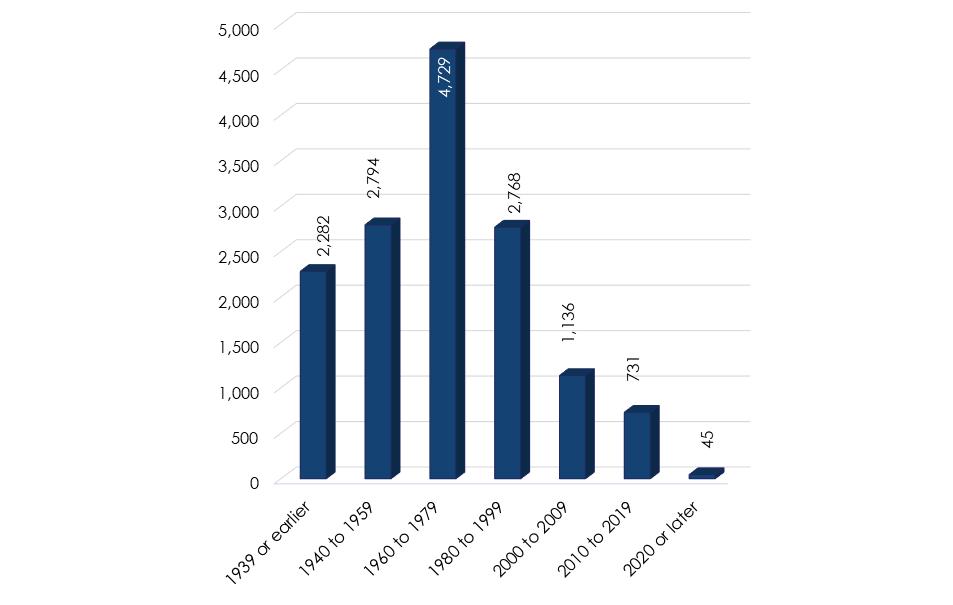
Lincoln County’s housing stock was mostly built in the 1960s and 1970s. Figure 4.5 shows 4,729 housing units were constructed from 1960 to 1979. Approximately 15% of all homes were built before World War II.
These statistics represent older well-kept homes as well as homes likely in need of repair and rehabilitation. Approximately 13% of all homes have been constructed since 2000.
Housing Market
Market demand for new residential homes has been
Figure 4.3: Persons By Household Type, 2022
Figure 4.4: Householder Age By Household Type, 2022
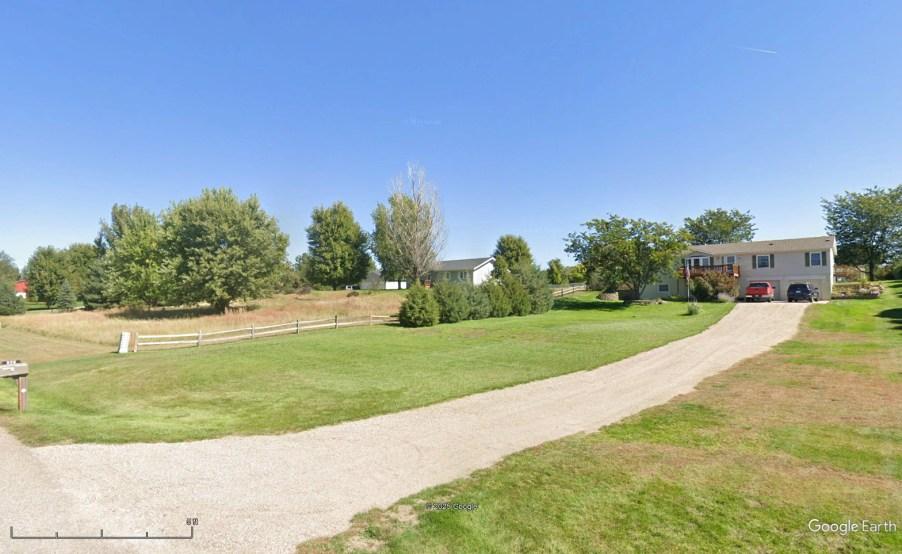
Residence, rural Lincoln County Source: Zillow.com
Figure 4.5: Age of Existing Housing Stock in Lincoln County
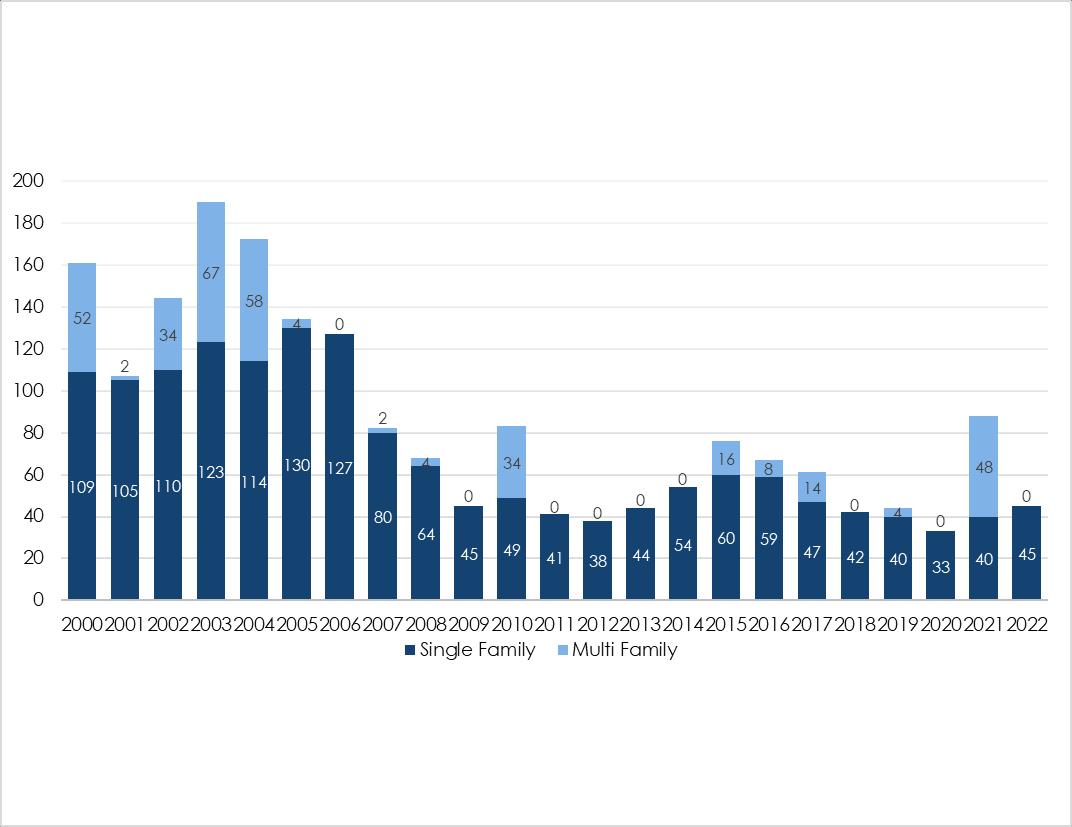
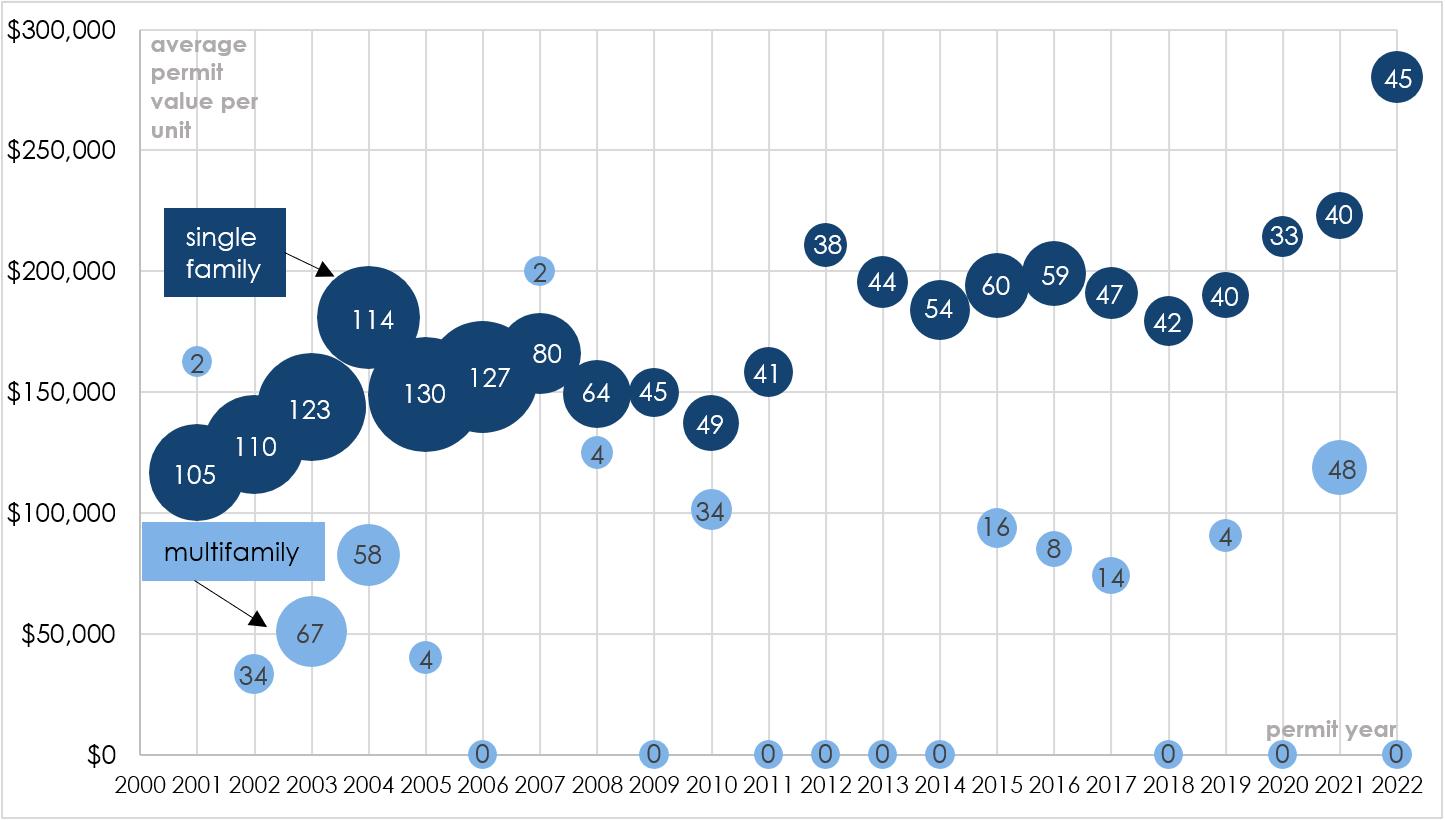
Figure 4.6 shows building permit activity data for Lincoln County. Figure 4.7 shows the same data, but with the height of each circle representing the average valuation per unit of the homes constructed in the year (with no adjustment for inflation). The size of the circle and label indicate the exact count of units and the color indicates single-family versus multifamily (2+ units in a building).
Table 4.2: Lincoln County Housing Units, 2010-2020
Source: US Census Bureau Redistricting File, 2010 & 2020.
As Daniel Parolek notes in his book Missing Middle Housing (2020), “These [housing] types have historically delivered attainable housing choices to middle-income families without subsidies and continue to play a unusually strong across the nation until recently, driven by exceptionally high multifamily absorption. The residential market, in the Lincoln County/North Platte area and throughout the United States, is characterized by high demand and insufficient supply production. This dynamic resulted in low vacancies and rising home prices and rents.
Source: American Community Survey 2018-2022.
Housing Type
A diverse variety of housing types enables residents to more easily find housing which fits the current needs of their household. Lincoln County has a housing stock on par with the state average. As shown in Table 4.3, about 72% of Lincoln County’s housing is singlefamily detached units, compared to 72% in the overall state.
“Missing middle” units are equally represented in North Platte and Lincoln County compared to the overall state. These house-scale buildings can fit seamlessly into existing residential neighborhoods and support walkability, locallyserving retail, and public transportation options.
Missing Middle Housing
LB 866 - the Municipal Density and Missing Middle Housing Act (Nebraska Statute 195501 to 19-5506) requires cities with populations of 50,000 or more adopt an affordable housing action plan. The Act defines “Middle Housing” as duplexes, triplexes, quadplexes, cottage clusters, and townhouses dwelling sizes between single-family homes and apartments.
role in providing homes to the ‘middle income’ market segment which typically straddles 60% to
4.7: Lincoln County Building Permits and Value by Type, 2001-2022
Source: U.S. Census Building Permit Surveys
Figure
110% average median household income, in new construction, for-sale housing.”
Approximately 12% of North Platte’s housing meets the definition of Missing Middle Housing (townhouse, duplex,
triplex), compared to just under 9% within the entire state.
In addition to a variety of housing types, choices in number of bedrooms is important to ensure the housing stock is appropriate for the size of a community’s families and households. The mix of bedroom diversity in Lincoln County is similar to the state overall as illustrated in Table 4.4.
Vacancy Rates
A housing market is considered healthy when the effective vacancy rates are between 5% to
Table 4.3: Existing Housing Types, 2022
Source: American Community Survey 2018-2022.
Table 4.4: Number of Bedrooms, 2022
Source: American Community Survey 2018-2022.
7%. This ensures an adequate product for new housing moving into a community and for existing residents to move into housing which better supports their household needs. A constrained housing market leads to price escalation, potential difficulties in attracting workers to a region, exasperating a tight labor market and hampering economic growth. The lack of available housing may also cause frustration from existing residents who may not find the desired product for their current lifestyle and may choose to leave the community in search of housing fitting their needs.
Conversely, a housing market with high vacancy rates can be problematic for a community. High vacancy rates may place downward pressure on for-sale and rental housing. While lowercost housing is advantageous for renters and home buyers; it can result in less operating income for rental housing and less ability to borrow against a home’s equity, leading to deferred maintenance and improvements.
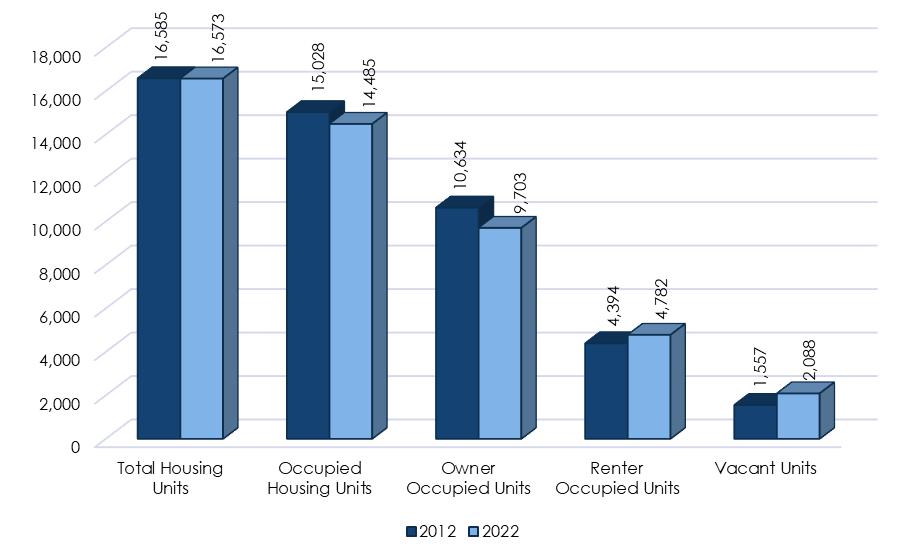
The ACS-estimated number of occupied housing units in Lincoln County dropped slightly from 2012 to 2022, while the number of vacant units grew by 500. The number of owner-occupied units decreased to 9,703 while the number of renter-occupied units increased to 4,782 (Figure 4.8).
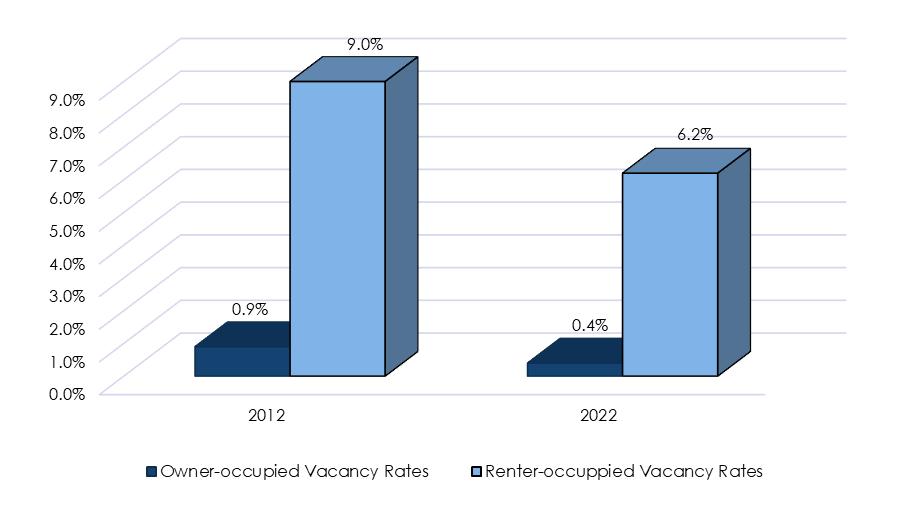
The vacancy rate for owneroccupied units fell from 0.9% to 0.4%, and the vacancy rate for renter-occupied units decreased from 9.0% to 6.2% (Figure 4.9). In comparison, across the Midwest the Q3 2022 average for-sale vacancy rate was 0.9% and the rental vacancy rate states was 7.1%.
Figure 4.8: County Occupied-Vacant Housing Units, 2012-2022
Source: American Community Survey 2008-2012 & 2018-2022.
4.9: County Vacancy Rates by Type of Unit, 2012-2022
Value and Gross Rent
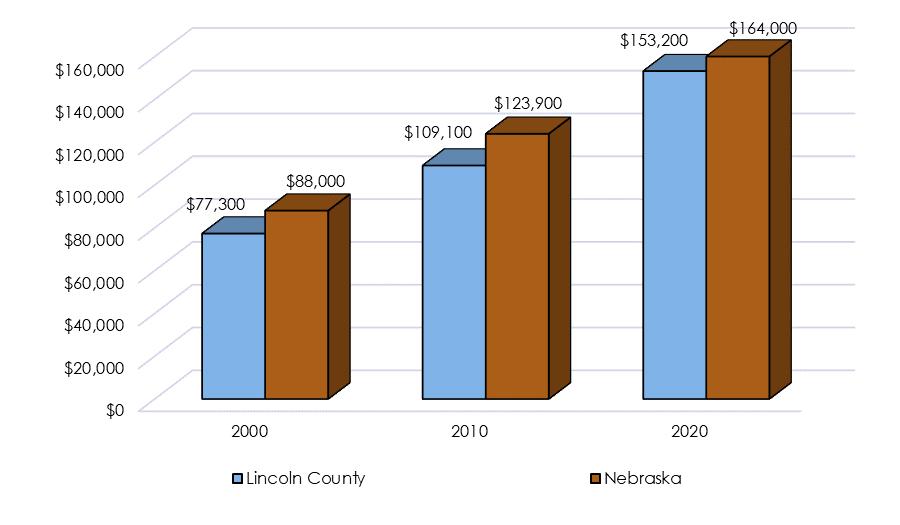
The median value of owneroccupied housing units in Lincoln County increased from $77,300 in 2000 to $153,200 in 2020 (Figure 4.10).
Over the same time period, the State’s median value had increased from $88,000 to $164,000. The median value in Lincoln County grew by 98% over the last 20 years, exceeding statewide growth of 86%.
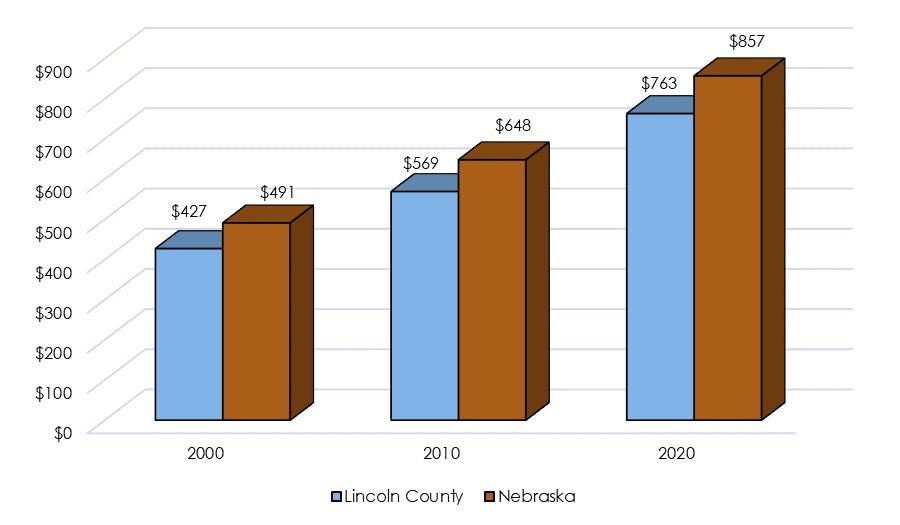
Lincoln County and the state of Nebraska have seen significant growth in rents since 2000. Median gross rent in Lincoln County increased by 78% to $763 in 2020 (Figure 4.11). Median gross rent in Nebraska increased by 75% to $857 in 2020. Rent in the county and state both grew faster than the Consumer Price Index, which only increased at a rate of 50.5% during the same period.
HOUSING CONDITIONS
Source: American Community Survey 2008-2012 & 2018-2022.
Figure 4.10: Median Value Owner-Occupied Units, 2000-2020
Source: U.S. Census Bureau 2000, American Community Survey 2006-2010 & 2016-2020.
Despite an aging housing stock, housing across the county is mostly well maintained. If properties are allowed to fall into disrepair either because the owner does not have the resources to maintain the
Figure 4.11: Median Gross Rent, 2000-2020
Source: U.S. Census Bureau 2000, American Community Survey 2006-2010 & 2016-2020.
Figure
structure or simply through neglect, properties can become highly dilapidated. At some point, if there is no intervention, it may cost more to rehabilitate the structure than is economically feasible and in many of those cases, these properties become abandoned.
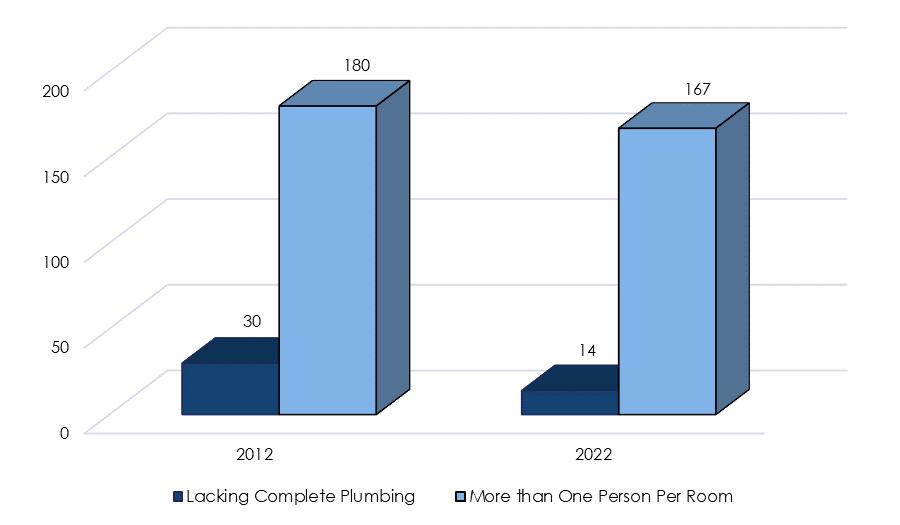
According to the U.S. Department of Housing and Urban Development (HUD) guidelines, housing units lacking complete plumbing or are overcrowded are considered substandard housing units. HUD defines a complete plumbing facility as hot and cold-piped water, a bathtub or shower, and a flush toilet; overcrowding is more than one person per room. In addition, anytime there is more than 1.0 persons per room, the housing unit is considered overcrowded, thus substandard.
When applied to Lincoln County, 210 units were considered substandard in 2012 and 181 units were substandard in 2022 (Figure 4.12). (Some housing units may have met both criterion and were effectively counted twice.) Even so, County leaders should not assume the number of substandard housing units are overestimated. Housing units containing major defects requiring rehabilitation or upgrades to meet building, electrical, or plumbing codes should also be included in an analysis of substandard housing.
AT-RISK HOUSEHOLDS
A key factor to examine is households at risk of entering into a housing crisis, becoming homeless, or due to income constraints not able to maintain their housing.
POVERTY
The poverty rate estimate by the ACS in 2022 is higher for North Platte (13.6%) than the overall poverty rate in Nebraska (10.4%). North Platte also had a larger share of families below the poverty level (7.2%) than in the
Source: American Community Survey 2008-2012 & 2018-2022.
state of Nebraska (6.7%) overall. Those households tend to be the highest risk for homelessness because they are living on the financial edge and may have issues of income, food and housing insecurity.
AFFORDABLE HOUSING
The U.S. Department of Housing and Urban Development defines cost burdened households as those spending more than 30% of their household income on housing costs. Severely cost burdened households are those spending 50% or more of their household income on housing costs. Housing costs include mortgage or rent, and utilities.
Communities can have a mismatch, or gap, between the number of units with affordable rents, versus the number of households who can afford those rents without becoming cost burdened. Similarly to renters, homeowners may be living in homes above or below what they can afford for their household income.
The North Platte/ Lincoln County Housing Needs Assessment (2025) reported on the estimated number of households living in units which are affordable to their respective household income cohort. In Lincoln County approximately 275 occupied rental units were considered affordable to households earning less than 30% AMI, out of 4,565 total occupied units. An estimated 520 owner-occupied housing units were considered affordable to household earning less than 50% AMI, out of 9,875 occupied units.
These statistics indicate there is likely a need for rental and owner -occupied housing. There is also
Figure 4.12: County Substandard Housing Conditions, 2012-2022
NEEDS
The North Platte/ Lincoln County Housing Needs Assessment (2025) suggests there are anywhere from 3,498 and 4,308 housing units needed to fulfill the demand over the next 10 years. For-sale units make up 64% of the demand while rental units are the other 36%. It is estimated at least 2,004 units are needed for workforce housing.
RESOURCES
NORTH PLATTE HOUSING AUTHORITY
The North Platte Housing Authority (NPH) manages and operates federally subsidized Public Housing and Housing Choice Voucher (HCV) programs to provide residents affordable housing. The Public Housing Program includes 250 one through five-bedroom apartments, duplexes, as well as scattered site homes. Rent is
(restrictions apply) to a private landlord for a home of their choosing which passes a Housing Quality Standards inspection.
Source: npha.us
MANUFACTURED AND MODULAR HOMES
Prefabricated or manufactured homes are built off-site, typically in an enclosed factory, and transported as single or multiple units to the home site.
Prefabricated housing is often more affordable than site-built housing, and factory conditions may result in higher-quality as construction is sheltered from bad weather. Manufactured and modular homes are often placed on a basement or permanent foundation, and should be treated similarly to standard sitebuilt construction in zoning and subdivision regulations.
Sources: hud.gov/OMHP and manufacturedhousing.org
GOALS AND POLICIES
HOUSING GOAL 4.1
A variety of quality housing is available throughout the county.
Policies
4.1.1 Development projects shall follow the goals and policies of the Comprehensive Plan.
4.1.2 Lincoln County supports housing development in municipalities.
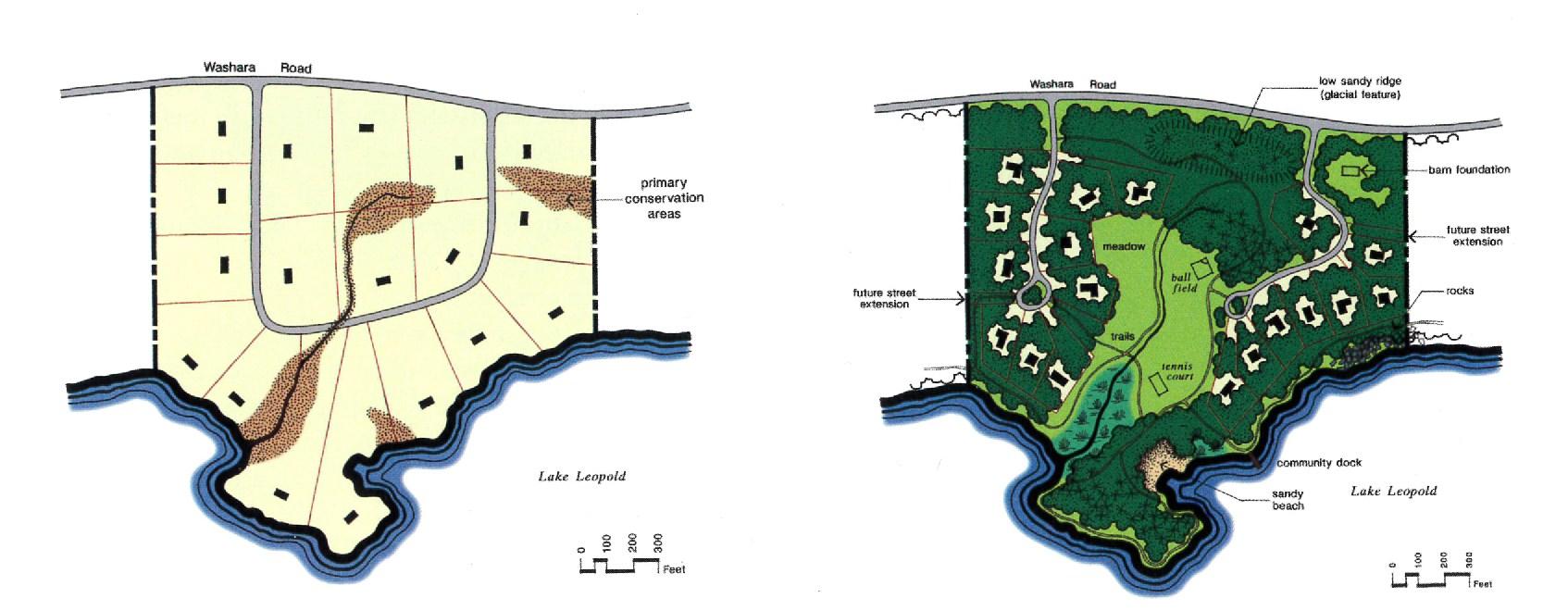
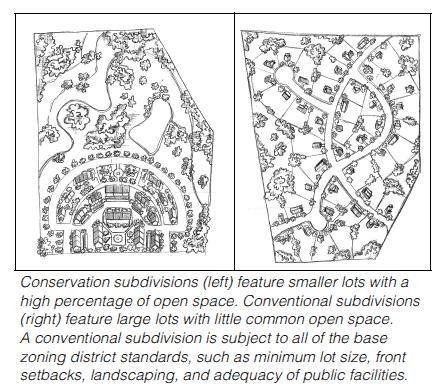
4.1.3 Future rural development should work toward compact and/or conservation approaches.
4.1.4 Direct residential development away from prime farmland and environmentally sensitive areas.
Actions
4.1.5 Regularly review and update land use regulations (zoning and subdivision ordinances) to remove barriers to new and rehabilitated housing.
4.1.6 Encourage Missing Middle housing types in municipalities.
4.1.7 Discuss a nuisance abatement program with SCEDD.
4.1.8 Investigate ways the County could partner with non-profits or public agencies to support home repair programs to improve the condition of substandard and deteriorated housing.
Residence, rural Lincoln County Source: Marvin Planning Consultants
HOUSING GOAL 4.2
Lincoln County residents in need have access to affordable and attainable housing.
Policies
4.2.1 Lincoln County supports affirmatively furthering fair housing throughout the county.
4.2.2 Lincoln County supports local municipal efforts to secure funding for affordable and attainable housing.
Actions
4.2.3 Develop new partnerships with public and private lending institutions to find solutions that reduce housing costs.
4.2.4 Work with affordable housing developers to create additional rental housing for very-low income families.
4.2.5 Investigate ways the County could partner with non-profits or public agencies to support workforce housing.
4.2.6 Explore creating a local Community Land Trust.
CHAPTER 5 Economic Development
ECONOMIC PROFILE
Economic development is a process of investment to increase
Entrepreneurs create new products and services. Existing enterprises reinvent themselves and expand their offerings. This
current and new residents, and provides new sources of income.
Source: Library of Congress
A diversified economic base responds to changing economic conditions, increases local income, creates job opportunities, and improves the quality of life.
In this section, income and employment data and trends are presented and analyzed for Lincoln County, North Platte, and the state of Nebraska.
INCOME
Income statistics illustrate the earning power of area residents. These data show personal and household income levels for Lincoln County in comparison to the state.
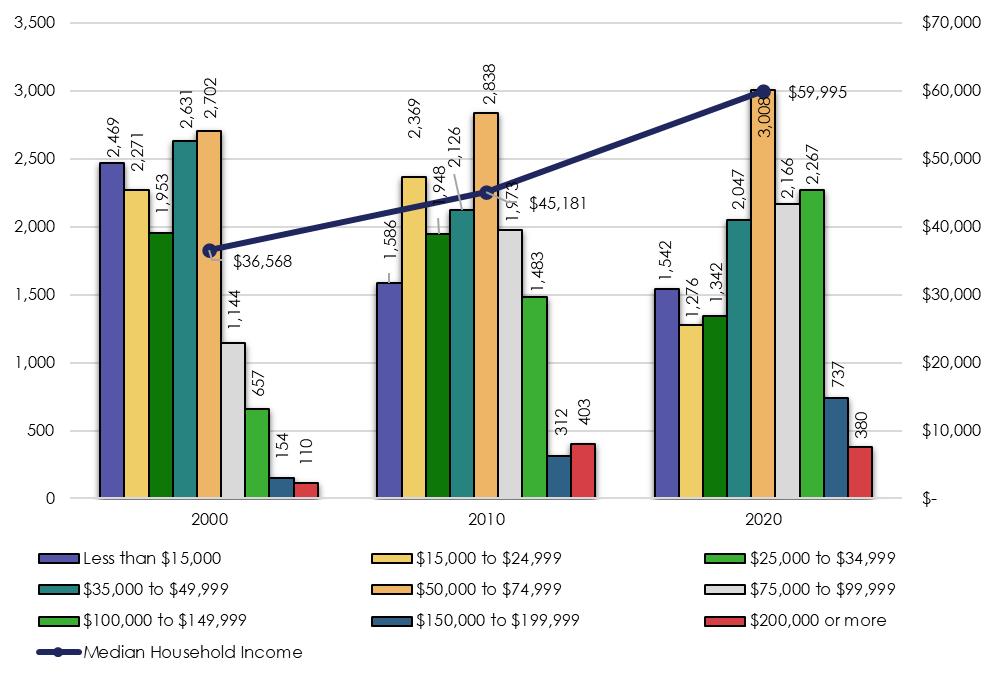
Household income in Lincoln County has grown over time. From 2000 to 2020 the largest groups of households earned between $50,000 to $74,999. The
Household Income in 2000 was $36,568 (Figure 5.1). In 2010 the Median Household Income increased to $45,181. This figure increased to $59,995 in 2020. Median Household Income increased by approximately 64% from 2000 to 2020, a greater rate than in Nebraska statewide, and exceed inflation as measured by the increase of the Consumer Price
Source: Marvin Planning Consultants
5.1: Lincoln County Household Income, 2000-2020
Source: U.S. Census Bureau 2000, American Community Survey 2006-2010 & 2016-2020.
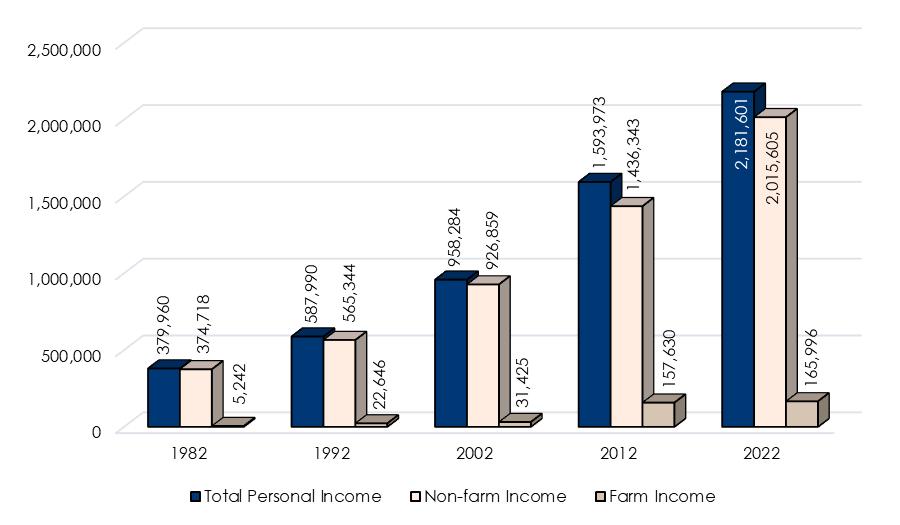
Personal income has grown in parallel to household income. According to the US Bureau of Economic Analysis (BEA), Lincoln County’s Total Personal Income increased from $379 million in 1982 to $2.181 billion in 2022, a change of 474% over 40 years (Figure 5.2). Non-Farm Income accounted for 92% of Total Personal Income in 2022.
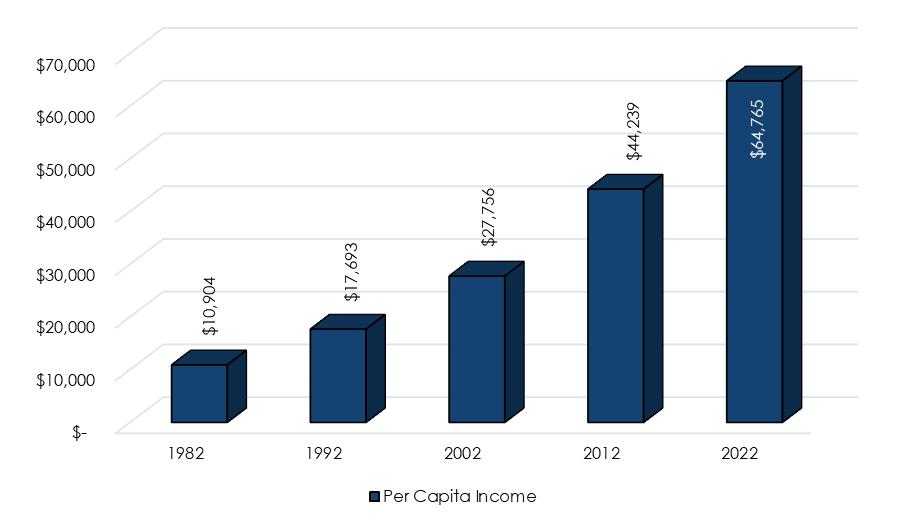
Lincoln County’s Per Capita Income (PCI) increased from $10,904 in 1982 to $64,765 in 2022 (Figure 5.3). PCI increased by 494% over 40 years, a faster rate of increase than the 464% increase for Nebraska statewide, with both outpaced the increase of the Consumer Price Index (CPI) of 198% over the same forty years. This indicates local income growth has outpaced inflation.
Transfer Payments
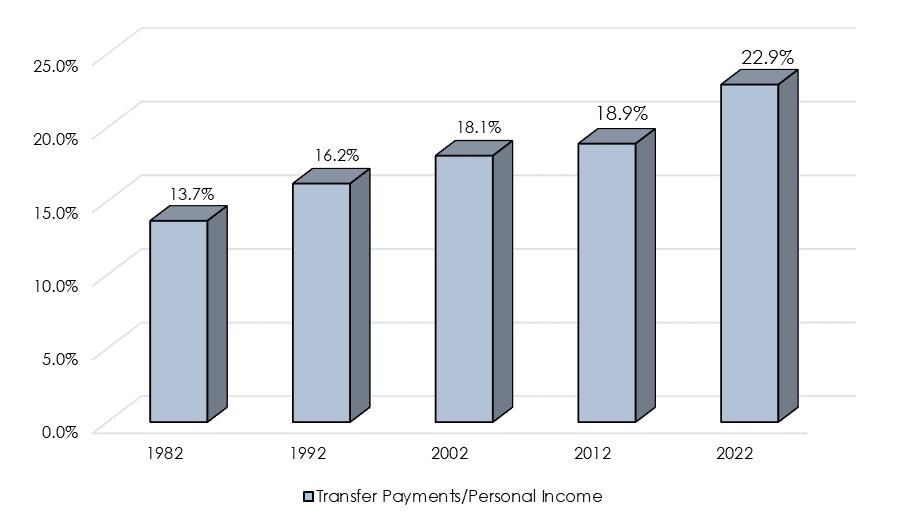
Transfer payments make up an increasing share of income. From 1982 to 2022, transfer payments increased from 13.7% of Lincoln County’s Total Personal Income to 22.9%.
Transfer payments include items such as:
Retirement and disability insurance benefits, including Social Security
Medical benefits, including Medicare
Income maintenance benefits, including Supplemental Security Income (SSI) and the Earned Income Tax Credit (EITC)
Unemployment insurance compensation
Veterans’ benefits Education and training assistance
Figure 5.2: Lincoln County Personal Income by Source
Figure 5.4: Lincoln County Transfer Payments Percentage
Keeping in mind COVID transfer payments distort recent statistics, medical benefits account for the largest amount of transfer payments in Lincoln County in 2022, followed by retirement and disability including Social Security. Over the last 40 years, public assistance medical care benefits has risen at the fastest rate. The Earned Income Tax Credit (EITC) has also grown substantially.
Income and Education
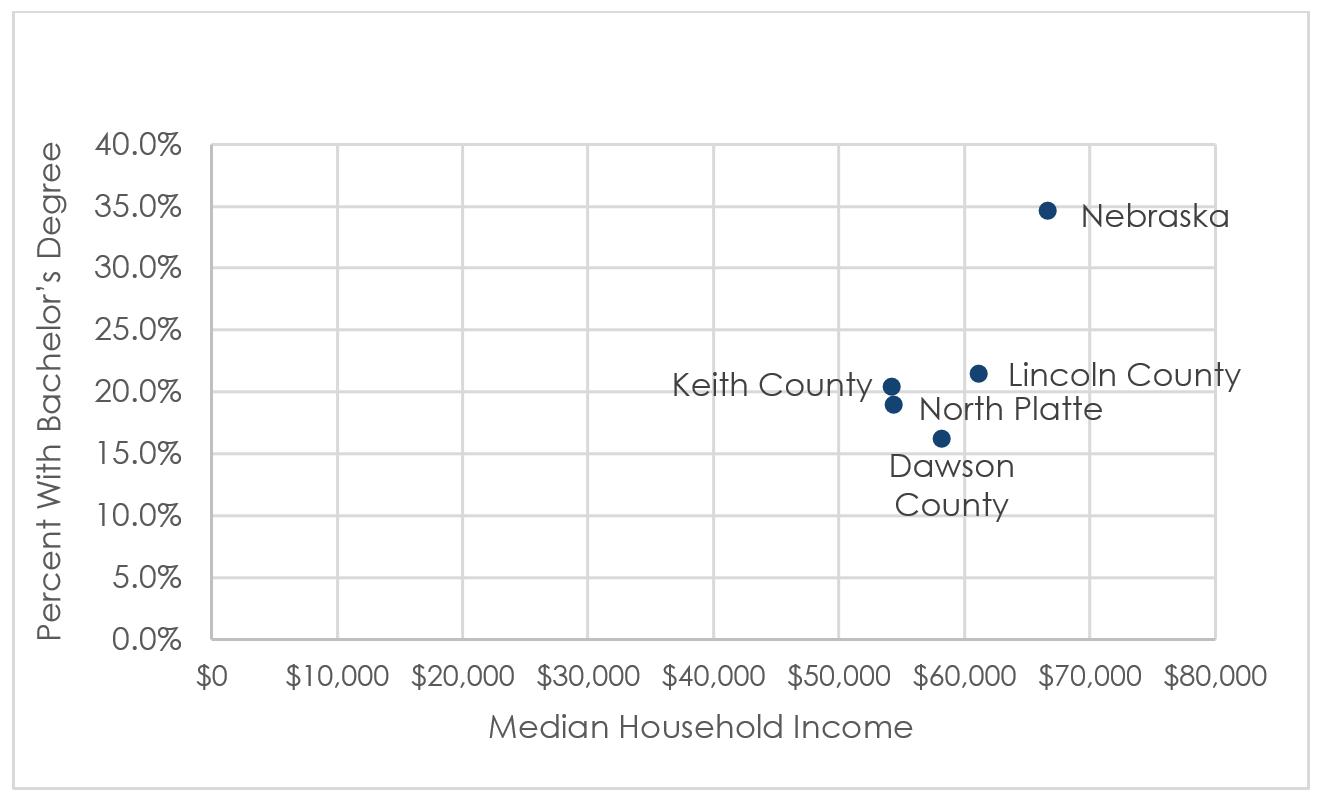
With occasional exceptions, income and higher educational attainment tend to be highly corelated. Figure 5.5 plots Lincoln County and comparison areas based on median household income and percent of adults (age 25+) with bachelor’s degrees or higher. Note not all higher paying jobs require college degrees.
SALES TAX
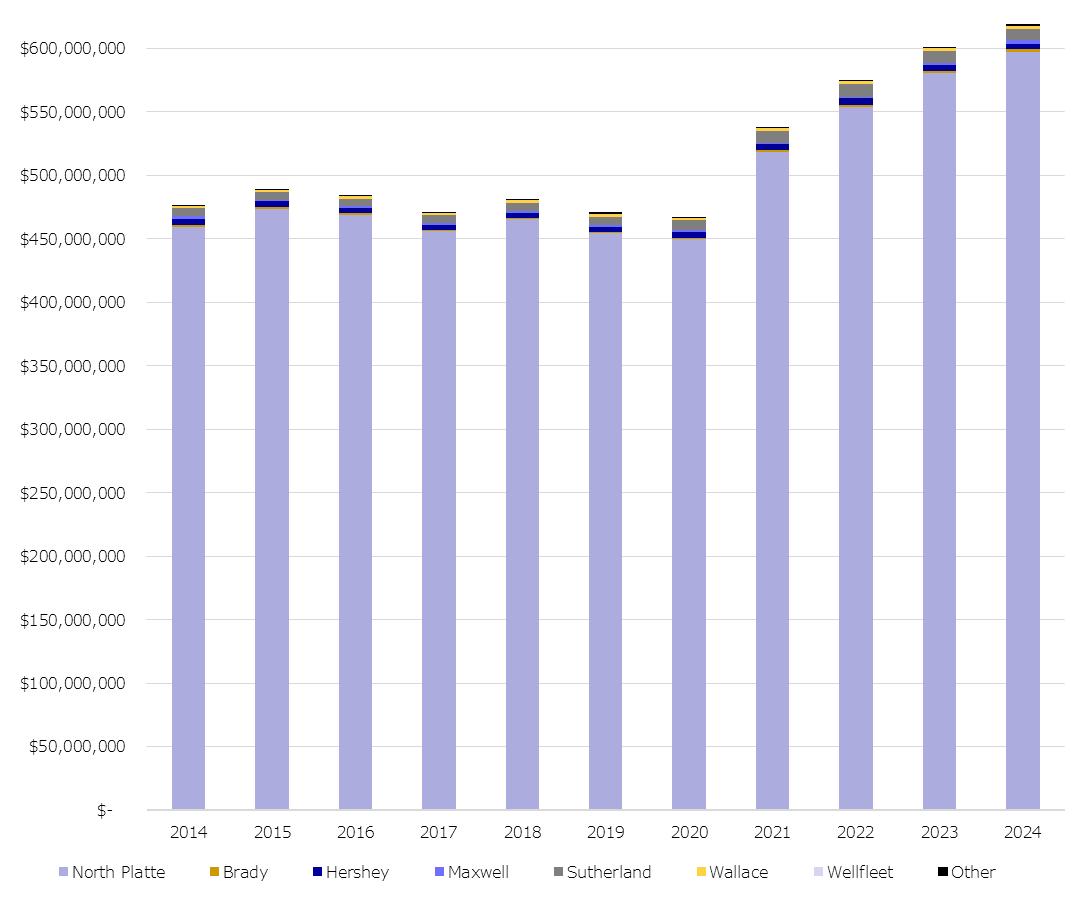
Increasing income tends to result in increasing retail sales, providing a base for employment and income for local residents. Retail sales also drive local sales and use tax receipts for municipalities and the State of Nebraska. According to the Nebraska Department of Revenue, Net Taxable Sales in Lincoln County have increased from $476,061,484 in 2014 to $618,776,711 in 2024, increasing 30% (Figure 5.6).
The City of North Platte accounts for the majority of net taxable sales in the county, realizing about $597 million in 2024. Sutherland had $8.8 million, Hershey $4.2 million, Maxwell $3.2 million, Wallace $2.1 million, Brady $1.7 million, and Wellfleet $230,000. Although there retail sales dropped in the years leading up to the COVID pandemic, Lincoln County was not as sharply impacted as many
places across the state. Since 2020, sales in Lincoln County have grown almost 33% which is likely attributed to outdoor recreation opportunities in the county.
TOURISM
County tourism plays a crucial role in economic development by attracting visitors who support local businesses, create jobs, and generate tax revenue for community improvements.
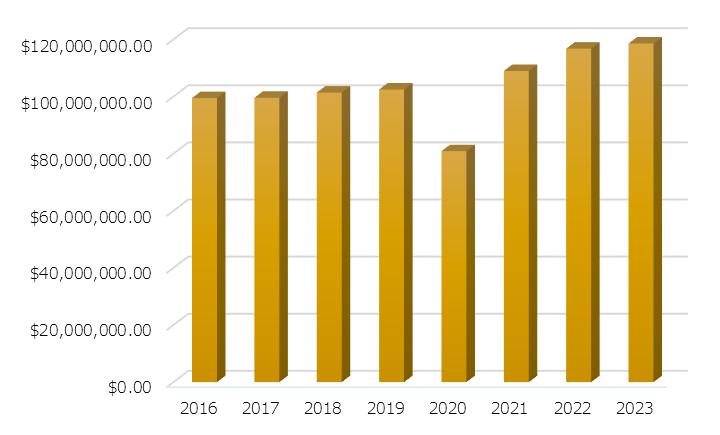
In 2023, Visit North Platte partnered with Dean Runyan Associates to develop a study on The Economic Impact of Travel in Lincoln County which found that travel spending in Lincoln County increased by $2.0 million in 2023 (1.7% more than in 2022). The growth of Lincoln County’s travel economy can be attributed to more overnight visitors and the price inflation of goods and services.
The study identified the following areas of growth:
Visitor Volume increased from 582,000 person trips in 2022 to 597,000 person trips in 2023.
Direct travel-related spending increased 1.7% from $119.4 million in 2022 to $121.3 million in 2023 (Figure 5.7).
Direct travel generated employment gained approximately 70 jobs in 2023, a 5.2% increase compared to the previous year.
Direct earnings generated by travel grew 9.6%, from $31.3 million in 2022 to $34.3 million in 2023.
Taxes receipts generated by direct travel-related spending totaled $10.5 million in 2023, a 6.3% increase compared to 2022.
Visitors paid $1.2 million in County Sales Tax in 2023 which meant $1 of every $10 dollars in City Sales tax receipts is visitorgenerated.
Lincoln County households would need to pay an additional $735 in taxes annually to replace the visitor generated taxes received by state and local governments.
LABOR FORCE
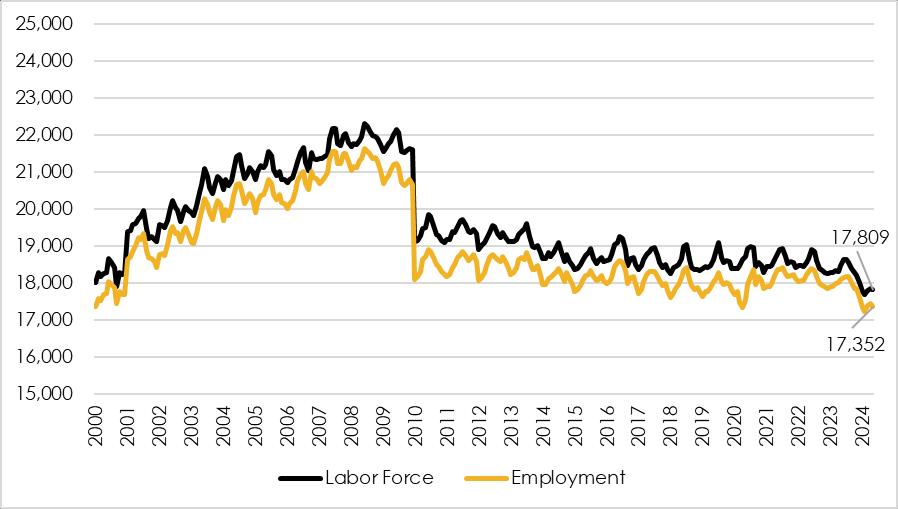
The Lincoln County labor force has stagnated, with substantial seasonal variability in labor force
Figure 5.7: Visitor Spending
Source: Visit North Platte, The Economic Impact of Travel in Lincoln County, 2016-2023.
participation and job availability, although fluctuations have moderated more recently.
Lincoln County’s seasonal labor force and employment grew fairly steadily from 2000 to 2010, with a contraction following the Great Recession, staying stable through the 2010s. (Figure 5.8).
Lincoln County’s annual average labor force shrunk from 19,235 in 2012 to 18,475 in 2022, a contraction of 3.7% (Table 5.1). In comparison, the Dawson County labor force is smaller than Lincoln County, yet increased at a rate of 3.6%, which is more comparable
to the statewide growth rate of 4.6%. Keith County also grew faster than Lincoln County at 1.6%.
Lincoln County has experienced a higher unemployment rate than most of its neighbors. Lincoln County’s unemployment rate was
Table 5.1: Labor Force, 2012-2022
2.2% in 2022 (Table 5.2). Frontier and Logan Counties were also 2.2% under the Nebraska unemployment rate of 2.3%. Dawson County was the only county with a higher unemployment rate at 2.5%
Table 5.2: Unemployment Rates, 2012-2022
Source: US Bureau of Labor Statistics, Local Area Unemployment Statistics
Source: US Bureau of Labor Statistics, Local Area Unemployment Statistics
Figure 5.8: Lincoln County Seasonal Labor Force and Employment
Industry Employment
Employment by industry data assists in understanding the key generators of income. The BEA tracks employment by county.
The total annual average number of jobs in Lincoln County contracted from 22,808 in 2012 to 22,097 in 2022, a -3.1% loss (Table 5.3). This includes people who live elsewhere and commute into Lincoln County. While there were impacts from the pandemic in 2022, total employment in Nebraska grew by 9.6% in the same decade.
Health Care had the largest number of jobs, 3,136 in 2022, down -.16% over 2012. Government contracted by –3% to 2,948 in 2022, yet still had the second largest number of jobs by industry.
Health Care is the largest employment sector in Nebraska statewide. This is true in Lincoln County where Health Care ranks above all other sectors. Real Estate was the fastest growing industry, locally and statewide from 2012 to 2022, up 43% in
Table 5.3: County Average Annual Employment, 2012-2022
Lincoln County and up 59% in Nebraska.
Location Quotient
The BEA defines a location quotient (LQ) as an analytical statistic which measures a region’s industrial specialization relative to a larger geographic unit. Compared to the state of Nebraska, Forestry and Fishing, Wholesale Trade, Retail Trade, Transportation and Warehousing, Health Care and Social Assistance, Accommodation and Food Services, Other Services (except Government), and Government industries had an LQ greater than 1.0. This means Lincoln County had relatively more local employment, than their share of statewide employment. Transportation and Warehousing had the greatest local growth compared to statewide employment, shifting their share of local employment higher.
Employment of Place of Residence
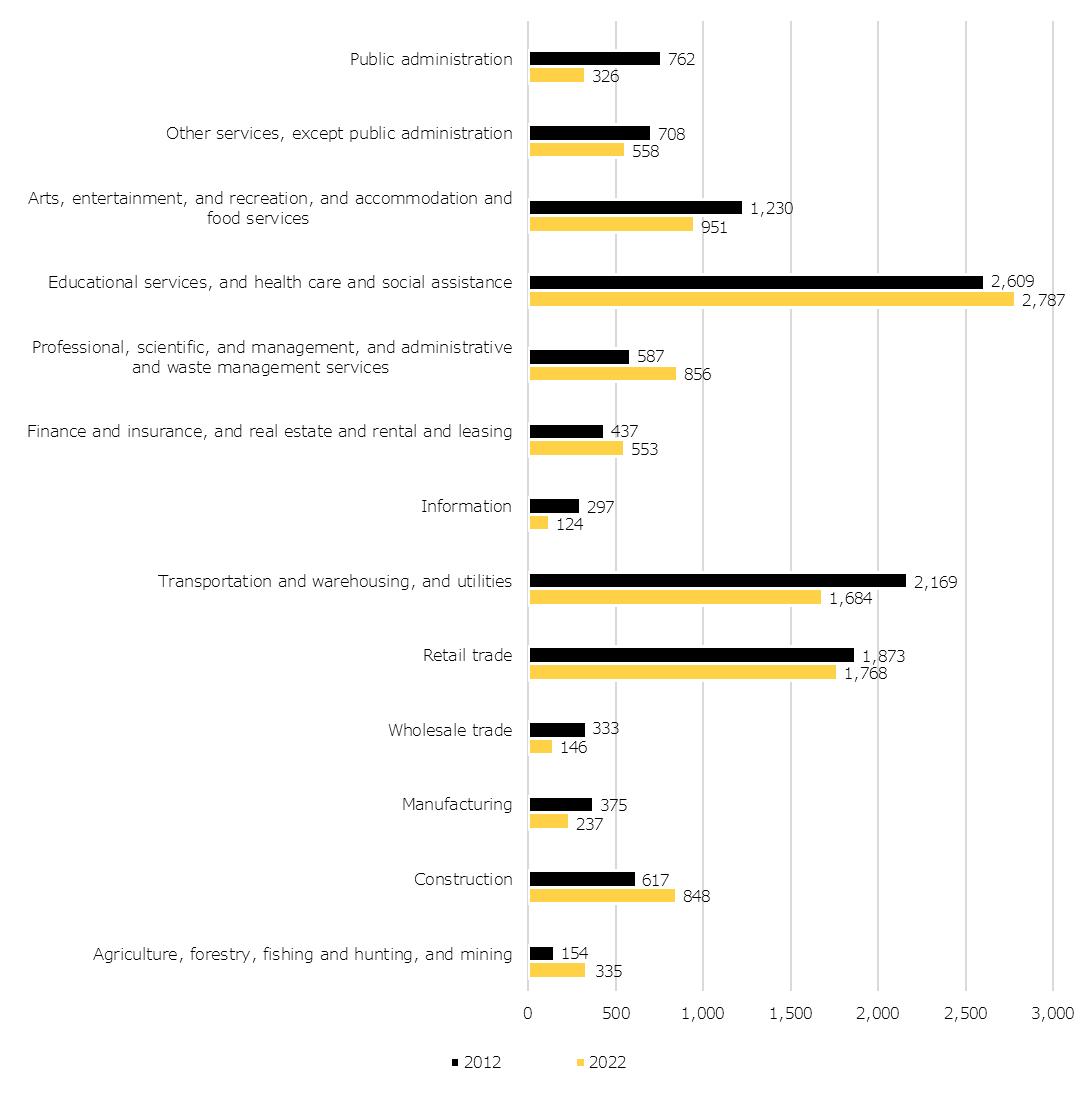
The ACS estimates employment statistics for the people who live in an area. In Lincoln County, Educational services and health care grew to employ 4,185 residents, while 2,741 residents reported they worked in the Manufacturing industry in 2022. (Figure 5.9) Retail trade employed 2,369 residents. These represent people who live in Lincoln County, whether they work in one of the cities in the county, unincorporated areas, or commute outside the county. If more people are employed in an industry, it may indicate opportunities for local job creation.
According to North Platte Area Chamber Development (see later in this chapter), major employers
in Lincoln County are concentrated in transportation, along with health care, retail, and public-sector employers. These employers include:
Union Pacific
Great Plains Health
North Platte Public Schools
Walmart
Nebraska Public Power District
Commuter Trends
Lincoln County is part of a regional job market, with some local residents leaving home to commute to work elsewhere while others commute into Lincoln County. Travel time to work affects quality of life. If commute time becomes excessive, people may seek work closer to home or
Source: American Community Survey 2008-2012 & 2018-2022.
Figure 5.9: County Residents’ Employment by Industry, 2012-2022
Source: American Community Survey 2018-2022.
leave the community to move closer to their workplace.
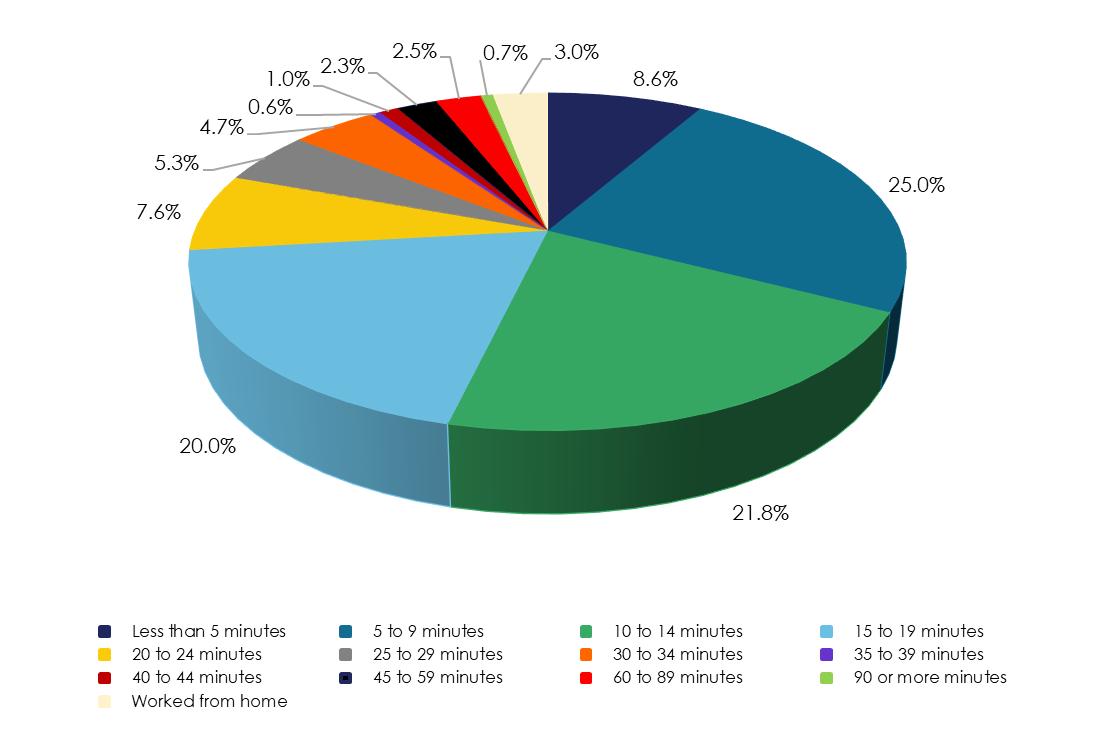
About 36% of commuters traveled 10 minutes or less to work, including the 3% who worked from home (Figure 5.10). About 24% commute 20 or more minutes to work, including 5.5% who commute 45 minutes or more to work.
Workplaces in Lincoln County and North Platte have became increasingly dependent on workers commuting into the area.
Reliance on daily commuting is generally undesirable as it detracts from the quality of life for workers having to commute long distances, reduces the sense of civic ownership from having a workforce made up largely of
Source: American Community Survey 2012-2022
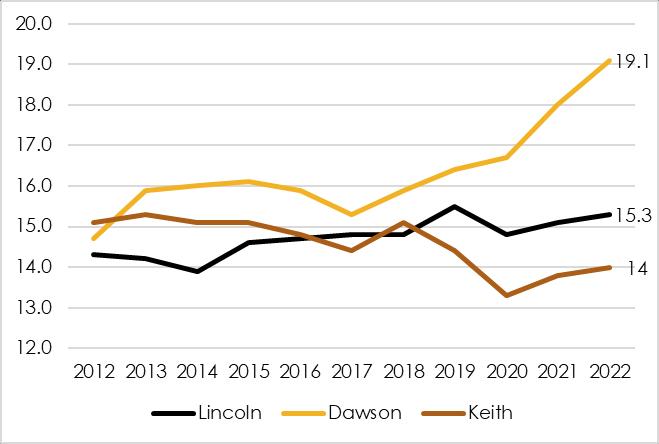
Figure 5.11: Mean Commute Time (minutes)
Figure 5.10: Lincoln County Travel Time to Work, 2022
local residents, and adds to traffic congestion.
Figure 5.11 shows the increase in average oneway commute times for Lincoln, Dawson, and Keith County workers since 2012. Note these counties had commute times in the 14 to 16 minute range in 2012, with Dawson County’s mean commute time increasing to 19.1 minutes in 2022. Lincoln County’s mean commute has increased slightly to 15.3 minutes. Keith County’s mean commute got shorter over the last decade dropping from just over 15 minutes in 2012 to 14 minutes in 2022.
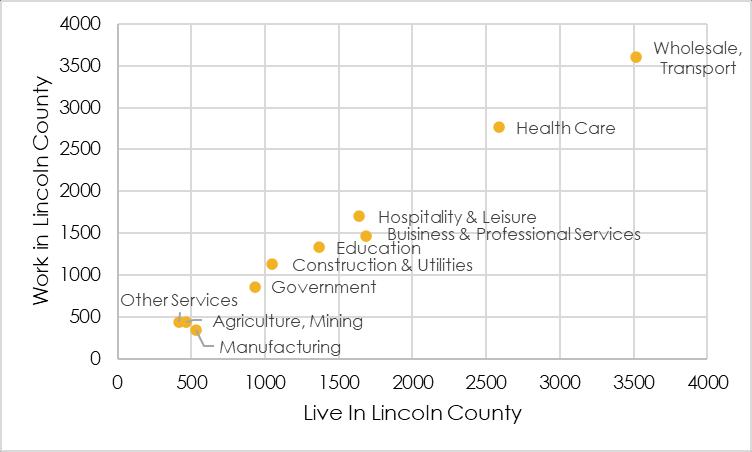
Reliance on out-commuting by Lincoln County employers is high in the health care, construction and utilities industries (Figure 5.12). Conversely, Lincoln County houses more Agriculture, government, business,
professional service, and Manufacturing workers than its local firms employ – fueling net out-commuting in those industries.
To the extent Lincoln County and its communities can attract more workers willing to both live and work in the area (primarily through quality-of-life and transportation improvements), both in-commuting and outcommuting impacts can be reduced over time.
Occupations
Industry is the type of activity at a person’s place of work. Occupation is the kind of work a person does to earn a living. The following data examine five occupational areas established by the U.S. Census Bureau to evaluate trends in employment and the area economy.
The five occupational categories used in the analysis are:
Managerial business, science, and arts occupations;
Service occupations;
Sales and office occupations;
Natural resources, construction, and maintenance occupations, and;
Production, transportation, and material moving occupations
As shown in Table 5.4, in 2022, the ACS reported the largest number of Lincoln County residents (31.5%) and North Platte residents (28.7%) worked in Management, business, science, and arts occupations. This is also the largest statewide category (39.8%).
Economic Base
A community’s economic base is built on the production of goods and services sold primarily outside the local area. The revenues of base industries are returned to the local area in the form of wages to employees and payments to local suppliers. Non-Basic employment relies on business
Basic employment
Basic employment is business activity providing goods and services primarily outside the area, the revenues of which are directed to the local area in the form of wages and payments to local suppliers.
Non-Basic employment is business activity providing goods and services primarily within the local area, and the revenues of such sales re-circulate within the community in the form of wages and expenditures by local citizens.
Source: U.S. Census Bureau OnTheMap 2021
Figure 5.12: Workers by Industry Group, 2021
Table 5.4: Basic/Non-Basic Employment By
Occupation,
2022
Source: American Community Survey 2018-2022.
activity providing goods and services primarily within the local area, and the revenues of such sales re-circulate within the community in the form of wages and expenditures by local citizens.
Table 5.4 compares occupation categories for Lincoln County and the neighboring counties, North Platte, Grand Island, and the Nebraska’s MSAs, with Nebraska overall. Where the share of local residents in a certain occupation exceeds the state’s share, those jobs are considered “basic” employment with exports of goods or services bringing new income into this area.
Lincoln County exports goods and services produced in:
Service occupations
Natural Resources, construction, and maintenance
Production, transportation, and material moving
North Platte exports goods and services produced in several occupational categories:
Service occupations
Sales and office occupations Natural Resources, construction, and maintenance Production, transportation, and material
Table 5.5: Lincoln County Farms and Land in Farms, 2002-2022
Table 5.4 presents the Base Multiplier for each area compared to the state of Nebraska. The base multiplier is a number which represents how many non-basic jobs are supported by each basic job. The Base Multiplier for Lincoln County is 12.2 and 9.0 for North Platte. For every job considered to be basic, 9.0– 12.2 other local jobs are supported and/or impacted. Economic development programs typically focus on “basic” sector industries and occupations, to leverage the Base Multiplier factor.
AGRICULTURAL PROFILE
The USDA Census of Agriculture takes place every five years, covering each county in the United States. Tables 5.5 and 5.6 examine the agricultural profile of Lincoln County. Table 5.5 presents the number of farms and their high-level characteristics for these farms for 2002 through 2022.
Table 5.5 shows the number of farms within Lincoln County increased from 2002 to 2022. This breaks a regional trend throughout the Great Plains where the number of farms has been falling. The total number of farms increased from 959 in 2002 to 995 in 2022.
Each farm may have multiple owners, and multiple “producers” who are involved in making decisions for the farm operation. Of the 995 farms in Lincoln County in 2022, 545 were operated by a
Table 5.6: Lincoln County Number of Farms by Size
Table 5.7: Farms and Livestock by Type
Note: this data is self reported, and may reflect operations in more than one county. (D) Data Disclosure - Information Withheld
full owner, 317 by a part-owner, and 133 by a tenant farmer (see Table 45 in Census of Agriculture). There were 2,088 producers reported in the Census of Agriculture, including 309 farms with one producer and 502 with two. There were 829 producers who reported farming was their primary occupation. There were 1,148 producers who reported they worked off-farm during the year.
Total land in farms in Lincoln County increased from 1,529,011 acres in 2002 to 1,638,602 acres in 2022 (Table 5.5). This resulted in a 20-year growth of 7.2%. The average size of farms grew from 1,594 acres in 2002 to 1,647 acres in 2022. This matches the regional and national trend of an
increasing average size for farms during the last several decades.
In 2002, the largest number of farms (337) were 1,000 or more acres in size (Table 5.6). By 2022, this size category gained eight farms resulting in an increase of 2.3%. The second largest category 10 to 49 acres increased from 101 to 178 by 2022 resulting in a growth of 76.2%.
The loss in larger farms has been minimal over the 20 year period as these types of farms are still the majority in Lincoln County. The addition of several smaller farms under 50 acres has not affected the average farm size compared to other regions.
Ag Products
Table 5.8: Number of Farms and Crops by Type
Source: U.SDA Census of Agriculture, 2002, 2007, 2012, 2017, 2022 Note: this data is self reported, and may reflect operations in more than one county. (D) Data Disclosure - Information Withheld
Total sales of agricultural products by Lincoln County producers were reported of $1,011,592,000 for 2022, above the figure of $755,236,000 in 2017. This was an average of $1,016,676 per farm in 2017, compared to an average of $726,188 per farm in 2017. There were 165 farms reporting less than $1,000 in sales on the low end, and 182 farms with sales of $500,000 or more on the high end in 2022.
The number of farms in Lincoln County with cattle and calves, and beef cows decreased from 2002 to 2022 (Table 5.7). Due to farm consolidation though, the number of cattle increased over the same time period by 38.6%. Four hog producers remained in 2022, and the number of hogs and pigs fell by –99.5%. The number of farms with chickens increased from 31 to 69 a growth of 122.6%. Some data is not disclosed to avoid identifying individual producers, shown as a “(D)” in the table.
In 2022, 495 farms in Lincoln County sold crops, with a total value of $321,131,000. This was also down slightly from 501 farms in 2017 with total value of $185,239,000. Table 5.8 reports on specific crops. Corn, soybeans, and hay have been the most frequently raised crops. An average of 724 acres of corn is raised per farm compared to the average of 165 acres of hay or 452 acres of soybeans. The number of farms raising corn for grain or silage, wheat, oats, or hay/forage crops decreased between 1997 and 2017. Both the number of farms and acres of soybeans raised increased.
Value-Added Agriculture
While much of Lincoln County’s agricultural production is sold at wholesale and exported across
the country, some local production is processed locally so value is added closer to home (generally within a 400-mile radius of the home farm).
Lincoln County will be home to a major food processing facility, in Sustainable Beef who will supply Walmart with beef at their retail stores when the processing plant opens. Located at Newberry Access Road and Golden Road the plant will have 800 employees and process 1,500 cattle a day. At the time of writing the facility is still under construction but is set to open in the summer of 2025.
Value-added enterprises today may be large scale, such as the
Value-Added Market Assistance
USDA Value-Added Producer Grants (VAPG) program helps agricultural producers enter value-added activities to generate new products, create and expand marketing opportunities, and increase producer income. Grants are awarded through a national competition. Each fiscal year,
The Nebraska Department of Agriculture also offers technical assistance as a member of the Food Export Association of the Midwest, including the Food Export Helpline, the Branded Program, Market Builder service, Buyer’s Missions, Trade Missions, and international trade shows.
ethanol and bio-diesel plants which have sprung up across central Nebraska. This may be small-scale Nebraska has been able to support vineyards and winemaking, as well as other agritourism enterprises.
The North Platte area has shown support for farm-to-home operations such as farmer’s markets and communitysupported agriculture. Direct food and fiber sales not only diversify on-farm income, but provide the benefit of healthy produce to area residents.
Agriculture has historically been a major part of the Lincoln County and Nebraska economy. Future regional land use policies will have impacts on animal and crop agriculture. Also, regional and national trends in agricultural production will continue to affect wholesale and value-added ag processing into the foreseeable future.
ORGANIZATIONS AND INITIATIVES
NORTH PLATTE AREA CHAMBER & DEVELOPMENT CORPORATION
The North Platte Area Chamber & Development Corporation is a private, non-profit organization of business professionals who are dedicated to improving the economic and civic environment of the North Platte area while fostering the growth and prosperity of business.
This organization was formed on April 1, 2008, when the North Platte Area Chamber of Commerce and the Development Corporation of North Platte (DEVCO) merged
Agricultural Business, Lincoln County
Source: Marvin Planning Consultants
together. The Chamber and DEVCO were two successful organizations working to improve and develop our community. After much thought, both Boards of Directors determined these organizations would make extraordinary accomplishments working together as one entity.
Source: nparea.com
NEBRASKA INTERNATIONAL PORT OF THE PLAINS
The Nebraska International Port of the Plains is the first Inland Port in the state of Nebraska providing west central Nebraska with new economic opportunities.
A port of entry (POE) is an official location where a person or goods may lawfully enter the country. Typically, the site has United States Customs and Border Protection (CBP) staff and facilities to conduct appropriate inspections to ensure contraband is not imported. A POE usually consists of international airports, logistical seaports where international trade cargo enters or departs, and locations where road and rail crossings traverse national land borders. Nearly 26 million shipping containers arrive in the United States each year full of goods from international trade. More than 11 million maritime containers arrive at our seaports. At land borders, another 11 million arrive by truck and 2.7 million by rail. Logistically, many of those containers are moved through controlled processes to inland ports for their port of entry inspection, de-containering, and departure to the final destination.
The Nebraska International Port of the Plains will be one of these ports of entry. Lincoln County’s
strategic location at the cross section of US 83 and I-80, Bailey Yard, and North Platte Regional Airport combined with over 350 acres available for industrial uses. This facility will provide a projected annual economic output for Lincoln County of $2.4 billion dollars. The facility is governed by the nine member Inland Port Authority who are appointed by the Lincoln County Board of Commissioners. The long term vision for the inland port is an economic zone encompassing thousands of square acres between Hershey and North Platte, Nebraska.
Source: lincolncountyne.gov/inland-portauthority
WEST CENTRAL ECONOMIC DEVELOPMENT DISTRICT
West Central Economic Development District (WCEDD) was established in 1974 and serves 18 counties in West Central Nebraska, focusing on community collaboration, community development, and business development. They are also active in nuisance abatement, planning and zoning, as well as rural broadband access and digital equity planning. The WCEDD offices are in Ogallala, Nebraska.
WCEDD works with the US Economic Development Administration (EDA) to develop a regional Comprehensive Economic Development Strategy (CEDS) is a continuous regional economic development planning process for the region. The CEDS was most recently updated in 2021, with priorities in industry growth and innovation, workforce development, housing development, and community development.
Source: west-central-nebraska.com
NEBRASKA DEPARTMENT OF ECONOMIC DEVELOPMENT
Since 1967, the Nebraska Department of Economic Development (DED) has been focused on growing and diversifying the state’s economic base, bringing new dollars, new businesses, and new people into the state.
DED functions to:
Support communities with development efforts.
Assist with starting, retaining, and expanding businesses.
Promote the state for business locations and expansions.
DED efforts supporting community development include the Community Development Block Grant (CDBG) program, Civic and Community Center Financing Fund (CCCFF), Economic Development Certified Community (EDCC), Leadership Certified Community (LCC), Local Option Municipal Economic Development Act (LB840), Nebraska Capital Projects fund, Nebraska Rural Projects fund, Site and Building Development found, and others. DED also provides resources for grant management and technical assistance with Enterprise Zones and Opportunity Zones.
Source: opportunity.nebraska.gov
GOALS AND POLICIES
ECONDEV GOAL
5.1
The County recognizes the importance of dynamic economic development programs to support entrepreneurship, business retention and expansion, and industrial recruitment.
Policies
5.1.1 Continue staffing and program funding for North Platte Community Development, Economic Development, CRA, and BIDs to support local economic development.
5.1.2 Work closely with North Platte Area Chamber and Development Corporation, CVB, and other organizations to support regional economic development.
Actions
5.1.3 Work with local community leaders to inform the county of accomplishments prior to elections to renew the LB840 tax for economic development purposes.
5.1.4 Support a business retention & expansion program to survey needs of local employers.
5.1.5 Continue to use and improve the County website to provide public access to development information, regulations and permit forms.
ECONDEV GOAL 5.2
Agricultural enterprise from research and development to production to processing and marketing remains a vital and growing part of the City and County economy.
Policies
5.2.1 Recognize production agriculture as the highest and best use of land in agricultural districts.
Actions
5.2.2 Continue support of start up and retention & expansion of ag-based businesses.
5.2.3 Encourage development of local foods and value added agricultural processing.
5.2.4 Consider adoption of Right-to-Farm policies supporting the business of agriculture.
ECONDEV GOAL 5.3
A diverse economic base with strong primary-sector employment provides a foundation for long-term growth and community development.
Policies
5.3.1 Commercial and Industrial sites are available at sizes and locations necessary to accommodate new development and re development.
5.3.2 Provide a clear and consistent development review process to ensure timely permit review.
5.3.3 Re-development is encouraged within the Cornhusker Army Ammunition Plant (CAAP).
Actions
5.3.4 Work closely with West Central Economic Development District (WCEDD) to access EDA and other funding sources for local economic development.
5.3.5 Continue support for NEBRASKAland Days at the Wild West Arena.
5.3.6 Provide for small-scale manufacturing of agricultural equipment and ag service needs.
ECONDEV GOAL 5.4
There is an accessible system in place for workforce development.
Actions
5.4.1 Continue support of K-12 education to include skillsbased training and creative partnerships with local businesses.
5.4.2 Encourage local residents and employers to work with the community college on workforce training.
5.4.3 Continue to recruit new workers and provide jobs for workers at all skill levels and provide quality of life opportunities for all residents.
ECONDEV GOAL 5.5
Residents have options for remote work, including access to broadband.
Actions
5.5.1 Promote and support the development, expansion, and accessibility of broadband and voice communication networks.
CHAPTER 6
County Facilities
Local government provides services to residents through public facilities. It is important for all levels of government local, state, and federal to anticipate future demand for their services if they are to remain strong and vital. This chapter reviews facilities plans, resources, and goals and policies,
In some instances, public services are provided by nongovernmental, private or nonprofit organizations for the community as a whole. These are important service providers and are an integral part of the community.
FACILITIES PLAN
This element of the Comprehensive Development Plan, in conjunction with other chapters, is intended to meet the requirements of Nebraska statutes to address community facilities, including schools, libraries, and
other public buildings. Chapter 7 following includes the element of recreation facilities.
This chapter groups these into the following categories:
Public buildings and facilities;
Historic sites and places; and
Education
PUBLIC BUILDINGS AND FACILITIES
There are several buildings and facilities serving the public in Lincoln County.
Lincoln County
Lincoln County is governed by an elected board of five members in the Commissioners model of Nebraska county government.
County Courthouse
The Lincoln County Courthouse is located at 301 N. Jeffers Street in downtown North Platte. The historic structure was designed by
architect George A. Berlinghof and completed in 1923. The Courthouse is listed on the National Register of Historic Places. Most county offices are located in the courthouse, including: Assessor, Election Commissioner, County Attorney, Board of Commissioners, County Judge, Register of Deeds, and Treasurer.
Additional buildings are used by the County in close proximity downtown, including the Lincoln County Sheriffs Office and Detention Center across the street along Jeffers.
County Public Works Department
The Highway Superintendents office and Public Works Director’s office is located at the Lincoln County Highway Department yard at 2010 West Rodeo Road, located north of the UP railroad on US 30, on the north side of North Platte.
Figure 6.1: North Platte City Hall and Lincoln County Courthouse
Sheriff's offices were located in the previous jail building built in 1889. A new 40,000 square foot jail and office building were completed in 2009, which were funded through a bond issue.
The current Sheriff’s Offices and jail are located at 302 N. Jeffers Street, off of US 83 in downtown North Platte.
See Chapter 8 Public Safety for more information on police, fire, and emergency management services in Lincoln County.
City of North Platte
The City of North Platte operates under a mayor and city council form of government. The Mayor is the Chief Executive officer who presides over city council meetings. The City Administrator, appointed by the Mayor, facilitates the operation of all other departments in the city. As of 2022, the City had 399 employees.
North Platte City Hall
The North Platte City Hall is located at 211 W. Third Street downtown. The building is situated on half a city block with off-street parking, and a drive-up window for payment of utility bills.
The City Council meets regularly in the Council Chambers at City Hall. Most of the City’s administrative offices are located at City Hall.
North Platte Municipal Light & Water
The North Platte Municipal Light and Water Department manages municipal electric production and distribution, and domestic water service. In 1979, the Gerald Gentleman generating station located in Sutherland went into service. This facility is the largest electricity generating plant in Nebraska and services North Platte.
See Chapter 10 for more information on utilities and energy in Lincoln County.
Public Library
The North Platte Public Library is located at 120 N. 4th Street across the street from City Hall and the courthouse in downtown North Platte.
The public library first opened in 1912, built as a Carnegie Library this building now houses the North Platte Area Children’s Museum. In November of 1976, the library moved into its current location just across the block. This is a 20,000 square foot facility offers free internet access and a technology learning center.
As of 2016, the library had over 100,000 print books, electronic books, CDs, DVDs, and other materials to check out.
Source: northplattene.gov/library
Other public libraries in Lincoln County include:
Brady Public Library, 107 E. Commercial Street
Faith Memorial Library, 122 N. Garrison Ave, Wallace
Sheriffs Office
City Hall Courthouse
Source: Google Earth
Public Library
Maxine White-Sutherland Public Library, 900 2nd Street
US Postal Service
The North Platte Post Office is located at 1302 Industrial Ave on the southeast side of town. As of Spring 2025, this facility is open 8am to 5pm Monday through Friday and 8:30 am to 11:30am on Saturday.
There are also Post Office locations in the communities of Brady, Hershey, Maxwell, Sutherland, Wallace, and Wellfleet.
HISTORIC SITES AND PLACES
As noted in the Introduction to this plan, North Platte and Lincoln County have a rich history dating back to the railroad coming across the continent, the history of aviation in this country, and the home front of WWII.
Lincoln County Historical Museum
The Lincoln County Historical Museum is known for providing an immersive educational view on the history of this region in Nebraska. The facility is located on approximately eight acres on the northwest area of North Platte.
The main museum building was built in 1976 by the Lincoln County Historical Society.
The museum grounds house many displays, including the old Brady Union Pacific Depot from 1885. The birth home of Bill Jeffers, the president of Union Pacific from 1937 through 1946, is located on the museum grounds. Several cabins and buildings from the 19th and 20th century's are located on the grounds. Almost all of these buildings were moved
to the site and restored to save them from destruction.
The museum has several collections inside the main building regarding the railroad, old wests, agriculture, WWII, and pioneer history regarding the region. There is also an exhibit on the North Platte Canteen where service members passing through North Platte were fed and taken care of during the second World War.
The museum hosts the Heritage Festival which is a celebration of all things North Platte occurring each year on the second week in June. Music, food, rides, and activities bring the museum grounds to life during this annual celebration of North Platte.
Source: lincolncountymuseum.org
National Register
Several buildings, two districts, a site, and a structure have been entered on to the National
North Platte Public Library
Source: Visit North Platte
Lincoln County Historical Museum
Source: Marvin Planning Consultants
Register of Historic Places in Lincoln County. Inclusion on the National Register may enable incomeproducing properties to qualify for tax credits for eligible rehabilitation costs.
Several sites are located in unincorporated Lincoln County. The Lincoln County Courthouse is also listed on the National Register.
Fort McPherson National Cemetery
Located south of Maxwell along S. Spur 56a this cemetery is a United States National Cemetery developed in 1873. Fort McPherson itself was established in 1863 as an outpost for those traveling along trails heading west. Land was soon set aside for a cemetery for soldiers who died in the Indian Wars following the Civil War. The Fort was abandoned in 1880 but the cemetery remained taking in surrounding cemeteries from other frontier forts. This is still an active cemetery and as of 2014 had 10,000 interments. The Superintendent’s Lodge, constructed in 1879, is noted for its use of Second–The district was added to the registry in 2012.
Source: cem.va.gov/cems/nchp/ ftmcpherson.asp
Fox Theatre
Located in downtown North Platte, this theatre was built as the Neville Center For the Performing arts in 1929. It was designed by
Omaha architect F. A. Henninger. This building is significant as an example of a “Picture Palace” building which was popular in the 1920s combining architectural styles from Egyptian, Georgian, Moorish, and Roman and hence was added to the registry in 1985. Currently the building houses the North Platte Community Playhouse.
Hotel
Yancey
Also known as the Pawnee Hotel, this building was built as the Hotel Yancey in 1929. The building is located at the corner of 5th Street and Bailey Ave and was designed by Omaha architect F. A. Henninger. The building is an example of Georgian Revival style, and was added to the registry in 1985. The building has
Fox Theatre, North Platte
Source: Marvin Planning Consultants
Fort McPherson National Cemetery, Lincoln County
Source: Marvin Planning Consultants
The building is one of the tallest in North Platte at eight stories high in the downtown district. Today the building is vacant with the condition of the exterior having deteriorated significantly since being listed on the National Register of Historic Places.
As noted earlier in this chapter, the Lincoln County Courthouse is located in downtown North Platte. Designed by architects George Berlinhhof and Cecil Calvert Coursey, it is an example of Classical Revival and BeauxArts style, one of the few examples of the style in Nebraska. The building has served county
Figure 6.2: North Platte Commercial Historic District
government in Lincoln County since its completion in 1921.
Located in Wallace at the corner of Alice Street and Commercial Ave this building was constructed in 1921. Named for longtime visitor to Lincoln County John R. Johnston who was nationally known for his achievements in the glass industry. Johnson Hall is noted for its combination of Prairie and Craftsman architecture executed by head architect Francis W. Fitzpatrick. Today the village of Wallace uses the building as a meeting hall.
Source: RDG Planning
npgallery.nps.gov/AssetDetail/ NRIS/86000473
North Platte Commercial Historic
Also known as the Canteen District this area in downtown North Platte is the historic commercial center of west central Nebraska. This district encompasses most of downtown North Platte as well as a few blocks to the north of the railroad tracks. The district was established for the role the area played in facilitating the North Platte Canteen as well as the blocks included having many buildings with a late 19th and early 20th century architectural character.
Before the designation of the district in 2020 there was a community effort to restore downtown to its former glory following an economic decline of the area. This included removing sidewalk awnings from most buildings, streetscaping, and a resetting of the bricks to ensure quality streets in the Canteen District. The North Platte Downtown Association facilitates this progress of revitalization while
Sources: downtownnp.com and North Platte Commercial Historic District Registration
North Platte US Post Office and Federal Building
Today known as the Prairie Arts Center this building was constructed as the North Platte Post Office and Federal Building in 1916. Located at the corner of 5th and Jeffers Streets it was designed by architect James Knox Taylor. The building is significant for its former use as a post office demonstrating the growth of North Platte and the need for such a facility to exist. It is also noted for its architecture, specifically the buildings usage of Italian Renaissance Revival style which is not common to Nebraska.
When I-80 was constructed it significantly disrupted the ensuring the historic character of the district is maintained.
After 50 years a new post office was built in North Platte and the Federal Building was then used by Mid-Plains Community College for offices/ classrooms until 2000. The building was then obtained by the Creativity Unlimited Arts Council who through a restoration effort turned the building into the Prairie Arts Center ensuring self expression and artistry survive in North Platte.
Located southeast of Sutherland, accessible via the rest area on I80 eastbound at mile marker 159, O’ Fallons Bluff is significant for the role it played in westward expansion of America. During the time of westward expansion many travelers passed through these hills as they run up to the South Platte River. Due to the rugged nature of the land it was never farmed leaving the wheel ruts of covered wagons from the Oregon and California Trails.
landscape but kept the wagon ruts in tact. The ruts which remain in the best condition are located at the rest stop located at mile marker 159 eastbound. O’Fallons Bluff was added to the registry in 1974.
Also known as Buffalo Bill Ranch State Historic Park this park is significant for being home to Buffalo Bill Cody’s ranching operation. The park is located along Scout’s Rest Ranch Road northwest of North Platte. The buildings in the park from the 1880s when Cody was ranching the site were the ones nominated to the National Register of Historic Places.
These buildings are Cody’s House (1886), Barn (1887), Cob House, Ice House (1886), and Wine Cellar. The Wine Cellar was not built by Cody but still shows up in photos from 1928 meaning it has historical significance. These buildings were designated as part of the registry in 1978
The park was also designated as a National Historic Landmark in 2021 being recognized for the significance Buffalo Bill Cody had on American culture and the western identity through Buffalo Bill’s Wild West Show while living at Scouts Rest Ranch near North Platte.
Located on Prairie Terrace Road three miles north of Sutherland this structure is significant for its unaltered nature since being constructed in 1912. It is one of only a few concrete arch bridges which remain in Nebraska. It was listed on the registry in 1992.
Sutherland State Aid Bridge, 2023
Source: Todd von Kampen, North Platte Telegraph
At the time of writing the Sutherland State Aid Bridge is set to be removed and replaced with a new bridge carrying vehicular traffic over the North Platte River. The Lincoln County Commissioners approved a new bridge to the east of the existing one which is set to be finished in the next two years. Lincoln County has documented the bridge with photographs and records due to its place on the registry and is currently closed for vehicular traffic.
The Certified Local Government (CLG) program is an initiative of the National Park Service, managed at the state level by the Nebraska State Historic Preservation Officer (SHPO), intended to support local historic preservation activities. Currently, there are eight communities in Nebraska participating in the CLG program, including North Platte.
North Platte Public Schools serve approximately 3,782 students and employs approximately 700 staff including 240 teachers. District campuses include an early childhood education center, seven elementary schools, two middle schools, and a high school.
Elementary Schools
Cody Elementary School , 2000 W. 2nd Street
Eisenhower Elementary School, 3900 W. A Street
Jefferson Elementary School, 700 E. 3rd Street
Lake Maloney Elementary School, 848 E. Correction Line Road
Lincoln Elementary School, 200 W. 9th Street
McDonald Elementary School, 601 McDonald Road
Washington Elementary School, 600 W. 3rd Street
Middle/High Schools
Adams Middle School, 1200 McDonald Road
Madison Middle School, 1400 Madison Avenue
North Platte High School, 1220 W. 2nd Street
Other
Buffalo Early Learning Center, 1600 N. Buffalo Bill Ave
North Platte Public Schools Building, 301 W. F Street
North Platte Public Schools is a large school district serving a diverse student population. In the 2022-2023 school year, 57 percent of students were eligible for free and reduced priced meals and student population is comprised of several racial and ethnic groups.
Source: nppsd.org
Hershey Public
Schools
Hershey Public Schools serve approximately 557 students in Hershey and the surrounding area.
Elementary, Middle, and High School are all taught in a consolidated facility located in Hershey at 3rd Street and S. Lincoln Ave. Hershey High School is classified by the Nebraska State Activities Association in C-1 for girls basketball and C-2 for boys basketball and football.
Along with students who live in the district a number of students from outside of the district take
advantage of the opportunities available in the Hershey schools through option enrollment.
A $17.9 million bond issue passed with Hershey voters in 2022 which approved a renovation of their school campus. The renovations include a new multi-purpose gym, kitchen, cafeteria, theatre, weight room, locker rooms, library, and a health science classroom. The campus was completed in the summer of 2024.
Source: hpspanthers.org
Sutherland Public Schools
Sutherland Public Schools is a school district made up of approximately 305 students (PK12), in Sutherland and the surrounding area.
Elementary, Middle, and High School are all taught in a consolidated facility located in Sutherland at 3rd and Walnut Streets. Sutherland High School is classified by the Nebraska State Activities Association in D-1 for basketball and football.
Along with students who live in the district a number of students from outside of the district take advantage of the opportunities available in the Sutherland schools through option enrollment.
Source: spssailors.org
Maxwell Public Schools
Maxwell Public Schools is a school district made up of approximately 285 students (K-12), in Maxwell and the surrounding area.
Elementary, Middle, and High School are all taught in a consolidated facility located in Maxwell at N Elm Street and US30. Maxwell High School is classified by the Nebraska State Activities Association in C-2 for
girls basketball, D-1 for boys basketball, and D-2 for football.
Along with students who live in the district a number of students from outside of the district take advantage of the opportunities available in the Maxwell schools through option enrollment.
Source: maxwellschools.org
Wallace Public Schools
Wallace Public Schools is a school district made up of approximately 183 students (PK-12), in Wallace and the surrounding area, including portions of eastern Perkins County and northern Hayes County.
Elementary, Middle, and High School are all taught in a consolidated facility located in Wallace at S. Wallace Road and W. Rodney Street. Wallace High School is classified by the Nebraska State Activities Association in D-2 for basketball and D-6 for football.
Source: whscats.org
Maywood Public Schools
Maywood Public Schools is a school district made up of approximately 196 students (PK12), in Maywood and the surrounding area, including the communities of Wellfleet and Stockville as well as portions of south central Lincoln County and western Frontier County.
Elementary, Middle, and High School are all taught in a
consolidated facility located in Maywood at 1 Tiger Drive. Maywood High School is classified by the Nebraska State Activities Association in D-1 for girls basketball and D-2 for boys basketball and football.
Source: maywoodtigers.org
Stapleton
Public Schools
A portion of north central Lincoln County is served by Stapleton Public Schools, which has approximately 180 students (PK12). There is a consolidated facility for all schooling in Stapleton on the south side of town.
Stapleton High School is classified by the Nebraska State Activities Association in D-1 for basketball
Arnold High School is classified by the Nebraska State Activities Association in C-2 for girls basketball and D-1 for boys basketball and football.
Source: arnoldpublicschools.org
Gothenburg Public Schools
Portions of the eastern edge of Lincoln County are served by Gothenburg Public Schools, which has approximately 847 students (PK-12). The campus for the district is located at Avenue I and 16th Street in Gothenburg.
Gothenburg High School is classified by the Nebraska State Activities Association in C-1 for basketball and football.
Source: gothenburgswedes.org
Sutherland High School
Source: Marvin Planning Consultants
Medicine Valley High School is classified by the Nebraska State Activities Association in D-2 for basketball and D-6 for football.
Source: mvraiders.org
Eustis–Farnam Public Schools
The southeast corner of Lincoln County is served by Eustis-Farnam Public Schools, which has approximately 166 students (PK12). There is a consolidated facility for all schooling the district on the east side of Eustis.
Eustis-Farnam High School is classified by the Nebraska State Activities Association in C-2 for boys basketball and D-1 for girls basketball and football.
Source: efknights.org
McPherson County Schools
Portions of central Lincoln County are served by McPherson County Schools, which has approximately 52 students (K-12). There is a consolidated facility for all schooling the district in Tyron.
McPherson County High School is classified by the Nebraska State Activities Association in D-1 for basketball and football.
Source: mcstryon.org
Private Schools
North Platte Catholic Schools
North Platte Catholic Schools serve approximately 351 students at their schools. The district employs 62 staff members with 37 teachers. The district has a preschool, elementary school, and high school which it administers.
Little Leprechaun Preschool
Located at 601 S. Taft Ave this preschool is serves those pre kindergarten aged in the district. The school has 242 students with morning and afternoon classes
offered. There are 34 staff members with 21 teachers.
McDaid School
Located at 1002 E. E Street this school serves kindergarten through sixth grade within North Platte Catholic Schools. The school had 185 students during the 23-24 school year. There are 23 staff members with 19 teachers.
St. Patrick’s High
Located at 500 S. Silber Ave this high school serves seventh through twelfth grade in North Platte Catholic Schools. The school has 166 students with over 95% pursuing higher education or military service after graduation. There are 22 staff members with 18 teachers.
St. Patrick’s High School is classified by the Nebraska State Activities Association as Class C2 for girls basketball and as D1 for boys basketball and football.
Our Redeemer Lutheran School
Our Redeemer Lutheran School serves approximately 109 students at their school. The school employs nine staff members with six teachers. The school offers preschool, as well as kindergarten through the eighth grade. The district is supported by Our Redeemer Lutheran Church who fund the school and part of the tuition for their students. Sports are offered through the school for those in the fifth grade and older.
HIGHER EDUCATION
Mid-Plains Community College
Mid-Plains Community College is located in North Platte and is a two year community college offering degrees in a variety of subjects. In North Platte the College has multiple campuses tailored to different programs
offered at the facility. MPCC also offers dual enrollment within its 18 county area allowing high schoolers to obtain college credits before they reach higher education.
The North Campus located at 1101 Halligan Drive is the colleges technical center where degrees in automotive technology, construction, diesel technology, electrical technology, HVAC, paramedic, engineering, and welding are offered. Other degree programs, and emphases are also offered at this campus. The South Campus located at 601 W. State Farm Road is the colleges more general educational facility. Degree programs include business, political science, mathematics, theater, and many others.
Housing is available for students on both campuses providing them with an option to walk to their classes and live amongst their peers.
Child Care
There are a number of child day care providers located throughout North Platte and Lincoln County. In Nebraska, anyone who provides child care to four or more children from different families must be licensed as a child care provider, by the Department of Health and Human Services.
There are five license types:
Family Child Care Home I: This type of program is in the home of the provider. The maximum capacity is eight children of mixed ages and two additional school age children during non-school hours.
Family Child Care Home II: This type of program is in the home of the provider or at
another site. The maximum capacity is twelve children with two providers.
Child Care Center: This type of program is licensed for 13 or more children while following the staff to child ratio per the state regulations.
School Age Only Center: This type of program is licensed for 13 or more children who are attending or have attended school.
Preschool: This type of program provides educational services where children do not nap and are fed a meal.
License Exempt: Home care provided outside the client's home to a maximum of six children from one family or three or fewer children from more than one family.
The need for quality child day care was brought up repeatedly at Town Hall meetings and in the community surveys.
Table 6.1: Lincoln County Early Childhood Capacity, 2025
GOALS AND POLICIES
FACILITIES GOAL 6.1
The County provides accessible public buildings and facilities to provide public services to residents.
Policies
6.1.1 Development projects shall mitigate impacts on public facilities.
6.1.2 Public arts and history will play an important role in the life of the county.
Actions
6.1.3 Continue Maintenance and repair of public structures and sites, including public gathering spaces.
6.1.4 Support arts and culture in public places.
6.1.5 Prioritize capital improvements to ensure adequate public facilities.
6.1.6 Coordinate facility needs with municipalities and look for opportunities for shared cost-savings.
FACILITIES GOAL 6.2
Historic sites and places are protected and maintained.
Policies
6.2.1 Development projects shall mitigate impacts on historic sites.
Actions
6.2.2 Support efforts to designate and preserve historic buildings.
FACILITIES GOAL 6.3
Residents have access to a modern, efficient education system.
Policies
6.3.1 Include public school districts in review of large development projects.
Actions
6.3.2 Continue support of K-12 education and coordination with public and parochial schools.
6.3.3 Encourage joint use of school sites and parks.
6.3.4 Continue support of Mid Plains Community College.
Source: Nebraska Dept. of Health and Human Services, May 2025.
6.2.3 Promote adaptive reuse of historic buildings rather than demolition.
CHAPTER 7
Parks and Recreation
Parks and recreation facilities include both public and semipublic resources, all of which are used by both city and county residents and families. The importance of lifestyle amenities like parks and recreation was mentioned throughout the community engagement process.
CITY PARKS
While city parks are typically maintained by municipalities, they are also patronized by all area residents including those who live and work across Lincoln County.
NORTH PLATTE PARKS & RECREATION
The City of North Platte Parks & Recreation Department provides recreational activities and facilities to enrich the quality of life of the city. The Department manages all city parks, youth recreation leagues, the
recreation center, and some maintenance on the North Platte trails network.
Source: northplattene.gov/rec
Neighborhood Parks
Neighborhood parks are community assets which primarily serve local neighborhoods. They typically provide passive landscaped areas and small activity areas such as playgrounds and picnic tables. The optimum size is five to ten acres, although many have a more compact area.
Eisenhower Park, 3900 A Street, 5 acres.
Kriz Park, between A Street and Anna Ave west of Buffalo Bill Ave, 2.5 acres.
Orabella Park, between B and E Streets west of Oak Street, 1.3 acres.
St. Mary’s Park, 801 E. C Street, 2.6 acres.
South Park, southeast of the intersection of W. Walker Road and Buffalo Bill Ave, 100 acres.
West 2nd Street Park, 10 acres
Community Parks
Community parks are larger facilities which offer both competitive sports and passive recreation facilities. The are typically 20 to 40 acres in size, and usually need off-street parking as they attract people from a larger area.
Cody Park, 1601 N. Jeffers Street, 100 acres.
Centennial Park, 1300 Union Ave, 103 acres.
Iron Horse Park, 1902 S. Jeffers Street, 50 acres.
Memorial Park, 1200 E. 4th Street, 10 acres.
Wilderness Park, south of Centennial Park, 24 acres.
COUNTY VILLAGE PARKS
The villages of Lincoln County have their own parks which provide social, cultural, and recreational amenities to their residents and the county as a whole.
Brady Palmer Park
Located at the intersection of Commercial and Vine street this 5.5 acre park serves the Village of Brady. The park offers playground equipment, a baseball field, basketball courts, a covered shelter, and restroom facilities.
Hershey
Washington Park
Located at the corner of W. 2nd Street and Sheridan Ave this 2 acre park serves the village of Hershey. The park offers
playground equipment, a covered shelter, park benches, and restroom facilities.
Tranquility Park
Located due south of Washington Park this 2 acre park was opened in 2020. The park was born out of a Greener Towns Grant from the Nebraska Environmental Trust to plant new plants, trees, and shrubs to beautify the area. The
park features a walking trail and several seating areas.
Fireman Park
Located at 217 Paxton Ave this half acre park serves northeastern Hershey. The park offers playground equipment, a covered shelter, and is the location of Hershey’s water tower.
Centennial Park
Located at 600 Cedar Street this 12 acre park is located just north of US-30 in Hershey. The park offers playground equipment, baseball fields, a covered shelter, and walking trail around the perimeter.
Sutherland
Anchor Memorial Park
Located at 840 Cobbler Lane this 7 acre park has Sutherland’s only dog park. In addition the park offers playground equipment, gaga ball court, walking trails, benches, and a memorial to the veterans of the United States Armed Forces from Sutherland.
Railroad Park
Located just south of US-30 this park offers great views of the
Centennial Park, Hershey
Source: Marvin Planning Consultants
Playground, Cody Park, North Platte
Source: Marvin Planning Consultants
Union Pacific Railroad crossing the village. There is a pedestrian bridge over the railroad in the middle of the park as well as benches, playground equipment, a covered shelter, and grills.
Pool Park
Located at 1433 2nd Street on the west side of town this park has the villages swimming pool. In addition the 7 acre park offers baseball fields, playground equipment, and a covered shelter.
TRAIL NETWORK
Lincoln County has a wellconnected network of trails reaching meaningful destinations around the county. North Platte Trails Network is a non-profit which has facilitated the implementation and success of these trails. They are working to improve the network of trails everywhere in the county to provide better multi modal connectivity to the region.
Whitaker’s Way
Whitaker’s Way is a 2.9-mile unpaved trail meandering along the NPPD canal leading to Lake Maloney. The trail starts at State Farm Road just east of US-83 and then heads south next to the highway until it connects with S. Dodge Hill Road. The trail then loses its designated lane and shares the right of way with vehicle traffic for about 3/4th of a mile. Then the trail regains its own lane next to the NPPD canal following the water south until the end of the route just north of Lake Maloney at N. Lake Road. Along the path at Whitatker’s Lookout Point there is a bench in memory of former mayor Jim Whitaker the namesake of the entire trail. Overlooking the city, the bench provides views of North Platte. Whitakers Way connects to the
State Farm trail meaning Lake Maloney is accessible via biking or walking through the North Platte trails network.
Lake Maloney Trail
Lake Maloney Trail is a 2.9-mile paved trail to the southwest of Lake Maloney. The trail starts at the edge of South Beach and runs northwest into a lakeside residential area with a golf course. After following S. Maloney Drive northwest, the road splits, with the trail now following N. Maloney Drive. the trial continues along N. Maloney Drive, moving into single-family dwellings on the right side of the street with a field on the left. Following this road, the trail then ends at Kansas Point Camping area on the northwest of Lake Maloney. Destinations accessible from Lake Maloney Trail include:
South Beach- 102 S. Maloney Drive
Maniohuta Archery Range204 Pheasant Run Road
Lake Maloney State Recreation Area: Jaycee Area- 309 S. Maloney Drive
Lake Maloney Golf Course608 Birdie Lane
Kansas Point CampgroundKansas Point Drive
Lake Maloney State Recreation Area: Inlet Area100 N. Maloney Drive
State Farm Trail
The State Farm Trail is a flat mile long trail running along State Farm Road starting across the street from the Nebraska Game and Parks Commissions Southwest office heading west. The trail moves straight west on State Farm Road until it reaches US-83 where the trail turns south and follows the highway for 3/4th of a mile. The trail then turns west crossing under US-83 reaching S. Snyder Drive into the West Central Research, Extension and Education Center run by the University of Nebraska. The trail loses its designated right of way here moving through fields and farm buildings north on the road. The trail turns west onto an unnamed road and then north onto the designated trail path about .25 miles before Tree Lane. Turning west the trail follows the south side of State Farm Road until reaching S. Echo Road where the path splits. The southern route leads bikers and pedestrians into the Indian Hills
Lake Maloney Trail, Lincoln County Source: Marvin Planning Consultants
Estates neighborhood ending on Tomahawk Road. The other route crosses State Farm to the north side of the road and continues west. The trail ends at S. Buffalo Bill Ave making for a flat bike ride or walk with a variety of scenery and destinations. This trail connects to Whitaker’s Way, Buffalo Bill Trail, Halligan/ Canal Trail, and South Willow Trail making additional destinations accessible through walking or biking. Some of the destinations available from the State Farm Trail include:
Nebraska Game and Parks Commissions Southwest District Office- 301 E. State Farm Road
West Central Research and Extension Center- 348 W. State Farm Road
Oregon Trail Marker- 402 W. State Farm Road
Osgood Elementary School495 W. State Farm Road
Ladybug Crossing Early Learning Center- 491 W. State Farm Road
Mid Plains Community College – 601 W. State Farm Road
St. Patrick’s Cemetery – 1431 W. State Farm Road
Valley Christian Church- 2001 W. State Farm Road
McNeil House Bed & Brew4520 S. Buffalo Bill Ave
Buffalo Bill Trail
Buffalo Bill Trail is a 5-mile trail running along Buffalo Bill Ave from State Farm Road north to Scouts Rest Ranch Road. Starting on the east side of Buffalo Bill Ave the trail runs parallel to the street with its own right of way. The trail follows the curves of the road crossing the four way stop at Walker Road then proceeding north over I-80 and the South Platte River. Entering North Platte proper the trail uses the existing
sidewalk along Buffalo Bill for its route starting at W. Leota Street, passing through residential areas. Buffalo Bill Trail crosses the railroad on the west side of the road and regains its own path north of Rodeo Road. The trail then moves out of North Platte into the county ending at the Buffalo Bill State Recreation Area. The trail connects to Lakeview Loop, Centennial Park Trail, and State Farm Trail meaning those who live and work along the trail can
Facilities along Buffalo Bill Trail, Lincoln County
Buffalo Bill Trail, Lincoln County Source: Marvin Planning Consultants
access a multitude of destinations by walking or biking. Destinations the Buffalo Bill Trail is connected to include:
McNeil House Bed & Brew4520 S. Buffalo Bill Ave
Pals Brewing Company- 4520 S. Buffalo Bill Ave
South Park- W. Walker Road & S. Buffalo Bill Ave
Indian Meadows Golf Course2746 W. Walker Road #9652
Grace Community Bible Church- 1021 S. Buffalo Bill Ave
Kriz Park- NW of W. A Street and S. Buffalo Bill Ave
Casey’s- 2421 Rodeo Road
Sjeklocha Veterinary Clinic1306 N. Buffalo Bill Ave
Buffalo Early Learning Center1600 N. Buffalo Bill Ave
Wild West Arena- 2400 N. Buffalo Bill Ave
Lincoln County Historical Museum- 2403 N. Buffalo Bill Ave
Buffalo Bill State Recreation Area- 2921 Scouts Rest Ranch Road
Centennial Park Trail
The Centennial Park Trail is a 1.4mile trail connecting the North Platte Visitor Center to Buffalo Bill Ave. The trail starts at the North Platte Visitor Center and heads north along US-83 passing the grove of trees by the South Platte River. The path heads east under the US-83 bridge before heading south to loop around to the west side of the highway. The trail then heads north on the US-83 bridge crossing the South Platte River. Arriving on the north bank of the river the trail turns to west passing offices and groves of trees. The trail then passes a nursing home before splitting off in two directions. Continuing straight on the path leads to Centennial Park while a left turn continues the trail. Following the left path the trail heads south before turning to the
west along the South Platte River. Continuing west the trail meanders north away from the river passing larger groves of trees and the southern edge of Centennial Park. The trail then exits off the path onto the sidewalk of Leota Street and McDonald Road. Users can either head north to the Recreation Center or follow the sidewalk to the turn where the trail continues. From this turn Centennial Park Trail moves south through scattered trees providing view of the South Platte. Turning west the trail coasts along plentiful trees near the South Platte and the backyards of a residential area ending at Buffalo Bill Ave. The trail connects
Paloucek, Herman, & Wurl Law Offices - 225 McNeel Lane
Farm Bureau Financial Services- 320 McNeel Lane
Azira Health Centennial Park510 Centennial Circle
John Haugen D.D.S. Orthodontist- 620 W. Leota Street
Sandhills Physical Therapy- 624 W. Leota Street
Centennial Park- 1300 Union Ave
Wilderness Park- South of Centennial Park
North Platte Recreation Center – 1300 S McDonald Road
South Willow Trail
Reaching State Farm Road, the trail heads west crossing the two entrance drives for the community college then turning south to at a pedestrians crossing ending the trail. This trail connects with the State Farm Trail meaning users who are staying at a hotel near the interchange and those who live alongside the trail can access even more meaningful destinations by walking or biking. Destinations available from the South Willow Trail include:
Fat Dogs- 102 Holiday Frontage Road
path by the north campus of Mid Plains Community College. The trail crosses Halligan Drive to the south side of the street and continues west to the NPPD Canal. Once at the canal the trail follows the east side of the canal south on flat terrain. The trail then heads west on Walker Road going over the canal. The trail then crosses Walker Road heading south on the west side of the canal. It is worth noting going north from Walker on the west side of the canal there is a paved path connecting Iron Horse Park to the Halligan/ Canal Trail. From this point the trail becomes gravel following the canal south passing fish hatchery ponds, industrial areas, and the backside of a Menards. The trail terminates at State Farm Road next to the Nebraska Game and Parks Southwest District Office. The trail connects with the State Farm Trail connecting the amenities along the Halligan/ Canal Trail with destinations elsewhere through campus. The path turns to the west along a line of trees and then south again into the Ladybug Crossing Early Learning Center.
Hobby Lobby- 301 W. Eugene Ave
Holiday Inn Express- 300 Holiday Frontage Road
Premier Toyota Parts- 2600 S. Willow Street
Freeze’s Bait and Tackle- 3128 S. Willow Street
Mid Plains Community College – 601 W. State Farm Road
Ladybug Crossing Early Learning Center- 491 W. State Farm Road
Halligan/Canal Trail
Halligan/ Canal Trail is a 3.1-mile trail and runs from the intersection of Newberry Access Road and Halligan Drive to State Farm Road. The trail starts on Halligan Drive without its own right of way for around 1.3 miles meandering through hotels, restaurants, and businesses just north of I-80. Heading west the trail gets its own
accessible from the Halligan/ Canal Trail include:
Pump & Pantry- 2601 Eagles Wings Place
La Quinta Inn- 2600 Eagles Wings Place
Comfort Inn- 2980 Halligan Drive
Motel 6- 2701 Halligan Drive
Peg Leg Brewing- 2519 Halligan Drive
Capones Bar and Grill – 2520 Halligan Drive
Tru Hotel- 2400 Halligan Drive
Jansen Chrysler Jeep Dodge RAM- 1711 Halligan Drive
Mid Plains Community College- North Campus–1011 Halligan Drive
Nebraska Game and Parks Commissions Southwest District Office- 301 E. State Farm Road
Lakeview Loop
Lakeview Loop is a 2.8-mile partially paved trail leading from W. Leota Street and Buffalo Bill Ave to W. A Street and Buffalo Bill Ave through west North Platte.
Source: Marvin Planning Consultants
Buffalo Bill Ave and W. Leota Street heading west through a neighborhood. This portion of the trail uses the existing sidewalk and street network for its path. The trail then turns north on S. Bare Ave before shifting west onto Sunset Drive. Passing through this neighborhood on Sunset Drive the trail turns north onto Lakeview Boulevard by the retirement home. Crossing W. Philip Ave, the trail gets its own right of way to the west of the street. This section along Lakeview Boulevard continues straight for half a mile through a variety of different culde-sacs and self-contained streets until the trail veers east onto W. A Street. The path for the trail is alongside the south side of the street lacking any sort of setback. Lakeview Loop then makes a straight shot east to Buffalo Bill Ave passing different ages of neighborhoods, agricultural fields, and institutions. At the intersection of W. A Street and Buffalo Bill Street the trail ends. The trail is connected to the Buffalo Bill Street Trail making amenities around North Platte available by walking or biking.
Destinations along Lakeview Loop include:
Linden Estates- 3700 W. Philip Ave
Linden Court- 4000 W. Philip Ave
North Platte Ward: The Church of Jesus Christ of Jesus Christ of Latter Day Saints- 4111 Park Ridge Road
Eisenhower Elementary- 3900 W. A Street
Eisenhower Park- 3900 W. A Street
Messiah Lutheran Church–2700 W. A Street
Potters Pasture
Located ten miles south of Brady Potters Pasture is a network of over 100 miles of mountain bike trails. The total area for the trail network is over 1,200 acres passing through different sceneries. The scenery around the trails includes large groves of trees, native prairie, canyons, ridges, and hills. There is variety in the difficulty of trails offered meaning every skill level of rider will have a path they feel comfortable riding on. Group rides and bicycle races are hosted at Potters Pasture throughout the year for those more into cycling. The address is 27747-30499 S. Jeffery Road.
N-CORPE Trail
Located in southern Lincoln County this 7.3 mile trail takes users through the valleys south of the Platte River. The trailhead is around 1.5 miles west of US-83 along W. Lone Star Road revealing the trail area. Horses and bikes are allowed on the trail. Camping, hunting, and night use of the trail is prohibited.
Potters Pasture, Brady
Source: North Platte Area Sports Commission
RECREATION CENTER
Operated by the North Platte Department of Parks and Recreation, The North Platte Rec Center is a large recreational venue offering many opportunities for fitness, recreation, weight lifting, cardio exercise, racquet sports, yoga, and aerobics. The center incorporates a large swimming pool with water slide, hot tub and sauna. The double gymnasium accommodates two full-size basketball courts with seating for 150, locker rooms and a concession stand. The facility has a skate park which features five metal ramps and a concrete slab. The skate park is purpose built for BMX, skateboarding, rollerblading, or scootering.
Free childcare is provided for parents who are taking a rec center class, and there is a game room for children of all ages.
The city is currently in the process of building a new recreation center which will be constructed by spring 2027. This new facility will feature new basketball courts, indoor turf field, new pool designed for competitive swimming, indoor walking track, kitchen, new skate park, and 24hour access facilities. The construction of this facility was funded through a sales tax increase and the Civic and Community Financing Fund through the Nebraska Department of Economic Development.
The county should continue to support recreational facility development as the features brought to the community can attract new residents and businesses.
This section is about parks and recreation areas outside of the municipal boundaries of the city and villages of Lincoln County. These areas within the county also attract many from the region due to the opportunities they provide.
Buffalo Bill State Recreation Area
Buffalo Bill State Recreation Area operated by the Nebraska Game and Parks Commission and is located at the intersection of Scouts Rest Ranch Road and Buffalo Bill Ave. Camping is offered with over 30 RV hookups available at the campsite. An archery range is located just to the west of the campsite, this being the only public facility in the North Platte area. In addition,
hiking, fishing, and horse riding are available at this park.
Lake Maloney State Recreation Area
Lake Maloney State Recreation Area is located six miles south of North Platte just west of US-83. This park contains three different areas around Lake Maloney, these being the Jaycee, Inlet, and Outlet areas. The park offers fishing, wakeboarding, swimming, and boating on the lake. The Jaycee area contains a beach and playground equipment for recreation. Camping is available at the Inlet area featuring 56 RV hookups with 200 primitive campsites spread throughout the park.
Sutherland Reservoir State Recreation Area
Sutherland Reservoir State Recreation Area is located south of Sutherland and I-80 along NE25. This recreation area encompasses all of Sutherland Reservoir and 37 acres of land surrounding it. The reservoir offers boating, swimming, and fishing in its waters with a wide range of species stocked. Channel catfish,
Lake Maloney SRA, Lincoln County
Source: Marvin Planning Consultants
smallmouth bass, yellow perch, wipers, walleye, and freshwater drum can be found in Sutherland Reservoir. Camping is available at the park with 22 RV hookups located on the east side of the reservoir and 100 primitive sites throughout the park. This park is popular with locals and travelers alike due to its proximity to I-80.
WILDLIFE MANAGEMENT AREAS
There are many Wildlife Management Areas in Lincoln County, including:
Box Elder Canyon WMA
Brady WMA
Birdwood Lake
Cedar Valley WMA
Chester Island WMA
East Hershey WMA
East Sutherland WMA
Fremont Slough WMA
Hansen Memorial Reserve WMA
Hershey WMA
Jeffery Lake WMA
Muskrat Run WMA
North River WMA
Pawnee Slough WMA
West Brady WMA
West Gothenburg WMA
GOLF COURSES
There are five golf courses serving North Platte, each with a distinct identity accommodating all types of golfers. These courses are all open during the summer months but are weather dependent in the winter months.
River’s Edge
River’s Edge is an 18-hole public golf course located at 1008 W. 18th Street fits golfers of any skill level. Different tournaments are hosted throughout the year with the North Platte Ambassadors tournament being a highlight. The greens are well maintained with the 4th hole featuring a pond and waterfall. A golf supply store is on the premises selling any equipment needed to enjoy the greens. River’s Edge also has a clubhouse, dining options, driving range, and cart rental within its confines.
Indian Meadows
Road and S. Buffalo Bill Ave. The course is great for more experienced golfers with its variable landscapes and tricky shots. Trees line the greens with the Fremont Slough running through the south end of the course. The pond and sand traps aim to make this course more difficult while enhancing the visuals of the game. There is a golf shop on the premises which offers snacks and equipment to the public. For those who need to brush up their skills on the green, golf lessons and a driving range are available.
Lake Maloney Golf Course
Lake Maloney Golf Course is a public 18-hole golf course located six miles south of North Platte at 608 Birdie Lane. This course accommodates all skill levels with its large greens and rolling hills. For those needing to improve their swing Lake Maloney offers golfing lessons and an indoor practice facility. There are many golf leagues who play at the course providing competitive golf opportunities for different age, gender, and skill groups. The course has a banquet area with a bar attached which can be rented out to host weddings, receptions or other gatherings.
Oregon Trail Golf Course
Oregon Trail Golf Course is a 9hole golf course located along the northern shore of Sutherland Reservoir at 31200 Tower Road. These well-manicured greens offer golfers lakeside views and a challenging game of golf. The course has a shop near the entrance where food is sold, and golf carts can be rented. This course is popular with both locals and tourists due to its proximity to I-80.
Lake Maloney Golf Course Sign, Lincoln County
Source: Marvin Planning Consultants
GrayBull
GrayBull Golf Club is a 18-hole golf club which opened in late 2024. This course is located 10 miles to the north of Maxwell in the Sandhills. The club has accommodations onsite for those traveling to the club.
AREA ATTRACTIONS
As one of the larger counties in Nebraska, Lincoln County offers many attractions and draws to its borders. Its proximity to I-80 and centralized location in the state mean visitors frequent the city, and these are some of the most notable draws.
VISITOR CENTER
Visit North Platte operates the Visitor Center from their office at
offers information on area attractions, events, outdoor recreation, shopping, dining, and lodging.
BAILEY YARD
Located to the west of North Platte at 6000 W. Front Street Bailey Yard is the world’s largest rail yard where around 10,000 rail cars are grouped and directed to their destination each day. The yards total size is 2,850 acres featuring 17 receiving tracks and 16 departure tracks. The east and west yards have been nicknamed “hump” yards which process around 3,000 cars a day. The movement of cars is handled through a computerized system on location with the Bailey Yard command center located in Omaha. For wheel repairs Bailey Yard uses an ultrasound detector to spot defective wheels. This system is unique to the yard and certain repairs do not require the railcar to leave the track.
GOLDEN SPIKE TOWER
premier spot to view Bailey Yard. Walking into the lobby a history of the most influential people in Bailey Yards construction is presented in the Golden Spikes “Hall of Fame”. This exhibit displays artifacts from Union Pacific’s history in addition to exhibiting items from those influential people who made Bailey Yard a reality. The first floor also has a gift shop selling memorabilia and train themed gifts. Then guests can either climb the stairs or take the elevator to the seventh floor where there is an exhibit on the history of the North Platte Canteen. The display shows the volunteerism of the people of North Platte during WWII through feeding and helping the soldiers passing through the town by train. A short film about the Canteen is shown here on a regular basis. Moving to the outside portion of this floor this is the observation deck of the Golden Spike Tower. This is the best place to view the sorting process of the rail cars and to see the locomotives roll through the Humps onto their destination. Binoculars are available on the deck to get a closer view of this process. Moving up a level on the eighth floor is a 360-degree enclosed viewing area with sights of Bailey Yard and North Platte. During the winter this level may be a better option to see Bailey Yard from as it is climate controlled and has seating next to the windows for longer viewing sessions. On this floor there is also an exhibit about the Orphan Trains, which were trains shuttling orphaned children around the country so they could find their permanent homes. Outside of the tower the courtyard displays the flag of every state Union Pacific conducts business in around the tower in a semi-circle. At the base of each flag the amount of track
Bailey Yard, Lincoln County
Source: Marvin Planning Consultants
they have, when they were admitted as a state, and when Union Pacific begin business are displayed on a plaque.
BUFFALO BILL STATE HISTORICAL PARK
As mentioned in previous chapters the Buffalo Bill State Historical park is one of the greatest draws for visitors to North Platte due to the historical and cultural significance this place had on one of America’s most notable showmen. The park consists of 25 acres and many original buildings from the 1890s. See the previous section for a more detailed description of this site.
FORT CODY
Located just off I-80 on Halligan Drive Fort Cody is an unmissable sight when driving by North Platte on the interstate. This roadside attraction features a museum about Buffalo Billl’s Wild West Show and the American West during the time of westward expansion in America. There is also a display of 20,000 miniature figures depicting Buffalo Bill’s Wild
West show which is said to be one of the largest displays of folk art in America. Behind the main building, the forts walls have several other exhibits such as a period jail, wagon, and log cabin. During the summer this is where the Fort Cody Music Series occurs each Thursday night.
Source: fortcody.com
NEBRASKALAND DAYS
A celebration of all things
third week of June each year. Located at the Wild West Arena at 2400 N. Buffalo Bill Ave the event features a rodeo, concert series, and parade. There are other events which occur during the week around North Platte in association with NEBRASKAland Days.
Source: nebraskalanddays.com
FORT MCPHERSON NATIONAL CEMETERY
Located south of Maxwell along S. Spur 56a this cemetery is a United States National Cemetery developed in 1873. Fort McPherson itself was established in 1863 as an outpost for those traveling along trails heading west. Land was soon set aside for a cemetery for soldiers who died in the Indian Wars following the Civil War. The Fort was abandoned in 1880 but the cemetery remained taking in surrounding cemeteries from other frontier forts. The cemetery is still in use and as of 2014 had 10,000 interments.
Source: cem.va.gov/CEM/cems/nchp/
Golden Spike Tower, Lincoln County
Source: Marvin Planning Consultants
Fort Cody, North Platte
Source: Marvin Planning Consultants
CANTEEN DISTRICT
As mentioned in previous chapters the Canteen District serves as downtown for North Platte. The area is designated as a historic district and a creative district and has undergone a major revitalization effort over the past decade. There are upwards of 50 businesses which call the district home catering to retail, entertainment, financial, restaurant, communications, and service needs. The area is a vibrant business district rich with history popular with tourists and locals alike.
Source: downtownnp.com
PRAIRIE ARTS CENTER
As mentioned in previous chapters the Prairie Arts Center inhabits the old North Platte Post Office and Federal Building and is a center for the arts for North Platte. This facility has several galleries which rotate monthly displaying a number of works by different artists. The arts center has a gallery dedicated to nationally known artist Ted Long, a North Platte native, who was renown for his depictions of the American West. The Ted Long Legacy room features many of his possessions and is modeled after his studio in North Platte.
The arts center also has studio spaces available to rent for artists looking for a space to practice their craft. The center also has three different event spaces utilizing the centers historic character. Outside of private events there are many local community gatherings which utilize the Prairie Arts Centers space.
Source: prairieartscenter.org
GOALS AND POLICIES
PARKS GOAL 7.1
Residents have access to parks and recreation facilities close to home.
Policies
7.1.1 Development projects are encouraged to provide parks and recreation amenities.
Actions
7.1.2 Plan for long-term capital needs for parks and recreation.
7.1.3 Continue to maintain and make incremental improvements to parks.
7.1.4 Incorporate accessible playground and recreation equipment meeting ADA standards into all park improvement plans.
7.1.5 Promote multiple uses for drainage to create greenscapes.
PARKS GOAL 7.2
Lincoln County has a functional network of trails suitable for users of all ages.
Actions
7.2.1 Support municipal efforts to extend and maintain off-street trails.
7.2.2 Ensure sidewalks and trails meet all ADA requirements.
PARKS GOAL 7.3
NEBRASKAland Days held at the Wild West Arena in North Platte remains a state-wide attraction for the people of Nebraska.
Actions
7.3.1 Continue support for State investment in NEBRASKAland Days and maintenance of the Wild West Arena.
CHAPTER 8 Public Safety
Public Safety is one of the most essential functions of government. By protecting the public good through law enforcement, fire protection, and emergency services, governments can ensure a better quality of life for residents across the county. By prioritizing these services in conjunction with community development the county can work towards a safer county for all.
This chapter provides a summary of law enforcement, fire department, emergency medical services, and emergency management, provided to the citizens of Lincoln County, as well as resources for public safety.
LAW ENFORCEMENT
The Lincoln County Sheriff’s Department provides law enforcement services countywide and in several municipalities. The North Platte Police Department covers the city of North Platte.
LINCOLN COUNTY SHERIFF
The Lincoln County Sheriff’s Department is located at 302 N. Jeffers Street in downtown North Platte, next to the courthouse. The goal of the organization is to maintain a safe environment in Lincoln County through service to the people by enforcement of law fairly and efficiently.
The Sheriff’s Department is headed by the Sheriff with captains administering the patrol staff. The Lincoln County Sheriff's Office has 28 positions on staff. Most positions are full time sworn personnel consisting of the Sheriff, five Sergeants, five corporals, and 11 Deputies. The Office has 10 fulltime support staff civilian positions and 2 part-time support staff civilian positions.
The Sheriff’s Office serves civil papers, warrants, and writs of execution as required by law. They also facilitate the handgun permitting process for county residents.
The Lincoln County Sheriff’s Department contracts with the villages of Brady, Hershey, Maxwell, Sutherland, Wallace, and Wellfleet for local law enforcement as a proactive measure.
Lincoln County Detention Center
Lincoln County Sherriff's Department manages a facility at 302 N. Jeffers Street which acts as the county jail for Lincoln County. Utilizing the highest levels of ethics, honor, and integrity, the Lincoln County Detention Center will provide a secure and safe environment for the Community, Staff and Inmates. Also provide Inmates with basic human needs, in compliance with Nebraska
State Statutes, Nebraska Jail Standards’ Rules and Regulations, Constitutional laws and associated professional standards.
The Lincoln County Detention Center will provide programs for the betterment of Inmates and their opportunity for reintegration into the community as law abiding, tax-paying citizens.
Source: lincolncountysheriff.us/detentioncenter
NORTH PLATTE POLICE DEPARTMENT
The North Platte Police Department is located at 701 S. Jeffers Street, sharing the Public Safety Building with the fire department and emergency management. The department manages four divisions, the Community & Technical Support Division, the Criminal Investigation Division, the Records Division, and the Uniformed Patrol Division.
Community
& Technical Support
The Community & Technical Support Division functions as “behind the scene” for the department such as planning, research, and training conducted through this office along with many highly visible activities in the community.
Criminal Investigations
The Criminal Investigation Division includes one Sergeant and six Investigators.
Table 8.1: Sworn Officers, 2020-2022
The Criminal Investigation Division is responsible for:
Investigating reported Misdemeanor and Felony crimes
Conducting undercover investigations and surveillances
Gathering and disseminating information regarding criminal activity
Operating as liaisons with other law enforcement and child protective agencies
Working with Federal, State and Local drug task forces with an emphasis on major drug distribution networks and organizations
Uniformed Patrol
Uniformed Patrol Officers protect North Platte by responding to the majority of the calls for police services as well as patrolling their designated areas to initiate
police action by actively searching for and arresting individuals involved in drug activity, burglary, robbery, thefts, and other miscellaneous criminal activities. The Patrol Officers are generally the first to respond to critical incidents and are responsible for handling the situation themselves or stabilizing the situation until additional support arrives. Each patrol unit is a mobile office for the officer. The patrol unit is equipped with a mobile computer, in car video recording equipment, cell phone, rifle, shotgun and other equipment which aids in fulfillment of their duties. Each unit is equipped to allow each officer to be a true first responder to almost any crisis or emergency.
Source: northplattene.gov
FIRE
Each of the municipalities in Lincoln County have their own fire department providing protection to their community and nearby rural areas. Several areas of Lincoln County are served from nearby communities in adjacent counties.
These first responders include:
Arnold Volunteer Fire Dept
Brady Volunteer Fire Dept
Curtis Volunteer Fire Dept
Farnam Volunteer Fire Dept
Gothenburg Volunteer Fire Dept
Hershey Volunteer Fire Dept
North Platte Fire Dept
Stapleton Volunteer Fire Dept
Sutherland Volunteer Fire Dept
Wallace Rural Fire District
Wellfleet Volunteer Fire Dept
Community Wildfire Protection Plans
The purpose of a Community Wildfire Protection Plan (CWPP) is
to help effectively manage wildfires and increase collaboration and communication among organizations who manage fire. CWPPs discusses county-specific historical wildfire occurrences and impacts, identifies areas most at risk from wildfires, discusses protection capabilities, and identifies wildfire mitigation strategies. Lincoln County is covered by two CWPPs by the Nebraska Forest Service. The Loess Canyons Region Community Wildfire Protection plan covers all of Lincoln County and was updated in 2021. The Central Sandhills Community Wildfire Protection Plan covers the northeast corner of Lincoln County and was last updated in 2019. These plans are updated every five years .
EMERGENCY MEDICAL SERVICES
FIRE DISTRICTS
The North Platte Fire Department provides Emergency Medical Services (EMS) within its fire district. North Platte also works with surrounding fire districts to provide
EMS service when they cannot meet the demand their volunteers can handle.
Local fire districts do typically respond with trained Emergency Medical Technicians (EMTs).
EMERGENCY MANAGEMENT
Emergency management involves the coordination and integration of activities necessary to build, sustain, and improve the capabilities to prepare for, respond to, recover from, or mitigate against threatened or actual disasters or emergencies, regardless of cause. This includes man-made and natural disasters.
Emergency management is integrated at the local, state, and federal levels. All disasters start at the local level. When a local disaster declaration is made because local resources have been overwhelmed, a request may be made for assistance from the Nebraska Emergency Management Agency (NEMA). When state resources become overwhelmed, a state disaster may be declared and the
Sutherland Fire Station, Sutherland
Source: Marvin Planning Consultants
governor can request assistance from the Federal Emergency Management Agency (FEMA). Emergency response operates within the principles of the National Incident Management System (NIMS) and the In Incident Command Systems (ICS).
EMERGENCY MANAGEMENT
The Lincoln County Emergency Management covers all municipalities in Lincoln County. The Department has one division.
The department operates from the Public Safety Center at 715 S. Jeffers Road, located next to Fire Station #1. The facility is maintained in a state of readiness at all times to respond to emergencies and disasters.
The department
training locally for elected officials and emergency responders.
The Emergency Management Division administers the emergency preparedness program for all of Lincoln County. This includes the local emergency operations plan, public warning system, emergency public information and resources. The Emergency Management Division also coordinates the emergency response of all County public safety agencies with State and Federal agencies as needed.
Source: northplattene.gov/374
For more information on the mitigation element of emergency management, see Chapter 11 Hazard Mitigation.
RESOURCES
CRIME PREVENTION THROUGH ENVIRONMENTAL DESIGN
Crime Prevention Through Environmental Design (CPTED) are tools of a comprehensive crime prevention strategy. CPTED is a disciplinary approach of crime prevention which uses urban and architectural design and the management of built and natural environments. CPTED strategies aim to reduce victimization, deter offender decisions preceding criminal acts, and build a sense of community among inhabitants so they can
gain territorial control of areas, reduce crime, and minimize fear of crime.
Because CPTED emphasizes the systematic analysis of crime in a particular location, it directly supports community policing by providing crime prevention strategies tailored to solve specific problems. Police involvement within neighborhoods can include both foot patrol and working with community groups to strengthen citizens' sense of security and solve neighborhood problems which contribute to crime and fear of crime. Residents can work together to improve neighborhood appearance and deter criminals, and government can use building codes and inspection power to increase environmental security and discourage criminal activities.
Source: cpted.net
GOALS AND POLICIES SAFETY GOAL
8.1
Law Enforcement services are provided to the county.
Policies
8.1.1 Development projects shall mitigate impacts on public safety.
Actions
8.1.2 Support municipalities and the County Sheriff working cooperatively for law enforcement.
8.1.3 Continue close working relationship and cooperation for law enforcement between the City of North Platte and Lincoln County.
8.1.4 Continue to regulate and mitigate nuisance and code enforcement cases.
SAFETY GOAL 8.2
Fire Protection services are provided to the community.
Actions
8.2.1 Continue to support and maintain quality Fire Department(s).
8.2.2 Continue close working relationships between all local fire departments.
SAFETY GOAL 8.3
Emergency Management Services (EMS) are provided to the county.
Actions
8.3.1 Continue support for Emergency Medical Services.
SAFETY GOAL 8.4
Emergency Management services are provided to the county.
Actions
8.4.1 Continue to participate in emergency management programs and exercises.
PAGE
INTENTIONALLY LEFT BLANK
CHAPTER 9
Public Health
PLANNING AND PUBLIC HEALTH
Comprehensive planning in the United States originated in the public health movement at the turn of the 20th century.
Planning for public health in Lincoln County in the 21st century involves supporting facilities and systems which protect public and environmental health, helps residents avoid illness and injury, and mitigates other negative health outcomes while
Public Health
Public health is the promotion and protection of the health of people and the communities where they live, learn, work, and play.
encouraging families and individuals to improve and maintain personal health. Public planning is rooted in the need to improve public health by improving responsible development, reducing congestion, and providing equitable access to recreation for all people.
Counties play a critical role in promoting and protecting the health of people and the communities in which they live, learn, work, and play. As the National Association of Counties has stated, a robust public health system fosters equity and actively promotes policies, systems and overall community conditions which drive optimal health. Lincoln County should seek to complement and reinforce, rather than duplicate, public health contributions of existing institutions and the private sector.
MEDICAL CARE HOSPITALS
Great Plains Health Hospital
Great Plains Health Hospital, a Level III trauma center located at 601 W. Leota Street, is North Platte’s largest hospital, The facility is a major employer in the region, with approximately 1,200 employees including over 100 doctors. It offers a full range of care, including emergency and trauma, general surgery, behavioral care, heart care, imaging, and diabetes education. Its cancer care unit, the Callahan Cancer Center, is a regional asset for west central Nebraska.
This facility has 116 beds and houses Western Nebraska’s only wound healing center and level 2 neonatal intensive care unit. The hospital averages 5,484 admissions, 550 babies delivered, 129,000 clinic visits, 3,831 surgeries,
57,048 diagnostic tests, and 350,000 lab & pathology procedures annually.
Great Plains Health is an independent, non-profit hospital with a local board of directors that serves as a referral center for regional critical access hospitals.
Source: gphealth.org
SENIOR CARE
There are four major senior care facilities serving North Platte, one of which is a facility offering a range of care options from independent living to assisted living, memory care, and nursing care.
Linden Court, 4000 W. Philip Avenue, North Platte (135 licensed beds)
North Platte Care Center, 2900 W. E Street, North Platte (71 licensed beds)
The Birch at Sutherland, 333 Maple Street, Sutherland (60 licensed beds)
The Maples at Centennial, 510 Centennial Circle, North Platte (68 licensed beds)
WEST CENTRAL DISTRICT HEALTH DEPARTMENT
The West Central District Health Department (WCDHD) includes Lincoln, McPherson, Thomas, Hooker, and Arthur counties, and serves as the primary public agency resource of the Nebraska Department of Health and Human Services in this region. The
Board of Health is the governing body for the organization.
WCDHD’s stated purpose is to advance a “healthy people, healthy communities” mission across the five-county region. The WCDHD, based at 820 S. Maple Street in North Platte, employs approximately 18 staff members managing activities across several divisions. Public health program areas include health projects, community health, environmental health, infectious disease, early childhood development, and WIC (Women, Infants, and Children). For example, under environmental health the department conducts food safety inspections, well water testing for nitrates and coliform bacteria, and evaluations of individual wells and onsite wastewater treatment (septic) systems. Most if not all public health concerns cut across other elements of the Comprehensive Development Plan, from safe housing to education and childcare; transportation, exercise, and access to safe and healthy food and water.
WCDHD acts as the region’s public sector leader for health care planning and preparedness. This role includes administering a Community Health Needs Assessment (CHNA) study and developing an official Community Health Improvement Plan (CHIP). The department should review and update this report every three years in alignment with the needs of local health care providers. The most recent update was completed in 2018 and covers a comprehensive list of metrics for individual and family wellness in the area, tracking risk factors, awareness, current incidence levels, and outcomes for all major health topics. Some of the key public health metrics included here for North Platte and Lincoln County are taken from this document. Secondary data sources such as the Behavioral Risk Surveillance Survey (BRFSS), County Health Rankings, American Community Survey/US Census Bureau, Centers for Disease Control, and the Nebraska Department of Education. The data is supplemented with custom surveys of the area’s local health
Great Plains Health Hospital
Source: Marvin Planning Consultants
departments, including hospitals, clinics, and other health facilities.
Source: wcdhd.org
CHNA
A comprehensive, six-step Community Health Needs Assessment (CHNA) was conducted for Great Plains Health in 2022 by Community Hospital Consulting. This CHNA utilizes relevant health data and stakeholder input to identify the significant community health needs in Lincoln County.
The CHNA identifies the five most significant needs, prioritized as follows:
1. Recruit and Retain Quality Healthcare Professionals: Lincoln County has a lower rate of primary care providers per 100,000 population than the state, and a higher rate of preventable hospitalizations.
2. Increase Access to Mental and Behavioral Health Care: Lincoln County has a lower rate of mental health care providers per 100,000 than the state. Additionally, Lincoln County has a Health Professional Shortage Area designation for mental health as defined by the US Department of Health and Human Services Health Resources and Services Administration (HRSA).
3. Improve Access to Medical and Dental Care: Lincoln County has a lower rate of dentists per 100,000 population and a higher percentage of those who do not own a motor vehicle than the state. Additionally, Lincoln County has a higher than average cost of living for health expenses as compared to the state.
4. Increase Prevention, Education to Reduce the Prevalence of Chronic Diseases, Preventable Conditions, Readmissions and High Mortality Rates: Lincoln County has higher mortality rates than Nebraska for the following causes of death: cancer, chronic lower respiratory diseases, accident (unintentional injuries), diabetes mellitus, COVID-19, essential hypertension and hypertensive renal disease, intentional self-harm (suicide), breast cancer (female), and colon and rectum cancer. Lincoln County has higher prevalence rates of chronic conditions such as diabetes for adults and Medicare beneficiaries, obesity, and high blook pressure for adults and Medicare beneficiaries than the state. Lincoln County has higher percentages of residents participating in unhealthy lifestyle behaviors such as physical inavtivity and smoking than the state. With regards to maternal and child health, specifically, Lincoln County has higher low birth weight births, higher teen (age 0-19 years) birth rates, and a higher percentage of those mothers who received inadequate prenatal care than the state. For communicable diseases, Lincoln County has one of the highest rates of chlamydia infections in the state as compared to all other counties. In 2009-2018, Lincoln County saw an overall increase in chlamydia and gonorrhea infection rates.
5. Increase Access to Safe and Affordable Housing: Over 38% of the population in Lincoln County census tracts 9597, 9598, 9599, 9605, and 9606 live
within rented units. Additionally, Lincoln County has a higher percentage of adults age 55-64 and 75-84 years old that live in renteroccupied units than the state.
Great Plains Health leadership has developed an implementation plan to identify specific activities and services which directly address the identified priorities. The objectives were identified by studying the prioritized health needs, within the context of the hospital’s overall strategic plan and the availability of finite resources. The plan includes a rationale for each priority, followed by strategic objective alignments, specific implementation goals and initiatives, measurement, responsible leaders and annual progress/ key results (as appropriate).
The 2022 Community Health Needs Assessment was approved by the Planning and Strategy Committee on October 25, 2022 and the GPHealth Hospital Board on October 27, 2022.
The CHNA 2023-2025 Implementation Plan identifies the following goals and initiatives for each of the identified needs for Lincoln County.
Recruit and Retain Quality Healthcare Professionals
Actively recruit healthcare professionals to the community.
Deploy retention strategies to retain providers;.
Engage in community development.
Seek to grow and develop professionals with the community.
Increase Access to Mental and Behavioral Health Care
Provide points of access for mental and behavioral health services in the community.
Utilize technology to improve access to mental and behavioral health partnerships.
Generate community awareness and education about suicide and other mental health conditions.
Create partnerships with local schools and agencies to reach the adolescent population.
As the second largest employer in Lincoln County, develop mental health support systems for employees of Great Plains Health.
Offer support services and clinical guidelines designed to assist area providers and Lincoln County residents with the diagnosis of mental or behavioral health.
Improve Access to Medical and Dental Care
Utilize technology to improve access to medical care.
Incite productive dialogue around access to low-income dental care in Lincoln County.
Engage in programs that serve those unable to pay for healthcare services.
Enhance physical structure of treatment areas to create greater access to care.
Figure 9.1: County Health Rankings Model
Expand local healthcare services so that patients can stay as close to home as possible for medical care.
Increase Prevention Education to Reduce the Prevalence of Chronic Diseases, Preventable Conditions, Readmissions, and High Mortality Rates
Offer community events designed to improve health and wellness.
Partner with local organizations who work to improve wellness in the community.
Enhance the GPFit! initiative to improve community wellness.
Provide community education designed to improve the health of the community.
Provide community resources to improve health and wellness.
Promote prevention education and messaging throughout the community.
Engage GPHealth employees in wellness.
Create wrap-around services designed to enhance the success of patients with chronic disease.
Increase Access to Safe and Affordable Housing
Increase access to safe and affordable housing options in the community.
Source: gphealth.org/about-us/ community-impact
CHIP
The Community Health Improvement Plan (CHIP) for the Central District area identified the following priority areas to focus on for its plan development, based on needs identified in the CHNA
and outreach to the community and CDCD partners:
Affordable and Equitable Access to Care and Services: Quality healthcare and equitable opportunities are accessible, affordable and provided for all to develop and live life to the fullest potential.
Community Ownership: Leads to collaboration and engagement to protect and promote health and wellbeing
Healthy Lifestyles and WellBeing: Utilizing partnerships and education in an approach to seek health solutions for all ages and make available recreational and education resources to promote a healthy lifestyle.
Source: wcdhd.org
COUNTY HEALTH RANKINGS
Public health addresses both maintaining health of residents and provision of health care. According to research sponsored by the Robert Wood Johnson Foundation, Lincoln County ranks #61 (of 79 counties evaluated) in Nebraska for Health Factors, in the fourth quartile, and #55 for Health Outcomes, in the third quartile.
1Source: countyhealthrankings.org
Health Factors
These public health rankings consider health factors based on physical environment (air and water quality, housing and transit), social and economic factors (community safety, family and social support, income, employment, education), clinical care (access to care, quality of care), and health behaviors (alcohol and drug use, sexual
activity, diet and exercise, tobacco use).
In 2023, Lincoln County ranked:
#38 for Physical Environment
#50 forSocialandEconomicFactors
#50 for Clinical Care
#55 for Health Behaviors
Physical Environment
These county-level public health rankings take a number of publicly-available measurements into account. Much of this data is not available below the county level, even in smaller micropolitan areas like North Platte-Lincoln County.
The physical environment impacts both our physical and mental health. For the physical environment, traffic, homeownership, and broadband access provide a snapshot of local, state, and national conditions. Lincoln County has much lower traffic volume compared to Nebraska or the United States overall.
Homeownership is slightly higher compared to the state or nation, as are the percent of households experiencing “Severe Housing Cost Burden”. Broadband access rates are slightly lower compared to the state and nation.
Social and Economic Factors
Soc-economic factors have wideranging effects on public health. This category contains 20 different metrics, ranging from high school graduation rates (Lincoln County exceeds the national average) to Census Participation (Lincoln County exceeds the national average). Schools are better funded per capita than statewide or national averages, although there is a larger share (50%) of children eligible for free or reduced lunch compared to the state (46%). There are a greater
number of juvenile arrests in Lincoln County than the state or national averages. There are fewer firearm fatalities, while average motor vehicle crash deaths are higher compared to the state, and nation.
Clinical Care
Clinical care includes health care services such as examination, diagnosis, and treatment. It is important for the overall health of communities individuals have access (physical, financial, and temporal) to preventative care.
This category measures the rate of uninsured residents, and presence of primary care providers. At 9%, Lincoln County has the same share of residents who are uninsured compared to the state while nation has a higher percentage (12%), for the period reported in the rankings. At 5%, the number of uninsured children in Lincoln County is equal to Nebraska. There is a lesser number of primary care providers in Lincoln County compared to the state and the nation.
Health Behaviors
Health behaviors are actions which directly impact health outcomes. Generally speaking, healthy behaviors improve overall health, while unhealthy behaviors increase the risk of conditions and negative health outcomes such as premature death.
For health behaviors metrics, food insecurity in Lincoln County is higher than Nebraska statewide, but lower than the United States nationwide. The standard reports count more limited access to healthy food and drug overdose deaths; however, these statistics are often less reliable for smaller cities.
Health Outcomes
Health outcomes are measured by length of life and quality of life indicators, such as share of population reporting poor or fair health, number of sick days in a 30-day period, and share of low-birthweight newborns. Premature death was calculated based on years of potential life lost before age 75 per capita.
Within Nebraska in 2023, Lincoln County ranked:
#61 for Length of Life #60 for Quality of Life
Lincoln County ranks below average among Nebraska counties for length of life, with life expectancy of 77.8 years compared to 79.0 statewide and 78.5 across the United States. Child mortality is below the state and national averages. Among quality-of-life indicators, physical distress in Lincoln County is slightly higher than average.
LEVELS OF CHANGE SMART GROWTH FOR PUBLIC HEALTH
The post-World War II suburban development pattern is starkly different than how cities are built. When North Platte, Brady, Maxwell, Hershey, Sutherland, Wallace, and Wellfleet were platted along with the railroads, narrow lots were laid out on a grid of streets and alleys, close enough to downtown goods and
services many (if not most) people walked where they needed to go. As the nation shifted to automobiles, houses and shopping centers sprawled across farm fields, and it was no longer easy, if not impossible, to choose the option of walking or biking.
“Smart Growth” is a simple term but a complex idea. It refers to a set of development principles outlined since the mid-1990s, to support walkable neighborhoods, a range of housing choices, a mix of land uses, participatory planning, and revitalization of neighborhoods. These ideas apply across the entire of the Comprehensive Development Plan this section emphasizes the relationship of Smart Growth principles for public health.
Design for Health
On a local scale, Smart Growth advocates for higher density. More people can afford homes when local leaders allow a mix of housing types and size, facilitate conservation development, or direct growth away from prime farmland and environmentally sensitive lands to develop cities and villages with municipal services.
In addition to affordability, a more diverse mix of lot sizes and a more connected grid street and block network make it easier to construct a complete sidewalk system, increasing walkability. Connectivity also improves bicycling and public transit. (See Chapter 14 Transportation for more discussion of multimodal networks.)
Development Regulations
While the official state building code is the State Legislature’s domain, implementation and enforcement of building codes
has a significant impact on public health. Zoning regulations have a great impact as well, from an individual building site to the overall functionality of the county. Zoning began in the 1910s and 1920s as an effort to protect public health, safety, and welfare. While zoning separates noxious uses, poorly written regulations would also make it impossible to build the downtowns and close-knit neighborhoods the pioneers platted on the Nebraska plains.
Land use regulations zoning and subdivision codes should be carefully evaluated and modernized to allow traditional neighborhood development patterns. Narrow lots on a grid of streets, alleys, and sidewalks should be a default choice for new development. Traditional as well as innovative mixed-use development should be an option, especially as property developed in the 1950s and on becomes ready for redevelopment.
Land Conservation
Farmland, forests, and wildlife areas serve many important purposes, from watershed and species protection to enhancing the long-term future of production agriculture. Directing growth into existing urban areas allows these conservation lands to continue adding value to the county. Also, new areas will be needed for parks and recreation along with new growth. (See more information in Chapter Seven Parks and recreation, and in Chapter 12 Natural Resources.)
Infrastructure and Financing
Smart Growth encourages a shift in policy for infrastructure and public finance. Investments should focus on existing built up areas, rather than subsidizing
sprawl. Aging streets, water and sewer lines, and sidewalks, should have priority for capital improvements as well as regular maintenance. At the same time, increased traffic on gravel roads, and further spread of individual wells and onsite wastewater treatment (septic) systems, should not be encouraged. Shifting policy in this manner helps not only protect public health, but encourage healthy living for all residents.
Transportation Policy
Multimodal transportation looks at all aspects of moving people and goods. This includes walking and biking, as well as roads, rail, and air travel, through more compact development and easing healthier forms of travel. County leadership may also want to consider promoting less-polluting motor vehicles.
See also Chapter 14 Transportation.
Source: Integrating Planning and Public Health: Tools and Strategies to Create Healthy Places, APA PAS 539/540, 2006; Frumkin, Frank, Jackson, Urban Sprawl and Public Health: Designing, Planning, and Building for Healthy Communities, Island Press, 2004.
ACTIVE LIVING
Active living is about incorporating physical activity and movement into everyday activities. For example, taking the stairs instead of the elevator or biking to work are part of an active lifestyle. Increasing daily physical activity can prevent obesity and promote health for people of all ages.
Careful planning for transportation and infrastructure promotes active lifestyles and create vibrant and attractive communities. Active living is
about making the healthy choice the easy choice.
Recreation
As the National Recreation and Park Association notes, “The nation’s public parks and recreation are leaders in improving the overall health and wellness of the nation. They are essential partners in combating some of the most complicated challenges our country faces –poor nutrition, hunger, obesity, and physical inactivity. Park and recreation agencies effectively improve health outcomes and thus should be supported through national and community level funding and policies which enable them to continue to expand their efforts in making a positive change in the health and wellness of our nation.”
Public health is intricately tied to Parks and Recreation planning presented in Chapter 7.
Americans are putting an increasing value on walkability. In 2023, the National Association of Realtors released a survey revealing Americans living in walkable communities report a higher quality of life. Sidewalks and multi-use trails not only help residents improve quality of life but also help improve quality of public health.
Walk Score data is a tool to measure walkability of a community. As is typical for rural communities, Lincoln County has a “zero” Walk Score due to the extensive areas without sidewalks or trails. Lincoln County earns a 26 Bike Score a similar measure of bike infrastructure.
Complete Streets policies, a robust sidewalk program, enhancements to development requirements, shared use agreements for school recreation facilities, and support for transit programs all can add incentives for making the healthy choice the easy choice.
Public health is intricately tied to Transportation planning presented in Chapter 14.
Source: walkscore.com
LOCAL FOOD
Developing and promoting sustainable local food systems builds on long-standing Public Health nutrition goals and programs. Food systems comprise the processes involved in getting food from farm to table to disposal, including production, processing, distributing, preparing, marketing, accessing, consuming, and disposing. Food systems also involve people, farms, businesses, communities, public health interventions, and public policies.
Although large, discount supermarkets may offer food and retail goods at lower prices, consolidation may also lead to reduced physical access to healthy food, especially in lowincome and minority neighborhoods. It may be more difficult for older adults to drive across town or the county and navigate a large parking lot, than to visit the smaller neighborhood or community grocery. Too often, the only community shopping options become dollar stores, drug stores, or convenience stores. Extending support for small, corner-type stores and farmers markets can give consumers expanded choices for grocery shopping.
Food Deserts
Food deserts are geographic areas where residents have few or no convenient options to secure affordable and healthy foods especially fresh fruits and vegetables. Everyday hurdles can make it harder for children, families, and communities to grow healthy and strong. In general, food deserts are more common in areas where residents have lower income levels and higher rates of unemployment.
The USDA Economic Research Service has studied areas with low income and low access to supermarkets, supercenters, grocery stores, and other sources of healthy and affordable food. No Census tracks in Lincoln County are considered Low Income with Low Access to healthy and affordable food (2019 data set).
Direct-to-consumer marking, including farmers’ markets and community-supported agriculture, is growing rapidly in the United States.
Farmers Markets
Farmers markets are great places to discover fresh, nutritious, locally grown foods and for connecting with the people who grow them. The USDA defines a farmers market as, “a multi-stall market at which farmerproducers sell agricultural
products directly to the general public at a central or fixed location, particularly fresh fruits and vegetables. Today, there is a growing interest in “local” foods, as a healthy option but also to know where one’s food comes from and support the neighbors who produce fresh foods.
There are several recurring Farmers Market and Produce Vendor locations in Lincoln County:
The Original Farmers Market of North Platte, at Mr. Appliance & Glass Doctor, 115 E. 12th Street, operating JuneSeptember, Saturdays.
The Hershey Farmers Market, Washington Park, 350 W. 2nd Street, operating JuneSeptember, Sundays.
Zoning and other local regulations should be regularly reviewed to assure Farmers Markets and farms stands can operate, while protecting public health and safety.
Source: fns.usda.gov/farmersmarket and Nebraska Farmers Market Handbook
Community-Supported Agriculture (CSAs)
Community-supported agriculture (CSA) is a farming model connecting consumers with producers. CSA is a way for consumers to invest in a farm by purchasing produce shares at the beginning of the year. In return, typically consumers receive a weekly box of produce during the season.
The CSA model is built on fairness and transparency for both the farmer and the consumer. The model allows smaller farms to support themselves without directly competing with largescale crop cultivation. Many CSA farms prioritize organic produce
and do not use large-scale agricultural machinery or pesticides and herbicides.
A CSA provides financial security for the farmer, as well as mutual support between growers and consumers. Farmers can also connect with consumers looking to support environmentallyfriendly practices, or particularly interested in supporting their local community.
In 2019, Nebraska passed LB 304 allowing individuals to sell homemade foods already authorized for sale at farmers’ markets directly to consumers at the producer’s home, fairs, festivals, other public events or online for pick-up or delivery all within the state of Nebraska. While this expansion to the cottage food law does not allow indirect sales (wholesale, retail stores, etc.), Nebraska producers can now sell non-potentially hazardous food outside of the farmers’ market season with no sales limit.
Source: foodsystems.unl.edu/cottagefood-law
TELEHEALTH
New innovations in health care have the potential to improve and save lives. Telehealth is one such innovation which has grown over the last few years. It is essential to improve access to quality health care and services, especially in rural communities and especially for individuals with limited mobility. Telehealth practices can enhance efficiency and convenience while reducing travel times for both patients and practitioners. Telehealth also
builds on a seamless health care experience, allowing doctors to monitor patient progress remotely. And this is without consideration of cost reductions emerging in the sector.
HEALTH IMPACT ASSESSMENTS
Where people live, work, and play can directly and indirectly influence behaviors, individual health, and collectively, community health. In fact, the planning profession is deeply rooted in public health; planning was initially established to limit the spread of disease and increase sanitation in urban areas by creating standards for development and separating land uses. The 20th century marked a divergence between these fields, but the 21st century witnessed a renewed focus on uniting the two professions.
The International Association for Impact Assessment defines HIA as “a systematic process that uses an array of data sources and analytic methods and considers input from stakeholders to determine the potential effects of a proposed policy, plan, program, or project on the health of a population and the distribution of those effects within the population”. HIA is a tool bringing together scientific data, health expertise, and public input to understand how a proposed plan, policy, program, project, or action could affect the public's health.
The HIA process typically follows five basic steps:
1. Screening: Identify projects or policies for which an HIA would be useful.
2. Scoping: Identify which health impacts should be included.
3. Risk Assessment: Identify how many and which people may be affected and how they may be affected.
4. Report Results: Create a report for decision makers.
5. Evaluate: Track impacts on actual decision processes.
According to research by the American Planning Association, planning HIAs typically make up one-third of the HIAs completed in the United States each year. Most planning HIAs address plans such as comprehensive plans, corridor plans, and functional plans. About 20% address policies such as zoning and development regulations. Others address development of new community facilities. Overall, HIAs and planning share best practices, and illustrate connections between public health and community planning.
Source: iaia.org and planning.org/ nationalcenters/health/planninghia
GOALS AND POLICIES
PUBLIC HEALTH GOAL 9.1
The County protects public and environmental health, helps residents avoid illness and injury, and mitigates other negative health outcomes.
Policies
9.1.1 Development projects are encouraged to provide quality of life amenities.
Actions
9.1.2 Continue support for local hospitals and health care services.
9.1.3 Advocate support for the North Platte Veterans Service Center.
9.1.4 Continue support for West Central District Health Department (WCDHD) and work to implement the Community Health Improvement Plan (CHIP).
PUBLIC HEALTH GOAL
9.2
The County encourages families and individuals to improve and maintain personal health.
Policies
9.2.1 Development projects should incorporate elements of Smart Growth, including increased density and diversity of building types in mixeduse developments.
9.2.2 Development projects should incorporate elements of Active Living, including recreation and walkability.
Actions
9.2.3 Promote compact, walkable development patterns, which support transit and reduce emissions from vehicles.
9.2.4 Evaluate and update zoning and subdivision regulations to allow more flexible development patterns.
9.2.5 Evaluate and update zoning and subdivision regulations to encourage active recreation.
9.2.6 Evaluate and update zoning and subdivision regulations to encourage walkability.
PUBLIC HEALTH GOAL 9.3
The County encourages local food production, processing, and marketing.
Policies
9.3.1 Food deserts should be mitigated where possible.
9.3.2 As land is developed, conserve opportunities for urban agriculture.
9.3.3 Direct-to-consumer food options should be expanded where possible.
9.3.4 Continue to allow local commercial retail development on section line roads.
Actions
9.3.5 Promote communitybased and local food production.
9.3.6 Continue to support Farmers Markets, including minimizing the regulator and permit burden.
9.3.7 Make sure zoning regulations clearly allow Community-supported Agriculture, routine onfarm processing, and small -scale marketing as typical agricultural operations.
CHAPTER 10
Communications, Utilities, and Energy
Communications, utilities, and energy are essential elements of a community’s infrastructure. The continued functioning of critical infrastructure is underpinned by each of these components. This chapter describes these service industries as they apply to Lincoln County.
Communications includes traditional media such as newspapers, television and radio, and telephone service, as well as new media including broadband internet. Utilities includes public and private services including electricity and natural gas, water, and wastewater service. Energy includes both traditional fuels and renewable energy sources.
COMMUNICATIONS
Communications services are constantly changing. Print, overthe-air, and telecommunications, are vital to the functioning of a dynamic community.
NEWSPAPERS
There are currently 14 newspapers publishing daily or semi-daily print editions in Nebraska. The Omaha World Herald and Lincoln Journal Star state-wide newspapers, owned by Lee Enterprises, are generally available in Lincoln County.
North Platte Telegraph
The North Platte Telegraph is a daily newspaper owned by Lee Enterprises. As of winter 2026, the newspaper is printed three days a week, Tuesday, Thursday, and Saturday. The original paper of the town, the Frontier Index was founded in 1867 by Legh and Fred Freeman.
TELEVISION AND RADIO
For media marketing purposes, Lincoln County is assigned to the Central Nebraska region, North Platte designated market area (Nielsen). This market area
includes Lincoln County and the counties to the north. Local channels KNOP (2-NBC), KPNE (9PBS), KNPL (10-CBS) KIIT (11-Fox) KHGI (27-ABC) are all broadcast from North Platte. Spectrum and Allo provide cable television service in the city.
Seven FM and three AM radio stations are licensed and active in North Platte:
89.3 FM KJTF
90.1 FM KFJS
91.7 FM KPNE
94.3 FM KROA
94.9 FM KJLT
97.1 FM KELN
103.5 FM KXNP
970 AM KJLT
1240 AM KODY
1410 AM KOOQ
TELEPHONE AND INTERNET
According to the US Census Bureau’s ACS estimates, in 2012, there were 256 housing units in Lincoln County with no access to
Source: Library of Congress
Figure 10.1: The North Platte Tribune, June 15, 1892
a telephone. This statistic increased to 347 by 2022.
The ACS reported in 2022, 87.2% of households in Lincoln County had an internet subscription, including 77.8% with a cellular data plan, 67.5% with cable, fiber optic, or DSL hardwire, and 6.5% with satellite internet service.
CenturyLink is the Incumbent Local Exchange Carrier (ILEC) for telephone service for North Platte and parts of eastern Lincoln County. Hershey Cooperative Telephone Co. serves the Hershey exchange just west of North Platte. Great Plains Communications is the ILEC for western Lincoln County
increasing number of requests to approve cellular and broadband antennae and towers. These requests must be reviewed in accordance with Federal Communications Commissions (FCC) rules and regulations, as well as the laws of the State of Nebraska. The Federal Communications Act also preempts local decisions premised directly or indirectly on the environmental effects of radio frequency (RF) emissions, assuming the provider is in compliance with the Commission’s RF rules.
Towers meeting certain height and location criteria must also
The FCC sets a “shot clock” as a reasonable period of time within which a wireless infrastructure siting application must be acted upon. As of 2018, the FCC adopted 60 days for review of collocation of small wireless facilities and 90 days for review of attachment of small wireless facilities to a new structure. A 150-day shot clock applies for review of other new wireless facility construction.
While local zoning regulations may apply standards similar to other similar structures, including aesthetics, zoning may not “materially inhibit” provision of services. Some jurisdictions require
Wireless facility, N. County Road, Sutherland
Source: Google Maps
to reduce environmental impacts. Examples would include flagpoles, pine trees, silos, steeples, and other structures or architectural features. The “stealth” elements reduce visual impacts on adjacent property.
FCC regulations allow wireless facility applications to be reviewed in a similar process as other projects, as long as the shot clock is maintained. Any adverse decision, however, must be accompanied by a substantial written record.
UTILITIES
Public and private utilities provide power, heat, and water to homes, businesses, and public places. They also treat wastewater, solid waste and recyclables.
ELECTRICITY AND NATURAL GAS
According to the US Census Bureau’s ACS estimates, there was a decline from 9,380 housing units using utility gas in 2012 to 8,162 units in 2022, a –12.9% contraction. Over 30% of housing units use electricity for heating, as the number of homes heated with electricity increased from 3,606 to 4,488 in 2022.
Electricity in Nebraska is supplied to consumers by customerowned not-for-profit entities, including public power districts, cooperatives, and municipalities
Table 10.1: Lincoln County House Heating Fuel 2012-2022
n/a– Not Available
Source: Source: American Community Survey 2008-2012 & 2018-2022.
Electricity in Nebraska is supplied to consumers by customer-owned not-for-profit entities, including public power districts, cooperatives, and municipalities. The City of North Platte and the Village of Sutherland provide municipal electrical service.
North Platte Municipal Light and Water
The City of North Platte Municipal Light and Water generates and distributed electricity within the city limits.
The city has 16 substations capable of 140,000 kW which are served by five NPPD breakers and two substations with 165,000 kW capacity. During the summer peak usage is around 65,000 to 68,000 kW. Average usage during the winter months is around 42,000 to 50,000 kW. The department is in the design phase for a new substation they are constructing withing the next four years planned to be capable of 15,000 kW.
Source: northplattene.gov/mlw
Dawson Public Power District
Dawson Public Power District (DPPD), based on Plum Creek Parkway south of Lexington, provides electric service across Lincoln County outside of North Platte. They also provide wholesale electricity to Hershey, Maxwell, and Brady. DPPD serves more than 23,000 and operates over 5,800 miles of distribution throughout south central Nebraska.
DPPD works with local economic development organizations, NPPD, and the State of Nebraska on projects benefiting communities in their service area.
DPPD sources power from the Nebraska Public Power District (NPPD), a member of the West Area Power Association.
Source: dawsonpower.com
McCook Public Power District
McCook Public Power District (MPPD), based in McCook, provides electric service to southeastern Lincoln County. They
also provide wholesale electricity to Wellfleet. MPPD operates over 2,800 miles of distribution and subtransmission lines served by 13 substations across the sevencounty service area.
MPPD sources power from the Nebraska Public Power District (NPPD), a member of the Western Area Power Association.
Source: mppdonline.com
Midwest Electric Cooperative Corporation
Midwest Electric Cooperative Corporation (MECC), based in Grant, provides electric service to southwestern Lincoln County. They also provide wholesale electricity to Wallace.
MEEC is part of the Touchstone Energy Cooperatives, which is a network of electric cooperatives committed to providing rural America with power.
Source: midwestecc.com
Natural Gas
Northwestern Energy, based in Sioux Falls, South Dakota, provides utility natural gas service to North Platte and portions of Lincoln County.
Source: northwesternenergy.com
Data Centers
Changes in technology over the past decade have escalated development of data centers and server farms nationwide. Some data centers are used for energy-intensive crypto-currency “mining” operations.
In 2011 the Pinpoint Data Center opened just east of North Platte along State Farm Road. This 1,700 square foot facility is equipped with a ten gigabit connection and Dense Wave Division Multiplex capabilities. This facility
is an important facility bolstering Pinpoint’s backbone between Denver and Chicago. At the time of writing this is the only data center in North Platte.
Data centers require access to utilities, including electricity, water, and fiber-optic broadband connections. However, they also tend to produce noise and should be separated with transitional uses between industrial and residential areas. Cyber-security may also be a concern.
EV Charging
As the number of Electric Vehicles (EVs) on the road increases, annual demands for electricity to charge them will grow as well, especially along Interstate highways. There will be increasing demands on electrical infrastructure as home and public chargers are added to existing loads. Time-of-day metering would likely encourage EV charging overnight, which would help mitigate spikes in electric loads.
Additional information on traditional and renewable energy generation is presented later in this chapter. Additional information on EVs is presented in Chapter 15 Transportation.
DOMESTIC WATER
North Platte Municipal Light and Water distributes water from the cities 14 wells with a total pumping capacity of 24 million gallons per day. The department is constructing another well which will increase pumping capacity to 26 million gallons per day. As of spring 2025 average daily usage was six million gallons of water per day. The department has two storage tanks, a 1.5 million-gallon elevated tank and a 3 milliongallon below grade tank. The
water main of 9th Street from Buffalo Bill Ave to Jeffers Street is in the process of being replaced. With this replacement a new water main will run along N. Adams Ave from 9th to 15th Street. The department has indicated in their two and ten year plan the water mains on Burlington Boulevard from McCabe Ave to Bicentennial Ave need replaced.
Source: northplattene.gov/mlw
Community Water Systems
There are several community water systems within North Platte city limits and nearby Lincoln County permitted by the US EPA to pump and distribute public water supplies. A public water system provides water for human consumption through pipes or other constructed conveyances to at least 15 service connections or serves an average of at least 25 people for at least 60 days a year.
Source: epa.gov/ground-water-anddrinking-water
Wellhead Protection
The Nebraska Legislature passed LB 1161 in 1998 (Neb. Rev. Stat. §46-1501 – 46-1509) , authorizing the Wellhead Protection Area Act. This Act sets up a process for public water supply systems to use if they choose to implement a local Wellhead Protection plan. The Nebraska Department of Water, and Environment (NDWEE) is the lead agency for Wellhead Protection (WHP) Plan approval.
The voluntary program assists communities and other public water suppliers, in preventing contamination of their water supplies. The goal of is to protect the land and groundwater surrounding public drinking water supply wells from contamination.
Since approximately 85% of Nebraskans receive their drinking water from groundwater, preventing groundwater contamination is vital. The Wellhead Protection planning process includes identifying the land surrounding the public water supply wells to be protected, identifying potential sources of groundwater contamination within this area, and managing the potential contaminant sources.
There are several wellhead protection areas in Lincoln County covering many of the counties municipalities. North Platte’s Wellhead Protection Area covers all of the city and extends east of Newberry Access Road, covering a large area outside of North Platte by Bailey Yard. Brady, Hershey, Maxwell, Sutherland, and Wallace all have their own Wellhead Protection Areas. The Buffalo Bill Mobile Home Court has their own Wellhead Protection Area within the North Platte’s area. Most of Lake Maloney has its own Wellhead Protection area. The village of Farnam’s Wellhead Protection Area overlaps into the south eastern corner of Lincoln County. (Figure 10.2)
Each responsible jurisdiction should take action to implement their WHP, including:
1. Establish and maintain performance standards to protect groundwater sources.
2. Participate in emergency, contingency, and lang-term planning for replacement sources of drinking water.
3. Work with Lincoln County and state agencies to inform the public about the Wellhead Protection Plan.
Wellhead Protection districts can be incorporated into zoning regulations as an overlay district, similar to a floodplain overlay district. This provides a mechanism for implementing performance standards for groundwater protection.
State and federal funding is also periodically available to offset costs of implementing wellhead protection and other water quality measures.
Source: dee.ne.gov
Development within these Wellhead Protection Areas should be reviewed for any potential impacts on groundwater.
WASTEWATER
The North Platte Sewer Department is responsible for the sanitary and stormwater collection and Wastewater Treatment Facility.
Source: northplattene.gov/mlw
Sanitary and Improvement Districts (SIDs)
Sanitary and Improvement Districts (SIDs) in Nebraska are a special authority which allows a development group and/or property owners’ association to establish a special taxing district also known as a “quasi-municipal corporation”.
Figure 10.2: Wellhead Protection Areas
Source: Nebraskamap.gov, 2024
An SIDs’ primary function is to install and maintain public improvements such as streets, sewers, utility lines, and other improvements associated with residential and commercial development. As a political subdivision of the State, the creation of an SID is controlled by the District Courts of Nebraska.
As of the time of writing there are no SID’s in Lincoln County.
SOLID WASTE
The North Platte Sanitation Division is dedicated to the disposal of municipal solid waste for the City of North Platte. The villages of Brady, Hershey, and Sutherland all contract their waste disposal services through Waste Connections.
There is a site available to the public for the disposal of waste. The Transfer Station is located at 3320 W. North Lake Road, south of the city. The location is available for manual unloading of materials, and is also the location for the Yard Waste Site. The transfer station is licensed through the Nebraska Department of Water, Energy, and Environment (NDWEE) as a solid waste facility.
Trash from Lincoln County is taken to the J Bar J Landfill south of Ogallala. This service costs the city of North Platte $2 million dollars every year and is looking into restarting their own municipal landfill just west of Lake Maloney which was last used in 1993.
Recycling
Keep North Platte & Lincoln County Beautiful works with businesses, schools, neighborhood groups, and local government to enhance neighborhoods by reducing,
reusing, and recycling. Their facility and programs are supported by public and private grants and donations, and support from the City of North Platte, Lincoln County, and others.
The group promotes recycling and provides disposal of household hazardous waste. There are 10 different drop off locations around Lincoln County where recyclables will be accepted. These include:
• Senior Center/RSVP, 901 E. 10th Street
• Stonebridge Christian Church, 220 N. Vine Street
• Mid Plains Community College, South Campus, 601 W. State Farm Rd.
• Big Red Liquors at the Barn, 2500 W. Front Street–only accepting #1 and #2 plastics and cardboard
• Adams Middle School, 1200 McDonald Road
• Parkade Plaza Parking lot, E. 6th Street
• Fresh Foods, 1620 E. 4th Street
• Cell phones Rape & Domestic Abuse Office, 316 E. Front Street
• Batteries Cohagen Battery Store, 320 S. Dewey Street
Source: northplattene.gov/publicservice
ENERGY INFRASTRUCTURE
This section is intended to meet the requirements for an energy element in Neb. Rev. Stat. §23114.02, which “assesses energy infrastructure and energy use by sector, including residential, commercial, and industrial sectors; evaluates utilization of
renewable energy sources; and promotes energy conservation measures that benefit the community”.
ENERGY USE BY SECTOR
According to Nebraska Energy Statistics, electricity use in Nebraska rose to 31,172 million kilowatthours (kWh) in 2020, an increase of 2.6 percent from 30,383 million kWh in 2019. The industrial sector used 37.1 percent, the residential sector used 33.7 percent, and the commercial sector used 29.2 percent. The use of electricity produced off-site is ultimately constrained by transmission capacity. Distributed generation of electricity (from wind farms or solar farms) is also constrained by capacity of the regional transmission grid.
In 2020, Nebraska used 180.7 billion cubic feet of natural gas, a decrease of 2.8 percent from 2019. The industrial sector consumed 52.5 percent of total natural consumption in Nebraska in 2020. The residential sector consumed 20.5 percent, and the commercial sector consumed 17.5 percent. The electric power and transportation sectors accounted for the reminder of gas consumption.
Source: neo.ne.gov
Residential Energy Use
Energy is consumed in the residential sector primarily for space heating, water heating, air conditioning, refrigeration, cooking, clothes drying, and lighting. Fuel used for motor vehicles by household members is included in the transportation sector electricity use will increase with increased use of electric vehicles (EVs) requiring home charging stations. Natural
home charging stations. Natural gas met almost onehalf (47%) of residential energy needs in Nebraska in 2020, followed by electricity (42%).
Statewide, there were 555,618 residential natural gas customers in Nebraska in 2022, according to the Energy Information Administration.
Commercial Energy Use
Commercial uses include buildings such as retail stores, nonmanufacturing businesses, motels, health and education institutions for energy use reporting.. Government uses are included in this sector for these reports. Common uses of energy in the commercial sector include space heating, water heating, refrigeration, air conditioning, and cooking. Natural gas met almost one-half (47%) of commercial energy needs in Nebraska in 2020, followed by electricity (43%).
Statewide, there were 62,106 commercial natural gas customers in Nebraska in 2022, according to the Energy Information Administration.
Industrial Energy Use
Energy use in the industrial sector covers fuels for manufacturing, construction, mining, agriculture, and forestry. Energy to transport products is included in the transportation sector. Natural gas met 1/3 (34.6%) of industrial energy needs in Nebraska in
2020, followed by biofuels (32.7%), and electricity (13.5%).
Statewide, there were 5,624 industrial natural gas customers in Nebraska in 2022, according to the Energy Information Administration.
Energy Generation
According to the Energy Information Administration, In 2022, Nebraska obtained 49% of its total in-state electricity net generation from coal, 31% from wind, and 14% from nuclear power.
Statewide, Nebraska Public Power District, provides local PPD customers with wholesale power generated by a diverse mix of sources, including coal, nuclear, gas and oil (for peak demand), wind, hydropower, and solar. NPPD is also a member of the Southwest Power Pool (SPP), a non-profit regional transmission organization in the central part of the United States.
Gerald Gentleman Station
Located just south of Sutherland and managed by NPPD this facility is Nebraska’s largest electric generating facility. The coal plant has two units and a generating capacity of 1,365 MW. Power Districts from across the state are in purchase agreements with NPPD to utilize the mass amounts of energy produced at the plant. This facility is a huge asset to Lincoln County given its status and significance to the entire state.
RENEWABLE ENERGY
Renewable energy is energy from naturally replenishing sources; virtually inexhaustible in duration but limited in the amount of energy available in the shortterm. Statewide, Nebraska is
moving towards renewable and away from legacy fuel sources. For example, while almost 75% of the state’s electricity was generated by coal in 2011, only 50% came from coal in 2021.
The major types of renewable energy sources are: Biomass Hydropower Geothermal
Solar
Wind
Capacity of long-range power transmission lines can be a limiting factor for renewable energy production, since the electricity generated must be transferred into the regional or national power grid. Local, distributed power generation may be more practical in areas with limited access to the transmission grid.
Biomass
Biomass is renewable organic material coming from plants and animals. Biomass was the largest source of total annual U.S. energy consumption until the mid-1800s. The use of biomass fuels for transportation and for electricity generation is increasing.
The Biomass category of renewable energy sources includes biofuels, such as ethanal and biodiesel, along with wood waste, landfill gas, and similar fuels. Most biofuels are used as transportation fuels, but they may also be used for heating and electricity generation. In 2021, there were 6 units in Nebraska producing electricity from biomass, and 11 from landfill gas.
Ethanol
Nebraska is the second largest producer of ethanol for fuel in the United States, after Iowa. There
Gerald Gentleman Station, Sutherland
Source: Marvin Planning Consultants
are several ethanol plants in the region, including Sutherland, Madrid, and Lexington. Midwest Renewable Energy operates a biorefinery at 7874 South 140th Road, in the city of Wood River south west of US 30 and the Nebraska Highway 11 bypass.
Biodiesel
Nebraska’s first biodiesel plant recently broke ground in Adams County at Hastings. Cargill and Loves Family are pursuing a joint project to construct a biodiesel plant at Hastings. The Heartwell Renewables plant broke ground in late 2022 and operations are expected to start in the second half of 2026.
Carbon Sequestration
Efforts are under way to capture and store carbon dioxide generated by Nebraska ethanol facilities. Carbon capture equipment will extract CO₂ from the ethanol production process and transfer the gas via a carbon dioxide pipeline to an underground geologic sequestration site near the plant.
The US Department of Transportation and the State of Nebraska regulate interstate gas pipelines and hazardous liquid
pipelines. As noted by the Center for Rural Affairs:
No legislation has been enacted that provides a permitting process at a state level in Nebraska. This leaves the responsibility of permitting to individual counties. Permits can cover everything that is not outlined in federal law, including the routing, construction mitigation, and abandoned pipelines.
While there is no regulation for the permitting of carbon pipelines, companies are still able to secure eminent domain power for their projects.
Biogas and Anaerobic Digestion
On-farm biogas production has a long history with recent technological innovation. A digester is a sealed vessel in which anaerobic digestion of organic matter occurs. The bacteria feed off manure and, in the process, release biogas (methane) as a by-product. Farmers can use digesters to improve the quality of manure and reduce odors, with the energy content of the methane being a by-product. Biogas generated from anaerobic
digestion processes is a clean and environmentally friendly renewable fuel. There are many uses for this fuel, including use in engines, generation of electricity, heat and hot water systems, and even refrigeration.
Source: eia.gov/energyexplained/ biomass
Hydropower
Hydropower was one of the first sources of energy used for electricity generation. Until 2019, hydropower was the largest source of total annual U.S. renewable electricity generation.
Nebraska has a long history of generating electricity with hydropower, which until recently was the largest source of renewable energy in the United States. In 2021, there were 20 units in Nebraska producing electricity with hydropower. Hydroelectric accounted for about 3% of Nebraska’s annual electricity generation in 2021.
There are multiple hydroelectric plants in Lincoln County. To the south of North Platte the North Platte Hydroelectric Plant is located at 402 E. State Farm Road and is owned and operated by NPPD. The facility opened in 1937 with two turbines and a generation capacity of 24 MW. Located south of Brady at19420 S. Brady Moorefield Road the Jefferey Hydroelectric Plant is owned and operated by the Central Nebraska Public Power and Irrigation District. This facility opened in 1941 with two turbines and a generation capacity of 20 MW.
Source: eia.gov/energyexplained/ hydropower
Geothermal
Geothermal energy is heat within the earth. Geothermal energy is a
renewable energy source because heat is continuously produced inside the earth. People use geothermal heat for bathing, for heating buildings, and for generating electricity. Geothermal electricity generation requires water or steam at high temperatures(300° to 700°F). According to the U.S. Environmental Protection Agency (EPA), geothermal heat pumps are the most energy-efficient, environmentally clean, and costeffective systems for heating and cooling buildings.
Source: eia.gov/energyexplained/ geothermal
Solar
A photovoltaic (PV) cell, commonly called a solar cell, is a nonmechanical device which converts sunlight directly into electricity. Some PV cells can convert artificial light into electricity.
The efficiency at which PV cells convert sunlight to electricity varies by the type of semiconductor material and PV cell technology. The efficiency of commercially available PV modules averaged less than 10% in the mid-1980s, increased to around 15% by 2015, and is now approaching 20% for state-of-the art modules. Experimental PV cells and PV cells for niche markets, such as space satellites, have achieved nearly 50% efficiency.
Rooftop solar has increasingly become an option for many homeowners and small businesses. The direction and pitch of the roof affect the amount of energy produced, as to nearby trees or other structures.
In 2021, there were 13 units in Nebraska producing electricity with utility-scale solar facilities. Only 0.2% of Nebraska’s electricity was generated by solar in 2021, but the capacity doubled in just two years.
In general there is greater solar resource range in western Nebraska (Figure 9.4). However, solar is also being used to firm modulation in wind power generation and evening power flows on the electric transmission grids, as well as diversifying generation portfolios. The American Farmland Trust has developed general principles for siting solar development on active farm land:
1. Prioritize solar siting on buildings and land not well suited for farming;
2. Safeguard the ability for land to be used for agriculture;
3. Grow agrivoltaics for agricultural production and solar energy;
4. Promote equity and farm viability.
There are also solar projects located nearby:
Ogallala Community Solar Farm (Keith) 1.5 megawatt capacity, in operation 2023
Lexington Community Solar Farm (Dawson) 3.5 megawatt capacity in operation 2017.
Lexington Community Solar Farm II (Dawson) 1.3 megawatt capacity in operation 2021.
Cozad Community Solar Farm (Dawson) 2.4 megawatt capacity, in operation 2021
Source: eia.gov/energyexplained/solar and farmland.org
Source: National Renewable Energy Laboratory, 2017
Figure 10.3: Direct Normal Solar Resource of Nebraska
Wind
The wind blows in Nebraska and an increasing share of Nebraska’s energy comes from renewable wind energy. In 2021, there were 1,333 utility-scale wind turbines producing electricity in Nebraska. The state’s wind generation grew from 3% of electricity generated in 2011 to 25% in 2021.
According to the US Department of Energy’s Office of Energy Efficiency & Renewable Energy, “Areas with annual average wind speeds around 6.5 meters per second and greater at 80-m height are generally considered to have a resource suitable for wind development. Utility-scale, land-based wind turbines are typically installed between 80and 100-m high although tower heights for new installations are increasing up to 140 m to gain access to better wind resources higher aloft.” Figure 10.2 shows mapped windspeeds of approximately 8 m/s in Lincoln County.
10.4: Average Annual Wind Speed at 80m
2012 and 2014, are the only wind turbines in the vicinity.
Battery Backup Systems
Net Metering
Individual sites may be powered by Small Wind Energy Systems, a type of wind energy conversion system (WECS) with a rated capacity of 100 kilowatts or less. Technological advancements are driving growth of the small wind power market by making turbines more efficient and cost-effective. Small wind turbines can operate efficiently on wind speeds of just 9 miles per hour.
The location of large commercial utility-scale wind farms must be carefully planned. There are currently no installed utility-scale wind farms in Lincoln County. The Broken Bow Wind LLC and Broken Bow Wind II (Custer County) facilities, which have capacities of 77.6 and 75 MW respectively, placed in operation between
Experimental energy storage technologies, particularly battery energy storage systems, are growing rapidly and already play a role in enhancing the electrical grid by supporting deployment and integration of renewable energy sources increasing reliability, controlling costs, and building a more resilient grid.
As technology changes rapidly, zoning, environmental review, and sound level considerations are needed for the effective integration of energy storage systems in various locations and applications. The International Fire Code, NFPA fire codes, and other standards have been developed to ensure safety in manufacturing, construction, installation, and operations.
Source: cleanpower.org
Since 2009, private electricity generating facilities with capacity at or below 25 kilowatts may connect to the grid under Nebraska's net–metering statutes. Any excess generation produced by the system will be credited at the utility’s avoided cost rate and carried forward to the next billing period. Any excess remaining at the end of an annualized billing period is to be paid out to the customer.
In 2022, Dawson Public Power District received 797.9 kW of power from net metering. The Midwest Electric Cooperative Corporation received 583.7 kW of power from net metering.
Solar/Wind Access
Nebraska's solar and wind easement provisions allow property owners to create binding solar and wind easements for the purpose of protecting and maintaining proper access to sunlight and
Figure
wind. Originally designed only to apply to solar, the laws were revised in March 1997 (LB 140) to include wind. Counties and municipalities are permitted to develop regulations, or development plans protecting access to solar and wind energy resources if they choose to do so. Local governing bodies may also grant zoning exceptions to solar and wind energy systems which would be restricted under existing regulations, so long as the exception is not substantially detrimental to the public good.
LB 568, enacted in May 2009, made some revisions to the law and added additional provisions to govern the establishment and termination of wind agreements. Specifically, the bill provides the initial term of a wind agreement may not exceed forty years. Additionally, a wind agreement will terminate if development has not commenced within ten years of the effective date of the wind agreement. If all parties involved agree to extend this period, however, the agreement may be extended.
CONSERVATION MEASURES
There are different strategies which can be undertaken to improve energy efficiency and usage. These strategies range from simple (often less costly) to complex (often more costly). Unfortunately, not all of the solutions will have an immediate
return on investment. Individual property owners and tenants will need to find strategies fitting their budgets to harvest long-term savings.
Some common ways to make a structure more energy efficient include:
Converting incandescent light bulbs to Compact Florescent Lights (CFL) or Light Emitting Diodes (LED).
Installing additional insulation.
Replacing windows.
Changing out older, lessefficient air conditioners and furnaces to newer highefficiency units.
Changing out older appliances with new EnergyStar rated appliances.
Adding solar panels
Adding individual-scale solar or wind energy conversion systems (WECS).
Installing a geothermal heating and cooling system.
ENERGY AND NATURAL REOURCES
All energy generating systems are not meant to be everywhere. For example, placing a nuclear generation system on top of or near a major fault line would be a major disaster waiting to occur.
The various energy generation systems need to be reviewed for their individual ability to supply electricity or other sources with the potential impact of the environment it is being proposed. Do the soils support the type of construction being proposed? Will it deplete an already scarce supply of water?
These questions need to be asked. Regarding the Lincoln County Comprehensive Plan, this information is reviewed within Chapter 12 Natural Resources and the Environment.
RESOURCES
BROWNFIELDS ASSISTANCE
A brownfield is a property where expansion, redevelopment, or reuse may be complicated by the presence or potential presence of hazardous substances, pollutants, or contaminants.
The State of Nebraska offers assistance with redeveloping brownfield sites. For example, Section 128(a) Assessments are Environmental Site Assessments (ESAs) providing preliminary environmental information to determine if contamination exists. The DWEE offers these assessments to communities at no cost.
These assessments are performed in accordance with the “all appropriate inquiry” requirements and may include additional activities such as sampling nearby drinking water well and testing building materials for asbestos, lead-based paint, or mold.
The first part of the assessment examines the background, setting and past uses of a property. It includes a records review, site reconnaissance, interviews, and, as a final product, a report documenting environmental conditions.
The second part evaluates conditions identified in the initial assessment. Soil and groundwater sampling and analyses are conducted to determine whether contamination has occurred, with results documented in the Assessment Report.
Source: dee.ne.gov
GOALS AND POLICIES
CUE GOAL 10.1
Residents have access to communications networks.
Actions
10.1.1 Continue to support local news in print, on air, and online.
10.1.2 Support improvements in high-speed wired and wireless communications.
10.1.3 Periodically review zoning regulations for conformance with broadband technological advances and FCC mandates.
CUE GOAL 10.2
Utility infrastructure is sufficient to meet the needs of residents and employers.
Policies
10.2.1 Development projects shall mitigate impacts on utilities.
10.2.2 Development projects shall adequately mitigate stormwater runoff.
Actions
10.2.3 Work with energy producers to plan for long -term access to public power.
10.2.4 Work with utility providers to coordinate development and service capacity.
10.2.5 Work to assure the quantity and quality of domestic water supply.
10.2.6 Work with property owners to assure safe wastewater treatment.
10.2.7 Educate property owners about onsite-wastewater treatment systems.
10.2.8 Promote multiple uses for drainage to create greenscapes.
10.2.9 Provide for recycling service for local residents.
CUE GOAL 10.3
Energy Infrastructure is sufficient to meet the needs of residents and employers.
Actions
10.3.1 Work with energy producers to plan for longterm access to public power.
10.3.2 Promote consumer energy conservation measures, in partnership with utility providers.
CUE GOAL 10.4
Renewable energy facilities biomass, geothermal, wind, solar are carefully planned.
Policies
10.4.1 Energy projects shall mitigate impacts on neighbors and the environment.
10.4.2 Energy projects shall pro actively demonstrate no harm to wildlife and the Platte River corridor.
Actions
10.4.3 Provide for individual property owners to utilize small-scale, distributed renewable energy generation, eligible for net metering.
10.4.4 Carefully review utility scale renewable energy facilities to avoid impacts on agriculture, existing and future residents, and the environment.
10.4.5 Periodically review zoning regulations for conformance with technological advances in renewable energy generation.
CUE GOAL 10.5
New development and redevelopment is more energy efficient.
Policies
10.5.1 Reduce water and energy consumption in new and existing development.
10.5.2 Reduce water and energy consumption in County buildings.
Actions
10.5.3 Promote water conservation and native landscaping.
10.5.4 Promote efficiency in residential and commercial construction.
10.5.5 Publicize energy efficiency improvements such as adding insulation or replacing windows, including guides to permitting.
10.5.6 Perform water/energy audits in public buildings and sites, and plan improvements.
PAGE
INTENTIONALLY LEFT BLANK
CHAPTER 11
Hazard Mitigation
Natural and man-made disasters can cause devastating consequences for a community's economic, social, and environmental wellbeing. They can destroy buildings and infrastructure, cause loss of life, and disrupt essential services. In the aftermath of a disaster, taxpayers often foot the bill for recovery efforts. Additional costs are incurred by insurance companies and private property owners. Many hazards are predictable, and much of the damage and expense caused by these events can be reduced or eliminated.
Hazard mitigation is intended to help eliminate risks caused by natural and man-made hazards and disasters. Hazard mitigation plans provide a framework for decision-making throughout the community. Hazard mitigation informs the entire emergency
management cycle (see Chapter 8 Public Safety).
This chapter summarizes findings of the Twin Platte Natural Resources District MultiJurisdictional Hazard Mitigation Plan (2021), and references resources for mitigation planning. The Federal Emergency Management Agency (FEMA) requires hazard mitigation plans be updated every five years to reflect changing conditions. This Comprehensive Development Plan should itself be updated to reflect any changes in the hazard mitigation plan.
HAZARD MITIGATION PLAN
The Twin Platte Natural Resources District Multi-Jurisdictional Hazard Mitigation Plan was updated in 2021 by JEO Consulting Group,
and approved by FEMA in compliance with requirements of the Disaster Mitigation Act of 2000. Developing a hazard mitigation plan is not only good public policy for a resilient community, but local participation in and adoption of a hazard mitigation plan is also required to become eligible for certain federal funding.
Twin Platte Natural Resources District (NRD) sponsors the multijurisdictional hazard mitigation plan process as an independent jurisdiction of the state. The NRD area reaches from the northern 2/3rds of Lincoln County west to all of Keith and Arthur counties. The boundary heads east through the western 2/3rds of McPherson County before dropping south east of Tyron to the Lincoln County border.
North Platte Tornado, June 14, 2015
Photo By: National Weather Service North Platte, about 12:25 p.m.
All the Lincoln County municipalities participated in the 2021 update except Maxwell. The hazard mitigation plan includes goals, objectives, and action items, including:
Goal 1: Protect the Health and Safety of Residents from All Hazard Events
Goal 2: Reduce Future Losses from All Hazard Events
Goal 3: Increase Public Awareness and Education on the Vulnerability to All Hazard Events
Goal 6: Enhance Overall Resilience and Promote Sustainability
HAZARD RISK ASSESSMENT
The hazard mitigation plan identified historical incidents of different hazards in a risk assessment by county. From 1996 through December 2019, Lincoln County experienced the following hazard events, as documented by the NCEI Storm Events Database:
Agricultural Disease: 32 incidents
Dam Failure: 0 events
Drought: 434 of 1,498 months
Earthquakes: 0 events
Extreme Heat: Average 9 days per year
Flooding: 37 flash floods and 18 flooding events
Hazardous Materials: 83 fixed site events and 355 transportation-related events
Levee Failure (none)
Public Health Emergency: (none) (pre–Covid-19 data)
Severe Thunderstorms: 348 incidents of heavy rain, lightning, and wind
Severe Winter Storms: 51 incidents of blizzard events, extreme cold, heavy snow, ice and winter storms
Terrorism: 0 events
Tornadoes: 53 tornado events.
The following text is reproduced verbatim from the hazard mitigation plan.
Dam Failure
There are 22 dams in Lincoln County. Of these, three dams have been identified as high hazard dams: Sutherland Dam, Maloney Dam, and Jeffrey Dam. Figure LIN.6 shows the location of the dams in the county.
According to the Lincoln County LEOP, failure from four dams would affect Lincoln County: Kingsley Dam (Keith County), Maloney Dam, Jeffrey Dam, and Sutherland Dam. Approximately 85% of Lincoln County’s population could be affected by the failure of these dams. Dam failure has not occurred in the past. The county works closely with NPPD and Central Nebraska Public Power and Irrigation on monitoring dams.
If Kingsley Dam, an upstream dam, were to fail, it would affect the North Platte River as far as the Missouri River. In Lincoln County, the area affected would be slightly greater than the 100-year floodplain. Hershey, North Platte, Maxwell, and Brady would approach 100% inundation. This would affect residential homes, government buildings, businesses,
and traffic along major transportation routes.
If Lake Maloney Dam were to fail, it would affect the South Platte River as far as Hershey. The area affected would be slightly greater than the 100-year floodplain, with the greatest effect on commercial areas in North Platte and Highway 83 south of Interstate 80. According to the local planning team, a failure of Maloney Dam would be the most devastating to human populations.
If Jeffrey Dam were to fail, it would affect the South Platte River north and south of Interstate 80 as far as Brady. The affected area would be slightly greater than the 100-year floodplain, with the greatest effect on commercial property at the junction of NE 25 and Interstate 80 and east of Brady.
If Sutherland Dam were to fail, it would affect the South Platte River north and south of Interstate 80 as far as Hershey. The area affected would be slightly greater than the 100-year floodplain, with the greatest effect on commercial property at the junction of NE 25 and Interstate 80.
Flooding
NCEI recorded 55 flooding events that have caused $2,628,000 in property damages and two injuries. Flash flooding along the southern portion of the county in 1999 caused $1,000,000 damages and caused two injuries. Flash flooding in May 2007 near Dickens caused $400,000 in damages to roadways, the railroad, and residential houses. Most recently, heavy rains in 2019 damaged and washed-out county roads. No critical facilities have been damaged by flooding events.
Local concerns regarding this hazard include loss of individual property and crops along the North and South Platte Rivers. Much farmland near those areas has been affected in the past.
Grass/Wildfire
Grassfires occur on a yearly basis in Lincoln County. The Cody Park fire resulted in houses threatened and 100+ acres burned. Other past fires have impacted pastures, farmland, and residential areas. There are 11 fire districts in the county which respond to grass/wildfires.
Hail
Hail is a frequent occurrence in Lincoln County. Local concerns regarding this hazard include damage to crops, buildings, and vehicles. Previous hailstorms have broken windows on vehicles and houses. County facilities are selfinsured for hail. NCEI has recorded 816 hail events from 1996 through 2019 that caused $54,304,700 in property damages. RMA data reported $57,185,594 in crop damages from hail in Lincoln County. The most damaging event occurred in April 2012 when 2.5-inch hail in North Platte caused $30 million in damages.
Public Health Emergency
Public health emergencies concern the local planning team due to their effects on resident health, potential to cause business closures, overburdening medical facilities, and the potential for public unrest. The Covid-19 pandemic had major impacts on the county. As of January 12, 2021, Lincoln County had 15,186 total positive cases with 37 deaths. An outbreak occurred at one of the long term care facilities in the county. County government offices were closed to the public for a short
period of time. Pandemic barricades were installed in county buildings and cleaning procedures were upgraded. Local school sports and recreation leagues had to cancel events. Several local businesses had to permanently close or lay off workers. The Lincoln County Fair was downsized to only allow families of 4H to attend. In addition, various rodeos, fairs, and small concerts were cancelled. This significantly decreased tourism in the area. For the Covid-19 pandemic and for future events, the Nebraska Department of Health and Human Services and West Central District Health Department lead the tracking and response of an outbreak. The local planning team identified the need for a stockpile of PPE gear, cleaning supplies, and other items to help mitigate any future pandemics.
Severe Thunderstorms
Local concerns regarding this hazard include secondary hazards such as hail, high winds, and street flooding. The NCEI recorded 348 severe thunderstorms since 1996 that caused $3,619,700 in property damages. The most damaging event occurred in August 2013, when thunderstorm winds near North Platte caused $1 million in damages and power outages between Buffalo Bill and Poplar Street. Interstate 80 also closed due to overturned semis. None of the powerlines in the unincorporated areas of Lincoln County are buried.
Severe Winter Storms
According to NCEI data there have been 51 severe winter storms that have occurred since 1996, resulting in $1,095,000 in property damages. Potential impacts include road closures,
damage to buildings, and power loss. However, the local planning team is more concerned with the potential for loss of life than property damages. The county improved their snow removal response, which secured transportation routes and reduced the risk for loss of life during winter storms.
Tornadoes
According to NCEI data, 53 tornadic events occurred in Lincoln County since 1996, the largest being an EF3. These events have caused $3,310,750 in property damages. The local planning team indicated that there are not enough sirens in the county areas. There are no sirens at recreational areas such as the Sutherland Reservoir or Jeffrey Lake. Additionally, there are no storm shelters within the county.
MITIGATION STRATEGY
The primary focus of the mitigation strategy is to identify action items to reduce the effects of hazards on existing infrastructure and property based on the established goals and objectives. These actions should consider the most cost effective and technically feasible manner to address risk.
Actions to implement the Hazard Mitigation Strategy for Lincoln County are presented in Table 11.1. The County and each municipality have their own mitigation strategy spelled out in the Lincoln County Appendix to the Hazard Mitigation Plan.
Plan Maintenance
The hazard mitigation plan should be reviewed and updated after major disaster events, and no longer than five years after adoption. The local planning team is responsible for reviewing
and updating the hazard mitigation plan’s community profile as changes occur or after a major event.
This Comprehensive Development Plan should also be reviewed regularly and updated when the hazard mitigation plan is revised.
Lincoln County Local Emergency Operations Plan
The Lincoln County Local Emergency Operations Plan (LEOP) establishes standardized policies, plans, guidelines, and procedures for emergency resources and governmental entities to respond and recover when a disaster event occurs. It contains information regarding direction and control, communications and warning, damage assessment, emergency public information, evacuation, fire services, health and human services, law enforcement, mass care, protective shelters, and resource management. Flooding and dam failure information from the LEOP was incorporated into this HMP updated. This plan was updated in 2019 and is reviewed every five years.
FLOODPLAIN ADMINISTRATION
The Lincoln County Surveyor also serves as Floodplain Administrator for Lincoln County, with each of the municipalities in the county having their own administrator. The Administrator works with the NRD and FEMA to keep Lincoln requirements.
NATIONAL FLOOD INSURANCE PROGRAM
Lincoln County and North Platte participate in the National Flood Insurance Program (NFIP). The initial Flood Hazard Boundary Map for North Platte was identified on 2/1/1974. As noted in the hazard mitigation plan, the Initial Flood Insurance Rate Map (FIRM) for North Platte became effective 11/01/1979. The currently in effect map was dated 1/02/2009, with several LOMR (Letters of Map Revision) occurring between 2006-2020. There are marked elevation and flood risk zones between A-C Throughout the city.
Brady, Hershey, Maxwell, Sutherland, Wallace, and Wellfleet also participate in the NFIP.
RESOURCES
FEMA and the American Planning Association work together to provide resources to communities for hazard mitigation planning. Their report Hazard Mitigation: Integrating Best Practices into Planning (2010), identifies effective multi-jurisdictional hazard mitigation strategies and tools based on a series of case studies for large and small towns and rural jurisdictions across the United States.
In 2020, the APA adopted a Hazard Mitigation Policy Guide, which includes 13 Guiding Policies
On top - a home north of Quincy, Illinois within the 100- year floodplain. The river is between 1 and 2-miles away. On the bottom, the same house during the floods.
Source: Marvin Planning Consultants
Table 11.1A: Hazard Mitigation Strategy
Source: Twin Platte NRD Multi-Jurisdictional Hazard Mitigation Plan (2021).
on hazard mitigation. The guide supplements and updates APA’s earlier report, with a focus on recent severe hazard occurrences. Plans need to consider not just
mitigation, but adaptation to changing conditions and situations.
Source: planning.org/nationalcenters/ hazards
GOALS AND POLICIES
MITIGATION GOAL 11.1
Lincoln County and its communities provide adequate support for goals and objectives of the hazard mitigation plan.
Actions
11.1.1 See Table 11.1.
11.1.2 Update this chapter upon adoption of any Hazard Mitigation Plan revision.
MITIGATION GOAL 11.2
Lincoln County and its communities maintain (or come into) conformance with the National Flood Insurance Program (NFIP).
Source: Twin Platte NRD Multi-Jurisdictional Hazard Mitigation Plan (2021).
Table 11.1B: Hazard Mitigation Strategy
Actions
11.2.1 Work with municipalities to mitigate flood hazards and assure conformance with NFIP requirements.
11.2.2 The Floodplain Administrator should work with the NRD on updated floodplain mapping for the county and municipalities.
11.2.3 The County Board should support participation by the Floodplain Administrator in specialized training opportunities for flood mitigation and floodplain administration.
Source: Twin Platte NRD Multi-Jurisdictional Hazard Mitigation Plan (2021).
Table 11.1C: Hazard Mitigation Strategy
PAGE
INTENTIONALLY LEFT BLANK
CHAPTER 12
Natural Resources and Environment
Natural resources and the environment are foundational to land use and the local agricultural economy, significantly enhancing residents’ quality of life. Residents of Lincoln County are the primary stewards of the land, natural resources, and environment.
This chapter details the county’s natural conditions, including water, wetlands, soils, wildlife, and more. It draws on the USDA NRCS Soil Survey of Lincoln County, Nebraska, published in 1978, and the online NRCS Web Soil Survey (SSURGO), with updates where available. The original Soil Survey was published in 1931.
The State Conservationist noted that the Soil Survey provides essential information for managing farms, ranches, and windbreaks, selecting sites for infrastructure, and evaluating land for agriculture, industry, and recreation.
NATURAL CONDITIONS
Lincoln County is located at the cross section of three different ecoregions; the Central Great Plains, the High Plains, and the Nebraska Sandhills. In terms of Major Land Resource area the county includes parts of the Central High Tableland, Rolling Plains and Breaks, and the Nebraska Sandhills. Lincoln County consists of 1,614,720 acres of land and contains the convergence of the Platte Rivers. The areas surrounding the Platte Rivers yield the highest concentration of prime farmland in Lincoln County. As noted in Chapter Five Economic Development, corn, soybeans, and hay are the major crops grown in Lincoln County.
NATURAL TERRAIN/ SPECIAL LANDSCAPES
Lincoln County lies within the Great Plains. The topography
within the county ranges from nearly level to broad valleys.
The South and North Platte Rivers cross the middle of the county from the west to the east, where they join to form the Platte River just east of North Platte. The valleys of these rivers consist of nearly flat bottom land and gently sloping or flat stream terraces.
Lincoln County is divided into two distinct soil formations which are split by the North and South Platte River valley. The land to the north of the Platte River is known as the Nebraska Sandhills. The land to the south of the Platte is known as the Loess Canyons.
Sandhills Region
The unique terrain and ecosystem of the Nebraska Sandhills provides an irreplaceable habitat for millions of migratory birds and other wildlife every year and serve as the home to numerous
ranchers and farmers.
Based upon Chapter 701014.02, the Nebraska Legislature found the following about the Nebraska Sandhills:
1. Nebraska has the authority as a sovereign state to protect its land, natural resources, and cultural resources for economic and aesthetic purposes for the benefit of its residents and future generations by regulation of energy generation projects;
2. The unique terrain and ecology of the Nebraska Sandhills provide an irreplaceable habitat for millions of migratory birds and other wildlife every year and serve as the home to numerous ranchers and farmers;
3. The grasslands of the Nebraska Sandhills and other natural resources in Nebraska will become increasingly valuable, both economically and strategically, as the demand for food and energy increases; and
4. The Nebraska Sandhills are home to priceless archaeological sites of historical and cultural significance to American Indians.
The Sandhills Region presents many challenges, most of which will be discussed later in this Chapter; however, some of these are:
High Permeability of the soils
Very erodible soils
Provides major habitat for various ecosystems including animals, insects, and plant life (some of which are considered endangered)
Corrosive properties for concrete and steel due to erosion and moisture content.
Loess Canyons Region (Dissected Loess Plains)
The region’s present topography is related to its origin. At the end of the last glacial period, wind slowly blanketed the area in loess, tiny particles of silt, clay and sand. Among the thickest such deposits in North America, the loess is highly erodible. It has evolved into a maze of steep-walled canyons stretching like veins from the main creek draws, some leading north to the Platte River Valley; while, most flow south to the Republican River Valley.
Cloaked in mixed-grass prairie, the canyons contain grasses and forbs, wildflowers varying from the dry ridgetops to the moist bottoms. The area is one of 35 Biologically Unique Landscapes identified in the Nebraska Game and Parks Commission’s Natural Legacy Project, its roadmap for recovering threatened and endangered plants and animals.
Sources: nebraskalegislature.gov and magazine.outdoornebraska.gov
This region is located in Lincoln County and several surrounding counties. The region is characterized by the loess soils deposited in the area by windstorms. This region was designated as a National Natural Landmark in 1987.
The National Parks Service and United States Department of Agriculture have described the area as follows:
Loess, wind-blown silt, is a relatively common soil type in the interior of North America. The Dissected Loess Plains are exceptional because of the depth of loess laid down, with deposits up to 200 feet thick. These deposits are dissected by a set of drainage ravines, canyons, and deep valleys. These features reflect the superimposition of waterbased erosion upon the loess.
The Dissected Loess Plains were identified and published as a unique biome in 1948.
Eroded hill within the Sandhills Region near Lincoln County Highway Photo: Marvin Planning Consultants
The United States Department of Agriculture characterizes the biome as a mixedgrass steppe, which where not used for agriculture contains mixtures of tallgrass prairie and shortgrass prairie plants. The grass and forbs are eaten by pronghorn, jackrabbits, prairie dogs, and a variety of other rodents. Coyotes prey upon the hares, prairie dogs, and smaller rodents.
Conclusion regarding these two special landscapes
Given the information about the two regions of Lincoln County, significant caution is warranted when considering large-scale uses such as renewable energy installations and confined feeding operations, which may degrade soils and ecosystems.
There is legal precedent for protecting sensitive landscapes coming out of the Kansas Supreme Court. The decision stated [the court] agreed that the county commission’s rationale for the ban “could reasonably have been found to justify its decision: that the commercial wind farms would adversely, if not dramatically, affect the aesthetics of the county and for that reason should be prohibited.”
Source: The Gaea Times 2010
Reviewing the data in this chapter is crucial for guiding decisions and identifying necessary engineering studies to determine mitigation techniques for the existing conditions in these areas.
GEOLOGY
Rock ledges in valleys located in the southeast of North Platte and in southern Lincoln County are from indurated beds in the
Ogallala Formation. This formation consists of calcareous siltstone and calcareous sandstone and occupies the entire county. The top of this formation has been transformed by erosion into a
View of Sandhills Region
Photo: Marvin Planning Consultants
Loess Canyons Region
Photo: Marvin Planning Consultants
series of hills and valleys. Presently, sediments of Quaternary deposits rest on top of the Ogallala ranging in depth from below one foot to 400 feet.
Alluvium, loess, and eolian sand create these Quaternary deposits. The alluvium is visible several places throughout Lincoln County including the area between the North and South Platte Rivers and the east valley slopes of Birdwood Creek north of Hershey. The loess is present throughout much of the county but is only visible in the southern half of the county. North of the Platte eolian sand deposits are the most visible forming the sandhills.
CLIMATE
Lincoln County’s average temperature is 50 degrees Fahrenheit. The average daily minimum is 35.1 degrees, and the average daily maximum is 64.8 degrees.
Average total precipitation in Lincoln County is about 21 inches. About 80% of precipitation falls in April through September, the growing season for most crops. Average seasonal snowfall is about 30 inches. Average relative humidity in midafternoon is about 50 percent. Prevailing winds are from the north.
WATER
The majority of Lincoln County is located in the Platte River watershed. The Platte River, which crosses Lincoln County, is over 300 miles long combined with the North and South Platte River’s stretch through Colorado and Wyoming, it flows west to east for over 1,000 miles on its way to the Missouri River.
The southern portion of the county is in the Republican River watershed.
SURFACE WATER
The principal source of surface water in Lincoln County is the Platte River. The Birdwood and East Clear Creek feed into the North Platte River from the northwest of Lincoln County. The Red Willow, Medicine, and Fox Creeks all flow southwards to the Republican River. Many of the intermittent streams have significant water flow after heavy rains. Sutherland Reservoir, Lake Maloney, and Jeffery Reservoir all serve as water storage facilities for power generation and irrigation. They also provide opportunities for water recreation in Lincoln County.
Natural Resource Districts (NRDs)
There are 23 Natural Resource Districts (NRDs) in Nebraska. The NRDs are a local unit of government, working on a range of conservation works and programs such as soil conservation, flood control, groundwater and surface water management, pollution control, fish and wildlife habitat, recreation facilities, and forestry and range management, among other interests.
Twin Platte NRD
The Twin Platte NRD is a unit of government serving all or part of four counties along the Platte Valley, covering Arthur, Keith, Lincoln and McPherson Counties. The district covers 2,746,016 acres in area. The district’s main office is in North Platte.
The NRD has programs in water resources, land management, flood reduction, wildlife, education, and NRCS cost-share initiatives. The Twin Platte NRD Board of Directors adopted an integrated management plan in 2019. This plan covers information and education programs, flood prevention, drainage, drought management, groundwater/ surface water supply, water quality, fish and wildlife habitat, forestry, outdoor recreation, range management, pollution control and solid waste, and information and education programs. TPNRD also has a Hazard Mitigation Plan developed in 2021 (see Chapter 11 Hazard Mitigation for more information on natural hazards).
Source: tpnrd.org
Middle Republican NRD
The Middle Republican NRD is a unit of government serving all or part of six counties along the Republican River Basin, covering Frontier, Hays, Hitchcock, Lincoln, and Red Willow Counties. The district covers 2,449,380 acres in area. The district’s main office is in Curtis.
The NRD has programs in water resources, land management, flood reduction, wildlife, education, and NRCS cost-share initiatives.
Source: mrnrd.org
Figure 12.1: Nebraska Natural Resource Districts
GROUNDWATER
As explained in the Soil Survey, groundwater via wells supplies all of the county’s domestic needs and some of the water for irrigation, industry, and livestock. Wells drilled in the Platte Valley are typically less than 20 feet deep. It is rare to find a well in this part of Lincoln County deeper than 50 feet. Wells in the sandhills range from 100 to 200 feet deep.
Public water supplies
The public water supply is one of the most critical uses of groundwater. This supply is obtained by those municipalities that supply water to its residents. In Lincoln County, all of the incorporated communities have a publicly owned water supply system.
The State of Nebraska places a great deal of value on these systems across the state. The value is so high that there is a Wellhead Protection program
available to municipalities. This program allows the municipalities, after a series of prescribed steps are completed, to designate special areas around their wells and well fields in order to protect the quality and quantity of the water within the underlying aquifers.
Irrigation
Irrigation of crops has become increasingly important to the production of crops within Lincoln County and Nebraska. The water demand for irrigation varies greatly from year to year and is dependent upon the amount of natural precipitation received in the area. The use of irrigation is critical during the growing and finishing periods of the crops lifecycle. The demand for irrigation can have major impacts on the drawdown of the aquifer and the aquifers ability to recharge itself in an appropriate time period.
FLOODPLAINS AND FLOODWAYS
A flood is a general and temporary condition of partial or complete inundation of normally dry land from flowing water, such as streams and rivers overflowing their banks, runoff from adjacent or surrounding slopes, or a combination of sources.
The floodplain, in general, contains three areas:
Floodway, the channel of a watercourse and those portions of the adjoining floodplains which are required to carry and discharge a flood of 1-percent chance with no significant increase in the base flood elevation.
Regulatory Floodplain, the low land near a watercourse which has been or may be covered by water from a flood event having a 1percent chance in any given year. The 1-percent annual chance flood is also referred to as the base flood or 100year flood. The regulatory
Source: Papio-Missouri NRD presentation
floodplain is identified on Flood Insurance Rate Maps (FIRMs) as the Special Flood Hazard Area (SFHA).
Flood Fringe, the portion of a floodplain which can be inundated by floodwaters but is not within the regulated floodway. The flood fringe serves as temporary storage for slow-moving or standing floodwaters.
The floodplain includes both the floodway and the flood fringe.
The floodplain area of greatest significance in terms of state and federal regulation is the 1% or 100 -year floodplain. This area is defined by the ground elevation in relation to the water elevation experienced during a base flood event. The 1% or 100-year floodplain is calculated to be the
elevation level of flood water expected to be equaled or exceeded every 100 years on average. In other words, the 100 year flood is a 1% flood, meaning it defines a flood having a 1% chance of being equaled or exceeded in any single year.
Preserving the floodway and flood fringe are critical to limiting the level of property damage which can occur as well as the risk to life of the occupants of the area. These lands when not flooded may seem to be harmless, but it is those rare times threatening life and property which need to be anticipated.
See Chapter 11 Hazard Mitigation for more information on flood hazard mitigation and floodplain administration.
WETLANDS
Wetlands are areas where water covers the soil, or is present either at or near the surface of the soil all year or for varying periods during the year, including during the growing season. Water saturation (hydrology) largely determines the soil development
and the types of plant and animal communities living in and on the soil.
Wetlands may support both aquatic and terrestrial species. The prolonged presence of water creates conditions favoring the growth of specially adapted plants (hydrophytes) and promote the development of characteristic wetland (hydric) soils. Wetlands vary widely because of regional and local differences in soils, topography, climate, hydrology, water chemistry, vegetation, and other factors, including human disturbance. Two general categories of wetlands are recognized: coastal or tidal wetlands and inland or non-tidal wetlands.
Many wetlands are seasonal (dry one or more seasons every year). The quantity of water present and the timing of its presence in part determine the functions of a wetland and its role in the environment. Wetlands can appear dry, at times, for significant parts of the year - such as vernal pools – and still provide habitat for wildlife adapted to breeding exclusively in these areas.
The federal government regulates certain types of wetlands under Section 404 of the Clean Water Act, depending on how “navigable waters” and “Waters of the United States” are defined. The US Supreme Court’s 2023 decision in Sackett et ux v. EPA et al narrowed the definition in practice of the Waters of the United States.
The federal government offers incentives and disincentives, cooperative programs, and property acquisition programs to
Figure 12.2: Flood Plain Cross Section
Source: National Wetlands Inventory
mitigate actual and potential harm to wetland resources.
Wetlands are home to many species of wildlife. Wetlands also provide an important service to nearby areas by holding and retaining floodwaters. These waters are then slowly released as surface water, or are used to recharge groundwater supplies. Wetlands also help regulate stream flows during dry periods.
NATIONAL WETLANDS INVENTORY
The U.S. Fish and Wildlife Service (USFWS) compiles data on the characteristics, extent, and status of the nation’s wetlands and deep-water habitats. This information is compiled and organized in the National Wetlands Inventory (NWI).
Wetlands are categorized in several classifications, each more detailed and specific than the previous. The NWI uses five systems; marine, estuarine, riverine, lacustrine, and palustrine. Within each system, there are subsystems, classes, subclasses, and dominance types to describe different wetland characteristics. The system classification refers to wetlands sharing similar hydrologic, geomorphologic, chemical, or biological factors. The following are definitions and examples of three of the five systems used to describe wetlands. The Marine and Estuarine wetland systems are located in and near the open ocean; therefore, they do not occur in Nebraska. Further information, through NWI, on specific classifications is available.
Figures 12.3, 12.4, and 12.5 depict common examples of the riverine, lacustrine, and palustrine wetlands, respectively. These figures were produced by the United States Fish and Wildlife Service, and are taken from their 1979 publication entitled “Classification of Wetlands and Deepwater Habitats of the United States”.
Riverine Wetlands
As Figure 12.3 shows, the Riverine system includes all wetlands occurring in channels, with two exceptions: (1) wetlands dominated by trees, shrubs, persistent emergent, emergent mosses, or lichens, and (2) habitats with water containing ocean derived salts in excess of 0.5%. A channel is an open conduit either naturally or
Source: National Wetlands Inventory
Figure 12.3: Riverine Wetland System
Source: National Wetlands Inventory
Figure 12.4: Lacustrine Wetland System
artificially created which periodically or continuously contains moving water, or which forms a connecting link between two bodies of standing water. Therefore, water is usually, but not always, flowing in the riverine system.
Springs discharging into a channel are also part of the riverine system. Uplands and palustrine wetlands may occur in the channel, but are not included in the riverine system. Palustrine Moss-Lichen Wetlands, Emergent Wetlands, Scrub-Shrub Wetlands, and Forested Wetlands may occur adjacent to the riverine system, often in a floodplain.
Lacustrine Wetlands
The Lacustrine System (Figure 12.4) includes wetlands with all of the following characteristics: (1) situated in a topographic depression or a dammed river channel; (2) lacking trees, shrubs, persistent emergents, emergent moss or lichens with greater than 30% area coverage; and (3) total area exceeds 20 acres. Similar wetland areas totaling less than 20 acres are also included in the Lacustrine System if an active wave-formed or bedrock shoreline feature makes up all or part of the boundary, or if the water depth in the deepest part of the basin exceeds 6.6 feet (2 meters) at low water.
The Lacustrine System includes permanently flooded lakes and reservoirs (e.g. Lake Superior, Michigan), intermittent lakes (e.g.
Source: National Wetlands Inventory
playa lakes), and tidal lakes with ocean-derived salinities below 0.5% (e.g. Grand lake, Louisiana). Typically, there are extensive areas of deep water and there is considerable wave action. Islands of Palustrine wetlands may lie within the boundaries of the Lacustrine System.
Palustrine Wetlands
The Palustrine System (Figure 12.5) includes all non-tidal wetlands dominated by trees, shrubs, persistent emergent, emergent mosses or lichens, and all such wetlands occur in tidal areas where salinity due to oceanderived salts is below 0.5%. It also includes wetlands lacking such vegetation, but with all of the following four characteristics: (1) area is less than 20 acres; (2) lacking active wave-formed or bedrock shoreline features; (3) water depth in the deepest part of basin is less than 6.6 feet (2 meters) at low water; and (4) salinity due to ocean-derived salts is less than 0.5%.
The Palustrine System was developed to group the
vegetated wetlands traditionally called by such names as marsh, swamp, bog, fen, and prairie, which are found throughout the United States. It also includes the small, shallow, permanent, or intermittent water bodies often called ponds. These wetlands may be situated shoreward of lakes, river channels, or estuaries; on river floodplains; in isolated catchments; or on slopes. They may also occur as islands in lakes or rivers.
USFW Classification System
Stewart & Kantrud developed a wetland classification system, published by USFWS in the 1971. This system classifies wetland communities into several types, including:
Type I: Ephemeral wetlands
Type II: Temporary
Type III: Seasonal
Type IV: Semipermanent
Type V: Permanent
Figure 12.5: Palustrine Wetland System
This system is similar to, but different than, the “Circular 39” system first published in 1956. Stewart & Kantrud’s Types III, IV, and V have been considered generally as “public waters wetlands” for the purpose of land use regulation.
SOILS
The general soil map developed by the USDA Natural Resources Conservation Service (NRCS) shows broad areas having a distinctive pattern of soils, relief, and drainage. Each map unit, or soil association, on the general soil map is a unique natural landscape. Typically, an association consists of one or more major soils and minor soils.
The soil series is the lowest category of the national soil classification system. The associations are named for the major soils each series has an identifying place name (where it was first found) and is divided by texture of the surface soil. The soils making up one association can occur in other associations but in a different series pattern.
Soil surveys can be used for general farm and site planning. Onsite investigation is typically needed, such as soil quality assessments and conservation and engineering applications. While the engineering classification is based on exact composition of a particular soil, soil survey is an essential basis for development site planning.
Source: websoilsurvey.nrcs.usda.gov
SOIL FORMATION
Lincoln County has over 200 different soil types over 60 soil series. The Lincoln County Soil Survey identifies key aspects of each soil type.
A summary of soil series units and limitations on structures is included in the Appendices. This also includes summaries of soil suitability and limitations as described by NRCS, including but not limited to:
Dwellings (with and without basements),
septic tank and absorption fields,
Sewage lagoons,
Sanitary landfill,
Small commercial businesses;
Most soil series in Lincoln County present limitations on buildings, including susceptibility to flooding and saturation, slope, shrink-swell, ponding, seepage, slow water movement, filtering, or dust. Soil permeability by soil type is also described in the Appendices.
The text, graphics, tables, and maps included in the Appendices to this Comprehensive Development Plan are made part of this Comprehensive Development Plan by reference. A true and correct copy of said Appendix is on file in the Office of
the County Clerk along with the true and correct copy of the Comprehensive Development Plan and all are available for public inspection during normal business hours.
WILDLIFE
Nebraska has a diversity of birds, fish, insects, mammals, mollusks and crayfish, reptiles and amphibians, plants and natural communities. Local units of government and property owners have a public trust to conserve wildlife as much as possible.
Threatened and endangered species are animals and plants whose continued existence in Nebraska is in jeopardy. By officially designating a species as endangered or threatened, plans can be put in place to restore the species or to prevent extirpation or extinction. Once a species is designated or listed as
Whooping Crane Source: Crane Trust Website
endangered, a state law called the Nebraska Nongame and Endangered Species Conservation Act automatically prohibits take, exportation and possession, and imposes severe penalties on violators.
There is known to be up to nine federally listed species with habitat in Lincoln County. These threatened and endangered animals include:
American burying beetle
Blowout penstemon
Monarch butterfly
Northern long-eared bat
Piping plover
Red knot
Tricolored bat
Western prairie fringed orchid
Whooping crane
Source: Crane Trust
One of the most endangered species within the Lincoln County area is the Whooping Crane. The Nebraska Game and Parks describes the Whooping Crane as follows:
Male whooping cranes approach 5 feet tall when standing upright and can weigh 16 pounds, females also reach 5 feet in height and average 14 pounds. The wingspan of the whooping crane is 87 inches. The whooping crane is the only large white bird, with a wingspan of over 7 feet that flies with neck outstretched and whose legs extend beyond its tail.
Figure 12.6 Whooping Crane Migratory Path
Figure 12.7: Whooping Crane Locations
Source: Whooping Crane Sightings Map, All About Birds, Cornell Lab of Ornithology
As with other endangered species, the saga of the whooping cranes’ survival is dramatic. The whooping crane is the rarest of the world’s 15 species of cranes. It is estimated that less than 1,000 individuals exist worldwide. About half of these birds migrate through Nebraska.
Based upon this description, the state of Nebraska has considerable responsibility to help protect this species of bird.
Reviewing the Cornell University website eBird Observations (2020 to 2025) Figure 12.7 indicates Whooping Crane sightings within the Lincoln County area.
CENTRAL MIGRATORY FLYWAY
The Central Migratory Flyway (flyway) passes through central to western Nebraska annually. The flyway extends from the Canadian Prairies in the north to land bordering the Gulf of Mexico. The concern for Lincoln County and the state of Nebraska
is the flyway narrows considerably in the Platte River and Missouri River valleys.
The flyway is important due to the lack of obstacles such as mountains and the available resources such as food along this route. Over 35 different bird species use the flyway to migrate south to north and vice versa. A few of more known species are:
Sandhill Cranes
Whooping Cranes
Snowy Owls
Lesser Snow Geese
Canadian Geese
Mallards
The Platte River is critical to the flyway since it is used as a major stopover point in the migratory patterns of 300 bird species (140 of these species use this area as nesting grounds). During the Spring migration over 10 million geese and ducks stopover on the Platte River.
Source: a-z-animals.com
Figure 12.8: Central Migratory Flyway
Source: lyricbirdfood.com
Sandhill Cranes
“Nebraska serves as a critical migratory stopover and staging area for over 600,000 Sandhill cranes annually (85% of the Midcontinent population; Kruse et al. 2015). Cranes are dependent upon Nebraska’s habitats to provide high energy foods (primarily corn) necessary to accumulate lipid reserves for use in breeding and nesting activities (Folk and Tacha 1990, Krapu et al. 1985). Wildlife biologists estimate that the NPR hosts an estimated 55,000 to 70,000 individuals annually. The number of cranes utilizing the NPR has declined over time. Iverson et al. (1987) reported an average of 131,000 individuals occurring in the NPR and associated habitats during surveys conducted in 1979 and 1980 versus an estimated 70,000 observed more commonly today. Concurrently, reduced flows in the river and the dramatic encroachment of woody vegetation have reduced the size of the former river channel by up to 90% (Krapu et al. 1985). Accordingly, in-channel roost site availability has declined. The population shift may be attributed to a west-to-east change in crane distribution, as demonstrated in research by Faanes and LeValley (1993) for portions of the central Platte, where cranes were moving eastward to stretches of restored habitat more suitable for roosting. These shifts in habitat use may be putting cranes at -risk of mortality due to catastrophic weather events, disease, predation, and increases their vulnerability to competition for resources”.
Waterfowl
“As with Sandhill cranes, the same landscape stressors have reduced wetland habitats available to waterfowl migrating
through in the spring. An important tenet for conservation work along the Platte River is that the quality and quantity of spring migration habitat can influence waterfowl survival and subsequent reproductive success. Past studies on mallards and canvasbacks in the prairies and parklands of Canada have found that ducklings that hatch early in the breeding season are much more likely to be recruited into the population than ducklings that hatch late. Ducks Unlimited’s Assessment Study (1993-2000), which examined reproductive success of 2,660 mallard hens, found that females arriving on the breeding grounds in better body condition were more likely to nest, initiated nesting earlier, and had large clutches. Therefore, birds that leave spring staging areas, like the NPR, in good condition are more likely to arrive on the breeding grounds ready to nest and contribute more recruits to the subsequent year’s breeding population. While the NPR has been recognized as an important wintering area for waterfowl (Vrtiska and Lyman 2004), few efforts have quantified abundance and distribution of spring migrating waterfowl. Vrtiska (Unpubl. data) monitored waterfowl in spring, 2003 obtaining preliminary abundance and distribution data. However, repetition of surveys was needed due to drought and landscape characteristics were not examined. The study will quantify
Figure 12.9: Total Counts of Sandhill Cranes
Source: Sandhill Cranes and Waterfowl of the North Platte River Valley: Evaluation of Habitat Selection to Guide Conservation Delivery,
Figure 12.10: Total Counts of Waterfowl (Canada Geese)
conservation tool should be utilized (i.e. protection, restoration, enhancement)”
Source: Sandhill Cranes and Waterfowl of the North Platte River Valley: Evaluation of Habitat Selection to Guide Conservation Delivery
Based upon the surveys conduct as part of the Sandhill Cranes and Waterfowl of the North Platte River Valley: Evaluation of Habitat Selection to Guide Conservation Delivery, the following data was published regarding the totals birds in 2014, 2015, and 2016.
The numbers identified in Figure 12.9 and 12.10 are for both the North and South Platte Rivers.
OTHER FACTORS IMPACTING LAND USE
Land use is influenced by natural resources and environmental factors. Natural resources and the environment impact multiple aspects of the Comprehensive Development Plan, spanning from economic development to
an agricultural community such as Lincoln County.
PRIME FARMLAND
Prime farmland is directly tied to specific soils and their composition. According to the USDA, “prime farmland” is:
land that has the best combination of physical and chemical characteristics for producing food, feed, forage, fiber, and oilseed crops. It must also be available for these uses. It has the soil quality, growing season, and moisture supply needed to produce economically sustained high yields of crops when treated and managed according to acceptable farming methods, including water management. In general, prime farmlands have an adequate and dependable water supply from precipitation or
temperature and growing season, acceptable acidity or alkalinity, acceptable salt and sodium content, and few or no rocks. They are permeable to water and air. Prime farmlands are not excessively erodible or saturated with water for a long period of time, and they either do not flood frequently or are protected from flooding.
Prime farmland is generally the highest and best use of land meeting the nation's short- and long-range needs for food and fiber. The acreage of high-quality farmland is limited. The USDA recognizes government at local, state, and federal levels must encourage and facilitate the wise use of the nation’s prime farmland, and recognize individual efforts to this end.
Prime farmland soils, as defined by the U.S. Department of Agriculture, are soils best suited to producing food, feed, forage, fiber, and oilseed crops. Such soils have properties which are favorable for the economic production of sustained high yields of crops. The soils need only to be treated and managed using acceptable farming methods. The moisture supply, of course, must be adequate, and the growing season has to be sufficiently long. Prime farmland soils produce the highest yields with minimal inputs of energy and economic resources, and farming these soils results in the least damage to the environment.
Prime farmland soils may presently be in use as cropland, pasture, or woodland, or they may be in other uses. They either are used for producing food or fiber or are available for these
Farmland, Lincoln County Source: Marvin Planning Consultants
uses. Urban or built-up land and water areas cannot be considered prime farmland.
Prime farmland soils usually get an adequate and dependable supply of moisture from precipitation or irrigation. The temperature and growing season are favorable. The acidity or alkalinity level of the soils is acceptable. The soils have few or no rocks and are permeable to water and air. They are not excessively erodible or saturated with water for long periods and are not subject to frequent flooding during the growing season. The slope ranges mainly from 0 to 6 percent.
Soils which have a high water table, are subject to flooding, or are droughty may qualify as prime farmland soils if the limitations or hazards are overcome by drainage, flood control, or irrigation. Onsite evaluation is necessary to determine the effectiveness of corrective measures. More information on the criteria for prime farmland can be obtained at the local office of the NRCS.
Conversion of prime farmland to urban and industrial uses has been a trend in land use in parts of the county. The loss of prime farmland to other uses tends to put pressure on marginal lands, which generally are wet, more erodible, droughty, or difficult to cultivate and less productive compared to prime farmland.
SLOPES
The slope of the soil has a major impact on the ability to use a piece of land for specific uses. The natural slope is somewhat determined by the type of soil association. Slope is a major determining factor in soil suitability with regard to septic absorption, sewage lagoons, prime farmland, and dwelling units.
Figure 12.14 indicates the percent slope of the land within Lincoln County. The data source is the United States Department of Agriculture – Natural Resources Conservation Service (USDANRCS). The map was generated using SSURGO soil data from this agency. The data are tied to actual soil types and associations and then mapped based upon the specific locations of these soil types.
The map in Figure 12.14 indicates that a large portion of Lincoln County is not rated for slopes. The areas not rated represent a great deal of the Valentine soils in Lincoln County (sand) and these areas tend to be in a state of fluctuation regarding their steepness.
The southeastern quadrant and some of the southwestern quadrant have considerable slopes. These areas tend to be where the majority of the Loess based soils are located.
CAFOs
Confined Animal Feeding Operations (CAFOs) are agricultural operations where animals are kept and raised in confined situations. The US EPA regulates CAFOS (as defined by the Clean Water Act) through the NPDES permitting program as point sources of potential pollution. The State of Nebraska’s
manure regulations are spelled out in Title 130 of the Nebraska Administrative Code for Livestock Waste Control. The Department of Environment and Energy is the primary regulatory authority in Nebraska.
Livestock operations (CAFOs) are typically categorized by the number of animals as small, medium or large, determining which rules apply. The need to obtain a State permit is based on the potential for contamination of the waters of the State. A nutrient management plan may be required or recommended depending on the situation.
Currently, the Lincoln County Zoning Regulations consider larger livestock feeding operations as a Conditional Use in the Agricultural zoning district. The regulations set certain specific standards, including spacing and distance of facilities.
Lincoln County is designated by the Nebraska Department of Agriculture (NDA) as a Livestock Friendly County. The NDA evaluates county zoning regulations which apply to livestock operations.
ENVIRONMENTAL RESOURCES
CONSERVATION EASEMENTS
Conservation easements have become a popular incentivebased strategy for land conservation. As the Lincoln Institute of Land Policy has noted, “Beyond tax credits, tax deductions, and other public subsidies that provide financial incentive for landowners to enter into conservation partnerships, this phenomenon is fueled by the perception that conservation
easements are a win-win strategy in land protection, benefiting both landowners and the environment.”
Agricultural easements are a valuable tool for farmers and ranchers, allowing them to exercise private property rights while keeping land in agricultural production.
Yet the governing laws and conventions can be problematic. Easements can conserve sensitive lands, yet wildlife and land or water easements can also take productive farmland out of production.
Easements can also have impacts on tax revenues if the market value of land is reduced. Local school districts and units of government rely on these tax revenues to provide essential services. However, local service providers would face even greater impacts if these sensitive lands were converted to dispersed housing sites demanding the full range of public services.
Review Process
Nebraska Revised States
§76-2,111 et seq. (Reissue 1997) sets out a process for review of conservation easements under the Conservation and Preservation Easements Act.
“Conservation Easement” is defined as “an easement, restriction, covenant, or condition...in real property” protecting “natural, scenic, or open condition, assuring its availability for agricultural, horticultural, forest, recreational, wildlife habitat, or open space use, protecting air quality, water quality, or other natural resources...“
“Preservation Easement” is defined similarly, to protect “historical, architectural, archaeological, or cultural aspects of real property…”
§76-2,112(3) requires “each conservation or preservation easement shall be approved by the appropriate governing body.” If the property in question is partially or entirely within the City’s extraterritorial jurisdiction (ETJ) then the City is the governing body for this review.
The process outlined is:
1. The governing body refers the proposed easement to the local planning commission with jurisdiction over the property.
2. The planning commission has 60 days to provide comments regarding the conformity of the easement to the comprehensive plan.
3. The governing body shall receive the comments of the local planning commission.
Approval of a proposed easement may only be denied upon a finding of fact the acquisition is “not in the public interest” when:
1. A comprehensive plan for the area which had been officially adopted and was in force at the time of the conveyance, or
2. Any national, state, regional, or local program furthering conservation or preservation, or
3. any known proposal by a governmental body for use of the land.
Any state agency can accept a conservation or preservation easement after soliciting comments from the local planning commission, without approval by the local governing body.
These issues require careful consideration of future land use impacts. For the purposes of this Comprehensive Development Plan, the following review criteria may be considered:
1. Agricultural easements protect and enhance farming and ranching operations and property rights as they currently exist. These activities are generally by-right under the zoning ordinance, and these easements should be considered conforming to the Lincoln County Comprehensive Development Plan.
2. Wildlife and land or water easements generally restrict use of land. While the property owner is voluntarily separating their bundle of private property rights, taking land out of production also impacts the agricultural economy and property values. Potential impacts of these easements on adjacent property should be reviewed for the public record.
3. The alternative to an easement may be fee simple acquisition by a private nonprofit entity or a governmental body, or development of the property. A conservation or preservation easement may have lesser community impacts than fee simple acquisition.
Review of a conservation easement must be based in a substantial evidentiary record. The planning commission comments must be made in writing. statute specifies comments, not necessarily a recommendation. As well, the governing body’s decision should be supported by evidence received. In the case of a decision to deny acquisition of an easement, there must be a clear statement of reasoning citing the
criteria in statute, and how the proposed easement fails to meet the criteria.
Conservation Reserve Program
The Conservation Reserve Program (CRP) is a federal program overseen by the United States Department of Agriculture Farm Service Agency (FSA) paying a yearly rental payment in exchange for farmers removing environmentally sensitive land from agricultural production and planting species which will improve environmental quality.
Landowners can learn how CRP can increase their income with flexible programs fitting their land and operations by visiting their local USDA Field Office or talking with a Nebraska Game and Parks Commission or Pheasants Forever biologist. Biologists provide free one-on-one technical assistance.
Source: outdoornebraska.gov/crp
LOW-IMPACT DEVELOPMENT
Low-impact development (LID) is a land planning and engineering design approach to manage stormwater runoff as part of green infrastructure. LID techniques emphasis conservation and use of on-site natural features to prevent soil erosion and protect water quality. With LID, stormwater is managed as a resource rather than a liability.
LID techniques can help to protect water quality, reduce stormwater runoff, maintain natural stream channel functions and habitat, and improve groundwater recharge. LID practices for site planning include:
Rain gardens
Bioretention gardens
Trees and shrubs
Storm water reuse
Rainwater harvesting
Green roofs
Permeable pavement
Ribbon curbs
Open space development
As the University of Nebraska Extension explains, LID is effective, economic, flexible, and a balanced approach to land development.
Source: lowimpactdevelopment.org and water.unl.edu/article/stormwatermanagement/low-impact-development
GOALS AND POLICIES
NR GOAL 12.1
Lincoln County is committed to environmental stewardship and conservation of natural resources.
Policies
12.1.1 Natural resources will be preserved and enhanced.
Actions
12.1.2 Promote forestry to enhance the County’s environment, air quality, and appearance .
12.1.3 Minimize light trespass from developed areas by adoption of dark-sky lighting standards.
NR GOAL 12.2
Lincoln County continues to protect groundwater quantity and quality.
Actions
12.2.1 Work with water providers to assure the quantity and quality of domestic water supply.
12.2.2 Assist property owners in conforming with State regulations for onsite wastewater treatment systems (OWTS).
NR GOAL 12.3
Lincoln County has high-quality surface waters and functional watersheds.
Policies
12.3.1 Watersheds and surface water are properly managed and protected.
Actions
12.3.2 Work with NRD on implementation of water management plans.
NR GOAL 12.4
Lincoln County wetlands provide environmental benefits.
Policies
12.4.1 Wetlands are protected to the extent required by Federal law.
Actions
12.4.2 Work with NDWEE to maintain conformance with state and federal wetland regulations.
NR GOAL 12.5
Lincoln County soils are protected from degradation and erosion
Policies
12.5.1 Development and use of land includes best practices for soil conservation.
Actions
12.5.2 Work with NRCS on prevention of soil erosion.
NR GOAL 12.6
Commercial crop and animal agriculture remains a viable, longrange land use.
Policies
12.6.1 Development projects shall mitigate impacts on agriculture and prime farmland.
Actions
12.6.2 Regularly review and update land use regulations for impacts on agricultural operations and structures.
12.6.3 Consider provisions for land conservation and open space protection through acceptance of easements and/or property deeds to the County.
12.6.4 Consider impacts of conservation easements on urban development as well as long-term agricultural operations.
NR GOAL 12.7
The Sandhills Region of Lincoln County are protected from various land uses that will harm the formation and ecology of the region.
Policies
12.7.1 The County, through zoning, will limit specific land uses deemed to be harmful to the viewsheds, formation, and ecology of the Sandhills.
Actions
12.7.2 Review and revise the zoning regulations in a manner that protects the Sandhills Region based upon the information contained within this Plan.
12.7.3 The various engineering data, including erodibility, concrete corrosion, and others provide solid information regarding the Sandhills.
12.7.4 Residential developments should be limited within the Sandhills Region.
12.7.5 Major renewable energy projects, especially solar and wind, should be limited or excluded from this region due to the sensitivity of the soils and ecology.
12.7.6 Major livestock facilities should be limited in the region due to limitation of manure management.
12.7.7 Generally, any uses that may disturb undisturbed land within the Region should be discouraged.
NR GOAL 12.8
Lincoln County is home to a large migratory bird population, including Whooping Cranes, during the year. Specific measures will be undertaken to minimize impacts on these migratory populations.
Policies
12.8.1 The County, through zoning, will limit specific land uses deemed to be harmful to the migratory flyway and its bird populations, especially those considered to be endangered.
Actions
12.8.2 Review and revise zoning regulations will be written in a manner that protects the migratory flyway, especially the endangered species.
12.8.3 New developments within Lincoln County should be located in a manner that preserves the various wetlands in the county.
12.8.4 Major renewable energy projects, especially solar and wind, should be limited or excluded due to the flyway including the presence of the Whooping Crane.
NR GOAL 12.9
Lincoln County will work to protect the different endangered species that either reside or pass through the county during a given year.
Policies
12.9.1 The County, through zoning, will limit specific land uses deemed to be harmful to the species considered to be endangered calling Lincoln County home.
Actions
12.9.2 The zoning regulations will be written in a manner that protects the endangered species of Lincoln County.
12.9.3 New developments within Lincoln County should be located in a manner that preserves the various habitats of the endangered species residing in the county.
NR GOAL 12.10
Lincoln County is home to one of 35 Biologically Unique Landscapes in Nebraska, the Dissected Loess Plains or otherwise known as the Loess Canyons Region, as identified by Nebraska Game and Parks. Therefore, Lincoln County will protect this soil formation and its ecological system.
Policies
12.10.1 Lincoln County needs to protect these areas from multiple land uses during the planning period.
Actions
12.10.2 Residential development will be limited within this region
12.10.3 New developments within Lincoln County should be located in a manner that preserves the various wetlands in the county.
12.10.4 Major renewable energy projects, especially solar and wind, should be limited or excluded from this region due to the sensitivity of the soils and ecology.
McCash very fine sandy loam, 0 to 1 percent slopes
McCash very fine sandy loam, 1 to 3 percent slopes
McCook loam, rarely flooded
McCook loam, saline-alkali
McCook silt loam, occasionally flooded
Miscellaneous water, sewage lagoon
Norwest loam, 0 to 2 percent slopes
Platte-Alda complex, occasionally flooded
Sarben loamy fine sand, 3 to 6 percent slopes
Sarben loamy fine sand, 6 to 9 percent slopes
Sarben loamy fine sand, 9 to 20 percent slopes
Sarben loamy very fine sand, 0 to 3 percent slopes
Sarben loamy very fine sand, 3 to 6 percent slopes
Sarben loamy very fine sand, 6 to 9 percent slopes
Sarben loamy very fine sand, 9 to 20 percent slopes
Satanta loam, 1 to 3 percent slopes
Satanta loam, 3 to 6 percent slopes
Satanta very fine sandy loam, 1 to 3 percent slopes
Scott soils, frequently ponded
Sidney complex, 6 to 20 percent slopes
Silver Creek silt loam, occasionally flooded
Silver Creek-Saltine complex, rarely flooded
Sulco silt loam, 30 to 60 percent slopes
Sulco silt loam, 6 to 9 percent slopes
Sulco-Ulysses silt loams, 9 to 30 percent slopes, eroded
Uly and Coly silt loams, 11 to 30 percent slopes
Uly and Coly silt loams, 6 to 11 percent slopes, eroded
Uly silt loam, 11 to 17 percent slopes, eroded
Uly silt loam, 3 to 6 percent slopes, eroded
Uly silt loam, 6 to 11 percent slopes
Uly silt loam, 6 to 11 percent slopes, eroded
Uly-Coly silt loams, 17 to 30 percent slopes, eroded
Uly-Coly silt loams, 6 to 11 percent slopes
Uly-Holdrege silt loams, 6 to 11 percent slopes
Ulysses silt loam, 3 to 6 percent slopes
Ulysses silt loam, 6 to 9 percent slopes, eroded
Ulysses-Sulco silt loams, 6 to 9 percent slopes, eroded
Valent fine sand, 3 to 9 percent slopes
Valent fine sand, rolling
Valent fine sand, rolling and hilly
Valent loamy fine sand, rolling Valent loamy sand, 0 to 3 percent slopes
Valent loamy sand, 3 to 9 percent slopes
Valent sand, rolling
Valentine fine sand, 0 to 3 percent slopes
Valentine fine sand, 3 to 9 percent slopes
Valentine fine sand, rolling and hilly, 9 to 60 percent slopes
Valentine fine sand, rolling, 9 to 24 percent slopes
Valentine loamy fine sand, 0 to 3 percent slopes
Valentine loamy fine sand, 3 to 9 percent slopes
Valentine loamy fine sand, rolling, 9 to 24 percent slopes
Valentine severely eroded-Valentine complex, 0 to 60 percent slopes
Valentine-Birdwood complex, 9 to 80 percent slopes
Valentine-Mullen complex, 0 to 9 percent slopes
Valentine-Ringgold complex, 0 to 9 percent slopes
Vetal fine sandy loam, 0 to 3 percent slopes
Vetal fine sandy loam, loamy substratum, 0 to 3 percent slopes
Vetal loamy fine sand, 0 to 3 percent slopes
Wann fine sandy loam, rarely flooded
Wann fine sandy loam, saline-alkali, occasionally flooded
Wann fine sandy loam, saline-alkali, rarely flooded
Wann loam, rarely flooded
Water
Woodly loamy fine sand, 0 to 3 percent slopes
CHAPTER 13
Land Use
INTRODUCTION
In any planning jurisdiction, whether a large growing urban area or a small declining rural county, land use changes over time. The Lincoln County Land Use Chapter aims to guide these changes and ensure that land use and transportation coexist with minimal conflicts. This Chapter must reflect current conditions and be flexible to meet citizens' needs and their vision for the county's future.
The Lincoln County Land Use Chapter forms the basis for land use and zoning regulations. It is crucial to create a plan tailored to the needs, desires, and environmental limitations of the area. This Chapter should promote improvements across all sectors of the local economy, with a strong emphasis on agricultural growth, the primary component of the local economy.
LAND USE ELEMENTS
The elements of the Lincoln County Land Use Chapter include:
Existing Land Use
Future Land Use
These elements identify the existing conditions and outline the steps needed to transform the present into the vision of tomorrow. Effective development evaluations and decisions require comprehensive information.
Principles/Concepts of the Lincoln County Land Use Chapter
Private ownership of land is essential to the freedom of individuals, families and communities and to the economic interest of the citizens of the County.
Existing agricultural uses, methods of agricultural production, property values and the quality of life of the
County residents should be protected and preserved.
Allow for changes in farming practices and the scale of agricultural production should be encouraged when the use is compatible with existing land uses.
Negative impacts on incompatible land uses, environmentally sensitive areas and issues impacting property values or the quality of life in the rural areas of the county should be kept to a minimum.
Protecting the unique natural environment of Lincoln County is critical to the preservation of what makes our county what it is.
Decisions about land use affect transportation systems and vice versa
EXISTING LAND USE
Introduction
Evaluating current land uses in Lincoln County is essential for formulating the Comprehensive
Development Plan. Analyzing characteristics helps understand development patterns, past trends, and key factors shaping the county’s layout. This analysis is crucial for preparing the Future Land Use Plan. To realistically plan for future growth and development, one must begin with the existing land use shape, form, and amount serving county functions. This evaluation also aids in creating effective zoning regulations to protect existing uses.
Land Use Categories
Evaluation of the existing land uses in Lincoln County required a Land Use Survey to be undertaken. The evaluation included using the Lincoln County Assessor’s data and manipulating it fit the definitions used in land use planning. The location of each specific use of land is shown graphically on the Existing Land Use Map, Figure 24 and Figure 25 which indicates the different types of agricultural ground. The existing land uses of Lincoln County were classified under the following categories:
Agriculture
Residential
Commercial
Industrial/Railroad Right Way
Parks and Recreation
Public and Institutional
Right-of-Way
Loess Canyons - South of North Platte
Source: Marvin Planning Consultants
Sandhills Area - North of North Platte
Source: Google Earth
Agricultural land use covers a wide variety of farming and ranching operations and farmsteads. This includes row crops, alfalfa, and pastureland, as well as animal feeding operations. The USDA Economic Research Service has noted over half of the US land base is used for agricultural purposes. The Existing Land Use Map shows much more of Lincoln County is in active agricultural use.
Lincoln County has a strong -base, accounting for the majority of land use. As discussed in Chapter 12, prime farmland is best suited to producing food, feed, forage, fiber, and oilseed cropsAgriculture should be considered the highest and best use for prime farmland in most cases.
Many respondents to the countywide survey strongly agree (16.98%) or agree (24.53%)
“Conversion of farmland to residential development.” is a threat to agriculture in Lincoln County, while only slightly fewer strongly agree (26.17%) or agree (22.43%) “Conversion of farmland to commercial and industrial uses, including solar/wind farms” is a threat to agriculture.
Some areas of vacant land without structures or other uses are included in this category although they may not be actively farmed. These parcels are more common closer to municipalities, typically being held in anticipation of future development. Every effort was made to distinguish the most current use of property on the existing land use map.
Bailey Yard - The UPRR is the largest Industrial Land Use in Lincoln County
Source: Marvin Planning Consultants
Aerial of Agricultural Land Uses near Sutherland
Source: Google Earth
Residential
Residential land use in the county is mapped for small parcels used primarily for housing, including manufactured housing. This includes small parcels separated from an agricultural operation, since they could be sold separately. These parcels may be acreage tracts or rural residential subdivision developments.
The countywide land use map presents single-family and multifamily dwellings in one residential category. Land use maps for individual municipalities show a greater level of detail between single-family and multi-family units.
Commercial Uses in this category consist of convenient stores; feed, seed, automobile and machinery sales; petroleum sales, etc. Commercial uses tend to be located near urban areas or in proximity to the Interstate and other highways for accessibility.
Industrial/Railroad Right-of-Way
Land uses of this nature may include communication plants, light manufacturing, commercial storage, industrial parks, large salvage yards, etc. These uses tend to be located near municipalities and major transportation routes for accessibility purposes.
Parks/Recreation
Parks and Recreation land uses cover public parks, clubs, and dedicated open space. These are mostly passive recreation sites in rural areas.
Public/Institutional
Public and Institutional land use accounts for public property (other than parks and recreation or rights-of-way). Public land use includes municipal, county, state, and federal facilities.
Institutional land use includes property typically eligible for exemption from taxation, such as churches, as well as non-profit organizations which may or maynot be taxed.
Lake/Water
There are several areas parceled off for open water, especially along the Platte River. Plus the various lakes/reservoirs in the County. These are mapped in this category when not clearly used for production agriculture.
Transportation/ Right-of-Way
The transportation and right-ofway existing land use category accounts for highway, road, and railroad transportation corridor rights-of-way.
PHYSICAL CHARACTER OF LINCOLN COUNTY
The topography, hydrology, and soil types, as modified by infrastructure roads, bridges, utilities make up the physical character of Lincoln County. This provides the foundation for the use of the land now and into the future.
Defining characteristics of the county include:
The North and South Platte Rivers and adjacent floodplains, including river crossings
Railroad corridors
Interstate 80 east-west corridor
US 30 east-west corridors
US 83 north-south corridor.
Lake Maloney south of North Platte
Sutherland Reservoir south of Sutherland
Jeffry Reservoir south of Brady
Valentine sandhills soils in northern area of the county
Loess Canyons south of the South Platte and Platte Rivers
Prime farmland, both irrigated and dryland
Exurban residential growth pressure from the North Platte.
See Chapter 14 Transportation for more information on roads and highways
FUTURE LAND USE
The Future Land Use Plan is the foundation of land use policy and regulations in the county. The Future Land Use Plan implements the goals and objectives of the residents and property owners of the county, as expressed in this Lincoln County Comprehensive Development Plan
The Future Land Use Plan is based upon existing conditions and projected future conditions of the county. It reflects those trends as well as assists decision makers in determining the direction and timing of future growth and development.
The Future Land Use Map illustrates the plan. Several factors contribute to this map:
Current use of land within County jurisdiction
Municipal land use plans
Desired characteristics of growth
Future development patterns
Physical character and constraints of the land as well as infrastructure
Population and economic trends affecting the county.
EXTRATERRITORIAL JUSRISDICTION
The City of North Platte, as a city of the first class, has the option to plan for and enforce land use regulations within two miles of their corporate limits (see Neb. Rev. Stat. §17-1001 et seq.): “...the extraterritorial zoning jurisdiction of a city of the first class shall consist of the unincorporated area two miles beyond and adjacent to its corporate boundaries.” The City has not yet extended their Zoning Extraterritorial Jurisdiction (ETJ) to the full extent of the two-mile area after recent annexations.
Each of the other incorporated communities in Lincoln County (as cities of the second class and villages) have the option to plan for and enforce land use regulations within one-mile of their corporate limits (see Neb. Rev. Stat. §17-1001 et seq.): “...the extraterritorial zoning jurisdiction of a city of the second class or village shall consist of the unincorporated area one mile beyond and adjacent to its corporate boundaries. “
While municipalities have primary jurisdiction over unincorporated property within their ETJs, this plan is intended to work cooperatively
towards mutual goals and objectives of the county and municipalities. The Lincoln County Board, cities, and villages, should continue to work together for the common benefit.
FUTURE LAND USE CATEGORIES
The future land use areas mapped include the categories of existing land use, and broad areas reflecting policy direction.
Future land use categories include:
Agriculture Protection (AG)
River Protection Corridor (RPC)
Transitional Agriculture (TA)
Rural Estates (RE)
Urban Residential (UR)
Commercial (C)
Industrial (I)
Parks/Recreation (P/R)
Public/Institutional (P/I)
This section also presents several overlay areas where distinct and special conditions apply:
Airport Hazard Area Overlay
Flood Hazard Area Overlay
Wellhead Protection (WHPA) Overlay
Care should be taken in interpreting categories from printed map. GIS layers enable analysis of individual categories and landscape features.
The Future Land Use Plan is intended to be a general guide to future land uses balancing private sector development with the public interest, so the Lincoln County Board and other stakeholders can effectively and efficiently deliver public services to all citizens of Lincoln County.
Agriculture Preservation (AP)
General Purpose
This land use district provides for agricultural uses. In this "ag first" area, agricultural activities should be given primary consideration as the highest and best use of land. Livestock production and feeding operations are allowed and non-farm residential development is discouraged. Premature residential development in these areas also puts undue demand on public services.
In addition to protecting agricultural uses, a lot of this land use district covers environmentally sensitive areas and is within the migratory flyway discussed in Chapter 12.
This area is also intended to conserve and protect the value of open space, wooded areas, streams, mineral deposits, and other natural resources and to protect them from incompatible land uses.
Compatible Uses
1. By-right Agricultural use, including
Principal and accessory ag buildings, crops and grazing
Grain, hay, and produce storage
Irrigation facilities
Wholesale tree farms, plant nurseries, and vineyards
Land application of manure within NDWEE requirements
2. Livestock operations, within necessary setbacks
3. Commercial uses related to agriculture (such as grain storage and elevators, veterinary clinics, farm machinery repair, fertilizer plants, etc.) when odors and hazards are mitigated
4. Other Limited Commercial and Industrial uses
5. Agri-Tourism activities (i.e. game farms, fishing, vineyards and wineries)
6. Residential dwellings associated with an Agricultural use.
7. Public facilities (such as road maintenance storage, fire stations, public utility substations, wildlife areas, etc.)
8. Religious and educational facilities
9. Commercial sand and gravel mining
10. Renewable Energy facilities (Biomass, geothermal, solar, wind) within performance standards and within appropriate environmental regions.
11. Adult entertainment where appropriate
Incompatible Uses
1. Residential/Acreages not associated with a farming operation
2. Large commercial development
Issues
1. Valentine Soils
2. Loess Soils - The Dissected Loess Plains
3. Groundwater / Rural Water availability
4. Suitability for onsite wastewater treatment systems (OWTS/septic)
5. Proximity of conflicting uses such as acreages near livestock confinements, mining, renewable energy facilities, etc.
6. Conservation easements
7. Soil conditions
8. Site drainage and wetlands
9. Flood hazard areas
10. Wellhead protection areas
11. Site access (public roads)
Google Earth
Agriculture Preservation (AP) cont.
Buildable Lot Policies
1. Buildable lots should be designed to adequately address well and septic system requirements
Residential Densities
1. Residential dwellings should be limited to no more than two dwelling units per 1/4 section of ground.
2. Densities may be increased to four dwelling units per ¼ section provided the applications are reviewed by the planning commission and County Board and specific criteria are established for access, water and sanitary sewer systems
Development Policies to Consider
1. Future development within the “AP” District should be limited in the environmentally sensitive regions (Sandhills and Dissected Loess Hills)
2. Cluster developments should be considered and used whenever the soils, topography and natural amenities warrant
3. When constructing residential dwellings in the same ¼ section, consideration should be given to the number of access points along a county road or highway. Joint access points and a common private road should be used whenever possible.
Example of standard subdivision versus Clustered Development
Transitional Agriculture (TA)
General Purpose
Transitional Agricultural areas are intended to protect existing crop production in the County; while providing an incentive area for more dense residential uses, as opposed to the Agricultural Use areas. These areas are also typically a buffer between the Agricultural, Rural Estates, major transportation corridors, and the extraterritorial jurisdictions of the communities within Lincoln County.
Compatible Uses
1. By-right Agricultural use, including
Principal and accessory ag buildings, crops and grazing
Grain, hay, and produce storage
Irrigation facilities
Wholesale tree farms, plant nurseries, and vineyards
Land application of manure within NDWEE requirements
2. Commercial uses related to agriculture (such as grain storage and elevators, veterinary clinics, farm machinery repair, fertilizer plants, etc.) when odors and hazards are mitigated
3. Other Limited Commercial and Industrial uses
4. Agri-Tourism activities (i.e. game farms, fishing, vineyards and wineries)
5. Residential dwellings associated with an Agricultural use.
6. Public facilities (such as road maintenance storage, fire stations, public utility substations, wildlife areas, etc.)
7. Religious and educational facilities
8. Commercial sand and gravel mining
9. Renewable Energy facilities (Biomass, geothermal, solar, wind), within performance standards and within appropriate environmental regions.
10. Adult entertainment where appropriate
Incompatible Uses
1. Residential/Acreages not associated with a farming operation
2. Large commercial development
1. Valentine Soils
2. Loess Soils - The Dissected Loess Plains
3. Groundwater / Rural Water availability
4. Suitability for onsite wastewater treatment systems (OWTS/septic)
5. Proximity of conflicting uses such as acreages near livestock confinements, mining, renewable energy facilities, etc.
6. Conservation easements
7. Soil conditions
8. Site drainage and wetlands
9. Flood hazard areas
10. Wellhead protection areas
11. Site access (public roads)
Transitional Agriculture (TA) cont.
Buildable Lot Policies
1. Buildable lots should be designed to adequately address well and septic system requirements
Residential Densities
1. Residential dwellings should be limited to no more than four dwelling units per 1/4 section of ground.
2. Densities may be increased to six dwelling units per ¼ section provided the applications are reviewed by the planning commission and County Board and specific criteria are established for access, water and sanitary sewer systems
Development Policies to Consider
1. Future development within the “TA” District should be limited in the environmentally sensitive regions (Sandhills and Dissected Loess Hills)
2. Cluster developments should be considered and used whenever the soils, topography and natural amenities warrant
3. When constructing residential dwellings in the same ¼ section, consideration should be given to the number of access points along a county road or highway. Joint access points and a common private road should be used whenever possible.
Example of standard subdivision versus Clustered Development
Rural Estates (RE)
General Purpose
The Rural Estates Land Use Category is intended to accommodate residential development on a limited basis. Specific densities and locations have been established in order to define where and the quantity of dwellings outside of the municipal jurisdictions.
Compatible Uses
1. Single-family residential dwelling units
2. Accessory use associated with single-family residential dwellings
3. Community centers
4. Public recreational, wildlife and historical areas
5. Renewable energy equipment
6. Community lakes including private and publicly owned and operated
7. Cover crops
Incompatible Uses
1. Large commercial development
2. Livestock operations
Issues
1. Valentine Soils and Loess Soils - The Dissected Loess Plains
2. Locations near the ETJ’s of municipalities of the county
3. Groundwater / Rural Water availability
4. Suitability for onsite wastewater treatment systems (OWTS/septic)
5. Proximity of conflicting uses such as acreages near livestock confinements, mining, renewable energy facilities, etc.
6. Conservation easements
7. Site drainage, wetlands, and Flood hazard areas
8. Wellhead protection areas
9. Site access (public roads)
Buildable Lot Policies
1. Buildable lots should be designed to adequately address well and septic system requirements. If wells and septic are to be used than a minimum lot size should be three acres.
Residential Densities
1. The designated density for these areas should be one dwelling unit per 20 acres of ground or eight dwelling units per ¼ section of ground.
2. When a developer proposes a project that meets specified criteria as being adjacent to paved roads or highways, and having a centralized water and sanitary sewer system (including connection to a municipal or public system) the density may be increased to 16 dwelling units per ¼ section of land, and the minimum lot size could be as small as one acre.
Development Policies to Consider
1. Future development within the “RE” District should be limited in the environmentally sensitive regions (Sandhills and Dissected Loess Hills)
2. Cluster developments should be considered and used whenever the soils, topography and natural amenities warrant
3. When constructing residential dwellings in the same ¼ section, consideration should be given to the number of access points along a county road or highway. Joint access points and a common private road should be used whenever possible
Example of standard subdivision versus Clustered Development
Urban Residential (UR) General Purpose
The Urban Residential Land Use Category is intended to accommodate residential development on a basis similar to what is typically found in an urban setting. An example of this in Lincoln County is the Lake Maloney area.
Compatible Uses
1. Single-family residential dwelling units
2. Duplex dwelling units
3. Townhouse dwellings
4. Condominiums
5. Accessory use associated with single-family residential dwellings
6. Community centers
7. Public recreational, wildlife and historical areas
8. Renewable energy equipment
9. Community lakes including private and publicly owned and operated
10. Cover crops
Incompatible Uses
1. Large commercial development
2. Livestock operations
Issues
1. Valentine Soils and Loess Soils - The Dissected Loess Plains
2. Locations near the ETJ’s of municipalities of the county
3. Groundwater / Rural Water availability
4. Suitability for onsite wastewater treatment systems (OWTS/septic)
5. Proximity of conflicting uses such as acreages near livestock confinements, mining, renewable energy facilities, etc.
6. Conservation easements
7. Site drainage, wetlands, and Flood hazard areas
8. Wellhead protection areas
9. Site access (public roads)
Example of standard subdivision versus Clustered Development
Minimum lot requirement in the Urban Residential District may be a minimum of 8,000 square feet with centralized water and/or sanitary
Larger lot sizes may be necessary in order to accommodate specific soil and/or other environmental conditions
Other uses should be based upon the building size, parking requirements, setbacks, and water and sanitary sewer requirements.
The designated density for these areas should be one to three dwelling units per acre of ground.
Development Policies to Consider
1. All interior roads should meet all county engineering standards
2. Cluster developments should be considered and used whenever the soils, topography and natural amenities warrant
Commercial (C)
General Purpose
The Commercial Land Use Category is intended to accommodate commercial development within Lincoln County.
Compatible Uses
1. Commercial and retail establishments especially:
a.Highway oriented businesses
b.Water support businesses
c.Agri-businesses
d.Restaurants and bars
2. Community centers
3. Tourist businesses
4. Public and private recreational, wildlife and historical areas
5. Renewable energy equipment
6. Cover crops
Incompatible Uses
1. Large commercial development
2. Livestock operations
3. Residential developments
Issues
1. Valentine Soils and Loess Soils - The Dissected Loess Plains
2. Locations near the ETJ’s of municipalities of the county
3. Groundwater / Rural Water availability
4. Suitability for onsite wastewater treatment systems (OWTS/septic)
5. Proximity of conflicting uses such as acreages near livestock confinements, mining, renewable energy facilities, etc.
6. Conservation easements
7. Site drainage, wetlands, and Flood hazard areas
8. Wellhead protection areas
9. Site access (public roads)
Buildable Lot Policies
1. Minimum lot requirement in the Commercial Land Use Category should range from 10,000 square feet or more depending on company needs, soil conditions as well as other environmental conditions.
Development Policies to Consider
1. Future development within the “C” District should be limited in the environmentally sensitive regions (Sandhills and Dissected Loess Hills)
2. Cluster developments should be considered and used whenever the soils, topography and natural amenities warrant
Industrial (I)
General
Purpose
The Industrial Land Use Category is intended to accommodate manufacturing and other industrial development within Lincoln County.
Compatible Uses
1. Industrial and manufacturing establishments
2. Railroad oriented companies
3. Ag-processing facilities
4. Renewable energy systems
5. Energy related companies
Incompatible Uses
1. Large commercial development
2. Livestock operations
Issues
1. Valentine Soils and Loess Soils - The Dissected Loess Plains
2. Locations near the ETJ’s of municipalities of the county
3. Groundwater / Rural Water availability
4. Suitability for onsite wastewater treatment systems (OWTS/septic)
5. Proximity of conflicting uses such as acreages near livestock confinements, mining, renewable energy facilities, etc.
Conservation easements
Site drainage, wetlands, and Flood hazard areas
Wellhead protection areas
Site access (public roads)
Buildable Lot Policies
Minimum lot requirement in the Industrial Land Use Category should range from 10,000 square feet or more depending on company needs, soil conditions as well as other environmental conditions.
Development Policies to Consider
1. Future development within the “I” District should be limited in the environmentally sensitive regions (Sandhills and Dissected Loess Hills)
2. Cluster developments should be considered and used whenever the soils, topography and natural amenities warrant
Public (P)
General Purpose
The Public Land Use Category is intended to accommodate the needs of the different public entities in the county including NPPD, the county, municipalities, state and federal governments. Compatible Uses
1. Facilities accommodating NPPD and governmental entities
2. Renewable energy systems such as solar conversion systems and compact nuclear
1.
1. Valentine Soils and Loess Soils - The Dissected Loess Plains
Suitability for onsite wastewater treatment systems (OWTS/septic)
5. Proximity of conflicting uses such as acreages near livestock confinements, mining, renewable energy facilities, etc.
6. Conservation easements
7. Site drainage, wetlands, and Flood hazard areas
8. Wellhead protection areas
9. Site access (public roads)
Parks and Recreation (PR)
General Purpose
Source: Bloomberg.com
The Park and Recreation Land Use Category is intended to simply recognize major parks and recreational areas within Lincoln County.
1. Valentine Soils and Loess Soils - The Dissected Loess Plains 2. Locations near the ETJ’s of municipalities of the county
Groundwater / Rural Water availability
4. Suitability for onsite wastewater treatment systems (OWTS/septic)
5. Proximity of conflicting uses such as acreages near livestock confinements, mining, renewable energy facilities, etc. 6. Conservation easements
7. Site drainage, wetlands, and Flood hazard areas 8. Wellhead protection areas
9. Site access (public roads)
Airport Hazard Area (Overlay)
General Purpose
Airport hazard areas recognize the need to protect aircraft and land use in airport approach paths. This area is identified to inform zoning and land use development decisions.
As noted in Chapter 14 Transportation, Lee Bird Regional Airport (LBF) is located within the City of North Platte this hazard area represents the controlled space beyond the City ETJ. The Federal Aviation Administration (FAA) and Nebraska Statutes establish requirements for construction near airports.
Compatible Uses
1. Determined by underlying zoning
2. Uses which can coexist with aviation noise and navigation airspace (14 CFR Part 77 “imaginary surfaces”)
Incompatible Uses
1. Towers and other large structures with the potential to create hazards to aircraft.
2. Visual obstructions such as open mining which produce dust, or uses creating glare and light emissions (including LED-illuminated billboards)
3. Wildlife and bird attractants
4. Residential development
5. Dense commercial development
Flood Hazard Areas (Overlay)
General Purpose
Flood Hazard Areas represent the regulatory floodplain as designated on FEMA’s Flood Insurance Rate Maps (FIRMs), discussed in Chapter 11 Hazard Mitigation. Developers and residents should be aware flooding can (and does) occur outside of the mapped flood hazard area.
Compatible Uses
Determined by underlying zoning, in accordance with the adopted floodplain management ordinance
Passive parks, recreation, and open space
Drainage and stormwater impoundments
Incompatible Uses
Damage-prone development susceptible to damage by flooding or flood -related hazards.
Storage and use of hazardous materials, such as gasoline, pesticides, and chemicals.
Development which would impede water flow in the effective floodway.
Issues
New construction and substantial improvement requires structures to be brought into conformance with FEMA standards, as specified in the floodplain management ordinance.
2. Agricultural structures may be treated differently than residential and commercial structures.
Wellhead Protection Areas (WHPA Overlay)
General Purpose
Wellhead Protection Areas are established for the protection of public water supplies. These areas are identified to inform zoning and land use development decisions.
As noted in Chapter 12 Natural Resources, eight entities in Lincoln County have an approved Wellhead Protection Plan (WHP), as of mid-2025:
Village of Brady
Village of Hershey
Village of Maxwell
City of North Platte
Village of Sutherland
Village of Wallace
Buffalo Bill Mobile Home Park
Cody Land Court
Each municipality or other publicly-owned water supply system should execute an interlocal agreement with Lincoln County for administration of Wellhead Protection Overlay District regulations in Lincoln County’s jurisdiction.
Compatible Uses
1. Determined by underlying zoning, with certain exceptions
Incompatible Uses
1. Common potential groundwater contaminant sources (agricultural, commercial, industrial)
2. Confined Animal Feeding Operations (CAFOs)
3. Landfills and refuse recycling centers
COMMUNITY CHARACTER
CONSERVATION DEVELOPMENT
Conservation development is a customized approach to residential or commercial subdivision of land, where parcels are clustered into a smaller area to conserve agricultural or natural areas. Conserved areas may be prime farmland, wetlands and floodplains, or areas with steep slopes or soils unsuitable for building. The smaller developed area reduces costs for infrastructure such as roads and provides a variety of lot options for home builders and buyers.
Conservation development provides many benefits:
Preservation of farmland
Conservation of natural areas and floodplains
Property owners can enjoy viewsheds without maintenance costs
Lower costs of infrastructure
Less construction impacts
Potential for enhanced property values
Many jurisdictions have provided a system of density bonuses for conservation development. For example, a developer may be able to build twice as many homes as typical zoning would allow if they conserve substantial open space or prime farmland. This option has proven popular with homeowners who prefer some breathing room without requiring them to spend extra time and money maintaining a larger acreage.
It is estimated up to 10% of new real estate development across the US is taking a conservation development approach.
Source: Robert H. Freilich and S. Mark White, 21st Century Land Development Code, APA Planners Press, 2008.
Resulting open space may be protected by conservation easements or covenants overseen by a land trust or homeowners association.
Implementation of conservation development is often accomplished through a specific stand-alone or overlay zoning district, or through Planned Unit Development (PUD) zoning and subdivision regulation provisions.
URBAN/RURAL INTERFACE
Lincoln County is primarily a rural, agricultural community, yet it is also part of the growing North Platte Region. Much of the region’s growth is found within cities and villages, and their planning areas or extraterritorial zoning jurisdictions (ETJs).
While agriculture and conservation lands are generally considered the highest and best
use of rural land, many people prefer to live outside urbanized areas. Farm and ranch families live on or near their agricultural operations, and many prefer to build new homes for their families near their family farms.
There are also many Lincoln County residents who prefer a rural residential lifestyle. They are attracted to acreage development, with large lots, wells and septic systems, and at times, newcomers from urban areas and the long-term residents of rural areas bring different expectations to land use. Farmers preparing for planting and then harvesting work long hours, often with loud machinery, while rural residents seek to enjoy peace and quiet. New development may bring paved roads, security lighting, and other “improvements”, while long-term
residents dislike increased traffic and car crashes, and inability to see the stars due to light pollution.
Many urban/rural conflicts can be avoided through better communications. Neighbors need to talk to each other, and local leaders need to look for opportunities to build community.
Pro-active planning is also essential. Providing adequate separation distances between homes and farming activities is desirable, yet may limit future opportunities. New development should provide buffers, including windbreaks and shelterbelts. Buffers should be designed to minimize the contentious issues (e.g., spray drift, noise, odor) while providing amenities (e.g., trails, community gardens).
LAND USE and ZONING
Lincoln County and most of the municipalities in the county have adopted zoning regulations. These regulations require zoning permits for new development.
Each entity provides their own planning and zoning services; however, Lincoln County and the City of North Platte do share staff.
The Lincoln County Planning Commission and staff are responsible for the creation, maintenance, and eventual implementation of the Comprehensive Plan, administration of the
development review process, and administration of land use regulations established by the member entities.
Zoning regulations and the zoning map must be consistent with the Future Land Use Map in this plan. Any given parcel may have a base zoning district and one or more overlay districts (such as floodplain) which must be considered in development review, or when a change of zoning is proposed. Lincoln County also currently offers the option to develop subdivisions as a Planned Unit Development (PUD), which may offer opportunities for creative design, yet also requires the county to keep track of unique conditions.
Each municipality is responsible for their planning area, yet may choose to zone a portion of that area in their ETJ. Land between the municipal planning area boundary and the ETJ remains the County’s zoning jurisdiction.
The first implementation task for this comprehensive plan will be to review and update zoning and subdivision regulations.
RESOURCES
SMALL AREA PLANNING
Small area plans are often used to guide changes for a particular area in a county or community. Small area plans are generally prepared for places which would benefit from a closer look through focused attention, community dialogue, or technical assistance. Such areas are often undergoing or have the potential for rapid change.
USDA NRCS
As discussed in Chapter 12 Natural Resources, the USDA NRCS provides resources for rural land use planning and land conservation. NRCS’s intended role is to provide national leadership and technical assistance for the conservation of natural resources to ensure the continued production of food and fiber.
NRCS has specific resources for land use planning. These include, for example, the National Resources Inventory INRI) a statistical survey of land use conditions and trends as well as the Land Evaluation and Site Assessment (LESA) system. NRCS also works with the Farmland Protection Policy Act, which is intended to minimize the impacts of Federal Programs on premature conversion of farmland to non-agricultural uses.
Lincoln County protects current uses of land and provides alternatives for future land uses, while avoiding land use conflicts and incompatible impacts.
Policies and Actions
13.1.1 Development projects shall follow the goals and policies of the Comprehensive Development Plan.
13.1.2 Future rural development should work toward compact and/or conservation approaches.
13.1.3 Developers are prepared to pay the cost of necessary and required
on-site and off-site improvements.
13.1.4 Consider impacts of future development on adjacent land use.
13.1.5 Continue support for regional land use planning and regulation.
13.1.6 Work with property owners to clean up deteriorated and dilapidated properties.
13.1.7 Regularly review and update land use regulations (zoning and subdivision ordinances) and application documents.
LAND USE GOAL 13.2
Lincoln County land use policies should manage the land in a manner that creates costeffective and efficient uses while protecting the environment and natural resources, while minimizing government regulations.
Policies and Actions
13.2.1 The Land Use Plan and zoning should address the anticipated future growth needs of the county; while considering the identified growth areas of the communities.
13.2.2 Future land uses in the county need to carefully consider the existing natural resources of the area, including soils (Sandhills and Dissected Loess regions), rivers, and groundwater.
13.2.3 Future land uses should be sensitive to existing federal, state, county and municipality uses such as the hatchery, the Ft.
McPherson National Cemetery, recreational areas and lakes.
13.2.4 Future growth and development in Lincoln County should work toward compact patterns of land uses, whenever possible.
13.2.5 The County should work to minimize leapfrog development beyond the jurisdictions of the cities and villages.
13.2.6 The new Lincoln County Land Use Plan and Zoning Regulations should work to make the review and approval process more expedient.
13.2.7 The cost of required improvements, both onsite and off-site, to a subdivision that exclusively serves the property owners of the subdivision should be borne by the developer or those property owners within said subdivision.
13.2.8 Examine zoning and subdivision regulations that promote efficient use of the land, avoiding land use conflicts.
13.2.9 Encourage the development of vacant lands located near cities and villages by providing regulatory incentives that promote appropriate land uses.
13.2.10 Lincoln County should examine and identify possible options for implementing a minimalist approach to building permits within the County’s jurisdiction.
LAND USE GOAL 13.3
Agriculture in all forms is an economic mainstay of Lincoln County and needs to be protected and encouraged to continue; however, specific types of agriculture may require special consideration prior to creation or expansion.
Policies and Actions
13.3.1 Lincoln County should allow agricultural production throughout the county; except where there may be potential conflicts with other policies of this plan.
13.3.2 Large livestock production (CAFO) should be encouraged in Lincoln County provided environmental conditions are appropriate.
13.3.3 Livestock operations may be required to meet specific safeguards to protect the environment.
13.3.4 Large confined livestock operations may need to be regulated, in conjunction with NDWEE to ensure compliance with construction/operation regulations, permits, and environmental regulations.
13.3.5 New livestock operations should be located in areas where their impact on neighboring land uses may be minimal.
13.3.6 Regulations should be established and implemented creating setback and buffer requirements to minimize the impacts of solid, liquid, and gas emissions from livestock operations.
13.3.7 Establish adequate separation distances between livestock and residential uses. Under this policy, avoid locating new livestock operations next to communities and/ or residential areas . In addition, provide adequate separation distances between residences and livestock operations allowing for potential expansion of livestock operations.
13.3.8 Lincoln County will establish specific criterion/ benefits to CAFO operations willing to implement newer technologies in waste management.
13.3.9 Non-agricultural development within agricultural areas should be allowed only in specifically designated areas where the impact on agriculture is minimal.
13.3.10 Non-agricultural development within the county may be limited based upon certain soil and environmental conditions.
13.3.11 Criteria should be developed to designate areas of Lincoln County as “Prime Farmland”. Special consideration for preserving these areas through special land use
controls and practices should assist in protecting these lands for traditional agricultural purposes.
13.3.12 Encourage low to zero non-farm densities in prime farmland areas and other agricultural districts by providing residential lot size requirements, densities and separation distances between residential and agricultural uses.
13.3.13 Protect the quality of groundwater in agricultural areas of Lincoln County.
13.3.14 Work with livestock producers on a continual basis in evaluating protections and regulations.
LAND USE GOAL 13.4
Commercial uses are a key to the economic vitality of Lincoln County, this includes areas outside of the municipalities, especially along the major transportation routes crossing the county.
Policies and Actions
13.4.1 Encourage the location and clustering of commercial uses at major transportation intersections.
13.4.2 Utilize frontage roads within clustered commercial centers when locating along major roads/highways.
13.4.3 Commercial uses should be required to provide their own adequate water supply without negatively impacting existing neighboring properties.
13.4.4 Landscaping and architectural standards for all new commercial construction and expansion to existing operations should be implemented.
13.4.5 Discourage the construction of “strip” commercial in rural areas of the county.
13.4.6 Lincoln County should examine and identify possible options for implementing a minimalist approach to building permits within the County’s jurisdiction.
LAND USE GOAL 13.5
The Union Pacific Railroad and the Gerald Gentleman Power Plant are a foundation for future industrial development; these uses should continue to have a prominent place in Lincoln County.
Policies and Actions
13.5.1 Protect Gerald Gentleman Power Plant from encroachment of incompatible land uses is critical.
13.5.2 Protect Bailey Yard from encroachment of incompatible land uses is critical.
13.5.3 Industrial development not utilizing rail transport should be discouraged from locating next to a railroad right-of-way unless locating within the designated “hot zone” of the Union Pacific Mainline.
13.5.4 Lincoln County should examine and identify possible options for implementing a minimalist approach to building permits within the County’s jurisdiction.
LAND USE GOAL 13.6
Lincoln County should strive to identify and develop new industrial sites near the existing communities, especially along major transportation routes that cross the county.
Policies and Actions
13.6.1 Lincoln County should identify new industrial sites within the county where industrial development can be successfully marketed.
13.6.2 Heavy industrial uses with a high water and/or waste disposal requirement should be encouraged to locate or relocate only in or immediately adjacent to urban areas where all required services are available.
13.6.3 Heavy industrial sites should be identified and protected from encroachment of other urban uses pending acquisition and development.
13.6.4 Industrial areas located outside community’s extraterritorial jurisdiction should be compatible with the industrial development goal and should be located where adequate services, including major utility lines, electric power substations and transmission lines, rail, sanitary sewer and water can be provided, and where appropriate, gas lines are available.
13.6.5 Industrial uses should be located so an adequate buffer space is provided between incompatible land uses.
13.6.6 The County should develop appropriate performance, design and
specification standards and requirements for all existing and future industrial uses to guide their location or relocation in the County.
13.6.7 Industrial development not utilizing rail transport should be encouraged to locate next railroad rightsof-way including the designated “hot zone” of the Union Pacific Mainline.
13.6.8 The County should encourage industrial development that bases its products on renewable and indigenous raw materials.
13.6.9 The County should recognize and encourage small-scale industries as viable alternatives to larger, conventional enterprises.
LAND USE GOAL 13.7
Lincoln County should continue to support and enlarge the Nebraska International Port of the Plains.
Policies and Actions
13.7.1 The County will continue to financially support the growth at the Port of the Plains facility in Hershey.
13.7.2 The County will work to identify specific support uses for the Port of the Plains.
13.7.3 The County should identify specific land uses and transportation needs supporting the increased shipping traffic due to the Port of the Plains as well as newer industrial uses within North Platte.
LAND USE GOAL 13.8
Residential uses in the rural portions of Lincoln County should be allowed under specific criteria and without creating incompatibilities with other uses.
Policies and Actions
13.8.1 Residential developments should be separated from more intensive uses, such as agriculture, industrial, and commercial development, by the use of setbacks, buffer zones, or impact easements.
13.8.2 Residential development within Lincoln County may require various density levels within the county.
13.8.3 Encourage low to zero non-farm densities in prime farmland areas and other agricultural districts by providing residential lot size requirements and proper separation distances between residential and agricultural uses.
13.8.4 Utilize informational tools such as slopes, soil types, floodplain, road and bridge development and maintenance plans, when identifying areas for residential development.
13.8.5 Develop subdivision regulations providing for a quality living environment while avoiding inefficient and expensive public infrastructure expansions.
13.8.6 Support housing options for all incomes and physical capabilities of Lincoln County’s residents.
13.8.7 New residential developments should include a subdivision agreement, which provides for the maintenance of common areas, easements, groundwater, and drainage.
13.8.8 Require new residential development to locate near urban centers or areas identified for higher density growth, especially when direct access to existing, hardsurfaced roads or highways can be accomplished.
13.8.9 Provide zoning and subdivision design standards requiring buffers, and screening standards and functional usable green space, for new developments.
13.8.10 All proposed rural area developments should meet the subdivision regulation requirements and should not be approved unless specific waivers are permitted.
13.8.11 Examine implementation of a planned unit development (PUD) concept providing a viable alternative to conventional urban development patterns and to encouraging creative yet responsible/ sensitive developments.
13.8.12 Lincoln County should review and allow, wherever possible, any new or alternative development concepts or proposals, provided such concepts or proposals are consistent with and do not compromise in any way the established disposition of land uses on the Land Use Map or the goals and policies of the Plan.
13.8.13 Lincoln County should examine and identify possible options for implementing a minimalist approach to building permits within the County’s jurisdiction.
CHAPTER 14 Transportation
Transportation and land use are interdependent elements because they establish the possible pattern for future development that result in the movement of people, goods, and services. Municipal, County, and State roads and railroad networks determine which land is accessible and how that land could be developed in a manner that supports the shared vision and goals established by this plan.
This chapter is intended to meet the requirements for a transportation element in Neb. Rev. Stat. §23-114.02, including “The general location, character, and extent of existing and proposed major streets, roads, and highways, and air and other transportation routes and facilities.”
COUNTY ROAD NETWORK
The primary road network of Lincoln County provides the critical intra-County thoroughfares between urban centers and the vast rural landscape located in the heart of Nebraska and centered at the crossroads of the United States. The combination of Interstate Highway, state highways, county roads, and connections with city streets ensure that all people, goods, and services can move efficiently and reliably through the region. Maintenance and construction of the road network is an ongoing and cooperative effort that results from the interaction between responsible jurisdictions including the cities and towns within the County, Nebraska Department of Transportation, Union Pacific Railroad, Nebraska Public Power District, University of Nebraska,
Nebraska Game and Parks Commission, rural subdivisions, and other public and private landowners.
FUNCTIONAL CLASSIFICATION
The federal functional classification system of roads in Lincoln County is applied to ensure that a comprehensive network of roads is constructed and maintained. Design standards for these roadways are established in State Statute as applied by Nebraska Department of Transportation along the Interstate, Other Principal Arterials (U.S. Highways), Minor Arterials (State Highways), and Major Collectors. All roads not otherwise classified on the Federal network are considered local.
County Classification
In conjunction with, and supportive of the federal classification system, Lincoln
County further establishes County classifications of function to establish the required standards of roadways, access control, maintenance, and materials. These functions are enforced through subdivision regulations as adopted by the Lincoln County Planning Commission. The transportation system of roadways reflects the following County classifications.
• Highways major roadway for state or regional access
• Other Arterial major road with high volumes of traffic, primarily connecting places to each other
• Collector street with less traffic, connecting local traffic to arterial roads
• Local street with low traffic volumes and slow design speeds, primarily uses for direct access to property.
• Rural Recreation A local road subclassification for Lincoln County; street with extreme low volume, designated to protect the rural character unique to the County and recognized for historic significance of the region.
Major County Roadways
Lincoln County’s primary road network is punctuated by Interstate 80 and historic US 30 running east to west and US 83 running north to south. All three bisect the City of North Platte and convey substantial truck traffic to and through the City.
As the Federal Highway System signals to turn on its first 100 years since establishment in 1926, reflection on the expansive influence it has on shaping communities is welcomed. The combined and individual influences of Highways 30 and 83 through North Platte and Lincoln County are as concrete as the streets named for patriotic war heroes and UPRR presidents; Sheridan, Bill, Jeffers, Dewey, and Baily. National highway systems created the thru routes for automobiles that connected the
United States and Lincoln County found itself at the geographic crossroads.
At the turn of the 20th century Texas Longhorn cattle drives made their way north in droves to North Platte where the Union Pacific Rail Road access was available to move livestock to coastal markets. South of North Platte, Old Highway 83 dips and rises, with some sharp curves, and serves as a good reminder of what highways were like before they were all paved and straightened to national standards based on assigned functional classifications.
Today, while US Highway 83 is not the longest north-south highway route, it is the most direct route to carry travelers from the Texas border with Mexico to the North Dakota border with Canada. Similarly impressive, US Highway 30 through Lincoln County shares the historic alignment of Old Lincoln Highway which predates the Federal Highway System. The 3,142-mile alignment of Old Lincoln Highway in 1924 connected North Platte to Times Square in New York and Lincoln Park in San Francisco. Its legacy in
Evolution of Vehicle Size on Lincoln County Highways 1920 (left) and today (right) Sources: The Henry Ford Museum, Felsburg Holt & Ullevig
shaping America is still celebrated along the route.
In the 1920s, more paved roads began to spread into rural areas of the United States and trucks became increasingly common to farm and ranch operations. New opportunities were created to haul agricultural products on trucks of diminutive scale directly to urban markets or to the nearest railroad depot for shipment. North Platte provided both for farmers of Lincoln County and beyond. Modest truck equipment, such as the one-ton Ford truck, was popular in the 1920s but is now dwarfed by the size and scale of grain trucks and modern freight demands. Through the evolution of federalized highway transportation, the physical movement of goods from farms to markets has remained a common thread as market demands, political priorities, and economic influences have challenged local farm and ranch families. Manufacturing industries have also expanded the need for and the size of highway transportation networks during this era, while emerging markets for low-cost, demand-ready warehousing and inland rail port logistics signals that a new alignment is needed at the intersection of land use and transportation systems in Lincoln County.
Interstate 80 (I-80) is a transcontinental freeway which connects San Francisco, California to New York City meaning many vehicles pass through the County each year.
Average Annual Daily Traffic (AADT) along this segment of I-80 is projected to grow from 17,000 vehicles to 20,000 passing through Lincoln County. Six interchanges provide access to I-80 from Lincoln County. Sutherland (N-25), Hershey (N-56C), Maxwell (N56A), and Brady (N-56D) each have one exit which connects to US 30. North Platte has two
US-30 and UPRR parallel alignments through Lincoln County communities
Source: Google Street View
access points to I-80; US 83 and Newberry Access Hwy (N-56D). Nebraska Department of Transportation is currently preparing design plans to widen N-56 to a divided four-lane cross section between I-80 and US 30. Previous Comprehensive Plans for Lincoln County have also explored the need for one additional access point to I-80 on the west side of North Platte. Design plans for S Buffalo Bill Avenue grade separation in 2010 did not include a full access interchange which retained a 13 -mile distance between US 83 and N-56C).
US Highway 30 (US-30)—the old Lincoln Highway a Principal Arterial which runs east and west across Nebraska, roughly parallel to the Union Pacific railroad alignment with an estimated AADT of 1,500-3,500 outside of North Platte. Heavy truck volumes are estimated to be 250 per day. This Highway has been superseded as the primary thru route by I-80 for much of its extent in Nebraska but is designated as the I-80 Alternative Route in case of a needed bypass or emergency. Within the County, US-30 provides a two-lane highway with 12’ wide travel lanes and 8’ wide paved shoulders. North Platte-Lee Bird Regional Airport is only accessed from US-30 on the east side of North Platte. The alignment of US-30 was modified at the intersection with N-56D to direct highway traffic north to 12th Street. This realignment removed 4th Street as a local truck route through North Platte and left a four-lane undivided cross section with significantly reduced traffic volumes. A 1-mile section of US-30 in North Platte, between Sycamore St and N. Buffalo Bill Ave, has long served as a four-lane, undivided cross section before returning to twolanes as it leaving the City toward the Internation Port of the Plains –Inland Rail Port located on the east side of Hershey and beyond to Sutherland.
US Highway 83 (US-83) is a two lane, Principal Arterial highway running north to south through Lincoln County with an estimated AADT of 2,500-4,500 outside of North Platte. Heavy truck volumes are estimated to be 450 per day. Curving southwest from Stapleton the road enters North Platte where it becomes four-lanes with center turn lanes for the approach to E Hall School Rd. South of North Platte, US 83 continues south of Eugene Rd as a divided four-lane with dedicated turn lanes at the intersections with Walker Rd, Fremont Dr, Sunrise Dr, and State Farm Rd. The highway returns to two lanes south of the Lake
Maloney subdivisions proceeding to Wellfleet. An important safety on US-83 will add passing lanes every three to five miles from North Platte to North Platte.
Other State Highways in the county include NE-25 which runs north to south along the western part of the county from Sutherland through Wallace and into Hays County. This road is classified as a major collector. NE97 runs north from the junction with US-83 traveling northwest connecting with Tyron in McPherson County and is classified as a major collector. NE23 is a state minor arterial that runs from US-83 west through Wallace into Perkins County.
County Other Arterials and Collectors serve the County’s residents, businesses, and visitors connecting the major roadways described above. Records maintained by the County Highway Superintendent indicate there are 276 miles of paved roadways and 1,366 miles of gravel roads in the County. There are only two larger counties by total acres in Nebraska.
Maintenance of the existing roadways and bridges of the County is a substantial undertaking due to the vast area as well as the surface and subgrade materials available.
Rural Recreation Roads
This new classification of local roads is introduced with this Comprehensive Plan update. Three scenic stretches of unpaved rural roads introduce residents and visitors to the
diverse terrain, rich history, unusual attractions, and warm hospitality that helped to establish life at the crossroads of the Country. These local roads carry low volumes of traffic at low speeds of travel. Farm equipment, personal vehicles, personal recreational vehicles, and bicycles can be expected to utilize these scenic corridors. When bicycles are present on these roadways, Nebraska Revised Statue 60-6,317 stipulates the general rules; regulation by local authority for the specific mode of travel. Any person who operates a bicycle upon a roadway at less than the normal speed of traffic at the time and place and under conditions then existing shall ride as near to the right-hand curb or right-hand edge of the roadway as practicable. State statute further defines rules of operation which shall be strictly followed by a bicycle operator with or without Class 1-3 electric pedal assistance.
South Box Elder Canyon Road/ Ridge Road/Wells Road
This rural road begins at Box Elder Canyon Wildlife Management Area (WMA) and carries scenic
and recreational trips south toward Wellfleet. The rugged gravel roadway snakes approximately 24 miles from the South Platte River Diversion canal, through the loess soil walls, farms, and cedar trees southward toward Ridge Road. At Wells Road, the route diverts west to end at Old Highway 83. Formal recreational services are not provided along the route but developing and restoring habitat for both native and migratory species to have a safe place to breed, rest and feed is the primary purpose of Nebraska’s WMAs. Seasonally, the route hosts significant numbers of migrating Sandhills Cranes. Passive recreation activities, such as hiking, bird watching, nature study, horseback riding, stargazing and primitive camping are promoted at WMAs by Nebraska Game and Parks Commission. Box Elder Canyon WMA also serves as a northern gateway to exceptional remnants of Dissected Loess Plains which contains loess (wind blown silt) deposits that are among the thickest (200+ feet) in North America. Eroded canyons and deep valleys that occur at this site
Box Elder Road South of Box Elder WMA Source: Felsburg Holt & Ullevig
reveal the geological history of the Loess Plains better than any other place in the Great Plains. Estimated time of scenic travel (1way) by vehicle 1-hour, by bicycle 2.5 hours.
Irrigation and Power Canal Road
Transportation and irrigation in Nebraska are deeply intertwined. In 1919, what is now know as Nebraska Department of Transportation was then the Department of Public Works, and included the Bureau of Roads and Bridges, the Bureau of Irrigation, Water Power and Drainage, and the Motor Vehicle Records Division. By 1930, the Sutherland Water project was introduced to aid in the seasonal water needs of farmers and the point where the diversion takes place was constructed as the Sutherland Water Project. The Central Nebraska Public Power and Irrigation District, Nebraska Public Power District, and Nebraska Game and Parks Commission serve customers as a power source for the valley, irrigation for farmers, and recreation uses for residents and visitors. The Canal Road is open to the public and runs
approximately 20 miles along the north bank of the canal between Sutherland Reservoir and Lake Maloney. The route is used annually for the Lake to Lake Relay, a benefit run to support the North Platte Trains Network. The American Discovery Trail uses this rural recreation road to help link points between Johnson Lake and Lake McConaughy State Recreation Area. A leisurely trip along this road provides context to the historical reinforcement that water, power, recreation, and transportation provided to
stabilize the central Nebraska farm and ranch economy. Estimated time of Canal Road scenic travel (1-way) by vehicle 30-minutes, by bicycle 1.5 hours.
North Sandhills Road
This rural road provides rural, low volume access through the southern gateway of the Nebraska Sandhills region and the grassland and rangelands of the Nation’s 12th largest cattle producing County. Beginning at the intersection with US 83, travelers are conveyed to the Lincoln County line to enjoy a historic and natural history tour. This gravel roadway runs approximately 14 miles through a hardy, wide-open landscape. Geology and archeology studies record that the Sandhills, a unique and fragile ecosystem of large spanning dunes, were formed by windblown sediment deposits from rivers that once traveled across Nebraska. Shifting climate patterns over thousands of years have enabled limited precipitation to establish deeprooted vegetation, holding the dunes in place. In 1890, explorer John Wesley Powell wrote of the
Lincoln County Canal Road
Source: Central Platte Irrigation District
Lincoln County Sandhills Region
Source: Felsburg Holt & Ullevig
100th Meridian line (near Cozad, NE), “Passing from east to west across this belt a wonderful transformation is observed. On the east a luxuriant growth of grass is seen, and the gaudy flowers of the order Compositae makes the prairie landscape beautiful. Passing westward, species after species of luxuriant grass and brilliant flowering plants disappear; the ground gradually becomes naked, with bunch grasses here and there; now and then a thorny cactus is seen, and the yucca plant thrusts out its sharp bayonets.” This transition is on full display along this slowly traveled corridor. At the county line, travelers could continue northward to split McPherson and Logan Counties to reach Highway 92 and another 35 miles to reach the high speed, Nebraska Sandhills Scenic Byway on Highway 2. Estimated time of North Sandhills Road scenic travel (out and back) by vehicle 40minutes, by bicycle 2 hours.
CONSTRUCTION AND MAINTENANCE
Lincoln County
The County updates an annual plan of construction and maintenance for roads and bridges that must conform with the County’s Comprehensive Plan. Lincoln County’s One- and Six-Year Plan enables County officials to work with the County Clerk and Highway Superintendent to plan and budget for current and future
transportation improvements. The County will complete maintenance improvements for approximately 50 miles of roads and two drainage structures. The current plan also identified approximately 50 miles of roads to improve for the next five years following the current year in addition to four bridge structures to be replaced.
The County adds new projects to the list with each update, and projects remain until they are completed. Three culvert projects have remained on the list since being added in 2017-19 and one mile of Eugene Avenue was added in 2016 to match a conceptual urban cross section within a 66’ right of way, curb and gutter, and sidewalks. This project cannot proceed until the City of North Platte can commit to the project within the corporate limits. Eugene Ave is a narrow two-lane roadway with no curb and gutter and driveway access consistent with a residential subdivision. Land development has occurred without preserving the necessary right of way to complete this
project, but the continued use of the roadway by heavy trucks to access S. Buffalo Bill Avenue is also a challenge facing the City transportation safety goals. Advisory signs that indicate no trucks allowed are posted on Eugene Ave at Willow Ave and S. Buffalo Bill Ave.
Nebraska Department of Transportation
NDOT maintains a list of upcoming capital projects in the Surface Transportation Program Book. Projects included with Table 13.1 are listed within Lincoln County.
NDOT is also providing administrative support for Lincoln County to complete a study to coordinate the regional transportation and mobility solutions necessary for highways around North Platte to best support local, regional and international trade routes through a thriving Lincoln County and State of Nebraska. The project, “Lincoln County Crossroads: Equitable Transportation Investments to Promote
Table 13.1: Upcoming Capital Projects in Lincoln County
Source: NDOT
Intermodal Mobility & Community Connectivity” is anticipated to be completed over a two-year timeline and include significant amounts of public and stakeholder discussions before considering the possibility of recommending phased changes to the Highway network through and around the City of North Platte.
ROADWAY SAFETY
A transportation network is most supportive of land use when everyone can travel from place to place and arrive safely. Crashes that involve significant injuries and fatalities are not always predictable but should be treated as a preventable incidence.
Transportation Safety Action Plan
Lincoln County participated in a Transportation Safety Action Plan with the City of North Platte. The plan evaluated the most recent five years of available crash data provided from NDOT. The Study area included the City of North Platte to the boundary of the Extra Territorial Jurisdiction (2miles). The study looked at the locations within this boundary where crashes had occurred. It also evaluated the land use and roadway characteristics of the location where certain types of crashes occurred to determine if other locations in the study area could present similar risk for drivers and pedestrians. Four roadway segments were identified for future coordination between the City of North Platte and Lincoln County.
E. Hall School Road The roadway segment connects US83 to N. Airport Rd which has an at-grade railroad crossing north of the intersection with US-30. The E.
Lincoln County Crossroads Study Area
Source: 2024 RAISE Grant Application
Hall School Rd/N. Airport Rd can provide a west bypass around the City of North Platte. One significant injury was recorded in the study, which led E. Hall School Rd. to be included on the High Injury Network. This 2-lane road includes 11’ driving lanes with painted outside edge and no paved shoulder and posted speed limit of 45 mph west of the intersection with US-83 and increasing to 55 mph as it passes Whitehorse Creek and the intersection with Twin Lakes Rd.
State Farm Road This roadway segment between S. Renner Rd and S. Newberry Access Rd was determined to be part of the High Injury Network. Crash records documented multiple injury type crashes as well as crashes involving heavy trucks. Crash locations at Twin Rivers Rd. and the intersection of S. Newberry Access Rd involved turning movement and rear end crash types. This 2-lane road includes 11’ driving lanes with painted outside edge and no paved shoulder and posted speed limit of 45 mph. The corridor transitions between County and City jurisdiction. West of this segment, the State Farm Road passes the Nebraska Game and Parks
Commission fish hatchery station, the University of Nebraska State Farm, and crosses the NPPD canal return. The intersection with US-83 is also included on the High Injury Network. The future land use plan for North Platte indicates development may occur west of that intersection. The North Platte Trails Network and partners have worked to establish a Shared Use Path between S. Buffalo Bill Ave and the NPPD Canal levee. For these reasons, State Farm Road between S. Buffalo Bill Ave and S. Newberry Access Rd is listed as a priority corridor on the North Platte High Risk Network.
S. Buffalo Road —This roadway segment south of State Farm Rd was determined to be part of the High Injury Network. One serious injury crash was documented for the period of study as a rear end collision located at the intersection with a private driveway access. The crash record indicated that a heavy truck vehicle was involved. S. Buffalo Rd provides access to Lake Maloney State Recreation Area and Lake Maloney Golf Course via W. Lake Rd. At State Farm Rd, the two-way center turn lane is reduced to provide 11’ wide driving lanes with a painted
edge and no paved shoulder. The posted speed is 55 mph and reduces to 45 mph near the approach to State Farm Rd.
W. Front Street This roadway segment between N. Homestead Rd and N Splinter Rd is part of the High Injury Network. This segment is important for its access for visitors to the Golden Spike Tower as well as employees and visitors to the UPRR Bailey Yard. The posted speed limit is 55 mph and is reduce to 50 mph as Front St approaches N. Splinter Rd. The cross section of the road provides two 11’ wide travel lanes with a painted edge and no paved shoulder. One fatal crash was documented in the study, which included a single occupant of a vehicle that hit a fixed object after running off the road during daylight hours.
Emergency Evacuation Routes
The UPRR Bailey Railyard and Lincoln County Fairgrounds are two prominent traffic generators adjacent to North Platte. The addition of an Inland Rail Port adjacent to Hershey is expected to generate additional vehicle demand with greater amounts of heavy trucks. Emergency Managers maintain an evacuation map for coordinated emergency response in North Platte. The land south of the UPRR mainline is divided into four evacuation routes, while all land north of this line is grouped into a single evacuation route using US83 to exit North Platte. A second
evacuation route between N. Buffalo Bill Ave and N. Front Rd leading to the north side of the North Platte River could help provide route redundancy and quicker evacuation times for transportation safety.
The North Platte travel demand model is used by North Platte to forecast traffic and travel throughout the region. The travel demand model supports planning efforts and helps to evaluate proposed roadway projects. The model was developed using TransCAD version 4.8 software with base year 2009 and forecast year 2045. The model uses the traditional four-step model process of trip generation, trip distribution, and trip assignment; however, it does not utilize the mode split functionality and all trips are assumed to be vehicle only trips. This model is used by NDOT to update the State’s Travel Demand Model, which was recently completed in 2024.
The North Platte travel demand model is recommended by the North Platte Comprehensive Plan to be updated. Future updates would also benefit the County by focusing on revisions to model inputs, updating the base year, and providing updated future year forecasts. It should also update the four-step model processes with adjustments to various operating parameters and validation of the model’s performance against historic traffic volumes. To better reflect irregular trip making characteristics, Traffic Analysis
Zones (TAZs) can be identified as special generators. Special generators are used in travel demand modeling when the trip generation characteristics experienced by the typical zone are not shared for certain areas due to unique trip making.
Nebraska International Port of the Plains County officials secured the State’s approval to create an Inland Port on February 14, 2023. The location of the project is shown in Figure # with a planning area boundary of 2-miles allowed by State statute at the time of application. The Port’s planning area includes the Village of Hershey and N-56C. To the east, the boundary extended to include the intersection of N. Range Road with no additional direct access available to I-80. Personal vehicle and Heavy Truck traffic associated with the Inland Rail Port on US-30 will continue to North Platte. Truck routes through North Platte would include US-83 or continue to Newberry Access Road (N-56G) to access I-80. The Travel Demand Model pre-dates the land use planning for this inland port. Personal vehicle and heavy truck counts are not projected based on this new development for Lincoln County.
The County’s application included a review of the potential economic value related to job creation and commerce induced to the region. The assessment did not project specific travel demand impacts nor the exact impact to the transportation network. Looking at a 30-year timeline, employment was calculated for each economic impact using methods defined in the study. Approximately 156 jobs per year would be generated during the construction period
from 2023 through 2033; 5,210 jobs would exist in the region due to industrial park when it is fully operating after full buildout, starting in 2034, with employment ramping up to that over the preceding 10 years.
Approximately 1 additional job per year, starting in 2025 and accumulating every year after that, can be attributed to the transload facility, resulting in 28 jobs by 2052.
Regular operations of the facility over time would be the primary driver of employment and economic output for this project, resulting in a present value of $32 billion over 30 years. Creating an Inland Port Authority was proposed to accelerate reaching full build-out and achieving the economic impacts from full operations faster. As a result, in the first 10 years of development an additional $413.6 million in economic output was estimated to be achieved for the region. Construction would also create $181.3 million in economic
impacts in the near term, and development and nearby parcels in the region that locate or expand due to the existence of the new rail transload facility were estimated to create $25.1 million in economic outputs.
RAIL TRANSPORT
The Union Pacific (UP) Railroad, headquartered in Omaha, Nebraska, operates the rail line where the community of North Platte was founded. The doubletrack line through North Platte runs across Nebraska in UP’s Great Plains division. This section is approved for heavy axle rail cars which can handle up to 286,000 lbs. or 315,000 lbs. gross weight. Just outside North Platte, Union Pacific’s Bailey Yard is the largest railroad classification yard in the world. This facility manages 10,000 rail cars a day, sorting them to be on the correct track to reach their final destination. Front Street and US-30 provide local access to the Baily Yard property from the north and south.
UPRR provides a number of community-oriented programs in their service area. This includes the UP Foundation, economic development, and sustainability programs. UPRR also provides a comprehensive public safety program that includes local, state, and federal emergency managers. Emergency management plans for the Bailey Yard include road closure and detour protocols that can be put into place to protect public safety during an emergency. When US-30 must be closed, highway traffic is routed to US-83. North River Road, Wildlife Road, and N. Hershey Road can be used to access Hershey and N56C and I-80.
Sources: up.com and goldenspike tower.com/bailey-yard/bailey-yardhistory
Railroad Crossings
There are active railroad crossings in each municipality in Lincoln County besides Wellfleet. Table 13.2 lists each crossing, whether it is grade separated, and any other additional safety attributes.
AIR TRAVEL
North Platte Regional Airport
In 1921, the North Platte Field was constructed to meet the needs of the U.S. Air Mail Service. The airport was built to the south of US 30 east of the Platte River. The City of North Platte purchased the airport in 1929 and leased sections of the facility to Boeing Transport Company. Additional runways were constructed in 1941 as the airport was used as a B-17 training command center during WWII. Since 1963 the Airport Authority has been in charge of operations at the facility. The airport gained its current name, North Platte Regional Airport Lee Bird Field in 1992.
Diagram of the Nebraska International Port of the Plains
Source: Lincoln County
North Platte Regional Airport (LBF) is governed by the Airport Authority Board which oversees implementation of the 2040 Regional Airport Master Plan. An Aviation Economic Impact Study completed by the Nebraska Department of Transportation (DOT) Division of Aeronautics in 2019 determined Lee-Bird Facility generates $155 million of economic output annually, enables 1,397 jobs in the community including 180 onairport employees, and enables $54.6 million in annual visitor spending. Beyond the sale of seats on plans, key factors of economic activity include tourism destinations and events as well as commercial cargo support. There are no dedicated cargo facilities at LBF. However, both FedEx and UPS provide services at LBF through contracts.
The airport offers one commercial flight often operated twice a day between North Platte and Denver International Airport through SkyWest Airlines. The commercial airport is located just north of the Platte River convergence, at an elevation of 2,777 feet, The facility has self-serve CC fuel, 100LL, and straight Jet A fuel is available. The 2040 Master Plan forecasts of commercial air service range from 15,889 to 30,048 enplanements, with the baseline (medium) forecast showing 24,960 enplanements. Other amenities include free parking, flight center with meeting area/ lounge/tv, and two rental car
Table 13.2: Lincoln County Railroad Crossings
City Roadway Crossing Type
Brady NE-56D grade-separated crossing over the UP Railroad
Hershey NE-56C grade-separated crossing over the UP Railroad
Maxwell Pine Street at grade railroad crossing over the UP Railroad. This crossing has flashing red lights and gates
North Platte Jeffers Street grade-separated crossing over the UP Railroad downtown. Designated as US-83
North Platte Willow Street grade-separated crossing over the UP Railroad
North Platte Poplar Street grade-separated crossing over the UP Railroad
North Platte Buffalo Bill Ave grade-separated crossing over the UP Railroad
North Platte US-30 grade-separated crossing over the UP Railroad
North Platte N. Airport Road at grade railroad crossing over the UP Railroad. This crossing has flashing red lights and gates
Sutherland NE-25 grade-separated crossing over the UP Railroad
Wallace Commercial Street at grade railroad crossing over the Nebraska Kansas Colorado Railway. This crossing has flashing red lights and gates
Wallace Schiller Ave at grade railroad crossing over the Nebraska Kansas Colorado Railway
Wallace Wallace Street at grade railroad crossing over the Nebraska Kansas Colorado Railway
Sources: NDOT and U.S. Department of Transportation
services. A private part-time aviation company provides storage, repair, flight instruction, and rentals.
The airport is located just outside North Platte’s municipal boundaries, within their ETJ. The County must work with the city of North Platte and the Airport Authority Board to be certain the airport influence area is considered in development review. New development must at minimum be in conformance with FAA rules and regulations and must not be permitted to interfere with the safety and development of the airport facility.
Sources: airnav.com/airport/KLBF and northplatteairport.com
ALTERNATIVE FUEL RESOURCES
Personal Electric Vehicle Charging
Electric vehicles (EVs, also known as battery-electric vehicles) require off-board electric
charging stations. Although the majority of EV owners charge at home, public charging and workplace charging stations are necessary for trips away from home. There are currently three types of EV charging stations:
• Level 1 chargers use typical electric outlets (120V);
• Level 2 chargers are typically freestanding or hanging, and require a higher level of service (240V);
• Level 3 or DC fast chargers are freestanding stations. They can take around 30 minutes to charge a vehicle but require a very high level of service (480V).
General public charging uses Level 2 or DC fast charging, while Level 1 stations are typically located in a home garage or place of business. Charging stations should typically be located where vehicle owners are highly concentrated and parked for long periods of time. Public charging stations should be
located along highway corridors; however, charging stations located in downtown areas encourage patronage of multiple locations within walking distance while charging.
According to the US Department of Energy, there are several public EV charging station locations in Lincoln County. These stations are located in North Platte. There is a DC Fast Charge station at the Walmart Supercenter parking lot with four ESVE ports. There is also a Tesla DC Fast charging station at the Runza on E. Leota Street, with 8 ESVE ports. The next closest EV charging stations are located in Gothenburg to the east and Ogallala to the west. They type of DC charging stations, which are available in North Platte, typically provide 100 to 200 miles range for 30 minutes of charging.
State Supported Charging Infrastructure
NDOT produced the Nebraska Electric Vehicle Infrastructure (NEVI) plan in 2024 prior to the current administration taking office. The plan was created to comply with the requirements to distribute federal funding that would provide for the charging needs of Alternative Fuel Corridors. North Platte is located along I-80 which reflects this requirement. The minimum requirements of the plan mandated charging stations consist of at least four DC fast charging ports located at a publicly accessible business. One challenge to implementing this plan is the lack of legislative support for private entities that are not public power providers to charge variable rates to users based on vehicle demand or surge charges for peak demand. With a gap in this regulatory tool
and the change in administrative focus to reduce investments into electrification of vehicles, Lincoln County may not have the opportunity to support NEVI Plan infrastructure. Additional state and federal funding programs may be available in the future. Additional coordination with Nebraska Public Power District and possible modernization of some zoning ordinance to address siting requirements for EV charging stations to be located in safe locations, integrated with parking requirements can prepare Lincoln County for future investments.
Fleet electrification is another topic of consideration along designated Alternative Fuel Corridors. Improvements to I-80 in the future could incorporate inroad charging technologies that support passive charging needs of personal vehicles, self-driven and autonomous freight. Locations adjacent to I-80 that could provide space and public or private power for freight vehicle charging could also be considered near an interchange or associated with the Inland Rail Port.
GOALS AND POLICIES
TRANSPORT GOAL 14.1
Lincoln County has a connected transportation system serving local residents and destinations.
Policies
14.1.1 New development should be located on existing improved roads, while limiting direct access on arterial routes.
14.1.2 Development should be restricted on designated Minimum Maintenance roads.
14.1.3 High-volume roads and highways should minimize local access to preserve carrying capacity.
14.1.4 Streets providing local access should prioritize value added to adjacent property and calm through traffic.
Actions
14.1.5 Annually review the One and Six Year Plan for conformance with the Comprehensive Plan.
14.1.6 Continue regular maintenance of county roads.
14.1.7 Work with property owners along minimum maintenance roads to keep roads passable for agricultural use.
14.1.8 Prioritize paving and drainage improvements in areas with inadequate surface drainage.
14.1.9 Encourage consolidated access along section roads, rather than individual driveways.
14.1.10 Review and update street and road standards to optimize required widths of pavement.
14.1.11 As the industry evolves, review zoning requirements for EV charging stations.
TRANSPORT GOAL 14.2
The road/street network meets the needs of those passing through the area without impacting local users.
Policies
14.2.1 As the area grows, arterial and collector roads and highways will need to be improved to maintain economic vitality and quality of life.
14.2.2 Improvements to roads and truck routes will minimize impacts on existing neighborhoods.
14.2.3 New development should provide access improvements and a backage road system along major roadways.
Actions
14.2.4 Work with Nebraska DOT on improving State highways.
14.2.5 Update this chapter upon update of other significant planning documents.
14.2.6 Work with North Platte and the State to prepare an update to the Travel Demand Model and the forecast demand of personal vehicles and heavy trucks on County roads.
TRANSPORT GOAL 14.3
Multi-modal transportation infrastructure is provided for walking, bicycling, and public transportation where necessary.
Policies
14.3.1 Development projects are encouraged to provide multi-modal amenities.
14.3.2 Larger development projects should work with North Platte public transit to incorporate bus pullouts, benches, and/or shelters as necessary.
Actions
14.3.3 Support the North Platte public transit system.
14.3.4 Support municipalities in development and/or extension of pedestrian, bike and equestrian trails systems.
14.3.5 Complete and maintain ADA improvements to sidewalks and public facilities.
14.3.6 Support use of Rural Recreation Roads identified by the plan as scenic and cultural routes for multi-modal travel.
TRANSPORT GOAL 14.4
Commercial rail transportation continues to be a regional asset for local producers and manufacturers.
Actions
14.4.1 Work with UP to ensure continued local service.
14.4.2 Work with UP to improve railroad crossings.
14.4.3 Work with the FRA to establish Quiet Zones at local railroad crossings.
14.4.4 Participate in regional efforts to re-establish passenger rail through the North Platte area.
TRANSPORT GOAL 14.5
Air transportation is available for residents and businesses.
Actions
14.5.1 Support maintenance and improvements to North Platte Regional Airport.
14.5.2 Support continued air passenger service at North Platte Regional Airport.
14.5.3 Coordinate development review in the vicinity of the Airport with the City and the North Platte Airport Authority Board.
TRANSPORT GOAL 14.6
Within the Sandhills Region of Lincoln County, there are miles of sand based and sand covered roads. These conditions should be protected against large loads and be limited to the basic agricultural uses found in the area.
Policies
14.6.1 The County will protect the sand base and covered roads within the Sandhills Region from heavy loads and excessive traffic.
Actions
14.6.2 The County will evaluate and protect these roadways within the Lincoln County through development review of all projects proposed in this area.
CHAPTER 15 Implementation
Successful community plans have the same key ingredients: "2% inspiration and 98% perspiration." This section of the plan contains the inspiration of the many county officials and residents who have participated in the planning process. However, the ultimate success of this plan remains in the dedication offered by each and every resident.
There are numerous goals and actions in this plan. These items should inform annual workplans and budget setting to assure progress continues to bring the plan to life.
ACTION PLAN
The Lincoln County Comprehensive Development Plan is not intended to sit on a shelf. The plan is intended to be put into action.
The action plan for County implementation is a combination of goals and action Items, with provisions to bring the plan to life while evaluating development proposals. Goals and action items specific to each plan element are included in the relevant chapter.
CAPITAL IMPROVEMENTS PROGRAM (CIP)
The Capital Improvements Program (CIP) is an annual plan assessing capital needs and prioritizing tasks to meet these needs in the County’s budget. Programming in the CIP should cover facilities (county courthouse, Sheriff’s office, highway shop, etc.), capital equipment, parks and recreation, utilities, trails, transit, and other capital facilities. The process should be coordinated with the One-and-Six Year plan for roads.
EVALUATION OF DEVELOPMENT PROPOSALS
Development proposal applications should be carefully reviewed against the goals and policies of the comprehensive plan, as well as the specific requirements of the development regulations. This plan is not regulatory; however, the underlying regulations are based on compatibility with this plan. Each development application should address how the specific proposal meets the policies of the comprehensive plan.
In cases in which a proposal is counter to the policies of this plan, the developer should be encouraged to bring the proposal into conformance. On the other hand, approval of a proposal which is not in conformance would point to the need to review and update the plan to better serve the citizens of Lincoln County.
COMPREHENSIVE PLAN MAINTENANCE
Annual Review of the Plan
A relevant, up to date plan is critical to the on-going planning success. To maintain both public and private sector confidence; evaluate the effectiveness of planning activities; and, most importantly, make mid-plan corrections on the use of county resources, the plan must remain current. The annual review should be performed each January to begin the calendar year. This review should result in a report from the Planning Commission and Staff to the County Board and the citizens of Lincoln County.
Unanticipated Opportunities
If major new, innovative development and/or redevelopment opportunities arise which impact any number of elements of the plan and which are determined to be of importance, a plan amendment may by proposed and considered separate from the Annual Review and other proposed Comprehensive Plan amendments. The Comprehensive Plan amendment process should adhere to the adoption process specified by Nebraska law and provide for the organized participation and involvement of citizens.
Ten Year Review
As discussed in the Introduction, this comprehensive plan is a 20year plan. However, the County should review the plan annually and update the document at least every 10 years (2035), or when major, unanticipated opportunity arises. Completing updates every ten years or so will allow the County to incorporate ideas and developments not known at the time of the comprehensive planning process.
GOALS AND ACTIONS
IMPLEMENTATION GOAL
14.1
Development regulations are updated and maintained.
IMPLEMENTATION GOAL
14.2
The Planning Commission reviews this plan regularly.
Action Items
This plan recommends several immediate tasks as implementation action items. These include:
Zoning Regulations
Subdivision Regulations
Floodplain Regulations & Mapping
Capital Improvements Program
Plan Maintenance
The County Board will have a critical role in implementation of this plan through the annual budgeting process. County elected officials, staff, and volunteers take the primary role in implementation of the comprehensive plan.
Other action items are referenced in support of activities by other entities supporting implementation of this plan.
APPENDIX A Public Participation
TOWN HALL MEETINGS
As noted in Chapter Two Community Engagement, the first round of Town Hall public participation meetings were held at 6:30 PM on July 31 and August 2nd of 2023. These meeting were an integral part of the planning process.
At these meetings, held at Maria Lutheran Fellowship Hall in Hershey and the Lincoln County Fairgrounds, attendees were asked the following five broad questions about their thoughts on Lincoln County.
Why do you choose to live or have a business in Lincoln County?
3rd Generation Ag
Location
People
Job opportunity
Education system
Small town values
Family oriented
Location
Ease of commuting
Quality of life
Safish place to live
Job opportunities - lots of places to work/develop
Balance of rural/urban lifestyles
Educational opportunitiesgood schools
Rural life - multigenerational
Common courtesy in general
Smaller community
Central location between Denver and Omaha
Good healthcare available
Interstate system - easy to get somewhere
Local banking systemsStrong/Nebraska
Volunteerism
Volunteer EMT, Fire Department
Rural/urban balance
Jobs
Family - Good place to raise a family
Affordable compared to other large cities/states
Recreation
Agriculture
Increase in entertainment opportunities
Maintained rural environment
Create a culture that supports young families with jobs, housing, and recreation
Need for viable housing that fits with farms, out of the floodplain
Support for senior care. Keeping that generation in the area
Came for a job and never had a reason to leave
Love the community culture
Wanted out of the big city
Job opportunities
Born and raised here
Wanted to raise a family in a rural community
Education
Middle of everywhere in the four season, Central Time zone
Can be anywhere in 4-5 hours
Cost of living is relatively low
Outdoor free activities
Rural life
Multigenerational
Small town friendliness
Strong banking system/local commerce
Middle of everywhere, major cities within driving distance
Low cost of living
Good place to raise a family
Increase in entertainment opportunities
Rural/urban balance
Community service/ volunteerism
What do you love about Lincoln County?
Centrally located
People
Values
Geography
History (Buffalo Bill)
Clean air, water
People
Location
Utilities
Access to excellent cornfed beef
Hunting and fishing
Sandhills Crane Viewing
Educational opportunities (K12 - Higher Ed)
People - friendly and helpful
Geography - beautiful places
Current recreation opportunities
Agriculture atmosphere - small community feel
Diversity - many different people
Volunteerism - people ready to help
Sense of community - care about one another
Rural lifestyle
Access to recreation waterlake
Parks and greenspace available
Diversity of interest - hobbies, art, breweries
Canteen District Development Downtown
Cooperation throughout county
Recreation opportunitiesnature, bike trail, hunting, boating
Nebraskaland Days
College Rodeo, Golf
Several Golf Courses
Friendly people
Clean
Outdoor opportunities
Diverse geography - Sandhills, canyons, valleys, open space
Ranching/agricultural community - support/ camaraderie
Active volunteer opportunities
4 seasons
Small but connected
Urban/rural balance
People respond to need and see potential
Easy processes of getting things done
Dedicated elected officials
Tourism
Independence of healthcare system
Natural landscape/outdoor recreation
Bike trails
MPCC
Diversity of recreation
Rural lifestyle
Urban/rural balance
Self-contained
Diverse geography
Easy processes to get things
Rural atmosphere
People! Great support from community and neighbors
Crime is not excessively high
Small, attentive schools
Quiet, peaceful hometown
Volunteerism
Strong, well appointed EMT/ Fire Departments
Reasonable activities for kids
Small town environment
Friendly people
Amazing recreation opportunities
Lincoln County has provided our families with good income
Education opportunities with our small towns
Agricultural industries
Being raised on a farm and ranch
Raising a family
Knowing your neighbors
Being involved and volunteering in your own community is rewarding
Regrowth opportunities
Recreation such as bike trails, water tourism
Good, local elected officials
Kids can go outside/safe environment
Friendly people
Health system is independent
Buffalo Bill Cody
What are the biggest opportunities Lincoln County has for the future?
Quality workforce
Economic growth
Water/energy
Location (I-80) and Highway 83 and Highway 30
Ethanol plant (MRE)
Rail transportation
Economic Development
Ability to do so, space to do so
Develop our own workforce
Business partners are there
State legislature focusing on rural areas too
Tourism and agritourism opportunities
Transportation hub, railroad, airport terminal, interstate and state highway
Colleges
Growth
Location (centrally)
Expansion of higher education system
Jobs to bring back local kids
Tourism
Growth in business and communities
Improve tourism and travel locations
Agritourism - programs to highlight this way of life
Education opportunities - grow trade programs, community college, restaurants
Small business growth in smaller communities
Housing opportunitiesdevelopers dream
Village retail growth
Eco-friendly business growthrecycling programs
Economic opportunitiesentrepreneurial, Rail Park, Sustainable Beef
Transportation
Revitalize rural communities
Recreation - new
Educational growth - MPCC, 4H
Construction
Medical Hub
Inland Port Authority
Crop diversity
Manufacturing
Entrepreneurism
Revitalize rural communities
Construction/more contractors
Transportation hub
Legislative focus on rural communities
Developing workforce
Space to grow
Education with 2 year tech schools in North Platte and Curtis
Education with University of Nebraska Medical Center
Economic diversity. Not relying on agriculture and Union Pacific Railroad
Some weaknesses with working together - more cooperation
Infrastructure - roads for major trucks and tractors
Shortage of available housing
Education systemLanguages, overflow of numbers with existing schools
Decrease in population, aging population
Drugs and alcohol, mental health providers
Aging facilities - agricultural, city services, fire departments, police station
Housing - affordable rentals
Mobile home parks
Workforce needs - skilled and entry level
Transportation
Parts of population with less ambition
Affordable childcare
Salaries - in general, lower
Limited grocery/shopping/ retail options
Limited dental/vision for low income or insurance barrier
Mental health support and rehab services
Lack of competitive markets
Affordable housing
Lack of workforce/skilled labor
Low salaries
Mental health support
Lack of manufacturing
Childcare
Bypasses
Education (language barriers, size of classes)
Decrease in population
Aging city/county facilities/ equipment
Job opportunities outside of railroad
Land locked for housingsouthside of Hershey is a floodplain, northside is limited with land available
No manufacturing such as powder coating
Child care
Roads are narrow and not usable
Bypass system
Small towns underutilized, especially with housing
Understaffing in schools
How would you describe the ideal Lincoln County 20 years from now?
Enough housing for surrounding communities
A 4 yr college that helps provide workforce
Youth sports complexupdate facilities
Economic development
Agricultural stability, education
Thoughtful use of rural development
Safe transportation for farm/ ranch implements
State Farm to Highway 83 corridor
Improve rural roads for agricultural equipment
Rail park impactinfrastructure, roads, houses, police
Increase in law enforcement entities
Balance between rural and city, emphasis on rural
Economic development - jobs for all
Housing
Education
Childcare
Medical facilities
Convention center
Recreational facilities
Shopping (retail)
A place children can come back to and raise their family
Hub for commerce and business for western NE
Healthy community working together to improve lifestyles
A place where services meet the need of a growing community
Recreation and arts grow to serve the community
Affordable community for retirement
Develop more rehab and elderly care for the community
Natural resource development
Proper land managementwildlife management
Housing rehab - more collaboration within communities
Nuclear friendly designation
Education developmentmore programs and training centers
Prospering
Innovating
Family oriented
Keeping small town value
Business hub (not just railroad)
Competitive industry
Tourism
Low crime
Locally owned helath care
Agricultural stability
Great education
Rural and urban balance
Safe transportation for semis/ agricultural equipment
Vibrant workforce
Self-sustaining community
Strong housing market
Regional hub
More city transportation
High school/Pre-high school trades programs
Tourism
Equitable property taxes
Regional economic hub
Being like Kearney or Grand Island (shopping younger generation coming back)
Transportation
Expansion of college continues (becoming an educational hub)
Good paying jobs or careers
High School skills programs
Tourism
Good roads in communities and throughout county
Vibrant workforce
Self-sustaining community with services, retail, and employment
Strong housing market
Agri-tourism
Recreation opportunities
Education opportunitiesexpand popular programs, post-secondary programs
Mental health and substance use interventions
Railroad expansion
COMMUNITY FEEDBACK
Town Hall attendees participated in an activity to demonstrate their opinions regarding growth and development in Lincoln County. Participants were asked to place dots on a board with statements regarding the future of Lincoln
Table A1: Community Feedback Results
The Nebraska International Port of the Plains is an important investment in the future of Lincoln County.
Growth in Lincoln County should be prioritized even if it requires significant investment in new/existing infrastructure.
County. There was one statement in each row and a scale at the top indicating the favorability of the statement to the participant. Results of these boards can be found in Table A1.
Loess Canyons Region is a unique and sensitive environment requiring additional protection from Lincoln County.
Lake Maloney, Sutherland Reservoir, and Buffalo Bill State Recreation Areas are assets for the County.
COUNTYWIDE SURVEY
The countywide survey was released in July 2023 and held open through July 2024. The release coincided with the Town Hall meetings held in 2023.
#1: Where in Lincoln County do you live?
North Platte (corporate limits): 66.39%
Brady (corporate limits): 2.52%
Hershey (corporate limits): 2.52%
Maxwell (corporate limits): 0.84%
Sutherland (corporate limits): 5.04%
Wallace (corporate limits): 0.84%
Wellfleet (corporate limits): 0.00%
Rural Liincoln County: 20.17%
Outside Lincoln County: 1.68%
#2: How long have you lived in Lincoln County?
Less than 1 year: 3.42%
1 to 5 years: 10.26%
6 to 10 years: 8.55%
11 to 15 years: 5.13%
16 to 20 years: 10.26%
21 to 30 years: 15.38%
31 years to 40 years: 16.24%
41 years to 50 years: 11.97%
50+ years: 18.80%
#3: Please tell us your age range.
Under 18 years: 0.85%
18 to 19 years: 0.00%
20 to 24 years: 1.71%
25 to 29 years: 2.56%
30 to 34 years: 9.40%
35 to 39 years: 14.53%
40 to 44 years: 10.26%
45 to 54 years: 17.09%
55 to 64 years: 20.51%
65 to 74 years: 15.38%
75 to 84 years: 7.69%
85 and over: 0.00%
#4: How many children do you have/had in your family?
0: 23.93%
1: 13.68%
2: 29.06%
3: 19.66%
4: 5.89%
5+: 7.69%
SurveyMonkey was used as the online survey platform. Paper copies were also made available across the community. There were 117 respondents to the survey.
#5: What age/grade level are your children? Select all that apply.
Daycare/Preschool: 17.20%
K-5: 21.51%
6-8: 9.68%
9-12: 17.20%
College: 13.98%
Grown (adult): 58.06%
#6: My children live: (select all that apply).
At home: 47.83%
Away at college: 8.70%
Grown - Living in Lincoln County: 33.70%
Grown - Living in Nebraska: 27.17%
Grown - Living out-of-state: 27.17%
#7: Education style for my children (select all that apply).
Public: 86.81%
Private: 17.58%
At home: 9.89%
Other (please specify): 1.10%
Public out of state with ex-spouse
#8: Employment
Employed Full-Time: 68.97%
Employed Part-Time: 3.45%
Self-Employed: 6.03%
Home Maker: 0.86%
Unemployed: 0.00%
Retired: 20.69%
#9: Which of the following industries is your primary income? (US Census categories).
Agriculture, Forestry, Fishing, Hunting, and Mining: 5.13%
Construction: 5.13%
Manufacturing: 1.71%
Wholesale Trade: 1.71%
Retail Trade: 0.85%
Transportation and warehousing and utilities: 3.42%
Information: 0.85%
Finance, Insurance, real estate, and rental and leasing: 17.09%
Professional, scientific, management, administrative and waste management: 6.84%
Surveys received after the closing date were hand entered. Results of the survey are provided on the following pages.
Educational, health, and social services: 12.82%
Arts, entertainment, recreation, accommodation and food services: 5.98%
Other services (except public administration): 5.13%
Public administration: 7.69%
Retired: 14.53%
Disabled: 0.85%
Other (please specify): 10.26%
Automotive Repair
Not relevant
Developing and building affordable housing Non Profit
Local Government
Weed superintendent
Aviation
GOVERNMENT PUBLIC SERVICE
Government, meteorology
Sales
Energy/Utility
Media
Utilities
#10: How far is your commute to work?
Work at/from Home: 7.69%
Less than 10 minutes: 35.90%
10 to 14 minutes: 20.51%
15 to 29 minutes: 14.53%
30 to 44 minutes: 0.85%
45 to 59 minutes: 0.85%
60 minutes or more: 1.71%
Retired: 16.24%
Other (please specify: 1.71%
As needed
N/A
#11: Highest Level of Education
Grade/Middle School: 0.85%
High School: 17.09%
GED: 1.71%
Community/Technical/Vocational: 23.08%
4-year College/University: 33.33%
Graduate/Advanced Degree: 23.93%
#12: Business/Employer Location
At Home/Online: 7.14%
North Platte: 75.89%
Brady: 0.00%
Hershey: 2.68%
Maxwell: 0.00%
Sutherland: 5.36%
Wallace: 0.00%
Wellfleet: 0.00%
Neighboring County: 1.79%
Ogallala: 0.00%
Kearney: 0.00%
McCook: 0.00%
Sidney: 0.00%
Lincoln/Omaha: 0.89%
Out of state: 3.57%
Other (please specify): 7.14%
Farming
Chadron, NE
Retired
N/A
Lincoln County not in city
Cozad
Retired
My showroom is in NP Corporate is in Omaha
#13: All of us have different experiences with where we live. We want to know how YOU FEEL about Lincoln County. Is Lincoln County a quality place to live?
Very high quality: 10.26%
High quality: 39.32%
Neither high quality nor low quality: 38.46%
Low quality: 7.69%
Very low quality: 2.56%
Other (please specify): 1.71%
Not meeting its full expectations
Bad with stink plant coming to no platte
#14: I grew up or have lived on a farm.
Yes: 35.90%
No: 64.10%
#15: I am confident in Lincoln County’s future.
Yes: 58.97%
No: 15.38%
Not sure: 25.64%
#16: Please answer the following General questions as indicated above.
If
The County should keep new business development within city limits.
Protecting farmland should be the County's top priority.
Value-added strategies are needed to enhance agriculture.
Wind farms will strengthen our economy.
Solar farms will strengthen our economy.
I think wind turbines would ruin my view of the landscape.
New or expanded manufacturing plants will bring the kind of jobs we need.
There is a strong, available workforce in Lincoln County.
The County should be more proactive in supporting existing business.
Local farmers need employees but they are unavailable.
There are enough part-time jobs for high-school students.
There should be more places where kids can socialize with their friends.
Lincoln County has a variety of housing options.
Real estate and rental rates are less expensive than for surrounding counties.
Public housing is adequate for Lincoln County's needs.
Most homes in Lincoln County appear to be in good condition.
New housing should
The elderly needs
able to sell and subdivide their land however they want.
I
I receive good health care locally.
I feel that adequate senior services are available.
I feel that adequate child care is available.
Good quality education is available in Lincoln County’s schools.
There are plenty of extracurricular activities and events for kids.
There are adequate adult and senior citizens activities.
I often use community centers and/or walk-n-bike paths, tracks, or trails.
There are not enough places to exercise, they are too far away.
Outdoor recreation options are limited in Lincoln County.
It is important to preserve and share Lincoln County history.
The lakes, reservoir, and streambeds are important assets.
The aquifer (ground water) is an important asset and should be conserved.
The prairie is an important resource for the future of Lincoln County.
Retaining youth is the key to Lincoln County’s future.
Retention and expansion of current business is key to Lincoln County’s economic survival.
Recruiting new business should be a priority for the county.
County and city resources should be consolidated where possible.
Growth and development should be carefully managed.
We should partner with neighboring counties for the future of our region.
Overall, Lincoln County is a good place to live.
Lincoln County has a likable rural and small-town atmosphere.
There are adequate cultural opportunities, events, and activities.
County government officials are responsive to community needs.
Local government officials are responsive to community needs.
#17: The following value-added strategies for the agricultural economy of Lincoln County should be undertaken.
livestock for feeding grain
New industries using grain in their manufacturing process (such as bioplastics, etc.)
Create farm to home operations (such as farmer's markets, Communitysupported agriculture, On-farm stores)
Other (please specify) comments below:
Improve marginal agricultural and pasture land for pollinator, mammal and bird habitat. Ecological services are under emphasized, unappreciated, and mostly ignored in Lincoln County. Too much of the :
“If you ain’t plowing you ain’t living mindset.
How can we use/modify our agriculture to help solve current problems? Agriculture should work
with biodiversity and pollution/carbon elimination. Can we grow crops such as hemp for carbon sequestration? Can hemp be used to promote an alternative to gorestry for paper products? How can we utilize the timber of the eastern red cedar rather than simply burning it?
Support grass-fed operations, access to boutique butcher with fda credentials so can sell out of state.
Beekeeping
#18: The following are a threat to agriculture in Lincoln County.
Pet foods. Ag tourism
Restoration of native prairie and wet lands
We just need more diversity in agriculture and industry where practical.
Listen to people: NO stink plant in No Platte
I don’t know much about the business of agriculture
Other (please specify) comments below:
Agricultural pollution (ground water, soil erosion, chemical drift, ecolgical service degregation) is a threat to agriculture in Lincoln County.
Agriculture needs to work in conjunction with conservation lands. They need to complement each other. Crops should be grown in a
way that benefit people and the ecosystems. How can we better prermaculture within Lincoln county? This is a HUGE opportunity for agricultural growth, as well as helping the climate change and biodiversity crises.
Lack of forward thinking/ researched practices in the ag industry
Loss of individual freedoms
We should make it illegal for non-US ownership of property in Lincoln County
Greater incentive to restore native environment on margin land
Please keep the wind farms far away!
#19: If you can't find what you want/need in Lincoln County, where do you go?
#20: Access to quality goods and services is important. How available are these to you?
#21: What is/will be your plan for retirement?
Other (please specify):
Time will tell. If this area continues to be a bigoted, conservative community I will leave.
Not sure. It will depend on Nebraska’s economy at the time.
Likely locate close to children and grandchildren
Stay unless the packing plant influx brings crime
Washington State
I will follow my child once he completes schooling in his career path.
I WANT TO STAY HERE BUT IF I CAN NOT FIND AFFORDABLE
RETIREMENT HOUSING & SERVICES I WILL HAVE TO MOVE
May move away from stink plant and people they bring in.
My home here but will travel
Depends on where my children live.
This is still a question
#22: The most pressing environmental concern for the county now and in the future is:
#23: In regard to economic development, the county should concentrate efforts in which area? (1)Lowest to (5) Highest preference.
Other (please specify) comments below:
Non Biased Education
Eco tourism ie Sandhill and Whooping Cranes, other birding. Prairie and River ecosystem preservation and tourism utilization. Recreation! The Valentine, NE area has a great recreation industry NP should attempt to create a similar industry. Our highways make us a GREAT location for this! Check
More while collar jobs to stop brain drain
#17:
Roads
Entertainment & Tourism
Child care
Fully develop marginal areas that are not meeting the full potential, stop expanding into larger projects without reinvesting in the micro-level first
We completely lack in the sports venues to bring people here and get good clubs. It’s sad and so are the facilities.
Please rate the following governmental entities.
Be open to any and all eco devo with a mindset of problem solving and addressing unmet needs
Drug rehabilitation and treatment centers, temp agencies for employment,
Things for children to do to be active
Taco bell,
Road construction and maintenance
Sit down restaurants and entertainment venues
#17: Continued.
Other (please specify) comments below:
Noxious weeds are especially important as phragmites spread. An ounce of preservation is worth a pound of cure! We need to better care for our waterways.
#25: List the one most important quality of Lincoln County that must be preserved.
Natural ecosystems and wildlife - few areas have as much relatively untouched natural ecosystems - ie the Sandhills. These natural areas need to be preserved at absolutely all costs. NO DEVELOPMENT, NO AGRICULTURE with the exception of responsible grazing.
Honesty
Small town feel
Community spirt and pride
farm land keep the city out of the country
work ethic
Being welcoming to new business and families no matter their differences to us
Our past heritage; buildings etc.
History
Our history and our historical sites
Natural resources, land and water, our most valuable resources for our Ag. producing area.
Agriculture
our history and our historical sites
History
our past heritage
Buffalo Bill and the culture that came with immigration.
Small town
Neighborly feeling
Being a regional leader and economic hub
County Law enforcement does not have qualit leadership in Jerome Kramer
County probation office. Improvement needed
The Legacy of what the area was built on
Sky, history,
Agriculture (family operations)
a perception of being a desirable place to relocate supported by actual improvements on existing infrastructure and new developments.
Nothing really. Preservation often comes at the cost of quality of life for the population as a whole.
Wide open areas. Keep energy generation but NO wind farms.
govemmental transparency
Our heritage
Availability of public libraries
Clean and available air and water.
It's history
The people
Reasonable taxes
Water
We need to preserve the absence of round abouts in our roadways. Do not fall for this trend. They are awful for farmers, ranchers, and transport companies with trailers.
Local history
Farm support activities.
Small town feel
Farmlands not to be sold to corporate or other countries
Agriculture, its the economic base
History
Affordable Housing
Quality of Life due to values of the community
Airport.
All historic buildings should be restored if applicable. Thus we could utilize these buildings for housing, sports and entertainment.
The Platte River
I HATE HOW IF YOU CALL COURTHOUSE AND SWITCHBOARD NOT THERE HARD TO GET ANYONE TO ANSWER AND NO PLACE TO SITE DOWN WHILE WAITING
Need to clear out commissioners
Safety
The landscape.
The friendliness/willingness of its population to pitch in and help their neighbors.
OUR RURAL CUSTOMS AND TRADITIONS
Farm/ranch land
The people
Local People
Water
Water rights and control
Ranch land
Welcoming Community Attitude Agriculture
The history and preservation . Old buildings give charm to a town.
Ag Land
The North Platte River Valley along North River road
Conservative values.
Rural / suburban interface, we have the best of both worlds
Our parks and hiking trails.
Agriculture
Small town friendliness/charm
Small town atmosphere
Water ways
History
History of the area.
Keeping the large employers happy. Great Plains Health, Wal-Mart Distribution/Wal-Mart, UPRR.
#26: List the one thing that most needs to be changed about Lincoln County.
We need a diverse and broad base or retail/shopping that is managed by people with a track record of success not just being Lincoln County natives.
political bias
Less industrial agriculture.
More organic food available besides at Walmart
Corruption. A few families in this community have a grip on all that happens here. Ie Wilkinsons. Between owning most the gas stations, which consistently have higher prices than neighboring communities, to being in charge of most all the development in this area. Great Plains Health also needs to step back from their monopoly of health care in this area, another example of corruption in our "Little Chicago"
The hospital's purchase of all thing medical - too much control!
Schools preschool through high school.
stop city from taking ag land for development, get rid of tif
decrease taxes
Doing things the way it has always been done
Taxes
Short sighted planning
Services (Daycare, Retail, Housing options) for attracting qualified employees from outside our area.
Reduce the drug crimes especially (Meth)
short sighted planning
Taxes
More availability of food; grocery stores.
Fear of business
More affordable housing at all levels (rental, townhouses, single family homes)
People's attitudes. people need to be positive or go somewhere else
Cleaning up the city: run down houses and properties being cleared of rubbish in a timely manner
Market
Retail shopping and quality restaurants
the lack of investment of the north side of North Platte and a long term west end bypass around the city
School boards need to wake up and be more responsive to the community.
Ran down housing needs fixed up or completely rebuilt
Sports recreation
increase arts and cultural opportunities
The drugs and crime are reflective of our NPPD leadership and county attomeys office.
We need more county support for the Lincoln County Museum
Low wages for county employees that limit quality candidates.
Affordable housing for all
Walking trails, more outdoor
recreation, especially for winter! ADD SOME TRAILS - Cross country skiing in the winter walking in the summer! - WE NEED MORE GROCERY OPTIONS also
More commerce
Sheriff's Department
We need more affordable housing for median and below wage earners. Blue-collar housing will help our town grow.
Appearance
Openness to new business/economic development activities.
Shopping/Grocery
There are a whole lot of drug and alcohol addicts and mentally ill people without resources here in their own town
community attitude
Taxes
Build More Apartments
Less reliance on agriculture and more manufacturing base
The good old boy clubbing.
Think outside the box, take risks especially with the younger generations
More things for kids to do that is cheap
Diversity in investors/developers
It is a good Ole boys club when it comes to development. If you're not part of the group, forget getting things approved. Attitudes on development suck as well.
The North Platte Regional Airport is horribly mismanaged. The board is doing what they can, but the Sam Seafeldt is going to run the airport into the ground and run local pilots off, taking their airplanes to surrounding airports. The supervisor, Justin is also a huge problem and needs to go away. I wouldn't be surprised if there was some money going missing from the general fund.
More quality jobs to keep our youth here after graduation or at least wants to make them come back here after college or military service to raise a family.
WE NEED MORE LAW ENFORCEMENT AND FULL TIME RURAL EMTS / FIRE
More jobs, not tech jobs but blue collar jobs.
More grocery options
Some infrastructure within the city of North Platte
Less immigrants
Attracting more businesses to the area
Broadband access
Accessibility to affordable retail goods BESIDES WALMART!
Need more economic opportunity for all.
Lack of jobs
More quality, affordable housing is a concern for me. The county cannot
grow and bring in more people if there nowhere for new people to live.
Quit pumping precious ground water to provide to Kansas
Jobs that pay a wage that supports a family
More investment into renovations and new recreational areas.
Not really about Lincoln county but for us, visibility, continue to promote what we have to offer!
Property taxes way too high. Part of the reason we can't keep young people
We need to hire more law enforcement and get the meth out of our community. North Platte has a reputation for being trashy, and this is the reason.
More housing options for all incomes
Housing, entry level homes under $125k, homes for older people who still have family that comes back to visit, 2-3 bedroom with over 2000sqft.
Road quality
Rec center
Aversion to taxes that improve infrastructure.
Our Lincoln County Community Development needs to go beyond North Platte. We have been concentrating on housing in North Platte, but what about the surrounding communities? Hershey, Sutherland, Maxwell, etc., all need further housing as well. Not everyone that chooses to work in North Platte chooses to live there as well. They want to live in a small community for schools. Has felt like this for several years that the small communities are being over-looked for housing projects.
#27: What makes Lincoln County a comfortable place to live?
Reasonable drive times and the mix of town and open country settings unmarred by wind turbines
slower lifestyle
Low population with good services.
Competent, friendly people
Low population density, lots of nature.
agrarian values
Climate
The freedoms we have.
not comfortable with high taxes imposed
People
Sense of community and inclusion
low crime
Knowing your neighbors
Rural values with relatively easy access to the world
Rural values with friendly people.
small town traffic
rural values with relatively easy access to the world
knowing your neighbors
low crime
You have just about everything you need; even if it isn't preference.
People know your name
Not feeling cramped in - room to breathe.
Safety, wide open spaces, good people
Location and friendly neighbors who help one another
Space
Rural areas
affordable + quality of life
n/a
The people
Small town feel but a lot of opportunities for jobs, food
affordability compared to the rest of the state and country
It's location and prople
Rural friendliness
Relative low crime area and friendly people willing to help each other and better their communities.
Small town feel with some diversity.
its people
Living in one of the small villages, away from NP.
I'm already here
People
Small
LC is rural and has rural ethos. People do still look after their neighbors safety and welfare.
Small town feel
Simplicity and small-town feeling
Open space and farm family feel
Husband's job
The people, wonderful people
It's people.
The 4 seasons.
It's all I have ever known, but when visiting other communities, Lincoln county is missing quite a bit!
Quiet
Safe environment
Some of the people are okay.
That small town feel/Canteen spirit
LAID BACK FRIENDLY PEOPLE
Nothing really special
It is safe
Less immigrants
It is a safe place
Good people working for the community
Quiet, friendly, easy to get things accomplished
Safe community for raising a family.
small town community feel
The kind people and access to the resources that we need. I think that growth in business and entertainment is important.
beautiful views, great people
Fishing. Not much variety in shopping but if you need a bank, there's lots of those.
Conservative values
Strong personal values and work ethics
For the most part it is safe
Good people with conservative values.
Lincoln County has good employement options
Friendly neighbors.
Small town rural. Lifestyle
Large enough city, but small town feel
Proximity to other locations that provide amenities I want, while not having to live in a larger community.
The friendly atmosphere!
#28: What type(s) of outdoor recreation are most important to you?
Most outdoor activities, but top of list, walking, UTV, horseback.
Camping, lakes, trails to hike,
golfing, fishing, hiking and biking
walking and biking
The lakes.
Walking
hiking, biking, walking
Festivals
Walking
lack of parks on the north side (Cody park is the only one) lack of anything outside of city limits
Occasional camping.
Youth sports. Baseball complexes are embarrassing considering we have MSP, NPH, Legion, and Plainsman all using the same field. Improve the field we currently have and invest in new complexes.
Baseball, softball, football
walking/hiking tree lined trails, boating/kayaking
Biking
Hiking and walking
Walking and motorcycle riding.
Hiking/biking trails
lakes and streams
trails, water recreation
Trails, outdoor racquetball, volleyball, tennis courts, free to the public
Bicycling, walking and pickelballl
Walking. Playground areas
Pickle Ball, Golf, & walking
Fishing, Small game hunting
I am 80 years old - my recreation consists of regular mile walks around town.
Golfing, fishing, kids activities
Swimming And fishing
I like most outdoor recreation activities.
Bike path, lake, hiking
Parks
Hiking, Biking, Water sports
Walking.
Soccer fields
Soccer
Water sports, trails, outdoor courts, clean and accessible parks
Bike/running trails
Walking, motorcycle riding, off roading.
safe walking trails playgrounds
GOING TO A LAKE
Hunting, fishing, lakes
Hnuting/Fishing
Walking trails. Pickleball
Hunting
accessible interconnected paved roads to ride the Harley
Fishing, Frisbee golf
Biking, kayaking
hunting, camping, trails, fishing I like walking, but I will only walk where I feel safe.
Anything that connects me to the natural surroundings in this area!
Hiking and pickleball
Swimming
lakes to fish/boat and camp
Boating and biking/hiking trails
Hiking trials (not the bike path), and kayaking opportunities. A 4x4 offroad park would be great as well.
Kayak, trails both in city and rural. Sports complexes,
Hiking/walking trails, parks, splash pad, pool
Biking, camping, golf.
Blessed with the area lakes.
PAGE
INTENTIONALLY LEFT BLANK
APPENDIX B
Soil Descriptions
The following soil descriptions are organized by the soil number assigned by the Soil Conservation Service as opposed to alphabetical.
Bankard loamy fine sand, loamy subsoil variant
The Bankard variant component makes up 100 percent of the map unit. Slopes are 0 to 1 percent. This component is on flood plains on valleys. The parent material consists of sandy and gravelly alluvium over sandy and silty alluvium. Depth to a root restrictive layer is greater than 60 inches. The natural drainage class is well drained. Water movement in the most restrictive layer is moderately high. Available water to a depth of 60 inches (or restricted depth) is moderate. Shrink-swell potential is low. This soil is not flooded. It is not ponded. There is no zone of water saturation within a depth of 72 inches. Organic matter content in the surface horizon is about 1 percent.
Caruso loam
The Caruso variant component makes up 100 percent of the map unit. Slopes are 0 to 1 percent. This component is on flood plains on valleys. The parent material consists of calcareous fine-loamy alluvium over sandy alluvium. Depth to a root restrictive layer is greater than 60 inches. The natural drainage class is moderately well drained. Water movement in the most restrictive layer is moderately high. Available water to a depth of 60 inches (or restricted depth) is high. Shrink-swell potential is moderate. This soil is not flooded. It is not ponded. A seasonal zone of water saturation is at 60 inches
during January, February, March, April, May, December. Organic matter content in the surface horizon is about 2 percent.
Norwest loam, 0 to 2 percent slopes
The Norwest component makes up 100 percent of the map unit. Slopes are 0 to 2 percent. This component is on flood plains on valleys. The parent material consists of calcareous loamy alluvium. Depth to a root restrictive layer is greater than 60 inches. The natural drainage class is somewhat poorly drained. Water movement in the most restrictive layer is moderately high. Available water to a depth of 60 inches (or restricted depth) is high. Shrink-swell potential is low. This soil is rarely flooded. It is not ponded. A seasonal zone of water saturation is at 27 inches during January, February, March, April, May, June, November, December. Organic matter content in the surface horizon is about 3 percent.
Bayard very fine sandy loam, 1 to 3 percent slopes
The Bayard component makes up 100 percent of the map unit. Slopes are 1 to 3 percent. This component is on stream terraces on valleys. The parent material consists of colluvial-alluvial sediments from calcareous sandstone. Depth to a root restrictive layer is greater than 60 inches. The natural drainage class is well drained. Water movement in the most restrictive layer is high. Available water to a depth of 60 inches (or restricted depth) is moderate. Shrink-swell potential is low. This soil is not flooded. It is not ponded. There is no zone of water saturation within a depth of 72
inches. Organic matter content in the surface horizon is about 2 percent.
Sulco silt loam, 6 to 9 percent slopes
The Sulco component makes up 100 percent of the map unit. Slopes are 6 to 9 percent. This component is on hillslopes on uplands. The parent material consists of calcareous loess. Depth to a root restrictive layer is greater than 60 inches. The natural drainage class is well drained. Water movement in the most restrictive layer is moderately high. Available water to a depth of 60 inches (or restricted depth) is high. Shrinkswell potential is low. This soil is not flooded. It is not ponded. There is no zone of water saturation within a depth of 72 inches. Organic matter content in the surface horizon is about 1 percent.
Sulco silt loam, 30 to 60 percent slopes
The Sulco component makes up 100 percent of the map unit. Slopes are 30 to 60 percent. This component is on loess hills on breaks. The parent material consists of loess. Depth to a root restrictive layer is greater than 60 inches. The natural drainage class is well drained. Water movement in the most restrictive layer is moderately high. Available water to a depth of 60 inches (or restricted depth) is very high. Shrink-swell potential is low. This soil is not flooded. It is not ponded. There is no zone of water saturation within a depth of 72 inches. Organic matter content in the surface horizon is about 1 percent.
Dailey loamy sand, 0 to 3 percent slopes
The Dailey component makes up 99 percent of the map unit. Slopes are 0 to 3 percent. This component is on hummocks on interdunes on sandhills. The parent material consists of eolian sands. Depth to a root restrictive layer is greater than 60 inches. The natural drainage class is somewhat excessively drained. Water movement in the most restrictive layer is high. Available water to a depth of 60 inches (or restricted depth) is low. Shrinkswell potential is low. This soil is not flooded. It is not ponded. There is no zone of water saturation within a depth of 72 inches. Organic matter content in the surface horizon is about 2 percent.
Other minor soils found in this map unit include: Wt at 0-1 foot: 1 percent
Dix complex, 6 to 30 percent slopes
The Dix component makes up 100 percent of the map unit. Slopes are 5 to 30 percent. This component is on hillslopes on uplands. The parent material consists of loamy residuum over gravelly alluvium. Depth to a root restrictive layer is greater than 60 inches. The natural drainage class is excessively drained. Water movement in the most restrictive layer is moderately high. Available water to a depth of 60 inches (or restricted depth) is low. Shrink-swell potential is low. This soil is not flooded. It is not ponded. There is no zone of water saturation within a depth of 72 inches. Organic matter content in the surface horizon is about 2 percent.
Dix gravelly loam, 3 to 20 percent slopes
The Dix component makes up 100 percent of the map unit. Slopes
are 3 to 20 percent. This component is on hillslopes on uplands. The parent material consists of loamy residuum over gravelly alluvium. Depth to a root restrictive layer is greater than 60 inches. The natural drainage class is excessively drained. Water movement in the most restrictive layer is moderately high. Available water to a depth of 60 inches (or restricted depth) is very low. Shrink-swell potential is low. This soil is not flooded. It is not ponded. There is no zone of water saturation within a depth of 72 inches. Organic matter content in the surface horizon is about 2 percent.
Blackwood silt loam, 1 to 3 percent slopes
The Blackwood component makes up 99 percent of the map unit. Slopes are 1 to 3 percent. This component is on plains on tablelands. The parent material consists of loess. Depth to a root restrictive layer is greater than 60 inches. The natural drainage class is well drained. Water movement in the most restrictive layer is moderately high. Available water to a depth of 60 inches (or restricted depth) is high. Shrinkswell potential is low. This soil is not flooded. It is not ponded. There is no zone of water saturation within a depth of 72 inches. Organic matter content in the surface horizon is about 2 percent.
Other minor soils found in this map unit include:
Scott: 1 percent
Keith loam, 1 to 3 percent slopes
The Keith component makes up 96 percent of the map unit. Slopes are 1 to 3 percent. This component is on rises on tablelands. The parent material consists of loess. Depth to a root restrictive layer is greater than 60
inches. The natural drainage class is well drained. Water movement in the most restrictive layer is moderately high. Available water to a depth of 60 inches (or restricted depth) is high. Shrinkswell potential is low. This soil is not flooded. It is not ponded. There is no zone of water saturation within a depth of 72 inches. Organic matter content in the surface horizon is about 2 percent.
Other minor soils found in this map unit include:
Duroc: 3 percent
Lodgepole: 1 percent
Keith silt loam, 1 to 3 percent slopes
The Keith component makes up 97 percent of the map unit. Slopes are 1 to 3 percent. This component is on rises on tablelands. The parent material consists of loess. Depth to a root restrictive layer is greater than 60 inches. The natural drainage class is well drained. Water movement in the most restrictive layer is moderately high. Available water to a depth of 60 inches (or restricted depth) is very high. Shrink-swell potential is low. This soil is not flooded. It is not ponded. There is no zone of water saturation within a depth of 72 inches. Organic matter content in the surface horizon is about 3 percent.
Other minor soils found in this map unit include:
Lodgepole: 3 percent
Keith loam, 3 to 6 percent
slopes
The Keith component makes up 98 percent of the map unit. Slopes are 3 to 6 percent. This component is on hillslopes on tablelands. The parent material consists of loess. Depth to a root restrictive layer is greater than 60 inches. The natural drainage class
is well drained. Water movement in the most restrictive layer is moderately high. Available water to a depth of 60 inches (or restricted depth) is high. Shrinkswell potential is low. This soil is not flooded. It is not ponded. There is no zone of water saturation within a depth of 72 inches. Organic matter content in the surface horizon is about 2 percent.
Other minor soils found in this map unit include:
Lodgepole: 1 percent
Mitchell: 1 percent
Keith silt loam, 3 to 6 percent slopes
The Keith component makes up 100 percent of the map unit. Slopes are 3 to 6 percent. This component is on hillslopes on tablelands. The parent material consists of loess. Depth to a root restrictive layer is greater than 60 inches. The natural drainage class is well drained. Water movement in the most restrictive layer is moderately high. Available water to a depth of 60 inches (or restricted depth) is very high. Shrink-swell potential is low. This soil is not flooded. It is not ponded. There is no zone of water saturation within a depth of 72 inches. Organic matter content in the surface horizon is about 2 percent.
Keith silt loam, 3 to 6 percent slopes, eroded
The Keith component makes up 99 percent of the map unit. Slopes are 3 to 6 percent. This component is on hillslopes on tablelands. The parent material consists of loess. Depth to a root restrictive layer is greater than 60 inches. The natural drainage class is well drained. Water movement in the most restrictive layer is moderately high. Available water to a depth of 60 inches (or restricted depth) is very high. Shrink-swell potential is low. This
soil is not flooded. It is not ponded. There is no zone of water saturation within a depth of 72 inches. Organic matter content in the surface horizon is about 2 percent.
Other minor soils found in this map unit include:
Lodgepole: 1 percent
Kuma
loam, 0 to 1 percent slopes
The Kuma component makes up 99 percent of the map unit. Slopes are 0 to 1 percent. This component is on plains on tablelands. The parent material consists of loess. Depth to a root restrictive layer is greater than 60 inches. The natural drainage class is well drained. Water movement in the most restrictive layer is moderately high. Available water to a depth of 60 inches (or restricted depth) is high. Shrink-swell potential is low. This soil is not flooded. It is not ponded. There is no zone of water saturation within a depth of 72 inches. Organic matter content in the surface horizon is about 2 percent.
Other minor soils found in this map unit include:
Lodgepole, frequently ponded: 1 percent
Kuma loam, 1 to 3 percent slopes
The Kuma component makes up 93 percent of the map unit. Slopes are 1 to 3 percent. This component is on rises on tablelands. The parent material consists of loess. Depth to a root restrictive layer is greater than 60 inches. The natural drainage class is well drained. Water movement in the most restrictive layer is moderately high. Available water to a depth of 60 inches (or restricted depth) is high. Shrink-swell potential is low. This soil is not flooded. It is not ponded. There is no zone of
water saturation within a depth of 72 inches. Organic matter content in the surface horizon is about 3 percent.
Other minor soils found in this map unit include:
Satana: 5 percent
Lodgepole: 2 percent
Kuma silt loam, 0 to 1 percent slopes
The Kuma component makes up 97 percent of the map unit. Slopes are 0 to 1 percent. This component is on plains on tablelands. The parent material consists of loess. Depth to a root restrictive layer is greater than 60 inches. The natural drainage class is well drained. Water movement in the most restrictive layer is moderately high. Available water to a depth of 60 inches (or restricted depth) is very high. Shrink-swell potential is moderate. This soil is not flooded. It is not ponded. There is no zone of water saturation within a depth of 72 inches. Organic matter content in the surface horizon is about 3 percent.
Other minor soils found in this map unit include:
Lodgepole, frequently ponded: 3 percent
Kuma silt loam, 1 to 3 percent slopes
The Kuma component makes up 98 percent of the map unit. Slopes are 1 to 3 percent. This component is on rises on tablelands. The parent material consists of loess. Depth to a root restrictive layer is greater than 60 inches. The natural drainage class is well drained. Water movement in the most restrictive layer is moderately high. Available water to a depth of 60 inches (or restricted depth) is high. Shrink-swell potential is moderate. This soil is not flooded. It is not ponded. There is no zone of water saturation within a depth of 72 inches. Organic
matter content in the surface horizon is about 3 percent.
Other minor soils found in this map unit include:
Lodgepole, frequently: 2 percent
Lodgepole silt loam, frequently ponded
The Lodgepole, frequently ponded component makes up 99 percent of the map unit. Slopes are 0 to 1 percent. This component is on playas on tablelands. The parent material consists of loess. Depth to a root restrictive layer is greater than 60 inches. The natural drainage class is somewhat poorly drained. Water movement in the most restrictive layer is moderately low. Available water to a depth of 60 inches (or restricted depth) is moderate. Shrink-swell potential is high. This soil is not flooded. It is frequently ponded. A seasonal zone of water saturation is at 0 inches during March, April, May, June, July. Organic matter content in the surface horizon is about 3 percent.
Other minor soils found in this map unit include:
Ponded soils, frequently ponded: 1 percent
Mace silt loam, 0 to
1 percent slopes
The Mace component makes up 99 percent of the map unit. Slopes are 0 to 1 percent. This component is on plains on tablelands. The parent material consists of calcareous loamy residuum weathered from weakly cemented fine grained sandstone. Depth to a root restrictive layer, bedrock, paralithic, is 20 to 40 inches. The natural drainage class is well drained. Water movement in the most restrictive layer is moderately high. Available water to a depth of 60 inches (or restricted depth) is moderate.
Shrink-swell potential is moderate. This soil is not flooded. It is not ponded. There is no zone of water saturation within a depth of 72 inches. Organic matter content in the surface horizon is about 2 percent.
Other minor soils found in this map unit include:
Lodgepole, frequently ponded: 1 percent
McCash very fine sandy loam, 0 to 1 percent slopes
The McCash component makes up 98 percent of the map unit. Slopes are 0 to 1 percent. This component is on swales on tablelands. The parent material consists of loamy colluvium. Depth to a root restrictive layer is greater than 60 inches. The natural drainage class is well drained. Water movement in the most restrictive layer is moderately high. Available water to a depth of 60 inches (or restricted depth) is moderate. Shrink-swell potential is low. This soil is not flooded. It is not ponded. There is no zone of water saturation within a depth of 72 inches. Organic matter content in the surface horizon is about 2 percent.
Other minor soils found in this map unit include:
Wt at 0-1 foot: 2 percent
McCash very fine sandy loam, 1 to 3 percent slopes
The McCash component makes up 100 percent of the map unit. Slopes are 1 to 3 percent. This component is on swales on tablelands. The parent material consists of loamy colluvium. Depth to a root restrictive layer is greater than 60 inches. The natural drainage class is well drained. Water movement in the most restrictive layer is moderately high. Available water to a depth of 60 inches (or restricted depth) is high. Shrink-
swell potential is low. This soil is not flooded. It is not ponded. There is no zone of water saturation within a depth of 72 inches. Organic matter content in the surface horizon is about 2 percent.
Satanta loam, 1 to 3 percent slopes
The Satanta component makes up 93 percent of the map unit. Slopes are 1 to 3 percent. This component is on sand sheets on tablelands. The parent material consists of eolian deposits. Depth to a root restrictive layer is greater than 60 inches. The natural drainage class is well drained. Water movement in the most restrictive layer is moderately high. Available water to a depth of 60 inches (or restricted depth) is very high. Shrink-swell potential is low. This soil is not flooded. It is not ponded. There is no zone of water saturation within a depth of 72 inches. Organic matter content in the surface horizon is about 2 percent.
Other minor soils found in this map unit include:
Keith: 5 percent
Feterita: 2 percent
Satanta loam, 3 to 6 percent slopes
The Satanta component makes up 95 percent of the map unit. Slopes are 3 to 6 percent. This component is on hillslopes on tablelands. The parent material consists of loamy eolian deposits. Depth to a root restrictive layer is greater than 60 inches. The natural drainage class is well drained. Water movement in the most restrictive layer is moderately high. Available water to a depth of 60 inches (or restricted depth) is high. Shrinkswell potential is moderate. This soil is not flooded. It is not ponded. There is no zone of water saturation within a depth of 72 inches. Organic matter
content in the surface horizon is about 2 percent.
Other minor soils found in this map unit include:
Lodgepole, frequently ponded: 5 percent
Satanta
very fine sandy loam, 1 to 3 percent slopes
The Satanta component makes up 94 percent of the map unit. Slopes are 1 to 3 percent. This component is on sand sheets on tablelands. The parent material consists of eolian deposits. Depth to a root restrictive layer is greater than 60 inches. The natural drainage class is well drained. Water movement in the most restrictive layer is moderately high. Available water to a depth of 60 inches (or restricted depth) is moderate. Shrink-swell potential is low. This soil is not flooded. It is not ponded. There is no zone of water saturation within a depth of 72 inches. Organic matter content in the surface horizon is about 2 percent.
Other minor soils found in this map unit include:
Vetal: 5 percent
Longpole: 1 percent
Sulco-Ulysses silt loams, 9 to 30 percent slopes, eroded
The Sulco component makes up 70 percent of the map unit. Slopes are 9 to 30 percent. This component is on hillslopes on plains. The parent material consists of calcareous loess. Depth to a root restrictive layer is greater than 60 inches. The natural drainage class is well drained. Water movement in the most restrictive layer is moderately high. Available water to a depth of 60 inches (or restricted depth) is very high. Shrink-swell potential is low. This soil is not flooded. It is not ponded. There is no zone of water saturation within a depth of 72 inches. Organic matter
content in the surface horizon is about 1 percent.
The Ulysses component makes up 30 percent of the map unit. Slopes are 9 to 15 percent. This component is on hillslopes on plains. The parent material consists of loess. Depth to a root restrictive layer is greater than 60 inches. The natural drainage class is well drained. Water movement in the most restrictive layer is moderately high. Available water to a depth of 60 inches (or restricted depth) is very high. Shrink-swell potential is low. This soil is not flooded. It is not ponded. There is no zone of water saturation within a depth of 72 inches. Organic matter content in the surface horizon is about 2 percent.
Satanta loam, 3 to 6 percent slopes
The Sidney component makes up 100 percent of the map unit. Slopes are 7 to 20 percent. This component is on breaks on uplands. The parent material consists of calcareous loamy residuum weathered from weakly cemented fine grained sandstone. Depth to a root restrictive layer, bedrock, paralithic, is 40 to 60 inches. The natural drainage class is well drained. Water movement in the most restrictive layer is moderately high. Available water to a depth of 60 inches (or restricted depth) is high. Shrinkswell potential is low. This soil is not flooded. It is not ponded. There is no zone of water saturation within a depth of 72 inches. Organic matter content in the surface horizon is about 2 percent.
Ulysses silt loam, 3 to 6 percent slopes
The Ulysses component makes up 75 percent of the map unit. Slopes are 3 to 6 percent. This component is on hillslopes on tablelands. The parent material
consists of loess. Depth to a root restrictive layer is greater than 60 inches. The natural drainage class is well drained. Water movement in the most restrictive layer is moderately high. Available water to a depth of 60 inches (or restricted depth) is moderate. Shrink-swell potential is moderate. This soil is not flooded. It is not ponded. There is no zone of water saturation within a depth of 72 inches. Organic matter content in the surface horizon is about 2 percent.
Other minor soils found in this map unit include:
Buffalo Park: 23 percent
Duroc: 2 percent
Ulysses silt loam, 6 to 9 percent slopes, eroded
The Ulysses, eroded component makes up 95 percent of the map unit. Slopes are 6 to 9 percent. This component is on hillslopes on tablelands. The parent material consists of loess. Depth to a root restrictive layer is greater than 60 inches. The natural drainage class is well drained. Water movement in the most restrictive layer is moderately high. Available water to a depth of 60 inches (or restricted depth) is very high. Shrink-swell potential is low. This soil is not flooded. It is not ponded. There is no zone of water saturation within a depth of 72 inches. Organic matter content in the surface horizon is about 2 percent.
Other minor soils found in this map unit include:
Sulco, eroded: 5 percent
Ulysses-Sulco silt loams, 6 to 9 percent slopes, eroded
The Ulysses, eroded component makes up 51 percent of the map unit. Slopes are 6 to 9 percent. This component is on hillslopes on tablelands. The parent material consists of loess. Depth to a root restrictive layer is greater than 60
inches. The natural drainage class is well drained. Water movement in the most restrictive layer is moderately high. Available water to a depth of 60 inches (or restricted depth) is very high. Shrink-swell potential is low. This soil is not flooded. It is not ponded. There is no zone of water saturation within a depth of 72 inches. Organic matter content in the surface horizon is about 2 percent.
The Sulco, eroded component makes up 49 percent of the map unit. Slopes are 6 to 9 percent. This component is on hillslopes on tablelands. The parent material consists of loess. Depth to a root restrictive layer is greater than 60 inches. The natural drainage class is well drained. Water movement in the most restrictive layer is moderately high. Available water to a depth of 60 inches (or restricted depth) is very high. Shrink-swell potential is low. This soil is not flooded. It is not ponded. There is no zone of water saturation within a depth of 72 inches. Organic matter content in the surface horizon is about 1 percent.
Woodly loamy fine sand, 0 to 3 percent slopes
The Woodly component makes up 99 percent of the map unit. Slopes are 0 to 3 percent. This component is on interdunes on sandhills. The parent material consists of sandy eolian deposits over loess. Depth to a root restrictive layer is greater than 60 inches. The natural drainage class is well drained. Water movement in the most restrictive layer is moderately high. Available water to a depth of 60 inches (or restricted depth) is high. Shrink-swell potential is low. This soil is not flooded. It is not ponded. There is no zone of water saturation within a depth of 72 inches. Organic matter content in the surface horizon is about 2 percent.
Other minor soils found in this map unit include:
Lodgepole, frequently ponded: 1 percent
Valent fine sand, 3 to 9 percent slopes
The Valent component makes up 85 percent of the map unit. Slopes are 3 to 9 percent. This component is on dunes on dune fields. The parent material consists of noncalcareous eolian sands. Depth to a root restrictive layer is greater than 60 inches. The natural drainage class is excessively drained. Water movement in the most restrictive layer is high. Available water to a depth of 60 inches (or restricted depth) is low. Shrink-swell potential is low. This soil is not flooded. It is not ponded. There is no zone of water saturation within a depth of 72 inches. Organic matter content in the surface horizon is about 1 percent.
Other minor soils found in this map unit include:
Dailey: 8 percent
Sarben: 5 percent
Els: 2 percent
Valent fine sand, rolling
The Valent component makes up 85 percent of the map unit. Slopes are 9 to 24 percent. This component is on dunes on dune fields. The parent material consists of eolian sands. Depth to a root restrictive layer is greater than 60 inches. The natural drainage class is excessively drained. Water movement in the most restrictive layer is high. Available water to a depth of 60 inches (or restricted depth) is low. Shrink-swell potential is low. This soil is not flooded. It is not ponded. There is no zone of water saturation within a depth of 72 inches. Organic matter content in the surface horizon is about 1 percent.
Other minor soils found in this map unit include:
Sarben: 5 percent
Dailey: 4 percent
Ipage: 1 percent
Valent fine sand, rolling and hilly
The Valent, rolling component makes up 45 percent of the map unit. Slopes are 9 to 24 percent. This component is on dunes on dune fields. The parent material consists of noncalcareous eolian sands. Depth to a root restrictive layer is greater than 60 inches. The natural drainage class is excessively drained. Water movement in the most restrictive layer is high. Available water to a depth of 60 inches (or restricted depth) is low. Shrink-swell potential is low. This soil is not flooded. It is not ponded. There is no zone of water saturation within a depth of 72 inches. Organic matter content in the surface horizon is about 1 percent.
The Valent, hilly component makes up 40 percent of the map unit. Slopes are 24 to 60 percent. This component is on dunes on dune fields. The parent material consists of noncalcareous eolian sands. Depth to a root restrictive layer is greater than 60 inches. The natural drainage class is excessively drained. Water movement in the most restrictive layer is high. Available water to a depth of 60 inches (or restricted depth) is low. Shrink-swell potential is low. This soil is not flooded. It is not ponded. There is no zone of water saturation within a depth of 72 inches.
Organic matter content in the surface horizon is about 1 percent.
Other minor soils found in this map unit include:
Dailey: 4 percent
Valent, eroded: 5 percent
Sarben: 5 percent
Valent loamy sand, 0 to 3 percent slopes
The Valent component makes up 85 percent of the map unit. Slopes are 0 to 3 percent. This component is on interdunes on dune fields. The parent material consists of noncalcareous eolian sands. Depth to a root restrictive layer is greater than 60 inches. The natural drainage class is excessively drained. Water movement in the most restrictive layer is high. Available water to a depth of 60 inches (or restricted depth) is very low. Shrink-swell potential is low. This soil is not flooded. It is not ponded. There is no zone of water saturation within a depth of 72 inches. Organic matter content in the surface horizon is about 1 percent.
Other minor soils found in this map unit include:
Sarben: 5 percent
Dailey: 4 percent
Ipage: 1 percent
Valent loamy sand, 3 to 9 percent slopes
The Valent component makes up 85 percent of the map unit. Slopes are 3 to 9 percent. This component is on dunes on dune fields. The parent material consists of noncalcareous eolian sands. Depth to a root restrictive layer is greater than 60 inches. The natural drainage class is excessively drained. Water movement in the most restrictive layer is high. Available water to a depth of 60 inches (or restricted depth) is very low. Shrink-swell potential is low. This soil is not flooded. It is not ponded. There is no zone of water saturation within a depth of 72 inches. Organic matter content in the surface horizon is about 1 percent.
Other minor soils found in this map unit include:
Dailey: 5 percent
Julesburg: 5 percent
Sarben: 4 percent
Ipage: 1 percent
Valent sand, rolling
The Valent, rolling component makes up 85 percent of the map unit. Slopes are 9 to 24 percent. This component is on dunes on dune fields. The parent material consists of noncalcareous eolian sands. Depth to a root restrictive layer is greater than 60 inches. The natural drainage class is excessively drained. Water movement in the most restrictive layer is high. Available water to a depth of 60 inches (or restricted depth) is very low. Shrink-swell potential is low. This soil is not flooded. It is not ponded. There is no zone of water saturation within a depth of 72 inches. Organic matter content in the surface horizon is about 1 percent.
Other minor soils found in this map unit include:
Dailey: 10 percent
Ipage: 3 percent
Valet, eroded: 2 percent
Valentine loamy fine sand, rolling, 9 to 24 percent slopes
The Valentine component makes up 90 percent of the map unit. Slopes are 9 to 24 percent. This component is on dunes on sandhills. The parent material consists of eolian sands. Depth to a root restrictive layer is greater than 60 inches. The natural drainage class is excessively drained. Water movement in the most restrictive layer is high. Available water to a depth of 60 inches (or restricted depth) is low. Shrink-swell potential is low. This soil is not flooded. It is not ponded. There is no zone of water saturation within a depth of 72 inches. Organic matter content in the surface horizon is about 2 percent.
Other minor soils found in this map unit include:
Anselmo: 3 percent
Dunday: 3 percent
Tryon, frequently ponded: 2 percent
Ipage: 2 percent
McCook silt loam, occasionally flooded
The McCook component makes up 98 percent of the map unit. Slopes are 0 to 2 percent. This component is on flood plains on valleys. The parent material consists of stratified calcareous alluvium. Depth to a root restrictive layer is greater than 60 inches. The natural drainage class is well drained. Water movement in the most restrictive layer is moderately high. Available water to a depth of 60 inches (or restricted depth) is high. Shrink-swell potential is low. This soil is occasionally flooded. It is not ponded. There is no zone of water saturation within a depth of 72 inches. Organic matter content in the surface horizon is about 3 percent.
Other minor soils found in this map unit include:
Gannett: 2 percent
McCook loam, rarely flooded
The McCook component makes up 100 percent of the map unit. Slopes are 0 to 2 percent. This component is on flood plains on valleys. The parent material consists of stratified calcareous alluvium. Depth to a root restrictive layer is greater than 60 inches. The natural drainage class is well drained. Water movement in the most restrictive layer is moderately high. Available water to a depth of 60 inches (or restricted depth) is high. Shrink-swell potential is low. This soil is rarely flooded. It is not ponded. There is no zone of water saturation within a depth of 72 inches. Organic matter content in the surface horizon is about 3 percent.
McCook loam, saline-alkali
The McCook component makes up 100 percent of the map unit. Slopes are 0 to 1 percent. This component is on flood plains on valleys. The parent material consists of stratified calcareous alluvium. Depth to a root restrictive layer is greater than 60 inches. The natural drainage class is moderately well drained. Water movement in the most restrictive layer is moderately high. Available water to a depth of 60 inches (or restricted depth) is high. Shrink-swell potential is low. This soil is not flooded. It is not ponded. A seasonal zone of water saturation is at 60 inches during March, April, May, June. Organic matter content in the surface horizon is about 2 percent.
Inavale loamy fine sand, 0 to 3 percent slopes
The Inavale component makes up 90 percent of the map unit. Slopes are 0 to 3 percent. This component is on hummocks on flood plains on river valleys. The parent material consists of alluvium. Depth to a root restrictive layer is greater than 60 inches. The natural drainage class is excessively drained. Water movement in the most restrictive layer is high. Available water to a depth of 60 inches (or restricted depth) is low. Shrinkswell potential is low. This soil is not flooded. It is not ponded. There is no zone of water saturation within a depth of 72 inches. Organic matter content in the surface horizon is about 1 percent.
Other minor soils found in this map unit include:
Cass, rarely flooded: 10 percent
Coly and Uly silt loams, 11 to 30 percent slopes
The Coly component makes up 55 percent of the map unit. Slopes are 11 to 30 percent. This
component is on hillslopes on uplands. The parent material consists of loess. Depth to a root restrictive layer is greater than 60 inches. The natural drainage class is well drained. Water movement in the most restrictive layer is moderately high. Available water to a depth of 60 inches (or restricted depth) is very high. Shrink-swell potential is low. This soil is not flooded. It is not ponded. There is no zone of water saturation within a depth of 72 inches. Organic matter content in the surface horizon is about 2 percent.
The Uly component makes up 35 percent of the map unit. Slopes are 11 to 30 percent. This component is on hillslopes on uplands. The parent material consists of loess. Depth to a root restrictive layer is greater than 60 inches. The natural drainage class is well drained. Water movement in the most restrictive layer is moderately high. Available water to a depth of 60 inches (or restricted depth) is very high. Shrink-swell potential is low. This soil is not flooded. It is not ponded. There is no zone of water saturation within a depth of 72 inches. Organic matter content in the surface horizon is about 2 percent.
Other minor soils found in this map unit include:
Holdrege: 4 percent
Hobbs, frequently flooded: 4 percent
Rock outcrop, limestone: 2 percent
Coly silt loam, 17 to 30 percent slopes
The Coly component makes up 90 percent of the map unit. Slopes are 17 to 30 percent. This component is on hillslopes on uplands. The parent material consists of loess. Depth to a root restrictive layer is greater than 60 inches. The natural drainage class is well drained. Water
movement in the most restrictive layer is moderately high. Available water to a depth of 60 inches (or restricted depth) is very high. Shrink-swell potential is low. This soil is not flooded. It is not ponded. There is no zone of water saturation within a depth of 72 inches. Organic matter content in the surface horizon is about 2 percent.
Other minor soils found in this map unit include:
Hobbs, frequently flooded: 5 percent
Uly: 5 percent
Coly silt loam, 6 to 11 percent slopes
The Coly component makes up 85 percent of the map unit. Slopes are 6 to 11 percent. This component is on hillslopes on uplands. The parent material consists of loess. Depth to a root restrictive layer is greater than 60 inches. The natural drainage class is well drained. Water movement in the most restrictive layer is moderately high. Available water to a depth of 60 inches (or restricted depth) is high. Shrink-swell potential is low. This soil is not flooded. It is not ponded. There is no zone of water saturation within a depth of 72 inches. Organic matter content in the surface horizon is about 2 percent.
Other minor soils found in this map unit include:
Uly: 10 percent
Holdrege: 5 percent
Coly silt loam, 6 to 11 percent slopes, eroded
The Coly component makes up 100 percent of the map unit. Slopes are 5 to 9 percent. This component is on hillslopes on uplands. The parent material consists of fine-silty calcareous loess. Depth to a root restrictive layer is greater than 60 inches. The natural drainage class is well drained. Water movement in the
most restrictive layer is moderately high. Available water to a depth of 60 inches (or restricted depth) is very high. Shrink-swell potential is low. This soil is not flooded. It is not ponded. There is no zone of water saturation within a depth of 72 inches. Organic matter content in the surface horizon is about 2 percent.
Coly-Hobbs silt loams, 3 to 60 percent slopes
The Coly component makes up 70 percent of the map unit. Slopes are 6 to 60 percent. This component is on hillslopes on uplands. The parent material consists of loess. Depth to a root restrictive layer is greater than 60 inches. The natural drainage class is well drained. Water movement in the most restrictive layer is moderately high. Available water to a depth of 60 inches (or restricted depth) is high. Shrink-swell potential is low. This soil is not flooded. It is not ponded. There is no zone of water saturation within a depth of 72 inches. Organic matter content in the surface horizon is about 2 percent.
The Hobbs component makes up 20 percent of the map unit. Slopes are 3 to 6 percent. This component is on drainageways on uplands. The parent material consists of alluvium. Depth to a root restrictive layer is greater than 60 inches. The natural drainage class is well drained. Water movement in the most restrictive layer is moderately high. Available water to a depth of 60 inches (or restricted depth) is high. Shrink-swell potential is low. This soil is occasionally flooded. It is not ponded. There is no zone of water saturation within a depth of 72 inches. Organic matter content in the surface horizon is about 3 percent.
Other minor soils found in this map unit include:
Uly: 9 percent
Kezan: 1 percent
Coly silt loam, 11 to 17 percent slopes, eroded
The Coly, eroded component makes up 85 percent of the map unit. Slopes are 11 to 17 percent. This component is on hillslopes on uplands. The parent material consists of loess. Depth to a root restrictive layer is greater than 60 inches. The natural drainage class is well drained. Water movement in the most restrictive layer is moderately high. Available water to a depth of 60 inches (or restricted depth) is very high. Shrink-swell potential is low. This soil is not flooded. It is not ponded. There is no zone of water saturation within a depth of 72 inches. Organic matter content in the surface horizon is about 2 percent.
Other minor soils found in this map unit include:
Uly, eroded: 10 percent
Holdrege, eroded: 5 percent
Coly silt loam, 11 to 17 percent slopes, eroded, cool
The Coly, eroded, cool component makes up 85 percent of the map unit. Slopes are 11 to 17 percent. This component is on hillslopes on uplands. The parent material consists of loess. Depth to a root restrictive layer is greater than 60 inches. The natural drainage class is well drained. Water movement in the most restrictive layer is moderately high. Available water to a depth of 60 inches (or restricted depth) is high. Shrink-swell potential is low. This soil is not flooded. It is not ponded. There is no zone of water saturation within a depth of 72 inches. Organic matter content in the surface horizon is about 2 percent.
Other minor soils found in this map unit include:
Uly: 4 percent
Hobbs, frequently flooded: 4 percent
Holdrege: 4 percent
Hord: 3 percent
Coly-Uly-Hobbs silt loams, 3 to 60 percent slopes
The Coly component makes up 60 percent of the map unit. Slopes are 3 to 60 percent. This component is on hillslopes on uplands. The parent material consists of loess. Depth to a root restrictive layer is greater than 60 inches. The natural drainage class is well drained. Water movement in the most restrictive layer is moderately high. Available water to a depth of 60 inches (or restricted depth) is very high. Shrink-swell potential is low. This soil is not flooded. It is not ponded. There is no zone of water saturation within a depth of 72 inches. Organic matter content in the surface horizon is about 2 percent.
The Uly component makes up 20 percent of the map unit. Slopes are 3 to 30 percent. This component is on hillslopes on uplands. The parent material consists of fine-silty calcareous loess. Depth to a root restrictive layer is greater than 60 inches. The natural drainage class is well drained. Water movement in the most restrictive layer is moderately high. Available water to a depth of 60 inches (or restricted depth) is very high. Shrink-swell potential is low. This soil is not flooded. It is not ponded. There is no zone of water saturation within a depth of 72 inches. Organic matter content in the surface horizon is about 2 percent.
The Hobbs, frequently flooded component makes up 15 percent of the map unit. Slopes are 0 to 3 percent. This component is on drainageways
on uplands. The parent material consists of stratified silty alluvium. Depth to a root restrictive layer is greater than 60 inches. The natural drainage class is well drained. Water movement in the most restrictive layer is moderately high. Available water to a depth of 60 inches (or restricted depth) is very high. Shrink-swell potential is moderate. This soil is frequently flooded. It is not ponded. There is no zone of water saturation within a depth of 72 inches. Organic matter content in the surface horizon is about 3 percent.
Other minor soils found in this map unit include:
Holdrege: 4 percent
Hersh and Anselmo fine sandy loams, 0 to 3 percent slopes
The Hersh component makes up 50 percent of the map unit. Slopes are 0 to 3 percent. This component is on hummocky interfluves on uplands. The parent material consists of coarse-loamy eolian deposits. Depth to a root restrictive layer is greater than 60 inches. The natural drainage class is well drained. Water movement in the most restrictive layer is high. Available water to a depth of 60 inches (or restricted depth) is moderate. Shrink-swell potential is low. This soil is not flooded. It is not ponded. There is no zone of water saturation within a depth of 72 inches. Organic matter content in the surface horizon is about 1 percent.
The Anselmo component makes up 49 percent of the map unit. Slopes are 0 to 3 percent. This component is on hummocky interfluves on uplands. The parent material consists of coarse-loamy eolian deposits. Depth to a root restrictive layer is greater than 60 inches. The natural drainage class is well drained. Water movement in the
most restrictive layer is high. Available water to a depth of 60 inches (or restricted depth) is moderate. Shrink-swell potential is low. This soil is not flooded. It is not ponded. There is no zone of water saturation within a depth of 72 inches. Organic matter content in the surface horizon is about 2 percent.
Other minor soils found in this map unit include:
Perched wt: 1 percent
Hersh and Anselmo soils, 11 to 30 percent slopes
The Hersh component makes up 51 percent of the map unit. Slopes are 9 to 30 percent. This component is on hillslopes on uplands. The parent material consists of coarse-loamy eolian deposits. Depth to a root restrictive layer is greater than 60 inches. The natural drainage class is well drained. Water movement in the most restrictive layer is high. Available water to a depth of 60 inches (or restricted depth) is high. Shrink-swell potential is low. This soil is not flooded. It is not ponded. There is no zone of water saturation within a depth of 72 inches. Organic matter content in the surface horizon is about 1 percent.
The Anselmo component makes up 49 percent of the map unit. Slopes are 9 to 15 percent. This component is on hillslopes on uplands. The parent material consists of coarse-loamy eolian deposits. Depth to a root restrictive layer is greater than 60 inches. The natural drainage class is well drained. Water movement in the most restrictive layer is moderately high. Available water to a depth of 60 inches (or restricted depth) is moderate. Shrink-swell potential is low. This soil is not flooded. It is not ponded. There is no zone of water saturation within a depth of 72 inches. Organic matter
content in the surface horizon is about 2 percent.
Hersh and Valentine soils, 6 to 11 percent slopes
The Hersh component makes up 51 percent of the map unit. Slopes are 5 to 9 percent. This component is on hillslopes on uplands. The parent material consists of coarse-loamy eolian deposits. Depth to a root restrictive layer is greater than 60 inches. The natural drainage class is well drained. Water movement in the most restrictive layer is high. Available water to a depth of 60 inches (or restricted depth) is high. Shrink-swell potential is low. This soil is not flooded. It is not ponded. There is no zone of water saturation within a depth of 72 inches. Organic matter content in the surface horizon is about 1 percent.
The Valentine component makes up 49 percent of the map unit. Slopes are 5 to 9 percent. This component is on low dunes on uplands. The parent material consists of eolian sands. Depth to a root restrictive layer is greater than 60 inches. The natural drainage class is excessively drained. Water movement in the most restrictive layer is high. Available water to a depth of 60 inches (or restricted depth) is low. Shrink-swell potential is low. This soil is not flooded. It is not ponded. There is no zone of water saturation within a depth of 72 inches. Organic matter content in the surface horizon is about 1 percent.
Hersh fine sandy loam, 3 to 6 percent slopes
The Hersh component makes up 85 percent of the map unit. Slopes are 3 to 8 percent. This component is on hillslopes on uplands. The parent material consists of sandy and loamy alluvium. Depth to a root restrictive layer is greater than 60
inches. The natural drainage class is well drained. Water movement in the most restrictive layer is high. Available water to a depth of 60 inches (or restricted depth) is high. Shrink-swell potential is low. This soil is not flooded. It is not ponded. There is no zone of water saturation within a depth of 72 inches. Organic matter content in the surface horizon is about 1 percent.
Other minor soils found in this map unit include:
Gates: 7 percent
Valentine: 7 percent
Tyron, frequently ponded: 1 percent
Hersh fine sandy loam, 6 to 11 percent slopes
The Hersh component makes up 85 percent of the map unit. Slopes are 6 to 11 percent. This component is on hillslopes on uplands. The parent material consists of sandy and loamy alluvium. Depth to a root restrictive layer is greater than 60 inches. The natural drainage class is well drained. Water movement in the most restrictive layer is high. Available water to a depth of 60 inches (or restricted depth) is high. Shrink-swell potential is low. This soil is not flooded. It is not ponded. There is no zone of water saturation within a depth of 72 inches. Organic matter content in the surface horizon is about 1 percent.
Other minor soils found in this map unit include:
Gates, eroded: 10 percent
Valentine: 5 percent
Hersh fine sandy loam, 11 to 17 percent slopes
The Hersh component makes up 85 percent of the map unit. Slopes are 11 to 17 percent. This component is on hillslopes on uplands. The parent material consists of sandy and loamy
eolian deposits. Depth to a root restrictive layer is greater than 60 inches. The natural drainage class is well drained. Water movement in the most restrictive layer is high. Available water to a depth of 60 inches (or restricted depth) is high. Shrink-swell potential is low. This soil is not flooded. It is not ponded. There is no zone of water saturation within a depth of 72 inches. Organic matter content in the surface horizon is about 1 percent.
Other minor soils found in this map unit include:
Gates: 10 percent
Valentine, rolling: 5 percent
Hersh-Anselmo fine sandy loams, 1 to 3 percent slopes
The Hersh component makes up 69 percent of the map unit. Slopes are 1 to 3 percent. This component is on hummocks on interfluves on uplands. The parent material consists of coarse-loamy eolian deposits. Depth to a root restrictive layer is greater than 60 inches. The natural drainage class is well drained. Water movement in the most restrictive layer is high. Available water to a depth of 60 inches (or restricted depth) is high. Shrink-swell potential is low. This soil is not flooded. It is not ponded. There is no zone of water saturation within a depth of 72 inches. Organic matter content in the surface horizon is about 1 percent.
The Anselmo component makes up 30 percent of the map unit. Slopes are 1 to 3 percent. This component is on interfluves on uplands. The parent material consists of coarse-loamy eolian deposits. Depth to a root restrictive layer is greater than 60 inches. The natural drainage class is well drained. Water movement in the most restrictive layer is moderately high. Available water to a depth of 60
inches (or restricted depth) is moderate. Shrink-swell potential is low. This soil is not flooded. It is not ponded. There is no zone of water saturation within a depth of 72 inches. Organic matter content in the surface horizon is about 2 percent.
Other minor soils found in this map unit include:
Perched wt: 1 percent
Hersh-Valentine loamy fine sands, 0 to 6 percent slopes
The Hersh component makes up 59 percent of the map unit. Slopes are 3 to 5 percent. This component is on interdunes on sandhills. The parent material consists of coarse-loamy eolian deposits. Depth to a root restrictive layer is greater than 60 inches. The natural drainage class is well drained. Water movement in the most restrictive layer is high. Available water to a depth of 60 inches (or restricted depth) is moderate. Shrink-swell potential is low. This soil is not flooded. It is not ponded. There is no zone of water saturation within a depth of 72 inches. Organic matter content in the surface horizon is about 1 percent.
The Valentine component makes up 40 percent of the map unit. Slopes are 0 to 5 percent. This component is on hummocks on interdunes on sandhills. The parent material consists of eolian sands. Depth to a root restrictive layer is greater than 60 inches. The natural drainage class is excessively drained. Water movement in the most restrictive layer is high. Available water to a depth of 60 inches (or restricted depth) is low. Shrink-swell potential is low. This soil is not flooded. It is not ponded. There is no zone of water saturation within a depth of 72 inches. Organic matter content in the surface horizon is about 1 percent.
Other minor soils found in this map unit include:
Perched wt: 1 percent
Hersh-Valentine complex, 11 to 30 percent slopes
The Hersh component makes up 60 percent of the map unit. Slopes are 11 to 30 percent. This component is on plains on uplands. The parent material consists of sandy and loamy eolian deposits. Depth to a root restrictive layer is greater than 60 inches. The natural drainage class is well drained. Water movement in the most restrictive layer is high. Available water to a depth of 60 inches (or restricted depth) is high. Shrink-swell potential is low. This soil is not flooded. It is not ponded. There is no zone of water saturation within a depth of 72 inches. Organic matter content in the surface horizon is about 1 percent.
The Valentine component makes up 30 percent of the map unit. Slopes are 11 to 24 percent. This component is on dunes on sandhills. The parent material consists of eolian sands. Depth to a root restrictive layer is greater than 60 inches. The natural drainage class is excessively drained. Water movement in the most restrictive layer is high. Available water to a depth of 60 inches (or restricted depth) is low. Shrink-swell potential is low. This soil is not flooded. It is not ponded. There is no zone of water saturation within a depth of 72 inches. Organic matter content in the surface horizon is about 1 percent.
Other minor soils found in this map unit include:
Gates: 10 percent
Holdrege silt loam, 1 to 3 percent slopes
The Holdrege, cool component makes up 98 percent of the map unit. Slopes are 1 to 3 percent.
This component is on hillslopes on uplands. The parent material consists of loess. Depth to a root restrictive layer is greater than 60 inches. The natural drainage class is well drained. Water movement in the most restrictive layer is moderately high.
Available water to a depth of 60 inches (or restricted depth) is very high. Shrink-swell potential is low. This soil is not flooded. It is not ponded. There is no zone of water saturation within a depth of 72 inches. Organic matter content in the surface horizon is about 2 percent.
Other minor soils found in this map unit include:
Filmore, frequently ponded: 2 percent
Holdrege silt loam, 3 to 7 percent slopes
The Holdrege component makes up 85 percent of the map unit. Slopes are 3 to 7 percent. This component is on hillslopes on uplands. The parent material consists of loess. Depth to a root restrictive layer is greater than 60 inches. The natural drainage class is well drained. Water movement in the most restrictive layer is moderately high.
Available water to a depth of 60 inches (or restricted depth) is very high. Shrink-swell potential is low. This soil is not flooded. It is not ponded. There is no zone of water saturation within a depth of 72 inches. Organic matter content in the surface horizon is about 2 percent.
Other minor soils found in this map unit include:
Uly: 7 percent
Hobbs, frequently flooded: 2 percent
Hord: 2 percent
Filmore, frequently ponded: 1 percent
Holdrege silt loam, 3 to 7 percent slopes, eroded
The Holdrege, eroded, cool component makes up 93 percent of the map unit. Slopes are 3 to 7 percent. This component is on hillslopes on uplands. The parent material consists of loess. Depth to a root restrictive layer is greater than 60 inches. The natural drainage class is well drained. Water movement in the most restrictive layer is moderately high. Available water to a depth of 60 inches (or restricted depth) is very high. Shrink-swell potential is low. This soil is not flooded. It is not ponded. There is no zone of water saturation within a depth of 72 inches. Organic matter content in the surface horizon is about 2 percent.
Other minor soils found in this map unit include:
Hobbs, frequently flooded: 2 percent
Filmore, frequently ponded: 2 percent
Holdrege silt clay loam, 3 to 7 percent slopes, eroded
The Holdrege, eroded component makes up 85 percent of the map unit. Slopes are 3 to 7 percent. This component is on hillslopes on uplands. The parent material consists of loess. Depth to a root restrictive layer is greater than 60 inches. The natural drainage class is well drained. Water movement in the most restrictive layer is moderately high. Available water to a depth of 60 inches (or restricted depth) is very high. Shrink-swell potential is moderate. This soil is not flooded. It is not ponded. There is no zone of water saturation within a depth of 72 inches. Organic matter content in the surface horizon is about 2 percent.
Other minor soils found in this map unit include:
Uly: 8 percent
Coly: 5 percent
Filmore, frequently ponded: 2 percent
Holdrege silt loam, 1 to 3 percent slopes, plains and breaks
The Holdrege component makes up 94 percent of the map unit. Slopes are 1 to 3 percent. This component is on interfluves on uplands. The parent material consists of loess. Depth to a root restrictive layer is greater than 60 inches. The natural drainage class is well drained. Water movement in the most restrictive layer is moderately high. Available water to a depth of 60 inches (or restricted depth) is very high. Shrink-swell potential is low. This soil is not flooded. It is not ponded. There is no zone of water saturation within a depth of 72 inches. Organic matter content in the surface horizon is about 2 percent.
Other minor soils found in this map unit include:
Harney: 3 percent
Ness: 2 percent
Filmore, frequently ponded: 1 percent
Holdrege silt loam, 3 to 7 percent slopes, plains and breaks
The Holdrege component makes up 94 percent of the map unit. Slopes are 3 to 7 percent. This component is on hillslopes on uplands. The parent material consists of loess. Depth to a root restrictive layer is greater than 60 inches. The natural drainage class is well drained. Water movement in the most restrictive layer is moderately high. Available water to a depth of 60 inches (or restricted depth) is very high. Shrink-swell potential is low. This soil is not flooded. It is not ponded. There is no zone of water saturation within a depth
of 72 inches. Organic matter content in the surface horizon is about 2 percent.
Other minor soils found in this map unit include:
Uly: 6 percent
Holdrege silt loam, 3 to 7 percent slopes, eroded, plains and breaks
The Holdrege, eroded component makes up 94 percent of the map unit. Slopes are 3 to 7 percent. This component is on hillslopes on uplands. The parent material consists of loess. Depth to a root restrictive layer is greater than 60 inches. The natural drainage class is well drained. Water movement in the most restrictive layer is moderately high. Available water to a depth of 60 inches (or restricted depth) is very high. Shrink-swell potential is low. This soil is not flooded. It is not ponded. There is no zone of water saturation within a depth of 72 inches. Organic matter content in the surface horizon is about 2 percent.
Other minor soils found in this map unit include:
Coly: 6 percent
Uly and Coly silt loams, 6 to 11 percent slopes, eroded
The Uly, eroded component makes up 60 percent of the map unit. Slopes are 6 to 11 percent. This component is on hillslopes on uplands. The parent material consists of fine-silty calcareous loess. Depth to a root restrictive layer is greater than 60 inches. The natural drainage class is well drained. Water movement in the most restrictive layer is moderately high. Available water to a depth of 60 inches (or restricted depth) is very high. Shrink-swell potential is low. This soil is not flooded. It is not ponded. There is no zone of water saturation within a depth of 72 inches. Organic matter
content in the surface horizon is about 2 percent.
The Coly, eroded component makes up 40 percent of the map unit. Slopes are 6 to 11 percent. This component is on hillslopes on uplands. The parent material consists of fine-silty calcareous loess. Depth to a root restrictive layer is greater than 60 inches. The natural drainage class is well drained. Water movement in the most restrictive layer is moderately high. Available water to a depth of 60 inches (or restricted depth) is very high. Shrink-swell potential is low. This soil is not flooded. It is not ponded. There is no zone of water saturation within a depth of 72 inches. Organic matter content in the surface horizon is about 2 percent.
Uly and Coly silt loams, 11 to 30 percent slopes
The Uly component makes up 55 percent of the map unit. Slopes are 11 to 30 percent. This component is on hillslopes on uplands. The parent material consists of loess. Depth to a root restrictive layer is greater than 60 inches. The natural drainage class is well drained. Water movement in the most restrictive layer is moderately high. Available water to a depth of 60 inches (or restricted depth) is very high. Shrink-swell potential is low. This soil is not flooded. It is not ponded. There is no zone of water saturation within a depth of 72 inches. Organic matter content in the surface horizon is about 2 percent.
The Coly component makes up 35 percent of the map unit. Slopes are 11 to 30 percent. This component is on hillslopes on uplands. The parent material consists of loess. Depth to a root restrictive layer is greater than 60 inches. The natural drainage class is well drained. Water movement in the most restrictive layer is moderately high.
Available water to a depth of 60 inches (or restricted depth) is very high. Shrink-swell potential is low. This soil is not flooded. It is not ponded. There is no zone of water saturation within a depth of 72 inches. Organic matter content in the surface horizon is about 2 percent.
Other minor soils found in this map unit include:
Holdrege: 4 percent
Hobbs, frequently flooded: 4 percent
Rock outcrop, limestone: 2 percent
Uly silt loam, 3 to 6 percent slopes, eroded
The Uly component makes up 90 percent of the map unit. Slopes are 3 to 6 percent. This component is on hillslopes on uplands. The parent material consists of loess. Depth to a root restrictive layer is greater than 60 inches. The natural drainage class is well drained. Water movement in the most restrictive layer is moderately high. Available water to a depth of 60 inches (or restricted depth) is very high. Shrink-swell potential is low. This soil is not flooded. It is not ponded. There is no zone of water saturation within a depth of 72 inches. Organic matter content in the surface horizon is about 2 percent.
Other minor soils found in this map unit include:
Coly: 10 percent
Uly silt loam, 6 to 11 percent slopes
The Uly component makes up 85 percent of the map unit. Slopes are 6 to 11 percent. This component is on hillslopes on uplands. The parent material consists of loess. Depth to a root restrictive layer is greater than 60 inches. The natural drainage class is well drained. Water movement in the most restrictive layer is moderately high.
Available water to a depth of 60 inches (or restricted depth) is very high. Shrink-swell potential is low. This soil is not flooded. It is not ponded. There is no zone of water saturation within a depth of 72 inches. Organic matter content in the surface horizon is about 2 percent.
Other minor soils found in this map unit include:
Coly: 10 percent
Holdrege: 5 percent
Uly silt loam, 6 to 11 percent slopes, eroded
The Uly, eroded component makes up 85 percent of the map unit. Slopes are 6 to 11 percent. This component is on hillslopes on uplands. The parent material consists of loess. Depth to a root restrictive layer is greater than 60 inches. The natural drainage class is well drained. Water movement in the most restrictive layer is moderately high. Available water to a depth of 60 inches (or restricted depth) is high. Shrink-swell potential is low. This soil is not flooded. It is not ponded. There is no zone of water saturation within a depth of 72 inches. Organic matter content in the surface horizon is about 3 percent.
Other minor soils found in this map unit include:
Coly, eroded: 7 percent
Holdrege, eroded: 4 percent
Hobbs, frequently flooded: 3 percent
Kezan, frequently flooded:1 percent
Uly silt loam, 11 to 17 percent slopes, eroded
The Uly, eroded component makes up 85 percent of the map unit. Slopes are 11 to 17 percent. This component is on hillslopes on uplands. The parent material consists of loess. Depth to a root restrictive layer is greater than 60 inches. The natural drainage class is well drained. Water movement in the most restrictive
layer is moderately high. Available water to a depth of 60 inches (or restricted depth) is very high. Shrink-swell potential is low. This soil is not flooded. It is not ponded. There is no zone of water saturation within a depth of 72 inches. Organic matter content in the surface horizon is about 2 percent.
Other minor soils found in this map unit include:
Coly, eroded: 7 percent
Holdrege, eroded: 4 percent
Hobbs, frequently flooded: 4 percent
Uly-Coly silt loams, 17 to 30 percent slopes, eroded
The Uly, eroded component makes up 65 percent of the map unit. Slopes are 17 to 30 percent. This component is on hillslopes on uplands. The parent material consists of loess. Depth to a root restrictive layer is greater than 60 inches. The natural drainage class is well drained. Water movement in the most restrictive layer is moderately high. Available water to a depth of 60 inches (or restricted depth) is high. Shrink-swell potential is low. This soil is not flooded. It is not ponded. There is no zone of water saturation within a depth of 72 inches. Organic matter content in the surface horizon is about 3 percent.
The Coly, eroded component makes up 20 percent of the map unit. Slopes are 17 to 30 percent. This component is on hillslopes on uplands. The parent material consists of loess. Depth to a root restrictive layer is greater than 60 inches. The natural drainage class is well drained. Water movement in the most restrictive layer is moderately high. Available water to a depth of 60 inches (or restricted depth) is high. Shrink-swell potential is low. This soil is not flooded. It is not ponded. There is no zone of water saturation within a depth
of 72 inches. Organic matter content in the surface horizon is about 2 percent.
Other minor soils found in this map unit include:
Hobbs, frequently flooded: 10 percent
Hersh: 4 percent
Kezan, frequently flooded: 1 percent
Uly-Coly silt loams, 6 to 11 percent slopes
The Uly component makes up 65 percent of the map unit. Slopes are 6 to 11 percent. This component is on hillslopes on uplands. The parent material consists of loess. Depth to a root restrictive layer is greater than 60 inches. The natural drainage class is well drained. Water movement in the most restrictive layer is moderately high. Available water to a depth of 60 inches (or restricted depth) is high. Shrink-swell potential is low. This soil is not flooded. It is not ponded. There is no zone of water saturation within a depth of 72 inches. Organic matter content in the surface horizon is about 3 percent.
The Coly component makes up 25 percent of the map unit. Slopes are 6 to 11 percent. This component is on hillslopes on uplands. The parent material consists of loess. Depth to a root restrictive layer is greater than 60 inches. The natural drainage class is well drained. Water movement in the most restrictive layer is moderately high. Available water to a depth of 60 inches (or restricted depth) is high. Shrink-swell potential is low. This soil is not flooded. It is not ponded. There is no zone of water saturation within a depth of 72 inches. Organic matter content in the surface horizon is about 2 percent.
Other minor soils found in this map unit include:
Holdrege: 5 percent
Hobbs, frequently flooded: 4 percent
Filmore, frequently ponded: 1 percent
Uly-Holdrege silt loams, 6 to 11 percent slopes
The Uly component makes up 55 percent of the map unit. Slopes are 6 to 11 percent. This component is on hillslopes on uplands. The parent material consists of loess. Depth to a root restrictive layer is greater than 60 inches. The natural drainage class is well drained. Water movement in the most restrictive layer is moderately high. Available water to a depth of 60 inches (or restricted depth) is very high. Shrink-swell potential is low. This soil is not flooded. It is not ponded. There is no zone of water saturation within a depth of 72 inches. Organic matter content in the surface horizon is about 2 percent.
The Holdrege component makes up 35 percent of the map unit. Slopes are 6 to 11 percent. This component is on hillslopes on uplands. The parent material consists of loess. Depth to a root restrictive layer is greater than 60 inches. The natural drainage class is well drained. Water movement in the most restrictive layer is moderately high. Available water to a depth of 60 inches (or restricted depth) is very high. Shrink-swell potential is low. This soil is not flooded. It is not ponded. There is no zone of water saturation within a depth of 72 inches. Organic matter content in the surface horizon is about 2 percent.
Other minor soils found in this map unit include:
Coly: 5 percent
Hord: 5 percent
Hobbs and McCook silt loams, occasionally flooded
The Hobbs, occasionally flooded component makes up 55 percent of the map unit. Slopes are 0 to 3 percent. This component is on flood plains on river valleys. The parent material consists of alluvium. Depth to a root restrictive layer is greater than 60 inches. The natural drainage class is well drained. Water movement in the most restrictive layer is moderately high. Available water to a depth of 60 inches (or restricted depth) is very high. Shrink-swell potential is moderate. This soil is occasionally flooded. It is not ponded. There is no zone of water saturation within a depth of 72 inches. Organic matter content in the surface horizon is about 3 percent.
The McCook, occasionally flooded component makes up 45 percent of the map unit. Slopes are 0 to 3 percent. This component is on flood plains on river valleys. The parent material consists of alluvium. Depth to a root restrictive layer is greater than 60 inches. The natural drainage class is well drained. Water movement in the most restrictive layer is moderately high. Available water to a depth of 60 inches (or restricted depth) is high. Shrink-swell potential is low. This soil is occasionally flooded. It is not ponded. There is no zone of water saturation within a depth of 72 inches. Organic matter content in the surface horizon is about 3 percent.
Hobbs silt loam, occasionally flooded, cool
The Hobbs, occasionally flooded, cool component makes up 85 percent of the map unit. Slopes are 0 to 2 percent. This component is on drainageways on uplands. The parent material consists of alluvium. Depth to a
root restrictive layer is greater than 60 inches. The natural drainage class is well drained. Water movement in the most restrictive layer is moderately high. Available water to a depth of 60 inches (or restricted depth) is very high. Shrink-swell potential is moderate. This soil is occasionally flooded. It is not ponded. There is no zone of water saturation within a depth of 72 inches. Organic matter content in the surface horizon is about 3 percent.
Other minor soils found in this map unit include:
Uly: 5 percent
Hord: 5 percent
Cozad: 4 percent
Kezan, occasionally flooded: 1 percent
Humbarger loam, gravelly substratum
The Humbarger component makes up 100 percent of the map unit. Slopes are 0 to 1 percent. This component is on flood plains on valleys. The parent material consists of loamy alluvium. Depth to a root restrictive layer is greater than 60 inches. The natural drainage class is moderately well drained. Water movement in the most restrictive layer is moderately high. Available water to a depth of 60 inches (or restricted depth) is moderate. Shrink-swell potential is low. This soil is not flooded. It is not ponded. A seasonal zone of water saturation is at 80 inches during January, February, March, April, May, June, November, December. Organic matter content in the surface horizon is about 2 percent.
Cass fine sandy loam, rarely flooded
The Cass component makes up 100 percent of the map unit. Slopes are 0 to 3 percent. This component is on high flood plains on valleys. The parent
material consists of loamy alluvium and/or sandy alluvium. Depth to a root restrictive layer is greater than 60 inches. The natural drainage class is well drained. Water movement in the most restrictive layer is high. Available water to a depth of 60 inches (or restricted depth) is moderate. Shrink-swell potential is low. This soil is not flooded. It is not ponded. There is no zone of water saturation within a depth of 72 inches. Organic matter content in the surface horizon is about 2 percent.
Hord silt loam, rarely flooded
The Hord, rarely flooded component makes up 85 percent of the map unit. Slopes are 0 to 1 percent. This component is on stream terraces on valleys. The parent material consists of alluvium. Depth to a root restrictive layer is greater than 60 inches. The natural drainage class is well drained. Water movement in the most restrictive layer is moderately high. Available water to a depth of 60 inches (or restricted depth) is very high. Shrink-swell potential is low. This soil is rarely flooded. It is not ponded. There is no zone of water saturation within a depth of 72 inches. Organic matter content in the surface horizon is about 2 percent.
Other minor soils found in this map unit include:
Hall, rarely flooded: 5 percent
Hobbs, frequently flooded: 5 percent
Wood River: 4 percent
Scott, frequently ponded: 1 percent
Scott soils, frequently ponded
The Scott component makes up 100 percent of the map unit. Slopes are 0 to 1 percent. This component is on playas on uplands. The parent material consists of loess. Depth to a root restrictive layer is greater than 60 inches. The natural drainage
class is poorly drained. Water movement in the most restrictive layer is low. Available water to a depth of 60 inches (or restricted depth) is moderate. Shrink-swell potential is high. This soil is not flooded. It is frequently ponded. A seasonal zone of water saturation is at 6 inches during March, April, May, June, July. Organic matter content in the surface horizon is about 3 percent.
Fillmore complex, frequently ponded
The Fillmore component makes up 95 percent of the map unit. Slopes are 0 to 1 percent. This component is on playas on uplands. The parent material consists of loess. Depth to a root restrictive layer is greater than 60 inches. The natural drainage class is somewhat poorly drained. Water movement in the most restrictive layer is low. Available water to a depth of 60 inches (or restricted depth) is high. Shrink-swell potential is high. This soil is not flooded. It is frequently ponded. A seasonal zone of water saturation is at 0 inches during March, April, May, June, July. Organic matter content in the surface horizon is about 3 percent.
Other minor soils found in this map unit include: Scott: 5 percent
Holdrege and Uly silt loams, 7 to 11 percent slopes
The Holdrege component makes up 50 percent of the map unit. Slopes are 7 to 11 percent. This component is on hillslopes on uplands. The parent material consists of loess. Depth to a root restrictive layer is greater than 60 inches. The natural drainage class is well drained. Water movement in the most restrictive layer is moderately high. Available water to a depth of 60 inches (or restricted depth) is very high. Shrink-swell potential is
low. This soil is not flooded. It is not ponded. There is no zone of water saturation within a depth of 72 inches. Organic matter content in the surface horizon is about 2 percent.
The Uly component makes up 40 percent of the map unit. Slopes are 7 to 11 percent. This component is on hillslopes on uplands. The parent material consists of loess. Depth to a root restrictive layer is greater than 60 inches. The natural drainage class is well drained. Water movement in the most restrictive layer is moderately high. Available water to a depth of 60 inches (or restricted depth) is very high. Shrink-swell potential is low. This soil is not flooded. It is not ponded. There is no zone of water saturation within a depth of 72 inches. Organic matter content in the surface horizon is about 2 percent.
Other minor soils found in this map unit include:
Hersh: 10 percent
Holdrege fine sandy loam, 0 to 3 percent slopes
The Holdrege component makes up 95 percent of the map unit. Slopes are 0 to 3 percent. This component is on interfluves on uplands. The parent material consists of coarse-loamy eolian deposits over loess. Depth to a root restrictive layer is greater than 60 inches. The natural drainage class is well drained. Water movement in the most restrictive layer is moderately high. Available water to a depth of 60 inches (or restricted depth) is very high. Shrink-swell potential is low. This soil is not flooded. It is not ponded. There is no zone of water saturation within a depth of 72 inches. Organic matter content in the surface horizon is about 2 percent.
Other minor soils found in this map unit include:
Fillmore: 3 percent
Scott: 2 percent
Holdrege fine sandy loam, 1 to 3 percent slopes, overblown
The Holdrege component makes up 99 percent of the map unit. Slopes are 2 to 4 percent. This component is on interfluves on uplands. The parent material consists of coarse-loamy eolian deposits over loess. Depth to a root restrictive layer is greater than 60 inches. The natural drainage class is well drained. Water movement in the most restrictive layer is moderately high. Available water to a depth of 60 inches (or restricted depth) is high. Shrink-swell potential is low. This soil is not flooded. It is not ponded. There is no zone of water saturation within a depth of 72 inches. Organic matter content in the surface horizon is about 2 percent.
Other minor soils found in this map unit include:
Perched wt: 1 percent
Holdrege silt loam, 7 to 11 percent slopes
The Holdrege component makes up 85 percent of the map unit. Slopes are 7 to 11 percent. This component is on hillslopes on uplands. The parent material consists of loess. Depth to a root restrictive layer is greater than 60 inches. The natural drainage class is well drained. Water movement in the most restrictive layer is moderately high. Available water to a depth of 60 inches (or restricted depth) is very high. Shrink-swell potential is low. This soil is not flooded. It is not ponded. There is no zone of water saturation within a depth of 72 inches. Organic matter content in the surface horizon is about 2 percent.
Other minor soils found in this map unit include:
Uly: 9 percent
Coly: 5 percent
Filmore, frequently ponded: 1 percent
Holdrege silty clay loam, 7 to 11 percent slopes, eroded
The Holdrege, eroded component makes up 85 percent of the map unit. Slopes are 7 to 11 percent. This component is on hillslopes on uplands. The parent material consists of loess. Depth to a root restrictive layer is greater than 60 inches. The natural drainage class is well drained. Water movement in the most restrictive layer is moderately high. Available water to a depth of 60 inches (or restricted depth) is very high. Shrink-swell potential is moderate. This soil is not flooded. It is not ponded. There is no zone of water saturation within a depth of 72 inches. Organic matter content in the surface horizon is about 2 percent.
The Almeria, channeled, frequently flooded component makes up 51 percent of the map unit. Slopes are 0 to 2 percent. This component is on flood plains on valleys. The parent material consists of sandy alluvium. Depth to a root restrictive layer is greater than 60 inches. The natural drainage class is very poorly drained. Water movement in the most restrictive layer is high. Available water to a depth of 60 inches (or restricted depth) is low. Shrink-swell potential is low. This soil is frequently flooded. It is not
ponded. A seasonal zone of water saturation is at 6 inches (depth from the mineral surface is 4 inches) during April, May, June. Organic matter content in the surface horizon is about 70 percent.
The Fluvaquents, sandy, frequently flooded component makes up 19 percent of the map unit. Slopes are 0 to 1 percent. This component is on flood plains on valleys. The parent material consists of sandy alluvium. Depth to a root restrictive layer is greater than 60 inches. The natural drainage class is very poorly drained. Water movement in the most restrictive layer is very high. Available water to a depth of 60 inches (or restricted depth) is moderate. Shrink-swell potential is low. This soil is frequently flooded. It is not ponded. A seasonal zone of water saturation is at 6 inches during April, May, June. Organic matter content in the surface horizon is about 5 percent.
Other minor soils found in this map unit include:
Bolent, rarely flooded: 18 percent
Calamus, rarely flooded: 9 percent
Histosols, frequently flooded: 2 percent
Fluvaquents, loamy, channeled: 1 percent
Gannett silt loam, occasionally flooded
The Gannett variant component makes up 100 percent of the map unit. Slopes are 0 to 2 percent. This component is on flood plains on valleys. The parent material consists of loamy alluvium and/or silty alluvium. Depth to a root restrictive layer is greater than 60 inches. The natural drainage class is very poorly drained. Water movement in the most restrictive layer is moderately high. Available water to a depth of 60
inches (or restricted depth) is very high. Shrink-swell potential is low. This soil is occasionally flooded. It is frequently ponded. A seasonal zone of water saturation is at 0 inches during January, February, March, April, May, June, November, December. Organic matter content in the surface horizon is about 5 percent.
Elsmere loamy fine sand, 0 to 3 percent slopes
The Elsmere component makes up 85 percent of the map unit. Slopes are 0 to 3 percent. This component is on hummock interdunes on sandhills. The parent material consists of eolian sands. Depth to a root restrictive layer is greater than 60 inches. The natural drainage class is somewhat poorly drained. Water movement in the most restrictive layer is high. Available water to a depth of 60 inches (or restricted depth) is low. Shrink-swell potential is low. This soil is not flooded. It is not ponded. A seasonal zone of water saturation is at 27 inches during April, May, June. Organic matter content in the surface horizon is about 2 percent.
Other minor soils found in this map unit include:
Tryon: 5 percent
Nenzel: 5 percent
Marlake, frequently ponded: 5 percent
Loup complex, rarely flooded
The Loup component makes up 100 percent of the map unit. Slopes are 0 to 2 percent. This component is on flood plains on valleys. The parent material consists of sandy alluvium. Depth to a root restrictive layer is greater than 60 inches. The natural drainage class is very poorly drained. Water movement in the most restrictive layer is moderately high. Available water to a depth of 60 inches (or restricted depth) is low. Shrink-swell potential is low.
This soil is rarely flooded. It is frequently ponded. A seasonal zone of water saturation is at 0 inches during January, February, March, April, May, June, November, December. Organic matter content in the surface horizon is about 6 percent.
Valentine severely erodedValentine complex, 0 to 60 percent slopes
The Valentine, severely eroded component makes up 70 percent of the map unit. Slopes are 15 to 60 percent. This component is on blowouts on sandhills. The parent material consists of eolian sands. Depth to a root restrictive layer is greater than 60 inches. The natural drainage class is excessively drained. Water movement in the most restrictive layer is high. Available water to a depth of 60 inches (or restricted depth) is low. Shrink-swell potential is low. This soil is not flooded. It is not ponded. There is no zone of water saturation within a depth of 72 inches. Organic matter content in the surface horizon is about 0 percent.
The Valentine component makes up 20 percent of the map unit. Slopes are 10 to 60 percent. This component is on dunes on sandhills. The parent material consists of eolian sands. Depth to a root restrictive layer is greater than 60 inches. The natural drainage class is excessively drained. Water movement in the most restrictive layer is high. Available water to a depth of 60 inches (or restricted depth) is low. Shrink-swell potential is low. This soil is not flooded. It is not ponded. There is no zone of water saturation within a depth of 72 inches. Organic matter content in the surface horizon is about 1 percent.
Other minor soils found in this map unit include:
Ipage: 4 percent
Els: 3 percent
Tryon: 2 percent
Marlake, frequently ponded: 1 percent
Cullison mucky peat
The Cullison, frequently ponded component makes up 90 percent of the map unit. Slopes are 0 to 1 percent. This component is on swales on interdunes on sandhills. The parent material consists of calcareous loamy eolian deposits. Depth to a root restrictive layer is greater than 60 inches. The natural drainage class is very poorly drained. Water movement in the most restrictive layer is moderately high. Available water to a depth of 60 inches (or restricted depth) is very high. Shrink-swell potential is moderate. This soil is not flooded. It is frequently ponded. A seasonal zone of water saturation is at 6 inches (depth from the mineral surface is 4 inches) during April, May, June. Organic matter content in the surface horizon is about 70 percent.
Other minor soils found in this map unit include:
Marlake, frequently ponded: 5 percent
Ord: 2 percent
Hoffland, frequently ponded: 2 percent
Clawhammer: 1 percent
Cutcomb mucky peat
The Cutcomb, frequently ponded component makes up 85 percent of the map unit. Slopes are 0 to 1 percent. This component is on fens on sandhills. The parent material consists of herbaceous organic material. Depth to a root restrictive layer is greater than 60 inches. The natural drainage class is very poorly drained. Water movement in the most restrictive layer is high. Available water to a depth of 60 inches (or restricted depth) is very high.
Shrink-swell potential is low. This soil is not flooded. It is frequently ponded. A seasonal zone of water saturation is at 6 inches during January, February, March, April, May, June, October, November, December. Organic matter content in the surface horizon is about 70 percent.
Other minor soils found in this map unit include:
Gus, frequently ponded: 8 percent
Medihemists, frequently ponded: 7 percent
Dunday
loamy fine sand, 0 to 3 percent slopes
The Dunday component makes up 85 percent of the map unit. Slopes are 0 to 3 percent. This component is on interdunes on sandhills. The parent material consists of eolian sands. Depth to a root restrictive layer is greater than 60 inches. The natural drainage class is somewhat excessively drained. Water movement in the most restrictive layer is high. Available water to a depth of 60 inches (or restricted depth) is low. Shrink-swell potential is low. This soil is not flooded. It is not ponded. There is no zone of water saturation within a depth of 72 inches. Organic matter content in the surface horizon is about 2 percent.
Other minor soils found in this map unit include:
Ipage: 5 percent
Vetal: 5 percent
Anselmo: 5 percent
Dunday loamy fine sand, 3 to 9 percent slopes
The Dunday component makes up 85 percent of the map unit. Slopes are 3 to 9 percent. This component is on interdunes on sandhills. The parent material consists of eolian sands. Depth to a root restrictive layer is greater than 60 inches. The natural drainage class is somewhat
excessively drained. Water movement in the most restrictive layer is high. Available water to a depth of 60 inches (or restricted depth) is low. Shrink-swell potential is low. This soil is not flooded. It is not ponded. There is no zone of water saturation within a depth of 72 inches. Organic matter content in the surface horizon is about 2 percent.
Other minor soils found in this map unit include:
Mullen: 9 percent
Anselmo: 4 percent
Valentine: 2 percent
Dunday-Valentine loamy fine sands, 0 to 6 percent slopes
The Dunday component makes up 55 percent of the map unit. Slopes are 3 to 6 percent. This component is on interdunes on sandhills. The parent material consists of eolian sands. Depth to a root restrictive layer is greater than 60 inches. The natural drainage class is somewhat excessively drained. Water movement in the most restrictive layer is high. Available water to a depth of 60 inches (or restricted depth) is low. Shrink-swell potential is low. This soil is not flooded. It is not ponded. There is no zone of water saturation within a depth of 72 inches. Organic matter content in the surface horizon is about 2 percent.
The Valentine component makes up 40 percent of the map unit. Slopes are 3 to 6 percent. This component is on dune interdunes on sandhills. The parent material consists of eolian sands. Depth to a root restrictive layer is greater than 60 inches. The natural drainage class is excessively drained. Water movement in the most restrictive layer is high. Available water to a depth of 60 inches (or restricted depth) is low. Shrink-swell potential is low. This soil is not
flooded. It is not ponded. There is no zone of water saturation within a depth of 72 inches. Organic matter content in the surface horizon is about 1 percent.
Other minor soils found in this map unit include:
Tryon: 5 percent
Elsmere complex, 0 to 6 percent slopes
The Elsmere component makes up 57 percent of the map unit. Slopes are 0 to 3 percent. This component is on stream terraces on valleys. The parent material consists of sandy alluvium and/or eolian sands. Depth to a root restrictive layer is greater than 60 inches. The natural drainage class is somewhat poorly drained. Water movement in the most restrictive layer is high. Available water to a depth of 60 inches (or restricted depth) is low. Shrink-swell potential is low. This soil is not flooded. It is not ponded. A seasonal zone of water saturation is at 27 inches during January, February, March, April, May, November, December. Organic matter content in the surface horizon is about 2 percent.
The Dunday component makes up 25 percent of the map unit. Slopes are 3 to 5 percent. This component is on hummocks on stream terraces on valleys. The parent material consists of eolian sands. Depth to a root restrictive layer is greater than 60 inches. The natural drainage class is somewhat excessively drained. Water movement in the most restrictive layer is high. Available water to a depth of 60 inches (or restricted depth) is low. Shrinkswell potential is low. This soil is not flooded. It is not ponded. There is no zone of water saturation within a depth of 72 inches. Organic matter content in the surface horizon is about 2 percent.
The Lawet component makes up 15 percent of the map unit. Slopes are 0 to 1 percent. This component is on flood plains on valleys. The parent material consists of loamy alluvium. Depth to a root restrictive layer is greater than 60 inches. The natural drainage class is somewhat poorly drained. Water movement in the most restrictive layer is moderately high. Available water to a depth of 60 inches (or restricted depth) is very high. Shrink-swell potential is moderate. This soil is not flooded. It is not ponded. A seasonal zone of water saturation is at 27 inches during January, February, March, April, May, November, December. Organic matter content in the surface horizon is about 3 percent.
Other minor soils found in this map unit include:
Aquolls: 3 percent
Elsmere loamy fine sand, loamy substratum, 0 to 3 percent slopes
The Elsmere component makes up 99 percent of the map unit. Slopes are 0 to 2 percent. This component is on stream terraces on valleys. The parent material consists of sandy alluvium and/or eolian sands. Depth to a root restrictive layer is greater than 60 inches. The natural drainage class is somewhat poorly drained. Water movement in the most restrictive layer is moderately high. Available water to a depth of 60 inches (or restricted depth) is moderate. Shrink-swell potential is low. This soil is not flooded. It is not ponded. A seasonal zone of water saturation is at 24 inches during January, February, March, April, May, June, November, December. Organic matter content in the surface horizon is about 2 percent.
Other minor soils found in this map unit include:
Wt at 0-1 foot: 1 percent
Marlake, frequently ponded
The Marlake, frequently ponded component makes up 85 percent of the map unit. Slopes are 0 to 1 percent. This component is on depressions on interdunes on sandhills. The parent material consists of sandy eolian deposits. Depth to a root restrictive layer is greater than 60 inches. The natural drainage class is very poorly drained. Water movement in the most restrictive layer is high. Available water to a depth of 60 inches (or restricted depth) is low. Shrinkswell potential is low. This soil is not flooded. It is frequently ponded. A seasonal zone of water saturation is at 6 inches (depth from the mineral surface is 4 inches) during January, February, March, April, May, June, July, August, September, October, November, December. Organic matter content in the surface horizon is about 70 percent.
Other minor soils found in this map unit include:
Tryon, frequently ponded: 4 percent
Loup, frequently ponded: 4 percent
Gus, frequently ponded: 2 percent
Medihemists, frequently ponded: 3 percent
Valentine-Mullen complex, 0 to 9 percent slopes
The Valentine component makes up 55 percent of the map unit. Slopes are 3 to 9 percent. This component is on dunes on sandhills. The parent material consists of eolian sands. Depth to a root restrictive layer is greater than 60 inches. The natural drainage class is excessively drained. Water movement in the most restrictive layer is high. Available water to a depth of 60 inches (or restricted depth) is
low. Shrink-swell potential is low. This soil is not flooded. It is not ponded. There is no zone of water saturation within a depth of 72 inches. Organic matter content in the surface horizon is about 1 percent.
The Mullen component makes up 35 percent of the map unit. Slopes are 0 to 3 percent. This component is on interdunes on sandhills. The parent material consists of loamy eolian deposits. Depth to a root restrictive layer is greater than 60 inches. The natural drainage class is well drained. Water movement in the most restrictive layer is moderately high. Available water to a depth of 60 inches (or restricted depth) is moderate. Shrink-swell potential is low. This soil is not flooded. It is not ponded. There is no zone of water saturation within a depth of 72 inches. Organic matter content in the surface horizon is about 1 percent.
Other minor soils found in this map unit include:
Dunday: 8 percent
Nenzel: 2 percent
Valentine fine sand, 0 to 3 percent slopes
The Valentine component makes up 90 percent of the map unit. Slopes are 0 to 3 percent. This component is on dune interdunes on sandhills. The parent material consists of eolian sands. Depth to a root restrictive layer is greater than 60 inches. The natural drainage class is excessively drained. Water movement in the most restrictive layer is high. Available water to a depth of 60 inches (or restricted depth) is low. Shrink-swell potential is low. This soil is not flooded. It is not ponded. There is no zone of water saturation within a depth of 72 inches. Organic matter content in the surface horizon is about 1 percent.
Other minor soils found in this map unit include:
Mullen: 3 percent
Tryon, frequently ponded: 3 percent
Ipage: 2 percent
Els: 2 percent
Valentine fine sand, 3 to 9 percent slopes
The Valentine component makes up 90 percent of the map unit. Slopes are 3 to 9 percent. This component is on dunes on sandhills. The parent material consists of eolian sands. Depth to a root restrictive layer is greater than 60 inches. The natural drainage class is excessively drained. Water movement in the most restrictive layer is high. Available water to a depth of 60 inches (or restricted depth) is low. Shrink-swell potential is low. This soil is not flooded. It is not ponded. There is no zone of water saturation within a depth of 72 inches. Organic matter content in the surface horizon is about 1 percent.
Other minor soils found in this map unit include:
Ipage: 4 percent
Mullen: 3 percent
Els: 2 percent
Tryon, frequently ponded: 1 percent
Valentine fine sand, rolling, 9 to 24 percent slopes
The Valentine, rolling component makes up 85 percent of the map unit. Slopes are 9 to 24 percent. This component is on dunes on sandhills. The parent material consists of eolian sands. Depth to a root restrictive layer is greater than 60 inches. The natural drainage class is excessively drained. Water movement in the most restrictive layer is high. Available water to a depth of 60 inches (or restricted depth) is low. Shrink-swell potential is low. This soil is not flooded. It is not ponded. There is no zone of water saturation within a depth
of 72 inches. Organic matter content in the surface horizon is about 1 percent.
Other minor soils found in this map unit include:
Valentine, hilly: 7 percent
Valentine, severely eroded: 4 percent
Els: 2 percent
Ipage: 1 percent
Tryon, frequently ponded: 1 percent
Valentine fine sand, rolling and hilly, 9 to 60 percent slopes
The Valentine, rolling component makes up 65 percent of the map unit. Slopes are 9 to 24 percent. This component is on dunes on sandhills. The parent material consists of eolian sands. Depth to a root restrictive layer is greater than 60 inches. The natural drainage class is excessively drained. Water movement in the most restrictive layer is high. Available water to a depth of 60 inches (or restricted depth) is low. Shrink-swell potential is low. This soil is not flooded. It is not ponded. There is no zone of water saturation within a depth of 72 inches. Organic matter content in the surface horizon is about 1 percent.
The Valentine, hilly component makes up 30 percent of the map unit. Slopes are 24 to 60 percent. This component is on dunes on sandhills. The parent material consists of eolian sands. Depth to a root restrictive layer is greater than 60 inches. The natural drainage class is excessively drained. Water movement in the most restrictive layer is high. Available water to a depth of 60 inches (or restricted depth) is low. Shrink-swell potential is low. This soil is not flooded. It is not ponded. There is no zone of water saturation within a depth of 72 inches. Organic matter content in the surface horizon is about 1 percent.
Other minor soils found in this map unit include:
Els: 1 percent
Dunday: 1 percent
Tryon, frequently ponded: 1 percent
Ipage: 4 percent
Valentine, severely eroded: 1 percent
Valentine loamy fine sand, 0 to 3 percent slopes
The Valentine component makes up 95 percent of the map unit. Slopes are 0 to 3 percent. This component is on interdunes on sandhills. The parent material consists of eolian sands. Depth to a root restrictive layer is greater than 60 inches. The natural drainage class is excessively drained. Water movement in the most restrictive layer is high. Available water to a depth of 60 inches (or restricted depth) is low. Shrink-swell potential is low. This soil is not flooded. It is not ponded. There is no zone of water saturation within a depth of 72 inches. Organic matter content in the surface horizon is about 2 percent.
Other minor soils found in this map unit include:
Anselmo: 2 percent
Mullen: 2 percent
Tryon, frequently ponded: 1 percent
Valentine
loamy fine sand, 3 to 9
percent slopes
The Valentine component makes up 92 percent of the map unit. Slopes are 3 to 9 percent. This component is on dune interdunes on sandhills. The parent material consists of eolian sands. Depth to a root restrictive layer is greater than 60 inches. The natural drainage class is excessively drained. Water movement in the most restrictive layer is high. Available water to a depth of 60 inches (or restricted depth) is low. Shrink-swell potential is low. This soil is not flooded. It is not ponded. There is
no zone of water saturation within a depth of 72 inches. Organic matter content in the surface horizon is about 2 percent.
Other minor soils found in this map unit include:
Tryon, frequently ponded: 3 percent
Ipage: 3 percent
Anselmo: 2 percent
Valent loamy fine sand, rolling
The Valent component makes up 90 percent of the map unit. Slopes are 9 to 24 percent. This component is on dunes on dune fields. The parent material consists of eolian sands. Depth to a root restrictive layer is greater than 60 inches. The natural drainage class is excessively drained. Water movement in the most restrictive layer is high. Available water to a depth of 60 inches (or restricted depth) is low. Shrink-swell potential is low. This soil is not flooded. It is not ponded. There is no zone of water saturation within a depth of 72 inches. Organic matter content in the surface horizon is about 1 percent.
Other minor soils found in this map unit include:
Anselmo: 2 percent
Dailey: 3 percent
Els: 2 percent
Ipage: 2 percent
Valentine loamy fine sand, 3 to 9 percent slopes
The Valentine component makes up 70 percent of the map unit. Slopes are 24 to 60 percent. This component is on dunes on sandhills. The parent material consists of eolian sands. Depth to a root restrictive layer is greater than 60 inches. The natural drainage class is excessively drained. Water movement in the most restrictive layer is high. Available water to a depth of 60 inches (or restricted depth) is low. Shrink-swell potential is low.
This soil is not flooded. It is not ponded. There is no zone of water saturation within a depth of 72 inches. Organic matter content in the surface horizon is about 1 percent.
The Birdwood component makes up 20 percent of the map unit. Slopes are 9 to 80 percent. This component is on valley sides on sandhills. The parent material consists of loamy alluvium. Depth to a root restrictive layer is greater than 60 inches. The natural drainage class is well drained. Water movement in the most restrictive layer is moderately high. Available water to a depth of 60 inches (or restricted depth) is high. Shrinkswell potential is low. This soil is not flooded. It is not ponded. There is no zone of water saturation within a depth of 72 inches. Organic matter content in the surface horizon is about 2 percent.
Other minor soils found in this map unit include:
Bolent, channeled: 4 percent
Calamus, channeled: 4 percent
Almeria, channeled: 2 percent
Ipage: 2 percent
Valentine-Ringgold complex, 0 to 9
percent slopes
The Valentine component makes up 57 percent of the map unit. Slopes are 3 to 9 percent. This component is on dune interdunes on sandhills. The parent material consists of eolian sands. Depth to a root restrictive layer is greater than 60 inches. The natural drainage class is excessively drained. Water movement in the most restrictive layer is high. Available water to a depth of 60 inches (or restricted depth) is low. Shrink-swell potential is low. This soil is not flooded. It is not ponded. There is no zone of water saturation within a depth of 72 inches.
Organic matter content in the surface horizon is about 2 percent.
The Ringgold component makes up 42 percent of the map unit. Slopes are 0 to 3 percent. This component is on swales interdunes on sandhills. The parent material consists of loamy eolian deposits. Depth to a root restrictive layer is greater than 60 inches. The natural drainage class is well drained. Water movement in the most restrictive layer is moderately high. Available water to a depth of 60 inches (or restricted depth) is high. Shrink-swell potential is low. This soil is not flooded. It is not ponded. There is no zone of water saturation within a depth of 72 inches. Organic matter content in the surface horizon is about 2 percent.
Other minor soils found in this map unit include:
Epiaquolls, frequently ponded: 1 percent
Vetal fine sandy loam, 0 to 3 percent slopes
The Vetal component makes up 99 percent of the map unit. Slopes are 0 to 3 percent. This component is on interdunes on sandhills. The parent material consists of loamy eolian deposits. Depth to a root restrictive layer is greater than 60 inches. The natural drainage class is well drained. Water movement in the most restrictive layer is high. Available water to a depth of 60 inches (or restricted depth) is moderate. Shrink-swell potential is low. This soil is not flooded. It is not ponded. There is no zone of water saturation within a depth of 72 inches. Organic matter content in the surface horizon is about 2 percent.
Other minor soils found in this map unit include:
Wt at 0-1 foot: 1 percent
Vetal fine sandy loam, loamy substratum, 0 to 3 percent slopes
The Vetal component makes up 97 percent of the map unit. Slopes are 0 to 3 percent. This component is on swales on interdunes on sandhills. The parent material consists of loamy eolian deposits. Depth to a root restrictive layer is greater than 60 inches. The natural drainage class is well drained. Water movement in the most restrictive layer is moderately high. Available water to a depth of 60 inches (or restricted depth) is moderate. Shrink-swell potential is low. This soil is not flooded. It is not ponded. There is no zone of water saturation within a depth of 72 inches. Organic matter content in the surface horizon is about 2 percent.
Other minor soils found in this map unit include:
Filmore: 2 percent
Scott: 1 percent
Vetal loamy fine sand, 0 to 3 percent slopes
The Vetal component makes up 95 percent of the map unit. Slopes are 0 to 3 percent. This component is on swales on tablelands. The parent material consists of loamy eolian deposits. Depth to a root restrictive layer is greater than 60 inches. The natural drainage class is well drained. Water movement in the most restrictive layer is high. Available water to a depth of 60 inches (or restricted depth) is moderate. Shrink-swell potential is low. This soil is not flooded. It is not ponded. There is no zone of water saturation within a depth of 72 inches. Organic matter content in the surface horizon is about 2 percent.
Other minor soils found in this map unit include:
Lodgepole, frequently ponded: 5 percent
Janise loam, occasionally flooded
The Janise component makes up 95 percent of the map unit. Slopes are 0 to 2 percent. This component is on flood plains on valleys. The parent material consists of alluvium. Depth to a root restrictive layer is greater than 60 inches. The natural drainage class is somewhat poorly drained. Water movement in the most restrictive layer is moderately high. Available water to a depth of 60 inches (or restricted depth) is moderate. Shrink-swell potential is low. This soil is occasionally flooded. It is not ponded. A seasonal zone of water saturation is at 27 inches during January, February, March, April, May, June, November, December. Organic matter content in the surface horizon is about 1 percent.
Other minor soils found in this map unit include: Lawlet: 5 percent
Duroc loam, terrace, 0 to 1 percent slopes
The Duroc component makes up 100 percent of the map unit. Slopes are 0 to 1 percent. This component is on stream terraces on valleys. The parent material consists of silty alluvium and/or loamy alluvium. Depth to a root restrictive layer is greater than 60 inches. The natural drainage class is well drained. Water movement in the most restrictive layer is moderately high. Available water to a depth of 60 inches (or restricted depth) is high. Shrink-swell potential is low. This soil is not flooded. It is not ponded. There is no zone of water saturation within a depth of 72 inches. Organic matter content in the surface horizon is about 2 percent.
Duroc silt loam, 1 to 3 percent slopes
The Duroc component makes up 95 percent of the map unit. Slopes are 1 to 3 percent. This component is on swales on tablelands. The parent material consists of silty alluvium. Depth to a root restrictive layer is greater than 60 inches. The natural drainage class is well drained. Water movement in the most restrictive layer is moderately high. Available water to a depth of 60 inches (or restricted depth) is high. Shrink-swell potential is low. This soil is not flooded. It is not ponded. There is no zone of water saturation within a depth of 72 inches. Organic matter content in the surface horizon is about 2 percent.
Other minor soils found in this map unit include:
Lodgepole, frequently ponded: 5 percent
Jayem fine sandy loam, 3 to 6 percent slopes
The Jayem component makes up 99 percent of the map unit. Slopes are 3 to 6 percent. This component is on interdunes on sandhills. The parent material consists of coarse-loamy eolian deposits. Depth to a root restrictive layer is greater than 60 inches. The natural drainage class is well drained. Water movement in the most restrictive layer is high. Available water to a depth of 60 inches (or restricted depth) is moderate. Shrink-swell potential is low. This soil is not flooded. It is not ponded. There is no zone of water saturation within a depth of 72 inches. Organic matter content in the surface horizon is about 2 percent.
Other minor soils found in this map unit include:
Perched wt: 1 percent
Jayem loamy very fine sand, 0 to 3 percent slopes
The Jayem component makes up 100 percent of the map unit. Slopes are 0 to 3 percent. This component is on slightly hummocky plains on tablelands. The parent material consists of sandy and silty eolian deposits. Depth to a root restrictive layer is greater than 60 inches. The natural drainage class is well drained. Water movement in the most restrictive layer is high. Available water to a depth of 60 inches (or restricted depth) is moderate. Shrink-swell potential is low. This soil is not flooded. It is not ponded. There is no zone of water saturation within a depth of 72 inches. Organic matter content in the surface horizon is about 2 percent.
Jayem loamy very fine sand, 3 to 6 percent slopes
The Jayem component makes up 100 percent of the map unit. Slopes are 3 to 6 percent. This component is on hummocky hillslopes on tablelands. The parent material consists of sandy and silty eolian deposits. Depth to a root restrictive layer is greater than 60 inches. The natural drainage class is well drained. Water movement in the most restrictive layer is high. Available water to a depth of 60 inches (or restricted depth) is moderate. Shrink-swell potential is low. This soil is not flooded. It is not ponded. There is no zone of water saturation within a depth of 72 inches. Organic matter content in the surface horizon is about 2 percent.
Sarben loamy fine sand, 3 to 6 percent slopes
The Sarben component makes up 85 percent of the map unit. Slopes are 3 to 6 percent. This component is on hillslopes on uplands. The parent material consists of sandy and loamy eolian deposits. Depth to a root restrictive layer is greater than 60
inches. The natural drainage class is well drained. Water movement in the most restrictive layer is high. Available water to a depth of 60 inches (or restricted depth) is moderate. Shrink-swell potential is low. This soil is not flooded. It is not ponded. There is no zone of water saturation within a depth of 72 inches. Organic matter content in the surface horizon is about 1 percent.
Other minor soils found in this map unit include:
Satanta: 10 percent
Vetal: 5 percent
Sarben loamy fine sand, 6 to 9 percent slopes
The Sarben component makes up 90 percent of the map unit. Slopes are 6 to 9 percent. This component is on hillslopes on uplands. The parent material consists of sandy and loamy eolian deposits. Depth to a root restrictive layer is greater than 60 inches. The natural drainage class is well drained. Water movement in the most restrictive layer is high. Available water to a depth of 60 inches (or restricted depth) is moderate. Shrink-swell potential is low. This soil is not flooded. It is not ponded. There is no zone of water saturation within a depth of 72 inches. Organic matter content in the surface horizon is about 1 percent.
Other minor soils found in this map unit include:
Valent: 8 percent
Vetal: 2 percent
Sarben loamy fine sand, 9 to 20 percent slopes
The Sarben component makes up 90 percent of the map unit. Slopes are 9 to 20 percent. This component is on hillslopes on uplands. The parent material consists of sandy and loamy eolian deposits. Depth to a root restrictive layer is greater than 60 inches. The natural drainage
class is well drained. Water movement in the most restrictive layer is high. Available water to a depth of 60 inches (or restricted depth) is moderate. Shrink-swell potential is low. This soil is not flooded. It is not ponded. There is no zone of water saturation within a depth of 72 inches. Organic matter content in the surface horizon is about 1 percent.
Other minor soils found in this map unit include:
Valent: 10 percent
Sarben loamy very fine sand, 0 to 3 percent slopes
The Sarben component makes up 100 percent of the map unit. Slopes are 0 to 3 percent. This component is on slightly hummocky plains on tablelands. The parent material consists of sandy and loamy eolian deposits. Depth to a root restrictive layer is greater than 60 inches. The natural drainage class is well drained. Water movement in the most restrictive layer is high. Available water to a depth of 60 inches (or restricted depth) is moderate. Shrink-swell potential is low. This soil is not flooded. It is not ponded. There is no zone of water saturation within a depth of 72 inches. Organic matter content in the surface horizon is about 1 percent.
Sarben loamy very fine sand, 3 to 6 percent slopes
The Sarben component makes up 99 percent of the map unit. Slopes are 3 to 6 percent. This component is on hummocky hillslopes on tablelands. The parent material consists of eolian deposits. Depth to a root restrictive layer is greater than 60 inches. The natural drainage class is well drained. Water movement in the most restrictive layer is high. Available water to a depth of 60 inches (or restricted depth) is high. Shrink-swell
potential is low. This soil is not flooded. It is not ponded. There is no zone of water saturation within a depth of 72 inches. Organic matter content in the surface horizon is about 1 percent.
Other minor soils found in this map unit include:
Tryon: 1 percent
Sarben loamy very fine sand, 6 to 9 percent slopes
The Sarben component makes up 99 percent of the map unit. Slopes are 6 to 9 percent. This component is on hummocky hillslopes on tablelands. The parent material consists of eolian deposits. Depth to a root restrictive layer is greater than 60 inches. The natural drainage class is well drained. Water movement in the most restrictive layer is high. Available water to a depth of 60 inches (or restricted depth) is high. Shrink-swell potential is low. This soil is not flooded. It is not ponded. There is no zone of water saturation within a depth of 72 inches. Organic matter content in the surface horizon is about 1 percent.
Other minor soils found in this map unit include:
Tryon: 1 percent
Sarben
loamy
very fine sand, 9 to 20 percent slopes
The Sarben component makes up 100 percent of the map unit. Slopes are 9 to 20 percent. This component is on hillslopes on tablelands. The parent material consists of sandy and loamy eolian deposits. Depth to a root restrictive layer is greater than 60 inches. The natural drainage class is well drained. Water movement in the most restrictive layer is high. Available water to a depth of 60 inches (or restricted depth) is moderate. Shrink-swell potential is low. This soil is not flooded. It is not ponded. There is
no zone of water saturation within a depth of 72 inches. Organic matter content in the surface horizon is about 1 percent.
Barney soils, frequently flooded
The Barney component makes up 100 percent of the map unit. Slopes are 0 to 1 percent. This component is on flood plains on valleys. The parent material consists of loamy alluvium over sandy and gravelly alluvium. Depth to a root restrictive layer is greater than 60 inches. The natural drainage class is very poorly drained. Water movement in the most restrictive layer is moderately high. Available water to a depth of 60 inches (or restricted depth) is low. Shrink-swell potential is low. This soil is frequently flooded. It is not ponded. A seasonal zone of water saturation is at 6 inches during January, February, March, April, May, June, November, December. Organic matter content in the surface horizon is about 3 percent.
Lawet fine sandy loam, drained, occasionally flooded
The Lawet component makes up 100 percent of the map unit. Slopes are 0 to 1 percent. This component is on flood plains on valleys. The parent material consists of loamy alluvium. Depth to a root restrictive layer is greater than 60 inches. The natural drainage class is somewhat poorly drained. Water movement in the most restrictive layer is moderately high. Available water to a depth of 60 inches (or restricted depth) is high. Shrink-swell potential is low. This soil is occasionally flooded. It is not ponded. A seasonal zone of water saturation is at 27 inches during January, February, March, April, May, November, December. Organic matter content in the surface horizon is about 3 percent.
The Lawet variant component makes up 99 percent of the map unit. Slopes are 0 to 1 percent. This component is on flood plains on valleys. The parent material consists of loamy alluvium over sandy and gravelly alluvium. Depth to a root restrictive layer is greater than 60 inches. The natural drainage class is poorly drained. Water movement in the most restrictive layer is moderately high. Available water to a depth of 60 inches (or restricted depth) is moderate. Shrink-swell potential is low. This soil is occasionally flooded. It is not ponded. A seasonal zone of water saturation is at 12 inches during January, February, March, April, May, November, December. Organic matter content in the surface horizon is about 3 percent.
Other minor soils found in this map unit include: Wet alluvial land: 1 percent
Lawet silt loam, occasionally flooded
The Lawet component makes up 100 percent of the map unit. Slopes are 0 to 1 percent. This component is on flood plains on valleys. The parent material consists of calcareous loamy alluvium. Depth to a root restrictive layer is greater than 60 inches. The natural drainage class is poorly drained. Water movement in the most restrictive layer is moderately high. Available water to a depth of 60 inches (or restricted depth) is high. Shrink-swell potential is moderate. This soil is occasionally flooded. It is not ponded. A seasonal zone of water saturation is at 18 inches during January, February, March, April, May, June, November, December. Organic matter content in the surface horizon is about 5 percent.
Lawet silt loam, drained, occasionally flooded
The Lawet component makes up 99 percent of the map unit. Slopes are 0 to 1 percent. This component is on flood plains on valleys. The parent material consists of loamy alluvium. Depth to a root restrictive layer is greater than 60 inches. The natural drainage class is somewhat poorly drained. Water movement in the most restrictive layer is moderately high. Available water to a depth of 60 inches (or restricted depth) is high. Shrinkswell potential is moderate. This soil is occasionally flooded. It is not ponded. A seasonal zone of water saturation is at 27 inches during January, February, March, April, May, November, December. Organic matter content in the surface horizon is about 5 percent.
The Lawet component makes up 85 percent of the map unit. Slopes are 0 to 1 percent. This component is on flood plains on valleys. The parent material consists of loamy alluvium. Depth to a root restrictive layer is greater than 60 inches. The natural drainage class is somewhat poorly drained. Water movement in the most restrictive layer is moderately high. Available water to a depth of 60 inches (or restricted depth) is moderate. Shrink-swell potential is low. This soil is occasionally flooded. It is not ponded. A seasonal zone of water saturation is at 27 inches during January, February, March, April, May, November, December. Organic matter content in the surface horizon is about 3 percent.
Other minor soils found in this map unit include:
Saltine: 14 percent
Wt at 0-1 foot: 1 percent
Lawet silt loam, saline-alkali, rarely flooded
The Lawet component makes up 99 percent of the map unit. Slopes are 0 to 1 percent. This component is on flood plains on valleys. The parent material consists of loamy alluvium. Depth to a root restrictive layer is greater than 60 inches. The natural drainage class is somewhat poorly drained. Water movement in the most restrictive layer is moderately high. Available water to a depth of 60 inches (or restricted depth) is high. Shrink-swell potential is low. This soil is rarely flooded. It is not ponded. A seasonal zone of water saturation is at 0 inches during January. Organic matter content in the surface horizon is about 3 percent.
Other minor soils found in this map unit include:
Wt at 0-1 foot: 1 percent
Lawet-Saltine complex, occasionally flooded
The Lawet component makes up 55 percent of the map unit. Slopes are 0 to 1 percent. This component is on flood plains on valleys. The parent material consists of loamy alluvium. Depth to a root restrictive layer is greater than 60 inches. The natural drainage class is somewhat poorly drained. Water movement in the most restrictive layer is moderately high. Available water to a depth of 60 inches (or restricted depth) is moderate. Shrink-swell potential is low. This soil is occasionally flooded. It is not ponded. A seasonal zone of water saturation is at 27 inches during January, February, March, April, May, November, December. Organic matter content in the surface horizon is about 3 percent.
The Saltine component makes up 44 percent of the map unit. Slopes are 0 to 1 percent. This component is on swales on flood plains on valleys. The parent material consists of silty alluvium. Depth to a root restrictive layer is greater than 60 inches. The natural drainage class is somewhat poorly drained. Water movement in the most restrictive layer is moderately high. Available water to a depth of 60 inches (or restricted depth) is high. Shrink-swell potential is moderate. This soil is occasionally flooded. It is not ponded. A seasonal zone of water saturation is at 27 inches during January, February, March, April, May, November, December. Organic matter content in the surface horizon is about 1 percent.
Other minor soils found in this map unit include:
Wt at 0-1 foot: 1 percent
Alda fine sandy loam, occasionally flooded
The Alda component makes up 95 percent of the map unit. Slopes are 0 to 2 percent. This component is on flood plains on valleys. The parent material consists of loamy alluvium over sandy and gravelly alluvium. Depth to a root restrictive layer is greater than 60 inches. The natural drainage class is somewhat poorly drained. Water movement in the most restrictive layer is high. Available water to a depth of 60 inches (or restricted depth) is moderate. Shrink-swell potential is low. This soil is occasionally flooded. It is not ponded. A seasonal zone of water saturation is at 27 inches during January, February, March, April, May, November, December. Organic matter content in the surface horizon is about 3 percent.
Other minor soils found in this map unit include:
Gothenburg: 5 percent
Alda soils, occasionally flooded
The Alda component makes up 100 percent of the map unit. Slopes are 0 to 1 percent. This component is on flood plains on valleys. The parent material consists of loamy alluvium over sandy and gravelly alluvium. Depth to a root restrictive layer is greater than 60 inches. The natural drainage class is somewhat poorly drained. Water movement in the most restrictive layer is moderately high. Available water to a depth of 60 inches (or restricted depth) is low. Shrink-swell potential is low. This soil is occasionally flooded. It is not ponded. A seasonal zone of water saturation is at 27 inches during January, February, March, April, May, November, December. Organic matter content in the surface horizon is about 3 percent.
Cass
fine sandy loam, calcareous variant, rarely flooded
The Cass variant component makes up 100 percent of the map unit. Slopes are 0 to 1 percent. This component is on flood plains on valleys. The parent material consists of calcareous loamy alluvium over sandy and silty alluvium. Depth to a root restrictive layer is greater than 60 inches. The natural drainage class is well drained. Water movement in the most restrictive layer is moderately high. Available water to a depth of 60 inches (or restricted depth) is high. Shrinkswell potential is low. This soil is not flooded. It is not ponded. There is no zone of water saturation within a depth of 72 inches. Organic matter content in the surface horizon is about 2 percent.
Gothenburg loamy sand, occasionally flooded
The Gothenburg component makes up 100 percent of the map unit. Slopes are 0 to 2 percent. This component is on flood plains on valleys. The parent material consists of sandy and gravelly alluvium. Depth to a root restrictive layer is greater than 60 inches. The natural drainage class is poorly drained. Water movement in the most restrictive layer is high. Available water to a depth of 60 inches (or restricted depth) is very low. Shrink-swell potential is low. This soil is occasionally flooded. It is not ponded. A seasonal zone of water saturation is at 9 inches during January, February, March, April, May, June, November, December. Organic matter content in the surface horizon is about 1 percent.
Gothenburg soils, frequently flooded
The Gothenburg component makes up 100 percent of the map unit. Slopes are 0 to 3 percent. This component is on flood plains on valleys. The parent material consists of sandy and gravelly alluvium. Depth to a root restrictive layer is greater than 60 inches. The natural drainage class is poorly drained. Water movement in the most restrictive layer is high. Available water to a depth of 60 inches (or restricted depth) is low. Shrinkswell potential is low. This soil is frequently flooded. It is not ponded. A seasonal zone of water saturation is at 6 inches during January, February, March, April, May, June, November, December. Organic matter content in the surface horizon is about 1 percent.
Lex loam, rarely flooded
The Lex component makes up 95 percent of the map unit. Slopes are 0 to 2 percent. This component is on flood plains on
valleys. The parent material consists of loamy alluvium over sandy and gravelly alluvium. Depth to a root restrictive layer is greater than 60 inches. The natural drainage class is somewhat poorly drained. Water movement in the most restrictive layer is moderately high. Available water to a depth of 60 inches (or restricted depth) is moderate. Shrink-swell potential is low. This soil is rarely flooded. It is not ponded. A seasonal zone of water saturation is at 24 inches during January, February, March, April, May, November, December. Organic matter content in the surface horizon is about 2 percent.
Other minor soils found in this map unit include:
Gothenburg: 5 percent
Lex loam, occasionally flooded
The Lex component makes up 99 percent of the map unit. Slopes are 0 to 1 percent. This component is on flood plains on valleys. The parent material consists of loamy alluvium over sandy and gravelly alluvium. Depth to a root restrictive layer is greater than 60 inches. The natural drainage class is somewhat poorly drained. Water movement in the most restrictive layer is moderately high. Available water to a depth of 60 inches (or restricted depth) is moderate. Shrink-swell potential is low. This soil is occasionally flooded. It is not ponded. A seasonal zone of water saturation is at 24 inches during January, February, November, December. Organic matter content in the surface horizon is about 2 percent.
Other minor soils found in this map unit include:
Wt at 0-1 foot: 1 percent
Lex loam, saline-alkali, occasionally flooded
The Lex component makes up 99 percent of the map unit. Slopes are 0 to 1 percent. This component is on flood plains on valleys. The parent material consists of loamy alluvium over sandy and gravelly alluvium. Depth to a root restrictive layer is greater than 60 inches. The natural drainage class is somewhat poorly drained. Water movement in the most restrictive layer is moderately high. Available water to a depth of 60 inches (or restricted depth) is moderate. Shrink-swell potential is low. This soil is occasionally flooded. It is not ponded. A seasonal zone of water saturation is at 27 inches during January, February, March, April, May, November, December. Organic matter content in the surface horizon is about 2 percent.
Other minor soils found in this map unit include:
Wt at 0-1 foot: 1 percent
Silver Creek silt loam, occasionally flooded
The Silver Creek component makes up 99 percent of the map unit. Slopes are 0 to 1 percent. This component is on flood plains on valleys. The parent material consists of alluvium. Depth to a root restrictive layer is greater than 60 inches. The natural drainage class is somewhat poorly drained. Water movement in the most restrictive layer is low. Available water to a depth of 60 inches (or restricted depth) is moderate. Shrink-swell potential is moderate. This soil is occasionally flooded. It is not ponded. A seasonal zone of water saturation is at 27 inches during March, April, May, June. Organic matter content in the surface horizon is about 3 percent.
Other minor soils found in this map unit include:
Wt at 0-1 foot: 1 percent
Silver Creek-Saltine complex, rarely flooded
The Silver Creek component makes up 50 percent of the map unit. Slopes are 0 to 1 percent. This component is on flood plains on valleys. The parent material consists of alluvium. Depth to a root restrictive layer is greater than 60 inches. The natural drainage class is somewhat poorly drained. Water movement in the most restrictive layer is low. Available water to a depth of 60 inches (or restricted depth) is moderate. Shrink-swell potential is moderate. This soil is occasionally flooded. It is not ponded. A seasonal zone of water saturation is at 27 inches during March, April, May, June. Organic matter content in the surface horizon is about 3 percent.
The Saltine component makes up 49 percent of the map unit. Slopes are 0 to 1 percent. This component is on flood plains on valleys. The parent material consists of silty alluvium. Depth to a root restrictive layer is greater than 60 inches. The natural drainage class is somewhat poorly drained. Water movement in the most restrictive layer is low. Available water to a depth of 60 inches (or restricted depth) is high. Shrink-swell potential is moderate. This soil is occasionally flooded. It is not ponded. A seasonal zone of water saturation is at 27 inches during January, February, March, April, May, June, November, December. Organic matter content in the surface horizon is about 1 percent.
Other minor soils found in this map unit include:
Wt at 0-1 foot: 1 percent
Platte-Alda complex, occasionally flooded
The Platte component makes up 60 percent of the map unit. Slopes are 0 to 2 percent. This component is on flood plains on valleys. The parent material consists of loamy alluvium over sandy and gravelly alluvium. Depth to a root restrictive layer is greater than 60 inches. The natural drainage class is somewhat poorly drained. Water movement in the most restrictive layer is moderately high.
Available water to a depth of 60 inches (or restricted depth) is low. Shrink-swell potential is low. This soil is occasionally flooded. It is not ponded. A seasonal zone of water saturation is at 24 inches during January, February, March, April, May, June, November, December. Organic matter content in the surface horizon is about 2 percent.
The Alda component makes up 39 percent of the map unit. Slopes are 0 to 1 percent. This component is on flood plains on valleys. The parent material consists of loamy alluvium over sandy and gravelly alluvium. Depth to a root restrictive layer is greater than 60 inches. The natural drainage class is somewhat poorly drained. Water movement in the most restrictive layer is moderately high. Available water to a depth of 60 inches (or restricted depth) is low. Shrink-swell potential is low. This soil is occasionally flooded. It is not ponded. A seasonal zone of water saturation is at 27 inches during January, February, March, April, May, November, December. Organic matter content in the surface horizon is about 3 percent.
Other minor soils found in this map unit include:
Wt at 0-1 foot: 1 percent
Wann fine sandy loam, rarely flooded
The Wann component makes up 99 percent of the map unit. Slopes are 0 to 1 percent. This component is on flood plains on valleys. The parent material consists of calcareous loamy alluvium. Depth to a root restrictive layer is greater than 60 inches. The natural drainage class is somewhat poorly drained. Water movement in the most restrictive layer is high. Available water to a depth of 60 inches (or restricted depth) is moderate. Shrink-swell potential is low. This soil is rarely flooded. It is not ponded. A seasonal zone of water saturation is at 30 inches during March, April, May, June, July. Organic matter content in the surface horizon is about 2 percent.
Other minor soils found in this map unit include:
Wt at 0-1 foot: 1 percent
Wann fine sandy loam, salinealkali, occasionally flooded
The Wann component makes up 99 percent of the map unit. Slopes are 0 to 1 percent. This component is on flood plains on valleys. The parent material consists of calcareous loamy alluvium. Depth to a root restrictive layer is greater than 60 inches. The natural drainage class is somewhat poorly drained. Water movement in the most restrictive layer is high. Available water to a depth of 60 inches (or restricted depth) is high. Shrink-swell potential is low. This soil is occasionally flooded. It is not ponded. A seasonal zone of water saturation is at 27 inches during January, February, March, April, May, June, November, December. Organic matter content in the surface horizon is about 2 percent.
Other minor soils found in this map unit include:
Wet alluvial land: 1 percent
Wann fine sandy loam, salinealkali, rarely flooded
The Wann component makes up 99 percent of the map unit. Slopes are 0 to 1 percent. This component is on flood plains on valleys. The parent material consists of calcareous loamy alluvium. Depth to a root restrictive layer is greater than 60 inches. The natural drainage class is somewhat poorly drained. Water movement in the most restrictive layer is high. Available water to a depth of 60 inches (or restricted depth) is high. Shrink-swell potential is low. This soil is rarely flooded. It is not ponded. A seasonal zone of water saturation is at 27 inches during January, February, March, April, May, June, November, December. Organic matter content in the surface horizon is about 2 percent.
Other minor soils found in this map unit include: Wt at 0-1 foot: 1 percent
Wann loam, rarely flooded
The Wann component makes up 100 percent of the map unit. Slopes are 0 to 1 percent. This component is on flood plains on valleys. The parent material consists of calcareous loamy alluvium. Depth to a root restrictive layer is greater than 60 inches. The natural drainage class is somewhat poorly drained. Water movement in the most restrictive layer is moderately high. Available water to a depth of 60 inches (or restricted depth) is moderate. Shrink-swell potential is low. This soil is rarely flooded. It is not ponded. A seasonal zone of water saturation is at 27 inches during March, April, May, June, July. Organic matter content in the surface horizon is about 2 percent.
Anselmo sandy loam, terrace, 0 to 3 percent slopes
The Anselmo component makes up 100 percent of the map unit. Slopes are 0 to 3 percent. This component is on stream terraces on valleys. The parent material consists of loamy eolian deposits. Depth to a root restrictive layer is greater than 60 inches. The natural drainage class is well drained. Water movement in the most restrictive layer is moderately high. Available water to a depth of 60 inches (or restricted depth) is moderate. Shrink-swell potential is low. This soil is not flooded. It is not ponded. There is no zone of water saturation within a depth of 72 inches. Organic matter content in the surface horizon is about 2 percent.
Anselmo sandy loam, terrace, 0 to 3 percent slopes
The Anselmo component makes up 100 percent of the map unit. Slopes are 0 to 3 percent. This component is on stream terraces on valleys. The parent material consists of loamy eolian deposits. Depth to a root restrictive layer is greater than 60 inches. The natural drainage class is well drained. Water movement in the most restrictive layer is moderately high. Available water to a depth of 60 inches (or restricted depth) is moderate. Shrink-swell potential is low. This soil is not flooded. It is not ponded. There is no zone of water saturation within a depth of 72 inches. Organic matter content in the surface horizon is about 2 percent.
Anselmo sandy loam, terrace, 3 to 6 percent slopes
The Anselmo component makes up 100 percent of the map unit. Slopes are 3 to 5 percent. This component is on stream terraces on valleys. The parent material consists of loamy eolian deposits. Depth to a root restrictive layer is greater than 60 inches. The
natural drainage class is well drained. Water movement in the most restrictive layer is moderately high. Available water to a depth of 60 inches (or restricted depth) is moderate. Shrink-swell potential is low. This soil is not flooded. It is not ponded. There is no zone of water saturation within a depth of 72 inches. Organic matter content in the surface horizon is about 2 percent.
Cozad loam, sandy subsoil variant
The Cozad variant component makes up 100 percent of the map unit. Slopes are 0 to 2 percent. This component is on hillslopes on uplands. The parent material consists of coarse-silty colluvium. Depth to a root restrictive layer is greater than 60 inches. The natural drainage class is well drained. Water movement in the most restrictive layer is moderately high. Available water to a depth of 60 inches (or restricted depth) is high. Shrink-swell potential is low. This soil is not flooded. It is not ponded. There is no zone of water saturation within a depth of 72 inches. Organic matter content in the surface horizon is about 2 percent.
Cozad silt loam, 0 to 1 percent slopes
The Cozad component makes up 85 percent of the map unit. Slopes are 0 to 1 percent. This component is on stream terraces on valleys. The parent material consists of alluvium. Depth to a root restrictive layer is greater than 60 inches. The natural drainage class is well drained. Water movement in the most restrictive layer is moderately high. Available water to a depth of 60 inches (or restricted depth) is very high. Shrink-swell potential is low. This soil is not flooded. It is not ponded. There is no zone of water saturation within a depth of 72 inches. Organic matter
content in the surface horizon is about 2 percent.
Other minor soils found in this map unit include:
Hord: 8 percent
Hobbs, frequently flooded: 6 percent
Aquolls, occasionally ponded: 1 percent
Cozad silt loam, 1 to 3 percent slopes
The Cozad component makes up 85 percent of the map unit. Slopes are 1 to 3 percent. This component is on stream terraces on valleys. The parent material consists of alluvium. Depth to a root restrictive layer is greater than 60 inches. The natural drainage class is well drained. Water movement in the most restrictive layer is moderately high. Available water to a depth of 60 inches (or restricted depth) is very high. Shrink-swell potential is low. This soil is not flooded. It is not ponded. There is no zone of water saturation within a depth of 72 inches. Organic matter content in the surface horizon is about 2 percent.
Other minor soils found in this map unit include:
Holdrege: 5 percent
Hobbs, frequently flooded: 5 percent
Hall: 4 percent
Kezan, frequently flooded: 1 percent
Cozad silt loam, 3 to 6 percent slopes
The Cozad component makes up 85 percent of the map unit. Slopes are 3 to 6 percent. This component is on stream terraces on valleys. The parent material consists of alluvium. Depth to a root restrictive layer is greater than 60 inches. The natural drainage class is well drained. Water movement in the most restrictive layer is moderately high. Available water to a depth of 60 inches (or restricted depth)
is very high. Shrink-swell potential is low. This soil is not flooded. It is not ponded. There is no zone of water saturation within a depth of 72 inches. Organic matter content in the surface horizon is about 2 percent.
Other minor soils found in this map unit include:
Hord: 9 percent
Hobbs, frequently flooded: 6 percent
Cozad silt loam, saline-alkali, 0 to 1 percent slopes
The Cozad component makes up 100 percent of the map unit. Slopes are 0 to 1 percent. This component is on swales on stream terraces on valleys. The parent material consists of coarse-silty alluvium. Depth to a root restrictive layer is greater than 60 inches. The natural drainage class is moderately well drained. Water movement in the most restrictive layer is moderately high. Available water to a depth of 60 inches (or restricted depth) is very high. Shrink-swell potential is low. This soil is not flooded. It is not ponded. A seasonal zone of water saturation is at 54 inches during January, February, March, April, May, November, December. Organic matter content in the surface horizon is about 2 percent.
Cozad silty clay loam, 0 to 1 percent slopes
The Cozad component makes up 90 percent of the map unit. Slopes are 0 to 1 percent. This component is on stream terraces on valleys. The parent material consists of alluvium. Depth to a root restrictive layer is greater than 60 inches. The natural drainage class is well drained. Water movement in the most restrictive layer is moderately high. Available water to a depth of 60 inches (or restricted depth) is very high. Shrink-swell potential is low. This soil is not flooded. It is
not ponded. There is no zone of water saturation within a depth of 72 inches. Organic matter content in the surface horizon is about 2 percent.
Other minor soils found in this map unit include:
Hord: 10 percent
Cozad silt loam, wet
The Cozad component makes up 100 percent of the map unit. Slopes are 0 to 1 percent. This component is on swales on stream terraces on valleys. The parent material consists of coarse-silty alluvium. Depth to a root restrictive layer is greater than 60 inches. The natural drainage class is moderately well drained. Water movement in the most restrictive layer is moderately high. Available water to a depth of 60 inches (or restricted depth) is high. Shrinkswell potential is low. This soil is not flooded. It is not ponded. A seasonal zone of water saturation is at 36 inches during March, April, May. Organic matter content in the surface horizon is about 2 percent.
Hall silt loam, 0 to 1 percent slopes
The Hall component makes up 95 percent of the map unit. Slopes are 0 to 1 percent. This component is on interfluves on uplands. The parent material consists of loess. Depth to a root restrictive layer is greater than 60 inches. The natural drainage class is well drained. Water movement in the most restrictive layer is moderately high. Available water to a depth of 60 inches (or restricted depth) is very high. Shrink-swell potential is low. This soil is not flooded. It is not ponded. There is no zone of water saturation within a depth of 72 inches. Organic matter content in the surface horizon is about 3 percent.
Other minor soils found in this map unit include:
Filmore: 3 percent
Scott: 2 percent
Hall silt loam, 1 to 3 percent slopes
The Hall component makes up 95 percent of the map unit. Slopes are 1 to 3 percent. This component is on interfluves on uplands. The parent material consists of loess. Depth to a root restrictive layer is greater than 60 inches. The natural drainage class is well drained. Water movement in the most restrictive layer is moderately high. Available water to a depth of 60 inches (or restricted depth) is very high. Shrink-swell potential is low. This soil is not flooded. It is not ponded. There is no zone of water saturation within a depth of 72 inches. Organic matter content in the surface horizon is about 3 percent.
Other minor soils found in this map unit include:
Filmore: 3 percent
Scott: 2 percent
Hord silt loam, 0 to 1 percent slopes, warm
The Hord component makes up 85 percent of the map unit. Slopes are 0 to 1 percent. This component is on stream terraces on valleys. The parent material consists of alluvium. Depth to a root restrictive layer is greater than 60 inches. The natural drainage class is well drained. Water movement in the most restrictive layer is moderately high. Available water to a depth of 60 inches (or restricted depth) is very high. Shrink-swell potential is low. This soil is not flooded. It is not ponded. There is no zone of water saturation within a depth of 72 inches. Organic matter content in the surface horizon is about 2 percent.
Other minor soils found in this map unit include:
Hall: 7 percent
Hobbs, frequently flooded: 6 percent
Holdrege: 1 percent
Filmore, frequently ponded: 1 percent
Hord fine sandy
loam,
1 to 3 percent slopes
The Hord component makes up 99 percent of the map unit. Slopes are 0 to 3 percent. This component is on hillslopes on uplands. The parent material consists of colluvium and/or loess. Depth to a root restrictive layer is greater than 60 inches. The natural drainage class is well drained. Water movement in the most restrictive layer is moderately high. Available water to a depth of 60 inches (or restricted depth) is high. Shrinkswell potential is low. This soil is not flooded. It is not ponded. There is no zone of water saturation within a depth of 72 inches. Organic matter content in the surface horizon is about 2 percent.
Other minor soils found in this map unit include:
Perched wt: 1 percent
Hord fine sandy loam, 3 to 6 percent slopes
The Hord component makes up 99 percent of the map unit. Slopes are 3 to 7 percent. This component is on hillslopes on uplands. The parent material consists of colluvium and/or loess. Depth to a root restrictive layer is greater than 60 inches. The natural drainage class is well drained. Water movement in the most restrictive layer is moderately high. Available water to a depth of 60 inches (or restricted depth) is high. Shrinkswell potential is low. This soil is not flooded. It is not ponded. There is no zone of water saturation within a depth of 72 inches. Organic matter content
in the surface horizon is about 2 percent.
Other minor soils found in this map unit include:
Perched wt: 1 percent
Hord silt loam, 0 to 1 percent slopes
The Hord component makes up 85 percent of the map unit. Slopes are 0 to 1 percent. This component is on stream terraces on valleys. The parent material consists of alluvium. Depth to a root restrictive layer is greater than 60 inches. The natural drainage class is well drained. Water movement in the most restrictive layer is moderately high. Available water to a depth of 60 inches (or restricted depth) is very high. Shrink-swell potential is low. This soil is not flooded. It is not ponded. There is no zone of water saturation within a depth of 72 inches. Organic matter content in the surface horizon is about 2 percent.
Other minor soils found in this map unit include:
Hall: 8 percent
Hobbs, frequently flooded: 6 percent
Filmore, frequently ponded: 1 percent
Hord
silt loam,
1 to 3 percent slopes
The Hord component makes up 85 percent of the map unit. Slopes are 1 to 3 percent. This component is on stream terraces on valleys. The parent material consists of alluvium. Depth to a root restrictive layer is greater than 60 inches. The natural drainage class is well drained. Water movement in the most restrictive layer is moderately high. Available water to a depth of 60 inches (or restricted depth) is very high. Shrink-swell potential is low. This soil is not flooded. It is not ponded. There is no zone of water saturation within a depth of 72 inches. Organic matter
content in the surface horizon is about 2 percent.
Other minor soils found in this map unit include:
Hobbs, frequently flooded: 8 percent
Cozad: 6 percent
Filmore, frequently ponded: 1 percent
Hord silt loam, 3 to 6 percent slopes
The Hord component makes up 100 percent of the map unit. Slopes are 3 to 7 percent. This component is on hillslopes on uplands. The parent material consists of colluvium and/or loess. Depth to a root restrictive layer is greater than 60 inches. The natural drainage class is well drained. Water movement in the most restrictive layer is moderately high. Available water to a depth of 60 inches (or restricted depth) is very high. Shrink-swell potential is low. This soil is not flooded. It is not ponded. There is no zone of water saturation within a depth of 72 inches. Organic matter content in the surface horizon is about 3 percent.
Anselmo fine sandy loam, 0 to 1 percent slopes
The Anselmo component makes up 85 percent of the map unit. Slopes are 0 to 1 percent. This component is on sand sheets on uplands. The parent material consists of sandy and loamy eolian deposits. Depth to a root restrictive layer is greater than 60 inches. The natural drainage class is well drained. Water movement in the most restrictive layer is high. Available water to a depth of 60 inches (or restricted depth) is moderate. Shrink-swell potential is low. This soil is not flooded. It is not ponded. There is no zone of water saturation within a depth of 72 inches. Organic matter content in the surface horizon is about 2 percent.
Other minor soils found in this map unit include:
Valentine: 10 percent
Hersh: 4 percent
Tryon, frequently ponded: 1 percent
Anselmo
fine sandy loam, 1 to 3 percent
slopes
The Anselmo component makes up 85 percent of the map unit. Slopes are 1 to 3 percent. This component is on sand sheets on uplands. The parent material consists of sandy and loamy eolian deposits. Depth to a root restrictive layer is greater than 60 inches. The natural drainage class is well drained. Water movement in the most restrictive layer is high. Available water to a depth of 60 inches (or restricted depth) is moderate. Shrink-swell potential is low. This soil is not flooded. It is not ponded. There is no zone of water saturation within a depth of 72 inches. Organic matter content in the surface horizon is about 2 percent.
Other minor soils found in this map unit include:
Valentine: 10 percent
Hersh: 4 percent
Tryon, frequently ponded: 1 percent
Anselmo fine sandy loam, 0 to 1 percent slopes
The Anselmo component makes up 85 percent of the map unit. Slopes are 3 to 6 percent. This component is on sand sheets on uplands. The parent material consists of sandy and loamy eolian deposits. Depth to a root restrictive layer is greater than 60 inches. The natural drainage class is well drained. Water movement in the most restrictive layer is high. Available water to a depth of 60 inches (or restricted depth) is moderate. Shrink-swell potential is low. This soil is not flooded. It is not ponded. There is no zone of water saturation within a depth of 72 inches.
Organic matter content in the surface horizon is about 2 percent.
Other minor soils found in this map unit include:
Valentine: 10 percent
Hersh: 4 percent
Tryon, frequently ponded: 1 percent
Anselmo fine sandy loam, 6 to 9 percent slopes
The Anselmo component makes up 100 percent of the map unit. Slopes are 5 to 9 percent. This component is on hillslopes on interdunes on sandhills. The parent material consists of loamy eolian deposits. Depth to a root restrictive layer is greater than 60 inches. The natural drainage class is well drained. Water movement in the most restrictive layer is moderately high. Available water to a depth of 60 inches (or restricted depth) is moderate. Shrink-swell potential is low. This soil is not flooded. It is not ponded. There is no zone of water saturation within a depth of 72 inches. Organic matter content in the surface horizon is about 2 percent.
Anselmo-Holdrege fine sandy loams, 3 to 7 percent slopes
The Anselmo component makes up 50 percent of the map unit. Slopes are 3 to 5 percent. This component is on hillslopes on interdunes on sandhills. The parent material consists of loamy eolian deposits. Depth to a root restrictive layer is greater than 60 inches. The natural drainage class is well drained. Water movement in the most restrictive layer is moderately high. Available water to a depth of 60 inches (or restricted depth) is moderate. Shrink-swell potential is low. This soil is not flooded. It is not ponded. There is no zone of water saturation within a depth of 72 inches. Organic matter content in the surface horizon is about 2 percent.
The Holdrege component makes up 48 percent of the map unit. Slopes are 3 to 7 percent. This component is on hillslopes on interfluves on uplands. The parent material consists of coarse-loamy eolian deposits over loess. Depth to a root restrictive layer is greater than 60 inches. The natural drainage class is well drained. Water movement in the most restrictive layer is moderately high. Available water to a depth of 60 inches (or restricted depth) is very high. Shrink-swell potential is low. This soil is not flooded. It is not ponded. There is no zone of water saturation within a depth of 72 inches. Organic matter content in the surface horizon is about 2 percent.
Other minor soils found in this map unit include:
Scott: 2 percent
Fluvaquents, frequently flooded
The Fluvaquents, frequently flooded component makes up 100 percent of the map unit. Slopes are 0 to 1 percent. This component is on flood plains on valleys. The parent material consists of silty alluvium. Depth to a root restrictive layer is greater than 60 inches. The natural drainage class is very poorly drained. Water movement in the most restrictive layer is moderately high. Available water to a depth of 60 inches (or restricted depth) is very high. Shrink-swell potential is low. This soil is frequently flooded. It is frequently ponded. A seasonal zone of water saturation is at 0 inches during January, February, March, April, May, June, July, August, September, October, November, December. Organic matter content in the surface horizon is about 5 percent.
Fluvaquents, sandy, frequently flooded
The Fluvaquents, frequently flooded component makes up 100 percent of the map unit. Slopes are 0 to 1 percent. This component is on flood plains on valleys. The parent material consists of sandy and gravelly alluvium. Depth to a root restrictive layer is greater than 60 inches. The natural drainage class is very poorly drained. Water movement in the most restrictive layer is high. Available water to a depth of 60 inches (or restricted depth) is very low. Shrink-swell potential is low. This soil is frequently flooded. It is frequently ponded. A seasonal zone of water saturation is at 0 inches during January, February, March, April, May, June, July, August, September, October, November, December. Organic matter content in the surface horizon is about 0 percent.
Fluvaquents, silty, frequently flooded
The Fluvaquents, frequently flooded component makes up 100 percent of the map unit. Slopes are 0 to 1 percent. This component is on flood plains on valleys. The parent material consists of silty alluvium. Depth to a root restrictive layer is greater than 60 inches. The natural drainage class is very poorly drained. Water movement in the most restrictive layer is moderately high. Available water to a depth of 60 inches (or restricted depth) is very high. Shrink-swell potential is low. This soil is frequently flooded. It is frequently ponded. A seasonal zone of water saturation is at 0 inches during January, February, March, April, May, June, July, August, September, October, November, December. Organic matter content in the surface horizon is about 5 percent.
Aquolls
The Aquolls component makes up 100 percent of the map unit. Slopes are 0 to 1 percent. This component is on depressions. The parent material consists of alluvium. Depth to a root restrictive layer is greater than 60 inches. The natural drainage class is very poorly drained. Water movement in the most restrictive layer is low. Available water to a depth of 60 inches (or restricted depth) is very low. Shrink-swell potential is low. This soil is not flooded. It is frequently ponded. A seasonal zone of water saturation is at 0 inches during March, April, May, June.
SOIL SUITABILITY AND LIMITATIONS
The characteristics of soils play a major role in determining the potential compatibility of certain uses on the land. Soil limitations do not generally prohibit certain uses of land; however, they indicate the need for site-specific study and often special engineering solutions to overcome those limitations.
USDA NRCS’ Web Soil Survey (based on the earlier county-level soil surveys) includes data on suitability and limitations of use. The ratings are identical to these shown by the Soil Data Viewer tool. A selection of data is shown here for categories most relevant to land use and development. Additional information is available at the NRCS website.
Soil limitations are shown in Table B2.1. These interpretations by NRCS are based on the engineering properties of soils, on test data for soils in the survey area and others nearby or adjoining, and on the experience of engineers and soil scientists. Soil limitations are indicated by the
ratings Not Limited, Somewhat Limited, and Very Limited.
Not Limited means soil properties are generally favorable for the stated use, or in other words, which limitations are minor and easily overcome.
Somewhat Limited means some soil properties are unfavorable but can be overcome or modified by special planning and design.
Very Limited means soil properties may be so unfavorable and difficult to correct or overcome as to require various degrees of soil reclamation, special designs, or intensive maintenance.
Dwellings without Basements
Soil limitations for dwellings without basements are shown in Table B2.1. The table provides the suitability and conditions by soil types.
Very Limited Conditions
Around half of the soil types in Lincoln County are considered Very Limited for Dwellings without basements. Several conditions may affect different soil types; however, not all conditions are present in every soil.
Conditions present in the different soils include:
Flooding
Depth to saturation zone
Depth to bedrock
Shrink-Swell
Ponding
These conditions do not necessarily preclude the construction of slab-on-grade dwellings, but site-specific engineering solutions may be required to address potential limitations. All structures must comply with applicable floodplain requirements.
Somewhat Limited Conditions
There are several soil series considered Somewhat Limited which is less of an issue for development. The conditions which are contributing to the Somewhat Limited classification include:
Depth to bedrock
Shrink-Swell
Slope
Not Limited Conditions
Around 20% of the soils in Lincoln County only present general limits to construction of dwellings without basements.
Dwellings with Basements
Soil limitations for dwellings with basements are shown in Table B2.1. Suitability and conditions for basements are similar to dwellings without basements.
Very Limited Conditions
Just under half of the soil types in Lincoln County are Very Limited for Dwellings with basements. Several conditions may affect different soil types; however, not all conditions are present in every soil.
Conditions present in the different soils include:
Flooding
Depth to saturation zone
Depth to bedrock
Shrink-Swell
Ponding
These conditions do not necessarily preclude subgrade construction, but specific conditions will need to be engineered to overcome potential problems in the future. All structures must comply with floodplain requirements.
Somewhat Limited Conditions
Around 35% are considered Somewhat Limited which is less of an issue for development. The conditions contributing to the Somewhat Limited classification include:
Depth to bedrock
Shrink-Swell
Slope
Not Limited Conditions
Around 20% of the soils in Lincoln County only present general limits to construction of dwellings with basements.
Septic Tank and Absorption Fields
Soil limitations for dwellings with basements are shown in Table B2.1.
Very Limited Conditions
A large majority of the soil types in Lincoln County are considered Very Limited for septic tanks and absorption fields. There are several major conditions impacting the soils (not all are present in any one soil type).
Conditions present in the different soils include:
Flooding
Depth to saturated zone
Depth to bedrock
Slope
Slow water movement
Filtering capacity
Seepage
These conditions may or may not eliminate the ability of a land owner to use a septic tank and absorption field, but specific conditions will need to be engineered to overcome potential problems. All structures must comply with floodplain requirements.
Somewhat Limited Conditions
There are a few soils considered Somewhat Limited which is less of an issue. The conditions are contributing to the Somewhat Limited classification include:
Depth to bedrock
Slow water movement
Not Limited Conditions
The Sarben series only presents general limits to construction of septic tanks and absorption fields. It should be noted other units of these soil types do present different profiles for soil suitability and limitations.
Sewage Lagoons
Soil limitations for sewage lagoons are shown in Table B2.1.
Very Limited Conditions
A majority of the soil types in Lincoln County are considered Very Limited for sewage lagoons. There are several major conditions impacting soils (not all are present in any one soil type).
Conditions present in the different soils include:
Flooding
Depth to saturated zone
Depth to bedrock
Seepage
These conditions may or may not eliminate the ability of a land owner to use a sewage lagoon, but specific conditions will need to be engineered to overcome potential problems. All structures must comply with floodplain requirements.
Somewhat Limited Conditions
Besides the Severe soils, there are some soils considered Somewhat Limited which is less of an issue. The conditions are contributing to the Somewhat Limited classification include:
Depth to bedrock
Seepage
Sanitary Landfill
Soil limitations for sanitary landfills are shown in Table B2.1.
Very Limited Conditions
Most soil types in Lincoln County are considered Very Limited for a sanitary landfill. While these include fewer soil types than for other infrastructure, there are many major conditions impacting soils (not all are present in any one soil type).
Conditions present in the different soils include:
Flooding
Depth to saturated zone
Depth to bedrock
Ponding
Dusty
These conditions may or may not eliminate the ability to construct a sanitary landfill, but specific conditions will need to be engineered to overcome potential problems.
Somewhat Limited Conditions
Besides the Severe soils, there are some soils considered Somewhat Limited which is less of an issue. The conditions contributing to the Somewhat Limited classification include:
Depth to Bedrock
Dusty
Not Limited Conditions
Around one percent of the soil series only present general limits to construction of septic tanks and absorption fields.
Small Commercial Businesses
Soil limitations for small commercial businesses are shown in Table B2.1.
Very Limited Conditions
A majority of the soil types in Lincoln County are considered Very Limited for a Small
Commercial Business. There are several major conditions impacting the soils (not all are present in any one soil type).
Conditions present in the different soils include:
Flooding
Depth to saturation zone
Depth to bedrock
Shrink-Swell
Ponding
These conditions may or may not constrain the ability of a land owner to construct small commercial structures, but specific conditions will need to be engineered to overcome potential problems. All structures must comply with floodplain requirements.
Somewhat Limited Conditions
Besides the Severe soils, there are some soils considered Somewhat Limited which is less of a concern for development. The conditions contributing to the Somewhat Limited classification include:
Depth to bedrock
Shrink-Swell
Slope
Not Limited Conditions
Around ten percent of the soil series only present general limits to construction of septic tanks and absorption fields.
SOIL PERMEABILITY
USDA NRCS divides soils into hydrologic soil groups (HSGs), based on low to high runoff potential. Each official soil series description includes drainage and saturated hydraulic conductivity (permeability) based on the characteristics of water movement through soil.
Shrink-swell potential is a related factor, based on the volume change occurring as a result of changes in moisture content of
the soil. The ability of soil to drastically change volume can cause damage to existing structures, such as cracks in foundations.
Table B2.2 presents the NRCS permeability ratings and shrinkswell potential by soil type. High shrink-swell potential is highlighted by red text.
Depth to Bedrock (6/13) means typically a soil that has limited distance to bedrock of some kind. Hard bedrock cannot be excavated except by blasting or by the use of special equipment that is not commonly used in construction, while soft bedrock can be excavated with trenching machines, backhoes, small rippers, and other equipment commonly used in construction.
Depth to Saturated Zone (2) refers to soils which do not drain well or have a low permeability. This conditions creates an above average existence of wet soils. Flooding (1) is defined as soils located in areas which are prone to flooding.
Filtering Capacity (9) means soils with rapid permeability or an impermeable layer near the surface, the soil may not adequately filter effluent from a waste disposal system. Organic Matter (7) is plant and animal residue in the soil in various stages of decomposition.
Ponding (5) means soils subject to frequent floods and ponding.
Seepage (10/11) means the movement of water through the soil. Seepage adversely affects the specified use.
Shrink-Swell (3) means the shrinking of soil when dry and swelling when wet. Shrinking and swelling can damage roads, dams, building foundations, and other structures. It can also damage plant roots.
Slope (4) means the inclination of the land surface from the horizontal. Within Knox County the class of slopes are:
Nearly level 0 to 1 percent 0 to 2 percent
Very gently sloping 1 to 3 percent
Gently sloping 2 to 6 percent 3 to 6 percent
Strongly sloping 6 to 9 percent 6 to 11 percent
Moderately sloping9 to 20 percent 11 to 15 percent
Steep 15 to 30 percent
Slow Water Movement (12) means soils that do not allow reasonable downward movement of water, with limited permeability.
Subsidence (8) is the downward vertical movement of the soil. Subsidence generally occurs when the soil dries out and shrinks due to prolonged dry spells or due to the presence of large trees or shrubs that absorb a lot of water from the soil. It can also be cause by settlement of soils or removal of water, oil, natural gas, or other mineral resources.