A resolution, consistent with the Comprehensive Development Plan, adopted for the purpose of promoting health, safety, morals, convenience, order, prosperity, and welfare of the present and future inhabitants of the County of Boyd, Nebraska, to regulate and restrict the location, height, bulk, number of stories, size of buildings and other structures, including tents, cabins, house trailers, and automobile trailers; the percentage of lot areas which may be occupied, building setback lines; size of yards, courts, and other open spaces; the density of population; the uses of buildings; and the uses of the land for agriculture, forestry, recreation, residence, industry, and trade, after considering factors relating to soil conservation, water supply conservation, surface water drainage and removal, or other uses; to divide the County into districts of such number, shape, and area as may be best suited to carry out the purposes of this resolution to regulate, restrict, or prohibit the erection, construction, reconstruction, alteration or use of non-farm buildings or structures, and the use, conditions of use or occupancy of land in the unincorporated areas of the County; to provide for the adoption of a zoning map; to provide for a board of adjustment, its members, powers, and duties; to provide for off-street parking and loading area requirements; to provide for conditional uses by conditional use permit; to provide for the proper subdivision and development of land, as provided in the Subdivision Regulations; to provide for non-conforming uses, to provide for the administration and the enforcement of these provisions, and for the violations of its provisions and the prescribed penalties, and including among others such specific purposes as:
1. Developing both urban and non-urban areas;
2. Lessening congestion in the streets or roads;
3. Reducing the waste of excessive amounts of roads;
4. Securing safety from fire and other dangers;
5. Lessening or avoiding the hazards to persons and damage to property resulting from the accumulation or run-off of storm or flood waters;
6. Providing adequate light and air;
7. Preventing excessive concentration of population and excessive and wasteful scattering of population or settlement;
8. Promoting such distribution of population, such classification of land uses, and such distribution of land development as will assure adequate provisions for transportation, water flowage, water supply, drainage, sanitation, recreation, soil fertility, food supply, and other public requirements;
9. Protecting the tax base;
10. Protecting property against blight and depreciation;
11. Securing economy in governmental expenditures;
12. Fostering the County's agriculture, recreation, and other industries;
13. Encouraging the most appropriate use of land in the County; and
14. Preserving, protecting, and enhancing historic buildings, places, and districts, all in accordance with the comprehensive plan.
WHEREAS Nebraska Revised Reissued Statutes, 1943, Sections 23-114 through 23-114.05 and 23-164 through 23-174.06 as amended, empowers the County to adopt a zoning and subdivision resolution and to provide for its administration, enforcement, and amendment; and
WHEREAS, the County Board of Commissioners of the County of Boyd, Nebraska, deem it in the interest of the public health, safety, morals, convenience, order, prosperity, and welfare of said County and its present and future residents; and
WHEREAS, the County Board of Commissioners of the County of Boyd, Nebraska, has adopted a Comprehensive Development Plan pursuant to Neb. R. R. S. 1943, Sections 23-114 through 23-114.03, as amended, and known as Boyd County Comprehensive Development Plan, 2012, as amended; and
WHEREAS, the Planning Commission of the County of Boyd, Nebraska, has recommended the division of the unincorporated areas of the County into districts and recommended regulations pertaining to such districts consistent with the adopted Comprehensive Development Plan based on a future land use plan designed to lessen congestion on roads and highways, to secure safety from fire, panic and other dangers, to provide
adequate light and air, to prevent the overcrowding of land, to avoid undue concentration of population, to conserve agricultural land and values, to facilitate sewerage, schools, parks, and other public needs; and
WHEREAS, the Planning Commission of the County of Boyd, Nebraska, has given reasonable consideration, among other things, to the prevailing agricultural and rural characteristics now predominant in the County, to the character of the districts and their peculiar suitability for the particular permitted uses, with a reasonable understanding of the objective to conserve the value of lands and improvements while encouraging the development of the most appropriate uses of land throughout the County; and
WHEREAS, the Planning Commission of the County of Boyd, Nebraska, has made a preliminary report, held public hearings, submitted its recommended final report to the County Board of Commissioners; and the County Board of Commissioners have given due public notice of hearings relating to the Comprehensive Development Plan, to the zoning districts, regulations, subdivision regulations, and restrictions, and has held such public hearing; and
WHEREAS, The County Board of Commissioners of the County of Boyd, Nebraska, have deemed it necessary to adopt the Comprehensive Development Plan, the zoning districts, regulations, subdivision regulations, and restrictions for the purpose of the conservation of the existing rural agricultural developments and land uses, of providing for the harmonious development and orderly expansion of urban areas radiating outwardly from existing rural communities, for the orderly extension and planned arrangements of county roads, utilities, for adequate sanitary facilities, for safe and healthy drinking water, and for reducing flood damage potentials; and
WHEREAS, the requirements of Neb. R.R.S. 1943, Section §23-114 through 23-124.05, Sections 23-164 through 23-174, and Section 23-174.02, as amended, with regard to the recommendations of the Planning Commission, the Comprehensive Development Plan, the zoning districts, regulations, subdivision regulations and restrictions and the subsequent action of the County Board of Commissioners have been met;
NOW THEREFORE BE IT RESOLVED BY THE COUNTY BOARD OF COMMISSIONERS OF THE COUNTY OF BOYD, NEBRASKA.
Section 1.01 Short Title
This Resolution shall be known, cited, and referred to as the "Zoning Regulations of the County of Boyd, Nebraska."
Section1.02
Purpose and Intent
The purpose and intent of these regulations is to provide for the harmonious development of the community; to provide for the proper location and width of streets, building lines, open spaces, safety and recreational facilities, utilities, drainage, and for the avoidance of congestion of population through requirements of minimum lot width, depth and area and the compatibility of design; to require and fix the extent to which and the manner in which streets shall be graded and improved, and water, sewers, drainage, and other utility mains and piping or connections or other physical improvements shall be installed; and to provide for and secure to the proper governing body, the actual construction of such physical improvements.
Section 1.03 Jurisdiction
These regulations shall be known and cited as the regulations approved and adopted in the Zoning Regulations of the County of Boyd, Nebraska. The area of jurisdiction shall be all the area within the limits of the county of Boyd, Nebraska, not including the jurisdiction explicitly granted to a municipality by the Nebraska Reissue Revised Statutes, 1943.
Section 1.04 Highest Standard
Whenever the regulations of this Resolution impose or require higher standards than are required in any other statute, local Regulations, or regulation, the provisions of the regulations made under authority of this Resolution as provided by the cited Nebraska State Statutes shall govern.
Section 1.05 Comprehensive Development Plan Relationship
These zoning regulations are designed to implement various elements of the Comprehensive Development Plan as required by state statutes. Any amendment to the district regulations or map shall conform to the Comprehensive Development Plan adopted by the governing body.
Section 1.06 Planning Commission
Recommendations
Pursuant to Section 23-114.01 et. seq., (Nebraska Reissue Revised Statutes), it shall be the purpose of the Planning Commission to recommend the boundaries of the various original districts and appropriate regulations to be enforced therein. The Commission shall make a preliminary report and hold public hearings thereon before submitting its final report, and the County Board of Commissioners shall not hold its public hearings or take action until it has received the final report of the Commission.
A
2: CONSTRUCTION AND DEFINITIONS
Section 2.01 Construction and General Terminology
1. For the purpose of these Regulations, certain numbers, abbreviations, terms and words used herein shall be used, interpreted and defined as set forth in this section. Words or terms not herein defined shall have their ordinary meaning in relation to the context.
2. Unless the context clearly indicates to the contrary:
A. The phrase “Boyd County” or “Boyd County, NE” shall also be deemed the same as “The County of Boyd, NE”.
B. The word "Assessor" shall mean the County Assessor of Boyd County, NE.
C. The word "Board" shall mean the Board of Commissioners of Boyd County, NE.
D. The words "Board of Commissioners" shall mean the Board of Commissioners of Boyd County, NE.
E. The term Zoning Administrator shall mean the zoning administrator and/or Zoning Administrator for Boyd County, NE.
F. The word "Building" includes the word "Structure," but shall not include "Temporary Structures".
G. The word "Commission" shall mean the Planning Commission of Boyd County, NE.
H. The word "County" shall mean “The County of Boyd, Nebraska”.
I. The words "Register of Deeds" shall mean the County Register of Deeds of Boyd County, NE.
J. The word "Federal" shall mean the Government of the United States of America
K. Words used in the present tense include the future tense.
L. Words used in the singular include the plural and words used in the plural include the singular.
M. The word "shall" is always mandatory; the word "may" is always permissive.
N. The word "Regulations" means the Regulations approved and adopted in the Zoning Regulations of The County of Boyd, NE, and all amendments thereto.
O. “Person” shall mean any person, firm, partnership, association, corporation, company, or other legal entity, private or public, whether for profit or not for profit.
P. "Used" or "occupied" as applied to any land or building shall be construed to include the words "intended, arranged or designed to be used or occupied."
Q. The word “permit” can apply to any and all required permits by Boyd County.
Section 2.02 Abbreviations and Acronyms
For purposes of this Resolution, this section contains a listing of abbreviations and acronyms used throughout this document.
1. AU Animal Unit
2. CAFO Confined Animal Feeding Operation
3. CUP Conditional Use Permit
4. FAA Federal Aviation Administration 5. FCC Federal Communication Commission 6. FEMA Federal Emergency Management Agency
7. FT Foot or Feet
8. GIS Geographic Information System
9. kV Kilovolt
10. kW Kilowatt
11. LFO Livestock Feeding Operation
12. NDEE Nebraska Department of Environmental and Energy or successor department
13. NSFM Nebraska State Fire Marshall or successor department
14. NHHS Nebraska Department of Health and Human Services or successor department
15. NDNR Nebraska Department of Natural Resources or successor department
16. NDOT Nebraska Department of Transportation or successor department
17. R.O.W. Right-of-Way or Rights-of-Way
18. SF Square Feet
19. SY Square Yard
20. USDA United States Department of Agriculture
21. YD Yard
AAbandonment: To cease or discontinue a use or activity without demonstrated intent to resume as distinguished from short term interruptions such as during periods of remodeling, maintenance, or normal periods of vacation or seasonal closure.
Abut, Abutting: To border on, being contiguous with or have property or district lines in common, including properties separated by an alley, but not those separated by a roadway.
Access or Access Way: The means or way pedestrians and/or vehicles have safe, adequate and usable ingress and egress to a property or use as required by these regulations.
Accessibility Ramp: A slope surface used for moving individuals with disabilities from one level to the next; provided the slope of the ramp meets the requirements found in the American’s with Disabilities Act. Said ramp may be attached to any type of land use.
Accessory Apartment: A second dwelling unit either in or added to an existing single-family detached dwelling, or in a separate accessory structure on the same lot as the main dwelling, for use as a complete, independent living facility with provisions within the accessory apartment for cooking, eating, sanitation, and sleeping. Such a dwelling is an accessory use to the main dwelling.
Accessory Building: A detached building which is clearly incidental or subordinate to the principal building which is located on the same premises as the principal building. These shall not include buildings used as part of an agricultural operation.
Accessory Agricultural Buildings: One or more buildings defined as accessory to the primary use of an agricultural operation. These may include machine sheds, grain bins, and others.
Accessory Irrigation Equipment: Equipment used with any irrigation system including gravity flow, center pivot or others. This shall include pivot points, well head, irrigation motors, etc. but does not include any structures over a motor or well head.
Accessory Living Quarters: Living quarters within an accessory building located on the same premises with the main building, for use by temporary guests of the occupant of the premises, such quarters having no kitchen facilities and not rented or otherwise used as a separate dwelling unit.
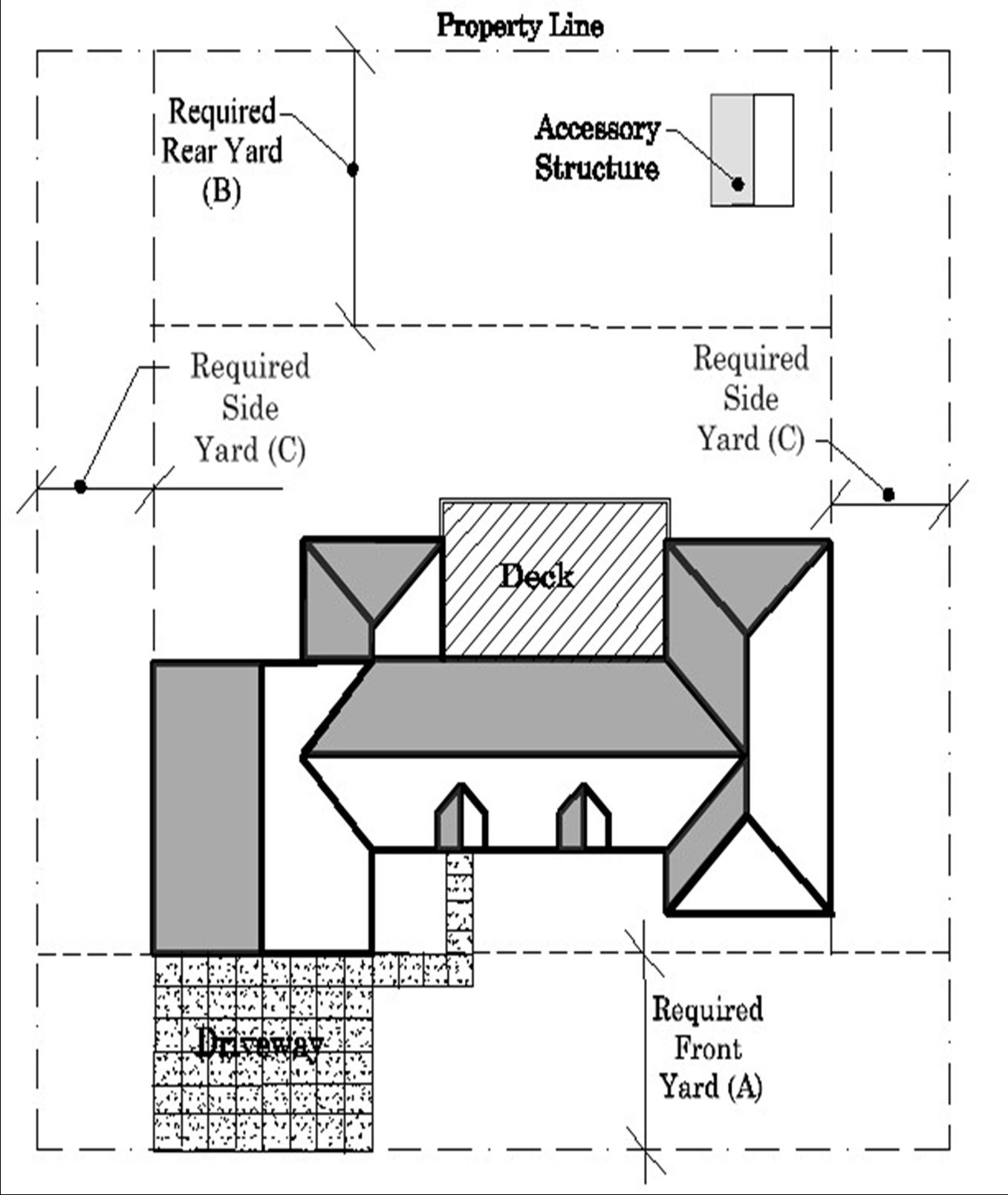
Accessory Structure: A detached subordinate structure located on the same lot with the principal structure, the use of which is incidental and accessory to that of the principal structure.
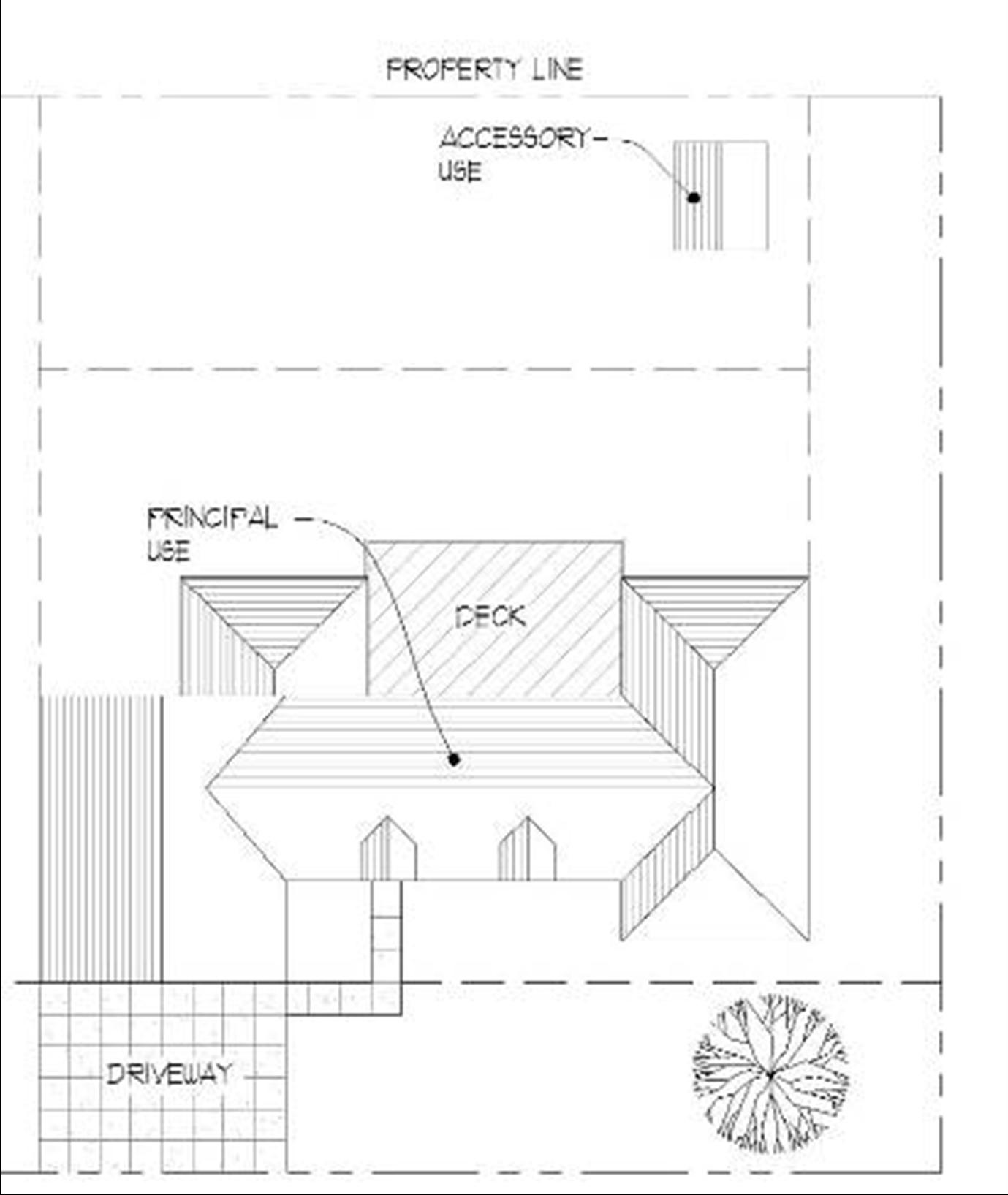
Accessory Use: A use incidental, related, appropriate and clearly subordinate to the main use of the lot or building, which accessory use does not alter the principal use of the subject lot or affect other properties in the district.
Acre: A full acre containing +/- 43,560 square feet of area within the property lines of a lot or parcel.
Accessory Building Accessory Use
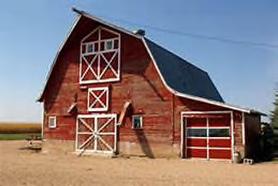
Agricultural Accessory Building Accessory Use Example of an Accessory Structure
Acreage: Any tract or parcel of land that does not qualify as a farm or development.
Addition: Any construction which increases the size of a building or structure.
Adjacent: Near, close, or abutting; for example, an industrial district across the street or highway from a residential district shall be considered as "adjacent".
Adult Care Homes: A facility providing care for the elderly and/or functionally impaired adults in a protective setting for a portion of a 24-hour day.
Advertising Structure: Any notice or advertisement, pictorial or otherwise, and all such structures used as an outdoor display, regardless of size and shape, for the purposes of making anything known, the origin or place of sale of which is not on the property with such advertising structure.
Agricultural Accessory Equipment: This includes such things as well motors, well heads, pivot pads, open sided structures covering wells.
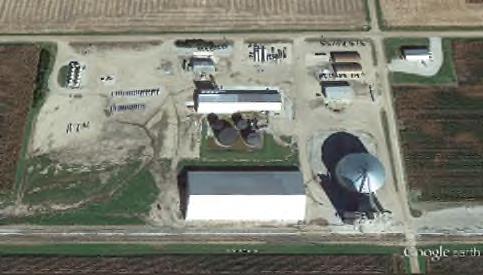
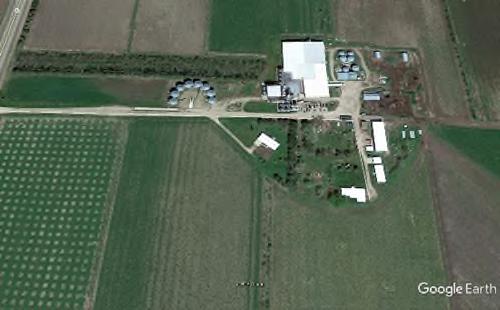
Agricultural Cooperative Production/Distribution Facility: Any facility owned and operated by a cooperative or other corporation for the purpose of manufacturing, distributing, and storage of fertilizers, herbicides and grain. This includes the offices, scales and parking areas necessary for trucks and other vehicles.
Agricultural and Farm Buildings and Structures: Any structure which is necessary or incidental to the normal conduct of a farm including but not limited to barns, buildings and sheds for housing livestock, poultry and farm machinery, buildings for the storage or shelter of grain seed, hay and other crops, silos, windmills and water storage tanks.
Agricultural Irrigation System: An artificial means for the delivery of water-via ditches, pipes, streams, hose, etc. to supply water to dry lands that are used primarily in the production of crops- corn, beans, beets, sorghum, etc., that may include, but not limited to, pivot point systems, center point systems, gravity (furrow) systems, subsurface drip irrigation systems (SDI), and/or irrigation wells.
Agricultural Operations: A farmstead of 20 acres or more which produces $1,000 or more of farm products each year.
Agricultural Processing: The processing of crops after harvest, to prepare them for on-site marketing or processing and packaging elsewhere. Includes the following: alfalfa cubing; corn shelling; custom grist mills; custom milling of flour, feed and grain; dairies (but not feedlots); drying of corn, hay, fruits, and vegetables; grain leaning and custom grinding; hay baling; pre-cooling and packaging of fresh or farm-dried fruits and vegetables; sorting, grading, and packing of fruits and vegetables, and the distillation of grains, fruits and vegetables. Any of the above activities performed in the field with mobile equipment not involving permanent structures are included under the definition of “crop production.”
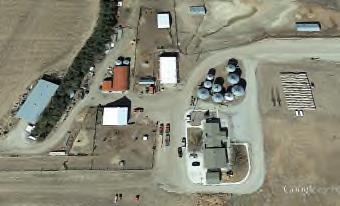
Example of an Agricultural Cooperative Production/ Distribution Facility
Example of Agricultural and Farm Buildings and Structures
Agriculture: The use of a tract of land for the growing of crops, pasturage, nursery, or the raising of livestock, including the structures necessary for carrying out farming operations, the residence or residences of those owning or operating the premises, a member of the family, or persons employed thereon, as well as their family.
Agritourism Enterprise: Activities conducted on a working farm or ranch and offered to the public for the purpose of recreation, education, or active tourism related involvement in the farm or ranch operation. These activities must be incidental to the primary agricultural operation on the site or related to natural resources present on the property. This term includes farm tours, hayrides, corn mazes, pumpkin patches, classes related to agricultural products or skills, picnic and party facilities offered in conjunction with the above.
All-Terrain Vehicle: For purposes of this Resolution this shall comply with sections §§60-6,355 to 60-6,362 of the Nebraska Revised Statutes. An all-terrain vehicle shall mean:
(a) All-terrain vehicle means any motorized off-highway vehicle which (i) is fifty inches or less in width, (ii) has a dry weight of twelve hundred pounds or less, (iii) travels on three or more nonhighway tires, and (iv) is designed for operator use only with no passengers or is specifically designed by the original manufacturer for the operator and one passenger.
(b) (i) Utility-type vehicle means any motorized off-highway vehicle which (A) is seventy-four inches in width or less, (B) is not more than one hundred eighty inches, including the bumper, in length, (C) has a dry weight of two thousand pounds or less, (D) travels on four or more nonhighway tires. (ii) Utility-type vehicle does not include all-terrain vehicles, golf car vehicles, or lowspeed vehicles.
(c) All-terrain vehicles and utility-type vehicles which have been modified or retrofit
Alteration: As applied to a building or structure, a change or rearrangement in the structural components, or an enlargement, whether by extending on a side or by increasing in height, or the moving of one location or position to another, shall be considered as an alteration.
Amendment: A change in the wording, context, or substance of these regulations, an addition or deletion or a change in the district boundaries or classifications on the zoning map. “Amendment” does not include correction of typographical errors.
An example of Agriculture
Anaerobic Digestion: A biological process that occurs in the absence of oxygen. In very large animal production operation, it is sometimes used to produce biogas (a low energy gas which is a combination of methane and carbon dioxide) from the biodegradable organic portion of manure. This gas can be used as an energy source. After anaerobic digestion, the remaining semisolid (which is relatively odor free but still contains most of its nutrients) can be used as a fertilizer.
Animal Confinement Building: Walled facilities where animals have been, are, or will be stabled or confined, fed and maintained.
Animal Hospital or Clinic: An establishment where animals are admitted principally for examination, treatment, board, or care by a Doctor of Veterinary Medicine.
Animals, Farm: Livestock commonly kept or raised as a part of an agricultural operation including but not limited to horses, cattle, sheep, swine, goats, chickens, and turkeys.
Animal Units (A.U.):
One A.U. = One Cow/Calf combination
One A.U. = One Slaughter, Feeder Cattle
One A.U. = One-half Horse
One A.U. = Seven Tenths Mature Dairy Cattle
One A.U. = Two and One-half Swine (55 pounds or more)
One A.U. = 25 Weaned Pigs (less than 55 pounds)
One A.U. = Two Sows with litters
One A.U. = 10 Sheep
One A.U. = 11.25 Goats
One A.U. = 50 Turkeys
One A.U. = 100 Chickens
One A.U. = Five Ducks if a liquid manure handling system
Animal Waste: Any animal excrement, animal carcass, feed waste, animal water waste, or any other waste associated with animals.
Animal Waste Water: Any liquid, including rainfall, which comes into contact with any animal excrement, manure, litter, bedding or other raw material or intermediate or final material or product used in or resulting from the production of animals or from products directly or indirectly used in the operation of a CAFO, or any spillage or overflow from animal watering systems, or any liquid used in washing, cleaning or flushing pens, barns, or manure pits, or any liquid used in washing or spraying to clean animals, or any liquid used for dust control on the premises of a CAFO.
Antenna: Any attached or external system of wires, poles, rods, reflecting disks or similar devices used for the transmission or reception of electromagnetic waves.
Antenna Support Structure: Any building other than a tower which can be used for location of telecommunications facilities.
Apartment: A room or a suite of rooms within an apartment house or multiple family dwelling arranged, intended or designed for a place of residence of a single family or group of individuals living together as a single housekeeping unit. (See dwelling unit.)
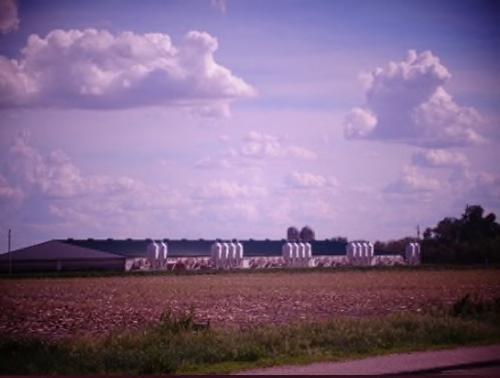
Example of an Animal Confinement Building
Apartment House (see Dwelling, Multiple Family)
Applicant: The owner or duly designated representative of land proposed to be subdivided, or for which a special permit, zoning amendment variance, building permit or certificate of occupancy has been requested.
Application: A process by which the owner of a tract of land within the zoning jurisdiction of the County submits a request to develop, construct, modify, or operate upon such tract of land. The term application includes all written documentation, verbal statements, and representations, in whatever, formal forum, made by an applicant to the County concerning such request.
Appropriate: The sympathetic, or fitting, to the context of the site and the whole community.
Appurtenances: The visible, functional objects accessory to and part of buildings.
Aquaculture: Land devoted to the hatching, raising, and breeding of fish or other aquatic plants or animals for sale or personal use.
Aquifer: A geological unit in which porous and permeable conditions exist and thus are capable of bearing and producing usable amounts of water.
Aquifer, confined (artesian): Aquifers found between layers of clay, solid rock, or other material of very low permeability. Water in confined aquifers is often under pressure because the aquifer is confined between impermeable layers and is usually recharged at a higher elevation than the top confining layer.
Aquifer, unconfined (or water table): An aquifer where the top of the aquifer is identified by the water table. Above the water table, known as the zone of aeration, interconnected pore spaces are open to the atmosphere. Also known as a water table aquifer.
Aquifer Recharge Area: An area that has soils and geological features that are conducive to allowing significant amounts of surface water to percolate into groundwater.
Archery Range: A facility that may include buildings used for target practice with bows and arrows.
Area: A piece of land capable of being described with such definiteness that its location may be established, and boundaries definitely ascertained.
Areas of Contribution: The upland recharge area and cone of depression from which well water is drawn.
Areas of Influence: The two-dimensional area (as viewed on a map) of water table drawdown created by a pumping well, also see Cone of Depression.
Armor Coat: A bituminous liquid sprayed on road surfaces to provide a wear surface or dust control. Roads treated with armor coat are not considered as pavement.
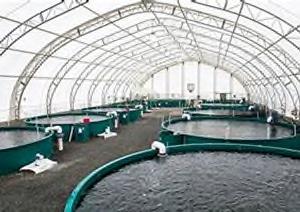
Example of an Aquaculture
Artisan Production Shop: A building or portion thereof used for the creation of original handmade works of art or craft items by more than three but less than six artists or artisans, as either a principal or accessory use.
Artist Studio: A place designed to be used, or used as, both a dwelling place and a place of work by an artist, artisan, or craftsperson, including persons engaged in the application, teaching, or performance of fine arts such as, but not limited to, drawing, vocal or instrumental music, painting, sculpture, and writing.
Asphaltic Concrete: a dark brown to black cement-like material in which the predominating constitutes are bitumen, which occur in nature or are obtained in petroleum processing. Asphalt is a constituent in varying proportions of most crude petroleum and used for paving, roofing, industrial and other special purposes.
Assisted Living Facility: A special combination of housing, supportive services, personalized assistance, and health care designed to respond to the individual needs of those who need help with activities of daily living. A facility with a central or private kitchen, dining, recreational, and other facilities, with separate bedrooms or living quarters, where the emphasis of the facility remains residential.
Attached Permanently: Attached to real estate in such a way as to require dismantling, cutting away, unbolting from permanent foundation or structural change in such structure in order to relocate it to another site.
Automobile Service Station: Buildings and premises where gasoline, oil, grease, batteries, tires and automotive accessories may be supplied and dispensed at retail, and where, in addition, servicing, repair, and replacement of parts may be done.
Automobile Sales-Retail: A retail business housed either in a structure or on a tract of land that sells or leases new or used automobiles, trucks, vans, recreational vehicles, boats or motorcycles or other similar motorized transportation vehicles. Retail automobile sales shall include any operation with three or more vehicles, as stated above, for sale at any time and/or a total of 10 sold during the course of a calendar year.
Automobile Sales – Wholesale: a wholesale business housed either in a structure or on a tract of land that sells new or used automobiles, trucks, vans, recreational vehicles, boats, or motorcycles or other similar motorized transportation vehicles to automobile sales retail outlets.
Automobile Wrecking Yard: Any lot, or the use of any portion of a lot, for the dismantling or wrecking of automobiles, tractors, farm machinery, or other motor vehicles, or for the storage or keeping for sale of parts and equipment resulting from such dismantling or wrecking.
BBackgrounding: Growing program for feeder cattle from time calves are weaned until they are on a finishing ration in the feedlot.
Ballroom: A place or hall used for dancing, other than those listed under the definition of “Adult Cabaret”. Ballrooms shall also be used for reunions, weddings and receptions.
Bar: Any establishment whose principal business is serving alcoholic beverages at retail for consumption on the premises.
Basement: That portion of a building which has more than one-half of its interior height, measured from floor to finished ceiling below the average finished grade of the ground adjoining the building.
Basin: A tract of land in which the ground is broadly tilted toward a common point. Water that falls onto any portion of the basin is carried toward the common point by a single river system.
Beacon: any light with one or more beams directed into the atmosphere or directed at one or more points not on the same zone lot as the light source; also, any light with one or more beams that rotate or move.
Bed and Breakfast Inn: A house, or portion thereof, where short-term lodging rooms and meals are provided. The owner/operator of the inn shall live on the premises.
Bedding: Material such as straw, sawdust, wood shavings, shredded newspaper, sand or other similar material used in animal confinement areas for the comfort of the animal or to absorb excess moisture. Bedding can drastically affect the characteristics of the manure and must be taken into consideration in the design of the storage facility.
Bedroom: A room within a dwelling unit planned and intended for sleeping, separable from other rooms by a door.
Berm: A mound or embankment of earth, usually two to six feet in height.
Best Interest of the County: shall mean interests of the county at large.
Best Possible Management Practices: Livestock management techniques and practices as set forth by various agencies, including the Nebraska Department of Environmental and Energy, which encourage and protect the environment and public.
Bio-fuels Manufacturing: A facility constructed for the purpose of processing a natural product such as corn and soybeans into an alcohol-based fuel/additive.
Block: A parcel of land platted into lots and bound by public streets or by waterways, rights-of-way, unplatted land, city-county boundaries, or adjoining property lines.
Block Frontage: That section of a block fronting on a street between two intersecting streets or another block boundary.
Board of Adjustment: That board having been created by the County and which has the statutory authority to hear and determine appeals, interpretations of, and variances to the zoning regulations.
Boarding and Lodging Houses: Any dwelling where, for compensation and by pre-arrangement for definite periods, meals, or lodging and meals are provided for more than three but less than 10 persons.
Borrow Pit: Any place or premises where dirt, soil, sand, gravel or other material is removed below the grade of surrounding land for any purpose other than that necessary and incidental to site grading or building construction.
Brew-On Premises Store: A facility that provides the ingredients and equipment for a customer to use to brew malt liquor at the store. Brew-on-premises stores do not include the sale of intoxicating liquor, unless the owner of the brew-on-premises store holds the appropriate liquor license.
Brew Pub: A restaurant or hotel which includes the brewing of beer as an accessory use. The brewing operation processes water, malt, hops, and yeast into beer or ale by mashing, cooking, and fermenting. By definition, these establishments produce no more than 20,000 barrels of beer or ale annually. The area, by definition, used for brewing, including bottling and kegging, shall not exceed 25 percent of the total floor area of the commercial space.
Brewery: An industrial use that brews ales, beers, meads and/or similar beverages on site. Breweries are classified as a use that manufactures more than 20,000 barrels of beverage (all beverages combined) annually.
Brewery, Craft: A brew pub or a micro-brewery.
Brewery, Micro: A facility for the production and packaging of malt beverages of low alcoholic content for distribution, retail or wholesale, on or off premises, with a capacity of not more than 20,000 barrels per year. The development may include other uses such as standard restaurant, bar, or live entertainment as otherwise permitted in the zoning district.
Broiler: Meat-type chicken typically marketed at 6.5 weeks of age. Live weight at market generally averages 4 to 4.5 pounds per bird.
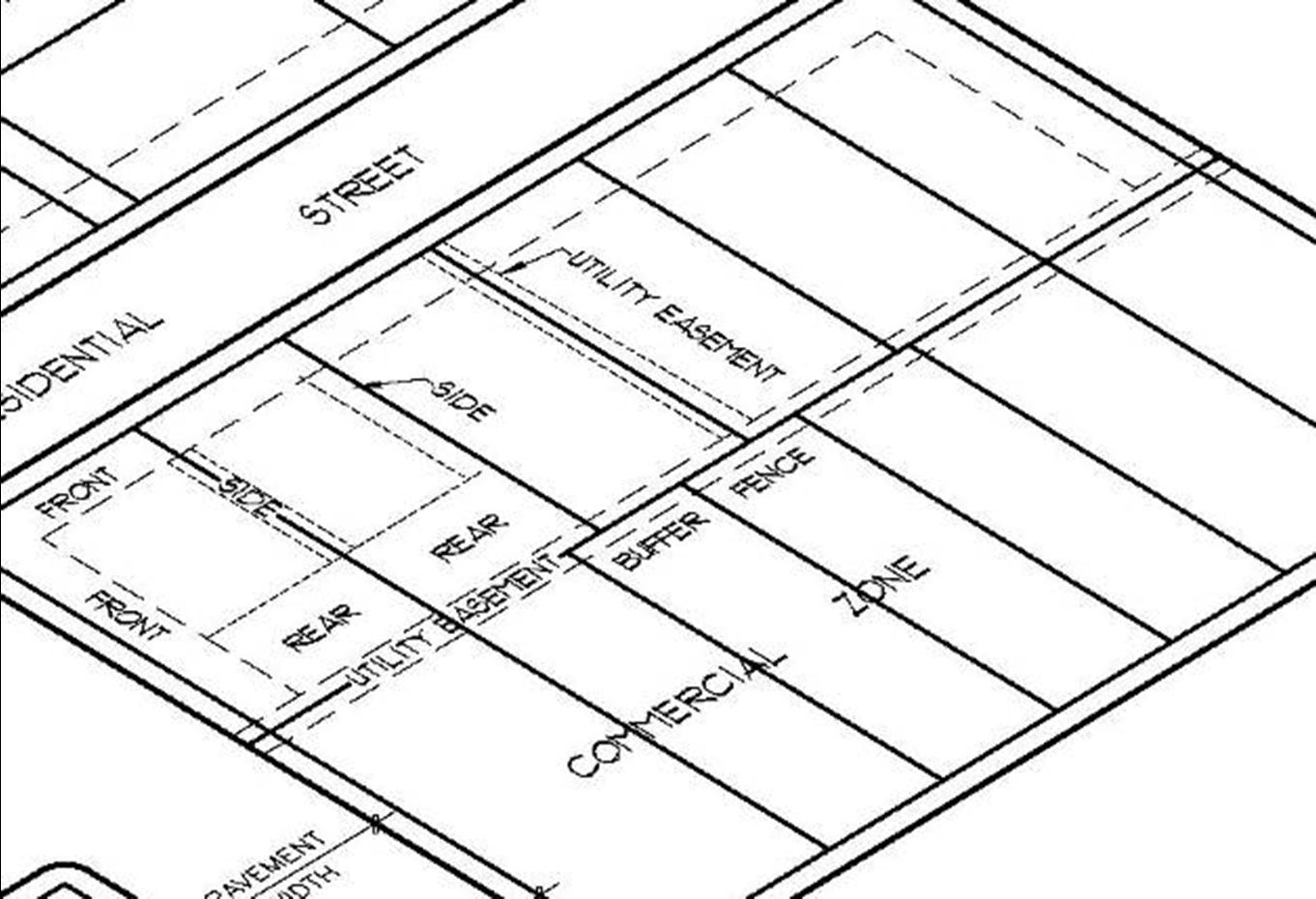
Buffer: A strip of land established to protect one type of land use from another incompatible land use or to intervene between a land use and a private or public road. (See screening)
Buffer Zone: An area of land that separates two zoning districts and/or land uses that acts to soften or mitigate the effects of one use on the other.
Buildable Area: That portion of a lot remaining after required yards have been allocated.
Buildable Lot: A lot that meets all of the minimum size requirements of a specific zoning district and shall apply to area not submerged under water of any kind (lakes, creeks, river).
Building: Any structure built for the support, shelter or enclosure of: persons, animals, chattels, or movable property of any kind, and including any structure.
Building Area: The sum, in square feet, of the area occupied by all buildings and structures on a lot.
Building Envelope: That area shown on a lot that encompasses all building development including but not limited to storage, structures, decks, roof overhangs, porches, patios and terraces, pools, access ways and parking. Approved plantings of landscape materials on natural grade and approved walkways may occur outside of a building envelope. Otherwise, all areas outside of a building envelope shall remain in pristine and untouched condition unless stated in the conditions of approval the subdivision plat.
Building Height: The vertical distance above grade to the highest point of the coping of a flat roof or to the highest point of a gable, hip, mansard or shed roof.
Building, Principal: A building in which is conducted the main or principal use of the lot on which said building is situated.
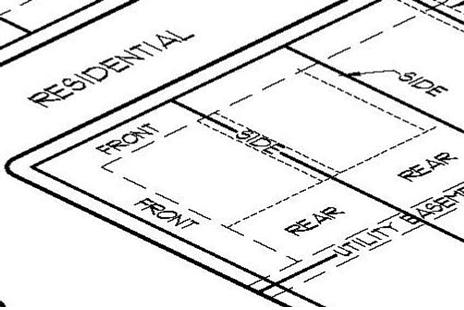
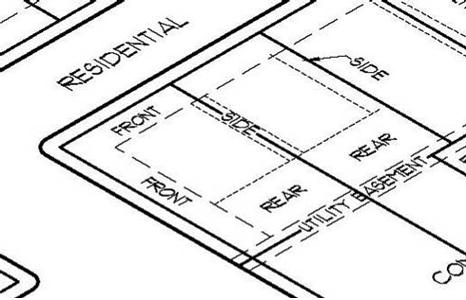
Building Setback Line: The minimum distance as prescribed by these regulations between any property line and the closest point of the building line or face of any structure related thereto.
Bulk regulations: The prescribed requirements for lot area, lot area per dwelling unit, lot frontage, width, depth and height of buildings.
Business Services: Uses providing services to people, groups, businesses, dwellings and other buildings. Business services shall include janitorial services, carpet and upholstery cleaning, painting and decorating, building maintenance, swimming pool maintenance, security service, graphics/advertising agency, photocopying/duplication, quick print shops, printing, blueprinting, sign painting, non-vehicle equipment rental, photographic studios.
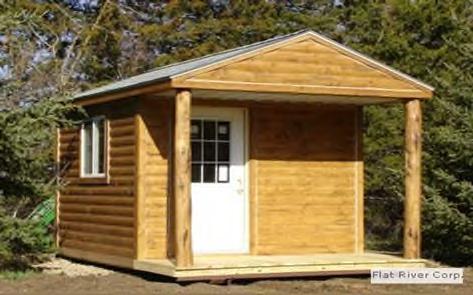
CCabin: A house built and designed for temporary use.
Cabin, hunting and fishing: Buildings used only during hunting and fishing season as a base for hunting and fishing, and outdoor recreation.
Calcium Chloride: a liquid solution consisting of various percentages of water and calcium chloride. This solution can be applied to the road surface to provide dust control or mix with the road base material in larger ratios to provide road base stabilization. Roads treated with calcium chloride are not considered as pavement.
Example of Building Setback Line
Cabin, hunting and fishing
Campground: Any premises where two or more camping units are parked or placed for camping purposes, or any premises used or set apart for supplying to the public camping spaces, which include any buildings, structures, vehicles or enclosures used or intended for use for the accommodation of transient campers and camping vehicles.
Campground, Leased: (See “Leased Campground”)
Camping: Temporary living in a camper, travel trailer, pick-up camper, camping bus, converted truck, tent trailers or camping tent or other non-building shelter or by sleeping in the open.
Car Wash: A structure or an area of land with machine or hand operated facilities for the cleaning, washing, polishing, or waxing of motor vehicles.
Car Wash, Industrial: A mechanical facility for the washing, waxing and vacuuming of heavy trucks and buses.
Caregiver: Caregiver means a person nineteen years of age or older who is designated by a patient or a patient's legal guardian to provide aftercare.
Carport: A permanent roofed structure with not more than two enclosed sides used or intended to be used for automobile shelter and storage.
Cellar: A building space having more than two-thirds of its height below the average adjoining grade lines.
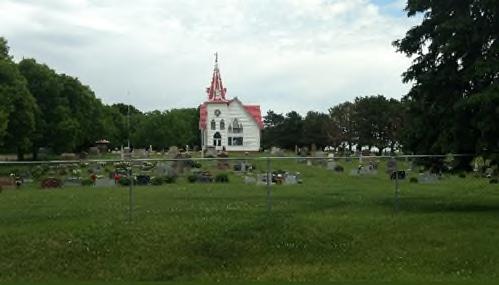
Cemetery: Land used or intended to be used for the burial of the dead and dedicated for such purposes, including columbarium, crematoriums, and mausoleums.
Centerline: The same meaning as "street or road center line".
Centralized Sewer: A sewer system established by an individual(s), sanitary improvement district or developer for the purpose of serving two or more buildings, structures, and/or uses. Said system shall have a central point of sanitary waste collection and processing.
Centralized Water: A water supply system established by an individual(s), sanitary improvement district or developer for the purpose of serving two or more buildings, structures, and/or uses. Said system shall have a central point(s) of supply with pressurized distribution from said supply points.
Change of Use: The replacement of an existing use type by a new use type.
Channel: The geographical area within either the natural or artificial banks of a watercourse or surface drain.
Charitable: A public or semi-public institutional use of a philanthropic, charitable, benevolent, religious, or eleemosynary character, but not including sheltering or caring of animals.
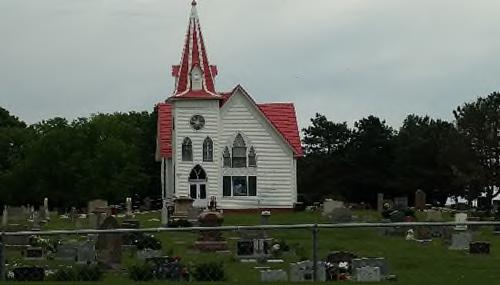
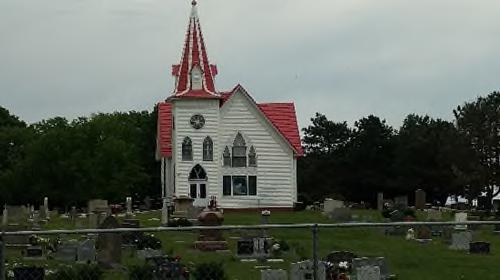
Example of Cemetery (Foreground)
Child Care Center: An establishment other than a public or parochial school, which provides day care, play groups, nursery schools or education for nine or more children under age 13, at any one time, from families other than that of the provider. In addition to these regulations, Child Care Centers shall meet all requirements of the State of Nebraska.
Child Care Home: An operation in the provider's place of residence, which serves at least four, but not more than eight children at any one time from families other than that of the provider. A Family Child Care Home provider may be approved to serve no more than two additional school-age children during non-school hours. In addition to these regulations, Child Care Homes shall meet all requirements of the State of Nebraska.
Church: a place where religious worship is conducted including accessory uses as schools, day care centers, bingo parlors, and halls.
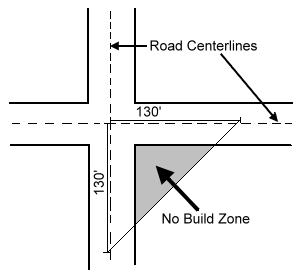
Clear View Zone: The area of a corner lot closest to the intersection that is kept free of visual impairment to allow full view of both pedestrian and vehicular traffic. (See Sight Triangle)
Club: An association of persons (whether or not incorporated), religious or otherwise, for a common purpose, but not including groups which are organized primarily to render a service carried on as a business for profit and shall follow the expanded definitions in §53-103.09 of the Nebraska Revised Statutes.
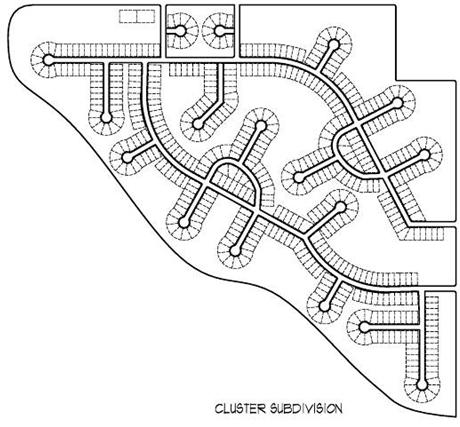
Cluster Development: a development designed to concentrate buildings in specific areas on a site to allow the remaining land to be used for recreation, common open space, and the preservation of environmentally sensitive areas.
Commercial Animal Feeding Operation: (See Livestock Feeding Operation)
Commercial Building: A structure housing a use defined as commercial.
Commercial Uses: A business use or activity at a scale greater than a home business involving retail or wholesale marketing of goods and services. Examples of commercial uses include offices and retail shops.
Commission: The Boyd County Planning Commission.
Common Area or Property: A parcel or parcels of land, together with the improvements thereon, the use and enjoyment of which are shared by the owners of the individual building sites in a planned development or condominium development.
Common Open Space: An area of land or water or combination thereof planned for passive or active recreational use by more than one homeowner or apartment dweller. Such space shall not include areas utilized for streets, parking, loading, alleys or driveways.
Example of a Cluster Development
Example of Church (background)
Common Sewer System: A sanitary sewage system in public ownership which provides for the collection and treatment of domestic effluent in a central sewage treatment plant which meets the minimum requirements of the Nebraska Department of Environmental and Energy for primary and secondary sewage treatment and which does not include individual septic tanks or portable sewage treatment facilities.
Common Water System: A water system which provides for the supply, storage and distribution of potable water on an uninterrupted basis and which is in public ownership.
Community Center: A place, structure, or other facility used for and providing religious, fraternal, social, and/or recreational programs generally open to the public and designed to accommodate and serve various segments of the community.
Community or Public Sanitary Sewer System: An approved central sewer collecting system, meeting state and county requirements, available to each platted lot and discharging into a treatment facility. This does not include individual septic systems.
Community or Public Water Supply System: A public water supply system which serves at least 15 service connections used by yearround residents or uses, or regularly serves 25 or more year-round residents or uses.
Compatible Uses: A land use, which is congruous with, tolerant of, and has no adverse effects on existing neighboring uses. Incompatibility may be affected by pedestrian or vehicular traffic generation, volume of goods handled and environmental elements such as noise, dust, odor, air pollution, glare, lighting, debris generated, and contamination of surface or groundwater, aesthetics, vibration, electrical interference and radiation.
Compost: Decomposed organic material resulting from the composting process. Used to enrich or improve the consistency of soil.
Composting: Processing waste in a controlled environment to produce a stable product by microbiologically degrading organic matter under aerobic conditions.
Comprehensive Development Plan: The Comprehensive Development Plan of Boyd County, Nebraska, as adopted by the County Board of Commissioners, setting forth policies for the present and foreseeable future community welfare as a whole, and meeting the purposes and requirements set forth in Chapter 23 of the Revised Statutes of Nebraska, as the same, from time-to-time, may be amended.
Conditional Use: A use allowed by the district regulations that would not be appropriate generally throughout the entire zoning district without special restrictions. However, said use if controlled as to number, size, area, location, relation to the neighborhood or other minimal protective characteristics would not be detrimental to the public health, safety, and general welfare.
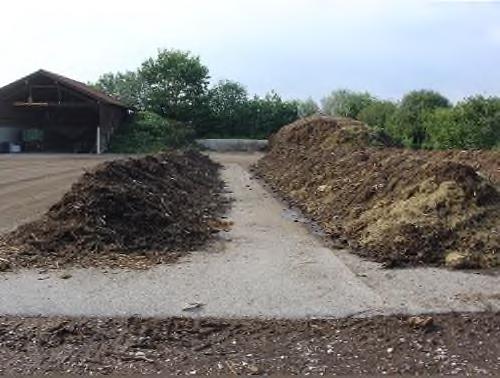
Example of Composted Manure
Example of an Outdoor Manure Composting Process Manure
Conditional Use Permit: A permit, that authorizes the recipient to make use of property in accordance with the provisions of these regulations and in accordance with any additional conditions stipulated in the issued permit. A Conditional Use Permit may be a specific form called a “Conditional Use Permit” or by another name specifying a specific type of use such as a “Livestock Feeding Operation Permit”.
Condominium: As defined in the Nebraska State Statues Section 76824 - 76-894, The Condominium Law, whereby four or more apartments are separately offered for sale.
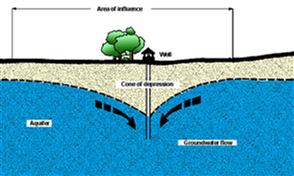
Cone Of Depression: The three-dimensional area of water table created by a pumping well. The pumping well creates an artificial discharge area by drawing down (lowering) the water table around the well.
Confinement: Totally roofed buildings, which may be open-sided (for ventilation purposes only) or completely enclosed on the sides, wherein animals or poultry are housed over solid concrete or dirt floors, or slatted (partially open) floors over pits or manure collection areas in pens, stalls, cages, or alleys, with or without bedding materials and mechanical ventilation. The word "confinement" shall not mean the temporary confined feeding of livestock during seasonal adverse weather.
Conflicting Land Use: The use of property that transfers over neighboring property lines, negative economic or environmental effects. Including, but not limited to, noise, vibration, odor, dust, glare, smoke, pollution, water vapor, mismatched land uses and/or density, height, mass, mismatched layout of adjacent uses, loss of privacy, and unsightly views.
Congregate Housing: A residential facility for people 55 years or over, their spouses, or surviving spouses, providing living and sleeping facilities. Said facilities might include meal preparation, dining areas, laundry services, room cleaning and common recreational, social, and service facilities for the exclusive use of all residents including resident staff personnel who occupy a room unit in the residential facility. (See Housing for the Elderly)
Conservation Areas: Environmentally sensitive and valuable lands (including but not limited to: wetlands, floodways, flood plains, drainage ways, river or stream banks, and areas of significant biological productivity or uniqueness) protected except for overriding public interest, from any activity that would significantly alter their ecological integrity, balance or character.
Conservation Easement: As defined by Nebraska RRS §76-2,111 a right, whether or not stated in the form of an easement, restriction, covenant, or condition in any deed, will, agreement, or other instrument executed by or on behalf of the owner of an interest in real property imposing a limitation upon the rights of the owner or an affirmative obligation upon the owner appropriate to the purpose of retaining or protecting the property in its natural, scenic, or open condition. Assuring its availability for agricultural, horticultural, forest, recreational, wildlife habitat, or open space use, protecting air quality, water quality, or other natural resources, or for such other conservation purpose as may qualify as a charitable contribution under the Internal Revenue Code.
Cone of Depression
Source: groundwater.oregonstate.edu
Construction and Demolition Waste: Waste which results from land clearing, the demolition of buildings, roads, or other structures, including but not limited to, beneficial fill materials, wood (including painted and treated wood), land clearing debris other than yard waste, wall coverings (including wallpaper, paneling, and tile), drywall, plaster, non-asbestos insulation, roofing materials, plumbing fixtures, glass, plastic, carpeting, electrical wiring, pipe and metals. Such waste shall also include the above listed types of waste that result from construction projects. Construct and demolition waste shall not include friable asbestos waste, special waste, liquid waste, hazardous waste and waste that contains polychlorinated biphenyl (PCB), putrescible waste, household waste, industrial solid waste, corrugated cardboard, appliances, tires, drums, and fuel tanks as described herein or otherwise within NDEE Title 132.
Construction and Demolition Waste Disposal Area: Any area for the sole purpose of disposal of construction and demolition waste.
Construction Permit, Livestock: A permit required of an LFO by NDEE, prior to construction.
Containment: Structures used to control runoff of precipitation that comes into contact with manure, feed and other wastes on open feedlots. Examples of containment structures are lagoons and holding ponds.
Convenience Store: A retail store that is designed and stocked to sell primarily food, beverages, and other household supplies to customers who purchase only a relatively few items (in contrast to a "supermarket."), it is dependent on, and is designed to attract and accommodate large volumes of stop-and-go traffic.
Convent: A building or group of buildings designed to provide group housing for persons under religious vows or orders.
Conventional Subdivision: A subdivision which literally meets all nominal standards of the Land Development Ordinance for lot dimensions, setbacks, street frontage, and other site development regulations.
Contiguous: Property adjoined at the property line and not separated by roads or alleys.
Country Club: Buildings and facilities owned and operated by a corporation or association of persons for social and recreational purposes, but not operated for a profit. The affairs and management, of such club, are conducted by a board of directors, executive committee, or similar body chosen by the members. It is designed to serve food and alcoholic beverages on such premises to members and their guests, provided that the serving of food and alcoholic beverages is secondary to some other principal purpose of the association or corporation. Customary country clubs include, but are not limited to: swimming, tennis, and golf course country clubs.
County: The County of Boyd, Nebraska.
County Board: The County Board of Commissioners of Boyd County, Nebraska.
Conventional Subdivision
Source: Google Earth
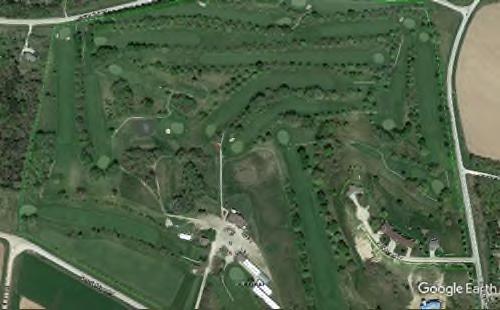
Aerial view of Indian Trails Country Club
Cover Crop: A close-growing crop grown to protect and improve soils between periods of regular crops.
Creative Subdivision: A subdivision that, while complying with the Subdivision Ordinance, diverges from nominal compliance with site development regulations in the Land Development Ordinance. Creative subdivisions imply a higher level of pre-planning than conventional subdivisions. They may be employed for the purpose of environmental protection or the creation of superior community design. Types of Creative Subdivisions include Cluster Subdivisions and New Urban Residential Districts.
Crop Production: Commercial agricultural field and orchard uses including production of: field crops, flowers and seeds, fruits, grains, melons, ornamental crops, tree nuts, trees and sod, vegetables. Also includes associated crop preparation services and harvesting activities, such as mechanical soil preparation, irrigation system construction, spraying, crop processing, and sales in the field not involving a permanent structure.
Cul-De-Sac: A short public way that has only one outlet for vehicular traffic and terminates in a vehicular turn-around.
Culvert: A pipe, conduit, or similar enclosed structure with appurtenant works which carries surface or stormwater under or through an embankment or fill, roadway, or pedestrian walk, or other structure.
Curb Level: The mean level of the curb in front of the lot, or in case of a corner lot, along that abutting street where the mean curb level is the higher.
DDairy Farm: Any place or premises upon which milk is produced for sale or other distribution.
Dead Animal Disposal: The disposal of dead animals by methods authorized by law such as rendering, composting, burial, and incineration.
Deciduous Screen: Landscape material consisting of plants which lose their leaves in winter and eventually will grow and be maintained at six feet in height, at least.
Deck: A flat, floored, roofless structure. Roofless does not include a roll-out awning or a canopy provided that all the vertical sides, other than the residential structure are open.
Density: Restrictions on the number of dwelling units or other structures that may be constructed per acre or per square feet of zoning lot area.
DEE Site Plan: The site plan or layout diagram on file at NDEE for construction of a Livestock Waste Control Facility.
Deciduous Screen
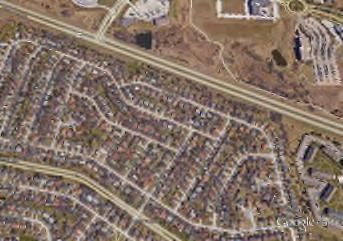
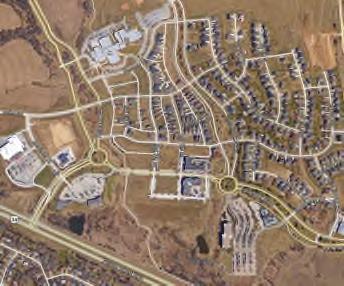
Creative/Conservation Subdivision Source: Google Earth
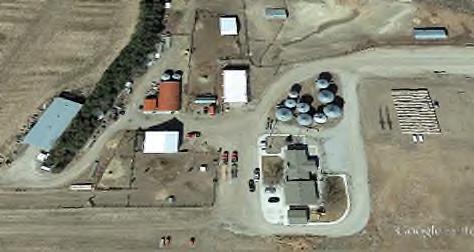
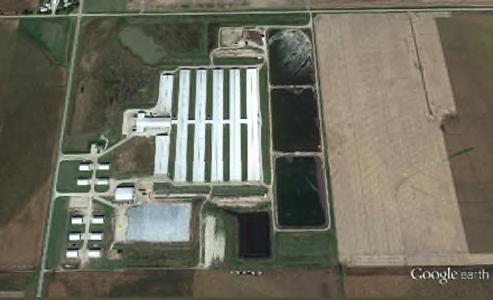
Aerial view of Dairy Farm
Example of Crop Production
Detached: Fully separated from any other building or not joined to another building in such a manner as to constitute an enclosed or covered connection.
Detention Basin: A facility for the temporary storage of stormwater runoff.
Developer: Any person, corporation, partnership, or entity that is responsible for any undertaking that requires a building or zoning, conditional use, or sign permit.
Development: Any manmade change to improved or unimproved real estate, including but not limited to buildings or other structures, mining, dredging, filling, grading, paving, excavating, or drilling operations for which necessary permits may be required.
Development Area: An area of land that may or may not have been subdivided that contains three or more homes per nine acres.
Development Concept Plan: (See Site Plan)
Development Impact Fee: A fee imposed on developers to pay for the costs to the county of providing services to a new development based upon the impact of the development.
Development of Livestock Confinement Operation: Development of a confined livestock operation shall consist of but not be limited to contacting NDEE, an engineer, a contractor, and/or NRCS, or by doing dirt work, excavation, or construction.
Development Review: The review, by the county, of subdivision plats, site plans, rezoning requests, or permit review.
Dirt Surface: (as pertains to roads) roads typically found in nonresidential areas as they only provide minimum design characteristics.
District: Any area designated on the zoning map for which detailed regulations are established herein pertaining to the uses permitted, the bulk of buildings and structures, and the size of yards and buildable area.
Dog Kennel: (See Kennel, Commercial; and Kennel, Private)
Domestic Animals: (See Household Pet)
Example of a Dog Park
Detention Basin
Domestic Well: Well water used for human consumption and/or household purposes.
Dormitory: A building used as group living quarters for a student body, religious order, or other group as accessory use to a college, university, boarding school, orphanage, convent, monastery, farm labor camp, or other similar use where group kitchen facilities may be provided to serve all residents.
Downzoning: A change in zoning classification of land to a less intensive or less restrictive district such as from commercial district to residential district or from a multiple family residential district to single family residential district.
Drainageway or Surface Drain: Any depression two feet or more below the surrounding land serving to give direction to a current of water less than nine months of the year, having a bed and welldefined banks. In the event of doubt as to whether a depression is a watercourse or drainage way, it shall be presumed to be a watercourse.
Driveway: Any vehicular access to an off-street parking or loading facility.
Dry Lot (dry operation): An operation using confinement buildings and handling manure and bedding exclusively as dry material, an operation using a building with a mesh or slatted floor over a concrete pit, or an operation scraping manure to a covered waste storage facility is referred to as a “dry” operation. When such practices are used and are not combined with liquid manure handling systems such as flushing to lagoons or storage ponds, these operations are referred to as “other than liquid manure handling systems” or “dry” manure systems, or “dry” operations.
Dry Waste: Manure (urine or feces), litter, bedding, or feed waste from animal feeding operations.
Dry Waste Management System: A system where animal waste in the lots, pens and/or buildings of a CAFO is not removed by flushing out such waste by water but is removed by shoveling out such waste by hand and/or machinery.
Dude Ranch: A ranch operated wholly or in part as a resort offering horse riding related activities as outdoor recreation opportunities and offering only temporary rental accommodations for vacation use by nonresidents.
Duplex: The same as "Dwelling, Two Family".
Dwelling: Any building or portion thereof, other than a mobile home, which is permanently affixed to a foundation imbedded in the soil and used exclusively for residential purposes.
Example of a Drainageway or Surface Drain
Example of a Duplex
Example of a Dry Lot Operation/Dry Waste Management
Dwelling, Farm: A single-family dwelling that is located on and used in connection with a farm.
Dwelling, Manufactured Home: A factory-built structure which is to be used as a place for human habitation, which is not constructed or equipped with a permanent hitch or other device allowing it to be moved other than to a permanent site, which does not have permanently attached to its body or frame any wheels or axles, and which bears a label certifying that it was built in compliance with standards promulgated by the United States Department of Housing and Urban Development. A manufactured home shall be defined by the following standards:
1. The home shall have no less than 900 square feet of floor area, above grade, for single story construction.
2. The home shall have no less than an 18-foot exterior width.
3. The roof, unless covered by at least two feet of earth, shall be pitched with a minimum vertical rise of two and one-half inches for each 12 inches of horizontal run.
4. The exterior material shall be of a color, material and scale comparable with those existing in residential site-built, single family construction.
5. The home shall have a non-reflective roof material that is or simulates asphalt or wood shingles, tile, or rock. Metal roofs are acceptable only if they are non-reflective.
6. The home shall be placed on a continuous permanent foundation and have wheels, axles, transporting lights, and removable towing apparatus removed.
7. The home shall meet and maintain the same standards that are uniformly applied to all single-family dwellings in the zoning district; and
8. Permanent foundation: Base on which building rests; to be constructed from either poured concrete or laid masonry block or brick on a footing to be placed a minimum of 36 inches below the final ground level.
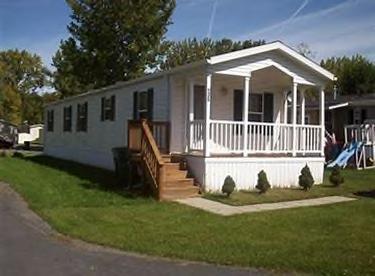
Dwelling, Mobile Home: Any prefabricated structure, composed of one or more parts, used for living and sleeping purposes, shipped or moved in essentially a complete condition and mounted on wheels, skids or roller, jacks, blocks, skirting or a permanent or temporary foundation or any prefabricated structure which has been or reasonably can be equipped with wheels or other devices for transporting the structure from place to place, whether by motor power or other means. The term mobile home shall include trailer home and camp car, but the definition shall not apply to any vehicle lawfully operated upon fixed rails.
1. Permanently Attached: Attached to real estate in such a way as to require dismantling, cutting away, unbolting from permanent continuous foundation or structural change in such mobile home in order to relocate it on another site in accordance to manufacturers recommendations.
2. Permanent Foundation: Base on which building rests; to be constructed from either poured concrete or laid masonry block or brick.
Example of a Dwelling, Farm
Example of Single-Family Attached
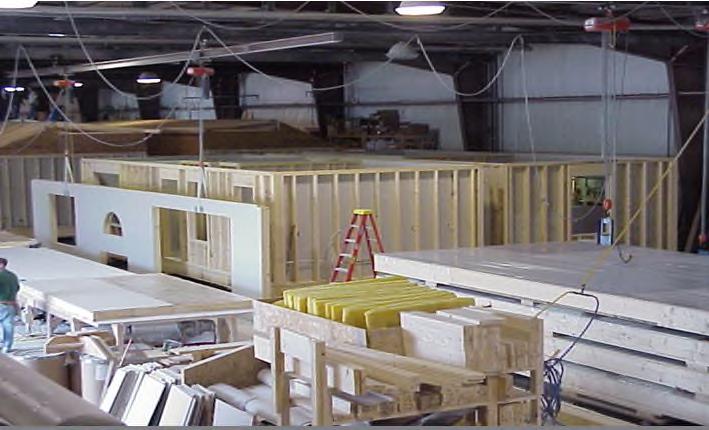
Dwelling, Modular: (Is considered a conventional type single-family dwelling). Any prefabricated structure, used for dwelling purposes, moved on to a site in an essentially complete constructed condition, in one or more parts, and when completed is a single-family unit on a permanent foundation, attached to the foundation with permanent connections. To be a modular home it shall meet or be equivalent to the construction criteria as defined by the Nebraska State Department of Health and Human Services under the authority granted by Section §71-1555 through §71-1567 Revised Statutes of Nebraska 1943, in addition to any amendments thereto, any that do not meet the above criteria shall be considered a mobile home.
Dwelling, Multiple Family: A building or portion thereof having accommodations for and intended to be used for occupancy by three or more families living independently from one another.
Dwelling, Seasonal: A dwelling designed and used as a temporary residence and occupied less than six months in each year. (Also see, Cabin and Cabin, hunting and fishing)
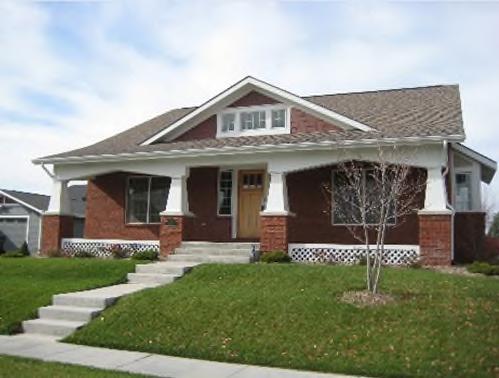
Dwelling, Single Family: A building having accommodations for or occupied exclusively by one family that meets the following standards:
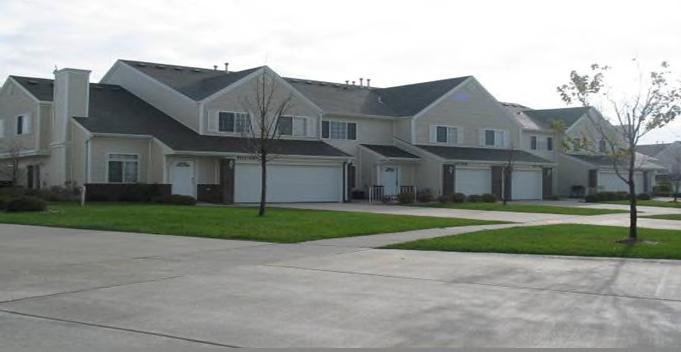
Dwelling, Single Family Attached: A portion of a residential building having accommodations for and occupied exclusively by one family, and which is located on a separate lot of record apart from the remaining portions of the building. Each such dwelling may be sold independently of other portions.
Dwelling Unit, Special Types: Any dwelling type consisting of singlefamily detached; single-family attached, multi-family, mobile home that is not meet the typical construction style of traditional stick framed structures.
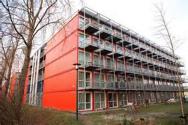
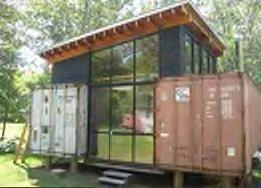
1. Cargo Container Dwelling: a dwelling unit constructed of one or more new or used cargo containers used for multi-modal shipping and meeting the definition of dwelling unit above.
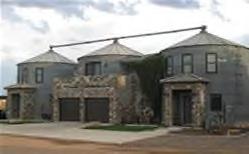
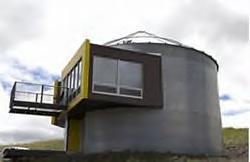
2. Grain Bin Dwelling Unit: A dwelling unit constructed of one or more grain bins, new or used meeting the definition of Dwelling Unit above.
3. Quonset home: A home constructed beneath and in a structure referred to as a Quonset.
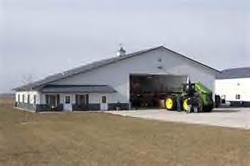
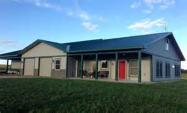
4. Shouse: A combination of a dwelling unit and machine shed under a common or connect roofing system. For purposes of a Shouse, these structures when on a farm, agricultural operation, or acreage shall not be classified as a farm building. In addition, the residence portion of the facility shall meet the definition of Dwelling Unit above.
5. Tiny House: A structure containing living spaces including sleeping and kitchen areas which measure 500 square feet or less in area. Tiny houses can be either portable, on wheels similar to a recreational vehicle, or on a permanent foundation.
6. Tree House: A dwelling unit where the primary structure of the unit is based on one or more tree clusters.
Dwelling, Single-family
Example of a Dwelling, Mobile Home
Dwelling, Townhouse: A one-family dwelling in a row of at least two such units in which each unit has its own front and rear access to the outside, no unit is located over another unit, and each unit is separated from any other unit by one or more vertical wall(s).
Dwelling, Two Family: A building having accommodations for and intended for use or occupancy by two independent families.
Dwelling Unit: A building, or part thereof, containing complete housekeeping facilities for a single family.
EEarthen Home: A home built into a berm or hillside covered by earth on three sides and on the roof.
Easement: Authorization by a property owner for the use by another, and for a specified purpose, of any designated part of his property.
Educational Institution: A public or nonprofit institution or facility which conducts regular academic instruction at preschool, kindergarten, elementary, secondary, or collegiate levels, including graduate schools, universities, junior colleges, trade schools, nonprofit research institutions and religious institutions. Such institutions must either: (1) Offer general academic instruction equivalent to the standards established by the State Board of Education; or (2) Confer degrees as a college or university or undergraduate or graduate standing; or (3) Conduct research; or (4) Give religious instruction. Private schools, academies, or institutes incorporated or otherwise, which operate for a profit, and commercial or private trade schools are not included in this definition.
Effective Date: The date that this resolution shall have been adopted, amended, or the date land areas shall have become subject to the regulations contained in this resolution as a result of such adoption or amendment.
Earthen Home/Earth sheltered home
Electric Distribution Substation: An electric substation with a primary voltage of less than 161 KV, with distribution circuits served therefrom.
Electric Transmission Substation: An electric transformation or switching station with a primary voltage of more than 161 KV without distribution circuits served therefrom.
Eleemosynary Institution: An institution supported by charity and designed to assist persons, for example; those recovering from mental or emotional illness.
Emergency Shelter Mission: A facility which provides temporary housing for one or more individuals who are indigent, needy, homeless or transient.
Enclosed: A roofed or covered space fully surrounded by walls.
Encroachment: An advancement or intrusion beyond the lines or limits as designated and established by the Regulation, and to infringe or trespass into or upon the possession or right of others without permission.
Engineer Any engineer qualified and licensed by any state or territory of the United States of America.
Enlargement: The expansion of a building, structure, or use in volume, size, area, height, length, width, depth, capacity, ground coverage, or in number.
Environmentally Controlled Housing: Any livestock operation meeting the definition of a Livestock Feeding Operation (LFO) and is contained within a building which is roofed and may or may not have open sides and contains floors which are hard surfaced, earthen, slatted or other type of floor. The facility is capable of maintaining and regulating the environment in which the livestock are kept.
Equestrian Center: Commercial horse, donkey, and mule facilities including: horse ranches, boarding stables, riding schools and academies, horse exhibition facilities, pack stations. This land use includes barns, stables, corrals, and paddocks accessory and incidental to the above uses.
Erected: Constructed upon or moved onto a site.
Exceptions: Uses that are not appropriate generally in a particular district without restriction, but which, if controlled as to number, area, location, relation to adjoining properties and other factors can be appropriate. Such uses that may be permitted in particular districts as exceptions are allowed only if expressly provided for herein.
Existing and Lawful: The use of a building, structure, or land was in actual existence, operation, and use, as compared to the use being proposed, contemplated, applied for, or in the process or being constructed or remodeled. In addition, the use must have been permitted, authorized, or allowed by law or any other applicable regulation prior to the enactment of a zoning regulation when first adopted or permitted, authorized or allowed by the previous zoning regulation prior to the adoption of an amendment to that zoning regulation.
Extraterritorial Jurisdiction: The area beyond the corporate limits, in which a city or village has been granted the powers by the state to exercise zoning and building regulations and is exercising such powers.
FFaçade: The exterior wall of a building exposed to public view from the building's exterior.
Factory: A structure or plant within which something is made or manufactured from raw or partly wrought materials into forms suitable for use.
Family: One or more persons related by blood, marriage, or adoption, living together as a single housekeeping unit; or a group of not more than four unrelated persons living together as a single housekeeping unit.
Family Child Care Home I: A childcare operation in the provider’s place of residence which serves between four and eight children at any one time. A Family Child Care Home I provider may be approved to serve no more than two additional school-age children during non-school hours. In addition to these regulations, a Child Care Home shall meet requirement of the State of Nebraska.
Family Child Care Home II: A childcare operation either in the provider’s place of residence or a site other than the residence, serving twelve or fewer children at any one time. In addition to these regulations, a Child Care Home shall meet requirement of the State of Nebraska.
Farm: A tract of 20 or more acres of land or water producing at least $1,000 in annual revenue of plants, animals or their products, which does not meet the criteria of a Livestock Feeding Operation.
Farm Operation, General: The current employment of land for the purposes of obtaining a profit in money by the raising, harvesting, and selling crops or by the feeding, breeding, management and sale of, or the produce of, livestock, poultry, fur-bearing animals or honeybees or for dairying and the sale of dairy products or any other agricultural or horticultural use or animal husbandry or combination thereof. Farm use includes the preparation and storage of the products raised on such land for man's use and animal use and disposal by marketing or otherwise. It includes the construction and use of dwellings and other buildings customarily provided in conjunction with farm use. General farm operations do not include Concentrated Animal Feeding Operations as defined herein.
Farm Products: Usual products produced on an Agricultural Operation or Farm in the county such as hay, vegetables, fruit, grain, and plants as well as raising thereon the usual animal units (A.U.’s) as defined within these regulations.
Farm Winery: Any enterprise which produces and sells wines produced from grapes, other fruit, or other suitable agricultural products of which at least seventy-five percent of the finished products are grown in this state.
Farmer’s Market: The seasonal selling or offering for sale at retail of home-grown vegetables or produce, occurring in a pre-designated area, where the vendors are generally individuals who have raised the vegetables or produce or have taken the same on consignment for retail sale.
Farming: The planting, cultivating, harvesting and storage of grains, hay or plants commonly grown in Nebraska with the necessary accessory uses for treating or storing the produce and the feeding of livestock as prescribed hereunder, provided such accessory uses do not include the feeding of garbage or offal to swine or other animals.
Farmstead: In contrast to a farmstead dwelling, a tract of land of not less than one acre and not more than 20 acres, upon which a farm dwelling and other outbuildings and barns existed at the time of the adoption of this resolution and was used for single-family resident purposes.
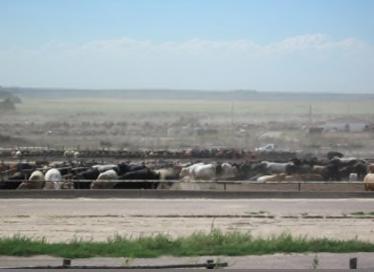
Feed Lot: Lot or building or a group of lots or buildings used for the confined feeding, breeding or holding of animals. This definition includes areas specifically designed for confinement in which manure may accumulate or any area where the concentration of animals is such that a vegetative cover cannot be maintained. Lots used to feed and raise poultry are considered to be feedlots. Pastures are not animal feedlots.
Feeder Cattle: Cattle past the calf stage that have weight increased making them salable as feedlot replacements.
Feeder Line: Any power line that carries electrical power from one or more energy sources to the point of interconnection with the electric power grid, in the case of interconnection with the high voltage transmission systems the point of interconnection shall be the substation serving the wind energy conversion system.
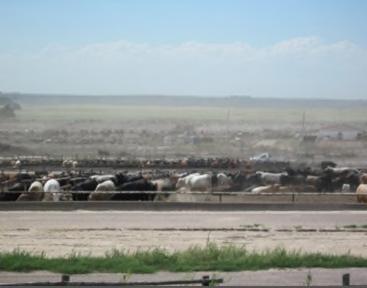
Example of a Feed lot
Example of a Farmer’s Market Copyright American Planning Association
Fence: A free-standing structure of metal, masonry, composition or wood or any composition thereof resting on or partially buried in the ground and rising above ground level, and used for confinement, screening or partition purposes.
Final Plat: The map or plan or record of a subdivision, and accompanying documents and materials, as described and defined in the subdivision regulations.
Finish Pig: To feed a pig until it reaches market weight.
Finishing Stage: Stage leading to and including full adulthood for swine is called the finishing stage. The pigs remain here until they reach market weight.
Flea Market: a building or open area in which stalls or sale areas are set aside, and rented or otherwise provided, and which are intended for the use by various unrelated individuals to sell articles that are either new, old, homemade, homegrown, handcrafted, obsolete, or antique and may include the selling of goods at retail by businesses or individuals who are generally engaged in retail trade. This definition does not include informal or private garage or yard sales.
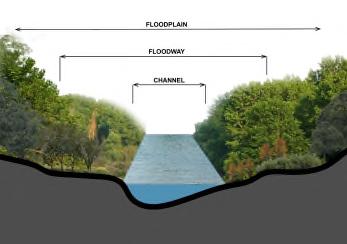
Flood: The water of any watercourse or drainage way which is above the banks or outside the channel and banks of such watercourse or drainage way.
Flood Plain: The area adjoining a watercourse which has been or may be covered by flood waters.
Floodway: The channel of a watercourse or drainage way and those portions of the flood plain adjoining the channel which are reasonably required to carry and discharge the flood water of any watercourse or drainage way.
Floor Area: Whenever the term "floor area" is used in these regulations as a basis for requiring off-street parking for any structure, it shall be assumed that, unless otherwise stated, said floor area applies not only to the ground floor area but also to any additional stories of said structure. All horizontal dimensions shall be taken from the exterior faces of walls.
Food Sales: Establishments or places of business primarily engaged in the retail sale of food or household products for home consumption. Typical uses include groceries, delicatessens, meat markets, retail bakeries, and candy shops.
Forty-acre tract: (see quarter-quarter)
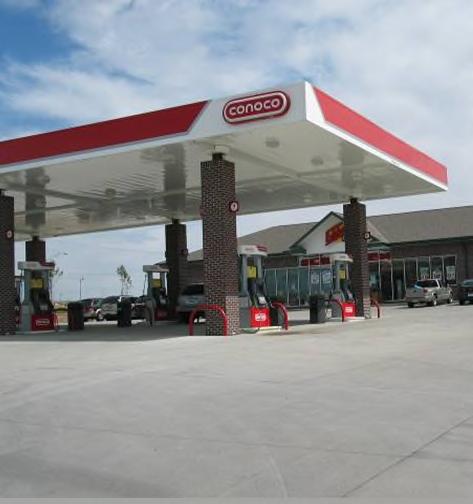
Freestanding Canopy: A permanent, freestanding, unenclosed roof structure, typical of gas stations and financial institutions, designed to provide patrons shelter from the elements.
Frontage: That side of a lot abutting on a street and ordinarily regarded as the front of the lot.
Freestanding Canopy
Diagram of Floodplain and Floodway
Fuel Station: A designated facility offering the sale gasoline, diesel fuel, alternative fuel sources (electric, CNG, etc.) and propane.
Fuel Storage: Tanks used to storage fuel either above- or belowground as part of an agricultural operation.
Funeral Home: A building or part thereof used for human funeral services. Such building may contain space and facilities for (1) a funeral chapel; (2) embalming and the performance of other services used in preparation of the dead for burial; (3) the performance of autopsies and other surgical procedures; (4) the storage of caskets, funeral urns, and other related funeral supplies; (5) the storage of funeral vehicles; and (6) facilities for cremation.
GGarage: A building for the storage of motor vehicles.
Garage, Private: A detached accessory building, including carports, on the same lot as a dwelling, used to house vehicles of the occupants of the dwelling.
Garage, Repair: A building designed and used for the storage, care, repair, or refinishing of motor vehicles including both minor and major mechanical overhauling, paint, and body work for payment. (Also, see Service Station.)
Garage, Storage: A building or portion thereof, designed or used exclusively for housing four or more motor-driven vehicles.
Garbage: Rejected or waste household food, offal, and swill composed of vegetable and animal substances. It shall be taken to mean and include all table and kitchen refuse of every kind and description; also decaying vegetables and meats, or anything that will, or may, decompose and become offensive or dangerous to health.
Garden Center: A place of business where retail and whole-sale products and produce are sold to the consumer. These centers, which may include a nursery and/or greenhouse, import most of the items sold, and may include plants, nursery products and stock, potting soil, hardware, power equipment and machinery, hoes, rakes, shovels, and other garden and farm variety tools and utensils.
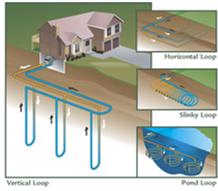
Examples of Geothermal Heat Pump System
Source: Yahoo Images/daviddarling.info
Geothermal Heat Pump System: A well, constructed for the purpose of utilizing the geothermal properties of the earth.
1. Open Loop Heat Pump well shall mean a well that transfers heat via pumped ground water which is discharged above and/or below ground. For below ground discharge, refer to NDEE Title 122.
2. Closed Loop Heat Pump well shall mean a well, constructed for the purpose of installing the underground closed loop pipe necessary to recirculate heat transfer fluid.
3. Horizontal Closed Loop means a trench or pit essentially parallel to the horizon and into which a closed loop pipe is placed for the purpose of heat transfer.
4. Vertical Closed Loop means a borehole essentially perpendicular to the horizon into which a closed loop pipe is placed for the purpose of heat transfer.
Governing Body: The Board of County Commissioners for Boyd County Nebraska.
Government Facility: A structure owned, operated, or occupied by a governmental agency to provide a governmental service to the public.
Grade: Except for Earthen Homes permitted under the Nebraska State Codes and Regulations, shall mean the following:
1. For buildings having walls facing one street only, the elevation of the sidewalk at the center of the wall facing the street shall be grade.
2. For buildings having walls facing more than one street, the grade shall be the average of the grades (as defined in A. above) of all walls facing each street.
3. For buildings having no walls facing a street, the average level of the finished surface of the ground adjacent to the exterior walls of the building shall be grade.
4. Any wall approximately parallel to and not more than 50 feet from a street line is considered as facing a street.
Grain Handling Systems: the moving, transferring, handling, storing, aerating and/or drying of grains by mechanical or natural means, which may include, but not limited to, stationary storage units (i.e. grain bins, hoppers, silos) grain-dump pits, fans, dryers, conveyors, augers, leg systems, and /or catwalks.
Granny Flat: (see “Accessory Apartment”)
Gravel and Crushed Rock: (as pertains to roads) materials added to the surface of dirt roads to provide all weather travel. This type of road surface is usually found in the rural areas of the County and generally less traveled in nature.
Grassed Waterway: Grassed waterways are areas planted with grass or other permanent vegetative cover where water usually concentrates as it runs off a field. They can be either natural or manmade channels. Grass in the waterway slows the water and can reduce gully erosion and aid in trapping sediment.
Grazing Land: Pasture, meadow, rangeland, or other similar area where livestock are put to feed on the vegetation.
Greenhouse, Private: A building whose roof and sides are made largely of glass or other transparent or translucent material and in which the temperature and humidity can be regulated for the cultivation of flowers or plants for personal enjoyment.
Greenhouse, Public or Retail: A building whose roof and sides are made largely of glass or other transparent or translucent material and in which the temperature and humidity can be regulated for the cultivation of flowers or plants for subsequent sale.
Greenway: A parcel or parcels of land, together with the improvements thereon, dedicated as an easement for access and/or recreation; usually a strip of land set-aside for a walkway, bicycle trail, bridle path, or other similar access-way.
Grit: Grit includes sand, gravel, cinder, or other heavy solid materials that are “heavier” (higher specific gravity) than the organic biodegradable solids in the wastewater. This includes eggshells, bone chips, seeds, coffee grounds, and large organic particles, such as food waste.
Gross Acres: The total area of a site, inclusive of all street and/or road rights-of-way, plus, any required supporting facilities.
Groundcover: Plant material used in landscaping.
Groundwater: Water occurring beneath the surface of the ground that fills available openings in the rock or soil materials such that they may be considered saturated.
Groundwater Recharge: The filling of groundwater aquifers by rain and melting snow percolating into the ground and saturating the pores between rock and soil particles.
Group Care Home: A home which is operated under the auspices of an organization which is responsible for providing social services, administration, direction, and control for the home which is designed to provide 24-hour care for individuals in a residential setting.
Group Home for the Handicapped: A dwelling with resident staff shared by four or more handicapped persons who live together as a single housekeeping unit and in a long term, family-like environment in which staff persons provide care, education, and participation in community activities for the residents with the primary goal of enabling the residents to live as independently as possible in order to reach their maximum potential. As used herein, the term "handicapped" shall mean having: (1) A physical or mental impairment that substantially limits one or more of such person's major life activities so that such person is incapable of living independently; or (2) A record of having such impairment.
Group Housing: Two or more separate buildings on a lot, each containing one or more dwelling units.
Example of Groundcover
Guest House: An attached or detached building used to house guests of the occupants of the principal building, and which is never rented or offered for rent.
Guest Ranch: A use incorporating two or more guest rooms, other than a boarding house, hotel or motel, and including outdoor recreational facilities, such as, but not limited to, horseback riding, swimming, tennis courts, shuffleboard courts, barbeque and picnic facilities intended primarily for use by the guests of the guest ranch. Bars and restaurants that cater primarily to those other than guests of the guest ranch are not permitted.
Guest Room: A room which is designed to be occupied by one or more guests for sleeping purposes, having no kitchen facilities, not including dormitories.
Gun Club: Any organization whether operated for profit or not, and whether public or private, which caters to or allows the use of firearms.
Gun Range: An area designated for the firing of firearms at stationary or mobile targets within the area.
HHalfway House: A licensed home for individuals on release from more restrictive custodial confinement or initially placed in lieu of such more restrictive custodial confinement, living together as a single housekeeping unit, wherein supervision, rehabilitation and counseling are provided to mainstream residents back into society, enabling them to live independently.
Hazardous Material: Materials, products, or substances that, by reason of their toxic, caustic, corrosive, explosive, abrasive, radioactivity, infectious properties, or other characteristics, that cause or may be detrimental or harmful to the health of any person or to the environment. For specific and more detailed information, current definitions, lists of hazardous material and quantities determined to pose a hazard, reference Title 40, Code of Federal Regulations, Parts 261 and 302, and /or any subsequent amendments thereto.
Hazardous Substances: Any substance or materials that, by reason of their toxic, caustic, corrosive, abrasive, or otherwise coming into contact with such material or substance.
Hazardous Waste: Waste products of industrial or chemical process including finished surplus, used, contaminated or unwanted fertilizer, herbicide, petroleum products, or other such processed waste material.
Head Equivalent: (See Animal Feeding Operation)
Health Care Facilities: A facility licensed or approved by the state or an appropriate agency, if required. Health Care Facility may be any of the following:
1. Hospitals including offices or medical societies, offices of charitable public health associations, and private office space for the practice of medicine and dentistry under a license from the Department of Health of the State of Nebraska; provided, that any such private offices for the practice of medicine and dentistry shall be occupied only by those on the staff of the hospital;
2. Convalescent or nursing home.
3. A facility for outpatient physical, occupational, or vocational therapy or rehabilitation.
4. Public health clinics and facilities; and
5. Ambulatory surgical care center which does not allow for overnight stay by patients. Unless an exception is made, health care facilities do not include doctors’, or dentists’, professional offices and private clinics.
Health Club: Privately-owned for-profit facilities such as gymnasiums, athletic clubs, health clubs, recreational clubs, reducing salons, and weight control establishments.
Health Recreation Facility: An indoor or outdoor facility including uses such as game courts, exercise equipment, locker rooms, whirlpool spa and/or sauna and pro shop.
Hedges: A row of closely planted shrubs, bushes, or any kind of plant forming a boundary or fence.
Heliport: Any landing area used for the landing and taking off of helicopters, including all necessary passenger and cargo facilities, fueling, and emergency service facilities.
Helistop: An area designed to be used for the landing or takeoff of one helicopter, the temporary parking of one helicopter, and other facilities as may be required by federal and state regulations, but not including operation facilities such as maintenance, storage, fueling, or terminal facilities.
Highway, Major Inter-Regional: A "U.S." or "State" designated highway with 100 feet right-of-way or more on which partial control of access and geometric design and traffic control measures are used to expedite the safe movement of through vehicular traffic.
Highway Setback Line: The future right-of-way line or plan lines of any highway.
Holding Pond: Means an impoundment made by constructing an excavated pit, dam, embankment or combination of these for temporary storage of liquid livestock wastes, generally receiving runoff from open lots, trailer washouts and contributing drainage area.
Holding Zone: A zoning district, usually a very low-density district, placed on property for the purpose of temporarily holding back the development of land for a more intensive desired use as indicated by the comprehensive plan until such time as community facilities are economically available and thereby avoiding the “leap frogging” of land uses.
Home-based Business: An accessory use of a single-family or twofamily residential structure which does not meet the definition of a home occupation. A home-based business would consist of service oriented uses and typically be more intense than a home occupation, due to factors such as intensity of use or clients coming to the residence. A Home-based Business typically will allow a minimum amount of employment from outside the individuals residing on the property.
Home Occupation: A business, occupation, trade or profession conducted for gain and carried on within a residential dwelling by the resident thereof.
Homeowners Association: A private, nonprofit corporation or association of homeowners of properties in a fixed area, established for the purpose of owning, operating, and maintaining various common properties and facilities.
Hoop Building: An anchored building erected for the purpose of storing materials, including but not limited to machinery and vehicles.
Hoop Building, Livestock: An anchored or freestanding building erected for the purpose of housing livestock. Floors are typically compacted dirt or concrete covered with dry bedding.
Hospital: An institution providing health and emergency services of medical or surgical nature to human patients and injured persons and are licensed by the state to provide facilities and services in surgery, obstetrics, and general medical practice.
Hospital, Animal: A place where animals or pets are given medical or surgical treatment and are cared for during the time of treatment. Use as a kennel shall be limited to short-time boarding and shall be only incidental to such hospital use.
Hotel or Motel: A building or portion thereof, or a group of buildings, offering transient lodging accommodations on a daily rate to the general public and providing services associated with restaurants, meeting rooms, and recreational facilities. The word "hotel" includes motel, inn, automobile court, motor inn, motor lodge, motor court, tourist court, motor hotel.
House Trailer (see Dwelling: Mobile Home)
Household Pet: An animal that is customarily kept for personal use or enjoyment within the home. Household pet shall include but not be limited to domestic dogs, domestic cats, domestic tropical birds, fish, and rodents.
Housing for the Elderly: A building or group of buildings containing dwellings in which each dwelling unit is occupied by at least one person of 55 years of age or more. This does not include developments containing convalescent or nursing facilities. (Also, see Congregate Housing.)
Housing For The Physically Handicapped: A building containing a dwelling or a group of dwellings in which each occupied dwelling unit is occupied by at least one physically handicapped person with a mobility impairment which requires certain construction design features for ingress, egress, and freedom of movement within the premises.
IImpact Easement: An easement or deed restriction, recorded in the office of the Boyd County Register of Deeds. Impact easements shall run with the land and is granted to the owner of a use.
Impervious Surface: A surface that has been compacted or covered with a layer of material making the surface highly resistant to infiltration by water, such as compacted sand, rock, gravel, or clay and conventionally surfaced streets, sidewalks, parking lots, and driveways.
Incidental Use: A use that is subordinate to the main use of a premise.
Incompatible Use: A use which is unsuitable for direct association with certain other uses because it is contradictory, incongruous or discordant.
Individual Septic System: A wastewater treatment system for a dwelling that has a septic tank and absorption system.
Industrial Building: A structure designed and constructed to house an industrial use.
Industrial Park: A planned coordinated development of a tract of land with two or more separate industrial buildings. The development is planned, designed, constructed, and managed on an integrated and coordinated basis with an enforceable master plan and/or covenants, conditions, and restrictions with special attention to on-site vehicular circulation, parking, utility needs, building design, and orientation and open space.
Industrial Uses: Shall mean a use or activity at a scale greater than home industry involving the manufacture and distribution of materials and/or products generated from raw materials or the assemblage of a product from several pre-manufactured pieces.
Industrial Waste: Any material resulting from a production or manufacturing operation having no net economic value to the source producing it.
Industrial Waste Disposal: the discarding of any Industrial Waste in either a legal or illegal manner.
Industry: The manufacture, fabrication, processing reduction or destruction of any article, substance or commodity, or any other treatment thereof in such a manner as to change the form, character, or appearance thereof and including storage elevators, truck storage yards, warehouses, wholesale storage and other similar types of enterprise.
Institutional Building/Use: A nonprofit or quasi-public use and building, such as a religious institution, library, public, or private school, cemetery, hospital, or government- owned or governmentoperated structure or land used for public purpose.
Intensity: The degree of concentration or activity with which land is used. Agriculture and residential are considered low intensity uses. Heavy industrial is considered a high intensity use. High intensity uses normally generate high concentrations of vehicular traffic and daytime population.
Intent and Purpose: That the Commission and Board by the adoption of these regulations, have made a finding that the health, safety, and welfare of the Community will be served by the creation of the regulations prescribed therein.
Intermittent Stream: Has flowing water only during certain periods of time, when groundwater provides water for stream flow. During dry periods, intermittent streams may not have flowing water. Runoff from rainfall or snowmelt is a supplemental source of water for the stream flow.
Irrigation Accessory Equipment: Equipment used with any irrigation system including gravity flow, center pivot or others. This shall include pivot points, well head, irrigation motors, etc. but does not include any structures over a motor or well head.
JJunk: Any worn-out, cast-off, old, or discarded articles of scrap, copper, brass, iron, steel, rope, rags, batteries, paper, trash, rubber, debris, waste, dismantled or wrecked automobiles, or parts thereof, and other old or scrap ferrous or nonferrous material.
Junkyard (Salvage Yard): An area of land with or without buildings, used for or occupied by a deposit, collection or storage, outside a completely enclosed building of used or discarded materials; used building materials, house furnishings, machinery, inoperable vehicles or parts thereof whether with or without the dismantling, processing, salvage, sale or other use or disposition of same.
An Example of an Institutional Use/Building
KKennel, Commercial: An establishment where 10 or more dogs or cats, or any combination thereof, other household pets, or nonfarm/non-domestic animals at least four months of age are groomed, bred, boarded, trained, or sold as a business.
Kennel, Private: Any premises used for the keeping of nine or less dogs, cats, or a combination thereof, or other non-farm/nondomestic animals by the owner/occupant or occupant of the premises for the purpose of show, hunting, or as pets. The dogs and cats shall belong to the owner/occupant or occupant and their keeping shall be accessory to the main use of the premises.
KitchenFacilities: A room or area equipped for the preparation and cooking of food when it has all of the following:
1. Kitchen sink.
2. Burner, cook stove, or microwave oven.
3. Refrigerator.
LLaboratory, Medical: An establishment which provides bacteriological, biological, medical, x-ray, pathological and other similar analytical or diagnostic services.
Lagoon: A wastewater treatment facility that is a shallow, artificial pond where sunlight, bacterial action, and oxygen interact to restore wastewater to a reasonable state of purity. This includes both human and livestock wastes. All lagoons shall meet the minimum design criteria established by the Nebraska Department of Environmental and Energy and the Nebraska Department of Health and Human Services. All lagoons shall have the proper permits approved prior to starting construction.
Landscaping: The improvement of any parcel of land with: grass, shrubs and/or trees. Landscaping may include pedestrian walks, flowerbeds, ornamental objects and other natural and artificial objects designed and arranged to produce an aesthetically pleasing effect.
Law Enforcement Center: A governmental facility working directly with the enforcement of laws through a municipality or county. A law enforcement center may be the base of operations for a sheriff, police department, or state agency, or it may be an incarceration facility (temporary or long-term), or a combination of all.
Leapfrog Development: New development separated from existing development by vacant land.
Leased Campground: A single tract of land with or without individually leased lots used for camping by the lease holders only. No transient camping is allowed.
LifeCareFacility: A facility for the transitional residency of the elderly and/or disabled persons, progressing from independent living to congregate apartment living where residents share common meals and culminating in full health and continuing care nursing home facility. (See Congregate Housing and Housing for the Elderly.)
Life Estate: is an interest in real property, including the right to use and occupy the property for the duration of the lifetime of the life estate holder. A life estate terminates upon the death of the holder. The owner of life estate is called a life tenant. After the death of the life tenant the estate either reverts back to the title holder or to the survivor or remaindermen mentioned in the deed bestowing life estate.
Liner: Any barrier in the form of a layer, membrane or blanket, naturally existing, constructed or installed to prevent a significant hydrologic connection between liquids contained in retention structures and waters of the United States.
Liquid Manure: That type of livestock waste that is in a liquefied state, collected in manure pits or lagoons in order to be sprayed/applied on the surface or injected beneath the surface.
Liquid Manure Storage Pits: Earthen, concrete or lined pits located wholly or partially beneath a semi or totally housed (ECH) livestock animal feeding operation or at some removed location used to collect waste production.
Liquid Waste Management System: A system where the majority of the animal waste in the lots, pens and/or buildings of a LFO is removed by flushing out such waste with water.
Livestock: Cattle, bison, horses, sheep, goats, swine, poultry, and other animals or fowl, which are being produced primarily for use as food or food products for human consumption.
Livestock Feeding Operation (LFO): Any farming operation in a confined area where grazing is not possible, and where the confined area is for more than six months in any one calendar year, and where the number of animals so maintained exceeds 1000 Animal Units as defined below. The confined area of the LFO shall include the pens, corrals, sheds, buildings, feed storage areas, waste disposal ponds, and related facilities. Two or more LFO's under common ownership are deemed to be a single LFO if they are adjacent to each other and utilize a common area of system for the disposal of livestock wastes.
Livestock Lagoon: (see “Waste Handling System”)
Livestock Pasturing Operation: Any livestock operation that uses pasture, as defined under this regulation, as the primary source of feed for the animals.
Livestock Sales Yard: An enclosure or structure designed or used for holding livestock for purposes of sale or transfer by auction, consignment, or other means.
Livestock Feeding Operation
Livestock Siting Matrix: A tool authorized in 2015 by the Nebraska Legislature via LB 106. The matrix is a tool for county officials to use to help determine whether to approve a conditional use permit or special exception application.
Livestock Wastes: Animal and poultry manure including associated feed losses, bedding, spillage, or overflow from watering systems, wash and flushing waters, sprinkling waters from livestock cooling, precipitation polluted by falling on or flowing onto a livestock operation, and other materials polluted by livestock or their direct product.
Livestock Waste Control Facilities or Facility or Facilities: (see “Waste Handling System”)
Living Floor Area: The square foot area of a dwelling unit, excluding the garage, attics and areas within a full basement that do not have ground level access to the outside, as measured between the face of the interior walls.
Loading Space: An off-street space or berth on the same lot with a main building, or contiguous to a group of buildings, for the temporary parking of commercial vehicles while loading or unloading, and which abuts a street, alley, or other appropriate means of ingress and egress.
Local Street or Local Highway: A street or road primarily for service to abutting property.
Long-Term Care Facility: A facility as defined in Title 15, Chapter 3 Nebraska Department of Health and Human Services and R.R.S Section 71-2017.01. These facilities include:
1. Nursing Facilities;
2. Boarding Home;
3. Adult Care Home;
4. Assisted Living Facility;
5. Center for the Developmentally Disabled;
6. Group Residence;
7. Swing Bed; and
8. Adult Day Care.
Lot: A parcel or tract of land which is or may be occupied by a use herein permitted, together with yards, and other open spaces herein required, that has frontage upon a street, and is a part of a recorded subdivision plat or has been recorded prior to the adoption of this Regulation, or a parcel of real property delineated on an approved record of survey, lot-split or sub-parceling map as filed in the office of the County Register of Deeds and abutting at least one public street or right-of-way, two thoroughfare easements, or one private road.
Lot, Corner: A lot located at the intersection of two or more streets at an angle of not more than 135 degrees. If the angle is greater than 135 degrees, the lot shall be considered an "Interior Lot".
Lot, Curve: A lot fronting on the outside curve of the right-of-way of a curved street, which street has a centerline radius of 300 feet or less.
Examples of Lot Types
Lot, Double Frontage or Through Lot: A lot having a frontage on two non-intersecting streets as distinguished from a corner lot.
Lot, Flag: A lot with frontage and access provided to the bulk of the lot by means of a narrow corridor.
Lot, Frontage: A side of a lot abutting on a legally accessible street right-of-way other than an alley or an improved county road. For the purposes of this definition, on corner lots, all sides of a lot adjacent to streets or roads shall be considered frontage.
Lot, Interior: A lot other than a corner lot, having a single frontage on a street.
Lot, Minimum Size: The minimum area required in a designated zoning district. The minimum lot size shall apply only to ground not covered by a waterway at the time of the application.
Lot, Nonconforming: A lot having less area or dimension than required in the district it is located and lawfully created prior to the zoning thereof and whereby the larger area or dimension requirements were established, or any lot, other than one shown on a plat recorded in the office of the County Register of Deeds, which does not abut a public road or public road right-of-way and which was lawfully created prior to the effective date of these regulations.
Lot Area: The total area, on a horizontal plane, within the lot lines of a lot.
Lot Coverage: The portion of a lot or building site which is occupied by any building or structure, excepting paved areas, walks and swimming pools, regardless of whether said structure is intended for human occupancy or not.
Lot Depth: The distance between the midpoints of straight lines connecting the foremost points of the side lot lines in front and in the rear of the lot.
Lot Improvement: Any building, structure, or other object or improvement of the land on which they are situated constituting a physical betterment of real property.
Lot Line, Front: A street right-of-way line forming the boundary of a lot.
Lot Line, Rear: The lot line that is most distant from and is most nearly parallel to the front lot line. If a rear lot line is less than 15 feet long, or if the lot comes to a point at the rear, the rear lot line shall be a line at least 15 feet long, lying wholly within the lot, parallel to the front lot line. If a lot has two or more front lot lines, the remaining yards will be rear yard or the remaining yards will by side yards and no rear lot line will exist.
Lot Line, Side: A lot line which is neither a front or rear lot line.
Lot of Record: A lot which is part of a subdivision, the plat of which has been recorded in the Office of the Register of Deeds or a parcel of land the deed to which was recorded prior to adoption of these Regulations.
Lot Width: The distance on a horizontal plane between the side lot lines of a lot, measured at right angles to the line establishing the lot depth at the established building setback line.
MMachine Shop: A work shop, including tool and die shops, that turns, shapes, planes, laser metal cutting, mills or otherwise reduces or finishes metal by machine-operated tools.
Maintenance Guarantee: Any security, other than cash, that may be accepted by the County to insure that required improvements will be maintained. (Also, see Performance Guarantee.)
Major Recreational Equipment: Boats and boat trailers, travel trailers, pickup campers or coaches, designed to be mounted on automotive vehicles, motorized dwellings, tent trailers and the like and recreational vehicles.
Manufactured Home Park: A parcel of land under single ownership that has been planned and improved for the placement of manufactured housing used or to be used for dwelling purposes and where manufactured home spaces are not offered for sale or sold. The term "manufactured home park" does not include sales lots on which new or used manufactured homes are parked for the purposes of storage, inspection, or sale.
Manufactured Home Subdivision: Any area, piece, parcel, tract or plot of ground subdivided and used or intended to be used for the purpose of selling lots for occupancy by manufactured homes.
Manufacturing: Uses primarily engaged in the mechanical or chemical transformation of materials or substances into new products. These uses are usually described as plants, factories, or mills and characteristically use power driven machines and materials handling equipment. Uses engaged in assembling component parts of manufactured products are also considered manufacturing if the new product is neither a structure nor other fixed improvement. Also included is the blending of material such as lubricating oils, plastics, resins, or liquors. Manufacturing production is usually carried on for the wholesale market, for interplant transfer, or to order for industrial users, rather than for direct sale to the domestic consumer.
Manure: Fecal and urinary defecations of livestock and poultry; may include spilled feed, bedding, or soil.
Map, Official Zoning District: A map delineating the boundaries of zoning districts which, along with the zoning text, is officially adopted by the Boyd County Board of Commissioners for Boyd County, Nebraska.
An Aerial of a Mining and Mineral Extraction Site and Quarry Source: Google Earth
Massage Therapy: The manipulation of body muscle or tissue by rubbing, stroking, kneading, or tapping, by hand or mechanical device.
Medical or Dental Clinic: Any building or portion thereof, other than a hospital, used or intended to be used as an office for the practice of any type of medicine, including chiropractic, dentistry, or optometry.
Micro-distillery: A distillery located in Nebraska that is licensed to distill liquor on the premises of the distillery licensee and produces ten thousand or fewer gallons of liquor annually.
Milking Parlor: The area of a dairy where milking takes place.
Milking Parlor wash water: Water used to rinse the animals and equipment during the milking process to improve sanitation. The wash water typically includes manure, feed solids, hoof dirt along with detergents and disinfectants that are being used at the operation. The amount of wash water used each day depends upon the number of animals milked and the management practices followed.
Mini-Storage or Mini-Warehouse: (See “Self-service Storage Facility”)
Mining and Mineral Extraction: The extraction of minerals, including solids, such as coal and ores; liquids, such as crude petroleum; gases, such as natural gas. Mining also includes quarrying; groundwater diversion; soil removal; milling, such as crushing, screening, washing, and floatation; and other preparation customarily done at the mine location or as part of a mining activity.
Mobile Home: (See “Dwelling, Mobile Home”)
Mobile Home Park: (See “Manufactured Home Park”)
Mobile Home Subdivision: (See “Manufactured Home Subdivision”)
Mobile Home Site: A plot of ground designed for accommodation of a single mobile home dwelling.
Monastery: A building or group of buildings designed to provide group housing for persons under religious vows or orders.
Motel: (See “Hotel”)
Motor Freight Terminal: A facility for freight pick-up or distribution; may include intermodal distribution facilities for truck or rail transport.
Motor Vehicle: Every self-propelled land vehicle not operated upon rails, except mopeds and self-propelled invalid chairs.
NNature Center/Preserve: Areas intended to remain in a predominately natural or undeveloped state, with or without animals and other wildlife, to provide resource protection and possible opportunities for passive recreation and environmental education for present and future generations.
Nebraska Revised Reissued Statutes: Applies to the state statutes as passed and codified by the State of Nebraska, the abbreviated term Nebr. R. R. S., 1943 are one and the same.
Net Acre: Total area exclusive of street or roadway and alley easement.
Nightclub: A commercial establishment dispensing beverages for consumption on the premises and in which dancing is permitted or entertainment is provided.
Non-Conforming Building: A building or portion thereof which was lawful when established but which does not conform to subsequently established zoning or zoning regulations.
Non-Conforming Use: A use lawful when established but which does not conform to subsequently established zoning or zoning regulation.
Non-Farm Buildings: Are all buildings except those buildings utilized for agricultural purposes on a farmstead of 20 acres or more which produces one thousand dollars or more of farm products each year.
Non-Farm Dwelling: Any dwelling that is not a part of a farm regardless of lot size.
Nonpoint Source: Diffuse pollution source (i.e. without a single point of origin or not introduced into a receiving stream from a specific outlet). The pollutants are generally carried off the land by storm water. Common non-point sources are agriculture, forestry, urban, mining, construction, dams, channels, land disposal, saltwater intrusion, and city streets.
No Till Farming: The soil is left undisturbed from harvest to planting except for nutrient and seed injection. Weed control is accomplished primarily with herbicides.
Normal Growing Season: The time period, usually measured in days, between the last freeze in the spring and the first frost in the fall. Growing seasons vary depending on local climate and geography. It can also vary by crop as different plants have different freezing thresholds.
Nuisance: A substantial invasion of or interference with another’s interest in the private use and enjoyment of their property/land.
Nursery: The use of a premises for the propagation, cultivation, and growth of trees, shrubs, plants, vines, and the like from seed or stock, and the sale thereof, and including the sale of trees, shrubs, plants, vines, and the like purchased elsewhere and transplanted into the soil of the premises. In connection with the sale of plants, such fungicides, insecticides, chemicals, peat moss, humus, mulches, and fertilizers as are intended to be used in preserving the life and health of the plants may be sold.
Nursery School: (see “Preschool”)
Nursing Home: A facility used or occupied by persons recovering from illness or suffering from infirmities of old age required skilled nursing care and related medical services and licensed by the appropriate state or federal agency or agencies.
Nutrient Application Levels: The levels of nutrients applied to the waste utilization area.
OOccupied Dwelling: Any residence, church, school and/or business, which has been in use at any time during the 12-month period immediately prior to the date upon which an application for a conditional use permit to construct an LFO or expand or modify a LFO.
Off-road Vehicle: Any motorized vehicle designed for or capable of cross-country travel on or immediately over land, water, sand, snow, ice, swampland, or other natural terrain, except that such terms exclude (a) registered motorboats, (b) military, fire, emergency, and law enforcement vehicles when used for emergency purposes.
Office: A building or a portion of a building wherein services are performed involving, primarily, administrative, professional, or clerical operations.
Official Map: (See Map, Official Zoning District.)
Off-Street Parking Area or Vehicular Use: To all off street areas and spaces designed, used, required, or intended to be used for parking, including driveways or access ways in and to such areas.
Open Lots: Pens or similar concentrated areas, including small shedtype areas or open-front buildings, with dirt, or concrete (or paved or hard) surfaces, wherein animals or poultry are substantially or entirely exposed to the outside environment except for possible small portions affording some protection by windbreaks or small shed-type areas.
Open Space: A parcel or parcels of land, together with the improvements thereon, primarily set aside for recreational use and enjoyment, exclusive of land areas used for streets, alleys, roads, driveways, parking areas, structures, and buildings.
Operating Permit: An operating permit as required for a LFO by the NDEE.
Other System Besides Liquid Manure Handling: An operation using confinement buildings with a mesh or slatted floor over a concrete pit, where the manure is scraped into a waste storage facility, or an operation using dry bedding on a solid floor. In this case the manure and bedding are not combined with water for flushing to a storage structure.
Outdoor Storage: The storage of any material for a period greater than 24 hours, including items for sale, lease, processing, and repair (including vehicles) not in an enclosed building.
Overlay District: A district in which additional requirements will act in conjunction with the underlying zoning district. The original zoning district designation does not change.
Owner: One or more persons, including corporations, who have title to the property, structure in question.
PPaintball Course: An area of land typically designed around hillsides, trees, waterways, rocks, etc. for the purpose of allowing organized combat-like games using paintballs and the different mechanized equipment to fire the paintballs as ammunition. These facilities shall also include any buildings or structures for providing shelter to the participants.
Parcel: A lot or a contiguous group of lots in single ownership or under single control that may be considered as a unit for purposes of development.
Park: Any public or private land available for recreational, educational, cultural, or aesthetic use. For the purposes of establishing a setback for a Livestock Feeding Operation, a Wildlife Management Area (WMA) is not considered a park.
Parking Area, Private: An area, other than a street, used for the parking of automotive vehicles capable of moving under their own power and restricted from general public use.
Parking Area, Public: An area, other than a private parking area or street used for the parking of vehicles capable of moving under their own power, either free or for remuneration.
Parking Lot: Any open area used for the storage of motor vehicles which contains space rented to the general public.
Pasture: An area where crops, vegetative forage growth, postharvest residues are sustained for the purpose of grazing animals in that area.
Paunch Manure: Partially digested material taken from an animal at the time of slaughter.
Performance Guarantee: A financial guarantee to ensure that all improvements, facilities, or work required by these Regulations will be completed in compliance with these regulations as well as with approved plans and specifications of a development (Also, see “Maintenance Guarantee”)
Permanent Foundation: A base constructed from either poured concrete or laid masonry rock or brick and placed on a footing located below ground level to a point below the frost line upon which a structure is permanently attached.
Permanently Attached: Connected to real estate in such a way as to require dismantling, cutting away, or unbolting in order to remove, relocate, or replace.
Permit: A document issued by Boyd County, including a Conditional Use Permit, authorizing the applicant to undertake certain activities.
Permitted Use: Any land use allowed without condition within a zoning district.
Person: An individual, firm, co-partnership, joint venture, association, social club, fraternal organization, corporation, estate, trust, receiver, syndicate, City, County, special district or any other group or combination acting as an entity, except that it shall not include Boyd County, Nebraska.
Petroleum Distribution Pipeline: Transportation facilities for the conveyance of: crude petroleum, refined petroleum products such as gasoline and fuel; natural gas; mixed, manufactured, or liquified petroleum gas; or the pipeline transmission of other commodities. Also includes pipeline surface and terminal facilities, including pumping stations, bulk storage, surge and storage tanks.
Pipeline: A pipe used to transport, transmit, convey, or store liquid or gas for hire in Nebraska interstate commerce other than a major oil pipeline, a gathering pipeline, distribution pipeline, or service line.
Pipeline, Major Oil: A pipeline which is larger than six inches in inside diameter and which is constructed in Nebraska for the transportation of petroleum, or petroleum components, products or wastes, including crude oil or any fraction of crude oil, within, though, or across Boyd County.
Pit System: Has a concrete floor and masonry or concrete side walls, is constructed 2–6 feet below the ground. The animal cages, if used, are then built 8 feet or more above the pit floor. Because the pit is built below ground level, care must be taken to ensure that surface and groundwater are not contaminated. Foundation drains and external grading to direct surface water away help to keep manure dry, so that natural composting might occur. The most important benefit of the deep-pit is that manure can be stored for several months or more.
Pit (Shallow): The most frequently used pit system. The concrete pit is 4–8 inches deep and is located 3-6 feet below the main floor. The manure and other waste is mechanically scraped or flushed out with water to a storage area, or directly loaded into a spreader for direct field application.
Planned Unit Development: A zoning district providing flexible land development when planned and designed under the provisions of these regulations as a unit containing one or more land uses.
Planning Commission: The Boyd County Planning Commission as established in accordance with section 23-114 R.R.S. Neb. (1943) and with the powers and authority therein granted.
Plat: A map showing the location, boundaries, and legal description of individual properties.
Point Source: Any discernible, confined, and discrete conveyance, including but not limited to any pipe, ditch, channel, tunnel, conduit, well, discrete fixture, container, rolling stock, concentrated animal feeding operation, landfill leachate collection system, vessel, or other floating craft from which pollutants are or may be discharged.
Policy: A statement or document of the county, such as the comprehensive plan, that forms the basis for enacting legislation or making decisions.
Pollutant: Dredged spoil, solid waste, incinerator residue, filter backwash, sewage, garbage, sewage sludge, munitions, chemical wastes, biological materials, radioactive materials (except those regulated under the Atomic Energy Act of 1954, as amended (42U.S.C. 2011 et seq.)), heat, wrecked or discarded equipment, rock, sand, cellar dirt and industrial, municipal, and agricultural waste discharged into water.
Portable Temporary Classroom: A temporary building, either stickbuilt or pre-manufactured (built off-site), installed on the grounds of a state approved school to provide additional classroom space where there is a shortage of capacity. The classroom, as it is temporary (not permanent) and portable is subject to a time limitation as determined by the County. It does not need to be on a permanent foundation but must be properly anchored to the County’s building codes. It must also meet any other building code or Zoning Regulation criteria.
Portland Cement Concrete: An aggregate with cement binder, characterized by gray\white color. Relatively smooth, uniform concrete surface having few exposed aggregates. Each country has its own standard for Portland cement. The United States, including Boyd County, uses the specification prepared by the American Society for Testing and Materials – ASTM C-150 Standard Specification for Portland cement.
Preliminary Plat: The preliminary drawings and information which indicate the proposed layout of a subdivision, as described and defined in the subdivision regulations.
Premises: A tract of land, consisting of one lot or irregular tract, or more than one lot or irregular tract, provided such lots or tracts are under common ownership, contiguous, and used as a single tract. A building or land within a prescribed area.
Preschool: An early childhood program which provides primarily educational services, where children do not nap and where children are not served a meal.
Private Club: A non-profit association of persons who are bona fide members paying dues, which owns, hires or leases a building or premises, or portion thereof, the use of such building or premises being restricted to members and their guests. The affairs and management of such private clubs are conducted by a board of directors, executive committee, or similar body chosen by the members at their annual meeting. A private club may include the serving of food and meals on said premises while providing adequate dining room space and kitchen facilities. A private club may include the sale of alcoholic beverages to members and their guests provided the activity is secondary and incidental to the promotion of some common objective by the organization; and, said sale of alcoholic beverages is in complete compliance with all municipal, state and federal laws.
Private Well: A well that provides water supply to less than 15 service connections and regularly serves less than 25 individuals.
Prohibited Use: Any use of land, other than nonconforming, which is not listed as a permitted use or conditional use within a zoning district.
Professional Office: Any building or part thereof used by one or more persons engaged in the practice of law, medicine, accounting, architecture, engineering or other occupation customarily considered as a profession.
Public Conservation Lands: Land owned in fee title by State or Federal agencies and managed specifically for conservation purposes, including but not limited to State Wildlife Management Areas, State Parks, federal Wildlife Refuges and Waterfowl Production Areas. For purposes of this Regulation, public conservation lands will also include lands owned in fee title by nonprofit conservation organizations, Public conservation lands will also include private lands upon which conservation easements have been sold to public agencies or non-profit conservation organizations.
Public Improvement: Any drainage facility, roadway, street, sidewalk, sewer or water facility or other improvement for which the government body may ultimately assume the responsibility of maintenance and operation.
Public Use Area: That portion of land owned by the United States, the state, or a political subdivision with facilities which attract the public to congregate and remain in the area for significant periods of time. Facilities include, but are not limited to, picnic grounds, campgrounds, lodges, shelter houses, playground equipment, lakes, and swimming beaches.
Public and Private Utility: Any governmental entity or business which furnishes to the general public telephone service, electricity, natural gas, water, sewer and other services so affecting the general public interest as to be subject to the supervision or regulation of a State agency.
Public Water Supply: A water supply system designed to provide public piped water fit for human consumption, if such system has at least 15 service connections or regularly serves at least twentyfive individuals. This definition shall include: (1) Any collection, treatment, storage, or distribution facilities under the control of the operator of such system and used primarily in connection with such system; and (2) Any collection or pretreatment storage facilities not under such control which are used primarily in the connection with such system.
Pullet: Young female chicken between 10 and 32 weeks of age, usually this term denotes egg type birds.
QQuarry: See Mining and Mineral Extraction Site
Quarter Section: That portion of land approximately equal to ¼ of a section of land (160 acres)
Quarter-Quarter Section: That portion of land approximately equal to 1/16 of a section of land (40 acres)
R
Racetrack: A measured course where machines (usually automobiles), dogs, horses or other animal, are entered in competition against one another or against time.
Railroad: The land use including the right-of-way (R.O.W.) abutting railroad properties occupied by uses pertinent to the railroad operation and maintenance, but not including properties owned by the railroad and leased for use by others.
Railroad Right-of-Way: A strip of land with tracks and auxiliary facilities for track operation, but not including freight depots or stations, loading platforms, train sheds, warehouses or car yards.
Rangeland: An open region over which livestock may roam and feed. The plant cover is principally native grasses, grass like plants, and shrubs. It includes natural grasslands, savannahs, certain shrubs and grass like lands, most deserts, tundra, alpine communities, coastal marshlands, and wet meadows. It also includes lands that are re-vegetated naturally or artificially and are managed like native vegetation.
Raw Materials Storage Area: Includes but is not limited to feed silos, silage bunkers, and bedding materials.
¼ Section
Section
Recharge Areas: The places where rain and snow melt percolate into the ground, refilling the groundwater aquifers.
Recharge Rate: The time that is required to add to or replenish water in an aquifer or water table.
Recreation, Active: Leisure-time activities, usually of a formal nature and often performed with others, requiring equipment and taking place at prescribed places, sites or fields.
Recreation Equipment: Play apparatus such as swing sets and slides, sandboxes, poles for nets, picnic tables, lawn chairs, barbecue stands, and similar equipment or structures including tree houses, swimming pools, playhouses, or sheds utilized for storage of equipment. Also see (“Major Recreational Equipment”)
Recreation, Passive: Leisure-time activities that involve relatively inactive or less energetic activities, such as walking, sitting, picnicking, card games, chess, checkers and similar table games. This includes open space for nature, and areas for nature walks and observation.
Recreational Facility: Facilities for the use by the public for passive and active recreation including tennis, handball, racquetball, basketball, track and field, jogging, baseball, soccer, skating, swimming, or golf. This shall include country clubs and athletic clubs, but not facilities accessory to a private residence used only by the owner and guests, nor arenas or stadiums used primarily for spectators to watch athletic events. In addition, recreational facilities shall mean museums, amphitheaters, race tracks (including all motor-powered vehicles) and wildlife conservation areas (used for public viewing), and theme parks.
Recreational Vehicle (RV): A vehicular unit primarily designed as a temporary living quarters for recreational camping or travel use having either its own power or designed to be mounted on or drawn by a motor vehicle. Recreational vehicle includes motor home, truck camper, travel trailer, camping trailer, and fifth wheel.
Recreational Vehicle And Boat Repair Facility: A business/facility solely for the repair and servicing of Recreational Vehicles and Boats, to include the sale of related parts and supplies.
Recreational Vehicle (RV) Park Complex: A tract of land under single ownership developed for recreational use. The complex shall accommodate recreational vehicle sites established and maintained for occupancy by recreational vehicles of the general public as temporary living quarters for recreation or vacation purposes. Complex may include the following services; restaurant, liquor sales, marina, RV and boat repair, fuel sales and convenience store.
Recycling Facility: A facility other than a junkyard in which recoverable resources such as paper, glass, metal cans, and plastics, are collected, bundled, stored, flattened, crushed, or reduced in some manner within a completely enclosed building, in preparation for shipment to others for reuse.
Recycling Collection Point: A drop-off point for temporary storage of recoverable resources such as paper, glass, cans, and plastics, and where no processing of such items takes place.
Recycling Plant: A facility other than a junkyard where recoverable resources such as paper products, glass, metal cans and other products are recycled, reprocessed, and treated to return the products to a condition in which they may be reused for production.
Remodeling: Any change in a structure (other than incidental repairs and normal maintenance) which may prolong its useful life; or the construction of any addition to, or enlargement of, a structure; or the removal of any portion of a structure.
Research Laboratory or Center: A building or group of buildings in which are located facilities for scientific research, investigation, testing, or experimentation, and not including manufacture or sale of products, except as incidental to the main purpose of the laboratory.
Residence: See Dwelling Unit.
Restaurant: A public eating establishment at which the primary function is the preparation and serving of food primarily to persons seated within the building.
Restaurant, Drive-In: An establishment that has the facilities to serve prepared food and/or beverages to customers seated within motor vehicles for consumption either on or off the premises.
Restaurant, Fast Food: An establishment whose principal business is the sale of food and/or beverages in ready-to-consume individual servings, for consumption either within the establishment, for carryout, or drive-in; and where foods are/or beverages are usually served in paper, plastic, or other disposable containers.
Retail Trade: Uses primarily engaged in selling merchandise for personal or household consumption and rendering services incidental to the sale of goods. Uses engaged in retail trade sell merchandise to the general public or to households for personal consumption.
Reverse Spot Zoning: An arbitrary zoning or rezoning of a small tract of land that is not consistent with the comprehensive land use plan and that uniquely burdens an individual owner largely to secure some public benefit. Reverse spot zoning usually results from downzoning a tract of land to a less intensive use classification than that imposed on nearby properties.
Rezoning: An amendment to or change in the zoning regulations either to the text or map or both.
Rezoning, Piecemeal: The zoning reclassification of individual lots resulting in uncertainty in the future compatible development of the area.
Right-of-Way: A strip of land occupied or intended to be occupied by a street, road, railroad, electric transmission line, oil or gas pipeline, water main, sanitary or storm sewer main, or for other similar use.
Riparian Buffer: A strip of vegetation planted along the bank of a body of water which slows the rate of flow of runoff from adjoining uplands, causing sediment and other materials to fall out onto the land before the runoff enters and pollutes the body of water.
Road, Improved: A street, county road, and/or State/Federal Highway that are graded, surfaced and maintained on a regular basis with an approved granular material or hard-surfacing material.
Road, Private: A way, other than driveways, open to vehicular ingress and egress established for the benefit of certain, adjacent properties. (Also, see Right-of-Way and Street.)
Road, Public: All public right-of-way reserved or dedicated for street or road traffic. (Also, see Right-of-Way and Street.)
Road, Unimproved: An officially declared minimum maintenance road as well as any road that is not generally graded, crowned or contain a surfacing material of either a granular or hard-surfaced nature.
Roadside Stand: A temporary structure or vehicle used primarily for the sale of farm products produced on the premises or adjoining premises. Others basic crafts and drinks may be sold by the same vendor on-site.
Rodeo Grounds: A tract of land used for the public performance featuring ordinary rodeo contests. These grounds are often used for other public benefits and performances when sponsored by clubs and organizations of the community.
Room: An un-subdivided portion of the interior of a dwelling unit, excluding bathroom, kitchen, closets, hallways, and service porches.
Rooming House: Any dwelling in which more than three persons, either individually or as families, are housed or lodged for hire, with or without meals.
Runoff: That part of precipitation, snow melt, or irrigation water that runs off the land into streams or other surface-water. It can carry pollutants from the air and land into receiving waters.
SSand or Gravel Pit: Land used for the extraction of sand and/or gravel for public and/or commercial use.
Sanitary Landfill: A type of operation in which garbage and refuse, or garbage, or refuse is deposited by a plan on a specified portion of land, and is compacted by force applied by mechanical equipment, and then is covered by compacted suitable covering material to a depth of at least twelve inches over individual cells of garbage and/or refuse, which are closed at the end of each day, and to a depth of at least twenty-four inches over the finished land fill.
SatelliteDish Antenna: An antenna consisting of a radiation element intended for transmitting or receiving television, radio, microwave, or radiation signals and supported by a structure with or without a reflective component to the radiating dish, usually circular in shape.
Scenic Easement: An easement for the purpose of limiting land development in order to preserve a view or scenic area.
School, Day, Pre-, or Nursery: A school or center for children under school age, whether licensed as a day care center or not, shall be approved by the Nebraska State Fire Marshall as being in safety conformance with the National Fire Protection Association, Pamphlet 101, known as the Life Safety Code and shall be approved by the Nebraska Department of Health and Welfare as meeting their health and welfare standards.
School, Elementary, Junior High, or High: Public and other non-profit institutions conducting regular academic instruction at kindergarten, elementary, and secondary levels. Such institutions shall offer general academic instruction equivalent to the standards prescribed by the State Board of Education.
School, Private: An institution conducting regular academic instruction at kindergarten, elementary or secondary levels operated by a non-governmental organization in conformance with the Nebraska Statutes.
School, Trade: An institution offering extensive instruction in the technical, commercial, or trade skills and operated by a nongovernmental organization.
Screening: A method by which a view of one site from another adjacent site is shielded, concealed, or hidden during all seasons of the year and may include fences, walls, hedges, beams, or other features. (Also, see Buffer.)
Sediment: Solid material that is in suspension, is being transported, or has been moved from its original location by air, water, gravity or ice.
Sedimentation: The addition of soils to lakes, a part of the natural aging process, making lakes shallower. The process can be greatly accelerated by human activities.
Aerial view of a Sanitary Landfill
Example of the Sight Triangle
Self-Service Station: An establishment where motor fuels are stored and dispensed into the fuel tanks of motor vehicles by persons other than the service station attendant and may include facilities available for the sale of other retail products.
Self-Service Storage Facility: A building or group of buildings containing individual, compartmentalized, and controlled access stalls or lockers for storage.
Semi-solid Manure: Contains little bedding and usually no extra water added. In most cases, little drying occurs before handling. During wet weather the manure scraped from open lots can also be semi-solid in nature.
Separate Ownership: Ownership of a parcel of land by a person who does not own any of the land abutting such parcel.
Service Stations: Buildings and premises where the primary use is the supply and dispensing at retail of motor fuels, lubricants, batteries, tires, and motor vehicle accessories and where light maintenance activities such as engine tune-ups, lubrications, and washing may be conducted, but not including heavy maintenance and repair such as engine overhauls, painting, and body repair.
Setback Line, Front Yard: The line which defines the depth of the required front yard. Said setback line shall be parallel with the rightof-way line or highway setback line when one has been established. (See illustration under “Yards”.)
Setback Line, Rear Yard or Side Yard: The line which defines the width or depth of the required rear or side yard. Said setback line shall be parallel with the property line, removed therefrom by the perpendicular distance prescribed for the yard in the district. (See illustration under “Yards”.)
Shooting Range, Outdoor: The use of land for archery and/or the discharging of firearms for the purposes of target practice, skeet and trap shooting, mock war games, or temporary competitions, such as turkey shoots. Excluded from this use type shall be general hunting and unstructured and nonrecurring discharging of firearms on private property with the property owner’s permission.
Sight Triangle: An area at a street or road intersection in which nothing shall be erected, placed, planted, or allowed to grow in such a manner as to materially impede vision of traffic at an intersection as established within these regulations.
Silo: A structure or storage area to confine livestock feed.
Similar Use: The use of land, buildings, or structures of like kind or general nature with other uses within a zoning district as related to bulk, intensity of use, traffic generation and congestion, function, public services requirements, aesthetics or other similarities.
Site Plan: A plan, prepared to scale, showing accurately and with complete dimensioning, the boundaries of a site and the location of all buildings, structures, uses, drives, parking, drainage, landscape features, and other principal site development improvements for a specific parcel of land.
Site, Septic: The area bounded by the dimensions required for the proper location of the septic tank system.
Sketch Plat: A sketch preparatory to preparation of the preliminary plat to enable a subdivider to reach general agreement with the Planning Commission at the earliest possible time.
Sludge: Solids removed from sewage during wastewater treatment and then disposed of by incineration, dumping, burial, or land application.
Soil Excavation, Commercial: The process of altering the natural (grade) elevation by cutting or filling the earth, or any activity by which soil or rock is cut, dug, quarried, uncovered, removed, displaced, or relocated to be used on a private project for a fee.
Soil Excavation, Public: The process of altering the natural (grade) elevation by cutting or filling the earth, or any activity by which soil or rock is cut, dug, quarried, uncovered, removed, displaced, or relocated by a governmental unit for a governmental purpose.
Solar Units: A device designed and used for the purpose of collecting solar energy and utilizing the energy to heat space or water, or for some other use, within a structure.
Solid Manure: Combination of urine, bedding, and feces with little or no extra water added. It is usually found in loafing barns, calving pens, and open lots with good drainage.
Solid Waste: Waste materials consisting of garbage, trash, refuse, rubble, sewage, offal, dead animals, or paunch manure.
Spot Zoning: An arbitrary zoning or rezoning of a small tract of land that is not consistent with the comprehensive land use plan and primarily promotes the private interest of the owner rather than the general welfare. Spot zoning usually results from an up-zoning to a more intensive use classification.
Stable, Private: A detached accessory building for the keeping of horses owned by the occupants of the premises and not kept for remuneration, hire or sale.
Stable, Riding: A structure in which horses or ponies, used elusively for pleasure riding or driving, are housed, boarded, or kept for remuneration, hire, or sale.
State: The State of Nebraska.
Stockpiling: The accumulation of manure in mounds, piles, or other exposed and non-engineered site locations for the storage or holding for a period of not more than one year.
Storage: The keeping, in a roofed or unroofed area, of any goods, junk, material, merchandise, or vehicles on the same tract or premises for more than 30 days.
Storage Containers: A standardized, reusable vessel that is or appears to be: (1) originally, specifically or formerly designed for or used in the packing, shipping, movement or transportation of freight, articles, goods or commodities, or (2) designed for or capable of being mounted or moved on a rail car, or (3) designed for or capable of being mounted on a chassis or bogie for movement by truck trailer or loaded on a ship.
Story: A space in a building between the surface of any floor and the surface of the floor above, or if there is not floor above, then the space between such floor and the ceiling or roof above.
Story, One-Half: The same as "Half-Story".
Street: A public thoroughfare or right-of-way dedicated, deeded, or condemned for use as such, other than an alley, which affords the principal means of access to abutting property including avenue, place, way, drive, lane, boulevard, highway, road and any other thoroughfare except as excluded in these regulations.
Street Arterial: A street designed with the primary function of efficient movement of through traffic between and around areas of a city, village, or county with controlled access to abutting property.
Street Collection: A street or highway that is intended to carry traffic from minor street to major streets. Collector streets are usually the principal entrance streets to residential developments and the streets for circulation within the development.
Street, Curvilinear: Local streets that deviate from straight alignment and change direction without sharp corners or bends.
Street, Frontage Access: A street parallel and adjacent to a major street, major inter-regional highway, or major collection road and primarily for service to the abutting properties and being separated from the major street by a dividing strip.
Street, Local: A street designed for local traffic that provides direct access to abutting residential, commercial, or industrial properties.
Street, Looped: A continuous local street without intersecting streets and having its two outlets connected to the same street.
Street, Major: A street or highway used primarily for fast or high volume traffic, including expressways, freeways, boulevards, and arterial streets.
Streets, Private: An open, unoccupied space, other than a street or alley dedicated to the public, but permanently established as the principal means of vehicular access to abutting properties. The term "private street" includes the term "place."
Street,Side: That street bounding a corner or reversed corner lot and which extends in the same general direction as the line determining the depth of the lot.
Street Centerline: The centerline of a street right-of-way as established by official surveys.
StreetLine: A dividing line between a lot, tract, or parcel of land and the contiguous street.
Structure: Anything constructed or built, any edifice or building of any kind, or any piece of work artificially built up or composed of parts joined together in some definite manner, which requires location on the ground or is attached to something having a location on the ground, including swimming and wading pools and covered patios, excepting outdoor areas such as paved areas, walks, tennis courts, and similar recreation areas.
Structure, Advertising: (see "Advertising Structure")
Structure, Temporary: A structure without any foundation or footing and removed when the designated time period for which the temporary structure was erected has ceased.
Structural, Alteration: Any change in the support members of a building, such as in a bearing wall, column, beam or girder, floor or ceiling joists, roof rafters, roof diaphragms, foundations, piles, or retaining walls or similar components.
Subdivision: The division of land, lot, tract, or parcel into two or more lots, parcels, plats, or sites, or other divisions of land for the purpose of sale, lease, offer, or development, whether immediate or future. The term shall also include the division of residential, commercial, industrial, agricultural, or other land whether by deed, metes, and bounds description, lease, map, plat, or another instrument.
Subdivision Regulations: The official Subdivision Regulations of the County, together with all amendments thereto, adopted pursuant to Nebraska State Statutes.
Substantial Improvement: Any repair, reconstruction, or improvement of a structure, the cost of which equals or exceeds 50% of the market value of the structure either,
1. Before the improvement or repair is started, or
2. If the structure has been damaged and is being restored before the damage occurred. For purposes of this definition, “substantial improvement” is considered to occur when the first alteration of any wall, ceiling, floor or other structural part of the building commences, whether or not that alteration affects the external dimensions of the structure. The term does not, however, include any alteration to comply with existing state or local health, sanitary, building or life safety codes or regulations.
Substations: Any electrical facility to convert electricity to a voltage greater than 35,000 (35,000 KV) for interconnection with high voltage transmission lines.
Surface Water Class A -- Primary Contact Recreation: Surface waters which are used, or have a high potential to be used, for primary contact recreational activities. Primary contact recreation includes activities where the body may come into prolonged or intimate contact with the water, such that water may be accidentally ingested and sensitive body organs (e.g. eyes, ears, nose, etc.) may be exposed. Although the water may be accidentally ingested, it is not intended as a potable water supply unless acceptable treatment is supplied. These waters may be used for swimming, water skiing, canoeing, and similar activities.
Surface Waters: Waters within the jurisdiction of this state, including all streams, lakes, ponds, impounding reservoirs, marshes, wetlands, watercourses, waterways, springs, canal systems, drainage systems, and all other bodies or accumulations of water, natural or artificial, public or private, situated wholly or partly within or bordering upon the state.
TTavern: (See “Bar”)
Taxidermy Service: The business of preparing, stuffing, and mounting the skins of animals.
Temporary Use: A use intended for limited duration to be located in a zoning district permitting such use.
Tower, Communication: A structure situated on a site that is intended for transmitting or receiving television, radio, or telephone communications. (Also, see “Antenna”)
Tract: A plot or parcel of land shown by survey, other than a lot in a subdivision which is recorded in the Office of the Register of Deeds.
Trailer: A vehicle standing on wheels or on rigid supports which is used for transporting boats, cargo or property.
Transfer Station: A fixed facility where solid waste from collection vehicles is consolidated and temporarily stored for subsequent transport to a permanent disposal site. This does not include an infectious waste incineration facility.
Transient: A person who is receiving accommodations for a price, with or without meals, for a period of not more than 180 continuous days in any one year.
Trailer, Automobile: A vehicle without motor power designed and constructed to travel on the public thoroughfares and to be used for human habitation or for carrying property, including a trailer coach.
Transitional Housing: A project that is designed to provide housing and appropriate supportive services to homeless persons to facilitate movement to independent living. The housing is shortterm, typically less than 24 months. In addition to providing safe housing for those in need, other services are available to help participants become self-sufficient.
Transitional Use: A permitted use or structure that, by nature or level and scale or activity, acts as a transition or buffer between two or more incompatible uses.
Transmission Line: The electrical power lines that carry voltages of at least 69,000 volts (69 KV) and are primarily used to carry electric energy over medium to long distances rather than directly interconnecting and supplying electric energy to retail customers.
Transmissivity: The ability of an aquifer to yield a certain output of groundwater over a set period of time.
Tree Cover: The area directly beneath the crown and within the dripline of a tree.
Truck Repair: The repair, including major mechanical and body work, straightening of body parts, painting, welding or other work that may include noise, glare, fumes, smoke, or other characteristics to an extent greater than normally found in gasoline service stations, of trucks having a hauling capacity of over one ton and buses but excluding pickups and other vehicles designed for the transport of under eight passengers.
Truck Terminal: A building or an area in which freight brought by truck is assembled and/or stored for routing or reshipment, or in which semitrailers, including tractor and/or trailer units and other trucks, are parked or stored for a short time period.
UUpzoning: A change in zoning classification of land to a more intensive or more restrictive district such as from residential district to commercial district or from a single-family residential district to a multiple family residential district.
Usable Open Space: That part of the ground area of a lot or development devoted to outdoor recreational space, but excluding private or public roadways, accessory off-street parking and loading and other uses and structures.
Use: Any purpose for which a structure or tract of land may be designed, arranged, intended, maintained or occupied; also, any activity, occupation, business or operation carried on, or intended to be carried on, in a structure or on a tract of land.
Use, Best: The recommended use or uses of land confined in an adopted comprehensive plan. Such use represents the best use of public facilities, and promotes the public health, safety and general welfare.
Use, Highest: An appraisal or real estate market concept that identifies the use of a specific tract of land that is most likely to produce the greatest net return on investment.
Use, Principal: The main use of land or structure, as distinguished from an accessory use. (Also, see “Building, Principal”)
Use Regulations: Regulations identifying permitted and exceptional uses, accessory uses, use limitations and use conditions.
Used Materials Yard: Any lot or a portion of any lot used for the storage of used materials. This shall not include “Junk Yard” or “Automobile Wrecking Yards”.
Utility Easement: (see “Easement”)
VVariance: A relaxation of the literal terms of the zoning regulations where applicable to avoid undue hardship to a property owner and where the public interest will be served.
Vehicle: Every device in, upon, or by which any person or property is or may be transported or drawn upon a highway, excepting devices moved solely by human power or used exclusively upon stationary rails or tracks.
Vehicle, Motor: (See “Motor Vehicle”)
Visual Obstruction: Any fence, hedge, tree, shrub, wall or structure exceeding two feet in height, measured from the crown of intersecting or intercepting streets, alleys or driveways, which limit the visibility of persons in motor vehicles on said streets, alleys, or driveways. This does not include trees kept trimmed of branches below a minimum height of eight feet.
WWarehouse: A building used primarily for the storage of goods and materials.
Warehouse and Distribution: A use engaged in storage, wholesale, and distribution of manufactured products, supplies, and equipment.
Waste Handling System: Any and all systems, public or private, or combination of said structures intended to treat human or livestock excrement and shall include the following types of systems.
1. Holding pond shall mean an impoundment made by constructing an excavated pit, dam, embankment or combination of these for temporary storage of liquid livestock wastes, generally receiving runoff from open lots and contributing drainage area.
2. Lagoon shall mean an impoundment made by constructing an excavated pit, dam, embankment or combination of these for treatment of liquid livestock waste by anaerobic, aerobic or facultative digestion. Such impoundment predominantly receives waste from a confined livestock operation.
3. Liquid manure storage pits shall mean earthen or lined pits located wholly or partially beneath a semi or totally housed livestock operation or at some removed location used to collect waste production.
4. Sediment shall mean a pond constructed for the sole purpose of collecting and containing sediment.
5. Human disposal systems shall comply with the requirements of Title 124 at the Nebraska Department of Environmental and Energy or subsequent agencies.
Waste, Industrial: Any material resulting from a production or manufacturing operation having no net economic value to the source producing it.
Wastewater Lagoon: (See Lagoon.)
Waste Utilization Area: Land used or reserved for the application of animal wastes from a CAFO.
Watershed: The surrounding land area that drains into a lake, river or river system.
Waters of the State: The waters within the jurisdiction of this state, including all streams, lakes, ponds, impounding reservoirs, marshes, wetlands, watercourses, waterways, wells, springs, irrigation systems, drainage systems, and all other bodies or accumulations of water surface or underground, material or artificial, public or private, situated wholly within or bordering upon the state.
Water System, Regional: A water system which has been constructed for the expressed purpose of supplying potable water to densely populated areas. A regional system shall be an extension of an existing municipal system and shall not be dependent upon individual wellfields or other water source other than those serving the municipality.
Water District, Rural: shall mean a water district, as defined by the State of Nebraska, which has been constructed for the expressed purpose of supplying potable water to densely populated areas and/or rural residents. A rural system shall include independent wellfields, pressurization systems, and storage.
Water Table: The upper limit of the portion of the soil that is completely saturated with water. The seasonal high-water table is the highest level to which the soil is saturated.
An example of the Waters of the State
Wellfield: A tract of land that contains a number of wells supplying water.
Wetland: An area that is inundated or saturated by surface water or ground water at a frequency and duration sufficient to support, and that, under normal circumstances, does support, a prevalence of vegetation typically adapted for life in saturated soiled conditions, commonly known as hydrophytic vegetation.
Wholesale Establishment: An establishment for the on-premises sales of goods primarily to customers engaged in the business of reselling the goods.
Wholesale Trade: A use primarily engaged in selling merchandise to retailers; to industrial, commercial, institutional, farm or professional business users; or to other wholesalers; or acting as agents or brokers in buying merchandise for or selling merchandise to such persons or companies. The principal types of establishments included are: merchant wholesalers; sales branches and sales offices (but not retail stores) maintained by manufacturing enterprises apart from their plants for the purpose of marketing their products; agents, merchandise or commodity brokers, and commission merchants; petroleum bulk storage, assemblers, buyers, and associations engaged in cooperative marketing of farm products. The chief functions of uses in wholesale trade are selling goods to trading establishments, or to industrial, commercial, institutional, farm and professional; and bringing buyer and seller together. In addition to selling, functions frequently performed by wholesale establishments include maintaining inventories of goods; extending credit; physically assembling, sorting and grading goods in large lots, breaking bulk and redistribution in smaller lots; delivery; refrigeration; and various types of promotion such as advertising and label designing.
Xeriscaping: Landscaping characterized by the use of vegetation that is drought-tolerant or a low water use in character.
Example of Xeriscaping
Source: Google Images
YYard: Open space on a lot which is unoccupied and unobstructed from the ground to the sky, except for permitted obstructions.
Yard, Front: A yard extending along the full length of the front lot line from said line to a line drawn parallel to it equal to the depth of the required front yard. On corner lots, the Zoning Administrator shall determine the front yard requirement subject to the limitation that at least one front yard shall have the required front yard depth and the other shall have no less than one-half of the required front yard depth.
Yard, Rear: A yard extending from the rear lot line to a line drawn parallel to the rear lot line at a distance therefrom equal to the depth of the required rear yard. In the case of through lots and corner lots, there will be no rear yards, but only front and side yards.
Yard, Side: A yard extending along a side lot line and back to a line drawn parallel to the side lot line at a distance therefrom equal to the width of the required minimum side yard, but excluding any area encompassed within a front yard or rear yard.
ZZoningAdministrator: Person or persons authorized and empowered by the county to administer and enforce the requirements of these Regulations.
Zoning District: The same as "District".
Zoning District, Change of: The legislative act of removing one or more parcels of land from one zoning district and placing them in another zoning district on the zone map of the County.
Zoning Board of Adjustment: The Board established in accordance with sections 23-168.01 through 23-168.04 R.R.S. Neb.
Zoning Regulations: The official Regulations as approved and adopted in the Zoning Regulations of the county of Boyd, Nebraska, together with all amendments thereto, adopted pursuant to sections 23-114 through 23-114.05 R.R.S. Neb..
Example of different Yard Requirements
ARTICLE 3: GENERAL REGULATIONS
Section 3.01 Principal Uses
The principal uses of land or building as hereinafter listed in each Zoning District shall be permitted in the Districts indicated under the provisions of this Regulation. No land or buildings shall be devoted to any use other than the use permitted hereinafter in the Zoning District in which the land or building shall be located with the following exceptions:
1. Use lawfully established on the effective date of this Regulation and rendered non-conforming by the provisions thereof shall be subject to the provisions hereinafter set forth.
2. Conditional uses allowed in accordance with procedures or provisions set forth herein.
3. Accessory uses incidental to the principal use and located on the same lot.
Section 3.02 Conditional Uses
The development of this provision is based upon the Zoning Districts, within which Districts, the use of land and buildings in relation to the land are substantially uniform. It is recognized; however, that there are certain uses which, because of their unique characteristics, cannot be properly classified in any particular Zoning District, without consideration, in each case, of the impact or influence of those uses upon neighboring land. Such conditional uses fall into two categories:
1. Uses publicly operated or traditionally affected with a public interest.
2. Uses entirely private in character, but of such an unusual nature that their operation may give rise to unique problems with respect to their influence or impact on neighboring property.
Section 3.03 Accessory Uses
Unless otherwise prohibited or restricted, a permitted use also allows uses, buildings, and structures incidental thereto if located on the same site or building plot. However, such accessory uses, buildings, and structures shall not be established or erected prior to the establishment or construction of the principal use or building unless otherwise permitted by this Regulation.
Section 3.04 Nonconforming, General Intent
It is the intent of this resolution to permit lawful non-conformities to continue until they are removed, but not encourage their survival. Such uses are declared by this resolution to be incompatible with permitted uses in the districts involved. It is further the intent of this resolution that non-conformities shall not be enlarged upon, expanded or extended nor be used as grounds for adding other structures or uses prohibited elsewhere in the same district except as may be authorized in this title.
Section 3.05 Nonconforming Lots of Record
1. In any district where buildings and structures are permitted, notwithstanding limitations imposed by other provisions of this Resolution, use and customary accessory buildings may be erected on any single record at the effective date of adoption or amendment of this Resolution. This provision shall apply even though such lot fails to meet the requirements for area or width, or both that are generally applicable in the district; provided:
a. The yard dimensions and other requirements not involving area or width, or both, of the lot shall conform to the regulations for the district in which such lot is located.
b. Such lot has been owned separately and individually from adjoining tracts of land at a time when the creation of a lot of such size and width at such location would have been lawful; and
c. Has remained in separate and individual ownership from adjoining lots or tracts of land continuously during the entire period in which this or previous Resolution would have prohibited creation of such lot.
2. Variance of area, width and yard requirements shall be obtained only through action of the Board of Adjustment.
Section 3.06 Nonconforming Structures
1. Authority to continue: Any structure which is devoted to a use which is permitted in the zoning district in which it is located, but which is located on a lot which does not comply with the applicable lot size requirements and/or the applicable bulk regulations, may be continued, so long as it remains otherwise lawful, subject to the restrictions of this section.
2. Enlargement, Repair, Alterations: Any such structure described in Section 3.06 (1) may be enlarged, maintained, repaired or remodeled, provided, however, that no such enlargement, maintenance, repair
or remodeling shall either create any additional nonconformity or increase the degree of existing nonconformity of all or any part of such structure, except that as to structures located on a lot that does not comply with the applicable lot size requirements, the side yard requirements shall be in conformance with this section, unless otherwise permitted by conditional use permit unless otherwise approved or as specified in the Residential District.
3. Damage or Destruction: In the event that any structure described in Section 3.06 (1) is damaged or destroyed, by any means, to the extent of more than 50 percent of its structural value:
A. Such structure shall not be restored unless it shall thereafter conform to the regulations for the zoning district in which it is located, unless otherwise provided herein; provided that structures located on a lot that does not comply with the applicable lot size requirements in Section 3.06, shall not have a side yard of less than five feet. When a structure is damaged to the extent of less than 50 percent of its structural value, no repairs or restoration shall be made unless a zoning permit is obtained, and restoration is actually begun within six months after the date of such partial destruction and is diligently pursued to completion.
B. When a building, the use of which does not conform to the provisions of the Boyd County Zoning Regulation but is allowed to continue under said regulations per Section 3.06 (1), is damaged by fire, explosion, act of God, or the public enemy said building may be rebuilt within 12 months to its previous size, animal units and footprint. Said destruction shall not be an intentional act by the property owner or resident. Said building may be rebuilt within 500 feet of its previous area as long as it does not cause a violation to the Boyd County Zoning Regulations that the original building was not in violation of. Notwithstanding, an extension to the 12 months may be granted by the Planning Commission not to exceed an additional 12 months.
4. Moving: No structure shall be moved in whole or in part for any distance whatever, to any other location on the same or any other lot unless the entire structure shall thereafter conform to the regulations of the zoning district in which it is located after being moved.
Section 3.07 Nonconforming Uses
1. Nonconforming Uses of Land: Where at the effective date of adoption or amendment of this resolution, lawful use of land exists that is made no longer permissible under the terms of this resolution as enacted or amended, such use may be continued so long as it remains otherwise lawful, subject to the following provisions:
A. No such non-conforming use shall be enlarged or increased, nor extended to occupy a greater area of land than was occupied at the effective date of adoption or amendment of this resolution.
B. No such nonconforming use shall be moved in whole or in part to any other portion of the lot or parcel occupied by such use at the effective date of adoption or amendment of this resolution; and
C. If any such nonconforming use of land ceases for any reason for a period of more than 12 months, any subsequent use of such land shall conform to the regulations specified by this resolution for the district in which such land is located.
2. Nonconforming Uses of Structures: If a lawful use of a structure, or of structure and premises in combination, exists at the effective date of adoption or amendment of this resolution, that would not be allowed in the district under the terms of this resolution, the lawful use may be continued so long as it remains otherwise lawful subject to the following provisions:
A. No existing structure devoted to a use not permitted by this resolution in the district in which it is located shall be enlarged, extended, constructed, reconstructed, moved or structurally altered except in changing the use of the structure to use permitted in the district in which it is located.
B. Any nonconforming use may be extended throughout any parts of a building which were manifestly arranged or designed for such use at the time of adoption or amendment of this resolution, but no such use shall be extended to occupy any land outside such building.
C. If no structural alterations are made, any nonconforming use of a structure or structures and premises may be changed to another nonconforming use provided that the Planning Commission through the conditional use process either by general rule or by making findings in the specific case, shall find that the proposed use is equally appropriate or more appropriate to the district than the existing nonconforming use. In permitting such change, the Planning Commission may require appropriate conditions and safeguard in accord with the provisions of this resolution.
D. Any structure, or structure and land in combination, in any or on which a nonconforming use is superseded by a permitted use, shall thereafter conform to the regulations for the district in which such structure is located and the nonconforming use may not thereafter be resumed.
E. When a nonconforming use of a structure or structure and premises in combination is discontinued or abandoned for 12 months, the structure or structure and premises in combination shall not thereafter be used except in conformance with the regulations of the district in which it is located; and F. Where nonconforming use status is applied to a structure and premises in combination, removal or destruction of the structure shall eliminate the nonconforming status of the land.
Section 3.08 Repairs and Maintenance
1. On any building devoted in whole or in part to any nonconforming use, work may be done in any period of 12 consecutive months on ordinary repairs or on repair or replacement of non-bearing walls, fixtures, wiring or plumbing provided that the cubic area of the building as it existed at the time of passage of amendment of this Resolution shall not be increased.
2. Nothing in this resolution shall be deemed to prevent the strengthening or restoring to a safe condition of any building or part thereof declared to be unsafe by any official charged with protecting the public safety, upon order of such official.
Section 3.09 Uses Under Conditional Use Permit Not Nonconforming Uses
Any use for which a Conditional Use Permit has been issued as provided in this Resolution shall not be deemed a nonconforming use but shall without further action be deemed a conforming use in such district.
Section 3.10 Interpretation
In interpreting and applying the provisions of these regulations, they shall be held to be the minimum requirements for the promotion of public safety, health, convenience, comfort, moral, prosperity, and general welfare. It is not intended by these regulations to interfere with or abrogate or annul any easements, covenants or other agreements between the parties, except that if these regulations impose a greater restriction, these regulations shall control.
Section 3.11 Scope of Regulations
No building, structure, or land within the jurisdiction of Boyd County shall hereafter be used or occupied and no structure or part thereof shall hereafter be erected, constructed, reconstructed, moved, or structurally altered, except in conformity with the provisions of this Resolution herein specified for the district in which it is located and except after receiving a zoning permit from the Boyd County Zoning Administrator and:
1. Every building hereafter erected shall be located on a lot of record.
2. Only one principal building will be permitted on one lot of record, unless otherwise allowed in this regulation.
3. In a Planned Unit Development, before a zoning permit can be granted, an application for a Zoning Compliance Certificate shall be submitted for approval.
4. After a county/township road has been classified as a minimum maintenance road or is an unimproved road, no zoning permits for livestock facilities, residential dwellings, mobile home, or manufactured home shall be issued on any property adjoining such classified road; unless an agreement is made between the applicant/county board/township board.
Section 3.12 Zoning Standards
No nonconforming building, structure, or part thereof shall hereafter be erected or altered if it does not meet the requirements described in sections 3.06 and 3.07, unless a variance is granted:
1. To reduce any required yard setbacks
2. To exceed the height or bulk
3. To occupy a greater percentage of lot area
4. To erect or place any building, or structure, or part thereof into any zoning district to be used or occupied
5. To relocate or transport any building, structure, or part thereof into any zoning district to be used or occupied
6. To accommodate or house a greater number of families
No part of a yard or other open space required in connection with any building, occupancy, or use for the purpose of complying with these regulations shall be included in the calculations to determine the size of area necessary to accommodate the off-street parking and loading space requirements.
Section 3.13 District Regulations, Restrictions, Boundary Creation
No such regulation, restriction, or boundary shall become effective until after a public hearing in relation thereto, at which parties in interest and citizens shall have an opportunity to be heard. Notice of the time and place of such hearings shall be given by publication thereof in a paper of general circulation in the County at least one time 10 days prior to such hearing.
Section 3.14 Right-of-Way Splits and Minimum Lot Requirements
In circumstances where a parcel of ground owned by one individual or party was split into two or more parcels by action taken by the NDOT, the township or Boyd County and one or more of the resulting lots has been made a non-conforming tract(s) for development, the required minimum lot size may be less than required and may be approved administratively. However, in all circumstances, the minimum setback requirements shall be observed. In addition, said tract(s) was conforming prior to said action.
Section 3.15 Lot
1. Every building hereafter erected, reconstructed, converted, moved or structurally altered shall be located on a lot or lot of record and in no case, shall there be more than one principal building on a lot unless otherwise provided.
2. More than one principal building of a single permitted use may be located upon a lot or tract in the following instances provided the Planning Commission approves the application through a Conditional Use Permit.
A. Institutional buildings,
B. Public or semi-public buildings,
C. Multiple-family dwellings,
D. Commercial or industrial buildings,
E. Housing for the Elderly, or F. Agricultural buildings.
Section 3.16 Reductions in Lot Area Prohibited
No lot, even though it may consist of one or more adjacent lots of record, shall be reduced in area so that yards, lot area per family, lot width, building area, or other requirements of these Regulations are not maintained. This section shall not apply when a portion of a lot is acquired for a public purpose as discussed in Section 3.14.
Section 3.17 Yard Requirements
1. Yard requirements shall be set forth under the Schedule of Lot, Yard, and Bulk Requirements for each zoning district. Front, side and rear yards shall be provided in accordance with these regulations hereinafter indicated and shall be unobstructed from the ground level to the sky, except as herein permitted.
2. All accessory buildings that are attached to principal buildings (e.g., attached garages) shall comply with the yard requirements of the principal building, unless otherwise specified.
3. Any side or rear yard in a residential district which is adjacent to any existing industrial or commercial use shall be no less than 25 feet and shall contain landscaping and planting suitable to provide effective screening.
4. Any yard for commercial or industrial use which is adjacent to any residential use or district shall be increased to 40 feet and shall contain landscaping and planting suitable to provide effective screening.
Section 3.18 Drainage
No building, structure, or use shall be erected on any land, and no change shall be made in the existing contours of any land, including any change in the course, width, or elevation of any natural or other drainage channel, that will obstruct, interfere with, or substantially change the drainage from such land to the detriment of neighboring lands. Anyone desiring to build or otherwise change the existing drainage situation shall be responsible for providing to the County or their designated agent that such changes will not be a detriment to the neighboring lands.
Section 3.19 Permitted Obstructions in Required Yards
The following shall not be considered obstructions when located in the required yards:
1. All Yards:
A. Steps and accessibility ramps used for wheelchairs and other assisting devices which are four feet or less above grade which are necessary for access to a permitted building or for access to a lot from a street or alley.
B. Chimneys projecting 24 inches or less into the yard.
C. Recreational and laundry-drying equipment.
D. Approved freestanding signs.
E. Arbors and trellises.
F. Flag poles.
G. Window unit air conditioners projecting not more than 18 inches into the required yard;
H. Fences or walls subject to applicable height restrictions are permitted in all yards; and
I. Egress windows and bulkhead enclosure.
2. Front Yards:
A. Bay windows projecting three feet or less into the yard are permitted.
B. Open or screened porches, platforms or terraces not over three feet above the average level of the adjoining ground, including a permanently roofed-over terrace or porch provided they do not extend or project into the yard more than six feet and have no more than 48 square feet of area; and
C. Awnings and canopies provided they do not extend or project into the yard more than six feet and has no more than 48 square feet of area.
3. Rear and Side Yards:
A. Open off-street parking spaces.
B. Balconies or outside elements of central air conditioning systems; and
C. Open or screened porches, platforms or terraces not over three feet above the average level of the adjoining ground, including a permanently roofed-over terrace or porch.
4. Double Frontage Lots:
A. The required front yard shall be provided on each street.
5. Building Groupings:
A. For the purpose of the side yard regulation a group of business or industrial buildings separated by a common party wall shall be considered as one building occupying one lot.
Section 3.20 Accessory Building and Uses
1. Construction of an Accessory Building shall meet the following:
A. No accessory building shall be constructed upon a lot for more than 12 months prior to beginning construction of the principal building.
B. No accessory building shall be used for more than 12 months unless the main building on the lot is also being used or unless the main building is under construction.
2. No detached accessory structure shall exceed the maximum permitted height of the principal building or structure.
3. No accessory building shall be erected in or encroach upon the required side yard on a corner lot or the front yard of a double frontage lot.
4. Detached accessory buildings or structures shall be located no closer to any principal building than five feet.
5. Except as herein provided, no accessory building shall project beyond a required yard line along any street.
A. Service station pumps and Pump Island may occupy the required yards, provided, however, that they are not less than 15 feet from street lines.
Section 3.21 Occupancy of Basements and Cellars
No basement or cellar shall be occupied for residential purposes until the remainder of the building has been substantially completed.
Section 3.22 Well Fields
No development of any kind shall be located closer than 1,000 feet to any wellhead location as defined by the NHHS.
Section 3.23 Permitted Modifications of Height Regulations
1. The height limitations of this Regulation shall not apply to:
Air-Pollution Prevention Devices
Barns, silos and other ag. structures
Belfries
Chimneys
Church Spires
Conveyors
Cooling Towers and Ventilators
Cupolas
Derricks
Domes
Elevator Bulkheads
Grain Elevators
Masts and Aerials
Non-commercial wind turbines
Ornamental Towers and Spires
Observation Towers
Public Monuments
Radio/Television Towers less than 125 feet tall
Smokestacks
Solar Panels
Stage Towers or Scenery Lots
Tanks
Commercial Elevator Penthouses Water Towers and Standpipes
Fire Towers
Flag Poles
Wind Energy Conversion System-Commercial / Utility grade
2. When permitted in district, public or semi-public service buildings, hospitals, institutions, or schools may be erected to a height not exceeding 75 feet.
3. Any necessary mechanical apparatus usually required to be placed above the roof level and not intended for human occupancy may be erected to any safe height not in conflict with any other existing federal, state or local regulations, or any other County regulations. These structures shall require permits as required by the County.
Section 3.24 Amenities, Fire
Open or lattice-enclosed fire escapes fireproof outside stairways and balconies opening upon fire towers, and the ordinary projections of chimneys and flues into the rear yard, may be permitted by the Zoning Administrator for a distance of not more than three and one-half feet and where the same are so placed as not to obstruct lights and ventilation.
Section 3.25 Corner Lots or
County Road Intersections
On a corner lot or the intersection of two county roads or a county road and a Federal or State Highway in any district, nothing shall be erected, planted or allowed to grow in such a manner as to materially impede vision between a height of three feet and 10 feet above the grades of the centerline of the intersecting street or road, from the point of intersection 130 feet in each direction measured along the centerline of the streets or roads. This provision shall not apply to Irrigation
Accessory Equipment.
Section 3.26 Recreation
Equipment, Storage
Major recreational equipment such as boats, boat trailers, travel trailers, pick-up campers or coaches, camping buses or converted trucks, tent trailers, and recreational vehicles shall not be stored or parked within the required front yard of a residentially zoned district and no such recreational equipment shall be utilized for living, sleeping or housekeeping purposes when parked in a residentially zoned district or in any location not approved for such use.
Section 3.27
Storage of Goods and Equipment
Goods, equipment, supply materials, machinery and parts thereof, shall not be stored on any residentially zoned property except as provided under Section 3.20 other than in completely enclosed buildings or in spaces screened by fencing and/or evergreen shrubbery.
Section 3.28 Building
Setback
1. The building setback lines shall be determined by measuring the horizontal distance from the property line to the furthest exterior wall of the existing or proposed structure, or
2. Where the centerline of a road is identified, said setback shall be from the centerline of the road to a point horizontally located at the required minimum distance.
3. All new non-farm residences shall locate no less than the corresponding distances provided in Section 8.09 from an Existing Agricultural Operation or LFO with more than 301 animal units located in any affected adjacent Zoning District.
Section 3.29 Screening
1. Junkyards (salvage or wrecking yards) shall be screened with an eight-foot-high opaque, solid fence, brick wall, or earth berm so as to provide visual and aural separation between such use and adjacent areas.
2. Junkyards (salvage or wrecking yards) located next to railroad right-of-way shall have a 10-foot-high opaque, solid fence, brick wall, or earth berm on the property line common to the railroad right-of-way
3. All extractive industries shall be screened by means of plant materials, earth mounding, or solid fencing at least six feet in height to provide visual and aural separation between such use and adjacent areas.
4. All holding, or incineration areas of dead livestock shall be screened by means of plant materials, earth mounding, or solid fencing at least six feet in height to provide visual and aural separation between such use and adjacent areas. No storage or incineration of dead livestock shall be located in road right-ofway or on any other land not owned or leased by the livestock operation.
Section 3.30 Fences, Walls, Hedges and Trees
1. Fences and walls up to six feet in height shall be permitted in any required yard, or along the edge of any yard, provided that within any required front yard in Residential Districts, no fence, wall or hedge shall be over four feet in height nor closer than 25 feet to any public right-of-way. The only exception to the foregoing shall be in Industrial Districts where height may exceed six feet, however such fences, walls and hedges shall be no closer than 25 feet to a county road right-of-way. No such hedges shall be permitted to encroach onto public rights-of-way or across property lines.
2. Trees or hedges reaching over six feet in height shall be permitted in any required yard or along the edge of any yard, provided that such trees or hedges be planted at least 25 feet from a county road right-of-way. No such trees and hedges shall be permitted to encroach onto public rights-of-way or across property lines. No such trees shall be planted under overhead utility lines.
Section 3.31 Public Utility Facilities Lot Size Requirements
Notwithstanding any other provision of these regulations, none of the following public utility or public service uses shall be required to comply with the lot size requirements and bulk regulations of the zoning district in which they are located:
1. Electric and telephone substations and distribution systems, including transformer stations.
2. Gas regulator stations.
3. Poles, wires, cables, conduits, vaults, laterals, pipes, mains, valves or other similar equipment for the transmission of electricity, gas, or water.
4. Broadcasting and microwave transmitting or relay stations and towers, except as may be required to meet setback requirements.
The setback for irrigation wells, affixed irrigation accessory equipment, irrigation re-use pits and livestock pollution control facilities (the road dam structure being excluded) shall be exempt from any setback requirements.
Section 3.33 Secondary Dwellings on an Agricultural Operation
More than one dwelling may be permitted by conditional use on an agricultural operation provided the residence is an accessory use to an agricultural operation and under the same ownership as the existing dwelling(s).
Section 3.34 Prohibited Uses
All uses not specifically listed within a particular zoning district are deemed to be prohibited until some point where this Resolution is amended to include a given use.
Section 3.35 Fees
The payment of any and all fees for any zoning or subdivision related action or permit request shall be required prior to the issuance or investigation of any said action or permit request. Such fees shall be adopted by the County Board of Supervisors by separate Resolution.
ARTICLE 4: ZONING DISTRICTS
Section 4.01 Establishment of Districts
1. Purpose: For the purpose of these Regulations, the jurisdictional area defined in Section 1.03 is hereby divided into the following districts, the respective symbol for each district being set forth opposite its title:
AG-1
TA-1
Intensive Agricultural District
Transitional Agricultural District
RPC-1 River Protection Corridor
RR-1 Rural residential District
AGV Valentine Soil Overlay District
FP Floodplain Overlay District
2. Designation: Each such district may be designated on the Zoning Map, in the Use and Bulk Tables and elsewhere in the text of these Regulations by symbol only.
Section 4.02 Provision for Official Zoning Map
1. The county is hereby divided into districts, as shown on the Official Zoning Map, which, together with all explanatory matter thereon, is hereby adopted by reference and declared to be a part of this Resolution. The Official Zoning Map shall be identified by the signature of the Chair, attested by the County Clerk, and bearing the seal of the County under the following words: "This is to certify that this is the Official Zoning Map referred to in Section 4.02 of Resolution No. of “The County of Boyd, Nebraska", together with the date of the adoption of this Resolution. If, in accordance with the provisions of this Resolution, changes are made in the district boundaries or other matter portrayed on the Official Zoning Map, such changes shall be entered on the Official Zoning Map promptly after the amendment has been approved by the County Board of Commissioners”.
2. In the event that the Official Zoning Map becomes damaged, destroyed, lost or difficult to interpret because of the nature or number of changes and additions, the County Board of Commissioners may by resolution adopt a new Official Zoning Map. The new Official Zoning Map may correct drafting or other errors or omissions in the prior Official Zoning Map, but no such correction shall have the effect of amending the original Official Zoning Map or any subsequent amendment thereof. The new Official Zoning Map shall be identified by the signature of the Chair, attested by the County Clerk and bearing the seal of the County under the following words: "This is to certify that this Official Zoning Map supersedes and replaces the Official Zoning Map adopted February 26, 2020, Resolution No of “The County of Boyd, Nebraska." Unless the prior Official Zoning Map has been lost, or has been totally destroyed, the prior map or any significant parts thereof remaining shall be preserved, together with all available records pertaining to its adoption or amendment.
Section 4.03 Zoning Map
1. General: The areas and boundaries of such districts are hereby established as shown on the Official Zoning Map, and said Map, together with all explanatory matter thereon, is hereby adopted by reference and declared to be a part of these Regulations. The Official Zoning Map shall be identified by the signature of the Chairman of the Board of County Commissioners, attested by the County Clerk and bear the seal of the County. The Official Zoning Map shall be the final authority as to the current zoning status of land, water areas, buildings and structures.
2. Zoning Map Changes. If, in accordance with the provisions of the Regulations changes are made in the district boundaries or on other matter portrayed on the Official Zoning Map, such changes shall be entered promptly after the amendment has been approved by the legislative body with an entry showing the nature of the change, the date, the signature of the Chairman of the County Board of Commissioners and the attestation by the County Clerk. No such change shall become effective until entry is made on the Map.
Section 4.04 Rules for Interpretation of District Boundaries on the Official Zoning Map
Where uncertainty exists as to the boundaries of districts as shown on the Official Zoning Map, the following rules shall apply:
1. Boundaries indicated as approximately following the center lines of streets, highways, or alleys shall be construed to follow such center lines;
2. Boundaries indicated as approximately following platted lot lines shall be construed as following such lot lines;
3. Boundaries indicated as approximately following City limits or the extraterritorial jurisdiction shall be construed as following such City limits or the extraterritorial jurisdiction;
4. Boundaries indicated as following railroad lines shall be construed to be midway between the main tracks;
5. Boundaries indicated as following shorelines shall be construed to follow such shorelines, and in the event of change in the shoreline shall be construed as moving with the actual shore line;
6. Boundaries indicated as approximately following the center lines of streams, rivers, canals, lakes, or other bodies of water shall be construed to follow such center lines;
7. Boundaries indicated as parallel to or extensions of features indicated in subsections (1) to (6) above shall be so construed. Distances not specifically indicated on the Official Zoning Map shall be determined by the scale of the map;
8. Where physical or cultural features existing on the ground are at variance with those shown on the Official Zoning Map, or in other circumstances not covered by subsections (1) to (7) above, the Board of Adjustment shall interpret the district boundaries;
9. Where a district boundary line divides a lot which was in single ownership at the time of passage of this Ordinance, The Board of Adjustment may permit the extension of the regulations for either portion of the lot not to exceed 50 feet beyond the district line into the remaining portion of the lot.
10. When a district boundary line splits a lot, tract, or parcel that is in sole ownership, the zoning district with the most restrictive requirements may be extended over the entire property without amending the zoning map through the public hearing process.
11. When a lot, tract, or parcel is bisected by the extraterritorial jurisdiction boundary line, the jurisdiction with the greatest portion of the property shall have controlling interest.
Section 4.05 Land Use Categories Matrix Explanation
The Matrix found in Section 4.07 of this Ordinance is a listing of uses that may be allowed within the variety of Zoning Districts.
1. The different uses are grouped into specific “Land Use Categories”.
2. The “Land Use Categories” are listed in each of the Zoning Districts in lieu of specific uses. It is important to note, if a “Land Use Category” is listed within a specific Zoning District, it DOES NOT indicate every use in the “Land Use Category” is allowed within the specific District.
The different uses within Section 4.07 are Permitted (P), Allowed upon approval of a Conditional Use Permit (C), Temporary (T) or not permitted (-).
In order to determine if a specific use is allowed in a Zoning District, the following steps need to be followed:
1. Find the Use Type that matches your application
2. Look across the table and determine which of the Zoning Districts it may be allowed.
3. Determine any special criteria for the use(s) by referring to the specific District.
4. Determine where the specific Zoning Districts are by reviewing the Official Zoning Map.
5. Determine the necessary procedures to receive required permits after the land or property is the control of the applicant.
6. When doubt, please confer with Planning staff.
The Table in Section 4.07 also lists Accessory Uses which may be allowed or not allowed in any specific Zoning District. The Accessory Use listing can be found at the end of the Table.
Section 4.06 - Annexation Rule
Annexation of land to any incorporated municipality within or adjoining the County of Boyd, Nebraska shall remove such land from the jurisdiction of this Resolution and any legal extension of any zoning jurisdictional area boundary by any such municipality shall remove such land from the jurisdiction of this Resolution.
Section 4.07 Land Use Categories/Matrix
Use Category Use Type
P = Permitted Uses
C = Conditional Uses
T = Temporary Uses
“-“ = Not Permitted
Agricultural buildings general agricultural or storage uses
Agricultural operations including crop production
Application of livestock manure/wastes products from outside Boyd County
Application of waste products from municipalities/industrial plants based outside the County
Application of livestock manure/other wastes products from municipalities/industrial plants based inside Boyd County
Additional Requirements
Gardens
Composting of dead livestock
Composting of manure, sludge from livestock operations
Composting of sludge or other by-products from municipalities and/or industrial operations
See Section 8.08
Section 8.08
Section 8.08 Cover crops
Greenhouse
sales
Stockpiling of dead livestock from operations
farming
Horses and other non-commercial livestock on residential
Equestrian centers/stables
Agricultural chemicals, fertilizer, anhydrous ammonia-storage & distribution for commercial use.
Agricultural chemicals, fertilizer, anhydrous ammonia-storage & distribution for personal use.
implement & vehicle sales and service
Cooperative Production/Distribution Facility
research farm
Agriculture feed mixing and blending, seed sales and grain handling operations
Section 8.08
P
Use Category Use Type
P = Permitted Uses
C = Conditional Uses
T = Temporary Uses
“-“ = Not Permitted
Barns
Bins, grain storage
Carports
Decks, gazebos, patios (elevated or on-grade)
Freestanding canopy
Fuel storage, does not apply to convenient stores and gas stations
Fuel tanks and dispensing, does not apply to convenient stores and gas stations equipment
Garages, Private
Animals and Livestock on Residential Acreages
Greenhouses, Non-commercial
Shortwave and Ham towers and transmitters
based Businesses
Wood Furnaces
building using multiple storage containers
Energy Conversion System
Section4.08 AG-1–AgriculturalPreservationDistrict
4.08.01 Intent:
The AG-1 Agricultural Preservation District regulations are intended to provide for the preservation of lands best suited for agricultural uses of all types including feed lots and the commercial feeding of livestock and accessory uses. The AG-1 District is also intended to conserve and protect the value of open space, wooded areas, streams, mineral deposits and other natural resources and to protect these uses from incompatible land uses.
The district provides for the location and the establishment and operation of land uses compatible with agriculture and such natural resources; while separating these uses from residential, commercial (nonagricultural) and industrial (non-agricultural) areas. To provide for the location and establishment of residential uses which are accessory and necessary for conducting the practice of agriculture, while placing limitations on non-agricultural residential uses. Such non-agricultural residential uses shall not be so located as to be detrimental to or conflict with the intended primary uses of the district.
4.08.02 PermittedUses
Permitted Uses are allowed outright provided the uses and/or structure meet the minimum bulk requirements of the District. Refer to Section 4.07 to determine specific uses allowed as Permitted Uses.
4.08.03 ConditionalUses
Conditional uses are subject to any conditions listed in this Resolution and are subject to other conditions relating to the placement of said use on a specific tract of ground in the A-1 District as reviewed by the Planning Commission and approved by the County Board. Refer to Section 4.07 to determine specific uses allowed under a Conditional Use.
4.08.04 TemporaryUses
Temporary uses may be permitted provided a Temporary Use Permit is obtained and said temporary use is eliminated at the expiration of the permit.
4.08.05 AccessoryUses
Refer to the definitions of Accessory Uses and Structures, as well as Table 4.07 and Sections within Article 3 for more detail.
4.08.06 HeightandLotRequirements:
The height and minimum lot requirements shall be as follows:
Bins and other Agricultural structures (not on the same
* Front, rear and side yard setbacks shall be 63 feet from the centerline of a County Road, or the front yard setback shall be 30 feet from R.O.W. when abutting any other platted street, road or highway.
** Rear yard setback shall be 25 feet when abutting any other platted street, road of highway.
*** Side yard setback shall be 15 feet when abutting any other platted street, road of highway.
**** Except as otherwise provided in the additional height, area and use regulations of this regulation, no building shall exceed the following height restrictions:
1. When a building or structure is within 150 feet of a residential district zone, said structure shall not exceed 35 feet in height.
2. When a structure is more than 150 feet from a residential district zone, said structure shall not exceed the maximum height permitted by FAA and FCC regulations in effect at the time the building is erected.
Note:
At county road intersections, no permanent structures, including grain bins shall be allowed to be constructed in the “No Build Zone”, see Section 3.25. This shall also apply to trees being placed within the space.
4.08.07
SupplementaryRegulations
1. Residential density in this district shall be limited to one dwelling unit per ¼ section unless otherwise allowed.
2. No salvage or wrecking yard shall be located within 1,000 feet of any public right-of-way and shall be screened from any right-of-way by a solid growth of natural plant materials not less than eight feet in height or an oblique fence not less than eight feet in height.
Private Air Strips not including landowner’s residence
Commercial storage of flammable products or fuel including propane, fertilizer, gasoline, diesel, etc.
Commercial storage of hazardous waste or hazardous products including manufacturing of such
*Distances shall be measured to dwellings and dwellings to the listed uses.
Section4.09 TA-1–TransitionalAgriculturalDistrict
4.09.01 Intent:
The intent of this district is to recognize the transition between agricultural uses of land and communities; to encourage the continued use of that land which is suitable for agriculture but limit the land uses that may be a detriment to the efficient pursuit of agricultural production.
4.09.02 PermittedUses
Permitted Uses are allowed outright provided the uses and/or structure meet the minimum bulk requirements of the District. Refer to Section 4.07 to determine specific uses allowed as Permitted Uses.
4.09.03 ConditionalUses
Conditional uses are subject to any conditions listed in this Resolution and are subject to other conditions relating to the placement of said use on a specific tract of ground in the TA-1 District as reviewed by the Planning Commission and approved by the County Board. Refer to Section 4.07 to determine specific uses allowed under a Conditional Use.
4.09.04 TemporaryUses
Temporary uses may be permitted provided a Temporary Use Permit is obtained and said temporary use is eliminated at the expiration of the permit.
4.09.05 AccessoryUses
Refer to the definitions of Accessory Uses and Structures, as well as Table 4.07 and Sections within Article 3 for more detail.
4.09.06 HeightandLotRequirements:
The height and minimum lot requirements shall be as follows:
* Front, rear and side yard setbacks shall be 63 feet from the centerline of a County Road, or the front yard setback shall be 30 feet when abutting any other platted street, road or highway.
** Rear yard setback shall be 25 feet when abutting any other platted street, road of highway.
*** Side yard setback shall be 15 feet when abutting any other platted street, road of highway.
**** Except as otherwise provided in the additional height, area and use regulations of this regulation, no building shall exceed the following height restrictions:
1. When a building or structure is within 150 feet of a residential district zone, said structure shall not exceed 35 feet in height.
2. When a structure is more than 150 feet from a residential district zone, said structure shall not exceed the maximum height permitted by FAA and FCC regulations in effect at the time the building is erected.
Note:
At county road intersections, no permanent structures, including grain bins shall be allowed to be constructed in the “No Build Zone”, see Section 3.25 This shall also apply to trees being placed within the space.
4.09.07 SupplementaryRegulations
1. The maximum residential density within this district shall be limited to three dwelling units per ¼ section.
2. No salvage or wrecking yard shall be located within 1,000 feet of any public right-of-way and shall be screened from any right-of-way by a solid growth of natural plant materials not less than eight feet in height or an oblique fence not less than eight feet in height.
Private Air Strips not including landowner’s residence
Commercial storage of flammable products or fuel including propane, fertilizer, gasoline, diesel, etc.
Commercial storage of hazardous waste or hazardous products including manufacturing of such
*Distances shall be measured to dwellings and dwellings to the listed uses.
Section4.10 RPC–RiverProtectionCorridorDistrict
4.10.01 Intent:
The intent of this district is to recognize agricultural uses of land along major waterways, especially rivers within or along the county. Agricultural uses in this district are typically treated similar to the A-1 District; however, potential contaminating uses such as large livestock feeding operations, and application of sludge and paunch manure, as well as other items shall not be allowed in this district.
4.10.02 PermittedUses
Permitted Uses are allowed outright provided the uses and/or structure meet the minimum bulk requirements of the District. Refer to Section 4.07 to determine specific uses allowed as Permitted Uses.
4.10.03 ConditionalUses
Conditional uses are subject to any conditions listed in this Resolution and are subject to other conditions relating to the placement of said use on a specific tract of ground in the RPC District as reviewed by the Planning Commission and approved by the County Board. Refer to Section 4.07 to determine specific uses allowed under Conditional Use.
4.10.04 TemporaryUses
Temporary uses may be permitted provided a Temporary Use Permit is obtained and said temporary use is eliminated at the expiration of the permit.
4.10.05 AccessoryUses
Refer to the definitions of Accessory Uses and Structures, as well as Table 4.07 and Sections within Article 3 for more detail.
4.10.06 HeightandLotRequirements:
The height and minimum lot requirements shall be as follows:
Permitted
Grain Bins and other Agricultural structures (not on the same property as a farmstead)
* Front, rear and side yard setbacks shall be 63 feet from the centerline of a County Road, or the front yard setback shall be 30 feet when abutting any other platted street, road or highway.
** Rear yard setback shall be 25 feet when abutting any other platted street, road of highway.
*** Side yard setback shall be 15 feet when abutting any other platted street, road of highway.
**** Except as otherwise provided in the additional height, area and use regulations of this regulation, no building shall exceed the following height restrictions:
1. When a building or structures is within 150 feet of a residential district zone, said structure shall not exceed 35 feet in height.
2. When a structure is more than 150 feet from a residential district zone, said structure shall not exceed the maximum height permitted by FAA and FCC regulations in effect at the time the building is erected.
Note:
At county road intersections, no permanent structures, including grain bins shall be allowed to be constructed in the “No Build Zone”, see Section 3.25. This shall also apply to trees being placed within the space.
4.10.07 SupplementaryRegulations
1. Residential density in this district shall be limited to one dwelling unit per ¼ section.
2. No salvage or wrecking yard shall be located within 1,000 feet of any public right-of-way and shall be screened from any right-of-way by a solid growth of natural plant materials not less than eight feet in height or an oblique fence not less than eight feet in height.
Private Air Strips not including landowner’s residence
Commercial
of
or
Commercial storage of hazardous waste or hazardous products including manufacturing of such
*Distances shall be measured to dwellings and dwellings to the listed uses
Section4.11
4.11.01 Intent:
The intent of this district is to provide for rural density residential development, along with compatible supporting uses in areas with infrastructure supportive of rural neighborhood development. These developments include single family dwellings on moderate sized lots, along with low-density multifamily residential structures such as duplexes and townhouses. This district should be used to encourage residential development in areas not included in the growth plans outside of the incorporated areas and any extraterritorial jurisdiction of Boyd County. The intent of this district is to recognize the gradual urbanization near cities and to provide for the proper development and facilities necessary for future growth.
4.11.02 PrincipalUses:
Permitted Uses are allowed outright provided the uses and/or structure meet the minimum bulk requirements of the District. Refer to Section 4.07 to determine specific uses allowed as Permitted Uses.
4.11.03 ConditionalUses
Conditional uses are subject to any conditions listed in this Resolution and are subject to other conditions relating to the placement of said use on a specific tract of ground in the RR-1 District as reviewed by the Planning Commission and approved by the County Board. Refer to Section 4.07 to determine specific uses allowed under a Conditional Use.
4.11.04 TemporaryUses
Temporary uses may be permitted provided a Temporary Use Permit is obtained and said temporary use is eliminated at the expiration of the permit.
4.11.05 AccessoryUses
Refer to the definitions of Accessory Uses and Structures, as well as Table 4.07 and Sections within Article 3 for more detail.
4.11.06 HeightandLotRequirements:
The height and minimum lot requirements shall be as follows:
Note:
At county road intersections, no permanent structures, including grain bins shall be allowed to be constructed in the “No Build Zone”, see Section 3.25 This shall also apply to trees being placed within the space.
4.11.07 SupplementalRequirements:
1. All access to said properties shall meet the County Highway Superintendents specifications.
Section4.12 AGV–ValentineSoilOverlay
4.12.01 Intent:
This is an overlay district that is placed over any area in Boyd County having Valentine Soil. The intent of this overlay district shall be to recognize those areas of the County that require special consideration and attention to soils and water quality when locating development while protecting air quality and other environmental conditions for the health, safety and general welfare of Boyd County and its citizens.
4.12.02 PrincipalUses:
Permitted Uses are those allowed in the underlying district. Refer to Section 4.07 to determine specific uses allowed as Permitted Uses. This overlay district may impact the ability of a permitted principal uses in terms on protecting the soil conditions.
4.12.03 ConditionalUses
Conditional uses are those identified in the underlying district. Refer to Section 4.07 to determine specific uses allowed under a Conditional Use. This overlay district may impact the ability of a conditional uses in terms on protecting the soil conditions.
4.12.04 TemporaryUses
Temporary uses may be permitted provided a Temporary Use Permit is obtained and said temporary use is eliminated at the expiration of the permit. This overlay district may impact the ability of a conditional uses in terms on protecting the soil conditions.
4.12.05 AccessoryUses
Refer to the definitions of Accessory Uses and Structures, as well as Table 4.07 and Sections within Article 3 for more detail.
4.12.06 FindingsofFactandGeneralProvisions
1. Valentine Soils are subject to extensive erosion and high permeability rates that directly affect surface and subsurface conditions.
2. Soils and Natural Resources: Soils, soil vulnerability for pesticide contamination, soil suitability for lagoons and septic tanks, topography, and other resource maps and data generated through the Soil Survey of Boyd County and Natural Resource Commission are reviewed to determine compatibility. Natural Resources Districts are consulted with to determine any problems or concerns and consistency to ground water management plans.
3. These Regulations shall apply to all lands within the jurisdiction of Boyd and have a Valentine Soil Classification.
4. All new or expanded uses in this overlay district shall meet those regulations of the underlying district, other requirements outlined in the Boyd County Zoning Regulations, and the following:
A. All new or expanded livestock feeding operations shall be permitted only by a conditional use permit and may require a synthetic-lined lagoon or an above ground sealed storage facility as its waste handling system.
Section4.13 FPFloodplainOverlayDistrict
This is an overlay district which is placed over any zoning district in designated flood areas.
1. The Legislature of the State of Nebraska has delegated the responsibility to local governmental units to adopt zoning regulations designed to protect the public health, safety, general welfare, and property of the people of the state. The Legislature, in Nebraska Revised Statutes Sections 31-1001 to 31-1023 (as amended), has further assigned the responsibility to adopt, administer, and enforce floodplain management regulations to the county, city, or village with zoning jurisdiction over the floodprone area. Therefore, the Board of Supervisors of Boyd County, Nebraska ordains as follows:
2. FindingsofFact:
A. FloodLossesResultingfromPeriodicInundation
The flood hazard areas of Boyd County, Nebraska are subject to inundation that results in loss of life and property, health and safety hazards, disruption of commerce and governmental services, extraordinary public expenditures for flood protection and relief, and impairment of the tax base, all of which adversely affect the public health, safety, and general welfare.
B. GeneralCausesoftheFloodLosses:
These flood losses are caused by the cumulative effect of obstructions in floodplains causing increases in flood heights and velocities as well as the occupancy of flood hazard areas by uses vulnerable to floods or hazardous to others that are inadequately elevated or otherwise unprotected from flood damages.
3. StatementofPurpose:
It is the purpose of these regulations is to promote the public health, safety, and general welfare and to minimize those losses described in Section 4.13.01 (2)(A) by applying the provisions of these regulations to:
A. Restrict or prohibit uses that are dangerous to health, safety, or property in times of flooding or cause undue increases in flood heights or velocities.
B. Require that uses vulnerable to floods, including public facilities that service such uses, be provided with flood protection at the time of initial construction.
C. Reduce financial burdens from flood damage borne by the community, its governmental units, is residents, and its businesses by preventing excessive and unsafe development in areas subject to flooding.
D. Assure that eligibility is maintained for property owners in the community to purchase flood insurance from the National Flood Insurance Program.
4. AdherencetoRegulations:
The regulations of this regulation are in compliance with the National Flood Insurance Program Regulations as published in Title 44 of the Code of Federal Regulations and the Nebraska Minimum Standards for Floodplain Management Programs as published in the Nebraska Administrative Code Title 455, Chapter 1.
4.13.02 GeneralProvisions
1. Lands to Which Regulations Apply:
These Regulations shall apply to all lands within the jurisdiction of the Boyd County identified on the Flood Insurance Rate Map (FIRM) panel 31015CINDOA dated August 18, 2005 as Zone A and within the Zoning District established in Section 4.13.03 of this regulation. In all areas covered by this regulation, no development shall be allowed except upon the issuance of a floodplain development permit to develop, granted by the floodplain administrator or the governing body under such safeguards and restrictions as the Board of Commissioners or the designated representative may reasonably impose for the promotion and maintenance of the general welfare, health of the inhabitants of the community and where specifically noted in Sections 4.13.04 and 4.13.05.
2. Rules for Interpretation of District Boundaries:
The boundaries of the floodway and the flood fringe overlay districts shall be determined by scaling distances on the official zoning map of the effective Flood Insurance Rate Map. Where interpretation is needed to the exact location of the boundaries of the districts as shown on the zoning or other community map, the floodplain administrator shall make the necessary interpretation. In such cases where the interpretation is contested, the Board of Adjustment will resolve the dispute. The regulatory flood elevation for the point in question shall be the governing factor in locating the district boundary on the land. The person contesting the location of the district boundary shall be given a reasonable opportunity to present their case to the Board of Adjustment and to submit their own technical evidence, if so desired.
3. Compliance:
Within identified special flood hazard areas of this County, no development shall be located, extended, converted or structurally altered without full compliance with the terms of these Regulations and other applicable regulations.
4. Abrogation and Greater Restrictions:
This regulation does not intend to repeal, abrogate, or impair any existent easements, covenants, or deed restrictions. However, where this regulation imposes greater restrictions, the provision of this regulation shall prevail. All other regulations inconsistent with this regulation are hereby repealed to the extent of the inconsistency only.
5. Interpretation
In their interpretation and application, the provisions of this regulation shall be held to be minimum requirements and shall be liberally construed in favor of the governing body and shall not be deemed a limitation or repeal of any other powers granted by state statutes.
6. Warning and Disclaimer of Liability
The degree of flood protection required by this regulation is considered reasonable for regulatory purposes and is based on engineering and scientific methods of study. Larger floods may occur or the flood height may be increased by manmade or natural causes, such as ice jams and bridge openings restricted by debris. This regulation does not imply that areas outside floodway and flood fringe district boundaries or land uses permitted within such districts will be free from flooding or flood damage. This regulation shall not create liability on the part of Boyd County or any officer or employee thereof for any flood damages that may result from reliance on this regulation, or any administrative decision lawfully made thereunder.
7. Severability
If any section, clause, provision, or portion of this regulation is adjudged unconstitutional or invalid by a court of competent jurisdiction, the remainder of this regulation shall not be affected thereby.
4.13.03
EstablishmentofZoningDistricts
The mapped floodplain areas within the jurisdiction of this regulation are hereby established as the floodplain overlay district on accompanying FIRM panels as established in Section 4.13.02 (1). The floodplain overlay district shall correspond to flood zone A. Within this district, all uses not meeting the standards of this regulation and those standards of the underlying zoning district shall be prohibited.
4.13.04 FloodplainManagementAdministration
1. Designation of Floodplain Administrator
The Floodplain Administrator/Zoning Administrator of the county is hereby designated as the county’s local floodplain administrator. The floodplain administrator is authorized and directed to administer, implement, and enforce all provisions of this regulation.
2. Permits Required
A floodplain development permit shall be required before any development, construction, or substantial improvement is undertaken. No person, firm, corporation, government agency, or other entity shall initiate any floodplain development without first obtaining a floodplain development permit.
3. Duties of the Floodplain Administrator
A. Duties of the Floodplain Administrator shall include, but not be limited to the following:
i. Review, approve, or deny all applications for floodplain development permits.
ii. Review all development permit applications to assure that sites are reasonably safe from flooding and that the permit requirements of this regulation have been satisfied.
iii. Review applications for proposed development to assure that all necessary permits have been obtained from those federal, state, or local government agencies from which prior approval is required.
iv. Review all subdivision proposals and other proposed new development, including manufactured home parks or subdivisions, to determine whether such proposals will be reasonably safe from flooding.
v. Coordinate with the Nebraska Department of Natural Resources to obtain base flood elevation information when applicable and required.
vi. Notify adjacent communities and the Nebraska Department of Natural Resources prior to any alteration or relocation of a watercourse and submit evidence of such notification to the Federal Emergency Management Agency.
vii. Assure that maintenance is provided within the altered or relocated portion of the watercourse so that the flood carrying capacity is not diminished.
viii. Verify, record, and maintain record of the actual elevation (in relation to mean sea level) of the lowest floor, including basement, of all new or substantially improved structures in the floodplain.
ix. Verify, record, and maintain record of the actual elevation (in relation to mean sea level) to which all new or substantially improved structures have been floodproofed.
x. Verify, record, and maintain record of all improved or damaged structures to ensure compliance with standards in applicable sections. Track value of improvements and market value with permits. Also, ensure consistent market value estimations to evaluate against damaged or improved values.
xi. Ensure comprehensive development plan as amended is consistent with this regulation.
xii. In the event the floodplain administrator discovers work done that does not comply with applicable laws or regulations, the floodplain administrator shall revoke the permit and work to correct any possible violation in accordance with this regulation.
4. Application for Permit and Demonstration of Compliance
A. To obtain a floodplain development permit, the applicant shall first file an application in writing on a form furnished for that purpose. Every such application shall:
i. Identify and describe the proposed development and estimated cost to be covered by the floodplain development permit.
ii. Describe the land on which the proposed development is to be done by lot, block, tract, and house and streets address, or similar description that will readily identify and definitely locate the proposed building or development.
iii. Indicate the use or occupancy for which the proposed development is intended.
iv. Be accompanied by plans and specifications for proposed construction.
v. Be signed by the permittee and authorized agent who may be required to submit evidence to indicate such authority.
B. If any proposed development is located entirely or partially within a floodplain, applicants shall provide all information in sufficient detail and clarity to enable the floodplain administrator to determine that:
i. All such proposals are consistent with the need to minimize flood damage;
ii. All utilities and facilities such as sewer, gas, water, electrical, and other systems are located and constructed to minimize or eliminate flood damage;
iii. Structures will be anchored to prevent flotation, collapse, or lateral movement;
iv. Construction materials are flood resistant;
v. Appropriate practices to minimize flood damage have been utilized; and
vi. Electrical, heating, ventilation, air conditioning, plumbing, and any other service facilities have been designed and located to prevent entry of floodwaters.
C. For all new and substantially improved structures, an elevation certificate based upon the finished construction certifying the elevation of the lowest floor, including basement, and other relevant building components shall be provided to the floodplain administrator and be completed by a licensed surveyor, engineer, or architect.
D. When floodproofing is utilized for an applicable structure, a floodproofing certificate shall be provided to the floodplain administrator and be completed by a licensed professional engineer or architect.
E. Any other such information as reasonably may be required by the Floodplain Administrator shall be provided.
F. Letters of Map Revision: Federal regulations in Title 44 of the Code of Federal Regulations, Chapter 1, Part 65.5 and 65.6 allow for changes to the special flood hazard area through a Letter of Map Revision (LOMR) or a Letter of Map Revision Based on Fill (LOMR-F), provided the community determines that the land and any existing or proposed structures that would be removed from the floodplain are “reasonably safe from flooding.” The community acknowledgement form asserting this is required for LOMR and LOMR-F applications and must be signed by the floodplain administrator. The floodplain administrator shall not sign a community acknowledgement form unless all criteria set forth in the following paragraphs are met:
i. Applicant shall obtain floodplain development permit before applying for a LOMR or LOMR-F.
ii. Applicant shall demonstrate that the property and any existing or proposed structures will be “reasonably safe from flooding,” according to the minimum design standards in FEMA Technical Bulletin 10-01.
iii. All requirements listed in the Simplified Approach in FEMA Technical Bulletin 10-01 shall be met and documentation from a registered professional engineer shall be provided. If all of these requirements are not met, applicant must provide documentation in line with the Engineered Approach outlined in FEMA Technical Bulletin 10-01.
5. FloodDataRequired
A. All Zone A areas on the FIRM are subject to inundation of the base flood; however, the base flood elevations are not provided. Zone A areas shall be subject to all development provisions of this regulation. If Flood Insurance Study data is not available, the community shall utilize any base flood elevation or floodway data currently available from federal, state, or other sources, including from a study commissioned by the applicant pursuant to best technical practices.
B. Until a floodway has been designated, no development or substantial improvement may be permitted within the floodplain unless the applicant has demonstrated that the proposed development or substantial improvement, when combined with all other existing and reasonably anticipated developments or substantial improvements, will not increase the water surface elevation of the base flood more than one (1) foot at any location as shown in the Flood Insurance Study or on base flood elevation determinations.
6. VarianceandAppealsProcedures
A. The Board of Adjustment as established by Boyd County shall hear and decide appeals and requests for variances from the requirements of this regulation.
B. The Board of Adjustment shall hear and decide appeals when it is alleged that there is an error in any requirement, decision, or determination made by the Floodplain Administrator in the enforcement or administration of this regulation.
C. Any person aggrieved by the decision of the Board of Adjustment or any taxpayer may appeal such decision to the District Court as provided in Nebraska Revised Statutes Section 23-168.
D. In evaluating such appeals and requests, the Board of Adjustment shall consider technical evaluation, all relevant factors, standards specified in other sections of this regulation, and:
i. The danger to life and property due to flooding or erosion damage;
ii. The danger that materials may be swept onto other lands to the injury of others;
iii. The susceptibility of the proposed facility and its contents to flood damage and the effect of such damage on the individual owner, future owners, and neighboring properties;
iv. The importance of the services provided by the proposed facility to the community;
v. The necessity of the facility to have a waterfront location, where applicable;
vi. The availability of alternative locations that are not subject to flooding or erosion damage for the proposed use;
vii. The compatibility of the proposed use with existing and anticipated development;
viii. The relationship of the proposed use to the comprehensive plan and the floodplain management program for that area;
ix. The safety of access to the property in times of flood for ordinary and emergency vehicles;
x. The expected heights, velocity, duration, rate of rise, and sediment transport of the
floodwaters and the effects of wave action, if applicable, expected at the site; and, xi. The costs of providing government services during and after flood conditions including emergency management services and maintenance and repair of public utilities and facilities such as sewer, gas, electrical, water systems, streets, and bridges.
7. ConditionsforVariances
A. Variances shall only be issued upon a showing of good and sufficient cause and also upon a determination that failure to grant the variance would result in an exceptional hardship to the applicant.
B. Variances shall only be issued based upon a determination that the granting of a variance will not result in increased flood heights.
C. Variances shall only be issued based upon a determination that the granting of a variance will not result in additional threats to public safety, extraordinary public expense, create nuisances, cause fraud on or victimization of the public, or conflict with existing local laws or regulations.
D. Generally, variances may be issued for new construction and substantial improvements to be erected on a lot of one-half acre or less in size contiguous to and surrounded by lots with existing structures constructed below the base flood level, providing items E-I below have been fully considered. As the lot size increases beyond one-half acre, the technical justification required for issuing the variance increases.
E. Variances may be issued for the repair or rehabilitation of historic structures upon a determination that the proposed repair or rehabilitation will not preclude the structure’s continued designation as an historic structure on the National Register of Historic Places and the variance is the minimum necessary to preserve the historic character and design of the structure.
F. Variances shall only be issued upon a determination that the variance is the minimum necessary, considering the flood hazard, to afford relief.
G. The applicant shall be given a written notice over the signature of a community that the issuance of a variance to construct a structure below the base flood elevation will result in increased premium rates for flood insurance up to amounts as high as $25 for $100 of insurance coverage and also that such construction below the base flood elevation increases risks to life and property. Such notification shall be maintained with the record of all variance actions as required by this regulation.
H. All requests for variances and associated actions and documents, including justification for their issuance, shall be maintained by the community.
8. Enforcement
A. Violations
Failure to obtain a floodplain development permit or the failure of a structure or other development to be fully compliant with the provisions of this regulation shall constitute a violation. A structure or other development without a floodplain development permit, elevation certificate, certification by a licensed professional engineer of compliance with these regulations, or other evidence of compliance is presumed to be in violation until such time as documentation is provided.
B. Notices
When the floodplain administrator or other authorized community representative determines, based on reasonable grounds, that there has been a violation of the provisions of this regulation, the floodplain administrator shall give notice of such alleged violation as hereinafter provided. Such notice shall:
i. Be in writing;
ii. Include an explanation of the alleged violation;
iii. Allow a reasonable time for the performance of any remedial act required;
iv. Be served upon the property owner or their agent as the case may require; and
v. Contain an outline of remedial actions that, if taken, will bring the development into compliance with the provisions of this regulation.
C. Penalties
i. Violation of the provisions of this regulation or failure to comply with any of its requirements (including violations of conditions and safeguards established in connection with grants of variances or special exceptions) shall constitute a misdemeanor. Any person, firm, corporate, or other entity that violates this regulation or fails to comply with any of its requirements shall upon
conviction thereof be fined not more than $5,000.00, and in addition, shall pay all costs and expenses involved in the case. Each day such violation continues shall be considered a separate offense.
ii. The imposition of such fines or penalties for any violation or non-compliance with this regulation shall not excuse the violation or non-compliance or allow it to continue. All such violations or non-compliant actions shall be remedied within an established and reasonable time.
iii. Nothing herein contained shall prevent the Boyd County or other appropriate authority from taking such other lawful action as is necessary to prevent or remedy any violation.
4.13.05 StandardsforFloodplainDevelopment
1. General Provisions
A. Alteration or Relocation of a Watercourse
i. A watercourse or drainway shall not be altered or relocated in any way that in the event of a base flood or more frequent flood will alter the flood carrying characteristics of the watercourse or drainway to the detriment of upstream, downstream, or adjacent locations.
ii. No alteration or relocation shall be made until all adjacent communities that may be affected by such action and the Nebraska Department of Natural Resources have been notified and all applicable permits obtained. Evidence of such notification shall be submitted to the Federal Emergency Management Agency.
B. Encroachments
i. When proposing to permit any of the following encroachments, the standards in Section 4.13.05 (1)(B)(ii) shall apply:
a. Any development in Zone A without a designated floodway that will cause a rise of more than one foot in the base flood elevation; or
b. Alteration or relocation of a stream; then
ii. The applicant shall:
a. Apply to FEMA for conditional approval of such action via the Conditional Letter of Map Revision process (as per Title 44 of the Code of Federal Regulations, Chapter 1, Part 65.12) prior to the permit for the encroachments; and
b. Supply the fully approved package to the floodplain administrator including any required notifications to potentially affected property owners.
2. Elevation and Floodproofing Requirements
A. Residential Structures
i. In Zone A, all new construction and substantial improvements shall have the lowest floor, including basement, elevated to or above one (1) foot above the base flood elevation.
B. Nonresidential Structures
i. In Zone A, all new construction and substantial improvements shall have the lowest floor, including basement, elevated to or above one (1) foot above the base flood elevation or, together with attendant utility and sanitary facilities, floodproofed so that below one (1) foot above the base flood elevation:
a. The structure is watertight with walls substantially impermeable to the passage of water and b. The structure has structural components with the capability of resisting hydrostatic and hydrodynamic loads and effects of buoyancy.
A registered professional engineer or architect shall certify that the standards of this subsection are satisfied. A floodproofing certificate shall be provided to the floodplain administrator as set forth in Section 4.13.04.
C. Critical Facilities
i. New construction or substantial improvement of any critical facility is prohibited in all areas of the floodplain and the 0.2% annual chance floodplain, unless all of the following provisions are met:
a. No feasible alternative site exists for the construction of an equivalent facility within the corporate or extraterritorial jurisdiction boundaries of Boyd County.
b. The facility has the lowest floor, including basement, of all structures elevated to one (1) foot above the 0.2% annual chance flood elevation or, together with attendant utility and sanitary facilities, floodproofed so that below one (1) foot above the 0.2% annual chance
flood elevation:
1) The structure is watertight with walls substantially impermeable to the passage of water and
2) The structure has structural components with the capability of resisting hydrostatic and hydrodynamic loads and effects of buoyancy
3) A registered professional engineer or architect shall certify that the standards of the subsection are satisfied. Such certification shall be provided to the floodplain administrator as set forth in Section 4.13.04.
c. If the 0.2% annual chance floodplain is not identified, the facility shall have the lowest floor, including basement, elevated to three (3) feet above the base flood elevation or be floodproofed to three (3) feet above the base flood elevation with the standards in 4.14.05 (2)(C)(i)(b).
d. The facility has at least one access road connected to land outside the 0.2% annual chance floodplain that is capable of carrying emergency support vehicles and the top of the access road is no lower than the 0.2% annual chance flood elevation.
D. Space Below Lowest Floor
i. Fully enclosed areas below the lowest floor (excluding basements) and below the base flood elevation shall be used solely for the parking of vehicles, building access, or limited storage of readily removable items.
ii. Fully enclosed areas below the lowest floor (excluding basements) and below the base flood elevation shall be designed to automatically equalize hydrostatic flood forces on exterior walls by allowing for the entry and exit of floodwaters. Designs for meeting this requirement must either be certified by a registered professional engineer or architect or meet or exceed the following minimum criteria:
a) A minimum or two openings having a net total area of not less than one (1) square inch for every one square foot of enclosed space,
b) The bottom of all openings shall not be higher than one (1) foot above grade, and
c) Openings may be equipped with screens, louvers, valves, or other coverings or devices provided that they allow the automatic entry and exit of floodwaters.
E. Appurtenant Structures
i. Structures accessory to a principal building may have the lowest floor below one foot above base flood elevation provided that the structure complies with the following requirements:
a. The structure shall not be used for human habitation.
b. The use of the structure must be limited to parking of vehicles or storage of items readily removable in the event of a flood warning.
c. The floor area shall not exceed 400 square feet.
d. The structure shall have a low damage potential.
e. The structure must be adequately anchored to prevent flotation, collapse, or other lateral movement.
f. The structure shall be designed to automatically provide for the entry and exit of floodwaters for the purpose of equalizing hydrostatic forces. Designs for meeting this requirement must either be certified by a registered professional engineer or architect or meet or exceed the following minimum criteria:
1) A minimum of two openings having a net area of not less than one (1) square inch for everyone (1) square foot of enclosed space,
2) The bottom of all openings shall not be higher than one (1) foot above grade, and 3) Openings may be equipped with screens, louvers, valves, or other coverings or devices provided that they allow the automatic entry and exit of floodwaters.
g. No utilities shall be installed in the structure, except electrical fixtures which must be elevated or floodproofed to one (1) foot above base flood elevation.
h. The structure shall be constructed and placed on the building site so as to offer the minimum resistance to the flow of floodwaters.
i. If the structure is converted to another use, it must be brought into full compliance with the minimum standards governing such use.
F. Manufactured Homes
i. Require that all manufactured homes to be placed or substantially improved within floodplains on sites:
a. Outside of a manufactured home park or subdivision,
b. In a new manufactured home park or subdivision,
c. In an expansion to an existing manufactured home park or subdivision, or
d. In an existing manufactured home park or subdivision on which a manufactured home as incurred substantial damage as the result of a flood,
Be elevated on a permanent foundation such that the lowest floor of the manufactured home is at or above one (1) foot above the base flood elevation and be securely anchored to an adequately anchored foundation system in accordance with the provisions of this Section.
ii. Require that manufactured homes to be placed or substantially improved on sites in an existing manufactured home park or subdivision within special flood hazard areas that are not subject to the provisions of Section 4.13.05 (2)(D)(i) be elevated so that either;
a. The lowest floor of the manufactured home is at or above one (1) foot above the base flood elevation, or
b. The manufactured home chassis is supported by reinforced piers or other foundation elements of at least equivalent strength that are no less than 36 inches in height above grade; and be securely anchored to an adequately anchored foundation system in accordance with the provisions of Section 4.13.05 (2)(F)(iv).
iii. New manufactured home parks of five (5) acres or fifty (50) lots, whichever is less, shall follow the standards of Section 4.13.05 (3) (F).
iv. All manufactured homes shall be anchored to resist flotation, collapse, or lateral movement. Manufactured homes must be anchored in accordance with local building codes or FEMA guidelines. In the event that over-the-top ties to ground anchors are used, the following specific requirements (or their equivalent) shall be met:
a. Over-the-top ties be provided at each of the four corners of the manufactured home, with two additional ties per side at intermediate locations and manufactured homes less than 50 feet long requiring one additional tie per side;
b. Frame ties be provided at each corner of the manufactured home with five additional ties per side at intermediate points and manufactured homes less than 50 feet long requiring four additional ties per side;
c. Any additions to the manufactured home be similarly anchored.
G. Existing Structures
i. The provisions of this regulation do not require any changes or improvements to be made to lawfully existing structures. However, when an improvement is made to a structure in the floodplain, a floodplain development permit is required and the provisions of 4.13.05 (2)(G)(ii-iii) shall apply.
ii. Any addition, alteration, reconstruction, or improvement of any kind to an existing structure where the costs of which would equal or exceed fifty (50) percent of the pre-improvement market value shall constitute a substantial improvement and shall fully comply with the provisions of this regulation.
iii. Any addition, alteration, reconstruction, or improvement of any kind to an existing structure that will change the compliance requirements of the building shall require applicable documentation including an elevation certificate, floodproofing certificate, or no rise certification.
3. Design and Construction Standards
A. Anchoring
i. All buildings or structures shall be firmly anchored to prevent flotation, collapse, or lateral movement of the structure resulting from hydrodynamic and hydrostatic loads, including the effects of buoyancy.
B. Building Materials and Utilities
i. All buildings or structures shall be constructed with materials and utility equipment resistant to flood damage. All buildings or structures shall also be constructed by methods and practices that
minimize flood and flood-related damages.
ii. All buildings or structures shall be constructed with electrical, heating, ventilation, plumbing, air conditioning equipment, and other service facilities that are designed and/or located so as to prevent water from entering or accumulating within the components during conditions of flooding.
C. Drainage
i. Within Zones AO and AH, adequate drainage paths around structures on slopes shall be required in order to guide floodwaters around and away from proposed structures.
D. Water Supply and Sanitary Sewer Systems
i. All new or replacement water supply and sanitary sewer systems shall be located, designed, and constructed to minimize or eliminate flood damages to such systems and the infiltration of floodwaters into the systems.
ii. All new or replacement sanitary sewage systems shall be designed to minimize or eliminate discharge from the system into floodwaters.
iii. On-site waste disposal systems shall be located and designed to avoid impairment to them or contamination from them during flooding.
E. Other Utilities
i. All other utilities such as gas lines, electrical, telephone, and other utilities shall be located and constructed to minimize or eliminate flood damage to such utilities and facilities.
F. Storage of Materials
i. The storage or processing of materials that are in time of flooding buoyant, flammable, explosive, or could be injurious to human, animal, or plant life is prohibited.
ii. The storage of other material or equipment may be allowed if not subject to major damage by floods and firmly anchored to prevent flotation or if readily removable from the area within the time available after flood warning.
G. Recreational Vehicles
i. Recreational vehicles to be placed on sites within the floodplain shall:
a. Be on site for fewer than 180 consecutive days;
b. Be fully licensed and ready for highway use, which shall mean it is on its wheels or jacking system, is attached to the site by only quick-disconnect type utilities and security devices, and no permanently attached additions; or
c. Meet the permit requirements and the elevation and anchoring requirements for manufactured homes of this regulation.
H. Subdivisions
i. Subdivision proposals and other proposed new development, including manufactured home parks or subdivisions, shall require assurance that:
a. All such proposals are consistent with the need to minimize flood damage;
b. All public utilities and facilities such as sewer, gas, electrical, and water systems are located, elevated, and constructed to minimize or eliminate flood damage;
c. Adequate drainage is provided so as to reduce exposure to flood hazards; and
d. Proposals for development (including proposals for manufactured home parks and subdivisions) of five (5) acres or fifty (50) lots, whichever is less, where base flood elevation data are not available, shall be supported by hydrologic and hydraulic analyses that determine base flood elevations and floodway information. The analyses shall be prepared by a licensed professional engineer in a format required by FEMA for Conditional Letters of Map Revision and a Letters of Map Revision.
4.13.06NonconformingUse
A. A structure or use of a structure or premises that was lawful before the passage or amendment of this regulation, but that is not in conformity with the provisions of this regulation may be continued subject to the following conditions:
i. If such use is discontinued for 12 consecutive months, any future use of the building premises shall conform to this regulation. The Utility Department shall notify the Floodplain Administrator in writing of instances of nonconforming uses where utility services have been discontinued for a period of 12 months.
ii. Uses or adjuncts thereof that are or become nuisances shall not be entitled to continue as nonconforming uses.
B. If any nonconforming use or structure is destroyed by any means, including flood, it shall not be reconstructed if the cost is more than 50% of the market value of the structure before the damage occurred except that if it is reconstructed in conformity with the provisions of this regulation. This limitation does not include the cost of any alteration to comply with existing state or local health, sanitary, or safety code or regulations or the cost of any alteration of a structure listed on the National Register of Historic Places, provided that the alteration shall not preclude its continued designation.
4.13.07Amendments
A. The regulations, restrictions, and boundaries set forth in this regulation may from time to time be amended, supplemented, changed, or appealed to reflect any and all changes in federal, state, or local regulations provided, however, that no such action may be take until after a public hearing in relation thereto, at which citizens and parties in interest shall have an opportunity to be heard. Notice of the time and place of such hearing shall be published in a newspaper of general circulation in Boyd County. At least 10 days shall elapse between the date of this publication and the public hearing.
B. A copy of such amendments will be provided to the Nebraska Department of Natural Resources and the Federal Emergency Management Agency for review and approval before being adopted.
4.13.08Definitions
Unless specifically defined below, words or phrases used in this regulation shall be interpreted so as to give them the meaning they have in common usage and to give this regulation it’s most reasonable application:
0.2% Annual Chance Floodplain means the floodplain that would be inundated by the 0.2% annual chance flood and delineated on the Flood Insurance Rate Maps.
0.2% Annual Chance Flood Elevation means the elevation to which floodwaters are expected to rise during a 0.2% annual chance flood.
Appurtenant Structure shall mean a structure on the same parcel of property as the principal structure, the use of which is incidental to the use of the principal structure. Also shall be known as “accessory structure.”
Area of Shallow Flooding means a designated AO or AH zone on a community's Flood Insurance Rate Map (FIRM) with a one percent or greater annual chance of flooding to an average depth of one to three feet where a clearly defined channel is unpredictable and where velocity flow may be evident. Such flooding is characterized by ponding or sheet flow.
Base Flood means the flood having one (1) percent chance of being equaled or exceeded in any given year.
Base Flood Elevation means the elevation to which floodwaters are expected to rise during the base flood.
Basement means any area of the building having its floor subgrade (below ground level) on all sides.
Building means “structure.” See definition for “structure.”
Critical Facility means any property that, if flooded, would result in severe consequences to public health and safety. Critical facilities include, but are not limited to: facilities that produces, use, or store hazardous materials; hospitals, nursing homes, and housing likely to contain vulnerable populations; emergency support function facilities like police stations, fire stations, vehicle and equipment storage facilities, and emergency operations centers; public and private utility facilities vital to maintaining or restoring normal services to flooded areas before, during, and after a flood.
Development means any man-made change to improved or unimproved real estate, including but not limited to the construction, reconstruction, renovation, repair, expansion or alteration of buildings or other structures; the placement of manufactured homes; streets and other paving; utilities; filling, grading, and excavation; mining; dredging; drilling operations; storage of equipment or materials; or obstructions.
Drainway means “watercourse.” See definition for “watercourse.”
Existing Manufactured Home Park or Subdivision means a manufactured home park or subdivision for which the construction of facilities for servicing the lots on which the manufactured homes are to be affixed (including, at a minimum, the installation of utilities, the construction of streets, and either final site grading or the pouring of concrete pads) is complete before the effective date of the floodplain management regulations adopted by a community.
Expansion to an Existing Manufactured Home Park or Subdivision means the preparation of additional sites by the construction of facilities for servicing the lots on which the manufactured homes are to be affixed (including the installation of utilities, the construction of streets, and either final site grading or the pouring of concrete pads).
Flood or Flooding means a general and temporary condition of partial or complete inundation of normally dry land areas.
Flood Fringe is that area of the floodplain, outside of the floodway, that has a one percent chance of flood occurrence in any one year.
Flood Insurance Rate Map (FIRM) means an official map of a community, on which the Flood Insurance Study has delineated the special flood hazard area boundaries and the risk premium zones applicable to the community.
Flood Insurance Study (FIS) is the official report provided by the Federal Emergency Management Agency. The report contains flood profiles, as well as the Flood Insurance Rate Map and the water surface elevation of the base flood.
Floodplain means any land area susceptible to being inundated by water from any source (see definition of "flooding"). Floodplain includes flood fringe and floodway. Floodplain and special flood hazard area are the same for use by this regulation.
Floodproofing means any combination of structural and nonstructural additions, changes, or adjustments to structures that reduce or eliminate flood damage to real estate or improved real property, water and sanitary facilities, and structures and their contents.
Floodway or Regulatory Floodway means the channel of a river or other watercourse and the adjacent land areas that must be reserved in order to discharge the base flood without cumulatively increasing the water surface elevation more than one foot.
Freeboard means a factor of safety usually expressed in feet above a flood level for purposes of floodplain management. "Freeboard" tends to compensate for the many unknown factors that could contribute to flood heights greater than the height calculated for a selected size flood and floodway conditions, such as wave action, clogged bridge openings, and the hydrological effect of urbanization of the watershed.
Highest Adjacent Grade means the highest natural elevation of the ground surface prior to construction next to the proposed walls of a structure.
Historic Structure means any structure that is: (a) Listed individually in the National Register of Historic Places (a listing maintained by the Department of Interior) or preliminarily determined by the Secretary of the Interior as meeting the requirements for individual listing on the National Register; (b) Certified or preliminarily determined by the Secretary of the Interior as contributing to the historical significance of a registered historic district or a district preliminarily determined by the Secretary to qualify as a registered historic district; (c) Individually listed on a state inventory of historic places in states with historic preservation programs which have been approved by the Secretary of the Interior; or (d) Individually listed on a local inventory of historic places in communities with historic preservation programs that have been certified either: (1) By an approved state program as determined by the Secretary of the Interior or (2) Directly by the Secretary of the Interior in states without approved programs.
Lowest Floor means the lowest floor of the lowest enclosed area (including basement). An unfinished or floodresistant enclosure, usable solely for parking of vehicles, building access or storage, in an area other than a basement area, is not considered a building's lowest floor, provided that such enclosure is not built or modified so as to render the structure in violation of the applicable non-elevation design requirements of this regulation.
Manufactured Home means a structure, transportable in one or more sections, which is built on a permanent chassis and is designed for use with or without a permanent foundation when attached to the required utilities. The term "manufactured home" does not include a "recreational vehicle".
Manufactured Home Park or Subdivision means a parcel (or contiguous parcels) of land divided into two or more manufactured home lots for rent or sale.
New Construction for floodplain management purposes, "new construction" means structures for which the "start of construction” commenced on or after the effective date of the floodplain management regulation adopted by a community and includes any subsequent improvements to such structures.
New Manufactured Home Park or Subdivision means a manufactured home park or subdivision for which the construction of facilities for servicing the lots on which the manufactured homes are to be affixed (including at a minimum, the installation of utilities, the construction of streets, and either final site grading or the pouring of concrete pads) is completed on or after the effective date of floodplain management regulations adopted by a community.
Obstruction means any wall, wharf, embankment, levee, dike, pile, abutment, projection, excavation (including the alteration or relocation of a watercourse or drainway), channel rectification, bridge, conduit, culvert, building, stored equipment or material, wire, fence, rock, gravel, refuse, fill, or other analogous structure or matter which may impede, retard, or change the direction of the flow of water, either in itself or by catching or collecting debris carried by such water, or that is placed where the natural flow of the water would carry such structure or matter downstream to the damage or detriment of either life or property. Dams designed to store or divert water are not obstructions if permission for the construction thereof is obtained from the Department of Natural Resources pursuant to the Safety of Dams and Reservoirs Act (Nebraska Revised Statutes 46-1601 to 46-1670 as amended).
Overlay District is a district in which additional requirements act in conjunction with the underlying zoning district(s). The original zoning district designation does not change.
Post-FIRM Structure means a building that was constructed or substantially improved after December 31, 1974 or on or after the community’s initial Flood Insurance Rate Map dated April 1, 1996, whichever is later.
Pre-FIRM Structure means a building that was constructed or substantially improved on or before December 31, 1974 or before the community’s initial Flood Insurance Rate Map dated April 1, 1996, whichever is later.
Principally Above Ground means that at least 51 percent of the actual cash value of the structure is above ground.
Recreational Vehicle means a vehicle which is (i) built on a single chassis; (ii) 400 square feet or less when measured at the largest horizontal projections; (iii) designed to be self-propelled or permanently towable by a light duty truck; and (iv) designed primarily not for use as a permanent dwelling but as temporary living quarters for recreational, camping, travel, or seasonal use.
Regulatory Flood Elevation means the base flood elevation (BFE) plus a freeboard factor as specified in this regulation.
Special Flood Hazard Area (SFHA) is the land in the floodplain within a community subject to one percent or greater chance of flooding in any given year.
Start of Construction means the date the floodplain development permit was issued, provided the actual start of construction, repair, reconstruction, rehabilitation, addition, placement, or other improvement was within 180 days of the permit date. “Start of construction” also includes substantial improvement, and means
the date the building permit was issued, provided the actual start of construction, repair, reconstruction, rehabilitation, addition, placement, or other improvement was within 180 days of the permit date. The actual start means the first placement of permanent construction of a structure on a site, such as the pouring of slab or footings, the installation of piles, the construction of columns, or any work beyond the stage of excavation; or the placement of a manufactured home on a foundation. Permanent construction does not include land preparation, such as clearing, grading and filling; nor does it include the installation of streets and/or walkways; nor does it include excavation for a basement, footings, piers, or foundations or the erection of temporary forms; nor does it include the installation on the property of accessory buildings, such as garages or sheds not occupied as dwelling units or not part of the main structure. For a substantial improvement, the actual start of construction means the first alteration of any wall, ceiling, floor, or other structural part of a building, whether or not the alteration affects the external dimensions of the building.
Structure means a walled and roofed building that is principally above ground, as well as a manufactured home and a gas or liquid storage tank that is principally above ground.
Subdivision means the division or re-division of a lot, tract, or parcel of land by any means into two or more lots, tracts, parcels, or other divisions of land including changes in existing lot lines for the purpose, whether immediate or future, of lease, partition by the court for distribution to heirs or devisees, transfer of ownership, or building or lot development.
Substantial Damage means damage of any origin sustained by a structure whereby the cost of restoring the structure to its before-damage condition would equal or exceed 50 percent of the market value of the structure before the damage occurred.
Substantial Improvement means any reconstruction, rehabilitation, addition, or other improvement of a structure, the cost of which equals or exceeds 50 percent of the market value of the structure before "start of construction" of the improvement. This includes structures which have incurred "substantial damage," regardless of the actual repair work performed. The term does not, however, include either (1) any project for improvement of a structure to correct existing violations of state or local health, sanitary, or safety code specifications which have been identified by the local code enforcement official and which are the minimum necessary to assure safe living conditions, or (2) any alteration of a "historic structure," provided that the alteration will not preclude the structure's continued designation as a "historic structure."
Variance is a grant of relief to an applicant from the requirements of this regulation that allows construction in a manner otherwise prohibited by this regulation where specific enforcement would result in unnecessary hardship.
Violation means a failure of a structure or other development to be fully compliant with the community’s floodplain management regulations. A structure or other development without the Elevation Certificate, other certifications, or other evidence of compliance required in this regulation is presumed to be in violation until such time as that documentation is provided.
Watercourse means any depression two feet or more below the surrounding land that serves to give direction to a current of water at least nine months of the year and that has a bed and well-defined banks.
Section 5.01 Purpose and Intent
The conditional use permit procedure provides for extensive public review and discretionary Commission and Board review and approval of uses and projects which have unusual site development or operating characteristics; potentially negative effects on surrounding property; or substantial impact on the County's development objectives or realization of its Comprehensive Plan. This Section is designed to incorporate complete review of such projects and to specify conditions by which such projects may be compatibly and soundly developed.
Section 5.02 Applicability
Within each Zoning District there are certain uses listed as a conditional use. The listed conditional uses are those which the Commission and Board may approve temporarily, permanently or for a specific time interval.
Section 5.03 Authority to Initiate
A request for a conditional use permit, or modification of a conditional use permit, may be initiated by a property owner, the owners authorized agent, a lessee with the authorization of the landowner, the Planning Commission or the Board of Supervisors.
Section
5.04
Application
Conditional use permit application forms shall be obtained from the Planning Department. An application shall be accompanied by such site plans or drawings as are necessary for staff, Commission and Board to make a determination on the request. Applications shall be filed with the Planning Department. Application deadlines are as established by the Planning Department.
Section 5.05 Legal Publication
Upon receipt of a completed initial application, and payment of fees as specified by this Regulation, the CUP request shall be advertised. Notice of the time and place of the public hearing before the Commission shall be given by publication thereof in the County's legal newspaper at least 10 days prior to the hearing. Board public hearing notice shall be as prescribed by the Board.
Section 5.06 Coordination with Other Entities
When applicable, the Planning Department shall transmit information regarding a proposed CUP to the County Highway Department, Office of the Superintendent of the applicable school district, State Department of Environmental and Energy, State Health Department, cities, villages and other public entities that may have an interest. The Commission and Board may consider the comments from these entities.
Section 5.07 Planning Commission Public Hearing
Upon receipt of a completed initial application, and payment of fees as specified by this Regulation, the Commission will hold a hearing. The Commission recommendation, along with the Planning Department's, shall be transmitted to the Board. Such recommendation on the CUP shall be in the form of approval, disapproval, approval with conditions, or continuance.
Section 5.08 Board of Supervisors Public Hearing
The Board shall hold a public hearing on the CUP to act upon the Commission's recommendation. The Board shall consider the Commission's recommendation and shall approve the CUP without conditions, approve with conditions, refer to the Commission for further consideration of specified matters, continue the request, or deny the application.
Section 5.09 Conditions of Approval
The Commission and Board may require specific conditions for approval of a CUP. Such conditions may be more restrictive that the base Zoning District regulations and may include, but not be limited to, specified time frame; provision of buffer yards; landscaping and screening; installation of erosion control measures; requirements for street improvements and dedications; improvement to access and circulation systems; rearrangement of structures and uses on the site; design character and standards for buildings and structures; location and character of signs; limitations or restrictions upon operations; and other conditions the Commission and Board
consider necessary to insure compatibility with the surrounding environment and protect the public health, safety and welfare.
Section 5.10 Standards for Review
In reviewing requests for CUP’s, the following may be considered by the Commission and Board:
1. That the establishment, maintenance, or operation of the CUP will not be detrimental to or endanger the public health, safety, morals, comfort, or general welfare of the public.
2. That the conditional use will not be injurious to the use and enjoyment of other property in the immediate vicinity for the purpose already permitted, nor substantially diminish and impair property values within the neighborhood.
3. That the establishment of the conditional use will not impede the normal and orderly development in improvement of the surrounding property for uses permitted in the District.
4. That adequate utilities, access roads, drainage, and/or necessary facilities have been or are being provided.
5. That adequate measures have been or will be taken to provide ingress and egress so designed as to minimize traffic congestion in the public streets.
6. The use shall not include any activity involving the use or storage of flammable, or explosive material unless protected by adequate fire-fighting suppression equipment and by such safety devices as are normally used in the hauling of any such material.
7. The use shall not include noise that is a public nuisance due to volume, frequency, or beat unless muffled or otherwise controlled.
8. The use shall not include vibration which is discernible without instruments on any adjoining lot or property.
9. The use shall not involve any pollution of the air by fly ash, dust, vapors or other substances which are harmful to health, animals, vegetation or other property or which can cause soiling, discomfort or irritation.
10. The use shall not involve any malodorous gas or matter that is discernible on any adjoining lot or property.
11. The use shall not involve any direct or reflected glare that is visible from any adjoining property or from any public street, road or highway.
12. The use shall not involve any activity substantially increasing the movement of traffic on public streets unless procedures are instituted to limit traffic hazards and congestion.
13. The use shall not involve any activity substantially increasing the burden on any public utilities or facilities unless provisions are made for any necessary adjustments.
Section 5.11 Issuance of Permits
1. Zoning permits shall be issued consistent with the terms of the conditional use permit and other applicable ordinances, regulations and resolutions.
2. The Commission may, after publication and public hearing, make a recommendation to the Board to revoke a conditional use permit if it determines the use, structure is in violation of the terms and conditions of the conditional use permit or other applicable ordinances, regulations and resolutions.
3. The Board may, after publication and public hearing, revoke a CUP if it determines the use, structure is in violation of the terms and conditions of the CUP or other applicable ordinances, regulations and resolutions.
4. The decision to revoke a CUP shall be effective immediately.
Section 5.12 Modification of Conditional Use Permit Requirements
1. The Planning Administrator may approve minor modifications in a CUP if it is determined the modification does not affect the findings related to the conditions for approval as contained in this Section.
2. Other than minor modifications a CUP must be approved by the Board upon review and recommendation by the staff and Commission.
Section 5.13 Scope of Approval
A CUP granted pursuant to this Section applies to a specific parcel of land.
Section
5.14 Effective Date
Approval of a CUP by the Board shall be effective immediately after Board action.
Section 5.15 Conditional Use Permits Approved Under Previous Regulations\Resolutions
Any CUP approved under regulations/resolutions in effect before the effective date of this Regulation shall be considered to have a valid CUP, subject to any requirements imposed at the time of approval. A pre-existing CUP shall be subject to the provisions of this Section regarding revocation of the permit. Any modifications of a
pre-existing CUP may be made only by the Board and only after review and submittal of recommendation from the staff and Commission.
Section 5.16 Conditional Use Permit Reviews
1. Review times of CUP’s shall be as established by the Board, upon recommendation of the Commission and Planning Department.
2. CUP review application forms shall be obtained from the Planning Department.
3. Reviews of CUP’s shall be performed administratively by the Planning Department through the completion of a CUP application form.
4. Advertising of CUP reviews in the County's legal newspaper, or notification of adjacent landowners, is not required.
5. However, should any County imposed conditions be violated, the specific CUP shall be placed on the next Commission agenda for action.
6. Publication shall be as per initial application.
7. Notification of adjacent property owners shall be through regular mail by the Planning Department at least 10 days prior to such hearing, not including the date mailed or the date of the Commission’s public hearing.
8. The Planning Department will provide a monthly CUP review report to the Commission.
9. The County can add and delete conditions during the review of conditional use permits.
Section 6.01 Applicability
In any zoning district, all structures built, and all uses established hereafter shall provide accessory off-street parking and loading spaces as indicated in the requirements set forth in this section. Where an existing structure or use is expanded, accessory off-street parking and loading spaces shall be provided in accordance with the requirements for the area, capacity or additional employees in such expanded area.
Section 6.02 Off-Street Automobile Storage
1. Off-street automobile storage or standing space shall be provided on any lot on which any of the following uses are hereafter established; such space shall be provided with vehicular access to a street or an alley. For purposes of computing the number of parking spaces available in a given area, the ratio of 250 square feet per parking space shall be used.
2. In all districts except residential districts, if vehicle storage space or standing space required in section 6.02 cannot be reasonably provided on the same lot on which the principal use is conducted in the opinion of the Planning Commission and County Board, the Planning Commission and County Board may permit such space to be provided on other off-street property, provided such property lies within the same zoning district and lies within 400 feet of an entrance to such principal use. Such vehicle standing space shall be deemed to be required open space associated with the permitted use and shall not thereafter be reduced or encroached upon in any manner. In Districts residential districts, required offstreet parking for residential use shall be provided on the lot on which is located the use to which the parking pertains.
3. Where off-street parking is located on a lot other than the lot occupied by the use, which requires it, site plan approval for both lots is required.
4. Where calculations in accordance with the foregoing list results in requiring a fractional space, any fraction less than one-half shall be disregarded and any fraction of one-half or more shall require one space.
5. Some uses may require two different use types to be calculated together in order to determine the total parking requirement (Example: Primary schools may require tabulation for classrooms and assembly areas).
6. Requirements for types of buildings and uses not specifically listed herein shall be determined by the County Board, after receiving a report and recommendation from the Planning Commission, based upon comparable uses listed.
Notwithstanding the provisions of Section 6.03, in cases where parking and building patterns are such that overlapping uses of a majority of the total number of parking spaces in a common parking lot is likely to occur, compliance with the standard parking ratios may be decreased by the Planning Commission and County Board.
Section 6.05 Off-Street Parking: Parking for Individuals with Disabilities
6.05.01 In conformance with the Americans with Disabilities Act (ADA) and the Nebraska Accessibility Guidelines, if parking spaces are provided for self-parking by employees or visitors, or both, then accessible spaces shall be provided in each parking area in conformance with the table in this section. Spaces required by the table need not be provided in the particular lot. They may be provided in a different, if equivalent or greater accessibility, in terms of distance from an accessible entrance, cost and convenience, is ensured.
Total Parking Spaces Required Minimum Number of Accessible Spaces
1 to 25 1
26 to 50 2
51 to 75 3
76 to 100 4
101 to 150 5
151 to 200 6
201 to 300 7
301 to 400 8
401 to 500 9
501 to 1,000 2 percent of the total 1,001 and over 20 plus 1 for each 100 over 1,000
Source: http://www.ada.gov/adastd94.pdf
6.05.02 Access aisles adjacent to accessible spaces shall be 60 inches wide at a minimum.
1. One in every eight accessible spaces, but not less than one, shall be served by an access aisle 96 inches wide minimum and shall be designated “van accessible” as required by Section 6.05.04 of this Regulation. The vertical clearance at such spaces shall comply with 6.05.05 of this Regulation. All such spaces may be grouped on one level of a parking structure.
2. Parking access aisles shall be part of an accessible route to the building or facility entrance. Two accessible parking spaces may share a common access aisle.
3. Parked vehicle overhangs shall not reduce the clear width of an accessible route.
4. Parking spaces and access aisles shall be level with slopes not exceeding two percent in all directions.
5. If passenger-loading zones are provided, then at least one passenger loading zone shall comply with 6.05.06 of this Regulation.
6. At facilities providing medical care and other services for persons with mobility impairments, parking spaces complying with 6.05 of this Regulation shall be provided in accordance with 6.05.01 of this Regulation; except as follows:
A. Outpatient units and facilities: 10 percent of the total number of parking spaces provided serving each such outpatient unit or facility;
B. Units and facilities that specialize in treatment or services for persons with mobility impairments: 20 percent of the total number of parking spaces provided serving each such unit or facility.
7. Valet parking: valet parking facilities shall provide a passenger loading zone complying with 6.05.06 of this Regulation located on an accessible route to the entrance of the facility.
i. Location of accessible parking spaces serving a particular building shall be located on the shortest accessible route of travel from adjacent parking to an accessible entrance.
1. In parking facilities that do not serve a particular building, accessible parking shall be located on the shortest accessible route of travel to an accessible pedestrian entrance of the parking facility.
2. In buildings with multiple accessible entrances with adjacent parking, accessible parking spaces shall be dispersed and located closest to the accessible entrances.
ii. Signage of accessible parking spaces shall be designated as reserved by a sign showing the symbol of accessibility. Spaces complying with Section 6.05.02 (1) shall have an additional sign stating the stall is “Van Accessible” mounted below the symbol of accessibility. Such signs shall be located so they cannot be obscured by a vehicle parked in the space.
iii. Minimum vertical clearance of 114 inches at accessible passenger loading zones and along at least one vehicle access route to such areas from site entrance(s) and exit(s). At parking spaces
complying with 6.05.02 (1), provide minimum vertical clearance of 98 inches at the parking space and along at least one vehicle access route to such spaces from site entrance(s) and exit(s).
iv. Passenger Loading Zones shall provide an access aisle at least 60 inches wide and 240 inches long adjacent and parallel to the vehicle pull-up space. If there are curbs between the access aisle and the vehicle pull-up space, then a curb ramp complying with accessibility standards shall be provided. Vehicle standing spaces and access aisles shall be level with surface slopes not exceeding two percent in all directions.
Section 6.06 Off-Street Parking Design Criteria
6.06.01 Standard parking stall dimensions shall not be less than nine feet by 18 feet, plus the necessary space for maneuvering into and out of the space. Where the end of the parking space abuts a curbed area at least five feet in width (with landscaping or sidewalk), an overhang may be permitted which would reduce the length of the parking space by two feet. Such overhang shall be measured from the face of the curb. For standard parking lots, minimum dimensions shall be as follows:
6.06.02 Minimum dimensions for a parallel parking space shall be 10 feet by 23 feet.
6.06.03 Minimum parking dimensions for other configurations or for parking lots with compact car spaces shall be determined by the Planning Commission and County Board.
Parking Configuration
Section 7.01 Compliance with Sign Regulations
All signs constructed, erected, modified or moved after the effective date of this Regulation shall comply with the requirements herein, unless expressly exempted.
Section 7.02 Sign Definitions
The following are the definitions relating to signs within the Boyd County zoning jurisdiction.
ADVERTISING SIGN: A sign which directs attention to any product, activity, or service; provided, however, that such sign shall not be related or make reference to the primary use, business activity, or service conducted on the premises.
ANIMATED SIGN/ COMMERCIAL MESSAGE SIGN: Any sign wording, copy, logo, or other representation that directly or indirectly, names, advertises, or calls attention to a business, product, service, or other commercial activity.
ARCHITECTURAL CANOPY SIGN: An enclosed, illuminated or non-illuminated structure that is attached to the wall of a building with the face of the sign approximately parallel to the wall and with the sign's area integrated into its surface.
AWNING OR CANOPY SIGN: Any sign that is a part of or attached to an awning, canopy, or other fabric, plastic, or structural protective cover over a door, entrance, window, or outdoor service area. A marquee is not a canopy.
BANNER SIGN: Any sign of lightweight fabric or similar material that is permanently mounted to a pole or building by a permanent frame at one or more edges. National flags, state or municipal flags, or official flag of any institution or business shall not be considered banners.
BUILDING SIGN: Any sign supported by, painted on or otherwise attached to any building or structure.
BUILDING MARKER SIGN: Any sign indicating the name of a building and date and incidental information about its construction, which sign is cut into a masonry surface or made of bronze or other permanent material.
CHANGEABLE COPY SIGN: A sign or portion thereof with characters, letters, or illustrations that can be changed or rearranged without, altering the face or the surface of the sign. A sign on which the message changes more than eight times per day shall be considered an animated sign and not a changeable copy sign for purposes of this ordinance. A sign on which the only copy changes is an electronic or mechanical indication of time or temperature shall be considered a “time and temperature” portion of a sign and not a changeable copy sign for purposes of this ordinance.
CLOSED SIGN: A sign in which more than 50 percent of the entire area is solid or tightly closed or covered.
COMMUNITY OR CIVIC SIGN: A sign containing business logos and/or logos of civic organizations. The sign is intended to provide space for several businesses and/or organizations on one sign, and all advertising is similar in size. The primary intent of the community or civic sign is for informational purposes and to communicate information to the motoring public as to businesses and organizations that are active in the community. Community or civic signs are owned and operated by the local chamber of commerce or other civic organization or non-profit entity.
DESTINATION SIGN: A sign used to inform and direct the public to important public places and buildings, landmarks, and historical sites in the most simple, direct, and concise manner possible.
ELECTRONIC MESSAGE BOARD SIGN: A sign using changing lights to form a sign message or messages wherein the sequence of messages and the rate of change is electronically programmed and can be modified by electronic processes.
FLASHING SIGN: A sign, which, by method or manner of illumination, flashes on or off, winks, or blinks with varying light intensity, shows motion, or creates the illusion of being on or off.
Animated Sign Awning Sign Banner/Flag Sign
Sign - Temporary Blade Sign - Temporary
Building Marker Sign Canopy Sign Changeable Copy Sign
Commemorative Sign Double-faced Sign
Painted Wall Sign
Parapet Sign Pole Sign
Projecting Sign Public/Traffic
FREESTANDING SIGN: Any sign supported by uprights or braces placed on or in the ground, which is used principally for advertising or identification purposes and is not supported by any building.
GROUND SIGN: A sign mounted directly to the ground with a maximum height not to exceed six feet.
ILLUMINATED SIGN: A sign illuminated in any manner by an artificial light source.
INCIDENTAL SIGN: A sign, generally informational, that has a purpose secondary to the use on the lot which it is located.
MARQUEE SIGN: Any permanent roof-like structure projecting beyond a building or extending along and projecting beyond the wall of the building, generally designed and constructed to provide protection from the weather.
NAMEPLATE SIGN: A sign not exceeding two square feet for each dwelling. (Also, considered an Identification Sign or Address Sign)
NON-CONFORMING SIGN: Any sign that does not conform to the requirements of this ordinance.
OBSOLETE SIGN: A sign that advertises a business no longer in existence or a product no longer offered for sale and has continued to advertise such business or product for a period of six consecutive months after the termination of the existence of such business or the termination of sale of the product advertised.
OFF-PREMISES SIGN: A sign including any supporting sign structure which directs the attention of the general public to a business, service, or activity not usually conducted, or a product not offered or sold, upon the premises where such sign is located.
ON-PREMISE SIGN: A sign, display, or device-advertising activities conducted on the property on which such sign is located.
PENNANT SIGN: Any lightweight plastic, fabric, or other material, whether or not containing a message of any kind, suspended from a rope, wire, or string, usually in series, designed to move in the wind.
POLE SIGN: A sign that is mounted on a freestanding pole or other support so that the bottom edge of the sign face is six feet or more above grade.
PORTABLE SIGN: A sign, usually of a temporary nature, not securely anchored to the ground or to a structure and which obtains some or all of its structural stability with respect to wind or other normally applied forces by means of its geometry or character.
PROJECTING SIGN: A projecting sign attached to a building in such a manner that its leading edge extends more than eight inches beyond the surface of such building or wall.
ROOF SIGN: A sign identifying the name of a business, enterprise, or the product sold on the premises and erected on and over (attached in some manner) the roof of a building and extending vertically above the highest portion of the roof.
ROOF (INTEGRAL) SIGN: Any sign erected or constructed as an integral or essentially integral part of a normal roof structure of any design, such that no part of the sign extends vertically above the highest portion of the roof and such that no part of the sign is separated from the rest of the roof by a space of more than six inches.
SIGN COPY AREA: The entire area including the background of a sign on which copy can be placed but not including the minimal supporting framework or bracing. The area of individually painted letter signs, individual letter signs or directly or indirectly illuminated individual letter signs, shall be calculated on the basis of the smallest geometric figure that will enclose the entire copy area of the sign. Any such calculation shall include the areas between the letters and lines, as well as the areas of any devices, illuminated or non-illuminated.
SIGN SETBACK: The horizontal distance from the property line to the nearest projection of the existing or proposed sign.
SIGN SURFACE: The entire area of a sign itself, not counting any supporting structures.
SUBDIVISION SIGN: A sign erected on a subdivision out lot identifying the platted subdivision where the the sign is located.
SUSPENDED SIGN: A sign that is suspended from the underside of a horizontal plane surface and is supported by such surface.
TEMPORARY SIGN: A sign constructed of cloth, fabric, or other material with or without a structural frame intended for a limited period of display, including displays for holidays or public demonstrations. Temporary signs shall include portable signs as defined in this section.
WALL SIGN: Any sign attached parallel to, but within eight inches of, a wall, painted on the wall surface of, or erected and confined within the limits of an outside wall of any building or structure, which is supported by such wall or building, and which displays only one sign surface.
WINDOW SIGN: Any sign, pictures, symbol, or combination thereof, designed to communicate information about an activity, business, commodity, event, sale, or service, that is placed inside a window or upon the windowpanes of glass and is visible from the exterior side of the window.
Section 7.03 Sign Area Computation
7.03.01
Computation of Area of Individual Signs
The area of a sign face shall be computed by means of the smallest square, circle, rectangle, triangle, or combination thereof that will encompass the extreme limits of the copy, representation, emblem, or other display, together with any material or color forming an integral part of the background of the display or used to differentiate the sign from the backdrop or structure against which it is placed, but not including any supporting framework, bracing, or decorative fence or wall when such fence or wall otherwise meets zoning regulations and is clearly identical to the display itself.
7.03.02 Computation of Height
The height of a sign shall be computed as the distance from the base of the sign at normal grade to the top of the highest attached component of the sign. In cases in which the normal grade cannot reasonably be determined, sign height shall be computed on the assumption that the elevation of the normal grade at the base of the sign is equal to the elevation of the nearest point of the crown of a public street or the grade of the land at the principal entrance to the principal structure on the lot, parcel, or tract of land, whichever is lower. When a sign is placed on a berm, the height of the sign shall include the height of the berm above grade level at the base of the berm.
Section 7.04 Signs, Special Conditions
7.04.01 Billboard Signs.
Billboards, signboards, and other similar advertising signs shall be subject to the same height and location requirements as other structures in the district it is located and shall also be subject to the following conditions and restrictions.
1. No billboard, signboard, or similar advertising signs shall be located at intersections so as to obstruct vision, hearing, or interfere with pedestrian or vehicular safety.
2. No billboard, signboard, or similar advertising signs shall be located within 50 feet of any lot in a residential district.
7.04.02 Signs for Stand-alone ATM’s shall follow the minimum standards:
1. One wall sign on each exterior wall provided each wall sign does not exceed 10 percent of the applicable exterior wall and the total shall not exceed 40 square feet in size.
2. Where a canopy is integrated into the ATM, a canopy sign may be placed on each face of the ATM, provided the overall height of the canopy and sign do not exceed 24 inches. In addition, the overall size of all canopy signs shall not exceed 40 square feet.
3. Directional signage shall be contained on the ATM, painted within a drive lane or in any curbing defining a drive lane.
4. All signs are subject to the required permitting process of these Regulations.
5. Said signage may be incorporated with lighting plan and backlit in order to provide for greater security on the premises.
7.04.03 Signs for Coffee Kiosks and other Kiosks shall follow the minimum standards:
1. One wall sign on each exterior wall not used for drive-up service, provided each wall sign does not exceed 10 percent of the applicable exterior wall and the total shall not exceed 40 square feet in size.
2. Where a canopy is integrated into the Coffee Kiosks/Kiosks, a canopy sign may be placed on each face of the Coffee Kiosk/Kiosks, provided the overall height of the canopy and sign do not exceed 24 inches. In addition, the overall size of all canopy signs shall not exceed 40 square feet.
3. Directional signage shall be contained on the Coffee Kiosk/Kiosk, painted within a drive lane or in any curbing defining a drive lane.
4. Window signs limited to menu boards and daily specials shall not require a sign permit.
5. All signs are subject to the required permitting process of these Regulations, unless otherwise noted.
7.04.04 Livestock Feeding Operation Signs
Livestock Feeding Operation shall be permitted up to two off-site signs in the right of way of county roads subject to all County and State regulations. The sign shall not exceed 200 square feet and shall not obstruct county or directional signage.
7.04.05 Temporary Signs
Temporary signs for which a permit has been issued shall be issued only for signs meeting the following criteria:
1. Temporary signs may be for a continual period. Said temporary signs shall be removed upon the conclusion of the purpose.
2. Temporary signs shall not be placed within the rights-of-way of Boyd County.
7.04.06 Emergency Signs
Emergency warning signs erected by a governmental agency, public utility company, or a contractor doing authorized or permitted work within the public right-of-way.
7.04.07 Other Signs Forfeited
Any sign installed or placed on public property, except in conformance with the requirements of this section, shall be forfeited to the public and subject to confiscation. In addition, to other remedies hereunder, the County shall have the right to recover from the owner or person placing such a sign the full costs of removal and disposal of such sign.
7.04.08 Signs Exempt from Regulation Under this Resolution.
The following signs shall be exempt from regulation under this ordinance, except no sign in this provision shall create an obstruction to vision, as per Section 3.25 of this Regulation and/or a collision hazard to the public:
1. Any public notice or warning required by a valid and applicable federal, state, or local law, regulation or ordinance.
2. Agricultural signs signifying a specific crop seed and/or test plot.
3. Any religious symbol.
4. Construction signs when equal to six square feet or less.
5. Any sign identifying a public facility or public/civic event.
6. Any sign inside a building, not attached to a window or door, that is not legible from a distance of more than three feet beyond the lot line of the zone lot or parcel on which such sign is located.
7. Holiday lights and decorations with no commercial message.
8. Traffic control signs on private property, such as Stop, Yield, and similar signs, the face of which meets the Manual on Uniform Traffic Control Devices standards and which contain no commercial message of any sort; and
9. A political sign exhibited in a residential zone in conjunction with the election of political candidates. Such signs may not exceed six square feet in any zone. Only four political signs shall be allowed per zone lot at any one time. All such political signs shall not be erected more than 30 days before the election and shall be removed no later than 10 days after the election. Political signs shall not create an obstruction within the R.O.W.
7.04.09 Signs Prohibited Under These Regulations
All signs not expressly permitted in these regulations or exempt from regulation hereunder in accordance with the previous section are prohibited in the County. Such signs include, but are not limited to:
1. Audible Signs
2. Beacons.
3. Marquee signs.
4. Roof signs.
5. Suspended signs.
6. Strings of lights not permanently mounted to a rigid background, except those exempts under the previous section; and
Section 7.04.10 Signs and Rights-of- Way
All signs shall be required to be setback 20 feet from any right-of-way line in the county. This shall include all county roads, state highways and federal highways.
Section 7.05 Sign Schedules
7.05.01 Signs shall be permitted in the various districts according to the following schedule:
+: permitted -: not permitted C: Conditional Use T: Temporary
7.05.02 Signs shall be permitted in the various districts at the listed square footage and heights according to the following schedule:
Max.
1 Wall/Window signs shall not exceed 10 percent of the total wall area or the number indicated whichever is greater.
2 Ground signs may be increased from 32 square feet in area to 50 square feet in area when all uses/storefronts within a development are included on one sign as opposed to each having an individual ground sign for every use/storefront.
3 Ground signs may be increased from 50 square feet in area to 75 square feet in area when all uses/storefronts within a development are included on one sign as opposed to each having an individual ground sign for every use/storefront.
4 Pole signs may be increased from 100 square feet in area to 150 square feet in area when all uses/storefronts within a development are included on one sign as opposed to each having an individual pole sign for every use/storefront.
5 Pole signs may be increased from 200 square feet in area to 300 square feet in area when all uses/storefronts within a development are included on one sign as opposed to each having an individual pole sign for every use/storefront.
6 One Canopy per window – canopy shall meet all minimum height requirements for accessibility.
NA = Not Applicable – Refer to specific structural sign types
7.05.03 A building or use having frontage on a second street may install a sign on the second street side no greater in size than 20 percent of the total allowed on one facade.
Section 7.06 Conditional Permit Condition
A permit shall be obtained from NDOT prior to creating signs along the edge of the R.O.W of any interstate or designated state or federal route.
ARTICLE 8: SUPPLEMENTAL REGULATIONS
Section 8.01 Home Occupations and Home-Based Businesses
8.01.01 Intent
A home occupation or home-based business shall be permitted when said occupation or business is conducted on agriculturally used and/or zoned property and is considered customary, traditional, and incidental to the primary use of the premises as a residence and shall not be construed as a business.
8.01.02 Procedure
Home Occupations and Home-based Businesses: An application for a home occupation or home-based occupation, within agriculturally zoned areas shall be made to the Boyd County Zoning Administrator on a form provided. Said application shall be approved, provided the performance criteria are met.
8.01.03 Permitted home occupations
Listed below are permitted home occupations.
1. Workrooms for dressmaking, millinery, sewing, weaving, tailoring, ironing, washing, jewelry making, custom home furnishings work, carpentry work, and furniture repair.
2. Offices for professionals such as, but not limited to, attorneys, architects, engineers, planners, real estate agents, insurance, notary public, manufacturer’s representative, clergy, journalists, painters, photographers, dentists, doctors, draftspersons, insurance agents, accountants, editors, publishers, psychologists, contract management, graphic design, construction contractor services, landscape design, surveyors, cleaning services, salespersons, and travel agents.
3. Child Nurseries or Child Care.
4. Personal services, including Barber and Beauty Shops (limited to one station), manicure and pedicure shops, pet grooming, catering, and chauffeuring services.
5. Instructional services, including music, dance, art and craft classes and tutoring.
6. Repair services, including watch and clock, small appliances, computers, electronic devices, lawnmowers including engines, and motor vehicles (limited to no more than two at one time).
7. Offices and shops in association to one another, including motorized and non-motorized racing vehicles, construction services with equipment storage and maintenance, monument sales and engraving, freight hauling with equipment storage and maintenance (not including warehousing of freight), aerial spraying with equipment storage and maintenance, welding, and excavating services with equipment storage and maintenance.
8. Warehousing and storage of products associated with agri-businesses, including seed sales, fertilizer sales (as allowed by state and federal regulations), and herbicide and pesticide sales (as allowed by state and federal regulations).
9. Distribution and sales of products such as cosmetics, home/health care products, mail order, and other similar uses.
10. Offices for services provided outside the home such as lawn care, snow removal, and other similar uses.
8.01.04 Prohibited home occupations
Listed below are prohibited home occupations.
1. Medical clinics and hospitals.
2. Restaurants, clubs, drinking establishments.
3. Undertaking and funeral parlors.
4. Adult Entertainment Uses
8.01.05 Permitted home-based businesses
Listed below are permitted home based businesses.
1. Workrooms for dressmaking, millinery, sewing, weaving, tailoring, ironing, washing, jewelry making, custom home furnishings work, carpentry work, and furniture repair.
2. Offices for professionals such as, but not limited to, attorneys, architects, engineers, planners, real estate agents, insurance, notary public, manufacturer’s representative, clergy, journalists, painters, photographers, dentists, doctors, draftspersons, insurance agents, accountants, editors, publishers, psychologists, contract management, graphic design, construction contractor services, landscape design, surveyors, cleaning services, salespersons, and travel agents.
3. Child Nurseries or Child Care.
4. Personal services, including Barber and Beauty Shops (limited to two stations), manicure and pedicure shops, pet grooming, catering, and chauffeuring services.
5. Instructional services, including music, dance, art and craft classes and tutoring.
6. Repair services, including watch and clock, small appliances, computers, electronic devices, lawnmowers including engines, and motor vehicles (limited to no more than two at one time).
7. Offices and shops in association to one another, including motorized and non-motorized racing vehicles, construction services with equipment storage and maintenance, monument sales and engraving, freight hauling with equipment storage and maintenance (not including warehousing of freight), aerial spraying with equipment storage and maintenance, welding, and excavating services with equipment storage and maintenance.
8. Warehousing and storage of products associated with agri-businesses, including seed sales, fertilizer sales (as allowed by state and federal regulations), and herbicide and pesticide sales (as allowed by state and federal regulations).
9. Distribution and sales of products such as cosmetics, home/health care products, mail order, and other similar uses.
10. Offices for services provided outside the home such as lawn care, snow removal, and other similar uses.
11. Equestrian Center/Stable when connected to a residence.
8.01.06 Prohibited home-based businesses
Listed below are prohibited home based businesses.
1. Medical clinics and hospitals.
2. Restaurants, clubs, drinking establishments.
3. Undertaking and funeral parlors.
4. Adult Entertainment Uses
8.01.07 Revocation
1. Conditions. A home occupation and home-based business permit granted in accordance with the provisions of this section may be terminated if the Zoning Administrator makes any of the following findings:
A. That any condition of the home occupation or home-based business permit has been violated.
B. That the use has become detrimental to the public health or safety or is deemed to constitute a nuisance.
C. That the permit was obtained by misrepresentation or fraud.
D. That the use for which the permit was granted has ceased or has been suspended for six consecutive months or more; and
E. That the condition of the premises, or the district of which it is a part, has changed so that the use may no longer be justified under the purpose and intent of this section.
2. Appeal. Within five working days of a revocation, an appeal may be made to the Boyd County Board of Adjustment. The Zoning Administrator within ten working days of the receipt of an appeal of his or her revocation actions, shall report his or her findings of fact and decision to the Boyd County Board of Adjustment. The Boyd County Board of Adjustment shall determine the facts and may revoke, modify or allow to remain unchanged the home occupation or home-based business permit in accordance with the Board’s final determination.
3. Nontransferable. A home occupation or home-based business permit granted in accordance with the provisions of this article shall not be transferred, assigned, nor used by any person other than the permittee, nor shall such permit authorize such home occupation at any location other than the one for which the permit is granted.
Section 8.02 Radio, Television and Wireless Communication Towers
8.02.01 Intent
Based upon the Communications Act of 1934, as amended by the Telecommunications Act of 1996 and the Spectrum Act of 2012 (the Act) grants the Federal Communications Commission (FCC) exclusive jurisdiction over certain aspects of telecommunication services. This section is intended to regulate towers, telecommunications facilities and antennas in the County in conformance with the Act without prohibiting or tending to prohibit any person from providing wireless telecommunication service. Telecommunication facilities, towers and antennas in the County, to protect residential areas and land uses from potential adverse impact of installation of towers and antennas through careful design, siting, and camouflaging, to promote and encourage shared use / collocation of towers and other antenna support structures rather than
the construction of additional single use towers, to avoid potential damage to property caused by towers, telecommunications facilities and antennas by ensuring such structures are soundly and carefully designed, constructed, modified, maintained, repaired and removed when no longer used or are determined to be structurally unsound and to ensure that towers and antennas are compatible with surrounding land uses.
8.02.02 Definitions
All terms in this Section which are not specifically defined herein shall be construed in accordance with the Communications Act of 1934, the Telecommunications Act of 1996, the Spectrum Act of 2012 and the Rules and Regulations of the Federal Communications Commission (FCC). As used in this Section, the following terms shall have the following meanings:
Base Station shall mean a structure that supports or houses an antenna, transceiver, or other associated equipment that constitutes part of a base station at the time of the application is filed.
Broadcasting Tower shall mean a structure for the transmission or broadcast of radio, television, radar, microwaves or other electromagnetic frequencies which exceeds the maximum height permitted in the district in which it is located; provided, however, that noncommercial towers not exceeding 50 feet in height shall not be considered broadcast towers.
Collocation shall mean the mounting or installation of transmission equipment on an eligible support structure for the purpose of transmitting and/or receiving radio frequency signals for communications purposes.
Conforming commercial earth station shall mean a satellite dish which is two meters or less in diameter and is located in an area where commercial or industrial uses are generally permitted under this regulation.
Eligible facilities request is defined as any request for modification of an existing wireless tower or base station that involves (a) collocation of new transmission equipment; (b) removal of transmission equipment; or (c) replacement of transmission equipment.
In Writing refers to the means in which an applicant for a telecommunications tower is notified. The “in writing” clause has been defined to include the minutes of the governing body’s proceedings including findings of fact.
Owner shall mean any person with a fee simple title or a leasehold exceeding ten years in duration to any tract of land within the zoning jurisdiction of the County who desires to develop, construct, modify, or operate a tower upon such tract of land.
Replacement shall mean the removal and upgrade of transmission equipment and not the structure on which it is located.
Specific and absolute timeframe: this refers to the timeframe allowed for processing a telecommunication application under Section 6409 (a) of the Spectrum Act of 2012.
Stealth: Any telecommunications facility, tower, or antenna which is designed to enhance compatibility with adjacent land uses, including, but not limited to, architecturally screened roof-mounted antennas, antennas integrated into architectural elements, and towers designed to look other than a tower, such as light poles, power poles and trees.
Telecommunications Facilities shall mean any cables, wires, lines, waive guides, antennas, or any other equipment or facilities associated with the transmission or reception of communications which a person seeks to locate or has installed upon or near a tower or antenna support structure. However, telecommunications facilities shall not include a. Any Conforming Commercial Earth Station antenna two meters or less in diameter. b. Any earth station antenna or satellite dish antenna of one meter or less in diameter.
Tower shall mean any structure built for the sole or primary purpose of supporting any Commission-licensed or authorized antennas and their associated facilities.
Tower owner shall mean any person with an ownership interest of any nature in a proposed or existing tower.
Transmission Equipment: any equipment that facilitates transmission for any Commission-licensed or authorized wireless communication service, including, but not limited to, radio transceivers, antennas and other relevant equipment associated with and necessary to their operation, including coaxial or fiber-optic cable, and regular and backup power supply.
8.02.03 Tower Construction Standards
Listed below are tower construction standards.
1. Towers shall be permitted conditional uses of land in only those zoning districts where specifically listed and authorized in this regulation.
2. No person shall develop, construct, modify or operate a tower upon any tract of land within the zoning jurisdiction of the County prior to approval of its application for a Conditional Use Permit by the County Board and issuance of the permit by the County.
3. All towers, telecommunications facilities and antennas on which construction has commenced within the zoning jurisdiction of the County after the effective date of this regulation shall conform to the Building Codes and all other construction standards set forth by the County, federal, and state law and applicable American National Standards Institute (ANSI). Upon completion of construction of a tower and prior to the commencement of use, an engineer’s certification that the tower is structurally sound and in conformance with all of the aforementioned applicable regulatory standards shall be filed with the Zoning Administrator.
8.02.04 Application to develop a Tower.
1. Prior to commencement of development or construction of a tower, an application shall be submitted to the Zoning Administrator for a Conditional Use Permit and shall include the following:
A. Name, address, and telephone number of the owner and if applicable, the lessee of the tract of land upon which the tower is to be located. Applicants shall include the owner of the tract of land and all persons having an ownership interest in the proposed tower. The application shall be executed by all applicants.
B. The legal description and address of the tract of land on which the tower is to be located.
C. The names, addresses and telephone numbers of all owners of other towers or useable antenna support structures within a one-mile radius of the proposed tower, including publicly and privatelyowned towers and structures.
D. An affidavit attesting to the fact that the applicant has made diligent but unsuccessful efforts to obtain permission to install or collocate the applicants’ telecommunications facilities on a tower or useable antenna support or written technical evidence from an engineer that the applicants’ telecommunications facilities cannot be installed or collocated on another tower or useable antenna support structure.
E. Written technical evidence from an engineer that the proposed tower will meet the established Building Code, and all other applicable construction standards set forth by the County Board and federal and state and ANSI standards.
F. Color photo simulations showing the proposed location of the tower with a photo-realistic representation of the proposed tower as it would appear viewed from the nearest residentially used and / or zoned property and nearest roadway, street or highway.
G. Descriptions and diagrams of the proposed tower, telecommunications facilities and/or antenna, manufacturers literature, appurtenances such as buildings, driveways, parking areas, and fences or other security enclosures with significant detail to allow persons reviewing the application to understand the kind and nature of the proposed facility.
H. The application, based upon the specific and absolute timeframe established by the FCC, shall be processed and decided within 60 days of the application becoming completed. However, the 60day application processing period may be extended only:
i. By mutual agreement between the Boyd County and the applicant, or ii. By Boyd County’s determination that the application is incomplete.
1. If Boyd County deems the application to be incomplete, the County shall notify the applicant of the incompleteness within 30 days of the initial filing.
2. The County shall clearly and specifically delineate writing the missing information.
3. The clock shall resume when the information is provided but may tolled again if Boyd County notifies the applicant within 10 days that the application remains incomplete.
4. The County shall not request new information beyond what is already required.
iii. If the application is not acted upon within 60 days, the application shall be deemed to be approved by the governing body.
8.02.05 Setbacks and Separation or Buffer Requirements
Listed below are setbacks and separation requirements for towers and exception to height restrictions of towers.
1. All towers up to 50 feet in height shall be setback on all sides a distance equal to the underlying setback requirement in the applicable zoning district. Towers in excess of 50 feet in height shall be set back one additional foot for each foot of tower height in excess of 50 feet. The height of the tower shall be measured from the grade at the foot of the base pad to the top of any telecommunications facilities or antennas attached thereto. Setback requirements shall be measured from the base of the tower to the property line of the tract of land on which it is located.
2. Freestanding and guyed towers shall be located so that the distance from the base of the tower to any adjoining property line or the supporting structure of a separate neighboring tower is a minimum of 100 percent of the tower height. The Planning Commission and County Board of Supervisors may reduce the setback with a conditional use permit if it determines that such reduction does not constitute a hazard to safety or property on adjacent properties or rights-of-way.
3. Towers exceeding 100 feet in height may not be located in any residentially zoned district and must be separated from all residentially zoned districts and occupied structures other than those utilized by the tower owner, by a minimum of 200 feet or 100 percent of the height of the proposed tower, whichever is greater.
4. Towers of 100 feet or less in height may be located in residentially zoned districts provided said tower is separated from any residential structure, school, church, and/or occupied structures other than those utilized by the tower owner, by a minimum of one hundred percent (100%) of the height of the tower.
5. Towers must meet the following minimum separation requirements from other towers:
A. Monopole tower structures shall be separated from all other towers, whether monopole, selfsupporting lattice, or guyed by a minimum of 750 feet.
B. Self-supporting lattice or guyed towers shall be separated from all other self-supporting lattice or guyed towers by a minimum of 1,500 feet.
6. Towers shall be held to all height requirements as prescribed in the Airport Hazard Area District.
7. As part of its conditional use approval process, the Planning Commission and County Board of Commissioners may, after public notice and hearing, permit the tower to exceed the height restrictions otherwise allowable in the district.
8.02.06
Structural Standards for Towers Adopted
The Structural Standards for Steel Antenna Towers and Antenna Supporting Structures, 1991 Edition (ANSI/EIA/TIA 222-E-1991) is hereby adopted, together with any amendments thereto as may be made from time to time, except such portions as are hereinafter deleted, modified, or amended by regulation and set forth in this Article of the Zoning Regulation.
8.02.07
Illumination and Security Fences
1. Towers shall not be artificially lighted except as required by the FAA. Any tower subject to this Section that is required to be lit under FAA requirements and using a strobe light shall be equipped with dual mode lighting. In no case shall said tower be allowed to operate a strobe lighting system after sunset and before dawn.
2. All self-supporting lattice or guyed towers shall be enclosed within a security fence or other structure designed to preclude unauthorized access. Monopole towers shall be designed and constructed in a manner which will preclude to the extent practical, unauthorized climbing of said structure.
8.02.08
Exterior Finish
Towers not requiring FAA painting or marking shall have an exterior finish which enhances compatibility with adjacent land uses, subject to review and approval by the Planning Commission and County Board as part of the application approval process. All towers that must be approved as a conditional use shall be stealth design unless stealth features are impractical, or the cost of such features represents an undue burden on the applicant.
8.02.09
Landscaping
All tracts of land on which towers, antenna support structures, telecommunications facilities and/or antennas are located shall be subject to the landscaping requirements of the County.
8.02.10
Prohibitions
According to the FCC, “[A] state or local government may not deny, and shall approve, any eligible facilities request for a modification of an existing wireless tower or base station that does not substantially change the physical dimensions of such tower or base station.”
8.02.11
Substantial Change
Boyd County may only require an amended conditional use permit for changes/modifications on a telecommunication tower/system that are defined by the FCC as substantial.
1. Substantial Change shall mean any of the following:
1. Towers outside the public right-of-way, a “substantial change”
• increases the height of the tower by more than 10%, or by the height of one additional antenna array with separation from the nearest existing antenna not to exceed 20 feet, whichever is greater, or
• Protrudes from the edge of the tower more than 20 feet, or more than the width of the tower structure at the level of the appurtenance, whichever is greater.
B. Towers in the right-of-way, and all base stations, a “substantial change”
increases the height of the tower or base station by more than 10% or 10 feet, whichever is greater, or
protrudes from the edge of the structure more than 6 feet
C. All Towers and base stations, a substantial change:
involves installation of more than the standard number of new equipment cabinets for the technology involved, but not to exceed four cabinets;
entails any excavation or deployment outside the current site of the tower or base station;
defeats the existing concealment elements of the tower or base station; or
does not comply with conditions associated with the prior approval of construction or modification of the tower or base station unless the non-compliance is due to any of the “substantial change” thresholds identified above.
2. Changes in Height
A. Changes in height are to be measured from the original support structure in cases where the deployments are or will be separated horizontally.
B. In other circumstances, changes in height are to be measured from the dimensions of the original tower or base station and all originally approved appurtenances, and any modifications approved prior to the passage of the Spectrum Act.
C. Note, the changes are measured cumulatively; otherwise, a series of small changes could add up to a cumulative change that exceeds the “substantial change” threshold.
8.02.12
Inspections
The County reserves the right to conduct inspection of towers, antenna support structures, telecommunications facilities and antenna upon reasonable notice to the tower owner or operator to determine compliance with this Section and to prevent structural and equipment failures and accidents which may cause damage, injuries or nuisances to the public. Inspections may be made to determine compliance with the County’s Zoning Codes and any other construction standards set forth by the County, federal, and state law or applicable ANSI standards. Inspections shall be made by either an employee of Boyd County’s Zoning Office, or a duly appointed independent representative of the County.
8.02.13
Maintenance
The towers, antenna support structures, telecommunications facilities and antennas shall at all times be kept and maintained in good condition, order and repair so that the same does not constitute a nuisance to or a danger to the life or property of any person or the public.
8.02.14
Abandonment
If any tower shall cease to be used for a period of one year, the Zoning Administrator shall notify the tower owner that the site will be subject to determination by the Zoning Administrator that the site has been abandoned. Upon issuance of written notice to show cause by the Zoning Administrator, the tower owner shall have 30 days to show preponderance of evidence that the tower has been in use or under repair during the period of apparent abandonment. In the event the tower owner fails to show that the tower has been in use or under repair during the relevant period, the Zoning Administrator shall issue a final determination of abandonment of the site and the tower owner shall have 75 days thereafter to dismantle and move the tower. In the event the tower is not dismantled and removed, the tower shall be declared a public nuisance by the Zoning Administrator, or his/her designee and a written request shall be directed to the County Attorney to proceed to abate said public nuisance pursuant to authority of the Revised Nebraska State Statutes and Boyd County codes and charge the costs thereof against the real estate on which the tower is located or the owner of record of the said real estate.
8.02.15
Approval Denial Procedures for Tower Development Permit
1. Any decision to deny an application to place, construct or modify a wireless facility must be “in writing” and supported by substantial evidence contained in a written record.
2. The regulation of placement, construction, and modification of personal wireless services facilities by Boyd County shall not unreasonably discriminate among providers of functionally equivalent services.
3. The regulation of the placement, construction, and modification of personal wireless service facilities by Boyd County shall not prohibit or have the effect of prohibiting the provision of personal wireless services.
4. Boyd County shall not regulate the placement, construction, or modification of personal wireless service facilities on the basis of environmental effects of radio frequency emissions to the extent that such emissions comply with FCC regulations.
Section 8.03 Recreational Vehicle Parks
No Recreational Vehicle Park shall be constructed within the zoning jurisdiction of Boyd County unless a Conditional Use permit is approved and issued by the County and is constructed in conformance with the following requirements:
1. The tract to be used as a recreational vehicle park or campground shall not be less than two acres in area. Under no circumstances shall a manufactured home be parked in a recreational vehicle park or campground.
2. The maximum number of recreational vehicles, trailers, or camp sites shall be 15 per acre.
3. Each recreational vehicle, trailer, camp site shall be plainly marked.
4. The minimum dimensions of a recreational vehicle, trailer or camp site shall be 30 feet wide by 60 feet long.
5. Each recreational vehicle, trailer, camp site shall be separated from other recreational vehicles, trailers, or camp sites by at least 15 feet.
6. All recreational vehicle, trailer, camp sites shall meet the required setbacks from roads and from the ordinary high-water mark and shall be located at least 50 feet from exterior lot lines.
A. The exterior lot line setback shall be maintained in open space; except that landscaping for the purpose of screening the Park from visual views from adjacent properties.
B. Screening at least six feet in height shall be provided between the recreational vehicle park or campground and any adjoining residential area.
7. The number and location of access drives shall be controlled for traffic safety and protection of surrounding properties; provided:
A. No one space shall be designed for direct access to a county road or highway outside the boundaries of the recreational vehicle park or campground.
B. All interior access drives shall be at least 20 feet in width; and
C. All interior access drives and parking areas shall be surfaced with gravel, asphalt or other material to free the site of mud.
8. There shall be two off-street parking spaces per each individual recreational vehicle, trailer, camp site.
9. Each pad location shall be equipped with the following:
A. Electrical outlet.
B. A sanitary sewer connection per Nebraska DEE requirements.
C. A potable water connection per Nebraska HHS requirements.
D. If pad sites are not supplied with individual sanitary sewer and water connections, then a “Community Building” shall be constructed to the following requirements.
1) Pads shall not be located more than 300 feet from the “Community Building”.
2) Separate toilet, lavatory and shower facilities for each sex, in the following ratio: one flush-type toilet, one lavatory and one shower or bathtub for females and one flush-type toilet, one lavatory, and one shower or bathtub for males.
3) The pervious toilet sanitary standards shall be for every 30 pad sites.
4) Have an accessible, adequate, safe and potable supply of cold water.
5) Comply with all Nebraska Building, Electrical and life safety codes.
6) Be maintained in a clean, sanitary condition and kept free of any condition that is considered a health hazard.
10. Other criteria that shall be met include:
A. No more than one wheeled recreational vehicle or trailer shall be allowed on any individual pad site. In addition to these units, a tent may be erect ed to serve as an auxiliary shelter but shall not be erected for more than 14 consecutive days.
B. A Recreation Vehicle Park shall be separated from all existing LFO’s by the same distances established for residential dwellings.
C. A Recreation Vehicle Park shall be separated from existing residential dwellings and subdivisions by a minimum of ½ mile.
D. These Parks are considered as a seasonal business and site and individual recreational vehicles or trailers are considered seasonal dwelling and shall not be occupied for more than four continuous months in a 12-month period. However, a recreational vehicle or trailer may remain on site for the remaining portion of the year in a stored state.
E. Wheels and tires shall remain in the in-transit position.
F. No porches, lean-tos, or additions shall be constructed onto any of these recreational dwellings. Canvas screen rooms or awnings shall be allowed.
G. A recreational dwelling may only be skirted with lattice, solid skirting may be installed immediately adjacent to the tires.
H. A shelter unit may be located on an individual pad site provided it is designed only to protect occupants from the elements and does not have a permanent water supply, a sewage system, electricity, or heating and cooking facilities.
One permanent dwelling unit may be constructed within the Recreational Vehicle Park and is to be used strictly by the Park owner and family or the resident superintendent.
Section 8.04 Screening
1. Junkyards (salvage or wrecking yards) shall be screened with an eight-foot-high opaque, solid fence or earth berm so as to provide visual and aural separation between such use and adjacent areas.
2. All extractive industries shall be screened by means of plant materials, earth mounding, or solid fencing at least six feet in height to provide visual and aural separation between such use and adjacent areas.
3. All holding or incineration areas of dead livestock shall be screened by means of plant materials, earth mounding, or solid fencing at least six feet in height to provide visual and aural separation between such use and adjacent areas. No storage or incineration of dead livestock shall be located in road right-of-way or on any other land not owned or leased by the livestock operation.
Section 8.05 Sand and Gravel Mineral, Stone, Rock, and Soil Extraction and Quarries.
A Conditional Use Permit may be granted for the extraction and storage of sand and gravel, mineral, stone, rock, soil extraction and quarries in the designated zoning district; provided the following special conditions shall be considered (among others determined appropriate/relevant by the County):
1. When any extraction material is sold, removed, and transported on Boyd County roads it shall be the responsibility of the property owner to meet the following conditions:
A. The application shall include a grading map showing contours, proposed extraction contours, and proposed final grade contours.
B. The applicant shall identify the effect of the extraction on the groundwater table of the adjoining properties.
C. Erosion controls, including retention and sediment basins shall be provided during extraction to prevent a change in the character of runoff onto adjacent land.
D. The application shall identify proposed vehicle and equipment storage areas.
E. The surface shall be maintained in such a manner that surface waters do not collect or pond, unless specifically approved. Underground drainage may be supplied if it connects to an existing facility.
F. Topsoil shall be collected and stored for redistribution on the site at termination of the operation.
G. Excavation/storage shall be conducted in such a way as not to constitute a hazard to any persons, nor to the adjoining property. All cuts shall be returned to a slope of less than 3:1 as set by the County. Safety screening shall be required at the outer boundary of the site; visual screening will also be required where said boundary is adjacent to residential or recreational land.
H. Within one year after completion of the excavation on any portion of the site, the topography and soils shall be stabilized, and the land shall be graded, seeded, and sodded so as to prevent erosion and siltation, and to protect the health, safety, and general welfare of the public.
I. Costs for any damage to the county roads or bridges used for access to the site which requires additional maintenance or repair for the normal county maintenance or repair as a result of additional traffic generated, shall be the responsibility of the owner of the property from which the soil is being removed. The determination of the costs and the method of repair and maintenance shall be prescribed by the Boyd County Highway Superintendent. The property owner may appeal the Superintendent’s decision to the Boyd County Board of Supervisors within 30 days after receiving the Superintendent’s decision.
J. The owner of the property shall obtain adequate insurance to cover any of the damages, which may occur as a result of this operation and shall assume all liability for any damages. A copy of such insurance or other proof of such insurance shall be submitted to the Zoning Administrator’s office prior to issuing a Conditional Use Permit; and
K. To assure all of these conditions are met by the owner, a bond contingent on the size of the operation, removal, or extraction may be required to be posted with the County.
Section 8.06 Small Wind Energy Systems
8.06.01 Purpose
It is the purpose of this regulation to promote the safe, effective and efficient use of small wind energy systems installed to reduce the on-site consumption of utility supplied electricity.
8.06.02 Findings
Boyd County finds that wind energy is an abundant, renewable and non-polluting energy resource. The County, through this regulation, will permit small wind energy systems so that this clean, renewable energy resource can be utilized in a cost-effective and timely manner.
8.06.03 Definitions
The following are defined for the specific use of this section.
1. Rotor Diameter shall mean the diameter of the circle described by the moving rotor blades.
2. Small Wind Energy System shall mean a wind energy conversion system consisting of a wind turbine, a tower, and associated control or conversion electronics, which has a rated capacity of not more than 100 kW and which is intended to primarily reduce on-site consumption of utility power.
3. Structurally mounted System shall mean a Small Wind Energy System that is designed to be mounted on a building including residential dwellings.
4. Total Height shall mean the highest point, above ground level, reached by a rotor tip or any other part of the Wind Energy Conversion System.
5. Tower Height shall mean the height above grade of the first fixed portion of the tower, excluding the wind turbine itself.
8.06.04 Requirements
Certain requirements as set forth below shall be met:
1. Tower Height
A. For property sizes between ½ acre and one acre the tower height shall be limited to 80 feet.
B. For property sizes of one acre or more, there is no limitation on tower height, except as imposed by FAA regulations.
2. Setbacks
No part of the wind system structure, including guy-wire anchors, may extend closer than accessory building setbacks of the appropriate zoning district to the property lines of the installation site.
3. Noise
A. Small wind energy systems shall not exceed 50 dBA, as measured at the closest neighboring inhabited dwelling unit: however,
B. The noise level may be exceeded during short term events such as utility outages and/or severe windstorms.
4. Approved Wind Turbines
Small wind turbines must have been approved under the Emerging Technologies program of the California Energy Commission or any other small wind certification program recognized by the American Wind Energy Association.
5. Compliance with Building and Zoning Codes
A. Applications for small wind energy systems shall be accomplished by standard drawings of the wind turbine structure, including the tower base, and footings.
B. An engineering analysis of the tower showing compliance with official building code of the governing body and/or the State of Nebraska certified by a professional engineer licensed and certified in Nebraska shall also be submitted.
C. The manufacturer frequently supplies this analysis.
D. Wet stamps shall not be required.
6. Compliance with FAA and NDA Regulations
Small wind energy systems must comply with applicable FAA and NDA regulations, including any necessary approvals for installations close to airports.
7. Compliance with National Electrical Code
A. Permit applications for small wind energy systems shall be accompanied by a line drawing of the electrical components in sufficient detail to allow for a determination that the manner of installation conforms to the National Electrical Code.
B. The manufacturer frequently supplies this analysis
8. Utility Notification
A. No small wind energy system shall be installed until evidence has been given that the utility company has been informed of the customer's intent to install an interconnected customer-owned generator,
B. Off-grid systems shall be exempt from this requirement.
Section 8.07 Commercial/Utility Grade Wind Energy Systems
8.07.01 Purpose
It is the purpose of this regulation to promote the safe, effective and efficient use of commercial/utility grade wind energy systems within Boyd County.
8.07.02 Findings
Boyd County finds that wind energy is an abundant, renewable and non-polluting energy resource. The County, through this regulation, will permit small wind energy systems so that this clean, renewable energy resource can be utilized in a cost-effective and timely manner.
8.07.03 Definitions
The following are defined for the specific use of this section.
AggregateProject shall mean projects that are developed and operated in a coordinated fashion, but which have multiple entities separately owning one or more of the individual WECS within the larger project. Associated infrastructure such as power lines and transformers that service the facility may be owned by a separate entity but are also part of the aggregated project.
Commercial WECS shall mean a wind energy conversion system of equal to or greater than 100 kW in total name plate generating capacity.
Fail Zone shall mean the area, defined as the furthest distance from the tower base, in which a guyed tower will collapse in the event of a structural failure. This area is less than the total height of the structure.
Meteorological Tower: A tower which is erected primarily to measure wind speed and directions plus other data relevant to siting a Wind Energy Conversion System. Meteorological towers do not include towers and equipment used by airports, the NDOR, or other applications to monitor weather conditions.
Rotor Diameter shall mean the diameter of the circle described by the moving rotor blades.
Total Height shall mean the highest point, above ground level, reached by a rotor tip or any other part of the Wind Energy Conversion System.
Tower shall mean the vertical structures that support the electrical, rotor blades, or meteorological equipment.
Tower Height shall mean the height above grade of the hub portion of the tower, excluding the wind turbine itself.
WindEnergyConservationSystem (WECS): An electrical generating facility comprised of one or more wind turbines and accessory facilities, including but not limited to: power lines, transformers, substations and meteorological towers that operate by converting the kinetic energy of wind into electrical energy. The energy may be used on-site or distributed into the electrical grid.
WindTurbines: Any piece of electrical generating equipment that converts the kinetic energy of blowing wind into electrical energy using airfoils or similar devices to capture the wind.
8.07.04 Requirements
Commercial/Utility Grade wind energy systems shall be permitted as a Conditional Use within the A-1 District. Permanent Meteorological towers shall be considered part of the system. Temporary meteorological towers may be permitted in the A-1 District by a Zoning Permit and limited to two years or less. When requesting a conditional use permit for a commercial/utility grade wind energy conversion system (also known as a WECS), and/or a zoning permit for a temporary meteorological tower; the following requirements and information shall be met and supplied:
1. The name(s) of project applicant.
2. The name of the project owner.
3. The legal description and address of the project.
4. A description of the project including Number, type, name plate generating capacity, tower height, rotor diameter, and total height of all wind turbines and means of interconnecting with the feeder lines.
5. Site layout, including the location of property lines, wind turbines, electrical grid, and all related accessory structures. This site layout shall include distances and be drawn to scale.
6. Engineer's certification.
7. Documentation of land ownership or legal control of the property.
8. The latitude and longitude of individual wind turbines.
9. A USGS topographical map, or map with similar data, of the property and surrounding area, including any other WECS not owned by the applicant, within 10 rotor distances of the proposed WECS.
10. Location of wetlands, scenic, and natural areas (including bluffs) within 1,320 feet of the proposed WECS.
11. An Acoustical Analysis that certifies that the noise requirements within this regulation can be met.
12. FAA and NDA review and permit
13. Location of all known Communication Towers within two miles of the proposed WECS.
14. Decommissioning Plan including the financial means to implement the plan.
15. Description of potential impacts on nearby WECS and wind resources on adjacent properties not owned by the applicant.
8.07.05
Aggregated Projects
The following concerns an aggregated project(s).
1. Aggregated projects may jointly submit a single application and be reviewed under joint proceedings, including notices, public hearings, reviews and as appropriate approvals.
2. Permits may be issued and recorded separately.
3. Joint projects will be assessed fees as one project.
4. Setbacks to property lines, not road rights-of way, may be less when adjoining property owners are within the same aggregate project.
8.07.06
Setbacks
All towers shall adhere to the setbacks as measured from the hub established in the following table:
Property Lines
Diameter plus applicable building setback: however, setback may be less when two adjoining property owners are within the aggregate project.
* The setback for dwelling units shall be reciprocal in that no dwelling unit shall be constructed within the same distance required for a commercial/utility Wind Energy Conversion System.
** The setback shall be measured from any future Rights-of-Way if a planned change or expanded right-of-way is known.
8.07.07 Special Safety and Design Standards and Additional Requirements
Special safety and design standards for all towers and additional listed requirements are stated below, which shall be adhered to and are specifically written for this Section:
1. Clearance of rotor blades or airfoils must maintain a minimum of 25 feet of clearance between their lowest point and the ground.
2. All Commercial/Utility WECS shall have a sign or signs posted on the tower, transformer and substation, warning of high voltage. Other signs shall be posted at the entrance to the site with the 911 address and emergency contact information.
3. All wind turbines, which are a part of a commercial/utility WECS, shall be installed with a tubular, monopole type tower.
4. Consideration shall be given to painted aviation warnings on all towers less than 200 feet.
5. Color and finish
All wind turbines and towers that are part of a commercial/utility WECS shall be white, grey, or another non-obtrusive color. Blades may be black in order to facilitate deicing; Finishes shall be matte or nonreflective.
6. Lighting
Lighting, including lighting intensity and frequency of strobe, shall adhere to but not exceed requirements established by the FAA and NDA permits and regulations. Red strobe lights shall be used during nighttime illumination to reduce impacts on neighboring uses and migratory birds. Red pulsating incandescent lights should be avoided.
7. Other signage
All other signage shall comply with the sign regulations found in these regulations.
8. Feeder Lines
All communications and feeder lines installed as part of a WECS shall be buried, where feasible. Feeder lines installed as part of a WECS shall not be considered an essential service.
9. Waste Disposal
Solid and Hazardous wastes, including but not limited to crates, packaging materials, damaged or worn parts, as well as used oils and lubricants, shall be removed from the site promptly and disposed of in accordance with all applicable local, state and federal rules and regulations.
10. Discontinuation and Decommissioning
A WECS shall be considered a discontinued use after one year without energy production, unless a plan is developed and submitted to the Zoning Administrator outlining the steps and schedule for returning the WECS to service. All WECS and accessory facilities shall be removed to four feet below ground level within 180 days of the discontinuation of use. This period may be extended by the Zoning Administrator following a written request by an agent of the owner of the WECS.
Each WECS project under this section shall have a Decommissioning Plan outlining the anticipated means and cost of removing WECS at the end of their serviceable life or upon being discontinued use. The cost estimates shall be made by a competent party; such as a Professional Engineer, a contractor capable of decommissioning or a person with suitable expertise or experience with decommissioning. The plan shall also identify the financial resources that will be available to pay for decommissioning and removal of the WECS and accessory facilities.
11. Noise
No Commercial/Utility WECS shall exceed 50 dBA at the nearest structure occupied by humans. Exception: A Commercial/Utility WECS may exceed 50 dBA during periods of severe weather as defined by the US Weather Service.
12. Interference
The applicant shall minimize or mitigate interference with electromagnetic communications, such as radio, telephone, microwaves, or television signals caused by any WECS. The applicant shall notify all communication tower operators within five miles of the proposed WECS location upon application to the county for permits.
13. County Roads
In regard to roads applicants shall:
A. Identify all county, municipal or township roads to be used for the purpose of transporting WECS, substation parts, cement, and/or equipment for construction, operation or maintenance of the WECS and obtain applicable weight and size permits from the impacted jurisdictions prior to construction.
B. Conduct a pre-construction survey, in coordination with the appropriate jurisdictions to determine existing road conditions. The survey shall include photographs and a written agreement to document the condition of the public facility.
C. Be responsible for restoring the road(s) and bridges to preconstruction conditions.
14. Drainage System
The applicant shall be responsible for immediate repair of damage to public drainage systems stemming from construction, operation or maintenance of the WECS.
15. Permit Fees
Applicant shall remit an application fee set by the Board of Supervisors.
Section 8.08 Livestock Regulations
This Section is written specifically for Livestock regulations and therefore the contents in this Section shall be strictly adhered to in regard to livestock regulations:
1. The following setbacks and design standards are the minimum sanitation and odor practices for Boyd County. In addition, the Boyd County Board of Supervisors, when considering the health, safety, and general welfare of the public, may impose more restrictive requirements. These requirements should consider such things as:
property values,
dust,
lighting,
waste disposal and
Dead livestock.
2. The producer shall have a Pre-submission meeting with the Planning Commission, as an agenda item, to discuss tentative plans and layouts prior to formal submission of the Conditional Use Permit for Livestock Feeding Operations.
3. A Conditional Use Permit may be approved after public notice has been given and public hearing is conducted as required by law.
4. Agricultural Operations of 1,000 A.U. and under do not require a Conditional Use Permit.
5. A proposed site plan and conditions or requirements of this regulation pending approval of application for a proposed operation and waste disposal plan from the Nebraska Department of Environmental and Energy (DEE) or any other applicable State Agency.
6. The applicant shall submit all pertinent materials and designs, as per the Conditional Use Permit Application for Livestock Feeding Operations.
7. The applicant shall file a copy of the proposed Operation and Maintenance Plan and proposed Manure Management Plan. The approved plans shall be submitted after NDEE approval if different from the proposed. Said plans shall be filed with the Zoning Administrator.
8. The applicant shall also file a copy of all approved DEE plans and permits with the Zoning Administrator within 30 days after they are issued by the NDEE.
9. An annual manure management plan shall be submitted to the Zoning Administrator which shall follow “best possible management practices” as specified by DEE in order to protect the environment, as well as the health, safety and general welfare of the public and their property values.
10. If stockpiling of animal waste and/or composting of dead carcasses, as per State Statutes, is part of the manure management plan, the waste shall be maintained in an area at least one mile from a platted residential area and at the respective distance from a neighbor’s dwelling as outlined in Table 1 of this Section. Said area shall also located on the proposed site plan indicated in number (5) above.
11. All ground surfaces within outside livestock pens shall be maintained to ensure proper drainage of animal waste and storm or surface runoff in such a manner as to minimize manure from being carried into any roadway ditch, drainage area or onto a neighbor's property.
12. In no event shall any manure storage unit or system be constructed where the bottom of the unit or system is either in contact with or below the existing water table where the unit or system is to be constructed. Application of manure in flooded areas of standing water shall be prohibited.
13. All existing LFO’s that have been granted a conditional use permit may expand within their designated level; except for the 10,000 and above which requires a new Conditional Use Permit for each expansion beyond 10,000 A.U.’s, as outlined in Table 8.09.01, without applying for another conditional use permit. All new LFO’s and those expanding to the next level shall require the appropriate Permits as required by these regulations, and shall be located no less than at a distance from non-farm residences or other residences not on an owner's property in any affected Zoning District as hereafter described: a. A LFO will be categorized either as Environmentally Controlled Housing (ECH) Operations or Open Lot Operations. LFOs having more than one type of feeding operation at one location shall be categorized according to the operation which constitutes the majority of the total operation. Each operation type shall be classified in one of five levels according to total number of A.U. in the operation at any one time. Levels will include:
Class I Facility = 301-1,000 animal units;
Class IIA Facility = 1,001-2,500 animal units;
Class IIB Facility = 2,501-5,000 animal units;
Class III Facility = 5,001-10,000 animal units;
Class IV Facility = 10,001 – 19,999 animal units; and
Class V Facility = 20,000 or more animal units.
LFOs having more than one type feeding operation at one location shall be categorized according to the total number of animal units.
14. The setbacks from an LFO to any non-farm dwelling, other residence, or other LFO are as follows in Table 8.08.01:
SPACING AND DISTANCE
Single-family dwelling not part of the LFO
15. Separation distances shall be measured from the nearest edge of the LFO as shown on the LFO's DEE Site Plan, if applicable to the LFO at issue, to the nearest eave of a dwelling unit. If the LFO doesn't have, or isn't required to have a site plan, separation distance shall he measured from the nearest edge of the LFO or proposed LFO. For the purpose of measurement, LFO facilities shall include, but not be limited to, the following: livestock containment structure; livestock pen; building; or livestock waste control facility.
16. Application Requirements include:
A. NDEE Location
B. Site map/plans
C. NDEE Number of Animal Units and type of animals
D. NDEE Setbacks from: – Residences – Road rights-of way - Property lines
E. Waiver (Impact Easement) if required
F. Start and end days of project construction
G. Approximate cost of project
17. Exceptions:
A. Any Class I and IIA Livestock Feeding Operation use in existence or existing as a nonconforming use per Section 8.08 as of the effective date of this Resolution, and which is located within the minimum spacing distance in Table 8.08.01 to any church, school, public use, other LFO or single-family dwelling within the current class or to the next class, may expand in animal units and/or land area under a Permitted Use, provided the proposed expansion complies with all of the following limitations:
1) Such expansion will not decrease the distance from the LFO use to any church, school, public use, other LFO or single-family dwelling not of the same ownership and not on the same premises with said LFO which is less than the minimum prescribed spacing distance.
2) Any physical expansion of the existing LFO shall be immediately contiguous with the facilities of the existing LFO.
3) Such expansion may occur in phases over time, but in no event shall such expansion(s) result in a LFO that is more than 50 percent larger in animal units than the one-time capacity of the use which existed as of the effective date of this Resolution. Any expansion beyond this limitation is prohibited unless a Conditional Use Permit for expansion that meets all requirements is heard by the Planning Commission and authorized by the County Board of Supervisors.
4) If such expansion results in such LFO being required to obtain a new construction permit from NDEE, introduction of additional animals shall be prohibited until said permit is issued by NDEE or other applicable or successor agency has been issued and such LFO shall be operated at all times in a manner consistent with the requirements of said permit and applicable regulations of this Resolution.
8.08.01 Impact Easements
The following conditions shall be met before any LFO expansion may occur and/or be given final approval where the Waste Handling Facility will or does encroach upon the required separation distance, except as provided within the Exceptions portion of this Section, between itself and other uses.
1. Impact Easements shall be filed on a form supplied by the County Zoning Administrator.
2. All impact easements shall be notarized prior to being accepted for review by the County.
3. The following formula/facts shall be used when determining if the proper number of impact easements have been acquired by an applicant:
a. Class I Operations
Class I operations shall be required to obtain 100% of the needed impact easements.
b. Class II Operations
i) 100% of all property owners within ½ the required separation distances.
ii) 75% of all property owners between ½ and the full separation distance.
iii) If any separation ring splits a use, then said use shall be counted as part of the more restrictive area.
c. Class III Operations
i) 100% of all property owners within 1/3 the required separation distances.
ii) 75% of all property owners between 1/3 to 2/3 the required separation distances.
iii) 50% of all property owners between 2/3 and the full separation distance.
iv) If an use is split by any separation ring, then said use shall be counted as part of the more restrictive area.
d. Class IV Operations
i) 100% of all property owners within 1/3 the required separation distances.
ii) 75% of all property owners between 1/3 to 2/3 the required separation distances. iii) 50% of all property owners between 2/3 and the full separation distance.
v) If a use is split by any separation ring, then said use shall be counted as part of the more restrictive area.
e. Class V Operations - NA
4. In no case may a single property owner within any of the impact easement rings be able to negate an application. If a single property owner exists in any of the rings and does not sign an impact easement then the Planning Commission shall make a recommendation to the County Board of Supervisors based upon the specific design elements and environmental conditions. However, if a property owner does not sign an impact easement, said property owner’s testimony at the Public Hearings will be considered but will not be the sole determining factor in allowing said encroachment.
8.08.02 Reverse Impact Easement
Livestock Feeding Operations of any Class may grant a property owner an impact easement to construct a residence, church, school or other public use to be within the required separation distance in Table 2
8.08.03 Additional Requirements
1. Residential dwelling units on non-agricultural land existing at the time of passage of these regulations, may construct accessory structures, make repairs, replace, remodel, rebuild, or replace the residential structure in case of damage regardless of the percent of damage or extent of structural change provided the use does not change.
2. All new or expanded Livestock Feeding Operations of over 300 animal units shall require a Conditional Use Permit as subject to in Section 8.08 of this Article.
a. New or expanded Agricultural Operations having 300 animal units or less shall locate no closer than at the following distances:
(1) ECH operations shall locate 1,320 feet from a non-farm residence or other residence not on the owner’s property.
(2) Open Lot Operations shall locate 1,320 feet from a non-farm residence or other residence not on the owner’s property.
3. New non-farm residences shall be located no less than at the following distances and those shown in Table 2: Non-farm Residence Spacing and Distance, from an existing farming operation’s Waste Handling Facility having between 100 and 300 animal units and an LFO based upon the type of operation.
a. New non-farm residences shall locate:
(1) at least 1 ½ miles from an ECH operation having between 100 and 300 animal units,
(2) at least 1 ½ miles from an ECH operation having 301-1,000 animal units,
(3) at least 3 miles from an ECH operation having 1,001-5,000 animal units,
(4) at least 3 miles from an ECH operation having 5,001-20,000 animal units, and
b. New non-farm residences shall locate:
(1) at least ¾ mile from an Open Lot Operation having between 100 and 300 animal units,
(2) at least ¾ mile from an Open Lot Operation having 301-1,000 animal units,
(3) at least 1 ½ miles from an Open Lot Operation having 1,001-5,000 animal units,
(4) at least 1 ½ miles from an Open Lot Operation having 5,001-20,000 animal units
TABLE 8.08.02: NON-FARM RESIDENCE SPACING AND DISTANCE (Distances given in miles)
Section 8.09 Adult Entertainment
8.09.01 Purpose; Findings and Rationale
1. Purpose. It is the purpose of this resolution to regulate adult establishments in order to promote the health, safety, and general welfare of the citizens of the County, and to establish reasonable and uniform regulations to prevent the deleterious secondary effects of adult establishments within the County. The provisions of this resolution have neither the purpose nor effect of imposing a limitation or restriction on the content or reasonable access to any communicative materials, including sexually oriented materials. Similarly, it is neither the intent nor effect of this resolution to restrict or deny access by adults to sexually oriented materials protected by the First Amendment, or to deny access by the distributors and exhibitors of sexually oriented entertainment to their intended market. Neither is it the intent nor effect of this resolution to condone or legitimize the distribution of obscene material.
2. Findings and Rationale. Based on evidence of the adverse secondary effects of adult uses presented in hearings and in reports made available to the Board of Commissioners, and on findings, interpretations, and narrowing constructions incorporated in the cases of City of Littleton v. Z.J. Gifts D-4, L.L.C., 541 U.S. 774 (2004); City of Los Angeles v. Alameda Books, Inc., 535 U.S. 425 (2002); City of Erie v. Pap’s A.M., 529 U.S. 277 (2000); City of Renton v. Playtime Theatres, Inc., 475 U.S. 41 (1986); Young v. American Mini Theatres, 427 U.S. 50 (1976); Barnes v. Glen Theatre, Inc., 501 U.S. 560 (1991); California v. LaRue, 409 U.S. 109 (1972); N.Y. State Liquor Authority v. Bellanca, 452 U.S. 714 (1981); Sewell v. Georgia, 435 U.S. 982 (1978); FW/PBS, Inc. v. City of Dallas, 493 U.S. 215 (1990); City of Dallas v. Stanglin, 490 U.S. 19 (1989); and
Farkas v. Miller, 151 F.3d 900 (8th Cir. 1998); Jakes, Ltd. v. City of Coates, 284 F.3d 884 (8th Cir. 2002); BZAPS, Inc. v. City of Mankato, 268 F.3d 603 (8th Cir. 2001); SOB, Inc. v. County of Benton, 317 F.3d 856 (8th Cir. 2003); Scope Pictures v. City of Kansas City, 140 F.3d 1201 (8th Cir. 1998); ILQ Invs. v. City of Rochester, 25 F.3d 1413 (8th Cir. 1994); City of Lincoln v. ABC Books, Inc., 470 N.W.2d 760 (Neb. 1991); Xiong v. City of Moorhead, 2009 WL 322217 (D. Minn. Feb. 2, 2009); Entm’t Prods., Inc. v. Shelby County, 721 F.3d 729 (6th Cir. 2013); Lund v. City of Fall River, 714 F.3d 65 (1st Cir. 2013); Imaginary Images, Inc. v. Evans, 612 F.3d 736 (4th Cir. 2010); LLEH, Inc. v. Wichita County, 289 F.3d 358 (5th Cir. 2002); Ocello v. Koster, 354 S.W.3d 187 (Mo. 2011); 84 Video/Newsstand, Inc. v. Sartini, 2011 WL 3904097 (6th Cir. Sept. 7, 2011); Plaza Group Properties, LLC v. Spencer County Plan Commission, 877 N.E.2d 877 (Ind. Ct. App. 2007); Flanigan’s Enters., Inc. v. Fulton County, 596 F.3d 1265 (11th Cir. 2010); East Brooks Books, Inc. v. Shelby County, 588 F.3d 360 (6th Cir. 2009); Entm’t Prods., Inc. v. Shelby County, 588 F.3d 372 (6th Cir. 2009); Sensations, Inc. v. City of Grand Rapids, 526 F.3d 291 (6th Cir. 2008); World Wide Video of Boyd, Inc. v. City of Spokane, 368 F.3d 1186 (9th Cir. 2004); Ben’s Bar, Inc. v. Village of Somerset, 316 F.3d 702 (7th Cir. 2003); Peek-a-Boo Lounge v. Manatee County, 630 F.3d 1346 (11th Cir. 2011); Daytona Grand, Inc. v. City of Daytona Beach, 490 F.3d 860 (11th Cir. 2007); Heideman v. South Salt Lake City, 348 F.3d 1182 (10th Cir. 2003); Williams v. Morgan, 478 F.3d 1316 (11th Cir. 2007); Jacksonville Property Rights Ass’n, Inc. v. City of Jacksonville, 635 F.3d 1266 (11th Cir. 2011); H&A Land Corp. v. City of Kennedale, 480 F.3d 336 (5th Cir. 2007); Hang On, Inc. v. City of Arlington, 65 F.3d 1248 (5th Cir. 1995); Fantasy Ranch, Inc. v. City of Arlington, 459 F.3d 546 (5th Cir. 2006); Illinois One News, Inc. v. City of Marshall, 477 F.3d 461 (7th Cir. 2007); G.M. Enterprises, Inc. v. Town of St. Joseph, 350 F.3d 631 (7th Cir. 2003); Richland Bookmart, Inc. v. Knox County, 555 F.3d 512 (6th Cir. 2009); Bigg Wolf Discount Video Movie Sales, Inc. v. Montgomery County, 256 F. Supp. 2d 385 (D. Md. 2003); Richland Bookmart, Inc. v. Nichols, 137 F.3d 435 (6th Cir. 1998); Spokane Arcade, Inc. v. City of Spokane, 75 F.3d 663 (9th Cir. 1996); DCR, Inc. v. Pierce County, 964 P.2d 380 (Wash. Ct. App. 1998); City of New York v. Hommes, 724 N.E.2d 368 (N.Y. 1999); Taylor v. State, No. 01-01-00505-CR, 2002 WL 1722154 (Tex. App. July 25, 2002); Fantasyland Video, Inc. v. County of San Diego, 505 F.3d 996 (9th Cir. 2007); Gammoh v. City of La Habra, 395 F.3d 1114 (9th Cir. 2005); Z.J. Gifts D-4, L.L.C. v. City of Littleton, Civil Action No. 99-N-1696, Memorandum Decision and Order (D. Colo. March 31, 2001); People ex rel. Deters v. The Lion’s Den, Inc., Case No. 04-CH-26, Modified Permanent Injunction Order (Ill. Fourth Judicial Circuit, Effingham County, July 13, 2005); Reliable Consultants, Inc. v. City of Kennedale, No. 4:05-CV-166-A, Findings of Fact and Conclusions of Law (N.D. Tex. May 26, 2005); Major Liquors, Inc. v. City of Omaha, 188 Neb. 628 (1972); DLH Inc.v Nebraska Liquor Control Commission, 266 Neb. 361(2003); Village of Winslow v Sheets, 261 Neb.203 (2001), and based upon reports concerning secondary effects occurring in and around adult establishments, including, but not limited to, “Correlates of Current Transactional Sex among a Sample of Female Exotic Dancers in Baltimore, MD,” Journal of Urban Health (2011); “Does the Presence of Sexually Oriented Businesses Relate to Increased Levels of Crime? An Examination Using Spatial Analysis,” Crime & Delinquency (2012) (Louisville, KY); Metropolis, Illinois – 2011-12; Manatee County, Florida – 2007; Hillsborough County, Florida – 2006; Clarksville, Indiana – 2009; El Paso, Texas – 2008; Memphis, Tennessee – 2006; New Albany, Indiana – 2009; Louisville, Kentucky – 2004; Fulton County, GA – 2001; Chattanooga, Tennessee – 1999-2003; Jackson County, Missouri – 2008; Ft. Worth, Texas – 2004; Kennedale, Texas – 2005; Greensboro, North Carolina – 2003; Dallas, Texas – 1997; Houston, Texas –1997, 1983; Phoenix, Arizona – 1995-98, 1979; Tucson, Arizona – 1990; Spokane, Boyd – 2001; St. Cloud, Minnesota – 1994; Austin, Texas – 1986; Indianapolis, Indiana – 1984; Garden Grove, California – 1991; Los Angeles, California – 1977; Whittier, California – 1978; Oklahoma City, Oklahoma – 1986; New York, New York Times Square – 1994; the Report of the Attorney General's Working Group On The Regulation Of Adult establishments, (June 6, 1989, State of Minnesota); Dallas, Texas – 2007; “Rural Hotspots: The Case of Adult Businesses,” 19 Criminal Justice Policy Review 153 (2008); “Stripclubs According to Strippers: Exposing Workplace Sexual Violence,” by Kelly Holsopple, Program Director, Freedom and Justice Center for Prostitution Resources, Minneapolis, Minnesota; “Adult establishments: An Insider’s View,” by David Sherman, presented to the Michigan House Committee on Ethics and Constitutional Law, Jan. 12, 2000; Sex Store Statistics and Articles; and Law Enforcement and Private Investigator Affidavits (Adult Cabarets in Forest Park, GA and Sandy Springs, GA), McLeary and Weinstein; Do “Off-Site Adult Businesses Have Secondary Effects? Legal Doctrine, Social Theory and Empirical Evidence, Law and Policy, Vol. 31, No. 2 (April 2009), Adult Business Study: Town and Village of Ellicottville, Cattaraugus County, New York (January 1998),
the Board of Supervisors finds:
A. Adult establishments, as a category of commercial uses, are associated with a wide variety of adverse secondary effects including, but not limited to, personal and property crimes, prostitution, potential
spread of disease, lewdness, public indecency, obscenity, illicit drug use and drug trafficking, negative impacts on surrounding properties, urban blight, litter, and sexual assault and exploitation. Alcohol consumption impairs judgment and lowers inhibitions, thereby increasing the risk of adverse secondary effects.
B. Adult establishments should be separated from sensitive land uses to minimize the impact of their secondary effects upon such uses, and should be separated from other adult establishments, to minimize the secondary effects associated with such uses and to prevent an unnecessary concentration of adult establishments in one area.
C. Each of the foregoing negative secondary effects constitutes a harm which the County has a substantial government interest in preventing and/or abating. Additionally, the County’s interest in regulating adult establishments extends to preventing future secondary effects of either current or future adult establishments that may locate in the County. The County finds that the cases and documentation relied on in this resolution are reasonably believed to be relevant to said secondary effects.
The Board hereby adopts and incorporates herein its stated findings and legislative record related to the adverse secondary effects of adult establishments, including the judicial opinions and reports related to such secondary effects.
8.09.02 Geography:
These uses shall be permitted, provided they meet all setback requirements and the regulations stated in Section 8.09.04 of this Resolution, the following Zoning Districts:
1. The AG-1, provided the establishments are confined to within ¼ mile of any State or Federal Highway within Boyd County.
2. The TA-1 Transitional Agriculture District, provided the establishments are confined to within ¼ mile of any State or Federal Highway within Boyd County.
8.09.03 Definitions
Adult Bookstore Or Adult Video Store shall mean a commercial establishment which, as one of its principal business activities, offers for sale or rental for any form of consideration any one or more of the following: books, magazines, periodicals or other printed matter, or photographs, films, motion pictures, video cassettes, compact discs, digital video discs, slides, or other visual representations which are characterized by their emphasis upon the display of “specified sexual activities” or “specified anatomical areas.” A “principal business activity” exists where the commercial establishment meets any one or more of the following criteria:
1. At least 35% of the establishment’s displayed merchandise consists of said items, or
2. At least 35% of the retail value (defined as the price charged to customers) of the establishment’s displayed merchandise consists of said items, or
3. At least 35% of the establishment’s revenues derive from the sale or rental, for any form of consideration, of said items, or
4. The establishment maintains at least 35% of its floor area for the display, sale, and/or rental of said items (aisles and walkways used to access said items, as well as cashier stations where said items are rented or sold, shall be included in “floor area” maintained for the display, sale, or rental of said items); or
5. The establishment maintains at least 500 square feet of its floor area for the display, sale, and/or rental of said items (aisles and walkways used to access said items, as well as cashier stations where said items are rented or sold, shall be included in “floor area” maintained for the display, sale, or rental of said items); or
6. The establishment regularly offers for sale or rental at least 2,000 of said items; or
7. The establishment maintains an “adult arcade,” which means any place to which the public is permitted or invited wherein coin-operated or slug-operated or electronically, electrically, or mechanically controlled still or motion picture machines, projectors, or other image-producing devices are regularly maintained to show images to five or fewer persons per machine at any one time, and where the images so displayed are characterized by their emphasis upon matter exhibiting “specified sexual activities” or “specified anatomical areas.”
Adult Cabaret shall mean a nightclub, bar, juice bar, restaurant, bottle club, lounge, or similar commercial establishment that regularly features live conduct characterized by semi-nudity. No establishment shall avoid classification as an adult cabaret by offering or featuring nudity.
Adult Establishment shall mean an “adult bookstore or adult video store,” an “adult cabaret,” an “adult motion picture theater,” or an “adult paraphernalia store.”
Adult Motion Picture Theater shall mean a commercial establishment to which the public is permitted or invited wherein an image-producing device is regularly maintained to show images to more than five persons at any one time, and where the images so displayed are characterized by their emphasis upon “specified sexual activities” or “specified anatomical areas.”
Adult Paraphernalia Store shall mean a commercial establishment that regularly offers 100 or more sexual devices for sale. This definition shall not be construed to include any establishment located within an enclosed regional shopping mall. For purposes of this definition, “sexual device” means any three-dimensional object designed for stimulation of the male or female human genitals, anus, buttocks, female breast, or for sadomasochistic use or abuse of oneself or others and shall include devices commonly known as dildos, vibrators, penis pumps, cock rings, anal beads, butt plugs, nipple clamps, and physical representations of the human genital organs. “Sexual device” shall not be construed to include devices primarily intended for protection against sexually transmitted diseases or for preventing pregnancy.
Employee Of An Adult Establishment shall mean any person who performs any service on the premises of an adult establishment, on a full time, part time, or contract basis, regardless of whether the person is denominated an employee, independent contractor, agent, lessee, or otherwise. Employee does not include a person exclusively on the premises for repair or maintenance of the premises or for the delivery of goods to the premises.
Enclosed Regional Shopping Mall means a group of retail and other commercial establishments that is planned, developed, and managed as a single property, with on-site parking provided around the perimeter of the shopping center, and that is generally at least forty acres in size and flanked by two or more large anchor stores, such as department stores. The common walkway or mall is enclosed, climate controlled and lighted, usually with an inward orientation of the stores facing the walkway.
Nudity means the showing of the human male or female genitals, pubic area, vulva, or anus with less than a fully opaque covering, or the showing of the female breast with less than a fully opaque covering of any part of the nipple and areola.
Operator of Adult Establishment means any person on the premises of an adult establishment who manages, supervises, or controls the business or a portion thereof. A person may be found to be an operator regardless of whether such person is an owner, part owner, or licensee of the business.
Semi-Nude or Semi-Nudity means the showing of the female breast below a horizontal line across the top of the areola and extending across the width of the breast at that point, or the showing of the male or female buttocks. This definition shall include the lower portion of the human female breast, but shall not include any portion of the cleavage of the human female breasts exhibited by a bikini, dress, blouse, shirt, leotard, or similar wearing apparel provided the areola is not exposed in whole or in part.
Specified Anatomical Areas shall mean less than completely and opaquely covered human genitals, pubic region, buttock, and/or female breast below a point immediately above the top of the areola.
Specified Sexual Activities shall mean intercourse, oral copulation, masturbation or sodomy.
8.09.04 Performance Standards
1. No person shall establish, operate, or cause to be operated an adult establishment in Boyd County within:
a. 1,000 feet of another adult establishment;
b. 500 feet of a business licensed to sell alcohol at the premises; or
c. 1,000 feet of a residential district, residential use, residence, church, educational institution, park, or recreational facility.
d. For the purpose of this section, measurements shall be made in a straight line in all directions without regard to intervening structures or objects, from the closest part of the structure containing the adult establishment to the closest point on a property boundary of another adult establishment, a
business licensed to sell alcohol at the premises, a residential district, a residential use, a residence, a church, an educational institution, park, or a recreational facility.
2. No adult establishment shall be or remain open for business between 12:00 midnight and 6:00 a.m. on any day.
3. No patron, employee of an adult establishment, or any other person shall knowingly or intentionally, in an adult establishment, appear in a state of nudity or engage in a specified sexual activity.
4. No person shall knowingly or intentionally, in an adult establishment, appear in a semi-nude condition unless the person is an employee of an adult establishment who, while semi-nude, remains at least six feet from all patrons and on a stage at least 18 inches from the floor in a room of at least 600 square feet.
5. No employee of an adult establishment who appears semi-nude in an adult establishment shall knowingly or intentionally touch a customer or the clothing of a customer on the premises of an adult establishment. No customer shall knowingly or intentionally touch such an employee of an adult establishment or the clothing of such an employee of an adult establishment on the premises of an adult establishment.
6. No person shall bring their own alcoholic beverages onto the premises of an adult establishment.
7. No person shall knowingly or recklessly allow a person under the age of 18 years to be or remain on the premises of an adult establishment.
8. No operator of an adult establishment shall knowingly or recklessly allow a room in the adult establishment to be simultaneously occupied by any patron and any employee of an adult establishment who is semi-nude or who appears semi-nude on the premises of the adult establishment, unless an operator of the adult establishment is present in the same room.
9. A person who operates or causes to be operated an adult establishment which exhibits in a booth or viewing room on the premises, through any mechanical or electronic image-producing device, a film, video cassette, digital video disc, or other video reproduction characterized by an emphasis on the display of specified sexual activities or specified anatomical areas shall comply with the following requirements.
a. The operator of the adult establishment shall, within one week of opening the adult establishment for business, submit to the County Zoning Administrator a diagram of the premises showing the location of all operator’s stations, booths or viewing rooms, overhead lighting fixtures, and restrooms, and shall designate all portions of the premises in which patrons will not be permitted. Restrooms shall not contain equipment for displaying films, video cassettes, digital video discs, or other video reproductions. A professionally prepared diagram in the nature of an engineer’s or architect’s blueprint shall not be required; however, each diagram shall be oriented to the north or to some designated street or object and shall be drawn to a designated scale or with marked dimensions sufficient to show the various internal dimensions of all areas of the interior of the premises to an accuracy of plus or minus six inches.
b. It shall be the duty of the operator of the adult establishment, and of any employees of the adult establishment present on the premises, to ensure that no patron is permitted access to any area of the premises which has been designated as an area in which patrons will not be permitted.
c. The interior premises shall be equipped with overhead lighting fixtures of sufficient intensity to illuminate every place to which patrons are permitted access at an illumination of not less than five-foot candles as measured at the floor level. It shall be the duty of the operator of an adult establishment, and of any employees of an adult establishment present on the premises, to ensure that the illumination described above is maintained at all times that the premises is occupied by patrons or open for business.
d. It shall be the duty of the operator of an adult establishment, and of any employees of an adult establishment present on the premises, to ensure that no specified sexual activity occurs in or on the licensed premises.
e. It shall be the duty of the operator of an adult establishment to post conspicuous signs in welllighted entry areas of the business stating all of the following:
i. That the occupancy of viewing rooms less than 150 square feet is limited to one person.
ii. That specified sexual activity on the premises is prohibited.
iii. That the making of openings between viewing rooms is prohibited.
iv. That violators will be required to leave the premises.
v. That violations of these regulations are unlawful.
f. It shall be the duty of the operator of an adult establishment to enforce the regulations articulated in 8.09.04 (9)(e)(i). though 8.09.04 (9)(e)(v) above.
g. The interior of the premises shall be configured in such a manner that there is an unobstructed view from an operator of the adult establishment’s station of every area of the premises, including the interior of each viewing room but excluding restrooms, to which any patron is permitted access for any purpose. An operator’s station shall not exceed 32 square feet of floor area. If the premises have two or more operator’s stations designated, then the interior of the premises shall be configured in such a manner that there is an unobstructed view of each area of the premises to which any patron is permitted access for any purpose, excluding restrooms, from at least one of the operator’s stations. The view required in this paragraph must be by direct line of sight from the operator’s station. It is the duty of the operator of an adult establishment to ensure that at least one employee of an adult establishment is on duty and situated in each operator’s station at all times that any patron is on the premises. It shall be the duty of the operator of an adult establishment, and it shall also be the duty of any employees of an adult establishment present on the premises, to ensure that the view area specified in this paragraph remains unobstructed by any doors, curtains, walls, merchandise, display racks or other materials or enclosures at all times that any patron is present on the premises.
h. It shall be the duty of the operator of an adult establishment to ensure that no porous materials are used for any wall, floor, or seat in any booth or viewing room.
i. It shall be unlawful for a person having a duty under subsections 8.09.04 (9)(a) through 8.09.04 (9)(h) above to knowingly or recklessly fail to fulfill that duty.
j. No patron shall knowingly or recklessly enter or remain in viewing rooms less than 150 square feet in area that is occupied by any other patron.
k. No patron shall knowingly or recklessly be or remain within one foot of any other patron while in a viewing room that is 150 square feet or larger in area.
l. No person shall knowingly or recklessly make any hole or opening between viewing rooms.
10. It shall be the duty of the operator of an adult establishment to ensure that the interior premises shall be equipped with overhead lighting of sufficient intensity to illuminate every place to which customers are permitted access at an illumination of not less than five-foot candles as measured at the floor level and the illumination must be maintained at all times that any customer is present in or on the premises.
11. Unless a culpable mental state is otherwise specified herein, a showing of a reckless mental state shall be sufficient to establish a violation of a provision of this section 8.09.04.
Section 8.10 Performance Standards for Industrial Uses
8.10.01 Physical Appearance: All operations shall be carried on within an enclosed building except that new materials or equipment in operable condition may be stored in the open. Normal daily wastes of an inorganic nature may be stored in containers not in a building when such containers are not readily visible from a street. The provisions of this paragraph shall not be construed to prohibit the display of merchandise or vehicles for sale or the storage of vehicles, boats, farm machinery, trailers, mobile homes, or similar equipment when in operable condition.
8.10.02 Fire hazard: No operation shall involve the use of highly flammable gasses, acid, liquids, grinding processes, or other inherent fire hazards. This provision shall not be construed to prohibit the use of normal heating fuels, motor fuels and welding gasses when handled in accordance with other regulations of Boyd County.
8.10.03 Noise: No operation shall be carried on which involves noise in excess of the normal traffic noise of the adjacent street at the time of the daily peak hour of traffic volume. Noise shall be measured at the property line and when the level of such noise cannot be determined by observation with the natural senses, a suitable instrument may be used, and measurement may include breakdowns into a reasonable number of frequency ranges.
8.10.04 Sewage and Liquid Wastes: No operation shall be carried on which involves the discharge into a sewer, water course, or the ground, liquid waste of any radioactive or poisonous nature or chemical waste which are detrimental to normal sewage plant operation or corrosive and damaging to sewer pipes and installations.
8.10.05
Air Contaminants:
1. Air Contaminants and smoke shall be less dark than designated Number One on the Ringleman Chart as published by the United States Bureau of Mines, except that smoke of a density designated as Number One shall be permitted for one four-minute period in each one-half hour. Light colored contaminants of such a capacity as to obscure an observer's view to a degree equal to or greater than the aforesaid shall not be permitted.
2. Particulate matter of dust as measured at the point of emission by any generally accepted method shall not be emitted in excess of two tenths (0.2) grains per cubic foot as corrected to a temperature of 500 degrees Fahrenheit, except for a period of four minutes in any one-half hour, at which time it may equal but not exceed six tenths (0.6) grains per cubic foot as corrected to a temperature of 500 degrees Fahrenheit.
3. Due to the fact that the possibilities of air contamination cannot reasonably be comprehensively covered in this section, there shall be applied the general rule that there shall not be discharged from any sources whatsoever such quantities of air contaminants or other material in such quantity as to cause injury, detriment, nuisance, or annoyance to any considerable number of persons or to the public in general; or to endanger the comfort, repose, health, or safety of any such considerable number of persons or to the public in general, or to cause, or have a natural tendency to cause injury or damage to business, vegetation, or property.
4. Odor: The emission of odors that are generally agreed to be obnoxious to any considerable numbers of persons, shall be prohibited. Observations of odor shall be made at the property line of the establishment causing the odor. As a guide to classification of odor it shall be deemed that strong odors of putrefaction and fermentation tend to be obnoxious and that such odors as associated with baking or the roasting of nuts and coffee shall not normally be considered obnoxious within the meaning of this Regulations.
5. Gasses: The gasses sulphur dioxide and hydrogen sulphide shall not exceed five parts per million (5ppm), carbon monoxide shall not exceed five parts per million (5ppm). All measurements shall be taken at the zoning lot line.
6. Vibration: All machines including punch presses and stamping machines shall be so mounted as to minimize vibration and in no case, shall such vibration exceed a displacement of three thousandths of an inch (0.003”) measured at the zoning lot line. The use of steam or broad hammers shall not be permitted in this zone.
7. Glare and heat: All glare, such as welding arcs and open furnaces shall be shielded so that they shall not be visible from the zoning lot line. No heat from furnaces or processing equipment shall be sensed at the zoning lot line to the extent of raising the temperature of air or materials more than five degrees Fahrenheit.
Section 8.11 Above ground Storage Tanks (AST)
All above ground storage tanks shall comply with the following requirements.
1. All Commercial AST’s shall be on a minimum site of 1 acre of land.
2. All Commercial AST’s shall comply with all requirement of the Nebraska State Fire Marshal’s office. Proof of said compliance is required prior to operating said location.
3. All Commercial AST’s shall have the proper containment cells as required by NDEE and EPA. Proof of said compliance is required prior to operating said location.
4. All Commercial AST’s shall be set back a minimum of 100 feet from any right-of-way.
5. All Commercial AST’s shall have a minimum separation distance of 300 feet from any structure not on the applicant’s property or development.
6. All Commercial AST’s shall have their own separate and distinct ingress and egress points to the site.
7. A Commercial AST that is established as a fuel or fertilizer depot may be required to have more than one point of ingress and egress.
8. All entry points shall be reviewed and signed off on, as to location, by the County Highway Superintendent in the case of a county road or NDOT in the case of a state or federal highway. Proof of said compliance is required prior to operating said location.
9. All Commercial AST’s shall provide specific list and data to the county and the local fire departments regarding the materials stored on the site.
10. A Commercial AST that is established as a fuel or fertilizer depot may be required to conduct a traffic study to determine traffic impacts of the site on the surrounding transportation system.
Section 8.12 Bed and Breakfast
Bed and Breakfasts shall meet the following requirements:
1. Maintain a residential exterior appearance.
2. Breakfast must be served on premises and included within the room charge for guest of the facility and shall be the only meal provided.
3. Owner must reside on the premises.
4. Off-street parking shall be provided at one space per occupant room.
Section 8.13 Junk Yards or Salvage Yards
Junk Yards and salvage of materials may be allowed in identified districts; provided the following minimum conditions are met (additional conditions may be required depending upon the operation and the proposed location:
1. Construction and operation shall comply with all applicable codes or requirements.
2. Receiving areas for junk or salvage material shall be designed to avoid the depositing of junk or salvage material outside a building or outside screened (solid fence) storage areas.
3. See Section 8.05 for Screening requirements
2. Junk yards and salvage of materials shall contain a minimum of two acres and shall not be located within a designated 100-year floodplain area as identified by the Corps of Engineers.
3. Junk or salvage material kept outside a building or buildings shall not be located closer than 500 feet from any designated State or Federal highway. Or locally designated Expressway, Major Arterial, and Other Arterial as per the State of Nebraska Department of Transportation or subsequent successor agency.
4. Junk material kept outside a building or buildings shall not be located in the required front yard.
5. Junk or salvage material kept outside a building or buildings shall be at least 100 feet from the boundaries of the I-1 zoning district and shall be at least 660 feet from the any residential district or use.
6. All motor vehicles shall have all fluids drained prior to placement within the facility.
Section 8.14 Self-Storage Units (Mini-Warehouses)
1. Minimum lot size of the Self-Storage facility shall be 5,000 square feet.
2. Activities within the facility shall be limited to the rental of storage cubicles and the administration and maintenance of the facility.
3. All driveways, parking, loading and vehicle circulation areas shall be surfaced with concrete, asphalt, asphaltic concrete, crushed rock or other approved rock other than gravel. All driveways within the facility shall provide a hard surface with a minimum width of 25 feet.
4. All storage must be within enclosed buildings and shall not include the storage of hazardous materials.
5. No storage may open into the front yards.
6. The total area covered by buildings shall not exceed 50 percent of the site.
7. The storage of hazardous, toxic, or explosive substances, including, but not limited to, hazardous waste, industrial solid waste, medical waste, municipal solid waste, septage, or used oil shall not be allowed.
8. Facilities must maintain landscape buffer yards of 50 feet adjacent to any public Right-of-Way and 20 feet adjacent to other property lines, unless greater setbacks are required, a total of 35 percent of all yards shall be landscaped.
9. Site development shall include provisions for storm water management in accordance with the Regulations of Boyd County.
10. Height limitations shall require a maximum height of 20 feet for any structure in the facility.
Section 8.15 Waste Disposal Sites
A permit may be granted for any waste material disposal, garbage disposal, or land fill operations in the designated zoning district; provided the following criteria shall be considered (among others determined appropriate/relevant by the County):
1. The effects on the adjacent property and traffic
2. The public necessity and advantage
3. The maintenance of access routes related to all weather conditions and droppings of rubbish and litter
4. The effects on underground water quality
5. The immediate and long-term effects on the environment and the public
6. The concerns for public safety
7. The application shall include documents to indicate conformance to all applicable governmental regulations and standards.
8. The application shall include affidavits or permits from the Environmental Protection Agency and/or the Nebraska Department of Environmental and Energy, in the event approval is required by these agencies.
Section 8.16 Sanitary Landfill Regulations
8.16.01 Purpose
It is hereby found and declared that unsanitary disposal of garbage and refuse creates health and sanitary hazards, promotes the breeding of rats, flies and other vermin, pollutes water and the atmosphere, produces noxious odors and insults the aesthetic values of the citizens of Boyd County. It is hereby further found and declared that the elimination of open dumps and the prevention of health, sanitation and aesthetic nuisances in the future is in the best interests of the citizens of Boyd County and the State of Nebraska; and that the accomplishment of this end will be fostered and encouraged by the enactment and enforcement of this Regulation. The enactment and enforcement of this Regulation is hereby declared to be essential to the public interest and it is intended that the Regulation be liberally construed to effectuate the purposes as stated herein.
8.16.02 Definitions
For the purpose of this Regulation, certain terms and words are herewith defined, as set forth in this Regulation. All words used in the present tense shall include the future tense, all words in the plural number shall include the singular number and all words in the singular number shall include the plural number; unless the natural construction of the wording indicates otherwise.
Applicant: Individuals, firms, corporations or any political subdivisions of the State including any governmental authority created by statute.
Department: The Nebraska Department of Environmental and Energy.
Garbage: Rejected food wastes including waste accumulation of animal, fruit or vegetable matter used or intended for food or that attend the preparation, use, cooking, dealing in or storing of meat, fish, fowl, fruit or vegetables, and dead animals rejected by rendering plants.
Junk: Old scrap, copper, brass, iron, steel, rope, rags, batteries, paper, trash, rubber debris, waste, dismantled or wrecked automobiles, or parts thereof, and other old or scrap ferrous or nonferrous material; provided, however, that the placement of broken concrete for rip-rap and fill material for embankment reconstruction and erosion retardation only, with a County approved CUP, shall be exempt from the requirements of this Section.
Person: Any person, firm, partnership, association, corporation, company or organization of any kind.
Rubbish: Nonputrescible solid waste, excluding ashes, consisting of both combustible and noncombustible wastes, such as paper, cardboard, tin cans, wood, glass, bedding, crockery, or litter of any kind that will be a detriment to the public health and safety; provided, however, that the placement of broken concrete for rip-rap and fill material for embankment reconstruction and erosion retardation only, with a County approved CUP, shall be exempt from the requirements of this Section.
Refuse: Putrescible and nonputrescible solid wastes, except body wastes, and includes garbage, rubbish, ashes, incinerator ash, incinerator residue, street cleanings and solid market and industrial wastes; provided, however, that the placement of broken concrete for rip-rap and fill material for embankment reconstruction and erosion retardation only, with a County approved CUP, shall be exempt from the requirements of this Section.
Sanitary Landfill: A type of operation in which garbage, rubbish, and refuse or garbage, rubbish, or refuse is deposited by plan on a specified portion of land, is compacted by force applied by mechanical equipment, and then is covered by compacted suitable covering material to a depth of at least six to twelve inches over
individual cells of garbage and refuse or garbage or refuse, which are closed at the end of each day, and to a depth of at least four feet over the finished landfill.
8.16.03
Permits
It shall be unlawful for any person to use any land, premises or property within Boyd County for the disposal of any garbage, rubbish, and refuse, or garbage, rubbish, or refuse without first making application to the County.
The application to operate a sanitary landfill shall be filed with the Boyd County Planning and Zoning and shall contain:
1. A description and plat of the land on which the disposal of garbage and refuse or garbage or refuse is proposed
2. A description of the sequence and plan of operation
3. Type and capacity of equipment to be used for operations
4. Plans for fire, nuisance and vermin control
5. Existing and proposed roadways and easements
6. Existing topography and water courses
7. A diagram and written statement explaining the proposed location and extent of earthwork and fill operations
8. Proposed measures to control storm drainage and estimated daily or weekly volume of garbage and refuse, or garbage or refuse to be placed in the sanitary landfill
9. Subsoil data including percolation tests, ground water, and soil types.
No permit to operate a sanitary landfill will be issued, unless the applicant has first complied with the requirements of the Nebraska Department of Environmental and Energy and the applicable sections of the Nebraska State Statutes, Sections 13-1701 through 13-1714.
Any permit to operate a sanitary landfill will become null and void whenever the Nebraska Department of Environmental and Energy revokes a license or does not renew a license.
8.16.04 Disposal Conditions
No person shall dump or otherwise dispose of any refuse, garbage, junk, or rubbish at any place except a licensed and permitted sanitary landfill area; however, this does not prohibit a person from disposing of refuse and rubbish from his own household upon his own land as long as such disposal does not create a nuisance or hazard to health or others; and provided, however, that the placement of broken concrete for rip-rap and fill material for embankment reconstruction and erosion retardation only, with a County approved permit shall be exempt from the requirements of this Section.
The following conditions shall be agreed to by the operator/owner:
1. That the permittee, his agents and servants, will comply with all of the terms, conditions, provisions, requirements and specifications contained in these regulations.
2. That the permittee, his agents and servants, will faithfully operate the sanitary landfill for which the permit is issued in accordance with the provisions of these Regulations.
3. That the permittee, his agents and servants, will save harmless Boyd County from any expense incurred through the failure of the permittee, his agents and servants, to operate and maintain the sanitary landfill as required by these Regulations, including any expense Boyd County may be put to for correcting any condition or violation of these Regulations by Boyd County's own labor and equipment whenever the Boyd County Board of Commissioners determines it is necessary for Boyd County to correct any unsanitary condition or conditions that violate of these Regulations or from any damages growing out of the negligence of the permittee or his agents or servants.
4. That the permittee and his agents, as further assurance for the operation of the sanitary landfill, shall provide therein, that in the event, the permittee fails to comply and fails to operate the sanitary landfill within the terms, requirements, and conditions of these Regulations for any period of time, the Boyd County Board of Commissioners may then, upon resolution, have the right to have hired the necessary equipment and labor to adequately bring the landfill operation to a satisfactory closing.
8.16.05 Physical Improvements
The following physical improvements shall be made before a sanitary landfill site is approved for operation:
1. The property shall be fenced as shown on approved plans for application with an entrance gate that can be locked. A temporary inner fence shall be installed bordering all active areas of landfill areas to reasonably control or to stop blowing paper and other materials.
2. Operating procedures and time schedules shall be clearly listed on signs posted at the site entrance.
3. Where employees or personnel will be on duty for more than four consecutive hours, convenient sheltered toilet facilities shall be provided.
8.16.06 Regulations
The following regulations shall be observed by any person, firm or corporation to whom a permit is granted for the operation of a sanitary landfill. These regulations shall govern the operation of all sanitary landfills in Boyd County and any failure to observe these regulations shall be sufficient grounds for suspension or revocation of the permit as hereinafter provided.
1. All garbage and other refuse accepted by the permit holder shall be thoroughly compacted by equipment of a size and weight capable of carrying out all necessary operations. Sufficient auxiliary equipment shall be available on the site or otherwise available to permit operation in case of equipment breakdown.
2. Mixed refuse material shall be spread out on the working face of the landfill so that the depth does not exceed a maximum depth of two feet prior to its compaction.
3. The area of the landfill shall be policed as necessary to prevent fire and smoke and to collect all scattered materials; shall be neat and orderly at all times and shall be covered at the end of each day's operation, as well as when wind conditions warrant it through the day, with sufficient material to prevent blowing litter, fly and rodent attraction and breeding, release of odor, fire hazard, and unsightly appearance.
4. A minimum depth of 12 inches of compacted cover and final spread cover material shall be kept on all inactive faces of the landfill at all times. The active faces of the landfill shall be covered at the end of each day's operation, with cover material.
5. When the fill has been brought up to four feet below the desired finished grade, it shall be covered with compacted cover material for a minimum depth of four feet, graded and seeded in such a manner as to prevent erosion. The finally graded and seeded finished surface of the fill shall be maintained at final grade free from erosion and in a well seeded manner for a period of two years after filling operations have been completed.
6. Where the trench system of sanitary landfill is used, successive parallel trenches must be at least two feet apart.
7. Where the landfill operation is conducted in a ravine, the sides of the ravine shall be terraced prior to landfilling if the slope of the sides of the ravine is 1:1 or greater.
8. In the event that refuse material exists on the site at the time the permit is issued, whether in the form of an open dump or any other form, such refuse material shall be collected, compacted, and covered with cover material at least four feet in depth at the finished grade or with at least six inches of cover material on areas in which landfilling operations will be conducted. This cover operation shall be completed within 15 working days after the issuance of a permit for the sanitary landfill, unless some other period of time is specified in the permit.
9. Access roads to the disposal area shall be maintained and surfaced so as to be negotiable by trucks and other motor vehicles at all reasonable times.
10. The salvage or scavenging of materials from the landfill is prohibited.
11. The burning of garbage and refuse, or garbage or refuse, on the landfill site is prohibited.
12. No landfill operations shall be conducted so that fill will be placed in streambeds or other areas where streams would be obstructed or where erosion by the stream would remove cover material. There shall be no seepage or drainage of any material from the fill of such a nature as would constitute an odor nuisance or health hazard, or pollute any water course or underground water aquifer.
13. The permittee shall provide surface drainage facilities on the landfill site which will permit the drainage of storm water. The existence of standing pools of water on the finished face of the landfill six hours after the last precipitation shall constitute evidence of inadequate surface drainage.
14. The permittee shall take such measures as are necessary to control dust.
15. Deposition of liquids and hazardous material, contaminated or polluted liquids or hazardous substance shall be deposited only after receiving approval from the Nebraska Department of Environmental and Energy as to such time and such location with the immediate coverage.
16. Other reasonable measures shall be taken to control insects and rodents.
17. Noncombustible and non-putrescible waste such as cinders, broken paving or materials resulting from construction or demolition work may be deposited in the landfill provided such materials shall be leveled and spread at sufficient intervals to prevent unsightly appearance or rodent harborage and shall be covered as required for a completed sanitary landfill; provided, however, that the placement of broken concrete for rip-rap and fill material for embankment reconstruction and erosion retardation only, with a County approved CUP, shall be exempt from the requirements of this Section.
18. The discharging of firearms is prohibited.
19. Before any site is abandoned, all exposed refuse shall be covered with a layer of suitable cover material, to minimum compacted depth of four feet. The site otherwise shall be left in a reasonably neat condition so as not to offend adjacent property owners and incite opposition to the establishment of new sites. 20. A comment letter from the County Highway Superintendent.
8.16.07 Enforcement - Permit Suspension and Revocation
The officers responsible for the enforcement of the provisions of this Regulation shall be the Planning Administrator, County Sheriff and Building Inspector, or other designees as set by the Board of Supervisors.
The officers will notify in writing any permit holder who is violating the provisions of this Section, or of the Zoning Regulations, of the specific manner in which the Regulations are being violated. Unless said violation is corrected within a reasonable time after notice is received in writing to the permit holder, the officers shall notify the County Board of Supervisors in writing stating the non-compliance or violation. In the event the permit holder refuses to correct the violations within 24 hours after notice in writing by the officers, as directed by the Board of Supervisors, the Board of Supervisors may, in the interest of public health, direct Boyd County either with the equipment and employees of the permit holder or with equipment and employees of Boyd County to do such work as is necessary to correct any condition violating this Regulation, and which, if left uncorrected may be hazardous to the public health. The cost to Boyd County of correcting such conditions shall be incurred against the permit holder who shall be required to pay all costs and expenses of Boyd County in correcting said conditions or the County may use the cash or performance bond to pay the incurred expenses. The County Board of Supervisors may, after the permit holder is given an opportunity for a hearing, revoke the permit for the violation of any of the provisions of this Regulation.
8.16.08 Permit Reinstatement
Whenever any sanitary landfill permit provided for in this Regulation has been revoked, a request for reinstatement shall be treated the same as the initial CUP application.
Section 8.17 Solar Energy Uses
No solar panel, neighborhood solar or solar farm shall be installed or constructed within the zoning jurisdiction of Boyd County unless a Conditional Use Permit has been issued. All solar units shall be constructed in conformance with all state and national building and fire codes. For those devices that include electrical, plumbing and/or heating constructions, the applicable permits shall also be obtained. Solar panels shall meet the requirements found in this section.
8.17.01
General Solar Definitions
ACCESSORY SOLAR ENERGY SYSTEMS: include any photovoltaic, concentrated solar thermal, or solar hot water devices that are accessory to, and incorporated into the development of an authorized use of the property, and which are designed for the purpose of reducing or meeting on-site energy needs.
CONCENTRATED SOLAR POWER: A solar conversion system (SCS) that generates power by using mirrors or lenses to concentrate a large area of sunlight, or solar thermal energy, unto a small area. These include but are not limited to the following technologies: Parabolic trough, Solar power tower, enclosed trough, Fresnel reflectors and Dish Stirling.
DEVELOPMENT: Any plat, subdivision, or planned unit development created under the Boyd County subdivision and zoning regulations.
ELECTRIC UTILITY: The public electric utility providing retail service to a given area.
NETEXCESSGENERATION: OnanISCS,net excess generation means the net amount of energy, if any, by which the output of a qualified facility exceeds a customer-generator's total electricity requirements during a billing period;
NET METERING: Net metering means a system of metering electricity in which a local distribution utility:
A. Credits a customer-generator at the applicable retail rate for each kilowatt-hour produced by a qualified facility during a billing period up to the total of the customer-generator's electricity requirements during that billing period. A customer-generator may be charged a minimum monthly fee that is the same as other noncustomer-generators in the same rate class but shall not be charged any additional standby, capacity, demand, interconnection, or other fee or charge; and
B. Compensates the customer-generator for Net Excess Generation during the billing period at a rate equal to the electric utility avoided cost of electric supply over the billing period. The monetary credits shall be applied to the bills of the customer-generator for the preceding billing period and shall offset the cost of energy owedbythe customer-generator.If theenergy portion of the customer-generator's bill is less than zero in any month, monetary credits shall be carried over to future bills of the customer-generator until the balance is zero. At the end of each annualized period, any excess monetary credits shall be paid out to coincide with the final bill of that period;
SOLAR ACCESS: the ability to receive sunlight across real property for any solar energy device.
SOLAR ACCESS EASEMENT: A right, expressed as an easement, covenant, condition, restriction or other property interest in any deed, will or other instrument executed by or on behalf of any landowner or in any order of taking, appropriate to protect the solar skyspace of a solar collector at a particularly described location to forbid or limit any or all of the following where detrimental to access to solar energy: structures on or above ground; vegetation on or above ground; or other activities. Such right shall specifically describe a solar skyspace in three-dimensional terms in which the activity, structures or vegetation are forbidden or limited or in which such an easement shall set performance criteria for adequate collections of solar energy at a particular location.
SOLAR CONVERSION SYSTEM (SCS): An assembly, structure, or design, including passive elements, used for gathering, concentrating or absorbing direct or indirect solar energy, specifically designed for holding a substantial amount of useful thermal energy and to transfer that energy to a gas, solid or liquid or to use that energy directly; this may include, but is not limited to, a mechanism or process used for gathering solar energy through thermal gradients, or a component used to transfer thermal energy to a gas,solid or liquid or to convert into electricity.
SOLAR CONVERSION SYSTEM, COMMERCIAL: A commercial solar conversion system (CSCS) is a series of solar panels and equipment connected together in order to commercially supply the converted energy to a community and/or power grid. A CSCS shall have a one-way connection to the power grid.
SOLAR CONVERSION SYSTEM, GROUND-MOUNTED: Any SCS which is directly supported and attached to the ground.
SOLAR CONVERSION SYSTEM, INDIVIDUAL: An individual solar conversion system (ISCS) shall be for the specific use of an individual residential, commercial, public or industrial use.
SOLAR CONVERSION SYSTEM, NEIGHBORHOOD: A neighborhood solar conversion system (NSCS) is a series of solar panels and equipment connected together in order to supply converted energy to a specific neighborhood and its uses.
SOLAR CONVERSION SYSTEM, STRUCTURE-MOUNTED: Any SCS which is directly connected to and supported by a building.
Example of a Solar Conversion System, Structure-mounted
Example of a Solar Conversion System, Ground-mounted
SOLAR SKYSPACE: The maximum three-dimensional space extending from a solar collector to all positions of the sun necessary for efficient use of the collector.
A. Where a solar energy system is used for heating purposes only, solar skyspace shall mean the maximum three-dimensional space extending from a solar energy collector to all positions of the sun between nine o'clock (9:00) A.M. and three o'clock (3:00) P.M. local apparent time from September 22 through March 22 of eachyear.
B. Where a solar energy system is used for cooling purposes only, solar skyspace shall mean the maximum three-dimensional space extending from a solar collector to all positions of the sun between eight o'clock (8:00) A.M. and four o'clock (4:00) P.M. local apparent time from March 23 through September 21 of each year.
SOLAR ORIENTED SUBDIVISION: A subdivision in which a minimum of 65 percent of the lots are solaroriented lots.
SOUTH OR SOUTH-FACING: True south, or 20 degrees east of magnetic south.
8.17.02 General Provisions Applying to
ISCS, NSCS,
and/orCSCS.
The following provisions shall apply, typically, to two or more of the different solar conversion systems in this Section.
A. For commercial and neighborhood SCS: Applicant shall provide evidence that the project meets commonly accepted management practices for avian, wildlife,and environmental protections in place at the time ofapplication.
B. For commercial and neighborhood SCS: Applicant shall comply with specific requirements of the appropriate fire district.
C. Maintenance: All system and components shall be kept in operational condition, including appearance of all components; plus, the ground beneath the SCS shall be kept in a presentable manner based upon the ground cover decided.
D. Decommissioning: All systems when they are no longer generating power and will no longer be used shall follow a decommissioning plan that has been agreed to upfront by Boyd County, the electric utility, and the owner/developer.
E. Repowering: If any SCS is no longer operating for purposes of Repowering, replacement, or maintenance, Decommissioning provisions will not apply for up to six months. However, an SCS that is not operating or is operating at a substantially reduced capacity for more than six months will be considered abandoned and Decommissioning provisions willapply.
F. Repowering does not require a new Conditional Use permit or permit amendment if the footprint of the SCS is the same or reduced. Any increase in the footprint of the facility will require a permit amendment.
G. Any applicant for a SCS project shall meet with and shall indicate they have met the requirements of the electric utility and have in place an interconnection agreement with the electric utility.
H. All NSCS and CSCS operations shall have located at key access points signage stating specific language as outlined by the electric utility.
I. SCS may be installed in the floodway fringe subject to Section 4.13, as may be amended from time to time, given that all components are installed a minimum of one foot (1’) above base flood elevation and subject to written authorization of the Floodplain Administrator.
J. No SCS shall be constructed in the identified Floodway
K. Concentrated Solar Power (CSP) systems are prohibited within Boyd County’s jurisdiction.
L. Financial assurances shall be in place as part of the Decommissioning Plan
8.17.03 Individual Solar ConversionSystems
A. General Requirements for ISCS:
ISCS’s shall conform to the required front, side and rear lot setback requirements except as provided herein:
(i) An SCS which is attached to an integral part of the principal building shall meet all local, state, and federal codes for building, electrical, plumbing, and accessibility.
(ii) A ground-mounted SCS may be located only in the required rear yard provided it does not exceed 12-feet in height and is located not less than five feet from the rear lot line and not closer than one foot to any existing easement as measured from the closest point of the structure including its foundation andanchorage.
(iii) No ground mounted SCS shall be located in the required side yard or frontyard.
(iv) All ISCS’s shall have an agreed to solar access easement, on the south side of the yard, from any neighboring properties. Said easement shall be filed as an instrument to each property’s deed and said easement shall stay in place as long as the ground mounted SCS is in place and operational.
(v) The applicant for any ISCS shall provide evidence that they have a working Net Metering agreement with the electric utility.
B. StructuralRequirements:
The physical structure and connections to existing structures shall conform to the applicable local, state, and federal codes.
C. Plot Plan:
The application for a permit shall be accompanied by a plot plan drawn to scale showing property lines, existing structures on the lot, proposed solar panel location with respect to property lines, and dimensions of the proposed solar panel.
D. Preexisting SolarPanels:
Notwithstanding noncompliance with the requirements of this section, a solar panel erected prior to the adoption of these Regulations, pursuant to a valid building permit issued by Boyd County, may continue to be utilized so long as it is maintained in operational condition.
E. Decommissioning
(i) Whenever an SCS ceases operation on a property, it shall be required to report this to Boyd County and the electric utility.
(ii) Whenever, a ground mounted SCS is no longer operating, the property owner shall have six months to completely remove the structure and wiring. The location of the SCS shall be returned to a usable state based upon the surroundingproperty.
8.17.04 Neighborhood Solar ConversionSystems
A. General Requirements forNSCS:
NSCS’s shall meet the following requirements as provided herein:
(i) An NSCS shall be set on its own lot within theneighborhood/development;
(ii) The NSCS shall be designed and constructed for no more than the anticipated maximum solar usage in the designated neighborhood ordevelopment;
(iii) No excess power generated shall be sold or given to a user outside the agreed upon neighborhood or development, except via a Net Metering agreement;
(iv) The developer shall provide Boyd County with all solar easements established; however, Boyd County shall not be responsible for enforcing said easements;
(v) All solar easements shall be enforced by an establish Homeowners Association for the development/neighborhood.
(vi) A ground mounted NSCS shall be protected with fencing and/orbollards;
(vii) All connections to the uses within the neighborhood shall be made underground;
(viii) An access agreement between the developer, Homeowners Association, and any other necessary other entity and the electric utility shall exist in case of anemergency;
(ix) A Net Metering agreement between the developer, Homeowners Association, and any other entity and the electric utility shall exist in case of excess electricity;and
(x) All ground mounted NSCS’s shall have an agreed to solar access easement from any neighboring properties. Said easement shall be filed as an instrument to each property’s deed and said easement shall stay in place as long as the ground- mounted NSCS is in place and operational.
B. StructuralRequirements:
The physical structure and connections to existing structures shall conform to the applicable local, state, and federal codes.
C. Solar Oriented Subdivision/Plot Plan:
(i) Whenever a NSCS is part of a proposed new subdivision, the developer shall outline the specific lot or outlot where the NSCS will beplaced.
Specific developments/neighborhoods initially designed with an NSCS shall identify all solar easements on the preliminary and final plats and shall be recorded the same as other utility easements. In addition, the subdivision plats shall indicate, in addition to all other requirements in the subdivision regulations, the location of all proposed underground conduits serving the other lots in saidsubdivision.
(ii) The application for a permit shall be accompanied by a plot plan drawn to scale showing property lines, existing structures on the lot, proposed solar panel location with respect to property lines, and dimensions of the proposed solarpanel.
(iii) The developer shall install all underground wiring as prescribed by the electric utility.
(iv) All underground wiring shall be protected by a utility easement or located within prescribed rights-of-way.
(v) The developer shall provide Boyd County with As-builts of the wiring locations within the subdivision.
D. DECOMMISSIONING
(i) A decommissioning plan shall be required to ensure that facilities are properly removed after their useful life. Decommissioning of solar panels must occur in the event they are not in use for 12 consecutive months. The plan shall include provisions for removal of all structures and foundations, restoration of soil and vegetation and a plan ensuring financial resources will be available to fully decommission the site. Boyd County may require the posting of a bond, letter ofcredit or the establishment of an escrow account to ensure properdecommissioning.
8.17.05 Commercial Solar ConversionSystems:
A. Applicability
The purpose of this subsection is to provide standards tor fixed-panel photovoltaic solar farms or CSCS consisting of ground-mounted solar panels capturing energy from the sun and converting it to electricity. The provisions of this section are based on a ground-mounted photovoltaic facility using a rammed post construction techniqueand panels supporting the flow of rainwaterbetweeneachmoduleandthegrowth of vegetation beneath the arrays and limiting the impacts of stormwater runoff. The rammed post construction technique allows for minimal disturbance to the existing ground and grading of the site. Based on the assumed solar farm design, Boyd County finds the use to be low intensity with minimal trip generation, low amounts of impervious cover, and low emission thus the use is compatible in urbanized, non- urbanized, or low-density areas with otheruses.
B. Site DevelopmentStandards:
(i) Lot coverage: No more than one percent of the gross site area shall beoccupied by enclosed buildings and structures.
(ii) Setbacks: A thirty-foot side and rear setback shall apply only to the setback area measured from a lot line that abuts a residential use or residential zoning district. The side or rear setback shall be eliminated where the use does not abut a residential use or residential zoning district, or the two districts are separated by a public right-of-way.
(iii) Height: The average height of the solar panel arrays shall not exceed 12feet.
(iv) Landscaping Buffer: The primary use of the property shall determine the buffer requirement. Where a ground-mounted photovoltaic solar farm is the primary use the property shall be considered industrial or agricultural for the purposes of buffer requirements, there are no requirements for screening from public streets.
(v) Stormwater Management: Fixed panel solar arrays shall be consideredpervious and the property shall be designed to absorb or detain specific runoff. The impervious cover calculation shall include the support posts of the panels, any roads or impervious driveway surfaces, parking areas and buildings on thesite.
(vi) A property developed pursuant to this subsection shall be required to plat however water and sewer connections shall not be required. Suitable fire department access shall be required.
(vii) Signage shall conform to the Boyd County Sign Regulations.
(viii) Customer owned on-site power lines shall be buried except where connecting to existing overhead utility lines. This requirement shall not apply to fiber optic connections.
(ix) Fencing: Due the unique security requirements of this land use, and to facilitate the educational value of seeingthis land use, fencing up to eight feetin height is permitted providedthe fencing
material is predominantly open.
(x) All State and Federal codes and provisions not specified in this subsection are required including but not limited to tree preservation, traffic impact analysis and historic preservation.
C. SubmittalRequirements:
All Plans shall contain the following:
(i) These requirements shall apply to the Conditional Use Permit.
(ii) A plot plan, drawn to scale, of the property indicating the total site acreage, landscape and buffer areas, tree preservation, location of all structures, the proposed location of the solar panels, the distances of the solar panels to structures on the property as well as distances to the propertylines;
(iii) The plot plan shall include any roads, electric lines and/ or overhead utility lines;
(iv) A description of the electrical generating capacity and means ofinterconnecting with the electrical grid as coordinated and pre-approved with the appurtenant Power District;
(v) A copy of the interconnection agreement with the local electric utility
(vi) Drawings or blueprints of solar panels and arrays in conjunction withthe application for a building permit for a solar farm/solar powerplant;
(vii) Structural engineering analysis for a solar panel, array and its foundation, as applicable.
(viii) Manufacturer's recommended installations, if any;and
(ix) Documentation of land ownership and/or legal authority to construct on the property.
(x) A decommissioning plan shall be required to ensure that facilities are properly removed after their useful life. Decommissioning of solar panels must occur in the event they are not in use for 12 consecutive months. The plan shall include provisions for removal of all structures and foundations, restoration of soil and vegetation and a plan ensuring financial resources will be available to fully decommission the site. Boyd County reserves the right to require the posting of a bond, letter ofcredit or the establishment of an escrow account to ensure proper decommissioning.
D. Compliance with OtherRegulations:
(i) Zoning permit applications for CSCS’s shall be accompanied by a line drawing of electrical components in sufficient detail to allow for a determinationthat the manner of installation conforms to the State’s adopted electrical code and that has been pre- approved by the associated power district meeting their Distribution Generation Requirements and Guidelines;and
(ii) This subsection does not waive any requirements of any state or Federalcodes, electrical codes or other technical codes asapplicable.
E. Discontinuation.
A CSCS shall be considered abandoned after one year without energy production. The solar equipment owner shall remove all SCS equipment and appurtenances within 90 days of abandonment.
Section 8.18 Dwelling Unit, Special Types
This section is intended to establish special conditions by which Special types of dwelling units may be established within the jurisdiction of Boyd County.
8.18.01 Tiny Houses
Tiny houses fall under two separate categories, Site Built and RV/Park Model/Camper.
Site Built Tiny Houses
1. Tiny homes shall have at least one habitable room with not less than 120 sf of gross floor area;
2. Other habitable rooms shall have not less than 70 sf of floor area, except for kitchens;
3. Habitable rooms shall not be less than seven feet in any horizontal dimension;
4. Ceiling height effect on room area:
A. Portions of a sloped ceiling measuring less than five feet or a furred ceiling measuring less than seven feet from the finished floor;
B. The finished ceiling shall not be considered as contributing to the minimum required habitable area for the room;
5. Ceiling heights shall be a minimum of seven feet in habitable spaces, hallways, bathrooms, and toilet rooms;
6. Every dwelling shall have toilet facilities-water closet, lavatory, and a bathtub or shower;
7. Tiny homes shall have a kitchen area and sink;
8. The unit shall provide heating and cooling systems as required by local, state and/or federal codes;
9. All electrical shall be in compliance with all local, state and/or federal electrical codes;
10. The unit shall meet all egress requirements found in local, state, and/or federal codes;
11. All foundations shall meet local, state, and/or federal building codes;
12. All structures shall meet the maximum coverage on a lot as any ordinary single-family dwelling.
13. No Site Built Tiny House shall be constructed in any floodplain.
RV/Park Model/Camper
1. The unit shall be constructed upon a single chassis;
2. The unit shall have 400 sf or less when measured at the largest horizontal projections;
3. The unit shall be self-propelled or permanently towable by a light duty truck;
4. The unit shall not be considered to be designed for use as a permanent dwelling but as a temporary living quarter;
5. All electrical, including temporary hook-ups, shall be in compliance with all local, state and/or federal electrical codes;
6. All plumbing and other mechanical systems shall not be permanently connected to a supply or discharge source;
7. The wheels and axles shall remain on the unit at all times;
8. Accessory structures shall not be supported by these units;
9. No RV/Park Model/Camper shall be constructed in any floodplain.
Tiny House Villages/Communities
Tiny house villages/communities may be allowed in identified areas and shall be designed using the PDOPlanned Development Overlay process within this Regulation.
8.18.02 Grain Bin Homes
Any residential structure meeting the definition of a grain bin home shall meet the following criteria:
1. Grain bin homes shall be structurally anchored to a permanent foundation and said foundation shall meet local, state, and/or federal building codes;
2. Grain bin homes shall have at least one habitable room with not less than 120 sf of gross floor area;
3. Other habitable rooms shall have not less than 70 sf of floor area, except for kitchens;
4. Habitable rooms shall not less than seven feet in any horizontal dimension;
5. Ceiling height effect on room area:
A. Portions of a sloped ceiling measuring less than five feet or a furred ceiling measuring less than seven feet from the finished floor;
B. The finished ceiling shall not be considered as contributing to the minimum required habitable area for the room;
6. Ceiling heights shall be a minimum of seven feet in habitable spaces, hallways, bathrooms, and toilet rooms;
7. Every dwelling shall have toilet facilities-water closet, lavatory, and a bathtub or shower;
8. Grain bin homes shall have a kitchen area and sink;
9. The unit shall provide heating and cooling systems as required by local, state and/or federal codes;
10. All electrical shall be in compliance with all local, state and/or federal electrical codes;
11. The unit shall meet all egress requirements found in local, state, and/or federal codes;
12. Any and all extensions off the grain bin home shall be structurally designed regarding all attachments and cantilevers’;
13. All modifications needed to convert the grain bin(s) into a dwelling unit shall be required to have all modifications designed and engineered by a licensed architect and/or engineering;
14. All items requiring the structure to be structurally designed/modified shall be sealed by a structural engineer;
15. All structures shall meet the maximum coverage on a lot as any ordinary single-family dwelling.
8.18.03
Cargo Container Homes
Any residential structure meeting the definition of a cargo container home shall meet the following criteria:
1. Cargo container homes shall be structurally anchored to a permanent foundation and said foundation shall meet local, state, and/or federal building codes;
2. Multiple containers shall be structurally and permanently attached to each other;
3. Cargo container homes shall have at least one habitable room with not less than 120 sf of gross floor area;
4. Other habitable rooms shall have not less than 70 sf of floor area, except for kitchens;
5. Habitable rooms shall not less than seven feet in any horizontal dimension;
6. Ceiling height effect on room area:
A. Portions of a sloped ceiling measuring less than five feet or a furred ceiling measuring less than seven feet from the finished floor;
B. The finished ceiling shall not be considered as contributing to the minimum required habitable area for the room;
7. Ceiling heights shall be a minimum of seven feet in habitable spaces, hallways, bathrooms, and toilet rooms;
8. Every dwelling shall have toilet facilities-water closet, lavatory, and a bathtub or shower;
9. Cargo container homes shall have a kitchen area and sink;
10. The unit shall provide heating and cooling systems as required by local, state and/or federal codes;
11. All electrical shall be in compliance with all local, state and/or federal electrical codes;
12. The unit shall meet all egress requirements found in local, state, and/or federal codes;
13. Any and all extensions off the cargo container home shall be structurally designed regarding all attachments and cantilevers’;
14. All modifications needed to convert the cargo container(s) into a dwelling unit shall be required to have all modifications designed and engineered by a licensed architect and/or engineering;
15. All items requiring the structure to be structurally designed/modified shall be sealed by a structural engineer;
16. All structures shall meet the maximum coverage on a lot as any ordinary single-family dwelling.
17. No Cargo Container Homes shall be constructed in any floodplain.
8.18.04 Tree house Homes
Any residential structure meeting the definition of a tree house home shall meet the following criteria:
1. Tree house homes shall only be permitted as an accessory use to a primary structure;
2. Tree house homes shall have at least one habitable room with not less than 120 sf of gross floor area;
3. Other habitable rooms shall have not less than 70 sf of floor area, except for kitchens;
4. Habitable rooms shall not less than seven feet in any horizontal dimension;
5. Ceiling height effect on room area:
A. Portions of a sloped ceiling measuring less than five feet or a furred ceiling measuring less than seven feet from the finished floor;
B. The finished ceiling shall not be considered as contributing to the minimum required habitable area for the room;
6. Ceiling heights shall be a minimum of seven feet in habitable spaces, and hallways;
7. The unit shall provide heating and cooling systems as required by local, state and/or federal codes;
8. All electrical shall be in compliance with all local, state and/or federal electrical codes;
9. The unit shall meet all egress requirements found in local, state, and/or federal codes;
10. All tree house homes designed as recreational structures and/or sleeping quarters shall be structurally designed prior to construction and sealed by a structural engineer.
8.18.05
Quonset Homes
Any residential structure meeting the definition of a Quonset home shall meet the following criteria:
1. Quonset homes shall be structurally anchored to a permanent foundation and said foundation shall meet local, state, and/or federal building codes;
2. Quonset homes shall have at least one habitable room with not less than 120 sf of gross floor area;
3. Other habitable rooms shall have not less than 70 sf of floor area, except for kitchens;
4. Habitable rooms shall not less than seven feet in any horizontal dimension;
5. Ceiling height effect on room area:
A. Portions of a sloped ceiling measuring less than five feet or a furred ceiling measuring less than seven feet from the finished floor;
B. The finished ceiling shall not be considered as contributing to the minimum required habitable area for the room;
6. Ceiling heights shall be a minimum of seven feet in habitable spaces, hallways, bathrooms, and toilet rooms;
7. Every dwelling shall have toilet facilities-water closet, lavatory, and a bathtub or shower;
8. Quonset homes shall have a kitchen area and sink;
9. The unit shall provide heating and cooling systems as required by local, state and/or federal codes;
10. All electrical shall be in compliance with all local, state and/or federal electrical codes;
11. The unit shall meet all egress requirements found in local, state, and/or federal codes;
12. Any and all extensions off the Quonset home shall be structurally designed regarding all attachments and cantilevers’;
13. All modifications needed to convert the Quonset into a dwelling unit shall be required to have all modifications designed and engineered by a licensed architect and/or engineering;
14. All items requiring the structure to be structurally designed/modified shall be sealed by a structural engineer;
15. All structures shall meet the maximum coverage on a lot as any ordinary single-family dwelling.
8.18.06 Shouses
Any residential structure meeting the definition of a Shouse shall meet the following criteria:
1. Shouses shall be structurally anchored to a permanent foundation and said foundation shall meet local, state, and/or federal building codes;
2. Once a Shouse has been established, the overall structure, including the shop area will no longer be considered an agricultural structure/building;
3. Shouses homes shall have at least one habitable room with not less than 120 sf of gross floor area;
4. Other habitable rooms shall have not less than 70 sf of floor area, except for kitchens;
5. Habitable rooms shall not less than seven feet in any horizontal dimension;
6. Ceiling height effect on room area:
A. Portions of a sloped ceiling measuring less than five feet or a furred ceiling measuring less than seven feet from the finished floor;
B. The finished ceiling shall not be considered as contributing to the minimum required habitable area for the room;
7. Ceiling heights shall be a minimum of seven feet in habitable spaces, hallways, bathrooms, and toilet rooms;
8. Every dwelling shall have toilet facilities-water closet, lavatory, and a bathtub or shower;
9. Shouses shall have a kitchen area and sink;
10. The unit shall provide heating and cooling systems as required by local, state and/or federal codes;
11. All electrical shall be in compliance with all local, state and/or federal electrical codes;
12. The unit shall meet all egress requirements found in local, state, and/or federal codes;
13. Any and all extensions off the Shouse shall be structurally designed regarding all attachments and cantilevers’;
14. All modifications needed to convert the machine shed into a dwelling unit shall be required to have all modifications designed and engineered by a licensed architect and/or engineering;
15. All items requiring the structure to be structurally designed/modified shall be sealed by a structural engineer;
16. All structures shall meet the maximum coverage on a lot as any ordinary single-family dwelling.
ARTICLE 9: BOARD OF ADJUSTMENT
Section 9.01 Intent
A Board of Adjustment is hereby created in accordance with Nebraska State Statutes governing such creation. The Board shall be an appeals body and may decide any matter appropriately brought before it.
Section 9.02 Membership
The Board of Adjustment shall consist of five members, plus one additional member designated as an alternate who shall attend and serve only when one of the regular members is unable to attend for any reason. Each member is to be appointed for a term of three years and may be removed for cause by the appointing authority upon written charges and after public hearing. No member of the Board of Adjustment shall be a member of the County Board of Commissioners. Vacancies shall be filled for the unexpired term of any member whose term becomes vacant. One member of the Board of Adjustment shall be appointed by the County Board from the membership of the County Planning Commission, and the loss of membership on the Planning Commission by said member shall also result in their immediate loss of membership on the Board of Adjustment and the appointment of another Planning Commissioner to the Board of Adjustment.
Section 9.03 Rules and Meetings
1. The Board of Adjustment shall adopt rules in accordance with the provisions of any resolution adopted pursuant to this act. Meetings of the Board shall be held at the call of the Chair and at such other times as the Board may determine. Said Chair, or in their absence the acting Chair, may administer oaths and compel the attendance of witnesses. All meetings of the Board shall be open to the public. The Board shall keep minutes of its proceedings, showing the vote of each member upon each question, or, if absent or failing to vote, indicating such fact, and shall keep records of its examinations and other official actions, all of which shall be immediately filed with the County Clerk and shall be a public record.
2. An appeal to the Board of Adjustment may be taken by any person or persons aggrieved or by any officer, department, board, or bureau of the County by any decision, other than the approval or denial of a conditional use permit application, of an administrative officer, planning commission, and/or County Board, depending upon the nature of aggrievement. Such appeal shall be taken within a reasonable time, as provided by the rules of the Board of Adjustment, by filing with the Board a notice of appeal specifying the grounds thereof. The officer or agency from whom the appeal is taken shall transmit to the Board of Adjustment all the papers constituting the record upon which the action appealed from was taken.
3. The Board of Adjustment shall fix a reasonable time for the hearing of the appeal, give public notice thereof as well as due notice to the parties in interest, and decide the same within a reasonable time. Any party may appear at the hearing in person, by agent, or by attorney.
Section 9.04 Powers
1. The Board of Adjustment shall, subject to such appropriate conditions and safeguards as may be established by the County Board of Commissioners, have only the following powers:
A. To hear and decide appeals where it is alleged by the appellant that there is an error in any order, requirement, decision, or refusal made by an administrative official or agency based on or made in the enforcement of any zoning regulation or any regulation relating to the location or soundness of structures;
B. To hear and decide, in accordance with the provisions of any regulation, requests for interpretation of any map, or for decisions upon other special questions upon which the board is authorized by such regulation to pass; and
C. Where by reason of exceptional narrowness, shallowness, or shape of a specific piece of property at the time of the adoption of the zoning regulations, or by reason of exceptional topographic conditions or other extraordinary and exceptional situation or condition of such piece of property, the strict application of any enacted regulation under this act would result in peculiar and exceptional practical difficulties to, or exceptional undue hardships upon the owner of such property, to authorize, upon an appeal relating to the property, a variance from such strict application so as to relieve such difficulties or hardship, if such relief may be granted without substantially impairing the intent and purpose of any zoning regulations, but no such variance shall be authorized unless the Board of Adjustment finds that:
(1) The strict application of the resolution would produce undue hardship;
(2) Such hardship is not shared generally by other properties in the same zoning district and the same vicinity;
(3) The authorization of such variance will not be of substantial detriment to adjacent property and the character of the district will not be changed by the granting of the variance; and
(4) The granting of such variance is based upon reasons of demonstrable and exceptional hardship as distinguished from variations for purposes of convenience, profit or caprice.
D. No variance shall be authorized unless the Board finds that the condition or situation of the property concerned, or the intended use of the property concerned is not of so general or recurring a nature as to make reasonable the formulation of a general regulation to be adopted as an amendment to the zoning regulations.
2. In exercising the above-mentioned powers, the Board may, in conformity with the provision of this act, reverse or affirm, wholly or partly, or may modify the order, requirement, decision, or determination appealed from and may make such order, requirement, decision, or determination as shall be proper, and to that end shall have the power of the officer or agency from whom the appeal is taken. The concurring vote of four members of the Board shall be necessary to reverse any order, requirement, decision, or determination of any such administrative official, or to decide in favor of the applicant on any matter upon which it is required to pass under any such regulation or to affect any variation in such regulation.
Section 9.05 Appeal of Board Decisions
Any person or persons, jointly or severally, aggrieved by any decision of the Board of Adjustment or any officer, departments, board or bureau of the county may seek review of such decision by the district court for the county in the manner provided by the laws of the state and particularly by Chapter 23, Laws of Nebraska.
ARTICLE 10: ADMINISTRATION AND ENFORCEMENT
Section 10.01 Zoning Administrator
A Zoning Administrator shall be appointed by the County Board of Commissioners and shall administer and enforce these Regulations. The Zoning Administrator may be provided with the assistance of such other persons as the County Board of Commissioners may direct.
Section 10.02 Zoning Permit Required
1. It shall be unlawful to commence or do any excavating, erecting, constructing, reconstructing, enlarging, altering, or moving of any structure or to use or occupy or permit the use or occupancy of any building, land or premises, or construction or connection to water or sewer facilities or part thereof hereafter created, erected, changed, converted, or wholly or partly altered or enlarged in its use or structure until a zoning permit shall have been issued therefore by the Zoning Administrator stating that the proposed use of the building or land conforms to these regulations.
2. The Zoning Administrator may issue a temporary zoning permit for uses in any district for the purpose of uses and buildings incidental and required in the construction of a principal permitted use in the district in which it is located and highway construction, provided that such use be of a temporary nature and does not involve the erection of substantial buildings. Such permit shall be granted in the form of a temporary and revocable permit for not more than six months subject to conditions as will safeguard the public health, safety and general welfare.
Section 10.03 Application for a Zoning Permit
1. Written application on forms prescribed and furnished by the Zoning Administrator stating such information as may be required for the enforcement of these regulations shall be submitted and shall be accompanied by a site plan, showing the actual shape and dimensions of the lot to be built upon or to be changed in its use, in whole or in part, the exact location, existing and intended use of each structure or part thereof, the number of families or housekeeping units the building is designed to accommodate and when no buildings are involved, the location of the present use and proposed use to be made of the lot, existing and proposed water and sanitary sewer facilities, as may be necessary to determine and provide for the enforcement of these regulations. One copy of such plans shall be returned to the owner when such plans shall have been approved by the Zoning Administrator together with such zoning permits as may be granted. All dimensions shown on these plans relating to the location and size of the lot to be built upon shall be based on actual survey. The lot and the location of the building thereon shall be staked out on the ground before construction is started.
2. The Zoning Administrator shall issue a written permit, or denial, thereof, with reasons in writing within 15 days from the date of the acceptance of the application. Those proposed uses requiring a zoning permit that are affected directly through these Regulations by another use currently in the conditional use process must yield until such use is permitted or denied.
3. Except where an extension has been obtained in writing from the Zoning Administrator, permits issued shall expire if work has not started within one-year.
Section 10.04 Enforcement by the Zoning Administrator
1. It shall be the duty of the Zoning Administrator to enforce these Regulations in accordance with its provisions. All departments, officials, and public employees of Boyd County which are vested with the duty or authority to issue permits or licenses, shall conform to the provisions of these regulations and shall issue no permit or license for any use, building or purpose, if the same would be in conflict with the provisions of these Regulations.
2. Any person, partnership, limited liability company, association, club, or corporation violating these regulations or erecting, constructing, reconstructing, altering, or converting any structure without having first obtained a permit shall be guilty of a Class III misdemeanor. Each day such violation continues after notice of violation has been given to the offender may be considered a separate offense. In addition to other remedies, the County Board or the Zoning Administrator, as well as any owner or owners of real estate within the district affected by these regulations, may institute any appropriate action or proceedings to prevent such unlawful construction, erection, reconstruction, alteration, repair, conversion, maintenance, or use; to restrain, correct, or abate such violation; or to prevent the illegal act, conduct, business, or use in or about such premises.
Any taxpayer or taxpayers in the county may institute proceedings or compel specific performance by the Zoning Administrator, County Board or any other responsible officials of the county.
Section 11.01 Amendments
1. Authority:
For the purpose of promoting, and protecting the public health, safety and general welfare, the County Board may from time to time, in the manner hereinafter set forth, amend, change, supplement, revise, or repeal any or all of the regulations imposed in the districts or the Zoning map district boundaries themselves.
2. Initiation of Amendments:
Amendments may be proposed by the legislative body, the Planning Commission, any other governmental body, the owner of the property affected or any other interested person or organization.
3. Form of Proposed Amendment:
Such proposals shall be in writing and shall be accompanied by a filing fee as set by the Boyd County Board of Commissioners, except for proposals initiated by a governmental body. The proposal shall contain the recommended language if a change in the text is proposed or a map showing the present and proposed zoning if a zoning map change is initiated.
4. Procedure for Consideration of Amendment:
A. Planning Commission Recommendation:
All proposed amendments shall first be submitted to the Planning Commission for recommendation and report prior to public hearings.
B. Notice of Hearing:
Upon the development of tentative recommendations, the Planning Commission shall:
1) Hold at least one public hearing.
2) Notice of the time and place of which shall be given by the publication thereof in a newspaper of general circulation in the County one time at least 10 days prior to such hearing.
3) Notice of the time and place of such hearing shall be given in writing to the Chairman of any municipal, county or joint planning commission, or, if no planning commission exists, to the clerks of local government units, which have jurisdiction over land within three miles of the property affected by the proposed amendment.
4) Notice, in all cases, shall contain a statement regarding the proposed changes in regulations or restrictions or in the boundaries of any district.
5) If the proposed amendment will affect specific property, it shall be designated by legal description and general street location and, in addition to publication notice, written notice shall be mailed to all owners of land located within 1,000 feet of the area proposed for amendment if said neighboring property is located within the county’s jurisdiction.
6) If said neighboring property is located within a municipal jurisdiction, notice shall be sent to property owners within 300 feet of the property to be rezoned.
7) Failure to receive notice, however, shall not invalidate any subsequent action taken by the Planning Commission or the County Board so long as such notice was in fact published and mailed in accordance with these provisions.
C. Hearing on Proposed Amendment:
1) The Planning Commission shall hold a public hearing on each proposed amendment and shall cause an accurate written summary to be made of the proceedings which summary shall be preserved by the Secretary to the Planning Commission.
2) The Planning Commission shall submit a written recommendation of approval or disapproval of such proposed amendment to the County Board within 30 days, which recommendation shall make findings based upon the evidence presented of:
a. The existing uses of land and zoning classifications of property in the area that will be affected by the proposed amendment;
b. The suitability of the property in question to the new zoning classification;
c. The effect of the proposed amendment on the use of land and administration of zoning in the County;
d. The accessibility of the property to County services; streets and roads, sewage and water facilities and refuse disposal services; and
e. The general health, safety and welfare of the community and any other considerations deemed appropriate by the Planning Commission in furtherance of the objectives of zoning and the County comprehensive plan.
D. Action by County Board:
The County Board shall not act upon a proposed amendment to these Regulations until it shall have received a written recommendation and report from the Planning Commission and until notice of the hearing on the proposed amendment has been given in the manner prescribed in Section 11.01 (4) (B) of these Regulations.
E.
Notice of Hearing:
Upon the development of recommendations from the Planning Commission, the County Board shall hold at least one public hearing thereon, notice of the time and place of which shall be given by the publication thereof in a newspaper of general circulation in the County one time at least 10 days prior to such hearing.
F.
Action by County Board:
The County Board may adopt, modify or reject the recommendation of the Planning Commission and may either grant the proposed amendment by Resolution adopting the change or deny the amendment by failing to adopt a Resolution. If the proposal is not acted upon by the County Board within 90 days of the date upon which the report and recommendation is received from the Planning Commission, the proposal shall be deemed to have been denied.
G. Protest:
If a protest against the proposed amendment is filed in the Office of the County Clerk within 14 days after the Planning Commission public hearing, duly signed and acknowledged by the owners of 20 percent or more either of the area of the lots, included in the proposed amendment, or of those immediately adjacent in the rear thereof extending 100 feet therefrom, or of those directly opposite thereto extending 100 feet from the street frontage of such opposite lots, such proposed amendment shall not become effective except by the favorable vote of a 2/3 majority of the County Board.
H. Upon adoption of an amendment to the Boyd County Zoning Regulation, the following steps shall be undertaken in order to provide a clear understanding of said amendment:
1) A copy of the adopted Resolution as approved by the County Board shall be placed in a section at the back of the Zoning Regulation;
2) All deletions from the text shall be shown with a strikeout within the body of the regulation;
3) All additions to the Zoning Regulation shall be shown as bold and in italics within the body of the regulation; and
4) At the end of the amended section, in parenthesis, the date of passage and Resolution number shall be included within the body of the regulation.
Section 12.01 Severability
Should any article, section or provision of this Resolution be declared by the courts to be unconstitutional or invalid, such decision shall not affect the validity of this Resolution as a whole, or any part thereof other than the part so declared to be unconstitutional or invalid.
Section 12.02 Purpose of Catch Heads
The catch heads appearing in connection with the foregoing sections are inserted simply for convenience, to serve the purpose of any index and they shall be wholly disregarded by any person, officer, court or other tribunal in construing the terms and provisions of this Resolution.
Section 12.03 Repeal of Conflicting Resolutions
All Resolutions or parts of Resolutions in conflict with this Resolution, or inconsistent with the provisions of this Resolution, are hereby repealed to the extent necessary to give this Resolution full force and effect.
Section 12.04 Effective Date
This Resolution shall take effect and be in force from and after its passage and publication according to law.
APPROVED AND ADOPTED by the Board of Commissioners of the county of Boyd, Nebraska.