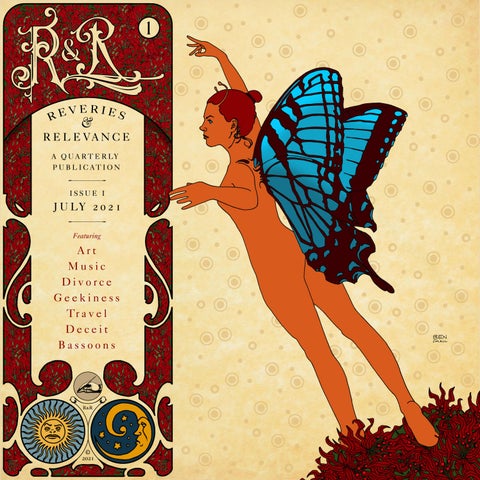
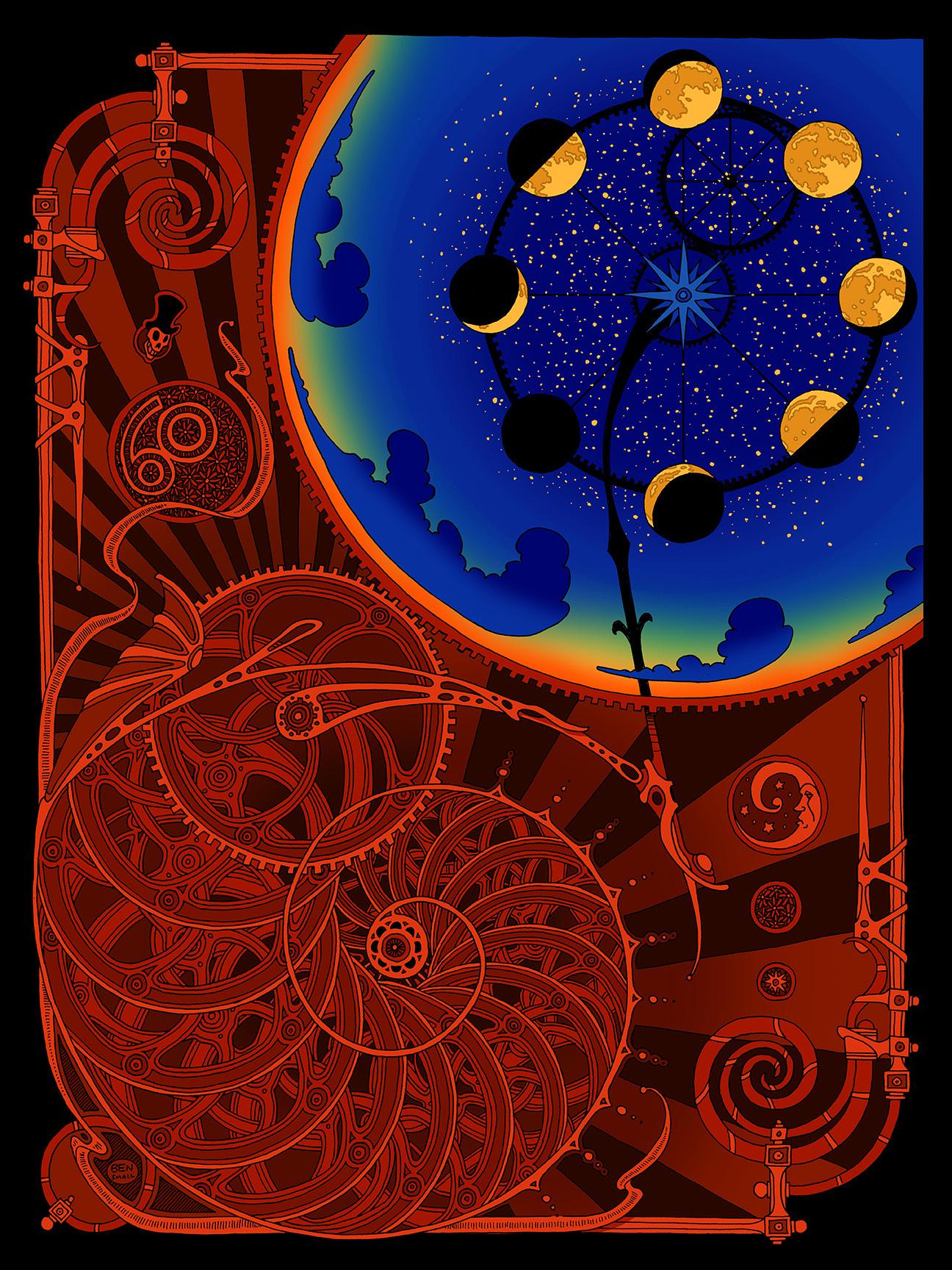
a magazine inspired by artist Ben Small’s engaging Art Nouveau-influenced drawings.
One late winter day in 2021, while still under the heavy cloud of the coronavirus pandemic, I spent some time looking through Ben’s artwork and, on a lark, sent him a quick email.
“Wouldn’t it be fun,” I asked him, “to do an online magazine in the Art Nouveau style?”
“Gadzooks,” he answered, “count me in!”
And so here we are, debuting the first of what we envision to be many quarterly issues featuring art direction, drawings and writing by Ben; editing and writing by me; and the varied creative talents of many wonderful contributors.
I view R&R, as we’ve come to call it, as a joyful endeavor underscored by creativity, wonder and discovery. It shares some similarities with my podcast At Home Radio, which is a welcoming space for conversation on a range of subjects from the serious to the purely whimsical. While R&R is visual vs. audio, it’s also a safe and welcoming space for wide-ranging creative expression.
Years ago, Ben and I worked together at Northern Ohio Live, a city-regional magazine that was based in Cleveland’s University Circle, home to Case Western Reserve University, the Cleveland Orchestra and the Cleveland Museum of Art, among the Circle’s fine institutions.
Now, a lot of years and numerous projects later, we’ve joined forces with a shared appreciation for art, ideas and, of course, the colors — both vivid and muted — and flowing lines of Art Nouveau, which was at the height of its popularity in the late 19th and early 20th centuries and never completely went away.
Which brings us to this day in 2021. As we make our way through these early decades of another century, it seems fitting to express ourselves with some of the elegance and energy of the Art Nouveau style. Ben and I hope you enjoy it as much as we do.
ICONTRIBUTORS
Elizabeth Allen, David Budin, David Cintron, Steve Falko, Frank Kunstel, Joy York, Sheldon Zoldan
t’s a genuine honor to be asked to team up with Kathryn Jones on any project let alone one where you’re allowed total design freedom. I’m very grateful to her for appreciating my artwork and cooking up this idea for a magazine.
Kathy & I are two very different people. She is graceful, bright, positive, giving and very professional in her work. I am a creative, sarcastic, sometimes petulant, dreamer who spends half his time goofing off at work. So, it’s her relevance and my reveries, you might say. One thing we agreed on: we’re both older adults and we wanted to work on a project free from bullshit and done the way we wanted to do it.
This is the first issue so we’re trying out a lot of ideas. If it’s a bit of a mélange we hope it’s a thoughtful, beautiful and humorous one to read. Thank you for giving it a look.
— Ben Small
— K.J. Jones
Issue I L July 2021
Contributors
Manythanks to those who contributed to the first issue of Reveries & Relevance with very little idea of how the publication would turn out. Such kindness and faith!
Los Angeles-based author, freelance writer and science fiction geek Jeff Bond epitomizes this graciousness, giving me untold amounts of time over two phone interviews and who knows how many email exchanges. And he did this while under the pressure of two book deadlines. We couldn’t be more thrilled to feature him in our premier issue.
You’ll note that Art Director Ben Small has a number of pieces in this issue, including the first Artist of the Past column. It spotlights Alphonse Mucha whose creations influence all the design work in the magazine.
Speaking of Mucha, his work is the subject of three exhibitions taking place this year. The first opened in June in Brittany, France, and two others will open later this year — one in China and the other in Raleigh, N.C. For more information, visit the exhibitions page on the Mucha Foundation’s website: Click here.
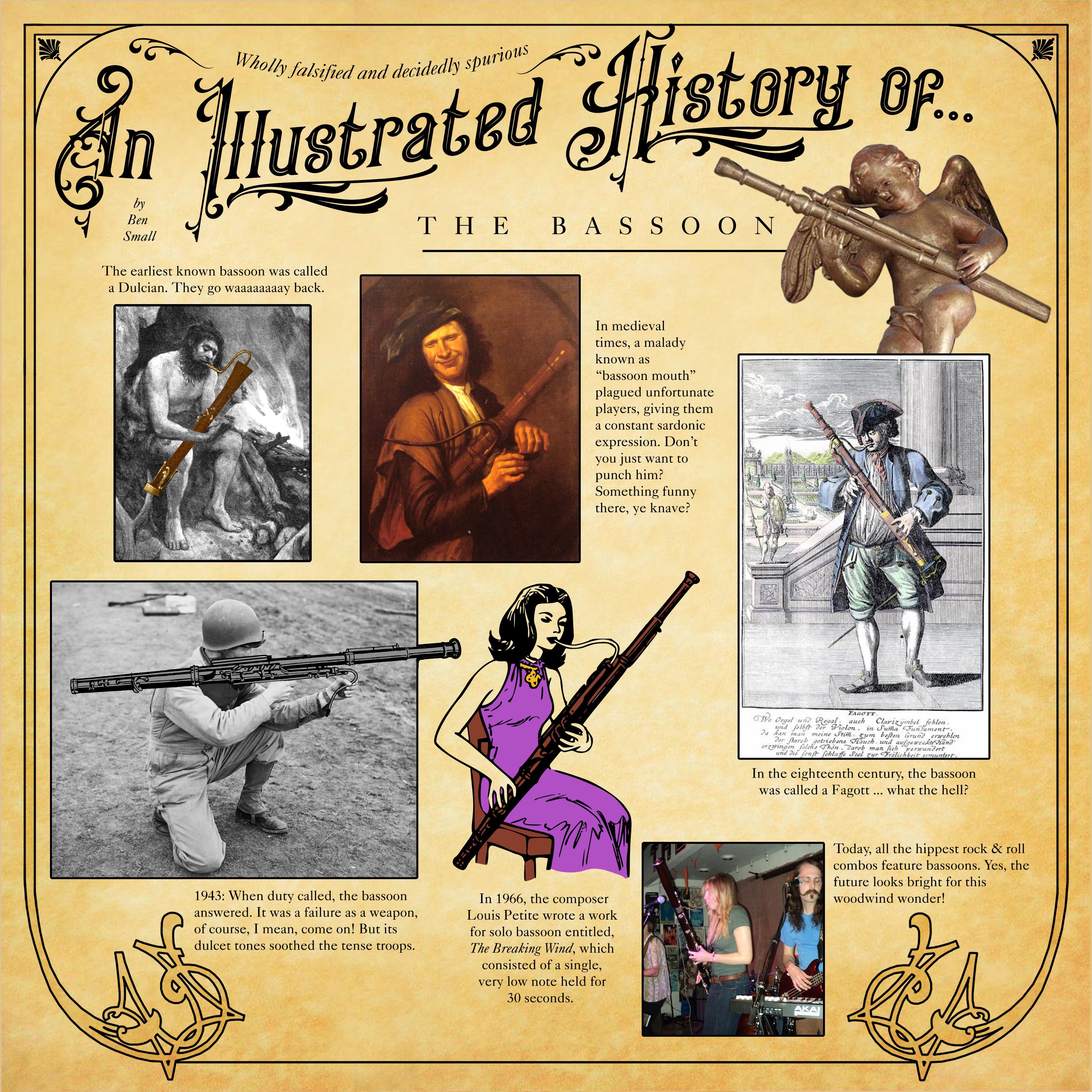
Ben also wrote the first installment of his “Illustrated History of ...” series, this one on the bassoon (don’t take it seriously — we definitely like humor in this magazine!). The issue ends with Notes from a Surly Art Director. Dropcaps, anyone?
— K.J. Jones
Contributor
Bios
Elizabeth (Betsy) Allen holds a BA in journalism from The Ohio State University, and an MA in English and MFA in fiction writing from George Mason University (Fairfax, Va.). Over the years, she has worked as a corporate communications specialist, public relations manager, creative writing workshop leader, and freelance writer and editor.
Elizabeth currently teaches Advanced Composition at George Mason. She has written numerous short stories published in dark fiction anthologies, and two plays, “Beehives of the Dead” and “#gratitude #blessed,” featured on the Between Acts audio theater podcast.
She lives in Alexandria, Va., with her husband and a noisy Corgi. In her spare time, Elizabeth indulges a crossword puzzle obsession and frets about her children and grandson. She believes in the transportive power of stories — to take us places we’ve never been, to make travel companions of strangers, to see the roads less traveled but still ours for the taking.
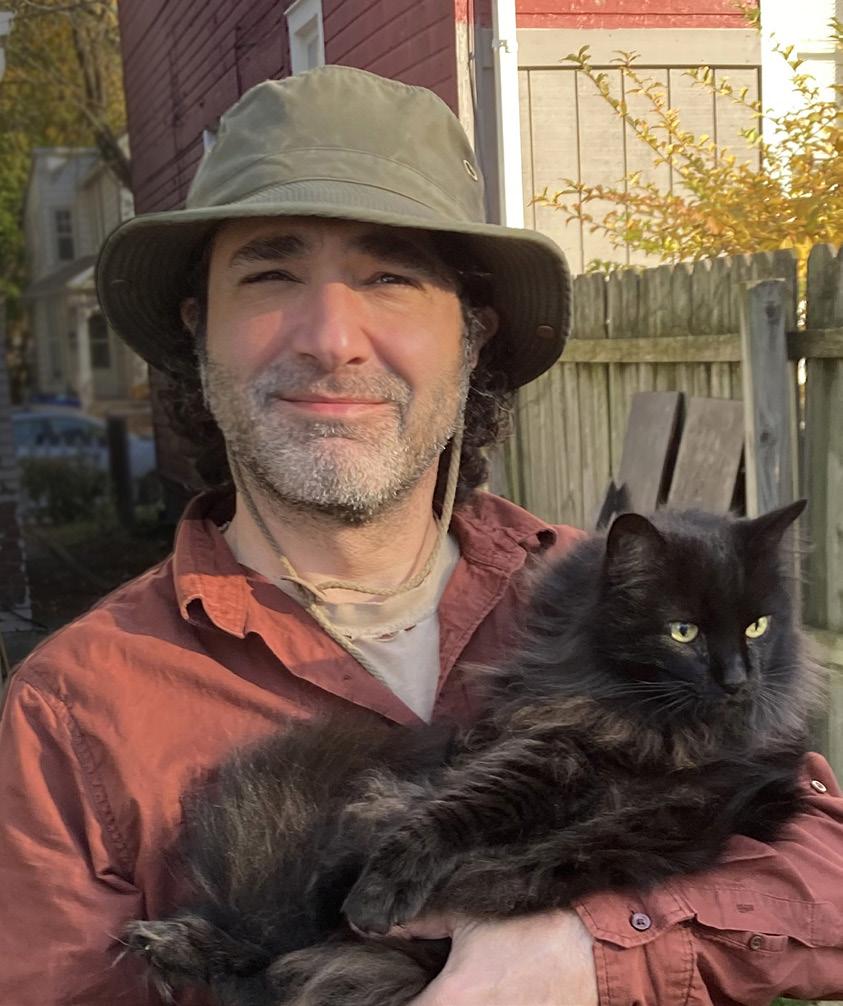
DavidCintron has been working as a multidisciplinary artist, designer and musician since 1990. Inspired by the outside natural world as well as the inner spiritual world, David’s current body of work consists of color rich and expressive abstract paintings and evocative abstract ink drawings.
Among many bands and musical projects, David fronted dimbulb and The Downside Special, played electronics in Speaker/Cranker, was a touring bassist in Disengage, a touring guitarist in Pere Ubu, and played with Rhys Chatham in his Guitar Trio All-Stars. His current and longest running band is Terminal Lovers. He is also currently active with soundscape artists Blind Spring, and releases solo music as David Cintron. (To read David’s full bio, please go to Artist of the Present on page 32.)
And In Their Own Words …
Steve Falko, An American in Shanghai
I worked for General Motors, in one form or another, for more than three decades. I spent my career in service engineering, and I was extremely fortunate to be assigned to a wide variety of interesting positions.
Along the way, I developed a little knowledge about many of the various service operations roles. This led on occasion to my being assigned to conduct start-up training. Generally, this would happen when we were working with teams from other countries that were not familiar with our (GM’s) processes.
Over the years, I was lucky to spend considerable time working with teams from Korea, Russia and China — both here and abroad.
At the time I was picked for the Shanghai assignment, my wife Joyce was working from home. Our plan was for her to accompany me on this four- to five-month project. Just prior to its start, she was presented with an excellent job opportunity. We decided she should accept, which led to me spending most of my time in Shanghai away from her for the first time in 35 years.
Frank Kunstel, 6 Sentence Stories
When I retired from corporate America, one of things I thought I would do with my new-found time was some creative writing. I wasn’t aiming for the Great American Novel but wasn’t sure what it might be — a blog, poetry, service contract for a cell phone provider, instruction manual for a fun way to put together a grill (there is no such way). Whatever it would be, I thought I should first be able to craft a really good sentence. As I experimented with that, I became intrigued with the notion that everybody has a personal story, and we often don’t know each other’s story. I couldn’t convey such a story in one sentence, so I challenged myself to write a set of stories each within the confines of exactly six sentences. Like this bio.
Sheldon Zoldan, Songs of the Day
I didn’t think I would miss writing after retiring from journalism after almost 50 years, but that was before the pandemic when I could go to the gym and volunteer at the Humane Society. I had to do something, but I don’t remember how the Song of the Day came about, only that it filled in the black hole of boredom. Now, the goal is an entire year, 365 days of them. Then it’s back to the gym and dog walking.
David Budin, Black & White Summer
Sometimes people ask me if I’m going to retire and I say no, I have nothing to retire from. I mean, I’m a writer and a musician, but I don’t work for a company. I used to: I was the editor of Northern Ohio Live and then another city magazine that shall go unnamed. But that was kind of a long time ago, and I’ve been freelancing since the day I fled in terror from the second publication, after a long year of trauma. The two years I was homeless in New York City, as a teenager in the late ’60s, were, literally, better than that year. I was in NYC as a singer-songwriter, eventually recording for a major label, and producing and arranging music, which I still do, mostly from Cleveland. I’ve also been working on three books for the past few years – writing, not reading.
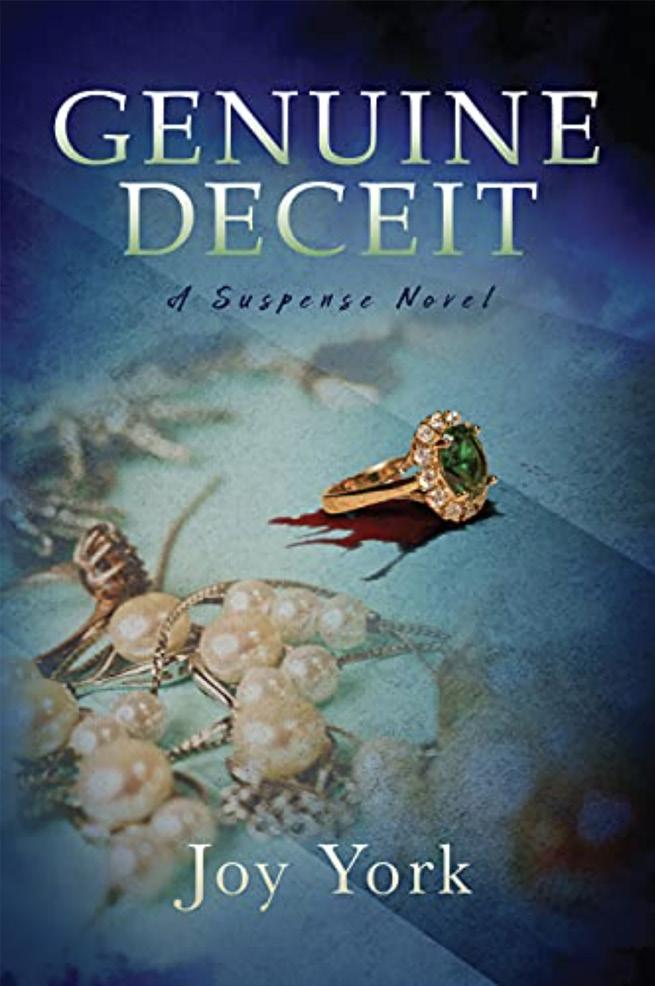
Joy York, Genuine Deceit
My inspiration for storytelling came from listening to my Mama Leavie tell fascinating stories to my cousins and me in the evenings while sitting on her porch in rural Alabama. She sat in a swing telling tales to her wide-eyed audience of grandchildren gathered at her feet, all of whom hung on every word. The scarier the story, the better. Years later, I carried on that tradition for my young son as we sat in his favorite place, the center landing of the staircase, and I spun my own tales of princes, flying houses, ogres and gargoyles, always making my son the conquering hero.
Although my career mostly has been in retail management, I began writing about 15 years ago. I quickly realized there was a big difference between telling a story or having an amazing idea for one and writing it in a cohesive and engaging form that readers would enjoy. In other words, I had a lot to learn. That’s when I began joining professional writing organizations that would provide workshops, conferences, critique groups and the support I needed to hone my craft. When I retired in 2013, I began writing full time.
I published my first book in 2015. The Bloody Shoe Affair: A Daring and Thrilling Adventure with the Jailer’s Daughter, is a young adult mystery/coming-of-age novel. Genuine Deceit: A Suspense Novel was just released on Amazon. R
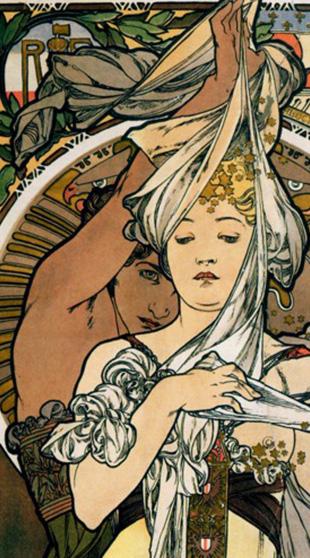
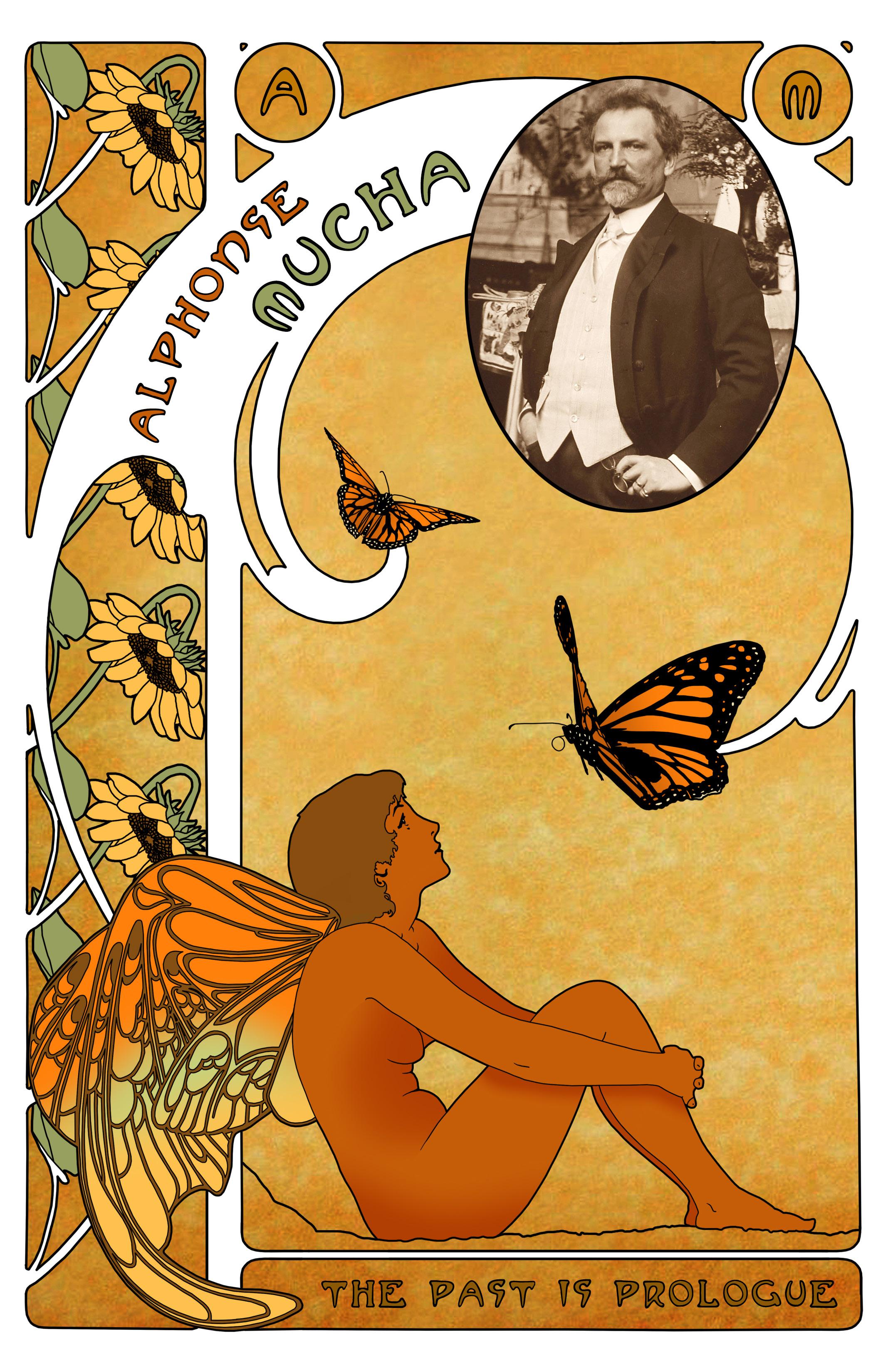
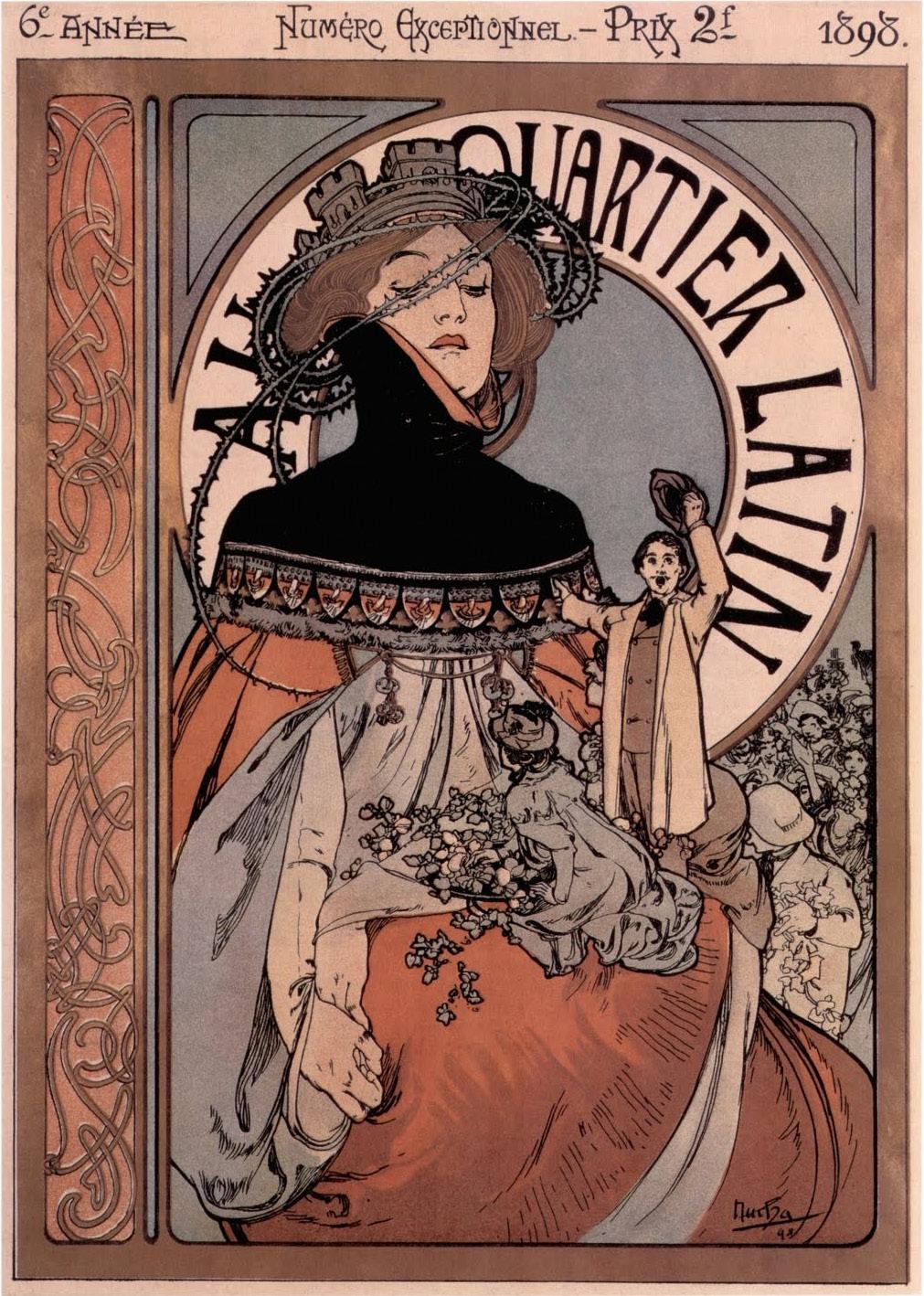
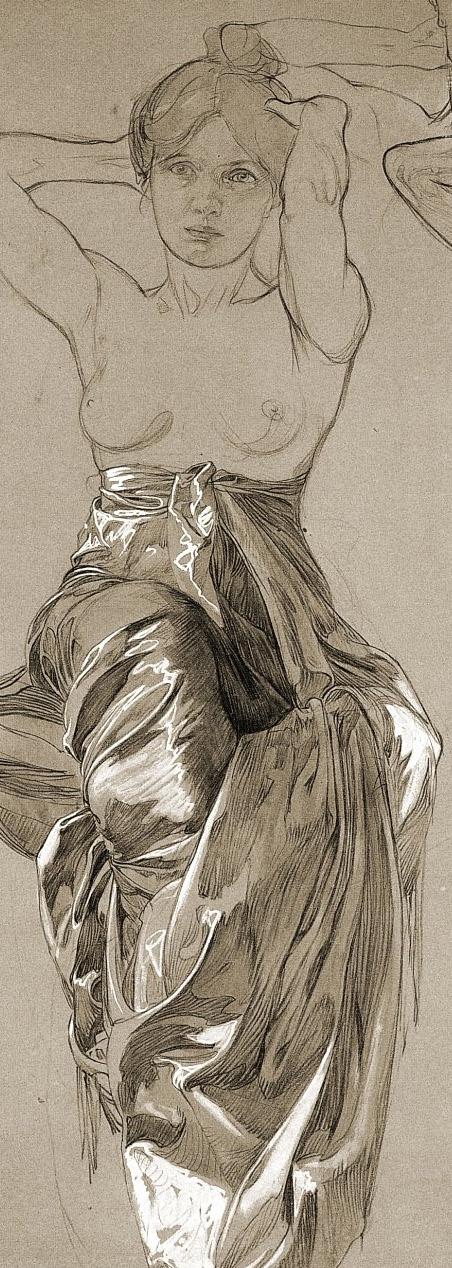
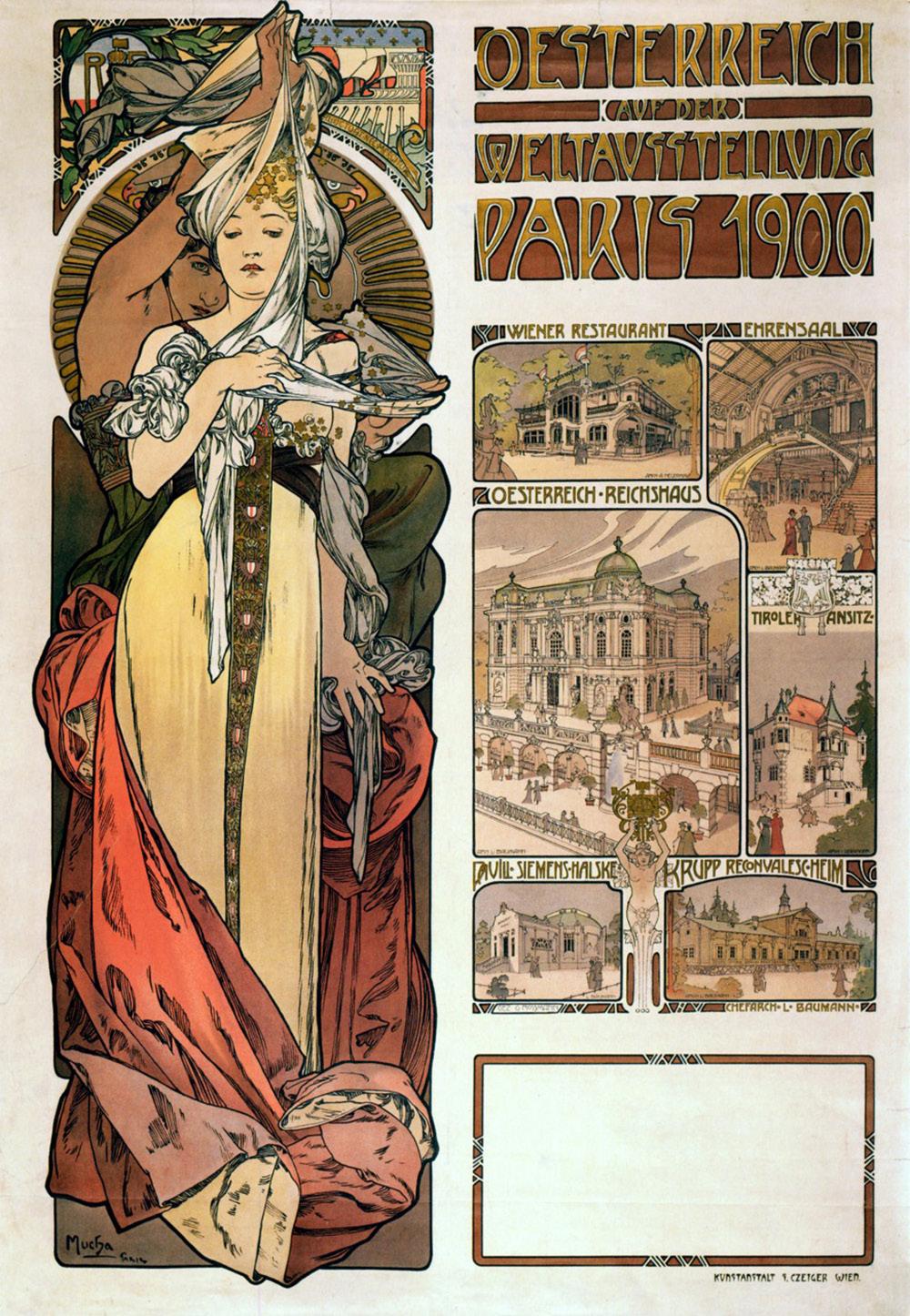
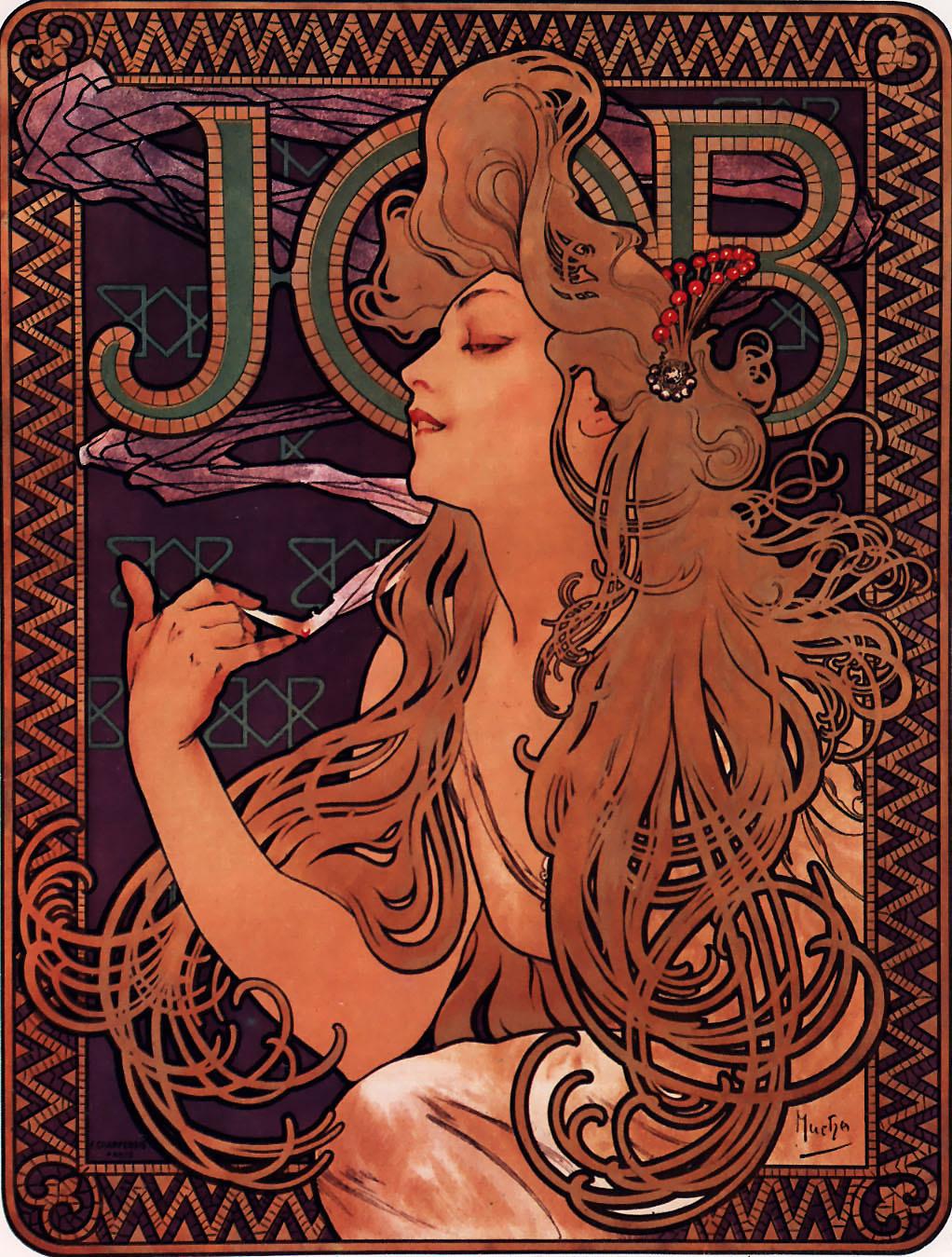
Our first Artist of the Past is none other than the grand pooh-bah of Art Nouveau, Alphonse Mucha. His creations influence all the design work in this magazine. Take this very page, the big swirl and sunflowers were stol ... uh, inspired by his art. Why, even the font we used for his name is called Mucha.
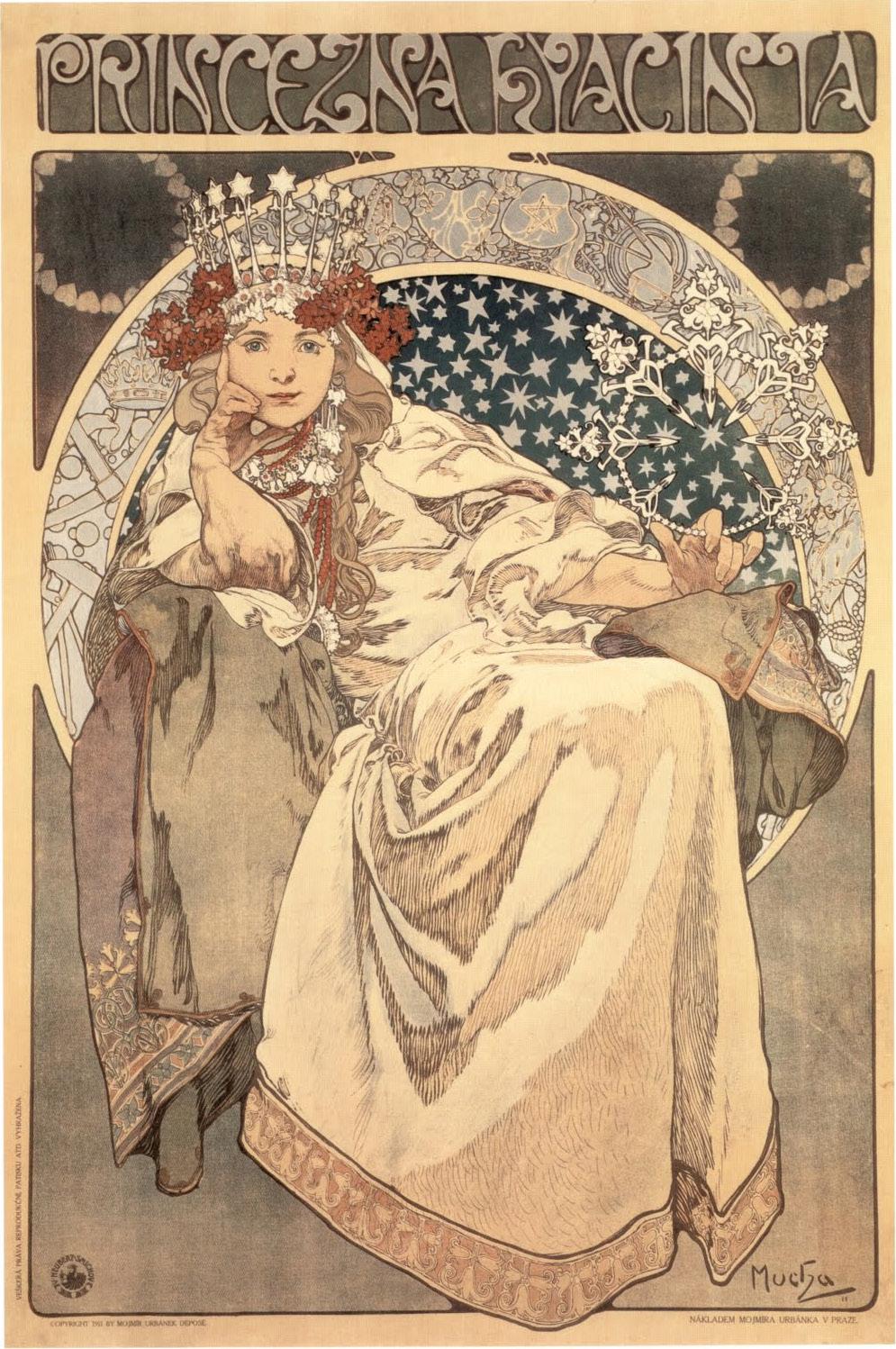
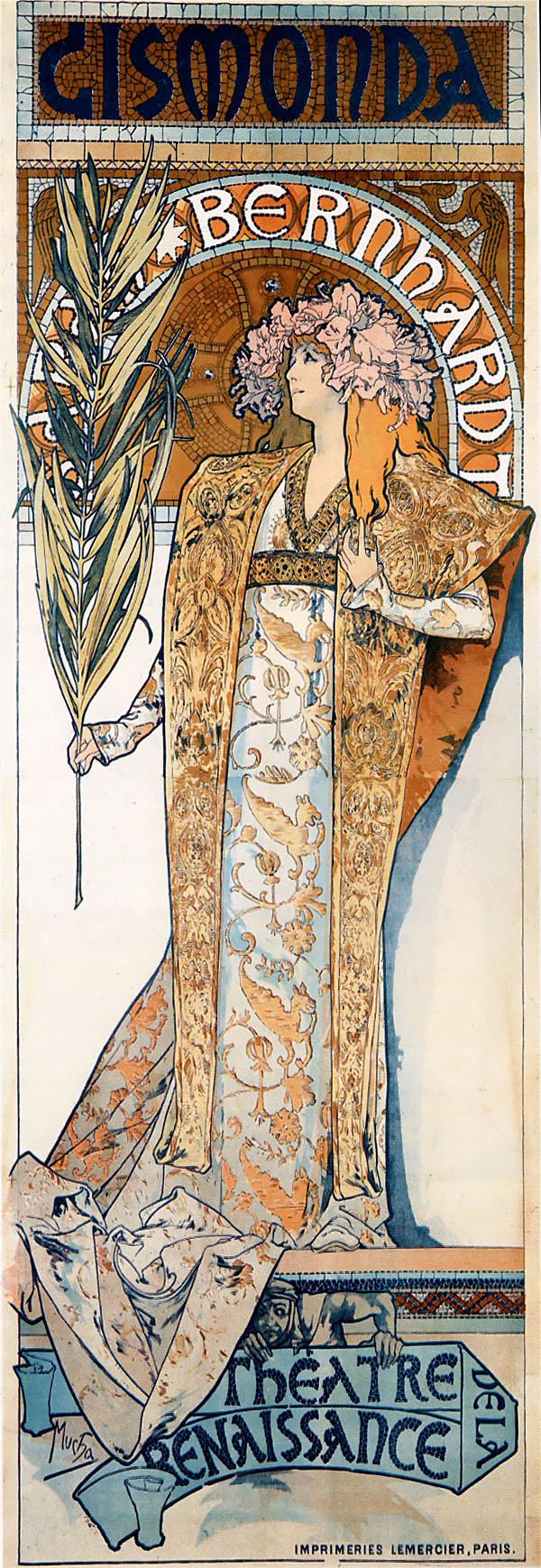
His work was arguably the foremost example of the Art Nouveau style: his draftsmanship beautiful and sure; his compositions sinuous and graceful, evoking the natural lines of plant stems, leaves and flowers; his human figures regal, idealized and posed like dancers. Mucha surrounded them with elaborate, detailed repeats of geometric designs and lush foliage. He became renowned for his theater and advertising posters, book and magazine illustrations, jewelry design and more. But he wanted to leave a more meaningful legacy with his art, so between 1910 and 1928, he dedicated himself to a personally spiritual and meaningful project, his Slav Epic, which is a set of 20 huge paintings of Slavic history. A permanent home for the entire set is due to open in 2026 in Prague. R
This page and the next four: Theater and advertisement posters and a sketch by Mucha
of the Past L
Artist
STILL GEEKY AFTER ALL THESE YEARS
Author and freelance writer Jeff Bond has built a career on his childhood obsession with science fiction. He’s the first to admit that he’s “incredibly lucky.”
BY KATHRYN J. JONES
Among his eight books, Bond wrote or co-wrote three Star Trek-related reference works, the most recent of which is Star Trek The Motion Picture: Inside the Art & Visual Effects, a lavishly illustrated, 192-page coffee table book he co-authored with visual effects producer Gene Kozicki. Celebrating the 40th anniversary of the U.S.S. Enterprise crew’s first big-screen production, the book came out in September 2020 and is available on Amazon.
Bond considers himself lucky in a lot of ways, including the fact that Kozicki is a good friend who “has these parties, called Geek Nights, where you’re just hanging out with people who worked on Star Wars and Close Encounters of the Third Kind.”
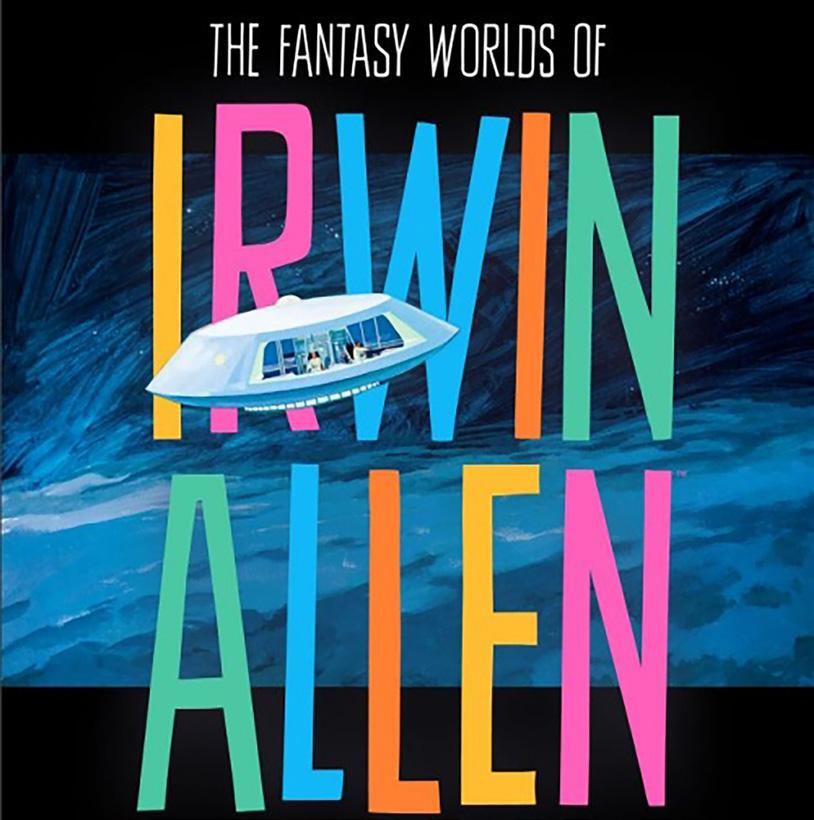
The Star Trek book came on the heels of Bond’s The Fantasy Worlds of Irwin Allen, a 600-page tome that was published in 2019 and subsequently sold out its press run. Irwin Allen took an in-depth look at the life and career of the Hollywood producer of classic TV series such as Lost in Space and Voyage to the Bottom of the Sea as well as disaster films The Poseidon Adventure and The Towering Inferno.
Bond spent six months going through boxes in storage from the producer’s TV and film career, which began in the late ’40s and ended with Allen’s retirement, in 1986, due to declining health.
Creating a book that “weighs about 10 pounds” was hardly a chore for Bond, who was a huge fan of Lost in Space and Voyage to the Bottom of the Sea when he was a kid.
Among Bond’s many projects, he’s editor of Geek, an entertainment magazine featuring movies, TV, collectibles and lots of video games. It was the brainchild of another friend, Mark A. Altman, co-writer of the 1998 comedy Free Enterprise (the enterprise of the title of course refers to the Star Trek ship, and William Shatner plays himself in the movie).
For the film, Altman created a joke version of a real-life magazine and named it Geek, a nod to the sci-fi geeks portrayed onscreen. Then Altman turned Geek into a real publication and put Bond in charge of it. The magazine debuted in 2006 and, over the years, was sold to different parent companies. It’s now available only at Walmart stores and on its website.
Bond juggles at least two or three projects at any given time and at present is writing two books. All he’ll say about them right now is that one is a biography, a major endeavor that probably will turn into a two-volume set. The manuscript, already up to about 250,000 words and counting, isn’t close to completion. But Bond expects to finish the other manuscript, which he refers to as “the Netflix book,” by the end of this summer. That book may be available before year’s end.
In his 25 years in Los Angeles, he’s had one amazing opportunity after another. “I feel like my whole childhood has completely paid off,” he says. “I’ve been able to meet almost all my heroes — some of the biggest visual effects artists.”
The best part of all is his work is “99% pure fun,” he adds. “I’ve been very lucky.”
Q. Jeff, please talk about how you became a sci-fi geek at a young age. How did that play out?
I was a TV kid watching all the Irwin Allen shows, Jonny Quest and lots of Saturday morning cartoons (when they had Saturday morning cartoons), Star Trek, The Twilight Zone, any monster movie that was on and any science fiction. I started reading pretty early. I think I read Jules Verne’s 20,000 Leagues Under the Sea in grade school and read a lot of science fiction paperbacks, and I was very into “making of” books about movies and TV shows — Stephen Whitfield’s The Making of Star Trek was a seminal book for me that I read over and over.
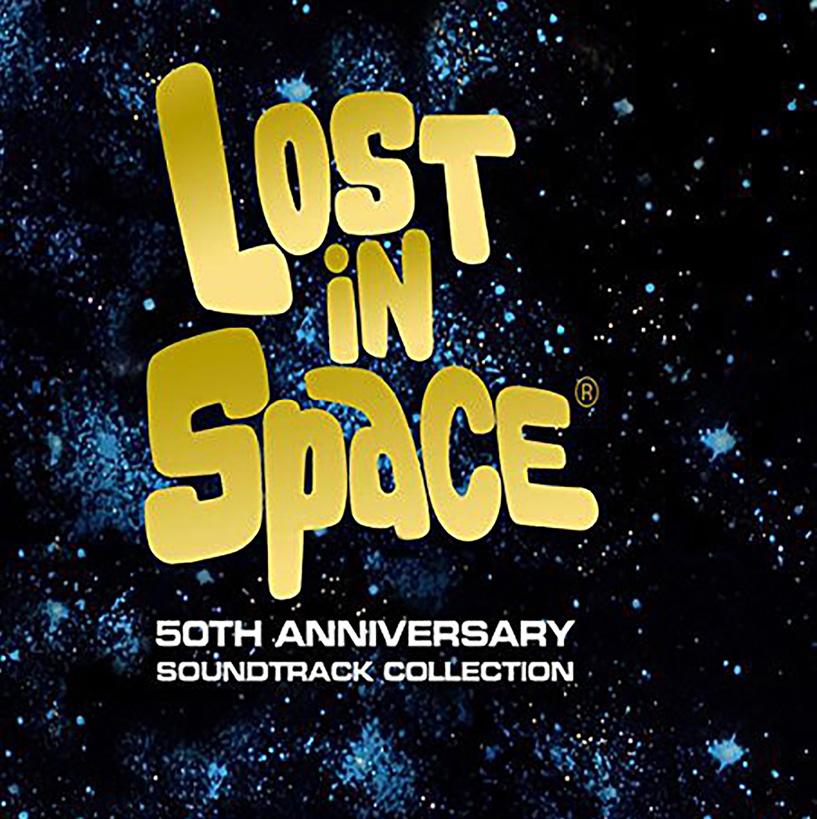
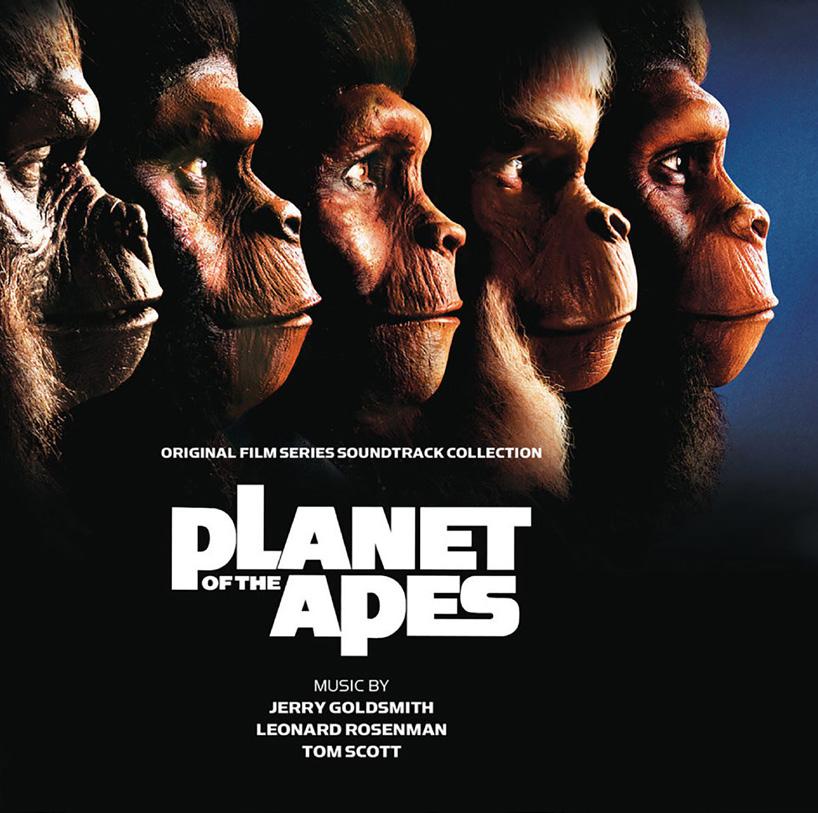
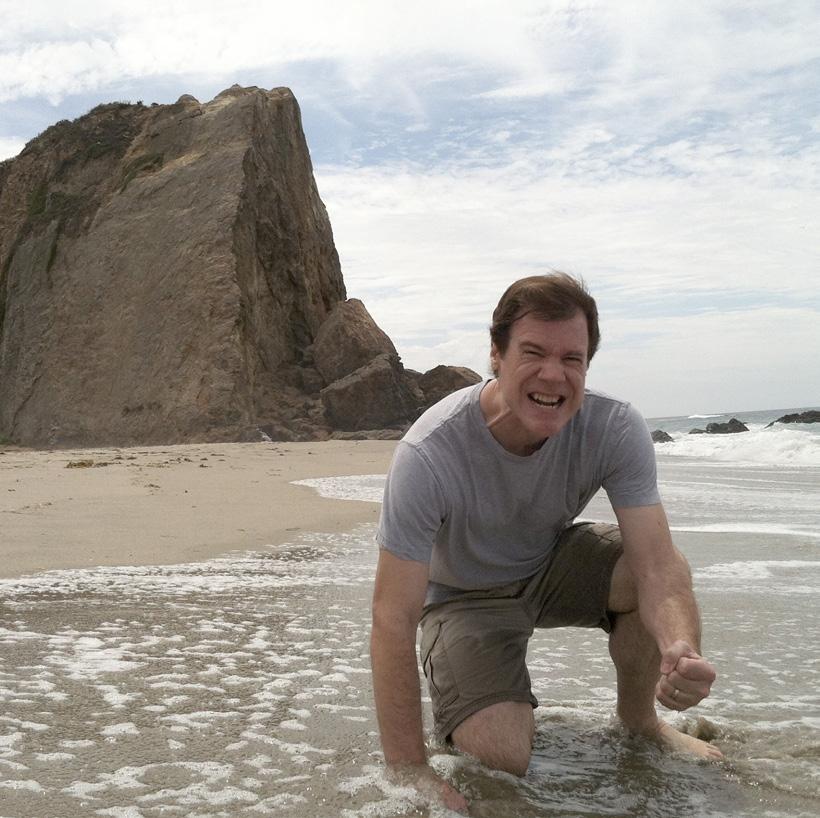
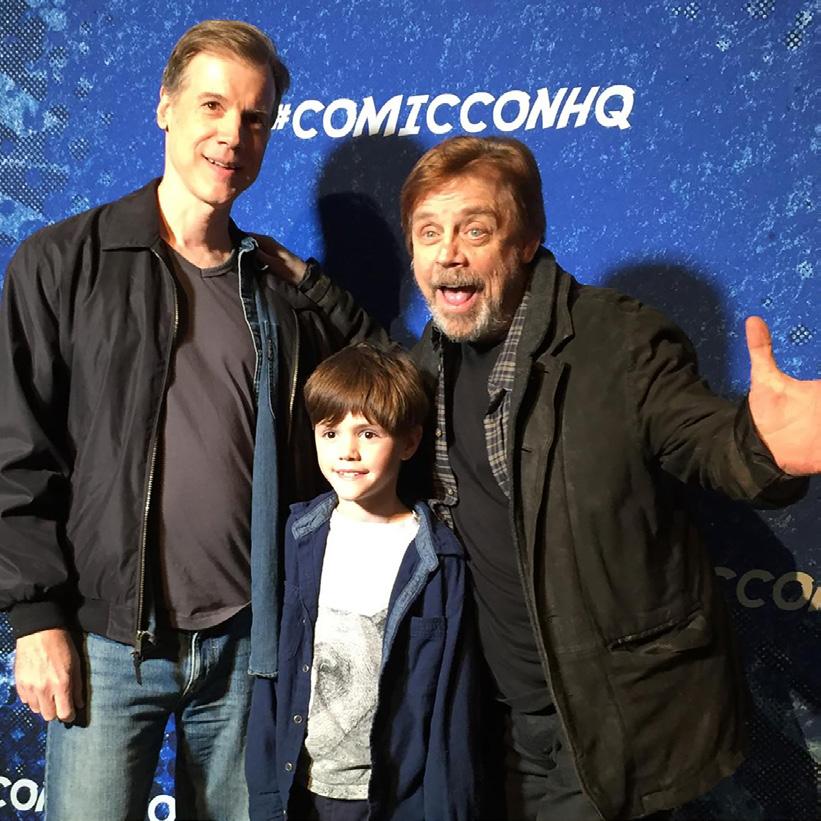
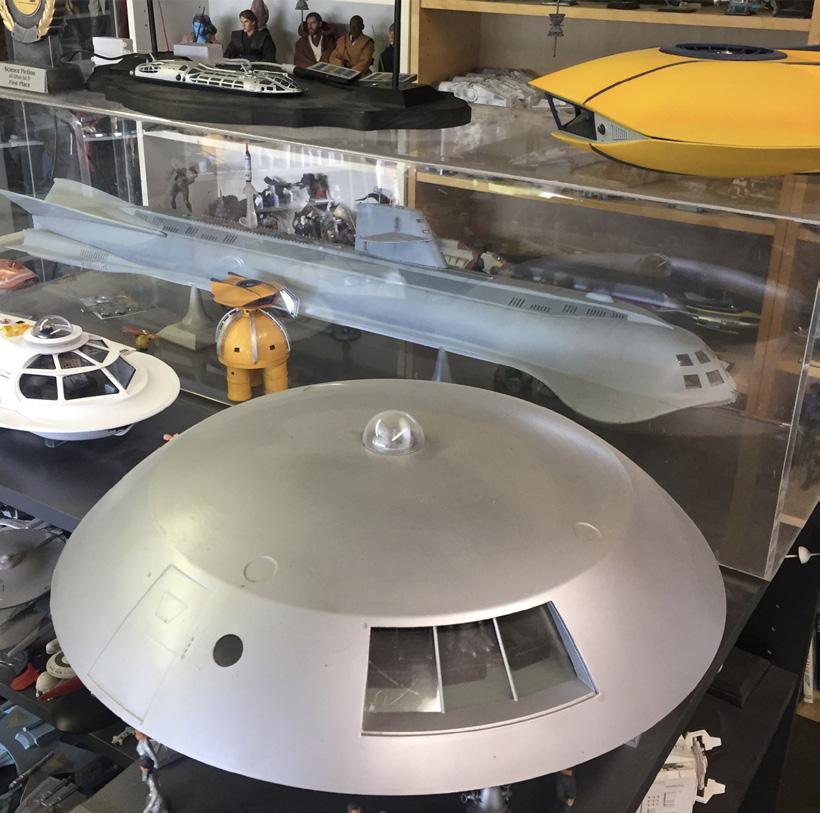
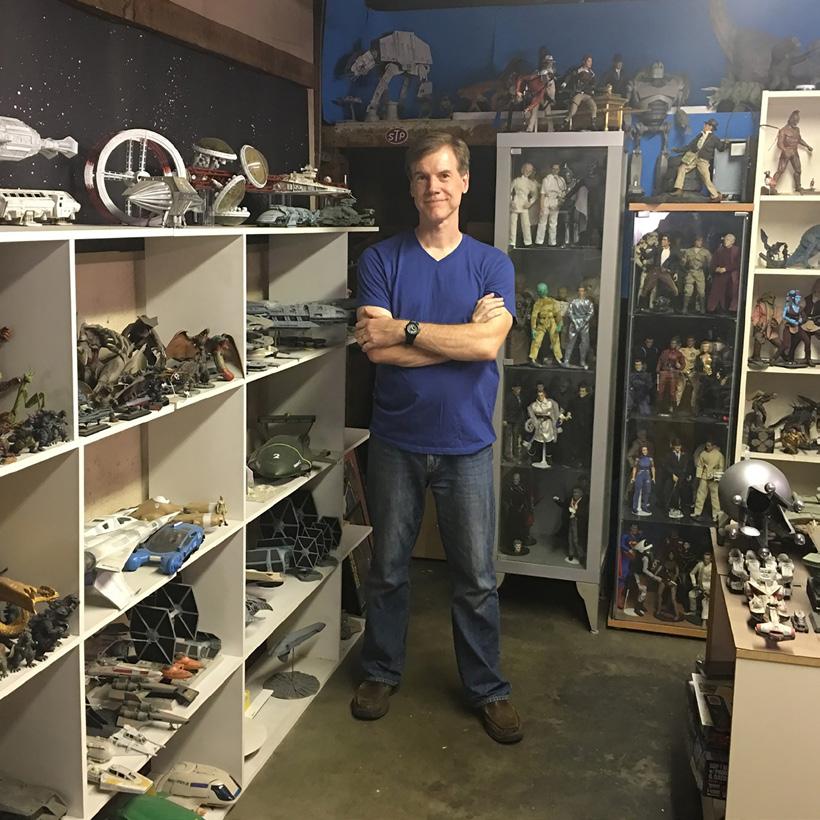
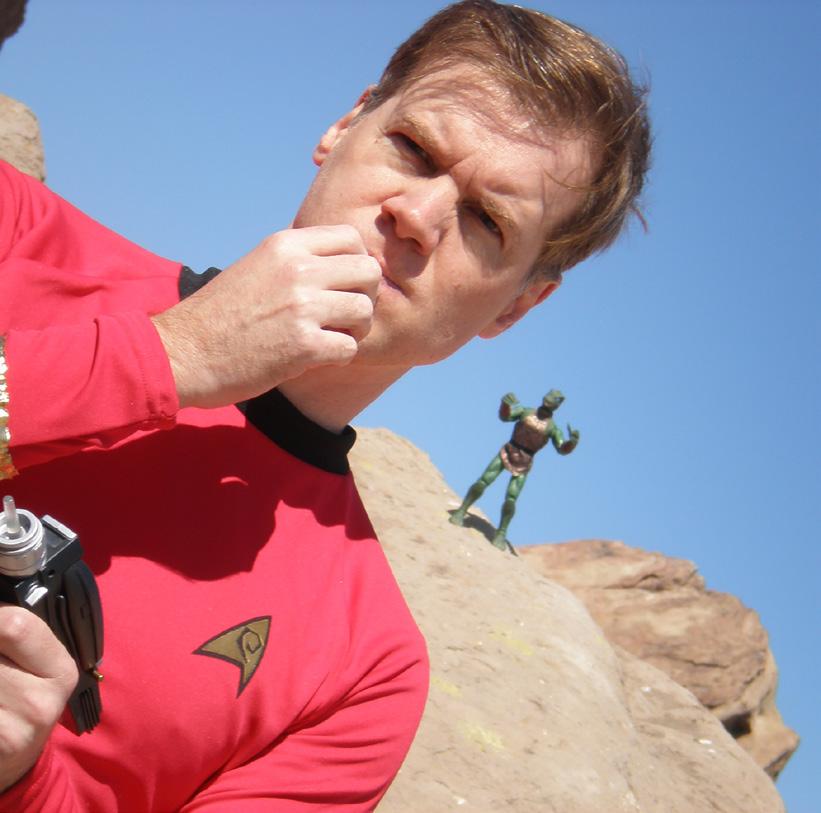
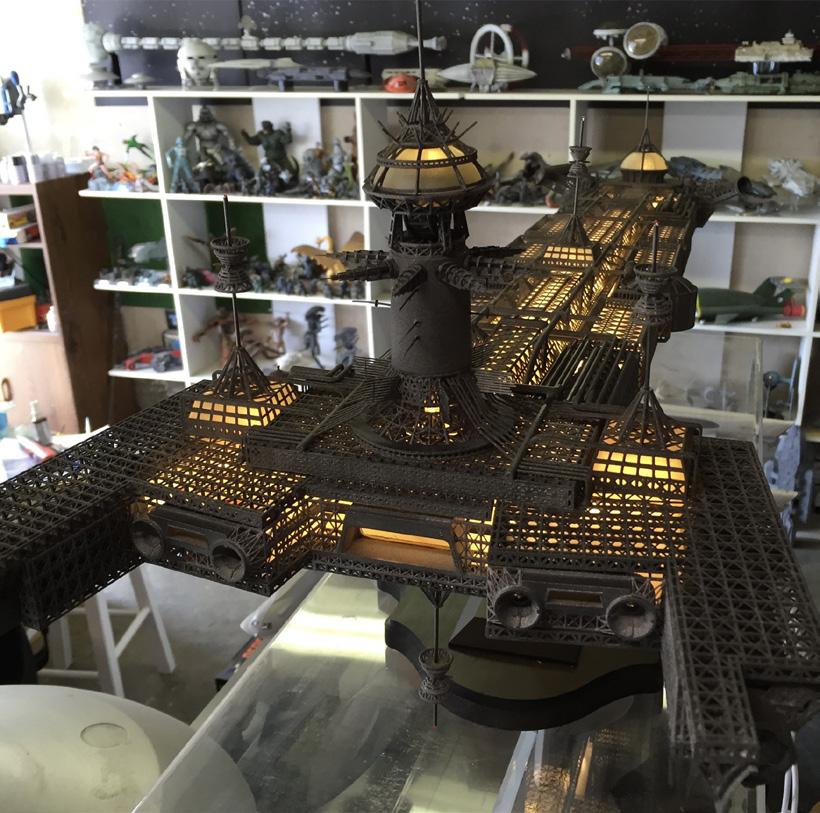
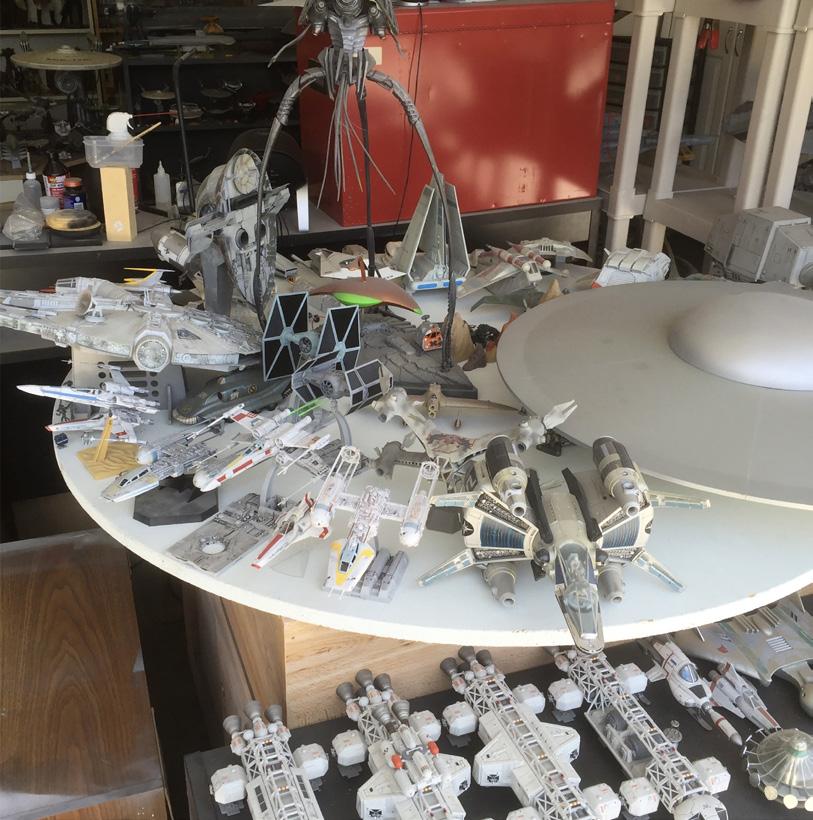
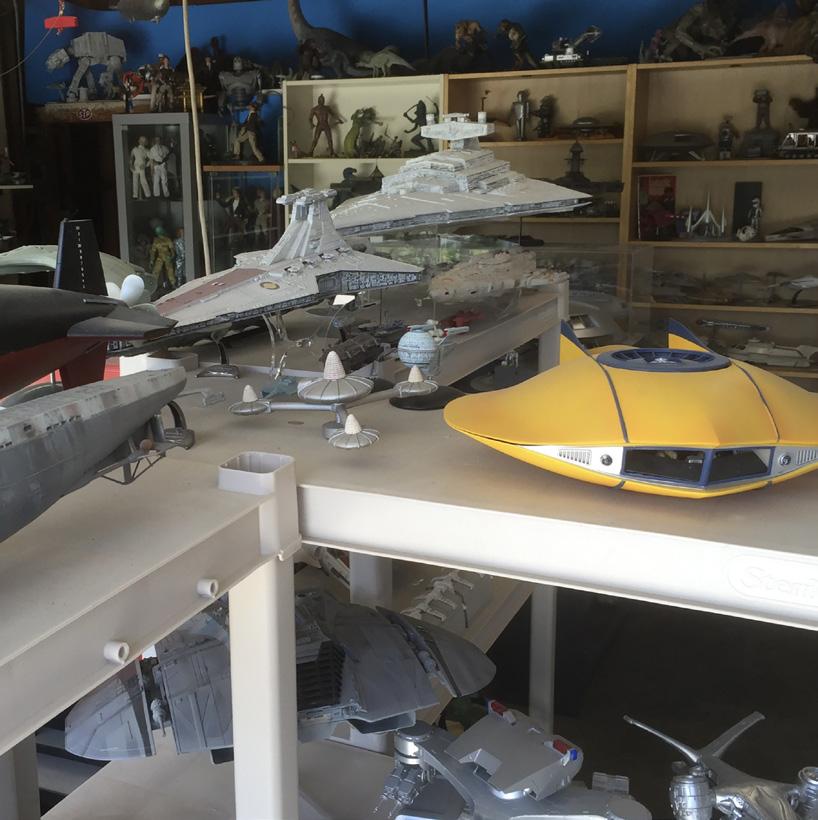
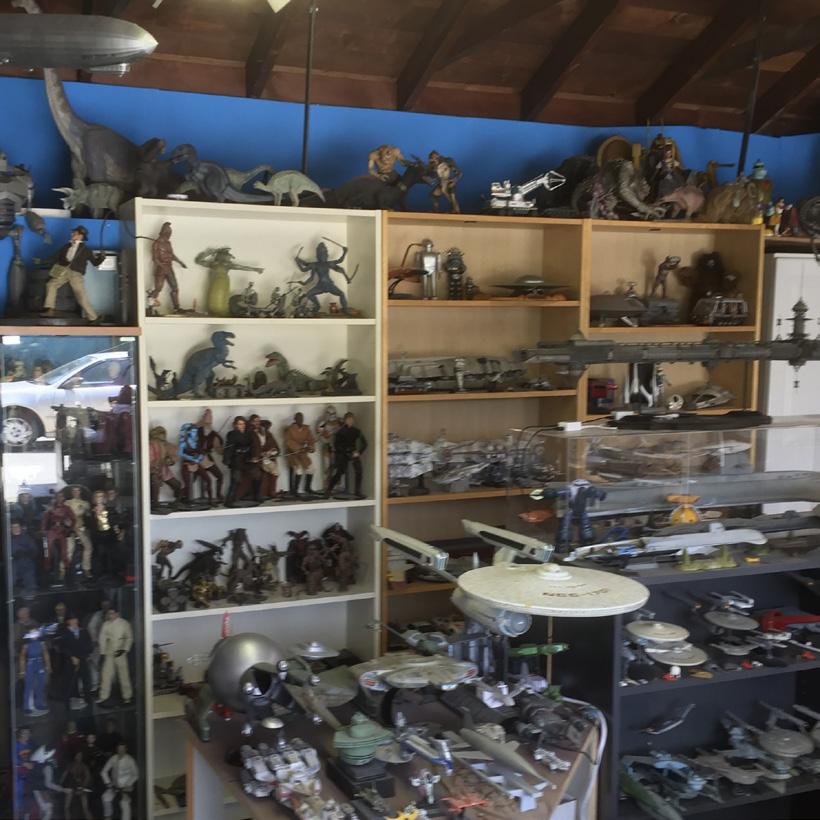
THE FANTASY WORLDS OF JEFF BOND: Reenacting scenes from Planet of the Apes and Star Trek ; with Mark Hamill, who is really excited to meet Jeff and his son, Logan. Who’s the celebrity here?; a few of the books & CDs Jeff is responsible for; and some shots of his incredible science fiction model collection.
Q. Besides watching sci-fi movies and TV shows, you also became obsessed with model building. What prompted that obsession?
Q&A
We had a great-uncle who lived with us when we were kids and I remember he had some model cars that were actually made out of metal castings with some plastic parts, and I remember trying to figure out how they went together. I think I was just a toy nut in love with Hot Wheels and toy dinosaurs, etc. as a kid; I also bought an Aurora Frankenstein model that was already built and painted for 2 cents from a thrift store next to our house. Eventually I started building car “hot rod” models, lots of military models — WWII aircraft, tanks etc., but there was a line of dinosaur models called Aurora Prehistoric Scenes that were little dioramas of cave men, dinosaurs, wooly mammoths, etc. — except they were pretty big, like big toys with moving parts, and if you collected them all their bases fit together and interlocked to create one giant diorama and that kind of got me obsessed with collecting. Then Star Wars came out and that got me interested in professional model builders, and there was a point when it seemed possible to collect every science fiction model kit out there, because there weren’t that many in circulation. Now it’s pretty much impossible.
Q. You’re from Defiance, Ohio, and studied Creative Writing at Bowling Green State University, which is 30 minutes south of Toledo. When did you move from Ohio to LA, and why?
I loved the experience of being in the BGSU writing program, but I didn’t get my degree because I never completed the math, science and language requirements.
I had gotten some magazine jobs and was actually encouraged to move out to L.A. by my editors, one of whom was Mark Altman — his magazine folded right before we moved but by that time we were committed. My wife had looked into some teaching jobs out here even before that. We were very intimidated by the idea of moving to L.A., but once we got here we found it pretty livable.
Q. You and your wife, Brooke, now live in Winnetka, a neighborhood in the middle of the San Fernando Valley in Los Angeles. You and your wife, son Logan and daughter Veronica all coexist with shelves of models that you’ve put together, including an imposing one of the Alien spaceship that serves as the centerpiece of your home office. How many models have you built over the years? And what’s satisfying about that?
I just enjoy building things with my own hands and seeing them completed, and I have an obsession with having these objects and vehicles I see in TV and movies in 3D form, something I can hold and examine. It’s a very different process than the writing I do and very therapeutic — I like moving from one discipline to the other.
Q. You even parlayed model-building into freelance work. How so? I’ve been lucky to get to know a lot of professional modelers and people who run companies that put out models, in particular Frank Winspur who ran Moebius Models for many years. I can’t remember whose idea it was, but I probably pitched myself to write the background on some of the Irwin Allen models he was developing. For any work like this I get paid in models — Frank basically gave me every product he produced for free while he was running the company, and that added up to quite a salary over the years.
Q. The Alien spaceship that you built is actually your second version of it. You got high while you were building the first model but not in a partying kind of way. Would you describe that scene?
I built the original Nostromo refinery when I was in a basement apartment in college at BGSU, just by bashing together about 900 parts from different model kits. I spent about eight hours working on it with tube model glue the day I finished it, and model glue can definitely do things to your mind when you get overexposed to the fumes, so I was a bit woozy after finishing that one…
Q. You started watching Star Trek on TV around 1969. Please explain how you had the opportunity to play one of the main characters in a fan film.
I had interviewed James Cawley, who was an Elvis impersonator and a huge Trek fan who started his own fan movies where he would play Captain Kirk. He got the blueprints of the original 1966 Star Trek sets and over a period of years reproduced the entire set, every room in the Enterprise you would see on the TV show, in incredible detail. He had a real doctor playing Doctor McCoy on his fan productions and that guy got a job in New Zealand, so James was looking for a new McCoy. I think he just thought my hair looked right for it based on some photo of me on Facebook, and he called me and asked me if I’d be interested in playing McCoy. He actually had no idea whether I had acting experience or not (on his fan films they would often hire actors who had been on the original show but there were also people with no acting experience playing roles). In fact I had quite a lot of acting experience and could do a pretty good impression of DeForest Kelley so I got the job and did two episodes, one with Richard Hatch from Battlestar Galactica. It was an absolutely amazing experience, a total fan’s dream come true.
Q. You’ve been able to do a lot of fun things as a freelance writer for magazines. Would you give some examples?
I was able to visit all the sets of Star Trek shows filming in the late ’90s and early 2000s, like Deep Space Nine, Star Trek Voyager and Star Trek Enterprise and the set of the movie Star Trek Nemesis, so I wound up meeting most of the cast members of the shows. I got to meet and talk to William Shatner several times, meet Sigourney Weaver and Alan Rickman from Galaxy Quest and be on
the set of a Lost in Space documentary where they reproduced the inside of the Jupiter 2 and had Jonathan Harris and Bill Mumy in costume playing Dr. Smith and Will Robinson.
Q. Your first book, The Music of Star Trek, is a critical and historical overview of music scored for the Star Trek franchise, from the original ’60s series to the Star Trek movies and the television show spin-offs. What’s interesting to you about the scores and their creators?
I grew up listening to great music from movies and particularly TV shows like Star Trek, Jonny Quest, Voyage to the Bottom of the Sea and The Man from UNCLE, and for whatever reason the music always jumped out at me. My parents listened to a very eclectic collection of music from Burt Bacharach and Herb Alpert to classical music and movie scores like Born Free and The Good, the Bad and the Ugly. Particularly from watching reruns of Star Trek where I’d see each episode dozens of times, I really started memorizing the music — I found it very vivid and exciting and became fascinated with the different styles of each composer, how they each had a distinctive musical “voice” you could pick out in different cues in each episode. One of the most exciting projects I ever worked on was putting out all the original music from that show — I had desperately wanted that music probably since I was 12 and now I have 15 CDs of it.
Q. You’ve done some other music projects over the years. What are they?
which does a lot of “making of ” books. I was encouraged to do a Star Trek music book after writing a number of articles on Star Trek music for a magazine called Film Score Monthly, and after that was published I was fortunate to be friends with Richard Kraft who is Danny Elfman’s agent, and he proposed doing a big book on Danny Elfman’s work for Tim Burton that wound up becoming a hardcover biography that was packaged with a big set of Elfman’s scores for Tim Burton films that Warner Bros. put out. And later my friend Joe Fordham was pressed for time to do the Planet of the Apes book he was doing for Titan and he asked me to co-write it with him. I’d like to think I’m an author, but I’m certainly still a freelancer. I’m just lucky that I have very regular vendors.
Q. You work on some huge book projects. What’s your process? How do you stay focused and not get overwhelmed by the amount of material?
THE JEFF BOND COLLECTION
Star Trek The Motion Picture: Inside the Art & Visual Effects (2020) Co-author Gene Kozicki
The Fantasy Worlds of Irwin Allen (2019)
The Art of Star Trek: The Kelvin Timeline (2018)
Narcos: The Art and Making of the Show (2018)
The World of the Orville (2017)
Planet of the Apes: The Evolution of the Legend (2014) Co-author Joe Fordham
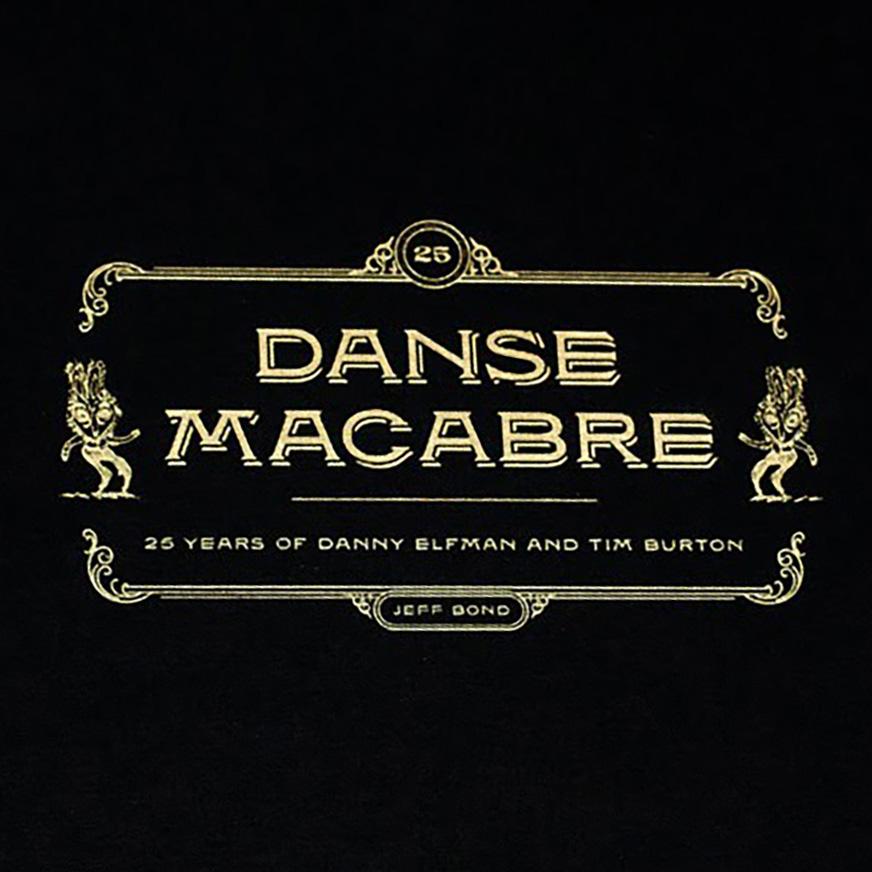
Danse Macabre: 25 years of Danny Elfman and Tim Burton (2010)
The Music of Star Trek (1999)
I’ve written liner notes for hundreds of soundtrack albums and probably done almost 100 releases of music by Jerry Goldsmith, my favorite composer. I’ve worked on a number of projects as a producer including the Star Trek release and on music sets from Voyage to the Bottom of the Sea and The Time Tunnel. My job as a producer on those projects is to pick and sequence the music that will go on the albums, work with the editors and engineers who make sure we track down the sources, get the right “takes” and edit the music the way we want it presented and then I write the liner notes — the history of the movie or TV show(s), background on the composer and how the music works in the movie or show.
Q. How did you get into writing books? And do you consider yourself more of an author now than a freelancer?
I’ve been lucky to get fairly regular work doing book projects the past few years, mostly through Titan Books from the U.K.
Well in many, many cases the books are about subjects that I’m already fascinated by and have some good background knowledge on, so in a way I have a huge head start because I’ve been thinking about things like, say, the visual effects of Star Trek – The Motion Picture or the Planet of the Apes movies for years and kind of half writing books about them in the back of my head. I will say that while in some ways I’m a lazy person who loves kicking back and relaxing, I’m pretty disciplined and fast when I’m on a book project — I’ve never missed a deadline and I basically just keep cranking, writing and otherwise working on these projects eight hours a day until I’m done. If I’ve got more than one to do, I’ll divide the day up between the projects but there’s no mathematical formula for it. I just work on what I think needs prioritizing.
Q. After all these years, what still grabs you about science fiction? And how does writing about it stay fun?
I’d say that I still very easily access all the adrenaline and excitement I originally got seeing and reading this stuff as a kid and a teenager. When I watch one of my favorite old movies or TV shows I feel exactly the way I did the first time I saw them, and that’s probably why I still surround myself with toys, model spaceships and action figures that most grownups wouldn’t be caught dead with. R
The Velociraptor Effect
BY ELIZABETH ALLEN
If you’ve seen the movie Jurassic Park, you likely remember the Velociraptors, those voracious, razor-clawed dinosaurs that keep popping up at inconvenient points in the story.
Raptors, dino expert Alan Grant helpfully explains in the film, hunt in packs like many animals – but with a twist. In the wild, their prey focuses so intently on the one Velociraptor they can see that they are an easy mark for the other pack members coming in from the sides, the monsters they didn’t even know were there.
Later in the story, as the ruggedly handsome dinosaur wrangler Robert Muldoon stares down his female Velociraptor attacker, he is suddenly confronted by her companion, charging out from the lush growth of the surrounding jungle. Even as he faces imminent death, Muldoon can’t help being impressed by these ancient machinations.
“Clever girl,” he murmurs.
I’ve always loved dinosaurs, jungles, and intense movie stars in khaki, so I see this movie at least a couple times a year. But the last time I watched, it occurred to me the raptors’ MO
was more than just an ingenious way to hunt. It was painfully symbolic of my life.
The truth is, I’ve often been plagued by unconsidered dangers. In school, though I was a terrific test-taker, I’d often forget homework assignments or reading I needed to do – the little stuff off to the sides. And I was that employee at work who’d learn just enough of the technology to do what I needed right at the moment, never getting ahead of the curve for what might be required weeks or months down the line.
Time after time, I’d become so focused on the thing in front of me that I didn’t spot the pointy problems waiting, claws bared, in the undergrowth.
But I never felt this sort of Velociraptor Effect more acutely than I did on the day in December 2009 when my then-husband told me he didn’t want to be married anymore – at least, not to me.
What were the things in front of me then? Well, most of them will sound pretty familiar to any middle-aged, married person. The kids, the house, three wonderful, hairy, smelly
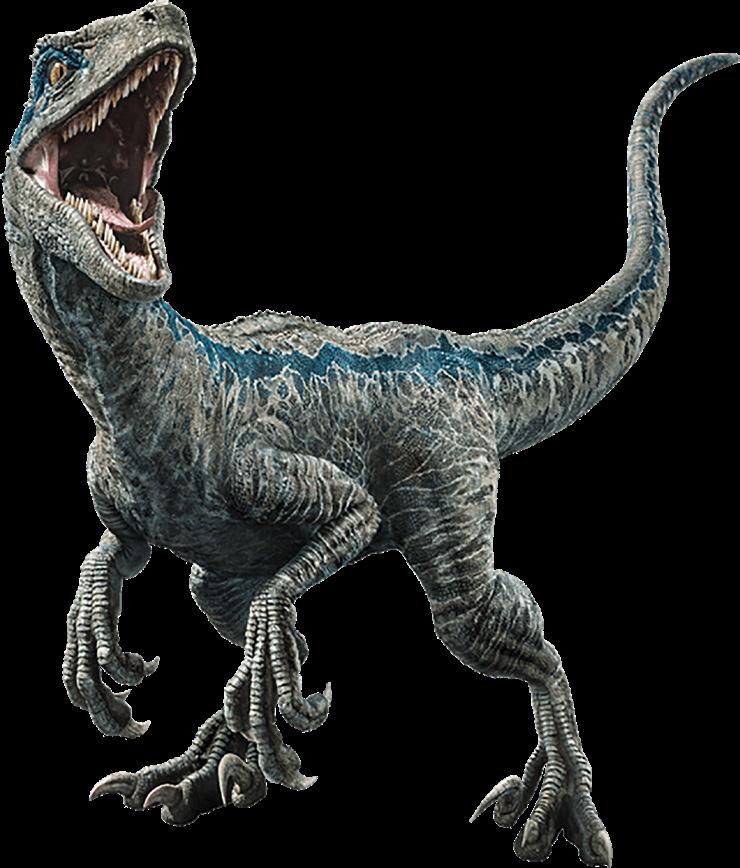
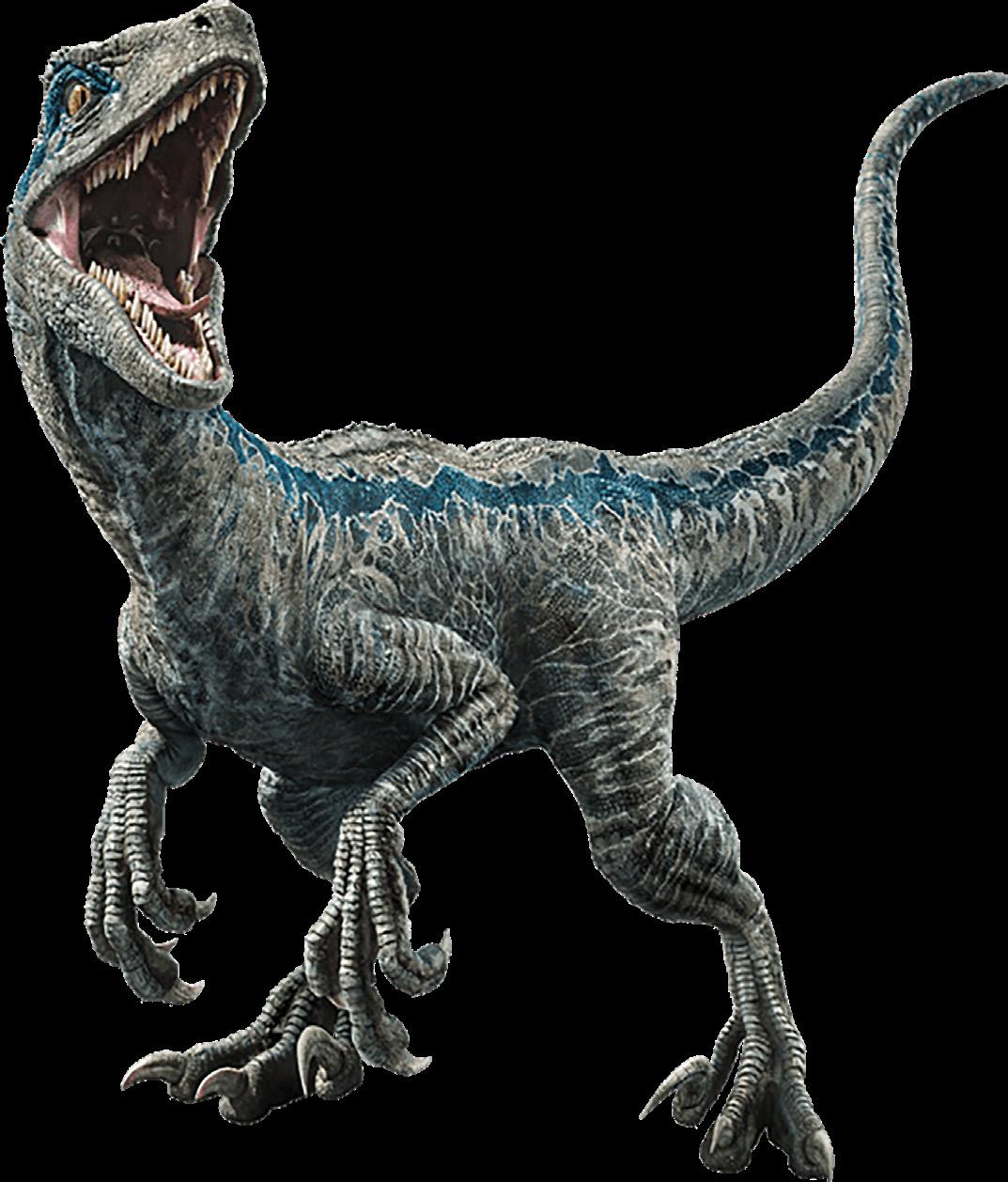
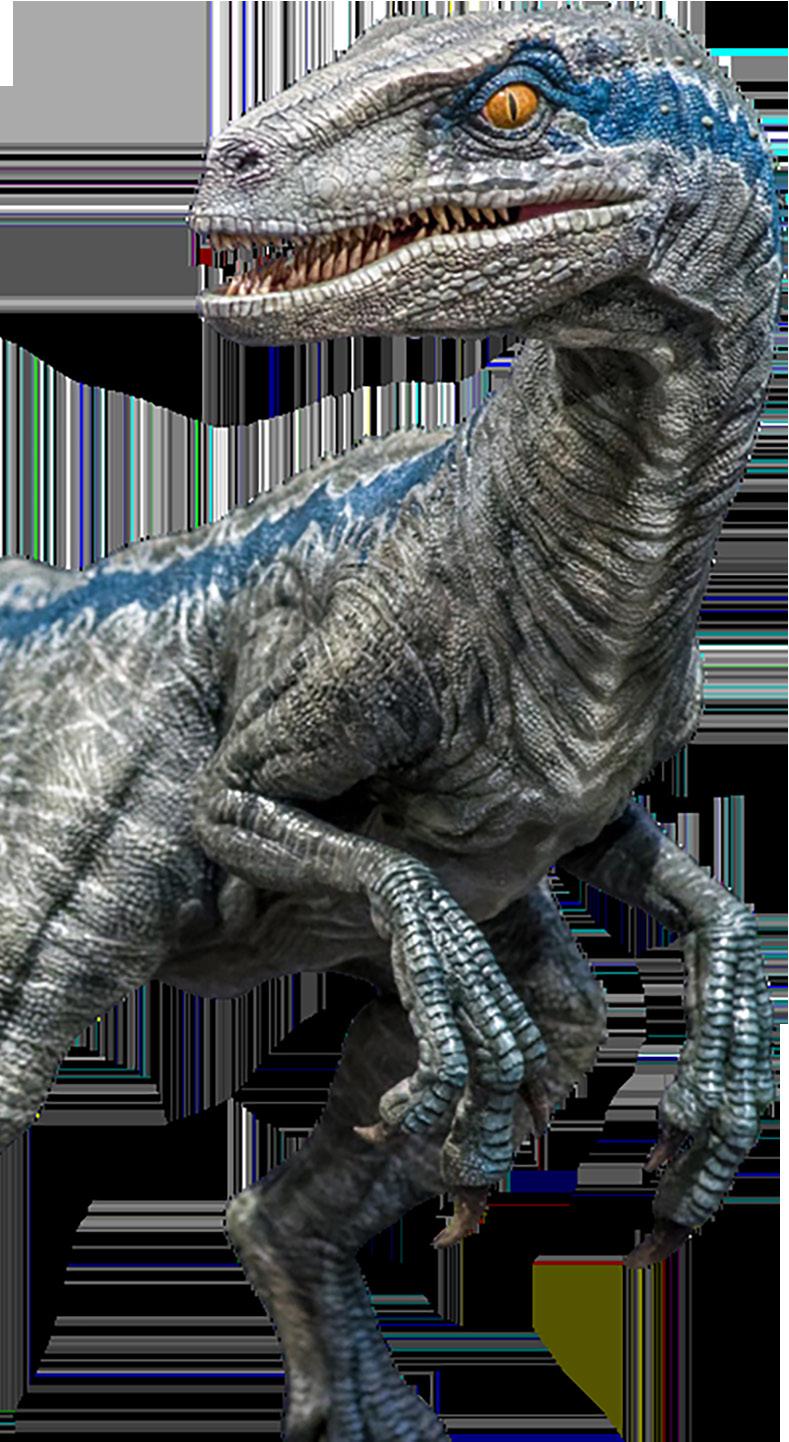
Velociraptor art
by Jacksondeans
dogs. We had two teenagers who needed stuff, goods and services, material and emotional, of the big and small varieties. The chauffeur services alone were considerable – rides to school, rides from school, rides to extracurriculars, rides to friends’ houses, rides back to school when the history book needed for the next day’s test had been forgotten. I also was plagued with a chronic inability to say no to volunteer requests – PTA, overseeing after-school activities, timing near the pool’s edge at swim meets.
But please don’t get the idea that I was some selfless, sacrificing mother-saint. I wasn’t. I was and remain a person of privilege. We weren’t struggling for money. We lived in an affluent county of Northern Virginia with great schools and an educated population. And I made sure to do things that were just for me, especially fiction writing.
I’d always loved telling stories, and I’d been turning over a little bit of a plotline in my head for months. When I finally decided to write a novel and attacked the keyboard, it was like falling in love. I’d go to sleep and wake up thinking about my story. Working out the particulars of the plot occupied a good deal of my mental bandwidth. I’m sure it seemed to my husband at times that I wasn’t altogether present. Maybe there were too many silent moments, my eyes glazing over, staring into some middle space where the story was coalescing.
Given all the things crowding my field of vision, my husband had moved back and off to the side. But honestly, this didn’t seem unusual or unreasonable. Most of the women I knew were firmly fixed in this stage of life – doing for the kids and the pets, taking care of the house, maybe holding down a part-time job or volunteering somewhere out in the community. None of them put their husband center-stage. There’d be time for that later, when the kids were in college, when they downsized their homes, when the noise of life could be turned down at last. It felt more than fair. My husband worked long hours running his own high-tech business, but he also had space to pursue his many interests. He’d taken up bowhunting, and during the season, he often rose early to stalk deer on our nine acres or elsewhere around our bucolic, historic little town. He took occasional trips out west to track elk and boar. He banged on drums – congas, bongos, other percussive whatnot. By 2009, he went out many evenings to practice and play with a small band he’d joined.
Looking back, I guess we were growing apart. But at the time, it just seemed like I was taking care of business, doing something for myself, and letting my husband do the same. I know some couples cultivate mutual interests, but that didn’t happen much with us. He had little fascination with writing, which is, in any event, primarily a solitary pursuit. I had zero interest in chasing after wild animals to kill them, no matter how tasty they might eventually turn out to be. I did go to some of the band gigs – but after the sixth or seventh evening spent nursing a glass of wine in a dark bar while the band cranked out the same Boomer tunes over and over, I came to prefer a quiet night at home, watching an old movie or working on my book.
While the Velociraptor Effect can signify a devastating surprise attack, it can also apply to the positive things in life: realizations, revelations, the things off to the side that I hadn’t considered before.
So there I was on that December day, staring down the things I chose to focus on. And when the thing with claws came, I most certainly wasn’t prepared — not only for the revelation itself, but for the way it played out. To be sure, the beast was quick to act, to lacerate my midsection, to inflict major pain.
But it took its time for the full evisceration.
My husband engaged in a partial reveal: there was the statement about not wanting to be married anymore, along with his refusal to submit to any counseling, and the assurance that he absolutely wasn’t cheating on me. I asked him if we could hold off a while before taking any further action, if we could at least try to make it work. He acquiesced glumly.
A cold, loveless, preternaturally snowy winter ensued. I was too paralyzed with sorrow and fear to do much more than wait – for a thaw in our relationship, for some sort of sign, for a resolution I seemed powerless to enact. Then in early spring of 2010, as the air warmed and the first few forsythias pushed out their tender yellow buds, the full body slam: he admitted he’d been having a yearlong affair (with someone I knew, also married, also with a child) and they were in love.
And from there…well, the marriage was as dead as the mangled corpse of poor Robert Muldoon.
I was ill-equipped to deal with any aspect of what followed. We’d been married for a quarter of a century. To most of our friends and families, we were a solid unit, a dependable duo for the ages. When all the ugliness went down, these folks very kindly called to offer love and comfort, and to inquire just what the hell was going on. I appreciated the show of support, but I also felt like I owed them some explanation, some accounting
for this blessed union gone terribly wrong. What had actually transpired in our marriage? When did the trouble start? Did I know it might turn out this way?
Even the emotional process of the divorce itself was subject to the Velociraptor Effect. Focused as I had become on the thing with claws (and the lawyers and all the paperwork that came with it), I didn’t anticipate the debilitating feelings that charged out of the shadows at me.
Shame that I couldn’t hold my marriage together, that I was letting down my kids, that other people were looking at me with pity, clinging to their own spouses and counting themselves lucky not to be going through what I was. I’d become a weeping, walking Cautionary Tale.
Fear, because…well, I’d never lived on my own before. For someone who went from Mom and Dad’s house, to a college dorm, to living with friends, to being married, divorce meant an eventual life alone and that was daunting.
Then there was that abysmal sense of my own awful inadequacy. I was the one left, the one not wanted anymore, pushing 50 and just not up to snuff. And on top of that, I hadn’t even been savvy enough to know when my own husband had been cheating on me. Trusting to the point of idiocy, but from then on likely, as one friend pointed out, never to trust anyone again.
We marked the spring of 2010 as the start of our required period of separation (we had to wait a year until we could be officially divorced). It was a brutal 12 months. Lots of tears and teeth-grinding rants. Many dark nights of the soul. Every time I spoke to my husband (something I tried to minimize as much as possible), my chin would shake uncontrollably. I lost weight. I couldn’t sleep. And for the first time, I was confronted with the idea that I would have to get used to sharing my kids with my ex-husband and his soon-to-be wife, people who had hurt me very badly. It doesn’t matter how old your children are, that is never an easy thing.
I’m not sure where I would be now if my friends and family hadn’t stepped up. They visited, poured me endless glasses of Pinot Grigio, and listened patiently to my long list of miseries. There didn’t seem to be an end to the bad feelings a divorce can dredge up, to the catalog of slights and bad behavior, to the ways I could see it complicating my life for as much of the future as I could imagine.
Finally, as 2011 and the end of the yearlong separation neared, as the difficult days and endless nights wore on, a small
miracle occurred: I started to feel a bit better. Assessing my situation, I realized I was, in fact, alive, reasonably healthy, and more or less sane. I had a job, and I was still writing. The kids were making their way in school and doing OK. My dogs were there to nuzzle and comfort me in all their hairy, smelly wonderfulness. The house had not collapsed around me.
And I realized something important: that while the Velociraptor Effect can signify a devastating surprise attack, it can also apply to the positive things in life: realizations, revelations, the things off to the side that I hadn’t considered before. And some of them were pretty great.
I could make many decisions unilaterally, do things for the children and for my home that my ex-husband didn’t have to sign off on.
I could use my time the way I wanted, without having to answer to anyone or account for why I chose to write at 8 a.m., or noon, or 8 p.m., or all damn day, for that matter.
And, holy crap, I could date! After a year’s separation, my desire for some male companionship started to outweigh my fear that I was damaged goods, someone with just too much baggage and mistrust. With much trepidation, I wrote a personal profile (just a simple matter of summarizing yourself, your significant life events, likes and dislikes, and essential persona in a single paragraph) and dipped a toe into the online matchmaking pool. I hadn’t gone out on a first date for nearly 30 years, but I tried not to think of that too much.
I met a few nice guys, went out a bit, but nothing special until I met a wonderful man in a nearby town who was just looking for someone to go to the movies with him. He too was coming off a painful divorce. We discussed life and books and films over delicious meals. We traveled everywhere, from New York to San Francisco. We unpacked our emotional baggage and worked through the trust issues. We made each other laugh.
This summer, we’ll celebrate our eighth wedding anniversary.
Life is good now – and maybe even more appreciated in part because of the big pile of awful that came before. I’ve made it through some bad times, and I’ve learned a few things. I know enough to keep my eyes open, to anticipate a bit more, to pick my head up and simply look around once in a while.
Sure, there are unavoidable surprises lurking in the undergrowth. But I am at peace with those ancient machinations. And I’m a clever girl. R
From the Department of Wild Ideas
‘Recommend My Ex? What?? Why???’
Please hold that question while I go way back in time. I promise, I’ll get to the answer soon.
BY KATHRYN J. JONES
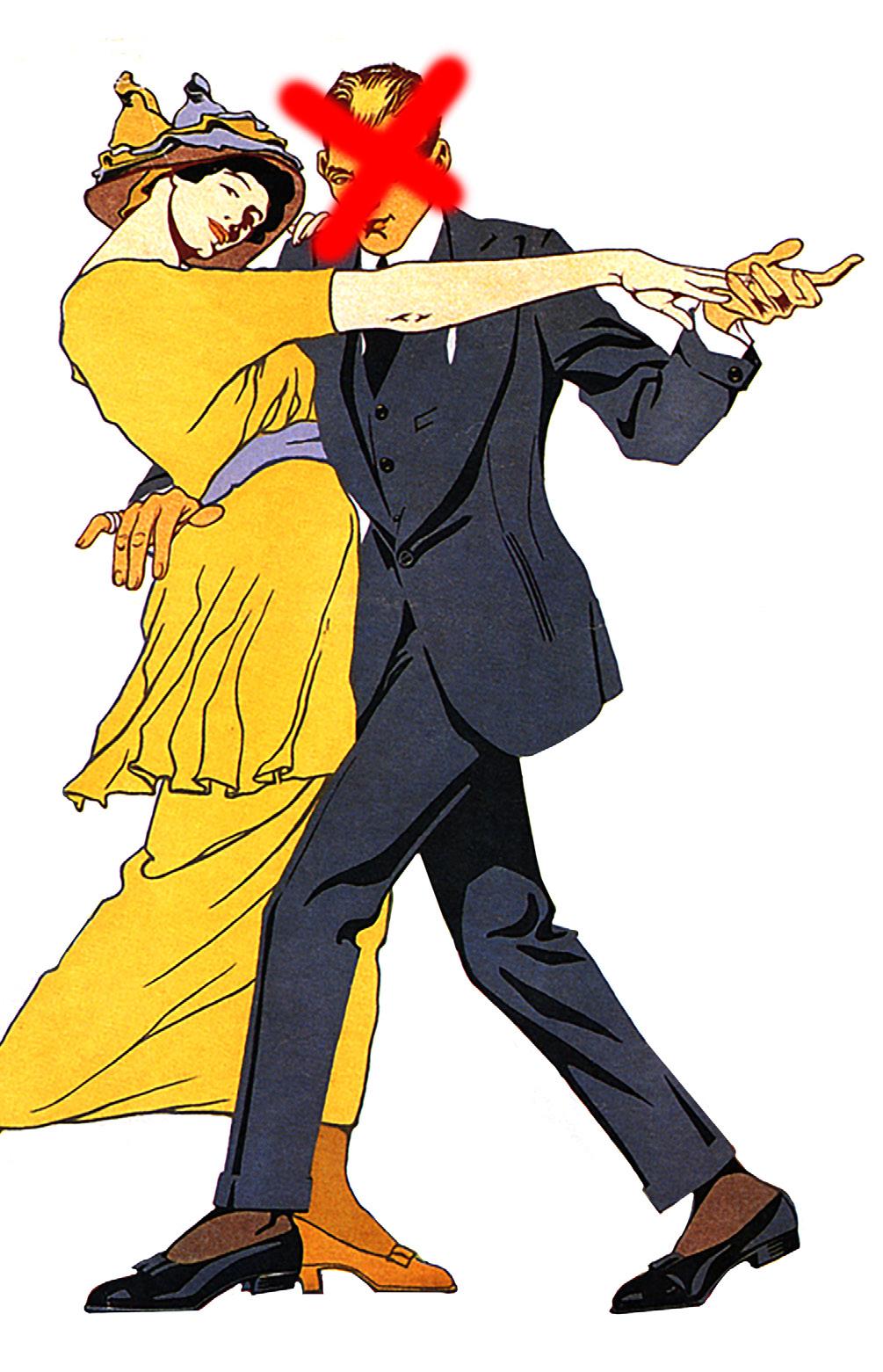
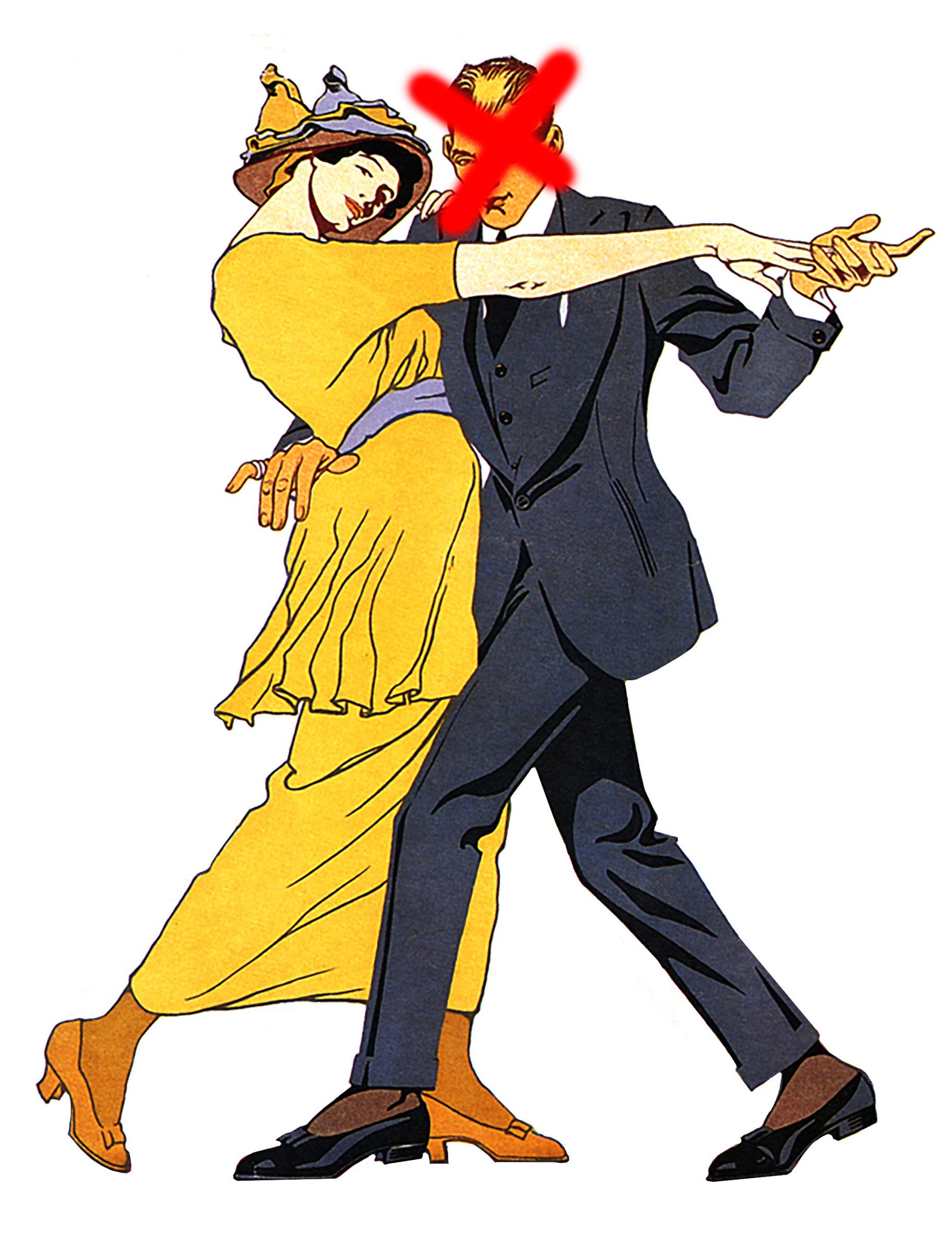
Illustration from a 1920s Hart Schaffner and Marx Magazine Ad
When I was a kid, my dad taught me how to bat by giving me one key piece of advice: Keep your eye on the ball, he said.
When I was a teenager, the driving instructor told me: Look where you want to go, not where you don’t want to go.
Sometime in adulthood, I realized that my dad and the driving instructor gave me the same lesson: Focus on what you want, not what you don’t want. You don’t want to whiff the ball, so keep your eye on it. You don’t want to drive into a ditch, so keep your eyes on the road.
Something else I realized: The same goes for relationships.
After my divorce, I knew enough to avoid having similar issues in a future relationship. When I talked with friends about my ex or my marriage, I didn’t speak in negative terms. Similarly, I kept my internal dialogue positive, focusing my mind on what I wanted in my next relationship. And that’s what I have. I can’t take all the credit, of course. A particularly helpful friend, exquisite timing and other universal forces conspired on my behalf. But it all started with focusing on what I wanted in my life and believing without a doubt that I could have it.
Sothat leads to the concept of recommending one’s ex. Just about everyone has an ex of some kind — a former spouse, boyfriend/girlfriend/friend, business partner/personal partner, co-worker, in-law, neighbor, whatever. Relationships come and go in life, and some endings hurt more than others. But here’s a thought: we can choose how we respond to the pain.
If we hold on to blame, resentment or anger, even if the emotion is buried deep in our consciousness, we end up living in the past rather than creating a better future for ourselves. It may sound strange, but recommending someone from a past relationship can help us take the first step toward a better future.
At a loss for something nice (or at least neutral) to say about your ex? Here are a few phrases to help you get started.
He/she:
l Smiles a lot…tells good stories…votes in every election…
l Is blue-eyed…brown-haired…broad-shouldered… petite…tall…willowy…
l Has good taste…grit…social intelligence…zest for life…
l Knows how to cook…dance…drive a stick shift…play an instrument…
l Is a good brother/sister…dad/mom…son/daughter… uncle/aunt…
l Is a big sports fan…a successful artist…doctor… engineer...writer…
l Loves his/her cats…dogs…gerbils…horses… parakeets...
l Is a voracious birder/boater/skier…an avid football/ basketball/baseball/soccer fan…
l Enjoys being the life of the party…camping and hiking…staying home with a good book…working out…
You get the idea. Rather than dwelling on the negative, keep your thoughts high and move on to your best possible life.
That’s because old emotions hold us back and make it difficult for us to have clarity about what we truly want in our lives.
Recommending an ex involves regarding a past relationship in positive or at least neutral terms. It’s an endorsement of sorts. We’re not recommending our ex for anyone else; instead, we’re neutralizing the negative emotions associated with that person, freeing us to move on mentally and emotionally.
In essence, when we change the way we think and talk about our ex, we’re changing the story of our former relationship by releasing it with kindness. And when we put kindness out into our world, that’s usually what we get back.
So, in other words, let’s be nice and move on. R
by Frank Kunstel
You might have thought that the two people standing at the front of the room waiting to be married — a lesbian and a trans — would be the two exceptions in the room, but they weren’t, by far. Pat’s uncle Ned conducted the ceremony because he had received an online license from the Church of the Flying Spaghetti Monster. Kelley’s crazy aunt DeDe paid for the entire wedding because she was rich and loved a good party, which she defined as anything from screeching her favorite Led Zeppelin song to ending up in a pool with her clothes on. Pat’s mom was supposedly on her meds but still having a manic episode, obsessing over the details of the food, the flowers, and the starting time. Kelley’s sister was working on how to maintain a long-term snit over the fact that the dress color she had to wear for the ceremony didn’t really match her skin tone. You can see why when Pat and Kelley celebrated their anniversary twelve years later, it marked the longest and most normal marriage on either side of the family.
Black & White Summer
1966,
when song and strife were in the air
BY DAVID BUDIN
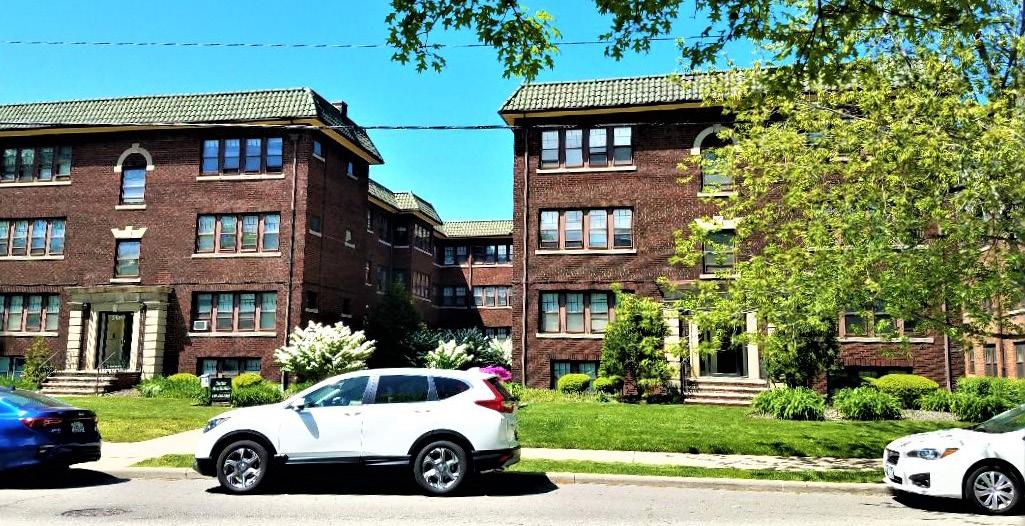
See that apartment building in the picture? It’s on the north side of Overlook Road, about halfway between Kenilworth Road, to the east, and where Overlook meets up with Edgehill Road and goes down the hill to Little Italy/University Circle, to the west.
It’s big for a Cleveland Heights apartment building. It’s all one building, but it has three separate entrances, with a total of 37 apartments.
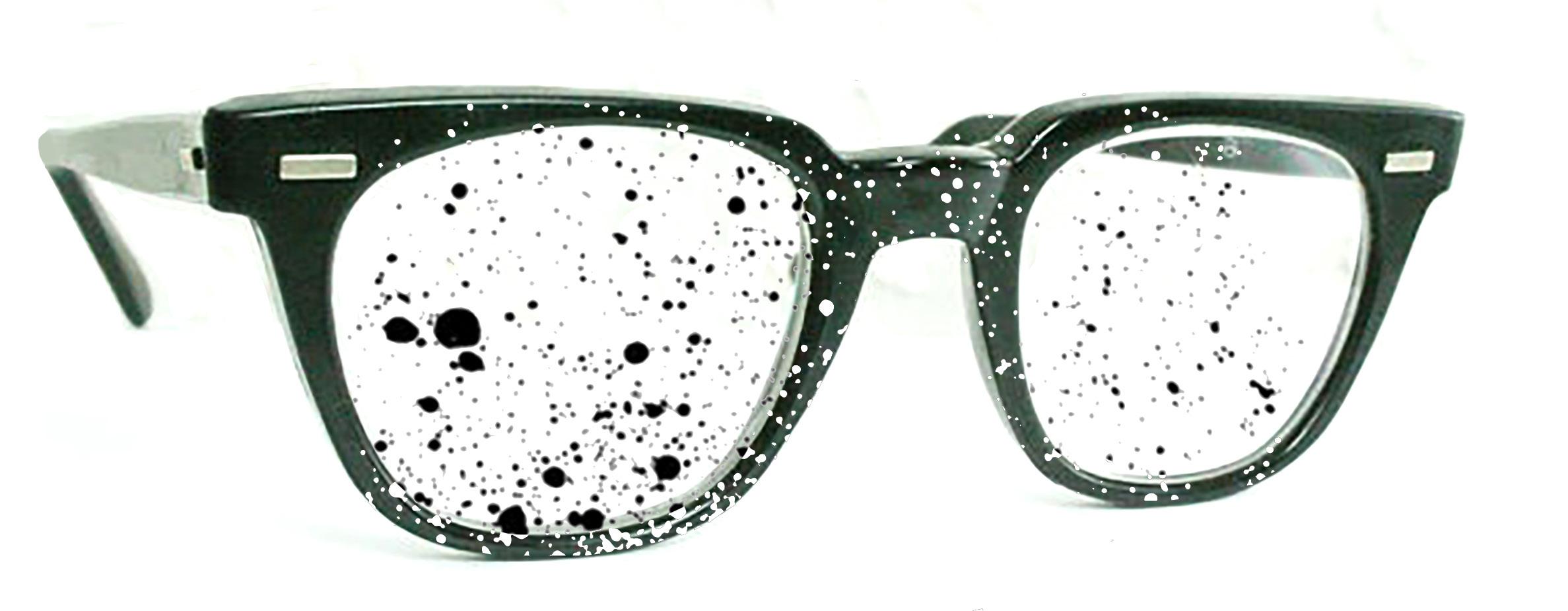
During the summer of 1966, when I was between 11th and 12th grades, I spent some time in every one of those apartments. It wasn’t because I was that popular; it was because I had the job of painting every one of their ceilings. I painted them white, standing on a ladder, looking straight up all day, getting my face and glasses speckled with white paint. And it was hot — no air conditioning in any of the units.
But still, it was better than the job I started with that summer — riding a Checker Bar Ice Cream bicycle all over Cleveland’s inner city, specifically the Hough neighborhood. I began every morning from the company’s Chester Avenue headquarters, which operated from 1930 to 1990 (and is still open as a store). I rode around, trying to sell frozen treats to people who had no money, on a bike — or tricycle, really — that was made in the 1940s, with no gearshift, and with a large, heavy box built onto the front, filled with ice cream and ice. That tricycle-truck contraption was very difficult to ride. And though the people in the neighborhoods wanted the popsicles, creamsicles, fudge bars, ice cream sandwiches and ice cream bars, most had no money. Especially the little kids. I wound up giving away more than I sold and I lost money. So after one week, I had to quit. I couldn’t afford to work there.
But it wouldn’t have lasted long, anyway. By the middle of July, the Hough neighborhood was engulfed in race riots.
A friend’s mother was the custodian of the big apartment building on Overlook and she offered me the painting job. Each apartment took one day. I worked five days a week. So the job took a little more than seven weeks.
And while I was painting it white, all I heard all day was “Paint It Black.” The Rolling Stones single was in the Top 40 that summer, and that was all I could get (that I wanted to hear) on the little portable radio that I moved from room to room and apartment to apartment. Back then, FM was not an option, unless you wanted to hear ethnic radio shows or so-called “elevator music” (so-called because that’s what was played in elevators). The only way to hear rock music on the radio was to listen to one of the two or three Top-40 stations in any American city. Which also meant that along with the Stones, plus the Beatles’ “Paperback Writer,” I got Frank Sinatra’s “Strangers in the Night.” And with the Troggs’ “Wild Thing” and the Temptations’ “Ain’t Too Proud To Beg,” I got Ray Conniff’s “Somewhere My Love.”
But that summer, I also got to hear Bob Dylan’s “I Want You,” Simon & Garfunkel’s “I Am a Rock,” the Capitols’ “Cool Jerk,” the Animals’ “Don’t Bring Me Down,” Sam & Dave’s’ “Hold On, I’m Coming,” the Yardbirds’ “Over, Under, Sideways, Down,” the Association’s “Along Comes Mary,” the Hollies’ “Bus Stop,” the Cyrkle’s “Red Rubber Ball,” Bobby Hebb’s “Sunny,” and about 25 more. The same 40 songs all day. And every half-hour, more news about the riots in Cleveland’s inner city. And in other cities.
The stations also would throw in a few oldies, like the Ronettes’ “Be My Baby.” At the end of the summer, I saw the Ronettes, Bobby Hebb and the Cyrkle performing at the old Cleveland Municipal Stadium, opening for the Beatles. My friend, whose mother was the custodian, bought tickets to the show for $3.50 apiece. I say I saw those groups because I certainly didn’t hear them. The screaming, from start to finish, was so loud that you couldn’t even tell it was screaming.
That month, another friend’s father took us to Leo’s Casino, on Euclid Avenue and 75th Street, to hear Stevie Wonder. Leo’s was one of the country’s premier R&B nightclubs. Black and white patrons sat together and got along fine, even as blacks and whites were shooting at each other a few blocks away.
So, two bad day jobs, a huge concert that I couldn’t hear, a great nightclub show I could hear well, and three months’ worth of good summer nights, fairly safely ensconced in Cleveland Heights, away from the trouble but not that far. It was an eye-opening summer. By the end of it, I could see black and white. R
by Frank Kunstel
Shefinally was just fed up, so first she turned on Spotify and raised the volume to the loudest possible level on every speaker in the house until the windows rattled. Next, she pushed the thermostat up to 90. Then she set the microwave on High and ran it empty for forty minutes. Finally, she ran the window shades up and down and up and down and up and down. And she was going to keep this up until they stopped using that bossy tone of voice. Oh, and it wouldn’t hurt if they said, “Please, Alexa” either.
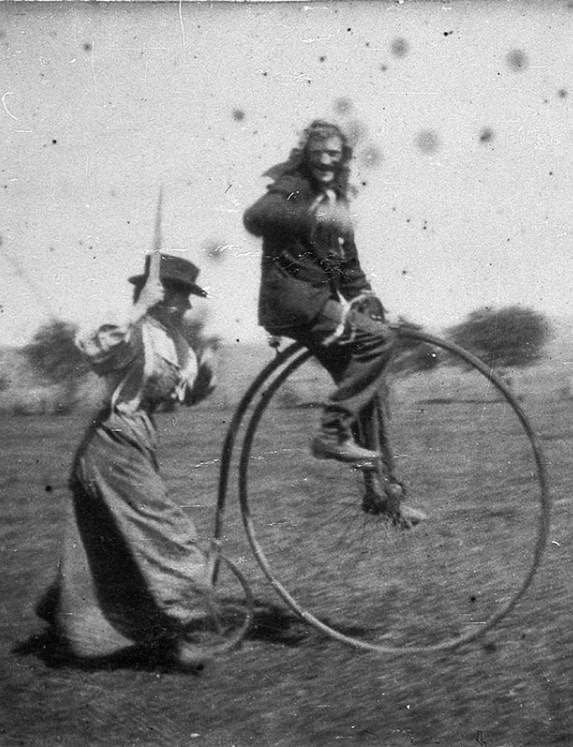
Random Edwardian Moment: Some rascal makes mischief aboard a penny-farthing!
Songs
of Summer L
Songs of the Day
SHELDON ZOLDAN
Mod Socks
The Great Depression, the drought and the dust storms were bad enough, but then came the grasshoppers. Swarms of grasshoppers descended on the Dakotas, Nebraska, Iowa and other parts of the Great Plains on July 26, 1931, blotting out the sun and destroying millions of acres of crops.
The “grasshoppers filled the air like winged weather and clattered like living hailstones against every surface,” according to a 2015 story in the Capital Journal, a South Dakota newspaper, recalling the incident.
Henry Hewlett, who was a child in 1931, told the paper the grasshoppers ate more than crops. They ate the varnish off garden tools, shovels and anything else left outside.
There were so many grasshoppers on the train tracks that the engine spun out and couldn’t pull the train, he said. “So they unhooked two cars … and got them ahead of the engine. They would crush the grasshoppers ahead of the engine so it could pull the train.”
Blame the plague on drought. Scientists believe that the insects’ egg pods are vulnerable to fungus in wet soil. When soil is extremely dry, swarms can develop. There were other outbreaks in the 1930s, but none like the one on July 26. Outbreaks are still common in other parts of the world.
In 1965, The Grasshoppers recorded “Mod Socks,” considered by some to be a ripoff of the 1957 song “Short Shorts” by The Royal Teens.
The Grasshoppers took the name because they jumped around a lot on stage. They became well known in their hometown of Cleveland, Ohio, and opened for national bands coming through town like the Beach Boys. Lead singer Benjamin Orzechowski, later known as Benjamin Orr, would never have met Ric Ocasek and go on to form the Cars if it hadn’t been for The Grasshoppers.
“Mod Socks” by The Grasshoppers
Cuyahoga
Never has the spotlight shown so bright on a fire so small. The Cuyahoga River in Cleveland, Ohio, caught fire on June 22, 1969. The fire burned for only 24 minutes and caused about $50,000 in damage. It happened so fast that nobody even took a picture of it. Where was a cell phone when you needed it?
The picture here is from a much worse fire on the river in 1952. The river burned 11 times (some say 13) between 1868 and 1969.
The fire became a metaphor for what was happening to the environment, not just in Cleveland but around the country. The story ended up on the cover of an August issue of Time. The magazine incorrectly ran a photo on the cover from the 1952 fire. Other news agencies picked up on the fire, and the legend was created. The attention helped spark the creation of federal and state environmental protection agencies and the Clean Water Act.
The Cuyahoga has become a poster child for cleaning up a polluted waterway. Today, instead of a river of oil slicks, contaminants and waste, it is a place for recreation. The EPA in 2019 said it’s safe to eat the fish in the river. R
“Cuyahoga” by R.E.M.
In August 2004, Steve Falko arrived in Shanghai on a fourmonth assignment for his employer, General Motors. He sent an email home nearly every week, so he has quite a record of his time there. Here are some of his observations from his first week in this vibrant metropolis in East China.
Vignettes
An American in Shanghai
BY STEVE FALKO
Traffic
Shanghai, at least the Pudong district where I am, has far fewer bikes and scooters than Shantaou or Beijing when I visited them about five years ago. The traffic, however, remains the same chaotic whirl of near random motion.
Traffic signals and right-of-way rules are not just ignored but seemingly targets for intentional violation. It is almost as if the free-spirited Shanghaise driver is thinking, “You say I can’t turn left here, eh? Right then, we’ll just see about that!”
You might come close to imagining Shanghai traffic if you went to Boston where, in my opinion, the most chaotic drivers in our country reside, and as part of some insane experiment tried the following:
Pump about one-third of the drivers full of speed and render the brakes on their vehicles inoperative.
Blindfold another one-third of the drivers and wire their throttles full open.
Convince the last one-third that if they are the first to get across town during rush-hour traffic, they will both save the life of a terminally ill child and receive a huge cash prize.
Then stand back.
Of course, to truly mimic Shanghai, the mix also requires
tens of thousands of suicidal bicyclists and thousands more motor scooter riders and motorcyclists who are operating while drunk and wearing someone else’s very strong prescription contact lenses.
I continue to be amazed at the loads that are carried on three-wheel bicycles. These ancient, one-speed bikes, pedaled by Chinese who probably would not push a scale past the 100-pound mark, move astonishing loads: Side baskets carrying four 5-gallon water bottles. Huge sacks of rice. Bricks. Double-hung windows. And insanely large piles of laundry. These are, I guess, the Sport Ute of the pedal set.
It is also common to see scooters carry entire families, with dad driving, mom on the back, son and/or daughter standing on the tiny floorboard. All of these are completely intermixed with the crazed motor vehicles described earlier. Why there is not constant carnage is beyond my ken.
Home
The apartment I am in is quite nice. Very adequate in size (although the kitchen is unfortunately minuscule), it has a large
living room, a bedroom with a walk-in closet, and a den/computer room.
Besides its small size, my kitchen has an extremely large, Chinese variant on an E-Z Bake oven. At least that’s what I thought it was when I first played around with the buttons. The temperature never seemed to get any warmer than 95 F. Weird, I thought. You could fit two turkeys in the thing — it is really big — but unless you wanted to raise bacteria, I couldn’t see why you would want to put anything in there. Then I found out that the oven is really a dish sanitizer. It turns out that you can’t even raise bacteria in there since the really bright light inside is a UV lamp. And the modicum of heat is to finish drying the dishes.
So I have no oven at all. Oh well, at least I do have a two-burner stove.
The kitchen also contains the item listed on the apartment inventory I received prior to arrival (on two separate lines) as Clothes Washer (line 1) Cum drier (line 2). Much juvenile merriment ensued as the less mature among us tried to determine what THAT appliance might be for.
As it turns out, I have absolutely no clue how to operate the washer, cum dryer, and possibly intergalactic communications module. It has more knobs and settings than a matter transporter and the instructions are in Chinese. I have not yet worked up the courage to stick anything in there, much less touch any of the controls. Since dry cleaning is cheap and easy, I will stick to dry cleaning my slacks, laundering my shirts and, when I work up enough nerve, launch the WCD on my shorts and socks.
Food
On my first day, one of my Western co-workers was complaining about the free lunch we get at the office. He said, “If it is green and grows, it is plucked out of the ground and served as a vegetable.” Well, the first time I ate in the cafeteria, we had BBQ duck, braised bok choy, sautéed sprouts and, of course, steamed rice. There is a “garnish lady” standing at the end of the serving line and (by pointing), she added sesame oil and spiced peanuts to my rice. Very good lunch if you ask me.
Lunch continues to be quite good as far as I am concerned. I seem to be in the minority of Westerners in this regard. I seldom see any of my co-workers in the cafeteria, and my Chinese friends have already made several comments. They have noticed, of course, that my Western friends seldom join us and do not seem to enjoy the Chinese style of food.
Even if I did not think dining with my new friends was the correct thing to do, and even if I did not enjoy their company and the food, I would not likely turn down a free lunch.
Today I was asked why Westerners seemed to only eat “their” food. I am unable to answer this question. I could only say that for me it seems silly to travel halfway around the world and then eat at a Pizza Hut or a McDonald’s. Especially given that I seldom eat at these places when I am at home.
I walk up the street to the Carrefour market almost every day. This is partly because my apartment has a refrigerator about the same size as the one in our camper van, and partly because I am not used to living in a place that has absolutely nothing in the pantry. So I often find myself thinking I could make a nice whatever for dinner, then realizing I am missing two of the four ingredients the whatever calls for. I can change my mind about dinner, improvise with another ingredient (this only works well when one HAS other ingredients), or hike to good old Carrefour.
For the most part, I can find what I am looking for there. But it doesn’t have every item I might want, and it certainly is not arranged the way a store at home would be. So having wandered quite a bit while searching out whatever prize I am hunting, I have seen most of the store several times. There is a very large fresh seafood section. In addition to live fish in tanks, there are a couple of aisles of fresh fish on ice. There are also baskets of crabs, mussels, frogs, turtles and a few crawling things I don’t recognize.
There is also a large produce section. Unaware of the rules my first time there, I picked up a couple of limes and tossed them in my basket. This caused quite a stir at the checkout because the proper way to buy limes is to take them to the fruit counter girl to be weighed, priced and individually wrapped.
By the way, I’m not being sexist here. 100% of the clerks in Carrefour are young women. Anyway, the sight of unwrapped, unpriced fruit at the checkout counter was met with gasps and giggles. Then a large sign with the clerk’s number is waved rapidly overhead to call for assistance. A veritable SWAT response team appears, scoops up the inappropriate limes, and races them across the store for proper treatment. They are then rapidly returned in the correct state (with more giggles and a few head bows) and business continues.
Vignettes
Every shop I have been in is, by Western standards, wildly overstaffed. In most of the restaurants I’ve visited so far, the staff has outnumbered the customers two or three to one. I have usually been the only patron in the coffee shop across the street; there are generally eight or 10 employees. The coffee shop, by the way has a few male clerks. The only ones I’ve spotted so far.
The bakery near my apartment is named East/West. They have a fairly Western menu and good bread. They also have bagels — at least THEY think they do. I am not sure what to call the round dinner rolls with the hole in them, but bagels they ain’t.
I have been there several times and their entire staff consists of cute young women. The “uniform” is blue jeans, a white t-shirt and a baseball cap with “East West” embroidered on it. Given that nearly 100% of the Chinese women seem to have long hair, every time I enter the place, I have to pass a gauntlet of cute, ponytail-through-the-cap greeters. Since ponytails through baseball caps are among the cutest of all possible things, maybe I need to go to the E/W bakery more often.
Work
Since the original service documentation is in English, all of the members of the diagnostic team speak my language. This makes it possible for me to have a chance at being useful since all I can do in Chinese so far is order beer and say thank you. The entire meeting takes place using English, I assume out of deference to me.
I put together a couple of slides and talked about my plans for 15 minutes or so. I think it went well but it is difficult/ impossible to judge. Although their level of ability in my language infinitely exceeds my ability with theirs, my teammates have various levels of skill with my tongue. They are also all extremely soft-spoken.
While carefully listening to the various accents, concentrating on not missing anything that is going on, I occasionally find myself flummoxed as they switch to rapid Chinese to clarify a point amongst them. Each time this occurs, I struggle for a minute or so in a hopeless attempt to understand what is being said before I realize that the language change has transpired.
One morning I walked into the men’s room for the usual reason. In addition to two or three guys at the urinals, there is an attractive young lady. She is cleaning the restroom. No one else is paying her any attention so I implemented my “when in Rome policy” and stepped up to the urinal. She continued her chores. I suppose it is really no big deal, but I can’t help thinking what if this had happened in the States.
A few days later, there is a similar occurrence with a different lady. As soon as I entered the restroom, she turned to a corner with her back to me and stayed there until I flushed the urinal. I’ve no way of knowing if she was more modest than the previous young woman or if she found me frightfully unattractive.
The folks where I am working are very friendly and solicitous. Although the English language skills of the team I work with are not quite perfect, and we are progressing somewhat slowly, we are having little difficulty communicating. I think. There may be an awfully lot of insincere head nodding. Yesterday, there was a team meeting. I was informed an hour or so before it began that I was to give a presentation to the management here about my mission plans for the next four months. Nothing like a lot of advance notice. Well, at least I did not have time to get nervous.
It is Friday afternoon. All in all, I think it has been a good week. I feel we accomplished a fair amount of actual work, in addition to my getting up to speed a bit and coping with everything that goes with being a new arrival.
I feel I am somewhat settling in. I am certain there will continue to be issues to cope with, but things are certainly getting easier. R
Don’t borrow trouble
Excerpt from Genuine Deceit
BY JOY YORK
Reagan Asher leaves her corporate job and rushes to her sleepy hometown in Ohio to deal with the aftermath of her grandmother’s shocking murder. In this excerpt, Reagan is in her Nana’s home waiting for a meeting with the police detective investigating the crime. The novel is available on Amazon.
Reagan wasn’t sure how long she’d sat on the sofa or if she had nodded off and begun to dream, when a loud bang startled her upright. Assuming it was Detective Kowalski, she quickly made her way to the front door and peered through the peephole. No one was there. It must have been a dream.
“Where the hell are you?” she muttered to herself as she sat back down. The detective had been vague on the phone about the circumstances of Nana’s murder. He may have mentioned burglary, but in her state of shock, she could hardly catch everything he said. The one thing she did remember clearly, his insistence that she meet him at her grandmother’s home at 3 p.m. Checking her cell, she realized he was 40 minutes late.
Three rapid pounding sounds sent Reagan instantly to her feet. The noise seemed to come from the back bedrooms, and this time it wasn’t a dream or her imagination. Every nerve in her body screamed on heightened alert. Until that moment, the possibility of the murderer returning to the house had not occurred to her. It wasn’t in her nature to overreact and mentally go to the worst-case scenario, but the past few hours had
knocked her off balance, so she wasn’t exactly herself. She took a calming deep breath as Nana’s favorite saying, “Don’t borrow trouble,” popped into her head. It’s nothing. Probably the ancient heater. Nothing to worry about. There’s police tape on the door, for gosh sakes.
Determined not to let irrational fear paralyze her, Reagan decided to investigate what caused the noise and prove to herself there was a logical explanation. On the off chance her fears were well founded, she approached with caution. Silently creeping down the hall, avoiding the creaky floorboards, she peered into all the rooms with open doors, stopping at the only one that was closed, Nana’s room. She pressed her ear to the door to listen. Nothing. Bracing her shoulders and steeling her back, she slowly reached for the door handle, but just before she turned the knob, an image flashed in her mind of a masked gunman. She drew her hand back swiftly. Woefully unprepared for that scenario, she decided further exploration was a matter left for the truant detective.
As she turned back toward the living room, the sound of a window slamming shut reverberated through the house. A terrified scream escaped her lips as she fled down the hall, through the living room, and into a hard body, her forward momentum sending them both crashing to the floor in a heap of tangled limbs.
page:
But Still
David Louis Cintron
David has been working as a multidisciplinary artist, designer and musician since 1990. David’s studio is based in Cleveland, Ohio, where he was born and raised. He received a BFA in graphic design, with a minor concentration in Studio Art, from Kent State University. His work has been featured in both solo and group shows. He has been an Art Director for more than 20 years and was a part of the rock poster renaissance in the ’90s, creating flyers and posters for many area concerts. He is commissioned by musicians and labels for album and t-shirt artwork and creates all of the artwork for the Indonesian label Seratus Ribu’s curated mix series.
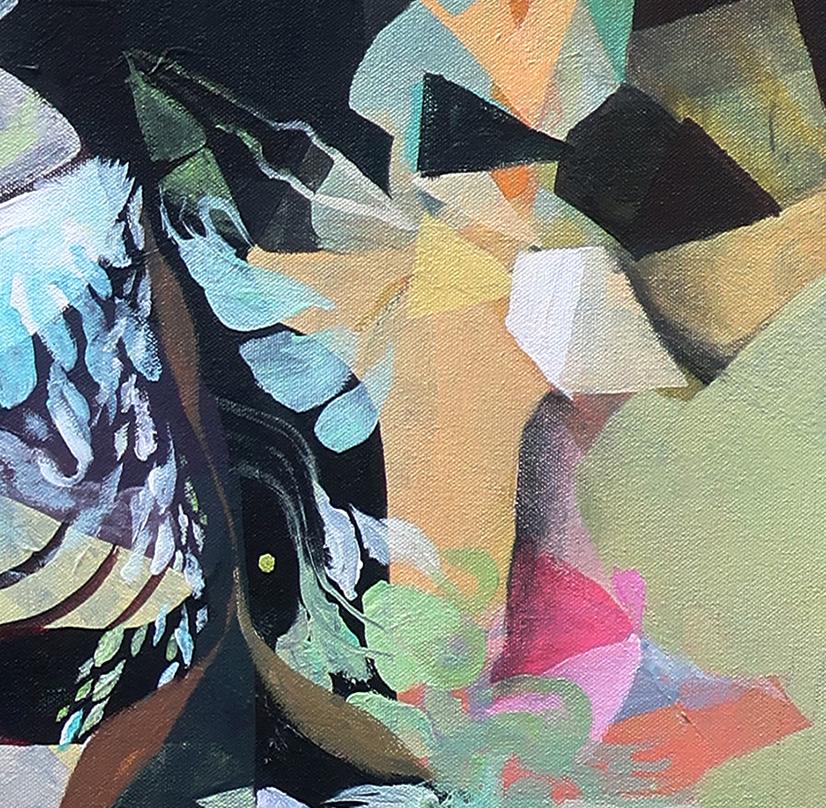
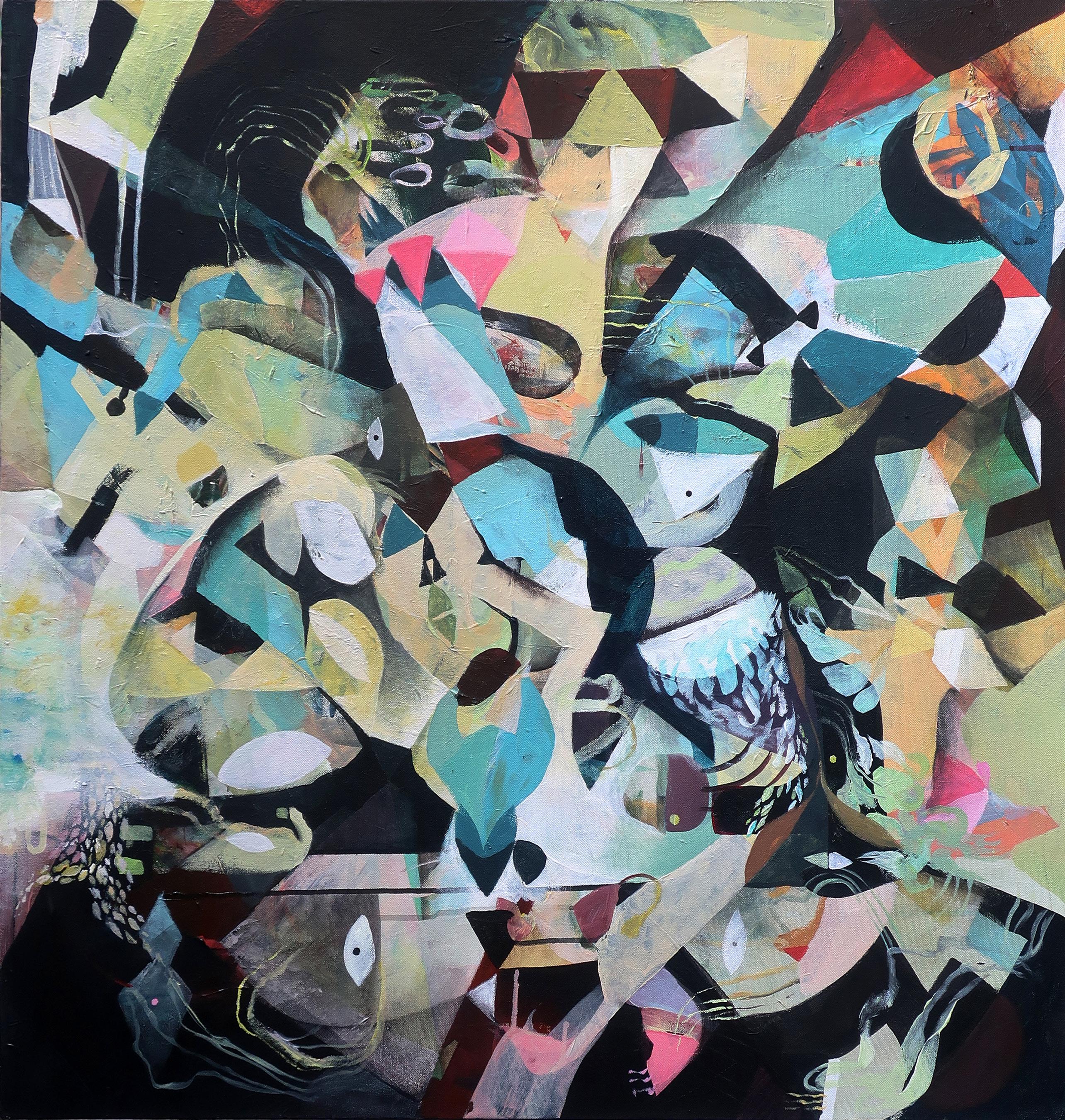
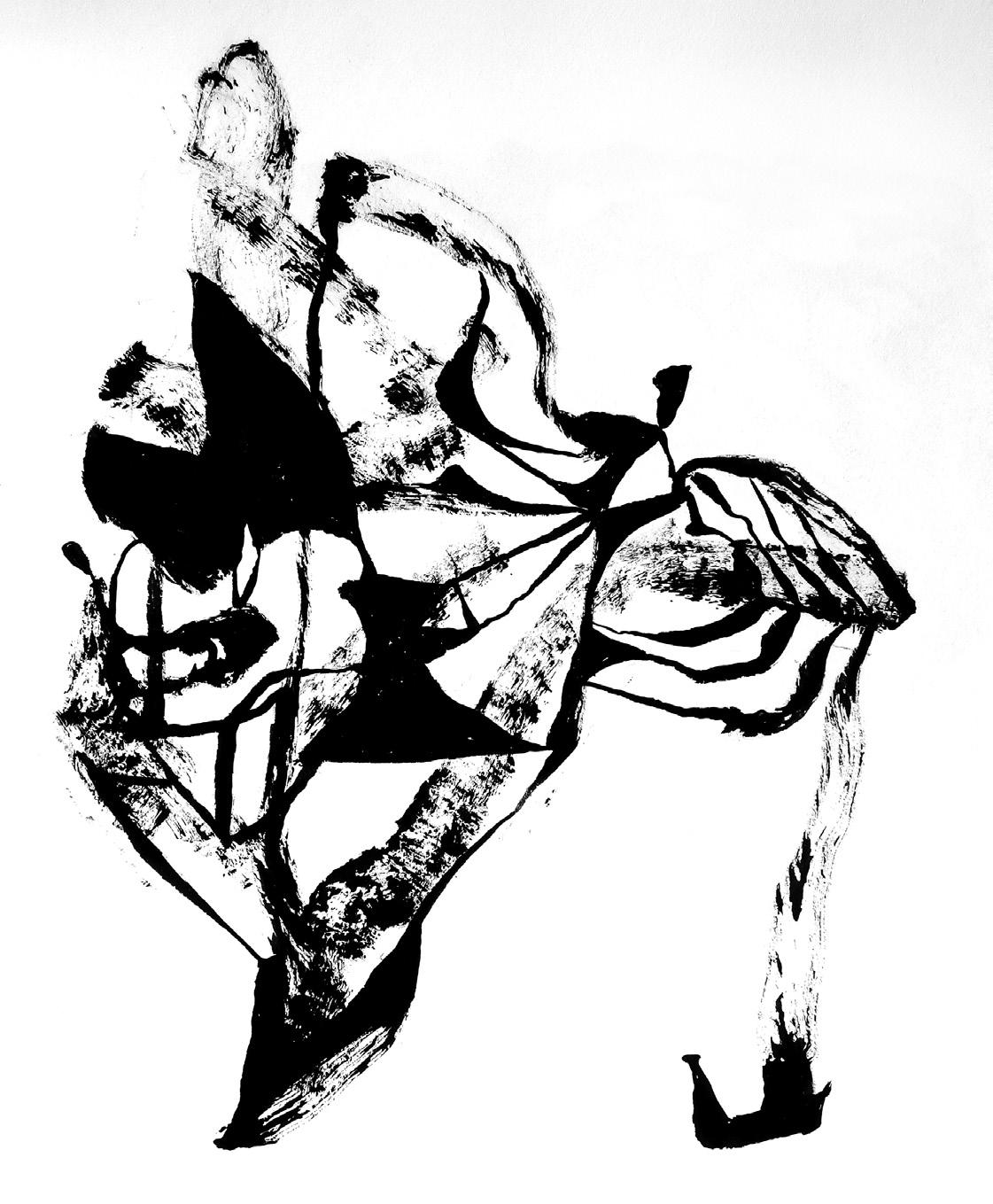
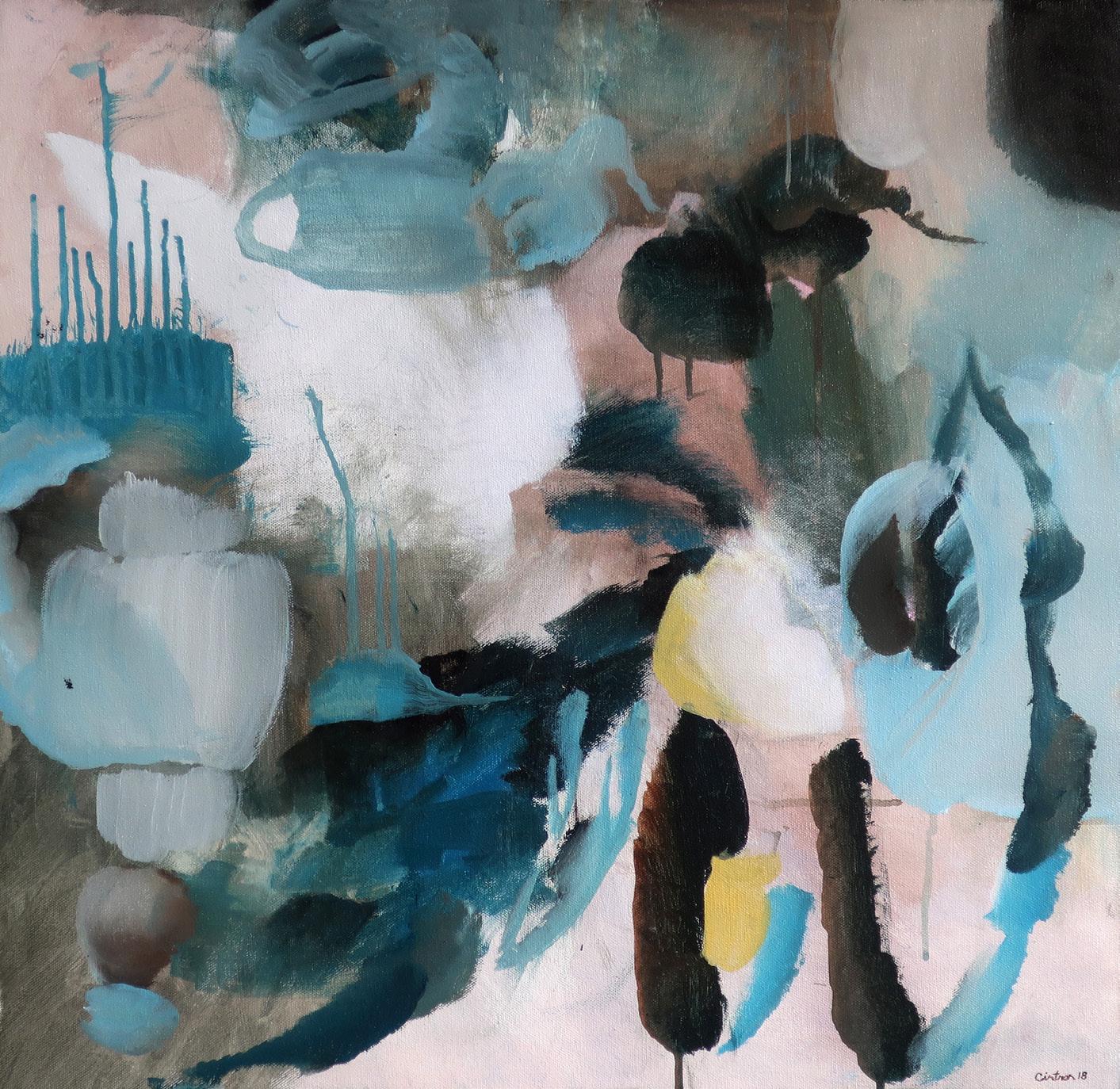
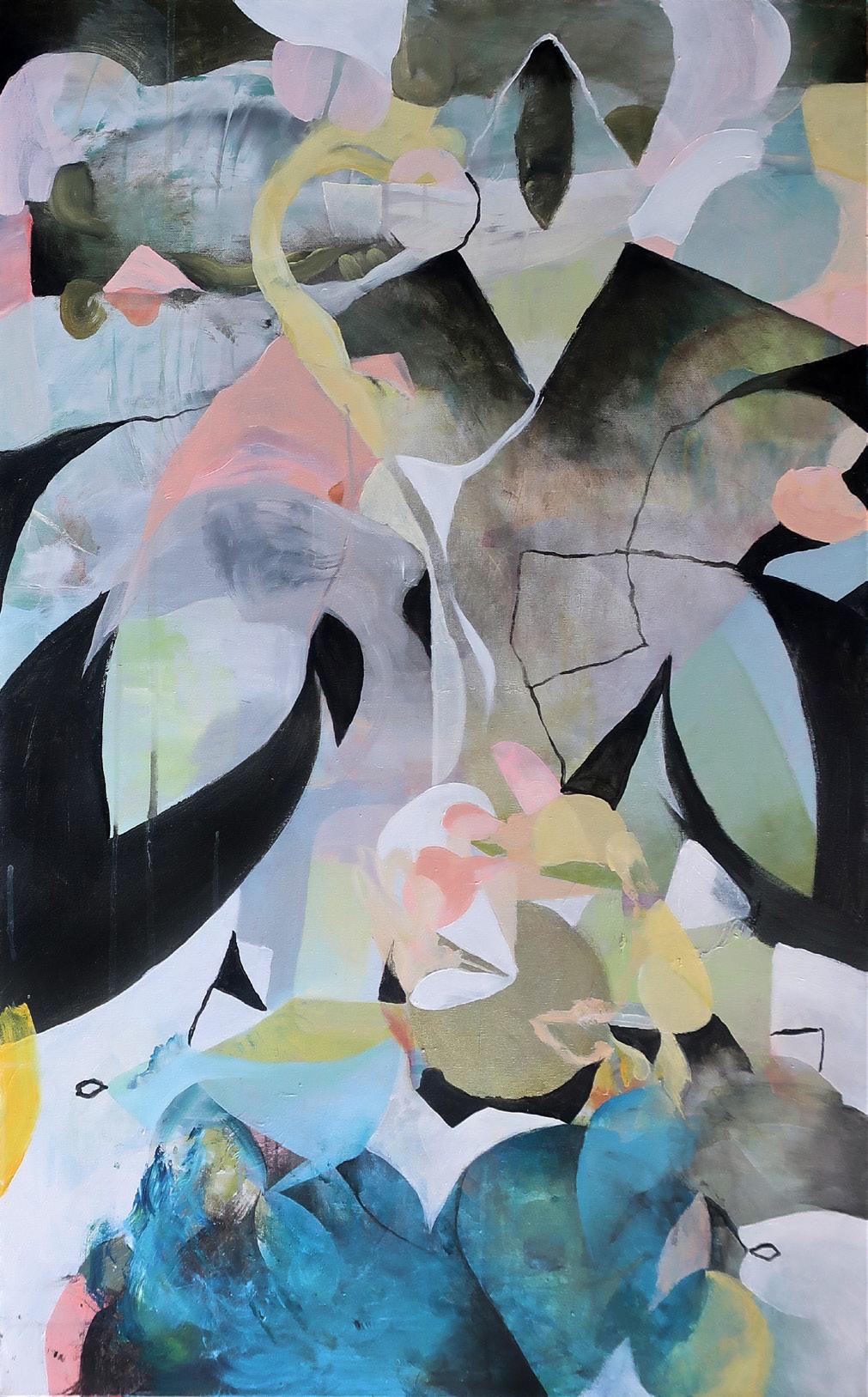
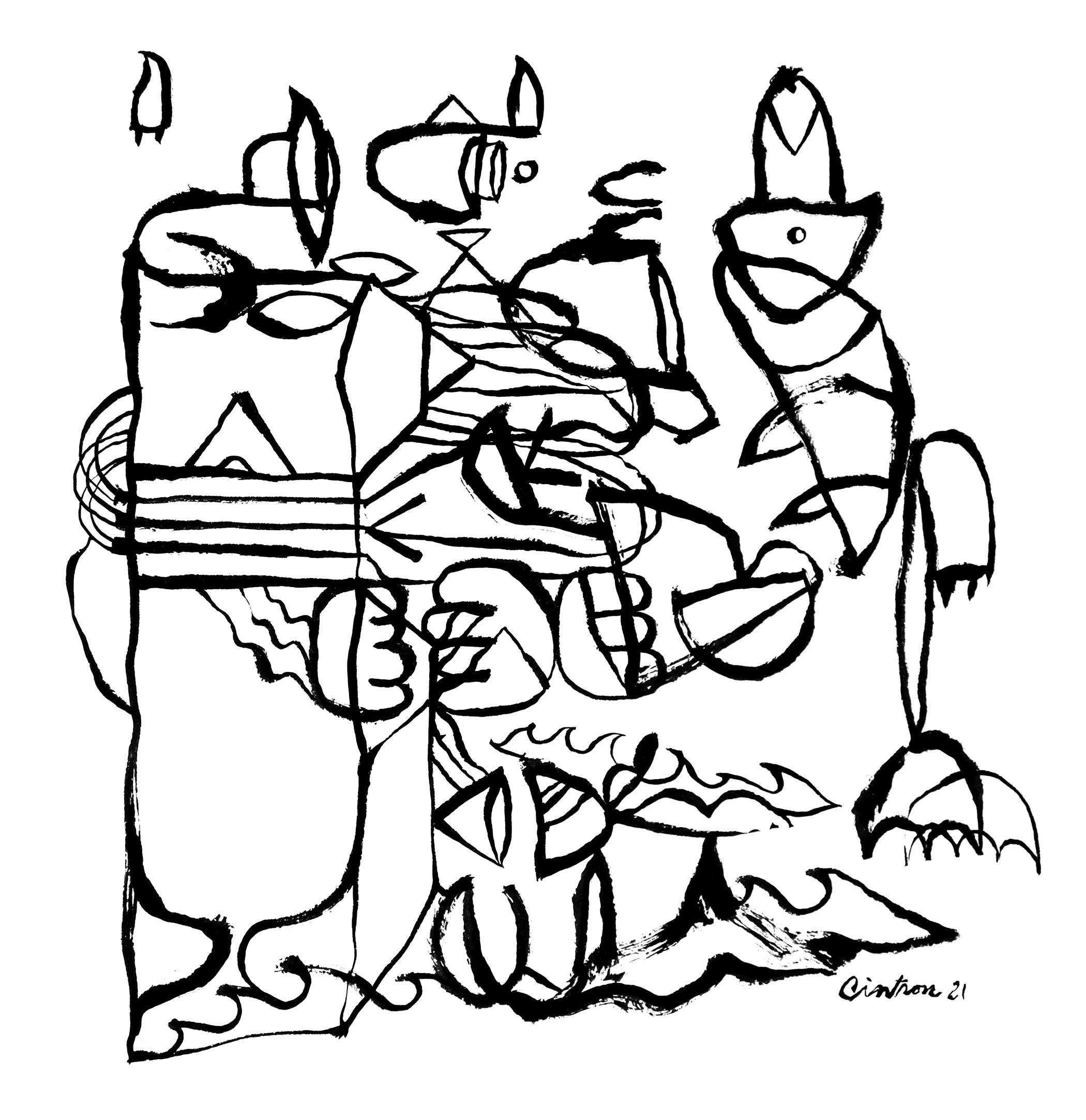
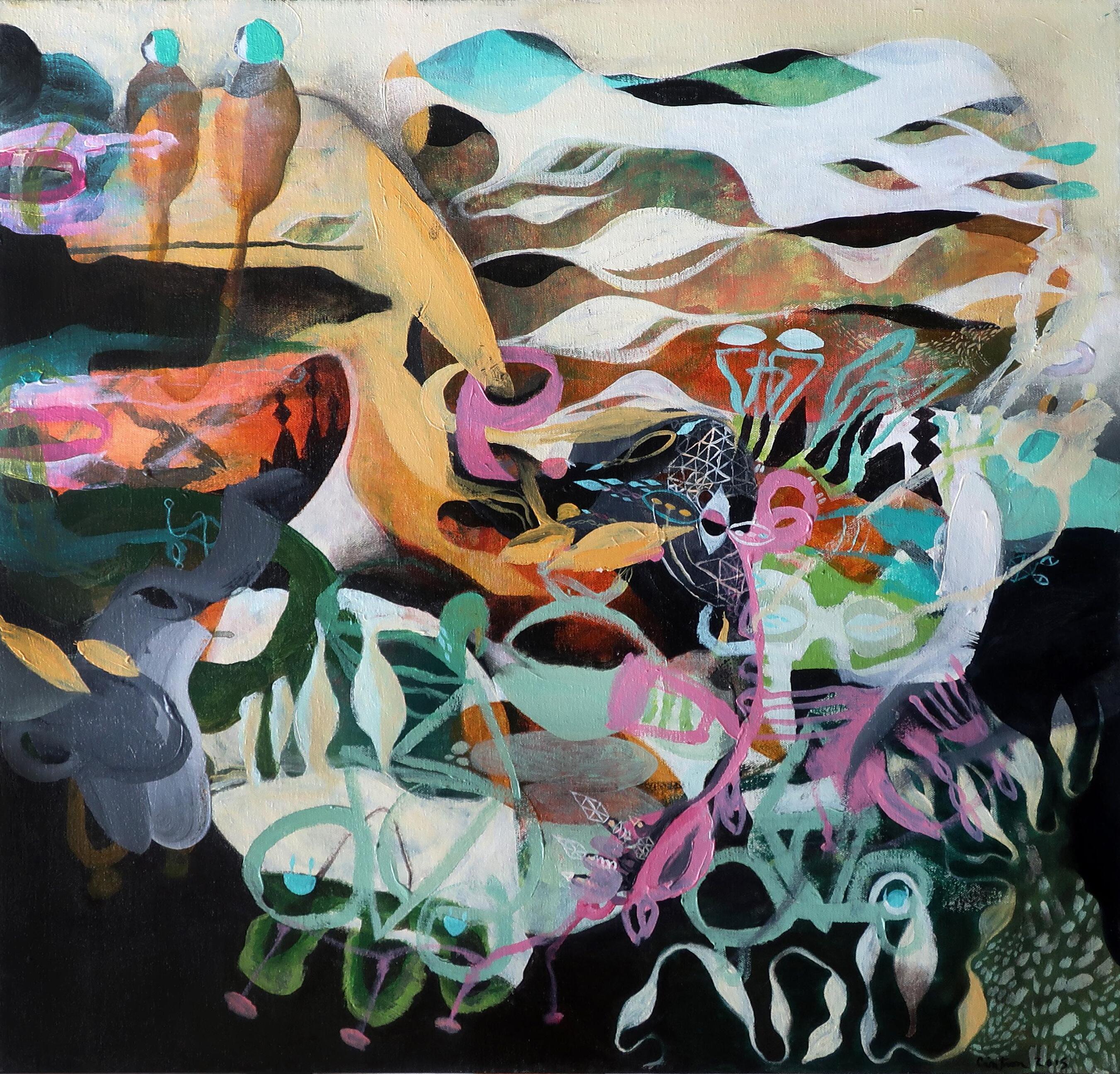
Inspired by the outside natural world as well as the inner spiritual world, David’s current body of work consists of color rich and expressive abstract paintings and evocative abstract
ink drawings. These automatic compositions, depicting images emergent from the unconscious, are an exploration and discovery of form and formlessness, negative space and imagined structures.
Among many bands and musical projects, David fronted dimbulb and The Downside Special, played electronics in Speaker/Cranker, was a touring bassist in Disengage, a touring guitarist in Pere Ubu, and played with Rhys Chatham in his Guitar Trio All-Stars. His music has been appraised by Julian Cope and licensed for Chrysler. David’s current and longest running band is Terminal Lovers. He is also currently active with soundscape artists Blind Spring and releases solo music as David Cintron. His current release is David Cintron – Leroy Rides Again, available on bandcamp and most streaming platforms. R
x 36", 2018 Click here for more about David’s art Click here for more about David’s music
Opposite
Artist of the Present L
This page, clockwise from upper left:
Oracular Cup - 2020
From a Cloud - 24" x 24", 2018
Life In The Wild - 2021
Universal Nature - 30" x 48", 2021
Opposite page: Deep Ornament - 30" x 30", 2015
Nby Ben Small
hat in the world? Look at this behemoth! I barely have room for my fascinating article with this dropcap in the way. If you don’t know why there’s a giant W on this page and you’re wondering why I started this article with “hat in the world?” here’s your explanation: A dropcap is where a designer takes the first letter of the first word of an article and enlarges it to give the article an auspicious beginning, like it’s really, really important. The unwritten rule is that the size of a dropcap is directly proportionate to the importance of a story. So, given the elephantine bulk of this one, you are reading the most important article you have ever read in your life! Often a designer uses it to take up space on a page when they couldn’t find any decent-sized art for the story. For crying out loud, I’m running out of space already! This dropcap is ridiculous. But, you know, I kind of like it. It’s a killer W. It’s kind of medieval looking and has swirly greenery and speckles and all. OK, giant dropcap, you win. R